EP3295263B1 - Procédé de mise à jour d'un logiciel lié à la sécurité - Google Patents
Procédé de mise à jour d'un logiciel lié à la sécurité Download PDFInfo
- Publication number
- EP3295263B1 EP3295263B1 EP15723205.9A EP15723205A EP3295263B1 EP 3295263 B1 EP3295263 B1 EP 3295263B1 EP 15723205 A EP15723205 A EP 15723205A EP 3295263 B1 EP3295263 B1 EP 3295263B1
- Authority
- EP
- European Patent Office
- Prior art keywords
- safety
- software
- related software
- update
- software update
- Prior art date
- Legal status (The legal status is an assumption and is not a legal conclusion. Google has not performed a legal analysis and makes no representation as to the accuracy of the status listed.)
- Active
Links
Images



Classifications
-
- G—PHYSICS
- G06—COMPUTING OR CALCULATING; COUNTING
- G06F—ELECTRIC DIGITAL DATA PROCESSING
- G06F8/00—Arrangements for software engineering
- G06F8/60—Software deployment
- G06F8/65—Updates
-
- G—PHYSICS
- G05—CONTROLLING; REGULATING
- G05B—CONTROL OR REGULATING SYSTEMS IN GENERAL; FUNCTIONAL ELEMENTS OF SUCH SYSTEMS; MONITORING OR TESTING ARRANGEMENTS FOR SUCH SYSTEMS OR ELEMENTS
- G05B19/00—Program-control systems
- G05B19/02—Program-control systems electric
- G05B19/04—Program control other than numerical control, i.e. in sequence controllers or logic controllers
- G05B19/042—Program control other than numerical control, i.e. in sequence controllers or logic controllers using digital processors
- G05B19/0426—Programming the control sequence
-
- B—PERFORMING OPERATIONS; TRANSPORTING
- B66—HOISTING; LIFTING; HAULING
- B66B—ELEVATORS; ESCALATORS OR MOVING WALKWAYS
- B66B1/00—Control systems of elevators in general
- B66B1/34—Details, e.g. call counting devices, data transmission from car to control system, devices giving information to the control system
-
- B—PERFORMING OPERATIONS; TRANSPORTING
- B66—HOISTING; LIFTING; HAULING
- B66B—ELEVATORS; ESCALATORS OR MOVING WALKWAYS
- B66B1/00—Control systems of elevators in general
- B66B1/34—Details, e.g. call counting devices, data transmission from car to control system, devices giving information to the control system
- B66B1/3407—Setting or modification of parameters of the control system
-
- B—PERFORMING OPERATIONS; TRANSPORTING
- B66—HOISTING; LIFTING; HAULING
- B66B—ELEVATORS; ESCALATORS OR MOVING WALKWAYS
- B66B5/00—Applications of checking, fault-correcting, or safety devices in elevators
- B66B5/0087—Devices facilitating maintenance, repair or inspection tasks
-
- G—PHYSICS
- G06—COMPUTING OR CALCULATING; COUNTING
- G06F—ELECTRIC DIGITAL DATA PROCESSING
- G06F21/00—Security arrangements for protecting computers, components thereof, programs or data against unauthorised activity
- G06F21/60—Protecting data
- G06F21/64—Protecting data integrity, e.g. using checksums, certificates or signatures
-
- G—PHYSICS
- G06—COMPUTING OR CALCULATING; COUNTING
- G06F—ELECTRIC DIGITAL DATA PROCESSING
- G06F8/00—Arrangements for software engineering
- G06F8/60—Software deployment
- G06F8/65—Updates
- G06F8/656—Updates while running
-
- H—ELECTRICITY
- H04—ELECTRIC COMMUNICATION TECHNIQUE
- H04L—TRANSMISSION OF DIGITAL INFORMATION, e.g. TELEGRAPHIC COMMUNICATION
- H04L63/00—Network architectures or network communication protocols for network security
- H04L63/04—Network architectures or network communication protocols for network security for providing a confidential data exchange among entities communicating through data packet networks
- H04L63/0428—Network architectures or network communication protocols for network security for providing a confidential data exchange among entities communicating through data packet networks wherein the data content is protected, e.g. by encrypting or encapsulating the payload
-
- H—ELECTRICITY
- H04—ELECTRIC COMMUNICATION TECHNIQUE
- H04L—TRANSMISSION OF DIGITAL INFORMATION, e.g. TELEGRAPHIC COMMUNICATION
- H04L9/00—Cryptographic mechanisms or cryptographic arrangements for secret or secure communications; Network security protocols
- H04L9/30—Public key, i.e. encryption algorithm being computationally infeasible to invert or user's encryption keys not requiring secrecy
-
- H—ELECTRICITY
- H04—ELECTRIC COMMUNICATION TECHNIQUE
- H04L—TRANSMISSION OF DIGITAL INFORMATION, e.g. TELEGRAPHIC COMMUNICATION
- H04L9/00—Cryptographic mechanisms or cryptographic arrangements for secret or secure communications; Network security protocols
- H04L9/32—Cryptographic mechanisms or cryptographic arrangements for secret or secure communications; Network security protocols including means for verifying the identity or authority of a user of the system or for message authentication, e.g. authorization, entity authentication, data integrity or data verification, non-repudiation, key authentication or verification of credentials
- H04L9/3247—Cryptographic mechanisms or cryptographic arrangements for secret or secure communications; Network security protocols including means for verifying the identity or authority of a user of the system or for message authentication, e.g. authorization, entity authentication, data integrity or data verification, non-repudiation, key authentication or verification of credentials involving digital signatures
-
- G—PHYSICS
- G05—CONTROLLING; REGULATING
- G05B—CONTROL OR REGULATING SYSTEMS IN GENERAL; FUNCTIONAL ELEMENTS OF SUCH SYSTEMS; MONITORING OR TESTING ARRANGEMENTS FOR SUCH SYSTEMS OR ELEMENTS
- G05B2219/00—Program-control systems
- G05B2219/20—Pc systems
- G05B2219/23—Pc programming
- G05B2219/23304—Download program from host
-
- G—PHYSICS
- G05—CONTROLLING; REGULATING
- G05B—CONTROL OR REGULATING SYSTEMS IN GENERAL; FUNCTIONAL ELEMENTS OF SUCH SYSTEMS; MONITORING OR TESTING ARRANGEMENTS FOR SUCH SYSTEMS OR ELEMENTS
- G05B2219/00—Program-control systems
- G05B2219/20—Pc systems
- G05B2219/24—Pc safety
- G05B2219/24161—Use of key, in key is stored access level
-
- G—PHYSICS
- G05—CONTROLLING; REGULATING
- G05B—CONTROL OR REGULATING SYSTEMS IN GENERAL; FUNCTIONAL ELEMENTS OF SUCH SYSTEMS; MONITORING OR TESTING ARRANGEMENTS FOR SUCH SYSTEMS OR ELEMENTS
- G05B2219/00—Program-control systems
- G05B2219/20—Pc systems
- G05B2219/25—Pc structure of the system
- G05B2219/25064—Update component configuration to optimize program execution
-
- G—PHYSICS
- G05—CONTROLLING; REGULATING
- G05B—CONTROL OR REGULATING SYSTEMS IN GENERAL; FUNCTIONAL ELEMENTS OF SUCH SYSTEMS; MONITORING OR TESTING ARRANGEMENTS FOR SUCH SYSTEMS OR ELEMENTS
- G05B2219/00—Program-control systems
- G05B2219/20—Pc systems
- G05B2219/26—Pc applications
- G05B2219/2659—Elevator
Definitions
- the present invention relates to a method of updating safety-related software in a people conveyor system, particularly in an elevator system.
- the present invention also relates to a people conveyor system, particularly an elevator system, comprising a controller for controlling operation of the people conveyor system, the controller configured to carry such method of updating safety-related software.
- Elevator systems are a particular example of a people conveyor system.
- a further example would be escalators or moving walkways.
- the invention will be described using an elevator system as an exemplary embodiment for a people conveyor system, it being understood that corresponding considerations apply with respect to an escalator or moving walkway as well.
- safety critical operations are controlled, or at least monitored, using sensor and/or switching devices (in the following simply referred to as safety switches) connected to a safety controller (in the following also referred to as a safety unit).
- Safety switches are often used at the various "safety points", at which the state of safety critical components (e.g. the position of movable components, such as doors) must be monitored prior to the initiation of an action and, if necessary, during the course of this action.
- a number of these safety switches are, in particular, connected in series to form a so-called “safety chain” so that the action can only be started or continued when all the safety switches or, in more general terms, switching devices take up a pre determined switching state.
- a safety-unit as described herein typically involves software to control its operation and to monitor correct functioning of the unit and the safety switches connected.
- Specific test protocols have been developed for testing faultless functioning of the safety switches used in the safety chain of a people conveyor.
- the procedures determining when and how to carry out such test protocols, and how to evaluate the results of the test protocols are controlled by specific safety-related software residing in a safety unit to which the switches of of the safety chain are connected and which controls operation and status of the safety chain.
- Such software is certified to perform specific safety-related functions. Programming of such safety-related software requires extreme care, e.g. typically any functions provided need to provide redundancy.
- a provisioning system includes a main control unit having a processing circuit, a memory device, and a data communications interface.
- the provisioning system further includes an auxiliary control unit and a portable data storage device.
- the portable data storage device is physically separate from the main control unit and has an update file stored therein.
- the update file includes a plurality of partitions, each partition including provisioning data and metadata.
- the main control unit identifies a first partition of the update file containing first provisioning data for the main control unit and a second partition of the update file containing second provisioning data for the auxiliary control unit.;
- the processing circuit is configured to extract the provisioning data from the identified partitions and to apply the extracted provisioning data to the main control unit and the auxiliary control unit.
- US 2009/049441 A1 discloses a remote update system for an elevator control program, which is capable of sequentially realizing update of control programs of a plurality of elevators with reduced communication time and costs without stopping the plurality of elevators at the same time.
- a server delivers to a representative elevator update data including differential information between the control program of a version before update and the control program of the latest version to be updated to through a communication line, and the representative elevator and other elevators tsequentially transfer the update data according to a predetermined transfer order, and update their own control programs based on the update data including the differential data.
- Embodiments described herein provide a method of updating safety-related software in a people conveyor system, particularly in an elevator system, according to independent claim 1.
- a people conveyor system particularly an elevator system
- a controller for controlling operation of the people conveyor system
- the controller including at least one safety unit configured to control safety-related functions of the people conveyor system, the safety unit configured to carry out the method of updating safety-related software described herein.
- the software server is configured to provide a safety-related software update for the people conveyor system.
- the people conveyor system is configured to receive the safety-related software update from the software update server via a data network.
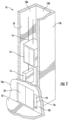
- FIG 1 shows an elevator system 10 according to an embodiment in a schematic and simplified perspective view.
- Elevator system 10 comprises a car 12 and a counterweight 14 connected by a tension member 16 in the configuration of a rope or belt (tension member 16 is only indicated schematically in Figure 1 ).
- Tension member 16 is driven by a an elevator drive, e.g. a traction drive, which is not shown in Figure 1 , such as to move car 12 and counterweight 14 along a hoistway 18.
- the elevator drive is located in the top part of the hoistway above the highest landing. Elevator car 12 and counterweight 14 move along guide rails which are also not shown in Figure 1 .
- Hoistway 18 has an essentially rectangular cross section and is surrounded by four vertically extending side walls three of which (left side wall 18b, right side wall 18c, back wall 18d) are shown in Figure 1 .
- the front wall of the hoistway is omitted in Figure 1 to show the car and counterweight. Only at the lowest landing 22 a portion of front wall 18a is visible with a landing door 20 being formed in front wall 18a. Not shown is a hall operating panel for entering hall calls. Front wall 18a will have a similar configuration at other landings.
- control board 24 is provided in the front wall 18a of the hoistway 18.
- the control board 24 is used for activating a software update operation mode by operating a software update activation switch, as described in further detail below.
- Control board 24 is closed by a front panel 26 which is itself locked by a key lock 28.
- Key lock 28 can be opened by inserting a suitable key, e.g. a triangular key, into the key hole of key lock 28.
- a suitable key e.g. a triangular key
- the control board 24 may be located at any landing or in the vicinity of the elevator 10 in other embodiments. It is not required to place the control board 24 at the lowest landing. Even more than one control board 24 might be provided, although typically one control board 24 will be sufficient to provide for software updates in a safer manner.
- control board 24 may be a separate control board providing the function of activating the software update operation mode exclusively.
- the software update activation switch may be included in a control board 24 used for providing other functions.
- the control board 24 is used for activation of emergency electrical operation of the elevator and includes an emergency electrical operation switch. Operation of the electrical operation emergency switch permits controlling movement of the elevator car 12 manually by operating respective manual operation switches or buttons provided on the control board 24. In normal operation, the control board 24 is inactive.
- the attendance of the service person needs to be ensured when activating the software update operation mode. This is achieved by requiring a sequence of manual interventions, including at least the operation of one software update activation switch on the control board 24.
- the safety unit 60 will look for software updates being available in a first, inactive memory of a safety unit 60 of an elevator control system 50 when the safety unit is starting up after a boot or reboot command, as described in detail below.
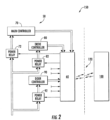
- FIG. 2 shows a schematic diagram of a system 150 including an elevator control system 50 comprising a safety unit 60 according to an embodiment of the invention and a central server system 100 in communication with the elevator control system 50.
- the elevator control system 50 comprises a main controller 70 for controlling overall operation of elevator functions, e.g. control of service requests, illumination of car and floors, emergency calls, general elevator safety functions, etc..
- Main controller 70 is provided with information from various safety switches provided in the elevator car 12 and the hoistway 16, e.g. car position sensors indicating the position of the car in the hoistway, landing door position sensors indicating the closing state of landing doors, and others.
- Main controller 70 is provided with electric energy via a power relay 72.
- Elevator control system 50 further comprises a drive controller 80 for controlling the drive machine driving the elevator car 12 as well as the brakes stopping or preventing movement of the car.
- Drive controller 80 is provided with electrical energy via a power relay 82.
- Elevator control system 50 further comprises a door controller 90 for controlling the door drive of the elevator car 12 driving the doors of the elevator car 12 such as to open and close the car doors and landing doors when the car 12 stops at a landing.
- Car doors are operated directly by the door drive while the respective landing doors are operated indirectly via movement of the car doors when the car doors open or close at a landing.
- Door controller 90 is also provided with a signal from a car door safety switch indicating the closing state of the car door.
- Door controller 90 is provided with electrical energy via a power relay 92.
- Main controller 70, drive controller 80, and door controller 90 each are in communication with safety unit 60. Information on the state of any of the safety switches assigned to main controller 70, drive controller 80, and door controller 90, respectively, is communicated to safety unit 60 via the respective data connections. Safety unit 60 may also actuate any safety actuators controlled by main controller 70, drive controller 80, or door controller 90. Usually, a bus system is used for these purposes. A popular bus system includes a serial field bus system, e.g. a CAN bus system. Safety unit 60 realizes an electric safety chain, as described in detail herein. In that respect, safety unit 60 receives status information from any of the safety switches connected to the main controller 70, drive controller 80, and door controller 90, respectively.
- Safety unit 60 evaluates this information in the configuration of a safety chain.
- the safety unit 60 controls a plurality of safety chains relevant with respect to different subsystems of the elevator system, respectively (e.g. a safety chain with respect to the main power supply of the elevator system, a safety chain with respect to the drive of a car, or a safety chain with respect to the door drive of a car, etc.).
- a safety chain has the configuration of a serial connection of all relevant safety switches. In case only a single one of the safety switches in the safety chain does not show a proper status information (e.g. indicates a not fully closed state of a door), the status of that safety switch will be considered open.
- safety unit 60 will stop further operation of the elevator system, or of the respective elevator subsystem, until the safety chain is closed again.
- safety unit 60 may interrupt power supply to the relevant controller for the elevator subsystem.
- safety unit 60 may interrupt power supply to the drive controller 80, in order to stop further movement of the car, safety unit 60 may interrupt power supply to the door controller 90 to stop further movement of the car door, and/or safety unit 60 may interrupt power supply to the main controller 70 to completely shut down the elevator system.
- control software defines the individual safety chains or safety circuits monitored by safety unit 60.
- the control software also provides for specific test procedures for checking the correct operation of each of the safety switches in the safety chains. These test procedures are carried out regularly on the initiative of safety unit 60.
- Control and test procedures for safety unit 60 are programmed by the manufacturer of the elevator system and provided to safety unit 60 upon installation.
- Control and test procedures for the safety unit 60 are updated from time to time.
- These software updates are also programmed by the manufacturer of the elevator system and are provided by a central server unit 100 of the manufacturer.
- Central server unit 100 resides outside the elevator control system 50 of the single elevator systems in operation, e.g. in a research and development facility of the manufacturer of the elevator system 10.
- central server unit 100 is in data communication with the elevator control system 50.
- the safety unit 60 is connected to the central server unit 100 via a public data network 120, e.g. the internet.
- a public data network 120 e.g. the internet.
- Any updates of software, including safety-related software residing in the safety unit 60, but also in any other relevant controller 70, 80, 90, are provided in a centralized manner by the central server unit 100 to each of the elevator control systems 50.
- the control systems 50 of each of these elevator control systems 50 regularly receive such software updates from the central server unit 100, either by way of a push mechanism installed in the server unit 100 (i.e.
- the server unit 100 regularly sends packages with software updates to the elevator control systems 50), or by a regularly executed inquiry for software updates initiated by the elevator control systems 50 to the central server unit 100.
- these updates are downloaded to the respective elevator control systems 50.
- the software updates relate to safety-related procedures, such software updates are not activated immediately after the download has been completed. Rather, the downloaded software update is stored in an "inactive" memory section of the respective elevator control system 50 (e.g. in an "inactive" memory section of safety unit 60) that is not used for executing control of elevator operations.
- a specific activation procedure is required for putting the software update into service, as described below.
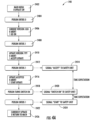
- FIG 3 shows a flow diagram of a method 200 of updating safety-related software in a system as shown in Figure 2 .
- An updated version of safety-related software to be implemented in a safety unit 60 of an elevator control system 50 of the configuration shown in Figure 2 is prepared by the manufacturer of the elevator system (step 210) and provided on server computer 100 as an update software package for download by respective elevator control systems 50.
- the software update package is provided with a digital signature (step 220) such that it can be verified by the receiver of the software update package (elevator control system 50, particularly safety unit 60) after download and before activation of the software update package that the software update package was created by the manufacturer and was released for download by the manufacturer.
- the digitally signed software update package is downloaded and stored by the recipient, i.e. the control system 50 (safety unit 60) of an elevator system 10 installed in a building, in a first memory section, also referred to as a DownloadMemory.
- the downloaded software update package will be received and stored by the safety unit 60 of that control system, but other configurations are conceivable where the downloaded software update package is temporarily stored at some other location until it is activated. In most cases, the download will simply involve a copying of the software update package into the DownloadMemory without any modification to it, but it might be conceivable to apply some data transformations to the software update package for purposes of transmission (e.g.
- the downloaded software update package will be stored in the DownloadMemory in essentially the same form as it has been provided by the server 100, i.e. without having been compiled or otherwise transformed, and with the digital signature applied to it.
- the software update package has been provided in the form of an executable program code
- the software update package will be principally readily executable in the form it is stored in the DownloadMemory of the elevator control system 50.
- the DownloadMemory will be an "inactive" memory section not used by the control system 50 when running its programs and procedures for controlling operation of the elevator system 10.
- control system 50 will be programmed to access the DownloadMemory only in case specific instructions exist that part of the control software should be updated.
- such software update procedure will be carried out after a reboot of the control system 50, given that (i) a not yet installed software update package resides in the DownloadMemory and (ii) at least in case the software update package relates to safety-related software, an activation of that software update package (as described below) has been completed successfully.
- storing the software update package in an inactive memory section of the elevator control system 50 ensures that the software update package is not yet executed as long as it resides in the DownloadMemory exclusively.
- activation requires the attendance of a service person, as described in the following.
- Activation of the software update package residing in the DownloadMemory is described as the next step 240 following the downloading step 230 in Figure 3 .
- Activation may be carried out by any procedure which makes sure that a service person is attendant at the elevator system at the time of activation of the software update package. This step is considered important, because it is necessary that a service person attends the elevator system when updating safety-related software, in order to bring the elevator system into a safe condition before the updating procedure is started and also ensure that the elevator system remains in such safe condition until the update procedure is completed successfully and it has been verified that the elevator control system 50 operates correctly after the update.
- the software update package is downloaded into an inactive memory section in step 230, and is transferred into an active memory section only after the activation step 240 has been successfully completed.
- the attendance of the service person during the activation procedure in step 240 is ensured by requiring a combination of operating a manual software update activation switch fixedly associated with the elevator system and additionally carrying out a predefined software update activation sequence.
- the manual software update activation switch may be included in the control board 24, either as an additional switch on that control board, or by assigning to operation of any of the switches on that control board (or to operation of any combination of these switches) the additional function of activating an update of safety-related software.
- the predefined software update activation sequence involves inputs to be provided by the service person to the elevator control system 50 (particularly, to the safety unit 60) via a service tool.
- the predefined software activation sequence is interactive so that the elevator control system 50 gives specific information to the service person regarding available software update packages residing in the DownloadMemory and regarding specifics of the control procedures to be updated by such software update packages, and requests the service person to confirm that the software update is to be effected.
- Figures 4A and 4B show in more detail the individual steps to be carried out in the course of exemplary interactive software update activation sequences according to step 240 in Figure 3 .
- the sequence of steps is identical according to the procedures of Figures 4A and 4B , except for an additional step 2421 in Figure 4B .
- the service person connects a service tool including a display and an input tool to the control board 24.
- the activation procedure 240 may start with a main menu being displayed to the service person and asking whether a software update is to be carried out.
- the control board 24 displays the current software version in step 2406 together with an inquiry whether to proceed ("1") or to abort the software activation procedure ("0").
- the update software version is displayed in step 2410 together with an inquiry whether to accept the update ("1") or whether to abort ("0").
- the control board 24 sends a signal "accept” to safety unit 60 (step 2414).
- the safety unit 60 waits for a predefined time window to receive in step 2420 a signal "switch on” indicating that the software update activation switch has been turned on in step 2418 (see arrow "time expectation” in Fig. 4A and 4B ).
- the software update activation switch has not been turned on after lapse of a predetermined time, the software updated activation procedure is aborted.
- step 2416 the display shows to the service person that the software update is accepted and asks to start the software update procedure.
- the service person has to operate (turn on) the software updated activation switch in step 2418.
- the software update activation switch is turned on in step 2418, a corresponding signal "switch on” is sent to safety unit 60 and received by safety unit in step 2420. Receipt of the "switch on” signal by safety unit 60 in step 2420 is decisive whether the time expectation is exceeded or not.
- the service person After activating the software update activation switch in step 2418, the service person has to confirm that the update procedure is to be started by entering "1" in step 2422 which will trigger sending another signal "start” to safety unit 60.
- step 2420 The time difference between the receipt of the "switch on” signal (step 2420) and receipt of the "start” signal (step 2424) at safety unit 60 is detected again and it is decided whether this time difference is within a further time expectation. If this is the case, the software activation procedure is started and carried out until completion (step 2426).
- the safety unit 60 checks whether the total time difference between step 2414 (receipt of signal "accept”) and step 2414 (receipt of signal "start") is within an expected time difference, and abort the software update activation process in case the expected time difference is exceeded.
- the service person has to know that first the software update activation switch is to be operated in step 2420, and then the software update procedure is to be started by an input in step 2422.
- this part of the procedure may be carried out interactively, as shown in Figure 4B .
- the display asks in step 2421 to start the software activation procedure, followed by the corresponding input in step 2422.
- the software update activation may involve a check of the authentication of the service person, e.g. by requesting the service person to input a specific PIN or using biometric features.
- the requirement to operate a manual software update activation switch ensures the attendance of a service person, and in addition the safe state of the elevator system during the update procedure.
- the additional software update activation sequence prevents an unintended activation of the software update by the service person and further might ensure that only a specific software update package selected by the activation procedure, but actively confirmed by the service person, is indeed activated.
- step 250 After step 240 has been completed with successful activation of an update procedure with respect to an updated version of safety-related software stored in the DownloadMemory, the elevator control system 50 is rebooted in step 250.
- Figure 5 indicates that the reboot procedure 250 is started only after an update flag is set in step 242 and the service person has confirmed that a reboot is to be carried out (step 244).
- it may be required to reboot any of the control systems in the elevator system 10, i.e. the elevator control system 50 as a whole (including, e.g., safety unit 60, main control 70, drive control 80, door control 90), or it may be sufficient to reboot only the safety unit 60.
- the elevator control system 50 will recognize that the software update activation switch has been operated (e.g. by checking the update flag, as shown in step 242 in Figure 5 ), and therefore will check in the DownloadMemory for any available and activated software update packages.
- the elevator control system 50 may consider any software update packages residing in the DownloadMemory as activated software packages, or it may check any software packages residing in the DownloadMemory for a further activation signature.
- the elevator control system 50 detects at least one activated software update package in the DownloadMemory, it will replace the corresponding software module in its active memory by executing that software update package (step 280) and execute the updated version of the software as derived from the software update package in the course of its further control (step 290).
- the elevator control system 50 or the safety unit 60 may carry out additional steps to check the consistency of the software update package stored in the DownloadMemory (step 260) and to check the authenticity of the software update package stored in the DownloadMemory (step 270).
- Checking consistency of the updated version of the safety-related software will be carried out before overwriting any existing version of the safety-related software in the active memory section of the elevator control system 50 and may involve comparing the software or software modules installed in the elevator control system 50 with header information in the software update package stored in the DownloadMemory, e.g. in order to check whether the software update package relates to a newer version of the same software or software module as already installed.
- the software update package might include an encrypted version of the software to be updated.
- the software update package might be encrypted using a public key assigned to the particular software module of safety-related software installed in the elevator control system 50.
- the elevator control system 50 may use its corresponding private key to decrypt the software update package. This makes sure that only an elevator system 50 having the correct private key corresponding to the public key used for encryption can decrypt the updated version of the safety related software and create an executable binary file.
- elevator control system 50 may be carried out with the aid of a digital signature provided to the software update package using a private key of the author of the software update package.
- the digital signature can be verified by the elevator control system 50 using the public key of the author, thus making sure that the software update package to be installed has been written by the author and does not have been modified.
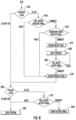
- FIG. 6 shows in more detail the procedures carried out following the reboot command in step 250, according to one embodiment.
- the status of the update flag is checked in step 252.
- the procedure advances to step 300 where the status of a valid flag is checked.
- the valid flag indicates whether the safety unit 60 is in a valid state. If the valid flag indicates that the safety unit is not in a valid state, the system is stopped immediately (step 320). If the valid flag indicates a valid state, the software residing in the active memory area of safety unit 60 is checked for integrity (by applying a CRC check) in step 310. In case this check fails, the system is stopped (step 320). Otherwise, the system is operated by starting carrying out the software residing in the active memory (step 290).
- step 252 the procedure carries out the reboot procedure with a software update.
- step 260 a consistency check of the newly downloaded software update is carried out by applying a CRC check to the passive memory area of safety unit 60, i.e. the memory area where the downloaded, but not yet installed, software package is stored. This check primarily checks whether the download was complete and successful. If the CRC check in step 260 fails, the update flag is cleared in step 330, and the reboot procedure continues without software update as described above. If the CRC check in step 260 is successful, the procedure continues with carrying out an authenticity check in step 270, e.g. by checking a digital signature applied to the downloaded software package.
- step 270 If the CRC check in step 270 fails, the update flag is again cleared in step 330, and the reboot procedure continues without software update as described above. If the check in step 270 is successful, the valid flag is cleared in step 272 indicating that the currently installed software version is considered no longer valid, and the downloaded software update package is copied from the passive memory area to the active memory area in step 280. In step 282 a further CRC check is applied to the newly copied software package in the active memory area to ensure that the copying procedure from the passive memory area to the active memory area was successful and complete. The copying procedure is repeated until the CRC check in step 280 is successful. Then, the software update flag is cleared in step 330, and the reboot procedure continues as descried above with the difference that the old software package has been replaced by the updated software package.
- the embodiments described above allow a technician to update safety-related software in a people conveyor system, particularly in an elevator system, without having to replace hardware.
- updating safety-related software in a people conveyor system may include providing an updated version of the safety-related software and storing the updated version of the safety-related software in a safety unit of the people conveyor system.
- the updated version of the safety-related software may be activated by operating a software update activation switch permanently associated with the people conveyor system.
- further control of the operation of the people conveyor system will be based on the updated version of the safety-related software.
- a safety unit or safety controller in the context of the embodiments described herein is an appliance or an apparatus that may include hardware and/or software.
- the safety unit receives input signals delivered by switching devices or sensor devices (also referred to as safety switches), and produces output signals therefrom by means of logic combinations and sometimes further signal or data processing steps.
- the output signals can then be supplied to actuators, which effect specific actions or reactions in the environment on the basis of the input signals.
- a programmable safety unit or controller allows the user to individually define the logic combinations and possibly further signal or data processing steps according to his needs using software, what is known as the user program of the safety unit. Programmability allows a great deal of flexibility in comparison with earlier solutions, in which the logic combinations were produced by defined wiring between various safety devices.
- a user program can be written using a commercially available personal computer (PC) and using appropriately set-up software programs.
- a preferred area of application for a safety unit or safety controller of this kind is in the field of machine safety for monitoring unsafe situations where an emergency power cut-off is required, or where operation of a machine is to be stopped or prevented.
- a people conveyor system usually operation of the movable component that transports people is to be stopped or prevented when there is a risk that persons can be injured by movement of that movable component.
- a respective signal is produced which is supplied to the safety unit as an input signal.
- the safety unit prevents further movement of the car, e.g. by providing a signal, or using an actuator, to shut down the drive machine.
- safety switches are located at various safety points, at which the state of safety-critical components (particularly, the position of movable components, such as, e.g., doors) must be monitored prior to the initiation of an action and, if necessary, during the course of this action.
- These safety switches may be connected in series to form a safety chain so that the action can only be started or continued when all the safety switches show a predetermined switching state.
- it must be ensured that before the start and during the travel of the elevator car all doors (car doors as well as landing doors on each floor) remain closed and mechanically locked. Therefore, travel of an elevator car is in general not allowed unless all of the safety switches in a safety chain connecting respective safety switches monitoring the closing state of the doors are closed.
- the safety unit may have a configuration to monitor electrically a safety chain as used in elevators or other conveyors for ensuring that prior to the elevator car starting, and while the car is travelling, all the doors (car doors and landing doors) are closed and remain mechanically locked.
- the safety chain may be configured such as to use contactlessly actuatable switching devices, as described in US 5 487 448 and US 6 732 839 , for example.
- a safety unit In contrast to a "normal" controller, a safety unit normally is required to always ensure a safe state of the installation or machine presenting the hazard even if a malfunction occurs in it or in a device connected to it. High demands are therefore normally made of safety units in terms of their own failsafety, which results in considerable complexity for development, manufacture, and maintenance of safety units. Often, safety units require particular approval by competent supervisory authorities, such as by the TUV in Germany, before they are used. In particular embodiments the safety unit may be required to observe prescribed safety standards as set down, by way of example, in International Standard IEC 61508, parts 1 to 3. In the elevator field, an electric safety unit usually is required to fulfil specific standards, as set out European Standard EN 81-20 (2014), for example. In the context of particular embodiments for carrying out software updates, a safety unit may be understood to mean a device or an arrangement which at least complies with section 5.11.2, in particular subsection 5.11.2.6, of EN 81-20 (2014).
- the updated version of the safety-related software may be stored in the safety unit in an automated way.
- the stored updated version of the safety-related software will not yet be active once stored, even in case the updated version of the safety-related software includes executable code intended to replace existing code.
- executable update code will, in principle, be useable by the controller of the safety unit or the people conveyor system to carry out the respective control procedures in the people conveyor system, it is suggested that the executable update code remains inactive during initial stages after the update code has been stored in the safety unit.
- the update code whether including executable code or not, will remain inactive until an activation of the update code has taken place.
- Activation requires presence of a person at the people conveyor site, in order to bring the people conveyor into a safe state and to make sure that the update code has been stored completely and correctly, and is installed completely and correctly. This is achieved by the requirement that activation of updated version of safety-related software requires operation of a software update activation switch permanently or fixedly associated to people conveyor system. Being permanently or fixedly associated with the conveyor system implies that the software update activation switch cannot be removed from the conveyor system by simple means, in particular is not removable without causing some form of damage or irreversible change to the people conveyor system. Usually, the people conveyor system cannot be put into operation after the software update activation switch has been removed or has been manipulated in some way.
- Presence of a person during the authentication procedure ensures that a person - usually a service person - is able to monitor the software update process properly.
- the service person is not required that the service person is present at each and every location, where an updated version of the safety-related software is required.
- the software update can be provided in respective software update modules, and each software update module can be stored in the safety unit at the respective locations where it is needed.
- the service person can operate in a safe environment, since it is not required to replace hardware, but rather the service person only needs to operate the software update activation switch.
- the update procedure may be easy and fast, thereby affording a higher availability of the people conveyor.
- Various checks and control procedures can be applied to the updated version of the safety-related software before activation is completed. Thereby, a secure and safe update process can be assured.
- the updated version of the safety-related software may be stored in the safety unit as a file including executable code.
- Executable code also referred to as executable file or executable program
- executable code is meant to be code that causes a suitable computer or a microprocessor to perform indicated tasks according to encoded instructions, as opposed to data (date file) that must be parsed by a program to be meaningful to the computer or microprocessor.
- Executable code refers to a completely functional program that can be executed without any installer.
- Executable code primarily comprises machine code instructions to be executed by a physical processor.
- a file containing instructions such as byte code
- a scripting language source file may therefore be considered executable in this sense.
- executable code is used to describe sequences of executable instructions that do not necessarily constitute a whole executable file.
- executable code may refer to sections within a program.
- a typical example for non-executable code would be source code including instructions that need to be compiled before they can be executed by a processor. Once compiled, the source code is no longer present, but has been transformed into a set of instructions that can be executed by a microprocessor.
- a completely functional program without any installer (which would be executable code as used herein) is also often called a program binary, or binaries (as opposed to the source code).
- the updated version of the safety-related software may be provided to the safety unit by any means. Often, downloading such software from the author to the safety unit via a data network will be the method of choice. The download may either be initiated by a server on the author side (similar to a data transfer of the "push" type), or may be initiated on the side of the safety unit (i.e. the safety unit is programmed to check for available software at an update server or the like). Besides any forms of software download from a server, any other forms of more conventional form of data transfer may be used as well, e.g. provision of the updated software version "manually" via mobile data processing devices or via suitable data carriers.
- the updated version of the safety-related software may be stored in a first memory section of the safety unit, the first memory section being an inactive memory section.
- Inactive memory section as used in this context is intended to refer to a memory, or a section of memory, that is not involved actively in any control procedures carried out by the safety unit in the context of controlling elevator operation. Data stored in such inactive memory section do not influence control of the people conveyor system, particularly do not affect any safety features, even in case that code includes executable program code that could be executed directly by a microprocessor.
- an existing version of the safety-related software residing in a second, active memory section of the safety unit may be overwritten by the updated version of that safety-related software.
- the second memory section will be an active memory section of the safety unit in the sense that any executable code stored in the second memory section will influence the control of safety-related functions of the people conveyor system during operation.
- executable program code (binary code) will be stored in the second memory section and will be executed to control safety-related functions of the people conveyor.
- non-binary code is stored in the second memory section, such non-binary code might be converted into executable code (binary) before start of a control procedure (e.g. in the course of a booting procedure or rebooting procedure) or while the control procedure is executed.
- the operating of the software update activation switch may include operating a switch fixedly attached to a control board permanently assigned to the people conveyor system.
- the activation procedure cannot be carried out successfully from any remote location.
- the download or storing of an updated version of safety-related software to the safety unit may be achieved in a fully, or at least widely, automated way, attendance of a person, usually a service person, at the site of the people conveyor is required in order to activate the updated version of the safety-related software.
- attendance of a person, usually a service person, at the site of the people conveyor is required in order to activate the updated version of the safety-related software.
- There is no possibility for completing activation automatically i.e. without interaction with a person operation the activation switch), nor is it possible that the person operates the software update activation switch remotely.
- the software update activation switch While it may be possible to require an authorization for persons, such that these persons are allowed to operate the software update activation switch, this is not a particular requirement. In a lot of cases, no authorization will be required, so that, in principle, anybody could operate the software update activation switch. In order to avoid abusive operation of the software update activation switch, usually the software update activation switch will be provided in such a way as to be accessible only to persons familiar with operation of the people conveyor, in particular with its safety procedures.
- the software update activation switch may be included in a control board, as it is usually provided in a people conveyor system. In one example, such control board may be provided for allowing an emergency electrical operation of the elevator car, as required in most elevator safety codes (e.g. section 5.12.1.6 of EN 81-20(2014)).
- the operating of the software update activation switch may include operating at least one switch included in such control board.
- a conventional control board may also include the possibility to activate updates of safety-related software by operating one, or a combination of, the switches provided in the control board.
- the software update activation switch may have a configuration to be manually operated by a person.
- such manually operated switch may have the configuration of a mechanical switch. This ensures that a person will be in attendance for activating the updated version of the safety-related software, since a manually operated switch cannot be operated remotely.
- the software update activation switch may not be freely accessible to anybody, but may be provided in such a way that a key is required to access the software update activation switch.
- a particular key (often a triangular key) is required to access an emergency electrical operation control board.
- the same key may be used for accessing the software update activation switch.
- Such key not necessarily needs to be assigned to a specific person, but may be given to any person fulfilling certain requirements (e.g. to any person wishing to carry out maintenance to a particular people conveyor system).
- activating the updated version of the safety-related software further may include carrying out a predefined activation operation protocol.
- Such activation operation protocol may be initiated by operating the software update activation switch.
- the activation operation protocol may include operating a specific number of switches on a software activation control board in a predefined sequence.
- the activation operation protocol may be interactive and thus require some form of a dialog between the person and the safety unit.
- One way of realizing an interactive activation operation protocol would be by way of requiring the person to connect a mobile terminal to the safety unit and answer specific questions.
- Providing an interactive activation operation protocol further allows the possibility that the person checks the software updates available at the safety unit and confirms that a specific software is meant to be activated before the activation is completed.
- the updated software version may be downloaded from a source computer via a data network, particularly a public data network like the internet.
- the updated version of the safety-related software may be provided and stored in the safety unit as an encrypted file.
- the updated version of the safety-related software may include a digital signature. While such measures are particularly useful when downloading the updated version of the safety-related software via a public data network, they are also useful for more conventional forms of data transfer. Particularly, these measures allow for checking authenticity of the updated version of the safety-related software in the context of the activation procedure, before overwriting the existing version of the safety-related software in the second (active) memory section of the safety unit of the people conveyor system. For example, the checking of the authenticity of the updated software version may be carried out after the operation of the software update activation switch.
- checking authenticity may be carried out with the aid of a digital signature provided to the updated version of the safety-related software using a private key of the author of the software update.
- the digital signature can be verified by the recipient, i.e. the safety unit of the people conveyor system, using the public key of the author, thus making sure that the software update has been written by the author and does not have been modified.
- Activating the updated version of the safety-related software further may include checking consistency of the updated version of the safety-related software. Also, such checking of consistency will be carried out before overwriting the existing version of the safety-related software in the second (active) memory section of the safety unit of the people conveyor system. Consistency may be checked by comparing the software or software modules installed in the safety unit with the software update, and checking whether the software update relates to a newer version of the same software or software module installed in the safety unit. A further consistency check might be conceivable using an encrypted updated version of the safety-related software, e.g. each module of safety-related software installed in the safety unit may be associated with a respective private key.
- the updated version of the software module may be encrypted by the author using the corresponding public key of that software module.
- the safety unit may decrypt the encrypted updated software version using the private key of that software module. This makes sure that only a safety unit having the correct private key corresponding to the public key used for encryption can decrypt the updated version of the software module in order to create an executable binary file.
- the checking of the consistency of the updated version of the safety-related software may be carried out before the checking of the authenticity of the updated version of the safety-related software.
- the embodiments disclosed herein also relate to a people conveyor system, particularly an elevator system, comprising a controller for controlling operation of the people conveyor system, the controller including at least one safety unit configured to control safety-related functions of the people conveyor system, the safety unit configured to carry out the method of updating safety-related software as described above.
- the people conveyor system particularly may include at least one movable component for conveying persons between different landings, and the controller may control operation of that movable component.
- the movable component will comprise at least one elevator car movable between different landings located at different floors in a building, usually along a hoistway.
- the embodiments disclosed herein relate to a system comprising at least one software update server and at least one people conveyor system as described before.
- the software server will be configured to provide an update of safety-related software for the people conveyor system, e.g. in the form of a server in a maintenance center of the supplier of the people conveyor system.
- the people conveyor system will be configured to receive the update of safety-related software from the software update server via a data network and carry out the update procedures described herein in based on the updated software version stored in the safety unit.
Landscapes
- Engineering & Computer Science (AREA)
- Computer Security & Cryptography (AREA)
- Theoretical Computer Science (AREA)
- Automation & Control Theory (AREA)
- General Engineering & Computer Science (AREA)
- Software Systems (AREA)
- General Physics & Mathematics (AREA)
- Physics & Mathematics (AREA)
- Computer Networks & Wireless Communication (AREA)
- Signal Processing (AREA)
- Computer Hardware Design (AREA)
- Computing Systems (AREA)
- General Health & Medical Sciences (AREA)
- Bioethics (AREA)
- Health & Medical Sciences (AREA)
- Indicating And Signalling Devices For Elevators (AREA)
- Maintenance And Inspection Apparatuses For Elevators (AREA)
Claims (11)
- Procédé (200) de mise à jour d'un logiciel lié à la sécurité dans un système de transport de personnes, en particulier dans un système d'ascenseur (10), dans lequel le procédé comprend la réalisation d'un protocole d'opération d'activation interactive prédéfini comprenant les étapes de :- fourniture d'une version mise à jour du logiciel lié à la sécurité (210) ;- stockage (230) de la version mise à jour du logiciel lié à la sécurité dans une première section de mémoire d'une unité de sécurité (60) du système de transport de personnes, la première section de mémoire étant une section de mémoire inactive qui n'est pas utilisée pour exécuter la commande des opérations d'ascenseur ;- connexion d'un outil de service comprenant un affichage et un outil d'entrée dans le système de transport de personnes ;- affichage d'une demande d'acceptation de la mise à jour sur l'affichage et de demande d'une entrée indiquant s'il faut poursuivre ou abandonner la procédure d'activation du logiciel,- envoi d'un signal « accepter » à l'unité de sécurité (60) si une entrée indiquant de continuer a été entrée via l'outil d'entrée ;- après que le signal « accepter » a été reçu par l'unité de sécurité (60), attente d'une période de temps prédéterminée pour recevoir un signal « allumer » indiquant qu'un interrupteur d'activation de mise à jour de logiciel associé en permanence au système de transport de personnes a été actionné ;- dans le cas où le signal « allumer » est reçu dans la période de temps prédéterminée, attente d'une confirmation indiquant que la procédure d'activation de logiciel doit être lancée pour être saisie via l'outil d'entrée dans une attente de temps prédéterminée ;- dans le cas où la confirmation a été entrée dans l'attente de temps prédéterminée, activation (240) de la version mise à jour du logiciel lié à la sécurité ; et- en cas d'activation réussie de la version mise à jour du logiciel lié à la sécurité, écrasement d'une version existante du logiciel lié à la sécurité dans une seconde section de mémoire active de l'unité de sécurité (280) et commande du fonctionnement du système de transport de personnes sur la base sur la version mise à jour du logiciel lié à la sécurité (290).
- Procédé (200) selon la revendication 1, dans lequel la version mise à jour du logiciel lié à la sécurité est stockée dans l'unité de sécurité (60) sous la forme d'un fichier comprenant un code exécutable.
- Procédé (200) selon l'une quelconque des revendications 1 ou 2, dans lequel l'étape de fonctionnement du commutateur d'activation de mise à jour de logiciel comprend le fonctionnement d'un commutateur fixé de manière permanente à un tableau de commande (24) affecté en permanence au système de transport de personnes.
- Procédé (200) selon la revendication 3, dans lequel le commutateur d'activation de mise à jour de logiciel comprend un commutateur d'activation de fonctionnement électrique d'urgence.
- Procédé (200) selon l'une quelconque des revendications 1 à 4, dans lequel le commutateur d'activation de mise à jour de logiciel doit être actionné manuellement par une personne.
- Procédé (200) selon l'une quelconque des revendications 1 à 5, dans lequel le commutateur d'activation de mise à jour de logiciel est accessible à l'aide d'une clé (28), notamment à l'aide d'une clé de fonctionnement électrique d'urgence.
- Procédé (200) selon l'une quelconque des revendications 1 à 6, dans lequel la version mise à jour du logiciel lié à la sécurité est téléchargée depuis un ordinateur source (100) via un réseau de données (120), notamment via un réseau de données public.
- Procédé (200) selon l'une quelconque des revendications 1 à 7, dans lequel la version mise à jour du logiciel lié à la sécurité est stockée sous la forme d'un fichier crypté et/ou comprend une signature numérique.
- Procédé (200) selon l'une quelconque des revendications 1 à 8, dans lequel l'activation de la version mise à jour du logiciel lié à la sécurité comprend en outre la vérification de l'authenticité de la version mise à jour du logiciel lié à la sécurité (270) et/ou la vérification de la cohérence de la version mise à jour du logiciel lié à la sécurité (260).
- Système de transport de personnes, en particulier un système d'ascenseur (10), comprenant un dispositif de commande (50) pour commander le fonctionnement du système de transport de personnes, le dispositif de commande (50) comprenant au moins une unité de sécurité (60) configurée pour commander des fonctions liées à la sécurité du système de transport de personnes, l'unité de sécurité (60) étant configurée pour exécuter le procédé (200) de mise à jour d'un logiciel lié à la sécurité selon l'une quelconque des revendications 1 à 9.
- Système (150) comprenant au moins un serveur de mise à jour de logiciel (100) et au moins un système de transport de personnes (10) selon la revendication 10, le serveur de logiciel (100) étant configuré pour fournir une mise à jour de logiciel lié à la sécurité pour le système de transport de personnes (10), le système de transport de personnes (10) étant configuré pour recevoir la mise à jour de logiciel lié à la sécurité depuis le serveur de mise à jour de logiciel (100) via un réseau de données (120).
Applications Claiming Priority (1)
| Application Number | Priority Date | Filing Date | Title |
|---|---|---|---|
| PCT/EP2015/060475 WO2016180484A1 (fr) | 2015-05-12 | 2015-05-12 | Procédé de mise à jour d'un logiciel lié à la sécurité |
Publications (2)
| Publication Number | Publication Date |
|---|---|
| EP3295263A1 EP3295263A1 (fr) | 2018-03-21 |
| EP3295263B1 true EP3295263B1 (fr) | 2023-08-23 |
Family
ID=53189043
Family Applications (1)
| Application Number | Title | Priority Date | Filing Date |
|---|---|---|---|
| EP15723205.9A Active EP3295263B1 (fr) | 2015-05-12 | 2015-05-12 | Procédé de mise à jour d'un logiciel lié à la sécurité |
Country Status (6)
| Country | Link |
|---|---|
| US (1) | US20180157482A1 (fr) |
| EP (1) | EP3295263B1 (fr) |
| KR (1) | KR20180005690A (fr) |
| CN (1) | CN107636607A (fr) |
| ES (1) | ES2964006T3 (fr) |
| WO (1) | WO2016180484A1 (fr) |
Families Citing this family (31)
| Publication number | Priority date | Publication date | Assignee | Title |
|---|---|---|---|---|
| EP3046863B1 (fr) * | 2013-09-18 | 2022-06-08 | Inventio AG | Procédé destiné au fonctionnement d'un dispositif de commande d'ascenseur |
| EP3338215B1 (fr) * | 2015-10-02 | 2020-12-02 | Kone Corporation | Accès à un moyen de commande de dispositif de transport de passagers |
| US10623188B2 (en) * | 2017-04-26 | 2020-04-14 | Fresenius Medical Care Holdings, Inc. | Securely distributing medical prescriptions |
| EP3438032A1 (fr) * | 2017-07-31 | 2019-02-06 | Inventio AG | Procédé de mise à jour du logiciel d'un système d'ascenseur et système de mise à jour d'un logiciel d'un système d'ascenseur |
| DE102017213405A1 (de) * | 2017-08-02 | 2019-02-07 | Franz Xaver Meiller Fahrzeug- Und Maschinenfabrik - Gmbh & Co Kg | Aufzugsystem |
| US20190112148A1 (en) * | 2017-10-13 | 2019-04-18 | Otis Elevator Company | Commissioning and upgrading remote software/firmware using augmented reality |
| EP3700850B1 (fr) | 2017-10-27 | 2021-12-01 | Inventio AG | Système de sécurité pour installation de transport de personnes reliée au bâtiment |
| US11095502B2 (en) * | 2017-11-03 | 2021-08-17 | Otis Elevator Company | Adhoc protocol for commissioning connected devices in the field |
| CN110077945B (zh) * | 2018-01-26 | 2021-09-14 | 日立楼宇技术(广州)有限公司 | 一种电梯外召设备升级方法、装置、设备及其存储介质 |
| EP3530602B1 (fr) | 2018-02-23 | 2020-06-17 | Otis Elevator Company | Circuit de sécurité pour un système d'ascenseur, dispositif et procédé de mise à jour d'un tel circuit de sécurité |
| CN110569048A (zh) | 2018-06-06 | 2019-12-13 | 奥的斯电梯公司 | 在关于新软件可用性的总运行计数数据上的自动升级 |
| EP3617111A1 (fr) | 2018-08-30 | 2020-03-04 | Inventio AG | Téléchargement de mises à jour de logiciel de contrôle sur des systèmes de transport de passagers |
| US11472663B2 (en) | 2018-10-01 | 2022-10-18 | Otis Elevator Company | Automatic software upgrade assistant for remote elevator monitoring experts using machine learning |
| US11372977B2 (en) * | 2018-11-12 | 2022-06-28 | Thirdwayv, Inc. | Secure over-the-air firmware upgrade |
| EP3941871B1 (fr) | 2019-03-18 | 2024-06-05 | Inventio Ag | Appareil de sécurité pour une installation de transport des personnes liée au bâtiment |
| CN113382943B (zh) * | 2019-03-28 | 2023-12-19 | 因温特奥股份公司 | 用于启用通信网关的方法和系统 |
| CN110155841B (zh) * | 2019-06-03 | 2020-12-08 | 日立楼宇技术(广州)有限公司 | 一种电梯元件识别系统、电梯及电梯元件识别方法 |
| JP7177755B2 (ja) * | 2019-07-24 | 2022-11-24 | 株式会社日立製作所 | サーバ、ソフトウェア更新システム、およびソフトウェア更新装置 |
| EP3915912A1 (fr) * | 2020-05-29 | 2021-12-01 | KONE Corporation | Système de transport de personnes et procédé de mise à jour de logiciel d'un composant de transport de personnes dans un système de transport de personnes |
| JP7786057B2 (ja) * | 2021-07-09 | 2025-12-16 | 三菱電機ビルソリューションズ株式会社 | エレベーターの制御装置 |
| EP4430471A1 (fr) * | 2021-11-09 | 2024-09-18 | ASSA ABLOY Entrance Systems AB | Procédé de mise à jour d'un système de porte automatique et système de porte automatique |
| CN118575442A (zh) * | 2021-12-20 | 2024-08-30 | 因温特奥股份公司 | 在乘客运输设备中部署安全相关软件的方法、乘客运输设备和安全相关软件更新基础设施 |
| WO2023156013A1 (fr) * | 2022-02-21 | 2023-08-24 | Kone Corporation | Système de gestion de sécurité fonctionnelle et procédé de gestion d'état de sécurité fonctionnelle d'au moins un équipement sous commande |
| DE102022107050A1 (de) | 2022-03-25 | 2023-09-28 | Tk Elevator Innovation And Operations Gmbh | Aufzugsystem und Verfahren jeweils zum einheitlichen Verarbeiten von Aufzugsystemparametern sowie Computerprogrammprodukt und Verwendung |
| DE102022107049A1 (de) | 2022-03-25 | 2023-09-28 | Tk Elevator Innovation And Operations Gmbh | Aufzugsystem mit modular abrufbaren Funktionsmodulen sowie Computerprogrammprodukt, Verwendung und Verfahren |
| WO2024153308A1 (fr) * | 2023-01-16 | 2024-07-25 | Kone Corporation | Mécanisme de mise à jour de logiciel pour les applications critiques |
| CN116462064A (zh) * | 2023-03-24 | 2023-07-21 | 深圳优地科技有限公司 | 梯控系统升级方法、装置、电子设备及存储介质 |
| WO2024252057A1 (fr) * | 2023-06-07 | 2024-12-12 | Kone Corporation | Procédé et système de gestion de tâches de maintenance de logiciel pour gérer des tâches de maintenance de logiciel d'un système de transport de personnes |
| EP4530831A1 (fr) * | 2023-09-27 | 2025-04-02 | Otis Elevator Company | Carte de circuit imprimé |
| EP4538212B1 (fr) * | 2023-10-13 | 2026-04-08 | Ziehl-Abegg SE | Unité électronique d'ascenseur ainsi qu'installation d'ascenseur correspondante, procédé de vérification de sécurité autonome d'une unité électronique d'ascenseur |
| CN120500678A (zh) | 2023-12-13 | 2025-08-15 | 现代电梯株式会社 | 电梯维护管理设备 |
Family Cites Families (11)
| Publication number | Priority date | Publication date | Assignee | Title |
|---|---|---|---|---|
| US6173814B1 (en) * | 1999-03-04 | 2001-01-16 | Otis Elevator Company | Electronic safety system for elevators having a dual redundant safety bus |
| WO2007091330A1 (fr) * | 2006-02-10 | 2007-08-16 | Mitsubishi Denki Kabushiki Kaisha | système de mise à jour à distance pour des programmes de commande d'ascenseur |
| EP1857897B1 (fr) * | 2006-05-15 | 2014-01-15 | ABB PATENT GmbH | Procédé et système destinés à la production ou la modification de données relative à la sécurité pour un dispositif de commande |
| MX2007010438A (es) * | 2006-09-12 | 2009-02-03 | Inventio Ag | Procedimiento para modernizar el control de una instalacion de ascensor. |
| US8770350B2 (en) * | 2008-12-18 | 2014-07-08 | Otis Elevator Company | Access control system and access control method for a people conveyor control system |
| US8594850B1 (en) * | 2012-09-30 | 2013-11-26 | Nest Labs, Inc. | Updating control software on a network-connected HVAC controller |
| US9122554B2 (en) * | 2013-02-08 | 2015-09-01 | Microsoft Technology Licensing, Llc | Pervasive service providing device-specific updates |
| US9021462B2 (en) * | 2013-03-13 | 2015-04-28 | Johnson Controls Technology Company | Systems and methods for provisioning equipment |
| ES2805778T3 (es) * | 2013-03-25 | 2021-02-15 | Kone Corp | Sistema y procedimiento para evitar el uso de productos pirata en el control de un ascensor |
| CN103663024B (zh) * | 2013-09-06 | 2016-04-20 | 苏州汇川技术有限公司 | 电梯一体化控制器烧录系统、方法及智能手机 |
| CN103942075B (zh) * | 2014-04-09 | 2017-11-14 | 苏州汇川技术有限公司 | 一种电梯控制器固件烧录系统及方法 |
-
2015
- 2015-05-12 WO PCT/EP2015/060475 patent/WO2016180484A1/fr not_active Ceased
- 2015-05-12 EP EP15723205.9A patent/EP3295263B1/fr active Active
- 2015-05-12 CN CN201580080011.8A patent/CN107636607A/zh active Pending
- 2015-05-12 KR KR1020177035457A patent/KR20180005690A/ko not_active Ceased
- 2015-05-12 US US15/572,948 patent/US20180157482A1/en not_active Abandoned
- 2015-05-12 ES ES15723205T patent/ES2964006T3/es active Active
Also Published As
| Publication number | Publication date |
|---|---|
| EP3295263A1 (fr) | 2018-03-21 |
| KR20180005690A (ko) | 2018-01-16 |
| US20180157482A1 (en) | 2018-06-07 |
| WO2016180484A1 (fr) | 2016-11-17 |
| CN107636607A (zh) | 2018-01-26 |
| ES2964006T3 (es) | 2024-04-03 |
Similar Documents
| Publication | Publication Date | Title |
|---|---|---|
| EP3295263B1 (fr) | Procédé de mise à jour d'un logiciel lié à la sécurité | |
| CA2119343C (fr) | Methode et appareil pour obtenir, stocker et afficher les donnees de commande d'un ascenseur | |
| US20160280509A1 (en) | Method and device for commissioning an elevator system | |
| CN107848743A (zh) | 电梯控制系统 | |
| CN107250021B (zh) | 用于运行具有临时参与者的电子安全系统的方法 | |
| EP3530602B1 (fr) | Circuit de sécurité pour un système d'ascenseur, dispositif et procédé de mise à jour d'un tel circuit de sécurité | |
| AU2018356262C1 (en) | Safety system for a building-related passenger transportation system | |
| AU2016369385B2 (en) | Passenger transport installation, servicing method and servicing controller | |
| CN107250020A (zh) | 用于运行具有临时参与者的电子安全系统的方法 | |
| WO2018001830A1 (fr) | Ascenseur avec une unité de commande de superposition de chaîne de sécurité comprenant un commutateur de sécurité de surveillance plc de sécurité et miroir d'un état de commutation avec une commande d'ascenseur | |
| US7416058B2 (en) | Method of operating an elevator installation providing at least one optional function, an elevator control and an elevator installation therefor | |
| US20180314512A1 (en) | Software updating device | |
| US11909821B2 (en) | Method for processing application programs in a distributed automation system | |
| US12434942B2 (en) | Security device for building-related passenger conveyor system | |
| US20250298606A1 (en) | Software update mechanism for time critical applications | |
| EP4686685A1 (fr) | Système d'ascenseur modulaire à architecture configurable | |
| HK40128129A (zh) | 用於时间关键应用的软件更新机制 | |
| US20260072675A1 (en) | Method and a software maintenance task management system for managing software maintenance tasks of a people conveyor system | |
| EP4433403B1 (fr) | Acquisition des nouveaus ensembles de paramètres d'opération d'ascenseur | |
| WO2025083831A1 (fr) | Système de commande d'ascenseur, procédé de commande d'ascenseur et ascenseur | |
| CN118239348A (zh) | 验证电梯安全系统中的配置参数变化 | |
| HK40053329B (en) | Security device for building-related passenger conveyor system | |
| CN119156338A (zh) | 用于操作电梯以进行维护的方法 |
Legal Events
| Date | Code | Title | Description |
|---|---|---|---|
| STAA | Information on the status of an ep patent application or granted ep patent |
Free format text: STATUS: THE INTERNATIONAL PUBLICATION HAS BEEN MADE |
|
| PUAI | Public reference made under article 153(3) epc to a published international application that has entered the european phase |
Free format text: ORIGINAL CODE: 0009012 |
|
| STAA | Information on the status of an ep patent application or granted ep patent |
Free format text: STATUS: REQUEST FOR EXAMINATION WAS MADE |
|
| 17P | Request for examination filed |
Effective date: 20171110 |
|
| AK | Designated contracting states |
Kind code of ref document: A1 Designated state(s): AL AT BE BG CH CY CZ DE DK EE ES FI FR GB GR HR HU IE IS IT LI LT LU LV MC MK MT NL NO PL PT RO RS SE SI SK SM TR |
|
| AX | Request for extension of the european patent |
Extension state: BA ME |
|
| DAV | Request for validation of the european patent (deleted) | ||
| DAX | Request for extension of the european patent (deleted) | ||
| STAA | Information on the status of an ep patent application or granted ep patent |
Free format text: STATUS: EXAMINATION IS IN PROGRESS |
|
| 17Q | First examination report despatched |
Effective date: 20201125 |
|
| GRAP | Despatch of communication of intention to grant a patent |
Free format text: ORIGINAL CODE: EPIDOSNIGR1 |
|
| STAA | Information on the status of an ep patent application or granted ep patent |
Free format text: STATUS: GRANT OF PATENT IS INTENDED |
|
| INTG | Intention to grant announced |
Effective date: 20230414 |
|
| GRAS | Grant fee paid |
Free format text: ORIGINAL CODE: EPIDOSNIGR3 |
|
| GRAA | (expected) grant |
Free format text: ORIGINAL CODE: 0009210 |
|
| STAA | Information on the status of an ep patent application or granted ep patent |
Free format text: STATUS: THE PATENT HAS BEEN GRANTED |
|
| AK | Designated contracting states |
Kind code of ref document: B1 Designated state(s): AL AT BE BG CH CY CZ DE DK EE ES FI FR GB GR HR HU IE IS IT LI LT LU LV MC MK MT NL NO PL PT RO RS SE SI SK SM TR |
|
| REG | Reference to a national code |
Ref country code: GB Ref legal event code: FG4D |
|
| REG | Reference to a national code |
Ref country code: CH Ref legal event code: EP |
|
| REG | Reference to a national code |
Ref country code: IE Ref legal event code: FG4D |
|
| REG | Reference to a national code |
Ref country code: DE Ref legal event code: R096 Ref document number: 602015085259 Country of ref document: DE |
|
| REG | Reference to a national code |
Ref country code: LT Ref legal event code: MG9D |
|
| REG | Reference to a national code |
Ref country code: NL Ref legal event code: MP Effective date: 20230823 |
|
| REG | Reference to a national code |
Ref country code: AT Ref legal event code: MK05 Ref document number: 1603312 Country of ref document: AT Kind code of ref document: T Effective date: 20230823 |
|
| PG25 | Lapsed in a contracting state [announced via postgrant information from national office to epo] |
Ref country code: GR Free format text: LAPSE BECAUSE OF FAILURE TO SUBMIT A TRANSLATION OF THE DESCRIPTION OR TO PAY THE FEE WITHIN THE PRESCRIBED TIME-LIMIT Effective date: 20231124 |
|
| PG25 | Lapsed in a contracting state [announced via postgrant information from national office to epo] |
Ref country code: IS Free format text: LAPSE BECAUSE OF FAILURE TO SUBMIT A TRANSLATION OF THE DESCRIPTION OR TO PAY THE FEE WITHIN THE PRESCRIBED TIME-LIMIT Effective date: 20231223 |
|
| PG25 | Lapsed in a contracting state [announced via postgrant information from national office to epo] |
Ref country code: SE Free format text: LAPSE BECAUSE OF FAILURE TO SUBMIT A TRANSLATION OF THE DESCRIPTION OR TO PAY THE FEE WITHIN THE PRESCRIBED TIME-LIMIT Effective date: 20230823 Ref country code: RS Free format text: LAPSE BECAUSE OF FAILURE TO SUBMIT A TRANSLATION OF THE DESCRIPTION OR TO PAY THE FEE WITHIN THE PRESCRIBED TIME-LIMIT Effective date: 20230823 Ref country code: PT Free format text: LAPSE BECAUSE OF FAILURE TO SUBMIT A TRANSLATION OF THE DESCRIPTION OR TO PAY THE FEE WITHIN THE PRESCRIBED TIME-LIMIT Effective date: 20231226 Ref country code: NO Free format text: LAPSE BECAUSE OF FAILURE TO SUBMIT A TRANSLATION OF THE DESCRIPTION OR TO PAY THE FEE WITHIN THE PRESCRIBED TIME-LIMIT Effective date: 20231123 Ref country code: NL Free format text: LAPSE BECAUSE OF FAILURE TO SUBMIT A TRANSLATION OF THE DESCRIPTION OR TO PAY THE FEE WITHIN THE PRESCRIBED TIME-LIMIT Effective date: 20230823 Ref country code: LV Free format text: LAPSE BECAUSE OF FAILURE TO SUBMIT A TRANSLATION OF THE DESCRIPTION OR TO PAY THE FEE WITHIN THE PRESCRIBED TIME-LIMIT Effective date: 20230823 Ref country code: LT Free format text: LAPSE BECAUSE OF FAILURE TO SUBMIT A TRANSLATION OF THE DESCRIPTION OR TO PAY THE FEE WITHIN THE PRESCRIBED TIME-LIMIT Effective date: 20230823 Ref country code: IS Free format text: LAPSE BECAUSE OF FAILURE TO SUBMIT A TRANSLATION OF THE DESCRIPTION OR TO PAY THE FEE WITHIN THE PRESCRIBED TIME-LIMIT Effective date: 20231223 Ref country code: HR Free format text: LAPSE BECAUSE OF FAILURE TO SUBMIT A TRANSLATION OF THE DESCRIPTION OR TO PAY THE FEE WITHIN THE PRESCRIBED TIME-LIMIT Effective date: 20230823 Ref country code: GR Free format text: LAPSE BECAUSE OF FAILURE TO SUBMIT A TRANSLATION OF THE DESCRIPTION OR TO PAY THE FEE WITHIN THE PRESCRIBED TIME-LIMIT Effective date: 20231124 Ref country code: FI Free format text: LAPSE BECAUSE OF FAILURE TO SUBMIT A TRANSLATION OF THE DESCRIPTION OR TO PAY THE FEE WITHIN THE PRESCRIBED TIME-LIMIT Effective date: 20230823 Ref country code: AT Free format text: LAPSE BECAUSE OF FAILURE TO SUBMIT A TRANSLATION OF THE DESCRIPTION OR TO PAY THE FEE WITHIN THE PRESCRIBED TIME-LIMIT Effective date: 20230823 |
|
| PG25 | Lapsed in a contracting state [announced via postgrant information from national office to epo] |
Ref country code: PL Free format text: LAPSE BECAUSE OF FAILURE TO SUBMIT A TRANSLATION OF THE DESCRIPTION OR TO PAY THE FEE WITHIN THE PRESCRIBED TIME-LIMIT Effective date: 20230823 |
|
| REG | Reference to a national code |
Ref country code: ES Ref legal event code: FG2A Ref document number: 2964006 Country of ref document: ES Kind code of ref document: T3 Effective date: 20240403 |
|
| PG25 | Lapsed in a contracting state [announced via postgrant information from national office to epo] |
Ref country code: SM Free format text: LAPSE BECAUSE OF FAILURE TO SUBMIT A TRANSLATION OF THE DESCRIPTION OR TO PAY THE FEE WITHIN THE PRESCRIBED TIME-LIMIT Effective date: 20230823 Ref country code: RO Free format text: LAPSE BECAUSE OF FAILURE TO SUBMIT A TRANSLATION OF THE DESCRIPTION OR TO PAY THE FEE WITHIN THE PRESCRIBED TIME-LIMIT Effective date: 20230823 Ref country code: EE Free format text: LAPSE BECAUSE OF FAILURE TO SUBMIT A TRANSLATION OF THE DESCRIPTION OR TO PAY THE FEE WITHIN THE PRESCRIBED TIME-LIMIT Effective date: 20230823 Ref country code: DK Free format text: LAPSE BECAUSE OF FAILURE TO SUBMIT A TRANSLATION OF THE DESCRIPTION OR TO PAY THE FEE WITHIN THE PRESCRIBED TIME-LIMIT Effective date: 20230823 Ref country code: CZ Free format text: LAPSE BECAUSE OF FAILURE TO SUBMIT A TRANSLATION OF THE DESCRIPTION OR TO PAY THE FEE WITHIN THE PRESCRIBED TIME-LIMIT Effective date: 20230823 Ref country code: SK Free format text: LAPSE BECAUSE OF FAILURE TO SUBMIT A TRANSLATION OF THE DESCRIPTION OR TO PAY THE FEE WITHIN THE PRESCRIBED TIME-LIMIT Effective date: 20230823 |
|
| REG | Reference to a national code |
Ref country code: DE Ref legal event code: R097 Ref document number: 602015085259 Country of ref document: DE |
|
| PG25 | Lapsed in a contracting state [announced via postgrant information from national office to epo] |
Ref country code: IT Free format text: LAPSE BECAUSE OF FAILURE TO SUBMIT A TRANSLATION OF THE DESCRIPTION OR TO PAY THE FEE WITHIN THE PRESCRIBED TIME-LIMIT Effective date: 20230823 |
|
| PLBE | No opposition filed within time limit |
Free format text: ORIGINAL CODE: 0009261 |
|
| STAA | Information on the status of an ep patent application or granted ep patent |
Free format text: STATUS: NO OPPOSITION FILED WITHIN TIME LIMIT |
|
| 26N | No opposition filed |
Effective date: 20240524 |
|
| PG25 | Lapsed in a contracting state [announced via postgrant information from national office to epo] |
Ref country code: SI Free format text: LAPSE BECAUSE OF FAILURE TO SUBMIT A TRANSLATION OF THE DESCRIPTION OR TO PAY THE FEE WITHIN THE PRESCRIBED TIME-LIMIT Effective date: 20230823 |
|
| PG25 | Lapsed in a contracting state [announced via postgrant information from national office to epo] |
Ref country code: BG Free format text: LAPSE BECAUSE OF FAILURE TO SUBMIT A TRANSLATION OF THE DESCRIPTION OR TO PAY THE FEE WITHIN THE PRESCRIBED TIME-LIMIT Effective date: 20230823 |
|
| PG25 | Lapsed in a contracting state [announced via postgrant information from national office to epo] |
Ref country code: BG Free format text: LAPSE BECAUSE OF FAILURE TO SUBMIT A TRANSLATION OF THE DESCRIPTION OR TO PAY THE FEE WITHIN THE PRESCRIBED TIME-LIMIT Effective date: 20230823 |
|
| REG | Reference to a national code |
Ref country code: CH Ref legal event code: PL |
|
| PG25 | Lapsed in a contracting state [announced via postgrant information from national office to epo] |
Ref country code: MC Free format text: LAPSE BECAUSE OF FAILURE TO SUBMIT A TRANSLATION OF THE DESCRIPTION OR TO PAY THE FEE WITHIN THE PRESCRIBED TIME-LIMIT Effective date: 20230823 |
|
| PG25 | Lapsed in a contracting state [announced via postgrant information from national office to epo] |
Ref country code: LU Free format text: LAPSE BECAUSE OF NON-PAYMENT OF DUE FEES Effective date: 20240512 |
|
| PG25 | Lapsed in a contracting state [announced via postgrant information from national office to epo] |
Ref country code: MC Free format text: LAPSE BECAUSE OF FAILURE TO SUBMIT A TRANSLATION OF THE DESCRIPTION OR TO PAY THE FEE WITHIN THE PRESCRIBED TIME-LIMIT Effective date: 20230823 Ref country code: LU Free format text: LAPSE BECAUSE OF NON-PAYMENT OF DUE FEES Effective date: 20240512 Ref country code: CH Free format text: LAPSE BECAUSE OF NON-PAYMENT OF DUE FEES Effective date: 20240531 |
|
| REG | Reference to a national code |
Ref country code: BE Ref legal event code: MM Effective date: 20240531 |
|
| PG25 | Lapsed in a contracting state [announced via postgrant information from national office to epo] |
Ref country code: IE Free format text: LAPSE BECAUSE OF NON-PAYMENT OF DUE FEES Effective date: 20240512 |
|
| PG25 | Lapsed in a contracting state [announced via postgrant information from national office to epo] |
Ref country code: BE Free format text: LAPSE BECAUSE OF NON-PAYMENT OF DUE FEES Effective date: 20240531 |
|
| PGFP | Annual fee paid to national office [announced via postgrant information from national office to epo] |
Ref country code: DE Payment date: 20250423 Year of fee payment: 11 |
|
| PGFP | Annual fee paid to national office [announced via postgrant information from national office to epo] |
Ref country code: ES Payment date: 20250602 Year of fee payment: 11 Ref country code: GB Payment date: 20250423 Year of fee payment: 11 |
|
| PGFP | Annual fee paid to national office [announced via postgrant information from national office to epo] |
Ref country code: FR Payment date: 20250424 Year of fee payment: 11 |
|
| PG25 | Lapsed in a contracting state [announced via postgrant information from national office to epo] |
Ref country code: CY Free format text: LAPSE BECAUSE OF FAILURE TO SUBMIT A TRANSLATION OF THE DESCRIPTION OR TO PAY THE FEE WITHIN THE PRESCRIBED TIME-LIMIT; INVALID AB INITIO Effective date: 20150512 |
|
| PG25 | Lapsed in a contracting state [announced via postgrant information from national office to epo] |
Ref country code: HU Free format text: LAPSE BECAUSE OF FAILURE TO SUBMIT A TRANSLATION OF THE DESCRIPTION OR TO PAY THE FEE WITHIN THE PRESCRIBED TIME-LIMIT; INVALID AB INITIO Effective date: 20150512 |