EP3298070B1 - Procédé de préparation de mousse élastomère thermoplastique - Google Patents
Procédé de préparation de mousse élastomère thermoplastique Download PDFInfo
- Publication number
- EP3298070B1 EP3298070B1 EP16762918.7A EP16762918A EP3298070B1 EP 3298070 B1 EP3298070 B1 EP 3298070B1 EP 16762918 A EP16762918 A EP 16762918A EP 3298070 B1 EP3298070 B1 EP 3298070B1
- Authority
- EP
- European Patent Office
- Prior art keywords
- thermoplastic elastomer
- semi
- foam
- polymer
- crystalline
- Prior art date
- Legal status (The legal status is an assumption and is not a legal conclusion. Google has not performed a legal analysis and makes no representation as to the accuracy of the status listed.)
- Not-in-force
Links
Images
Classifications
-
- C—CHEMISTRY; METALLURGY
- C08—ORGANIC MACROMOLECULAR COMPOUNDS; THEIR PREPARATION OR CHEMICAL WORKING-UP; COMPOSITIONS BASED THEREON
- C08J—WORKING-UP; GENERAL PROCESSES OF COMPOUNDING; AFTER-TREATMENT NOT COVERED BY SUBCLASSES C08B, C08C, C08F, C08G or C08H
- C08J9/00—Working-up of macromolecular substances to porous or cellular articles or materials; After-treatment thereof
- C08J9/0061—Working-up of macromolecular substances to porous or cellular articles or materials; After-treatment thereof characterized by the use of several polymeric components
-
- C—CHEMISTRY; METALLURGY
- C08—ORGANIC MACROMOLECULAR COMPOUNDS; THEIR PREPARATION OR CHEMICAL WORKING-UP; COMPOSITIONS BASED THEREON
- C08G—MACROMOLECULAR COMPOUNDS OBTAINED OTHERWISE THAN BY REACTIONS ONLY INVOLVING UNSATURATED CARBON-TO-CARBON BONDS
- C08G18/00—Polymeric products of isocyanates or isothiocyanates
- C08G18/06—Polymeric products of isocyanates or isothiocyanates with compounds having active hydrogen
- C08G18/28—Polymeric products of isocyanates or isothiocyanates with compounds having active hydrogen characterised by the compounds used containing active hydrogen
- C08G18/30—Low-molecular-weight compounds
- C08G18/32—Polyhydroxy compounds; Polyamines; Hydroxyamines
- C08G18/3225—Polyamines
- C08G18/3228—Polyamines acyclic
-
- C—CHEMISTRY; METALLURGY
- C08—ORGANIC MACROMOLECULAR COMPOUNDS; THEIR PREPARATION OR CHEMICAL WORKING-UP; COMPOSITIONS BASED THEREON
- C08G—MACROMOLECULAR COMPOUNDS OBTAINED OTHERWISE THAN BY REACTIONS ONLY INVOLVING UNSATURATED CARBON-TO-CARBON BONDS
- C08G18/00—Polymeric products of isocyanates or isothiocyanates
- C08G18/06—Polymeric products of isocyanates or isothiocyanates with compounds having active hydrogen
- C08G18/28—Polymeric products of isocyanates or isothiocyanates with compounds having active hydrogen characterised by the compounds used containing active hydrogen
- C08G18/30—Low-molecular-weight compounds
- C08G18/32—Polyhydroxy compounds; Polyamines; Hydroxyamines
- C08G18/3271—Hydroxyamines
- C08G18/3278—Hydroxyamines containing at least three hydroxy groups
- C08G18/3284—Hydroxyamines containing at least three hydroxy groups containing four hydroxy groups
-
- C—CHEMISTRY; METALLURGY
- C08—ORGANIC MACROMOLECULAR COMPOUNDS; THEIR PREPARATION OR CHEMICAL WORKING-UP; COMPOSITIONS BASED THEREON
- C08G—MACROMOLECULAR COMPOUNDS OBTAINED OTHERWISE THAN BY REACTIONS ONLY INVOLVING UNSATURATED CARBON-TO-CARBON BONDS
- C08G18/00—Polymeric products of isocyanates or isothiocyanates
- C08G18/06—Polymeric products of isocyanates or isothiocyanates with compounds having active hydrogen
- C08G18/70—Polymeric products of isocyanates or isothiocyanates with compounds having active hydrogen characterised by the isocyanates or isothiocyanates used
- C08G18/72—Polyisocyanates or polyisothiocyanates
- C08G18/73—Polyisocyanates or polyisothiocyanates acyclic
-
- C—CHEMISTRY; METALLURGY
- C08—ORGANIC MACROMOLECULAR COMPOUNDS; THEIR PREPARATION OR CHEMICAL WORKING-UP; COMPOSITIONS BASED THEREON
- C08J—WORKING-UP; GENERAL PROCESSES OF COMPOUNDING; AFTER-TREATMENT NOT COVERED BY SUBCLASSES C08B, C08C, C08F, C08G or C08H
- C08J9/00—Working-up of macromolecular substances to porous or cellular articles or materials; After-treatment thereof
- C08J9/04—Working-up of macromolecular substances to porous or cellular articles or materials; After-treatment thereof using blowing gases generated by a previously added blowing agent
- C08J9/12—Working-up of macromolecular substances to porous or cellular articles or materials; After-treatment thereof using blowing gases generated by a previously added blowing agent by a physical blowing agent
- C08J9/122—Hydrogen, oxygen, CO2, nitrogen or noble gases
-
- C—CHEMISTRY; METALLURGY
- C08—ORGANIC MACROMOLECULAR COMPOUNDS; THEIR PREPARATION OR CHEMICAL WORKING-UP; COMPOSITIONS BASED THEREON
- C08J—WORKING-UP; GENERAL PROCESSES OF COMPOUNDING; AFTER-TREATMENT NOT COVERED BY SUBCLASSES C08B, C08C, C08F, C08G or C08H
- C08J9/00—Working-up of macromolecular substances to porous or cellular articles or materials; After-treatment thereof
- C08J9/16—Making expandable particles
- C08J9/18—Making expandable particles by impregnating polymer particles with the blowing agent
-
- C—CHEMISTRY; METALLURGY
- C08—ORGANIC MACROMOLECULAR COMPOUNDS; THEIR PREPARATION OR CHEMICAL WORKING-UP; COMPOSITIONS BASED THEREON
- C08J—WORKING-UP; GENERAL PROCESSES OF COMPOUNDING; AFTER-TREATMENT NOT COVERED BY SUBCLASSES C08B, C08C, C08F, C08G or C08H
- C08J9/00—Working-up of macromolecular substances to porous or cellular articles or materials; After-treatment thereof
- C08J9/22—After-treatment of expandable particles; Forming foamed products
- C08J9/228—Forming foamed products
- C08J9/232—Forming foamed products by sintering expandable particles
-
- C—CHEMISTRY; METALLURGY
- C08—ORGANIC MACROMOLECULAR COMPOUNDS; THEIR PREPARATION OR CHEMICAL WORKING-UP; COMPOSITIONS BASED THEREON
- C08J—WORKING-UP; GENERAL PROCESSES OF COMPOUNDING; AFTER-TREATMENT NOT COVERED BY SUBCLASSES C08B, C08C, C08F, C08G or C08H
- C08J9/00—Working-up of macromolecular substances to porous or cellular articles or materials; After-treatment thereof
- C08J9/22—After-treatment of expandable particles; Forming foamed products
- C08J9/228—Forming foamed products
- C08J9/236—Forming foamed products using binding agents
-
- C—CHEMISTRY; METALLURGY
- C08—ORGANIC MACROMOLECULAR COMPOUNDS; THEIR PREPARATION OR CHEMICAL WORKING-UP; COMPOSITIONS BASED THEREON
- C08L—COMPOSITIONS OF MACROMOLECULAR COMPOUNDS
- C08L75/00—Compositions of polyureas or polyurethanes; Compositions of derivatives of such polymers
- C08L75/04—Polyurethanes
-
- C—CHEMISTRY; METALLURGY
- C08—ORGANIC MACROMOLECULAR COMPOUNDS; THEIR PREPARATION OR CHEMICAL WORKING-UP; COMPOSITIONS BASED THEREON
- C08G—MACROMOLECULAR COMPOUNDS OBTAINED OTHERWISE THAN BY REACTIONS ONLY INVOLVING UNSATURATED CARBON-TO-CARBON BONDS
- C08G2101/00—Manufacture of cellular products
-
- C—CHEMISTRY; METALLURGY
- C08—ORGANIC MACROMOLECULAR COMPOUNDS; THEIR PREPARATION OR CHEMICAL WORKING-UP; COMPOSITIONS BASED THEREON
- C08J—WORKING-UP; GENERAL PROCESSES OF COMPOUNDING; AFTER-TREATMENT NOT COVERED BY SUBCLASSES C08B, C08C, C08F, C08G or C08H
- C08J2201/00—Foams characterised by the foaming process
- C08J2201/02—Foams characterised by the foaming process characterised by mechanical pre- or post-treatments
- C08J2201/03—Extrusion of the foamable blend
-
- C—CHEMISTRY; METALLURGY
- C08—ORGANIC MACROMOLECULAR COMPOUNDS; THEIR PREPARATION OR CHEMICAL WORKING-UP; COMPOSITIONS BASED THEREON
- C08J—WORKING-UP; GENERAL PROCESSES OF COMPOUNDING; AFTER-TREATMENT NOT COVERED BY SUBCLASSES C08B, C08C, C08F, C08G or C08H
- C08J2201/00—Foams characterised by the foaming process
- C08J2201/02—Foams characterised by the foaming process characterised by mechanical pre- or post-treatments
- C08J2201/032—Impregnation of a formed object with a gas
-
- C—CHEMISTRY; METALLURGY
- C08—ORGANIC MACROMOLECULAR COMPOUNDS; THEIR PREPARATION OR CHEMICAL WORKING-UP; COMPOSITIONS BASED THEREON
- C08J—WORKING-UP; GENERAL PROCESSES OF COMPOUNDING; AFTER-TREATMENT NOT COVERED BY SUBCLASSES C08B, C08C, C08F, C08G or C08H
- C08J2203/00—Foams characterized by the expanding agent
- C08J2203/06—CO2, N2 or noble gases
-
- C—CHEMISTRY; METALLURGY
- C08—ORGANIC MACROMOLECULAR COMPOUNDS; THEIR PREPARATION OR CHEMICAL WORKING-UP; COMPOSITIONS BASED THEREON
- C08J—WORKING-UP; GENERAL PROCESSES OF COMPOUNDING; AFTER-TREATMENT NOT COVERED BY SUBCLASSES C08B, C08C, C08F, C08G or C08H
- C08J2203/00—Foams characterized by the expanding agent
- C08J2203/08—Supercritical fluid
-
- C—CHEMISTRY; METALLURGY
- C08—ORGANIC MACROMOLECULAR COMPOUNDS; THEIR PREPARATION OR CHEMICAL WORKING-UP; COMPOSITIONS BASED THEREON
- C08J—WORKING-UP; GENERAL PROCESSES OF COMPOUNDING; AFTER-TREATMENT NOT COVERED BY SUBCLASSES C08B, C08C, C08F, C08G or C08H
- C08J2205/00—Foams characterised by their properties
- C08J2205/04—Foams characterised by their properties characterised by the foam pores
- C08J2205/052—Closed cells, i.e. more than 50% of the pores are closed
-
- C—CHEMISTRY; METALLURGY
- C08—ORGANIC MACROMOLECULAR COMPOUNDS; THEIR PREPARATION OR CHEMICAL WORKING-UP; COMPOSITIONS BASED THEREON
- C08J—WORKING-UP; GENERAL PROCESSES OF COMPOUNDING; AFTER-TREATMENT NOT COVERED BY SUBCLASSES C08B, C08C, C08F, C08G or C08H
- C08J2207/00—Foams characterised by their intended use
-
- C—CHEMISTRY; METALLURGY
- C08—ORGANIC MACROMOLECULAR COMPOUNDS; THEIR PREPARATION OR CHEMICAL WORKING-UP; COMPOSITIONS BASED THEREON
- C08J—WORKING-UP; GENERAL PROCESSES OF COMPOUNDING; AFTER-TREATMENT NOT COVERED BY SUBCLASSES C08B, C08C, C08F, C08G or C08H
- C08J2300/00—Characterised by the use of unspecified polymers
- C08J2300/22—Thermoplastic resins
-
- C—CHEMISTRY; METALLURGY
- C08—ORGANIC MACROMOLECULAR COMPOUNDS; THEIR PREPARATION OR CHEMICAL WORKING-UP; COMPOSITIONS BASED THEREON
- C08J—WORKING-UP; GENERAL PROCESSES OF COMPOUNDING; AFTER-TREATMENT NOT COVERED BY SUBCLASSES C08B, C08C, C08F, C08G or C08H
- C08J2300/00—Characterised by the use of unspecified polymers
- C08J2300/26—Elastomers
-
- C—CHEMISTRY; METALLURGY
- C08—ORGANIC MACROMOLECULAR COMPOUNDS; THEIR PREPARATION OR CHEMICAL WORKING-UP; COMPOSITIONS BASED THEREON
- C08J—WORKING-UP; GENERAL PROCESSES OF COMPOUNDING; AFTER-TREATMENT NOT COVERED BY SUBCLASSES C08B, C08C, C08F, C08G or C08H
- C08J2375/00—Characterised by the use of polyureas or polyurethanes; Derivatives of such polymers
- C08J2375/04—Polyurethanes
-
- C—CHEMISTRY; METALLURGY
- C08—ORGANIC MACROMOLECULAR COMPOUNDS; THEIR PREPARATION OR CHEMICAL WORKING-UP; COMPOSITIONS BASED THEREON
- C08J—WORKING-UP; GENERAL PROCESSES OF COMPOUNDING; AFTER-TREATMENT NOT COVERED BY SUBCLASSES C08B, C08C, C08F, C08G or C08H
- C08J2423/00—Characterised by the use of homopolymers or copolymers of unsaturated aliphatic hydrocarbons having only one carbon-to-carbon double bond; Derivatives of such polymers
- C08J2423/02—Characterised by the use of homopolymers or copolymers of unsaturated aliphatic hydrocarbons having only one carbon-to-carbon double bond; Derivatives of such polymers not modified by chemical after treatment
- C08J2423/04—Homopolymers or copolymers of ethene
- C08J2423/08—Copolymers of ethene
-
- C—CHEMISTRY; METALLURGY
- C08—ORGANIC MACROMOLECULAR COMPOUNDS; THEIR PREPARATION OR CHEMICAL WORKING-UP; COMPOSITIONS BASED THEREON
- C08J—WORKING-UP; GENERAL PROCESSES OF COMPOUNDING; AFTER-TREATMENT NOT COVERED BY SUBCLASSES C08B, C08C, C08F, C08G or C08H
- C08J2429/00—Characterised by the use of homopolymers or copolymers of compounds having one or more unsaturated aliphatic radicals, each having only one carbon-to-carbon double bond, and at least one being terminated by an alcohol, ether, aldehydo, ketonic, acetal, or ketal radical; Hydrolysed polymers of esters of unsaturated alcohols with saturated carboxylic acids; Derivatives of such polymer
- C08J2429/02—Homopolymers or copolymers of unsaturated alcohols
- C08J2429/04—Polyvinyl alcohol; Partially hydrolysed homopolymers or copolymers of esters of unsaturated alcohols with saturated carboxylic acids
-
- C—CHEMISTRY; METALLURGY
- C08—ORGANIC MACROMOLECULAR COMPOUNDS; THEIR PREPARATION OR CHEMICAL WORKING-UP; COMPOSITIONS BASED THEREON
- C08J—WORKING-UP; GENERAL PROCESSES OF COMPOUNDING; AFTER-TREATMENT NOT COVERED BY SUBCLASSES C08B, C08C, C08F, C08G or C08H
- C08J2467/00—Characterised by the use of polyesters obtained by reactions forming a carboxylic ester link in the main chain; Derivatives of such polymers
-
- C—CHEMISTRY; METALLURGY
- C08—ORGANIC MACROMOLECULAR COMPOUNDS; THEIR PREPARATION OR CHEMICAL WORKING-UP; COMPOSITIONS BASED THEREON
- C08J—WORKING-UP; GENERAL PROCESSES OF COMPOUNDING; AFTER-TREATMENT NOT COVERED BY SUBCLASSES C08B, C08C, C08F, C08G or C08H
- C08J2477/00—Characterised by the use of polyamides obtained by reactions forming a carboxylic amide link in the main chain; Derivatives of such polymers
- C08J2477/02—Polyamides derived from omega-amino carboxylic acids or from lactams thereof
Definitions
- the present disclosure relates to methods for making thermoplastic elastomer foams and foamed articles.
- Polyurethane foams are typically prepared by using chemically-acting blowing agents or physically-acting blowing agents that are mixed into or injected into the monomer reactants during polymerization.
- chemical blowing agents like water or formic acid form gaseous products by reaction with isocyanate groups, while physical blowing agents are dissolved or emulsified in the monomers and vaporize under polyurethane polymerization conditions.
- Other polymer foams may be made using azo compounds, hydrazine, or sodium bicarbonate.
- Examples of physical blowing agents include hydrocarbons, halogenated hydrocarbons, and carbon dioxide. Physical blowing agents are typically introduced either in-line, i.e. directly into the mixing head, or via a stock tank in a batch operation.
- Watkins et al. describe foamed articles prepared from articles of thermoplastic elastomer infused with supercritical fluid in a pressurized container, which are rapidly depressurized and heated in US Patent Application Publication Nos. US 2014/259329 and US 2014/275306 .
- Watkins et al. also describe foamed articles made by infusing a thermoplastic elastomer with a supercritical fluid then removing the article from the supercritical fluid in US Patent Application Publication Nos. US 2014/259753 and US 2014/272379 .
- foams Many physical properties of foams depend in large part on the cell morphology of the foam, including compressive strength, thermal conductivity, dimensional stability, and water absorption rate. However, it is difficult to control polymer foaming to the degree necessary for consistent production of a cell morphology that will produce a partcular foam property, like good compressive strength, when making uncrosslinked (thermoplastic) foams.
- Prior art attempts to make foam micro-structures having desirable cell morphologies have included the use of powdered nucleation agents.
- these nucleating agents inorganic oxides, such as talc, titanium dioxide, and kaolin have been used. Nucleation efficiency and, consequently, cell size and shape depend on the nucleating agent's particle size, shape, and surface treatment and distribution in the material being foamed. However, adding these nucleating agents can adversely affect other foam properties.
- thermoplastic elastomer composition having the polymeric crystalline domains is combined with a physical blowing agent under pressure. The pressure is released at a temperature below the crystallization temperature of the polymeric crystalline domains to foam the thermoplastic elastomer and form a thermoplastic elastomer foam.
- the polymeric crystalline domains serve as nucleation sites during foaming, and the amount of polymeric crystalline domains distributed in the thermoplastic elastomer is selected to provide a certain average cell size.
- the invention provides a method of making a thermoplastic elastomer foam that includes: forming a polymer mixture by combining a molten thermoplastic elastomer and from 0.1 wt% to 20 wt%, based on total polymer weight, of a molten semi-crystalline polymer, then cooling the combined polymers to below a temperature at which the semi-crystalline polymer forms polymeric crystalline domains; incorporating a gaseous or supercritical blowing agent, for example gaseous or supercritical carbon dioxide or nitrogen, under pressure into the thermoplastic elastomer composition comprising polymeric crystalline domains; then releasing the pressure to foam the thermoplastic elastomer composition.
- a gaseous or supercritical blowing agent for example gaseous or supercritical carbon dioxide or nitrogen
- the crystalline domains should be uniformly distributed through the thermoplastic elastomer composition, and the domains may generally be of uniform or approximately uniform size.
- the content of the polymeric crystalline domains and amount of blowing agent may produce an average cell size from 1 to 20 micrometers in the thermoplastic elastomer foam.
- the polymeric crystalline domains are provided by from 0.1 wt% to 20 wt%, based on total polymer weight, of a semi-crystalline polymer (for example, from 0.1 wt% or from 0.5 wt% or from 1 wt% up to 5 wt% or up to 10wt% or up to 15 wt% or up to 20 wt%, based on total polymer weight, of the semi-crystalline polymer), wherein the semi-crystalline polymer is at a temperature below the crystallization temperature (T c ) at the time the pressure is released to foam the thermoplastic elastomer.
- T c crystallization temperature
- the amount of semi-crystalline polymer incorporated into the thermoplastic elastomer composition, or the concentration and size of the polymeric crystalline regions provided by the semi-crystalline polymer mixed throughout the thermoplastic elastomer composition, may be selected based on an average cell size produced for the foam and the crystalline content of the semi-crystalline polymer.
- the polymeric crystalline domains of the semi-crystalline polymer act as nucleating agents.
- the semi-crystalline polymer may be selected from copolymers of ethylene with at least one vinyl co-monomer, polyamides, polyesters, and combinations of these, for example nylon 11, nylon 12, and ethylene-vinyl alcohol copolymers, and the thermoplastic elastomer may be a thermoplastic polyurethane elastomer.
- the thermoplastic polyurethane foam that is formed by the method may have a density of 160 kg/m 3 to 300 kg/m 3 and may be either a closed cell foam or an open cell foam.
- the foam may be molded during or after foaming or otherwise formed after foaming into an article, for example an article of clothing, footwear, protective equipment, a strap, or a component of one of these.
- the invention provides a method of making a thermoplastic elastomer foam that includes: forming a polymer mixture by combining a molten thermoplastic elastomer and from 0.1 wt% to 20 wt%, based on total polymer weight, of a molten semi-crystalline polymer; incorporating a gaseous or supercritial blowing agent under pressure into the thermoplastic elastomer composition; cooling the thermoplastic elastomer composition to a temperature below the crystallization temperature of the semi-crystalline polymer to form polymeric crystalline domains; and releasing the pressure the foam the thermoplastic elastomer.
- thermoplastic elastomer foam by providing a polymer mixture comprising a thermoplastic elastomer and from 0.1 wt% to 20 wt%, based on total polymer weight, of a semi-crystalline polymer; incorporating a gaseous or supercritical blowing agent into the mixture under pressure at a temperature at which the thermoplastic elastomer is molten and that is below the crystallization temperature of the semi-crystalline polymer; and releasing the pressure to foam the mixture thereby forming the thermoplastic elastomer foam.
- the polymer mixture may be formed by combining a molten thermoplastic elastomer and from 0.1 wt% to 20 wt%, based on total polymer weight, of a molten semi-crystalline polymer, for example in an extruder.
- the blowing agent is incorporated into the polymer mixture, then the polymer mixture may be foamed once the temperature is below the crystallization temperature of the semi-crystalline polymer and the pressure is released.
- the semi-crystalline polymer may be selected from copolymers of ethylene with at least one vinyl monomer, polyamides, polyesters, and combinations of these, for example nylon 11, nylon 12, and ethylene-vinyl alcohol copolymers
- the thermoplastic elastomer may be a thermoplastic polyurethane elastomer.
- the thermoplastic polyurethane foam that is formed by the method may have a density of 160 kg/m 3 to 300 kg/m 3 and may be either a closed cell foam or an open cell foam.
- the foam may be molded during or after foaming or otherwise formed after foaming into an article, for example an article of clothing, footwear, protective equipment, a strap, or a component of one of these.
- a disclosed method of preparing a thermoplastic elastomer foam includes forming a mixture comprising a molten thermoplastic elastomer and from 0.1 wt% to 20 wt% of a molten semi-crystalline polymer that is miscible in the thermoplastic elastomer to form a polymer melt.
- a gaseous or supercritical blowing agent is incorporated into the mixture under pressure.
- the mixture is cooled to a temperature below the crystallization temperature of the semi-crystalline polymer to cause crystalline regions of the semi-crystalline polymer to phase-separate from the mixture.
- the pressure is released when the mixture contains these crystalline regions, and the thermoplastic elastomer is foamed to form the thermoplastic elastomer foam with the crystalline regions providing nucleation sites.
- a disclosed method of preparing a thermoplastic elastomer foam includes cooling a thermoplastic elastomer comprising from 0.1 wt% to 20 wt% of a semi-crystalline polymer to a temperature below the crystallization temperature of the semi-crystalline polymer, wherein crystalline regions of the semi-crystalline polymer phase separate from the thermoplastic elastomer.
- a gaseous or supercritical blowing agent is incorporated into the thermoplastic elastomer under pressure before, during, or after the crystalline regions phase separate. The pressure is released at a temperature at which the crystalline regions are present, and the thermoplastic elastomer is foamed to form the thermoplastic elastomer foam.
- the polymer mixture should be uniform so that the crystalline regions are uniformly distributed in the thermoplastic elastomer.
- the amount of crystalline regions and their concentration can be controlled by nature and amount of the semi-crystalline polymer or polymers used.
- thermoplastic elastomer foam may be a closed-cell foam or an open-cell foam.
- the thermoplastic elastomer foam is a closed-cell foam with at least 100 %, at least 99 %, at least 97 %, at least 90 %, at least 75 %, at least 60 %, or at least 50 % closed cells.
- thermoplastic elastomers include thermoplastic polyurethane elastomers, thermoplastic polyurea elastomers, thermoplastic polyamide elastomers (in particular polyether block polyamides (PEBA)), thermoplastic polyester elastomers, metallocene-catalyzed block copolymers of ethylene and ⁇ -olefins having 4 to 8 carbon atoms, and styrene block copolymer elastomers such as poly(styrene-butadiene-styrene), poly(styrene-ethylene- co -butylene-styrene), and poly(styrene-isoprene-styrene).
- PEBA polyether block polyamides
- Thermoplastic polyurethane elastomers may be selected from thermoplastic polyester-polyurethanes, polyether-polyurethanes, polycarbonate-polyurethanes, and polyurethanes made with polyolefinic segments.
- Suitable thermoplastic polyurethane elastomer include, without limitation, polyurethanes polymerized using as polymeric diol reactants polyethers, polyesters including polycaprolactone polyesters, polycarbonate diols, and hydrogenated polybutadiene diols.
- polymeric diol-based polyurethanes are prepared by reaction of the polymeric diol (polyester diol, polyether diol, polycaprolactone diol, polytetrahydrofuran diol, polycarbonate diol, hydrogenated polybutadiene diol), one or more polyisocyanates, and, optionally, one or more chain extension compounds.
- Chain extension compounds are compounds having two or more functional groups reactive with isocyanate groups, such as the diols, amino alcohols, and diamines.
- the polymeric diol-based polyurethane is substantially linear (i.e., substantially all of the reactants are difunctional).
- Diisocyanates used in making the polyurethane elastomers may be aromatic or aliphatic.
- Useful diisocyanate compounds used to prepare thermoplastic polyurethanes include, without limitation, isophorone diisocyanate (IPDI), methylenebis-4-cyclohexyl isocyanate (H 12 MDI), cyclohexyl diisocyanate (CHDI), m -tetramethylxylene diisocyanate ( m -TMXDI), p- tetramethylxylene diisocyanate ( p -TMXDI), 4,4'-methylenediphenyl diisocyanate (MDI, also known as 4,4'-diphenylmethane diisocyanate), 2,4- and 2,6-toluene diisocyanate (TDI), ethylene diisocyanate, 1,2-diisocyanatopropane, 1,3-diisocyanatopropane, 1,6
- Nonlimiting examples of higher-functionality polyisocyanates that may be used in limited amounts to produce slightly branched thermoplastic polyurethanes (optionally along with monofunctional alcohols or monofunctional isocyanates) include 1,2,4-benzene triisocyanate, 1,3,6-hexamethylene triisocyanate, 1,6,11-undecane triisocyanate, bicycloheptane triisocyanate, triphenylmethane-4,4',4"-triisocyanate, isocyanurates of diisocyanates, biurets of diisocyanates, allophanates of diisocyanates, and the like.
- Useful active hydrogen-containing chain extension agents generally contain at least two active hydrogen groups, for example, diols, dithiols, diamines, or compounds having a mixture of hydroxyl, thiol, and amine groups, such as alkanolamines, aminoalkyl mercaptans, and hydroxyalkyl mercaptans, among others.
- the molecular weight of the chain extenders preferably range from 60 to 400.
- Nonlimiting examples of suitable diols that may be used as extenders include ethylene glycol and lower oligomers of ethylene glycol including diethylene glycol, triethylene glycol and tetraethylene glycol; propylene glycol and lower oligomers of propylene glycol including dipropylene glycol, tripropylene glycol and tetrapropylene glycol; cyclohexanedimethanol, 1,6-hexanediol, 2-ethyl-1,6-hexanediol, 1,4-butanediol, 2,3-butanediol, 1,5-pentanediol, 1,3-propanediol, butylene glycol, neopentyl glycol, dihydroxyalkylated aromatic compounds such as the bis (2-hydroxyethyl) ethers of hydroquinone and resorcinol; p -xylene- ⁇ , ⁇ '-diol; the bis (2-hydroxye
- Thermoplastic polyurethanes may be made using small amounts of triols or higher functionality polyols, such as trimethylolpropane or pentaerythritol, optionally along with monomeric alcohols such as C 2 -C 8 monools or monoisocyanates such as butyl isocyanate.
- Suitable diamine extenders include, without limitation, ethylene diamine, diethylene triamine, triethylene tetraamine, and combinations of these.
- Other typical chain extenders are amino alcohols such as ethanolamine, propanolamine, butanolamine, and combinations of these.
- a small amount of a trifunctional extender such as trimethylolpropane, 1,2,6-hexanetriol and glycerol, or monofunctional active hydrogen compounds such as butanol or dimethyl amine, may also be present.
- the amount of trifunctional extender or monofunctional compound employed is selected so that the product is a thermoplastic elastomer.
- the polyester diols used in forming a thermoplastic polyurethane elastomer are in general prepared by the condensation polymerization of one or more polyacid compounds and one or more polyol compounds.
- the polyacid compounds and polyol compounds are difunctional, i.e., diacid compounds and diols are used to prepare substantially linear polyester diols, although minor amounts of mono-functional, tri-functional, and higher functionality materials (perhaps up to 5 mole percent) can be included to provide a slightly branched, but uncrosslinked polyester polyol component.
- Suitable dicarboxylic acids include, without limitation, glutaric acid, succinic acid, malonic acid, oxalic acid, phthalic acid, hexahydrophthalic acid, adipic acid, maleic acid, suberic acid, azelaic acid, dodecanedioic acid, their anhydrides and polymerizable esters (e.g., methyl esters) and acid halides (e.g., acid chlorides), and mixtures of these.
- Suitable polyols include those already mentioned, especially the diols.
- the carboxylic acid component includes one or more of adipic acid, suberic acid, azelaic acid, phthalic acid, dodecanedioic acid, or maleic acid (or the anhydrides or polymerizable esters of these) and the diol component includes one or more of includes 1,4-butanediol, 1,6-hexanediol, 2,3-butanediol, or diethylene glycol.
- Typical catalysts for the esterification polymerization are protonic acids, Lewis acids, titanium alkoxides, and dialkyltin oxides.
- a polymeric polyether or polycaprolactone diol reactant for preparing thermoplastic polyurethanes may be obtained by reacting a diol initiator, e.g., 1,3-propanediol or ethylene or propylene glycol, with a lactone or alkylene oxide chain-extension reagent. Lactones that can be ring opened by an active hydrogen are well-known in the art.
- lactones examples include, without limitation, ⁇ -caprolactone, ⁇ -caprolactone, ⁇ -butyrolactone, ⁇ -propriolactone, ⁇ -butyrolactone, ⁇ -methyl- ⁇ -butyrolactone, ⁇ -methyl- ⁇ -butyrolactone, ⁇ -valerolactone, ⁇ -valerolactone, ⁇ -decanolactone, ⁇ -decanolactone, ⁇ -nonanoic lactone, ⁇ -octanoic lactone, and combinations of these.
- the lactone is ⁇ -caprolactone.
- Useful catalysts include those mentioned above for polyester synthesis.
- the reaction can be initiated by forming a sodium salt of the hydroxyl group on the molecules that will react with the lactone ring.
- a diol initiator may be reacted with an oxirane-containing compound to produce a polyether diol to be used in the polyurethane elastomer polymerization.
- Alkylene oxide polymer segments include, without limitation, the polymerization products of ethylene oxide, propylene oxide, 1,2-cyclohexene oxide, 1-butene oxide, 2-butene oxide, 1-hexene oxide, tert-butylethylene oxide, phenyl glycidyl ether, 1-decene oxide, isobutylene oxide, cyclopentene oxide, 1-pentene oxide, and combinations of these.
- the oxirane-containing compound is preferably selected from ethylene oxide, propylene oxide, butylene oxide, tetrahydrofuran, and combinations of these.
- the alkylene oxide polymerization is typically base-catalyzed.
- the polymerization may be carried out, for example, by charging the hydroxyl-functional initiator compound and a catalytic amount of caustic, such as potassium hydroxide, sodium methoxide, or potassium tert-butoxide, and adding the alkylene oxide at a sufficient rate to keep the monomer available for reaction.
- Two or more different alkylene oxide monomers may be randomly copolymerized by coincidental addition or polymerized in blocks by sequential addition.
- Tetrahydrofuran may be polymerized by a cationic ring-opening reaction using such counterions as SbF 6 - , AsF 6 - , PF 6 - , SbCl 6 - , BF 4 - , CF 3 SO 3 - , FSO 3 - , and ClO 4 - . Initiation is by formation of a tertiary oxonium ion.
- the polytetrahydrofuran segment can be prepared as a "living polymer" and terminated by reaction with the hydroxyl group of a diol such as any of those mentioned above. Polytetrahydrofuran is also known as polytetramethylene ether glycol (PTMEG).
- Aliphatic polycarbonate diols that may be used in making a thermoplastic polyurethane elastomer are prepared by the reaction of diols with dialkyl carbonates (such as diethyl carbonate), diphenyl carbonate, or dioxolanones (such as cyclic carbonates having five- and six-member rings) in the presence of catalysts like alkali metal, tin catalysts, or titanium compounds.
- dialkyl carbonates such as diethyl carbonate
- diphenyl carbonate diphenyl carbonate
- dioxolanones such as cyclic carbonates having five- and six-member rings
- Useful diols include, without limitation, any of those already mentioned.
- Aromatic polycarbonates are usually prepared from reaction of bisphenols, e.g., bisphenol A, with phosgene or diphenyl carbonate.
- the polymeric diol may have a weight average molecular weight of at least 500, at least 1000, or at least 1800 and a weight average molecular weight of up to 10,000, but polymeric diols having weight average molecular weights of up to 5000, or up to 4000, may also be suitable.
- the polymeric diol may have a weight average molecular weight in the range from 500 to 10,000, from 1000 to 5000, or from 1500 to 4000.
- the weight average molecular weights may be determined by ASTM D-4274.
- the reaction of the polyisocyanate, polymeric diol, and diol or other chain extension agent is typically carried out at an elevated temperature in the presence of a catalyst.
- Typical catalysts for this reaction include organotin catalysts such as stannous octoate, dibutyl tin dilaurate, dibutyl tin diacetate, dibutyl tin oxide, tertiary amines, zinc salts, and manganese salts.
- organotin catalysts such as stannous octoate, dibutyl tin dilaurate, dibutyl tin diacetate, dibutyl tin oxide, tertiary amines, zinc salts, and manganese salts.
- the ratio of polymeric diol, such as polyester diol, to extender can be varied within a relatively wide range in making the polyurethane elastomer.
- the equivalent proportion of polyester diol to extender may be within the range of from 1:0 to 1:12 or from 1:1 to 1:8.
- the diisocyanate(s) employed are proportioned such that the overall ratio of equivalents of isocyanate to equivalents of active hydrogen containing materials is within the range of from 1:1 to 1:1.05 or from 1:1 to 1:1.02.
- the polymeric diol segments typically are from 35% to 65% by weight of the polyurethane polymer or from 35% to 50% by weight of the polyurethane polymer.
- diisocyanate, extenders, polymeric diols, and the weight percent of the polymeric diols can be varied to produce a certain density and stability of the finished foam.
- a greater content of a polymeric polyol that has a Hildenbrand solubility parameter closer to that of the supercritical fluid will permit higher absorption of the supercritical fluid that results in a lower density foam.
- shorter polymeric diols provide foams that shrink less after they are first foamed. Use of higher number average molecular weight polymeric diols allows a higher degree of swelling, but a molecular weight that is too high may yield a less stable foam.
- Suitable thermoplastic polyurea elastomers may be prepared by reaction of one or more polymeric diamines or polyols with one or more of the polyisocyanates already mentioned and one or more diamine extenders.
- suitable diamine extenders include ethylene diamine, 1,3-propylene diamine, 2-methyl-pentamethylene diamine, hexamethylene diamine, 2,2,4- and 2,4,4-trimethyl-1,6-hexane diamine, imino- bis (propylamine), imido- bis (propylamine), N -(3-aminopropyl)- N -methyl-1,3-propanediamine), 1,4- bis (3-aminopropoxy)butane, diethyleneglycol-di(aminopropyl)ether), 1-methyl-2,6-diamino-cyclohexane, 1,4-diamino-cyclohexane, 1,3- or 1,4- bis (methylamino)-cyclohexan
- Polymeric diamines include polyoxyethylene diamines, polyoxypropylene diamines, poly(oxyethylene-oxypropylene) diamines, and poly(tetramethylene ether) diamines.
- the amine- and hydroxyl-functional extenders already mentioned may be used as well.
- trifunctional reactants are limited and may be used in conjunction with monofunctional reactants to limit crosslinking.
- Suitable thermoplastic polyamide elastomers may be obtained by: (1) polycondensation of (a) a dicarboxylic acid, such as oxalic acid, adipic acid, sebacic acid, terephthalic acid, isophthalic acid, 1,4-cyclohexanedicarboxylic acid, or any of the other dicarboxylic acids already mentioned with (b) a diamine, such as ethylenediamine, tetramethylenediamine, pentamethylenediamine, hexamethylenediamine, or decamethylenediamine, 1,4-cyclohexanediamine, m-xylylenediamine, or any of the other diamines already mentioned; (2) a ring-opening polymerization of a cyclic lactam, such as ⁇ -caprolactam or ⁇ -laurolactam; (3) polycondensation of an aminocarboxylic acid, such as 6-aminocaproic acid, 9-aminononanoi
- Polymerization may be carried out, for example, at temperatures of from 180 °C to 300 °C.
- suitable polyamide blocks include, but are not limited to, NYLON 6, NYLON 66, NYLON 610, NYLON 11, NYLON 12, copolymerized NYLON, NYLON MXD6, and NYLON 46.
- thermoplastic polyurea elastomers and polyamide elastomers are analogous to the same effects in making thermoplastic polyurethane elastomers.
- Thermoplastic polyester elastomers have blocks of monomer units with low chain length that form the crystalline regions and blocks of softening segments with monomer units having relatively higher chain lengths.
- Thermoplastic polyester elastomers are commercially available under the trade name HYTREL® from DuPontTM.
- Metallocene-catalyzed block copolymers of ethylene and ⁇ -olefins having from 4 to 8 carbon atoms may be prepared by single-site metallocene catalysis of ethylene with a softening comonomer such as hexane-1 or octene-1, for example in a high pressure process in the presence of a catalyst system comprising a cyclopentadienyl-transition metal compound and an alumoxane.
- a catalyst system comprising a cyclopentadienyl-transition metal compound and an alumoxane.
- Styrene block copolymer elastomers such as poly(styrene-butadiene-styrene), poly(styrene-ethylene- co -butylene-styrene), and poly(styrene-isoprene-styrene) may be prepared by anionic polymerization in which the polymer segments are produced sequentially, first by reaction of an alkyl-lithium initiator with styrene, then continuing polymerization by adding the alkene monomer, then completing polymerization by again adding styrene.
- S-EB-S and S-EP-S block copolymers are produced by hydrogenation of S-B-S and S-I-S block copolymers, respectively.
- suitable semi-crystalline polymers include, but are not limited to, copolymers of ethylene with at least one vinyl monomer including ethylene-vinyl acetate copolymers (EVA), ethylene-vinyl alcohol copolymers (EVOH), ethylene-vinyl chloride copolymer, ethylene-methyl methacrylate copolymer semi-crystalline polyamides; semi-crystalline polyesters; and combinations thereof.
- EVA ethylene-vinyl acetate copolymers
- EVOH ethylene-vinyl alcohol copolymers
- ethylene-vinyl chloride copolymer ethylene-methyl methacrylate copolymer semi-crystalline polyamides
- semi-crystalline polyesters and combinations thereof.
- semi-crystalline polymers have a crystallization temperature below the processing temperature of the thermoplastic elastomer.
- the semi-crystalline polymer comprises a member selected from the group consisting of nylon 11, nylon 12, polycaprolactone, ethylene-vinyl alcohol copolymer, and polylactide.
- the molten semi-crystalline polymer is preferably uniformly distributed in the molten thermoplastic elastomer.
- the mixture comprises from 0.1 wt% to 20 wt%, from 0.1 wt% to 15 wt%, from 0.1 wt% to 12 wt%, from 0.1 wt% to 10 wt%, from 0.1 wt% to 8 wt%, from 0.1 wt% to 5 wt%, from 0.1 wt% to 4 wt%, from 0.1 wt% to 3 wt%, from 0.1 wt% to 2 wt %, from 0.1 wt% to 1 wt%, from 0.2 wt% to 20 wt%, from 0.2 wt% to 15 wt%, from 0.2 wt% to 12 wt%, from 0.2 wt% to 10 wt%, from 0.2 wt% to 8 wt%, from 0.2 wt% to 5
- the mixture comprises from 0.1 wt% or from 0.2 wt% or from 0.3 wt% or from 0.4 wt% or from 0.5 wt% or from 0.6 wt% or from 0.7 wt% or from 0.8 wt% or from 0.9 wt% or from 1 wt% to 2 wt% or to 3 wt% or to 4 wt% or to 5 wt% or to 6 wt% or to 10 wt% or to 12 wt% or to 14 wt% or to 15 wt% or to 20 wt% of the semi-crystalline polymer.
- the mixture comprises less than 20 wt%, less than 10 wt%, less than 8 wt% less than 5 wt%, less than 4 wt%, less than 3 wt%, less than 2wt%, or less than 1 wt% of the semi-crystalline polymer and preferably more than 0.1 wt%, more than 0.2 wt%, more than 0.3 wt%, more than 0.4 wt%, more than 0.5 wt%, more than 0.6 wt%, more than 0.7 wt%, more than 0.8 wt%, more than 0.9 wt%, or more than 1 wt% of the semi-crystalline polymer.
- the mixture that is foamed comprises a thermoplastic polyurethane elastomer and a semi-crystalline polymer component comprising ethylene vinyl alcohol copolymer.
- the semi-crystalline polymer is an ethylene vinyl alcohol copolymer.
- the ethylene vinyl alcohol copolymer comprises a ratio of ethylene monomer units to vinyl alcohol monomer units. In some aspects, the ratio of ethylene monomer units to vinyl alcohol monomer units in the ethylene vinyl alcohol copolymer is from 20 mol% to 45 mol%, from 25 mol% to 40 mol%, from 30 mol% to 40 mol%, from 30 mol% to 35 mol%, or from 20 mol% to 30 mol%.
- the ratio of ethylene monomer units to vinyl alcohol monomer units in the ethylene vinyl alcohol copolymer is from 20 mol% or from 25 mol% to 30 mol% or to 40 mol%. In some aspects, the ratio of ethylene monomer units to vinyl alcohol monomer units in the ethylene vinyl alcohol copolymer is from 25 mol% or from 30 mol% to 35 mol% or to 40 mol%.
- the thermoplastic elastomer foam comprises a thermoplastic polyurethane elastomer and ethylene vinyl alcohol copolymer, and the ratio of ethylene monomer units to vinyl alcohol monomer units in the ethylene vinyl alcohol copolymer is from 20 mol% or from 25 mol% or from 30 mol% to 35 mol% or to 40 mol% or to 45 mol%, and the ethylene vinyl alcohol copolymer is present in the foam in an amount of from 0.5 wt% or from 1 wt% or from 2 wt% or from 5 wt% or from 10 wt% to 12 wt% or to 15 wt% or to 18 wt% or to 20 wt% of the foam.
- the thermoplastic elastomer foam comprises a thermoplastic polyurethane elastomer and ethylene vinyl alcohol copolymer, and the ethylene vinyl alcohol copolymer is present in the thermoplastic elastomer foam in an amount of from 0.5 wt% or from 1 wt% or from 2 wt% or from 5 wt% or from 10 wt% to 12 wt% or to 15 wt% or to 18 wt% or to 20 wt% of the thermoplastic elastomer foam.
- the ethylene vinyl alcohol copolymer is present in the thermoplastic elastomer foam in an amount of from 0.5 wt% to 20 wt%, from 1 wt% to 15 wt%, from 1 wt% to 10 wt%, from 2 wt% to 10 wt%, from 5 wt% to 10 wt%, from 1 wt% to 5 wt%, from 10 wt% to 15 wt%, from 15 wt% to 20 wt%, less than 20 wt%, less than 15 wt%, less than 10 wt%, or less than 5 wt% of the thermoplastic elastomer foam.
- the gaseous or supercritical blowing agent should be inert to the elastomeric polymer mixture.
- the gaseous or supercritical blowing agent is incorporated into the thermoplastic elastomer mixture under pressure, then the pressure is released to foam the polymer mixture.
- the inert gas or supercritical fluid is not particularly limited as long as it is inert to the both the thermoplastic elastomer and the semi-crystalline polymer contained in the thermoplastic elastomer foam and the thermoplastic elastomer it can be incorporated into the thermoplastic elastomer-semi-crystalline polymer mixture.
- suitable such blowing agents include carbon dioxide, nitrogen gas, and air.
- the inert gas may be a mixed gas comprising two or more gases.
- the blowing agent is carbon dioxide or nitrogen in gaseous or supercritical state.
- thermoplastic elastomer is thermoplastic polyurethane elastomer
- gaseous or supercritical carbon dioxide or a combination of gaseous or supercritical carbon dioxide with gaseous or supercritical nitrogen may be used to take advantage of the greater solubility of the carbon dioxide in solid thermoplastic polyurethane elastomer when the impregnation is done below the glass transition temperature of the thermoplastic polyurethane elastomer.
- the rate of incorporation of the blowing agent into the thermoplastic elastomer mixture comprising a semi-crystalline polymer may be increased by using the blowing agent in a supercritical state.
- Supercritical fluids may have increased solubility in the thermoplastic elastomer mixture and thus may be used in a higher concentration.
- the supercritical blowing agent generates a larger number of cell nuclei upon an abrupt pressure drop in foaming the thermoplastic elastomer, thus working with the crystalline regions in increasing the cell density.
- Nonlimiting examples of suitable compounds that can be used as the supercritical fluid include carbon dioxide (critical temperature 31.1°C, critical pressure 7.38 MPa), nitrous oxide (critical temperature 36.5°C, critical pressure 7.24 MPa), ethane (critical temperature 32.3°C, critical pressure 4.88 MPa), ethylene (critical temperature 9.3°C, critical pressure 5.12 MPa), nitrogen (critical temperature -147°C, critical pressure 3.39 MPa), and oxygen (critical temperature -118.6°C, critical pressure 5.08 MPa).
- Supercritical carbon dioxide fluid can be made more compatible with the polar thermoplastic elastomers (particularly thermoplastic polyurethane, polyurea, and polyamide elastomers) by combining the supercritical carbon dioxide with a polar fluid such as methanol, ethanol, propanol, or isopropanol.
- a polar fluid such as methanol, ethanol, propanol, or isopropanol.
- the polar fluid that is used can have a Hildebrand solubility parameter equal to or greater than 9 (cal/cm 3 ) 1/2 .
- Increasing the weight fraction of the polar fluid increases the amount of supercritical carbon dioxide uptake, but the polar fluid is also taken up, and at some point there is a shift from a maximum amount of uptake of the supercritical carbon dioxide to an increasing amount of the non-foaming agent polar fluid being taken up by the thermoplastic elastomer article.
- from 0.1 mole% to 7 mole % of the polar fluid is included in the supercritical fluid, based on total fluid, especially when used to infuse a polyurethane elastomer, polyurea elastomer, or a polyamide elastomer.
- from 0.5 mole% to 6 mole % or from 1 mole% to 5 mole % of the polar fluid is included in the supercritical fluid, based on total fluid.
- Supercritical fluids may be used in combination.
- supercritical nitrogen may be used as an auxiliary nucleating agent in a small weight percentage along with supercritical carbon dioxide or another supercritical fluid that acts as the blowing agent.
- the articles are placed in a vessel that can withstand high pressure.
- the vessel is closed and CO 2 or other type of foaming agent is introduced.
- the vessel temperature and pressure are maintained above the critical temperature and pressure of the foaming agent.
- the vessel is rapidly depressurized.
- the article is then removed from the vessel as a foamed part, or heated to produce the foamed part.
- a co-solvent it can be introduced along with the CO 2 or added to the vessel with the article before the vessel is closed.
- thermoplastic article is soaked in the supercritical fluid under conditions (temperature and pressure) and for a time to allow it to take up a given amount of the supercritical fluid.
- the process of foaming the thermoplastic elastomer comprising the semi-crystalline polymer using a high-pressure gas or supercritical fluid as a foaming agent may be a batch process or a continuous process.
- the thermoplastic elastomer/semi-crystalline polymer composition is formed into an article suitable for foaming, then the article is impregnated with a high-pressure gas or supercritical fluid, and then the pressure is released to allow the gas- or supercritical fluid-impregnated article to expand to a foam.
- thermoplastic elastomer/semi-crystalline polymer composition is kneaded under a pressure together with a high-pressure gas or supercritical fluid, then the kneaded mixture is molded into a molded article, and, simultaneously, the pressure is released to allow the gas- or supercritical fluid-impregnated molded article to expand to a foam.
- the unfoamed thermoplastic elastomer may be formed into an article by a variety of methods.
- the thermoplastic elastomer comprising a semi-crystalline polymer can be kneaded and extruded with an extruder such as a single-screw extruder or twin-screw extruder into an article or articles that may be further cut or shaped; or the thermoplastic elastomer comprising a semi-crystalline polymer can be uniformly kneaded beforehand with a kneading machine equipped with one or more blades typically of a roller, cam, kneader, or Banbury type, and then the resulting mixture can be press-molded typically with a hot-plate press to produce a molded sheet article having a predetermined thickness that may be further cut or shaped; or still further the thermoplastic elastomer comprising a semi-crystalline polymer can be molded with an injection molding machine to produce an article of a given shape.
- the unfoamed article of thermoplastic elastomer comprising a semi-crystalline polymer may have at least one thin dimension (e.g., a thickness or width of 10 mm or less, preferably 5 mm or less).
- the unfoamed article may be formed using other known methods to produce a given shape, including pellets (as already described above), sheets, strands, ropes, tubes, and other shapes, particularly shapes that include a dimension that is less than 10 mm, for example a dimension in a range of from 0.1 mm or from 0.5 mm up to 5 mm or up to 10 mm.
- the article that is foamed may have a regular or irregular shape and may be, for example, a pellet, bead, particle, cylinder, prolate obloid, cube, sphere, pyramid, tape, ribbon, rope, film, strand, or fiber.
- Pellets, beads, or particles may be generally spherical, cylindrical ellipsoidal, cubic, rectangular, and other generally polyhedral shapes as well as irregular or other shapes, including those having circular, elliptical, square, rectangular or other polygonal cross-sectional outer perimeter shapes or irregular cross-sectional shapes with or without uniform widths or diameters along an axis. "Generally" is used here to indicate an overall shape that may have imperfections and irregularities, such as bumps, dents, imperfectly aligned edges, corners, or sides, and so on.
- thermoplastic elastomer comprising the semi-crystalline polymer
- a gas or supercritical fluid impregnation step of putting the unfoamed thermoplastic elastomer comprising a semi-crystalline polymer molded article obtained as described above in a pressure-tight vessel (high pressure vessel) and injecting or otherwise introducing a high-pressure gas or supercritical fluid (for example nitrogen or carbon dioxide) to impregnate the unfoamed thermoplastic elastomer molded article with the high-pressure gas or supercritical fluid; a decompression step of releasing the pressure, typically, but not necessarily, to atmospheric pressure, when the unfoamed thermoplastic elastomer comprising a semi-crystalline polymer molded article is sufficiently impregnated with the high-pressure gas or supercritical fluid to form cell nuclei in the thermoplastic elastomer comprising in the semi-crystalline regions
- the cell nuclei may be allowed to grow at room temperature without providing the heating step.
- the semi-crylstalline phase regions distributed throughout the thermoplastic elastomer serve as nucleation sites. The even distribution and selected concentration of these sites produce a foam with evenly-distributed, uniform foam cells of a certain size and in a certain concentration.
- the introduction of the high-pressure gas may be performed continuously or discontinuously.
- Heating to expand the cell nuclei can be carried out, for example, in a heated oil bath, with a hot roll, in a hot-air oven, or with infrared or microwave radiation. Water is one suitable medium in which foaming readily occurs at an appropriate temperature because water has a high heat capacity and heat transfer rate.
- thermoplastic elastomer article infused or saturated with supercritical fluid is submerged in water that is at a temperature at least 80° higher and, preferably, at least 100° higher than the elastomer's (soft segment) T g but less than the elastomer's (hard segment) T m .
- suitable mediums are steam or pressurized hot air.
- the thermoplastic article is soaked under conditions that result in it becoming saturated with the supercritical fluid.
- the article is then removed from the chamber and immediately either heated to a temperature in a medium with suitable thermal characteristics for foaming to occur or is exposed to microwaves or infrared radiation in a tunnel or oven to cause the foaming to occur.
- microwave heating the material is exposed to an electromagnetic wave that causes the molecules in the material to oscillate, thereby generating heat.
- the articles saturated with the supercritical fluid are placed in a microwave oven or a device equipped with an IR lamp or IR lamps.
- the articles are rotated or agitated, when their size is small enough, to ensure fast and uniform heating.
- foaming is completed, the articles are removed from the system.
- the heating can also be done in the continuous process.
- the articles are placed on a planar surface such as a belt that moves them through a tunnel or through a pipe.
- the system is designed so that the heating elements (IR lamp or microwave generator) can apply power to achieve rapid uniform heating.
- the time of heating is controlled by the speed by which the articles move through the tunnel or pipe.
- the process may include kneading the thermoplastic elastomer comprising the semi-crystalline polymer in an extruder such as a single-screw extruder or twin-screw extruder and, while kneading the thermoplastic elastomer polymer, injecting or otherwise introducing into the polymer the high-pressure gas or supercritical fluid to impregnate the thermoplastic elastomer comprising a semi-crystalline polymer with the high-pressure gas or supercritical fluid; and then extruding the impregnated thermoplastic elastomer comprising a semi-crystalline polymer through a die arranged at a distal end of the extruder to release the pressure, typically but not necessarily to atmospheric pressure, to mold and foam the extruded article simultaneously.
- an optional heating step may be carried out to promote cell growth.
- the extruder may be coupled with an extruder such as a single-screw extruder or twin-screw extruder and, while knea
- the amount of the gas or supercritical fluid introduced into the unfoamed thermoplastic elastomer comprising a semi-crystalline polymer is selected to provide a degree of foaming in the final article and may be, for example, from 2% or from 2.5% or from 3% up to 6% or up to 8% or up to 20% by weight, based on the total polymer weight.
- the amount of the gas or supercritical fluid used may be from 2% up to 10% by weight or from 2% up to 8% by weight or from 2% up to 6% by weight or from 2.5% up to 10% by weight or from 2.5% up to 8% by weight or from 2.5% up to 6% by weight or from 3% up to 10% by weight or from 3% up to 8% by weight or from 3% up to 6% by weight, based on the total polymer weight.
- the pressure at which the unfoamed thermoplastic elastomer comprising a semi-crystalline polymer is impregnated with a gas or supercritical fluid is suitably selected according to the type of gas or supercritical fluid, the viscosity of the polymer composition at the impregnation temperature, and the equipment being used.
- the pressure may be from 6 MPa or from 8 MPa or from 15 MPa or from 25 MPa to 50 MPa or to 75 MPa or to 100 MPa.
- Examples pressure ranges include from 6 MPa to 100 MPa, from 6 MPa to 75 MPa, from 6 MPa to 50 MPa, from 8 MPa to 100 MPa, from 8 MPa to 75 MPa, from 8 MPa to 50 MPa, from 15 MPa to 100 MPa, from 15 MPa to 75 MPa, from 15 MPa to 50 MPa, from 25 MPa to 100 MPa, from 25 MPa to 75 MPa, and from 25 MPa to 50 MPa
- the pressure of the gas is lower than 6 MPa, considerable cell growth may occur during foaming. As a result, the number of cell nuclei formed may be smaller. Because of this, the gas amount per cell increases rather than decreases, resulting in excessively large cell diameters. Furthermore, in a region of pressures lower than 6 MPa, only a slight change in impregnation pressure results in considerable changes in cell diameter and cell density, and this may often impede the control of cell diameter and cell density.
- the temperature at which the unfoamed thermoplastic elastomer comprising a semi-crystalline polymer is impregnated with a gas or supercritical fluid also may be suitably selected according to the type of gas or supercritical fluid, the particular polymer composition, and the equipment being used.
- the impregnation temperature may be from 10 °C or from 40 °C or from 60 °C or from 100 °C or from 150 °C to 230 °C or to 240 °C or to 250 °C.
- the temperature and pressure are selected to maintain the fluid in its supercritical state.
- the decompression rate in the decompressing step i.e., releasing the pressure in the foam molding of the thermoplastic elastomer comprising a semi-crystalline polymer by the batch system or continuous system may be from 5 to 300 MPa/s to obtain uniform foam cells.
- the heating temperature for promoting cell growth during the foaming step may be, for example, from 40 °C to 250 °C.
- the foam of the thermoplastic elastomer comprising a semi-crystalline polymer has an average cell size of up to 20 microns. In some aspects, the thermoplastic elastomer foam has an average cell size of up to 15 microns, or up to 10 micron, or up to 7.5 microns, or up to 5 microns, or up to 2.5 microns.
- the thermoplastic elastomer foam has an average cell size of from 0.5 microns to 30 microns, or from 0.5 to 20 microns, or from 1 micron to 20 microns, or from 5 microns to 20 microns, or from 0.5 microns to 15 microns, or from 1 micron to 15 microns, or from 1 micron to 10 microns.
- the thermoplastic elastomer foam has a foam density of from 160 kg/m 3 to 300 kg/ m 3 .
- the thermoplastic elastomer foam density may be from 50 kg/ m 3 to 500 kg/ m 3 , from 75 kg/ m 3 to 400 kg/ m 3 , from 100 kg/ m 3 to 300 kg/ m 3 , from 125 kg/ m 3 to 300 kg/ m 3 , from 140 kg/ m 3 to 300 kg/ m 3 , from 200 kg/ m 3 to 300 kg/ m 3 , from 250 kg/ m 3 to 400 kg/ m 3 , from 250 kg/ m 3 to 350 kg/ m 3 , from 250 kg/ m 3 to 300 kg/ m 3 , from 160 kg/ m 3 to 250 kg/ m 3 , from 180 kg/ m 3 to 225 kg/ m 3 , from 200 kg/ m 3 to 225 kg/ m 3 , or from 230 kg/ m 3 .
- the thermoplastic elastomer foam has a foam density of from 50 kg/m 3 or from 75 kg/m 3 or from 100 kg/m 3 or from 125 kg/m 3 or from 130 kg/m 3 or from 140 kg/m 3 to 160 kg/m 3 or to 180 kg/m 3 or to 200 kg/m 3 or to 225 kg/m 3 or to 250 kg/m 3 or to 275 kg/m 3 or to 300 kg/m 3 .
- the thermoplastic elastomer foam has a foam density of from 150 kg/m 3 or from 175 kg/m 3 or from 200 kg/m 3 to 225 kg/m 3 or to 250 kg/m 3 or to 275 kg/m 3 or to 300 kg/m 3 .
- the foam of the thermoplastic elastomer comprising a semi-crystalline polymer may be further molded or shaped.
- the foamed articles of the thermoplastic elastomer comprising a semi-crystalline polymer are beads, pellets, particles, or similar relatively small sizes, which will be generally referred to in the following discussion as "pellets.”
- a mold is filled with the foamed pellets and the pellets are molded at an appropriate temperature into a shaped article.
- the shaped article may be of any dimensions.
- the molded foamed elastomer may be sized as a cushion or cushioning element that can be included in an article of footwear, for example part of a footwear upper, such as a foam element in a collar or tongue, as an insole, as a midsole or a part of a midsole, or an outsole or a part of an outsole; foam padding in shin guards, shoulder pads, chest protectors, masks, helmets or other headgear, knee protectors, and other protective equipment; an element placed in an article of clothing between textile layers; in clothing, in protective gear such as helmets, chest protectors, and shoulder pads, or may be used for other known padding applications for protection or comfort, especially those for which weight of the padding is a concern; or in furniture or in seats, for example bicycle seats.
- a foam element in a collar or tongue as an insole, as a midsole or a part of a midsole, or an outsole or a part of an outsole
- thermoplastic elastomer-semi-crystalline polymer foam may be or be used to make an article of clothing or footwear.
- this thermoplastic elastomer foam may serve as a cushioning element for an article of clothing or footwear.
- an article of protective equipment comprises the thermoplastic elastomer foam including the semi-crystalline polymer.
- the thermoplastic elastomer foam described herein may serve as a cushioning element for an article of protective equipment.
- the thermoplastic elastomer foam comprises a thermoplastic polyurethane elastomer and the semi-crystalline polymer comprises ethylene vinyl alcohol copolymer.
- a foamed article such as a midsole for footwear, is formed by placing the foamed pellets of thermoplastic elastomer comprising a semi-crystalline polymer in a compression mold in the shape of the article.
- the pellets are heated with microwave energy to a peak temperature slightly above the melting temperature of the elastomer, which may be of from 100 °C to 180 °C, over a period of from 60 to 1500 seconds.
- a peak temperature slightly above the melting temperature of the elastomer, which may be of from 100 °C to 180 °C, over a period of from 60 to 1500 seconds.
- the molded pellets are then cooled to from 5 °C to 80 °C over a period of from 300 to 1500 seconds.
- the thermoplastic elastomer comprising a semi-crystalline polymer foam pellets may preferably be generally spherical or ellipsoidal.
- non-spherical pellets for example ellipsoidal beads
- the foam pellets may preferably have a diameter of from 0.5 mm to 1.5 cm.
- Ellipsoidal pellets may be from 2 mm to 20 mm in length and from 1 to 20 mm in diameter. Each individual pellet may be, for example, from 20 to 45 mg in weight.
- the foam pellets may have a density of from 100 to 300 Kg/m 3 and the molded article may have a density from 100 to 450 Kg/m 3 .
- the foam pellets may be coated with an adhesive, for example a urethane-based adhesive, before being placed in the mold.
- an adhesive for example a urethane-based adhesive
- Suitable commercially available adhesives include W-104, W-105, W-01, W-01S and SW07 from Henkel.
- Other adhesives such as WA-1C and WP1-116K from Han Young Industry Company can also be used. In general, these adhesives may be sprayed onto the foamed pellets or otherwise coated onto the foamed pellets.
- the adhesive-coated foam pellets may be heated with microwaves or steam to a peak temperature above the melting temperature of the adhesive, for example to a temperature up 150° C., for example to a temperature of from 70° C. to 150° C., over a period of from 300 to 1500 seconds.
- a longer time may be used for heating a thicker part to mold the part.
- a thicker part may be brought to the peak molding temperature over a longer period of time compared to the time in which a thinner part is brought to the peak molding temperature.
- the mold is brought to the peak temperature over a period of from 60 to 1200 seconds or from 60 to 900 seconds.
- a given skin thickness may be achieved by selection of the maximum heating temperature within the temperature range.
- Skin thickness may be selected to alter cushioning and feel of a molded midsole as used in an article of footwear.
- the skin thickness on a bead may be from 2 to 25 micrometers.
- the skin thickness on a molded part may be at least 20 micrometers.
- the peak temperature is selected to produce a skin thickness of from 10 to 200 micrometers.
- the mold may then be cooled to a temperature of from 5° C. to 80° C. over a period of from 300 to 1500 seconds. Cooling is typically carried out by moving the mold to the cold side of the compression molding press between two cold plates. In general, a longer time may be used for cooling a thicker part.
- the foamed pellets are molded with a matrix material of an unfoamed thermoplastic elastomer, which may include a blowing agent so that it is foamed during the molding process.
- the molded article may be used as an insert in a further molding process, such as in a thermoforming process.
- Samples were prepared comprising 0 wt%, 1 wt%, 3 wt%, and 5 wt%, based on total polymer weight, of ethylene vinyl alcohol copolymer (EVOH) in ELASTOLLAN® 1180A10 thermoplastic polyurethane elastomer (obtained from BASF Polyurethanes GmbH).
- EVOH ethylene vinyl alcohol copolymer
- ELASTOLLAN® 1180A10 thermoplastic polyurethane elastomer obtained from BASF Polyurethanes GmbH.
- the materials were mix-melted in a twin-screw extruder, pelletized, and then dried in air.
- the pellets of the samples were impregnated at 200 bar and 40°C with supercritical carbon dioxide as a blowing agent and then the pressure was released to foam the pellets. The uptake of carbon dioxide was measured by weight gain.
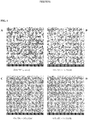
- Figure 1A shows the cell structure of a foamed pellet prepared without the addition of EVOH.
- Figure 1B shows the cell structure of a foamed pellet prepared 1 wt% of EVOH.
- Figure 1C shows the cell structure of a foamed pellet prepared 3 wt% of EVOH.
- Figure 1B shows the cell structure of a foamed pellet prepared 5 wt% of EVOH.
- the cross-section images of the foamed pellets reveal finer cell structure when EVOH is present.
Landscapes
- Chemical & Material Sciences (AREA)
- Health & Medical Sciences (AREA)
- Chemical Kinetics & Catalysis (AREA)
- Medicinal Chemistry (AREA)
- Polymers & Plastics (AREA)
- Organic Chemistry (AREA)
- Engineering & Computer Science (AREA)
- Materials Engineering (AREA)
- Manufacture Of Porous Articles, And Recovery And Treatment Of Waste Products (AREA)
Claims (15)
- Procédé de préparation d'une mousse élastomère thermoplastique comprenant:la fourniture d'un mélange de polymères comprenant un élastomère thermoplastique et de 0,1 % en poids à 20 % en poids, par rapport au poids total des polymères, d'un polymère semi-cristallin formant des domaines cristallins polymères dans l'élastomère thermoplastique ;l'incorporation d'un agent de gonflement gazeux ou supercritique dans le mélange de polymères sous pression ; etl'évacuation de la pression et le moussage du mélange de polymères pour former la mousse d'élastomère thermoplastique,dans lequel le mélange de polymères est formé en combinant un élastomère thermoplastique fondu et de 0,1 % en poids à 20 % en poids, par rapport au poids total des polymères, d'un polymère semi-cristallin fondu, puis en refroidissant les polymères combinés à une température inférieure à celle à laquelle le polymère semi-cristallin forme des domaines cristallins polymères.
- Procédé selon la revendication 1, dans lequel le polymère semi-cristallin comprend un élément choisi dans le groupe constitué par les copolymères d'éthylène et d'au moins un co-monomère vinylique, de polyamides, de polyesters et des combinaisons de ceux-ci.
- Procédé selon la revendication 2, dans lequel le polymère semi-cristallin comprend un élément choisi dans le groupe constitué par le nylon 11, le nylon 12 et les copolymères d'éthylène-alcool vinylique.
- Procédé selon l'une quelconque des revendications 1 à 3, dans lequel pendant l'étape de moussage, le mélange de polymères est immergé dans un liquide chauffé qui est à une température qui est au moins 80 °C supérieure à la température de transition vitreuse de l'élastomère thermoplastique et inférieure à la température de cristallisation des domaines cristallins polymères.
- Procédé selon l'une quelconque des revendications 1 à 4, dans lequel l'étape de refroidissement comprend la formation du mélange de polymères en articles sous la forme d'un granulé, d'une bille, d'une particule, d'une bande, d'un ruban, d'une corde, d'un film, d'une mèche ou d'une fibre.
- Procédé selon la revendication 5, dans lequel le mélange est formé dans une extrudeuse, puis extrudé et transformé en granulés pendant l'étape de refroidissement.
- Procédé selon la revendication 5 ou la revendication 6, dans lequel plusieurs articles sont moulés ensemble en un article moulé, et dans lequel l'article moulé est éventuellement choisi dans le groupe constitué par des articles d'habillement, chaussants, d'équipement de protection, des sangles et des composants de ceux-ci.
- Procédé de préparation d'une mousse élastomère thermoplastique comprenant :la fourniture d'une composition élastomère thermoplastique comprenant un élastomère thermoplastique fondu et de 0,1 % en poids à 20 % en poids, par rapport au poids total des polymères, d'un polymère semi-cristallin fondu ;l'incorporation d'un agent de gonflement gazeux ou supercritique sous pression dans la composition élastomère thermoplastique ;le refroidissement de la composition élastomère thermoplastique à une température inférieure à la température de cristallisation du polymère semi-cristallin pour former des domaines cristallins polymères ; etl'évacuation de la pression pour faire mousser l'élastomère thermoplastique.
- Procédé selon la revendication 8, dans lequel le polymère semi-cristallin comprend un élément choisi dans le groupe constitué par les copolymères d'éthylène avec au moins un co-monomère vinylique, des polyamides, des polyesters et des combinaisons de ceux-ci
- Procédé selon la revendication 8 ou la revendication 9, dans lequel le polymère semi-cristallin représente de 1 % en poids à 5 % en poids de la composition polymère, par rapport au poids total des polymères.
- Procédé selon l'une quelconque des revendications 8 à 10, dans lequel la mousse élastomère thermoplastique est transformée en un article d'habillement, chaussant, d'équipement de protection, une sangle, ou un composant de celui-ci.
- Procédé selon l'une quelconque des revendications précédentes, dans lequel la composition élastomère thermoplastique comprend un élastomère de polyuréthane thermoplastique.
- Procédé selon l'une quelconque des revendications précédentes, dans lequel l'agent de gonflement comprend du dioxyde de carbone dans un état gazeux ou supercritique.
- Procédé selon l'une quelconque des revendications précédentes, dans lequel la mousse élastomère thermoplastique a une densité de 160 kg/m3 à 300 kg/m3.
- Procédé selon l'une quelconque des revendications précédentes, dans lequel la mousse élastomère thermoplastique est une mousse élastomère thermoplastique à cellules fermées avec au moins 50 % de cellules fermées.
Priority Applications (2)
| Application Number | Priority Date | Filing Date | Title |
|---|---|---|---|
| EP21200543.3A EP3960799B1 (fr) | 2015-08-19 | 2016-08-09 | Mousse élastomère thermoplastique |
| EP18212482.6A EP3486277B1 (fr) | 2015-08-19 | 2016-08-09 | Procédé de préparation de mousse élastomère thermoplastique et article en mousse |
Applications Claiming Priority (2)
| Application Number | Priority Date | Filing Date | Title |
|---|---|---|---|
| US201562206906P | 2015-08-19 | 2015-08-19 | |
| PCT/US2016/046156 WO2017030835A1 (fr) | 2015-08-19 | 2016-08-09 | Procédé de préparation de mousse élastomère thermoplastique et article en mousse |
Related Child Applications (3)
| Application Number | Title | Priority Date | Filing Date |
|---|---|---|---|
| EP18212482.6A Division EP3486277B1 (fr) | 2015-08-19 | 2016-08-09 | Procédé de préparation de mousse élastomère thermoplastique et article en mousse |
| EP18212482.6A Division-Into EP3486277B1 (fr) | 2015-08-19 | 2016-08-09 | Procédé de préparation de mousse élastomère thermoplastique et article en mousse |
| EP21200543.3A Division EP3960799B1 (fr) | 2015-08-19 | 2016-08-09 | Mousse élastomère thermoplastique |
Publications (2)
| Publication Number | Publication Date |
|---|---|
| EP3298070A1 EP3298070A1 (fr) | 2018-03-28 |
| EP3298070B1 true EP3298070B1 (fr) | 2019-04-10 |
Family
ID=56883850
Family Applications (3)
| Application Number | Title | Priority Date | Filing Date |
|---|---|---|---|
| EP16762918.7A Not-in-force EP3298070B1 (fr) | 2015-08-19 | 2016-08-09 | Procédé de préparation de mousse élastomère thermoplastique |
| EP18212482.6A Not-in-force EP3486277B1 (fr) | 2015-08-19 | 2016-08-09 | Procédé de préparation de mousse élastomère thermoplastique et article en mousse |
| EP21200543.3A Active EP3960799B1 (fr) | 2015-08-19 | 2016-08-09 | Mousse élastomère thermoplastique |
Family Applications After (2)
| Application Number | Title | Priority Date | Filing Date |
|---|---|---|---|
| EP18212482.6A Not-in-force EP3486277B1 (fr) | 2015-08-19 | 2016-08-09 | Procédé de préparation de mousse élastomère thermoplastique et article en mousse |
| EP21200543.3A Active EP3960799B1 (fr) | 2015-08-19 | 2016-08-09 | Mousse élastomère thermoplastique |
Country Status (4)
| Country | Link |
|---|---|
| US (3) | US10081716B2 (fr) |
| EP (3) | EP3298070B1 (fr) |
| CN (2) | CN112961488B (fr) |
| WO (1) | WO2017030835A1 (fr) |
Families Citing this family (90)
| Publication number | Priority date | Publication date | Assignee | Title |
|---|---|---|---|---|
| EP3538578B1 (fr) * | 2016-11-14 | 2025-03-05 | Basf Se | Particule polyuréthane thermoplastique expansée, procédé de fabrication ainsi que procédé de fabrication d'une pièce moulée |
| JP7374076B2 (ja) | 2017-07-20 | 2023-11-06 | ビーエーエスエフ ソシエタス・ヨーロピア | ポリウレタン、特に熱可塑性ポリウレタン |
| EP3700969A1 (fr) | 2017-10-26 | 2020-09-02 | Basf Se | Procédé pour colorer des mousses particulaires d'élastomère |
| CN108059814A (zh) * | 2017-11-28 | 2018-05-22 | 安徽志诚机电零部件有限公司 | 一种微孔发泡型聚合物基汽车阻尼垫的制备方法 |
| BR112020009775A2 (pt) | 2017-12-14 | 2020-11-03 | Basf Se | método de preparação de poliuretano termoplástico, poliuretano termoplástico, uso, método de produção de partículas, partículas, espuma e uso das partículas |
| MX2020006558A (es) | 2017-12-20 | 2020-09-24 | Basf Se | Nuevas espumas de poliuretano flexibles. |
| WO2019170484A1 (fr) | 2018-03-06 | 2019-09-12 | Basf Se | Préparation comprenant un produit de polyaddition de polyisocyanate thermoplastique, son procédé de préparation et son utilisation |
| CN108359123B (zh) * | 2018-03-07 | 2020-06-05 | 华东理工大学 | 一种热塑性聚合物发泡珠粒及其制备方法 |
| US20210163703A1 (en) | 2018-04-20 | 2021-06-03 | Basf Se | Foams based on thermoplastic elastomers |
| WO2019202095A1 (fr) | 2018-04-20 | 2019-10-24 | Basf Se | Mousse à base d'élastomère thermoplastique |
| EP3781617A1 (fr) | 2018-04-20 | 2021-02-24 | Basf Se | Mousses a base d'élastomères thermoplastiques |
| CN112004870A (zh) | 2018-04-20 | 2020-11-27 | 巴斯夫欧洲公司 | 基于热塑性弹性体的泡沫 |
| CA3098301A1 (fr) | 2018-04-20 | 2019-10-24 | Basf Se | Mousses a base d'elastomere thermoplastique |
| US10843429B2 (en) | 2018-05-21 | 2020-11-24 | O2 Partners, Llc | Biodegradable, industrially compostable, and recyclable injection molded microcellular flexible foams |
| US11155009B2 (en) | 2018-05-21 | 2021-10-26 | O2 Partners, Llc | Biodegradable and industrially compostable injection moulded microcellular flexible foams, and a method of manufacturing the same |
| CN109135033A (zh) * | 2018-06-29 | 2019-01-04 | 东莞海锐思高分子材料科技有限公司 | 高分子材料物理发泡方法及发泡制品 |
| US12458103B2 (en) | 2018-09-07 | 2025-11-04 | Skechers U.S.A., Inc. Ii | Foamed sole components and method for making a sole with foamed sole components |
| BR112021002619A2 (pt) | 2018-09-14 | 2021-05-11 | Basf Se | espuma de contas, processo para a produção de uma espuma de contas, corpo moldado, processo para a produção de um corpo moldado, calçado e uso de uma espuma de contas |
| EP3861880B1 (fr) * | 2018-12-06 | 2024-02-21 | Nike Innovate C.V. | Articles comprenant des particules de mousse et procédés de fabrication d'articles utilisant des particules de mousse |
| TWI849031B (zh) | 2018-12-28 | 2024-07-21 | 德商巴斯夫歐洲公司 | 由芳香族聚酯-聚胺甲酸酯多嵌段共聚物製成的珠粒發泡體 |
| KR20210107812A (ko) | 2018-12-28 | 2021-09-01 | 바스프 에스이 | 고강도 eTPU |
| EP3931244A1 (fr) | 2019-02-28 | 2022-01-05 | Basf Se | Mousse particulaire douce en polyuréthane thermoplastique |
| FI3938435T3 (fi) | 2019-03-14 | 2023-04-26 | Basf Se | Termoplastista polyisosyanaatin polyadditiotuotetta ja palonsuoja-ainetta käsittävä koostumus |
| KR20220024554A (ko) | 2019-06-14 | 2022-03-03 | 바스프 에스이 | 신규한 입자 발포체 |
| US11584049B2 (en) * | 2019-08-02 | 2023-02-21 | Arris Composites Inc. | Structural foam molding method using continuous fiber composites, and parts formed therefrom |
| US20220289893A1 (en) | 2019-08-21 | 2022-09-15 | Basf Se | A preparation comprising thermoplastic polyisocyanate polyaddition product, a process for preparing the same and the use thereof |
| EP3986960A1 (fr) | 2019-09-12 | 2022-04-27 | Nike Innovate C.V. | Élément de rembourrage pour article chaussant |
| ES2991469T3 (es) * | 2019-11-12 | 2024-12-03 | Huntsman Int Llc | Formación en el sitio de espumas flexibles de poliuretano termoplástico de baja densidad |
| BR112022009055A2 (pt) | 2019-11-13 | 2022-08-09 | Basf Se | Artigos moldados, processo para produzir um artigo moldado e uso de um artigo moldado |
| KR20220147667A (ko) | 2020-02-28 | 2022-11-03 | 바스프 에스이 | 비-1차 하이드록실 기 기반 발포체 |
| TWI893395B (zh) * | 2020-05-12 | 2025-08-11 | 美商O2夥伴有限責任公司 | 製造可撓性發泡體之方法 |
| WO2021254807A1 (fr) | 2020-06-15 | 2021-12-23 | Basf Se | Composition thermoplastique de polyuréthane présentant des propriétés mécaniques élevées, une bonne résistance contre le rayonnement uv et de faibles efflorescence et formation de buée |
| CN111808414A (zh) * | 2020-06-30 | 2020-10-23 | 宿迁嘉禾塑料金属制品有限公司 | 一种evoh改性热塑性聚氨酯亲水棉及其制备工艺 |
| JP7330237B2 (ja) | 2020-07-23 | 2023-08-21 | プーマ エス イー | ソール構造、履物具、およびアッセンブリ |
| US11622602B2 (en) | 2020-08-18 | 2023-04-11 | Puma SE | Article of footwear having a sole plate |
| WO2022043428A1 (fr) | 2020-08-28 | 2022-03-03 | Basf Se | Granulés expansés faits de polyuréthane thermoplastique |
| JP2023544096A (ja) | 2020-09-14 | 2023-10-20 | ビーエーエスエフ ソシエタス・ヨーロピア | タイヤ用tpu製品の最適な組成物 |
| TW202214756A (zh) | 2020-10-01 | 2022-04-16 | 德商巴斯夫歐洲公司 | eTPE雷射標記 |
| WO2022090222A1 (fr) | 2020-10-28 | 2022-05-05 | Basf Se | Dispositif de sport pour sports de raquette |
| MX2023003195A (es) | 2020-11-16 | 2023-04-13 | O2 Partners Llc | Espumas extruidas reciclables, biodegradables e industrialmente compostables y metodos para fabricar las mismas. |
| KR20230109143A (ko) | 2020-11-17 | 2023-07-19 | 바스프 에스이 | 구조화된 다공체 및 폼을 포함하는 복합 물품 및 구조화된 다공체 및 입자 폼의 제조 방법 |
| CN112430389B (zh) * | 2020-11-17 | 2022-04-01 | 美瑞新材料股份有限公司 | 一种增强增韧的tpu材料及其制备方法 |
| EP4000443B1 (fr) * | 2020-11-23 | 2025-12-03 | Rossignol Lange S.R.L. | Languette pour chaussure de ski |
| USD1100451S1 (en) | 2020-12-03 | 2025-11-04 | Puma SE | Shoe |
| USD1022420S1 (en) | 2020-12-03 | 2024-04-16 | Puma SE | Shoe |
| US12225968B2 (en) | 2021-01-20 | 2025-02-18 | Puma SE | Article of footwear having a sole plate |
| EP4284663A1 (fr) | 2021-01-29 | 2023-12-06 | Basf Se | Construction d'un corps moulé pour pneus non pneumatiques |
| USD939199S1 (en) | 2021-01-29 | 2021-12-28 | O2 Partners, Llc | Shoe insole |
| WO2022161995A1 (fr) | 2021-01-29 | 2022-08-04 | Basf Se | Procédé de fabrication d'un materiau composite |
| US20240084085A1 (en) | 2021-01-29 | 2024-03-14 | Basf Se | Preparation for a molded body |
| WO2022161981A1 (fr) | 2021-01-29 | 2022-08-04 | Basf Se | Matériau composite pour un corps moulé |
| WO2022182424A1 (fr) * | 2021-02-24 | 2022-09-01 | Nike Innovate C.V. | Articles expansés et leurs procédés de fabrication |
| US12083717B2 (en) | 2021-02-24 | 2024-09-10 | Nike, Inc. | Foamed articles and methods of making the same |
| WO2022183144A1 (fr) | 2021-02-24 | 2022-09-01 | Nike Innovate C.V. | Articles expansés et leurs procédés de fabrication |
| USD1000084S1 (en) | 2021-04-22 | 2023-10-03 | O2 Partners, Llc | Shoe |
| DE102021111247A1 (de) * | 2021-04-30 | 2022-11-03 | Fox Velution Gmbh | Verfahren zur Herstellung zellulärer Kunststoffpartikel |
| CN113248770B (zh) * | 2021-06-01 | 2022-02-11 | 中山大学 | 一种热塑性弹性体物理发泡卷材及其半连续制备方法 |
| WO2023025638A1 (fr) | 2021-08-27 | 2023-03-02 | Basf Se | Mélange maître antistatique à base de polyuréthane thermoplastique ayant des propriétés améliorées pour l'utilisation dans des polymères |
| WO2023043480A1 (fr) | 2021-09-14 | 2023-03-23 | Nike Innovate C.V. | Articles expansés et leurs procédés de fabrication |
| EP4524185A3 (fr) | 2021-09-21 | 2025-05-21 | NIKE Innovate C.V. | Articles en mousse et leurs procédés de fabrication |
| US20230137398A1 (en) * | 2021-10-28 | 2023-05-04 | Nike, Inc. | Sole structure for article of footwear |
| TWI823186B (zh) | 2021-11-16 | 2023-11-21 | 遠東新世紀股份有限公司 | 多嵌段共聚酯醚熱塑性彈性發泡體、其製備方法、以及由其所製得的運動鞋中底 |
| US20250051534A1 (en) | 2021-12-15 | 2025-02-13 | Basf Se | Pdi based bead foams |
| US20230210213A1 (en) * | 2021-12-30 | 2023-07-06 | Under Armour, Inc. | Article of footwear including multi-layered sole structure |
| EP4476038A1 (fr) | 2022-02-11 | 2024-12-18 | Basf Se | Procédé mis en oeuvre par ordinateur pour la commande et/ou le suivi d'au moins un processus de moulage de mousse particulaire |
| KR20240165458A (ko) | 2022-03-29 | 2024-11-22 | 바스프 에스이 | 폴리프로판디올을 기반으로 한 난연성 열가소성 폴리우레탄(tpu) |
| WO2023198755A1 (fr) | 2022-04-14 | 2023-10-19 | Basf Se | Ensemble roue pour roues non pneumatiques |
| CN119452006A (zh) | 2022-06-27 | 2025-02-14 | 巴斯夫欧洲公司 | 具有改进特性的热塑性聚氨酯(tpu)组合物 |
| CN115124834B (zh) * | 2022-07-13 | 2023-03-17 | 北京化工大学 | 一种热塑性聚酰胺弹性体共混发泡材料及其制备方法 |
| CN115627028B (zh) * | 2022-10-24 | 2023-08-08 | 郑州大学 | 一种原位微纤化增强聚合物复合隔热泡沫材料及其制备方法和应用 |
| WO2024089264A1 (fr) | 2022-10-28 | 2024-05-02 | Basf Se | Polyuréthane thermoplastique expansé pour procédé de moulage spécial |
| CN120112588A (zh) | 2022-10-28 | 2025-06-06 | 巴斯夫欧洲公司 | 具有不同层的颗粒泡沫模塑品 |
| WO2024115593A1 (fr) | 2022-11-30 | 2024-06-06 | Basf Se | Structure phono-absorbante |
| JP2026502733A (ja) | 2022-12-29 | 2026-01-26 | ビーエーエスエフ ソシエタス・ヨーロピア | Tpu造粒物のカプセル化 |
| DE102023104249A1 (de) * | 2023-02-21 | 2024-08-22 | Fraunhofer-Gesellschaft zur Förderung der angewandten Forschung eingetragener Verein | Expandierbares 3D-Druckfilament und Verfahren zu seiner Herstellung |
| CN120882548A (zh) | 2023-02-22 | 2025-10-31 | O2合伙责任公司 | 可再循环的、可生物降解的和可工业堆肥的泡沫及其制造方法 |
| WO2024200661A1 (fr) | 2023-03-31 | 2024-10-03 | Basf Se | Polyuréthane thermoplastique expansé pour processus de moulage spécial |
| WO2024200654A1 (fr) | 2023-03-31 | 2024-10-03 | Basf Se | Polyuréthane thermoplastique expansé pour processus de moulage spécial |
| WO2024200488A1 (fr) | 2023-03-31 | 2024-10-03 | Basf Se | Procédé de préparation de pièces moulées en mousse avec des particules revêtues |
| US12178278B2 (en) | 2023-04-26 | 2024-12-31 | Wolverine Outdoors, Inc. | Sole assembly and related method of manufacture |
| TW202500615A (zh) | 2023-06-01 | 2025-01-01 | 德商巴斯夫歐洲公司 | 含有環狀添加劑之tpu |
| TW202521502A (zh) | 2023-09-04 | 2025-06-01 | 德商巴斯夫歐洲公司 | 熱塑性聚氨酯(tpu)之脫模助劑 |
| CN122095000A (zh) | 2023-10-20 | 2026-05-26 | 巴斯夫欧洲公司 | 具有良好机械特性和热尺寸稳定性的热塑性聚氨酯(tpu) |
| CN122349546A (zh) | 2023-11-29 | 2026-07-07 | 巴斯夫欧洲公司 | 用于制备具有着色表面涂层的泡沫颗粒的方法 |
| WO2025114458A1 (fr) | 2023-11-29 | 2025-06-05 | Basf Se | Procédé de réalisation d'une semelle intermédiaire en e-tpu/semelle en tpu en une seule étape de moulage |
| WO2025125440A1 (fr) | 2023-12-15 | 2025-06-19 | Basf Se | Procédés de préparation de pièces moulées en particules de mousse revêtues |
| CN117734089B (zh) * | 2023-12-28 | 2026-06-30 | 福建鑫瑞新材料科技股份有限公司 | 一种预成核辅助低密度热塑性弹性体泡沫制备方法 |
| TW202610366A (zh) | 2024-06-21 | 2026-03-01 | 德商巴斯夫歐洲公司 | 經嵌入/封裝之電子裝置、方法及用途 |
| WO2026068739A1 (fr) | 2024-09-27 | 2026-04-02 | Basf Se | Pastilles expansées comprenant des polyesters |
| WO2026110054A1 (fr) * | 2024-11-19 | 2026-05-28 | Mast Industries (Far East) Limited | Coussinet mammaire à base de mousse supercritique (scf) et bonnets de soutien-gorge l'incorporant |
Family Cites Families (24)
| Publication number | Priority date | Publication date | Assignee | Title |
|---|---|---|---|---|
| GB1512034A (en) * | 1975-06-04 | 1978-05-24 | Ici Ltd | Microcellular polyurethane elastomers |
| US4303756A (en) * | 1978-10-16 | 1981-12-01 | Sekisui Kaseihin Kogyo Kabushiki Kaisha | Process for producing expandable thermoplastic resin beads |
| DE3411319C2 (de) * | 1984-03-28 | 1986-12-04 | Boehringer Ingelheim KG, 6507 Ingelheim | Verwendung von Citronensäureestern als Treib- und/oder Nucleierungsmittel zur Herstellung thermoplastischer Kunststoffschäume |
| US5070111A (en) * | 1991-03-13 | 1991-12-03 | Advanced Elastomer Systems, L.P. | Foaming thermoplastic elastomers |
| US5369135A (en) * | 1992-05-13 | 1994-11-29 | Mobil Oil Corporation | Controlled microcellular foams of crystalline amorphous polymers |
| EP1040902B1 (fr) * | 1999-03-30 | 2006-10-04 | Sumitomo Chemical Company, Limited | Objet en mousse à base de résine |
| US6403663B1 (en) * | 1999-09-20 | 2002-06-11 | North Carolina State University | Method of making foamed materials using surfactants and carbon dioxide |
| AU2001272087A1 (en) * | 2000-03-01 | 2001-09-12 | North Carolina State University | Methods of making foamed materials of blended thermoplastic polymers using carbon dioxide |
| KR100539131B1 (ko) * | 2000-10-18 | 2005-12-26 | 미쯔이카가쿠 가부시기가이샤 | 우레탄계 열가소성 엘라스토머조성물발포체 및 그 제조방법 |
| US20040138321A1 (en) * | 2002-10-23 | 2004-07-15 | Nichias Corporation | Thermally expandable material, method for producing the same and soundproof sheet for automobile |
| US8568632B2 (en) | 2003-11-26 | 2013-10-29 | Owens Corning Intellectual Capital, Llc | Method of forming thermoplastic foams using nano-particles to control cell morphology |
| JP4728735B2 (ja) * | 2004-08-04 | 2011-07-20 | 三井化学株式会社 | オレフィン系熱可塑性エラストマー組成物及びその発泡体 |
| KR101421762B1 (ko) * | 2006-11-01 | 2014-07-22 | 다우 글로벌 테크놀로지스 엘엘씨 | 비극성 폴리올레핀 및 폴리우레탄을 포함하는 물품 및 이것의 제조 방법 및 용도 |
| MX2011007402A (es) | 2009-01-12 | 2011-08-03 | Basf Se | Espumas de poliuretano flexibles, altamente elasticas. |
| JP5953787B2 (ja) * | 2012-02-08 | 2016-07-20 | Jsr株式会社 | 熱可塑性エラストマー組成物及び発泡成形体 |
| US20150119482A1 (en) * | 2012-04-09 | 2015-04-30 | University Of Washington Through Its Center For Commercialization | Method to enhance cell nucleation density in solid-state foams |
| WO2013161714A1 (fr) * | 2012-04-27 | 2013-10-31 | 株式会社イノアックコーポレーション | Procédé de production de mousse résineuse et mousse résineuse |
| US9038802B2 (en) | 2012-07-30 | 2015-05-26 | Gm Global Technology Operations, Llc | Clutch backing plate for bearing support |
| US9243104B2 (en) | 2013-03-15 | 2016-01-26 | Nike, Inc. | Article with controlled cushioning |
| US9375866B2 (en) | 2013-03-15 | 2016-06-28 | Nike, Inc. | Process for foaming thermoplastic elastomers |
| US20140259753A1 (en) * | 2013-03-15 | 2014-09-18 | Nike, Inc. | Modified thermoplastic elastomers for increased compatibility with supercritical fluids |
| US9498927B2 (en) * | 2013-03-15 | 2016-11-22 | Nike, Inc. | Decorative foam and method |
| US9926423B2 (en) * | 2013-08-02 | 2018-03-27 | Nike, Inc. | Low density foam, midsole, footwear, and methods for making low density foam |
| US9919458B2 (en) * | 2013-08-02 | 2018-03-20 | Nike, Inc. | Method and thermoplastic foamed article |
-
2016
- 2016-08-09 EP EP16762918.7A patent/EP3298070B1/fr not_active Not-in-force
- 2016-08-09 CN CN202110192078.8A patent/CN112961488B/zh not_active Expired - Fee Related
- 2016-08-09 EP EP18212482.6A patent/EP3486277B1/fr not_active Not-in-force
- 2016-08-09 US US15/752,680 patent/US10081716B2/en active Active
- 2016-08-09 WO PCT/US2016/046156 patent/WO2017030835A1/fr not_active Ceased
- 2016-08-09 CN CN201680047848.7A patent/CN107980048B/zh not_active Expired - Fee Related
- 2016-08-09 EP EP21200543.3A patent/EP3960799B1/fr active Active
-
2018
- 2018-08-22 US US16/108,923 patent/US10899901B2/en active Active
-
2019
- 2019-11-22 US US16/692,792 patent/US20200087476A1/en not_active Abandoned
Non-Patent Citations (1)
| Title |
|---|
| None * |
Also Published As
| Publication number | Publication date |
|---|---|
| CN107980048B (zh) | 2021-02-09 |
| CN107980048A (zh) | 2018-05-01 |
| CN112961488A (zh) | 2021-06-15 |
| CN112961488B (zh) | 2022-11-15 |
| WO2017030835A1 (fr) | 2017-02-23 |
| EP3486277B1 (fr) | 2021-12-08 |
| US20180362721A1 (en) | 2018-12-20 |
| US10899901B2 (en) | 2021-01-26 |
| US10081716B2 (en) | 2018-09-25 |
| US20180237605A1 (en) | 2018-08-23 |
| EP3960799A1 (fr) | 2022-03-02 |
| US20200087476A1 (en) | 2020-03-19 |
| EP3960799B1 (fr) | 2023-05-24 |
| EP3486277A1 (fr) | 2019-05-22 |
| EP3298070A1 (fr) | 2018-03-28 |
Similar Documents
| Publication | Publication Date | Title |
|---|---|---|
| US10899901B2 (en) | Process for preparing thermoplastic elastomer foam and foamed article | |
| US10836082B2 (en) | Process for foaming thermoplastic elastomers | |
| US10253149B2 (en) | Article with controlled cushioning | |
| EP2970617B1 (fr) | Élastomères thermoplastiques modifiés pour une meilleure compatibilité avec les fluides supercritiques |
Legal Events
| Date | Code | Title | Description |
|---|---|---|---|
| STAA | Information on the status of an ep patent application or granted ep patent |
Free format text: STATUS: THE INTERNATIONAL PUBLICATION HAS BEEN MADE |
|
| PUAI | Public reference made under article 153(3) epc to a published international application that has entered the european phase |
Free format text: ORIGINAL CODE: 0009012 |
|
| STAA | Information on the status of an ep patent application or granted ep patent |
Free format text: STATUS: REQUEST FOR EXAMINATION WAS MADE |
|
| 17P | Request for examination filed |
Effective date: 20171220 |
|
| AK | Designated contracting states |
Kind code of ref document: A1 Designated state(s): AL AT BE BG CH CY CZ DE DK EE ES FI FR GB GR HR HU IE IS IT LI LT LU LV MC MK MT NL NO PL PT RO RS SE SI SK SM TR |
|
| AX | Request for extension of the european patent |
Extension state: BA ME |
|
| STAA | Information on the status of an ep patent application or granted ep patent |
Free format text: STATUS: EXAMINATION IS IN PROGRESS |
|
| 17Q | First examination report despatched |
Effective date: 20180419 |
|
| GRAP | Despatch of communication of intention to grant a patent |
Free format text: ORIGINAL CODE: EPIDOSNIGR1 |
|
| STAA | Information on the status of an ep patent application or granted ep patent |
Free format text: STATUS: GRANT OF PATENT IS INTENDED |
|
| DAV | Request for validation of the european patent (deleted) | ||
| DAX | Request for extension of the european patent (deleted) | ||
| INTG | Intention to grant announced |
Effective date: 20181023 |
|
| GRAS | Grant fee paid |
Free format text: ORIGINAL CODE: EPIDOSNIGR3 |
|
| GRAA | (expected) grant |
Free format text: ORIGINAL CODE: 0009210 |
|
| STAA | Information on the status of an ep patent application or granted ep patent |
Free format text: STATUS: THE PATENT HAS BEEN GRANTED |
|
| AK | Designated contracting states |
Kind code of ref document: B1 Designated state(s): AL AT BE BG CH CY CZ DE DK EE ES FI FR GB GR HR HU IE IS IT LI LT LU LV MC MK MT NL NO PL PT RO RS SE SI SK SM TR |
|
| REG | Reference to a national code |
Ref country code: GB Ref legal event code: FG4D |
|
| REG | Reference to a national code |
Ref country code: CH Ref legal event code: EP Ref country code: AT Ref legal event code: REF Ref document number: 1118573 Country of ref document: AT Kind code of ref document: T Effective date: 20190415 |
|
| REG | Reference to a national code |
Ref country code: IE Ref legal event code: FG4D |
|
| REG | Reference to a national code |
Ref country code: DE Ref legal event code: R096 Ref document number: 602016012375 Country of ref document: DE |
|
| REG | Reference to a national code |
Ref country code: NL Ref legal event code: MP Effective date: 20190410 |
|
| REG | Reference to a national code |
Ref country code: LT Ref legal event code: MG4D |
|
| REG | Reference to a national code |
Ref country code: AT Ref legal event code: MK05 Ref document number: 1118573 Country of ref document: AT Kind code of ref document: T Effective date: 20190410 |
|
| PG25 | Lapsed in a contracting state [announced via postgrant information from national office to epo] |
Ref country code: NL Free format text: LAPSE BECAUSE OF FAILURE TO SUBMIT A TRANSLATION OF THE DESCRIPTION OR TO PAY THE FEE WITHIN THE PRESCRIBED TIME-LIMIT Effective date: 20190410 |
|
| PG25 | Lapsed in a contracting state [announced via postgrant information from national office to epo] |
Ref country code: SE Free format text: LAPSE BECAUSE OF FAILURE TO SUBMIT A TRANSLATION OF THE DESCRIPTION OR TO PAY THE FEE WITHIN THE PRESCRIBED TIME-LIMIT Effective date: 20190410 Ref country code: ES Free format text: LAPSE BECAUSE OF FAILURE TO SUBMIT A TRANSLATION OF THE DESCRIPTION OR TO PAY THE FEE WITHIN THE PRESCRIBED TIME-LIMIT Effective date: 20190410 Ref country code: LT Free format text: LAPSE BECAUSE OF FAILURE TO SUBMIT A TRANSLATION OF THE DESCRIPTION OR TO PAY THE FEE WITHIN THE PRESCRIBED TIME-LIMIT Effective date: 20190410 Ref country code: FI Free format text: LAPSE BECAUSE OF FAILURE TO SUBMIT A TRANSLATION OF THE DESCRIPTION OR TO PAY THE FEE WITHIN THE PRESCRIBED TIME-LIMIT Effective date: 20190410 Ref country code: PT Free format text: LAPSE BECAUSE OF FAILURE TO SUBMIT A TRANSLATION OF THE DESCRIPTION OR TO PAY THE FEE WITHIN THE PRESCRIBED TIME-LIMIT Effective date: 20190910 Ref country code: AL Free format text: LAPSE BECAUSE OF FAILURE TO SUBMIT A TRANSLATION OF THE DESCRIPTION OR TO PAY THE FEE WITHIN THE PRESCRIBED TIME-LIMIT Effective date: 20190410 Ref country code: NO Free format text: LAPSE BECAUSE OF FAILURE TO SUBMIT A TRANSLATION OF THE DESCRIPTION OR TO PAY THE FEE WITHIN THE PRESCRIBED TIME-LIMIT Effective date: 20190710 Ref country code: HR Free format text: LAPSE BECAUSE OF FAILURE TO SUBMIT A TRANSLATION OF THE DESCRIPTION OR TO PAY THE FEE WITHIN THE PRESCRIBED TIME-LIMIT Effective date: 20190410 |
|
| PG25 | Lapsed in a contracting state [announced via postgrant information from national office to epo] |
Ref country code: PL Free format text: LAPSE BECAUSE OF FAILURE TO SUBMIT A TRANSLATION OF THE DESCRIPTION OR TO PAY THE FEE WITHIN THE PRESCRIBED TIME-LIMIT Effective date: 20190410 Ref country code: GR Free format text: LAPSE BECAUSE OF FAILURE TO SUBMIT A TRANSLATION OF THE DESCRIPTION OR TO PAY THE FEE WITHIN THE PRESCRIBED TIME-LIMIT Effective date: 20190711 Ref country code: LV Free format text: LAPSE BECAUSE OF FAILURE TO SUBMIT A TRANSLATION OF THE DESCRIPTION OR TO PAY THE FEE WITHIN THE PRESCRIBED TIME-LIMIT Effective date: 20190410 Ref country code: RS Free format text: LAPSE BECAUSE OF FAILURE TO SUBMIT A TRANSLATION OF THE DESCRIPTION OR TO PAY THE FEE WITHIN THE PRESCRIBED TIME-LIMIT Effective date: 20190410 Ref country code: BG Free format text: LAPSE BECAUSE OF FAILURE TO SUBMIT A TRANSLATION OF THE DESCRIPTION OR TO PAY THE FEE WITHIN THE PRESCRIBED TIME-LIMIT Effective date: 20190710 |
|
| PG25 | Lapsed in a contracting state [announced via postgrant information from national office to epo] |
Ref country code: AT Free format text: LAPSE BECAUSE OF FAILURE TO SUBMIT A TRANSLATION OF THE DESCRIPTION OR TO PAY THE FEE WITHIN THE PRESCRIBED TIME-LIMIT Effective date: 20190410 Ref country code: IS Free format text: LAPSE BECAUSE OF FAILURE TO SUBMIT A TRANSLATION OF THE DESCRIPTION OR TO PAY THE FEE WITHIN THE PRESCRIBED TIME-LIMIT Effective date: 20190810 |
|
| REG | Reference to a national code |
Ref country code: DE Ref legal event code: R097 Ref document number: 602016012375 Country of ref document: DE |
|
| PG25 | Lapsed in a contracting state [announced via postgrant information from national office to epo] |
Ref country code: DK Free format text: LAPSE BECAUSE OF FAILURE TO SUBMIT A TRANSLATION OF THE DESCRIPTION OR TO PAY THE FEE WITHIN THE PRESCRIBED TIME-LIMIT Effective date: 20190410 Ref country code: EE Free format text: LAPSE BECAUSE OF FAILURE TO SUBMIT A TRANSLATION OF THE DESCRIPTION OR TO PAY THE FEE WITHIN THE PRESCRIBED TIME-LIMIT Effective date: 20190410 Ref country code: CZ Free format text: LAPSE BECAUSE OF FAILURE TO SUBMIT A TRANSLATION OF THE DESCRIPTION OR TO PAY THE FEE WITHIN THE PRESCRIBED TIME-LIMIT Effective date: 20190410 Ref country code: RO Free format text: LAPSE BECAUSE OF FAILURE TO SUBMIT A TRANSLATION OF THE DESCRIPTION OR TO PAY THE FEE WITHIN THE PRESCRIBED TIME-LIMIT Effective date: 20190410 Ref country code: SK Free format text: LAPSE BECAUSE OF FAILURE TO SUBMIT A TRANSLATION OF THE DESCRIPTION OR TO PAY THE FEE WITHIN THE PRESCRIBED TIME-LIMIT Effective date: 20190410 |
|
| PLBE | No opposition filed within time limit |
Free format text: ORIGINAL CODE: 0009261 |
|
| STAA | Information on the status of an ep patent application or granted ep patent |
Free format text: STATUS: NO OPPOSITION FILED WITHIN TIME LIMIT |
|
| PG25 | Lapsed in a contracting state [announced via postgrant information from national office to epo] |
Ref country code: SM Free format text: LAPSE BECAUSE OF FAILURE TO SUBMIT A TRANSLATION OF THE DESCRIPTION OR TO PAY THE FEE WITHIN THE PRESCRIBED TIME-LIMIT Effective date: 20190410 Ref country code: IT Free format text: LAPSE BECAUSE OF FAILURE TO SUBMIT A TRANSLATION OF THE DESCRIPTION OR TO PAY THE FEE WITHIN THE PRESCRIBED TIME-LIMIT Effective date: 20190410 |
|
| 26N | No opposition filed |
Effective date: 20200113 |
|
| PG25 | Lapsed in a contracting state [announced via postgrant information from national office to epo] |
Ref country code: TR Free format text: LAPSE BECAUSE OF FAILURE TO SUBMIT A TRANSLATION OF THE DESCRIPTION OR TO PAY THE FEE WITHIN THE PRESCRIBED TIME-LIMIT Effective date: 20190410 |
|
| PG25 | Lapsed in a contracting state [announced via postgrant information from national office to epo] |
Ref country code: LI Free format text: LAPSE BECAUSE OF NON-PAYMENT OF DUE FEES Effective date: 20190831 Ref country code: MC Free format text: LAPSE BECAUSE OF FAILURE TO SUBMIT A TRANSLATION OF THE DESCRIPTION OR TO PAY THE FEE WITHIN THE PRESCRIBED TIME-LIMIT Effective date: 20190410 Ref country code: LU Free format text: LAPSE BECAUSE OF NON-PAYMENT OF DUE FEES Effective date: 20190809 Ref country code: SI Free format text: LAPSE BECAUSE OF FAILURE TO SUBMIT A TRANSLATION OF THE DESCRIPTION OR TO PAY THE FEE WITHIN THE PRESCRIBED TIME-LIMIT Effective date: 20190410 Ref country code: CH Free format text: LAPSE BECAUSE OF NON-PAYMENT OF DUE FEES Effective date: 20190831 |
|
| REG | Reference to a national code |
Ref country code: BE Ref legal event code: MM Effective date: 20190831 |
|
| PG25 | Lapsed in a contracting state [announced via postgrant information from national office to epo] |
Ref country code: IE Free format text: LAPSE BECAUSE OF NON-PAYMENT OF DUE FEES Effective date: 20190809 |
|
| PG25 | Lapsed in a contracting state [announced via postgrant information from national office to epo] |
Ref country code: BE Free format text: LAPSE BECAUSE OF NON-PAYMENT OF DUE FEES Effective date: 20190831 |
|
| PG25 | Lapsed in a contracting state [announced via postgrant information from national office to epo] |
Ref country code: CY Free format text: LAPSE BECAUSE OF FAILURE TO SUBMIT A TRANSLATION OF THE DESCRIPTION OR TO PAY THE FEE WITHIN THE PRESCRIBED TIME-LIMIT Effective date: 20190410 |
|
| PG25 | Lapsed in a contracting state [announced via postgrant information from national office to epo] |
Ref country code: HU Free format text: LAPSE BECAUSE OF FAILURE TO SUBMIT A TRANSLATION OF THE DESCRIPTION OR TO PAY THE FEE WITHIN THE PRESCRIBED TIME-LIMIT; INVALID AB INITIO Effective date: 20160809 Ref country code: MT Free format text: LAPSE BECAUSE OF FAILURE TO SUBMIT A TRANSLATION OF THE DESCRIPTION OR TO PAY THE FEE WITHIN THE PRESCRIBED TIME-LIMIT Effective date: 20190410 |
|
| PG25 | Lapsed in a contracting state [announced via postgrant information from national office to epo] |
Ref country code: MK Free format text: LAPSE BECAUSE OF FAILURE TO SUBMIT A TRANSLATION OF THE DESCRIPTION OR TO PAY THE FEE WITHIN THE PRESCRIBED TIME-LIMIT Effective date: 20190410 |
|
| P01 | Opt-out of the competence of the unified patent court (upc) registered |
Effective date: 20230515 |
|
| PGFP | Annual fee paid to national office [announced via postgrant information from national office to epo] |
Ref country code: GB Payment date: 20240620 Year of fee payment: 9 |
|
| PGFP | Annual fee paid to national office [announced via postgrant information from national office to epo] |
Ref country code: FR Payment date: 20240611 Year of fee payment: 9 |
|
| PGFP | Annual fee paid to national office [announced via postgrant information from national office to epo] |
Ref country code: DE Payment date: 20240612 Year of fee payment: 9 |
|
| REG | Reference to a national code |
Ref country code: DE Ref legal event code: R119 Ref document number: 602016012375 Country of ref document: DE |
|
| GBPC | Gb: european patent ceased through non-payment of renewal fee |
Effective date: 20250809 |
|
| PG25 | Lapsed in a contracting state [announced via postgrant information from national office to epo] |
Ref country code: GB Free format text: LAPSE BECAUSE OF NON-PAYMENT OF DUE FEES Effective date: 20250809 |
|
| PG25 | Lapsed in a contracting state [announced via postgrant information from national office to epo] |
Ref country code: DE Free format text: LAPSE BECAUSE OF NON-PAYMENT OF DUE FEES Effective date: 20260303 |
|
| PG25 | Lapsed in a contracting state [announced via postgrant information from national office to epo] |
Ref country code: FR Free format text: LAPSE BECAUSE OF NON-PAYMENT OF DUE FEES Effective date: 20250831 |