EP3298749B1 - Verfahren zur überwachung einer auf einen dienst bezogenen sitzung - Google Patents
Verfahren zur überwachung einer auf einen dienst bezogenen sitzung Download PDFInfo
- Publication number
- EP3298749B1 EP3298749B1 EP16729021.2A EP16729021A EP3298749B1 EP 3298749 B1 EP3298749 B1 EP 3298749B1 EP 16729021 A EP16729021 A EP 16729021A EP 3298749 B1 EP3298749 B1 EP 3298749B1
- Authority
- EP
- European Patent Office
- Prior art keywords
- session
- entity
- control
- session control
- policy
- Prior art date
- Legal status (The legal status is an assumption and is not a legal conclusion. Google has not performed a legal analysis and makes no representation as to the accuracy of the status listed.)
- Active
Links
Images


Classifications
-
- H—ELECTRICITY
- H04—ELECTRIC COMMUNICATION TECHNIQUE
- H04L—TRANSMISSION OF DIGITAL INFORMATION, e.g. TELEGRAPHIC COMMUNICATION
- H04L65/00—Network arrangements, protocols or services for supporting real-time applications in data packet communication
- H04L65/10—Architectures or entities
- H04L65/1016—IP multimedia subsystem [IMS]
-
- H—ELECTRICITY
- H04—ELECTRIC COMMUNICATION TECHNIQUE
- H04L—TRANSMISSION OF DIGITAL INFORMATION, e.g. TELEGRAPHIC COMMUNICATION
- H04L65/00—Network arrangements, protocols or services for supporting real-time applications in data packet communication
- H04L65/10—Architectures or entities
- H04L65/1063—Application servers providing network services
-
- H—ELECTRICITY
- H04—ELECTRIC COMMUNICATION TECHNIQUE
- H04L—TRANSMISSION OF DIGITAL INFORMATION, e.g. TELEGRAPHIC COMMUNICATION
- H04L65/00—Network arrangements, protocols or services for supporting real-time applications in data packet communication
- H04L65/1066—Session management
- H04L65/1069—Session establishment or de-establishment
-
- H—ELECTRICITY
- H04—ELECTRIC COMMUNICATION TECHNIQUE
- H04L—TRANSMISSION OF DIGITAL INFORMATION, e.g. TELEGRAPHIC COMMUNICATION
- H04L65/00—Network arrangements, protocols or services for supporting real-time applications in data packet communication
- H04L65/1066—Session management
- H04L65/1083—In-session procedures
-
- H—ELECTRICITY
- H04—ELECTRIC COMMUNICATION TECHNIQUE
- H04L—TRANSMISSION OF DIGITAL INFORMATION, e.g. TELEGRAPHIC COMMUNICATION
- H04L65/00—Network arrangements, protocols or services for supporting real-time applications in data packet communication
- H04L65/1066—Session management
- H04L65/1101—Session protocols
- H04L65/1104—Session initiation protocol [SIP]
Definitions
- IP-type networks for "Internet Protocol”
- SDP protocol for "Session Description Protocol”
- SIP protocol for “Session Initiation Protocol”
- the IETF document RFC 3264 entitled “An Offer/Answer Model with the Session Description Protocol” also describes a mechanism allowing two entities to use the SDP protocol in order to negotiate parameters relating to desired media streams for a session to establish or modify.
- a first entity submits an offer, called “SDP offer”, in the form of a session description in order to establish or modify a session, to a second entity.
- This offer includes a list of media stream descriptions specifying for each stream a type of media (e.g. audio, video, text), a destination port number, a transport protocol, or encoding information.
- the entity submitting the offer can thus indicate to the entity receiving the offer the various associated media and characteristics (e.g.
- the recipient entity of the offer depending for example on the media and encodings that it itself supports, accepts the offer by sending a response, called "SDP response", indicating to the sending entity the offers the media streams it is able to process.
- the entity receiving the offer can also send a new offer to the first entity, comprising for example other media that it wishes to add to the session.
- the two entities are thus likely to play the role of sender of an offer and that of recipient of an offer indiscriminately.
- This offer/response mechanism is also applicable for communication sessions involving more than two participants (e.g. videoconference involving more than two participants).
- streams When creating the session, some streams may not be established. Similarly, during the session, streams can be released permanently or temporarily due, for example, to network characteristics (eg prioritization of certain streams) or incidents occurring in the network (eg equipment failure of the network, saturation of network resources). Subsequently, the expressions "loss of flow” or "inactivity of the flow” will be indifferently used to designate the non-establishment or the premature release of a flow associated with a session. The inactivity of a flow can have a greater or lesser impact on the session to which this flow is associated. Depending on the type of service to which a session belongs, a flow may in fact prove to be essential or, on the contrary, be of little importance for the maintenance or establishment of the latter.
- a P-CSCF for "Proxy - Call Server Control Function” proxy entity can request to be notified of events relating to a session relating to a service .
- the specification document TS 129 214 v7.4.0 of the ETSI provides in particular that the P-CSCF proxy entity can receive a RAR message (for "Re-Authorization Request") comprising a field “INDICATION _OF_LOSS_OF_BEARER” or “INDICATION_OF_RELEASE_OF _BEARER” indicating that a stream is inactive.
- a RAR message for "Re-Authorization Request” comprising a field “INDICATION _OF_LOSS_OF_BEARER” or “INDICATION_OF_RELEASE_OF _BEARER” indicating that a stream is inactive.
- the state of the art does not, however, offer any session control mechanism which is adapted to the service offered via the session in progress or to be established.
- a transport policy request node comprises an event management mechanism adapted to detect a triggering event triggering the selection of a transport policy for the support of a service; a transport policy selection mechanism adapted to select a transport policy and transmit a policy request indicative of the transport policy to a policy decision function.
- One of the aims of the invention is to remedy shortcomings/disadvantages of the state of the art and/or to make improvements thereto.
- the invention relates to a control method as defined in claim 1, a primary control entity as defined in claim 8 and a secondary control entity as defined in claim 11 for controlling a session of providing a service between two entities.
- the control method thus makes it possible to obtain a session control policy relating to a service and to act on the session in progress, or to be established, according to the type of this service.
- the session control message is for example relating to a session between a calling entity and a called entity, and received from the calling entity, the called entity or even from an intermediate entity of the network located on a network path between the calling entity and called entity.
- the method advantageously makes it possible to transmit the session control policy from an entity in charge of controlling the service (eg an application server or AS for "Application Server" in English) to a third entity (eg P-CSCF, user terminal ) so that the latter implements the session control policy.
- an entity in charge of controlling the service eg an application server or AS for "Application Server" in English
- a third entity eg P-CSCF, user terminal
- the method makes it possible in particular to subordinate actions to be implemented at the session level in the event of detected inactivity of a flow of this session, to a policy obtained or generated by the entity in charge of controlling the service.
- a session control policy adapted to the service provided by the session can thus be implemented.
- the session control policy belongs to the group comprising an immediate release of the session, a deferred release of the session, a maintenance of the session, and an attempt to reestablish a flow of the session.
- session control policies are possible and can be implemented by the entities receiving the session control message.
- the method by making it possible to differentiate the actions implemented according to the type of service provided by the session, offers control of the session in the event of inactivity of a flow that is more precise than with a simple consideration of the type of this stream. Depending on the service offered, for the same type of stream, inactivity of the stream can thus give rise to different session control policies.
- the method thus makes it possible to implement a session policy adapted to the service offered and to the stream whose inactivity has been detected.
- the service is a remote monitoring service comprising a video stream and an audio stream
- the audio stream being considered secondary with respect to the video stream
- an inactivity of the audio stream advantageously leads to implementing session maintenance
- inactivity of the video stream leads to an attempt to restore the latter stream.
- a videoconferencing service comprising a video stream, an audio stream and a subtitling stream
- the audio stream being considered essential to maintaining the session, an inactivity of the latter leads to a delayed or immediate release of the session.
- the session control policy is defined by an attribute of a description of a flow of the session, included in an offer or an SDP response associated with the session control message.
- An SDP message can in particular easily be encapsulated in a control message of an upper layer protocol using the SDP protocol. It is not necessary to provide extensions to such a protocol to implement the method.
- a control entity of the MGCF type for "Media Gateway Control Function” communicating with a media entity of the IMS-MGW type (for "IP Multimedia Subsystem - Media Gateway") via the H.248 protocol
- a media entity of the IMS-MGW type for "IP Multimedia Subsystem - Media Gateway”
- H.248 protocol For a control entity of the MGCF type (for "Media Gateway Control Function") communicating with a media entity of the IMS-MGW type (for "IP Multimedia Subsystem - Media Gateway") via the H.248 protocol, it is for example, it is possible to integrate the SDP offer or response containing the control policy directly into an H.248 resource control message. Compatibility of the method with many protocols is thus ensured.
- the session control policy is included in a header of the session control message.
- Obtaining the session control policy from a header of the session control message makes it possible to group together all the session control policies relating to the flows of the same session in the same place. It is in particular possible to predetermine the policies associated with the flows described in an SDP offer or response without prior analysis of this SDP offer or response.
- the session control policy is implemented upon detection of inactivity of a data stream belonging to the group comprising a multimedia stream and a control stream.
- the session control message is an SIP message.
- the obtaining module is arranged to obtain the session control policy from an offer or an SDP response included in the session control message, the policy session control being an attribute of a description of a session flow contained in the SDP offer or response.
- the obtaining module is arranged to obtain the session control policy from a header of the session control message.
- the implementation module is arranged to execute or command an immediate release of the session for providing a certain service, a deferred release of the session for providing a certain service, a continuation of the session providing a certain service, or an attempt to reestablish a flow of the session providing a certain service.
- the secondary control entity further comprises a detection module arranged to detect inactivity of at least one flow of the session for providing a certain service.
- This secondary control entity implements, upon detection of inactivity of at least one flow of a session for the provision of a certain service, a session control policy received from the primary control entity for the session .
- the figure 1 represents an IMS communication network 100 in which control entities according to the invention implement a method for controlling a service provision session, between a calling entity 10 of the IMS communication network 100 and a called entity 20 of an IMS 200 communication network.
- An IMS network architecture as defined by the 3GPP standardization group (for 3rd “Generation Partnership Project”) allows the establishment and control of sessions between network entities, as well as the reservation of resources for data flows at the level of a data transport network. Thanks to this architecture, network operators can conveniently control the quality of service offered.
- the IMS architecture makes it possible to offer services of the telephony, videophone, presence, instant messaging or television type, and also manages the interaction of these services.
- SIP protocol for "Session Initiation Protocol”
- IETF for "Internet Engineering Task Force”
- RFC 3261 a session management protocol, which allows the establishment, modification and termination of sessions in a network using the IP protocol.
- the communication network 100 more particularly comprises control entities 30-33, a media entity 40, and an entity that is both media and control 15.
- the control entities and media entities are respectively entities capable of processing communication messages. signaling relating to the service provision session, and entities capable of processing the transport of data relating to the service provision session. Control entities are said to belong to a control plane, while media entities are said to belong to a media plane.
- control entity 30 is an application server AS (for "Application Server")
- control entity 31 is a PCRF rules control entity (for "Policy Control and Charging Rules Function )
- control entity 32 is a proxy server P-CSCF (for "Proxy - Call Server Control Function")
- control entity 33 is an entity grouping together interrogation functions I-CSCF (for "Interrogating - Call Server Control Function") and S-CSCF recording functions (for "Serving - Call Server Control Function”)
- the entity that is both media and control 15 is a PDN-GW gateway (for "Packet Data Network - Gateway)
- media entity 40 is an IMS-AGW gateway (for "IMS-Access Gateway ").
- the entities of the IMS 100 communication network are implemented to manage the session between the calling entity 10 and the called entity 20.
- the calling entity 10 is subscribed to the IMS 100 communication network which it accesses via the PDN-GW gateway 15.
- the called entity 20 subscribes to the IMS 200 communication network.
- control entity 32 serves as a connection entity between the core of the IMS communication network 100 and the access network used by the calling entity 10, and is capable of retransmitting all the messages signaling between the calling entity 10 and the control entity 33.
- the control entity 32 also communicates with the media entity 40.
- the control entity 33 makes it possible in particular to interrogate a subscriber server (not shown) in order to manage the registration procedure of the calling entity 10. It also makes it possible to request the control entity 30 to implement one or more services associated with the service provision session.
- the exchanges between, respectively, the calling entity 10 and the PDN-GW gateway 15, the PDN-GW gateway 15 and the control entity 32, the control entity 32 and the control entity 33, the control 33 and the control entity 30, and between the control entity 33 and the IMS communication network 200, are SIP signaling messages 3.
- Diameter 1 signaling messages such as defined in IETF RFC 6733.
- the exchanges between the control entity 32 and the media entity 40 are supported by signaling messages 2 in accordance with the H.248 protocol defined by the ITU-T working group of the ITU (for "International Union Telecommunications”).
- the session control method is more particularly implemented by the control entities 30 and 32, which will subsequently be referred to as the “primary control entity” and “secondary control entity” respectively. These entities form a control system of a session of providing a certain service. This will be detailed later in relation to the figure 2 .
- figure 1 is a simplified representation of the IMS 100 communication network. No limitation is attached to the number of control entities and media entities belonging to the IMS 100 communication network.
- the entities of the IMS 200 communication network are similar to those of the IMS 100 communication network and have not been represented in order not to weigh down the figure 1 .
- the session control method is implemented by entities located in the IMS communication network 100 and in the IMS communication network 200.
- the session control method does not require that the entities implementing it belong to the same communication network.
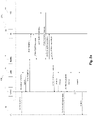
- the figure 2a represents steps of a method of controlling a service provision session, implemented by entities of an IMS communication network according to a first particular embodiment. Thereafter, we place our in a network configuration such as that described in relation to the figure 1 .
- the service provision session is established by way of example between the calling entity 10 (e.g. call robot) of the IMS communication network 100 and a called entity 20 located in the communication network IMS 200 from a remote site.
- the session provides a remote monitoring service for this remote site.
- the session comprises for example three data streams, namely a video stream allowing to transmit images of the remote site under surveillance, an audio stream allowing to transmit ambient sounds of the remote site under surveillance, and an instant messaging stream allowing to transmit on the one hand information obtained from various sensors located on the remote site under surveillance, and on the other hand control messages from the calling entity 10 (e.g. command to trigger an alarm).
- a video stream allowing to transmit images of the remote site under surveillance
- an audio stream allowing to transmit ambient sounds of the remote site under surveillance
- an instant messaging stream allowing to transmit on the one hand information obtained from various sensors located on the remote site under surveillance, and on the other hand control messages from the calling entity 10 (e.g. command to trigger an alarm).
- the calling entity 10 sends an "INVITE" SIP session control message comprising an SDP offer to the called entity 20 located in the IMS communication network 200.
- the purpose of this message is to establish the remote monitoring session between the calling entity 10 and the called entity 20.
- the SIP “INVITE” session control message sent has for example the following content:
- a header of the SIP “INVITE” session control message indicates more particularly that the session that the calling entity 10 wishes to establish is a remote monitoring session. This is indicated by the “Contact” header of the “INVITE” SIP session control message which includes the value “ServiceApplicationServerA”.
- the SDP offer contained in the “INVITE” SIP session control message further comprises three data flow descriptions each identified by the letter “m”.
- the first description describes an audio stream, the second a video stream, and the third an instant messaging stream.
- the SIP “INVITE” session control message does not contain any session control policy.
- the secondary control entity 32 (a P-CSCF proxy server) receives the “INVITE” session control message sent by the calling entity 10.
- the secondary control entity 32 then sends a stream reservation request, for the three data streams of the SDP offer, to the control entity 31 (PCRF rules control entity).
- the flow reservation request is more precisely an “AAR” Diameter resource control message (for “AA-Request”) as defined in the RFC 4005 document. » has the following content:
- the Diameter “AAR” resource control message further comprises an “INDICATION_OF_LOSS_OF_BEARER” field indicating that the secondary control entity 32 requests to be notified by the control entity 31 of loss of stream events.
- the control entity 31 sends an acknowledgment message for the stream reservation request to the secondary control entity 32.
- This acknowledgment message is a Diameter “AAA” resource control message. (for “AA-Answer”) as defined in RFC 4005.
- the secondary control entity 32 relays the SIP session control message “INVITE” to the control entity 33 (entity supporting I-CSCF interrogation and S-CSCF registration functions ).
- control entity 33 receives the SIP session control message "INVITE”, and determines from the "Contact” header comprising the value "ServiceApplicationServerA", that a remote monitoring service is to implement. The control entity 33 then transmits the SIP session control message “INVITE” to the primary control entity 30 (application server AS).
- the primary control entity 30 receives the SIP session control message “INVITE” and identifies the three data streams contained in the SDP offer.
- the primary control entity 30 determines, using for example a setting defined locally, that the remote monitoring service cannot be provided without the RTP video streams (for "Real-time Transport Protocol”) and instant messaging, but that on the other hand the audio stream or the RTCP video stream (for “Real-time Transport Control Protocol”) are not required to maintain such a session.
- the parameter setting is for example defined using a table storing certain types of services in association with possible actions in the event of inactivity of certain types of streams relating to these services.
- Such a table has for example the following format: Type_Service Type_Flow Sub-Type_Flow Session_Policy remote monitoring sound * keep remote monitoring video rtcp keep remote monitoring video rtp retry remote monitoring message * release videoconference sound * wait 30 videoconference video * keep videoconference message * keep
- the “Type_Service”, “Type_Flux”, “Sub-type_Flux” and “Politique_Session” columns respectively indicate a type of service provided by the session, a type of data flow possible for the service considered, a sub-type for the flow considered , and a session control policy.
- a triplet (Type_Service, Type_Flow, Sub-type_Flow) corresponds to a session control policy. This latter control policy is implemented for the session in the event of inactivity of the flow defined by the “Type_Flow” and “Sub-type Flow” columns.
- Session control policies belong to the group comprising an immediate release of the session (indicated in the column “Policy_Session” by the value “release”), a delayed release of the session (indicated in the column “Policy_Session” by the value “ wait x", where x is a number of seconds before the actual release of the session), a maintenance of the session (indicated in the column “Policy_Session” by the value “keep”), and an attempt to reestablish a flow of the session (indicated in the "Policy_Session” column by the value “retry”).
- the table thus indicates that for a remote monitoring service, the session must be maintained in the event of inactivity of any audio stream or of an RTCP video stream, released in the event of inactivity of any instant messaging stream, and that an attempt to reestablish the session must be implemented in the event of inactivity of an RTP video stream.
- the table indicates that the session must be released after 30 seconds in the event of inactivity of any audio stream, but that it can be maintained in the event of inactivity of a video stream or any instant messaging stream.
- the primary control entity 30 thus generates, for each data stream, depending on the type of service provided, a session control policy to be implemented in the event of inactivity of this stream, that is to say in case of non-establishment or premature release of the stream.
- the “INVITE” SIP session control message then contains a new SDP offer.
- the resulting "INVITE” SIP session control message has, for example, the following content:
- the primary control entity 30 returns the SIP “INVITE” session control message to the control entity 33.
- control entity 33 routes the SIP session control message "INVITE" to the called entity 20 of the IMS communication network 200.
- a “200 OK” SIP session control message originating from the IMS communication network 200 is received by the control entity 33.
- This acknowledgment message contains an SDP response comprising the same attributes as those contained in the SDP offer previously described.
- the "200 OK" SIP session control message has for example the following format:
- control entity 33 relays the SIP session control message "200 OK" to the primary control entity 30.
- the primary control entity 30 receives the "200 OK" SIP session control message and in turn sends it without modifying it during a step E11 to the control entity 33, which itself relays it during a step E12 to the secondary control entity 32 in charge of implementing said session control policy in the event of inactivity of a flow of the service provision session.
- the secondary control entity 32 After receiving the "200 OK" SIP session control message, the secondary control entity 32 sends a flow modification request to the control entity 31 in order to take account of the information contained in the session control message SIP "200 OK", and update previously reserved flows.
- the stream reservation request is made in the same way as in step E2, by sending a Diameter “AAR” resource control message.
- the secondary control entity 32 transmits the SIP session control message “200 OK” to the calling entity 10.
- This latter entity is thus informed of the session control policies that can be implemented. by the communication network IMS 100 in the event of inactivity of a flow of the session.
- the calling entity 10 can advantageously in turn use the information obtained as to the session control policies in order to interpret the latter locally and to provide, for example, a particular local treatment in the event of the session being released following the inactivity of the session. a stream detected by the IMS 100 communication network.
- the control entity 31 detects the inactivity of the instant messaging stream. This inactivity is for example determined by the expiry of a time delay after a predefined number of seconds after which a flow is considered inactive if no data packet relating to this flow has been received.
- a message indicating the inactivity of the flow is then transmitted by the control entity 31, to the secondary control entity 32.
- This message is for example a Diameter "RAR" message, containing a "Specific-Action” field with the value "INDICATION_OF_LOSS_OF_BEARER", and indicating that a loss of stream has occurred for the stream identified by the fields "Media-Component-Number" and "Flow-Number", namely the instant messaging stream.
- the Diameter message has the following format:
- the secondary control entity 32 receives the Diameter “RAR” message and is thus notified of the loss of the instant messaging stream.
- the secondary control entity 32 acknowledges the Diameter “RAR” message received by sending the control entity 31 a Diameter “AAA” message.
- the secondary control entity 32 implements the session control policy obtained from the SDP offer at step E12, and corresponding to an inactivity of the instant messaging flow.
- This session control policy consists more specifically to release the session, which is indicated by the line “on-loss: ⁇ release” of the description of the instant messaging stream contained in the SDP offer.
- the implementation of the session control policy for inactivity of the instant messaging flow results, during a step E18, in the sending by the secondary control entity 32 of a session closing message to the calling entity 10 and to the controlling entity 31.
- the session control policies are directly inserted into a header of a SIP session control message, for example a "Media-Loss-Actions" header, rather than in an SDP offer or response. contained in this message.
- the session control policies then correspond to an ordered list of values whose order corresponds to the order of the flow descriptions associated with the session in the SDP offer or response contained in the SIP session control message.
- the values in the list then indicate a session control policy for each of the flows within the session according to the order of the list. More precisely, to an n-th stream description of an SDP offer or response corresponds the n-th session control policy of the list of values associated with the “Media-Loss-Actions” header.
- an “INVITE” SIP session control message has the following form:
- a session control policy is inserted by the calling entity 10 in the SDP offer sent in step E1.
- the primary control entity 30, can then modify the session control policy described in the SDP offer or even keep it as indicated by the calling entity 10.
- the primary control entity 30 obtains the session control policy directly from the SIP “INVITE” session control message received.
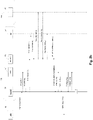
- the figure 2b represents steps of a service provision session control method, implemented by entities of an IMS communication network according to a second particular embodiment. Thereafter, we place us again in a network configuration such as that described in relation to the figure 1 .
- the service provision session is, as previously described in relation to the figure 2a , a session providing a service of remote monitoring, established between the calling entity 10 (eg call robot) of the IMS 100 communication network and a called entity 20 located in the IMS 200 communication network of a remote site. It is considered, as before, that the session comprises three data streams: a video stream, an audio stream, and an instant messaging stream.
- the calling entity 10 eg call robot
- the session comprises three data streams: a video stream, an audio stream, and an instant messaging stream.
- the entity detecting inactivity of a stream and notifying it to the secondary control entity 32 is a media entity 40, for example, an IMS-AGW gateway.
- the other entities are identical to the first embodiment.
- step F1 identical to step E1 previously described, the calling entity 10 sends an "INVITE" SIP session control message comprising an SDP offer to the called entity 20 located in the communication network IMS 200.
- control entity 40 sends an H.248 “Add Reply” resource control message, acknowledging the stream reservation request to the secondary control entity 32.
- Steps F4 to F6 are then implemented. These steps are identical to steps E4 and E6 previously described in relation to the figure 2a .
- the primary control entity 30 does not complete the SDP offer contained in the SIP session control message “INVITE” with the session control policies in cases of inactivity of a flow determined in the previous step.
- the primary control entity 30 returns the SIP session control message “INVITE” to the control entity 33 without modifying it. This advantageously makes it possible not to communicate the session control policies to the communication network of the called entity 20.
- Steps F8 to F10 are then implemented similarly to steps E8 to E10 previously described in relation to the figure 2a , except that the SIP session control messages exchanged do not include session control policies in the event of flow inactivity.
- This attribute indicates the control policy to be implemented in the event of inactivity of the flow with which it is associated.
- the primary control entity 30 thus generates, for each data stream, depending on the type of service provided, a session control policy to be implemented in the event of inactivity of this stream, that is to say in case of non-establishment or premature release of the flow.
- the session control policies in the event of inactivity of a flow are in this second embodiment inserted upon receipt of the SDP response and thus make it possible to preserve its confidentiality vis-à-vis the communication network IMS 200.
- the control entity 30 then sends the modified SIP message back to the control entity 33, which itself relays it during a step F12 to the secondary control entity 32 by responsible for implementing the session control policy in the event of inactivity of a flow of the service provision session.
- This step F12 is identical to step E12 of the first embodiment.
- the secondary control entity 32 After receiving the "200 OK" SIP session control message, the secondary control entity 32 sends a stream modification request to the media entity 40 in order to take account of the information contained in the "200 OK" SIP session control message, and to update the flows previously reserved.
- the stream reservation request is carried out in a manner similar to step F2, by sending an H.248 “Modify Request” resource control message.
- the secondary control entity 32 transmits, during a step F14 identical to step E14 of the first embodiment, the SIP session control message "200 OK" to the calling entity 10.
- the secondary control entity 32 receives the H.248 “Notify Request” message and is thus notified of the loss of the audio stream.
- the secondary control entity 32 acknowledges the H.248 “Notify Request” message received by sending the media entity 40 an H.248 “Notify Reply” message.
- the secondary control entity 32 implements the session control policy obtained from the SDP response, and corresponding to an inactivity of the audio stream.
- This session control policy consists more particularly of maintaining the session, which is indicated by the line “on-loss: ⁇ keep” of the description of the audio stream contained in the SDP response.
- the session control policy implemented thus amounts to not taking into account the loss of the audio stream.
- the implementation module 420 is arranged to execute or command an immediate release of the session for providing a certain service, a deferred release of the session for providing a certain service, a maintenance of the session providing a certain service, or an attempt to reestablish a flow of the session providing a certain service.
- a hardware component corresponds to any element of a hardware assembly (or hardware). It can be a programmable or non-programmable hardware component, with or without an integrated processor for running software. It is for example an integrated circuit, a smart card, an electronic card for the execution of a firmware (firmware), etc.
- the software modules can be stored in or transmitted by a data medium.
- a data medium This may be a material storage medium, for example a CD-ROM, a magnetic diskette or a hard disk, or else a transmission medium such as an electrical, optical or radio signal, or a telecommunications network.
Landscapes
- Engineering & Computer Science (AREA)
- Multimedia (AREA)
- Computer Networks & Wireless Communication (AREA)
- Signal Processing (AREA)
- Business, Economics & Management (AREA)
- General Business, Economics & Management (AREA)
- Telephonic Communication Services (AREA)
- Data Exchanges In Wide-Area Networks (AREA)
Claims (14)
- Verfahren zur Überwachung einer Sitzung zur Bereitstellung eines Dienstes zwischen einer ersten und einer zweiten Einheit, wobei mindestens ein Datenfluss der Sitzung zugeordnet ist, wobei das Verfahren nach Senden einer Sitzungsüberwachungsnachricht durch die erste Einheit an die zweite Einheit umfasst:- Einfügen (E7, F11) einer Sitzungsüberwachungspolitik in die Sitzungsüberwachungsnachricht, die bei Inaktivität mindestens eines der Sitzung zugeordneten Datenflusses durchzuführen ist, durch eine sogenannte primäre Überwachungseinheit, die sich auf einem Netzpfad zwischen den beiden Einheiten befindet, wobei die Sitzungsüberwachungspolitik (E6, F11), die von der primären Überwachungseinheit auf der Grundlage einer Sitzungsüberwachungspolitik erhalten wurde, die durch die erste Einheit in die Sitzungsüberwachungsnachricht eingefügt wurde oder von der primären Überwachungseinheit abhängig von einer Art des Dienstes erzeugt wurde (E6), wobei die Inaktivität des mindestens einen Datenflusses in einem Nichtaufbau oder einer vorzeitigen Freigabe des mindestens einen Datenflusses besteht;- Erhalten (E12, F13) der Sitzungsüberwachungspolitik in der Sitzungsüberwachungsnachricht oder in einer Antwort der zweiten Einheit auf die Sitzungsüberwachungsnachricht durch eine sogenannte sekundäre Überwachungseinheit (32), die von der primären Überwachungseinheit verschieden ist, sich auf dem Netzpfad zwischen der ersten und zweiten Einheit befindet und damit beauftragt ist, die Sitzungsüberwachungspolitik durchzuführen; und- bei Erkennung (E15, F15) einer Inaktivität des Datenflusses Durchführen (E17, F17) der Sitzungsüberwachungspolitik durch die sekundäre Überwachungseinheit.
- Verfahren nach Anspruch 1, wobei die Sitzungsüberwachungspolitik zu der Gruppe gehört, die eine sofortige Freigabe der Sitzung, eine verzögerte Freigabe der Sitzung, eine Aufrechterhaltung der Sitzung und einen Versuch des Wiederaufbaus eines Flusses der Sitzung umfasst.
- Verfahren nach Anspruch 1, wobei die Sitzungsüberwachungspolitik durch ein Attribut einer Beschreibung eines Flusses der Sitzung definiert ist, die in einem SDP-Angebot oder einer -Antwort zur Sitzungsüberwachungsnachricht enthalten ist.
- Verfahren nach Anspruch 1, wobei die Sitzungsüberwachungspolitik in einem Kopffeld der Sitzungsüberwachungspolitik enthalten ist.
- Verfahren nach Anspruch 1, wobei die Sitzungsüberwachungspolitik bei Erkennung einer Inaktivität eines Datenflusses durchgeführt wird, der zur Gruppe gehört, die einen Multimediafluss und einen Überwachungsfluss umfasst.
- Verfahren nach Anspruch 1, wobei die Sitzungsüberwachungsnachricht eine SIP-Nachricht ist.
- Verfahren nach einem der Ansprüche 1 bis 6, wobei die Sitzungsüberwachungspolitik an den Datenfluss angepasst ist.
- Sogenannte "primäre" Einheit zur Überwachung (30) einer Sitzung zur Bereitstellung eines Dienstes zwischen einer primären und einer sekundären Einheit in einem Kommunikationsnetz, wobei sich die primäre Überwachungseinheit in einem Netzpfad zwischen der primären und der sekundären Einheit befindet und umfasst:- ein Erhaltensmodul (310) und/oder ein Erzeugungsmodul (320), das dazu eingerichtet ist, auf der Grundlage einer Sitzungsüberwachungspolitik, die in eine Sitzungsüberwachungsnachricht eingefügt wurde, die von der ersten Einheit an die zweite Einheit gesendet wird, eine Sitzungsüberwachungspolitik, die bei Inaktivität mindestens eines der Sitzung zugeordneten Datenflusses durchzuführen ist, zu erhalten oder abhängig von einer Art des Dienstes zu erzeugen, wobei die Inaktivität in einem Nichtaufbau oder einer vorzeitigen Freigabe des Datenflusses besteht;- ein Sendemodul (330), das dazu eingerichtet ist, die Sitzungsüberwachungspolitik in die Sitzungsüberwachungsnachricht oder in eine Antwort der zweiten Einheit auf die Sitzungsüberwachungsnachricht einzufügen, wobei diese für eine sogenannte "sekundäre" Überwachungseinheit bestimmt ist, die von der primären Überwachungseinheit verschieden ist, sich auf dem Netzpfad zwischen der primären und der sekundären Einheit befindet und dafür zuständig ist, die Sitzungsüberwachungspolitik durchzuführen.
- Überwachungseinheit (30) nach Anspruch 8, wobei das Erhaltensmodul (310) dazu eingerichtet ist, die Sitzungsüberwachungspolitik auf der Grundlage eines SDP-Angebots oder einer -Antwort zu erhalten, das/die in der Sitzungsüberwachungsnachricht enthalten ist, wobei die Sitzungsüberwachungspolitik ein Attribut einer Beschreibung eines Flusses der Sitzung ist, die im SDP-Angebot oder in der -Antwort enthalten ist.
- Überwachungseinheit (30) nach Anspruch 8, wobei das Erhaltensmodul (310) dazu eingerichtet ist, die Sitzungsüberwachungspolitik auf der Grundlage eines Kopffelds der Sitzungsüberwachungsnachricht zu erhalten.
- Sogenannte "sekundäre" Einheit (31) zur Überwachung (31) einer Sitzung zur Bereitstellung eines Dienstes zwischen einer ersten und einer zweiten Einheit in einem Kommunikationsnetz, wobei sich die sekundäre Überwachungseinheit auf einem Netzpfad zwischen der ersten und der zweiten Einheit befindet und umfasst:- ein Empfangsmodul (410), das dazu eingerichtet ist, in einer Sitzungsüberwachungsnachricht, die von der ersten Einheit an die zweite Einheit gesendet wird, oder in einer Antwort der zweiten Einheit auf die Sitzungsüberwachungsnachricht eine Sitzungsüberwachungspolitik zu empfangen, die bei Inaktivität mindestens eines der Sitzung zugeordneten Datenflusses durchzuführen ist, wobei die Inaktivität in einem Nichtaufbau oder einer vorzeitigen Freigabe des Datenflusses besteht, wobei die Sitzungsüberwachungspolitik durch eine sogenannte primäre Überwachungseinheit, die von der sekundären Überwachungseinheit verschieden ist und sich auf dem Netzpfad zwischen den beiden Einheiten befindet, auf der Grundlage einer Sitzungsüberwachungspolitik, die von der ersten Einheit in die Sitzungsüberwachungsnachricht eingefügt wird, erhalten wird oder von der sogenannten primären Überwachungseinheit abhängig von einer Art des Dienstes erzeugt und von der primären Überwachungseinheit in die Sitzungsüberwachungsnachricht eingefügt wird;- ein Durchführmodul (420), das dazu eingerichtet ist, die Sitzungsüberwachungspolitik durchzuführen, wenn eine Inaktivität des Datenflusses erkannt wird.
- Überwachungseinheit (31) nach Anspruch 11, wobei das Durchführmodul (420) dazu eingerichtet ist, eine sofortige Freigabe der Sitzung zur Bereitstellung eines bestimmten Dienstes, eine verzögerte Freigabe der Sitzung zur Bereitstellung eines bestimmten Dienstes, eine Aufrechterhaltung der Sitzung zur Bereitstellung eines bestimmten Dienstes oder einen Versuch zum Wiederaufbau eines Datenflusses der Sitzung zur Bereitstellung eines bestimmten Dienstes auszuführen oder zu befehlen.
- Überwachungseinheit (31) nach Anspruch 11, außerdem umfassend ein Erkennungsmodul (430), das dazu eingerichtet ist, eine Inaktivität mindestens eines Flusses der Sitzung zur Bereitstellung eines bestimmten Dienstes zu erkennen.
- System zur Überwachung der Bereitstellung einer Sitzung zwischen zwei Einheiten in einem Kommunikationsnetz, umfassend:- eine Überwachungseinheit (30), "primäre Überwachungseinheit" genannt, nach einem der Ansprüche 8 bis 10; und- eine Überwachungseinheit (31), "sekundäre Überwachungseinheit" genannt, nach einem der Ansprüche 11 bis 13;wobei die sekundäre Überwachungseinheit bei Erkennung einer Inaktivität mindestens eines der Sitzung zugeordneten Datenflusses eine Sitzungsüberwachungspolitik durchführt, die von der primären Überwachungseinheit für die Sitzung erhalten wurde.
Applications Claiming Priority (2)
| Application Number | Priority Date | Filing Date | Title |
|---|---|---|---|
| FR1554429A FR3036567A1 (fr) | 2015-05-18 | 2015-05-18 | Procede de controle d'une session relative a un service |
| PCT/FR2016/051126 WO2016185118A1 (fr) | 2015-05-18 | 2016-05-12 | Procede de controle d'une session relative a un service |
Publications (2)
| Publication Number | Publication Date |
|---|---|
| EP3298749A1 EP3298749A1 (de) | 2018-03-28 |
| EP3298749B1 true EP3298749B1 (de) | 2022-07-13 |
Family
ID=54329617
Family Applications (1)
| Application Number | Title | Priority Date | Filing Date |
|---|---|---|---|
| EP16729021.2A Active EP3298749B1 (de) | 2015-05-18 | 2016-05-12 | Verfahren zur überwachung einer auf einen dienst bezogenen sitzung |
Country Status (4)
| Country | Link |
|---|---|
| US (1) | US10873609B2 (de) |
| EP (1) | EP3298749B1 (de) |
| FR (1) | FR3036567A1 (de) |
| WO (1) | WO2016185118A1 (de) |
Families Citing this family (3)
| Publication number | Priority date | Publication date | Assignee | Title |
|---|---|---|---|---|
| FR3066872A1 (fr) * | 2017-05-23 | 2018-11-30 | Orange | Procede de controle d' une communication comprenant des transactions multiples |
| US11722561B2 (en) * | 2020-12-22 | 2023-08-08 | Telefonaktiebolaget Lm Ericsson (Publ) | DTLS/SCTP enhancements for RAN signaling purposes |
| CN119728653A (zh) * | 2023-09-28 | 2025-03-28 | 华为技术有限公司 | 通信方法、装置及通信系统 |
Family Cites Families (3)
| Publication number | Priority date | Publication date | Assignee | Title |
|---|---|---|---|---|
| EP2204011B1 (de) * | 2007-10-16 | 2018-05-30 | Telefonaktiebolaget LM Ericsson (publ) | Verfahren und vorrichtung zum verbessern der effizienz der betriebsmittelnutzung in einem kommunikationssystem |
| US10390058B2 (en) * | 2015-04-02 | 2019-08-20 | Nokia Of America Corporation | Dynamic service flow creation for packet cable multimedia quality of service guarantee in a distributed cable management system |
| US20180199384A1 (en) * | 2017-01-11 | 2018-07-12 | Alcatel-Lucent Usa Inc. | Network-initiated detach procedures in a neutral host network |
-
2015
- 2015-05-18 FR FR1554429A patent/FR3036567A1/fr active Pending
-
2016
- 2016-05-12 EP EP16729021.2A patent/EP3298749B1/de active Active
- 2016-05-12 US US15/575,637 patent/US10873609B2/en active Active
- 2016-05-12 WO PCT/FR2016/051126 patent/WO2016185118A1/fr not_active Ceased
Also Published As
| Publication number | Publication date |
|---|---|
| WO2016185118A1 (fr) | 2016-11-24 |
| FR3036567A1 (fr) | 2016-11-25 |
| EP3298749A1 (de) | 2018-03-28 |
| US20180124126A1 (en) | 2018-05-03 |
| US10873609B2 (en) | 2020-12-22 |
Similar Documents
| Publication | Publication Date | Title |
|---|---|---|
| FR3034608A1 (fr) | Procede de priorisation de flux medias dans un reseau de communications | |
| EP1931104B1 (de) | Verfahren zur Kontrolle des Aufbaus von Multimedia-Kommunikationskanälen | |
| WO2007098714A1 (en) | Apparatus and method for session control | |
| US9246955B2 (en) | Capability query handling in a communication network | |
| EP2708002B1 (de) | Verfahren zur behandlung ein umschalten der kommunikation zwischen zwei zugangsnetze | |
| EP3298749B1 (de) | Verfahren zur überwachung einer auf einen dienst bezogenen sitzung | |
| EP2882161A1 (de) | Verfahren und Vorrichtung zur Herstellung einer Kommunikation | |
| EP2920942B1 (de) | Auswahl von aktualisierungsperioden in einem ip-netzwerk | |
| EP3158709B1 (de) | Dynamische auswahl seitens eines anrufers aus einer vielzahl von endgeräten eines angerufenen | |
| EP3583757B1 (de) | Verfahren zum wechseln eines mobilnetzes | |
| EP3391615B1 (de) | Verfahren zur kommunikation zwischen einem anrufenden endgerät und einer vielzahl angerufener endgeräte | |
| EP2801178B1 (de) | Dynamisches verfahren zur bestimmung einer liste von diensten in einem sip-netzwerk | |
| WO2015181505A1 (fr) | Procédé pour informer une entité d'un réseau ip du type de réseau d'accès utilisé par un terminal | |
| EP3646578B1 (de) | Verfahren zur medienzustandssynchronisation | |
| FR3049805A1 (fr) | Procede de transfert de reseau d' acces pour un terminal mobile en itinerance | |
| FR2902594A1 (fr) | Unite et procede de definition d'une regle de session dans un reseau | |
| WO2012085429A2 (fr) | Procédé de localisation et d'identification d'un abonné connecté à un réseau émulant le rtc/rnis | |
| EP2079216A1 (de) | Speicherung von Kontextinformationen zwischen Übertragungen von Zeichengabenachrichten | |
| EP2091201A1 (de) | Verfahren und Vorrichtung zum Transfer eines Medienstroms während einer Kommunikationssitzung | |
| WO2009036605A1 (en) | Method and system for processing sip message with rtsp encapsulation in ims | |
| WO2014170582A1 (fr) | Procede de restauration de service dans un reseau ims | |
| WO2005062568A1 (fr) | Procede et systeme de gestion dune session de transmission de donnees en flux continu et en temps reel | |
| Hurtado et al. | A SIP based next generation services platform | |
| FR2959088A1 (fr) | Procede de traitement d'une demande d'etablissement d'une communication, systeme, equipement et programme d'ordinateur correspondants | |
| FR3066872A1 (fr) | Procede de controle d' une communication comprenant des transactions multiples |
Legal Events
| Date | Code | Title | Description |
|---|---|---|---|
| STAA | Information on the status of an ep patent application or granted ep patent |
Free format text: STATUS: THE INTERNATIONAL PUBLICATION HAS BEEN MADE |
|
| PUAI | Public reference made under article 153(3) epc to a published international application that has entered the european phase |
Free format text: ORIGINAL CODE: 0009012 |
|
| STAA | Information on the status of an ep patent application or granted ep patent |
Free format text: STATUS: REQUEST FOR EXAMINATION WAS MADE |
|
| 17P | Request for examination filed |
Effective date: 20171018 |
|
| AK | Designated contracting states |
Kind code of ref document: A1 Designated state(s): AL AT BE BG CH CY CZ DE DK EE ES FI FR GB GR HR HU IE IS IT LI LT LU LV MC MK MT NL NO PL PT RO RS SE SI SK SM TR |
|
| AX | Request for extension of the european patent |
Extension state: BA ME |
|
| DAV | Request for validation of the european patent (deleted) | ||
| DAX | Request for extension of the european patent (deleted) | ||
| STAA | Information on the status of an ep patent application or granted ep patent |
Free format text: STATUS: EXAMINATION IS IN PROGRESS |
|
| 17Q | First examination report despatched |
Effective date: 20190211 |
|
| RAP1 | Party data changed (applicant data changed or rights of an application transferred) |
Owner name: ORANGE |
|
| GRAP | Despatch of communication of intention to grant a patent |
Free format text: ORIGINAL CODE: EPIDOSNIGR1 |
|
| STAA | Information on the status of an ep patent application or granted ep patent |
Free format text: STATUS: GRANT OF PATENT IS INTENDED |
|
| INTG | Intention to grant announced |
Effective date: 20210510 |
|
| RAP3 | Party data changed (applicant data changed or rights of an application transferred) |
Owner name: ORANGE |
|
| GRAJ | Information related to disapproval of communication of intention to grant by the applicant or resumption of examination proceedings by the epo deleted |
Free format text: ORIGINAL CODE: EPIDOSDIGR1 |
|
| STAA | Information on the status of an ep patent application or granted ep patent |
Free format text: STATUS: EXAMINATION IS IN PROGRESS |
|
| GRAP | Despatch of communication of intention to grant a patent |
Free format text: ORIGINAL CODE: EPIDOSNIGR1 |
|
| STAA | Information on the status of an ep patent application or granted ep patent |
Free format text: STATUS: GRANT OF PATENT IS INTENDED |
|
| INTC | Intention to grant announced (deleted) | ||
| INTG | Intention to grant announced |
Effective date: 20210915 |
|
| GRAJ | Information related to disapproval of communication of intention to grant by the applicant or resumption of examination proceedings by the epo deleted |
Free format text: ORIGINAL CODE: EPIDOSDIGR1 |
|
| STAA | Information on the status of an ep patent application or granted ep patent |
Free format text: STATUS: EXAMINATION IS IN PROGRESS |
|
| REG | Reference to a national code |
Ref country code: DE Ref legal event code: R079 Ref document number: 602016073489 Country of ref document: DE Free format text: PREVIOUS MAIN CLASS: H04L0029060000 Ipc: H04L0065106900 |
|
| INTC | Intention to grant announced (deleted) | ||
| GRAP | Despatch of communication of intention to grant a patent |
Free format text: ORIGINAL CODE: EPIDOSNIGR1 |
|
| STAA | Information on the status of an ep patent application or granted ep patent |
Free format text: STATUS: GRANT OF PATENT IS INTENDED |
|
| RIC1 | Information provided on ipc code assigned before grant |
Ipc: H04L 65/1016 20220101ALI20220110BHEP Ipc: H04L 65/1063 20220101ALI20220110BHEP Ipc: H04L 65/10 20220101ALI20220110BHEP Ipc: H04L 65/1069 20220101AFI20220110BHEP |
|
| INTG | Intention to grant announced |
Effective date: 20220131 |
|
| GRAS | Grant fee paid |
Free format text: ORIGINAL CODE: EPIDOSNIGR3 |
|
| GRAA | (expected) grant |
Free format text: ORIGINAL CODE: 0009210 |
|
| STAA | Information on the status of an ep patent application or granted ep patent |
Free format text: STATUS: THE PATENT HAS BEEN GRANTED |
|
| AK | Designated contracting states |
Kind code of ref document: B1 Designated state(s): AL AT BE BG CH CY CZ DE DK EE ES FI FR GB GR HR HU IE IS IT LI LT LU LV MC MK MT NL NO PL PT RO RS SE SI SK SM TR |
|
| REG | Reference to a national code |
Ref country code: CH Ref legal event code: EP |
|
| REG | Reference to a national code |
Ref country code: IE Ref legal event code: FG4D Free format text: LANGUAGE OF EP DOCUMENT: FRENCH |
|
| REG | Reference to a national code |
Ref country code: DE Ref legal event code: R096 Ref document number: 602016073489 Country of ref document: DE |
|
| REG | Reference to a national code |
Ref country code: AT Ref legal event code: REF Ref document number: 1504853 Country of ref document: AT Kind code of ref document: T Effective date: 20220815 |
|
| REG | Reference to a national code |
Ref country code: LT Ref legal event code: MG9D |
|
| REG | Reference to a national code |
Ref country code: NL Ref legal event code: MP Effective date: 20220713 |
|
| PG25 | Lapsed in a contracting state [announced via postgrant information from national office to epo] |
Ref country code: SE Free format text: LAPSE BECAUSE OF FAILURE TO SUBMIT A TRANSLATION OF THE DESCRIPTION OR TO PAY THE FEE WITHIN THE PRESCRIBED TIME-LIMIT Effective date: 20220713 Ref country code: RS Free format text: LAPSE BECAUSE OF FAILURE TO SUBMIT A TRANSLATION OF THE DESCRIPTION OR TO PAY THE FEE WITHIN THE PRESCRIBED TIME-LIMIT Effective date: 20220713 Ref country code: PT Free format text: LAPSE BECAUSE OF FAILURE TO SUBMIT A TRANSLATION OF THE DESCRIPTION OR TO PAY THE FEE WITHIN THE PRESCRIBED TIME-LIMIT Effective date: 20221114 Ref country code: NO Free format text: LAPSE BECAUSE OF FAILURE TO SUBMIT A TRANSLATION OF THE DESCRIPTION OR TO PAY THE FEE WITHIN THE PRESCRIBED TIME-LIMIT Effective date: 20221013 Ref country code: NL Free format text: LAPSE BECAUSE OF FAILURE TO SUBMIT A TRANSLATION OF THE DESCRIPTION OR TO PAY THE FEE WITHIN THE PRESCRIBED TIME-LIMIT Effective date: 20220713 Ref country code: LV Free format text: LAPSE BECAUSE OF FAILURE TO SUBMIT A TRANSLATION OF THE DESCRIPTION OR TO PAY THE FEE WITHIN THE PRESCRIBED TIME-LIMIT Effective date: 20220713 Ref country code: LT Free format text: LAPSE BECAUSE OF FAILURE TO SUBMIT A TRANSLATION OF THE DESCRIPTION OR TO PAY THE FEE WITHIN THE PRESCRIBED TIME-LIMIT Effective date: 20220713 Ref country code: FI Free format text: LAPSE BECAUSE OF FAILURE TO SUBMIT A TRANSLATION OF THE DESCRIPTION OR TO PAY THE FEE WITHIN THE PRESCRIBED TIME-LIMIT Effective date: 20220713 Ref country code: ES Free format text: LAPSE BECAUSE OF FAILURE TO SUBMIT A TRANSLATION OF THE DESCRIPTION OR TO PAY THE FEE WITHIN THE PRESCRIBED TIME-LIMIT Effective date: 20220713 |
|
| REG | Reference to a national code |
Ref country code: AT Ref legal event code: MK05 Ref document number: 1504853 Country of ref document: AT Kind code of ref document: T Effective date: 20220713 |
|
| PG25 | Lapsed in a contracting state [announced via postgrant information from national office to epo] |
Ref country code: PL Free format text: LAPSE BECAUSE OF FAILURE TO SUBMIT A TRANSLATION OF THE DESCRIPTION OR TO PAY THE FEE WITHIN THE PRESCRIBED TIME-LIMIT Effective date: 20220713 Ref country code: IS Free format text: LAPSE BECAUSE OF FAILURE TO SUBMIT A TRANSLATION OF THE DESCRIPTION OR TO PAY THE FEE WITHIN THE PRESCRIBED TIME-LIMIT Effective date: 20221113 Ref country code: HR Free format text: LAPSE BECAUSE OF FAILURE TO SUBMIT A TRANSLATION OF THE DESCRIPTION OR TO PAY THE FEE WITHIN THE PRESCRIBED TIME-LIMIT Effective date: 20220713 Ref country code: GR Free format text: LAPSE BECAUSE OF FAILURE TO SUBMIT A TRANSLATION OF THE DESCRIPTION OR TO PAY THE FEE WITHIN THE PRESCRIBED TIME-LIMIT Effective date: 20221014 |
|
| REG | Reference to a national code |
Ref country code: DE Ref legal event code: R097 Ref document number: 602016073489 Country of ref document: DE |
|
| PG25 | Lapsed in a contracting state [announced via postgrant information from national office to epo] |
Ref country code: SM Free format text: LAPSE BECAUSE OF FAILURE TO SUBMIT A TRANSLATION OF THE DESCRIPTION OR TO PAY THE FEE WITHIN THE PRESCRIBED TIME-LIMIT Effective date: 20220713 Ref country code: RO Free format text: LAPSE BECAUSE OF FAILURE TO SUBMIT A TRANSLATION OF THE DESCRIPTION OR TO PAY THE FEE WITHIN THE PRESCRIBED TIME-LIMIT Effective date: 20220713 Ref country code: DK Free format text: LAPSE BECAUSE OF FAILURE TO SUBMIT A TRANSLATION OF THE DESCRIPTION OR TO PAY THE FEE WITHIN THE PRESCRIBED TIME-LIMIT Effective date: 20220713 Ref country code: CZ Free format text: LAPSE BECAUSE OF FAILURE TO SUBMIT A TRANSLATION OF THE DESCRIPTION OR TO PAY THE FEE WITHIN THE PRESCRIBED TIME-LIMIT Effective date: 20220713 Ref country code: AT Free format text: LAPSE BECAUSE OF FAILURE TO SUBMIT A TRANSLATION OF THE DESCRIPTION OR TO PAY THE FEE WITHIN THE PRESCRIBED TIME-LIMIT Effective date: 20220713 |
|
| PLBE | No opposition filed within time limit |
Free format text: ORIGINAL CODE: 0009261 |
|
| STAA | Information on the status of an ep patent application or granted ep patent |
Free format text: STATUS: NO OPPOSITION FILED WITHIN TIME LIMIT |
|
| PG25 | Lapsed in a contracting state [announced via postgrant information from national office to epo] |
Ref country code: SK Free format text: LAPSE BECAUSE OF FAILURE TO SUBMIT A TRANSLATION OF THE DESCRIPTION OR TO PAY THE FEE WITHIN THE PRESCRIBED TIME-LIMIT Effective date: 20220713 Ref country code: EE Free format text: LAPSE BECAUSE OF FAILURE TO SUBMIT A TRANSLATION OF THE DESCRIPTION OR TO PAY THE FEE WITHIN THE PRESCRIBED TIME-LIMIT Effective date: 20220713 |
|
| 26N | No opposition filed |
Effective date: 20230414 |
|
| PG25 | Lapsed in a contracting state [announced via postgrant information from national office to epo] |
Ref country code: AL Free format text: LAPSE BECAUSE OF FAILURE TO SUBMIT A TRANSLATION OF THE DESCRIPTION OR TO PAY THE FEE WITHIN THE PRESCRIBED TIME-LIMIT Effective date: 20220713 |
|
| PG25 | Lapsed in a contracting state [announced via postgrant information from national office to epo] |
Ref country code: SI Free format text: LAPSE BECAUSE OF FAILURE TO SUBMIT A TRANSLATION OF THE DESCRIPTION OR TO PAY THE FEE WITHIN THE PRESCRIBED TIME-LIMIT Effective date: 20220713 |
|
| REG | Reference to a national code |
Ref country code: CH Ref legal event code: PL |
|
| PG25 | Lapsed in a contracting state [announced via postgrant information from national office to epo] |
Ref country code: MC Free format text: LAPSE BECAUSE OF FAILURE TO SUBMIT A TRANSLATION OF THE DESCRIPTION OR TO PAY THE FEE WITHIN THE PRESCRIBED TIME-LIMIT Effective date: 20220713 |
|
| REG | Reference to a national code |
Ref country code: BE Ref legal event code: MM Effective date: 20230531 |
|
| PG25 | Lapsed in a contracting state [announced via postgrant information from national office to epo] |
Ref country code: MC Free format text: LAPSE BECAUSE OF FAILURE TO SUBMIT A TRANSLATION OF THE DESCRIPTION OR TO PAY THE FEE WITHIN THE PRESCRIBED TIME-LIMIT Effective date: 20220713 Ref country code: LU Free format text: LAPSE BECAUSE OF NON-PAYMENT OF DUE FEES Effective date: 20230512 Ref country code: LI Free format text: LAPSE BECAUSE OF NON-PAYMENT OF DUE FEES Effective date: 20230531 Ref country code: IT Free format text: LAPSE BECAUSE OF FAILURE TO SUBMIT A TRANSLATION OF THE DESCRIPTION OR TO PAY THE FEE WITHIN THE PRESCRIBED TIME-LIMIT Effective date: 20220713 Ref country code: CH Free format text: LAPSE BECAUSE OF NON-PAYMENT OF DUE FEES Effective date: 20230531 |
|
| REG | Reference to a national code |
Ref country code: IE Ref legal event code: MM4A |
|
| PG25 | Lapsed in a contracting state [announced via postgrant information from national office to epo] |
Ref country code: IE Free format text: LAPSE BECAUSE OF NON-PAYMENT OF DUE FEES Effective date: 20230512 |
|
| PG25 | Lapsed in a contracting state [announced via postgrant information from national office to epo] |
Ref country code: IE Free format text: LAPSE BECAUSE OF NON-PAYMENT OF DUE FEES Effective date: 20230512 |
|
| PG25 | Lapsed in a contracting state [announced via postgrant information from national office to epo] |
Ref country code: BE Free format text: LAPSE BECAUSE OF NON-PAYMENT OF DUE FEES Effective date: 20230531 |
|
| PG25 | Lapsed in a contracting state [announced via postgrant information from national office to epo] |
Ref country code: BG Free format text: LAPSE BECAUSE OF FAILURE TO SUBMIT A TRANSLATION OF THE DESCRIPTION OR TO PAY THE FEE WITHIN THE PRESCRIBED TIME-LIMIT Effective date: 20220713 |
|
| PG25 | Lapsed in a contracting state [announced via postgrant information from national office to epo] |
Ref country code: BG Free format text: LAPSE BECAUSE OF FAILURE TO SUBMIT A TRANSLATION OF THE DESCRIPTION OR TO PAY THE FEE WITHIN THE PRESCRIBED TIME-LIMIT Effective date: 20220713 |
|
| PGFP | Annual fee paid to national office [announced via postgrant information from national office to epo] |
Ref country code: DE Payment date: 20250423 Year of fee payment: 10 |
|
| PGFP | Annual fee paid to national office [announced via postgrant information from national office to epo] |
Ref country code: FR Payment date: 20250423 Year of fee payment: 10 |
|
| PG25 | Lapsed in a contracting state [announced via postgrant information from national office to epo] |
Ref country code: CY Free format text: LAPSE BECAUSE OF FAILURE TO SUBMIT A TRANSLATION OF THE DESCRIPTION OR TO PAY THE FEE WITHIN THE PRESCRIBED TIME-LIMIT; INVALID AB INITIO Effective date: 20160512 |
|
| PG25 | Lapsed in a contracting state [announced via postgrant information from national office to epo] |
Ref country code: HU Free format text: LAPSE BECAUSE OF FAILURE TO SUBMIT A TRANSLATION OF THE DESCRIPTION OR TO PAY THE FEE WITHIN THE PRESCRIBED TIME-LIMIT; INVALID AB INITIO Effective date: 20160512 |
|
| PG25 | Lapsed in a contracting state [announced via postgrant information from national office to epo] |
Ref country code: TR Free format text: LAPSE BECAUSE OF FAILURE TO SUBMIT A TRANSLATION OF THE DESCRIPTION OR TO PAY THE FEE WITHIN THE PRESCRIBED TIME-LIMIT Effective date: 20220713 |
|
| PGFP | Annual fee paid to national office [announced via postgrant information from national office to epo] |
Ref country code: GB Payment date: 20260317 Year of fee payment: 11 |