EP3300331A1 - Antwortverfahren, vorrichtung und system in der virtuellen netzwerkdatenverarbeitungsauthentifizierung und proxy-server - Google Patents
Antwortverfahren, vorrichtung und system in der virtuellen netzwerkdatenverarbeitungsauthentifizierung und proxy-server Download PDFInfo
- Publication number
- EP3300331A1 EP3300331A1 EP16890125.4A EP16890125A EP3300331A1 EP 3300331 A1 EP3300331 A1 EP 3300331A1 EP 16890125 A EP16890125 A EP 16890125A EP 3300331 A1 EP3300331 A1 EP 3300331A1
- Authority
- EP
- European Patent Office
- Prior art keywords
- proxy server
- serving end
- client
- response value
- authentication
- Prior art date
- Legal status (The legal status is an assumption and is not a legal conclusion. Google has not performed a legal analysis and makes no representation as to the accuracy of the status listed.)
- Granted
Links
Images


Classifications
-
- H—ELECTRICITY
- H04—ELECTRIC COMMUNICATION TECHNIQUE
- H04L—TRANSMISSION OF DIGITAL INFORMATION, e.g. TELEGRAPHIC COMMUNICATION
- H04L63/00—Network architectures or network communication protocols for network security
- H04L63/08—Network architectures or network communication protocols for network security for authentication of entities
- H04L63/0884—Network architectures or network communication protocols for network security for authentication of entities by delegation of authentication, e.g. a proxy authenticates an entity to be authenticated on behalf of this entity vis-à-vis an authentication entity
-
- H—ELECTRICITY
- H04—ELECTRIC COMMUNICATION TECHNIQUE
- H04L—TRANSMISSION OF DIGITAL INFORMATION, e.g. TELEGRAPHIC COMMUNICATION
- H04L63/00—Network architectures or network communication protocols for network security
- H04L63/02—Network architectures or network communication protocols for network security for separating internal from external traffic, e.g. firewalls
- H04L63/0281—Proxies
-
- H—ELECTRICITY
- H04—ELECTRIC COMMUNICATION TECHNIQUE
- H04L—TRANSMISSION OF DIGITAL INFORMATION, e.g. TELEGRAPHIC COMMUNICATION
- H04L63/00—Network architectures or network communication protocols for network security
- H04L63/08—Network architectures or network communication protocols for network security for authentication of entities
- H04L63/0807—Network architectures or network communication protocols for network security for authentication of entities using tickets, e.g. Kerberos
-
- H—ELECTRICITY
- H04—ELECTRIC COMMUNICATION TECHNIQUE
- H04L—TRANSMISSION OF DIGITAL INFORMATION, e.g. TELEGRAPHIC COMMUNICATION
- H04L63/00—Network architectures or network communication protocols for network security
- H04L63/08—Network architectures or network communication protocols for network security for authentication of entities
- H04L63/083—Network architectures or network communication protocols for network security for authentication of entities using passwords
-
- H—ELECTRICITY
- H04—ELECTRIC COMMUNICATION TECHNIQUE
- H04L—TRANSMISSION OF DIGITAL INFORMATION, e.g. TELEGRAPHIC COMMUNICATION
- H04L63/00—Network architectures or network communication protocols for network security
- H04L63/10—Network architectures or network communication protocols for network security for controlling access to devices or network resources
- H04L63/105—Multiple levels of security
-
- H—ELECTRICITY
- H04—ELECTRIC COMMUNICATION TECHNIQUE
- H04L—TRANSMISSION OF DIGITAL INFORMATION, e.g. TELEGRAPHIC COMMUNICATION
- H04L67/00—Network arrangements or protocols for supporting network services or applications
- H04L67/01—Protocols
- H04L67/08—Protocols specially adapted for terminal emulation, e.g. Telnet
-
- H—ELECTRICITY
- H04—ELECTRIC COMMUNICATION TECHNIQUE
- H04L—TRANSMISSION OF DIGITAL INFORMATION, e.g. TELEGRAPHIC COMMUNICATION
- H04L9/00—Cryptographic mechanisms or cryptographic arrangements for secret or secure communications; Network security protocols
- H04L9/32—Cryptographic mechanisms or cryptographic arrangements for secret or secure communications; Network security protocols including means for verifying the identity or authority of a user of the system or for message authentication, e.g. authorization, entity authentication, data integrity or data verification, non-repudiation, key authentication or verification of credentials
- H04L9/3271—Cryptographic mechanisms or cryptographic arrangements for secret or secure communications; Network security protocols including means for verifying the identity or authority of a user of the system or for message authentication, e.g. authorization, entity authentication, data integrity or data verification, non-repudiation, key authentication or verification of credentials using challenge-response
-
- G—PHYSICS
- G06—COMPUTING OR CALCULATING; COUNTING
- G06F—ELECTRIC DIGITAL DATA PROCESSING
- G06F3/00—Input arrangements for transferring data to be processed into a form capable of being handled by the computer; Output arrangements for transferring data from processing unit to output unit, e.g. interface arrangements
- G06F3/14—Digital output to display device ; Cooperation and interconnection of the display device with other functional units
- G06F3/1454—Digital output to display device ; Cooperation and interconnection of the display device with other functional units involving copying of the display data of a local workstation or window to a remote workstation or window so that an actual copy of the data is displayed simultaneously on two or more displays, e.g. teledisplay
-
- H—ELECTRICITY
- H04—ELECTRIC COMMUNICATION TECHNIQUE
- H04L—TRANSMISSION OF DIGITAL INFORMATION, e.g. TELEGRAPHIC COMMUNICATION
- H04L12/00—Data switching networks
- H04L12/28—Data switching networks characterised by path configuration, e.g. LAN [Local Area Networks] or WAN [Wide Area Networks]
- H04L12/46—Interconnection of networks
- H04L12/4641—Virtual LANs, VLANs, e.g. virtual private networks [VPN]
-
- H—ELECTRICITY
- H04—ELECTRIC COMMUNICATION TECHNIQUE
- H04L—TRANSMISSION OF DIGITAL INFORMATION, e.g. TELEGRAPHIC COMMUNICATION
- H04L67/00—Network arrangements or protocols for supporting network services or applications
- H04L67/01—Protocols
- H04L67/02—Protocols based on web technology, e.g. hypertext transfer protocol [HTTP]
Definitions
- the present invention relates to the field of computer technologies, and in particular, to a response method, apparatus, and system in virtual network computing authentication and a proxy server.
- Virtual network computing is a graphical desktop sharing system that remotely controls another computer based on the Remote Frame Buffer (Remote Frame Buffer, RFB) protocol and provides a user with a channel for remotely managing a virtual machine or a server.
- RFB Remote Frame Buffer
- the VNC includes a client, a proxy server, and a serving end.
- the client is generally a browser or a VNC connection tool.
- the serving end is a destination end of a VNC connection request.
- the proxy server implements central management and control of a VNC service. All data packets between the client and the serving end are transited by the proxy server.
- the client and the serving end need to determine, by means of negotiation, an RFB protocol version and a security authentication type that are used for this VNC connection request.
- the security authentication type includes invalid (Invalid), none (None), and VNC authentication.
- the client needs to perform, according to a password of a user, encryption on challenge information generated by the serving end based on the VNC authentication, to determine a response value.
- the response value is sent to the serving end by the proxy server, and the serving end determines another response value according to the password of the user and the challenge information by using an encryption algorithm that is the same as that of the client.
- the VNC authentication succeeds if the response value determined by the serving end is the same as the response value sent by the client.
- a user can access a serving end by using any client, and a device on which the client is located is usually in a network environment of an untrusted domain.
- the present invention provides a response method and system in virtual network computing authentication, and a proxy server.
- the proxy server replaces a client to complete a response process in the virtual network computing authentication, so that a problem in the prior art that sensitive data of a user is leaked or decrypted by brute force because the virtual network computing authentication is completed by the client is resolved, and security in a virtual network computing authentication process is improved.
- a response method in virtual network computing (Virtual Network Computing, VNC) authentication includes:
- the proxy server determines a response value according to the password and the challenge information by using a predefined data encryption algorithm, and sends the response value to the serving end, so as to complete a response process in the virtual network computing authentication.
- a proxy server may determine a first response value according to a password and the challenge information, and send the first response value to the serving end, so as to complete the response process in the virtual network computing authentication.
- the proxy server replaces a client to complete the response process in the virtual network computing authentication, so that a problem that sensitive data of a user is leaked or decrypted by brute force because the sensitive data is transmitted to a network environment of an untrusted domain is avoided, and security in a virtual network computing authentication process is improved.
- the method before the sending, by the proxy server, the first response value to the serving end, the method further includes:
- the second response value is the challenge information.
- the client does not process the challenge information, but directly sends the challenge information in a form of the response message to the proxy server as the response value.
- a proxy server may send the challenge information to a client.
- the client does not process the challenge information, but directly sends the challenge information in a form of a response message to the proxy server as a response value.
- the proxy server replaces the response value in the response message and sends the response message to the serving end, so as to complete a response process in virtual network computing authentication.
- the method further includes:
- the serving end determines the third response value according to the password and the challenge information by using a predefined data encryption algorithm that is the same as that of the proxy server, and compares the first response value with the third response value when the first response value is received.
- the VNC authentication succeeds if the first response value and the third response value are the same.
- the controller generates one password for each serving end in an initial phase as a VNC login password, and sends the password to the serving end, to determine whether authentication of the response value sent by the proxy server succeeds.
- the method before the receiving, by a proxy server, a password sent by a controller, the method further includes:
- the method further includes:
- the method further includes:
- the first security authentication type is used only for identifying a security authentication type that is sent by the serving end to the proxy server, and does not indicate a quantity.
- the client and the serving end complete security authentication according to the VNC authentication type. If the security authentication type that is determined, by means of negotiation, by the serving end is none, no authentication needs to be performed between the client and the serving end; or if the security authentication type that is determined, by means of negotiation, by the serving end is invalid, a VNC session between the client and the serving end is terminated.
- a security authentication type is usually specified by the serving end. That is, the first security authentication type sent by the serving end is the specified security authentication type. If the second security authentication type returned by the client is different from the first security authentication type, a process for negotiating the security authentication type fails, and this VNC connection request is terminated.
- a serving end and a client determine, by means of negotiation, a protocol version and a security authentication type for this VNC connection request.
- a response process in the VNC authentication is completed by using the challenge information and a password.
- a proxy server may replace the client to complete the response process in the VNC authentication between the client and the serving end, so that a problem that information is leaked or decrypted by brute force because sensitive data of a user is transmitted to an untrusted domain is avoided, and security in a VNC authentication process is improved.
- a proxy server replaces a client to complete a response process in VNC authentication.
- sensitive data of a user such as a password
- the response process in the VNC authentication can be completed in a network environment of a trusted domain, so that a problem in the prior art that the sensitive data is leaked or decrypted by brute force because the sensitive data is stored in the network environment of the untrusted domain is avoided. Therefore, security in a VNC authentication process is improved.
- a response system in virtual network computing authentication includes a controller, a client, a proxy server, and a serving end; the client is configured to send a connection request to the proxy server; the proxy server is configured to obtain a token in the connection request, and send the token to the controller for performing authentication; the controller is configured to perform authentication on the client according to the token, and send an authentication success message to the proxy server if the authentication succeeds, where the authentication success message carries an IP address, a port number, and a password of the serving end; the proxy server is further configured to receive the authentication success message sent by the controller, and establish a connection to the serving end according to the IP address and the port number; the serving end is configured to generate challenge information based on the virtual network computing authentication, and send the challenge information to the proxy server; and the proxy server is further configured to receive the challenge information, determine a first response value according to the password and the challenge information, and send the first response value to the serving end.
- the proxy server may determine a first response value according to a password and the challenge information, and send the first response value to the serving end, so as to complete the response process in the VNC authentication.
- the proxy server replaces the client to complete the response process in the VNC authentication, so that a problem that sensitive data of a user is leaked or decrypted by brute force because the sensitive data is transmitted to a network environment of an untrusted domain is avoided, and security in a VNC authentication process is improved.
- the proxy server is further configured to: send the challenge information to the client before sending the first response value to the serving end; receive a response message sent by the client, where the response message includes a second response value, and the second response value is the challenge information; and replace the second response value in the response message with the first response value; and that the proxy server sends the first response value to the serving end is specifically:
- the serving end is further configured to receive the password sent by the controller, and determine a third response value according to the password and the challenge information, where the virtual network computing authentication succeeds if the serving end determines that the first response value is the same as the third response value.
- the controller generates one password for each serving end in an initial phase as a VNC login password, and sends the password to the serving end, to determine whether authentication of the response value sent by the proxy server succeeds.
- the controller is further configured to: receive the virtual network computing connection request from the client; obtain virtual network computing connection information according to the virtual network computing connection request of the client, where the virtual network computing connection information includes a uniform resource locator of the proxy server, the IP address, the port number, and the password of the serving end, and the token; and send the uniform resource locator of the proxy server and the token in the virtual network computing connection information to the client; and the client is further configured to establish a connection to the proxy server according to the uniform resource locator of the proxy server and the token.
- the port number is a port number of a virtual network computing service at the serving end.
- the proxy server replaces the client to complete a response in VNC authentication, and sensitive data of a user, such as a password, does not need to be transmitted to a network environment of an untrusted domain, so that a problem in the prior art that the sensitive data is leaked or decrypted by brute force because the password is transmitted to the network environment of the untrusted domain is avoided. Therefore, security in a VNC authentication process is improved.
- a processing process of the RFB protocol in a process in which the client still receives challenge information and returns a response value, impact on the processing process of the RFB protocol in the prior art is reduced, and information security in the VNC authentication process is improved.
- a proxy server includes a receiving unit, an encryption unit, and a sending unit; the receiving unit is configured to receive a password sent by a controller, and receive challenge information sent by a serving end, where the challenge information is generated by the serving end based on virtual network computing authentication; the encryption unit is configured to determine a first response value according to the password and the challenge information that are received by the receiving unit; and the sending unit is configured to send, to the serving end, the first response value determined by the encryption unit.
- the proxy server in this embodiment of the present invention may be implemented by using an application-specific integrated circuit (Application- Specific Integrated Circuit, ASIC), or may be implemented by using a programmable logic device (Programmable Logic Device, PLD); the PLD may be a complex programmable logic device (Complex Programmable Logic Device, CPLD), a field-programmable gate array (Field-Programmable Gate Array, FPGA), a generic array logic (Generic Array Logic, GAL), or any combination thereof.
- the proxy server and all modules of the proxy server may also be software modules.
- the challenge information is a 16-byte random number
- the proxy server performs encryption on the challenge information according to the password and the challenge information by using a predefined data encryption algorithm, to determine a first response value, and sends the first response value to the serving end, so as to complete a response process in the virtual network computing authentication.
- the predefined data encryption algorithm may be the Secure Hash Algorithm (Secure Hash Algorithm, SHA), or encryption may be performed according to another data encryption algorithm such as the Data Encryption Standard (Data Encryption Standard, DES). This is not limited in the present invention.
- the proxy server may replace a client to complete a response process in VNC authentication, a problem that sensitive data of a user is leaked or decrypted by brute force because the sensitive data needs to be transmitted to a network environment of an untrusted domain when the client completes the response process is avoided, and security in a VNC authentication process is improved.
- the proxy server further includes a replacement unit; the sending unit is further configured to send the challenge information to a client before sending, to the serving end, the first response value determined by the encryption unit; the receiving unit is further configured to receive a response message sent by the client, where the response message includes a second response value, and the second response value is the challenge information; the replacement unit is configured to replace the second response value in the response message with the first response value; and that the sending unit sends, to the serving end, the first response value determined by the encryption unit is specifically:
- the second response value is the challenge information.
- the client does not process the challenge information, but directly sends the challenge information in a form of the response message to the proxy server as the response value.
- the proxy server replaces the second response value in the response message with the first response value, and sends the response message to the serving end.
- the serving end determines a third response value according to the password and the challenge information by using a predefined data encryption algorithm that is the same as that of the proxy server, and compares the first response value with the third response value when the first response value is received. If the first response value and the third response value are the same, the VNC authentication succeeds; or if the first response value and the third response value are different, the VNC authentication fails, and this VNC connection request is terminated.
- the controller generates one password for each serving end in an initial phase as a VNC login password, and sends the password to the serving end, to determine whether authentication of the response value sent by the proxy server succeeds.
- the proxy server further includes a processing unit; the receiving unit is further configured to receive a connection request from a client before receiving the password sent by the controller; the processing unit is configured to obtain a token in the connection request of the client; the sending unit is further configured to send the token to the controller; and that the receiving unit receives the password sent by the controller is specifically:
- the controller can authenticate the client according to the token, the controller sends the authentication success message to the proxy server, where the authentication success message carries the IP address, the port number, and the password of the serving end, and the port number is a port number of a VNC service; or if the controller fails to perform authentication according to the token, this VNC connection request is terminated.
- the IP address of the serving end is an IP address of a server on which the virtual machine is located
- the port number is a port number that uniquely identifies a VNC service of the virtual machine and that is allocated by the server on which the virtual machine is located.
- the processing unit is further configured to establish a connection to the serving end according to the IP address and the port number of the serving end in the authentication success message received by the receiving unit; the receiving unit is further configured to receive first protocol version information sent by the serving end, where the first protocol version information indicates a highest protocol version supported by the serving end; the sending unit is further configured to send, to the client, the first protocol version information received by the receiving unit; the receiving unit is further configured to receive second protocol version information sent by the client, where the second version information indicates a highest protocol version that is not higher than the first protocol version information and that is supported by the client; and the sending unit is further configured to send the second protocol version information to the serving end.
- the receiving unit is further configured to receive a first security authentication type sent by the serving end, where the first security authentication type includes all security authentication types supported by the serving end; the sending unit is further configured to send the first security authentication type to the client; the receiving unit is further configured to receive a second security authentication type sent by the client, where the second security authentication type is a highest-level security authentication type supported by the client in the first security authentication type; and the sending unit is further configured to send the second security authentication type to the serving end.
- the first security authentication type is used only for identifying a security authentication type that is sent by the serving end to the proxy server, and does not indicate a quantity.
- the client and the serving end complete security authentication according to the VNC authentication type. If the security authentication type that is determined, by means of negotiation, by the serving end is none, no authentication needs to be performed between the client and the serving end; or if the security authentication type that is determined, by means of negotiation, by the serving end is invalid, a VNC session between the client and the serving end is terminated.
- a security authentication type is usually specified by the serving end. That is, the first security authentication type sent by the serving end is the specified security authentication type. If the second security authentication type returned by the client is different from the first security authentication type, a process for negotiating the security authentication type fails, and this VNC connection request is terminated.
- a serving end and a client determine, by means of negotiation, a protocol version and a security authentication type for this VNC connection request.
- a response process in the VNC authentication is completed by using the challenge information and a password.
- the proxy server is no longer used only for transiting data packets between the serving end and the client, but may replace the client to complete the response process in the VNC authentication between the client and the serving end, so that a problem that information is leaked or decrypted by brute force because sensitive data of a user is transmitted to an untrusted domain, and security in a VNC authentication process is improved.
- a proxy server replaces a client to complete a response process in VNC authentication.
- the response process in the VNC authentication can be completed without a need to transmit sensitive data of a user, such as a password, to a network environment of an untrusted domain, so that a problem in the prior art that the sensitive data is leaked or decrypted by brute force because the password is transmitted to the untrusted domain is avoided. Therefore, security in a VNC authentication process is improved.
- a proxy server includes a processor, a memory, a communications interface, and a bus; and the processor, the memory, and the communications interface are connected and communicate with each other by using the bus, the memory is configured to store a computer execution instruction, and when the proxy server runs, the processor executes the computer execution instruction in the memory, so as to perform, by using hardware resources in the proxy server, the method according to any one of the first aspect, the first possible implementation of the first aspect, or the third possible implementation of the first aspect to the fifth possible implementation of the first aspect.
- the proxy server may replace a client to complete a response process of challenge information sent by a serving end, so that a problem that sensitive data of a user is leaked or decrypted by brute force because the sensitive data is transmitted and stored in an untrusted domain is avoided, and security in a virtual network computing authentication process is improved.
- a computer readable medium configured to store a computer program, where the computer program includes an instruction that is used to perform the method according to any one of the first aspect, the first possible implementation of the first aspect, or the third possible implementation of the first aspect to the fifth possible implementation of the first aspect.
- embodiments of the present invention provide a response method and system in virtual network computing authentication, and a proxy server.
- a proxy server replaces a client to complete a response process in VNC authentication, so that a problem that sensitive data of a user is leaked or decrypted by brute force because the sensitive data is transmitted and stored in an untrusted domain is avoided, and security in a VNC authentication process is improved.
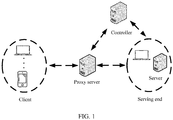
- FIG. 1 is a schematic diagram of a network architecture of a virtual network computing (Virtual Network Computing, VNC) system according to the present invention.
- the network architecture includes a client, a proxy server, a serving end, and a controller.
- the client may be a browser or a VNC connection tool.
- the client may be deployed in a server and a computer (Personal Computer, PC), or may be deployed in a mobile device, where the mobile device may be a portable computer or may be a mobile phone, an iPad, or the like.
- the serving end is a VNC remote access destination end, and may be a server, or may be a virtual machine on a server.
- a data packet transmitted between the client and the serving end needs to be transited by the proxy server. That is, the server first sends the data packet to the proxy server, and then the proxy server sends the data packet to the client.
- the controller is configured to manage the proxy server and the serving end, and is responsible for determining, according to a VNC connection request from the client, VNC connection information such as a uniform resource locator (Uniform Resource Locator, URL) of the proxy server, and an IP address, a port number, and a password (password) of the server, and a token (token).
- the port number is a port number of a VNC service at the serving end.
- the token is used in a VNC connection process in which the controller performs authentication on the client, so as to determine validity of the client.
- the password is a VNC login password, and all passwords are centrally managed by the controller. If the serving end is a virtual machine, a password is generated when the virtual machine is created, the controller sends the password to a server on which the virtual machine is located, and the password is updated when the virtual machine restarts or the password has been used. If the serving end is a server, and when the controller establishes a connection to the server for the first time, the controller generates a password, and sends the password to the server, and the password is updated when the server restarts or the password has been used.
- the proxy server may be independently deployed in one server according to a service scenario requirement, or may be deployed in the controller or at the serving end. That is, the proxy server is a software module in the controller or at the serving end. This is not limited in the present invention.
- a security system between an internal network and an external network is constructed by using a network device such as a switch or a firewall, so that, according to a specific rule, transmitted data is allowed to pass or prevented from passing the security system.
- the internal network is classified as a trusted domain, and the external network is classified as an untrusted domain. Because of high security of data transmission in the trusted domain, sensitive data of a user is not stolen. However, because there is no rule for limiting data transmission in the untrusted domain, security of the sensitive data of the user cannot be ensured.
- a VNC service of the WebSocket (WebSocket) protocol based on a Secure Sockets Layer (Secure Sockets Layer, SSL) is provided, for example, noVNC.
- the controller may be a Nova component.
- the serving end is a computing node in an OpenStack system.
- the client is a user browser.
- Nova-no VNCProxy is used as the proxy server.
- the user may establish, by using the browser, a VNC connection request with a virtual machine in the computing node or the computing node.
- Nova-Api in the Nova component is responsible for calling Nova-Compute to collect VNC connection information of the VNC connection request.
- the VNC connection information includes a uniform resource locator (Uniform Resource Locator, URL) of the proxy server, and an IP address, a port number, and a password of the serving end, and a token (token).
- URL Uniform Resource Locator
- Nova-Consoleauth is responsible for storing the VNC connection information and performing authentication on the client according to the token.
- a network environment in which the client is located is an untrusted domain
- a network environment between the Nova-Api, the Nova-Consoleauth, the Nova-Compute, the noVNCProxy, and the computing node is a trusted domain.
- a controller when a VNC connection request is established between a client and a serving end, a controller sends a URL of a proxy server, a token, and a password in VNC connection information to the client, and the client locally stores the password, so as to complete a VNC authentication response that is between the client and the server and that is in the Remote Frame Buffer (Remote Frame Buffer, RFB) protocol.
- RFB Remote Frame Buffer
- the password is sensitive data of a user.
- the proxy server replaces the client to complete the response in the VNC authentication, and no longer sends the password to the client, so that a problem that the sensitive data is leaked or decrypted by brute force because the sensitive data of the user is transmitted between the untrusted domain and the trusted domain, and the client stores the sensitive data in the untrusted domain is avoided, and the security of the VNC authentication process is improved.
- a communication connection between a client and a serving end needs to be transited by a proxy server.
- the client Before VNC authentication, the client needs to obtain VNC connection information from a controller, and establishes a connection to a corresponding proxy server.
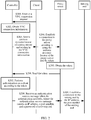
- the proxy server needs to determine, by using the controller, information about a serving end to which the client is to be connected, and establish a connection to the serving end; a specific process is shown in FIG. 2 , and the method includes the following steps.
- a controller receives a VNC connection request sent by a client.
- a user sends the VNC connection request to the controller by using a browser or a VNC connection tool, where the connection request includes information about a target serving end.
- the controller obtains VNC connection information according to the VNC connection request.
- the VNC connection information includes a uniform resource locator URL of a proxy server, and an IP address, a port number, and a password of the serving end, and a token, where the port number is a port number of a VNC service at the serving end.
- the IP address of the serving end is an IP address of a server on which the virtual machine is located
- the port number is a port number that uniquely identifies the VNC service of the virtual machine and that is allocated by the server on which the virtual machine is located.
- Nova-Api receives the VNC connection request in step S201, calls Nova-Compute to obtain the VNC connection information of the VNC connection request, and then calls Nova-Consoleauth to store the VNC information in a memory.
- the client receives a uniform resource locator URL of the proxy server and a token in the VNC connection information sent by the controller.
- the controller sends, to the client, information in the following form:
- the client establishes a connection to the proxy server according to the uniform resource locator URL of the proxy server and the token.
- the client may be a browser, and establishes a connection to the proxy server by using the URL and token information that are received in step S203 and that are in the following form:
- the proxy server obtains the token.
- the token is a token in the connection request of the client in step S204, so that the controller performs authentication on the client according to the token, and determines whether the client can connect to the serving end by the proxy server.
- the token is token_id in the following connection request:
- the proxy server sends the token to the controller.
- the client sends the token obtained in step S205 to the controller.
- the controller performs authentication on the client according to the token.
- the proxy server receives an authentication success message sent by the controller, where the authentication success message carries an IP address, a port number, and a password of the serving end.
- the controller sends the authentication success message to the proxy server, where the authentication success message carries the IP address, the port number, and the password of the serving end, and the port number is the port number of the VNC service, or when the authentication fails, this VNC connection request is terminated.
- the proxy server establishes a connection to the serving end by using the IP address and the port number of the serving end.
- the IP address and the port number of the serving end are the IP address and the port number of the serving end that are carried in the authentication success message in step S208.
- step S201 to step S209 if a controller can authenticate a client according to a token, a password is sent to a proxy server. Further, the proxy server replaces the client to complete a response process in VNC authentication.
- sensitive data of a user such as a password
- the proxy server replaces the client to complete a response process in VNC authentication.
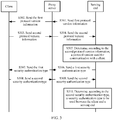
- a communication connection is already established between a client, a proxy server, and a serving end. Further, the serving end and the client negotiate, according to an RFB protocol, a protocol version and a security authentication type that are used in a VNC connection request.
- RFB protocol an RFB protocol
- a protocol version and a security authentication type that are used in a VNC connection request.
- a serving end sends first protocol version information to a proxy server.
- the first protocol version information indicates a highest RFB protocol version supported by the serving end.
- the serving end supports three protocol versions: 3.3, 3.7, and 3.8, and 3.8 is the highest version
- the first protocol version information sent by the serving end to the proxy server is 3.8.
- the serving end sends, to the proxy server, a data packet in the following format:
- the proxy server may monitor the data packet sent by the serving end, and determine, according to a keyword, an RFB protocol version and a security authentication type in one VNC connection request that are needed by a client and the serving end.
- the proxy server may simultaneously process multiple VNC sessions of the client and the serving end, and the proxy server needs to determine start of each session, so as to identify, according to the keyword, challenge information sent by the serving end.
- the proxy server determines that this VNC session starts.
- the proxy server sends the first protocol version information to the client.
- the client sends second protocol version information to the proxy server.
- the second protocol version information indicates a highest RFB protocol version that is not higher than the first protocol version information and that is supported by the client.
- the client supports RFB protocol versions 3.7 and 3.8
- the first protocol version information received from the proxy server is 3.8
- a highest protocol version that is not higher than the first protocol version information and that is supported by the client is 3.8. That is, the second protocol version information sent by the client to the proxy server is 3.8.
- the proxy server sends the second protocol version information to the serving end.
- the serving end determines, according to the second protocol version information, a protocol version used for communication with the client.
- the serving end determines the protocol version of this VNC connection request according to the second protocol version information of the client that is sent by the proxy server.
- the protocol version of this VNC connection request is 3.8.
- the serving end and the client continue to negotiate a security authentication type of this VNC connection request, and a process for determining the security authentication type is as follows:
- the protocol version information determined in step S305 different protocol versions support different security authentication types and authentication processes, and the first security authentication type includes all security authentication types supported by a serving end in the determined protocol version information.
- the first security authentication type is used only for identifying a security authentication type that is sent by the serving end to the proxy server, and does not indicate a quantity.
- the serving end supports three security authentication types: invalid (Invalid), none (None), and VNC authentication (that is, challenge/response authentication, Challenge/Response)
- the first security authentication type includes the foregoing three security authentication types.
- the proxy server sends the first security authentication type to the client.
- the client sends a second security authentication type to the proxy server.
- the second security authentication type is a highest-level security authentication type supported by the client in the first security authentication type.
- the second security authentication type is a VNC authentication type with a highest security level, that is, a challenge/response authentication manner.
- the proxy server sends the second security authentication type to the serving end.
- the serving end determines, according to the second security authentication type, a security authentication type to be used between the client and the serving end.
- the client and the serving end complete security authentication according to the VNC authentication type. If the security authentication type that is determined, by means of negotiation, by the serving end is none, no authentication needs to be performed between the client and the serving end; or if the security authentication type that is determined, by means of negotiation, by the serving end is invalid, a VNC session between the client and the serving end is terminated.
- a security authentication type is usually specified by the serving end. That is, the first security authentication type sent by the serving end in step S306 is the specified security authentication type. If the second security authentication type returned by the client is different from the first security authentication type, a process for negotiating the security authentication type fails, and this VNC connection request is terminated.
- a serving end and a client determine, by means of negotiation, a protocol version and a security authentication type for this VNC connection request. Further, when receiving challenge information that is generated by the serving end according to VNC authentication, a proxy server completes a response process in the VNC authentication by using the challenge information and a password.
- the proxy server is no longer used only for transiting data packets between the serving end and the client, but may also replace the client to complete the response process in the VNC authentication between the client and the serving end, so that a problem that sensitive data of a user is leaked or decrypted by brute force because the sensitive data is transmitted to an untrusted domain, and security in a VNC authentication process is improved.
- a proxy server can replace the client to complete the VNC authentication.
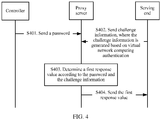
- a specific method is shown in FIG. 4 , and the method includes the following steps.
- a controller sends a password to a proxy server.
- the password is carried in an authentication success message that is sent by the controller to the proxy server in step S208, and details are not described herein again.
- the proxy server receives challenge information sent by the controller, where the challenge information is generated based on virtual network computing authentication.
- the serving end generates the challenge information according to a VNC authentication type, and sends the challenge information to the proxy server, where the challenge information is a 16-byte random number.
- the proxy server determines a first response value according to the password and the challenge information.
- the proxy server performs encryption on the challenge information according to the password and the challenge information by using a predefined data encryption algorithm, to determine the first response value.
- the predefined data encryption algorithm may be the Secure Hash Algorithm (Secure Hash Algorithm, SHA), or encryption may be performed according to another data encryption algorithm such as the Data Encryption Standard (Data Encryption Standard, DES). This is not limited in the present invention.
- the proxy server performs, according to an SHA256 data encryption algorithm, encryption on the password and the challenge information, to determine the first response value.
- the proxy server sends the first response value to a serving end.
- the serving end determines a third response value according to the password and the challenge information that are sent by the controller by using a predefined data encryption algorithm that is the same as that of the proxy server, and compares the first response value with the third response value when the first response value is received. If the first response value and the third response value are the same, the VNC authentication succeeds; or if the first response value and the third response value are different, the VNC authentication fails, and this VNC connection request is terminated.
- the controller generates one password for each serving end in an initial phase as a VNC login password, and the controller sends the password to the serving end, to determine whether authentication of the response value sent by the proxy server succeeds.
- a proxy server may determine a first response value according to a password and the challenge information, and send the first response value to the serving end, so as to complete the response process in the VNC authentication.
- the proxy server replaces a client to complete the response process in the VNC authentication, so that a problem that sensitive data of a user is leaked or decrypted by brute force because the sensitive data is transmitted to a network environment of an untrusted domain is avoided, and security in a VNC authentication process is improved.
- a response process in VNC authentication may be implemented by using a method shown in FIG. 5 , and the method includes the following steps.
- a serving end sends challenge information to a proxy server.
- a serving end sends the challenge information to the proxy server according to a security authentication type that is determined by means of negotiation in FIG. 3 .
- the proxy server sends the challenge information to a client.
- the proxy server sends the challenge information received in step S501 to the client.
- the proxy server determines a first response value according to a password and the challenge information.
- step S503 is the same as that of step S403, and details are not described herein again.
- the client sends a response message to the proxy server, where the response message includes a second response value.
- the second response value is the challenge information.
- the client does not process the challenge information, but directly sends the challenge information in a form of the response message to the proxy server as the response value.
- the proxy server replaces the second response value in the response message with the first response value.
- the proxy server sends the response message to the serving end.
- the serving end determines a third response value according to the password and the challenge information that are sent by the controller by using a predefined data encryption algorithm that is the same as that of the proxy server, and compares the first response value with the third response value when the first response value is received. If the first response value and the third response value are the same, the VNC authentication succeeds; or if the first response value and the third response value are different, the VNC authentication fails, and this VNC connection request is terminated.
- the controller generates one password for each serving end in an initial phase as a VNC login password, and the controller sends the password to the serving end, to determine whether authentication of the response value sent by the proxy server succeeds.
- a proxy server may send the challenge information to a client.
- the client does not process the challenge information, but directly sends the challenge information in a form of a response message to the proxy server as a response value.
- the proxy server replaces the response value in the response message and sends the response message to the serving end, so as to complete a response process in virtual network computing authentication.
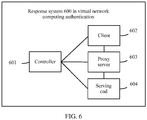
- FIG. 6 is a schematic diagram of a response system 600 in virtual network computing authentication according to an embodiment of the present invention.
- the response system 600 in the virtual network computing authentication includes a controller 601, a client 602, a proxy server 603, and a serving end 604.
- the client 602 is configured to send a connection request to the proxy server 603.
- the proxy server 603 is configured to obtain a token in the connection request, and send the token to the controller 601 for performing authentication.
- the controller 601 is configured to perform authentication on the client 604 according to the token, and send an authentication success message to the proxy server 603 if the authentication succeeds, where the authentication success message carries an IP address, a port number, and a password of the serving end 604.
- the proxy server 603 is further configured to receive the authentication success message sent by the controller 601, and establish a connection to the serving end 604 according to the IP address and the port number of the serving end 604.
- the serving end 604 is configured to generate challenge information based on the virtual network computing authentication, and send the challenge information to the proxy server 603.
- the proxy server 603 is further configured to receive the challenge information, determine a first response value according to the password and the challenge information, and send the first response value to the serving end 604.
- the challenge information is a 16-byte random number
- the proxy server performs encryption on the challenge information according to the password and the challenge information by using a predefined data encryption algorithm, to determine the first response value.
- the predefined data encryption algorithm may be the Secure Hash Algorithm (Secure Hash Algorithm, SHA), or encryption may be performed according to another data encryption algorithm such as the Data Encryption Standard (Data Encryption Standard, DES). This is not limited in the present invention.
- a proxy server may determine a first response value according to a password and the challenge information, and send the first response value to the serving end, so as to complete the response process in the VNC authentication.
- the proxy server replaces a client to complete the response process in the VNC authentication, so that a problem that sensitive data of a user is leaked or decrypted by brute force because the sensitive data is transmitted to a network environment of an untrusted domain is avoided, and security in a VNC authentication process is improved.
- the proxy server 603 is further configured to: send the challenge information to the client 602 before sending the first response value to the serving end 604; receive a response message sent by the client 602, where the response message includes a second response value, and the second response value is the challenge information; and replace the second response value in the response message with the first response value.
- That the proxy server 603 sends the first response value to the serving end 604 is specifically:
- the second response value is the challenge information.
- the client 602 does not process the challenge information, but directly sends the challenge information in a form of the response message to the proxy server 603 as a response value.
- the serving end 604 is further configured to receive the password sent by the controller 601, and determine a third response value according to the password and the challenge information, where the virtual network computing authentication succeeds if the serving end determines that the first response value is the same as the third response value.
- the serving end 604 determines a third response value according to the password and the challenge information by using a predefined data encryption algorithm that is the same as that of the proxy server 603, and compares the first response value with the third response value when the first response value is received. If the first response value and the third response value are the same, the VNC authentication succeeds; or if the first response value and the third response value are different, the VNC authentication fails, and this VNC connection request is terminated.
- the controller 601 generates one password for each serving end 604 in an initial phase as a VNC login password, and sends the password to the serving end 604, to determine whether authentication of the response value sent by the proxy server 603 succeeds.
- the controller 601 is further configured to: receive the virtual network computing connection request from the client 602; obtain virtual network computing connection information according to the VNC connection request of the client 602, where the virtual network computing connection information includes a uniform resource locator of the proxy server 603, and the IP address, the port number, and the password of the serving end 604, and the token; and send the uniform resource locator of the proxy server 603 and the token in the VNC connection information to the client 602.
- the client 602 is further configured to establish a connection to the proxy server 603 according to the uniform resource locator of the proxy server 603 and the token.
- the port number is a port number of a virtual network computing service at the serving end 604.
- a controller obtains VNC connection information according to a VNC connection request from a client, and no longer sends a password in the VNC connection information to the client, but sends the password to a proxy server, and the proxy server stores the password, so that it is ensured that the password is transmitted and stored in a trusted domain.
- sensitive data of a user such as a password
- the proxy server stores the password, so that it is ensured that the password is transmitted and stored in a trusted domain.
- the proxy server replaces the client to complete a response in VNC authentication.
- sensitive data of a user such as a password
- the proxy server does not need to be transmitted to a network environment of an untrusted domain, so that a problem in the prior art that the sensitive data is leaked or decrypted by brute force because the password is transmitted to the untrusted domain is avoided. Therefore, security in a VNC authentication process is improved.
- a processing process of the RFB protocol in a process in which the client still receives challenge information and returns a response value, impact on the processing process of the RFB protocol in the prior art is reduced, and information security in the VNC authentication process is improved.
- FIG. 7 is a schematic diagram of a proxy server 700 according to the present invention. As shown in the figure, the proxy server 700 includes a receiving unit 701, an encryption unit 702, and a sending unit 703.
- the receiving unit 701 is configured to receive a password sent by a controller, and receive challenge information sent by a serving end, where the challenge information is generated by the serving end based on virtual network computing authentication.
- the encryption unit 702 is configured to determine a first response value according to the password and the challenge information that are received by the receiving unit 701.
- the sending unit 703 is configured to send, to the serving end, the first response value determined by the encryption unit 702.
- the proxy server 700 in this embodiment of the present invention may be implemented by using an application-specific integrated circuit (Application-Specific Integrated Circuit, ASIC), or may be implemented by using a programmable logic device (Programmable Logic Device, PLD); the PLD may be a complex programmable logic device (Complex Programmable Logic Device, CPLD), a field-programmable gate array (Field-Programmable Gate Array, FPGA), a generic array logic (Generic Array Logic, GAL), or any combination thereof.
- the proxy server 700 and all modules of the proxy server 700 may also be software modules.
- the challenge information is a 16-byte random number
- the proxy server performs encryption on the challenge information according to the password and the challenge information by using a predefined data encryption algorithm, to determine the first response value.
- the predefined data encryption algorithm may be the Secure Hash Algorithm (Secure Hash Algorithm, SHA), or encryption may be performed according to another data encryption algorithm such as the Data Encryption Standard (Data Encryption Standard, DES). This is not limited in the present invention.
- the proxy server 700 may replace a client to complete a response process in VNC authentication, a problem that sensitive data of a user is leaked or decrypted by brute force because the sensitive data needs to be transmitted to a network environment of an untrusted domain when the client completes the response process is avoided, and security in a VNC authentication process is improved.
- the proxy server further includes a replacement unit 704.
- the sending unit 703 is further configured to send the challenge information to a client before sending, to the serving end, the first response value determined by the encryption unit 702.
- the receiving unit 701 is further configured to receive a response message sent by the client, where the response message includes a second response value, and the second response value is the challenge information.
- the replacement unit 704 is configured to replace the second response value in the response message with the first response value.
- That the sending unit 703 sends, to the serving end, the first response value determined by the encryption unit 702 is specifically:
- the second response value is the challenge information.
- the client does not process the challenge information, but directly sends the challenge information in a form of the response message to the proxy server as the response value.
- the proxy server replaces the second response value in the response message with the first response value, and sends the response message to the serving end.
- the serving end determines a third response value according to the password and the challenge information by using a predefined data encryption algorithm that is the same as that of the proxy server, and compares the first response value with the third response value when the first response value is received. If the first response value and the third response value are the same, the VNC authentication succeeds; or if the first response value and the third response value are different, the VNC authentication fails, and this VNC connection request is terminated.
- the controller generates one password for each serving end in an initial phase as a VNC login password, and sends the password to the serving end, to determine whether authentication of the response value sent by the proxy server succeeds.
- the proxy server further includes a processing unit 705.
- the receiving unit 701 is further configured to receive a connection request from a client before receiving the password sent by the controller.
- the processing unit 705 is configured to obtain a token in the connection request of the client.
- the sending unit 703 is further configured to send the token to the controller.
- That the receiving unit 701 receives the password sent by the controller is specifically:
- the controller sends the authentication success message to the proxy server, where the authentication success message carries the IP address, the port number, and the password of the serving end, and the port number is a port number of a VNC service, or if the authentication fails, this VNC connection request is terminated.
- the IP address of the serving end is an IP address of a server on which the virtual machine is located
- the port number is a port number that uniquely identifies a VNC service of the virtual machine and that is allocated by the server on which the virtual machine is located.
- processing unit 705 is further configured to establish a connection to the serving end according to the IP address and the port number of the serving end in the authentication success message received by the receiving unit 701.
- the receiving unit 701 is further configured to receive first protocol version information sent by the serving end, where the first protocol version information indicates a highest protocol version supported by the serving end.
- the sending unit 703 is further configured to send, to the client, the first protocol version information received by the receiving unit.
- the receiving unit 701 is further configured to receive second protocol version information sent by the client, where the second version information indicates a highest protocol version that is not higher than the first protocol version information and that is supported by the client.
- the sending unit 703 is further configured to send, to the serving end, the second protocol version information received by the receiving unit 701.
- the serving end and the client continue to negotiate a security authentication type of this VNC connection request, and a process for determining the security authentication type is as follows:
- the receiving unit 701 is further configured to receive a first security authentication type sent by the serving end, where the first security authentication type includes all security authentication types supported by the serving end.
- the sending unit 703 is further configured to send, to the client, the first security authentication type received by the receiving unit 701.
- the receiving unit 701 is further configured to receive a second security authentication type sent by the client, where the second security authentication type is a highest-level security authentication type supported by the client in the first security authentication type.
- the sending unit 703 is further configured to send, to the serving end, the second security authentication type received by the receiving unit 701.
- the first security authentication type is used only for identifying a security authentication type that is sent by the serving end to the proxy server, and does not indicate a quantity.
- the client and the serving end complete security authentication according to the VNC authentication type. If the security authentication type that is determined, by means of negotiation, by the serving end is none, no authentication needs to be performed between the client and the serving end; or if the security authentication type that is determined, by means of negotiation, by the serving end is invalid, a VNC session between the client and the serving end is terminated.
- a security authentication type is usually specified by the serving end. That is, the first security authentication type sent by the serving end is the specified security authentication type. If the second security authentication type returned by the client is different from the first security authentication type, a process for negotiating the security authentication type fails, and this VNC connection request is terminated.
- a serving end and a client determine, by means of negotiation, a protocol version and a security authentication type for this VNC connection request.
- the proxy server When receiving challenge information that is generated by the serving end according to VNC authentication, the proxy server completes a response process in the VNC authentication by using the challenge information and a password.
- the proxy server may replace the client to complete the response process in the VNC authentication between the client and the serving end, so that a problem that information is leaked or decrypted by brute force because sensitive data of a user is transmitted to an untrusted domain is avoided, and security in a VNC authentication process is improved.
- the proxy server 700 replaces a client to complete a response process in VNC authentication.
- the response process in the VNC authentication can be completed without a need to transmit sensitive data of a user, such as a password, to a network environment of an untrusted domain, so that a problem in the prior art that the sensitive data is leaked or decrypted by brute force because the password is transmitted to the untrusted domain is avoided. Therefore, security in a VNC authentication process is improved.
- FIG. 8 is a schematic diagram of a proxy server 800 according to the present invention.
- the proxy server 800 includes a processor 801, a memory 802, a communications interface 803, and a bus 804.
- the processor 801, the memory 802, and the communications interface 803 are connected and communicate with each other by using the bus 804, the memory 802 is configured to store a computer execution instruction, and when the proxy server 800 runs, the processor 801 executes the computer execution instruction stored in the memory 802 to perform, by using hardware resources in the proxy server 800, the following operations:
- the proxy server 800 may be corresponding to a method described in an embodiment of the present invention, and the foregoing and other operations and/or functions of the units in the proxy server 800 are respectively used to implement the corresponding procedures of the methods in FIG. 2 to FIG. 5 .
- details are not described herein again.
- the proxy server 800 may replace a client to complete a response process of challenge information sent by a serving end, so that a problem that sensitive data of a user is leaked or decrypted by brute force because the sensitive data is transmitted and stored in an untrusted domain is avoided, and security in a virtual network computing authentication process is improved.
- the disclosed system, apparatus, and method may be implemented in other manners.
- the described apparatus embodiment is merely an example.
- the unit division is merely logical function division and may be other division in actual implementation.
- a plurality of units or components may be combined or integrated into another system, or some features may be ignored or not performed.
- the displayed or discussed mutual couplings or direct couplings or communication connections may be implemented through some interfaces, indirect couplings or communication connections between the apparatuses or units, or electrical connections, mechanical connections, or connections in other forms.
- the units described as separate parts may or may not be physically separate, and parts displayed as units may or may not be physical units, may be located in one position, or may be distributed on a plurality of network units. Some or all of the units may be selected according to actual needs to achieve the objectives of the solutions of the embodiments.
- function units in the embodiments of the present invention may be integrated into one processing unit, or each of the units may exist alone physically, or two or more units are integrated into one unit.
- the functions When the functions are implemented in the form of a software function unit and sold or used as an independent product, the functions may be stored in a computer-readable storage medium. Based on such an understanding, the technical solutions of the present invention essentially, or the part contributing to the prior art, or some of the technical solutions may be implemented in a form of a software product.
- the software product is stored in a storage medium, and includes several instructions for instructing a computer device (which may be a personal computer, a server, or a network device) to perform all or some of the steps of the methods described in the embodiments of the present invention.
- the foregoing storage medium includes: any medium that can store program code, such as a USB flash drive, a removable hard disk, a read-only memory (ROM, Read-Only Memory), a random access memory (RAM, Random Access Memory), a magnetic disk, or an optical disc.
- program code such as a USB flash drive, a removable hard disk, a read-only memory (ROM, Read-Only Memory), a random access memory (RAM, Random Access Memory), a magnetic disk, or an optical disc.
Landscapes
- Engineering & Computer Science (AREA)
- Computer Security & Cryptography (AREA)
- Computer Networks & Wireless Communication (AREA)
- Signal Processing (AREA)
- Computer Hardware Design (AREA)
- Computing Systems (AREA)
- General Engineering & Computer Science (AREA)
- Data Exchanges In Wide-Area Networks (AREA)
- Information Transfer Between Computers (AREA)
Applications Claiming Priority (1)
| Application Number | Priority Date | Filing Date | Title |
|---|---|---|---|
| PCT/CN2016/090058 WO2018010146A1 (zh) | 2016-07-14 | 2016-07-14 | 一种虚拟网络计算认证中应答的方法、装置、系统和代理服务器 |
Publications (3)
| Publication Number | Publication Date |
|---|---|
| EP3300331A1 true EP3300331A1 (de) | 2018-03-28 |
| EP3300331A4 EP3300331A4 (de) | 2018-05-16 |
| EP3300331B1 EP3300331B1 (de) | 2019-11-20 |
Family
ID=59676323
Family Applications (1)
| Application Number | Title | Priority Date | Filing Date |
|---|---|---|---|
| EP16890125.4A Active EP3300331B1 (de) | 2016-07-14 | 2016-07-14 | Antwortverfahren, vorrichtung und system in der virtuellen netzwerkdatenverarbeitungsauthentifizierung und proxy-server |
Country Status (4)
| Country | Link |
|---|---|
| US (1) | US11140162B2 (de) |
| EP (1) | EP3300331B1 (de) |
| CN (1) | CN107113319B (de) |
| WO (1) | WO2018010146A1 (de) |
Families Citing this family (20)
| Publication number | Priority date | Publication date | Assignee | Title |
|---|---|---|---|---|
| CN109471713B (zh) * | 2017-09-07 | 2022-11-08 | 北京京东尚科信息技术有限公司 | 用于查询信息的方法和装置 |
| AU2019256002B2 (en) * | 2018-04-20 | 2023-08-17 | Vishal Gupta | Decentralized document and entity verification engine |
| CN108786115B (zh) * | 2018-05-03 | 2021-06-01 | 南京赛宁信息技术有限公司 | 基于透明代理生成CTF动态Flag的方法及系统 |
| US11216354B2 (en) * | 2018-05-28 | 2022-01-04 | Open Invention Network Llc | Depicting outcomes of a decision |
| CN110032414B (zh) * | 2019-03-06 | 2023-06-06 | 联想企业解决方案(新加坡)有限公司 | 远程控制台模式下安全的用户认证的装置和方法 |
| US11876798B2 (en) * | 2019-05-20 | 2024-01-16 | Citrix Systems, Inc. | Virtual delivery appliance and system with remote authentication and related methods |
| CN110072074A (zh) * | 2019-06-05 | 2019-07-30 | 黑龙江航天信息有限公司 | 一种一键呼叫咨询服务及远程协助的系统及其方法 |
| GB2617478B (en) * | 2019-09-23 | 2024-05-08 | Fisher Rosemount Systems Inc | Secure off-premises access of process control data by a mobile device |
| US11900138B2 (en) * | 2020-01-17 | 2024-02-13 | Vmware, Inc. | Remote access control of VM console located in cloud from on-premises computer device |
| US11063979B1 (en) * | 2020-05-18 | 2021-07-13 | Capital One Services, Llc | Enabling communications between applications in a mobile operating system |
| CN111984958B (zh) * | 2020-08-06 | 2024-02-02 | 成都安恒信息技术有限公司 | 一种支持vnc双因子的认证方法 |
| CN112104614B (zh) * | 2020-08-24 | 2023-02-28 | 广州江南科友科技股份有限公司 | 密码机可代理监控方法、装置、设备及存储介质 |
| JP7665425B2 (ja) * | 2021-06-04 | 2025-04-21 | キヤノン株式会社 | 情報処理システム、情報処理装置とその制御方法及びプログラム |
| CN114619462A (zh) * | 2022-02-21 | 2022-06-14 | 达而观信息科技(上海)有限公司 | 一种基于机器人流程自动化的远程桌面控制方法 |
| US11695772B1 (en) * | 2022-05-03 | 2023-07-04 | Capital One Services, Llc | System and method for enabling multiple auxiliary use of an access token of a user by another entity to facilitate an action of the user |
| US11888929B1 (en) * | 2022-11-15 | 2024-01-30 | SimpliSafe, Inc. | Load balancing device connections |
| US12401543B2 (en) * | 2022-12-29 | 2025-08-26 | Garantir LLC | Sharing secrets over one or more computer networks using proxies |
| US12095773B2 (en) * | 2023-01-06 | 2024-09-17 | Stripe, Inc. | Network of networks |
| CN116132422B (zh) * | 2023-04-19 | 2023-06-27 | 天津卓朗昆仑云软件技术有限公司 | 输入设备的权限控制方法、装置、服务器及可读存储介质 |
| CN120034533B (zh) * | 2025-04-21 | 2025-07-11 | 江苏帝奥微电子股份有限公司 | 一种vnc会话的自动连接管理系统及管理方法 |
Family Cites Families (23)
| Publication number | Priority date | Publication date | Assignee | Title |
|---|---|---|---|---|
| US6606663B1 (en) * | 1998-09-29 | 2003-08-12 | Openwave Systems Inc. | Method and apparatus for caching credentials in proxy servers for wireless user agents |
| US7088720B1 (en) * | 2000-08-07 | 2006-08-08 | Sbc Technology Resources, Inc. | Multiservice use of network connection capability under user-to-network interface signaling |
| CA2444066A1 (en) | 2001-04-20 | 2002-10-31 | Egenera, Inc. | Virtual networking system and method in a processing system |
| US7984157B2 (en) * | 2002-02-26 | 2011-07-19 | Citrix Systems, Inc. | Persistent and reliable session securely traversing network components using an encapsulating protocol |
| US20040123144A1 (en) * | 2002-12-19 | 2004-06-24 | International Business Machines Corporation | Method and system for authentication using forms-based single-sign-on operations |
| US8074259B1 (en) * | 2005-04-28 | 2011-12-06 | Sonicwall, Inc. | Authentication mark-up data of multiple local area networks |
| US20060269066A1 (en) * | 2005-05-06 | 2006-11-30 | Schweitzer Engineering Laboratories, Inc. | System and method for converting serial data into secure data packets configured for wireless transmission in a power system |
| CN101645775A (zh) * | 2008-08-05 | 2010-02-10 | 北京灵创科新科技有限公司 | 基于空中下载的动态口令身份认证系统 |
| US8527774B2 (en) * | 2009-05-28 | 2013-09-03 | Kaazing Corporation | System and methods for providing stateless security management for web applications using non-HTTP communications protocols |
| CN103314566B (zh) * | 2010-11-05 | 2017-05-03 | 思杰系统有限公司 | 用于管理域名系统安全(dnssec)的系统和方法 |
| CN103583060A (zh) * | 2011-06-03 | 2014-02-12 | 黑莓有限公司 | 用于接入私有网络的系统和方法 |
| CN102523207A (zh) * | 2011-12-06 | 2012-06-27 | 北京航空航天大学 | 基于虚拟网络计算机的远程资源访问方法及代理设备 |
| US9154479B1 (en) * | 2012-09-14 | 2015-10-06 | Amazon Technologies, Inc. | Secure proxy |
| GB2505268B (en) * | 2013-04-10 | 2017-10-11 | Realvnc Ltd | Methods and apparatus for remote connection |
| US9154488B2 (en) * | 2013-05-03 | 2015-10-06 | Citrix Systems, Inc. | Secured access to resources using a proxy |
| US9325687B2 (en) * | 2013-10-31 | 2016-04-26 | Cellco Partnership | Remote authentication using mobile single sign on credentials |
| US10397202B2 (en) * | 2013-12-12 | 2019-08-27 | Blackberry Limited | Secure communication channels |
| WO2016035769A1 (ja) * | 2014-09-01 | 2016-03-10 | パスロジ株式会社 | ユーザ認証方法及びこれを実現するためのシステム |
| US10277578B2 (en) * | 2015-01-05 | 2019-04-30 | Citrix Systems, Inc. | Securing network activity managed by operating systems |
| JP6350302B2 (ja) * | 2015-01-22 | 2018-07-04 | オムロン株式会社 | プログラマブル表示器 |
| CN104639562B (zh) * | 2015-02-27 | 2018-03-13 | 飞天诚信科技股份有限公司 | 一种推送认证的系统和设备的工作方法 |
| CN105071941B (zh) * | 2015-07-31 | 2019-01-18 | 华为技术有限公司 | 分布式系统节点身份认证方法及装置 |
| US10404663B1 (en) * | 2016-02-29 | 2019-09-03 | Parallels International Gmbh | File sharing over secure connections |
-
2016
- 2016-07-14 EP EP16890125.4A patent/EP3300331B1/de active Active
- 2016-07-14 WO PCT/CN2016/090058 patent/WO2018010146A1/zh not_active Ceased
- 2016-07-14 CN CN201680004718.5A patent/CN107113319B/zh active Active
-
2017
- 2017-12-18 US US15/845,631 patent/US11140162B2/en active Active
Also Published As
| Publication number | Publication date |
|---|---|
| EP3300331B1 (de) | 2019-11-20 |
| CN107113319B (zh) | 2020-09-25 |
| EP3300331A4 (de) | 2018-05-16 |
| CN107113319A (zh) | 2017-08-29 |
| WO2018010146A1 (zh) | 2018-01-18 |
| US11140162B2 (en) | 2021-10-05 |
| US20180124051A1 (en) | 2018-05-03 |
Similar Documents
| Publication | Publication Date | Title |
|---|---|---|
| EP3300331B1 (de) | Antwortverfahren, vorrichtung und system in der virtuellen netzwerkdatenverarbeitungsauthentifizierung und proxy-server | |
| US10893031B2 (en) | Dynamically serving digital certificates based on secure session properties | |
| US12255959B2 (en) | Systems and methods for remote management of appliances | |
| CN107534672B (zh) | 一种促进网络客户端提供网络服务的方法、设备与系统 | |
| EP2973160B1 (de) | System und verfahren zur sicheren anwendung einer kommunikation zwischen vernetzten prozessoren | |
| US20160087941A1 (en) | Techniques for providing services to multiple tenants via a shared end-point | |
| US9325685B2 (en) | Authentication switch and network system | |
| CN114301968B (zh) | 服务端的访问方法、系统、设备及存储介质 | |
| JP5486523B2 (ja) | ネットワーク接続制御システム及び接続制御方法 | |
| EP3176986A1 (de) | Verfahren, vorrichtung und system für remote-desktop-protokoll-gateway zur durchführung von routing und umschaltung | |
| JP5504940B2 (ja) | 仮想プライベートネットワークシステム、通信方法及びコンピュータプログラム | |
| US11924286B2 (en) | Encrypted communication processing apparatus, encrypted communication processing system, and non-transitory recording medium | |
| EP4011052B1 (de) | Onboarding einer hardwarevorrichtung | |
| EP3580901B1 (de) | Verbindungsvorrichtung zum aufbau einer gesicherten kommunikationsverbindung auf anwendungsebene |
Legal Events
| Date | Code | Title | Description |
|---|---|---|---|
| STAA | Information on the status of an ep patent application or granted ep patent |
Free format text: STATUS: UNKNOWN |
|
| STAA | Information on the status of an ep patent application or granted ep patent |
Free format text: STATUS: THE INTERNATIONAL PUBLICATION HAS BEEN MADE |
|
| PUAI | Public reference made under article 153(3) epc to a published international application that has entered the european phase |
Free format text: ORIGINAL CODE: 0009012 |
|
| STAA | Information on the status of an ep patent application or granted ep patent |
Free format text: STATUS: REQUEST FOR EXAMINATION WAS MADE |
|
| 17P | Request for examination filed |
Effective date: 20170824 |
|
| AK | Designated contracting states |
Kind code of ref document: A1 Designated state(s): AL AT BE BG CH CY CZ DE DK EE ES FI FR GB GR HR HU IE IS IT LI LT LU LV MC MK MT NL NO PL PT RO RS SE SI SK SM TR |
|
| AX | Request for extension of the european patent |
Extension state: BA ME |
|
| A4 | Supplementary search report drawn up and despatched |
Effective date: 20180417 |
|
| RIC1 | Information provided on ipc code assigned before grant |
Ipc: H04L 29/08 20060101ALI20180411BHEP Ipc: G06F 3/14 20060101ALI20180411BHEP Ipc: H04L 29/06 20060101AFI20180411BHEP |
|
| STAA | Information on the status of an ep patent application or granted ep patent |
Free format text: STATUS: EXAMINATION IS IN PROGRESS |
|
| 17Q | First examination report despatched |
Effective date: 20181214 |
|
| REG | Reference to a national code |
Ref country code: DE Ref legal event code: R079 Ref document number: 602016024900 Country of ref document: DE Free format text: PREVIOUS MAIN CLASS: H04L0029060000 Ipc: H04L0029080000 |
|
| GRAP | Despatch of communication of intention to grant a patent |
Free format text: ORIGINAL CODE: EPIDOSNIGR1 |
|
| STAA | Information on the status of an ep patent application or granted ep patent |
Free format text: STATUS: GRANT OF PATENT IS INTENDED |
|
| RIC1 | Information provided on ipc code assigned before grant |
Ipc: H04L 29/06 20060101ALI20190515BHEP Ipc: H04L 29/08 20060101AFI20190515BHEP Ipc: G06F 3/14 20060101ALI20190515BHEP Ipc: H04L 12/46 20060101ALI20190515BHEP |
|
| DAV | Request for validation of the european patent (deleted) | ||
| DAX | Request for extension of the european patent (deleted) | ||
| INTG | Intention to grant announced |
Effective date: 20190603 |
|
| RIN1 | Information on inventor provided before grant (corrected) |
Inventor name: WANG, XIANLEI |
|
| GRAS | Grant fee paid |
Free format text: ORIGINAL CODE: EPIDOSNIGR3 |
|
| GRAA | (expected) grant |
Free format text: ORIGINAL CODE: 0009210 |
|
| STAA | Information on the status of an ep patent application or granted ep patent |
Free format text: STATUS: THE PATENT HAS BEEN GRANTED |
|
| AK | Designated contracting states |
Kind code of ref document: B1 Designated state(s): AL AT BE BG CH CY CZ DE DK EE ES FI FR GB GR HR HU IE IS IT LI LT LU LV MC MK MT NL NO PL PT RO RS SE SI SK SM TR |
|
| REG | Reference to a national code |
Ref country code: GB Ref legal event code: FG4D |
|
| REG | Reference to a national code |
Ref country code: CH Ref legal event code: EP |
|
| REG | Reference to a national code |
Ref country code: DE Ref legal event code: R096 Ref document number: 602016024900 Country of ref document: DE |
|
| REG | Reference to a national code |
Ref country code: IE Ref legal event code: FG4D |
|
| REG | Reference to a national code |
Ref country code: AT Ref legal event code: REF Ref document number: 1205472 Country of ref document: AT Kind code of ref document: T Effective date: 20191215 |
|
| REG | Reference to a national code |
Ref country code: NL Ref legal event code: MP Effective date: 20191120 |
|
| REG | Reference to a national code |
Ref country code: LT Ref legal event code: MG4D |
|
| PG25 | Lapsed in a contracting state [announced via postgrant information from national office to epo] |
Ref country code: BG Free format text: LAPSE BECAUSE OF FAILURE TO SUBMIT A TRANSLATION OF THE DESCRIPTION OR TO PAY THE FEE WITHIN THE PRESCRIBED TIME-LIMIT Effective date: 20200220 Ref country code: GR Free format text: LAPSE BECAUSE OF FAILURE TO SUBMIT A TRANSLATION OF THE DESCRIPTION OR TO PAY THE FEE WITHIN THE PRESCRIBED TIME-LIMIT Effective date: 20200221 Ref country code: NO Free format text: LAPSE BECAUSE OF FAILURE TO SUBMIT A TRANSLATION OF THE DESCRIPTION OR TO PAY THE FEE WITHIN THE PRESCRIBED TIME-LIMIT Effective date: 20200220 Ref country code: SE Free format text: LAPSE BECAUSE OF FAILURE TO SUBMIT A TRANSLATION OF THE DESCRIPTION OR TO PAY THE FEE WITHIN THE PRESCRIBED TIME-LIMIT Effective date: 20191120 Ref country code: LV Free format text: LAPSE BECAUSE OF FAILURE TO SUBMIT A TRANSLATION OF THE DESCRIPTION OR TO PAY THE FEE WITHIN THE PRESCRIBED TIME-LIMIT Effective date: 20191120 Ref country code: FI Free format text: LAPSE BECAUSE OF FAILURE TO SUBMIT A TRANSLATION OF THE DESCRIPTION OR TO PAY THE FEE WITHIN THE PRESCRIBED TIME-LIMIT Effective date: 20191120 Ref country code: NL Free format text: LAPSE BECAUSE OF FAILURE TO SUBMIT A TRANSLATION OF THE DESCRIPTION OR TO PAY THE FEE WITHIN THE PRESCRIBED TIME-LIMIT Effective date: 20191120 Ref country code: LT Free format text: LAPSE BECAUSE OF FAILURE TO SUBMIT A TRANSLATION OF THE DESCRIPTION OR TO PAY THE FEE WITHIN THE PRESCRIBED TIME-LIMIT Effective date: 20191120 |
|
| PG25 | Lapsed in a contracting state [announced via postgrant information from national office to epo] |
Ref country code: IS Free format text: LAPSE BECAUSE OF FAILURE TO SUBMIT A TRANSLATION OF THE DESCRIPTION OR TO PAY THE FEE WITHIN THE PRESCRIBED TIME-LIMIT Effective date: 20200320 Ref country code: HR Free format text: LAPSE BECAUSE OF FAILURE TO SUBMIT A TRANSLATION OF THE DESCRIPTION OR TO PAY THE FEE WITHIN THE PRESCRIBED TIME-LIMIT Effective date: 20191120 Ref country code: RS Free format text: LAPSE BECAUSE OF FAILURE TO SUBMIT A TRANSLATION OF THE DESCRIPTION OR TO PAY THE FEE WITHIN THE PRESCRIBED TIME-LIMIT Effective date: 20191120 |
|
| PG25 | Lapsed in a contracting state [announced via postgrant information from national office to epo] |
Ref country code: AL Free format text: LAPSE BECAUSE OF FAILURE TO SUBMIT A TRANSLATION OF THE DESCRIPTION OR TO PAY THE FEE WITHIN THE PRESCRIBED TIME-LIMIT Effective date: 20191120 |
|
| PG25 | Lapsed in a contracting state [announced via postgrant information from national office to epo] |
Ref country code: ES Free format text: LAPSE BECAUSE OF FAILURE TO SUBMIT A TRANSLATION OF THE DESCRIPTION OR TO PAY THE FEE WITHIN THE PRESCRIBED TIME-LIMIT Effective date: 20191120 Ref country code: DK Free format text: LAPSE BECAUSE OF FAILURE TO SUBMIT A TRANSLATION OF THE DESCRIPTION OR TO PAY THE FEE WITHIN THE PRESCRIBED TIME-LIMIT Effective date: 20191120 Ref country code: EE Free format text: LAPSE BECAUSE OF FAILURE TO SUBMIT A TRANSLATION OF THE DESCRIPTION OR TO PAY THE FEE WITHIN THE PRESCRIBED TIME-LIMIT Effective date: 20191120 Ref country code: CZ Free format text: LAPSE BECAUSE OF FAILURE TO SUBMIT A TRANSLATION OF THE DESCRIPTION OR TO PAY THE FEE WITHIN THE PRESCRIBED TIME-LIMIT Effective date: 20191120 Ref country code: PT Free format text: LAPSE BECAUSE OF FAILURE TO SUBMIT A TRANSLATION OF THE DESCRIPTION OR TO PAY THE FEE WITHIN THE PRESCRIBED TIME-LIMIT Effective date: 20200412 Ref country code: RO Free format text: LAPSE BECAUSE OF FAILURE TO SUBMIT A TRANSLATION OF THE DESCRIPTION OR TO PAY THE FEE WITHIN THE PRESCRIBED TIME-LIMIT Effective date: 20191120 |
|
| REG | Reference to a national code |
Ref country code: AT Ref legal event code: MK05 Ref document number: 1205472 Country of ref document: AT Kind code of ref document: T Effective date: 20191120 |
|
| REG | Reference to a national code |
Ref country code: DE Ref legal event code: R097 Ref document number: 602016024900 Country of ref document: DE |
|
| PG25 | Lapsed in a contracting state [announced via postgrant information from national office to epo] |
Ref country code: SM Free format text: LAPSE BECAUSE OF FAILURE TO SUBMIT A TRANSLATION OF THE DESCRIPTION OR TO PAY THE FEE WITHIN THE PRESCRIBED TIME-LIMIT Effective date: 20191120 Ref country code: SK Free format text: LAPSE BECAUSE OF FAILURE TO SUBMIT A TRANSLATION OF THE DESCRIPTION OR TO PAY THE FEE WITHIN THE PRESCRIBED TIME-LIMIT Effective date: 20191120 |
|
| PLBE | No opposition filed within time limit |
Free format text: ORIGINAL CODE: 0009261 |
|
| STAA | Information on the status of an ep patent application or granted ep patent |
Free format text: STATUS: NO OPPOSITION FILED WITHIN TIME LIMIT |
|
| 26N | No opposition filed |
Effective date: 20200821 |
|
| PG25 | Lapsed in a contracting state [announced via postgrant information from national office to epo] |
Ref country code: AT Free format text: LAPSE BECAUSE OF FAILURE TO SUBMIT A TRANSLATION OF THE DESCRIPTION OR TO PAY THE FEE WITHIN THE PRESCRIBED TIME-LIMIT Effective date: 20191120 Ref country code: SI Free format text: LAPSE BECAUSE OF FAILURE TO SUBMIT A TRANSLATION OF THE DESCRIPTION OR TO PAY THE FEE WITHIN THE PRESCRIBED TIME-LIMIT Effective date: 20191120 Ref country code: PL Free format text: LAPSE BECAUSE OF FAILURE TO SUBMIT A TRANSLATION OF THE DESCRIPTION OR TO PAY THE FEE WITHIN THE PRESCRIBED TIME-LIMIT Effective date: 20191120 |
|
| PG25 | Lapsed in a contracting state [announced via postgrant information from national office to epo] |
Ref country code: IT Free format text: LAPSE BECAUSE OF FAILURE TO SUBMIT A TRANSLATION OF THE DESCRIPTION OR TO PAY THE FEE WITHIN THE PRESCRIBED TIME-LIMIT Effective date: 20191120 |
|
| PG25 | Lapsed in a contracting state [announced via postgrant information from national office to epo] |
Ref country code: MC Free format text: LAPSE BECAUSE OF FAILURE TO SUBMIT A TRANSLATION OF THE DESCRIPTION OR TO PAY THE FEE WITHIN THE PRESCRIBED TIME-LIMIT Effective date: 20191120 |
|
| REG | Reference to a national code |
Ref country code: CH Ref legal event code: PL |
|
| REG | Reference to a national code |
Ref country code: BE Ref legal event code: MM Effective date: 20200731 |
|
| PG25 | Lapsed in a contracting state [announced via postgrant information from national office to epo] |
Ref country code: LU Free format text: LAPSE BECAUSE OF NON-PAYMENT OF DUE FEES Effective date: 20200714 Ref country code: LI Free format text: LAPSE BECAUSE OF NON-PAYMENT OF DUE FEES Effective date: 20200731 Ref country code: CH Free format text: LAPSE BECAUSE OF NON-PAYMENT OF DUE FEES Effective date: 20200731 |
|
| PG25 | Lapsed in a contracting state [announced via postgrant information from national office to epo] |
Ref country code: BE Free format text: LAPSE BECAUSE OF NON-PAYMENT OF DUE FEES Effective date: 20200731 |
|
| PG25 | Lapsed in a contracting state [announced via postgrant information from national office to epo] |
Ref country code: IE Free format text: LAPSE BECAUSE OF NON-PAYMENT OF DUE FEES Effective date: 20200714 |
|
| REG | Reference to a national code |
Ref country code: DE Ref legal event code: R079 Ref document number: 602016024900 Country of ref document: DE Free format text: PREVIOUS MAIN CLASS: H04L0029080000 Ipc: H04L0065000000 |
|
| REG | Reference to a national code |
Ref country code: DE Ref legal event code: R081 Ref document number: 602016024900 Country of ref document: DE Owner name: HUAWEI CLOUD COMPUTING TECHNOLOGIES CO., LTD.,, CN Free format text: FORMER OWNER: HUAWEI TECHNOLOGIES CO., LTD., SHENZHEN, GUANGDONG, CN |
|
| REG | Reference to a national code |
Ref country code: GB Ref legal event code: 732E Free format text: REGISTERED BETWEEN 20220428 AND 20220504 |
|
| PG25 | Lapsed in a contracting state [announced via postgrant information from national office to epo] |
Ref country code: TR Free format text: LAPSE BECAUSE OF FAILURE TO SUBMIT A TRANSLATION OF THE DESCRIPTION OR TO PAY THE FEE WITHIN THE PRESCRIBED TIME-LIMIT Effective date: 20191120 Ref country code: MT Free format text: LAPSE BECAUSE OF FAILURE TO SUBMIT A TRANSLATION OF THE DESCRIPTION OR TO PAY THE FEE WITHIN THE PRESCRIBED TIME-LIMIT Effective date: 20191120 Ref country code: CY Free format text: LAPSE BECAUSE OF FAILURE TO SUBMIT A TRANSLATION OF THE DESCRIPTION OR TO PAY THE FEE WITHIN THE PRESCRIBED TIME-LIMIT Effective date: 20191120 |
|
| PG25 | Lapsed in a contracting state [announced via postgrant information from national office to epo] |
Ref country code: MK Free format text: LAPSE BECAUSE OF FAILURE TO SUBMIT A TRANSLATION OF THE DESCRIPTION OR TO PAY THE FEE WITHIN THE PRESCRIBED TIME-LIMIT Effective date: 20191120 |
|
| P01 | Opt-out of the competence of the unified patent court (upc) registered |
Effective date: 20230524 |
|
| PGFP | Annual fee paid to national office [announced via postgrant information from national office to epo] |
Ref country code: GB Payment date: 20250529 Year of fee payment: 10 |
|
| PGFP | Annual fee paid to national office [announced via postgrant information from national office to epo] |
Ref country code: FR Payment date: 20250610 Year of fee payment: 10 |
|
| PGFP | Annual fee paid to national office [announced via postgrant information from national office to epo] |
Ref country code: DE Payment date: 20250604 Year of fee payment: 10 |