EP3301121A1 - Wärmesensibles polymer und dessen verwendung in einem zellkulturträger - Google Patents
Wärmesensibles polymer und dessen verwendung in einem zellkulturträger Download PDFInfo
- Publication number
- EP3301121A1 EP3301121A1 EP16191842.0A EP16191842A EP3301121A1 EP 3301121 A1 EP3301121 A1 EP 3301121A1 EP 16191842 A EP16191842 A EP 16191842A EP 3301121 A1 EP3301121 A1 EP 3301121A1
- Authority
- EP
- European Patent Office
- Prior art keywords
- cells
- polymer
- moiety
- thermoresponsive
- substrate
- Prior art date
- Legal status (The legal status is an assumption and is not a legal conclusion. Google has not performed a legal analysis and makes no representation as to the accuracy of the status listed.)
- Withdrawn
Links
- 229920000208 temperature-responsive polymer Polymers 0.000 title claims abstract description 48
- 238000004113 cell culture Methods 0.000 title claims description 28
- 229920000642 polymer Polymers 0.000 claims abstract description 73
- 239000000758 substrate Substances 0.000 claims abstract description 67
- 125000003545 alkoxy group Chemical group 0.000 claims abstract description 7
- 125000000008 (C1-C10) alkyl group Chemical group 0.000 claims abstract description 4
- 229910052736 halogen Inorganic materials 0.000 claims abstract description 4
- 150000002367 halogens Chemical class 0.000 claims abstract description 4
- 230000000269 nucleophilic effect Effects 0.000 claims abstract description 4
- 239000004721 Polyphenylene oxide Substances 0.000 claims abstract description 3
- 150000001491 aromatic compounds Chemical class 0.000 claims abstract description 3
- 150000002390 heteroarenes Chemical class 0.000 claims abstract description 3
- 229920000570 polyether Polymers 0.000 claims abstract description 3
- 210000004027 cell Anatomy 0.000 claims description 58
- 238000000034 method Methods 0.000 claims description 32
- 239000010410 layer Substances 0.000 claims description 29
- 239000000178 monomer Substances 0.000 claims description 22
- -1 ammonium halide Chemical class 0.000 claims description 15
- 150000001875 compounds Chemical class 0.000 claims description 10
- 210000002950 fibroblast Anatomy 0.000 claims description 10
- 239000003999 initiator Substances 0.000 claims description 10
- 235000012431 wafers Nutrition 0.000 claims description 10
- 239000000463 material Substances 0.000 claims description 9
- 238000003306 harvesting Methods 0.000 claims description 8
- 150000002118 epoxides Chemical class 0.000 claims description 7
- 239000012190 activator Substances 0.000 claims description 6
- 229920002959 polymer blend Polymers 0.000 claims description 6
- 210000004748 cultured cell Anatomy 0.000 claims description 5
- 239000007787 solid Substances 0.000 claims description 5
- 210000001519 tissue Anatomy 0.000 claims description 5
- 125000004169 (C1-C6) alkyl group Chemical group 0.000 claims description 4
- 239000011247 coating layer Substances 0.000 claims description 4
- 238000000151 deposition Methods 0.000 claims description 4
- 125000001495 ethyl group Chemical group [H]C([H])([H])C([H])([H])* 0.000 claims description 4
- 239000002841 Lewis acid Substances 0.000 claims description 3
- 125000000217 alkyl group Chemical group 0.000 claims description 3
- 229910052782 aluminium Inorganic materials 0.000 claims description 3
- 150000007517 lewis acids Chemical class 0.000 claims description 3
- 239000012528 membrane Substances 0.000 claims description 3
- 125000002496 methyl group Chemical group [H]C([H])([H])* 0.000 claims description 3
- 125000004400 (C1-C12) alkyl group Chemical group 0.000 claims description 2
- 125000006736 (C6-C20) aryl group Chemical group 0.000 claims description 2
- NINIDFKCEFEMDL-UHFFFAOYSA-N Sulfur Chemical group [S] NINIDFKCEFEMDL-UHFFFAOYSA-N 0.000 claims description 2
- 210000001789 adipocyte Anatomy 0.000 claims description 2
- 125000005011 alkyl ether group Chemical group 0.000 claims description 2
- 239000004411 aluminium Substances 0.000 claims description 2
- XAGFODPZIPBFFR-UHFFFAOYSA-N aluminium Chemical compound [Al] XAGFODPZIPBFFR-UHFFFAOYSA-N 0.000 claims description 2
- SWLVFNYSXGMGBS-UHFFFAOYSA-N ammonium bromide Chemical class [NH4+].[Br-] SWLVFNYSXGMGBS-UHFFFAOYSA-N 0.000 claims description 2
- 150000001540 azides Chemical class 0.000 claims description 2
- 210000000227 basophil cell of anterior lobe of hypophysis Anatomy 0.000 claims description 2
- 239000011324 bead Substances 0.000 claims description 2
- 210000004413 cardiac myocyte Anatomy 0.000 claims description 2
- 210000001612 chondrocyte Anatomy 0.000 claims description 2
- 210000005258 dental pulp stem cell Anatomy 0.000 claims description 2
- 210000001339 epidermal cell Anatomy 0.000 claims description 2
- 210000002919 epithelial cell Anatomy 0.000 claims description 2
- 239000000835 fiber Substances 0.000 claims description 2
- 210000004209 hair Anatomy 0.000 claims description 2
- 210000003494 hepatocyte Anatomy 0.000 claims description 2
- 230000001678 irradiating effect Effects 0.000 claims description 2
- 210000002901 mesenchymal stem cell Anatomy 0.000 claims description 2
- 210000003098 myoblast Anatomy 0.000 claims description 2
- 210000002569 neuron Anatomy 0.000 claims description 2
- 125000004433 nitrogen atom Chemical group N* 0.000 claims description 2
- 210000000963 osteoblast Anatomy 0.000 claims description 2
- 210000004409 osteocyte Anatomy 0.000 claims description 2
- 125000004430 oxygen atom Chemical group O* 0.000 claims description 2
- 210000004927 skin cell Anatomy 0.000 claims description 2
- 210000000329 smooth muscle myocyte Anatomy 0.000 claims description 2
- 230000002194 synthesizing effect Effects 0.000 claims description 2
- 239000010409 thin film Substances 0.000 claims description 2
- 210000003556 vascular endothelial cell Anatomy 0.000 claims description 2
- 125000006527 (C1-C5) alkyl group Chemical group 0.000 claims 1
- 238000000576 coating method Methods 0.000 description 23
- 239000004793 Polystyrene Substances 0.000 description 22
- YXFVVABEGXRONW-UHFFFAOYSA-N Toluene Chemical compound CC1=CC=CC=C1 YXFVVABEGXRONW-UHFFFAOYSA-N 0.000 description 18
- 229920002223 polystyrene Polymers 0.000 description 17
- LFQSCWFLJHTTHZ-UHFFFAOYSA-N Ethanol Chemical compound CCO LFQSCWFLJHTTHZ-UHFFFAOYSA-N 0.000 description 16
- HEDRZPFGACZZDS-MICDWDOJSA-N Trichloro(2H)methane Chemical compound [2H]C(Cl)(Cl)Cl HEDRZPFGACZZDS-MICDWDOJSA-N 0.000 description 14
- 239000011248 coating agent Substances 0.000 description 13
- XLYOFNOQVPJJNP-UHFFFAOYSA-N water Substances O XLYOFNOQVPJJNP-UHFFFAOYSA-N 0.000 description 13
- RWCCWEUUXYIKHB-UHFFFAOYSA-N benzophenone Chemical compound C=1C=CC=CC=1C(=O)C1=CC=CC=C1 RWCCWEUUXYIKHB-UHFFFAOYSA-N 0.000 description 12
- 239000012965 benzophenone Substances 0.000 description 12
- 229920001577 copolymer Polymers 0.000 description 12
- RTZKZFJDLAIYFH-UHFFFAOYSA-N ether Substances CCOCC RTZKZFJDLAIYFH-UHFFFAOYSA-N 0.000 description 12
- 238000006116 polymerization reaction Methods 0.000 description 12
- 229920003213 poly(N-isopropyl acrylamide) Polymers 0.000 description 11
- ADXGNEYLLLSOAR-UHFFFAOYSA-N tasosartan Chemical compound C12=NC(C)=NC(C)=C2CCC(=O)N1CC(C=C1)=CC=C1C1=CC=CC=C1C=1N=NNN=1 ADXGNEYLLLSOAR-UHFFFAOYSA-N 0.000 description 11
- XUIMIQQOPSSXEZ-UHFFFAOYSA-N Silicon Chemical compound [Si] XUIMIQQOPSSXEZ-UHFFFAOYSA-N 0.000 description 10
- 238000013459 approach Methods 0.000 description 10
- 229910052710 silicon Inorganic materials 0.000 description 10
- 239000010703 silicon Substances 0.000 description 10
- 239000000243 solution Substances 0.000 description 10
- LKMJVFRMDSNFRT-UHFFFAOYSA-N 2-(methoxymethyl)oxirane Chemical compound COCC1CO1 LKMJVFRMDSNFRT-UHFFFAOYSA-N 0.000 description 9
- 238000001179 sorption measurement Methods 0.000 description 9
- 230000015572 biosynthetic process Effects 0.000 description 8
- 239000002904 solvent Substances 0.000 description 8
- 238000004528 spin coating Methods 0.000 description 8
- 238000003786 synthesis reaction Methods 0.000 description 8
- MCULRUJILOGHCJ-UHFFFAOYSA-N triisobutylaluminium Chemical compound CC(C)C[Al](CC(C)C)CC(C)C MCULRUJILOGHCJ-UHFFFAOYSA-N 0.000 description 7
- HEMHJVSKTPXQMS-UHFFFAOYSA-M Sodium hydroxide Chemical compound [OH-].[Na+] HEMHJVSKTPXQMS-UHFFFAOYSA-M 0.000 description 6
- 238000006243 chemical reaction Methods 0.000 description 6
- 230000008569 process Effects 0.000 description 6
- 230000021164 cell adhesion Effects 0.000 description 5
- 230000008859 change Effects 0.000 description 5
- 125000000956 methoxy group Chemical group [H]C([H])([H])O* 0.000 description 5
- 230000035755 proliferation Effects 0.000 description 5
- 238000005406 washing Methods 0.000 description 5
- NPFYZDNDJHZQKY-UHFFFAOYSA-N 4-Hydroxybenzophenone Chemical compound C1=CC(O)=CC=C1C(=O)C1=CC=CC=C1 NPFYZDNDJHZQKY-UHFFFAOYSA-N 0.000 description 4
- IJGRMHOSHXDMSA-UHFFFAOYSA-N Atomic nitrogen Chemical compound N#N IJGRMHOSHXDMSA-UHFFFAOYSA-N 0.000 description 4
- VYPSYNLAJGMNEJ-UHFFFAOYSA-N Silicium dioxide Chemical compound O=[Si]=O VYPSYNLAJGMNEJ-UHFFFAOYSA-N 0.000 description 4
- PMZURENOXWZQFD-UHFFFAOYSA-L Sodium Sulfate Chemical compound [Na+].[Na+].[O-]S([O-])(=O)=O PMZURENOXWZQFD-UHFFFAOYSA-L 0.000 description 4
- 238000012258 culturing Methods 0.000 description 4
- 238000010586 diagram Methods 0.000 description 4
- LOKCTEFSRHRXRJ-UHFFFAOYSA-I dipotassium trisodium dihydrogen phosphate hydrogen phosphate dichloride Chemical compound P(=O)(O)(O)[O-].[K+].P(=O)(O)([O-])[O-].[Na+].[Na+].[Cl-].[K+].[Cl-].[Na+] LOKCTEFSRHRXRJ-UHFFFAOYSA-I 0.000 description 4
- 238000010894 electron beam technology Methods 0.000 description 4
- 125000001301 ethoxy group Chemical group [H]C([H])([H])C([H])([H])O* 0.000 description 4
- 239000010408 film Substances 0.000 description 4
- 230000002209 hydrophobic effect Effects 0.000 description 4
- 238000005259 measurement Methods 0.000 description 4
- 239000000203 mixture Substances 0.000 description 4
- 239000002953 phosphate buffered saline Substances 0.000 description 4
- BWHMMNNQKKPAPP-UHFFFAOYSA-L potassium carbonate Chemical compound [K+].[K+].[O-]C([O-])=O BWHMMNNQKKPAPP-UHFFFAOYSA-L 0.000 description 4
- 239000000047 product Substances 0.000 description 4
- 239000002356 single layer Substances 0.000 description 4
- 239000000126 substance Substances 0.000 description 4
- 238000001644 13C nuclear magnetic resonance spectroscopy Methods 0.000 description 3
- 238000005160 1H NMR spectroscopy Methods 0.000 description 3
- YMWUJEATGCHHMB-UHFFFAOYSA-N Dichloromethane Chemical compound ClCCl YMWUJEATGCHHMB-UHFFFAOYSA-N 0.000 description 3
- XEKOWRVHYACXOJ-UHFFFAOYSA-N Ethyl acetate Chemical compound CCOC(C)=O XEKOWRVHYACXOJ-UHFFFAOYSA-N 0.000 description 3
- LYCAIKOWRPUZTN-UHFFFAOYSA-N Ethylene glycol Chemical compound OCCO LYCAIKOWRPUZTN-UHFFFAOYSA-N 0.000 description 3
- OKKJLVBELUTLKV-UHFFFAOYSA-N Methanol Chemical compound OC OKKJLVBELUTLKV-UHFFFAOYSA-N 0.000 description 3
- 125000003118 aryl group Chemical group 0.000 description 3
- 230000010261 cell growth Effects 0.000 description 3
- 230000004663 cell proliferation Effects 0.000 description 3
- 125000000524 functional group Chemical group 0.000 description 3
- 238000007306 functionalization reaction Methods 0.000 description 3
- 238000005227 gel permeation chromatography Methods 0.000 description 3
- VLKZOEOYAKHREP-UHFFFAOYSA-N n-Hexane Chemical compound CCCCCC VLKZOEOYAKHREP-UHFFFAOYSA-N 0.000 description 3
- QNILTEGFHQSKFF-UHFFFAOYSA-N n-propan-2-ylprop-2-enamide Chemical compound CC(C)NC(=O)C=C QNILTEGFHQSKFF-UHFFFAOYSA-N 0.000 description 3
- 239000012071 phase Substances 0.000 description 3
- 229920003023 plastic Polymers 0.000 description 3
- 239000004033 plastic Substances 0.000 description 3
- 229920002432 poly(vinyl methyl ether) polymer Polymers 0.000 description 3
- 229910052938 sodium sulfate Inorganic materials 0.000 description 3
- 235000011152 sodium sulphate Nutrition 0.000 description 3
- JLEPZAUPTZFVIM-RHIZIOMBSA-N (3s,5s,9r,10s,13r,17r)-3-hydroxy-10,13-dimethyl-17-[(2r)-6-methylheptan-2-yl]-1,2,3,4,5,6,9,11,12,15,16,17-dodecahydrocyclopenta[a]phenanthrene-14-carbaldehyde Chemical compound C1[C@@H](O)CC[C@]2(C)[C@@H](CC[C@@]3([C@@H]([C@H](C)CCCC(C)C)CCC33C=O)C)C3=CC[C@H]21 JLEPZAUPTZFVIM-RHIZIOMBSA-N 0.000 description 2
- STMDPCBYJCIZOD-UHFFFAOYSA-N 2-(2,4-dinitroanilino)-4-methylpentanoic acid Chemical compound CC(C)CC(C(O)=O)NC1=CC=C([N+]([O-])=O)C=C1[N+]([O-])=O STMDPCBYJCIZOD-UHFFFAOYSA-N 0.000 description 2
- LDLCZOVUSADOIV-UHFFFAOYSA-N 2-bromoethanol Chemical compound OCCBr LDLCZOVUSADOIV-UHFFFAOYSA-N 0.000 description 2
- CSCPPACGZOOCGX-UHFFFAOYSA-N Acetone Chemical compound CC(C)=O CSCPPACGZOOCGX-UHFFFAOYSA-N 0.000 description 2
- XKRFYHLGVUSROY-UHFFFAOYSA-N Argon Chemical compound [Ar] XKRFYHLGVUSROY-UHFFFAOYSA-N 0.000 description 2
- 229920000089 Cyclic olefin copolymer Polymers 0.000 description 2
- 239000004713 Cyclic olefin copolymer Substances 0.000 description 2
- 239000006144 Dulbecco’s modified Eagle's medium Substances 0.000 description 2
- BRLQWZUYTZBJKN-UHFFFAOYSA-N Epichlorohydrin Chemical compound ClCC1CO1 BRLQWZUYTZBJKN-UHFFFAOYSA-N 0.000 description 2
- 102000010834 Extracellular Matrix Proteins Human genes 0.000 description 2
- 108010037362 Extracellular Matrix Proteins Proteins 0.000 description 2
- 102100031962 Heme-binding protein 1 Human genes 0.000 description 2
- 101000843842 Homo sapiens Heme-binding protein 1 Proteins 0.000 description 2
- UFHFLCQGNIYNRP-UHFFFAOYSA-N Hydrogen Chemical compound [H][H] UFHFLCQGNIYNRP-UHFFFAOYSA-N 0.000 description 2
- 239000004698 Polyethylene Substances 0.000 description 2
- 239000004743 Polypropylene Substances 0.000 description 2
- 229910052783 alkali metal Inorganic materials 0.000 description 2
- 150000001340 alkali metals Chemical group 0.000 description 2
- 150000001399 aluminium compounds Chemical class 0.000 description 2
- 125000003277 amino group Chemical group 0.000 description 2
- 150000003868 ammonium compounds Chemical class 0.000 description 2
- 238000004873 anchoring Methods 0.000 description 2
- 239000007864 aqueous solution Substances 0.000 description 2
- 239000012620 biological material Substances 0.000 description 2
- 238000004132 cross linking Methods 0.000 description 2
- 230000001419 dependent effect Effects 0.000 description 2
- 238000000502 dialysis Methods 0.000 description 2
- IHYIUHPLGDTUKJ-UHFFFAOYSA-N dibutyl 2-hydroxyethyl phosphate Chemical compound CCCCOP(=O)(OCCO)OCCCC IHYIUHPLGDTUKJ-UHFFFAOYSA-N 0.000 description 2
- 238000009826 distribution Methods 0.000 description 2
- 238000002296 dynamic light scattering Methods 0.000 description 2
- 238000000572 ellipsometry Methods 0.000 description 2
- 210000002744 extracellular matrix Anatomy 0.000 description 2
- 238000011534 incubation Methods 0.000 description 2
- 238000003780 insertion Methods 0.000 description 2
- 150000002500 ions Chemical class 0.000 description 2
- 239000002609 medium Substances 0.000 description 2
- 230000004048 modification Effects 0.000 description 2
- 238000012986 modification Methods 0.000 description 2
- 229910052757 nitrogen Inorganic materials 0.000 description 2
- 239000003921 oil Substances 0.000 description 2
- 229920000573 polyethylene Polymers 0.000 description 2
- 229920000139 polyethylene terephthalate Polymers 0.000 description 2
- 239000005020 polyethylene terephthalate Substances 0.000 description 2
- 229920006254 polymer film Polymers 0.000 description 2
- 229920001155 polypropylene Polymers 0.000 description 2
- 229910000027 potassium carbonate Inorganic materials 0.000 description 2
- 238000000746 purification Methods 0.000 description 2
- 238000010791 quenching Methods 0.000 description 2
- 230000000171 quenching effect Effects 0.000 description 2
- 238000010526 radical polymerization reaction Methods 0.000 description 2
- 150000003254 radicals Chemical class 0.000 description 2
- 238000010992 reflux Methods 0.000 description 2
- 239000000377 silicon dioxide Substances 0.000 description 2
- 238000000391 spectroscopic ellipsometry Methods 0.000 description 2
- 238000001228 spectrum Methods 0.000 description 2
- UCSJYZPVAKXKNQ-HZYVHMACSA-N streptomycin Chemical compound CN[C@H]1[C@H](O)[C@@H](O)[C@H](CO)O[C@H]1O[C@@H]1[C@](C=O)(O)[C@H](C)O[C@H]1O[C@@H]1[C@@H](NC(N)=N)[C@H](O)[C@@H](NC(N)=N)[C@H](O)[C@H]1O UCSJYZPVAKXKNQ-HZYVHMACSA-N 0.000 description 2
- 239000006228 supernatant Substances 0.000 description 2
- 229920001897 terpolymer Polymers 0.000 description 2
- 230000007704 transition Effects 0.000 description 2
- JNELGWHKGNBSMD-UHFFFAOYSA-N xanthone Chemical compound C1=CC=C2C(=O)C3=CC=CC=C3OC2=C1 JNELGWHKGNBSMD-UHFFFAOYSA-N 0.000 description 2
- 125000004191 (C1-C6) alkoxy group Chemical group 0.000 description 1
- 229920002818 (Hydroxyethyl)methacrylate Polymers 0.000 description 1
- UUFQTNFCRMXOAE-UHFFFAOYSA-N 1-methylmethylene Chemical compound C[CH] UUFQTNFCRMXOAE-UHFFFAOYSA-N 0.000 description 1
- OZAIFHULBGXAKX-UHFFFAOYSA-N 2-(2-cyanopropan-2-yldiazenyl)-2-methylpropanenitrile Chemical compound N#CC(C)(C)N=NC(C)(C)C#N OZAIFHULBGXAKX-UHFFFAOYSA-N 0.000 description 1
- DAVVKEZTUOGEAK-UHFFFAOYSA-N 2-(2-methoxyethoxy)ethyl 2-methylprop-2-enoate Chemical compound COCCOCCOC(=O)C(C)=C DAVVKEZTUOGEAK-UHFFFAOYSA-N 0.000 description 1
- WFSMVVDJSNMRAR-UHFFFAOYSA-N 2-[2-(2-ethoxyethoxy)ethoxy]ethanol Chemical compound CCOCCOCCOCCO WFSMVVDJSNMRAR-UHFFFAOYSA-N 0.000 description 1
- NYEZZYQZRQDLEH-UHFFFAOYSA-N 2-ethyl-4,5-dihydro-1,3-oxazole Chemical compound CCC1=NCCO1 NYEZZYQZRQDLEH-UHFFFAOYSA-N 0.000 description 1
- 125000004200 2-methoxyethyl group Chemical group [H]C([H])([H])OC([H])([H])C([H])([H])* 0.000 description 1
- 125000003903 2-propenyl group Chemical group [H]C([*])([H])C([H])=C([H])[H] 0.000 description 1
- OZAIFHULBGXAKX-VAWYXSNFSA-N AIBN Substances N#CC(C)(C)\N=N\C(C)(C)C#N OZAIFHULBGXAKX-VAWYXSNFSA-N 0.000 description 1
- 235000001674 Agaricus brunnescens Nutrition 0.000 description 1
- QGZKDVFQNNGYKY-UHFFFAOYSA-O Ammonium Chemical compound [NH4+] QGZKDVFQNNGYKY-UHFFFAOYSA-O 0.000 description 1
- 244000117499 Colubrina elliptica Species 0.000 description 1
- 101100075837 Drosophila melanogaster Mabi gene Proteins 0.000 description 1
- WSFSSNUMVMOOMR-UHFFFAOYSA-N Formaldehyde Chemical compound O=C WSFSSNUMVMOOMR-UHFFFAOYSA-N 0.000 description 1
- 238000005033 Fourier transform infrared spectroscopy Methods 0.000 description 1
- WQZGKKKJIJFFOK-GASJEMHNSA-N Glucose Natural products OC[C@H]1OC(O)[C@H](O)[C@@H](O)[C@@H]1O WQZGKKKJIJFFOK-GASJEMHNSA-N 0.000 description 1
- 101001121709 Homo sapiens Nyctalopin Proteins 0.000 description 1
- DGAQECJNVWCQMB-PUAWFVPOSA-M Ilexoside XXIX Chemical compound C[C@@H]1CC[C@@]2(CC[C@@]3(C(=CC[C@H]4[C@]3(CC[C@@H]5[C@@]4(CC[C@@H](C5(C)C)OS(=O)(=O)[O-])C)C)[C@@H]2[C@]1(C)O)C)C(=O)O[C@H]6[C@@H]([C@H]([C@@H]([C@H](O6)CO)O)O)O.[Na+] DGAQECJNVWCQMB-PUAWFVPOSA-M 0.000 description 1
- CERQOIWHTDAKMF-UHFFFAOYSA-M Methacrylate Chemical compound CC(=C)C([O-])=O CERQOIWHTDAKMF-UHFFFAOYSA-M 0.000 description 1
- 102100025469 Nyctalopin Human genes 0.000 description 1
- 229930182555 Penicillin Natural products 0.000 description 1
- JGSARLDLIJGVTE-MBNYWOFBSA-N Penicillin G Chemical compound N([C@H]1[C@H]2SC([C@@H](N2C1=O)C(O)=O)(C)C)C(=O)CC1=CC=CC=C1 JGSARLDLIJGVTE-MBNYWOFBSA-N 0.000 description 1
- 102000035195 Peptidases Human genes 0.000 description 1
- 108091005804 Peptidases Proteins 0.000 description 1
- 102000004142 Trypsin Human genes 0.000 description 1
- 108090000631 Trypsin Proteins 0.000 description 1
- PNTLMFABGCHLMN-UHFFFAOYSA-N [4-(2-hydroxyethoxy)phenyl]-phenylmethanone Chemical compound C1=CC(OCCO)=CC=C1C(=O)C1=CC=CC=C1 PNTLMFABGCHLMN-UHFFFAOYSA-N 0.000 description 1
- RXTYBRROVSKSKD-UHFFFAOYSA-N [4-[2-(oxiran-2-ylmethoxy)ethoxy]phenyl]-phenylmethanone Chemical compound C(C1CO1)OCCOC1=CC=C(C(=O)C2=CC=CC=C2)C=C1 RXTYBRROVSKSKD-UHFFFAOYSA-N 0.000 description 1
- 238000010521 absorption reaction Methods 0.000 description 1
- 230000004913 activation Effects 0.000 description 1
- 230000001464 adherent effect Effects 0.000 description 1
- 125000001931 aliphatic group Chemical group 0.000 description 1
- 150000005215 alkyl ethers Chemical class 0.000 description 1
- WNROFYMDJYEPJX-UHFFFAOYSA-K aluminium hydroxide Chemical compound [OH-].[OH-].[OH-].[Al+3] WNROFYMDJYEPJX-UHFFFAOYSA-K 0.000 description 1
- 125000003368 amide group Chemical group 0.000 description 1
- 238000004458 analytical method Methods 0.000 description 1
- 125000000129 anionic group Chemical group 0.000 description 1
- PYKYMHQGRFAEBM-UHFFFAOYSA-N anthraquinone Natural products CCC(=O)c1c(O)c2C(=O)C3C(C=CC=C3O)C(=O)c2cc1CC(=O)OC PYKYMHQGRFAEBM-UHFFFAOYSA-N 0.000 description 1
- 150000004056 anthraquinones Chemical class 0.000 description 1
- 229910052786 argon Inorganic materials 0.000 description 1
- 150000008365 aromatic ketones Chemical class 0.000 description 1
- 238000010560 atom transfer radical polymerization reaction Methods 0.000 description 1
- IVRMZWNICZWHMI-UHFFFAOYSA-N azide group Chemical group [N-]=[N+]=[N-] IVRMZWNICZWHMI-UHFFFAOYSA-N 0.000 description 1
- 230000008901 benefit Effects 0.000 description 1
- 150000008366 benzophenones Chemical class 0.000 description 1
- 125000001797 benzyl group Chemical group [H]C1=C([H])C([H])=C(C([H])=C1[H])C([H])([H])* 0.000 description 1
- 230000008827 biological function Effects 0.000 description 1
- 229920001400 block copolymer Polymers 0.000 description 1
- 238000001460 carbon-13 nuclear magnetic resonance spectrum Methods 0.000 description 1
- 239000006143 cell culture medium Substances 0.000 description 1
- 229910052681 coesite Inorganic materials 0.000 description 1
- 238000004440 column chromatography Methods 0.000 description 1
- 238000007334 copolymerization reaction Methods 0.000 description 1
- 229910052906 cristobalite Inorganic materials 0.000 description 1
- 239000012043 crude product Substances 0.000 description 1
- 238000000354 decomposition reaction Methods 0.000 description 1
- 230000003247 decreasing effect Effects 0.000 description 1
- 230000018044 dehydration Effects 0.000 description 1
- 238000006297 dehydration reaction Methods 0.000 description 1
- 230000008021 deposition Effects 0.000 description 1
- 238000003618 dip coating Methods 0.000 description 1
- 238000001035 drying Methods 0.000 description 1
- 230000002500 effect on skin Effects 0.000 description 1
- 230000000694 effects Effects 0.000 description 1
- 239000003480 eluent Substances 0.000 description 1
- 230000003511 endothelial effect Effects 0.000 description 1
- 238000005516 engineering process Methods 0.000 description 1
- 125000001033 ether group Chemical group 0.000 description 1
- 238000001704 evaporation Methods 0.000 description 1
- 238000002474 experimental method Methods 0.000 description 1
- 238000000605 extraction Methods 0.000 description 1
- 230000002349 favourable effect Effects 0.000 description 1
- 239000000706 filtrate Substances 0.000 description 1
- 238000001914 filtration Methods 0.000 description 1
- NBVXSUQYWXRMNV-UHFFFAOYSA-N fluoromethane Chemical compound FC NBVXSUQYWXRMNV-UHFFFAOYSA-N 0.000 description 1
- 230000014509 gene expression Effects 0.000 description 1
- 239000011521 glass Substances 0.000 description 1
- 239000008103 glucose Substances 0.000 description 1
- PEDCQBHIVMGVHV-UHFFFAOYSA-N glycerol group Chemical group OCC(O)CO PEDCQBHIVMGVHV-UHFFFAOYSA-N 0.000 description 1
- PCHJSUWPFVWCPO-UHFFFAOYSA-N gold Chemical compound [Au] PCHJSUWPFVWCPO-UHFFFAOYSA-N 0.000 description 1
- 239000010931 gold Substances 0.000 description 1
- 229910052737 gold Inorganic materials 0.000 description 1
- 230000036571 hydration Effects 0.000 description 1
- 238000006703 hydration reaction Methods 0.000 description 1
- 125000002887 hydroxy group Chemical group [H]O* 0.000 description 1
- CBOIHMRHGLHBPB-UHFFFAOYSA-N hydroxymethyl Chemical compound O[CH2] CBOIHMRHGLHBPB-UHFFFAOYSA-N 0.000 description 1
- 239000012535 impurity Substances 0.000 description 1
- 125000001449 isopropyl group Chemical group [H]C([H])([H])C([H])(*)C([H])([H])[H] 0.000 description 1
- 239000004816 latex Substances 0.000 description 1
- 229920000126 latex Polymers 0.000 description 1
- 238000010552 living cationic polymerization reaction Methods 0.000 description 1
- FPYJFEHAWHCUMM-UHFFFAOYSA-N maleic anhydride Chemical compound O=C1OC(=O)C=C1 FPYJFEHAWHCUMM-UHFFFAOYSA-N 0.000 description 1
- 238000000386 microscopy Methods 0.000 description 1
- 238000010899 nucleation Methods 0.000 description 1
- 239000012074 organic phase Substances 0.000 description 1
- 235000012771 pancakes Nutrition 0.000 description 1
- 239000002245 particle Substances 0.000 description 1
- 229940049954 penicillin Drugs 0.000 description 1
- 239000004417 polycarbonate Substances 0.000 description 1
- 229920000515 polycarbonate Polymers 0.000 description 1
- 229920000307 polymer substrate Polymers 0.000 description 1
- 239000013047 polymeric layer Substances 0.000 description 1
- 239000004814 polyurethane Substances 0.000 description 1
- 239000004800 polyvinyl chloride Substances 0.000 description 1
- 238000001556 precipitation Methods 0.000 description 1
- 238000002360 preparation method Methods 0.000 description 1
- 108090000623 proteins and genes Proteins 0.000 description 1
- 102000004169 proteins and genes Human genes 0.000 description 1
- 229940024999 proteolytic enzymes for treatment of wounds and ulcers Drugs 0.000 description 1
- 238000000425 proton nuclear magnetic resonance spectrum Methods 0.000 description 1
- 239000011541 reaction mixture Substances 0.000 description 1
- 239000004627 regenerated cellulose Substances 0.000 description 1
- 238000011160 research Methods 0.000 description 1
- 230000004044 response Effects 0.000 description 1
- 238000007151 ring opening polymerisation reaction Methods 0.000 description 1
- 239000000523 sample Substances 0.000 description 1
- 238000007790 scraping Methods 0.000 description 1
- 235000012239 silicon dioxide Nutrition 0.000 description 1
- 229910052708 sodium Inorganic materials 0.000 description 1
- 239000011734 sodium Substances 0.000 description 1
- 230000002269 spontaneous effect Effects 0.000 description 1
- 238000005507 spraying Methods 0.000 description 1
- 230000007480 spreading Effects 0.000 description 1
- 238000003892 spreading Methods 0.000 description 1
- 239000003381 stabilizer Substances 0.000 description 1
- 230000003068 static effect Effects 0.000 description 1
- 238000003756 stirring Methods 0.000 description 1
- 229910052682 stishovite Inorganic materials 0.000 description 1
- 229960005322 streptomycin Drugs 0.000 description 1
- 239000000725 suspension Substances 0.000 description 1
- 229920001059 synthetic polymer Polymers 0.000 description 1
- 125000000999 tert-butyl group Chemical group [H]C([H])([H])C(*)(C([H])([H])[H])C([H])([H])[H] 0.000 description 1
- QBVXKDJEZKEASM-UHFFFAOYSA-M tetraoctylammonium bromide Chemical compound [Br-].CCCCCCCC[N+](CCCCCCCC)(CCCCCCCC)CCCCCCCC QBVXKDJEZKEASM-UHFFFAOYSA-M 0.000 description 1
- CHYBTAZWINMGHA-UHFFFAOYSA-N tetraoctylazanium Chemical class CCCCCCCC[N+](CCCCCCCC)(CCCCCCCC)CCCCCCCC CHYBTAZWINMGHA-UHFFFAOYSA-N 0.000 description 1
- 150000003573 thiols Chemical class 0.000 description 1
- YRHRIQCWCFGUEQ-UHFFFAOYSA-N thioxanthen-9-one Chemical compound C1=CC=C2C(=O)C3=CC=CC=C3SC2=C1 YRHRIQCWCFGUEQ-UHFFFAOYSA-N 0.000 description 1
- 229910052905 tridymite Inorganic materials 0.000 description 1
- 230000001960 triggered effect Effects 0.000 description 1
- 239000012588 trypsin Substances 0.000 description 1
- 238000009281 ultraviolet germicidal irradiation Methods 0.000 description 1
- 239000012808 vapor phase Substances 0.000 description 1
- 230000035899 viability Effects 0.000 description 1
Images

Classifications
-
- C—CHEMISTRY; METALLURGY
- C08—ORGANIC MACROMOLECULAR COMPOUNDS; THEIR PREPARATION OR CHEMICAL WORKING-UP; COMPOSITIONS BASED THEREON
- C08G—MACROMOLECULAR COMPOUNDS OBTAINED OTHERWISE THAN BY REACTIONS ONLY INVOLVING UNSATURATED CARBON-TO-CARBON BONDS
- C08G65/00—Macromolecular compounds obtained by reactions forming an ether link in the main chain of the macromolecule
- C08G65/02—Macromolecular compounds obtained by reactions forming an ether link in the main chain of the macromolecule from cyclic ethers by opening of the heterocyclic ring
- C08G65/32—Polymers modified by chemical after-treatment
- C08G65/329—Polymers modified by chemical after-treatment with organic compounds
- C08G65/331—Polymers modified by chemical after-treatment with organic compounds containing oxygen
-
- C—CHEMISTRY; METALLURGY
- C08—ORGANIC MACROMOLECULAR COMPOUNDS; THEIR PREPARATION OR CHEMICAL WORKING-UP; COMPOSITIONS BASED THEREON
- C08G—MACROMOLECULAR COMPOUNDS OBTAINED OTHERWISE THAN BY REACTIONS ONLY INVOLVING UNSATURATED CARBON-TO-CARBON BONDS
- C08G65/00—Macromolecular compounds obtained by reactions forming an ether link in the main chain of the macromolecule
- C08G65/02—Macromolecular compounds obtained by reactions forming an ether link in the main chain of the macromolecule from cyclic ethers by opening of the heterocyclic ring
- C08G65/04—Macromolecular compounds obtained by reactions forming an ether link in the main chain of the macromolecule from cyclic ethers by opening of the heterocyclic ring from cyclic ethers only
- C08G65/22—Cyclic ethers having at least one atom other than carbon and hydrogen outside the ring
-
- C—CHEMISTRY; METALLURGY
- C08—ORGANIC MACROMOLECULAR COMPOUNDS; THEIR PREPARATION OR CHEMICAL WORKING-UP; COMPOSITIONS BASED THEREON
- C08G—MACROMOLECULAR COMPOUNDS OBTAINED OTHERWISE THAN BY REACTIONS ONLY INVOLVING UNSATURATED CARBON-TO-CARBON BONDS
- C08G65/00—Macromolecular compounds obtained by reactions forming an ether link in the main chain of the macromolecule
- C08G65/02—Macromolecular compounds obtained by reactions forming an ether link in the main chain of the macromolecule from cyclic ethers by opening of the heterocyclic ring
- C08G65/26—Macromolecular compounds obtained by reactions forming an ether link in the main chain of the macromolecule from cyclic ethers by opening of the heterocyclic ring from cyclic ethers and other compounds
- C08G65/2639—Macromolecular compounds obtained by reactions forming an ether link in the main chain of the macromolecule from cyclic ethers by opening of the heterocyclic ring from cyclic ethers and other compounds the other compounds containing elements other than oxygen, nitrogen or sulfur
-
- C—CHEMISTRY; METALLURGY
- C08—ORGANIC MACROMOLECULAR COMPOUNDS; THEIR PREPARATION OR CHEMICAL WORKING-UP; COMPOSITIONS BASED THEREON
- C08G—MACROMOLECULAR COMPOUNDS OBTAINED OTHERWISE THAN BY REACTIONS ONLY INVOLVING UNSATURATED CARBON-TO-CARBON BONDS
- C08G65/00—Macromolecular compounds obtained by reactions forming an ether link in the main chain of the macromolecule
- C08G65/02—Macromolecular compounds obtained by reactions forming an ether link in the main chain of the macromolecule from cyclic ethers by opening of the heterocyclic ring
- C08G65/26—Macromolecular compounds obtained by reactions forming an ether link in the main chain of the macromolecule from cyclic ethers by opening of the heterocyclic ring from cyclic ethers and other compounds
- C08G65/2642—Macromolecular compounds obtained by reactions forming an ether link in the main chain of the macromolecule from cyclic ethers by opening of the heterocyclic ring from cyclic ethers and other compounds characterised by the catalyst used
- C08G65/2645—Metals or compounds thereof, e.g. salts
- C08G65/2654—Aluminium or boron; Compounds thereof
-
- C—CHEMISTRY; METALLURGY
- C08—ORGANIC MACROMOLECULAR COMPOUNDS; THEIR PREPARATION OR CHEMICAL WORKING-UP; COMPOSITIONS BASED THEREON
- C08G—MACROMOLECULAR COMPOUNDS OBTAINED OTHERWISE THAN BY REACTIONS ONLY INVOLVING UNSATURATED CARBON-TO-CARBON BONDS
- C08G65/00—Macromolecular compounds obtained by reactions forming an ether link in the main chain of the macromolecule
- C08G65/02—Macromolecular compounds obtained by reactions forming an ether link in the main chain of the macromolecule from cyclic ethers by opening of the heterocyclic ring
- C08G65/32—Polymers modified by chemical after-treatment
- C08G65/329—Polymers modified by chemical after-treatment with organic compounds
- C08G65/331—Polymers modified by chemical after-treatment with organic compounds containing oxygen
- C08G65/332—Polymers modified by chemical after-treatment with organic compounds containing oxygen containing carboxyl groups, or halides, or esters thereof
- C08G65/3324—Polymers modified by chemical after-treatment with organic compounds containing oxygen containing carboxyl groups, or halides, or esters thereof cyclic
- C08G65/3326—Polymers modified by chemical after-treatment with organic compounds containing oxygen containing carboxyl groups, or halides, or esters thereof cyclic aromatic
-
- C—CHEMISTRY; METALLURGY
- C08—ORGANIC MACROMOLECULAR COMPOUNDS; THEIR PREPARATION OR CHEMICAL WORKING-UP; COMPOSITIONS BASED THEREON
- C08G—MACROMOLECULAR COMPOUNDS OBTAINED OTHERWISE THAN BY REACTIONS ONLY INVOLVING UNSATURATED CARBON-TO-CARBON BONDS
- C08G2650/00—Macromolecular compounds obtained by reactions forming an ether link in the main chain of the macromolecule
- C08G2650/02—Macromolecular compounds obtained by reactions forming an ether link in the main chain of the macromolecule characterized by the type of post-polymerisation functionalisation
- C08G2650/16—Photopolymerisation
-
- C—CHEMISTRY; METALLURGY
- C08—ORGANIC MACROMOLECULAR COMPOUNDS; THEIR PREPARATION OR CHEMICAL WORKING-UP; COMPOSITIONS BASED THEREON
- C08L—COMPOSITIONS OF MACROMOLECULAR COMPOUNDS
- C08L2203/00—Applications
- C08L2203/02—Applications for biomedical use
-
- C—CHEMISTRY; METALLURGY
- C12—BIOCHEMISTRY; BEER; SPIRITS; WINE; VINEGAR; MICROBIOLOGY; ENZYMOLOGY; MUTATION OR GENETIC ENGINEERING
- C12N—MICROORGANISMS OR ENZYMES; COMPOSITIONS THEREOF; PROPAGATING, PRESERVING, OR MAINTAINING MICROORGANISMS; MUTATION OR GENETIC ENGINEERING; CULTURE MEDIA
- C12N2533/00—Supports or coatings for cell culture, characterised by material
- C12N2533/30—Synthetic polymers
-
- C—CHEMISTRY; METALLURGY
- C12—BIOCHEMISTRY; BEER; SPIRITS; WINE; VINEGAR; MICROBIOLOGY; ENZYMOLOGY; MUTATION OR GENETIC ENGINEERING
- C12N—MICROORGANISMS OR ENZYMES; COMPOSITIONS THEREOF; PROPAGATING, PRESERVING, OR MAINTAINING MICROORGANISMS; MUTATION OR GENETIC ENGINEERING; CULTURE MEDIA
- C12N2539/00—Supports and/or coatings for cell culture characterised by properties
- C12N2539/10—Coating allowing for selective detachment of cells, e.g. thermoreactive coating
Definitions
- the present invention relates to a thermoresponsive polymer according to claim 1, a method for obtaining the same according to claim 7 and a cell culture support comprising the same according to claim 11.
- thermoresponsive polymers are synthetic polymers that can undergo responsive behavior to external influences such as temperature.
- the polymers respond to a change in temperature by conformational changes. This temperature dependence can be finely tuned and makes thermoresponsive polymers attractive as coatings for cell culture applications.
- Thermoresponsive polymers allow adhesion and proliferation of cells and thus the culturing of cell sheets. Due to their responsive behavior, it is possible to harvest confluent cell sheets from polymer coated substrates or cell culture supports by a simple change in temperature.
- the temperature change typically by reducing the temperature from 37 °C to room temperature
- this is currently not well understood but often the effect is attributed to a change of the polymer chains from a hydrophobic to a more hydrophilic nature at their switching / volume phase transition temperature.
- the temperature change is advantageously employed to safely harvest cell sheets grown on the polymeric layer of the cell culture support.
- the cell supports In the hydrophobic state of the TRPs, the cell supports generally become more favorable for cells to attach and grow on the polymer coating.
- proteolytic enzymes e.g. trypsin
- mechanical scraping to harvest cell sheets, the use of TRPs to harvest confluent cell sheets minimizes damage to cells and their excreted extracellular matrix (ECM), thus preserving their biological functions.
- the thickness or density of the polymer coating is an essential factor to successfully culture cells and detach confluent cell sheets from the culture substrate.
- poly(N-isopropyl acryl amide) pNIPAm
- pNIPAm poly(N-isopropyl acryl amide)
- the EBP is a method in which a monomer like NIPAm is homogeneously spread over the cell culture substrate and exposed to an electron beam, which induces polymerization and leads to the covalent attachment of pNIPAm polymer chains to the substrate. It was shown that when the thickness of the coating exceeded 30 nm cells can no longer attach to it and that the optimum thickness of the coating is between 15 and 20 nm ( Akiyama et al., Langmuir, 2004, 20, 5506 ; Fukumori et al., Macromol. Biosci., 2010, 10, 1117 ).
- the NIPAm monomer is deposited onto the cell culture substrate from the vapor phase in a plasma glow discharge polymerization.
- the high energies and temperatures employed in this process can lead to the decomposition of the monomer as well as the formed polymer chains and can lead to their loss of chemical functionality, which can in turn lead to a loss in response of the grafted layer to temperature in the application as cell culture substrate ( Canavan et al., J. Biomed. Mater. Res. Part A, 2005, 75, 1 ; Pan et al., Biomacromolecules, 2001, 2, 32 ).
- the main drawbacks of the EB- and plasma polymerization are that they are cost-intensive, require complicated and expensive machinery, and may be dependent on the substrate material and geometry and that they suffer from batch to batch inconsistencies.
- a milder approach is the photo-polymerization with UV light which was first utilized by Morra et al and in which the monomer is grafted from the substrate from organic or aqueous solutions containing a photoinitiator, for example benzophenone ( Morra et al., Surface Modification of Polymeric Biomaterials, 1997, 175 ).
- a photoinitiator for example benzophenone
- CRP controlled living radical polymerization
- SI-ATRP surface-initiated atom transfer radical polymerization
- Mizutani et al. observed a similar trend when they functionalized polystyrene substrates with pNIPAm brushes via SI-ATRP ( Mizutani et al., Biomaterials, 2008, 29, 2073 ).
- Wischerhoff et al. used a different class of thermoresponsive polymers to coat gold and glass substrates via SI-ATRP. They copolymerized 2-(2-methoxyethoxy)ethyl methacrylate (MEO 2 MA) and oligo(ethylene glycol) methacrylate (OEGMA) and obtained 65 nm thick surface coatings with which they were able to control cell spreading.
- MEO 2 MA 2-(2-methoxyethoxy)ethyl methacrylate
- OEGMA oligo(ethylene glycol) methacrylate
- the cell adhesion was generally poor and cells did not proliferate to confluent cell sheets without performing multiple culture cycles ( Wischerhoff et al., Angew. Chem. Int. Ed., 2008, 47, 5666 ; Sefcik et al., Cell. Mol. Bioeng., 2013, 6(3), 287 ).
- Dworak et al. grew poly[tri(ethylene glycol) monoethyl ether methacrylate] (P(TEGMA-EE) brushes on silicon wafers. They obtained layers up to 20 nm on which they could cultivate human fibroblast cells and harvest confluent cell sheets by lowering the temperature to 17.5°C ( Dworak et al., ACS Appl. Mater. Interfaces, 2013, 5, 2197 ).
- CLRPs Despite the precise control over coating thickness and the well-defined polymer architecture, the main drawback of CLRPs is that they cannot easily be transferred to plastic cell culture substrates without a costly pre-functionalization.
- preformed polymer chains are immobilized and/or crosslinked onto cell culture substrates.
- Many different coating techniques like for example spin coating, spray coating and dip coating, are available to deposit the polymeric material onto a surface.
- Spin coating is a convenient method of film deposition and allows for a simple control of the deposited film thickness by adjusting the concentration of the depositing solution.
- spin coating is a sensitive and costly coating method requiring specific equipment and is not suitable for every type of substrate geometry.
- thermoresponsive polymer films using the same copolymer were prepared on tissue culture plastic surfaces using physical adsorption prior to crosslinking via UV exposure ( Healy et al., Macromolecular Bioscience, 2016, DOI 10.1002/mabi. 201600175 ).
- the copolymer (0.988 molar ratio NIPAM, 0.012 molar ratio of AcBzPh) was adsorbed above and below the polymers cloud point temperature. Polymer adsorption at a temperature below the cloud point temperature provided polymer films with a thickness of about 13 nm with good cell adhesion and proliferation properties.
- the group of Werner et al used the plasma- and electron beam method to immobilize their thermoresponsive polymers onto different substrates after spin coating. For example, they used low pressure argon plasma to graft pNIPAm and poly(NIPAm-co-DEGMA) copolymer chains onto fluorocarbon substrates. They were able to show the detachment of confluent L292 fibroblast and human corneal endothelial (HCEC) cell-sheets and reported faster detachment times for the copolymer compared to the pure pNIPAm coatings ( Nitschke et al., Journal of Biomedical Materials Research Part A, 4, 1003 ).
- Werner et al. also immobilized poly(vinyl methyl ether) (PVME) and its according copolymer with maleic anhydride (PVME-MA) onto polystyrene substrates using a low energy electron beam. They obtained films with thicknesses up to 100 ⁇ m on which they could cultivate HCEC ( Gramm et al., Polymer Letters, 2011, 5(11), 970 ). In a further approach, they coated hydrophilized polystyrene coated cover slips with a spin coated polymer blend layer consisting of PVME (50%), pNIPAm (40%) and PVMEMA (10%). They were able to culture and harvest transplantable HCEC cell-sheets with maintained morphology, viability and functionality ( Teichmann et al., Science and Technology for Advanced Materials, 2015, 16, 045003 ).
- thermoresponsive poly(2-isopropyl-2-oxazoline) PIPOx
- Poly[(2-ethyl-2-oxazoline)-co-(2-nonyl-2-oxazoline)] PIPOx
- An objective of the invention is to provide a thermoresponsive polymer for a cell sheet engineering approach that can be carried out in an easy manageable manner.
- thermoresponsive polymer according to claim 1 a method for obtaining the same according to claim 7 and a cell substrate comprising the thermoresponsive polymer according to claim 11.
- thermoresponsive polymer comprising
- thermoresponsive polymer wherein the photo-crosslinkable moiety is arranged predominantly in one of the end regions of the polymer chain, i.e. the photo-crosslinkable moiety is present as a block at one end of the polymer chain.
- One or two more hydrophilic domains comprising the thermoresponsive moieties are linked to a more hydrophobic end domain of the polymer chain.
- the block arrangement of the photo-crosslinkable moiety at one end region of the polymer chain can be obtained by a sequential polymerisation, in particular a sequential ionic polymerisation, as will be described later in detail below.
- the sequential polymerisation allows in a first step the synthesis of the thermoresponsiveregion of the polymer with the thermoresponsive moieties and in the second step the hydrophobic photo-crosslinkable aromatic moiety is linked to the polymer chain.
- thermoresponsive polymers may provide an arrangement of the thermoresponsive polymer on a substrate in the configuration of a pancake, mushroom or brushes wherein the photo-crosslinkable moieties (as heads) are bound to the substrate and the polymer chain (as tails) are directed away from the substrate.
- R 1 ,R 3 , R 5 and R 7 are H or a C1-C6 alkyl chain, in particular a methyl or ethyl group. H is the most preferred moiety.
- the moieties R 2 and R 4 are in each case an alkyl group functionalized with a OH or a C1-C12 alkyl or alkyl ether group.
- the moieties R 2 and R 4 are a C1-C6 alkyl group functionalized with a C1-C6 alkoxy, in particular methoxy and ethoxy.
- moieties R 2 and R 4 may be a methyl or ethyl group that is further functionalized with an alkoxy group, such as methoxy or ethoxy group as hydrophilic moieties.
- R 2 is -CH 2 -OCH 3 and R 4 is - CH 2 -OC 2 H 5 . Further possible variants of R 2 and R 4 will be apparent further below.
- R 6 and R 8 are a C2-C10 alkyl or alkyl ether with at least one double or triple bond, preferably at least one terminal double bond.
- R 6 and R 8 may be -CH 2 OCH 2 CHCH 2 , -CH 2 OCHCH 2 , , -CH 2 OCH 2 CH 2 OCHCH 2 , -CH 2 OC(O)CHCH 2 , CH 2 OC(O)C(CH 3 )CH 2 , -CH 2 OCH 2 CCH, -CH 2 OCH 2 CH 2 CH 2 SCH 2 CH 2 NH 2 or - CH 2 OCH 2 CH 2 CH 2 SCH 2 CH 2 COOH.
- R 6 and/or R 8 are a photo-crosslinkable moiety
- said moiety comprises a C6-C20 aryl as a photo initiator structure.
- Such structures may be an aromatic ketone, such as benzophenone, anthraquinone, xanthone and thioxanthone.
- the photo initiator structures may be further functionalized as depicted below:
- the photo-crosslinkable moiety may be linked to the polymer chain or backbone via an ether group or an amide group. In general, any suitable linkage is possible and depends mainly on the functionalities of the side chains used in the thermoresponsive polymers. For example, in case an alkoxy moiety is used as thermoresponsive functionality then the photo-cross-linkable moiety R6 is preferably linked via an ether bridge to the polymer chain.
- the nucleophilic moiety Nu may be a halogen, in particular Cl or Br, an azide group or an alkoxy group that may be further substituted with protected functional groups and/or have a branched structure.
- Possible Nu moieties may be linear or branched glycerol structures.
- Preferred Nu moieties are -OCH 3 , -O(CH 2 ) n X" -(OCH 2 ) 4 CH 3 , -(OCH 2 ) 3 CCH 2 OCH 2 C(CH 2 O)-, where X is selected from a number of protected functional groups (e.g. a benzyl protected thiol).
- the present polymer is of the general formula II Nu-[CH 2 -CHR 2 O] m -[CH 2 -CHR 4 O] n -[CH 2 -CHR 6 O] o -[CH 2 -CHR 8 O] p -H wherein R 2 , R 4 , R 6 , R 8 , Nu, m, n, o and p have the above meaning.
- the present polymer is of the general formula III Nu-[CH 2 -CHCH 2 OR 2' -O] m -[CH 2 -CHCH 2 OR 4' -O] n -[CH 2 -CHR 6 -O] o -[CH 2 -CHR 8 O] p -H wherein
- R 2' and R 4' are in particular - CH 3 , -CH 2 CH 3 , -CH(CH 3 ) 2 , -C(CH 3 ) 3 , -C(O)CH 3 , - CH(CH 3 )OCH 2 CH 3 , -CH 2 CH 2 OCH 3 , -CH 2 CH 2 OCH 2 CH 3 , -CH 2 CH(OR x , y )CH 2 OR x , y , wherein R x,y , are a C1-C10 alkyl side chain that may be further functionalized with a hydrophilic group such as OH, alkoxy and others.
- the present polymer is of the general formulae IV Nu-[CH 2 -CHCH 2 OCH 3 -O] m -[CH 2 -CHCH 2 OC 2 H 5 -O] n -[CH 2 -CHR 6 -O] o -H wherein R 6 , Nu, m, n and o have the above meaning.
- thermoresponsive polymer may be of the formula V Nu-[CH 2 -CHCH 2 OCH 3 -O] m -[CH 2 -CHCH 2 OC 2 H 5 -O] n -[CH 2 -CHCH 2 OC 2 H 4 R 6 -O] o -H wherein R 6 , Nu, m, n and o have the above meaning.
- the cloud point temperature of the present thermoresponsive copolymer is preferably in a range between 0 °C and 40 °C. More preferably the cloud point temperature of the present thermoresponsive copolymer is within the physiologically relevant range between 10 and 37°C.
- the cloud point temperature of the thermoresponsive copolymer depends strongly on the side chains or different moieties.
- the cloud point temperature of the polymer would be 15°C or lower, depending on the polymer chain length and concentration in aqueous solution or the polymer chain density on the functionalized culture substrate.
- thermoresponsive polymer is obtained in a sequential polymerisation process, in particular a sequential ionic polymerisation process.
- thermoresponsive polymer may comprise the following steps:
- the first monomer comprising moieties R 1 and R 2 and the second monomer comprising moieties R 3 and R 4 are in each case epoxides comprising the respective moieties R 1 and R 2 , R 3 and R 4 .
- At least one compound comprising moiety R 6 and R 8 is an epoxide functionalized with the respective moiety R 6 and R 8 .
- the activator may be at least one Lewis acid, in particular an Aluminium containing compound, in particular trialkylaluminum, such as Triisobutylaluminum (i-Bu 3 Al).
- At least one initiator is an alkali metal containing compound or an ammonium halide, in particular an alkylated ammonium bromide such as NOct 4 Br.
- an ammonium halide as initiator is however preferred since by replacing alkali metals as counter ions of the growing chain end by bulkier ammonium counterions NR 4 + increases the polymerisation rate constant about 5 to 50 times depending on the respective counter ion.
- the monomer activation requires an excess of the Lewis acid, such as an aluminium compound, with respect to the ammonium compound as activator.
- the ratio is preferably aluminium compound / ammonium compound >1, for example [i-Bu 3 Al]/[NOct 4 Br] > 1.
- the sequential polymerisation is preferably carried out at low temperatures.
- the polymerisation may be carried out at temperatures between 0 °C and 25 °C (or room temperature).
- a photo-reactive crosslinkable compound is added to the polymer mixture.
- an epoxide functionalized benzophenone is added and undergoes polymerization at the terminus of the polymer chain.
- the side chains e.g. methoxy or ethoxy functionalized side chains
- the photo-reactive compound is added only after a polymer chain has already formed, the photo-reactive compound is only incorporated into the end region of the polymer chain and thus forms a type of anchoring block that is useful for adhesion and linkage to a suitable polymer substrate.
- the polymerisation reaction according to the first synthesis strategy is exemplarily shown in the following reaction scheme:
- thermoresponsive polymer obtained according to the above reaction schemes is a poly(GME-stat-EGE-block-EEBP) with a molecular weight of between 25.000 and 30.000 g/mol, preferably about 28.000 g/mol with a GME/EGE ratio of 1:3 and 3.3 EEBP units per chain (3.3 units ⁇ 1.000 g/mol).
- an epoxide monomer such as allyl glycidyl ether (AGE) is added in the second step of the polymerization.
- AGE allyl glycidyl ether
- the allyl side chains of this block-copolymer can be functionalized with the photoinitiator after polymerization in order to obtain the photo-crosslinkable anchor block.
- reaction route according to the second synthesis strategy is exemplarily shown in the following reaction scheme:
- the GME/EGE ratio can be adjusted depending on the desired cloud point temperature between 1:1 and 100% EGE.
- a high percentage of EGE (>85%) may allow for a better cell adhesion and cell growth.
- thermoresponsive polymer is suitable for coating a substrate for cell culturing.
- a cell culture support comprising a substrate and a coating layer comprising at least one of the above described thermoresponsive polymers is provided.
- the substrate is selected from the group consisting of aromatic and non-aromatic polymeric materials comprising aliphatic groups or functional groups like hydroxyl or amine groups. This allows for a covalent anchoring or covalent immobilization of the thermoresponsive polymer (caused by C-H-insertion of the photo-crosslinkable moiety of the polymer) to the substrate by exposure to irradiation.
- the substrate is based on a polymer selected from a group comprising polystyrene (PS), polyethylene terephthalate (PET), polycarbonate (PC), polyvinyl chloride (PVC), polypropylene (PP), polyurethane (PU), cyclic olefin copolymer (COC) and polyethylene (PE).
- PS polystyrene
- PET polyethylene terephthalate
- PC polycarbonate
- PVC polyvinyl chloride
- PP polypropylene
- PU polyurethane
- COC cyclic olefin copolymer
- PE polyethylene
- the polymeric materials used as substrate may be of any shape.
- the coating layer may be formed on any shaped substrate independent on the substrate's geometry.
- the substrate can be provided in any useful form including, but not limited to, dishes, multiwell-plates, tissue culture flasks, thin films, sheets, membranes, filters, nonwoven or woven fibers, hollow or solid beads, bottles, plates, tubes, rods, pipes, or wafers.
- thermoresponsive polymer is coated onto the polymeric substrate by adsorption (for example by incubating the polymeric substrate in a polymer solution for a certain period of time like 30 min).
- the obtained polymer coating is stable.
- no spin coating or any other elaborate coating technique is required, which allows the functionalization of any surface-structure and -geometry.
- the thermoresponsive polymer may be disposed and bonded to the substrate in form of a monolayer.
- the mono- or multilayer may have a thickness between 0.5 and 1 ⁇ m, preferably between 0.5 and 500 nm, more preferably between 0.5 and 40 nm. It is for example possible to obtain monolayer with a thickness as low as 0.5 to 2 nm. The thickness of the monolayer is mostly dependent on the length of the thermoresponsive part of the polymer.
- thermoresponsive polymer coated with the thermoresponsive polymer is subsequently irradiated for example with UV light (365 nm). This causes a covalent bonding of the thermoresponsive polymer to the surface of the polymeric substrate.
- the bonding is effected by a C-H-insertion of the photo-crosslinkable anchor moiety (such as benzophenone).
- the polymer coated substrates After removal of excess non-bound polymers from the substrate surface the polymer coated substrates can be used for cell cultivation.
- a method for making a cell sheet comprising the steps of:
- the cells used for growing cell sheets are selected from a group consisting of, but not necessarily limited to, fibroblasts, myoblasts, myotube cells, corneal cells, vascular endothelial cells, smooth muscle cells, cardiomyocytes, dermal cells, epidermal cells, mucosal epithelial cells, mesenchymal stem cells, ES cells, iPS cells, osteoblasts, osteocytes, chondrocytes, fat cells, neurons, hair root cells, dental pulp stem cells, ß-cells, hepatocytes, and combinations thereof.
- the cells bond to the polymer are cultured at a physiological range between 32 and 37°C.
- the temperature is lowered to a value below the culturing temperature, preferably to room temperature between 20 and 25°C. It is, however, also possible to lower the temperature to 10°C and below, even to 0°C. This could be useful for cells with a strong adhesion to the cell culture substrate.
- Diethyl ether (Et 2 O) was supplied by VWR Chemicals (Fontenay-sous-Bois, France or Leuven, Belgium) and was distilled before use in order to remove the stabilizer.
- Sodium sulfate (99%), sodium hydroxide (99%) and potassium carbonate (99%) were supplied by Carl Roth GmbH + Co. KG (Karlsruhe, Germany).
- Toluene predried via the solvent system MB SPS-800 from M. Braun GmbH (Garching, Germany) was refluxed with elemental sodium and a pinch of benzophenone and distilled on 3 A molecular sieve prior to use.
- Pre-wetted regenerated cellulose dialysis tubes (molecular weight cut-off (MWCO) 3500 g mol -1 , Spectra/Por ® 6 Dialysis membrane) from Spectrum Labs were purchased from Carl Roth GmbH + Co. KG.
- MWCO molecular weight cut-off
- EEBP was synthesized according to a procedure reported by Jabeen et al. 2
- a solution of HEBP (7.8 g, 32.2 mmol) in epichlorohydrine (50 ml, 644.4 mmol) was treated with sodium hydroxide (3.2 g, 80.5 mmol).
- the suspension was refluxed for 5 h and stirred at room temperature overnight.
- the residue was filtered of and washed with diethyl ether.
- the solvent was evaporated and the remaining opalescent oil was taken up in dichloromethane.
- the organic solution was washed with water several times and dried over anhydrous sodium sulfate.
- the product was purified by column chromatography using a 1:1 mixture of ethyl acetate and hexane.
- the terpolymer was synthesized by anionic, monomer activated ring-opening copolymerization according to literature with slight modifications using tetraoctylammonium bromide (NOct 4 B) as initiator and triisobutylaluminum ( i -Bu3Al) as activator.3-5 NOct4Br (61.2 mg, 112 mmol) was dried at 110 °C in HV and dissolved in freshly distilled, dry toluene (15 ml). The monomers GME (0.5 g, 5.7 mmol) and EGE (1.74 g, 17.0 mmol) were added to the solution and cooled in an ice bath.
- NOct 4 B tetraoctylammonium bromide
- i -Bu3Al triisobutylaluminum
- the raw product was dissolved in Et 2 O in order to precipitate residual aluminum hydroxide and the majority of the tetraoctylammonium salts.
- Et 2 O the mixture was centrifuged and the supernatant was decanted, those two steps were repeated, after storing of the supernatant in the fridge overnight to provoke further precipitation, followed by concentration.
- the product was dialyzed in methanol in order to remove traces of impurities. Afterwards the pure polymer solution was concentrated under reduced pressure and dried in HV to yield a clear and viscous oil.
- Silicon wafers were cut into quadratic samples (11 x 11 mm), cleaned by rinsing with ethanol and dried under a stream of nitrogen. The samples were spin coated for 60 s at 3000 rpm using a solution of PS in toluene with a concentration of 0.5 wt.-% (30 ⁇ l) and dried under ambient conditions.
- Polystyrene Petry dishes 35 x 10 mm
- polystyrene coated silicon wafers 11 x 11 mm
- a 0.01 mM poly(GME-stat.-EGE-block-EEBP) solution in ethanol for 30 min.
- the solution was removed and the surfaces incubated with ethanol and water multiple times and thoroughly rinsed afterwards.
- After drying under a stream of nitrogen the samples were irradiated with UV-light (4 W/cm 2 ) using an LED with a wavelength of 365 nm.
- the PS Petry dishes were used for cell culture experiments and the functionalized silicon wafers were characterized by water contact angle measurements and ellipsometry.
- FIG. 1 a shows the contact angles of drops of water (2 ⁇ l) on bare polystyrene (PS) coated silicon wafers and thermoresponsive polymer coatings after adsorption, UV-immobilization and washing with water and ethanol.
- the dry layer thickness of the polymer coatings was determined by multi-angle spectroscopic ellipsometry at 70 °.
- the thicknesses of the silicon dioxide layer and of the spin coated polystyrene layer were determined separately before and after spin coating, respectively, and average values of at least three different spots on the surface were taken as fixed values for the modeling of the adsorbed polymer layer.
- the diagram in Figure 1b shows the dry layer thickness determined by spectroscopic ellipsometry of the thermoresponsive polymer coatings on polystyrene (PS) coated silicon wafers after adsorption, UV-immobilization and washing with water and ethanol. Even after multiple washing and extraction the polymer forms a stable coating layer.
- PS polystyrene
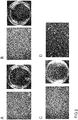
- FIG. 2C proliferation of primary fibroblast cells on tissue culture polystyrene (TCPS) Petry dish control after 4 h (left) and undetached confluent cell sheet (right) is illustrated.
- Figure 2D finally shows proliferation of primary fibroblast cells on an untreated polystyrene (PS) Petry dish control. As deducible there is almost no cell growth detectable on the untreated control.
- TCPS tissue culture polystyrene
- PS polystyrene
Landscapes
- Chemical & Material Sciences (AREA)
- Health & Medical Sciences (AREA)
- Chemical Kinetics & Catalysis (AREA)
- Medicinal Chemistry (AREA)
- Polymers & Plastics (AREA)
- Organic Chemistry (AREA)
- General Chemical & Material Sciences (AREA)
- Apparatus Associated With Microorganisms And Enzymes (AREA)
Priority Applications (2)
| Application Number | Priority Date | Filing Date | Title |
|---|---|---|---|
| EP16191842.0A EP3301121A1 (de) | 2016-09-30 | 2016-09-30 | Wärmesensibles polymer und dessen verwendung in einem zellkulturträger |
| PCT/EP2017/074648 WO2018060341A1 (en) | 2016-09-30 | 2017-09-28 | A thermoresponsive polymer and its use in a cell culture support |
Applications Claiming Priority (1)
| Application Number | Priority Date | Filing Date | Title |
|---|---|---|---|
| EP16191842.0A EP3301121A1 (de) | 2016-09-30 | 2016-09-30 | Wärmesensibles polymer und dessen verwendung in einem zellkulturträger |
Publications (1)
| Publication Number | Publication Date |
|---|---|
| EP3301121A1 true EP3301121A1 (de) | 2018-04-04 |
Family
ID=57103839
Family Applications (1)
| Application Number | Title | Priority Date | Filing Date |
|---|---|---|---|
| EP16191842.0A Withdrawn EP3301121A1 (de) | 2016-09-30 | 2016-09-30 | Wärmesensibles polymer und dessen verwendung in einem zellkulturträger |
Country Status (2)
| Country | Link |
|---|---|
| EP (1) | EP3301121A1 (de) |
| WO (1) | WO2018060341A1 (de) |
Citations (3)
| Publication number | Priority date | Publication date | Assignee | Title |
|---|---|---|---|---|
| US3417051A (en) * | 1966-01-07 | 1968-12-17 | Hoechst Ag | Polyethers and process for their manufacture |
| US3484239A (en) * | 1966-01-07 | 1969-12-16 | Kalle Ag | Light-sensitive polyether reproduction layer |
| WO2011103878A1 (en) * | 2010-02-23 | 2011-09-01 | Coloplast A/S | Polymeric photoinitiators |
-
2016
- 2016-09-30 EP EP16191842.0A patent/EP3301121A1/de not_active Withdrawn
-
2017
- 2017-09-28 WO PCT/EP2017/074648 patent/WO2018060341A1/en not_active Ceased
Patent Citations (3)
| Publication number | Priority date | Publication date | Assignee | Title |
|---|---|---|---|---|
| US3417051A (en) * | 1966-01-07 | 1968-12-17 | Hoechst Ag | Polyethers and process for their manufacture |
| US3484239A (en) * | 1966-01-07 | 1969-12-16 | Kalle Ag | Light-sensitive polyether reproduction layer |
| WO2011103878A1 (en) * | 2010-02-23 | 2011-09-01 | Coloplast A/S | Polymeric photoinitiators |
Non-Patent Citations (1)
| Title |
|---|
| BECHERER T ET AL: "In-depth analysis of switchable glycerol based polymeric coatings for cell sheet engineering", ACTA BIOMATERIALIA, vol. 25, 2 July 2015 (2015-07-02), ELSEVIER B.V. NETHERLANDS, pages 43 - 55, XP002767112, ISSN: 1742-7061, DOI: 10.1016/J.ACTBIO.2015.06.036 * |
Also Published As
| Publication number | Publication date |
|---|---|
| WO2018060341A1 (en) | 2018-04-05 |
Similar Documents
| Publication | Publication Date | Title |
|---|---|---|
| KR100191132B1 (ko) | 중합체 제품의 표면피복 | |
| Von Recum et al. | Novel thermally reversible hydrogel as detachable cell culture substrate | |
| US10251982B2 (en) | Biocompatible, biomimetic ampholyte materials | |
| CN104169289A (zh) | 可聚合材料 | |
| CA2208996A1 (en) | Siloxane-containing networks | |
| EP3101116A1 (de) | Temperaturreaktives basismaterial, verfahren zur herstellung davon und verfahren zur beurteilung davon | |
| CN1254102A (zh) | 生物医学装置的涂层 | |
| JPH09504561A (ja) | ポリマーの表面コーティング材 | |
| WO2008023872A1 (en) | Anti-fouling copolymers resin | |
| Heinen et al. | Transfer of functional thermoresponsive poly (glycidyl ether) coatings for cell sheet fabrication from gold to glass surfaces | |
| JP6855440B2 (ja) | コポリマー、これを利用する抗血栓コーティング剤及び医療用具 | |
| Trinadh et al. | Synthesis of glycopolymers at various pendant spacer lengths of glucose moiety and their effects on adhesion, viability and proliferation of osteoblast cells | |
| WO2015153404A1 (en) | Silicone acrylamide copolymer | |
| Zainuddin et al. | PHEMA hydrogels modified through the grafting of phosphate groups by ATRP support the attachment and growth of human corneal epithelial cells | |
| CN101701207B (zh) | 一种温度敏感角膜上皮细胞培养材料的制备方法与应用 | |
| EP3301121A1 (de) | Wärmesensibles polymer und dessen verwendung in einem zellkulturträger | |
| JP5007881B2 (ja) | 親水性フィルム及びその製造方法 | |
| JP3580022B2 (ja) | ブロック共重合体および医療用材料 | |
| US20020068804A1 (en) | Preparation of carboxylate-sulfonate polymers having cell proliferation-promoting properties | |
| CN104053662A (zh) | 生物相容材料 | |
| JP6229503B2 (ja) | 温度応答性を有する細胞培養基材およびその製造方法 | |
| Ahmadi et al. | Temperature responsive poly (N-isopropylacrylamide-co-styrene) nanofilms for non-enzymatic cell sheet harvesting | |
| JP2019033742A (ja) | 多能性幹細胞の培養基材及び多能性幹細胞の製造方法 | |
| JP3484591B2 (ja) | プラスチック成形品、その製造方法および光学物品 | |
| JP2767040B2 (ja) | 酸素透過性成形物 |
Legal Events
| Date | Code | Title | Description |
|---|---|---|---|
| PUAI | Public reference made under article 153(3) epc to a published international application that has entered the european phase |
Free format text: ORIGINAL CODE: 0009012 |
|
| AK | Designated contracting states |
Kind code of ref document: A1 Designated state(s): AL AT BE BG CH CY CZ DE DK EE ES FI FR GB GR HR HU IE IS IT LI LT LU LV MC MK MT NL NO PL PT RO RS SE SI SK SM TR |
|
| AX | Request for extension of the european patent |
Extension state: BA ME |
|
| STAA | Information on the status of an ep patent application or granted ep patent |
Free format text: STATUS: THE APPLICATION IS DEEMED TO BE WITHDRAWN |
|
| 18D | Application deemed to be withdrawn |
Effective date: 20181005 |