EP3301585A2 - Appareil d'affichage d'images et procédé d'affichage - Google Patents
Appareil d'affichage d'images et procédé d'affichage Download PDFInfo
- Publication number
- EP3301585A2 EP3301585A2 EP17177039.9A EP17177039A EP3301585A2 EP 3301585 A2 EP3301585 A2 EP 3301585A2 EP 17177039 A EP17177039 A EP 17177039A EP 3301585 A2 EP3301585 A2 EP 3301585A2
- Authority
- EP
- European Patent Office
- Prior art keywords
- image
- image display
- policy
- displayed
- mapping relationship
- Prior art date
- Legal status (The legal status is an assumption and is not a legal conclusion. Google has not performed a legal analysis and makes no representation as to the accuracy of the status listed.)
- Withdrawn
Links
Images



Classifications
-
- G—PHYSICS
- G06—COMPUTING OR CALCULATING; COUNTING
- G06F—ELECTRIC DIGITAL DATA PROCESSING
- G06F3/00—Input arrangements for transferring data to be processed into a form capable of being handled by the computer; Output arrangements for transferring data from processing unit to output unit, e.g. interface arrangements
- G06F3/14—Digital output to display device ; Cooperation and interconnection of the display device with other functional units
- G06F3/1454—Digital output to display device ; Cooperation and interconnection of the display device with other functional units involving copying of the display data of a local workstation or window to a remote workstation or window so that an actual copy of the data is displayed simultaneously on two or more displays, e.g. teledisplay
-
- H—ELECTRICITY
- H04—ELECTRIC COMMUNICATION TECHNIQUE
- H04L—TRANSMISSION OF DIGITAL INFORMATION, e.g. TELEGRAPHIC COMMUNICATION
- H04L67/00—Network arrangements or protocols for supporting network services or applications
- H04L67/01—Protocols
-
- H—ELECTRICITY
- H04—ELECTRIC COMMUNICATION TECHNIQUE
- H04L—TRANSMISSION OF DIGITAL INFORMATION, e.g. TELEGRAPHIC COMMUNICATION
- H04L67/00—Network arrangements or protocols for supporting network services or applications
- H04L67/01—Protocols
- H04L67/10—Protocols in which an application is distributed across nodes in the network
-
- G—PHYSICS
- G06—COMPUTING OR CALCULATING; COUNTING
- G06F—ELECTRIC DIGITAL DATA PROCESSING
- G06F16/00—Information retrieval; Database structures therefor; File system structures therefor
- G06F16/20—Information retrieval; Database structures therefor; File system structures therefor of structured data, e.g. relational data
- G06F16/27—Replication, distribution or synchronisation of data between databases or within a distributed database system; Distributed database system architectures therefor
-
- G—PHYSICS
- G06—COMPUTING OR CALCULATING; COUNTING
- G06F—ELECTRIC DIGITAL DATA PROCESSING
- G06F16/00—Information retrieval; Database structures therefor; File system structures therefor
- G06F16/90—Details of database functions independent of the retrieved data types
- G06F16/95—Retrieval from the web
- G06F16/957—Browsing optimisation, e.g. caching or content distillation
- G06F16/9577—Optimising the visualization of content, e.g. distillation of HTML documents
-
- G—PHYSICS
- G09—EDUCATION; CRYPTOGRAPHY; DISPLAY; ADVERTISING; SEALS
- G09G—ARRANGEMENTS OR CIRCUITS FOR CONTROL OF INDICATING DEVICES USING STATIC MEANS TO PRESENT VARIABLE INFORMATION
- G09G2340/00—Aspects of display data processing
- G09G2340/02—Handling of images in compressed format, e.g. JPEG, MPEG
-
- G—PHYSICS
- G09—EDUCATION; CRYPTOGRAPHY; DISPLAY; ADVERTISING; SEALS
- G09G—ARRANGEMENTS OR CIRCUITS FOR CONTROL OF INDICATING DEVICES USING STATIC MEANS TO PRESENT VARIABLE INFORMATION
- G09G2340/00—Aspects of display data processing
- G09G2340/04—Changes in size, position or resolution of an image
- G09G2340/0407—Resolution change, inclusive of the use of different resolutions for different screen areas
- G09G2340/0435—Change or adaptation of the frame rate of the video stream
-
- G—PHYSICS
- G09—EDUCATION; CRYPTOGRAPHY; DISPLAY; ADVERTISING; SEALS
- G09G—ARRANGEMENTS OR CIRCUITS FOR CONTROL OF INDICATING DEVICES USING STATIC MEANS TO PRESENT VARIABLE INFORMATION
- G09G2350/00—Solving problems of bandwidth in display systems
-
- G—PHYSICS
- G09—EDUCATION; CRYPTOGRAPHY; DISPLAY; ADVERTISING; SEALS
- G09G—ARRANGEMENTS OR CIRCUITS FOR CONTROL OF INDICATING DEVICES USING STATIC MEANS TO PRESENT VARIABLE INFORMATION
- G09G2370/00—Aspects of data communication
- G09G2370/02—Networking aspects
- G09G2370/022—Centralised management of display operation, e.g. in a server instead of locally
-
- H—ELECTRICITY
- H04—ELECTRIC COMMUNICATION TECHNIQUE
- H04L—TRANSMISSION OF DIGITAL INFORMATION, e.g. TELEGRAPHIC COMMUNICATION
- H04L67/00—Network arrangements or protocols for supporting network services or applications
- H04L67/50—Network services
- H04L67/56—Provisioning of proxy services
- H04L67/565—Conversion or adaptation of application format or content
Definitions
- Embodiments of the present invention relate to computer technologies, and in particular, to an image display method, system, and apparatus.
- a remote desktop may include such technologies as desktop image display, remote sound transmission, or pluggable hardware mapping of a remote computer.
- a remote desktop is also known as a virtual desktop. In a virtual desktop scenario, at least one server and one client exist. Login to a remote server is implemented by using virtual desktop client software installed on the client.
- a desktop image can be transferred to the client by using a drawing instruction.
- the client receives such instructions, which are sent by the remote computer, as "fill region XX with color XX", "draw an XX-wide with color XX line from point XX to point XX", or "draw image XX in position XX".
- the remote computer will, when sending the drawing instruction to the client, process the image according to a certain policy, for example, an image compression policy, to reduce the amount of data transferred between the remote computer and the client and reduce the bandwidth occupancy ratio.
- a certain policy for example, an image compression policy
- the remote computer recognizes an image type, and determines a corresponding processing policy according to a different image type.
- this technology depends on image type recognition by the remote computer. Determining an image processing policy according to the image type may make image data transmitted to the client fail to meet client requirements. For example, after the remote computer performs lossy compression on a recognized image and then transmits the image to the client to display, the image cannot meet the high image quality requirement of the client, which affects user experience.
- Embodiments of the present invention provide an image display method, apparatus, and system, which no longer use a method of determingan image processing policy according to an image type, but use an image processing method much closer to client requirements to display an image according to client requirements.
- an embodiment of the present invention provides an image display method, including:
- the processing, according to the application program, the image to be displayed includes:
- the method further includes:
- the pre-configuring a mapping relationship between the application program and the image processing policy includes:
- the image compression policy includes a lossless compression policy
- the configuring a first mapping relationship includes: configuring a first mapping relationship between the lossless compression policy and first type application software, or configuring a first process name set that uses the lossless compression policy; or, the image compression policy includes a lossy compression policy, and the configuring a first mapping relationship includes: classifying the lossy compression policy into multiple lossy compression levels, and configuring a corresponding application software type for each lossy compression level, or configuring a corresponding process name set for each lossy compression level.
- the pre-configuring a mapping relationship between the application program and the image processing policy includes:
- the image compression policy includes an image frequency control policy whose value is lower than a default value, where the default value is a default image display frame rate or delay time of a system; and the configuring a second mapping relationship includes:
- the pre-configuring a mapping relationship between the application program and the image processing policy includes:
- the cursor rendering policy includes a server cursor rendering policy
- the configuring a third mapping relationship includes:
- the determining an application program that triggers the image display instruction includes:
- the determining a process currently associated with the image display instruction includes: querying for a name of the process currently associated with the image display instruction from an operating system; or, querying for an identifier of the process currently associated with the image display instruction from an operating system, and determining a process name according to the identifier of the process; or obtaining a name of the process currently associated with the image display instruction that is carried in the image display instruction; or, obtaining an identifier of the process currently associated with the image display instruction that is carried in the image display instruction, and determining a process name according to the identifier of the process.
- an embodiment of the present invention provides an image display apparatus, including:
- an embodiment of the present invention provides an image display system, including:
- an embodiment of the present invention provides a computer, including an application program module, an operating system module, an display driver module, and a remote communication module, where: the operating system module is adapted to send an image display instruction to the display driver module according to a call instruction of the application program module; the display driver module sends the image display instruction to the remote communication module after receiving the image display instruction sent by the operating system module; and the remote communication module is adapted to obtain the image display instruction sent by the display driver module, where the image display instruction carries an image to be displayed, determine an application program that triggers the image display instruction, process, according to the application program, the image to be displayed, and send an image display message to a client, so that the client displays an image according to the image display message, where the image display message includes the processed image to be displayed.
- an embodiment of the present invention provides a computer, including a processor, a memory, a bus, and a communication interface, where:
- an embodiment of the present invention provides a computer readable medium that includes a computer execution instruction, where, when a processor of a computer executes the computer execution instruction, the computer executes the following method:
- an application program that triggers the image display instruction is determined, and an image is processed according to the application program and is sent to a client for display. Because image processing is performed according to an application program currently triggered by the client, a determined image processing policy meets current application requirements of the client, which avoids the problem in the prior art that an image finally displayed on the client does not meet current application requirements of the client when an image processing policy is determined according to image type recognition.
- Embodiments of the present invention provide an image display method, apparatus, and system, which avoid using a method of determining an image processing policy according to an image type, but use an image policy determining method much closer to client requirements to meet different image display requirements of clients.
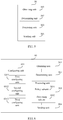
- FIG. 1 is a flowchart according to an embodiment of the present invention.
- An image display method provided in the embodiment of the present invention includes the following steps.
- an image processing module configured in a remote computer or a server may obtain an image display instruction from any module of an operating system module, a display driver module, or a remote communication module of the remote computer or the server.
- the image processing module may be configured in any of the operating system module, the display driver module, or the remote communication module, or may be configured independently. Any specific implementation manner of the image processing module can implement the image display method according to the embodiment of the present invention, and the specific implementation thereof is not limited by the embodiment of the present invention.
- the image processing module after receiving a display instruction, the image processing module needs to search for a source that triggers the display instruction to determine which application program or application programs trigger the image display instruction.
- processing on the image to be displayed no longer depends on image recognition; instead, corresponding image processing is performed according to the application program that triggers the image display instruction.
- S 103 includes the following:
- the image processing policy is determined according to information of the application program.
- a pre-configured image processing policy may be determined according to a type of the application program or a name of the application program. The specific implementation manner will be described in detail in subsequent embodiments.
- Processing the image according to the policy may be based on the purpose of saving a transmission bandwidth, or based on the purpose of meeting customer requirements, or based on both the two purposes. However, the image processing is performed based on the image processing policy determined in S103-2.
- S104 Send an image display message to a client, so that the client displays an image according to the image display message, where the image display message includes the processed image to be displayed.
- an image processing module configured in the remote computer or server determines an application program that triggers the image display instruction, processes an image according to the application program, and sends the image to a client for display. Because image processing is performed according to an application program currently triggered by the client, a determined image processing policy meets current application requirements of the client, which avoids the problem in the prior art that an image finally displayed on the client does not meet current application requirements of the client when an image processing policy is determined according to image type recognition.
- FIG. 2 is an architecture diagram of a system according to an embodiment of the present invention.
- the system includes a server 20.
- the server 20 may include multiple virtual machines VM200, and each virtual machine VM200 includes a remote communication module 201, an application program module 202, an operating system module 203, and a display driver module 204, where: the remote communication module 201 is adapted to enable a VM on which the module is located to communicate with the exterior, for example, to communicate with a client or a management system, read a display instruction uploaded by a display driver, send the display instruction to the client, receive a user mouse and keyboard operation event sent by the client, and report the event to the operating system module 203; the application program module 202 runs in user mode and is adapted to initiate a call instruction to the operating system module 203 to provide service implementation; the operating system module 203 is adapted to manage hardware resources of the server, control the running of other modules, and provide an interactive operation interface for users.
- the remote communication module 201 is adapted to enable a
- the operating system module 203 is adapted to send an image display instruction to the display driver module 204 according to the call instruction from the application program module 202; and the display driver module 204 performs uniform format conversion for the instruction sent by the operating system module 203 after receiving the image display instruction sent by the operating system module 203, and then sends the converted image display instruction to the remote communication module 201, to instruct the remote communication module 201 to send, through a remote communication protocol, image display information to a client.
- the display driver module 204 may perform no format conversion, but the remote communication module 201 performs the format conversion.
- the remote communication module 201 further implements the functions of an image processing module, that is, the remote communication module 201 is further adapted to obtain an image display instruction, determine an application program that triggers the image display instruction, determine, according to the application program, an image processing policy for an image to be displayed, process, according to the image processing policy, the image to be displayed, and send image display information to a client, so that the client displays an image according to the image display message, where the image display information includes the processed image to be displayed.
- the remote communication module 201 implements functions of the image processing module.
- functions of the image processing module may also be implemented by the operating system module 203 or the display driver module 204, or, an image processing module is configured independently.
- the specific implementation of the image processing module is not limited by the embodiments of the present invention.
- FIG. 3 another image display method according to an embodiment of the present invention, as shown in FIG. 3 , includes the following steps.
- the embodiment of the present invention proposes a method of configuring an image processing policy with respect to an application program, that is, pre-configuring a mapping relationship between the application program and the image processing policy, so that a corresponding module queries the mapping relationship according to application program information and determines a corresponding image processing policy.
- the S300 is as follows:
- the configuring a first mapping relationship includes: configuring a first mapping relationship between the lossless compression policy and first type application software, or configuring a first process name set that uses the lossless compression policy, where, preferably, the first type application software mainly refers to software requiring a high image display quality, for example, the software may include medical industry software or professional drawing software; and the first process name set may include: xtop.exe (pro/E, drawing software), CNEXT.exe (CAITA, drawing software), acad.exe (AutoCAD, drawing software), Revit.exe (Revit, architecture design software), Inventor.exe (Inventor, mechanical design software), 3dsmax.exe (3ds Max, 3D animation production software), Showcase.exe (Showcase, 3D visual creativity software), or the like, and the process name set may be selected and configured according to the actual situation and is not exhaustively described in this embodiment.
- the first type application software mainly refers to software requiring a high image display quality
- the software may include medical industry software or professional drawing software
- the configuring a first mapping relationship includes: classifying the lossy compression policy into multiple lossy compression levels, and configuring a corresponding application software type for each lossy compression level, or configuring a corresponding process name set for each lossy compression level, where each lossy compression level includes a lossy compression algorithm or level.
- the S 300 is as follows:
- the configuring a second mapping relationship includes: configuring a second mapping relationship between the image frequency control policy whose value is lower than the default value and second type application software, or configuring a second process name set that uses the image frequency control policy whose value is lower than the default value. For some types of software that has many images, if all images are transferred to the client, a large bandwidth will be occupied. Therefore, image frequency control is used.
- an image frequency control policy whose value is lower than a default value may be used, for example, a default image frequency control policy of a system is 30 frames per second, and in this embodiment, an image frequency control policy whose value is lower than the default value is configured to 20 frames per second.
- the second type application software mainly refers to software having large image traffic
- the software may include video-type software
- the second process name set may include: wmplayer.exe (windows Media Player), qqplayer.exe (Tencent QQ Player), splayer.exe (SPlayer), vlc.exe (VLC Player), StormPlayer.exe (Storm Player), or the like, and the process name set may be selected and configured according to the actual situation and is not exhaustively described in this embodiment.
- the S300 is as follows:
- the configuring a third mapping relationship includes: configuring a third mapping relationship between the server cursor rendering policy and third type application software, or configuring a third process name set that uses the server cursor rendering policy.
- the cursor rendering policy includes a server cursor rendering policy and a client cursor rendering policy, where the server cursor rendering policy is that the server performs cursor rendering, and the client cursor rendering policy is that the client performs cursor rendering.
- Client cursor rendering enables faster response to users, but it is possible that a location deviation exists between a cursor displayed on the image and a cursor automatically drawn by the application program.
- Server cursor can ensure the consistency between the cursor displayed on the image and the cursor automatically drawn by the application program.
- the third type application software mainly refers to some drawing software, surveying and mapping industry software, or game software that requires a high accuracy.
- the third process name set may include xtop.exe, vlc.exe, autocad.exe, or the like, and the process name set may be selected and configured according to the actual situation and is not exhaustively described in this embodiment.
- Possible image processing policies are listed as examples in this embodiment, such as an image compression policy, an image frequency control policy, and a cursor rendering policy.
- image compression policy such as an image compression policy, an image frequency control policy, and a cursor rendering policy.
- the first mapping relationship, the second mapping relationship, or the third mapping relationship related to the foregoing image compression policy, image frequency control policy, and cursor rendering policy may be configured separately, simultaneously, or in any combination, for example, the first mapping relationship and the second mapping relationship are configured simultaneously, or the first mapping relationship and the third mapping relationship are configured simultaneously, or the three mapping relationships are configured simultaneously.
- the mapping relationship may be configured in the form of a data table. Each mapping relationship may be configured in one table, or multiple mapping relationships may be configured in one table.
- the application program module 202 initiates a call instruction to the operating system module 203.
- an application program module 202 of the application program initiates a call instruction to the operating system module 203.
- the call instruction may be a graphic function call instruction.
- the operating system module 203 sends an image display instruction to the display driver module 204 according to the call instruction, where the image display instruction carries an image to be displayed.
- the display driver module 204 sends the image display instruction to the remote communication module 201.
- the display driver module 204 may further convert, after receiving the image display instruction, the format of the image display instruction according to a format predefined by the client, and then send the image display instruction with the format converted to the remote communication module 201.
- the remote communication module 201 obtains the image display instruction, and determines an application program that triggers the image display instruction.
- the determining, by the remote communication module 201, an application program that triggers the image display instruction may be implemented in multiple manners.
- an exemplary implementation manner is that the remote communication module 201 determines information of a process associated with the image display instruction. Because the application program is executed by a computer through a process, the process associated with the image display instruction may represent the application program that triggers the image display instruction. Further, because the operating system module 203 may allocate process space for each executed process, the process space includes process information. In the case of drawing, the display driver module 204 adapted to execute the image display instruction works in the process space of the process.
- the display driver module 204 may query for process information by using an interface provided by the operating system module 203, for example, obtain a current process ID by using an application program interface API function GetCurrentProcessId or EngGetCurrentProcessId of the Windows operating system, or obtain a process name of the current process by using Windows API functions PsGetCurrentProcess and PsGetProcessImageFileName.
- the remote communication module 201 may query for a process name corresponding to a process ID by using an interface provided by the operating system module 203, for example, by using application program interface API functions OpenProcess and GetModuleFileName of the Windows operating system.
- the remote communication module 201 or the display driver module 204 may query the operating system module 203 to obtain the process name.
- the determining information of a process associated with the image display instruction in S304 can be implemented in the following manner.
- the remote communication module 201 queries for an identifier of a process associated with the image display instruction from the operating system module 203.
- the remote communication module 201 queries for a process name of the process from the operating system module 203 according to the process identifier.
- the remote communication module 201 queries for a name of a process associated with the image display instruction from the operating system module 203.
- the remote communication module 201 obtains the process name returned by the operating system module 203.
- the display driver module 204 may further perform the following steps before S303:
- the display driver module 204 queries for a name of a process associated with the image display instruction from the operating system module 203.
- the display driver module 204 obtains the process name returned by the operating system module 203.
- the display driver module 204 queries for an identifier of a process associated with the image display instruction from the operating system module 203.
- the display driver module 204 not only sends the image display instruction to the remote communication module 201, but also sends the found process information, that is, the process identifier or process name, to the remote communication module 201.
- the remote communication module 201 obtains the process name carried in the image display instruction; if the display driver module 204 sends the found process identifier to the remote communication module 201 in S303, in S304, the remote communication module 201 queries for the process name of the process from the operating system module 203 according to the process identifier.
- the subsequent process includes the following steps:
- the remote communication module 201 determines the information of the process associated with the image display instruction in S304, the remote communication module 201 queries, according to the process information, the mapping relationship configured in S300, and determines the image processing policy for the image to be displayed.
- the remote communication module 201 processes, according to the image processing policy, the image to be displayed.
- the remote communication module 201 performs lossless compression for the image to be displayed; if the image processing policy is a lossy compression policy, the remote communication module 201 performs lossy compression for the image to be displayed according to a level of the lossy compression policy; if the image processing policy is an image frequency control policy, the remote communication module 201 calculates a first interval according to a frequency specified by the image frequency control policy, and performs redundancy elimination for multiple images received in the first interval to obtain one image; if the image processing policy is a server cursor rendering policy, the remote communication module 201 instructs the display driver module 204 to render a cursor on the image to be displayed, and then obtains the rendered image to be displayed returned by the display driver module 204; if the image processing policy includes an image compression policy and an image frequency control policy, the remote communication module 201 calculates a first interval according to a frequency specified by the image frequency control policy, performs redundancy elimination for multiple images received in the first interval to
- the remote communication module 201 sends an image display message to a client 22, so that the client 22 displays an image according to the image display message, where the image display message includes the processed image to be displayed.
- a mapping relationship between an application program and an image processing policy is configured first; and, after a remote communication module receives an image display instruction, the remote communication module determines an application program that triggers the image display instruction, determines an image processing policy according to the application program, processes an image according to the determined image processing policy, and sends the image to a client for display. Because an image processing program is determined according to an application program currently triggered by the client, the determined image processing policy meets current application requirements of the client, which avoids the problem in the prior art that an image finally displayed on the client does not meet current application requirements of the client when an image processing policy is determined according to image type recognition, and balances a bandwidth occupancy for data transmission between a remote computer and the client.
- a lossless compression policy is configured for software that requires a high image quality, so that an image to be sent to the client for display can meet high-accuracy and high-emulation image requirements of users; because an image frequency control policy whose value is lower than a default value is configured for large-traffic software such as video software, images sent to a client are images obtained after redundancy elimination, which reduces a bandwidth occupancy between the server and the client and improves the system transmission efficiency; and because a server cursor rendering policy is configured for software that requires a high cursor accuracy, the consistency between a cursor displayed on an image and a cursor automatically drawn by the application program can be ensured, which improves user experience.
- FIG. 4 another image display method according to an embodiment of the present invention, as shown in FIG. 4 , includes the following steps.
- S400 In a management system, pre-configure a mapping relationship between an application program and an image processing policy.
- a connection is established between virtual machines in a client and a server.
- a remote desktop connection is established between the client and a remote communication module 201 in the virtual machine.
- a management system delivers the mapping relationship between the application program and the image processing policy to the virtual machine.
- the management system delivers the mapping relationship to the remote communication module 201, and the remote communication module 201 saves the mapping relationship.
- the application program module 202 initiates a call instruction to the operating system module 203.
- an application program module 202 of the application program initiates a call instruction to the operating system module 203.
- the call instruction may be a graphic function call instruction.
- the operating system module 203 sends an image display instruction to the display driver module 204 according to the call instruction, where the image display instruction carries an image to be displayed.
- the display driver module 204 queries for an identifier of a process associated with the image display instruction from the operating system module 203.
- the display driver module 204 receives the process identifier returned by the operating system module 203, and determines a process name of the process according to the process identifier.
- the display driver module 204 sends the image display instruction and the process name to the remote communication module 201.
- the display driver module 204 sends the image display instruction to the remote communication module 201, where the image display instruction carries the process name.
- the remote communication module 201 queries the mapping relationship between the application program and the image processing policy according to the process name, and determines an image processing policy for the image to be displayed.
- the remote communication module 201 processes, according to the image processing policy, the image to be displayed.
- the remote communication module 201 performs lossless compression for the image to be displayed; if the image processing policy is a lossy compression policy, the remote communication module 201 performs lossy compression for the image to be displayed according to a level of the lossy compression policy; if the image processing policy is an image frequency control policy, the remote communication module 201 calculates a first interval according to a frequency specified by the image frequency control policy, and performs redundancy elimination for multiple images received in the first interval to obtain one image; if the image processing policy is a server cursor rendering policy, the remote communication module 201 instructs the display driver module 204 to render a cursor on the image to be displayed, and then obtains the rendered image to be displayed returned by the display driver module 204; if the image processing policy includes an image compression policy and an image frequency control policy, the remote communication module 201 calculates a first interval according to a frequency specified by the image frequency control policy, performs redundancy elimination for multiple images received in the first interval to
- the remote communication module 201 sends an image display message to a client 22, so that the client 22 displays an image according to the image display message, where the image display message includes the processed image to be displayed.
- a mapping relationship between an application program and an image processing policy is configured first; and, after a remote communication module receives an image display instruction, the remote communication module determines an application program that triggers the image display instruction, determines an image processing policy according to the application program, processes an image according to the determined image processing policy, and sends the image to a client for display. Because an image processing program is determined according to an application program currently triggered by the client, the determined image processing policy meets current application requirements of the client, which avoids the problem in the prior art that an image finally displayed on the client does not meet current application requirements of the client when an image processing policy is determined according to image type recognition.
- a lossless compression policy is configured for software that requires a high image quality, so that an image to be sent to the client for display can meet high-accuracy and high-emulation image requirements of users; because an image frequency control policy whose value is lower than a default value is configured for large-traffic software such as video software, images sent to a client are images obtained after redundancy elimination, which reduces a bandwidth occupancy between the server and the client and improves the system transmission efficiency; and because a server cursor rendering policy is configured for software that requires a high cursor accuracy, the consistency between a cursor displayed on an image and a cursor automatically drawn by the application program can be ensured, which improves user experience.
- an image display apparatus includes:
- the processing unit 503 includes:
- the apparatus further includes a configuring unit 601, adapted to pre-configure a mapping relationship between the application program and the image processing policy, where the policy subunit 5031 is specifically adapted to query the mapping relationship according to the application program determined by the determining unit, and determine the image processing policy for the image to be displayed.
- a configuring unit 601 adapted to pre-configure a mapping relationship between the application program and the image processing policy, where the policy subunit 5031 is specifically adapted to query the mapping relationship according to the application program determined by the determining unit, and determine the image processing policy for the image to be displayed.
- the configuring unit 601 includes:
- the image compression policy includes a lossless compression policy, and the first configuring subunit 6011 is specifically adapted to:
- the image compression policy includes a lossy compression policy, and the first configuring subunit 6011 is specifically adapted to:
- the configuring unit 601 includes:
- the image compression policy includes an image frequency control policy whose value is lower than a default value, where the default value is a default image display frame rate or delay time of a system; and the second configuring subunit 6012 is specifically adapted to:
- the configuring unit 601 includes:
- the cursor rendering policy includes a server cursor rendering policy
- the third configuring subunit is specifically adapted to:
- the determining unit 502 is specifically adapted to determine a process currently associated with the image display instruction.
- the determining unit 502 is specifically adapted to: query for a name of the process currently associated with the image display instruction from an operating system, or query for an identifier of the process currently associated with the image display instruction from an operating system and determine a process name according to the process identifier; or, obtain a name of the process currently associated with the image display instruction that is carried in the image display instruction, or obtain an identifier of the process currently associated with the image display instruction that is carried in the image display instruction and determine a process name according to the process identifier.
- processing subunit 5032 includes any one or any combination of the following modules:
- an image display system includes:
- An embodiment of the present invention further provides a computer.
- the computer shown in FIG. 8 may be a virtual machine shown in FIG. 2 or a physical server.
- the computer includes: an application program module 802, an operating system module 803, an display driver module 804, and a remote communication module 801, where: the operating system module 803 is adapted to send an image display instruction to the display driver module 804 according to a call instruction of the application program module 801; the display driver module 804 sends the image display instruction to the remote communication module 801 after receiving the image display instruction sent by the operating system module 803; and the remote communication module 801 is adapted to obtain the image display instruction sent by the display driver module, where the image display instruction carries an image to be displayed, determine an application program that triggers the image display instruction, process, according to the application program, the image to be displayed, and send an image display message to a client, so that the client displays an image according to the image display message, where the image display message includes the processed image to be displayed.
- the operating system module 803 is adapted to send an image display instruction to the display driver module 804 according to a call instruction of the application program module 801
- the display driver module 804 sends the image display instruction to
- the remote communication module 801 is specifically adapted to determine, according to the application program, an image processing policy for the image to be displayed, and process, according to the image processing policy, the image to be displayed.
- the remote communication module 801 is further adapted to obtain a pre-configured mapping relationship between the application program and the image processing policy; and, the remote communication module 801 queries the mapping relationship according to the application program, and determines the image processing policy for the image to be displayed.
- the display driver module 804 is further adapted to query for information of a process currently associated with the image display instruction from the operating system module 803, carry the process information in the image display instruction, and send the image display instruction to the remote communication module 801; and the remote communication module 801 obtains the information of the process currently associated with the image display instruction that is carried in the image display instruction, and determines, according to the process information, the image processing policy for the image to be displayed.
- the remote communication module 801 is further adapted to query for information of a process currently associated with the image display instruction from the operating system module 803, and determine, according to the process information, the image processing policy for the image to be displayed.
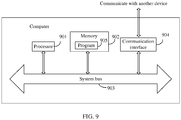
- FIG. 9 is a schematic structural diagram of a computer according to an embodiment of the present invention.
- the computer according to the embodiment of the present invention may include:
- the processor 901 may be a single-core or multi-core central processing unit, or a specific integrated circuit, or is configured to one or multiple integrated circuits implementing the embodiments of the present invention.
- the memory 902 may be a high-speed RAM memory or a non-volatile memory (non-volatile memory), for example, at least one disk memory.
- the memory 902 is adapted to store a computer execution instruction 903.
- the computer execution instruction 903 may include program codes.
- the processor 901 runs the computer execution instruction 903, and may execute any of the method processes in FIG. 1 , FIG. 3 , or FIG. 4 .
- each aspect of the present invention or each possible implementation manner of each aspect may be specifically implemented as systems, methods, or computer program products. Therefore, each aspect of the present invention or each possible implementation manner of each aspect may use forms of complete hardware embodiments, complete software embodiments (including firmware, resident software, and so on), or embodiments combining software and hardware, which are uniformly referred to as "circuit", "module”, or “system” herein. Furthermore, each aspect of the present invention or each possible implementation manner of each aspect may use forms of computer program products.
- Computer program products refer to computer readable program codes stored in a computer readable medium.
- a computer readable medium may be a computer readable signal medium or a computer readable storage medium.
- the computer readable storage medium includes but is not limited to electronic, magnetic, optical, electromagnetic, infrared, or semiconductor systems, devices, or apparatuses, or any appropriate combination of the foregoing items, such as a random access memory (RAM), a read-only memory (ROM), an erasable programmable read-only memory (EPROM or Flash memory), an optical fiber, and a portable read-only memory (CD-ROM).
- RAM random access memory
- ROM read-only memory
- EPROM or Flash memory erasable programmable read-only memory
- CD-ROM portable read-only memory
- processors in computers read computer readable program codes stored in a computer readable medium, so that the processors can execute functions and actions specified in one step or a combination of the steps in the flowcharts, and an apparatus implementing functions and actions specified in one block or a combination of blocks in the block diagrams is generated.
- Computer readable program codes can be completely executed on user computers, partially executed on user computers, used as separate software packages, partially on user computers and partially on remote computers, or completely executed on remote computers or servers. It should also be noted that, in certain alternative implementation solutions, functions denoted in each step of the flowcharts or in each block of the block diagrams may not occur according to the sequence denoted in the diagrams. For example, depending on the involved functions, two steps or two blocks successively marked may be performed concurrently, or these blocks sometimes may be performed in a reverse order.
Landscapes
- Engineering & Computer Science (AREA)
- Theoretical Computer Science (AREA)
- Computer Networks & Wireless Communication (AREA)
- Signal Processing (AREA)
- Human Computer Interaction (AREA)
- Physics & Mathematics (AREA)
- General Engineering & Computer Science (AREA)
- General Physics & Mathematics (AREA)
- Information Transfer Between Computers (AREA)
- Two-Way Televisions, Distribution Of Moving Picture Or The Like (AREA)
- Stored Programmes (AREA)
- Digital Computer Display Output (AREA)
Priority Applications (1)
| Application Number | Priority Date | Filing Date | Title |
|---|---|---|---|
| EP17177039.9A EP3301585A3 (fr) | 2013-08-02 | 2013-08-02 | Appareil d'affichage d'images et procédé d'affichage |
Applications Claiming Priority (3)
| Application Number | Priority Date | Filing Date | Title |
|---|---|---|---|
| EP17177039.9A EP3301585A3 (fr) | 2013-08-02 | 2013-08-02 | Appareil d'affichage d'images et procédé d'affichage |
| EP13802518.4A EP2849080B1 (fr) | 2013-08-02 | 2013-08-02 | Procédé et dispositif d'affichage d'images |
| PCT/CN2013/080728 WO2015013981A1 (fr) | 2013-08-02 | 2013-08-02 | Procédé et dispositif d'affichage d'images |
Related Parent Applications (2)
| Application Number | Title | Priority Date | Filing Date |
|---|---|---|---|
| EP13802518.4A Division EP2849080B1 (fr) | 2013-08-02 | 2013-08-02 | Procédé et dispositif d'affichage d'images |
| EP13802518.4A Division-Into EP2849080B1 (fr) | 2013-08-02 | 2013-08-02 | Procédé et dispositif d'affichage d'images |
Publications (2)
| Publication Number | Publication Date |
|---|---|
| EP3301585A2 true EP3301585A2 (fr) | 2018-04-04 |
| EP3301585A3 EP3301585A3 (fr) | 2018-07-25 |
Family
ID=50864333
Family Applications (2)
| Application Number | Title | Priority Date | Filing Date |
|---|---|---|---|
| EP17177039.9A Withdrawn EP3301585A3 (fr) | 2013-08-02 | 2013-08-02 | Appareil d'affichage d'images et procédé d'affichage |
| EP13802518.4A Active EP2849080B1 (fr) | 2013-08-02 | 2013-08-02 | Procédé et dispositif d'affichage d'images |
Family Applications After (1)
| Application Number | Title | Priority Date | Filing Date |
|---|---|---|---|
| EP13802518.4A Active EP2849080B1 (fr) | 2013-08-02 | 2013-08-02 | Procédé et dispositif d'affichage d'images |
Country Status (6)
| Country | Link |
|---|---|
| US (2) | US8856385B1 (fr) |
| EP (2) | EP3301585A3 (fr) |
| JP (1) | JP6276408B2 (fr) |
| CN (1) | CN103858095B (fr) |
| CA (1) | CA2920050C (fr) |
| WO (1) | WO2015013981A1 (fr) |
Families Citing this family (9)
| Publication number | Priority date | Publication date | Assignee | Title |
|---|---|---|---|---|
| US9582240B2 (en) * | 2012-12-26 | 2017-02-28 | Vmware, Inc. | Using contextual and spatial awareness to improve remote desktop imaging fidelity |
| CN104636445B (zh) * | 2015-01-16 | 2019-05-24 | 白天 | 截屏图像的处理和分组操作方法及其装置 |
| CN106454403B (zh) * | 2016-09-09 | 2020-06-12 | 北京星选科技有限公司 | 数据显示方法、设备及系统 |
| CN108319493A (zh) * | 2017-06-28 | 2018-07-24 | 新华三云计算技术有限公司 | 数据处理方法、装置及机器可读存储介质 |
| CN107729483B (zh) * | 2017-10-17 | 2021-05-11 | Oppo广东移动通信有限公司 | 一种分类显示方法、装置、终端及计算机可读存储介质 |
| WO2019114185A1 (fr) * | 2017-12-12 | 2019-06-20 | 华为技术有限公司 | Procédé de commande à distance d'application et dispositifs associés |
| CN109741463B (zh) | 2019-01-02 | 2022-07-19 | 京东方科技集团股份有限公司 | 虚拟现实场景的渲染方法、装置及设备 |
| CN110868614B (zh) * | 2019-11-14 | 2021-09-28 | 北京京航计算通讯研究所 | 显卡透传环境下基于spice协议的差异图像显示系统 |
| CN110740352B (zh) * | 2019-11-14 | 2021-07-20 | 北京京航计算通讯研究所 | 显卡透传环境下基于spice协议的差异图像显示方法 |
Family Cites Families (35)
| Publication number | Priority date | Publication date | Assignee | Title |
|---|---|---|---|---|
| US8352400B2 (en) * | 1991-12-23 | 2013-01-08 | Hoffberg Steven M | Adaptive pattern recognition based controller apparatus and method and human-factored interface therefore |
| JP3339668B2 (ja) * | 1996-06-19 | 2002-10-28 | 株式会社日立製作所 | 時系列データ圧縮・復元方法および装置 |
| US6675239B1 (en) * | 1999-10-05 | 2004-01-06 | Ati Technologies Inc. | Method and apparatus for providing commands to a command memory |
| CN1568451A (zh) * | 2000-10-17 | 2005-01-19 | 月光无线有限公司 | 通过无线投影机进行远程视频显示的方法和系统 |
| CN1332300C (zh) * | 2005-04-30 | 2007-08-15 | 广东威创日新电子有限公司 | 一种基于服务器端\客户端结构远程显示处理方法 |
| JP4751647B2 (ja) * | 2005-06-03 | 2011-08-17 | 株式会社リコー | 画面共有装置、画面共有方法、画面共有プログラム及び記録媒体 |
| JP2007206644A (ja) * | 2006-02-06 | 2007-08-16 | Seiko Epson Corp | 画像表示システム,画像表示方法,画像表示プログラム,記録媒体,データ処理装置,画像表示装置 |
| JP4785579B2 (ja) * | 2006-03-17 | 2011-10-05 | キヤノン株式会社 | 情報処理装置および情報処理装置における印刷設定反映方法とプログラム |
| US20070288640A1 (en) * | 2006-06-07 | 2007-12-13 | Microsoft Corporation | Remote rendering of multiple mouse cursors |
| US8244883B2 (en) * | 2006-08-03 | 2012-08-14 | Citrix Systems, Inc. | Systems and methods of for providing multi-mode transport layer compression |
| CA2693426A1 (fr) * | 2007-10-20 | 2009-04-23 | Citrix Systems, Inc. | Procedes et systemes permettant d'afficher a distance de donnees graphiques en trois dimensions |
| CN101420610B (zh) * | 2007-10-26 | 2010-08-18 | 闪联信息技术工程中心有限公司 | 显示远程桌面内容的方法及其装置 |
| US8675739B2 (en) * | 2007-12-17 | 2014-03-18 | Samsung Electronics Co., Ltd. | Method and apparatus for video decoding based on a multi-core processor |
| US8456380B2 (en) * | 2008-05-15 | 2013-06-04 | International Business Machines Corporation | Processing computer graphics generated by a remote computer for streaming to a client computer |
| US8200896B2 (en) * | 2008-06-06 | 2012-06-12 | Microsoft Corporation | Increasing remote desktop performance with video caching |
| US8254704B2 (en) * | 2008-10-30 | 2012-08-28 | Microsoft Corporation | Remote computing platforms providing high-fidelity display and interactivity for clients |
| US8189661B2 (en) * | 2009-03-09 | 2012-05-29 | Microsoft Corporation | Remote desktop protocol (RDP) tile image classification for improving compression efficiency and quality |
| JP5077272B2 (ja) * | 2009-03-12 | 2012-11-21 | カシオ計算機株式会社 | クライアント装置、サーバベース・コンピューティング・システム、およびクライアント制御プログラム |
| EP2237526A1 (fr) * | 2009-03-30 | 2010-10-06 | NEC Corporation | Procédé d'optimisation du transfert d'affichage à distance dans un environnement informatique client |
| JP2010237726A (ja) * | 2009-03-30 | 2010-10-21 | Nec Personal Products Co Ltd | 情報処理装置、そのパラメータ設定方法、プログラム及び記録媒体 |
| US8392596B2 (en) * | 2009-05-26 | 2013-03-05 | Red Hat Israel, Ltd. | Methods for detecting and handling video and video-like content in remote display system |
| US9854254B2 (en) * | 2009-08-04 | 2017-12-26 | Avocent Corporation | Method and system for remote viewing of static and video images |
| WO2011032114A1 (fr) * | 2009-09-11 | 2011-03-17 | Citrix Systems, Inc. | Rendu à distance d'images tridimensionnelles au moyen de machines virtuelles |
| CN102713882B (zh) * | 2009-11-16 | 2015-04-01 | 思杰系统有限公司 | 用于选择性地实现渐进显示技术的方法和系统 |
| US8676949B2 (en) * | 2009-11-25 | 2014-03-18 | Citrix Systems, Inc. | Methods for interfacing with a virtualized computing service over a network using a lightweight client |
| US9582238B2 (en) * | 2009-12-14 | 2017-02-28 | Qualcomm Incorporated | Decomposed multi-stream (DMS) techniques for video display systems |
| US8504694B2 (en) * | 2010-03-08 | 2013-08-06 | Microsoft Corporation | Remote content classification and transmission using multiple transport channels |
| US8868642B2 (en) * | 2010-07-08 | 2014-10-21 | Red Hat Israel, Ltd. | System and method for dynamically switching between mouse modes |
| WO2012037504A1 (fr) * | 2010-09-18 | 2012-03-22 | Ciinow, Inc. | Procédé et mécanisme permettant de fournir des applications sur un réseau étendu |
| CN102446341A (zh) * | 2010-09-30 | 2012-05-09 | 联想(北京)有限公司 | 服务器及其图像处理方法 |
| US20130039408A1 (en) * | 2011-02-07 | 2013-02-14 | Screenovate Technologies Ltd | Method for enhancing compression and transmission process of a screen image |
| US20130132971A1 (en) * | 2011-11-22 | 2013-05-23 | International Business Machines Corporation | System, method and program product for streamlined virtual machine desktop display |
| US20150200998A1 (en) * | 2012-01-30 | 2015-07-16 | Google Inc. | Displaying portions of a host display area of a host device at a client device |
| US8774536B1 (en) * | 2012-07-03 | 2014-07-08 | Google Inc. | Efficient processing of streams of images within a moving window session |
| US9930082B2 (en) * | 2012-11-20 | 2018-03-27 | Nvidia Corporation | Method and system for network driven automatic adaptive rendering impedance |
-
2013
- 2013-08-02 CA CA2920050A patent/CA2920050C/fr active Active
- 2013-08-02 CN CN201380002633.XA patent/CN103858095B/zh active Active
- 2013-08-02 WO PCT/CN2013/080728 patent/WO2015013981A1/fr not_active Ceased
- 2013-08-02 EP EP17177039.9A patent/EP3301585A3/fr not_active Withdrawn
- 2013-08-02 JP JP2016530302A patent/JP6276408B2/ja active Active
- 2013-08-02 EP EP13802518.4A patent/EP2849080B1/fr active Active
- 2013-12-30 US US14/143,852 patent/US8856385B1/en active Active
-
2014
- 2014-09-22 US US14/492,966 patent/US10320886B2/en active Active
Non-Patent Citations (1)
| Title |
|---|
| None |
Also Published As
| Publication number | Publication date |
|---|---|
| US20150046520A1 (en) | 2015-02-12 |
| EP3301585A3 (fr) | 2018-07-25 |
| US8856385B1 (en) | 2014-10-07 |
| JP6276408B2 (ja) | 2018-02-07 |
| CN103858095B (zh) | 2015-08-19 |
| US10320886B2 (en) | 2019-06-11 |
| JP2016532952A (ja) | 2016-10-20 |
| EP2849080B1 (fr) | 2017-10-11 |
| WO2015013981A1 (fr) | 2015-02-05 |
| CN103858095A (zh) | 2014-06-11 |
| EP2849080A4 (fr) | 2015-09-09 |
| EP2849080A1 (fr) | 2015-03-18 |
| CA2920050C (fr) | 2019-04-02 |
| CA2920050A1 (fr) | 2015-02-05 |
Similar Documents
| Publication | Publication Date | Title |
|---|---|---|
| CA2920050C (fr) | Procede et dispositif d'affichage d'images | |
| CA2922867C (fr) | Procede et dispositif de commande de media bases sur un bureau en nuage | |
| CN114116092B (zh) | 云桌面系统处理方法、云桌面系统控制方法以及相关设备 | |
| US9801146B2 (en) | Terminal and synchronization control method among terminals | |
| CN104765636B (zh) | 一种远程桌面图像的合成方法和装置 | |
| CN104301687A (zh) | 应用于虚拟桌面环境的摄像头视频处理方法和相应设备 | |
| WO2016202102A1 (fr) | Procédé et dispositif de transmission de message | |
| EP4142258A1 (fr) | Réseau informatique périphérique, procédé et appareil de transmission de données, dispositif et support de stockage | |
| TW201701152A (zh) | 網路伺服系統 | |
| CN103780621A (zh) | 一种远程桌面共享方法及系统 | |
| CN102724213B (zh) | 一种虚拟无缝桌面及实现方法 | |
| JP2018077897A (ja) | 画像表示方法および装置 | |
| CN112565818B (zh) | 二三维一体化的操作站平台构建方法和电子设备 | |
| CN114095758A (zh) | 云图像截取方法、相关装置及计算机程序产品 | |
| CN111629213B (zh) | 多媒体文件的转码方法、装置、设备和介质 | |
| EP4084443A2 (fr) | Procédé et appareil permettant de detecter le jitter de streaming en direct, dispositif et support | |
| CN112835837B (zh) | 建立数据连接的方法、相关装置及计算机程序产品 | |
| CN116132418A (zh) | 一种流媒体传输方法、装置、电子设备及存储介质 | |
| US9953299B2 (en) | Systems and methods for sharing image data | |
| CN118802598A (zh) | 一种网络状态信息显示方法、电子设备及存储介质 | |
| CN116633881A (zh) | 一种带宽的控制方法、装置、设备及介质 | |
| CN103701632A (zh) | 一种网络设置方法及电子设备 | |
| KR20150077033A (ko) | 내추럴 사용자 인터페이스 기반의 서버 노드의 전력 관리 방법 |
Legal Events
| Date | Code | Title | Description |
|---|---|---|---|
| PUAI | Public reference made under article 153(3) epc to a published international application that has entered the european phase |
Free format text: ORIGINAL CODE: 0009012 |
|
| 17P | Request for examination filed |
Effective date: 20171011 |
|
| AC | Divisional application: reference to earlier application |
Ref document number: 2849080 Country of ref document: EP Kind code of ref document: P |
|
| AK | Designated contracting states |
Kind code of ref document: A2 Designated state(s): AL AT BE BG CH CY CZ DE DK EE ES FI FR GB GR HR HU IE IS IT LI LT LU LV MC MK MT NL NO PL PT RO RS SE SI SK SM TR |
|
| PUAL | Search report despatched |
Free format text: ORIGINAL CODE: 0009013 |
|
| AK | Designated contracting states |
Kind code of ref document: A3 Designated state(s): AL AT BE BG CH CY CZ DE DK EE ES FI FR GB GR HR HU IE IS IT LI LT LU LV MC MK MT NL NO PL PT RO RS SE SI SK SM TR |
|
| RIC1 | Information provided on ipc code assigned before grant |
Ipc: G06F 3/14 20060101ALI20180619BHEP Ipc: H04L 29/08 20060101ALI20180619BHEP Ipc: H04N 19/00 20140101ALI20180619BHEP Ipc: G06F 15/16 20060101AFI20180619BHEP |
|
| STAA | Information on the status of an ep patent application or granted ep patent |
Free format text: STATUS: THE APPLICATION IS DEEMED TO BE WITHDRAWN |
|
| 18D | Application deemed to be withdrawn |
Effective date: 20190126 |