EP3301874A1 - Datenübertragungsverfahren und zugehörige vorrichtung - Google Patents
Datenübertragungsverfahren und zugehörige vorrichtung Download PDFInfo
- Publication number
- EP3301874A1 EP3301874A1 EP16817119.7A EP16817119A EP3301874A1 EP 3301874 A1 EP3301874 A1 EP 3301874A1 EP 16817119 A EP16817119 A EP 16817119A EP 3301874 A1 EP3301874 A1 EP 3301874A1
- Authority
- EP
- European Patent Office
- Prior art keywords
- network node
- access network
- radio access
- target terminal
- allocation information
- Prior art date
- Legal status (The legal status is an assumption and is not a legal conclusion. Google has not performed a legal analysis and makes no representation as to the accuracy of the status listed.)
- Granted
Links
Images













Classifications
-
- H—ELECTRICITY
- H04—ELECTRIC COMMUNICATION TECHNIQUE
- H04W—WIRELESS COMMUNICATION NETWORKS
- H04W52/00—Power management, e.g. Transmission Power Control [TPC] or power classes
- H04W52/02—Power saving arrangements
- H04W52/0209—Power saving arrangements in terminal devices
- H04W52/0212—Power saving arrangements in terminal devices managed by the network, e.g. network or access point is leader and terminal is follower
- H04W52/0216—Power saving arrangements in terminal devices managed by the network, e.g. network or access point is leader and terminal is follower using a pre-established activity schedule, e.g. traffic indication frame
-
- H—ELECTRICITY
- H04—ELECTRIC COMMUNICATION TECHNIQUE
- H04W—WIRELESS COMMUNICATION NETWORKS
- H04W24/00—Supervisory, monitoring or testing arrangements
- H04W24/04—Arrangements for maintaining operational condition
-
- H—ELECTRICITY
- H04—ELECTRIC COMMUNICATION TECHNIQUE
- H04W—WIRELESS COMMUNICATION NETWORKS
- H04W72/00—Local resource management
- H04W72/30—Resource management for broadcast services
-
- H—ELECTRICITY
- H04—ELECTRIC COMMUNICATION TECHNIQUE
- H04W—WIRELESS COMMUNICATION NETWORKS
- H04W28/00—Network traffic management; Network resource management
- H04W28/16—Central resource management; Negotiation of resources or communication parameters, e.g. negotiating bandwidth or QoS [Quality of Service]
-
- H—ELECTRICITY
- H04—ELECTRIC COMMUNICATION TECHNIQUE
- H04W—WIRELESS COMMUNICATION NETWORKS
- H04W48/00—Access restriction; Network selection; Access point selection
- H04W48/08—Access restriction or access information delivery, e.g. discovery data delivery
-
- H—ELECTRICITY
- H04—ELECTRIC COMMUNICATION TECHNIQUE
- H04W—WIRELESS COMMUNICATION NETWORKS
- H04W48/00—Access restriction; Network selection; Access point selection
- H04W48/16—Discovering, processing access restriction or access information
-
- H—ELECTRICITY
- H04—ELECTRIC COMMUNICATION TECHNIQUE
- H04W—WIRELESS COMMUNICATION NETWORKS
- H04W48/00—Access restriction; Network selection; Access point selection
- H04W48/20—Selecting an access point
-
- H—ELECTRICITY
- H04—ELECTRIC COMMUNICATION TECHNIQUE
- H04W—WIRELESS COMMUNICATION NETWORKS
- H04W52/00—Power management, e.g. Transmission Power Control [TPC] or power classes
- H04W52/02—Power saving arrangements
- H04W52/0209—Power saving arrangements in terminal devices
- H04W52/0212—Power saving arrangements in terminal devices managed by the network, e.g. network or access point is leader and terminal is follower
- H04W52/0219—Power saving arrangements in terminal devices managed by the network, e.g. network or access point is leader and terminal is follower where the power saving management affects multiple terminals
-
- H—ELECTRICITY
- H04—ELECTRIC COMMUNICATION TECHNIQUE
- H04W—WIRELESS COMMUNICATION NETWORKS
- H04W72/00—Local resource management
- H04W72/04—Wireless resource allocation
- H04W72/044—Wireless resource allocation based on the type of the allocated resource
- H04W72/0453—Resources in frequency domain, e.g. a carrier in FDMA
-
- H—ELECTRICITY
- H04—ELECTRIC COMMUNICATION TECHNIQUE
- H04W—WIRELESS COMMUNICATION NETWORKS
- H04W74/00—Wireless channel access
- H04W74/08—Non-scheduled access, e.g. ALOHA
- H04W74/0866—Non-scheduled access, e.g. ALOHA using a dedicated channel for access
Definitions
- the present invention is applicable to the communications field, and in particular, to a data transmission method and a related device.
- a cloud radio access network (C-RAN, Cloud radio access network) is also referred to as a distributed base station.
- the cloud radio access network includes a remote radio head (RRH, remote radio head) and a baseband unit (BBU, base band unit) pool.
- RRH remote radio head
- BBU baseband unit
- the RRH and the BBU pool are connected by using a common public radio interface (CPRI, Common Public Radio Interface).
- CPRI Common Public Radio Interface
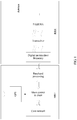
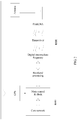
- solution 1 shown in FIG. 1 the BBU and the RRH are separated between a baseband processing part and a radio frequency part, that is, the CPRI in solution 1 is between the baseband processing part and the radio frequency part.
- solution 2 shown in FIG. 2 the BBU and the RRH are separated between a main control & clock part and a baseband processing part, that is, the CPRI in solution 2 is between the main control & clock part and the baseband processing part.
- solution 1 and solution 2 there are two C-RAN aggregation architectures. All digital signal processing units of a base station, including physical layer baseband processing, high-layer protocol processing, main control & clock, and the like, are centralized in the first C-RAN aggregation architecture, and connected to a distributed remote radio unit by using a CPRI high-speed fiber interface.
- the RRH is responsible for only a radio frequency transmitting and receiving function after digital-analog conversion.
- This architecture features a technical characteristic of centralized processing, can implement resource sharing to the greatest extent, and can more conveniently support collaborative signal processing between multiple base stations.
- a main disadvantage of this architecture is that a high requirement is imposed on a CPRI transmission bandwidth, for example, in TD-LTE, an 8-antenna 20 MHz single-carrier requires a bandwidth of 10 gigabits/second (Gbps).
- Gbps gigabits/second
- baseband signal processing parts such as physical layer demodulation and decoding of the base station are separated from the centralized BBU and placed in the RRH.
- a transmission bandwidth can be reduced to 1/20 to 1/50 of an original transmission bandwidth.
- a disadvantage of the second C-RAN architecture is as follows: Baseband processing is integrated into the RRH, and this is not convenient for multiple base stations to share processing resources or collaborative processing for a radio signal. It may be learned that it is difficult to perform flexible deployment according to an existing service by using two division manners for the cloud radio access network in the prior art. For example, a division manner for the cloud radio access network in solution 1 cannot be reconfigured as a division manner for the cloud radio access network in solution 2.
- the present invention provides a data transmission method that can effectively reduce a performance requirement and costs for an interface between a first radio access network node and a second radio access network node.
- a first aspect of embodiments of the present invention provides a data transmission method, including:
- the method further includes:
- the instructing, by the first radio access network node, the second radio access network node to determine second allocation information includes:
- the determining, by the first radio access network node, third allocation information and fourth allocation information includes:
- the method further includes:
- the method before the determining, by the first radio access network node, third allocation information and fourth allocation information, the method further includes:
- the method further includes:
- the method further includes:
- the method further includes:
- the method further includes:
- the method further includes:
- the method further includes:
- the method further includes:
- the method further includes:
- the method further includes:
- the method further includes:
- a second aspect of embodiments of the present invention provides a data transmission method, including:
- the method further includes:
- the determining, by the second radio access network node, that the target radio access network node is the second radio access network node includes:
- the determining, by the second radio access network node, that the target radio access network node is the first radio access network node and the second radio access network node includes:
- the method further includes:
- the method further includes:
- the method further includes:
- the method further includes:
- the method further includes:
- the method further includes:
- the method further includes:
- the method further includes:
- the method further includes:
- the method further includes:
- the method further includes:
- the method further includes:
- a third aspect of embodiments of the present invention provides a first radio access network node, including:
- the first radio access network node further includes:
- the first instruction unit includes:
- the third determining unit includes:
- the first radio access network node further includes:
- the first radio access network node further includes:
- the first radio access network node further includes:
- the first radio access network node further includes:
- the first radio access network node further includes:
- the first radio access network node further includes:
- the first radio access network node further includes:
- the first radio access network node further includes:
- the first radio access network node further includes:
- the first radio access network node further includes:
- the first radio access network node further includes:
- the first radio access network node further includes:
- a fourth aspect of embodiments of the present invention provides a second radio access network node, including:
- the second radio access network node further includes:
- the seventh determining unit includes:
- the ninth determining unit includes:
- the second radio access network node further includes:
- the second radio access network node further includes:
- the second radio access network node further includes:
- the second radio access network node further includes:
- the second radio access network node further includes:
- the second radio access network node further includes:
- the second radio access network node further includes:
- the second radio access network node further includes:
- the second radio access network node further includes:
- the second radio access network node further includes:
- the second radio access network node further includes:
- the second radio access network node further includes:
- the embodiments of the present invention provide a data transmission method and a related device.
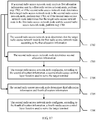
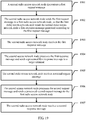
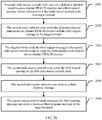
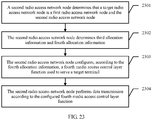
- the data transmission method includes: determining, by a first radio access network node, a target radio access network node to which a media access control layer serving a target terminal belongs; and determining, by the first radio access network node, first allocation information when the target radio access network node is the first radio access network node; or, when the target radio access network node is a second radio access network node, instructing, by the first radio access network node, the second radio access network node to determine second allocation information; or, when the target radio access network node is the first radio access network node and a second radio access network node, determining, by the first radio access network node, third allocation information and fourth allocation information.
- system performance is effectively improved; a performance requirement and costs for an interface between a first radio access network node and a second radio access network node are reduced, for example, bandwidth and delay requirements on the interface are reduced; a quality of service (QoS, quality of service) requirement of a service can be met; and system resource utilization efficiency is improved.
- QoS quality of service
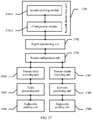
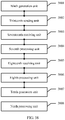
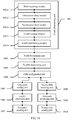
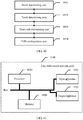
- FIG. 3 For a structure of a system architecture that is shown in embodiments of the present invention and that can implement a data transmission method provided in the embodiments of the present invention, refer to FIG. 3 .
- the system architecture includes a first radio access network node 301 and a second radio access network node 302. There is an interface between the first radio access network node 301 and the second radio access network node 302.
- the interface may be carried by a carrier such as an optical fiber or wireless, and this is not limited.
- Each of the first radio access network node 301 and the second radio access network node 302 may be an independent radio access network node or a distributed radio access network node, and has some or all functions of a wireless protocol stack. Between the first radio access network node 301 and the second radio access network node 302, there is an interface used to transmit information, and the interface may be a wired or wireless interface.
- the first radio access network node 301 may be an LTE eNodeB or a base station of another radio access technology such as a millimeter wave or a Universal Mobile Telecommunications System (UMTS, Universal Mobile Telecommunications System).
- LTE eNodeB or a base station of another radio access technology such as a millimeter wave or a Universal Mobile Telecommunications System (UMTS, Universal Mobile Telecommunications System).
- UMTS Universal Mobile Telecommunications System
- the first radio access network node 301 may be an evolved NodeB combined by a radio network controller (RNC, radio network controller) and a Node B (Node B).
- RNC radio network controller
- Node B Node B
- the second radio access network node 302 may be an LTE eNodeB or a base station or an evolved NodeB of another radio access technology such as a millimeter wave or a UMTS.
- the first radio access network node 301 may be a baseband unit (BBU, base band unit) pool in a cloud radio access network (C-RAN, Cloud radio access network) architecture
- the second radio access network node 302 may be a remote radio head (RRH, remote radio head) in the C-RAN architecture.
- BBU baseband unit
- C-RAN Cloud radio access network
- RRH remote radio head
- the first radio access network node 301 may be a centralized processing network element in a radio access network as a service (RANaaS, radio access network as a service) architecture or the like
- the second radio access network node 302 may be a distributed processing network element in the RANaaS architecture or the like.
- the first radio access network node 301 may provide wireless coverage or may not provide wireless coverage. For example, if the first radio access network node 301 provides wireless coverage, the first radio access network node 301 has a radio frequency (RF, radio frequency) system. If the first radio access network node 301 does not provide wireless coverage, the first radio access network node 301 does not have an RF system.
- RF radio frequency
- the second radio access network node 302 generally provides wireless coverage, that is, the second radio access network node 302 has an RF system.
- a radio spectrum used by the first radio access network node 301 and a radio spectrum used by the second radio access network node 302 may be at a same frequency band (band) or a same frequency (frequency), or may be at different frequency bands or frequencies.
- Second radio access network nodes 302 may use a same frequency band (band) or a same frequency (frequency), or may use different frequency bands or frequencies.
- the system architecture structure shown in FIG. 3 may include multiple first radio access network nodes 301 and multiple second radio access network nodes 302.
- the multiple second radio access network nodes 302 may be connected to a central control network element of the second radio access network node 302, and then connected to the first radio access network node 301.
- the first radio access network node 301 and the second radio access network node 302 are different components of a same distributed base station.
- the first radio access network node 301 includes a radio resource control RRC layer and a packet data convergence protocol PDCP layer of a wireless interface protocol, and optionally, further includes one or more of the following wireless interface protocol layers: a radio link control RLC layer, a media access control MAC layer, or a physical PHY layer.
- the second radio access network node 302 includes a radio frequency unit, and optionally, further includes one or more of the following wireless interface protocol layers: a radio link control RLC layer, a media access control MAC layer, a physical PHY layer, or a baseband processing unit.
- the distributed base station may include one first radio access network node 301 and multiple second radio access network nodes 302.
- each of the first radio access network node 301 and the second radio access network node 302 may be an independent base station and has all protocol layers of the wireless interface protocol layers: a radio resource control RRC layer, a packet data convergence protocol PDCP layer, a radio link control RLC layer, a media access control MAC layer, a physical PHY layer, and a radio frequency unit.
- one first radio access network node 301 and one second radio access network node 302 shown in FIG. 3 are used as an example for description.
- the target radio access network node is the first radio access network node, the second radio access network node, or the first radio access network node and the second radio access network node.
- a specific quantity of the target terminal is not limited in this embodiment, that is, there may be one or more target terminals.
- target radio access network nodes to which media access control layers serving the target terminals belong may be the same or different.
- a same target radio access network node may be used for all terminals within coverage of the second radio access network node.
- the first radio access network node also has wireless coverage, a same target radio access network node is used for all terminals within coverage of the first radio access network node.
- the first radio access network node may determine the target radio access network node when the target terminal initially accesses a network and sets up a service or when the target terminal sets up or modifies a service bearer in a radio resource control (RRC, Radio Resource Control) connected state; or determine the target radio access network node according to a wireless condition or when the target terminal moves.
- RRC Radio Resource Control
- the first radio access network node may indicate the target radio access network node in a system information broadcast, and therefore, all terminals within coverage of the second radio access network node and/or the first radio access network node use a same target radio access network node.
- the first radio access network node determines the target radio access network node determines the target radio access network node. It should be noted that a manner of determining the target radio access network node used to serve the target terminal is only an example in this embodiment and is not limited.
- the first radio access network node may determine that a target radio access network node serving UE1 is the second radio access network node, and that a target radio access network node serving UE2 is the first radio access network node. Therefore, this reduces impact caused by a delay on an interface between the first radio access network node and the second radio access network node to a short-TTI frame structure.
- TTI transmission time interval
- the first radio access network node determines that a target radio access network node serving UE2 is the first radio access network node, and that a target radio access network node serving UE1 is the second radio access network node. Therefore, this reduces impact caused by a delay on an interface between the first radio access network node and the second radio access network node to the low-delay service.
- the first radio access network node may determine that a target radio access network node serving UE2 is the first radio access network node, and that a target radio access network node serving UE1 is the second radio access network node. Therefore, this reduces impact caused by a capacity on an interface between the first radio access network node and the second radio access network node to a large-bandwidth service.
- a millimeter wave millimeter wave
- GHz gigahertz
- MHz megahertz
- the first radio access network node may determine that a target radio access network node serving UE1 is the first radio access network node, and that a target radio access network node serving UE2 is the second radio access network node.
- the first radio access network node can more conveniently obtain wireless condition information of multiple cells, and therefore, the first radio access network node can perform interference control or load balancing among multiple cells.
- the first radio access network node determines that a target radio access network node serving the target terminal is the first radio access network node and the second radio access network node.
- the first radio access network node and the second radio access network node collaboratively serve the target terminal, and therefore, the target radio access network node can meet both delay and wireless condition requirements.
- a specific collaborative service manner is not limited in this embodiment.
- the first radio access network node and the second radio access network node may determine, based on a round trip time (RTT, round trip time) of a hybrid automatic repeat request (HARQ, hybrid automatic retransmission request), whether a delay on an interface between the first radio access network node and the second radio access network node meets a service delay requirement, so as to determine whether to use the first radio access network node to serve the target terminal, or use the second radio access network node to serve the target terminal, or use the first radio access network node and the second radio access network node to collaboratively serve the target terminal.
- the interface between the first radio access network node and the second radio access network node may be referred to as a backhaul (backhaul or fronthaul).
- how the first radio access network node specifically determines the target radio access network node is not limited, provided that the first radio access network node can determine the target radio access network node serving the target terminal.
- how the target radio access network node specifically serves the target terminal is not limited, provided that the target radio access network node serves the target terminal to effectively ensure data transmission between both of the first radio access network node and the second radio access network node and the target terminal.
- the first allocation information is used to instruct the first radio access network node to configure a first media access control layer function used to serve the target terminal.
- the first radio access network node can configure, according to the first allocation information, the first media access control layer function serving the target terminal, so that the first radio access network node can serve the target terminal according to the configured first media access control layer function.
- the second allocation information is used to instruct the second radio access network node to configure a second media access control layer function used to serve the target terminal, so that the second radio access network node can serve the target terminal according to the configured second media access control layer function.
- the third allocation information is used to instruct the first radio access network node to configure a third media access control layer function used to serve the target terminal
- the fourth allocation information is used to instruct the second radio access network node to configure a fourth media access control layer function used to serve the target terminal.
- the first radio access network node can configure the third media access control layer function according to the determined third allocation information
- the second radio access network node can configure the fourth media access control layer function according to the determined fourth allocation information
- the first media access control layer function, the second media access control layer function, the third media access control layer function, and the fourth media access control layer function include at least one or more of the following:
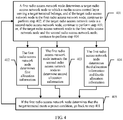
- Step 405 continues to be performed after step 402, step 403, or step 404 is performed.
- the preset condition is as follows: Service data of the target terminal is reconfigured, added, or deleted, or a quality of service (QoS, quality of service) parameter of a service borne by a control plane signaling radio bearer SRB or a user plane data radio bearer DRB is changed, or a wireless condition of the target terminal changes, for example, a wireless environment of the target terminal changes when the target terminal moves.
- QoS quality of service
- the first radio access network node determines that the target terminal meets the preset condition, the first radio access network node is triggered to perform again the step of determining the target radio access network node, that is, go back to step 401.
- the first radio access network node may determine, according to the service data and/or the wireless condition of the target terminal, whether the target terminal meets the preset condition.
- the second radio access network node may determine, according to the service data and/or the wireless condition of the target terminal, whether the target terminal meets the preset condition, and notify the first radio access network node of a result of the determining.
- the first radio access network node and the second radio access network node negotiate to determine whether the target terminal meets the preset condition, for example, the first radio access network node determines whether the service data of the target terminal changes, and the second radio access network node determines whether the wireless condition of the target terminal changes. Once one of the cases occurs, go back to step 401.
- a media access control MAC layer of the first radio access network node or the second radio access network node in this embodiment is mainly to perform MAC control for a corresponding target terminal, for example, a HARQ entity and a target-terminal-specific resource part.
- the first radio access network node and the second radio access network node further need to manage another terminal. Therefore, from a perspective of a cell, both of the first radio access network node and the second radio access network node include the MAC layer, at least a common part of the MAC layer, such as a common part of random access process control or a common part of scheduling/priority processing because these functions relate to control for multiple terminals.
- system performance is effectively improved; a performance requirement and costs for an interface between a first radio access network node and a second radio access network node are reduced, for example, bandwidth and delay requirements on the interface are reduced; a quality of service (QoS, quality of service) requirement of a service can be met; and system resource utilization efficiency is improved.
- QoS quality of service
- this embodiment uses an example that the target terminal uses a cell of a low frequency such as 2.6 GHz and a small bandwidth such as a bandwidth of 20 MHz.
- both the first radio access network node and the second radio access network node are wirelessly connected to the target terminal.
- the first radio access network node may determine that the target radio access network node serving the target terminal is the first radio access network node, thereby reducing impact caused by a capacity on an interface between the first radio access network node and the second radio access network node to a large-bandwidth service.
- the first radio access network node specifically determines that the target radio access network node is the first radio access network node is not limited in this embodiment.
- the first radio access network node may determine the target radio access network node according to service data and a wireless condition of the target terminal; or the second radio access network node may determine the target radio access network node according to service data and a wireless condition of the target terminal, and the second radio access network node notifies the first radio access network node of the determined target radio access network node; or, the first radio access network node and the second radio access network node may negotiate to determine the target radio access network node according to service data and a wireless condition of the target terminal.
- a specific manner in which the first radio access network node and the second radio access network node provide wireless coverage for the target terminal is not limited in this embodiment.
- both the first radio access network node and the second radio access network node provide wireless coverage, or the first radio access network node does not provide wireless coverage, but the second radio access network node provides wireless coverage.
- That the first radio access network node does not provide wireless coverage, but the second radio access network node provides wireless coverage is used as an example for description in this embodiment.
- the media access control layer serving the target terminal belongs to the first radio access network node. That is, a case in which a wireless connection of the first radio access network node provides an RRC control plane function, and the target terminal uses a user plane function provided by a wireless connection of the second radio access network node is used as an example for description.
- Control plane protocol stack configuration configured by the first radio access network node is shown in FIG. 6
- user plane protocol stack configuration configured by the first radio access network node is shown in FIG. 7 .
- MAC layers of the first radio access network node and the second radio access network node are denoted by dashed lines, indicating that the MAC layer of the first radio access network node or the MAC layer of the second radio access network node can be flexibly configured and used according to the service data and the wireless condition of the target terminal, or the MAC layer of the first radio access network node and the MAC layer of the second radio access network node can be flexibly configured and collaboratively used according to the service data and the wireless condition of the target terminal. Configuring and using the MAC layer of the first radio access network node is used as an example in this embodiment.
- the first radio access network node can generate the first allocation information.
- the first allocation information refers to function division of the MAC layer of the first radio access network node, and the first allocation information may be sent to the second radio access network node by using the interface between the first radio access network node and the second radio access network node.
- the first radio access network node can configure the first media access control layer function according to the first allocation information, where the first media access control layer function is all functions that are of the media access control layer of the first radio access network node and are used to serve the target terminal.
- the first media access control layer function includes at least one or more of the following:
- the second radio access network node receives the first allocation information generated by the first radio access network node, where the first allocation information is used to enable the second radio access network node to determine that the first radio access network node is the target radio access network node.
- the second radio access network node sends the first allocation information to the target terminal by using a radio interface between the second radio access network node and the target terminal, so that the target terminal determines, according to the first allocation information, that the target radio access network node serving the target terminal is the first radio access network node.
- the second radio access network node may send a radio resource control connection reconfiguration (RRC Connection Reconfiguration) message to the target terminal.
- RRC Connection Reconfiguration radio resource control connection reconfiguration
- the radio resource control connection reconfiguration message is used to enable the target terminal to determine that a media access control layer of the target terminal is corresponding to the media access control layer of the first radio access network node, so that the target terminal determines that the first radio access network node is the target radio access network node.
- the second radio access network node uses a control plane signaling radio bearer SRB to bear RRC signaling between the second radio access network node and the target terminal.
- the MAC layer of the first radio access network node packetizes a MAC PDU including RRC downlink signaling by using an interface message between the first radio access network node and the second radio access network node, and sends the interface message to the second radio access network node.
- the second radio access network node extracts the MAC PDU in the interface message and directly transfers the MAC PDU to a PHY layer or the MAC layer of the second radio access network node.
- the MAC layer of the second radio access network node does not further process the MAC PDU, and the physical layer of the second radio access network node further processes the MAC PDU, and then sends the MAC PDU to the target terminal by using the radio interface between the second radio access network node and the target terminal.
- control plane SRB uplink data from a perspective of an RRC layer of the target terminal, an equivalent RRC protocol layer is still on the first radio access network node.
- An uplink RRC message that the target terminal needs to send is first sent to the second radio access network node.
- the second radio access network node packetizes a MAC SDU including the uplink RRC message by using an interface message between the first radio access network node and the second radio access network node, and sends the interface message to the first radio access network node.
- the first radio access network node extracts the MAC SDU in the interface message and transfers the MAC SDU to an RLC layer of the first radio access network node, and after being processed by using each layer of protocol, the MAC SDU is further transferred to an RRC layer of the first radio access network node.
- the MAC layer of the first radio access network node allocates a radio resource for downlink data transmission for the target terminal.
- the media access control MAC layer of the first radio access network node generates a media access control protocol data unit MAC PDU according to the service data of the target terminal.
- a hybrid automatic repeat request HARQ entity of the first radio access network node controls HARQ transmission for the MAC PDU of the target terminal.
- the second radio access network node performs the HARQ process and physical layer processing, and the MAC layer function of the second radio access network node is disabled and is transparent to the target terminal.
- the first radio access network node sends the MAC PDU to the second radio access network node, so that the second radio access network node processes the MAC PDU at the physical layer and sends the MAC PDU to the target terminal by using the radio interface between the second radio access network node and the target terminal.
- the MAC layer of the first radio access network node allocates a radio resource for uplink data transmission of the target terminal.
- the target terminal sends all or some uplink data of the target terminal from the target terminal to the second radio access network node according to the first allocation information, that is, the user plane protocol stack configuration shown in FIG. 7 .
- the second radio access network node receives the uplink data from the target terminal, and after successfully decoding the uplink data at the physical layer, sends the uplink data to the MAC layer of the first radio access network node.
- the MAC layer of the second radio access network node is transparent to the target terminal, and the MAC layer of the second radio access network node further transfers the uplink data to an upper-layer protocol layer for processing.
- the MAC PDU may be encapsulated in a data format specified in an interface protocol.
- the MAC PDU is transmitted by using the GTP-U protocol, the IP protocol, or the CPRI protocol, and this is not limited herein.
- all or some downlink data of a user plane data radio bearer DRB is first sent from the first radio access network node to the second radio access network node, and data offloading may start from a PDCP layer or an RLC layer, and therefore, the downlink data sent from the first radio access network node to the second radio access network node may be a PDCP protocol data unit (PDU, packet data unit) or an RLC PDU.
- PDU PDCP protocol data unit
- RLC PDU RLC protocol data unit
- the second radio access network node sends received all or some uplink data of a user plane data radio bearer DRB to the first radio access network node, and data offloading may start from a PDCP layer or an RLC layer, and therefore, the uplink data sent from the second radio access network node to the first radio access network node may be a PDCP protocol data unit (PDU, packet data unit) or an RLC PDU.
- PDU PDCP protocol data unit
- RLC PDU Radio Link Control
- this embodiment uses an example that both the first radio access network node and the second radio access network node provide wireless coverage. Therefore, the first radio access network node and the second radio access network node may perform wireless communication with the target terminal simultaneously or in a time-division manner.
- the first radio access network node generates downlink data according to the configured first media access control layer function, and the downlink data may be further processed by the second radio access network node and then sent to the target terminal, or the first radio access network node directly sends the downlink data to the target terminal.
- Uplink data of the target terminal may be processed by the second radio access network node and then sent to the first radio access network node, or the target terminal may directly send uplink data to the first radio access network node, and the first radio access network node processes the uplink data according to the first media access control layer function.
- One manner is that the first radio access network node performs data transmission with the target terminal by using the second radio access network node, and the other manner is that the first radio access network node directly performs data transmission with the target terminal.
- the first radio access network node In the first data transmission process, if the first radio access network node performs data transmission with the target terminal by using the second radio access network node, before data transmission is performed, the first radio access network node needs to enable the target terminal to access the second radio access network node.
- step 405 shown in FIG. 4 For details, refer to step 405 shown in FIG. 4 . The details are not described in this embodiment.
- the following describes in detail how the first radio access network node enables the target terminal to access the second radio access network node.
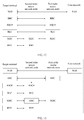
- the target terminal accesses the second radio access network node based on a contention-based random access process
- the other manner is that the target terminal accesses the second radio access network node based on a non-contention-based random access process.
- the target terminal accesses the second radio access network node based on the contention-based random access process.
- the first request message is used to request to enable the target terminal to access the second radio access network node.
- the first request message is a random access preamble (preamble) selected by the target terminal, and the target terminal sends the first request message to the second radio access network node according to a selected random access time-frequency resource.
- the first radio access network node and the second radio access network node perform information transmission through an interface.
- the interface may be an X2 interface, a CPRI interface, a radio interface, or an interface in another form.
- a specific form of the interface is not limited in this embodiment of the present invention.
- the first request message is further used to request the first radio access network node to generate a random access response (RAR, random access response) message at a MAC layer.
- RAR random access response
- the second radio access network node further adds random access preamble index (RAPID, random access preamble index) information to the first request message.
- RAPID random access preamble index
- the first request message further includes physical random access channel (PRACH, physical random access channel) time-frequency resource information.
- PRACH physical random access channel
- a function of the first request message is as follows:
- the first radio access network node calculates uplink TA, where the uplink TA is uplink TA from the target terminal to the second radio access network node, and TA indicates a distance between the target terminal and an antenna port.
- Timing Advance that is, timing advance.
- a function of timing advance is to compensate for a wave transmission delay, and timing advance is essentially intended to improve channel encoding/decoding efficiency.
- the first radio access network node allocates an uplink grant (UL grant).
- An RRC layer of the first radio access network node allocates a temporary cell radio network temporary identifier (TC-RNTI, temporary cell radio network temporary identifier).
- TC-RNTI temporary cell radio network temporary identifier
- the first request message does not include a physical random access channel, it indicates that the second radio access network node calculates an RA-RNTI and uplink TA, and the second radio access network node sends a calculation result of the RA-RNTI and the uplink TA to the first radio access network node.
- the first response message includes the random access response (RAR, random access response) message and the RA-RNTI.
- RAR random access response
- the second radio access network node After receiving the first response message, the second radio access network node processes the first response message and generates a processed first response message.
- the second radio access network node sends the processed first response message to the target terminal.
- RA-RNTI information is indicated by using a physical downlink control channel PDCCH
- RAR message is indicated by using a physical downlink shared channel PDSCH.
- a format of the first response message sent by the first radio access network node to the second radio access network node may be different from a format of the processed first response message sent by the second radio access network node to the target terminal.
- the first radio access network node may send a UL grant and a TC-RNTI to the second radio access network node, and the second radio access network node generates and sends a first response message to the target terminal.
- the processed first response message is used to enable the target terminal to generate a second request message used to trigger the first radio access network node to perform contention resolution, and the target terminal sends the second request message to the second radio access network node.
- the second radio access network node After receiving the second request message, the second radio access network node processes the second request message and generates a processed second request message.
- the second radio access network node sends the processed second request message to the first radio access network node.
- the second request message includes an identifier S-TMSI of the target terminal or a random number, or a cell radio network temporary identifier (C-RNTI).
- the second request message further includes a radio resource control connection request (RRC Connection Request) message or a radio resource control connection reestablishment request (RRC Connection Reestablishment Request) message.
- the second radio access network node processes the second request message, so that the processed second request message includes the identifier S-TMSI of the target terminal, the random number, or the C-RNTI.
- the processed second request message may further include an RRC connection request or RRC connection reestablishment request message.
- the second radio access network node sends the foregoing message to the first radio access network node by using an interface message between the second radio access network node and the first radio access network node.
- the second response message is used to indicate the contention resolution message.
- the first radio access network node uses the C-RNTI as a contention resolution identifier.
- the second response message may further include a radio resource control connection setup (RRC Connection Setup) message, a radio resource control connection reestablishment (RRC Connection Reestablishment) message, or the like.
- the second radio access network node After receiving the second response message, the second radio access network node processes the second response message and generates a processed second response message.
- the second radio access network node sends the processed second response message to the target terminal.
- the second radio access network node After processing, at a physical layer, the second response message received from the first radio access network node, the second radio access network node sends the processed second response message to the target terminal.
- the second radio access network node indicates the message to the target terminal by using a downlink assignment (DL assignment) or an uplink grant (UL grant) on a physical downlink control channel (PDCCH, physical downlink control channel) scrambled by using the C-RNTI or the TC-RNTI.
- DL assignment downlink assignment
- UL grant uplink grant
- PDCCH physical downlink control channel
- the first radio access network node sends the second response message to the second radio access network node by using an interface message between the second radio access network node and the first radio access network node.
- a format of the second response message may be different from a format of the processed second response message sent by the second radio access network node to the target terminal.
- the second response message sent by the first radio access network node to the second radio access network node is a MAC PDU that is packetized by using an interface message and that includes the second response message.
- the target terminal accesses the second radio access network node or obtains uplink synchronization with the second radio access network node according to the processed second response message.
- the first radio access network node directly performs data transmission with the target terminal, the first radio access network node needs to enable the target terminal to directly access the first radio access network node, and enable the target terminal to obtain uplink synchronization with the first radio access network node.
- the uplink timing advance TA in step 802 is TA between the target terminal and the first radio access network node.
- the target terminal accesses the second radio access network node based on the non-contention-based random access process.
- the third request message is a random access preamble (preamble) selected by the target terminal, so that the target terminal can send the third request message according to the dedicated physical random access channel PRACH resource allocated by the first radio access network node.
- the second radio access network node sends the dedicated physical random access channel PRACH resource and the third request message (that is, information about the random access preamble) to the target terminal, for example, indicates the dedicated physical random access channel PRACH resource and the third request message to the target terminal by using a PDCCH.
- the target terminal sends the third request message, that is, the random access preamble, by using the dedicated physical random access channel PRACH resource.
- the target terminal sends the third request message to the second radio access network node by using the dedicated physical random access channel PRACH resource, so that the second radio access network node sends the third request message to the first radio access network node.
- the second radio access network node may allocate the dedicated physical random access channel PRACH resource and the third request message to the target terminal.
- the random access preamble shown in FIG. 9 is allocated by the first radio access network node or the second radio access network node to the target terminal.
- the second radio access network node After receiving the third response message, the second radio access network node processes the third response message to generate a processed third response message, and the second radio access network node sends the processed third response message to the target terminal, so that the target terminal accesses the second radio access network node or obtains uplink synchronization with the second radio access network node according to the processed third response message, so as to complete a non-contention-based random access process.
- the first radio access network node directly performs data transmission with the target terminal, the first radio access network node needs to enable the target terminal to directly access the first radio access network node, and enable the target terminal to obtain uplink synchronization with the first radio access network node.
- the uplink timing advance TA in the third request message is TA between the target terminal and the first radio access network node.
- the following describes a specific transmission scenario of data transmission by using an example.
- a MAC layer and a PHY layer of the first radio access network node cooperate to generate the downlink data and the downlink control information.
- the downlink data includes a downlink media access control service data unit MAC SDU and/or a downlink media access control control element MAC CE.
- the downlink control information includes downlink hybrid automatic repeat request HARQ information and downlink assignment information.
- the first radio access network node sends the downlink data and the downlink control information to the second radio access network node.
- the second radio access network node sends the downlink data and the downlink control information to the target terminal.
- the second radio access network node sends the downlink data and the downlink control information over different physical channels.
- the second radio access network node sends the downlink control information to the target terminal over a PDCCH.
- the second radio access network node sends the downlink data to the target terminal over a PDSCH.
- the target terminal After receiving the downlink control information, the target terminal receives the downlink data according to an indication of the downlink control information.
- the downlink control information generated by the first radio access network node according to the configured first media access control layer function may be downlink assignment (DL assignment) information.
- the downlink assignment information includes information such as a group of an NDI, a TB size, and a HARQ process identifier that are generated for each transport block.
- the downlink assignment information may be hybrid automatic repeat request HARQ information, and the HARQ information includes a new data indicator (NDI, New Data Indicator), a transport block (TB, Transport block) size, a HARQ process identifier (HARQ process Id), and other information.
- NDI New Data Indicator
- TB transport block
- HARQ process Id HARQ process identifier
- the first radio access network node sends the HARQ information to the second radio access network node, and the second radio access network node indicates, over a PDCCH, the HARQ information to the target terminal that has accessed the second radio access network node.
- the target terminal sends a HARQ ACK/NACK to PHY of the second radio access network node, and the second radio access network node indicates the HARQ ACK/NACK to the MAC layer of the first radio access network node by using the interface between the second radio access network node and the first radio access network node.
- the MAC layer of the first radio access network node determines to schedule new transmission or retransmit a HARQ redundancy version (RV, redundancy version).
- the first radio access network node sends new downlink assignment information to the second radio access network node, so that the second radio access network node resends the new downlink assignment information to the target terminal.
- RV redundancy version
- the first radio access network node generates a downlink MAC CE according to the configured first media access control layer function.
- the first radio access network node sends the downlink MAC CE to the second radio access network node by using the interface between the first radio access network node and the second radio access network node.
- the second radio access network node sends the downlink MAC CE to the target terminal.
- the MAC CE includes at least one or more of the following: a TA command, secondary carrier (SCell) activation (activation)/deactivation (deactivation), or a discontinuous reception command (DRX cmd).
- SCell secondary carrier
- activation activation
- deactivation deactivation
- DRX cmd discontinuous reception command
- the first radio access network node sends the uplink control information to the second radio access network node.
- the second radio access network node sends the uplink control information to the target terminal.
- the second radio access network node sends the uplink control information to the target terminal over a PDCCH.
- the uplink control information includes uplink hybrid automatic repeat request HARQ information and uplink grant information.
- the media access control layer of the first radio access network node receives uplink data.
- the uplink data is sent by the target terminal to the second radio access network node.
- the second radio access network node sends the uplink data to the first radio access network node.
- the uplink data is generated by the target terminal according to the uplink control information, and the uplink data includes a MAC SDU and/or an uplink media access control control element MAC CE.
- the media access control layer of the first radio access network node processes the uplink data according to the first media access control layer function.
- the uplink control information generated by the first radio access network node according to the configured first media access control layer function may be uplink grant (UL grant) information.
- the uplink grant information may be hybrid automatic repeat request HARQ information, and the HARQ information includes a new data indicator (NDI, New Data Indicator), a transport block (TB, Transport block) size, a redundancy version, and other information.
- NDI New Data indicator
- TB transport block
- redundancy version a redundancy version
- the first radio access network node sends the HARQ information to the second radio access network node, and a PDCCH of the second radio access network node indicates the HARQ information to the target terminal.
- the target terminal sends a data packet to the second radio access network node over a physical uplink shared channel (PUSCH, physical uplink shared channel).
- PUSCH physical uplink shared channel
- the second radio access network node After successfully decoding the data packet at a physical layer, the second radio access network node sends a MAC PDU to the first radio access network node by using the interface between the second radio access network node and the first radio access network node.
- the second radio access network node generates and sends a HARQ ACK/NACK to the target terminal, and indicates the HARQ ACK/NACK message to the first radio access network node by using the interface between the second radio access network node and the first radio access network node.
- the MAC layer of the first radio access network node determines to schedule new transmission or retransmit a HARQ redundancy version (RV, redundancy version).
- the first radio access network node sends new uplink grant information to the second radio access network node, so that the second radio access network node can send the new uplink grant information to the target terminal.
- RV redundancy version
- the target terminal generates an uplink MAC CE.
- the target terminal sends the uplink MAC CE to the second radio access network node.
- the second radio access network node sends the uplink MAC CE to the first radio access network node by using the interface between the first radio access network node and the second radio access network node.
- the uplink MAC CE includes at least one or more of the following: a buffer status report (BSR, buffer status report), a power headroom report (PHR, power headroom report), or the like.
- BSR buffer status report
- PHR power headroom report
- the target terminal sends uplink channel state information (CSI, channel status information) to the second radio access network node.
- CSI uplink channel state information
- the second radio access network node sends the uplink CSI to the first radio access network node by using the interface between the first radio access network node and the second radio access network node.
- the first radio access network node makes a scheduling decision according to the uplink CSI, for example, determines to schedule a used modulation and coding scheme (MCS, modulation coding scheme).
- MCS modulation and coding scheme
- the uplink CSI includes at least one or more of the following information:
- the target terminal sends uplink SR information to the second radio access network node.
- the second radio access network node sends the uplink SR information to the first radio access network node by using the interface between the first radio access network node and the second radio access network node.
- the first radio access network node allocates an uplink grant to the target terminal according to the uplink SR information.
- the uplink data and the downlink data between the first radio access network node and the target terminal are sent by using the second radio access network node.
- the first radio access network node directly implements uplink data and downlink data transmission with the target terminal. Details are not described.
- the first radio access network node may determine that a target radio access network node to which a media access control layer serving the target terminal belongs is the first radio access network node, so that a MAC layer of the first radio access network node serves the target terminal. That is, the first radio access network node generates first allocation information, and configures a first media access control layer function according to the first allocation information.
- the first media access control layer function is all functions that are of the media access control layer of the first radio access network node and are used to serve the target terminal.
- a target radio access network terminal can be flexibly determined according to the service data and the wireless condition of the target terminal, so that flexible deployment can be implemented according to an existing service.
- a performance requirement and costs for an interface between the first radio access network node and the second radio access network node are reduced, for example, bandwidth and delay requirements on the interface are reduced; a quality of service (QoS, quality of service) requirement of the service can be met; and system resource utilization efficiency is improved.
- QoS quality of service
- the first radio access network node specifically determines that the target radio access network node is the second radio access network node is not limited in this embodiment.
- the first radio access network node may determine the target radio access network node according to service data and a wireless condition of the target terminal; or the second radio access network node may determine the target radio access network node according to service data and a wireless condition of the target terminal, and the second radio access network node notifies the first radio access network node of the determined target radio access network node; or, the first radio access network node and the second radio access network node may negotiate to determine the target radio access network node according to service data and a wireless condition of the target terminal.
- the target terminal is located in the center of a cell provided by a second radio access network node. Therefore, the first radio access network node determines that the target radio access network node serving the target terminal is the second radio access network node. Unlike a terminal at a cell edge, such a target terminal is usually not interfered by a wireless condition of another cell.
- This embodiment may be specifically applied to a case in which both the first radio access network node and the second radio access network node provide wireless coverage, or only the second radio access network node provides wireless coverage, and the target terminal is wirelessly connected to only the second radio access network node.
- the second allocation information is used to instruct the second radio access network node to configure a second media access control layer function used to serve the target terminal.
- how the first radio access network node specifically instructs the second radio access network node to determine the second allocation information is not limited, provided that the second radio access network node can determine the second allocation information under control of the first radio access network node.
- the first radio access network node may semi-statically instruct the second radio access network node to determine the second allocation information.
- the first radio access network node generates configuration information; and the first radio access network node sends the configuration information to the second radio access network node, where the configuration information is used to enable the second radio access network node to determine the second allocation information, so that the second radio access network node configures the second media access control layer function for the target terminal according to the second allocation information, and the second media access control layer function is all functions that are of a media access control layer of the second radio access network node and are used to serve the target terminal.
- the second radio access network node each time after receiving the configuration information, the second radio access network node always generates the second allocation information according to the configuration information.
- the first radio access network node may dynamically instruct the second radio access network node to determine the second allocation information.
- the first radio access network node dynamically instructs the second radio access network node to generate the second allocation information according to the service data and the wireless condition of the target terminal.
- a case in which both the first radio access network node and the second radio access network node provide wireless coverage, or only the second radio access network node provides wireless coverage, and the target terminal is wirelessly connected to only the second radio access network node is used as an example for description in this embodiment.
- FIG. 11 User plane protocol stack configuration configured by the second radio access network node according to the second allocation information is shown in FIG. 11
- control plane protocol stack configuration configured by the second radio access network node according to the second allocation information is shown in FIG. 12 .
- the first radio access network node specifically instructs the second radio access network node to determine the second allocation information.
- the first radio access network node sends configuration information, and the configuration information is MAC layer function allocation information determined by the first radio access network node.
- the configuration information is packetized by using an interface message between the first radio access network node and the second radio access network node and then sent to the second radio access network node.
- a specific process in which the second radio access network node determines the second allocation information according to the configuration information is as follows: The second radio access network node determines, according to the configuration information, all functions that are of the media access control layer of the second radio access network node and used to serve the target terminal.
- the second media access control layer function includes at least one or more of the following:
- control plane protocol stack configuration configured by the second radio access network node according to the second allocation information, further refer to FIG. 11 .
- the second radio access network node uses an SRB or a DRB to bear RRC signaling between the second radio access network node and the target terminal.
- the SRB and the DRB particularly refer to radio interface protocol stacks between both of the first radio access network node and the second radio access network node and the target terminal.
- an SRB of the first radio access network node includes a PDCP layer of the first radio access network node.
- a PDCP PDU is packetized by using an interface message between the first radio access network node and the second radio access network node and then sent to the second radio access network node.
- the second radio access network node extracts the PDCP PDU from the interface message and directly transfers the PDCP PDU to an RLC layer, and after being processed at the RLC layer, the PDCP PDU is further transferred to a lower-layer protocol layer. From a perspective of an RRC layer of the target terminal, an equivalent RRC protocol layer is still on the first radio access network node.
- an SRB of the first radio access network node includes an RLC layer of the first radio access network node.
- the first radio access network node sends an RLC PDU including RRC downlink signaling to the second radio access network node by using an interface message between the first radio access network node and the second radio access network node. Subsequent processing is not described.
- All downlink data of a user plane data radio bearer DRB is first sent from the first radio access network node to the second radio access network node, and data offloading may start from a PDCP layer of the first radio access network node or the RLC layer of the first radio access network node.
- the downlink data sent from the first radio access network node to the second radio access network node may be a PDCP protocol data unit (PDU, packet data unit) or an RLC PDU. Then, after being processed by the second radio access network node, the downlink data is sent to the target terminal by using a wireless connection between the second radio access network node and the target terminal.
- PDU packet data unit
- RLC PDU Radio Link Control
- All uplink data of the user plane DRB is sent from the target terminal to the second radio access network node, and then is sent from the second radio access network node to the first radio access network node.
- the uplink data sent from the second radio access network node to the first radio access network node may be a MAC PDU or a TB.
- step 405 shown in FIG. 4 For details, refer to step 405 shown in FIG. 4 . The details are not described in this embodiment.
- step 1003 The following describes step 1003 in detail.
- the first radio access network node sends generated downlink data to the second radio access network node
- the second radio access network node processes the downlink data according to the second media access control layer function and sends processed downlink data to the target terminal.
- the target terminal sends uplink data to the second radio access network node, and the second radio access network node processes the uplink data according to the second media access control layer function and sends processed uplink data to the first radio access network node.
- the target terminal needs to access the second radio access network node, and the target terminal needs to obtain synchronization with the second radio access network node.
- the target terminal accesses the second radio access network node based on a contention-based random access process
- the other manner is that the target terminal accesses the second radio access network node based on a non-contention-based random access process.
- the target terminal accesses the second radio access network node based on the contention-based random access process.
- the fourth request message is used to request to enable the target terminal to access the second radio access network node.
- the fourth request message is a random access preamble (preamble) selected by the target terminal, and the target terminal sends the first request message to the second radio access network node according to a selected random access time-frequency resource.
- the first radio access network node and the second radio access network node perform information transmission through an interface.
- the interface may be an X2 interface, a CPRI interface, a radio interface, or an interface in another form.
- a specific form of the interface is not limited in this embodiment of the present invention.
- the fourth request message is further used to request the first radio access network node to allocate a temporary cell radio network temporary identifier (TC-RNTI, temporary cell radio network temporary identifier).
- TC-RNTI temporary cell radio network temporary identifier
- the fourth response message includes a TC-RNTI allocated by an RRC layer of the first radio access network node.
- a manner of processing the fourth response message by the second radio access network node to generate a processed fourth response message may be as follows:
- the second radio access network node calculates an RA-RNTI to generate an RAR message, and adds information, such as a random access preamble index RAPID, uplink timing advance TA, and an uplink grant (UL grant), to the RAR message.
- RAPID random access preamble index
- TA uplink timing advance
- UL grant uplink grant
- the second radio access network node forwards the target terminal the processed fourth response message including the RAR message, and the processed fourth response message is used to enable the target terminal to generate a fifth request message used to trigger the first radio access network node to perform contention resolution.
- the target terminal sends the fifth request message to the second radio access network node, and the second radio access network node processes the fifth request message and sends a generated processed fifth request message to the first radio access network node.
- the processed fifth request message includes an S-TMSI of the target terminal or a random number, or a cell radio network temporary identifier (C-RNTI).
- the processed fifth request message further includes a radio resource control connection request (RRC Connection Request) message or a radio resource control connection reestablishment request (RRC Connection Reestablishment Request) message.
- RRC Connection Request radio resource control connection request
- RRC Connection Reestablishment Request radio resource control connection reestablishment request
- the second radio access network node sends the processed fifth request message to the first radio access network node.
- the processed fifth request message includes the S-TMSI of the target terminal, the random number, or the C-RNTI.
- the processed fifth request message may further include an RRC connection request or RRC connection reestablishment request message.
- the second radio access network node sends the foregoing message to the first radio access network node by using an interface message between the second radio access network node and the first radio access network node.
- the first radio access network node uses the C-RNTI as a contention resolution identifier.
- the message may further include a radio resource control connection setup (RRC Connection Setup) message, a radio resource control connection reestablishment (RRC Connection Reestablishment) message, or the like.
- the second radio access network node generates a fifth response message according to the contention resolution message; and the second radio access network node processes the fifth response message to generate a processed fifth response message, and sends the processed fifth response message to the target terminal, so that the target terminal determines to access the second radio access network node or obtain uplink synchronization with the second radio access network node according to the processed fifth response message.
- the second radio access network node indicates the processed fifth response message to UE by using a downlink assignment (DL assignment) or an uplink grant (UL grant) on a physical downlink control channel (PDCCH, physical downlink control channel) scrambled by using the C-RNTI.
- DL assignment downlink assignment
- UL grant uplink grant
- PDCCH physical downlink control channel
- the target terminal may access the second radio access network node in a non-contention-based random access manner.
- a specific implementation process refer to a non-contention-based random access process in a conventional LTE technology. Details are not described herein.
- the following describes a specific transmission scenario of data transmission by using an example.
- the downlink data may be an RLC PDU or a MAC SDU, or may be a PDCP PDU.
- a media access control layer of the second radio access network node processes the downlink data according to a second media access control layer function so as to generate processed downlink data.
- the processed downlink data may be a MAC PDU.
- the second radio access network node sends the processed downlink data to the target terminal, where the processed downlink data includes a MAC SDU and/or a downlink media access control control element MAC CE.
- downlink control information is directly generated by the second radio access network node according to the second media access control layer function and sent to the target terminal.
- the second radio access network node generates a downlink MAC PDU according to the configured second media access control layer function.
- the MAC layer of the second radio access network node determines the target terminal that needs to be scheduled and a logical channel of the target terminal.
- the second radio access network node By using an interface between the first radio access network node and the second radio access network node, the second radio access network node indicates a size of an RLC PDU that can be generated at an RLC layer of the first radio access network node.
- the second radio access network node may indicate information about a total size of multiple RLC PDUs that can be scheduled by all logical channels or separately indicate information about a size of one or more RLC PDUs that can be scheduled by each logical channel.
- the second radio access network node sends downlink assignment information including HARQ information to the target terminal, and the target terminal sends a HARQ ACK/NACK feedback to the second radio access network node.
- the target terminal sends a HARQ ACK/NACK feedback to the second radio access network node.
- the second radio access network node generates and sends a downlink MAC CE to UE.
- the manner is the same as a sending manner of a downlink MAC CE in the conventional LTE technology.
- the processed uplink data is data generated after the media access control layer of the second radio access network node processes uplink data according to the second media access control layer function.
- the uplink data is sent by the target terminal to the second radio access network node, and the uplink data includes a MAC SDU and/or an uplink media access control control element MAC CE.
- the second radio access network node For uplink HARQ processing, the second radio access network node sends uplink grant information including HARQ information to the target terminal according to the second media access control layer function.
- the target terminal sends data to the second radio access network node over a PUSCH.
- the second radio access network node generates and sends a HARQ ACK/NACK to the target terminal. For details, refer to a prior-art HARQ processing process.
- the first radio access network node sends logical channel configuration information in RRC configuration information to the second radio access network node.
- the second radio access network node obtains logical channel information according to the second media access control layer function, and schedules user data according to a logical channel priority.
- the second radio access network node may further send the BSR and the PHR to the first radio access network node, so that the first radio access network node can allocate a size of an initial PRB resource pool to the UE according to BSR information, and can negotiate a power control policy of the UE with the second radio access network node according to PHR information. For example, power allocation is performed when the UE sends uplink information to the first radio access network node and the second radio access network node simultaneously.
- the target terminal sends uplink CSI information to the second radio access network node.
- the second radio access network node sends the CSI information to the first radio access network node by using the interface between the first radio access network node and the second radio access network node.
- the first radio access network node allocates an initial PRB resource pool to the target terminal according to the CSI information, and/or determines to use the MAC layer of the second radio access network node to serve the target terminal.
- the target terminal sends uplink SR information to the second radio access network node.
- the second radio access network node allocates an uplink grant to the target terminal according to an SR.
- the first radio access network node may determine that the target radio access network node is the second radio access network node according to service data and a wireless condition of the target terminal, so that a MAC layer of the second radio access network node serves the target terminal. It may be learned that in this embodiment, a target radio access network terminal can be flexibly determined according to the service data and the wireless condition of the target terminal, so that flexible deployment can be implemented according to an existing service. In addition, a performance requirement and costs for an interface between the first radio access network node and the second radio access network node are reduced, for example, bandwidth and delay requirements on the interface are reduced; a quality of service (QoS, quality of service) requirement of the service can be met; and system resource utilization efficiency is improved.
- QoS quality of service
- the target radio access network node is the first radio access network node and the second radio access network node.
- the target radio access network node is the first radio access network node and the second radio access network node.
- One case is that the first radio access network node and the second radio access network node serve the target terminal together, and the other case is that the first radio access network node and the second radio access network node separately serve different services of the target terminal.
- first radio access network node and the second radio access network node serve the target terminal together and implement data transmission is described in detail with reference to an embodiment shown in FIG. 15 in the following.
- the first radio access network node may determine that the first radio access network node and the second radio access network node collaboratively serve the target terminal.
- the first radio access network node specifically determines that the target radio access network node is the first radio access network node and the second radio access network node is not limited in this embodiment.
- the first radio access network node may determine the target radio access network node according to service data and a wireless condition of the target terminal; or the second radio access network node may determine the target radio access network node according to service data and a wireless condition of the target terminal, and the second radio access network node notifies the first radio access network node of the determined target radio access network node; or, the first radio access network node and the second radio access network node may negotiate to determine the target radio access network node according to service data and a wireless condition of the target terminal.
- the first radio access network node specifically determines the third allocation information and the fourth allocation information is not limited in this embodiment, provided that the determined third allocation information is used to instruct the first radio access network node to configure a third media access control layer function used to serve the target terminal, and the determined fourth allocation information is used to instruct the second radio access network node to configure a fourth media access control layer function used to serve the target terminal.
- the first radio access network node determines the third allocation information and the fourth allocation information according to the service data and the wireless condition of the target terminal; and the first radio access network node sends the third allocation information and the fourth allocation information to the second radio access network node, so that the second radio access network node can determine a configuration condition of the third media access control layer function of the first radio access network node according to the third allocation information, and the second radio access network node can configure the fourth media access control layer function according to the fourth allocation information.
- the first radio access network node receives the fourth allocation information sent by the second radio access network node, where the fourth allocation information is generated by the second radio access network node, that is, the second radio access network node determines the fourth allocation information according to the service data and the wireless condition of the target terminal; the first radio access network node determines the third allocation information according to the fourth allocation information; and the first radio access network node sends the third allocation information to the second radio access network node, so that the second radio access network node can determine the configuration condition of the third media access control layer function of the first radio access network node according to the third allocation information.
- the third allocation information and the fourth allocation information are not limited in this embodiment.
- the third allocation information is a MAC PDU of a MAC layer of the first radio access network node is used as an example
- the fourth allocation information is a MAC PDU of a MAC layer and the like of the second radio access network node is used as an example for description.
- the third allocation information is used to enable the first radio access network node to configure the third media access control layer function for the target terminal
- the fourth allocation information is used to enable the second radio access network node to configure the fourth media access control layer function for the target terminal.
- the third media access control layer function and the fourth media access control layer function are all functions that can serve the target terminal.
- the third media access control layer function that is configured by the first radio access network node according to the third allocation information is a part of all the functions used to serve the target terminal, for example, scheduling, a priority, logical channel multiplexing/demultiplexing, and radio resource allocation; and the second radio access network node configures, according to the fourth allocation information, the other part of all the functions used to serve the target terminal. That is, the fourth media access control layer function that is configured by the second radio access network node according to the fourth allocation information is HARQ control, random access, and power control. Therefore, the first radio access network node and the second radio access network node collaboratively serve the target terminal.
- a case in which both the first radio access network node and the second radio access network node provide wireless coverage, or only the second radio access network node provides wireless coverage, and the target terminal is wirelessly connected to only the second radio access network node is used as an example for description in this embodiment.
- the downlink control information includes downlink hybrid automatic repeat request HARQ information and/or downlink assignment information.
- the media access control layer of the first radio access network node generates downlink data according to the third media access control layer function and the downlink control information.
- the first radio access network node needs to first receive the downlink control information from the second radio access network node, and the first radio access network node generates the MAC PDU according to the downlink control information.
- the media access control layer of the first radio access network node sends the downlink data to the second radio access network node.
- the media access control layer of the second radio access network node processes the downlink data according to the fourth media access control layer function so as to generate processed downlink data.
- the second radio access network node sends the processed downlink data to the target terminal.
- the processed downlink data includes a MAC SDU and/or a downlink media access control control element MAC CE.
- the second radio access network node sends the downlink control information to the target terminal, so that the target terminal can receive the downlink data according to the downlink control information.
- the processed uplink data is data generated after the media access control layer of the second radio access network node processes uplink data according to the fourth media access control layer function.
- the uplink data includes a MAC SDU and/or an uplink media access control control element MAC CE.
- the media access control layer of the first radio access network node processes the processed uplink data according to the third media access control layer function.
- the first radio access network node and the second radio access network node implement collaborative data processing in this step.
- step 405 shown in FIG. 4 For details of this step, refer to step 405 shown in FIG. 4 . The details are not described herein.
- the first radio access network node may determine that the target radio access network node is the first radio access network node and the second radio access network node according to service data and a wireless condition of the target terminal, so that MAC layers of the first radio access network node and the second radio access network node separately serve the target terminal. It may be learned that in this embodiment, a target radio access network terminal can be flexibly determined according to the service data and the wireless condition of the target terminal, so that flexible deployment can be implemented according to an existing service.
- a performance requirement and costs for an interface between the first radio access network node and the second radio access network node are reduced, for example, bandwidth and delay requirements on the interface are reduced; a quality of service (QoS, quality of service) requirement of the service can be met; and system resource utilization efficiency is improved.
- QoS quality of service
- first radio access network node and the second radio access network node serve different services of the target terminal and implement data transmission is described in detail with reference to an embodiment shown in FIG. 16 in the following.
- An application scenario of this embodiment may be that two different data radio bearers (DRB, data radio bearer) are configured for the target terminal, that is, the first service data and the second service data.
- the first service data uses a frame structure of a 0.1 ms subframe
- the second service data uses a frame structure of a 1 ms subframe.
- the first radio access network node determines the first service data and the second service data.
- the first radio access network node may determine that the target radio access network node is the first radio access network node and the second radio access network node according to a configuration condition of the data radio bearers of the target terminal, so that a MAC layer of the first radio access network node is used to serve the first service data of the target terminal, and a MAC layer of the second radio access network node is used to serve the second service data of the target terminal. Therefore, this reduces impact caused by a delay on an interface between the first radio access network node and the second radio access network node to a short-subframe frame structure.
- This embodiment uses an application scenario in which the first radio access network node and the second radio access network node simultaneously serve the target terminal as an example for description, and sets no limitation. In practical application, this embodiment may be applied to another different application scenario as required, provided that the first radio access network node and the second radio access network node can serve different service data of the target terminal simultaneously or in a time-division manner.
- the first radio access network node specifically determines that the target radio access network node is the first radio access network node and the second radio access network node is not limited in this embodiment.
- the first radio access network node may determine the target radio access network node according to service data and a wireless condition of the target terminal; or the second radio access network node may determine the target radio access network node according to service data and a wireless condition of the target terminal, and the second radio access network node notifies the first radio access network node of the determined target radio access network node; or, the first radio access network node and the second radio access network node may negotiate to determine the target radio access network node according to service data and a wireless condition of the target terminal.
- the first radio access network node specifically determines the third allocation information and the fourth allocation information is not limited in this embodiment, provided that the determined third allocation information is used to instruct the first radio access network node to configure a third media access control layer function used to serve the target terminal, and the determined fourth allocation information is used to instruct the second radio access network node to configure a fourth media access control layer function used to serve the target terminal.
- the third media access control layer function is all functions that are of the media access control layer of the first radio access network node and are used to serve the first service data of the target terminal
- the fourth allocation information is further used to instruct the second radio access network node to configure the fourth media access control layer function used to serve the second service data of the target terminal
- the fourth media access control layer function is all functions that are of the media access control layer of the second radio access network node and are used to serve the second service data of the target terminal.
- the first radio access network node determines the third allocation information and the fourth allocation information according to the service data of the target terminal, and sends the determined third allocation information and fourth allocation information to the second radio access network node.
- the second radio access network node determines the fourth allocation information according to the service data of the target terminal, and sends the fourth allocation information to the first radio access network node, and the first radio access network node determines the third allocation information according to the fourth allocation information.
- the third allocation information in this embodiment is a MAC PDU of the MAC layer of the first radio access network node
- the fourth allocation information is a MAC PDU of the MAC layer of the second radio access network node.
- the third allocation information is used to enable the MAC layer of the first radio access network node to serve the first service data of the target terminal
- the fourth allocation information is used to enable the MAC layer of the second radio access network node to serve the second service data of the target terminal.
- step 1501 shown in FIG. 15 For a specific process of this step, refer to step 1501 shown in FIG. 15 . Details are not described herein.
- the target terminal sends uplink CSI information to the second radio access network node.
- the second radio access network node sends the CSI information to the first radio access network node by using the interface between the first radio access network node and the second radio access network node.
- the first radio access network node uses the uplink CSI information to enable the MAC layer of the first radio access network node to allocate an initial physical resource block (PRB, physical resource block) pool, and the first radio access network node sends initial allocation information of the PRB pool to the second radio access network node by using the third allocation information.
- the PRB pool may be used by the second radio access network node to schedule the target terminal in a period of time.
- the first radio access network node allocates the PRB pool, information such as load of multiple cells, the wireless condition of the target terminal, and a service requirement of the target terminal are considered.
- the second radio access network node determines, in a subframe, to select some PRBs from the PRB pool and allocates the PRBs to the target terminal.
- the second radio access network node sends the foregoing resource allocation information to the target terminal over a PDCCH to perform subframe-level scheduling, so that the first radio access network node and the second radio access network node collaboratively serve the target terminal.
- the foregoing describes the data transmission method from a perspective of the first radio access network node, and the following describes the data transmission method from a perspective of the second radio access network node.
- FIG. 3 For a structure of a system architecture that is shown in the embodiments of the present invention and that can implement a data transmission method provided in the embodiments of the present invention, refer to FIG. 3 .
- FIG. 3 For details, refer to the foregoing description, and the details are not described in this embodiment.
- the data transmission method includes:
- the second radio access network node receives the first allocation information sent by the first radio access network node, and the second radio access network node may determine that the first radio access network node is the target radio access network node according to the first allocation information.
- the first allocation information is used to instruct the first radio access network node to configure a first media access control layer function used to serve the target terminal.
- the first radio access network node determines a target radio access network node to which a media access control layer serving the target terminal belongs.
- the target radio access network node is the first radio access network node, the second radio access network node, or the first radio access network node and the second radio access network node.
- the first radio access network node can notify the second radio access network node of the determined target radio access network node.
- a specific quantity of the target terminal is not limited in this embodiment, that is, there may be one or more target terminals.
- target radio access network nodes to which media access control layers serving the target terminals belong may be the same or different.
- a same target radio access network node may be used for all terminals within coverage of the second radio access network node.
- the first radio access network node also has wireless coverage, a same target radio access network node is used for all terminals within coverage of the first radio access network node.
- the first radio access network node determines that the target radio access network node is the first radio access network node, the first radio access network node sends the generated first allocation information to the second radio access network node.
- the first radio access network node specifically determines the target radio access network node. Details are not described in this embodiment.
- the first radio access network node determines that the target radio access network node is the first radio access network node, the first radio access network node sends the first allocation information to the second radio access network node.
- the first allocation information is used to instruct the first radio access network node to configure a first media access control layer function used to serve the target terminal; or if the first radio access network node determines that the target radio access network node is the second radio access network node, the first radio access network node instructs the second radio access network node to determine second allocation information.
- the first radio access network node triggers the second radio access network node to perform step 1703 to step 1705.
- the third allocation information is used to instruct the first radio access network node to configure the third media access control layer function used to serve the target terminal, and the third media access control layer function and the fourth media access control layer function collaboratively serve the target terminal.
- the first media access control layer function, the second media access control layer function, the third media access control layer function, and the fourth media access control layer function include at least one or more of the following:
- a media access control MAC layer of the first radio access network node or the second radio access network node in this embodiment is mainly to perform MAC control for a corresponding target terminal, for example, a HARQ entity and a target-terminal-specific resource part.
- the first radio access network node and the second radio access network node further need to manage another terminal. Therefore, from a perspective of a cell, both of the first radio access network node and the second radio access network node include the MAC layer, at least a common part of the MAC layer, such as a common part of random access process control or a common part of scheduling/priority processing because these functions relate to control for multiple terminals.
- system performance is effectively improved; a performance requirement and costs for an interface between a first radio access network node and a second radio access network node are reduced, for example, bandwidth and delay requirements on the interface are reduced; a quality of service (QoS, quality of service) requirement of a service can be met; and system resource utilization efficiency is improved.
- QoS quality of service
- the first radio access network node determines that the target radio access network node is the first radio access network node, how the second radio access network node implements data transmission is described in detail with reference to an embodiment shown in FIG. 18 in the following.
- the first radio access network node when the first radio access network node determines that the target radio access network node is the first radio access network node, the first radio access network node generates the first allocation information.
- the first radio access network node specifically determines that the target radio access network node is the first radio access network node. The details are not described in this embodiment.
- a specific manner in which the first radio access network node and the second radio access network node provide wireless coverage for the target terminal is not limited in this embodiment.
- both the first radio access network node and the second radio access network node provide wireless coverage, or the first radio access network node does not provide wireless coverage, but the second radio access network node provides wireless coverage.
- That the first radio access network node does not provide wireless coverage, but the second radio access network node provides wireless coverage is used as an example for description in this embodiment.
- the media access control layer serving the target terminal belongs to the first radio access network node. That is, a case in which a wireless connection of the first radio access network node provides an RRC control plane function, and the target terminal uses a user plane function provided by a wireless connection of the second radio access network node is used as an example for description.
- Control plane protocol stack configuration configured by the first radio access network node is shown in FIG. 6
- user plane protocol stack configuration configured by the first radio access network node is shown in FIG. 7 .
- the first radio access network node can configure the first media access control layer function according to the first allocation information, where the first media access control layer function is all functions that are of the media access control layer of the first radio access network node and are used to serve the target terminal.
- the first media access control layer function includes at least one or more of the following:
- the first radio access network node sends the generated first allocation information to the second radio access network node, so as to trigger the second radio access network node to perform step 1801 to step 1803.
- the second radio access network node receives the first allocation information generated by the first radio access network node, where the first allocation information is used to enable the second radio access network node to determine that the first radio access network node is the target radio access network node.
- the second radio access network node sends the first allocation information to the target terminal by using a radio interface between the second radio access network node and the target terminal, so that the target terminal determines, according to the first allocation information, that the target radio access network node serving the target terminal is the first radio access network node.
- the second radio access network node may send a radio resource control connection reconfiguration (RRC Connection Reconfiguration) message to the target terminal.
- RRC Connection Reconfiguration radio resource control connection reconfiguration
- the radio resource control connection reconfiguration message is used to enable the target terminal to determine that a media access control layer of the target terminal is corresponding to the media access control layer of the first radio access network node, so that the target terminal determines that the first radio access network node is the target radio access network node.
- the second radio access network node determines, according to the first allocation information, that the first media access control layer function is all functions that are of the media access control layer of the first radio access network node and are used to serve the target terminal.
- step 505 shown in FIG. 5 For a specific data transmission process, refer to step 505 shown in FIG. 5 . Details are not described herein.
- the second radio access network node sends the downlink data and the downlink control information to the target terminal.
- the second radio access network node sends the uplink control information to the target terminal, where the uplink control information includes uplink hybrid automatic repeat request HARQ information and uplink grant information.
- the second radio access network node receives the uplink data sent by the target terminal, the uplink data is generated by the target terminal according to the uplink control information, and the uplink data includes a MAC SDU and/or an uplink media access control control element MAC CE.
- the second radio access network node sends the uplink data to the first radio access network node, so that the media access control layer of the first radio access network node receives the uplink data, and the media access control layer of the first radio access network node processes the uplink data according to the first media access control layer function.
- the second radio access network node receives channel state information CSI and/or a scheduling request SR of the target terminal that are/is sent by the target terminal.
- the second radio access network node sends the CSI and/or the SR to the first radio access network node, so that the first radio access network node receives the CSI and/or the SR.
- the target terminal accesses the second radio access network node based on a contention-based random access process.
- the first request message is used to request to enable the target terminal to access the second radio access network node.
- the first response message includes a random access response (RAR, random access response) message and an RA-RNTI.
- RAR random access response
- the processed first response message is used to enable the target terminal to generate a second request message used to trigger the first radio access network node to perform contention resolution, and the target terminal sends the second request message to the second radio access network node.
- the second radio access network node sends the processed first response message to the target terminal.
- the first radio access network node receives the processed second request message, so that the first radio access network node generates a contention resolution message according to the processed second request message, and the first radio access network node sends a generated second response message to the second radio access network node.
- the second response message is used to indicate the contention resolution message.
- the second radio access network node processes the second response message and sends a processed second response message to the target terminal, so that the target terminal accesses the second radio access network node or obtains uplink synchronization with the second radio access network node according to the processed second response message.
- the second radio access network node After processing, at a physical layer, the second response message received from the first radio access network node, the second radio access network node sends the processed second response message to the target terminal.
- the second radio access network node indicates the message to the target terminal by using a downlink assignment (DL assignment) or an uplink grant (UL grant) on a physical downlink control channel (PDCCH, physical downlink control channel) scrambled by using a C-RNTI or a TC-RNTI.
- DL assignment downlink assignment
- UL grant uplink grant
- PDCCH physical downlink control channel
- the first radio access network node sends the second response message to the second radio access network node by using an interface message between the second radio access network node and the first radio access network node.
- a format of the second response message may be different from a format of the processed second response message sent by the second radio access network node to the target terminal.
- the second response message sent by the first radio access network node to the second radio access network node is a MAC PDU that is packetized by using an interface message and that includes the second response message.
- the target terminal accesses the second radio access network node or obtains uplink synchronization with the second radio access network node according to the processed second response message.
- the first radio access network node directly performs data transmission with the target terminal, the first radio access network node needs to enable the target terminal to directly access the first radio access network node, and enable the target terminal to obtain uplink synchronization with the first radio access network node.
- the uplink timing advance TA is TA between the target terminal and the first radio access network node.
- the target terminal accesses the second radio access network node based on a non-contention-based random access process.
- the third request message is a random access preamble (preamble) selected by the target terminal, so that the target terminal can send the third request message according to the dedicated physical random access channel PRACH resource allocated by the first radio access network node.
- the second radio access network node indicates the PRACH resource and the third request message to the target terminal over a PDCCH.
- the first radio access network node receives the first request message, and the first radio access network node sends the second radio access network node a third response message generated according to the third request message.
- the target terminal accesses the second radio access network node or obtains uplink synchronization with the second radio access network node according to the processed third response message.
- the first radio access network node may determine that a target radio access network node to which a media access control layer serving the target terminal belongs is the first radio access network node, so that a MAC layer of the first radio access network node serves the target terminal. That is, the first radio access network node generates first allocation information, and configures a first media access control layer function according to the first allocation information.
- the first media access control layer function is all functions that are of the media access control layer of the first radio access network node and are used to serve the target terminal.
- a target radio access network terminal can be flexibly determined according to the service data and the wireless condition of the target terminal, so that flexible deployment can be implemented according to an existing service.
- a performance requirement and costs for an interface between the first radio access network node and the second radio access network node are reduced, for example, bandwidth and delay requirements on the interface are reduced; a quality of service (QoS, quality of service) requirement of the service can be met; and system resource utilization efficiency is improved.
- QoS quality of service
- the first radio access network node determines that a target radio access network node to which a media access control layer serving the target terminal belongs is the second radio access network node is described in detail.
- the first radio access network node specifically determines that the target radio access network node to which the media access control layer serving the target terminal belongs is the second radio access network node. The details are not described in this embodiment.
- This embodiment may be specifically applied to a case in which both the first radio access network node and the second radio access network node provide wireless coverage, or only the second radio access network node provides wireless coverage, and the target terminal is wirelessly connected to only the second radio access network node.
- the first radio access network node indicates the second radio access network node that the target radio access network node is the second radio access network node by using generated configuration information.
- the configuration information is used to indicate that the target radio access network node is the second radio access network node, and therefore, the configuration information can trigger the second radio access network node to determine second allocation information.
- the second allocation information is used to instruct the second radio access network node to configure a second media access control layer function used to serve the target terminal.
- the second radio access network node configures the second media access control layer function for the target terminal according to the second allocation information, where the second media access control layer function is all functions that are of a media access control layer of the second radio access network node and are used to serve the target terminal.
- FIG. 11 User plane protocol stack configuration configured by the second radio access network node according to the second allocation information is shown in FIG. 11
- control plane protocol stack configuration configured by the second radio access network node according to the second allocation information is shown in FIG. 12 .
- FIG. 12 For details, refer to the foregoing embodiment. The details are not described in this embodiment.
- the first radio access network node sends generated downlink data to the second radio access network node.
- the second radio access network node receives the downlink data sent by the first radio access network node.
- the media access control layer of the second radio access network node processes the downlink data according to the second media access control layer function so as to generate processed downlink data.
- the second radio access network node sends the processed downlink data to the target terminal, where the processed downlink data includes a MAC SDU and/or a downlink media access control control element MAC CE.
- the second radio access network node receives uplink data sent by the target terminal, where the uplink data includes a MAC SDU and/or an uplink media access control control element MAC CE.
- the media access control layer of the second radio access network node processes the uplink data according to the second media access control layer function so as to generate processed uplink data.
- the second radio access network node sends the processed uplink data to the first radio access network node.
- the target terminal accesses the second radio access network node based on a contention-based random access process
- the other manner is that the target terminal accesses the second radio access network node based on a non-contention-based random access process.
- the target terminal accesses the second radio access network node based on the contention-based random access process.
- the fourth request message is used to request to enable the target terminal to access the second radio access network node.
- the first radio access network node sends the second radio access network node a fourth response message generated according to the fourth request message.
- the processed fourth response message is used to enable the target terminal to generate a fifth request message used to trigger the first radio access network node to perform contention resolution, and the target terminal sends the fifth request message to the second radio access network node.
- a specific manner of processing the fourth response message by the second radio access network node may be as follows: The second radio access network node calculates an RA-RNTI to generate an RAR message, and adds information, such as a random access preamble index RAPID, uplink timing advance TA, and an uplink grant (UL grant), to the RAR message.
- RAPID random access preamble index
- TA uplink timing advance
- UL grant uplink grant
- the first radio access network node receives the processed fifth request message, so that the first radio access network node generates a contention resolution message according to the processed fifth request message, and the first radio access network node sends the contention resolution message to the second radio access network node.
- contention resolution message For detailed description of the contention resolution message, refer to the foregoing embodiment. Details are not described in this embodiment.
- the second radio access network node specifically processes the fifth response message to generate the processed fifth response message. Details are not described in this embodiment.
- the target terminal determines to access the second radio access network node or obtain uplink synchronization with the second radio access network node according to the processed fifth response message.
- the target terminal may access the second radio access network node in a non-contention-based random access manner.
- a specific implementation process refer to a non-contention-based random access process in a conventional LTE technology. Details are not described herein.
- the target radio access network node is the first radio access network node and the second radio access network node.
- the target radio access network node is the first radio access network node and the second radio access network node.
- One case is that the first radio access network node and the second radio access network node collaboratively serve the target terminal, and the other case is that the first radio access network node and the second radio access network node serve different services of the target terminal.
- first radio access network node and the second radio access network node separately serve the target terminal and implement data transmission is described in detail with reference to an embodiment shown in FIG. 23 in the following.
- the first radio access network node determines that the target radio access network node serving the target terminal is the first radio access network node and the second radio access network node.
- the first radio access network node determines third allocation information and fourth allocation information.
- the second radio access network node specifically determines that the target radio access network node is the first radio access network node and the second radio access network node.
- Manner 1 The second radio access network node receives the third allocation information and the fourth allocation information that are sent by the first radio access network node.
- the third allocation information and the fourth allocation information are allocation information determined by the first radio access network node according to service data of the target terminal.
- the second radio access network node can determine that the target radio access network node is the first radio access network node and the second radio access network node according to the received third allocation information and fourth allocation information.
- the second radio access network node can determine a configuration condition of a third media access control layer function of the first radio access network node according to the third allocation information.
- the third allocation information and the fourth allocation information are not limited in this embodiment.
- the third allocation information is a MAC PDU of a MAC layer of the first radio access network node is used as an example
- the fourth allocation information is a MAC PDU of a MAC layer and the like of the second radio access network node is used as an example for description.
- the third allocation information is used to enable the first radio access network node to configure the third media access control layer function for the target terminal
- the fourth allocation information is used to enable the second radio access network node to configure the fourth media access control layer function for the target terminal.
- the third media access control layer function and the fourth media access control layer function are all functions that can serve the target terminal.
- a specific data transmission process may be as follows:
- the media access control layer of the second radio access network node processes the downlink data according to the fourth media access control layer function so as to generate processed downlink data.
- the second radio access network node sends the processed downlink data to the target terminal, where the processed downlink data includes a MAC SDU and/or a downlink media access control control element MAC CE.
- the media access control layer of the second radio access network node processes the uplink data according to the fourth media access control layer function so as to generate processed uplink data.
- the second radio access network node sends the processed uplink data to the first radio access network node, so that the media access control layer of the first radio access network node receives the processed uplink data, and the media access control layer of the first radio access network node processes the processed uplink data according to the third media access control layer function.
- the first radio access network node may determine that the target radio access network node is the first radio access network node and the second radio access network node according to service data and a wireless condition of the target terminal, so that MAC layers of the first radio access network node and the second radio access network node separately serve the target terminal. It may be learned that in this embodiment, a target radio access network terminal can be flexibly determined according to the service data and the wireless condition of the target terminal, so that flexible deployment can be implemented according to an existing service.
- a performance requirement and costs for an interface between the first radio access network node and the second radio access network node are reduced, for example, bandwidth and delay requirements on the interface are reduced; a quality of service (QoS, quality of service) requirement of the service can be met; and system resource utilization efficiency is improved.
- QoS quality of service
- first radio access network node and the second radio access network node together serve different services of the target terminal and implement data transmission is described in detail with reference to an embodiment shown in FIG. 24 in the following.
- step 2401 and step 2402 in this embodiment For specific processes of step 2401 and step 2402 in this embodiment, refer to step 2301 and step 2302 shown in FIG. 23 . Details are not described in this step.
- the third media access control layer function is all functions that are of a media access control layer of the first radio access network node and are used to serve first service data of the target terminal.
- Service data of the target terminal includes the first service data and second service data.
- the fourth media access control layer function is all functions that are of a media access control layer of the second radio access network node and are used to serve the second service data of the target terminal.
- the first radio access network node may determine that the target radio access network node is the first radio access network node and the second radio access network node according to a configuration condition of the data radio bearers of the target terminal, so that the MAC layer of the first radio access network node is used to serve the first service data of the target terminal, and the MAC layer of the second radio access network node is used to serve the second service data of the target terminal. Therefore, this reduces impact caused by a delay on an interface between the first radio access network node and the second radio access network node to a short-subframe frame structure.
- This embodiment uses an application scenario in which the first radio access network node and the second radio access network node simultaneously serve the target terminal as an example for description, and sets no limitation. In practical application, this embodiment may be applied to another different application scenario as required, provided that the first radio access network node and the second radio access network node can serve different service data of the target terminal simultaneously or in a time-division manner.
- the target terminal sends uplink CSI information to the second radio access network node.
- the second radio access network node sends the CSI information to the first radio access network node by using the interface between the first radio access network node and the second radio access network node.
- the first radio access network node uses the uplink CSI information to enable the MAC layer of the first radio access network node to allocate an initial physical resource block (PRB, physical resource block) pool, and the first radio access network node sends initial allocation information of the PRB pool to the second radio access network node by using the third allocation information.
- the PRB pool may be used by the second radio access network node to schedule the target terminal in a period of time.
- the first radio access network node allocates the PRB pool, information such as load of multiple cells, the wireless condition of the target terminal, and a service requirement of the target terminal are considered.
- the second radio access network node determines, in a subframe, to select some PRBs from the PRB pool and allocates the PRBs to the target terminal.
- the second radio access network node sends the foregoing resource allocation information to the target terminal over a PDCCH to perform subframe-level scheduling, so that the first radio access network node and the second radio access network node collaboratively serve the target terminal.
- the first radio access network node includes:
- the first radio access network node may further include a unit, configured to: if the first radio access network node determines that the target terminal meets a preset condition, execute the first determining unit 2501.
- the preset condition is as follows: Service data of the target terminal is reconfigured, added, or deleted, or a quality of service (QoS, quality of service) parameter of a service borne by a control plane signaling radio bearer SRB or a user plane data radio bearer DRB is changed, or a wireless condition of the target terminal changes, for example, a wireless environment of the target terminal changes when the target terminal moves.
- QoS quality of service
- system performance is effectively improved; a performance requirement and costs for an interface between the first radio access network node and a second radio access network node are reduced, for example, bandwidth and delay requirements on the interface are reduced; a quality of service (QoS, quality of service) requirement of a service can be met; and system resource utilization efficiency is improved.
- QoS quality of service
- the following describes a specific structure of the first radio access network node that can perform data transmission if the first radio access network node determines that the target radio access network node is the first radio access network node.
- the first radio access network node includes: a first determining unit 2601, configured to determine a target radio access network node to which a media access control layer serving a target terminal belongs; a second determining unit 2602, configured to determine first allocation information when the target radio access network node is the first radio access network node, where the first allocation information is used to instruct the first radio access network node to configure a first media access control layer function used to serve the target terminal; a first configuration unit 2603, configured to configure the first media access control layer function according to the first allocation information, where the first media access control layer function is all functions that are of a media access control layer of the first radio access network node and are used to serve the target terminal; a first sending unit 2604, configured to send the first allocation information to a second radio access network node, where the first allocation information is used to enable the second radio access network node to determine that the first radio access network node is the target radio access network node; a fifth generation unit 2605, configured to generate downlink data and downlink control information according to the first
- the first radio access network node may further include a unit, configured to: if the first radio access network node determines that the target terminal meets a preset condition, execute the first determining unit 2601.
- the following describes in detail a specific structure of the first radio access network node that can enable the target terminal to access the second radio access network node based on a contention-based random access process.
- the first radio access network node includes: a first receiving unit 2701, configured to receive a first request message sent by the second radio access network node, where the first request message is used to request to enable the target terminal to access the second radio access network node; a second sending unit 2702, configured to send the second radio access network node a first response message generated according to the first request message, so that the second radio access network node processes the first response message and sends a processed first response message to the target terminal, where the processed first response message is used to enable the target terminal to generate a second request message used to trigger the first radio access network node to perform contention resolution, the target terminal sends the second request message to the second radio access network node, and the second radio access network node processes the second request message and sends a processed second request message to the first radio access network node; a second receiving unit 2703, configured to receive the processed second request message; a first generation unit 2704, configured to generate a contention resolution message according to the processed second request message; and a third sending unit 2705, configured to
- the following describes in detail a specific structure of the first radio access network node that can enable the target terminal to access the second radio access network node based on a non-contention-based random access process.
- the first radio access network node includes: a fifth determining unit 2801, configured to allocate a dedicated physical random access channel PRACH resource and a third request message to the target terminal; a fourth sending unit 2802, configured to send the dedicated physical random access channel PRACH resource and the third request message to the second radio access network node, so that the second radio access network node sends the dedicated physical random access channel PRACH resource and the third request message to the target terminal, the target terminal sends the third request message to the second radio access network node by using the dedicated physical random access channel PRACH resource, and the second radio access network node sends the third request message to the first radio access network node; a third receiving unit 2803, configured to receive the third request message; and a second generation unit 2804, configured to send the second radio access network node a third response message generated according to the third request message, so that the second radio access network node processes the third response message and sends a processed third response message to the target terminal, so that the target terminal accesses the second radio access network node or obtains uplink
- the following describes a specific structure of the first radio access network node if the first radio access network node determines that the target radio access network node is the second radio access network node.
- the first radio access network node includes: a first determining unit 2901, configured to determine a target radio access network node to which a media access control layer serving a target terminal belongs; and a first instruction unit 2902, configured to: when the target radio access network node is a second radio access network node, instruct the second radio access network node to determine second allocation information, where the second allocation information is used to instruct the second radio access network node to configure a second media access control layer function used to serve the target terminal.
- a first determining unit 2901 configured to determine a target radio access network node to which a media access control layer serving a target terminal belongs
- a first instruction unit 2902 configured to: when the target radio access network node is a second radio access network node, instruct the second radio access network node to determine second allocation information, where the second allocation information is used to instruct the second radio access network node to configure a second media access control layer function used to serve the target terminal.
- the first instruction unit 2902 includes:
- the first radio access network node includes: a seventh generation unit 2903, configured to generate downlink data; an eighth sending unit 2904, configured to send the downlink data to the second radio access network node, so that the media access control layer of the second radio access network node processes the downlink data according to the second media access control layer function so as to generate processed downlink data, and the second radio access network node sends the processed downlink data to the target terminal, where the processed downlink data includes a MAC SDU and/or a downlink media access control control element MAC CE; and an eighth receiving unit 2905, configured to receive processed uplink data, where the processed uplink data is data that is generated after the media access control layer of the second radio access network node processes uplink data according to the second media access control layer function, the uplink data is sent by the target terminal to the second radio access network node, and the uplink data includes a MAC SDU and/or an uplink media access control control element MAC CE.
- the following describes in detail a specific structure of the first radio access network node that can enable the target terminal to access the second radio access network node based on a contention-based random access process.
- the first radio access network node includes: a fourth receiving unit 3001, configured to receive a fourth request message sent by the second radio access network node, where the fourth request message is used to request to enable the target terminal to access the second radio access network node; a third generation unit 3002, configured to send the second radio access network node a fourth response message generated according to the fourth request message, so that the second radio access network node processes the fourth response message and sends a processed fourth response message to the target terminal, where the processed fourth response message is used to enable the target terminal to generate a fifth request message used to trigger the first radio access network node to perform contention resolution, the target terminal sends the fifth request message to the second radio access network node, and the second radio access network node processes the fifth request message and sends a processed fifth request message to the first radio access network node; a fifth receiving unit 3003, configured to receive the processed fifth request message; a fourth generation unit 3004, configured to generate a contention resolution message according to the processed fifth request message; and a fifth sending unit 3005, configured to send the contention resolution message
- the following describes a specific structure of the first radio access network node that can implement that the first radio access network node and the second radio access network node serve the target terminal together.
- the first radio access network node includes: a first determining unit 3101, configured to determine a target radio access network node to which a media access control layer serving a target terminal belongs; and a third determining unit 3102, configured to: when the target radio access network node is the first radio access network node and the second radio access network node, determine third allocation information and fourth allocation information, where the third allocation information is used to instruct the first radio access network node to configure a third media access control layer function used to serve the target terminal, the fourth allocation information is used to instruct the second radio access network node to configure a fourth media access control layer function used to serve the target terminal, and the third media access control layer function and the fourth media access control layer function collaboratively serve the target terminal.
- a first determining unit 3101 configured to determine a target radio access network node to which a media access control layer serving a target terminal belongs
- a third determining unit 3102 configured to: when the target radio access network node is the first radio access network node and the second radio access network node, determine third
- the third determining unit 3102 specifically includes:
- the first radio access network node includes: a second configuration unit 3103, configured to configure the third media access control layer function for the target terminal according to the third allocation information, where each of the third media access control layer function and the fourth media access control layer function is all functions of a media access control layer that can serve the target terminal; a ninth receiving unit 3104, configured to receive downlink control information sent by the second radio access network node, where the downlink control information includes downlink hybrid automatic repeat request HARQ information and/or downlink assignment information; an eighth generation unit 3105, configured to be used by a media access control layer of the first radio access network node to generate downlink data according to the third media access control layer function and the downlink control information; a ninth sending unit 3106, configured to be used by the media access control layer of the first radio access network node to send the downlink data to the second radio access network node, so that a media access control layer of the second radio access network node processes the downlink data according to the fourth media access control layer function so as to generate processed downlink data, and the second radio
- the following describes in detail a specific structure of the first radio access network node that can implement that the first radio access network node and the second radio access network node can together serve different services of the target terminal.
- the first radio access network node includes: a fourth determining unit 3201, configured to determine that service data of the target terminal includes first service data and second service data; a first determining unit 3202, configured to determine a target radio access network node to which a media access control layer serving the target terminal belongs; a third determining unit 3203, configured to: when the target radio access network node is the first radio access network node and the second radio access network node, determine third allocation information and fourth allocation information, where the third allocation information is used to instruct the first radio access network node to configure a third media access control layer function used to serve the target terminal, the fourth allocation information is used to instruct the second radio access network node to configure a fourth media access control layer function used to serve the target terminal, and the third media access control layer function and the fourth media access control layer function collaboratively serve the target terminal; and a third configuration unit 3204, configured to configure the third media access control layer function for the target terminal according to the third allocation information, where the third media access control layer function is all functions that are of a media access control
- the second radio access network node includes:
- system performance is effectively improved; a performance requirement and costs for an interface between a first radio access network node and the second radio access network node are reduced, for example, bandwidth and delay requirements on the interface are reduced; a quality of service (QoS, quality of service) requirement of a service can be met; and system resource utilization efficiency is improved.
- QoS quality of service
- the following describes a specific structure of the second radio access network node if the target radio access network node is the first radio access network node.
- the second radio access network node includes: an eleventh receiving unit 3401, configured to receive first allocation information sent by a first radio access network node, where the first allocation information is used to instruct the first radio access network node to configure a first media access control layer function used to serve a target terminal; a sixth determining unit 3402, configured to determine that a target radio access network node is the first radio access network node according to the first allocation information, where the target radio access network node is a radio access network node to which a media access control layer used to serve the target terminal belongs; an eleventh determining unit 3403, configured to: according to the first allocation information, determine, by the second radio access network node, that the first media access control layer function is all functions that are of a media access control layer of the first radio access network node and are used to serve the target terminal; a nineteenth receiving unit 3404, configured to receive downlink data and downlink control information that are sent by the first radio access network node, where the downlink data and the downlink control information are generated by the first radio access network no
- the following describes in detail a specific structure of the second radio access network node when the target terminal can access the second radio access network node based on a contention-based random access process.
- the second radio access network node includes: a fourteenth determining unit 3501, configured to determine a first request message, where the first request message is used to request to enable the target terminal to access the second radio access network node; a tenth sending unit 3502, configured to send the first request message to the first radio access network node, so that the first radio access network node sends the second radio access network node a first response message generated according to the first request message; a twelfth receiving unit 3503, configured to receive the first response message; a third processing unit 3504, configured to process the first response message and send a processed first response message to the target terminal, where the processed first response message is used to enable the target terminal to generate a second request message used to trigger the first radio access network node to perform contention resolution, and the target terminal sends the second request message to the second radio access network node; a thirteenth receiving unit 3505, configured to receive the second request message; a fourth processing unit 3506, configured to process the second request message and send a processed second request message to the first radio access network node,
- the following describes a specific structure of the second radio access network node when the target terminal can access the second radio access network node based on a non-contention-based random access process.
- the second radio access network node includes: a fifteenth receiving unit 3601, configured to receive a dedicated physical random access channel PRACH resource and a third request message that are allocated by the first radio access network node to the target terminal; an eleventh sending unit 3602, configured to send the dedicated physical random access channel PRACH resource and the third request message to the target terminal, so that the target terminal sends the third request message to the second radio access network node by using the dedicated physical random access channel PRACH resource; a twelfth sending unit 3603, configured to send the third request message to the first radio access network node, so that the first radio access network node receives the third request message, and the first radio access network node sends the second radio access network node a third response message generated according to the third request message; a sixteenth receiving unit 3604, configured to receive the third response message; and a sixth processing unit 3605, configured to process the third response message and send a processed third response message to the target terminal, so that the target terminal accesses the second radio access network node or obtains uplink synchronization with the
- the following describes a specific structure of the second radio access network node if the target radio access network node is the second radio access network node.
- the second radio access network node includes: a seventh determining unit 3701, configured to determine that the target radio access network node is the second radio access network node.
- the seventh determining unit 3701 includes:
- the second radio access network node includes: an eighth determining unit 3702, configured to determine second allocation information; a fourth configuration unit 3703, configured to: according to the second allocation information, configure a second media access control layer function used to serve the target terminal; where the fourth configuration unit 3703 is further configured to configure the second media access control layer function for the target terminal according to the second allocation information, where the second media access control layer function is all functions that are of a media access control layer of the second radio access network node and are used to serve the target terminal; a twenty-third receiving unit 3704, configured to receive downlink data sent by the first radio access network node; a tenth processing unit 3705, configured to be used by the media access control layer of the second radio access network node to process the downlink data according to the second media access control layer function so as to generate processed downlink data; an eighteenth sending unit 3706, configured to send the processed downlink data to the target terminal, where the processed downlink data includes a MAC SDU and/or a downlink media access control control element MAC CE
- the following describes a specific structure of the second radio access network node when the target terminal can access the second radio access network node based on a contention-based random access process.
- the second radio access network node includes: a ninth generation unit 3801, configured to generate a fourth request message, where the fourth request message is used to request to enable the target terminal to access the second radio access network node; a thirteenth sending unit 3802, configured to send the fourth request message to the first radio access network node, so that the first radio access network node sends the second radio access network node a fourth response message generated according to the fourth request message; a seventeenth receiving unit 3803, configured to receive the fourth response message; a seventh processing unit 3804, configured to process the fourth response message and send a processed fourth response message to the target terminal, where the processed fourth response message is used to enable the target terminal to generate a fifth request message used to trigger the first radio access network node to perform contention resolution, and the target terminal sends the fifth request message to the second radio access network node; an eighteenth receiving unit 3805, configured to receive the fifth request message; an eighth processing unit 3806, configured to process the fifth request message and send a processed fifth request message to the first radio access network node,
- the target terminal may access the second radio access network node in a non-contention-based random access manner.
- a specific implementation process refer to a non-contention-based random access process in a conventional LTE technology. Details are not described herein.
- the target radio access network node is the first radio access network node and the second radio access network node.
- the target radio access network node is the first radio access network node and the second radio access network node.
- One case is that the first radio access network node and the second radio access network node collaboratively serve the target terminal, and the other case is that the first radio access network node and the second radio access network node serve different services of the target terminal.
- the following describes a specific structure of the second radio access network node when the first radio access network node and the second radio access network node can separately serve the target terminal.
- the second radio access network node includes: a ninth determining unit 3901, configured to determine that the target radio access network node is the first radio access network node and the second radio access network node.
- the ninth determining unit 3901 includes:
- the second radio access network node includes: a tenth determining unit 3902, configured to determine the third allocation information and the fourth allocation information; a twelfth determining unit 3903, configured to: according to the third allocation information, determine that a third media access control layer function configured by the first radio access network node is all functions of a media access control layer that can serve the target terminal; a fifth configuration unit 3904, configured to: according to the fourth allocation information, configure a fourth media access control layer function used to serve the target terminal, where the third allocation information is used to instruct the first radio access network node to configure the third media access control layer function used to serve the target terminal, and the third media access control layer function and the fourth media access control layer function collaboratively serve the target terminal; where the fifth configuration unit 3904 is further configured to configure the fourth media access control layer function according to the fourth allocation information, where the fourth media access control layer function is all functions of a media access control layer that can serve the target terminal; a nineteenth sending unit 3905, configured to send downlink control information to the first radio access network no
- the following describes in detail a specific structure of the second radio access network node when the first radio access network node and the second radio access network node can together serve different services of the target terminal.
- the second radio access network node includes: a ninth determining unit 4001, configured to determine that the target radio access network node is the first radio access network node and the second radio access network node; a tenth determining unit 4002, configured to determine third allocation information and fourth allocation information; a thirteenth determining unit 4003, configured to: according to the third allocation information, determine that the first radio access network node configures a third media access control layer function, where the third media access control layer function is all functions that are of a media access control layer of the first radio access network node and are used to serve first service data of the target terminal, and service data of the target terminal includes the first service data and second service data; and a fifth configuration unit 4004, configured to: according to the fourth allocation information, configure a fourth media access control layer function used to serve the target terminal, where the third allocation information is used to instruct the first radio access network node to configure the third media access control layer function used to serve the target terminal, and the third media access control layer function and the fourth media access control layer function collaboratively serve the target terminal; the fifth
- An embodiment of the present invention further provides a system that can effectively reduce a performance requirement and costs for an interface between a first radio access network node and a second radio access network node.
- the system includes:
- a specific structure of the first radio access network node is described from a function module perspective.
- the following describes in detail a specific structure of the first radio access network node from an entity perspective.
- a first radio access network node 4100 includes:
- the input apparatus 4101, the output apparatus 4102, the processor 4103, and the memory 4104 may be connected by using a bus or in another manner.
- a bus In FIG. 41 , that they are connected by using a bus is used as an example.
- the processor 4103 is configured to perform the following steps:
- the processor 4103 is configured to perform the following steps:
- the output apparatus 4102 is configured to perform the following step:
- the processor 4103 is configured to generate configuration information.
- the output apparatus 4102 is configured to send the configuration information to the second radio access network node, where the configuration information is used to enable the second radio access network node to determine the second allocation information, so that the second radio access network node configures the second media access control layer function for the target terminal according to the second allocation information, and the second media access control layer function is all functions that are of a media access control layer of the second radio access network node and are used to serve the target terminal.
- the processor 4103 is configured to determine the third allocation information and the fourth allocation information according to service data of the target terminal; and the output apparatus 4102 is configured to send the third allocation information and the fourth allocation information to the second radio access network node; or the input apparatus 4101 is configured to receive the fourth allocation information sent by the second radio access network node, where the fourth allocation information is generated by the second radio access network node according to service data of the target terminal; the processor 4103 is configured to determine the third allocation information according to the fourth allocation information; and the output apparatus 4102 is configured to send the third allocation information to the second radio access network node.
- the processor 4103 is configured to configure the third media access control layer function for the target terminal according to the third allocation information, where each of the third media access control layer function and the fourth media access control layer function is all functions of a media access control layer that can serve the target terminal.
- the processor 4103 is configured to determine that the service data of the target terminal includes first service data and second service data; and configure the third media access control layer function for the target terminal according to the third allocation information, where the third media access control layer function is all functions that are of a media access control layer of the first radio access network node and are used to serve the first service data of the target terminal, the fourth allocation information is further used to instruct the second radio access network node to configure the fourth media access control layer function used to serve the second service data of the target terminal, and the fourth media access control layer function is all functions that are of a media access control layer of the second radio access network node and are used to serve the second service data of the target terminal.
- the input apparatus 4101 is configured to receive a first request message sent by the second radio access network node, where the first request message is used to request to enable the target terminal to access the second radio access network node;
- the output apparatus 4102 is configured to send the second radio access network node a first response message generated according to the first request message, so that the second radio access network node processes the first response message and sends a processed first response message to the target terminal, where the processed first response message is used to enable the target terminal to generate a second request message used to trigger the first radio access network node to perform contention resolution, the target terminal sends the second request message to the second radio access network node, and the second radio access network node processes the second request message and sends a processed second request message to the first radio access network node;
- the input apparatus 4101 is configured to receive the processed second request message;
- the processor 4103 is configured to generate a contention resolution message according to the processed second request message;
- the output apparatus 4102 is configured to send a generated second response message to the second radio access
- the processor 4103 is configured to allocate a dedicated physical random access channel PRACH resource and a third request message to the target terminal;
- the output apparatus 4102 is configured to send the dedicated physical random access channel PRACH resource and the third request message to the second radio access network node, so that the second radio access network node sends the dedicated physical random access channel PRACH resource and the third request message to the target terminal, the target terminal sends the third request message to the second radio access network node by using the dedicated physical random access channel PRACH resource, and the second radio access network node sends the third request message to the first radio access network node;
- the input apparatus 4101 is configured to receive the third request message;
- the processor 4103 is configured to send the second radio access network node a third response message generated according to the third request message, so that the second radio access network node processes the third response message and sends a processed third response message to the target terminal, so that the target terminal accesses the second radio access network node or obtains uplink synchronization with the second radio access network node according
- the input apparatus 4101 is configured to receive a fourth request message sent by the second radio access network node, where the fourth request message is used to request to enable the target terminal to access the second radio access network node;
- the output apparatus 4102 is configured to send the second radio access network node a fourth response message generated according to the fourth request message, so that the second radio access network node processes the fourth response message and sends a processed fourth response message to the target terminal, where the processed fourth response message is used to enable the target terminal to generate a fifth request message used to trigger the first radio access network node to perform contention resolution, the target terminal sends the fifth request message to the second radio access network node, and the second radio access network node processes the fifth request message and sends a processed fifth request message to the first radio access network node;
- the input apparatus 4101 is configured to receive the processed fifth request message;
- the processor 4103 is configured to generate a contention resolution message according to the processed fifth request message;
- the output apparatus 4102 is configured to send the contention resolution message to the second radio access network no
- the processor 4103 is configured to generate downlink data and downlink control information according to the first media access control layer function, where the downlink data includes a downlink media access control service data unit MAC SDU and/or a downlink media access control control element MAC CE, and the downlink control information includes downlink hybrid automatic repeat request HARQ information and downlink assignment information; and the output apparatus 4102 is configured to send the downlink data and the downlink control information to the second radio access network node, so that the second radio access network node sends the downlink data and the downlink control information to the target terminal.
- the downlink data includes a downlink media access control service data unit MAC SDU and/or a downlink media access control control element MAC CE
- the downlink control information includes downlink hybrid automatic repeat request HARQ information and downlink assignment information
- the output apparatus 4102 is configured to send the downlink data and the downlink control information to the second radio access network node, so that the second radio access network node sends the downlink data and the downlink control information to the target terminal
- the processor 4103 is configured to generate uplink control information according to the first media access control layer function;
- the output apparatus 4102 is configured to send the uplink control information to the second radio access network node, so that the second radio access network node sends the uplink control information to the target terminal, where the uplink control information includes uplink hybrid automatic repeat request HARQ information and uplink grant information;
- the input apparatus 4101 is configured to be used by the media access control layer to receive uplink data, where the uplink data is sent by the target terminal to the second radio access network node, so that the second radio access network node sends the uplink data to the first radio access network node, the uplink data is generated by the target terminal according to the uplink control information, and the uplink data includes a MAC SDU and/or an uplink media access control control element MAC CE;
- the processor 4103 is configured to be used by the media access control layer of the first radio access network node to process the uplink data according to the first media access control layer function.
- the input apparatus 4101 is configured to receive channel state information CSI and/or a scheduling request SR of the target terminal, where the CSI and/or the SR are/is sent by the target terminal to the second radio access network node, and the second radio access network node sends the CSI and/or the SR to the first radio access network node;
- the processor 4103 is configured to generate downlink data;
- the output apparatus 4102 is configured to send the downlink data to the second radio access network node, so that the media access control layer of the second radio access network node processes the downlink data according to the second media access control layer function so as to generate processed downlink data, and the second radio access network node sends the processed downlink data to the target terminal, where the processed downlink data includes a MAC SDU and/or a downlink media access control control element MAC CE.
- the input apparatus 4101 is configured to receive processed uplink data, where the processed uplink data is data that is generated after the media access control layer of the second radio access network node processes uplink data according to the second media access control layer function, the uplink data is sent by the target terminal to the second radio access network node, and the uplink data includes a MAC SDU and/or an uplink media access control control element MAC CE.
- the input apparatus 4101 is configured to receive downlink control information sent by the second radio access network node, where the downlink control information includes downlink hybrid automatic repeat request HARQ information and/or downlink assignment information;
- the processor 4103 is configured to be used by the media access control layer of the first radio access network node to generate downlink data according to the third media access control layer function and the downlink control information;
- the output apparatus 4102 is configured to be used by the media access control layer of the first radio access network node to send the downlink data to the second radio access network node, so that the media access control layer of the second radio access network node processes the downlink data according to the fourth media access control layer function so as to generate processed downlink data, and the second radio access network node sends the processed downlink data to the target terminal, where the processed downlink data includes a MAC SDU and/or a downlink media access control control element MAC CE.
- the processor 4103 is configured to be used by the media access control layer of the first radio access network node to receive processed uplink data, where the processed uplink data is data that is generated after the media access control layer of the second radio access network node processes uplink data according to the fourth media access control layer function, and the uplink data includes a MAC SDU and/or an uplink media access control control element MAC CE; and used by the media access control layer of the first radio access network node to process the processed uplink data according to the third media access control layer function.
- a specific structure of the second radio access network node is described from a function module perspective.
- FIG. 42 the following describes in detail a specific structure of the second radio access network node from an entity perspective.
- the first radio access network node 4200 includes:
- the input apparatus 4201, the output apparatus 4202, the processor 4203, and the memory 4204 may be connected by using a bus or in another manner.
- a bus In FIG. 42 , that they are connected by using a bus is used as an example.
- the input apparatus 4201 is configured to perform the following step:
- the processor 4203 is configured to perform the following steps:
- the processor 4203 is further configured to determine, according to the first allocation information, that the first media access control layer function is all functions that are of a media access control layer of the first radio access network node and are used to serve the target terminal.
- the input apparatus 4201 is configured to receive configuration information sent by the first radio access network node, where the configuration information is used to indicate that the target radio access network node is the second radio access network node; and the processor 4203 is further configured to determine that the target radio access network node is the second radio access network node according to the configuration information; and configure the second media access control layer function for the target terminal according to the second allocation information, where the second media access control layer function is all functions that are of a media access control layer of the second radio access network node and are used to serve the target terminal.
- the input apparatus 4201 is configured to receive the third allocation information and the fourth allocation information that are sent by the first radio access network node, where the third allocation information and the fourth allocation information are allocation information determined by the first radio access network node according to service data of the target terminal; the processor 4203 is further configured to determine that the target radio access network node is the first radio access network node and the second radio access network node according to the third allocation information and the fourth allocation information; or generate the fourth allocation information according to service data of the target terminal; the output apparatus 4202 is further configured to send the fourth allocation information to the first radio access network node, so that the first radio access network node determines the third allocation information according to the fourth allocation information, and the first radio access network node sends the fourth allocation information to the second radio access network node; and the processor 4203 is further configured to determine that the target radio access network node is the first radio access network node and the second radio access network node according to the third allocation information and the fourth allocation information.
- the processor 4203 is further configured to: according to the third allocation information, determine that the third media access control layer function configured by the first radio access network node is all functions of a media access control layer that can serve the target terminal; and configure the fourth media access control layer function according to the fourth allocation information, where the fourth media access control layer function is all functions of a media access control layer that can serve the target terminal.
- the processor 4203 is further configured to: according to the third allocation information, determine that the first radio access network node configures the third media access control layer function, where the third media access control layer function is all functions that are of the media access control layer of the first radio access network node and are used to serve first service data of the target terminal, and the service data of the target terminal includes the first service data and second service data; and according to the fourth allocation information, configure the fourth media access control layer function used to serve the second service data of the target terminal, where the fourth media access control layer function is all functions that are of the media access control layer of the second radio access network node and are used to serve the second service data of the target terminal.
- the processor 4203 is further configured to determine a first request message, where the first request message is used to request to enable the target terminal to access the second radio access network node; the output apparatus 4202 is further configured to send the first request message to the first radio access network node, so that the first radio access network node sends the second radio access network node a first response message generated according to the first request message; the input apparatus 4201 is further configured to receive the first response message; the processor 4203 is further configured to process the first response message and send a processed first response message to the target terminal, where the processed first response message is used to enable the target terminal to generate a second request message used to trigger the first radio access network node to perform contention resolution, and the target terminal sends the second request message to the second radio access network node; the input apparatus 4201 is further configured to receive the second request message; the processor 4203 is further configured to process the second request message and send a processed second request message to the first radio access network node, so that the first radio access network node receives the processed
- the input apparatus 4201 is further configured to receive a dedicated physical random access channel PRACH resource and a third request message that are allocated by the first radio access network node to the target terminal;
- the output apparatus 4202 is further configured to send the dedicated physical random access channel PRACH resource and the third request message to the target terminal, so that the target terminal sends the third request message to the second radio access network node by using the dedicated physical random access channel PRACH resource; and send the third request message to the first radio access network node, so that the first radio access network node receives the third request message, and the first radio access network node sends the second radio access network node a third response message generated according to the third request message;
- the input apparatus 4201 is further configured to receive the third response message;
- the processor 4203 is further configured to process the third response message and send a processed third response message to the target terminal, so that the target terminal accesses the second radio access network node or obtains uplink synchronization with the second radio access network node according to the processed third response message.
- the processor 4203 is further configured to generate a fourth request message, where the fourth request message is used to request to enable the target terminal to access the second radio access network node; the output apparatus 4202 is further configured to send the fourth request message to the first radio access network node, so that the first radio access network node sends the second radio access network node a fourth response message generated according to the fourth request message; the input apparatus 4201 is further configured to receive the fourth response message; the processor 4203 is further configured to process the fourth response message and send a processed fourth response message to the target terminal, where the processed fourth response message is used to enable the target terminal to generate a fifth request message used to trigger the first radio access network node to perform contention resolution, and the target terminal sends the fifth request message to the second radio access network node; the input apparatus 4201 is further configured to receive the fifth request message; and the processor 4203 is further configured to process the fifth request message and send a processed fifth request message to the first radio access network node, so that the first radio access network node receives the
- the input apparatus 4201 is further configured to receive downlink data and downlink control information that are sent by the first radio access network node, where the downlink data and the downlink control information are generated by the first radio access network node according to the first media access control layer function, the downlink data includes a downlink media access control service data unit MAC SDU and/or a downlink media access control control element MAC CE, and the downlink control information includes downlink hybrid automatic repeat request HARQ information and downlink assignment information; and the output apparatus 4202 is further configured to send the downlink data and the downlink control information to the target terminal.
- the downlink data includes a downlink media access control service data unit MAC SDU and/or a downlink media access control control element MAC CE
- the downlink control information includes downlink hybrid automatic repeat request HARQ information and downlink assignment information
- the output apparatus 4202 is further configured to send the downlink data and the downlink control information to the target terminal.
- the input apparatus 4201 is configured to receive uplink control information sent by the first radio access network node, where the uplink control information is generated by the first radio access network node according to the first media access control layer function; the output apparatus 4202 is further configured to send the uplink control information to the target terminal, where the uplink control information includes uplink hybrid automatic repeat request HARQ information and uplink grant information; the input apparatus 4201 is further configured to receive uplink data sent by the target terminal, where the uplink data is generated by the target terminal according to the uplink control information, and the uplink data includes a MAC SDU and/or an uplink media access control control element MAC CE; and the output apparatus 4202 is further configured to send the uplink data to the first radio access network node, so that the media access control layer of the first radio access network node receives the uplink data, and the media access control layer of the first radio access network node processes the uplink data according to the first media access control layer function.
- the input apparatus 4201 is further configured to receive channel state information CSI and/or a scheduling request SR of the target terminal that are/is sent by the target terminal; and the output apparatus 4202 is further configured to send the CSI and/or the SR to the first radio access network node, so that the first radio access network node receives the CSI and/or the SR.
- the input apparatus 4201 is further configured to receive downlink data sent by the first radio access network node; the processor 4203 is further configured to be used by the media access control layer of the second radio access network node to process the downlink data according to the second media access control layer function so as to generate processed downlink data; and the output apparatus 4202 is further configured to send the processed downlink data to the target terminal, where the processed downlink data includes a MAC SDU and/or a downlink media access control control element MAC CE.
- the input apparatus 4201 is further configured to receive uplink data sent by the target terminal, where the uplink data includes a MAC SDU and/or an uplink media access control control element MAC CE; the processor 4203 is further configured to be used by the media access control layer of the second radio access network node to process the uplink data according to the second media access control layer function so as to generate processed uplink data; and the output apparatus 4202 is further configured to send the processed uplink data to the first radio access network node.
- the uplink data includes a MAC SDU and/or an uplink media access control control element MAC CE
- the processor 4203 is further configured to be used by the media access control layer of the second radio access network node to process the uplink data according to the second media access control layer function so as to generate processed uplink data
- the output apparatus 4202 is further configured to send the processed uplink data to the first radio access network node.
- the output apparatus 4202 is further configured to send downlink control information to the first radio access network node, where the downlink control information includes downlink hybrid automatic repeat request HARQ information and/or downlink assignment information, so that the media access control layer of the first radio access network node generates downlink data according to the third media access control layer function and the downlink control information, and the media access control layer of the first radio access network node sends the downlink data to the second radio access network node; the processor 4203 is further configured to be used by the media access control layer of the second radio access network node to process the downlink data according to the fourth media access control layer function so as to generate processed downlink data; and the output apparatus 4202 is further configured to send the processed downlink data to the target terminal, where the processed downlink data includes a MAC SDU and/or a downlink media access control control element MAC CE.
- the downlink control information includes downlink hybrid automatic repeat request HARQ information and/or downlink assignment information, so that the media access control layer of the first radio access network node generates
- the input apparatus 4201 is further configured to receive uplink data sent by the target terminal, where the uplink data includes a MAC SDU and/or an uplink media access control control element MAC CE; the processor 4203 is further configured to be used by the media access control layer of the second radio access network node to process the uplink data according to the fourth media access control layer function so as to generate processed uplink data; and the output apparatus 4202 is further configured to send the processed uplink data to the first radio access network node, so that the media access control layer of the first radio access network node receives the processed uplink data, and the media access control layer of the first radio access network node processes the processed uplink data according to the third media access control layer function.
Landscapes
- Engineering & Computer Science (AREA)
- Computer Networks & Wireless Communication (AREA)
- Signal Processing (AREA)
- Computer Security & Cryptography (AREA)
- Quality & Reliability (AREA)
- Mobile Radio Communication Systems (AREA)
Applications Claiming Priority (2)
| Application Number | Priority Date | Filing Date | Title |
|---|---|---|---|
| CN201510372345.4A CN106332152B (zh) | 2015-06-30 | 2015-06-30 | 一种数据传输方法以及相关设备 |
| PCT/CN2016/085316 WO2017000755A1 (zh) | 2015-06-30 | 2016-06-08 | 一种数据传输方法以及相关设备 |
Publications (3)
| Publication Number | Publication Date |
|---|---|
| EP3301874A1 true EP3301874A1 (de) | 2018-04-04 |
| EP3301874A4 EP3301874A4 (de) | 2018-05-16 |
| EP3301874B1 EP3301874B1 (de) | 2020-11-04 |
Family
ID=57607795
Family Applications (1)
| Application Number | Title | Priority Date | Filing Date |
|---|---|---|---|
| EP16817119.7A Active EP3301874B1 (de) | 2015-06-30 | 2016-06-08 | Datenübertragungsverfahren und zugehörige vorrichtung |
Country Status (4)
| Country | Link |
|---|---|
| US (1) | US10856260B2 (de) |
| EP (1) | EP3301874B1 (de) |
| CN (1) | CN106332152B (de) |
| WO (1) | WO2017000755A1 (de) |
Cited By (1)
| Publication number | Priority date | Publication date | Assignee | Title |
|---|---|---|---|---|
| EP3651526A4 (de) * | 2018-08-07 | 2020-11-18 | LG Electronics Inc. -1- | Verfahren zum betrieb eines knotens in einem drahtlosen kommunikationssystem und vorrichtung mit diesem verfahren |
Families Citing this family (9)
| Publication number | Priority date | Publication date | Assignee | Title |
|---|---|---|---|---|
| CN108521851B (zh) * | 2016-03-30 | 2021-06-29 | Oppo广东移动通信有限公司 | 中继传输的方法、装置和计算机可读存储介质 |
| CN108886682B (zh) | 2016-06-03 | 2022-04-15 | Oppo广东移动通信有限公司 | 中继传输的方法和装置 |
| CN113630213B (zh) * | 2016-06-30 | 2024-05-10 | 瑞典爱立信有限公司 | 用于降低上行链路前传链路上的比特率要求的方法 |
| EP3570623B1 (de) | 2017-01-23 | 2021-07-07 | Guangdong Oppo Mobile Telecommunications Corp., Ltd. | Direktzugriffsverfahren, endgerätevorrichtung und netzwerkvorrichtung |
| JP7083849B2 (ja) | 2017-06-06 | 2022-06-13 | 華為技術有限公司 | 通信方法、装置、およびシステム |
| US20180368166A1 (en) * | 2017-06-16 | 2018-12-20 | Mediatek Inc. | User equipment and method to support data preprocessing |
| US10736025B2 (en) * | 2017-11-30 | 2020-08-04 | Corning Optical Communications LLC | Fifth generation (5G) non-standalone (NSA) radio access system employing virtual fourth generation (4G) master connection to enable dual system data connectivity |
| CN107995656A (zh) * | 2017-12-13 | 2018-05-04 | 中国联合网络通信集团有限公司 | 一种基带功能配置方法及设备 |
| WO2020030424A1 (en) * | 2018-08-09 | 2020-02-13 | Fraunhofer-Gesellschaft zur Förderung der angewandten Forschung e.V. | Reallocation and reservation of resources for high priority communications and qos feedback |
Family Cites Families (21)
| Publication number | Priority date | Publication date | Assignee | Title |
|---|---|---|---|---|
| KR101164807B1 (ko) * | 2003-09-13 | 2012-07-11 | 알카텔-루센트 유에스에이 인코포레이티드 | 1차 및 2차 에이전트들로서 동작가능한 기지국들로부터형성된 네트워크 활성 세트를 사용하는 무선 통신 시스템 |
| US20070258406A1 (en) * | 2006-05-02 | 2007-11-08 | Alvarion Ltd. | Method for handover in a wireless communication network |
| KR20100088509A (ko) * | 2009-01-30 | 2010-08-09 | 엘지전자 주식회사 | 레거시 시스템을 지원하기 위한 핸드오버 수행방법 |
| CN102111828B (zh) * | 2009-12-29 | 2015-08-19 | 华为终端有限公司 | 实现基站切换准备的方法、基站及系统 |
| US9392515B2 (en) * | 2010-02-12 | 2016-07-12 | Interdigital Technology Corporation | Data split between multiple sites |
| US20120300710A1 (en) * | 2011-05-27 | 2012-11-29 | Nokia Siemens Networks Oy | Distributing L2 Baseband Processing in a Radio Network |
| EP2725825B1 (de) * | 2011-07-26 | 2018-04-11 | Huawei Technologies Co., Ltd. | Verfahren, vorrichtung und system für kooperative datenübertragung in einem drahtlosen lokalen netzwerk |
| JP5661599B2 (ja) * | 2011-11-24 | 2015-01-28 | 株式会社Nttドコモ | 無線通信システム、移動局、基地局、および通信制御方法 |
| WO2014011091A1 (en) * | 2012-07-10 | 2014-01-16 | Telefonaktiebolaget Lm Ericsson (Publ) | Methods, user equipment and base station for supporting update of neighbour cell relations in a cellular communications network |
| CN103222299B (zh) * | 2012-12-06 | 2016-09-28 | 华为技术有限公司 | 下行方向射频拉远单元选择判决方法和装置 |
| CN106211340A (zh) * | 2012-12-14 | 2016-12-07 | 华为技术有限公司 | 子母基站簇、集中单元、拉远单元及信息处理方法 |
| CN103916917B (zh) * | 2013-01-06 | 2018-08-07 | 电信科学技术研究院 | 一种承载分离场景下进行切换的方法、设备及系统 |
| CN103945470A (zh) * | 2013-01-18 | 2014-07-23 | 华为技术有限公司 | 切换方法、源通信节点和目标通信节点 |
| KR101568310B1 (ko) * | 2013-02-01 | 2015-11-12 | 주식회사 케이티 | 스몰 셀 환경에서의 사용자 플레인 데이터 전송 방법 및 장치 |
| CN105165087B (zh) * | 2013-02-12 | 2019-05-03 | 奥提欧斯塔网络公司 | 长期演进无线电接入网络 |
| CN104113875B (zh) * | 2013-04-19 | 2018-05-29 | 华为技术有限公司 | 一种小区切换方法、装置及设备 |
| US9380614B2 (en) * | 2013-05-23 | 2016-06-28 | Lg Electronics Inc. | Method of performing communication by user equipment in cloud radio access network environment and apparatus therefor |
| EP3022982B1 (de) * | 2013-07-19 | 2018-10-31 | LG Electronics Inc. | Verfahren und vorrichtung zur durchführung von direktzugriffsprozeduren in einem drahtlosen kommunikationssystem |
| KR102253863B1 (ko) * | 2014-01-29 | 2021-05-20 | 삼성전자주식회사 | 통신 시스템에서 시스템 정보를 처리하는 방법 및 장치 |
| EP3618515B1 (de) * | 2014-07-23 | 2022-03-09 | Samsung Electronics Co., Ltd. | Verfahren und vorrichtung zur erzeugung und übertragung eines leistungsreserveberichts in einem mobilkommunikationssystem |
| CN107950048B (zh) * | 2015-04-10 | 2021-03-19 | 三星电子株式会社 | 用于在lte-wlan聚合系统中将数据分组路由到用户设备的装置和方法 |
-
2015
- 2015-06-30 CN CN201510372345.4A patent/CN106332152B/zh active Active
-
2016
- 2016-06-08 EP EP16817119.7A patent/EP3301874B1/de active Active
- 2016-06-08 WO PCT/CN2016/085316 patent/WO2017000755A1/zh not_active Ceased
-
2017
- 2017-12-29 US US15/858,209 patent/US10856260B2/en active Active
Cited By (2)
| Publication number | Priority date | Publication date | Assignee | Title |
|---|---|---|---|---|
| EP3651526A4 (de) * | 2018-08-07 | 2020-11-18 | LG Electronics Inc. -1- | Verfahren zum betrieb eines knotens in einem drahtlosen kommunikationssystem und vorrichtung mit diesem verfahren |
| US11412482B2 (en) | 2018-08-07 | 2022-08-09 | Lg Electronics Inc. | Method of operating node in wireless communication system and device using the same |
Also Published As
| Publication number | Publication date |
|---|---|
| EP3301874A4 (de) | 2018-05-16 |
| CN106332152A (zh) | 2017-01-11 |
| US10856260B2 (en) | 2020-12-01 |
| CN106332152B (zh) | 2019-09-27 |
| WO2017000755A1 (zh) | 2017-01-05 |
| US20180146452A1 (en) | 2018-05-24 |
| EP3301874B1 (de) | 2020-11-04 |
Similar Documents
| Publication | Publication Date | Title |
|---|---|---|
| US10856260B2 (en) | Data transmission method and related device | |
| US11218896B2 (en) | Method for calculating an amount of data available for transmission and a device therefor | |
| US10813088B2 (en) | Method for allocating uplink resources in a wireless communication system and a device therefor | |
| US12200673B2 (en) | User equipment and scheduling node | |
| US10045376B2 (en) | Channel access procedure and QoS provisioning for uplink LAA | |
| KR102762009B1 (ko) | 이동 통신 시스템에서 스케줄링 요청을 송수신하는 방법 및 장치 | |
| US11832125B2 (en) | Method for transmitting buffer status report of terminal in small cell environment and device therefor | |
| EP2779743B1 (de) | Dienstplanungsverfahren und -vorrichtung | |
| EP3509345B1 (de) | Verfahren zur auslösung und meldung eines pufferstatus und vorrichtung dafür | |
| US20140177560A1 (en) | Method and apparatus of small cell enhancement in a wireless communication system | |
| CN116195211A (zh) | 启用/禁用harq反馈和无harq过程 | |
| EP3097649B1 (de) | Verfahren zum konfigurieren der übertragungszeitintervallbündelung bei einer benutzervorrichtung mit mehreren trägern und vorrichtung dafür | |
| EP3566530B1 (de) | Verfahren und benutzervorrichtung zur übertragung von dateneinheiten | |
| US12335775B2 (en) | Method for transmitting buffer status report of terminal in small cell environment and device therefor | |
| US20230189272A1 (en) | Buffer status report enhancement | |
| KR20110111984A (ko) | 이동통신시스템에서 효율적인 경쟁기반 역방향 전송 방법 | |
| KR20240118772A (ko) | 네트워크 에너지 절약 기반의 수락 제어 | |
| US20250048488A1 (en) | Inter-distributed-unit du communication method and related apparatus | |
| WO2023013744A1 (ja) | 通信装置、基地局及び通信方法 | |
| WO2023013750A1 (ja) | 通信装置及び通信方法 |
Legal Events
| Date | Code | Title | Description |
|---|---|---|---|
| STAA | Information on the status of an ep patent application or granted ep patent |
Free format text: STATUS: THE INTERNATIONAL PUBLICATION HAS BEEN MADE |
|
| PUAI | Public reference made under article 153(3) epc to a published international application that has entered the european phase |
Free format text: ORIGINAL CODE: 0009012 |
|
| STAA | Information on the status of an ep patent application or granted ep patent |
Free format text: STATUS: REQUEST FOR EXAMINATION WAS MADE |
|
| 17P | Request for examination filed |
Effective date: 20171228 |
|
| AK | Designated contracting states |
Kind code of ref document: A1 Designated state(s): AL AT BE BG CH CY CZ DE DK EE ES FI FR GB GR HR HU IE IS IT LI LT LU LV MC MK MT NL NO PL PT RO RS SE SI SK SM TR |
|
| AX | Request for extension of the european patent |
Extension state: BA ME |
|
| A4 | Supplementary search report drawn up and despatched |
Effective date: 20180416 |
|
| RIC1 | Information provided on ipc code assigned before grant |
Ipc: H04W 24/04 20090101ALI20180410BHEP Ipc: H04W 48/20 20090101ALI20180410BHEP Ipc: H04L 12/901 20130101AFI20180410BHEP |
|
| DAV | Request for validation of the european patent (deleted) | ||
| DAX | Request for extension of the european patent (deleted) | ||
| STAA | Information on the status of an ep patent application or granted ep patent |
Free format text: STATUS: EXAMINATION IS IN PROGRESS |
|
| 17Q | First examination report despatched |
Effective date: 20190129 |
|
| GRAP | Despatch of communication of intention to grant a patent |
Free format text: ORIGINAL CODE: EPIDOSNIGR1 |
|
| STAA | Information on the status of an ep patent application or granted ep patent |
Free format text: STATUS: GRANT OF PATENT IS INTENDED |
|
| INTG | Intention to grant announced |
Effective date: 20200327 |
|
| GRAJ | Information related to disapproval of communication of intention to grant by the applicant or resumption of examination proceedings by the epo deleted |
Free format text: ORIGINAL CODE: EPIDOSDIGR1 |
|
| STAA | Information on the status of an ep patent application or granted ep patent |
Free format text: STATUS: EXAMINATION IS IN PROGRESS |
|
| INTC | Intention to grant announced (deleted) | ||
| GRAR | Information related to intention to grant a patent recorded |
Free format text: ORIGINAL CODE: EPIDOSNIGR71 |
|
| GRAS | Grant fee paid |
Free format text: ORIGINAL CODE: EPIDOSNIGR3 |
|
| STAA | Information on the status of an ep patent application or granted ep patent |
Free format text: STATUS: GRANT OF PATENT IS INTENDED |
|
| GRAA | (expected) grant |
Free format text: ORIGINAL CODE: 0009210 |
|
| STAA | Information on the status of an ep patent application or granted ep patent |
Free format text: STATUS: THE PATENT HAS BEEN GRANTED |
|
| AK | Designated contracting states |
Kind code of ref document: B1 Designated state(s): AL AT BE BG CH CY CZ DE DK EE ES FI FR GB GR HR HU IE IS IT LI LT LU LV MC MK MT NL NO PL PT RO RS SE SI SK SM TR |
|
| INTG | Intention to grant announced |
Effective date: 20200928 |
|
| REG | Reference to a national code |
Ref country code: GB Ref legal event code: FG4D |
|
| REG | Reference to a national code |
Ref country code: CH Ref legal event code: EP |
|
| REG | Reference to a national code |
Ref country code: AT Ref legal event code: REF Ref document number: 1332258 Country of ref document: AT Kind code of ref document: T Effective date: 20201115 |
|
| REG | Reference to a national code |
Ref country code: DE Ref legal event code: R096 Ref document number: 602016047343 Country of ref document: DE |
|
| REG | Reference to a national code |
Ref country code: IE Ref legal event code: FG4D |
|
| REG | Reference to a national code |
Ref country code: NL Ref legal event code: MP Effective date: 20201104 |
|
| REG | Reference to a national code |
Ref country code: AT Ref legal event code: MK05 Ref document number: 1332258 Country of ref document: AT Kind code of ref document: T Effective date: 20201104 |
|
| PG25 | Lapsed in a contracting state [announced via postgrant information from national office to epo] |
Ref country code: FI Free format text: LAPSE BECAUSE OF FAILURE TO SUBMIT A TRANSLATION OF THE DESCRIPTION OR TO PAY THE FEE WITHIN THE PRESCRIBED TIME-LIMIT Effective date: 20201104 Ref country code: GR Free format text: LAPSE BECAUSE OF FAILURE TO SUBMIT A TRANSLATION OF THE DESCRIPTION OR TO PAY THE FEE WITHIN THE PRESCRIBED TIME-LIMIT Effective date: 20210205 Ref country code: NO Free format text: LAPSE BECAUSE OF FAILURE TO SUBMIT A TRANSLATION OF THE DESCRIPTION OR TO PAY THE FEE WITHIN THE PRESCRIBED TIME-LIMIT Effective date: 20210204 Ref country code: PT Free format text: LAPSE BECAUSE OF FAILURE TO SUBMIT A TRANSLATION OF THE DESCRIPTION OR TO PAY THE FEE WITHIN THE PRESCRIBED TIME-LIMIT Effective date: 20210304 Ref country code: RS Free format text: LAPSE BECAUSE OF FAILURE TO SUBMIT A TRANSLATION OF THE DESCRIPTION OR TO PAY THE FEE WITHIN THE PRESCRIBED TIME-LIMIT Effective date: 20201104 |
|
| PG25 | Lapsed in a contracting state [announced via postgrant information from national office to epo] |
Ref country code: BG Free format text: LAPSE BECAUSE OF FAILURE TO SUBMIT A TRANSLATION OF THE DESCRIPTION OR TO PAY THE FEE WITHIN THE PRESCRIBED TIME-LIMIT Effective date: 20210204 Ref country code: LV Free format text: LAPSE BECAUSE OF FAILURE TO SUBMIT A TRANSLATION OF THE DESCRIPTION OR TO PAY THE FEE WITHIN THE PRESCRIBED TIME-LIMIT Effective date: 20201104 Ref country code: PL Free format text: LAPSE BECAUSE OF FAILURE TO SUBMIT A TRANSLATION OF THE DESCRIPTION OR TO PAY THE FEE WITHIN THE PRESCRIBED TIME-LIMIT Effective date: 20201104 Ref country code: IS Free format text: LAPSE BECAUSE OF FAILURE TO SUBMIT A TRANSLATION OF THE DESCRIPTION OR TO PAY THE FEE WITHIN THE PRESCRIBED TIME-LIMIT Effective date: 20210304 Ref country code: ES Free format text: LAPSE BECAUSE OF FAILURE TO SUBMIT A TRANSLATION OF THE DESCRIPTION OR TO PAY THE FEE WITHIN THE PRESCRIBED TIME-LIMIT Effective date: 20201104 Ref country code: AT Free format text: LAPSE BECAUSE OF FAILURE TO SUBMIT A TRANSLATION OF THE DESCRIPTION OR TO PAY THE FEE WITHIN THE PRESCRIBED TIME-LIMIT Effective date: 20201104 Ref country code: SE Free format text: LAPSE BECAUSE OF FAILURE TO SUBMIT A TRANSLATION OF THE DESCRIPTION OR TO PAY THE FEE WITHIN THE PRESCRIBED TIME-LIMIT Effective date: 20201104 |
|
| REG | Reference to a national code |
Ref country code: LT Ref legal event code: MG9D |
|
| PG25 | Lapsed in a contracting state [announced via postgrant information from national office to epo] |
Ref country code: HR Free format text: LAPSE BECAUSE OF FAILURE TO SUBMIT A TRANSLATION OF THE DESCRIPTION OR TO PAY THE FEE WITHIN THE PRESCRIBED TIME-LIMIT Effective date: 20201104 |
|
| PG25 | Lapsed in a contracting state [announced via postgrant information from national office to epo] |
Ref country code: RO Free format text: LAPSE BECAUSE OF FAILURE TO SUBMIT A TRANSLATION OF THE DESCRIPTION OR TO PAY THE FEE WITHIN THE PRESCRIBED TIME-LIMIT Effective date: 20201104 Ref country code: SK Free format text: LAPSE BECAUSE OF FAILURE TO SUBMIT A TRANSLATION OF THE DESCRIPTION OR TO PAY THE FEE WITHIN THE PRESCRIBED TIME-LIMIT Effective date: 20201104 Ref country code: SM Free format text: LAPSE BECAUSE OF FAILURE TO SUBMIT A TRANSLATION OF THE DESCRIPTION OR TO PAY THE FEE WITHIN THE PRESCRIBED TIME-LIMIT Effective date: 20201104 Ref country code: LT Free format text: LAPSE BECAUSE OF FAILURE TO SUBMIT A TRANSLATION OF THE DESCRIPTION OR TO PAY THE FEE WITHIN THE PRESCRIBED TIME-LIMIT Effective date: 20201104 Ref country code: EE Free format text: LAPSE BECAUSE OF FAILURE TO SUBMIT A TRANSLATION OF THE DESCRIPTION OR TO PAY THE FEE WITHIN THE PRESCRIBED TIME-LIMIT Effective date: 20201104 Ref country code: CZ Free format text: LAPSE BECAUSE OF FAILURE TO SUBMIT A TRANSLATION OF THE DESCRIPTION OR TO PAY THE FEE WITHIN THE PRESCRIBED TIME-LIMIT Effective date: 20201104 |
|
| REG | Reference to a national code |
Ref country code: DE Ref legal event code: R097 Ref document number: 602016047343 Country of ref document: DE |
|
| PG25 | Lapsed in a contracting state [announced via postgrant information from national office to epo] |
Ref country code: DK Free format text: LAPSE BECAUSE OF FAILURE TO SUBMIT A TRANSLATION OF THE DESCRIPTION OR TO PAY THE FEE WITHIN THE PRESCRIBED TIME-LIMIT Effective date: 20201104 |
|
| PLBE | No opposition filed within time limit |
Free format text: ORIGINAL CODE: 0009261 |
|
| STAA | Information on the status of an ep patent application or granted ep patent |
Free format text: STATUS: NO OPPOSITION FILED WITHIN TIME LIMIT |
|
| 26N | No opposition filed |
Effective date: 20210805 |
|
| PG25 | Lapsed in a contracting state [announced via postgrant information from national office to epo] |
Ref country code: AL Free format text: LAPSE BECAUSE OF FAILURE TO SUBMIT A TRANSLATION OF THE DESCRIPTION OR TO PAY THE FEE WITHIN THE PRESCRIBED TIME-LIMIT Effective date: 20201104 Ref country code: NL Free format text: LAPSE BECAUSE OF FAILURE TO SUBMIT A TRANSLATION OF THE DESCRIPTION OR TO PAY THE FEE WITHIN THE PRESCRIBED TIME-LIMIT Effective date: 20201104 Ref country code: IT Free format text: LAPSE BECAUSE OF FAILURE TO SUBMIT A TRANSLATION OF THE DESCRIPTION OR TO PAY THE FEE WITHIN THE PRESCRIBED TIME-LIMIT Effective date: 20201104 |
|
| REG | Reference to a national code |
Ref country code: DE Ref legal event code: R079 Ref document number: 602016047343 Country of ref document: DE Free format text: PREVIOUS MAIN CLASS: H04L0012901000 Ipc: H04L0045800000 |
|
| PG25 | Lapsed in a contracting state [announced via postgrant information from national office to epo] |
Ref country code: SI Free format text: LAPSE BECAUSE OF FAILURE TO SUBMIT A TRANSLATION OF THE DESCRIPTION OR TO PAY THE FEE WITHIN THE PRESCRIBED TIME-LIMIT Effective date: 20201104 |
|
| REG | Reference to a national code |
Ref country code: DE Ref legal event code: R119 Ref document number: 602016047343 Country of ref document: DE |
|
| PG25 | Lapsed in a contracting state [announced via postgrant information from national office to epo] |
Ref country code: MC Free format text: LAPSE BECAUSE OF FAILURE TO SUBMIT A TRANSLATION OF THE DESCRIPTION OR TO PAY THE FEE WITHIN THE PRESCRIBED TIME-LIMIT Effective date: 20201104 |
|
| REG | Reference to a national code |
Ref country code: CH Ref legal event code: PL |
|
| REG | Reference to a national code |
Ref country code: BE Ref legal event code: MM Effective date: 20210630 |
|
| PG25 | Lapsed in a contracting state [announced via postgrant information from national office to epo] |
Ref country code: LU Free format text: LAPSE BECAUSE OF NON-PAYMENT OF DUE FEES Effective date: 20210608 |
|
| PG25 | Lapsed in a contracting state [announced via postgrant information from national office to epo] |
Ref country code: LI Free format text: LAPSE BECAUSE OF NON-PAYMENT OF DUE FEES Effective date: 20210630 Ref country code: IE Free format text: LAPSE BECAUSE OF NON-PAYMENT OF DUE FEES Effective date: 20210608 Ref country code: DE Free format text: LAPSE BECAUSE OF NON-PAYMENT OF DUE FEES Effective date: 20220101 Ref country code: CH Free format text: LAPSE BECAUSE OF NON-PAYMENT OF DUE FEES Effective date: 20210630 |
|
| PG25 | Lapsed in a contracting state [announced via postgrant information from national office to epo] |
Ref country code: IS Free format text: LAPSE BECAUSE OF FAILURE TO SUBMIT A TRANSLATION OF THE DESCRIPTION OR TO PAY THE FEE WITHIN THE PRESCRIBED TIME-LIMIT Effective date: 20210304 Ref country code: FR Free format text: LAPSE BECAUSE OF NON-PAYMENT OF DUE FEES Effective date: 20210630 |
|
| PG25 | Lapsed in a contracting state [announced via postgrant information from national office to epo] |
Ref country code: BE Free format text: LAPSE BECAUSE OF NON-PAYMENT OF DUE FEES Effective date: 20210630 |
|
| PG25 | Lapsed in a contracting state [announced via postgrant information from national office to epo] |
Ref country code: HU Free format text: LAPSE BECAUSE OF FAILURE TO SUBMIT A TRANSLATION OF THE DESCRIPTION OR TO PAY THE FEE WITHIN THE PRESCRIBED TIME-LIMIT; INVALID AB INITIO Effective date: 20160608 |
|
| PG25 | Lapsed in a contracting state [announced via postgrant information from national office to epo] |
Ref country code: CY Free format text: LAPSE BECAUSE OF FAILURE TO SUBMIT A TRANSLATION OF THE DESCRIPTION OR TO PAY THE FEE WITHIN THE PRESCRIBED TIME-LIMIT Effective date: 20201104 |
|
| PG25 | Lapsed in a contracting state [announced via postgrant information from national office to epo] |
Ref country code: MK Free format text: LAPSE BECAUSE OF FAILURE TO SUBMIT A TRANSLATION OF THE DESCRIPTION OR TO PAY THE FEE WITHIN THE PRESCRIBED TIME-LIMIT Effective date: 20201104 |
|
| PG25 | Lapsed in a contracting state [announced via postgrant information from national office to epo] |
Ref country code: TR Free format text: LAPSE BECAUSE OF FAILURE TO SUBMIT A TRANSLATION OF THE DESCRIPTION OR TO PAY THE FEE WITHIN THE PRESCRIBED TIME-LIMIT Effective date: 20201104 |
|
| PG25 | Lapsed in a contracting state [announced via postgrant information from national office to epo] |
Ref country code: MT Free format text: LAPSE BECAUSE OF FAILURE TO SUBMIT A TRANSLATION OF THE DESCRIPTION OR TO PAY THE FEE WITHIN THE PRESCRIBED TIME-LIMIT Effective date: 20201104 |
|
| PGFP | Annual fee paid to national office [announced via postgrant information from national office to epo] |
Ref country code: GB Payment date: 20250501 Year of fee payment: 10 |