EP3301953A1 - Procédé de contrôle de la mesure basé sur réseau cellulaire par un terminal sans fil à faible capacité - Google Patents
Procédé de contrôle de la mesure basé sur réseau cellulaire par un terminal sans fil à faible capacité Download PDFInfo
- Publication number
- EP3301953A1 EP3301953A1 EP16191535.0A EP16191535A EP3301953A1 EP 3301953 A1 EP3301953 A1 EP 3301953A1 EP 16191535 A EP16191535 A EP 16191535A EP 3301953 A1 EP3301953 A1 EP 3301953A1
- Authority
- EP
- European Patent Office
- Prior art keywords
- wireless terminal
- base node
- measurement
- measurements
- connection
- Prior art date
- Legal status (The legal status is an assumption and is not a legal conclusion. Google has not performed a legal analysis and makes no representation as to the accuracy of the status listed.)
- Withdrawn
Links
Images


Classifications
-
- H—ELECTRICITY
- H04—ELECTRIC COMMUNICATION TECHNIQUE
- H04W—WIRELESS COMMUNICATION NETWORKS
- H04W24/00—Supervisory, monitoring or testing arrangements
- H04W24/10—Scheduling measurement reports ; Arrangements for measurement reports
-
- H—ELECTRICITY
- H04—ELECTRIC COMMUNICATION TECHNIQUE
- H04W—WIRELESS COMMUNICATION NETWORKS
- H04W16/00—Network planning, e.g. coverage or traffic planning tools; Network deployment, e.g. resource partitioning or cells structures
- H04W16/18—Network planning tools
-
- H—ELECTRICITY
- H04—ELECTRIC COMMUNICATION TECHNIQUE
- H04W—WIRELESS COMMUNICATION NETWORKS
- H04W4/00—Services specially adapted for wireless communication networks; Facilities therefor
- H04W4/70—Services for machine-to-machine communication [M2M] or machine type communication [MTC]
-
- H—ELECTRICITY
- H04—ELECTRIC COMMUNICATION TECHNIQUE
- H04W—WIRELESS COMMUNICATION NETWORKS
- H04W48/00—Access restriction; Network selection; Access point selection
- H04W48/16—Discovering, processing access restriction or access information
-
- H—ELECTRICITY
- H04—ELECTRIC COMMUNICATION TECHNIQUE
- H04W—WIRELESS COMMUNICATION NETWORKS
- H04W48/00—Access restriction; Network selection; Access point selection
- H04W48/20—Selecting an access point
-
- H—ELECTRICITY
- H04—ELECTRIC COMMUNICATION TECHNIQUE
- H04W—WIRELESS COMMUNICATION NETWORKS
- H04W74/00—Wireless channel access
- H04W74/08—Non-scheduled access, e.g. ALOHA
- H04W74/0833—Random access procedures, e.g. with 4-step access
-
- Y—GENERAL TAGGING OF NEW TECHNOLOGICAL DEVELOPMENTS; GENERAL TAGGING OF CROSS-SECTIONAL TECHNOLOGIES SPANNING OVER SEVERAL SECTIONS OF THE IPC; TECHNICAL SUBJECTS COVERED BY FORMER USPC CROSS-REFERENCE ART COLLECTIONS [XRACs] AND DIGESTS
- Y02—TECHNOLOGIES OR APPLICATIONS FOR MITIGATION OR ADAPTATION AGAINST CLIMATE CHANGE
- Y02D—CLIMATE CHANGE MITIGATION TECHNOLOGIES IN INFORMATION AND COMMUNICATION TECHNOLOGIES [ICT], I.E. INFORMATION AND COMMUNICATION TECHNOLOGIES AIMING AT THE REDUCTION OF THEIR OWN ENERGY USE
- Y02D30/00—Reducing energy consumption in communication networks
- Y02D30/70—Reducing energy consumption in communication networks in wireless communication networks
Definitions
- the present invention relates to a method for controlling measurements by a base node of a cellular network.
- the invention also pertains to a base node using said method.
- the invention further relates to a method for executing measurements by a wireless terminal.
- the invention also pertains to a wireless terminal using said method.
- low-capability devices are wireless terminals which are typically limited in a couple of senses: First in terms of signalling capabilities, that is that a limited bandwidth signalling is possible and only half-duplex signalling is supported. Further the envisaged low capability devices are only capable to the receive signals from one frequency range, in particular of the serving base node of the cellular network, what restricts the capability to check for better suited base nodes. In another aspect the limited-capability devices are also typically limited in terms of power resources.
- NB-loT/eMTC According to NB-loT/eMTC specification they are supposed to operate with a battery life of 10 years. This requires that avoidable actions that consume power are suppressed as much as possible. E.g. such low-capability devices are configured to fall into a sleep mode as long as none of the rare connection sessions is open. When the connection session is open, low-capability devices may operate in enhanced coverage mode and therefore the connections last rather long, compared to other wireless terminals not operating in enhanced coverage mode. Enhanced coverage is the repeated reception or transmission of information to overcome high coupling loss between transmitter and receiver by accumulation.
- the low-capability devices are either sleeping, therefore they do not listen to the broadcast and other request, e.g. for measurement requests.
- they are operating in connected mode in particular in enhanced coverage then they are too busy and technology-wise too limited to receive measurement requests from the serving base node and in particular to carry out such measurements during the connection. This is especially the case when operating in coverage enhancements mode, because then measurements in particular relating to other base nodes' signals take extremely long i.e.
- the low-capability wireless terminal has only a narrowband receiver (NB). Should it need to tune to other frequencies for a longer time, it loses sync to serving cell and cannot maintain the open connection anymore.
- NB narrowband receiver
- a first aspect of the invention suggested a method for controlling measurements by a base node according to claim 1. It is further suggested according to a second aspect of the invention a base node according to claim 6. It is according to a third aspect of the invention proposed a method for executing measurements by a wireless terminal according to claim 8. Further it is according to a fourth aspect of the invention suggested a wireless terminal according to claim 15.
- the first aspect of the invention it is proposed a method for controlling measurements by a base node of a cellular network, serving at least one low-capability wireless terminal in an open connection in coverage enhancement mode, the method comprising the steps of:
- Such wireless terminals are in particular devices with low processing power and limited bandwidth signaling.
- Such wireless terminals may have various shapes and use cases, e.g. smart metering devices, for home automation and asset tracking or point-of-sale (POS) devices.
- POS point-of-sale
- the NB-loT/eMTC standard promises battery life times at the wireless terminal of more than 10 years, and therefore such wireless terminals need to reduce its activities for reducing power consumption. This also includes the handling of measurements, in particular those that are not necessary for the wireless terminal itself, in particular its mobility. In particular stationary operated wireless terminals could save a lot of power consumption by avoiding its own measurements, which achievement would be jeopardized by plenty of cellular network initiated measurements.
- the base node of the cellular network requires measurements from the camping wireless terminal for maintaining load-balancing and finally even stability of the cellular network.
- Such measurement comprise in particular RSCP, RSRP, RX/TX or positioning measurements.
- Such measurements may in particular relate to other base nodes.
- other base nodes in the surrounding of the current base node may on the one hand operate in overlapping frequency bands but also on the other hand in different frequency bands, there is further to distinguish between intra-frequency and inter-frequency measurements.
- inter-frequency measurements mandatorily mean that the synchronization with the serving base node is lost, in particular in a running connection.
- the wireless terminal do not carry out broadcasts.
- the wireless terminal are supposed to operate on non-anchor base nodes, while there is a need to measure the anchor base nodes.
- anchor base nodes and non-anchor base nodes use different frequencies, the need for inter-frequency measurements will even increase.
- the non-anchor RSRP Reference Signal Received Power
- Anchor and non-anchor base nodes may both provide synchronization signals but not necessarily at the same periodicity and strength, i.e. a new accessing wireless terminal will follow the stronger signal and hence synchronize to the anchor base node if it transmits the stronger signal.
- measurements of other cells need to be carried out against the anchor node, i.e. inter-frequency measurements will occur very often.
- the inventive method starts from the situation of a low-capability wireless terminal camping on the base node, and operating in enhanced coverage mode.
- Enhanced coverage mode is a mode for wireless terminals operating in situations with bad coverage, e.g. a smart meter in the basement of a house or a vending machine in a parking garage.
- the wireless terminal is further operating in an open connection with the base node. The open connection may have been initiated by the wireless terminal or the base node, resp. an incoming communication request.
- the method starts with the step for the base node of determining the coverage enhancement level of the wireless terminal.
- the coverage enhancement level it is estimated how many repetitions, in particular in average, are needed to decode a data packet from the wireless terminal.
- the coverage enhancement level may be either directly related to the repetition number, or distinguish the range in classes of repetitions.
- this method step is carried out directly after registration resp. establishment of the connection. Further regular reevaluations are recommended.
- the base node further figures out from its internal management control, what kind of measurements are needed for further operation. This collection may further be triggered by other cellular network components. If only one measurement is due, no such additional collection is needed.
- the base node then carries out an estimation of the time it takes for the wireless terminal to carry out the planned at least one measurement.
- Such estimation step is at least considering the coverage enhancement level.
- step of estimating the measurement time further takes into account the number of frequencies to be measured by the wireless terminal.
- the resulting measurement time incorporates an additional security buffer for covering unexpected occurrences.
- Such security buffer is preferably determined through reviewing of previous estimations.
- the base node After the measurement time is estimated, the base node is sending a measurement request message to the wireless terminal.
- a measurement request message is preferably a commonly known message type for that purpose, which potentially comprises a plurality of singular measurement requests.
- the base node In conjunction with the measurement request message the base node further sends a suspend connection message. In conjunction means at least one of in one transmission, prior or after the measurement request message within a short time period.
- the suspend connection message is an instruction by the base node to the wireless terminal, to suspend the connection, that is to change to idle mode.
- the base node preferably indicates to the wireless terminal to maintain the connection context, which simplifies a later resume of the connection.
- a context ID exchanged which is reused for later resume.
- the base node also cares for a successful resume of the connection. For that it sends to the base node a resume indication which considers the estimated measurement time.
- said resume indication comprises transmitting a resume message to the wireless terminal after said measurement time has expired, in case only intra-frequency measurements are requested.
- This option comprises for the base node sending of a resume message to the wireless terminal once the estimated measurement time has expired. So in effect the base node stops the connection and after the estimated time has expired advantageously re-establishes it by direct assignment of cellular network resources for the connection.
- This option is applicable when the wireless terminal is capable of receiving such resume message, which only reliably applies when it carries out intra-frequency measurements.
- the resume message is repeated when no confirmation from the wireless terminal is received within a given timeframe.
- the wireless terminal could also conduct inter-frequency measurements and then synchronize again to the current base node and wait for the (next) resume message from the base node.
- said resume indication comprises sending a time indication in conjunction with the suspend connection message to the wireless terminal for starting a timer in the wireless terminal, in case inter-frequency measurements are requested.
- This option comprises that the wireless terminal gets a time indication from the base node, until it is expected to have completed the measurements. After that time has expired the wireless terminal is supposed to respond to the base node, preferably with the collected measurement reports, and by doing so resume the connection.
- a message is a RACH (random access channel) message, according to the Random Access procedure introduced with LTE, inducing the base node to carry out a context fetching, and thus fully re-establish the connection and allocate resources from the base node.
- RACH random access channel
- the wireless terminal is in the position to send at least one measurement report message to the base node comprising the results of the measurements.
- the shown inventive method advantageously solves the trade-off between power-saving and the need for measurements from the wireless terminals.
- connection suspension only wireless terminals which are anyhow active, and even in a connection, are addressed. Therefore during other times the wireless terminal may fall into a sleep mode, as it does not have to expect measurement request messages when operating in idle mode. This approach further saves all lead efforts and power consumptions for waking up for doing such measurements.
- the base node may chose a time for the measurements instead of potentially waiting for the wireless terminal to wake up or finish a running connection.
- the connection is presumably running for a comparably long time. Hence a quick response cannot be expected.
- the base node With the base node estimating the measurement time it has further the possibility to select among a plurality of camping wireless terminals which are able to receive and handle measurement requests, which of the wireless terminals will quickly respond.
- the method further comprising reception of a stationary indication from the wireless terminal prior to setting up the connection, wherein the base node is sending an indication to the wireless terminal in conjunction with the measurement request message that indicates to the wireless terminal to allow looking up measurements carried out prior to the request for measurements.
- This embodiment is based on the fact that wireless terminals may carry out measurements independent of the base nodes instructions. E.g. checking of the suitability of the current base node in comparison with other base nodes in the proximity is a useful task, in particular just before setting up a connection, in particular if this happens right after waking up from a sleep phase. This also applies to stationary wireless terminals, as they have to react on changes in the cellular network's topology.
- Such earlier measurements are stored in the memory of the wireless terminal, and looked up, when the measurements request comes in within a predetermined time since the measurement is carried out.
- the base node when the base node earlier received an indication from the wireless terminal, that it is operating stationary, then the base node preferably instructs the wireless terminal with an indication if it allows instead of real fresh measurements also stored ones.
- the indication also comprises the maximum age of the measurements.
- each measurement request is checked if the measurements were already carried out and are not outdated, and if this is the case and the base node allows looking up earlier measurements then for each measurement request where earlier measurements are available and not outdated, those stored measurement results are looked up and delivered to the base node. For the rest the requested measurement has to be carried out of course.
- a base node of a cellular network serving at least one low-capability wireless terminal in an open connection in enhanced coverage mode, wherein the base node is configured to:
- the wireless terminal operating with a base node of a cellular network, the wireless terminal being a low-capability terminal, the wireless terminal further operating in an open connection with said base node in coverage enhancement mode, the method comprising the step of:
- the method according to the third aspect of the invention is carried out by the wireless terminal. It comprises the complementary method steps for the method according to the first aspect of the invention.
- the wireless terminal is preferably operating in a sleep mode.
- the wireless terminal wakes up for exchanging data with the cellular network or a remote server or device. For that it is operating in connected mode, preferably by setting up the connection with the serving base node through a common resource request.
- the wireless terminal is capable of receiving messages from the serving base node. It is further able to handle a request for suspending the connection in conjunction with a request for measurements received from the serving base node.
- the wireless terminal is preferably capable of receiving both instructions within one message, or in an arbitrary order.
- the next step comprises that the wireless terminal suspends the connection. This means the wireless terminal switches from connected mode preferably to idle mode.
- the wireless terminal determines the requested measurements.
- the type of measurements are already mentioned for the first aspect of the invention.
- the step of determining the at least one requested measurement comprises measuring signals from at least one second base node different from the base node the wireless terminal is operating with.
- the wireless terminal synchronizes to the at least one second base node and carries out the requested measurements.
- the step of determining the requested measurement comprises looking up measurements carried out prior to the reception of the measurement request message, in case said earlier measurement has been carried out within a predetermined time limit before receiving the measurement request message.
- the wireless terminal looks up measurements which were carried out and stored short before receiving the measurement request from the base node. As long as the stored measurement is not outdated, the wireless terminal advantageously looks up the stored measurement and provides this to the base node.
- the looking up is carried out when the wireless terminal previously sent an indication to the cellular network indicating that it is operating stationary and the wireless terminal received an indication from the base node allowing looking up measurements.
- the wireless terminal when the wireless terminal is operating stationary, the wireless terminal preferably informs ahead the serving base node with an information element indicating the feature of operating stationary.
- the information element may preferably be provided upon registration, camping or setting up the connection.
- the base node may in response inform the wireless terminal, preferably together with the measurement request, that such previously carried out measurement are allowed for submission, or not.
- the base node will preferably disallow measurements from before this event, as they are then useless although the predetermined time period has not expired.
- the wireless terminal on occasion of a resume indication from the base node resumes the connection and transmits a measurements response comprising the requested measurements.
- said resume indication comprises at least one of:
- the event may as a first alternative be the reception of a resume message from the base node.
- This is in particular applicable for measurement requests relating to intra-frequency measurements.
- the wireless terminal does not have to retune on another frequency compared to the serving base node's frequency and consequently is able to receive the resume message from the base node.
- the time based control remains with the base node, which can after expiry of the estimated time for the measurements, which in particular has to take into account at least the coverage enhancement level of the wireless terminal, send the resume message to the wireless terminal.
- the event relates to a timer started in the wireless terminal after reception of the measurement request and set by the time indication from the base node, which also takes into account said coverage enhancement level.
- This alternative is preferably used in case of inter-frequency measurements. In that case the wireless terminal would most probably not be able to receive a resume message from the base node.
- the wireless terminal resumes the connection again.
- connection comprises at least one of:
- the first option is initiated by the wireless terminal while the second is triggered by the base node. Therefore the latter option is preferably for the case of intra-frequency measurements.
- the resume message indicating the direct assignment from the base node is at the same time the resume indication from the base node, as explained before.
- the measurements are then transmitted to the base node as part of measurement response messages comprising the requested measurements. After resuming the connection the wireless terminal and the base node continue with the connection and exchange data packets as before.
- the method further comprising the step of transmitting at measurement response message comprising a context identifier used by the previous base node and a base node identifier received from the previous base node.
- This embodiment handles the case that during the suspension the wireless terminal detects, that another base node is more suitable for the wireless terminal than the current serving base node, which sent the measurement request that is currently worked on.
- the first base node in particular when the better suited base node, hereinafter the second base node, would also lead to less power consumption for the wireless terminal when operating with it.
- the wireless terminal concludes with its measurements and transmits the measurement response message to the - now serving - second base node.
- the measurement response message further comprises a base node identifier of the first base node and a context identifier.
- the second base node With the base node identifier the second base node detects which base node is interested in the received measurements and is able to forward the measurements.
- the second base node now has the task to reconstruct the context of the connection which is now supposed to be resumed.
- the second base node With sending the context identifier, that the wireless terminal received some times before from the first base node, the second base node can liaise with the first base node and transfer the required information for reconstructing the context, and the connection is successfully resumed.
- the operations carried out between the first and second base node are preferably similar to operations carried out in conjunction to a hand over operation.
- This embodiment is advantageous as it offers a solution for allowing cell reselection during a suspended connection, resulting in a better power consumption behavior of the wireless terminal and nonetheless the first base node receives the requested measurements. Further the second base node may also take advantage of the received measurements.
- a wireless terminal for operating in a cellular network comprising at least one base node, the wireless terminal being a low-capability terminal, configured to operate with the base node and maintain an open connection in coverage enhancement mode, wherein the wireless terminal is further configured to:
- the fourth aspect shares the advantages of the third aspect. It relates to a wireless terminal which is a low-capability terminal. It comprises transmission and receiving circuitry, a processor, memory and a power supply, in particular a battery. It is configured to operate with a base node according to the second aspect of the invention.
- this invention advantageously solves the depicted problem and the proposed invention is flexible enough to react on the current situation of a base node with a wireless terminal. It reliably and fast provides the base node with the requested measurements by not straining the wireless terminal with too high efforts which could effect in overly power consumption.
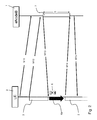
- FIG. 1 it is shown the exemplary message flow between a base node 1 and a wireless terminal 2 of the type to which the present invention is applied as an embodiment.
- the wireless terminal 2 is user equipment (UE) which is equipped as a low-capability device, which in this exemplifying embodiment means a NB-loT device with limited hardware resources both in terms of signalling bandwidth and power supply. It comprises transmission and receiving circuitry, a processor, memory and a power supply, in particular a battery.
- the wireless terminal 2 is operating with a base node 1, the so called serving base node, which in the context of LTE - where NB-loT is a developed flavour of - is a so-called eNodeB.
- the base node is part of a cellular network, in particular the LTE radio access network (RAN), and is configured to support NB-loT wireless terminals. It is also equipped with transmitting and receiving circuitry, processor, memory and power supply. It further comprises communication circuitry for communicating with other cellular network components like MME, core network components and other base nodes of the same cellular network resp. RAN.
- RAN LTE radio access network
- the wireless terminal is in particular a smart metering device positioned in the basement of a house, which means it is operating in enhanced coverage. It operates in sleep mode most of the time, but wakes up at defined time points where it is supposed to send measured data and/or receive data from a remote server or device.
- this data transmission resp. reception requires more time than with wireless terminals operating in normal mode as each data packet needs to be transmitted repeatedly. Further the limited signalling bandwidth leads to the situation that practically all data packets are sent sequentially instead of parallel transmission over multiple channels. This also includes that the wireless terminal is unable to listen to or transmit on other frequency ranges in parallel to the communication with the serving base node 1.
- Measurement requests from the base node 1 are according to the present invention possible in conjunction with an open connection.
- the wireless terminal 2 in present embodiment opens with message M1 a connection with the base node 1 and exchanges data packets, in particular by repeated transmission.
- a connection is either opened by the wireless terminal or through paging from the base node. It may be scheduled communication or an ad hoc communication, that is the connection was planned or is set up event based.
- connection may be open for a while and exchange data packets in enhanced coverage mode.
- connection For a low-capability wireless terminal only supporting half-duplex, data transmission and reception between wireless terminal and base node alternate. The reception of data packets from the wireless terminal is acknowledged with message M2.
- the base node 1 When during the open connection the base node 1 realizes the need for measurements at least from said wireless terminal 2, it has according to the invention the possibility during an open connection to instruct the wireless terminal to carry out such measurements.
- the requested measurements are in particular those that are not necessary for the mobility of the wireless terminal, but those that are needed by the cellular network resp. the base node for maintaining its stability.
- these are in particular RSCP, RX/TX or positioning measurements.
- the base node sends a measurement request message M3 to the wireless terminal.
- the issue to solve is that the wireless terminal is generally not capable of carrying out such measurements in parallel to the open connection. In some cases, in particular intra-frequency measurements parallel measurements are possible, but for others, in particular inter-frequency measurements it is not. As such measurements also belong to those that are needed by the base node, a solution is needed.
- the invention proposes that in conjunction with the measurement request M3 a request for suspending the connection M4 is submitted to the wireless terminal.
- the messages M2, M3, and M4, or at least a subset of it are submitted within one transmission.
- a separate submission of each message is however encompassed by the invention as well.
- the wireless terminal With the suspend request M4 the wireless terminal is instructed to switch from connected mode 3 to idle mode 4.
- the connection context 5 is maintained at the base node's site. Such it is assured that when the connection is later resumed, it can continue with the same context 5 and without delay or loss of data.
- a critical issue is in fact, how long the suspension is supposed to last. As it is the base node that is controlling the measurements it is not possible to put the measurements in the discretion of the wireless terminal. This would mean the wireless terminal can decide if and when to make such measurements. On the other hand for a low-capability device operating in enhanced coverage carrying out a plurality of measurements will take a remarkable amount of time. Therefore it is the base node 1 that takes all such parameter into account, at least the enhanced coverage level, and preferably the number of instructed measurements and estimates a measurement time for the wireless terminal. In the shown embodiment it is the base node which holds a timer 6 that is running until the estimated measurement time is reached. The estimated measurement time preferably has some safety buffer in order to cover some delays.
- the base node After the timer 5 expires, the base node sends a resume message M5 to the wireless terminal 2.
- the wireless terminal When the measurements are not finished, the wireless terminal preferably ignores the message M5, or sends an indication that the measurements are not finished yet to the base node. Then the base node would at a later point in time, in particular after a predefined time offset, send again the resume message M5.
- the wireless terminal When the wireless terminal has finished the requested measurements during the idle mode phase 4, it is in the position to submit the measurement results with message M6 to the base node, and resumes synchronously to this the suspended connection.
- the wireless terminal is however only able to receive the resume message M5 when it is synchronized to the base node 1, and not operating in another frequency range of a second base node operating in a different frequency range.
- the reception is only possible when the requested measurements are only intra-frequency measurements, or the wireless terminal has after finishing the measurements again synchronized on base node 1.
- the wireless terminal After resuming the suspended connection the wireless terminal continues operating in connected mode 3 until the connection is released by the base node or the wireless terminal with the release message M7.
- FIG. 2 An alternative embodiment of the same message flow is shown in FIG. 2 . Basically it could happen between the same wireless terminal 2 and base node 1 as before, but for a different scenario of measurements.
- the procedure starts with a message M11 from the wireless terminal 2 to the base node 1, the message providing an information element indicating that the wireless terminal 2 is operating stationary.
- the message M11 is in particular provided upon registration resp. camping on the base node 1. It may in particular be provided upon first registration in the cellular network regardless of on which base node this has happened.
- the wireless terminal opens the connection to the base node 1, and subsequently exchanges data packets as it is the case for message M1 in FIG. 1 .
- the wireless terminal is operating in connected mode 3.
- message M13 the base node sends to the wireless terminal a combined message practically incorporating the content of the messages M2, M3, M4 from before.
- the base node previously detected the coverage enhancement level of the wireless terminal and collects a list of requested measurements.
- message M13 also comprises a resume indication comprising a time for executing the measurements, which time is determined at least based on the detected coverage enhancement level and the requested measurements.
- An additional safety buffer is preferably further considered.
- it is the receiving wireless terminal 2 that maintains a timer 6.
- the base node waits for the waiting period 7 for the results from the wireless terminal and during that waiting period maintains the context 5 of the communication.
- An additional indication as part of message M13 is relating to the way of measurement.
- previously executed measurements may be sufficiently accurate, as long as they are not older than a predetermined threshold time period.
- the base node 1 can therefore indicate to a wireless terminal, which earlier indicated to be a stationary device, that the results of previously executed and not outdated measurements may be reported to the base node.
- the wireless terminal sets its timer 6 and when the measurements have been carried out, the wireless terminal sends a message M14 to the base node, submitting the measurement reports and indicating to resume the connection.
- the message M14 is a RACH message to the base node, which initiates the base node to carry out a context fetching, that is recreating the context for the further processing.
- the confirmation message M17 the context and subsequently connection reestablishment is confirmed to the wireless terminal 2.
- the wireless terminal is in the connected mode 3 again and can continue with the data transmissions.
- FIG. 3 shows by way of a flow chart another preferred embodiment of the invention. It starts with step S1 where a NB-loT wireless terminal is operating in connected mode with a base node (eNodeB).
- eNodeB base node
- the base node creates a list of measurements that need to be carried out by at least one wireless terminal camping on the base node.
- the base node first checks in step S3 if it needs comparably long to perform such measurement. This is in particular the case when it is operating in enhanced coverage mode, and in particular above a certain threshold enhanced coverage level. For the wireless terminal that means, that it is for a remarkable amount of time blocked for such measurements and cannot continue the data transmission as part of the open connection.
- the base node checks in step S4 if inter-frequency measurements need to be carried out. These are in particular measurements relating to base nodes operating in another frequency range as the current base node. NB-loT devices are unable to maintain the synchronisation to the current base node when doing such measurements, regardless of operating in enhanced coverage mode or not.
- step S5 If either of the conditions in S3 and S4 applies, therefore the process flow branches to step S5. Otherwise it branches to step S15.
- step S5 the base node evaluates based on a plurality of parameter, including the coverage enhancement level and the number of requested measurement, how much time the wireless terminal is supposed to require for executing the requested measurements.
- the base node sends to the wireless terminal the determined measurement list and a suspend instruction in step S6.
- the wireless terminal is carrying out the measurements in step S7. After expiry of the estimated time for measurements it is then the base node which sends a resume connection message to the wireless terminal in step S8 and gets in return the requested measurement reports.
- This scenarios basically complements to the message flow shown in FIG. 1 . It assumes that at least when the time for measurements has expired the wireless terminal is synchronized for receiving the resume connection message from the base node. In case the wireless terminal meanwhile carried out inter-frequency measurements, as it is checked in step S4, then these have to be concluded and the wireless terminal has enough time to synchronize again on current base node.
- step S15 the procedure carries on in step S15.
- a NB-loT device which is not operating in enhanced coverage mode, at least not beyond a certain enhanced coverage level, and is supposed to carry out intra-frequency measurements, is preferably not supposed to suspend the running connection for carrying out said measurements.
- the UE stays in step S15 in connected mode and the base node provides the wireless terminal with the list of measurements.
- the wireless terminal carries out the measurements and provides in step S17 the measurement reports to the base node.
- the wireless terminal can maintain the connection as it is still synchronized with the current base node, and the time for measurements is sufficiently short in order to continue the connection shortly thereafter without the need for a suspension.
Landscapes
- Engineering & Computer Science (AREA)
- Computer Networks & Wireless Communication (AREA)
- Signal Processing (AREA)
- Computer Security & Cryptography (AREA)
- Mobile Radio Communication Systems (AREA)
Priority Applications (7)
| Application Number | Priority Date | Filing Date | Title |
|---|---|---|---|
| EP16191535.0A EP3301953A1 (fr) | 2016-09-29 | 2016-09-29 | Procédé de contrôle de la mesure basé sur réseau cellulaire par un terminal sans fil à faible capacité |
| EP17772400.2A EP3520446B1 (fr) | 2016-09-29 | 2017-09-22 | Procédé de contrôle de la mesure basé sur réseau cellulaire par un terminal sans fil à faible capacité |
| PCT/EP2017/074076 WO2018060096A1 (fr) | 2016-09-29 | 2017-09-22 | Procédé de commande de mesures fondée sur un réseau cellulaire par un terminal sans fil de faible capacité |
| US16/330,883 US11044624B2 (en) | 2016-09-29 | 2017-09-22 | Method for cellular network based controlling of measurements by a low-capability wireless terminal |
| JP2019512720A JP6749481B2 (ja) | 2016-09-29 | 2017-09-22 | 低能力無線端末による測定をセルラネットワークベースで制御する方法 |
| KR1020197008683A KR102209415B1 (ko) | 2016-09-29 | 2017-09-22 | 저성능 무선 단말에 의한 셀룰러 네트워크 기반 측정 제어를 위한 방법 |
| CN201780060099.6A CN109792629B (zh) | 2016-09-29 | 2017-09-22 | 基于蜂窝网络的低容量无线终端测量控制方法 |
Applications Claiming Priority (1)
| Application Number | Priority Date | Filing Date | Title |
|---|---|---|---|
| EP16191535.0A EP3301953A1 (fr) | 2016-09-29 | 2016-09-29 | Procédé de contrôle de la mesure basé sur réseau cellulaire par un terminal sans fil à faible capacité |
Publications (1)
| Publication Number | Publication Date |
|---|---|
| EP3301953A1 true EP3301953A1 (fr) | 2018-04-04 |
Family
ID=57067989
Family Applications (2)
| Application Number | Title | Priority Date | Filing Date |
|---|---|---|---|
| EP16191535.0A Withdrawn EP3301953A1 (fr) | 2016-09-29 | 2016-09-29 | Procédé de contrôle de la mesure basé sur réseau cellulaire par un terminal sans fil à faible capacité |
| EP17772400.2A Active EP3520446B1 (fr) | 2016-09-29 | 2017-09-22 | Procédé de contrôle de la mesure basé sur réseau cellulaire par un terminal sans fil à faible capacité |
Family Applications After (1)
| Application Number | Title | Priority Date | Filing Date |
|---|---|---|---|
| EP17772400.2A Active EP3520446B1 (fr) | 2016-09-29 | 2017-09-22 | Procédé de contrôle de la mesure basé sur réseau cellulaire par un terminal sans fil à faible capacité |
Country Status (6)
| Country | Link |
|---|---|
| US (1) | US11044624B2 (fr) |
| EP (2) | EP3301953A1 (fr) |
| JP (1) | JP6749481B2 (fr) |
| KR (1) | KR102209415B1 (fr) |
| CN (1) | CN109792629B (fr) |
| WO (1) | WO2018060096A1 (fr) |
Cited By (1)
| Publication number | Priority date | Publication date | Assignee | Title |
|---|---|---|---|---|
| WO2020167223A1 (fr) * | 2019-02-14 | 2020-08-20 | Telefonaktiebolaget Lm Ericsson (Publ) | Collecte de données initiée par ran |
Families Citing this family (6)
| Publication number | Priority date | Publication date | Assignee | Title |
|---|---|---|---|---|
| WO2020176024A1 (fr) * | 2019-02-25 | 2020-09-03 | Telefonaktiebolaget Lm Ericsson (Publ) | Amélioration de couverture (ce) de réseau pour véhicules |
| EP4118917A4 (fr) * | 2020-03-12 | 2024-03-13 | Nokia Technologies Oy | Autorisation d'accès pour un dispositif nouvelle radio (nr) à capacité réduite |
| US12457635B2 (en) | 2020-03-31 | 2025-10-28 | Samsung Electronics Co., Ltd. | Method and device for supporting random access for low-capability terminal in wireless communication system |
| WO2021203309A1 (fr) * | 2020-04-08 | 2021-10-14 | 北京小米移动软件有限公司 | Procédé et appareil de transmission d'informations de configuration de mesure, dispositif de communication et support de stockage |
| EP4047963B1 (fr) * | 2021-02-22 | 2024-04-10 | Nokia Technologies Oy | Gestion des capacités de détection de réseau dans un réseau sans fil |
| WO2023206234A1 (fr) * | 2022-04-28 | 2023-11-02 | Oppo广东移动通信有限公司 | Procédé et appareil de configuration pour signal de référence de mesure, et dispositif terminal et dispositif de réseau |
Citations (2)
| Publication number | Priority date | Publication date | Assignee | Title |
|---|---|---|---|---|
| US20150117233A1 (en) * | 2013-10-31 | 2015-04-30 | Alcatel Lucent | Methods and systems for implementing a repetition level for a channel |
| WO2016111229A1 (fr) * | 2015-01-08 | 2016-07-14 | シャープ株式会社 | Dispositif terminal, dispositif de station de base, procédé de commande, et circuit intégré |
Family Cites Families (8)
| Publication number | Priority date | Publication date | Assignee | Title |
|---|---|---|---|---|
| US9037134B2 (en) * | 2008-06-13 | 2015-05-19 | Qualcomm Incorporated | Mobile devices with femto cell functionality |
| CN102300229B (zh) * | 2011-09-20 | 2014-01-29 | 北京富国鸿信科技有限公司 | 自组织的无线局域网及其实现方法 |
| CN102545944A (zh) * | 2011-12-12 | 2012-07-04 | 青海省电力公司信息通信公司 | 电网移动通信信息平台系统 |
| CN105636156B (zh) * | 2014-11-07 | 2019-11-29 | 上海诺基亚贝尔股份有限公司 | 控制mtc ue接入的方法 |
| US9897600B2 (en) * | 2014-11-18 | 2018-02-20 | Brigham Young Univerisity | Flow-through sensor |
| US10542447B2 (en) * | 2014-12-30 | 2020-01-21 | Lg Electronics Inc. | Method and device for reporting measurement result by terminal in coverage expansion area |
| JP2018533324A (ja) * | 2015-11-06 | 2018-11-08 | 華為技術有限公司Huawei Technologies Co.,Ltd. | 情報伝送方法、装置、およびシステム |
| US10863473B2 (en) * | 2016-08-10 | 2020-12-08 | Convida Wireless, Llc | Methods, network, integrated circuitry and apparatus for telecommunications device location |
-
2016
- 2016-09-29 EP EP16191535.0A patent/EP3301953A1/fr not_active Withdrawn
-
2017
- 2017-09-22 EP EP17772400.2A patent/EP3520446B1/fr active Active
- 2017-09-22 US US16/330,883 patent/US11044624B2/en active Active
- 2017-09-22 CN CN201780060099.6A patent/CN109792629B/zh active Active
- 2017-09-22 KR KR1020197008683A patent/KR102209415B1/ko active Active
- 2017-09-22 JP JP2019512720A patent/JP6749481B2/ja active Active
- 2017-09-22 WO PCT/EP2017/074076 patent/WO2018060096A1/fr not_active Ceased
Patent Citations (2)
| Publication number | Priority date | Publication date | Assignee | Title |
|---|---|---|---|---|
| US20150117233A1 (en) * | 2013-10-31 | 2015-04-30 | Alcatel Lucent | Methods and systems for implementing a repetition level for a channel |
| WO2016111229A1 (fr) * | 2015-01-08 | 2016-07-14 | シャープ株式会社 | Dispositif terminal, dispositif de station de base, procédé de commande, et circuit intégré |
Non-Patent Citations (1)
| Title |
|---|
| MIKKO SÄILY ET AL: "Mobile and wireless communications Enablers for the Twenty-twenty Information Society-II Deliverable D6.1 Draft Asynchronous Control Functions and Overall Control Plane Design", 30 June 2016 (2016-06-30), XP055322758, Retrieved from the Internet <URL:https://metis-ii.5g-ppp.eu/wp-content/uploads/deliverables/METIS-II_D6.1_V1.0.pdf> [retrieved on 20161124] * |
Cited By (2)
| Publication number | Priority date | Publication date | Assignee | Title |
|---|---|---|---|---|
| WO2020167223A1 (fr) * | 2019-02-14 | 2020-08-20 | Telefonaktiebolaget Lm Ericsson (Publ) | Collecte de données initiée par ran |
| US11882473B2 (en) | 2019-02-14 | 2024-01-23 | Telefonaktiebolaget Lm Ericsson (Publ) | Ran initiated data collection |
Also Published As
| Publication number | Publication date |
|---|---|
| KR20190040324A (ko) | 2019-04-17 |
| EP3520446C0 (fr) | 2025-03-19 |
| JP2019530315A (ja) | 2019-10-17 |
| KR102209415B1 (ko) | 2021-01-29 |
| US20190215713A1 (en) | 2019-07-11 |
| JP6749481B2 (ja) | 2020-09-02 |
| WO2018060096A1 (fr) | 2018-04-05 |
| EP3520446B1 (fr) | 2025-03-19 |
| US11044624B2 (en) | 2021-06-22 |
| CN109792629B (zh) | 2022-06-28 |
| EP3520446A1 (fr) | 2019-08-07 |
| CN109792629A (zh) | 2019-05-21 |
| WO2018060096A8 (fr) | 2019-04-18 |
Similar Documents
| Publication | Publication Date | Title |
|---|---|---|
| US11044624B2 (en) | Method for cellular network based controlling of measurements by a low-capability wireless terminal | |
| EP2667667B1 (fr) | Procédé de traitement, procédé de communication, et dispositif | |
| EP4037387A1 (fr) | Procédés et dispositifs d'émission d'un signal d'économie d'énergie | |
| US9769718B2 (en) | DRX parameter configuration method and associated base station for facilitating ANR measurement | |
| TWI492585B (zh) | 在混合網路中用於同步回復之裝置及方法 | |
| US12507141B2 (en) | Cell reselection-related information associated with network slice or closed access group for wireless networks | |
| EP2672757B1 (fr) | Procédé et système de planification différée | |
| TWI872471B (zh) | 用於行動通訊的方法及裝置 | |
| CN113891464B (zh) | 部分带宽切换方法、通信网络系统,基站和用户设备 | |
| US20240064855A1 (en) | Sidelink Discontinuous Reception at a User Equipment | |
| WO2022077315A1 (fr) | Procédé, dispositif et système de sélection de ressources de radiorepérage et de transmission/acquisition d'informations système dans des réseaux sans fil | |
| CN114630388B (zh) | 方法及用户设备 | |
| US20230189391A1 (en) | Method and device for managing sidelink transmission | |
| JP2013201508A (ja) | 無線端末装置、無線基地局装置および通信制御方法 | |
| US11968612B2 (en) | Data routing in radio access network | |
| WO2023046306A1 (fr) | Radiomessagerie de dispositif conditionnel dans une réception discontinue (drx) | |
| US20190124622A1 (en) | Communication network device and method for executing paging to a user communication device | |
| US20240251461A1 (en) | Methods for simultaneous communication using a plurality of subscriber identities, a related wireless device and a related network node | |
| WO2013141335A1 (fr) | Dispositif de terminal sans fil, dispositif de station de base sans fil et procédé de commande de communication | |
| US20170086113A1 (en) | Base station device | |
| WO2024165346A1 (fr) | Procédé, appareil et système de mise à jour de configuration de réception discontinue dans un dispositif sans fil | |
| CN120786521A (zh) | 用于在通信网络中请求系统信息的方法和装置 | |
| CN120916223A (zh) | 由用户设备执行的方法及用户设备 | |
| WO2025185177A1 (fr) | Procédé et appareil de traitement de cellule | |
| WO2016165079A1 (fr) | Procédé, appareil et système de surveillance d'informations de commande de liaison descendante |
Legal Events
| Date | Code | Title | Description |
|---|---|---|---|
| PUAI | Public reference made under article 153(3) epc to a published international application that has entered the european phase |
Free format text: ORIGINAL CODE: 0009012 |
|
| STAA | Information on the status of an ep patent application or granted ep patent |
Free format text: STATUS: THE APPLICATION HAS BEEN PUBLISHED |
|
| AK | Designated contracting states |
Kind code of ref document: A1 Designated state(s): AL AT BE BG CH CY CZ DE DK EE ES FI FR GB GR HR HU IE IS IT LI LT LU LV MC MK MT NL NO PL PT RO RS SE SI SK SM TR |
|
| AX | Request for extension of the european patent |
Extension state: BA ME |
|
| STAA | Information on the status of an ep patent application or granted ep patent |
Free format text: STATUS: THE APPLICATION IS DEEMED TO BE WITHDRAWN |
|
| 18D | Application deemed to be withdrawn |
Effective date: 20181005 |