EP3301968A1 - Netzwerkvorrichtung und endgerät für multinetzwerkaggregationsübertragung und betriebsverfahren dafür - Google Patents
Netzwerkvorrichtung und endgerät für multinetzwerkaggregationsübertragung und betriebsverfahren dafür Download PDFInfo
- Publication number
- EP3301968A1 EP3301968A1 EP16818097.4A EP16818097A EP3301968A1 EP 3301968 A1 EP3301968 A1 EP 3301968A1 EP 16818097 A EP16818097 A EP 16818097A EP 3301968 A1 EP3301968 A1 EP 3301968A1
- Authority
- EP
- European Patent Office
- Prior art keywords
- message
- terminal
- aggregation service
- authentication server
- multinet
- Prior art date
- Legal status (The legal status is an assumption and is not a legal conclusion. Google has not performed a legal analysis and makes no representation as to the accuracy of the status listed.)
- Granted
Links
Images







Classifications
-
- H—ELECTRICITY
- H04—ELECTRIC COMMUNICATION TECHNIQUE
- H04W—WIRELESS COMMUNICATION NETWORKS
- H04W28/00—Network traffic management; Network resource management
- H04W28/02—Traffic management, e.g. flow control or congestion control
- H04W28/0215—Traffic management, e.g. flow control or congestion control based on user or device properties, e.g. MTC-capable devices
-
- H—ELECTRICITY
- H04—ELECTRIC COMMUNICATION TECHNIQUE
- H04W—WIRELESS COMMUNICATION NETWORKS
- H04W12/00—Security arrangements; Authentication; Protecting privacy or anonymity
- H04W12/06—Authentication
-
- H—ELECTRICITY
- H04—ELECTRIC COMMUNICATION TECHNIQUE
- H04W—WIRELESS COMMUNICATION NETWORKS
- H04W4/00—Services specially adapted for wireless communication networks; Facilities therefor
- H04W4/24—Accounting or billing
-
- H—ELECTRICITY
- H04—ELECTRIC COMMUNICATION TECHNIQUE
- H04W—WIRELESS COMMUNICATION NETWORKS
- H04W76/00—Connection management
- H04W76/10—Connection setup
-
- H—ELECTRICITY
- H04—ELECTRIC COMMUNICATION TECHNIQUE
- H04W—WIRELESS COMMUNICATION NETWORKS
- H04W76/00—Connection management
- H04W76/10—Connection setup
- H04W76/18—Management of setup rejection or failure
-
- H—ELECTRICITY
- H04—ELECTRIC COMMUNICATION TECHNIQUE
- H04W—WIRELESS COMMUNICATION NETWORKS
- H04W8/00—Network data management
- H04W8/18—Processing of user or subscriber data, e.g. subscribed services, user preferences or user profiles; Transfer of user or subscriber data
-
- H—ELECTRICITY
- H04—ELECTRIC COMMUNICATION TECHNIQUE
- H04W—WIRELESS COMMUNICATION NETWORKS
- H04W8/00—Network data management
- H04W8/18—Processing of user or subscriber data, e.g. subscribed services, user preferences or user profiles; Transfer of user or subscriber data
- H04W8/20—Transfer of user or subscriber data
- H04W8/205—Transfer to or from user equipment or user record carrier
-
- H—ELECTRICITY
- H04—ELECTRIC COMMUNICATION TECHNIQUE
- H04W—WIRELESS COMMUNICATION NETWORKS
- H04W88/00—Devices specially adapted for wireless communication networks, e.g. terminals, base stations or access point devices
- H04W88/02—Terminal devices
- H04W88/06—Terminal devices adapted for operation in multiple networks or having at least two operational modes, e.g. multi-mode terminals
-
- H—ELECTRICITY
- H04—ELECTRIC COMMUNICATION TECHNIQUE
- H04W—WIRELESS COMMUNICATION NETWORKS
- H04W76/00—Connection management
- H04W76/10—Connection setup
- H04W76/15—Setup of multiple wireless link connections
Definitions
- the present disclosure relates to multinet aggregation.
- An aggregation transmission is a technology of simultaneously using a plurality of communication networks to transmit data and processes data transmitted to each path in one session.
- a terminal may be connected to a plurality of communication networks at one time and one service / application aggregates a plurality of networks like one network independent of a kind of network or the number of networks to perform communication. Therefore, an aggregation transmission system may use a plurality of available network resources to quickly transmit and receive a large amount of data. Aggregation of a plurality of networks may be called multinet aggregation.
- the MPTCP is an L4 technology for simultaneously using a plurality of IP interfaces.
- a terminal including a plurality of physical interfaces may be connected to a plurality of communication networks at one time by the MPTCP technology and generates a session in a subflow unit to perform end-to-end communication.
- a terminal including a multiple communication interface is hard to perform the multi-path communication with all servers.
- the terminal may not use a multinet aggregation service. Further, the terminal is in a multinet aggregation service possible status and then may be changed to a multinet aggregation service impossible status depending on real-time characteristics of a network, characteristics of applications, a multinet aggregation service setting release, or the like.
- a method for continuously managing a multinet aggregation service status of a terminal and informing a user of an authenticated status has not yet been present. Therefore, there is a limitation in that a user does not properly recognize whether the terminal is providing the multinet aggregation service.
- the present disclosure provides a network apparatus and a terminal and an operating method thereof having advantages of authenticating the terminal capable of using a multinet aggregation service and managing an authenticated status of the terminal.
- an operating method for a multinet aggregation service includes transmitting a first message requesting multinet aggregation service activation to an authentication server, receiving a second message that is a response to the first message from the authentication server, and accessing a gateway positioned at a contact of the multinet when response information included in the second message is acceptance for the request.
- the second message may include at least one address of the gateway, and the accessing of the gateway may access to the gateway based on a first address selected from at least one address.
- the operating method may further include periodically transmitting a third message querying the multinet aggregation service status to the authentication server depending on the status query time, in which when the response information is the acceptance for the request, the second message may further includes a status query time.
- the operating method may further include receiving a fourth message that is a response to the third message from the authentication server, transmitting the third message in a next status query time when response information included in the fourth message indicates an authenticated status, and releasing setting of the multinet aggregation service set in the terminal when the response information included in the fourth message indicates a non-authenticated status.
- the operating method may further include transmitting the third message in the next status query time when the fourth message is not received from the authentication server.
- the operating method may further include displaying notification information included in the fourth message when response information included in the fourth message indicates the non-authenticated status.
- the operating method may further include: displaying the notification information included in the second message, in which when the response information is not the acceptance for the request, the second message may further include notification information describing the response information.
- the operating method may further include transmitting a fifth message requesting deactivation of the multinet aggregation service to an authentication server, and receiving a sixth message that is a response to the fifth message from the authentication server.
- the fifth message may include a deactivation reason.
- the operating method may further include, prior to the transmitting of the first message, transmitting a seventh message requesting an address of the authentication server to a domain name server, and receiving an eighth message that is a response to the seventh message from the domain name server.
- the eighth message may include at least one address of the authentication server.
- the operating method may further include retransmitting the first message to the authentication server when the response to the first message is not received from the authentication server.
- the retransmitting of the first message to the authentication server may include determining whether a second address of the authentication server is present, when the first message is transmitted to a first address of the authentication server and then the response is not received, transmitting the first message to the second address when the second address of the authentication server is present, and transmitting the first message to the first address when the second address of the authentication server is not present.
- the retransmitting of the first message to the authentication server may include setting a reference frequency for the retransmission and retransmitting the first message to the first address or the second address within the reference frequency.
- an operating method for a multinet aggregation service of a terminal includes receiving a first message requesting activation of the multinet aggregation service from the terminal, generating response information to the terminal based on the first message, and transmitting a second message including the response information to the terminal.
- the response information may include an authenticated result indicating whether the terminal uses the multinet aggregation service.
- the generating of the response information may generate the authenticated result based on subscriber information and a service providing possible status of the terminal.
- the response information may include the authenticated result indicating that the terminal uses the multinet aggregation service and at least one address of a gateway.
- the gateway may be a network apparatus that is positioned at a contact of the multinet and accessed when the terminal uses the multinet aggregation service.
- the response information may further include a status query time.
- the operating method may further include periodically receiving a third message querying a multinet aggregation service status from the terminal depending on the status query time, and transmitting a fourth message that is a response to the third message to the terminal.
- the fourth message may include an authenticated result indicating whether the terminal uses the multinet aggregation service.
- the response information may include an authenticated result indicating that the terminal does not use the multinet aggregation service and notification information describing the authenticated result.
- the operating method may further include receiving a fifth message requesting deactivation of the multinet aggregation service from the terminal, and transmitting a sixth message that is a response to the fifth message to the terminal.
- a terminal provides a multinet aggregation service.
- the terminal includes at least one communication module, at least one display, at least one memory storing a program, and at least one processor interworking with the communication module, the display, and the memory to execute the program.
- the program may include a first program for authenticating the multinet aggregation service.
- the first program may include instructions transmitting a first message including requesting activation of the multinet aggregation service to an authentication server when setting of the multinet aggregation service is received, receiving a second message that is a response to the first message from the authentication server, accessing an address of a gateway included in the second message when response information included in the second message is accepted, and displaying notification information included in the second message when the response information included in the second message is not accepted.
- the gateway may be a network apparatus that is positioned at a contact of the multinet and relays traffic in the multinet aggregation service.
- the program may include a second program for inquiring the multinet aggregation service status.
- the second program may include instructions transmitting a third message querying the multinet aggregation service status to the authentication server depending on a status query time when the status query time is included in the second message, receiving a fourth message that is a response to the third message from the authentication server, transmitting the third message in a next status query time when response information included in the fourth message indicates an authenticated status, and releasing setting of the multinet aggregation service when the response information included in the fourth message indicates a non-authenticated status.
- the program may include a third program for releasing the authentication of the multinet aggregation service.
- the third program may include instructions transmitting a multinet aggregation service deactivation request including a deactivation reason to the authentication server when receiving the multinet aggregation service setting release.
- the network apparatus may authenticate the use of the multinet aggregation service of the terminal based on various kinds of request messages received from the terminal and periodically manage the authenticated status, thereby controlling the authenticated terminal to continuously use the multinet aggregation service.
- the network apparatus may notify the terminal of the authenticated status for the multinet aggregation service and the terminal may display the notification information, such that the user may recognize the authenticated status for the multinet aggregation service to easily find the multinet aggregation service possible status.
- the network apparatus may automatically release the setting of the multinet aggregation service even though the multinet aggregation service is set in the non-authentication terminal.
- a terminal may designate a mobile station (MS), a mobile terminal (MT), a subscriber station (SS), a portable subscriber station (PSS), user equipment (UE), an access terminal (AT), or the like, and may include functions of all or a part of the mobile station, the mobile terminal, the subscriber station, the portable subscriber station, the user equipment, the access terminal, or the like.
- MS mobile station
- MT mobile terminal
- SS subscriber station
- PSS portable subscriber station
- UE user equipment
- AT access terminal
- the terminal of the present specification may access network apparatus such as a base station (BS), an access point (AP), a radio access station (RAS), a node B, an evolved node B (eNodeB), a base transceiver station (BTS), and a mobile multihop relay (MMR)-BS to be connected to a remote server.
- BS base station
- AP access point
- RAS radio access station
- eNodeB evolved node B
- BTS base transceiver station
- MMR mobile multihop relay
- the terminal of the present specification is a mobile terminal such as a smart phone, tablet terminals such as a smart pad and a tablet PC, and various types of communication terminals such as computer and television and may include a plurality of communication interfaces.
- the communication interface may be diverse.
- the communication interface may include wireless local area network interface such as WiFi / WLAN / Bluetooth and mobile communication network interfaces such as 3G / long term evolution (LTE) / long term evolution-advanced (LTE-A) and terminal makers may add various communication interfaces.
- LTE long term evolution
- LTE-A long term evolution-advanced
- the present specification describes, by way of example, the WiFi interface and the 3G / LTE interface but the communication interface is not limited thereto.
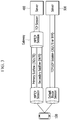
- FIG. 1 is a conceptual diagram describing a network aggregation transmission according to an exemplary embodiment of the present disclosure
- FIG. 2 is a diagram describing a configuration diagram of a multinet aggregation system according to an exemplary embodiment of the present disclosure
- FIG. 3 is a diagram describing a multinet aggregation transmission according to an exemplary embodiment of the present disclosure.
- a multinet aggregation transmission is a technology of aggregating a plurality of communication networks to transmit data and may split and transmit data transmitted through one path into paths for a plurality of homogenous networks or a plurality of heterogeneous networks or bind and transmit data transmitted through a plurality of paths into one path.
- the multinet aggregation transmission simultaneously transmits data to the plurality of paths and therefore may be called a multi-path transmission.
- a multinet aggregation system includes a terminal 100, a gateway 200 connected to the terminal 100 through a plurality of networks, and an authentication server 300.
- the terminal 100 includes a multiple communication interface and may be connected to a plurality of networks (for example, WiFi network and 3G / LTE network) through the multiple communication interface at one time.
- networks for example, WiFi network and 3G / LTE network
- the terminal 100 has a management application embedded therein.
- the management application may help a user access the terminal 100 to set or manage a multiple network access.
- the management application may be called a GiGa LTE manager by way of example.
- the terminal 100 includes a network agent that performs authentication, status management, and traffic processing for the multinet aggregation, in which the network agent may be implemented as a terminal internal logic.
- the network agent and various applications in the terminal 100 perform socket communication.
- the network agent interworks with an authentication server 300 and a gateway 200 according to setting information of the management application for network management.
- the network agent includes an authentication server interworking unit implementing an interworking function with the authentication server 300 and a gateway interworking unit implementing an interworking function with the gateway 200.
- the interworking function with the authentication server 300 may be implemented as a TCP / IP protocol and the interworking function with the gateway 200 may be implemented as a socket secure (SOCKS) protocol.
- SOCKS is a protocol used to pass a proxy server when performing TCP / UDP communication between a server and a client.
- the network agent may be called a multinet aggregation-agent.
- the gateway 200 is a network apparatus that aggregates subflows transmitted to a multi-path or splits and transmits a flow transmitted to a single path into the subflows of the multi-path.
- the gateway 200 is located at a contact of the multinet, for example a contact of the LTE network with the WiFi network.
- the gateway 200 may be called a multinet aggregation-gateway (MA-GW).
- the gateway 200 splits data to transmit the received data to the multiple communication interface of the terminal 100. Further, the gateway 200 may transmit some data to the terminal 100 through the LTE network and the rest data to the terminal 100 through the WiFi network. The terminal 100 aggregates data received through a plurality of communication interfaces. In a similar method, the gateway 200 may aggregate the data transmitted by the terminal 100 through the multiple communication interface and transmit the aggregated data to the server 400.
- the authentication server 300 determines whether the terminal 100 is in a multinet aggregation service possible status to authenticate the terminal.
- the authentication server 300 provides access information (IP address, port value, etc.) of the gateway to the terminal 100 to help the authenticated terminal 100 access the gateway 200. Further, the authentication server 300 periodically checks the authenticated status of the terminal 100 and notifies the terminal 100 of the checked authenticated status. If the terminal 100 is in a multinet aggregation service impossible status, the authentication server 300 transmits the authenticated status and notification information to the terminal.
- the authentication server 300 may be called a multinet aggregation-policy engine (MA-PE). Communication between the terminal 100 and the authentication server 300 will be described in detail below.
- MA-PE multinet aggregation-policy engine
- An aggregation technology of the WiFi network with the LTE network may be classified as follows depending on the aggregated point.
- An L2 / link hierarchical aggregation generates a dedicated channel to a WiFi AP at a boundary point (i.e., eNB) between an LTE core network and an access network.
- a boundary point i.e., eNB
- An L3 / network hierarchical aggregation generates a virtual IP tunnel to integrate IP addresses independently used at the LTE network and the WiFi network.
- An L4 / transmission hierarchical aggregation generates a session through a single access network and then when an additional access network may be used, takes the additional access network part in data transmission independent of an IP address system.
- communication parties of an application level use at least one access network to support a structure in a single session based data communication may be performed.
- An L7 / application hierarchical aggregation allows a dedicated application / network agent itself to recombine the data received through the LTE network and the WiFi network or split and transmit application protocol data.
- MPTCP multi-path TCP
- the gateway 200 relays the MPTCP data and the TCP data.
- the gateway 200 may be a proxy server transmitting and receiving (transparent CP supported) data through the MPTCP
- the servers 400 and 500 do not support the multiple communication interfaces.
- the terminal 100 may use the multinet aggregation service (for example, when the multinet aggregation service is active)
- the terminal 100 and the gateway 200 transmit and receive data through a primary subflow and a secondary subflow generated from the primary path (3G / LTE network), a sub-path (WiFi network), respectively.
- the terminal 100 communicates with the server 500 through a default route without passing through the gateway 200.
- the default path is a basic data transmitting / receiving path that is not connected to the gateway 200.
- the default path may be the WiFi network and in the case of the WiFi non-access status, the default path may be the 3G / LTE.
- FIG. 4 is a diagram exemplarily illustrating a multinet aggregation service setting screen in a terminal according to the exemplary embodiment of the present disclosure
- FIG. 5 is a diagram exemplarily illustrating a traffic flow according to an exemplary embodiment of the present disclosure.
- the terminal 100 has the management application embedded therein.
- the management application may help a user access the terminal 100 to set a communication environment and set communication paths for each application.
- the management application is executed in the terminal 100 and displays a screen, which may set a communication environment by the access of the user to the terminal 100, on a display.
- the management application displays a screen that may perform WiFi setting, mobile data setting, multinet aggregation setting (for example, GiGa LTE setting).
- the management application displays a region 10 that may select the setting of the multinet aggregation (3G / LTE network + WiFi network) on the screen of the terminal 100.
- a multinet aggregation service is set (multinet on) in the terminal 100 and the authentication server interworking unit implementing the interworking function with the authentication server 300 and the gateway interworking unit implementing the interworking function with the gateway 200 are operated to provide the multinet aggregation service.
- the multinet on means activation of the multinet aggregation service
- a multinet off means deactivation of the multinet aggregation service.
- the management application may display a screen that may set applications that may perform data transmission through the multinet aggregation.
- Applications that may use the multinet aggregation service may be called a whitelist.
- the terminal 100 refers to an appropriate routing table depending on the setting/release (on / off) of the multinet aggregation service, sets an MPTCP parameter, and drives the network agent.
- the terminal 100 may set the primary subflow of the MPTCP as the 3G / LTE network and set the secondary subflow as the WiFi network.
- the connection of the primary subflow to the 3G / LTE network may maintain the network connection more stably than the connection of the primary subflow to the WiFi network. The reason is that even when the connection is broken, the 3G / LTE network may supplement resources immediately but the WiFi network secures the network connection only in the corresponding AP resource.
- the terminal 100 may select transmission networks of each application based on the setting for each application. For example, the terminal 100 may perform the TCP communication with a server of some applications (for example, messenger applications) through the LTE network, TCP communication with a server of some applications (for example, social media applications) through the WiFi network, and perform the MPTCP communication with a server of some applications (for example, moving image service applications) through the gateway (MA-GW) 200. That is, the terminal 100 may transmit and receive data through the LTE network and the WiFi network when using the application belonging to the whitelist and transmit and receive data through the default route when using messenger application.
- a server of some applications for example, messenger applications
- a server of some applications for example, social media applications
- MPTCP communication with a server of some applications for example, moving image service applications
- the terminal 100 manages the MPTCP flow passing through the gateway 200 when the multinet aggregation service is set. Further, the terminal 100 may be switched from the multinet aggregation transmission to the default route when an abnormal situation occurs or depending on session management of the applications.
- the terminal 100 sets the multinet aggregation service, if the terminal is not a multinet aggregation service subscriber, the terminal may not use the multinet aggregation service. Further, the terminal 100 is in a multinet aggregation service possible status and then may be changed to a multinet aggregation service impossible status depending on real-time characteristics of a network, characteristics of applications, a multinet aggregation service setting release, or the like. Even though the user sets the multinet aggregation service depending on the varying situation, the terminal 100 may be in the status in which the multinet aggregation service may not be used actually.
- the authentication server 300 continuously managing the authenticated status of the terminal 100 and the terminal 100 communicating with the authentication server 300 to recognize the authenticated status of the terminal will be described.
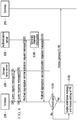
- FIG. 6 is a flow chart of a method for setting and authenticating a multinet aggregation service according to an exemplary embodiment of the present disclosure.
- the terminal 100 transmits a DNS query request message requesting an address of the authentication server 300 to a domain name server 600 (S110).
- the domain name server 600 transmits a DNS query response message including the address of the authentication server 300 to the terminal 100 (S120).
- the DNS query response message may include addresses (for example, IPv4 address or IPv6 address) of a plurality of authentication servers 300.
- the terminal 100 transmits a multinet aggregation (MA) service activation request message to the address of the authentication server 300 included in the DNS query response message (S130).
- MA multinet aggregation
- the terminal 100 selects one address and uses the selected address as the address of the authentication server 300.
- the terminal 100 may be set to perform communication through the 3G / LTE network upon the communication with the authentication server 300.
- the terminal 100 connects the authentication server 300 to a designated TCP connection port.
- the address of the authentication server 300 selected by the terminal 100 is set to be a first address (primary IP) and the non-selected address of the authentication server 300 is set to be a second address (secondary IP).
- the authentication server 300 generates response information based on subscriber information of the terminal 100 and a service providing possible status (S140).
- the response information may include a response result (authenticated result), gateway connection information, etc.
- the response result is a response to an activation request and therefore corresponds to the authenticated result.
- the response result may include information accepting an activation request (accepted), information not accepting the activation request (not accepted), service failure information (general failure), etc.
- the authentication server 300 authenticates the terminal 100 and generates the activation request acceptance (accepted) as a response result.
- the authentication server 300 When the terminal 100 is not the multinet aggregation service subscriber, the authentication server 300 does not authenticate (non-authenticated) the terminal 100 and generates the information not accepting the activation request (not accepted) as the response result. When a service error occurs, the authentication server 300 does not authenticate the terminal 100 and generates the service failure information (general failure) as the response result.
- the gateway connection information may include a gateway address, a port, etc.
- the case in which the terminal is in the authenticated status or the authentication server accepts the activation request means the status in which the terminal may use the multinet aggregation service.
- the case in which the terminal is in the non-authenticated status or the authentication server does not accept the activation request means the status in which the terminal may not use the multinet aggregation service.
- the authentication server 300 transmits the multinet aggregation (MA) service activation response message including the response information to the terminal 100 (S150).
- MA multinet aggregation
- the terminal 100 confirms the authenticated status based on the multinet aggregation service activation response message (S160).
- the terminal 100 accesses the gateway 200 based on the information included in the multinet aggregation service activation response message (S170).
- the terminal 100 When not authenticated, the terminal 100 displays a notification message for the authenticated status and releases (off) the setting of the multinet aggregation service (S180). That is, the authentication server 300 controls the non-authenticated terminal not to use the multinet aggregation service.
- the authentication server 300 manages the authenticated status of the terminal 100 by the message exchange.
- the terminal 100 when the terminal 100 does not receive the multinet aggregation service activation response message, the terminal 100 performs processing operation upon a non-response of the authentication server 300. Upon the non-response of the authentication server 300, the terminal 100 may perform the processing operation described with reference to FIG. 9 .
- the multinet aggregation (MA) service activation request message includes information of Table 1.
- the multinet aggregation service activation request message includes a username and a password.
- the username may include international mobile subscriber identity (IMSI) and mobile station ISDN (MSISDN) which are an identifier, a terminal 3G / LTE IP, a service destination IP, a service package name, and a terminal model name, but may be variously changed.
- the MSISDN may use USIM information of the terminal 100 and the service destination IP is the address of the authentication server 300.
- the username may be expressed as follow by way of example.
- the multinet aggregation (MA) service activation response message includes information of Table 2.
- the multinet aggregation service activation response message may include response information which includes a status indicating an authenticated result, notification information, status query time, gateway connection information, etc.
- the status may indicate acceptance (accepted), not acceptance (not accepted), service failure (general failure), etc.
- the notification information is a UTF-8 type parameter and includes information describing a non-authenticated status and the terminal 100 refers to the information to display a notification message to a user.
- the gateway connection information may include a gateway address type (MA-GW IP type), a gateway address (MA-GW IP), and a gateway port (MA-GW port).
- the terminal 100 confirms the authenticated status based on a status code included in the multinet aggregation service activation response message and is operated as shown in the following Table 3 depending on the authenticated status.
- the terminal 100 may display the notification information to allow a user to easily recognize that the setting of the multinet aggregation service is released.
- FIG. 7 is a flow chart of a method for inquiring a multinet aggregation service status according to an exemplary embodiment of the present disclosure.
- the terminal 100 periodically transmits a multinet aggregation (MA) service status query message based on the status query time included in the multinet aggregation service activation response message to the authentication server 300 (S210). If the terminal 100 is providing the multinet aggregation service, the terminal 100 refers to the status query time included in the multinet aggregation service activation response message to periodically query the multinet aggregation service status. After the multinet aggregation service is activated, the terminal 100 confirms the status indicating whether the multinet aggregation service is continuously maintained in the activated status (authenticated status). By this, the user may recognize the continuous status of the multinet aggregation service.
- MA multinet aggregation
- the authentication server 300 transmits the multinet aggregation (MA) service status response message including the status information to the terminal 100 (S220).
- MA multinet aggregation
- the terminal 100 periodically confirms the authenticated status based on the multinet aggregation service status response message (S230).
- the terminal 100 When being authenticated, the terminal 100 maintains the setting (on) of the multinet aggregation service based on the authenticated status included in the multinet aggregation service activation response message (S240). The terminal 100 waits for the next status query time and if the next status query time arrives, repeats a step S210.
- the terminal 100 When not authenticated, the terminal 100 displays the notification for the authenticated status and releases (off) the setting of the multinet aggregation service (S250).
- the authentication server 300 manages the authenticated status of the terminal 100 by the message exchange.
- the multinet aggregation (MA) service status query message includes information of Table 4.
- the multinet aggregation service status query message includes a username and a password.
- Table 4 Division Parameters Size (Bytes) Type Contents Header Name 8 Char "KTMA" Version 1 Int 0x0X Type 1 Int 0x02 Data Size 2 Int Data size Data Username (ID) Variable (Up to 255) Char IMSI;MSISDN; terminal 3G/LTE IP;Service Destination IP;Service package name; terminal model name Password Variable (Up to 255) Char Random generation Reserved 4 Char Reserved n
- the multinet aggregation (MA) service status response message includes information of Table 5.
- the multinet aggregation service status response message may include status information indicating the authenticated result, notification information, etc. (Table 5) Division Parameters Size (Bytes) Type Contents Header Name 8 Char "KTMA" Version 1 Int 0x0X Type 1 Int 0x12 Data Size 2 Int Data size Data Status 1 Int 0x00 : Accepted 0x01 : Not Accepted 0x02 : General Failure 0xFF : Reserved Notification 255 Char User notification message (UTF-8) Reserved 4 Char Reserved
- the terminal 100 confirms the authenticated status based on a status code included in the multinet aggregation service status response message and is operated as shown in the following Table 6 depending on the authenticated status.
- Table 6 Status code Authentication server operation Terminal operation 0x00 Determination as multinet aggregation service subscriber Query multinet aggregation service status in next status query time without performing notification 0x01 Determination as multinet aggregation service non-subscriber, Notification transmission Release (off) setting of multinet aggregation service, Display message in notification parameter as notification (toast) 0x02 Determination as service error, Notification transmission Release (off) setting of multinet aggregation service, Display message in notification parameter as notification (toast)
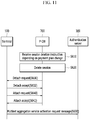
- the terminal 100 when the terminal 100 does not receive the multinet aggregation service status response message, the terminal 100 performs processing operation upon a non-response of the authentication server 300. When not receiving a response by the processing operation upon the non-response, the terminal 100 may transmit the multinet aggregation service status query message in the next status query time to maintain the multinet aggregation service.
- the terminal 100 may provide a normal 3G / LTE service out of a weak electric field or an out of zone (OOZ) in the status in which the multinet aggregation service is set, the terminal 100 may transmit the multinet aggregation service status query message to the authentication server 300 to be re-authenticated.
- OOZ out of zone
- the terminal 100 may transmit the multinet aggregation service activation request message to the authentication server to perform the authentication procedure.
- the terminal may register the 3G / LTE IP acquired by the 3G LTE attach and 3G / LTE bearer activate procedure in a username of the multinet aggregation service activation request message to perform the authentication procedure.
- FIG. 8 is a flow chart of a method for releasing authentication of a multinet aggregation service according to an exemplary embodiment of the present disclosure.
- the terminal 100 transmits the multinet aggregation (MA) service deactivation request message to the authentication server 300 (S310).
- MA multinet aggregation
- the authentication server 300 transmits the multinet aggregation (MA) service deactivation response message including the response information to the terminal 100 (S320).
- MA multinet aggregation
- the authentication server 300 manages the authenticated status of the terminal 100 by the message exchange.
- the multinet aggregation (MA) service deactivation request message includes information of Table 7.
- the multinet aggregation service deactivation request message includes a username, a password, and reason information.
- the reason may include a network status and a deactivation reason at the deactivation request timing as shown in the following Table 7.
- the network status at the deactivation request timing may indicate the network connection status such as LTE and WiFi (LTE+WiFi), 3G and WiFi (3G+WiFi), LTE(LTE Only), and 3G (3G Only).
- the deactivation reason indicates whether the the multinet aggregation service setting release is requested by the user or whether the authentication is completed by the authentication server 300 and then the release is requested by an error occurring upon the authentication (SOCKS authentication) between the terminal 100 and the gateway 200.
- Table 7 Division Parameters Size (Bytes) Type Contents Header Name 8 Char "KTMA" Version 1 Int 0x0X Type 1 Int 0x01 Data Size 2 Int Data size UE Version 32 Char Terminal model name; binary version Username (ID) 255 Char IMSI;MSISDN; terminal 3G/LTE IP;Service Destination IP;Service package name; terminal model name Password 255 Char Random generation Reason 1 Int 0xAB (A, B operation division)
- B Deactiv
- the multinet aggregation (MA) service deactivation response message includes information of Table 8.
- the multinet aggregation service deactivation response message may include the response result for the deactivation request and the response result may include information accepting the deactivation request (accepted) . That is, the information accepting the deactivation request (accepted) means the authentication release.
- Table 8 Division Parameters Size (Bytes) Type Contents Header Name 8 Char "KTMA" Version 1 Int 0x0X Type 1 Int 0x11 Data Size 2 Int Data size Data Status 1 Int 0x00 : Accepted Reserved 4 Char Reserved
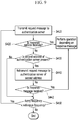
- FIG. 9 is a flow chart of a processing method upon non-response of an authentication server according to an exemplary embodiment of the present disclosure.
- the terminal 100 transmits a request message to the authentication server 300 (S410).
- the request message may be the multinet aggregation service activation response message, the multinet aggregation service status query message, and the multinet aggregation service deactivation request message.
- the terminal 100 transmits the request message to the first address (primary IP) of the authentication server 300.
- the terminal 100 waits for the reception of the response message for the request message (S420).
- the terminal 100 receives the response message, the terminal 100 is operated depending on the procedure described in FIGS. 6 and 8
- the terminal 100 When not receiving the response message, the terminal 100 confirms the second address (secondary IP) of the authentication server 300 (S430).
- the second address (secondary IP) may be received from a domain name server 600 along with the first address (primary IP).
- the terminal 100 When the second address of the authentication server 300 is present, the terminal 100 retransmits the request message to the authentication server 300 of the second address (S440).
- the terminal 100 waits for the reception of the response message for the request message (S442).
- the terminal 100 receives the response message, the terminal 100 is operated depending on the procedure described in FIGS. 6 and 8
- the terminal 100 determines whether a retry frequency (a number of times being retried) is less than a reference frequency N (S450).
- the terminal 100 When the retry frequency is under the reference frequency, the terminal 100 retransmits the request message to the authentication server 300 of the first address (S452).
- the terminal 100 ends a procedure (S454).
- the terminal 100 moves to a step S450 of determining the retry frequency (S460).
- the terminal 100 when not receiving the response message from the authentication server 300, the terminal 100 retransmits the request message to the authentication server 300.
- the terminal 100 may transmit the multinet aggregation service status query message in the next status query time to maintain the multinet aggregation service.
- the terminal 100 may provide a normal 3G / LTE service out of a weak electric field or an out of zone (OOZ) in the status in which the multinet aggregation service is activated (on), the terminal 100 may transmit the multinet aggregation service status query message to the authentication server 300 to be re-authenticated.
- a normal 3G / LTE service out of a weak electric field or an out of zone (OOZ) in the status in which the multinet aggregation service is activated (on)
- the terminal 100 may transmit the multinet aggregation service status query message to the authentication server 300 to be re-authenticated.
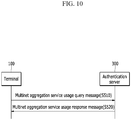
- FIG. 10 is a flow chart of a method for inquiring multinet aggregation service data usage according to an exemplary embodiment of the present disclosure.
- the terminal 100 transmits a multinet aggregation (MA) service usage query message to the authentication server 300 (S510).
- MA multinet aggregation
- the authentication server 300 transmits a multinet aggregation (MA) service usage response message to the terminal 100 (S520).
- MA multinet aggregation
- the multinet aggregation (MA) service usage query message includes information of Table 9. (Table 9) Division Parameters Size (Bytes) Type Contents Header Name 8 Char "KTMA" Version 1 Int 0x0X Type 1 Int 0x03 Data Size 2 Int Data size Data Username (ID) 255 Char IMSI;MSISDN; terminal 3G/LTE IP; Service Destination IP; Service package name; terminal model name Password 255 Char Random generation Reserved 4 Char Reserved
- the multinet aggregation (MA) service usage response message includes information of Table 10.
- the multinet aggregation service usage response message may include data usage for each communication network. (Table 10) Division Parameters Size (Bytes) Type Contents Header Name 8 Char "KTMA" Version 1 Int 0x01 Type 1 Int 0x13 Data Size 2 Int Data size Data Status 1 Int 0x00 : Accepted 0x01 : Not Accepted 0x02 : General Failure 0xFF : Reserved LTE Usage 8 Int LTE accumulated usage (Byte unit) WiFi Usage 8 Int WiFi accumulated usage (Byte unit) Notification 255 Char User notification message (UTF-8) Reserved 4 Char Reserved
- FIG. 11 is a flow chart of a method for providing a multinet aggregation service depending on a payment plan change according to an exemplary embodiment of the present disclosure.
- the terminal 100 has acquired the authentication of the authentication server 300 and then has been connecting to the gateway 200 to use the multinet aggregation service.
- a payment plan of user may be changed.
- a packet gateway (P-GW) 700 receives a session deletion / release instruction from a charging and billing apparatus (not illustrated) (S610).
- the P-GW 700 deletes a session (S620).
- the P-GW 700 transmits a detach request message to the terminal 100 (S630).
- the P-GW 700 transmits the detach request message to change the IP of the terminal.
- the terminal 100 transmits a detach accept message for the P-GW 700 (S632).
- the terminal 100 transmits an attach request message to the P-GW 700 (S640).
- the P-GW 700 transmits an attach accept message to the terminal 100 (S642).
- the terminal 100 exchanges the attach request and attach accept message with the P-GW 700 to update the IP.
- the terminal 100 After the terminal 100 is re-connected to the P-GW 700, as described with reference to FIG. 6 , the terminal 100 transmits the multinet aggregation service activation request message to the authentication server 300 to be again authenticated for the multinet aggregation service (S650).
- the operation after the transmission of the multinet aggregation service activation request message is as described with reference to FIG. 6 .
- a rate system change instruction server which is a billing server updates user information.
- the charging server which is a policy server updates a billing policy.
- the policy server requests the session deletion depending on the user rate system change to the P-GW 700.
- the P-GW 700 deletes a session and exchanges the detach request message and the detach accept message with the terminal 100 based on the 3G / LTE to update the terminal status depending on the rate system change.
- the terminal 100 If the terminal 100 is detached from the P-GW 700, the IP is not present but to update whether the terminal is subscribed in the 3G / LTE, the terminal 100 exchanges the attach request message and the attach accept message with the P-GW 700 to update the IP. When the IP is updated and thus the multinet aggregation service may not be used, the terminal 100 transmits the multinet aggregation service activation request message to the authentication server 300 to confirm whether the terminal 100 is subscribed.
- the authentication server 300 inquires the subscriber based on the multinet aggregation service activation request message and generates the authenticated result based on the inquired result. If it is not confirmed whether the terminal is subscribed based on the rate system change, the processing of allowing the terminal to no longer use the multinet aggregation service is performed.
- the user rate system is changed from a rate system that does not use the multinet aggregation service to a rate system that may use the multinet aggregation service.
- the terminal 100 is authenticated by the authentication server 300 depending on the attach procedure after the detach from the P-GW upon the rate system change.
- FIG. 12 is a hardware block diagram of a terminal according to an exemplary embodiment of the present disclosure.
- the terminal 100 is configured of hardware including a processor 810, a memory device 820, a storage device 830, a display 840, a communication device 850, a speaker / microphone 860, etc., and programs executed by being combined with the hardware are stored in a designated location.
- the hardware has a configuration and performance that may perform the method of the present disclosure.
- the programs include instructions implementing the operating method of the present disclosure described with reference to FIGS. 1 to 11 and are combined with the hardware such as the processor 810 and the memory device 820 to perform the present disclosure.
- the program may include instructions for the operation of the network agent that is implemented as the management application and the terminal internal logic.
- the network agent includes an authentication server interworking unit implementing an interworking function with the authentication server 300 and a gateway interworking unit implementing an interworking function with the gateway 200.
- the terminal has various application programs embedded therein.
- the network apparatus including the gateway 200 and the authentication server 300 is also configured of hardware including the processor, the memory device, the storage device, the communication device etc., and a program executed by being combined with the hardware is stored in a designated location.
- the hardware has a configuration and performance that may perform the method of the present disclosure.
- the programs include instructions implementing the operating method of the present disclosure described with reference to FIGS. 1 to 11 and are combined with the hardware such as the processor and the memory device to perform the present disclosure.
- the network apparatus may authenticate the use of the multinet aggregation service of the terminal based on various kinds of request messages received from the terminal and periodically manage the authenticated status, thereby controlling the authenticated terminal to continuously use the multinet aggregation service.
- the network apparatus may notify the terminal of the authenticated status for the multinet aggregation service and the terminal may display the notification information, such that the user may recognize the authenticated status for the multinet aggregation service to easily find the multinet aggregation service possible status.
- the network apparatus may automatically release the setting of the multinet aggregation service even though the multinet aggregation service is set in the non-authentication terminal.
Landscapes
- Engineering & Computer Science (AREA)
- Computer Networks & Wireless Communication (AREA)
- Signal Processing (AREA)
- Computer Security & Cryptography (AREA)
- Databases & Information Systems (AREA)
- Business, Economics & Management (AREA)
- Accounting & Taxation (AREA)
- Mobile Radio Communication Systems (AREA)
- Data Exchanges In Wide-Area Networks (AREA)
Applications Claiming Priority (3)
| Application Number | Priority Date | Filing Date | Title |
|---|---|---|---|
| KR20150092490 | 2015-06-29 | ||
| KR1020160018039A KR101689013B1 (ko) | 2015-06-29 | 2016-02-16 | 다중망 병합 전송을 위한 네트워크 장치 및 단말, 그리고 이들의 동작 방법 |
| PCT/KR2016/002812 WO2017003064A1 (ko) | 2015-06-29 | 2016-03-21 | 다중망 병합 전송을 위한 네트워크 장치 및 단말, 그리고 이들의 동작 방법 |
Publications (3)
| Publication Number | Publication Date |
|---|---|
| EP3301968A1 true EP3301968A1 (de) | 2018-04-04 |
| EP3301968A4 EP3301968A4 (de) | 2018-07-04 |
| EP3301968B1 EP3301968B1 (de) | 2019-12-18 |
Family
ID=57723426
Family Applications (2)
| Application Number | Title | Priority Date | Filing Date |
|---|---|---|---|
| EP16818097.4A Active EP3301968B1 (de) | 2015-06-29 | 2016-03-21 | Netzwerkvorrichtung und endgerät für multinetzwerkaggregationsübertragung und betriebsverfahren dafür |
| EP16818098.2A Active EP3301969B1 (de) | 2015-06-29 | 2016-03-21 | Netzwerkvorrichtung und endgerät für multinetzwerkaggregationsübertragung und betriebsverfahren dafür |
Family Applications After (1)
| Application Number | Title | Priority Date | Filing Date |
|---|---|---|---|
| EP16818098.2A Active EP3301969B1 (de) | 2015-06-29 | 2016-03-21 | Netzwerkvorrichtung und endgerät für multinetzwerkaggregationsübertragung und betriebsverfahren dafür |
Country Status (2)
| Country | Link |
|---|---|
| EP (2) | EP3301968B1 (de) |
| KR (3) | KR101689013B1 (de) |
Cited By (1)
| Publication number | Priority date | Publication date | Assignee | Title |
|---|---|---|---|---|
| WO2023066334A1 (zh) * | 2021-10-22 | 2023-04-27 | 中兴通讯股份有限公司 | 通信方法、设备和存储介质 |
Families Citing this family (7)
| Publication number | Priority date | Publication date | Assignee | Title |
|---|---|---|---|---|
| KR101970304B1 (ko) * | 2017-03-24 | 2019-04-18 | (주)넷비젼텔레콤 | 다중 경로 환경에서 생성되는 tcp 패킷을 처리하는 방법 |
| JP6619763B2 (ja) * | 2017-03-30 | 2019-12-11 | Kddi株式会社 | 通信端末、通信システム、通信方法及び通信プログラム |
| CN112565481B (zh) * | 2018-11-21 | 2022-04-12 | Oppo广东移动通信有限公司 | 电子设备、域名查询方法及相关产品 |
| CN109587749B (zh) * | 2018-12-24 | 2021-04-20 | 深圳市闻耀电子科技有限公司 | 数据发送方法和系统 |
| KR102302616B1 (ko) | 2020-02-17 | 2021-09-14 | 주식회사 케이티 | 배터리 절감 기술 동적 적용 방법, 이를 구현한 단말 및 네트워크 장치 |
| CN113923032B (zh) * | 2021-10-12 | 2024-04-09 | 成都安恒信息技术有限公司 | 一种应用访问控制的接入方法 |
| CN119402423B (zh) * | 2024-11-30 | 2025-12-12 | 苏州元脑智能科技有限公司 | 一种数据传输方法及系统 |
Family Cites Families (11)
| Publication number | Priority date | Publication date | Assignee | Title |
|---|---|---|---|---|
| TWI330025B (en) * | 2006-11-17 | 2010-09-01 | Ind Tech Res Inst | Multi-service method over heterogeneous network |
| US8155158B2 (en) * | 2008-11-12 | 2012-04-10 | Patricio Humberto Saavedra | System, apparatus and method for providing aggregated network connections |
| KR101034938B1 (ko) * | 2009-11-26 | 2011-05-17 | 삼성에스디에스 주식회사 | IPv6 주소 및 접속정책 관리 시스템 및 방법 |
| US8819235B2 (en) * | 2010-10-20 | 2014-08-26 | International Business Machines Corporation | Multi-adapter link aggregation for adapters with hardware based virtual bridges |
| KR101260648B1 (ko) * | 2010-11-29 | 2013-05-03 | 주식회사 케이티 | 무선인터넷 서비스의 온라인 개통 방법 및 그 시스템 |
| US8848640B2 (en) * | 2011-05-06 | 2014-09-30 | Interdigital Patent Holdings, Inc. | Method and apparatus for bandwidth aggregation for IP flow |
| US8817797B2 (en) * | 2012-01-31 | 2014-08-26 | Alcatel Lucent | Method and apparatus for multipath protocol packet relay |
| KR20130006385A (ko) * | 2012-08-24 | 2013-01-16 | 주식회사에어플러그 | 고정 호스트 주소에 기반하여 복수의 이종망(異種網)들을 선택적으로 사용하여 데이터 송수신할 수 있게 하는 장치와 이를 위한 방법 |
| EP2898639A1 (de) * | 2012-09-24 | 2015-07-29 | Telefonaktiebolaget L M Ericsson (publ) | Verkehrsformung und -lenkung für eine verbindung mit einem mehrwegübertragungs-steuerungsprotokoll |
| KR20140081497A (ko) * | 2012-12-21 | 2014-07-01 | 주식회사 케이티 | 이종망간 이동성 제공 시스템 및 이동성 제공 방법 |
| CN106465436A (zh) * | 2014-04-04 | 2017-02-22 | 诺基亚技术有限公司 | 利用多路径传输进行访问管理 |
-
2016
- 2016-02-16 KR KR1020160018039A patent/KR101689013B1/ko active Active
- 2016-02-16 KR KR1020160018033A patent/KR101689012B1/ko active Active
- 2016-03-21 EP EP16818097.4A patent/EP3301968B1/de active Active
- 2016-03-21 EP EP16818098.2A patent/EP3301969B1/de active Active
- 2016-12-16 KR KR1020160172811A patent/KR20170002340A/ko not_active Withdrawn
Cited By (1)
| Publication number | Priority date | Publication date | Assignee | Title |
|---|---|---|---|---|
| WO2023066334A1 (zh) * | 2021-10-22 | 2023-04-27 | 中兴通讯股份有限公司 | 通信方法、设备和存储介质 |
Also Published As
| Publication number | Publication date |
|---|---|
| EP3301968A4 (de) | 2018-07-04 |
| EP3301969A4 (de) | 2018-07-04 |
| EP3301968B1 (de) | 2019-12-18 |
| KR101689012B1 (ko) | 2016-12-22 |
| KR20170002340A (ko) | 2017-01-06 |
| EP3301969A1 (de) | 2018-04-04 |
| KR101689013B1 (ko) | 2016-12-22 |
| EP3301969B1 (de) | 2019-12-18 |
Similar Documents
| Publication | Publication Date | Title |
|---|---|---|
| US12028341B2 (en) | Network slice authentication | |
| EP3301968B1 (de) | Netzwerkvorrichtung und endgerät für multinetzwerkaggregationsübertragung und betriebsverfahren dafür | |
| CN110547003B (zh) | 用于服务协商的注册类型添加的方法和装置 | |
| CN112335274B (zh) | 用于通信系统中服务访问的安全管理 | |
| US11297660B2 (en) | Session management with relaying and charging for indirect connection for internet of things applications in 3GPP network | |
| WO2022271957A1 (en) | Discovery of internet of things network | |
| US10757645B2 (en) | Access control in communications network comprising slices | |
| CN107005919B (zh) | 用于使用未授权频带的单独lte ran的方法和装置 | |
| US20230247094A1 (en) | Methods, architectures, apparatuses and systems directed to transaction management in blockchain-enabled wireless systems | |
| US11895083B2 (en) | Address obtaining method and an address obtaining apparatus | |
| KR102055911B1 (ko) | 세션 연결을 위한 시그널링 방법, 그리고 이를 구현한 장치 | |
| US20160157094A1 (en) | Methods and Arrangements For Enabling Data Transmission Between a Mobile Device and a Static Destination Address | |
| JP2017530650A (ja) | 制限されたダイレクトディスカバリのための方法 | |
| KR20160004854A (ko) | 무선 통신 시스템에서 접속 계층을 통해 서비스 연결을 제공하는 장치 및 방법 | |
| RU2304853C2 (ru) | Способ передачи служебных данных пользователям беспроводной локальной сети | |
| US20250039248A1 (en) | Call session control function (cscf) reselection in wireless communication networks | |
| KR102553167B1 (ko) | 다중 경로 전송 시스템, 그리고 이의 다중 경로 전송 방법 | |
| CN101411126A (zh) | 无线通信系统中的路由设备和会话控制方法 | |
| KR20230050048A (ko) | 무선 통신 시스템에서 Home Routed 세션의 Visited 사업자 망에서 세션 분기 방법 및 장치 | |
| CN119946567A (zh) | 一种通信方法及装置 | |
| US12519843B2 (en) | Text message notification for multimedia session availability in wireless communication networks | |
| US12484004B2 (en) | Internet protocol multimedia subsystem (IMS) registration in wireless communication networks | |
| US20250373671A1 (en) | Short message service (sms) over non-access statum (nas) fallback in wireless communication network | |
| US20260025415A1 (en) | Emergency multimedia session support in wireless communication networks | |
| KR20250078995A (ko) | 음성 통화를 관리하기 위한 상호연결 경계 제어 기능 및 홈 가입자 서버 인터페이스 |
Legal Events
| Date | Code | Title | Description |
|---|---|---|---|
| STAA | Information on the status of an ep patent application or granted ep patent |
Free format text: STATUS: THE INTERNATIONAL PUBLICATION HAS BEEN MADE |
|
| PUAI | Public reference made under article 153(3) epc to a published international application that has entered the european phase |
Free format text: ORIGINAL CODE: 0009012 |
|
| STAA | Information on the status of an ep patent application or granted ep patent |
Free format text: STATUS: REQUEST FOR EXAMINATION WAS MADE |
|
| 17P | Request for examination filed |
Effective date: 20171226 |
|
| AK | Designated contracting states |
Kind code of ref document: A1 Designated state(s): AL AT BE BG CH CY CZ DE DK EE ES FI FR GB GR HR HU IE IS IT LI LT LU LV MC MK MT NL NO PL PT RO RS SE SI SK SM TR |
|
| AX | Request for extension of the european patent |
Extension state: BA ME |
|
| REG | Reference to a national code |
Ref country code: DE Ref legal event code: R079 Ref document number: 602016026597 Country of ref document: DE Free format text: PREVIOUS MAIN CLASS: H04W0028020000 Ipc: H04W0012060000 |
|
| A4 | Supplementary search report drawn up and despatched |
Effective date: 20180606 |
|
| RIC1 | Information provided on ipc code assigned before grant |
Ipc: H04W 28/02 20090101ALI20180531BHEP Ipc: H04W 8/20 20090101ALI20180531BHEP Ipc: H04W 76/10 20180101ALI20180531BHEP Ipc: H04W 88/06 20090101ALI20180531BHEP Ipc: H04W 12/06 20090101AFI20180531BHEP |
|
| DAV | Request for validation of the european patent (deleted) | ||
| DAX | Request for extension of the european patent (deleted) | ||
| STAA | Information on the status of an ep patent application or granted ep patent |
Free format text: STATUS: EXAMINATION IS IN PROGRESS |
|
| 17Q | First examination report despatched |
Effective date: 20190130 |
|
| GRAP | Despatch of communication of intention to grant a patent |
Free format text: ORIGINAL CODE: EPIDOSNIGR1 |
|
| STAA | Information on the status of an ep patent application or granted ep patent |
Free format text: STATUS: GRANT OF PATENT IS INTENDED |
|
| INTG | Intention to grant announced |
Effective date: 20190711 |
|
| GRAS | Grant fee paid |
Free format text: ORIGINAL CODE: EPIDOSNIGR3 |
|
| GRAA | (expected) grant |
Free format text: ORIGINAL CODE: 0009210 |
|
| STAA | Information on the status of an ep patent application or granted ep patent |
Free format text: STATUS: THE PATENT HAS BEEN GRANTED |
|
| AK | Designated contracting states |
Kind code of ref document: B1 Designated state(s): AL AT BE BG CH CY CZ DE DK EE ES FI FR GB GR HR HU IE IS IT LI LT LU LV MC MK MT NL NO PL PT RO RS SE SI SK SM TR |
|
| REG | Reference to a national code |
Ref country code: CH Ref legal event code: EP |
|
| REG | Reference to a national code |
Ref country code: IE Ref legal event code: FG4D |
|
| REG | Reference to a national code |
Ref country code: DE Ref legal event code: R096 Ref document number: 602016026597 Country of ref document: DE |
|
| REG | Reference to a national code |
Ref country code: AT Ref legal event code: REF Ref document number: 1215956 Country of ref document: AT Kind code of ref document: T Effective date: 20200115 |
|
| REG | Reference to a national code |
Ref country code: NL Ref legal event code: MP Effective date: 20191218 |
|
| PG25 | Lapsed in a contracting state [announced via postgrant information from national office to epo] |
Ref country code: GR Free format text: LAPSE BECAUSE OF FAILURE TO SUBMIT A TRANSLATION OF THE DESCRIPTION OR TO PAY THE FEE WITHIN THE PRESCRIBED TIME-LIMIT Effective date: 20200319 Ref country code: NO Free format text: LAPSE BECAUSE OF FAILURE TO SUBMIT A TRANSLATION OF THE DESCRIPTION OR TO PAY THE FEE WITHIN THE PRESCRIBED TIME-LIMIT Effective date: 20200318 Ref country code: BG Free format text: LAPSE BECAUSE OF FAILURE TO SUBMIT A TRANSLATION OF THE DESCRIPTION OR TO PAY THE FEE WITHIN THE PRESCRIBED TIME-LIMIT Effective date: 20200318 Ref country code: FI Free format text: LAPSE BECAUSE OF FAILURE TO SUBMIT A TRANSLATION OF THE DESCRIPTION OR TO PAY THE FEE WITHIN THE PRESCRIBED TIME-LIMIT Effective date: 20191218 Ref country code: LT Free format text: LAPSE BECAUSE OF FAILURE TO SUBMIT A TRANSLATION OF THE DESCRIPTION OR TO PAY THE FEE WITHIN THE PRESCRIBED TIME-LIMIT Effective date: 20191218 Ref country code: SE Free format text: LAPSE BECAUSE OF FAILURE TO SUBMIT A TRANSLATION OF THE DESCRIPTION OR TO PAY THE FEE WITHIN THE PRESCRIBED TIME-LIMIT Effective date: 20191218 Ref country code: LV Free format text: LAPSE BECAUSE OF FAILURE TO SUBMIT A TRANSLATION OF THE DESCRIPTION OR TO PAY THE FEE WITHIN THE PRESCRIBED TIME-LIMIT Effective date: 20191218 |
|
| REG | Reference to a national code |
Ref country code: LT Ref legal event code: MG4D |
|
| PG25 | Lapsed in a contracting state [announced via postgrant information from national office to epo] |
Ref country code: RS Free format text: LAPSE BECAUSE OF FAILURE TO SUBMIT A TRANSLATION OF THE DESCRIPTION OR TO PAY THE FEE WITHIN THE PRESCRIBED TIME-LIMIT Effective date: 20191218 Ref country code: HR Free format text: LAPSE BECAUSE OF FAILURE TO SUBMIT A TRANSLATION OF THE DESCRIPTION OR TO PAY THE FEE WITHIN THE PRESCRIBED TIME-LIMIT Effective date: 20191218 |
|
| PG25 | Lapsed in a contracting state [announced via postgrant information from national office to epo] |
Ref country code: AL Free format text: LAPSE BECAUSE OF FAILURE TO SUBMIT A TRANSLATION OF THE DESCRIPTION OR TO PAY THE FEE WITHIN THE PRESCRIBED TIME-LIMIT Effective date: 20191218 |
|
| PG25 | Lapsed in a contracting state [announced via postgrant information from national office to epo] |
Ref country code: PT Free format text: LAPSE BECAUSE OF FAILURE TO SUBMIT A TRANSLATION OF THE DESCRIPTION OR TO PAY THE FEE WITHIN THE PRESCRIBED TIME-LIMIT Effective date: 20200513 Ref country code: NL Free format text: LAPSE BECAUSE OF FAILURE TO SUBMIT A TRANSLATION OF THE DESCRIPTION OR TO PAY THE FEE WITHIN THE PRESCRIBED TIME-LIMIT Effective date: 20191218 Ref country code: CZ Free format text: LAPSE BECAUSE OF FAILURE TO SUBMIT A TRANSLATION OF THE DESCRIPTION OR TO PAY THE FEE WITHIN THE PRESCRIBED TIME-LIMIT Effective date: 20191218 Ref country code: RO Free format text: LAPSE BECAUSE OF FAILURE TO SUBMIT A TRANSLATION OF THE DESCRIPTION OR TO PAY THE FEE WITHIN THE PRESCRIBED TIME-LIMIT Effective date: 20191218 Ref country code: EE Free format text: LAPSE BECAUSE OF FAILURE TO SUBMIT A TRANSLATION OF THE DESCRIPTION OR TO PAY THE FEE WITHIN THE PRESCRIBED TIME-LIMIT Effective date: 20191218 |
|
| PG25 | Lapsed in a contracting state [announced via postgrant information from national office to epo] |
Ref country code: IS Free format text: LAPSE BECAUSE OF FAILURE TO SUBMIT A TRANSLATION OF THE DESCRIPTION OR TO PAY THE FEE WITHIN THE PRESCRIBED TIME-LIMIT Effective date: 20200418 Ref country code: SK Free format text: LAPSE BECAUSE OF FAILURE TO SUBMIT A TRANSLATION OF THE DESCRIPTION OR TO PAY THE FEE WITHIN THE PRESCRIBED TIME-LIMIT Effective date: 20191218 Ref country code: SM Free format text: LAPSE BECAUSE OF FAILURE TO SUBMIT A TRANSLATION OF THE DESCRIPTION OR TO PAY THE FEE WITHIN THE PRESCRIBED TIME-LIMIT Effective date: 20191218 |
|
| REG | Reference to a national code |
Ref country code: DE Ref legal event code: R097 Ref document number: 602016026597 Country of ref document: DE |
|
| REG | Reference to a national code |
Ref country code: AT Ref legal event code: MK05 Ref document number: 1215956 Country of ref document: AT Kind code of ref document: T Effective date: 20191218 |
|
| PLBE | No opposition filed within time limit |
Free format text: ORIGINAL CODE: 0009261 |
|
| STAA | Information on the status of an ep patent application or granted ep patent |
Free format text: STATUS: NO OPPOSITION FILED WITHIN TIME LIMIT |
|
| PG25 | Lapsed in a contracting state [announced via postgrant information from national office to epo] |
Ref country code: ES Free format text: LAPSE BECAUSE OF FAILURE TO SUBMIT A TRANSLATION OF THE DESCRIPTION OR TO PAY THE FEE WITHIN THE PRESCRIBED TIME-LIMIT Effective date: 20191218 Ref country code: MC Free format text: LAPSE BECAUSE OF FAILURE TO SUBMIT A TRANSLATION OF THE DESCRIPTION OR TO PAY THE FEE WITHIN THE PRESCRIBED TIME-LIMIT Effective date: 20191218 Ref country code: DK Free format text: LAPSE BECAUSE OF FAILURE TO SUBMIT A TRANSLATION OF THE DESCRIPTION OR TO PAY THE FEE WITHIN THE PRESCRIBED TIME-LIMIT Effective date: 20191218 |
|
| REG | Reference to a national code |
Ref country code: CH Ref legal event code: PL |
|
| 26N | No opposition filed |
Effective date: 20200921 |
|
| PG25 | Lapsed in a contracting state [announced via postgrant information from national office to epo] |
Ref country code: AT Free format text: LAPSE BECAUSE OF FAILURE TO SUBMIT A TRANSLATION OF THE DESCRIPTION OR TO PAY THE FEE WITHIN THE PRESCRIBED TIME-LIMIT Effective date: 20191218 Ref country code: SI Free format text: LAPSE BECAUSE OF FAILURE TO SUBMIT A TRANSLATION OF THE DESCRIPTION OR TO PAY THE FEE WITHIN THE PRESCRIBED TIME-LIMIT Effective date: 20191218 |
|
| REG | Reference to a national code |
Ref country code: BE Ref legal event code: MM Effective date: 20200331 |
|
| PG25 | Lapsed in a contracting state [announced via postgrant information from national office to epo] |
Ref country code: LU Free format text: LAPSE BECAUSE OF NON-PAYMENT OF DUE FEES Effective date: 20200321 |
|
| PG25 | Lapsed in a contracting state [announced via postgrant information from national office to epo] |
Ref country code: IE Free format text: LAPSE BECAUSE OF NON-PAYMENT OF DUE FEES Effective date: 20200321 Ref country code: LI Free format text: LAPSE BECAUSE OF NON-PAYMENT OF DUE FEES Effective date: 20200331 Ref country code: FR Free format text: LAPSE BECAUSE OF NON-PAYMENT OF DUE FEES Effective date: 20200331 Ref country code: CH Free format text: LAPSE BECAUSE OF NON-PAYMENT OF DUE FEES Effective date: 20200331 Ref country code: IT Free format text: LAPSE BECAUSE OF FAILURE TO SUBMIT A TRANSLATION OF THE DESCRIPTION OR TO PAY THE FEE WITHIN THE PRESCRIBED TIME-LIMIT Effective date: 20191218 |
|
| PG25 | Lapsed in a contracting state [announced via postgrant information from national office to epo] |
Ref country code: BE Free format text: LAPSE BECAUSE OF NON-PAYMENT OF DUE FEES Effective date: 20200331 Ref country code: PL Free format text: LAPSE BECAUSE OF FAILURE TO SUBMIT A TRANSLATION OF THE DESCRIPTION OR TO PAY THE FEE WITHIN THE PRESCRIBED TIME-LIMIT Effective date: 20191218 |
|
| PG25 | Lapsed in a contracting state [announced via postgrant information from national office to epo] |
Ref country code: TR Free format text: LAPSE BECAUSE OF FAILURE TO SUBMIT A TRANSLATION OF THE DESCRIPTION OR TO PAY THE FEE WITHIN THE PRESCRIBED TIME-LIMIT Effective date: 20191218 Ref country code: MT Free format text: LAPSE BECAUSE OF FAILURE TO SUBMIT A TRANSLATION OF THE DESCRIPTION OR TO PAY THE FEE WITHIN THE PRESCRIBED TIME-LIMIT Effective date: 20191218 Ref country code: CY Free format text: LAPSE BECAUSE OF FAILURE TO SUBMIT A TRANSLATION OF THE DESCRIPTION OR TO PAY THE FEE WITHIN THE PRESCRIBED TIME-LIMIT Effective date: 20191218 |
|
| PG25 | Lapsed in a contracting state [announced via postgrant information from national office to epo] |
Ref country code: MK Free format text: LAPSE BECAUSE OF FAILURE TO SUBMIT A TRANSLATION OF THE DESCRIPTION OR TO PAY THE FEE WITHIN THE PRESCRIBED TIME-LIMIT Effective date: 20191218 |
|
| PGFP | Annual fee paid to national office [announced via postgrant information from national office to epo] |
Ref country code: GB Payment date: 20260216 Year of fee payment: 11 |
|
| PGFP | Annual fee paid to national office [announced via postgrant information from national office to epo] |
Ref country code: DE Payment date: 20260218 Year of fee payment: 11 |