EP3301990A1 - Assoziationserstellungsverfahren und -vorrichtung - Google Patents
Assoziationserstellungsverfahren und -vorrichtung Download PDFInfo
- Publication number
- EP3301990A1 EP3301990A1 EP15896854.5A EP15896854A EP3301990A1 EP 3301990 A1 EP3301990 A1 EP 3301990A1 EP 15896854 A EP15896854 A EP 15896854A EP 3301990 A1 EP3301990 A1 EP 3301990A1
- Authority
- EP
- European Patent Office
- Prior art keywords
- association
- sta
- acknowledgement information
- identifier
- aid
- Prior art date
- Legal status (The legal status is an assumption and is not a legal conclusion. Google has not performed a legal analysis and makes no representation as to the accuracy of the status listed.)
- Granted
Links
Images








Classifications
-
- H—ELECTRICITY
- H04—ELECTRIC COMMUNICATION TECHNIQUE
- H04W—WIRELESS COMMUNICATION NETWORKS
- H04W76/00—Connection management
- H04W76/10—Connection setup
- H04W76/11—Allocation or use of connection identifiers
-
- H—ELECTRICITY
- H04—ELECTRIC COMMUNICATION TECHNIQUE
- H04L—TRANSMISSION OF DIGITAL INFORMATION, e.g. TELEGRAPHIC COMMUNICATION
- H04L1/00—Arrangements for detecting or preventing errors in the information received
- H04L1/12—Arrangements for detecting or preventing errors in the information received by using return channel
- H04L1/16—Arrangements for detecting or preventing errors in the information received by using return channel in which the return channel carries supervisory signals, e.g. repetition request signals
- H04L1/1607—Details of the supervisory signal
- H04L1/1614—Details of the supervisory signal using bitmaps
-
- H—ELECTRICITY
- H04—ELECTRIC COMMUNICATION TECHNIQUE
- H04L—TRANSMISSION OF DIGITAL INFORMATION, e.g. TELEGRAPHIC COMMUNICATION
- H04L1/00—Arrangements for detecting or preventing errors in the information received
- H04L1/12—Arrangements for detecting or preventing errors in the information received by using return channel
- H04L1/16—Arrangements for detecting or preventing errors in the information received by using return channel in which the return channel carries supervisory signals, e.g. repetition request signals
- H04L1/1607—Details of the supervisory signal
- H04L1/1621—Group acknowledgement, i.e. the acknowledgement message defining a range of identifiers, e.g. of sequence numbers
-
- H—ELECTRICITY
- H04—ELECTRIC COMMUNICATION TECHNIQUE
- H04L—TRANSMISSION OF DIGITAL INFORMATION, e.g. TELEGRAPHIC COMMUNICATION
- H04L1/00—Arrangements for detecting or preventing errors in the information received
- H04L1/12—Arrangements for detecting or preventing errors in the information received by using return channel
- H04L1/16—Arrangements for detecting or preventing errors in the information received by using return channel in which the return channel carries supervisory signals, e.g. repetition request signals
- H04L1/1607—Details of the supervisory signal
- H04L1/1635—Cumulative acknowledgement, i.e. the acknowledgement message applying to all previous messages
-
- H—ELECTRICITY
- H04—ELECTRIC COMMUNICATION TECHNIQUE
- H04L—TRANSMISSION OF DIGITAL INFORMATION, e.g. TELEGRAPHIC COMMUNICATION
- H04L5/00—Arrangements affording multiple use of the transmission path
- H04L5/003—Arrangements for allocating sub-channels of the transmission path
- H04L5/0037—Inter-user or inter-terminal allocation
-
- H—ELECTRICITY
- H04—ELECTRIC COMMUNICATION TECHNIQUE
- H04L—TRANSMISSION OF DIGITAL INFORMATION, e.g. TELEGRAPHIC COMMUNICATION
- H04L5/00—Arrangements affording multiple use of the transmission path
- H04L5/003—Arrangements for allocating sub-channels of the transmission path
- H04L5/0048—Allocation of pilot signals, i.e. of signals known to the receiver
- H04L5/005—Allocation of pilot signals, i.e. of signals known to the receiver of common pilots, i.e. pilots destined for multiple users or terminals
-
- H—ELECTRICITY
- H04—ELECTRIC COMMUNICATION TECHNIQUE
- H04L—TRANSMISSION OF DIGITAL INFORMATION, e.g. TELEGRAPHIC COMMUNICATION
- H04L5/00—Arrangements affording multiple use of the transmission path
- H04L5/003—Arrangements for allocating sub-channels of the transmission path
- H04L5/0053—Allocation of signalling, i.e. of overhead other than pilot signals
- H04L5/0055—Physical resource allocation for ACK/NACK
-
- H—ELECTRICITY
- H04—ELECTRIC COMMUNICATION TECHNIQUE
- H04W—WIRELESS COMMUNICATION NETWORKS
- H04W72/00—Local resource management
- H04W72/04—Wireless resource allocation
-
- H—ELECTRICITY
- H04—ELECTRIC COMMUNICATION TECHNIQUE
- H04W—WIRELESS COMMUNICATION NETWORKS
- H04W74/00—Wireless channel access
- H04W74/002—Transmission of channel access control information
-
- H—ELECTRICITY
- H04—ELECTRIC COMMUNICATION TECHNIQUE
- H04W—WIRELESS COMMUNICATION NETWORKS
- H04W74/00—Wireless channel access
- H04W74/04—Scheduled access
-
- H—ELECTRICITY
- H04—ELECTRIC COMMUNICATION TECHNIQUE
- H04W—WIRELESS COMMUNICATION NETWORKS
- H04W74/00—Wireless channel access
- H04W74/08—Non-scheduled access, e.g. ALOHA
-
- H—ELECTRICITY
- H04—ELECTRIC COMMUNICATION TECHNIQUE
- H04L—TRANSMISSION OF DIGITAL INFORMATION, e.g. TELEGRAPHIC COMMUNICATION
- H04L5/00—Arrangements affording multiple use of the transmission path
- H04L5/0001—Arrangements for dividing the transmission path
- H04L5/0003—Two-dimensional division
- H04L5/0005—Time-frequency
- H04L5/0007—Time-frequency the frequencies being orthogonal, e.g. OFDM(A) or DMT
-
- H—ELECTRICITY
- H04—ELECTRIC COMMUNICATION TECHNIQUE
- H04W—WIRELESS COMMUNICATION NETWORKS
- H04W84/00—Network topologies
- H04W84/02—Hierarchically pre-organised networks, e.g. paging networks, cellular networks, WLAN [Wireless Local Area Network] or WLL [Wireless Local Loop]
- H04W84/10—Small scale networks; Flat hierarchical networks
- H04W84/12—WLAN [Wireless Local Area Networks]
Definitions
- Embodiments of the present invention relate to the field of wireless communications, and in particular, to an association establishment method and apparatus.
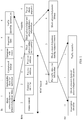
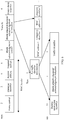
- FIG. 1 is a schematic structural diagram of an M-BA frame according to the prior art. As shown in FIG. 1 , the M-BA frame includes one or more piece of block acknowledgement/acknowledgement information.
- each piece of block acknowledgement/ acknowledgement information is sent to one STA for acknowledgement.
- the block acknowledgement/acknowledgement information is acknowledgement information.
- the AP sends an acknowledgement message for an aggregate-Media Access Control protocol data unit (aggregate medium access control protocol data unit, A-MPDU for short) sent by only one STA the block acknowledgement/acknowledgement information is block acknowledgement information.
- Each piece of block acknowledgement/acknowledgement information includes one association identifier (Association Identifier, AID for short).
- Each AID is a unique identifier allocated by the AP to a STA.
- the identifier is used to identify the STA. This indicates that the acknowledgement information is sent by the AP to the STA identified by the AID.
- the AP allocates the AID to the STA when establishing an association with the STA.
- a process in which an AP establishes an association with multiple STAs by means of OFDMA is as follows: First, the AP broadcasts a downlink trigger frame (Downlink Trigger).
- the downlink trigger frame indicates, by using a resource allocation indication bit, subchannels used by the multiple STAs to send association request messages.
- the AP cannot send an association acknowledgement message to the multiple STAs in the form of an M-BA.
- an association between the AP and a STA cannot be established, and communication reliability is reduced.
- Embodiments of the present invention provide an association establishment method and apparatus, so as to associate an AP with a STA, and further ensure communication reliability.
- an embodiment of the present invention provides an association establishment method, including: broadcasting, by an access point AP, a trigger frame, where the trigger frame is used to indicate one or more available subchannel and trigger multiple first stations STAs to perform uplink data transmission at the same time; receiving, by the AP, an association request message sent on a corresponding available subchannel by each of the multiple first STAs, where the association request message includes a Media Access Control MAC address of the first STA; broadcasting, by the AP, a multi-block acknowledgement M-BA frame, where the M-BA frame includes one or more piece of association acknowledgement information, and the association acknowledgement information is acknowledgement information of the association request message, where if the trigger frame includes a temporary identifier that is allocated by the AP to each available subchannel, the association acknowledgement information includes a MAC address of one or more second STA, so that each second STA determines that the association acknowledgement information is acknowledgement information sent by the AP to the second STA and uses a temporary identifier of
- the association acknowledgement information further includes the temporary identifier of the available subchannel corresponding to the second STA.
- the temporary identifier included in the association acknowledgement information is further used to indicate that the association acknowledgement information is the acknowledgement information of the association request message.
- the association acknowledgement information further includes a dummy association identifier, and the dummy association identifier is used to indicate that the association acknowledgement information is the acknowledgement information of the association request message.
- a special traffic identifier TID in the association acknowledgement information is further used to indicate that the association acknowledgement information is the acknowledgement information of the association request message.
- a special traffic identifier TID or all 4 bits of a TID in the association acknowledgement information indicates or indicate a quantity of second STAs to which the AP sends acknowledgement requests by using a same piece of association acknowledgement information.
- the association acknowledgement information further includes a statistical identifier, and the statistical identifier indicates a quantity of second STAs to which the AP sends acknowledgement requests by using a same piece of association acknowledgement information.
- the statistical identifier is located after per traffic identifier information in the association acknowledgement information.
- the statistical identifier occupies a bit reserved in block acknowledgement starting sequence control in the association acknowledgement information.
- an association establishment method including:
- the association acknowledgement information further includes a temporary identifier of the available subchannel corresponding to the second STA.
- the temporary identifier included in the association acknowledgement information is further used to indicate that the association acknowledgement information is the acknowledgement information of the association request message.
- the association acknowledgement information further includes a dummy association identifier, and the dummy association identifier is used to indicate that the association acknowledgement information is the acknowledgement information of the association request message.
- a special traffic identifier TID in the association acknowledgement information is further used to indicate that the association acknowledgement information is the acknowledgement information of the association request message.
- a special traffic identifier TID or all 4 bits of a TID in the association acknowledgement information indicates or indicate a quantity of second STAs to which the AP sends acknowledgement requests by using a same piece of association acknowledgement information.
- the association acknowledgement information further includes a statistical identifier, and the statistical identifier indicates a quantity of second STAs to which the AP sends acknowledgement requests by using a same piece of association acknowledgement information.
- the statistical identifier is located after per traffic identifier information in the association acknowledgement information.
- the statistical identifier occupies a bit reserved in block acknowledgement starting sequence control in the association acknowledgement information.
- an association establishment method including:
- the association request message further includes a MAC address of the first STA.
- the association acknowledgement information further includes a MAC address of the second STA.
- a special traffic identifier TID or all 4 bits of a TID in the association acknowledgement information indicates or indicate a quantity of second STAs to which the AP sends acknowledgement requests by using a same piece of association acknowledgement information.
- the association acknowledgement information further includes a statistical identifier, and the statistical identifier indicates a quantity of second STAs to which the AP sends acknowledgement requests by using a same piece of association acknowledgement information.
- the statistical identifier is located after per traffic identifier information in the association acknowledgement information.
- the statistical identifier occupies a bit reserved in block acknowledgement starting sequence control in the association acknowledgement information.
- an association establishment method including:
- the association request message further includes a Media Access Control MAC address of the first STA.
- the association acknowledgement information further includes a MAC address of the second STA.
- a special traffic identifier TID or all 4 bits of a TID in the association acknowledgement information indicates or indicate a quantity of second STAs to which the AP sends acknowledgement requests by using a same piece of association acknowledgement information.
- the association acknowledgement information further includes a statistical identifier, and the statistical identifier indicates a quantity of second STAs to which the AP sends acknowledgement requests by using a same piece of association acknowledgement information.
- the statistical identifier is located after per traffic identifier information in the association acknowledgement information.
- the statistical identifier occupies a bit reserved in block acknowledgement starting sequence control in the association acknowledgement information.
- an embodiment of the present invention provides an association establishment apparatus, where the apparatus is an access point AP, and includes:
- the association acknowledgement information further includes the temporary identifier of the available subchannel corresponding to the second STA.
- the temporary identifier included in the association acknowledgement information is further used to indicate that the association acknowledgement information is the acknowledgement information of the association request message.
- the association acknowledgement information further includes a dummy association identifier, and the dummy association identifier is used to indicate that the association acknowledgement information is the acknowledgement information of the association request message.
- a special traffic identifier TID in the association acknowledgement information is further used to indicate that the association acknowledgement information is the acknowledgement information of the association request message.
- a special traffic identifier TID or all 4 bits of a TID in the association acknowledgement information indicates or indicate a quantity of second STAs to which the AP sends acknowledgement requests by using a same piece of association acknowledgement information.
- the association acknowledgement information further includes a statistical identifier, and the statistical identifier indicates a quantity of second STAs to which the AP sends acknowledgement requests by using a same piece of association acknowledgement information.
- the statistical identifier is located after per traffic identifier information in the association acknowledgement information.
- the statistical identifier occupies a bit reserved in block acknowledgement starting sequence control in the association acknowledgement information.
- an embodiment of the present invention provides an association establishment apparatus, where the apparatus is a first station STA, and includes:
- the association acknowledgement information further includes a temporary identifier of the available subchannel corresponding to the second STA.
- the temporary identifier included in the association acknowledgement information is further used to indicate that the association acknowledgement information is the acknowledgement information of the association request message.
- the association acknowledgement information further includes a dummy association identifier, and the dummy association identifier is used to indicate that the association acknowledgement information is the acknowledgement information of the association request message.
- a special traffic identifier TID in the association acknowledgement information is further used to indicate that the association acknowledgement information is the acknowledgement information of the association request message.
- a special traffic identifier TID or all 4 bits of a TID in the association acknowledgement information indicates or indicate a quantity of second STAs to which the AP sends acknowledgement requests by using a same piece of association acknowledgement information.
- the association acknowledgement information further includes a statistical identifier, and the statistical identifier indicates a quantity of second STAs to which the AP sends acknowledgement requests by using a same piece of association acknowledgement information.
- the statistical identifier is located after per traffic identifier information in the association acknowledgement information.
- the statistical identifier occupies a bit reserved in block acknowledgement starting sequence control in the association acknowledgement information.
- an embodiment of the present invention provides an association establishment apparatus, where the apparatus is an access point AP, and includes:
- the association request message further includes a MAC address of the first STA.
- the association acknowledgement information further includes a MAC address of the second STA.
- a special traffic identifier TID or all 4 bits of a TID in the association acknowledgement information indicates or indicate a quantity of second STAs to which the AP sends acknowledgement requests by using a same piece of association acknowledgement information.
- the association acknowledgement information further includes a statistical identifier, and the statistical identifier indicates a quantity of second STAs to which the AP sends acknowledgement requests by using a same piece of association acknowledgement information.
- the statistical identifier is located after per traffic identifier information in the association acknowledgement information.
- the statistical identifier occupies a bit reserved in block acknowledgement starting sequence control in the association acknowledgement information.
- an association establishment apparatus where the apparatus is a first station STA, and includes:
- the association request message further includes a Media Access Control MAC address of the first STA.
- the association acknowledgement information further includes a MAC address of the second STA.
- a special traffic identifier TID or all 4 bits of a TID in the association acknowledgement information indicates or indicate a quantity of second STAs to which the AP sends acknowledgement requests by using a same piece of association acknowledgement information.
- the association acknowledgement information further includes a statistical identifier, and the statistical identifier indicates a quantity of second STAs to which the AP sends acknowledgement requests by using a same piece of association acknowledgement information.
- the statistical identifier is located after per traffic identifier information in the association acknowledgement information.
- the statistical identifier occupies a bit reserved in block acknowledgement starting sequence control in the association acknowledgement information.
- the embodiments of the present invention provide the association establishment method and apparatus.
- the method includes: broadcasting, by the access point AP, the trigger frame; receiving, by the AP, the association request message sent on the corresponding available subchannel by each of the multiple first stations STAs; broadcasting, by the AP, the multi-block acknowledgement M-BA frame, where the M-BA frame includes one or more piece of association acknowledgement information, and the association acknowledgement information is acknowledgement information of the association request message, where if the trigger frame includes the temporary identifier that is allocated by the AP to each available subchannel, the association acknowledgement information includes the MAC address of one or more second STA, so that each second STA uses the temporary identifier of the corresponding available subchannel as the first association identifier AID of the second STA; otherwise, the association acknowledgement information includes the MAC address of one or more second STA and the first AID that is allocated by the AP to the second STA; and sending, by the AP, the association response message to the second STA, where the association response message
- the AP adds a MAC address of a second STA to a piece of association acknowledgement information in the M-BA frame, provided that the second STA reads the MAC address of the second STA, it indicates that the association acknowledgement information is an acknowledgement of an association request sent by the second STA. In this way, the AP is associated with the STA, and communication reliability is ensured.
- the embodiments of the present invention are based on a wireless local area network (Wireless Local Area Network, WLAN for short) technology.
- An application scenario of the embodiments of the present invention is as follows: Before communicating with a STA, an AP needs to establish an association with the STA, and an important step of establishing an association is that the STA needs to obtain an AID allocated by the AP to the STA, where the AID is used to uniquely identify the STA.
- the AP receives association request messages sent by multiple STAs.
- the multiple STAs may send the association request messages based on an OFDMA technology.
- the AP may send an association acknowledgement message to the multiple STAs in two manners. A first manner is an OFDMA acknowledgement.
- the AP sends an acknowledgement ACK or a block acknowledgement BA to the multiple stations on orthogonal subchannels.
- the ACK is an acknowledgement of a single Media Access Control Protocol data unit (Media Access Control Protocol Data Unit, MPDU for short).
- the BA is an acknowledgement of an aggregate-Media Access Control Protocol data unit (Aggregate-Media Access Control Protocol Data Unit, A-MPDU for short).
- a second manner is an M-BA frame acknowledgement, which is a broadcast message. That is, the AP sends, to the STAs by means of broadcasting by using an M-BA frame, acknowledgements to be sent to the multiple STAs. As shown in FIG.
- the M-BA frame includes: a control frame (Control frame), duration/an identifier (duration/ID), a receive address (Receive Address, RA for short), a transmit address (Transmit Address, TA for short), block acknowledgement control (BA Control), block acknowledgement/acknowledgement information (Block Acknowledgement/Acknowledgement Information, BA/ACK Info for short), and a frame check sequence (Frame Check Sequence, FCS for short).
- a control frame Control frame
- duration/an identifier duration/an identifier
- a receive address Receiveive Address, RA for short
- a transmit address Transmit Address, TA for short
- BA Control block acknowledgement control
- block acknowledgement/acknowledgement information Block Acknowledgement/Acknowledgement Information
- BA/ACK Info for short
- FCS Frame Check Sequence
- the block acknowledgement control includes a block acknowledgement/acknowledgement policy (BA/ACK policy), a multi-traffic identifier (Multi-Traffic Identifier, Multi-TID for short), a compressed bitmap (compressed bitmap), groupcast with retries (GCR), a reserved (Reserved) field, and traffic identifier information (TID_).
- the TID info is used to indicate how much BA/ACK Info exists. Further, the BA/ACK Info includes per traffic identifier information (Per TID Info). When the BA/ACK Info is BA Info, the BA/ACK Info further includes block acknowledgement starting sequence control and a block acknowledgement bitmap.
- an AID of a STA is set in the first 11 bits of the Per TID Info, and is used to indicate a station to which the AP is to send an acknowledgement.
- the 12 th bit is a block acknowledgement/acknowledgement indication (BA/ACK Indication).
- the 13 th to the 16 th bits are a traffic identifier TID.
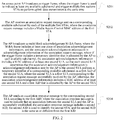
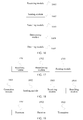
- FIG. 2 is a flowchart of an association establishment method according to an embodiment of the present invention. The method is performed by an AP. As shown in FIG. 2 , the method specifically includes the following procedure.
- the access point AP broadcasts a trigger frame, where the trigger frame is used to indicate one or more available subchannel and trigger multiple first stations STAs to perform uplink data transmission at the same time.
- the first STA herein is a STA with which the AP does not establish any association.
- the trigger frame broadcast by the AP may indicate, by using a resource allocation indication bit, which STAs transmit data on which available subchannels, or may indicate, by using a resource allocation indication bit, which available subchannels are used by the multiple first STAs by means of random access, so that the multiple first STAs contend for an available subchannel by using a random backoff algorithm.
- the trigger frame herein can only be the latter one. That is, the trigger frame indicates, by using a resource allocation indication bit, that one or more available subchannel is used by the multiple STAs by means of random access.
- the multiple first STAs may transmit uplink data at the same time in an OFDMA manner.
- the AP receives an association request message sent on a corresponding available subchannel by each of the multiple first STAs, where the association request message includes a Media Access Control (MAC) address of the first STA.
- MAC Media Access Control
- a first STA that receives the trigger frame sends an association request message by using an available subchannel. For example, a STA 1 and a STA 2 send association request messages on a subchannel 8. Certainly, the association request message carries a MAC address of the first STA.
- the AP broadcasts a multi-block acknowledgement M-BA frame, where the M-BA frame includes one or more piece of association acknowledgement information, and the association acknowledgement information is acknowledgement information of the association request message, where if the trigger frame includes a temporary identifier that is allocated by the AP to each available subchannel, the association acknowledgement information includes a MAC address of one or more second STA, so that each second STA determines that the association acknowledgement information is acknowledgement information sent by the AP to the second STA and uses a temporary identifier of a corresponding available subchannel as a first AID of the second STA, where the second STA is a first STA corresponding to the association request message successfully received by the AP; otherwise, the association acknowledgement information includes a MAC address of one or more second STA and a first AID that is allocated by the AP to the second STA.
- association acknowledgement information herein corresponds to block acknowledgement/acknowledgement information in FIG. 1 .
- block acknowledgement information in this embodiment of the present invention is a piece of association acknowledgement information that may be sent to multiple first STAs for acknowledgement at the same time, or may be sent to one first STA for acknowledgement.
- the AP when the AP receives association request messages that are sent on a same subchannel, the AP usually successfully receives a signal with a greatest signal-to-noise ratio.
- the STA 1 and the STA 2 each send an association request message on a subchannel 8, but a signal-to-noise ratio of the message sent by the STA 1 is greater than that of the message sent by the STA 2.
- the AP usually can receive only the message from the STA 1. According to different content included in the trigger frame, there may be the following two cases.
- Case 1 If the trigger frame includes the temporary identifier that is allocated by the AP to each available contention subchannel, the first STA that receives the trigger frame learns the temporary identifier of the available contention subchannel. In this case, after obtaining the subchannel by means of contention, the first STA obtains the temporary identifier of the subchannel, and uses, by default, the temporary identifier as a first AID of the first STA. In this case, the association acknowledgement information may include only the MAC address of the one or more second STA.
- the first STA After a first STA receives the M-BA frame, if the first STA reads a MAC address of the first STA from a piece of association acknowledgement information BA/ACK Info, it indicates that the association acknowledgement information BA/ACK Info is an acknowledgement of an association request message sent by the first STA.
- the first STA is a second STA.
- the second STA uses, as a first association identifier AID of the second STA, a temporary identifier of a subchannel previously used for sending an association request message.
- the second STA in this embodiment is the first STA corresponding to the association request message successfully received by the AP.
- the M-BA frame further includes the temporary identifier of the available subchannel corresponding to the second STA. That is, although the AP already broadcasts, in the trigger frame, the temporary identifier of each available subchannel, for guarantee, the AP adds, to the M-BA frame again, the temporary identifier of the available subchannel corresponding to the second STA.
- the association acknowledgement information includes the MAC address of the one or more second STA and the first AID that is allocated by the AP to the second STA.
- a first STA learns, by means of reading, that a piece of association acknowledgement information in the M-BA frame includes a MAC address of the first STA it indicates that the association acknowledgement information is an acknowledgement of an association request message sent by the first STA.
- the first STA obtains a first AID included in the association acknowledgement information that includes the MAC address of the first STA.
- the first AID in this embodiment of the present invention is equivalent to a temporary identifier allocated by the AP to the second STA.
- the AP sends an association response message to the corresponding second STA according to the first AID, where the association response message is used to indicate that an association between the second STA and the AP is successfully established, the association response message includes a second AID, the second AID is used to identify the second STA, and the second AID is the same as or different from the first AID.
- the M-BA frame broadcast by the AP is only a frame that includes association acknowledgement information.
- the AP further needs to send other information to the second STA, such as an enhanced distributed channel access (Enhanced Distributed Channel Access, EDCA for short) parameter, or a 20/40 basic service set (Basic Service Set, BSS for short) BSS.
- EDCA Enhanced Distributed Channel Access
- BSS Basic Service Set
- the AP may adjust the first AID previously allocated to the second STA, that is, reallocate a second AID to the second STA. Therefore, the foregoing first AID is referred to as the temporary identifier allocated by the AP to the second STA.
- the second AID herein may be the same as the first AID.
- This embodiment of the present invention provides the association establishment method, including: broadcasting, by the access point AP, the trigger frame; receiving, by the AP, the association request message sent on the corresponding available subchannel by each of the multiple first stations STAs; broadcasting, by the AP, the multi-block acknowledgement M-BA frame, where the M-BA frame includes one or more piece of association acknowledgement information, and the association acknowledgement information is acknowledgement information of the association request message, where if the trigger frame includes the temporary identifier that is allocated by the AP to each available contention subchannel, the association acknowledgement information includes the MAC address of one or more second STA, so that each second STA uses the temporary identifier of the corresponding available subchannel as the first association identifier AID of the second STA; otherwise, the association acknowledgement information includes the MAC address of one or more second STA and a first AID that is allocated by the AP to the second STA; and sending, by the AP, the association response message to the second STA in the downlink OFDMA manner, and
- the subchannel herein is any current available subchannel.
- the AP selects a better subchannel, to send an association response message to the STA.
- the association response message is used to indicate that an association between the second STA and the AP is successfully established.
- the AP adds a MAC address of a second STA to a piece of association acknowledgement information in the M-BA frame, provided that the second STA reads the MAC address of the second STA, it indicates that the association acknowledgement information is an acknowledgement of an association request sent by the second STA. In this way, the AP is associated with the STA, and communication reliability is ensured.
- one M-BA frame may include one or more piece of association acknowledgement information, or may include common acknowledgement information.
- the common acknowledgement information is not acknowledgement information of the association request message. The following describes in detail how to differentiate whether acknowledgement information in an M-BA frame is association acknowledgement information or common acknowledgement information.
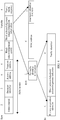
- FIG. 3A is a first schematic structural diagram of an M-BA frame according to an embodiment of the present invention. As shown in FIG. 3A , per traffic identifier information in block acknowledgement/acknowledgement information includes a temporary identifier.
- block acknowledgement/acknowledgement information BA/ACK Info in an M-BA frame broadcast by the AP usually may not be association acknowledgement information, and may be common acknowledgement information. Therefore, when receiving a trigger frame, a first STA learns a temporary identifier of an available subchannel, and uses the temporary identifier as a first AID of the first STA. Therefore, when receiving an M-BA frame, provided that the first STA identifies that the temporary identifier exists in a piece of block acknowledgement/acknowledgement information, the first STA can determine that the block acknowledgement/acknowledgement information is association acknowledgement information. Further, as shown in FIG. 3A , the block acknowledgement/acknowledgement information further includes a MAC address.
- FIG. 3B is a second schematic structural diagram of an M-BA frame according to an embodiment of the present invention.
- Per traffic identifier information in FIG. 3B includes a 4-bit MAC address.
- a first STA learns a temporary identifier of an available subchannel, and uses the temporary identifier as a first AID of the first STA. Therefore, when receiving an M-BA frame, provided that the first STA identifies that the temporary identifier exists in a piece of block acknowledgement/acknowledgement information, the first STA can determine that the block acknowledgement/acknowledgement information is association acknowledgement information.
- the first STA can determine, according to the temporary identifier, that the block acknowledgement/acknowledgement information is sent by the AP to the first STA. Still further, the first STA can determine, by comparing the 4-bit MAC address with a MAC address of the first STA, that the block acknowledgement/acknowledgement information is sent by the AP to the first STA.
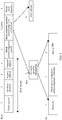
- the association acknowledgement information in the M-BA frame further includes a dummy association identifier, and the dummy association identifier is used to indicate that the association acknowledgement information is the acknowledgement information of the association request message.
- the dummy association identifier may be indicated by using 11 bits of 0, or may be a special identifier specified by the AP.
- FIG. 4 is a third schematic structural diagram of an M-BA frame according to an embodiment of the present invention. As shown in FIG. 4 , the dummy association identifier is located in the per traffic identifier information and occupies 11 bits, and may be indicated by using a special AID. For example, the dummy association identifier may be indicated by using 11 bits of 0.
- the first STA When the first STA receives a trigger frame M-BA frame, when the first STA determines that the dummy association identifier exists in a piece of block acknowledgement/acknowledgement information, the first STA determines that the block acknowledgement/acknowledgement information is association acknowledgement information. Further, as shown in FIG. 4 , a MAC address in the M-BA frame is located after the per traffic identifier information and occupies 6 bytes. In the two cases for the M-BA frame, the temporary identifier or the first AID may be located after the MAC address and occupy 2 bytes.
- the method for acknowledging an association request by means of the M-BA frame may be further extended to an acknowledgement other than an acknowledgement of a common data frame, for example, an acknowledgement of a sounding (sounding) beamforming matrix feedback frame, or an acknowledgement of an authentication request.
- the first 11 bits of a dummy association identifier in each traffic identifier field are used to indicate that the acknowledgement information is acknowledgement information of an acknowledgement other than an acknowledgement of a common data frame.
- the last 5 bits in each traffic identifier field may be redefined, and may be used to indicate a type of a frame to be acknowledged by using the acknowledgement information and a length that immediately follows each traffic identifier field.
- the length herein may be in unit of 1 byte, or may be in a unit of 2 bytes.
- 2 of the 5 bits are used to indicate four types of acknowledgement information, and 3 of the 5 bits are used to indicate the length that immediately follows each traffic identifier field.
- a segment acknowledgement bitmap (Segment ACK Bitmap) of 2 bytes immediately follows each traffic identifier field.
- FIG. 5 is a fourth schematic structural diagram of an M-BA frame according to an embodiment of the present invention.
- a TID is usually filled in the 13 th to the 16 th bits in per traffic identifier information.
- EDCA Enhanced Distributed Channel Access
- a TID whose values are 0 to 7 may indicate a normal TID, and a TID whose values are 8 to 15 is a special TID. Therefore, a special TID may be used to indicate that block acknowledgement/acknowledgement information is acknowledgement information of the association request message.
- a MAC address in the M-BA frame is located after the per traffic identifier information and occupies 6 bytes. When the trigger frame includes the temporary identifier allocated by the AP to each available subchannel, there may be no temporary identifier after the MAC address.
- FIG. 23 is an eighth schematic structural diagram of an M-BA frame according to an embodiment of the present invention.
- a TID is usually filled in the 13 th to the 16 th bits in per traffic identifier information.
- EDCA Enhanced Distributed Channel Access
- the bit is an association acknowledgement indication bit in FIG. 23 .
- the bit is the last bit in the TID. It may be understood that the bit may be any one of the 13 th to the 16 th bits in the per traffic identifier information.
- a value of the association indication bit may be specifically as follows: For example, if the bit is set to 1, it indicates that the block acknowledgement/acknowledgement information is acknowledgement information of the association request message; otherwise, it indicates that the block acknowledgement/acknowledgement information is not acknowledgement information of the association request message.
- a MAC address in the M-BA frame is located after per traffic identifier information and occupies 6 bytes. In this case, a first AID that is allocated by the AP to a station that successfully sends an association request is filled in an AID subfield in each traffic identifier field. It should be noted that a name of the first AID may be Pre-AID or another similar name.
- a piece of BA/ACK Info in one M-BA frame may include acknowledgements of association requests sent by multiple unassociated STAs. That is, the M-BA frame includes one piece of BA/ACK Info. The BA/ACK Info includes acknowledgements of association requests sent by multiple unassociated STAs.
- FIG. 6 is a fifth schematic structural diagram of an M-BA frame according to an embodiment of the present invention. As shown in FIG. 6 , the M-BA frame includes one piece of BA/ACK Info. The BA/ACK Info includes multiple MAC addresses and temporary identifiers or first AIDs corresponding to the MAC addresses. The following specifically describes how to determine a quantity of STAs to which the AP sends acknowledgement requests by using a same piece of association acknowledgement information.
- a temporary identifier/first AID may be further included; or if multiple MAC addresses follow, multiple temporary identifiers/first AIDs may be further included.
- 0 needs to be filled to ensure that a bit quantity required by the foregoing content is a multiple of 8. That is, 1 byte is used as a unit, or 10 bytes are used as a unit.
- FIG. 8 is a flowchart of an association establishment method according to another embodiment of the present invention.
- the method is performed by a first STA.
- the method specifically includes the following procedure.
- the first station STA receives a trigger frame broadcast by an access point AP, where the trigger frame is used to indicate one or more available subchannel and trigger multiple first stations STAs to perform uplink data transmission at the same time.
- the first STA herein is a STA with which the AP does not establish any association.
- the trigger frame broadcast by the AP may indicate, by using a resource allocation indication bit, which STAs transmit data on which available subchannels, or may indicate, by using a resource allocation indication bit, which available subchannels are used by the multiple first STAs by means of random access, so that the first STAs contend for an available subchannel by using a random backoff algorithm. Because no association is established between the AP and the first STA, the trigger frame can be only the latter one. That is, the trigger frame is used to indicate one or more available subchannel.
- the first STA sends an association request message on a corresponding available subchannel, where the association request message includes a Media Access Control MAC address of the first STA.
- the first STA receives a multi-block acknowledgement M-BA frame broadcast by the AP, where the M-BA frame includes one or more piece of association acknowledgement information, and the association acknowledgement information is acknowledgement information of the association request message.
- the M-BA frame includes a MAC address of one or more second STA; and if the first STA finds that the MAC address of the first STA is in the M-BA frame, the first STA determines that the association acknowledgement information is acknowledgement information sent by the AP to the first STA and uses a temporary identifier of a corresponding available subchannel as a first AID of the first STA; if the trigger frame includes no temporary identifier that is allocated by the AP to each available subchannel, the M-BA frame includes a MAC address of one or more second STA and a first AID that is allocated by the AP to the second STA; and if the first STA finds that the MAC address of the first STA is in the M-BA frame, the first STA obtains a first AID corresponding to the MAC address of the first STA, where the second STA is a STA corresponding to the association request message successfully
- the first STA searches the M-BA frame for a MAC address of the first STA. If the MAC address of the first STA is found, it indicates that acknowledgement information including the MAC address is sent by the AP to the first STA. In this case, there are two cases. In case 1, if the trigger frame includes the temporary identifier allocated by the AP to each available subchannel, when the first STA receives the trigger frame, the first STA already uses the temporary identifier as a first AID of the first STA. The first AID herein may be considered as a temporary identifier allocated by the AP to the first STA.
- the M-BA frame may further include a temporary identifier of a available subchannel corresponding to the second STA.
- the M-BA frame includes the MAC address of the one or more second STA and the first AID that is allocated by the AP to the second STA. If the first STA finds that the MAC address of the first STA is in the M-BA frame, the first STA obtains a first AID corresponding to the MAC address of the first STA.
- the first STA first determines, by using a temporary identifier in each traffic identifier, or a special TID, or 1 bit in a TID in block acknowledgement/acknowledgement information in the M-BA frame, or a dummy association identifier, whether the block acknowledgement/acknowledgement information is acknowledgement information of the association request message. Then, the first STA determines, by using a MAC address following each traffic identifier, whether the block acknowledgement/acknowledgement information is an association request sent to the first STA for acknowledgement.
- the first STA receives an association response message that is sent by the AP according to the first AID, where the association response message is used to indicate that an association between the first STA and the AP is successfully established, the association response message includes a second AID, the second AID is used to identify the first STA, and the second AID is the same as or different from the first AID.
- step S804 it is assumed that the AP successfully receives the association request message sent by the first STA. Therefore, in step S805, the first STA receives the association response message that is sent by the AP according to the first AID by means of OFDMA.
- the second AID included in the association response message is a final and actual AID allocated by the AP to the first STA. Subsequently, the AP may communicate with the first STA by using the second AID.
- This embodiment of the present invention provides the association establishment method, including: receiving, by the first station STA, the trigger frame broadcast by the access point AP; receiving, by the first STA, the multi-block acknowledgement M-BA frame broadcast by the AP, where if the trigger frame includes the temporary identifier that is allocated by the AP to each available subchannel, the M-BA frame includes the MAC address of one or more second STA; and if the first STA finds that the MAC address of the first STA is in the M-BA frame, the first STA determines that association acknowledgement information is the acknowledgement information sent by the AP to the first STA and uses the temporary identifier of the corresponding available subchannel as the first AID of the first STA; if the trigger frame includes no temporary identifier that is allocated by the AP to each available subchannel, the M-BA frame includes the MAC address of one or more second STA and the first AID that is allocated by the AP to the second STA; and if the first STA finds that a MAC address of the first
- the AP adds the MAC address to the association acknowledgement information of the M-BA frame, provided that the first STA reads the MAC address of the first STA, the first STA can determine that the acknowledgement information sent by the AP to the first STA exists in the association acknowledgement information, obtain the first AID, and finally, obtain the second AID. In this way, the AP is associated with the STA, and communication reliability is ensured.
- one M-BA frame may include one or more piece of association acknowledgement information, or may include common acknowledgement information.
- the common acknowledgement information is not acknowledgement information of the association request message. The following describes in detail how to differentiate whether acknowledgement information in an M-BA frame is association acknowledgement information or common acknowledgement information.
- the association acknowledgement information further includes the temporary identifier of the available subchannel corresponding to the second STA.
- the temporary identifier is further used to indicate that the association acknowledgement information is the acknowledgement information of the association request message.
- the first STA already uses, as a first AID of the first STA by default, a temporary identifier of a subchannel used when the first STA sends an association request message.
- the first STA learns, by means of reading, that a default temporary identifier obtained by the first STA is included in a piece of BA/ACK Info in the M-BA frame, it indicates that the BA/ACK Info is association acknowledgement information. As shown in FIG. 3A , the first STA reads a MAC address that is located after per traffic identifier information, and then determines whether the MAC address is a MAC address of the first STA. If the MAC address is the MAC address of the first STA, it indicates that the AP successfully receives the association request message from the first STA.
- the first STA may further determine, by using the temporary identifier, whether the acknowledgement information is sent to the first STA.
- the association acknowledgement information further includes a dummy association identifier.
- the dummy association identifier is used to indicate that the association acknowledgement information is the acknowledgement information of the association request message.
- the dummy association identifier may be indicated by using 11 bits of 0, or may be a special identifier specified by the AP.
- the BA/ACK Info in the M-BA frame is association acknowledgement information.
- the first STA reads a MAC address that is located after per traffic identifier information, and then, determines whether the MAC address is a MAC address of the first STA. If the MAC address is the MAC address of the first STA, it indicates that the AP successfully receives the association request message from the first STA.
- the association acknowledgement information further includes a special TID.
- the special TID is used to indicate that the association acknowledgement information is the acknowledgement information of the association request message.
- EDCA Enhanced Distributed Channel Access
- the first STA after receiving the M-BA frame, if the first STA reads a special TID, it is considered that the BA/ACK Info in the M-BA frame is association acknowledgement information.
- the first STA reads a MAC address that is located after per traffic identifier information, and then, determines whether the MAC address is a MAC address of the first STA. If the MAC address is the MAC address of the first STA, it indicates that the AP successfully receives the association request message from the first STA.
- the association acknowledgement information further includes an association acknowledgement indication.
- the association acknowledgement indication is 1 bit of a TID subfield in each traffic identifier field, and is used to indicate that the association acknowledgement information is the acknowledgement information of the association request message.
- the first STA After receiving the M-BA frame, if the first STA reads an association acknowledgement indication, and if the bit indication is association acknowledgement information, it is considered that the BA/ACK Info in the M-BA frame is association acknowledgement information.
- the first STA reads a MAC address that is located after per traffic identifier information, and then, determines whether the MAC address is a MAC address of the first STA.
- the STA obtains a first AID that is allocated by the AP in an AID subfield in each traffic identifier field by means of the M-BA frame.
- a piece of BA/ACK Info in one M-BA frame may include acknowledgements of association requests sent by multiple unassociated STAs. That is, the M-BA frame includes one piece of BA/ACK Info.
- the BA/ACK Info includes acknowledgements of association requests sent by multiple unassociated STAs. As shown in FIG. 6 , the M-BA frame includes one piece of BA/ACK Info.
- the block acknowledgement information includes multiple MAC addresses and temporary identifiers or first AIDs corresponding to the MAC addresses. The following specifically describes how to determine a quantity of STAs to which the AP sends acknowledgement requests by using a same piece of association acknowledgement information.
- a temporary identifier/first AID may be further included; or if multiple MAC addresses follow, multiple temporary identifiers/first AIDs may be further included.
- 0 needs to be filled to ensure that a bit quantity required by the foregoing content is a multiple of 8. That is, a byte is used as a unit, or 10 bytes are used as a unit.
- FIG. 9 is a schematic diagram of sending an association request message and an association acknowledgement message according to an embodiment of the present invention.
- the association acknowledgement message herein may be construed as an M-BA frame including one or more piece of association acknowledgement information.
- an AP broadcasts a trigger frame.
- the trigger frame indicates that available subchannels are a subchannel 1 to a subchannel 9.
- a STA 1 and STA 2 send respective association request messages by using a subchannel 8.
- the AP broadcasts an M-BA frame.
- the M-BA frame includes one or more piece of association acknowledgement information.
- the association acknowledgement information is acknowledgement information of an association request message.
- the STA 1 finds a MAC address of the STA 1 after reading a piece of association acknowledgement information. Then the STA 1 determines that the AP has successfully received an association request message sent by the STA 1, where the M-BA frame includes acknowledgement information for the STA 1, and the STA 1 obtains a first AID.
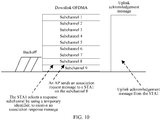
- FIG. 10 is a schematic diagram of sending an association response message and an acknowledgement message according to an embodiment of the present invention.
- an AP sends an association response message to a STA 1 by means of downlink OFDMA.
- a resource indication bit in downlink OFDMA indicates, by using a temporary identifier (first AID), that the STA 1 receives an association response on a subchannel.
- the subchannel is a subchannel 8. It may be understood that the subchannel selection method depends on which subchannel is better for the STA 1 to receive the association response.
- FIG. 11 is a flowchart of an association establishment method according to still another embodiment of the present invention.
- the method is performed by an AP.
- the method specifically includes the following procedure:
- the AP sends the association response message to the corresponding second STA according to the first AID in an OFDMA manner.
- the token identifier generated by each first STA occupies 11 bits. Therefore, the token identifiers are usually different from each other.
- the AP obtains the token identifier of each first STA. Because the token identifier may be the same as an AID of another STA already associated with the AP, the AP allocates a first AID to each first STA and broadcasts an M-BA frame.
- the association acknowledgement information includes a token identifier of one or more second STA and a first association identifier AID that is allocated by the AP to the second STA.
- a first STA finds a token identifier of the first STA, it indicates that the AP receives an association request message from the first STA, and the first STA may further read an M-BA frame, to obtain a first AID. Finally, the AP sends the association response message to the corresponding second STA according to the first AID by means of OFDMA.
- the association response message is used to indicate that an association between the second STA and the AP is successfully established.
- the association response message includes a second AID.
- This embodiment of the present invention provides the association establishment method.
- the AP allocates the first AID to the first STA according to the token identifier of the first STA. Therefore, the first STA can obtain the first AID provided that the first STA reads the token identifier of the first STA. Finally, the AP allocates a second AID to the first STA according to the first AID. In this way, the AP is associated with the first STA, and further communication reliability is ensured.
- FIG. 12 is a sixth schematic structural diagram of an M-BA frame according to an embodiment of the present invention.
- the M-BA frame includes a token identifier and a first AID.
- the token identifier further has a function:
- the token identifier may indicate that association acknowledgement information including the token identifier is acknowledgement information of an association request message.
- the M-BA frame further includes a MAC address.
- FIG. 13 is a seventh schematic structural diagram of an M-BA frame according to an embodiment of the present invention. As shown in FIG.
- the M-BA frame includes multiple token identifiers, multiple first AIDs, and a dummy association identifier.
- the dummy association identifier herein is used to identify that association acknowledgement information including the dummy association identifier is acknowledgement information of an association request message.
- the dummy association identifier may be indicated by using 11 bits of 0, or may be a special identifier specified by the AP.
- the M-BA frame may further include multiple MAC addresses.
- a token identifier and a first AID are included, a MAC address is optionally included, or if multiple token identifiers and multiple first AIDs are included, multiple MAC addresses are optionally included.
- 0 needs to be filled to ensure that a bit quantity required by the foregoing content is a multiple of 8. That is, a byte is used as a unit, or 10 bytes are used as a unit.
- association acknowledgement information may be acknowledgement information of the association request message.
- association acknowledgement information may be indicated, by using a dummy association identifier or a special traffic identifier TID, that the M-BA frame is acknowledgement information of the association request message. This is specifically the same as the manner in the foregoing embodiment. Details are not described herein again.
- association acknowledgement information is acknowledgement information of the association request message.
- a special traffic identifier TID or all 4 bits of a TID in the association acknowledgement information indicates or indicate a quantity of second STAs to which the AP sends acknowledgement requests by using a same piece of association acknowledgement information.
- the association acknowledgement information further includes a statistical identifier, and the statistical identifier indicates a quantity of second STAs to which the AP sends acknowledgement requests by using a same piece of association acknowledgement information.
- the statistical identifier is located after per traffic identifier information in the association acknowledgement information, or the statistical identifier occupies a bit reserved in block acknowledgement starting sequence control in the association acknowledgement information. This is specifically the same as the manner in the foregoing embodiment. Details are not described herein again.
- FIG. 14 is a flowchart of an association establishment method according to yet another embodiment of the present invention.
- the method is performed by a first STA.
- the method specifically includes the following procedure:
- the token identifier generated by the first STA occupies 11 bits.
- the first STA first checks whether the token identifier of the first STA is in per traffic identifier information in a piece of BA/ACK Info in the M-BA frame. If the token identifier of the first STA is in the per traffic identifier information, the first STA further reads a first AID located after the per traffic identifier information. The first AID is allocated by the AP to the first STA. Then, the first STA receives an association response message that is sent by the AP according to the first AID in an OFDMA manner. The association response message is used to indicate that an association between the first STA and the AP is successfully established.
- the association response message includes a second AID, the second AID is used to identify the first STA, and the second AID is the same as or different from the first AID.
- This embodiment of the present invention provides the association establishment method.
- the first STA generates the token identifier, so that the AP allocates the first AID to the first STA according to the token identifier of the first STA.
- the first STA can obtain the first AID provided that the first STA reads the token identifier of the first STA.
- the first STA is converted into a second STA.
- the AP sends an association response to the second STA according to the first AID by means of OFDMA, and allocates a second AID to the second STA. In this way, the AP is associated with the first STA, and further communication reliability is ensured.
- association request message further includes a MAC address of the first STA. Therefore, the association acknowledgement information further includes a MAC address of the second STA.
- association acknowledgement information may be acknowledgement information of the association request message.
- association acknowledgement information may be indicated, by using a dummy association identifier or a special traffic identifier TID, that the M-BA frame is acknowledgement information of the association request message. This is specifically the same as the manner in the foregoing embodiment. Details are not described herein again.
- association acknowledgement information is acknowledgement information of the association request message.
- a special traffic identifier TID or all 4 bits of a TID in the association acknowledgement information indicates or indicate a quantity of second STAs to which the AP sends acknowledgement requests by using a same piece of association acknowledgement information.
- the association acknowledgement information further includes a statistical identifier, and the statistical identifier indicates a quantity of second STAs to which the AP sends acknowledgement requests by using a same piece of association acknowledgement information.
- the statistical identifier is located after per traffic identifier information in the association acknowledgement information.
- the statistical identifier occupies a bit reserved in block acknowledgement starting sequence control in the association acknowledgement information. This is specifically the same as the manner in the foregoing embodiment. Details are not described herein again.
- FIG. 15 is a first schematic structural diagram of an association establishment apparatus according to an embodiment of the present invention.
- the apparatus is an access point AP, and includes:
- the association establishment apparatus provided in this embodiment can be configured to perform the method steps in the embodiment shown in FIG. 2 . Their implementation principles and technical effects are similar, and details are not described herein again.
- the association acknowledgement information further includes the temporary identifier of the available subchannel corresponding to the second STA.
- the temporary identifier included in the association acknowledgement information is further used to indicate that the association acknowledgement information is the acknowledgement information of the association request message.
- the association acknowledgement information further includes a dummy association identifier, and the dummy association identifier is used to indicate that the association acknowledgement information is the acknowledgement information of the association request message.
- a special traffic identifier TID in the association acknowledgement information is further used to indicate that the association acknowledgement information is the acknowledgement information of the association request message.
- 1 bit in a traffic identifier TID in the association acknowledgement information is further used to indicate that the association acknowledgement information is the acknowledgement information of the association request message.
- a special traffic identifier TID or all 4 bits of a TID in the association acknowledgement information indicates or indicate a quantity of second STAs to which the AP sends acknowledgement requests by using a same piece of association acknowledgement information.
- the association acknowledgement information further includes a statistical identifier, and the statistical identifier indicates a quantity of second STAs to which the AP sends acknowledgement requests by using a same piece of association acknowledgement information.
- the statistical identifier is located after per traffic identifier information in the association acknowledgement information, or the statistical identifier occupies a bit reserved in block acknowledgement starting sequence control in the association acknowledgement information.
- FIG. 16 is a second schematic structural diagram of an association establishment apparatus according to an embodiment of the present invention.
- the apparatus is a first station STA, and includes:
- the association establishment apparatus provided in this embodiment can be configured to perform the method steps in the embodiment shown in FIG. 8 . Their implementation principles and technical effects are similar, and details are not described herein again.
- the association acknowledgement information further includes the temporary identifier of the available subchannel corresponding to the second STA.
- the temporary identifier included in the association acknowledgement information is further used to indicate that the association acknowledgement information is the acknowledgement information of the association request message.
- the association acknowledgement information further includes a dummy association identifier, and the dummy association identifier is used to indicate that the association acknowledgement information is the acknowledgement information of the association request message.
- a special traffic identifier TID in the association acknowledgement information is further used to indicate that the association acknowledgement information is the acknowledgement information of the association request message.
- 1 bit in a traffic identifier TID in the association acknowledgement information is further used to indicate that the association acknowledgement information is the acknowledgement information of the association request message.
- a special traffic identifier TID or all 4 bits of a TID in the association acknowledgement information indicates or indicate a quantity of second STAs to which the AP sends acknowledgement requests by using a same piece of association acknowledgement information.
- the association acknowledgement information further includes a statistical identifier, and the statistical identifier indicates a quantity of second STAs to which the AP sends acknowledgement requests by using a same piece of association acknowledgement information.
- the statistical identifier is located after per traffic identifier information in the association acknowledgement information. Alternatively, the statistical identifier occupies a bit reserved in block acknowledgement starting sequence control in the association acknowledgement information.
- FIG. 17 is a third schematic structural diagram of an association establishment apparatus according to an embodiment of the present invention.
- the apparatus is an access point AP, includes:
- the association establishment apparatus provided in this embodiment can be configured to perform the method steps in the embodiment shown in FIG. 13 . Their implementation principles and technical effects are similar, and details are not described herein again.
- association request message further includes a MAC address of the first STA.
- the association acknowledgement information further includes a MAC address of the second STA.
- a special traffic identifier TID or all 4 bits of a TID in the association acknowledgement information indicates or indicate a quantity of second STAs to which the AP sends acknowledgement requests by using a same piece of association acknowledgement information.
- the association acknowledgement information further includes a statistical identifier
- the statistical identifier indicates a quantity of second STAs to which the AP sends acknowledgement requests by using a same piece of association acknowledgement information.
- the statistical identifier is located after per traffic identifier information in the association acknowledgement information.
- the statistical identifier occupies a bit reserved in block acknowledgement starting sequence control in the association acknowledgement information.
- FIG. 18 is a fourth schematic structural diagram of an association establishment apparatus according to an embodiment of the present invention.
- the apparatus is a first station STA, and includes:
- the association establishment apparatus provided in this embodiment can be configured to perform the method steps in the embodiment shown in FIG. 14 . Their implementation principles and technical effects are similar, and details are not described herein again.
- association request message further includes a Media Access Control MAC address of the first STA.
- the association acknowledgement information further includes a MAC address of the second STA.
- a special traffic identifier TID or all 4 bits of a TID in the association acknowledgement information indicates or indicate a quantity of second STAs to which the AP sends acknowledgement requests by using a same piece of association acknowledgement information.
- the association acknowledgement information further includes a statistical identifier
- the statistical identifier indicates a quantity of second STAs to which the AP sends acknowledgement requests by using a same piece of association acknowledgement information.
- the statistical identifier is located after per traffic identifier information in the association acknowledgement information.
- the statistical identifier occupies a bit reserved in block acknowledgement starting sequence control in the association acknowledgement information.
- FIG. 19 is a fifth schematic structural diagram of an association establishment apparatus according to an embodiment of the present invention.
- the apparatus is an access point AP, and includes:
- the association establishment apparatus provided in this embodiment can be configured to perform the method steps in the embodiment shown in FIG. 2 . Their implementation principles and technical effects are similar, and details are not described herein again.
- the association acknowledgement information further includes the temporary identifier of the available subchannel corresponding to the second STA.
- the temporary identifier included in the association acknowledgement information is further used to indicate that the association acknowledgement information is the acknowledgement information of the association request message.
- the association acknowledgement information further includes a dummy association identifier, and the dummy association identifier is used to indicate that the association acknowledgement information is the acknowledgement information of the association request message.
- a special traffic identifier TID in the association acknowledgement information is further used to indicate that the association acknowledgement information is the acknowledgement information of the association request message.
- 1 bit in a traffic identifier TID in the association acknowledgement information is further used to indicate that the association acknowledgement information is the acknowledgement information of the association request message.
- a special traffic identifier TID or all 4 bits of a TID in the association acknowledgement information indicates or indicate a quantity of second STAs to which the AP sends acknowledgement requests by using a same piece of association acknowledgement information.
- the association acknowledgement information further includes a statistical identifier, and the statistical identifier indicates a quantity of second STAs to which the AP sends acknowledgement requests by using a same piece of association acknowledgement information.
- the statistical identifier is located after per traffic identifier information in the association acknowledgement information, or the statistical identifier occupies a bit reserved in block acknowledgement starting sequence control in the association acknowledgement information.
- FIG. 20 is a sixth schematic structural diagram of an association establishment apparatus according to an embodiment of the present invention.
- the apparatus is a first station STA, and includes:
- the association establishment apparatus provided in this embodiment can be configured to perform the method steps in the embodiment shown in FIG. 8 . Their implementation principles and technical effects are similar, and details are not described herein again.
- the association acknowledgement information further includes the temporary identifier of the available subchannel corresponding to the second STA.
- the temporary identifier included in the association acknowledgement information is further used to indicate that the association acknowledgement information is the acknowledgement information of the association request message.
- the association acknowledgement information further includes a dummy association identifier, and the dummy association identifier is used to indicate that the association acknowledgement information is the acknowledgement information of the association request message.
- a special traffic identifier TID in the association acknowledgement information is further used to indicate that the association acknowledgement information is the acknowledgement information of the association request message.
- 1 bit in a traffic identifier TID in the association acknowledgement information is further used to indicate that the association acknowledgement information is the acknowledgement information of the association request message.
- a special traffic identifier TID or all 4 bits of a TID in the association acknowledgement information indicates or indicate a quantity of second STAs to which the AP sends acknowledgement requests by using a same piece of association acknowledgement information.
- the association acknowledgement information further includes a statistical identifier, and the statistical identifier indicates a quantity of second STAs to which the AP sends acknowledgement requests by using a same piece of association acknowledgement information.
- the statistical identifier is located after per traffic identifier information in the association acknowledgement information. Alternatively, the statistical identifier occupies a bit reserved in block acknowledgement starting sequence control in the association acknowledgement information.
- FIG. 21 is a seventh schematic structural diagram of an association establishment apparatus according to an embodiment of the present invention.
- the apparatus is an access point AP, and includes:
- the association establishment apparatus provided in this embodiment can be configured to perform the method steps in the embodiment shown in FIG. 13 . Their implementation principles and technical effects are similar, and details are not described herein again.
- association request message further includes a MAC address of the first STA.
- the association acknowledgement information further includes a MAC address of the second STA.
- a special traffic identifier TID or all 4 bits of a TID in the association acknowledgement information indicates or indicate a quantity of second STAs to which the AP sends acknowledgement requests by using a same piece of association acknowledgement information.
- the association acknowledgement information further includes a statistical identifier
- the statistical identifier indicates a quantity of second STAs to which the AP sends acknowledgement requests by using a same piece of association acknowledgement information.
- the statistical identifier is located after per traffic identifier information in the association acknowledgement information.
- the statistical identifier occupies a bit reserved in block acknowledgement starting sequence control in the association acknowledgement information.
- FIG. 22 is an eighth schematic structural diagram of an association establishment apparatus according to an embodiment of the present invention.
- the apparatus is a first station STA, and includes:
- the association establishment apparatus provided in this embodiment can be configured to perform the method steps in the embodiment shown in FIG. 14 . Their implementation principles and technical effects are similar, and details are not described herein again.
- association request message further includes a Media Access Control MAC address of the first STA.
- the association acknowledgement information further includes a MAC address of the second STA.
- a special traffic identifier TID or all 4 bits of a TID in the association acknowledgement information indicates or indicate a quantity of second STAs to which the AP sends acknowledgement requests by using a same piece of association acknowledgement information.
- the association acknowledgement information further includes a statistical identifier
- the statistical identifier indicates a quantity of second STAs to which the AP sends acknowledgement requests by using a same piece of association acknowledgement information.
- the statistical identifier is located after per traffic identifier information in the association acknowledgement information.
- the statistical identifier occupies a bit reserved in block acknowledgement starting sequence control in the association acknowledgement information.
- the program may be stored in a computer-readable storage medium.
- the foregoing storage medium includes: any medium that can store program code, such as a ROM, a RAM, a magnetic disk, or an optical disc.
Landscapes
- Engineering & Computer Science (AREA)
- Signal Processing (AREA)
- Computer Networks & Wireless Communication (AREA)
- Mobile Radio Communication Systems (AREA)
- Detection And Prevention Of Errors In Transmission (AREA)
- Transition And Organic Metals Composition Catalysts For Addition Polymerization (AREA)
- Supplying Of Containers To The Packaging Station (AREA)
- Communication Control (AREA)
Priority Applications (1)
| Application Number | Priority Date | Filing Date | Title |
|---|---|---|---|
| EP22178080.2A EP4123940B1 (de) | 2015-07-02 | 2015-07-15 | Übergangslose computerlesbare medien zur assoziationsherstellung |
Applications Claiming Priority (2)
| Application Number | Priority Date | Filing Date | Title |
|---|---|---|---|
| CN2015083228 | 2015-07-02 | ||
| PCT/CN2015/084156 WO2017000324A1 (zh) | 2015-07-02 | 2015-07-15 | 关联的建立方法及装置 |
Related Child Applications (2)
| Application Number | Title | Priority Date | Filing Date |
|---|---|---|---|
| EP22178080.2A Division-Into EP4123940B1 (de) | 2015-07-02 | 2015-07-15 | Übergangslose computerlesbare medien zur assoziationsherstellung |
| EP22178080.2A Division EP4123940B1 (de) | 2015-07-02 | 2015-07-15 | Übergangslose computerlesbare medien zur assoziationsherstellung |
Publications (3)
| Publication Number | Publication Date |
|---|---|
| EP3301990A1 true EP3301990A1 (de) | 2018-04-04 |
| EP3301990A4 EP3301990A4 (de) | 2018-05-30 |
| EP3301990B1 EP3301990B1 (de) | 2022-08-31 |
Family
ID=57607607
Family Applications (2)
| Application Number | Title | Priority Date | Filing Date |
|---|---|---|---|
| EP22178080.2A Active EP4123940B1 (de) | 2015-07-02 | 2015-07-15 | Übergangslose computerlesbare medien zur assoziationsherstellung |
| EP15896854.5A Active EP3301990B1 (de) | 2015-07-02 | 2015-07-15 | Assoziationserstellungsverfahren und -vorrichtung |
Family Applications Before (1)
| Application Number | Title | Priority Date | Filing Date |
|---|---|---|---|
| EP22178080.2A Active EP4123940B1 (de) | 2015-07-02 | 2015-07-15 | Übergangslose computerlesbare medien zur assoziationsherstellung |
Country Status (13)
| Country | Link |
|---|---|
| US (4) | US10917924B2 (de) |
| EP (2) | EP4123940B1 (de) |
| JP (1) | JP6573290B2 (de) |
| KR (1) | KR102040072B1 (de) |
| CN (2) | CN107852745B (de) |
| AU (1) | AU2015401086B2 (de) |
| CA (1) | CA2990487C (de) |
| ES (1) | ES2931339T3 (de) |
| MX (1) | MX384374B (de) |
| PL (1) | PL3301990T3 (de) |
| RU (1) | RU2681349C1 (de) |
| WO (1) | WO2017000324A1 (de) |
| ZA (1) | ZA201800025B (de) |
Cited By (3)
| Publication number | Priority date | Publication date | Assignee | Title |
|---|---|---|---|---|
| WO2018160262A1 (en) * | 2017-03-03 | 2018-09-07 | Qualcomm Incorporated | Random access request regulation techniques for wireless stations |
| CN108990170A (zh) * | 2018-07-20 | 2018-12-11 | 新华三技术有限公司 | Mesh链路建立方法、装置、胖AP及存储介质 |
| EP3618525A4 (de) * | 2017-04-28 | 2020-12-09 | ZTE Corporation | Verfahren und vorrichtung zur übertragung von funkrahmen |
Families Citing this family (27)
| Publication number | Priority date | Publication date | Assignee | Title |
|---|---|---|---|---|
| EP3229543B1 (de) | 2014-12-01 | 2021-05-05 | Kabushiki Kaisha Toshiba | Drahtloses kommunikationsgerät |
| WO2016088726A1 (ja) | 2014-12-01 | 2016-06-09 | 株式会社 東芝 | 無線通信端末及び無線通信方法 |
| WO2016204574A1 (ko) * | 2015-06-17 | 2016-12-22 | 주식회사 윌러스표준기술연구소 | 복수의 무선 통신 단말로부터 데이터를 수신하는 무선 통신 방법 및 무선 통신 단말 |
| CN107852745B (zh) * | 2015-07-02 | 2020-03-31 | 华为技术有限公司 | 关联的建立方法及装置 |
| US10966180B2 (en) | 2015-07-07 | 2021-03-30 | Kabushiki Kaisha Toshiba | Wireless device and wireless communication method |
| WO2017043179A1 (ja) | 2015-09-09 | 2017-03-16 | ソニー株式会社 | 通信装置および通信方法 |
| US10218483B2 (en) * | 2015-09-25 | 2019-02-26 | Qualcomm Incorporated | Systems and methods for signaling and generating variable length block acknowledgment fields in a wireless network |
| JP6619311B2 (ja) | 2015-10-30 | 2019-12-11 | 株式会社東芝 | 無線通信装置および無線通信方法 |
| US10420148B2 (en) | 2015-10-30 | 2019-09-17 | Kabushiki Kaisha Toshiba | Wireless communication terminal and wireless communication method |
| KR102734276B1 (ko) | 2016-05-11 | 2024-11-27 | 주식회사 윌러스표준기술연구소 | 랜덤 액세스 기반의 상향 다중 사용자 전송을 위한 무선 통신 단말 및 무선 통신 방법 |
| KR102549027B1 (ko) | 2016-05-11 | 2023-06-29 | 주식회사 윌러스표준기술연구소 | Ack를 전송하는 무선 통신 방법 및 이를 사용하는 무선 통신 단말 |
| US10484159B2 (en) * | 2016-06-24 | 2019-11-19 | Qualcomm Incorporated | Methods and systems for acknowledgment configuration |
| CN105978675B (zh) * | 2016-06-24 | 2019-01-08 | 西安电子科技大学 | 基于正交频分多址上行接入方法 |
| KR102284858B1 (ko) | 2018-02-23 | 2021-07-30 | 주식회사 엘지에너지솔루션 | 전극합제 슬러리의 상 안정성을 평가하는 방법 |
| CN110536469B (zh) * | 2018-05-23 | 2024-06-25 | 华为技术有限公司 | 基于多接入点ap协作的空间复用的方法和装置 |
| GB2585231B (en) * | 2019-07-04 | 2022-09-07 | Canon Kk | Temporary aids for unassociated stations in communication networks |
| US11765577B2 (en) * | 2019-07-12 | 2023-09-19 | Apple Inc. | Identity obscuration for a wireless station |
| EP4021087A4 (de) * | 2019-08-23 | 2023-04-19 | Beijing Xiaomi Mobile Software Co., Ltd. | Downlink-daten-cache-angabeverfahren und -vorrichtung und downlink-daten-cache-erfassungsverfahren und -vorrichtung |
| US11497040B2 (en) * | 2020-04-09 | 2022-11-08 | Cypress Semiconductor Corporation | Scheduling of network traffic for wireless communications devices |
| US12520285B2 (en) | 2020-06-25 | 2026-01-06 | Apple Inc. | Low-latency communication in a WLAN |
| WO2022019466A1 (ko) * | 2020-07-22 | 2022-01-27 | 엘지전자 주식회사 | 멀티 링크 장치를 위한 파워 상태 정보의 전송 |
| CN115623426B (zh) | 2020-07-27 | 2023-07-11 | 华为技术有限公司 | 适用于多链路的组播业务传输方法及装置 |
| CN111741459B (zh) | 2020-08-03 | 2020-12-01 | 成都极米科技股份有限公司 | 多链路终端及其地址分配的方法、网络接入设备及介质 |
| CN116017566B (zh) | 2020-08-07 | 2023-11-28 | 华为技术有限公司 | 适用于多链路的单播业务指示方法及相关装置 |
| US20240324035A1 (en) * | 2021-01-18 | 2024-09-26 | Beijing Xiaomi Mobile Software Co., Ltd. | Communication method and communication device |
| CN120358481A (zh) * | 2022-01-25 | 2025-07-22 | 华为技术有限公司 | 分配aid的方法、装置和系统 |
| CN115843001A (zh) * | 2022-08-03 | 2023-03-24 | 中兴通讯股份有限公司 | 一种通信方法、装置、通信节点及存储介质 |
Family Cites Families (20)
| Publication number | Priority date | Publication date | Assignee | Title |
|---|---|---|---|---|
| KR101088620B1 (ko) * | 2006-04-24 | 2011-11-30 | 노키아 코포레이션 | 무선 네트워크에서의 신뢰할 수 있는 멀티캐스트/브로드캐스트용 장치 및 방법 |
| US8578159B2 (en) | 2006-09-07 | 2013-11-05 | Motorola Solutions, Inc. | Method and apparatus for establishing security association between nodes of an AD HOC wireless network |
| WO2009157901A1 (en) * | 2008-06-26 | 2009-12-30 | Thomson Licensing | Apparatus for requesting acknowledgement and transmitting acknowledgement of multicast data in wireless local area networks |
| CN101656599B (zh) * | 2008-08-19 | 2012-10-03 | 富士通株式会社 | 子信道选择方法和装置及使用该装置的接收机 |
| CN101730107B (zh) * | 2010-01-29 | 2012-07-25 | 北京新岸线无线技术有限公司 | 一种无线局域网的接入方法及系统 |
| US8989213B2 (en) * | 2010-09-15 | 2015-03-24 | Qualcomm Incorporated | Physical layer header with access point identifier |
| CN102769854B (zh) * | 2011-05-05 | 2015-04-01 | 中国科学院微电子研究所 | 一种超高速wlan网络的传输方法 |
| US9503976B2 (en) | 2011-11-24 | 2016-11-22 | Lg Electronics Inc. | Grouping-based data transceiving method in wireless LAN system and apparatus for supporting same |
| US9538368B2 (en) * | 2011-11-24 | 2017-01-03 | Lg Electronics Inc. | Method for transceiving data on basis of grouping in wireless LAN system, and device for supporting same |
| US9608789B2 (en) * | 2012-05-11 | 2017-03-28 | Interdigital Patent Holdings, Inc. | Method and apparatus for transmitting acknowledgements in response to received frames |
| US20140071959A1 (en) * | 2012-09-07 | 2014-03-13 | Nokia Corporation | Method, apparatus, and computer program product for coexistence of wireless networks |
| US9853794B2 (en) * | 2013-02-20 | 2017-12-26 | Qualcomm, Incorporated | Acknowledgement (ACK) type indication and deferral time determination |
| CN104023316B (zh) * | 2013-03-01 | 2017-11-17 | 华为技术有限公司 | 组播信息传输方法及设备 |
| US20160173662A1 (en) * | 2013-08-20 | 2016-06-16 | Lg Electronics Inc. | Method and device for transmitting and receiving short frame fragment in wireless lan system |
| KR102550558B1 (ko) * | 2014-06-27 | 2023-07-05 | 주식회사 윌러스표준기술연구소 | 데이터 동시 전송을 위한 무선 통신 방법 및 이를 이용한 무선 통신 단말 |
| US9699807B2 (en) * | 2014-11-19 | 2017-07-04 | Intel IP Corporation | High-efficiency Wi-Fi (HEW) station and access point (AP) and method for random access contention |
| EP3266136B1 (de) * | 2015-03-06 | 2025-08-27 | InterDigital Patent Holdings, Inc. | Kurzpaketoptimierung in wlan-systemen |
| WO2016167438A1 (ko) * | 2015-04-15 | 2016-10-20 | 엘지전자 주식회사 | 무선랜 시스템에서 신호를 송수신하는 방법 및 이를 위한 장치 |
| WO2016204574A1 (ko) * | 2015-06-17 | 2016-12-22 | 주식회사 윌러스표준기술연구소 | 복수의 무선 통신 단말로부터 데이터를 수신하는 무선 통신 방법 및 무선 통신 단말 |
| CN107852745B (zh) * | 2015-07-02 | 2020-03-31 | 华为技术有限公司 | 关联的建立方法及装置 |
-
2015
- 2015-07-15 CN CN201580081050.XA patent/CN107852745B/zh active Active
- 2015-07-15 AU AU2015401086A patent/AU2015401086B2/en active Active
- 2015-07-15 MX MX2018000045A patent/MX384374B/es unknown
- 2015-07-15 PL PL15896854.5T patent/PL3301990T3/pl unknown
- 2015-07-15 CN CN202010169913.1A patent/CN111491395B/zh active Active
- 2015-07-15 EP EP22178080.2A patent/EP4123940B1/de active Active
- 2015-07-15 RU RU2018103929A patent/RU2681349C1/ru active
- 2015-07-15 EP EP15896854.5A patent/EP3301990B1/de active Active
- 2015-07-15 ES ES15896854T patent/ES2931339T3/es active Active
- 2015-07-15 JP JP2017567698A patent/JP6573290B2/ja active Active
- 2015-07-15 WO PCT/CN2015/084156 patent/WO2017000324A1/zh not_active Ceased
- 2015-07-15 KR KR1020187002488A patent/KR102040072B1/ko active Active
- 2015-07-15 CA CA2990487A patent/CA2990487C/en active Active
-
2018
- 2018-01-02 US US15/860,297 patent/US10917924B2/en active Active
- 2018-01-03 ZA ZA201800025A patent/ZA201800025B/en unknown
-
2020
- 2020-12-30 US US17/138,446 patent/US11375556B2/en active Active
-
2022
- 2022-05-23 US US17/751,358 patent/US11770867B2/en active Active
-
2023
- 2023-08-11 US US18/448,768 patent/US12101831B2/en active Active
Cited By (4)
| Publication number | Priority date | Publication date | Assignee | Title |
|---|---|---|---|---|
| WO2018160262A1 (en) * | 2017-03-03 | 2018-09-07 | Qualcomm Incorporated | Random access request regulation techniques for wireless stations |
| EP3618525A4 (de) * | 2017-04-28 | 2020-12-09 | ZTE Corporation | Verfahren und vorrichtung zur übertragung von funkrahmen |
| CN108990170A (zh) * | 2018-07-20 | 2018-12-11 | 新华三技术有限公司 | Mesh链路建立方法、装置、胖AP及存储介质 |
| CN108990170B (zh) * | 2018-07-20 | 2020-08-28 | 新华三技术有限公司 | Mesh链路建立方法、装置、胖AP及存储介质 |
Also Published As
Similar Documents
| Publication | Publication Date | Title |
|---|---|---|
| US11770867B2 (en) | Association establishment method and apparatus | |
| US10225865B2 (en) | Method for predetermining resource in random access, user equipment, and base station | |
| US9736814B2 (en) | Resource configuration method and apparatus | |
| CN102668683B (zh) | 针对mtc的网络接入方法和系统 | |
| US9750063B2 (en) | Connection setup method, apparatus, and system | |
| CN101946552B (zh) | 无线通信方法、基站装置及无线通信系统 | |
| JP5410645B2 (ja) | ワイヤレスネットワークパケットリソースをワイヤレス端末に割り振るための方法および装置 | |
| EP3070858B1 (de) | Datenübertragungsverfahren und -vorrichtung | |
| US10834775B2 (en) | Network access method, access device, and terminal device | |
| JP6449954B2 (ja) | ランダムアクセスにおいてリソースを事前決定するための方法、ユーザ機器、および基地局 | |
| CN111512581B (zh) | 用于ndp反馈的装置和方法 | |
| BR112017028237B1 (pt) | Método e aparelho de estabelecimento de associação |
Legal Events
| Date | Code | Title | Description |
|---|---|---|---|
| STAA | Information on the status of an ep patent application or granted ep patent |
Free format text: STATUS: THE INTERNATIONAL PUBLICATION HAS BEEN MADE |
|
| PUAI | Public reference made under article 153(3) epc to a published international application that has entered the european phase |
Free format text: ORIGINAL CODE: 0009012 |
|
| STAA | Information on the status of an ep patent application or granted ep patent |
Free format text: STATUS: REQUEST FOR EXAMINATION WAS MADE |
|
| 17P | Request for examination filed |
Effective date: 20171229 |
|
| AK | Designated contracting states |
Kind code of ref document: A1 Designated state(s): AL AT BE BG CH CY CZ DE DK EE ES FI FR GB GR HR HU IE IS IT LI LT LU LV MC MK MT NL NO PL PT RO RS SE SI SK SM TR |
|
| AX | Request for extension of the european patent |
Extension state: BA ME |
|
| A4 | Supplementary search report drawn up and despatched |
Effective date: 20180504 |
|
| RIC1 | Information provided on ipc code assigned before grant |
Ipc: H04W 72/04 20090101ALI20180426BHEP Ipc: H04W 84/12 20090101ALI20180426BHEP Ipc: H04W 74/00 20090101AFI20180426BHEP Ipc: H04L 1/16 20060101ALI20180426BHEP Ipc: H04W 74/08 20090101ALI20180426BHEP |
|
| DAV | Request for validation of the european patent (deleted) | ||
| DAX | Request for extension of the european patent (deleted) | ||
| STAA | Information on the status of an ep patent application or granted ep patent |
Free format text: STATUS: EXAMINATION IS IN PROGRESS |
|
| 17Q | First examination report despatched |
Effective date: 20190903 |
|
| REG | Reference to a national code |
Ref country code: DE Ref legal event code: R079 Ref document number: 602015080634 Country of ref document: DE Free format text: PREVIOUS MAIN CLASS: H04W0074040000 Ipc: H04L0001160000 |
|
| RIC1 | Information provided on ipc code assigned before grant |
Ipc: H04W 84/12 20090101ALN20220119BHEP Ipc: H04L 1/16 20060101AFI20220119BHEP |
|
| GRAP | Despatch of communication of intention to grant a patent |
Free format text: ORIGINAL CODE: EPIDOSNIGR1 |
|
| STAA | Information on the status of an ep patent application or granted ep patent |
Free format text: STATUS: GRANT OF PATENT IS INTENDED |
|
| INTG | Intention to grant announced |
Effective date: 20220307 |
|
| GRAS | Grant fee paid |
Free format text: ORIGINAL CODE: EPIDOSNIGR3 |
|
| GRAA | (expected) grant |
Free format text: ORIGINAL CODE: 0009210 |
|
| STAA | Information on the status of an ep patent application or granted ep patent |
Free format text: STATUS: THE PATENT HAS BEEN GRANTED |
|
| AK | Designated contracting states |
Kind code of ref document: B1 Designated state(s): AL AT BE BG CH CY CZ DE DK EE ES FI FR GB GR HR HU IE IS IT LI LT LU LV MC MK MT NL NO PL PT RO RS SE SI SK SM TR |
|
| REG | Reference to a national code |
Ref country code: CH Ref legal event code: EP Ref country code: GB Ref legal event code: FG4D |
|
| REG | Reference to a national code |
Ref country code: AT Ref legal event code: REF Ref document number: 1516085 Country of ref document: AT Kind code of ref document: T Effective date: 20220915 |
|
| REG | Reference to a national code |
Ref country code: DE Ref legal event code: R096 Ref document number: 602015080634 Country of ref document: DE |
|
| REG | Reference to a national code |
Ref country code: IE Ref legal event code: FG4D |
|
| REG | Reference to a national code |
Ref country code: NL Ref legal event code: FP |
|
| REG | Reference to a national code |
Ref country code: LT Ref legal event code: MG9D |
|
| REG | Reference to a national code |
Ref country code: ES Ref legal event code: FG2A Ref document number: 2931339 Country of ref document: ES Kind code of ref document: T3 Effective date: 20221228 |
|
| PG25 | Lapsed in a contracting state [announced via postgrant information from national office to epo] |
Ref country code: SE Free format text: LAPSE BECAUSE OF FAILURE TO SUBMIT A TRANSLATION OF THE DESCRIPTION OR TO PAY THE FEE WITHIN THE PRESCRIBED TIME-LIMIT Effective date: 20220831 Ref country code: RS Free format text: LAPSE BECAUSE OF FAILURE TO SUBMIT A TRANSLATION OF THE DESCRIPTION OR TO PAY THE FEE WITHIN THE PRESCRIBED TIME-LIMIT Effective date: 20220831 Ref country code: NO Free format text: LAPSE BECAUSE OF FAILURE TO SUBMIT A TRANSLATION OF THE DESCRIPTION OR TO PAY THE FEE WITHIN THE PRESCRIBED TIME-LIMIT Effective date: 20221130 Ref country code: LV Free format text: LAPSE BECAUSE OF FAILURE TO SUBMIT A TRANSLATION OF THE DESCRIPTION OR TO PAY THE FEE WITHIN THE PRESCRIBED TIME-LIMIT Effective date: 20220831 Ref country code: LT Free format text: LAPSE BECAUSE OF FAILURE TO SUBMIT A TRANSLATION OF THE DESCRIPTION OR TO PAY THE FEE WITHIN THE PRESCRIBED TIME-LIMIT Effective date: 20220831 Ref country code: FI Free format text: LAPSE BECAUSE OF FAILURE TO SUBMIT A TRANSLATION OF THE DESCRIPTION OR TO PAY THE FEE WITHIN THE PRESCRIBED TIME-LIMIT Effective date: 20220831 |
|
| REG | Reference to a national code |
Ref country code: AT Ref legal event code: MK05 Ref document number: 1516085 Country of ref document: AT Kind code of ref document: T Effective date: 20220831 |
|
| PG25 | Lapsed in a contracting state [announced via postgrant information from national office to epo] |
Ref country code: IS Free format text: LAPSE BECAUSE OF FAILURE TO SUBMIT A TRANSLATION OF THE DESCRIPTION OR TO PAY THE FEE WITHIN THE PRESCRIBED TIME-LIMIT Effective date: 20221231 Ref country code: HR Free format text: LAPSE BECAUSE OF FAILURE TO SUBMIT A TRANSLATION OF THE DESCRIPTION OR TO PAY THE FEE WITHIN THE PRESCRIBED TIME-LIMIT Effective date: 20220831 Ref country code: GR Free format text: LAPSE BECAUSE OF FAILURE TO SUBMIT A TRANSLATION OF THE DESCRIPTION OR TO PAY THE FEE WITHIN THE PRESCRIBED TIME-LIMIT Effective date: 20221201 |
|
| PG25 | Lapsed in a contracting state [announced via postgrant information from national office to epo] |
Ref country code: SM Free format text: LAPSE BECAUSE OF FAILURE TO SUBMIT A TRANSLATION OF THE DESCRIPTION OR TO PAY THE FEE WITHIN THE PRESCRIBED TIME-LIMIT Effective date: 20220831 Ref country code: RO Free format text: LAPSE BECAUSE OF FAILURE TO SUBMIT A TRANSLATION OF THE DESCRIPTION OR TO PAY THE FEE WITHIN THE PRESCRIBED TIME-LIMIT Effective date: 20220831 Ref country code: PT Free format text: LAPSE BECAUSE OF FAILURE TO SUBMIT A TRANSLATION OF THE DESCRIPTION OR TO PAY THE FEE WITHIN THE PRESCRIBED TIME-LIMIT Effective date: 20230102 Ref country code: DK Free format text: LAPSE BECAUSE OF FAILURE TO SUBMIT A TRANSLATION OF THE DESCRIPTION OR TO PAY THE FEE WITHIN THE PRESCRIBED TIME-LIMIT Effective date: 20220831 Ref country code: CZ Free format text: LAPSE BECAUSE OF FAILURE TO SUBMIT A TRANSLATION OF THE DESCRIPTION OR TO PAY THE FEE WITHIN THE PRESCRIBED TIME-LIMIT Effective date: 20220831 Ref country code: AT Free format text: LAPSE BECAUSE OF FAILURE TO SUBMIT A TRANSLATION OF THE DESCRIPTION OR TO PAY THE FEE WITHIN THE PRESCRIBED TIME-LIMIT Effective date: 20220831 |
|
| PG25 | Lapsed in a contracting state [announced via postgrant information from national office to epo] |
Ref country code: SK Free format text: LAPSE BECAUSE OF FAILURE TO SUBMIT A TRANSLATION OF THE DESCRIPTION OR TO PAY THE FEE WITHIN THE PRESCRIBED TIME-LIMIT Effective date: 20220831 Ref country code: EE Free format text: LAPSE BECAUSE OF FAILURE TO SUBMIT A TRANSLATION OF THE DESCRIPTION OR TO PAY THE FEE WITHIN THE PRESCRIBED TIME-LIMIT Effective date: 20220831 |
|
| REG | Reference to a national code |
Ref country code: DE Ref legal event code: R097 Ref document number: 602015080634 Country of ref document: DE |
|
| P01 | Opt-out of the competence of the unified patent court (upc) registered |
Effective date: 20230524 |
|
| PG25 | Lapsed in a contracting state [announced via postgrant information from national office to epo] |
Ref country code: AL Free format text: LAPSE BECAUSE OF FAILURE TO SUBMIT A TRANSLATION OF THE DESCRIPTION OR TO PAY THE FEE WITHIN THE PRESCRIBED TIME-LIMIT Effective date: 20220831 |
|
| PLBE | No opposition filed within time limit |
Free format text: ORIGINAL CODE: 0009261 |
|
| STAA | Information on the status of an ep patent application or granted ep patent |
Free format text: STATUS: NO OPPOSITION FILED WITHIN TIME LIMIT |
|
| 26N | No opposition filed |
Effective date: 20230601 |
|
| PG25 | Lapsed in a contracting state [announced via postgrant information from national office to epo] |
Ref country code: SI Free format text: LAPSE BECAUSE OF FAILURE TO SUBMIT A TRANSLATION OF THE DESCRIPTION OR TO PAY THE FEE WITHIN THE PRESCRIBED TIME-LIMIT Effective date: 20220831 |
|
| PG25 | Lapsed in a contracting state [announced via postgrant information from national office to epo] |
Ref country code: MC Free format text: LAPSE BECAUSE OF FAILURE TO SUBMIT A TRANSLATION OF THE DESCRIPTION OR TO PAY THE FEE WITHIN THE PRESCRIBED TIME-LIMIT Effective date: 20220831 |
|
| PG25 | Lapsed in a contracting state [announced via postgrant information from national office to epo] |
Ref country code: MC Free format text: LAPSE BECAUSE OF FAILURE TO SUBMIT A TRANSLATION OF THE DESCRIPTION OR TO PAY THE FEE WITHIN THE PRESCRIBED TIME-LIMIT Effective date: 20220831 |
|
| REG | Reference to a national code |
Ref country code: CH Ref legal event code: PL |
|
| REG | Reference to a national code |
Ref country code: BE Ref legal event code: MM Effective date: 20230731 |
|
| PG25 | Lapsed in a contracting state [announced via postgrant information from national office to epo] |
Ref country code: LU Free format text: LAPSE BECAUSE OF NON-PAYMENT OF DUE FEES Effective date: 20230715 |
|
| PG25 | Lapsed in a contracting state [announced via postgrant information from national office to epo] |
Ref country code: LU Free format text: LAPSE BECAUSE OF NON-PAYMENT OF DUE FEES Effective date: 20230715 |
|
| REG | Reference to a national code |
Ref country code: IE Ref legal event code: MM4A |
|
| PG25 | Lapsed in a contracting state [announced via postgrant information from national office to epo] |
Ref country code: CH Free format text: LAPSE BECAUSE OF NON-PAYMENT OF DUE FEES Effective date: 20230731 |
|
| PG25 | Lapsed in a contracting state [announced via postgrant information from national office to epo] |
Ref country code: IT Free format text: LAPSE BECAUSE OF FAILURE TO SUBMIT A TRANSLATION OF THE DESCRIPTION OR TO PAY THE FEE WITHIN THE PRESCRIBED TIME-LIMIT Effective date: 20220831 Ref country code: BE Free format text: LAPSE BECAUSE OF NON-PAYMENT OF DUE FEES Effective date: 20230731 |
|
| PG25 | Lapsed in a contracting state [announced via postgrant information from national office to epo] |
Ref country code: IE Free format text: LAPSE BECAUSE OF NON-PAYMENT OF DUE FEES Effective date: 20230715 |
|
| PG25 | Lapsed in a contracting state [announced via postgrant information from national office to epo] |
Ref country code: IE Free format text: LAPSE BECAUSE OF NON-PAYMENT OF DUE FEES Effective date: 20230715 |
|
| PG25 | Lapsed in a contracting state [announced via postgrant information from national office to epo] |
Ref country code: BG Free format text: LAPSE BECAUSE OF FAILURE TO SUBMIT A TRANSLATION OF THE DESCRIPTION OR TO PAY THE FEE WITHIN THE PRESCRIBED TIME-LIMIT Effective date: 20220831 |
|
| PG25 | Lapsed in a contracting state [announced via postgrant information from national office to epo] |
Ref country code: BG Free format text: LAPSE BECAUSE OF FAILURE TO SUBMIT A TRANSLATION OF THE DESCRIPTION OR TO PAY THE FEE WITHIN THE PRESCRIBED TIME-LIMIT Effective date: 20220831 |
|
| PGFP | Annual fee paid to national office [announced via postgrant information from national office to epo] |
Ref country code: PL Payment date: 20250612 Year of fee payment: 11 |
|
| PGFP | Annual fee paid to national office [announced via postgrant information from national office to epo] |
Ref country code: GB Payment date: 20250529 Year of fee payment: 11 |
|
| PGFP | Annual fee paid to national office [announced via postgrant information from national office to epo] |
Ref country code: NL Payment date: 20250613 Year of fee payment: 11 |
|
| PGFP | Annual fee paid to national office [announced via postgrant information from national office to epo] |
Ref country code: FR Payment date: 20250610 Year of fee payment: 11 |
|
| PG25 | Lapsed in a contracting state [announced via postgrant information from national office to epo] |
Ref country code: CY Free format text: LAPSE BECAUSE OF FAILURE TO SUBMIT A TRANSLATION OF THE DESCRIPTION OR TO PAY THE FEE WITHIN THE PRESCRIBED TIME-LIMIT; INVALID AB INITIO Effective date: 20150715 |
|
| PG25 | Lapsed in a contracting state [announced via postgrant information from national office to epo] |
Ref country code: HU Free format text: LAPSE BECAUSE OF FAILURE TO SUBMIT A TRANSLATION OF THE DESCRIPTION OR TO PAY THE FEE WITHIN THE PRESCRIBED TIME-LIMIT; INVALID AB INITIO Effective date: 20150715 |
|
| PGFP | Annual fee paid to national office [announced via postgrant information from national office to epo] |
Ref country code: ES Payment date: 20250805 Year of fee payment: 11 |
|
| PGFP | Annual fee paid to national office [announced via postgrant information from national office to epo] |
Ref country code: DE Payment date: 20250604 Year of fee payment: 11 |
|
| PG25 | Lapsed in a contracting state [announced via postgrant information from national office to epo] |
Ref country code: TR Free format text: LAPSE BECAUSE OF FAILURE TO SUBMIT A TRANSLATION OF THE DESCRIPTION OR TO PAY THE FEE WITHIN THE PRESCRIBED TIME-LIMIT Effective date: 20220831 |