EP3303626B1 - Marqueurs épigénétiques d'allergie respiratoire - Google Patents
Marqueurs épigénétiques d'allergie respiratoire Download PDFInfo
- Publication number
- EP3303626B1 EP3303626B1 EP16729802.5A EP16729802A EP3303626B1 EP 3303626 B1 EP3303626 B1 EP 3303626B1 EP 16729802 A EP16729802 A EP 16729802A EP 3303626 B1 EP3303626 B1 EP 3303626B1
- Authority
- EP
- European Patent Office
- Prior art keywords
- gene
- sample
- patient
- region
- methylation
- Prior art date
- Legal status (The legal status is an assumption and is not a legal conclusion. Google has not performed a legal analysis and makes no representation as to the accuracy of the status listed.)
- Active
Links
Images




Classifications
-
- C—CHEMISTRY; METALLURGY
- C12—BIOCHEMISTRY; BEER; SPIRITS; WINE; VINEGAR; MICROBIOLOGY; ENZYMOLOGY; MUTATION OR GENETIC ENGINEERING
- C12Q—MEASURING OR TESTING PROCESSES INVOLVING ENZYMES, NUCLEIC ACIDS OR MICROORGANISMS; COMPOSITIONS OR TEST PAPERS THEREFOR; PROCESSES OF PREPARING SUCH COMPOSITIONS; CONDITION-RESPONSIVE CONTROL IN MICROBIOLOGICAL OR ENZYMOLOGICAL PROCESSES
- C12Q1/00—Measuring or testing processes involving enzymes, nucleic acids or microorganisms; Compositions therefor; Processes of preparing such compositions
- C12Q1/68—Measuring or testing processes involving enzymes, nucleic acids or microorganisms; Compositions therefor; Processes of preparing such compositions involving nucleic acids
- C12Q1/6876—Nucleic acid products used in the analysis of nucleic acids, e.g. primers or probes
- C12Q1/6883—Nucleic acid products used in the analysis of nucleic acids, e.g. primers or probes for diseases caused by alterations of genetic material
-
- C—CHEMISTRY; METALLURGY
- C12—BIOCHEMISTRY; BEER; SPIRITS; WINE; VINEGAR; MICROBIOLOGY; ENZYMOLOGY; MUTATION OR GENETIC ENGINEERING
- C12Q—MEASURING OR TESTING PROCESSES INVOLVING ENZYMES, NUCLEIC ACIDS OR MICROORGANISMS; COMPOSITIONS OR TEST PAPERS THEREFOR; PROCESSES OF PREPARING SUCH COMPOSITIONS; CONDITION-RESPONSIVE CONTROL IN MICROBIOLOGICAL OR ENZYMOLOGICAL PROCESSES
- C12Q2600/00—Oligonucleotides characterized by their use
- C12Q2600/118—Prognosis of disease development
-
- C—CHEMISTRY; METALLURGY
- C12—BIOCHEMISTRY; BEER; SPIRITS; WINE; VINEGAR; MICROBIOLOGY; ENZYMOLOGY; MUTATION OR GENETIC ENGINEERING
- C12Q—MEASURING OR TESTING PROCESSES INVOLVING ENZYMES, NUCLEIC ACIDS OR MICROORGANISMS; COMPOSITIONS OR TEST PAPERS THEREFOR; PROCESSES OF PREPARING SUCH COMPOSITIONS; CONDITION-RESPONSIVE CONTROL IN MICROBIOLOGICAL OR ENZYMOLOGICAL PROCESSES
- C12Q2600/00—Oligonucleotides characterized by their use
- C12Q2600/154—Methylation markers
Definitions
- This invention applies to the area of respiratory allergy diagnostics and prediction.
- it relates to epigenetic markers and their diagnostic and predictive value for respiratory allergy.
- Allergic diseases are increasing in frequency and severity. Respiratory allergy is the most common type of allergy, affecting 20-30% of the European population. According to the European Federation of Allergy and Airway Diseases Patients Association (EFA) 80 million (24.4%) adults living in Europe are allergic to inhalants or food allergens. Allergic diseases start in early childhood and only 60% have resolution by adulthood, indicating the chronic nature of allergic diseases. They pose a global challenge, because of the major societal and financial costs of caring for those with allergic diseases.
- EFA European Federation of Allergy and Airway Diseases Patients Association
- biomarkers for respiratory allergies. Ideally biomarkers should be available which can be detected in other biological samples than blood samples.
- the present inventors have identified a number of markers in blood and saliva which are useful as diagnostic and prognostic markers for respiratory allergy. Moreover, it has been found that the genome-wide DNA methylation pattern both in healthy individuals and respiratory allergy patients is comparable in blood and saliva. Indeed, a disadvantage of the available biomarkers for respiratory allergy is that they require blood sampling, which is often cumbersome in children. Saliva may be a good alternative for testing molecular biomarkers as it can be easily collected from children at all ages and it contains a broad range of diagnostically relevant molecules, such as DNA, microRNA and antibodies. The feasibility of assessing DNA methylation patterns in saliva is subject to debate. Thompson et al.
- the terms "one or more” or “at least one”, such as one or more or at least one member(s) of a group of members, is clear per se, by means of further exemplification, the term encompasses inter alia a reference to any one of said members, or to any two or more of said members, such as, e.g., any ⁇ 3, ⁇ 4, ⁇ 5, ⁇ 6 or ⁇ 7 etc. of said members, and up to all said members.
- regulatory region refers to a region of the non-coding nucleotide sequences within that gene that are necessary or sufficient to provide for the regulated expression of the coding region of said gene.
- regulatory region includes promoter sequences, regulatory protein binding sites, upstream activator sequences, and the like. Specific nucleotides within a regulatory region may serve multiple functions. For example, a specific nucleotide may be part of a promoter and participate in the binding of a transcriptional activator protein.
- Promoter refers to a nucleotide sequence capable of controlling the expression of a coding sequence or functional RNA.
- a coding sequence is located 3' to a promoter sequence.
- the promoter sequence consists of proximal and more distal upstream elements, the latter elements often referred to as enhancers.
- an “enhancer” is a nucleotide sequence which can stimulate promoter activity and may be an innate element of the promoter or a heterologous element inserted to enhance the level or tissue-specificity of a promoter. It is understood by those skilled in the art that different promoters may direct the expression of a gene in different tissues or cell types, or at different stages of development, or in response to different environmental conditions.
- a "promoter” region extends between approximately 1 Kb, 500 bp or 150 to 300 bp upstream from the transcription start site.
- CpG island is a G:C-rich region of genomic DNA containing a greater number of CpG dinucleotides relative to total genomic DNA, as defined in the art.
- the CpG islands begin just upstream of a promoter and extend downstream into the transcribed region.
- the islands can also surround the 5' region of the coding region of the gene as well as the 3' region of the coding region.
- CpG islands can be found in multiple regions of a gene like upstream of coding regions in a regulatory region including a promoter region; within the coding regions (e.g., exons); downstream of coding regions in, for example, enhancer regions; or within introns. All of these regions can be assessed to determine their methylation status.
- a "methylated nucleic acid molecule” refers to a nucleic acid molecule that contains one or more methylated nucleotides.
- a gene, a region thereof, or a CpG island thereof as described herein comprising at least one methylated nucleotide, preferably a methylated CpG dinucleotide, can be considered methylated (i.e. the methylation state of the gene, gene region, or CpG island is methylated).
- a gene, a region thereof, or a CpG island thereof as described herein that does not comprise any methylated nucleotides can be considered unmethylated.
- a "methylated nucleotide” or a “methylated nucleotide base” refers to the presence of a methyl moiety on a nucleotide base, where the methyl moiety is not present in a recognized typical nucleotide base. Cytosine does not contain a methyl moiety on its pyrimidine ring, however 5-methylcytosine contains a methyl moiety at position 5 of its pyrimidine ring. In this respect, cytosine is not a methylated nucleotide and 5-methylcytosine is a methylated nucleotide.
- a "methylated CpG dinucleotide” refers to the presence of a methyl moiety on the cytosine nucleotide of the CpG dinucleotide, i.e. the presence of 5-methylcytosine in a CpG dinucleotide.
- a "methylation profile” or “methylation state” or “methylation status” correlated with respiratory allergy refers to a specific methylation state of a gene, a gene region, a CpG island or a CpG dinucleotide that is present or absent more frequently in subjects with respiratory allergy or having a risk of developing a respiratory allergy than otherwise occur in a larger population of individuals (e.g., a population of all individuals).
- CpG dinucleotide refers to a nucleic acid region where a cytosine nucleotide occurs next to a guanine nucleotide in the linear sequence of bases along its length.
- a "methylation site” is a nucleotide within a nucleic acid that is susceptible to methylation either by natural occurring events in vivo or by an event instituted to methylate the nucleotide in vitro.
- methylation status or “methylation state” or “methylation profile,” when used herein to describe the state of methylation of a gene, a gene region, or a CpG island as described herein refers to the characteristics of said gene, said gene region or said CpG island at a particular locus relevant to methylation, e.g. at one or more particular CpG dinucleotides.
- Such characteristics include, but are not limited to, whether any of the cytosine (C) residues within this gene, gene region or CpG island are methylated, location of methylated C residue(s), ratio or percentage of methylated C at any particular stretch of residues, and allelic differences in methylation due to, e.g., difference in the origin of the alleles.
- aberrant methylation is meant altered methylation of cytosine (C) residues of one or more CpG dinucleotides in a gene, gene region or CpG island as described herein. Such altered methylation is measured in comparison to the same regions of the gene, gene region or CpG island in a control sample. Two forms of aberrant methylation are possible: hypermethylation and hypomethylation.
- hypomethylation when used in reference to a gene, a gene region, or a CpG island as described herein means that the characteristics relevant to methylation as described above are found in a relative abundance.
- a nucleic acid, in particular a gene, a gene region or a CpG island as described herein may be “hypermethylated,” which refers to the nucleic acid, in particular the gene, the gene region or the CpG island, having a greater number of methylatable nucleotides or CpG dinucleotides that are methylated relative to a control or reference.
- a nucleic acid in particular a gene, a gene region or a CpG island as described herein, may be "hypomethylated,” which refers to the nucleic acid, in particular the gene, the gene region or the CpG island, having a smaller number of methylatable nucleotides or CpG dinucleotides that are methylated relative to a control or reference.
- allergy is defined herein as an immune-mediated inflammatory response to common environmental allergens that are otherwise harmless.
- respiratory allergy is specifically meant herein an allergy that affects the respiratory tract. Respiratory allergies most likely appear in the form of allergic rhinitis and asthma, but other forms of respiratory allergy are also intended herein.
- Allergic rhinitis also known as hay fever, is caused by allergic reactions of the mucous membranes in the nose and airway to allergens in the air. Symptoms of allergic rhinitis often include itchy nose, throat and eyes and excessive sneezing. Stuffy or runny nose often follow. "Asthma” occurs in the lungs.
- diagnosis refers to establishing and concluding that a subject is affected by a recited disease or disorder, in particular a respiratory allergy. Diagnosis may also refer to monitoring the treatment and recovery of a subject affected by the recited disease or disorder. The diagnosis may be based on the examination of symptoms associated with a recited disease or disorder (i.e. clinical or medical diagnosis). Alternatively or in addition, the diagnosis may be made through, e.g., detecting biomarkers indicative for the recited disease or disorder and/or imaging techniques.
- biomarker is synonym to "biomarker” or “biological marker” in the present invention.
- a “biomarker,” as used herein, refers to an organic biomolecule which is differentially present in a sample taken from a subject of one phenotypic status (e.g., having a disease) as compared with another phenotypic status (e.g., not having the disease). It is differentially present between different phenotypic statuses if the mean methylation of the biomarker in the different groups is calculated to be statistically significant. Common tests for statistical significance include, among others, t-test, ANOVA, Kruskal-Wallis, Wilcoxon, Mann-Whitney and odds ratio.
- Biomarkers alone or in combination, provide measures of relative risk that a subject belongs to one phenotypic status or another. Based on the invention detailed herein, differential methylation of the biomarkers in a test sample from a patient relative to a control sample makes it possible to diagnose or predict a respiratory allergy.
- preclinical marker refers to a biomarker as defined above, which has not yet been validated in a clinical trial.
- methylation ratio refers to the number of instances in which a molecule or locus is methylated relative to the number of instances the molecule or locus is unmethylated. Methylation ratio can be established regarding a population of individuals or in respect of a sample from a single individual. For example, a CpG dinucleotide having a methylation ratio of 50% is methylated in 50% of instances and unmethylated in 50% of instances. Such a ratio can be used, for example, to describe the degree to which a molecule or locus is methylated in a population of individuals.
- the methylation ratio of the first population or pool will be different from the methylation ratio of the second population or pool.
- a ratio can be used to describe the degree to which a nucleotide locus or nucleic acid region is methylated in a single individual.
- such a ratio can be used to describe the degree to which a gene, a gene region, or a CpG island of a group of cells from a test sample, are methylated or unmethylated at a nucleotide locus or methylation site, in particular a CpG dinucleotide.
- prediction refers to establishing and concluding that a subject is prone to develop or at risk of developing a recited disease or disorder, in particular a respiratory allergy.
- a "patient” refers to an animal subject. Among animal subjects are mammals, including primates, such as humans. Preferably, the patient is a human subject.
- the term “patient” may be used interchangeably with “subject” or “individual”.
- the "patient” as used herein is the child or offspring to which the prediction applies, while it will be understood that in principle the cord blood originates in part from the mother of the patient.
- test sample generally refers to biological material obtained from a patient, and may be e.g. a tissue sample or a body fluid (e.g. blood, lymph fluid, serum, plasma, saliva, cord blood). Any suitable test sample in which hyper- or hypomethylation of the relevant gene(s) (region) can be determined is included within the scope of the invention.
- biomarkers for use in a method for diagnosing or predicting a respiratory allergy in a patient can be used to diagnose and/or predict the development of respiratory allergy in a patient. More particularly, the application identifies a number of gene regions, the methylation status of which can be correlated with the presence or predicted development of a respiratory allergy in said patient.
- the ability to use epigenetic markers to diagnose respiratory allergy in a sample of a patient has not been previously disclosed, let alone the use of these specific genes or gene regions in this context.
- the application provides for one or more genes selected from the group consisting of GLI2, CRISP2, DNAH17, CFAP74, CYFIP1, DIP2C, SERPINB8, TNFRSF11A, MAD1L1, PRDM9, CASZ1, C1orf228, GREB1, NRXN1, HTR2A, SEPHS1, NAV1, TUBGCP3, CNTN1, CMTM2, PLSCR1, COX4I2, ARHGEF10, LOC338694, PEG3, FAM171A2, CTNNA2, TRPM3, LOC650226, ZNF385A, AGR3, CCM2L, UPP1, EIF2AK4, MEG9, PTCHD3, MMP10, LOC401010, MSX1, TSG1, ABCC13, NBPF25P, GALNT2, MIR7159, RPSAP58, S100A13, GALNT9, CEP170B, FRG2, INPP5A, LINC01267, DPP10,
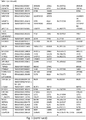
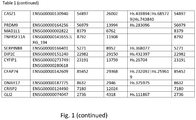
- Table 1 provided in Figure 1 provides the standard nomenclature, as well as the accession number for the genomic reference sequence of the marker genes envisaged for use in the methods provided herein, derived all from Homo sapiens. Source: National Center for Biotechnology Information (NCBI). The listed accession numbers may be found in the publicly available gene database at http://www.ncbi.nlm.nih.gov.
- the genomic molecules presented herein are not limited to the particular sequences referred to above, but also comprise variants thereof.
- the application provides in general methods for diagnosing or predicting a respiratory allergy in a patient or an offspring thereof based on the methylation states of at least one gene or a region of said in a sample comprising DNA of said patient. More particularly, the genes of which regions have been identified for which the methylation status is correlated with respiratory allergy are provided in Table 1 in Figure 1 . In particular embodiments, the methods comprise determining the methylation status of the region of said at least one gene as defined in Tables 3, 4 and 5 herein.
- the sample is assayed for hypermethylation and/or hypomethylation of one or more genes or gene regions provided herein.
- the methods of the present invention are carried out on a test sample in vitro.
- the application provides in vitro methods for diagnosing or predicting the development of a respiratory allergy in a patient or an offspring of said patient, the method comprising assaying a test sample from the patient for DNA hypermethylation or hypomethylation of at least one gene region, wherein hypermethylation of said at least one gene region and/or hypomethylation of said at least one gene region in said test sample indicates or predicts a respiratory allergy in said patient.
- the methods as envisaged herein comprise assaying a test sample from a patient for hypermethylation of at least the GLI2 gene region as defined in Tables 3, 4 or 5, and optionally, for hypermethylation of at least one gene or a region of a gene selected from the group comprising or consisting of: CRISP2, DNAH17, CFAP74, CYFIP1, DIP2C, SERPINB8, TNFRSF11A, MAD1L1, PRDM9, CASZ1, C1orf228, GREB1, NRXN1, HTR2A, SEPHS1, NAV1, TUBGCP3, CNTN1, CMTM2, PLSCR1, COX4I2, ARHGEF10, LOC338694, PEG3, FAM171A2, CTNNA2, TRPM3, LOC650226, ZNF385A, AGR3, CCM2L, UPP1, EIF2AK4, MEG9, PTCHD3, MMP10, LOC401010, MSX1, TSG1, ABCC13,
- hypermethylation of said at least one gene region and/or hypomethylation of said at least one gene region as corresponding to the status provided in Tables 3 to 5, in said test sample is indicative of the presence of or the predisposition of said patient (or where applicable, its offspring) to develop a respiratory allergy.
- said at least one gene region comprises the GLI2 gene region as listed in Tables 3 to 5 herein.
- biomarkers as disclosed herein are used for the diagnosing respiratory allergy in a patient.
- the patient is a patient showing one or more clinical symptoms of respiratory allergy, such as one or more symptoms of rhinitis or asthma as described herein below.
- the patient does not show any particular clinical symptoms of respiratory allergy.
- these methods are performed on a blood sample of a patient.
- epigenetic markers can be used for the diagnosis of respiratory allergy in a saliva sample . This is in contrast to previous reports wherein it was considered that saliva samples would not be suitable for the detection of epigenetic markers. Moreover, it has been found that the salivary inflammatory profile does not reflect the inflammatory profile of either the upper or lower airways, questioning the diagnostic and predictive use of salivary samples. However, it has been established by the present inventors that overall methylation patterns in blood and saliva are comparable for respiratory allergy (only 11% difference), which suggests the usefulness of saliva as alternative for blood, in particular the mononuclear cell fraction of blood, for analyzing epigenetic markers in the diagnosis or prediction of respiratory allergy. This is of particular interest for the diagnosis of patients when taking a blood sample is less desirable such as for children, the elderly or diseased patients.
- methylation status of particular genes or gene regions thereof as can be determined in saliva is correlated with the diagnosis of respiratory allergy, i.e. GLI2, TM9SF2, HLA-DRA, ACBD4 and BLOC1S4.
- methods for diagnosing a respiratory allergy in a patient comprising determining the methylation status of one or more of GLI2, TM9SF2, HLA-DRA, ACBD4 and BLOC1S4 or a region thereof as determined in Table 4 herein in a saliva sample of said patient.
- the invention provides methods for diagnosing a respiratory allergy in a patient comprising determining the hypermethylation of at least the GLI2 gene region as defined in Table 4 and, optionally, determining the hypomethylation of at least the TM9SF2 gene region, the HLA-DRA gene region, the ACBD4 gene region and/or the BLOC1S4 gene region, more particularly hypomethylation of one or both of the TM9SF2 gene region and the HLA-DRA gene region, most particularly hypomethylation of the TM9SF2 gene region as defined in Table 4, and wherein the test sample is a saliva.
- the application provides methods for predicting a respiratory allergy in an offspring of a patient, said method comprising assaying a sample from the cord blood of said patient for hypermethylation or hypomethylation of one or more of said genes.
- the inventors have found that the methylation status of the following genes or a region thereof as present in cord blood is correlated with the development of respiratory allergy of the patient later in life: GLI2, UPP1, LOC101927815 and C5orf63, GATA3-AS1, LOC441666, LINC00839, LINC01475, CYP2E1, GRAMD1B, DDX11, ONECUT1, SLC12A4, HSF5, PARD6G, NRBP1, NECAB3, OSBPL2, GADL1, CKMT2, NKAPL, TAPBP, PON1 and LEP, TM9SF2 and RPTOR.
- the invention provides methods for diagnosing a respiratory allergy in a patient comprising determining the hypermethylation of at least the GLI2 gene region as defined in Table 5 and, optionally, determining the hypermethylation of at least one gene selected from the group consisting of: UPP1, LOC101927815, C5orf63, GATA3-AS1, LOC441666, LINC00839, LINC01475, CYP2E1, GRAMD1B, DDX11, ONECUT1, SLC12A4, HSF5, PARD6G, NRBP1, NECAB3, OSBPL2, GADL1, CKMT2, NKAPL, TAPBP, PON1 and LEP, or a region of these genes as defined in Table 5, and/or hypomethylation of at least the TM9SF2 or RPTOR gene or a region thereof as defined in Table 5.
- the sample is a cord blood sample. It is however envisaged that such prognosis is equally possible based on blood obtained during early childhood.
- methods for predicting a respiratory allergy in a patient comprising assaying a sample from the patient for the methylation status of a gene selected from GLI2, UPP1, LOC101927815, 5orf63 or TM9SF2 or a gene region thereof as defined in Tables 3 or 5 herein, in a blood sample of said patient. Most particularly, when the sample is blood, the region of these genes as identified in Table 3 is assayed.
- methods for predicting a respiratory allergy in a patient, said methods comprising assaying a sample from the patient for hypermethylation of the GLI2 gene region as defined in Table 3 or 5, and, optionally, for hypermathylation of at least one gene region selected from the group consisting of: the gene regions of UPP1, LOC101927815 and C5orf63, as defined in Table 3 or 5, and/or hypomethylation of at least the TM9SF2 gene region as defined in Table 3 or 5.
- the samples are of a patient which has not yet been clinically diagnosed with respiratory allergy.
- the method is used on a patient which does not yet show clinical signs or not all signs of respiratory allergy.
- the method is used to confirm a clinical diagnosed of respiratory allergy in a patient.
- the application provides methods for predicting a respiratory allergy in a patient said method comprising assaying a test sample comprising determining the methylation status of GLI2 and, optionally, TM9SF2 or a gene region thereof as defined in Table 4 herein in a sample of said patient.
- the method comprises assaying a test sample from the patient for hypermethylation of at least GLI2 or a region thereof as defined in Table 4, and, optionally, hypomethylation of at least TM9SF2 or a region thereof as defined in Table 4, wherein hypermethylation of said at least one gene and, optionally, hypomethylation of said at least one gene or region thereof as defined in Table 4 in said test sample predicts a respiratory allergy.
- the methods are performed on a saliva sample.
- the invention further relates to the use of the methylation status of one or more genes described above as a marker or preclinical marker of respiratory allergy in a patient.
- a test sample can be obtained from a subject in any way typically used in clinical settings for obtaining a sample comprising the required cell(s) or biological molecule such as nucleic acid, including RNA, genomic DNA, mitochondrial DNA, and protein-associated nucleic acids, and/or protein.
- the nature of the sample can be dependent on the nature of the analysis performed, the time point of the analysis and the availability of the samples.
- the test sample may be peripheral blood, in particular the mononuclear cell fraction of peripheral blood.
- Methods for collecting peripheral blood are well known in the art.
- the test sample is cord blood, in particular the mononuclear cell fraction of cord blood.
- Cord blood refers to a sample of blood collected from the umbilical cord when a baby is born. Typically, right after birth the umbilical cord is clamped and cut. Another clamp is placed 10 to 15 cm away from the first. The section between the clamps is cut and a blood sample is collected into a specimen tube.
- the test sample is saliva.
- Methods for obtaining saliva are known in the art and include dry or wet procedures or simple spitting into a vial. Dry procedures involve introducing a collection device such as a cytobrush or a buccal swab into the mouth where tissue is scraped from the gum and cheek surfaces. Wet procedures include swishing liquids (such as mouthwash) in the mouth and spitting them into a collecting vessel. Examples of commercially available kits for collecting a saliva sample include but are not limited to the Oragene® DNA kit from DNA Genotek and SalivaGene collector from Stratec Molecular.
- the samples may be treated in one or more purification steps in order to increase the purity of the desired cells or biological molecules in the sample, or they may be examined without any purification steps.
- blood samples including peripheral blood samples and cord blood samples, may be processed for isolating the mononuclear cell fraction by density gradient centrifugation. Any nucleic acid specimen in purified or non-purified form obtained from such test sample can be utilized in the methods of the present invention.
- genomic DNA is isolated from the test sample from the patient for methylation analysis.
- Genomic DNA may be isolated by any means standard in the art, including the use of commercially available kits. Briefly, wherein the DNA is encapsulated by a cellular membrane the test sample must be disrupted and lysed by enzymatic, chemical or mechanical means. The DNA solution may then be cleared of proteins and other contaminants e.g. by digestion with proteinase K. The DNA is then recovered from the solution. This may be carried out by means of a variety of methods including salting out, organic extraction or binding of the DNA to a solid phase support. The choice of method will be affected by several factors including time, expense and required quantity of DNA.
- DNA is not enclosed in a membrane (e.g. circulating DNA from a blood sample) methods standard in the art for the isolation and/or purification of DNA may be employed. Such methods include the use of a protein degenerating reagent e.g. chaotropic salt e.g. guanidine hydrochloride or urea; or a detergent e.g. sodium dodecyl sulphate (SDS), cyanogen bromide.
- chaotropic salt e.g. guanidine hydrochloride or urea
- SDS sodium dodecyl sulphate
- Alternative methods include but are not limited to ethanol precipitation or propanol precipitation, vacuum concentration amongst others by means of a centrifuge.
- filters e.g.
- the methods comprise determining the methylation status of one or more genes or gene regions listed in Table 1 more particularly the gene regions thereof listed herein in Tables 3 to 5, most particularly, the GLI2 gene region as listed in Tables 3 to 5.
- Determining the methylation status of one or more gene, or determining the methylation status of a region of said genes as defined in Tables 3 to 5, or, most particularly determining the methylation status of the GLI2 gene region as defined in Tables 3 to 5 may comprise determining the methylation status of one or more CpG islands of said at least one gene or gene region as defined in Tables 3 to 5. Accordingly, in particular embodiments of the methods of the present invention, the test sample is assayed for hypermethylation and/or hypomethylation one or more CpG islands of said at least one gene or gene region as defined in Tables 3 to 5, particularly the GLI2 gene region.
- the methods comprise determining the methylation status of at least one or more, such as two, three, four, five, six, seven, eight or more, such as up to 20 CpG dinucleotides in said at least one gene, gene region, or CpG island.
- the methylation status of all of the CpG dinucleotides in said at least one gene, gene region, or CpG island as defined in Tables 3 to 5 is determined.
- the methylated CpG dinucleotides may be located in a coding region, such as the 5' and 3' untranslated regions, or an exon, as well as in a non-coding region, including a regulatory region such as the promoter region, of the gene.
- the methylated CpG dinucleotides may be located inside or outside a CpG island.
- the detection of the methylation status of one or more of the genes envisaged herein in Table 1 or the region of one or more of said gene as defined in Tables 3 to 5, particularly the GLI2 gene region, or the CpG island of one or more of said gene as defined in Tables 3 to 5, comprises:
- the control sample is preferably a test sample from a non-allergic patient.
- the actual level of increase or decrease in methylation status in the test sample from the patient is less relevant in the context of the present invention and can be between 0.25 and 10%.
- the methylation status of a gene, a gene region, a CpG island as described herein may be determined by any technique for detecting methylated nucleic acid molecules. These techniques are based on any one or more of the classic techniques of hybridization, amplification, sequencing, electrophoresis, chromatography, and mass spectrometry and combinations thereof, amongst others, and include, for example, but without limitation, the polymerase chain reaction (PCR), methylated CpG island recovery assay (MIRA), combined bisulfite-restriction analysis (COBRA), MALDI-TOFF, MassARRAY, MethyLight, Quantitative analysis of methylated alleles (QAMA), Enzymatic regional methylation assay (ERMA), HeavyMethyl, QBSUPT, MS-SNuPE, MethylQuant, Quantitative PCR sequencing, (bisulfite) pyrosequencing, single-strand conformation polymorphism (SSCP) analysis, restriction analysis, bead-chip technology
- Methylation specific PCR ( US 5,786,146 , US 6,017,704 , US 6,200,756 ) allows the distinction between modified and unmodified DNA by hybridizing oligonucleotide primers which specifically bind to one form or the other of the DNA. After hybridization, an amplification reaction can be performed and amplification products assayed. The presence of an amplification product indicates that a sample hybridized to the primer. The specificity of the primer indicates whether the DNA had been modified or not, which in turn indicates whether the DNA had been methylated or not. For example, bisulfite ions modify non-methylated cytosine bases, changing them to uracil bases. Uracil bases hybridize to adenine bases under hybridization conditions.
- an oligonucleotide primer which comprises adenine bases in place of guanine bases would hybridize to the bisulfite-modified DNA, whereas an oligonucleotide primer containing the guanine bases would hybridize to the non-modified (methylated) cytosine residues in the DNA.
- Amplification using a DNA polymerase and a second primer yield amplification products that can be readily observed.
- the amplification products can be optionally hybridized to specific oligonucleotide probes which may also be specific for certain products.
- oligonucleotide probes can be used which will hybridize to amplification products from both modified and non-modified DNA.
- real-time methylation specific PCR the methylation profile of the genes, gene regions or CpG islands of interest can be assessed by determining the amplification level of said genes, gene regions or CpG islands based on amplification-mediated displacement or on binding of one or more probes whose binding sites are located within the amplicon.
- real-time quantitative methylation specific PCR is based on the continuous monitoring of a progressive fluorogenic PCR by an optical system.
- Such PCR systems usually use two amplification primers and an additional amplicon-specific, fluorogenic hybridization probe that specifically binds to a site within the amplicon.
- the probe can include one or more fluorescence label moieties.
- the probe can be labeled with two fluorescent dyes: 1) a 6-carboxy-fluorescein (FAM), located at the 5'-end, which serves as reporter, and 2) a 6-carboxy-tetramethyl-rhodamine (TAMRA), located at the 3'-end, which serves as a quencher.
- FAM 6-carboxy-fluorescein
- TAMRA 6-carboxy-tetramethyl-rhodamine
- oligonucleotide primers are designed to specifically bind methylated primer-binding sites , and a probe is designed to anneal specifically within the amplicon during extension. Such primers typically comprise CpG dinucleotides which get affected by DNA methylation.
- oligonucleotide primers are designed to bind either methylated or unmethylated primer-binding sites, and the probe is designed to anneal specifically to methylated probe binding sites.
- both oligonucleotide primers and probes are designed to specifically bind methylated binding sites.
- the primer when there is a sufficient region of complementarity, e.g., 12, 15, 18, or 20 nucleotides, between the target and the primer, the primer may also contain additional nucleotide residues that do not interfere with hybridization but may be useful for other manipulations. Exemplary of such other residues may be sites for restriction endonuclease cleavage, for ligand binding, or for factor binding or linkers or repeats.
- oligonucleotide probes which may also be specific for certain products. Such probes can be hybridized directly to modified DNA or to amplification products of modified DNA. Oligonucleotide probes can be labeled using any detection system known in the art. These include but are not limited to fluorescent moieties, radioisotope labeled moieties, bioluminescent moieties, luminescent moieties, chemiluminescent moieties, enzymes, substrates, receptors, or ligands. The oligonucleotide probes may be bound to a support.
- the support can be any suitable support such as plastic materials, (fluorescent) beads, magnetic beads, synthetic or natural membranes, latex beads, polystyrene, column supports, glass beads or slides, nanotubes, fibres or other organic or inorganic supports.
- the binding processes are well-known in the art and generally comprise cross-linking, covalently binding or physically adsorbing the oligonucleotide to the support.
- a support may also contain a plurality of oligonucleotide probes arrayed on the support.
- Such array may comprise multiple copies of the same oligonucleotide probe so as to capture the same target gene (region) on the array or may comprise a plurality of different oligonucleotide probes targeting different genes (regions) so as to capture a plurality of target genes (regions) on the array.
- An exemplary method for detecting the methylation status of a nucleic acid based on the use of oligonucleotide probes is the use of Infinium® BeadChip sold by Illumina Inc. San Diego (US), which makes use of a bead chip.
- MethyLight relies on methylation-specific priming combined with methylation-specific fluorescent probing, resulting in a highly methylation-specific detection technology.
- Another approach for assessing the methylation status of a gene, a gene region, a CpG island uses methylation-sensitive restriction endonucleases to detect methylated CpG dinucleotide motifs.
- Such endonucleases may either preferentially cleave methylated recognition sites relative to non-methylated recognition sites, or preferentially cleave non-methylated relative to methylated recognition sites.
- Examples of the former are Acc III, Ban I, BstN I, Msp I, and Xma I.
- Examples of the latter are Acc II, Ava I, BssH II, BstU I, Hpa II, and Not I.
- COBRA assay combined bisulfite-restriction analysis in which PCR products obtained from bisulfite-treated DNA are further analyzed by using restriction enzymes that recognize sequences containing 5'CG, such as Taql (5'TCGA) or BstUI (5'CGCG), such that methylated and unmethylated DNA can be distinguished.
- the DNA can be analyzed by methods such as Southern Blotting and PCR.
- Southern blot analysis involves electrophoretic separation of the resulting DNA fragments and hybridization with a labeled probe adjacent to the CpG of interest. If the hybridization signal from the methylation-sensitive and methylation-insensitive digested DNA samples results in different size bands, than the site of interest was methylated.
- PCR analysis involves amplification across the CpG of interest. The expected band will only be observed in the methylation-sensitive digested sample if the site of interest is methylated.
- the PCR assay requires much lower amounts of DNA for each site of interest (for ex: 1-10 ng), but necessitates the design and testing of specific primer pairs for every site of interest.
- Still another way for the identification of methylated CpG dinucleotides utilizes the ability of the MBD domain of the MeCP2 protein to selectively bind to methylated DNA sequences (Cross et al, 1994; Shiraishi et al, 1999). Restriction endonuclease digested genomic DNA is loaded onto expressed His-tagged methyl-CpG binding domain that is immobilized onto a solid matrix and used for preparative column chromatography to isolate highly methylated DNA sequences.
- EpiTYPER ® Yet an alternative for analysing the methylation status of a gene, gene region, CpG island or CpG dinucleotide is the EpiTYPER ® .
- the EpiTYPER® assay uses DNA that has been treated with a reagent that selectively modifies an unmethylated cytosine residue but which is incapable of modifying a methylated cytosine residue.
- a PCR selected DNA regions are amplified using specific primers, followed by an in vitro transcription into RNA and a base-specific cleavage by endoribonucleases.
- the cleavage products are analyzed by the Matrix assisted Laser Desorption/Ionization Time Of Flight Mass Spectrometry (MALDI-TOF MS). Methylated and unmethylated fragments differ in mass as result of the differential cleavage and the analytical software will quantify the methylation percentage.
- MALDI-TOF MS Matrix assisted Laser Desorption/Ionization Time Of Flight Mass Spectrometry
- the HELP assay can be used, which is based on the differential ability of restriction enzymes to recognize and cleave methylated and unmethylated CpG DNA sites.
- ChIP-on-chip assays based on the ability of commercially prepared antibodies to bind to DNA methylation-associated proteins like MCP2, can be used to determine the methylation status.
- restriction landmark genomic scanning also based upon differential recognition of methylated and unmethylated CpG sites by restriction enzymes can be used.
- Methylated DNA immunoprecipitation (MeDIP) analogous to chromatin immunoprecipitation, can be used to isolate methylated DNA fragments for input into DNA detection methods such as DNA microarrays (MeDIP-chip) or DNA sequencing (MeDIP-seq). The unmethylated DNA is not precipitated.
- molecular break light assay for DNA adenine methyltransferase activity can be used.
- This is an assay that uses the specificity of the restriction enzyme Dpnl for fully methylated (adenine methylation) GATC sites in an oligonucleotide labeled with a fluorophore and quencher.
- the adenine methyltransferase methylates the oligonucleotide making it a substrate for Dpnl. Cutting of the oligonucleotide by Dpnl gives rise to a fluorescence increase.
- MIRA methylated-CpG island recovery assay
- a gene region, a CpG island or a CpG dinucleotide, genomic DNA or a fragment thereof is treated with a reagent that selectively modifies an unmethylated cytosine residue but which is incapable of modifying a methylated cytosine residue; and the resulting product is detected.
- reagents for selective modification of unmethylated cytosine residues include hydrazine and bisulfite ions. Hydrazine-modified DNA , or a portion thereof, can be treated with piperidine to cleave it.
- Bisulfite ion-treated DNA can be treated with alkali.
- the resulting products can be detected directly, or after a further reaction that creates products, which are easily distinguishable.
- the products resulting from the treatment with a reagent that selectively modifies an unmethylated cytosine residue but which is incapable of modifying methylated cytosine residue may be detected by amplification with at least one primer that hybridizes to a sequence comprising a modified non-methylated CpG dinucleotide motif, i.e. UpG or TpG, but not to a sequence comprising an unmodified methylated CpG dinucleotide motif, thereby forming amplification products.
- the resulting products may be detected by amplification with at least one primer that hybridizes to a sequence comprising an unmodified methylated CpG dinucleotide motif but not to a sequence comprising a modified non-methylated CpG, i.e. UpG or TpG, dinucleotide motif, thereby forming amplification products.
- the amplification products under investigation may be detected using (a) a first oligonucleotide probe which hybridizes to a sequence comprising a modified non-methylated CpG dinucleotide motif, i.e.
- UpG or TpG but not to a sequence comprising an unmodified methylated CpG dinucleotide motif, (b) a second oligonucleotide probe that hybridizes to a sequence comprising an unmodified methylated CpG dinucleotide motif but not to a sequence comprising a modified non-methylated CpG dinucleotide motif, i.e. UpG or TpG, or (c) both said first and second oligonucleotide probes.
- determining the methylation status of a gene, a gene region, a CpG island or a CpG dinucleotide as described herein, particularly the GLI2 gene or gene region comprises:
- the application further provides tools such as kits for diagnosing or predicting the development of respiratory allergy in a patient, the kits comprising probes for determining the methylation status of at least one gene provided in Table 1 or the region of said at least one gene as provided in Tables 3 to 5, preferably the methylation status of at least the GLI2 gene region as provided in Tables 3 to 5. More particularly, the application provides kits for determining either hypermethyation or hypomethylation of these genes or gene regions as described herein.
- probes which allow the determination of the methylation status of one or more genes selected from GLI2, CRISP2, DNAH17, CFAP74, CYFIP1, DIP2C, SERPINB8, TNFRSF11A, MAD1L1, PRDM9, CASZ1, C1orf228, GREB1, NRXN1, HTR2A, SEPHS1, NAV1, TUBGCP3, CNTN1, CMTM2, PLSCR1, COX4I2, ARHGEF10, LOC338694, PEG3, FAM171A2, CTNNA2, TRPM3, LOC650226, ZNF385A, AGR3, CCM2L, UPP1, EIF2AK4, MEG9, PTCHD3, MMP10, LOC401010, MSX1, TSG1, ABCC13, NBPF25P, GALNT2, MIR7159, RPSAP58, S100A13, GALNT9, CEP170B, FRG2, INPP5A
- kits allow the specific determination of the methylation status of one or more of these genes, particularly including the GLI2 gene region as provided in Tables 3 to 5.
- the kits comprise probes which allow determining the methylation frequency of at least the GLI2 gene of Table 1 or a gene region thereof as identified in Table 3 to 5 and optionally a limited number of control genes or gene regions, but do not enable a genome wide determination of methylation frequency.
- kits for the diagnosis or prediction of respiratory allergy on a saliva sample comprise one or more reagents suitable for determining the methylation status of one or more genes selected from the group consisting of GLI2, TM9SF2, HLA-DRA, ACBD4 and BLOC1S4, particularly of at least the GLI2 gene or a region thereof.
- kits for diagnosing a respiratory allergy in a patient comprising probes for determining the methylation status of one or more of GLI2, TM9SF2, HLA-DRA, ACBD4 and BLOC1S4 or a region thereof as determined in Table 4 herein in a saliva sample of a patient.
- kits comprise probes for determining the hypermethylation or hypomethylation status of these genes as determined in Table 4.
- the kits will comprise probes for determining the methylation status of at least the GLI2 gene or a region thereof, and, optionally, one or more genes selected from the group comprising or consisting of TM9SF2 and/or HLA-DRA or a region thereof as defined in Table 4, more preferably TM9SF2 or a region thereof as defined in Table 4.
- the kits may further comprise one or more reagents suitable for determining methylation status of DNA in a saliva sample, such as but not limited reagents for DNA extraction from saliva as described above.
- the kit comprises a tool for saliva collection ("saliva collector") from a patient as described above.
- kits for the prediction of the development of a respiratory allergy in a patient in blood, more particularly in cord blood may comprise tools such as probes for determining the methylation status of one or more genes selected from the group consisting of GLI2, UPP1, LOC101927815, C5orf63, GATA3-AS1, LOC441666, LINC00839, LINC01475, CYP2E1, GRAMD1B, DDX11, ONECUT1, SLC12A4, HSF5, PARD6G, NRBP1, NECAB3, OSBPL2, GADL1, CKMT2, NKAPL, TAPBP, PON1, LEP, TM9SF2 and RPTOR, most particularly of at least the GLI2 gene or a region thereof as defined in Table 5.
- kits may comprise tools such as probes suitable for determining the hypermethylation or hypomethylation of one or more of these genes or regions thereof as identified in Table 5.
- kits may involve tools for extracting DNA from cord
- kits as envisaged herein typically comprise tools for the specific detection of the genes or gene regions of which the methylation status is to be assessed.
- the kits comprise tools such as primers which identify only those genes or gene regions of which the methylation status is to be assessed, particularly of at least the GLI2 gene or a region thereof.
- the kits comprise an array in which the arrangement of the probes is such that the probes detecting the genes or gene regions of which the methylation frequency is to be assessed in the context of diagnosing or predicting a respiratory allergy, are marked in some way, either by spatial organization or by a visual identification.
- the application further provides computer programs for carrying out the methods described herein, wherein said programs, when carried out on a computer allow the skilled person to diagnose or predict respiratory allergy based on the methylation status of the specific genes listed herein.
- said methods ensure selecting the genes or gene regions listed herein, determining the methylation status based on the outcome of an assay as described herein and providing an output as to the methylation status of the specific set of genes or gene regions as envisaged herein.
- a particular aspect of the invention thus provides one or more gene regions selected from the gene regions of GLI2, CRISP2, DNAH17, CFAP74, CYFIP1, DIP2C, SERPINB8, TNFRSF11A, MAD1L1, PRDM9, CASZ1, C1orf228, GREB1, NRXN1, HTR2A, SEPHS1, NAV1, TUBGCP3, CNTN1, CMTM2, PLSCR1, COX4I2, ARHGEF10, LOC338694, PEG3, FAM171A2, CTNNA2, TRPM3, LOC650226, ZNF385A, AGR3, CCM2L, UPP1, EIF2AK4, MEG9, PTCHD3, MMP10, LOC401010, MSX1, TSG
- Example 1 Comparability of saliva and blood DNA methylation patterns in respiratory allergy cases
- Blood samples (10 mL) were collected in an EDTA tube (BD Vacutainer®, BD, Madison, UK) from each participant and stored at room temperature ( ⁇ 2h) until further processing.
- the collected blood was processed as follows: in a first step plasma was removed by centrifugation at 800xg for 5 min. Next, LymphoprepTM (Axis-Shield, Oslo, Norway) was used for the isolation of a pure mononuclear cell (MNC) suspension. The suspension was then divided into two aliquots originating from 5 mL of the whole blood and spun down (10 min, 300xg at 4°C) to create MNC pellets, which were stored at -80°C until DNA extraction.
- MNC mononuclear cell
- Matched saliva samples (2 mL) were collected using an Oragene DNA OG-500 self-collection kit, (DNA Genotek, Ottawa, Canada). The saliva samples were kept at room temperature until DNA extraction.
- DNA extraction from the MNC pellets was completed with the Gentra Puregene Blood Kit (Qiagen, Hilden, Germany) according to the Buffy coat protocol (no red blood cell content) with an optional RNAse digestion step.
- DNA from the saliva samples was extracted using the Oragene PrepIT kit (DNA Genotek, Ottawa, Canada) according to the manufacturer's protocol. Final DNA concentrations were measured using the NanoDrop spectrophotometer, and confirmed using the Qubit ® 2.0 Fluorometer.
- Samples 500 ng of genomic DNA were bisulfite treated using the EZ DNA MethylationTM Kit (Zymo Research, Irvine, USA) according to the manufacturer's protocol. DNA samples were incubated overnight in a PCR machine under following conditions: (95 °C for 30 sec, 50 °C for 60 mins) for 16 cycles and then the samples were hold at 4 °C. The bisulfite treated DNA was eluted in 12 ⁇ l of elution buffer and concentrations were checked on the NanoDrop.
- DNA methylation was analysed by Infinium HumanMethylation450 BeadChip Array (Illumina, San Diego, CA, USA). This technology interrogates the methylation status of more than 480 000 CpGs, thereby allowing for an almost whole-genome analysis of DNA methylation and covering 99% of the RefSeq genes. These CpG sites are not only found in CpG islands, but also in CpG shores and shelves (respectively within 2 kb and >2kb from the CpG islands), 3'- and 5' UTRs and gene bodies (Dedeurwaerder et al., 2011). 4 ⁇ l of bisulfite-converted DNA (-150 ng) was used for the whole genome amplification reaction.
- DNA methylation analysis was carried out according to the standard Infinium HD Assay Methylation Protocol Guide (Part #15019519, Illumina).
- the BeadChip images were captured using the Illumina iScan.
- the raw methylation intensities for each probe were represented as ⁇ -values.
- the ⁇ -values range from 0 to 1, where 0 means that the CpG site was completely unmethylated and 1 means that the CpG site was fully methylated (Bibikova and Fan, 2009).
- Raw array data were extracted from GenomeStudio Methylation module software without background correction and normalization. Processing, quality control, filtering and normalization of data were performed in the R-based software package, RnBeads (http://rnbeads.mpi-inf.mpg.de/). Probes were filtered out according to the following criteria: A) probes with a missing value (NA) in at least one sample or having a detection p-value ⁇ 0.01, B) probes measuring methylation in a non-CpG context, C) probes on sex chromosomes, and D) probes containing more than two single-nucleotide polymorphisms or minor allele frequency (MAF) > 0.01.
- the data gathered herein originate from an ongoing birth cohort in Flanders (Flanders Environment and Health Surveys FLEHS1) using the Infinium® HumanMethylation450k platform.
- a case-control study design nested in a large-scale human biomonitoring surveillance programme (Flanders Environment and Health Survey FLEHS1) was used.
- FLESH 1 was initiated in 2004 by the Flemish Centre of Expertise on Environment and Health (financed by the Flemish Government).
- 1200 Mother/child pairs were recruited and cord blood samples were collected At 10 years of age, 65.2% of the children developed some form of allergy, of which 13.8% respiratory allergy.
- Respiratory allergy (RA) cases were identified via questionnaires as "doctor's diagnosed allergy" at age 10 and each case was matched with controls; matching criteria included gender, living area, social economic status.
- the case-control study included 20 RA cases and 20 healthy controls.
- Raw array data were extracted from GenomeStudio Methylation module software without background correction and normalization. Processing, quality control, filtering and normalization of data were performed in the R-based software package, IMA- and Limma pipeline. Probes were filtered out according to the following criteria: A) probes with a missing value (NA) in at least one sample or having a detection P-value ⁇ 0.01, B) probes measuring methylation in a non-CpG context, C) probes on sex chromosomes, and D) probes containing more than two single-nucleotide polymorphisms or minor allele frequency (MAF) > 0.01.
- Methylation values of all remaining probes were normalized using the Subset-quantile Within Array Normalization (SWAN). Resulting P-values were corrected for multiple hypothesis testing using the Benjamini-Hochberg procedure (P Adj ). Parameters such as age and IgE values were included as covariates. Tools like Comb-p (Pedersen,B.S. et al. 2012) were used to identify differentially methylated regions (DMR) between RA cases and controls.
- SWAN Subset-quantile Within Array Normalization
- P Adj Benjamini-Hochberg procedure
- Example 2 The raw data obtained in Example 2 for cord blood were further processed and analyzed as described in Example 2 for identifying predictive epigenetic markers.
Landscapes
- Chemical & Material Sciences (AREA)
- Life Sciences & Earth Sciences (AREA)
- Proteomics, Peptides & Aminoacids (AREA)
- Health & Medical Sciences (AREA)
- Organic Chemistry (AREA)
- Wood Science & Technology (AREA)
- Analytical Chemistry (AREA)
- Zoology (AREA)
- Genetics & Genomics (AREA)
- Engineering & Computer Science (AREA)
- Pathology (AREA)
- Immunology (AREA)
- Microbiology (AREA)
- Molecular Biology (AREA)
- Biotechnology (AREA)
- Biophysics (AREA)
- Physics & Mathematics (AREA)
- Biochemistry (AREA)
- Bioinformatics & Cheminformatics (AREA)
- General Engineering & Computer Science (AREA)
- General Health & Medical Sciences (AREA)
- Measuring Or Testing Involving Enzymes Or Micro-Organisms (AREA)
- Investigating Or Analysing Biological Materials (AREA)
Claims (15)
- Procédé in vitro pour diagnostiquer ou prédire le développement d'une allergie respiratoire chez un patient, ledit procédé comportant le fait d'effectuer, dans un échantillon d'essai prélevé sur le patient, un test biologique d'hyperméthylation de l'ADN d'au moins la région GLI2 répondant à la définition indiquée dans le tableau 3, 4 ou 5, étant entendu qu'une hyperméthylation de ladite région génétique dans ledit échantillon d'essai est indicative ou prédictive d'une allergie respiratoire chez ledit patient, ledit échantillon d'essai étant un échantillon de fluide corporel.
- Procédé conforme à la revendication 1, ledit procédé comportant par ailleurs le fait d'effectuer, dans l'échantillon d'essai prélevé sur le patient, un test biologique d'hyperméthylation ou d'hypométhylation de l'ADN d'au moins une région génétique choisie dans l'ensemble constitué par les régions des gènes CRISP2, DNAH17, CFAP74, CYFIP1, DIP2C, SERPINB8, TNFRSF11A, MAD1L1, PRDM9, CASZ1, C1orf228, GREB1, NRXN1, HTR2A, SEPHS1, NAV1, TUBGCP3, CNTN1, CMTM2, PLSCR1, COX4I2, ARHGEF10, LOC338694, PEG3, FAM171A2, CTNNA2, TRPM3, LOC650226, ZNF385A, AGR3, CCM2L, UPP1, EIF2AK4, MEG9, PTCHD3, MMP10, LOC401010, MSX1, TSG1, ABCC13, NBPF25P, GALNT2, MIR7159, RPSAP58, S100A13, GALNT9, CEP170B, FRG2, INPP5A, LINC01267, DPP10, LOC101927815, C5orf63, SLC43A2, CUX1, SMAD3, PSG4, PM20D1, GATA3-AS1, LOC441666, LINC00839, LINC01475, CYP2E1, GRAMD1B, DDX11, ONECUT1, SLC12A4, HSF5, PARD6G, NRBP1, NECAB3, OSBPL2, GADL1, CKMT2, NKAPL, TAPBP, PON1, LEP, TM9SF2, HLA-DRA, HLA-DRB1, PRDM8, PDCD1, PCNT, RUNX3, LRCOL1, VWA3A, RTP5, LINC00676, EGFL7, MAST3, PRDM1, ABAT, ATF3, CELF6, NOSIP, CYP26C1, DEAF1, STOX2, GHRL, TMEM80, MYT1L, ACBD4, BLOC1S4 et RPTOR, répondant à la définition indiquée dans les tableaux 3 à 5.
- Procédé conforme à la revendication 1 ou la revendication 2, dans lequel on effectue, dans l'échantillon d'essai, un test biologique d'hyperméthylation d'au moins la région du gène GLI2 répondant à la définition indiquée dans le tableau 3, 4 ou 5, et l'échantillon d'essai est un échantillon de salive, un échantillon de sang périphérique ou un échantillon de sang de cordon ombilical.
- Procédé conforme à n'importe laquelle des revendications 1 à 3 qui est un procédé pour diagnostiquer une allergie respiratoire chez un patient, dans lequel on effectue, dans l'échantillon d'essai, un test biologique d'hyperméthylation de la région du gène GLI2 répondant à la définition indiquée dans le tableau 3, et l'échantillon d'essai est un échantillon de sang périphérique.
- Procédé conforme à la revendication 4, dans lequel on effectue en outre, dans l'échantillon d'essai, un test biologique d'hyperméthylation de la région d'au moins un gène choisi dans l'ensemble constitué par les suivants : CRISP2, DNAH17, CFAP74, CYFIP1, DIP2C, SERPINB8, TNFRSF11A, MAD1L1, PRDM9, CASZ1, C1orf228, GREB1, NRXN1, HTR2A, SEPHS1, NAV1, TUBGCP3, CNTN1, CMTM2, PLSCR1, COX4I2, ARHGEF10, LOC338694, PEG3, FAM171A2, CTNNA2, TRPM3, LOC650226, ZNF385A, AGR3, CCM2L, UPP1, EIF2AK4, MEG9, PTCHD3, MMP10, LOC401010, MSX1, TSG1, ABCC13, NBPF25P, GALNT2, MIR7159, RPSAP58, S100A13, GALNT9, CEP170B, FRG2, INPP5A, LINC01267, DPP10, LOC101927815, C5orf63, SLC43A2, CUX1, SMAD3, PSG4 et PM20D1, répondant à la définition indiquée dans le tableau 3, et/ou un test biologique d'hypométhylation de la région d'au moins un gène choisi dans l'ensemble constitué par les suivants : TM9SF2, HLA-DRB1, HLA-DRA, PRDM8, PDCD1, PCNT, RUNX3, LRCOL1, VWA3A, RTP5, LINC00676, EGFL7, MAST3, PRDM1, ABAT, ATF3, CELF6, NOSIP, CYP26C1, DEAF1, STOX2, GHRL, TMEM80 et MYT1L, répondant à la définition indiquée dans le tableau 3.
- Procédé conforme à n'importe laquelle des revendications 1 à 3 qui est un procédé pour diagnostiquer une allergie respiratoire chez un patient, dans lequel on effectue, dans l'échantillon d'essai, un test biologique d'hyperméthylation d'au moins la région du gène GLI2 répondant à la définition indiquée dans le tableau 4, et l'échantillon d'essai est un échantillon de salive.
- Procédé conforme à n'importe laquelle des revendications 1 à 3 qui est un procédé pour prédire une allergie respiratoire chez un patient, dans lequel on effectue, dans l'échantillon d'essai, un test biologique d'hyperméthylation de la région du gène GLI2 répondant à la définition indiquée dans le tableau 5, et l'échantillon d'essai est un échantillon de sang de cordon ombilical.
- Procédé conforme à n'importe laquelle des revendications 1 à 3, dans lequel l'échantillon d'essai est un échantillon de sang ou de sang de cordon ombilical, et on effectue, dans l'échantillon, un test biologique d'hyperméthylation de la région du gène GLI2 répondant à la définition indiquée dans le tableau 3 pour un échantillon de sang ou le tableau 5 pour un échantillon de sang de cordon ombilical, et dans lequel on effectue, dans l'échantillon, un test biologique d'hyperméthylation d'au moins une région génétique choisie dans l'ensemble constitué par les régions des gènes UPP1, LOC101927815 et C5orf63 répondant à la définition indiquée dans le tableau 3 pour un échantillon de sang ou le tableau 5 pour un échantillon de sang de cordon ombilical, et/ou un test biologique d'hypométhylation d'au moins la région du gène TM9SF2 répondant à la définition indiquée dans le tableau 3 pour un échantillon de sang ou le tableau 5 pour un échantillon de sang de cordon ombilical.
- Procédé conforme à n'importe laquelle des revendications 1 à 8, dans lequel on détermine l'état de méthylation d'au moins un dinucléotide CpG appartenant auxdites régions génétiques.
- Procédé conforme à n'importe laquelle des revendications 1 à 8, dans lequel on détermine la fréquence de méthylation d'au moins un dinucléotide CpG appartenant à au moins une région génétique.
- Procédé conforme à n'importe laquelle des revendications 1 à 10, dans lequel on détermine l'état de méthylation de ladite région génétique au nombre d'au moins une, au moyen d'une ou de plusieurs technique(s) choisie(s) dans l'ensemble constitué par les suivantes : amplification d'acide nucléique, amplification en chaîne par polymérase (ACP, ou PCR pour polymerase chain reaction), ACP spécifique de la méthylation (MSP pour methylation specific PCR), test biologique de récupération des îlots CpG méthylés (MIRA pour methylated-CpG island recovery assay), analyse de restriction et bisulfite combinés (COBRA pour combined bisulfite-restriction analysis), pyroséquençage au bisulfite, analyse du polymorphisme de conformation simple brin (SSCP pour single-strand conformation polymorphism), analyse de restriction, analyse de biopuce (microarray) ou technologie dite « Bead-Chip ».
- Programme informatique qui, lorsqu'il est exécuté sur un ordinateur relié à un dispositif permettant de déterminer l'état de méthylation d'un ADN se trouvant dans un échantillon de fluide corporel, est configuré pour déterminer sélectivement l'état de méthylation de la région du gène GLI2 identifiée dans le tableau 3, 4 ou 5 du présent document, et diagnostiquer ou prédire le développement d'une allergie respiratoire chez un patient.
- Utilisation d'une hyperméthylation de la région du gène GLI2 répondant à la définition indiquée dans le tableau 3, 4 ou 5, comme biomarqueur d'allergie respiratoire dans un échantillon de fluide corporel d'un patient.
- Trousse de diagnostic pour évaluer une allergie respiratoire dans un échantillon de fluide corporel d'un patient, qui comprend une série de sondes permettant de déterminer sélectivement l'état de méthylation de la région du gène GLI2 répondant à la définition indiquée dans le tableau 3, 4 ou 5.
- Utilisation d'une hyperméthylation de la région du gène GLI2 répondant à la définition indiquée dans le tableau 4, dans un échantillon de salive, dans un procédé in vitro pour le diagnostic ou la prédiction d'une allergie respiratoire.
Applications Claiming Priority (2)
| Application Number | Priority Date | Filing Date | Title |
|---|---|---|---|
| EP15169841 | 2015-05-29 | ||
| PCT/EP2016/062017 WO2016193151A1 (fr) | 2015-05-29 | 2016-05-27 | Marqueurs épigénétiques d'allergie respiratoire |
Publications (2)
| Publication Number | Publication Date |
|---|---|
| EP3303626A1 EP3303626A1 (fr) | 2018-04-11 |
| EP3303626B1 true EP3303626B1 (fr) | 2020-04-01 |
Family
ID=53365802
Family Applications (1)
| Application Number | Title | Priority Date | Filing Date |
|---|---|---|---|
| EP16729802.5A Active EP3303626B1 (fr) | 2015-05-29 | 2016-05-27 | Marqueurs épigénétiques d'allergie respiratoire |
Country Status (3)
| Country | Link |
|---|---|
| US (1) | US10683547B2 (fr) |
| EP (1) | EP3303626B1 (fr) |
| WO (1) | WO2016193151A1 (fr) |
Families Citing this family (2)
| Publication number | Priority date | Publication date | Assignee | Title |
|---|---|---|---|---|
| EP3565635B1 (fr) * | 2017-01-09 | 2023-09-27 | The Children's Hospital of Philadelphia | Méthodes de diagnose de l'asthme et compositions pour l'utilisation du traitement de l'asthme en ciblant la voie th2 |
| CN115369164B (zh) * | 2021-05-18 | 2025-01-21 | 高飞 | 急性淋巴性白血病甲基化生物标记物及其应用 |
Family Cites Families (3)
| Publication number | Priority date | Publication date | Assignee | Title |
|---|---|---|---|---|
| US6017704A (en) | 1996-06-03 | 2000-01-25 | The Johns Hopkins University School Of Medicine | Method of detection of methylated nucleic acid using agents which modify unmethylated cytosine and distinguishing modified methylated and non-methylated nucleic acids |
| US5786146A (en) | 1996-06-03 | 1998-07-28 | The Johns Hopkins University School Of Medicine | Method of detection of methylated nucleic acid using agents which modify unmethylated cytosine and distinguishing modified methylated and non-methylated nucleic acids |
| JP2014531213A (ja) * | 2011-09-30 | 2014-11-27 | ジェネンテック, インコーポレイテッド | 上皮又は間葉の表現型の診断用メチル化マーカー、及び腫瘍又は腫瘍細胞におけるegfrキナーゼ阻害薬に対する応答 |
-
2016
- 2016-05-27 WO PCT/EP2016/062017 patent/WO2016193151A1/fr not_active Ceased
- 2016-05-27 EP EP16729802.5A patent/EP3303626B1/fr active Active
- 2016-05-27 US US15/578,174 patent/US10683547B2/en active Active
Non-Patent Citations (1)
| Title |
|---|
| None * |
Also Published As
| Publication number | Publication date |
|---|---|
| EP3303626A1 (fr) | 2018-04-11 |
| US10683547B2 (en) | 2020-06-16 |
| US20180148785A1 (en) | 2018-05-31 |
| WO2016193151A1 (fr) | 2016-12-08 |
Similar Documents
| Publication | Publication Date | Title |
|---|---|---|
| JP6513622B2 (ja) | 非侵襲的出生前診断に有用な母体試料由来の胎児核酸のメチル化に基づく富化のためのプロセスおよび組成物 | |
| JP6634105B2 (ja) | 非侵襲性の出生前診断のために有用な、母体サンプル由来の胎児核酸のメチル化に基づく濃縮のためのプロセスおよび組成物 | |
| EP3529377B1 (fr) | Évaluation de l'âge gestationnel par méthylation et profilage de taille d'adn plasmatique maternel | |
| KR101718940B1 (ko) | 알츠하이머성 치매 또는 경도인지장애를 위한 후생유전학 조기진단용 조성물 | |
| EP2698436A1 (fr) | Marqueurs du cancer colorectal | |
| CN112639983B (zh) | 微卫星不稳定性检测 | |
| CA2878979A1 (fr) | Procedes et compositions pour enrichissement base sur la methylation en acide nucleique foetal dans un echantillon maternel, utiles pour les diagnostics prenatals non invasifs | |
| WO2013070950A1 (fr) | Identification d'un marqueur de méthylation de l'adn dans la détection basée sur le sang d'un cancer de l'ovaire | |
| US20210024999A1 (en) | Method of identifying risk for autism | |
| CN111321210B (zh) | 一种无创产前检测胎儿是否患有遗传疾病的方法 | |
| US20140349977A1 (en) | Epigenetic markers for detection of autism spectrum disorders | |
| AU2019257485A1 (en) | Processes and compositions for methylation-based enrichment of fetal nucleic acid from a maternal sample useful for non invasive prenatal diagnoses | |
| EP3303626B1 (fr) | Marqueurs épigénétiques d'allergie respiratoire | |
| EP4613879A1 (fr) | Marqueur de méthylation d'adn pour le diagnostic du cancer du poumon et ses utilisations | |
| US20250101522A1 (en) | Brca1 promoter methylation in sporadic breast cancer patients detected by liquid biopsy | |
| WO2018107294A1 (fr) | Marqueurs de méthylation de l'adn pour troubles neuropsychiatriques et procédés, utilisations et kits associés | |
| Saeliw et al. | LINE-1 and Alu methylation signatures in autism spectrum disorder and their function in the regulation of autism-related genes | |
| HK40091879A (en) | Gestational age assessment by methylation and size profiling of maternal plasma dna | |
| CN114507737A (zh) | 一种石棉相关疾病甲基化标记物的检测引物组合、试剂盒及扩增子测序文库的构建方法 | |
| HK40036431A (en) | Processes and compositions for methylation-based enrichment of fetal nucleic acid from a maternal sample useful for non-invasive prenatal diagnoses | |
| HK1254596B (en) | Processes for methylation-based enrichment of fetal nucleic acid from a maternal sample useful for non-invasive prenatal diagnoses | |
| HK1229846B (en) | Processes for methylation-based enrichment of fetal nucleic acid from a maternal sample useful for fetal nucleic acid quantification |
Legal Events
| Date | Code | Title | Description |
|---|---|---|---|
| STAA | Information on the status of an ep patent application or granted ep patent |
Free format text: STATUS: THE INTERNATIONAL PUBLICATION HAS BEEN MADE |
|
| PUAI | Public reference made under article 153(3) epc to a published international application that has entered the european phase |
Free format text: ORIGINAL CODE: 0009012 |
|
| STAA | Information on the status of an ep patent application or granted ep patent |
Free format text: STATUS: REQUEST FOR EXAMINATION WAS MADE |
|
| 17P | Request for examination filed |
Effective date: 20171218 |
|
| AK | Designated contracting states |
Kind code of ref document: A1 Designated state(s): AL AT BE BG CH CY CZ DE DK EE ES FI FR GB GR HR HU IE IS IT LI LT LU LV MC MK MT NL NO PL PT RO RS SE SI SK SM TR |
|
| AX | Request for extension of the european patent |
Extension state: BA ME |
|
| DAV | Request for validation of the european patent (deleted) | ||
| DAX | Request for extension of the european patent (deleted) | ||
| STAA | Information on the status of an ep patent application or granted ep patent |
Free format text: STATUS: EXAMINATION IS IN PROGRESS |
|
| 17Q | First examination report despatched |
Effective date: 20190605 |
|
| REG | Reference to a national code |
Ref country code: DE Ref legal event code: R079 Ref document number: 602016033023 Country of ref document: DE Free format text: PREVIOUS MAIN CLASS: C12Q0001680000 Ipc: C12Q0001688300 |
|
| GRAP | Despatch of communication of intention to grant a patent |
Free format text: ORIGINAL CODE: EPIDOSNIGR1 |
|
| STAA | Information on the status of an ep patent application or granted ep patent |
Free format text: STATUS: GRANT OF PATENT IS INTENDED |
|
| RIC1 | Information provided on ipc code assigned before grant |
Ipc: C12Q 1/6883 20180101AFI20190910BHEP |
|
| INTG | Intention to grant announced |
Effective date: 20191015 |
|
| GRAS | Grant fee paid |
Free format text: ORIGINAL CODE: EPIDOSNIGR3 |
|
| GRAA | (expected) grant |
Free format text: ORIGINAL CODE: 0009210 |
|
| STAA | Information on the status of an ep patent application or granted ep patent |
Free format text: STATUS: THE PATENT HAS BEEN GRANTED |
|
| AK | Designated contracting states |
Kind code of ref document: B1 Designated state(s): AL AT BE BG CH CY CZ DE DK EE ES FI FR GB GR HR HU IE IS IT LI LT LU LV MC MK MT NL NO PL PT RO RS SE SI SK SM TR |
|
| REG | Reference to a national code |
Ref country code: GB Ref legal event code: FG4D |
|
| REG | Reference to a national code |
Ref country code: CH Ref legal event code: EP Ref country code: AT Ref legal event code: REF Ref document number: 1251395 Country of ref document: AT Kind code of ref document: T Effective date: 20200415 |
|
| REG | Reference to a national code |
Ref country code: DE Ref legal event code: R096 Ref document number: 602016033023 Country of ref document: DE |
|
| REG | Reference to a national code |
Ref country code: NL Ref legal event code: FP Ref country code: IE Ref legal event code: FG4D |
|
| PG25 | Lapsed in a contracting state [announced via postgrant information from national office to epo] |
Ref country code: BG Free format text: LAPSE BECAUSE OF FAILURE TO SUBMIT A TRANSLATION OF THE DESCRIPTION OR TO PAY THE FEE WITHIN THE PRESCRIBED TIME-LIMIT Effective date: 20200701 |
|
| REG | Reference to a national code |
Ref country code: LT Ref legal event code: MG4D |
|
| PG25 | Lapsed in a contracting state [announced via postgrant information from national office to epo] |
Ref country code: LT Free format text: LAPSE BECAUSE OF FAILURE TO SUBMIT A TRANSLATION OF THE DESCRIPTION OR TO PAY THE FEE WITHIN THE PRESCRIBED TIME-LIMIT Effective date: 20200401 Ref country code: PT Free format text: LAPSE BECAUSE OF FAILURE TO SUBMIT A TRANSLATION OF THE DESCRIPTION OR TO PAY THE FEE WITHIN THE PRESCRIBED TIME-LIMIT Effective date: 20200817 Ref country code: SE Free format text: LAPSE BECAUSE OF FAILURE TO SUBMIT A TRANSLATION OF THE DESCRIPTION OR TO PAY THE FEE WITHIN THE PRESCRIBED TIME-LIMIT Effective date: 20200401 Ref country code: FI Free format text: LAPSE BECAUSE OF FAILURE TO SUBMIT A TRANSLATION OF THE DESCRIPTION OR TO PAY THE FEE WITHIN THE PRESCRIBED TIME-LIMIT Effective date: 20200401 Ref country code: IS Free format text: LAPSE BECAUSE OF FAILURE TO SUBMIT A TRANSLATION OF THE DESCRIPTION OR TO PAY THE FEE WITHIN THE PRESCRIBED TIME-LIMIT Effective date: 20200801 Ref country code: CZ Free format text: LAPSE BECAUSE OF FAILURE TO SUBMIT A TRANSLATION OF THE DESCRIPTION OR TO PAY THE FEE WITHIN THE PRESCRIBED TIME-LIMIT Effective date: 20200401 Ref country code: GR Free format text: LAPSE BECAUSE OF FAILURE TO SUBMIT A TRANSLATION OF THE DESCRIPTION OR TO PAY THE FEE WITHIN THE PRESCRIBED TIME-LIMIT Effective date: 20200702 Ref country code: NO Free format text: LAPSE BECAUSE OF FAILURE TO SUBMIT A TRANSLATION OF THE DESCRIPTION OR TO PAY THE FEE WITHIN THE PRESCRIBED TIME-LIMIT Effective date: 20200701 |
|
| REG | Reference to a national code |
Ref country code: AT Ref legal event code: MK05 Ref document number: 1251395 Country of ref document: AT Kind code of ref document: T Effective date: 20200401 |
|
| PG25 | Lapsed in a contracting state [announced via postgrant information from national office to epo] |
Ref country code: LV Free format text: LAPSE BECAUSE OF FAILURE TO SUBMIT A TRANSLATION OF THE DESCRIPTION OR TO PAY THE FEE WITHIN THE PRESCRIBED TIME-LIMIT Effective date: 20200401 Ref country code: RS Free format text: LAPSE BECAUSE OF FAILURE TO SUBMIT A TRANSLATION OF THE DESCRIPTION OR TO PAY THE FEE WITHIN THE PRESCRIBED TIME-LIMIT Effective date: 20200401 Ref country code: HR Free format text: LAPSE BECAUSE OF FAILURE TO SUBMIT A TRANSLATION OF THE DESCRIPTION OR TO PAY THE FEE WITHIN THE PRESCRIBED TIME-LIMIT Effective date: 20200401 |
|
| PG25 | Lapsed in a contracting state [announced via postgrant information from national office to epo] |
Ref country code: AL Free format text: LAPSE BECAUSE OF FAILURE TO SUBMIT A TRANSLATION OF THE DESCRIPTION OR TO PAY THE FEE WITHIN THE PRESCRIBED TIME-LIMIT Effective date: 20200401 |
|
| REG | Reference to a national code |
Ref country code: DE Ref legal event code: R097 Ref document number: 602016033023 Country of ref document: DE |
|
| PG25 | Lapsed in a contracting state [announced via postgrant information from national office to epo] |
Ref country code: LI Free format text: LAPSE BECAUSE OF NON-PAYMENT OF DUE FEES Effective date: 20200531 Ref country code: ES Free format text: LAPSE BECAUSE OF FAILURE TO SUBMIT A TRANSLATION OF THE DESCRIPTION OR TO PAY THE FEE WITHIN THE PRESCRIBED TIME-LIMIT Effective date: 20200401 Ref country code: RO Free format text: LAPSE BECAUSE OF FAILURE TO SUBMIT A TRANSLATION OF THE DESCRIPTION OR TO PAY THE FEE WITHIN THE PRESCRIBED TIME-LIMIT Effective date: 20200401 Ref country code: SM Free format text: LAPSE BECAUSE OF FAILURE TO SUBMIT A TRANSLATION OF THE DESCRIPTION OR TO PAY THE FEE WITHIN THE PRESCRIBED TIME-LIMIT Effective date: 20200401 Ref country code: AT Free format text: LAPSE BECAUSE OF FAILURE TO SUBMIT A TRANSLATION OF THE DESCRIPTION OR TO PAY THE FEE WITHIN THE PRESCRIBED TIME-LIMIT Effective date: 20200401 Ref country code: EE Free format text: LAPSE BECAUSE OF FAILURE TO SUBMIT A TRANSLATION OF THE DESCRIPTION OR TO PAY THE FEE WITHIN THE PRESCRIBED TIME-LIMIT Effective date: 20200401 Ref country code: CH Free format text: LAPSE BECAUSE OF NON-PAYMENT OF DUE FEES Effective date: 20200531 Ref country code: DK Free format text: LAPSE BECAUSE OF FAILURE TO SUBMIT A TRANSLATION OF THE DESCRIPTION OR TO PAY THE FEE WITHIN THE PRESCRIBED TIME-LIMIT Effective date: 20200401 Ref country code: MC Free format text: LAPSE BECAUSE OF FAILURE TO SUBMIT A TRANSLATION OF THE DESCRIPTION OR TO PAY THE FEE WITHIN THE PRESCRIBED TIME-LIMIT Effective date: 20200401 |
|
| PLBE | No opposition filed within time limit |
Free format text: ORIGINAL CODE: 0009261 |
|
| STAA | Information on the status of an ep patent application or granted ep patent |
Free format text: STATUS: NO OPPOSITION FILED WITHIN TIME LIMIT |
|
| PG25 | Lapsed in a contracting state [announced via postgrant information from national office to epo] |
Ref country code: SK Free format text: LAPSE BECAUSE OF FAILURE TO SUBMIT A TRANSLATION OF THE DESCRIPTION OR TO PAY THE FEE WITHIN THE PRESCRIBED TIME-LIMIT Effective date: 20200401 Ref country code: PL Free format text: LAPSE BECAUSE OF FAILURE TO SUBMIT A TRANSLATION OF THE DESCRIPTION OR TO PAY THE FEE WITHIN THE PRESCRIBED TIME-LIMIT Effective date: 20200401 |
|
| 26N | No opposition filed |
Effective date: 20210112 |
|
| PG25 | Lapsed in a contracting state [announced via postgrant information from national office to epo] |
Ref country code: IE Free format text: LAPSE BECAUSE OF NON-PAYMENT OF DUE FEES Effective date: 20200527 |
|
| PG25 | Lapsed in a contracting state [announced via postgrant information from national office to epo] |
Ref country code: SI Free format text: LAPSE BECAUSE OF FAILURE TO SUBMIT A TRANSLATION OF THE DESCRIPTION OR TO PAY THE FEE WITHIN THE PRESCRIBED TIME-LIMIT Effective date: 20200401 |
|
| PG25 | Lapsed in a contracting state [announced via postgrant information from national office to epo] |
Ref country code: TR Free format text: LAPSE BECAUSE OF FAILURE TO SUBMIT A TRANSLATION OF THE DESCRIPTION OR TO PAY THE FEE WITHIN THE PRESCRIBED TIME-LIMIT Effective date: 20200401 Ref country code: MT Free format text: LAPSE BECAUSE OF FAILURE TO SUBMIT A TRANSLATION OF THE DESCRIPTION OR TO PAY THE FEE WITHIN THE PRESCRIBED TIME-LIMIT Effective date: 20200401 Ref country code: CY Free format text: LAPSE BECAUSE OF FAILURE TO SUBMIT A TRANSLATION OF THE DESCRIPTION OR TO PAY THE FEE WITHIN THE PRESCRIBED TIME-LIMIT Effective date: 20200401 |
|
| PG25 | Lapsed in a contracting state [announced via postgrant information from national office to epo] |
Ref country code: MK Free format text: LAPSE BECAUSE OF FAILURE TO SUBMIT A TRANSLATION OF THE DESCRIPTION OR TO PAY THE FEE WITHIN THE PRESCRIBED TIME-LIMIT Effective date: 20200401 |
|
| P01 | Opt-out of the competence of the unified patent court (upc) registered |
Effective date: 20230528 |
|
| PGFP | Annual fee paid to national office [announced via postgrant information from national office to epo] |
Ref country code: NL Payment date: 20250423 Year of fee payment: 10 |
|
| PGFP | Annual fee paid to national office [announced via postgrant information from national office to epo] |
Ref country code: LU Payment date: 20250423 Year of fee payment: 10 |
|
| PGFP | Annual fee paid to national office [announced via postgrant information from national office to epo] |
Ref country code: DE Payment date: 20250423 Year of fee payment: 10 |
|
| PGFP | Annual fee paid to national office [announced via postgrant information from national office to epo] |
Ref country code: GB Payment date: 20250423 Year of fee payment: 10 |
|
| PGFP | Annual fee paid to national office [announced via postgrant information from national office to epo] |
Ref country code: IT Payment date: 20250423 Year of fee payment: 10 Ref country code: BE Payment date: 20250423 Year of fee payment: 10 |
|
| PGFP | Annual fee paid to national office [announced via postgrant information from national office to epo] |
Ref country code: FR Payment date: 20250423 Year of fee payment: 10 |