EP3304499B1 - Präoperative entwicklung patientenspezifischer patch-gefässersatzprototypen für pädiatrische und neonatale patienten - Google Patents
Präoperative entwicklung patientenspezifischer patch-gefässersatzprototypen für pädiatrische und neonatale patienten Download PDFInfo
- Publication number
- EP3304499B1 EP3304499B1 EP15750480.4A EP15750480A EP3304499B1 EP 3304499 B1 EP3304499 B1 EP 3304499B1 EP 15750480 A EP15750480 A EP 15750480A EP 3304499 B1 EP3304499 B1 EP 3304499B1
- Authority
- EP
- European Patent Office
- Prior art keywords
- patch
- patient
- vascular
- generation device
- specific
- Prior art date
- Legal status (The legal status is an assumption and is not a legal conclusion. Google has not performed a legal analysis and makes no representation as to the accuracy of the status listed.)
- Active
Links
Images

Classifications
-
- A—HUMAN NECESSITIES
- A61—MEDICAL OR VETERINARY SCIENCE; HYGIENE
- A61F—FILTERS IMPLANTABLE INTO BLOOD VESSELS; PROSTHESES; DEVICES PROVIDING PATENCY TO, OR PREVENTING COLLAPSING OF, TUBULAR STRUCTURES OF THE BODY, e.g. STENTS; ORTHOPAEDIC, NURSING OR CONTRACEPTIVE DEVICES; FOMENTATION; TREATMENT OR PROTECTION OF EYES OR EARS; BANDAGES, DRESSINGS OR ABSORBENT PADS; FIRST-AID KITS
- A61F2/00—Filters implantable into blood vessels; Prostheses, i.e. artificial substitutes or replacements for parts of the body; Appliances for connecting them with the body; Devices providing patency to, or preventing collapsing of, tubular structures of the body, e.g. stents
- A61F2/02—Prostheses implantable into the body
- A61F2/04—Hollow or tubular parts of organs, e.g. bladders, tracheae, bronchi or bile ducts
- A61F2/06—Blood vessels
-
- G—PHYSICS
- G06—COMPUTING OR CALCULATING; COUNTING
- G06T—IMAGE DATA PROCESSING OR GENERATION, IN GENERAL
- G06T17/00—Three-dimensional [3D] modelling for computer graphics
-
- A—HUMAN NECESSITIES
- A61—MEDICAL OR VETERINARY SCIENCE; HYGIENE
- A61F—FILTERS IMPLANTABLE INTO BLOOD VESSELS; PROSTHESES; DEVICES PROVIDING PATENCY TO, OR PREVENTING COLLAPSING OF, TUBULAR STRUCTURES OF THE BODY, e.g. STENTS; ORTHOPAEDIC, NURSING OR CONTRACEPTIVE DEVICES; FOMENTATION; TREATMENT OR PROTECTION OF EYES OR EARS; BANDAGES, DRESSINGS OR ABSORBENT PADS; FIRST-AID KITS
- A61F2/00—Filters implantable into blood vessels; Prostheses, i.e. artificial substitutes or replacements for parts of the body; Appliances for connecting them with the body; Devices providing patency to, or preventing collapsing of, tubular structures of the body, e.g. stents
- A61F2/02—Prostheses implantable into the body
- A61F2/24—Heart valves ; Vascular valves, e.g. venous valves; Heart implants, e.g. passive devices for improving the function of the native valve or the heart muscle; Transmyocardial revascularisation [TMR] devices; Valves implantable in the body
- A61F2/2412—Heart valves ; Vascular valves, e.g. venous valves; Heart implants, e.g. passive devices for improving the function of the native valve or the heart muscle; Transmyocardial revascularisation [TMR] devices; Valves implantable in the body with soft flexible valve members, e.g. tissue valves shaped like natural valves
- A61F2/2415—Manufacturing methods
-
- A—HUMAN NECESSITIES
- A61—MEDICAL OR VETERINARY SCIENCE; HYGIENE
- A61F—FILTERS IMPLANTABLE INTO BLOOD VESSELS; PROSTHESES; DEVICES PROVIDING PATENCY TO, OR PREVENTING COLLAPSING OF, TUBULAR STRUCTURES OF THE BODY, e.g. STENTS; ORTHOPAEDIC, NURSING OR CONTRACEPTIVE DEVICES; FOMENTATION; TREATMENT OR PROTECTION OF EYES OR EARS; BANDAGES, DRESSINGS OR ABSORBENT PADS; FIRST-AID KITS
- A61F2240/00—Manufacturing or designing of prostheses classified in groups A61F2/00 - A61F2/26 or A61F2/82 or A61F9/00 or A61F11/00 or subgroups thereof
- A61F2240/001—Designing or manufacturing processes
- A61F2240/002—Designing or making customized prostheses
-
- A—HUMAN NECESSITIES
- A61—MEDICAL OR VETERINARY SCIENCE; HYGIENE
- A61F—FILTERS IMPLANTABLE INTO BLOOD VESSELS; PROSTHESES; DEVICES PROVIDING PATENCY TO, OR PREVENTING COLLAPSING OF, TUBULAR STRUCTURES OF THE BODY, e.g. STENTS; ORTHOPAEDIC, NURSING OR CONTRACEPTIVE DEVICES; FOMENTATION; TREATMENT OR PROTECTION OF EYES OR EARS; BANDAGES, DRESSINGS OR ABSORBENT PADS; FIRST-AID KITS
- A61F2250/00—Special features of prostheses classified in groups A61F2/00 - A61F2/26 or A61F2/82 or A61F9/00 or A61F11/00 or subgroups thereof
- A61F2250/0058—Additional features; Implant or prostheses properties not otherwise provided for
- A61F2250/0082—Additional features; Implant or prostheses properties not otherwise provided for specially designed for children, e.g. having means for adjusting to their growth
-
- G—PHYSICS
- G06—COMPUTING OR CALCULATING; COUNTING
- G06T—IMAGE DATA PROCESSING OR GENERATION, IN GENERAL
- G06T2210/00—Indexing scheme for image generation or computer graphics
- G06T2210/41—Medical
Definitions
- the present invention relates to a system for manufacturing of vascular patches in the form pre-operative surgical planning prototypes providing optimized patient specific 3-D patch geometries.
- the primary disadvantage associated with the above procedure lies in that the determination of the physical characteristics and the optimum geometrical shape of the patch including the stitching line's length and geometry is correlated with the experience of the surgeon.
- Standard artificial patch materials in rectangular form are needed to be cut in appropriate sizes according to the specific needs of the patient
- Inappropriately configured patches not only cause loss of patch material but may typically lead to undesired graft deformations such as wrinkling in the case of patches larger than required and vascular stenosis if a patch smaller than necessary is implanted. If it turns out that the implanted patch was not tailored to the individual patient's anatomy, the surgeon further intervenes to recruit neighboring tissue to solve the problem, which may in turn cause excessive or unnecessary stress on the stitches and uncontrolled growth of the local tissue. Further, wrinkling on the graft causes early stage deformations due to the deviation of the hemodynamic forces on the vascular cells from the physiological values.
- patch grafts without an accurately modeled 3-D design leads to distorted vascular architecture consuming extra energy from the heart.
- the time period the surgeon needs during the surgery in order for preparing and designing the artificial patch may critically increase the coronary bypass surgery duration, which may than result with brain and systemic tissue damage, in which case especially neonatal and pediatric patients' brain development can be affected dramatically.
- the heart valve structures may be fabricated from a biocompatible polymer and include one or more heart valve leaflet structures incorporated within a conduit.
- the valve structures may incorporate one or more conduit sinuses, as well as a gap between the lower margin of the valve leaflets and the interior of the conduit.
- the valve structures may include one or more valve sinuses created in a space between the valve leaflets and the conduit inner surface. Computational fluid dynamics and mechanical modeling may be used to design the valve leaflets with optimal characteristics.
- a heart valve structure may also incorporate a biodegradable component to which cells may adhere The incorporated cells may arise from patient cells migrating to the biodegradable component, or the component may be pre-seeded with cells prior to implantation in a patient.
- Another prior art document describes the virtual design of a patient specific stent: KELVIN K L WONG ET AL: "Hemodynamic analysis of virtual stent design for atherosclerotic carotid artery",2011 COMPUTING IN CARDIOLOGY (CINC 2011) : HANGZHOU, CHINA, 18 - 21 SEPTEMBER 2011, IEEE, PISCATAWAY, NJ, 18 September 2011 (2011-09-18), pages 157-160, XP032126898 .
- the present invention provides a computer aided pre-operative surgical planning device for optimization of patient specific 3D graft geometries to serve as a reference to the operator.
- the present invention is devised under the recognition that it remains a need that grafts being implanted should have a longer service life.
- Patient specific 3D graft geometries serving as a reference to the surgeon will eliminate undesired graft deformation such as wrinkling and enable optimization of stitching to remove the possibility of excessive stitching that impose unnecessary stress on the graft.
- Primary object of the present invention is to provide a patch generation device for the development of patient specific 3D graft geometries to be used as pre-operative reference prototypes.
- Congenital heart defects relates to defects in the structure of the heart that are present at birth.
- the blood flow is affected by the defects in the heart's vascular structure.
- the treatment of cardiovascular defects depending on the type and severity of the defect requires palliative reconstructive surgical operations where vascular patch grafts are implanted to the patient.
- a patch generation device in the form of a computer aided pre-operative planning station generates patient specific vascular graft prototypes.
- the prototypes serve for the purpose of avoiding undesired graft deformations on the cardiovascular vessels of the patient by serving as 3D graft models in the form of reference structures to guide the operator in designing the artificial patch graft to be implanted. Therefore, the surgeon will be able to detect graft positions that may lead to undesired graft deformation such as wrinkling or to optimize stitching to remove the possibility of excessive stitching that impose unnecessary loads on the graft.
- the invention therefore relates to a device to produce 3D patient specific vascular graft structures by a 3D graft planning system running a plurality of specifically dedicated software modules in communication with a prototype module effectuating 3D production of the patch grafts.
- the present invention relates to a system for manufacturing of vascular patches in the form pre-operative surgical planning prototypes providing optimized patient specific 3-D patch geometries.
- Congenital cardiovascular defects in neonatal and pediatric patients are treated through palliative reconstructive surgical operations where the commercially available artificial vascular transplants/grafts fabricated from synthetic materials are implanted. Since patient-specific cardiovascular anatomies are highly complex and cardiovascular structures of neonatal and pediatric patients grow in size while their vascular micro-structure alters significantly with aging under increasing mechanical loads, artificial grafts not having specifically engineered geometries are unable to comply with changing vascular size and fail beyond their operating dimensions unlike live tissue.
- the vascular grafts are generally fabricated from synthetic materials. Biocompatible and blood compatible artificial grafts replaceable with the defected tissue are required for the treatment of neonatal and pediatric cardiovascular defects. To this end, suitable polymeric vascular structures are implanted to treat cardiovascular defects of pediatric or neonatal patients.
- Vascular conduits and patches conventionally used for this purpose can be referred to as for instance Polyethylene terephthalate, Polytetrafluoroethylene, bovine or swine pericardium (Lam et al., 2012; Kapadia et al., 2008: Laube et al., 2000; Hoshi et al., 2013: Pok and Jacot, 2011).
- Autogenic pericardial implants are ideal for the neonatal and pediatric patients due to their capability of regeneration and complying with the growth of the patient.
- the essential function needed to be fulfilled by various artificial grafts is the biological and mechanical compatibility with the patient's tissue.
- polyurethanes having structural diversity are considered as one of the most biocompatible materials usable as of today.
- the present invention proposes a patch generation device (1) for the structuring of patient-specific cardiovascular grafts as a computer-aided system producing planar and 3D graft prototypes to serve as a reference prototype during the pre-operative form giving stage of a patch graft by the surgeon, the patch graft given shape as such being than implanted to the defected part of the patient's cardiovascular vessels. Therefore, the present invention proposes fabrication of specially configured reference graft prototypes having patient-specific geometries.
- the planning of the patient specific graft is based on MRI or CT scanning of the patient's vascular anatomy by which 3D hemodynamic reconstruction of the vascular structures are performed.
- 3D hemodynamic reconstruction of the vascular structures For instance, computer software modules by the commercial names 3D Doctor, Mimics or Scan-IP running on the patch generation device (1) can be used in this regard.
- the anatomic reconstruction is performed by the patch generation device's (1) processing unit with multicolor differentiation according to hemodynamic differences within the cardiovascular structure.
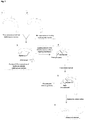
- the patient's reconstructed cardiovascular anatomy is integrated with the ideal healthy 3D cardiovascular anatomy construction by the patch generation device (1), preferably using an appropriate software module such as for instance SketchCad TM so as to determine the specific parts of the vascular structure to which a patch graft being restructured in a patient-specific manner can be implanted on the patient's vascular structure.
- the integration of the healthy and defected vascular structures is effectuated through conformal mapping technique by which the two anatomies are juxtaposed while the defective vascular surfaces requiring modification are indicated on an image display medium in communication with the patch generation device (1) with a distinguishing color in comparison to the ideal vascular surface.
- the acquired anatomy of the defective vascular surfaces requiring modification therefore represents the graft structure with a specific vascular geometry obtained with the blood pressure therein, i.e. in post-operative state.
- finite element method is used to eliminate the pressure effect on the geometrical structure of the defective vascular surfaces and the acquired corresponding graft structure.
- the pressure effect is removed by finite element method so that the acquired graft structure is geometrically reshaped, typically reduced in size in a hemodynamically location-specific proportionality so as to be able to take its post-operative shape when the pressure effect will be present.
- an appropriate software module such as Adina TM can be used in this procedure.
- the unpressurised state graft structure is mapped on a planar surface providing a master structure as a reference geometry for the patch graft to be cut by the surgeon in order for implanting to the pediatric or neonatal patient replacing the defective cardiovascular graft.
- the patch generation device (1) effectuates planar and 3-D printing of the patient-specific graft geometries as prototypes so as to be used by the surgeon as a reference structure when cutting the artificial biocompatible patch to be implanted, thereby manifestly demonstrating the 3-D geometry of the artificial graft to replace the patient's defective vascular graft. While the planar patch prototype will serve for cutting the patch material along predetermined cutting lines in a specific size, the 3-D patch prototype will serve as a 3-D model corresponding to the 3-D geometry of the artificial graft required to be implanted.
- the graft prototypes fabricated according to the proposed system serve to the purpose of assisting the surgeon in implanting the patch graft in an accurately positioned manner so that undesired post-operative graft deformations in treatment of congenital cardiovascular defects in neonatal and pediatric patients can be eliminated.
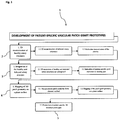
- the patch generation device (1) is a computer-aided system running a plurality of software modules effectuating generation of patient-specific graft geometries.
- a modeling module (2) performs hemodynamic reconstruction of the patient's vascular structures so as to perform multicolor demonstration of the hemodynamic behavior in the patient's vascular structures.
- the reconstruction task includes formation and scaling of the vascular anatomy so as to be processed by an integration module (3) as will be delineated below.
- the integration module (3) performs formation and scaling of a healthy vascular anatomy with which the patient's reconstructed cardiovascular anatomy is integrated in the manner that said reconstructed defected vascular anatomy and the healthy vascular anatomy are overlapped to reveal the patient's specific anatomical parts into which a patch graft implantation is needed.
- the formation and scaling of the patient's vascular anatomy by the modelling module (2) and a healthy vascular anatomy by the integration module (3) enables the integration module (3) to isolate and geometrically specify the exact surface area and associated stitching lines on the patient's vascular anatomy by combining both of the two three-dimensional anatomies of healthy and defective vascular structures.
- a transformation module (4) converts the obtained patch graft shape on the surface of the defected vascular structure under the effect of blood pressure to a non-pressured vascular structure by finite element method allowing reconstruction of a 3-D patch graft model in pre-operative state.
- the transformation module (4) also effectuates mapping of the patch graft geometry on a plane surface.
- a prototype module (5) than prints the pre-operative state three-dimensional patch graft model as well as the planar patch graft in the form of planar and three-dimensional objects.
- the planar object can be used by the surgeon for cutting the artificial patch graft by surgical scissors in a form specifically adapted to the patient. Further, the surgeon will be provided with a patient-specific 3-D model of the graft patch to enable him acquire a 3-D geometry replica of the artificial graft required to be implanted.
- the patch geometry will enable the surgeon to detect graft positions that may lead to undesired graft deformation such as wrinkling or to optimize stitching to remove the possibility of excessive stitching that impose unnecessary loads on the graft.
- the reconstruction of a 3-D patch graft model according to the present invention is also applicable to the great arteries including pulmonary artery, pulmonary veins and aorta.
- 3-D printing techniques have recently become extensively known to the skilled worker. It is also worthy of note that 3-D printing equipment is commercially available in the market. 3-D printing techniques particularly differ in the manner layers of the final object are built one above another. Use of melting or softening material as well as selective laser sintering (SLS), fused deposition modeling (FDM) and stereolithography (SLA) constitute the common technologies.
- SLS selective laser sintering
- FDM fused deposition modeling
- SLA stereolithography
- the present invention proposes a patch generation device (1) for manufacturing of vascular patches in the form of pre-operative surgical planning prototypes providing optimized patient-specific patch geometries, said patch generation device (1) comprising a processing unit effectuating processing of the optimized patient-specific patch geometries.
- said patch generation device (1) comprises a modeling module (2) performing structural and hemodynamic reconstruction of a patient's vascular structures.
- said patch generation device (1) comprises an integration module (3) performing formation and scaling of a healthy vascular anatomy with which the patient's reconstructed cardiovascular anatomy is integrated in the manner that said reconstructed defected vascular anatomy and the healthy vascular anatomy are overlapped to reveal the patient's specific anatomical parts into which a patch graft implantation is envisageable.
- said patch generation device (1) comprises a transformation module (4), converting the revealed patient-specific anatomical parts under the effect of blood pressure and into which a patch graft implantation is envisageable to a non-pressured vascular structure by finite element method allowing reconstruction of a 3-D patch graft model in pre-operative state.
- said modeling module (2) performs formation and scaling of the patient's vascular anatomy enabling multicolor demonstration of the hemodynamic behavior and performance in the patient's vascular structures.
- said integration module (3) isolates and geometrically specifies an exact surface loading and associated stitching forces on the patient's vascular anatomy by combining both of the three-dimensional anatomies of the healthy and defected vascular anatomies.
- said transformation module (4) effectuates mapping of the surface loading and stitching forces on a plane surface generating a planar reconstruction of pre-operative state patch graft model with predetermined cutting lines in a specific geometry providing a master structure as a reference geometry.
- a prototype module (5) of the patch generation device (1) prints the reconstructed pre-operative state three-dimensional patch graft model as a surgical template.
- a prototype module (5) of the patch generation device (1) prints the reconstructed pre-operative state planar patch graft model.
- said modeling module (2) performs formation and scaling of the patient's vascular anatomy based on MRI or CT scans by which 3D hemodynamic reconstruction of the vascular structures is performed.
- integration of the healthy and defected vascular anatomies is effectuated through a computational technique such as conformal mapping technique.
- the transformation module (4) effectuates conversion of the revealed post-operative state patient-specific anatomical parts into which a patch graft implantation is envisageable to generate a pre-operative state three-dimensional patch graft model in non-pressured state such that finite element method is used to eliminate the pressure effect on the pre-operative state three-dimensional patch graft model.
- the pre-operative state three-dimensional patch graft model in non-pressured state is reduced in size in a hemodynamically location-specific proportionality so as to be able to take its post-operative shape when the pressure effect will be present.
- said patch graft model is additionally dimensionally restructured in a patient specific manner based on specific predetermined classifications from a patient database according to the demographic data of the patient.
- the final structure of the patch graft model can undergo a second transformation only to adapt the same to the specific anatomical conditions of the patient, such specific anatomical conditions including demographic properties such as for instance age, sex and weight of the patient.
- a specific database containing such demographic data can be used to reveal characteristic differences between patients regarding the structural effects on the patch grafts in terms of the surface loading and stitching forces.
- patch grafts of two otherwise identical patients to be applied under identical anatomical conditions can be structurally slightly different depending on the weight of each patient.
- the present invention further proposes a method for fabricating vascular patches in the form pre-operative surgical planning prototypes providing optimized patient-specific patch geometries by means of a patch generation device (1) as set forth in Claim 1, said method comprising the steps of, a) performing structural and hemodynamic reconstruction of a patient's vascular structures by a modeling module (2), b) performing formation and scaling of a healthy vascular anatomy with which the patient's reconstructed cardiovascular anatomy is integrated by an integration module (3) in the manner that said reconstructed defected vascular anatomy and the healthy vascular anatomy are overlapped to reveal the patient's specific anatomical parts into which a patch graft implantation is envisageable, c) converting by a transformation module (4) the revealed patient-specific anatomical parts under the effect of blood pressure and into which a patch graft implantation is envisageable to a non-pressured vascular structure by finite element method allowing reconstruction of a 3-D patch graft model in pre-operative state and, d)printing the reconstructed pre-operative state three
- said method further comprises the step of mapping of the surface area and associated stitching lines on a plane surface generating a planar reconstruction of pre-operative state patch graft model with predetermined cutting lines in a specific geometry by said transformation module (4).
- said method further comprises the step of printing the reconstructed pre-operative state planar patch graft model.
- the present invention further proposes a pre-operative state patch graft model manufactured according to the method for fabricating vascular patches in the form pre-operative surgical planning prototypes.
- a pre-operative state patch graft model manufactured by said patch generation device is proposed.
- the present invention further proposes a conduit manufactured by said patch generation device, wherein said conduit is manufactured in the form of a tubular 3D rapid prototype.
- the determination of the physical characteristics and the optimum geometrical shape of the artificial patch including the stitching line's length and geometry is made by the surgeon during the surgical operation.
- Two-dimensional standard artificial patch materials in rectangular form are needed to be cut in appropriate sizes according to the specific needs of the patient. Otherwise an inappropriately structured patch may cause graft deformations if not tailored to the individual patient's anatomy, additionally causing stress on the stitches, consumption of extra energy by the heart and deformations due to the deviation of the hemodynamic forces on the vascular cells from the physiological values.
- patient-specific models/prototypes of graft patches play a crucial role in assisting the surgeon while he designs the structural aspects of the artificial patch. It is also further critical that this process of design should be terminated in the quickest manner as possible because the time period the surgeon needs during the surgery for designing the artificial patch may cause brain and systemic tissue damage in neonatal and pediatric patients.
- patient-specific models/prototypes of graft patches in accordance with the present invention substantially accelerate the in-surgery procedures carried out by the surgeon.
Landscapes
- Health & Medical Sciences (AREA)
- Engineering & Computer Science (AREA)
- Physics & Mathematics (AREA)
- Cardiology (AREA)
- Transplantation (AREA)
- General Physics & Mathematics (AREA)
- Theoretical Computer Science (AREA)
- Geometry (AREA)
- Gastroenterology & Hepatology (AREA)
- Pulmonology (AREA)
- Computer Graphics (AREA)
- Oral & Maxillofacial Surgery (AREA)
- Software Systems (AREA)
- Biomedical Technology (AREA)
- Heart & Thoracic Surgery (AREA)
- Vascular Medicine (AREA)
- Life Sciences & Earth Sciences (AREA)
- Animal Behavior & Ethology (AREA)
- General Health & Medical Sciences (AREA)
- Public Health (AREA)
- Veterinary Medicine (AREA)
- Prostheses (AREA)
Claims (15)
- Patcherzeugungvorrichtung (1) zur Erzeugung von vaskulären Patchs in Form von präoperativen chirurgischen Planungsmodellen, die optimierte, patientgezielte Patchgeometrien bereitstellen, diese Patcherzeugungvorrichtung (1) aufweisend eine Verarbeitungseinheit die die Verarbeitung der optimierten patientgezielten Patchgeometrien bewirkt, dadurch gekennzeichnet dass;
diese Patcherzeugungvorrichtung (1) ein Modellierungsmodul (2) aufweist das die strukturelle und hämodynamische Rekonstruktion der vaskulären Strukturen eines Patienten durchführt,
diese Patcherzeugungvorrichtung (1) ein Integrationsmodul (3) aufweist, das die Errichtung und die Skalierung einer gesunden vaskulären Anatomie durchführt in die die rekonstruierte kardiovaskuläre Anatomie des Patienten integriert ist, auf der Art dass diese rekonstruierte defekte vaskuläre Anatomie und die gesunde vaskuläre Anatomie überlappt werden um die gezielten anatomischen Teile des Patienten aufzuzeigen in die eine Patch Transplantation vorsehbar ist,
diese Patcherzeugungvorrichtung (1) ein Umwandlungsmodul (4) aufweist, das die aufgezeigten patientgezielten anatomischen Teile unter Blutdruckwirkung und in die eine Patch Transplantation vorsehbar ist mittels Finite-Element-Verfahren zu einer drucklosen vaskulären Struktur umwandelt, wodurch der Aufbau eines 3-D präoperativer Zustand Patch Transplantationsmodells erleichtert wird und,
dieses Integrationsmodul (3) eine exakte Flächenbelastung und die damit verbundene Nähkräfte auf der vaskulären Anatomie des Patienten isoliert und geometrisch definiert durch die Kombination von beiden 3-D Anatomien der gesunden und defekten vaskulären Anatomien. - Patcherzeugungvorrichtung (1) gemäß Anspruch 1, dadurch gekennzeichnet dass dieses Modellierungsmodul (2) die Errichtung und die Skalierung der vaskulären Anatomie des Patienten durchführt was eine Multicolordemonstration des hämodynamischen Verhaltens und der Leistung in den vaskulären Strukturen des Patienten ermöglicht.
- Patcherzeugungvorrichtung (1) gemäß Anspruch 1, dadurch gekennzeichnet dass dieses Umwandlungsmodul (4) die Kartierung auf einer planen Fläche, der Flächenbelastung und der Nähkräfte bewirkt was eine planare Rekonstruktion erzeugt, des präoperativer Zustand Patch Transplantationsmodells mit vorgegebenem Schnittverlauf in einer gezielten Geometrie, die eine Grundstruktur als eine Referenzgeometrie bereitstellt.
- Patcherzeugungvorrichtung (1) gemäß Anspruch 1, dadurch gekennzeichnet dass ein Prototypmodul (5) der Patcherzeugungvorrichtung (1) das rekonstruierte 3-D präoperativer Zustand Patch Transplantationsmodell als eine Matrize druckt.
- Patcherzeugungvorrichtung (1) gemäß Anspruch 3, dadurch gekennzeichnet dass ein Prototypmodul (5) der Patcherzeugungvorrichtung (1) das rekonstruierte präoperativer Zustand Patch Transplantationsmodell druckt.
- Patcherzeugungvorrichtung (1) gemäß Anspruch 2, dadurch gekennzeichnet dass dieses Modellierungsmodul (2) die Errichtung und die Skalierung der vaskulären Anatomie des Patienten unter Anwendung von MRT oder CT-Aufnahmen durchführt, wodurch die hämodynamische 3D Rekonstruktion der vaskulären Strukturen durchgeführt wird.
- Patcherzeugungvorrichtung (1) gemäß Anspruch 1, dadurch gekennzeichnet dass die Integration der gesunden und defekten vaskulären Anatomien durch Computertechnik bewirkt wird.
- Patcherzeugungvorrichtung (1) gemäß Anspruch 1, dadurch gekennzeichnet dass das Umwandlungsmodul (4) die Umwandlung des aufgezeigten post-operativen Zustands bewirkt von patientgezielten anatomischen Teilen in die eine Patch Transplantation vorsehbar ist, um ein 3-D präoperativer Zustand Patch Transplantationsmodell im drucklosen Zustand zu erzeugen sodass Finite-Element-Verfahren verwendet wird um auf dem 3-D präoperativer Zustand Patch Transplantationsmodell die Druckwirkung zu eliminieren.
- A Patcherzeugungvorrichtung (1) gemäß Anspruch 8, dadurch gekennzeichnet dass das 3-D präoperativer Zustand Patch Transplantationsmodell im drucklosen Zustand im Format zu einer hämodynamischen lokation-gezielten Proportionalität reduziert wird, um seine post-operative Gestalt anzunehmen wenn die Druckwirkung vorhanden ist.
- Patcherzeugungvorrichtung (1) gemäß Anspruch 1 oder 3, dadurch gekennzeichnet dass dieses Patch Transplantationsmodell zusätzlich auf Patientgezielte Weise dimensional neu strukturiert wird, auf der Grundlage von gezielt vorgegebenen Klassifikationen von einem Patientendatenbestand in Übereinstimmung mit den demographischen Daten des Patienten.
- Verfahren zur Herstellung mittels einer Patcherzeugungvorrichtung (1) gemäß Anspruch 1, von vaskulären Patchs in Form von präoperativen chirurgischen Planungsprototypen die optimierte patientgezielte Patchgeometrien bereitstellen, dieses Verfahren umfassend die Schritte von:a)Durchführung durch ein Modellierungsmodul (2), der strukturellen und hämodynamischen Rekonstruktion der vaskulären Strukturen eines Patienten,b)Durchführung durch ein Integrationsmodul (3), der Errichtung und Skalierung einer gesunden vaskulären Anatomie in die die rekonstruierte kardiovaskuläre Anatomie des Patienten integriert ist, auf der Art dass diese rekonstruierte defekte vaskuläre Anatomie und die gesunde vaskuläre Anatomie überlappt werden um die gezielten anatomischen Teile des Patienten aufzuzeigen in die eine Patch Transplantation vorsehbar ist,c) Umwandlung durch ein Umwandlungsmodul (4), von aufgezeigten patientgezielten anatomischen Teilen unter Blutdruckwirkung und in die eine Patch Transplantation vorsehbar ist, zu einer drucklosen vaskulären Struktur mittels Finite-Element-Verfahren, wodurch der Aufbau eines 3-D präoperativer Zustand Patch Transplantationsmodells erleichtert wird und,d)lsolierung und geometrische Definierung durch ein Integrationsmodul (3), einer exakten Flächenbelastung und der damit verbundenen Nähkräfte auf der vaskulären Anatomie des Patienten, durch die Kombination von beiden 3D Anatomien der gesunden und defekten vaskulären Anatomien.e)Drucken des rekonstruierten 3-D präoperativer Zustand Patch Transplantationsmodells.
- Verfahren gemäß Anspruch 11 zur Herstellung von vaskulären Patchs in Form von präoperativen chirurgischen Planungsprototypen, wobei dieses Verfahren weiterhin den Schritt der Kartierung durch dieses Umwandlungsmodul (4) auf einer planen Fläche umfasst, des Flächenbereiches und der damit verbundenen Nählinien was eine planare Rekonstruktion erzeugt, des präoperativer Zustand Patch Transplantationsmodells mit vorgegebenem Schnittverlauf in einer gezielten Geometrie.
- Verfahren gemäß Anspruch 12 zur Herstellung von vaskulären Patchs in Form von präoperativen chirurgischen Planungsprototypen, wobei dieses Verfahren weiterhin den Schritt des Druckens umfasst, des rekonstruierten planaren präoperativer Zustand Patch Transplantationsmodells.
- Präoperativer Zustand Patch Transplantationsmodell erzeugt durch die Patcherzeugungvorrichtung (1) gemäß Anspruch 1.
- Leitung produziert durch die Patcherzeugungvorrichtung (1) gemäß Anspruch 4, wobei diese Leitung in Gestalt eines schlauchförmigen rapiden 3-D Prototypen produziert ist.
Applications Claiming Priority (1)
| Application Number | Priority Date | Filing Date | Title |
|---|---|---|---|
| PCT/TR2015/000243 WO2016195605A1 (en) | 2015-05-29 | 2015-05-29 | Pre-operative development of patient-specific vascular patch graft prototypes for pediatric and neonatal patients |
Publications (2)
| Publication Number | Publication Date |
|---|---|
| EP3304499A1 EP3304499A1 (de) | 2018-04-11 |
| EP3304499B1 true EP3304499B1 (de) | 2020-01-08 |
Family
ID=53836801
Family Applications (1)
| Application Number | Title | Priority Date | Filing Date |
|---|---|---|---|
| EP15750480.4A Active EP3304499B1 (de) | 2015-05-29 | 2015-05-29 | Präoperative entwicklung patientenspezifischer patch-gefässersatzprototypen für pädiatrische und neonatale patienten |
Country Status (3)
| Country | Link |
|---|---|
| US (1) | US10729529B2 (de) |
| EP (1) | EP3304499B1 (de) |
| WO (1) | WO2016195605A1 (de) |
Families Citing this family (5)
| Publication number | Priority date | Publication date | Assignee | Title |
|---|---|---|---|---|
| KR20200028391A (ko) | 2017-06-12 | 2020-03-16 | 더 유니버시티 오브 노쓰 캐롤라이나 엣 채플 힐 | 세포 생착용 패치 이식편 조성물 |
| CN111210427B (zh) * | 2020-01-17 | 2023-03-10 | 云南大学 | 一种基于时间变化的体内轻量型补片术后皱缩分析方法 |
| RU2725075C2 (ru) * | 2020-02-12 | 2020-06-29 | Федеральное государственное бюджетное учреждение "Национальный медицинский исследовательский центр радиологии" Министерства здравоохранения Российской Федерации (ФГБУ "НМИЦ радиологии" Минздрава России) | Способ трехмерного моделирования для 3d печати при планировании резекции поджелудочной железы у пациентов с опухолевым поражением |
| US20240000559A1 (en) * | 2020-10-07 | 2024-01-04 | Children's Medical Center Corporation | Computational planning of surgical reconstruction |
| US11920597B2 (en) | 2021-03-10 | 2024-03-05 | Indiana University Research And Technology Corporation | Boundary layer powered circulatory assist device |
Family Cites Families (1)
| Publication number | Priority date | Publication date | Assignee | Title |
|---|---|---|---|---|
| AU2012290221B2 (en) | 2011-07-29 | 2017-02-23 | Carnegie Mellon University | Artificial valved conduits for cardiac reconstructive procedures and methods for their production |
-
2015
- 2015-05-29 WO PCT/TR2015/000243 patent/WO2016195605A1/en not_active Ceased
- 2015-05-29 EP EP15750480.4A patent/EP3304499B1/de active Active
-
2017
- 2017-11-28 US US15/824,845 patent/US10729529B2/en active Active
Non-Patent Citations (1)
| Title |
|---|
| None * |
Also Published As
| Publication number | Publication date |
|---|---|
| US20180078356A1 (en) | 2018-03-22 |
| EP3304499A1 (de) | 2018-04-11 |
| US10729529B2 (en) | 2020-08-04 |
| WO2016195605A1 (en) | 2016-12-08 |
Similar Documents
| Publication | Publication Date | Title |
|---|---|---|
| US10729529B2 (en) | System for pre-operative development of patient-specific vascular patch graft prototypes for pediatric and neonatal patients | |
| US8706285B2 (en) | Process to design and fabricate a custom-fit implant | |
| CN106073870B (zh) | 一种骨关节面重建3d打印修复植入体的方法 | |
| Sun et al. | Bio-CAD modeling and its applications in computer-aided tissue engineering | |
| Armillotta et al. | Use of rapid prototyping models in the planning of percutaneous pulmonary valved stent implantation | |
| Starly et al. | Three-dimensional reconstruction for medical-CAD modeling | |
| Cai et al. | A control approach for pore size distribution in the bone scaffold based on the hexahedral mesh refinement | |
| JP2015516243A (ja) | インプラント可能な骨増生部およびインプラント可能な骨増生部を製造するための方法 | |
| CN105748177A (zh) | 一种个性化具有仿生微孔的脊椎植入假体及其制造方法 | |
| CN105853029B (zh) | 一种生成用于医用植入体的制造模型的方法 | |
| Gall et al. | Computer-aided planning and reconstruction of cranial 3D implants | |
| Lashkarinia et al. | Computational pre-surgical planning of arterial patch reconstruction: parametric limits and in vitro validation | |
| CN105912863A (zh) | 一种人工骨的制备方法及系统 | |
| CN110353861B (zh) | 一种人体骶骨假体的个性化制备方法 | |
| Šljivić et al. | Implemenation of FEM and rapid prototyping in maxillofacial surgery | |
| Moncayo-Matute et al. | Description and application of a comprehensive methodology for custom implant design and surgical planning | |
| Tripathi et al. | Transforming surgical planning and procedures through the synergistic use of additive manufacturing, advanced materials and artificial intelligence: challenges and opportunities | |
| US20060129328A1 (en) | Method for designing 3-dimensional porous tissue engineering scaffold | |
| Phanindra Bogu et al. | Homogenous scaffold-based cranial/skull implant modelling and structural analysis—unit cell algorithm-meshless approach | |
| CN120850648A (zh) | 一种基于镜像配准的骨支架融合设计及制备方法 | |
| Xiong et al. | Virtual interventions for image-based blood flow computation | |
| Lin et al. | Skull repair using active contour models | |
| SHIDID | Design and manufacture of patient specific orthopaedic implants using selective laser melting (SLM) technology | |
| Beski et al. | Software for biofabrication | |
| Abdel-Sayed et al. | Rapid prototyping for training purposes in cardiovascular surgery |
Legal Events
| Date | Code | Title | Description |
|---|---|---|---|
| STAA | Information on the status of an ep patent application or granted ep patent |
Free format text: STATUS: THE INTERNATIONAL PUBLICATION HAS BEEN MADE |
|
| PUAI | Public reference made under article 153(3) epc to a published international application that has entered the european phase |
Free format text: ORIGINAL CODE: 0009012 |
|
| STAA | Information on the status of an ep patent application or granted ep patent |
Free format text: STATUS: REQUEST FOR EXAMINATION WAS MADE |
|
| 17P | Request for examination filed |
Effective date: 20171227 |
|
| AK | Designated contracting states |
Kind code of ref document: A1 Designated state(s): AL AT BE BG CH CY CZ DE DK EE ES FI FR GB GR HR HU IE IS IT LI LT LU LV MC MK MT NL NO PL PT RO RS SE SI SK SM TR |
|
| AX | Request for extension of the european patent |
Extension state: BA ME |
|
| DAV | Request for validation of the european patent (deleted) | ||
| DAX | Request for extension of the european patent (deleted) | ||
| GRAP | Despatch of communication of intention to grant a patent |
Free format text: ORIGINAL CODE: EPIDOSNIGR1 |
|
| STAA | Information on the status of an ep patent application or granted ep patent |
Free format text: STATUS: GRANT OF PATENT IS INTENDED |
|
| RIC1 | Information provided on ipc code assigned before grant |
Ipc: G06T 17/00 20060101AFI20190813BHEP Ipc: A61F 2/06 20130101ALI20190813BHEP |
|
| INTG | Intention to grant announced |
Effective date: 20190913 |
|
| GRAS | Grant fee paid |
Free format text: ORIGINAL CODE: EPIDOSNIGR3 |
|
| GRAA | (expected) grant |
Free format text: ORIGINAL CODE: 0009210 |
|
| STAA | Information on the status of an ep patent application or granted ep patent |
Free format text: STATUS: THE PATENT HAS BEEN GRANTED |
|
| AK | Designated contracting states |
Kind code of ref document: B1 Designated state(s): AL AT BE BG CH CY CZ DE DK EE ES FI FR GB GR HR HU IE IS IT LI LT LU LV MC MK MT NL NO PL PT RO RS SE SI SK SM TR |
|
| REG | Reference to a national code |
Ref country code: GB Ref legal event code: FG4D |
|
| REG | Reference to a national code |
Ref country code: CH Ref legal event code: EP |
|
| REG | Reference to a national code |
Ref country code: DE Ref legal event code: R096 Ref document number: 602015045171 Country of ref document: DE |
|
| REG | Reference to a national code |
Ref country code: IE Ref legal event code: FG4D |
|
| REG | Reference to a national code |
Ref country code: AT Ref legal event code: REF Ref document number: 1223639 Country of ref document: AT Kind code of ref document: T Effective date: 20200215 |
|
| REG | Reference to a national code |
Ref country code: NL Ref legal event code: FP |
|
| REG | Reference to a national code |
Ref country code: LT Ref legal event code: MG4D |
|
| PG25 | Lapsed in a contracting state [announced via postgrant information from national office to epo] |
Ref country code: RS Free format text: LAPSE BECAUSE OF FAILURE TO SUBMIT A TRANSLATION OF THE DESCRIPTION OR TO PAY THE FEE WITHIN THE PRESCRIBED TIME-LIMIT Effective date: 20200108 Ref country code: PT Free format text: LAPSE BECAUSE OF FAILURE TO SUBMIT A TRANSLATION OF THE DESCRIPTION OR TO PAY THE FEE WITHIN THE PRESCRIBED TIME-LIMIT Effective date: 20200531 Ref country code: NO Free format text: LAPSE BECAUSE OF FAILURE TO SUBMIT A TRANSLATION OF THE DESCRIPTION OR TO PAY THE FEE WITHIN THE PRESCRIBED TIME-LIMIT Effective date: 20200408 Ref country code: FI Free format text: LAPSE BECAUSE OF FAILURE TO SUBMIT A TRANSLATION OF THE DESCRIPTION OR TO PAY THE FEE WITHIN THE PRESCRIBED TIME-LIMIT Effective date: 20200108 Ref country code: LT Free format text: LAPSE BECAUSE OF FAILURE TO SUBMIT A TRANSLATION OF THE DESCRIPTION OR TO PAY THE FEE WITHIN THE PRESCRIBED TIME-LIMIT Effective date: 20200108 |
|
| PG25 | Lapsed in a contracting state [announced via postgrant information from national office to epo] |
Ref country code: GR Free format text: LAPSE BECAUSE OF FAILURE TO SUBMIT A TRANSLATION OF THE DESCRIPTION OR TO PAY THE FEE WITHIN THE PRESCRIBED TIME-LIMIT Effective date: 20200409 Ref country code: BG Free format text: LAPSE BECAUSE OF FAILURE TO SUBMIT A TRANSLATION OF THE DESCRIPTION OR TO PAY THE FEE WITHIN THE PRESCRIBED TIME-LIMIT Effective date: 20200408 Ref country code: IS Free format text: LAPSE BECAUSE OF FAILURE TO SUBMIT A TRANSLATION OF THE DESCRIPTION OR TO PAY THE FEE WITHIN THE PRESCRIBED TIME-LIMIT Effective date: 20200508 Ref country code: SE Free format text: LAPSE BECAUSE OF FAILURE TO SUBMIT A TRANSLATION OF THE DESCRIPTION OR TO PAY THE FEE WITHIN THE PRESCRIBED TIME-LIMIT Effective date: 20200108 Ref country code: LV Free format text: LAPSE BECAUSE OF FAILURE TO SUBMIT A TRANSLATION OF THE DESCRIPTION OR TO PAY THE FEE WITHIN THE PRESCRIBED TIME-LIMIT Effective date: 20200108 Ref country code: HR Free format text: LAPSE BECAUSE OF FAILURE TO SUBMIT A TRANSLATION OF THE DESCRIPTION OR TO PAY THE FEE WITHIN THE PRESCRIBED TIME-LIMIT Effective date: 20200108 |
|
| REG | Reference to a national code |
Ref country code: DE Ref legal event code: R097 Ref document number: 602015045171 Country of ref document: DE |
|
| PG25 | Lapsed in a contracting state [announced via postgrant information from national office to epo] |
Ref country code: SM Free format text: LAPSE BECAUSE OF FAILURE TO SUBMIT A TRANSLATION OF THE DESCRIPTION OR TO PAY THE FEE WITHIN THE PRESCRIBED TIME-LIMIT Effective date: 20200108 Ref country code: EE Free format text: LAPSE BECAUSE OF FAILURE TO SUBMIT A TRANSLATION OF THE DESCRIPTION OR TO PAY THE FEE WITHIN THE PRESCRIBED TIME-LIMIT Effective date: 20200108 Ref country code: DK Free format text: LAPSE BECAUSE OF FAILURE TO SUBMIT A TRANSLATION OF THE DESCRIPTION OR TO PAY THE FEE WITHIN THE PRESCRIBED TIME-LIMIT Effective date: 20200108 Ref country code: SK Free format text: LAPSE BECAUSE OF FAILURE TO SUBMIT A TRANSLATION OF THE DESCRIPTION OR TO PAY THE FEE WITHIN THE PRESCRIBED TIME-LIMIT Effective date: 20200108 Ref country code: RO Free format text: LAPSE BECAUSE OF FAILURE TO SUBMIT A TRANSLATION OF THE DESCRIPTION OR TO PAY THE FEE WITHIN THE PRESCRIBED TIME-LIMIT Effective date: 20200108 Ref country code: ES Free format text: LAPSE BECAUSE OF FAILURE TO SUBMIT A TRANSLATION OF THE DESCRIPTION OR TO PAY THE FEE WITHIN THE PRESCRIBED TIME-LIMIT Effective date: 20200108 Ref country code: CZ Free format text: LAPSE BECAUSE OF FAILURE TO SUBMIT A TRANSLATION OF THE DESCRIPTION OR TO PAY THE FEE WITHIN THE PRESCRIBED TIME-LIMIT Effective date: 20200108 |
|
| PLBE | No opposition filed within time limit |
Free format text: ORIGINAL CODE: 0009261 |
|
| STAA | Information on the status of an ep patent application or granted ep patent |
Free format text: STATUS: NO OPPOSITION FILED WITHIN TIME LIMIT |
|
| REG | Reference to a national code |
Ref country code: AT Ref legal event code: MK05 Ref document number: 1223639 Country of ref document: AT Kind code of ref document: T Effective date: 20200108 |
|
| 26N | No opposition filed |
Effective date: 20201009 |
|
| PG25 | Lapsed in a contracting state [announced via postgrant information from national office to epo] |
Ref country code: LI Free format text: LAPSE BECAUSE OF NON-PAYMENT OF DUE FEES Effective date: 20200531 Ref country code: MC Free format text: LAPSE BECAUSE OF FAILURE TO SUBMIT A TRANSLATION OF THE DESCRIPTION OR TO PAY THE FEE WITHIN THE PRESCRIBED TIME-LIMIT Effective date: 20200108 Ref country code: AT Free format text: LAPSE BECAUSE OF FAILURE TO SUBMIT A TRANSLATION OF THE DESCRIPTION OR TO PAY THE FEE WITHIN THE PRESCRIBED TIME-LIMIT Effective date: 20200108 Ref country code: IT Free format text: LAPSE BECAUSE OF FAILURE TO SUBMIT A TRANSLATION OF THE DESCRIPTION OR TO PAY THE FEE WITHIN THE PRESCRIBED TIME-LIMIT Effective date: 20200108 Ref country code: CH Free format text: LAPSE BECAUSE OF NON-PAYMENT OF DUE FEES Effective date: 20200531 |
|
| PG25 | Lapsed in a contracting state [announced via postgrant information from national office to epo] |
Ref country code: SI Free format text: LAPSE BECAUSE OF FAILURE TO SUBMIT A TRANSLATION OF THE DESCRIPTION OR TO PAY THE FEE WITHIN THE PRESCRIBED TIME-LIMIT Effective date: 20200108 Ref country code: PL Free format text: LAPSE BECAUSE OF FAILURE TO SUBMIT A TRANSLATION OF THE DESCRIPTION OR TO PAY THE FEE WITHIN THE PRESCRIBED TIME-LIMIT Effective date: 20200108 |
|
| REG | Reference to a national code |
Ref country code: BE Ref legal event code: MM Effective date: 20200531 |
|
| PG25 | Lapsed in a contracting state [announced via postgrant information from national office to epo] |
Ref country code: LU Free format text: LAPSE BECAUSE OF NON-PAYMENT OF DUE FEES Effective date: 20200529 |
|
| PG25 | Lapsed in a contracting state [announced via postgrant information from national office to epo] |
Ref country code: FR Free format text: LAPSE BECAUSE OF NON-PAYMENT OF DUE FEES Effective date: 20200531 |
|
| PG25 | Lapsed in a contracting state [announced via postgrant information from national office to epo] |
Ref country code: BE Free format text: LAPSE BECAUSE OF NON-PAYMENT OF DUE FEES Effective date: 20200531 |
|
| PG25 | Lapsed in a contracting state [announced via postgrant information from national office to epo] |
Ref country code: MT Free format text: LAPSE BECAUSE OF FAILURE TO SUBMIT A TRANSLATION OF THE DESCRIPTION OR TO PAY THE FEE WITHIN THE PRESCRIBED TIME-LIMIT Effective date: 20200108 Ref country code: CY Free format text: LAPSE BECAUSE OF FAILURE TO SUBMIT A TRANSLATION OF THE DESCRIPTION OR TO PAY THE FEE WITHIN THE PRESCRIBED TIME-LIMIT Effective date: 20200108 |
|
| PG25 | Lapsed in a contracting state [announced via postgrant information from national office to epo] |
Ref country code: MK Free format text: LAPSE BECAUSE OF FAILURE TO SUBMIT A TRANSLATION OF THE DESCRIPTION OR TO PAY THE FEE WITHIN THE PRESCRIBED TIME-LIMIT Effective date: 20200108 Ref country code: AL Free format text: LAPSE BECAUSE OF FAILURE TO SUBMIT A TRANSLATION OF THE DESCRIPTION OR TO PAY THE FEE WITHIN THE PRESCRIBED TIME-LIMIT Effective date: 20200108 |
|
| PGFP | Annual fee paid to national office [announced via postgrant information from national office to epo] |
Ref country code: IE Payment date: 20220414 Year of fee payment: 8 Ref country code: DE Payment date: 20220531 Year of fee payment: 8 |
|
| PGFP | Annual fee paid to national office [announced via postgrant information from national office to epo] |
Ref country code: NL Payment date: 20230531 Year of fee payment: 9 |
|
| REG | Reference to a national code |
Ref country code: DE Ref legal event code: R119 Ref document number: 602015045171 Country of ref document: DE |
|
| REG | Reference to a national code |
Ref country code: IE Ref legal event code: MM4A |
|
| PG25 | Lapsed in a contracting state [announced via postgrant information from national office to epo] |
Ref country code: IE Free format text: LAPSE BECAUSE OF NON-PAYMENT OF DUE FEES Effective date: 20230529 |
|
| PG25 | Lapsed in a contracting state [announced via postgrant information from national office to epo] |
Ref country code: IE Free format text: LAPSE BECAUSE OF NON-PAYMENT OF DUE FEES Effective date: 20230529 Ref country code: DE Free format text: LAPSE BECAUSE OF NON-PAYMENT OF DUE FEES Effective date: 20231201 |
|
| REG | Reference to a national code |
Ref country code: NL Ref legal event code: MM Effective date: 20240601 |
|
| PG25 | Lapsed in a contracting state [announced via postgrant information from national office to epo] |
Ref country code: NL Free format text: LAPSE BECAUSE OF NON-PAYMENT OF DUE FEES Effective date: 20240601 |
|
| PGFP | Annual fee paid to national office [announced via postgrant information from national office to epo] |
Ref country code: GB Payment date: 20250520 Year of fee payment: 11 |
|
| PGFP | Annual fee paid to national office [announced via postgrant information from national office to epo] |
Ref country code: TR Payment date: 20250509 Year of fee payment: 11 |