EP3304514B1 - Systeme und verfahren zur bereitstellung von unterstützung in einem notfall - Google Patents
Systeme und verfahren zur bereitstellung von unterstützung in einem notfall Download PDFInfo
- Publication number
- EP3304514B1 EP3304514B1 EP16800674.0A EP16800674A EP3304514B1 EP 3304514 B1 EP3304514 B1 EP 3304514B1 EP 16800674 A EP16800674 A EP 16800674A EP 3304514 B1 EP3304514 B1 EP 3304514B1
- Authority
- EP
- European Patent Office
- Prior art keywords
- user
- digit
- password
- digits
- displaying
- Prior art date
- Legal status (The legal status is an assumption and is not a legal conclusion. Google has not performed a legal analysis and makes no representation as to the accuracy of the status listed.)
- Active
Links
Images



Classifications
-
- H—ELECTRICITY
- H04—ELECTRIC COMMUNICATION TECHNIQUE
- H04W—WIRELESS COMMUNICATION NETWORKS
- H04W4/00—Services specially adapted for wireless communication networks; Facilities therefor
- H04W4/90—Services for handling of emergency or hazardous situations, e.g. earthquake and tsunami warning systems [ETWS]
-
- G—PHYSICS
- G08—SIGNALLING
- G08B—SIGNALLING SYSTEMS, e.g. PERSONAL CALLING SYSTEMS; ORDER TELEGRAPHS; ALARM SYSTEMS
- G08B25/00—Alarm systems in which the location of the alarm condition is signalled to a central station, e.g. fire or police telegraphic systems
- G08B25/01—Alarm systems in which the location of the alarm condition is signalled to a central station, e.g. fire or police telegraphic systems characterised by the transmission medium
- G08B25/016—Personal emergency signalling and security systems
-
- H—ELECTRICITY
- H04—ELECTRIC COMMUNICATION TECHNIQUE
- H04M—TELEPHONIC COMMUNICATION
- H04M1/00—Substation equipment, e.g. for use by subscribers
- H04M1/72—Mobile telephones; Cordless telephones, i.e. devices for establishing wireless links to base stations without route selection
- H04M1/724—User interfaces specially adapted for cordless or mobile telephones
- H04M1/72403—User interfaces specially adapted for cordless or mobile telephones with means for local support of applications that increase the functionality
- H04M1/72418—User interfaces specially adapted for cordless or mobile telephones with means for local support of applications that increase the functionality for supporting emergency services
- H04M1/72424—User interfaces specially adapted for cordless or mobile telephones with means for local support of applications that increase the functionality for supporting emergency services with manual activation of emergency-service functions
-
- H—ELECTRICITY
- H04—ELECTRIC COMMUNICATION TECHNIQUE
- H04M—TELEPHONIC COMMUNICATION
- H04M3/00—Automatic or semi-automatic exchanges
- H04M3/42—Systems providing special services or facilities to subscribers
- H04M3/42348—Location-based services which utilize the location information of a target
- H04M3/42357—Location-based services which utilize the location information of a target where the information is provided to a monitoring entity such as a potential calling party or a call processing server
-
- H—ELECTRICITY
- H04—ELECTRIC COMMUNICATION TECHNIQUE
- H04M—TELEPHONIC COMMUNICATION
- H04M3/00—Automatic or semi-automatic exchanges
- H04M3/42—Systems providing special services or facilities to subscribers
- H04M3/50—Centralised arrangements for answering calls; Centralised arrangements for recording messages for absent or busy subscribers ; Centralised arrangements for recording messages
- H04M3/51—Centralised call answering arrangements requiring operator intervention, e.g. call or contact centers for telemarketing
- H04M3/5116—Centralised call answering arrangements requiring operator intervention, e.g. call or contact centers for telemarketing for emergency applications
-
- H—ELECTRICITY
- H04—ELECTRIC COMMUNICATION TECHNIQUE
- H04W—WIRELESS COMMUNICATION NETWORKS
- H04W12/00—Security arrangements; Authentication; Protecting privacy or anonymity
- H04W12/08—Access security
-
- H—ELECTRICITY
- H04—ELECTRIC COMMUNICATION TECHNIQUE
- H04W—WIRELESS COMMUNICATION NETWORKS
- H04W12/00—Security arrangements; Authentication; Protecting privacy or anonymity
- H04W12/30—Security of mobile devices; Security of mobile applications
- H04W12/33—Security of mobile devices; Security of mobile applications using wearable devices, e.g. using a smartwatch or smart-glasses
-
- H—ELECTRICITY
- H04—ELECTRIC COMMUNICATION TECHNIQUE
- H04W—WIRELESS COMMUNICATION NETWORKS
- H04W4/00—Services specially adapted for wireless communication networks; Facilities therefor
- H04W4/02—Services making use of location information
-
- H—ELECTRICITY
- H04—ELECTRIC COMMUNICATION TECHNIQUE
- H04W—WIRELESS COMMUNICATION NETWORKS
- H04W4/00—Services specially adapted for wireless communication networks; Facilities therefor
- H04W4/02—Services making use of location information
- H04W4/029—Location-based management or tracking services
-
- G—PHYSICS
- G08—SIGNALLING
- G08B—SIGNALLING SYSTEMS, e.g. PERSONAL CALLING SYSTEMS; ORDER TELEGRAPHS; ALARM SYSTEMS
- G08B25/00—Alarm systems in which the location of the alarm condition is signalled to a central station, e.g. fire or police telegraphic systems
- G08B25/001—Alarm cancelling procedures or alarm forwarding decisions, e.g. based on absence of alarm confirmation
-
- G—PHYSICS
- G08—SIGNALLING
- G08B—SIGNALLING SYSTEMS, e.g. PERSONAL CALLING SYSTEMS; ORDER TELEGRAPHS; ALARM SYSTEMS
- G08B27/00—Alarm systems in which the alarm condition is signalled from a central station to a plurality of substations
- G08B27/001—Signalling to an emergency team, e.g. firemen
-
- H—ELECTRICITY
- H04—ELECTRIC COMMUNICATION TECHNIQUE
- H04L—TRANSMISSION OF DIGITAL INFORMATION, e.g. TELEGRAPHIC COMMUNICATION
- H04L63/00—Network architectures or network communication protocols for network security
- H04L63/08—Network architectures or network communication protocols for network security for authentication of entities
- H04L63/083—Network architectures or network communication protocols for network security for authentication of entities using passwords
-
- H—ELECTRICITY
- H04—ELECTRIC COMMUNICATION TECHNIQUE
- H04L—TRANSMISSION OF DIGITAL INFORMATION, e.g. TELEGRAPHIC COMMUNICATION
- H04L63/00—Network architectures or network communication protocols for network security
- H04L63/16—Implementing security features at a particular protocol layer
- H04L63/168—Implementing security features at a particular protocol layer above the transport layer
-
- H—ELECTRICITY
- H04—ELECTRIC COMMUNICATION TECHNIQUE
- H04M—TELEPHONIC COMMUNICATION
- H04M2242/00—Special services or facilities
- H04M2242/15—Information service where the information is dependent on the location of the subscriber
-
- H—ELECTRICITY
- H04—ELECTRIC COMMUNICATION TECHNIQUE
- H04W—WIRELESS COMMUNICATION NETWORKS
- H04W12/00—Security arrangements; Authentication; Protecting privacy or anonymity
- H04W12/04—Key management, e.g. using generic bootstrapping architecture [GBA]
-
- H—ELECTRICITY
- H04—ELECTRIC COMMUNICATION TECHNIQUE
- H04W—WIRELESS COMMUNICATION NETWORKS
- H04W12/00—Security arrangements; Authentication; Protecting privacy or anonymity
- H04W12/60—Context-dependent security
- H04W12/68—Gesture-dependent or behaviour-dependent
-
- H—ELECTRICITY
- H04—ELECTRIC COMMUNICATION TECHNIQUE
- H04W—WIRELESS COMMUNICATION NETWORKS
- H04W76/00—Connection management
- H04W76/50—Connection management for emergency connections
Definitions
- This disclosure pertains a method for providing a notification of an emergency to a first responder.
- PSAPs public safety answering points
- a PSAP is essentially a call center that answers 9-1-1 calls and triages the emergency, directly dispatching appropriate first responders or contacting a dispatch office for the appropriate first responders.
- the PSAP operator For the PSAP call center to determine the proper first responder for the emergency, the PSAP operator typically must acquire some basic information from the caller. This information includes name, location, and a general description of the emergency. Thus, when a call is placed to 9-1-1, the PSAP operator generally asks the caller for that information. This is because the 9-1-1 system was designed during the landline era, and its technology is based on landline systems. Most modem PSAPs are capable of using call data to determine the origin of 9-1-1 calls placed over a landline.
- US 2013/0231077 discloses a personal security system includes: a mobile electronic device including a processor and a user input mechanism, wherein the processor is adapted to provide an alarm trigger, wherein the processor is further adapted to: receive a command from a user to provide an armed alarm condition; initiate the armed alarm condition by receiving a continuous user command through the user input mechanism, wherein the continuous user command requires an active physical touch from the user; and when the user ceases to provide the active physical touch required to maintain the continuous user command, trigger an alarm condition.
- the processor in response to triggering the alarm condition, communicates geo-location information to a remote server, wherein the geo-location information identifies the geo-location of the mobile electronic device at the time the alarm condition is triggered.
- the mobile device is a mobile smart phone.
- the touch-operative control is a button.
- the user profile data comprises a unique identifier for user profile data record stored in a memory of the alarm server.
- geolocation is determined by a geolocation system transceiver of the mobile device.
- the geolocation system transceiver is for a global positioning satellite system.
- the PS AP operator retrieves the copy of the case data record by entering into a web site of the case management server the case identifier spoken on the second voice call.
- the mobile device is a smart watch.
- the password is a four-digit password
- the displaying to the user an interface control for entering a password of the user comprises: displaying on a display of the smart watch a first plurality of digits, one digit in the plurality of digits being the first digit of the four-digit password; in response to the user tapping one digit in the displayed first plurality of digits, displaying on the display a second plurality of digits, one digit in the second plurality of digits being the second digit of the four-digit password; in response to the user tapping one digit in the displayed second plurality of digits, displaying on the display a third plurality of digits, one digit in the third plurality of digits being the third digit of the four-digit password; in response to the user tapping one digit in the displayed third plurality of digits, displaying on the display a fourth plurality of digits, one digit in the fourth plurality of digits being the fourth digit of the four-digit password
- the password is a four-digit password
- the displaying to the user an interface control for entering a password of the user comprises: displaying on a display of the smart watch four different digits, including each of the unique digits in the four-digit password; in response to the user entering the four digits of the first-digital password in the correct order using the displayed digits, displaying on the display an indication of whether the password is entered correctly; and the password is not entered correctly if any of the one digits tapped by the user is not entered in the order the digit appears in the four-digit password.
- a method for providing a notification of an emergency to a first responder comprising: providing a case management server communicably coupled to an alarm server over a telecommunications network; providing a call center computer communicably coupled to the case management server over the telecommunications network; providing a public safety access point ("PSAP") computer at a PSAP communicably coupled to the case management server over the telecommunications network; receiving at the case management server from the alarm server a plurality of geographical coordinates and user profile data of a user, the user profile data comprising the user's name and phone number; creating in a memory of the case management server a case data record comprising the received plurality of geographical coordinates and user profile data and an associated case identification number generated by the case management server; transmitting to the call center computer a copy of the case data record; in response to receiving the case data record, the call center computer displaying to a call center operator the case identifier and the phone number in the received case data record; the call center operator placing a voice call to
- the geographical coordinates are determined by a geolocation system transceiver of a mobile user device.
- the geolocation system transceiver is for a global positioning satellite system.
- the PSAP operator retrieves the copy of the case data record by entering into a web site of the case management server the case identifier spoken on the voice call.
- a non-transitory machine-readable storage medium of a mobile user device having stored thereon machine-readable computer program instructions for an emergency alarm application, the program instructions causing the machine to perform the steps of: displaying on a display of the mobile user device a user interface comprising a touch-operable control; in response to a user touching the touch- operable control, sending to an alarm server over a telecommunications network a data structure including: an indication of a previously stored user profile data record for the user, the previously stored user profile data record including a phone number for the mobile user device; an indication that the emergency alarm application is armed; and a geographic location of the mobile user device; while the user continues to touch the touch-operable control, transmitting to the alarm server at regular intervals an updated geographic location of the mobile user device; only upon the user discontinuing to touch the touch-operable control, displaying on the display an interface for entering a password; in response to the password not being entered correctly within a predetermined amount of time, transmitting to the alarm server
- the mobile user device is a vehicular telematics system.
- the mobile user device is a wearable computer.
- the password is a four-digit password
- the displaying to the user an interface control for entering a password of the user comprises: displaying on a display of the smart watch a first plurality of digits, one digit in the plurality of digits being the first digit of the four-digit password; in response to the user tapping one digit in the displayed first plurality of digits, displaying on the display a second plurality of digits, one digit in the second plurality of digits being the second digit of the four-digit password; in response to the user tapping one digit in the displayed second plurality of digits, displaying on the display a third plurality of digits, one digit in the third plurality of digits being the third digit of the four-digit password; in response to the user tapping one digit in the displayed third plurality of digits, displaying on the display a fourth plurality of digits, one digit in the fourth plurality of digits being the fourth digit of the four-digit password;
- the password is a four-digit password
- the displaying to the user an interface control for entering a password of the user comprises: displaying on a display of the smart watch four different digits, including each of the unique digits in the four-digit password; in response to the user entering the four digits of the first-digital password in the correct order using the displayed digits, displaying on the display an indication of whether the password is entered correctly; and the password is not entered correctly if any of the one digits tapped by the user is not entered in the order the digit appears in the four-digit password.
- the systems and methods comprise a mobile device application executing on the processor of the user device, and communicating with the alarm server system over a telecommunications network, generally the public Internet.
- the mobile device application has a user interface implemented like a "dead man's switch,” whereby so long as the user is operating a control of the interface, the user is considered “safe.” If the user stops operating the control and fails to indicate a false alarm, a signal is sent over the network to the alarm server to activate the emergency alert system.
- the emergency alert system notifies a call center of the alarm, and the call center attempts to contact the user through a text message or voice call to confirm an emergency. If no response is received, the call center identifies and routes the emergency to the appropriate PSAP, which in turn identifies and routes the emergency to the appropriate first responder.
- computer describes hardware which generally implements functionality provided by digital computing technology, particularly computing functionality associated with microprocessors.
- the term “computer” is not intended to be limited to any specific type of computing device, but it is intended to be inclusive of all computational devices including, but not limited to: processing devices, microprocessors, personal computers, desktop computers, laptop computers, workstations, terminals, servers, clients, portable computers, handheld computers, cell phones, mobile phones, smart phones, tablet computers, server farms, hardware appliances, minicomputers, mainframe computers, video game consoles, handheld video game products, and wearable computing devices including but not limited to eyewear, wristwear, pendants, fabrics, and clip-on devices.
- a "computer” is necessarily an abstraction of the functionality provided by a single computer device outfitted with the hardware and accessories typical of computers in a particular role.
- the term “computer” in reference to a laptop computer would be understood by one of ordinary skill in the art to include the functionality provided by pointer-based input devices, such as a mouse or track pad, whereas the term “computer” used in reference to an enterprise-class server would be understood by one of ordinary skill in the art to include the functionality provided by redundant systems, such as RAID drives and dual power supplies.
- ⁇ can refer to a single, standalone, self-contained device or to a plurality of machines working together or independently, including without limitation: a network server farm, "cloud” computing system, software-as-a-service, or other distributed or collaborative computer networks.
- the term "software” refers to code objects, program logic, command structures, data structures and definitions, source code, executable and/or binary files, machine code, object code, compiled libraries, implementations, algorithms, libraries, or any instruction or set of instructions capable of being executed by a computer processor, or capable of being converted into a form capable of being executed by a computer processor, including without limitation virtual processors, or by the use of run-time environments, virtual machines, and/or interpreters.
- software can be wired or embedded into hardware, including without limitation onto a microchip, and still be considered "software" within the meaning of this disclosure.
- software includes without limitation: instructions stored or storable in RAM, ROM, flash memory BIOS, CMOS, mother and daughter board circuitry, hardware controllers, USB controllers or hosts, peripheral devices and controllers, video cards, audio controllers, network cards, Bluetooth ® and other wireless communication devices, virtual memory, storage devices and associated controllers, firmware, and device drivers.
- media holding software including without limitation terms such as “media,” “storage media,” and “memory,” may include or exclude transitory media such as signals and carrier waves.
- network generally refers to a voice, data, or other telecommunications network over which computers communicate with each other.
- server generally refers to a computer providing a service over a network
- client generally refers to a computer accessing or using a service provided by a server over a network.
- server and “client” may refer to hardware, software, and/or a combination of hardware and software, depending on context.
- server and “client” may refer to endpoints of a network communication or network connection, including but not necessarily limited to a network socket connection.
- a “server” may comprise a plurality of software and/or hardware servers delivering a service or set of services.
- host may, in noun form, refer to an endpoint of a network communication or network (e.g., "a remote host"), or may, in verb form, refer to a server providing a service over a network (“hosts a website”), or an access point for a service over a network.
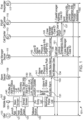
- FIG. 1 depicts a schematic diagram of a system and method (101) according to the present disclosure, and the flow of data among the various component systems and devices.
- the systems and methods generally comprise a user (103) carrying a mobile user device (105), depicted in FIG. 1 as a smart phone (105).
- the user device (105) comprises a memory and microprocessor, and a software application (107) stored on the memory is executed on the microprocessor.
- a smart phone is depicted, any mobile computer may be used, including, without limitation, wearable computers such as smart watches, and computers integrated into other mobile technologies, such as vehicular navigation and telematics systems.
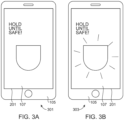
- FIGs. 2-4 depict embodiments of the mobile device application (107).
- the application (107) presents a graphical user interface (201) ("GUI"), which includes a "dead man's switch” component (303).
- GUI graphical user interface
- This component (303) is a GUI control (303) that, when continually or frequently operated by the user (103), indicates to the application (107) that the user (103) is not yet in danger or in an emergency situation.
- the primary use case for the application (107) is a user (103) traveling alone or in a small group through a potentially dangerous area, or during a potentially dangerous time, such as walking home alone at night, or walking out to the user's (103) car in an empty parking garage after working late.
- the user (103) generally begins using the system by downloading the application (107) to the user device (105) from a distribution platform, such as an application store now common for most mobile device platforms.
- the user (103) sets up a user account using techniques known in the art.
- the minimal information required for an account is typically the user's (103) first and last name, phone number, and PIN.
- the user (103) also configures the application (107) with a PIN. This PIN is used to indicate an "all clear" signal, as described elsewhere herein. This information is referred to herein as "user profile data" or "user profile information.”
- FIGs. 2A and 2B depict an embodiment of a user profile setup screen requesting user profile information.
- the setup process generally need only be carried out once, before the application (107) is ready for use though the user (103) may return to this process to change or supplement the information.
- the user profile data may be stored locally on the user device (105) memory, or on remote servers (109) and/or (111), or both.
- the user (103) may provide further user profile information, such as the user's (103) date of birth, address, age, sex/gender, as well as information that may be useful to emergency responders attempting to locate or assist the user (103), such as a physical description of the user (103) and/or information about medical conditions the user (103) may have.
- user (103) information may include: height; weight; build; ethnicity; eye color; hair color; hair length; hair style; skin tone; and/or unique or distinguishing markings such as tattoos, piercings, and birthmarks.
- Relevant medical information may include any information which may be useful to emergency responders or treating physicians if the user (103) is found unresponsive, such as, but not necessarily limited to, blood type, any current diagnoses (e.g., hypertension, diabetes), and any currently taken medications and their dosages.
- This extended information is also "user profile data" in an embodiment.
- the user (103) begins use by launching (121) the application (107) on the user device (105), which causes the main screen (301) to appear on the display of the user device (105).
- the main screen (301) comprises the main control (303).
- the application (107) enters "armed” mode.
- the control (107) is a simple, large button. The user (103) operates the control (303) by pressing and holding the button (303), placing the application (107) into “armed” mode. The user (103) continues to operate the control (107) by continuing to hold the button (107).
- the application (107) While the user (103) holds the button (107), the application (107) remains in "armed” mode, and a visual indication may be provided that the application (107) is in armed mode.
- the button (303) may change colors and/or display an animation and/or text.
- a single, large touch-sensitive interface control (303) is the only interactive user interface control while the application (107) is armed.
- a “trip” refers mainly to data collected and stored related to aj ourney taken by the user (103) in the real world.
- the application (107) transmits (130) to an alarm server (109) over a telecommunications network an indication that a user (103) of the application (107) has begun a trip (140).
- This indication may include or indicate an identification of the user (103), such as by transmitting a unique user identification ("ID") or profile ID for the user (103), and may also provide the user's (103) current geolocation (e.g., latitude and longitude coordinates as determined by the user device (105)).
- ID unique user identification
- the trip (140) is then stored in a memory of the alarm server (109) as a current or "open” trip (140), meaning the trip (140) is still ongoing and has not yet concluded safely or otherwise.
- the user (103) may then begin to travel.
- the primary use case for the systems and methods is a user (103) making a trip on foot. While the user (103) travels, the user (103) simply continues to operate the control (303) (e.g., continue to hold the button down), causing the application (107) to remain in "armed” mode. Because the depicted control (303) is large, the user (103) can do so with the user device (105) in a pocket.
- the user's (103) geolocation may be updated (132) at intervals.
- the geolocation of the user device (105) may be transmitted (132) to the alarm server (109) every ten or fifteen seconds.
- the geolocation is only transmitted (132) if it has materially changed from the immediately prior update.
- Geolocation coordinates received from GPS systems generally include an error or accuracy range, which may also be transmitted (132) to the alarm server (109) system.
- the alarm server (109) of the depicted embodiment will generally update the trip data (140) with subsequently received location updates, keeping track of both the historical locations received, allowing the trip to be mapped, and the most recent location. This data is generally associated with the "trip" data (140) for the specific trip (140) in the alarm server (109) memory.
- the user (103) will eventually discontinue operating the control (303).
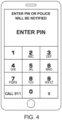
- a disarm interface (401) is displayed on the mobile device (105) allowing the user (103) to enter the PIN previously established.
- An embodiment of such an interface (401) is depicted in FIG. 4 .
- the application (107) exits "armed” mode and the trip (140) is concluded.
- An indication is sent from the user device (105) to the alarm server (109) indicating that the trip (140) has concluded safely.
- This communication may further include the final geolocation coordinates of the trip, which the alarm server (109) may add to the trip data (140) previously stored.
- the application (107) then discontinues sending geolocation coordinate updates.
- the system then begins the process of alerting emergency responders (129).
- this process begins with the user device (105) communicating (131) with the alarm server (109) to indicate that the PIN was not entered or was incorrect.
- This communication (131) may include additional information, such as the user ID or profile ID. However, because the additional information needed to notify first responders is generally transmitted (130) when the trip (140) is begun, it need not be transmitted again during this stage.
- the alarm server (109) receives the activate alarm (131) communication and forms in a memory of the alarm server (109) system a data structure (141) representing the alarm status related to this trip.
- This data structure (141) may comprise, without limitation, the user name, PIN, phone number, user profile data, and one or more geolocation coordinates for the user device (105) during the trip.
- This alarm data structure (141) may be associated with an alarm ID as well.
- the content of this alarm data structure (141) is generally referred to herein as "alarm data.”
- the alarm server (109) transmits the alarm data to a case manager server (11 1).
- the case manager server (11 1) receives the alarm data and creates a case data structure (143) in a memory of the case manager server (1 11) containing the contents of the received alarm data.
- the case data structure (143) comprises the received alarm data and is associated with a unique identifier, referred to herein as a "case ID.”
- the data in the case data structure (143) is generally referred to herein as "case data.”
- the case ID is used to efficiently communicate critical information about the user (103) and the emergency to a PSAP (115) and/or first responder (117).
- the present systems and methods may reduce false alarms by providing a "check- in" feature.
- the case manager server (111) after receiving (133) the alarm data including the phone number for the user device (105), may attempt to confirm the emergency with the user (103) before alerting first responders.
- the case manager server (111) sends a text message (134) to the user (103) via the user device (105), seeking confirmation that there is a real emergency, not a false alarm.
- This transmission (134) is preferably automatic.
- the case manager server (111) also transmits (135) to a call center (113) a data structure including the case data (143).
- the call center (113) is generally a private call center (113) staffed by employees who are trained to use computers implementing the systems and methods described herein.
- the call center (115) receives the case data (143)
- one or more human operators is notified via a computer interface on a call center computer.
- This interface may be a web site, desktop application, or any other interface appropriate to convey the information and perform the functions described herein.
- the interface (501) comprises a summary of the case data (503), and a display of the text message interaction (505) with the user (103).
- the text section (505) includes input components, allowing the operator to communicate with the user (103) via text messages using the text interface (505). The operator's messages are relayed to the user (103), and vice versa, via the case manager server (111).
- the interface (501) may further comprise a map (507) or other visual indication (507) of the geolocation coordinates of the user device (105) received during the trip.
- the map (507) may further display the location history, showing a path taken by the user (103) during the trip based on the received geolocation coordinates of the user device (105).
- the interface (501) may further comprise other elements as well, including, without limitation, interface controls for the operator to make notes (509).
- the automated initial confirmation text message is sent (134) at about the same time as the notification is provided (135) to the call center (113). This reduces end-to-end system response time by providing a text message to the user (103) early in the process, giving the user (103) time to enter a response while the alert process continues in the background. If the user (103) provides a response confirming safety, the case manager server (111) updates the interface (501) with the received text. The operator may then interact with the user (103) via the text interface (505). If the user (103) indicates via a text response that the alarm was a false alarm or the user (103) is otherwise safe, then the case is closed and no further action need be taken.
- the operator at the call center (113) next attempts to place a voice call (151) to the user (103) via the phone number for the user device (105) included in the case data structure (143), which data is displayed to the operator via the caller profile (503) section of the computer interface (501).
- This voice call (151) would place the operator in direct voice communication with the user (103). If the user (103) answers and indicates that the alarm was a false alarm or the user (103) is otherwise safe, then the case is closed and no further action need be taken.
- This escalation comprises determining the appropriate PSAP (115) to handle the emergency and the call center (113) contacting the appropriate PSAP (115) for the user (103).
- the method for determining the appropriate PSAP is described in further detail elsewhere herein.
- the call center (113) may contact (136) the PSAP (115) by voice communication technology, including, but not necessarily limited to, by using the 9-1-1 number, calling directly using a local access number (i.e., the 7- or 10-digit number for the call center), or voice-over-IP.
- the call center (113) may contact (136) the PSAP (115) via another technology, such as via a text or data connection only.
- voice communication is preferred, as PSAP (115) operators are trained to handle emergencies based upon voice information, and a voice call can be uniformly handled by PSAPs (115), even those that do not implement Phase II technologies.
- a user (103) becomes anxious. Humans have adapted to promptly respond to fear and danger physiologically, and a user (103) who anticipates an imminent dangerous situation often experiences accelerated heartrate, rapid breathing, and a sudden release of hormones to prepare the body for "fight or flight.” These physical symptoms can often make it difficult to think and speak clearly, and 9-1-1 callers sometimes have difficulty clearly explaining their location and circumstances.
- the present systems and methods address this problem via the call center (113), where an operator already has most of the relevant information about the emergency - the potential victim and his/her location - in the case data (143) and can calmly and clearly communicate this information over the voice call to a PSAP (115) operator.
- the present systems include a rapid-response interface accessible to both the PSAP (115) and first responder (117), which makes available the case data (143) in text format.
- the call center (111) operator instructs the PSAP (115) operator to connect (137) the PSAP (115) operator's computer to the case manager server system (111) via a web site having a rapid-response interface.
- the web site is preferably a very simple site with few interface components so that a PSAP (113) operator unfamiliar with the site can quickly understand the data it contains.
- the site also preferably has a short and simple domain name that is clearly, easily, and unambiguously communicated over the phone, such as SENDPOLICE.COM.
- FIGs. 6A and 6B An embodiment of such an interface is depicted in FIGs. 6A and 6B .
- the PSAP (115) operator loads the rapid-response interface in a browser, and the call center (113) operator verbally provides to the PSAP (115) operator the case ID associated with the case data (143).
- the PSAP (115) operator enters the case ID into an interface component (603) of the rapid-response interface.
- the case ID is then used to retrieve from the case manager server (111) the case data structure (143).
- the case data in the structure (143) is then used to populate the rapid-response interface (605) components, providing a visual indication to the PSAP (115) operator of the case data.
- the interface may further provide a map (607) of the location data, allowing the PSAP (115) operator to rapidly pinpoint the location. Because the case data includes the user's (103) name, phone number, and location data, time is not wasted verbally communicating information that is more efficiently communicate textually or visually.
- the depicted embodiment (605) comprises the same general layout as the case management interface (501) available to the call center (113) operator. This further improves response time by allowing both operators (113) and (115) to see the same information.
- the depicted embodiment (605) generally comprises the same functions as well, including a navigable mapping component (607) and a text message history (609) updated in real-time.
- the interface (605) may also allow the PSAP (115) operator to directly send text messages to the user (103) via the interface (609), facilitating hand-off of the emergency from the call center (113) operator to the PSAP (115).
- the emergency has generally been handed off to the PSAP (113) operator and is handled according to the standards and protocols established for the 9-1-1 system, though the call center (113) operator may continue to monitor the situation and provide further assistance as needed.
- the PSAP (115) contacts (138) the first responder (117), usually via a voice call to the first responder (117) dispatcher, and verbally provides the first responder (117) with the information needed to dispatch appropriate personnel to handle the emergency.
- the PSAP (115) operator may also use the case manager system (111) to communicate the information clearly and effectively, by providing the case ID to the first responder (117), who can then look the case up on the rapid- response interface (601) in the same manner as the PSAP (115).
- the first responder Once the first responder (117) has the information needed to handle the emergency, whether provided verbally by the PSAP (115) operator over the voice call, or acquired via the rapid-response interface, the first responder then provides assistance (160) to the user according to normal emergency management procedure.
- Determining the appropriate PSAP (115) for the emergency may use one or more of a number of techniques, including techniques known in the art.
- the goal in determining the appropriate PSAP (115) is to identify the dispatch center that has within its geographic territory the current location of the user device (105). This improves the likelihood that the PSAP (115) is the correct dispatcher for first responders (117) familiar with the area.
- the call center (113) operator can look up the coordinates in a PSAP database to identify the correct PSAP (115) for those specific coordinates, meaning that the location of the user device (115), rather than a tower handling a wireless 9-1-1 call, is used to determine which PSAP (115) to contact.
- the call center (113) provide additional notifications to contacts other than a PSAP (115). This may be done, for example, where first responders (119) not accessible through the 9-1-1 system may be more readily available to help.
- first responders (119) not accessible through the 9-1-1 system may be more readily available to help.
- many large college campuses have on-campus police and security personnel who may be more familiar with campus than municipal police, and who may be able to respond more quickly.
- the campus police dispatcher may also be contacted by the call center (113) in the same fashion as a PSAP (115), and may be provided the same information using the case manager server (111). This may allow security personnel to more quickly arrive at the proper location.
- This functionality may be also provided for corporate campuses, casinos, hotels, parks, and any other venue or geofenced location covered by security or law enforcement personnel.
- determining whether to contact such additional responders may be based on the detected location of the user device (105), which is then compared against a database of such organizations or entities associated with a geographically or locationally- defined region. If the detected location of the user device (105) is within one or more such regions, the call center (113) is provided with the contact information for the dispatcher for the associated organization(s), and the call center (113) may additionally or alternatively contact that/those organization(s) to provide case information in the same manner as a PSAP (115). Preferably, both the PSAP (115) and the non-PSAP organizations are contacted, with the call center (113) operator helping to coordinate the response between the various organizations to reduce confusion and improve overall response time.
- a system may develop a rich body of geographically-defined data indicating "hot spots” where users frequently use the systems and methods. These "hot spots” can be used to determine geographical locations where a comparatively large number of users use the application, suggesting that this area generally feels or appears unsafe. This information can then be used to identify geographic areas suitable for targeted improvements, such as increased lighting or removing obstructions, pruning vegetation, and removing low-visibility areas where an attacker can hide. This information may be further used in police dispatching, allowing law enforcement personal to identify potentially high-risk areas and times and increase patrol presence in those areas at those times. The data can also be compared over time to determine whether remediation steps have been successful in reducing anxiety about the safety of a given area.
- the alarm server (109) and the case manager server (111) are distinct. This facilitates a plurality of distinct alarm applications, allowing different technology vendors to use the case manager server (111) and call center (113) systems described herein in conjunction with such vendors' own application interfaces and technologies. That is, the application (107) described herein is designed for use with the described particular alarm server (109), which in turn uses an application programming interface ("API") or software development kit ("SDK”) to interoperate with the case manager server (111). However, a third party could independently implement its own application/server and use the same API and SDK to contact emergency personnel using the case manager server (111) and call center (113) systems and methods described herein.
- API application programming interface
- SDK software development kit
- the PIN unlock screen for a smart watch may display only 4 possible numbers for the user to enter the PIN, one of the four displayed numbers being the first number in the PIN. Once the user selects a number, the display then changes to display a different set of numbers, one of which is the second number of the PIN. Once the user selects a third number, the display then changes to display a fourth set of numbers, one of which is the fourth number of the PIN.
- the software determines whether the correct numbers were entered in the correct order.
- the numbers displayed, and the order, can be randomized to increase security from eavesdroppers. Also, the user may not be provided any indication of which number was incorrect. That is, even if the first number is wrong, the interface may still prompt the user for the other three numbers, making an attempt to brute force crack the PIN more difficult.
- the systems and methods described herein may be implemented through direct communication with a responder or dispatcher.
- the alarm server may automatically determine the first response dispatcher closest to the location of the alarm, based on the geolocation coordinates received from the mobile device, and directly route the emergency to that first response dispatcher (e.g., via a computer at the dispatch officer) by providing geolocation coordinates and information about the emergency to the dispatcher.
- the dispatcher can then route the appropriate first response personnel to the location of the alarm based on the geolocation coordinates received from the mobile device. This effectively eliminates the need for a PSAP dispatcher in such an embodiment, reducing the overhead and time delays inherent in such systems.
- the appropriate dispatcher may be determined by consulting a database of dispatcher information, including the identity and location of various dispatchers. This database may later be updated to reflect whether, when a given dispatcher was selected for a given emergency, that dispatcher was able to timely handle the emergency. Over time, such a database would accumulate data concerning the quality and timeliness of emergency response services for various emergencies in various locations. This data could then be used to later identify the right responder, by selecting the responder with the highest rating or effectiveness for the type of emergency in the area indicated by the geolocation coordinates. This data could also be used by public officials and administrators to identify departments or organizations for additional training, performance improvement initiatives, or financial and/or funding initiatives or incentives.
- the appropriate first responder may be determined by consulting a database of first responder information, including the identity and current or most recently known location of various first responders. This database may later be updated to reflect whether, when a given first responder was selected for a given emergency, that first responder was able to timely handle the emergency. Over time, such a database would accumulate data concerning the quality and timeliness of individual emergency responders for various emergencies in various locations. This data could then be used to later identify the best first responder by selecting the responder with the highest rating or effectiveness for the type of emergency, and for the area indicated by the geolocation coordinates received from the mobile device. This data could also be used by public officials and administrators to identify individuals for additional training, performance improvement initiatives, or financial or incentives.
- the systems may be used with different user interfaces that begin the alarm process.
- the mobile device may not use a specific user interface application, but rather contain programming for detecting vehicular collisions or assaults, such as by using the mobile device's internal sensors.
- Such techniques are known in the art and could be used to trigger an alarm by presenting the user password interface to indicate a false alarm. If the password is not entered, the systems and methods would proceed as described herein to report an emergency.
Landscapes
- Engineering & Computer Science (AREA)
- Signal Processing (AREA)
- Business, Economics & Management (AREA)
- Computer Networks & Wireless Communication (AREA)
- Emergency Management (AREA)
- Computer Security & Cryptography (AREA)
- Marketing (AREA)
- Health & Medical Sciences (AREA)
- Environmental & Geological Engineering (AREA)
- Public Health (AREA)
- Physics & Mathematics (AREA)
- General Physics & Mathematics (AREA)
- Human Computer Interaction (AREA)
- Telephonic Communication Services (AREA)
Claims (15)
- Verfahren zum Bereitstellen einer Benachrichtigung über einen Notfall an einen Ersthelfer, wobei das Verfahren Folgendes umfasst:Bereitstellen eines Mobilgeräts (105), das einen Speicher mit darauf befindlichen computerlesbaren Anweisungen umfasst, die eine Alarmanwendung (107) umfassen, wobei die Alarmanwendung auf einem Mikroprozessor des Mobilgeräts ausgeführt wird;Anzeigen, auf einem Display (201) des Mobilgeräts, einer Notfallalarm-Benutzeroberfläche, die ein berührungsgesteuertes Bedienelement umfasst;Bereitstellen eines Fallverwaltungsservers (111);Bereitstellen eines Call-Center-Computers (113), der kommunikativ mit dem Fallverwaltungsserver über ein Telekommunikationsnetzwerk gekoppelt ist;Bereitstellen eines Einsatzleitstellen-(PSAP)-Computers (115), der kommunikativ mit dem Fallverwaltungsserver über das Telekommunikationsnetzwerk gekoppelt ist;Bereitstellen eines Alarmservers (109), der kommunikativ mit dem Mobilgerät über das Telekommunikationsnetzwerk gekoppelt ist;wobei der Fallverwaltungsserver (111) über das Telekommunikationsnetzwerk kommunikativ mit dem Alarmserver gekoppelt ist;als Reaktion darauf, dass ein Benutzer des Mobilgeräts das berührungsgesteuerte Bedienelement berührt, sendet (130) das Mobilgerät an den Alarmserver eine Datenstruktur (140), die Folgendes enthält:-- eine Angabe eines Benutzerprofils, das in einem Speicher des Alarmservers gespeichert ist und Benutzerprofildaten für den Benutzer enthält, wobei die Benutzerprofildaten eine Telefonnummer für das Mobilgerät enthalten,-- eine Angabe, dass die besagte Anwendung aktiviert ist, und-- eine geografische Lage (132) des Mobilgeräts;wobei das Mobilgerät in regelmäßigen Abständen eine aktualisierte geografische Lage des Mobilgeräts an den Alarmserver überträgt, während der Benutzer weiterhin das berührungsgesteuerte Bedienelement berührt;erst dann, wenn der Benutzer aufhört, das berührungsgesteuerte Bedienelement zu berühren, das Mobilgerät auf dem Display eine Oberfläche (127) zur Eingabe eines Passworts des Benutzers anzeigt;wobei, als Reaktion darauf, dass das Passwort nicht innerhalb einer vorbestimmten Zeitspanne nach dem Anzeigeschritt korrekt eingegeben wurde, das Mobilgerät automatisch (133) eine aktualisierte geographische Lage des Mobilgeräts und eine Angabe über einen Notfallzustand für den Benutzer an den Alarmserver überträgt;als Reaktion auf das Empfangen der Angabe eines Notfallzustands der Alarmserver an den Fallverwaltungsserver einen Alarmdatensatz (141) überträgt, der die empfangene aktualisierte geografische Lage und die aus dem Alarmserverspeicher abgerufenen Benutzerprofildaten umfasst;als Reaktion auf das Empfangen des Alarmdatensatzes der Fallverwaltungsserver Folgendes durchführt:-- Erzeugen, in einem Speicher des Fallverwaltungsservers, eines Falldatensatzes (143), der den empfangenen Alarmdatensatz und eine damit verbundene, von dem Fallverwaltungsserver erzeugte Fallidentifikatornummer umfasst,-- Senden, an die Telefonnummer für das Mobilgerät, einer Textnachricht (134), die angibt, dass eine Angabe eines Notfallzustands für den Benutzer empfangen wurde, und Anfordern einer Bestätigung des Notfallzustands, und-- Übertragen (135), an den Call-Center-Computer, einer Kopie des Falldatensatzes;wobei, als Reaktion auf das Empfangen des Falldatensatzes der Call-Center-Computer einem Call-Center-Betreiber den Fallidentifikator und die Telefonnummer in dem empfangenen Falldatensatz anzeigt, und eine Textnachrichtenoberfläche in Echtzeit alle von der Telefonnummer empfangenen Textnachrichten anzeigt;als Reaktion darauf, dass die Textnachrichtenoberfläche nicht mit einer von der Telefonnummer empfangenen Textnachricht innerhalb einer vorbestimmten Zeitspanne aktualisiert wird, der Call-Center-Betreiber einen Sprachanruf (151) an die angezeigte Telefonnummer tätigt;als Reaktion darauf, dass der platzierte Sprachanruf nicht innerhalb einer vorbestimmten Zeitspanne beantwortet wird, der Call-Center-Betreiber eine Einsatzleitstelle für den Notzustand bestimmt und einen zweiten Sprachanruf (136) an einen Einsatzleitstellenbetreiber für die bestimmte Einsatzleitstelle platziert;der Call-Center-Betreiber den angezeigten Fallidentifikator bei dem zweiten Sprachanruf an den Einsatzleitstellenbetreiber weitergibt;der Einsatzleitstellenbetreiber vom Fallverwaltungsserver eine Kopie des Falldatensatzes abruft; undder Einsatzleitstellenbetreiber einen Ersthelfer (117) entsendet, um den Benutzer an einem Standort zu unterstützen, wobei der Standort auf der Basis der Geolokalisierungsdaten in dem abgerufenen Falldatensatz bestimmt wird.
- Verfahren nach Anspruch 1, wobei das Mobilgerät ein mobiles Smartphone ist.
- Verfahren nach Anspruch 1, wobei das berührungsgesteuerte Bedienelement eine Taste ist.
- Verfahren nach Anspruch 1, wobei die Benutzerprofildaten einen eindeutigen Identifikator für einen Benutzerprofildatensatz umfassen, der in einem Speicher des Alarmservers gespeichert ist.
- Verfahren nach Anspruch 1, wobei die Geolokalisierung durch einen Geolokalisierungssystem-Sender-Empfänger des Mobilgeräts bestimmt wird.
- Verfahren nach Anspruch 5, wobei der Geolokalisierungssystem-Sender-Empfänger für ein globales Positionierungssatellitensystem bestimmt ist.
- Verfahren nach Anspruch 1, wobei der Einsatzleitstellenbetreiber die Kopie des Falldatensatzes abruft, indem er den bei dem zweiten Sprachanruf gesprochenen Fallidentifikator in eine Website des Fallverwaltungsservers eingibt.
- Verfahren nach Anspruch 1, wobei das Mobilgerät eine Smartwatch ist.
- Verfahren nach Anspruch 8, wobei:das Passwort ein vierstelliges Passwort ist;das Anzeigen, für den Benutzer, einer Oberflächensteuerung zur Eingabe eines Passworts des Benutzers Folgendes umfasst:-- Anzeigen, auf einem Display der Smartwatch, einer ersten Vielzahl von Ziffern, wobei eine Ziffer der Vielzahl von Ziffern die erste Ziffer des vierstelligen Passworts ist,-- als Reaktion darauf, dass der Benutzer eine Ziffer in der angezeigten ersten Vielzahl von Ziffern antippt, Anzeigen, auf dem Display, einer zweiten Vielzahl von Ziffern, wobei eine Ziffer in der zweiten Vielzahl von Ziffern die zweite Ziffer des vierstelligen Passworts ist,als Reaktion darauf, dass der Benutzer eine Ziffer in der angezeigten zweiten Vielzahl von Ziffern antippt, Anzeigen, auf dem Display, einer dritten Vielzahl von Ziffern, wobei eine Ziffer in der dritten Vielzahl von Ziffern die dritte Ziffer des vierstelligen Passworts ist,als Reaktion darauf, dass der Benutzer eine Ziffer aus der angezeigten dritten Vielzahl von Ziffern antippt, Anzeigen, auf dem Display, einer vierten Vielzahl von Ziffern, wobei eine Ziffer aus der vierten Vielzahl von Ziffern die vierte Ziffer des vierstelligen Passworts ist, undals Reaktion darauf, dass der Benutzer eine Ziffer in der angezeigten vierten Vielzahl von Ziffern antippt, Anzeigen, auf dem Display, einer Angabe, ob das Passwort richtig eingegeben wurde; unddas Passwort nicht korrekt eingegeben wurde, falls eine der vom Benutzer angetippten Ziffern nicht mit der entsprechenden Ziffer des vierstelligen Passworts übereinstimmt.
- Verfahren nach Anspruch 8, wobei:das Passwort ein vierstelliges Passwort ist;das Anzeigen, für den Benutzer, einer Oberflächensteuerung zur Eingabe eines Passworts des Benutzers Folgendes umfasst:-- Anzeigen, auf einem Display der Smartwatch, von vier verschiedenen Ziffern, die jede der eindeutigen Ziffern in dem vierstelligen Passwort enthalten, und-- als Reaktion darauf, dass der Benutzer die vier Ziffern des ersten digitalen Passworts in der richtigen Reihenfolge unter Verwendung der angezeigten Ziffern eingibt, Anzeigen, auf dem Display, einer Angabe, ob das Passwort richtig eingegeben wurde; unddas Passwort nicht korrekt eingegeben wurde, falls eine der vom Benutzer angetippten Ziffern nicht in der Reihenfolge eingegeben wurde, in der die Ziffer in dem vierstelligen Passwort erscheint.
- Nichtflüchtiges, maschinenlesbares Speichermedium eines Mobilgeräts (105), auf dem maschinenlesbare Computerprogrammanweisungen für eine Notfallalarmanwendung (107) gespeichert sind, wobei die Programmanweisungen das Mobilgerät veranlassen, die folgenden Schritte durchzuführen:Anzeigen, an einem Display (201) des mobilen Benutzergeräts, einer Benutzeroberfläche, die ein berührungsgesteuertes Bedienelement umfasst;als Reaktion darauf, dass ein Benutzer das berührungsgesteuerte Bedienelement berührt, Senden, an einen Alarmserver (109) über ein Telekommunikationsnetzwerk, einer Datenstruktur (130), die Folgendes enthält:-- eine Angabe eines zuvor gespeicherten Benutzerprofildatensatzes (140) für den Benutzer, wobei der zuvor gespeicherte Benutzerprofildatensatz eine Telefonnummer für das mobile Benutzergerät enthält,-- eine Angabe, dass die Notfallalarmanwendung aktiviert ist, und-- eine geografische Lage (132) des mobilen Benutzergeräts;während der Benutzer weiterhin das berührungsgesteuerte Bedienelement berührt, Übertragen, an den Alarmserver, in regelmäßigen Abständen, einer aktualisierten geografischen Lage des mobilen Benutzergeräts;erst dann, wenn der Benutzer aufhört, das berührungsgesteuerte Bedienelement zu berühren, Anzeigen, auf dem Display, einer Oberfläche (127) zur Eingabe eines Passworts;als Reaktion darauf, dass das Passwort nicht innerhalb einer vorbestimmten Zeitspanne korrekt eingegeben wurde, Übertragen (131), an den Alarmserver, einer aktualisierten geografischen Lage des mobilen Benutzergeräts und einer Angabe über einen Notfallzustand für den Benutzer;Empfangen einer Textnachricht (134) mit der Bitte um Bestätigung eines Notfalls;Empfangen eines Sprachanrufs (151), der die Bestätigung eines Notfalls anfordert; undEmpfangen einer Angabe, dass ein Ersthelfer (117) zu einem Standort entsandt worden ist, wobei der Standort auf der Basis der aktualisierten geografischen Lage des mobilen Benutzergeräts bestimmt wird.
- Fahrzeugtelematiksystem, das das maschinenlesbare Speichermedium nach Anspruch 11 umfasst.
- Tragbarer Computer, der das computerlesbare Speichermedium nach Anspruch 11 umfasst.
- Tragbarer Computer nach Anspruch 13, wobei:der tragbare Computer eine Smartwatch ist;das Passwort ein vierstelliges Passwort ist;das Anzeigen, für den Benutzer, einer Oberflächensteuerung zur Eingabe eines Passworts des Benutzers Folgendes umfasst:-- Anzeigen, auf einem Display der Smartwatch, einer ersten Vielzahl von Ziffern, wobei eine Ziffer der Vielzahl von Ziffern die erste Ziffer des vierstelligen Passworts ist,-- als Reaktion darauf, dass der Benutzer eine Ziffer in der angezeigten ersten Vielzahl von Ziffern antippt, Anzeigen, auf dem Display, einer zweiten Vielzahl von Ziffern, wobei eine Ziffer in der zweiten Vielzahl von Ziffern die zweite Ziffer des vierstelligen Passworts ist,-- als Reaktion darauf, dass der Benutzer eine Ziffer in der angezeigten zweiten Vielzahl von Ziffern antippt, Anzeigen, auf dem Display, einer dritten Vielzahl von Ziffern, wobei eine Ziffer in der dritten Vielzahl von Ziffern die dritte Ziffer des vierstelligen Passworts ist; als Reaktion darauf, dass der Benutzer eine Ziffer aus der angezeigten dritten Vielzahl von Ziffern antippt, Anzeigen, auf dem Display, einer vierten Vielzahl von Ziffern, wobei eine Ziffer aus der vierten Vielzahl von Ziffern die vierte Ziffer des vierstelligen Passworts ist, und-- als Reaktion darauf, dass der Benutzer eine Ziffer in der angezeigten vierten Vielzahl von Ziffern antippt, Anzeigen, auf dem Display, einer Angabe, ob das Passwort richtig eingegeben wurde; unddas Passwort nicht korrekt eingegeben wurde, falls eine der vom Benutzer angetippten Ziffern nicht mit der entsprechenden Ziffer des vierstelligen Passworts übereinstimmt.
- Tragbarer Computer nach Anspruch 13, wobei:der tragbare Computer eine Smartwatch ist;das Passwort ein vierstelliges Passwort ist;das Anzeigen, für den Benutzer, einer Oberflächensteuerung zur Eingabe eines Passworts des Benutzers Folgendes umfasst:-- Anzeigen, auf einem Display der Smartwatch, von vier verschiedenen Ziffern, die jede der eindeutigen Ziffern in dem vierstelligen Passwort enthalten, und-- als Reaktion darauf, dass der Benutzer die vier Ziffern des ersten digitalen Passworts in der richtigen Reihenfolge unter Verwendung der angezeigten Ziffern eingibt, Anzeigen, auf dem Display, einer Angabe, ob das Passwort richtig eingegeben wurde; unddas Passwort nicht korrekt eingegeben wurde, falls eine der vom Benutzer angetippten Ziffern nicht in der Reihenfolge eingegeben wurde, in der die Ziffer in dem vierstelligen Passwort erscheint.
Priority Applications (1)
| Application Number | Priority Date | Filing Date | Title |
|---|---|---|---|
| EP24206779.1A EP4472262A3 (de) | 2015-05-26 | 2016-05-25 | Systeme und verfahren zur bereitstellung von unterstützung in einem notfall |
Applications Claiming Priority (4)
| Application Number | Priority Date | Filing Date | Title |
|---|---|---|---|
| US201562179977P | 2015-05-26 | 2015-05-26 | |
| US201562179976P | 2015-05-26 | 2015-05-26 | |
| US201562179978P | 2015-05-26 | 2015-05-26 | |
| PCT/US2016/034182 WO2016191497A1 (en) | 2015-05-26 | 2016-05-25 | Systems and methods for providing assistance in an emergency |
Related Child Applications (1)
| Application Number | Title | Priority Date | Filing Date |
|---|---|---|---|
| EP24206779.1A Division EP4472262A3 (de) | 2015-05-26 | 2016-05-25 | Systeme und verfahren zur bereitstellung von unterstützung in einem notfall |
Publications (3)
| Publication Number | Publication Date |
|---|---|
| EP3304514A1 EP3304514A1 (de) | 2018-04-11 |
| EP3304514A4 EP3304514A4 (de) | 2018-12-05 |
| EP3304514B1 true EP3304514B1 (de) | 2024-10-16 |
Family
ID=57393731
Family Applications (2)
| Application Number | Title | Priority Date | Filing Date |
|---|---|---|---|
| EP16800674.0A Active EP3304514B1 (de) | 2015-05-26 | 2016-05-25 | Systeme und verfahren zur bereitstellung von unterstützung in einem notfall |
| EP24206779.1A Pending EP4472262A3 (de) | 2015-05-26 | 2016-05-25 | Systeme und verfahren zur bereitstellung von unterstützung in einem notfall |
Family Applications After (1)
| Application Number | Title | Priority Date | Filing Date |
|---|---|---|---|
| EP24206779.1A Pending EP4472262A3 (de) | 2015-05-26 | 2016-05-25 | Systeme und verfahren zur bereitstellung von unterstützung in einem notfall |
Country Status (4)
| Country | Link |
|---|---|
| US (3) | US10278050B2 (de) |
| EP (2) | EP3304514B1 (de) |
| CA (1) | CA2986768C (de) |
| WO (1) | WO2016191497A1 (de) |
Families Citing this family (53)
| Publication number | Priority date | Publication date | Assignee | Title |
|---|---|---|---|---|
| US10880118B2 (en) * | 2014-05-01 | 2020-12-29 | Elizabeth B. Stolfus | Providing dynamic routing alternatives based on determined traffic conditions |
| US9838858B2 (en) | 2014-07-08 | 2017-12-05 | Rapidsos, Inc. | System and method for call management |
| WO2016044540A1 (en) | 2014-09-19 | 2016-03-24 | Rapidsos, Inc. | Method and system for emergency call management |
| MX2018005568A (es) | 2015-11-02 | 2018-11-09 | Rapidsos Inc | Metodo y sistema de conciencia situacional para respuesta de emergencia. |
| DE102015225792B3 (de) * | 2015-12-17 | 2017-04-13 | Volkswagen Aktiengesellschaft | Verfahren und ein System zur geschützten Kommunikation zwischen einer mit einem Smartphone gekoppelten mobilen Einheit und einem Server |
| US9736670B2 (en) | 2015-12-17 | 2017-08-15 | Rapidsos, Inc. | Devices and methods for efficient emergency calling |
| US9986404B2 (en) | 2016-02-26 | 2018-05-29 | Rapidsos, Inc. | Systems and methods for emergency communications amongst groups of devices based on shared data |
| MX2018013187A (es) | 2016-04-26 | 2019-08-12 | Rapidsos Inc | Sistemas y metodos para comunicaciones de emergencia. |
| AU2017262647A1 (en) | 2016-05-09 | 2018-12-20 | Rapidsos, Inc. | Systems and methods for emergency communications |
| US10795570B2 (en) * | 2016-05-23 | 2020-10-06 | Prepare Protect Defend, LLC | Device and system having a user interface for emergency communications |
| US10192427B2 (en) * | 2016-05-27 | 2019-01-29 | Titan Health & Security Technologies, Inc. | Community emergency notification system with inter-organizational compatibility |
| CA2976124A1 (en) * | 2016-08-12 | 2018-02-12 | 9069569 Canada Inc. | Emergency callback system |
| WO2018039142A1 (en) | 2016-08-22 | 2018-03-01 | Rapidsos, Inc. | Predictive analytics for emergency detection and response management |
| US10810695B2 (en) * | 2016-12-31 | 2020-10-20 | Ava Information Systems Gmbh | Methods and systems for security tracking and generating alerts |
| WO2018200418A1 (en) * | 2017-04-24 | 2018-11-01 | Rapidsos, Inc. | Modular emergency communication flow management system |
| US10602562B2 (en) * | 2017-07-06 | 2020-03-24 | T-Mobile Usa, Inc. | Establishing communication sessions by downgrading |
| DE102017006677A1 (de) * | 2017-07-14 | 2019-01-17 | Drägerwerk AG & Co. KGaA | Vorrichtungen, Verfahren und Computerprogramme für einen Alarmserver, eine Alarmquelle und einen Alarmgeber, Alarmsystem |
| EP3721402A4 (de) | 2017-12-05 | 2021-08-04 | Rapidsos Inc. | Social-media-inhalts zur notfallverwaltung |
| US10506412B2 (en) | 2018-01-16 | 2019-12-10 | Qualcomm Incorporated | Methods and systems for a connected building emergency service |
| US10820181B2 (en) | 2018-02-09 | 2020-10-27 | Rapidsos, Inc. | Emergency location analysis system |
| US10609202B2 (en) | 2018-02-19 | 2020-03-31 | Honda Motor Co., Ltd. | System and method for determining a safe return to a vehicle |
| US11094026B2 (en) | 2018-02-19 | 2021-08-17 | Honda Motor Co., Ltd. | System and method for determining a safe return to a vehicle |
| US20190320310A1 (en) | 2018-04-16 | 2019-10-17 | Rapidsos, Inc. | Emergency data management and access system |
| US10692359B2 (en) * | 2018-04-23 | 2020-06-23 | Green Line Business Group | Witness request and alert notification and tracking system |
| CN108564312A (zh) * | 2018-05-22 | 2018-09-21 | 中国联合网络通信集团有限公司 | 安防方法、装置及系统 |
| WO2019241161A1 (en) * | 2018-06-11 | 2019-12-19 | Rapidsos, Inc. | Systems and user interfaces for emergency data integration |
| US11917514B2 (en) | 2018-08-14 | 2024-02-27 | Rapidsos, Inc. | Systems and methods for intelligently managing multimedia for emergency response |
| US10977927B2 (en) | 2018-10-24 | 2021-04-13 | Rapidsos, Inc. | Emergency communication flow management and notification system |
| CN109922443B (zh) * | 2019-02-03 | 2021-10-08 | 倪亮 | 消息通道建立方法、系统、接收端、服务器和移动端 |
| US11218584B2 (en) | 2019-02-22 | 2022-01-04 | Rapidsos, Inc. | Systems and methods for automated emergency response |
| US11146680B2 (en) | 2019-03-29 | 2021-10-12 | Rapidsos, Inc. | Systems and methods for emergency data integration |
| AU2020254292B2 (en) | 2019-03-29 | 2025-08-28 | Rapidsos, Inc. | Systems and methods for emergency data integration |
| US12184803B2 (en) * | 2019-04-10 | 2024-12-31 | Rapidsos, Inc. | Unmanned aerial vehicle emergency dispatch and diagnostics data apparatus, systems and methods |
| PL3977763T3 (pl) | 2019-05-29 | 2024-01-22 | Safenow Gmbh | Sposób, program komputerowy, urządzenie i system do obsługi mobilnego urządzenia radiowego |
| US11138858B1 (en) | 2019-06-27 | 2021-10-05 | Amazon Technologies, Inc. | Event-detection confirmation by voice user interface |
| US11228891B2 (en) | 2019-07-03 | 2022-01-18 | Rapidsos, Inc. | Systems and methods for emergency medical communications |
| AU2020335008B2 (en) | 2019-08-19 | 2025-08-28 | William Thomas GUTHRIE | Systems and methods for delivering and supporting digital requests for emergency service |
| WO2021145938A2 (en) * | 2019-11-02 | 2021-07-22 | Overhaul Group, Inc. | Cargo vessel operator emergency response system, with operator directives, incident data recording and reporting, and automated relevant party notification |
| WO2021236733A1 (en) * | 2020-05-19 | 2021-11-25 | B7 Solutions Inc. | Systems and methods for communicating with a first responder dispatcher |
| US20210383918A1 (en) * | 2020-06-09 | 2021-12-09 | Rapidsos, Inc. | Systems and methods for provisioning emergency profiles |
| US11330664B1 (en) | 2020-12-31 | 2022-05-10 | Rapidsos, Inc. | Apparatus and method for obtaining emergency data and providing a map view |
| US12232851B2 (en) | 2021-03-08 | 2025-02-25 | Medtronic, Inc. | Acute health event monitoring |
| US11633112B2 (en) | 2021-03-08 | 2023-04-25 | Medtronic, Inc. | Automatic alert control for acute health event |
| WO2022192827A1 (en) | 2021-03-08 | 2022-09-15 | Medtronic, Inc. | Acute health event monitoring and verification |
| US11533709B2 (en) | 2021-03-18 | 2022-12-20 | Motorola Solutions, Inc. | Device, system and method for transmitting notifications based on indications of effectiveness for previous notifications |
| CA3233149A1 (en) | 2021-09-23 | 2023-03-30 | Noonlight, Inc. | Systems and methods for providing assistance in an emergency |
| US12464072B2 (en) * | 2022-08-12 | 2025-11-04 | Unstoppable Domains, Inc. | Securely controlling communication sessions using user domain |
| WO2024175207A1 (de) | 2023-02-24 | 2024-08-29 | Ebuddies Gmbh | Verfahren zum übermitteln von notfallnachrichten von einem mobilen endgerät an einen notfallempfänger sowie verfahren zum weiterleiten von notfallnachrichten durch einen notfallempfänger |
| DE102023106616A1 (de) * | 2023-03-16 | 2023-05-25 | Daimler Truck AG | Verfahren zum Absetzen eines Notrufs in einem Fahrzeug |
| US12437629B2 (en) * | 2023-07-13 | 2025-10-07 | Honeywell International Inc. | Notifying a user of an emergency event |
| EP4546831A1 (de) * | 2023-10-24 | 2025-04-30 | Unify Beteiligungsverwaltung GmbH & Co. KG | Verfahren und system zur exposition bösartiger mobiler aktivität durch ausnutzung signalbasierter gesten |
| US12513531B1 (en) * | 2024-09-12 | 2025-12-30 | Intrinsic Value, Llc | Systems, devices, and methods for determining the presence of a user |
| KR102857104B1 (ko) * | 2025-02-06 | 2025-09-08 | 한국인터넷진흥원 | 재난 문자 검증 방법 및 장치 |
Family Cites Families (79)
| Publication number | Priority date | Publication date | Assignee | Title |
|---|---|---|---|---|
| US5742233A (en) | 1997-01-21 | 1998-04-21 | Hoffman Resources, Llc | Personal security and tracking system |
| US20040192276A1 (en) | 1997-09-09 | 2004-09-30 | Wesby Philip Bernard | Emergency mobile radio telephone with reduced key set |
| US6044257A (en) | 1998-03-19 | 2000-03-28 | American Secure Care, Llc | Panic button phone |
| US6853302B2 (en) | 2001-10-10 | 2005-02-08 | David A. Monroe | Networked personal security system |
| US6434702B1 (en) | 1998-12-08 | 2002-08-13 | International Business Machines Corporation | Automatic rotation of digit location in devices used in passwords |
| US6574484B1 (en) | 1999-12-02 | 2003-06-03 | Worldcom, Inc. | Method for emergency service access using a mobile phone |
| US7164921B2 (en) | 2000-06-16 | 2007-01-16 | Tendler Cellular, Inc. | Auxiliary switch activated GPS-equipped wireless phone |
| US20030012344A1 (en) | 2001-07-10 | 2003-01-16 | Rita Agarwal | System and a method for emergency services |
| US7480501B2 (en) | 2001-10-24 | 2009-01-20 | Statsignal Ipc, Llc | System and method for transmitting an emergency message over an integrated wireless network |
| US6771742B2 (en) * | 2001-11-05 | 2004-08-03 | Intrado Inc. | Geographic routing of emergency service call center emergency calls |
| US7486194B2 (en) | 2002-03-12 | 2009-02-03 | Sydney Devlin Stanners | Personal alarm system for obtaining assistance from remote recipients |
| US20030214411A1 (en) | 2002-03-26 | 2003-11-20 | Walter Ronald Jeffrey | Apparatus and method for use of a radio locator, tracker and proximity alarm |
| US7751826B2 (en) | 2002-10-24 | 2010-07-06 | Motorola, Inc. | System and method for E911 location privacy protection |
| US7292723B2 (en) | 2003-02-26 | 2007-11-06 | Walker Digital, Llc | System for image analysis in a network that is structured with multiple layers and differentially weighted neurons |
| US6826120B1 (en) | 2003-03-20 | 2004-11-30 | Lindy Decker | Child wristwatch type communications device |
| US7098787B2 (en) | 2003-05-29 | 2006-08-29 | Intel Corporation | System and method for signaling emergency responses |
| US7251470B2 (en) | 2003-06-25 | 2007-07-31 | Nokia Corporation | Emergency response system with personal emergency device |
| ATE341914T1 (de) | 2004-03-09 | 2006-10-15 | Cit Alcatel | Notrufverfahren |
| WO2007022296A2 (en) | 2005-08-17 | 2007-02-22 | Grape Technology Group, Inc. | System and method for providing emergency notification services via enhanced directory assistance |
| US8126424B2 (en) | 2006-03-20 | 2012-02-28 | Rave Wireless, Inc. | Personalized message escrow with graphical route representation |
| US8705702B1 (en) | 2006-05-08 | 2014-04-22 | GreatCall, Inc. | Emergency communications system |
| US7937067B2 (en) | 2006-05-16 | 2011-05-03 | Red Sky Technologies, Inc. | System and method for an emergency location information service (E-LIS) |
| US7750799B2 (en) | 2006-11-01 | 2010-07-06 | International Business Machines Corporation | Enabling a person in distress to covertly communicate with an emergency response center |
| US8050386B2 (en) | 2007-02-12 | 2011-11-01 | Telecommunication Systems, Inc. | Mobile automatic location identification (ALI) for first responders |
| US8106820B2 (en) | 2007-08-27 | 2012-01-31 | Globalstar, Inc. | Personal locator and locating method |
| WO2009038726A1 (en) | 2007-09-17 | 2009-03-26 | Telecommunication Systems, Inc. | Emergency 911 data messaging |
| US7920891B2 (en) | 2007-09-21 | 2011-04-05 | Kwak John J | Stand alone emergency signal device housed in cell phone |
| US20090144387A1 (en) | 2007-11-30 | 2009-06-04 | React Systems, Inc. | Methods and Systems for Targeted Messaging and Group Based Media Management |
| WO2009088942A1 (en) | 2008-01-02 | 2009-07-16 | Malcolm Wade Pipes | Automatic emergency call activation and notification system and method using supporting emergency notification server |
| US8116723B2 (en) | 2008-01-17 | 2012-02-14 | Kaltsukis Calvin L | Network server emergency information accessing method |
| US8600337B2 (en) | 2008-04-16 | 2013-12-03 | Lmr Inventions, Llc | Communicating a security alert |
| US8310360B2 (en) | 2008-06-24 | 2012-11-13 | Guardian 8 Corporation | Physical security device |
| US8538370B2 (en) | 2008-07-03 | 2013-09-17 | Centurylink Intellectual Property Llc | Emergency message button and method on a wireless communications device for communicating an emergency message to a public safety answering point (PSAP) |
| US8195121B2 (en) | 2008-09-15 | 2012-06-05 | T-Mobile Usa, Inc. | Method and system for establishing messaging communication with a service provider, such as a PSAP (public safety answering point) |
| US8441356B1 (en) | 2009-02-16 | 2013-05-14 | Handhold Adaptive, LLC | Methods for remote assistance of disabled persons |
| US8484352B2 (en) | 2009-03-30 | 2013-07-09 | Rave Wireless, Inc. | Emergency information services |
| US9177455B2 (en) | 2009-05-07 | 2015-11-03 | Perpcast, Inc. | Personal safety system, method, and apparatus |
| US8116724B2 (en) | 2009-05-11 | 2012-02-14 | Vocare, Inc. | System containing location-based personal emergency response device |
| CA2780590A1 (en) * | 2009-11-12 | 2011-05-19 | Soteria Systems, Llc | Personal safety application for mobile device and method |
| LU91625B1 (en) | 2009-11-30 | 2011-05-31 | Andrzej Jaroslaw Galuszka | Mobile telephone equipped for activation of an emergency mode |
| US20110230161A1 (en) | 2010-03-22 | 2011-09-22 | Fredric Mark Newman | Smartphone emergency alarm |
| US8984143B2 (en) | 2010-03-30 | 2015-03-17 | Rave Wireless, Inc. | Emergency information services |
| US20120105203A1 (en) | 2010-04-30 | 2012-05-03 | Nuvel, Inc. | System and method for providing personal alerts |
| US8768294B2 (en) | 2010-06-25 | 2014-07-01 | EmergenSee, LLC | Notification and tracking system for mobile devices |
| US8862092B2 (en) | 2010-06-25 | 2014-10-14 | Emergensee, Inc. | Emergency notification system for mobile devices |
| US8554170B2 (en) | 2010-11-15 | 2013-10-08 | Quid Fit Llc | Automated alert generation in response to a predetermined communication on a telecommunication device |
| US20120225635A1 (en) | 2010-12-24 | 2012-09-06 | Touch Technologies, Inc. | Method and apparatus to take emergency actions when a device is shaken rapidly by its user |
| US8718593B2 (en) | 2011-01-10 | 2014-05-06 | Tara Chand Singhal | Apparatus and method for an emergency switch and a function in a mobile wireless device |
| US8957774B2 (en) | 2011-02-22 | 2015-02-17 | Vivian B. Goldblatt | Concealed personal alarm and method |
| US8744397B2 (en) | 2011-03-02 | 2014-06-03 | Continental Automotive Systems, Inc. | System for providing profile information |
| US8249547B1 (en) | 2011-06-16 | 2012-08-21 | Albert Fellner | Emergency alert device with mobile phone |
| US8461019B2 (en) * | 2011-07-19 | 2013-06-11 | Disco Corporation | Method of processing device wafer |
| WO2013074687A1 (en) | 2011-11-14 | 2013-05-23 | Optivon, Inc. | Method and system for communicating information associated with an incident and/or emergency situation |
| US8538374B1 (en) | 2011-12-07 | 2013-09-17 | Barry E. Haimo | Emergency communications mobile application |
| CN102884816B (zh) | 2011-12-30 | 2015-05-27 | 华为技术有限公司 | 基于位置服务的求助方法、装置及系统 |
| US9014660B2 (en) | 2012-01-29 | 2015-04-21 | Livesafe, Inc. | Mobile alert reporting and monitoring systems and methods |
| US9147336B2 (en) * | 2012-02-29 | 2015-09-29 | Verizon Patent And Licensing Inc. | Method and system for generating emergency notifications based on aggregate event data |
| US20130231077A1 (en) | 2012-03-02 | 2013-09-05 | Clandestine Development LLC | Personal security system |
| US9071957B2 (en) | 2012-07-23 | 2015-06-30 | Stadson Technology | System and method for emergency communications |
| US8757484B2 (en) | 2012-08-31 | 2014-06-24 | Intuit Inc. | Method and system for reducing personal identification number (PIN) fraud in point of sale transactions |
| US8929853B2 (en) | 2012-09-05 | 2015-01-06 | Apple Inc. | Mobile emergency attack and failsafe detection |
| US9171450B2 (en) | 2013-03-08 | 2015-10-27 | Qualcomm Incorporated | Emergency handling system using informative alarm sound |
| US20140266702A1 (en) | 2013-03-15 | 2014-09-18 | South East Water Corporation | Safety Monitor Application |
| US9073011B2 (en) * | 2013-04-04 | 2015-07-07 | Randal Hatfield | Systems and methods for diesel oxidation catalyst with decreased SO3 emissions |
| US9201589B2 (en) * | 2013-05-21 | 2015-12-01 | Georges Antoine NASRAOUI | Selection and display of map data and location attribute data by touch input |
| US20150038109A1 (en) | 2013-08-02 | 2015-02-05 | Chad Salahshour | Emergency response system |
| US9226321B1 (en) | 2013-09-05 | 2015-12-29 | Sprint Communications Company L.P. | Initiating an emergency mode |
| CA3004063A1 (en) * | 2013-12-02 | 2015-06-02 | Innacloud Technologies Llc. | Forwarding incoming calls received by mobile phone to hospitality establishment unless incoming call is being forwarded to the mobile phone by by a call twinning feature at the hospitality establishment |
| WO2015084252A1 (en) | 2013-12-05 | 2015-06-11 | Svensk Trygghetstjänst Ab | A system and a method for managing a potential emergency situation |
| US8890685B1 (en) | 2014-02-18 | 2014-11-18 | Guardly Corporation | Emergency notification using indoor positioning |
| US10534900B2 (en) * | 2014-02-21 | 2020-01-14 | Samsung Electronics Co., Ltd. | Electronic device |
| WO2015143077A1 (en) | 2014-03-18 | 2015-09-24 | Avyayah Technologies, Llc | Wireless alert device and mobile application for wireless alert communication |
| US10558334B2 (en) | 2014-03-31 | 2020-02-11 | Htc Corporation | Electronic device and method for messaging |
| US9491277B2 (en) * | 2014-04-03 | 2016-11-08 | Melissa Vincent | Computerized method and system for global health, personal safety and emergency response |
| US9294610B2 (en) | 2014-05-02 | 2016-03-22 | Gecom S.P.A. | Emergency alert system and program for portable devices |
| US9473920B2 (en) | 2014-07-22 | 2016-10-18 | Pom-Co Partners, Inc. | Personal security alert and monitoring apparatus |
| WO2016015082A1 (en) | 2014-07-30 | 2016-02-04 | Vignogna Giovanni | Security and medical response mobile application. |
| US20160042637A1 (en) | 2014-08-11 | 2016-02-11 | Clandestine Development, Llc | Drone Safety Alert Monitoring System and Method |
| US9807086B2 (en) * | 2015-04-15 | 2017-10-31 | Citrix Systems, Inc. | Authentication of a client device based on entropy from a server or other device |
-
2016
- 2016-05-25 WO PCT/US2016/034182 patent/WO2016191497A1/en not_active Ceased
- 2016-05-25 EP EP16800674.0A patent/EP3304514B1/de active Active
- 2016-05-25 EP EP24206779.1A patent/EP4472262A3/de active Pending
- 2016-05-25 CA CA2986768A patent/CA2986768C/en active Active
- 2016-05-25 US US15/164,624 patent/US10278050B2/en active Active
-
2019
- 2019-04-26 US US16/396,494 patent/US10728732B2/en active Active
- 2019-04-26 US US16/396,530 patent/US10560831B2/en active Active
Also Published As
| Publication number | Publication date |
|---|---|
| US20160353266A1 (en) | 2016-12-01 |
| US20190253864A1 (en) | 2019-08-15 |
| US10560831B2 (en) | 2020-02-11 |
| EP4472262A2 (de) | 2024-12-04 |
| US20190253865A1 (en) | 2019-08-15 |
| CA2986768A1 (en) | 2016-12-01 |
| CA2986768C (en) | 2022-04-26 |
| WO2016191497A1 (en) | 2016-12-01 |
| EP3304514A1 (de) | 2018-04-11 |
| US10728732B2 (en) | 2020-07-28 |
| US10278050B2 (en) | 2019-04-30 |
| EP4472262A3 (de) | 2025-02-26 |
| EP3304514A4 (de) | 2018-12-05 |
Similar Documents
| Publication | Publication Date | Title |
|---|---|---|
| US10560831B2 (en) | Providing assistance in an emergency | |
| US12413950B2 (en) | Systems and methods for identifying and activating emergency response assets | |
| US20240406699A1 (en) | Systems and methods for emergency data integration | |
| US20250203007A1 (en) | Unmanned aerial vehicle emergency dispatch and diagnostics data apparatus, systems and methods | |
| US12323557B2 (en) | Apparatus and method for emergency dispatch | |
| US12413949B2 (en) | Enhanced emergency communications and transfers | |
| JP2015529877A (ja) | 緊急対応機器の位置特定装置を含む応答システム | |
| US12507053B2 (en) | Personal safety and responder notification system and method | |
| US12062277B2 (en) | Composing and transmitting customized alert messages to responders | |
| US20170055138A1 (en) | Computerized crime and suspicious activity reporting system | |
| WO2014096920A1 (en) | Method for notifying, alarming and offering help through a mobile phone and/or web interface | |
| US20160334231A1 (en) | Computerized travel safety system | |
| Save et al. | Applying human computer interaction to individual security using mobile application | |
| Dobre et al. | Practical Method for Emergency Intervention in Smart Cities |
Legal Events
| Date | Code | Title | Description |
|---|---|---|---|
| STAA | Information on the status of an ep patent application or granted ep patent |
Free format text: STATUS: THE INTERNATIONAL PUBLICATION HAS BEEN MADE |
|
| PUAI | Public reference made under article 153(3) epc to a published international application that has entered the european phase |
Free format text: ORIGINAL CODE: 0009012 |
|
| STAA | Information on the status of an ep patent application or granted ep patent |
Free format text: STATUS: REQUEST FOR EXAMINATION WAS MADE |
|
| 17P | Request for examination filed |
Effective date: 20171124 |
|
| AK | Designated contracting states |
Kind code of ref document: A1 Designated state(s): AL AT BE BG CH CY CZ DE DK EE ES FI FR GB GR HR HU IE IS IT LI LT LU LV MC MK MT NL NO PL PT RO RS SE SI SK SM TR |
|
| AX | Request for extension of the european patent |
Extension state: BA ME |
|
| RIN1 | Information on inventor provided before grant (corrected) |
Inventor name: WINKLER, WILLIAM, ZACHARY Inventor name: WOMACK, CHRISTOPHER, CHAD Inventor name: KUNNEMANN, AARON, MIKKAEL |
|
| DAV | Request for validation of the european patent (deleted) | ||
| DAX | Request for extension of the european patent (deleted) | ||
| A4 | Supplementary search report drawn up and despatched |
Effective date: 20181102 |
|
| RIC1 | Information provided on ipc code assigned before grant |
Ipc: G08B 21/02 20060101ALI20181026BHEP Ipc: G08B 25/04 20060101AFI20181026BHEP Ipc: G08B 25/00 20060101ALI20181026BHEP Ipc: H04M 11/04 20060101ALI20181026BHEP |
|
| RAP1 | Party data changed (applicant data changed or rights of an application transferred) |
Owner name: NOONLIGHT, INC. |
|
| STAA | Information on the status of an ep patent application or granted ep patent |
Free format text: STATUS: EXAMINATION IS IN PROGRESS |
|
| 17Q | First examination report despatched |
Effective date: 20210420 |
|
| P01 | Opt-out of the competence of the unified patent court (upc) registered |
Effective date: 20230528 |
|
| REG | Reference to a national code |
Ref country code: DE Ref legal event code: R079 Free format text: PREVIOUS MAIN CLASS: G08B0025040000 Ipc: H04W0004900000 Ref document number: 602016089866 Country of ref document: DE |
|
| GRAP | Despatch of communication of intention to grant a patent |
Free format text: ORIGINAL CODE: EPIDOSNIGR1 |
|
| STAA | Information on the status of an ep patent application or granted ep patent |
Free format text: STATUS: GRANT OF PATENT IS INTENDED |
|
| RIC1 | Information provided on ipc code assigned before grant |
Ipc: G08B 27/00 20060101ALN20231114BHEP Ipc: H04L 9/40 20220101ALN20231114BHEP Ipc: H04W 76/50 20180101ALN20231114BHEP Ipc: H04W 12/33 20210101ALI20231114BHEP Ipc: H04M 3/42 20060101ALI20231114BHEP Ipc: H04M 1/72424 20210101ALI20231114BHEP Ipc: G08B 25/01 20060101ALI20231114BHEP Ipc: G08B 21/02 20060101ALI20231114BHEP Ipc: G08B 25/00 20060101ALI20231114BHEP Ipc: H04M 11/04 20060101ALI20231114BHEP Ipc: G08B 25/04 20060101ALI20231114BHEP Ipc: H04W 12/08 20090101ALI20231114BHEP Ipc: H04M 3/51 20060101ALI20231114BHEP Ipc: H04W 4/02 20180101ALI20231114BHEP Ipc: H04W 4/90 20180101AFI20231114BHEP |
|
| INTG | Intention to grant announced |
Effective date: 20231204 |
|
| GRAJ | Information related to disapproval of communication of intention to grant by the applicant or resumption of examination proceedings by the epo deleted |
Free format text: ORIGINAL CODE: EPIDOSDIGR1 |
|
| STAA | Information on the status of an ep patent application or granted ep patent |
Free format text: STATUS: EXAMINATION IS IN PROGRESS |
|
| INTC | Intention to grant announced (deleted) | ||
| GRAP | Despatch of communication of intention to grant a patent |
Free format text: ORIGINAL CODE: EPIDOSNIGR1 |
|
| STAA | Information on the status of an ep patent application or granted ep patent |
Free format text: STATUS: GRANT OF PATENT IS INTENDED |
|
| RIC1 | Information provided on ipc code assigned before grant |
Ipc: G08B 27/00 20060101ALN20240418BHEP Ipc: H04L 9/40 20220101ALN20240418BHEP Ipc: H04W 76/50 20180101ALN20240418BHEP Ipc: H04W 12/33 20210101ALI20240418BHEP Ipc: H04M 3/42 20060101ALI20240418BHEP Ipc: H04M 1/72424 20210101ALI20240418BHEP Ipc: G08B 25/01 20060101ALI20240418BHEP Ipc: G08B 21/02 20060101ALI20240418BHEP Ipc: G08B 25/00 20060101ALI20240418BHEP Ipc: H04M 11/04 20060101ALI20240418BHEP Ipc: G08B 25/04 20060101ALI20240418BHEP Ipc: H04W 12/08 20090101ALI20240418BHEP Ipc: H04M 3/51 20060101ALI20240418BHEP Ipc: H04W 4/02 20090101ALI20240418BHEP Ipc: H04W 4/90 20180101AFI20240418BHEP |
|
| INTG | Intention to grant announced |
Effective date: 20240507 |
|
| GRAS | Grant fee paid |
Free format text: ORIGINAL CODE: EPIDOSNIGR3 |
|
| GRAA | (expected) grant |
Free format text: ORIGINAL CODE: 0009210 |
|
| STAA | Information on the status of an ep patent application or granted ep patent |
Free format text: STATUS: THE PATENT HAS BEEN GRANTED |
|
| AK | Designated contracting states |
Kind code of ref document: B1 Designated state(s): AL AT BE BG CH CY CZ DE DK EE ES FI FR GB GR HR HU IE IS IT LI LT LU LV MC MK MT NL NO PL PT RO RS SE SI SK SM TR |
|
| REG | Reference to a national code |
Ref country code: GB Ref legal event code: FG4D |
|
| REG | Reference to a national code |
Ref country code: CH Ref legal event code: EP Ref country code: DE Ref legal event code: R096 Ref document number: 602016089866 Country of ref document: DE |
|
| REG | Reference to a national code |
Ref country code: IE Ref legal event code: FG4D |
|
| REG | Reference to a national code |
Ref country code: NL Ref legal event code: FP |
|
| REG | Reference to a national code |
Ref country code: LT Ref legal event code: MG9D |
|
| REG | Reference to a national code |
Ref country code: AT Ref legal event code: MK05 Ref document number: 1733916 Country of ref document: AT Kind code of ref document: T Effective date: 20241016 |
|
| PG25 | Lapsed in a contracting state [announced via postgrant information from national office to epo] |
Ref country code: HR Free format text: LAPSE BECAUSE OF FAILURE TO SUBMIT A TRANSLATION OF THE DESCRIPTION OR TO PAY THE FEE WITHIN THE PRESCRIBED TIME-LIMIT Effective date: 20241016 Ref country code: PT Free format text: LAPSE BECAUSE OF FAILURE TO SUBMIT A TRANSLATION OF THE DESCRIPTION OR TO PAY THE FEE WITHIN THE PRESCRIBED TIME-LIMIT Effective date: 20250217 Ref country code: IS Free format text: LAPSE BECAUSE OF FAILURE TO SUBMIT A TRANSLATION OF THE DESCRIPTION OR TO PAY THE FEE WITHIN THE PRESCRIBED TIME-LIMIT Effective date: 20250216 |
|
| PG25 | Lapsed in a contracting state [announced via postgrant information from national office to epo] |
Ref country code: FI Free format text: LAPSE BECAUSE OF FAILURE TO SUBMIT A TRANSLATION OF THE DESCRIPTION OR TO PAY THE FEE WITHIN THE PRESCRIBED TIME-LIMIT Effective date: 20241016 |
|
| PG25 | Lapsed in a contracting state [announced via postgrant information from national office to epo] |
Ref country code: BG Free format text: LAPSE BECAUSE OF FAILURE TO SUBMIT A TRANSLATION OF THE DESCRIPTION OR TO PAY THE FEE WITHIN THE PRESCRIBED TIME-LIMIT Effective date: 20241016 |
|
| PG25 | Lapsed in a contracting state [announced via postgrant information from national office to epo] |
Ref country code: ES Free format text: LAPSE BECAUSE OF FAILURE TO SUBMIT A TRANSLATION OF THE DESCRIPTION OR TO PAY THE FEE WITHIN THE PRESCRIBED TIME-LIMIT Effective date: 20241016 |
|
| PG25 | Lapsed in a contracting state [announced via postgrant information from national office to epo] |
Ref country code: NO Free format text: LAPSE BECAUSE OF FAILURE TO SUBMIT A TRANSLATION OF THE DESCRIPTION OR TO PAY THE FEE WITHIN THE PRESCRIBED TIME-LIMIT Effective date: 20250116 |
|
| PG25 | Lapsed in a contracting state [announced via postgrant information from national office to epo] |
Ref country code: LV Free format text: LAPSE BECAUSE OF FAILURE TO SUBMIT A TRANSLATION OF THE DESCRIPTION OR TO PAY THE FEE WITHIN THE PRESCRIBED TIME-LIMIT Effective date: 20241016 Ref country code: AT Free format text: LAPSE BECAUSE OF FAILURE TO SUBMIT A TRANSLATION OF THE DESCRIPTION OR TO PAY THE FEE WITHIN THE PRESCRIBED TIME-LIMIT Effective date: 20241016 Ref country code: GR Free format text: LAPSE BECAUSE OF FAILURE TO SUBMIT A TRANSLATION OF THE DESCRIPTION OR TO PAY THE FEE WITHIN THE PRESCRIBED TIME-LIMIT Effective date: 20250117 |
|
| PG25 | Lapsed in a contracting state [announced via postgrant information from national office to epo] |
Ref country code: PL Free format text: LAPSE BECAUSE OF FAILURE TO SUBMIT A TRANSLATION OF THE DESCRIPTION OR TO PAY THE FEE WITHIN THE PRESCRIBED TIME-LIMIT Effective date: 20241016 |
|
| PG25 | Lapsed in a contracting state [announced via postgrant information from national office to epo] |
Ref country code: RS Free format text: LAPSE BECAUSE OF FAILURE TO SUBMIT A TRANSLATION OF THE DESCRIPTION OR TO PAY THE FEE WITHIN THE PRESCRIBED TIME-LIMIT Effective date: 20250116 |
|
| PGFP | Annual fee paid to national office [announced via postgrant information from national office to epo] |
Ref country code: NL Payment date: 20250526 Year of fee payment: 10 |
|
| PG25 | Lapsed in a contracting state [announced via postgrant information from national office to epo] |
Ref country code: SM Free format text: LAPSE BECAUSE OF FAILURE TO SUBMIT A TRANSLATION OF THE DESCRIPTION OR TO PAY THE FEE WITHIN THE PRESCRIBED TIME-LIMIT Effective date: 20241016 |
|
| PGFP | Annual fee paid to national office [announced via postgrant information from national office to epo] |
Ref country code: DE Payment date: 20250529 Year of fee payment: 10 |
|
| PG25 | Lapsed in a contracting state [announced via postgrant information from national office to epo] |
Ref country code: DK Free format text: LAPSE BECAUSE OF FAILURE TO SUBMIT A TRANSLATION OF THE DESCRIPTION OR TO PAY THE FEE WITHIN THE PRESCRIBED TIME-LIMIT Effective date: 20241016 |
|
| PGFP | Annual fee paid to national office [announced via postgrant information from national office to epo] |
Ref country code: GB Payment date: 20250527 Year of fee payment: 10 |
|
| PGFP | Annual fee paid to national office [announced via postgrant information from national office to epo] |
Ref country code: IT Payment date: 20250521 Year of fee payment: 10 |
|
| REG | Reference to a national code |
Ref country code: DE Ref legal event code: R097 Ref document number: 602016089866 Country of ref document: DE |
|
| PG25 | Lapsed in a contracting state [announced via postgrant information from national office to epo] |
Ref country code: EE Free format text: LAPSE BECAUSE OF FAILURE TO SUBMIT A TRANSLATION OF THE DESCRIPTION OR TO PAY THE FEE WITHIN THE PRESCRIBED TIME-LIMIT Effective date: 20241016 |
|
| PGFP | Annual fee paid to national office [announced via postgrant information from national office to epo] |
Ref country code: FR Payment date: 20250526 Year of fee payment: 10 |
|
| PG25 | Lapsed in a contracting state [announced via postgrant information from national office to epo] |
Ref country code: RO Free format text: LAPSE BECAUSE OF FAILURE TO SUBMIT A TRANSLATION OF THE DESCRIPTION OR TO PAY THE FEE WITHIN THE PRESCRIBED TIME-LIMIT Effective date: 20241016 |
|
| PG25 | Lapsed in a contracting state [announced via postgrant information from national office to epo] |
Ref country code: SK Free format text: LAPSE BECAUSE OF FAILURE TO SUBMIT A TRANSLATION OF THE DESCRIPTION OR TO PAY THE FEE WITHIN THE PRESCRIBED TIME-LIMIT Effective date: 20241016 |
|
| PG25 | Lapsed in a contracting state [announced via postgrant information from national office to epo] |
Ref country code: CZ Free format text: LAPSE BECAUSE OF FAILURE TO SUBMIT A TRANSLATION OF THE DESCRIPTION OR TO PAY THE FEE WITHIN THE PRESCRIBED TIME-LIMIT Effective date: 20241016 |
|
| PGFP | Annual fee paid to national office [announced via postgrant information from national office to epo] |
Ref country code: IE Payment date: 20250527 Year of fee payment: 10 |
|
| PLBE | No opposition filed within time limit |
Free format text: ORIGINAL CODE: 0009261 |
|
| STAA | Information on the status of an ep patent application or granted ep patent |
Free format text: STATUS: NO OPPOSITION FILED WITHIN TIME LIMIT |
|
| PG25 | Lapsed in a contracting state [announced via postgrant information from national office to epo] |
Ref country code: SE Free format text: LAPSE BECAUSE OF FAILURE TO SUBMIT A TRANSLATION OF THE DESCRIPTION OR TO PAY THE FEE WITHIN THE PRESCRIBED TIME-LIMIT Effective date: 20241016 |
|
| 26N | No opposition filed |
Effective date: 20250717 |
|
| REG | Reference to a national code |
Ref country code: CH Ref legal event code: H13 Free format text: ST27 STATUS EVENT CODE: U-0-0-H10-H13 (AS PROVIDED BY THE NATIONAL OFFICE) Effective date: 20251223 |
|
| PG25 | Lapsed in a contracting state [announced via postgrant information from national office to epo] |
Ref country code: LU Free format text: LAPSE BECAUSE OF NON-PAYMENT OF DUE FEES Effective date: 20250525 |
|
| PG25 | Lapsed in a contracting state [announced via postgrant information from national office to epo] |
Ref country code: CH Free format text: LAPSE BECAUSE OF NON-PAYMENT OF DUE FEES Effective date: 20250531 |
|
| REG | Reference to a national code |
Ref country code: BE Ref legal event code: MM Effective date: 20250531 |
|
| PG25 | Lapsed in a contracting state [announced via postgrant information from national office to epo] |
Ref country code: MC Free format text: LAPSE BECAUSE OF FAILURE TO SUBMIT A TRANSLATION OF THE DESCRIPTION OR TO PAY THE FEE WITHIN THE PRESCRIBED TIME-LIMIT Effective date: 20241016 |
|
| PG25 | Lapsed in a contracting state [announced via postgrant information from national office to epo] |
Ref country code: BE Free format text: LAPSE BECAUSE OF NON-PAYMENT OF DUE FEES Effective date: 20250531 |