EP3305545B1 - Film pour moulage dans un moule, article moulé dans un moule, et procédé de production d'article moulé dans un moule - Google Patents
Film pour moulage dans un moule, article moulé dans un moule, et procédé de production d'article moulé dans un moule Download PDFInfo
- Publication number
- EP3305545B1 EP3305545B1 EP15894062.7A EP15894062A EP3305545B1 EP 3305545 B1 EP3305545 B1 EP 3305545B1 EP 15894062 A EP15894062 A EP 15894062A EP 3305545 B1 EP3305545 B1 EP 3305545B1
- Authority
- EP
- European Patent Office
- Prior art keywords
- film
- layer
- molding
- inorganic polymer
- resin
- Prior art date
- Legal status (The legal status is an assumption and is not a legal conclusion. Google has not performed a legal analysis and makes no representation as to the accuracy of the status listed.)
- Active
Links
Images




Classifications
-
- B—PERFORMING OPERATIONS; TRANSPORTING
- B44—DECORATIVE ARTS
- B44C—PRODUCING DECORATIVE EFFECTS; MOSAICS; TARSIA WORK; PAPERHANGING
- B44C1/00—Processes, not specifically provided for elsewhere, for producing decorative surface effects
- B44C1/16—Processes, not specifically provided for elsewhere, for producing decorative surface effects for applying transfer pictures or the like
- B44C1/165—Processes, not specifically provided for elsewhere, for producing decorative surface effects for applying transfer pictures or the like for decalcomanias; sheet material therefor
- B44C1/17—Dry transfer
- B44C1/1712—Decalcomanias applied under heat and pressure, e.g. provided with a heat activable adhesive
- B44C1/1716—Decalcomanias provided with a particular decorative layer, e.g. specially adapted to allow the formation of a metallic or dyestuff layer on a substrate unsuitable for direct deposition
-
- B—PERFORMING OPERATIONS; TRANSPORTING
- B44—DECORATIVE ARTS
- B44C—PRODUCING DECORATIVE EFFECTS; MOSAICS; TARSIA WORK; PAPERHANGING
- B44C1/00—Processes, not specifically provided for elsewhere, for producing decorative surface effects
- B44C1/16—Processes, not specifically provided for elsewhere, for producing decorative surface effects for applying transfer pictures or the like
- B44C1/165—Processes, not specifically provided for elsewhere, for producing decorative surface effects for applying transfer pictures or the like for decalcomanias; sheet material therefor
- B44C1/17—Dry transfer
- B44C1/1704—Decalcomanias provided with a particular decorative layer, e.g. specially adapted to allow the formation of a metallic or dyestuff layer on a substrate unsuitable for direct deposition
-
- B—PERFORMING OPERATIONS; TRANSPORTING
- B29—WORKING OF PLASTICS; WORKING OF SUBSTANCES IN A PLASTIC STATE IN GENERAL
- B29C—SHAPING OR JOINING OF PLASTICS; SHAPING OF MATERIAL IN A PLASTIC STATE, NOT OTHERWISE PROVIDED FOR; AFTER-TREATMENT OF THE SHAPED PRODUCTS, e.g. REPAIRING
- B29C45/00—Injection moulding, i.e. forcing the required volume of moulding material through a nozzle into a closed mould; Apparatus therefor
- B29C45/14—Injection moulding, i.e. forcing the required volume of moulding material through a nozzle into a closed mould; Apparatus therefor incorporating preformed parts or layers, e.g. injection moulding around inserts or for coating articles
- B29C45/1418—Injection moulding, i.e. forcing the required volume of moulding material through a nozzle into a closed mould; Apparatus therefor incorporating preformed parts or layers, e.g. injection moulding around inserts or for coating articles the inserts being deformed or preformed, e.g. by the injection pressure
-
- B—PERFORMING OPERATIONS; TRANSPORTING
- B29—WORKING OF PLASTICS; WORKING OF SUBSTANCES IN A PLASTIC STATE IN GENERAL
- B29C—SHAPING OR JOINING OF PLASTICS; SHAPING OF MATERIAL IN A PLASTIC STATE, NOT OTHERWISE PROVIDED FOR; AFTER-TREATMENT OF THE SHAPED PRODUCTS, e.g. REPAIRING
- B29C45/00—Injection moulding, i.e. forcing the required volume of moulding material through a nozzle into a closed mould; Apparatus therefor
- B29C45/14—Injection moulding, i.e. forcing the required volume of moulding material through a nozzle into a closed mould; Apparatus therefor incorporating preformed parts or layers, e.g. injection moulding around inserts or for coating articles
- B29C45/14336—Coating a portion of the article, e.g. the edge of the article
-
- B—PERFORMING OPERATIONS; TRANSPORTING
- B29—WORKING OF PLASTICS; WORKING OF SUBSTANCES IN A PLASTIC STATE IN GENERAL
- B29C—SHAPING OR JOINING OF PLASTICS; SHAPING OF MATERIAL IN A PLASTIC STATE, NOT OTHERWISE PROVIDED FOR; AFTER-TREATMENT OF THE SHAPED PRODUCTS, e.g. REPAIRING
- B29C45/00—Injection moulding, i.e. forcing the required volume of moulding material through a nozzle into a closed mould; Apparatus therefor
- B29C45/14—Injection moulding, i.e. forcing the required volume of moulding material through a nozzle into a closed mould; Apparatus therefor incorporating preformed parts or layers, e.g. injection moulding around inserts or for coating articles
- B29C45/14688—Coating articles provided with a decoration
-
- B—PERFORMING OPERATIONS; TRANSPORTING
- B29—WORKING OF PLASTICS; WORKING OF SUBSTANCES IN A PLASTIC STATE IN GENERAL
- B29C—SHAPING OR JOINING OF PLASTICS; SHAPING OF MATERIAL IN A PLASTIC STATE, NOT OTHERWISE PROVIDED FOR; AFTER-TREATMENT OF THE SHAPED PRODUCTS, e.g. REPAIRING
- B29C45/00—Injection moulding, i.e. forcing the required volume of moulding material through a nozzle into a closed mould; Apparatus therefor
- B29C45/14—Injection moulding, i.e. forcing the required volume of moulding material through a nozzle into a closed mould; Apparatus therefor incorporating preformed parts or layers, e.g. injection moulding around inserts or for coating articles
- B29C45/14778—Injection moulding, i.e. forcing the required volume of moulding material through a nozzle into a closed mould; Apparatus therefor incorporating preformed parts or layers, e.g. injection moulding around inserts or for coating articles the article consisting of a material with particular properties, e.g. porous, brittle
- B29C45/14811—Multilayered articles
-
- B—PERFORMING OPERATIONS; TRANSPORTING
- B29—WORKING OF PLASTICS; WORKING OF SUBSTANCES IN A PLASTIC STATE IN GENERAL
- B29C—SHAPING OR JOINING OF PLASTICS; SHAPING OF MATERIAL IN A PLASTIC STATE, NOT OTHERWISE PROVIDED FOR; AFTER-TREATMENT OF THE SHAPED PRODUCTS, e.g. REPAIRING
- B29C45/00—Injection moulding, i.e. forcing the required volume of moulding material through a nozzle into a closed mould; Apparatus therefor
- B29C45/14—Injection moulding, i.e. forcing the required volume of moulding material through a nozzle into a closed mould; Apparatus therefor incorporating preformed parts or layers, e.g. injection moulding around inserts or for coating articles
- B29C45/14827—Injection moulding, i.e. forcing the required volume of moulding material through a nozzle into a closed mould; Apparatus therefor incorporating preformed parts or layers, e.g. injection moulding around inserts or for coating articles using a transfer foil detachable from the insert
-
- B—PERFORMING OPERATIONS; TRANSPORTING
- B29—WORKING OF PLASTICS; WORKING OF SUBSTANCES IN A PLASTIC STATE IN GENERAL
- B29C—SHAPING OR JOINING OF PLASTICS; SHAPING OF MATERIAL IN A PLASTIC STATE, NOT OTHERWISE PROVIDED FOR; AFTER-TREATMENT OF THE SHAPED PRODUCTS, e.g. REPAIRING
- B29C45/00—Injection moulding, i.e. forcing the required volume of moulding material through a nozzle into a closed mould; Apparatus therefor
- B29C45/14—Injection moulding, i.e. forcing the required volume of moulding material through a nozzle into a closed mould; Apparatus therefor incorporating preformed parts or layers, e.g. injection moulding around inserts or for coating articles
- B29C45/14836—Preventing damage of inserts during injection, e.g. collapse of hollow inserts, breakage
-
- B—PERFORMING OPERATIONS; TRANSPORTING
- B32—LAYERED PRODUCTS
- B32B—LAYERED PRODUCTS, i.e. PRODUCTS BUILT-UP OF STRATA OF FLAT OR NON-FLAT, e.g. CELLULAR OR HONEYCOMB, FORM
- B32B27/00—Layered products comprising a layer of synthetic resin
-
- B—PERFORMING OPERATIONS; TRANSPORTING
- B32—LAYERED PRODUCTS
- B32B—LAYERED PRODUCTS, i.e. PRODUCTS BUILT-UP OF STRATA OF FLAT OR NON-FLAT, e.g. CELLULAR OR HONEYCOMB, FORM
- B32B3/00—Layered products comprising a layer with external or internal discontinuities or unevennesses, or a layer of non-planar shape; Layered products comprising a layer having particular features of form
- B32B3/02—Layered products comprising a layer with external or internal discontinuities or unevennesses, or a layer of non-planar shape; Layered products comprising a layer having particular features of form characterised by features of form at particular places, e.g. in edge regions
- B32B3/08—Layered products comprising a layer with external or internal discontinuities or unevennesses, or a layer of non-planar shape; Layered products comprising a layer having particular features of form characterised by features of form at particular places, e.g. in edge regions characterised by added members at particular parts
-
- B—PERFORMING OPERATIONS; TRANSPORTING
- B29—WORKING OF PLASTICS; WORKING OF SUBSTANCES IN A PLASTIC STATE IN GENERAL
- B29C—SHAPING OR JOINING OF PLASTICS; SHAPING OF MATERIAL IN A PLASTIC STATE, NOT OTHERWISE PROVIDED FOR; AFTER-TREATMENT OF THE SHAPED PRODUCTS, e.g. REPAIRING
- B29C45/00—Injection moulding, i.e. forcing the required volume of moulding material through a nozzle into a closed mould; Apparatus therefor
- B29C45/14—Injection moulding, i.e. forcing the required volume of moulding material through a nozzle into a closed mould; Apparatus therefor incorporating preformed parts or layers, e.g. injection moulding around inserts or for coating articles
- B29C45/14688—Coating articles provided with a decoration
- B29C2045/14713—Coating articles provided with a decoration decorations in contact with injected material
-
- B—PERFORMING OPERATIONS; TRANSPORTING
- B29—WORKING OF PLASTICS; WORKING OF SUBSTANCES IN A PLASTIC STATE IN GENERAL
- B29K—INDEXING SCHEME ASSOCIATED WITH SUBCLASSES B29B, B29C OR B29D, RELATING TO MOULDING MATERIALS OR TO MATERIALS FOR MOULDS, REINFORCEMENTS, FILLERS OR PREFORMED PARTS, e.g. INSERTS
- B29K2105/00—Condition, form or state of moulded material or of the material to be shaped
- B29K2105/06—Condition, form or state of moulded material or of the material to be shaped containing reinforcements, fillers or inserts
- B29K2105/16—Fillers
-
- B—PERFORMING OPERATIONS; TRANSPORTING
- B29—WORKING OF PLASTICS; WORKING OF SUBSTANCES IN A PLASTIC STATE IN GENERAL
- B29K—INDEXING SCHEME ASSOCIATED WITH SUBCLASSES B29B, B29C OR B29D, RELATING TO MOULDING MATERIALS OR TO MATERIALS FOR MOULDS, REINFORCEMENTS, FILLERS OR PREFORMED PARTS, e.g. INSERTS
- B29K2709/00—Use of inorganic materials not provided for in groups B29K2703/00 - B29K2707/00, for preformed parts, e.g. for inserts
-
- B—PERFORMING OPERATIONS; TRANSPORTING
- B29—WORKING OF PLASTICS; WORKING OF SUBSTANCES IN A PLASTIC STATE IN GENERAL
- B29K—INDEXING SCHEME ASSOCIATED WITH SUBCLASSES B29B, B29C OR B29D, RELATING TO MOULDING MATERIALS OR TO MATERIALS FOR MOULDS, REINFORCEMENTS, FILLERS OR PREFORMED PARTS, e.g. INSERTS
- B29K2995/00—Properties of moulding materials, reinforcements, fillers, preformed parts or moulds
- B29K2995/0018—Properties of moulding materials, reinforcements, fillers, preformed parts or moulds having particular optical properties, e.g. fluorescent or phosphorescent
- B29K2995/002—Coloured
-
- B—PERFORMING OPERATIONS; TRANSPORTING
- B29—WORKING OF PLASTICS; WORKING OF SUBSTANCES IN A PLASTIC STATE IN GENERAL
- B29K—INDEXING SCHEME ASSOCIATED WITH SUBCLASSES B29B, B29C OR B29D, RELATING TO MOULDING MATERIALS OR TO MATERIALS FOR MOULDS, REINFORCEMENTS, FILLERS OR PREFORMED PARTS, e.g. INSERTS
- B29K2995/00—Properties of moulding materials, reinforcements, fillers, preformed parts or moulds
- B29K2995/0037—Other properties
- B29K2995/007—Hardness
-
- B—PERFORMING OPERATIONS; TRANSPORTING
- B29—WORKING OF PLASTICS; WORKING OF SUBSTANCES IN A PLASTIC STATE IN GENERAL
- B29L—INDEXING SCHEME ASSOCIATED WITH SUBCLASS B29C, RELATING TO PARTICULAR ARTICLES
- B29L2031/00—Other particular articles
- B29L2031/30—Vehicles, e.g. ships or aircraft, or body parts thereof
-
- B—PERFORMING OPERATIONS; TRANSPORTING
- B29—WORKING OF PLASTICS; WORKING OF SUBSTANCES IN A PLASTIC STATE IN GENERAL
- B29L—INDEXING SCHEME ASSOCIATED WITH SUBCLASS B29C, RELATING TO PARTICULAR ARTICLES
- B29L2031/00—Other particular articles
- B29L2031/722—Decorative or ornamental articles
-
- B—PERFORMING OPERATIONS; TRANSPORTING
- B32—LAYERED PRODUCTS
- B32B—LAYERED PRODUCTS, i.e. PRODUCTS BUILT-UP OF STRATA OF FLAT OR NON-FLAT, e.g. CELLULAR OR HONEYCOMB, FORM
- B32B2451/00—Decorative or ornamental articles
-
- B—PERFORMING OPERATIONS; TRANSPORTING
- B32—LAYERED PRODUCTS
- B32B—LAYERED PRODUCTS, i.e. PRODUCTS BUILT-UP OF STRATA OF FLAT OR NON-FLAT, e.g. CELLULAR OR HONEYCOMB, FORM
- B32B2605/00—Vehicles
- B32B2605/003—Interior finishings
Definitions
- the present invention relates to a film for in-molding, an in-mold molded product, and a method for manufacturing the same.
- the invention more specifically relates to a highly heat-resistant film for in-molding capable of withstanding high temperature at the time of resin molding, an in-mold molded product obtained using the highly heat-resistant film for in-molding, and a method for manufacturing the same.
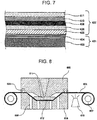
- FIG. 7 shows a layer configuration of a film for in-molding of the related art.
- a film for in-molding disclosed in PTL 1 also has the same layer configuration as that of the related art.
- the film for in-molding is configured with carrier film 401 which is not transferred to an injection molding resin and transfer film 402 which is transferred to the injection molding resin.
- Carrier film 401 is configured with base film 403 which is formed of a PET or acrylic film which continuously supplies transfer film 402, and peeling layer 404 for peeling transfer film 402 from base film 403.
- Transfer film 402 is configured with protective layer or hard coat layer 405, primer layer 406, coloring layer 408, hiding layer 410, and adhesive layer 411.
- Protective layer or hard coat layer 405 is an outermost surface of an in-mold molded product and has a function of protecting transfer film 402 from scratches or contaminations.
- Primer layer 406 has a function of connecting protective layer or hard coat layer 405 and coloring layer 408 to each other.
- Coloring layer 408 includes ink which is an organic material and has a function of applying a color, a pattern, or a design to a surface of an in-mold molded product.
- Hiding layer 410 has a function of hiding a color of coloring layer 408 and adhesive layer 411 has a function of bonding transfer film 402 to an injection molding resin. As described above the film for in-molding is configured with a plurality of layers.
- FIG. 8 schematically shows a method for manufacturing an in-mold molded product of the related art.
- film for in-molding 604 described with reference to FIG. 7 is fixed to movable die 606 by using film pressing members 609. Then, film for in-molding 604 is sufficiently shaped so that film for in-molding 604 is sucked by suction holes 608 and bonded to a surface of a die of movable die 606.
- a cavity is formed between fixed die 605 and movable die 606 with film for in-molding 604 interposed therebetween, and molten injection molding resin 612 is injected from gate 611 to fill the cavity.
- injection molding resin 612 is cooled and solidified.
- movable die 606 is moved, the transfer film of the film for in-molding is peeled off from the base film and an in-mold molded product in which a transfer film is formed on a surface of injection molding resin 612 is obtained.
- PTL 2 discloses a multi-layered transfer material comprising in order a base layer, an acrylic adhesive layer, a layer formed by a silica sol, a coloring layer formed of a polyvinyl butyral resin comprising red, blue and yellow organic pigments, and a further adhesive layer.
- a gate mark is a phenomenon in which ink of a coloring layer in the vicinity of a gate of a molded product does not withstand an injection molding temperature of a resin to be injected and flows towards a protective layer or a hard coat layer. Due to occurrence of such failure, a quality of appearance of an in-mold molded product is significantly deteriorated.
- a method of improving heat resistance of the film for in-molding by mixing 2 liquid curing type ink in the coloring layer is used, but when 40% by weight or more of a curing agent is included in the resin which is a main agent, the film hardly functions as a film due to cracks generated on the film, and in a case of a film in which the content of the curing agent is equal to or greater than 30% and less than 40% by weight, cracks are not generated, but the gate mark is generated.
- the invention has been made to solve the aforementioned problems of the related art and an object thereof is to prevent occurrence of defects in an in-mold molded product.
- a film for in-molding of the invention comprising a transfer film which is transferred to a surface of an injection molding resin; and a carrier film which is not transferred.
- the transfer film includes a coloring layer which includes ink which is an organic material formed of a thermoplastic resin and applies a design to an in-mold molded product, and first and second inorganic polymer layers formed of a thermosetting resin, and the coloring layer is in contact with the inorganic polymer layers and is interposed between the inorganic polymer layers, wherein the inorganic polymer layers comprise metal oxide microparticles and an inorganic matrix resin, and a proportion of the metal oxide microparticles is from 5% by mass to 90% by mass inclusive.
- the coloring layer when the coloring layer is interposed between the inorganic polymer layers, it is possible to prevent an ink flow to the coloring layer and to prevent occurrence of defects in an in-mold molded product.
- FIG. 1 shows a layer configuration of a film for in-molding of Exemplary Embodiment 1 of the invention.
- the film for in-molding of this exemplary embodiment is a continuous film configured with carrier film 101 and transfer film 102.
- Carrier film 101 is a portion of the film for in-molding which is not transferred to an injection molding resin and is configured with base film 103 and peeling layer 104.
- Base film 103 has a function of continuously supplying transfer film 102.
- Peeling layer 104 is used for peeling transfer film 102 from base film 103.
- Transfer film 102 is a portion of the film for in-molding which is transferred to an injection molding resin.
- Transfer film 102 is generally configured to have a film thickness of 2 ⁇ m to 50 ⁇ m inclusive.
- Transfer film 102 is, for example, configured with protective layer or hard coat layer 105, primer layer 106, first inorganic polymer layer 107, coloring layer 108, second inorganic polymer layer 109, hiding layer 110, and adhesive layer 111, and transfer film 102 is, for example, configured so that a thickness of a layer having the greatest film thickness becomes 10 ⁇ m.
- Protective layer or hard coat layer 105 is an outermost surface of an in-mold molded product and has a function of protecting transfer film 102 from scratches or contaminations.
- Primer layer 106 has a function of connecting protective layer or hard coat layer 105 and first inorganic polymer layer 107 to each other.
- Coloring layer 108 includes ink which is an organic material formed of a thermoplastic resin, and has a function of applying a color, a pattern, or a design to a surface of an in-mold molded product.
- Hiding layer 110 has a function of hiding a color of coloring layer 108 and adhesive layer 111 has a function of bonding transfer film 102 to an injection molding resin.
- adhesive layer 111, hiding layer 110, coloring layer 108, and primer layer 106 are respectively organic materials formed of a thermoplastic resin. Peeling layer 104 may not be provided on base film 103, as long as a material has peeling properties, even when protective layer or hard coat layer 105 is directly formed on base film 103.
- the film for in-molding of the invention has a layer configuration in which transfer film 102 includes first inorganic polymer layer 107 and second inorganic polymer layer 109, and inorganic polymer layers 107 and 109 come into contact with coloring layer 108 and interpose coloring layer 108.
- inorganic polymer layers 107 and 109 are respectively formed of a thermosetting resin.
- the inventors had made intensive investigations regarding reasons and measures of generation of a gate mark, in order to prevent generation of a gate mark failure in an in-mold molded product.
- a gate mark is generated due to an injection molding resin flowing from an adhesive layer to a coloring layer due to injection pressure and injection heat of an injection resin.
- injection pressure was slowly decreased, a state of the generation of the gate mark did not change, and accordingly, it was thought that the main reason of the generation of the gate mark is because of injection heat, not injection pressure.
- FIG. 2 is a diagram explaining a mechanism of generating a gate mark in an in-molding method of the related art.
- the same reference numerals are used for the same constituent elements shown in FIG. 7 which was referred to as background technology and the description thereof will be omitted.
- Reference numeral 203 of FIG. 2 indicates an injection molding resin which is injected from a gate. A resin heat of injection molding resin 203 is radially spread and transferred to each layer in order. Accordingly, the temperatures of adhesive layer 411, hiding layer 410, coloring layer 408, and primer layer 406 formed of a thermoplastic resin respectively approach a glass transition temperature and each layer has fluidity. An ink flow of coloring layer 408 occurs.
- the ink flow of coloring layer 408 gradually proceeds in accordance with the proceeding of the filling of injection molding resin 203, and when the filling thereof is completed, the ink approaches hard coat layer 405. Accordingly, a gate mark is generated in an in-mold molded product. When an in-mold molded product is in such a state, it is difficult to obtain appearance with high quality.
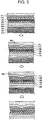
- FIG. 3 is a diagram explaining a mechanism of preventing the gate mark failure in the in-molding method of this exemplary embodiment.
- the same reference numerals are used for the same constituent elements shown in FIG. 1 and the description thereof will be omitted.
- Reference numeral 203 of FIG. 3 indicates an injection molding resin which is injected from a gate.
- a resin heat of injection molding resin 203 is radially spread, and the temperatures of adhesive layer 111 and hiding layer 110 in the vicinity of the gate respectively approach a glass transition temperature and the layers flow.
- the transfer of the resin heat is prevented.
- second inorganic polymer layer 109 formed of a thermosetting resin is interposed between hiding layer 110 and coloring layer 108.
- the characteristics of inorganic polymer layer 109 formed of a thermosetting resin are different from characteristics of coloring layer 108 formed with an organic material formed of a thermoplastic resin, and inorganic polymer layer does not have fluidity but a curing reaction is promoted therein, when heat is applied.
- the coloring layer 108 formed of a thermoplastic resin approaches a glass transition temperature due to an effect of heat of the injection resin and the coloring layer has fluidity
- the coloring layer is interposed between inorganic polymer layer 109 formed of a thermosetting resin which does not have fluidity, and thus, the motion of coloring layer 108 and hiding layer 110 formed of a thermoplastic resin is prevented. Accordingly, the gate flow can be prevented. Therefore, it is possible to prevent the gate mark failure caused by the flow of ink.
- the glass transition temperature of inorganic polymer layers 107 and 109 formed of a thermosetting resin is higher than the glass transition temperature of coloring layer 108 formed of a thermoplastic resin, a layer configuration in which the ink flow hardly occurs with respect to a molding resin having a higher injection temperature is obtained.
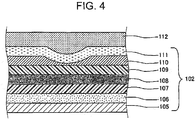
- FIG. 4 is an enlarged sectional view of an in-mold molded product manufactured through the in-molding method shown in FIG. 3 and of an in-mold molded product of this exemplary embodiment.
- Reference numeral 112 of FIG. 4 indicates an injection molding resin in a cooled and solidified state.
- only transfer film 102 is transferred to a surface of injection molding resin 112 and the carrier film is not transferred thereto.
- polycarbonate or 20% of a polyglass filler including a glass filler is used, for example.
- an injection temperature is, for example, equal to or higher than 280°C and equal to or lower than 320°C, and more specifically, an injection resin temperature is 300°C, a die temperature is 100°C, and a cycle time is 45 seconds.
- a sol-gel method is preferably used. Specifically, a sol-gel coating material including a thermosetting resin permeates primer layer 106 and coloring layer 108 and is dried to form inorganic polymer layers 107 and 109.
- a thermosetting resin in the sol-gel coating material permeates primer layer 106 and coloring layer 108
- a thermosetting resin in the sol-gel coating material enters primer layer 106 and coloring layer 108 together with a solvent and fixed therein, and accordingly, an anchor effect is efficiently obtained between inorganic polymer layers 107 and 109 which are formed of a thermosetting resin and provided between primer layer 106 and coloring layer 108 formed of a thermoplastic resin.
- Inorganic polymer layers 107 and 109 are configured with a matrix resin including metal oxide microparticles.
- An effect of including metal oxide microparticles is as follows. When metal oxide microparticles are added into the inorganic polymer, voids are formed between the matrix resin and the metal oxide. When voids are included in the inorganic polymer layers, it is possible to exhibit a thermal insulation effect or elasticity at the time of molding.
- a silicone resin formed of a siloxane bond or a resin having a molecular structure in which zirconia or titania is included in a main skeleton, such as metal alkoxide, zirconium alkoxide, or titanium alkoxide is considered.
- one or more kinds meal oxide is selected from silicon oxide, magnesium oxide, cryolite, calcium oxide, aluminum oxide, boron oxide, zirconium oxide, titanium oxide, hafnium oxide, and cerium oxide, for example.
- Metal oxide microparticles other than the above-mentioned metal oxides may be used, as long as the same effect is obtained.
- a proportion of the oxide particles is equal to or greater than 5% by mass and equal to or smaller than 90% by mass.
- the proportion of the oxide particles is smaller than 5% by mass, a thermal insulation effect and elasticity at the time of molding are not sufficiently exhibited in inorganic polymer layers 107 and 109, and in a case where the proportion thereof is greater than 90% by mass, it is difficult to maintain interlayer adhesiveness between inorganic polymer layers and an organic material formed of a thermoplastic resin.
- Films for in-molding in which a film thickness of inorganic polymer layers 107 and 109 formed as described above is 0.01 ⁇ m, 0.05 ⁇ m, 0.2 ⁇ m, 0.4 ⁇ m, and 0.5 ⁇ m were formed, in-mold molded products were manufactured using these films for in-molding, and generation of a gate mark was observed.
- the film thickness of inorganic polymer layers 107 and 109 was 0.01 ⁇ m, the effect was slight, and when the film thickness thereof was equal to or greater than 0.2 ⁇ m, cracks were generated due to thermal contraction at the time of drying in a stage of manufacturing a film.
- the film thickness of the inorganic polymer layers which is equal to or greater than 0.05 ⁇ m and smaller than 0.2 ⁇ m can be considered as a film thickness having gate mark resistance and extensibility so as to withstand even a deep-drawing molded product.
- Base film 103 of carrier film 101 is configured with a material such as a PET or acrylic film, and a film thickness thereof is generally selected in a range of 20 ⁇ m to 100 ⁇ m inclusive and is, for example, 50 ⁇ m. Peeling layer 104 is formed on base film 103 so that the film thickness thereof becomes, for example, 0.1 ⁇ m to 3 ⁇ m inclusive.
- a wet method is used as a method of providing inorganic polymer layer 107 on primer layer 106 of transfer film 102.
- a wet method is used.
- any one of a coating method and a printing method may be used.
- the printing method gravure printing, screen printing, or ink jet printing is used.
- a standard film thickness is 0.1 to 2 ⁇ m inclusive for a layer
- a standard film thickness is 0.5 to 3 ⁇ m inclusive for a layer
- ink jet printing a standard film thickness for a layer is 0.5 to 10 ⁇ m inclusive for one layer. It is preferable that the film thickness for a layer is 0.1 to 10 ⁇ m inclusive.
- the film thickness for a layer which is smaller than 0.1 ⁇ m is not suitable for decoration, because a desired color cannot be realized.
- a case where the film thickness for a layer is greater than 10 ⁇ m means that the film thickness of the transfer film is great, and accordingly, foil cutting properties on a part line of a die at the time of molding are deteriorated. This is because, when foil cutting properties are deteriorated, quality of appearance of edges of an in-mold molded product is deteriorated.
- each layer of transfer film 102 is formed so that, in regards to an average film thickness of each layer configuring transfer film 102, the average film thickness of protective layer or hard coat layer 105 is 5 ⁇ m, the average film thickness of primer layer 106 is 2 ⁇ m, the average film thickness of coloring layer 108 is 2 ⁇ m, the average film thickness of inorganic polymer layer 109 is equal to or greater than 0.05 ⁇ m and smaller than 0.2 ⁇ m, the average film thickness of hiding layer 110 is 2 ⁇ m, and the average film thickness of adhesive layer 111 is 2 ⁇ m.
- protective layer or hard coat layer 105 an after-curing type layer is used, for example.
- the layers other than coloring layer 108 and inorganic polymer layers 107 and 109 are not compulsory constituent elements, and accordingly, the usage thereof is determined in accordance with purposes.
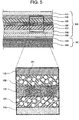
- FIG. 5 is an enlarged sectional view of a film for in-molding of Exemplary Embodiment 2 of the invention and is a view obtained by further enlarging a part of the enlarged sectional view.
- a film for in-molding of Exemplary Embodiment 2 of the invention includes porous fillers 301 in first inorganic polymer layer 107 and second inorganic polymer layer 109 interposing coloring layer 108.
- a film for in-molding having this configuration is manufactured, a film for in-molding in which a gate flow hardly occurs even when an injection resin is used at a higher temperature is provided.
- Other configurations are the same as those in Exemplary Embodiment 1 and therefore, the description thereof will be omitted.
- first inorganic polymer layer 107 and second inorganic polymer layer 109 include porous fillers 301, it is possible to improve heat resistance of first inorganic polymer layer 107 and second inorganic polymer layer 109 and prevent thermal conduction to coloring layer 108 or primer layer 106. That is, in Exemplary Embodiment 1, the motion of coloring layer 108 is stopped by interposing coloring layer 108 having a temperature approached to a temperature for flowing between inorganic polymer layers 107 and 109, whereas in Exemplary Embodiment 2, in addition to the effects described above, it is possible to prevent that the temperature of coloring layer 108 approaches a temperature at which the coloring layer flows.
- the temperature of the film could not be measured due to problems, but the effects were confirmed, when an injection temperature is from 310°C to 340°C, specifically, an injection resin temperature is 325°C, a die temperature is 110°C, a cycle time is 45 seconds, and a molding resin material includes 40% of polyglass filler.
- An average particle diameter of porous fillers 301 is preferably in a range of equal to or greater than 0.01 ⁇ m and smaller than 0.05 ⁇ m, but it is not particularly limited, as long as a thermal insulation effect is obtained.
- As the kind of porous fillers 301 silica or talc which is semitransparent and has a little effect on a color of ink is effective, but it is not particularly limited, as long as a thermal insulation effect is obtained.
- the metal oxides described above may be used as the porous fillers.
- a method for manufacturing porous fillers 301 is not particularly limited, either, as long as it is a method capable of manufacturing porous fillers 301 having a thermal insulation effect.
- silica When silica is used as an example, various kinds of silica such as spherical silica or colloidal silica, ground silica, or porous silica are provided depending on a difference in processing method.
- An amount of porous fillers 301 added is not particularly limited, as long as a thermal insulation effect is obtained when performing injection molding.
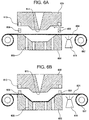
- film for in-molding 604 is transported by foil feeder 607 so that predetermined designs such as a color, a pattern, or a design to be realized by a coloring layer of a transfer film are disposed at a predetermined position between fixed die 605 and movable die 606.
- the film for in-molding is transported so that a carrier film of film for in-molding 604 faces movable die 606 and an adhesive layer of film for in-molding 604 faces fixed die 605.
- Film for in-molding 604 is heated to a predetermined temperature in advance by preheater 615 before molding to have elasticity so that film for in-molding 604 is sufficiently shaped in accordance with dies in the next step.
- film for in-molding 604 is sucked from suction holes 608 opened on a cavity surface of movable die 606 to tightly attach film for in-molding 604 to the cavity surface of movable die 606. Accordingly, film for in-molding 604 is shaped in accordance with the cavity surface. At this time, film for in-molding 604 is fixed by frame-shaped film pressing members 609 and film for in-molding 604 is positioned.
- movable die 606 is moved to clamp fixed die 605 and movable die 606 together, and a cavity is formed.
- film pressing members 609 are accommodated in accommodation recesses 610 (see FIGS. 6A and 6B ) formed in fixed die 605.
- molten injection molding resin 612 is injected towards an adhesive layer of film for in-molding 604 from gate 611 of fixed die 605, fixed die 605 and movable die 606 are clamped together, and accordingly, molten injection molding resin 612 is injected into the cavity formed.
- the cavity is filled with molten injection molding resin 612.
- molten injection molding resin 612 is cooled to a predetermined temperature and solidified.
- movable die 606 is moved to release fixed die 605 and movable die 606 from each other.
- transfer film 603 attached to a surface of solidified (formed) injection molding resin 612 is peeled off from carrier film 602. Accordingly, it is possible to obtain in-mold molded product 613 having a surface to which only transfer film 603 is transferred. In-mold molded product 613 obtained is in a state where a protective layer or a hard coat layer of transfer film 603 appears on the surface.
- knock-out pins 614 are pressed out from fixed die 605 to extract in-mold molded product 613.
- suction of carrier film 602 to the cavity surface due to suction from suction holes 608 of movable die 606 is stopped and film for in-molding 604 is transported by foil feeder 607 to be prepared for next molding.
- film for in-molding 604 heated to a predetermined temperature in advance by preheater 615 is transported so that predetermined designs such as a color, a pattern, or a design to be realized by the coloring layer thereof are disposed at a predetermined position between fixed die 605 and movable die 606.
- predetermined designs such as a color, a pattern, or a design to be realized by the coloring layer thereof are disposed at a predetermined position between fixed die 605 and movable die 606.
- a coloring layer of a film for in-molding is interposed between inorganic polymer layers and porous fillers, for example, are included in the inorganic polymer layers, it is possible to realize a state in which the film for in-molding follows the extension at the time of shaping and no gate mark is generated, during the manufacturing process of an in-mold molded product, and thus, a molded product having appearance with high quality is obtained.
- a polycarbonate resin or a high-temperature molding resin obtained by mixing glass fillers thereto was mainly used for the interior of vehicles or exterior of smart phones, and a decorative film having heat resistance when performing decoration of a molded product using in-molding was required. With the invention, it is thought that the spread of the film for product purposes is further accelerated.
Landscapes
- Engineering & Computer Science (AREA)
- Manufacturing & Machinery (AREA)
- Mechanical Engineering (AREA)
- Injection Moulding Of Plastics Or The Like (AREA)
- Decoration By Transfer Pictures (AREA)
- Laminated Bodies (AREA)
Claims (8)
- Film pour moulage comprenant :un film de transfert (102) qui est transféré sur une surface d'une résine de moulage par injection ; etun film support (101) qui n'est pas transféré,dans lequel le film de transfert comprend une couche colorante (108), qui comprend de l'encre qui est une matière organique formée d'une résine thermoplastique et applique une conception à un produit moulé dans le moule, et des première et seconde couches de polymère inorganique (107, 109) formées d'une résine thermodurcissable, etla couche de coloration est en contact avec les couches de polymère inorganique et est interposée entre les couches de polymère inorganique,dans lequel les couches de polymère inorganique comprennent des microparticules d'oxyde métallique et une résine matrice inorganique, et une proportion des microparticules d'oxyde métallique est de 5 % en masse à 90 % en masse, inclus.
- Film pour moulage selon la revendication 1,
dans lequel une température de transition vitreuse des couches de polymère inorganique est supérieure à une température de transition vitreuse de la couche colorante. - Film pour moulage selon la revendication 1,
dans lequel les couches de polymère inorganique sont formées en utilisant un procédé sol-gel. - Film pour moulage selon la revendication 1,
dans lequel les microparticules d'oxyde métallique sont des charges poreuses. - Film pour moulage selon la revendication 1,
dans lequel une épaisseur de film de chacune des couches de polymère inorganique est égale ou supérieure à 0,05 µm et inférieure à 0,2 µm. - Film de moulage selon l'une quelconque des revendications 1 à 5,
dans lequel le film de support comprend dans un état empilé,un film de base qui alimente en continu le film de transfert, etune couche de pelage qui est prévue pour peller le film de transfert à partir du film de base, etle film de transfert comprend dans un état empilé,une couche protectrice ou une couche de revêtement dur qui protège un produit moulé dans le moule,une couche d'apprêt,la première couche de polymère inorganique, qui est reliée à la couche protectrice ou à la couche de revêtement dur par la couche d'apprêt,la couche colorante,la seconde couche de polymère inorganique,une couche masquante qui masque une couleur de la couche colorante, etune couche adhésive qui lie le film de transfert à une résine de moulage par injection. - Produit moulé dans le moule comprenant :le film de transfert du film pour moulage selon la revendication 1 ; etune résine de moulage par injection ayant une surface sur laquelle le film de transfert est transféré.
- Procédé de fabrication d'un produit moulé dans le moule comprenant les étapes consistant à :disposer le film pour moulage selon la revendication 1 entre une première matrice et une seconde matrice ;faire couler une résine de moulage par injection fondue dans une cavité formée en serrant ensemble la première matrice et la seconde matrice ;refroidir et solidifier la résine de moulage par injection coulée dans la cavité ; etlibérer la première matrice et la seconde matrice l'une de l'autre pour extraire un produit moulé dans le moule comprenant la résine de moulage par injection refroidie et le film de transfert formé sur une surface du produit moulé dans le moule.
Applications Claiming Priority (2)
| Application Number | Priority Date | Filing Date | Title |
|---|---|---|---|
| JP2015113544 | 2015-06-04 | ||
| PCT/JP2015/005903 WO2016194027A1 (fr) | 2015-06-04 | 2015-11-27 | Film pour moulage dans un moule, article moulé dans un moule, et procédé de production d'article moulé dans un moule |
Publications (3)
| Publication Number | Publication Date |
|---|---|
| EP3305545A1 EP3305545A1 (fr) | 2018-04-11 |
| EP3305545A4 EP3305545A4 (fr) | 2018-06-06 |
| EP3305545B1 true EP3305545B1 (fr) | 2020-10-07 |
Family
ID=57441425
Family Applications (1)
| Application Number | Title | Priority Date | Filing Date |
|---|---|---|---|
| EP15894062.7A Active EP3305545B1 (fr) | 2015-06-04 | 2015-11-27 | Film pour moulage dans un moule, article moulé dans un moule, et procédé de production d'article moulé dans un moule |
Country Status (5)
| Country | Link |
|---|---|
| US (1) | US9821595B2 (fr) |
| EP (1) | EP3305545B1 (fr) |
| JP (1) | JP6343813B2 (fr) |
| CN (1) | CN106573490B (fr) |
| WO (1) | WO2016194027A1 (fr) |
Families Citing this family (6)
| Publication number | Priority date | Publication date | Assignee | Title |
|---|---|---|---|---|
| JP6343813B2 (ja) * | 2015-06-04 | 2018-06-20 | パナソニックIpマネジメント株式会社 | インモールド成形用フィルム、インモールド成形品、およびインモールド成形品の製造方法 |
| JP6941683B2 (ja) * | 2017-10-20 | 2021-09-29 | 帝人株式会社 | 金属部材、樹脂部材及び外装部品の製造方法 |
| US11227390B2 (en) | 2018-09-26 | 2022-01-18 | Shanghai United Imaging Intelligence Co., Ltd. | Systems and methods for image processing |
| JP7382599B2 (ja) * | 2019-12-24 | 2023-11-17 | パナソニックIpマネジメント株式会社 | 光学機能樹脂パネルおよびその製造方法 |
| CN111161645B (zh) * | 2020-01-19 | 2025-03-18 | 山西高科华兴电子科技有限公司 | 一种用于led碗杯的印刷模具 |
| JP2025143028A (ja) * | 2024-03-18 | 2025-10-01 | パナソニックIpマネジメント株式会社 | 小便器の製造方法 |
Family Cites Families (13)
| Publication number | Priority date | Publication date | Assignee | Title |
|---|---|---|---|---|
| JP2965594B2 (ja) * | 1989-07-31 | 1999-10-18 | 日本写真印刷株式会社 | 転写材 |
| JP2003246194A (ja) | 2002-02-27 | 2003-09-02 | Toppan Printing Co Ltd | 転写シート |
| DE10312610A1 (de) | 2003-03-21 | 2004-09-30 | Bayer Ag | Verfahren zum Hinterspritzen von dekorierten Folien |
| JP2009262521A (ja) * | 2008-04-28 | 2009-11-12 | Kotobuki Seihan Printing Co Ltd | 転写箔 |
| JP5156679B2 (ja) | 2009-04-20 | 2013-03-06 | 日本写真印刷株式会社 | 成形同時加飾成形品の製造方法及びその成形品、並びに加飾シート |
| JP5573279B2 (ja) * | 2009-09-29 | 2014-08-20 | 大日本印刷株式会社 | 成型加工用金属蒸着転写シート及びそれを使用した加飾方法 |
| JP2012206501A (ja) * | 2011-03-16 | 2012-10-25 | Panasonic Corp | インモールド成形品、インモールド成形用フィルム、およびインモールド成形品の製造方法 |
| KR20190131140A (ko) * | 2011-06-20 | 2019-11-25 | 제이엔씨 주식회사 | 인몰드 성형용 전사 필름 및 그 제조 방법 |
| JP5613124B2 (ja) | 2011-08-24 | 2014-10-22 | 富士フイルム株式会社 | 加飾シート及びインモールド成形方法 |
| TW201332771A (zh) * | 2012-02-09 | 2013-08-16 | Darfon Materials Corp | 製造模內轉印膜及包含該模內轉印膜的殼體之方法 |
| JP5116900B1 (ja) * | 2012-08-15 | 2013-01-09 | 日本写真印刷株式会社 | インキ流れの発生を抑制する転写シート |
| JP6146569B2 (ja) | 2013-09-05 | 2017-06-14 | パナソニックIpマネジメント株式会社 | 加飾フィルム及びこれを用いた成形品 |
| JP6343813B2 (ja) * | 2015-06-04 | 2018-06-20 | パナソニックIpマネジメント株式会社 | インモールド成形用フィルム、インモールド成形品、およびインモールド成形品の製造方法 |
-
2015
- 2015-11-27 JP JP2017521639A patent/JP6343813B2/ja not_active Expired - Fee Related
- 2015-11-27 EP EP15894062.7A patent/EP3305545B1/fr active Active
- 2015-11-27 WO PCT/JP2015/005903 patent/WO2016194027A1/fr not_active Ceased
- 2015-11-27 US US15/327,370 patent/US9821595B2/en not_active Expired - Fee Related
- 2015-11-27 CN CN201580042159.2A patent/CN106573490B/zh not_active Expired - Fee Related
Non-Patent Citations (1)
| Title |
|---|
| None * |
Also Published As
| Publication number | Publication date |
|---|---|
| JP6343813B2 (ja) | 2018-06-20 |
| CN106573490A (zh) | 2017-04-19 |
| EP3305545A1 (fr) | 2018-04-11 |
| CN106573490B (zh) | 2020-02-21 |
| US9821595B2 (en) | 2017-11-21 |
| JPWO2016194027A1 (ja) | 2017-09-07 |
| WO2016194027A1 (fr) | 2016-12-08 |
| EP3305545A4 (fr) | 2018-06-06 |
| US20170203608A1 (en) | 2017-07-20 |
Similar Documents
| Publication | Publication Date | Title |
|---|---|---|
| EP3305545B1 (fr) | Film pour moulage dans un moule, article moulé dans un moule, et procédé de production d'article moulé dans un moule | |
| CN104582928B (zh) | 模内成形方法和模内转印膜及其制造方法 | |
| US11260567B2 (en) | Method for producing a plastic molded article, plastic molded article and mold | |
| CN103507208B (zh) | 注塑成形方法及注塑成形模具装置 | |
| CN102795037B (zh) | 一种在工件上转印图案的方法 | |
| EP4470039A1 (fr) | Procédé de fabrication de panneau photovoltaïque tel qu'un panneau de carrosserie de véhicule intégré pv à l'aide d'un polymère thermodurcissable injecté avec moulage par injection de réaction | |
| JP2009101670A (ja) | 型内塗装品の製造方法および型内塗装品形成装置 | |
| CN102615771B (zh) | 一种模内镶件注塑贴合方法 | |
| CN113795363B (zh) | 用于制造构件的方法和用于制造构件的设备 | |
| WO2012111242A1 (fr) | Procédé d'impression d'imprimés à ton métallique et imprimés ainsi obtenus | |
| US10730214B2 (en) | Decorative sheet, molded-article manufacturing method, and molded article | |
| TW201442164A (zh) | 半導體元件用密封片材、半導體裝置及半導體裝置之製造方法 | |
| US20120003433A1 (en) | Decoration film, decoration device, and method for manufacturing decoration device | |
| CN101279312B (zh) | 一种模内涂装方法及其装置 | |
| CN106808643A (zh) | 射出成形方法及由该方法制造的成形品 | |
| CN109291580B (zh) | 一种铝塑复合封口膜及其制备方法 | |
| CN114701288A (zh) | 一种彩色烫金膜的生产工艺 | |
| JP6242677B2 (ja) | 立体エンブレムの製造方法 | |
| CN104972597B (zh) | 模内成形品和模内成形用薄膜及模内成形品的制造方法 | |
| JP2011083961A (ja) | 樹脂成形品およびその製造方法 | |
| JP4593325B2 (ja) | 樹脂成形品及びその製造方法 | |
| JP2011011378A (ja) | 転写シート、転写シートの製造方法及び転写品 | |
| TW201630132A (zh) | 電子裝置封裝體及密封用片材 | |
| EP3120988A1 (fr) | Procédé de fabrication d'un article moulé en résine thermodurcissable | |
| JP2006240213A (ja) | 基材付き成形品及びその製造方法 |
Legal Events
| Date | Code | Title | Description |
|---|---|---|---|
| STAA | Information on the status of an ep patent application or granted ep patent |
Free format text: STATUS: THE INTERNATIONAL PUBLICATION HAS BEEN MADE |
|
| PUAI | Public reference made under article 153(3) epc to a published international application that has entered the european phase |
Free format text: ORIGINAL CODE: 0009012 |
|
| STAA | Information on the status of an ep patent application or granted ep patent |
Free format text: STATUS: REQUEST FOR EXAMINATION WAS MADE |
|
| 17P | Request for examination filed |
Effective date: 20170118 |
|
| AK | Designated contracting states |
Kind code of ref document: A1 Designated state(s): AL AT BE BG CH CY CZ DE DK EE ES FI FR GB GR HR HU IE IS IT LI LT LU LV MC MK MT NL NO PL PT RO RS SE SI SK SM TR |
|
| AX | Request for extension of the european patent |
Extension state: BA ME |
|
| A4 | Supplementary search report drawn up and despatched |
Effective date: 20180509 |
|
| RIC1 | Information provided on ipc code assigned before grant |
Ipc: B44C 1/17 20060101AFI20180503BHEP |
|
| DAV | Request for validation of the european patent (deleted) | ||
| DAX | Request for extension of the european patent (deleted) | ||
| GRAP | Despatch of communication of intention to grant a patent |
Free format text: ORIGINAL CODE: EPIDOSNIGR1 |
|
| STAA | Information on the status of an ep patent application or granted ep patent |
Free format text: STATUS: GRANT OF PATENT IS INTENDED |
|
| INTG | Intention to grant announced |
Effective date: 20200508 |
|
| GRAS | Grant fee paid |
Free format text: ORIGINAL CODE: EPIDOSNIGR3 |
|
| GRAA | (expected) grant |
Free format text: ORIGINAL CODE: 0009210 |
|
| STAA | Information on the status of an ep patent application or granted ep patent |
Free format text: STATUS: THE PATENT HAS BEEN GRANTED |
|
| AK | Designated contracting states |
Kind code of ref document: B1 Designated state(s): AL AT BE BG CH CY CZ DE DK EE ES FI FR GB GR HR HU IE IS IT LI LT LU LV MC MK MT NL NO PL PT RO RS SE SI SK SM TR |
|
| REG | Reference to a national code |
Ref country code: GB Ref legal event code: FG4D |
|
| REG | Reference to a national code |
Ref country code: AT Ref legal event code: REF Ref document number: 1320764 Country of ref document: AT Kind code of ref document: T Effective date: 20201015 Ref country code: CH Ref legal event code: EP |
|
| REG | Reference to a national code |
Ref country code: IE Ref legal event code: FG4D |
|
| REG | Reference to a national code |
Ref country code: DE Ref legal event code: R096 Ref document number: 602015060323 Country of ref document: DE |
|
| REG | Reference to a national code |
Ref country code: NL Ref legal event code: MP Effective date: 20201007 |
|
| REG | Reference to a national code |
Ref country code: AT Ref legal event code: MK05 Ref document number: 1320764 Country of ref document: AT Kind code of ref document: T Effective date: 20201007 |
|
| PG25 | Lapsed in a contracting state [announced via postgrant information from national office to epo] |
Ref country code: GR Free format text: LAPSE BECAUSE OF FAILURE TO SUBMIT A TRANSLATION OF THE DESCRIPTION OR TO PAY THE FEE WITHIN THE PRESCRIBED TIME-LIMIT Effective date: 20210108 Ref country code: PT Free format text: LAPSE BECAUSE OF FAILURE TO SUBMIT A TRANSLATION OF THE DESCRIPTION OR TO PAY THE FEE WITHIN THE PRESCRIBED TIME-LIMIT Effective date: 20210208 Ref country code: RS Free format text: LAPSE BECAUSE OF FAILURE TO SUBMIT A TRANSLATION OF THE DESCRIPTION OR TO PAY THE FEE WITHIN THE PRESCRIBED TIME-LIMIT Effective date: 20201007 Ref country code: FI Free format text: LAPSE BECAUSE OF FAILURE TO SUBMIT A TRANSLATION OF THE DESCRIPTION OR TO PAY THE FEE WITHIN THE PRESCRIBED TIME-LIMIT Effective date: 20201007 Ref country code: NO Free format text: LAPSE BECAUSE OF FAILURE TO SUBMIT A TRANSLATION OF THE DESCRIPTION OR TO PAY THE FEE WITHIN THE PRESCRIBED TIME-LIMIT Effective date: 20210107 |
|
| REG | Reference to a national code |
Ref country code: LT Ref legal event code: MG4D |
|
| PG25 | Lapsed in a contracting state [announced via postgrant information from national office to epo] |
Ref country code: IS Free format text: LAPSE BECAUSE OF FAILURE TO SUBMIT A TRANSLATION OF THE DESCRIPTION OR TO PAY THE FEE WITHIN THE PRESCRIBED TIME-LIMIT Effective date: 20210207 Ref country code: PL Free format text: LAPSE BECAUSE OF FAILURE TO SUBMIT A TRANSLATION OF THE DESCRIPTION OR TO PAY THE FEE WITHIN THE PRESCRIBED TIME-LIMIT Effective date: 20201007 Ref country code: SE Free format text: LAPSE BECAUSE OF FAILURE TO SUBMIT A TRANSLATION OF THE DESCRIPTION OR TO PAY THE FEE WITHIN THE PRESCRIBED TIME-LIMIT Effective date: 20201007 Ref country code: LV Free format text: LAPSE BECAUSE OF FAILURE TO SUBMIT A TRANSLATION OF THE DESCRIPTION OR TO PAY THE FEE WITHIN THE PRESCRIBED TIME-LIMIT Effective date: 20201007 Ref country code: BG Free format text: LAPSE BECAUSE OF FAILURE TO SUBMIT A TRANSLATION OF THE DESCRIPTION OR TO PAY THE FEE WITHIN THE PRESCRIBED TIME-LIMIT Effective date: 20210107 Ref country code: ES Free format text: LAPSE BECAUSE OF FAILURE TO SUBMIT A TRANSLATION OF THE DESCRIPTION OR TO PAY THE FEE WITHIN THE PRESCRIBED TIME-LIMIT Effective date: 20201007 Ref country code: AT Free format text: LAPSE BECAUSE OF FAILURE TO SUBMIT A TRANSLATION OF THE DESCRIPTION OR TO PAY THE FEE WITHIN THE PRESCRIBED TIME-LIMIT Effective date: 20201007 |
|
| PG25 | Lapsed in a contracting state [announced via postgrant information from national office to epo] |
Ref country code: NL Free format text: LAPSE BECAUSE OF FAILURE TO SUBMIT A TRANSLATION OF THE DESCRIPTION OR TO PAY THE FEE WITHIN THE PRESCRIBED TIME-LIMIT Effective date: 20201007 Ref country code: HR Free format text: LAPSE BECAUSE OF FAILURE TO SUBMIT A TRANSLATION OF THE DESCRIPTION OR TO PAY THE FEE WITHIN THE PRESCRIBED TIME-LIMIT Effective date: 20201007 |
|
| REG | Reference to a national code |
Ref country code: CH Ref legal event code: PL |
|
| REG | Reference to a national code |
Ref country code: DE Ref legal event code: R097 Ref document number: 602015060323 Country of ref document: DE |
|
| PG25 | Lapsed in a contracting state [announced via postgrant information from national office to epo] |
Ref country code: EE Free format text: LAPSE BECAUSE OF FAILURE TO SUBMIT A TRANSLATION OF THE DESCRIPTION OR TO PAY THE FEE WITHIN THE PRESCRIBED TIME-LIMIT Effective date: 20201007 Ref country code: CZ Free format text: LAPSE BECAUSE OF FAILURE TO SUBMIT A TRANSLATION OF THE DESCRIPTION OR TO PAY THE FEE WITHIN THE PRESCRIBED TIME-LIMIT Effective date: 20201007 Ref country code: SM Free format text: LAPSE BECAUSE OF FAILURE TO SUBMIT A TRANSLATION OF THE DESCRIPTION OR TO PAY THE FEE WITHIN THE PRESCRIBED TIME-LIMIT Effective date: 20201007 Ref country code: LT Free format text: LAPSE BECAUSE OF FAILURE TO SUBMIT A TRANSLATION OF THE DESCRIPTION OR TO PAY THE FEE WITHIN THE PRESCRIBED TIME-LIMIT Effective date: 20201007 Ref country code: LU Free format text: LAPSE BECAUSE OF NON-PAYMENT OF DUE FEES Effective date: 20201127 Ref country code: MC Free format text: LAPSE BECAUSE OF FAILURE TO SUBMIT A TRANSLATION OF THE DESCRIPTION OR TO PAY THE FEE WITHIN THE PRESCRIBED TIME-LIMIT Effective date: 20201007 Ref country code: SK Free format text: LAPSE BECAUSE OF FAILURE TO SUBMIT A TRANSLATION OF THE DESCRIPTION OR TO PAY THE FEE WITHIN THE PRESCRIBED TIME-LIMIT Effective date: 20201007 Ref country code: RO Free format text: LAPSE BECAUSE OF FAILURE TO SUBMIT A TRANSLATION OF THE DESCRIPTION OR TO PAY THE FEE WITHIN THE PRESCRIBED TIME-LIMIT Effective date: 20201007 |
|
| REG | Reference to a national code |
Ref country code: BE Ref legal event code: MM Effective date: 20201130 |
|
| PLBE | No opposition filed within time limit |
Free format text: ORIGINAL CODE: 0009261 |
|
| STAA | Information on the status of an ep patent application or granted ep patent |
Free format text: STATUS: NO OPPOSITION FILED WITHIN TIME LIMIT |
|
| PG25 | Lapsed in a contracting state [announced via postgrant information from national office to epo] |
Ref country code: LI Free format text: LAPSE BECAUSE OF NON-PAYMENT OF DUE FEES Effective date: 20201130 Ref country code: CH Free format text: LAPSE BECAUSE OF NON-PAYMENT OF DUE FEES Effective date: 20201130 Ref country code: DK Free format text: LAPSE BECAUSE OF FAILURE TO SUBMIT A TRANSLATION OF THE DESCRIPTION OR TO PAY THE FEE WITHIN THE PRESCRIBED TIME-LIMIT Effective date: 20201007 |
|
| 26N | No opposition filed |
Effective date: 20210708 |
|
| GBPC | Gb: european patent ceased through non-payment of renewal fee |
Effective date: 20210107 |
|
| PG25 | Lapsed in a contracting state [announced via postgrant information from national office to epo] |
Ref country code: AL Free format text: LAPSE BECAUSE OF FAILURE TO SUBMIT A TRANSLATION OF THE DESCRIPTION OR TO PAY THE FEE WITHIN THE PRESCRIBED TIME-LIMIT Effective date: 20201007 Ref country code: IT Free format text: LAPSE BECAUSE OF FAILURE TO SUBMIT A TRANSLATION OF THE DESCRIPTION OR TO PAY THE FEE WITHIN THE PRESCRIBED TIME-LIMIT Effective date: 20201007 Ref country code: IE Free format text: LAPSE BECAUSE OF NON-PAYMENT OF DUE FEES Effective date: 20201127 Ref country code: FR Free format text: LAPSE BECAUSE OF NON-PAYMENT OF DUE FEES Effective date: 20201207 |
|
| PG25 | Lapsed in a contracting state [announced via postgrant information from national office to epo] |
Ref country code: GB Free format text: LAPSE BECAUSE OF NON-PAYMENT OF DUE FEES Effective date: 20210107 Ref country code: SI Free format text: LAPSE BECAUSE OF FAILURE TO SUBMIT A TRANSLATION OF THE DESCRIPTION OR TO PAY THE FEE WITHIN THE PRESCRIBED TIME-LIMIT Effective date: 20201007 |
|
| PG25 | Lapsed in a contracting state [announced via postgrant information from national office to epo] |
Ref country code: IS Free format text: LAPSE BECAUSE OF FAILURE TO SUBMIT A TRANSLATION OF THE DESCRIPTION OR TO PAY THE FEE WITHIN THE PRESCRIBED TIME-LIMIT Effective date: 20210207 Ref country code: TR Free format text: LAPSE BECAUSE OF FAILURE TO SUBMIT A TRANSLATION OF THE DESCRIPTION OR TO PAY THE FEE WITHIN THE PRESCRIBED TIME-LIMIT Effective date: 20201007 Ref country code: MT Free format text: LAPSE BECAUSE OF FAILURE TO SUBMIT A TRANSLATION OF THE DESCRIPTION OR TO PAY THE FEE WITHIN THE PRESCRIBED TIME-LIMIT Effective date: 20201007 Ref country code: CY Free format text: LAPSE BECAUSE OF FAILURE TO SUBMIT A TRANSLATION OF THE DESCRIPTION OR TO PAY THE FEE WITHIN THE PRESCRIBED TIME-LIMIT Effective date: 20201007 |
|
| PG25 | Lapsed in a contracting state [announced via postgrant information from national office to epo] |
Ref country code: MK Free format text: LAPSE BECAUSE OF FAILURE TO SUBMIT A TRANSLATION OF THE DESCRIPTION OR TO PAY THE FEE WITHIN THE PRESCRIBED TIME-LIMIT Effective date: 20201007 |
|
| PG25 | Lapsed in a contracting state [announced via postgrant information from national office to epo] |
Ref country code: BE Free format text: LAPSE BECAUSE OF NON-PAYMENT OF DUE FEES Effective date: 20201130 |
|
| PGFP | Annual fee paid to national office [announced via postgrant information from national office to epo] |
Ref country code: DE Payment date: 20231121 Year of fee payment: 9 |
|
| REG | Reference to a national code |
Ref country code: DE Ref legal event code: R119 Ref document number: 602015060323 Country of ref document: DE |
|
| PG25 | Lapsed in a contracting state [announced via postgrant information from national office to epo] |
Ref country code: DE Free format text: LAPSE BECAUSE OF NON-PAYMENT OF DUE FEES Effective date: 20250603 |