EP3306534B1 - Dispositif et procédé d'inférence - Google Patents
Dispositif et procédé d'inférence Download PDFInfo
- Publication number
- EP3306534B1 EP3306534B1 EP15894280.5A EP15894280A EP3306534B1 EP 3306534 B1 EP3306534 B1 EP 3306534B1 EP 15894280 A EP15894280 A EP 15894280A EP 3306534 B1 EP3306534 B1 EP 3306534B1
- Authority
- EP
- European Patent Office
- Prior art keywords
- node
- intermediate layer
- layer
- activity level
- nodes
- Prior art date
- Legal status (The legal status is an assumption and is not a legal conclusion. Google has not performed a legal analysis and makes no representation as to the accuracy of the status listed.)
- Active
Links
Images


Classifications
-
- G—PHYSICS
- G06—COMPUTING OR CALCULATING; COUNTING
- G06N—COMPUTING ARRANGEMENTS BASED ON SPECIFIC COMPUTATIONAL MODELS
- G06N3/00—Computing arrangements based on biological models
- G06N3/02—Neural networks
- G06N3/04—Architecture, e.g. interconnection topology
-
- G—PHYSICS
- G06—COMPUTING OR CALCULATING; COUNTING
- G06N—COMPUTING ARRANGEMENTS BASED ON SPECIFIC COMPUTATIONAL MODELS
- G06N3/00—Computing arrangements based on biological models
- G06N3/02—Neural networks
- G06N3/08—Learning methods
- G06N3/084—Backpropagation, e.g. using gradient descent
-
- G—PHYSICS
- G06—COMPUTING OR CALCULATING; COUNTING
- G06N—COMPUTING ARRANGEMENTS BASED ON SPECIFIC COMPUTATIONAL MODELS
- G06N3/00—Computing arrangements based on biological models
- G06N3/02—Neural networks
- G06N3/04—Architecture, e.g. interconnection topology
- G06N3/044—Recurrent networks, e.g. Hopfield networks
-
- G—PHYSICS
- G06—COMPUTING OR CALCULATING; COUNTING
- G06N—COMPUTING ARRANGEMENTS BASED ON SPECIFIC COMPUTATIONAL MODELS
- G06N3/00—Computing arrangements based on biological models
- G06N3/02—Neural networks
- G06N3/04—Architecture, e.g. interconnection topology
- G06N3/044—Recurrent networks, e.g. Hopfield networks
- G06N3/0442—Recurrent networks, e.g. Hopfield networks characterised by memory or gating, e.g. long short-term memory [LSTM] or gated recurrent units [GRU]
-
- G—PHYSICS
- G06—COMPUTING OR CALCULATING; COUNTING
- G06N—COMPUTING ARRANGEMENTS BASED ON SPECIFIC COMPUTATIONAL MODELS
- G06N3/00—Computing arrangements based on biological models
- G06N3/02—Neural networks
- G06N3/04—Architecture, e.g. interconnection topology
- G06N3/045—Combinations of networks
-
- G—PHYSICS
- G06—COMPUTING OR CALCULATING; COUNTING
- G06N—COMPUTING ARRANGEMENTS BASED ON SPECIFIC COMPUTATIONAL MODELS
- G06N3/00—Computing arrangements based on biological models
- G06N3/02—Neural networks
- G06N3/04—Architecture, e.g. interconnection topology
- G06N3/0464—Convolutional networks [CNN, ConvNet]
-
- G—PHYSICS
- G06—COMPUTING OR CALCULATING; COUNTING
- G06N—COMPUTING ARRANGEMENTS BASED ON SPECIFIC COMPUTATIONAL MODELS
- G06N3/00—Computing arrangements based on biological models
- G06N3/02—Neural networks
- G06N3/04—Architecture, e.g. interconnection topology
- G06N3/048—Activation functions
-
- G—PHYSICS
- G06—COMPUTING OR CALCULATING; COUNTING
- G06N—COMPUTING ARRANGEMENTS BASED ON SPECIFIC COMPUTATIONAL MODELS
- G06N3/00—Computing arrangements based on biological models
- G06N3/02—Neural networks
- G06N3/04—Architecture, e.g. interconnection topology
- G06N3/0495—Quantised networks; Sparse networks; Compressed networks
-
- G—PHYSICS
- G06—COMPUTING OR CALCULATING; COUNTING
- G06N—COMPUTING ARRANGEMENTS BASED ON SPECIFIC COMPUTATIONAL MODELS
- G06N3/00—Computing arrangements based on biological models
- G06N3/02—Neural networks
- G06N3/08—Learning methods
- G06N3/088—Non-supervised learning, e.g. competitive learning
-
- G—PHYSICS
- G06—COMPUTING OR CALCULATING; COUNTING
- G06N—COMPUTING ARRANGEMENTS BASED ON SPECIFIC COMPUTATIONAL MODELS
- G06N3/00—Computing arrangements based on biological models
- G06N3/02—Neural networks
- G06N3/08—Learning methods
- G06N3/0895—Weakly supervised learning, e.g. semi-supervised or self-supervised learning
-
- G—PHYSICS
- G06—COMPUTING OR CALCULATING; COUNTING
- G06N—COMPUTING ARRANGEMENTS BASED ON SPECIFIC COMPUTATIONAL MODELS
- G06N3/00—Computing arrangements based on biological models
- G06N3/02—Neural networks
- G06N3/08—Learning methods
- G06N3/09—Supervised learning
-
- G—PHYSICS
- G06—COMPUTING OR CALCULATING; COUNTING
- G06N—COMPUTING ARRANGEMENTS BASED ON SPECIFIC COMPUTATIONAL MODELS
- G06N3/00—Computing arrangements based on biological models
- G06N3/02—Neural networks
- G06N3/08—Learning methods
- G06N3/092—Reinforcement learning
-
- G—PHYSICS
- G06—COMPUTING OR CALCULATING; COUNTING
- G06N—COMPUTING ARRANGEMENTS BASED ON SPECIFIC COMPUTATIONAL MODELS
- G06N5/00—Computing arrangements using knowledge-based models
- G06N5/04—Inference or reasoning models
Definitions
- the present invention relates to an inference device and an inference method using a neural network.
- neural networks have high capabilities in solving problems and are used in many types of processes, such as image recognition, sound recognition, abnormality detection, and future prediction.
- a hierarchical neural network is known as one of neural network structures. Learning methods thereof mainly include two types, which are supervised learning and unsupervised learning.
- the supervised learning is a method of tuning a connection state of a neural network such that actual output and target output match with each other after input data of a plurality of training examples and the target output are given.
- the unsupervised learning is a method of tuning a connection state of a neural network so as to extract an essential feature possessed in training examples without providing target output.
- An error backpropagation method (a backpropagation algorithm) belonging to supervised learning methods may cause a problem that learning results do not converge when the number of layers in a neural network increases.
- This method is capable of tuning of the connection state of the neural network such that actual output and target output match with each other without causing the problem that learning results do not converge.
- a hierarchical neural network can be represented by a graph structure which is constituted of a plurality of nodes (or joint points) and edges (or branches) connecting among the nodes.
- a plurality of nodes are layered into an input layer, a first intermediate layer, a second intermediate layer, and an output layer.
- no edges exist among nodes belonging to the same layer, while edges exist only between every pair of adjacent layers.
- the intermediate layers may be called as "hidden layers”.
- edges has a parameter indicating a degree of connection between two connected nodes. This parameter is called as "edge weight”.
- the calculation amount and the memory amount are proportional to the number of edges.
- nodes belonging to each of the layers are connected by edges with all nodes belonging to a layer adjacent thereto.
- the calculation amount and the memory amount are directly related to the number of nodes.
- the calculation amount and the memory amount upon learning or performing inference are proportional to (N ⁇ M 1 + M 1 ⁇ M 2 + M 2 ).
- the number of nodes in the intermediate layers is proportional to the number of nodes in the input layer
- the number of nodes in the input layer is N
- Hierarchical neural networks often have the configuration as described above and thus the calculation amount and the memory amount increase in proportion to the square of N which is the amount of input data, that is, the square of N which is the number of nodes in the input layer. Therefore, the calculation amount and the memory amount drastically increase as the amount of input data increases, thus resulting in problems such as shortage in computer resources, delay of a process, or increase in cost of a device.
- the number of edges between an input layer and an intermediate layer or the number of edges between the intermediate layer and an output layer are reduced by grouping a plurality of sets of input data based on correlation among the plurality of sets of data.
- EP 0 528 399 A1 describes an apparatus for carrying out learning operation of a neural network which has an input layer, an intermediate layer, and an output layer.
- Plural nodes of the input layer are related to plural nodes of the intermediate layer with plural connection weights, while the plural nodes of the intermediate layer are also related to plural nodes of the output layer with plural connection weights.
- the apparatus judges whether each of the components of the teaching data is effective or ineffective, and output errors corresponding to the ineffective components are regarded as zero.
- the connection weights are thereafter corrected based upon the calculated errors.
- the activity levels of the subsequent layers are calculated by summing over the activities of all of the nodes of the preceding layer.
- Patent Literature 1 JP Publication No. 2011-54200 A ( FIG. 1 )
- inference devices in the conventional art are configured in the above manner, the number of edges between an input layer and an intermediate layer or the number of edges between the intermediate layer and an output layer can be reduced.
- each node in the input layer is connected with all nodes in the intermediate layer and thus the reduction number of edges is limited. Therefore, there may cause a problem that the calculation amount and the memory amount upon inference are still large.
- the present invention has been devised to solve the aforementioned problem with an object to obtain an inference method and an inference device that is capable of reducing the calculation amount and the memory amount upon performing inference.
- a further object is to obtain an inference device and an inference method having high inference accuracy.
- An inference device includes the features of the independent device claims.
- a method for image classification according to the invention comprises the features of the independent method claims.
- This invention has an effect of reducing the calculation amount and the memory amount upon performing image classification. Another effect is that higher classification accuracy can be obtained.
- FIG. 1 is a diagram illustrating a configuration of an inference device according to Embodiment 1 of the invention.
- FIG. 2 is a diagram illustrating a hardware configuration of the inference device according to the Embodiment 1 of the invention.
- FIG. 1 the exemplary inference device using a hierarchical neural network having five layers is illustrated, in which a plurality of nodes are layered into an input layer, a first intermediate layer, a second intermediate layer, a third intermediate layer, and an output layer.
- data given to the input layer is image data.
- the example of using the hierarchical neural network of the five layers is illustrated, it is not limited to the hierarchical neural network of five layers.
- a hierarchical neural network of three or four layers, or six or more layers may be used.
- a first intermediate layer is included as an intermediate layer.
- a second intermediate layer storage 3 a third intermediate layer storage 4, a second intermediate layer activity level calculator 6, and a third intermediate layer activity level calculator 7, which will be described later, are not needed.
- an input layer activity level calculator 1 is implemented by an input layer activity level circuitry 11 which is constituted by a semiconductor integrated circuit or a one-chip microcomputer equipped with a central processing unit (CPU), for example.
- the input layer activity level calculator 1 performs a process of calculating activity level of each node in the input layer from the image data.
- a first intermediate layer storage 2 as an intermediate layer storage is implemented by an intermediate layer storage device 12 which is composed of a storing medium, such as a RAM or a hard disk.
- the first intermediate layer storage 2 stores an index (or connection information) representing a relation of connection between each node in the first intermediate layer and each node in the input layer, weight applied to each of edges connecting a node in the first intermediate layer and a node in the input layer, and a bias value given to each node in the first intermediate layer.
- a second intermediate layer storage 3 as the intermediate layer storage is implemented by the intermediate layer storage device 12 which is composed of a storing medium, such as a RAM or a hard disk.
- the second intermediate layer storage 3 stores an index representing a relation of connection between each node in the second intermediate layer and each node in the first intermediate layer, weight applied to each of edges connecting a node in the second intermediate layer and a node in the first intermediate layer, and a bias value given to each node in the second intermediate layer.
- a third intermediate layer storage 4 as the intermediate layer storage is implemented by the intermediate layer storage device 12 which is composed of a storing medium, such as a RAM or a hard disk.
- the third intermediate layer storage 4 stores an index representing a relation of connection between each node in the third intermediate layer and each node in the second intermediate layer, weight applied to each of edges connecting a node in the third intermediate layer and a node in the second intermediate layer, and a bias value given to each node in the third intermediate layer.
- a first intermediate layer activity level calculator 5 as an intermediate layer activity level calculator is implemented by an intermediate layer activity level circuitry 13 which is constituted by a semiconductor integrated circuit or a one-chip microcomputer equipped with a central processing unit (CPU), for example.
- the first intermediate layer activity level calculator 5 refers to the index stored in the first intermediate layer storage 2, and acquires, from among the activity levels of the respective nodes in the input layer calculated by the input layer activity level calculator 1 and the weight for the respective edges and the bias values stored in the first intermediate layer storage 2, an activity level of each node in the input layer that is connected with each node in the first intermediate layer, weight for each of edges, and a bias value.
- the first intermediate layer activity level calculator 5 calculates an activity level of each node in the first intermediate layer by using the acquired activity level of each node in the input layer, the acquired weight for each of the edges, and the acquired bias value.
- a second intermediate layer activity level calculator 6 as the intermediate layer activity level calculator is implemented by the intermediate layer activity level circuitry 13 which is constituted by a semiconductor integrated circuit or a one-chip microcomputer equipped with a central processing unit (CPU), for example.
- the second intermediate layer activity level calculator 6 refers to the index stored in the second intermediate layer storage 3, and acquires, from among the activity levels of the respective nodes in the first intermediate layer calculated by the first intermediate layer activity level calculator 5 and the weight for the respective edges and the bias values stored in the second intermediate layer storage 3, an activity level of each node in the first intermediate layer that is connected with each node in the second intermediate layer, weight for each of edges, and a bias value.
- the second intermediate layer activity level calculator 6 calculates an activity level of each node in the second intermediate layer by using the acquired activity level of each node in the first intermediate layer, the acquired weight for each of the edges, and the acquired bias value.
- a third intermediate layer activity level calculator 7 that is the intermediate layer activity level calculator is implemented by the intermediate layer activity level circuitry 13 which is constituted by a semiconductor integrated circuit or a one-chip microcomputer equipped with a central processing unit (CPU), for example.
- the third intermediate layer activity level calculator 7 refers to the index stored in the third intermediate layer storage 4, and acquires, from among the activity levels of the respective nodes in the second intermediate layer calculated by the second intermediate layer activity level calculator 6 and the weight for the respective edges and the bias values stored in the third intermediate layer storage 4, an activity level of each node in the second intermediate layer that is connected with each node in the third intermediate layer, weight for each of edges, and a bias value.
- the third intermediate layer activity level calculator 7 calculates an activity level of each node in the third intermediate layer by using the acquired activity level of each node in the second intermediate layer, the acquired weight for each of the edges, and the acquired bias value.
- An output layer storage 8 is implemented by an output layer storage device 14 which is composed of a storing medium, such as a RAM or a hard disk.
- the output layer storage 8 stores an index (or connection information) representing a relation of connection between each node in the output layer and each node in the third intermediate layer, weight for each of edges connecting a node in the output layer and a node in the third intermediate layer, and a bias value given to each node in the output layer.
- An output layer activity level calculator 9 is implemented by an output layer activity level circuitry 15 which is constituted by a semiconductor integrated circuit or a one-chip microcomputer equipped with a central processing unit (CPU), for example.
- the output layer activity level calculator 9 refers to the index stored in the output layer storage 8, and acquires, from among the activity levels of the respective nodes in the third intermediate layer calculated by the third intermediate layer activity level calculator 7 and the weight for the respective edges and the bias values stored in the output layer storage 8, an activity level of each node in the third intermediate layer that is connected with each node in the output layer, weight for each of edges, and a bias value.
- the output layer activity level calculator 9 calculates an activity level of each node in the output layer by using the acquired activity level of each node in the third intermediate layer, the acquired weight for each of the edges, and the acquired bias value.
- the input layer activity level calculator 1, the first intermediate layer storage 2, the second intermediate layer storage 3, the third intermediate layer storage 4, the first intermediate layer activity level calculator 5, the second intermediate layer activity level calculator 6, the third intermediate layer activity level calculator 7, the output layer storage 8, and the output layer activity level calculator 9, each of which are components of the inference device, are individually constituted by dedicated hardware.
- the inference device may be constituted by a computer.
- FIG. 3 is a diagram illustrating a hardware configuration when the inference device is constituted by a computer.
- the inference device When the inference device is constituted by a computer, the first intermediate layer storage 2, the second intermediate layer storage 3, the third intermediate layer storage 4, and the output layer storage 8 are provided on a memory 21 of the computer.
- a program which describes process contents of the input layer activity level calculator 1, the first intermediate layer activity level calculator 5, the second intermediate layer activity level calculator 6, the third intermediate layer activity level calculator 7, and the output layer activity level calculator 9, is stored in the memory 21 of the computer.
- a processor 22 of the computer executes the program stored in the memory 21.
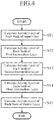
- FIG. 4 is a flowchart illustrating an inference method that is process contents of the inference device according to Embodiment 1 of the invention.
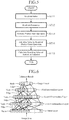
- FIG. 5 is a flowchart illustrating process contents of the input layer activity level calculator 1, the first intermediate layer activity level calculator 5, the second intermediate layer activity level calculator 6, the third intermediate layer activity level calculator 7, and the output layer activity level calculator 9.
- FIG. 6 is an explanatory diagram illustrating the hierarchical neural network applied to the inference device according to the Embodiment 1 of the invention.
- the hierarchical neural network in FIG. 6 has five layers in which a plurality of nodes are layered into an input layer, a first intermediate layer, a second intermediate layer, a third intermediate layer, and an output layer.
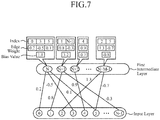
- FIG. 7 is an explanatory diagram illustrating an example of indices, edge weight, and bias values.
- the index as connection information of a node indicates that, for example, node "N" in a first intermediate layer is connected with nodes "0", "3", and "5" in an input layer.
- FIG. 7 illustrates that, for example, a weight "0.2” is applied to an edge connecting the node “N” in the first intermediate layer and the node “0” in the input layer, a weight "-0.5” is applied to an edge connecting the node “N” in the first intermediate layer and the node “3” in the input layer, and a weight "0.1” is applied to an edge connecting the node “N” in the first intermediate layer and the node "5" in the input layer.
- FIG. 7 further illustrates that, for example, a bias value "1.8" is applied to the node "N" in the first intermediate.
- the input layer activity level calculator 1 calculates from the image data an activity level A IN of each node in the input layer (step ST1 in FIG. 4 ).
- an activity level A IN of each node in the input layer can be calculated by the following formula (1).
- a IN P 255
- the first intermediate layer activity level calculator 5 refers to the index stored in the first intermediate layer storage 2, confirms each node in the input layer connected with a node in the first intermediate layer for each node in the first intermediate layer, and acquires the activity level A IN of each node in the input layer.
- the index stored in the first intermediate layer storage 2 represents connection to the nodes “0", “3", and "5" in the input layer.
- activity levels A IN-0 , A IN-3 , and A IN-5 of the nodes “0", “3”, and "5" in the input layer are acquired from among the activity levels A IN of the respective nodes in the input layer having been calculated by the input layer activity level calculator 1.
- the first intermediate layer activity level calculator 5 further refers to the index stored in the first intermediate layer storage 2, confirms an edge connected with a node in the first intermediate layer for each node in the first intermediate layer, and acquires weight w for the edge from the first intermediate layer storage 2.
- the index stored in the first intermediate layer storage 2 represents connection to the nodes "0", “3", and "5" in the input layer.
- a value "0.2” is acquired as weight w N-0 for the edge connecting the node “N” in the first intermediate layer and the node “0” in the input layer
- a value "-0.5” is acquired as weight w N-3 for the edge connecting the node “N” in the first intermediate layer and the node “3” in the input layer.
- a value "0.1” is further acquired as weight w N-5 for the edge connecting the node “N” in the first intermediate layer and the node "5" in the input layer.
- the first intermediate layer activity level calculator 5 further acquires, for each node in the first intermediate layer, a bias value B 1M of a node in the first intermediate layer from the first intermediate layer storage 2.
- a value "1.8" is acquired as a bias value B 1M-N .
- the first intermediate layer activity level calculator 5 After acquiring, for each node in the first intermediate layer, the activity level A IN of each node in the input layer, the weight w, and the bias value B 1M , the first intermediate layer activity level calculator 5 calculates an activity level A 1M for each node in the first intermediate layer by using the acquired activity level A IN , weight w, and bias value B 1M (step ST2).
- the first intermediate layer activity level calculator 5 reads out the index stored in the first intermediate layer storage 2 (step ST11 in FIG. 5 ). By referring to the index, the first intermediate layer activity level calculator 5 acquires, as a parameter used for calculation of an activity level, the activity levels A IN-0 , A IN- 3 , and A IN-5 in the nodes “0", “3", and "5" in the input layer, the weight w N-0 , w N-3 , and w N-5 , for edges thereof, and the bias value B 1M-N of the node "N" in the first intermediate layer (step ST12).
- the first intermediate layer activity level calculator 5 performs product sum operation, as represented by the following formula (2), on between the activity levels A IN-0 , A IN-3 , and A IN-5 of the nodes “0", “3", and "5" in the input layer, and the weight w N-0 , w N-3 , and w N-5 for the edges (step ST13).
- MADD A IN ⁇ 0 ⁇ w N ⁇ 0 + A IN ⁇ 3 ⁇ w N ⁇ 3 + A IN ⁇ 5 ⁇ w N ⁇ 5
- the first intermediate layer activity level calculator 5 then adds the bias value B 1M-N of the node "N" in the first intermediate layer to the operation result MADD of the product sum operation, as represented by the following formula (3) (step ST14).
- ADD MADD + B 1 M ⁇ N
- a linear function, a sigmoid function, a softmax function, a rectified linear unit (ReLU) function, or other functions are prepared in advance for the first intermediate layer activity level calculator 5.
- the first intermediate layer activity level calculator 5 calculates, as the activity level A 1M-N of the node "N" in the first intermediate layer, a resulting value of the activation function F with the addition result ADD of the formula (3) as an argument of the activation function F, as represented by the following formula (4) (step ST15).
- a 1 M ⁇ N F ADD
- the exemplary calculation of the activity level A 1M-N of the node "N" in the first intermediate layer has been described here.
- the activity levels A 1M of other nodes in the first intermediate layer are also calculated in a similar manner.
- the second intermediate layer activity level calculator 6 calculates an activity level A 2M of each node in the second intermediate layer (step ST3 in FIG. 4 ).
- a calculation method of the activity level A 2M of each node in the second intermediate layer by the second intermediate layer activity level calculator 6 is similar to the calculation method of the activity level A 1M of each node in the first intermediate layer by the first intermediate layer activity level calculator 5.
- the second intermediate layer activity level calculator 6 refers to the index stored in the second intermediate layer storage 3, confirms each node in the first intermediate layer connected with a node in the second intermediate layer for each node in the second intermediate layer, and acquires the activity level A 1M of each node in the first intermediate layer.
- the second intermediate layer activity level calculator 6 refers to the index stored in the second intermediate layer storage 3, confirms an edge connected with a node in the second intermediate layer for each node in the second intermediate layer, and acquires weight w for the edge from the second intermediate layer storage 3.
- the second intermediate layer activity level calculator 6 acquires a bias value B 2M of a node in the second intermediate layer from the second intermediate layer storage 3 for each node in the second intermediate layer.
- the second intermediate layer activity level calculator 6 After acquiring, for each node in the second intermediate layer, the activity level A 1M of each node in the first intermediate layer, the weight w, and the bias value B 2M of the edge, the second intermediate layer activity level calculator 6 calculates the activity level A 2M for each node in the second intermediate layer by using the acquired activity level A 1M , weight w, and bias value B 2M through a calculation method similar to that of the first intermediate layer activity level calculator 5.
- the third intermediate layer activity level calculator 7 calculates an activity level A 3M of each node in the third intermediate layer (step ST4).
- a calculation method of the activity level A 3M of each node in the third intermediate layer by the third intermediate layer activity level calculator 7 is similar to the calculation method of the activity level A 1M of each node in the first intermediate layer by the first intermediate layer activity level calculator 5.
- the third intermediate layer activity level calculator 7 refers to the index stored in the third intermediate layer storage 4, confirms each node in the second intermediate layer connected with a node in the third intermediate layer for each node in the third intermediate layer, and acquires the activity level A 2M of each node in the second intermediate layer.
- the third intermediate layer activity level calculator 7 refers to the index stored in the third intermediate layer storage 4, confirms an edge connected with a node in the third intermediate layer for each node in the third intermediate layer, and acquires weight w of the edge from the third intermediate layer storage 4.
- the third intermediate layer activity level calculator 7 acquires, for each node in the third intermediate layer, a bias value B 3M of a node in the third intermediate layer from the third intermediate layer storage 4.
- the third intermediate layer activity level calculator 7 calculates the activity level A 3M for each node in the third intermediate layer by using the acquired activity level A 2M , weight w, and bias value B 3M through a calculation method similar to that of the first intermediate layer activity level calculator 5.
- the output layer activity level calculator 9 calculates an activity level A OUT of each node in the output layer (step ST5).
- a calculation method of the activity level A OUT of each node in the output layer by the output layer activity level calculator 9 is similar to the calculation method of the activity level A 1M of each node in the first intermediate layer by the first intermediate layer activity level calculator 5.
- the output layer activity level calculator 9 refers to the index stored in the output layer storage 8, confirms each node in the third intermediate layer connected with a node in the output layer for each node in the output layer, and acquires the activity level A 3M of each node in the third intermediate layer.
- the output layer activity level calculator 9 refers to the index stored in the output layer storage 8, confirms an edge connected with a node in the output layer for each node in the output layer, and acquires weight w of the edge from the output layer storage 8.
- the output layer activity level calculator 9 acquires, for each node in the output layer, a bias value B OUT of a node in the output layer from the output layer storage 8.
- the output layer activity level calculator 9 calculates the activity level A OUT for each node in the output layer by using the acquired activity level A 3M , weight w, and bias value B OUT through a calculation method similar to that of the first intermediate layer activity level calculator 5.
- the activity level A OUT for each node in the output layer calculated by the output layer activity level calculator 9 is output as an inference result of the inference device.
- the output layer is formed by four nodes.
- an activity level of each node is learned to be a value representing possibility of a person, a dog, a cat, or a car.
- a node having the largest activity level in the output layer is selected. If, for example, the selected node is the one for outputting possibly of a cat, "cat" is output as an inference result. Not only the simple identification result, but also processes of calculating reliability using an activity level or outputting a regression estimation value may be performed.
- the first intermediate layer activity level calculator 5 refers to the index stored in the first intermediate layer storage 2, acquires, from among the activity levels of respective nodes in the input layer calculated by the input layer activity level calculator 1 and weight for respective edges and bias values stored in the first intermediate layer storage 2, an activity level of each node in the input layer that has connection with each node in the first intermediate layer and weight for each of edges and a bias value thereof, and calculates an activity level of each node in the first intermediate layer using the activity level of each node in the input layer and the weight for each of the edges and the bias value having been acquired.
- This is capable of achieving effects of reducing the calculation amount and the memory amount upon performing inference.
- the first intermediate layer activity level calculator 5 is only required to perform calculation on each node in the input layer that has connection with each node in the first intermediate layer, and thus the calculation amount and the memory amount upon performing inference can be drastically reduced.
- the second intermediate layer activity level calculator 6 is also only required to perform calculation on each node in the first intermediate layer that has connection with nodes in the second intermediate layer and thus the calculation amount and the memory amount upon performing inference can be drastically reduced similarly to the first intermediate layer activity level calculator 5.
- the third intermediate layer activity level calculator 7 is also only required to perform calculation on each node in the second intermediate layer that has connection with nodes in the third intermediate layer and thus the calculation amount and the memory amount upon performing inference can be drastically reduced similarly to the first intermediate layer activity level calculator 5.
- the output layer activity level calculator 9 is also only required to perform calculation on each node in the third intermediate layer that is connected with nodes in the output layer and thus the calculation amount and the memory amount upon performing inference can be drastically reduced similarly to the first intermediate layer activity level calculator 5.
- the first intermediate layer activity level calculator 5, the second intermediate layer activity level calculator 6, the third intermediate layer activity level calculator 7, and the output layer activity level calculator 9 perform the product sum operation on between an activity level of each node in a preceding layer and weight for an edge thereof upon calculating an activity level of each node.
- the maximum value or an average value of activity levels of the respective nodes in the preceding layer may be used.
- each node in each of the layers constituting the neural network applied to the inference device is not connected with all nodes in a preceding or a succeeding layer, but is connected with part of the nodes.
- a loop may be formed by a plurality of edges connecting the nodes depending on a mode of connection among the nodes.
- a specific path is called a loop, which starts from a certain node and returns to this node by passing through each edge only once.
- the number of edges forming a loop is herein called the length of the loop.
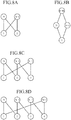
- FIG. 8 is an explanatory diagram illustrating exemplary loops formed by a plurality of edges.
- FIGs. 8A and 8B illustrate an exemplary loop formed by four edges.
- FIG. 8C illustrates an exemplary loop formed by six edges.
- FIG. 8D illustrates an exemplary loop formed by eight edges.
- a loop having a length of 4 may be formed at the shortest.
- the loop having a length of 4 may cause deterioration of the inference accuracy because gradient calculation information tends to propagate by an error backpropagation method upon learning.
- a short loop causes circulation of propagation information, thereby inducing deterioration of the inference accuracy.
- a neural network applied to an inference device is limited to the one in which each loop is formed by six or more edges when edges connecting nodes in respective layers constituting a neural network form loops.
- Such the edges may be edges connecting nodes in a first intermediate layer and nodes in an input layer, edges connecting nodes in a second intermediate layer and the nodes in the first intermediate layer, edges connecting nodes in a third intermediate layer and the nodes in the second intermediate layer, and edges connecting nodes in an output layer and the nodes in the third intermediate layer.
- a neural network in which a loop is formed by four edges is not applied to an inference device.
- a neural network in which a loop is formed by six or eight edges may be applied to an inference device.
- This configuration is capable achieving effects of suppressing deterioration of the inference accuracy attributable to a short loop in a neural network.
- the calculation amount and the memory amount can be reduced while maintaining inference accuracy.
- each node in each of the layers constituting the neural network applied to the inference device is not connected with all nodes in a preceding or a succeeding layer, but is connected with part of the nodes.
- Each node in the first intermediate layer may be connected with part of all nodes in the input layer, which are randomly selected from among the all nodes.
- each node in the second intermediate layer may be connected with part of all nodes in the first intermediate layer, which are randomly selected from among the all nodes.
- each node in the third intermediate layer may be connected with part of all nodes in the second intermediate layer, which are randomly selected from among the all nodes.
- each node in the output layer may be connected with part of all nodes in the third intermediate layer, which are randomly selected from among the all nodes.
- a criterion may be set such that an average number of connections per node in each of the layers (the output layer, the third intermediate layer, the second intermediate layer, and the first intermediate layer) with nodes in a preceding layer (the third intermediate layer, the second intermediate layer, the first intermediate layer, and the input layer, respectively) is fifty or less.
- an average number of connections per node in each of the layers (the output layer, the third intermediate layer, the second intermediate layer, and the first intermediate layer) with nodes in a preceding layer (the third intermediate layer, the second intermediate layer, the first intermediate layer, and the input layer, respectively) is one-tenth or less of the number of nodes in the preceding layer.
- each node in each layer is connected with all nodes in a preceding layer
- the calculation amount of activity levels and the memory amount in each layer is in N ⁇ M orders.
- an average number of connections n (n ⁇ N) per node in each of the layers with nodes in a preceding layer is fifty or less or one-tenth or less of the number of nodes N in the preceding layer, it is possible to reduce the probability of occurrence of a short loop, suppress deterioration of the inference accuracy, and also reduce the calculation amount and the memory amount.
- each node in each of the layers constituting the neural network applied to the inference device is not connected with all nodes in a preceding or a succeeding layer, but is connected with part of the nodes.
- Each node in the first intermediate layer may be connected with part of all nodes in the input layer, which are not adjacent to each other.
- each node in the second intermediate layer may be connected with part of all nodes in the first intermediate layer, which are not adjacent to each other.
- each node in the third intermediate layer may be connected with part of all nodes in the second intermediate layer, which are not adjacent to each other.
- each node in the output layer may be connected with part of all nodes in the third intermediate layer, which are not adjacent to each other.
- the node “N” in the first intermediate layer is allowed to connect with the nodes "0" and “3” in the input layer because these nodes are not adjacent to each other in the input layer.
- the node “N” in the first intermediate layer is not allowed to connect with a pair of nodes "0" and "1” in the input layer because these nodes are adjacent to each other in the input layer.
- a criterion for permitted connections of nodes may be set such that an average number of connections per node in each of the layers (the output layer, the third intermediate layer, the second intermediate layer, and the first intermediate layer) with nodes in a preceding layer (the third intermediate layer, the second intermediate layer, the first intermediate layer, and the input layer, respectively) is fifty or less.
- another criterion may be set such that an average number of connections per node in each of the layers (the output layer, the third intermediate layer, the second intermediate layer, and the first intermediate layer) with nodes in a preceding layer (the third intermediate layer, the second intermediate layer, the first intermediate layer, and the input layer, respectively) is one-tenth or less of the number of nodes in the preceding layer.
- the neural network applied to the inference device is exemplified by a neural network of a hierarchical feed-forward type having three intermediate layers.
- the number of intermediate layers may be larger or smaller than three, and intermediate layers may not be formed such as a structure formed by a logistic regression model.
- a layer connecting all nodes between layers such as a convolutional layer or a pooling layer as in a convolutional neural network, or long short-term memory (LSTM) blocks in a recurrent neural network.
- LSTM long short-term memory
- the convolutional neural network has a configuration in which the convolutional layer and the pooling layer are alternated.
- the convolutional layer is in charge of extracting local features in an image, and the pooling layer summarizes features for each local part.
- the neural network applied to the inference device is exemplified by a neural network of a hierarchical feed-forward type.
- the neural network may include connection skipping a layer, connection between nodes belonging to the same layer, a self-connection in which a connection destination and a connection source are the same, or circulating connection in which edges form a loop (i.e., a recurrent neural network).
- a neural network that performs inference by using other graph structures may be employed, such as a self-organizing MAP (SOM), a content addressable model, a Hopfield network, or a Boltzmann machine.
- SOM self-organizing MAP
- a network performing inference by using other graphs may be employed, such as a Bayesian network.
- one-dimensional indices are allotted, such as the nodes 0, 1, ..., N - 1 in the input layer and the nodes N, N + 1, ..., N + M - 1 in the first intermediate layer.
- two-dimensional indices may be allotted, such as (0, 0), (0, 1), ..., (0, N - 1) for nodes in the input layer and (1, 0), (1, 1), ..., (1, M - 1) for nodes in the first intermediate layer.
- addresses in the memory may be used as the indices, and other indices may be allotted.
- the neural network applied to the inference device is exemplified by the case where the number of edges and the number of values of edge weight are the same.
- a plurality of values of edge weight may be shared like a convolutional filter coefficient in a convolutional network.
- the inference device is generally applicable to an inference system which outputs any inference result in response to input data as long as an instruction signal corresponding to the data is prepared and thus supervised learning can be performed.
- a position or a size of a desired object area may be output after inputting the image, or a text explaining an image may be output after inputting the image. Further, after inputting an image including noise, a new image, from which the noise has been removed, may be output. Moreover, after inputting an image and a text, the image may be converted in accordance with the text.
- a phoneme and a word may be output, or a predicted word to be uttered next may be output, or appropriate response sound may be output.
- a text with a certain language another text in another language may be output.
- a predicted time series of the future may be output, or an estimate state of the time series may be output.
- an exemplary system is described to perform inference by a model which has learned by supervised learning using an instruction signal corresponding to data.
- another system may be employed, which performs inference by a model having learned by unsupervised learning using data without an instruction signal or semi-supervised learning.
- the inference device receives image data from a data input device (not illustrated) and calculates an activity level of each node in the first intermediate layer.
- the data input device not illustrated may calculate an activity level of each node in the first intermediate layer, while an activity level of each node in the second intermediate layer, the third intermediate layer, and the output layer may be calculated by the inference device.
- the data input device has a function of compressing data.
- nodes may repeatedly exchange information for a plurality of times to enhance the inference accuracy.
- the neural network applied to the inference device an example has been described, in which all of the layers excluding the input layer hold indices of edge connections. Alternatively, only part of the layers may hold indices of edge connections while other layers have edge connections similar to those of a normal neural network.
- the index of edge connections is intended to include edge weight and a bias value such as illustrated in FIG. 7 .
- edge connections similar to those of a normal neural network is intended to mean edge connections connected with all nodes in a destination layer (edge connection of a full connection layer) as well as edge connections of a known neural network, such as a convolutional layer or a pooling layer, each of which is connected with nodes in a destination layer or adjacent nodes thereof.
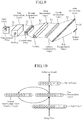
- FIG. 9 is an explanatory diagram illustrating an exemplary neural network in which image data given to an input layer is classified into ten types.
- five intermediate layers are connected between an input layer and an output layer, that is, a first intermediate layer, a second intermediate layer, a third intermediate layer, a fourth intermediate layer, and a fifth intermediate layer are connected.
- a convolutional layer 31 is specified by the input layer to the first intermediate layer
- a pooling layer 32 is specified by the first intermediate layer to the second intermediate layer
- a convolutional layer 33 is specified by the second intermediate layer to the third intermediate layer
- a pooling layer 34 is specified by the third intermediate layer to the fourth intermediate layer.
- an index-holding layer 35 described in the above Embodiments 1 to 4 is specified by the fourth intermediate layer to the fifth intermediate layer
- a full connection layer 36 is specified by the fifth intermediate layer to the output layer.
- each node in the fifth intermediate layer holds an index representing nodes in the fourth intermediate layer as connection sources, and edge weight and a bias value corresponding to the connections.
- the filter size of the convolutional layer 31 from the input layer to the first intermediate layer is "5 ⁇ 5 ⁇ 1”
- the number of maps in the convolutional layer 31 is "100”
- the pooling layer 32 from the first intermediate layer to the second intermediate layer and the pooling layer 34 from the third intermediate layer to the fourth intermediate layer performs the maximum pooling having a filter size of "2 ⁇ 2 ⁇ 1”
- the size of the fifth intermediate layer equals "1 ⁇ 1 ⁇ 1000”
- the number of nodes in the output layer equals "1 ⁇ 1 ⁇ 10".
- a rectified linear unit may be used as an activation function for calculating a propagation value upon propagating information from the input layer to the first intermediate layer, an activation function for calculating a propagation value upon propagating information from the second intermediate layer to the third intermediate layer, and an activation function for calculating a propagation value upon propagating information from the fourth intermediate layer to the fifth intermediate layer.
- a softmax function being a normalized exponential function is used as activation function for calculating a propagation value upon propagating information from the fifth intermediate layer to the output layer.
- the convolutional layers 31 and 33 and the pooling layers 32 and 34 from the input layer to the fourth intermediate layer enable the neural network of FIG. 9 to robustly extract the feature amount from image data in spite of change in the position of the image.
- the index-holding layer from the fourth intermediate layer to the fifth intermediate layer is capable of drastically reducing the calculation amount and the memory amount upon performing inference, similarly to the Embodiments 1 to 4 described above.
- image data is given to the input layer.
- data given to the input layer is not limited to image data, but may be a sensor signal being data observed by a sensor or other data, such as sound or texts, for example.
- Embodiment 6 an example is described, in which image data given to the input layer is classified into ten types.
- inference other than that for classifying image data may be performed by modifying the output layer that constitutes the neural network.
- inference such as a denoising process for removing noise from image data, or regressive prediction, or likelihood calculation may be performed.
- the number of nodes in each layer or the filter size may be modified depending on an object of inference.
- the convolutional layer 31, the pooling layer 32, the convolutional layer 33, the pooling layer 34, the index-holding layer 35, and the full connection layer 36 are connected by edges in this order.
- the layers may be connected by edges in an order other than the above-mentioned order as long as at least a single layer that holds indices described in the Embodiments 1 to 4 is connected.
- the pooling layers 32 and 34 may not be connected.
- the example is described, in which the neural network applied to the inference device is a feed-forward neural network (FFNN) which does not form a directed loop.
- the inference device may employ a recurrent neural network (RNN) in which part of the network forms the directed loop.
- RNN recurrent neural network
- part of layers in the recurrent neural network may be the index-holding layer described in the above Embodiments 1 to 4.
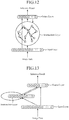
- FIG. 10 is an explanatory diagram illustrating an Elman network being the recurrent neural network (RNN) which has edge connections from an input layer to a first intermediate layer, from the first intermediate layer to a second intermediate layer (context layer), from the second intermediate layer (context layer) to the first intermediate layer, and from the first intermediate layer to an output layer.
- RNN recurrent neural network
- FIG. 11 is a diagram illustrating a configuration of an inference device according to Embodiment 7 of the invention.
- the same symbol as that in FIG. 1 represents the same or a corresponding part and thus descriptions thereon are omitted.
- the second intermediate layer activity level calculator 41 being an intermediate layer activity level calculator is implemented by the intermediate layer activity level circuitry 13 consists of, for example a semiconductor integrated circuit or a one-chip microcomputer equipped with a CPU.
- the second intermediate layer activity level calculator 41 performs a process of copying an activity level of each node in the first intermediate layer as an activity level of each node in the second intermediate layer (context layer).
- the example is describe, in which the second intermediate layer activity level calculator 41 copies an activity level of each node in the first intermediate layer as an activity level of each node in the second intermediate layer (context layer).
- an activity level of each node in the second intermediate layer (context layer) may be calculated by the formula (1), similarly to the input layer activity level calculator 1.
- a first intermediate layer storage 42 being an intermediate layer storage is implemented by the intermediate layer storage device 12 which consists of a storing medium, such as a RAM or a hard disk.
- the first intermediate layer storage 42 stores an index representing a relation of connection between each node in the first intermediate layer and each node in the second intermediate layer (context layer), weight for each of edges connecting a node in the first intermediate layer and a node in the second intermediate layer, and a bias value given to each node in the first intermediate layer.
- a first intermediate layer activity level calculator 43 being the intermediate layer activity level calculator is implemented by the intermediate layer activity level circuitry 13 which consists of a semiconductor integrated circuit or a one-chip microcomputer equipped with a CPU, for example.
- the first intermediate layer activity level calculator 43 refers to the index stored in the first intermediate layer storage 42, acquires, from among the activity levels of the respective nodes in the second intermediate layer (context layer) calculated by the second intermediate layer activity level calculator 41 and the weight for respective edges and bias values stored in the first intermediate layer storage 42, an activity level of each node in the second intermediate layer (context layer) that has connection with each node in the first intermediate layer, and also acquires weight for each of edges and a bias value,
- the first intermediate layer activity level calculator 43 performs a process of calculating an activity level of each node in the first intermediate layer by using the acquired activity level of each node in the second intermediate layer (context layer) and the acquired weight for each of the edges and the acquired bias value.
- each of the input layer activity level calculator 1, the first intermediate layer storage 2, the first intermediate layer activity level calculator 5, the second intermediate layer activity level calculator 41, the first intermediate layer storage 42, the first intermediate layer activity level calculator 43, the output layer storage 8, and the output layer activity level calculator 9, that are components of the inference device is constituted by dedicated hardware.
- the inference device may be constituted by a computer.
- the inference device When the inference device is constituted by a computer, the first intermediate layer storage 2, the first intermediate layer storage 42, and the output layer storage 8 are provided on the memory 21 of the computer illustrated in FIG. 3 .
- a program which describes process contents of the input layer activity level calculator 1, the first intermediate layer activity level calculator 5, the second intermediate layer activity level calculator 41, the first intermediate layer activity level calculator 43, and the output layer activity level calculator 9, is stored in the memory 21 of the computer illustrated in FIG. 3 .
- the processor 22 of the computer executes the program stored in the memory 21.
- the first intermediate layer activity level calculator 5 calculates an activity level A 1M of each node in the first intermediate layer by using an activity level of each node in the input layer having been calculated by the input layer activity level calculator 1, similarly to the Embodiment 1.
- the second intermediate layer activity level calculator 41 copies the activity level A 1M of each node in the first intermediate layer as an activity level A 2M of each node in the second intermediate layer (context layer).
- the activity level A 2M of each node in the second intermediate layer at a time t becomes equivalent to the activity level A 1M of each node in the first intermediate layer at the time t.
- the first intermediate layer activity level calculator 43 calculates an activity level A' 1M of each node in the first intermediate layer.
- a calculation method for the activity level A' 1M of each node in the first intermediate layer used by the first intermediate layer activity level calculator 43 is similar to the calculation method of the activity level A 1M of each node in the first intermediate layer used by the first intermediate layer activity level calculator 5.
- the first intermediate layer activity level calculator 43 refers to the index stored in the first intermediate layer storage 42, confirms each node in the second intermediate layer (context layer) connected with a node in the first intermediate layer for each node in the first intermediate layer, and acquires the activity level A 2M of each node in the second intermediate layer (context layer).
- the first intermediate layer activity level calculator 43 refers to the index stored in the first intermediate layer storage 42, confirms an edge connected with a node in the first intermediate layer (edge connected with a node in the second intermediate layer) for each node in the first intermediate layer, and acquires weight w for the edge from the first intermediate layer storage 42.
- the first intermediate layer activity level calculator 43 further acquires a bias value B 1M of a node in the first intermediate layer from the first intermediate layer storage 42 for each node in the first intermediate layer.
- the first intermediate layer activity level calculator 43 calculates the activity level A' 1M for each node in the first intermediate layer by using the acquired activity level A 2M , the acquired weight w of the edge, and the acquired bias value B 1M by a calculation method which is similar to that of the first intermediate layer activity level calculator 5.
- the output layer activity level calculator 9 calculates an activity level A OUT of each node in the output layer using the activity level A' 1M of each node in the first intermediate layer.
- a calculation method of the activity level A OUT of each node in the output layer used by the output layer activity level calculator 9 is similar to that of the above Embodiment 1.
- the first intermediate layer activity level calculator 43 refers to the index stored in the first intermediate layer storage 42, acquires, from among the activity levels of respective nodes in the second intermediate layer (context layer) calculated by the second intermediate layer activity level calculator 41 and weight for respective edges and bias values stored in the first intermediate layer storage 42, an activity level of each node in the second intermediate layer (context layer) that has connection with each node in the first intermediate layer and weight for each of edges and a bias value thereof, and calculates an activity level of each node in the first intermediate layer using the activity level of each node in the second intermediate layer (context layer) and the weight for each of the edges and the bias value having been acquired.
- RNN recurrent neural network
- the first intermediate layer activity level calculator 43 is only required to perform calculation on each node in the second intermediate layer (context layer) that has connection with each node in the first intermediate layer and thus the calculation amount and the memory amount upon performing inference can be drastically reduced.
- the example is described, in which the recurrent neural network (RNN) applied to the inference device is the Elman network.
- RNN recurrent neural network
- this is a mere example.
- a Jordan network a recurrent neural network having a long short term memory (LSTM) blocks, a hierarchical recurrent neural network, a bidirectional recurrent neural network, or a recurrent neural network of continuous time may be employed.
- LSTM long short term memory
- part of the layers holds indices for edge connections regardless of the types of the recurrent neural network.
- the neural network applied to the inference device is exemplified by a feed-forward neural network (FFNN) or a recurrent neural network (RNN), in which an edge connection between nodes belonging to the same layer is not included, or a self-connection where a connection source node equals a connection destination node is not included.
- FFNN feed-forward neural network
- RNN recurrent neural network
- FFNN feed-forward neural network
- RNN recurrent neural network
- a feed-forward neural network (FFNN) or a recurrent neural network (RNN) can be employed, in which the edge connection or the self-connection is included.
- a feed-forward neural network (FFNN) or a recurrent neural network (RNN) can be employed, in which a connection skipping a certain layer is included.
- FIG. 12 is an explanatory diagram illustrating an exemplary echo state network being a neural network that includes edge connections among nodes within the intermediate layer or a self-connection and also includes an edge which connects an input layer to an output layer while skipping an intermediate layer.
- each layer of the echo state network can be represented by FIG. 13 .
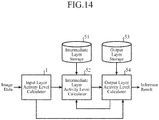
- FIG. 14 is a diagram illustrating a configuration of an inference device according to an Embodiment 8 of the invention.
- the same symbol as that in FIG. 1 represents the same or a corresponding part and thus descriptions thereon are omitted.
- An intermediate layer storage 51 is implemented by the intermediate layer storage device 12 that consists of a storing medium, such as a RAM or a hard disk.
- the intermediate layer storage 51 stores an index representing a relation of connection between each node in the intermediate layer and each node in the input layer or the output layer, weight for each of edges connecting a node in the intermediate layer and a node in the input layer or the output layer, and a bias value given to each node in the intermediate layer.
- the intermediate layer storage 51 further stores an index representing relation of an edge connection among the nodes in the intermediate layer or a self-connection, weight for each of edges of the edge connection among the nodes in the intermediate layer or the self-connection, and a bias value given to each node in the intermediate layer.
- a intermediate layer activity level calculator 52 is implemented by the intermediate layer activity level circuitry 13 constituted by a semiconductor integrated circuit or a one-chip microcomputer equipped with a CPU for example.
- the intermediate layer activity level calculator 52 refers to the index stored in the intermediate layer storage 51, similarly to the first intermediate layer activity level calculator 5 in FIG.
- the intermediate layer activity level calculator 52 further refers to the index stored in the intermediate layer storage 51, acquires, from among activity levels of respective nodes in the intermediate layer having been calculated and weight for respective edges and bias values stored in the intermediate layer storage 51, an activity level of each node of a connection source in the intermediate layer that is connected with each node of a connection destination in the intermediate layer and weight for each of edges and a bias value thereof, and calculates an activity level of each node of a connection destination in the intermediate layer using the activity level of each node of a connection source in the intermediate layer and the weight for each of the edges and the bias value having been acquired.
- a node of a connection destination in the intermediate layer means a node connected with another node in the intermediate layer or a node connected with itself in the intermediate layer.
- a node of a connection destination in the intermediate layer means the other node connected with the node of the connection source in the intermediate layer or the node of self-connection in the intermediate layer.
- An output layer storage 53 is implemented by the output layer storage device 14 that consists of a storing medium, such as a RAM or a hard disk.
- the output layer storage 53 stores an index representing a relation of connection (connection information) between each node in the output layer and each node in the input layer or the intermediate layer.
- the output layer storage 53 When a node in the output layer is connected with a node in the input layer, the output layer storage 53 further stores weight for each of edges connecting the node in the output layer and the node in the input layer and a bias value given to the node in the output layer connected with the node in the input layer.
- the output layer storage 53 When a node in the output layer is connected with a node in the intermediate layer, the output layer storage 53 further stores weight for each of edges connecting the node in the output layer and the node in the intermediate layer and a bias value given to the node in the output layer connected with the node in the intermediate layer.
- the output layer activity level calculator 54 is implemented by the output layer activity level circuitry 15 constituted by a semiconductor integrated circuit or a one-chip microcomputer equipped with a CPU for example.
- the output layer activity level calculator 54 acquires, from among activity levels of the respective nodes in the input layer calculated by the input layer activity level calculator 1 and weight for respective edges and bias values stored in the output layer storage 53, an activity level of each node in the input layer having connection with each node in the output layer and weight for each of edges and a bias value thereof.
- the output layer activity level calculator 54 acquires, from among activity levels of the respective nodes in the intermediate layer calculated by the intermediate layer activity level calculator 52 and weight for respective edges and bias values stored in the output layer storage 53, an activity level of each node in the intermediate layer having connection with each node in the output layer and weight for each of edges and a bias value thereof.
- the output layer activity level calculator 54 further performs a process of calculating an activity level of each node in the output layer using the activity level of each node in the input layer or the intermediate layer and the weight for each of the edges and the bias value having been acquired.
- each of the input layer activity level calculator 1, the intermediate layer storage 51, the intermediate layer activity level calculator 52, the output layer storage 53, and the output layer activity level calculator 54 that are components of the inference device is constituted by dedicated hardware.
- the inference device may be constituted by a computer.
- the inference device When the inference device is constituted by a computer, it is only required that the intermediate layer storage 51 and the output layer storage 53 are constituted on the memory 21 of the computer illustrated in FIG. 3 , that a program describing process contents of the input layer activity level calculator 1, the intermediate layer activity level calculator 52, and the output layer activity level calculator 54 is stored in the memory 21 of the computer illustrated in FIG. 3 , and that the processor 22 of the computer executes the program stored in the memory 21.
- the intermediate layer activity level calculator 52 refers to the index stored in the intermediate layer storage 51, confirms, from among the respective nodes in the intermediate layer, a node having connection with a node in the input layer and a node having connection with a node in the output layer.
- an activity level is calculated by the intermediate layer activity level calculator 52 by using the activity level of each node in the input layer, similarly to the first intermediate layer activity level calculator 5 in FIG. 1 .
- an activity level is calculated by using the activity level of the output layer calculated by the output layer activity level calculator 54.
- a calculation method of the activity level of the node having connection with a node in the output layer used by the intermediate layer activity level calculator 52 is similar to the calculation method of the activity level of a node having connection with a node in the input layer, except that a node having connection with a targeted node, for which the activity level is calculated, is not a node in the input layer but in the output layer.
- the intermediate layer activity level calculator 52 After calculating the activity level of each node in the intermediate layer having connection with a node in the input layer or the output layer, refers to the index stored in the intermediate layer storage 51 and confirms, from among the respective nodes in the intermediate layer, a node of a connection source (a node connected with another node within the intermediate layer, or a node connected with itself in the intermediate layer) having connection with a node of a connection destination.
- the intermediate layer activity level calculator 52 After confirming a node of a connection source having connection with a node of a connection destination, acquires, from among the activity levels of the respective nodes in the intermediate layer having been calculated and the weight for respective edges and the bias values stored in the intermediate layer storage 51, an activity level of each node of a connection source in the intermediate layer that has connection with a node of a connection destination in the intermediate layer and weight for each of edges and a bias value thereof.
- each node in the intermediate layer has connection with a node in the input layer or in the output layer, an activity level of the connection source node is already calculated as described earlier. Therefore, it is possible to treat each node in the intermediate layer as a targeted node (a connection destination node), for which an activity level is calculated, in an order closer to a node in the intermediate layer having connection with a node in the input layer or in the output layer.
- the intermediate layer activity level calculator 52 calculates an activity level of each node as a connection destination in the intermediate layer using the activity level of each node as a connection source in the intermediate layer and the weight for each of the edges and the bias value having been acquired.
- a calculation method of the activity level of the node as a connection destination in the intermediate layer by the intermediate layer activity level calculator 52 is similar to the calculation method of the activity level of a node connected with a node in the input layer, except that a node of a connection source is not a node in the input layer but in the intermediate layer.
- the output layer activity level calculator 54 refers to the index stored in the output layer storage 53, confirms each node in the input layer or the intermediate layer connected with each node in the output layer.
- the output layer activity level calculator 54 acquires, from among the activity levels of the respective nodes in the input layer having been calculated by the input layer activity level calculator 1 and the weight for respective edges and the bias values stored in the output layer storage 53, an activity level of each node in the input layer connected with each node in the output layer and weight for each of edges and a bias value thereof.
- the output layer activity level calculator 54 acquires, from among the activity levels of the respective nodes in the intermediate layer having been calculated by the intermediate layer activity level calculator 52 and the weight for respective edges and the bias values stored in the output layer storage 53, an activity level of each node in the intermediate layer connected with each node in the output layer and weight for each of edges and a bias value thereof.
- the output layer activity level calculator 54 calculates an activity level of each node in the output layer by using the activity level of each node in the input layer or the intermediate layer and the weight for each of the edges and the bias value having been acquired.
- the intermediate layer activity level calculator 52 refers to the index stored in the intermediate layer storage 51, acquires, from among the activity levels of the respective nodes in the intermediate layer having been calculated and weight for respective edges and bias values stored in the intermediate layer storage 51, an activity level of each node as a connection source in the intermediate layer that is connected with a node as a connection destination in the intermediate layer and weight for each of edges and a bias value thereof, and calculates an activity level of each node as a connection destination in the intermediate layer using the activity level of each node as a connection source in the intermediate layer and the weight for each of the edges and the bias value having been acquired.
- This therefore achieves effects of reducing the calculation amount and the memory amount upon performing inference even in the case of employing a neural network in which edge connections among nodes in the intermediate layer or a self-connection is included.
- the output layer activity level calculator 54 acquires, from among the activity levels of the respective nodes in the input layer calculated by the input layer activity level calculator 1 and weight for respective edges and bias values stored in the output layer storage 53, an activity level of each node in the input layer that has connection with each node in the output layer and weight for each of edges and a bias value thereof and calculates an activity level of each node in the output layer using the activity level of each node in the input layer and the weight for each of the edges and the bias value having been acquired.
- This therefore achieves effects of reducing the calculation amount and the memory amount upon performing inference even in the case of employing a neural network in which an edge connecting the input layer and the output layer while skipping the intermediate layer is included.
- the example is described, in which the neural network applied to the inference device is an echo state network.
- the neural network applied to the inference device is an echo state network.
- this is a mere example.
- a recurrent neural network with full-connection, a Hopfield network, or a Boltzmann machine may be employed.
- part of the layers holds indices for edge connections regardless of which type of the neural network is employed.
- the Embodiments 1 to 6 described above are exemplified by that the neural network applied to the inference device is a feed-forward neural network (FFNN), and the Embodiments 7 and 8 described above are exemplified by that the neural network applied to the inference device is a recurrent neural network (RNN).
- FFNN feed-forward neural network
- RNN recurrent neural network
- the inference device may employ the following neural network. Note that, part of the layers holds indices for edge connections regardless of which type of the neural network is employed.
- Examples of a neural network applied to an inference device include a radial basis function (RBF) network, a self-organizing MAP (SOM), a learning vector quantization (LVQ) method, a modular neural network, a spiking neural network, a dynamic neural network, a cascade neural network, or another type of neural network other than an FFNN or an RNN, such as that of a hierarchical temporal memory (HTM).
- RBF radial basis function
- SOM self-organizing MAP
- LVQ learning vector quantization
- HTM hierarchical temporal memory
- a learning method of the inference device is one from among supervised learning using an instruction signal corresponding to data, unsupervised learning using data without an instruction signal, and a semi-supervised learning.
- a learning method of the inference device may be reinforcement learning.
- Reinforcement learning is a method of learning a model for an agent under a certain situation to observe a current state and to determine an action to be taken.
- the agent is intended as a function to perform appropriate operation by autonomously collecting information and determining situations without continuous operation by a user of a computer.
- reward is obtained from the environment.
- reinforcement learning a policy is learned to be able to maximize reward through a series of actions.
- a state-value function V(s) representing the value of a state “s” or an action-value function Q(s, a) representing reward obtained from the environment by selecting an action "a” in the state “s” is used as an index for measuring quality of a current state or action.
- temporal difference (TD) learning such as a SARSA or Q-learning, is used.
- a learning method of the inference device is reinforcement learning
- a neural network that receives the state "s” and outputs a state-value function V(s) or an action-value function Q(s, a) is learned, and TD learning is performed by using those functions. That is, the state-value function V(s) or the action-value function Q(s, a) is calculated by using a neural network whose part of layers hold indices for edge connections, and thereby reinforcement learning is performed.
- Embodiments 9 and 10 are not according to the invention and are present for illustration purposes only.
- the present invention may include a flexible combination of the respective embodiments, a modification
- An inference device is suitable for those with high necessity of reducing the calculation amount or memory amount upon performing inference.
- 1 input layer activity level calculator
- 2 first intermediate layer storage (intermediate layer storage), 3: second intermediate layer storage (intermediate layer storage), 4: third intermediate layer storage (intermediate layer storage), 5: first intermediate layer activity level calculator (intermediate layer activity level calculator), 6: second intermediate layer activity level calculator (intermediate layer activity level calculator), 7: third intermediate layer activity level calculator (intermediate layer activity level calculator), 8: output layer storage, 9: output layer activity level calculator, 11: input layer activity level circuitry, 12: intermediate layer storage device, 13: intermediate layer activity level circuitry, 14: output layer storage device, 15: output layer activity level circuitry, 21: memory, 22: processor, 31: convolutional layer, 32: pooling layer, 33: convolutional layer, 34: pooling layer, 35: index-holding layer, 36: full connection layer, 41: second intermediate layer activity level calculator (intermediate layer activity level calculator), 42: first intermediate layer storage (intermediate layer storage), 43: first intermediate layer activity level calculator (intermediate layer activity level calculator), 51: intermediate layer storage, 52:
Landscapes
- Engineering & Computer Science (AREA)
- Theoretical Computer Science (AREA)
- Physics & Mathematics (AREA)
- Computing Systems (AREA)
- Software Systems (AREA)
- Artificial Intelligence (AREA)
- Mathematical Physics (AREA)
- Computational Linguistics (AREA)
- Data Mining & Analysis (AREA)
- Evolutionary Computation (AREA)
- General Physics & Mathematics (AREA)
- General Engineering & Computer Science (AREA)
- Biomedical Technology (AREA)
- Molecular Biology (AREA)
- General Health & Medical Sciences (AREA)
- Biophysics (AREA)
- Life Sciences & Earth Sciences (AREA)
- Health & Medical Sciences (AREA)
- Image Analysis (AREA)
- Management, Administration, Business Operations System, And Electronic Commerce (AREA)
Claims (19)
- Dispositif d'inférence configuré pour classer des images, comprenant :une unité de calcul de niveau d'activité de couche d'entrée (1) pour calculer (ST1), lorsque des données d'image sont données à chaque nœud d'une couche d'entrée constituant un réseau neural, un niveau d'activité de chaque nœud de la couche d'entrée à partir des données fournies ;une unité de mémorisation de couche intermédiaire (2) pour mémoriser un indice représentant une relation de connexion entre chaque nœud dans une couche intermédiaire constituant le réseau neural et chaque nœud dans la couche d'entrée, la valeur de pondération appliquée à un bord qui connecte un nœud de la couche intermédiaire et un nœud de la couche d'entrée ;une unité de calcul de niveau d'activité de couche intermédiaire (5) pourconsulter l'indice mémorisé dans l'unité de mémorisation de couche intermédiaire, confirmer chaque nœud dans la couche d'entrée connecté à un nœud dans la couche intermédiaire, et confirmer un bord connecté à un nœud dans la couche intermédiaire pour chaque nœud de la couche intermédiaire,acquérir, en consultant l'indice, à partir des niveaux d'activités des nœuds respectifs de la couche d'entrée calculés par l'unité de calcul de niveau d'activité de couche d'entrée (1) et de la valeur de pondération pour les bords respectifs mémorisée dans l'unité de mémorisation de couche intermédiaire (2), un niveau d'activité de chaque nœud dans la couche d'entrée qui présente une connexion avec un nœud dans la couche intermédiaire et la valeur de pondération pour un bord correspondant, de façon à ne réaliser le calcul que sur les nœuds dans la couche d'entrée qui ont une connexion avec un nœud dans la couche intermédiaire, etcalculer (ST2, ST3, ST4) un niveau d'activité du nœud dans la couche intermédiaire en utilisant le niveau d'activité acquis du nœud dans la couche d'entrée et la valeur de pondération acquise pour le bord correspondant ; etune unité de calcul de niveau d'activité de couche de sortie (9) pour calculer (ST5) un niveau d'activité de chaque nœud dans une couche de sortie constituant le réseau neural en utilisant le niveau d'activité de chaque nœud dans la couche intermédiaire calculée par l'unité de calcul de niveau d'activité de couche intermédiaire (5), où le niveau d'activité de chaque nœud dans la couche de sortie est sorti comme une valeur représentant la possibilité d'un type d'objet dans l'image, dans lequelchaque nœud dans la couche intermédiaire est connecté à une partie de l'ensemble des nœuds dans la couche d'entrée, qui sont sélectionnés aléatoirement parmi l'ensemble des nœuds, etchaque nœud dans la couche de sortie est connecté à une partie de l'ensemble des nœuds dans la couche intermédiaire, qui sont sélectionnés aléatoirement parmi l'ensemble des nœuds.
- Dispositif d'inférence configuré pour classer des images, comprenant :une unité de calcul de niveau d'activité de couche d'entrée (1) pour calculer (ST1), lorsque des données d'image sont données à chaque nœud d'une couche d'entrée constituant un réseau neural, un niveau d'activité de chaque nœud de la couche d'entrée à partir des données fournies ;une unité de mémorisation de couche intermédiaire (2) pour mémoriser un indice représentant une relation de connexion entre chaque nœud dans une couche intermédiaire constituant le réseau neural et chaque nœud dans la couche d'entrée, la valeur de pondération appliquée à un bord qui connecte un nœud de la couche intermédiaire et un nœud de la couche d'entrée ;une unité de calcul de niveau d'activité de couche intermédiaire (5) pourconsulter l'indice mémorisé dans l'unité de mémorisation de couche intermédiaire, confirmer chaque nœud dans la couche d'entrée connecté à un nœud dans la couche intermédiaire, et confirmer un bord connecté à un nœud dans la couche intermédiaire pour chaque nœud de la couche intermédiaire,acquérir, en consultant l'indice, à partir des niveaux d'activité des nœuds respectifs de la couche d'entrée calculés par l'unité de calcul de niveau d'activité de couche d'entrée (1) et de la valeur de pondération pour les bords respectifs mémorisée dans l'unité de mémorisation de couche intermédiaire (2), un niveau d'activité de chaque nœud dans la couche d'entrée qui présente une connexion avec un nœud dans la couche intermédiaire et la valeur de pondération pour un bord correspondant, de façon à ne réaliser le calcul que sur les nœuds dans la couche d'entrée qui ont une connexion avec un nœud dans la couche intermédiaire, etcalculer (ST2, ST3, ST4) un niveau d'activité du nœud dans la couche intermédiaire en utilisant le niveau d'activité acquis du nœud dans la couche d'entrée et la valeur de pondération acquise pour le bord correspondant ; etune unité de calcul de niveau d'activité de couche de sortie (9) pour calculer (ST5) un niveau d'activité de chaque nœud dans une couche de sortie constituant le réseau neural en utilisant le niveau d'activité de chaque nœud dans la couche intermédiaire calculé par l'unité de calcul niveau d'activité de couche intermédiaire (5), où le niveau d'activité de chaque nœud dans la couche de sortie est sorti comme une valeur représentant la possibilité d'un type d'objet dans l'imagedans lequelchaque nœud dans la couche intermédiaire est connecté à une partie de l'ensemble des nœuds dans la couche d'entrée, qui ne sont pas adjacents l'un à l'autre, etchaque nœud dans la couche de sortie est connecté à une partie de l'ensemble des nœuds dans la couche intermédiaire, qui ne sont pas adjacents les uns aux autres.
- Dispositif d'inférence selon la revendication 1 ou 2,dans lequel le réseau neural est constitué pour comprendre une pluralité de couches intermédiaires,dans lequel, pour chacune des couches intermédiaires, l'unité de mémorisation de couche intermédiaire (2, 3, 4) mémorise une valeur de pondération pour un bord qui connecte un nœud dans la présente couche intermédiaire et un nœud dans la couche d'entrée lorsque ladite connexion des nœuds est trouvée, et mémorise également une valeur de pondération pour bord qui connecte un nœud dans la présente couche intermédiaire et un nœud dans une autre couche intermédiaire lorsque ladite connexion des nœuds est trouvée,lorsqu'un nœud dans la présente couche intermédiaire est connecté à un nœud dans la couche d'entrée, l'unité de calcul de niveau d'activité de couche intermédiaire (5, 6, 7) acquiert, à partir des niveaux d'activité des nœuds respectifs dans la couche d'entrée calculées par l'unité de calcul de niveau d'activité de couche d'entrée (1) et de la valeur de pondération pour les bords respectifs mémorisée dans l'unité de mémorisation de couche intermédiaire (2, 3, 4), un niveau d'activité du nœud dans la couche d'entrée connecté au nœud dans la présente couche intermédiaire et la valeur de pondération pour un bord correspondant,lorsqu'un nœud dans la présente couche intermédiaire est connecté à un nœud dans une autre couche intermédiaire, l'unité de calcul de niveau d'activité de couche intermédiaire (5, 6, 7) acquiert, à partir des niveaux d'activité des nœuds respectifs dans ladite autre couche intermédiaire et de la valeur de pondération pour les bords respectifs mémorisée dans l'unité de mémorisation de couche intermédiaire (2, 3, 4), un niveau d'activité du nœud dans ladite autre couche intermédiaire connecté au nœud dans la présente couche intermédiaire et la valeur de pondération pour un bord correspondant, etl'unité de calcul d'activité de couche intermédiaire (5, 6, 7) calcule un niveau d'activité du nœud dans la présente couche intermédiaire en utilisant le niveau d'activité acquis du nœud dans la couche d'entrée ou ladite autre couche intermédiaire et la valeur de pondération acquise pour le bord correspondant.
- Dispositif d'inférence selon la revendication 1 ou 2, comprenant en outre une unité de mémorisation de couche de sortie (8) pour mémoriser la valeur de pondération pour un bord connectant un nœud dans la couche de sortie et un nœud dans la couche intermédiaire,
dans lequel l'unité de calcul de niveau d'activité de couche de sortie (9)acquiert, à partir des niveaux d'activité des nœuds respectifs dans la couche intermédiaire calculées par l'unité de calcul de niveau d'activité de couche intermédiaire (5, 6, 7) et de la valeur de pondération pour les bords respectifs mémorisée dans l'unité de mémorisation de couche de sortie(8), un niveau d'activité d'un nœud dans la couche intermédiaire connecté à un nœud dans la couche de sortie et la valeur de pondération pour un bord correspondant, etcalcule un niveau d'activité du nœud dans la couche de sortie en utilisant le niveau d'activité acquis du nœud dans la couche intermédiaire et la valeur de pondération acquise pour le bord correspondant. - Dispositif d'inférence selon la revendication 1 ou 2, comprenant en outre une unité de mémorisation de couche de sortie (8) pour mémoriser la valeur de pondération pour un bord qui connecte un nœud dans la couche de sortie et un nœud dans la couche d'entrée lorsque ladite connexion des nœuds est trouvée, et mémorise également la valeur de pondération pour un bord qui connecte un nœud dans la couche de sortie et un nœud dans la couche intermédiaire lorsque ladite connexion des nœuds est trouvée,dans lequel, lorsqu'un nœud dans la couche de sortie est connecté à un nœud dans la couche d'entrée, l'unité de calcul de niveau d'activité de couche de sortie (9) acquiert, à partir des niveaux d'activité des nœuds respectifs dans la couche d'entrée calculés par l'unité de calcul de niveau d'activité de couche d'entrée (1) et de la valeur de pondération pour les bords respectifs mémorisée dans l'unité de mémorisation de couche de sortie (8), un niveau d'activité du nœud dans la couche d'entrée qui a une connexion avec le nœud dans la couche de sortie et la valeur de pondération pour un bord correspondant,lorsqu'un nœud dans la couche de sortie est connecté à un nœud dans la couche intermédiaire, l'unité de calcul de niveau d'activité de couche de sortie (9) acquiert, à partir des niveaux d'activité des nœuds respectifs dans la couche intermédiaire calculés par l'unité de calcul d'activité de couche intermédiaire (5, 6, 7) et de la valeur de pondération pour les bords respectifs mémorisée dans l'unité de mémorisation de couche de sortie (8), un niveau d'activité du nœud dans la couche intermédiaire qui a une connexion avec le nœud dans la couche de sortie et la valeur de pondération pour un bord correspondant, et l'unité de calcul de niveau d'activité de couche de sortie (9) calcule un niveau d'activité du nœud dans la couche de sortie en utilisant le niveau d'activité acquis du nœud dans la couche d'entrée ou la couche intermédiaire et la valeur de pondération acquise pour le bord correspondant.
- Dispositif d'inférence selon la revendication 1 ou 2, dans lequell'unité de mémorisation de couche intermédiaire (2, 3, 4) mémorise une valeur de polarisation donnée à chaque nœud dans la couche intermédiaire en plus de la valeur de pondération pour le bord, etl'unité de calcul de niveau d'activité de couche intermédiaire (5, 6, 7) calcule le niveau d'activité du nœud dans la couche intermédiaire en utilisant le niveau d'activité du nœud dans la couche d'entrée et la valeur de pondération pour le bord et la valeur de polarisation.
- Dispositif d'inférence selon la revendication 6, dans lequel, pour chaque nœud dans la couche intermédiaire, l'unité de calcul de niveau d'activité de couche intermédiaire (5, 6, 7)réalise (ST13) une opération de somme de produits entre les niveaux d'activité respectifs de nœuds respectifs dans la couche d'entrée connectés au présent nœud dans la couche intermédiaire et la valeur de pondération pour les bords respectifs connectant le présent nœud dans la couche intermédiaire et les nœuds respectifs dans la couche d'entrée,ajoute (ST14) une valeur de polarisation du présent nœud dans la couche intermédiaire à un résultat de l'opération de somme de produits, etcalcule (ST15), en utilisant le résultat d'addition comme un argument d'une fonction d'activation du réseau neural, une valeur résultante de la fonction d'activation comme un niveau d'activité du présent nœud dans la couche intermédiaire.
- Dispositif d'inférence selon la revendication 4, dans lequell'unité de mémorisation de couche de sortie (8) mémorise une valeur de polarisation donnée à chaque nœud dans la couche de sortie en plus de la valeur de pondération pour le bord, etl'unité de calcul de niveau d'activité de couche de sortie (9) calcule le niveau d'activité du nœud dans la couche de sortie en utilisant le niveau d'activité du nœud dans la couche intermédiaire et la valeur de pondération pour le bord et la valeur de polarisation.
- Dispositif d'inférence selon la revendication 8, dans lequel, pour chaque nœud dans la couche de sortie, l'unité de calcul de niveau d'activité de couche de sortie (9)réalise (ST13) une opération de somme de produits entre le niveaux d'activité respectifs de nœuds respectifs dans la couche intermédiaire connectés au présent nœud dans la couche de sortie et la valeur de pondération pour les bords respectifs connectant le présent nœud dans la couche de sortie et les nœuds respectifs dans la couche intermédiaire,ajoute (ST14) une valeur de polarisation du présent nœud dans la couche de sortie à un résultat de l'opération de somme de produits, etcalcule (ST15), en utilisant le résultat d'addition comme un argument d'une fonction d'activation du réseau neural, une valeur résultante de la fonction d'activation comme un niveau d'activité du présent nœud dans la couche de sortie.
- Dispositif d'inférence selon la revendication 1 ou 2, dans lequel les bords connectant les nœuds dans la couche d'entrée et la couche intermédiaire ou les bords connectant les nœuds dans la couche intermédiaire et la couche de sortie comprennent six bords ou plus qui forment une boucle.
- Dispositif d'inférence selon la revendication 3, dans lequel les bords connectant les nœuds dans la pluralité de couches intermédiaires comprennent six bords ou plus qui forment une boucle.
- Dispositif d'inférence selon la revendication 1, dans lequel chaque nœud dans la couche intermédiaire est connecté à une partie de l'ensemble des nœuds dans la couche d'entrée ou une autre couche intermédiaire, qui sont sélectionnés aléatoirement parmi l'ensemble des nœuds.
- Dispositif d'inférence selon la revendication 2, dans lequel chaque nœud dans la pluralité de couches intermédiaires est connecté à une partie de l'ensemble des nœuds dans la couche d'entrée ou une autre couche intermédiaire, qui ne sont pas adjacents les uns aux autres.
- Dispositif d'inférence selon la revendication 1 ou 2, dans lequelun nombre moyen de connexions par nœud dans la couche intermédiaire avec des nœuds dans la couche d'entrée est de cinquante ou moins, etun nombre moyen de connexions par nœud dans la couche de sortie avec des nœuds dans la couche intermédiaire est de cinquante ou moins.
- Dispositif d'inférence selon la revendication 1 ou 2, dans lequel un nombre moyen de connexions par nœud dans la pluralité de couches intermédiaires avec des nœuds dans la couche d'entrée ou une autre couche intermédiaire est de cinquante ou moins.
- Dispositif d'inférence selon la revendication 1 ou 2, dans lequelun nombre moyen de connexions par nœud dans la couche intermédiaire avec des nœuds dans la couche d'entrée est un dixième ou moins du nombre de nœuds dans la couche d'entrée, etun nombre moyen de connexions par nœud dans la couche de sortie avec des nœuds dans la couche intermédiaire est un dixième ou moins du nombre de nœuds dans la couche intermédiaire.
- Dispositif d'inférence selon la revendication 1 ou 2, dans lequel un nombre moyen de connexions par nœud dans la pluralité de couches intermédiaires avec des nœuds dans la couche d'entrée ou une autre couche intermédiaire est un dixième ou moins du nombre de nœuds dans la couche d'entrée ou ladite autre couche intermédiaire.
- Procédé de classement d'images comprenant des étapes de :mémorisation, dans une unité de mémorisation de couche intermédiaire (2), d'un indice représentant une relation de connexion entre chaque nœud dans une couche intermédiaire et chaque nœud dans une couche d'entrée, la valeur de pondération appliquée à un bord qui connecte des bords respectifs de la couche intermédiaire et de la couche d'entrée, dont chacune constitue un réseau neural ;calcul (ST1), par une unité de calcul de niveau d'activité de couche d'entrée (1) lorsque des données d'image sont données à chaque nœud dans la couche d'entrée, d'un niveau d'activité de chaque nœud dans la couche d'entrée à partir des données fournies ;réalisation, par une unité de calcul de niveau d'activité de couche intermédiaire (5), d'un processus deconsultation de l'indice mémorisé dans l'unité de mémorisation de couche intermédiaire, confirmation de chaque nœud dans la couche d'entrée connecté à un nœud dans la couche intermédiaire, et confirmation d'un bord connecté à un nœud dans la couche intermédiaire pour chaque nœud de la couche intermédiaire,acquisition, en consultant l'indice, à partir des niveaux d'activité des nœuds respectifs dans la couche d'entrée calculées par l'unité de calcul de niveau d'activité de couche d'entrée (1) et de la valeur de pondération pour les bords respectifs mémorisée dans l'unité de mémorisation de couche intermédiaire (2), d'un niveau d'activité de chaque nœud dans la couche d'entrée qui présente une connexion avec un nœud dans la couche intermédiaire et de la valeur de pondération pour un bord correspondant, etcalcul (ST2, ST3, ST4) d'un niveau d'activité du nœud dans la couche intermédiaire en utilisant le niveau l'activité acquis du nœud dans la couche d'entrée et la valeur de pondération acquise pour le bord correspondant, de façon à ne réaliser le calcul que sur les nœuds dans la couche d'entrée qui ont une connexion avec un nœud dans la couche intermédiaire ; etcalcul (ST5), par une unité de calcul de niveau d'activité de couche de sortie (9), d'un niveau d'activité de chaque nœud dans une couche de sortie constituant le réseau neural en utilisant le niveau d'activité de chaque nœud dans la couche intermédiaire calculé par l'unité de calcul de niveau d'activité de couche intermédiaire (5, 6, 7), où le niveau d'activité de chaque nœud dans la couche de sortie est sorti comme une valeur représentant la possibilité d'un type d'objet dans l'image,dans lequelchaque nœud dans la couche intermédiaire est connecté à une partie de l'ensemble des nœuds dans la couche d'entrée, qui sont sélectionnés aléatoirement parmi l'ensemble des nœuds, etchaque nœud dans la couche de sortie est connecté à une partie de l'ensemble des nœuds dans la couche intermédiaire, qui sont sélectionnés aléatoirement parmi l'ensemble des nœuds.
- Procédé d'inférence pour le classement d'images comprenant des étapes de :mémorisation, dans une unité de mémorisation de couche intermédiaire (2), d'un indice représentant une relation de connexion entre chaque nœud dans une couche intermédiaire et chaque nœud dans une couche d'entrée, la valeur de pondération appliquée à un bord qui connecte des bords respectifs de la couche intermédiaire et de la couche d'entrée, dont chacune constitue un réseau neural ;calcul (ST1), par une unité de calcul de niveau d'activité de couche d'entrée (1) lorsque des données d'image sont données à chaque nœud dans la couche d'entrée, d'un niveau d'activité de chaque nœud dans la couche d'entrée à partir des données fournies ;réalisation, par une unité de calcul de niveau d'activité de couche intermédiaire (5), d'un processus deconsultation de l'indice mémorisé dans l'unité de mémorisation de couche intermédiaire, confirmation de chaque nœud dans la couche d'entrée connecté à un nœud dans la couche intermédiaire, et confirmation d'un bord connecté à un nœud dans la couche intermédiaire pour chaque nœud de la couche intermédiaire,acquisition, en consultant l'indice, à partir des niveaux d'activité des nœuds respectifs dans la couche d'entrée calculées par l'unité de calcul de niveau d'activité de couche d'entrée (1) et de la valeur de pondération pour les bords respectifs mémorisée dans l'unité de mémorisation de couche intermédiaire (2), d'un niveau d'activité de chaque nœud dans la couche d'entrée qui présente une connexion avec un nœud dans la couche intermédiaire et de la valeur de pondération pour un bord correspondant, etcalcul (ST2, ST3, ST4) d'un niveau d'activité du nœud dans la couche intermédiaire en utilisant le niveau d'activité acquis du nœud dans la couche d'entrée et la valeur de pondération acquise pour le bord correspondant, de façon à ne réaliser le calcul que sur les nœuds dans la couche d'entrée qui ont une connexion avec un nœud dans la couche intermédiaire ; etcalcul (ST5), par une unité de calcul de niveau d'activité de couche de sortie (9), d'un niveau d'activité de chaque nœud dans une couche de sortie constituant le réseau neural en utilisant le niveau d'activité de chaque nœud dans la couche intermédiaire calculée par l'unité de calcul de niveau d'activité de couche intermédiaire (5, 6, 7), où le niveau d'activité de chaque nœud dans la couche de sortie est sortie comme une valeur représentant la possibilité d'un type d'objet dans l'image,dans lequelchaque nœud dans la couche intermédiaire est connecté à une partie de l'ensemble des nœuds dans la couche d'entrée, qui ne sont pas adjacents l'un à l'autre, etchaque nœud dans la couche de sortie est connecté à une partie de l'ensemble des nœuds dans la couche intermédiaire, qui ne sont pas adjacents les uns aux autres.
Applications Claiming Priority (2)
| Application Number | Priority Date | Filing Date | Title |
|---|---|---|---|
| JP2015113440 | 2015-06-03 | ||
| PCT/JP2015/074720 WO2016194248A1 (fr) | 2015-06-03 | 2015-08-31 | Dispositif et procédé d'inférence |
Publications (3)
| Publication Number | Publication Date |
|---|---|
| EP3306534A1 EP3306534A1 (fr) | 2018-04-11 |
| EP3306534A4 EP3306534A4 (fr) | 2019-02-06 |
| EP3306534B1 true EP3306534B1 (fr) | 2021-07-21 |
Family
ID=57440303
Family Applications (1)
| Application Number | Title | Priority Date | Filing Date |
|---|---|---|---|
| EP15894280.5A Active EP3306534B1 (fr) | 2015-06-03 | 2015-08-31 | Dispositif et procédé d'inférence |
Country Status (8)
| Country | Link |
|---|---|
| US (1) | US20180053085A1 (fr) |
| EP (1) | EP3306534B1 (fr) |
| JP (1) | JP6054005B1 (fr) |
| KR (1) | KR102084930B1 (fr) |
| CN (1) | CN107615306A (fr) |
| ES (1) | ES2883376T3 (fr) |
| TW (1) | TWI584206B (fr) |
| WO (1) | WO2016194248A1 (fr) |
Families Citing this family (35)
| Publication number | Priority date | Publication date | Assignee | Title |
|---|---|---|---|---|
| US10140979B2 (en) * | 2016-08-10 | 2018-11-27 | Conduent Business Services, Llc | Modeling a class posterior probability of context dependent phonemes in a speech recognition system |
| US10748057B1 (en) * | 2016-09-21 | 2020-08-18 | X Development Llc | Neural network modules |
| WO2018088804A1 (fr) | 2016-11-08 | 2018-05-17 | Samsung Electronics Co., Ltd. | Appareil électronique et son procédé de commande |
| JP7235269B2 (ja) * | 2017-03-13 | 2023-03-08 | 日本電気株式会社 | データ項目名推定装置、データ項目名推定プログラム、及びデータ項目名推定方法 |
| TWI643137B (zh) * | 2017-04-21 | 2018-12-01 | 潘品睿 | 物件辨識方法及物件辨識系統 |
| EP4156034A1 (fr) * | 2017-05-23 | 2023-03-29 | Google LLC | Réseaux neuronaux de transduction de séquence basés sur l'attention |
| JP7187099B2 (ja) * | 2017-09-15 | 2022-12-12 | サウジ アラビアン オイル カンパニー | ニューラルネットワークを用いて炭化水素貯留層の石油物理特性を推測すること |
| JP6391900B1 (ja) | 2017-11-27 | 2018-09-19 | 三菱電機株式会社 | 準同型推論装置、準同型推論方法、準同型推論プログラム及び秘匿情報処理システム |
| JP6919997B2 (ja) * | 2018-02-06 | 2021-08-18 | 株式会社日立製作所 | 制御装置、制御方法、および制御プログラム |
| JP7082795B2 (ja) * | 2018-02-22 | 2022-06-09 | 富士電子工業株式会社 | 熱処理システム |
| EP3756144A4 (fr) * | 2018-02-23 | 2022-06-22 | INTEL Corporation | Procédé, dispositif et système pour générer une inférence bayésienne à l'aide d'un réseau de neurones impulsionnels |
| US11593068B2 (en) * | 2018-02-27 | 2023-02-28 | New York University | System, method, and apparatus for recurrent neural networks |
| US11169514B2 (en) * | 2018-08-27 | 2021-11-09 | Nec Corporation | Unsupervised anomaly detection, diagnosis, and correction in multivariate time series data |
| US11423284B2 (en) * | 2018-09-07 | 2022-08-23 | Black Sesame Technologies, Inc | Subgraph tile fusion in a convolutional neural network |
| CN112955907B (zh) * | 2018-10-30 | 2024-07-19 | 谷歌有限责任公司 | 用于量化训练的长短期记忆神经网络的方法和系统 |
| JP7167668B2 (ja) * | 2018-11-30 | 2022-11-09 | コニカミノルタ株式会社 | 学習方法、学習装置、プログラムおよび記録媒体 |
| US12014530B2 (en) * | 2018-12-21 | 2024-06-18 | Hitachi High-Tech Corporation | Image recognition device and method |
| CN113228057B (zh) | 2019-01-11 | 2024-05-31 | 三菱电机株式会社 | 推理装置和推理方法 |
| KR102251961B1 (ko) * | 2019-01-15 | 2021-05-21 | 한국과학기술원 | 양방향 예측이 가능한 양방향 계층형 시간적 메모리 방법 및 장치 |
| JP7271216B2 (ja) * | 2019-02-19 | 2023-05-11 | 株式会社東芝 | 情報処理装置、情報処理方法、およびプログラム |
| US10831691B1 (en) | 2019-05-24 | 2020-11-10 | International Business Machines Corporation | Method for implementing processing elements in a chip card |
| TWI704578B (zh) * | 2019-06-19 | 2020-09-11 | 中華電信股份有限公司 | 一種疾病風險評估之系統與方法 |
| US11443137B2 (en) | 2019-07-31 | 2022-09-13 | Rohde & Schwarz Gmbh & Co. Kg | Method and apparatus for detecting signal features |
| JP2021043791A (ja) | 2019-09-12 | 2021-03-18 | 富士通株式会社 | リザーバコンピュータ、リザーバ設計方法及びリザーバ設計プログラム |
| US12566809B2 (en) * | 2019-10-01 | 2026-03-03 | Visa International Service Association | Graph learning and automated behavior coordination platform |
| US20230004837A1 (en) * | 2019-11-29 | 2023-01-05 | Tokyo Electron Limited | Inference device, inference method and inference program |
| US11586705B2 (en) * | 2019-12-02 | 2023-02-21 | International Business Machines Corporation | Deep contour-correlated forecasting |
| US20210192314A1 (en) * | 2019-12-18 | 2021-06-24 | Nvidia Corporation | Api for recurrent neural networks |
| EP3910358A1 (fr) * | 2020-05-15 | 2021-11-17 | Koninklijke Philips N.V. | Réglage automatique du facteur de sous-échantillonnage |
| DE102020210795A1 (de) * | 2020-08-26 | 2022-03-03 | Ford Global Technologies, Llc | Künstliches neuronales Netz |
| JP2022075295A (ja) * | 2020-11-06 | 2022-05-18 | 富士通株式会社 | 機械学習プログラム、機械学習方法および情報処理装置 |
| GB202020439D0 (en) * | 2020-12-22 | 2021-02-03 | British Telecomm | Neural network arrangement |
| US20220237453A1 (en) * | 2021-01-27 | 2022-07-28 | Sonasoft Corporation | Convolutional hierarchical temporal memory system and method |
| US20230362196A1 (en) * | 2022-05-04 | 2023-11-09 | National Tsing Hua University | Master policy training method of hierarchical reinforcement learning with asymmetrical policy architecture |
| CN114757341A (zh) * | 2022-05-06 | 2022-07-15 | 上海壁仞智能科技有限公司 | 在神经网络中执行重计算的方法和计算设备 |
Family Cites Families (11)
| Publication number | Priority date | Publication date | Assignee | Title |
|---|---|---|---|---|
| JPH02236659A (ja) * | 1989-03-09 | 1990-09-19 | Fujitsu Ltd | 半導体情報処理装置 |
| JPH0355658A (ja) * | 1989-07-25 | 1991-03-11 | Fujitsu Ltd | 半導体情報処理装置 |
| JP3111388B2 (ja) * | 1991-06-03 | 2000-11-20 | 住友大阪セメント株式会社 | ニュ−ラルネットワ−クパタ−ン識別装置 |
| EP0528399A3 (en) * | 1991-08-19 | 1994-12-21 | Toyoda Machine Works Ltd | Method and apparatus for learning of neural network |
| JPH0546585A (ja) * | 1991-08-19 | 1993-02-26 | Toyoda Mach Works Ltd | ニユーラルネツトワークの学習方法 |
| US6119112A (en) * | 1997-11-19 | 2000-09-12 | International Business Machines Corporation | Optimum cessation of training in neural networks |
| JP2002251601A (ja) * | 2001-02-22 | 2002-09-06 | Fuji Xerox Co Ltd | ニューラルネットワーク処理装置 |
| US7747070B2 (en) * | 2005-08-31 | 2010-06-29 | Microsoft Corporation | Training convolutional neural networks on graphics processing units |
| US9916538B2 (en) * | 2012-09-15 | 2018-03-13 | Z Advanced Computing, Inc. | Method and system for feature detection |
| US8873813B2 (en) * | 2012-09-17 | 2014-10-28 | Z Advanced Computing, Inc. | Application of Z-webs and Z-factors to analytics, search engine, learning, recognition, natural language, and other utilities |
| WO2014189550A1 (fr) * | 2013-05-24 | 2014-11-27 | University Of Maryland | Modélisation statistique, interpolation, mesure et anthropométrie sur la base de prédiction de fonctions de transfert asservies aux mouvements de la tête |
-
2015
- 2015-08-31 KR KR1020177027350A patent/KR102084930B1/ko not_active Expired - Fee Related
- 2015-08-31 US US15/554,985 patent/US20180053085A1/en not_active Abandoned
- 2015-08-31 ES ES15894280T patent/ES2883376T3/es active Active
- 2015-08-31 JP JP2016548332A patent/JP6054005B1/ja active Active
- 2015-08-31 CN CN201580080534.2A patent/CN107615306A/zh active Pending
- 2015-08-31 WO PCT/JP2015/074720 patent/WO2016194248A1/fr not_active Ceased
- 2015-08-31 EP EP15894280.5A patent/EP3306534B1/fr active Active
- 2015-12-24 TW TW104143515A patent/TWI584206B/zh active
Non-Patent Citations (1)
| Title |
|---|
| None * |
Also Published As
| Publication number | Publication date |
|---|---|
| EP3306534A1 (fr) | 2018-04-11 |
| ES2883376T3 (es) | 2021-12-07 |
| JPWO2016194248A1 (ja) | 2017-06-22 |
| KR102084930B1 (ko) | 2020-03-05 |
| WO2016194248A1 (fr) | 2016-12-08 |
| CN107615306A (zh) | 2018-01-19 |
| JP6054005B1 (ja) | 2016-12-27 |
| KR20170122241A (ko) | 2017-11-03 |
| TWI584206B (zh) | 2017-05-21 |
| US20180053085A1 (en) | 2018-02-22 |
| TW201643779A (zh) | 2016-12-16 |
| EP3306534A4 (fr) | 2019-02-06 |
Similar Documents
| Publication | Publication Date | Title |
|---|---|---|
| EP3306534B1 (fr) | Dispositif et procédé d'inférence | |
| CN111860588B (zh) | 一种用于图神经网络的训练方法以及相关设备 | |
| US20230110925A1 (en) | System and method for unsupervised multi-model joint reasoning | |
| EP3848836A1 (fr) | Traitement d'un modèle formé sur la base d'une fonction de perte | |
| KR20190109121A (ko) | 시계열 데이터의 분석 및 예측을 위한 통합적인 딥러닝 시스템 | |
| KR20170034258A (ko) | 모델 학습 방법 및 장치, 및 데이터 인식 방법 | |
| US20200265307A1 (en) | Apparatus and method with multi-task neural network | |
| US11790232B2 (en) | Method and apparatus with neural network data input and output control | |
| US12148226B2 (en) | Method and device for classifying end-to-end weather and road conditions in real time by using LiDAR | |
| US20140317034A1 (en) | Data classification | |
| US11436475B2 (en) | Anomaly detection with spiking neural networks | |
| JP2019185121A (ja) | 学習装置、学習方法及びプログラム | |
| US11386288B2 (en) | Movement state recognition model training device, movement state recognition device, methods and programs therefor | |
| EP4184328A1 (fr) | Traitement d'anomalies de dispositif d'imagerie médicale | |
| KR20230071719A (ko) | 이미지 처리용 신경망 훈련 방법 및 전자 장치 | |
| WO2020218246A1 (fr) | Dispositif d'optimisation, procédé d'optimisation et programme | |
| CN120874936A (zh) | 基于大模型的文本处理及大模型压缩方法和装置 | |
| CN114372560A (zh) | 一种神经网络训练方法、装置、设备及存储介质 | |
| EP4369313B1 (fr) | Procédé et dispositif avec classification d'objets | |
| JP7367867B2 (ja) | 情報処理装置、情報処理方法、及びプログラム | |
| US20260064628A1 (en) | Reduced-size file type classification with deep learning | |
| Wołk et al. | Soft dropout method in training of contextual neural networks | |
| US20250322675A1 (en) | Reducing false-negatives in 3d object detection via multi-stage training | |
| EP4664361A1 (fr) | Programme, procédé et dispositif d'apprentissage machine | |
| Grage et al. | Level crossing prediction with neural networks |
Legal Events
| Date | Code | Title | Description |
|---|---|---|---|
| STAA | Information on the status of an ep patent application or granted ep patent |
Free format text: STATUS: THE INTERNATIONAL PUBLICATION HAS BEEN MADE |
|
| PUAI | Public reference made under article 153(3) epc to a published international application that has entered the european phase |
Free format text: ORIGINAL CODE: 0009012 |
|
| STAA | Information on the status of an ep patent application or granted ep patent |
Free format text: STATUS: REQUEST FOR EXAMINATION WAS MADE |
|
| 17P | Request for examination filed |
Effective date: 20171214 |
|
| AK | Designated contracting states |
Kind code of ref document: A1 Designated state(s): AL AT BE BG CH CY CZ DE DK EE ES FI FR GB GR HR HU IE IS IT LI LT LU LV MC MK MT NL NO PL PT RO RS SE SI SK SM TR |
|
| AX | Request for extension of the european patent |
Extension state: BA ME |
|
| DAV | Request for validation of the european patent (deleted) | ||
| DAX | Request for extension of the european patent (deleted) | ||
| A4 | Supplementary search report drawn up and despatched |
Effective date: 20190109 |
|
| RIC1 | Information provided on ipc code assigned before grant |
Ipc: G06N 3/08 20060101ALI20190103BHEP Ipc: G06N 3/04 20060101AFI20190103BHEP |
|
| STAA | Information on the status of an ep patent application or granted ep patent |
Free format text: STATUS: EXAMINATION IS IN PROGRESS |
|
| 17Q | First examination report despatched |
Effective date: 20191023 |
|
| GRAP | Despatch of communication of intention to grant a patent |
Free format text: ORIGINAL CODE: EPIDOSNIGR1 |
|
| STAA | Information on the status of an ep patent application or granted ep patent |
Free format text: STATUS: GRANT OF PATENT IS INTENDED |
|
| INTG | Intention to grant announced |
Effective date: 20210201 |
|
| GRAS | Grant fee paid |
Free format text: ORIGINAL CODE: EPIDOSNIGR3 |
|
| GRAA | (expected) grant |
Free format text: ORIGINAL CODE: 0009210 |
|
| STAA | Information on the status of an ep patent application or granted ep patent |
Free format text: STATUS: THE PATENT HAS BEEN GRANTED |
|
| AK | Designated contracting states |
Kind code of ref document: B1 Designated state(s): AL AT BE BG CH CY CZ DE DK EE ES FI FR GB GR HR HU IE IS IT LI LT LU LV MC MK MT NL NO PL PT RO RS SE SI SK SM TR |
|
| REG | Reference to a national code |
Ref country code: GB Ref legal event code: FG4D |
|
| REG | Reference to a national code |
Ref country code: CH Ref legal event code: EP |
|
| REG | Reference to a national code |
Ref country code: DE Ref legal event code: R096 Ref document number: 602015071592 Country of ref document: DE |
|
| REG | Reference to a national code |
Ref country code: AT Ref legal event code: REF Ref document number: 1413271 Country of ref document: AT Kind code of ref document: T Effective date: 20210815 |
|
| REG | Reference to a national code |
Ref country code: IE Ref legal event code: FG4D |
|
| REG | Reference to a national code |
Ref country code: LT Ref legal event code: MG9D |
|
| REG | Reference to a national code |
Ref country code: NL Ref legal event code: MP Effective date: 20210721 |
|
| REG | Reference to a national code |
Ref country code: ES Ref legal event code: FG2A Ref document number: 2883376 Country of ref document: ES Kind code of ref document: T3 Effective date: 20211207 |
|
| REG | Reference to a national code |
Ref country code: AT Ref legal event code: MK05 Ref document number: 1413271 Country of ref document: AT Kind code of ref document: T Effective date: 20210721 |
|
| PG25 | Lapsed in a contracting state [announced via postgrant information from national office to epo] |
Ref country code: HR Free format text: LAPSE BECAUSE OF FAILURE TO SUBMIT A TRANSLATION OF THE DESCRIPTION OR TO PAY THE FEE WITHIN THE PRESCRIBED TIME-LIMIT Effective date: 20210721 Ref country code: SE Free format text: LAPSE BECAUSE OF FAILURE TO SUBMIT A TRANSLATION OF THE DESCRIPTION OR TO PAY THE FEE WITHIN THE PRESCRIBED TIME-LIMIT Effective date: 20210721 Ref country code: RS Free format text: LAPSE BECAUSE OF FAILURE TO SUBMIT A TRANSLATION OF THE DESCRIPTION OR TO PAY THE FEE WITHIN THE PRESCRIBED TIME-LIMIT Effective date: 20210721 Ref country code: PT Free format text: LAPSE BECAUSE OF FAILURE TO SUBMIT A TRANSLATION OF THE DESCRIPTION OR TO PAY THE FEE WITHIN THE PRESCRIBED TIME-LIMIT Effective date: 20211122 Ref country code: NO Free format text: LAPSE BECAUSE OF FAILURE TO SUBMIT A TRANSLATION OF THE DESCRIPTION OR TO PAY THE FEE WITHIN THE PRESCRIBED TIME-LIMIT Effective date: 20211021 Ref country code: NL Free format text: LAPSE BECAUSE OF FAILURE TO SUBMIT A TRANSLATION OF THE DESCRIPTION OR TO PAY THE FEE WITHIN THE PRESCRIBED TIME-LIMIT Effective date: 20210721 Ref country code: FI Free format text: LAPSE BECAUSE OF FAILURE TO SUBMIT A TRANSLATION OF THE DESCRIPTION OR TO PAY THE FEE WITHIN THE PRESCRIBED TIME-LIMIT Effective date: 20210721 Ref country code: AT Free format text: LAPSE BECAUSE OF FAILURE TO SUBMIT A TRANSLATION OF THE DESCRIPTION OR TO PAY THE FEE WITHIN THE PRESCRIBED TIME-LIMIT Effective date: 20210721 Ref country code: BG Free format text: LAPSE BECAUSE OF FAILURE TO SUBMIT A TRANSLATION OF THE DESCRIPTION OR TO PAY THE FEE WITHIN THE PRESCRIBED TIME-LIMIT Effective date: 20211021 Ref country code: LT Free format text: LAPSE BECAUSE OF FAILURE TO SUBMIT A TRANSLATION OF THE DESCRIPTION OR TO PAY THE FEE WITHIN THE PRESCRIBED TIME-LIMIT Effective date: 20210721 |
|
| PG25 | Lapsed in a contracting state [announced via postgrant information from national office to epo] |
Ref country code: PL Free format text: LAPSE BECAUSE OF FAILURE TO SUBMIT A TRANSLATION OF THE DESCRIPTION OR TO PAY THE FEE WITHIN THE PRESCRIBED TIME-LIMIT Effective date: 20210721 Ref country code: LV Free format text: LAPSE BECAUSE OF FAILURE TO SUBMIT A TRANSLATION OF THE DESCRIPTION OR TO PAY THE FEE WITHIN THE PRESCRIBED TIME-LIMIT Effective date: 20210721 Ref country code: GR Free format text: LAPSE BECAUSE OF FAILURE TO SUBMIT A TRANSLATION OF THE DESCRIPTION OR TO PAY THE FEE WITHIN THE PRESCRIBED TIME-LIMIT Effective date: 20211022 |
|
| REG | Reference to a national code |
Ref country code: CH Ref legal event code: PL |
|
| REG | Reference to a national code |
Ref country code: DE Ref legal event code: R097 Ref document number: 602015071592 Country of ref document: DE Ref country code: BE Ref legal event code: MM Effective date: 20210831 |
|
| PG25 | Lapsed in a contracting state [announced via postgrant information from national office to epo] |
Ref country code: LI Free format text: LAPSE BECAUSE OF NON-PAYMENT OF DUE FEES Effective date: 20210831 Ref country code: DK Free format text: LAPSE BECAUSE OF FAILURE TO SUBMIT A TRANSLATION OF THE DESCRIPTION OR TO PAY THE FEE WITHIN THE PRESCRIBED TIME-LIMIT Effective date: 20210721 Ref country code: CH Free format text: LAPSE BECAUSE OF NON-PAYMENT OF DUE FEES Effective date: 20210831 |
|
| PLBE | No opposition filed within time limit |
Free format text: ORIGINAL CODE: 0009261 |
|
| STAA | Information on the status of an ep patent application or granted ep patent |
Free format text: STATUS: NO OPPOSITION FILED WITHIN TIME LIMIT |
|
| PG25 | Lapsed in a contracting state [announced via postgrant information from national office to epo] |
Ref country code: SM Free format text: LAPSE BECAUSE OF FAILURE TO SUBMIT A TRANSLATION OF THE DESCRIPTION OR TO PAY THE FEE WITHIN THE PRESCRIBED TIME-LIMIT Effective date: 20210721 Ref country code: SK Free format text: LAPSE BECAUSE OF FAILURE TO SUBMIT A TRANSLATION OF THE DESCRIPTION OR TO PAY THE FEE WITHIN THE PRESCRIBED TIME-LIMIT Effective date: 20210721 Ref country code: RO Free format text: LAPSE BECAUSE OF FAILURE TO SUBMIT A TRANSLATION OF THE DESCRIPTION OR TO PAY THE FEE WITHIN THE PRESCRIBED TIME-LIMIT Effective date: 20210721 Ref country code: MC Free format text: LAPSE BECAUSE OF FAILURE TO SUBMIT A TRANSLATION OF THE DESCRIPTION OR TO PAY THE FEE WITHIN THE PRESCRIBED TIME-LIMIT Effective date: 20210721 Ref country code: LU Free format text: LAPSE BECAUSE OF NON-PAYMENT OF DUE FEES Effective date: 20210831 Ref country code: EE Free format text: LAPSE BECAUSE OF FAILURE TO SUBMIT A TRANSLATION OF THE DESCRIPTION OR TO PAY THE FEE WITHIN THE PRESCRIBED TIME-LIMIT Effective date: 20210721 Ref country code: CZ Free format text: LAPSE BECAUSE OF FAILURE TO SUBMIT A TRANSLATION OF THE DESCRIPTION OR TO PAY THE FEE WITHIN THE PRESCRIBED TIME-LIMIT Effective date: 20210721 Ref country code: AL Free format text: LAPSE BECAUSE OF FAILURE TO SUBMIT A TRANSLATION OF THE DESCRIPTION OR TO PAY THE FEE WITHIN THE PRESCRIBED TIME-LIMIT Effective date: 20210721 |
|
| 26N | No opposition filed |
Effective date: 20220422 |
|
| PG25 | Lapsed in a contracting state [announced via postgrant information from national office to epo] |
Ref country code: IE Free format text: LAPSE BECAUSE OF NON-PAYMENT OF DUE FEES Effective date: 20210831 Ref country code: BE Free format text: LAPSE BECAUSE OF NON-PAYMENT OF DUE FEES Effective date: 20210831 |
|
| PG25 | Lapsed in a contracting state [announced via postgrant information from national office to epo] |
Ref country code: HU Free format text: LAPSE BECAUSE OF FAILURE TO SUBMIT A TRANSLATION OF THE DESCRIPTION OR TO PAY THE FEE WITHIN THE PRESCRIBED TIME-LIMIT; INVALID AB INITIO Effective date: 20150831 |
|
| P01 | Opt-out of the competence of the unified patent court (upc) registered |
Effective date: 20230512 |
|
| PG25 | Lapsed in a contracting state [announced via postgrant information from national office to epo] |
Ref country code: CY Free format text: LAPSE BECAUSE OF FAILURE TO SUBMIT A TRANSLATION OF THE DESCRIPTION OR TO PAY THE FEE WITHIN THE PRESCRIBED TIME-LIMIT Effective date: 20210721 |
|
| REG | Reference to a national code |
Ref country code: DE Ref legal event code: R084 Ref document number: 602015071592 Country of ref document: DE |
|
| PG25 | Lapsed in a contracting state [announced via postgrant information from national office to epo] |
Ref country code: MK Free format text: LAPSE BECAUSE OF FAILURE TO SUBMIT A TRANSLATION OF THE DESCRIPTION OR TO PAY THE FEE WITHIN THE PRESCRIBED TIME-LIMIT Effective date: 20210721 |
|
| REG | Reference to a national code |
Ref country code: ES Ref legal event code: GC2A Effective date: 20240517 |
|
| PG25 | Lapsed in a contracting state [announced via postgrant information from national office to epo] |
Ref country code: MT Free format text: LAPSE BECAUSE OF FAILURE TO SUBMIT A TRANSLATION OF THE DESCRIPTION OR TO PAY THE FEE WITHIN THE PRESCRIBED TIME-LIMIT Effective date: 20210721 |
|
| PGFP | Annual fee paid to national office [announced via postgrant information from national office to epo] |
Ref country code: ES Payment date: 20250901 Year of fee payment: 11 |
|
| PGFP | Annual fee paid to national office [announced via postgrant information from national office to epo] |
Ref country code: DE Payment date: 20250702 Year of fee payment: 11 |
|
| PGFP | Annual fee paid to national office [announced via postgrant information from national office to epo] |
Ref country code: IT Payment date: 20250722 Year of fee payment: 11 |
|
| PGFP | Annual fee paid to national office [announced via postgrant information from national office to epo] |
Ref country code: GB Payment date: 20250703 Year of fee payment: 11 |
|
| PGFP | Annual fee paid to national office [announced via postgrant information from national office to epo] |
Ref country code: FR Payment date: 20250703 Year of fee payment: 11 |
|
| PG25 | Lapsed in a contracting state [announced via postgrant information from national office to epo] |
Ref country code: TR Free format text: LAPSE BECAUSE OF FAILURE TO SUBMIT A TRANSLATION OF THE DESCRIPTION OR TO PAY THE FEE WITHIN THE PRESCRIBED TIME-LIMIT Effective date: 20210721 |