EP3306565A1 - Entitätsvisualisierungsverfahren - Google Patents
Entitätsvisualisierungsverfahren Download PDFInfo
- Publication number
- EP3306565A1 EP3306565A1 EP16800378.8A EP16800378A EP3306565A1 EP 3306565 A1 EP3306565 A1 EP 3306565A1 EP 16800378 A EP16800378 A EP 16800378A EP 3306565 A1 EP3306565 A1 EP 3306565A1
- Authority
- EP
- European Patent Office
- Prior art keywords
- image
- additional information
- detected
- captured image
- frame
- Prior art date
- Legal status (The legal status is an assumption and is not a legal conclusion. Google has not performed a legal analysis and makes no representation as to the accuracy of the status listed.)
- Ceased
Links
Images


Classifications
-
- G—PHYSICS
- G06—COMPUTING OR CALCULATING; COUNTING
- G06V—IMAGE OR VIDEO RECOGNITION OR UNDERSTANDING
- G06V10/00—Arrangements for image or video recognition or understanding
- G06V10/10—Image acquisition
-
- G—PHYSICS
- G06—COMPUTING OR CALCULATING; COUNTING
- G06T—IMAGE DATA PROCESSING OR GENERATION, IN GENERAL
- G06T7/00—Image analysis
-
- G—PHYSICS
- G06—COMPUTING OR CALCULATING; COUNTING
- G06F—ELECTRIC DIGITAL DATA PROCESSING
- G06F16/00—Information retrieval; Database structures therefor; File system structures therefor
- G06F16/50—Information retrieval; Database structures therefor; File system structures therefor of still image data
- G06F16/58—Retrieval characterised by using metadata, e.g. metadata not derived from the content or metadata generated manually
- G06F16/583—Retrieval characterised by using metadata, e.g. metadata not derived from the content or metadata generated manually using metadata automatically derived from the content
-
- G—PHYSICS
- G06—COMPUTING OR CALCULATING; COUNTING
- G06T—IMAGE DATA PROCESSING OR GENERATION, IN GENERAL
- G06T7/00—Image analysis
- G06T7/70—Determining position or orientation of objects or cameras
-
- G—PHYSICS
- G06—COMPUTING OR CALCULATING; COUNTING
- G06F—ELECTRIC DIGITAL DATA PROCESSING
- G06F18/00—Pattern recognition
- G06F18/20—Analysing
- G06F18/22—Matching criteria, e.g. proximity measures
-
- G—PHYSICS
- G06—COMPUTING OR CALCULATING; COUNTING
- G06T—IMAGE DATA PROCESSING OR GENERATION, IN GENERAL
- G06T11/00—Two-dimensional [2D] image generation
- G06T11/60—Creating or editing images; Combining images with text
-
- G—PHYSICS
- G06—COMPUTING OR CALCULATING; COUNTING
- G06V—IMAGE OR VIDEO RECOGNITION OR UNDERSTANDING
- G06V10/00—Arrangements for image or video recognition or understanding
- G06V10/40—Extraction of image or video features
- G06V10/56—Extraction of image or video features relating to colour
-
- G—PHYSICS
- G06—COMPUTING OR CALCULATING; COUNTING
- G06V—IMAGE OR VIDEO RECOGNITION OR UNDERSTANDING
- G06V20/00—Scenes; Scene-specific elements
- G06V20/20—Scenes; Scene-specific elements in augmented reality scenes
-
- H—ELECTRICITY
- H04—ELECTRIC COMMUNICATION TECHNIQUE
- H04N—PICTORIAL COMMUNICATION, e.g. TELEVISION
- H04N23/00—Cameras or camera modules comprising electronic image sensors; Control thereof
- H04N23/60—Control of cameras or camera modules
- H04N23/61—Control of cameras or camera modules based on recognised objects
-
- H—ELECTRICITY
- H04—ELECTRIC COMMUNICATION TECHNIQUE
- H04N—PICTORIAL COMMUNICATION, e.g. TELEVISION
- H04N23/00—Cameras or camera modules comprising electronic image sensors; Control thereof
- H04N23/60—Control of cameras or camera modules
- H04N23/63—Control of cameras or camera modules by using electronic viewfinders
-
- H—ELECTRICITY
- H04—ELECTRIC COMMUNICATION TECHNIQUE
- H04N—PICTORIAL COMMUNICATION, e.g. TELEVISION
- H04N23/00—Cameras or camera modules comprising electronic image sensors; Control thereof
- H04N23/60—Control of cameras or camera modules
- H04N23/66—Remote control of cameras or camera parts, e.g. by remote control devices
- H04N23/661—Transmitting camera control signals through networks, e.g. control via the Internet
-
- G—PHYSICS
- G06—COMPUTING OR CALCULATING; COUNTING
- G06F—ELECTRIC DIGITAL DATA PROCESSING
- G06F18/00—Pattern recognition
-
- G—PHYSICS
- G06—COMPUTING OR CALCULATING; COUNTING
- G06F—ELECTRIC DIGITAL DATA PROCESSING
- G06F3/00—Input arrangements for transferring data to be processed into a form capable of being handled by the computer; Output arrangements for transferring data from processing unit to output unit, e.g. interface arrangements
- G06F3/14—Digital output to display device ; Cooperation and interconnection of the display device with other functional units
-
- G—PHYSICS
- G06—COMPUTING OR CALCULATING; COUNTING
- G06T—IMAGE DATA PROCESSING OR GENERATION, IN GENERAL
- G06T1/00—General purpose image data processing
-
- G—PHYSICS
- G06—COMPUTING OR CALCULATING; COUNTING
- G06T—IMAGE DATA PROCESSING OR GENERATION, IN GENERAL
- G06T19/00—Manipulating three-dimensional [3D] models or images for computer graphics
-
- H—ELECTRICITY
- H04—ELECTRIC COMMUNICATION TECHNIQUE
- H04N—PICTORIAL COMMUNICATION, e.g. TELEVISION
- H04N23/00—Cameras or camera modules comprising electronic image sensors; Control thereof
Definitions
- the invention relates to IT, computer technology, namely, processing and generating image data, image processing for computer graphics, and can be used to search, retrieve and process and display image data.
- the closest in terms of technical essence is the image capture method, comprising the next steps: capturing a digital image; receiving position information of a capturing point of the image indicating position in which the digital image is captured; receiving information indicating capture direction of the image, indicating the direction in which the digital image is captured; a plurality of additional information items are received from the additional information storage device that stores a plurality of supplementary information items, wherein within the plurality of supplementary information elements, each element corresponds to a predetermined object, and each element contains object position information indicating the position of the corresponding objects; the view area is determined by the image capture position information and the image capture direction information is divided into subfields and selected for each of the subfields corresponding one or more additional information elements having an amount not exceeding an amount that is set in the corresponding one of the subfields among the plurality of additional information containing a plurality of information items of the objects respectively indicating the positions contained in the subfields; and displaying the corresponding one or more elements from the plurality of additional information elements overlaid on the digital
- a known method can be implemented to visualize and filter additional landmark information superimposed on a terrain image captured by a video camera.
- the disadvantage of the known method is its limited application only in the mapping of the landmarks of the terrain and that it requires obtaining data on the direction and position of the capture.
- the known method can not be used to display additional information about movable objects or objects that are not tied to the terrain.
- the need to obtain data about the position and direction of image capture implies the existence of appropriate coordinate systems, for example, GPS and compass, which are not accurate enough (especially in conditions of elevation difference or urban conditions).
- the technical result is widening area of application of the method by providing the ability to identify the object on the captured image on the basis of the image data of the object itself, as well as to improve the accuracy of the localization of the visualized object.
- the object visualization method comprising capturing a digital image, obtaining additional information elements from electronic memory, that stores a plurality of additional information elements, each of which corresponds to a predetermined object, mapping at least one of the plurality of additional information elements superimposed on a digital image, further storing in electronic memory image data of the respective objects in addition to said additional information about the object, detecting and recognizing at least one object in each selected frame of the captured image using the image data of the object obtained from the electronic memory, calculating coordinates of the detected object on the captured image, displaying at least one additional information element in close proximity to the corresponding object on the captured image.
- FIG. 1 shows a block diagram of the device for realizing an object visualization method based on a digital camera
- FIG. 2 shows a real image on which there is an object and image of the rendered object on the mobile display device
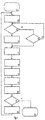
- FIG. 3 shows a structural diagram of the computing means of the visualization device operation
- FIG. 4 is a functional diagram of computing means.
- the essence of the object visualization method is creating images of the objects and multiple additional information elements associated with the objects, each of said elements corresponding to a predetermined object and storing them in the electronic memory before hand.
- An image is captured with a digital camera imaging device and outputted to the screen, and then detection and identification of at least one object in each selected frame of the captured image is carried out based on the image data such as its shape and/or color and/or texture using object image information obtained from the electronic memory, the coordinates of the detected object in the captured image are calculated, at least one item of additional information in immediate vicinity to the corresponding object to be displayed on the captured image superimposed on a digital image is obtained from electronic memory and displayed.
- the object detected and recognized on the previous selected frames is no longer detected on subsequent selected frames for a predetermined period of time, it is concluded that there is no object on the captured image and stops output of additional information associated with the object.
- each selected frame of the captured image, where the object is detected and recognized is each n-th frame of the video image, where n is a natural number 1, 2, 3, 4 ..., or each frame formed by the time the computing means are ready to the detection and recognition of the object.
- the image data of the objects contain, at least, common characteristics that are typical for all detected objects and special features that are typical only for a specific object.
- the object is detected on the selected frame, in its entire area, the coordinates of the detected object are determined on the selected frame, and then the object is recognized in the selected frame of the captured image using special features of the object images.
- the recognition is performed on a limited area of the frame, the coordinates of which are predicted based on the object coordinates computed on the previous selected frames. In this case, if the non-detection time of the object in the limited area of the subsequent selected frames exceeds a predetermined threshold value, further detection is performed again on the entire area of the selected frame.
- the area of the detected and recognized object on the screen is shown when the captured image is displayed by highlighting part of the image containing the image of the object.
- the image capturing is performed by a digital camera of a visualization device comprising a screen for outputting the captured image, computing means and electronic memory.
- the object visualization method is implemented as follows.
- the composition of the objects to be visualized is determined and their images are created in advance for use in the process of detection and recognition of images of said objects.
- Images of the objects include multiple image features of such object that are typical for the corresponding object, used in the process of detection and recognition of the image of the object on the captured image.
- the images of the objects represent at least two groups of features, one of which is common, typical for all pre-installed objects. The features of this group are used to determine the existence of any object in the image, that is, the detection of the object. The features of the other group are used to recognize a particular object in the image.
- an array of additional information related to certain previously identified objects is being created in the form of additional information elements associated with one of the specified objects, such as text, image or multimedia.
- the image data of objects and additional information about these objects along with data on the links of the additional information elements with the specific objects is stored in the electronic memory connected with the visualization device.
- the image is captured by it and displayed on the screen of the visualizer.
- the captured digital image is sent as input signals to the computing means.
- Computing means access electronic memory in the process of detecting and recognizing predefined specified objects on the captured image using previously created images of objects.
- the object recognition is performed on each selected video frame, based on image data comprising its shape and/or color and/or texture.
- Each selected frame is every n-th frame of the video image, where n is a natural number 1, 2, 3, 4 .... However, if the performance of the computational means is insufficient for processing each n-th frame, then the selected frame is each frame of the video image formed by the time when the computing means finish the previous processing cycle and will be ready to process a new frame for the object detection and recognition.
- Detection and recognition of objects is carried out in several steps, first using common features of images, typical for all objects, object detection is performed on the selected frame, within the whole frame. The fact of detection indicates the presence of one of the objects, without specifying which particular object was detected. Next, the coordinates of the detected object are calculated on the selected frame, and then, using special features of the object images, the specific object is recognized in the selected frame of the captured image, taking into the account coordinates of the detected object.
- recognition of the object already detected on the previous selected frame is not carried out over the entire area of the selected frame, but only on its limited area.
- the coordinates of this area are predicted based on the values of the calculated object coordinates on the previous selected frames.
- a predetermined threshold value for example, 100 frames of the captured video
- a digital image signal of the additional information is generated and displayed, inlcuding at least one element from the plurality of additional information elements defined in advance as associated with the detected object.
- Said additional information elements are overlayed over the digital video image from the video camera of the visualizer.
- the detected object on the displayed image is marked by highlighting the object location area.
- the output of the additional information on the screen is carried out so that additional information is placed over the output image in the area of the image of the corresponding detected and recognized object.
- Recognition of an object on a video image provides the ability to identify a specific object by its external features, which in turn provides the ability to implement the method without any reference to the terrain or map and also identify moving objects or objects being moved.
- the computing means of the visualizer are made on the basis of a processor, operating under control of the corresponding operating system.
- the scheme of operation of computing means when implementing object visualization method includes the following main steps ( Figure 3 ).
- the beginning of execution involves turning on a video camera and the forming a digital image, which is displayed in real time on the screen of the visualizer.
- the generated digital image is fed to the input of the computing means, which begin to access the electronic memory as soon as the signal appears.
- reference images of the objects stored in the electronic memory Said reference images are being used for objects detection and recognition. Object detection is repeated on each selected video frame.
- the calculation of its coordinates is performed.
- the detected coordinates being used for operation of the object coordinates predicting means, providing calculation of the expected coordinates in the further frame.
- the detected object image is equated with the real object that is in the field of view of the video camera.
- Recognition in subsequent selected frames is performed on a limited area of the frame, the coordinates of which are computed by the means of predicting the coordinates of the object. If during a pre-set time T min , it is not possible to detect an object in this limited area of the frame, the detection is performed again over the entire area of the selected frame. This way, the movement of the detected object within the frame is monitored simultaneously.
- the computing means appeal to the electronic memory to extract additional information associated with the detected and recognized object.
- the calculated object coordinates are also used to associate additional information images and to select the image area of the object on the captured image.
- the output signal and the superimposing of additional information on the captured image are generated and additional information is displayed on the screen, taking into account the object coordinates on the output image.
- the image analysis process is continued with processing of the next selected image frame.
- the image analysis is continued while the corresponding program is launched.
- analysis of presence of a digital image at the input of computing means is performed. If the digital image signal comes to the input of the computing means, the process is repeated for each selected frame, tracking movement of the object image on the captured image and performing corresponding adjustment of the visualized additional information.
- Functional diagram of the computing means shows the interrelations among the elements of the plurality of means implementing the method.
- the digital video image is fed to the object detection means, which also receives image data of the objects from the output of the object image extraction means.
- the detection results are fed to the coordinate calculating means, the calculation results of which are analyzed in the means of calculating the expected coordinates of the object on the next frame.
- the current and expected coordinates are fed to the inputs of the recognition means, video image and image data are fed thereto.
- the additional information extraction means retrieve additional information associated with the object and direct it to the means forming signal that includes additional information to superimpose it on the captured video image.
- the visualizer is a mobile device ( FIG. 2 ) containing a front-facing video camera, processor-based computing means, electronic memory for storing object images and additional information, and a screen.
- the previously created image data of the objects and additional information associated with these objects is entered to the embedded or removable memory of the mobile visualizer.
- the camera is guided to an object to be displayed and the image is captured using a video camera.
- the viewing angle of the video camera lens and the distance to the object are chosen so that the captured image shows a large part of the object or the object is represented entirely.
- the captured image is displayed on the screen of the mobile display device.
- the digital image signals are also directed to the input of the computing means which, when there are input signals of the captured image, address the electronic memory, retrieving image data of the objects for detecting and recognizing the object on the captured image.
- the computing means which, when there are input signals of the captured image, address the electronic memory, retrieving image data of the objects for detecting and recognizing the object on the captured image.
- Features of the image such as the object as a contour formed by the boundaries of color and brightness differences, color and color correlations, the presence of regular elements characterizing the texture, etc are used for recognition.
- Object features common to all objects are used in the process of detection.
- the result of the identification can be either detecting presence of the object in the selected frame, or detecting absence of the object.
- the coordinates of the object in the frame are calculated and, using the special features of the object images, the detected object is recognized.
- the coordinates of the detected object in several previous selected frames are used to predict the coordinates of the object in the subsequent frame, forming the set of expected object coordinates, which allows to lower the performance requirements of the visualizer.
- recognition is carried out on the next frame within a limited area or area of the frame.
- the computing means turn to the electronic memory to retrieve additional information associated with the detected and identified object, which is displayed by overlaying the displayed captured image. Additional information is a text containing letters and/or numbers that have an explanatory or descriptive character relating to the detected object, as well as images and multimedia information.
- Displaying additional information is visualized at a translucent transparency and outputted in the immediate vicinity of the image of the detected and identified object.
- the image area of the object itself is highlighted in such a way, so that the image of the object becomes brighter compared to the background image.
- the visualizer is a digital camera ( FIG. 1 ) equipped with a lens with a digital image generation matrix forming a video camera with digital display, computing means, electronic memory and a server intercoupler, which is a modem, for connecting to the computing means via a radio channel using the Internet.
- the server provides storage of image data of objects and additional information.
- Images of objects for their detection and recognition, as well as additional information are created in advance and stored at the server, with the ability to connect to it via the Internet and retrieve the information stored therein.
- the camera lens is projected onto the scene and image capture is performed, while the video image formed by the matrix is displayed on the camera screen.
- the captured digital image is also transmitted to the input of the computing means that are connected by means of a modem via the Internet to the server.
- the captured image is compressed by the computing means and transferred to the server where image processing is performed to detect the features of the objects on the image using images previously created and stored in the memory of the server.
- the object is detected in the image and recognized then additional information associated with the detected object the corresponding image are extracted from the electronic memory and transmitted via the Internet to the modem input and then to the electronic memory of the camera.
- the image of the object is recognized on the captured image, additional information is associated with the object from the camera's electronic memory, and additional information on the captured image is displayed on the camera's screen.
- the image is visualized so that the detected and recognized object is displayed in a square or oval frame formed by brighter lines, and additional information is superimposed on the image in the immediate vicinity of the image of the object.
- the visualizer is glasses with an embedded video camera, computer means with electronic memory and a screen.
- Pre-created images of objects and an array of additional information are stored n the electronic memory of the visualizer,.
- an image captured by a front-facing video camera embedded to the glasses frame is displayed.
- the captured digital image is also transmitted for processing to computing means that, referring to electronic memory, receive object images and provide detection and recognition of the objects on the captured image.
- computing means that, referring to electronic memory, receive object images and provide detection and recognition of the objects on the captured image.
- an area around the object on the screen is selected with a rectangular frame formed by bright lines that overlap the output captured image and additional information is extracted from the electronic memory and superimposed over the captured image output in the immediate vicinity of the detected object.
- the computer means provide the calculation of the coordinates of the detected object on the captured video image. They are used for selecting the visualization coordinates of the object selection frame and additional information, so that the position of the frame and placement of additional information accompany the image of the object as it moves while the object is detected in the image.
- the visualizer can be implemented using standard electronic components: LED displays, processors, solid-state memory elements, modems, etc.
- the visualizer has a wider scope of application due to the ability to identify the object on the captured image based on the image data of the object itself, as well as to improve the localization accuracy of the object being visualized.
Landscapes
- Engineering & Computer Science (AREA)
- Theoretical Computer Science (AREA)
- Physics & Mathematics (AREA)
- General Physics & Mathematics (AREA)
- Multimedia (AREA)
- Signal Processing (AREA)
- Computer Vision & Pattern Recognition (AREA)
- Library & Information Science (AREA)
- General Engineering & Computer Science (AREA)
- Data Mining & Analysis (AREA)
- Databases & Information Systems (AREA)
- Life Sciences & Earth Sciences (AREA)
- Bioinformatics & Cheminformatics (AREA)
- Bioinformatics & Computational Biology (AREA)
- Artificial Intelligence (AREA)
- Evolutionary Biology (AREA)
- Evolutionary Computation (AREA)
- Human Computer Interaction (AREA)
- Computer Graphics (AREA)
- Computer Hardware Design (AREA)
- Software Systems (AREA)
- Image Analysis (AREA)
- Processing Or Creating Images (AREA)
Applications Claiming Priority (2)
| Application Number | Priority Date | Filing Date | Title |
|---|---|---|---|
| RU2015119725/08A RU2602386C1 (ru) | 2015-05-26 | 2015-05-26 | Способ визуализации объекта |
| PCT/RU2016/000315 WO2016190783A1 (ru) | 2015-05-26 | 2016-05-25 | Способ визуализации объекта |
Publications (2)
| Publication Number | Publication Date |
|---|---|
| EP3306565A1 true EP3306565A1 (de) | 2018-04-11 |
| EP3306565A4 EP3306565A4 (de) | 2019-01-02 |
Family
ID=57393490
Family Applications (1)
| Application Number | Title | Priority Date | Filing Date |
|---|---|---|---|
| EP16800378.8A Ceased EP3306565A4 (de) | 2015-05-26 | 2016-05-25 | Entitätsvisualisierungsverfahren |
Country Status (6)
| Country | Link |
|---|---|
| US (1) | US10347000B2 (de) |
| EP (1) | EP3306565A4 (de) |
| KR (1) | KR20180011794A (de) |
| CN (1) | CN107710280B (de) |
| RU (1) | RU2602386C1 (de) |
| WO (1) | WO2016190783A1 (de) |
Families Citing this family (10)
| Publication number | Priority date | Publication date | Assignee | Title |
|---|---|---|---|---|
| WO2019098119A1 (ja) * | 2017-11-15 | 2019-05-23 | 村田機械株式会社 | 管理サーバ、管理システム、管理方法、及びプログラム |
| DE102019135676B4 (de) * | 2018-12-26 | 2025-08-14 | Htc Corporation | Objektverfolgungssystem und objektverfolgungsverfahren |
| RU2716415C1 (ru) * | 2019-02-04 | 2020-03-12 | Общество с ограниченной ответственностью "Сити Консьерж" | Способ интерактивной навигации на основе краудсорсинга с мультимедийным сопровождением и дополненной реальностью |
| JP7234718B2 (ja) * | 2019-03-18 | 2023-03-08 | 富士フイルムビジネスイノベーション株式会社 | 情報処理装置、情報処理システム及びプログラム |
| KR102252110B1 (ko) | 2019-08-07 | 2021-05-17 | 한국과학기술연구원 | 중첩된 가상 오브젝트의 용이하고 정확한 선택을 지원하는 사용자 인터페이스 장치 및 이의 제어 방법 |
| CN110536154A (zh) * | 2019-08-16 | 2019-12-03 | 北京达佳互联信息技术有限公司 | 视频码流分析方法、装置、电子设备及存储介质 |
| KR102838574B1 (ko) * | 2019-10-17 | 2025-07-28 | 삼성전자 주식회사 | 전자 장치 및 전자 장치의 화면 캡쳐 운용 방법 |
| WO2021213339A1 (en) * | 2020-04-22 | 2021-10-28 | Guangdong Oppo Mobile Telecommunications Corp., Ltd. | Method and system for extracting and storing image metadata |
| CZ2021270A3 (cs) * | 2021-06-01 | 2022-12-14 | Marek MENSA | Způsob interakce s nosným médiem zvukového obsahu, způsob interakce s nosičem rozšířené reality, nosné médium zvukového obsahu a způsob přehrávání zvukového obsahu uživatelskou periferií |
| CN115883864B (zh) * | 2022-12-19 | 2024-08-06 | 国网河北省电力有限公司营销服务中心 | 一种记录多维数据的视频编解码方法、装置及终端设备 |
Family Cites Families (17)
| Publication number | Priority date | Publication date | Assignee | Title |
|---|---|---|---|---|
| WO2004095374A1 (ja) * | 2003-04-21 | 2004-11-04 | Nec Corporation | 映像オブジェクト認識装置および認識方法、映像アノテーション付与装置および付与方法ならびにプログラム |
| JP2005149409A (ja) * | 2003-11-19 | 2005-06-09 | Canon Inc | 画像再生方法及び装置 |
| US20060195858A1 (en) * | 2004-04-15 | 2006-08-31 | Yusuke Takahashi | Video object recognition device and recognition method, video annotation giving device and giving method, and program |
| EP2154481B1 (de) * | 2007-05-31 | 2024-07-03 | Panasonic Intellectual Property Corporation of America | Bildaufnahmevorrichtung, server zur bereitstellung von zusatzinformationen und system zur filterung von zusatzinformationen |
| US9910866B2 (en) | 2010-06-30 | 2018-03-06 | Nokia Technologies Oy | Methods, apparatuses and computer program products for automatically generating suggested information layers in augmented reality |
| US9569891B2 (en) * | 2010-07-16 | 2017-02-14 | Tyoterveyslaitos | Method, an apparatus and an arrangement for visualizing information |
| JP2012065263A (ja) * | 2010-09-17 | 2012-03-29 | Olympus Imaging Corp | 撮影機器 |
| US8447329B2 (en) * | 2011-02-08 | 2013-05-21 | Longsand Limited | Method for spatially-accurate location of a device using audio-visual information |
| US20120201472A1 (en) * | 2011-02-08 | 2012-08-09 | Autonomy Corporation Ltd | System for the tagging and augmentation of geographically-specific locations using a visual data stream |
| JP5765019B2 (ja) * | 2011-03-31 | 2015-08-19 | ソニー株式会社 | 表示制御装置、表示制御方法、およびプログラム |
| EP2754131B1 (de) * | 2011-09-08 | 2022-10-26 | Nautilus, Inc. | System und verfahren zur visualisierung von künstlichen objekten innerhalb von real-word-videoclips |
| EP2610871A1 (de) * | 2011-12-30 | 2013-07-03 | Research In Motion Limited | Verfahren und Vorrichtung zur Verwendung bei der Bereitstellung von Objektindikatoren während der Videoaufzeichnung oder -wiedergabe |
| EP2806634B1 (de) * | 2012-01-17 | 2020-08-12 | Sony Corporation | Vorrichtung, verfahren und programm zur informationsverarbeitung |
| US9066200B1 (en) * | 2012-05-10 | 2015-06-23 | Longsand Limited | User-generated content in a virtual reality environment |
| US20140176606A1 (en) * | 2012-12-20 | 2014-06-26 | Analytical Graphics Inc. | Recording and visualizing images using augmented image data |
| JP6144826B2 (ja) * | 2013-06-11 | 2017-06-07 | クアルコム,インコーポレイテッド | データベース作成のための対話型および自動的3dオブジェクト走査方法 |
| JP6642968B2 (ja) * | 2014-03-20 | 2020-02-12 | キヤノン株式会社 | 情報処理装置、情報処理方法、プログラム |
-
2015
- 2015-05-26 RU RU2015119725/08A patent/RU2602386C1/ru active
-
2016
- 2016-05-25 EP EP16800378.8A patent/EP3306565A4/de not_active Ceased
- 2016-05-25 CN CN201680030305.4A patent/CN107710280B/zh not_active Expired - Fee Related
- 2016-05-25 KR KR1020177036828A patent/KR20180011794A/ko not_active Ceased
- 2016-05-25 US US15/569,174 patent/US10347000B2/en active Active
- 2016-05-25 WO PCT/RU2016/000315 patent/WO2016190783A1/ru not_active Ceased
Also Published As
| Publication number | Publication date |
|---|---|
| KR20180011794A (ko) | 2018-02-02 |
| CN107710280B (zh) | 2022-06-03 |
| EP3306565A4 (de) | 2019-01-02 |
| RU2602386C1 (ru) | 2016-11-20 |
| US20180150967A1 (en) | 2018-05-31 |
| CN107710280A (zh) | 2018-02-16 |
| WO2016190783A1 (ru) | 2016-12-01 |
| US10347000B2 (en) | 2019-07-09 |
Similar Documents
| Publication | Publication Date | Title |
|---|---|---|
| US10347000B2 (en) | Entity visualization method | |
| CN111667520B (zh) | 红外图像和可见光图像的配准方法、装置及可读存储介质 | |
| KR102166861B1 (ko) | 시선 추적을 이용한 증강 현실의 인에이블링 | |
| US10331209B2 (en) | Gaze direction mapping | |
| US10621787B2 (en) | Method and apparatus for overlaying a picture of a real scene with a virtual image, and mobile device | |
| JP2011146796A5 (de) | ||
| KR20130056309A (ko) | 텍스트 기반 3d 증강 현실 | |
| GB2584033A (en) | Object tracking in zoomed video | |
| US20200236300A1 (en) | Image processing system, image processing method, and program | |
| JP2012083157A (ja) | 屋外地物検知システム、屋外地物検知システム用プログラム、および屋外地物検知システム用プログラムの記録媒体 | |
| JP7743579B2 (ja) | 画像処理装置、及び画像処理装置による画像処理方法 | |
| RU2014101339A (ru) | Навигация по видеопоследовательности через местоположение объекта | |
| EP3376470A1 (de) | Verfahren zur verfolgung bewegter objekte, vorrichtung zur verfolgung bewegter objekte und programm | |
| JP7694679B2 (ja) | 画像処理装置、画像処理方法および画像処理プログラム | |
| US20130135446A1 (en) | Street view creating system and method thereof | |
| KR102000960B1 (ko) | 벡터를 이용한 증강 현실 영상 구현 방법 | |
| JP2009123150A (ja) | 対象物検出装置及び方法、対象物検出システム、プログラム | |
| US20180336243A1 (en) | Image Search Method, Apparatus and Storage Medium | |
| US11269405B2 (en) | Gaze direction mapping | |
| KR20220002626A (ko) | 픽쳐 기반의 다차원 정보 통합 방법 및 관련 기기 | |
| US20170214880A1 (en) | Method for helping a person to select a furnishing covering surface | |
| CN111506280B (zh) | 用于指示屏幕外兴趣点的图形用户界面 | |
| KR102099852B1 (ko) | 증강현실 게임북을 이용한 멀티유저 증강현실 컨텐츠 제공 시스템 및 방법 | |
| JP7537518B2 (ja) | 画像処理装置、画像処理方法および画像処理プログラム | |
| CN105117478A (zh) | Pda应用程序辅助拍摄设备影像自动分类入库方法 |
Legal Events
| Date | Code | Title | Description |
|---|---|---|---|
| STAA | Information on the status of an ep patent application or granted ep patent |
Free format text: STATUS: THE INTERNATIONAL PUBLICATION HAS BEEN MADE |
|
| PUAI | Public reference made under article 153(3) epc to a published international application that has entered the european phase |
Free format text: ORIGINAL CODE: 0009012 |
|
| STAA | Information on the status of an ep patent application or granted ep patent |
Free format text: STATUS: REQUEST FOR EXAMINATION WAS MADE |
|
| 17P | Request for examination filed |
Effective date: 20171108 |
|
| AK | Designated contracting states |
Kind code of ref document: A1 Designated state(s): AL AT BE BG CH CY CZ DE DK EE ES FI FR GB GR HR HU IE IS IT LI LT LU LV MC MK MT NL NO PL PT RO RS SE SI SK SM TR |
|
| AX | Request for extension of the european patent |
Extension state: BA ME |
|
| DAV | Request for validation of the european patent (deleted) | ||
| DAX | Request for extension of the european patent (deleted) | ||
| A4 | Supplementary search report drawn up and despatched |
Effective date: 20181205 |
|
| RIC1 | Information provided on ipc code assigned before grant |
Ipc: G06K 9/20 20060101ALI20181129BHEP Ipc: G06T 7/70 20170101ALI20181129BHEP Ipc: G06F 17/30 20060101ALI20181129BHEP Ipc: G06T 11/60 20060101ALI20181129BHEP Ipc: G06T 7/00 20170101AFI20181129BHEP Ipc: G06K 9/00 20060101ALI20181129BHEP Ipc: H04N 5/232 20060101ALI20181129BHEP |
|
| STAA | Information on the status of an ep patent application or granted ep patent |
Free format text: STATUS: EXAMINATION IS IN PROGRESS |
|
| 17Q | First examination report despatched |
Effective date: 20190820 |
|
| REG | Reference to a national code |
Ref country code: DE Ref legal event code: R003 |
|
| STAA | Information on the status of an ep patent application or granted ep patent |
Free format text: STATUS: THE APPLICATION HAS BEEN REFUSED |
|
| 18R | Application refused |
Effective date: 20211028 |