EP3309782A1 - Procédé, dispositif et système permettant une suppression du bruit - Google Patents
Procédé, dispositif et système permettant une suppression du bruit Download PDFInfo
- Publication number
- EP3309782A1 EP3309782A1 EP16806709.8A EP16806709A EP3309782A1 EP 3309782 A1 EP3309782 A1 EP 3309782A1 EP 16806709 A EP16806709 A EP 16806709A EP 3309782 A1 EP3309782 A1 EP 3309782A1
- Authority
- EP
- European Patent Office
- Prior art keywords
- noise
- signal
- internal
- feature
- external
- Prior art date
- Legal status (The legal status is an assumption and is not a legal conclusion. Google has not performed a legal analysis and makes no representation as to the accuracy of the status listed.)
- Granted
Links
Images


Classifications
-
- G—PHYSICS
- G10—MUSICAL INSTRUMENTS; ACOUSTICS
- G10L—SPEECH ANALYSIS TECHNIQUES OR SPEECH SYNTHESIS; SPEECH RECOGNITION; SPEECH OR VOICE PROCESSING TECHNIQUES; SPEECH OR AUDIO CODING OR DECODING
- G10L21/00—Speech or voice signal processing techniques to produce another audible or non-audible signal, e.g. visual or tactile, in order to modify its quality or its intelligibility
- G10L21/02—Speech enhancement, e.g. noise reduction or echo cancellation
- G10L21/0208—Noise filtering
-
- G—PHYSICS
- G10—MUSICAL INSTRUMENTS; ACOUSTICS
- G10L—SPEECH ANALYSIS TECHNIQUES OR SPEECH SYNTHESIS; SPEECH RECOGNITION; SPEECH OR VOICE PROCESSING TECHNIQUES; SPEECH OR AUDIO CODING OR DECODING
- G10L21/00—Speech or voice signal processing techniques to produce another audible or non-audible signal, e.g. visual or tactile, in order to modify its quality or its intelligibility
- G10L21/02—Speech enhancement, e.g. noise reduction or echo cancellation
- G10L21/0208—Noise filtering
- G10L21/0216—Noise filtering characterised by the method used for estimating noise
- G10L21/0232—Processing in the frequency domain
-
- G—PHYSICS
- G10—MUSICAL INSTRUMENTS; ACOUSTICS
- G10K—SOUND-PRODUCING DEVICES; METHODS OR DEVICES FOR PROTECTING AGAINST, OR FOR DAMPING, NOISE OR OTHER ACOUSTIC WAVES IN GENERAL; ACOUSTICS NOT OTHERWISE PROVIDED FOR
- G10K11/00—Methods or devices for transmitting, conducting or directing sound in general; Methods or devices for protecting against, or for damping, noise or other acoustic waves in general
- G10K11/16—Methods or devices for protecting against, or for damping, noise or other acoustic waves in general
- G10K11/175—Methods or devices for protecting against, or for damping, noise or other acoustic waves in general using interference effects; Masking sound
- G10K11/178—Methods or devices for protecting against, or for damping, noise or other acoustic waves in general using interference effects; Masking sound by electro-acoustically regenerating the original acoustic waves in anti-phase
- G10K11/1781—Methods or devices for protecting against, or for damping, noise or other acoustic waves in general using interference effects; Masking sound by electro-acoustically regenerating the original acoustic waves in anti-phase characterised by the analysis of input or output signals, e.g. frequency range, modes, transfer functions
- G10K11/17821—Methods or devices for protecting against, or for damping, noise or other acoustic waves in general using interference effects; Masking sound by electro-acoustically regenerating the original acoustic waves in anti-phase characterised by the analysis of input or output signals, e.g. frequency range, modes, transfer functions characterised by the analysis of the input signals only
-
- G—PHYSICS
- G10—MUSICAL INSTRUMENTS; ACOUSTICS
- G10L—SPEECH ANALYSIS TECHNIQUES OR SPEECH SYNTHESIS; SPEECH RECOGNITION; SPEECH OR VOICE PROCESSING TECHNIQUES; SPEECH OR AUDIO CODING OR DECODING
- G10L21/00—Speech or voice signal processing techniques to produce another audible or non-audible signal, e.g. visual or tactile, in order to modify its quality or its intelligibility
- G10L21/02—Speech enhancement, e.g. noise reduction or echo cancellation
- G10L21/0208—Noise filtering
- G10L21/0216—Noise filtering characterised by the method used for estimating noise
-
- G—PHYSICS
- G10—MUSICAL INSTRUMENTS; ACOUSTICS
- G10L—SPEECH ANALYSIS TECHNIQUES OR SPEECH SYNTHESIS; SPEECH RECOGNITION; SPEECH OR VOICE PROCESSING TECHNIQUES; SPEECH OR AUDIO CODING OR DECODING
- G10L25/00—Speech or voice analysis techniques not restricted to a single one of groups G10L15/00 - G10L21/00
- G10L25/03—Speech or voice analysis techniques not restricted to a single one of groups G10L15/00 - G10L21/00 characterised by the type of extracted parameters
- G10L25/21—Speech or voice analysis techniques not restricted to a single one of groups G10L15/00 - G10L21/00 characterised by the type of extracted parameters the extracted parameters being power information
-
- G—PHYSICS
- G10—MUSICAL INSTRUMENTS; ACOUSTICS
- G10L—SPEECH ANALYSIS TECHNIQUES OR SPEECH SYNTHESIS; SPEECH RECOGNITION; SPEECH OR VOICE PROCESSING TECHNIQUES; SPEECH OR AUDIO CODING OR DECODING
- G10L25/00—Speech or voice analysis techniques not restricted to a single one of groups G10L15/00 - G10L21/00
- G10L25/27—Speech or voice analysis techniques not restricted to a single one of groups G10L15/00 - G10L21/00 characterised by the analysis technique
- G10L25/30—Speech or voice analysis techniques not restricted to a single one of groups G10L15/00 - G10L21/00 characterised by the analysis technique using neural networks
-
- H—ELECTRICITY
- H04—ELECTRIC COMMUNICATION TECHNIQUE
- H04M—TELEPHONIC COMMUNICATION
- H04M9/00—Arrangements for interconnection not involving centralised switching
- H04M9/08—Two-way loud-speaking telephone systems with means for conditioning the signal, e.g. for suppressing echoes for one or both directions of traffic
- H04M9/082—Two-way loud-speaking telephone systems with means for conditioning the signal, e.g. for suppressing echoes for one or both directions of traffic using echo cancellers
-
- H—ELECTRICITY
- H04—ELECTRIC COMMUNICATION TECHNIQUE
- H04R—LOUDSPEAKERS, MICROPHONES, GRAMOPHONE PICK-UPS OR LIKE ACOUSTIC ELECTROMECHANICAL TRANSDUCERS; ELECTRIC HEARING AIDS; PUBLIC ADDRESS SYSTEMS
- H04R3/00—Circuits for transducers
-
- G—PHYSICS
- G10—MUSICAL INSTRUMENTS; ACOUSTICS
- G10K—SOUND-PRODUCING DEVICES; METHODS OR DEVICES FOR PROTECTING AGAINST, OR FOR DAMPING, NOISE OR OTHER ACOUSTIC WAVES IN GENERAL; ACOUSTICS NOT OTHERWISE PROVIDED FOR
- G10K2210/00—Details of active noise control [ANC] covered by G10K11/178 but not provided for in any of its subgroups
- G10K2210/30—Means
- G10K2210/301—Computational
- G10K2210/3038—Neural networks
Definitions
- the present disclosure relates to the technology of voice signal processing, and in particular to a noise suppressing method, a noise suppressing device and a noise suppressing system.
- Devices with a voice interaction function normally include many mechanical components, which produce a large amount of rapidly changing non-steady machine noise and impact noise during operation.
- the noise enters into a system through a pickup on the device, which seriously affects the voice interaction.
- the traditional method for suppressing noise based on noise power spectrum estimation has a poor effect on filtering the large amount of rapidly changing non-steady machine noise and impact noise.
- a dual-microphone noise suppressing device is often used for filtering ambient noise.
- the device includes a primary microphone for receiving ambient noise and voice, and a reference microphone for receiving ambient noise. Then noise is suppressed using the two signals by a known active noise cancellation (ANC) method.
- ANC active noise cancellation
- the ANC method requires that the noise is received by the primary microphone and the reference microphone from substantially the same sound field, so that noise signals received by the primary microphone and the reference microphone are in a highly linear relation. In this condition, the ANC method works properly, while if this condition is not met, the dual-microphone noise suppressing method often does not work properly.
- a device often has a relatively closed housing.
- the noise reference microphone is installed in the housing to receive machine noise, while the main microphone is generally installed in the external or at an opening on the housing in order to receive a voice. In this case, the sound fields of the reference microphone and the main microphone is quite different, resulting in a poor performance or fails of the ANC method.
- a method, a device and a noise suppressing system are provided according to embodiments of the present disclosure, to solve the technical problem of poor performance of the ANC method due to the great difference between the sound fields of the reference microphone and the primary microphone.
- a noise suppressing method is provided according to an embodiment of the present disclosure, which includes:
- the method further includes:
- the training a auto-encoding neural network structure includes:
- step S5 specifically includes:
- the preset auto-encoding neural network structure is a 5-layer structure, a first layer and a fifth layer are input and output layers, and a second layer, a third layer and a fourth layer are hidden layers.
- a noise suppressing device is provided according to an embodiment of the present disclosure, which includes:
- the noise suppressing device further includes:
- the training unit specifically includes:
- a noise suppressing system is provided according to an embodiment of the present disclosure, which includes:
- the reference voice acquisition mechanism and the primary voice acquisition mechanism respectively are in signal transmission connection with the noise suppressing device.
- the reference voice acquisition mechanism is configured to acquire an internal noise signal.
- the noise suppressing device is configured to receive internal noise and a voice signal containing external noise when the voice signal is inputted, extract an internal signal feature corresponding to the internal noise, acquire an external approximate feature corresponding to the external noise based on the internal signal feature and a pre-set mapping formula, convert the external approximate feature into a noise signal estimate by the inverse Fourier transform, and perform a pre-set noise cancellation process on the noise signal estimate and the acquired voice signal containing the internal noise, to obtain a noise-suppressed de-noised voice signal.
- the primary voice acquisition mechanism is configured to acquire the voice signal containing the internal noise.
- the internal signal feature is a power spectrum frame sequence
- the external approximate feature is a sequence of frames in a power spectrum form.
- the primary voice acquisition mechanism is further configured to acquire the external noise under a condition that no voice signal is inputted, so that the noise suppressing device trains, under a condition that no voice signal is inputted, a preset auto-encoding neural network structure with noise signal samples composed of the internal noise and the external noise, to determine the mapping formula.
- the embodiments of the present disclosure have the following advantages.
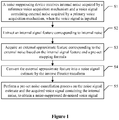
- the noise suppressing method includes: S1, receiving, by the noise suppressing device, internal noise acquired by a reference voice acquisition mechanism and a voice signal containing external noise acquired by a primary voice acquisition mechanism, when the voice signal is inputted; S2, extracting an internal signal feature corresponding to the internal noise, where the internal signal feature is a power spectrum frame sequence; S3, acquiring an external approximate feature corresponding to the external noise based on the internal signal feature and a pre-set mapping formula, where the external approximate feature is a sequence of frames in a power spectrum form; S4, converting the external approximate feature into a noise signal estimate by the inverse Fourier transform; and S5, performing a pre-set noise cancellation process on the noise signal estimate and the acquired voice signal containing the internal noise, to obtain a noise-suppressed de-noised voice signal.
- the internal signal feature corresponding to the internal noise is extracted, the external approximate feature corresponding to the external noise is acquired based on the internal signal feature and the pre-set mapping formula, the external approximate feature is converted into a noise signal estimate, and the noise cancellation process is performed using the noise signal estimate and the voice signal, thereby avoiding the restriction of great difference between external sound fields, and solving the technical problem of poor performance of the ANC method due to the great difference between the sound fields of the reference microphone and the primary microphone.
- a noise suppressing method, a noise suppressing device and a noise suppressing system are provided according to embodiments of the present disclosure, to solve the technical problem of poor performance of the ANC method due to the great difference between the sound fields of the reference microphone and the primary microphone.
- a noise suppressing method includes steps S1 to S5.
- step S1 when a voice signal is inputted, a noise suppressing device receives internal noise acquired by a reference voice acquisition mechanism and the voice signal containing external noise acquired by a primary voice acquisition mechanism.
- the noise suppressing device When it is required to de-noise the voice signal, the noise suppressing device receives the internal noise acquired by the reference voice acquisition mechanism and the voice signal containing the external noise acquired by the primary voice acquisition mechanism when the voice signal is inputted.
- step S2 an internal signal feature corresponding to the internal noise is extracted.
- the noise suppressing device After receiving the internal noise acquired by the reference voice acquisition mechanism and the voice signal containing the external noise acquired by the primary voice acquisition mechanism, the noise suppressing device extracts the internal signal feature corresponding to the internal noise.
- the internal signal feature is a power frame spectrum sequence.
- step S3 based on the internal signal feature and a pre-set mapping formula, an external approximate feature corresponding to the external noise is acquired.
- the external approximate feature corresponding to the external noise is acquired based on the internal signal feature and the pre-set mapping formula.
- the external approximate feature is a sequence of frames in a power spectrum form.
- step S4 the external approximate feature is converted into a noise signal estimate by the inverse Fourier transform.
- the external approximate feature corresponding to the external noise is acquired based on the internal signal feature and the pre-set mapping formula, the external approximate feature is converted into the corresponding noise signal estimate by the inverse Fourier transform.
- step S5 a pre-set noise cancellation process is performed on the noise signal estimate and the acquired voice signal containing the internal noise, to obtain a noise-suppressed de-noised voice signal.
- the pre-set noise cancellation process is performed on the noise signal estimate and the acquired voice signal containing the internal noise, to obtain the noise-suppressed de-noised voice signal.
- the internal signal feature corresponding to the internal noise is extracted, the external approximate feature corresponding to the external noise is acquired based on the internal signal feature and the pre-set mapping formula, the external approximate feature is converted into the noise signal estimate, and the noise cancellation process is performed with the noise signal estimate and the voice signal, thereby avoiding the restriction of great difference between external sound fields, and solving the technical problem of poor performance of the ANC method due to the great difference between the sound fields of the reference microphone and the primary microphone.
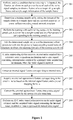
- a noise suppressing method includes steps 201 to 209.
- step 201 under a condition that no voice signal is inputted, the Fourier transform is performed on each pre-set frames of an acquired noise signal sample, to obtain a feature and sample angle information of the sample frame.
- a preset auto-encoding neural network structure Before de-noising a voice signal, a preset auto-encoding neural network structure is trained with noise signal samples composed of internal noise and external noise under a condition that no voice signal is inputted, to determine a mapping formula.
- the above-described preset auto-encoding neural network structure may be obtained by performing the Fourier transform on each pre-set frame of the acquired noise signal sample under a condition that no voice signal is inputted, to obtain the feature of the corresponding sample frame and the sample angle information.
- both the reference voice acquisition mechanism such as a reference microphone
- the primary voice acquisition mechanism such as a primary microphone
- the device may be equipped with a noise suppressing device, such as a remote smart teller.
- the acquired noise signal samples are sampled at the frequency of 8kHz, then a windowing process is performed on the noise signal samples with a Hamming window of 32ms, to obtain a sequence of frames. Each of the frames has 256 sampling points. Then the Fourier transform is performed on each of frames of the noise signal samples.
- a power spectrum S ( ⁇ ) and an angle angle ( ⁇ ) of the noise signal sample are obtained by getting the square of the transformed Fourier coefficients.
- the power spectrum S ( ⁇ ) is used as an internal feature, and the angle angle ( ⁇ ) is used for converting the internal feature back to the signal.
- the preset auto-encoding neural network structure is a 5-layer structure.
- a first layer and a fifth layer are input and output layers, each having 1280 nodes, which is the number of dimensions of the 5 frame signal feature.
- a second layer, a third layer and a fourth layer are hidden layers, each having 1024 nodes.
- a larger number of hidden layers and a larger number of nodes lead to more accurate mapping of the network, while also lead to a larger amount of computation and a larger number of required samples.
- the number of hidden layers and the number of nodes per layer are determined by making a trade-off.
- the network is a fully connected network. x ( n ) is used as a network input, and o ( n ) is used as a expected network output. It is noted that the above neural network structure may be as shown in Figure 6 .
- an input is a vector x ( n )
- an expected output is o ( n )
- a neuron output vector of the input layer is.
- the network training process is described as follows.
- mapping formula ⁇ ( w 5 ⁇ ( w 4 ⁇ ( w 3 ⁇ ( w 2 x + b 2 ) + b 3 ) + b 4 ) + b 5 ).
- a noise suppressing device receives internal noise acquired by a reference voice acquisition mechanism and a voice signal containing external noise acquired by a primary voice acquisition mechanism.
- the noise suppressing device When the voice signal is inputted, the noise suppressing device receives the internal noise acquired by the reference voice acquisition mechanism and the voice signal containing external noise acquired by the primary voice acquisition mechanism.
- the reference microphone acquires the internal mechanical noise
- the main microphone acquires the voice signal containing the mechanical noise.
- a feature is extracted from the noise signal acquired by the reference microphone, to obtain the information of power spectrum frame sequence and angle sequence.
- step 206 an internal signal feature corresponding to the internal noise is extracted.
- the noise suppressing device After receiving the internal noise acquired by the reference voice acquisition mechanism and the voice signal containing the external noise acquired by the primary voice acquisition mechanism, the noise suppressing device extracts the internal signal feature corresponding to the internal noise.
- the internal signal feature is a power spectrum frame sequence.
- an internal feature of successive 5 frame signal is inputted to the trained auto-encoding neural network.
- the network output is the external approximation feature of the noise signal received by the main microphone.
- step 207 based on the internal signal feature and a pre-set mapping formula, an external approximate feature corresponding to the external noise is acquired.
- the external approximate feature corresponding to the external noise is acquired based on the internal signal feature and the pre-set mapping formula.
- the external approximate feature is a sequence of frames in a power spectrum form.
- the inverse Fourier transform is performed on the auto-encoding neural network output noise signal estimation with the corresponding frame angle, to obtain the estimated noise signal x ⁇ (n).
- step 208 the external approximate feature is converted into a noise signal estimate by the inverse Fourier transform.
- the external approximate feature corresponding to the external noise is acquired based on the internal signal feature and the pre-set mapping formula, the external approximate feature is converted into the corresponding noise signal estimate by the inverse Fourier transform.
- step 209 the ANC noise cancellation process is performed on the noise signal estimate and the acquired voice signal containing the internal noise, to obtain a noise-suppressed de-noised voice signal.
- the ANC noise cancellation process is performed on the noise signal estimate and the acquired voice signal containing the internal noise, to obtain the noise-suppressed de-noised voice signal.
- a voice signal containing mechanical noise collected by the primary microphone at time n is denoted as d ( n )
- W ( w (1), w (2), ..., w ( m )) T is a weighting coefficient of a filter, where T represents a transposition of a vector.
- the ⁇ ( n ) is calculated for each time point using the ANC method, to serve as a noise-suppressed voice signal outputted by the ANC method for the time point.
- the internal signal feature corresponding to the internal noise is extracted, the external approximate feature corresponding to the external noise is acquired based on the internal signal feature and the pre-set mapping formula, the external approximate feature is converted into the noise signal estimate, and the noise cancellation process is performed on the noise signal estimate and the voice signal, thereby avoiding the restriction of great difference between external sound fields, and solving the technical problem of poor performance of the ANC method due to the great difference between the sound fields of the reference microphone and the primary microphone. Furthermore, the combination of neural network and the ANC method greatly improves the de-noising effect of the voice signal.
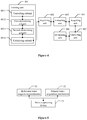
- a noise suppressing device provided according to an embodiment of the present disclosure includes: a receiving unit 301, an extracting unit 302, an acquiring unit 303, a converting unit 304 and a de-noising unit 305.
- the receiving unit 301 is configured to receive internal noise acquired by a reference voice acquisition mechanism and a voice signal containing external noise acquired by a primary voice acquisition mechanism, when the voice signal is inputted.
- the extracting unit 302 is configured to extract an internal signal feature corresponding to the internal noise.
- the internal signal feature is a power spectrum frame sequence.
- the acquiring unit 303 is configured to acquire an external approximate feature corresponding to the external noise based on the internal signal feature and a pre-set mapping formula.
- the external approximate feature is a sequence of frames in a power spectrum form.
- the converting unit 304 is configured to convert the external approximate feature into a noise signal estimate by the inverse Fourier transform.
- the de-noising unit 305 is configured to perform a pre-set noise cancellation process on the noise signal estimate and the acquired voice signal containing the internal noise, to obtain a noise-suppressed de-noised voice signal.
- the extracting unit 302 extracts the internal signal feature corresponding to the internal noise
- the acquiring unit 303 acquires the external approximate feature corresponding to the external noise based on the internal signal feature and the pre-set mapping formula
- the de-noising unit 305 performs the noise cancellation process on the voice signal and the noise signal estimate converted from the external approximate feature, thereby avoiding the restriction of great difference between external sound fields, and solving the technical problem of poor performance of the ANC method due to the great difference between the sound fields of the reference microphone and the primary microphone.
- the noise suppressing device includes: a training unit 401, a receiving unit 402, an extracting unit 403, an acquiring unit 404, a converting unit 405 and a de-noising unit 406.
- the training unit 401 is configured to train, under a condition that no voice signal is inputted, a preset auto-encoding neural network structure with noise signal samples composed of the internal noise and the external noise, to determine the mapping formula.
- the training unit 401 includes: a converting subunit 4011, a first determining subunit 4012, a second determining subunit 4013, and a calculating subunit 4014.
- the converting subunit 4011 is configured to perform, under a condition that no voice signal is inputted, the Fourier transform on each pre-set frame of each of noise signal samples, to obtain a feature and sample angle information of the sample frame.
- the feature of the sample frame is in a power spectral form.
- the receiving unit 402 is configured to receive internal noise acquired by a reference voice acquisition mechanism and a voice signal containing external noise acquired by a primary voice acquisition mechanism, when the voice signal is inputted.
- the extracting unit 403 is configured to extract an internal signal feature corresponding to the internal noise.
- the internal signal feature is a power spectrum frame sequence.
- the acquiring unit 404 is configured to acquire an external approximate feature corresponding to the external noise based on the internal signal feature and a pre-set mapping formula.
- the external approximate feature is a sequence of frames in a power spectrum form.
- the converting unit 405 is configured to convert the external approximate feature into a noise signal estimate by the inverse Fourier transform.
- the de-noising unit 406 is configured to perform a pre-set noise cancellation process on the noise signal estimate and the acquired voice signal containing the internal noise, to obtain a noise-suppressed de-noised voice signal.
- the extracting unit 403 extracts the internal signal feature corresponding to the internal noise
- the acquiring unit 404 acquires the external approximate feature corresponding to the external noise based on the internal signal feature and the pre-set mapping formula, and the external approximate feature is converted into a noise signal estimate
- the de-noising unit 406 performs the noise cancellation process with the voice signal and the estimated noise signal converted from the external approximate feature, thereby avoiding the restriction of great difference between external sound fields, and solving the technical problem of poor performance of the ANC method due to the great difference between the sound fields of the reference microphone and the primary microphone.
- the combination of neural network and the ANC method greatly improves the de-noising effect of the voice signal.
- a noise suppressing system includes: a reference voice acquisition mechanism 51, a primary voice acquisition mechanism 52 and the noise suppressing device 53 in the embodiments as shown in Figure 3 and Figure 4 .
- the reference voice acquisition mechanism 51 and the primary voice acquisition mechanism 52 are in signal transmission connection with the noise suppressing device 53.
- the reference voice acquisition mechanism 51 is configured to acquire an internal noise signal, such as an internal noise signal of a remote smart teller.
- the noise suppressing device 53 is configured to receive internal noise and a voice signal containing external noise when the voice signal is inputted, extract an internal signal feature corresponding to the internal noise, acquire an external approximate feature corresponding to the external noise based on the internal signal feature and a pre-set mapping formula, convert the external approximate feature into a noise signal estimate by the inverse Fourier transform, and perform a pre-set noise cancellation process on the noise signal estimate and the acquired voice signal containing the internal noise, to obtain a noise-suppressed de-noised voice signal.
- the primary voice acquisition mechanism 52 is configured to acquire the voice signal containing the internal noise.
- the primary voice acquisition mechanism 52 is further configured to acquire the external noise under a condition that no voice signal is inputted, so that the noise suppressing device 53 trains, under a condition that no voice signal is inputted, a preset auto-encoding neural network structure with noise signal samples composed of the internal noise and the external noise, to determine the mapping formula.
- the internal signal feature is a power spectrum frame sequence
- the external approximate feature is a sequence of frames in a power spectrum form.
- reference voice acquisition mechanism 51 and the primary voice acquisition mechanism 52 may be microphones, which is not limited herein.
- the disclosed system, device and method may be implemented in other ways.
- the above device embodiment is only illustrative.
- the division of the units is only a logical functional division. In practice, there may be other divisions.
- multiple units or assembles may be combined or may be integrated into another system. Alternatively, some features may be neglected or not be performed.
- the displayed or discussed mutual coupling or direct coupling or communication connection may be an indirect coupling or communication connection via some interfaces, devices or units, which may be in an electrical, mechanical or other form.
- the units described as separate components may be or may not be separate physical units, and a component which is displayed as a unit may be or may not be a physical unit, that is, may be located at a same position, or may be distributed over multiple network units. Some or all of the units may be selected as required to implement the solution of the embodiment.
- the functional units in the embodiments of the disclosure may be integrated into one processing unit, or may be implemented as separate physical units.
- One or more units may be integrated into one unit.
- the above integrated unit may be implemented in hardware, or may be implemented as a software functional unit.
- the integrated unit When being implemented as a software functional unit and being sold and used as a separate product, the integrated unit may be stored in a computer readable storage medium. Based on this, essential part or a part contributing to the prior art of the technical solution of the disclosure or the whole or part of the technical solution may be embodied as a software product which is stored in a storage medium, including several instructions for causing a computer device (which may be a personal computer, a server, a network device or the like) to perform all or some of the steps of the method in the embodiment of the disclosure.
- the storage medium includes various mediums capable of storing program code, such as a U disk, a movable disk, a Read-Only Memory (ROM), a Random Access Memory (RAM), a magnetic disk or an optical disk.
Landscapes
- Engineering & Computer Science (AREA)
- Signal Processing (AREA)
- Physics & Mathematics (AREA)
- Acoustics & Sound (AREA)
- Multimedia (AREA)
- Health & Medical Sciences (AREA)
- Human Computer Interaction (AREA)
- Audiology, Speech & Language Pathology (AREA)
- Computational Linguistics (AREA)
- Quality & Reliability (AREA)
- Artificial Intelligence (AREA)
- Evolutionary Computation (AREA)
- Soundproofing, Sound Blocking, And Sound Damping (AREA)
- Noise Elimination (AREA)
Applications Claiming Priority (2)
| Application Number | Priority Date | Filing Date | Title |
|---|---|---|---|
| CN201510312269.8A CN104952458B (zh) | 2015-06-09 | 2015-06-09 | 一种噪声抑制方法、装置及系统 |
| PCT/CN2016/083084 WO2016197811A1 (fr) | 2015-06-09 | 2016-05-24 | Procédé, dispositif et système permettant une suppression du bruit |
Publications (3)
| Publication Number | Publication Date |
|---|---|
| EP3309782A4 EP3309782A4 (fr) | 2018-04-18 |
| EP3309782A1 true EP3309782A1 (fr) | 2018-04-18 |
| EP3309782B1 EP3309782B1 (fr) | 2019-02-27 |
Family
ID=54167069
Family Applications (1)
| Application Number | Title | Priority Date | Filing Date |
|---|---|---|---|
| EP16806709.8A Not-in-force EP3309782B1 (fr) | 2015-06-09 | 2016-05-24 | Procédé, dispositif et système permettant une suppression du bruit |
Country Status (8)
| Country | Link |
|---|---|
| US (1) | US20180137877A1 (fr) |
| EP (1) | EP3309782B1 (fr) |
| CN (1) | CN104952458B (fr) |
| HK (1) | HK1252025B (fr) |
| RU (1) | RU2685391C1 (fr) |
| TR (1) | TR201903255T4 (fr) |
| WO (1) | WO2016197811A1 (fr) |
| ZA (1) | ZA201708508B (fr) |
Families Citing this family (22)
| Publication number | Priority date | Publication date | Assignee | Title |
|---|---|---|---|---|
| CN104952458B (zh) * | 2015-06-09 | 2019-05-14 | 广州广电运通金融电子股份有限公司 | 一种噪声抑制方法、装置及系统 |
| US10614827B1 (en) * | 2017-02-21 | 2020-04-07 | Oben, Inc. | System and method for speech enhancement using dynamic noise profile estimation |
| US11037330B2 (en) * | 2017-04-08 | 2021-06-15 | Intel Corporation | Low rank matrix compression |
| CN107277654A (zh) * | 2017-07-05 | 2017-10-20 | 深圳市捷高电子科技有限公司 | 一种麦克风背景噪音消除的方法 |
| CN107967920A (zh) * | 2017-11-23 | 2018-04-27 | 哈尔滨理工大学 | 一种改进的自编码神经网络语音增强算法 |
| US10599975B2 (en) * | 2017-12-15 | 2020-03-24 | Uber Technologies, Inc. | Scalable parameter encoding of artificial neural networks obtained via an evolutionary process |
| CN108391190B (zh) * | 2018-01-30 | 2019-09-20 | 努比亚技术有限公司 | 一种降噪方法、耳机及计算机可读存储介质 |
| CN110580910B (zh) * | 2018-06-08 | 2024-04-26 | 北京搜狗科技发展有限公司 | 一种音频处理方法、装置、设备及可读存储介质 |
| CN109728860B (zh) * | 2018-12-25 | 2021-08-06 | 江苏益邦电力科技有限公司 | 一种基于采集终端检测装置的通讯干扰抑制方法 |
| CN112017678A (zh) * | 2019-05-29 | 2020-12-01 | 北京声智科技有限公司 | 一种可实现降噪的设备及其降噪方法和装置 |
| CN110164425A (zh) * | 2019-05-29 | 2019-08-23 | 北京声智科技有限公司 | 一种降噪方法、装置及可实现降噪的设备 |
| CN110348566B (zh) * | 2019-07-15 | 2023-01-06 | 上海点积实业有限公司 | 一种生成神经网络训练用数字信号的方法和系统 |
| CN110610715B (zh) * | 2019-07-29 | 2022-02-22 | 西安工程大学 | 一种基于cnn-dnn混合神经网络的降噪方法 |
| CN110689905B (zh) * | 2019-09-06 | 2021-12-21 | 西安合谱声学科技有限公司 | 一种用于视频会议系统的语音活动检测系统 |
| CN110599997B (zh) * | 2019-09-25 | 2022-04-12 | 西南交通大学 | 一种鲁棒性强的冲击噪声有源控制方法 |
| WO2021062706A1 (fr) * | 2019-09-30 | 2021-04-08 | 大象声科(深圳)科技有限公司 | Procédé de réduction de bruit vocal en temps réel pour téléphone portable à double microphone dans un scénario de conversation à courte distance |
| EP3809410A1 (fr) * | 2019-10-17 | 2021-04-21 | Tata Consultancy Services Limited | Système et procédé pour réduire des composants de bruit dans un flux audio en direct |
| CN116362014A (zh) * | 2019-10-31 | 2023-06-30 | 佳禾智能科技股份有限公司 | 利用神经网络构建次级通道估计的降噪方法、计算机可读存储介质、电子设备 |
| CN113393857B (zh) * | 2021-06-10 | 2024-06-14 | 腾讯音乐娱乐科技(深圳)有限公司 | 一种音乐信号的人声消除方法、设备及介质 |
| CN114265373A (zh) * | 2021-11-22 | 2022-04-01 | 煤炭科学研究总院 | 综采面一体式操控台控制系统 |
| CN115659150B (zh) * | 2022-12-23 | 2023-03-14 | 中国船级社 | 一种信号处理方法、装置及设备 |
| CN116631425A (zh) * | 2023-05-23 | 2023-08-22 | 腾讯音乐娱乐科技(深圳)有限公司 | 音频数据的处理方法、服务器及计算机可读存储介质 |
Family Cites Families (12)
| Publication number | Priority date | Publication date | Assignee | Title |
|---|---|---|---|---|
| US6549586B2 (en) * | 1999-04-12 | 2003-04-15 | Telefonaktiebolaget L M Ericsson | System and method for dual microphone signal noise reduction using spectral subtraction |
| CN101763858A (zh) * | 2009-10-19 | 2010-06-30 | 瑞声声学科技(深圳)有限公司 | 双麦克风信号处理方法 |
| KR20110073882A (ko) * | 2009-12-24 | 2011-06-30 | 삼성전자주식회사 | 듀얼 스탠바이 이동통신 단말기에서 음성 신호 처리 장치 및 방법 |
| CN102376309B (zh) * | 2010-08-17 | 2013-12-04 | 骅讯电子企业股份有限公司 | 降低环境噪音的系统、方法与应用的装置 |
| EP2458586A1 (fr) * | 2010-11-24 | 2012-05-30 | Koninklijke Philips Electronics N.V. | Système et procédé pour produire un signal audio |
| WO2013061232A1 (fr) * | 2011-10-24 | 2013-05-02 | Koninklijke Philips Electronics N.V. | Atténuation du bruit d'un signal audio |
| US9286907B2 (en) * | 2011-11-23 | 2016-03-15 | Creative Technology Ltd | Smart rejecter for keyboard click noise |
| JP6069829B2 (ja) * | 2011-12-08 | 2017-02-01 | ソニー株式会社 | 耳孔装着型収音装置、信号処理装置、収音方法 |
| CN103187067A (zh) * | 2011-12-27 | 2013-07-03 | 上海博泰悦臻电子设备制造有限公司 | 汽车内外音效增强系统 |
| CN103700373A (zh) * | 2013-12-21 | 2014-04-02 | 刘兴超 | 一种穿戴式设备的声音降噪系统及其降噪处理方法 |
| CN104754430A (zh) * | 2013-12-30 | 2015-07-01 | 重庆重邮信科通信技术有限公司 | 终端麦克风降噪装置和方法 |
| CN104952458B (zh) * | 2015-06-09 | 2019-05-14 | 广州广电运通金融电子股份有限公司 | 一种噪声抑制方法、装置及系统 |
-
2015
- 2015-06-09 CN CN201510312269.8A patent/CN104952458B/zh active Active
-
2016
- 2016-05-24 EP EP16806709.8A patent/EP3309782B1/fr not_active Not-in-force
- 2016-05-24 HK HK18111355.6A patent/HK1252025B/en unknown
- 2016-05-24 RU RU2017144022A patent/RU2685391C1/ru active
- 2016-05-24 WO PCT/CN2016/083084 patent/WO2016197811A1/fr not_active Ceased
- 2016-05-24 TR TR2019/03255T patent/TR201903255T4/tr unknown
- 2016-05-24 US US15/574,193 patent/US20180137877A1/en not_active Abandoned
-
2017
- 2017-12-14 ZA ZA2017/08508A patent/ZA201708508B/en unknown
Also Published As
| Publication number | Publication date |
|---|---|
| HK1252025B (en) | 2020-03-20 |
| WO2016197811A1 (fr) | 2016-12-15 |
| EP3309782B1 (fr) | 2019-02-27 |
| CN104952458A (zh) | 2015-09-30 |
| ZA201708508B (en) | 2018-12-19 |
| EP3309782A4 (fr) | 2018-04-18 |
| TR201903255T4 (tr) | 2019-03-21 |
| RU2685391C1 (ru) | 2019-04-17 |
| CN104952458B (zh) | 2019-05-14 |
| HK1252025A1 (en) | 2019-05-10 |
| US20180137877A1 (en) | 2018-05-17 |
Similar Documents
| Publication | Publication Date | Title |
|---|---|---|
| EP3309782A1 (fr) | Procédé, dispositif et système permettant une suppression du bruit | |
| CN103310798B (zh) | 降噪方法和装置 | |
| CN108520753B (zh) | 基于卷积双向长短时记忆网络的语音测谎方法 | |
| CN106486131A (zh) | 一种语音去噪的方法及装置 | |
| CN108108357B (zh) | 口音转换方法及装置、电子设备 | |
| CN103559888A (zh) | 基于非负低秩和稀疏矩阵分解原理的语音增强方法 | |
| CN108564956B (zh) | 一种声纹识别方法和装置、服务器、存储介质 | |
| Talmon et al. | Single-channel transient interference suppression with diffusion maps | |
| CN106653056A (zh) | 基于lstm循环神经网络的基频提取模型及训练方法 | |
| CN106898362A (zh) | 基于核主成分分析改进Mel滤波器的语音特征提取方法 | |
| CN111883154B (zh) | 回声消除方法及装置、计算机可读的存储介质、电子装置 | |
| CN115223583A (zh) | 一种语音增强方法、装置、设备及介质 | |
| CN106683666A (zh) | 一种基于深度神经网络的领域自适应方法 | |
| CN115457939A (zh) | 面向语音识别的对抗样本攻击防御方法及系统 | |
| CN106373559A (zh) | 一种基于对数谱信噪比加权的鲁棒特征提取方法 | |
| CN113724692B (zh) | 一种基于声纹特征的电话场景音频获取与抗干扰处理方法 | |
| CN107248414A (zh) | 一种基于多帧频谱和非负矩阵分解的语音增强方法与装置 | |
| González et al. | MMSE-based missing-feature reconstruction with temporal modeling for robust speech recognition | |
| CN121306157A (zh) | 融合经验模态分解与双通道U-Net的设备声纹降噪监测方法 | |
| CN114141256A (zh) | 基于小波神经网络的声纹特征提取模型构建方法及系统 | |
| CN109272996A (zh) | 一种降噪方法及系统 | |
| CN106023984A (zh) | 基于车联网的语音识别方法 | |
| CN106248201A (zh) | 基于增强谱峭度的谐波成分检测方法 | |
| Astudillo et al. | An uncertainty propagation approach to robust ASR using the ETSI advanced front-end | |
| Higa et al. | Robust ASR based on ETSI Advanced Front-End using complex speech analysis |
Legal Events
| Date | Code | Title | Description |
|---|---|---|---|
| STAA | Information on the status of an ep patent application or granted ep patent |
Free format text: STATUS: THE INTERNATIONAL PUBLICATION HAS BEEN MADE |
|
| PUAI | Public reference made under article 153(3) epc to a published international application that has entered the european phase |
Free format text: ORIGINAL CODE: 0009012 |
|
| STAA | Information on the status of an ep patent application or granted ep patent |
Free format text: STATUS: REQUEST FOR EXAMINATION WAS MADE |
|
| 17P | Request for examination filed |
Effective date: 20171108 |
|
| A4 | Supplementary search report drawn up and despatched |
Effective date: 20180227 |
|
| AK | Designated contracting states |
Kind code of ref document: A1 Designated state(s): AL AT BE BG CH CY CZ DE DK EE ES FI FR GB GR HR HU IE IS IT LI LT LU LV MC MK MT NL NO PL PT RO RS SE SI SK SM TR |
|
| AX | Request for extension of the european patent |
Extension state: BA ME |
|
| DAV | Request for validation of the european patent (deleted) | ||
| DAX | Request for extension of the european patent (deleted) | ||
| GRAP | Despatch of communication of intention to grant a patent |
Free format text: ORIGINAL CODE: EPIDOSNIGR1 |
|
| STAA | Information on the status of an ep patent application or granted ep patent |
Free format text: STATUS: GRANT OF PATENT IS INTENDED |
|
| INTG | Intention to grant announced |
Effective date: 20180913 |
|
| GRAS | Grant fee paid |
Free format text: ORIGINAL CODE: EPIDOSNIGR3 |
|
| GRAA | (expected) grant |
Free format text: ORIGINAL CODE: 0009210 |
|
| STAA | Information on the status of an ep patent application or granted ep patent |
Free format text: STATUS: THE PATENT HAS BEEN GRANTED |
|
| AK | Designated contracting states |
Kind code of ref document: B1 Designated state(s): AL AT BE BG CH CY CZ DE DK EE ES FI FR GB GR HR HU IE IS IT LI LT LU LV MC MK MT NL NO PL PT RO RS SE SI SK SM TR |
|
| REG | Reference to a national code |
Ref country code: GB Ref legal event code: FG4D |
|
| REG | Reference to a national code |
Ref country code: CH Ref legal event code: EP |
|
| REG | Reference to a national code |
Ref country code: AT Ref legal event code: REF Ref document number: 1102497 Country of ref document: AT Kind code of ref document: T Effective date: 20190315 |
|
| REG | Reference to a national code |
Ref country code: IE Ref legal event code: FG4D |
|
| REG | Reference to a national code |
Ref country code: DE Ref legal event code: R096 Ref document number: 602016010510 Country of ref document: DE |
|
| REG | Reference to a national code |
Ref country code: HK Ref legal event code: DE Ref document number: 1252025 Country of ref document: HK |
|
| REG | Reference to a national code |
Ref country code: NL Ref legal event code: MP Effective date: 20190227 |
|
| REG | Reference to a national code |
Ref country code: LT Ref legal event code: MG4D |
|
| PG25 | Lapsed in a contracting state [announced via postgrant information from national office to epo] |
Ref country code: LT Free format text: LAPSE BECAUSE OF FAILURE TO SUBMIT A TRANSLATION OF THE DESCRIPTION OR TO PAY THE FEE WITHIN THE PRESCRIBED TIME-LIMIT Effective date: 20190227 Ref country code: FI Free format text: LAPSE BECAUSE OF FAILURE TO SUBMIT A TRANSLATION OF THE DESCRIPTION OR TO PAY THE FEE WITHIN THE PRESCRIBED TIME-LIMIT Effective date: 20190227 Ref country code: PT Free format text: LAPSE BECAUSE OF FAILURE TO SUBMIT A TRANSLATION OF THE DESCRIPTION OR TO PAY THE FEE WITHIN THE PRESCRIBED TIME-LIMIT Effective date: 20190627 Ref country code: SE Free format text: LAPSE BECAUSE OF FAILURE TO SUBMIT A TRANSLATION OF THE DESCRIPTION OR TO PAY THE FEE WITHIN THE PRESCRIBED TIME-LIMIT Effective date: 20190227 Ref country code: NO Free format text: LAPSE BECAUSE OF FAILURE TO SUBMIT A TRANSLATION OF THE DESCRIPTION OR TO PAY THE FEE WITHIN THE PRESCRIBED TIME-LIMIT Effective date: 20190527 Ref country code: NL Free format text: LAPSE BECAUSE OF FAILURE TO SUBMIT A TRANSLATION OF THE DESCRIPTION OR TO PAY THE FEE WITHIN THE PRESCRIBED TIME-LIMIT Effective date: 20190227 |
|
| PGFP | Annual fee paid to national office [announced via postgrant information from national office to epo] |
Ref country code: IT Payment date: 20190531 Year of fee payment: 4 Ref country code: DE Payment date: 20190528 Year of fee payment: 4 |
|
| PG25 | Lapsed in a contracting state [announced via postgrant information from national office to epo] |
Ref country code: GR Free format text: LAPSE BECAUSE OF FAILURE TO SUBMIT A TRANSLATION OF THE DESCRIPTION OR TO PAY THE FEE WITHIN THE PRESCRIBED TIME-LIMIT Effective date: 20190528 Ref country code: BG Free format text: LAPSE BECAUSE OF FAILURE TO SUBMIT A TRANSLATION OF THE DESCRIPTION OR TO PAY THE FEE WITHIN THE PRESCRIBED TIME-LIMIT Effective date: 20190527 Ref country code: HR Free format text: LAPSE BECAUSE OF FAILURE TO SUBMIT A TRANSLATION OF THE DESCRIPTION OR TO PAY THE FEE WITHIN THE PRESCRIBED TIME-LIMIT Effective date: 20190227 Ref country code: RS Free format text: LAPSE BECAUSE OF FAILURE TO SUBMIT A TRANSLATION OF THE DESCRIPTION OR TO PAY THE FEE WITHIN THE PRESCRIBED TIME-LIMIT Effective date: 20190227 Ref country code: IS Free format text: LAPSE BECAUSE OF FAILURE TO SUBMIT A TRANSLATION OF THE DESCRIPTION OR TO PAY THE FEE WITHIN THE PRESCRIBED TIME-LIMIT Effective date: 20190627 Ref country code: LV Free format text: LAPSE BECAUSE OF FAILURE TO SUBMIT A TRANSLATION OF THE DESCRIPTION OR TO PAY THE FEE WITHIN THE PRESCRIBED TIME-LIMIT Effective date: 20190227 |
|
| PGFP | Annual fee paid to national office [announced via postgrant information from national office to epo] |
Ref country code: TR Payment date: 20190521 Year of fee payment: 4 Ref country code: FR Payment date: 20190521 Year of fee payment: 4 |
|
| PG25 | Lapsed in a contracting state [announced via postgrant information from national office to epo] |
Ref country code: ES Free format text: LAPSE BECAUSE OF FAILURE TO SUBMIT A TRANSLATION OF THE DESCRIPTION OR TO PAY THE FEE WITHIN THE PRESCRIBED TIME-LIMIT Effective date: 20190227 Ref country code: AL Free format text: LAPSE BECAUSE OF FAILURE TO SUBMIT A TRANSLATION OF THE DESCRIPTION OR TO PAY THE FEE WITHIN THE PRESCRIBED TIME-LIMIT Effective date: 20190227 Ref country code: EE Free format text: LAPSE BECAUSE OF FAILURE TO SUBMIT A TRANSLATION OF THE DESCRIPTION OR TO PAY THE FEE WITHIN THE PRESCRIBED TIME-LIMIT Effective date: 20190227 Ref country code: DK Free format text: LAPSE BECAUSE OF FAILURE TO SUBMIT A TRANSLATION OF THE DESCRIPTION OR TO PAY THE FEE WITHIN THE PRESCRIBED TIME-LIMIT Effective date: 20190227 Ref country code: RO Free format text: LAPSE BECAUSE OF FAILURE TO SUBMIT A TRANSLATION OF THE DESCRIPTION OR TO PAY THE FEE WITHIN THE PRESCRIBED TIME-LIMIT Effective date: 20190227 Ref country code: SK Free format text: LAPSE BECAUSE OF FAILURE TO SUBMIT A TRANSLATION OF THE DESCRIPTION OR TO PAY THE FEE WITHIN THE PRESCRIBED TIME-LIMIT Effective date: 20190227 Ref country code: CZ Free format text: LAPSE BECAUSE OF FAILURE TO SUBMIT A TRANSLATION OF THE DESCRIPTION OR TO PAY THE FEE WITHIN THE PRESCRIBED TIME-LIMIT Effective date: 20190227 |
|
| REG | Reference to a national code |
Ref country code: DE Ref legal event code: R097 Ref document number: 602016010510 Country of ref document: DE |
|
| PG25 | Lapsed in a contracting state [announced via postgrant information from national office to epo] |
Ref country code: PL Free format text: LAPSE BECAUSE OF FAILURE TO SUBMIT A TRANSLATION OF THE DESCRIPTION OR TO PAY THE FEE WITHIN THE PRESCRIBED TIME-LIMIT Effective date: 20190227 Ref country code: SM Free format text: LAPSE BECAUSE OF FAILURE TO SUBMIT A TRANSLATION OF THE DESCRIPTION OR TO PAY THE FEE WITHIN THE PRESCRIBED TIME-LIMIT Effective date: 20190227 |
|
| REG | Reference to a national code |
Ref country code: CH Ref legal event code: PL |
|
| PLBE | No opposition filed within time limit |
Free format text: ORIGINAL CODE: 0009261 |
|
| STAA | Information on the status of an ep patent application or granted ep patent |
Free format text: STATUS: NO OPPOSITION FILED WITHIN TIME LIMIT |
|
| PG25 | Lapsed in a contracting state [announced via postgrant information from national office to epo] |
Ref country code: CH Free format text: LAPSE BECAUSE OF NON-PAYMENT OF DUE FEES Effective date: 20190531 Ref country code: LI Free format text: LAPSE BECAUSE OF NON-PAYMENT OF DUE FEES Effective date: 20190531 Ref country code: MC Free format text: LAPSE BECAUSE OF FAILURE TO SUBMIT A TRANSLATION OF THE DESCRIPTION OR TO PAY THE FEE WITHIN THE PRESCRIBED TIME-LIMIT Effective date: 20190227 |
|
| 26N | No opposition filed |
Effective date: 20191128 |
|
| REG | Reference to a national code |
Ref country code: BE Ref legal event code: MM Effective date: 20190531 |
|
| PG25 | Lapsed in a contracting state [announced via postgrant information from national office to epo] |
Ref country code: LU Free format text: LAPSE BECAUSE OF NON-PAYMENT OF DUE FEES Effective date: 20190524 |
|
| PG25 | Lapsed in a contracting state [announced via postgrant information from national office to epo] |
Ref country code: IE Free format text: LAPSE BECAUSE OF NON-PAYMENT OF DUE FEES Effective date: 20190524 |
|
| PG25 | Lapsed in a contracting state [announced via postgrant information from national office to epo] |
Ref country code: BE Free format text: LAPSE BECAUSE OF NON-PAYMENT OF DUE FEES Effective date: 20190531 |
|
| REG | Reference to a national code |
Ref country code: DE Ref legal event code: R119 Ref document number: 602016010510 Country of ref document: DE |
|
| REG | Reference to a national code |
Ref country code: AT Ref legal event code: UEP Ref document number: 1102497 Country of ref document: AT Kind code of ref document: T Effective date: 20190227 |
|
| GBPC | Gb: european patent ceased through non-payment of renewal fee |
Effective date: 20200524 |
|
| PG25 | Lapsed in a contracting state [announced via postgrant information from national office to epo] |
Ref country code: FR Free format text: LAPSE BECAUSE OF NON-PAYMENT OF DUE FEES Effective date: 20200531 Ref country code: GB Free format text: LAPSE BECAUSE OF NON-PAYMENT OF DUE FEES Effective date: 20200524 |
|
| PG25 | Lapsed in a contracting state [announced via postgrant information from national office to epo] |
Ref country code: DE Free format text: LAPSE BECAUSE OF NON-PAYMENT OF DUE FEES Effective date: 20201201 Ref country code: CY Free format text: LAPSE BECAUSE OF FAILURE TO SUBMIT A TRANSLATION OF THE DESCRIPTION OR TO PAY THE FEE WITHIN THE PRESCRIBED TIME-LIMIT Effective date: 20190227 |
|
| PG25 | Lapsed in a contracting state [announced via postgrant information from national office to epo] |
Ref country code: MT Free format text: LAPSE BECAUSE OF FAILURE TO SUBMIT A TRANSLATION OF THE DESCRIPTION OR TO PAY THE FEE WITHIN THE PRESCRIBED TIME-LIMIT Effective date: 20190227 Ref country code: HU Free format text: LAPSE BECAUSE OF FAILURE TO SUBMIT A TRANSLATION OF THE DESCRIPTION OR TO PAY THE FEE WITHIN THE PRESCRIBED TIME-LIMIT; INVALID AB INITIO Effective date: 20160524 |
|
| PG25 | Lapsed in a contracting state [announced via postgrant information from national office to epo] |
Ref country code: SI Free format text: LAPSE BECAUSE OF FAILURE TO SUBMIT A TRANSLATION OF THE DESCRIPTION OR TO PAY THE FEE WITHIN THE PRESCRIBED TIME-LIMIT Effective date: 20190227 Ref country code: IT Free format text: LAPSE BECAUSE OF NON-PAYMENT OF DUE FEES Effective date: 20200524 |
|
| PG25 | Lapsed in a contracting state [announced via postgrant information from national office to epo] |
Ref country code: TR Free format text: LAPSE BECAUSE OF NON-PAYMENT OF DUE FEES Effective date: 20200524 Ref country code: MK Free format text: LAPSE BECAUSE OF FAILURE TO SUBMIT A TRANSLATION OF THE DESCRIPTION OR TO PAY THE FEE WITHIN THE PRESCRIBED TIME-LIMIT Effective date: 20190227 |
|
| REG | Reference to a national code |
Ref country code: AT Ref legal event code: MM01 Ref document number: 1102497 Country of ref document: AT Kind code of ref document: T Effective date: 20210524 |
|
| PG25 | Lapsed in a contracting state [announced via postgrant information from national office to epo] |
Ref country code: AT Free format text: LAPSE BECAUSE OF NON-PAYMENT OF DUE FEES Effective date: 20210524 |