EP3310093B1 - Verkehrssteuerungsverfahren und -vorrichtung - Google Patents
Verkehrssteuerungsverfahren und -vorrichtung Download PDFInfo
- Publication number
- EP3310093B1 EP3310093B1 EP15894726.7A EP15894726A EP3310093B1 EP 3310093 B1 EP3310093 B1 EP 3310093B1 EP 15894726 A EP15894726 A EP 15894726A EP 3310093 B1 EP3310093 B1 EP 3310093B1
- Authority
- EP
- European Patent Office
- Prior art keywords
- rate
- users
- limited
- user
- threshold
- Prior art date
- Legal status (The legal status is an assumption and is not a legal conclusion. Google has not performed a legal analysis and makes no representation as to the accuracy of the status listed.)
- Active
Links
Images


Classifications
-
- H—ELECTRICITY
- H04—ELECTRIC COMMUNICATION TECHNIQUE
- H04W—WIRELESS COMMUNICATION NETWORKS
- H04W8/00—Network data management
- H04W8/02—Processing of mobility data, e.g. registration information at HLR [Home Location Register] or VLR [Visitor Location Register]; Transfer of mobility data, e.g. between HLR, VLR or external networks
- H04W8/04—Registration at HLR or HSS [Home Subscriber Server]
-
- H—ELECTRICITY
- H04—ELECTRIC COMMUNICATION TECHNIQUE
- H04W—WIRELESS COMMUNICATION NETWORKS
- H04W28/00—Network traffic management; Network resource management
- H04W28/02—Traffic management, e.g. flow control or congestion control
-
- H—ELECTRICITY
- H04—ELECTRIC COMMUNICATION TECHNIQUE
- H04W—WIRELESS COMMUNICATION NETWORKS
- H04W28/00—Network traffic management; Network resource management
- H04W28/02—Traffic management, e.g. flow control or congestion control
- H04W28/10—Flow control between communication endpoints
-
- H—ELECTRICITY
- H04—ELECTRIC COMMUNICATION TECHNIQUE
- H04L—TRANSMISSION OF DIGITAL INFORMATION, e.g. TELEGRAPHIC COMMUNICATION
- H04L47/00—Traffic control in data switching networks
- H04L47/10—Flow control; Congestion control
- H04L47/20—Traffic policing
-
- H—ELECTRICITY
- H04—ELECTRIC COMMUNICATION TECHNIQUE
- H04L—TRANSMISSION OF DIGITAL INFORMATION, e.g. TELEGRAPHIC COMMUNICATION
- H04L47/00—Traffic control in data switching networks
- H04L47/10—Flow control; Congestion control
- H04L47/22—Traffic shaping
- H04L47/225—Determination of shaping rate, e.g. using a moving window
Definitions
- This document relates to, but is not limited to, the field of network communications, in particular to a flow control method and apparatus.
- WiFi Wireless Fidelity
- the flow control method for a wireless network is that the rate of a single user is not limited or a fixed bandwidth is allocated for each user.
- a user carrying out a P2P (Point-to-Point) application is likely to occupy most of the bandwidth, thus basic network operations of other users, such as opening e-mails and browsing webpages, will be very difficult.
- P2P Point-to-Point
- the total bandwidth cannot be fully and effectively utilized when there are few users, thus wasting network resources.
- the document EP2785103A1 discloses a traffic control system for WLAN access points.
- the traffic control system works in dependence on a first input - user priority. This allows different service levels to be provided to different classes of customer.
- the traffic control system polices and/or shapes traffic based on a second input - a modulation rate detector, which measures the modulation rate at which each connected client is sending its traffic, and uses it to indirectly cause fairer use of the available air interface capacity.
- the document US 2012/0185586 A1 discloses a method of managing bandwidth, performed by a computing system.
- the system receives user-selected connection parameters associated with a subscriber device.
- the system associates a network identifier of the subscriber device with a group bandwidth policy, based on the user-selected connection parameters.
- the system stores, in computer-readable storage media, parameters associated with the group bandwidth policy, in association with the network identifier of the subscriber device.
- the system receives, at a gateway device, network communication data from the subscriber device.
- Also provided is a flow control method including:
- limiting a rate of a rate-unlimited user with a maximum real-time flow rate among the online users includes: setting a rate limit of the rate-unlimited user with the maximum real-time flow rate as a preset percentage of a total bandwidth of the access device, where a product of the preset percentage and the first threshold is equal to 100%.
- the flow control method further includes:
- the flow control method further includes:
- the flow control method further includes:
- the flow control method further includes:
- a flow control apparatus including:
- the rate limiting module includes:
- the flow control apparatus further includes:
- the flow control apparatus further includes:
- the flow control apparatus further includes:
- the flow control apparatus further includes:
- the beneficial effects of the embodiments of the present invention are as follows:
- the number of rate-limited users among online users of the access device can be counted, and the rate of the rate-unlimited user with the maximum real-time flow rate among the online users is limited according to the total real-time flow rate of all the online users.
- Both the problem that a single user occupies a larger bandwidth and the problem that the bandwidth cannot be fully utilized when there are few users can be avoided, and all online users can take full advantage of the total bandwidth of the access device, thus improving the user experience.
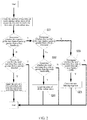
- an embodiment of the present invention provides a flow control method, applied to an access device and including the following steps.
- Step S101 the number of rate-limited users among online users of an access device and the real-time flow rate of each online user are counted.
- Step S102 whether the number of the rate-limited users is greater than a first threshold is determined.
- Step S103 it is to determine whether the total real-time flow rate of all the online users is greater than a second threshold if the number of the rate-limited users is not greater than the first threshold.
- Step S104 the rate of a rate-unlimited user with the maximum real-time flow rate among the online users is limited if the total real-time flow rate is greater than the second threshold.
- the number of rate-limited users among online users of the access device can be counted and a rate of a rate-unlimited user with the maximum real-time flow rate among the online users is limited according to the total real-time flow rate of all the online users, the problem that a single user occupies a larger bandwidth is avoided so that all the online users can take full advantage of the total bandwidth of the access device, thus improving the user experience.
- the first threshold is preset according to the actual situation, for example, preset as 10.
- the second threshold is also preset according to the actual situation, and it is preset as a certain percentage of the total bandwidth of the access device, for example, 80% of the total bandwidth of the access device, which can be selected according to different needs.
- the total bandwidth of the access device is set according to the actual situation, for example, the flow and the available total bandwidth, for example, through a medium, and the total bandwidth of the access device is shared by all the online users.
- limiting the rate of a rate-unlimited user with the maximum real-time flow rate among the online users may include: a rate limit of the rate-unlimited user with the maximum real-time flow rate is set as a preset percentage of the total bandwidth of the access device, where the product of the preset percentage and the first threshold is equal to 100%.
- the first threshold is a critical point for determining to use a different flow control method.
- the flow control method further includes the following steps.
- Step S201 it is to determine whether the number of the rate-limited users is greater than a third threshold if the number of the rate-limited users is greater than the first threshold.
- Step S202 it is to determine whether the total real-time flow rate of all the online users is greater than the total bandwidth of the access device if the number of the rate-limited users is not greater than the third threshold.
- Step S203 the rates of all the online users are limited if the total real-time flow rate is greater than the total bandwidth of the access device, where the rate limit is a flow rate obtained by dividing the total bandwidth of the access device by the number of all the online users.
- the third threshold is usually a maximum number with which the total bandwidth of the access device can be divided equally, and is also a critical point for determining to use a different flow control method.
- the flow control method may further include the following steps.
- Step S204 it is to determine whether the total real-time flow rate of all the online users is greater than the total bandwidth of the access device if the number of the rate-limited users is greater than the third threshold.
- Step S205 the rates of both a user with the maximum real-time flow rate among rate-unlimited users and a user with the minimum real-time flow rate among the rate-limited users are limited if the total real-time flow rate is greater than the total bandwidth of the access device, where the flow limit is a flow limit set for the user with the minimum real-time flow rate among the rate-limited users.
- rate limiting solutions i.e., flow control methods
- flow control methods may be used so that all the online users can make full use of the total bandwidth of the access devices to improve the user experience.
- the online users on the access device may constantly change, that is, users keep accessing the device or getting offline.
- the foregoing flow control method in the above embodiment of the present invention is carried out according to the real-time flow rates of all the online users in the access device. After an online user gets offline, it is needed to determine the offline user and restart the flow control.
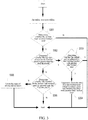
- the flow control method further includes the following steps.
- Step S301 whether the offline user is a rate-limited user is determined.
- Step S302 it is to determine whether the number of current rate-limited users is greater than the third threshold if the offline user is a rate-limited user.
- Step S303 it is to determine whether the offline user is subjected to rate limiting together with another rate-limited user if the number of the current rate-limited users is greater than the third threshold.
- Step S304 the rate of a rate-limited user which is subjected to rate limiting together with another rate-limited user among the current rate-limited users is separately limited if the offline user is not subjected to rate limiting together with another rate-limited user.
- the flow control method further includes the following steps.
- Step S305 it is to determine whether the number of the current rate-limited users is greater than the first threshold if the number of the current rate-limited users is not greater than the third threshold.
- Step S306 the rates of all the online users are limited if the number of the current rate-limited users is greater than the first threshold, where the rate limit is a flow rate obtained by dividing the total bandwidth of the access device by the number of all the online users.
- the real-time flow rates of other online users can be adjusted in time so that all current online users can fully utilize the total bandwidth of the access device to improve the user experience.
- An embodiment of the present invention provides a computer storage medium which stores computer-executable instructions for executing the foregoing method.
- an embodiment of the present invention further provides a flow control apparatus.
- the flow control apparatus may include a counting module 41, a first determining module 42, a second determining module 43, and a first rate limiting module 44.
- the counting module 41 is configured to count the number of rate-limited users among online users of an access device and the real-time flow rate of each online user.
- the first determining module 42 is configured to determine whether the number of the rate-limited users is greater than a first threshold.
- the second determining module 43 is configured to determine whether the total real-time flow rate of all the online users is greater than a second threshold if the number of the rate-limited users is not greater than the first threshold.
- the first rate limiting module 44 configured to limit the rate of a rate-unlimited user with the maximum real-time flow rate among the online users if the total real-time flow rate is greater than the second threshold.
- the number of rate-limited users among online users of the access device can be counted and the rate of the rate-unlimited user with the maximum real-time flow rate among the online users is limited according to the total real-time flow rate of all the online users.
- the total bandwidth of the access device is set according to the actual situation, for example, the flow and the available total bandwidth, for example, through a medium, and the total bandwidth of the access device is shared by all the online users.
- the first threshold is preset according to the actual situation, for example, preset as 10.
- the second threshold is also preset according to the actual situation, and it is preset as a certain percentage of the total bandwidth of the access device, for example, 80% of the total bandwidth of the access device, which can be selected according to different needs.
- the first rate limiting module may includes a setting module.
- the setting module is configured to set a rate limit of the rate-unlimited user with the maximum real-time flow rate as a preset percentage of the total bandwidth of the access device, where the product of the preset percentage and the first threshold is equal to 100%.
- the flow control apparatus further includes a third determining module, a fourth determining module, and a second rate limiting module.
- the third determining module is configured to determine whether the number of the rate-limited users is greater than a third threshold if the number of the rate-limited users is greater than the first threshold.
- the fourth determining module is configured to determine whether the total real-time flow rate of all the online users is greater than the total bandwidth of the access device if the number of the rate-limited users is not greater than the third threshold.
- the second rate limiting module is configured to limit the rates of all the online users if the total real-time flow rate is greater than the total bandwidth of the access device, where the rate limit is a flow rate obtained by dividing the total bandwidth of the access device by the number of all the online users.
- the flow control apparatus further includes a fifth determining module and a third rate limiting module.
- the fifth determining module is configured to determine whether the total real-time flow rate of all the online users is greater than the total bandwidth of the access device if the number of the rate-limited users is greater than the third threshold.
- the third rate limiting module is configured to limit the rates of both a user with the maximum real-time flow rate among rate-unlimited users and a user with the minimum real-time flow rate among the rate-limited users if the total real-time flow rate is greater than the total bandwidth of the access device, where the flow limit is a flow limit set for the user with the minimum real-time flow rate among the rate-limited users.
- the flow control apparatus further includes a sixth determining module, a seventh determining module, an eighth determining module, and a fourth rate limiting module.
- the sixth determining module is configured to determine whether the offline user is a rate-limited user
- the seventh determining module is configured to determine whether the number of current rate-limited users is greater than the third threshold if the offline user is a rate-limited user.
- the eighth determining module is configured to determine whether the offline user is subjected to rate limiting together with another rate-limited user if the number of the current rate-limited users is greater than the third threshold.
- the fourth rate limiting module is configured to separately limit the rate of a rate-limited user which is subjected to rate limiting together with another rate-limited user among the current rate-limited users if the offline user is not subjected to rate limiting together with another rate-limited user.
- the flow control apparatus further includes a ninth determining module and a fifth rate limiting module.
- the ninth determining module is configured to determine whether the number of the current rate-limited users is greater than the first threshold if the number of the current rate-limited users is not greater than the third threshold.
- the fifth rate limiting module is configured to limit the rates of all the online users if the number of the current rate-limited users is greater than the first threshold, where the rate limit is a flow rate obtained by dividing the total bandwidth of the access device by the number of all the online users.
- the real-time flow rates of other online users can be adjusted in time so that all current online users can fully utilize the total bandwidth of the access device to improve the user experience.
- All or part of the steps in the foregoing embodiments may also be implemented by using integrated circuits. These steps may be implemented by making these steps into individual integrated circuit modules or making multiple modules or steps thereof into a single integrated circuit module.
- Apparatuses / function modules / function units in the foregoing embodiments may be implemented by a general-purpose computing device, and they may be integrated on a single computing device or distributed on a network formed by multiple computing devices.
- the apparatus / functional modules / functional units in the foregoing embodiments are implemented in the form of software functional modules and are sold or used as independent products, they can be stored in a computer readable storage medium.
- the above-mentioned computer readable storage medium may be a read-only memory, a magnetic disk, an optical disk, or the like.
- the number of rate-limited users among online users of the access device can be counted and a rate of a rate-unlimited user among online users with the maximum real-time flow rate is limited according to the total real-time flow rate of all the online users.
Landscapes
- Engineering & Computer Science (AREA)
- Computer Networks & Wireless Communication (AREA)
- Signal Processing (AREA)
- Databases & Information Systems (AREA)
- Data Exchanges In Wide-Area Networks (AREA)
Claims (11)
- Durchflusssteuerverfahren, das bei einer Zugangsvorrichtung angewendet wird, umfassend:Zählen (S101) einer Anzahl ratenbegrenzter Benutzer unter Online-Benutzern der Zugangsvorrichtung und einer Echtzeit-Durchflussrate jedes Online-Benutzers;umfassend Ermitteln (S102), ob die Anzahl der ratenbegrenzten Benutzer größer ist als ein erster Schwellenwert;gekennzeichnet durchErmitteln (S103), ob eine gesamte Echtzeit-Durchflussrate aller der Online-Benutzer größer als ein zweiter Schwellenwert ist, wenn die Anzahl der ratenbegrenzten Benutzer nicht größer als der erste Schwellenwert ist; undEinstellen (S104) eines Ratengrenzwerts eines ratenunbegrenzten Benutzers mit einer maximalen Echtzeit-Durchflussrate unter den Online-Benutzern als einen voreingestellten Prozentsatz einer gesamten Bandbreite der Zugangsvorrichtung, wenn die gesamte Echtzeit-Durchflussrate größer als der zweite Schwellenwert ist,wobei ein Produkt des voreingestellten Prozentsatzes und des ersten Schwellenwerts gleich 100 % ist.
- Durchflusssteuerverfahren nach Anspruch 1, weiter umfassend:Ermitteln (S201), ob die Anzahl der ratenbegrenzten Benutzer größer als ein dritter Schwellenwert ist, wenn die Anzahl der ratenbegrenzten Benutzer größer als der erste Schwellenwert ist;Ermitteln (S202), ob die gesamte Echtzeit-Durchflussrate aller der Online-Benutzer größer als die gesamte Bandbreite der Zugangsvorrichtung ist, wenn die Anzahl der ratenbegrenzten Benutzer nicht größer als der dritte Schwellenwert ist; undBegrenzen (S203) von Raten aller der Online-Benutzer, wenn die gesamte Echtzeit-Durchflussrate größer als die gesamte Bandbreite der Zugangsvorrichtung ist, wobei ein Ratengrenzwert eine Durchflussrate ist, die durch Dividieren der gesamten Bandbreite der Zugangsvorrichtung durch eine Anzahl aller der Online-Benutzer erhalten wird.
- Durchflusssteuerverfahren nach Anspruch 2, weiter umfassend:Ermitteln (S204), ob die gesamte Echtzeit-Durchflussrate aller der Online-Benutzer größer als die gesamte Bandbreite der Zugangsvorrichtung ist, wenn die Anzahl der ratenbegrenzten Benutzer größer als der dritte Schwellenwert ist; undBegrenzen (S205) von Raten sowohl eines Benutzers mit einer maximalen Echtzeit-Durchflussrate unter ratenunbegrenzten Benutzern als auch eines Benutzers mit einer minimalen Echtzeit-Durchflussrate unter den ratenbegrenzten Benutzern, wenn die gesamte Echtzeit-Durchflussrate größer ist als die gesamte Bandbreite der Zugangsvorrichtung, wobei der Durchflussgrenzwert ein Durchflussgrenzwert ist, der für den Benutzer mit der minimalen Echtzeit-Durchflussrate unter den ratenbegrenzten Benutzern eingestellt ist.
- Durchflusssteuerverfahren nach einem der Ansprüche 1-3, weiter umfassend:sobald ein Online-Benutzer offline geht, Ermitteln (S301), ob der Offline-Benutzer ein ratenbegrenzter Benutzer ist;Ermitteln (S302), ob eine Anzahl derzeitiger ratenbegrenzter Benutzer größer ist als der dritte Schwellenwert, wenn der Offline-Benutzer ein ratenbegrenzter Benutzer ist;Ermitteln (S303), ob der Offline-Benutzer einer Ratenbegrenzung gemeinsam mit einem anderen ratenbegrenzten Benutzer unterliegt, wenn die Anzahl der derzeitigen ratenbegrenzten Benutzer größer als der dritte Schwellenwert ist; undseparates Begrenzen (S304) einer Rate eines ratenbegrenzten Benutzers, der einer Ratenbegrenzung gemeinsam mit einem anderen ratenbegrenzten Benutzer unterliegt, unter den derzeitigen ratenbegrenzten Benutzern, wenn der Offline-Benutzer keiner Ratenbegrenzung gemeinsam mit einem anderen ratenbegrenzten Benutzer unterliegt.
- Durchflusssteuerverfahren nach Anspruch 4, weiter umfassend:Ermitteln (S305), ob die Anzahl der derzeitigen ratenbegrenzten Benutzer größer ist als der erste Schwellenwert, wenn die Anzahl der derzeitigen ratenbegrenzten Benutzer nicht größer ist als der dritte Schwellenwert; undBegrenzen (S306) der Raten aller der Online-Benutzer, wenn die Anzahl der derzeitigen ratenbegrenzten Benutzer größer als der erste Schwellenwert ist, wobei die Ratenbegrenzung eine Durchflussrate ist, die durch Dividieren der gesamten Bandbreite der Zugangsvorrichtung durch die Anzahl aller der Online-Benutzer erhalten wird.
- Durchflusssteuereinrichtung, die bei einer Zugangsvorrichtung angewendet wird, umfassend:ein Zählermodul (41) das zum Zählen einer Anzahl ratenbegrenzter Benutzer unter Online-Benutzern der Zugangsvorrichtung und einer Echtzeit-Durchflussrate jedes Online-Benutzers konfiguriert ist;umfassend ein erstes Ermittlungsmodul (42), das zum Ermitteln konfiguriert ist, ob die Anzahl der ratenbegrenzten Benutzer größer ist als ein erster Schwellenwert;gekennzeichnet durch umfassendein zweites Ermittlungsmodul (43), das zum Ermitteln konfiguriert ist, ob eine gesamte Echtzeit-Durchflussrate aller der Online-Benutzer größer als ein zweiter Schwellenwert ist, wenn die Anzahl der ratenbegrenzten Benutzer nicht größer als der erste Schwellenwert ist; undein erstes Ratenbegrenzungsmodul (44), das zum Einstellen eines Ratengrenzwerts eines ratenunbegrenzten Benutzers mit einer maximalen Echtzeit-Durchflussrate unter den Online-Benutzern als einen voreingestellten Prozentsatz einer gesamten Bandbreite der Zugangsvorrichtung konfiguriert ist, wenn die gesamte Echtzeit-Durchflussrate größer als der zweite Schwellenwert ist,wobei ein Produkt des voreingestellten Prozentsatzes und des ersten Schwellenwerts gleich 100 % ist.
- Durchflusssteuereinrichtung nach Anspruch 6, weiter umfassend:ein drittes Ermittlungsmodul, das zum Ermitteln konfiguriert ist, ob die Anzahl der ratenbegrenzten Benutzer größer als ein dritter Schwellenwert ist, wenn die Anzahl der ratenbegrenzten Benutzer größer als der erste Schwellenwert ist;ein viertes Ermittlungsmodul, das zum Ermitteln konfiguriert ist, ob die gesamte Echtzeit-Durchflussrate aller der Online-Benutzer größer als die gesamte Bandbreite der Zugangsvorrichtung ist, wenn die Anzahl der ratenbegrenzten Benutzer nicht größer als der dritte Schwellenwert ist; undein zweites Ratenbegrenzungsmodul, das zum Begrenzen von Raten aller der Online-Benutzer konfiguriert ist, wenn die gesamte Echtzeit-Durchflussrate größer als die gesamte Bandbreite der Zugangsvorrichtung ist, wobei ein Ratengrenzwert eine Durchflussrate ist, die durch Dividieren der gesamten Bandbreite der Zugangsvorrichtung durch eine Anzahl aller der Online-Benutzer erhalten wird.
- Durchflusssteuereinrichtung nach Anspruch 7, weiter umfassend:ein fünftes Ermittlungsmodul, das zum Ermitteln konfiguriert ist, ob die gesamte Echtzeit-Durchflussrate aller der Online-Benutzer größer als die gesamte Bandbreite der Zugangsvorrichtung ist, wenn die Anzahl der ratenbegrenzten Benutzer größer als der dritte Schwellenwert ist; undein drittes Ratenbegrenzungsmodul, das zum Begrenzen von Raten sowohl eines Benutzers mit einer maximalen Echtzeit-Durchflussrate unter ratenunbegrenzten Benutzern als auch eines Benutzers mit einer minimalen Echtzeit-Durchflussrate unter den ratenbegrenzten Benutzern konfiguriert ist, wenn die gesamte Echtzeit-Durchflussrate größer ist als die gesamte Bandbreite der Zugangsvorrichtung, wobei der Durchflussgrenzwert ein Durchflussgrenzwert ist, der für den Benutzer mit der minimalen Echtzeit-Durchflussrate unter den ratenbegrenzten Benutzern eingestellt ist.
- Durchflusssteuereinrichtung nach einem der Ansprüche 6-8, weiter umfassend:ein sechstes Ermittlungsmodul, das zum Ermitteln konfiguriert ist, ob ein Offline-Benutzer ein ratenbegrenzter Benutzer ist;ein siebentes Ermittlungsmodul, das zum Ermitteln konfiguriert ist, ob eine Anzahl derzeitiger ratenbegrenzter Benutzer größer ist als der dritte Schwellenwert, wenn der Offline-Benutzer ein ratenbegrenzter Benutzer ist;ein achtes Ermittlungsmodul, das zum Ermitteln konfiguriert ist, ob der Offline-Benutzer einer Ratenbegrenzung gemeinsam mit einem anderen ratenbegrenzten Benutzer unterliegt, wenn die Anzahl der derzeitigen ratenbegrenzten Benutzer größer als der dritte Schwellenwert ist; undein viertes Ratenbegrenzungsmodul, das zum separaten Begrenzen einer Rate eines ratenbegrenzten Benutzers, der einer Ratenbegrenzung gemeinsam mit einem anderen ratenbegrenzten Benutzer unterliegt, unter den derzeitigen ratenbegrenzten Benutzern konfiguriert ist, wenn der Offline-Benutzer keiner Ratenbegrenzung gemeinsam mit einem anderen ratenbegrenzten Benutzer unterliegt.
- Durchflusssteuereinrichtung nach Anspruch 9, weiter umfassend:ein neuntes Ermittlungsmodul, das zum Ermitteln konfiguriert ist, ob die Anzahl der derzeitigen ratenbegrenzten Benutzer größer ist als der erste Schwellenwert, wenn die Anzahl der derzeitigen ratenbegrenzten Benutzer nicht größer ist als der dritte Schwellenwert; undein fünftes Ratenbegrenzungsmodul, das zum Begrenzen der Raten aller der Online-Benutzer konfiguriert ist, wenn die Anzahl der derzeitigen ratenbegrenzten Benutzer größer als der erste Schwellenwert ist, wobei die Ratenbegrenzung eine Durchflussrate ist, die durch Dividieren der gesamten Bandbreite der Zugangsvorrichtung durch die Anzahl aller der Online-Benutzer erhalten wird.
- Computerspeichermedium, das computerausführbare Anweisungen zur Ausführung des Verfahrens nach einem der Ansprüche 1-5 speichert.
Applications Claiming Priority (2)
| Application Number | Priority Date | Filing Date | Title |
|---|---|---|---|
| CN201510311763.2A CN106254259B (zh) | 2015-06-09 | 2015-06-09 | 一种流量控制的方法及装置 |
| PCT/CN2015/087687 WO2016197458A1 (zh) | 2015-06-09 | 2015-08-20 | 一种流量控制的方法及装置 |
Publications (3)
| Publication Number | Publication Date |
|---|---|
| EP3310093A1 EP3310093A1 (de) | 2018-04-18 |
| EP3310093A4 EP3310093A4 (de) | 2018-06-20 |
| EP3310093B1 true EP3310093B1 (de) | 2019-10-30 |
Family
ID=57502932
Family Applications (1)
| Application Number | Title | Priority Date | Filing Date |
|---|---|---|---|
| EP15894726.7A Active EP3310093B1 (de) | 2015-06-09 | 2015-08-20 | Verkehrssteuerungsverfahren und -vorrichtung |
Country Status (4)
| Country | Link |
|---|---|
| EP (1) | EP3310093B1 (de) |
| CN (1) | CN106254259B (de) |
| DK (1) | DK3310093T3 (de) |
| WO (1) | WO2016197458A1 (de) |
Families Citing this family (6)
| Publication number | Priority date | Publication date | Assignee | Title |
|---|---|---|---|---|
| CN106789723B (zh) * | 2016-12-20 | 2019-12-06 | 东软集团股份有限公司 | 多核网络转发限速的方法和装置 |
| CN111417145B (zh) * | 2019-01-04 | 2021-11-30 | 大唐移动通信设备有限公司 | 一种信息处理的方法及装置 |
| CN114070791B (zh) * | 2020-07-29 | 2023-09-05 | 中国移动通信集团安徽有限公司 | 数据流量的限速处理方法及装置 |
| CN113271257A (zh) * | 2020-08-03 | 2021-08-17 | 单中妹 | 采用中继设备的通信流量控制系统 |
| CN113347111B (zh) * | 2021-05-12 | 2023-04-07 | 金茂数字科技有限公司 | 基于用户体验的流量调整方法及管理系统 |
| CN113596050B (zh) * | 2021-08-04 | 2023-06-30 | 四川英得赛克科技有限公司 | 异常流量的分离过滤方法、系统、存储介质及电子设备 |
Family Cites Families (9)
| Publication number | Priority date | Publication date | Assignee | Title |
|---|---|---|---|---|
| JP2008042451A (ja) * | 2006-08-04 | 2008-02-21 | Nec Corp | 無線lanネットワークシステム、ポリシコントロール装置、アクセスポイント、および負荷制御方法 |
| US20080205358A1 (en) * | 2007-02-23 | 2008-08-28 | Nokia Corporation | Usage of network load information for rate adaptation purposes |
| CN100596237C (zh) * | 2007-07-05 | 2010-03-24 | 华为技术有限公司 | 扇区前向负载的度量方法及装置、控制方法及装置 |
| CN101651967A (zh) * | 2009-09-21 | 2010-02-17 | 杭州华三通信技术有限公司 | 一种无线局域网中调整流量速度的方法和设备 |
| CN101730149A (zh) * | 2009-11-26 | 2010-06-09 | 福建星网锐捷网络有限公司 | 业务流处理方法和装置及接入点 |
| US8351331B2 (en) * | 2010-06-22 | 2013-01-08 | Microsoft Corporation | Resource allocation framework for wireless/wired networks |
| JP6104178B2 (ja) * | 2011-01-18 | 2017-03-29 | ノマディックス・インコーポレイテッドNomadix,Inc. | 通信システムネットワークにおけるグループ帯域幅管理のためのシステムおよび方法 |
| CN102802214A (zh) * | 2012-08-16 | 2012-11-28 | 中兴通讯股份有限公司 | 一种基于wlan网络的速率自适应的系统和方法 |
| EP2785103A1 (de) * | 2013-03-28 | 2014-10-01 | British Telecommunications public limited company | Verfahren und System zur Steuerung des Datenverkehrs in einem drahtlosen LAN |
-
2015
- 2015-06-09 CN CN201510311763.2A patent/CN106254259B/zh active Active
- 2015-08-20 EP EP15894726.7A patent/EP3310093B1/de active Active
- 2015-08-20 WO PCT/CN2015/087687 patent/WO2016197458A1/zh not_active Ceased
- 2015-08-20 DK DK15894726.7T patent/DK3310093T3/da active
Non-Patent Citations (1)
| Title |
|---|
| None * |
Also Published As
| Publication number | Publication date |
|---|---|
| EP3310093A4 (de) | 2018-06-20 |
| CN106254259A (zh) | 2016-12-21 |
| DK3310093T3 (da) | 2020-02-03 |
| EP3310093A1 (de) | 2018-04-18 |
| CN106254259B (zh) | 2019-11-29 |
| WO2016197458A1 (zh) | 2016-12-15 |
Similar Documents
| Publication | Publication Date | Title |
|---|---|---|
| EP3310093B1 (de) | Verkehrssteuerungsverfahren und -vorrichtung | |
| US20230050017A1 (en) | Systems and methods for distributed charging in digital telecommunications networks | |
| US20240406091A1 (en) | Shaping outgoing traffic of network packets in a network management system | |
| US8948191B2 (en) | Intelligent traffic quota management | |
| WO2014094310A1 (zh) | 资源调度的方法和装置 | |
| WO2014063487A1 (en) | Traffic control method and device | |
| CN108738071A (zh) | 一种资源建立的方法及装置 | |
| WO2019029704A1 (zh) | 网络对象管理方法及其装置 | |
| WO2013178108A1 (zh) | 一种基于wlan网络的速率控制系统和方法 | |
| CN113453285A (zh) | 一种资源调整方法、装置及存储介质 | |
| US11115857B2 (en) | Bandwidth sentinel | |
| US10412006B2 (en) | Bandwith sentinel | |
| CN108476427B (zh) | 无线接入点、操作无线接入点的方法、计算机可读存储介质 | |
| CN113396573A (zh) | 计算服务的迁移 | |
| CN120812639A (zh) | 通信方法、装置及计算机可读存储介质 | |
| US12219024B2 (en) | Systems and methods for modifying connectivity and cloud services | |
| CN103338486A (zh) | 带宽分配方法及系统 | |
| US20250088838A1 (en) | Enhanced monitoring of subscriber data in wireless communication networks | |
| CN108667630A (zh) | 一种计费方法、相关设备和系统 | |
| WO2016206472A1 (zh) | 一种mac流量调度方法、装置、基站和计算机可读存储介质 | |
| CN115460637B (zh) | 资源负荷确定方法、装置及存储介质 | |
| EP3035617B1 (de) | Arbeitsmodusbestimmungsverfahren und -vorrichtung sowie netzwerkelement und ems und nms | |
| CN106535311A (zh) | 一种功耗控制方法以及装置 | |
| CN115190034A (zh) | 基于边缘云计算的服务部署方法 |
Legal Events
| Date | Code | Title | Description |
|---|---|---|---|
| STAA | Information on the status of an ep patent application or granted ep patent |
Free format text: STATUS: THE INTERNATIONAL PUBLICATION HAS BEEN MADE |
|
| PUAI | Public reference made under article 153(3) epc to a published international application that has entered the european phase |
Free format text: ORIGINAL CODE: 0009012 |
|
| STAA | Information on the status of an ep patent application or granted ep patent |
Free format text: STATUS: REQUEST FOR EXAMINATION WAS MADE |
|
| 17P | Request for examination filed |
Effective date: 20180108 |
|
| AK | Designated contracting states |
Kind code of ref document: A1 Designated state(s): AL AT BE BG CH CY CZ DE DK EE ES FI FR GB GR HR HU IE IS IT LI LT LU LV MC MK MT NL NO PL PT RO RS SE SI SK SM TR |
|
| AX | Request for extension of the european patent |
Extension state: BA ME |
|
| A4 | Supplementary search report drawn up and despatched |
Effective date: 20180517 |
|
| RIC1 | Information provided on ipc code assigned before grant |
Ipc: H04L 12/813 20130101ALI20180511BHEP Ipc: H04W 28/08 20090101ALI20180511BHEP Ipc: H04W 28/10 20090101AFI20180511BHEP Ipc: H04W 28/02 20090101ALI20180511BHEP |
|
| DAV | Request for validation of the european patent (deleted) | ||
| DAX | Request for extension of the european patent (deleted) | ||
| GRAP | Despatch of communication of intention to grant a patent |
Free format text: ORIGINAL CODE: EPIDOSNIGR1 |
|
| STAA | Information on the status of an ep patent application or granted ep patent |
Free format text: STATUS: GRANT OF PATENT IS INTENDED |
|
| INTG | Intention to grant announced |
Effective date: 20190429 |
|
| GRAS | Grant fee paid |
Free format text: ORIGINAL CODE: EPIDOSNIGR3 |
|
| GRAA | (expected) grant |
Free format text: ORIGINAL CODE: 0009210 |
|
| STAA | Information on the status of an ep patent application or granted ep patent |
Free format text: STATUS: THE PATENT HAS BEEN GRANTED |
|
| AK | Designated contracting states |
Kind code of ref document: B1 Designated state(s): AL AT BE BG CH CY CZ DE DK EE ES FI FR GB GR HR HU IE IS IT LI LT LU LV MC MK MT NL NO PL PT RO RS SE SI SK SM TR |
|
| REG | Reference to a national code |
Ref country code: GB Ref legal event code: FG4D |
|
| REG | Reference to a national code |
Ref country code: CH Ref legal event code: EP |
|
| REG | Reference to a national code |
Ref country code: AT Ref legal event code: REF Ref document number: 1197447 Country of ref document: AT Kind code of ref document: T Effective date: 20191115 |
|
| REG | Reference to a national code |
Ref country code: DE Ref legal event code: R096 Ref document number: 602015040911 Country of ref document: DE |
|
| REG | Reference to a national code |
Ref country code: IE Ref legal event code: FG4D |
|
| REG | Reference to a national code |
Ref country code: DK Ref legal event code: T3 Effective date: 20200129 |
|
| REG | Reference to a national code |
Ref country code: LT Ref legal event code: MG4D |
|
| REG | Reference to a national code |
Ref country code: CH Ref legal event code: NV Representative=s name: VALIPAT S.A. C/O BOVARD SA NEUCHATEL, CH |
|
| PG25 | Lapsed in a contracting state [announced via postgrant information from national office to epo] |
Ref country code: FI Free format text: LAPSE BECAUSE OF FAILURE TO SUBMIT A TRANSLATION OF THE DESCRIPTION OR TO PAY THE FEE WITHIN THE PRESCRIBED TIME-LIMIT Effective date: 20191030 Ref country code: LT Free format text: LAPSE BECAUSE OF FAILURE TO SUBMIT A TRANSLATION OF THE DESCRIPTION OR TO PAY THE FEE WITHIN THE PRESCRIBED TIME-LIMIT Effective date: 20191030 Ref country code: NL Free format text: LAPSE BECAUSE OF FAILURE TO SUBMIT A TRANSLATION OF THE DESCRIPTION OR TO PAY THE FEE WITHIN THE PRESCRIBED TIME-LIMIT Effective date: 20191030 Ref country code: BG Free format text: LAPSE BECAUSE OF FAILURE TO SUBMIT A TRANSLATION OF THE DESCRIPTION OR TO PAY THE FEE WITHIN THE PRESCRIBED TIME-LIMIT Effective date: 20200130 Ref country code: PL Free format text: LAPSE BECAUSE OF FAILURE TO SUBMIT A TRANSLATION OF THE DESCRIPTION OR TO PAY THE FEE WITHIN THE PRESCRIBED TIME-LIMIT Effective date: 20191030 Ref country code: GR Free format text: LAPSE BECAUSE OF FAILURE TO SUBMIT A TRANSLATION OF THE DESCRIPTION OR TO PAY THE FEE WITHIN THE PRESCRIBED TIME-LIMIT Effective date: 20200131 Ref country code: NO Free format text: LAPSE BECAUSE OF FAILURE TO SUBMIT A TRANSLATION OF THE DESCRIPTION OR TO PAY THE FEE WITHIN THE PRESCRIBED TIME-LIMIT Effective date: 20200130 Ref country code: SE Free format text: LAPSE BECAUSE OF FAILURE TO SUBMIT A TRANSLATION OF THE DESCRIPTION OR TO PAY THE FEE WITHIN THE PRESCRIBED TIME-LIMIT Effective date: 20191030 Ref country code: LV Free format text: LAPSE BECAUSE OF FAILURE TO SUBMIT A TRANSLATION OF THE DESCRIPTION OR TO PAY THE FEE WITHIN THE PRESCRIBED TIME-LIMIT Effective date: 20191030 Ref country code: PT Free format text: LAPSE BECAUSE OF FAILURE TO SUBMIT A TRANSLATION OF THE DESCRIPTION OR TO PAY THE FEE WITHIN THE PRESCRIBED TIME-LIMIT Effective date: 20200302 |
|
| REG | Reference to a national code |
Ref country code: NL Ref legal event code: MP Effective date: 20191030 |
|
| PG25 | Lapsed in a contracting state [announced via postgrant information from national office to epo] |
Ref country code: HR Free format text: LAPSE BECAUSE OF FAILURE TO SUBMIT A TRANSLATION OF THE DESCRIPTION OR TO PAY THE FEE WITHIN THE PRESCRIBED TIME-LIMIT Effective date: 20191030 Ref country code: RS Free format text: LAPSE BECAUSE OF FAILURE TO SUBMIT A TRANSLATION OF THE DESCRIPTION OR TO PAY THE FEE WITHIN THE PRESCRIBED TIME-LIMIT Effective date: 20191030 Ref country code: IS Free format text: LAPSE BECAUSE OF FAILURE TO SUBMIT A TRANSLATION OF THE DESCRIPTION OR TO PAY THE FEE WITHIN THE PRESCRIBED TIME-LIMIT Effective date: 20200229 |
|
| PG25 | Lapsed in a contracting state [announced via postgrant information from national office to epo] |
Ref country code: AL Free format text: LAPSE BECAUSE OF FAILURE TO SUBMIT A TRANSLATION OF THE DESCRIPTION OR TO PAY THE FEE WITHIN THE PRESCRIBED TIME-LIMIT Effective date: 20191030 |
|
| PG25 | Lapsed in a contracting state [announced via postgrant information from national office to epo] |
Ref country code: CZ Free format text: LAPSE BECAUSE OF FAILURE TO SUBMIT A TRANSLATION OF THE DESCRIPTION OR TO PAY THE FEE WITHIN THE PRESCRIBED TIME-LIMIT Effective date: 20191030 Ref country code: ES Free format text: LAPSE BECAUSE OF FAILURE TO SUBMIT A TRANSLATION OF THE DESCRIPTION OR TO PAY THE FEE WITHIN THE PRESCRIBED TIME-LIMIT Effective date: 20191030 Ref country code: EE Free format text: LAPSE BECAUSE OF FAILURE TO SUBMIT A TRANSLATION OF THE DESCRIPTION OR TO PAY THE FEE WITHIN THE PRESCRIBED TIME-LIMIT Effective date: 20191030 Ref country code: RO Free format text: LAPSE BECAUSE OF FAILURE TO SUBMIT A TRANSLATION OF THE DESCRIPTION OR TO PAY THE FEE WITHIN THE PRESCRIBED TIME-LIMIT Effective date: 20191030 |
|
| REG | Reference to a national code |
Ref country code: DE Ref legal event code: R097 Ref document number: 602015040911 Country of ref document: DE |
|
| REG | Reference to a national code |
Ref country code: AT Ref legal event code: MK05 Ref document number: 1197447 Country of ref document: AT Kind code of ref document: T Effective date: 20191030 |
|
| PG25 | Lapsed in a contracting state [announced via postgrant information from national office to epo] |
Ref country code: SK Free format text: LAPSE BECAUSE OF FAILURE TO SUBMIT A TRANSLATION OF THE DESCRIPTION OR TO PAY THE FEE WITHIN THE PRESCRIBED TIME-LIMIT Effective date: 20191030 Ref country code: IT Free format text: LAPSE BECAUSE OF FAILURE TO SUBMIT A TRANSLATION OF THE DESCRIPTION OR TO PAY THE FEE WITHIN THE PRESCRIBED TIME-LIMIT Effective date: 20191030 Ref country code: SM Free format text: LAPSE BECAUSE OF FAILURE TO SUBMIT A TRANSLATION OF THE DESCRIPTION OR TO PAY THE FEE WITHIN THE PRESCRIBED TIME-LIMIT Effective date: 20191030 |
|
| PLBE | No opposition filed within time limit |
Free format text: ORIGINAL CODE: 0009261 |
|
| STAA | Information on the status of an ep patent application or granted ep patent |
Free format text: STATUS: NO OPPOSITION FILED WITHIN TIME LIMIT |
|
| 26N | No opposition filed |
Effective date: 20200731 |
|
| PG25 | Lapsed in a contracting state [announced via postgrant information from national office to epo] |
Ref country code: SI Free format text: LAPSE BECAUSE OF FAILURE TO SUBMIT A TRANSLATION OF THE DESCRIPTION OR TO PAY THE FEE WITHIN THE PRESCRIBED TIME-LIMIT Effective date: 20191030 Ref country code: AT Free format text: LAPSE BECAUSE OF FAILURE TO SUBMIT A TRANSLATION OF THE DESCRIPTION OR TO PAY THE FEE WITHIN THE PRESCRIBED TIME-LIMIT Effective date: 20191030 |
|
| REG | Reference to a national code |
Ref country code: BE Ref legal event code: MM Effective date: 20200831 |
|
| PG25 | Lapsed in a contracting state [announced via postgrant information from national office to epo] |
Ref country code: BE Free format text: LAPSE BECAUSE OF NON-PAYMENT OF DUE FEES Effective date: 20200831 |
|
| PG25 | Lapsed in a contracting state [announced via postgrant information from national office to epo] |
Ref country code: TR Free format text: LAPSE BECAUSE OF FAILURE TO SUBMIT A TRANSLATION OF THE DESCRIPTION OR TO PAY THE FEE WITHIN THE PRESCRIBED TIME-LIMIT Effective date: 20191030 Ref country code: CY Free format text: LAPSE BECAUSE OF FAILURE TO SUBMIT A TRANSLATION OF THE DESCRIPTION OR TO PAY THE FEE WITHIN THE PRESCRIBED TIME-LIMIT Effective date: 20191030 |
|
| PG25 | Lapsed in a contracting state [announced via postgrant information from national office to epo] |
Ref country code: MK Free format text: LAPSE BECAUSE OF FAILURE TO SUBMIT A TRANSLATION OF THE DESCRIPTION OR TO PAY THE FEE WITHIN THE PRESCRIBED TIME-LIMIT Effective date: 20191030 |
|
| PGFP | Annual fee paid to national office [announced via postgrant information from national office to epo] |
Ref country code: GB Payment date: 20250626 Year of fee payment: 11 |
|
| PGFP | Annual fee paid to national office [announced via postgrant information from national office to epo] |
Ref country code: FR Payment date: 20250610 Year of fee payment: 11 |
|
| PGFP | Annual fee paid to national office [announced via postgrant information from national office to epo] |
Ref country code: IE Payment date: 20250610 Year of fee payment: 11 |
|
| PGFP | Annual fee paid to national office [announced via postgrant information from national office to epo] |
Ref country code: LU Payment date: 20250814 Year of fee payment: 11 |
|
| PGFP | Annual fee paid to national office [announced via postgrant information from national office to epo] |
Ref country code: DE Payment date: 20250624 Year of fee payment: 11 Ref country code: DK Payment date: 20250814 Year of fee payment: 11 |
|
| PGFP | Annual fee paid to national office [announced via postgrant information from national office to epo] |
Ref country code: MC Payment date: 20250728 Year of fee payment: 11 |
|
| PGFP | Annual fee paid to national office [announced via postgrant information from national office to epo] |
Ref country code: MT Payment date: 20250818 Year of fee payment: 11 Ref country code: CH Payment date: 20250901 Year of fee payment: 11 |