EP3312207A1 - Procédé de fabrication de copolymères polyoxyalkylène-oxyméthylène à basses températures de réaction - Google Patents
Procédé de fabrication de copolymères polyoxyalkylène-oxyméthylène à basses températures de réaction Download PDFInfo
- Publication number
- EP3312207A1 EP3312207A1 EP16194873.2A EP16194873A EP3312207A1 EP 3312207 A1 EP3312207 A1 EP 3312207A1 EP 16194873 A EP16194873 A EP 16194873A EP 3312207 A1 EP3312207 A1 EP 3312207A1
- Authority
- EP
- European Patent Office
- Prior art keywords
- mol
- formaldehyde
- oxymethylene
- polyoxyalkylene
- reaction
- Prior art date
- Legal status (The legal status is an assumption and is not a legal conclusion. Google has not performed a legal analysis and makes no representation as to the accuracy of the status listed.)
- Withdrawn
Links
Images


Classifications
-
- C—CHEMISTRY; METALLURGY
- C08—ORGANIC MACROMOLECULAR COMPOUNDS; THEIR PREPARATION OR CHEMICAL WORKING-UP; COMPOSITIONS BASED THEREON
- C08G—MACROMOLECULAR COMPOUNDS OBTAINED OTHERWISE THAN BY REACTIONS ONLY INVOLVING UNSATURATED CARBON-TO-CARBON BONDS
- C08G18/00—Polymeric products of isocyanates or isothiocyanates
- C08G18/06—Polymeric products of isocyanates or isothiocyanates with compounds having active hydrogen
- C08G18/08—Processes
- C08G18/16—Catalysts
- C08G18/22—Catalysts containing metal compounds
- C08G18/24—Catalysts containing metal compounds of tin
- C08G18/244—Catalysts containing metal compounds of tin tin salts of carboxylic acids
-
- C—CHEMISTRY; METALLURGY
- C08—ORGANIC MACROMOLECULAR COMPOUNDS; THEIR PREPARATION OR CHEMICAL WORKING-UP; COMPOSITIONS BASED THEREON
- C08G—MACROMOLECULAR COMPOUNDS OBTAINED OTHERWISE THAN BY REACTIONS ONLY INVOLVING UNSATURATED CARBON-TO-CARBON BONDS
- C08G18/00—Polymeric products of isocyanates or isothiocyanates
- C08G18/06—Polymeric products of isocyanates or isothiocyanates with compounds having active hydrogen
- C08G18/28—Polymeric products of isocyanates or isothiocyanates with compounds having active hydrogen characterised by the compounds used containing active hydrogen
- C08G18/40—High-molecular-weight compounds
- C08G18/56—Polyacetals
-
- C—CHEMISTRY; METALLURGY
- C08—ORGANIC MACROMOLECULAR COMPOUNDS; THEIR PREPARATION OR CHEMICAL WORKING-UP; COMPOSITIONS BASED THEREON
- C08G—MACROMOLECULAR COMPOUNDS OBTAINED OTHERWISE THAN BY REACTIONS ONLY INVOLVING UNSATURATED CARBON-TO-CARBON BONDS
- C08G18/00—Polymeric products of isocyanates or isothiocyanates
- C08G18/06—Polymeric products of isocyanates or isothiocyanates with compounds having active hydrogen
- C08G18/70—Polymeric products of isocyanates or isothiocyanates with compounds having active hydrogen characterised by the isocyanates or isothiocyanates used
- C08G18/72—Polyisocyanates or polyisothiocyanates
- C08G18/74—Polyisocyanates or polyisothiocyanates cyclic
- C08G18/76—Polyisocyanates or polyisothiocyanates cyclic aromatic
- C08G18/7614—Polyisocyanates or polyisothiocyanates cyclic aromatic containing only one aromatic ring
- C08G18/7621—Polyisocyanates or polyisothiocyanates cyclic aromatic containing only one aromatic ring being toluene diisocyanate including isomer mixtures
-
- C—CHEMISTRY; METALLURGY
- C08—ORGANIC MACROMOLECULAR COMPOUNDS; THEIR PREPARATION OR CHEMICAL WORKING-UP; COMPOSITIONS BASED THEREON
- C08G—MACROMOLECULAR COMPOUNDS OBTAINED OTHERWISE THAN BY REACTIONS ONLY INVOLVING UNSATURATED CARBON-TO-CARBON BONDS
- C08G2/00—Addition polymers of aldehydes or cyclic oligomers thereof or of ketones; Addition copolymers thereof with less than 50 molar percent of other substances
- C08G2/06—Catalysts
-
- C—CHEMISTRY; METALLURGY
- C08—ORGANIC MACROMOLECULAR COMPOUNDS; THEIR PREPARATION OR CHEMICAL WORKING-UP; COMPOSITIONS BASED THEREON
- C08G—MACROMOLECULAR COMPOUNDS OBTAINED OTHERWISE THAN BY REACTIONS ONLY INVOLVING UNSATURATED CARBON-TO-CARBON BONDS
- C08G2/00—Addition polymers of aldehydes or cyclic oligomers thereof or of ketones; Addition copolymers thereof with less than 50 molar percent of other substances
- C08G2/08—Polymerisation of formaldehyde
-
- C—CHEMISTRY; METALLURGY
- C08—ORGANIC MACROMOLECULAR COMPOUNDS; THEIR PREPARATION OR CHEMICAL WORKING-UP; COMPOSITIONS BASED THEREON
- C08G—MACROMOLECULAR COMPOUNDS OBTAINED OTHERWISE THAN BY REACTIONS ONLY INVOLVING UNSATURATED CARBON-TO-CARBON BONDS
- C08G2/00—Addition polymers of aldehydes or cyclic oligomers thereof or of ketones; Addition copolymers thereof with less than 50 molar percent of other substances
- C08G2/18—Copolymerisation of aldehydes or ketones
- C08G2/22—Copolymerisation of aldehydes or ketones with epoxy compounds
-
- C—CHEMISTRY; METALLURGY
- C08—ORGANIC MACROMOLECULAR COMPOUNDS; THEIR PREPARATION OR CHEMICAL WORKING-UP; COMPOSITIONS BASED THEREON
- C08G—MACROMOLECULAR COMPOUNDS OBTAINED OTHERWISE THAN BY REACTIONS ONLY INVOLVING UNSATURATED CARBON-TO-CARBON BONDS
- C08G2/00—Addition polymers of aldehydes or cyclic oligomers thereof or of ketones; Addition copolymers thereof with less than 50 molar percent of other substances
- C08G2/38—Block or graft polymers prepared by polymerisation of aldehydes or ketones on to macromolecular compounds
-
- C—CHEMISTRY; METALLURGY
- C08—ORGANIC MACROMOLECULAR COMPOUNDS; THEIR PREPARATION OR CHEMICAL WORKING-UP; COMPOSITIONS BASED THEREON
- C08G—MACROMOLECULAR COMPOUNDS OBTAINED OTHERWISE THAN BY REACTIONS ONLY INVOLVING UNSATURATED CARBON-TO-CARBON BONDS
- C08G65/00—Macromolecular compounds obtained by reactions forming an ether link in the main chain of the macromolecule
- C08G65/02—Macromolecular compounds obtained by reactions forming an ether link in the main chain of the macromolecule from cyclic ethers by opening of the heterocyclic ring
- C08G65/26—Macromolecular compounds obtained by reactions forming an ether link in the main chain of the macromolecule from cyclic ethers by opening of the heterocyclic ring from cyclic ethers and other compounds
- C08G65/2603—Macromolecular compounds obtained by reactions forming an ether link in the main chain of the macromolecule from cyclic ethers by opening of the heterocyclic ring from cyclic ethers and other compounds the other compounds containing oxygen
-
- C—CHEMISTRY; METALLURGY
- C08—ORGANIC MACROMOLECULAR COMPOUNDS; THEIR PREPARATION OR CHEMICAL WORKING-UP; COMPOSITIONS BASED THEREON
- C08G—MACROMOLECULAR COMPOUNDS OBTAINED OTHERWISE THAN BY REACTIONS ONLY INVOLVING UNSATURATED CARBON-TO-CARBON BONDS
- C08G65/00—Macromolecular compounds obtained by reactions forming an ether link in the main chain of the macromolecule
- C08G65/02—Macromolecular compounds obtained by reactions forming an ether link in the main chain of the macromolecule from cyclic ethers by opening of the heterocyclic ring
- C08G65/26—Macromolecular compounds obtained by reactions forming an ether link in the main chain of the macromolecule from cyclic ethers by opening of the heterocyclic ring from cyclic ethers and other compounds
- C08G65/2642—Macromolecular compounds obtained by reactions forming an ether link in the main chain of the macromolecule from cyclic ethers by opening of the heterocyclic ring from cyclic ethers and other compounds characterised by the catalyst used
- C08G65/2645—Metals or compounds thereof, e.g. salts
- C08G65/2663—Metal cyanide catalysts, i.e. DMC's
-
- C—CHEMISTRY; METALLURGY
- C08—ORGANIC MACROMOLECULAR COMPOUNDS; THEIR PREPARATION OR CHEMICAL WORKING-UP; COMPOSITIONS BASED THEREON
- C08G—MACROMOLECULAR COMPOUNDS OBTAINED OTHERWISE THAN BY REACTIONS ONLY INVOLVING UNSATURATED CARBON-TO-CARBON BONDS
- C08G65/00—Macromolecular compounds obtained by reactions forming an ether link in the main chain of the macromolecule
- C08G65/02—Macromolecular compounds obtained by reactions forming an ether link in the main chain of the macromolecule from cyclic ethers by opening of the heterocyclic ring
- C08G65/26—Macromolecular compounds obtained by reactions forming an ether link in the main chain of the macromolecule from cyclic ethers by opening of the heterocyclic ring from cyclic ethers and other compounds
- C08G65/2642—Macromolecular compounds obtained by reactions forming an ether link in the main chain of the macromolecule from cyclic ethers by opening of the heterocyclic ring from cyclic ethers and other compounds characterised by the catalyst used
- C08G65/2669—Non-metals or compounds thereof
- C08G65/2687—Elements not covered by groups C08G65/2672 - C08G65/2684 or compounds thereof
-
- C—CHEMISTRY; METALLURGY
- C08—ORGANIC MACROMOLECULAR COMPOUNDS; THEIR PREPARATION OR CHEMICAL WORKING-UP; COMPOSITIONS BASED THEREON
- C08G—MACROMOLECULAR COMPOUNDS OBTAINED OTHERWISE THAN BY REACTIONS ONLY INVOLVING UNSATURATED CARBON-TO-CARBON BONDS
- C08G65/00—Macromolecular compounds obtained by reactions forming an ether link in the main chain of the macromolecule
- C08G65/02—Macromolecular compounds obtained by reactions forming an ether link in the main chain of the macromolecule from cyclic ethers by opening of the heterocyclic ring
- C08G65/26—Macromolecular compounds obtained by reactions forming an ether link in the main chain of the macromolecule from cyclic ethers by opening of the heterocyclic ring from cyclic ethers and other compounds
- C08G65/2642—Macromolecular compounds obtained by reactions forming an ether link in the main chain of the macromolecule from cyclic ethers by opening of the heterocyclic ring from cyclic ethers and other compounds characterised by the catalyst used
- C08G65/269—Mixed catalyst systems, i.e. containing more than one reactive component or catalysts formed in-situ
-
- C—CHEMISTRY; METALLURGY
- C08—ORGANIC MACROMOLECULAR COMPOUNDS; THEIR PREPARATION OR CHEMICAL WORKING-UP; COMPOSITIONS BASED THEREON
- C08G—MACROMOLECULAR COMPOUNDS OBTAINED OTHERWISE THAN BY REACTIONS ONLY INVOLVING UNSATURATED CARBON-TO-CARBON BONDS
- C08G65/00—Macromolecular compounds obtained by reactions forming an ether link in the main chain of the macromolecule
- C08G65/02—Macromolecular compounds obtained by reactions forming an ether link in the main chain of the macromolecule from cyclic ethers by opening of the heterocyclic ring
- C08G65/26—Macromolecular compounds obtained by reactions forming an ether link in the main chain of the macromolecule from cyclic ethers by opening of the heterocyclic ring from cyclic ethers and other compounds
- C08G65/2696—Macromolecular compounds obtained by reactions forming an ether link in the main chain of the macromolecule from cyclic ethers by opening of the heterocyclic ring from cyclic ethers and other compounds characterised by the process or apparatus used
-
- C—CHEMISTRY; METALLURGY
- C08—ORGANIC MACROMOLECULAR COMPOUNDS; THEIR PREPARATION OR CHEMICAL WORKING-UP; COMPOSITIONS BASED THEREON
- C08G—MACROMOLECULAR COMPOUNDS OBTAINED OTHERWISE THAN BY REACTIONS ONLY INVOLVING UNSATURATED CARBON-TO-CARBON BONDS
- C08G2110/00—Foam properties
- C08G2110/0008—Foam properties flexible
-
- C—CHEMISTRY; METALLURGY
- C08—ORGANIC MACROMOLECULAR COMPOUNDS; THEIR PREPARATION OR CHEMICAL WORKING-UP; COMPOSITIONS BASED THEREON
- C08G—MACROMOLECULAR COMPOUNDS OBTAINED OTHERWISE THAN BY REACTIONS ONLY INVOLVING UNSATURATED CARBON-TO-CARBON BONDS
- C08G2110/00—Foam properties
- C08G2110/0083—Foam properties prepared using water as the sole blowing agent
Definitions
- the present invention relates to a process for the preparation of polyoxyalkylene-oxymethylene copolymers, comprising the step of polymerizing formaldehyde and an alkylene oxide in the presence of a Zerewitinoff-active H initiator compound and a catalyst, wherein the polymerization is carried out at a lower than usual reaction temperature is carried out. It further relates to a polyoxyalkylene-oxymethylene copolymer obtainable thereby and a polyurethane obtainable therewith.
- polyurethane raw materials At present, more than 11 million tons of polyurethane are produced worldwide each year. From the point of view of a more sustainable mode of production, the use of polyols derived at least in part from renewable raw material sources as polyurethane raw materials is desirable. In particular, CO 2 and formaldehyde are suitable as C 1 building blocks. These are not tied to the availability of crude oil and also inexpensive.
- Formaldehyde can be polymerized to oligomeric or polymeric oxymethylene chains (POM). If polymeric polyols are used as starters, this gives oxymethylene block copolymers.
- the sources of formaldehyde are usually gaseous formaldehyde (monomer), paraformaldehyde (polymer) and trioxane (trimer).
- the reaction conditions of the polymerization also have a great influence on the structure of the block copolymers thus obtained: the anionic polymerization of gaseous formaldehyde in the presence of an example difunctional starter polyol leads to a triblock structure in which the starter polyol two POM chains which forms the conclusion of the block copolymer.
- block copolymers When formaldehyde is polymerized in the presence of a polymeric polyol, block copolymers can be obtained. Compared with oxymethylene homopolymers of the same molecular weight, the partial crystallinity in such block copolymers is typically reduced, which usually also leads to a reduction in melting points and viscosities. The glass transition temperature is often reduced. The presence of additional oligomer blocks derived from another comonomer also typically results in an increase in chemical and thermal stability.
- WO 2014/095679 A1 describes a process for preparing NCO-modified oxymethylene copolymers, comprising the step of polymerizing formaldehyde in the presence of a catalyst, wherein the polymerization of formaldehyde continues in the presence of a starter compound having at least 2 Zerewitinoff active H atoms to give an intermediate is reacted and the resulting intermediate with an isocyanate to obtain an NCO-modified oxymethylene copolymer.
- Polyisocyanates are mentioned as possible reagents for NCO modification.
- WO 2014/095861 A2 discloses a process for preparing non-alternating formaldehyde / CO 2 copolymers comprising the step of reacting formaldehyde or a formaldehyde-releasing compound with carbon dioxide in the presence of a catalyst system, characterized in that the catalyst system comprises a Lewis acidic component and a basic component in which the Lewis acidic component is at least temporarily coordinatively unsaturated under reaction conditions and wherein the basic component has a pK b value of> 0.
- the Lewis acid component can be a metal selected from the group boron, tin, zinc. Copper, bismuth, molybdenum, tungsten and / or vanadium.
- the basic component can be selected from the group of alkali metal carbonates, alkali metal carboxylates, 1,4-diazabicyclo [2.2.2] octane (DABCO), 4- (dimethylamino) pyridine (DMAP), 1,8-diazabicyclo [5.4.0] undec-7 -EN (DBU), triazabicyclo [4.4.0] dec-5-ene (TBD), 7-methyl-1,5,7-triazabicyclo [4.4.0] dec-5-ene (MTBD), 2,6- Lutidine, N-heterocyclic carbenes and / or trimesitylphosphine.
- DABCO 1,4-diazabicyclo [2.2.2] octane
- DMAP dimethylamino) pyridine
- DBU 1,8-diazabicyclo [5.4.0] undec-7 -EN
- TBD triazabicyclo [4.4.0] dec-5-ene
- MTBD 7-methyl-1
- the present invention has therefore set itself the task of providing a process for the preparation of preferably random oxymethylene copolymers, in which the ratio of incorporated formaldehyde to incorporated alkylene oxide is as high as possible and which at the same time have the lowest possible viscosity.
- the object has been achieved by a process for preparing polyoxyalkylene-oxymethylene copolymers, comprising the step of polymerizing formaldehyde and an alkylene oxide in the presence of a Zerewitinoff-active hydrogen atom initiator compound and a catalyst, wherein the polymerization is carried out at a temperature between ⁇ 40 ° C and ⁇ 90 ° C is performed.
- oxymethylene polyols are to be understood as meaning both oxymethylene polyols having an oxymethylene unit and also polyoxymethylene polyols having at least two directly successive oxymethylene units.
- copolymers are polymers which contain at least one block (A) comprising oxymethylene units and oxyalkylene units not equal to the oxymethylene units and a further block (B) comprising a starter compound.
- oxymethylene units and the oxyalkylene units unlike the oxymethylene units, are randomly distributed in the block (A).
- Suitable alkylene oxides are in particular ethylene oxide, propylene oxide and / or styrene oxide.
- Preferred is a temperature for the polymerization of ⁇ 40 ° C to ⁇ 80 ° C.
- Oxymethylene homopolymers are typically limited to a functionality F ⁇ 2.
- starter compounds having a functionality F ⁇ 2 allows access to copolymers having a functionality F ⁇ 2.
- the proportion of polyoxyalkylene units which are prepared from the corresponding alkylene oxides is reduced by the proportion of oxymethylene, which leads to an advantageous energy balance of the product.
- Physical properties such as melting ranges and viscosities as well as glass transition temperatures can be targeted for a given molecular weight over the proportion of formaldehyde to alkylene oxide.
- catalysts are Lewis acidic catalysts containing as Lewis acid center one or more tin, bismuth, vanadium or molybdenum atoms, e.g. Dibutyltin dilaurate (DBTL), dibutyltin oxide, bismuth tris (2-ethylhexanoate), bismuth (III) triflate, lithium orthovanadate or lithium molybdate.
- DBTL Dibutyltin dilaurate
- dibutyltin oxide bismuth tris (2-ethylhexanoate
- bismuth (III) triflate lithium orthovanadate or lithium molybdate.
- the catalyst is usually used in a molar ratio of 1:10 000 to 10: 1, preferably 1: 1000 to 1: 1, particularly preferably 1: 1000 to 1:10 to the functional groups contained in the starter compound.
- Formaldehyde can be used in a gaseous state, if appropriate as a mixture with inert gases such as nitrogen or argon, or as a mixture with gaseous, supercritical or liquid carbon dioxide, or as a formaldehyde solution.
- Formaldehyde solutions may be aqueous formaldehyde solutions having a formaldehyde content between 1% by weight and 37% by weight, which may optionally contain up to 15% by weight of methanol as stabilizer.
- solutions of formaldehyde in polar organic solvents such as methanol or higher monohydric or polyhydric alcohols, 1,4-dioxane, acetonitrile, N, N-dimethylformamide (DMF), N, N-dimethylacetamide, dimethyl sulfoxide (DMSO), cyclic carbonates , eg ethylene carbonate or propylene carbonate, N-methylpyrrolidone (NMP), sulfolane, Tetramethylurea, N, N'-dimethylethyleneurea or mixtures thereof with each other, are used with water and / or other solvents. The presence of other substances in solution is also included.
- polar organic solvents such as methanol or higher monohydric or polyhydric alcohols, 1,4-dioxane, acetonitrile, N, N-dimethylformamide (DMF), N, N-dimethylacetamide, dimethyl sulfoxide (DMSO), cyclic carbonates ,
- mixtures of gaseous formaldehyde with argon or carbon dioxide is preferred.
- solutions of formaldehyde in aprotic polar organic solvents such as 1,4-dioxane, acetonitrile, N, N-dimethylformamide (DMF), N, N-dimethylacetamide, dimethyl sulfoxide (DMSO), cyclic carbonates, such as ethylene carbonate or Propylene carbonate, N-methylpyrrolidone (NMP), sulfolane, tetramethylurea, N, N'-dimethylethyleneurea or mixtures thereof with one another, and / or other solvents.
- aprotic polar organic solvents such as 1,4-dioxane, acetonitrile, N, N-dimethylformamide (DMF), N, N-dimethylacetamide, dimethyl sulfoxide (DMSO), cyclic carbonates, such as ethylene carbonate or Propylene carbonate, N-methyl
- formaldehyde can be generated in situ from a suitable source of formaldehyde.
- a source of formaldehyde substances may be used which contain chemically bound formaldehyde, usually in the form of oxymethylene groups, and which are capable, under suitable conditions, of releasing formaldehyde.
- Suitable conditions for release may include, for example, elevated temperatures and / or the use of catalysts and / or the presence of acids, bases or other reagents that result in the release of monomeric formaldehyde.
- Preferred sources of formaldehyde are 1,3,5-trioxane, paraformaldehyde, polyoxymethylene, dimethyl acetal, 1,3-dioxolane, 1,3-dioxane and / or 1,3-dioxepane, more preferably 1,3,5-trioxane and paraformaldehyde.
- the starter compounds are difunctional or higher-functional compounds having a number-average molecular weight M n of, for example, between 100 and 3,000 g / mol.
- the functionality is prepared via terminal or along the polymer chain arranged heteroatom-containing, deprotonatable functional groups such as hydroxyl groups, thiol groups, amino groups, carboxylic acid groups or carboxylic acid derivatives such as amides.
- Hydrogen bonded to N, O or S is referred to as Zerewitinoff active hydrogen (or "active hydrogen”) when it provides methane by reaction with methyl magnesium iodide according to a method discovered by Zerewitinoff.
- the starter compounds typically have a functionality ⁇ 2, for example in a range from ⁇ 2 to ⁇ 6, preferably from ⁇ 2 to ⁇ 4 and particularly preferably from ⁇ 2 to ⁇ 3.
- a solvent for example, water, methanol or higher mono- or polyhydric alcohols, nonpolar organic solvents such as linear or branched alkanes or alkane mixtures, toluene, the various xylene isomers or mixtures thereof, mesitylene, or polyhalogenated aromatics or alkanes, open-chain or cyclic ethers such as tetrahydrofuran (THF) or methyl tert-butyl ether (MTBE), open-chain or cyclic esters, or polar aprotic Solvents, for example 1,4-dioxane, acetonitrile, N , N- dimethylformamide (DMF), N , N- dimethylacetamide, dimethyl sulfoxide (DMSO), cyclic carbonates, for example ethylene carbonate or propylene carbonate, N- methylpyr
- liquid or supercritical carbon dioxide as a solvent in pure substance or as a mixture with one of the abovementioned solvents is also possible.
- open-chain or cyclic ethers such as tetrahydrofuran (THF) or methyl tert-butyl ether (MTBE), open-chain or cyclic esters, polar aprotic solvents such as 1,4-dioxane, acetonitrile, N , N- dimethylformamide (DMF), N , N -dimethylacetamide, dimethyl sulfoxide (DMSO), cyclic carbonates such as ethylene carbonate or propylene carbonate, N-methylpyrrolidone (NMP), sulfolane, tetramethylurea, N, N '-Dimethylethylenharnstoff or mixtures thereof with each other and / or other solvents and liquid or supercritical carbon dioxide.
- NTF tetrahydrofuran
- MTBE methyl ter
- the reaction can be carried out in a batch process, in a semi-batch process or in a continuous process.
- a mixture of initiator, catalyst and optionally a solvent is initially charged and formaldehyde or the formaldehyde source in pure substance is added as a gas or liquid or in solution of the reaction.
- the pressure during the polymerization of formaldehyde in the presence of the initiator compound and the alkylene oxide is usually 1 to 200 bar.
- the pressure is preferably 5 to 100 bar, more preferably 10 to 50 bar.
- the pressure is preferably 5 to 100 bar, more preferably 10 to 50 bar.
- the reaction time for the polymerization is, for example, 0.05 to 120 hours, preferably 0.5 to 48 hours, more preferably 1 to 24 hours.
- the reaction time is considered to be the period during which the catalyst, formaldehyde, alkylene oxide and initiator compound are in direct contact at the reaction temperature. In particular, in the implementation in the semi-batch process, such. When gaseous formaldehyde is introduced into the reaction mixture, the reaction time depends on the amount of formaldehyde added or the dosed formaldehyde equivalents.
- the product mixture obtained in the preparation of the copolymers can be used without further purification steps in the reaction with isocyanates to give polyurethanes.
- the further reaction can be carried out directly in the present reactor ( in situ ) or in a second reactor without prior isolation of the oxymethylene copolymers.
- the Reaction mixture temporally offset for example, after transfer or storage, are used for further implementation. Preference is given to using product mixtures for the further reaction in which the oxymethylene copolymers were obtained in the absence of solvents.
- aqueous solutions are used in the process according to the invention, it is preferred if the solution water is separated in a step preceding the isocyanate reaction, for example by a stripping step. Preferably, however, the process according to the invention is carried out in the absence of aqueous reagents, so that no additional step for separating off the solution water is required.
- the pressure during the polymerization of formaldehyde in the presence of the initiator compound and optionally additional comonomers, such as CO 2 is 1 to 200 bar.
- the pressure is preferably 5 to 100 bar, more preferably 10 to 50 bar.
- the reaction time for the polymerization is, for example, 0.05 to 120 hours, preferably 0.5 to 48 hours, more preferably 1 to 24 hours.
- the reaction time is considered to be the period during which the catalyst, formaldehyde and initiator compound are in direct contact at the reaction temperature. In particular, in the implementation in the semi-batch process, such.
- gaseous formaldehyde is introduced into the reaction mixture, the reaction time depends on the amount of formaldehyde added or the dosed formaldehyde equivalents.
- the product mixture obtained in the preparation of the oxymethylene copolymers can be used without further purification steps in the reaction with isocyanates to give polyurethanes.
- the further reaction can be carried out directly in the present reactor ( in situ ) or in a second reactor without prior isolation of the oxymethylene copolymers.
- the reaction mixture can be used at different times, for example after transfer or storage, for further reaction. Preference is given to using product mixtures for the further reaction in which the oxymethylene copolymers were obtained in the absence of solvents.
- aqueous solutions are used in the process according to the invention, it is preferred if the solution water in a step preceding the isocyanate reaction, for example by a stripping step, is separated. Preferably, however, the process according to the invention is carried out in the absence of aqueous reagents, so that no additional step for separating off the solution water is required.
- the copolymer obtained has, for example, a number-average molecular weight M n of ⁇ 4500 g / mol, preferably ⁇ 3500 g / mol, and particularly preferably ⁇ 3000 g / mol.
- M n a number-average molecular weight of ⁇ 4500 g / mol, preferably ⁇ 3500 g / mol, and particularly preferably ⁇ 3000 g / mol.
- the molecular weight can be determined by means of gel permeation chromatography against polypropylene glycol standards or via the OH number.
- the adjustment of the molecular weight to a value ⁇ 4500 g / mol is expediently carried out via the stoichiometry of the starting materials.
- the sum of the molar quantities n; all monomers i introduced into the copolymer according to the invention, ie the sum of the molar amount n FA of formaldehyde or of the formaldehyde equivalents contained in the formaldehyde source and the molar amounts of the alkylene oxide co-monomers are selected such that M starter + ⁇ i n i ⁇ M i n starter ⁇ 4500 G / mol is, wherein n starter of the molar amount and M starter corresponds to the number average molecular weight of the starter compound, and M i is the molecular weight of the respective monomer i.
- the resulting polyoxyalkylene-oxymethylene copolymer has a number-average molecular weight M n of ⁇ 4500 g / mol, preferably ⁇ 3500 g / mol, and particularly preferably ⁇ 3000 g / mol.
- M n number-average molecular weight
- the molecular weight can be determined by means of gel permeation chromatography against polypropylene glycol standards or via the OH number.
- the number average molecular weight M n of the intermediate is> 92 g / mol to ⁇ 4500 g / mol, more preferably ⁇ 500 g / mol to ⁇ 4500 g / mol, more preferably ⁇ 600 g / mol to ⁇ 3500 g / mol and completely particularly preferably ⁇ 600 g / mol to ⁇ 3000 g / mol.
- the adjustment of the molecular weight to a value ⁇ 4500 g / mol is expediently carried out via the stoichiometry of the starting materials.
- the sum of the molar quantities n; all monomers i introduced into the oxymethylene copolymer according to the invention, ie the sum of the molar amount n FA of formaldehyde or of the formaldehyde equivalents contained in the formaldehyde source and the molar amounts of the additional comonomers are selected such that M starter + ⁇ i n i ⁇ M i n starter ⁇ 4500 G / mol is, wherein n starter of the molar amount and M starter corresponds to the number average molecular weight of the starter compound, and M i is the molecular weight of the respective monomer i.
- the catalyst comprises a tin-containing compound, a bismuth-containing compound and / or a double metal cyanide catalyst.
- a tin-containing compound Preference is given to dibutyltin dilaurate, dibutyltin oxide, bismuth (III) triflate (Bi (CF 3 SO 3 ) 3 ), bismuth ( III) mesylate (Bi (CH 3 SO 3 ) 3 ), bismuth (III) tosylate (Bi (CH 3 -C 6 H 4 -SO 3 ) 3 ) and / or bismuth tri (2-ethylhexanoate).
- Preferred double metal cyanide catalysts used are compounds which are known from the homopolymerization of alkylene oxides (see, for example, US Pat US-A 3 404 109 . US-A 3,829,505 . US-A 3,941,849 and US Pat. No. 5,158,922 ).
- Doppelmetallcyanidkatalysatoren eg in US Pat. No. 5,470,813 .
- WO 98/16310 and WO 00/47649 described possess a very high activity.
- a typical example is the in EP-A 700 949 described highly active DMC catalysts containing in addition to a double metal cyanide compound (eg, zinc hexacyanocobaltate (III)) and an organic complex ligands (eg tert-butanol) or a polyether having a number average molecular weight greater than 500 g / mol.
- a double metal cyanide compound eg, zinc hexacyanocobaltate (III)
- an organic complex ligands eg tert-butanol
- polyether having a number average molecular weight greater than 500 g / mol.
- the catalyst used is a bismuth-containing compound, a mixture of a bismuth-containing compound and a tin-containing compound or a mixture of a tin-containing compound and a double metal cyanide catalyst following combinations: dibutyltin dilaurate and bismuth triflate, dibutyltin dilaurate and bismuth (III) tris (2-ethylhexanoate) as well as dibutyltin dilaurate and zinc hexacyanocobaltate (III).
- the alkylene oxide used is ethylene oxide, propylene oxide and / or styrene oxide.
- the formaldehyde is metered into the reaction mixture together with carbon dioxide at a CO 2 partial pressure of ⁇ 1 bar to ⁇ 50 bar.
- the CO 2 partial pressure is preferably ⁇ 10 bar to ⁇ 30 bar.
- CO 2 is not incorporated or only in insignificant amount in the growing polymer chain.
- the content of incorporated CO 2 is less than 0.5% by weight based on the newly constructed polyoxyalkylene oxymethylene polymer block.
- temporary stabilization of the formaldehyde blocks during chain growth occurs as carbonic acid half esters. This is illustrated by way of example in the following scheme:
- double metal cyanide compounds when using double metal cyanide compounds as catalyst or catalyst combinations containing double metal cyanide compounds and significant amounts of CO 2 can be incorporated as carbonate groups in the polymer chain.
- the content of incorporated CO 2 is preferably in the range of> 0.5% by weight to ⁇ 20% by weight, more preferably> 0.5% by weight to ⁇ 10% by weight based on the newly constructed polyoxyalkylene oxymethylene polymer block.
- an aqueous solution of a thiosulfate salt is added after a predetermined reaction time.
- the starter compound has a number average molecular weight of ⁇ 76 g / mol to ⁇ 3000 g / mol.
- the starter compound is selected from the group of polyether polyols, polyether carbonate polyols, polyester polyols, polyetherester polyols, polycarbonate polyols and / or polyacrylate polyols.
- the polyols may, for example, have a number average molecular weight M n of ⁇ 62 g / mol to ⁇ 8000 g / mol, preferably from ⁇ 90 g / mol to ⁇ 5000 g / mol and more preferably from ⁇ 92 g / mol to ⁇ 2000 g / mol exhibit.
- the average OH functionality of the polyols is ⁇ 2, for example in a range from ⁇ 2 to ⁇ 6, preferably from ⁇ 2.0 to ⁇ 4 and particularly preferably from ⁇ 2.0 to ⁇ 3.
- Useful polyether polyols are, for example, polytetramethylene glycol polyethers obtainable by polymerization of tetrahydrofuran by means of cationic ring opening.
- polyether polyols are addition products of styrene oxide, ethylene oxide, propylene oxide, butylene oxide and / or epichlorohydrin to di- or polyfunctional starter compounds.
- Suitable initiator compounds for the polyether polyols are, for example, water, ethylene glycol, diethylene glycol, butyl diglycol, glycerol, diethylene glycol, trimethylolpropane, propylene glycol, pentaerythritol, sorbitol, sucrose, ethylenediamine, toluenediamine, triethanolamine, 1,4-butanediol, 1,6-hexanediol and low molecular weight, Hydroxyl-containing esters of such polyols with dicarboxylic acids.
- Suitable polyester polyols include polycondensates of di- and tri- and tetraols and di- and tri- and tetracarboxylic acids or hydroxycarboxylic acids or lactones. Instead of the free polycarboxylic acids, it is also possible to use the corresponding polycarboxylic acid anhydrides or corresponding polycarboxylic acid esters of lower alcohols for the preparation of the polyesters.
- suitable diols are ethylene glycol, butylene glycol, diethylene glycol, triethylene glycol, polyalkylene glycols such as polyethylene glycol, furthermore 1,2-propanediol, 1,3-propanediol, 1,3-butanediol, 1,4-butanediol, 1,6-hexanediol and isomers, Neopentyl glycol or hydroxypivalic acid neopentyl glycol ester.
- polyols such as trimethylolpropane, glycerol, erythritol, pentaerythritol, trimethylolbenzene or trishydroxyethyl isocyanurate.
- polycarboxylic acids examples include phthalic acid, isophthalic acid, terephthalic acid, tetrahydrophthalic acid, hexahydrophthalic acid, cyclohexanedicarboxylic acid, adipic acid, azelaic acid, sebacic acid, glutaric acid, tetrachlorophthalic acid, maleic acid, fumaric acid, itaconic acid, malonic acid, suberic acid, 2-methylsuccinic acid, 3,3-diethylglutaric acid, 2 2-dimethyl succinic acid, dodecanedioic acid, endomethylenetetrahydrophthalic acid, dimer fatty acid, trimer fatty acid, citric acid, or trimellitic acid.
- the acid source used may also be the corresponding anhydrides.
- the mean functionality of the polyol to be esterified is> 2, it is additionally possible to use monocarboxylic acids such as, for example, benzoic acid and hexanecarboxylic acid.
- Hydroxycarboxylic acids which can be co-used as reactants in the preparation of a hydroxyl-terminated polyester polyol include, for example, hydroxycaproic acid, hydroxybutyric acid, hydroxydecanoic acid, hydroxystearic acid, and the like.
- Suitable lactones include caprolactone, butyrolactone and homologs.
- polycarbonate polyols are hydroxylated polycarbonates, for example polycarbonate diols. These are obtainable by reaction of carbonic acid derivatives, such as diphenyl carbonate, dimethyl carbonate or phosgene, with polyols, preferably diols.
- diols examples include ethylene glycol, 1,2- and 1,3-propanediol, 1,3- and 1,4-butanediol, 1,6-hexanediol, 1,8-octanediol, neopentyl glycol, 1,4-bis-hydroxymethylcyclohexane, 2- Methyl-1,3-propanediol, 2,2,4-trimethylpentanediol-1,3, dipropylene glycol, polypropylene glycols, dibutylene glycol, polybutylene glycols, bisphenol A and lactone-modified diols of the aforementioned kind.
- Useful polyetherester polyols are those compounds containing ether groups, ester groups and OH groups.
- Organic dicarboxylic acids having up to 12 carbon atoms are suitable for preparing the polyetheresterpolyols, preferably aliphatic dicarboxylic acids having ⁇ 4 to ⁇ 6 carbon atoms or aromatic dicarboxylic acids, used singly or in admixture.
- Examples which may be mentioned are suberic acid, azelaic acid, decanedicarboxylic acid, maleic acid, malonic acid, phthalic acid, pimelic acid and sebacic acid, and in particular glutaric acid, fumaric acid, succinic acid, adipic acid, phthalic acid, terephthalic acid and isoterephthalic acid.
- suberic acid azelaic acid, decanedicarboxylic acid
- maleic acid malonic acid
- phthalic acid pimelic acid and sebacic acid
- glutaric acid fumaric acid, succinic acid, adipic acid, phthalic acid, terephthalic acid and isoterephthalic acid.
- glutaric acid fumaric acid
- succinic acid adipic acid
- phthalic acid terephthalic acid
- isoterephthalic acid as derivatives of these acids, for example, their anhydrides and their esters and half esters with low molecular weight, mono
- polyether polyols are used which are obtained by alkoxylating other starter compounds such as receives polyhydric alcohols.
- the other initiator compounds are at least difunctional, but may optionally also contain fractions of higher-functional, in particular trifunctional, further starter compounds.
- Further starter compounds for these polyether polyols are, for example, diols with number average molecular weights M n of preferably ⁇ 18 g / mol to ⁇ 400 g / mol or from> 62 g / mol to ⁇ 200 g / mol such as 1,2-ethanediol, 1.3 Propanediol, 1,2-propanediol, 1,4-butanediol, 1,5-pentanediol, 1,5-pentanediol, neopentyl glycol, 1,6-hexanediol, 1,7-heptanediol, 1,8-octanediol, 1,10 Decane diol, 2-methyl-1,3-propanediol, 2,2-dimethyl-1,3-propanediol, 3-methyl-1,5-pentanediol, 2-butyl-2-ethyl-1,3
- Polyetherester polyols can also be prepared by the alkoxylation of reaction products obtained by the reaction of organic dicarboxylic acids and diols.
- derivatives of these acids for example, their anhydrides can be used, such as phthalic anhydride.
- Polyacrylate polyols can be obtained by radical polymerization of hydroxyl-containing, olefinically unsaturated monomers or by free-radical copolymerization of hydroxyl-containing, olefinically unsaturated monomers with optionally other olefinically unsaturated monomers.
- Examples thereof are ethyl acrylate, butyl acrylate, 2-ethylhexyl acrylate, isobornyl acrylate, methyl methacrylate, ethyl methacrylate, butyl methacrylate, cyclohexyl methacrylate, isobornyl methacrylate, styrene, acrylic acid, acrylonitrile and / or methacrylonitrile.
- Suitable hydroxyl-containing olefinically unsaturated monomers are, in particular, 2-hydroxyethyl acrylate, 2-hydroxyethyl methacrylate, the hydroxypropyl acrylate isomer mixture obtainable by addition of propylene oxide onto acrylic acid and the hydroxypropyl methacrylate isomer mixture obtainable by addition of propylene oxide onto methacrylic acid. Terminal hydroxyl groups may also be in protected form.
- Suitable radical initiators are those from the group of azo compounds, such as azoisobutyronitrile (AIBN), or from the group of peroxides, such as di-tert-butyl peroxide.
- the formaldehyde is introduced into the reaction vessel as gaseous formaldehyde.
- the formaldehyde and alkylene oxide are metered into the reaction mixture at the same time during the polymerization. This improves the formation of random copolymers.
- it further comprises the step of isolating a polyoxyalkylene oxymethylene copolymer having a molar ratio of alkylene oxide from the alkylene oxide polymerized during the reaction to from the formaldehyde during the reaction copolymerized oxymethylene groups, determined by 1 H from the NMR spectroscopy determined average molecular formulas, from ⁇ 1: 1 to ⁇ 10: 1.
- the invention also relates to a polyoxyalkylene-oxymethylene copolymer, obtainable by a process according to the invention, having a molar ratio of alkylene oxide groups copolymerized from the alkylene oxide during the reaction to oxymethylene groups copolymerized from the formaldehyde during the reaction, as determined by 1 H-NMR spectroscopy determined average empirical formulas, from ⁇ 1: 1 to ⁇ 10: 1.
- this has a viscosity at 20 ° C as determined by a rheometer having a cone-and-plate configuration with a pitch of 50 ⁇ m between cone and plate and a shear rate of 0.01 to 1000 / sec , from ⁇ 500 mPas to ⁇ 2000 mPas.
- the viscosity is preferably ⁇ 510 mPas to ⁇ 1500 mPas.
- this has an OH number, determined by means of DIN 53240-2 with N- methylpyrrolidone as solvent, of ⁇ 40 mg KOH / g to ⁇ 300 mg KOH / g.
- the OH number is preferably from ⁇ 40 mg KOH / g to ⁇ 200 mg KOH / g.
- this has a relative weight loss of ⁇ 15% by weight, determined by thermogravimetry, at a temperature of 300 ° C.
- the relative weight loss of ⁇ 10% by weight, and more preferably ⁇ 8% by weight.
- Another aspect of the invention is a polyurethane polymer obtainable by reacting a polyoxyalkylene-oxymethylene copolymer of the present invention with a polyisocyanate.
- the isocyanate may in particular be an aliphatic or aromatic di- or polyisocyanate.
- Examples are 1,4-butylene diisocyanate, 1,5-pentane diisocyanate, 1,6-hexamethylene diisocyanate (HDI) or their dimers, trimers, pentamers, heptamers or nonamers or mixtures thereof, isophorone diisocyanate (IPDI), 2,2,4- and or 2,4,4-trimethylhexamethylene diisocyanate, the isomeric bis (4,4'-isocyanatocyclohexyl) methanes or mixtures thereof of any isomer content, 1,4-cyclohexylene diisocyanate, 1,4-phenylene diisocyanate, 2,4- and / or 2,6-toluene diisocyanate (TDI), 1,5-naphthylene diisocyanate , 2,2'- and / or 2,4'- and / or 4,4'-diphenylmethane diisocyanate (MDI) and / or higher homologues (
- modified diisocyanates containing uretdione, isocyanurate, urethane, carbodiimide, uretonimine, allophanate, biuret, amide, iminooxadiazinedione and / or oxadiazinetrione structure as well as unmodified polyisocyanate having more than 2 NCO can also be proportionally added.
- Groups per molecule such as 4-isocyanatomethyl-1,8-octane diisocyanate (nonane triisocyanate) or triphenylmethane-4,4 ', 4 "triisocyanate are used.
- the isocyanate is a prepolymer obtainable by reaction of an isocyanate having an NCO functionality of ⁇ 2 and polyols having a molecular weight of ⁇ 62 g / mol to ⁇ 8000 g / mol and OH functionalities of ⁇ 1 , 5 to ⁇ 6.
- the deviation of the number-average molecular weight determined by GPC from the average molecular weight determined by the OH number is due to the use of calibration standards with structure different from PET-1 (polystyrene).
- PET-2 trifunctional poly (oxypropylene) polyol (product PET-1110 from Covestro AG) having an OH number of 231 mg KOH / g, resulting in the number average molecular weight M n of 728.6 g / mol and the average empirical formula HO (CH (CH 3 ) CH 2 O) 12.25H .
- PET-3 difunctional poly (oxypropylene) polyol (product L800 from Covestro AG) having a number average molecular weight M n of 215 g / mol and an average of 17.2 propylene oxide units per molecule.
- the molar ratio of oxymethylene groups (from formaldehyde) to ether groups in Oxymethylenpolyetherpolyol and the proportion of the reacted formaldehyde (C in mol%) were determined by means of 1 H-NMR spectroscopy.
- the polyol further contains the carbonate units (PEC) shown below.
- the sample was dissolved in deuterated chloroform and measured on a Bruker spectrometer (AV400, 400 MHz).
- GPC Gel Permeation Chromatography: Measurements were taken on an Agilent 1200 Series (G1310A Iso Pump, G1329A ALS, G1316A TCC, G1362A RID, G1365D MWD), detection via RID; Eluent: chloroform or tetrahydrofuran (GPC grade), flow rate 1.0 ml / min; Column combination: PSS SDV precolumn 8 ⁇ 50 mm (5 ⁇ m), 2 ⁇ PSS SDV linear S 8 ⁇ 300 ml (5 ⁇ m). Polystyrene samples of known molecular mass from "PSS Polymer Standards Service" were used for the calibration. The program package "PSS WinGPC Unity" was used as the measurement recording and evaluation software. The GPC chromatograms were recorded on the basis of DIN 55672-1.
- IR Infrared
- the OH number (hydroxyl number) was determined on the basis of DIN 53240-2, but using N-methylpyrrolidone instead of THF / dichloromethane as the solvent. It was titrated with 0.5 molar ethanolic KOH solution (endpoint detection by potentiometry). The test substance was castor oil with an OH number specified by the certificate.
- the indication of the unit in "mg KOH / g" refers to mg [KOH] / g [polyol].
- the acid number was determined on the basis of (DIN EN ISO 2114), but titrated with a 0.5 molar methanolic potassium hydroxide solution instead of an ethanolic potassium hydroxide solution. Endpoint recognition was performed by potentiometry.
- the indication of the unit in "mg KOH / g" refers to mg [KOH] / g [polyacid].
- the determination of the viscosity was carried out on a Physica MCR 501 Rheometer Fa. Anton Paar. A cone-plate configuration with a spacing of 50 ⁇ m was selected (measuring system DCP25). 0.1 g of the substance was applied to the rheometer plate and subjected to a shear of 0.01 to 1000 1 / s at 25 ° C and measured for 10 min every 10 s the viscosity. Indicated is the viscosity averaged over all measuring points. Alternatively, the viscosity was determined on a DMA 4500 M viscometer by Anton Paar. The measured values from the two measuring methods agreed with a deviation of maximum 10%.
- TGA Thermogravimetric Analyzes
- a test apparatus consisting of a 970 ml stainless steel autoclave ("depolymerization reactor” R1) and a 1700 ml stainless steel autoclave (“polymerization reactor” R2) was used, which was heated and with a valve Shut-off bridge for the transfer of the generated in R1 formaldehyde gas were connected together.
- the bridge consisted of two heatable 1/4-inch capillaries connected by a heatable 200 ml stainless steel container filled with 100 g of anhydrous molecular sieve A3 as a water absorber. Both reactors were equipped with Hohlwellenrrocker and manometer and independently heated. The gas supply to R1 via a dip tube.
- the metering rate was controlled with a mass flow controller (MFC 1, capacity: 6 1 / min, for argon or nitrogen as carrier gas) or a Coriolis flow regulator (CFC1, capacity: 700 g / h, for CO 2 as carrier gas).
- MFC 1 mass flow controller
- CFC1 capacity: 700 g / h, for CO 2 as carrier gas
- the formaldehyde-enriched gas stream was passed through the bridge from R1 to R2.
- R2 had an additional gas supply for CO2, the dosing rate of which was regulated by a separate Coriolis flow regulator (CFC2, capacity: 700 g / min).
- CFC2 Coriolis flow regulator
- R2 had a liquid feed, via which alkylene oxide was added.
- the addition of the alkylene oxide was carried out by pressurizing the alkylene oxide storage vessel with nitrogen gas under a pressure which was at least 10 bar above the reaction pressure p, wherein the mass flow was controlled by a Coriolis flow regulator (CFC3, capacity: 200 g / min).
- CFC3, capacity: 200 g / min a Coriolis flow regulator
- a third supply line allowed the addition of further liquid reagents via an HPLC pump.
- R2 was a heatable 1/4-inch capillary as a gas outlet, which was equipped with a heatable back pressure regulator (BPR), which ensured a constant pressure p in the reactor system.
- BPR heatable back pressure regulator
- the pressure reactors used in the examples had a height (inside) of 21 cm (R1) and 15 cm (R2) and an inner diameter of 10 cm (R1 and R2).
- the reactors were equipped with an electric heating mantle (150 watts maximum heat output). Furthermore, the reactors were equipped with an inlet tube and a respective thermocouple with 6 mm diameter, which protruded to 60 mm above the ground in the reactor.
- the hollow-shaft stirrer used in the examples was a hollow-shaft stirrer in which the gas was introduced into the reaction mixture via a hollow shaft of the stirrer.
- the stirrer mounted on the hollow shaft had four arms, a diameter of 50 mm and a height of 19 mm. At each end of the arm there was a gas outlet that was 3mm in diameter.
- the rotation of the stirrer produced a negative pressure in such a way that the gas present above the reaction mixture (CO 2 and / or argon or nitrogen and possibly formaldehyde) was sucked off and introduced into the reaction mixture via the hollow shaft of the stirrer.
- Example 1 Preparation of an alkylene oxide-polyoxyalkylene oxymethylene random copolymer at a temperature of 60 ° C using a bismuth-containing compound as a catalyst.
- the bridge was heated before the absorber to 150 ° C, absorber to 200 ° C and transfer to R2 to 120 ° C.
- the interior of R2 was heated to 60 ° C, the gas outlet capillary to 120 ° C and the BPR to 150 ° C.
- R1 After reaching the nominal pressure and the setpoint temperatures for bridge, R2, gas outlet and BPR, the interior of R1 was heated to 110 ° C and introduced gaseous formaldehyde in R2 over 24 h.
- the carrier gas was adjusted to 150 g / h and held constant with the system pressure over the reaction time.
- 122.57 g (2.11 mol) of propylene oxide was introduced into R2 at a flow rate of 40 g / h.
- R1 was cooled and the line closed.
- the carrier gas was changed to N 2 .
- 74.54 g (1.28 mol) of propylene oxide (40 g / h) were set in R2.
- the reaction mixture was stirred in R2 at 25 ° C at 1000 U / min for 60 h.
- the mixture was stirred for 1 h.
- the excess pressure was released via the BPR and the reaction mixture was removed from the reactor.
- the OH number is 78.34 mg KOH / g, which corresponds to the molecular weight of 2148.33 g / mol.
- the average molecular formula is, according to 1 H-NMR spectroscopy and the molecular weight determined by the GPC: PO 27.2 -PET1110- (CH 2 O) 3.7 .
- the product thus contains an average of 3.7 oxymethylene groups per molecule.
- the IR spectrum is neither identical to the IR spectrum of paraformaldehyde nor to the IR spectrum of PET-2.
- the appearance of a band at 926 cm -1 indicates the presence of oxymethylene groups.
- Example 2 Preparation of a polyoxyalkylene oxymethylene random copolymer at a temperature of 60 ° C using a tin-containing and a bismuth-containing compound as a catalyst in a ratio of 1: 1
- the bridge was heated before the absorber to 150 ° C, absorber to 200 ° C and transfer to R2 to 120 ° C.
- the interior of R2 was heated to 60 ° C, the gas outlet capillary to 120 ° C and the BPR to 150 ° C.
- R1 After reaching the nominal pressure and the setpoint temperatures for bridge, R2, gas outlet and BPR, the interior of R1 was heated to 110 ° C and introduced gaseous formaldehyde in R2 over 24 h.
- the carrier gas was adjusted to 150 g / h and held constant with the system pressure over the reaction time.
- 180.25 g (3.10 mol) of propylene oxide was introduced into R2 at a flow rate of 40 g / h.
- R1 was cooled and the line closed.
- the carrier gas was changed to N 2 .
- 39.25 g (0.68 mol) of propylene oxide (60 g / h) were given in R2.
- the reaction mixture was stirred in R2 at 25 ° C at 1000 U / min for 60 h.
- a solution of 6.7 g (27 mmol) of 5H 2 O in 27 ml of water at a flow rate of 5 ml / min was introduced into the R2 via the HPLC pump.
- the mixture was stirred for 1 h.
- the excess pressure was released via the BPR and the reaction mixture was removed from the reactor.
- the OH number is 79.6 mg KOH / g, which corresponds to the molecular weight of 2114.3 g / mol.
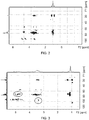
- Figure 3 shows the presence of chemically non-equivalent oxymethylene groups (CH 2 O) n in a non-alternating fashion with different chain lengths. In particular, non-alternation was well observed in the 2D NMR spectrum. (See FIG. 3 ).
- the average empirical formula is, according to 1 H-NMR spectroscopy and the molecular weight determined by the OH number: PO 19.9 -PET1110- (CH 2 O) 7.6 .
- the product thus contains an average of 7.6 oxymethylene groups per molecule.
- the IR spectrum is neither identical to the IR spectrum of paraformaldehyde nor to the IR spectrum of PET-2.
- the appearance of a band at 922 cm -1 indicates the presence of oxymethylene groups.
- Example 3 Preparation of a polyoxyalkylene-oxymethylene random copolymer at a temperature of 60 ° C using a tin-containing and a bismuth-containing compound as a catalyst in a ratio of 3: 1
- the bridge was heated before the absorber to 150 ° C, absorber to 200 ° C and transfer to R2 to 120 ° C.
- the interior of R2 was heated to 60 ° C, the gas outlet capillary to 120 ° C and the BPR to 150 ° C.
- R1 After reaching the nominal pressure and the setpoint temperatures for bridge, R2, gas outlet and BPR, the interior of R1 was heated to 110 ° C and introduced gaseous formaldehyde in R2 over 24 h.
- the carrier gas was adjusted to 150 g / h and held constant with the system pressure over the reaction time.
- 145.85 g (2.51 mol) of propylene oxide was introduced into R2 at a flow rate of 40 g / hr.
- R1 was cooled and the line closed.
- the carrier gas was changed to N 2 .
- 88.55 g (1.52 mol) of propylene oxide (40 g / h) were set in R2.
- the reaction mixture was stirred in R2 at 25 ° C at 1000 U / min for 60 h.
- a solution of 6.01 g (32 mmol) of 5H 2 O in 10 ml of water was introduced at a flow rate of 5 ml / min via the HLPLC pump into R2.
- the mixture was stirred for 1 h.
- the excess pressure was released via the BPR and the reaction mixture was removed from the reactor.
- the OH number is 100.75 mg KOH / g, which corresponds to the molecular weight of 1670.47 g / mol.
- the average molecular formula is, by 1 H-NMR spectroscopy and the molecular weight determined by the GPC: PO 23.46 -PET1110- (CH 2 O) 5.86 .
- the product thus contains an average of 5.86 oxymethylene groups per molecule.
- the IR spectrum is neither identical to the IR spectrum of paraformaldehyde nor to the IR spectrum of PET-2.
- the appearance of a band at 926 cm -1 indicates the presence of oxymethylene groups.
- Example 4 Preparation of a polyoxyalkylene oxymethylene random copolymer at a temperature of 60 ° C using a tin-containing and a bismuth-containing compound as a catalyst in a ratio of 1: 3
- the bridge was heated before the absorber to 150 ° C, absorber to 200 ° C and transfer to R2 to 120 ° C.
- the interior of R2 was heated to 60 ° C, the gas outlet capillary to 120 ° C and the BPR to 150 ° C.
- R1 After reaching the nominal pressure and the setpoint temperatures for bridge, R2, gas outlet and BPR, the interior of R1 was heated to 110 ° C and introduced gaseous formaldehyde in R2 over 24 h.
- the carrier gas was adjusted to 150 g / h and held constant with the system pressure over the reaction time.
- 145.85 g (2.51 mol) of propylene oxide was introduced into R2 at a flow rate of 40 g / hr.
- R1 was cooled and the line closed.
- the carrier gas was changed to N 2 and directly in the bridge.
- 88.55 g (1.52 mol) of propylene oxide (40 g / h) were set in R2.
- the reaction mixture was stirred in R2 at 25 ° C at 1000 U / min for 60 h.
- a solution of 6.01 g (32 mmol) of Na 2 S 2 O 3 . 5 H 2 O was introduced into 10 ml of water at a flow rate of 5 ml / min via the HLPLC pump in R2.
- the mixture was stirred for 1 h.
- the excess pressure was released via the BPR and the reaction mixture was removed from the reactor.
- the OH number is 82.10 mg KOH / g, which corresponds to the molecular weight of 2049.94 g / mol.
- the average empirical formula is, according to 1 H-NMR spectroscopy and the molecular weight determined by the GPC: PO 38,21 -PET1110- (CH 2 O) 4,8 .
- the product thus contains an average of 4.8 oxymethylene groups per molecule.
- the IR spectrum is neither identical to the IR spectrum of paraformaldehyde nor to the IR spectrum of PET-2.
- the appearance of a band at 923 cm -1 indicates the presence of oxymethylene groups.
- Example 1 and Examples 2 to 4 show that both bismuth compounds as the sole catalyst and combinations of tin and bismuth compounds can be used as catalyst for the process according to the invention.
- Examples 2 to 4 show that tin and bismuth compounds can be used in different ratios as catalyst for the process according to the invention.
- Example 5 Preparation of a polyoxyalkylene oxymethylene random copolymer at a temperature of 60 ° C using a tin-containing and a bismuth-containing compound as a catalyst and a polyethercarbonate polyol as a starter compound
- the bridge was heated before the absorber to 150 ° C, absorber to 200 ° C and transfer to R2 to 120 ° C.
- the interior of R2 was heated to 60 ° C, the gas outlet capillary to 120 ° C and the BPR to 150 ° C.
- R1 After reaching the nominal pressure and the setpoint temperatures for bridge, R2, gas outlet and BPR, the interior of R1 was heated to 120 ° C and introduced gaseous formaldehyde in R2 over 24 h.
- the carrier gas was adjusted to 150 g / h and held constant with the system pressure over the reaction time.
- 135.0 g (2.32 mol) of propylene oxide was introduced into R2 at a flow rate of 40 g / h.
- R1 was cooled and the line closed.
- the carrier gas was changed to N 2 .
- 18.19 g (0.31 mol) of propylene oxide (40 g / h) were set in R2.
- the reaction mixture was stirred in R2 at 25 ° C at 1000 rev / min for 12 h.
- 250 ml of water in R2 were added and the mixture was stirred for 24 h. The excess pressure was released via the BPR and the reaction mixture was removed from the reactor.
- the OH number is 41.3 mg KOH / g, which corresponds to the molecular weight of 4079.34.
- the average empirical formula is, according to 1 H-NMR spectroscopy and the molecular weight determined by the OH number: PO 15.78 -PEC-2- (CH 2 O) 5.83 .
- the product thus contains an average of 5.8 oxymethylene groups per molecule.
- the IR spectrum is neither identical to the IR spectrum of paraformaldehyde nor to the IR spectrum of PEC-2.
- the appearance of a band at 929 cm -1 indicates the presence of oxymethylene groups.
- Example 2 and Example 5 demonstrate that both polyether polyols (Example 2) and polyether carbonate polyols (Example 5) can be used as starter compound for the process according to the invention.
- Example 6 Preparation of a polyoxyalkylene-oxymethylene copolymer at a temperature of 60 ° C using a tin-containing compound as a catalyst and a DMC catalyst.
- R1 180.33 g (6.011 mol) of paraformaldehyde, 4.18 g (0.013 mol) of 4-dodecylbenzenesulfonic acid, 3.2 g (0.011 mol) of phosphorus pentoxide and 100.05 g of paraffin were charged.
- R2 was charged with 248.5 g of PET-1 and 0.105 g of DMC catalyst. The BPR was adjusted to 1 bar target pressure and the reactor was purged with open gas outlet 10 minutes with argon. Subsequently, R2 was evacuated with a membrane pump at 50 mbar pump vacuum and the reactor heated to 130 ° C internal temperature. After reaching the temperature, the evacuation was continued for 30 min.
- the bridge was placed in front of the absorber at 140 ° C, absorber and transfer to R2 at 120 ° C, Gas outlet capillary heated to 60 ° C and BPR to 140 ° C.
- R2 was cooled to 60 ° C internal temperature. After reaching the temperature, a solution of 7.22 g (0.011 mol) of dibutyltin dilaurate (DBTL) in 25 ml of dichloromethane in R2 was introduced via the HPLC pump at a flow rate of 5 ml / min.
- DBTL dibutyltin dilaurate
- R1 was heated with stirring to 50 U / min to 125 ° C internal temperature and introduced after reaching the temperature for 5 h gaseous formaldehyde in R2.
- the average empirical formula, according to 1 H NMR spectroscopy, is Gt-O-PE 28.91 -PEC 2.63 - (CH 2 O) 4.29 -Gt.
- the carbonate units result from activation of the DMC catalyst.
- the product contains an average of 4.29 oxymethylene groups per molecule.
- the average molecular weight is 2323 g / mol according to 1 H-NMR spectroscopy.
- the IR spectrum is neither identical to the IR spectrum of paraformaldehyde nor to the IR spectrum of PET-1.
- the band at 1737 cm -1 indicates the presence of polyethercarbonate blocks.
- the appearance of a band at 968 cm -1 indicates the presence of oxymethylene groups.
- Example 7 Preparation of a polyoxyalkylene oxymethylene random copolymer at a temperature of 40 ° C using a tin-containing compound as a catalyst.
- the bridge was heated before the absorber to 150 ° C, absorber to 200 ° C and transfer to R2 to 120 ° C.
- the interior of R2 was heated to 40 ° C, the gas outlet capillary to 120 ° C and the BPR to 150 ° C.
- R1 After reaching the nominal pressure and the setpoint temperatures for bridge, R2, gas outlet and BPR, the interior of R1 was heated to 110 ° C and introduced gaseous formaldehyde in R2 over 24 h.
- the carrier gas was adjusted to 150 g / h and held constant with the system pressure over the reaction time.
- 29.47 g (0.5 mol) of propylene oxide was introduced into R2 at a flow rate of 40 g / h.
- R1 was cooled and the line closed.
- the carrier gas was changed to N 2 .
- 30.45 g (0.52 mol) of propylene oxide (40 g / h) were set in R2.
- the reaction mixture was stirred in R2 at 25 ° C at 1000 U / min for 1 h and cooled and drained of the excess.
- 400 ml of water was introduced into R2. The mixture was stirred for 12 h. The excess pressure was released via the BPR and the reaction mixture was removed from the reactor.
- the OH number is 156.05 mg KOH / g, which corresponds to the molecular weight of 1078.50 g / mol.
- the average molecular formula is, according to 1 H-NMR spectroscopy and the molecular weight determined by the GPC: PO 2,7 -PET1110- (CH 2 O) 0.39 .
- the product thus contains an average of 0.39 oxymethylene groups per molecule.
- the IR spectrum is neither identical to the IR spectrum of paraformaldehyde nor to the IR spectrum of PET-2.
- the appearance of a band at 926 cm -1 indicates the presence of oxymethylene groups.
- Example 8 Preparation of a polyoxyalkylene-oxymethylene copolymer at a temperature of 50 ° C using a tin-containing compound as a catalyst and a DMC catalyst
- R1 was heated to 120 ° C. internal temperature with stirring at 100 rpm and, after reaching the temperature, gaseous formaldehyde was introduced into R2 over 5 hours.
- the average empirical formula is PO 5.16 -PET-3- (CH 2 O) 2.57 according to 1H NMR spectroscopy.
- the product thus contains an average of 2.57 oxymethylene groups per molecule.
- the IR spectrum is neither identical to the IR spectrum of paraformaldehyde nor to the IR spectrum of PET-3.
- the band at 1721 cm -1 shows the presence of polyethercarbonate blocks.
- the appearance of a band at 930 cm -1 indicates the presence of oxymethylene groups.
- Examples 6 and 8 show that tin compounds can also be used in combinations with double metal cyanide catalysts for the process according to the invention.
- Example 9 Preparation of a polyoxyalkylene oxymethylene random copolymer at a temperature of 85 ° C using a tin-containing compound as a catalyst in the presence of Bi (2-EtHex) 3
- the bridge was heated before the absorber to 150 ° C, absorber to 200 ° C and transfer to R2 to 120 ° C.
- the interior of R2 was heated to 85 ° C, the gas outlet capillary to 120 ° C and the BPR to 150 ° C.
- R1 After reaching the nominal pressure and the setpoint temperatures for bridge, R2, gas outlet and BPR, the interior of R1 was heated to 110 ° C and introduced gaseous formaldehyde in R2 over 24 h.
- the carrier gas was adjusted to 150 g / h and held constant with the system pressure over the reaction time.
- 82.01 g (1.41 mol) of propylene oxide were introduced into R2 at a flow rate of 40 g / h.
- R1 was cooled and the line closed.
- the carrier gas was changed to N 2 .
- 21 g (0.36 mol) of propylene oxide (40 g / h) were set in R2.
- the reaction mixture was stirred in R2 at 25 ° C at 1000 U / min for 1 h and cooled and drained of the excess.
- 400 ml of water was introduced into R2. The mixture was stirred for 12 h. The excess pressure was released via the BPR and the reaction mixture was removed from the reactor.
- the OH number is 161.28 mg KOH / g, which corresponds to the molecular weight of 1043.53 g / mol.
- the average empirical formula is, according to 1 H-NMR spectroscopy and the molecular weight determined by the GPC: PO 4.07 -PET1110- (CH 2 O) 0.5 .
- the product thus contains an average of 0.5 oxymethylene groups per molecule.
- the IR spectrum is neither identical to the IR spectrum of paraformaldehyde nor to the IR spectrum of PET-2.
- the appearance of a band at 926 cm -1 indicates the presence of oxymethylene groups.
- Example 10 (Comparative Example): Preparation of a polyoxyalkylene oxymethylene random copolymer at a temperature of 100 ° C using a tin-containing compound as a catalyst and a DMC catalyst
- the ratio PE: PEC: (CH 2 O) in the product is 28.91: 1.00: 1.16, and at a molecular weight of 1390 g / mol (determined by the OH number), this gives an average molecular formula HO-PE 21.97 -PEC 0.76 - (CH 2 O) 0.88 -H.
- the product mixture thus contains polyethercarbonate-oxymethylene copolymers.
- the IR spectrum is neither identical to the IR spectrum of paraformaldehyde nor to the IR spectrum of PET-1.
- the band at 1743 cm -1 shows the presence of polyethercarbonate blocks.
- the appearance of a band at 967 cm -1 indicates the presence of oxymethylene units.
- Example 11 (Comparative Example): Preparation of a polyoxyalkylene oxymethylene random copolymer at a temperature of 100 ° C using a DMC catalyst
- R1 169.41 g (5.65 mol) of paraformaldehyde, 4.00 g (0.012 mol) of 4-dodecylbenzenesulfonic acid, 3.31 g (0.011 mol) of phosphorus pentoxide and 103.41 g of paraffin were charged.
- R2 was charged with 251.00 g of PET-1 and 0.157 g of DMC catalyst. The BPR was adjusted to 1 bar target pressure and the reactor was purged with nitrogen gas for 10 minutes with the gas outlet open. Subsequently, R2 was evacuated with a membrane pump at 50 mbar pump vacuum and the reactor heated to 130 ° C internal temperature. After reaching the temperature, the evacuation was continued for 30 min.
- the ratio PE: PEC: (CH 2 O) in the product is 25.63: 1.76: 1.00.
- this gives an average molecular formula HO-PE 22 , 55 -PEC 1.55 - (CH 2 O) 0.88 -H.
- the product mixture thus contains polyethercarbonate-oxymethylene copolymers.
- the IR spectrum is neither identical to the IR spectrum of paraformaldehyde nor to the IR spectrum of PET-1.
- the band at 1743 cm -1 shows the presence of polyethercarbonate blocks.
- the appearance of a band at 968 cm -1 indicates the presence of oxymethylene units.
- Example no. Temp. In R2 [° C] * Newly incorporated (CH 2 O) group according to average molecular formula Newly incorporated propylene oxide groups according to average molecular formula Ratio of propylene oxide groups to (CH 2 O) groups ** 7 40 0.39 2.7 6.92 8th 50 2.6 5.2 2.00 1 60 3.7 27.2 7.35 2 60 7.6 19.9 2.61 3 60 5.9 23.5 4.00 4 60 4.8 32.2 6.71 5 60 5.8 15.8 2.72 6 60 4.3 28.9 6.73 9 85 0.5 4.1 8.2 10 (Cf.) 100 0.88 22.0 24.96 11 (Cf.) 100 0.88 22.6 25.62 *) indicated the temperature was carried out during the reaction with formaldehyde **) molar ratio of alkylene oxide groups copolymerized from the alkylene oxide during the reaction to oxymethylene groups copolymerized from the formaldehyde during the reaction
- Example 12 Preparation of a Polyurethane Using the Polyoxyalkylene Oxymethylene Copolymer of Example 1
- Example 13 Preparation of a Polyurethane Using the Polyoxyalkylene Oxymethylene Copolymer of Example 7
Landscapes
- Chemical & Material Sciences (AREA)
- Health & Medical Sciences (AREA)
- Chemical Kinetics & Catalysis (AREA)
- Medicinal Chemistry (AREA)
- Polymers & Plastics (AREA)
- Organic Chemistry (AREA)
- Toxicology (AREA)
- Polyoxymethylene Polymers And Polymers With Carbon-To-Carbon Bonds (AREA)
- Polyethers (AREA)
Priority Applications (1)
| Application Number | Priority Date | Filing Date | Title |
|---|---|---|---|
| EP16194873.2A EP3312207A1 (fr) | 2016-10-20 | 2016-10-20 | Procédé de fabrication de copolymères polyoxyalkylène-oxyméthylène à basses températures de réaction |
Applications Claiming Priority (1)
| Application Number | Priority Date | Filing Date | Title |
|---|---|---|---|
| EP16194873.2A EP3312207A1 (fr) | 2016-10-20 | 2016-10-20 | Procédé de fabrication de copolymères polyoxyalkylène-oxyméthylène à basses températures de réaction |
Publications (1)
| Publication Number | Publication Date |
|---|---|
| EP3312207A1 true EP3312207A1 (fr) | 2018-04-25 |
Family
ID=57240835
Family Applications (1)
| Application Number | Title | Priority Date | Filing Date |
|---|---|---|---|
| EP16194873.2A Withdrawn EP3312207A1 (fr) | 2016-10-20 | 2016-10-20 | Procédé de fabrication de copolymères polyoxyalkylène-oxyméthylène à basses températures de réaction |
Country Status (1)
| Country | Link |
|---|---|
| EP (1) | EP3312207A1 (fr) |
Cited By (1)
| Publication number | Priority date | Publication date | Assignee | Title |
|---|---|---|---|---|
| WO2022258570A1 (fr) * | 2021-06-10 | 2022-12-15 | Covestro Deutschland Ag | Procédé pour la production de copolymères polyoxyméthylène-polyoxyalkylène |
Citations (3)
| Publication number | Priority date | Publication date | Assignee | Title |
|---|---|---|---|---|
| US4399272A (en) * | 1979-11-15 | 1983-08-16 | Asahi Kasei Kogyo Kabushiki Kaisha | Process for producing polyacetal copolymers |
| WO2014095679A1 (fr) * | 2012-12-21 | 2014-06-26 | Bayer Materialscience Ag | Copolymères en masse de polyoxyméthylène modifiés par nco |
| WO2014198689A1 (fr) * | 2013-06-13 | 2014-12-18 | Bayer Materialscience Ag | Copolymères en bloc de carbonate de polyéther-polyoxyméthylène |
-
2016
- 2016-10-20 EP EP16194873.2A patent/EP3312207A1/fr not_active Withdrawn
Patent Citations (3)
| Publication number | Priority date | Publication date | Assignee | Title |
|---|---|---|---|---|
| US4399272A (en) * | 1979-11-15 | 1983-08-16 | Asahi Kasei Kogyo Kabushiki Kaisha | Process for producing polyacetal copolymers |
| WO2014095679A1 (fr) * | 2012-12-21 | 2014-06-26 | Bayer Materialscience Ag | Copolymères en masse de polyoxyméthylène modifiés par nco |
| WO2014198689A1 (fr) * | 2013-06-13 | 2014-12-18 | Bayer Materialscience Ag | Copolymères en bloc de carbonate de polyéther-polyoxyméthylène |
Cited By (1)
| Publication number | Priority date | Publication date | Assignee | Title |
|---|---|---|---|---|
| WO2022258570A1 (fr) * | 2021-06-10 | 2022-12-15 | Covestro Deutschland Ag | Procédé pour la production de copolymères polyoxyméthylène-polyoxyalkylène |
Similar Documents
| Publication | Publication Date | Title |
|---|---|---|
| EP2935387B1 (fr) | Copolymères en bloc de polyoxyméthylène modifiés par nco | |
| EP3008100B1 (fr) | Copolymères en bloc de polyoxyméthylène de polyéthercarbonate | |
| DE69705605T2 (de) | Herstellung von polyolen unter verwendung von doppelmetallcyanidkatalysatoren mit den kontinuierlichen zugaben von initiator | |
| EP2935381B1 (fr) | Copolymères greffés polyoxyméthylène fonctionnalisés | |
| EP1432751A1 (fr) | Homopolymeres et copolymeres aliphatiques de polycarbonate produits par catalyse au cyanure bimetallique | |
| EP3759150B1 (fr) | Mousses souples de polyuréthane à base de copolymères blocs de polyoxyalkylène-polyoxymethylène | |
| WO2011047789A1 (fr) | Hydrogel biodégradable | |
| EP2725044A1 (fr) | Prépolymère à terminaison alkoxysilane à base de polyols de polyéther carbonate pour mousse à atomiser | |
| EP3526269B1 (fr) | Procédé de fabrication d'un prépolymère contenant plusieurs liaisons en tant que précurseur d'élastomère | |
| EP3526270B1 (fr) | Procédé de fabrication d'élastomères | |
| EP4127023B1 (fr) | Procédé de fabrication d'un polyol de carbonate de polyoxyalkylène | |
| WO2019121205A1 (fr) | Procédé de préparation de polyétheresterpolyols | |
| WO2014033046A1 (fr) | Carbonates cycliques à fonction isocyanate | |
| EP2089446B1 (fr) | Prépolymère d'isocyanate avec groupes nco diversement réactifs | |
| EP3898743B1 (fr) | Procédé de production d'un polyoxyalkylène polyester polyol | |
| EP3287475A1 (fr) | Procede de fabrication de polymeres de polyurethane resorbables et procede de preparation associe | |
| EP3504256B1 (fr) | Procede de fabrication de polymeres de polyurethane ayant une valeur de combustion reduite | |
| EP3649166B1 (fr) | Procédé de fabrication de polyoxyalkylène-polyols fonctionnalisés | |
| EP3339340A1 (fr) | Procédé de fabrication d'un copolymère séquencé en polyoxyméthylène présentant une proportion accrue de formaldéhyde intégré | |
| EP0908479A1 (fr) | Systèmes de polyuréthane à deux composants comprenant des diluants réactifs | |
| EP1834972A1 (fr) | Fabrication de prépolymères stables en stock et fonctionnels à l'isocyanate en cas d'utilisation d'halogénures d'acides de carbones et de carbamoyl fonctionnels à l'isocyanate | |
| WO2021175722A1 (fr) | Procédé de production d'éther estérol | |
| EP2603538A1 (fr) | Polyuréthanes stables à la lumière et leur utilisation | |
| EP3728372A1 (fr) | Polymères hybrides de polyuréthane et procédé de production de ces polymères | |
| EP3287476A1 (fr) | Procede de fabrication de copolymeres à blocs de polyoxymethylene |
Legal Events
| Date | Code | Title | Description |
|---|---|---|---|
| PUAI | Public reference made under article 153(3) epc to a published international application that has entered the european phase |
Free format text: ORIGINAL CODE: 0009012 |
|
| AK | Designated contracting states |
Kind code of ref document: A1 Designated state(s): AL AT BE BG CH CY CZ DE DK EE ES FI FR GB GR HR HU IE IS IT LI LT LU LV MC MK MT NL NO PL PT RO RS SE SI SK SM TR |
|
| AX | Request for extension of the european patent |
Extension state: BA ME |
|
| STAA | Information on the status of an ep patent application or granted ep patent |
Free format text: STATUS: THE APPLICATION IS DEEMED TO BE WITHDRAWN |
|
| 18D | Application deemed to be withdrawn |
Effective date: 20181026 |