EP3313030B1 - Procédé, dispositif et système de transmission de données pour un réseau maillé de réseau local sans fil - Google Patents
Procédé, dispositif et système de transmission de données pour un réseau maillé de réseau local sans fil Download PDFInfo
- Publication number
- EP3313030B1 EP3313030B1 EP15899256.0A EP15899256A EP3313030B1 EP 3313030 B1 EP3313030 B1 EP 3313030B1 EP 15899256 A EP15899256 A EP 15899256A EP 3313030 B1 EP3313030 B1 EP 3313030B1
- Authority
- EP
- European Patent Office
- Prior art keywords
- mesh
- station
- data frame
- mesh station
- gate
- Prior art date
- Legal status (The legal status is an assumption and is not a legal conclusion. Google has not performed a legal analysis and makes no representation as to the accuracy of the status listed.)
- Active
Links
Images






Classifications
-
- H—ELECTRICITY
- H04—ELECTRIC COMMUNICATION TECHNIQUE
- H04W—WIRELESS COMMUNICATION NETWORKS
- H04W40/00—Communication routing or communication path finding
- H04W40/02—Communication route or path selection, e.g. power-based or shortest path routing
-
- H—ELECTRICITY
- H04—ELECTRIC COMMUNICATION TECHNIQUE
- H04W—WIRELESS COMMUNICATION NETWORKS
- H04W28/00—Network traffic management; Network resource management
- H04W28/02—Traffic management, e.g. flow control or congestion control
- H04W28/021—Traffic management, e.g. flow control or congestion control in wireless networks with changing topologies, e.g. ad-hoc networks
-
- H—ELECTRICITY
- H04—ELECTRIC COMMUNICATION TECHNIQUE
- H04L—TRANSMISSION OF DIGITAL INFORMATION, e.g. TELEGRAPHIC COMMUNICATION
- H04L45/00—Routing or path finding of packets in data switching networks
- H04L45/16—Multipoint routing
-
- H—ELECTRICITY
- H04—ELECTRIC COMMUNICATION TECHNIQUE
- H04L—TRANSMISSION OF DIGITAL INFORMATION, e.g. TELEGRAPHIC COMMUNICATION
- H04L45/00—Routing or path finding of packets in data switching networks
- H04L45/18—Loop-free operations
-
- H—ELECTRICITY
- H04—ELECTRIC COMMUNICATION TECHNIQUE
- H04L—TRANSMISSION OF DIGITAL INFORMATION, e.g. TELEGRAPHIC COMMUNICATION
- H04L47/00—Traffic control in data switching networks
- H04L47/10—Flow control; Congestion control
- H04L47/15—Flow control; Congestion control in relation to multipoint traffic
-
- H—ELECTRICITY
- H04—ELECTRIC COMMUNICATION TECHNIQUE
- H04L—TRANSMISSION OF DIGITAL INFORMATION, e.g. TELEGRAPHIC COMMUNICATION
- H04L47/00—Traffic control in data switching networks
- H04L47/10—Flow control; Congestion control
- H04L47/32—Flow control; Congestion control by discarding or delaying data units, e.g. packets or frames
-
- H—ELECTRICITY
- H04—ELECTRIC COMMUNICATION TECHNIQUE
- H04L—TRANSMISSION OF DIGITAL INFORMATION, e.g. TELEGRAPHIC COMMUNICATION
- H04L12/00—Data switching networks
- H04L12/02—Details
- H04L12/16—Arrangements for providing special services to substations
- H04L12/18—Arrangements for providing special services to substations for broadcast or conference, e.g. multicast
- H04L12/189—Arrangements for providing special services to substations for broadcast or conference, e.g. multicast in combination with wireless systems
-
- H—ELECTRICITY
- H04—ELECTRIC COMMUNICATION TECHNIQUE
- H04L—TRANSMISSION OF DIGITAL INFORMATION, e.g. TELEGRAPHIC COMMUNICATION
- H04L2101/00—Indexing scheme associated with group H04L61/00
- H04L2101/60—Types of network addresses
- H04L2101/618—Details of network addresses
- H04L2101/622—Layer-2 addresses, e.g. medium access control [MAC] addresses
-
- H—ELECTRICITY
- H04—ELECTRIC COMMUNICATION TECHNIQUE
- H04W—WIRELESS COMMUNICATION NETWORKS
- H04W28/00—Network traffic management; Network resource management
- H04W28/02—Traffic management, e.g. flow control or congestion control
- H04W28/06—Optimizing the usage of the radio link, e.g. header compression, information sizing, discarding information
-
- H—ELECTRICITY
- H04—ELECTRIC COMMUNICATION TECHNIQUE
- H04W—WIRELESS COMMUNICATION NETWORKS
- H04W84/00—Network topologies
- H04W84/02—Hierarchically pre-organised networks, e.g. paging networks, cellular networks, WLAN [Wireless Local Area Network] or WLL [Wireless Local Loop]
- H04W84/10—Small scale networks; Flat hierarchical networks
- H04W84/12—WLAN [Wireless Local Area Networks]
-
- H—ELECTRICITY
- H04—ELECTRIC COMMUNICATION TECHNIQUE
- H04W—WIRELESS COMMUNICATION NETWORKS
- H04W84/00—Network topologies
- H04W84/18—Self-organising networks, e.g. ad-hoc networks or sensor networks
Definitions
- the present invention relates to the communications field, and in particular, to a method for transmitting data in a wireless local area network (English: wireless local area network, WLAN for short) mesh (English: mesh) network, an apparatus, and a system.
- a wireless local area network English: wireless local area network, WLAN for short
- mesh English: mesh
- a network may include a WLAN mesh network (hereinafter referred to as a wireless mesh network) and an external network. If the wireless mesh network is connected to the external network by using multiple mesh gates (English: mesh gate), a loop may occur in the network including the wireless mesh network and the external network.
- the mesh gate refers to a device that has a function of a mesh station (English: station) and that provides a mesh basic service set (English: mesh basic service set, MBSS for short) with access, for which a wireless medium (English: wireless medium, WM for short) is used, to one or more distribution systems (English: distribution system).
- the external network is a distribution system connected to the mesh gate.
- the external network may be a wired network or a combination of a wired network and a wireless network.
- a wireless mesh network includes a gateway 1, a gateway 2, and multiple mesh stations. Both the gateway 1 and the gateway 2 are mesh gates.
- An external network connected to the wireless mesh network includes a network switch.
- the network switch is connected to the gateway 1 and the gateway 2.
- a broadcast data frame, a multicast data frame, or an unknown unicast data frame sent by the gateway 1 may arrive at the gateway 2 by using the mesh station in the wireless mesh network. Because both the gateway 1 and the gateway 2 are connected to the network switch, the data frame may arrive at the gateway 1 by using the network switch. Consequently, the data frame loops constantly in the wireless mesh network, piles up, and ultimately causes a network storm, that is, causes a loop in the network shown in FIG. 1 .
- the Institute of Electrical and Electronics Engineers (English: Institute of Electrical and Electronics Engineers, IEEE for short) 802.11-2012 protocol specifies that a switching device, for example, a network switch, in an external network uses the Rapid Spanning Tree Protocol (English: Rapid Spanning Tree Protocol, RSTP for short) to resolve a problem of a loop between a wireless mesh network and the external network.
- RSTP Rapid Spanning Tree Protocol
- RSTP blocks some ports in the network, so that the wireless mesh network and the external network can be connected by using only one mesh gate, thereby resolving the loop problem.
- the wireless mesh network and the external network can be connected by using only one mesh gate. If the wireless mesh network is large in scale, a single mesh gate cannot process data between the large-scale wireless mesh network and the external network in a timely manner. Consequently, congestion occurs at the mesh gate.
- US 2006/0268749 A1 discusses a method that includes running a plurality of instances of a wireless spanning tree protocol in a wireless mesh node, each instance substantially conforming to the IEEE 802.1 standard.
- Running an instance of wireless spanning tree protocol includes the wireless mesh point wirelessly transmitting Bridge Protocol Data Unit, BPDU information to other wireless mesh points of the network or wirelessly receiving BPDU information from other wireless mesh points, the BPDU information encapsulated in one or more control/management frames, e.g., beacon or probe response frames of a wireless network standard, the BPDU information relating to a spanning tree topology for the instance.
- the present invention provide a method for transmitting data in a WLAN mesh network, an apparatus, and a system, so as to prevent congestion at a mesh gate while avoiding a loop.
- the present invention uses the following technical solutions: According to a first aspect, the present invention provides a method for transmitting data in a WLAN mesh network, wherein the wireless mesh network is connected to an external network by using multiple mesh gates, where the method includes:
- the method before the receiving, by a first mesh station, a first data frame sent by a second mesh station, the method further includes:
- the method before the receiving, by a first mesh station, a first data frame sent by a second mesh station, the method further includes:
- the method further includes:
- the method further includes:
- the method further includes: determining, by the first mesh station, that a receiver address of a to-be-sent fourth data frame is the MAC address of the second mesh station; determining that the fourth data frame is a broadcast data frame or a multicast data frame; and skipping sending the fourth data frame.
- the present invention provides a station, where the station is a mesh station supporting a mesh function, the mesh station is a first mesh station in a mesh network that is connected to an external network by using multiple mesh gates, and the first mesh station includes:
- the first mesh station further includes an obtaining unit, where
- the first mesh station further includes a selection unit, where
- a station is provided as an example useful for understanding the invention, where the station is a mesh station supporting a mesh function, the mesh station is a first mesh station, and the first mesh station includes:
- the processor is further configured to: before the transceiver receives the first data frame sent by the second mesh station, determine a minimum overhead between the first mesh station and each of multiple mesh gates; and select, according to the minimum overhead between the first mesh station and each of the multiple mesh gates, the first mesh gate as a mesh gate to which the first mesh station belongs, where the multiple mesh gates include the first mesh gate and the second mesh gate, and the first mesh gate is a mesh gate between which and the first mesh station an overhead is the minimum among the multiple mesh gates.
- the transceiver is further configured to receive a second data frame sent by a third mesh station, where a transmitter address of the second data frame is a MAC address of the third mesh station, and the third mesh station belongs to the first mesh gate; and the processor is further configured to: determine that the second data frame received by the transceiver is a broadcast data frame, a multicast data frame, or an unknown unicast data frame; determine, according to the MAC address of the third mesh station that is received by the transceiver, that the first mesh station and the third mesh station belong to a same mesh gate; and process the second data frame received by the transceiver.
- the processor is further configured to: determine that a receiver address of a to-be-sent fourth data frame is the MAC address of the second mesh station, determine that the fourth data frame is a broadcast data frame or a multicast data frame, and skip sending the fourth data frame.
- the present invention provides a WLAN mesh network system, where the system includes: a first mesh station, a second mesh station, and multiple mesh gates, where the first mesh station is the first mesh station according to any one of the third aspect or the possible implementation manners of the third aspect.
- a first data frame that is received by a first mesh station and sent by a second mesh station that belongs to a mesh gate different from that to which the first mesh station belongs is a broadcast data frame, a multicast data frame, or an unknown unicast data frame
- the first mesh station discards the first data frame, that is, the first mesh station does not process the first data frame, so that the first data frame is not propagated between different mesh gates. Therefore, a loop in a network including a wireless mesh network and an external network can be avoided.
- congestion at the mesh gate can be prevented. Therefore, in the present invention, congestion at the mesh gate can be prevented while a loop is avoided.
- a WLAN mesh network provided in the embodiments of the present invention is referred to as a wireless mesh network in the following. That is, a method for transmitting data in a WLAN mesh network, an apparatus, and a system that are provided in the embodiments of the present invention may be a method for transmitting data in a wireless mesh network, an apparatus, and a system.
- FIG. 2 is an architectural diagram of a possible application scenario of the method for transmitting data in a wireless mesh network, the apparatus, and the system that are provided in the embodiments of the present invention.
- the architectural diagram is an architectural diagram of a wireless mesh network system.
- a wireless mesh network includes two mesh gates and multiple mesh stations.
- the two mesh gates are a gateway 1 and a gateway 2 respectively.
- the multiple mesh stations are a station 1, a station 2, a station 3, and a station 4 respectively.
- An external network connected to the wireless mesh network includes a network switch.
- the network switch is connected to the gateway 1 and the gateway 2.
- the gateway 1 establishes a mesh link (English: mesh link) with the station 1 and the station 2.
- the gateway 2 establishes a mesh link with the station 1 and the station 2.
- a mesh link is established between any two of the station 1, the station 2, the station 3, or the station 4.
- the station 1 and the station 3 belong to the gateway 1, and the station 2 and the station 4 belong to the gateway 2.
- the mesh link refers to a link between a mesh station and a neighboring mesh station that have a mesh peering with each other.
- a subnet involved in descriptions of the method for transmitting data in a wireless mesh network, the apparatus, and the system is logical division of a wireless mesh network. It may be considered that mesh stations that belong to a same mesh gate belong to a same subnet. Specifically, division/formation of a subnet of a wireless mesh network is described in detail in the following embodiments.
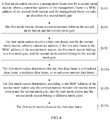
- this embodiment of the present invention provides a method for transmitting data in a wireless mesh network.
- the method may include the following steps.
- a first mesh station receives a first data frame sent by a second mesh station, where a transmitter address of the first data frame is a MAC address of the second mesh station, the first mesh station belongs to a first mesh gate, and the second mesh station belongs to a second mesh gate.
- the first mesh station and the second mesh station are two mesh stations in a wireless mesh network.
- the first mesh station and the second mesh station are neighboring stations that have a mesh peering with each other.
- the first mesh station may be an access point (English: access point, AP for short).
- the second mesh station may also be an AP.
- the mesh peering refers to a relationship between two mesh stations that is required for direct communication over a single instance of the wireless medium.
- a mesh peering is established with a mesh peering protocol.
- a frame header of the first data frame in this embodiment of the present invention includes a destination address of the first data frame.
- a data frame may not need to be propagated in the entire wireless mesh network.
- the data frame when the data frame is a broadcast data frame, a multicast data frame, or an unknown unicast data frame, the data frame may be propagated in the entire wireless mesh network. Consequently, a loop is formed in a network including the wireless mesh network and an external network.
- a broadcast data frame means that a destination address of the data frame is a broadcast address.
- a multicast data frame means that a destination address of the data frame is a multicast address.
- An unknown unicast data frame means that a destination address of the data frame is a unicast address, and the unicast address does not exist in a MAC forwarding table of the first mesh station. For an unknown unicast data frame, because the first mesh station cannot obtain a path for forwarding the data frame, the first mesh station generally broadcasts the data frame.
- a destination address is stored in different fields of a data frame in different cases.
- the destination address may be in an address 1 (English: address 1), an address 3 (English: address 3), or an address 5 (English: address 5) of a MAC header of a WLAN frame; may be in a frame header of an aggregate MAC service data unit (English: aggregate MAC service data unit, A-MSDU for short) subframe of a WLAN frame; or may be in a MAC header of an Ethernet frame.
- the Ethernet frame is encapsulated in a frame body of a WLAN frame.
- the transmitter address (English: transmitter address, TA for short) of the first data frame is the MAC address of the second mesh station.
- the transmitter address may be an address 2 (English: address 2) of a MAC header of a WLAN frame.
- the first mesh station belongs to the first mesh gate, and the second mesh station belongs to the second mesh gate.
- the first mesh station is a station 3
- the second mesh station may be a station 2 or a station 4.
- the station 3 and a station 1 belong to a gateway 1, and the station 2 and the station 4 belong to a gateway 2.
- the station 3, the station 1, and the gateway 1 may be considered as a subnet, such as a subnet 1.
- the station 2, the station 4, and the gateway 2 may be considered as a subnet, such as a subnet 2.
- the subnet mentioned in this embodiment of the present invention is different from an IP subnet in the Internet Protocol (English: Internet Protocol, IP for short).
- the subnet mentioned in this embodiment of the present invention is also different from a virtual local area network (English: virtual local area network, VLAN for short) in Ethernet.
- the subnet mentioned in this embodiment of the present invention is a set of mesh stations that belong to a same mesh gate. The subnet is only used to separate a broadcast data frame, a multicast data frame, or an unknown unicast data frame. The subnet does not separate a known unicast data frame.
- the first mesh station determines that the first data frame is a broadcast data frame, a multicast data frame, or an unknown unicast data frame; determines, according to the MAC address of the second mesh station, that the first mesh station and the second mesh station belong to different mesh gates; and discards the first data frame.
- the first data frame includes the destination address of the first data frame. Specifically, after receiving the first data frame sent by the second mesh station, the first mesh station may determine, according to the destination address of the first data frame, that the first data frame is a broadcast data frame, a multicast data frame, or an unknown unicast data frame.
- the first mesh station may determine, according to the MAC address of the second mesh station, that the first mesh station and the second mesh station belong to different mesh gates. Specifically, a method for determining, by the first mesh station according to the MAC address of the second mesh station, that the first mesh station and the second mesh station belong to different mesh gates is described in detail in the following embodiment, and is not described herein again.
- the first mesh station when determining that the first data frame that is sent by the second mesh station and received by the first mesh station is a broadcast data frame, a multicast data frame, or an unknown unicast data frame, and that the first mesh station and the second mesh station belong to different mesh gates, the first mesh station discards the first data frame, that is, the first mesh station does not process the first data frame.
- a broadcast data frame, a multicast data frame, or an unknown unicast data frame is not propagated between mesh stations that belong to different mesh gates. That is, the broadcast data frame, the multicast data frame, or the unknown unicast data frame is not propagated between different subnets, but is propagated only in a same subnet. Therefore, a loop in a network including a wireless mesh network and an external network can be avoided.
- a first data frame that is received by a first mesh station and sent by a second mesh station that belongs to a mesh gate different from that to which the first mesh station belongs is a broadcast data frame, a multicast data frame, or an unknown unicast data frame
- the first mesh station discards the first data frame, that is, the first mesh station does not process the first data frame, so that the first data frame is not propagated between different mesh gates. Therefore, a loop in a network including a wireless mesh network and an external network can be avoided.
- this embodiment of the present invention because there is still a first mesh gate and a second mesh gate, and a quantity of mesh gates in the wireless mesh network is not reduced, congestion at the mesh gate can be prevented. Therefore, in this embodiment of the present invention, congestion at the mesh gate can be prevented while a loop is avoided.
- a broadcast data frame, a multicast data frame, and an unknown unicast data frame that are in a subnet in which a gateway 1 in the wireless mesh network is located eventually return to a subnet in which a gateway 2 is located. Therefore, it is ensured that the broadcast data frame, the multicast data frame, and the unknown unicast data frame are propagated in the entire wireless mesh network without causing a loop.
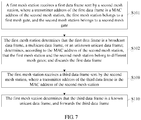
- the method for transmitting data in a wireless mesh network may further include the following steps.
- the first mesh station receives a management frame sent by the second mesh station, where a transmitter address of the management frame is the MAC address of the second mesh station, and the management frame includes an identifier of the second mesh gate.
- the management frame may be a beacon (English: beacon) frame.
- the second mesh station periodically sends the beacon frame.
- the beacon frame includes an identifier of a mesh gate (for example, the second mesh gate) to which the second mesh station belongs. Because the beacon frame is periodically sent by the second mesh station, when the mesh gate to which the second mesh station belongs changes, each neighboring station of the second mesh station may update the mesh gate to which the second mesh station belongs.
- the management frame may be a probe response (English: probe response) frame.
- the probe response frame includes an identifier of a mesh gate (for example, the second mesh gate) to which the second mesh station belongs.
- the second mesh station After receiving a probe request (English: probe request) frame, the second mesh station sends a probe response frame in response to the probe request frame.
- the probe response frame may include the identifier of the mesh gate to which the second mesh station belongs. Because a beacon frame is periodically sent, there is a specific time interval between two times of sending.
- a receiver for example, the first mesh station of the probe response frame may not need to learn, only when the transmitter sends the beacon frame next time, the mesh gate to which the transmitter belongs. That is, the receiver of the probe response frame can learn, in a timely manner, the mesh gate to which the transmitter of the probe response frame belongs. In this way, a waiting time of a neighboring station of the second mesh station can be reduced.
- the identifier of the second mesh gate may be a MAC address of the second mesh gate.
- an extension field may be added to the management frame to store an identifier of a mesh gate to which a mesh station belongs.
- the extension field may be added to a frame header of the management frame to store the identifier of the mesh gate to which the mesh station belongs.
- the second mesh station may add the extension field to the frame header of the management frame sent by the second mesh station, to store the identifier of the mesh gate to which the second mesh station belongs, that is, the identifier of the second mesh gate.
- the first mesh station obtains a correspondence between the second mesh station and the second mesh gate.
- a method for obtaining, by the first mesh station, the correspondence between the second mesh station and the second mesh gate may be one of the following.
- S102 may specifically include the following steps.
- the first mesh station determines that the first data frame is a broadcast data frame, a multicast data frame, or an unknown unicast data frame.
- the first mesh station determines, according to the MAC address of the second mesh station and the correspondence between the second mesh station and the second mesh gate, that the first mesh station and the second mesh station belong to different mesh gates.
- the first mesh station may determine, according to the MAC address of the second mesh station and the mapping recorded by the first mesh station, that the second mesh station belongs to the second mesh gate, so as to determine that the first mesh station and the second mesh station belong to different mesh gates.
- the first mesh station may search the first set for the MAC address of the second mesh station. If the MAC address of the second mesh station exists in the first set, the first mesh station determines that the first mesh station and the second mesh station belong to different mesh gates.
- the first mesh station may search the second set for the MAC address of the second mesh station. If the MAC address of the second mesh station does not exist in the second set, the first mesh station determines that the first mesh station and the second mesh station belong to different mesh gates.
- the first mesh station may search the first set and the second set for the MAC address of the second mesh station. If the MAC address of the second mesh station exists in the first set, the first mesh station determines that the first mesh station and the second mesh station belong to different mesh gates.
- a method for determining, by the first mesh station, that the first mesh station and the second mesh station belong to different mesh gates may be properly adjusted according to the method for obtaining, by the first mesh station, the correspondence between the second mesh station and the second mesh gate.
- the first mesh station discards the first data frame.
- the first mesh station When determining that the first data frame is a broadcast data frame, a multicast data frame, or an unknown unicast data frame, and that the first mesh station and the second mesh station belong to different mesh gates, the first mesh station discards the first data frame, that is, the first mesh station does not process the first data frame.
- a first mesh station determines that a first data frame received by the first mesh station is a broadcast data frame, a multicast data frame, or an unknown unicast data frame, and that the first mesh station and a second mesh station that sends the first data frame belong to different mesh gates, so that the first data frame can be controlled to be propagated only in a same subnet (including a same gateway), but not between different subnets (including different mesh gates). Therefore, a loop in a network including a wireless mesh network and an external network can be avoided.
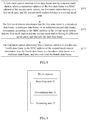
- the method for transmitting data in a wireless mesh network may further include the following steps.
- the first mesh station determines a minimum overhead between the first mesh station and each of multiple mesh gates, where the multiple mesh gates include the first mesh gate and the second mesh gate.
- the first mesh station selects the first mesh gate as a mesh gate to which the first mesh station belongs, where the first mesh gate is a mesh gate between which and the first mesh station an overhead is the minimum among the multiple mesh gates.
- each of the multiple mesh gates is a mesh gate in a mesh network in which the first mesh station and the second mesh station are located.
- Multiple in this embodiment of the present invention refers to two or more.
- multiple mesh gates refer to two or more mesh gates.
- an implementation manner of determining, by the first mesh station, the minimum overhead between the first mesh station and each of the multiple mesh gates is not specifically limited in this embodiment of the present invention, and may be specifically implemented by manufacturers according to different needs of the manufacturers.
- this embodiment of the present invention uses a possible implementation manner as an example to illustrate a method for determining, by the first mesh station, the minimum overhead between the first mesh station and each of the multiple mesh gates.
- one piece of indication information may be included in the management frame mentioned in S103.
- the indication information may be used to indicate a minimum overhead between the second mesh station that sends the management frame and the second mesh gate to which the second mesh station belongs.
- the first mesh station After the first mesh station is powered on, the first mesh station starts to receive multiple management frames sent by multiple neighboring stations (for example, the second mesh station and a third mesh station) of the first mesh station.
- Each of the multiple management frames includes one piece of indication information.
- the indication information may be used to indicate a minimum overhead between a neighboring station that sends the management frame and a mesh gate to which the neighboring station belongs.
- the mesh gate to which the neighboring station belongs is one of the multiple mesh gates.
- the indication information included in each of the management frames includes at least one of a received signal strength indication (English: received signal strength indication, RSSI for short) or a path.
- the RSSI may be used to indicate a maximum received signal strength in a shortest path between the neighboring station that sends the management frame and the mesh gate to which the neighboring station belongs.
- the maximum received signal strength is the largest one of all received signal strengths between any two stations of stations between the neighboring station and the mesh gate to which the neighboring station belongs and between a station and the mesh gate.
- the path is used to indicate the shortest path between the neighboring station that sends the management frame and the mesh gate to which the neighboring station belongs.
- a neighboring station of the first mesh station is a station B
- a mesh gate to which the station B belongs is a gateway K
- a shortest path between the station B and the gateway K passes through three stations: sequentially a station C, a station D, and a station E
- the shortest path between the station B and the gateway K is: the station B-the station C-the station D-the station E-the gateway K.
- all received signal strengths between any two stations of the stations between the neighboring station and the mesh gate to which the neighboring station belongs and between a station and the gateway include: a signal strength (marked as a received signal strength EK) at which the station E receives the management frame sent by the gateway K, a signal strength (marked as a received signal strength DE) at which the station D receives the management frame sent by the station E, a signal strength (marked as a received signal strength CD) at which the station C receives the management frame sent by the station D, and a signal strength (marked as a received signal strength BC) at which the station B receives the management frame sent by the station C.
- a maximum received signal strength is the largest one of the received signal strength EK, the received signal strength DE, the received signal strength CD, or the received signal strength BC.
- each mesh station may compare a signal strength, at which the mesh station receives the management frame, with a received signal strength (which is specifically a maximum received signal strength indicated by a received signal strength indication) included in the management frame, use the larger one as a maximum received signal strength, and add the maximum received signal strength to the management frame of the mesh station for sending.
- a received signal strength which is specifically a maximum received signal strength indicated by a received signal strength indication
- the mesh station may obtain multiple received signal strengths after performing comparison according to the foregoing method. Then, the mesh station may select the largest one from the multiple received signal strengths as a maximum received signal strength, and add the maximum received signal strength to the management frame of the mesh station for sending.
- the mesh station after receiving a management frame sent by a neighboring station of each mesh station, the mesh station obtains indication information included in the management frame. Therefore, after receiving management frames sent by multiple neighboring stations of a first mesh station, the first mesh station may obtain multiple pieces of indication information by obtaining indication information included in each management frame.
- the first mesh station may determine minimum overheads between the first mesh station and the multiple mesh gates according to the multiple pieces of indication information.
- the minimum overheads between the first mesh station and the multiple mesh gates are minimum overheads between the first mesh station and all of the multiple mesh gates.
- both the station 2 and the station 4 belong to the gateway 2, that is, the station 2 and the station 4 belong to a same mesh gate.
- a management frame sent by the gateway 2 can arrive at the station 2 directly, but the management frame sent by the gateway 2 needs to pass through the station 2 to arrive at the station 4.
- the first mesh station is the station 3
- a minimum overhead that is between the station 3 and the gateway 2 and that is determined by the station 3 according to indication information in a management frame sent by the station 2 is marked as an overhead 1
- a minimum overhead that is between the station 3 and the gateway 2 and that is determined by the station 3 according to indication information in a management frame sent by the station 4 is marked as an overhead 2
- the overhead 1 is less than the overhead 2
- the station 3 may determine that a minimum overhead between the station 3 and the gateway 2 is the overhead 1.
- the station 3 needs to select, from the gateway 1 and the gateway 2, a gateway between which and the station 3 an overhead is the minimum as a mesh gate of the station 3.
- a minimum overhead between the station 3 and the gateway 1 may be less than a minimum overhead between the station 3 and the gateway 2, and therefore, the station 3 may select the gateway 1 as the mesh gate of the station 3.
- a larger value of the maximum received signal strength indicates a smaller overhead between the neighboring station and the mesh gate to which the neighboring station belongs, that is, a smaller overhead between the first mesh station and the mesh gate.
- a smaller value of the maximum received signal strength indicates a larger overhead between the neighboring station and the gateway to which the neighboring station belongs, that is, a larger overhead between the first mesh station and the mesh gate.
- a smaller value of the shortest path indicates a smaller overhead between the neighboring station and the mesh gate, that is, a smaller overhead between the first mesh station and the mesh gate.
- a larger value of the shortest path indicates a larger overhead between the neighboring station and the mesh gate, that is, a larger overhead between the first mesh station and the mesh gate.
- the path may also be understood as a distance.
- a shortest path between any two stations may also be understood as a shortest distance between the any two stations.
- the first mesh station may further determine, from these neighboring stations, a neighboring station that has the shortest one of shortest paths between these neighboring stations and mesh gates to which these neighboring stations belong. Assuming that a mesh gate to which the neighboring station belongs is the first mesh gate, the first mesh gate is a mesh gate between which and the first mesh station an overhead is the minimum among the multiple mesh gates.
- the first mesh station may further determine, from these neighboring stations, a neighboring station that has the largest one of maximum received signal strengths sent by these neighboring stations. Assuming that a mesh gate to which the neighboring station belongs is the first mesh gate, the first mesh gate is a mesh gate between which and the first mesh station an overhead is the minimum.
- the first mesh station may select, from the multiple mesh gates, the first mesh gate between which and the first mesh station an overhead is the minimum as the mesh gate of the first mesh station.
- the first mesh station may randomly select one gateway from the mesh gates as the mesh gate of the first mesh station.
- the first mesh station selects the first mesh gate as the mesh gate of the first mesh station may be understood as follows:
- the first mesh station configures an address of the mesh gate of the first mesh station as an identifier of the first mesh gate (in actual application, generally, an identifier of a mesh gate is a MAC address of the mesh gate).
- each mesh station in a wireless mesh network can select a mesh gate between which and the mesh station an overhead is the minimum as a mesh gate of the mesh station. Because each mesh station can dynamically select a mesh gate between which and the mesh station an overhead is the minimum as a mesh gate of the mesh station, all the mesh stations may select different mesh gates, so that balance among multiple mesh gates can be achieved, and congestion at the mesh gate can be prevented.
- each mesh station selects, according to indication information in a management frame sent by a neighboring station of the mesh station, a mesh gate between which and the mesh station an overhead is the minimum as a mesh gate of the mesh station. Therefore, a path that is from each mesh station to a mesh gate selected by the mesh station and that passes through mesh stations (including the neighboring station that sends the management frame, and stations in a shortest path between the neighboring station and the mesh gate) is also the shortest one of all paths between the mesh station and the mesh gate selected by the mesh station.
- a path that is from the station 3 to the gateway 1 and that passes through the station 1 is also the shortest one of all paths between the station 3 and the gateway 1.
- All the paths between the station 3 and the gateway 1 include: the station 3-the station 1-the gateway 1; the station 3-the station 1-the station 2-the gateway 1; the station 3-the station 2-the gateway 1; the station 3-the station 2-the station 1-the gateway 1; the station 3-the station 4-the station 2-the gateway 1; and the station 3-the station 4-the station 2-the station 1-the gateway 1.
- each mesh station in a wireless mesh network can select, from multiple mesh gates in the wireless mesh network, a mesh gate between which and the mesh station an overhead is the minimum as a mesh gate of the mesh station. Therefore, in the wireless mesh network, mesh stations that select a same mesh gate can form a subnet, so that the wireless mesh network is logically divided into multiple subnets.
- a mesh station may receive a management frame sent by each neighboring station of the mesh station, and the mesh station may also send a management frame to each neighboring station of the mesh station.
- the neighboring stations of the mesh station include all stations that have a mesh peering with the mesh station.
- the method for transmitting data in a wireless mesh network may further include the following steps.
- the first mesh station receives a second data frame sent by a third mesh station, where a transmitter address of the second data frame is a MAC address of the third mesh station, and the third mesh station belongs to the first mesh gate.
- the first mesh station and the third mesh station are two mesh stations in the wireless mesh network.
- the first mesh station and the third mesh station are neighboring stations that have a mesh peering with each other.
- the third mesh station may be an AP.
- For descriptions of the mesh peering specifically refer to the related descriptions of the mesh peering in S101 in the foregoing embodiment. Details are not described herein again.
- the first mesh station and the third mesh station belong to a same mesh gate, it may be considered that the first mesh station and the third mesh station belong to a same subnet.
- the third mesh station may be the station 1. Because the station 3 and the station 1 belong to a same mesh gate, that is, the gateway 1, it may be considered that the station 3, the station 1, and the gateway 1 belong to a same subnet, such as the subnet 1.
- a frame header of the second data frame in this embodiment of the present invention includes a destination address of the second data frame.
- the first mesh station determines that the second data frame is a broadcast data frame, a multicast data frame, or an unknown unicast data frame; determines, according to the MAC address of the third mesh station, that the first mesh station and the third mesh station belong to a same mesh gate; and processes the second data frame.
- the broadcast data frame, the multicast data frame, and the unknown unicast data frame specifically refer to the related descriptions of the broadcast data frame, the multicast data frame, and the unknown unicast data frame in S101 in the foregoing embodiment. Details are not described herein again.
- the processing, by the first mesh station, the second data frame includes: forwarding, by the first mesh station, the second data frame.
- the first mesh station when determining, according to the destination address of the second data frame that is sent by the third mesh station and received by the first mesh station, that the second data frame is a broadcast data frame, a multicast data frame, or an unknown unicast data frame, and determining, according to the MAC address of the third mesh station, that the first mesh station and the third mesh station belong to a same mesh gate, the first mesh station processes the second data frame.
- a first mesh station discards a broadcast data frame, a multicast data frame, or an unknown unicast data frame sent by a second mesh station (the second mesh station and the first mesh station belong to different mesh gates), and the first mesh station processes a broadcast data frame, a multicast data frame, or an unknown unicast data frame sent by a third mesh station (the third mesh station and the first mesh station belong to a same mesh gate). Therefore, the broadcast data frame, the multicast data frame, or the unknown unicast data frame in this embodiment of the present invention is not propagated between different subnets (all mesh stations in one subnet belong to a same mesh gate), but is propagated only in a same subnet. Therefore, a loop in a network including a wireless mesh network and an external network can be avoided.
- an execution order of S101 and S102, and S107 and S108 is not limited. That is, in this embodiment of the present invention, S101 and S102 may be performed before S107 and S108, or S107 and S108 may be performed before S101 and S102, or S101 and S102, and S107 and S108 may be performed simultaneously.
- the method for transmitting data in a wireless mesh network may further include the following steps.
- the first mesh station receives a third data frame sent by the second mesh station, where a transmitter address of the third data frame is the MAC address of the second mesh station.
- the first mesh station determines that the third data frame is a known unicast data frame, and forwards the third data frame.
- the first mesh station when determining that the third data frame sent by the second mesh station is a known unicast data frame, the first mesh station needs to forward the third data frame. That is, in the method for transmitting data in a wireless mesh network provided in this embodiment of the present invention, a known unicast data frame is still transmitted according to a conventional technology, and transmission of the known unicast data frame is not affected.
- a known unicast data frame means that a destination address of the data frame is a unicast address, and the unicast address exists in the MAC forwarding table of the first mesh station.
- an execution order of S101 and S102, and S109 and S110 is not limited. That is, in this embodiment of the present invention, S101 and S102 may be performed before S109 and S110, or S109 and S110 may be performed before S101 and S102, or S101 and S102, and S109 and S110 may be performed simultaneously.
- the method for transmitting data in a wireless mesh network may further include the following step.
- the first mesh station determines that a receiver address of a to-be-sent fourth data frame is the MAC address of the second mesh station, determines that the fourth data frame is a broadcast data frame or a multicast data frame, and skips sending the fourth data frame.
- the first mesh station when determining that a receiver address of a to-be-sent broadcast data frame or multicast data frame is a MAC address of a second mesh station that belongs to a mesh gate different from that to which a first mesh station belongs, the first mesh station may not send the broadcast data frame or the multicast data frame to the second mesh station. In this way, the first mesh station sends, to a third mesh station that belongs to a same mesh gate as the first mesh station, a to-be-sent broadcast data frame or multicast data frame only when a receiver address of the broadcast data frame or the multicast data frame is a MAC address of the third mesh station. In this way, a transmitter can control a broadcast data frame or a multicast data frame to be propagated only in a same subnet, but not between different subnets. This optional solution can reduce air interface resources used for data frame transmission.
- the receiver address of the fourth data frame refers to a receiver address in a MAC header of an A-MSDU frame including the A-MSDU subframe.
- the skipping sending the fourth data frame means removing the A-MSDU subframe from the A-MSDU frame.
- an execution order of S101 and S102, and Sill is not limited. That is, in this embodiment of the present invention, S101 and S102 may be performed before S111, or S111 may be performed before S101 and S102, or S101 and S102, and S111 may be performed simultaneously.
- each mesh station in the wireless mesh network processes the management frame received by the mesh station. For example, each mesh station in the wireless mesh network responds to the management frame received by the mesh station.
- each mesh station may determine an overhead between the mesh station and each mesh gate in real time according to indication information included in management frames received by the mesh station, and select a mesh gate between which and the mesh station an overhead is the minimum as a mesh gate of the mesh station.
- each mesh station can dynamically select a mesh gate between which and the mesh station an overhead is the minimum as a mesh gate of the mesh station, so as to better achieve balance among mesh gates and prevent congestion at the mesh gate.
- each mesh station can select, in real time, a mesh gate between which and the mesh station an overhead is the minimum as a mesh gate of the mesh station. For example, a mesh station can switch from an originally selected mesh gate to a newly selected mesh gate in real time, so that it is ensured that a service transmitted by each mesh station is not interrupted.
- a management frame can be transmitted in an entire wireless mesh network, it can be ensured that all mesh stations in the entire wireless mesh network can receive the management frame.
- a broadcast data frame, a multicast data frame, or an unknown unicast data frame is propagated only in a same subnet, but not between different subnets, a case in which all the mesh stations in the entire wireless mesh network can receive the broadcast data frame, the multicast data frame, or the unknown unicast data frame can be avoided, that is, a data storm can be avoided. Therefore, a loop in a network including the wireless mesh network and an external network can be avoided.
- the first mesh station discards the first data frame, that is, the first mesh station does not process the first data frame, so that the first data frame is not propagated between different mesh gates. Therefore, a loop in a network including a wireless mesh network and an external network can be avoided.
- this embodiment of the present invention provides a station.
- the station is a mesh station supporting a mesh function
- the mesh station is a first mesh station
- the first mesh station includes: a receiving unit 10, configured to receive a first data frame sent by a second mesh station, where a transmitter address of the first data frame is a MAC address of the second mesh station, the first mesh station belongs to a first mesh gate, and the second mesh station belongs to a second mesh gate; a determining unit 11, configured to: determine that the first data frame received by the receiving unit 10 is a broadcast data frame, a multicast data frame, or an unknown unicast data frame; and determine, according to the MAC address of the second mesh station that is received by the receiving unit 10, that the first mesh station and the second mesh station belong to different mesh gates; and a processing unit 12, configured to discard, according to the result determined by the determining unit 11, the first data frame received by the receiving unit 10.
- the first mesh station may further include an obtaining unit 13.
- the receiving unit 10 is further configured to: before receiving the first data frame sent by the second mesh station, receive a management frame sent by the second mesh station.
- a transmitter address of the management frame is the MAC address of the second mesh station, and the management frame includes an identifier of the second mesh gate.
- the obtaining unit 13 is configured to obtain a correspondence between the second mesh station and the second mesh gate.
- the determining unit 11 is specifically configured to determine, according to the MAC address of the second mesh station that is received by the receiving unit 10 and the correspondence between the second mesh station and the second mesh gate that is obtained by the obtaining unit 13, that the first mesh station and the second mesh station belong to different mesh gates.
- the first mesh station further includes a selection unit 14.
- the determining unit 11 is further configured to: before the receiving unit 10 receives the first data frame sent by the second mesh station, determine a minimum overhead between the first mesh station and each of multiple mesh gates.
- the multiple mesh gates include the first mesh gate and the second mesh gate.
- the selection unit 14 is configured to select, according to the minimum overhead that is between the first mesh station and each of the multiple mesh gates and that is determined by the determining unit 11, the first mesh gate as a mesh gate to which the first mesh station belongs.
- the first mesh gate is a mesh gate between which and the first mesh station an overhead is the minimum among the multiple mesh gates.
- the receiving unit 10 is further configured to receive a second data frame sent by a third mesh station.
- a transmitter address of the second data frame is a MAC address of the third mesh station, and the third mesh station belongs to the first mesh gate.
- the determining unit 11 is further configured to: determine that the second data frame received by the receiving unit 10 is a broadcast data frame, a multicast data frame, or an unknown unicast data frame; and determine, according to the MAC address of the third mesh station that is received by the receiving unit 10, that the first mesh station and the third mesh station belong to a same mesh gate.
- the processing unit 12 is further configured to process, according to the result determined by the determining unit 11, the second data frame received by the receiving unit 10.
- the receiving unit 10 is further configured to receive a third data frame sent by the second mesh station.
- a transmitter address of the third data frame is the MAC address of the second mesh station.
- the determining unit 11 is further configured to determine that the third data frame received by the receiving unit 10 is a known unicast data frame.
- the processing unit 12 is further configured to forward the third data frame according to the result determined by the determining unit 11.
- the determining unit 11 is further configured to: determine that a receiver address of a to-be-sent fourth data frame is the MAC address of the second mesh station, and determine that the fourth data frame is a broadcast data frame or a multicast data frame.
- the processing unit 12 is further configured to skip sending the fourth data frame according to the result determined by the determining unit 11.
- the stations that is, the first mesh station, the second mesh station, and the third mesh station all are mesh stations in a wireless mesh network. Both the first mesh gate and the second mesh gate are mesh gates in the wireless mesh network.
- the first mesh station, the second mesh station, the third mesh station, the first mesh gate, and the second mesh gate may all be APs.
- the first mesh station and the second mesh station are neighboring stations that have a mesh peering.
- the first mesh station and the third mesh station are also neighboring stations that have a mesh peering.
- For descriptions of the mesh peering specifically refer to the related descriptions of the mesh peering in S101 in Embodiment 1. Details are not described herein again.
- Multiple in this embodiment of the present invention refers to two or more.
- multiple mesh gates refer to two or more mesh gates.
- This embodiment of the present invention provides a station.
- the station is a mesh station supporting a mesh function, and the mesh station is a first mesh station.
- the first mesh station discards the first data frame, that is, the first mesh station does not process the first data frame, so that the first data frame is not propagated between different mesh gates. Therefore, a loop in a network including a wireless mesh network and an external network can be avoided.
- the station is a mesh station supporting a mesh function, and the mesh station is a first mesh station.
- the first mesh station includes a processor, a transceiver, and a memory.
- the processor, the transceiver, and the memory may be connected and communicate with each other by using a system bus.
- FIG. 12 is a schematic hardware diagram of the station (that is, the first station) according to this example.
- the processor 20, the transceiver 22, and the memory 23 are connected and communicate with each other by using the system bus 21.
- the processor 20 may be a central processing unit (English: central processing unit, CPU for short).
- the memory 23 is configured to: store program code and transmit the program code to the processor 20.
- the processor 20 executes the following instructions according to the program code.
- the memory 23 may include a volatile memory (English: volatile memory), such as a random-access memory (English: random-access memory, RAM for short).
- the memory 23 may include a nonvolatile memory (English: non-volatile memory), such as a read-only memory (English: read-only memory, ROM for short), a flash memory (English: flash memory), a hard disk drive (English: hard disk drive, HDD for short), or a solid-state drive (English: solid-state drive, SSD for short).
- the memory 23 may include a combination of the foregoing types of memories.
- the processor 20, the memory 23, and the transceiver 22 are connected and communicate with each other by using the system bus 21.
- the transceiver 22 may be a wireless transceiver.
- the wireless transceiver may be a wireless network interface controller (English: wireless network interface controller, WNIC for short).
- the wireless transceiver may be a signal processing chip with a wireless transceiver function.
- the wireless transceiver may be a unit/module that has a wireless transceiver function and that includes a signal processing chip without a wireless transceiver function, an antenna, an antenna feeder, and the like.
- the wireless transceiver may be another unit/module or the like that can implement a wireless transceiver function.
- the processor 20 runs an execution instruction of the station, so as to execute the method procedure described in any one of FIG. 3 to FIG. 8 . Details include the following.
- the transceiver 22 is configured to receive a first data frame sent by a second mesh station.
- a transmitter address of the first data frame is a MAC address of the second mesh station.
- the first mesh station belongs to a first mesh gate, and the second mesh station belongs to a second mesh gate.
- the processor 20 is configured to: determine that the first data frame received by the transceiver 22 is a broadcast data frame, a multicast data frame, or an unknown unicast data frame; determine, according to the MAC address of the second mesh station that is received by the transceiver 22, that the first mesh station and the second mesh station belong to different mesh gates; and discard the first data frame received by the transceiver 22.
- the memory 23 is configured to store a software program that the processor 20 needs to execute to implement the foregoing processes, so that the processor 20 implements the foregoing processes by executing the software program stored in the memory 23.
- the transceiver 22 is further configured to: before receiving the first data frame sent by the second mesh station, receive a management frame sent by the second mesh station.
- a transmitter address of the management frame is the MAC address of the second mesh station, and the management frame includes an identifier of the second mesh gate.
- the processor 20 is further configured to: obtain a correspondence between the second mesh station and the second mesh gate; and determine, according to the MAC address of the second mesh station that is received by the transceiver 22 and the correspondence between the second mesh station and the second mesh gate, that the first mesh station and the second mesh station belong to different mesh gates.
- the processor 20 is further configured to: before the transceiver 22 receives the first data frame sent by the second mesh station, determine a minimum overhead between the first mesh station and each of multiple mesh gates; and select, according to the minimum overhead between the first mesh station and each of the multiple mesh gates, the first mesh gate as a mesh gate to which the first mesh station belongs.
- the multiple mesh gates include the first mesh gate and the second mesh gate.
- the first mesh gate is a mesh gate between which and the first mesh station an overhead is the minimum among the multiple mesh gates.
- the transceiver 22 is further configured to receive a second data frame sent by a third mesh station.
- a transmitter address of the second data frame is a MAC address of the third mesh station, and the third mesh station belongs to the first mesh gate.
- the processor 20 is further configured to: determine that the second data frame received by the transceiver 22 is a broadcast data frame, a multicast data frame, or an unknown unicast data frame; determine, according to the MAC address of the third mesh station that is received by the transceiver 22, that the first mesh station and the third mesh station belong to a same mesh gate; and process the second data frame received by the transceiver 22.
- the transceiver 22 is further configured to receive a third data frame sent by the second mesh station.
- a transmitter address of the third data frame is the MAC address of the second mesh station.
- the processor 20 is further configured to: determine that the third data frame received by the transceiver 22 is a known unicast data frame, and forward the third data frame received by the transceiver 22.
- the processor 20 is further configured to: determine that a receiver address of a to-be-sent fourth data frame is the MAC address of the second mesh station, determine that the fourth data frame is a broadcast data frame or a multicast data frame, and skip sending the fourth data frame.
- the stations that is, the first mesh station, the second mesh station, and the third mesh station all are mesh stations in a wireless mesh network. Both the first mesh gate and the second mesh gate are mesh gates in the wireless mesh network.
- the first mesh station, the second mesh station, the third mesh station, the first mesh gate, and the second mesh gate may all be APs.
- the first mesh station and the second mesh station are neighboring stations that have a mesh peering.
- the first mesh station and the third mesh station are also neighboring stations that have a mesh peering.
- For descriptions of the mesh peering specifically refer to the related descriptions of the mesh peering in S101 in Embodiment 1. Details are not described herein again.
- Multiple in this embodiment of the present invention refers to two or more.
- multiple mesh gates refer to two or more mesh gates.
- This embodiment of the present invention provides a station.
- the station is a mesh station supporting a mesh function, and the mesh station is a first mesh station.
- the first mesh station discards the first data frame, that is, the first mesh station does not process the first data frame, so that the first data frame is not propagated between different mesh gates. Therefore, a loop in a network including a wireless mesh network and an external network can be avoided.
- the wireless mesh network system includes a first mesh station, a second mesh station, and multiple mesh gates.
- the first mesh station may be the first mesh station described in Embodiment 2.
- Multiple in this embodiment of the present invention refers to two or more.
- multiple mesh gates refer to two or more mesh gates.
- FIG. 2 is a schematic architectural diagram of a possible wireless mesh network system according to an embodiment of the present invention.
- the wireless mesh network system includes two mesh gates and multiple mesh stations.
- the two mesh gates are a gateway 1 and a gateway 2 respectively.
- the multiple mesh stations are a station 1, a station 2, a station 3, and a station 4 respectively.
- a first mesh station may be any mesh station (for example, the station 1, the station 2, the station 3, or the station 4) in the multiple mesh stations.
- the wireless mesh network system further includes a third mesh station.
- the first mesh station and the third mesh station belong to a first mesh gate, and a second mesh station belongs to a second mesh gate. That is, the first mesh station and the second mesh station belong to different mesh gates, and the first mesh station and the third mesh station belong to a same mesh gate.
- the first mesh station and the second mesh station are neighboring stations that have a mesh peering.
- the first mesh station and the third mesh station are also neighboring stations in a mesh peering.
- For descriptions of the mesh peering specifically refer to the related descriptions of the mesh peering in S101 in Embodiment 1. Details are not described herein again.
- Mesh stations for example, the first mesh station, the second mesh station, and the third mesh station
- mesh gates for example, the first mesh gate and the second mesh gate
- this embodiment of the present invention may all be APs.
- a first mesh station discards a broadcast data frame, a multicast data frame, or an unknown unicast data frame sent by a second mesh station (the second mesh station and the first mesh station belong to different mesh gates), and the first mesh station processes a broadcast data frame, a multicast data frame, or an unknown unicast data frame sent by a third mesh station (the third mesh station and the first mesh station belong to a same mesh gate). Therefore, a broadcast data frame, a multicast data frame, or an unknown unicast data frame is not propagated between mesh stations that belong to different mesh gates.
- the broadcast data frame, the multicast data frame, or the unknown unicast data frame is propagated only in a same subnet, but not between different subnets. Therefore, a loop in a network including a wireless mesh network and an external network can be avoided.
- the first mesh station when determining that a data frame, for example, a third data frame, sent by the second mesh station is a known unicast data frame, the first mesh station needs to forward the third data frame. That is, in this embodiment of the present invention, a known unicast data frame is still transmitted according to a conventional technology, and transmission of the known unicast data frame is not affected.
- each mesh station in the wireless mesh network processes the management frame received by the mesh station. Therefore, it can be ensured that the management frame is propagated in the entire wireless mesh network.
- the wireless mesh network system includes a first mesh station, a second mesh station, and multiple mesh gates.
- a first data frame that is received by the first mesh station and sent by the second mesh station that belongs to a mesh gate different from that to which the first mesh station belongs is a broadcast data frame, a multicast data frame, or an unknown unicast data frame
- the first mesh station discards the first data frame, that is, the first mesh station does not process the first data frame, so that the first data frame is not propagated between different mesh gates. Therefore, a loop in a network including a wireless mesh network and an external network can be avoided.
- the disclosed system, apparatus, and method may be implemented in other manners.
- the described apparatus embodiment is merely an example.
- the module or unit division is merely logical function division and may be other division in actual implementation.
- multiple units or components may be combined or integrated into another system, or some features may be ignored or not performed.
- the displayed or discussed mutual couplings or direct couplings or communication connections may be indirect couplings or communication connections between some interfaces, apparatuses, or units.
- the units described as separate parts may or may not be physically separate, and parts displayed as units may or may not be physical units, may be located in one position, or may be distributed on multiple network units. Some or all of the units may be selected according to actual needs to achieve the objectives of the solutions of the embodiments.
- functional units in the embodiments of the present invention may be integrated into one processing unit, or each of the units may exist alone physically, or two or more units are integrated into one unit.
- the foregoing integrated unit may be implemented in a form of a software functional unit.
- the integrated unit When the integrated unit is implemented in the form of a software functional unit and sold or used as an independent product, the integrated unit may be stored in a computer-readable storage medium. Based on such an understanding, the technical solutions or some of the technical solutions may be implemented in a form of a software product.
- the software product is stored in a storage medium, and includes instructions for instructing a computer device (which may be a personal computer, a server, or a network device) or a processor to perform all or some of the steps of the methods described in the embodiments of the present invention.
- the storage medium is a non-transitory (English: non-transitory) medium, and includes various media capable of storing program code, such as a flash memory, a removable hard disk, a read-only memory, a random access memory, a magnetic disk, or an optical disc.
Landscapes
- Engineering & Computer Science (AREA)
- Computer Networks & Wireless Communication (AREA)
- Signal Processing (AREA)
- Mobile Radio Communication Systems (AREA)
- Data Exchanges In Wide-Area Networks (AREA)
Claims (13)
- Procédé de transmission de données dans un réseau maillé de réseau local sans fil, dans lequel le réseau maillé sans fil est connecté à un réseau externe en utilisant plusieurs portes de maillage, le procédé comprenant :la réception (S101), par une première station du maillage, d'une première trame de données envoyée par une deuxième station du maillage, une adresse d'émetteur de la première trame de données étant une adresse de contrôle d'accès aux supports, MAC, de la deuxième station du maillage, la première station du maillage appartenant au sous-réseau d'une première porte du maillage, et la deuxième station du maillage appartenant au sous-réseau d'une deuxième porte du maillage ; etla détermination (S102), par la première station du maillage, du fait que la première trame de données est une trame de données de diffusion, une trame de données de multidiffusion ou une trame de données de monodiffusion inconnue ; la détermination, selon l'adresse MAC de la deuxième station du maillage, du fait que la première station du maillage et la deuxième station du maillage appartiennent à différentes portes du maillage ; et l'élimination de la première trame de données.
- Procédé selon la revendication 1, dans lequel avant la réception, par une première station du maillage, d'une première trame de données envoyée par une deuxième station du maillage, le procédé comprend en outre :la réception (S103), par la première station du maillage, d'une trame de gestion envoyée par la deuxième station du maillage, une adresse d'émetteur de la trame de gestion étant l'adresse MAC de la deuxième station du maillage, et la trame de gestion comprenant un identifiant de la deuxième porte du maillage ; etl'obtention (S104), par la première station du maillage, d'une correspondance entre la deuxième station du maillage et la deuxième porte du maillage ; etla détermination, par la première station du maillage selon l'adresse MAC de la deuxième station du maillage, du fait que la première station du maillage et la deuxième station du maillage appartiennent à des portes du maillage différentes comprend :
la détermination (S102b), par la première station du maillage selon l'adresse MAC de la deuxième station du maillage et la correspondance entre la deuxième station du maillage et la deuxième porte du maillage, du fait que la première station du maillage et la deuxième station du maillage appartiennent à différentes portes du - Procédé selon la revendication 1 ou 2, dans lequel avant la réception, par une première station du maillage, d'une première trame de données envoyée par une deuxième station du maillage, le procédé comprend en outre :la détermination (S105), par la première station du maillage, d'un surdébit minimum entre la première station du maillage et chacune de multiples portes du maillage, les multiples portes du maillage comprenant la première porte du maillage et la deuxième porte du maillage ; etla sélection (S106), par la première station du maillage, de la première porte du maillage comme étant une porte du maillage à laquelle appartient la première station du maillage, la première porte du maillage étant une porte du maillage entre laquelle et la première station du maillage un surdébit est au minimum parmi les multiples portes du maillage.
- Procédé selon l'une quelconque des revendications 1 à 3, le procédé comprenant en outre :la réception (S107), par la première station du maillage, d'une deuxième trame de données envoyée par une troisième station du maillage, une adresse d'émetteur de la deuxième trame de données étant une adresse MAC de la troisième station du maillage, et la troisième station du maillage appartenant à la première porte du maillage ; etla détermination (S108), par la première station du maillage, du fait que la deuxième trame de données est une trame de données de diffusion, une trame de données de multidiffusion ou une trame de données de monodiffusion inconnue ; la détermination, selon l'adresse MAC de la troisième station du maillage, du fait que la première station du maillage et la troisième station du maillage appartiennent à une même porte du maillage ; et le traitement de la deuxième trame de données.
- Procédé selon l'une quelconque des revendications 1 à 4, le procédé comprenant en outre :la réception (S109), par la première station du maillage, d'une troisième trame de données envoyée par la deuxième station du maillage, une adresse d'émetteur de la troisième trame de données étant l'adresse MAC de la deuxième station du maillage ; etla détermination (S110), par la première station du maillage, du fait que la troisième trame de données est une trame de données de monodiffusion connue ; et la retransmission de la troisième trame de données.
- Procédé selon l'une quelconque des revendications 1 à 5, le procédé comprenant en outre :
la détermination (S111), par la première station du maillage, du fait qu'une adresse de destinataire d'une quatrième trame de données à envoyer est l'adresse MAC de la deuxième station du maillage ; la détermination du fait que la quatrième trame de données est une trame de données de diffusion ou une trame de données de multidiffusion ; et l'abstention de l'envoi de la quatrième trame de données. - Station, la station étant une station de maillage supportant une fonction maillée, la station de maillage étant une première station du maillage dans un réseau maillé qui est connecté à un réseau externe en utilisant plusieurs portes du maillage, et la première station du maillage comprenant :un module récepteur (10), configuré pour recevoir une première trame de données envoyée par une deuxième station du maillage, une adresse d'émetteur de la première trame de données étant une adresse de contrôle d'accès aux supports, MAC, de la deuxième station du maillage, la première station du maillage appartenant au sous-réseau d'une première porte du maillage, et la deuxième station du maillage appartenant au sous-réseau d'une deuxième porte du maillage ;un module de détermination (11), configuré pour : déterminer que la première trame de données reçue par le module récepteur (10) est une trame de données de diffusion, une trame de données de multidiffusion ou une trame de données de monodiffusion inconnue ; et déterminer, selon l'adresse MAC de la deuxième station du maillage qui est reçue par le module récepteur (10), que la première station du maillage et la deuxième station du maillage appartiennent à différentes portes du maillage ; etun module de traitement (12), configuré pour éliminer, selon le résultat déterminé par le module de détermination (11), la première trame de données reçue par le module récepteur (10).
- Station selon la revendication 7, la première station du maillage comprenant en outre un module d'obtention (13),le module récepteur (10) étant en outre configuré pour : avant de recevoir la première trame de données envoyée par la deuxième station du maillage, recevoir une trame de gestion envoyée par la deuxième station du maillage, une adresse d'émetteur de la trame de gestion étant l'adresse MAC de la deuxième station du maillage, et la trame de gestion comprenant un identifiant de la deuxième porte du maillage ;le module d'obtention (13) est configuré pour obtenir une correspondance entre la deuxième station du maillage et la deuxième porte du maillage ; etle module de détermination (11) est spécifiquement configuré pour déterminer, selon l'adresse MAC de la deuxième station du maillage qui est reçue par le module récepteur (10) et la correspondance entre la deuxième station du maillage et la deuxième porte du maillage qui est obtenue par le module d'obtention (13), le fait que la première station du maillage et la deuxième station du maillage appartiennent à différentes portes du maillage.
- Station selon la revendication 7 ou 8, la première station du maillage comprenant en outre un module de sélection (14),le module de détermination (11) étant en outre configuré pour : avant que le module récepteur (10) ne reçoive la première trame de données envoyée par la deuxième station du maillage, déterminer un surdébit minimum entre la première station du maillage et chacune des multiples portes du maillage, les multiples portes du maillage comprenant la première porte du maillage et la deuxième porte du maillage ; etle module de sélection (14) est configuré pour sélectionner, selon le surdébit minimum qui se trouve entre la première station du maillage et chacune des multiples portes du maillage et qui est déterminé par le module de détermination (11), la première porte du maillage comme étant une porte du maillage à laquelle appartient la première station du maillage, la première porte du maillage étant une porte du maillage entre laquelle et la première station du maillage un surdébit est au minimum parmi les multiples portes du maillage.
- Station selon l'une quelconque des revendications 7 à 9,le module récepteur (10) étant en outre configuré pour recevoir une deuxième trame de données envoyée par une troisième station du maillage, une adresse d'émetteur de la deuxième trame de données étant une adresse MAC de la troisième station du maillage, et la troisième station du maillage appartenant à la première porte du maillage;le module de détermination (11) étant en outre configuré pour : déterminer que la deuxième trame de données reçue par le module récepteur (10) est une trame de données de diffusion, une trame de données de multidiffusion ou une trame de données de monodiffusion inconnue ; et déterminer, selon l'adresse MAC de la troisième station du maillage qui est reçue par le module récepteur (10), que la première station du maillage et la troisième station du maillage appartiennent à une même porte du maillage ; etle module de traitement (12) étant en outre configuré pour traiter, selon le résultat déterminé par le module de détermination (11), la deuxième trame de données reçue par le module récepteur (10).
- Station selon l'une quelconque des revendications 7 à 10,le module récepteur (10) étant en outre configuré pour recevoir une troisième trame de données envoyée par la deuxième station du maillage, une adresse d'émetteur de la troisième trame de données étant l'adresse MAC de la deuxième station du maillage ;le module de détermination (11) étant en outre configuré pour déterminer que la troisième trame de données reçue par le module récepteur (10) est une trame de données de monodiffusion connue ; etle module de traitement (12) étant en outre configuré pour retransmettre la troisième trame de données selon le résultat déterminé par le module de détermination (11).
- Station selon l'une quelconque des revendications 7 à 11,le module de détermination (11) étant en outre configuré pour : déterminer qu'une adresse de récepteur d'une quatrième trame de données à envoyer est l'adresse MAC de la deuxième station du maillage, et déterminer que la quatrième trame de données est une trame de données de diffusion ou une trame de données de multidiffusion; etle module de traitement (12) étant en outre configuré pour s'abstenir d'envoyer la quatrième trame de données selon le résultat déterminé par le module de détermination (11).
- Système de réseau maillé de réseau local sans fil, le système comprenant :une première station du maillage, une deuxième station du maillage et de multiples portes du maillage,la première station du maillage étant la première station de maillage selon l'une quelconque des revendications 7 à 12.
Applications Claiming Priority (1)
| Application Number | Priority Date | Filing Date | Title |
|---|---|---|---|
| PCT/CN2015/085451 WO2017015904A1 (fr) | 2015-07-29 | 2015-07-29 | Procédé, dispositif et système de transmission de données pour un réseau maillé de réseau local sans fil |
Publications (3)
| Publication Number | Publication Date |
|---|---|
| EP3313030A1 EP3313030A1 (fr) | 2018-04-25 |
| EP3313030A4 EP3313030A4 (fr) | 2018-06-20 |
| EP3313030B1 true EP3313030B1 (fr) | 2020-09-09 |
Family
ID=57883896
Family Applications (1)
| Application Number | Title | Priority Date | Filing Date |
|---|---|---|---|
| EP15899256.0A Active EP3313030B1 (fr) | 2015-07-29 | 2015-07-29 | Procédé, dispositif et système de transmission de données pour un réseau maillé de réseau local sans fil |
Country Status (4)
| Country | Link |
|---|---|
| US (1) | US10499305B2 (fr) |
| EP (1) | EP3313030B1 (fr) |
| CN (1) | CN106900174B (fr) |
| WO (1) | WO2017015904A1 (fr) |
Families Citing this family (6)
| Publication number | Priority date | Publication date | Assignee | Title |
|---|---|---|---|---|
| US10499320B2 (en) * | 2017-08-14 | 2019-12-03 | Sony Corporation | Mesh assisted node discovery |
| CN109548120B (zh) * | 2017-09-22 | 2022-02-11 | 珠海市魅族科技有限公司 | 无线局域网的通信方法、装置、站点设备和接入点设备 |
| TWI714987B (zh) * | 2019-03-21 | 2021-01-01 | 瑞昱半導體股份有限公司 | 無線連線方法 |
| CN114786196B (zh) * | 2019-03-26 | 2025-05-27 | 瑞昱半导体股份有限公司 | 主动确认候选节点是否为网状闸口的方法 |
| US11991086B2 (en) * | 2021-12-31 | 2024-05-21 | Uab 360 It | Device-enabled access control in a mesh network |
| CN114501345A (zh) * | 2022-04-15 | 2022-05-13 | 希诺麦田技术(深圳)有限公司 | 组呼全双工实现方法、装置及系统 |
Family Cites Families (9)
| Publication number | Priority date | Publication date | Assignee | Title |
|---|---|---|---|---|
| KR100644695B1 (ko) * | 2005-05-07 | 2006-11-10 | 삼성전자주식회사 | 확장된 무선 랜에서 이동 노드를 그룹화하기 위한 방법 및장치 |
| US7606178B2 (en) * | 2005-05-31 | 2009-10-20 | Cisco Technology, Inc. | Multiple wireless spanning tree protocol for use in a wireless mesh network |
| KR101242117B1 (ko) * | 2005-10-06 | 2013-03-12 | 삼성전자주식회사 | 멀티 메시 포탈을 갖는 메시 네트워크에서 브로드캐스트 데이터프레임의 라우팅 장치 및 방법과 그 시스템 |
| US20090122707A1 (en) * | 2007-11-13 | 2009-05-14 | At&T Services, Inc. | Multi-layer cascading network bandwidth control |
| CN101616426B (zh) * | 2009-07-30 | 2011-09-28 | 杭州华三通信技术有限公司 | 避免无线网状网络环路的方法和移动无线网状网络接入点 |
| US8705580B2 (en) * | 2010-01-22 | 2014-04-22 | Aruba Networks, Inc. | Aggregating multiple wireless channels |
| US9060322B2 (en) * | 2011-10-25 | 2015-06-16 | Aruba Networks, Inc. | Method and system for preventing loops in mesh networks |
| US9081643B2 (en) * | 2012-09-21 | 2015-07-14 | Silver Sring Networks, Inc. | System and method for efficiently updating firmware for nodes in a mesh network |
| CN103974363A (zh) * | 2013-01-31 | 2014-08-06 | 中兴通讯股份有限公司 | 一种非网关节点、无线网格网及无线网格网数据转发方法 |
-
2015
- 2015-07-29 EP EP15899256.0A patent/EP3313030B1/fr active Active
- 2015-07-29 CN CN201580037155.5A patent/CN106900174B/zh active Active
- 2015-07-29 WO PCT/CN2015/085451 patent/WO2017015904A1/fr not_active Ceased
-
2018
- 2018-01-12 US US15/869,418 patent/US10499305B2/en active Active
Non-Patent Citations (1)
| Title |
|---|
| None * |
Also Published As
| Publication number | Publication date |
|---|---|
| WO2017015904A1 (fr) | 2017-02-02 |
| EP3313030A1 (fr) | 2018-04-25 |
| EP3313030A4 (fr) | 2018-06-20 |
| US10499305B2 (en) | 2019-12-03 |
| CN106900174A (zh) | 2017-06-27 |
| US20180139676A1 (en) | 2018-05-17 |
| CN106900174B (zh) | 2020-06-16 |
Similar Documents
| Publication | Publication Date | Title |
|---|---|---|
| US10499305B2 (en) | Method for transmitting data in wireless local area network mesh network, apparatus, and system | |
| CN112586033B (zh) | 用于通过无线电接入网的时间敏感联网的技术 | |
| US20200145334A1 (en) | Communication system, communication device, controller, and method and program for controlling forwarding path of packet flow | |
| US9049127B2 (en) | Methods and devices for providing service clustering in a trill network | |
| CN105812259B (zh) | 一种报文转发方法和设备 | |
| US9838219B2 (en) | Virtual local area network mismatch detection in networks | |
| CN109660441B (zh) | Overlay网络中组播复制的方法及装置 | |
| US9060322B2 (en) | Method and system for preventing loops in mesh networks | |
| CN108028801B (zh) | 一种基于sdn的arp实现方法及装置 | |
| US9602461B2 (en) | Service forwarding method and device | |
| US20150365911A1 (en) | System and method for a distributed wireless network | |
| US20160072573A1 (en) | Communication device, relay device, and, communication method | |
| KR20220018065A (ko) | 패킷 포워딩 방법 및 디바이스, 그리고 컴퓨터가 판독 가능한 저장 매체 | |
| WO2019241992A1 (fr) | Procédé de routage, nœud, et support de stockage informatique | |
| CN106105380B (zh) | 数据转发的控制方法、系统、控制器及接入设备 | |
| US9210644B2 (en) | Shared media bridging | |
| JP7142107B2 (ja) | 親/子関係を保持しながらのpan切り換え | |
| US20060265480A1 (en) | Method of transmitting and receiving data in network environment with wired and wireless networks bridged using relay portal | |
| EP3788748B1 (fr) | Premier noeud de réseau, second noeud de réseau, et procédés exécutés par ceux-ci pour le traçage d'un paquet dans un pipeline | |
| US20170195456A1 (en) | Traffic control in a communication network | |
| US10587519B2 (en) | Clos network load balancing method and apparatus | |
| US12225422B2 (en) | Data processing method, apparatus, and system | |
| EP1724968B1 (fr) | Procédé de la transmission et de la réception de données dans un réseau equipé d'une passerelle située entre un réseau sans fil et un réseau cablé. | |
| KR102163903B1 (ko) | 유/무선 브리지를 이용하는 통신 시스템에서 네트워크 주소 정보를 업데이트하는 방법 및 장치 | |
| CN106488518B (zh) | 一种跨多小区切换下实现用户数据接续传输的方法 |
Legal Events
| Date | Code | Title | Description |
|---|---|---|---|
| STAA | Information on the status of an ep patent application or granted ep patent |
Free format text: STATUS: THE INTERNATIONAL PUBLICATION HAS BEEN MADE |
|
| PUAI | Public reference made under article 153(3) epc to a published international application that has entered the european phase |
Free format text: ORIGINAL CODE: 0009012 |
|
| STAA | Information on the status of an ep patent application or granted ep patent |
Free format text: STATUS: REQUEST FOR EXAMINATION WAS MADE |
|
| 17P | Request for examination filed |
Effective date: 20180122 |
|
| AK | Designated contracting states |
Kind code of ref document: A1 Designated state(s): AL AT BE BG CH CY CZ DE DK EE ES FI FR GB GR HR HU IE IS IT LI LT LU LV MC MK MT NL NO PL PT RO RS SE SI SK SM TR |
|
| AX | Request for extension of the european patent |
Extension state: BA ME |
|
| A4 | Supplementary search report drawn up and despatched |
Effective date: 20180524 |
|
| RIC1 | Information provided on ipc code assigned before grant |
Ipc: H04W 28/02 20090101ALI20180517BHEP Ipc: H04L 12/735 20130101AFI20180517BHEP Ipc: H04L 12/823 20130101ALI20180517BHEP Ipc: H04L 12/705 20130101ALI20180517BHEP Ipc: H04L 12/801 20130101ALI20180517BHEP Ipc: H04L 12/761 20130101ALI20180517BHEP |
|
| DAV | Request for validation of the european patent (deleted) | ||
| DAX | Request for extension of the european patent (deleted) | ||
| GRAP | Despatch of communication of intention to grant a patent |
Free format text: ORIGINAL CODE: EPIDOSNIGR1 |
|
| STAA | Information on the status of an ep patent application or granted ep patent |
Free format text: STATUS: GRANT OF PATENT IS INTENDED |
|
| RIC1 | Information provided on ipc code assigned before grant |
Ipc: H04L 12/705 20130101ALI20200311BHEP Ipc: H04L 12/823 20130101ALI20200311BHEP Ipc: H04W 40/02 20090101ALI20200311BHEP Ipc: H04L 12/761 20130101ALI20200311BHEP Ipc: H04L 12/801 20130101ALI20200311BHEP Ipc: H04L 12/735 20130101AFI20200311BHEP Ipc: H04W 28/02 20090101ALI20200311BHEP |
|
| INTG | Intention to grant announced |
Effective date: 20200326 |
|
| GRAS | Grant fee paid |
Free format text: ORIGINAL CODE: EPIDOSNIGR3 |
|
| GRAA | (expected) grant |
Free format text: ORIGINAL CODE: 0009210 |
|
| STAA | Information on the status of an ep patent application or granted ep patent |
Free format text: STATUS: THE PATENT HAS BEEN GRANTED |
|
| AK | Designated contracting states |
Kind code of ref document: B1 Designated state(s): AL AT BE BG CH CY CZ DE DK EE ES FI FR GB GR HR HU IE IS IT LI LT LU LV MC MK MT NL NO PL PT RO RS SE SI SK SM TR |
|
| REG | Reference to a national code |
Ref country code: GB Ref legal event code: FG4D |
|
| REG | Reference to a national code |
Ref country code: AT Ref legal event code: REF Ref document number: 1312952 Country of ref document: AT Kind code of ref document: T Effective date: 20200915 Ref country code: CH Ref legal event code: EP |
|
| REG | Reference to a national code |
Ref country code: IE Ref legal event code: FG4D |
|
| REG | Reference to a national code |
Ref country code: DE Ref legal event code: R096 Ref document number: 602015059016 Country of ref document: DE |
|
| REG | Reference to a national code |
Ref country code: NL Ref legal event code: FP |
|
| REG | Reference to a national code |
Ref country code: LT Ref legal event code: MG4D |
|
| PG25 | Lapsed in a contracting state [announced via postgrant information from national office to epo] |
Ref country code: FI Free format text: LAPSE BECAUSE OF FAILURE TO SUBMIT A TRANSLATION OF THE DESCRIPTION OR TO PAY THE FEE WITHIN THE PRESCRIBED TIME-LIMIT Effective date: 20200909 Ref country code: GR Free format text: LAPSE BECAUSE OF FAILURE TO SUBMIT A TRANSLATION OF THE DESCRIPTION OR TO PAY THE FEE WITHIN THE PRESCRIBED TIME-LIMIT Effective date: 20201210 Ref country code: HR Free format text: LAPSE BECAUSE OF FAILURE TO SUBMIT A TRANSLATION OF THE DESCRIPTION OR TO PAY THE FEE WITHIN THE PRESCRIBED TIME-LIMIT Effective date: 20200909 Ref country code: SE Free format text: LAPSE BECAUSE OF FAILURE TO SUBMIT A TRANSLATION OF THE DESCRIPTION OR TO PAY THE FEE WITHIN THE PRESCRIBED TIME-LIMIT Effective date: 20200909 Ref country code: NO Free format text: LAPSE BECAUSE OF FAILURE TO SUBMIT A TRANSLATION OF THE DESCRIPTION OR TO PAY THE FEE WITHIN THE PRESCRIBED TIME-LIMIT Effective date: 20201209 Ref country code: BG Free format text: LAPSE BECAUSE OF FAILURE TO SUBMIT A TRANSLATION OF THE DESCRIPTION OR TO PAY THE FEE WITHIN THE PRESCRIBED TIME-LIMIT Effective date: 20201209 Ref country code: LT Free format text: LAPSE BECAUSE OF FAILURE TO SUBMIT A TRANSLATION OF THE DESCRIPTION OR TO PAY THE FEE WITHIN THE PRESCRIBED TIME-LIMIT Effective date: 20200909 |
|
| REG | Reference to a national code |
Ref country code: AT Ref legal event code: MK05 Ref document number: 1312952 Country of ref document: AT Kind code of ref document: T Effective date: 20200909 |
|
| PG25 | Lapsed in a contracting state [announced via postgrant information from national office to epo] |
Ref country code: PL Free format text: LAPSE BECAUSE OF FAILURE TO SUBMIT A TRANSLATION OF THE DESCRIPTION OR TO PAY THE FEE WITHIN THE PRESCRIBED TIME-LIMIT Effective date: 20200909 Ref country code: LV Free format text: LAPSE BECAUSE OF FAILURE TO SUBMIT A TRANSLATION OF THE DESCRIPTION OR TO PAY THE FEE WITHIN THE PRESCRIBED TIME-LIMIT Effective date: 20200909 Ref country code: RS Free format text: LAPSE BECAUSE OF FAILURE TO SUBMIT A TRANSLATION OF THE DESCRIPTION OR TO PAY THE FEE WITHIN THE PRESCRIBED TIME-LIMIT Effective date: 20200909 |
|
| PG25 | Lapsed in a contracting state [announced via postgrant information from national office to epo] |
Ref country code: SM Free format text: LAPSE BECAUSE OF FAILURE TO SUBMIT A TRANSLATION OF THE DESCRIPTION OR TO PAY THE FEE WITHIN THE PRESCRIBED TIME-LIMIT Effective date: 20200909 Ref country code: PT Free format text: LAPSE BECAUSE OF FAILURE TO SUBMIT A TRANSLATION OF THE DESCRIPTION OR TO PAY THE FEE WITHIN THE PRESCRIBED TIME-LIMIT Effective date: 20210111 Ref country code: RO Free format text: LAPSE BECAUSE OF FAILURE TO SUBMIT A TRANSLATION OF THE DESCRIPTION OR TO PAY THE FEE WITHIN THE PRESCRIBED TIME-LIMIT Effective date: 20200909 Ref country code: EE Free format text: LAPSE BECAUSE OF FAILURE TO SUBMIT A TRANSLATION OF THE DESCRIPTION OR TO PAY THE FEE WITHIN THE PRESCRIBED TIME-LIMIT Effective date: 20200909 Ref country code: CZ Free format text: LAPSE BECAUSE OF FAILURE TO SUBMIT A TRANSLATION OF THE DESCRIPTION OR TO PAY THE FEE WITHIN THE PRESCRIBED TIME-LIMIT Effective date: 20200909 |
|
| PG25 | Lapsed in a contracting state [announced via postgrant information from national office to epo] |
Ref country code: IS Free format text: LAPSE BECAUSE OF FAILURE TO SUBMIT A TRANSLATION OF THE DESCRIPTION OR TO PAY THE FEE WITHIN THE PRESCRIBED TIME-LIMIT Effective date: 20210109 Ref country code: ES Free format text: LAPSE BECAUSE OF FAILURE TO SUBMIT A TRANSLATION OF THE DESCRIPTION OR TO PAY THE FEE WITHIN THE PRESCRIBED TIME-LIMIT Effective date: 20200909 Ref country code: AL Free format text: LAPSE BECAUSE OF FAILURE TO SUBMIT A TRANSLATION OF THE DESCRIPTION OR TO PAY THE FEE WITHIN THE PRESCRIBED TIME-LIMIT Effective date: 20200909 Ref country code: AT Free format text: LAPSE BECAUSE OF FAILURE TO SUBMIT A TRANSLATION OF THE DESCRIPTION OR TO PAY THE FEE WITHIN THE PRESCRIBED TIME-LIMIT Effective date: 20200909 |
|
| REG | Reference to a national code |
Ref country code: DE Ref legal event code: R097 Ref document number: 602015059016 Country of ref document: DE |
|
| PG25 | Lapsed in a contracting state [announced via postgrant information from national office to epo] |
Ref country code: SK Free format text: LAPSE BECAUSE OF FAILURE TO SUBMIT A TRANSLATION OF THE DESCRIPTION OR TO PAY THE FEE WITHIN THE PRESCRIBED TIME-LIMIT Effective date: 20200909 |
|
| PLBE | No opposition filed within time limit |
Free format text: ORIGINAL CODE: 0009261 |
|
| STAA | Information on the status of an ep patent application or granted ep patent |
Free format text: STATUS: NO OPPOSITION FILED WITHIN TIME LIMIT |
|
| 26N | No opposition filed |
Effective date: 20210610 |
|
| PG25 | Lapsed in a contracting state [announced via postgrant information from national office to epo] |
Ref country code: DK Free format text: LAPSE BECAUSE OF FAILURE TO SUBMIT A TRANSLATION OF THE DESCRIPTION OR TO PAY THE FEE WITHIN THE PRESCRIBED TIME-LIMIT Effective date: 20200909 Ref country code: SI Free format text: LAPSE BECAUSE OF FAILURE TO SUBMIT A TRANSLATION OF THE DESCRIPTION OR TO PAY THE FEE WITHIN THE PRESCRIBED TIME-LIMIT Effective date: 20200909 |
|
| PG25 | Lapsed in a contracting state [announced via postgrant information from national office to epo] |
Ref country code: IT Free format text: LAPSE BECAUSE OF FAILURE TO SUBMIT A TRANSLATION OF THE DESCRIPTION OR TO PAY THE FEE WITHIN THE PRESCRIBED TIME-LIMIT Effective date: 20200909 |
|
| REG | Reference to a national code |
Ref country code: DE Ref legal event code: R079 Ref document number: 602015059016 Country of ref document: DE Free format text: PREVIOUS MAIN CLASS: H04L0012735000 Ipc: H04L0045128000 |
|
| REG | Reference to a national code |
Ref country code: CH Ref legal event code: PL |
|
| PG25 | Lapsed in a contracting state [announced via postgrant information from national office to epo] |
Ref country code: MC Free format text: LAPSE BECAUSE OF FAILURE TO SUBMIT A TRANSLATION OF THE DESCRIPTION OR TO PAY THE FEE WITHIN THE PRESCRIBED TIME-LIMIT Effective date: 20200909 |
|
| REG | Reference to a national code |
Ref country code: BE Ref legal event code: MM Effective date: 20210731 |
|
| PG25 | Lapsed in a contracting state [announced via postgrant information from national office to epo] |
Ref country code: LI Free format text: LAPSE BECAUSE OF NON-PAYMENT OF DUE FEES Effective date: 20210731 Ref country code: CH Free format text: LAPSE BECAUSE OF NON-PAYMENT OF DUE FEES Effective date: 20210731 |
|
| PG25 | Lapsed in a contracting state [announced via postgrant information from national office to epo] |
Ref country code: LU Free format text: LAPSE BECAUSE OF NON-PAYMENT OF DUE FEES Effective date: 20210729 |
|
| PG25 | Lapsed in a contracting state [announced via postgrant information from national office to epo] |
Ref country code: IE Free format text: LAPSE BECAUSE OF NON-PAYMENT OF DUE FEES Effective date: 20210729 Ref country code: BE Free format text: LAPSE BECAUSE OF NON-PAYMENT OF DUE FEES Effective date: 20210731 |
|
| PG25 | Lapsed in a contracting state [announced via postgrant information from national office to epo] |
Ref country code: HU Free format text: LAPSE BECAUSE OF FAILURE TO SUBMIT A TRANSLATION OF THE DESCRIPTION OR TO PAY THE FEE WITHIN THE PRESCRIBED TIME-LIMIT; INVALID AB INITIO Effective date: 20150729 |
|
| PG25 | Lapsed in a contracting state [announced via postgrant information from national office to epo] |
Ref country code: CY Free format text: LAPSE BECAUSE OF FAILURE TO SUBMIT A TRANSLATION OF THE DESCRIPTION OR TO PAY THE FEE WITHIN THE PRESCRIBED TIME-LIMIT Effective date: 20200909 |
|
| PG25 | Lapsed in a contracting state [announced via postgrant information from national office to epo] |
Ref country code: MK Free format text: LAPSE BECAUSE OF FAILURE TO SUBMIT A TRANSLATION OF THE DESCRIPTION OR TO PAY THE FEE WITHIN THE PRESCRIBED TIME-LIMIT Effective date: 20200909 |
|
| PG25 | Lapsed in a contracting state [announced via postgrant information from national office to epo] |
Ref country code: TR Free format text: LAPSE BECAUSE OF FAILURE TO SUBMIT A TRANSLATION OF THE DESCRIPTION OR TO PAY THE FEE WITHIN THE PRESCRIBED TIME-LIMIT Effective date: 20200909 |
|
| PG25 | Lapsed in a contracting state [announced via postgrant information from national office to epo] |
Ref country code: MT Free format text: LAPSE BECAUSE OF FAILURE TO SUBMIT A TRANSLATION OF THE DESCRIPTION OR TO PAY THE FEE WITHIN THE PRESCRIBED TIME-LIMIT Effective date: 20200909 |
|
| PGFP | Annual fee paid to national office [announced via postgrant information from national office to epo] |
Ref country code: GB Payment date: 20250605 Year of fee payment: 11 |
|
| PGFP | Annual fee paid to national office [announced via postgrant information from national office to epo] |
Ref country code: NL Payment date: 20250613 Year of fee payment: 11 |
|
| PGFP | Annual fee paid to national office [announced via postgrant information from national office to epo] |
Ref country code: FR Payment date: 20250610 Year of fee payment: 11 |
|
| PGFP | Annual fee paid to national office [announced via postgrant information from national office to epo] |
Ref country code: DE Payment date: 20250604 Year of fee payment: 11 |