EP3314563B1 - Intégration d'une application de conversation mobile avec des systèmes promotionnels - Google Patents
Intégration d'une application de conversation mobile avec des systèmes promotionnels Download PDFInfo
- Publication number
- EP3314563B1 EP3314563B1 EP16815327.8A EP16815327A EP3314563B1 EP 3314563 B1 EP3314563 B1 EP 3314563B1 EP 16815327 A EP16815327 A EP 16815327A EP 3314563 B1 EP3314563 B1 EP 3314563B1
- Authority
- EP
- European Patent Office
- Prior art keywords
- chat
- data
- promotion
- consumer
- servers
- Prior art date
- Legal status (The legal status is an assumption and is not a legal conclusion. Google has not performed a legal analysis and makes no representation as to the accuracy of the status listed.)
- Active
Links
Images




Classifications
-
- G—PHYSICS
- G06—COMPUTING OR CALCULATING; COUNTING
- G06Q—INFORMATION AND COMMUNICATION TECHNOLOGY [ICT] SPECIALLY ADAPTED FOR ADMINISTRATIVE, COMMERCIAL, FINANCIAL, MANAGERIAL OR SUPERVISORY PURPOSES; SYSTEMS OR METHODS SPECIALLY ADAPTED FOR ADMINISTRATIVE, COMMERCIAL, FINANCIAL, MANAGERIAL OR SUPERVISORY PURPOSES, NOT OTHERWISE PROVIDED FOR
- G06Q30/00—Commerce
- G06Q30/02—Marketing; Price estimation or determination; Fundraising
- G06Q30/0241—Advertisements
- G06Q30/0251—Targeted advertisements
- G06Q30/0269—Targeted advertisements based on user profile or attribute
-
- G—PHYSICS
- G06—COMPUTING OR CALCULATING; COUNTING
- G06F—ELECTRIC DIGITAL DATA PROCESSING
- G06F16/00—Information retrieval; Database structures therefor; File system structures therefor
- G06F16/90—Details of database functions independent of the retrieved data types
- G06F16/95—Retrieval from the web
- G06F16/953—Querying, e.g. by the use of web search engines
- G06F16/9535—Search customisation based on user profiles and personalisation
-
- G—PHYSICS
- G06—COMPUTING OR CALCULATING; COUNTING
- G06Q—INFORMATION AND COMMUNICATION TECHNOLOGY [ICT] SPECIALLY ADAPTED FOR ADMINISTRATIVE, COMMERCIAL, FINANCIAL, MANAGERIAL OR SUPERVISORY PURPOSES; SYSTEMS OR METHODS SPECIALLY ADAPTED FOR ADMINISTRATIVE, COMMERCIAL, FINANCIAL, MANAGERIAL OR SUPERVISORY PURPOSES, NOT OTHERWISE PROVIDED FOR
- G06Q10/00—Administration; Management
- G06Q10/40—Business processes related to social networking or social networking services
-
- G—PHYSICS
- G06—COMPUTING OR CALCULATING; COUNTING
- G06Q—INFORMATION AND COMMUNICATION TECHNOLOGY [ICT] SPECIALLY ADAPTED FOR ADMINISTRATIVE, COMMERCIAL, FINANCIAL, MANAGERIAL OR SUPERVISORY PURPOSES; SYSTEMS OR METHODS SPECIALLY ADAPTED FOR ADMINISTRATIVE, COMMERCIAL, FINANCIAL, MANAGERIAL OR SUPERVISORY PURPOSES, NOT OTHERWISE PROVIDED FOR
- G06Q30/00—Commerce
- G06Q30/02—Marketing; Price estimation or determination; Fundraising
- G06Q30/0241—Advertisements
- G06Q30/0242—Determining effectiveness of advertisements
- G06Q30/0246—Traffic
-
- G—PHYSICS
- G06—COMPUTING OR CALCULATING; COUNTING
- G06Q—INFORMATION AND COMMUNICATION TECHNOLOGY [ICT] SPECIALLY ADAPTED FOR ADMINISTRATIVE, COMMERCIAL, FINANCIAL, MANAGERIAL OR SUPERVISORY PURPOSES; SYSTEMS OR METHODS SPECIALLY ADAPTED FOR ADMINISTRATIVE, COMMERCIAL, FINANCIAL, MANAGERIAL OR SUPERVISORY PURPOSES, NOT OTHERWISE PROVIDED FOR
- G06Q30/00—Commerce
- G06Q30/02—Marketing; Price estimation or determination; Fundraising
- G06Q30/0241—Advertisements
- G06Q30/0251—Targeted advertisements
-
- H—ELECTRICITY
- H04—ELECTRIC COMMUNICATION TECHNIQUE
- H04L—TRANSMISSION OF DIGITAL INFORMATION, e.g. TELEGRAPHIC COMMUNICATION
- H04L51/00—User-to-user messaging in packet-switching networks, transmitted according to store-and-forward or real-time protocols, e.g. e-mail
- H04L51/04—Real-time or near real-time messaging, e.g. instant messaging [IM]
- H04L51/046—Interoperability with other network applications or services
-
- H—ELECTRICITY
- H04—ELECTRIC COMMUNICATION TECHNIQUE
- H04L—TRANSMISSION OF DIGITAL INFORMATION, e.g. TELEGRAPHIC COMMUNICATION
- H04L51/00—User-to-user messaging in packet-switching networks, transmitted according to store-and-forward or real-time protocols, e.g. e-mail
- H04L51/21—Monitoring or handling of messages
- H04L51/216—Handling conversation history, e.g. grouping of messages in sessions or threads
-
- H—ELECTRICITY
- H04—ELECTRIC COMMUNICATION TECHNIQUE
- H04L—TRANSMISSION OF DIGITAL INFORMATION, e.g. TELEGRAPHIC COMMUNICATION
- H04L67/00—Network arrangements or protocols for supporting network services or applications
- H04L67/2866—Architectures; Arrangements
- H04L67/30—Profiles
- H04L67/306—User profiles
-
- H—ELECTRICITY
- H04—ELECTRIC COMMUNICATION TECHNIQUE
- H04W—WIRELESS COMMUNICATION NETWORKS
- H04W80/00—Wireless network protocols or protocol adaptations to wireless operation
- H04W80/08—Upper layer protocols
- H04W80/10—Upper layer protocols adapted for application session management, e.g. SIP [Session Initiation Protocol]
Definitions
- Embodiments of the invention relate, generally, to techniques for programmatic interfacing with mobile chat servers and mobile consumer devices.
- Promotional systems provide promotions associated with merchants to consumer devices through various electronic communication channels such as email, application alert, webpage, text message, among other things.
- the effectiveness of promotional offers can depend on factors such as the effectiveness of the promotional system in providing programmatic offers to the consumer and the effectiveness of the interfaces that are used. In this regard and others as discussed herein, areas for improving current techniques have been identified.
- Various embodiments of the present invention are directed to improved apparatuses, methods, and computer readable media for programmatic interfacing with mobile chat servers and mobile consumer devices.
- some embodiments may include a system for interfacing with a mobile chat session hosted by a mobile chat server via a network, comprising: one or more databases configured to: store consumer accounts, wherein each consumer account includes consumer data associated with a chat account for accessing the mobile chat session; and store promotion data defining promotions; one or more servers configured to: connect with the mobile chat server via a network; access the mobile chat session hosted by the mobile chat server; receive input chat data from the mobile chat server, wherein the input chat data defines a message generated by a consumer device with a concurrent connection to the mobile chat session; analyze the input chat data to determine a first chat account and associated message text; determine a first consumer account including first consumer data associated with the first chat account; determine one or more search terms based on the message text; determine promotions scores of candidate promotions based at least in part on the one or more search terms, the promotion data, and the first consumer data; determine a promotion ranking of the candidate promotions based on the promotions scores; determine a selected promotion based on the promotion ranking; generate output chat data defining an
- the one or more servers configured to determine the promotions scores of candidate promotions may include the one or more servers being configured to: determine promotion search parameters; determine promotion search parameter values based on matching the one or more search terms with the promotion search parameters; and determine the promotion scores of the candidate promotions based on the promotion search parameter values, the promotion data, and the first consumer data.
- the one or more servers may be further configured to: receive second input chat data from the consumer device; analyze the second input chat data to determine associated second message text; determine one or more second search terms based on the second message text; determine whether the one or more second search terms includes the missing promotion search parameter value; and in response to determining that the one or more second search terms includes the missing promotion search parameter value, determine a second promotion search parameter value based on the one or more second search terms; and determine the promotion scores of the candidate promotions based on the promotion parameter search values and the second promotion search parameter value.
- the missing promotion search parameter value may define one of: a location; a merchant; a price; a time; or an item category.
- the one or more servers may be further configured to: receive second chat data from the chat session, wherein the second chat data includes a second message generated by a second consumer device with a connection to the mobile chat session concurrent with the one or more servers and the consumer device; analyze the second chat data to determine a second chat account and associated second message text; determine a second consumer account including second consumer data associated with the second chat account; determine one or more second search parameters based on the second message text; and determine second promotions scores of the candidate promotions based at least in part on the one or more search parameters, the one or more second search parameters, the promotion data, the consumer data, and the second consumer data.
- the one or more servers may be further configured to: receive, from the mobile chat server via the network, an invitation to join the mobile chat session; and access the mobile chat session in response to receiving the invitation.
- the one or more servers may be further configured to: send an invitation to join the mobile session to the consumer device; receive, from the mobile chat server, an indication that the consumer device has accessed the mobile chat session; and access the mobile chat session in response to receiving the indication that the consumer device has accessed the mobile chat session.
- the system may further include a chat service terminal.
- the one or more servers may be further configured to: receive second input chat data from the mobile chat server, wherein the second input chat data defines a second message generated by the consumer device; attempt to extract one or more second search terms from the second input chat data; and in response to failing to extract the one or more second search terms from the second input chat data, connect the chat service terminal to the mobile chat session.
- the one or more servers may be further configured to: identify a call command based on the message text; and in response to identifying the call command, analyze the input chat data to determine the first chat account and the associated message text.
- Some embodiments may include a method for interfacing with a mobile chat session hosted by a mobile chat server via a network.
- the method may include: associating, by one or more servers, consumer accounts including consumer data with chat accounts for accessing the mobile chat session; determining, by the one or more servers, promotion data defining promotions; connecting, by the one or more servers, with the mobile chat server via the network; accessing, by the one or more servers, the mobile chat session hosted by the mobile chat server; receiving, by the one or more servers, input chat data from the mobile chat server, wherein the input chat data defines a message generated by a consumer device with a concurrent connection to the mobile chat session; analyzing, by the one or more servers, the input chat data to determine a first chat account and associated message text; determining a first consumer account including first consumer data associated with the first chat account; determining, by the one or more servers, one or more search terms based on the message text; determining, by the one or more servers, promotions scores of candidate promotions based at least in part on the one or more
- the method may further include, by the one or more servers: determining a missing promotion search parameter value based on matching the one or more search terms with the promotion search parameters; generating second output chat data defining a request for the missing promotion search parameter; and providing the second output chat data to the mobile chat server.
- the system may further include, by the one or more servers: receiving second input chat data from the consumer device; analyzing the second input chat data to determine associated second message text; determining one or more second search terms based on the second message text; determining whether the one or more second search terms includes the missing promotion search parameter value; and in response to determining that the one or more second search terms includes the missing promotion search parameter value, determining a second promotion search parameter value based on the one or more second search terms; and determining the promotion scores of the candidate promotions based on the promotion parameter search values and the second promotion search parameter value.
- the missing promotion search parameter value may define one of: a location; a merchant; a price; a time; or an item category.
- the missing promotion search parameter value defines one of: a location; a merchant; a price; a time; or an item category.
- the method may further include, by the one or more servers: receiving second chat data from the chat session, wherein the second chat data includes a second message generated by a second consumer device with a connection to the mobile chat session concurrent with the one or more servers and the consumer device; analyzing the second chat data to determine a second chat account and associated second message text; determining a second consumer account including second consumer data associated with the second chat account; determining one or more second search parameters based on the second message text; and determining second promotions scores of the candidate promotions based at least in part on the one or more search parameters, the one or more second search parameters, the promotion data, the consumer data, and the second consumer data.
- the method may further include, by the one or more servers: receiving, from the mobile chat server via the network, an invitation to join the mobile chat session; and access the mobile chat session in response to receiving the invitation.
- the method may further include, by the one or more servers: sending an invitation to join the mobile session to the consumer device; receiving, from the mobile chat server, an indication that the consumer device has accessed the mobile chat session; and accessing the mobile chat session in response to receiving the indication that the consumer device has accessed the mobile chat session.
- the method may further include, by the one or more servers: receiving second input chat data from the mobile chat server, wherein the second input chat data defines a second message generated by the consumer device; attempting to extract one or more second search terms from the second input chat data; and in response to failing to extract the one or more second search terms from the second input chat data, connecting a chat service terminal to the mobile chat session.
- the method may further include, by the one or more servers: receiving second input chat data from the mobile chat server, wherein the second input chat data defines a second message generated by the consumer device; attempting to determine a second selected promotion based on the second input chat data; and in response to failing to determine a second selected promotion from the second input chat data, connecting a chat service terminal to the mobile chat session.
- the method may further include, by the one or more servers: identifying a call command based on the message text; and in response to identifying the call command, analyzing the input chat data to determine the first chat account and the associated message text.
- Some embodiments may include circuitry and/or media configured to implement the methods and/or other functionality discussed herein.
- one or more processors, and/or other machine components may be configured to implement the functionality discussed herein based on instructions and/or other data stored in memory and/or other non-transitory computer readable media.
- data As used herein, the terms “data,” “content,” “information,” and similar terms may be used interchangeably to refer to data capable of being transmitted, received, and/or stored in accordance with embodiments of the present invention. Thus, use of any such terms should not be taken to limit the scope of embodiments of the present invention.
- a computing device is described herein to receive data from another computing device
- the data may be received directly from the another computing device or may be received indirectly via one or more intermediary computing devices, such as, for example, one or more servers, relays, routers, network access points, base stations, hosts, and/or the like, sometimes referred to herein as a "network.”
- intermediary computing devices such as, for example, one or more servers, relays, routers, network access points, base stations, hosts, and/or the like, sometimes referred to herein as a "network.”
- the data may be sent directly to the another computing device or may be sent indirectly via one or more intermediary computing devices, such as, for example, one or more servers, relays, routers, network access points, base stations, hosts, and/or the like.
- promotion and marketing service or may include a service that is accessible via one or more computing devices and that is operable to provide promotion and/or marketing services on behalf of one or more providers that are offering one or more instruments that are redeemable for goods, services, experiences and/or the like.
- the promotion and marketing service may be provided by a promotion and marketing system.
- the promotion and marketing service may take the form of a redemption authority, a payment processor, a rewards provider, an entity in a financial network, a promoter, an agent and/or the like.
- the service is, in some example embodiments, configured to present one or more promotions via one or more electronic marketing communications or impressions, accept payments for promotions from consumers, issue instruments upon acceptance of an offer, participate in redemption, generate rewards, provide a point of sale device or service, issue payments to providers and/or or otherwise participate in the exchange of goods, services or experiences for currency, value and/or the like.
- the service is also, in some example embodiments, configured to offer merchant services such as promotion building (e.g., assisting merchants with selecting parameters for newly created promotions), promotion counseling (e.g., offering information to merchants to assist with using promotions as marketing), promotion analytics (e.g., offering information to merchants to provide data and analysis regarding the costs and return-on-investment associated with offering promotions), and the like.
- the promotion and marketing service may include a chat service configured to interface with mobile chat applications to provide electronic marketing communications as chat messages.
- the chat service may be further configured to programmatically determine user intent from one or more chat users of a mobile chat session to extract search terms for targeted promotion selection.
- the promotion and marketing service may further include a universal relevance service configured to receive search terms and provide targeted promotion scoring and/or ranking.
- the terms "provider” and “merchant” may be used interchangeably and may include, but are not limited to, a business owner, consigner, shopkeeper, tradesperson, vendor, operator, entrepreneur, agent, dealer, organization or the like that is in the business of a providing a good, service or experience to a consumer, facilitating the provision of a good, service or experience to a consumer and/or otherwise operating in the stream of commerce.
- the "provider” or “merchant” need not actually market a product or service via the promotion and marketing service, as some merchants or providers may utilize the promotion and marketing service only for the purpose of gathering marketing information, demographic information, or the like.
- consumer should be understood to refer to a recipient of goods, services, promotions, media, or the like provided by the promotion and marketing service and/or a merchant. Consumers may include, without limitation, individuals, groups of individuals, corporations, other merchants, and the like.
- promotion may include, but is not limited to, any type of offered, presented or otherwise indicated reward, discount, coupon, credit, deal, incentive, discount, media or the like that is indicative of a promotional value or the like that upon purchase or acceptance results in the issuance of an instrument that may be used toward at least a portion of the purchase of particular goods, services and/or experiences defined by the promotion.
- the parameters of a promotion may be defined by promotion data.
- the promotion data may define one or more redemption locations for a promotion, such as a merchant shop, restaurant, retail shop, etc.
- Promotions may have different values in different contexts. For example, a promotion may have a first value associated with the cost paid by a consumer, known as an "accepted value.” When redeemed, the promotion may be used to purchase a "promotional value" representing the retail price of the goods. The promotion may also have a "residual value,” reflecting the remaining value of the promotion after expiration. Although consumers may be primarily focused on the accepted and promotional value of the promotion, a promotion may also have additional associated values. For example, a "cost value” may represent the cost to the merchant to offer the promotion via the promotion and marketing service, where the promotion and marketing service receives the cost value for each promotion sold to a consumer. The promotion may also include a "return on investment” value, representing a quantified expected return on investment to the merchant for each promotion sold.
- $25 would be the accepted value charged to the consumer.
- the consumer would then be able to redeem the promotion at the restaurant for $50 applied toward their meal check.
- This $50 would be the promotional value of the promotion.
- the consumer did not use the promotion before expiration, the consumer might be able to obtain a refund of $22.50, representing a 10% fee to recoup transaction costs for the merchant and/or promotion and marketing service.
- This $22.50 would be the residual value of the promotion.
- the "return on investment” value of the promotion might be dynamically calculated by the promotion and marketing service based on the expected repeat business generated by the marketing of the promotion, the particular location, the demographics of the consumer, and the like. For example, the return on investment value might be $10.00, reflecting the long term additional profit expected by the merchant as a result of bringing in a new customer through use of a promotion.
- Instruments may represent and embody the terms of the promotion from which the instrument resulted.
- Instruments may include, but are not limited to, any type of physical token (e.g., magnetic strip cards or printed barcodes), virtual account balance (e.g., a promotion being associated with a particular user account on a merchant website), secret code (e.g., a character string that can be entered on a merchant website or point-of-sale), tender, electronic certificate, medium of exchange, voucher, or the like which may be used in a transaction for at least a portion of the purchase, acquisition, procurement, consumption or the like of goods, services and/or experiences as defined by the terms of the promotion.
- any type of physical token e.g., magnetic strip cards or printed barcodes
- virtual account balance e.g., a promotion being associated with a particular user account on a merchant website
- secret code e.g., a character string that can be entered on a merchant website or point-of-sale
- tender e.g.,
- the instrument may take the form of tender that has a given value that is exchangeable for goods, services and/or experiences and/or a reduction in a purchase price of a particular good, service or experience.
- the instrument may have multiple values, such as accepted value, a promotional value and/or a residual value.
- accepted value is defined by the value exchanged for the instrument.
- promotional value is defined by the promotion from which the instrument resulted and is the value of the instrument beyond the accepted value.
- residual value is the value after redemption, the value after the expiry or other violation of a redemption parameter, the return or exchange value of the instrument and/or the like.
- the term "redemption” refers to the use, exchange or other presentation of an instrument for at least a portion of a good, service or experience as defined by the instrument and its related promotion.
- redemption includes the verification of validity of the instrument.
- redemption may include an indication that a particular instrument has been redeemed and thus no longer retains an actual, promotional and/or residual value (e.g., full redemption).
- redemption may include the redemption of at least a portion of its actual, promotional and/or residual value (e.g., partial redemption).
- An example of redemption, using the aforementioned restaurant as the example provider, is the exchange of the $50 instrument and $50 to settle a $100 meal check.
- impressions refers to a metric for measuring how frequently consumers are provided with marketing information related to a particular good, service, or promotion. Impressions may be measured in various different manners, including, but not limited to, measuring the frequency with which content is served to a consumer (e.g., the number of times images, websites, or the like are requested by consumers), measuring the frequency with which electronic marketing communications including particular content are sent to consumers (e.g., a number of e-mails sent to consumers or number of e-mails including particular promotion content), measuring the frequency with which electronic marketing communications are received by consumers (e.g., a number of times a particular e-mail is read), or the like.
- Impressions may be provided through various forms of media, including but not limited to (e.g., local or push) mobile notifications, communications, displays, or other perceived indications, such as e-mails, text messages, application alerts, mobile applications, other type of electronic interface or distribution channel and/or the like, of one or more promotions.
- mobile notifications e.g., local or push
- communications e.g., text messages
- application alerts e.g., text messages
- mobile applications e.g., text messages, application alerts, mobile applications, other type of electronic interface or distribution channel and/or the like, of one or more promotions.
- Electronic marketing information refers to various electronic data and signals that may be interpreted by a promotion and marketing service to provide improved electronic marketing communications.
- Electronic marketing information may include, without limitation, clickstream data (defined below), transaction data (defined below), (e.g., consumer device) location data (defined below), communication channel data (defined below), discretionary data (defined below), or any other data stored by or received by the promotion and marketing service for use in providing electronic communications to consumers.
- click stream data refers to electronic information indicating content viewed, accessed, edited, or retrieved by consumers. This information may be electronically processed and analyzed by a promotion and marketing service to improve the quality of electronic marketing and commerce transactions offered by, through, and in conjunction with the promotion and marketing service. It should be understood that the term “clickstream” is not intended to be limited to mouse clicks.
- the clickstream data may include various other consumer interactions, including without limitation, mouse-over events and durations, the amount of time spent by the consumer viewing particular content, the rate at which impressions of particular content result in sales associated with that content, demographic information associated with each particular consumer, data indicating other content accessed by the consumer (e.g., browser cookie data), the time or date on which content was accessed, the frequency of impressions for particular content, associations between particular consumers or consumer demographics and particular impressions, and/or the like.
- consumer interactions including without limitation, mouse-over events and durations, the amount of time spent by the consumer viewing particular content, the rate at which impressions of particular content result in sales associated with that content, demographic information associated with each particular consumer, data indicating other content accessed by the consumer (e.g., browser cookie data), the time or date on which content was accessed, the frequency of impressions for particular content, associations between particular consumers or consumer demographics and particular impressions, and/or the like.
- transaction data refers to electronic information indicating that a transaction is occurring or has occurred via either a merchant or the promotion and marketing service.
- Transaction data may also include information relating to the transaction.
- transaction data may include consumer payment or billing information, consumer shipping information, items purchased by the consumer, a merchant rewards account number associated with the consumer, the type of shipping selected by the consumer for fulfillment of the transaction, or the like.
- location data refers to electronic information indicating a particular location.
- Location data may be associated with a consumer, a merchant, or any other entity capable of interaction with the promotion and marketing service.
- location data is provided by a location services module of a consumer mobile device.
- location data may be provided by a merchant indicating the location of consumers within their retail location.
- location data may be provided by merchants to indicate the current location of the merchant (e.g., a food truck or delivery service).
- location data may be provided by various systems capable of determining location information, including, but not limited to, global positioning service receivers, indoor navigation systems, cellular tower triangulation techniques, video surveillance systems, and/or presence-based wireless detection (e.g., where the consumer device is detected upon entering a communicable range of a detecting device, such as a beacon or merchant device located at a merchant shop/redemption location) such as personal area networks (PAN) (e.g., using WiFi, Bluetooth, etc.), near field communication (NFC), infrared or other visual sensors, and/or radio frequency identification (RFID) location systems.
- PAN personal area networks
- NFC near field communication
- RFID radio frequency identification
- communication channel data refers to electronic information relating to the particular device or communication channel upon which a merchant or consumer communicates with the promotion and marketing service.
- communication channel data may include the type of device used by the consumer or merchant (e.g., smart phone, desktop computer, laptop, netbook, tablet computer), the Internet Protocol (IP) address of the device, the available bandwidth of a connection, login credentials used to access the channel (e.g., a user account and/or password for accessing the promotion and marketing service), or any other data pertaining to the communication channel between the promotion and marketing service and an entity external to the promotion and marketing service.
- IP Internet Protocol
- the term "discretionary data" refers to electronic information provided by a merchant or consumer explicitly to the promotion and marketing service in support of improved interaction with the promotion and marketing service.
- the consumer or merchant may be invited to provide information that aids the promotion and marketing service in providing services that are targeted to the particular needs of the consumer or merchant.
- a consumer may indicate interests, hobbies, their age, gender, or location when creating a new account.
- a merchant may indicate the type of goods or services provided, their retail storefront location, contact information, hours of operation, or the like.
- discretionary data is intended to refer to information voluntarily and explicitly provided to the promotion and marketing service, such as by completing a form or survey on a website or application hosted by the promotion and marketing service.
- examples of discretionary data provided above may also be determined implicitly or through review or analysis of other electronic marketing information provided to the promotion and marketing service.
- the promotion and marketing service may also gate access to certain features or tools based on whether certain discretionary data has been provided. For example, the consumer may be required to provide information relating to their interests or location during a registration process.
- electronic marketing communication refers to any electronically generated information content provided by the promotion and marketing service to a consumer for the purpose of marketing a promotion, good, or service to the consumer.
- An electronic marketing communication may be provided as output chat data to a mobile chat session.
- electronic marketing communications may include any local notification, push notification, email, short message service (SMS) text message, web page, application interface, or the like electronically generated for the purpose of attempting to sell or raise awareness of a product, service, promotion, or merchant to the consumer.
- SMS short message service
- the term "electronic marketing communication” implies and requires some portion of the content of the communication to be generated via an electronic process. For example, a telephone call made from an employee of the promotion and marketing service to a consumer for the purpose of selling a product or service would not qualify as an electronic marketing communication, even if the identity of the call recipient was selected by an electronic process and the call was dialed electronically, as the content of the telephone call is not generated in an electronic manner.
- a so-called “robo-call” with content programmatically selected, generated, or recorded via an electronic process and initiated by an electronic system to notify a consumer of a particular product, service, or promotion would qualify as an electronic marketing communication.
- a manually drafted e-mail sent from an employee of the promotion and marketing service to a consumer for the purpose of marketing a product would not qualify as an electronic marketing communication.
- a programmatically generated email including marketing materials programmatically selected based on electronic marketing information associated with the recipient would qualify as an electronic marketing communication.
- Methods, apparatuses, and computer program products of the present invention may be embodied by any of a variety of devices.
- the method, apparatus, and computer program product of an example embodiment may be embodied by a networked device, such as a server or other network entity, configured to communicate with one or more devices, such as one or more client devices.
- the computing device may include fixed computing devices, such as a personal computer or a computer workstation.
- example embodiments may be embodied by any of a variety of mobile terminals, such as a portable digital assistant (PDA), mobile telephone, smartphone, laptop computer, tablet computer, or any combination of the aforementioned devices.
- PDA portable digital assistant
- FIG. 1 shows an example computing system 100 within which embodiments of the present invention may operate.
- Consumers and merchants may access a promotion and marketing service from a promotion and marketing system 102 via a network 112 (e.g., the Internet, or the like) using computer devices 108A through 108N and 110A through 110N, respectively (e.g., one or more consumer devices 108A-108N or one or more merchant devices 110A-110N).
- the promotion and marketing system 102 may comprise a server 104, a database 106, and a chat service terminal 120.
- the server 104 may facilitate the generation and providing of various electronic marketing communications, including output chat data for mobile chat sessions, based on input chat data received from the mobile chat session generated by one or more consumers, and when available, other relevant electronic data (e.g., historical promotion data, electronic marketing data, consumer profiles, interests, location, preferences, etc.).
- the server 104 may be further configured to facilitate tracking of consumer interactions with the electronic marketing communications, which may be used to build consumer profiles for subsequent targeted offers or notifications.
- system 102 may include one or more servers 104.
- the one or more servers 104 may include chat service circuitry 210, as shown in FIG. 2 , configured to perform the techniques discussed herein with respect to interfacing with mobile chat sessions.
- database 106 may be embodied as a data storage device such as a Network Attached Storage (NAS) device or devices, or as a separate database server or servers.
- the database 106 includes information accessed and stored by the server 104 to facilitate the operations of the promotion and marketing system 102.
- the database 106 may include, without limitation, merchant data, promotion/item data, user account credentials for system administrators, merchants, and consumers, promotion data indicating the products and promotions offered by the promotion and marketing service, clickstream data, analytic results, reports, financial data, and/or the like.
- the various types of data may be organized across separate physical databases represented by a plurality of databases 106 of the system 102.
- the promotion and marketing system 102 may further include a chat service terminal 120.
- the chat service terminal 120 may be configured to be operated by an operator of the system 102 and interface with mobile chat sessions.
- the chat service terminal 120 may be connected to mobile chat sessions as a fallback for when programmatic interfacing fails to successfully extract search terms from input chat data, fails to successfully determine one or more selected promotion from input chat data, and/or otherwise fails to successfully assist consumers connected with the mobile chat session.
- the system 102 may interface with mobile chat system 114 to communicate with the chat accounts within mobile chat sessions.
- the system 102 may be configured to utilize a chat service account which may send and receive chat data with other chat accounts within the mobile the chat sessions.
- some or all of the functionality of mobile chat system 114 may be integrated with the promotion and marketing system 102.
- each consumer or mobile chat session user may be associated with a single consumer account provided by the system 102.
- the consumer devices 108A-108N may be any computing device as known in the art and operated by a consumer. Electronic data received by the server 104 from the consumer devices 108A-108N may be provided in various forms and via various methods.
- the consumer devices 108A-108N may include mobile devices, such as laptop computers, smartphones, netbooks, tablet computers, wearable devices (e.g., electronic watches, wrist bands, glasses, etc.), and the like. Such mobile devices may be carried by a user while a wireless network connection is established with the one or more servers 104 via network 112.
- the consumer devices 108A-108N may include wired or stationary devices such as desktop computers or workstations. Such stationary devices may be used, for example, to interact with the promotion and marketing service, chat service, and/or mobile chat sessions.
- a consumer device 108 may execute an "app" or “mobile application” to interact with the promotion and marketing system 102, such as a mobile chat application.
- apps are typically designed to execute on mobile devices, such as tablets or smartphones.
- an app may be provided that executes on mobile device operating systems such as Apple Inc.'s iOS ® , Google Inc.'s Android ® , or Microsoft Inc.'s Windows 8 ® .
- These platforms typically provide frameworks that allow apps to communicate with one another and with particular hardware and software components of mobile devices.
- the mobile operating systems named above each provide frameworks for interacting with location circuitry, wired and wireless network interfaces, user contacts, and other applications in a manner that allows for improved interactions between apps while also preserving the privacy and security of consumers.
- a mobile operating system may also provide for improved communication interfaces for interacting with external devices (e.g., home automation systems, indoor navigation systems, and the like).
- external devices e.g., home automation systems, indoor navigation systems, and the like.
- Communication with hardware and software modules executing outside of the app is typically provided via application programming interfaces (APIs) provided by the mobile device operating system.
- APIs application programming interfaces
- the promotion and marketing system 102 may leverage the application framework offered by the mobile operating system to allow consumers to designate which information is provided to the app and which may then be provided to the promotion and marketing system 102.
- consumers may "opt in” to provide particular data to the promotion and marketing system 102 in exchange for a benefit, such as improved relevancy of marketing communications offered to the user.
- the consumer may be provided with privacy information and other terms and conditions related to the information provided to the promotion and marketing system 102 during installation or use of the app. Once the consumer provides access to a particular feature of the mobile device, information derived from that feature may be provided to the promotion and marketing system 102 to improve the quality of the consumer's interactions with the promotion and marketing service.
- the consumer may indicate that they wish to provide location information to the app from location services circuitry included in their mobile device. Providing this information to the promotion and marketing system 102 may enable the promotion and marketing system 102 to offer promotions to the consumer that are relevant to the particular location of the consumer (e.g., by providing promotions for merchants proximate to the consumer's current location). It should be appreciated that the various mobile device operating systems may provide the ability to regulate the information provided to the app associated with the promotion and marketing system 102. For example, the consumer may decide at a later point to disable the ability of the app to access the location services circuitry, thus limiting the access of the consumer's location information to the promotion and marketing system 102.
- Various other types of information may also be provided in conjunction with an app executing on the consumer's mobile device.
- the consumer may enable the app to provide updates to the consumer's social network to notify friends of a particularly interesting promotion.
- the use of mobile technology and associated app frameworks may provide for particularly unique and beneficial uses of the promotion and marketing service through leveraging the functionality offered by the various mobile operating systems.
- the merchant devices 110A-110N may be any computing device as known in the art and operated by a merchant.
- the merchant devices 110A-110N may include a merchant point-of-sale, a merchant e-commerce server, a merchant inventory system, or a computing device accessing a web site designed to provide merchant access (e.g., by accessing a web page via a browser using a set of merchant account credentials).
- Electronic data received by the promotion and marketing system 102 from the merchant devices 110A-110N may also be provided in various forms and via various methods.
- the merchant devices 110A-110N may provide real-time transaction and/or inventory information as purchases are made from the merchant.
- the merchant devices 110A-110N may be employed to provide information to the promotion and marketing system 102 to enable the promotion and marketing system 102 to generate promotions or other marketing information to be provided to consumers.
- the server 104, database 106, chat service terminal 120, chat server 116, chat database 118, consumer device 108 or merchant device 110 may be embodied by one or more computing systems or devices, such as apparatus 200 shown in FIG. 2 .
- the apparatus 200 may include a processor 202, a memory 204, an input/output circuitry 206, communications circuitry 208, a chat service circuitry 210, universal relevance circuitry 212, and mobile chat interface circuitry 214.
- the apparatus 300 may be configured to execute the operations described herein.
- these components 202-214 are described with respect to functional limitations, it should be understood that the particular implementations necessarily include the use of particular hardware. It should also be understood that certain of these components 202-214 may include similar or common hardware.
- circuitry may both leverage use of the same processor, network interface, storage medium, or the like to perform their associated functions, such that duplicate hardware is not required for each set of circuitry.
- circuitry as used herein with respect to components of the apparatus should therefore be understood to include particular hardware configured to perform the functions associated with the particular circuitry as described herein.
- circuitry should be understood broadly to include hardware and, in some embodiments, software for configuring the hardware.
- circuitry may include processing circuitry, storage media, network interfaces, input/output devices, and the like.
- other elements of the apparatus 200 may provide or supplement the functionality of particular circuitry.
- the processor 202 may provide processing functionality
- the memory 204 may provide storage functionality
- the communications circuitry 208 may provide network interface functionality, and the like.
- the processor 202 (and/or co-processor or any other processing circuitry assisting or otherwise associated with the processor) may be in communication with the memory 204 via a bus for passing information among components of the apparatus 200.
- the memory 204 may be non-transitory and may include, for example, one or more volatile and/or non-volatile memories.
- the memory may be an electronic storage device (e.g., a computer readable storage medium).
- the memory 204 may be configured to store information, data, content, applications, instructions, or the like, for enabling the apparatus to carry out various functions in accordance with example embodiments of the present invention.
- the processor 202 may be embodied in a number of different ways and may, for example, include one or more processing devices configured to perform independently. Additionally or alternatively, the processor may include one or more processors configured in tandem via a bus to enable independent execution of instructions, pipelining, and/or multithreading.
- processing circuitry may be understood to include a single core processor, a multi-core processor, multiple processors internal to the apparatus, and/or remote or "cloud" processors.
- the processor 202 may be configured to execute instructions stored in the memory 204 or otherwise accessible to the processor.
- the processor may be configured to execute hard-coded functionality.
- the processor may represent an entity (e.g., physically embodied in circuitry) capable of performing operations according to an embodiment of the present invention while configured accordingly.
- the instructions may specifically configure the processor to perform the algorithms and/or operations described herein when the instructions are executed.
- the apparatus 200 may include input/output circuitry 206 that may, in turn, be in communication with processor 202 to provide output to the user and, in some embodiments, to receive an indication of a user input.
- the input/output circuitry 206 may comprise a user interface and may include a display and may comprise a web user interface, a mobile application, a client device, a kiosk, or the like.
- the input/output circuitry 206 may also include a keyboard, a mouse, a joystick, a touch screen, touch areas, soft keys, a microphone, a speaker, or other input/output mechanisms.
- the processor and/or user interface circuitry comprising the processor may be configured to control one or more functions of one or more user interface elements through computer program instructions (e.g., software and/or firmware) stored on a memory accessible to the processor (e.g., memory 204, and/or the like).
- computer program instructions e.g., software and/or firmware
- a memory accessible to the processor e.g., memory 204, and/or the like.
- the communications circuitry 208 may be any means such as a device or circuitry embodied in either hardware or a combination of hardware and software that is configured to receive and/or transmit data from/to a network and/or any other device, circuitry, or module in communication with the apparatus 200.
- the communications circuitry 208 may include, for example, a network interface for enabling communications with a wired or wireless communication network.
- the communications circuitry 208 may include one or more network interface cards, antennae, buses, switches, routers, modems, and supporting hardware and/or software, or any other device suitable for enabling communications via a network.
- the communication interface may include the circuitry for interacting with the antenna(s) to cause transmission of signals via the antenna(s) or to handle receipt of signals received via the antenna(s).
- circuitry 200 may further include chat service circuitry 210 and/or universal relevance circuitry 216.
- the chat service circuitry 210 may include hardware configured to interface with mobile chat sessions. For example, chat service circuitry 210 may receive input chat data from the mobile chat sessions generated by connected consumers, and may extract search terms and/or intent from the input chat data. Based on the extracted data, the chat service circuitry 210 may select targeted promotions and provide electronic marketing communications in the form of output chat data to the mobile chat session.
- the universal relevance service circuitry may be configured to perform promotion and/or item scoring and/or ranking that is targeted to individual consumers based on electronic marketing information. Additional details regarding the universal relevance service, applicable in some embodiments, are discussed in U.S. Provisional Patent Application No. 14/824,912 , titled “Universal Relevance Service Framework," filed August 12 2015.
- circuitry 200 may further include mobile chat interface circuitry 214 configured to perform the consumer device functionality discussed herein with respect to interfacing with mobile chat sessions.
- the mobile chat interface circuitry 214 may generate the consumer interface of the mobile chat session, receive consumer device inputs for input chat data creation, provide a display of the mobile chat session, provide output chat data received from the promotion and marketing system 102 to the display, etc.
- Circuitries 210-214 may utilize processing circuitry, such as the processor 202, to perform these actions. However, it should also be appreciated that, in some embodiments, one or more of circuitries 210-214 may include a separate processor, specially configured field programmable gate array (FPGA), or application specific interface circuit (ASIC). Circuitry 210-214 may therefore be implemented using hardware components of the apparatus configured by either hardware or software for implementing these planned functions.
- FPGA field programmable gate array
- ASIC application specific interface circuit
- any such computer program instructions and/or other type of code may be loaded onto a computer, processor or other programmable apparatus's circuitry to produce a machine, such that the computer, processor other programmable circuitry that execute the code on the machine create the means for implementing various functions, including those described herein.
- all or some of the information presented by the example displays discussed herein can be based on data that is received, generated and/or maintained by one or more components of apparatus 200.
- one or more external systems such as a remote cloud computing and/or data storage system may also be leveraged to provide at least some of the functionality discussed herein.
- FIG. 3 shows a flow chart of an example of a method 300 of providing output chat data defining an electronic marketing communication in accordance with some embodiments.
- Method 300 is discussed herein as being performed by system 100, and in particular one or more servers 104 in connection with one or more consumer devices 108 and the mobile chat system 114.
- method 300 may be performed to provide a chat service.
- the chat service may connect to a mobile chat server 116 of the mobile chat system to join a mobile chat session hosted by the mobile chat server 116.
- the chat service may provide electronic marketing communication to the mobile chat session based on input chat data generated by one or more consumers connected with the mobile chat session hosted by the mobile chat system 114.
- promotion and marketing system 102 may be configured to perform some or all of the functionality discussed herein with respect to the mobile chat system 114 (e.g., generating or otherwise hosting the mobile chat session).
- Method 300 may begin at 302 and proceed to 304, where the one or more servers 104 (e.g., including chat service circuitry 210) may be configured to connect with a mobile chat server via a network.
- the one or more servers 104 may be connected with the mobile chat server 116 via the network 112.
- the consumer device 108 may also be connected with the mobile chat server 116 via the network 112.
- the one or more servers 104 may be additionally or alternatively configured to directly connect to the consumer devices 108 (e.g., without interfacing through the mobile chat server 116).
- the mobile chat server 116 may be configured to connect with the mobile chat server as a chat account.
- the chat account may be a user account like the chat accounts of consumers, or may be dedicated (e.g., administrator) accounts with special privileges (e.g., custom chat interfaces, pages, etc.).
- the one or more servers 104 may be configured to access a mobile chat session hosted by the mobile chat server.
- the one or more servers 104 may initiate the mobile chat session, or may join a mobile chat session created by a consumer.
- the one or more servers 104 may be configured to send an invitation to the consumer device to join the mobile chat session.
- the invitation may be sent via the mobile chat server 116 using built-in chat functionality of the mobile chat application.
- the invitation may be directly sent to the consumer device 108, such as via application alert, email, SMS text, etc., which may provide a reference or link to the mobile chat session.
- the one or more servers 104 may be further configured to receive, from the mobile chat server 116, an indication that the consumer device 108 has accessed the mobile chat session, and access the mobile chat session in response to receiving the indication that the consumer device 108 has accessed the mobile chat session.
- Chat servers/applications typically provide for the creation of chat accounts, chat sessions/groups, etc.
- chat servers may provide for application programming interfaces (APIs) that the one or more servers 104 may use to interact with the chat server to access accounts, chat sessions/groups, send chat messages, receive chat messages, etc.
- APIs application programming interfaces
- FIG. 6 shows an example of a contacts interface 600 in accordance with some embodiments.
- Contacts interface 600 may be provided to the consumer device 108, such as subsequent to the consumer accessing a mobile chat application using the consumer device, and accessing a chat account (e.g., by providing login or other identification/authentication data).
- Contacts interface 600 may include a listing of contacts associated with the chat account.
- the contacts may include one or more chat account contacts 602, and a chat service account 604.
- the consumer device 108 may not include a GPS receiver and may instead transmit signals received from satellites to a GPS server configured to perform location data determination (e.g., based on trilateration).
- the consumer device 108 may be configured to determine the location data based on cell tower triangulation of signal strength levels.
- the location data may be defined by consumer data, such as based on tracking historical consumer device locations. Here, promotions may be ranked or scored based on common travel paths, commutes, etc.
- the link 714 may launch a separate consumer application (e.g., configured for interactions with the promotion and marketing system 102 that are independent of the mobile chat system 114), launch a mobile browser and referenced webpage, etc.
- the purchase funnel may be integrated within the mobile chat session.
- the chat service message 712 may include interactive buttons, links, interfaces, etc. to enable promotion purchase within the chat interface. Method 300 may then proceed to 328 and end.
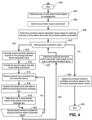
- FIG. 4 shows a flow chart of an example of a method 400 of determining promotions scores of candidate promotions based on input chat data, in accordance with some embodiments.
- Method 400 may be performed to provide interactive mobile chat sessions wherein the chats service account may programmatically conduct conversations with chat accounts to improve candidate promotion targeting efficiency and accuracy.
- the programmatic interaction may be configured to guide consumers in interacting with the promotion and marketing service via the mobile chat session, and providing necessary or otherwise useful relevance input data for promotion scoring and/or ranking via messaging within the mobile chat session.
- the real-time interactive nature of chat sessions may be utilized to provide gaps in targeting data for users within the promotion and marketing system 102 that would not otherwise be possible, and to programmatically present targeted data in an efficient, intuitive chat interface.
- Method 400 may begin at 402 and proceed to 404, where the one or more servers 104 may be configured to determine one or more search terms based on message text.
- the discussion at 314 of method 300 may be applicable at 404.
- a promotion search parameter refers to a category of search term.
- Some example promotion search parameters may include location (e.g., with example search terms including “Palo Alto,” “nearby,” “downtown,” etc.), merchant category (e.g., with example search terms including “restaurants,” “hotels,” “shopping,” etc.), item category/subcategory (e.g., with example search terms including “food,” “computers,” “books,” etc., or subcategories such as “thrillers,” “comedy,” “horror,” etc.
- time e.g., with example search terms including “lunch,” “now,” “tomorrow,” etc.
- price range e.g., “expensive,” “cheap,” “fast food,” “fine dining,” price values, etc.
- the one or more servers 104 may be configured to determine promotion search parameter values based on matching the one or more search terms with the promotion search parameters. For example, the search term "Palo Alto" may be matched with the location promotion search parameter as being a search term defining the location category. In another example, the search term "restaurant” may be matched with the merchant category promotion search parameter. Thus the one or more servers 104 may be configured to attempt to match each of the one or more search terms extracted from the input chat data to a promotion search parameter. Once match, the search term may define a promotion search parameter value of the promotion search parameter.
- the one or more servers 104 may be configured to determine whether there is one or more missing search parameter values based on the matching of the one or more search terms with the promotion search parameters.
- a search parameter value may be determined to be missing for various reasons.
- the one or more servers 104 may be configured to require that a search term has been matched to at least one of the predefined promotion search parameters.
- the promotion search parameter values may be determined to be missing.
- a minimum number e.g., 2, 3, etc.
- a search parameter value may be determined to be missing if less than the minimum number of promotion search parameters have been identified.
- one or more of the promotion search parameters may be defined as being required.
- the one or more servers 104 may determine that the location promotion search parameter is missing when none of the search terms can be matched and when the location promotion search parameter is defined as being requiring a valid location promotion search parameter value.
- one or more search parameter values may be determined to be missing based on the search results of the universal relevance service. For example, where more than a predetermined number of high scoring (e.g., compared to one or more thresholds) candidate promotions are returned based on a search that only includes item category, and thus the one or more servers may request additional search terms associated with one or more other search parameter values.
- the one or more servers 104 may be configured to receive second input chat data from the consumer device.
- the one or more servers 104 may be configured to analyze the second input chat data to determine associated second message text.
- the one or more servers 104 may be configured to determine one or more second search terms based on the second message text.
- the one or more servers 104 may be configured to determine whether the one or more second search terms includes the one or more missing search parameter values.
- the consumer message 810 includes the message text "Palo Alto," which may be determined as an additional search term. In that sense, one or more second search terms may be determined.
- the input chat data response may include "Palo Alto for lunch.”
- the search term "lunch” may be also determined as a time promotion search parameter value.
- the input chat data provided in response to the request for the missing promotion search parameter values may not include any valid search terms, or search terms that are matched to a missing search parameter value.
- method 400 may return to 414, where the one or more servers 104 may be configured to receive (e.g., third) input chat data from the consumer device.
- Method 400 may then return to 410, where the one or more servers may be configured to determine whether there remains one or more missing search parameter values.
- the one or more servers 104 may continue to extract message text until the missing search parameter values have been provided by the consumer.
- output chat data may be displayed within the message display 802 as shown by chat service message 812.
- the output chat data defines a request for the item category search parameter value by stating "What kind of food do you feel like?"
- the one or more servers 104 may be configured to associate predefined message text or text templates (e.g., within a database) for each search parameter value, and thus may use the predefined message to programmatically request the corresponding search parameter value.
- the one or more servers 104 may receive additional input chat data including a response with one or more search terms, as shown by consumer message 814.
- the consumer message 814 defines the search term "Italian" which may be used as the item category promotion search parameter value for the item category promotion search parameter.
- the one or more servers 104 may be configured to receive second input chat data from the mobile chat server 116 generated by a second consumer device 108.
- the second consumer device 108 may be concurrently connected with the mobile chat server 116, the first consumer device 108, and the one or more servers.
- the second consumer device 108 may be associated with a second chat account of the mobile chat system 114, and a second consumer account of the promotion and marketing system 102.
- the one or more servers 104 may be configured to determine an output chat message based on the one or more search terms as discussed in methods 300/400.
- the chat service message 816 may include an electronic marketing communication of one or more selected promotions based at least in part on the search terms received from the multiple chat accounts.
- the one or more servers 104 may be configured to determine promotions scores of candidate promotions based at least in part on the one or more search terms, promotion data, and consumer data associated with the both the first chat account and the second chat account. In that sense, the targeting of selected promotions may be determined based on relevance to both consumers.
- the one or more servers 104 may be configured to send requests for the missing promotion search parameter values and may receive input chat data from one or more of the first chat account and the second chat account to determine search terms that match the requested promotion search parameters.
Landscapes
- Engineering & Computer Science (AREA)
- Business, Economics & Management (AREA)
- Strategic Management (AREA)
- Theoretical Computer Science (AREA)
- Finance (AREA)
- Development Economics (AREA)
- Accounting & Taxation (AREA)
- General Physics & Mathematics (AREA)
- Physics & Mathematics (AREA)
- General Business, Economics & Management (AREA)
- Marketing (AREA)
- Entrepreneurship & Innovation (AREA)
- Economics (AREA)
- Computer Networks & Wireless Communication (AREA)
- Signal Processing (AREA)
- Databases & Information Systems (AREA)
- Game Theory and Decision Science (AREA)
- General Engineering & Computer Science (AREA)
- Data Mining & Analysis (AREA)
- Operations Research (AREA)
- Human Resources & Organizations (AREA)
- Quality & Reliability (AREA)
- Tourism & Hospitality (AREA)
- Information Transfer Between Computers (AREA)
- Computing Systems (AREA)
- Telephonic Communication Services (AREA)
Claims (14)
- Système (102) d'interfaçage avec une session de conversation mobile en temps réel hébergée par un serveur de conversation mobile (116) via un réseau, comprenant :
une ou plusieurs bases de données (106) configurées pour :stocker des comptes consommateurs, dans lequel chaque compte consommateur comporte des données consommateurs associées à un compte de conversation pour accéder à la session de conversation permettant d'accéder à la session de conversation mobile en temps réel ; etstocker des données de promotion définissant des promotions ;un ou plusieurs serveurs (104) configurés pour :établir une première connexion réseau avec le serveur de conversation mobile via un réseau (112) ;accéder à la session de conversation mobile en temps réel hébergée par le serveur de conversation mobile via une interface de programmation d'application associée à la session de conversation mobile en temps réel ;recevoir des données de conversation d'entrée à partir du serveur de conversation mobile, dans lequel les données de conversation d'entrée définissent un message généré par un dispositif consommateur (108) avec une connexion réseau simultanée à la session de conversation mobile en temps réel, et dans lequel les données de conversation d'entrée sont présentées via un affichage de message du dispositif consommateur ;identifier une commande d'appel incluse au début d'un texte de message d'une pluralité de messages générés par une pluralité de dispositifs consommateurs ;déterminer si la commande d'appel correspond à une chaîne de texte définie, la chaîne de texte définie étant configurée pour déclencher une demande de génération d'un message de promotion électronique comprenant une ou plusieurs parties sur la base d'une partie du texte de message inclus après la commande d'appel dans le texte de message ; eten réponse au déclenchement de la demande de génération du message de promotion électronique sur la base d'une détermination que la commande d'appel correspond à la chaîne de texte définie :analyser les données de conversation d'entrée et les données d'intention pour les données de conversation d'entrée qui sont générées sur la base d'une ou plusieurs techniques de traitement de langage naturel pour déterminer un premier compte de conversation et un texte associé ;déterminer un premier compte consommateur comportant des premières données consommateurs associées au premier compte de conversation ;déterminer des données d'emplacement pour le dispositif consommateur ;déterminer un ou plusieurs termes de recherche sur la base de la partie du texte de message incluse après la commande d'appel dans le texte de message ;déterminer un certain nombre de valeurs de paramètres de recherche et une valeur de paramètre de recherche prédéfinie associée aux un ou plusieurs termes de recherche ;en réponse à la détermination que la valeur de paramètre de recherche prédéfinie est manquante sur la base du nombre de valeurs de paramètres de recherche inférieur au nombre seuil de paramètres de recherche, transmettre des premières données de conversation de sortie au serveur de conversation mobile pour restituer les premières données de conversation de sortie via l'interface électronique pendant la session de conversation mobile en temps réel, dans lequel les premières données de conversation de sortie sont une demande définie pour obtenir un ou plusieurs termes de recherche supplémentaires à partir d'un texte de message supplémentaire fourni pendant la session de conversation mobile en temps réel, et dans lequel la demande définie satisfait à la valeur de paramètre de recherche prédéfinie ;recevoir les un ou plusieurs termes de recherche supplémentaires pendant la session de conversation mobile en temps réel ;comparer des termes de recherche collectifs, qui comprennent les un ou plusieurs termes de recherche et les un ou plusieurs termes de recherche supplémentaires, avec un ensemble de termes de recherche valides stockés dans une base de données de dictionnaire ; eten réponse à une détermination que les termes de recherche collectifs correspondent à un ou plusieurs termes de recherche valides parmi l'ensemble de termes de recherche valides :déterminer les scores de promotions des promotions candidates sur la base, au moins en partie, des un ou plusieurs termes de recherche, des données de promotion, et des premières données consommateurs ;déterminer un classement de promotion des promotions des candidats sur la base des scores de promotions ;déterminer une promotion sélectionnée sur la base du classement de promotion ;générer des données de conversation de sortie définissant une communication marketing électronique de la promotion sélectionnée ; etfournir les données de conversation de sortie au serveur de conversation mobile (116) pour affichage sur l'affichage de message du dispositif consommateur (108), dans lequel les données de conversation de sortie sont configurées pour restituer la promotion sélectionnée via l'affichage de message pendant la session de conversation mobile en temps réel. - Système (102) selon la revendication 1, dans lequel la valeur de paramètre de recherche manquante définit un des éléments suivants :un emplacement ;un commerçant ;un prix ;un horaire ; ouune catégorie d'article.
- Système (102) selon la revendication 1, dans lequel les un ou plusieurs serveurs sont également configurés pour :recevoir des secondes données de conversation à partir de la session de conversation mobile en temps réel, dans lequel les secondes données de conversation comportent un second message généré par un second dispositif consommateur avec une connexion à la session de conversation mobile en temps réel simultanée à celle du ou des serveurs et du dispositif consommateur ;analyser les secondes données de conversation pour déterminer un second compte de conversation et un second texte de message associé ;déterminer un second compte consommateur comportant des secondes données consommateurs associées au second compte de conversation ;déterminer un ou plusieurs seconds paramètres de recherche sur la base du second texte de message ; etdéterminer des seconds scores de promotions des promotions candidates sur la base, au moins en partie, des un ou plusieurs paramètres de recherche, des un ou plusieurs seconds paramètres de recherche, des données de promotion, des données consommateurs, et des secondes données consommateurs.
- Système (102) selon la revendication 1, dans lequel les un ou plusieurs serveurs sont également configurés pour :recevoir, à partir du serveur de conversation mobile via le réseau, une invitation à rejoindre la session de conversation mobile en temps réel ; etaccéder à la session de conversation mobile en temps réel en réponse à la réception de l'invitation.
- Système (102) selon la revendication 1, dans lequel les un ou plusieurs serveurs sont également configurés pour :envoyer une invitation à rejoindre la session de conversation mobile en temps réel sur le dispositif consommateur ;recevoir, à partir du serveur de conversation mobile, une indication que le dispositif consommateur a accès à la session de conversation mobile en temps réel ; etaccéder à la session de conversation mobile en temps réel en réponse à la réception de l'indication que le dispositif consommateur a accédé à la session de conversation mobile en temps réel.
- Système (102) selon la revendication 1 comprenant également un terminal de service de conversation, et dans lequel les un ou plusieurs serveurs sont également configurés pour :recevoir des secondes données de conversation d'entrée à partir du serveur de conversation mobile, dans lequel les secondes données de conversation d'entrée définissent un second message généré par le dispositif consommateur ;tenter d'extraire un ou plusieurs seconds termes de recherche à partir des secondes données de conversation d'entrée ; eten réponse à l'échec de l'extraction des un ou plusieurs seconds termes de recherche à partir des secondes données de conversation d'entrée, connecter le terminal de service de conversation à la session de conversation mobile en temps réel.
- Système (102) selon la revendication 1 comprenant également un terminal de service de conversation, et dans lequel les un ou plusieurs serveurs sont également configurés pour :recevoir des secondes données de conversation d'entrée à partir du serveur de conversation mobile, dans lequel les secondes données de conversation d'entrée définissent un second message généré par le dispositif consommateur ;tenter de déterminer une seconde promotion sélectionnée sur la base des secondes données de conversation d'entrée ; eten réponse à l'échec de la détermination d'une seconde promotion sélectionnée à partir des secondes données de conversation d'entrée, connecter le terminal de service de conversation à la session de conversation mobile en temps réel.
- Procédé d'interfaçage avec une session de conversation mobile en temps réel hébergée par un serveur de conversation mobile (116) via un réseau (112), comprenant :l'association, par un ou plusieurs serveurs (104), de comptes consommateurs à des comptes de conversation pour accéder à la session de conversation mobile en temps réel, dans lequel chaque compte consommateur comporte des données consommateurs associées à un compte de conversation ;la détermination, par les un ou plusieurs serveurs, de données de promotion définissant des promotions ;l'établissement (304), par les un ou plusieurs serveurs, d'une première connexion réseau avec le serveur de conversation mobile via le réseau ;l'accès (306), par les un ou plusieurs serveurs, à la session de conversation mobile en temps réel hébergée par le serveur de conversation mobile via une interface de programmation d'application associée à la session de conversation mobile en temps réel ;la réception (308), par les un ou plusieurs serveurs, de données de conversation d'entrée du serveur de conversation mobile, dans lequel les données de conversation d'entrée définissent un message généré par un dispositif consommateur (108) avec une connexion réseau simultanée à la session de conversation mobile en temps réel, et dans lequel les données de conversation d'entrée sont présentées via un affichage de message du dispositif consommateur ;comprenant également, par les un ou plusieurs serveurs :l'identification d'une commande d'appel incluse au début d'un texte de message d'une pluralité de messages générés par une pluralité de dispositifs consommateurs ;le fait de déterminer si la commande d'appel correspond à une chaîne de texte définie, la chaîne de texte définie étant configurée pour déclencher une demande de génération d'un message de promotion électronique comprenant une ou plusieurs parties sur la base d'une partie du texte de message inclus après la commande d'appel dans le texte de message ; eten réponse au déclenchement de la demande de génération du message de promotion électronique sur la base d'une détermination que la commande d'appel correspond à la chaîne de texte définie :l'analyse (310), par les un ou plusieurs serveurs, des données de conversation d'entrée et des données d'intention pour les données de conversation d'entrée qui sont générées sur la base d'une ou plusieurs techniques de traitement de langage naturel pour déterminer un premier compte de conversation et le texte de message associé ;la détermination (312), par les un ou plusieurs serveurs, d'un premier compte consommateur comportant des premières données consommateurs associées au premier compte de conversation ;la détermination, par les un ou plusieurs serveurs, de données d'emplacement du dispositif consommateur ;la détermination (314, 404), par les un ou plusieurs serveurs, d'un ou plusieurs termes de recherche sur la base de la partie du texte de message incluse après la commande d'appel dans le texte de message ;la détermination (406, 408), par les un ou plusieurs serveurs, d'un certain nombre de valeurs de paramètres de recherche et d'une valeur de paramètre de recherche prédéfinie associée aux un ou plusieurs termes de recherche ;en réponse à la détermination (410) que la valeur de paramètre de recherche prédéfinie est manquante sur la base du nombre de valeurs de paramètres de recherche inférieur au nombre seuil de paramètres de recherche, la transmission (412), par les un ouplusieurs serveurs, de premières données de conversation de sortie au serveur de conversation mobile pour restituer les premières données de conversation de sortie via l'interface électronique pendant la session de conversation mobile en temps réel, dans lequel les premières données de conversation de sortie sont une demande définie pour obtenir un ou plusieurs termes de recherche supplémentaires à partir d'un texte de message supplémentaire fourni pendant la session de conversation mobile en temps réel, et dans lequel la demande définie satisfait à la valeur de paramètre de recherche prédéfinie ;la réception (414), par les un ou plusieurs serveurs, des un ou plusieurs termes de recherche supplémentaires pendant la session de conversation mobile en temps réel ;la comparaison, par les un ou plusieurs serveurs, de termes de recherche collectifs, qui comprennent les un ou plusieurs termes de recherche et les un ou plusieurs termes de recherche supplémentaires, avec un ensemble de termes de recherche valides stockés dans une base de données de dictionnaire ; eten réponse à une détermination que les termes de recherche collectifs correspondent à un ou plusieurs termes de recherche valides parmi l'ensemble de termes de recherche valides :la détermination (318), par les un ou plusieurs serveurs, de scores de promotions des promotions candidates sur la base, au moins en partie, des un ou plusieurs termes de recherche, des données de promotion, et des premières données consommateurs ;la détermination (320), par les un ou plusieurs serveurs, d'un classement de promotion des promotions des candidats sur la base des scores de promotions ;la détermination (322), par les un ou plusieurs serveurs, d'une promotion sélectionnée sur la base du classement de promotion ;la génération (324), par les un ou plusieurs serveurs, de données de conversation de sortie définissant une communication marketing électronique de la promotion sélectionnée ; etla fourniture (326), par les un ou plusieurs serveurs, des données de conversation de sortie au serveur de conversation mobile pour affichage sur l'affichage de message du dispositif consommateur (108),dans lequel les données de conversation de sortie sont configurées pour restituer la promotion sélectionnée via l'affichage de message pendant la session de conversation mobile en temps réel.
- Procédé selon la revendication 8, dans lequel la valeur de paramètre de recherche manquante définit un des éléments suivants :un emplacement ;un commerçant ;un prix ;un horaire ; ouune catégorie d'article.
- Procédé selon la revendication 8 comprenant également, par les un ou plusieurs serveurs (104) :la réception (510) de secondes données de conversation à partir de la session de conversation mobile en temps réel, dans lequel les secondes données de conversation comportent un second message généré par un second dispositif consommateur avec une connexion à la session de conversation mobile en temps réel simultanée à celle du ou des serveurs et du dispositif consommateur ;l'analyse des secondes données de conversation pour déterminer un second compte de conversation et un second texte de message associé ;la détermination (512) d'un second compte consommateur comportant des secondes données consommateurs associées au second compte de conversation ;la détermination d'un ou plusieurs seconds paramètres de recherche sur la base du second texte de message ; etla détermination de seconds scores de promotions des promotions candidates sur la base, au moins en partie, des un ou plusieurs paramètres de recherche, des un ou plusieurs seconds paramètres de recherche, des données de promotion, des données consommateurs, et des secondes données consommateurs.
- Procédé selon la revendication 8 comprenant également, par les un ou plusieurs serveurs :la réception, à partir du serveur de conversation mobile via le réseau, d'une invitation à rejoindre la session de conversation mobile en temps réel ; etl'accès à la session de conversation mobile en temps réel en réponse à la réception de l'invitation.
- Procédé selon la revendication 8 comprenant également, par les un ou plusieurs serveurs :la réception de secondes données de conversation d'entrée à partir du serveur de conversation mobile, dans lequel les secondes données de conversation d'entrée définissent un second message généré par le dispositif consommateur ;la tentative d'extraction d'un ou plusieurs seconds termes de recherche à partir des secondes données de conversation d'entrée ; eten réponse à l'échec de l'extraction des un ou plusieurs seconds termes de recherche à partir des secondes données de conversation d'entrée, la connexion d'un terminal de service de conversation à la session de conversation mobile en temps réel.
- Procédé selon la revendication 8 comprenant également, par les un ou plusieurs serveurs (104) :l'envoi d'une invitation à rejoindre la session de conversation mobile en temps réel au dispositif consommateur ;la réception, à partir du serveur de conversation mobile, d'une indication que le dispositif consommateur a accès à la session de conversation mobile en temps réel ; etl'accès à la session de conversation mobile en temps réel en réponse à la réception de l'indication que le dispositif consommateur a accédé à la session de conversation mobile en temps réel.
- Procédé selon la revendication 8 comprenant également, par les un ou plusieurs serveurs (104) :la réception de secondes données de conversation d'entrée à partir du serveur de conversation mobile, dans lequel les secondes données de conversation d'entrée définissent un second message généré par le dispositif consommateur ;la tentative de détermination d'une seconde promotion sélectionnée sur la base des secondes données de conversation d'entrée ; eten réponse à l'échec de la détermination d'une seconde promotion sélectionnée à partir des secondes données de conversation d'entrée, la connexion d'un terminal de service de conversation à la session de conversation mobile en temps réel.
Applications Claiming Priority (2)
| Application Number | Priority Date | Filing Date | Title |
|---|---|---|---|
| US201562185421P | 2015-06-26 | 2015-06-26 | |
| PCT/US2016/039069 WO2016210164A1 (fr) | 2015-06-26 | 2016-06-23 | Intégration d'une application de conversation mobile avec des systèmes promotionnels |
Publications (5)
| Publication Number | Publication Date |
|---|---|
| EP3314563A1 EP3314563A1 (fr) | 2018-05-02 |
| EP3314563A4 EP3314563A4 (fr) | 2019-01-09 |
| EP3314563C0 EP3314563C0 (fr) | 2025-07-09 |
| EP3314563B1 true EP3314563B1 (fr) | 2025-07-09 |
| EP3314563B8 EP3314563B8 (fr) | 2025-08-20 |
Family
ID=57585884
Family Applications (1)
| Application Number | Title | Priority Date | Filing Date |
|---|---|---|---|
| EP16815327.8A Active EP3314563B8 (fr) | 2015-06-26 | 2016-06-23 | Intégration d'une application de conversation mobile avec des systèmes promotionnels |
Country Status (5)
| Country | Link |
|---|---|
| US (2) | US11348141B2 (fr) |
| EP (1) | EP3314563B8 (fr) |
| AU (4) | AU2016281676A1 (fr) |
| CA (1) | CA2990409C (fr) |
| WO (1) | WO2016210164A1 (fr) |
Families Citing this family (10)
| Publication number | Priority date | Publication date | Assignee | Title |
|---|---|---|---|---|
| WO2016210164A1 (fr) | 2015-06-26 | 2016-12-29 | Groupon, Inc. | Intégration d'une application de conversation mobile avec des systèmes promotionnels |
| US10826875B1 (en) * | 2016-07-22 | 2020-11-03 | Servicenow, Inc. | System and method for securely communicating requests |
| US10205695B2 (en) * | 2017-06-02 | 2019-02-12 | Notion Ai, Inc. | Systems and methods for implementing intelligent chat communication within an email environment |
| US10977319B2 (en) * | 2017-07-10 | 2021-04-13 | Ebay Inc. | Expandable service architecture with configurable dialogue manager |
| WO2019232329A1 (fr) | 2018-06-01 | 2019-12-05 | Capital One Services, Llc | Activation déclenchée par balise d'une application de communication en champ proche |
| US10701006B2 (en) | 2018-08-27 | 2020-06-30 | VoiceCTRL Oy | Method and system for facilitating computer-generated communication with user |
| JP2021026472A (ja) * | 2019-08-05 | 2021-02-22 | YeePa株式会社 | サービス提供者選定システム、サービス提供者の選定方法及びプログラム |
| US11087368B1 (en) * | 2020-09-18 | 2021-08-10 | Innovar Media Llc | System for providing sales gateway between agencies and advertisers to ad platform |
| US20230025408A1 (en) * | 2021-07-21 | 2023-01-26 | Eric Wilson | Customized social media feed |
| JP2026002177A (ja) * | 2024-06-20 | 2026-01-08 | Lineヤフー株式会社 | 情報処理装置、情報処理方法、および情報処理プログラム |
Citations (1)
| Publication number | Priority date | Publication date | Assignee | Title |
|---|---|---|---|---|
| US20140207882A1 (en) * | 2013-01-22 | 2014-07-24 | Naver Business Platform Corp. | Method and system for providing multi-user messenger service |
Family Cites Families (34)
| Publication number | Priority date | Publication date | Assignee | Title |
|---|---|---|---|---|
| US6606644B1 (en) * | 2000-02-24 | 2003-08-12 | International Business Machines Corporation | System and technique for dynamic information gathering and targeted advertising in a web based model using a live information selection and analysis tool |
| US6754647B1 (en) * | 2000-09-26 | 2004-06-22 | Verity, Inc. | Method and apparatus for hierarchically decomposed bot scripts |
| US20020133347A1 (en) * | 2000-12-29 | 2002-09-19 | Eberhard Schoneburg | Method and apparatus for natural language dialog interface |
| US20030182391A1 (en) * | 2002-03-19 | 2003-09-25 | Mike Leber | Internet based personal information manager |
| US7243078B1 (en) * | 2002-09-04 | 2007-07-10 | At&T Intellectual Property, Inc. | Method of providing customer services |
| US7356565B2 (en) * | 2003-06-27 | 2008-04-08 | Logitech Europe S.A. | Camera based instant messenger client |
| US20050021652A1 (en) * | 2003-07-25 | 2005-01-27 | Sun Microsystems, Inc. | Synchronous collaborative shell integrated instant messaging |
| US8204884B2 (en) * | 2004-07-14 | 2012-06-19 | Nice Systems Ltd. | Method, apparatus and system for capturing and analyzing interaction based content |
| US20060080130A1 (en) * | 2004-10-08 | 2006-04-13 | Samit Choksi | Method that uses enterprise application integration to provide real-time proactive post-sales and pre-sales service over SIP/SIMPLE/XMPP networks |
| US20070043878A1 (en) * | 2005-08-18 | 2007-02-22 | Microsoft Corporation | Virtual robot communication format customized by endpoint |
| US7769764B2 (en) * | 2005-09-14 | 2010-08-03 | Jumptap, Inc. | Mobile advertisement syndication |
| US8195133B2 (en) * | 2005-09-14 | 2012-06-05 | Jumptap, Inc. | Mobile dynamic advertisement creation and placement |
| US8239461B2 (en) * | 2007-06-28 | 2012-08-07 | Chacha Search, Inc. | Method and system for accessing search services via messaging services |
| US7890516B2 (en) * | 2008-05-30 | 2011-02-15 | Microsoft Corporation | Recommending queries when searching against keywords |
| US8762862B2 (en) * | 2008-06-05 | 2014-06-24 | Microsoft Corporation | Initiating a support chat session in response to the occurrence of a support event with transmission of detailed event information |
| US20090319516A1 (en) * | 2008-06-16 | 2009-12-24 | View2Gether Inc. | Contextual Advertising Using Video Metadata and Chat Analysis |
| US9098827B2 (en) * | 2009-12-29 | 2015-08-04 | Bank Of America Corporation | Interactive query tool |
| WO2011094734A2 (fr) * | 2010-02-01 | 2011-08-04 | Jumptap, Inc. | Système d'annonces publicitaires intégré |
| CN108805604A (zh) * | 2010-07-23 | 2018-11-13 | 电子湾有限公司 | 对产品信息请求自动响应的方法和系统 |
| KR101402506B1 (ko) * | 2011-12-01 | 2014-06-03 | 라인 가부시키가이샤 | 인스턴트 메시징 어플리케이션을 이용한 대화형 정보제공 시스템 및 방법 |
| US20130167044A1 (en) * | 2011-12-27 | 2013-06-27 | Visually Linked Llc | System and Method for Providing Directed Video Within a Chat Application |
| US20150319203A1 (en) * | 2012-05-17 | 2015-11-05 | Leo Jeremias | Computer system and methods for chat enabled online search |
| US9973457B2 (en) * | 2012-06-26 | 2018-05-15 | Nuance Communications, Inc. | Method and apparatus for live chat integration |
| US9465833B2 (en) * | 2012-07-31 | 2016-10-11 | Veveo, Inc. | Disambiguating user intent in conversational interaction system for large corpus information retrieval |
| US9374327B2 (en) * | 2013-01-08 | 2016-06-21 | Vmware, Inc. | Intelligent chat system |
| CN104142964B (zh) | 2013-06-13 | 2019-11-05 | 腾讯科技(北京)有限公司 | 信息匹配的方法及装置 |
| US20150066594A1 (en) * | 2013-08-27 | 2015-03-05 | New York University | System, method and computer accessible medium for determining one or more effects of rankings on consumer behavior |
| US11127036B2 (en) * | 2014-05-16 | 2021-09-21 | Conversant Teamware Inc. | Method and system for conducting ecommerce transactions in messaging via search, discussion and agent prediction |
| US11093971B2 (en) * | 2015-02-27 | 2021-08-17 | Keypoint Technologies India Pvt Ltd. | Contextual discovery |
| US9647968B2 (en) * | 2015-03-25 | 2017-05-09 | Pypestream Inc | Systems and methods for invoking chatbots in a channel based communication system |
| US9450901B1 (en) * | 2015-03-25 | 2016-09-20 | Pypestream Inc. | Channel based communication and transaction system |
| KR20160130572A (ko) * | 2015-05-04 | 2016-11-14 | 최성순 | 인스턴트 메신저 시스템 및 그 서비스 방법 |
| WO2016210164A1 (fr) | 2015-06-26 | 2016-12-29 | Groupon, Inc. | Intégration d'une application de conversation mobile avec des systèmes promotionnels |
| US20170024657A1 (en) * | 2015-07-21 | 2017-01-26 | Yp Llc | Fuzzy autosuggestion for query processing services |
-
2016
- 2016-06-23 WO PCT/US2016/039069 patent/WO2016210164A1/fr not_active Ceased
- 2016-06-23 CA CA2990409A patent/CA2990409C/fr active Active
- 2016-06-23 AU AU2016281676A patent/AU2016281676A1/en not_active Abandoned
- 2016-06-23 EP EP16815327.8A patent/EP3314563B8/fr active Active
- 2016-06-23 US US15/191,348 patent/US11348141B2/en active Active
-
2022
- 2022-05-02 US US17/734,450 patent/US20220366454A1/en not_active Abandoned
- 2022-05-05 AU AU2022203035A patent/AU2022203035A1/en not_active Abandoned
-
2024
- 2024-05-27 AU AU2024203526A patent/AU2024203526A1/en not_active Abandoned
-
2026
- 2026-03-03 AU AU2026201612A patent/AU2026201612A1/en not_active Withdrawn
Patent Citations (1)
| Publication number | Priority date | Publication date | Assignee | Title |
|---|---|---|---|---|
| US20140207882A1 (en) * | 2013-01-22 | 2014-07-24 | Naver Business Platform Corp. | Method and system for providing multi-user messenger service |
Also Published As
| Publication number | Publication date |
|---|---|
| US11348141B2 (en) | 2022-05-31 |
| CA2990409C (fr) | 2024-09-10 |
| AU2016281676A1 (en) | 2018-01-18 |
| EP3314563B8 (fr) | 2025-08-20 |
| EP3314563C0 (fr) | 2025-07-09 |
| US20160379269A1 (en) | 2016-12-29 |
| WO2016210164A1 (fr) | 2016-12-29 |
| AU2026201612A1 (en) | 2026-03-19 |
| EP3314563A4 (fr) | 2019-01-09 |
| US20220366454A1 (en) | 2022-11-17 |
| EP3314563A1 (fr) | 2018-05-02 |
| AU2024203526A1 (en) | 2024-06-20 |
| CA2990409A1 (fr) | 2016-12-29 |
| AU2022203035A1 (en) | 2022-05-26 |
Similar Documents
| Publication | Publication Date | Title |
|---|---|---|
| US20220366454A1 (en) | Mobile chat application integration with promotional systems | |
| US12219424B2 (en) | Mobile proximity based messages | |
| US12014343B2 (en) | Prescient and adaptive point-of-sale systems | |
| US12026746B2 (en) | Instrument system interaction tracking | |
| US11968589B2 (en) | Systems and methods for providing mobile proving ground | |
| US20230245161A1 (en) | Apparatus and method for utilizing immediate gratification promotions | |
| AU2014342638A1 (en) | System and method for identifying purchase intent | |
| US10607169B1 (en) | Method, apparatus, and computer program product for programmatically updating data for communication to a social network system | |
| US11599905B2 (en) | Method and system for recommending promotions to consumers | |
| US10929867B1 (en) | Apparatus and method for utilizing immediate gratification promotions | |
| US11748798B1 (en) | Method and apparatus for item selection | |
| US11651393B2 (en) | Mobile visual locator | |
| US20220351241A1 (en) | Method, apparatus, and computer program product for facilitating the activation of promotions using short codes |
Legal Events
| Date | Code | Title | Description |
|---|---|---|---|
| STAA | Information on the status of an ep patent application or granted ep patent |
Free format text: STATUS: THE INTERNATIONAL PUBLICATION HAS BEEN MADE |
|
| PUAI | Public reference made under article 153(3) epc to a published international application that has entered the european phase |
Free format text: ORIGINAL CODE: 0009012 |
|
| STAA | Information on the status of an ep patent application or granted ep patent |
Free format text: STATUS: REQUEST FOR EXAMINATION WAS MADE |
|
| 17P | Request for examination filed |
Effective date: 20180124 |
|
| AK | Designated contracting states |
Kind code of ref document: A1 Designated state(s): AL AT BE BG CH CY CZ DE DK EE ES FI FR GB GR HR HU IE IS IT LI LT LU LV MC MK MT NL NO PL PT RO RS SE SI SK SM TR |
|
| AX | Request for extension of the european patent |
Extension state: BA ME |
|
| RIN1 | Information on inventor provided before grant (corrected) |
Inventor name: BARNEY, HAMISH Inventor name: ELLIS, SCOTT Inventor name: JOY, JAYESH Inventor name: GANGAL, DEVDATTA |
|
| DAV | Request for validation of the european patent (deleted) | ||
| DAX | Request for extension of the european patent (deleted) | ||
| A4 | Supplementary search report drawn up and despatched |
Effective date: 20181207 |
|
| RIC1 | Information provided on ipc code assigned before grant |
Ipc: G06Q 30/02 20120101AFI20181203BHEP Ipc: G06Q 50/00 20120101ALI20181203BHEP |
|
| STAA | Information on the status of an ep patent application or granted ep patent |
Free format text: STATUS: EXAMINATION IS IN PROGRESS |
|
| 17Q | First examination report despatched |
Effective date: 20210128 |
|
| REG | Reference to a national code |
Ref country code: DE Ref legal event code: R079 Free format text: PREVIOUS MAIN CLASS: G06Q0030020000 Ipc: G06F0016953500 Ref country code: DE Ref legal event code: R079 Ref document number: 602016092853 Country of ref document: DE Free format text: PREVIOUS MAIN CLASS: G06Q0030020000 Ipc: G06F0016953500 |
|
| GRAP | Despatch of communication of intention to grant a patent |
Free format text: ORIGINAL CODE: EPIDOSNIGR1 |
|
| STAA | Information on the status of an ep patent application or granted ep patent |
Free format text: STATUS: GRANT OF PATENT IS INTENDED |
|
| RIC1 | Information provided on ipc code assigned before grant |
Ipc: G06Q 50/00 20120101ALI20250131BHEP Ipc: H04L 67/306 20220101ALI20250131BHEP Ipc: H04L 51/216 20220101ALI20250131BHEP Ipc: H04L 51/046 20220101ALI20250131BHEP Ipc: G06Q 30/0251 20230101ALI20250131BHEP Ipc: G06F 16/9535 20190101AFI20250131BHEP |
|
| INTG | Intention to grant announced |
Effective date: 20250214 |
|
| GRAS | Grant fee paid |
Free format text: ORIGINAL CODE: EPIDOSNIGR3 |
|
| GRAA | (expected) grant |
Free format text: ORIGINAL CODE: 0009210 |
|
| STAA | Information on the status of an ep patent application or granted ep patent |
Free format text: STATUS: THE PATENT HAS BEEN GRANTED |
|
| AK | Designated contracting states |
Kind code of ref document: B1 Designated state(s): AL AT BE BG CH CY CZ DE DK EE ES FI FR GB GR HR HU IE IS IT LI LT LU LV MC MK MT NL NO PL PT RO RS SE SI SK SM TR |
|
| REG | Reference to a national code |
Ref country code: GB Ref legal event code: FG4D |
|
| REG | Reference to a national code |
Ref country code: CH Ref legal event code: EP |
|
| REG | Reference to a national code |
Ref country code: DE Ref legal event code: R081 Ref document number: 602016092853 Country of ref document: DE Owner name: BYTEDANCE INC., WILMINGTON, US Free format text: FORMER OWNER: GROUPON, INC., CHICAGO, IL, US |
|
| REG | Reference to a national code |
Ref country code: IE Ref legal event code: FG4D |
|
| REG | Reference to a national code |
Ref country code: CH Ref legal event code: PK Free format text: BERICHTIGUNG B8 Ref country code: DE Ref legal event code: R096 Ref document number: 602016092853 Country of ref document: DE |
|
| RAP2 | Party data changed (patent owner data changed or rights of a patent transferred) |
Owner name: BYTEDANCE INC. |
|
| U01 | Request for unitary effect filed |
Effective date: 20250722 |
|
| U07 | Unitary effect registered |
Designated state(s): AT BE BG DE DK EE FI FR IT LT LU LV MT NL PT RO SE SI Effective date: 20250730 |
|
| PG25 | Lapsed in a contracting state [announced via postgrant information from national office to epo] |
Ref country code: IS Free format text: LAPSE BECAUSE OF FAILURE TO SUBMIT A TRANSLATION OF THE DESCRIPTION OR TO PAY THE FEE WITHIN THE PRESCRIBED TIME-LIMIT Effective date: 20251109 |
|
| PG25 | Lapsed in a contracting state [announced via postgrant information from national office to epo] |
Ref country code: NO Free format text: LAPSE BECAUSE OF FAILURE TO SUBMIT A TRANSLATION OF THE DESCRIPTION OR TO PAY THE FEE WITHIN THE PRESCRIBED TIME-LIMIT Effective date: 20251009 |
|
| PG25 | Lapsed in a contracting state [announced via postgrant information from national office to epo] |
Ref country code: HR Free format text: LAPSE BECAUSE OF FAILURE TO SUBMIT A TRANSLATION OF THE DESCRIPTION OR TO PAY THE FEE WITHIN THE PRESCRIBED TIME-LIMIT Effective date: 20250709 |
|
| PG25 | Lapsed in a contracting state [announced via postgrant information from national office to epo] |
Ref country code: GR Free format text: LAPSE BECAUSE OF FAILURE TO SUBMIT A TRANSLATION OF THE DESCRIPTION OR TO PAY THE FEE WITHIN THE PRESCRIBED TIME-LIMIT Effective date: 20251010 |
|
| PG25 | Lapsed in a contracting state [announced via postgrant information from national office to epo] |
Ref country code: PL Free format text: LAPSE BECAUSE OF FAILURE TO SUBMIT A TRANSLATION OF THE DESCRIPTION OR TO PAY THE FEE WITHIN THE PRESCRIBED TIME-LIMIT Effective date: 20250709 |
|
| PG25 | Lapsed in a contracting state [announced via postgrant information from national office to epo] |
Ref country code: RS Free format text: LAPSE BECAUSE OF FAILURE TO SUBMIT A TRANSLATION OF THE DESCRIPTION OR TO PAY THE FEE WITHIN THE PRESCRIBED TIME-LIMIT Effective date: 20251009 |
|
| PG25 | Lapsed in a contracting state [announced via postgrant information from national office to epo] |
Ref country code: ES Free format text: LAPSE BECAUSE OF FAILURE TO SUBMIT A TRANSLATION OF THE DESCRIPTION OR TO PAY THE FEE WITHIN THE PRESCRIBED TIME-LIMIT Effective date: 20250709 |
|
| PG25 | Lapsed in a contracting state [announced via postgrant information from national office to epo] |
Ref country code: SM Free format text: LAPSE BECAUSE OF FAILURE TO SUBMIT A TRANSLATION OF THE DESCRIPTION OR TO PAY THE FEE WITHIN THE PRESCRIBED TIME-LIMIT Effective date: 20250709 |
|
| PG25 | Lapsed in a contracting state [announced via postgrant information from national office to epo] |
Ref country code: CZ Free format text: LAPSE BECAUSE OF FAILURE TO SUBMIT A TRANSLATION OF THE DESCRIPTION OR TO PAY THE FEE WITHIN THE PRESCRIBED TIME-LIMIT Effective date: 20250709 |
|
| PG25 | Lapsed in a contracting state [announced via postgrant information from national office to epo] |
Ref country code: SK Free format text: LAPSE BECAUSE OF FAILURE TO SUBMIT A TRANSLATION OF THE DESCRIPTION OR TO PAY THE FEE WITHIN THE PRESCRIBED TIME-LIMIT Effective date: 20250709 |
|
| PLBE | No opposition filed within time limit |
Free format text: ORIGINAL CODE: 0009261 |
|
| STAA | Information on the status of an ep patent application or granted ep patent |
Free format text: STATUS: NO OPPOSITION FILED WITHIN TIME LIMIT |