EP3316516A1 - Appareil et procédé pour émettre et recevoir des signaux dans un réseau maillé - Google Patents
Appareil et procédé pour émettre et recevoir des signaux dans un réseau maillé Download PDFInfo
- Publication number
- EP3316516A1 EP3316516A1 EP16830815.3A EP16830815A EP3316516A1 EP 3316516 A1 EP3316516 A1 EP 3316516A1 EP 16830815 A EP16830815 A EP 16830815A EP 3316516 A1 EP3316516 A1 EP 3316516A1
- Authority
- EP
- European Patent Office
- Prior art keywords
- node
- connection
- mesh network
- information
- advertisement
- Prior art date
- Legal status (The legal status is an assumption and is not a legal conclusion. Google has not performed a legal analysis and makes no representation as to the accuracy of the status listed.)
- Granted
Links
Images




Classifications
-
- H—ELECTRICITY
- H04—ELECTRIC COMMUNICATION TECHNIQUE
- H04L—TRANSMISSION OF DIGITAL INFORMATION, e.g. TELEGRAPHIC COMMUNICATION
- H04L12/00—Data switching networks
- H04L12/02—Details
- H04L12/12—Arrangements for remote connection or disconnection of substations or of equipment thereof
-
- H—ELECTRICITY
- H04—ELECTRIC COMMUNICATION TECHNIQUE
- H04L—TRANSMISSION OF DIGITAL INFORMATION, e.g. TELEGRAPHIC COMMUNICATION
- H04L12/00—Data switching networks
- H04L12/28—Data switching networks characterised by path configuration, e.g. LAN [Local Area Networks] or WAN [Wide Area Networks]
-
- H—ELECTRICITY
- H04—ELECTRIC COMMUNICATION TECHNIQUE
- H04W—WIRELESS COMMUNICATION NETWORKS
- H04W4/00—Services specially adapted for wireless communication networks; Facilities therefor
- H04W4/70—Services for machine-to-machine communication [M2M] or machine type communication [MTC]
-
- H—ELECTRICITY
- H04—ELECTRIC COMMUNICATION TECHNIQUE
- H04W—WIRELESS COMMUNICATION NETWORKS
- H04W76/00—Connection management
- H04W76/10—Connection setup
-
- H—ELECTRICITY
- H04—ELECTRIC COMMUNICATION TECHNIQUE
- H04L—TRANSMISSION OF DIGITAL INFORMATION, e.g. TELEGRAPHIC COMMUNICATION
- H04L45/00—Routing or path finding of packets in data switching networks
- H04L45/20—Hop count for routing purposes, e.g. TTL
-
- H—ELECTRICITY
- H04—ELECTRIC COMMUNICATION TECHNIQUE
- H04W—WIRELESS COMMUNICATION NETWORKS
- H04W84/00—Network topologies
- H04W84/18—Self-organising networks, e.g. ad-hoc networks or sensor networks
-
- Y—GENERAL TAGGING OF NEW TECHNOLOGICAL DEVELOPMENTS; GENERAL TAGGING OF CROSS-SECTIONAL TECHNOLOGIES SPANNING OVER SEVERAL SECTIONS OF THE IPC; TECHNICAL SUBJECTS COVERED BY FORMER USPC CROSS-REFERENCE ART COLLECTIONS [XRACs] AND DIGESTS
- Y02—TECHNOLOGIES OR APPLICATIONS FOR MITIGATION OR ADAPTATION AGAINST CLIMATE CHANGE
- Y02D—CLIMATE CHANGE MITIGATION TECHNOLOGIES IN INFORMATION AND COMMUNICATION TECHNOLOGIES [ICT], I.E. INFORMATION AND COMMUNICATION TECHNOLOGIES AIMING AT THE REDUCTION OF THEIR OWN ENERGY USE
- Y02D30/00—Reducing energy consumption in communication networks
- Y02D30/50—Reducing energy consumption in communication networks in wire-line communication networks, e.g. low power modes or reduced link rate
Definitions
- the present disclosure relates to an apparatus and method for transmitting/receiving a signal in a mesh network, and more particularly, to an apparatus and method for transmitting/receiving a signal in a mesh network supporting a connection scheme.
- the Internet which is a human centered connectivity network where humans generate and consume information
- IoT internet of things
- IoE internet of everything
- sensing technology As technology elements, such as “sensing technology”, “wired/wireless communication and network infrastructure”, “service interface technology”, and “security technology” have been demanded for IoT implementation, a sensor network, a machine-to-machine (M2M) communication, machine type communication (MTC), and so forth have been recently researched.
- M2M machine-to-machine
- MTC machine type communication
- IoT Internet technology services
- IoT may be applied to a variety of fields including smart home, smart building, smart city, smart car or connected cars, smart grid, health care, smart appliances and advanced medical services through convergence and combination between existing information technology (IT) and various industrial applications.
- IT information technology
- Machine type communication is rapidly evolving from an M2M communication concept which supports communication between people and things, or between things, based on a mobile communication network into a concept of interacting with all information of real and virtual worlds as well as things while extending its area to the Internet.
- the M2M communication that enables the intelligent communication between people and things, or between things, at anytime and anywhere in real time in a stable and convenient manner is extending its area to IoT while connecting all surrounding things through the Internet.
- the IoT refers to a technology of connecting various types of things, which have a sensor and a communication function embedded therein, to the Internet.
- the things include various embedded systems (a computer system of an electronic device such as a smart phone), such as home appliances, a mobile device, wearable computers, etc.
- the things connected to the IoT have to be connected to an internet based on a unique internet protocol (IP) address by which the things can be identified, and may have sensors embedded therein for acquiring information from an external environment.
- IP internet protocol
- Bluetooth scheme specially, a Bluetooth scheme which supports a Bluetooth low energy (BLE) mode has been attracted.
- BLE Bluetooth low energy
- a user may control devices to which a BLE mode is applied using a portable terminal, e.g., a smart phone, so devices to which a BLE mode is applied has been increased.
- An embodiment of the present disclosure proposes an apparatus and method for transmitting/receiving a signal in a mesh network.
- An embodiment of the present disclosure proposes an apparatus and method for transmitting/receiving a signal based on a network topology in a mesh network.
- An embodiment of the present disclosure proposes an apparatus and method for transmitting/receiving a signal thereby signal retransmission is possible in a mesh network.
- An embodiment of the present disclosure proposes an apparatus and method for transmitting/receiving a signal thereby preventing acknowledgement (ACK) delay in a mesh network.
- ACK acknowledgement
- An embodiment of the present disclosure proposes an apparatus and method for transmitting/receiving a signal thereby decreasing a collision occurrence probability in a mesh network.
- An embodiment of the present disclosure proposes an apparatus and method for transmitting/receiving a signal thereby enhancing communication reliability in a mesh network.
- An embodiment of the present disclosure proposes an apparatus and method for transmitting/receiving a signal thereby decreasing connection delay in a mesh network.
- An embodiment of the present disclosure proposes an apparatus and method for transmitting/receiving a signal thereby decreasing power consumption in a mesh network.
- An embodiment of the present disclosure proposes an apparatus and method for transmitting/receiving a signal thereby increasing a data rate in a mesh network.
- An embodiment of the present disclosure proposes a method for transmitting/receiving a signal in a node in a mesh network, and the method includes receiving a connection request (Connect_REQ) message for requesting to establish a connection from another node while performing an advertisement process based on an advertisement process period, establishing a connection with the another node, and transmitting, to the another node, a message including node information including at least one of connection information between nodes, the advertisement process period, and a scan process period as a period by which a scan process is performed.
- a connection request Connect_REQ
- An embodiment of the present disclosure proposes a method for transmitting/receiving a signal in a node in a mesh network, and the method includes receiving an advertisement message from another node while performing a scan process based on a scan process period, transmitting, to the another node, a connection request (Connect_REQ) message for requesting to establish a connection after receiving the advertisement message, establishing a connection with the another node, and receiving, from the another node, a message including node information including at least one of connection information between nodes, an advertisement process period as a period by which an advertisement process is performed, and the scan process period.
- a connection request Connect_REQ
- An embodiment of the present disclosure proposes a node in a mesh network, and the node includes a transmitter and a receiver, wherein the receiver receives a connection request (Connect_REQ) message for requesting to establish a connection from another node while performing an advertisement process based on an advertisement process period, wherein the transmitter and the receiver establish a connection with the another node, and wherein the transmitter performs an operation of transmitting, to the another node, a message including node information including at least one of connection information between nodes, the advertisement process period, and a scan process period as a period by which a scan process is performed.
- a connection request Connect_REQ
- An embodiment of the present disclosure proposes a node in a mesh network, and the node includes a transmitter and a receiver, wherein the receiver receives an advertisement message from another node while performing a scan process based on a scan process period, wherein the transmitter transmits, to the another node, a connection request (Connect_REQ) message for requesting to establish a connection after receiving the advertisement message, wherein the transmitter and the receiver establish a connection with the another node, and wherein the receiver receives, from the another node, a message including node information including at least one of connection information between nodes, an advertisement process period as a period by which an advertisement process is performed, and the scan process period.
- a connection request Connect_REQ
- An embodiment of the present disclosure enables to transmit/receive a signal in a mesh network.
- An embodiment of the present disclosure enables to transmit/receive a signal based on a network topology in a mesh network.
- An embodiment of the present disclosure enables to transmit/receive a signal thereby signal retransmission is possible in a mesh network.
- An embodiment of the present disclosure enables to transmit/receive a signal thereby preventing acknowledgement (ACK) delay in a mesh network.
- An embodiment of the present disclosure enables to transmit/receive a signal thereby decreasing a collision occurrence probability in a mesh network.
- An embodiment of the present disclosure enables to transmit/receive a signal thereby enhancing communication reliability in a mesh network.
- An embodiment of the present disclosure enables to transmit/receive a signal thereby decreasing connection delay in a mesh network.
- An embodiment of the present disclosure enables to transmit/receive a signal thereby decreasing power consumption in a mesh network.
- An embodiment of the present disclosure enables to transmit/receive a signal thereby increasing a data rate in a mesh network.
- first a first component
- second a second component
- first component a first component
- second component a second component
- an electronic device may include communication functionality.
- an electronic device may be a smart phone, a tablet personal computer (PC), a mobile phone, a video phone, an e-book reader, a desktop PC, a laptop PC, a netbook PC, a personal digital assistant (PDA), a portable multimedia player (PMP), an mp3 player, a mobile medical device, a camera, a wearable device (e.g., a head-mounted device (HMD), electronic clothes, electronic braces, an electronic necklace, an electronic appcessory, an electronic tattoo, or a smart watch), and/or the like.
- HMD head-mounted device
- HMD head-mounted device
- electronic clothes electronic braces
- an electronic necklace an electronic appcessory
- an electronic tattoo or a smart watch
- an electronic device may be a smart home appliance with communication functionality.
- a smart home appliance may be, for example, a television, a digital video disk (DVD) player, an audio, a refrigerator, an air conditioner, a vacuum cleaner, an oven, a microwave oven, a washer, a dryer, an air purifier, a set-top box, a TV box (e.g., Samsung HomeSyncTM, Apple TVTM, or Google TVTM), a gaming console, an electronic dictionary, an electronic key, a camcorder, an electronic picture frame, and/or the like.
- DVD digital video disk
- an electronic device may be a medical device (e.g., magnetic resonance angiography (MRA) device, a magnetic resonance imaging (MRI) device, computed tomography (CT) device, an imaging device, or an ultrasonic device), a navigation device, a global positioning system (GPS) receiver, an event data recorder (EDR), a flight data recorder (FDR), an automotive infotainment device, a naval electronic device (e.g., naval navigation device, gyroscope, or compass), an avionic electronic device, a security device, an industrial or consumer robot, and/or the like.
- MRA magnetic resonance angiography
- MRI magnetic resonance imaging
- CT computed tomography
- imaging device an imaging device
- ultrasonic device ultrasonic device
- GPS global positioning system
- EDR event data recorder
- FDR flight data recorder
- automotive infotainment device e.g., a navigation device, a global positioning system (GPS) receiver, an event data recorder (
- an electronic device may be furniture, part of a building/structure, an electronic board, electronic signature receiving device, a projector, various measuring devices (e.g., water, electricity, gas or electro-magnetic wave measuring devices), and/or the like that include communication functionality.
- various measuring devices e.g., water, electricity, gas or electro-magnetic wave measuring devices
- an electronic device may be any combination of the foregoing devices.
- an electronic device according to various embodiments of the present disclosure is not limited to the foregoing devices.
- a user device and a node may be, for example, an electronic device.
- An embodiment of the present disclosure proposes an apparatus and method for transmitting/receiving a signal in a mesh network.
- An embodiment of the present disclosure proposes an apparatus and method for transmitting/receiving a signal based on a network topology in a mesh network.
- An embodiment of the present disclosure proposes an apparatus and method for transmitting/receiving a signal thereby signal retransmission is possible in a mesh network.
- An embodiment of the present disclosure proposes an apparatus and method for transmitting/receiving a signal thereby preventing acknowledgement (ACK) delay in a mesh network.
- ACK acknowledgement
- An embodiment of the present disclosure proposes an apparatus and method for transmitting/receiving a signal thereby decreasing a collision occurrence probability in a mesh network.
- An embodiment of the present disclosure proposes an apparatus and method for transmitting/receiving a signal thereby enhancing communication reliability in a mesh network.
- An embodiment of the present disclosure proposes an apparatus and method for transmitting/receiving a signal thereby decreasing connection delay in a mesh network.
- An embodiment of the present disclosure proposes an apparatus and method for transmitting/receiving a signal thereby decreasing power consumption in a mesh network.
- An embodiment of the present disclosure proposes an apparatus and method for transmitting/receiving a signal thereby increasing a data rate in a mesh network.
- An apparatus and method proposed in various embodiments of the present disclosure may be applied to various communication systems such as a long term evolution (LTE) mobile communication system, an LTE-advanced (LTE-A) mobile communication system, a licensed-assisted access (LAA)-LTE mobile communication system, a high speed downlink packet access (HSDPA) mobile communication system, a high speed uplink packet access (HSUPA) mobile communication system, a high rate packet data (HRPD) mobile communication system proposed in a 3 rd generation partnership project 2 (3GPP2), a wideband code division multiple access (WCDMA) mobile communication system proposed in the 3GPP2, a code division multiple access (CDMA) mobile communication system proposed in the 3GPP2, an institute of electrical and electronics engineers (IEEE) 802.16m communication system, an evolved packet system (EPS), and a mobile internet protocol (Mobile IP) system, and/or the like.
- LTE long term evolution
- LTE-A LTE-advanced
- LAA licensed-assisted access
- a mesh network is a mesh network supporting a connection scheme
- the mesh network supporting the connection scheme is, for example, a Bluetooth low energy (BLE) mesh network.
- the BLE mesh network denotes a mesh network supporting a BLE mode
- the BLE mesh network supports the connection scheme using data channels.
- a structure of a BLE mesh network supporting a flooding scheme according to an embodiment of the present disclosure will be described with reference to FIG. 1 .
- FIG. 1 schematically illustrates a structure of a BLE mesh network supporting a flooding scheme according to an embodiment of the present disclosure.
- the BLE mesh network supporting the flooding scheme uses BLE channels
- the BLE channels include, for example, total 40 channels, i.e., advertisement channels and data channels.
- the advertisement channels include N advertisement channels, e.g., 3 advertisement channels, e.g., an advertisement channel 37, an advertisement channel 38, and an advertisement channel 39, and are used for discovering a service and/or a device.
- the advertisement channel 37 is a 2402MHz channel
- the advertisement channel 38 is a 2426MHz channel
- the advertisement channel 39 is a 2480 MHz channel.
- the data channels include M data channels, for example, 37 data channels, e.g., a data channel 0 to a data channel 36, and are used for transmitting/receiving data traffic.
- each of the data channel 0 to the data channel 36 is a 2404MHz channel or a 2478MHz channel except for a 2426MHz channel.
- Each of the 40 channels occupies 2MHz, and, for example, a Gaussian Frequency Shift Keying (GFSK) scheme is used as a modulation scheme for the 40 channels.
- GFSK Gaussian Frequency Shift Keying
- the BLE mesh network includes a user device 111, a bridge node 113, and a plurality of nodes, e.g., total 9 nodes, i.e., a node A 115-1, a node B 115-2, a node C 115-3, a node D 117-1, a node E 117-2, a node F 117-3, a node G 119-1, a node H 119-2, and a node I 119-3.
- nodes e.g., total 9 nodes, i.e., a node A 115-1, a node B 115-2, a node C 115-3, a node D 117-1, a node E 117-2, a node F 117-3, a node G 119-1, a node H 119-2, and a node I 119-3.
- the user device 111 may be, for example, a smart phone, and the bridge node 113 directly communicates with the user device 111.
- Each of the node A 115-1, the node B 115-2, the node C 115-3, the node D 117-1, the node E 117-2, the node F 117-3, the node G 119-1, the node H 119-2, and the node I 119-3 may be one of a smart Light Emitted Diode (LED), a thermometer, a washing machine, a smart refrigerator, a robot cleaner, a smart Television (TV), a digital camera, a smart phone, a wearable device, and/or the like.
- LED Light Emitted Diode
- TV smart Television
- An own function of the smart LED, the thermometer, and/or the like is relatively simple, so a hardware for providing a specific service, e.g., an Internet of Things (IoT) service may be also defined as small things which are implemented small, the washing machine, the smart refrigerator, the robot cleaner, and/or the like may be defined as big things without a display, and the smart TV, the digital camera, the smart phone, the wearable device, and/or the like may be defined as big things with a display.
- IoT Internet of Things
- Each of the node A 115-1, the node B 115-2, the node C 115-3, the node D 117-1, the node E 117-2, the node F 117-3, the node G 119-1, the node H 119-2, and the node I 119-3 may transmit/receive sensor data measured through a sensor included in the inside thereof or data (for example, data in a packet form) including information collected from a corresponding node, so corresponding information may be collected in the user device 111.
- Each of the node A 115-1, the node B 115-2, the node C 115-3, the node D 117-1, the node E 117-2, the node F 117-3, the node G 119-1, the node H 119-2, and the node I 119-3 may provide an external service server with the sensor data measured through the sensor included in the inside thereof or the data including the information collected from the corresponding node thereby a service which is based on each information may be provided. For example, an indoor temperature measured by a thermometer may be provided to the user device 111, so the indoor temperature may be adjusted.
- the BLE mesh network supporting the flooding scheme has been described with, for example, a case that the BLE mesh network supporting the flooding scheme provides an IoT service, however, it will be noted that a service which the BLE mesh network supporting the flooding scheme provides is not limited to only the IoT service.
- a BLE mesh network which has been proposed up to now does not consider a case that data is lost, so there is no node for performing a retransmitting operation on the lost data if the data is lost in the BLE mesh network. If data is lost in the BLE mesh network, a final node which needs to receive data of a user device as well as the user device may not recognize whether there is data transmission.
- a mesh use case has been mainly implemented in a control application such as light control, home control, and/or the like, so reliability may be very important factor.
- a current BLE mesh network does not consider data retransmission, so reliability is degraded when data loss occurs.
- an embodiment of the present disclosure proposes a signal transmitting/receiving scheme thereby signal retransmission is possible for enhancing reliability in a BLE mesh network, this will be described below, and a detailed description thereof will be omitted herein.
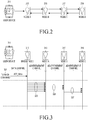
- FIG. 2 schematically illustrates an ACK delay phenomenon which may occur in a general BLE mesh network.
- the BLE mesh network includes a user device 211, a node A 213, a node B 215, a node C 217, and a node D 219. It will be assumed that each of the node A 213, the node B 215, the node C 217, and the node D 219 is, for example, a smart LED.
- the node A 213 is a bridge node.
- a mesh network is configured using an advertisement channel, so corresponding data, i.e., a packet including a turn-on command for turning on the node D 219 is transmitted from the user device 211 to the node D 219, and then the node D 219 may transmit, to the user device 211, ACK for the corresponding data transmitted by the user device 211.
- the user device 211 needs to wait for time of D(delay time per hop)*K(the number of hops)*2 + ⁇ (node processing delay time)*4 until receiving an ACK for data transmitted by the user device 211.
- delay time per hop D is, for example, 100msecs
- node processing delay time ⁇ is, for example, 100msecs.
- the user device 211 may receive ACK for data transmitted by the user device 211 only after time of 100msecs*3*2 + 100msecs*4, i.e., time of about 1 sec (1000msecs) elapses.
- an embodiment of the present disclosure proposes a signal transmitting/receiving scheme for preventing ACK delay in a BLE mesh network, this will be described below, and a detailed description thereof will be omitted herein.
- a collision phenomenon which may occur in a general BLE mesh network will be described with reference to FIG. 3 .
- FIG. 3 schematically illustrates a collision phenomenon which may occur in a general BLE mesh network.
- the BLE mesh network includes a user device 311, a bridge node 313, a node A 315, a node B 317, and a node C 319. It will be assumed that each of the node A 315, the node B 317 and the node C 319 is, for example, a smart LED.
- the user device 311 transmits a packet including a turn-on command to the bridge node 313 through a data channel in order to turn on the node C 319 (321), and the bridge node 313 floods the packet received from the user device 311 through advertisement channels corresponding to a value of a preset relay count (relay_cnt).
- the packet includes a turn-on command which turns on the node C 319, the number of the advertisement channels is 3, so the bridge node 313 floods the packet total 18 times.
- the next node i.e., the node A 315, which receives a packet from the bridge node 313, floods a packet received from the bridge node 313 corresponding to a preset relay_cnt value.
- the number of the advertisement channels is 3, so the node A 315 floods the packet total 9 times.
- the next node i.e., the node B 317, which receives a packet from the node A 315, floods the packet received from the node A 315 corresponding to a preset relay_cnt value.
- the number of the advertisement channels is 3, so the node B 317 floods the packet total 9 times.
- a relay_cnt value of each node is set to a predetermined fixed-value, so the more increased a density of node in the BLE mesh network is, the more increased a probability that collision occurs is.
- an embodiment of the present disclosure proposes a signal transmitting/receiving scheme for decreasing a collision occurrence probability in a BLE mesh network, and this will be described below, so a detailed description thereof will be omitted herein.
- a BLE mode is rapidly applied to sensors and nodes of a relatively small size which operate on a battery basis with a keyword low energy consumption.
- all nodes included in the mesh network operate on an "Always Scan" mode as a mode on which a scan operation is always performed.
- BLE chipsets consumes a relatively large amount of current, e.g., an about 15mA of current when a scan operation is performed, so it is impossible for the most of BLE chipsets to operate on a battery based-environment.
- an embodiment of the present disclosure proposes a signal transmitting/receiving scheme which decreases power consumption in a BLE mesh network, this will be described below, and a detailed description thereof will be omitted herein.
- an embodiment of the present disclosure proposes a connection-based BLE mesh network which uses a data channel, i.e., a BLE mesh network supporting a connection scheme by considering the aspects as described above. That is, in an embodiment of the present disclosure, a signal is transmitted/received based on a connection scheme, not a flooding scheme in a BLE mesh network.
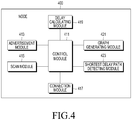
- FIG. 4 schematically illustrates an example of an inner structure of a node in a BLE mesh network supporting a connection scheme according to an embodiment of the present disclosure.
- a node 400 as shown in FIG. 4 may be a bridge node, or may be one of nodes other than the bridge node.
- the node 400 includes a control module 411, an advertisement module 413, a scan module 415, a connection module 417, a delay calculating module 419, a graph generating module 421, and a shortest delay path detecting module 423.
- the control module 411 controls the overall operation of the node 400, and more particularly, controls an operation related to an operation of transmitting/receiving a signal in a BLE mesh network supporting a connection scheme according to an embodiment of the present disclosure. Particularly, the control module 411 controls an operation of each of the advertisement module 413, the scan module 415, the connection module 417, the delay calculating module 419, the graph generating module 421, and the shortest delay path detecting module 423.
- the advertisement module 413 periodically advertises presence of the node 400 using an advertisement channel under a control of the control module 411. That is, the advertisement module 413 transmits an advertisement message including a protocol data unit (PDU) of which a PDU type is an ADV_IND through the advertisement channel.
- PDU protocol data unit
- the ADV_IND indicates a connectable undirected advertising event. So, if the advertisement module 413 transmits the advertisement message including the PDU of the ADV_IND type, a node other than the node 400 may be connected to the node 400.
- the scan module 415 periodically performs a scan operation during a preset interval corresponding to a predetermined period for receiving an advertisement message transmitted by the node other than the node 400.
- the connection module 417 performs an operation of transmitting/receiving data between the node and another node through a data channel according to a connection process of a BLE mode for data transmission/reception between the node and the another node under a control of the control module 411.
- the delay calculating module 419 calculates delay which occurs in a case that a specific node starts transmission under a control of the control module 411.
- the graph generating module 421 generates a graph for a specific node based on information about all nodes included in the BLE mesh network under a control of the control module 411.
- the shortest delay path detecting module 423 calculates delay which occurs from a specific node to a final node, i.e., a destination node, and detects the shortest delay path, i.e., an optimal path between the specific node and the final node based on the calculated delay under a control of the control module 411.
- control module 411, the advertisement module 413, the scan module 415, the connection module 417, the delay calculating module 419, the graph generating module 421, and the shortest delay path detecting module 423 are described as separate units in the node 400 in FIG. 4 , it is to be understood that the node 400 may be implemented with a form into which at least two of the control module 411, the advertisement module 413, the scan module 415, the connection module 417, the delay calculating module 419, the graph generating module 421, and the shortest delay path detecting module 423 are incorporated.
- the node 400 may be implemented with one processor.
- FIG. 4 An example of an inner structure of a node in a BLE mesh network supporting a connection scheme according to an embodiment of the present disclosure has been described with reference to FIG. 4 , and an advertisement and scan process in a node in a BLE mesh network supporting a connection scheme according to an embodiment of the present disclosure will be described with reference to FIG. 5 .
- FIG. 5 schematically illustrates an advertisement and scan process in a node in a BLE mesh network supporting a connection scheme according to an embodiment of the present disclosure.
- a node A 511 as shown in FIG. 5 may be a bridge node, or may be one of nodes other than the bridge node.
- the node A 511 performs an advertisement process by a predetermined first period, e.g., a TAD. It will be noted that the advertisement process is shown as "Ad" in FIG. 5 .
- the advertisement process is identical to an advertisement process performed in a general BLE mesh network, and a detailed description of the advertisement process will be omitted herein.
- the node A 511 performs a scan process by a predetermined second period, e.g., a TSC. It will be noted that the scan process is shown as "Scan" in FIG. 5 .
- the scan process is identical to a scan process performed in a general BLE mesh network, and a detailed description of the scan process will be omitted herein.
- the TAD used in the advertisement process and the TSC used in the scan process may be the same or different.
- FIG. 5 An advertisement and scan process in a node in a BLE mesh network supporting a connection scheme according to an embodiment of the present disclosure has been described with reference to FIG. 5 , and an operating process in a node which is powered on in a BLE mesh network supporting a connection scheme according to an embodiment of the present disclosure will be described with reference to FIG. 6 .
- FIG. 6 schematically illustrates an operating process in a node which is powered on in a BLE mesh network supporting a connection scheme according to an embodiment of the present disclosure.
- each of a node A 611 and a node B 613 as shown in FIG. 6 may be a bridge node, or may be one of nodes other than the bridge node.
- the node B 613 is a node which is firstly powered on.
- the node B 613 in a state that the node A 611 performs an advertisement process and a scan process with a scheme as described in FIG. 5 , the node B 613 is firstly powered on.
- the powered-on node B 613 performs a full scan process (615).
- the node B 613 transmits a connection request (Connect_REQ) message for requesting to establish a connection to the node A 611 (617).
- the full scan process is identical to a full scan process performed in a general BLE mesh network, and a detailed description of the full scan process will be omitted herein.
- FIG. 6 An operating process in a node which is powered on in a BLE mesh network supporting a connection scheme according to an embodiment of the present disclosure has been described with reference to FIG. 6 , and an example of a process of transmitting an advertisement message while performing an advertisement process thereby a node which is performing a scan process transmits a Connect_REQ message after receiving the advertisement message and then a connection is established, and transmitting/receiving data in a BLE mesh network supporting a connection scheme according to an embodiment of the present disclosure will be described with reference to FIG. 7 .
- FIG. 7 schematically illustrates an example of a process of transmitting an advertisement message while performing an advertisement process thereby a node which is performing a scan process transmits a Connect_REQ message after receiving the advertisement message and then a connection is established, and transmitting/receiving data in a BLE mesh network supporting a connection scheme according to an embodiment of the present disclosure.
- a process as shown in FIG. 7 is a process in which a node which performs a scan process receives an advertisement message from another node which performs an advertisement process, transmits a Connect_REQ to the another node which performs the advertisement process thereby a connection is established between the node which performs the scan process and the another node which performs the advertisement process, and transmits/receives data.
- each of a node A 711 and a node B 713 as shown in FIG. 7 may be a bridge node, or may be one of nodes other than the bridge node.
- the node A 711 is performing an advertisement process (at operation 715), and the node B 713 is performing a scan process (at operation 717).
- the node A 711 knows a scan process period of the node B 713. Since the node A 711 is performing the advertisement process, the node A 711 transmits an advertisement message through an advertisement channel (at operation 719).
- the node B 713 receives the advertisement message transmitted by the node A 711, and transmits a Connect_REQ message to the node A 711 based on the advertisement message (at operation 721).
- the node A 711 receives the Connect_REQ message from the node B 713, a connection is established between the node A 711 and the node B 713 (at operation 723). According that the connection is established, the node A 711 and the node B 713 may transmit/receive data each other.
- the node A 711 transmits a message including information about an advertisement process period and a scan process period of the node A 711 to the node B 713.
- the node B 713 transmits a message including information about an advertisement process period and a scan process period of the node B 713 to the node A 711.
- the node A 711 stores the advertisement process period and the scan process period of the node B 713 received from the node B 713.
- the node A 711 transmits, to the node B 713, a message including node information, e.g., at least one of connection information between nodes, an advertisement process period, a scan process period, and the number of hops, for each of all other nodes which the node A 711 stores.
- the number of hops denotes the number of hops which exist between the node A 711 and a corresponding node.
- the connection information between the nodes will be described with reference to FIG. 9 , and a detailed description thereof will be omitted herein.
- the node B 713 is capable of collecting information for nodes included in the BLE mesh network based on the message received from the node A 711 including the node information, e.g., the at least one of the connection information between the nodes, the advertisement process period, the scan process period, and the number of hops, for each of all other nodes which the node A 711 stores (at operation 725).
- An example of a process of transmitting an advertisement message while performing an advertisement process thereby a node which is performing a scan process transmits a Connect_REQ message after receiving the advertisement message and then a connection is established, and transmitting/receiving data in a BLE mesh network supporting a connection scheme according to an embodiment of the present disclosure has been described with reference to FIG. 7 , and an example of a process of receiving an advertisement message while performing a scan process, transmitting a Connect_REQ message to a node which is performing an advertisement process thereby a connection is established, and transmitting/receiving data in a BLE mesh network supporting a connection scheme according to an embodiment of the present disclosure will be described with reference to FIG. 8 .
- FIG. 8 schematically illustrates an example of a process of receiving an advertisement message while performing a scan process, transmitting a Connect_REQ message to a node which is performing an advertisement process thereby a connection is established, and transmitting/receiving data in a BLE mesh network supporting a connection scheme according to an embodiment of the present disclosure.
- a process as shown in FIG. 8 is a process in which a node which performs a scan process receives an advertisement message from a node which performs an advertisement process, transmits a Connect_REQ message to the node which performs the advertisement process thereby a connection is established, and transmits/receives data.
- each of a node A 811 and a node B 813 as shown in FIG. 8 may be a bridge node, or may be one of nodes other than the bridge node.
- the node A 811 is performing a scan process (at operation 815), and the node B 813 is performing an advertisement process (at operation 817).
- the node A 811 knows an advertisement process period of the node B 813. Since the node B 813 is performing the advertisement process, the node B 813 transmits an advertisement message through an advertisement channel (at operation 819).
- the node A 811 receives the advertisement message transmitted by the node B 813, and transmits a Connect_REQ message to the node B 813 based on the advertisement message (at operation 821).
- the node B 813 receives the Connect_REQ message from the node A 811, a connection is established between the node A 811 and the node B 813 (at operation 823). According that the connection is established, the node A 811 and the node B 813 may transmit/receive data each other.
- the node B 813 transmits a message including information about an advertisement process period and a scan process period of the node B 813 to the node A 811.
- the node A 811 transmits a message including information about an advertisement process period and a scan process period of the node A 811 to the node B 813.
- the node B 813 stores the advertisement process period and the scan process period of the node A 811 received from the node A 811.
- the node B 813 transmits, to the node A 811, a message including node information, e.g., information about an advertisement process period, a scan process period, and the number of hops, for each of all other nodes which the node B 813 stores.
- the node A 811 is capable of collecting information for nodes included in the BLE mesh network based on the message received from the node B 813 including the node information, e.g., information about the advertisement process period, the scan process period, and the number of hops, for each of all other nodes which the node B 813 stores (at operation 825).
- the node information e.g., information about the advertisement process period, the scan process period, and the number of hops
- FIG. 8 An example of a process of receiving an advertisement message while performing a scan process, transmitting a Connect_REQ message to a node which is performing an advertisement process thereby a connection is established, and transmitting/receiving data in a BLE mesh network supporting a connection scheme according to an embodiment of the present disclosure has been described with reference to FIG. 8 , and a process of generating a network topology in a BLE mesh network supporting a connection scheme according to an embodiment of the present disclosure will be described with reference to FIG. 9 .
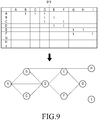
- FIG. 9 schematically illustrates a process of generating a network topology in a BLE mesh network supporting a connection scheme according to an embodiment of the present disclosure.
- the BLE mesh network includes, for example, total 9 nodes, e.g., a node A, a node B, a node C, a node D, a node E, a node F, a node G, a node H, and a node I, and each of the node A, the node B, the node C, the node D, the node E, the node F, the node G, the node H, and the node I may be a bridge node, or one of nodes other than the bridge node.
- a network topology is generated based on all nodes included in the BLE mesh network, a table is generated based on node information for each node, and the network topology is generated based on the generated table.
- a network topology is generated based on the following three stages of processes. For example, a process of generating a network topology based on a node A will be described in FIG. 9 .
- a node A receives node information from each of neighbor nodes of the node A.
- the node A receives node information, e.g., (A,B), (B, D), (B,E), and (E, H) from a node B, receives node information, e.g., (A, D), (B,D), (D, E), (D, F), and (E, G) from a node D, and receives node information, e.g., (A, C), (C, D), (C,F), (F, G), and (F, I) from a node C.
- the node A may generate a node information table such as Table 1 based on the node information received from each of the neighbor nodes of the node A.
- Table 1 A B C D E F G H I A 1 1 1 B 1 1 C 1 1 D 1 1 E 1 1 F 1 1 G H I
- A, B, C, D, E, F, G, H, and I indicate a node A, a node B, a node C, a node D, a node E, a node F, a node G, a node H, and a node I, respectively.
- [X, Y] indicates that a connection is established from a node X to a node Y.
- the node A records node information of a duplicated connection among node information received from each of the neighbor nodes at the node information table only one time.
- the node A generates a network topology 913 based on the generated node information table 911.
- the network topology 913 is generated by connecting edges if a value of 1 is written on the node information table 911 for all neighbor nodes based on the node A.
- a process of generating a network topology in a BLE mesh network supporting a connection scheme according to an embodiment of the present disclosure has been described with reference to FIG. 9 , and a process of calculating connection delay in a BLE mesh network supporting a connection scheme according to an embodiment of the present disclosure will be described with reference to FIG. 10 .
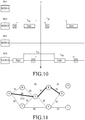
- FIG. 10 schematically illustrates a process of calculating connection delay in a BLE mesh network supporting a connection scheme according to an embodiment of the present disclosure.
- delay is calculated before a connection is established between a node A 1011 and a node B 1013.
- T-TAD is less than T-TSC (T-TAD ⁇ T-TSC) between the node A 1011 and the node B 1013, so the node A 1011 and the node B 1013 establish a connection in an interval during which the node B 1013 performs an advertisement process. So, delay on connection establishment, i.e., connection delay occurs between the node A 1011 and the node B 1013, and it will be assumed that connection delay of 10 occurs.
- T-TAD is greater than T-TSC (T-TAD > T-TSC) between the node A 1011 and a node D 1015, so the node A 1011 and the node D 1015 establish a connection in an interval during which the node D 1015 performs a scan process. So, delay on connection establishment, i.e., connection delay occurs between the node A 1011 and the node D 1015, and it will be assumed that connection delay of 20 occurs.
- connection between the node A 1011 and the node B 1013 and the connection between the node A 1011 and the node D 1015 it will be understood that the connection between the node A 1011 and the node B 1013 has the shorter connection delay.
- connection needs to be established by considering all nodes included in the BLE mesh network as well as corresponding nodes. So, in an embodiment of the present disclosure, the shortest delay path needs to be selected based on connection delay for all nodes included in a BLE mesh network, this will be described with reference to FIG. 11 , and a detailed description thereof will be described herein.
- a process of calculating connection delay in a BLE mesh network supporting a connection scheme according to an embodiment of the present disclosure has been described with reference to FIG. 10 , and a process of detecting the shortest delay path in a BLE mesh network supporting a connection scheme according to an embodiment of the present disclosure will be described with reference to FIG. 11 .
- FIG. 11 schematically illustrates a process of detecting the shortest delay path in a BLE mesh network supporting a connection scheme according to an embodiment of the present disclosure.
- the BLE network includes, for example, total 9 nodes such as a node A, a node B, a node C, a node D, a node E, a node F, a node G, a node H, and a node I as described in FIG.9 , and each of the node A, the node B, the node C, the node D, the node E, the node F, the node G, the node H, and the node I may be a bridge node or one of nodes other than the bridge node.
- connection delay in a case of establishing a connection between corresponding nodes for all nodes included in the BLE mesh network needs to be calculated.
- the connection delay may be calculated based on node information.
- the node A After the connection delay for all nodes included in the BLE mesh network is calculated, the node A generates a connection delay graph based on the calculated connection delay.
- the node A selects the shortest delay path 1111 on which the connection delay between the node A and the node G may be minimized based on the generated graph, and transmits/receives a signal with the node G based on the selected shortest delay path 1111.
- a general BLE mesh network does not consider data loss and considers only unconditional flooding.
- a signal is transmitted/received between nodes based on a connection scheme, not a flooding scheme, so a retransmission scheme used in a medium access control (MAC) layer, e.g., a "Stop and Wait” scheme may be used.
- MAC medium access control
- the "Stop and Wait” scheme is identical to a "Stop and Wait” scheme performed in a general BLE mesh network, and a detailed description thereof will be omitted herein.
- a BLE mesh network supporting a connection scheme may have communication reliability enhanced compared to a general BLE mesh network.
- a BLE mesh network supporting a connection scheme In a BLE mesh network supporting a connection scheme according to an embodiment of the present disclosure, signal transmission/reception between nodes is performed based on a connection, ACK of a "Stop and Wait" scheme supported in a MAC layer may be used. So, ACK delay which occurs in a general BLE mesh network may be prevented.
- a signal is transmitted/received based on a connection, not unconditional flooding, so a collision occurrence problem which occurs due to excessive flooding in a general BLE mesh network may be prevented.
- a BLE mesh network supporting a connection scheme it is possible to decrease an interval during which an arbitrary node performs a scan process to about 10/1 compared to a general BLE mesh network, so a low-power operation as a basic advantage of a BLE mode becomes possible.
- a signal is transmitted/received using a data channel, so a data rate is increased compared to a general BLE mesh network in which a signal is transmitted/received using an advertisement channel.
- a data rate of up to 5 ⁇ 10Kbps is supported, however, in a BLE mesh network supporting a connection scheme according to an embodiment of the present disclosure, a signal is transmitted/received using a data channel, so a data rate of up to 300Kbps is supported.
- FIG. 12 Another example of an inner structure of a node in a BLE mesh network supporting a connection scheme according to an embodiment of the present disclosure will be described with reference to FIG. 12 .
- FIG. 12 schematically illustrates another example of an inner structure of a node in a BLE mesh network supporting a connection scheme according to an embodiment of the present disclosure.
- a node 1200 includes a transmitter 1211, a controller 1213, a receiver 1215, and a storage unit 1217.
- the controller 1213 controls the overall operation of the node 1200, and more particularly, controls an operation related to an operation of transmitting/receiving a signal in a BLE mesh network supporting a connection scheme according to an embodiment of the present disclosure.
- the operation related to the operation of transmitting/receiving the signal in the BLE mesh network supporting the connection scheme according to an embodiment of the present disclosure has been described with reference to FIGS. 4 to 11 , and a detailed description thereof will be omitted herein.
- the transmitter 1211 transmits various signals and various messages to other nodes, a user device, and/or the like included in the BLE mesh network under a control of the controller 1213.
- the various signals and the various messages transmitted by the transmitter 1211 have been described in FIGS. 4 to 11 , and a detailed description thereof will be omitted herein.
- the receiver 1215 receives various signals and various messages from the other nodes, the user device, and/or the like included in the BLE mesh network under a control of the controller 1213.
- the various signals and the various messages received by the receiver 1215 have been described in FIGS. 4 to 11 , and a detailed description thereof will be omitted herein.
- the storage unit 1217 stores a program, various data, and/or the like related to the operation related to the operation of transmitting/receiving the signal in the BLE mesh network supporting the connection scheme according to an embodiment of the present disclosure which the node 1200 performs under a control of the controller 1213.
- the storage unit 1217 stores the various signals and various messages received by the receiver 1215 from the other nodes, the user device, and/or the like.
- the node 1200 may be implemented with a form into which at least two of the transmitter 1211, the controller 1213, the receiver 1215, and the storage unit 1217 are incorporated.
- the node 1200 may be implemented with one processor.
- Non-transitory computer readable recording medium is any data storage device that can store data, which can be thereafter read by a computer system.
- Examples of the non-transitory computer readable recording medium include read only memory (ROM), random access memory (RAM), CD-ROMs, magnetic tapes, floppy disks, optical data storage devices, and carrier waves (such as data transmission through the Internet).
- ROM read only memory
- RAM random access memory
- CD-ROMs compact discs
- magnetic tapes magnetic tapes
- floppy disks optical data storage devices
- carrier waves such as data transmission through the Internet
- carrier waves such as data transmission through the Internet
- the non-transitory computer readable recording medium can also be distributed over network coupled computer systems so that the computer readable code is stored and executed in a distributed fashion.
- functional programs, code, and code segments for accomplishing the present disclosure can be easily construed by programmers skilled in the art to which the present disclosure pertains.
- a method and apparatus may be implemented by hardware, software and/or a combination thereof.
- the software may be stored in a nonvolatile storage, for example, an erasable or re-writable ROM, a memory, for example, a RAM, a memory chip, a memory device, or a memory integrated circuit (IC), or an optically or magnetically recordable non-transitory machine-readable (e.g., computer-readable), storage medium (e.g., a compact disk (CD), a digital video disc (DVD), a magnetic disk, a magnetic tape, and/or the like).
- a method and apparatus according to an embodiment of the present disclosure may be implemented by a computer or a mobile terminal that includes a controller and a memory, and the memory may be an example of a non-transitory machine-readable (e.g., computer-readable), storage medium suitable to store a program or programs including instructions for implementing various embodiments of the present disclosure.
- the present disclosure may include a program including code for implementing the apparatus and method as defined by the appended claims, and a non-transitory machine-readable (e.g., computer-readable), storage medium storing the program.
- the program may be electronically transferred via any media, such as communication signals, which are transmitted through wired and/or wireless connections, and the present disclosure may include their equivalents.
- An apparatus may receive the program from a program providing device which is connected to the apparatus via a wire or a wireless and store the program.
- the program providing device may include a memory for storing instructions which instruct to perform a content protect method which has been already installed, information necessary for the content protect method, and the like, a communication unit for performing a wired or a wireless communication with a graphic processing device, and a controller for transmitting a related program to a transmitting/receiving device based on a request of the graphic processing device or automatically transmitting the related program to the transmitting/receiving device.
Landscapes
- Engineering & Computer Science (AREA)
- Computer Networks & Wireless Communication (AREA)
- Signal Processing (AREA)
- Mobile Radio Communication Systems (AREA)
Applications Claiming Priority (2)
| Application Number | Priority Date | Filing Date | Title |
|---|---|---|---|
| KR1020150106481A KR102583850B1 (ko) | 2015-07-28 | 2015-07-28 | 커넥션 방식을 지원하는 메쉬 네트워크에서 신호 송/수신 장치 및 방법 |
| PCT/KR2016/008167 WO2017018782A1 (fr) | 2015-07-28 | 2016-07-26 | Appareil et procédé pour émettre et recevoir des signaux dans un réseau maillé |
Publications (3)
| Publication Number | Publication Date |
|---|---|
| EP3316516A4 EP3316516A4 (fr) | 2018-05-02 |
| EP3316516A1 true EP3316516A1 (fr) | 2018-05-02 |
| EP3316516B1 EP3316516B1 (fr) | 2019-04-24 |
Family
ID=57885412
Family Applications (1)
| Application Number | Title | Priority Date | Filing Date |
|---|---|---|---|
| EP16830815.3A Not-in-force EP3316516B1 (fr) | 2015-07-28 | 2016-07-26 | Appareil et procédé pour émettre et recevoir des signaux dans un réseau maillé |
Country Status (4)
| Country | Link |
|---|---|
| US (1) | US10848945B2 (fr) |
| EP (1) | EP3316516B1 (fr) |
| KR (1) | KR102583850B1 (fr) |
| WO (1) | WO2017018782A1 (fr) |
Cited By (1)
| Publication number | Priority date | Publication date | Assignee | Title |
|---|---|---|---|---|
| WO2019098917A1 (fr) | 2017-11-15 | 2019-05-23 | Telefonaktiebolaget Lm Ericsson (Publ) | Nœud d'extrémité, nœud de relais et procédés mis en œuvre dans ces derniers pour gérer la transmission d'informations |
Families Citing this family (10)
| Publication number | Priority date | Publication date | Assignee | Title |
|---|---|---|---|---|
| US10299104B2 (en) * | 2015-01-20 | 2019-05-21 | Lg Electronics Inc. | Method for performing discovery in wireless communication system and device therefor |
| US10534746B2 (en) * | 2016-05-09 | 2020-01-14 | Droplit, Inc. | System and method for defining machine-to-machine communicating devices and defining and distributing computational tasks among same |
| CN112020123B (zh) * | 2019-05-28 | 2024-07-26 | 瑞昱半导体股份有限公司 | 低功耗无线网状网络及在无线网状网络中收发信号的方法 |
| JP7282597B2 (ja) * | 2019-05-28 | 2023-05-29 | ルネサスエレクトロニクス株式会社 | 無線通信装置及び通信システム |
| WO2021191780A2 (fr) * | 2020-03-24 | 2021-09-30 | Tdk Corporation | Réseau maillé bluetooth |
| WO2022014882A1 (fr) | 2020-07-17 | 2022-01-20 | 삼성전자주식회사 | Dispositif électronique, système de réseau et procédé de commande associé |
| JP7554709B2 (ja) * | 2021-05-28 | 2024-09-20 | ルネサスエレクトロニクス株式会社 | 無線通信装置および無線通信システム |
| CN117412401A (zh) | 2022-07-07 | 2024-01-16 | 瑞昱半导体股份有限公司 | 蓝牙网络建立系统及方法 |
| WO2025211782A1 (fr) * | 2024-04-04 | 2025-10-09 | 엘지전자 주식회사 | Procédé et dispositif de réalisation d'une communication basée sur l'internet des objets dans un système de communication sans fil |
| US12612726B2 (en) * | 2024-06-17 | 2026-04-28 | Ritika Rawat | Dryer vent monitoring and lint cleaning system |
Family Cites Families (29)
| Publication number | Priority date | Publication date | Assignee | Title |
|---|---|---|---|---|
| JP3755527B2 (ja) | 2002-12-11 | 2006-03-15 | 日本電信電話株式会社 | マルチキャスト転送経路計算方法及びマルチキャスト転送経路計算装置並びにプログラム |
| KR101317996B1 (ko) * | 2005-05-12 | 2013-10-14 | 삼성전자주식회사 | 메쉬 네트워크에서 노드간 데이터 전송 방법 및 장치 |
| US8275313B1 (en) | 2007-01-15 | 2012-09-25 | Advanced Distributed Sensor Systems | Long range, low power, mesh networking without concurrent timing |
| US7561024B2 (en) * | 2007-04-05 | 2009-07-14 | Harris Corporation | Ad-hoc network routing protocol including the use of forward and reverse multi-point relay (MPR) spanning tree routes |
| KR101421732B1 (ko) * | 2008-01-11 | 2014-07-24 | 엘지전자 주식회사 | 메쉬 네트워크의 설정을 위한 능동 스캔 방법 |
| US8976795B2 (en) * | 2009-02-25 | 2015-03-10 | Microsoft Corporation | Gateway advertisement in a wireless mesh |
| US8705379B2 (en) * | 2009-05-21 | 2014-04-22 | Thomson Licensing | Multipoint relay set selection methods and their application to multicast channel reservation in overlapping basic service sets in wireless networks |
| US8737917B2 (en) * | 2009-07-24 | 2014-05-27 | Broadcom Corporation | Method and system for a dual-mode bluetooth low energy device |
| US8819219B2 (en) * | 2009-12-23 | 2014-08-26 | Apple Inc. | Efficient service advertisement and discovery in multiple wireless networks |
| KR101618417B1 (ko) | 2010-06-04 | 2016-05-04 | 보오드 오브 리젠츠, 더 유니버시티 오브 텍사스 시스템 | 무선 통신 시스템에서 데이터를 릴레이하기 위한 방법 및 장치 |
| US8863256B1 (en) * | 2011-01-14 | 2014-10-14 | Cisco Technology, Inc. | System and method for enabling secure transactions using flexible identity management in a vehicular environment |
| KR20120134466A (ko) * | 2011-06-02 | 2012-12-12 | 삼성테크윈 주식회사 | 메쉬 네트워크 노드 및 그의 데이터 전송 방법 |
| US8954007B2 (en) * | 2011-08-12 | 2015-02-10 | Wicentric, Inc. | Systems and methods for low power short range wireless device communication scanning |
| US20130109314A1 (en) * | 2011-10-27 | 2013-05-02 | Nokia Corporation | Method, apparatus, and computer program product for stopping reception of discovery responses in wireless networks |
| US8942221B2 (en) * | 2011-11-10 | 2015-01-27 | Blackberry Limited | Caching network discovery responses in wireless networks |
| GB2501932B (en) | 2012-05-11 | 2014-09-17 | Toshiba Res Europ Ltd | A wireless communications apparatus, a method and a communication system for performing relay selection |
| CN108174431B (zh) | 2012-07-18 | 2020-12-04 | Kt株式会社 | 在无线局域网系统中的主动扫描方法 |
| US9408251B2 (en) * | 2012-07-24 | 2016-08-02 | Mueller International, Llc | Transmitting data within a mesh network |
| US9408147B2 (en) * | 2012-09-24 | 2016-08-02 | Broadcom Corporation | Enhanced rate physical layer for Bluetooth™ low energy |
| US9326239B2 (en) * | 2012-09-28 | 2016-04-26 | Broadcom Corporation | Managing connectivity between wireless devices |
| US8847754B2 (en) * | 2012-11-15 | 2014-09-30 | James Buchheim | Locator beacon and radar application for mobile device |
| US9247481B2 (en) | 2013-02-04 | 2016-01-26 | Electronics And Telecommunications Research Institute | Routing device and method |
| US9668297B2 (en) * | 2013-05-29 | 2017-05-30 | Texas Instruments Incorporated | BLE scatternet system and method |
| US9451436B2 (en) * | 2013-05-31 | 2016-09-20 | Nokia Technologies Oy | Method, apparatus, and computer program product for wireless device discovery |
| WO2015069024A1 (fr) * | 2013-11-06 | 2015-05-14 | 엘지전자(주) | Procédé et appareil permettant d'établir une connexion de dispositif à dispositif dans un système de communication sans fil |
| US20150148868A1 (en) * | 2013-11-27 | 2015-05-28 | Pacesetter, Inc. | System and methods for establishing a communication session between an implantable medical device and an external device |
| US20150289124A1 (en) * | 2014-04-08 | 2015-10-08 | Nokia Corporation | Method, apparatus, and computer program product for seamless switching of communication connection |
| US10111071B2 (en) * | 2014-09-19 | 2018-10-23 | Avago Technologies General Ip (Singapore) Pte. Ltd. | Bluetooth low energy automation mesh network |
| US20160323012A1 (en) * | 2015-04-30 | 2016-11-03 | Lg Electronics Inc. | Method and device for sending and receiving data over mesh network using bluetooth |
-
2015
- 2015-07-28 KR KR1020150106481A patent/KR102583850B1/ko active Active
-
2016
- 2016-07-26 US US15/744,519 patent/US10848945B2/en active Active
- 2016-07-26 WO PCT/KR2016/008167 patent/WO2017018782A1/fr not_active Ceased
- 2016-07-26 EP EP16830815.3A patent/EP3316516B1/fr not_active Not-in-force
Cited By (3)
| Publication number | Priority date | Publication date | Assignee | Title |
|---|---|---|---|---|
| WO2019098917A1 (fr) | 2017-11-15 | 2019-05-23 | Telefonaktiebolaget Lm Ericsson (Publ) | Nœud d'extrémité, nœud de relais et procédés mis en œuvre dans ces derniers pour gérer la transmission d'informations |
| EP3711423A4 (fr) * | 2017-11-15 | 2020-12-09 | Telefonaktiebolaget LM Ericsson (publ) | Noeud d'extrémité, noeud de relais et procédés mis en oeuvre dans ces derniers pour gérer la transmission d'informations |
| US11490400B2 (en) | 2017-11-15 | 2022-11-01 | Telefonaktiebolaget Lm Ericsson (Publ) | End node, relay node, and methods performed therein for handling transmission of information |
Also Published As
| Publication number | Publication date |
|---|---|
| WO2017018782A1 (fr) | 2017-02-02 |
| EP3316516B1 (fr) | 2019-04-24 |
| KR102583850B1 (ko) | 2023-10-04 |
| KR20170013606A (ko) | 2017-02-07 |
| EP3316516A4 (fr) | 2018-05-02 |
| US10848945B2 (en) | 2020-11-24 |
| US20180206094A1 (en) | 2018-07-19 |
Similar Documents
| Publication | Publication Date | Title |
|---|---|---|
| EP3316516B1 (fr) | Appareil et procédé pour émettre et recevoir des signaux dans un réseau maillé | |
| US11678365B2 (en) | Apparatus and method for allocating resource and transmitting/receiving resource allocation information in communication system supporting device to device scheme | |
| US10638427B2 (en) | Signal transmitting/receiving device and method in mesh network | |
| US9955284B2 (en) | Apparatus and method for operating ad-hoc mode in wireless communication network | |
| US10624025B2 (en) | Method and apparatus for controlling scan period in wireless communication system | |
| CN103782527B (zh) | 一种服务于机器到机器装置的一个或多个群组的基站、机器到机器装置及信息处理系统 | |
| US10165622B2 (en) | Method and system for synchronizing communication between nodes in a Bluetooth network | |
| CN103650371B (zh) | 机器对机器设备的资源调度 | |
| EP3007480B1 (fr) | Procédé et appareil permettant d'effectuer un processus d'appairage dans un système de communication sans fil | |
| US10250518B2 (en) | Apparatus and method for scheduling packet in communication system | |
| US20170127445A1 (en) | Apparatus and method for controlling connection interval in wireless communication system supporting bluetooth scheme | |
| US20160219639A1 (en) | Apparatus and method for establishing network controlled direct connection in communication system supporting device to device scheme | |
| TW201927061A (zh) | 終端與基地台的通信、終端的網路接取方法和裝置 | |
| US20150229704A1 (en) | Apparatus and method for providing metadata with network traffic | |
| US10856129B2 (en) | Method and apparatus for performing short range wireless communication in communication system | |
| US20160105812A1 (en) | Electronic device and method for processing data in electronic device | |
| US20160302147A1 (en) | Method for communication between terminal and base station in mobile communication system and apparatus therefor | |
| CN105379343A (zh) | 用于发送数据的方法和装置 |
Legal Events
| Date | Code | Title | Description |
|---|---|---|---|
| STAA | Information on the status of an ep patent application or granted ep patent |
Free format text: STATUS: THE INTERNATIONAL PUBLICATION HAS BEEN MADE |
|
| PUAI | Public reference made under article 153(3) epc to a published international application that has entered the european phase |
Free format text: ORIGINAL CODE: 0009012 |
|
| STAA | Information on the status of an ep patent application or granted ep patent |
Free format text: STATUS: REQUEST FOR EXAMINATION WAS MADE |
|
| 17P | Request for examination filed |
Effective date: 20180129 |
|
| A4 | Supplementary search report drawn up and despatched |
Effective date: 20180404 |
|
| AK | Designated contracting states |
Kind code of ref document: A1 Designated state(s): AL AT BE BG CH CY CZ DE DK EE ES FI FR GB GR HR HU IE IS IT LI LT LU LV MC MK MT NL NO PL PT RO RS SE SI SK SM TR |
|
| AX | Request for extension of the european patent |
Extension state: BA ME |
|
| GRAP | Despatch of communication of intention to grant a patent |
Free format text: ORIGINAL CODE: EPIDOSNIGR1 |
|
| STAA | Information on the status of an ep patent application or granted ep patent |
Free format text: STATUS: GRANT OF PATENT IS INTENDED |
|
| INTG | Intention to grant announced |
Effective date: 20181004 |
|
| DAV | Request for validation of the european patent (deleted) | ||
| DAX | Request for extension of the european patent (deleted) | ||
| GRAS | Grant fee paid |
Free format text: ORIGINAL CODE: EPIDOSNIGR3 |
|
| GRAA | (expected) grant |
Free format text: ORIGINAL CODE: 0009210 |
|
| STAA | Information on the status of an ep patent application or granted ep patent |
Free format text: STATUS: THE PATENT HAS BEEN GRANTED |
|
| AK | Designated contracting states |
Kind code of ref document: B1 Designated state(s): AL AT BE BG CH CY CZ DE DK EE ES FI FR GB GR HR HU IE IS IT LI LT LU LV MC MK MT NL NO PL PT RO RS SE SI SK SM TR |
|
| REG | Reference to a national code |
Ref country code: GB Ref legal event code: FG4D |
|
| REG | Reference to a national code |
Ref country code: CH Ref legal event code: EP |
|
| REG | Reference to a national code |
Ref country code: AT Ref legal event code: REF Ref document number: 1125422 Country of ref document: AT Kind code of ref document: T Effective date: 20190515 Ref country code: IE Ref legal event code: FG4D |
|
| REG | Reference to a national code |
Ref country code: DE Ref legal event code: R096 Ref document number: 602016012980 Country of ref document: DE |
|
| REG | Reference to a national code |
Ref country code: NL Ref legal event code: MP Effective date: 20190424 |
|
| PGFP | Annual fee paid to national office [announced via postgrant information from national office to epo] |
Ref country code: FR Payment date: 20190624 Year of fee payment: 4 |
|
| REG | Reference to a national code |
Ref country code: LT Ref legal event code: MG4D |
|
| PG25 | Lapsed in a contracting state [announced via postgrant information from national office to epo] |
Ref country code: NL Free format text: LAPSE BECAUSE OF FAILURE TO SUBMIT A TRANSLATION OF THE DESCRIPTION OR TO PAY THE FEE WITHIN THE PRESCRIBED TIME-LIMIT Effective date: 20190424 |
|
| PG25 | Lapsed in a contracting state [announced via postgrant information from national office to epo] |
Ref country code: FI Free format text: LAPSE BECAUSE OF FAILURE TO SUBMIT A TRANSLATION OF THE DESCRIPTION OR TO PAY THE FEE WITHIN THE PRESCRIBED TIME-LIMIT Effective date: 20190424 Ref country code: LT Free format text: LAPSE BECAUSE OF FAILURE TO SUBMIT A TRANSLATION OF THE DESCRIPTION OR TO PAY THE FEE WITHIN THE PRESCRIBED TIME-LIMIT Effective date: 20190424 Ref country code: SE Free format text: LAPSE BECAUSE OF FAILURE TO SUBMIT A TRANSLATION OF THE DESCRIPTION OR TO PAY THE FEE WITHIN THE PRESCRIBED TIME-LIMIT Effective date: 20190424 Ref country code: HR Free format text: LAPSE BECAUSE OF FAILURE TO SUBMIT A TRANSLATION OF THE DESCRIPTION OR TO PAY THE FEE WITHIN THE PRESCRIBED TIME-LIMIT Effective date: 20190424 Ref country code: NO Free format text: LAPSE BECAUSE OF FAILURE TO SUBMIT A TRANSLATION OF THE DESCRIPTION OR TO PAY THE FEE WITHIN THE PRESCRIBED TIME-LIMIT Effective date: 20190724 Ref country code: PT Free format text: LAPSE BECAUSE OF FAILURE TO SUBMIT A TRANSLATION OF THE DESCRIPTION OR TO PAY THE FEE WITHIN THE PRESCRIBED TIME-LIMIT Effective date: 20190824 Ref country code: AL Free format text: LAPSE BECAUSE OF FAILURE TO SUBMIT A TRANSLATION OF THE DESCRIPTION OR TO PAY THE FEE WITHIN THE PRESCRIBED TIME-LIMIT Effective date: 20190424 Ref country code: ES Free format text: LAPSE BECAUSE OF FAILURE TO SUBMIT A TRANSLATION OF THE DESCRIPTION OR TO PAY THE FEE WITHIN THE PRESCRIBED TIME-LIMIT Effective date: 20190424 |
|
| PG25 | Lapsed in a contracting state [announced via postgrant information from national office to epo] |
Ref country code: BG Free format text: LAPSE BECAUSE OF FAILURE TO SUBMIT A TRANSLATION OF THE DESCRIPTION OR TO PAY THE FEE WITHIN THE PRESCRIBED TIME-LIMIT Effective date: 20190724 Ref country code: RS Free format text: LAPSE BECAUSE OF FAILURE TO SUBMIT A TRANSLATION OF THE DESCRIPTION OR TO PAY THE FEE WITHIN THE PRESCRIBED TIME-LIMIT Effective date: 20190424 Ref country code: PL Free format text: LAPSE BECAUSE OF FAILURE TO SUBMIT A TRANSLATION OF THE DESCRIPTION OR TO PAY THE FEE WITHIN THE PRESCRIBED TIME-LIMIT Effective date: 20190424 Ref country code: LV Free format text: LAPSE BECAUSE OF FAILURE TO SUBMIT A TRANSLATION OF THE DESCRIPTION OR TO PAY THE FEE WITHIN THE PRESCRIBED TIME-LIMIT Effective date: 20190424 Ref country code: GR Free format text: LAPSE BECAUSE OF FAILURE TO SUBMIT A TRANSLATION OF THE DESCRIPTION OR TO PAY THE FEE WITHIN THE PRESCRIBED TIME-LIMIT Effective date: 20190725 |
|
| REG | Reference to a national code |
Ref country code: AT Ref legal event code: MK05 Ref document number: 1125422 Country of ref document: AT Kind code of ref document: T Effective date: 20190424 |
|
| PG25 | Lapsed in a contracting state [announced via postgrant information from national office to epo] |
Ref country code: IS Free format text: LAPSE BECAUSE OF FAILURE TO SUBMIT A TRANSLATION OF THE DESCRIPTION OR TO PAY THE FEE WITHIN THE PRESCRIBED TIME-LIMIT Effective date: 20190824 |
|
| REG | Reference to a national code |
Ref country code: DE Ref legal event code: R097 Ref document number: 602016012980 Country of ref document: DE |
|
| PG25 | Lapsed in a contracting state [announced via postgrant information from national office to epo] |
Ref country code: SK Free format text: LAPSE BECAUSE OF FAILURE TO SUBMIT A TRANSLATION OF THE DESCRIPTION OR TO PAY THE FEE WITHIN THE PRESCRIBED TIME-LIMIT Effective date: 20190424 Ref country code: EE Free format text: LAPSE BECAUSE OF FAILURE TO SUBMIT A TRANSLATION OF THE DESCRIPTION OR TO PAY THE FEE WITHIN THE PRESCRIBED TIME-LIMIT Effective date: 20190424 Ref country code: DK Free format text: LAPSE BECAUSE OF FAILURE TO SUBMIT A TRANSLATION OF THE DESCRIPTION OR TO PAY THE FEE WITHIN THE PRESCRIBED TIME-LIMIT Effective date: 20190424 Ref country code: AT Free format text: LAPSE BECAUSE OF FAILURE TO SUBMIT A TRANSLATION OF THE DESCRIPTION OR TO PAY THE FEE WITHIN THE PRESCRIBED TIME-LIMIT Effective date: 20190424 Ref country code: RO Free format text: LAPSE BECAUSE OF FAILURE TO SUBMIT A TRANSLATION OF THE DESCRIPTION OR TO PAY THE FEE WITHIN THE PRESCRIBED TIME-LIMIT Effective date: 20190424 Ref country code: CZ Free format text: LAPSE BECAUSE OF FAILURE TO SUBMIT A TRANSLATION OF THE DESCRIPTION OR TO PAY THE FEE WITHIN THE PRESCRIBED TIME-LIMIT Effective date: 20190424 |
|
| PG25 | Lapsed in a contracting state [announced via postgrant information from national office to epo] |
Ref country code: SM Free format text: LAPSE BECAUSE OF FAILURE TO SUBMIT A TRANSLATION OF THE DESCRIPTION OR TO PAY THE FEE WITHIN THE PRESCRIBED TIME-LIMIT Effective date: 20190424 Ref country code: MC Free format text: LAPSE BECAUSE OF FAILURE TO SUBMIT A TRANSLATION OF THE DESCRIPTION OR TO PAY THE FEE WITHIN THE PRESCRIBED TIME-LIMIT Effective date: 20190424 Ref country code: IT Free format text: LAPSE BECAUSE OF FAILURE TO SUBMIT A TRANSLATION OF THE DESCRIPTION OR TO PAY THE FEE WITHIN THE PRESCRIBED TIME-LIMIT Effective date: 20190424 |
|
| PLBE | No opposition filed within time limit |
Free format text: ORIGINAL CODE: 0009261 |
|
| REG | Reference to a national code |
Ref country code: CH Ref legal event code: PL |
|
| STAA | Information on the status of an ep patent application or granted ep patent |
Free format text: STATUS: NO OPPOSITION FILED WITHIN TIME LIMIT |
|
| PG25 | Lapsed in a contracting state [announced via postgrant information from national office to epo] |
Ref country code: TR Free format text: LAPSE BECAUSE OF FAILURE TO SUBMIT A TRANSLATION OF THE DESCRIPTION OR TO PAY THE FEE WITHIN THE PRESCRIBED TIME-LIMIT Effective date: 20190424 |
|
| 26N | No opposition filed |
Effective date: 20200127 |
|
| REG | Reference to a national code |
Ref country code: BE Ref legal event code: MM Effective date: 20190731 |
|
| PG25 | Lapsed in a contracting state [announced via postgrant information from national office to epo] |
Ref country code: LU Free format text: LAPSE BECAUSE OF NON-PAYMENT OF DUE FEES Effective date: 20190726 Ref country code: CH Free format text: LAPSE BECAUSE OF NON-PAYMENT OF DUE FEES Effective date: 20190731 Ref country code: BE Free format text: LAPSE BECAUSE OF NON-PAYMENT OF DUE FEES Effective date: 20190731 Ref country code: LI Free format text: LAPSE BECAUSE OF NON-PAYMENT OF DUE FEES Effective date: 20190731 Ref country code: SI Free format text: LAPSE BECAUSE OF FAILURE TO SUBMIT A TRANSLATION OF THE DESCRIPTION OR TO PAY THE FEE WITHIN THE PRESCRIBED TIME-LIMIT Effective date: 20190424 |
|
| PG25 | Lapsed in a contracting state [announced via postgrant information from national office to epo] |
Ref country code: IE Free format text: LAPSE BECAUSE OF NON-PAYMENT OF DUE FEES Effective date: 20190726 |
|
| PG25 | Lapsed in a contracting state [announced via postgrant information from national office to epo] |
Ref country code: FR Free format text: LAPSE BECAUSE OF NON-PAYMENT OF DUE FEES Effective date: 20200731 |
|
| PG25 | Lapsed in a contracting state [announced via postgrant information from national office to epo] |
Ref country code: CY Free format text: LAPSE BECAUSE OF FAILURE TO SUBMIT A TRANSLATION OF THE DESCRIPTION OR TO PAY THE FEE WITHIN THE PRESCRIBED TIME-LIMIT Effective date: 20190424 |
|
| PG25 | Lapsed in a contracting state [announced via postgrant information from national office to epo] |
Ref country code: HU Free format text: LAPSE BECAUSE OF FAILURE TO SUBMIT A TRANSLATION OF THE DESCRIPTION OR TO PAY THE FEE WITHIN THE PRESCRIBED TIME-LIMIT; INVALID AB INITIO Effective date: 20160726 Ref country code: MT Free format text: LAPSE BECAUSE OF FAILURE TO SUBMIT A TRANSLATION OF THE DESCRIPTION OR TO PAY THE FEE WITHIN THE PRESCRIBED TIME-LIMIT Effective date: 20190424 |
|
| PGFP | Annual fee paid to national office [announced via postgrant information from national office to epo] |
Ref country code: GB Payment date: 20210625 Year of fee payment: 6 |
|
| PGFP | Annual fee paid to national office [announced via postgrant information from national office to epo] |
Ref country code: DE Payment date: 20210622 Year of fee payment: 6 |
|
| PG25 | Lapsed in a contracting state [announced via postgrant information from national office to epo] |
Ref country code: MK Free format text: LAPSE BECAUSE OF FAILURE TO SUBMIT A TRANSLATION OF THE DESCRIPTION OR TO PAY THE FEE WITHIN THE PRESCRIBED TIME-LIMIT Effective date: 20190424 |
|
| REG | Reference to a national code |
Ref country code: DE Ref legal event code: R119 Ref document number: 602016012980 Country of ref document: DE |
|
| GBPC | Gb: european patent ceased through non-payment of renewal fee |
Effective date: 20220726 |
|
| PG25 | Lapsed in a contracting state [announced via postgrant information from national office to epo] |
Ref country code: GB Free format text: LAPSE BECAUSE OF NON-PAYMENT OF DUE FEES Effective date: 20220726 Ref country code: DE Free format text: LAPSE BECAUSE OF NON-PAYMENT OF DUE FEES Effective date: 20230201 |