EP3316655A1 - Procédé, terminal et système de réduction de consommation d'énergie d'un terminal en grappe dans un système de grappes à large bande - Google Patents
Procédé, terminal et système de réduction de consommation d'énergie d'un terminal en grappe dans un système de grappes à large bande Download PDFInfo
- Publication number
- EP3316655A1 EP3316655A1 EP15895916.3A EP15895916A EP3316655A1 EP 3316655 A1 EP3316655 A1 EP 3316655A1 EP 15895916 A EP15895916 A EP 15895916A EP 3316655 A1 EP3316655 A1 EP 3316655A1
- Authority
- EP
- European Patent Office
- Prior art keywords
- discontinuous reception
- cluster
- reception instruction
- group call
- terminal
- Prior art date
- Legal status (The legal status is an assumption and is not a legal conclusion. Google has not performed a legal analysis and makes no representation as to the accuracy of the status listed.)
- Granted
Links
Images



Classifications
-
- H—ELECTRICITY
- H04—ELECTRIC COMMUNICATION TECHNIQUE
- H04W—WIRELESS COMMUNICATION NETWORKS
- H04W68/00—User notification, e.g. alerting and paging, for incoming communication, change of service or the like
- H04W68/005—Transmission of information for alerting of incoming communication
-
- H—ELECTRICITY
- H04—ELECTRIC COMMUNICATION TECHNIQUE
- H04W—WIRELESS COMMUNICATION NETWORKS
- H04W68/00—User notification, e.g. alerting and paging, for incoming communication, change of service or the like
- H04W68/02—Arrangements for increasing efficiency of notification or paging channel
- H04W68/025—Indirect paging
-
- H—ELECTRICITY
- H04—ELECTRIC COMMUNICATION TECHNIQUE
- H04W—WIRELESS COMMUNICATION NETWORKS
- H04W76/00—Connection management
- H04W76/10—Connection setup
-
- H—ELECTRICITY
- H04—ELECTRIC COMMUNICATION TECHNIQUE
- H04W—WIRELESS COMMUNICATION NETWORKS
- H04W76/00—Connection management
- H04W76/20—Manipulation of established connections
-
- H—ELECTRICITY
- H04—ELECTRIC COMMUNICATION TECHNIQUE
- H04W—WIRELESS COMMUNICATION NETWORKS
- H04W76/00—Connection management
- H04W76/20—Manipulation of established connections
- H04W76/27—Transitions between radio resource control [RRC] states
-
- H—ELECTRICITY
- H04—ELECTRIC COMMUNICATION TECHNIQUE
- H04W—WIRELESS COMMUNICATION NETWORKS
- H04W76/00—Connection management
- H04W76/20—Manipulation of established connections
- H04W76/28—Discontinuous transmission [DTX]; Discontinuous reception [DRX]
-
- H—ELECTRICITY
- H04—ELECTRIC COMMUNICATION TECHNIQUE
- H04W—WIRELESS COMMUNICATION NETWORKS
- H04W84/00—Network topologies
- H04W84/02—Hierarchically pre-organised networks, e.g. paging networks, cellular networks, WLAN [Wireless Local Area Network] or WLL [Wireless Local Loop]
- H04W84/04—Large scale networks; Deep hierarchical networks
-
- H—ELECTRICITY
- H04—ELECTRIC COMMUNICATION TECHNIQUE
- H04W—WIRELESS COMMUNICATION NETWORKS
- H04W84/00—Network topologies
- H04W84/02—Hierarchically pre-organised networks, e.g. paging networks, cellular networks, WLAN [Wireless Local Area Network] or WLL [Wireless Local Loop]
- H04W84/04—Large scale networks; Deep hierarchical networks
- H04W84/08—Trunked mobile radio systems
-
- Y—GENERAL TAGGING OF NEW TECHNOLOGICAL DEVELOPMENTS; GENERAL TAGGING OF CROSS-SECTIONAL TECHNOLOGIES SPANNING OVER SEVERAL SECTIONS OF THE IPC; TECHNICAL SUBJECTS COVERED BY FORMER USPC CROSS-REFERENCE ART COLLECTIONS [XRACs] AND DIGESTS
- Y02—TECHNOLOGIES OR APPLICATIONS FOR MITIGATION OR ADAPTATION AGAINST CLIMATE CHANGE
- Y02D—CLIMATE CHANGE MITIGATION TECHNOLOGIES IN INFORMATION AND COMMUNICATION TECHNOLOGIES [ICT], I.E. INFORMATION AND COMMUNICATION TECHNOLOGIES AIMING AT THE REDUCTION OF THEIR OWN ENERGY USE
- Y02D30/00—Reducing energy consumption in communication networks
- Y02D30/70—Reducing energy consumption in communication networks in wireless communication networks
Definitions
- the present disclosure relates to the technical field of communications, and particularly to a method, a terminal and a system for reducing power consumption of a cluster terminal in a broadband cluster system.
- a broadband cluster system based on 4G becomes an evolution direction of a wireless dedicated network.
- a user equipment (UE) is configured with radio resource control (RRC)-connected-state discontinuous reception (DRX) and RRC-idle-state DRX.
- RRC radio resource control
- DRX discontinuous reception
- RRC-idle-state DRX The UE triggers a RRC connection request to a base station in a case that there is data to be received or transmitted by the UE, to enter a RRC connected state.
- the UE enters a RRC idle state in a case that no data is to be received or transmitted after a while.
- a DRX cycle includes a deactivation cycle, a short DRX cycle and a long DRX cycle.
- a deactivation timer is started after the UE completes receiving and transmitting data.
- the UE enters the short DRX cycle in a case that no data is received or transmitted during timing of the deactivation timer, to be dormant periodically.
- a transceiver is started in the active cycle to sense whether there is data paging on a physical downlink control channel (PDCCH).
- the UE enters the long DRX cycle in a case that no data is received and transmitted in multiple short DRX cycles, to be dormant periodically.
- PDCCH physical downlink control channel
- a method, a system and a terminal for reducing power consumption of a cluster terminal in a broadband cluster communication system are provided according to the embodiments of the present disclosure, to effectively reduce power consumption of the cluster terminal which performs a group call service in the broadband cluster system.
- a method for reducing power consumption of a cluster terminal in a broadband cluster system includes: receiving, by the cluster terminal a group call configuration instruction transmitted by a base station; configuring a group call context, a discontinuous reception instruction and group call resources by the cluster terminal based on the group call configuration instruction; and executing the discontinuous reception instruction by the cluster terminal; sensing a physical channel by the cluster terminal when it is determined that an active phase of the discontinuous reception instruction is entered; and stopping sensing the physical channel by the cluster terminal when it is determined that a dormant phase of the discontinuous reception instruction is entered.
- the cluster terminal is a group call terminal in an idle state
- the discontinuous reception instruction is a cluster group call discontinuous reception instruction.
- the sensing a physical channel by the cluster terminal when it is determined that an active phase of the cluster group call discontinuous reception instruction is entered includes: sensing a group call channel by the cluster terminal when an active phase of the cluster group call discontinuous reception instruction is entered.
- the stopping sensing the physical channel by the cluster terminal when it is determined that a dormant phase of the cluster group call discontinuous reception instruction is entered includes: turning off a receiver by the cluster terminal to stop sensing the group call channel when a dormant phase of the cluster group call discontinuous reception instruction is entered.
- the cluster terminal is a group call terminal in a connected state
- the discontinuous reception instruction includes a cluster group call discontinuous reception instruction and a single call discontinuous reception instruction.
- the sensing a physical channel by the cluster terminal when it is determined that an active phase of the cluster group call discontinuous reception instruction is entered includes: sensing a group call channel by the cluster terminal when an active phase of the cluster group call discontinuous reception instruction is entered and an active phase of the single call discontinuous reception instruction is entered.
- the stopping sensing the physical channel by the cluster terminal when it is determined that a dormant phase of the cluster group call discontinuous reception instruction is entered includes: turning off a receiver by the cluster terminal to stop sensing the group call channel when it is determined that a dormant phase of the cluster group call discontinuous reception instruction is entered and a dormant phase of the single call discontinuous reception instruction is entered.
- the cluster terminal is a single call terminal in a connected state
- the discontinuous reception instruction is a single call discontinuous reception.
- the sensing a physical channel by the cluster terminal when it is determined that an active phase of the cluster group call discontinuous reception instruction is entered includes: sensing a single call channel by the cluster terminal when an active phase of the single call discontinuous reception instruction is entered.
- the stopping sensing the physical channel by the cluster terminal when it is determined that a dormant phase of the cluster group call discontinuous reception instruction is entered includes: turning off a receiver by the cluster terminal to stop sensing the single call channel when it is determined that a dormant phase of the single call discontinuous reception instruction is entered.
- a cluster terminal is provided in a second aspect of the present disclosure, which includes: a configuring module, an executing module and a sensing module.
- the configuring module is configured to configure a group call context, a discontinuous reception instruction and group call resources based on a received group call configuration instruction transmitted by a base station.
- the executing module is configured to execute the discontinuous reception instruction configured by the configuring module.
- the sensing module is configured to sense a physical channel when it is determined that an active phase of the discontinuous reception instruction is entered, and stop sensing the physical channel when it is determined that a dormant phase of the discontinuous reception instruction is entered.
- the cluster terminal is a group call terminal in an idle state
- the discontinuous reception instruction is a cluster group call discontinuous reception instruction.
- the sensing module is configured to sense a group call channel when an active phase of the cluster group call discontinuous reception instruction is entered.
- the executing module is further configured to turn off a receiver to cause the sensing module to stop sensing the group call channel when it is determined that a dormant phase of the cluster group call discontinuous reception instruction is entered.
- the cluster terminal is a group call terminal in a connected state
- the discontinuous reception instruction includes a cluster group call discontinuous reception instruction and a single call discontinuous reception instruction.
- the sensing module is further configured to sense a group call channel when an active phase of the cluster group call discontinuous reception instruction is entered and an active phase of the single call discontinuous reception instruction is entered.
- the executing module is further configured to turn off a receiver to cause the sensing module to stop sensing the group call channel when it is determined that a dormant phase of the cluster group call discontinuous reception instruction is entered and a dormant phase of the single call discontinuous reception instruction is entered.
- the cluster terminal is a single call terminal in a connected state
- the discontinuous reception instruction is a single call discontinuous reception Instruction.
- the sensing module is further configured to sense a single call channel when an active phase of the single call discontinuous reception instruction is entered.
- the executing module is further configured to turn off a receiver to cause the sensing module to stop sensing the single call channel when it is determined that a dormant phase of the single call discontinuous reception instruction is entered.
- a cluster terminal is provided in a third aspect of the present disclosure, which includes a receiver and a processor.
- the receiver is configured to receive a group call configuration instruction transmitted by a base station.
- the processor is configured to: configure a group call context, a discontinuous reception instruction and group call resources based on the group call configuration instruction received by the receiver from the base station, and execute the discontinuous reception instruction; sense a physical channel when it is determined that an active phase of the discontinuous reception instruction is entered; and stop sensing the physical channel when it is determined that a dormant phase of the discontinuous reception instruction is entered,
- the cluster terminal is a group call terminal in an idle state
- the discontinuous reception instruction is a cluster group call discontinuous reception instruction.
- the processor is configured to: sense a group call channel when it is determined that an active phase of the cluster group call discontinuous reception instruction is entered; and turn off a receiver to stop sensing the group call channel when it is determined that a dormant phase of the cluster group call discontinuous reception instruction is entered.
- the cluster terminal is a group call terminal in a connected state
- the discontinuous reception instruction includes a cluster group call discontinuous reception instruction and a single call discontinuous reception instruction.
- the processor is configured to: sense a group call channel when it is determined that an active phase of the cluster group call discontinuous reception instruction is entered and an active phase of the single call discontinuous reception instruction is entered; and turn off a receiver to stop sensing the group call channel when it is determined that a dormant phase of the cluster group call discontinuous reception instruction is entered and a dormant phase of the single call discontinuous reception instruction is entered.
- the cluster terminal is a single call terminal in a connected state
- the discontinuous reception instruction is a single call discontinuous reception instruction.
- the processor is configured to: sense a single call channel when it is determined that an active phase of the single call discontinuous reception instruction is entered; and turn off a receiver to stop sensing the single call channel when it is determined that a dormant phase of the single call discontinuous reception instruction is entered.
- a broadband cluster system is provided in a fourth aspect of the present disclosure, which includes a cluster terminal and a base station.
- the base station is configured to transmit a group call configuration instruction to the cluster terminal.
- the cluster terminal is configured to: configure a group call context, a discontinuous reception instruction and group call resources based on the group call instruction, and execute the discontinuous reception instruction; sense a physical channel when it is determined that an active phase of the discontinuous reception instruction is entered; and stop sensing the physical channel when it is determined that a dormant phase of the discontinuous reception instruction is entered.
- the cluster terminal upon receiving a group call configuration instruction transmitted by the base station, the cluster terminal configures a discontinuous reception instruction based on the group call configuration instruction and executes the discontinuous reception instruction, the cluster terminal senses a physical channel when it is determined that an active phase of the discontinuous reception instruction is entered, and the cluster terminal stops sensing the physical channel when it is determined that a dormant phase of the discontinuous reception instruction is entered.
- discontinuous reception is implemented at the terminal in a broadband cluster system, thereby reducing power consumption of the terminal in a group call service process, and prolonging service time of the cluster terminal.
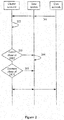
- Figure 1 is a schematic diagram of a method for reducing power consumption of a cluster terminal in a broadband cluster system according to an embodiment of the present disclosure
- a method, a system and a terminal for reducing power consumption of a cluster terminal in a broadband cluster system are provided according to the embodiments of the present disclosure, which are mainly applied into a broadband cluster communication system, thereby reducing power consumption of the cluster terminal, and prolonging service time of the cluster terminal.
- a primary call terminal is in a RRC connected state, and other terminals are in a RRC idle state.
- the terminal in the RRC idle state has to sense a downlink control channel continuously when performing a group call service, which increases power consumption of the terminal and reduces an effective service time of the terminal.
- RRC-connected-state discontinuous reception in an LTE system is unable to be applied into a terminal in a RRC idle state in the broadband cluster system, and therefore, power consumption of the terminal in a group call service process cannot be reduced.
- a method for reducing power consumption of a cluster terminal in a broadband cluster system is provided in the present disclosure, to reduce the power consumption.
- a PDCCH mentioned herein refers to a dedicated PDCCH, which is only suitable for a dedicated network.
- Resource allocation indications of an uplink scheduled user and a downlink scheduled user are carried on the PDCCH, resource scheduling or other information of a specific user are carried on the dedicated PDCCH, and are mapped into search space determined by a user-specific radio network temporary identity (RNTI).
- RNTI radio network temporary identity
- the group call service herein refers to a point-to-multipoint call, and one user is allowed to speak on an uplink channel at a time, and other users use a downlink channel.
- a single call service refers to that a call initiating terminal transmits a single call request to a called terminal via a base station.
- the call initiating terminal configures a channel assignment message of a service channel, and transmits a paging message to the called terminal.
- the call initiating terminal and the called terminal performs a single call cluster service, that is, only one party speaks and the other party listens.
- a function of an evolved node B includes a radio resource management (RRM) function, an IP header compression, user data stream encryption, mobility management entity (MME) selection for attachment of a UE, scheduling transmission of paging information, scheduling transmission of broadcasting information and setting and providing measurement for an eNB.
- RRM radio resource management
- MME mobility management entity
- a method for reducing power consumption of a cluster terminal in a broadband cluster system is described in detail below.
- the method according to the embodiment of the present disclosure includes steps 101 to 104.
- the cluster terminal configures a group call context, a discontinuous reception instruction and group call resources based on received group call instruction transmitted by a base station.
- the cluster terminal configures the discontinuous reception DRX while configuring the group call context.
- the cluster terminal makes resource information related to the received group call context to be available, to subsequently process group call service data transmitted by a base station in the resource information related to the group call context.
- the cluster terminal senses a physical channel in a preset cycle.
- the preset cycle is periodical.
- the DRX instruction may be a cluster DRX instruction, or a non-cluster DRX instruction such as a public-network DRX, which is not limited herein.
- the group call context and the group call resources transmitted by the base station are configured by the cluster terminal, so that new group call service data is received in new group air interface resources.
- step 102 the cluster terminal executes the discontinuous reception instruction.
- the cluster terminal After the discontinuous reception instruction DRX is configured by the cluster terminal the cluster terminal enables the preset cycle.
- the preset cycle includes an active phase and a dormant phase, and the preset cycle is periodical,
- step 103 the cluster terminal senses a physical channel when it is determined that the active phase of the discontinuous reception instruction is entered.
- a UE senses a physical channel and receives service data in the physical channel.
- the service data may be a voice service, a video service, a positioning service, a group call service, a single call service or similar services, which is not limited herein.
- step 104 the cluster terminal stops sensing the physical channel when it is determined that the dormant phase of the discontinuous reception instruction is entered.
- the cluster terminal determines whether there is cluster service data on the physical channel.
- the cluster terminal turns off a receiver and stops sensing the physical channel in the dormant phase, in a case that there is cluster service data on the physical channel.
- the cluster terminal upon receiving the group call configuration instruction transmitted by the base station, configures the discontinuous reception instruction based on the group call configuration instruction and executes the discontinuous reception instruction, and senses the physical channel when it is determined that the active phase is entered, and stops sensing the physical channel when it is determined that the dormant phase is entered.
- connected-state single call discontinuous reception in a public-network standard is applied to a terminal in a RRC idle state in the broadband cluster system, thereby reducing power consumption ofthe terminal in a group call service process and prolonging service time of the cluster terminal.
- the cluster terminal is a group call terminal in an idle state
- the discontinuous reception instruction is a cluster group call discontinuous reception instruction.
- the step that the cluster terminal senses a physical channel when it is determined that an active phase of the discontinuous reception instruction is entered is implemented as a step in which the cluster terminal senses a group call channel when an active phase of the cluster group call discontinuous reception instruction is entered.
- the step that the cluster terminal stops sensing the physical channel when it is determined that a dormant phase of the cluster group call discontinuous reception instruction is entered is implemented as a step in which the cluster terminal turns off a receiver to stop sensing the group call channel when a dormant phase of the cluster group call discontinuous reception instruction is entered.
- the determining that there is no group call service data on the group call channel is implemented by a step in which the UE senses the group call channel after the dormant phase of the discontinuous reception is entered, and turns off the receiver in a case that there is no service data transmitted on the group call channel to reduce power consumption.
- the cluster terminal is a group call terminal in a connected state
- the discontinuous reception instruction includes a cluster group call discontinuous reception instruction and a single call discontinuous reception instruction.
- the step in which the cluster terminal senses a physical channel when it is determined that an active phase of the cluster group call discontinuous reception instruction is entered is implemented as a step in which the cluster terminal senses a group call channel when an active phase of the cluster group call discontinuous reception instruction is entered and an active phase of the single call discontinuous reception instruction is entered.
- the step in which the cluster terminal stops sensing the physical channel when it is determined that a dormant phase of the cluster group call discontinuous reception instruction is entered is implemented as a step in which the cluster terminal turns off a receiver to stop sensing the group call channel when it is determined that a dormant phase of the cluster group call discontinuous reception instruction is entered and a dormant phase of the single call discontinuous reception instruction is entered.
- a cluster DRX and a public-network DRX may have the same active phase and the same dormant phase, or different active phases and different dormant phases, which are not limited herein.
- the UE is in an active phase if any one of the cluster DRX and the public-network DRX is in an active phase.
- the active phase of the DRX includes both the active phase of the cluster DRX and the active phase of the public-network DRX, which may be understood as a union between the active phase of the cluster DRX and the active phase of the public-network DRX.
- the dormant phase of the DRX refers to an overlapped time part between the dormant phase of the cluster DRX and the dormant phase of the public-network DRX, which may be understood as an intersection between the dormant phase of the cluster DRX and the dormant phase of the public-network DRX.
- the UE in the RRC connected state is controlled to enter a DRX mode at a UE side or an eNB side.
- the UE enter the DRX mode when a timer expires.
- the eNB notifies the UE of entering the DRX mode through a DRX Command MAC control element.
- the cluster terminal is a single call terminal in a connected state
- the discontinuous reception instruction is a single call discontinuous reception instruction.
- the step that the cluster terminal senses a physical channel when it is determined that an active phase of the cluster group call discontinuous reception instruction is entered is implemented as a step in which the cluster terminal senses a single call channel when an active phase of the single call discontinuous reception instruction is entered.
- the step that the cluster terminal stops sensing the physical channel when it is determined that a dormant phase of the cluster group call discontinuous reception instruction is entered is implemented as a step in which the cluster terminal turns off a receiver to stop sensing the single call channel when it is determined that a dormant phase of the single call discontinuous reception instruction is entered.
- drxStartOffset denotes a start frame of a DRX cycle
- longDRX-Cycle denotes the number of subframes in one long DRX cycle
- drxStartOffset and longDRX-Cyclc are determined by a filed longDRX-CycleStartOffset.
- An onDurationTimer denotes the number of continuous subframes from the start subframe of the DRX cycle which are used for sensing the PDCCH, that is, the number of continuous subframes in the active phase.
- the UE may be continued to be scheduled in subsequent several subframes.
- An extra delay is caused in a case that data is not received or transmitted until a next DRX cycle.
- the UE is continued to be in an active phase after being scheduled, that is, the UE is continued to sense the dedicated physical control channel (PDCCH) in the active phase, which is implemented as follows.
- a timer DRX-InactivityTimer is started (or restarted) every time the UE is scheduled to transmit data initially, and the UE is in an active state until the timer expires.
- the DRX-inactivityTimer specifies the number of continuous subframes in which the UE is always in the active state after the UE successfully decodes the PDCCH indicating initially-transmitted uplink (UL) or downlink (DL) user data, that is, the timer is restarted every time the UE is scheduled to transmit data initially.
- an "HARQ RTT timer” is provided in each DL HARQ process.
- the UE may assume that retransmission is performed at least after a "HARQ RTT" subframe, therefore, UE is not necessary to sense the PDCCH in a case that the HARQ RTT timer is run.
- the UE starts a DRX-RetransmissionTimer for the HARQ process.
- the UE senses the PDCCH for HARQ retransmission.
- the time length of the DRX-Retransmission Timer is related to flexibility of a scheduler of the eNB.
- the eNB calls the HARQ retransmission immediately after the HARQ RTT timer expires. In this way, radio resources are reserved for the HARQ retransmission by the eNB, and the DRX-Retransmission Timer may be configured with a short time.
- the DRX-Retransmission Timer specifies the maximum number of continuous sub frames for sensing the PDCCH from a time when the UE expects to receive a retransmitted DL subframe (after the HARQ RTT).
- the DXR cycle is selected while ensuring a balance between battery lifetime and a delay.
- a long DRX cycle facilitates prolonging a service time ofa battery of the UE. For example, in webpage browsing, it is a waste of resources that the UE continues to receive downlink data when the user reads a downloaded webpage.
- a short DRX cycle facilitates a fast response when new data is transmitted, for example, when a user requests another webpage. Therefore, in practice, each UE may be configured with two DRX cycles, that is, a short DRX-Cycle and a long DRX-Cycle.
- the UE Upon receiving a scheduling message in an active phase, the UE starts the "DRX-InactivityTimer" and senses the PDCCH in each subframe during running of the DRX-InactivityTimer. The UE restarts the DRX-InactivityTimer upon receiving scheduling information during running of the DRX-InactivityTimer.
- the UE enters a long DRX cycle if the UE is not configured with a short DRX cycle; (2) if the UE is configured with a short DRX cycle, the UE enters the short DRX cycle, and stars or restarts a DRX ShortCycle Timer, and the UE enters a long DRX cycle when the DRX ShortCycle Timer expires.
- An active time for sensing the PDCCH is the same for all DL component carriers.
- All component carriers do not receive service data when the UE is in the dormant phase.
- All component carriers are activated when the UE is activated, to receive service data.
- the processing flow according to the embodiment of the present disclosure includes steps 201 to 205.
- a cluster terminal in a RRC idle state receives group call configuration instruction transmitted by a core network via a base station.
- step 202 the cluster terminal configures a group call context, cluster DRX and group call resources based on the group call configuration instruction, and activates DRX, so that the DRX is in an active phase.
- step 203 the cluster terminal receives and transmits group call service data and senses a downlink control channel.
- step 204 the base station schedules the group call service data in the active phase of the DRX.
- step 205 the cluster terminal determines whether there is group call service data on the downlink control channel, and turns off a receiver and stops sensing the downlink control channel, after entering a dormant phase of the DRX in a case that there is no group call service data on the downlink control channel.
- the cluster terminal in the RRC idle state is configured with the cluster DRX, and the cluster terminal senses the downlink control channel when the active phase of the cluster DRX is entered, and stops sensing the downlink control channel when it is determined that the dormant phase of the DRX is entered, thereby reducing power consumption of the cluster terminal in the RRC idle state, and effectively prolonging service time of the cluster terminal.
- the cluster terminal 30 includes a configuring module 301, an executing module 302 and a sensing module 303.
- the configuring module 301 is configured to configure a group call context, a discontinuous reception instruction and group call resources based on a received group call instruction transmitted by a base station.
- the executing module 302 is configured to execute the discontinuous reception instruction.
- the sensing module 303 is configured to sense a physical channel when it is determined that an active phase of the discontinuous reception instruction is entered.
- the sensing module 303 is further configured to stop sensing the physical channel when it is determined that a dormant phase of the discontinuous reception instruction is entered.
- the configuring module 301 upon receiving a group call configuration instruction transmitted by the base station, configures a discontinuous reception instruction based on the group call configuration instruction, and then the discontinuous reception instruction is executed.
- the sensing module 303 senses a physical channel when it is determined that the above active phase is entered.
- the executing module 303 causes the sensing on the physical channel to be stopped when it is determined that the above dormant phase is entered in a case that there is no cluster service data on the physical channel.
- connected-state single call discontinuous reception in a public-network standard is applied to a terminal in a RRC idle state in the broadband cluster system, thereby reducing power consumption of the cluster terminal in a group call service process and prolonging a service time of the cluster terminal.
- the cluster terminal 30 is a group call terminal in an idle state
- the discontinuous reception instruction is a cluster group call discontinuous reception instruction.
- the sensing module 303 is configured to sense a group call channel when an active phase of the cluster group call discontinuous reception instruction is entered.
- the executing module 302 is further configured to turn off a receiver to cause the sensing module 303 to stop sensing the group call channel when it is determined that a dormant phase of the cluster group call discontinuous reception instruction is entered.
- the cluster terminal 30 is a group call terminal in a connected state
- the discontinuous reception instruction includes a cluster discontinuous reception instruction and a single call discontinuous reception instruction.
- the sensing module 303 is further configured to sense a group call channel when an active phase of the cluster group call discontinuous reception instruction is entered and an active phase of the single call discontinuous reception instruction is entered.
- the executing module 302 is further configured to turn off a receiver to cause the sensing module 303 to stop sensing the group call channel when it is determined that a dormant phase of the cluster group call discontinuous reception instruction is entered and a dormant phase of the single call discontinuous reception instruction is entered.
- the cluster terminal 30 is a single call terminal in a connected state
- the discontinuous reception instruction is a public-network discontinuous reception instruction.
- the sensing module 303 is further configured to sense a single call channel when an active phase of the single call discontinuous reception instruction is entered.
- the executing module 302 is further configured to turn off a receiver to cause the sensing module 303 to stop sensing the single call channel when it is determined that a dormant phase of the single call discontinuous reception instruction is entered.
- a broadband cluster system includes a cluster terminal 401 and a base station 402.
- the base station 402 is configured to transmit a group call configuration instruction to the cluster terminal 401.
- the cluster terminal 401 is configured to configure a group call context, a discontinuous reception instruction and group call resources based on the group call configuration instruction, and execute the discontinuous reception instruction.
- the cluster terminal 401 senses a physical channel when it is determined that an active phase of the discontinuous reception instruction is entered.
- the cluster terminal 401 stops sensing the physical channel when it is determined that a dormant phase of the discontinuous reception instruction is entered.
- the cluster terminal 401 configures the discontinuous reception instruction based on the group call configuration instruction transmitted by the base station 402, makes the discontinuous reception instruction to be available, senses the physical channel in an active phase of the discontinuous reception instruction, and stops sensing the physical channel in a dormant phase of the discontinuous reception instruction, thereby reducing power consumption of the cluster terminal 401, and effectively prolonging a service time of the cluster terminal 401.
- a computer storage medium is further provided in the present disclosure, a program is stored in the computer storage medium, and the program includes a part or all of steps in the method for reducing power consumption of the cluster terminal in the broadband cluster system described above when being executed.
- a computer storage medium is further provided in the present disclosure, a program is stored in the computer storage medium, and a cluster terminal executes a part or all of steps in the method for reducing power consumption of the cluster terminal in the broadband cluster system when the program is executed.
- FIG. 5 is another schematic structural diagram of a user equipment 50 according to an embodiment of the present disclosure.
- the user equipment 50 may include at least one network interface or other communication interface, at least one receiver 501, at least one transmitter 502, at least one processor 503 and a storage 504.
- a gateway of the system is communicatively connected to at least one other network element via at least one network interface (which may be a wired or wireless interface).
- the Internet a wide area network, a local network, a metropolitan area network and the like may be used.
- the storage 504 may include a read-only memory and a random-access memory, and provides instructions and data to the processor 503.
- the storage 504 may be partially a high-speed random access memory (RAM), or a non-volatile memory.
- An executable module or a data structure, or a subset of the executable module and the data structure, or a set of extensions of the executable module and the data structure, operating instructions and various operating systems are stored in the storage 504.
- the operating instructions are used for implementing various operations.
- the operating systems are used for implementing various basic services and processing tasks based on hardware.
- the processor 503 executes operations as follows: configuring a group call context, a discontinuous reception instruction and group call resources based on the group call configuration instruction received by the receiver 501 from a base station; executing the discontinuous reception instruction; sensing a physical channel when it is determined that an active phase of the discontinuous reception instruction is entered; and stopping sensing the physical channel when it is determined that a dormant phase of the discontinuous reception instruction is entered.
- the cluster terminal 50 is a group call terminal in an idle state
- the discontinuous reception instruction is a cluster group call discontinuous reception instruction
- the processor 503 described above may further execute operations as follows: sensing a group call channel when an active phase of the cluster group call discontinuous reception instruction is entered; turning off a receiver to stop sensing the group call channel when a dormant phase of the cluster group call discontinuous reception instruction is entered
- the cluster terminal 50 is a group call terminal in a connected state
- the discontinuous reception instruction includes a cluster group call discontinuous reception instruction and a single call discontinuous reception instruction.
- the processor 503 described above may further execute operations as follows: sensing a group call channel when an active phase of the cluster group call discontinuous reception instruction is entered and an active phase of the single call discontinuous reception instruction is entered; and turning off a receiver to stop sensing the group call channel when it is determined that a dormant phase of the cluster group call discontinuous reception instruction is entered and a dormant phase of the single call discontinuous reception instruction is entered.
- the cluster terminal 50 is a single call cluster terminal in a connected state
- the discontinuous reception instruction is a single call discontinuous reception instruction.
- the processor 503 described above may further execute operations as follows: sensing a single call channel when an active phase of the single call discontinuous reception instruction is entered; and turning off a receiver to stop sensing the single call channel when it is determined that a dormant phase of the single call discontinuous reception instruction is entered.
- each of the embodiments has its own focus in description, and a part which is not described in detail in an embodiment may refer to related description in other embodiment.
- the disclosed system, apparatus and methods maybe implemented in other ways.
- the described apparatus embodiment is merely for illustration.
- the units are divided merely based on logical functions, and the units may be divided with other division manner in practice.
- multiple units or modules may be combined, or may be integrated into another system, or some features may be omitted or not be implemented.
- the displayed or discussed couplings, direct couplings or communication connections may be implemented as indirect couplings or communication connections via some interfaces, devices or units, which may be electrical, mechanical or in other forms.
- the units described as separate components may be or not be separated physically.
- the components shown as units may be or not be physical units, i.e., the units may be located at one place or may be distributed onto multiple network units. All of or part of the units may be selected based on actual needs to implement the solutions according to the embodiments.
- function units may be integrated in one processing unit, or the units may exist separately, or two or more units may be integrated in one unit.
- the integrated unit may be implemented in a form of hardware or a software function unit.
- the software function unit may also be stored in a computer readable storage medium.
- an essential part of the technical solutions of the present disclosure i.e., the part of the technical solutions of the present disclosure that contribute to the existing technology, or all or a part of the technical solutions may be embodied in the form of a computer software product.
- the computer software product is stored in a storage medium, and includes several instructions for instructing a computer device (which may be a personal computer, a server, a network device or the like) to implement all or a part of the steps of the methods according to the embodiments of the present disclosure.
- the foregoing storage medium includes various media that can store program codes, for example, a USB disk, a mobile hard disk, a read-only memory (ROM), a random access memory (RAM), a magnetic disk, an optical disk.
Landscapes
- Engineering & Computer Science (AREA)
- Computer Networks & Wireless Communication (AREA)
- Signal Processing (AREA)
- Mobile Radio Communication Systems (AREA)
- Telephone Function (AREA)
Applications Claiming Priority (1)
| Application Number | Priority Date | Filing Date | Title |
|---|---|---|---|
| PCT/CN2015/082204 WO2016206016A1 (fr) | 2015-06-24 | 2015-06-24 | Procédé, terminal et système de réduction de consommation d'énergie d'un terminal en grappe dans un système de grappes à large bande |
Publications (3)
| Publication Number | Publication Date |
|---|---|
| EP3316655A1 true EP3316655A1 (fr) | 2018-05-02 |
| EP3316655A4 EP3316655A4 (fr) | 2018-05-30 |
| EP3316655B1 EP3316655B1 (fr) | 2020-02-19 |
Family
ID=57584459
Family Applications (1)
| Application Number | Title | Priority Date | Filing Date |
|---|---|---|---|
| EP15895916.3A Active EP3316655B1 (fr) | 2015-06-24 | 2015-06-24 | Procédé et terminal de réduction de consommation d'énergie d'un terminal en grappe dans un système de grappes à large bande |
Country Status (6)
| Country | Link |
|---|---|
| US (1) | US10278234B2 (fr) |
| EP (1) | EP3316655B1 (fr) |
| CN (1) | CN106489295A (fr) |
| AU (1) | AU2015399593B2 (fr) |
| RU (1) | RU2697931C2 (fr) |
| WO (1) | WO2016206016A1 (fr) |
Families Citing this family (8)
| Publication number | Priority date | Publication date | Assignee | Title |
|---|---|---|---|---|
| CN109246801B (zh) * | 2017-05-04 | 2022-01-25 | 成都鼎桥通信技术有限公司 | 空闲监听态终端实现非连续接收的方法及装置 |
| CN109246625B (zh) * | 2017-06-07 | 2022-04-26 | 成都鼎桥通信技术有限公司 | 集群非连续接收调度方法和系统 |
| CN109842937B (zh) * | 2017-09-20 | 2021-11-19 | 维沃移动通信有限公司 | 信息传输方法、网络设备、终端及计算机可读存储介质 |
| EP3624481B1 (fr) * | 2017-11-17 | 2021-07-07 | Guangdong Oppo Mobile Telecommunications Corp., Ltd. | Procédé d'écoute d'un pdcch et dispositif terminal |
| CN111345103B (zh) * | 2017-11-22 | 2023-07-04 | 鸿颖创新有限公司 | 用于非连续接收操作的用户设备和方法 |
| CN112825589B (zh) * | 2019-11-21 | 2022-03-11 | 维沃移动通信有限公司 | 一种进入休眠行为的方法和终端 |
| CN114501598B (zh) * | 2020-11-13 | 2023-12-12 | 海能达通信股份有限公司 | 终端休眠的控制方法、装置、设备及可读存储介质 |
| EP4271117B1 (fr) * | 2021-01-14 | 2026-01-28 | Guangdong Oppo Mobile Telecommunications Corp., Ltd. | Détection discontinue basée sur la réception |
Family Cites Families (21)
| Publication number | Priority date | Publication date | Assignee | Title |
|---|---|---|---|---|
| DE102004045449B3 (de) * | 2004-09-18 | 2006-03-16 | Tenovis Gmbh & Co. Kg | Netzwerk, Telefonie-Endgerät und Verfahren zum Betreiben eines solchen Telefonie-Endgerätes im Netzwerk |
| WO2007040201A1 (fr) * | 2005-10-04 | 2007-04-12 | Sharp Kabushiki Kaisha | Dispositif de station mobile, dispositif de station de base, procede pour le mappage de bande de frequences utilisee par le dispositif de station mobile, dispositf de gestion de position, procede d'enregistrement de position de dispositif de station mobile; procede de radiomessagerie, programme de mise en oeuvre et sup |
| CN100426893C (zh) * | 2005-10-14 | 2008-10-15 | 华为技术有限公司 | 一种数字集群组接收模式下实现非连续接收的方法 |
| KR100933160B1 (ko) * | 2006-10-02 | 2009-12-21 | 삼성전자주식회사 | 무선통신 시스템에서의 페이징 정보의 송수신 방법 및 장치 |
| WO2008155739A2 (fr) * | 2007-06-19 | 2008-12-24 | Nokia Corporation | Appareil, procédé et produit de programme d'ordinateur permettant une réception discontinue en mode veille |
| US8843115B2 (en) | 2008-06-23 | 2014-09-23 | Qualcomm Incorporated | Method and apparatus for managing system information modification in a wireless communication system |
| JP5223614B2 (ja) | 2008-11-19 | 2013-06-26 | 日本電気株式会社 | 無線通信システムおよび端末呼び出し方法 |
| CN102036347B (zh) | 2009-09-29 | 2013-08-28 | 华为技术有限公司 | 不连续接收配置的实现方法、网元及用户设备 |
| NL2003736C2 (en) | 2009-10-30 | 2011-05-03 | Ambient Systems B V | Communication method for high density wireless networks, terminal, cluster master device, central node, and system therefor. |
| CN102413587B (zh) * | 2010-09-25 | 2014-06-04 | 普天信息技术研究院有限公司 | 一种非连续接收的实现方法 |
| US8755340B2 (en) * | 2010-11-08 | 2014-06-17 | Blackberry Limited | Releasing wireless resources |
| CN102625254B (zh) * | 2011-01-31 | 2015-12-02 | 华为技术有限公司 | 分组寻呼的方法、装置及系统 |
| WO2013023975A1 (fr) * | 2011-08-12 | 2013-02-21 | Research In Motion Limited | Suspension de connexion dans un système de communications sans fil |
| EP2621242A1 (fr) * | 2012-01-26 | 2013-07-31 | Panasonic Corporation | Opération de réception discontinue améliorée dotée d'opportunités d'éveil supplémentaire |
| US10085207B2 (en) | 2012-01-27 | 2018-09-25 | Intel Corporation | Techniques for improved energy-savings management |
| US20130250771A1 (en) * | 2012-03-20 | 2013-09-26 | Nokia Siemens Networks Oy | Device to device enhanced voice group call |
| KR101579030B1 (ko) | 2012-04-05 | 2015-12-18 | 옵티스 셀룰러 테크놀로지, 엘엘씨 | 페이징 구성정보의 수신을 위한 어드밴스드 웨이크업 |
| US8908523B2 (en) * | 2012-04-23 | 2014-12-09 | Apple Inc. | Apparatus and methods for improved packet flow mobility |
| CN103391549B (zh) | 2012-05-10 | 2018-04-06 | 中兴通讯股份有限公司 | 一种不连续接收的动态配置方法、终端和基站 |
| US20160119762A1 (en) | 2013-05-15 | 2016-04-28 | Xipeng Zhu | Group bearer and bearer selection for multicast/broadcast data transmissions |
| KR102151456B1 (ko) | 2013-09-17 | 2020-09-03 | 삼성전자주식회사 | 무선 단말의 전력 소모를 제어하는 방법 및 장치 |
-
2015
- 2015-06-24 WO PCT/CN2015/082204 patent/WO2016206016A1/fr not_active Ceased
- 2015-06-24 RU RU2018102248A patent/RU2697931C2/ru active
- 2015-06-24 AU AU2015399593A patent/AU2015399593B2/en active Active
- 2015-06-24 EP EP15895916.3A patent/EP3316655B1/fr active Active
- 2015-06-24 CN CN201580000294.0A patent/CN106489295A/zh active Pending
- 2015-06-24 US US15/738,291 patent/US10278234B2/en active Active
Also Published As
| Publication number | Publication date |
|---|---|
| AU2015399593B2 (en) | 2018-12-20 |
| EP3316655A4 (fr) | 2018-05-30 |
| RU2018102248A3 (fr) | 2019-07-24 |
| RU2697931C2 (ru) | 2019-08-21 |
| US20180176982A1 (en) | 2018-06-21 |
| AU2015399593A1 (en) | 2018-02-22 |
| EP3316655B1 (fr) | 2020-02-19 |
| US10278234B2 (en) | 2019-04-30 |
| RU2018102248A (ru) | 2019-07-24 |
| CN106489295A (zh) | 2017-03-08 |
| WO2016206016A1 (fr) | 2016-12-29 |
Similar Documents
| Publication | Publication Date | Title |
|---|---|---|
| US10278234B2 (en) | Method, terminal and system for reducing power consumption of cluster terminal in broadband cluster system | |
| US10485052B2 (en) | DRX implementation method, DRX configuration method, and related device | |
| CN113518478B (zh) | 一种drx控制方法及装置 | |
| CN110912663B (zh) | 一种通信方法及装置 | |
| CN104219740B (zh) | 激活状态处理方法及装置 | |
| TW202021391A (zh) | 非連續傳輸的方法和設備 | |
| WO2013020417A1 (fr) | Procédé et système de réception discontinue | |
| JP2013506357A (ja) | 間欠受信配置方法及びシステム | |
| CN109804685A (zh) | 采用两步授权的激活时间处理 | |
| CN108418661B (zh) | 数据传输方法及装置 | |
| EP4319283A1 (fr) | Procédé de communication pour interface de liaison latérale, dispositif terminal et support de stockage | |
| KR20220140579A (ko) | 비연속 수신 처리 방법, 단말, 장치 및 매체 | |
| CN111698767B (zh) | 一种请求系统信息的方法及设备 | |
| CN115278546B (zh) | 数据传输方法、相关设备及可读存储介质 | |
| EP4280798B1 (fr) | Méthodes de contrôle de la minuterie, appareils, puce, support de stockage lisible par ordinateur et produit de programme informatique | |
| WO2022205350A1 (fr) | Procédé et appareil destinés à un fonctionnement drx pour des services de multidiffusion et de diffusion | |
| CN104284348A (zh) | 一种动态tdd配置的获取方法、基站及终端 | |
| WO2018149280A1 (fr) | Procédé et dispositif de réception de données | |
| WO2022205095A1 (fr) | Procédé de communication sans fil et dispositif terminal | |
| CN103974390A (zh) | Drx模式的启动方法、用户设备、基站及系统 | |
| CN110891318A (zh) | 通信方法、设备和存储介质 | |
| CN118945674A (zh) | 通信方法、终端及网络侧设备 | |
| CN119629706A (zh) | 连接态非连续接收的配置方法、终端及网络侧设备 | |
| CN117795916A (zh) | 一种信息传输方法、装置、通信设备及存储介质 |
Legal Events
| Date | Code | Title | Description |
|---|---|---|---|
| STAA | Information on the status of an ep patent application or granted ep patent |
Free format text: STATUS: THE INTERNATIONAL PUBLICATION HAS BEEN MADE |
|
| PUAI | Public reference made under article 153(3) epc to a published international application that has entered the european phase |
Free format text: ORIGINAL CODE: 0009012 |
|
| STAA | Information on the status of an ep patent application or granted ep patent |
Free format text: STATUS: REQUEST FOR EXAMINATION WAS MADE |
|
| 17P | Request for examination filed |
Effective date: 20180118 |
|
| AK | Designated contracting states |
Kind code of ref document: A1 Designated state(s): AL AT BE BG CH CY CZ DE DK EE ES FI FR GB GR HR HU IE IS IT LI LT LU LV MC MK MT NL NO PL PT RO RS SE SI SK SM TR |
|
| AX | Request for extension of the european patent |
Extension state: BA ME |
|
| A4 | Supplementary search report drawn up and despatched |
Effective date: 20180502 |
|
| RIC1 | Information provided on ipc code assigned before grant |
Ipc: H04W 76/28 20180101ALI20180424BHEP Ipc: H04W 76/20 20180101AFI20180424BHEP Ipc: H04W 84/08 20090101ALI20180424BHEP Ipc: H04W 68/02 20090101ALI20180424BHEP Ipc: H04W 68/00 20090101ALI20180424BHEP Ipc: H04W 76/27 20180101ALI20180424BHEP |
|
| DAV | Request for validation of the european patent (deleted) | ||
| DAX | Request for extension of the european patent (deleted) | ||
| STAA | Information on the status of an ep patent application or granted ep patent |
Free format text: STATUS: EXAMINATION IS IN PROGRESS |
|
| 17Q | First examination report despatched |
Effective date: 20190108 |
|
| REG | Reference to a national code |
Ref country code: DE Ref legal event code: R079 Ref document number: 602015047557 Country of ref document: DE Free format text: PREVIOUS MAIN CLASS: H04W0076040000 Ipc: H04W0084080000 |
|
| RIC1 | Information provided on ipc code assigned before grant |
Ipc: H04W 84/04 20090101ALI20190522BHEP Ipc: H04W 68/00 20090101ALI20190522BHEP Ipc: H04W 84/08 20090101AFI20190522BHEP Ipc: H04W 76/20 20180101ALI20190522BHEP Ipc: H04W 68/02 20090101ALI20190522BHEP Ipc: H04W 76/28 20180101ALI20190522BHEP Ipc: H04W 76/27 20180101ALI20190522BHEP |
|
| GRAP | Despatch of communication of intention to grant a patent |
Free format text: ORIGINAL CODE: EPIDOSNIGR1 |
|
| STAA | Information on the status of an ep patent application or granted ep patent |
Free format text: STATUS: GRANT OF PATENT IS INTENDED |
|
| INTG | Intention to grant announced |
Effective date: 20190628 |
|
| GRAS | Grant fee paid |
Free format text: ORIGINAL CODE: EPIDOSNIGR3 |
|
| GRAA | (expected) grant |
Free format text: ORIGINAL CODE: 0009210 |
|
| STAA | Information on the status of an ep patent application or granted ep patent |
Free format text: STATUS: THE PATENT HAS BEEN GRANTED |
|
| AK | Designated contracting states |
Kind code of ref document: B1 Designated state(s): AL AT BE BG CH CY CZ DE DK EE ES FI FR GB GR HR HU IE IS IT LI LT LU LV MC MK MT NL NO PL PT RO RS SE SI SK SM TR |
|
| REG | Reference to a national code |
Ref country code: CH Ref legal event code: EP |
|
| REG | Reference to a national code |
Ref country code: DE Ref legal event code: R096 Ref document number: 602015047557 Country of ref document: DE |
|
| REG | Reference to a national code |
Ref country code: AT Ref legal event code: REF Ref document number: 1236451 Country of ref document: AT Kind code of ref document: T Effective date: 20200315 |
|
| REG | Reference to a national code |
Ref country code: IE Ref legal event code: FG4D |
|
| REG | Reference to a national code |
Ref country code: NL Ref legal event code: MP Effective date: 20200219 |
|
| PG25 | Lapsed in a contracting state [announced via postgrant information from national office to epo] |
Ref country code: NO Free format text: LAPSE BECAUSE OF FAILURE TO SUBMIT A TRANSLATION OF THE DESCRIPTION OR TO PAY THE FEE WITHIN THE PRESCRIBED TIME-LIMIT Effective date: 20200519 Ref country code: FI Free format text: LAPSE BECAUSE OF FAILURE TO SUBMIT A TRANSLATION OF THE DESCRIPTION OR TO PAY THE FEE WITHIN THE PRESCRIBED TIME-LIMIT Effective date: 20200219 Ref country code: RS Free format text: LAPSE BECAUSE OF FAILURE TO SUBMIT A TRANSLATION OF THE DESCRIPTION OR TO PAY THE FEE WITHIN THE PRESCRIBED TIME-LIMIT Effective date: 20200219 |
|
| REG | Reference to a national code |
Ref country code: LT Ref legal event code: MG4D |
|
| PG25 | Lapsed in a contracting state [announced via postgrant information from national office to epo] |
Ref country code: SE Free format text: LAPSE BECAUSE OF FAILURE TO SUBMIT A TRANSLATION OF THE DESCRIPTION OR TO PAY THE FEE WITHIN THE PRESCRIBED TIME-LIMIT Effective date: 20200219 Ref country code: IS Free format text: LAPSE BECAUSE OF FAILURE TO SUBMIT A TRANSLATION OF THE DESCRIPTION OR TO PAY THE FEE WITHIN THE PRESCRIBED TIME-LIMIT Effective date: 20200619 Ref country code: LV Free format text: LAPSE BECAUSE OF FAILURE TO SUBMIT A TRANSLATION OF THE DESCRIPTION OR TO PAY THE FEE WITHIN THE PRESCRIBED TIME-LIMIT Effective date: 20200219 Ref country code: HR Free format text: LAPSE BECAUSE OF FAILURE TO SUBMIT A TRANSLATION OF THE DESCRIPTION OR TO PAY THE FEE WITHIN THE PRESCRIBED TIME-LIMIT Effective date: 20200219 Ref country code: GR Free format text: LAPSE BECAUSE OF FAILURE TO SUBMIT A TRANSLATION OF THE DESCRIPTION OR TO PAY THE FEE WITHIN THE PRESCRIBED TIME-LIMIT Effective date: 20200520 Ref country code: BG Free format text: LAPSE BECAUSE OF FAILURE TO SUBMIT A TRANSLATION OF THE DESCRIPTION OR TO PAY THE FEE WITHIN THE PRESCRIBED TIME-LIMIT Effective date: 20200519 |
|
| PG25 | Lapsed in a contracting state [announced via postgrant information from national office to epo] |
Ref country code: NL Free format text: LAPSE BECAUSE OF FAILURE TO SUBMIT A TRANSLATION OF THE DESCRIPTION OR TO PAY THE FEE WITHIN THE PRESCRIBED TIME-LIMIT Effective date: 20200219 |
|
| PG25 | Lapsed in a contracting state [announced via postgrant information from national office to epo] |
Ref country code: ES Free format text: LAPSE BECAUSE OF FAILURE TO SUBMIT A TRANSLATION OF THE DESCRIPTION OR TO PAY THE FEE WITHIN THE PRESCRIBED TIME-LIMIT Effective date: 20200219 Ref country code: RO Free format text: LAPSE BECAUSE OF FAILURE TO SUBMIT A TRANSLATION OF THE DESCRIPTION OR TO PAY THE FEE WITHIN THE PRESCRIBED TIME-LIMIT Effective date: 20200219 Ref country code: CZ Free format text: LAPSE BECAUSE OF FAILURE TO SUBMIT A TRANSLATION OF THE DESCRIPTION OR TO PAY THE FEE WITHIN THE PRESCRIBED TIME-LIMIT Effective date: 20200219 Ref country code: EE Free format text: LAPSE BECAUSE OF FAILURE TO SUBMIT A TRANSLATION OF THE DESCRIPTION OR TO PAY THE FEE WITHIN THE PRESCRIBED TIME-LIMIT Effective date: 20200219 Ref country code: LT Free format text: LAPSE BECAUSE OF FAILURE TO SUBMIT A TRANSLATION OF THE DESCRIPTION OR TO PAY THE FEE WITHIN THE PRESCRIBED TIME-LIMIT Effective date: 20200219 Ref country code: DK Free format text: LAPSE BECAUSE OF FAILURE TO SUBMIT A TRANSLATION OF THE DESCRIPTION OR TO PAY THE FEE WITHIN THE PRESCRIBED TIME-LIMIT Effective date: 20200219 Ref country code: SM Free format text: LAPSE BECAUSE OF FAILURE TO SUBMIT A TRANSLATION OF THE DESCRIPTION OR TO PAY THE FEE WITHIN THE PRESCRIBED TIME-LIMIT Effective date: 20200219 Ref country code: SK Free format text: LAPSE BECAUSE OF FAILURE TO SUBMIT A TRANSLATION OF THE DESCRIPTION OR TO PAY THE FEE WITHIN THE PRESCRIBED TIME-LIMIT Effective date: 20200219 Ref country code: PT Free format text: LAPSE BECAUSE OF FAILURE TO SUBMIT A TRANSLATION OF THE DESCRIPTION OR TO PAY THE FEE WITHIN THE PRESCRIBED TIME-LIMIT Effective date: 20200712 |
|
| REG | Reference to a national code |
Ref country code: AT Ref legal event code: MK05 Ref document number: 1236451 Country of ref document: AT Kind code of ref document: T Effective date: 20200219 |
|
| REG | Reference to a national code |
Ref country code: DE Ref legal event code: R097 Ref document number: 602015047557 Country of ref document: DE |
|
| PLBE | No opposition filed within time limit |
Free format text: ORIGINAL CODE: 0009261 |
|
| STAA | Information on the status of an ep patent application or granted ep patent |
Free format text: STATUS: NO OPPOSITION FILED WITHIN TIME LIMIT |
|
| 26N | No opposition filed |
Effective date: 20201120 |
|
| PG25 | Lapsed in a contracting state [announced via postgrant information from national office to epo] |
Ref country code: AT Free format text: LAPSE BECAUSE OF FAILURE TO SUBMIT A TRANSLATION OF THE DESCRIPTION OR TO PAY THE FEE WITHIN THE PRESCRIBED TIME-LIMIT Effective date: 20200219 Ref country code: MC Free format text: LAPSE BECAUSE OF FAILURE TO SUBMIT A TRANSLATION OF THE DESCRIPTION OR TO PAY THE FEE WITHIN THE PRESCRIBED TIME-LIMIT Effective date: 20200219 Ref country code: IT Free format text: LAPSE BECAUSE OF FAILURE TO SUBMIT A TRANSLATION OF THE DESCRIPTION OR TO PAY THE FEE WITHIN THE PRESCRIBED TIME-LIMIT Effective date: 20200219 |
|
| REG | Reference to a national code |
Ref country code: CH Ref legal event code: PL |
|
| PG25 | Lapsed in a contracting state [announced via postgrant information from national office to epo] |
Ref country code: SI Free format text: LAPSE BECAUSE OF FAILURE TO SUBMIT A TRANSLATION OF THE DESCRIPTION OR TO PAY THE FEE WITHIN THE PRESCRIBED TIME-LIMIT Effective date: 20200219 Ref country code: PL Free format text: LAPSE BECAUSE OF FAILURE TO SUBMIT A TRANSLATION OF THE DESCRIPTION OR TO PAY THE FEE WITHIN THE PRESCRIBED TIME-LIMIT Effective date: 20200219 |
|
| GBPC | Gb: european patent ceased through non-payment of renewal fee |
Effective date: 20200624 |
|
| PG25 | Lapsed in a contracting state [announced via postgrant information from national office to epo] |
Ref country code: LU Free format text: LAPSE BECAUSE OF NON-PAYMENT OF DUE FEES Effective date: 20200624 |
|
| REG | Reference to a national code |
Ref country code: BE Ref legal event code: MM Effective date: 20200630 |
|
| PG25 | Lapsed in a contracting state [announced via postgrant information from national office to epo] |
Ref country code: CH Free format text: LAPSE BECAUSE OF NON-PAYMENT OF DUE FEES Effective date: 20200630 Ref country code: IE Free format text: LAPSE BECAUSE OF NON-PAYMENT OF DUE FEES Effective date: 20200624 Ref country code: GB Free format text: LAPSE BECAUSE OF NON-PAYMENT OF DUE FEES Effective date: 20200624 Ref country code: LI Free format text: LAPSE BECAUSE OF NON-PAYMENT OF DUE FEES Effective date: 20200630 Ref country code: FR Free format text: LAPSE BECAUSE OF NON-PAYMENT OF DUE FEES Effective date: 20200630 |
|
| PG25 | Lapsed in a contracting state [announced via postgrant information from national office to epo] |
Ref country code: BE Free format text: LAPSE BECAUSE OF NON-PAYMENT OF DUE FEES Effective date: 20200630 |
|
| PG25 | Lapsed in a contracting state [announced via postgrant information from national office to epo] |
Ref country code: TR Free format text: LAPSE BECAUSE OF FAILURE TO SUBMIT A TRANSLATION OF THE DESCRIPTION OR TO PAY THE FEE WITHIN THE PRESCRIBED TIME-LIMIT Effective date: 20200219 Ref country code: MT Free format text: LAPSE BECAUSE OF FAILURE TO SUBMIT A TRANSLATION OF THE DESCRIPTION OR TO PAY THE FEE WITHIN THE PRESCRIBED TIME-LIMIT Effective date: 20200219 Ref country code: CY Free format text: LAPSE BECAUSE OF FAILURE TO SUBMIT A TRANSLATION OF THE DESCRIPTION OR TO PAY THE FEE WITHIN THE PRESCRIBED TIME-LIMIT Effective date: 20200219 |
|
| PG25 | Lapsed in a contracting state [announced via postgrant information from national office to epo] |
Ref country code: MK Free format text: LAPSE BECAUSE OF FAILURE TO SUBMIT A TRANSLATION OF THE DESCRIPTION OR TO PAY THE FEE WITHIN THE PRESCRIBED TIME-LIMIT Effective date: 20200219 Ref country code: AL Free format text: LAPSE BECAUSE OF FAILURE TO SUBMIT A TRANSLATION OF THE DESCRIPTION OR TO PAY THE FEE WITHIN THE PRESCRIBED TIME-LIMIT Effective date: 20200219 |
|
| PGFP | Annual fee paid to national office [announced via postgrant information from national office to epo] |
Ref country code: DE Payment date: 20250617 Year of fee payment: 11 |