EP3319032B1 - Procédé pour traiter des données, équipement électronique pouvant être porté et système - Google Patents
Procédé pour traiter des données, équipement électronique pouvant être porté et système Download PDFInfo
- Publication number
- EP3319032B1 EP3319032B1 EP16836575.7A EP16836575A EP3319032B1 EP 3319032 B1 EP3319032 B1 EP 3319032B1 EP 16836575 A EP16836575 A EP 16836575A EP 3319032 B1 EP3319032 B1 EP 3319032B1
- Authority
- EP
- European Patent Office
- Prior art keywords
- operating system
- information
- intelligent terminal
- operation instruction
- electronic device
- Prior art date
- Legal status (The legal status is an assumption and is not a legal conclusion. Google has not performed a legal analysis and makes no representation as to the accuracy of the status listed.)
- Active
Links
Images



Classifications
-
- G—PHYSICS
- G06—COMPUTING OR CALCULATING; COUNTING
- G06Q—INFORMATION AND COMMUNICATION TECHNOLOGY [ICT] SPECIALLY ADAPTED FOR ADMINISTRATIVE, COMMERCIAL, FINANCIAL, MANAGERIAL OR SUPERVISORY PURPOSES; SYSTEMS OR METHODS SPECIALLY ADAPTED FOR ADMINISTRATIVE, COMMERCIAL, FINANCIAL, MANAGERIAL OR SUPERVISORY PURPOSES, NOT OTHERWISE PROVIDED FOR
- G06Q20/00—Payment architectures, schemes or protocols
- G06Q20/30—Payment architectures, schemes or protocols characterised by the use of specific devices or networks
- G06Q20/32—Payment architectures, schemes or protocols characterised by the use of specific devices or networks using wireless devices
- G06Q20/322—Aspects of commerce using mobile devices [M-devices]
- G06Q20/3223—Realising banking transactions through M-devices
-
- G—PHYSICS
- G06—COMPUTING OR CALCULATING; COUNTING
- G06Q—INFORMATION AND COMMUNICATION TECHNOLOGY [ICT] SPECIALLY ADAPTED FOR ADMINISTRATIVE, COMMERCIAL, FINANCIAL, MANAGERIAL OR SUPERVISORY PURPOSES; SYSTEMS OR METHODS SPECIALLY ADAPTED FOR ADMINISTRATIVE, COMMERCIAL, FINANCIAL, MANAGERIAL OR SUPERVISORY PURPOSES, NOT OTHERWISE PROVIDED FOR
- G06Q20/00—Payment architectures, schemes or protocols
- G06Q20/38—Payment protocols; Details thereof
- G06Q20/382—Payment protocols; Details thereof insuring higher security of transaction
- G06Q20/3825—Use of electronic signatures
-
- G—PHYSICS
- G06—COMPUTING OR CALCULATING; COUNTING
- G06Q—INFORMATION AND COMMUNICATION TECHNOLOGY [ICT] SPECIALLY ADAPTED FOR ADMINISTRATIVE, COMMERCIAL, FINANCIAL, MANAGERIAL OR SUPERVISORY PURPOSES; SYSTEMS OR METHODS SPECIALLY ADAPTED FOR ADMINISTRATIVE, COMMERCIAL, FINANCIAL, MANAGERIAL OR SUPERVISORY PURPOSES, NOT OTHERWISE PROVIDED FOR
- G06Q20/00—Payment architectures, schemes or protocols
- G06Q20/30—Payment architectures, schemes or protocols characterised by the use of specific devices or networks
- G06Q20/32—Payment architectures, schemes or protocols characterised by the use of specific devices or networks using wireless devices
- G06Q20/321—Payment architectures, schemes or protocols characterised by the use of specific devices or networks using wireless devices using wearable devices
-
- G—PHYSICS
- G06—COMPUTING OR CALCULATING; COUNTING
- G06Q—INFORMATION AND COMMUNICATION TECHNOLOGY [ICT] SPECIALLY ADAPTED FOR ADMINISTRATIVE, COMMERCIAL, FINANCIAL, MANAGERIAL OR SUPERVISORY PURPOSES; SYSTEMS OR METHODS SPECIALLY ADAPTED FOR ADMINISTRATIVE, COMMERCIAL, FINANCIAL, MANAGERIAL OR SUPERVISORY PURPOSES, NOT OTHERWISE PROVIDED FOR
- G06Q20/00—Payment architectures, schemes or protocols
- G06Q20/30—Payment architectures, schemes or protocols characterised by the use of specific devices or networks
- G06Q20/32—Payment architectures, schemes or protocols characterised by the use of specific devices or networks using wireless devices
- G06Q20/322—Aspects of commerce using mobile devices [M-devices]
- G06Q20/3229—Use of the SIM of a M-device as secure element
-
- G—PHYSICS
- G06—COMPUTING OR CALCULATING; COUNTING
- G06Q—INFORMATION AND COMMUNICATION TECHNOLOGY [ICT] SPECIALLY ADAPTED FOR ADMINISTRATIVE, COMMERCIAL, FINANCIAL, MANAGERIAL OR SUPERVISORY PURPOSES; SYSTEMS OR METHODS SPECIALLY ADAPTED FOR ADMINISTRATIVE, COMMERCIAL, FINANCIAL, MANAGERIAL OR SUPERVISORY PURPOSES, NOT OTHERWISE PROVIDED FOR
- G06Q20/00—Payment architectures, schemes or protocols
- G06Q20/30—Payment architectures, schemes or protocols characterised by the use of specific devices or networks
- G06Q20/32—Payment architectures, schemes or protocols characterised by the use of specific devices or networks using wireless devices
- G06Q20/325—Payment architectures, schemes or protocols characterised by the use of specific devices or networks using wireless devices using wireless networks
-
- G—PHYSICS
- G06—COMPUTING OR CALCULATING; COUNTING
- G06Q—INFORMATION AND COMMUNICATION TECHNOLOGY [ICT] SPECIALLY ADAPTED FOR ADMINISTRATIVE, COMMERCIAL, FINANCIAL, MANAGERIAL OR SUPERVISORY PURPOSES; SYSTEMS OR METHODS SPECIALLY ADAPTED FOR ADMINISTRATIVE, COMMERCIAL, FINANCIAL, MANAGERIAL OR SUPERVISORY PURPOSES, NOT OTHERWISE PROVIDED FOR
- G06Q20/00—Payment architectures, schemes or protocols
- G06Q20/30—Payment architectures, schemes or protocols characterised by the use of specific devices or networks
- G06Q20/32—Payment architectures, schemes or protocols characterised by the use of specific devices or networks using wireless devices
- G06Q20/326—Payment applications installed on the mobile devices
-
- G—PHYSICS
- G06—COMPUTING OR CALCULATING; COUNTING
- G06Q—INFORMATION AND COMMUNICATION TECHNOLOGY [ICT] SPECIALLY ADAPTED FOR ADMINISTRATIVE, COMMERCIAL, FINANCIAL, MANAGERIAL OR SUPERVISORY PURPOSES; SYSTEMS OR METHODS SPECIALLY ADAPTED FOR ADMINISTRATIVE, COMMERCIAL, FINANCIAL, MANAGERIAL OR SUPERVISORY PURPOSES, NOT OTHERWISE PROVIDED FOR
- G06Q20/00—Payment architectures, schemes or protocols
- G06Q20/30—Payment architectures, schemes or protocols characterised by the use of specific devices or networks
- G06Q20/36—Payment architectures, schemes or protocols characterised by the use of specific devices or networks using electronic wallets or electronic money safes
- G06Q20/367—Payment architectures, schemes or protocols characterised by the use of specific devices or networks using electronic wallets or electronic money safes involving electronic purses or money safes
- G06Q20/3674—Payment architectures, schemes or protocols characterised by the use of specific devices or networks using electronic wallets or electronic money safes involving electronic purses or money safes involving authentication
-
- G—PHYSICS
- G06—COMPUTING OR CALCULATING; COUNTING
- G06Q—INFORMATION AND COMMUNICATION TECHNOLOGY [ICT] SPECIALLY ADAPTED FOR ADMINISTRATIVE, COMMERCIAL, FINANCIAL, MANAGERIAL OR SUPERVISORY PURPOSES; SYSTEMS OR METHODS SPECIALLY ADAPTED FOR ADMINISTRATIVE, COMMERCIAL, FINANCIAL, MANAGERIAL OR SUPERVISORY PURPOSES, NOT OTHERWISE PROVIDED FOR
- G06Q20/00—Payment architectures, schemes or protocols
- G06Q20/38—Payment protocols; Details thereof
- G06Q20/382—Payment protocols; Details thereof insuring higher security of transaction
-
- G—PHYSICS
- G06—COMPUTING OR CALCULATING; COUNTING
- G06Q—INFORMATION AND COMMUNICATION TECHNOLOGY [ICT] SPECIALLY ADAPTED FOR ADMINISTRATIVE, COMMERCIAL, FINANCIAL, MANAGERIAL OR SUPERVISORY PURPOSES; SYSTEMS OR METHODS SPECIALLY ADAPTED FOR ADMINISTRATIVE, COMMERCIAL, FINANCIAL, MANAGERIAL OR SUPERVISORY PURPOSES, NOT OTHERWISE PROVIDED FOR
- G06Q20/00—Payment architectures, schemes or protocols
- G06Q20/38—Payment protocols; Details thereof
- G06Q20/40—Authorisation, e.g. identification of payer or payee, verification of customer or shop credentials; Review and approval of payers, e.g. check credit lines or negative lists
- G06Q20/401—Transaction verification
- G06Q20/4014—Identity check for transactions
- G06Q20/40145—Biometric identity checks
Definitions
- the present invention relates to the field of communications technologies, and in particular, to a data processing method and system, a wearable electronic device, a computer-readable storage medium and a computer program product.
- the user name/password or SMS message mechanism is easily attacked by a payment virus, and the payment virus may read a user SMS message.
- the "user SMS message" herein includes a verification code for a payment transaction of a user.
- the payment virus may further embed malicious code into a payment application in a re-packaging manner. Consequently, software can be downloaded and installed without permission of the user, and a malicious sub package may also be installed to further steal a bank account and password of the user and steal funds in the account of the user. This greatly threatens payment security of a payment client on an intelligent terminal.
- US 2013/054473 A1 discloses a secure payment method, a mobile device and a secure payment system.
- the secure payment method including steps of: transmitting an encrypted payment request packet from a payment service provider to a mobile device; receiving the encrypted payment request packet by a first operating system running within a normal domain of the mobile device; bypassing the encrypted payment request packet to a second operating system running within a secured domain on the mobile device; decrypting payment request data from the encrypted payment request packet under the secured domain; generating payment response data according to the payment request data under the secured domain; encrypting the payment response data into an encrypted payment response packet under the secured domain; bypassing the encrypted payment response packet to the first operating system under the normal domain; and, transmitting the encrypted payment response packet to the payment service provider.
- the present invention provides a wearable electronic device according to claim 1, a data processing method according to claim 5, and a data processing system according to claim 9, so as to resolve a security problem of online payment performed by a user by using an intelligent terminal.
- an embodiment of the present invention provides a wearable electronic device, where the wearable electronic device includes: a processor, a memory, a communications unit, an input unit, and a data processing unit.
- the memory is configured to store software programs and modules of a first operating system and a second operating system.
- the processor is configured to switch the first operating system to the second operating system according to a first operation instruction that is entered by a user and received by the input unit.
- the communications unit is configured to receive, by using a first application supported by the second operating system, first information sent by an intelligent terminal, where the first information includes transaction data for completing online payment.
- the processor is further configured to determine, according to a second operation instruction that is entered by the user and received by the input unit, that the first information received by the communications unit is correct.
- the data processing unit is configured to perform, by using the second operating system, encryption or signature processing on the first information that is determined to be correct by the processor, to obtain second information.
- the communications unit is further configured to send, to the intelligent terminal by using the first application, the second information obtained by the data processing unit.
- the input unit is further configured to receive the second operation instruction entered by the user, and the second operation instruction is used to indicate that the first information is correct.
- the communications unit is further configured to establish a communication connection to the intelligent terminal in a wireless access mode, after the first operating system is switched to the second operating system; the processor is further configured to determine, according to a service request instruction that is sent by the intelligent terminal and received by the communications unit, to run the first application supported by the second operating system; and the communications unit is further configured to send, to the intelligent terminal, a response message indicating that the first application has already been run.
- the input unit is further configured to receive the first operation instruction entered by the user, and the first operation instruction is used to switch the first operating system to the second operating system.
- the first operation instruction and the second operation instruction are any one type of: voice instructions, fingerprint instructions, or keyboard instructions.
- an embodiment of the present invention provides a data processing method, where the method includes: switching a first operating system to a second operating system according to a received first operation instruction that is entered by a user; receiving, by using a first application supported by the second operating system, first information sent by an intelligent terminal, where the first information includes transaction data for completing online payment; determining, according to a received second operation instruction that is entered by the user, that the first information is correct; performing encryption or signature processing on the first information by using the second operating system, to obtain second information; and sending the second information to the intelligent terminal by using the first application.
- the method before the determining, according to a received second operation instruction that is entered by the user, that the first information is correct, the method further includes: receiving the second operation instruction, where the second operation instruction is used to indicate that the first information is correct.
- the method before the receiving, by using a first application supported by the second operating system, first information sent by an intelligent terminal, the method further includes: establishing a communication connection to the intelligent terminal in a wireless access mode; determining, according to a service request instruction sent by the intelligent terminal, to run the first application supported by the second operating system; and sending, to the intelligent terminal, a response message indicating that the first application has already been run.
- the method before the switching a first operating system to a second operating system according to a received first operation instruction that is entered by a user, the method further includes: receiving the first operation instruction entered by the user, where the first operation instruction is used to switch the first operating system to the second operating system.
- the first operation instruction and the second operation instruction are any one type of: voice instructions, fingerprint instructions, or keyboard instructions.
- an embodiment of the present invention provides a data processing system, where the system includes an intelligent terminal and a wearable electronic device.
- the intelligent terminal is configured to send first information to the wearable electronic device, where the first information includes transaction data for completing online payment.
- the wearable electronic device is configured to: switch the first operating system to the second operating system according to a received first operation instruction that is entered by a user; receive, by using a first application supported by the second operating system, the first information sent by the intelligent terminal; when determining that the first information is correct, perform encryption or signature processing on the first information, to obtain second information; and send the second information to the intelligent terminal.
- the intelligent terminal is further configured to: establish a communication connection to the wearable electronic device in a wireless access mode, after the first operating system is switched to the second operating system, and send a service request instruction to the wearable electronic device, where the service request instruction is used to instruct the wearable electronic device to determine to run the first application supported by the second operating system; and the wearable electronic device is further configured to: receive the service request instruction; determine, according to the service request instruction, to run the first application supported by the second operating system; and send, to the intelligent terminal, a response message indicating that the first application has already been run.
- the wearable electronic device is further configured to: receive a second operation instruction entered by the user, and determine, according to the second operation instruction, that the first information is correct, where the second operation instruction is used to indicate that the first information is correct.
- the first operation instruction and the second operation instruction are any one type of: voice instructions, fingerprint instructions, or keyboard instructions.
- encryption or signature processing is performed, by using a second operating system, on first information that is used to complete online payment and sent by an intelligent terminal, to obtain second information, and the second information is fed back to the intelligent terminal, so that the intelligent terminal obtains the second information to complete the online payment, thereby resolving a security problem of online payment performed by a user by using an intelligent terminal.
- an intelligent terminal may be a device such as a smartphone or a tablet computer.
- the embodiments of the present invention set no limitation thereto.
- a wearable electronic device is an intelligently designed device that is worn by a user, for example, intelligently designed clothes or accessories.
- the wearable electronic device may be a device such as a smart band, a smart watch, or smart glasses.
- the embodiments of the present invention set no limitation thereto.
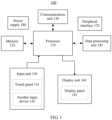
- FIG 1 is a schematic block diagram of a wearable electronic device 100 according to an embodiment of the present invention.
- the wearable electronic device 100 shown in FIG 1 includes: a processor 110, a memory 120, a communications unit 130, an input unit 140, and a data processing unit 150.
- the memory 120 is configured to store software programs and modules of a first operating system and a second operating system.
- the processor 110 is configured to switch the first operating system to the second operating system according to a first operation instruction that is entered by a user and received by the input unit 140.
- the communications unit 130 is configured to receive, by using a first application supported by the second operating system, first information sent by an intelligent terminal, where the first information includes transaction data for completing online payment.
- the processor 110 is further configured to determine, according to a second operation instruction that is entered by the user and received by the input unit 140, that the first information received by the communications unit 130 is correct.
- the data processing unit 150 is configured to perform, by using the second operating system, encryption or signature processing on the first information that is determined to be correct by the processor 110, to obtain second information.
- the communications unit 130 is further configured to send, to the intelligent terminal by using the first application, the second information obtained by the data processing unit 150.
- the processor 110 of the wearable electronic device 100 switches, according to the first operation instruction that is entered by the user and received by the input unit 140, the frequently used first operating system such as an Android system that is stored in the memory 120 to the second operating system that has a security feature and that is stored in the memory 120, and determines, according to the second operation instruction received by the input unit 140, that the first information that is sent by the intelligent terminal and received by the communications unit 130 by using the first application supported by the second operating system is correct.
- the first information includes the transaction data for completing online payment.
- the data processing unit 150 performs, by using the second operating system, encryption or signature processing on the first information that is determined to be correct by the processor 110, to obtain the second information.
- the communications unit 130 sends, to the intelligent terminal by using the first application supported by the second operating system, the second information obtained by the data processing unit 150, so that the intelligent terminal obtains the second information to complete online payment.
- the wearable electronic device performs, by using a second operating system, encryption or signature processing on first information that is used to complete online payment and sent by an intelligent terminal, to obtain second information, and feeds back the second information to the intelligent terminal, so that the intelligent terminal obtains the second information to complete the online payment, thereby resolving a security problem of online payment performed by a user by using an intelligent terminal.
- the security feature of the second operating system is embodied as follows: First, a startup process of the second operating system is secure, that is, step-by-step signature authentication is required during each time of startup, to ensure that the system is not tampered; second, the second operating system has a strict software entry, and a software source of the second operating system is strictly controlled by means of software auditing and code signing, to ensure that no malicious software enters; thirdly, the second operating system provides limited functions and occupies quite small memory space, and therefore, a vulnerability possibility is greatly reduced; fourthly, the second operating system does not run when the first operating system (for example, the frequently used Android system) is running, to ensure that the second operating system suffers no security attack from the first operating system; and fifthly, only this operating system provides an interface for accessing the data processing unit 150, for example, the second operating system may be a simple graphics system.
- the wearable electronic device 100 shown in FIG 1 further includes components such as a display unit 160, a peripheral interface 170, and a power supply 180.
- the components shown in FIG 1 may communicate with each other by using one or more buses.
- a person skilled in the art may understand that a structure of the wearable electronic device 100 shown in FIG 1 does not constitute a limitation on the present invention.
- the structure may be a bus structure, or may be a star structure.
- the wearable electronic device 100 may further include more or fewer components than those shown in the figure, or combine some components, or have different component arrangements.
- the wearable electronic device 100 provided in this embodiment is merely an example, and the wearable electronic device 100 involved in this embodiment of the present invention may have more or fewer components than those shown in FIG 1 , may combine two or more components, or may have different component configurations or settings. Each component may be implemented in hardware, software, or a combination of hardware and software that includes one or more signal processors and/or application-specific integrated circuits.
- the processor 110 is used as a control center of the wearable electronic device, may connect to the components of the entire electronic device by using various interfaces and lines, and execute various functions of the electronic device and/or process data by running or executing a software program and/or a module stored in the memory 120 and by invoking data stored in the memory 120.
- the processor 110 may include an integrated circuit (Integrated Circuit, IC), for example, may include a single packaged IC, or may include multiple packaged ICs having a same function or different functions.
- IC integrated circuit
- the memory 120 may be configured to store a software program and a module, and the processor 110 executes various function applications of the wearable electronic device 100 and processes data by running the software program and the module that are stored in the memory 120.
- the memory 120 may store two operating systems, a first operating system is a frequently used operating system (for example, the Android system), and a second operating system is a simplified operating system (for example, a simplified graphics system).
- the two operating systems cannot be run at the same time, and need to be switched by using a switch (an element in the input unit). When payment is required, the user needs to actively switch the first operating system to the second operating system.
- the memory 120 mainly includes a program storage area and a data storage area.
- the program storage area may store an operating system and an application program required by at least one function, for example, a sound playing program or an image playing program.
- the data storage area may store data (for example, audio data or a phone book) and the like that are created according to use of the electronic device.
- the memory 120 may include a volatile memory such as a nonvolatile random access memory (Nonvolatile Random Access Memory, NVRAM), a phase change random access memory (Phase Change RAM, PRAM), and a magnetoresistive random access memory (Magnetoresistive RAM, MRAM), or may include a nonvolatile memory such as at least one magnetic disk storage device, an electrically erasable programmable read-only memory (Electrically Erasable Programmable Read-Only Memory, EEPROM), and a flash storage device, for example, a NOR flash memory (NOR flash memory) or a NAND flash memory (NAND flash memory).
- NVRAM nonvolatile random access memory
- PRAM Phase Change RAM
- MRAM magnetoresistive random access memory
- MRAM magnetoresistive random access memory
- a nonvolatile memory such as at least one magnetic disk storage device, an electrically erasable programmable read-only memory (Electrically Erasable Programmable Read-Only Memory, EEPROM),
- the communications unit 130 may be configured to establish a communication channel, so that the wearable electronic device 100 connects to a remote server or an intelligent terminal (for example, a mobile phone or a tablet computer) by using the communication channel, sends data to the remote server or the intelligent terminal, and receives data from the remote server or the intelligent terminal.
- a remote server or an intelligent terminal for example, a mobile phone or a tablet computer
- the communications unit 130 may include a module used for wireless communication such as a wireless local area network (Wireless Local Area Network, WLAN) module, a Bluetooth module, a near field communication (Near Field Communication, NFC) module, or a baseband module, and a radio frequency (Radio Frequency, RF) circuit that corresponds to the communications unit and that is used for wireless local area network communication, Bluetooth communication, infrared communication, and/or cellular communications system communication.
- a module used for wireless communication such as a wireless local area network (Wireless Local Area Network, WLAN) module, a Bluetooth module, a near field communication (Near Field Communication, NFC) module, or a baseband module, and a radio frequency (Radio Frequency, RF) circuit that corresponds to the communications unit and that is used for wireless local area network communication, Bluetooth communication, infrared communication, and/or cellular communications system communication.
- the input unit 140 may be configured to implement interaction between the user and the wearable electronic device 100 and/or input of information entered by the user into the wearable electronic device 100.
- the input unit 140 may receive digit or character information that is entered by the user, to generate signal input related to user settings or function control.
- the input unit 140 may include a touch panel 141 and another input device 142.
- the touch panel 141 is also referred to as a touchscreen, may collect a touch operation (for example, an operation of the user on the touch panel 141 or near the touch panel 141 by using any proper object or accessory such as a finger or a stylus) of the user on or near the touch panel 141, and drive a corresponding connecting apparatus according to a preset program.
- the touch panel 141 may include two parts: a touch detection apparatus and a touch controller.
- the touch detection apparatus detects a touch position of the user, detects a signal brought by a touch operation, and transmits the signal to the touch controller.
- the touch controller receives touch information from the touch detection apparatus, converts the touch information into coordinates of a touch point, then sends the coordinates of the touch point to the processor 110, and may receive and execute a command sent by the processor 110.
- the touch panel 141 may be of multiple types such as a resistance type, a capacitance type, an infrared type, or a surface acoustic wave type.
- the input unit 140 may further include the another input device 142.
- the another input device 142 may include but is not limited to one or more of a physical keyboard, a function key (for example, a volume control key or an on/off key), a trackball, a mouse, a joystick, or the like.
- the data processing unit 150 may implement sensitive data storage and secure computing.
- the data processing unit 150 has a built-in CPU, memory (SRAM or Flash), and chip operating system (COS), and may store a key or a digital certificate of the user.
- the data processing unit has a built-in algorithm engine, including a public key algorithm engine, a symmetric algorithm engine, a hash algorithm engine, and a random number generator, to implement data encryption or signature processing.
- the public key algorithm engine is configured to implement public key encryption, and the public key encryption refers to using a private key that needs to be private to an unauthorized user and a public key that may be public to any user.
- the public key is associated with the private key, and both the two keys are unique for a communication session. Data encrypted by using the public key may be decrypted only by using the private key, and data signed by using the private key may be authenticated only by using the public key. Because data needs to be encrypted by using a key and needs to be decrypted by using another key, a public key encryption algorithm is also referred to as an asymmetric algorithm.
- the symmetric algorithm engine is configured to implement symmetric encryption, and a symmetric encryption algorithm refers to using a single private key to encrypt and decrypt data. Because any one having the key may decrypt the data by using the key, it is necessary to prevent the key from being obtained by an unauthorized agent. Because a same key is used for both encryption and decryption, the symmetric encryption algorithm is also referred to as a private key encryption algorithm.
- the hash algorithm engine is configured to implement hash function encryption, and a hash function is sometimes also referred to as a message-digest function, a hash function, or a hash function.
- a hash function is sometimes also referred to as a message-digest function, a hash function, or a hash function.
- Input data may be output as a hash value with a relatively short fixed length. This process is unidirectional, and a reverse operation is difficult to complete. In addition, a probability of generating a same hash value for two different inputs is quite small.
- the random number generator is configured to generate a random number, and may generate a random encryption key during an encryption operation, so that the generated key hardly reappears. This is conducive to security of data transmission.
- the data processing unit 150 may further support a security interface such as a 7816 interface or a serial peripheral interface (Serial Peripheral Interface, SPI), and may also support a chip-level security detection and protection mechanism.
- a security interface such as a 7816 interface or a serial peripheral interface (Serial Peripheral Interface, SPI)
- SPI Serial Peripheral Interface
- the data processing unit 150 may store unique key information, to ensure that only information that is processed by using a key stored in the data processing unit 150 may be accepted by a payment organization.
- the data processing unit 150 may store a corresponding certificate and key of the user in the payment organization, and the certificate of the user is also stored on a platform side of the payment organization, so that it may be ensured, by using a unique correspondence between the certificate and the key, that a transaction is completed by an entity (the wearable electronic device 100) having the key.
- the wearable electronic device 100 further includes the display unit 160 that may be configured to display information entered by the user, information provided for the user, and various menus of the wearable electronic device 100.
- the display unit 160 may include a display panel 161, and optionally, the display panel 161 may be configured in a form of an LCD (Liquid Crystal Display, liquid crystal display), an OLED (Organic Light-Emitting Diode, organic light-emitting diode), or the like.
- the touch panel 141 may cover the display panel 161.
- the touch panel 141 transmits the touch operation to the processor 110, to determine a type of a touch event, and then the processor 110 provides corresponding visual output on the display panel 161 according to the type of the touch event.
- touch panel 141 and the display panel 161 in FIG 1 are used as two independent components to implement input and output functions of the wearable electronic device 100, in some embodiments, the touch panel 141 and the display panel 161 may be integrated to implement the input and output functions of the wearable electronic device 100.
- the wearable electronic device 100 further includes the peripheral interface 170, which is an interface that may be configured to connect an external device and the wearable electronic device 100.
- the external device includes but is not limited to one or more of a keyboard, a mouse, a touchpad, a trackball, a joystick, a game controller, a microphone, a display, a sound box, a power amplifier, or the like.
- the external device connects to the processor 110 of the wearable electronic device 100 by using the peripheral interface 170, and inputs data (for example, digit or character information) into the processor 100 for processing, or reads data from the processor 100 and outputs the data to the external device by using the peripheral interface 170.
- the peripheral interface 170 includes but is not limited to a universal serial bus (Universal Serial Bus, USB) interface, a mini-USB interface, a peripheral component interconnect (Peripheral Component Interconnect, PCI) interface, an IEEE 1394 interface, a video graphics array (Video Graphics Array, VGA) interface, a high definition multimedia interface (High Definition Multimedia Interface, HDMI), and the like, or is any one or combination of the foregoing interfaces.
- USB Universal Serial Bus
- mini-USB interface a peripheral component interconnect (Peripheral Component Interconnect, PCI) interface
- PCI peripheral component interconnect
- IEEE 1394 IEEE 1394
- video graphics array Video Graphics Array
- VGA Video Graphics Array
- HDMI High Definition Multimedia Interface
- the wearable electronic device 100 further includes the power supply 180 that is configured to supply power to the different components of the wearable electronic device 100, to maintain operation of the components.
- the power supply 180 may be a built-in battery such as a common lithium-ion battery or a NiMH battery, or may include an external power supply that directly supplies power to the wearable electronic device 100, for example, an AC adapter.
- the power supply 180 may further include a power management system, a charging system, a power failure detection circuit, a power converter or inverter, a power status indicator (for example, a light emitting diode), and any other components related to electric energy generation, management, and distribution of the electronic device.
- the input unit 140 is further configured to receive the second operation instruction entered by the user, and the second operation instruction is used to indicate that the first information is correct.
- the processor 110 of the wearable electronic device 100 switches the first operating system to the second operating system, and the communications unit 130 receives, by using the first application supported by the second operating system, the first information sent by the intelligent terminal
- the processor 110 determines, according to the second operation instruction that is used to indicate that the first information is correct and that is received by the input unit 140, that the first information is correct.
- the first information includes the transaction data for completing online payment.
- the data processing unit 150 performs, by using the second operating system, encryption or signature processing on the first information that is determined to be correct by the processor 110, to obtain the second information. That is, the first information received by the communications unit 130 may be presented on the wearable electronic device 100. This may ensure authenticity of the first information.
- tampered data may be presented on the display unit 160 of the wearable electronic device 100. If the user finds that the transaction data is incorrect, the user may abandon a payment operation.
- the communications unit 130 is configured to establish a communication connection to the intelligent terminal in a wireless access mode
- the processor 110 is further configured to determine, according to a service request instruction that is sent by the intelligent terminal and received by the communications unit 130, to run the first application supported by the second operating system, and the communications unit 130 is configured to send, to the intelligent terminal, a response message indicating that the first application has already been run.
- the communications unit 130 establishes the communication connection to the intelligent terminal in a wireless access mode. For example, after receiving a search message that is broadcast by the intelligent terminal according to a specified time period and a specified frequency, the wearable electronic device 100 sends a search response message to the intelligent terminal, and the search response message carries a Bluetooth address and clock information of the Bluetooth module of the wearable electronic device 100.
- the user may tap on a screen of the intelligent terminal to establish a connection, and the intelligent terminal sends a Bluetooth address and a Bluetooth clock of the intelligent terminal to the wearable electronic device 100, so that the clock of the wearable electronic device 100 is synchronized with that of the intelligent terminal.
- a Bluetooth communications link between the intelligent terminal and the wearable electronic device 100 is established, and the intelligent terminal randomly generates a PIN number, and sends the PIN number to the wearable electronic device 100.
- the wearable electronic device 100 determines whether PIN numbers of the intelligent terminal and the wearable electronic device 100 are consistent, to verify connection validity.
- a Bluetooth connection is established between the intelligent terminal and the wearable electronic device 100, and data interaction may be performed between the intelligent terminal and the wearable electronic device 100 by using Bluetooth.
- the intelligent terminal After the intelligent terminal establishes the Bluetooth connection to the wearable electronic device 100, the intelligent terminal sends a service request command to the wearable electronic device 100 to obtain a corresponding service.
- the processor 110 of the wearable electronic device 100 determines, according to the service request instruction that is sent by the intelligent terminal and received by the communications unit 130, to run the first application supported by the second operating system, and the communications unit 130 sends, to the intelligent terminal, the response message indicating that the first application has already been run.
- the intelligent terminal sends a service request command to the wearable electronic device 100 to obtain a service of the Industrial and Commercial Bank of China, and according to the service request instruction that is sent by the intelligent terminal and received by the communications unit 130, the processor 110 of the wearable electronic device 100 determines and runs an application of the Industrial and Commercial Bank of China that is supported by the second operating system.
- the communications unit 130 sends, to the intelligent terminal, a response message indicating that the application of the Industrial and Commercial Bank of China has already been run.
- the intelligent terminal may further establish a WiFi connection to the wearable electronic device 100.
- the second operating system may support multiple payment applications. Therefore, the wearable electronic device 100 may determine, from the multiple payment applications and according to the service request instruction sent by the intelligent terminal, an application corresponding to the instruction, and activate the application, so as to receive the first information that includes the transaction data and that is sent by the intelligent terminal.
- the input unit 140 may be further configured to receive the first operation instruction entered by the user, and the first operation instruction is used to switch the first operating system to the second operating system.
- the input unit 140 may receive the first operation instruction that is used to instruct to switch the first operating system to the second operating system.
- the first operation instruction and the second operation instruction may be operation instructions entered in any one of the following manners: voice input, fingerprint input, and keyboard input, that is, may be any one type of: voice instructions, fingerprint instructions, or keyboard instructions.
- the input unit 140 may be a touch panel, or may be another human-computer interaction interface such as a substantive input key or a microphone, or may be another external information collection apparatus such as a camera.
- This embodiment of the present invention sets no limitation thereto.
- the wearable electronic device according to the embodiment of the present invention is described above in detail with reference to FIG 1 , and data processing methods according to embodiments of the present invention are described below in detail with reference to FIG 2 to FIG 6 .
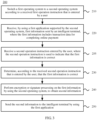
- FIG 2 is a schematic flowchart of a data processing method 200 according to an embodiment of the present invention.
- the method 200 shown in FIG 2 may be executed by a wearable electronic device, and the method 200 includes the following steps.
- the first information sent by the intelligent terminal is received by using the first application supported by the second operating system, and the first information includes the transaction data for completing online payment. It is determined, according to the received second operation instruction that is entered by the user, that the received first information is correct, and then encryption or signature processing is performed on the first information by using the second operating system, to obtain the second information.
- the second operating system of the wearable electronic device may store unique key information, to ensure that only information that is processed by using the key may be accepted by a payment organization.
- the second operating system of the wearable electronic device may store a corresponding certificate and key of the user in the payment organization, and the certificate of the user is also stored on a platform side of the payment organization, so that it may be ensured, by using a unique correspondence between the certificate and the key, that a transaction is completed by an entity (the wearable electronic device) having the key.
- the second information obtained by means of encryption or signature processing is sent to the intelligent terminal by using the first application, so that the intelligent terminal obtains the second information to complete online payment.
- encryption or signature processing is performed, by using a second operating system of a wearable electronic device, on first information that is used to complete online payment and sent by an intelligent terminal, to obtain second information, and the second information is fed back to the intelligent terminal, so that the intelligent terminal obtains the second information to complete the online payment, thereby resolving a security problem of online payment performed by a user by using an intelligent terminal.
- the method 200 further includes the following step:
- the second operation instruction that is entered by the user and used to indicate that the first information is correct may be received, and the first information includes the transaction data for completing online payment. Then, it is determined, according to the received second operation instruction, that the first information is correct. Further, encryption or signature processing is performed on the first information by using the second operating system, to obtain the second information. That is, the received first information may be presented on the wearable electronic device. This may ensure authenticity of the first information. If the transaction data is tampered with by malicious software on the intelligent terminal, tampered data may be presented on a display of the wearable electronic device. If the user finds that the transaction data is incorrect, the user may abandon a payment operation.
- the method 200 further includes the following steps:
- the communication connection to the intelligent terminal may be established in a wireless access mode.
- the intelligent terminal After the intelligent terminal establishes a Bluetooth connection to the wearable electronic device, the intelligent terminal sends a service request command to the wearable electronic device to obtain a corresponding service.
- the wearable electronic device determines, according to the service request instruction sent by the intelligent terminal, to run the first application supported by the second operating system, and sends, to the intelligent terminal, the response message indicating that the first application has already been run.
- the intelligent terminal sends a service request command to the wearable electronic device to obtain a service of the Industrial and Commercial Bank of China, and according to the service request instruction sent by the intelligent terminal, the wearable electronic device determines and runs an application of the Industrial and Commercial Bank of China that is supported by the second operating system, and sends, to the intelligent terminal, a response message indicating that the application of the Industrial and Commercial Bank of China has already been run.
- the intelligent terminal may further establish a WiFi connection to the wearable electronic device.
- the second operating system may support multiple payment applications. Therefore, the wearable electronic device may determine, from the multiple payment applications and according to the service request instruction sent by the intelligent terminal, an application corresponding to the instruction, and activate the application, so as to receive the first information that includes the transaction data and that is sent by the intelligent terminal.
- the method 200 further includes the following step:
- the first operation instruction used to instruct to switch the first operating system to the second operating system may be received before the frequently used first operating system is switched.
- the first operation instruction and the second operation instruction may be any one type of: voice instructions, fingerprint instructions, or keyboard instructions.
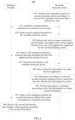
- FIG 6 a schematic interaction diagram, shown in FIG 6 , of a data processing method 600 according to an embodiment of the present invention.
- the method 600 shown in FIG 6 includes the following steps.
- a wearable electronic device switches a first operating system to a second operating system according to a received first operation instruction that is entered by a user.
- the user when determining that an online payment service needs to be performed, the user may enter the first operation instruction into the wearable electronic device, for example, enter an operation instruction into the wearable electronic device in a voice, keyboard, or fingerprint manner.
- the first operation instruction instructs the wearable electronic device to switch the frequently used first operating system such as an Android system to the second operating system having a security feature.
- An intelligent terminal establishes a communication connection to the wearable electronic device in a wireless access mode.
- the intelligent terminal may establish the communication connection to the wearable electronic device in a Bluetooth or WiFi manner.
- the intelligent terminal sends a service request instruction to the wearable electronic device, and the service request instruction is used to instruct the wearable electronic device to provide a related service of the Industrial and Commercial Bank of China.
- the wearable electronic device receives the service request instruction sent by the intelligent terminal, and according to the service request instruction, determines and runs an application of the Industrial and Commercial Bank of China that is supported by the second operating system, so as to provide a related service of the Industrial and Commercial Bank of China.
- the wearable electronic device sends, to the intelligent terminal, a response message indicating that the application of the Industrial and Commercial Bank of China has already been run, and the response message is used to indicate that the wearable electronic device may provide the related service of the Industrial and Commercial Bank of China.
- the intelligent terminal After receiving the response message, the intelligent terminal sends first information to the wearable electronic device, where the first information includes transaction data for completing online payment.
- the wearable electronic device receives, by using a first application supported by the second operating system, the first information sent by the intelligent terminal.
- the wearable electronic device determines, according to a received second operation instruction that is entered by the user, that the first information is correct.
- the wearable electronic device receives, by using the application of the Industrial and Commercial Bank of China, the first information sent by the intelligent terminal, the first information includes the transaction data for completing online payment, and the first information may be displayed on a display of the wearable electronic device.
- the user may enter the second operation instruction into the wearable electronic device, for example, may enter the second operation instruction in a voice, key, or fingerprint manner, to determine that the first information is correct. If the user finds that the transaction data included in the first information is incorrect, the user may abandon a payment operation to avoid a loss.
- the wearable electronic device performs encryption or signature processing on the received first information by using the second operating system, to obtain second information.
- the wearable electronic device sends, to the intelligent terminal, the second information obtained by means of encryption or signature processing.
- the intelligent terminal receives the second information sent by the wearable electronic device, and completes online payment according to the second information.
- the wearable electronic device may perform encryption or signature processing on the received first information by using the second operating system having the security feature, to obtain the second information, so as to ensure that only information that is processed by using a key stored in the second operating system may be accepted by a payment organization.
- the wearable electronic device sends, to the intelligent terminal, the second information obtained by means of encryption or signature processing, and the intelligent terminal receives the second information and sends the second information to a platform of the payment organization.
- the payment organization receives the second information, completes a corresponding payment transaction after verifying that the second information is correct, and may send, to the intelligent terminal, a feedback message that carries information indicating that the transaction is completed.
- encryption or signature processing is performed, by using a second operating system of a wearable electronic device, on first information that is used to complete online payment and sent by an intelligent terminal, to obtain second information, and the second information is fed back to the intelligent terminal, so that the intelligent terminal obtains the second information to complete the online payment, thereby resolving a security problem of online payment performed by a user by using an intelligent terminal.
- the method 200 according to the embodiments of the present invention may be correspondingly executed by the wearable electronic device 100 according to the embodiments of the present invention, and the corresponding procedures of the methods in FIG 2 to FIG 6 are separately implemented by using the foregoing and other operations and/or functions of the modules of the wearable electronic device 100.
- the corresponding procedures of the methods in FIG 2 to FIG 6 are separately implemented by using the foregoing and other operations and/or functions of the modules of the wearable electronic device 100.
- details are not described herein.
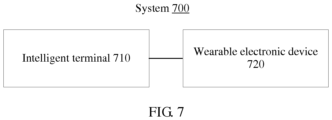
- FIG 7 is a schematic diagram of a data processing system 700 according to an embodiment of the present invention.
- the system 700 shown in FIG 7 includes an intelligent terminal 710 and a wearable electronic device 720.
- the intelligent terminal 710 is configured to send first information to the wearable electronic device 720, where the first information includes transaction data for completing online payment.
- the wearable electronic device 720 is configured to: switch the first operating system to the second operating system according to a received first operation instruction that is entered by a user; receive, by using a first application supported by the second operating system, the first information sent by the intelligent terminal 710; when determining that the first information is correct, perform encryption or signature processing on the first information, to obtain second information; and send the second information to the intelligent terminal 710.
- encryption or signature processing is performed, by using a second operating system of a wearable electronic device, on first information that is used to complete online payment and sent by an intelligent terminal, to obtain second information, and the second information is fed back to the intelligent terminal, so that the intelligent terminal obtains the second information to complete the online payment, thereby resolving a security problem of online payment performed by a user by using an intelligent terminal.
- the wearable electronic device 720 may correspond to the wearable electronic device 100 according to the embodiment of the present invention.
- the wearable electronic device 720 may correspond to the wearable electronic device 100 according to the embodiment of the present invention.
- details are not described herein.
- the intelligent terminal 710 may be further configured to: establish a communication connection to the wearable electronic device 720 in a wireless access mode, and send a service request instruction to the wearable electronic device 720, where the service request instruction is used to instruct the wearable electronic device 720 to determine to run the first application supported by the second operating system; and the wearable electronic device 720 is further configured to: receive the service request instruction sent by the intelligent terminal 710; determine, according to the service request instruction, to run the first application supported by the second operating system; and send, to the intelligent terminal 710, a response message indicating that the first application has already been run.
- the wearable electronic device 720 is further configured to: receive a second operation instruction entered by the user, and determine, according to the second operation instruction, that the first information is correct, where the second operation instruction is used to indicate that the first information is correct.
- the first operation instruction and the second operation instruction are any one type of: voice instructions, fingerprint instructions, or keyboard instructions.
- This embodiment of the present invention sets no limitation thereto.
- the disclosed system, apparatus, and method may be implemented in other manners.
- the described apparatus embodiment is merely an example.
- the unit division is merely logical function division and may be other division in actual implementation.
- multiple units or components may be combined or integrated into another system, or some features may be ignored or not performed.
- the displayed or discussed mutual couplings or direct couplings or communication connections may be implemented through some interfaces.
- the indirect couplings or communication connections between the apparatuses or units may be implemented in electronic, mechanical, or other forms.
- the units described as separate parts may or may not be physically separate, and parts displayed as units may or may not be physical units, may be located in one position, or may be distributed on multiple network units. A part or all of the units may be selected according to actual needs to achieve the objectives of the solutions of the embodiments of the present invention.
- functional units in the embodiments of the present invention may be integrated into one processing unit, or each of the units may exist alone physically, or two or more units are integrated into one unit.
- the integrated unit may be implemented in a form of hardware, or may be implemented in a form of a software functional unit.
- the integrated unit When the integrated unit is implemented in the form of a software functional unit and sold or used as an independent product, the integrated unit may be stored in a computer-readable storage medium. Based on such an understanding, the technical solutions of the present invention essentially, or the part contributing to the prior art, or all or a part of the technical solutions may be implemented in the form of a software product.
- the software product is stored in a storage medium and includes several instructions for instructing a computer device (which may be a personal computer, a server, or a network device) to perform all or a part of the steps of the methods described in the embodiments of the present invention.
- the foregoing storage medium includes: any medium that can store program code, such as a USB flash drive, a removable hard disk, a read-only memory (ROM, Read-Only Memory), a random access memory (RAM, Random Access Memory), a magnetic disk, or an optical disc.
- program code such as a USB flash drive, a removable hard disk, a read-only memory (ROM, Read-Only Memory), a random access memory (RAM, Random Access Memory), a magnetic disk, or an optical disc.
Landscapes
- Business, Economics & Management (AREA)
- Engineering & Computer Science (AREA)
- Accounting & Taxation (AREA)
- General Business, Economics & Management (AREA)
- Strategic Management (AREA)
- Physics & Mathematics (AREA)
- General Physics & Mathematics (AREA)
- Theoretical Computer Science (AREA)
- Computer Networks & Wireless Communication (AREA)
- Finance (AREA)
- Computer Security & Cryptography (AREA)
- User Interface Of Digital Computer (AREA)
- Financial Or Insurance-Related Operations Such As Payment And Settlement (AREA)
- Telephone Function (AREA)
Claims (13)
- Dispositif électronique pouvant être porté (100), comprenant :un processeur (110) ;une mémoire (120) ;une unité de communication (130) ;une unité d'entrée (140) ; etune unité de traitement de données (150), dans lequel la mémoire (120) est configurée pour stocker des programmes logiciels et des modules d'un premier système d'exploitation et d'un second système d'exploitation ;le processeur (110) est configuré pour commuter le premier système d'exploitation sur le second système d'exploitation selon une première instruction d'exploitation qui est entrée par un utilisateur et reçue par l'unité d'entrée (140) ;dans lequel l'unité de communication (130) est configurée pour établir une connexion de communication avec un terminal intelligent dans un mode d'accès sans fil, après commutation du premier système d'exploitation sur le second système d'exploitation,dans lequel le processeur (110) est également configuré pour déterminer, selon une instruction de demande de service qui est envoyée par le terminal intelligent et reçue par l'unité de communication (130), de lancer une première application prise en charge par le second système d'exploitation ; etl'unité de communication (130) est également configurée pour envoyer, au terminal intelligent, un message de réponse indiquant que la première application a déjà été lancée,l'unité de communication (130) est configurée pour recevoir, en utilisant la première application prise en charge par le second système d'exploitation, des premières informations envoyées par le terminal intelligent, dans lequel les premières informations comprennent des données de transaction pour réaliser un paiement en ligne ;le processeur (110) est également configuré pour déterminer, selon une seconde instruction d'exploitation qui est entrée par l'utilisateur et reçue par l'unité d'entrée, que les premières informations reçues par l'unité de communication (130) sont correctes ;l'unité de traitement de données (150) est configurée pour effectuer, en utilisant le second système d'exploitation, un traitement de chiffrement ou de signature sur les premières informations qui sont déterminées comme étant correctes par le processeur (110), pour obtenir des secondes informations ; etl'unité de communication (130) est également configurée pour envoyer, au terminal intelligent en utilisant la première application, les secondes informations obtenues par l'unité de traitement de données (150), de sorte que le terminal intelligent obtient les secondes informations pour réaliser un paiement en ligne,dans lequel le premier système d'exploitation et le second système d'exploitation ne peuvent pas être lancés en même temps.
- Dispositif électronique pouvant être porté (100) selon la revendication 1, dans lequel l'unité d'entrée (140) est également configurée pour recevoir la seconde instruction d'exploitation entrée par l'utilisateur, et la seconde instruction d'exploitation est utilisée pour indiquer que les premières informations sont correctes.
- Dispositif électronique pouvant être porté (100) selon la revendication 1 ou la revendication 2, dans lequel la première instruction d'exploitation est utilisée pour commuter le premier système d'exploitation sur le second système d'exploitation.
- Dispositif électronique pouvant être porté (100) selon l'une quelconque des revendications 1 à 3, dans lequel la première instruction d'exploitation et la seconde instruction d'exploitation sont d'un type quelconque parmi : des instructions vocales, des instructions d'empreintes digitales ou des instructions de clavier.
- Procédé de traitement de données (200), exécuté par un dispositif pouvant être porté selon l'une quelconque des revendications 1 à 4, comprenant :la commutation (210) d'un premier système d'exploitation sur un second système d'exploitation selon une première instruction d'exploitation reçue qui est entrée par un utilisateur ;la réception, en utilisant une première application prise en charge par le second système d'exploitation, de premières informations (220) envoyées par un terminal intelligent, dans lequel les premières informations comprennent des données de transaction pour réaliser un paiement en ligne ;la détermination (230), en fonction d'une seconde instruction d'exploitation reçue qui est entrée par l'utilisateur, que les premières informations sont correctes ;la réalisation (240) d'un traitement de chiffrement ou de signature sur les premières informations en utilisant le second système d'exploitation, pour obtenir des secondes informations ; etl'envoi (250) des secondes informations au terminal intelligent en utilisant la première application, de sorte que le terminal intelligent obtient les secondes informations pour réaliser un paiement en ligne,dans lequel avant la réception, en utilisant une première application prise en charge par le second système d'exploitation, de premières informations envoyées par un terminal intelligent, le procédé comprend également :l'établissement (260) d'une connexion de communication (260) avec le terminal intelligent dans un mode d'accès sans fil ;la détermination (265), selon une instruction de demande de service envoyée par le terminal intelligent, de lancer la première application prise en charge par le second système d'exploitation (265) ; etl'envoi (270), au terminal intelligent, d'un message de réponse indiquant que la première application a déjà été lancée (270),dans lequel le premier système d'exploitation et le second système d'exploitation ne peuvent pas être lancés en même temps.
- Procédé (200) selon la revendication 5, dans lequel avant la détermination (230), selon une seconde instruction d'exploitation reçue qui est entrée par l'utilisateur, que les premières informations sont correctes, le procédé comprend également :
la réception de la seconde instruction d'exploitation (255), dans lequel la seconde instruction d'exploitation est utilisée pour indiquer que les premières informations sont correctes. - Procédé selon la revendication 5 ou la revendication 6, dans lequel avant la commutation d'un premier système d'exploitation sur un second système d'exploitation selon une première instruction d'exploitation reçue qui est entrée par un utilisateur, le procédé comprend également :
la réception de la première instruction d'exploitation entrée par l'utilisateur, dans lequel la première instruction d'exploitation est utilisée pour commuter le premier système d'exploitation sur le second système d'exploitation (275). - Procédé selon l'une quelconque des revendications 5 à 7, dans lequel la première instruction d'exploitation et la seconde instruction d'exploitation sont d'un type quelconque parmi : des instructions vocales, des instructions d'empreintes digitales ou des instructions de clavier.
- Système de traitement de données (700), comprenant un terminal intelligent (710) et un dispositif électronique pouvant être porté (720) selon le dispositif pouvant être porté selon l'une quelconque des revendications 1 à 4, dans lequelle terminal intelligent (710) est configuré pour envoyer des premières informations au dispositif électronique pouvant être porté, dans lequel les premières informations comprennent des données de transaction pour réaliser un paiement en ligne ; et le dispositif électronique pouvant être porté (720) est configuré pour : commuter un premier système d'exploitation sur un second système d'exploitation selon une première instruction d'exploitation reçue qui est entrée par un utilisateur ;dans lequel le terminal intelligent (710) est également configuré pour établir une connexion de communication avec le dispositif électronique pouvant être porté (720) dans un mode d'accès sans fil, après que le premier système d'exploitation est commuté sur le second système d'exploitation ; envoyer une instruction de demande de service au dispositif électronique pouvant être porté (720), dans lequel l'instruction de demande de service est utilisée pour ordonner au dispositif électronique pouvant être porté (720) de déterminer de lancer la première application prise en charge par le second système d'exploitation ; etle dispositif électronique pouvant être porté (720) est également configuré pour : recevoir l'instruction de demande de service ; déterminer, selon l'instruction de demande de service, de lancer une première application prise en charge par le second système d'exploitation ; et envoyer, au terminal intelligent (710), un message de réponse indiquant que la première application a déjà été lancée,dans lequel le dispositif électronique pouvant être porté (720) est également configuré pour recevoir, en utilisant la première application prise en charge par le second système d'exploitation, les premières informations envoyées par le terminal intelligent ; lorsqu'il est déterminé que les premières informations sont correctes, effectuer un traitement de chiffrement ou de signature sur les premières informations, pour obtenir des secondes informations ; et envoyer les secondes informations au terminal intelligent, de sorte que le terminal intelligent obtient les secondes informations pour réaliser un paiement en ligne,dans lequel le premier système d'exploitation et le second système d'exploitation ne peuvent pas être lancés en même temps.
- Système (700) selon la revendication 9, dans lequel le dispositif électronique pouvant être porté (720) est également configuré pour : recevoir une seconde instruction d'exploitation entrée par l'utilisateur, et déterminer, selon la seconde instruction d'exploitation, que les premières informations sont correctes, dans lequel la seconde instruction d'exploitation est utilisée pour indiquer que les premières informations sont correctes.
- Système (700) selon la revendication 9 ou la revendication 10, dans lequel la première instruction d'exploitation et la seconde instruction d'exploitation sont d'un type quelconque parmi : des instructions vocales, des instructions d'empreintes digitales ou des instructions de clavier.
- Support de stockage lisible par ordinateur comportant des instructions qui, lorsqu'elles sont exécutées par un dispositif pouvant être porté selon l'une quelconque des revendications 1 à 4, amènent le dispositif pouvant être porté à mettre en œuvre le procédé selon l'une quelconque des revendications 5 à 8.
- Produit de programme informatique comportant des instructions qui, lorsqu'elles sont exécutées par un dispositif pouvant être porté selon l'une quelconque des revendications 1 à 4, amènent le dispositif pouvant être porté à mettre en œuvre le procédé selon l'une quelconque des revendications 5 à 8.
Applications Claiming Priority (2)
| Application Number | Priority Date | Filing Date | Title |
|---|---|---|---|
| CN201510502465.1A CN106611310B (zh) | 2015-08-14 | 2015-08-14 | 数据处理的方法、穿戴式电子设备和系统 |
| PCT/CN2016/094157 WO2017028711A1 (fr) | 2015-08-14 | 2016-08-09 | Procédé pour traiter des données, équipement électronique pouvant être porté et système |
Publications (3)
| Publication Number | Publication Date |
|---|---|
| EP3319032A1 EP3319032A1 (fr) | 2018-05-09 |
| EP3319032A4 EP3319032A4 (fr) | 2018-07-18 |
| EP3319032B1 true EP3319032B1 (fr) | 2025-03-05 |
Family
ID=58050423
Family Applications (1)
| Application Number | Title | Priority Date | Filing Date |
|---|---|---|---|
| EP16836575.7A Active EP3319032B1 (fr) | 2015-08-14 | 2016-08-09 | Procédé pour traiter des données, équipement électronique pouvant être porté et système |
Country Status (7)
| Country | Link |
|---|---|
| US (1) | US20180240109A1 (fr) |
| EP (1) | EP3319032B1 (fr) |
| JP (1) | JP6552714B2 (fr) |
| KR (1) | KR102061483B1 (fr) |
| CN (1) | CN106611310B (fr) |
| MY (1) | MY201209A (fr) |
| WO (1) | WO2017028711A1 (fr) |
Families Citing this family (12)
| Publication number | Priority date | Publication date | Assignee | Title |
|---|---|---|---|---|
| WO2019037084A1 (fr) * | 2017-08-25 | 2019-02-28 | 深圳传音通讯有限公司 | Procédé de permutation de deux systèmes, terminal mobile et support d'informations lisible par ordinateur |
| CN108280020B (zh) * | 2018-01-23 | 2021-09-14 | 广州视源电子科技股份有限公司 | 计算机设备的监控方法、装置、终端及计算机存储介质 |
| JP6887171B2 (ja) * | 2019-07-07 | 2021-06-16 | 株式会社オーガスタス | 電子決済対応型サービス提供システム、電子決済代行型サービス提供システムおよびシステム組合せ体 |
| CN113542483B (zh) * | 2020-03-30 | 2022-03-18 | Oppo广东移动通信有限公司 | 数据传输方法和装置、可穿戴设备及存储介质 |
| CN114124165B (zh) * | 2020-08-31 | 2022-12-30 | 华为技术有限公司 | 用于蓝牙通信的方法和电子设备 |
| CN114528246B (zh) * | 2020-11-23 | 2025-10-31 | 深圳比特微电子科技有限公司 | 运算核电路和计算芯片 |
| CN114691219A (zh) * | 2020-12-31 | 2022-07-01 | 成都鼎桥通信技术有限公司 | 系统切换方法、装置、穿戴设备及用户终端 |
| CN114765759B (zh) * | 2021-01-11 | 2025-09-05 | Oppo广东移动通信有限公司 | 网络数据处理方法、装置、电子设备 |
| CN115226048B (zh) * | 2021-04-14 | 2024-06-11 | Oppo广东移动通信有限公司 | 数据传输方法、装置、设备及存储介质 |
| CN115202440B (zh) * | 2021-04-14 | 2026-04-10 | Oppo广东移动通信有限公司 | 数据传输方法、装置、设备及存储介质 |
| CN114153564B (zh) * | 2021-12-07 | 2024-04-26 | 北京字节跳动网络技术有限公司 | 多系统中近场通信单元访问方法及装置、电子设备、存储介质 |
| CN115022817A (zh) * | 2022-05-30 | 2022-09-06 | 无锡富华物联科技有限公司 | 一种离线耳标数据传输方法、系统及终端 |
Family Cites Families (13)
| Publication number | Priority date | Publication date | Assignee | Title |
|---|---|---|---|---|
| JP2000099609A (ja) * | 1998-09-28 | 2000-04-07 | Brother Ind Ltd | 携帯型パーソナル電子機器 |
| JP2009205234A (ja) * | 2008-02-26 | 2009-09-10 | Dainippon Printing Co Ltd | 電子決済システム、およびその方法、プログラム、媒体 |
| CN101739622A (zh) * | 2008-11-06 | 2010-06-16 | 同方股份有限公司 | 一种可信支付计算机系统 |
| CN102402820B (zh) * | 2010-09-13 | 2014-06-11 | 中国移动通信有限公司 | 电子交易方法及终端设备 |
| JPWO2012066653A1 (ja) * | 2010-11-17 | 2014-05-12 | 順子 杉中 | 電子取引システム、電子取引が可能な情報処理端末、電子取引用の管理サーバ、及び電子取引が可能なレジ端末 |
| US20130054473A1 (en) * | 2011-08-23 | 2013-02-28 | Htc Corporation | Secure Payment Method, Mobile Device and Secure Payment System |
| EP2798594A4 (fr) * | 2011-12-29 | 2015-07-01 | Intel Corp | Point de vente virtuel |
| US10223710B2 (en) * | 2013-01-04 | 2019-03-05 | Visa International Service Association | Wearable intelligent vision device apparatuses, methods and systems |
| CN102982445A (zh) * | 2012-11-16 | 2013-03-20 | 江苏乐买到网络科技有限公司 | 一种实现网络安全交易和支付的客户端系统 |
| CN104732391A (zh) * | 2013-12-24 | 2015-06-24 | 中国银联股份有限公司 | 使用虚拟卡的支付终端、支付后台和支付方法 |
| CN104143065A (zh) * | 2014-08-28 | 2014-11-12 | 北京握奇智能科技有限公司 | 安全智能终端设备、及信息处理方法 |
| CN104156657B (zh) * | 2014-09-01 | 2018-04-10 | 宇龙计算机通信科技(深圳)有限公司 | 终端的信息输入方法、终端的信息输入装置和终端 |
| CN104240077B (zh) * | 2014-09-03 | 2018-09-28 | 萧东 | 一种基于短距离无线通信技术的编码加密器 |
-
2015
- 2015-08-14 CN CN201510502465.1A patent/CN106611310B/zh active Active
-
2016
- 2016-08-09 WO PCT/CN2016/094157 patent/WO2017028711A1/fr not_active Ceased
- 2016-08-09 KR KR1020187005539A patent/KR102061483B1/ko not_active Expired - Fee Related
- 2016-08-09 US US15/751,785 patent/US20180240109A1/en not_active Abandoned
- 2016-08-09 EP EP16836575.7A patent/EP3319032B1/fr active Active
- 2016-08-09 JP JP2018504736A patent/JP6552714B2/ja not_active Expired - Fee Related
- 2016-08-09 MY MYPI2018700404A patent/MY201209A/en unknown
Also Published As
| Publication number | Publication date |
|---|---|
| EP3319032A4 (fr) | 2018-07-18 |
| CN106611310A (zh) | 2017-05-03 |
| US20180240109A1 (en) | 2018-08-23 |
| KR102061483B1 (ko) | 2020-01-02 |
| CN106611310B (zh) | 2020-12-08 |
| KR20180034563A (ko) | 2018-04-04 |
| JP2018530036A (ja) | 2018-10-11 |
| JP6552714B2 (ja) | 2019-07-31 |
| EP3319032A1 (fr) | 2018-05-09 |
| WO2017028711A1 (fr) | 2017-02-23 |
| MY201209A (en) | 2024-02-09 |
Similar Documents
| Publication | Publication Date | Title |
|---|---|---|
| EP3319032B1 (fr) | Procédé pour traiter des données, équipement électronique pouvant être porté et système | |
| US10601795B2 (en) | Service processing method and electronic device | |
| US10880097B2 (en) | Flexible provisioning of attestation keys in secure enclaves | |
| US11488234B2 (en) | Method, apparatus, and system for processing order information | |
| KR102929039B1 (ko) | 블록체인 기반 시스템을 위한 키의 저장 및 복구 방법과 그 장치 | |
| ES2687191T3 (es) | Método de autentificación de red para transacciones electrónicas seguras | |
| WO2021022701A1 (fr) | Procédé et appareil de transmission d'informations, terminal client, serveur et support d'informations | |
| CN104954126B (zh) | 敏感操作验证方法、装置及系统 | |
| CN107464109B (zh) | 可信移动支付装置、系统和方法 | |
| JP5808482B2 (ja) | ユーザ端末及び支払いシステム | |
| CN104579668B (zh) | 一种用户身份的验证方法和密码保护装置及验证系统 | |
| US20120303964A1 (en) | Portable terminal, and method for securing data transmitted between hardware modules | |
| CN106845177A (zh) | 密码管理方法及系统 | |
| WO2017206833A1 (fr) | Procédé, appareil et serveur de paiement | |
| CN104866129A (zh) | 计算设备及其密码输入方法 | |
| CN107562689A (zh) | 一种系统级芯片和终端 | |
| CN102685073A (zh) | 安全支付方法和移动终端 | |
| CN113032753A (zh) | 身份验证的方法及装置 | |
| US20130073840A1 (en) | Apparatus and method for generating and managing an encryption key | |
| CN106411520B (zh) | 一种虚拟资源数据的处理方法、装置及系统 | |
| US12537668B2 (en) | Authentication mechanism for computational storage download program | |
| CN118972166B (zh) | 用于集成系统的数据安全共享方法、系统、设备及产品 | |
| KR20130041033A (ko) | 휴대용 단말의 암호화 키 생성 및 관리 방법 및 그 장치 | |
| CN108476225B (zh) | 密码检测方法、装置及终端 | |
| CN106131825A (zh) | 一种通信方法、终端及通信系统 |
Legal Events
| Date | Code | Title | Description |
|---|---|---|---|
| STAA | Information on the status of an ep patent application or granted ep patent |
Free format text: STATUS: THE INTERNATIONAL PUBLICATION HAS BEEN MADE |
|
| PUAI | Public reference made under article 153(3) epc to a published international application that has entered the european phase |
Free format text: ORIGINAL CODE: 0009012 |
|
| STAA | Information on the status of an ep patent application or granted ep patent |
Free format text: STATUS: REQUEST FOR EXAMINATION WAS MADE |
|
| 17P | Request for examination filed |
Effective date: 20180201 |
|
| AK | Designated contracting states |
Kind code of ref document: A1 Designated state(s): AL AT BE BG CH CY CZ DE DK EE ES FI FR GB GR HR HU IE IS IT LI LT LU LV MC MK MT NL NO PL PT RO RS SE SI SK SM TR |
|
| AX | Request for extension of the european patent |
Extension state: BA ME |
|
| A4 | Supplementary search report drawn up and despatched |
Effective date: 20180615 |
|
| RIC1 | Information provided on ipc code assigned before grant |
Ipc: G06Q 20/38 20120101AFI20180611BHEP Ipc: H04B 5/00 20060101ALI20180611BHEP Ipc: G06Q 20/16 20120101ALI20180611BHEP Ipc: G06Q 20/32 20120101ALI20180611BHEP |
|
| DAV | Request for validation of the european patent (deleted) | ||
| DAX | Request for extension of the european patent (deleted) | ||
| STAA | Information on the status of an ep patent application or granted ep patent |
Free format text: STATUS: EXAMINATION IS IN PROGRESS |
|
| 17Q | First examination report despatched |
Effective date: 20210311 |
|
| GRAP | Despatch of communication of intention to grant a patent |
Free format text: ORIGINAL CODE: EPIDOSNIGR1 |
|
| STAA | Information on the status of an ep patent application or granted ep patent |
Free format text: STATUS: GRANT OF PATENT IS INTENDED |
|
| INTG | Intention to grant announced |
Effective date: 20241029 |
|
| GRAS | Grant fee paid |
Free format text: ORIGINAL CODE: EPIDOSNIGR3 |
|
| GRAA | (expected) grant |
Free format text: ORIGINAL CODE: 0009210 |
|
| STAA | Information on the status of an ep patent application or granted ep patent |
Free format text: STATUS: THE PATENT HAS BEEN GRANTED |
|
| AK | Designated contracting states |
Kind code of ref document: B1 Designated state(s): AL AT BE BG CH CY CZ DE DK EE ES FI FR GB GR HR HU IE IS IT LI LT LU LV MC MK MT NL NO PL PT RO RS SE SI SK SM TR |
|
| REG | Reference to a national code |
Ref country code: GB Ref legal event code: FG4D |
|
| REG | Reference to a national code |
Ref country code: CH Ref legal event code: EP |
|
| REG | Reference to a national code |
Ref country code: DE Ref legal event code: R096 Ref document number: 602016091465 Country of ref document: DE |
|
| REG | Reference to a national code |
Ref country code: IE Ref legal event code: FG4D |
|
| PG25 | Lapsed in a contracting state [announced via postgrant information from national office to epo] |
Ref country code: RS Free format text: LAPSE BECAUSE OF FAILURE TO SUBMIT A TRANSLATION OF THE DESCRIPTION OR TO PAY THE FEE WITHIN THE PRESCRIBED TIME-LIMIT Effective date: 20250605 |
|
| PG25 | Lapsed in a contracting state [announced via postgrant information from national office to epo] |
Ref country code: FI Free format text: LAPSE BECAUSE OF FAILURE TO SUBMIT A TRANSLATION OF THE DESCRIPTION OR TO PAY THE FEE WITHIN THE PRESCRIBED TIME-LIMIT Effective date: 20250305 |
|
| REG | Reference to a national code |
Ref country code: NL Ref legal event code: MP Effective date: 20250305 |
|
| PG25 | Lapsed in a contracting state [announced via postgrant information from national office to epo] |
Ref country code: ES Free format text: LAPSE BECAUSE OF FAILURE TO SUBMIT A TRANSLATION OF THE DESCRIPTION OR TO PAY THE FEE WITHIN THE PRESCRIBED TIME-LIMIT Effective date: 20250305 |
|
| REG | Reference to a national code |
Ref country code: LT Ref legal event code: MG9D |
|
| PG25 | Lapsed in a contracting state [announced via postgrant information from national office to epo] |
Ref country code: NO Free format text: LAPSE BECAUSE OF FAILURE TO SUBMIT A TRANSLATION OF THE DESCRIPTION OR TO PAY THE FEE WITHIN THE PRESCRIBED TIME-LIMIT Effective date: 20250605 |
|
| PG25 | Lapsed in a contracting state [announced via postgrant information from national office to epo] |
Ref country code: HR Free format text: LAPSE BECAUSE OF FAILURE TO SUBMIT A TRANSLATION OF THE DESCRIPTION OR TO PAY THE FEE WITHIN THE PRESCRIBED TIME-LIMIT Effective date: 20250305 |
|
| PG25 | Lapsed in a contracting state [announced via postgrant information from national office to epo] |
Ref country code: LV Free format text: LAPSE BECAUSE OF FAILURE TO SUBMIT A TRANSLATION OF THE DESCRIPTION OR TO PAY THE FEE WITHIN THE PRESCRIBED TIME-LIMIT Effective date: 20250305 |
|
| PG25 | Lapsed in a contracting state [announced via postgrant information from national office to epo] |
Ref country code: GR Free format text: LAPSE BECAUSE OF FAILURE TO SUBMIT A TRANSLATION OF THE DESCRIPTION OR TO PAY THE FEE WITHIN THE PRESCRIBED TIME-LIMIT Effective date: 20250606 Ref country code: BG Free format text: LAPSE BECAUSE OF FAILURE TO SUBMIT A TRANSLATION OF THE DESCRIPTION OR TO PAY THE FEE WITHIN THE PRESCRIBED TIME-LIMIT Effective date: 20250305 |
|
| REG | Reference to a national code |
Ref country code: AT Ref legal event code: MK05 Ref document number: 1773622 Country of ref document: AT Kind code of ref document: T Effective date: 20250305 |
|
| PG25 | Lapsed in a contracting state [announced via postgrant information from national office to epo] |
Ref country code: NL Free format text: LAPSE BECAUSE OF FAILURE TO SUBMIT A TRANSLATION OF THE DESCRIPTION OR TO PAY THE FEE WITHIN THE PRESCRIBED TIME-LIMIT Effective date: 20250305 |
|
| PG25 | Lapsed in a contracting state [announced via postgrant information from national office to epo] |
Ref country code: SE Free format text: LAPSE BECAUSE OF FAILURE TO SUBMIT A TRANSLATION OF THE DESCRIPTION OR TO PAY THE FEE WITHIN THE PRESCRIBED TIME-LIMIT Effective date: 20250305 |
|
| PG25 | Lapsed in a contracting state [announced via postgrant information from national office to epo] |
Ref country code: SM Free format text: LAPSE BECAUSE OF FAILURE TO SUBMIT A TRANSLATION OF THE DESCRIPTION OR TO PAY THE FEE WITHIN THE PRESCRIBED TIME-LIMIT Effective date: 20250305 |
|
| PG25 | Lapsed in a contracting state [announced via postgrant information from national office to epo] |
Ref country code: PT Free format text: LAPSE BECAUSE OF FAILURE TO SUBMIT A TRANSLATION OF THE DESCRIPTION OR TO PAY THE FEE WITHIN THE PRESCRIBED TIME-LIMIT Effective date: 20250707 |
|
| PGFP | Annual fee paid to national office [announced via postgrant information from national office to epo] |
Ref country code: DE Payment date: 20250702 Year of fee payment: 10 |
|
| PG25 | Lapsed in a contracting state [announced via postgrant information from national office to epo] |
Ref country code: PL Free format text: LAPSE BECAUSE OF FAILURE TO SUBMIT A TRANSLATION OF THE DESCRIPTION OR TO PAY THE FEE WITHIN THE PRESCRIBED TIME-LIMIT Effective date: 20250305 Ref country code: IT Free format text: LAPSE BECAUSE OF FAILURE TO SUBMIT A TRANSLATION OF THE DESCRIPTION OR TO PAY THE FEE WITHIN THE PRESCRIBED TIME-LIMIT Effective date: 20250305 |
|
| PGFP | Annual fee paid to national office [announced via postgrant information from national office to epo] |
Ref country code: GB Payment date: 20250703 Year of fee payment: 10 |
|
| PG25 | Lapsed in a contracting state [announced via postgrant information from national office to epo] |
Ref country code: AT Free format text: LAPSE BECAUSE OF FAILURE TO SUBMIT A TRANSLATION OF THE DESCRIPTION OR TO PAY THE FEE WITHIN THE PRESCRIBED TIME-LIMIT Effective date: 20250305 |
|
| PGFP | Annual fee paid to national office [announced via postgrant information from national office to epo] |
Ref country code: FR Payment date: 20250703 Year of fee payment: 10 |
|
| PG25 | Lapsed in a contracting state [announced via postgrant information from national office to epo] |
Ref country code: EE Free format text: LAPSE BECAUSE OF FAILURE TO SUBMIT A TRANSLATION OF THE DESCRIPTION OR TO PAY THE FEE WITHIN THE PRESCRIBED TIME-LIMIT Effective date: 20250305 Ref country code: CZ Free format text: LAPSE BECAUSE OF FAILURE TO SUBMIT A TRANSLATION OF THE DESCRIPTION OR TO PAY THE FEE WITHIN THE PRESCRIBED TIME-LIMIT Effective date: 20250305 |
|
| PG25 | Lapsed in a contracting state [announced via postgrant information from national office to epo] |
Ref country code: RO Free format text: LAPSE BECAUSE OF FAILURE TO SUBMIT A TRANSLATION OF THE DESCRIPTION OR TO PAY THE FEE WITHIN THE PRESCRIBED TIME-LIMIT Effective date: 20250305 |
|
| PG25 | Lapsed in a contracting state [announced via postgrant information from national office to epo] |
Ref country code: SK Free format text: LAPSE BECAUSE OF FAILURE TO SUBMIT A TRANSLATION OF THE DESCRIPTION OR TO PAY THE FEE WITHIN THE PRESCRIBED TIME-LIMIT Effective date: 20250305 |
|
| PG25 | Lapsed in a contracting state [announced via postgrant information from national office to epo] |
Ref country code: IS Free format text: LAPSE BECAUSE OF FAILURE TO SUBMIT A TRANSLATION OF THE DESCRIPTION OR TO PAY THE FEE WITHIN THE PRESCRIBED TIME-LIMIT Effective date: 20250705 |
|
| REG | Reference to a national code |
Ref country code: DE Ref legal event code: R097 Ref document number: 602016091465 Country of ref document: DE |
|
| PLBE | No opposition filed within time limit |
Free format text: ORIGINAL CODE: 0009261 |
|
| STAA | Information on the status of an ep patent application or granted ep patent |
Free format text: STATUS: NO OPPOSITION FILED WITHIN TIME LIMIT |
|
| PG25 | Lapsed in a contracting state [announced via postgrant information from national office to epo] |
Ref country code: DK Free format text: LAPSE BECAUSE OF FAILURE TO SUBMIT A TRANSLATION OF THE DESCRIPTION OR TO PAY THE FEE WITHIN THE PRESCRIBED TIME-LIMIT Effective date: 20250305 |
|
| REG | Reference to a national code |
Ref country code: CH Ref legal event code: L10 Free format text: ST27 STATUS EVENT CODE: U-0-0-L10-L00 (AS PROVIDED BY THE NATIONAL OFFICE) Effective date: 20260114 |
|
| 26N | No opposition filed |
Effective date: 20251208 |
|
| REG | Reference to a national code |
Ref country code: CH Ref legal event code: H13 Free format text: ST27 STATUS EVENT CODE: U-0-0-H10-H13 (AS PROVIDED BY THE NATIONAL OFFICE) Effective date: 20260324 |
|
| PG25 | Lapsed in a contracting state [announced via postgrant information from national office to epo] |
Ref country code: MC Free format text: LAPSE BECAUSE OF FAILURE TO SUBMIT A TRANSLATION OF THE DESCRIPTION OR TO PAY THE FEE WITHIN THE PRESCRIBED TIME-LIMIT Effective date: 20250305 |
|
| PG25 | Lapsed in a contracting state [announced via postgrant information from national office to epo] |
Ref country code: LU Free format text: LAPSE BECAUSE OF NON-PAYMENT OF DUE FEES Effective date: 20250809 |
|
| PG25 | Lapsed in a contracting state [announced via postgrant information from national office to epo] |
Ref country code: CH Free format text: LAPSE BECAUSE OF NON-PAYMENT OF DUE FEES Effective date: 20250831 |