EP3320134B1 - Prévision de l'apparence d'une surface textile - Google Patents
Prévision de l'apparence d'une surface textile Download PDFInfo
- Publication number
- EP3320134B1 EP3320134B1 EP16775449.8A EP16775449A EP3320134B1 EP 3320134 B1 EP3320134 B1 EP 3320134B1 EP 16775449 A EP16775449 A EP 16775449A EP 3320134 B1 EP3320134 B1 EP 3320134B1
- Authority
- EP
- European Patent Office
- Prior art keywords
- image
- yarn
- textile surface
- data
- parameter
- Prior art date
- Legal status (The legal status is an assumption and is not a legal conclusion. Google has not performed a legal analysis and makes no representation as to the accuracy of the status listed.)
- Active
Links
Images




Classifications
-
- D—TEXTILES; PAPER
- D04—BRAIDING; LACE-MAKING; KNITTING; TRIMMINGS; NON-WOVEN FABRICS
- D04B—KNITTING
- D04B37/00—Auxiliary apparatus or devices for use with knitting machines
-
- G—PHYSICS
- G01—MEASURING; TESTING
- G01N—INVESTIGATING OR ANALYSING MATERIALS BY DETERMINING THEIR CHEMICAL OR PHYSICAL PROPERTIES
- G01N33/00—Investigating or analysing materials by specific methods not covered by groups G01N1/00 - G01N31/00
- G01N33/36—Textiles
- G01N33/365—Filiform textiles, e.g. yarns
-
- G—PHYSICS
- G06—COMPUTING OR CALCULATING; COUNTING
- G06T—IMAGE DATA PROCESSING OR GENERATION, IN GENERAL
- G06T11/00—Two-dimensional [2D] image generation
- G06T11/10—Texturing; Colouring; Generation of textures or colours
Definitions
- the present invention is in the field of textile quality control. It relates to a method for predicting the appearance of a textile surface to be produced from a given yarn, according to the preamble of the first claim. It also relates to an image database of image data sets for use in the inventive method, according to the preamble of another independent claim. Furthermore, the invention relates to a method for generating the inventive image database, according to the preamble of another independent claim.
- each simulation is based on a measured length of yarn of finite length, that is to say on a particular sample which does not need to be ideal. Depending on the sample, the simulations may vary, even if they are based on samples of the same yarn type.
- the US 6,510,734 B1 suggests to output two simulations for comparison: one starting from the given real yarn and one starting from an image yarn.
- the parameters of the image yarn needed for the simulation are obtained by measuring a really existing image yarn or by calculating from given statistical values. In the latter case, at least the second disadvantage mentioned above could be eliminated, the first not.
- an image of a stretched yarn is taken and divided into sections.
- the image sections are then converted by image processing into the shape of a knit stitch. From the knit stitch thus obtained, an image of a knitted fabric is produced and output.
- EP-0'568'700 A1 is concerned with a system for the design of knitwear and with a method for producing knit data therefor. It mentions the storage of image information indicating a mesh structure.
- EP-1'445'714 A1 describes a method and an apparatus for knitting. She teaches to take several pictures of existing knits and to assemble them by image processing. The synthetic composite image is output on a screen.
- the WO-2009/039668 A1 deals with a system and method for designing knitted objects.
- images of yarns made from different yarns are issued on a screen from which the user can select one.
- a method and an apparatus for testing yarn in the textile laboratory are, for. B. from the US-2008/0209998 A1 known.
- This device operates on the continuous principle, ie the yarn to be tested is withdrawn from a yarn package in a single pass and passes through an array of sensors in the apparatus in a serial fashion to measure the parameters to be determined.
- the evaluation of the sensor signals is generally carried out in a control and evaluation unit connected to the device, which can be designed as a workstation.
- At least one parameter value of yarn can be determined.
- the invention is based on the idea of previously producing a textile surface from an image yarn.
- An image database of image data sets is generated, wherein each image data set includes an image of the textile surface and an image vector of metadata associated with the image.
- a Gamvector is formed from input data relating to the given yarn. Due to distances between the yarn vector and the image vectors, a matching image is selected from the database and spent. The image is selected for output whose metadata comes closest to the input data. For which metadata this applies, it is determined by means of a suitably defined metric.
- textile surface here all the flat structures are summarized, which can be produced from at least one yarn.
- textile surfaces are woven, knitted fabrics, knitted fabrics, but also Gamschautafeln.
- the method according to the invention serves to predict the appearance of a textile surface to be produced from a given yarn.
- An image database of image data sets is provided, in which image database each image data set contains an image of a textile surface produced from at least one image yarn and a metadata group associated with the image.
- Each of the metadata groups includes a first set of data that forms an image vector in a vector space. On the vector space, a metric is defined, which assigns a distance to each of two vectors of the vector space.
- An input data group relating, at least in part, to the given yarn is formed, which includes a second set of data, which data forms a Gam vector in the same vector space. Distances between the yarn vector on the one hand and the image vectors on the other hand are determined and compared with each other. Due to the comparison, an image data set, and preferably exactly one image data set, is selected from the image database, and the image contained in the selected image data set is output.
- data group in the present specification does not necessarily signify a plurality of data.
- a data group may or may not consist of a single character or symbol.
- n-dimensional vector space R n over the set R of real numbers whose dimension n is a natural number greater than or equal to one.
- the natural number n is the power of the first and second sets of data.
- the image vector and the Yarn vectors are of the same dimension n and consist of mutually corresponding components that relate to the same property. So z.
- a first component of the image vector refers to a coefficient of variation of the yarn mass of the image yarn and a first component of the yarn vector to a coefficient of variation of the yarn mass of the given yarn, etc.
- the input data group and / or the metadata groups may include data relating to at least one of the following: at least one parameter value of a yarn parameter of the given yarn or image yarn, raw material used for the production of the given yarn or image yarn, production of the given one Yarn or picture yarn, production of the textile surface, production of the image.
- the input data group and each of the metadata groups each include a parameter value of at least one yarn parameter of the given yarn or image yarn.
- the at least one yarn parameter relates z. On at least one of the following properties of the given yarn or image yarn: mass, transverse dimension, number of nits, yarn count, hairiness, foreign matter content, tear strength, elongation, rotation, friction.
- the at least one yarn parameter need not directly characterize the given yarn, but may alternatively or additionally characterize a raw material or an intermediate used to make the given yarn. In this case, too, it refers to the given yarn.
- a measurement on the given yarn can be carried out, and the at least one parameter value of the given yarn can be determined from at least one result of the measurement and preferably by a subsequent statistical evaluation of results of the measurement.
- the input data group may include data relating to at least one of the following aspects: raw material used to make the given yarn, production of the given yarn, intended production of the textile surface, production of the image.
- the definition of the metric can then depend on the named data.
- a quality value calculated from the distance can be output, which is a measure of a quality of the prediction.
- the image database contains a set of image datasets that include images of various textiles, but metadata groups with equal first sets of data.
- the textile areas having the same first amounts of data may differ from one another by at least one of the following differentiation aspects: Fabrication method of the textile surface, type of machine producing the textile surface.
- the at least one distinguishing aspect is preferably depicted in the corresponding metadata groups.
- the image database contains a set of image data sets that include different images of the same textile surface.
- the different images of the same textile surface may each have been taken by a photographic process. They can be distinguished by at least one of the following differentiation aspects: type of illumination of the textile surface during image acquisition, mutual position of a camera and the textile surface during image acquisition, photographic parameters set during image acquisition.
- the at least one distinguishing aspect is preferably depicted in the corresponding metadata groups.
- the image database contains at least 100, preferably at least 1000 and, for example, at least 10 000 image data records.
- cloud computing may be applied by communicating the input data group from a local computer to at least one remote computer via a network, comparing and selecting by the at least one remote computer, selecting the selected image over the network from the at least one remote computer is transmitted to the local computer and the selected image is output from the local computer.
- the invention also includes a computer program product having program code stored on a machine-readable carrier for carrying out the method steps mentioned in the preceding section when the computer program product runs on a computer.
- the invention also relates to an image database of image data sets for use in the method according to the invention.
- Each image data set includes an image of a textile surface made of at least one image yarn and a metadata group associated with the image.
- Each of the metadata groups contains a first set of data forming an image vector in a vector space, wherein a metric is definable on the vector space, which assigns a distance to each of two vectors of the vector space.
- the image database contains at least 100, preferably at least 1000 and, for example, at least 10,000 image data sets.
- the metadata groups may include data relating to at least one of the following aspects: at least one parameter value of a yarn parameter of the image yarn, raw material used to produce the image yarn, production of the image yarn, production of the textile surface, generation of the image.
- each of the metadata groups each includes a parameter value of at least one yarn parameter of the image yarn.
- the at least one yarn parameter relates z. B. on at least one of the following properties of the Image yarn: mass, transverse dimension, number of nits, yarn count, hairiness, impurity content, tear strength, elongation, rotation, friction.
- the image database contains a set of image datasets that include images of various textiles, but metadata groups with equal first sets of data.
- the textile areas having the same first sets of data may differ from one another by at least one of the following differentiation aspects: production method of the textile surface, type of machine producing the textile surface, and wherein the at least one distinguishing aspect is depicted in the corresponding metadata groups.
- the image database contains a set of image data sets that include different images of the same textile surface.
- the different images were each taken by a photographic process. They can be distinguished from one another by at least one of the following differentiation aspects: type of illumination of the textile surface during image acquisition, mutual position of a camera and the textile surface during image acquisition, photographic parameters set during image acquisition, and the at least one distinguishing aspect in the corresponding Metadata groups is mapped.
- the invention also relates to a method for generating an image database of image data sets for use in the method according to the invention.
- Images of at least one textile surface produced from at least one image yarn are produced.
- Image data sets are formed, each image data set containing one of the images and a metadata group associated with the image.
- Each of the metadata groups contains a first set of data forming an image vector in a vector space, wherein a metric is definable on the vector space, which assigns a distance to each of two vectors of the vector space.
- the image database is generated from at least 100, preferably at least 1000 and, for example, at least 10 000 image data records.
- the metadata groups include data relating to at least one of the following aspects: at least one parameter value of one Yarn parameters of the image yarn, raw material used for the production of the image yarn, production of the image yarn, production of the textile surface, production of the images.
- each of the metadata groups each includes a parameter value of at least one yarn parameter of the image yarn.
- the at least one yarn parameter refers to at least one of the following characteristics of the image yarn: mass, transverse dimension, number of nits, yarn count, hairiness, impurity content, tear strength, elongation, twist, friction.
- a measurement can be carried out on the image yarn.
- the at least one parameter value of the image yarn is determined from at least one result of the measurement and preferably by a subsequent statistical evaluation of results of the measurement.
- a plurality of different textile surfaces are made from the same image yarn so that the image database contains a set of image data sets that include images of different textile surfaces but metadata groups with equal first sets of data.
- the textile areas having the same first sets of data may differ from one another by at least one of the following differentiation aspects: production method of the textile surface, type of machine producing the textile surface, and wherein the at least one distinguishing aspect is depicted in the corresponding metadata groups.
- the images are preferably taken by a photographic process.
- the images z. B. be generated by means of a computer simulation.
- the different images of the same textile surface are each taken by a photographic process, they can differ from one another by at least one of the following differentiation aspects: type of illumination of the textile surface during image acquisition, mutual positioning of a camera and the textile surface during image acquisition the image recording set photographic parameters, and where the at least one distinguishing aspect is depicted in the corresponding metadata groups.
- the results of the method according to the invention are realistic. No amount of mathematical simulation can deliver such realistic results as the method according to the invention.
- the method according to the invention is simple and quick to carry out, because it mainly compares data with each other, which is a relatively simple task for a computer.
- the image database according to the invention can be changed dynamically. If required, it can be extended or supplemented at any time with image datasets relating to further parameters, yarns, textile surfaces, production processes, recording conditions, etc. Outdated image data records can be deleted from the image database. On the one hand, changes to the image database can be made by an image database provider. On the other hand, even an image database user can change his image database. He can z. B. add their own image data sets, as long as they meet certain requirements, for example. A specific data format.
- FIG. 1 shows an embodiment of an apparatus for carrying out the inventive method. It contains a yarn testing device 1 used in the textile laboratory, as is known from the US-2008/0209998 A1
- the yarn testing apparatus 1 may include various modules 11 for measuring various properties of the yarn 9.
- the measuring of the given yarn 9 by means of a yarn cleaner used in yarn production as it is known from WO-2012/051730 A1 is known, or by means of another measuring device.
- a raw material or an intermediate product used for the production of the yarn 9 may be measured with a corresponding testing device, for example raw cotton fibers with a fiber testing device.
- Results of the measurements are sent to a local computer 2, e.g. As a workstation, transmitted from each of which a parameter value 94, 95 (see FIG. 2 ) of at least one yarn parameter.
- the determination of the at least one parameter value 94, 95 is preferably carried out by a statistical evaluation of the measurement results.
- the at least one yarn parameter can be z. For example, refer to at least one of the following properties of the given yarn 9: mass, transverse dimension, number of nits, yarn count, hairiness, impurity content, tear strength, elongation, twist, friction.
- the at least one parameter value 94, 95 of the yarn 9 is transmitted from the local computer 2 via a network to at least one remote computer 4, which is shown by an arrow 31.
- the at least one remote computer is in FIG. 1 as a metaphorical "cloud" 4, which stands for an infrastructure of information technology, located.
- Embodiments of the method for predicting the appearance of a textile surface to be made from the given yarn 9 will be described below with reference to FIGS FIGS. 8 and 9 discussed in more detail.
- the following table shows in the three columns examples of small, medium and large numbers of elements in each of the above levels.
- the values given in the last line for the total number of required image data sets 51 result in each case from the multiplication of the values from the three preceding lines.
- the parameter values 94, 95 of the given yarn 9 are summarized in a group 93 of data relating, at least in part, to the given yarn 9.
- This group 93 is referred to in the present specification "input data group” because it is input data of the inventive method.
- the input data group 93 contains further data 96 such. B. the intended use of the yarn. 9
- the data 94, 95 of the given yarn 9 are compared with the data 54, 55 of the image yarns 7 to which the images 52 relate, which is shown in FIG FIG. 2 with a Double arrow 41 is indicated.
- the comparison 41 is made by determining and comparing distances between two vectors in a corresponding vector space, namely a first vector formed from the data 94, 95 of the given yarn 9 and second vectors consisting of data 54, 55 the metadata sets 53 are formed.
- a particular image data set 51 is selected from the image database 5.
- the image 52 from the selected image data set 51 is transmitted via the network to the local computer 2, which in FIG. 1 is shown with an arrow 32.
- the transmitted image 52 is displayed on a connected to the local computer 2 output unit 21, z. As a screen or a printer output.
- cloud computing One of the advantages of cloud computing is that the large amount of data in the database 5 is stored in the cloud 4 and most of the process steps in the cloud 4 are performed. As a result, the local computer 2 is relieved. Thanks to the low technical requirements for the local computer 2, this can also be used as a portable electronic device, eg. B. be executed as a smartphone. Another advantage of cloud computing is that the database 5 can be centrally maintained and expanded. Nevertheless, the inventive method instead of cloud computing completely local, z. On the local computer 2.
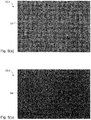
- FIGS 3-5 show examples of images 52.1-52.6 of textile surfaces 61-64, as they can be used in the inventive method.
- FIG. 3 Figures 52.1, 52.2 are one and the same Garnschautafel 61, which is a textile surface shown.
- the difference between the two pictures 52.1, 52.2 is the shooting distance.
- the picture 52.1 of FIG. 3 (a) was taken from a greater distance and shows the whole Garnschautafel 61, while the image 52.2 of FIG. 3 (b) was taken from a smaller distance and details of a Schmgarns 7 up to out of thessengarn 7 protruding fiber ends ("hair") shows.
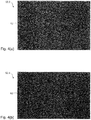
- FIGS. 4 show pictures 52.3, 52.4 one and the same tissue 62.
- the images 52.3, 52.4 differ from each other again in the nature of their recording.
- the picture 52.3 of FIG. 4 (a) was in transmitted light
- the picture 52.4 of FIG. 4 (b) recorded in reflected light.
- one or the other image 52.3 or 52.4 is better suited for dispensing.
- FIGS. 52.5, 52.6 show different knits 63, 64 from respectively different picture yarns 7. Because of the different properties of the picture yarns 7 used for the two knits 63, 64, the knitted fabric 63 of FIG. 5 (a) a worse, "cloudier" appearance than that 64 of FIG. 5 (b) ,
- the textile surfaces 61-63 could be made of the same image yarn 7. Then the images 52.1-52.5 belong to a set of image data sets 51, which contain images 52.1-52.5 of different textile surfaces 61-63, but metadata groups 53 with the same parameter values 54, 55.
- FIG. 6 illustrates a way in which the parameter values 94, 95 of the given yarn 9 can be compared with the parameter values 54, 55 of image yarns 7. From results of the measurements on the given yarn 9, a parameter value 94, 95 of at least one yarn parameter is determined in each case.
- the at least one yarn parameter spans a vector space 8.
- the two-dimensional vector space R 2 over the set of real numbers, ie two yarn parameters are plotted along a horizontal axis 81 and a vertical axis 82 of a Cartesian coordinate system, respectively.
- the plane shown can thus be understood as a representation of a two-dimensional vector space 8.
- the two parameter values 94, 95 of the given yarn 9 define a yarn vector 91 in the vector space 8.
- the two parameter values 54, 55 of the image yarns 7 respectively contained in a metadata group 53 define image vectors 71-75, some of which are shown in FIG FIG. 6 are drawn.
- the parameters 94, 54 applied along a specific axis 81 relate in each case to the same property of the yarns 9, 7, for example to the number of nits.
- a metric assigns two vectors x, y of the vector space a distance d ( x , y ).
- a metric can z. B. generated by the standard, each vector x a length
- the second parameter is weighted more heavily than the first one.
- the parameter values for a particular parameter can be scaled to B. in the interval [0, 1] or [-1, 1] lie.
- the definition of the metric may depend on other data 96 input data group 93, which are different from the parameter values 94, 95.
- Such further data 96 may relate in particular to the generation of the image 52.
- the input data group 93 includes a first parameter value 94 for the yarn parameter "number of nits" and a second parameter value 95 for the yarn parameter Yarn parameter "hairiness”.
- distances d (x, y) between the yarn vector 91 on the one hand and the image vectors 71-75 on the other hand are determined and compared with each other.
- the image database 51 is selected from the image database 5 for which the distance d ( x , y ) is the smallest.
- the image data set 51 whose parameter values 54, 55 are closest to the parameter values 94, 95 is selected. This is true in the example of FIG. 6 to the image data set 51 with the image vector 73.
- the corresponding image 52 contained in the selected image data set 51 is output. This image 52 represents the prediction of the appearance of a textile surface to be made from the given yarn 9.
- the further data 96, 56-58 may be taken into account by corresponding weighting factors in the metric.
- the further data 96, 56-58 can form a selection criterion for data records 51. If z. For example, if the further data 96 indicates that the given yarn 9 is to be used for a fabric, it may be useful to consider only those data sets 51 from the database 5 showing images 52 of knitted fabric.
- a Q calculated from the distance can be output, which is a measure of a quality of the prediction.
- the above quality value Q lies in the interval [0, 1], with Q values close to zero meaning bad, unreliable predictions, quality values close to one good, reliable predictions.
- a warning message can be output in addition to the image 52, such as, for example, FIG. B .: "Attention, a good prediction is not possible.”
- FIG. 7 shows a flowchart of an embodiment of the inventive method for generating an image database 5, as described in the context of FIG. 2 has been described.
- An image yarn 7 is provided 101.
- the image yarn 7 is measured 102.
- a parameter value 54, 55 of at least one yarn parameter of the image yarn 7 is determined 103 from at least one result of the measurement 102.
- a textile surface 61-64 is produced 104 from the image yarn 7
- An image 52 of the textile surface 61-64 is generated 105, e.g. B. recorded by a photographic process.
- a metadata group 53 at least partially related to the image yarn 7 is formed 106.
- the metadata group 53 includes the parameter values 54, 55 of the image yarn 7, which form an image vector 71-75 in a vector space 8 (see FIG.
- the image database 5 is generated from at least 100, preferably at least 1000 and, for example, at least 10,000 image data sets (51) 111.
- a change of the image database 5 can, for. B. include adding more image data sets 51 or deleting no longer used image data sets 51.
- FIG. 8 shows a flow chart of a first embodiment of the method according to the invention for predicting the appearance of a textile surface 61-64 to be produced from a given yarn 9.
- the image database 5 its structure on the occasion of FIG. 2 and their production on the occasion of FIG. 7
- each image data set 51 includes an image 52 of a textile surface 61-64 made of at least one image yarn 7 and a metadata group 53 associated with the image 52.
- Each of the metadata groups 53 includes parameter values 54, 55 of the image yarn 7, which has an image vector 71-75 in a vector space 8 (see FIG. 6 ) form.
- a measurement on the given yarn 9 is carried out 202.
- a parameter value 94, 95 of at least one yarn parameter of the given yarn 9 is determined 203 from at least one result of the measurement 202.
- a metric is defined on the vector space 8, each of which contains two vectors of the vector space 8 assigns a distance.
- An input data group 93, at least partially related to the given yarn 9, is formed 205, which includes the parameter values 94, 95 of the given yarn 9.
- These parameter values 94, 95 form a yarn vector 91 in the same vector space 8. Distances between the yarn vector 91 on the one hand and the image vectors 71-75 on the other hand are determined 206 and compared 207 with each other.
- an image data set 51 is selected 208 from the image database 5.
- the image 52 contained in the selected image data set 51 is output 209. It represents the prediction of the appearance of a textile to be produced from the given yarn 9 Area dar.
- the last four steps 206-209 are preferably performed by a computer 2, 4.
- FIG. 9 shows a flowchart of a second embodiment of the inventive method for predicting the appearance of a textile surface.
- a preferred embodiment of the comparison step 207 and the selection step 208 of FIG. 8 The steps of database deployment 201, yarn measurement 202, parameter value determination 203 and input data group formation 205 were discussed on the occasion of FIG. 8 already explained. They are in FIG. 9 summarized in a step 301.
- the distances between the yarn vector 91 (see FIG. 6 On the one hand and the image vectors 71-75 on the other hand determined and compared .. In the embodiment of FIG. 9 and in the following description, the determination and comparison are sequential; alternatively, they could at least partially be parallel.
- an image data set 51 is fetched 302.
- the metadata group 53 of the image data set 51 contains z. B. parameter values 54, 55 of the respective image yarn 7, which define an image vector 71.
- the distance between the yarn vector 91 and the current image vector 71 taken from the image data set 51 fetched from the image database 5 is calculated 303.
- the current image 52 corresponding to FIG Otherwise, the loop is traversed with the next image data set 51, and so on. If all the image data sets 51 have been checked 306, the loop is terminated.
- the image 52 which is then ready for output belongs to the image data set 51 whose image vector 73 has the smallest distance to the yarn vector 91. This image 52 is output as the result of the method 307.
- the output step 307 of FIG. 9 again corresponds to the output step 209 of FIG. 8 ,
- the method is executed, with the possible exception of the first step 301, preferably by a computer 2, 4.
Landscapes
- Engineering & Computer Science (AREA)
- Textile Engineering (AREA)
- Chemical & Material Sciences (AREA)
- General Physics & Mathematics (AREA)
- Physics & Mathematics (AREA)
- Health & Medical Sciences (AREA)
- Life Sciences & Earth Sciences (AREA)
- Food Science & Technology (AREA)
- Theoretical Computer Science (AREA)
- Medicinal Chemistry (AREA)
- Analytical Chemistry (AREA)
- Biochemistry (AREA)
- General Health & Medical Sciences (AREA)
- Immunology (AREA)
- Pathology (AREA)
- Image Processing (AREA)
Claims (22)
- Procédé pour prédire l'apparence d'une surface textile à produire à partir d'un fil donné (9), dans lequel
une banque de données d'images (5) composée d'ensembles de données d'images (51) est préparée (201), chaque ensemble de données d'images (51) de cette banque de données d'images (5) contenant une image (52) d'une surface textile (61-64) produite à partir d'au moins un fil d'image (7) et un groupe de métadonnées (53) associé à l'image (52),
caractérisé en ce que
chacun des groupes de métadonnées (53) contient un premier volume de données (54, 55) qui forment un vecteur d'image (71-75) dans un espace vectoriel (8),
un paramètre de mesure associant une distance aux vecteurs de l'espace vectoriel (8) deux par deux est défini (204) dans l'espace vectoriel (8),
un groupe de données d'entrée (93) se rapportant au moins en partie au fil donné (9) et contenant un deuxième volume de données (94, 95) est formé (205), lesquelles données (94, 95) forment un vecteur de fil (91) dans le même espace vectoriel (8), les distances entre le vecteur de fil (91) et les vecteurs d'image (71-75) sont déterminées et comparées entre elles (207),
un ensemble de données d'image (51) est choisi (208) sur la base de la comparaison (207) dans la banque de données d'images (5) et
l'image (52) contenue dans l'ensemble de données d'image (51) choisi est émise en sortie (209). - Procédé selon la revendication 1, dans lequel le groupe de données d'entrée (93) et/ou les groupes de métadonnées (53) contiennent des données (94-96, 54-58) qui se rapportent à au moins un des aspects suivants : au moins une valeur de paramètre (94, 95 ; 54, 55) d'un paramètre de fil du fil donné (9) ou du fil d'image (7), la matière première utilisée pour fabriquer le fil donné (9) ou le fil d'image (7), la fabrication du fil donné (9) ou du fil d'image (7), la fabrication (104) de la surface textile (61-64), la génération (105) de l'image (52).
- Procédé selon la revendication 2, dans lequel le groupe de données d'entrée (93) et chacun des groupes de métadonnées (53) contiennent chacun une valeur de paramètre (94, 95 ; 54, 55) d'au moins un paramètre de fil du fil donné (9) ou du fil d'image (7), lequel au moins un paramètre de fil se rapporte à au moins une des propriétés suivantes du fil donné (9) ou du fil d'image (7) : masse, dimension transversale, nombre de neps, numéro de fil, ébouriffage, teneur en matières étrangères, résistance à la déchirure, allongement, vrillage, friction.
- Procédé selon la revendication 3, dans lequel une mesure est effectuée (202) sur le fil donné (9) et l'au moins une valeur de paramètre (94, 95) du fil donné (9) est déterminée à partir d'au moins un résultat de la mesure (202) et de préférence par une analyse statistique subséquente des résultats de la mesure (202).
- Procédé selon l'une des revendications précédentes, dans lequel le groupe de données d'entrée (93) contient des données (96) qui se rapportent à au moins un des aspects suivants : matière première utilisée pour la fabrication du fil donné (9), fabrication du fil donné (9), fabrication prévue de la surface textile, génération (105) de l'image (52), et dans lequel la définition (204) du paramètre de mesure dépend desdites données (96).
- Procédé selon l'une des revendications précédentes, dans lequel est sélectionné (208) l'ensemble de données d'image (51) dont le vecteur d'image (73) présente la plus petite distance.
- Procédé selon l'une des revendications précédentes, dans lequel est émise en sortie, outre l'image (52), une valeur de qualité calculée à partir de la distance, qui constitue une mesure pour la qualité de la prédiction.
- Procédé selon l'une des revendications précédentes, dans lequel les étapes de procédé dedétermination (206) et de comparaison (207) des distances entre le vecteur de fil (91) et les vecteurs d'image (71-75),sélection (208) d'un ensemble de données d'image (51) à partir de la banque de données d'images (5) sur la base de la comparaison (207) etsortie (209) de l'image (52) contenue dans l'ensemble de données d'image (51) sélectionnésont exécutées par un ordinateur (2, 4).
- Procédé selon la revendication 8, dans lequel un calcul en nuage est utilisé en cela que le groupe de données d'entrée (93) est transmis (31) par un ordinateur local (2), via un réseau, à au moins un ordinateur distant (4), la comparaison (207) et la sélection (208) sont effectuées par l'au moins un ordinateur distant (4), l'image (52) sélectionnée est transmise (32) via le réseau de l'au moins un ordinateur distant (4) à l'ordinateur local (2) et l'image (52) sélectionnée est émise en sortie (209) par l'ordinateur local (2).
- Programme d'ordinateur avec un code de programme enregistré sur un support lisible par une machine pour la mise en oeuvre des étapes de procédé (206-209) énumérées dans la revendication 8 quand le programme d'ordinateur est exécuté sur un ordinateur (2, 4).
- Banque de données d'images (5) d'ensembles de données d'images (51) à utiliser dans le procédé selon l'une des revendications 1 à 9, dans lequel
chaque ensemble de données d'image (51) contient une image (52) d'une surface textile (61-64) fabriquée à partir d'au moins un fil d'image (7) et un groupe de métadonnées (53) associé à l'image (52),
chacun des groupes de métadonnées (53) contient un premier volume de données (54, 55) qui forment un vecteur d'image (71-75) dans un espace vectoriel (8), un paramètre de mesure pouvant être défini dans l'espace vectoriel (8) pour attribuer une distance aux vecteurs de l'espace vectoriel (8) deux par deux, et la banque de données d'images (5) contient au moins 100, de préférence au moins 1000 et, par exemple, au moins 10 000 ensembles de données d'image (51). - Banque de données d'images (5) selon la revendication 11, dans laquelle les groupes de métadonnées (53) contiennent des données (54-58) qui se rapportent à au moins un des aspects suivants : au moins une valeur de paramètre (54, 55) d'un paramètre de fil du fil d'image (7), la matière première utilisée pour fabriquer le fil d'image (7), la fabrication du fil d'image (7), la fabrication (104) de la surface textile (61-64), la génération (105) de l'image (52).
- Banque de données d'images (5) selon la revendication 12, dans laquelle chacun des groupes de métadonnées (53) contient une valeur de paramètre (54, 55) d'au moins un paramètre de fil du fil d'image (7) lequel au moins un paramètre de fil se rapporte à au moins une des propriétés suivantes du fil d'image (7) : masse, dimension transversale, nombre de neps, numéro de fil, ébouriffage, teneur en matières étrangères, résistance à la déchirure, allongement, vrillage, friction.
- Procédé pour la génération d'une banque de données d'images (5) d'ensembles de données d'images (51) à utiliser dans le procédé selon l'une des revendications 1 à 9, dans lequel
des images (52) d'au moins une surface textile (61-64) produite à partir d'au moins un fil d'image (7) sont générées (105),
des ensembles de données d'image (51) sont constitués (107), chaque ensemble de données d'image (51) contenant l'une des images (52) et un groupe de métadonnées (53) associé à l'image (52),
chacun des groupes de métadonnées (53) contient un premier volume de données (54, 55) qui forment un vecteur d'image (71-75) dans un espace vectoriel (8), un paramètre de mesure associant une distance aux vecteurs de l'espace vectoriel (8) deux par deux étant défini (204) dans l'espace vectoriel (8), et
la banque de données d'images (5) est générée (111) à partir d'au moins 100, de préférence au moins 1000 et, par exemple, au moins 10 000 ensembles de données d'image (51). - Procédé selon la revendication 14, dans lequel les groupes de métadonnées (53) contiennent des données (54-58) qui se rapportent à au moins un des aspects suivants : au moins une valeur de paramètre d'un paramètre de fil du fil d'image (7), la matière première utilisée pour fabriquer le fil d'image (7), la fabrication du fil d'image (7), la fabrication (104) de la surface textile (61-64), la génération (105) des images (52).
- Procédé selon la revendication 15, dans lequel chacun des groupes de métadonnées (53) contient une valeur de paramètre (54, 55) d'au moins un paramètre de fil ou du fil d'image (7), lequel au moins un paramètre de fil se rapporte à au moins une des propriétés suivantes du fil d'image (7) : masse, dimension transversale, nombre de neps, numéro de fil, ébouriffage, teneur en matières étrangères, résistance à la déchirure, allongement, vrillage, friction.
- Procédé selon la revendication 16, dans lequel une mesure est effectuée (102) sur le fil d'image (7) et l'au moins une valeur de paramètre (54, 55) du fil d'image (7) est déterminée à partir d'au moins un résultat de la mesure (102), de préférence par une analyse statistique subséquente des résultats de la mesure (102).
- Procédé selon l'une des revendications 14 à 17, dans lequel plusieurs surfaces textiles (61-64) différentes sont fabriquées (104) à partir du même fil d'image (7), de sorte que la banque de données d'images (5) contient un volume d'ensembles de données d'images (51) qui contiennent des images (52) de surfaces textiles (61-64) différentes mais des volumes de métadonnées (53) ayant les mêmes premiers volumes de données (54, 55).
- Procédé selon la revendication 18, dans lequel les surfaces textiles (61-64) ayant les mêmes premiers volumes de données (54, 55) se différencient par au moins un des aspects de différenciation suivants : méthode de fabrication de la surface textile (61-64), type de machine fabricant la surface textile (61-64), et l'au moins un aspect de différenciation est représenté dans les groupes de métadonnées (53) correspondants.
- Procédé selon l'une des revendications 14 à 19, dans lequel plusieurs images (52.1, 52.2) différentes de la même surface textile (61) sont créées (105).
- Procédé selon l'une des revendications 14 à 20, dans lequel les images (52) sont acquises (105) par un procédé photographique.
- Procédé selon les revendications 20 et 21, dans lequel les différentes images (52.1, 52.2) sont acquises (105) chacune par un procédé photographique,
les différentes images (52.1, 52.2) de la même surface textile (61) diffèrent les unes des autres par au moins un des aspects de différenciation suivants : mode d'éclairage de la surface textile lors de la prise de vue (105), position de l'appareil photographique par rapport à la surface textile (61) lors de la prise de vue (105), paramètres photographiques réglés lors de la prise de vue (105), et l'au moins un aspect de différenciation est représenté dans les groupes de métadonnées (53) correspondants.
Applications Claiming Priority (2)
| Application Number | Priority Date | Filing Date | Title |
|---|---|---|---|
| CH13062015 | 2015-09-10 | ||
| PCT/CH2016/000115 WO2017041191A1 (fr) | 2015-09-10 | 2016-09-09 | Prévision de l'apparence d'une surface textile |
Publications (2)
| Publication Number | Publication Date |
|---|---|
| EP3320134A1 EP3320134A1 (fr) | 2018-05-16 |
| EP3320134B1 true EP3320134B1 (fr) | 2018-11-21 |
Family
ID=54198898
Family Applications (1)
| Application Number | Title | Priority Date | Filing Date |
|---|---|---|---|
| EP16775449.8A Active EP3320134B1 (fr) | 2015-09-10 | 2016-09-09 | Prévision de l'apparence d'une surface textile |
Country Status (3)
| Country | Link |
|---|---|
| EP (1) | EP3320134B1 (fr) |
| CN (1) | CN108026677B (fr) |
| WO (1) | WO2017041191A1 (fr) |
Families Citing this family (3)
| Publication number | Priority date | Publication date | Assignee | Title |
|---|---|---|---|---|
| JP7285704B2 (ja) * | 2019-06-18 | 2023-06-02 | 株式会社島精機製作所 | 機械学習による編機の駆動データの処理方法及び処理システム |
| CN115667606A (zh) * | 2020-11-12 | 2023-01-31 | 黑天鹅纺织品公司 | 用于纺织物构造的系统和方法 |
| TWI845312B (zh) * | 2023-05-19 | 2024-06-11 | 適着三維科技股份有限公司 | 織物影像處理裝置以及方法 |
Family Cites Families (18)
| Publication number | Priority date | Publication date | Assignee | Title |
|---|---|---|---|---|
| JP2656405B2 (ja) * | 1991-09-17 | 1997-09-24 | 旭化成工業株式会社 | ニットデザインシステムおよびその編成データの作成方法 |
| US5671061A (en) | 1992-06-18 | 1997-09-23 | Zellweger Luwa Ag | Method and apparatus for assessing the effect of yarn faults on woven or knitted fabrics |
| CH684129A5 (de) * | 1992-06-18 | 1994-07-15 | Zellweger Uster Ag | Verfahren und Vorrichtung zur Beurteilung der Auswirkung von Garnfehlern auf Gewebe oder Gewirke. |
| US6130746A (en) | 1994-03-10 | 2000-10-10 | Lawson-Hemphill, Inc. | System and method for electronically evaluating predicted fabric qualities |
| CN1117546A (zh) * | 1994-08-22 | 1996-02-28 | 法国纺织研究院 | 为检验织造缺陷而进行的平面织物成像及图像处理方法 |
| EP0904532B2 (fr) | 1996-06-12 | 2007-11-21 | Uster Technologies AG | Procede pour l'evaluation des effets de defauts du fil sur des configurations textiles en surface |
| EP0866965A1 (fr) | 1996-10-15 | 1998-09-30 | CIS Graphik und Bildverarbeitung GmbH | Systeme de simulation de fils et de tissus |
| DE19718562A1 (de) | 1997-05-02 | 1998-11-05 | Zweigle Dieter | Vorrichtung zur Optimierung von Geweben aufgrund gemessener Garndaten und Optimierungsverfahren |
| DE19855588A1 (de) | 1998-12-02 | 2000-06-08 | Schlafhorst & Co W | Verfahren und Vorrichtung zur Auswertung der Wirkung von Garneigenschaften auf das Aussehen textiler Flächengebilde |
| DE60238634D1 (de) | 2001-10-05 | 2011-01-27 | Shima Seiki Mfg | Strickentwurfsverfahren und einheit |
| CN1284109C (zh) | 2001-10-05 | 2006-11-08 | 株式会社岛精机制作所 | 针织物的设计方法与设备 |
| US6728593B2 (en) * | 2002-06-06 | 2004-04-27 | The Hong Kong Polytechnic University | System for analysis of fabric surface |
| KR20050097936A (ko) * | 2003-01-10 | 2005-10-10 | 코닌클리케 필립스 일렉트로닉스 엔.브이. | 효과적인 예측 이미지 파라미터 추정 |
| CN100580452C (zh) * | 2005-05-18 | 2010-01-13 | 东华大学 | 纱线或织物表面特征的光学与力学组合测量方法及装置 |
| WO2007014475A1 (fr) | 2005-07-30 | 2007-02-08 | Uster Technologies Ag | Appareil de controle de fil |
| US20090112353A1 (en) | 2007-09-28 | 2009-04-30 | Smartpatterns Inc. | System and method for design of stitched objects |
| WO2012051730A1 (fr) | 2010-10-19 | 2012-04-26 | Uster Technologies Ag | Purgeur de fil et procédé de purge du fil |
| CN103258102A (zh) * | 2013-05-29 | 2013-08-21 | 江南大学 | 一种用于图像分析的平纹织物纹理仿真方法 |
-
2016
- 2016-09-09 WO PCT/CH2016/000115 patent/WO2017041191A1/fr not_active Ceased
- 2016-09-09 CN CN201680052644.2A patent/CN108026677B/zh active Active
- 2016-09-09 EP EP16775449.8A patent/EP3320134B1/fr active Active
Non-Patent Citations (1)
| Title |
|---|
| None * |
Also Published As
| Publication number | Publication date |
|---|---|
| CN108026677B (zh) | 2021-03-23 |
| WO2017041191A1 (fr) | 2017-03-16 |
| CN108026677A (zh) | 2018-05-11 |
| EP3320134A1 (fr) | 2018-05-16 |
Similar Documents
| Publication | Publication Date | Title |
|---|---|---|
| EP0578975B1 (fr) | Procédé et appareil de prédiction de l'effet de défauts d'un fil sur l'apparence de tissus ou tricots | |
| EP1949096B1 (fr) | Procédé pour caractériser un fil à effets | |
| DE102018102688A1 (de) | Bildverarbeitungsvorrichtung, Bildverarbeitungsprogramm und Bildverarbeitungssystem | |
| EP0685580A1 (fr) | Procédé et dispositif pour déterminer les causes de défauts des fils, mèches et rubans de fibres | |
| DE60302387T2 (de) | Messpunktauswahl zur Erstellung eines Bitfehlerratediagramms | |
| WO1999014580A1 (fr) | Procede permettant d'exploiter des donnees portees par des produits textiles plans | |
| WO2017041191A1 (fr) | Prévision de l'apparence d'une surface textile | |
| EP0904532B1 (fr) | Procede pour l'evaluation des effets de defauts du fil sur des configurations textiles en surface | |
| DE102011081541A1 (de) | Bildverarbeitungsvorrichtung, bildverarbeitungsverfahren und programmspeicherträger | |
| DE10017551C2 (de) | Verfahren zur zyklischen, interaktiven Bildanalyse sowie Computersystem und Computerprogramm zur Ausführung des Verfahrens | |
| WO2000073189A1 (fr) | Procede et dispositif permettant le nettoyage de fils | |
| EP0439767B1 (fr) | Méthode pour l'évaluation de la qualité de fils et dispositif pour la mise en oeuvre de cette méthode | |
| EP3247990B1 (fr) | Procédé et dispositif de détermination de l'action d'agents actifs sur nématodes et autres organismes dans des essais aqueux | |
| DE69130273T2 (de) | Verfahren zum Anzeigen von beschreibenden Daten, wie z.B. ein Vektor | |
| DE602004001718T2 (de) | Verfahren zur Echtzeitkorrektur nicht funktionierender Pixel in der digitalen Radiographie | |
| DE102015215778B4 (de) | Verfahren zu einer Darstellung von Magnetresonanz-Daten | |
| DE112023006647T5 (de) | Verifizierungsvorrichtung, Inferenzvorrichtung, Inferenzsystem und Verifizierungsverfahren | |
| DE212022000122U1 (de) | Stereoskopische Anzeigevorrichtung auf Basis einer Strahlenteilungsvorrichtung und Testvorrichtung | |
| DE112021004434T5 (de) | Bildverarbeitungsvorrichtung, bildverarbeitungsverfahren und -programm | |
| WO2014085940A1 (fr) | Caractérisation de la répartition des longueurs de la pilosité d'un fil | |
| WO2017041192A1 (fr) | Prévision de l'apparence d'une surface textile | |
| DE4019957A1 (de) | Verfahren zur qualitaetsbewertung von garnen und einrichtung zur durchfuehrung des verfahrens | |
| DE102022207482B4 (de) | Computerimplementiertes Verfahren zum Bestimmen eines Datenqualitätsindex, Computerprogramm und Steuereinheit | |
| EP2874034B1 (fr) | Procédé d'évaluation d'un processus de fabrication ou de traitement, durant lequel une bande d'acier est soumise à au moins une étape de traitement | |
| DE102007028651A1 (de) | Verfahren zur Visualisierung der Häufigkeitsverteilung von Garnfehlern |
Legal Events
| Date | Code | Title | Description |
|---|---|---|---|
| STAA | Information on the status of an ep patent application or granted ep patent |
Free format text: STATUS: THE INTERNATIONAL PUBLICATION HAS BEEN MADE |
|
| PUAI | Public reference made under article 153(3) epc to a published international application that has entered the european phase |
Free format text: ORIGINAL CODE: 0009012 |
|
| STAA | Information on the status of an ep patent application or granted ep patent |
Free format text: STATUS: REQUEST FOR EXAMINATION WAS MADE |
|
| 17P | Request for examination filed |
Effective date: 20180209 |
|
| AK | Designated contracting states |
Kind code of ref document: A1 Designated state(s): AL AT BE BG CH CY CZ DE DK EE ES FI FR GB GR HR HU IE IS IT LI LT LU LV MC MK MT NL NO PL PT RO RS SE SI SK SM TR |
|
| AX | Request for extension of the european patent |
Extension state: BA ME |
|
| INTG | Intention to grant announced |
Effective date: 20180611 |
|
| GRAP | Despatch of communication of intention to grant a patent |
Free format text: ORIGINAL CODE: EPIDOSNIGR1 |
|
| STAA | Information on the status of an ep patent application or granted ep patent |
Free format text: STATUS: GRANT OF PATENT IS INTENDED |
|
| GRAS | Grant fee paid |
Free format text: ORIGINAL CODE: EPIDOSNIGR3 |
|
| DAV | Request for validation of the european patent (deleted) | ||
| DAX | Request for extension of the european patent (deleted) | ||
| GRAA | (expected) grant |
Free format text: ORIGINAL CODE: 0009210 |
|
| STAA | Information on the status of an ep patent application or granted ep patent |
Free format text: STATUS: THE PATENT HAS BEEN GRANTED |
|
| AK | Designated contracting states |
Kind code of ref document: B1 Designated state(s): AL AT BE BG CH CY CZ DE DK EE ES FI FR GB GR HR HU IE IS IT LI LT LU LV MC MK MT NL NO PL PT RO RS SE SI SK SM TR |
|
| REG | Reference to a national code |
Ref country code: CH Ref legal event code: EP |
|
| REG | Reference to a national code |
Ref country code: IE Ref legal event code: FG4D Free format text: LANGUAGE OF EP DOCUMENT: GERMAN |
|
| REG | Reference to a national code |
Ref country code: DE Ref legal event code: R096 Ref document number: 502016002585 Country of ref document: DE |
|
| REG | Reference to a national code |
Ref country code: AT Ref legal event code: REF Ref document number: 1067637 Country of ref document: AT Kind code of ref document: T Effective date: 20181215 |
|
| REG | Reference to a national code |
Ref country code: NL Ref legal event code: MP Effective date: 20181121 |
|
| PG25 | Lapsed in a contracting state [announced via postgrant information from national office to epo] |
Ref country code: LV Free format text: LAPSE BECAUSE OF FAILURE TO SUBMIT A TRANSLATION OF THE DESCRIPTION OR TO PAY THE FEE WITHIN THE PRESCRIBED TIME-LIMIT Effective date: 20181121 Ref country code: FI Free format text: LAPSE BECAUSE OF FAILURE TO SUBMIT A TRANSLATION OF THE DESCRIPTION OR TO PAY THE FEE WITHIN THE PRESCRIBED TIME-LIMIT Effective date: 20181121 Ref country code: BG Free format text: LAPSE BECAUSE OF FAILURE TO SUBMIT A TRANSLATION OF THE DESCRIPTION OR TO PAY THE FEE WITHIN THE PRESCRIBED TIME-LIMIT Effective date: 20190221 Ref country code: NO Free format text: LAPSE BECAUSE OF FAILURE TO SUBMIT A TRANSLATION OF THE DESCRIPTION OR TO PAY THE FEE WITHIN THE PRESCRIBED TIME-LIMIT Effective date: 20190221 Ref country code: HR Free format text: LAPSE BECAUSE OF FAILURE TO SUBMIT A TRANSLATION OF THE DESCRIPTION OR TO PAY THE FEE WITHIN THE PRESCRIBED TIME-LIMIT Effective date: 20181121 Ref country code: IS Free format text: LAPSE BECAUSE OF FAILURE TO SUBMIT A TRANSLATION OF THE DESCRIPTION OR TO PAY THE FEE WITHIN THE PRESCRIBED TIME-LIMIT Effective date: 20190321 Ref country code: ES Free format text: LAPSE BECAUSE OF FAILURE TO SUBMIT A TRANSLATION OF THE DESCRIPTION OR TO PAY THE FEE WITHIN THE PRESCRIBED TIME-LIMIT Effective date: 20181121 Ref country code: LT Free format text: LAPSE BECAUSE OF FAILURE TO SUBMIT A TRANSLATION OF THE DESCRIPTION OR TO PAY THE FEE WITHIN THE PRESCRIBED TIME-LIMIT Effective date: 20181121 |
|
| PG25 | Lapsed in a contracting state [announced via postgrant information from national office to epo] |
Ref country code: SE Free format text: LAPSE BECAUSE OF FAILURE TO SUBMIT A TRANSLATION OF THE DESCRIPTION OR TO PAY THE FEE WITHIN THE PRESCRIBED TIME-LIMIT Effective date: 20181121 Ref country code: RS Free format text: LAPSE BECAUSE OF FAILURE TO SUBMIT A TRANSLATION OF THE DESCRIPTION OR TO PAY THE FEE WITHIN THE PRESCRIBED TIME-LIMIT Effective date: 20181121 Ref country code: GR Free format text: LAPSE BECAUSE OF FAILURE TO SUBMIT A TRANSLATION OF THE DESCRIPTION OR TO PAY THE FEE WITHIN THE PRESCRIBED TIME-LIMIT Effective date: 20190222 Ref country code: NL Free format text: LAPSE BECAUSE OF FAILURE TO SUBMIT A TRANSLATION OF THE DESCRIPTION OR TO PAY THE FEE WITHIN THE PRESCRIBED TIME-LIMIT Effective date: 20181121 Ref country code: PT Free format text: LAPSE BECAUSE OF FAILURE TO SUBMIT A TRANSLATION OF THE DESCRIPTION OR TO PAY THE FEE WITHIN THE PRESCRIBED TIME-LIMIT Effective date: 20190321 Ref country code: AL Free format text: LAPSE BECAUSE OF FAILURE TO SUBMIT A TRANSLATION OF THE DESCRIPTION OR TO PAY THE FEE WITHIN THE PRESCRIBED TIME-LIMIT Effective date: 20181121 |
|
| PG25 | Lapsed in a contracting state [announced via postgrant information from national office to epo] |
Ref country code: CZ Free format text: LAPSE BECAUSE OF FAILURE TO SUBMIT A TRANSLATION OF THE DESCRIPTION OR TO PAY THE FEE WITHIN THE PRESCRIBED TIME-LIMIT Effective date: 20181121 Ref country code: PL Free format text: LAPSE BECAUSE OF FAILURE TO SUBMIT A TRANSLATION OF THE DESCRIPTION OR TO PAY THE FEE WITHIN THE PRESCRIBED TIME-LIMIT Effective date: 20181121 Ref country code: DK Free format text: LAPSE BECAUSE OF FAILURE TO SUBMIT A TRANSLATION OF THE DESCRIPTION OR TO PAY THE FEE WITHIN THE PRESCRIBED TIME-LIMIT Effective date: 20181121 |
|
| REG | Reference to a national code |
Ref country code: DE Ref legal event code: R097 Ref document number: 502016002585 Country of ref document: DE |
|
| PG25 | Lapsed in a contracting state [announced via postgrant information from national office to epo] |
Ref country code: SK Free format text: LAPSE BECAUSE OF FAILURE TO SUBMIT A TRANSLATION OF THE DESCRIPTION OR TO PAY THE FEE WITHIN THE PRESCRIBED TIME-LIMIT Effective date: 20181121 Ref country code: SM Free format text: LAPSE BECAUSE OF FAILURE TO SUBMIT A TRANSLATION OF THE DESCRIPTION OR TO PAY THE FEE WITHIN THE PRESCRIBED TIME-LIMIT Effective date: 20181121 Ref country code: EE Free format text: LAPSE BECAUSE OF FAILURE TO SUBMIT A TRANSLATION OF THE DESCRIPTION OR TO PAY THE FEE WITHIN THE PRESCRIBED TIME-LIMIT Effective date: 20181121 Ref country code: RO Free format text: LAPSE BECAUSE OF FAILURE TO SUBMIT A TRANSLATION OF THE DESCRIPTION OR TO PAY THE FEE WITHIN THE PRESCRIBED TIME-LIMIT Effective date: 20181121 |
|
| PLBE | No opposition filed within time limit |
Free format text: ORIGINAL CODE: 0009261 |
|
| STAA | Information on the status of an ep patent application or granted ep patent |
Free format text: STATUS: NO OPPOSITION FILED WITHIN TIME LIMIT |
|
| 26N | No opposition filed |
Effective date: 20190822 |
|
| PG25 | Lapsed in a contracting state [announced via postgrant information from national office to epo] |
Ref country code: MC Free format text: LAPSE BECAUSE OF FAILURE TO SUBMIT A TRANSLATION OF THE DESCRIPTION OR TO PAY THE FEE WITHIN THE PRESCRIBED TIME-LIMIT Effective date: 20181121 |
|
| PG25 | Lapsed in a contracting state [announced via postgrant information from national office to epo] |
Ref country code: IE Free format text: LAPSE BECAUSE OF NON-PAYMENT OF DUE FEES Effective date: 20190909 Ref country code: LU Free format text: LAPSE BECAUSE OF NON-PAYMENT OF DUE FEES Effective date: 20190909 |
|
| REG | Reference to a national code |
Ref country code: BE Ref legal event code: MM Effective date: 20190930 |
|
| PG25 | Lapsed in a contracting state [announced via postgrant information from national office to epo] |
Ref country code: BE Free format text: LAPSE BECAUSE OF NON-PAYMENT OF DUE FEES Effective date: 20190930 |
|
| PG25 | Lapsed in a contracting state [announced via postgrant information from national office to epo] |
Ref country code: FR Free format text: LAPSE BECAUSE OF NON-PAYMENT OF DUE FEES Effective date: 20190930 |
|
| GBPC | Gb: european patent ceased through non-payment of renewal fee |
Effective date: 20200909 |
|
| PG25 | Lapsed in a contracting state [announced via postgrant information from national office to epo] |
Ref country code: CY Free format text: LAPSE BECAUSE OF FAILURE TO SUBMIT A TRANSLATION OF THE DESCRIPTION OR TO PAY THE FEE WITHIN THE PRESCRIBED TIME-LIMIT Effective date: 20181121 |
|
| PG25 | Lapsed in a contracting state [announced via postgrant information from national office to epo] |
Ref country code: MT Free format text: LAPSE BECAUSE OF FAILURE TO SUBMIT A TRANSLATION OF THE DESCRIPTION OR TO PAY THE FEE WITHIN THE PRESCRIBED TIME-LIMIT Effective date: 20181121 Ref country code: HU Free format text: LAPSE BECAUSE OF FAILURE TO SUBMIT A TRANSLATION OF THE DESCRIPTION OR TO PAY THE FEE WITHIN THE PRESCRIBED TIME-LIMIT; INVALID AB INITIO Effective date: 20160909 |
|
| PG25 | Lapsed in a contracting state [announced via postgrant information from national office to epo] |
Ref country code: GB Free format text: LAPSE BECAUSE OF NON-PAYMENT OF DUE FEES Effective date: 20200909 |
|
| PG25 | Lapsed in a contracting state [announced via postgrant information from national office to epo] |
Ref country code: SI Free format text: LAPSE BECAUSE OF FAILURE TO SUBMIT A TRANSLATION OF THE DESCRIPTION OR TO PAY THE FEE WITHIN THE PRESCRIBED TIME-LIMIT Effective date: 20181121 |
|
| PG25 | Lapsed in a contracting state [announced via postgrant information from national office to epo] |
Ref country code: MK Free format text: LAPSE BECAUSE OF FAILURE TO SUBMIT A TRANSLATION OF THE DESCRIPTION OR TO PAY THE FEE WITHIN THE PRESCRIBED TIME-LIMIT Effective date: 20181121 |
|
| REG | Reference to a national code |
Ref country code: AT Ref legal event code: MM01 Ref document number: 1067637 Country of ref document: AT Kind code of ref document: T Effective date: 20210909 |
|
| PG25 | Lapsed in a contracting state [announced via postgrant information from national office to epo] |
Ref country code: AT Free format text: LAPSE BECAUSE OF NON-PAYMENT OF DUE FEES Effective date: 20210909 |
|
| P01 | Opt-out of the competence of the unified patent court (upc) registered |
Effective date: 20230515 |
|
| REG | Reference to a national code |
Ref country code: CH Ref legal event code: U11 Free format text: ST27 STATUS EVENT CODE: U-0-0-U10-U11 (AS PROVIDED BY THE NATIONAL OFFICE) Effective date: 20251001 |
|
| PGFP | Annual fee paid to national office [announced via postgrant information from national office to epo] |
Ref country code: DE Payment date: 20250919 Year of fee payment: 10 |
|
| PGFP | Annual fee paid to national office [announced via postgrant information from national office to epo] |
Ref country code: TR Payment date: 20250902 Year of fee payment: 10 Ref country code: IT Payment date: 20250923 Year of fee payment: 10 |
|
| PGFP | Annual fee paid to national office [announced via postgrant information from national office to epo] |
Ref country code: CH Payment date: 20251001 Year of fee payment: 10 |