EP3320437B1 - Carte à circuit intégré conçue pour transférer des premières données à partir d'une première application utilisables par une seconde application - Google Patents
Carte à circuit intégré conçue pour transférer des premières données à partir d'une première application utilisables par une seconde application Download PDFInfo
- Publication number
- EP3320437B1 EP3320437B1 EP16723352.7A EP16723352A EP3320437B1 EP 3320437 B1 EP3320437 B1 EP 3320437B1 EP 16723352 A EP16723352 A EP 16723352A EP 3320437 B1 EP3320437 B1 EP 3320437B1
- Authority
- EP
- European Patent Office
- Prior art keywords
- application
- dat1
- app1
- icc
- app2
- Prior art date
- Legal status (The legal status is an assumption and is not a legal conclusion. Google has not performed a legal analysis and makes no representation as to the accuracy of the status listed.)
- Active
Links
Images


Classifications
-
- G—PHYSICS
- G06—COMPUTING OR CALCULATING; COUNTING
- G06F—ELECTRIC DIGITAL DATA PROCESSING
- G06F9/00—Arrangements for program control, e.g. control units
- G06F9/06—Arrangements for program control, e.g. control units using stored programs, i.e. using an internal store of processing equipment to receive or retain programs
- G06F9/46—Multiprogramming arrangements
- G06F9/54—Interprogram communication
-
- G—PHYSICS
- G06—COMPUTING OR CALCULATING; COUNTING
- G06Q—INFORMATION AND COMMUNICATION TECHNOLOGY [ICT] SPECIALLY ADAPTED FOR ADMINISTRATIVE, COMMERCIAL, FINANCIAL, MANAGERIAL OR SUPERVISORY PURPOSES; SYSTEMS OR METHODS SPECIALLY ADAPTED FOR ADMINISTRATIVE, COMMERCIAL, FINANCIAL, MANAGERIAL OR SUPERVISORY PURPOSES, NOT OTHERWISE PROVIDED FOR
- G06Q20/00—Payment architectures, schemes or protocols
- G06Q20/30—Payment architectures, schemes or protocols characterised by the use of specific devices or networks
- G06Q20/34—Payment architectures, schemes or protocols characterised by the use of specific devices or networks using cards, e.g. integrated circuit [IC] cards or magnetic cards
- G06Q20/341—Active cards, i.e. cards including their own processing means, e.g. including an IC or chip
-
- G—PHYSICS
- G06—COMPUTING OR CALCULATING; COUNTING
- G06Q—INFORMATION AND COMMUNICATION TECHNOLOGY [ICT] SPECIALLY ADAPTED FOR ADMINISTRATIVE, COMMERCIAL, FINANCIAL, MANAGERIAL OR SUPERVISORY PURPOSES; SYSTEMS OR METHODS SPECIALLY ADAPTED FOR ADMINISTRATIVE, COMMERCIAL, FINANCIAL, MANAGERIAL OR SUPERVISORY PURPOSES, NOT OTHERWISE PROVIDED FOR
- G06Q20/00—Payment architectures, schemes or protocols
- G06Q20/38—Payment protocols; Details thereof
- G06Q20/40—Authorisation, e.g. identification of payer or payee, verification of customer or shop credentials; Review and approval of payers, e.g. check credit lines or negative lists
-
- G—PHYSICS
- G07—CHECKING-DEVICES
- G07F—COIN-FREED OR LIKE APPARATUS
- G07F7/00—Mechanisms actuated by objects other than coins to free or to actuate vending, hiring, coin or paper currency dispensing or refunding apparatus
- G07F7/08—Mechanisms actuated by objects other than coins to free or to actuate vending, hiring, coin or paper currency dispensing or refunding apparatus by coded identity card or credit card or other personal identification means
- G07F7/10—Mechanisms actuated by objects other than coins to free or to actuate vending, hiring, coin or paper currency dispensing or refunding apparatus by coded identity card or credit card or other personal identification means together with a coded signal, e.g. in the form of personal identification information, like personal identification number [PIN] or biometric data
- G07F7/1008—Active credit-cards provided with means to personalise their use, e.g. with PIN-introduction/comparison system
Definitions
- the present invention relates to an integrated circuit card comprising a rewritable non-volatile memory and a buffer, said rewritable non-volatile memory comprising a first context where a first application, such as a first JavaCard TM application, comprising first data is stored.
- a first application such as a first JavaCard TM application
- the invention also relates to an associated method.
- JavaCard TM application When a first JavaCard TM application has already been deployed in an integrated circuit card and updates are needed (for example for a bug fix or a new feature), these updates are costly and not straight forward, especially due to first data existing inside the application. These first data are sometimes confidential and personalized by the customer itself.
- a solution to fix the bug or to add a new feature is a re-installation of the JavaCard TM application with the corrected feature or new feature.
- a problem of this prior art is that when re-installing said JavaCard TM application with the corrected features or new features, all first data will be lost. Face to this update issue for application with sensitive data a re-issuance of the card with the updated application is made which is
- EP 1650717 A1 discloses a method of transferring data between applications on an IC card using an intermediate buffer.
- a buffer is used as a common buffer between the first (e.g., JavaCard TM ) application and the second (e.g., JavaCard TM ) application.
- first e.g., JavaCard TM
- second e.g., JavaCard TM
- Said integrated circuit card is further adapted to:
- said integrated circuit card is further adapted to:
- said integrated circuit card is further adapted to execute a mutual authentication between said first (e.g., JavaCard TM ) application and said second (e.g., JavaCard TM ) application.
- first e.g., JavaCard TM
- second e.g., JavaCard TM
- said integrated circuit card is further adapted to store in said second context and in said first context a secret key or a pair of private and public keys for the mutual authentication.
- said rewritable non-volatile memory further comprises a shareable interface which is imported within said first (e.g.,JavaCard TM ) application and within said second (e.g.,JavaCard TM ) application, said shareable interface defining at least one shared method for said loading.
- said shareable interface defines at least one shared method for said mutual authentication.
- the first (e.g., JavaCard TM ) application implements the at least one shared method for said loading, and the second JavaCard TM ) application implements at least one method for said extraction and for said storing of said first data into said buffer.
- the first (e.g., JavaCard TM ) application further implements the at least one shared method for said mutual authentication.
- said rewritable non-volatile memory further comprises:
- said first shareable interface comprises the declaration of at least one first shared method for said mutual authentication
- said second shareable interface comprises the declaration of at least one second shared method for said mutual authentication
- the first (e.g., JavaCard TM ) application implements the at least one first shared method for said loading, and the second (e.g., JavaCard TM ) application implements at least one method for said extraction and for said storing of said first data into said buffer.
- first (e.g., JavaCard TM ) application implements the at least one first shared method for said loading
- the second (e.g., JavaCard TM ) application implements at least one method for said extraction and for said storing of said first data into said buffer.
- said integrated circuit card is a secure element.
- said integrated circuit card is further adapted to store in said second context with the second (e.g., JavaCard TM ) application, a first application identification associated to said first (e.g., JavaCard TM ) application.
- the second (e.g., JavaCard TM ) application e.g., a first application identification associated to said first (e.g., JavaCard TM ) application.
- said method further comprises:
- said method further comprises executing a mutual authentication between said first (e.g., JavaCard TM ) application and said second (e.g.,JavaCard TM ) application.
- first e.g., JavaCard TM
- second e.g.,JavaCard TM
- said method further comprises storing in said second context and in said first context a secret key or a pair of private and public keys for the mutual authentication.
- At least one shared method is defined within a shareable interface which is imported within said first (e.g., JavaCard TM ) application and within said second (e.g., JavaCard TM ) application.
- said method further comprises storing in said second context with the second (e.g., JavaCard TM ) application, a first application identification associated to said first (e.g., JavaCard TM ) application.
- the second (e.g., JavaCard TM ) application e.g., a first application identification associated to said first (e.g., JavaCard TM ) application.
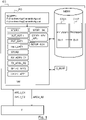
- the present invention relates to an integrated circuit card ICC illustrated in Fig. 1 .
- Said integrated circuit card ICC comprises a rewritable non-volatile memory MEM1, a buffer G_BUFF, and a virtual machine VM.
- the integrated circuit card ICC is also called ICC card.
- the integrated circuit card ICC may be contact or contactless. In an aspect not according to the independent or dependent claims, the integrated circuit card ICC is a secure element.
- a secure element is a secured component which comprises a secured chip and may perform cryptographic functionalities and is adapted to store secret information.
- the secure element is a smart card, a soldered element, an M2M module, an eSE (embedded secure element), a micro-SD etc.
- the secure element is a banking card, such as an EMV card, an Electronic Identity Card, a health card, a driving license, a passport, a privacy card, a financial service card, an access card etc.
- the ICC card comprises:
- the buffer G_BUFF is in volatile memory.
- buffer G_BUFF is an APDU buffer dedicated to APDU commands APDU_C. This APDU buffer stores the APDU commands. Such APDU buffer being well-known by the man skilled in this art, it won't be described here.
- buffer G_BUFF is a temporary global array. It is a transient buffer. Said temporary global array doesn't store any APDU command, but it is created during a process of an APDU command and is automatically cleared and deleted after the processing of the APDU command is finished. Such temporary global array being well-known by the man skilled in this art, it won't be described here.
- the rewritable non-volatile memory MEM1 is a memory such as an EEPROM ("Electrically-Erasable Programmable Read-Only Memory » ) , a FLASH memory, etc.
- the ICC card comprises one or a plurality of JavaCard TM applications (in particular App1)
- the bytecodes corresponding to the source code SC of said JavaCard TM applications are stored in the first memory MEM1.
- the first JavaCard TM application App1 will also be called indifferently first application App1 or old application App1
- the second JavaCard TM application App2 will also be called indifferently second application App2 or new application App2.
- Such first data Dat1 are in non-limitative examples sensitive data such as:
- the first data Dat1 used by the first JavaCard TM Application App1 and stored in a first context CTX1 may not be accessed by any other application which is not in said first context CTX1. Therefore, when a new application App2 is needed to replace the old application App1, the ICC card is adapted to:
- said functions are performed by means of the virtual machine VM of the integrated circuit card ICC.
- the virtual machine VM is further adapted to perform the further non-limitative functions described hereinafter.
- said second context CTX2 and said first context CTX1 are different. Since the second JavaCard TM application App2 is a new application, it will be installed after the old application App1. Hence, it will be stored in a different context than the first application's context.
- the buffer G_BUFF is used as a common buffer by both first and second application App1, App2 to exchange data as said buffer is accessible by all the applications of the ICC card at the same time, regardless of the context CTX.
- said second application App2 is comprised in a second package PK2 different from a first package PK1 of the first application App1.
- said ICC card uses the APDU protocol to communicate with the terminal T, said ICC card is further adapted to:
- the second application App2 may become the current application to be run in the ICC card and the first application App1 is no longer needed. Therefore, said ICC card may be further adapted to select the second application App2 as the running application (function illustrated in Fig. 1 SELEC_APP2); and delete said first application App1 from said rewritable non-volatile memory MEM1 (function illustrated in Fig. 1 DELET_APP1).
- said ICC card is further adapted to store in said second context CTX2 with the second application App2, a first identification AID1 associated to said first application App1.
- said ICC card is further adapted to execute a mutual authentication between said first JavaCard TM Application App1 and said JavaCard TM second application App2 (function illustrated in Fig. 1 MUT_AUTH).
- the mutual authentication ensures that the old application App1 and the new application App2 are genuine. Moreover, the mutual authentication generates the session keys which will be used to encipher the sensitive data during the transfer of data. These session keys are used between the old application App1 and the new application App2.
- said APDU command APDU_C2 also triggers said mutual authentication MUT_AUTH.
- said ICC card is further adapted to store in said second context CTX2, a secret key Sk for the mutual authentication MUT_AUTH (function illustrated in Fig. 1 STOR1_SK)), or a pair of private and public keys Kpv, Kpu for the mutual authentication MUT_AUTH (function illustrated in Fig. 1 STOR1_KPV_KPU)).
- the ICC card It permits the ICC card to perform the mutual authentication between both applications App1, App2 using a symmetric authentication process by means of the shared secret key Sk, or an asymmetric authentication process by means of the pair of keys Kpu, Kpv.
- these keys Sk, or Kpv-Kpu are loaded during the personalization phase PH for the first application App1 and as a parameter during the storing of the second application App2 into said ICC card.
- these keys Sk, or Kpv-Kpu are stored in a non-volatile manner inside the first application App1 and inside the second application App2.
- the mutual authentication is performed by means of a challenge-response authentication:
- the first application App1 generates and sends a challenge to the second application App2.
- Said second application App2 encrypts this challenge with the secret key (in the case of the symmetric process) and sends back the cryptogram obtained.
- Said first application App1 verifies said cryptogram with the secret key.
- said ICC card is further adapted to establish a secure channel SCh with said terminal T (function illustrated in Fig. 1 SETUP_SCH) and to receive APDU commands APDU_C from said terminal T and send back associated responses APDU_R within said secured channel SCh.
- the establishment of a secure channel SCh permits some session keys to be generated. These session keys will be used between the ICC card and the terminal T. They are different from those used between the new and old applications App1 App2. Then next exchanges of information between the ICC card and the terminal T are performed within said secured channel: these session keys will be used to:
- the transmission of APDU commands APDU_C and APDU responses APDU_R between the ICC card and the terminal T may be securely performed.
- the loading of the second application App2 may be securely performed.
- the secure channel SCh is set-up by means of a Global Platform secure channel protocol (which is well-known by the man skilled in the art) between the ICC card and the terminal T.
- a Global Platform secure channel protocol which is well-known by the man skilled in the art
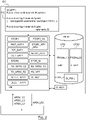
- the ICC card may be used as illustrated in Fig. 2 and Fig. 3 and described hereinafter.
- the virtual machine VM is further adapted to perform the further non-limitative functions described hereinafter.
- the first non-limitative function of the ICC card referred to Fig.2 .
- the second application App2 is acting as a client
- the first application App1 is acting as a server.
- the client App2 will call the shared method(s) MTH1 of the server App1 to perform the mutual authentication MUT_AUTH (when said mutual authentication is applied) and the loading PUT_DAT1.
- the rewritable non-volatile memory MEM1 of the ICC card further comprises a shareable interface SI which is imported within said first application App1 and within said second application App2, said shareable interface SI defining at least one first shared method MTH1 for:
- Said at least one first shared method MTH1 is therefore available for and accessible by the second application App2.
- the ICC card is further adapted to store in a third context CTX3 of said rewritable non-volatile memory MEM1 said shareable interface SI (function illustrated in Fig. 2 STOR_SI).
- said third context CTX3 is different from said first context CTX1 and from said second context CTX2.
- the first application App1 imports said shareable interface SI, it is not possible to store said shareable interface SI in the second context CTX2. Moreover, if the shareable interface SI is stored in the first context CTX1, the first application App1 can't be deleted after the update.
- said shareable interface SI is comprised in a package for the storing SI_P.
- the storing of said shareable interface SI is performed upon reception of a second APDU loading command APDU_C3 comprising a package SI_P with said shareable interface SI and sent by a terminal T (function illustrated in Fig. 2 RX_APDU_C3).
- the shareable interface SI is to be stored beforehand, during said personalization phase PH.
- the shareable interface package SI_P is to be loaded before the first application package PK1, importing the shared interface definition from said shareable interface package SI_P.
- the second application package PK2 is loaded after said first application package PK1.
- the first application App1 implements the at least one first shared method MTH1 for said mutual authentication MUT_AUTH (when applied) and for said loading PUT_DAT1, whereas the second application App2 implements at least one method MTH2 for the extraction GET_DAT1 of said first data Dat1 from said buffer G -BUFF and for the storing STOR2 of said first data Dat1 into the second context CTX2 of said rewritable non-volatile memory MEM1.
- the at least one method MTH2 is not a shared method. It is an unshared method.
- the ICC card is adapted to request a first shareable interface object SIO1 related to said first application App1 (function illustrated in Fig. 2 RQ_SIO1).
- the request is performed via the getShareablelnterfaceObject method which is available in the JavaCard TM .
- the second application App2 will be able to get the first object SIO1 which implements the first shared method(s) MTH1, by using the getShareablelnterfaceObject method.
- the request is performed upon receiving the at least one APDU command APDU_C2 above-described.
- the ICC card is adapted to obtain the AID object associated to the first application App1, which is the first application identification AID1 stored in the second context CTX2 above described (function illustrated in Fig. 2 LK_AID1).
- This AID1 will be a parameter of the getShareablelnterfaceObject method so that the second application App2 will be able to get the first shared methods MTH1 of the right first application App1.
- the second application App2 calls the first shared method MTH1 implemented in the first application App1, i.e. the SIO1.MTH1.
- the second application App2 is acting as a client
- the third application App3 is acting as a server.
- the client App2 will call the shared method(s) MTH3 of the server App3. And, the third application App3 is acting as a client, and the first application App1 is acting as a server.
- the client App3 will call the shared method(s) MTH4 of the server App1.
- the third application App3 is acting as an intermediary application which passes the message from the new application App2 to the old application App1 to perform the mutual authentication MUT_AUTH (when said mutual authentication is applied) and the loading PUT_DAT1.
- the rewritable non-volatile memory MEM1 of the ICC card further comprises:
- the first shareable interface SI1 is implemented by said first JavaCard TM application App1
- the second shareable interface SI2 is implemented by said third JavaCard TM application App3.
- the first shareable interface SI1 further defines at least one first shared method MTH1 for said mutual authentication MUT_AUTH
- the second shareable interface package SI2 further defines at least one second shared method MTH3 for said mutual authentication MUT_AUTH.
- "Defines at least one shared method” means that a shareable interface SI1, SI2 comprises the declaration of at least one shared method.
- the third JavaCard TM application App3 will also be called indifferently third application App3 or intermediary application App3.
- Said at least one first shared method MTH1 is therefore available for and accessible by the intermediary application App3.
- Said at least one second shared method MTH3 is therefore available for and accessible by the new application App2.
- Said ICC card is further adapted to store in a third context CTX3 of said rewritable non-volatile memory MEM1 said third application App3.
- a package PK3 comprises said third application App3 for the storing (function illustrated STOR3).
- said third context CTX3 is different from said first context CTX1 and from said second context CTX2.
- each one of the shareable interfaces SI1 or SI2 is comprised in a package SI1_P and SI2_P for the storing.
- Said shareable interfaces SI1, SI2 are respectively stored within said first context CTX1 and second context CTX2.
- the storing is performed upon reception of a second APDU loading command APDU_C4 comprising a package with said shareable interface SI1 or SI2 and sent by a terminal T (function illustrated in Fig. 3 RX_APDU_C4).
- the shareable interface SI1 is also loaded during said personalization phase PH as it is part of said first application App1.
- the second application App2 and the third application App3, and therefore the second shareable interface SI2 are loaded after the personalization phase PH, upon update.
- the first application App1 implements the at least one first shared method MTH1 for said mutual authentication MUT_AUTH (when said mutual authentication is applied) and for said loading PUT_DAT1
- the second application App2 implements at least one method MTH2 for the extraction GET_DAT1 of said first data Dat1 from said buffer G_BUFF and for the storing STOR2 of said first data Dat1 into the second context CTX2 of said rewritable non-volatile memory MEM1.
- the third application App3 implements the at least one second shared method MTH3, said implementation comprising a call to the at least first shared method MTH1 of said first application App1.
- the at least one method MTH2 is not a shared method. It is an unshared method.
- the ICC card is adapted to request a first shareable interface object SIO1 related to said first application App1 (function illustrated RQ_SIO1).
- the request is performed via the getShareablelnterfaceObject method which is available in the JavaCard TM .
- the third application App3 will be able to get the object SIO1 which implements the first shared method(s) MTH1, by using the getShareablelnterfaceObject method.
- the ICC card is adapted to obtain the AID object associated to the first application App1, which is the first application identification AID1 stored in the second context CTX2 above described (function illustrated in Fig. 3 LK_AID1).
- This AID1 will be a parameter of the getShareablelnterfaceObject method so that the third application App3 will be able to get the first shared methods MTH1 of the right first application App1.
- the third application App3 calls the method implemented in the first application App1, i.e. the SIO1, MTH1.
- the ICC card is adapted to request a second shareable interface object SIO3 related to said third application App3 (function illustrated RQ_SIO3).
- the request is performed via the getShareablelnterfaceObject method which is available in the JavaCard TM .
- the second application App2 will be able to get the object SIO3 which implements the second shared method(s) MTH3, by using the getShareablelnterfaceObject method.
- the ICC card is adapted to obtain the AID object associated to the third application App3, which is the third application identification AID3 stored in the second context CTX2 above described (function illustrated in Fig. 3 LK_AID3).
- This AID3 will be a parameter of the getShareablelnterfaceObject method so that so that the second application App2 will be able to get the second shared methods MTH3 of the right third application App3.
- the second application App2 calls the method implemented in the third application App3, i.e. the SIO3.MTH3.
- the requests RQ_SIO1 and RQ_SIO3 are performed upon receiving the at least one APDU command APDU_C2.
- the integrated circuit card ICC above-described is adapted to carry out a method M for transferring first data Dat1 of a first JavaCard TM application App1 within said integrated circuit card ICC for use by a second JavaCard TM application App2 within said integrated circuit card ICC.
- Said method M is illustrated in Fig. 4 . It comprises:
- Said method M further comprises executing a mutual authentication between said first JavaCard TM application App1 and said second JavaCard TM application App2.
- said steps are performed by means of the virtual machine VM of the integrated circuit card ICC.
- the method M comprises an initial step (not illustrated) of establishing a secure channel SCh between said integrated circuit card ICC and said terminal T.
- the ICC card will securely receive any APDU command APDU_C from the terminal T.
- step 1) the ICC card stores a second application App2 in a second context CTX2 in said rewritable non-volatile memory MEM1 sent by a terminal T.
- a second application identification AID2 is associated with said second application App2. It is different from the first application identification AID1 so that both JavaCard TM applications App1 and App2 may be differentiated.
- said new application App2 is selected by the terminal T via its second application identification AID2 so that the subsequent APDU commands are sent to said new application App2.
- the selection is performed by means of an APDU select command (illustrated APDU_C1) comprising said second application identification AID2 as a parameter.
- the selected application App2 is not the running application for the moment.
- the selection permits the second application App2 to receive the APDU commands APDU_C sent by the terminal T.
- step 2) the ICC card receives an APDU command APDU_C2 from said terminal T to trigger said mutual authentication MUT_AUTH, said loading PUT_DAT1, said extraction GET_DAT1, and said storing STOR2 of the first data Dat1 in said second context CTX2.
- the command APDU_C2 is received by the second application App2.
- step 3 the ICC card requests (for the second application App2) a first shareable interface object SIO1 related to said first application App1 (via the getShareablelnterfaceObject method).
- the second application App2 may now access to the first shared method(s) MTH1.
- the second application App2 calls the SIO1.mut_auth method which permits to execute the mutual authentication implemented in the first application App1, said SIO1.mut_auth method comprising the operation sequences of the symmetric or asymmetric authentication process.
- the ICC card executes a mutual authentication between said first application App1 and said second application App2.
- the old application App1 will allow the new application App2 to get some data. Otherwise, the old application App1 will reject any data requested by disabling the first shared methods.
- the second application App2 calls the SIO1.putdat1 method which permits to execute the loading of the first data Dat1 into said buffer G_BUFF.
- Every call to this method will return a first data Dat1 or a collection of first data Dat1 in the buffer G_BUFF.
- the input parameters of this method SIO1.putdat1 will be the reference to the buffer G_BUFF and a byte of first data identifier.
- Said first data identifier permits to select which first data Dat1 will be transferred.
- step 5 the ICC card loads the first application's App1 first data Dat1 into said buffer G_BUFF.
- the first data Dat1 selected in the first context CTX1 are copied in said buffer G_BUFF.
- the ICC card extracts said first application App1 first data Dat1 from said buffer G_BUFF and stores said first data Dat1 into the second context CTX2 of said rewritable non-volatile memory MEM1.
- the data transfer is transparent from the terminal's T point of view : no first data Dat1 are transmitted to the external world.
- the terminal T just have to wait for the first APDU response APDU_R2 from the ICC card.
- step 7 the ICC card sends an APDU response APDU_R2 to the terminal T to tell that the transfer of the first data Dat1 is finished, and has been correctly executed.
- step 8 the ICC card selects the second application App2 as the running application and delete said first application App1 from said rewritable non-volatile memory MEM1.
- the selection and delete are performed respectively with the second application identifier AID2 and first application identifier AID1.
- the ICC card is adapted to receive:
- step 1) the ICC card stores a second application App2 in a second context CTX2 in said rewritable non-volatile memory MEM1 sent by a terminal T.
- Said second application's storing is the same than step 1 described in the first non-limitative aspect of the method M. Furthermore, said step comprises the storing of the third application App3.
- said intermediary application App3 is to be stored last, since it will import two different definitions of shared interfaces, one SI1 from the old application App1, and one SI2 from the new application App2.
- Step 2) is the same than the one described in the first non-limitative aspect of the method M.
- step 3 the ICC card requests (getShareablelnterfaceObject method):
- the second application App2 may now access to the second shared method(s) MTH3.
- the third application App3 may now access to the first shared method(s) MTH1.
- the second application App2 calls the SIO3.mut_auth method which permits to execute the mutual authentication implemented in the third application App3.
- the third application App3 calls the SIO1.mut_auth method which permits to execute the mutual authentication implemented in the first application App1, said SIO1.mut_auth method comprising the operation sequences for the symmetric or asymmetric authentication process.
- the ICC card executes a mutual authentication between said first application App1 and said second application App2.
- the old application App1 will allow the new application App2 to get some data by enabling the first shared methods and the intermediary application App3 will enable the second shared methods. Otherwise, the old application will reject any data requested by disabling the first shared methods and the intermediary application App3 will disable the second shared methods.
- the second application App2 calls the SIO3.putdat1 method which will calls the SIO1.putdat1 which permits to execute the loading of the first data Dat1 into said buffer G_BUFF.
- Every call to this method will return a first data Dat1 or a collection of first data Dat1 in the buffer G_BUFF.
- the input parameters of this method SIO1.putdat1 will be the reference to the buffer G_BUFF and a byte of first data identifier.
- Said first data identifier permits to select which first data Dat1 will be transferred.
- Step 5), 6) and 7) are the same steps than those described for the first aspect above-described.
- step 8 the ICC card selects the second application App2 as the running application, delete said first application App1 from said rewritable non-volatile memory MEM1, and delete said third application App3 from said rewritable non-volatile memory MEM1.
- the selection and delete are performed respectively with the second application identifier AID2, and with the first and third application identifiers AID1, AID3.
- the ICC card is adapted to receive:
- the intermediary application App3 needs to be deleted first and the old application App1 secondly, otherwise said old application App1 can't be deleted.
- the second application App2 when the second application App2 has acquired the first data Dat1, some sanity checks may be performed to ensure the correctness of the second application App2. Then, if the second application App2 passed these sanity checks, it may be selected as the running application. Hence, the first data Dat1 are loaded in said buffer G_BUFF with a CRC (Cyclic Redundancy Check) for integrity check. Hence, before storing said first data Dat1 in said second context CTX2, the CRC will be checked.
- CRC Cyclic Redundancy Check
- a plurality of APDU command may be used to trigger respectively the following operation sequences: the selection of the new application App2 just after its storing into said second context CTX2, the authentication MUT_AUTH, the loading PUT_DAT1.
- One APDU command is therefore associated to one operation sequences.
- a plurality of shared methods may be used for executing the mutual authentication MUT_AUTH, such as in non-limitative examples a shared method for the transmission of the challenge to the second application App2, a shared method for the encryption of said challenge by said second application App2, a shared method for the sending back of the obtained cryptogram, and another shared method for the verification of said cryptogram by the first application App1.
- the second shareable interface SI2 may be defined within said third JavaCard TM application App3 and imported within said second JavaCard TM application App2.
- the third JavaCard TM application App3 will not be able to be deleted since it comprises the second shareable interface SI2 definition which is imported by the second JavaCard TM application App2.
- the invention may comprise one or a plurality of the following advantages:
Landscapes
- Engineering & Computer Science (AREA)
- Theoretical Computer Science (AREA)
- Physics & Mathematics (AREA)
- General Physics & Mathematics (AREA)
- Business, Economics & Management (AREA)
- Software Systems (AREA)
- Accounting & Taxation (AREA)
- Strategic Management (AREA)
- General Business, Economics & Management (AREA)
- Computer Networks & Wireless Communication (AREA)
- Microelectronics & Electronic Packaging (AREA)
- General Engineering & Computer Science (AREA)
- Computer Security & Cryptography (AREA)
- Finance (AREA)
- Storage Device Security (AREA)
Claims (14)
- Carte à circuit intégré (ICC) comprenant une mémoire non volatile réinscriptible (MEM1) et un tampon (G_BUFF), ladite mémoire non volatile réinscriptible (MEM1) comprenant un premier contexte (CTX1) où une première application (App1) comprenant des premières données (Dat1) est stockée,- dans laquelle ladite carte à circuit intégré (ICC) est conçue pour: stocker (STOR1) dans un second contexte (CTX2) de ladite mémoire non volatile réinscriptible (MEM1) une deuxième application (App2) envoyée par un terminal (T) ;- dans laquelle ladite mémoire non volatile réinscriptible (MEM1) comprend en outre une interface partageable (SI) qui est importée au sein de ladite première application (App1) et au sein de ladite deuxième application (App2), ladite interface partageable (SI) définissant au moins une méthode partagée (MTH1) pour un chargement (PUT_DAT1),- la deuxième application (App2) étant adaptée pour recevoir au moins une commande APDU (APDU_C2) depuis ledit terminal (T) afin de déclencher les étapes suivantes à travers la carte à circuit intégré (ICC) :- demander à l'interface partageable (SI) liée à ladite première application (App1) d'accéder à la méthode partagée (MTH1),- appeler la méthode partagée (MTH1) pour un chargement (PUT_DAT1) et charger (PUT_DAT1) les premières données (Dat1) de la première application (App1) dans ledit tampon (G_BUFF) ;- extraire (GET_DAT1) lesdites premières données (Dat1) de la première application (App1) dudit tampon (G_BUFF) et stocker (STOR2) lesdites premières données (Dat1) dans ledit second contexte (CTX2).
- Carte à circuit intégré (ICC) selon la revendication 1, dans laquelle ladite carte à circuit intégré (ICC) est en outre adaptée pour :- envoyer audit terminal (T) une première réponse APDU (APDU_R2) indiquant que ladite au moins une commande APDU (APDU_C2) a été exécutée correctement.
- Carte à circuit intégré (ICC) selon la revendication 1 ou la revendication 2, dans laquelle ladite carte à circuit intégré (ICC) est adaptée pour :- sélectionner la deuxième application (App2) en tant qu'application en cours d'exécution ; et- supprimer ladite première application (App1) de ladite mémoire non volatile réinscriptible (MEM1).
- Carte à circuit intégré (ICC) selon l'une quelconque des revendications précédentes 1 à 3, dans laquelle ladite carte à circuit intégré (ICC) est en outre conçue pour exécuter une authentification mutuelle (MUT_AUTH) entre ladite première application (App1) et ladite deuxième application (App2).
- Carte à circuit intégré (ICC) selon la revendication précédente 4, dans laquelle ladite carte à circuit intégré (ICC) est en outre adaptée pour stocker dans ledit second contexte (CTX2) et dans ledit premier contexte (CTX1) une clé secrète (Sk) ou une paire de clés privées et publiques (Kpv, Kpu) pour l'authentification mutuelle (MUT_AUTH).
- Carte à circuit intégré (ICC) selon l'une quelconque des revendications précédentes 1 à 5, dans laquelle ladite mémoire non volatile réinscriptible (MEM1) comprend en outre :- une troisième application (App3) ;- une première interface partageable (SI1) qui est définie au sein de ladite première application (App1) et qui est importée au sein de ladite troisième application (App3), ladite première interface partageable (SI1) comprenant la déclaration d'au moins une première méthode partagée (MTH1) pour ledit chargement (PUT_DAT1) ;- une seconde interface partageable (SI2) qui est définie au sein de ladite deuxième application (App2) et qui est importée au sein de ladite troisième application (App3), ladite seconde interface partageable (SI2) comprenant la déclaration d'au moins une seconde méthode partagée (MTH3) pour ladite charge (PUT_DAT1).
- Carte à circuit intégré (ICC) selon la revendication précédente, dans laquelle la première application (App1) met en œuvre l'au moins une première méthode partagée (MTH1) pour ledit chargement (PUT_DAT1), et la deuxième application (App2) met en œuvre au moins une méthode (MTH2) pour ladite extraction (GET_DAT1) et pour ledit stockage (STOR2) desdites premières données (Dat1) dans le second contexte (CTX2).
- Procédé (M) de transfert de premières données (Dat1) d'une première application (App1) au sein d'une carte à circuit intégré (ICC) à utiliser par une deuxième application (App2) au sein de ladite carte à circuit intégré (ICC), ladite carte à circuit intégré (ICC) comprenant une mémoire non volatile réinscriptible (MEM1) et un tampon (G_BUFF), ladite première application (App1) étant stockée dans un premier contexte (CTX1) dans ladite mémoire non volatile réinscriptible (MEM1), dans lequel ledit procédé (M) comprend :- le stockage d'une deuxième application (App2) envoyée par un terminal (T) dans un second contexte (CTX2) de ladite mémoire non volatile réinscriptible (MEM1) ;- dans lequel ladite mémoire non volatile réinscriptible (MEM1) comprend en outre une interface partageable (SI) qui est importée au sein de ladite première application (App1) et au sein de ladite deuxième application (App2), ladite interface partageable (SI) définissant au moins une méthode partagée (MTH1) pour un chargement (PUT_DAT1),- la deuxième application (App2) étant adaptée pour recevoir au moins une commande APDU (APDU_C2) depuis ledit terminal (T) afin de déclencher les étapes suivantes à travers la carte à circuit intégré (ICC) :- demander à l'interface partageable (SI) liée à ladite première application (App1) d'accéder à la méthode partagée (MTH1),- appeler la méthode partagée (MTH1) d'un chargement (PUT_DAT1) et charger les premières données (Dat1) de la première application (App1) dans ledit tampon (G_BUFF) ;- extraire lesdites premières données (App1) premières données (Dat1) dudit tampon (G_BUFF) et stocker lesdites premières données (Dat1) dans ledit second contexte (CTX2).
- Procédé (M) selon la revendication précédente, dans lequel ladite carte à circuit intégré (ICC) est en outre conçue pour :- envoyer audit terminal (T) une première réponse APDU (APDU_R2) indiquant que ladite au moins une commande APDU (APDU_C2) a été exécutée correctement.
- Procédé (M) selon les revendications précédentes 8 à 9, dans lequel ledit procédé (M) comprend en outre :- la sélection de la deuxième application (App2) en tant qu'application en cours d'exécution ; et- la suppression de ladite première application (App1) de ladite mémoire non volatile réinscriptible (MEM1).
- Procédé (M) selon la revendication précédente 9 ou 11, dans lequel ledit procédé (M) comprend en outre l'exécution d'une authentification mutuelle entre ladite première application (App1) et ladite deuxième application (App2).
- Procédé (M) selon la revendication précédente, dans lequel ledit procédé (M) comprend en outre le stockage dans ledit second contexte (CTX2) et dans ledit premier contexte (CTX1) d'une clé secrète (Sk) ou d'une paire de clés privées et publiques (Kpv, Kpu) pour l'authentification mutuelle (MUT_AUTH).
- Procédé (M) selon l'une quelconque des revendications précédentes 8 à 12, dans lequel, pendant l'ensemble du traitement du procédé (M), il y a une duplication desdites premières données (Dat1) du premier contexte (CTX1) dans ledit second contexte (CTX2) pour garantir que la carte (ICC) restera dans le même état.
- Procédé (M) selon l'une quelconque des revendications précédentes 8 à 12, dans lequel pour ledit chargement (PUT_DAT1) :- au moins une première méthode partagée (MTH1) est définie au sein d'une première interface partageable (SI1), ladite premier interface partageable (SI1) étant définie au sein de ladite première application (App1) et étant importée dans une troisième application (App3) ;- au moins une seconde méthode partagée (MTH3) est définie au sein d'une seconde interface partageable (SI2), ladite seconde interface pouvant être supprimée (SI2) étant définie au sein de ladite deuxième application (App2) et étant importée au sein de ladite troisième application (App3).
Applications Claiming Priority (2)
| Application Number | Priority Date | Filing Date | Title |
|---|---|---|---|
| EP15305724.5A EP3093761A1 (fr) | 2015-05-13 | 2015-05-13 | Carte à circuit intégré conçue pour transférer des premières données à partir d'une première application utilisables par une seconde application |
| PCT/EP2016/060868 WO2016180971A1 (fr) | 2015-05-13 | 2016-05-13 | Carte à circuit intégré conçue pour transférer des premières données d'une première application en vue de leur utilisation par une seconde application |
Publications (2)
| Publication Number | Publication Date |
|---|---|
| EP3320437A1 EP3320437A1 (fr) | 2018-05-16 |
| EP3320437B1 true EP3320437B1 (fr) | 2023-01-11 |
Family
ID=53546184
Family Applications (2)
| Application Number | Title | Priority Date | Filing Date |
|---|---|---|---|
| EP15305724.5A Withdrawn EP3093761A1 (fr) | 2015-05-13 | 2015-05-13 | Carte à circuit intégré conçue pour transférer des premières données à partir d'une première application utilisables par une seconde application |
| EP16723352.7A Active EP3320437B1 (fr) | 2015-05-13 | 2016-05-13 | Carte à circuit intégré conçue pour transférer des premières données à partir d'une première application utilisables par une seconde application |
Family Applications Before (1)
| Application Number | Title | Priority Date | Filing Date |
|---|---|---|---|
| EP15305724.5A Withdrawn EP3093761A1 (fr) | 2015-05-13 | 2015-05-13 | Carte à circuit intégré conçue pour transférer des premières données à partir d'une première application utilisables par une seconde application |
Country Status (5)
| Country | Link |
|---|---|
| US (1) | US10489775B2 (fr) |
| EP (2) | EP3093761A1 (fr) |
| KR (1) | KR101995151B1 (fr) |
| CN (1) | CN107851044B (fr) |
| WO (1) | WO2016180971A1 (fr) |
Families Citing this family (2)
| Publication number | Priority date | Publication date | Assignee | Title |
|---|---|---|---|---|
| CN109446785B (zh) * | 2018-10-15 | 2019-11-08 | 江苏恒宝智能系统技术有限公司 | 一种智能卡及其个人化数据的存储管理方法 |
| EP4483897A1 (fr) | 2023-06-30 | 2025-01-01 | Zaklad Badawczo-Wdrozeniowy Osrodka Salmonella "Immunolab" Sp. z o.o. | Immunisation et/ou vaccin thérapeutique et préparation pour une utilisation dans la prévention et/ou le traitement de la colibactériose chez les porcelets |
Family Cites Families (14)
| Publication number | Priority date | Publication date | Assignee | Title |
|---|---|---|---|---|
| FR2777673B1 (fr) * | 1998-04-15 | 2001-09-21 | Bull Cp8 | Dispositif de traitement de l'information comprenant des moyens pour gerer une memoire virtuelle, et procede de stockage d'informations associe |
| US6256690B1 (en) * | 1999-01-15 | 2001-07-03 | Todd Carper | System and method for facilitating multiple applications on a smart card |
| US7127605B1 (en) * | 1999-05-10 | 2006-10-24 | Axalto, Inc. | Secure sharing of application methods on a microcontroller |
| US6701334B1 (en) * | 1999-07-13 | 2004-03-02 | Sun Microsystems, Inc. | Methods and apparatus for implementing individual class loaders |
| US7389384B2 (en) * | 2002-04-30 | 2008-06-17 | Dsp Group Switzerland Ag | Apparatus and method for fetching data from memory |
| US7165727B2 (en) * | 2004-02-24 | 2007-01-23 | Sun Microsystems, Inc. | Method and apparatus for installing an application onto a smart card |
| JP2006119901A (ja) * | 2004-10-21 | 2006-05-11 | Toshiba Corp | 携帯可能電子装置および携帯可能電子装置のアプリケーション更新方法 |
| KR100651730B1 (ko) * | 2004-11-20 | 2006-12-01 | 한국전자통신연구원 | 호환 usim 카드 및 호환 usim 카드의 api 제공 방법 |
| CN101042738B (zh) * | 2006-03-24 | 2011-01-26 | 中国银联股份有限公司 | 一种实现智能卡多应用的方法及数据处理装置 |
| JP4972047B2 (ja) * | 2008-07-15 | 2012-07-11 | 富士通株式会社 | ストレージシステム,ストレージシステムのコピー制御方法,及びストレージシステムのコピー制御部 |
| JP2011081561A (ja) * | 2009-10-06 | 2011-04-21 | Canon Inc | 情報処理装置 |
| DE102011122242A1 (de) * | 2011-12-23 | 2013-06-27 | Giesecke & Devrient Gmbh | Verfahren zur Kommunikation mit einer Applikation auf einem portablen Datenträger sowie ein solcher portabler Datenträger |
| JP5998767B2 (ja) * | 2012-09-06 | 2016-09-28 | 大日本印刷株式会社 | Icカードシステムおよびicカード |
| CN102880495A (zh) * | 2012-10-15 | 2013-01-16 | 华为终端有限公司 | 移动终端及其软件升级方法 |
-
2015
- 2015-05-13 EP EP15305724.5A patent/EP3093761A1/fr not_active Withdrawn
-
2016
- 2016-05-13 KR KR1020177034924A patent/KR101995151B1/ko active Active
- 2016-05-13 EP EP16723352.7A patent/EP3320437B1/fr active Active
- 2016-05-13 WO PCT/EP2016/060868 patent/WO2016180971A1/fr not_active Ceased
- 2016-05-13 US US15/573,627 patent/US10489775B2/en active Active
- 2016-05-13 CN CN201680041135.XA patent/CN107851044B/zh active Active
Also Published As
| Publication number | Publication date |
|---|---|
| KR20180015647A (ko) | 2018-02-13 |
| US20180174132A1 (en) | 2018-06-21 |
| US10489775B2 (en) | 2019-11-26 |
| EP3320437A1 (fr) | 2018-05-16 |
| EP3093761A1 (fr) | 2016-11-16 |
| KR101995151B1 (ko) | 2019-09-30 |
| CN107851044A (zh) | 2018-03-27 |
| CN107851044B (zh) | 2021-11-23 |
| WO2016180971A1 (fr) | 2016-11-17 |
Similar Documents
| Publication | Publication Date | Title |
|---|---|---|
| CA2972895C (fr) | Applications de paiement mobile securise | |
| US9361470B2 (en) | Secure element comprising separated containers and corresponding method | |
| US8196131B1 (en) | Payment application lifecycle management in a contactless smart card | |
| JP5607170B2 (ja) | 安全なポータブルオブジェクト | |
| CN106133739B (zh) | 数据到安全元件的非易失性存储器中的加载的安全保护 | |
| US9390259B2 (en) | Method for activating an operating system in a security module | |
| CN105678192A (zh) | 一种基于智能卡的密钥应用方法及应用装置 | |
| US10248795B2 (en) | Implementing method for JavaCard application function expansion | |
| Roland | Applying recent secure element relay attack scenarios to the real world: Google Wallet Relay Attack | |
| US20140019746A1 (en) | Runtime Environment Management of Secure Communications on Card Computing Devices | |
| CN109313545B (zh) | 资源有限的Java卡设备 | |
| US10025575B2 (en) | Method for installing security-relevant applications in a security element of a terminal | |
| EP3320437B1 (fr) | Carte à circuit intégré conçue pour transférer des premières données à partir d'une première application utilisables par une seconde application | |
| CN107864109A (zh) | 一种nfc智能卡应用数据迁移方法 | |
| KR102099739B1 (ko) | 보안 엘리먼트를 관리하는 방법 | |
| US12585752B2 (en) | Protection of an electronic device | |
| US12505197B2 (en) | Protection of an electronic device | |
| KR101489102B1 (ko) | 안전한 전자 토큰의 동작을 분석하는 방법 | |
| EP2985724B1 (fr) | Support d'émulation de charge à distance et de carte de mise à jour | |
| CN118246040A (zh) | 电子设备的保护 | |
| CN118246039A (zh) | 电子设备的保护 | |
| Magic | Remote Method Invocation for Android Platform |
Legal Events
| Date | Code | Title | Description |
|---|---|---|---|
| STAA | Information on the status of an ep patent application or granted ep patent |
Free format text: STATUS: THE INTERNATIONAL PUBLICATION HAS BEEN MADE |
|
| PUAI | Public reference made under article 153(3) epc to a published international application that has entered the european phase |
Free format text: ORIGINAL CODE: 0009012 |
|
| STAA | Information on the status of an ep patent application or granted ep patent |
Free format text: STATUS: REQUEST FOR EXAMINATION WAS MADE |
|
| 17P | Request for examination filed |
Effective date: 20171221 |
|
| AK | Designated contracting states |
Kind code of ref document: A1 Designated state(s): AL AT BE BG CH CY CZ DE DK EE ES FI FR GB GR HR HU IE IS IT LI LT LU LV MC MK MT NL NO PL PT RO RS SE SI SK SM TR |
|
| AX | Request for extension of the european patent |
Extension state: BA ME |
|
| DAV | Request for validation of the european patent (deleted) | ||
| DAX | Request for extension of the european patent (deleted) | ||
| RAP1 | Party data changed (applicant data changed or rights of an application transferred) |
Owner name: THALES DIS FRANCE SA |
|
| STAA | Information on the status of an ep patent application or granted ep patent |
Free format text: STATUS: EXAMINATION IS IN PROGRESS |
|
| 17Q | First examination report despatched |
Effective date: 20200221 |
|
| RAP1 | Party data changed (applicant data changed or rights of an application transferred) |
Owner name: THALES DIS FRANCE SAS |
|
| RIC1 | Information provided on ipc code assigned before grant |
Ipc: G06Q 20/34 20120101ALI20220629BHEP Ipc: G07F 7/10 20060101ALI20220629BHEP Ipc: G06F 9/54 20060101AFI20220629BHEP |
|
| GRAP | Despatch of communication of intention to grant a patent |
Free format text: ORIGINAL CODE: EPIDOSNIGR1 |
|
| STAA | Information on the status of an ep patent application or granted ep patent |
Free format text: STATUS: GRANT OF PATENT IS INTENDED |
|
| INTG | Intention to grant announced |
Effective date: 20220805 |
|
| GRAS | Grant fee paid |
Free format text: ORIGINAL CODE: EPIDOSNIGR3 |
|
| GRAA | (expected) grant |
Free format text: ORIGINAL CODE: 0009210 |
|
| STAA | Information on the status of an ep patent application or granted ep patent |
Free format text: STATUS: THE PATENT HAS BEEN GRANTED |
|
| AK | Designated contracting states |
Kind code of ref document: B1 Designated state(s): AL AT BE BG CH CY CZ DE DK EE ES FI FR GB GR HR HU IE IS IT LI LT LU LV MC MK MT NL NO PL PT RO RS SE SI SK SM TR |
|
| REG | Reference to a national code |
Ref country code: GB Ref legal event code: FG4D |
|
| REG | Reference to a national code |
Ref country code: CH Ref legal event code: EP |
|
| REG | Reference to a national code |
Ref country code: DE Ref legal event code: R096 Ref document number: 602016077393 Country of ref document: DE |
|
| REG | Reference to a national code |
Ref country code: IE Ref legal event code: FG4D |
|
| REG | Reference to a national code |
Ref country code: AT Ref legal event code: REF Ref document number: 1543837 Country of ref document: AT Kind code of ref document: T Effective date: 20230215 |
|
| REG | Reference to a national code |
Ref country code: LT Ref legal event code: MG9D |
|
| REG | Reference to a national code |
Ref country code: NL Ref legal event code: MP Effective date: 20230111 |
|
| REG | Reference to a national code |
Ref country code: AT Ref legal event code: MK05 Ref document number: 1543837 Country of ref document: AT Kind code of ref document: T Effective date: 20230111 |
|
| P01 | Opt-out of the competence of the unified patent court (upc) registered |
Effective date: 20230517 |
|
| PG25 | Lapsed in a contracting state [announced via postgrant information from national office to epo] |
Ref country code: NL Free format text: LAPSE BECAUSE OF FAILURE TO SUBMIT A TRANSLATION OF THE DESCRIPTION OR TO PAY THE FEE WITHIN THE PRESCRIBED TIME-LIMIT Effective date: 20230111 |
|
| PG25 | Lapsed in a contracting state [announced via postgrant information from national office to epo] |
Ref country code: RS Free format text: LAPSE BECAUSE OF FAILURE TO SUBMIT A TRANSLATION OF THE DESCRIPTION OR TO PAY THE FEE WITHIN THE PRESCRIBED TIME-LIMIT Effective date: 20230111 Ref country code: PT Free format text: LAPSE BECAUSE OF FAILURE TO SUBMIT A TRANSLATION OF THE DESCRIPTION OR TO PAY THE FEE WITHIN THE PRESCRIBED TIME-LIMIT Effective date: 20230511 Ref country code: NO Free format text: LAPSE BECAUSE OF FAILURE TO SUBMIT A TRANSLATION OF THE DESCRIPTION OR TO PAY THE FEE WITHIN THE PRESCRIBED TIME-LIMIT Effective date: 20230411 Ref country code: LV Free format text: LAPSE BECAUSE OF FAILURE TO SUBMIT A TRANSLATION OF THE DESCRIPTION OR TO PAY THE FEE WITHIN THE PRESCRIBED TIME-LIMIT Effective date: 20230111 Ref country code: LT Free format text: LAPSE BECAUSE OF FAILURE TO SUBMIT A TRANSLATION OF THE DESCRIPTION OR TO PAY THE FEE WITHIN THE PRESCRIBED TIME-LIMIT Effective date: 20230111 Ref country code: HR Free format text: LAPSE BECAUSE OF FAILURE TO SUBMIT A TRANSLATION OF THE DESCRIPTION OR TO PAY THE FEE WITHIN THE PRESCRIBED TIME-LIMIT Effective date: 20230111 Ref country code: ES Free format text: LAPSE BECAUSE OF FAILURE TO SUBMIT A TRANSLATION OF THE DESCRIPTION OR TO PAY THE FEE WITHIN THE PRESCRIBED TIME-LIMIT Effective date: 20230111 Ref country code: AT Free format text: LAPSE BECAUSE OF FAILURE TO SUBMIT A TRANSLATION OF THE DESCRIPTION OR TO PAY THE FEE WITHIN THE PRESCRIBED TIME-LIMIT Effective date: 20230111 |
|
| PG25 | Lapsed in a contracting state [announced via postgrant information from national office to epo] |
Ref country code: SE Free format text: LAPSE BECAUSE OF FAILURE TO SUBMIT A TRANSLATION OF THE DESCRIPTION OR TO PAY THE FEE WITHIN THE PRESCRIBED TIME-LIMIT Effective date: 20230111 Ref country code: PL Free format text: LAPSE BECAUSE OF FAILURE TO SUBMIT A TRANSLATION OF THE DESCRIPTION OR TO PAY THE FEE WITHIN THE PRESCRIBED TIME-LIMIT Effective date: 20230111 Ref country code: IS Free format text: LAPSE BECAUSE OF FAILURE TO SUBMIT A TRANSLATION OF THE DESCRIPTION OR TO PAY THE FEE WITHIN THE PRESCRIBED TIME-LIMIT Effective date: 20230511 Ref country code: GR Free format text: LAPSE BECAUSE OF FAILURE TO SUBMIT A TRANSLATION OF THE DESCRIPTION OR TO PAY THE FEE WITHIN THE PRESCRIBED TIME-LIMIT Effective date: 20230412 Ref country code: FI Free format text: LAPSE BECAUSE OF FAILURE TO SUBMIT A TRANSLATION OF THE DESCRIPTION OR TO PAY THE FEE WITHIN THE PRESCRIBED TIME-LIMIT Effective date: 20230111 |
|
| REG | Reference to a national code |
Ref country code: DE Ref legal event code: R097 Ref document number: 602016077393 Country of ref document: DE |
|
| PG25 | Lapsed in a contracting state [announced via postgrant information from national office to epo] |
Ref country code: SM Free format text: LAPSE BECAUSE OF FAILURE TO SUBMIT A TRANSLATION OF THE DESCRIPTION OR TO PAY THE FEE WITHIN THE PRESCRIBED TIME-LIMIT Effective date: 20230111 Ref country code: RO Free format text: LAPSE BECAUSE OF FAILURE TO SUBMIT A TRANSLATION OF THE DESCRIPTION OR TO PAY THE FEE WITHIN THE PRESCRIBED TIME-LIMIT Effective date: 20230111 Ref country code: EE Free format text: LAPSE BECAUSE OF FAILURE TO SUBMIT A TRANSLATION OF THE DESCRIPTION OR TO PAY THE FEE WITHIN THE PRESCRIBED TIME-LIMIT Effective date: 20230111 Ref country code: DK Free format text: LAPSE BECAUSE OF FAILURE TO SUBMIT A TRANSLATION OF THE DESCRIPTION OR TO PAY THE FEE WITHIN THE PRESCRIBED TIME-LIMIT Effective date: 20230111 Ref country code: CZ Free format text: LAPSE BECAUSE OF FAILURE TO SUBMIT A TRANSLATION OF THE DESCRIPTION OR TO PAY THE FEE WITHIN THE PRESCRIBED TIME-LIMIT Effective date: 20230111 |
|
| PLBE | No opposition filed within time limit |
Free format text: ORIGINAL CODE: 0009261 |
|
| STAA | Information on the status of an ep patent application or granted ep patent |
Free format text: STATUS: NO OPPOSITION FILED WITHIN TIME LIMIT |
|
| PG25 | Lapsed in a contracting state [announced via postgrant information from national office to epo] |
Ref country code: SK Free format text: LAPSE BECAUSE OF FAILURE TO SUBMIT A TRANSLATION OF THE DESCRIPTION OR TO PAY THE FEE WITHIN THE PRESCRIBED TIME-LIMIT Effective date: 20230111 |
|
| 26N | No opposition filed |
Effective date: 20231012 |
|
| REG | Reference to a national code |
Ref country code: CH Ref legal event code: PL |
|
| PG25 | Lapsed in a contracting state [announced via postgrant information from national office to epo] |
Ref country code: MC Free format text: LAPSE BECAUSE OF FAILURE TO SUBMIT A TRANSLATION OF THE DESCRIPTION OR TO PAY THE FEE WITHIN THE PRESCRIBED TIME-LIMIT Effective date: 20230111 |
|
| REG | Reference to a national code |
Ref country code: BE Ref legal event code: MM Effective date: 20230531 |
|
| PG25 | Lapsed in a contracting state [announced via postgrant information from national office to epo] |
Ref country code: SI Free format text: LAPSE BECAUSE OF FAILURE TO SUBMIT A TRANSLATION OF THE DESCRIPTION OR TO PAY THE FEE WITHIN THE PRESCRIBED TIME-LIMIT Effective date: 20230111 Ref country code: MC Free format text: LAPSE BECAUSE OF FAILURE TO SUBMIT A TRANSLATION OF THE DESCRIPTION OR TO PAY THE FEE WITHIN THE PRESCRIBED TIME-LIMIT Effective date: 20230111 Ref country code: LU Free format text: LAPSE BECAUSE OF NON-PAYMENT OF DUE FEES Effective date: 20230513 Ref country code: LI Free format text: LAPSE BECAUSE OF NON-PAYMENT OF DUE FEES Effective date: 20230531 Ref country code: CH Free format text: LAPSE BECAUSE OF NON-PAYMENT OF DUE FEES Effective date: 20230531 |
|
| REG | Reference to a national code |
Ref country code: IE Ref legal event code: MM4A |
|
| PG25 | Lapsed in a contracting state [announced via postgrant information from national office to epo] |
Ref country code: IE Free format text: LAPSE BECAUSE OF NON-PAYMENT OF DUE FEES Effective date: 20230513 |
|
| PG25 | Lapsed in a contracting state [announced via postgrant information from national office to epo] |
Ref country code: IE Free format text: LAPSE BECAUSE OF NON-PAYMENT OF DUE FEES Effective date: 20230513 |
|
| PG25 | Lapsed in a contracting state [announced via postgrant information from national office to epo] |
Ref country code: IT Free format text: LAPSE BECAUSE OF FAILURE TO SUBMIT A TRANSLATION OF THE DESCRIPTION OR TO PAY THE FEE WITHIN THE PRESCRIBED TIME-LIMIT Effective date: 20230111 Ref country code: BE Free format text: LAPSE BECAUSE OF NON-PAYMENT OF DUE FEES Effective date: 20230531 |
|
| PG25 | Lapsed in a contracting state [announced via postgrant information from national office to epo] |
Ref country code: BG Free format text: LAPSE BECAUSE OF FAILURE TO SUBMIT A TRANSLATION OF THE DESCRIPTION OR TO PAY THE FEE WITHIN THE PRESCRIBED TIME-LIMIT Effective date: 20230111 |
|
| PG25 | Lapsed in a contracting state [announced via postgrant information from national office to epo] |
Ref country code: BG Free format text: LAPSE BECAUSE OF FAILURE TO SUBMIT A TRANSLATION OF THE DESCRIPTION OR TO PAY THE FEE WITHIN THE PRESCRIBED TIME-LIMIT Effective date: 20230111 |
|
| PGFP | Annual fee paid to national office [announced via postgrant information from national office to epo] |
Ref country code: DE Payment date: 20250423 Year of fee payment: 10 |
|
| PGFP | Annual fee paid to national office [announced via postgrant information from national office to epo] |
Ref country code: GB Payment date: 20250423 Year of fee payment: 10 |
|
| PGFP | Annual fee paid to national office [announced via postgrant information from national office to epo] |
Ref country code: FR Payment date: 20250423 Year of fee payment: 10 |
|
| PG25 | Lapsed in a contracting state [announced via postgrant information from national office to epo] |
Ref country code: CY Free format text: LAPSE BECAUSE OF FAILURE TO SUBMIT A TRANSLATION OF THE DESCRIPTION OR TO PAY THE FEE WITHIN THE PRESCRIBED TIME-LIMIT; INVALID AB INITIO Effective date: 20160513 |
|
| PG25 | Lapsed in a contracting state [announced via postgrant information from national office to epo] |
Ref country code: HU Free format text: LAPSE BECAUSE OF FAILURE TO SUBMIT A TRANSLATION OF THE DESCRIPTION OR TO PAY THE FEE WITHIN THE PRESCRIBED TIME-LIMIT; INVALID AB INITIO Effective date: 20160513 |
|
| PG25 | Lapsed in a contracting state [announced via postgrant information from national office to epo] |
Ref country code: TR Free format text: LAPSE BECAUSE OF FAILURE TO SUBMIT A TRANSLATION OF THE DESCRIPTION OR TO PAY THE FEE WITHIN THE PRESCRIBED TIME-LIMIT Effective date: 20230111 |