EP3320677B1 - Capture de son - Google Patents
Capture de son Download PDFInfo
- Publication number
- EP3320677B1 EP3320677B1 EP16820897.3A EP16820897A EP3320677B1 EP 3320677 B1 EP3320677 B1 EP 3320677B1 EP 16820897 A EP16820897 A EP 16820897A EP 3320677 B1 EP3320677 B1 EP 3320677B1
- Authority
- EP
- European Patent Office
- Prior art keywords
- microphones
- sound
- sound field
- audio
- microphone
- Prior art date
- Legal status (The legal status is an assumption and is not a legal conclusion. Google has not performed a legal analysis and makes no representation as to the accuracy of the status listed.)
- Active
Links
Images


Classifications
-
- H—ELECTRICITY
- H04—ELECTRIC COMMUNICATION TECHNIQUE
- H04S—STEREOPHONIC SYSTEMS
- H04S7/00—Indicating arrangements; Control arrangements, e.g. balance control
-
- H—ELECTRICITY
- H04—ELECTRIC COMMUNICATION TECHNIQUE
- H04R—LOUDSPEAKERS, MICROPHONES, GRAMOPHONE PICK-UPS OR LIKE ACOUSTIC ELECTROMECHANICAL TRANSDUCERS; ELECTRIC HEARING AIDS; PUBLIC ADDRESS SYSTEMS
- H04R1/00—Details of transducers, loudspeakers or microphones
- H04R1/005—Details of transducers, loudspeakers or microphones using digitally weighted transducing elements
-
- H—ELECTRICITY
- H04—ELECTRIC COMMUNICATION TECHNIQUE
- H04R—LOUDSPEAKERS, MICROPHONES, GRAMOPHONE PICK-UPS OR LIKE ACOUSTIC ELECTROMECHANICAL TRANSDUCERS; ELECTRIC HEARING AIDS; PUBLIC ADDRESS SYSTEMS
- H04R1/00—Details of transducers, loudspeakers or microphones
- H04R1/20—Arrangements for obtaining desired frequency or directional characteristics
- H04R1/32—Arrangements for obtaining desired frequency or directional characteristics for obtaining desired directional characteristic only
- H04R1/40—Arrangements for obtaining desired frequency or directional characteristics for obtaining desired directional characteristic only by combining a number of identical transducers
- H04R1/406—Arrangements for obtaining desired frequency or directional characteristics for obtaining desired directional characteristic only by combining a number of identical transducers microphones
-
- H—ELECTRICITY
- H04—ELECTRIC COMMUNICATION TECHNIQUE
- H04R—LOUDSPEAKERS, MICROPHONES, GRAMOPHONE PICK-UPS OR LIKE ACOUSTIC ELECTROMECHANICAL TRANSDUCERS; ELECTRIC HEARING AIDS; PUBLIC ADDRESS SYSTEMS
- H04R3/00—Circuits for transducers
- H04R3/005—Circuits for transducers for combining the signals of two or more microphones
-
- H—ELECTRICITY
- H04—ELECTRIC COMMUNICATION TECHNIQUE
- H04R—LOUDSPEAKERS, MICROPHONES, GRAMOPHONE PICK-UPS OR LIKE ACOUSTIC ELECTROMECHANICAL TRANSDUCERS; ELECTRIC HEARING AIDS; PUBLIC ADDRESS SYSTEMS
- H04R5/00—Stereophonic arrangements
- H04R5/027—Spatial or constructional arrangements of microphones, e.g. in dummy heads
-
- H—ELECTRICITY
- H04—ELECTRIC COMMUNICATION TECHNIQUE
- H04S—STEREOPHONIC SYSTEMS
- H04S7/00—Indicating arrangements; Control arrangements, e.g. balance control
- H04S7/30—Control circuits for electronic adaptation of the sound field
-
- H—ELECTRICITY
- H04—ELECTRIC COMMUNICATION TECHNIQUE
- H04R—LOUDSPEAKERS, MICROPHONES, GRAMOPHONE PICK-UPS OR LIKE ACOUSTIC ELECTROMECHANICAL TRANSDUCERS; ELECTRIC HEARING AIDS; PUBLIC ADDRESS SYSTEMS
- H04R2201/00—Details of transducers, loudspeakers or microphones covered by H04R1/00 but not provided for in any of its subgroups
- H04R2201/40—Details of arrangements for obtaining desired directional characteristic by combining a number of identical transducers covered by H04R1/40 but not provided for in any of its subgroups
- H04R2201/401—2D or 3D arrays of transducers
-
- H—ELECTRICITY
- H04—ELECTRIC COMMUNICATION TECHNIQUE
- H04R—LOUDSPEAKERS, MICROPHONES, GRAMOPHONE PICK-UPS OR LIKE ACOUSTIC ELECTROMECHANICAL TRANSDUCERS; ELECTRIC HEARING AIDS; PUBLIC ADDRESS SYSTEMS
- H04R2430/00—Signal processing covered by H04R, not provided for in its groups
- H04R2430/20—Processing of the output signals of the acoustic transducers of an array for obtaining a desired directivity characteristic
-
- H—ELECTRICITY
- H04—ELECTRIC COMMUNICATION TECHNIQUE
- H04S—STEREOPHONIC SYSTEMS
- H04S2400/00—Details of stereophonic systems covered by H04S but not provided for in its groups
- H04S2400/11—Positioning of individual sound objects, e.g. moving airplane, within a sound field
-
- H—ELECTRICITY
- H04—ELECTRIC COMMUNICATION TECHNIQUE
- H04S—STEREOPHONIC SYSTEMS
- H04S2400/00—Details of stereophonic systems covered by H04S but not provided for in its groups
- H04S2400/15—Aspects of sound capture and related signal processing for recording or reproduction
-
- H—ELECTRICITY
- H04—ELECTRIC COMMUNICATION TECHNIQUE
- H04S—STEREOPHONIC SYSTEMS
- H04S2420/00—Techniques used stereophonic systems covered by H04S but not provided for in its groups
- H04S2420/01—Enhancing the perception of the sound image or of the spatial distribution using head related transfer functions [HRTF's] or equivalents thereof, e.g. interaural time difference [ITD] or interaural level difference [ILD]
Definitions
- the present application relates to capturing of sound for spatial processing of audio signals to enable spatial reproduction of audio signals.
- Spatial audio comprises capturing and processing audio signals in order to provide the perception of audio content based on directional information and ambient information of a sound field.
- Spatial processing may be implemented within applications such as spatial sound reproduction.
- the aim of spatial sound reproduction is to reproduce the perception of spatial aspects of a sound field. These include the direction, the distance, and the size of the sound source, as well as properties of the surrounding physical space.
- Sound capturing devices may need a human operator to point them towards sound content of interest. Handling (e.g. turning) of the device, by a human operator or otherwise, may cause undesired interference signal. The operator may also cause acoustic shadowing.
- EP 1 377 041 A2 discloses an integrated design for an omni-directional camera and microphone array. More specifically, the disclosed invention is directed towards an integrated omni-directional camera and microphone array that can be used for teleconferencing and meeting recording.
- WO 2010/125228 A1 relates to multiview audio signals, and more particularly to encoding, transmission and reconstruction of multiview audio signals.
- the following describes in further detail suitable apparatus and possible mechanisms for the provision of effective sound capture for spatial signal processing.
- the herein described examples relate to the field of audio presence capture by an apparatus comprising a multiple of microphones.
- spatial audio field around an apparatus with microphones is captured in all directions, or at least substantially in all directions, around the device to produce presence capture of a sound field.
- the capture can be provided, in addition to around the device on a horizontal plane, all directions above and below.
- the capture can be provided along all three axis of a coordinate system.
- Microphones can be placed according to a predetermined geometry on the apparatus so that it is possible to record audio from all directions and so that the auditory shadowing effect of the body of the apparatus is minimized.
- the plurality of microphones is forming substantially a cube geometry or a cube like geometry. Each microphone is located at a corner of the geometry where three surfaces of the cube or cube like geometry meet. In other example embodiments, other geometry shapes can be formed by the location of the plurality of microphones. It is understood that the apparatus contains the geometry by the plurality of microphones.
- the plurality of microphones can be arranged outside or inside the apparatus in a geometric configuration.
- the configuration can be a pre-determined configuration so as to capture a presence of sound field from all directions.
- the microphones are arranged symmetrically so that microphones capture the audio regardless the direction the sound is coming from.
- the microphones are placed symmetrically so that at least some microphone pairs are provided that have a symmetrical shadowing effect and auditory delays from the body. The symmetric positioning assists in preserving good quality audio by making processing the audio signals easier, and providing, at least in some directions, each ear a similar sounding audio.
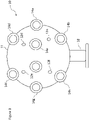
- Figure 1 illustrates a schematic presentation of an apparatus comprising a pre-determined geometric configuration for the plurality of microphones as disclosed herein. More particularly, Figure 1 shows a possible arrangement of eight positioned in the corners of a cuboid. In this way there are microphones with only a small shadowing effect from the body in all directions around the body of the apparatus. It shall be understood that such pre-determined geometric configuration can be contained inside any shape of a portable electronic device.
- the geometry of microphone locations is arranged such that at least four microphones is always visible from any direction.
- the arrangement can be such that an identical pattern of microphones is visible in x, y and z axis direction.
- microphone what is a visible part of a microphone and what part of a microphone captures the sound it is noted that the visible parts referred to herein are not necessarily the physical microphone components but a viewer could see only sound outlet/s for each microphone from each viewing angle (right-left-top-bottom-front-behind). Such outlets, for example holes on the body, can be only acoustically coupled to respective microphone components. Nevertheless, in the context of this disclosure these parts shall be understood to be covered by the general term microphone.
- the term microphone is used throughout to refer to any part of a physical microphone arrangement providing a part of the geometrical arrangement of microphones by which sound can be captured from substantially all around the body of the apparatus.
- the body has a substantially spherical shape.
- Figure 1 the ball like shape of the body is illustrated with the two circles to indicate an approximately spherical shape.
- the shape can be designed to have a suitably shaped extension, for example in the form of a holder, for handling of the apparatus.
- the extension can be designed so as to avoid interfering, in use, with the plurality of microphones, and the plurality of camera modules, if provided.
- the microphones can have separation in all directions (x, y, z) to be able to capture all directions. This may require capture by a minimum of four microphones.
- the microphone may need to be positioned such that they are not on the same plane.
- Microphone pairs may also be provided such that multiple pairs of microphones can be used to estimate sound directions from a plurality of directions around the device. Statistical analysis can be used to merge the multiple pair direction estimates into one. Information on ambience sounds can also be produced. Alternatively, all eight microphones can be used for capturing the sound field. It is understood that a directional information of a sound source in a sound field and an ambience information of the sound field can be determined by using all eight microphones.
- the plurality of microphones are arranged in a geometrical shape in such a way that sound outlet/s of at least 4 microphones can be visually seen from a viewing direction whilst other microphones are shadowed in the same viewing direction.
- other arrangements can be provided so that 2 of the plurality of microphones can be substantially shadowed from substantially all viewing directions. It is understood that this kind of positional microphone arrangement provides particular benefits in capturing and reproduction. For example, at least some or all non-shadowed microphones can be used for the mid signal determination (and generation) whereas at least some or all shadowed microphones are used for the side signal determination (and generation).
- the apparatus can also be adapted to capture video at the same time.
- the video capture can also be substantially around all directions.
- the positioning and/or number of microphones can be dependent on the positioning and/or number of cameras.
- the device can thus be configured to capture both audio and video information from all directions in order to capture an enhanced presence of visual and sound fields.
- the position of the microphones, and cameras if these are provided, makes possible to record audio, and the possible video, substantially from all directions.
- the configuration can be such that the apparatus does not need to be rotated or otherwise moved when interesting audio, and possible video, content moves around the device.
- the plurality of microphones may also be arranged relative to a plurality of second type of sensors.
- motion sensors may be provided.
- the directional part of the sound field, the direction of the sound field and/or the ambient part of the sound field can be captured.
- the captured information can be stored, at least temporarily, and used in dependence of the circumstances of the listener, for example based on viewing direction and/or position of the listener. Examples for this will be explained in more detail later in this description.
- the apparatus can be designed and dimensioned so that it is portable.
- the portable presence capture device can have microphones all around the device to be able to capture audio from all directions with minimal shadowing effects by the device.
- the apparatus is classified as portable, it can be positioned or fixed at a location.
- the apparatus can be interfaced with another mechanical part.
- the apparatus can have a preferred direction. Means for directing the apparatus by a user may also be provided.
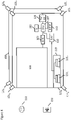
- FIG. 2 and 3 An example of an audio capturing device 10 configured according to the herein disclosed principles is shown in Figures 2 and 3 from two directions.
- the device 10 is shown to have roughly a spherically shaped body 11. However, other shapes may also be used.
- the body of the device may be, for example, about 10 - 30cm in diameter. However, this range is just an example, and other sizes, even sizes of a totally different magnitude are also possible.
- the device is provided with a plurality of microphones, Figures 2 and 3 showing microphones 12a - 12f.
- device 10 has eight microphones placed symmetrically around the body thereof.
- the microphones may be omnidirectional or directional (such as cardioids).
- the directions of the directional microphones can be arranged to approximately cover all directions around the device.
- a plurality of cameras 14a - 14h is also provided.
- Device 10 has eight cameras capable of capturing video image and covering the entire surrounding of the device. It is noted that a different number of cameras may be used, depending on the application.
- the device can have a preferred viewpoint. In Figure 2 this is indicated by arrow 13.
- the preferred viewpoint may be one where the device works best and/or where playback of files or stream captured by the device is started when the captured multimedia is viewed using e.g. a mobile device, head mounted display, computer screen, virtual reality environment with many displays and so on.
- the preferred viewpoint may be indicated by the shape of the device.
- a protruding element may be provided in the shape of the otherwise mostly symmetric device to point towards or away from the preferred viewpoint.
- this is provided by a protruding element 16 extending from the otherwise spherical body.
- the element 16 also provide handle for a user to direct and/or move the device around.
- the preferred direction may also be indicated by an appropriate marking on the device. In this way the user intuitively knows the preferred orientation of the device.
- the microphones are symmetrically placed on the body to help produce symmetric shadowing by the device body for good sounding audio (at least in some viewing directions).
- at least some subsets of microphones are symmetrically placed.
- Symmetric arrangement can be provided by pairs of microphones or by all microphones. Symmetric placements may also help in creating signals where the delays from different sound sources around the device are symmetric. This can make analysis of the sound source directions easier, and also can make the signals reproduced accurately by producing symmetric signals to both ears. This can be provided at least in certain viewing directions.
- the device may contain its own power source, processor(s), memory, wireless networking capability etc. In some cases the device may be connected to a power supply and cable network.
- Figures 2 and 3 show also a stand 18. This can be of any shape and design, for example a tripod, a pivoted arm, a rotatable arm and so forth. It is also possible to have a capturing device with no stand.
- the microphones can be arranged in various directions. Below are certain examples where the center of the device is considered to provide the origin (see Figure 1 ) and where zero degrees for both azimuth and elevation is the preferred viewpoint direction. In the tables below left column is the azimuth and the right column is the elevation in degrees.
- the wires from the device microphones to the processor(s) may be symmetric so that any disturbance caused by the device electronics is similar in all microphone signals. This can be provide advantage in processing the microphone signals because the differences between them are caused more by the relative positions of the microphones to the sound sources than the device electronics.
- the microphone inlets and device shape around the inlets may be similar. This helps in processing the microphone signals because the differences between them are caused more by the relative positions of the microphones to the sound sources than the shape of the inlets and the shape of the device.
- a single final direction estimate is the estimated from the multitude of directions using statistic processing (e.g. mean or median direction).
- Microphones may be placed relative to a multiple of cameras so that each camera in the device has a subset of microphones positioned similarly around it. This can be advantageous for example in a case where viewpoints are used directly instead of using video processing to create viewpoints in between the cameras. When viewpoints are used in this way and the microphones are placed similarly with respect to each camera, the audio properties are similar regardless of which camera is being used.
- the microphones are located in such a way that when a sound source is substantially located on-axis (along either x, y, z, -x, -y or -z axis, see Figure 1 ) from the electronic device, the electronic device is able to substantially point at least four microphones (and accordingly microphone outlet/s for respective microphones) towards the direction of the sound source.
- the microphones can be arranged in a substantially symmetrical configuration in view of each axis direction, Figure 1 showing an example of such configuration. For example, there can be four pairs of microphones (Mic1, Mic2), (Mic3, Mic4), (Mic5, Mic6) and (Mic7, Mic9) that all point to z-axis direction. This enables easy beamforming towards z (and -z) axis directions. Also, this configuration can be advantageously used for estimating sound source direction using the time differences when the sound arrives in each microphone.
- the device can capture many aspects of the spatial sound field. For example: the directional part of the sound field, the direction of a sound source in the sound field and the ambient part of the sound field.
- the directional part can be captured using beamforming or for example methods presented in GB patent application 1511949.8 .
- the GB application discloses certain examples how it is possible to generate at least one mid signal configured to represent the audio source information and at least two side signals configured to represent the ambient audio information.
- the captured component can be stored and/or processed separately. Acoustical shadowing effect may be exploited with respect to certain embodiments to improve the audio quality by offering improved spatial source separation for sounds originating from different directions and employing multiple microphones around the acoustically shadowing object.
- the mid signal can be created using adaptively selected subsets of available microphones and the multiple side signals using multiple microphones.
- the mid signal can be created adaptively based on an estimated direction of arrival (DOA).
- DOA estimated direction of arrival
- the microphone 'nearest' or 'nearer' to the estimated DOA may be selected as a 'reference' microphone.
- the other selected microphone audio signals can then be time aligned with the audio signal from the 'reference' audio signal.
- the time-aligned microphone signals may then be summed to form the mid signal. It is also possible that the selected microphone audio signals are weighted based on the estimated DOA to avoid discontinuities when changing from one microphone subset to another.
- the side signals may be created by using two or more microphones for creating the multiple side signals.
- the microphone audio signals can be weighted with an adaptive time-frequency-dependent gain. These weighted audio signals may be convolved with a predetermined decorrelator or filter configure to decorrelate the audio signals.
- the generation of the multiple audio signals may further comprise passing the audio signal through a suitable presentation or reproduction related filter.
- the audio signals may be passed through a head related transfer function (HRTF) filter where earphones or earpiece reproduction is expected or a multi-channel loudspeaker transfer function filter where loudspeaker presentation is expected.
- HRTF head related transfer function
- a subset of the microphones are used for capturing the directional part.
- the number of microphones and which microphones are used depend on the characteristics of the sound e.g. on the direction of the sound.
- the direction of the sound may be estimated for example using multilateration that is based on the time differences when a sound from a sound source arrives at different microphones. The time differences may be estimated using correlation.
- a subset of the microphones is used for estimating the direction of the sound sources. The direction may be estimated separately for short time segments (typically 20ms) and for many frequency bands (for example third octave bands, Bark bands or similar).
- the number of microphones and which microphones are used may depend on the characteristics of the sound. For example, one might first make an initial estimate using all microphones and then make a more reliable estimate using the microphones that are on the same side of the device as the initial estimated source direction was. Another example method can be found in US publication 2012/0128174 .
- the ambience is estimated using all microphones.
- All the methods can work based on a frequency band segmentation, time segmentation and directional segmentation so that the directional signal, directional information and ambience signal are different in each combination of segments.
- Audio captured by the device may be stored, transmitted and/or streamed as such or converted to some other audio representation.
- the audio may also be compressed using existing or future audio codecs such as mp3, MPEG AAC, Dolby AC-3, MPEG SAOC, etc.
- the audio data can be in the form of direct microphone signals thus leaving the rendering into a suitable reproduction method (stereo speakers, 5.1 speakers, more complex speaker setups with "height speakers", headphones etc.), the audio data can be in the form of already made 5.1, 7.1 signals etc., the audio data can be in the form multiple parallel signals (e.g.
- the audio data can be in the form of one or more directional signals + directional information + one or more ambient signals (this form again leaves rendering to a suitable reproductions method such as 5.1, binaural etc. to be done at the device that receives the "directional + directional information + ambient representation"; GB patent application 1511949.8 , and US publications 2012/0128174 and 2013/0044884 give examples how this can be done).
- the captured audio data may also be reproduced by a device with build in speakers or through headphones (possibly as a binaural signal) or by a mobile phone, tablet, laptop, PC etc.
- a possibility for reproducing the data captured by the herein described apparatus is by a head mounted display with headphones so that the user viewing and listening to the data can turn his head and experience all directions in audio, and also in video, if this capability is provided.
- the produced information of the captured sound can be advantageously used in augmented reality applications.
- a listener / viewer may even be provided with real time stream of video and audio.
- video and audio can track the real life situation.
- a mechanical or wireless connector may also be provided so as to enable an interface mechanism.
- the device can be freely rotated and positioned in any direction as desired.
- the design can comprise a holder and/or a base parts but in other example embodiments such holder and/or base parts may not be required.
- the size of a portable capturing device can have any dimensions, for example, the length, width and height can be designed at around 15-30 cm for a symmetrical shape portable design. The total length, height, width dimensions may be enlarged due to the holder or handling parts as mentioned above.
- the size of the portable device can be influenced by the number of mentioned plurality of microphones and/or camera modules.
- the size of the portable device can also be influenced by the pre-determined geometric microphone configuration.
- An audio capture device may comprise various additional features, such as an internal battery or connectivity for an external battery, an internal charger or connectivity for an external charger, one or more suitable connectors such as micro USB, AV jack, memory card, HDMI, DisplayPort, DVI, RCA, XLR, 3.5mm plug, 1 ⁇ 4" plug etc., one or more processors including DSP algorithms etc., internal memory, wired and/or wireless connectivity modules such as LAN, BT, WLAN, infrared etc., cameras, display such as LCD, speakers, and other sensors such as GPS, accelerometers, touch sensors and so on.
- suitable connectors such as micro USB, AV jack, memory card, HDMI, DisplayPort, DVI, RCA, XLR, 3.5mm plug, 1 ⁇ 4" plug etc.
- processors including DSP algorithms etc.
- internal memory such as LAN, BT, WLAN, infrared etc.
- display such as LCD, speakers, and other sensors such as GPS, accelerometers, touch sensors and so on.
- a presence capture device can be provided where audio and its direction is recorded from all directions around the device. Orientation of the device does not need to be changed, e.g. the device does not need to be rotated when sound sources (and visual sources) of interest move around the device because the device records all directions simultaneously.
- Microphone locations enable using statistical analysis for improving sound direction analysis. Symmetrical device shape and microphone locations and similar inlets and wiring all contribute to microphone signals that are easier to analyze and sound better. Unlike in the prior art where devices cannot capture sound and video from all directions, thus missing some potentially interesting content, the device can be arranged to capture all sound in its surrounding.
- the device Since the device does not need to be turned during capture, handling the device that could cause handling noise and can require a user near the device causing added acoustic shadowing effect can be avoided.
- the device is easy to use. The user does not necessary need to have a professional sound technician level understanding of spatial sound processing. Instead, the user can position the device, and accordingly the configured geometry of the microphones so that the device electronics can process the required information for accurate spatial audio capturing and reproduction of the captured sound.
- FIG 4 shows an example for internal components of audio capture apparatus suitable for implementing some embodiments.
- the audio capture apparatus 100 comprises a microphone array 101.
- the microphone array 101 comprises a plurality (for example a number N) of microphones.
- the example shown in Figure 4 shows the microphone array 101 comprising eight microphones 121 1 to 121 8 organised in a hexahedron configuration.
- the microphones may be organised such that they are located at the corners of an audio capture device casing such that the user of the audio capture apparatus 100 may use and/or hold the apparatus without covering or blocking any of the microphones.
- the microphones 121 are shown configured to convert acoustic waves into suitable electrical audio signals.
- the microphones 121 are capable of capturing audio signals and each outputting a suitable digital signal.
- the microphones or array of microphones 121 can comprise any suitable microphone or audio capture means, for example a condenser microphone, capacitor microphone, electrostatic microphone, Electret condenser microphone, dynamic microphone, ribbon microphone, carbon microphone, piezoelectric microphone, or microelectrical-mechanical system (MEMS) microphone.
- the microphones 121 can in some embodiments output the audio captured signal to an analogue-to-digital converter (ADC) 103.
- ADC analogue-to-digital converter
- the audio capture apparatus 100 may further comprise an analogue-to-digital converter 103.
- the analogue-to-digital converter 103 may be configured to receive the audio signals from each of the microphones 121 in the microphone array 101 and convert them into a format suitable for processing.
- the microphones 121 may comprise an ASIC where such-analogue-to-digital conversions may take place in each microphone.
- the analogue-to-digital converter 103 can be any suitable analogue-to-digital conversion or processing means.
- the analogue-to-digital converter 103 may be configured to output the digital representations of the audio signals to a processor 107 or to a memory 111.
- the audio capture apparatus 100 electronics can also comprise at least one processor or central processing unit 107.
- the processor 107 can be configured to execute various program codes.
- the implemented program codes can comprise, for example, spatial processing, mid signal generation, side signal generation, time-to-frequency domain audio signal conversion, frequency-to-time domain audio signal conversions and other algorithmic routines.
- the audio capture apparatus can further comprise a memory 111.
- the at least one processor 107 can be coupled to the memory 111.
- the memory 111 can be any suitable storage means.
- the memory 111 can comprise a program code section for storing program codes implementable upon the processor 107.
- the memory 111 can further comprise a stored data section for storing data, for example data that has been processed or to be processed. The implemented program code stored within the program code section and the data stored within the stored data section can be retrieved by the processor 107 whenever needed via the memory-processor coupling.
- the audio capture apparatus can also comprise a user interface 105.
- the user interface 105 can be coupled in some embodiments to the processor 107.
- the processor 107 can control the operation of the user interface 105 and receive inputs from the user interface 105.
- the user interface 105 can enable a user to input commands to the audio capture apparatus 100, for example via a keypad.
- the user interface 105 can enable the user to obtain information from the apparatus 100.
- the user interface 105 may comprise a display configured to display information from the apparatus 100 to the user.
- the user interface 105 can in some embodiments comprise a touch screen or touch interface capable of both enabling information to be entered to the apparatus 100 and further displaying information to the user of the apparatus 100.
- the audio capture apparatus 100 comprises a transceiver 109.
- the transceiver 109 in such embodiments can be coupled to the processor 107 and configured to enable a communication with other apparatus or electronic devices, for example via a wireless or fixed line communications network.
- the transceiver 109 or any suitable transceiver or transmitter and/or receiver means can in some embodiments be configured to communicate with other electronic devices or apparatus via a wireless or wired coupling.
- the transceiver 109 can communicate with further apparatus by any suitable known communications protocol.
- the transceiver 109 or transceiver means can use a suitable universal mobile telecommunications system (UMTS) protocol, a wireless local area network (WLAN) protocol such as for example IEEE 802.X, a suitable short-range radio frequency communication protocol such as Bluetooth, or infrared data communication pathway (IRDA).
- UMTS universal mobile telecommunications system
- WLAN wireless local area network
- IRDA infrared data communication pathway
- the audio capture apparatus 100 may also comprise a digital-to-analogue converter 113.
- the digital-to-analogue converter 113 may be coupled to the processor 107 and/or memory 111 and be configured to convert digital representations of audio signals (such as from the processor 107) to a suitable analogue format suitable for presentation via an audio subsystem output.
- the digital-to-analogue converter (DAC) 113 or signal processing means can in some embodiments be any suitable DAC technology.
- the audio subsystem can comprise in some embodiments an audio subsystem output 115.
- An example as shown in Figure 4 is a pair of speakers 131 1 and 131 2 .
- the speakers 131 can in some embodiments be configured to receive the output from the digital-to-analogue converter 113 and present the analogue audio signal to the user.
- the speakers 131 can be representative of a headset, for example a set of earphones, or cordless earphones.
- the audio capture apparatus 100 is shown operating within an environment or audio scene wherein there are multiple audio sources present.
- the environment comprises a first audio source 151, a vocal source such as a person talking at a first location.
- the environment shown in Figure 4 comprises a second audio source 153, an instrumental source such as a trumpet playing, at a second location.
- the first and second locations for the first and second audio sources 151 and 153 respectively may be different.
- the first and second audio sources may generate audio signals with different spectral characteristics.
- the audio capture apparatus 100 is shown having both audio capture and audio presentation components, it would be understood that the apparatus 100 can comprise just the audio capture elements such that only the microphones (for audio capture) are present. Similarly in the following examples the audio capture apparatus 100 is described being suitable to performing the spatial audio signal processing described hereafter.
- the audio capture components and the spatial signal processing components may also be separate. In other words the audio signals may be captured by a first apparatus comprising the microphone array and a suitable transmitter. The audio signals may then be received and processed in a manner as described herein in a second apparatus comprising a receiver and processor and memory.
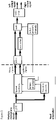
- Figure 5 is a schematic block diagram illustrating processing of signals from multiple microphones to output signals on two channels. Other multi-channel reproductions are also possible. In addition to input from the microphones, input regarding head orientation can be used by the spatial synthesis.
- the components can be arranged in various different manners.
- everything left of the dashed line takes place in the presence capture device, and everything right of the Direct/Ambient signals takes place in a viewing / listening device, for example a head mounted display with headphones, a tablet, mobile phone, laptop and so on.
- the direct signals, ambient signals and directional information can be coded/stored/streamed/transmitted to the viewing device.
- the presence capture device can comprise a display and a headphone connector (e.g. a 1/4" plug) for viewing the captured media.
- the direct signals, ambient signals and directional information are coded/stored in the presence capture device.
- the user viewing the media has preferably a head mounted device with headphones which switches between the output signals 32 depending on the direction the user is looking to.
- a head mounted device with headphones which switches between the output signals 32 depending on the direction the user is looking to.
- This can be provided for a mobile phone, tablet, laptop etc.
- the direction the user is looking at is detected using e.g. a head tracker in a head mounted device, or accelerometer/mouse/touchscreen in a mobile phone, tablet, laptop etc.
- the output signals 32 can be coded/stored/streamed/transmitted to the viewing device.
- the microphone signals as such are coded/stored/streamed/transmitted to the viewing device.
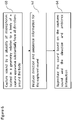
- Figure 6 is a flowchart for a method for capturing sound.
- sound is captured at 60 by a plurality of microphones located in a predetermined geometry relative to a body of a capture apparatus substantially from all directions around the body.
- direction and ambience information is produced for the captured sound. Reproduction of the sound takes then place at 64.
- aspects may be implemented in hardware, while other aspects may be implemented in firmware or software which may be executed by a controller, microprocessor or other computing device, although the invention is not limited thereto. While various aspects of the invention may be illustrated and described as block diagrams, flow charts, or using some other pictorial representation, it is well understood that these blocks, apparatus, systems, techniques or methods described herein may be implemented in, as non-limiting examples, hardware, software, firmware, special purpose circuits or logic, general purpose hardware or controller or other computing devices, or some combination thereof.
- a computer software executable by a data processor such as in the processor entity, or by hardware, or by a combination of software and hardware may be provided.
- any blocks of the logic flow as in the Figures may represent program steps, or interconnected logic circuits, blocks and functions, or a combination of program steps and logic circuits, blocks and functions.
- the software may be stored on such physical media as memory chips, or memory blocks implemented within the processor, magnetic media such as hard disk or floppy disks, and optical media such as for example DVD and the data variants thereof, CD.
- the memory may be of any type suitable to the local technical environment and may be implemented using any suitable data storage technology, such as semiconductor-based memory devices, magnetic memory devices and systems, optical memory devices and systems, fixed memory and removable memory.
- the data processors may be of any type suitable to the local technical environment, and may include one or more of general purpose computers, special purpose computers, microprocessors, digital signal processors (DSPs), application specific integrated circuits (ASIC), gate level circuits and processors based on multi-core processor architecture, as non-limiting examples.
- Embodiments of the inventions may be practiced in various components such as integrated circuit modules.
- the design of integrated circuits is by and large a highly automated process.
- Complex and powerful software tools are available for converting a logic level design into a semiconductor circuit design ready to be etched and formed on a semiconductor substrate.
- Programs such as those provided by Synopsys, Inc. of Mountain View, California and Cadence Design, of San Jose, California automatically route conductors and locate components on a semiconductor chip using well established rules of design as well as libraries of pre-stored design modules.
- the resultant design in a standardized electronic format (e.g., Opus, GDSII, or the like) may be transmitted to a semiconductor fabrication facility or "fab" for fabrication.
Landscapes
- Physics & Mathematics (AREA)
- Engineering & Computer Science (AREA)
- Acoustics & Sound (AREA)
- Signal Processing (AREA)
- Health & Medical Sciences (AREA)
- Otolaryngology (AREA)
- General Health & Medical Sciences (AREA)
- Circuit For Audible Band Transducer (AREA)
- Obtaining Desirable Characteristics In Audible-Bandwidth Transducers (AREA)
Claims (11)
- Appareil comprenantun corps,une pluralité de microphones (121) agencés symétriquement dans une géométrie prédéterminée par rapport au corps de sorte que l'appareil soit configuré pour capturer un champ sonore sensiblement provenant de toutes les directions autour du corps sur la base de la géométrie prédéterminée, dans lequel la pluralité de microphones dans la géométrie prédéterminée par rapport au corps sont agencés de sorte que le champ sonore provenant de n'importe quelle direction autour du corps soit configuré pour être capturé via au moins quatre microphones de la pluralité de microphones (121) sans ombre acoustique significative par le corps et capturé via d'autres microphones de la pluralité de microphones (121) avec une ombre acoustique par le corps ; etdes circuits électroniques pour traiter des signaux provenant de la pluralité de microphones, où les circuits électroniques sont configurés pour déterminer des informations d'ambiance du champ sonore sur la base, au moins partiellement, des signaux reçus de la pluralité de microphones (121) et des informations de direction d'au moins une source sonore dans ledit champ sonore autour du corps sur la base, au moins partiellement, des signaux reçus des au moins quatre microphones de la pluralité de microphones (121) sans ombre acoustique significative.
- Appareil selon la revendication 1, comprenant une pluralité de capteurs, dans lequel la géométrie prédéterminée et/ou la pluralité de microphones formant la géométrie prédéterminée dépendent de l'emplacement et/ou d'un nombre de la pluralité de capteurs.
- Appareil selon la revendication 2, dans lequel la pluralité de capteurs comprend des caméras et/ou des capteurs de mouvement.
- Appareil selon l'une quelconque des revendications précédentes, dans lequel le corps a une forme extérieure sensiblement sphérique.
- Appareil selon l'une quelconque des revendications précédentes, dans lequel la pluralité de microphones sont agencés de manière symétrique à l'intérieur du corps.
- Appareil selon l'une quelconque des revendications précédentes, dans lequel la pluralité de microphones (121) sont agencés selon au moins l'une manières suivantes :de manière identique au corps de sorte que le champ sonore soit capturé de la même manière avec chaque microphone ;de manière identique aux circuits électroniques de sorte que les signaux sonores provenant de chaque microphone soient soumis à une perturbation similaire causée par d'autres composants et/ou retards dans l'appareil ; etune manière telle qu'aucune orientation du corps n'est nécessaire lors de l'utilisation.
- Appareil selon l'une quelconque des revendications précédentes, comprenant un élément en saillie s'étendant depuis le corps à un emplacement où l'élément en saillie et/ou l'utilisation de l'élément en saillie provoque le moins d'interférences pour la capture du champ sonore.
- Appareil selon la revendication 7, dans lequel l'élément en saillie est destiné à commander une direction du corps et/ou à manipuler l'appareil et/ou à indiquer une direction préférée.
- Appareil selon l'une quelconque des revendications précédentes, dans lequelles circuits électroniques sont configurés pour produire un nombre prédéterminé de canaux sonores pour la reproduction sur la base des signaux reçus de la pluralité de microphones ; et soittous les circuits électroniques requis pour générer au moins un signal pour un dispositif de reproduction sont inclus dans le corps de l'appareil ; soitau moins une partie des circuits électroniques requis pour générer au moins un signal pour un dispositif de reproduction sont externes au corps de l'appareil.
- Appareil selon l'une quelconque des revendications précédentes, dans lequel la géométrie prédéterminée est sensiblement une géométrie cubique et chaque microphone de la pluralité de microphones (121) est situé à un coin de la géométrie cubique.
- Procédé pour capturer un champ sonore, comprenant les étapes consistant à :capturer un champ sonore avec une pluralité de microphones (121), situés symétriquement dans une géométrie prédéterminée par rapport à un corps d'un appareil de capture (100), provenant sensiblement de toutes les directions autour du corps sur la base de la géométrie prédéterminée, dans lequel la pluralité de microphones (121) dans la géométrie prédéterminée par rapport au corps sont agencés de sorte que le champ sonore provenant de n'importe quelle direction autour du corps soit configuré pour être capturé via au moins quatre microphones de la pluralité de microphones (121) sans ombre acoustique significative par le corps et capturé via d'autres microphones de la pluralité de microphones (121) avec une ombre acoustique par le corps ; etproduire des informations de direction d'au moins une source sonore dans ledit champ sonore autour du corps sur la base, au moins partiellement, de signaux reçus des au moins quatre microphones de la pluralité de microphones (121) sans ombre acoustique significative et des informations d'ambiance dudit champ sonore autour du corps sur la base, au moins partiellement, de signaux reçus de la pluralité de microphones.
Applications Claiming Priority (3)
| Application Number | Priority Date | Filing Date | Title |
|---|---|---|---|
| GB1511949.8A GB2540175A (en) | 2015-07-08 | 2015-07-08 | Spatial audio processing apparatus |
| GB1513198.0A GB2542112A (en) | 2015-07-08 | 2015-07-27 | Capturing sound |
| PCT/FI2016/050493 WO2017005977A1 (fr) | 2015-07-08 | 2016-07-05 | Capture de son |
Publications (3)
| Publication Number | Publication Date |
|---|---|
| EP3320677A1 EP3320677A1 (fr) | 2018-05-16 |
| EP3320677A4 EP3320677A4 (fr) | 2019-01-23 |
| EP3320677B1 true EP3320677B1 (fr) | 2023-01-04 |
Family
ID=54013649
Family Applications (2)
| Application Number | Title | Priority Date | Filing Date |
|---|---|---|---|
| EP16820897.3A Active EP3320677B1 (fr) | 2015-07-08 | 2016-07-05 | Capture de son |
| EP16820898.1A Active EP3320692B1 (fr) | 2015-07-08 | 2016-07-05 | Appareil de traitement spatial de signaux audio |
Family Applications After (1)
| Application Number | Title | Priority Date | Filing Date |
|---|---|---|---|
| EP16820898.1A Active EP3320692B1 (fr) | 2015-07-08 | 2016-07-05 | Appareil de traitement spatial de signaux audio |
Country Status (5)
| Country | Link |
|---|---|
| US (3) | US11115739B2 (fr) |
| EP (2) | EP3320677B1 (fr) |
| CN (2) | CN107925815B (fr) |
| GB (2) | GB2540175A (fr) |
| WO (2) | WO2017005978A1 (fr) |
Families Citing this family (57)
| Publication number | Priority date | Publication date | Assignee | Title |
|---|---|---|---|---|
| US9980078B2 (en) | 2016-10-14 | 2018-05-22 | Nokia Technologies Oy | Audio object modification in free-viewpoint rendering |
| EP3337066B1 (fr) * | 2016-12-14 | 2020-09-23 | Nokia Technologies Oy | Mélange audio réparti |
| EP3343349B1 (fr) | 2016-12-30 | 2022-06-15 | Nokia Technologies Oy | Appareil et procédés associés dans le domaine de la réalité virtuelle |
| US11096004B2 (en) | 2017-01-23 | 2021-08-17 | Nokia Technologies Oy | Spatial audio rendering point extension |
| GB2559765A (en) * | 2017-02-17 | 2018-08-22 | Nokia Technologies Oy | Two stage audio focus for spatial audio processing |
| WO2018164681A1 (fr) * | 2017-03-08 | 2018-09-13 | Hewlett-Packard Development Company, L.P. | Sortie de signal audio combinée |
| US10531219B2 (en) | 2017-03-20 | 2020-01-07 | Nokia Technologies Oy | Smooth rendering of overlapping audio-object interactions |
| GB2561596A (en) * | 2017-04-20 | 2018-10-24 | Nokia Technologies Oy | Audio signal generation for spatial audio mixing |
| US11074036B2 (en) | 2017-05-05 | 2021-07-27 | Nokia Technologies Oy | Metadata-free audio-object interactions |
| US10165386B2 (en) * | 2017-05-16 | 2018-12-25 | Nokia Technologies Oy | VR audio superzoom |
| GB2562518A (en) | 2017-05-18 | 2018-11-21 | Nokia Technologies Oy | Spatial audio processing |
| GB2563606A (en) | 2017-06-20 | 2018-12-26 | Nokia Technologies Oy | Spatial audio processing |
| GB2563635A (en) | 2017-06-21 | 2018-12-26 | Nokia Technologies Oy | Recording and rendering audio signals |
| GB201710093D0 (en) | 2017-06-23 | 2017-08-09 | Nokia Technologies Oy | Audio distance estimation for spatial audio processing |
| GB2563670A (en) * | 2017-06-23 | 2018-12-26 | Nokia Technologies Oy | Sound source distance estimation |
| GB201710085D0 (en) | 2017-06-23 | 2017-08-09 | Nokia Technologies Oy | Determination of targeted spatial audio parameters and associated spatial audio playback |
| GB2563857A (en) | 2017-06-27 | 2019-01-02 | Nokia Technologies Oy | Recording and rendering sound spaces |
| WO2019060251A1 (fr) * | 2017-09-20 | 2019-03-28 | Knowles Electronics, Llc | Conception de réseau de microphones rentable pour filtrage spatial |
| US11395087B2 (en) | 2017-09-29 | 2022-07-19 | Nokia Technologies Oy | Level-based audio-object interactions |
| US10349169B2 (en) * | 2017-10-31 | 2019-07-09 | Bose Corporation | Asymmetric microphone array for speaker system |
| GB2568940A (en) | 2017-12-01 | 2019-06-05 | Nokia Technologies Oy | Processing audio signals |
| CN111492668B (zh) * | 2017-12-14 | 2021-10-29 | 巴科股份有限公司 | 用于在限定的空间内定位音频信号的发源点的方法和系统 |
| US10542368B2 (en) | 2018-03-27 | 2020-01-21 | Nokia Technologies Oy | Audio content modification for playback audio |
| GB2572368A (en) * | 2018-03-27 | 2019-10-02 | Nokia Technologies Oy | Spatial audio capture |
| GB2573537A (en) * | 2018-05-09 | 2019-11-13 | Nokia Technologies Oy | An apparatus, method and computer program for audio signal processing |
| CN108989947A (zh) * | 2018-08-02 | 2018-12-11 | 广东工业大学 | 一种移动声源的获取方法及系统 |
| US10565977B1 (en) | 2018-08-20 | 2020-02-18 | Verb Surgical Inc. | Surgical tool having integrated microphones |
| KR102151433B1 (ko) * | 2019-01-02 | 2020-09-03 | 올리브유니온(주) | 환경 변화 및 소음 변화에 따른 적응형 입체 히어링 시스템 및 그 방법 |
| GB2582748A (en) | 2019-03-27 | 2020-10-07 | Nokia Technologies Oy | Sound field related rendering |
| GB2582749A (en) | 2019-03-28 | 2020-10-07 | Nokia Technologies Oy | Determination of the significance of spatial audio parameters and associated encoding |
| EP3742185B1 (fr) * | 2019-05-20 | 2023-08-09 | Nokia Technologies Oy | Appareil et procédés associés de capture d'audio spatial |
| WO2021013346A1 (fr) * | 2019-07-24 | 2021-01-28 | Huawei Technologies Co., Ltd. | Appareil pour déterminer des positions spatiales de multiples sources audio |
| US10959026B2 (en) * | 2019-07-25 | 2021-03-23 | X Development Llc | Partial HRTF compensation or prediction for in-ear microphone arrays |
| GB2587335A (en) | 2019-09-17 | 2021-03-31 | Nokia Technologies Oy | Direction estimation enhancement for parametric spatial audio capture using broadband estimates |
| CN111077496B (zh) * | 2019-12-06 | 2022-04-15 | 深圳市优必选科技股份有限公司 | 一种基于麦克风阵列的语音处理方法、装置及终端设备 |
| GB2590650A (en) | 2019-12-23 | 2021-07-07 | Nokia Technologies Oy | The merging of spatial audio parameters |
| GB2590651A (en) | 2019-12-23 | 2021-07-07 | Nokia Technologies Oy | Combining of spatial audio parameters |
| GB2592630A (en) * | 2020-03-04 | 2021-09-08 | Nomono As | Sound field microphones |
| GB2595871A (en) | 2020-06-09 | 2021-12-15 | Nokia Technologies Oy | The reduction of spatial audio parameters |
| US11264017B2 (en) * | 2020-06-12 | 2022-03-01 | Synaptics Incorporated | Robust speaker localization in presence of strong noise interference systems and methods |
| GB2598960A (en) | 2020-09-22 | 2022-03-23 | Nokia Technologies Oy | Parametric spatial audio rendering with near-field effect |
| US12475901B2 (en) | 2020-10-05 | 2025-11-18 | Nokia Technologies Oy | Quantisation of audio parameters |
| EP4264603A4 (fr) | 2020-12-15 | 2024-07-17 | Nokia Technologies Oy | Quantification de paramètres audio spatiaux |
| JP7459779B2 (ja) * | 2020-12-17 | 2024-04-02 | トヨタ自動車株式会社 | 音源候補抽出システムおよび音源探査方法 |
| KR20230133341A (ko) | 2021-01-18 | 2023-09-19 | 노키아 테크놀로지스 오와이 | 공간 오디오 파라미터들의 변환 |
| EP4040801A1 (fr) * | 2021-02-09 | 2022-08-10 | Oticon A/s | Prothèse auditive conçue pour sélectionner un microphone de référence |
| US20240185869A1 (en) | 2021-03-22 | 2024-06-06 | Nokia Technologies Oy | Combining spatial audio streams |
| GB2611357A (en) * | 2021-10-04 | 2023-04-05 | Nokia Technologies Oy | Spatial audio filtering within spatial audio capture |
| GB2613628A (en) | 2021-12-10 | 2023-06-14 | Nokia Technologies Oy | Spatial audio object positional distribution within spatial audio communication systems |
| GB2615607A (en) | 2022-02-15 | 2023-08-16 | Nokia Technologies Oy | Parametric spatial audio rendering |
| JP2025510730A (ja) | 2022-03-22 | 2025-04-15 | ノキア テクノロジーズ オサケユイチア | パラメトリック空間オーディオエンコーディング |
| TWI818590B (zh) * | 2022-06-16 | 2023-10-11 | 趙平 | 全向收音裝置 |
| GB2623516A (en) | 2022-10-17 | 2024-04-24 | Nokia Technologies Oy | Parametric spatial audio encoding |
| CN115665615A (zh) * | 2022-10-19 | 2023-01-31 | 立讯精密科技(南京)有限公司 | 用于头戴设备的语音方向识别系统及其方法 |
| CN115604626A (zh) * | 2022-11-09 | 2023-01-13 | 上海海洋大学(Cn) | 一种空心立方形传声器阵列及其使用方法 |
| KR20250113460A (ko) | 2022-11-21 | 2025-07-25 | 노키아 테크놀로지스 오와이 | 공간 오디오 파라미터에 대한 주파수 서브밴드 결정 |
| GB2625990A (en) | 2023-01-03 | 2024-07-10 | Nokia Technologies Oy | Recalibration signaling |
Citations (1)
| Publication number | Priority date | Publication date | Assignee | Title |
|---|---|---|---|---|
| US20130202114A1 (en) * | 2010-11-19 | 2013-08-08 | Nokia Corporation | Controllable Playback System Offering Hierarchical Playback Options |
Family Cites Families (38)
| Publication number | Priority date | Publication date | Assignee | Title |
|---|---|---|---|---|
| US6041127A (en) * | 1997-04-03 | 2000-03-21 | Lucent Technologies Inc. | Steerable and variable first-order differential microphone array |
| US6198693B1 (en) * | 1998-04-13 | 2001-03-06 | Andrea Electronics Corporation | System and method for finding the direction of a wave source using an array of sensors |
| US20030147539A1 (en) * | 2002-01-11 | 2003-08-07 | Mh Acoustics, Llc, A Delaware Corporation | Audio system based on at least second-order eigenbeams |
| US7852369B2 (en) * | 2002-06-27 | 2010-12-14 | Microsoft Corp. | Integrated design for omni-directional camera and microphone array |
| US8041042B2 (en) * | 2006-11-30 | 2011-10-18 | Nokia Corporation | Method, system, apparatus and computer program product for stereo coding |
| DE602007004632D1 (de) * | 2007-11-12 | 2010-03-18 | Harman Becker Automotive Sys | Mischung von ersten und zweiten Tonsignalen |
| ATE507683T1 (de) * | 2007-11-13 | 2011-05-15 | Akg Acoustics Gmbh | Mikrofonanordnung mit drei druckgradientenwandlern |
| US8180078B2 (en) * | 2007-12-13 | 2012-05-15 | At&T Intellectual Property I, Lp | Systems and methods employing multiple individual wireless earbuds for a common audio source |
| JP5538425B2 (ja) * | 2008-12-23 | 2014-07-02 | コーニンクレッカ フィリップス エヌ ヴェ | スピーチ取り込み及びスピーチレンダリング |
| EP2396637A1 (fr) * | 2009-02-13 | 2011-12-21 | Nokia Corp. | Codage et décodage d'ambiance pour des applications audio |
| WO2010125228A1 (fr) * | 2009-04-30 | 2010-11-04 | Nokia Corporation | Codage de signaux audio multivues |
| US9307326B2 (en) * | 2009-12-22 | 2016-04-05 | Mh Acoustics Llc | Surface-mounted microphone arrays on flexible printed circuit boards |
| CN102859590B (zh) | 2010-02-24 | 2015-08-19 | 弗劳恩霍夫应用研究促进协会 | 产生增强下混频信号的装置、产生增强下混频信号的方法以及计算机程序 |
| US8988970B2 (en) * | 2010-03-12 | 2015-03-24 | University Of Maryland | Method and system for dereverberation of signals propagating in reverberative environments |
| US8100205B2 (en) * | 2010-04-06 | 2012-01-24 | Robotex Inc. | Robotic system and method of use |
| EP2448289A1 (fr) * | 2010-10-28 | 2012-05-02 | Fraunhofer-Gesellschaft zur Förderung der angewandten Forschung e.V. | Appareil et procédé de dérivation dýinformations directionnelles et systèmes |
| US9456289B2 (en) * | 2010-11-19 | 2016-09-27 | Nokia Technologies Oy | Converting multi-microphone captured signals to shifted signals useful for binaural signal processing and use thereof |
| US8989360B2 (en) * | 2011-03-04 | 2015-03-24 | Mitel Networks Corporation | Host mode for an audio conference phone |
| JP2012234150A (ja) * | 2011-04-18 | 2012-11-29 | Sony Corp | 音信号処理装置、および音信号処理方法、並びにプログラム |
| KR101803293B1 (ko) * | 2011-09-09 | 2017-12-01 | 삼성전자주식회사 | 입체 음향 효과를 제공하는 신호 처리 장치 및 신호 처리 방법 |
| KR101282673B1 (ko) * | 2011-12-09 | 2013-07-05 | 현대자동차주식회사 | 음원 위치 추정 방법 |
| US20130315402A1 (en) | 2012-05-24 | 2013-11-28 | Qualcomm Incorporated | Three-dimensional sound compression and over-the-air transmission during a call |
| WO2013186593A1 (fr) * | 2012-06-14 | 2013-12-19 | Nokia Corporation | Appareil de capture audio |
| BR122021021487B1 (pt) * | 2012-09-12 | 2022-11-22 | Fraunhofer-Gesellschaft zur Förderung der angewandten Forschung e. V | Aparelho e método para fornecer capacidades melhoradas de downmix guiado para áudio 3d |
| US9549253B2 (en) | 2012-09-26 | 2017-01-17 | Foundation for Research and Technology—Hellas (FORTH) Institute of Computer Science (ICS) | Sound source localization and isolation apparatuses, methods and systems |
| EP2738762A1 (fr) | 2012-11-30 | 2014-06-04 | Aalto-Korkeakoulusäätiö | Procédé de filtrage spatial d'au moins un premier signal sonore, support de stockage lisible par ordinateur et système de filtrage spatial basé sur la cohérence de motifs croisés |
| US10127912B2 (en) | 2012-12-10 | 2018-11-13 | Nokia Technologies Oy | Orientation based microphone selection apparatus |
| EP2747449B1 (fr) * | 2012-12-20 | 2016-03-30 | Harman Becker Automotive Systems GmbH | Système de capture sonore |
| CN103941223B (zh) | 2013-01-23 | 2017-11-28 | Abb技术有限公司 | 声源定位系统及其方法 |
| US9197962B2 (en) * | 2013-03-15 | 2015-11-24 | Mh Acoustics Llc | Polyhedral audio system based on at least second-order eigenbeams |
| US9912797B2 (en) * | 2013-06-27 | 2018-03-06 | Nokia Technologies Oy | Audio tuning based upon device location |
| WO2015013058A1 (fr) * | 2013-07-24 | 2015-01-29 | Mh Acoustics, Llc | Formation de faisceaux adaptative pour réseaux de microphones de formation de faisceaux propres |
| US11022456B2 (en) * | 2013-07-25 | 2021-06-01 | Nokia Technologies Oy | Method of audio processing and audio processing apparatus |
| EP2840807A1 (fr) | 2013-08-19 | 2015-02-25 | Oticon A/s | Réseau de microphone externe et prothèse auditive utilisant celui-ci |
| US9888317B2 (en) * | 2013-10-22 | 2018-02-06 | Nokia Technologies Oy | Audio capture with multiple microphones |
| JP6458738B2 (ja) * | 2013-11-19 | 2019-01-30 | ソニー株式会社 | 音場再現装置および方法、並びにプログラム |
| US9319782B1 (en) * | 2013-12-20 | 2016-04-19 | Amazon Technologies, Inc. | Distributed speaker synchronization |
| GB2540224A (en) * | 2015-07-08 | 2017-01-11 | Nokia Technologies Oy | Multi-apparatus distributed media capture for playback control |
-
2015
- 2015-07-08 GB GB1511949.8A patent/GB2540175A/en not_active Withdrawn
- 2015-07-27 GB GB1513198.0A patent/GB2542112A/en not_active Withdrawn
-
2016
- 2016-07-05 WO PCT/FI2016/050494 patent/WO2017005978A1/fr not_active Ceased
- 2016-07-05 EP EP16820897.3A patent/EP3320677B1/fr active Active
- 2016-07-05 US US15/742,611 patent/US11115739B2/en active Active
- 2016-07-05 US US15/742,240 patent/US10382849B2/en active Active
- 2016-07-05 WO PCT/FI2016/050493 patent/WO2017005977A1/fr not_active Ceased
- 2016-07-05 CN CN201680047339.4A patent/CN107925815B/zh active Active
- 2016-07-05 EP EP16820898.1A patent/EP3320692B1/fr active Active
- 2016-07-05 CN CN201680046025.2A patent/CN107925712B/zh active Active
-
2021
- 2021-08-03 US US17/392,338 patent/US11838707B2/en active Active
Patent Citations (1)
| Publication number | Priority date | Publication date | Assignee | Title |
|---|---|---|---|---|
| US20130202114A1 (en) * | 2010-11-19 | 2013-08-08 | Nokia Corporation | Controllable Playback System Offering Hierarchical Playback Options |
Also Published As
| Publication number | Publication date |
|---|---|
| US20180206039A1 (en) | 2018-07-19 |
| CN107925815B (zh) | 2021-03-12 |
| US20180213309A1 (en) | 2018-07-26 |
| WO2017005978A1 (fr) | 2017-01-12 |
| US11115739B2 (en) | 2021-09-07 |
| US11838707B2 (en) | 2023-12-05 |
| US10382849B2 (en) | 2019-08-13 |
| GB201513198D0 (en) | 2015-09-09 |
| EP3320677A1 (fr) | 2018-05-16 |
| EP3320692A1 (fr) | 2018-05-16 |
| EP3320692B1 (fr) | 2022-09-28 |
| GB201511949D0 (en) | 2015-08-19 |
| CN107925712B (zh) | 2021-08-31 |
| CN107925815A (zh) | 2018-04-17 |
| GB2542112A (en) | 2017-03-15 |
| CN107925712A (zh) | 2018-04-17 |
| EP3320677A4 (fr) | 2019-01-23 |
| WO2017005977A1 (fr) | 2017-01-12 |
| EP3320692A4 (fr) | 2019-01-16 |
| US20210368248A1 (en) | 2021-11-25 |
| GB2540175A (en) | 2017-01-11 |
Similar Documents
| Publication | Publication Date | Title |
|---|---|---|
| US11838707B2 (en) | Capturing sound | |
| US10397728B2 (en) | Differential headtracking apparatus | |
| JP7082126B2 (ja) | デバイス内の非対称配列の複数のマイクからの空間メタデータの分析 | |
| EP2517478B1 (fr) | Appareil | |
| CN105264911B (zh) | 音频设备 | |
| CN108028976A (zh) | 分布式音频麦克风阵列和定位器配置 | |
| US11122381B2 (en) | Spatial audio signal processing | |
| CN109891503B (zh) | 声学场景回放方法和装置 | |
| US20150189455A1 (en) | Transformation of multiple sound fields to generate a transformed reproduced sound field including modified reproductions of the multiple sound fields | |
| CN110121695A (zh) | 虚拟现实领域中的装置及相关联的方法 | |
| JP2020500480A5 (fr) | ||
| US10979846B2 (en) | Audio signal rendering | |
| CN115955622B (zh) | 针对在麦克风阵列之外的位置的麦克风阵列所捕获的音频的6dof渲染 | |
| JP7751592B2 (ja) | 音場マイクロホン | |
| US10708679B2 (en) | Distributed audio capture and mixing | |
| US11671782B2 (en) | Multi-channel binaural recording and dynamic playback | |
| CN112740326A (zh) | 用于控制带限音频对象的装置、方法和计算机程序 | |
| HK40020544A (en) | Multi-channel binaural recording and dynamic playback |
Legal Events
| Date | Code | Title | Description |
|---|---|---|---|
| STAA | Information on the status of an ep patent application or granted ep patent |
Free format text: STATUS: THE INTERNATIONAL PUBLICATION HAS BEEN MADE |
|
| PUAI | Public reference made under article 153(3) epc to a published international application that has entered the european phase |
Free format text: ORIGINAL CODE: 0009012 |
|
| STAA | Information on the status of an ep patent application or granted ep patent |
Free format text: STATUS: REQUEST FOR EXAMINATION WAS MADE |
|
| 17P | Request for examination filed |
Effective date: 20180115 |
|
| AK | Designated contracting states |
Kind code of ref document: A1 Designated state(s): AL AT BE BG CH CY CZ DE DK EE ES FI FR GB GR HR HU IE IS IT LI LT LU LV MC MK MT NL NO PL PT RO RS SE SI SK SM TR |
|
| AX | Request for extension of the european patent |
Extension state: BA ME |
|
| DAV | Request for validation of the european patent (deleted) | ||
| DAX | Request for extension of the european patent (deleted) | ||
| A4 | Supplementary search report drawn up and despatched |
Effective date: 20181221 |
|
| RIC1 | Information provided on ipc code assigned before grant |
Ipc: H04R 3/00 20060101ALI20181217BHEP Ipc: H04R 5/027 20060101ALI20181217BHEP Ipc: H04N 5/225 20060101AFI20181217BHEP Ipc: H04R 1/00 20060101ALI20181217BHEP Ipc: H04S 7/00 20060101ALI20181217BHEP Ipc: H04R 1/40 20060101ALI20181217BHEP |
|
| RAP1 | Party data changed (applicant data changed or rights of an application transferred) |
Owner name: NOKIA TECHNOLOGIES OY |
|
| STAA | Information on the status of an ep patent application or granted ep patent |
Free format text: STATUS: EXAMINATION IS IN PROGRESS |
|
| 17Q | First examination report despatched |
Effective date: 20200114 |
|
| GRAP | Despatch of communication of intention to grant a patent |
Free format text: ORIGINAL CODE: EPIDOSNIGR1 |
|
| STAA | Information on the status of an ep patent application or granted ep patent |
Free format text: STATUS: GRANT OF PATENT IS INTENDED |
|
| INTG | Intention to grant announced |
Effective date: 20210809 |
|
| GRAJ | Information related to disapproval of communication of intention to grant by the applicant or resumption of examination proceedings by the epo deleted |
Free format text: ORIGINAL CODE: EPIDOSDIGR1 |
|
| STAA | Information on the status of an ep patent application or granted ep patent |
Free format text: STATUS: EXAMINATION IS IN PROGRESS |
|
| INTC | Intention to grant announced (deleted) | ||
| GRAP | Despatch of communication of intention to grant a patent |
Free format text: ORIGINAL CODE: EPIDOSNIGR1 |
|
| STAA | Information on the status of an ep patent application or granted ep patent |
Free format text: STATUS: GRANT OF PATENT IS INTENDED |
|
| INTG | Intention to grant announced |
Effective date: 20220126 |
|
| GRAJ | Information related to disapproval of communication of intention to grant by the applicant or resumption of examination proceedings by the epo deleted |
Free format text: ORIGINAL CODE: EPIDOSDIGR1 |
|
| STAA | Information on the status of an ep patent application or granted ep patent |
Free format text: STATUS: EXAMINATION IS IN PROGRESS |
|
| INTC | Intention to grant announced (deleted) | ||
| GRAP | Despatch of communication of intention to grant a patent |
Free format text: ORIGINAL CODE: EPIDOSNIGR1 |
|
| STAA | Information on the status of an ep patent application or granted ep patent |
Free format text: STATUS: GRANT OF PATENT IS INTENDED |
|
| INTG | Intention to grant announced |
Effective date: 20220720 |
|
| GRAS | Grant fee paid |
Free format text: ORIGINAL CODE: EPIDOSNIGR3 |
|
| GRAA | (expected) grant |
Free format text: ORIGINAL CODE: 0009210 |
|
| STAA | Information on the status of an ep patent application or granted ep patent |
Free format text: STATUS: THE PATENT HAS BEEN GRANTED |
|
| AK | Designated contracting states |
Kind code of ref document: B1 Designated state(s): AL AT BE BG CH CY CZ DE DK EE ES FI FR GB GR HR HU IE IS IT LI LT LU LV MC MK MT NL NO PL PT RO RS SE SI SK SM TR |
|
| REG | Reference to a national code |
Ref country code: GB Ref legal event code: FG4D |
|
| REG | Reference to a national code |
Ref country code: DE Ref legal event code: R096 Ref document number: 602016077301 Country of ref document: DE |
|
| REG | Reference to a national code |
Ref country code: CH Ref legal event code: EP |
|
| REG | Reference to a national code |
Ref country code: AT Ref legal event code: REF Ref document number: 1542740 Country of ref document: AT Kind code of ref document: T Effective date: 20230115 |
|
| REG | Reference to a national code |
Ref country code: IE Ref legal event code: FG4D |
|
| REG | Reference to a national code |
Ref country code: NL Ref legal event code: FP |
|
| REG | Reference to a national code |
Ref country code: LT Ref legal event code: MG9D |
|
| REG | Reference to a national code |
Ref country code: AT Ref legal event code: MK05 Ref document number: 1542740 Country of ref document: AT Kind code of ref document: T Effective date: 20230104 |
|
| P01 | Opt-out of the competence of the unified patent court (upc) registered |
Effective date: 20230527 |
|
| PG25 | Lapsed in a contracting state [announced via postgrant information from national office to epo] |
Ref country code: RS Free format text: LAPSE BECAUSE OF FAILURE TO SUBMIT A TRANSLATION OF THE DESCRIPTION OR TO PAY THE FEE WITHIN THE PRESCRIBED TIME-LIMIT Effective date: 20230104 Ref country code: PT Free format text: LAPSE BECAUSE OF FAILURE TO SUBMIT A TRANSLATION OF THE DESCRIPTION OR TO PAY THE FEE WITHIN THE PRESCRIBED TIME-LIMIT Effective date: 20230504 Ref country code: NO Free format text: LAPSE BECAUSE OF FAILURE TO SUBMIT A TRANSLATION OF THE DESCRIPTION OR TO PAY THE FEE WITHIN THE PRESCRIBED TIME-LIMIT Effective date: 20230404 Ref country code: LV Free format text: LAPSE BECAUSE OF FAILURE TO SUBMIT A TRANSLATION OF THE DESCRIPTION OR TO PAY THE FEE WITHIN THE PRESCRIBED TIME-LIMIT Effective date: 20230104 Ref country code: LT Free format text: LAPSE BECAUSE OF FAILURE TO SUBMIT A TRANSLATION OF THE DESCRIPTION OR TO PAY THE FEE WITHIN THE PRESCRIBED TIME-LIMIT Effective date: 20230104 Ref country code: HR Free format text: LAPSE BECAUSE OF FAILURE TO SUBMIT A TRANSLATION OF THE DESCRIPTION OR TO PAY THE FEE WITHIN THE PRESCRIBED TIME-LIMIT Effective date: 20230104 Ref country code: ES Free format text: LAPSE BECAUSE OF FAILURE TO SUBMIT A TRANSLATION OF THE DESCRIPTION OR TO PAY THE FEE WITHIN THE PRESCRIBED TIME-LIMIT Effective date: 20230104 Ref country code: AT Free format text: LAPSE BECAUSE OF FAILURE TO SUBMIT A TRANSLATION OF THE DESCRIPTION OR TO PAY THE FEE WITHIN THE PRESCRIBED TIME-LIMIT Effective date: 20230104 |
|
| PG25 | Lapsed in a contracting state [announced via postgrant information from national office to epo] |
Ref country code: SE Free format text: LAPSE BECAUSE OF FAILURE TO SUBMIT A TRANSLATION OF THE DESCRIPTION OR TO PAY THE FEE WITHIN THE PRESCRIBED TIME-LIMIT Effective date: 20230104 Ref country code: PL Free format text: LAPSE BECAUSE OF FAILURE TO SUBMIT A TRANSLATION OF THE DESCRIPTION OR TO PAY THE FEE WITHIN THE PRESCRIBED TIME-LIMIT Effective date: 20230104 Ref country code: IS Free format text: LAPSE BECAUSE OF FAILURE TO SUBMIT A TRANSLATION OF THE DESCRIPTION OR TO PAY THE FEE WITHIN THE PRESCRIBED TIME-LIMIT Effective date: 20230504 Ref country code: GR Free format text: LAPSE BECAUSE OF FAILURE TO SUBMIT A TRANSLATION OF THE DESCRIPTION OR TO PAY THE FEE WITHIN THE PRESCRIBED TIME-LIMIT Effective date: 20230405 Ref country code: FI Free format text: LAPSE BECAUSE OF FAILURE TO SUBMIT A TRANSLATION OF THE DESCRIPTION OR TO PAY THE FEE WITHIN THE PRESCRIBED TIME-LIMIT Effective date: 20230104 |
|
| REG | Reference to a national code |
Ref country code: DE Ref legal event code: R097 Ref document number: 602016077301 Country of ref document: DE |
|
| PG25 | Lapsed in a contracting state [announced via postgrant information from national office to epo] |
Ref country code: SM Free format text: LAPSE BECAUSE OF FAILURE TO SUBMIT A TRANSLATION OF THE DESCRIPTION OR TO PAY THE FEE WITHIN THE PRESCRIBED TIME-LIMIT Effective date: 20230104 Ref country code: RO Free format text: LAPSE BECAUSE OF FAILURE TO SUBMIT A TRANSLATION OF THE DESCRIPTION OR TO PAY THE FEE WITHIN THE PRESCRIBED TIME-LIMIT Effective date: 20230104 Ref country code: EE Free format text: LAPSE BECAUSE OF FAILURE TO SUBMIT A TRANSLATION OF THE DESCRIPTION OR TO PAY THE FEE WITHIN THE PRESCRIBED TIME-LIMIT Effective date: 20230104 Ref country code: DK Free format text: LAPSE BECAUSE OF FAILURE TO SUBMIT A TRANSLATION OF THE DESCRIPTION OR TO PAY THE FEE WITHIN THE PRESCRIBED TIME-LIMIT Effective date: 20230104 Ref country code: CZ Free format text: LAPSE BECAUSE OF FAILURE TO SUBMIT A TRANSLATION OF THE DESCRIPTION OR TO PAY THE FEE WITHIN THE PRESCRIBED TIME-LIMIT Effective date: 20230104 |
|
| PLBE | No opposition filed within time limit |
Free format text: ORIGINAL CODE: 0009261 |
|
| STAA | Information on the status of an ep patent application or granted ep patent |
Free format text: STATUS: NO OPPOSITION FILED WITHIN TIME LIMIT |
|
| PG25 | Lapsed in a contracting state [announced via postgrant information from national office to epo] |
Ref country code: SK Free format text: LAPSE BECAUSE OF FAILURE TO SUBMIT A TRANSLATION OF THE DESCRIPTION OR TO PAY THE FEE WITHIN THE PRESCRIBED TIME-LIMIT Effective date: 20230104 Ref country code: AL Free format text: LAPSE BECAUSE OF FAILURE TO SUBMIT A TRANSLATION OF THE DESCRIPTION OR TO PAY THE FEE WITHIN THE PRESCRIBED TIME-LIMIT Effective date: 20230104 |
|
| 26N | No opposition filed |
Effective date: 20231005 |
|
| PG25 | Lapsed in a contracting state [announced via postgrant information from national office to epo] |
Ref country code: SI Free format text: LAPSE BECAUSE OF FAILURE TO SUBMIT A TRANSLATION OF THE DESCRIPTION OR TO PAY THE FEE WITHIN THE PRESCRIBED TIME-LIMIT Effective date: 20230104 |
|
| PG25 | Lapsed in a contracting state [announced via postgrant information from national office to epo] |
Ref country code: MC Free format text: LAPSE BECAUSE OF FAILURE TO SUBMIT A TRANSLATION OF THE DESCRIPTION OR TO PAY THE FEE WITHIN THE PRESCRIBED TIME-LIMIT Effective date: 20230104 |
|
| PG25 | Lapsed in a contracting state [announced via postgrant information from national office to epo] |
Ref country code: MC Free format text: LAPSE BECAUSE OF FAILURE TO SUBMIT A TRANSLATION OF THE DESCRIPTION OR TO PAY THE FEE WITHIN THE PRESCRIBED TIME-LIMIT Effective date: 20230104 |
|
| REG | Reference to a national code |
Ref country code: CH Ref legal event code: PL |
|
| REG | Reference to a national code |
Ref country code: BE Ref legal event code: MM Effective date: 20230731 |
|
| PG25 | Lapsed in a contracting state [announced via postgrant information from national office to epo] |
Ref country code: LU Free format text: LAPSE BECAUSE OF NON-PAYMENT OF DUE FEES Effective date: 20230705 |
|
| PG25 | Lapsed in a contracting state [announced via postgrant information from national office to epo] |
Ref country code: LU Free format text: LAPSE BECAUSE OF NON-PAYMENT OF DUE FEES Effective date: 20230705 |
|
| REG | Reference to a national code |
Ref country code: IE Ref legal event code: MM4A |
|
| PG25 | Lapsed in a contracting state [announced via postgrant information from national office to epo] |
Ref country code: CH Free format text: LAPSE BECAUSE OF NON-PAYMENT OF DUE FEES Effective date: 20230731 |
|
| PG25 | Lapsed in a contracting state [announced via postgrant information from national office to epo] |
Ref country code: IT Free format text: LAPSE BECAUSE OF FAILURE TO SUBMIT A TRANSLATION OF THE DESCRIPTION OR TO PAY THE FEE WITHIN THE PRESCRIBED TIME-LIMIT Effective date: 20230104 Ref country code: FR Free format text: LAPSE BECAUSE OF NON-PAYMENT OF DUE FEES Effective date: 20230731 Ref country code: BE Free format text: LAPSE BECAUSE OF NON-PAYMENT OF DUE FEES Effective date: 20230731 |
|
| PG25 | Lapsed in a contracting state [announced via postgrant information from national office to epo] |
Ref country code: IE Free format text: LAPSE BECAUSE OF NON-PAYMENT OF DUE FEES Effective date: 20230705 |
|
| PG25 | Lapsed in a contracting state [announced via postgrant information from national office to epo] |
Ref country code: IE Free format text: LAPSE BECAUSE OF NON-PAYMENT OF DUE FEES Effective date: 20230705 |
|
| PG25 | Lapsed in a contracting state [announced via postgrant information from national office to epo] |
Ref country code: BG Free format text: LAPSE BECAUSE OF FAILURE TO SUBMIT A TRANSLATION OF THE DESCRIPTION OR TO PAY THE FEE WITHIN THE PRESCRIBED TIME-LIMIT Effective date: 20230104 |
|
| PG25 | Lapsed in a contracting state [announced via postgrant information from national office to epo] |
Ref country code: BG Free format text: LAPSE BECAUSE OF FAILURE TO SUBMIT A TRANSLATION OF THE DESCRIPTION OR TO PAY THE FEE WITHIN THE PRESCRIBED TIME-LIMIT Effective date: 20230104 |
|
| PGFP | Annual fee paid to national office [announced via postgrant information from national office to epo] |
Ref country code: GB Payment date: 20250529 Year of fee payment: 10 |
|
| PGFP | Annual fee paid to national office [announced via postgrant information from national office to epo] |
Ref country code: NL Payment date: 20250613 Year of fee payment: 10 |
|
| PG25 | Lapsed in a contracting state [announced via postgrant information from national office to epo] |
Ref country code: CY Free format text: LAPSE BECAUSE OF FAILURE TO SUBMIT A TRANSLATION OF THE DESCRIPTION OR TO PAY THE FEE WITHIN THE PRESCRIBED TIME-LIMIT; INVALID AB INITIO Effective date: 20160705 |
|
| PG25 | Lapsed in a contracting state [announced via postgrant information from national office to epo] |
Ref country code: HU Free format text: LAPSE BECAUSE OF FAILURE TO SUBMIT A TRANSLATION OF THE DESCRIPTION OR TO PAY THE FEE WITHIN THE PRESCRIBED TIME-LIMIT; INVALID AB INITIO Effective date: 20160705 |
|
| PGFP | Annual fee paid to national office [announced via postgrant information from national office to epo] |
Ref country code: DE Payment date: 20250604 Year of fee payment: 10 |
|
| PG25 | Lapsed in a contracting state [announced via postgrant information from national office to epo] |
Ref country code: TR Free format text: LAPSE BECAUSE OF FAILURE TO SUBMIT A TRANSLATION OF THE DESCRIPTION OR TO PAY THE FEE WITHIN THE PRESCRIBED TIME-LIMIT Effective date: 20230104 |