EP3320687B1 - Verfahren und vorrichtung zur bereitstellung eines videodienstes in einem kommunikationssystem - Google Patents
Verfahren und vorrichtung zur bereitstellung eines videodienstes in einem kommunikationssystem Download PDFInfo
- Publication number
- EP3320687B1 EP3320687B1 EP16821670.3A EP16821670A EP3320687B1 EP 3320687 B1 EP3320687 B1 EP 3320687B1 EP 16821670 A EP16821670 A EP 16821670A EP 3320687 B1 EP3320687 B1 EP 3320687B1
- Authority
- EP
- European Patent Office
- Prior art keywords
- video data
- bandwidth
- terminal
- server
- video
- Prior art date
- Legal status (The legal status is an assumption and is not a legal conclusion. Google has not performed a legal analysis and makes no representation as to the accuracy of the status listed.)
- Active
Links
Images




Classifications
-
- H—ELECTRICITY
- H04—ELECTRIC COMMUNICATION TECHNIQUE
- H04L—TRANSMISSION OF DIGITAL INFORMATION, e.g. TELEGRAPHIC COMMUNICATION
- H04L65/00—Network arrangements, protocols or services for supporting real-time applications in data packet communication
- H04L65/60—Network streaming of media packets
- H04L65/75—Media network packet handling
- H04L65/752—Media network packet handling adapting media to network capabilities
-
- H—ELECTRICITY
- H04—ELECTRIC COMMUNICATION TECHNIQUE
- H04L—TRANSMISSION OF DIGITAL INFORMATION, e.g. TELEGRAPHIC COMMUNICATION
- H04L41/00—Arrangements for maintenance, administration or management of data switching networks, e.g. of packet switching networks
- H04L41/08—Configuration management of networks or network elements
- H04L41/0896—Bandwidth or capacity management, i.e. automatically increasing or decreasing capacities
-
- H—ELECTRICITY
- H04—ELECTRIC COMMUNICATION TECHNIQUE
- H04L—TRANSMISSION OF DIGITAL INFORMATION, e.g. TELEGRAPHIC COMMUNICATION
- H04L41/00—Arrangements for maintenance, administration or management of data switching networks, e.g. of packet switching networks
- H04L41/50—Network service management, e.g. ensuring proper service fulfilment according to agreements
- H04L41/5041—Network service management, e.g. ensuring proper service fulfilment according to agreements characterised by the time relationship between creation and deployment of a service
- H04L41/5054—Automatic deployment of services triggered by the service manager, e.g. service implementation by automatic configuration of network components
-
- H—ELECTRICITY
- H04—ELECTRIC COMMUNICATION TECHNIQUE
- H04L—TRANSMISSION OF DIGITAL INFORMATION, e.g. TELEGRAPHIC COMMUNICATION
- H04L41/00—Arrangements for maintenance, administration or management of data switching networks, e.g. of packet switching networks
- H04L41/50—Network service management, e.g. ensuring proper service fulfilment according to agreements
- H04L41/508—Network service management, e.g. ensuring proper service fulfilment according to agreements based on type of value added network service under agreement
- H04L41/509—Network service management, e.g. ensuring proper service fulfilment according to agreements based on type of value added network service under agreement wherein the managed service relates to media content delivery, e.g. audio, video or TV
-
- H—ELECTRICITY
- H04—ELECTRIC COMMUNICATION TECHNIQUE
- H04L—TRANSMISSION OF DIGITAL INFORMATION, e.g. TELEGRAPHIC COMMUNICATION
- H04L65/00—Network arrangements, protocols or services for supporting real-time applications in data packet communication
- H04L65/10—Architectures or entities
- H04L65/1045—Proxies, e.g. for session initiation protocol [SIP]
-
- H—ELECTRICITY
- H04—ELECTRIC COMMUNICATION TECHNIQUE
- H04L—TRANSMISSION OF DIGITAL INFORMATION, e.g. TELEGRAPHIC COMMUNICATION
- H04L65/00—Network arrangements, protocols or services for supporting real-time applications in data packet communication
- H04L65/10—Architectures or entities
- H04L65/1059—End-user terminal functionalities specially adapted for real-time communication
-
- H—ELECTRICITY
- H04—ELECTRIC COMMUNICATION TECHNIQUE
- H04L—TRANSMISSION OF DIGITAL INFORMATION, e.g. TELEGRAPHIC COMMUNICATION
- H04L65/00—Network arrangements, protocols or services for supporting real-time applications in data packet communication
- H04L65/1066—Session management
- H04L65/1083—In-session procedures
- H04L65/1089—In-session procedures by adding media; by removing media
-
- H—ELECTRICITY
- H04—ELECTRIC COMMUNICATION TECHNIQUE
- H04L—TRANSMISSION OF DIGITAL INFORMATION, e.g. TELEGRAPHIC COMMUNICATION
- H04L65/00—Network arrangements, protocols or services for supporting real-time applications in data packet communication
- H04L65/40—Support for services or applications
- H04L65/401—Support for services or applications wherein the services involve a main real-time session and one or more additional parallel real-time or time sensitive sessions, e.g. white board sharing or spawning of a subconference
- H04L65/4015—Support for services or applications wherein the services involve a main real-time session and one or more additional parallel real-time or time sensitive sessions, e.g. white board sharing or spawning of a subconference where at least one of the additional parallel sessions is real time or time sensitive, e.g. white board sharing, collaboration or spawning of a subconference
-
- H—ELECTRICITY
- H04—ELECTRIC COMMUNICATION TECHNIQUE
- H04L—TRANSMISSION OF DIGITAL INFORMATION, e.g. TELEGRAPHIC COMMUNICATION
- H04L65/00—Network arrangements, protocols or services for supporting real-time applications in data packet communication
- H04L65/60—Network streaming of media packets
- H04L65/61—Network streaming of media packets for supporting one-way streaming services, e.g. Internet radio
- H04L65/612—Network streaming of media packets for supporting one-way streaming services, e.g. Internet radio for unicast
-
- H—ELECTRICITY
- H04—ELECTRIC COMMUNICATION TECHNIQUE
- H04L—TRANSMISSION OF DIGITAL INFORMATION, e.g. TELEGRAPHIC COMMUNICATION
- H04L65/00—Network arrangements, protocols or services for supporting real-time applications in data packet communication
- H04L65/80—Responding to QoS
-
- H—ELECTRICITY
- H04—ELECTRIC COMMUNICATION TECHNIQUE
- H04L—TRANSMISSION OF DIGITAL INFORMATION, e.g. TELEGRAPHIC COMMUNICATION
- H04L67/00—Network arrangements or protocols for supporting network services or applications
- H04L67/01—Protocols
- H04L67/02—Protocols based on web technology, e.g. hypertext transfer protocol [HTTP]
-
- H—ELECTRICITY
- H04—ELECTRIC COMMUNICATION TECHNIQUE
- H04L—TRANSMISSION OF DIGITAL INFORMATION, e.g. TELEGRAPHIC COMMUNICATION
- H04L67/00—Network arrangements or protocols for supporting network services or applications
- H04L67/50—Network services
- H04L67/56—Provisioning of proxy services
-
- H—ELECTRICITY
- H04—ELECTRIC COMMUNICATION TECHNIQUE
- H04L—TRANSMISSION OF DIGITAL INFORMATION, e.g. TELEGRAPHIC COMMUNICATION
- H04L69/00—Network arrangements, protocols or services independent of the application payload and not provided for in the other groups of this subclass
- H04L69/16—Implementation or adaptation of Internet protocol [IP], of transmission control protocol [TCP] or of user datagram protocol [UDP]
Definitions
- the present disclosure relates to a method and an apparatus for providing a video service in a communication system. More particularly, the present disclosure relates to a method and an apparatus for providing a video service to support various levels of image qualities.
- 5G communication systems are being developed to be implemented in an ultrahigh frequency band (mmWave, for example, a 60-GHz band).
- mmWave for example, a 60-GHz band
- technologies are under discussion, for example, beam-forming, massive multiple-input and multiple-output (massive MIMO), full dimension MIMO (FD-MIMO), array antennas, and analog beam-forming, large-scale antennas.
- technologies have been developed, for example, evolved small cell, advanced small cell, cloud radio access network (cloud RAN), ultra-dense network, device-to-device communication (D2D), wireless backhaul, moving network, cooperative communication, coordinated multi-points (CoMP), interference cancellation, etc.
- cloud RAN cloud radio access network
- D2D device-to-device communication
- CoMP coordinated multi-points
- ACM advanced coding modulation
- FQAM quadrature amplitude modulation
- SWSC sliding window superposition coding
- advanced access schemes such as filter bank multi carrier (FBMC), non-orthogonal multiple access (NOMA), and sparse code multiple access (SCMA).
- Terminals for communication systems include electronic terminals in a wearable form.
- Such electronic terminals are generally called wearable devices, and various forms of wearable devices are being developed.
- the wearable devices may be provided in various forms that are attachable to the human body or clothes, such as head-mounted (glasses) type, wrist-wearable (watch or wristband) type, contact lens type, ring type, shoes type, clothes type, and the like.
- the wearable devices enable an electronic terminal to be worn on the body, like clothes or glasses, thereby increasing portability and accessibility.
- HMD head-mounted wearable devices
- An HMD may provide a video service in a see-through form that provides augmented reality (AR) and in a see-closed form that provides virtual reality (VR).
- AR augmented reality
- VR virtual reality
- the see-through form composes or combines a virtual subject or object with the real world using characteristics of a transflective lens to provide reinforced additional pieces of information that are difficult to obtain only with the real world.
- the see-closed form is a form of two displays placed before the user's eyes, which allows the user to enjoy content (game, movie, streaming, broadcast, and the like), provided via an external input, on a separate screen alone, thereby providing an excellent sense of immersion.
- US 2012/0131627 A1 discloses a method to reduce change latency and to provide a picture-in-picture (PIP) feature within a placeshifted media stream, wherein a viewer receives a primary stream containing selected programming, secondary programming that is likely to be of interest to the user is predicted. Accordingly, a secondary stream containing the predicted content is obtained at the same time as the primary stream selected by the user, wherein the secondary stream may be of lower quality than the primary stream to preserve network bandwidth. If the user subsequently selects the predicted secondary content, the previously-obtained content can be quickly provided as an output to the display or the primary and secondary streams may be simultaneously output to the display in PIP or another manner.
- PIP picture-in-picture
- WO 2012/162275 A2 discloses a method for improving loading of web resources, wherein a server receives a request for a HTML document requested by a client network application and subsequently retrieves the requested document. Afterwards, the server automatically modifies objects referenced in the HTML document that have an external source such that loading of those objects by the client network application will be deferred, wherein the server inserts a client-side script loader or a reference to the client-side script loader into the HTML document.
- the client-side script loader is configured to, when executed by the client network application, attempt to load the objects that have been deferred.
- an aspect of the present disclosure is to provide a method and an apparatus for providing a video service so as to support various levels of image qualities in a communication system.
- Another aspect of the present disclosure is to provide a method and an apparatus for providing a video service that are capable of outputting a plurality of video data on a single screen in a communication system.
- Another aspect of the present disclosure is to provide a method and an apparatus for providing a video service that are capable of outputting a plurality of video data based on option information through a single screen in a communication system.
- An embodiment of the present disclosure relates to a method and an apparatus for providing a video service that are capable of outputting a plurality of video data based on option information through a single screen in a communication system.
- a video service that enables a terminal of a communication system to output a plurality of video data through a single screen may be, for example, a virtual reality (VR) tour service or VR notification service.
- VR virtual reality
- the VR tour service is a service that allows the terminal to output tourist information on a selected tourist spot in a form of 360-degree video data when the specific tourist spot is selected.
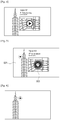
- FIGS. 1 to 3 illustrate examples of the VR tour service according to an embodiment of the present disclosure.
- FIG. 1 illustrates video data output on the terminal when a user wearing the terminal that provides the VR tour service runs the VR tour service.
- circle icons on the video data output on the terminal show the locations of countries that the VR tour service may provide.
- the terminal may receive user option information on a specific region (for example, Taiwan) selected from the output video data.
- a specific region for example, Taiwan
- the user may select the specific region using not only a voice but also a motion, head tracking, and an input tool including a VR wheel.
- FIG. 2 illustrates an example of outputting 360-degree video data on the specific region selected by the user.
- the terminal when the user selects, for example, Taiwan, the terminal outputs 360-degree video data on Taiwan on a screen.
- additional information providing portions 201, 203, and 205 may be displayed on the video data output on the terminal with at least one predetermined marker.
- the terminal may display the additional information providing portions 201, 203, and 205 on the video data in a red icon or text.
- the terminal may output the 360-degree video data on Taiwan (hereinafter, "main video data”) simultaneously with video data on reference number 201 (hereinafter, "sub-video data”) on a single screen, as illustrated in FIG. 3 .
- the user may view the sub-video data simultaneously with the main video data on the same screen.
- the VR notification service is a service that allows the terminal to output video data on a specific event while outputting user-desired video data when the specific event of being requested to provide sub-video data is detected.
- FIG. 4 illustrates an example of the VR notification service according to an embodiment of the present disclosure.
- the terminal in a case where the user sets as a notification event in advance a situation where the user's son comes to a schoolyard, when the terminal recognizes that the son comes to the schoolyard after school while providing user-desired video data (for example, 360-degree movie video data, main video data), the terminal outputs video data on the schoolyard (that is, sub-video data) on the screen that is displaying the main video data.
- video data on the schoolyard that is, sub-video data
- the terminal it is possible for the terminal to receive the video data on the schoolyard in real time via a security camera or the like provided by the school.
- video data output from the terminal may be divided into main video data and sub-video data.
- the main video data is data output by the terminal on the entire screen, for example, three-dimensional (3D) or 360-degree streaming data.
- the sub-video data is data output on a portion of the screen that is displaying the main video data, for example, two-dimensional (2D) or 3D streaming data.
- the 2D, 3D, or 360-degree video data are provided to the terminal through a transmission control protocol (TCP) flow between the terminal and a video server that provides video data.
- TCP transmission control protocol
- the TCP flow generally enables connection between the terminal and the video server to be maintained for a long time for data transmission and reception and enables transmission and reception of high-capacity data. That is, the TCP flow exhibits characteristics of a long and fat flow. Therefore, in various embodiments of the present disclosure, there is required a method for the terminal to efficiently provide main video data or sub-video data according to a user option using data transmission and reception characteristics of the TCP flow.
- the HTTP adaptive video streaming method is a method in which a terminal determines the encoding rate of video data that varies according to an available bandwidth to request video data from a video server.
- a terminal according to an embodiment of the present disclosure also uses the HTTP adaptive video streaming method to provide video data.
- the terminal may use the maximum available bandwidth to provide main video data.
- the maximum available bandwidth that is available for the terminal is limited. That is, when the terminal detects an event of being requested to provide sub-video data while outputting main video data, since the maximum available bandwidth is already used for the main video data, the terminal has a delay and buffering of the sub-video data when outputting the sub-video data.
- a method for providing a video service that is capable of efficiently outputting main video data or sub-video data within the maximum available bandwidth that is available for the terminal.
- a video service illustrated in FIG. 5 instead of a video service in FIG. 3 , may be provided.
- FIG. 5 illustrates a video service provided when an embodiment of the present disclosure is not applied.
- deterioration 501 in the image quality of main video data and buffering 503 of sub-video data may occur.
- an embodiment of the present disclosure suggests a method of efficiently providing the image qualities of main video data and sub-video data within a bandwidth available for the terminal. Further, an embodiment of the present disclosure suggests a method for the terminal to provide a video that satisfies the quality of experience (QoE) of a user without changing an operation of a video server and a device.
- QoE quality of experience
- a method for a terminal to output main video data according to an embodiment of the present disclosure is described first with reference to FIGS. 6 and 7 , and then a method for the terminal to output sub-video data is described with reference to FIGS. 8 to 12 .
- FIG. 6 illustrates an example in which a terminal outputs main video data on a screen according to an embodiment of the present disclosure.
- the terminal when the terminal detects that a VR service is run, the terminal may output high-quality main video data on the screen.
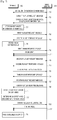
- a method for the terminal to output the high-quality main video data on the screen may be implemented through a signaling flow illustrated in FIG. 7 .
- FIG. 7 illustrates a method for a terminal to output main video data on a screen according to an embodiment of the present disclosure.
- the terminal 100 and a video server 200 establish a TCP session for main video data at operation 701.
- the terminal 100 receives an event of being requested to provide main video data
- the terminal 100 transmits a variant playlist request message about the main video data to the video server 200 at operation 703.
- the variant playlist request message may include information indicating that the main video data is requested by the user.
- the terminal 100 receives, from the video server 200, a variant playlist response message including image quality information on the main video data in response to the variant playlist request message at operation 705.
- the variant playlist response message may include, as the image quality information on the main video data, a plurality of image quality grades including bandwidths and encoding rates available for transmission and reception of the main video data and identification information to identify each of the plurality of image quality grades.
- the image quality information may be formed, for example, as in Table 1 below.
- Table 1 shows the image quality information including, for example, four image quality grades, the number of image quality grades included in the image quality information may change depending on a determination of the video server 200.
- Table 1 BW1, 640 x 360, #1 BW2, 854 x 480, #2 BW3, 1280 x 720, #3 BW4, 2048 x 1536, #4 ...
- the terminal 100 stores the image quality information included in the variant playlist response message at operation 707.
- the terminal 100 transmits, to the video server 200, a first playlist request message requesting chunk information for providing the main video data in the lowest level of image quality (for example, image quality grade #1 in Table 1) of the image quality information at operation 709.
- the terminal 100 receives a first playlist response message including chunk information #1 in response to the first playlist request message at operation 711.
- chunk information #1 included in the playlist response message may be illustrated, for example, as in Table 2.
- the terminal 100 stores chunk information #1 included in the first playlist response message at operation 713.
- the terminal 100 transmits, to the video server 200, a first chunk request message about a main video that includes a bandwidth between the terminal 100 and the video server 200, that is, the chunk information #1 to measure the highest video quality currently available for the terminal in downloading at operation 715.
- the terminal 100 receives chunk #1 from the video server 200 and examines whether an image quality for communication between the terminal 100 and the video server 200 is a threshold communication image quality at operation 717. Subsequently, the terminal 100 transmits, to the video server 200, playlist request messages about other image quality grades (that is, image quality grades #2 to #4) in the same manner as in operations 709 and 711, and receives playlist respond messages from the video server 200 at operations 719 to 729.
- the terminal 100 may store pieces of chunk information #2 to #4 in an internal storage unit at operation 731.
- the terminal 100 may store the pieces of chunk information #1 to #4 in the internal storage unit as in Table 3.
- Table 3 BW1, 640 x 360, #1 Chunk1 Chunk2 Chunk3 ... BW2, 854 x 480, #2 Chunk 1 Chunk2 Chunk3 ... BW3, 1280 x 720, #3 Chunk 1 Chunk2 Chunk3 ... BW4, 2048 x 1536, #4 Chunk 1 Chunk2 Chunk3 ...
- the terminal 100 determines a bandwidth and an encoding rate for the main video data using the stored chunk information at operation 733. For example, the terminal 100 may select a bandwidth and an encoding rate corresponding to the maximum available bandwidth of the stored chunk information in order to output the high-quality main video data.
- the terminal 100 transmits a chunk request message requesting chunk #4 to the video server 200 at operation 735.
- the terminal 100 receives a chunk response message including chunk #4 from the video server 200 at operation 737 and provides the main video data with an image quality corresponding to chunk #4.
- the terminal 100 continuously tracks the maximum available bandwidth that is available to provide the main video data at operation 739.
- the terminal 100 when the terminal 100 receives a user input requesting sub-video data while outputting the high-quality main video data on the screen, the terminal 100 needs to determine a bandwidth and an encoding rate for the requested sub-video data and to output the sub-video data on the screen according to the determined bandwidth and encoding rate for the sub-video data.
- a method for determining the bandwidth and encoding rate for the sub-video data relates to a method for determining a bandwidth and an encoding rate for sub-video data such that main video data and the sub-video data have differential image qualities based on content interest.
- a second embodiment of the present disclosure relates to a method for determining a bandwidth and an encoding rate for sub-video data to have image quality that has a negligible as possible effect on the image quality of main video data.
- the terminal 100 does not output 360-degree main video data and 2D sub-video data in the same image quality on the single screen but outputs the main video data and the sub-video data in different image qualities according to user option information.
- the user option information may be determined based on a spot (for example, a head clicking spot) that the user is looking at (user's viewpoint) by a plurality of sensors included in an input unit of the terminal 100.
- the sub-video data corresponding to the user option information may be determined by the terminal 100 as a video having a content interest characteristic.
- a video with a content interest characteristic refers to a video that the user pays attention to at a moment among a plurality of videos that the user is allowed to watch at the moment within a service.
- a VR tour service is illustrated as an example of a service according to the first embodiment of the present disclosure, but the first embodiment of the present disclosure may also be applicable to other VR services.
- the user may be provided with a video service from the terminal 100 according to the following scenario.
- the user requests additional information on main video data and concentrates on watching sub-video data while the sub-video data corresponding to the additional information is being output.
- the sub-video data ends, the user concentrates back on watching the main video data.
- the user may turn the user's head to concentrate on watching the main video data. Representing this user scenario with a content interest characteristic provided by the terminal 100, when the terminal 100 detects an event of being requested to provide sub-video data, the terminal 100 continues outputting the sub-video data and a sub-video is a content interest.
- a main video is once again a content interest on the terminal 100.
- the terminal 100 recognizes a user's head movement while outputting the sub-video data, the terminal 100 determines either the main video or the sub-video as a content interest according to the user's head movement.
- the terminal 100 needs to determine bandwidths and encoding rates for the main video data and the sub-video data on the same screen within the maximum available bandwidth according to a content interest characteristic.
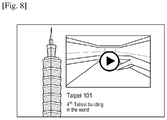
- FIGS. 8 and 9 illustrate a case where the terminal 100 outputs sub-video data according to user option information according to an embodiment of the present disclosure.
- FIG. 10 illustrates an example of a case where user option information is changed while the terminal 100 is outputting sub-video data according to an embodiment of the present disclosure.
- FIG. 8 illustrates an example that the terminal according to the first embodiment of the present disclosure outputs sub-video data on a screen that is displaying main video data.
- the terminal 100 when the terminal 100 detects an event of being requested to provide sub-video data while outputting main video data, the terminal 100 may provide the sub-video data in high quality within the maximum available bandwidth and may change the quality of the main video data to low image quality. That is, the terminal 100 may configure the main video data and the sub-video data to have differential image qualities according to a content interest characteristic of the user. Accordingly, the first embodiment of the present disclosure may satisfy user QoE with the limited bandwidth of the terminal 100.
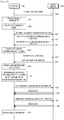
- FIG. 9 illustrates a method for the terminal according to the first embodiment of the present disclosure to output sub-video data on the screen that is displaying main video data.
- the terminal 100 outputs main video data with high quality corresponding to chunk #4 (that is, bandwidth 4).
- the terminal 100 outputs the main video data with high quality corresponding to chunk #4 at operation 901 and continuously tracks the maximum available bandwidth that is available to output the main video data at operation 903.
- the terminal 100 establishes, with the video server 200, a TCP session for the sub-video data at operation 905.
- the TCP session between the terminal 100 and the video server 200 is established while the terminal 100 is outputting the main video data with high quality and before it is requested to output the sub-video data, which will be described before in detail with reference to a TCP session establishment method according to an embodiment of the present disclosure.
- the terminal 100 transmits, to the video server 200, a variant playlist request message for requesting image quality information on the sub-video data at operation 907.
- the terminal 100 receives, from the video server 200, a variant playlist response message including the image quality information on the sub-video data in response to the variant playlist request message at operation 909.
- the variant playlist response message may include, as the image quality information on the sub-video data, a plurality of image quality grades including bandwidths and encoding rates available for transmission and reception of the sub-video data and identification information to identify each of the plurality of image quality grades.
- the terminal 100 may store the image quality information on the sub-video data included in the variant playlist response message in the internal storage unit at operation 911.
- the terminal 100 transmits a plurality of playlist request messages about the respective image quality grades included in the image quality information at operation 913 and receives a plurality of playlist response messages including chunk information on each of the image quality grades at operation 915.
- Operations 913 and 915 performed by the terminal 100 are similar to operations 709 to 729 of FIG. 7 , and thus a detailed description thereof is omitted.
- the terminal 100 stores the chunk information included in each of the playlist response messages in the internal storage unit at operation 917. For example, when there are three image quality grades (#5 to #7) for the sub-video data, the terminal 100 may store, as the chunk information on the sub-video data, chunk information #5 to #7 in Table 4. Table 4 BW5, 640 x 360, #5 Chunk1 Chunk2 Chunk3 ... BW6, 854 x 480, #6 Chunk 1 Chunk2 Chunk3 ... BW7, 1280 x 720, #7 Chunk 1 Chunk2 Chunk3 ...
- the terminal 100 determines a bandwidth and an encoding rate for the sub-video data within the maximum available bandwidth using the stored chunk information on the sub-video data and adjusts the bandwidth and encoding rate for the main video data at operation 919. For example, the terminal 100 may select, from the stored chunk information on the sub-video data, a bandwidth and an encoding rate for providing the sub-video data with the highest image quality in order to provide the high-quality sub-video data.
- chunk information #7 has the bandwidth and the encoding rate for outputting the sub-video data with the highest image quality
- the terminal 100 selects a bandwidth and an encoding rate corresponding to chunk information #7.
- the terminal 100 adjusts the bandwidth for the main video data based on a difference between the maximum available bandwidth (that is, the band width corresponding to chunk information #4) and the bandwidth selected by the terminal 100 (that is, the bandwidth corresponding to chunk information #7). Further, the terminal 100 selects, from the stored chunk information on the main video data, a bandwidth and an encoding rate corresponding to a bandwidth (for example, #2) that is equal to or smaller than the adjusted bandwidth for the main video data.
- the terminal 100 transmits a chunk request message requesting chunk #7 relating to the sub-video data to the video server 200 at operation 921.
- the terminal 100 receives a chunk response message including chunk #7 from the video server 200 at operation 923 and outputs the sub-video data with a high image quality corresponding to chunk #7.
- the terminal 100 transmits a chunk request message requesting chunk #2 relating to the main video data to the video server 200 at operation 925.
- the terminal 100 receives a chunk response message including chunk #2 from the video server 200 at operation 927 and outputs the main video data with a low image quality corresponding to chunk #2.
- the terminal 100 continuously tracks the maximum available bandwidth that is available to provide the main video data and the sub-video data at operation 929.
- the terminal 100 may output the main video data in high quality and may reduce the image quality of the sub-video data according to a procedure similar to that of FIG. 9 , as illustrated in FIG. 10 .
- FIG. 10 illustrates an example of a case where a content interest characteristic is changed from sub-video data to main video data according to the first embodiment of the present disclosure.
- the terminal 100 may output the main video data in high image quality and output the sub-video data in reduced low image quality. Accordingly, the terminal 100 may satisfy user QoE with a limited bandwidth.
- the second embodiment of the present disclosure relates to a method for determining the image quality of sub-video data that has a negligible as possible effect on the image quality of main video data.
- the terminal 100 sets a priority for the main video data, thereby maintaining the image quality of the main video data while the VR service is provided.
- the terminal 100 according to the second embodiment of the present disclosure may set priorities for video qualities as in FIG. 11 when starting to implement the VR service.
- FIG. 11 illustrates an example of a screen for inputting priorities of video qualities on the terminal in which a priority is set, for example, for video data displayed in full screen (that is, main video data) according to an embodiment of the present disclosure.
- the terminal 100 may store the priorities selected by the user in the internal storage unit. Further, the second embodiment of the present disclosure may also be applied similarly when a priority is set for video data (that is, sub-video data) selected by the user to be displayed in a portion of the screen on the terminal 100 and when a priority varies depending on a network condition.
- a priority is set for video data (that is, sub-video data) selected by the user to be displayed in a portion of the screen on the terminal 100 and when a priority varies depending on a network condition.
- FIG. 12 illustrates a method for the terminal to output sub-video data on the screen that is displaying main video data according to an embodiment of the present disclosure.
- the terminal 100 outputs main video data with high quality corresponding to chunk #4 (that is, bandwidth 4).
- the terminal 100 outputs the main video data with high quality corresponding to chunk #4 at operation 1201 and continuously tracks the maximum available bandwidth that is available to provide the main video data at operation 1203.
- the terminal 100 identifies whether an event of being requested to provide the sub-video data occurs at operation 1205.
- the terminal 100 may identify, through a push message from a specific video server 200, whether the event occurs or may identify whether the event (for example, a user option) occurs in the terminal 100 itself.
- the terminal 100 establishes, with the video server 200, a second TCP session for transmission and reception of the sub-video data at operation 1207.
- the second TCP session between the terminal 100 and the video server 200 is established while the terminal 100 is providing the main video data with high quality and before it is requested to output the sub-video data, which will be described below in detail with reference to a TCP session establishment method according to an embodiment of the present disclosure.
- the terminal 100 When the terminal 100 is requested to output the sub-video data through the event, the terminal 100 transmits, to the video server 200, a variant playlist request message for requesting image quality information on the sub-video data at operation 1209.
- the terminal 100 receives, from the video server 200, a variant playlist response message including the image quality information on the sub-video data in response to the variant playlist request message at operation 1211.
- the variant playlist response message may include, as the image quality information on the sub-video data, a plurality of image quality grades including bandwidths and encoding rates available for transmission and reception of the sub-video data and identification information to identify each of the plurality of image quality grades.
- the terminal 100 may store the image quality information on the sub-video data included in the variant playlist response message in the internal storage unit at operation 1213.
- the terminal 100 transmits a plurality of playlist request messages about the respective image quality grades included in the image quality information at operation 1215 and receives a plurality of playlist response messages including chunk information on each of the image quality grades at operation 1217.
- Operations 1215 and 1217 performed by the terminal 100 are similar to operations 709 to 729 of FIG. 7 , and thus a detailed description thereof is omitted.
- the terminal 100 stores the chunk information included in each of the playlist response messages in the internal storage unit at operation 1219.
- the terminal 100 may store, as the chunk information on the sub-video data, chunk information #5 to #7 in Table 4 in the internal storage unit.
- the terminal 100 determines a bandwidth and an encoding rate for the sub-video data within the maximum available bandwidth using the stored chunk information on the sub-video data and adjusts the bandwidth and encoding rate for the main video data at operation 1221.
- the terminal 100 may select, from the stored chunk information on the sub-video data, a bandwidth and an encoding rate for transmitting and receiving the sub-video data with the lowest image quality so as not to affect the image quality of the main video data. For example, when chunk information #5 has the bandwidth and the encoding rate for transmitting and receiving the sub-video data with the lowest image quality, the terminal 100 selects, from the stored chunk information, a bandwidth and an encoding rate corresponding to chunk information #5.
- the terminal 100 adjusts the bandwidth for the main video data based on a difference between the maximum available bandwidth (that is, the band width corresponding to chunk information #4) and the bandwidth selected by the terminal 100 (that is, the bandwidth corresponding to chunk information #5). Further, the terminal 100 selects, from the stored chunk information on the main video data, a bandwidth and an encoding rate corresponding to a bandwidth (for example, #3) that is equal to the adjusted bandwidth for the main video data.
- the terminal 100 transmits a chunk request message requesting chunk #5 relating to the sub-video data to the video server 200 at operation 1223.
- the terminal 100 receives a chunk response message including chunk #5 from the video server 200 at operation 1225 and outputs the sub-video data with an image quality corresponding to chunk #5 on the screen.
- the terminal 100 transmits a chunk request message requesting chunk #3 relating to the main video data to the video server 200 at operation 1227.
- the terminal 100 receives a chunk response message including chunk #3 from the video server 200 at operation 1229 and outputs the main video data with an image quality corresponding to chunk # 3 on the screen.
- the terminal 100 continuously tracks the maximum available bandwidth that is available to transmit and receive the main video data and the sub-video data at operation 1231.
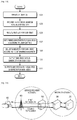
- FIG. 13 illustrates a method for a terminal to output a plurality of video data through a single screen according to an embodiment of the present disclosure.
- the terminal 100 runs the detected VR service at operation 1301.
- the terminal 100 provides main video data in the maximum available bandwidth at operation 1303. Accordingly, the terminal 100 may provide the main video data in high quality.
- the terminal 100 receives a message of being requested to provide sub-video data from the user or the video server 200 at operation 1305.
- the terminal 100 determines a bandwidth for the sub-video data according to a user setting at operation 1307.
- the terminal 100 may determine a bandwidth and an encoding rate for the sub-video data according to a content interest characteristic of the user.
- the terminal 100 may select a bandwidth and an encoding rate for outputting the sub-video data in high quality from image quality information on the sub-video data.
- the terminal 100 may select a bandwidth and an encoding rate for outputting the sub-video data in low quality from the image quality information on the sub-video data.
- the terminal 100 may select a bandwidth and an encoding rate for the sub-video data depending on a current network condition.
- the terminal 100 adjusts the bandwidth for the main video data according to the determined bandwidth for the sub-video data so as to simultaneously provide the sub-video data and the main video data within the maximum available bandwidth at operation 1309. That is, the terminal 100 adjusts the bandwidth for the main video data based on a difference between the maximum available bandwidth and the determined bandwidth for the sub-video data.
- the terminal 100 outputs the sub-video data in the bandwidth for the sub-video data at operation 1311 and outputs the main video data in the adjusted bandwidth for the main video data at operation 1313.
- a user of the terminal 100 may be provided with a video service capable of simultaneously outputting main video data and sub-video data in user-desired image qualities on a single screen.
- the terminal 100 needs to establish a new second TCP session for sub-video data in order to provide the sub-video data while providing main video data.
- an embodiment of the present disclosure suggests a method for the terminal 100 to generate and manage the second TCP session for providing the sub-video data.
- the TCP is a connection-oriented protocol, in which a session is established between the terminal 100 and the video server 200 after three-way handshake signaling.
- the video service capable of outputting sub-video data there is quite a high possibility that a plurality of second TCP sessions are established.
- the terminal 100 establishes a second TCP session not at the time that the sub-video data is requested but while outputting the main video data, a delay due to TCP session establishment time may be minimized.
- an embodiment of the present disclosure suggests a method for the terminal 100 to generate a second TCP session with the video server 200 while outputting main video and before being requested to output sub-video data.
- the terminal 100 when the terminal 100 is requested to output sub-video data to a network including the video server 200, if the network recognizes the maximum available bandwidth that is available to the terminal 100, the network may set an initial window to be a bandwidth requested for the sub-video data to reduce an initial delay caused by a slot start.
- the initial window of the video server 200 has a random value that is set by the video server 200 and may not be changed by the terminal 100. Accordingly, an embodiment of the present disclosure suggests a method for a proxy server in the network to set the initial window value to control transmission rate.
- FIG. 14 illustrates an example of a communication system that provides a video according to an embodiment of the present disclosure.
- the communication system includes a terminal 100, a video server 200 that provides a video, a proxy server 300, a base station 400, and a gateway 500.
- the video server 200 and the proxy server 300 are included in an Internet network
- the base station 400 and the gateway 500 are included in a service provider network.
- the gateway 500 performs an operation of connecting the service provider network and the Internet network
- the base station 400 transmits a signal and a message, received from the terminal 100, to the gateway 500 and transmits a signal and a message, received from the gateway 500, to the terminal 100.
- the terminal 100 when implementing a video service capable of outputting a plurality of video data, the terminal 100 according to the embodiment of the present disclosure establishes, with the proxy server 300, a TCP session for sub-video data while outputting main video data and before being requested to output the sub-video data.
- the proxy server 300 connects the service provider network and the video server 200, and particularly splits the TCP session between the terminal 100 and the video server 200 to adjust an initial window value. Accordingly, the proxy server 300 may control the transmission rates of the main video data and the sub-video data that are provided to the terminal 100.
- the terminal 100 and the proxy server 300 may operate as in FIGS. 15 and 17 .
- a first TCP session for main video data is already established between the terminal 100 and the server 200, and a process of establishing the first TCP session may be performed according to a general TCP session establishment process.
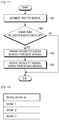
- FIG. 15 illustrates a method for a terminal 100 of a communication system to establish a TCP session according to an embodiment of the present disclosure.
- the terminal 100 establishes, with a server 200, a first TCP session for main video data through a proxy server 300 at operation 1501.
- the terminal 100 determines whether the main video data is included in a binding domain list at operation 1503.
- the binding domain list is a list for identifying a service providing a plurality of video data, which includes a domain address of each of video data provided from a service providing a plurality of video data.
- the binding domain list is information shared in advance between the terminal 100 and the proxy server 300 and may be updated by each of the terminal 100 and the proxy server 300.
- the terminal 100 may store a binding domain list illustrated in FIG. 16 .
- FIG. 16 illustrates an example of a binding domain list managed by a terminal according to an embodiment of the present disclosure.
- the terminal 100 transmits a second TCP session generation request message to the proxy server 300 in order to request establishment of a TCP session for sub-video data at operation 1505.
- the second TCP session generation request message includes a marking indicating a request for generation of the second TCP session.
- the marking may be included in an option field of a TCP SYN packet corresponding to the second TCP session generation request message.
- the terminal 100 receives a second TCP session generation response message including a normal response to generation of the second TCP session in response to the second TCP session generation request message and establishes the second TCP session generated between the terminal 100 and the server 200 at operation 1507. If the second TCP session generation response message includes an abnormal response to generation of the second TCP session, the terminal 100 goes back to operation 1505 to request generation of the second TCP session again.
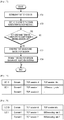
- FIG. 17 illustrates a method for a proxy server of a communication system to establish a TCP session according to an embodiment of the present disclosure.
- the proxy server 300 establishes, with a terminal 100, a first TCP session for main video data at operation 1701.
- the proxy server 300 receives, from the terminal 100, a second TCP session generation request message including a marking for requesting generation of a second TCP session at operation 1703.
- the proxy server 300 determines, based on a previously stored binding domain list, whether there is the first TCP session already established for the same domain with a terminal 100 that is the same as the terminal 100 that has transmitted the second TCP session generation request message at operation 1705.
- the proxy server 300 may determine the sameness of the terminal 100 using the internet protocol (IP) address of the terminal 100 and may determine, using a domain address, whether there is the first TCP session for the same domain.
- IP internet protocol
- the proxy server 300 When there is the first TCP session already established for the same domain with the same terminal 100, the proxy server 300 binds the first TCP session and a second TCP session at operation 1707. When binding of the first TCP session and the second TCP session is finished, the proxy server 300 transmits a second TCP session generation response message including a normal response to the second TCP session at operation 1709.
- binding of the first TCP session and the second TCP session is to manage information of a TCP session for the first TCP session and the second TCP session to provide the same service and transmission rate information on the first TCP session and the second TCP session. That is, the proxy server 300 stores and manages a binding domain list illustrated in FIG. 18 .
- FIGS. 18 and 19 illustrate examples of binding domain lists managed by a proxy server according to an embodiment of the present disclosure.
- the binding domain list illustrated in FIG. 18 is a list in a case where the second TCP session is generated but is not yet used, which is stored and managed by the proxy server 300 before the terminal 100 requests sub-video data. Further, the binding domain list stores the maximum available bandwidth and an encoding rate that are used to transmit and receive the main video data in first TCP session information.
- the proxy server 300 determines an initial window value for the second TCP session for transmitting and receiving the sub-video data based on the maximum available bandwidth and the encoding rate that are used to transmit and receive main video data in the binding domain list.
- the proxy server 300 adjusts the transmission rate of the main video data (that is, the first TCP session) in order to secure transmission of the sub-video data based on the determined initial window value.
- the proxy server 300 determines the initial window value of the second TCP session as a bandwidth for the requested sub-video data based on the available bandwidth for the main video data, and reduces the transmission rate of the first TPC session by the bandwidth for the sub-video data if a main video data chunk is transmitted in the first TCP session. Accordingly, the proxy server 300 may manage and store a binding domain list illustrated in FIG. 19 . That is, the binding domain list illustrated in FIG. 19 includes an example of binding session information stored in the proxy server 300 when the terminal 100 transmits a chunk request message to the proxy server 300 at bandwidth/encoding rate 2 relating to sub-video data.
- FIG. 20 illustrates a detailed configuration of a terminal that outputs a plurality of video data through a single screen according to an embodiment of the present disclosure.
- the terminal 100 includes a transmission unit 2011, a reception unit 2013, a control unit 2030, an input unit 2051, an output unit 2053, and a storage unit 2070 to output a plurality of video data through a single screen to thereby provide a video service.
- the transmission unit 2011 and the reception unit 2013 may be configured as a single transceiver unit 2010, and the input unit 2051 and the output unit 2053 may also be configured as a single input/output unit 2050.
- the input unit 2051 includes a plurality of sensors to detect a user option in the embodiment of the present disclosure.
- the input unit 2051 may include a plurality of gyro sensors to detect user head tracking.
- the control unit 2030 controls overall operations of the terminal 100, and particularly controls operations relating to an operation of the terminal 100, according to the embodiment of the present disclosure, simultaneously outputting main video data and sub-video data.
- the operations relating to the operation of the terminal 100, according to the embodiment of the present disclosure, simultaneously outputting main video data and sub-video data are the same as those illustrated in FIGS. 6 to 13 , and thus a detailed description thereof is omitted herein.
- the transmission unit 2011 transmits various kinds of signals and various kinds of messages to the video server 200 according to control by the control unit 2030.
- the various kinds of signals and the various kinds of messages transmitted by the transmission unit 2011 are the same as those described in FIGS. 6 to 13 , and thus a description thereof is omitted herein.
- the reception unit 2013 receives various kinds of signals and various kinds of messages from the video server 200 according to control by the control unit 2030.
- the various kinds of signals and the various kinds of messages received by the reception unit 2013 are the same as those described in FIGS. 6 to 13 , and thus a description thereof is omitted herein.
- the storage unit 2070 may comprise a first storage unit 2071 that stores a program and various kinds of information relating to an operation of the terminal 100, according to an embodiment of the present disclosure, providing a video service according to control by the control unit 2030. Further, the storage unit 2070 may comprise a second storage unit 2073 that stores the various kinds of signals and the various kinds of messages received by the reception unit 2013 from the video server 200.
- the output unit 2053 outputs various kinds of signals and various kinds of messages relating to an operation of the terminal 100, according to the embodiment of the present disclosure, providing a video service according to control by the control unit 2030.
- the various kinds of signals and the various kinds of messages output by the output unit 2053 are the same as those described in FIGS. 6 to 13 , and thus a description thereof is omitted herein.
- FIG. 20 shows that the terminal 100 is configured to include the transceiver unit 2010, the control unit 2030, the input/output unit 2050, and the storage unit 2070 as separate units, the terminal 100 may also be configured such that at least two of the transceiver unit 2010, the control unit 2030, input/output unit 2050, and the storage unit 2070 are integrated. Further, the terminal 100 may also be configured as a single processor.
- FIG. 21 illustrates a detailed configuration of a proxy server of a communication system that establishes a TCP session according to an embodiment of the present disclosure.
- the proxy server 300 includes a control unit 2110, a storage unit 2130, a transmission unit 2151, and a reception unit 2153 in order to establish, with a terminal 100, a TCP session for a service providing a plurality of video data.
- the transmission unit 2151 and the reception unit 2153 may be configured as a single transceiver unit 2150.
- the control unit 2110 controls overall operations of the proxy server 300, and particularly controls operations relating to an operation of the proxy server 300, according to the embodiment of the present disclosure, establishing a TCP session with the terminal 100 for a service providing a plurality of video data.
- the operations relating to the operation of the proxy server 300, according to the embodiment of the present disclosure, establishing a TCP session are the same as those illustrated in FIGS. 14 to 19 , and thus a detailed description thereof is omitted herein.
- the transmission unit 2151 transmits various kinds of signals and various kinds of messages to the terminal 100 or the video server 200 according to control by the control unit 2110.
- the various kinds of signals and the various kinds of messages transmitted by the transmission unit 2151 are the same as those described in FIGS. 14 to 19 , and thus a description thereof is omitted herein.
- the reception unit 2153 receives various kinds of signals and various kinds of messages from the terminal 100 or the video server 200 according to control by the control unit 2110.
- the various kinds of signals and the various kinds of messages received by the reception unit 2153 are the same as those described in FIGS. 14 to 19 , and thus a description thereof is omitted herein.
- the storage unit 2130 stores a program and various kinds of information relating to the operation of the proxy server 300, according to the embodiment of the present disclosure, establishing the TCP session with the terminal 100 according to control by the control unit 2110. Further, the storage unit 2130 stores the various kinds of signals and the various kinds of messages received by the reception unit 2153 from the terminal 100 and the video server 200.
- FIG. 21 shows that the proxy server is configured to include the transceiver unit 2150, the control unit 2110, and the storage unit 2130 as separate units, the proxy server may also be configured such that at least two of the transceiver unit 2150, the control unit 2110, and the storage unit 2130 are integrated. Further, the proxy server may also be configured as a single processor.
Landscapes
- Engineering & Computer Science (AREA)
- Signal Processing (AREA)
- Computer Networks & Wireless Communication (AREA)
- Multimedia (AREA)
- Computer Security & Cryptography (AREA)
- Business, Economics & Management (AREA)
- General Business, Economics & Management (AREA)
- Two-Way Televisions, Distribution Of Moving Picture Or The Like (AREA)
- General Engineering & Computer Science (AREA)
- Theoretical Computer Science (AREA)
- Physics & Mathematics (AREA)
- General Physics & Mathematics (AREA)
- Human Computer Interaction (AREA)
- Computer Graphics (AREA)
- Computer Hardware Design (AREA)
- Software Systems (AREA)
Claims (11)
- Ein Verfahren zur Bereitstellung eines Videodienstes durch ein Endgerät (100), das einen Transceiver, einen Sensor, eine Anzeige und einen Prozessor aufweist, wobei das Verfahren aufweist:Anforderung, am Transceiver an einen Server, erste Videodaten unter Verwendung einer maximal verfügbaren Bandbreite zu übertragen;Empfangen, am Transceiver vom Server, der ersten Videodaten unter Verwendung der maximal verfügbaren Bandbreite;Erfassen eines Ereignisses zum Anfordern zweiter Videodaten am Sensor während des Ausgebens der ersten Videodaten an der Anzeige;Bestimmen einer ersten Bandbreite für die ersten Videodaten und einer zweiten Bandbreite für die zweiten Videodaten innerhalb der maximal verfügbaren Bandbreite durch den Prozessor, so dass die ersten Videodaten und die zweiten Videodaten unterschiedliche Bildqualitäten aufweisen;Anforderung, am Transceiver an den Server, die ersten Videodaten in der ersten Bandbreite zu übertragen und die zweiten Videodaten in der zweiten Bandbreite zu übertragen;Empfangen, am Transceiver vom Server, der ersten Videodaten in der ersten Bandbreite und der zweiten Videodaten in der zweiten Bandbreite,Ausgeben, durch die Anzeige, der ersten Videodaten auf einem gesamten Bildschirm der Anzeige und der zweiten Videodaten auf einem Teil des Bildschirms der Anzeige;Bestimmen von Inhaltsinteresseninformationen über Videodaten durch den Sensor; undEinstellen der ersten Bandbreite und der zweiten Bandbreite innerhalb der maximal verfügbaren Bandbreite durch den Prozessor, so dass entweder die ersten Videodaten oder die zweiten Videodaten, die als Inhaltsinteresseninformationen ausgewählt werden, in hoher Qualität ausgegeben werden.
- Das Verfahren nach Anspruch 1, wobei die ersten Videodaten am Transceiver durch eine erste Übertragungssteuerungsprotokoll, TCP,-Sitzung vom Server empfangen werden.
- Das Verfahren nach Anspruch 1, wobei, wenn der Server ein Videoserver (200) ist, das Verfahren ferner das Herstellen, mit dem Videoserver (200), einer zweiten Übertragungssteuerungsprotokoll, TCP,-Sitzung zum Empfangen der zweiten Videodaten, bevor das Ereignis zum Anfordern der zweiten Videodaten am Sensor erfasst wird, aufweist.
- Das Verfahren nach Anspruch 1,
wobei, wenn der Server ein Proxy-Server (300) ist, das Verfahren ferner aufweist, bevor das Ereignis des Anforderns der zweiten Videodaten erfasst wird:Übertragen einer Anforderungsnachricht zum Proxy-Server (300), die das Herstellen einer zweiten Übertragungssteuerungsprotokoll, TCP,-Sitzung anfordert, wenn eine Domainadresse, die die ersten Videodaten bereitstellt, in einer Domainadressenliste, die Domainadressen, die den Videodienst bereitstellen, aufweist, enthalten ist; undEmpfangen einer Antwortnachricht vom Proxyserver (300), die angibt, dass die zweite TCP-Sitzung hergestellt wird, undwobei der Proxy-Server (300) mit einem Videoserver (200) verbunden ist. - Das Verfahren nach Anspruch 1, wobei das Bestimmen aufweist:Empfangen, am Transceiver vom Server, von Bandbreiteninformationen über zumindest eine Bandbreite, die für die Übertragung und den Empfang der zweiten Videodaten verfügbar ist;Bestimmen der zweiten Bandbreite der zumindest einen Bandbreite durch den Prozessor basierend auf voreingestellten Informationen; undBestimmen der ersten Bandbreite durch den Prozessor basierend auf der zweiten Bandbreite innerhalb der maximal verfügbaren Bandbreite,wobei die zumindest eine Bandbreite gemäß einem anfänglichen Fensterwert für eine zweite Übertragungssteuerungsprotokoll, TCP,-Sitzung bestimmt wird, die basierend auf der maximal verfügbaren Bandbreite bestimmt wird, undwobei die voreingestellten Informationen entweder Informationen, die angeben, dass die Bildqualität der ersten Videodaten eine höhere Priorität als die Bildqualität der zweiten Videodaten besitzt, oder Informationen, die angeben, dass die Bildqualität der zweiten Videodaten eine höhere Priorität als die Bildqualität der ersten Videodaten besitzt, oder Netzwerkbedingungsinformationen sind.
- Ein Verfahren zur Bereitstellung eines Videodienstes durch einen Videoserver (200), der einen Transceiver und einen Prozessor aufweist, wobei das Verfahren aufweist:Empfangen, am Transceiver von einem Endgerät (100), einer Anforderungsnachricht, die den Empfang erster Videodaten in einer maximal verfügbaren Bandbreite anfordert;Übertragen der ersten Videodaten unter Verwendung der maximal verfügbaren Bandbreite am Transceiver zum Endgerät (100);Empfangen, am Transceiver vom Endgerät (100), einer Anforderungsnachricht, die den Empfang der ersten Videodaten in einer ersten Bandbreite innerhalb der maximal verfügbaren Bandbreite anfordert, und einer Anforderungsnachricht, die den Empfang zweiter Videodaten in einer zweiten Bandbreite anfordert; undÜbertragen der ersten Videodaten in der ersten Bandbreite und der zweiten Videodaten in der zweiten Bandbreite am Transceiver zum Endgerät (100),wobei am Endgerät (100) die erste Bandbreite und die zweite Bandbreite bestimmt werden, um unterschiedliche Bildqualitäten bereitzustellen,wobei die ersten Videodaten auf einem gesamten Bildschirm des Endgeräts (100) ausgegeben werden und die zweiten Videodaten auf einem Teil des Bildschirms des Endgeräts (100) ausgegeben werden,wobei Inhaltsinteresseninformationen über Videodaten am Endgerät (100) bestimmt werden, undwobei am Endgerät (100) die erste Bandbreite und die zweite Bandbreite innerhalb der maximal verfügbaren Bandbreite eingestellt werden, so dass entweder die ersten Videodaten oder die zweiten Videodaten, die als Inhaltsinteresseninformationen ausgewählt werden, in hoher Qualität ausgegeben werden.
- Das Verfahren nach Anspruch 6, ferner aufweisend:Herstellen einer zweiten Übertragungssteuerungsprotokoll, TCP,-Sitzung zwischen dem Videoserver (200) und dem Endgerät (100) zum Übertragen und Empfangen der zweiten Videodaten, bevor die Anforderungsnachricht, die den Empfang der zweiten Videodaten in der zweiten Bandbreite anfordert, empfangen wird,wobei die ersten Videodaten durch eine erste TCP-Sitzung zum Endgerät (100) übertragen werden.
- Eine Vorrichtung eines Endgeräts (100) zur Bereitstellung eines Videodienstes, wobei die Vorrichtung aufweist:einen Prozessor;einen Transceiver;einen Sensor; undeine Anzeige,wobei der Transceiver konfiguriert ist, um:von einem Server anzufordern, erste Videodaten unter Verwendung einer maximal verfügbaren Bandbreite zu übertragen, undvom Server die ersten Videodaten unter Verwendung der maximal verfügbaren Bandbreite zu empfangen,wobei der Sensor konfiguriert ist, um ein Ereignis zum Anfordern zweiter Videodaten während des Ausgebens der ersten Videodaten an der Anzeige zu erfassen,wobei der Prozessor konfiguriert ist, um eine erste Bandbreite für die ersten Videodaten und eine zweite Bandbreite für die zweiten Videodaten innerhalb der maximal verfügbaren Bandbreite zu bestimmen, so dass die ersten Videodaten und die zweiten Videodaten unterschiedliche Bildqualitäten aufweisen,wobei der Transceiver konfiguriert ist, um:vom Server anzufordern, die ersten Videodaten in der ersten Bandbreite zu übertragen und die zweiten Videodaten in der zweiten Bandbreite zu übertragen, unddie ersten Videodaten in der ersten Bandbreite und die zweiten Videodaten in der zweiten Bandbreite vom Server zu empfangen,wobei die Anzeige konfiguriert ist, um die ersten Videodaten auf einem gesamten Bildschirm der Anzeige auszugeben und die zweiten Videodaten auf einem Teil des Bildschirms der Anzeige auszugeben,wobei der Sensor konfiguriert ist, um Inhaltsinteresseninformationen über Videodaten zu bestimmen, undwobei der Prozessor konfiguriert ist, um die erste Bandbreite und die zweite Bandbreite innerhalb der maximal verfügbaren Bandbreite einzustellen, so dass entweder die ersten Videodaten oder die zweiten Videodaten, die als Inhaltsinteresseninformationen ausgewählt werden, in hoher Qualität ausgegeben werden.
- Die Vorrichtung nach Anspruch 8, wobei die ersten Videodaten am Transceiver durch eine erste Übertragungssteuerungsprotokoll, TCP,-Sitzung vom Server empfangen werden.
- Die Vorrichtung nach Anspruch 8, wobei, wenn der Server ein Videoserver (200) ist, der Prozessor ferner konfiguriert ist, um mit dem Videoserver (200) eine zweite Übertragungssteuerungsprotokoll, TCP,-Sitzung zum Empfangen der zweiten Videodaten herzustellen, bevor das Ereignis zum Anfordern der zweiten Videodaten am Sensor erfasst wird.
- Eine Vorrichtung eines Videoservers (200) zur Bereitstellung eines Videodienstes, wobei die Vorrichtung aufweist:einen Prozessor; undeinen Transceiver,wobei der Transceiver konfiguriert ist, um:von einem Endgerät (100) eine Anforderungsnachricht, die den Empfang erster Videodaten unter Verwendung einer maximal verfügbaren Bandbreite anfordert, eine Anforderungsnachricht, die den Empfang der ersten Videodaten in einer ersten Bandbreite innerhalb der maximal verfügbaren Bandbreite anfordert, und eine Anforderungsnachricht, die den Empfang zweiter Videodaten in einer zweiten Bandbreite anfordert, zu empfangen,die ersten Videodaten unter Verwendung der maximal verfügbaren Bandbreite zum Endgerät (100) zu übertragen,die ersten Videodaten in der ersten Bandbreite zu übertragen, unddie zweiten Videodaten in der zweiten Bandbreite zu übertragen,wobei die erste Bandbreite und die zweite Bandbreite bestimmt werden, um unterschiedliche Bildqualitäten bereitzustellen,wobei die ersten Videodaten auf einem gesamten Bildschirm des Endgeräts (100) ausgegeben werden und die zweiten Videodaten auf einem Teil des Bildschirms des Endgeräts (100) ausgegeben werden,wobei Inhaltsinteresseninformationen über Videodaten am Endgerät (100) bestimmt werden, undwobei am Endgerät (100) die erste Bandbreite und die zweite Bandbreite innerhalb der maximal verfügbaren Bandbreite eingestellt werden, so dass entweder die ersten Videodaten oder die zweiten Videodaten, die als Inhaltsinteresseninformationen ausgewählt werden, in hoher Qualität ausgegeben werden.
Applications Claiming Priority (2)
| Application Number | Priority Date | Filing Date | Title |
|---|---|---|---|
| KR1020150096656A KR102343331B1 (ko) | 2015-07-07 | 2015-07-07 | 통신 시스템에서 비디오 서비스를 제공하는 방법 및 장치 |
| PCT/KR2016/007385 WO2017007264A1 (en) | 2015-07-07 | 2016-07-07 | Method and apparatus for providing video service in communication system |
Publications (3)
| Publication Number | Publication Date |
|---|---|
| EP3320687A1 EP3320687A1 (de) | 2018-05-16 |
| EP3320687A4 EP3320687A4 (de) | 2018-10-10 |
| EP3320687B1 true EP3320687B1 (de) | 2019-12-18 |
Family
ID=57685822
Family Applications (1)
| Application Number | Title | Priority Date | Filing Date |
|---|---|---|---|
| EP16821670.3A Active EP3320687B1 (de) | 2015-07-07 | 2016-07-07 | Verfahren und vorrichtung zur bereitstellung eines videodienstes in einem kommunikationssystem |
Country Status (5)
| Country | Link |
|---|---|
| US (1) | US10440070B2 (de) |
| EP (1) | EP3320687B1 (de) |
| KR (1) | KR102343331B1 (de) |
| CN (1) | CN107852519B (de) |
| WO (1) | WO2017007264A1 (de) |
Families Citing this family (20)
| Publication number | Priority date | Publication date | Assignee | Title |
|---|---|---|---|---|
| US10270834B2 (en) * | 2015-08-20 | 2019-04-23 | Huawei Technologies Co., Ltd. | System and method for online multimedia streaming services |
| US11012719B2 (en) * | 2016-03-08 | 2021-05-18 | DISH Technologies L.L.C. | Apparatus, systems and methods for control of sporting event presentation based on viewer engagement |
| US20180310066A1 (en) * | 2016-08-09 | 2018-10-25 | Paronym Inc. | Moving image reproduction device, moving image reproduction method, moving image distribution system, storage medium with moving image reproduction program stored therein |
| WO2018035133A1 (en) * | 2016-08-17 | 2018-02-22 | Vid Scale, Inc. | Secondary content insertion in 360-degree video |
| US20190253743A1 (en) * | 2016-10-26 | 2019-08-15 | Sony Corporation | Information processing device, information processing system, and information processing method, and computer program |
| CN108124167A (zh) * | 2016-11-30 | 2018-06-05 | 阿里巴巴集团控股有限公司 | 一种播放处理方法、装置和设备 |
| EP3703223B1 (de) * | 2017-10-26 | 2021-09-01 | Panasonic Intellectual Property Corporation of America | Kommunikationssystem und kommunikationsverfahren |
| JP6463826B1 (ja) * | 2017-11-27 | 2019-02-06 | 株式会社ドワンゴ | 動画配信サーバ、動画配信方法及び動画配信プログラム |
| US20190253751A1 (en) * | 2018-02-13 | 2019-08-15 | Perfect Corp. | Systems and Methods for Providing Product Information During a Live Broadcast |
| CN109451293B (zh) * | 2018-08-09 | 2021-11-26 | 北京邮电大学 | 一种自适应立体视频传输系统和方法 |
| US12063423B1 (en) * | 2018-09-24 | 2024-08-13 | Nova Modum Inc | Enhanced interactive web features for displaying and editing digital content |
| CN109361603B (zh) * | 2018-11-26 | 2021-03-23 | 浪潮思科网络科技有限公司 | 基于可编程交换芯片动态调整等价路径流量的方法及系统 |
| US11425042B2 (en) | 2019-09-27 | 2022-08-23 | Amazon Technologies, Inc. | Managing data throughput in a distributed endpoint network |
| FR3101503A1 (fr) * | 2019-09-27 | 2021-04-02 | Orange | Gestion du téléchargement progressif adaptatif d’un contenu numérique sur réseau mobile avec sélection d’un débit d’encodage maximum autorisé en fonction d’un godet de données |
| US11552898B2 (en) * | 2019-09-27 | 2023-01-10 | Amazon Technologies, Inc. | Managing data throughput in a distributed endpoint network |
| CN110611831B (zh) * | 2019-10-14 | 2022-02-08 | 浙江大华技术股份有限公司 | 一种视频传输方法及装置 |
| US11394636B1 (en) | 2020-12-10 | 2022-07-19 | Amazon Technologies, Inc. | Network connection path obfuscation using global access points |
| US20230019723A1 (en) * | 2021-07-14 | 2023-01-19 | Rovi Guides, Inc. | Interactive supplemental content system |
| US20230156300A1 (en) * | 2021-11-15 | 2023-05-18 | Comcast Cable Communications, Llc | Methods and systems for modifying content |
| CN119544802A (zh) * | 2023-08-31 | 2025-02-28 | Oppo广东移动通信有限公司 | 传输业务数据的方法及装置、芯片、终端设备、存储介质 |
Family Cites Families (20)
| Publication number | Priority date | Publication date | Assignee | Title |
|---|---|---|---|---|
| US8259861B2 (en) * | 2005-03-31 | 2012-09-04 | At&T Intellectual Property I, L.P. | Methods and systems for providing bandwidth adjustment |
| KR100677462B1 (ko) * | 2005-06-23 | 2007-02-02 | 엘지전자 주식회사 | 스트리밍서비스를 위한 휴대단말기의 대역폭산정시스템 및방법 |
| US7924793B2 (en) * | 2006-11-20 | 2011-04-12 | At&T Intellectual Property I, L.P. | Methods and apparatus to manage bandwidth in a wireless network |
| EP2129057B1 (de) * | 2007-01-26 | 2019-01-16 | NEC Corporation | Videoverteilungssystem und videoverteilungsverfahren |
| JP5036527B2 (ja) * | 2007-12-27 | 2012-09-26 | パナソニック株式会社 | 接続装置および接続方法 |
| US8000347B2 (en) * | 2008-10-31 | 2011-08-16 | Cisco Technology, Inc. | Executing and supporting a multiple bandwidth reservation request |
| US9294526B2 (en) | 2009-12-28 | 2016-03-22 | Microsoft Technology Licensing, Llc | Managing multiple dynamic media streams |
| US20120013162A1 (en) * | 2010-07-16 | 2012-01-19 | Kuo-Chang Chen | Chair for a drummer |
| US9143825B2 (en) | 2010-11-22 | 2015-09-22 | Sling Media Pvt. Ltd. | Systems, methods and devices to reduce change latency in placeshifted media streams using predictive secondary streaming |
| US8285808B1 (en) * | 2011-05-20 | 2012-10-09 | Cloudflare, Inc. | Loading of web resources |
| WO2013095052A1 (en) * | 2011-12-23 | 2013-06-27 | Samsung Electronics Co., Ltd. | Method and apparatus for providing contents in communication system |
| JP5832335B2 (ja) * | 2012-02-24 | 2015-12-16 | 株式会社日立製作所 | 通信装置および通信システム |
| US20130227102A1 (en) | 2012-02-29 | 2013-08-29 | Alcatel-Lucent Usa Inc | Chunk Request Scheduler for HTTP Adaptive Streaming |
| WO2014014238A1 (en) * | 2012-07-17 | 2014-01-23 | Samsung Electronics Co., Ltd. | System and method for providing image |
| WO2014067566A1 (en) * | 2012-10-30 | 2014-05-08 | Telefonaktiebolaget L M Ericsson (Publ) | Method and device for streaming video |
| KR102034624B1 (ko) * | 2013-02-26 | 2019-10-21 | 삼성전자 주식회사 | 대역폭 예측을 통한 휴대 단말기의 스트리밍 컨텐츠 운용 방법 및 장치 |
| CN103281509B (zh) * | 2013-05-29 | 2016-08-10 | 华为技术有限公司 | 一种视频会议中优化显示方法和装置 |
| WO2014204330A1 (en) * | 2013-06-17 | 2014-12-24 | 3Divi Company | Methods and systems for determining 6dof location and orientation of head-mounted display and associated user movements |
| KR102342144B1 (ko) * | 2014-12-01 | 2021-12-22 | 삼성전자주식회사 | 통신 시스템에서 분리된 tcp 연결을 설정하는 방법 및 장치와 이를 위한 핸드 오버 지원 방법 및 장치 |
| US10546424B2 (en) * | 2015-04-15 | 2020-01-28 | Google Llc | Layered content delivery for virtual and augmented reality experiences |
-
2015
- 2015-07-07 KR KR1020150096656A patent/KR102343331B1/ko active Active
-
2016
- 2016-07-07 EP EP16821670.3A patent/EP3320687B1/de active Active
- 2016-07-07 WO PCT/KR2016/007385 patent/WO2017007264A1/en not_active Ceased
- 2016-07-07 US US15/204,445 patent/US10440070B2/en not_active Expired - Fee Related
- 2016-07-07 CN CN201680040307.1A patent/CN107852519B/zh not_active Expired - Fee Related
Also Published As
| Publication number | Publication date |
|---|---|
| KR102343331B1 (ko) | 2021-12-24 |
| EP3320687A1 (de) | 2018-05-16 |
| CN107852519A (zh) | 2018-03-27 |
| US20170013031A1 (en) | 2017-01-12 |
| WO2017007264A1 (en) | 2017-01-12 |
| EP3320687A4 (de) | 2018-10-10 |
| CN107852519B (zh) | 2020-12-01 |
| KR20170006150A (ko) | 2017-01-17 |
| US10440070B2 (en) | 2019-10-08 |
Similar Documents
| Publication | Publication Date | Title |
|---|---|---|
| EP3320687B1 (de) | Verfahren und vorrichtung zur bereitstellung eines videodienstes in einem kommunikationssystem | |
| US12501110B2 (en) | Metrics and messages to improve experience for 360-degree adaptive streaming | |
| US10231014B2 (en) | Virtual reality (VR) video distribution using edge resources | |
| US11770594B2 (en) | 360-degree video delivery over next generation network | |
| KR20200014355A (ko) | 가상 현실(vr) 콘텐츠를 전송하기 위한 방법과 시스템 | |
| EP2924999A1 (de) | Kontextbewusstes Streaming digitalen Inhalts | |
| US10148995B2 (en) | Method and apparatus for transmitting and receiving data in communication system | |
| CN113141523A (zh) | 资源传输方法、装置、终端及存储介质 | |
| CN114339928B (zh) | 无线路由器及其数据传输方法 | |
| CN111711840A (zh) | 针对输出装置和网络质量的云游戏数据流动态调整 | |
| US10929953B2 (en) | Method and apparatus for selecting communication interface in wireless communication system | |
| CN104581424B (zh) | 一种流媒体传输方法、相关设备和系统 | |
| US20150193190A1 (en) | Data Processing Method And Electronic Device | |
| CN105812838B (zh) | 一种多屏互动数据分享方法及系统 | |
| CN119494903A (zh) | 在移动通信网络中支持扩展现实应用的分离渲染服务器之间的无缝分离渲染会话重定位 | |
| WO2020112900A2 (en) | Method for mirroring 3d objects to light field displays | |
| CN116264619A (zh) | 资源处理方法、装置、服务器、终端、系统及存储介质 | |
| JP2017146959A (ja) | 端末装置、エッジサーバ、データ配信システムおよび配信制御方法 | |
| Sahu et al. | Video Streaming in Healthcare and Multi-path Solutions | |
| KR20260013099A (ko) | 확장 현실 서비스를 제공하기 위한 장치, 방법, 및 저장 매체 | |
| WO2024088575A1 (en) | Quality of service sustainability in a wireless communication network | |
| CN108965948A (zh) | 一种执行网络数据的传输装置 |
Legal Events
| Date | Code | Title | Description |
|---|---|---|---|
| STAA | Information on the status of an ep patent application or granted ep patent |
Free format text: STATUS: THE INTERNATIONAL PUBLICATION HAS BEEN MADE |
|
| PUAI | Public reference made under article 153(3) epc to a published international application that has entered the european phase |
Free format text: ORIGINAL CODE: 0009012 |
|
| STAA | Information on the status of an ep patent application or granted ep patent |
Free format text: STATUS: REQUEST FOR EXAMINATION WAS MADE |
|
| 17P | Request for examination filed |
Effective date: 20180130 |
|
| AK | Designated contracting states |
Kind code of ref document: A1 Designated state(s): AL AT BE BG CH CY CZ DE DK EE ES FI FR GB GR HR HU IE IS IT LI LT LU LV MC MK MT NL NO PL PT RO RS SE SI SK SM TR |
|
| AX | Request for extension of the european patent |
Extension state: BA ME |
|
| RIC1 | Information provided on ipc code assigned before grant |
Ipc: H04L 29/08 20060101ALI20180531BHEP Ipc: H04N 5/46 20060101ALI20180531BHEP Ipc: H04L 29/06 20060101ALI20180531BHEP Ipc: H04L 12/24 20060101ALI20180531BHEP Ipc: H04N 21/2343 20110101AFI20180531BHEP Ipc: H04N 5/45 20110101ALI20180531BHEP |
|
| A4 | Supplementary search report drawn up and despatched |
Effective date: 20180907 |
|
| RIC1 | Information provided on ipc code assigned before grant |
Ipc: H04L 29/08 20060101ALI20180903BHEP Ipc: H04N 5/45 20110101ALI20180903BHEP Ipc: H04N 5/46 20060101ALI20180903BHEP Ipc: H04L 12/24 20060101ALI20180903BHEP Ipc: H04L 29/06 20060101ALI20180903BHEP Ipc: H04N 21/2343 20110101AFI20180903BHEP |
|
| DAV | Request for validation of the european patent (deleted) | ||
| DAX | Request for extension of the european patent (deleted) | ||
| GRAP | Despatch of communication of intention to grant a patent |
Free format text: ORIGINAL CODE: EPIDOSNIGR1 |
|
| STAA | Information on the status of an ep patent application or granted ep patent |
Free format text: STATUS: GRANT OF PATENT IS INTENDED |
|
| INTG | Intention to grant announced |
Effective date: 20190715 |
|
| GRAS | Grant fee paid |
Free format text: ORIGINAL CODE: EPIDOSNIGR3 |
|
| GRAA | (expected) grant |
Free format text: ORIGINAL CODE: 0009210 |
|
| STAA | Information on the status of an ep patent application or granted ep patent |
Free format text: STATUS: THE PATENT HAS BEEN GRANTED |
|
| AK | Designated contracting states |
Kind code of ref document: B1 Designated state(s): AL AT BE BG CH CY CZ DE DK EE ES FI FR GB GR HR HU IE IS IT LI LT LU LV MC MK MT NL NO PL PT RO RS SE SI SK SM TR |
|
| REG | Reference to a national code |
Ref country code: CH Ref legal event code: EP |
|
| REG | Reference to a national code |
Ref country code: DE Ref legal event code: R096 Ref document number: 602016026602 Country of ref document: DE |
|
| REG | Reference to a national code |
Ref country code: IE Ref legal event code: FG4D |
|
| REG | Reference to a national code |
Ref country code: AT Ref legal event code: REF Ref document number: 1215900 Country of ref document: AT Kind code of ref document: T Effective date: 20200115 |
|
| REG | Reference to a national code |
Ref country code: NL Ref legal event code: MP Effective date: 20191218 |
|
| PG25 | Lapsed in a contracting state [announced via postgrant information from national office to epo] |
Ref country code: BG Free format text: LAPSE BECAUSE OF FAILURE TO SUBMIT A TRANSLATION OF THE DESCRIPTION OR TO PAY THE FEE WITHIN THE PRESCRIBED TIME-LIMIT Effective date: 20200318 Ref country code: NO Free format text: LAPSE BECAUSE OF FAILURE TO SUBMIT A TRANSLATION OF THE DESCRIPTION OR TO PAY THE FEE WITHIN THE PRESCRIBED TIME-LIMIT Effective date: 20200318 Ref country code: FI Free format text: LAPSE BECAUSE OF FAILURE TO SUBMIT A TRANSLATION OF THE DESCRIPTION OR TO PAY THE FEE WITHIN THE PRESCRIBED TIME-LIMIT Effective date: 20191218 Ref country code: SE Free format text: LAPSE BECAUSE OF FAILURE TO SUBMIT A TRANSLATION OF THE DESCRIPTION OR TO PAY THE FEE WITHIN THE PRESCRIBED TIME-LIMIT Effective date: 20191218 Ref country code: LV Free format text: LAPSE BECAUSE OF FAILURE TO SUBMIT A TRANSLATION OF THE DESCRIPTION OR TO PAY THE FEE WITHIN THE PRESCRIBED TIME-LIMIT Effective date: 20191218 Ref country code: LT Free format text: LAPSE BECAUSE OF FAILURE TO SUBMIT A TRANSLATION OF THE DESCRIPTION OR TO PAY THE FEE WITHIN THE PRESCRIBED TIME-LIMIT Effective date: 20191218 Ref country code: GR Free format text: LAPSE BECAUSE OF FAILURE TO SUBMIT A TRANSLATION OF THE DESCRIPTION OR TO PAY THE FEE WITHIN THE PRESCRIBED TIME-LIMIT Effective date: 20200319 |
|
| REG | Reference to a national code |
Ref country code: LT Ref legal event code: MG4D |
|
| PG25 | Lapsed in a contracting state [announced via postgrant information from national office to epo] |
Ref country code: HR Free format text: LAPSE BECAUSE OF FAILURE TO SUBMIT A TRANSLATION OF THE DESCRIPTION OR TO PAY THE FEE WITHIN THE PRESCRIBED TIME-LIMIT Effective date: 20191218 Ref country code: RS Free format text: LAPSE BECAUSE OF FAILURE TO SUBMIT A TRANSLATION OF THE DESCRIPTION OR TO PAY THE FEE WITHIN THE PRESCRIBED TIME-LIMIT Effective date: 20191218 |
|
| PG25 | Lapsed in a contracting state [announced via postgrant information from national office to epo] |
Ref country code: AL Free format text: LAPSE BECAUSE OF FAILURE TO SUBMIT A TRANSLATION OF THE DESCRIPTION OR TO PAY THE FEE WITHIN THE PRESCRIBED TIME-LIMIT Effective date: 20191218 |
|
| PG25 | Lapsed in a contracting state [announced via postgrant information from national office to epo] |
Ref country code: NL Free format text: LAPSE BECAUSE OF FAILURE TO SUBMIT A TRANSLATION OF THE DESCRIPTION OR TO PAY THE FEE WITHIN THE PRESCRIBED TIME-LIMIT Effective date: 20191218 Ref country code: EE Free format text: LAPSE BECAUSE OF FAILURE TO SUBMIT A TRANSLATION OF THE DESCRIPTION OR TO PAY THE FEE WITHIN THE PRESCRIBED TIME-LIMIT Effective date: 20191218 Ref country code: RO Free format text: LAPSE BECAUSE OF FAILURE TO SUBMIT A TRANSLATION OF THE DESCRIPTION OR TO PAY THE FEE WITHIN THE PRESCRIBED TIME-LIMIT Effective date: 20191218 Ref country code: CZ Free format text: LAPSE BECAUSE OF FAILURE TO SUBMIT A TRANSLATION OF THE DESCRIPTION OR TO PAY THE FEE WITHIN THE PRESCRIBED TIME-LIMIT Effective date: 20191218 Ref country code: PT Free format text: LAPSE BECAUSE OF FAILURE TO SUBMIT A TRANSLATION OF THE DESCRIPTION OR TO PAY THE FEE WITHIN THE PRESCRIBED TIME-LIMIT Effective date: 20200513 |
|
| PG25 | Lapsed in a contracting state [announced via postgrant information from national office to epo] |
Ref country code: SM Free format text: LAPSE BECAUSE OF FAILURE TO SUBMIT A TRANSLATION OF THE DESCRIPTION OR TO PAY THE FEE WITHIN THE PRESCRIBED TIME-LIMIT Effective date: 20191218 Ref country code: SK Free format text: LAPSE BECAUSE OF FAILURE TO SUBMIT A TRANSLATION OF THE DESCRIPTION OR TO PAY THE FEE WITHIN THE PRESCRIBED TIME-LIMIT Effective date: 20191218 Ref country code: IS Free format text: LAPSE BECAUSE OF FAILURE TO SUBMIT A TRANSLATION OF THE DESCRIPTION OR TO PAY THE FEE WITHIN THE PRESCRIBED TIME-LIMIT Effective date: 20200418 |
|
| REG | Reference to a national code |
Ref country code: DE Ref legal event code: R097 Ref document number: 602016026602 Country of ref document: DE |
|
| REG | Reference to a national code |
Ref country code: AT Ref legal event code: MK05 Ref document number: 1215900 Country of ref document: AT Kind code of ref document: T Effective date: 20191218 |
|
| PLBE | No opposition filed within time limit |
Free format text: ORIGINAL CODE: 0009261 |
|
| STAA | Information on the status of an ep patent application or granted ep patent |
Free format text: STATUS: NO OPPOSITION FILED WITHIN TIME LIMIT |
|
| PG25 | Lapsed in a contracting state [announced via postgrant information from national office to epo] |
Ref country code: DK Free format text: LAPSE BECAUSE OF FAILURE TO SUBMIT A TRANSLATION OF THE DESCRIPTION OR TO PAY THE FEE WITHIN THE PRESCRIBED TIME-LIMIT Effective date: 20191218 Ref country code: ES Free format text: LAPSE BECAUSE OF FAILURE TO SUBMIT A TRANSLATION OF THE DESCRIPTION OR TO PAY THE FEE WITHIN THE PRESCRIBED TIME-LIMIT Effective date: 20191218 |
|
| 26N | No opposition filed |
Effective date: 20200921 |
|
| PG25 | Lapsed in a contracting state [announced via postgrant information from national office to epo] |
Ref country code: AT Free format text: LAPSE BECAUSE OF FAILURE TO SUBMIT A TRANSLATION OF THE DESCRIPTION OR TO PAY THE FEE WITHIN THE PRESCRIBED TIME-LIMIT Effective date: 20191218 Ref country code: SI Free format text: LAPSE BECAUSE OF FAILURE TO SUBMIT A TRANSLATION OF THE DESCRIPTION OR TO PAY THE FEE WITHIN THE PRESCRIBED TIME-LIMIT Effective date: 20191218 |
|
| PG25 | Lapsed in a contracting state [announced via postgrant information from national office to epo] |
Ref country code: IT Free format text: LAPSE BECAUSE OF FAILURE TO SUBMIT A TRANSLATION OF THE DESCRIPTION OR TO PAY THE FEE WITHIN THE PRESCRIBED TIME-LIMIT Effective date: 20191218 |
|
| PG25 | Lapsed in a contracting state [announced via postgrant information from national office to epo] |
Ref country code: MC Free format text: LAPSE BECAUSE OF FAILURE TO SUBMIT A TRANSLATION OF THE DESCRIPTION OR TO PAY THE FEE WITHIN THE PRESCRIBED TIME-LIMIT Effective date: 20191218 Ref country code: PL Free format text: LAPSE BECAUSE OF FAILURE TO SUBMIT A TRANSLATION OF THE DESCRIPTION OR TO PAY THE FEE WITHIN THE PRESCRIBED TIME-LIMIT Effective date: 20191218 |
|
| REG | Reference to a national code |
Ref country code: CH Ref legal event code: PL |
|
| GBPC | Gb: european patent ceased through non-payment of renewal fee |
Effective date: 20200707 |
|
| REG | Reference to a national code |
Ref country code: BE Ref legal event code: MM Effective date: 20200731 |
|
| PG25 | Lapsed in a contracting state [announced via postgrant information from national office to epo] |
Ref country code: IE Free format text: LAPSE BECAUSE OF NON-PAYMENT OF DUE FEES Effective date: 20200707 Ref country code: GB Free format text: LAPSE BECAUSE OF NON-PAYMENT OF DUE FEES Effective date: 20200707 Ref country code: LI Free format text: LAPSE BECAUSE OF NON-PAYMENT OF DUE FEES Effective date: 20200731 Ref country code: LU Free format text: LAPSE BECAUSE OF NON-PAYMENT OF DUE FEES Effective date: 20200707 Ref country code: CH Free format text: LAPSE BECAUSE OF NON-PAYMENT OF DUE FEES Effective date: 20200731 |
|
| PG25 | Lapsed in a contracting state [announced via postgrant information from national office to epo] |
Ref country code: BE Free format text: LAPSE BECAUSE OF NON-PAYMENT OF DUE FEES Effective date: 20200731 |
|
| PG25 | Lapsed in a contracting state [announced via postgrant information from national office to epo] |
Ref country code: TR Free format text: LAPSE BECAUSE OF FAILURE TO SUBMIT A TRANSLATION OF THE DESCRIPTION OR TO PAY THE FEE WITHIN THE PRESCRIBED TIME-LIMIT Effective date: 20191218 Ref country code: MT Free format text: LAPSE BECAUSE OF FAILURE TO SUBMIT A TRANSLATION OF THE DESCRIPTION OR TO PAY THE FEE WITHIN THE PRESCRIBED TIME-LIMIT Effective date: 20191218 Ref country code: CY Free format text: LAPSE BECAUSE OF FAILURE TO SUBMIT A TRANSLATION OF THE DESCRIPTION OR TO PAY THE FEE WITHIN THE PRESCRIBED TIME-LIMIT Effective date: 20191218 |
|
| PG25 | Lapsed in a contracting state [announced via postgrant information from national office to epo] |
Ref country code: MK Free format text: LAPSE BECAUSE OF FAILURE TO SUBMIT A TRANSLATION OF THE DESCRIPTION OR TO PAY THE FEE WITHIN THE PRESCRIBED TIME-LIMIT Effective date: 20191218 |
|
| PGFP | Annual fee paid to national office [announced via postgrant information from national office to epo] |
Ref country code: FR Payment date: 20220620 Year of fee payment: 7 |
|
| PGFP | Annual fee paid to national office [announced via postgrant information from national office to epo] |
Ref country code: DE Payment date: 20220621 Year of fee payment: 7 |
|
| REG | Reference to a national code |
Ref country code: DE Ref legal event code: R119 Ref document number: 602016026602 Country of ref document: DE |
|
| PG25 | Lapsed in a contracting state [announced via postgrant information from national office to epo] |
Ref country code: DE Free format text: LAPSE BECAUSE OF NON-PAYMENT OF DUE FEES Effective date: 20240201 |
|
| PG25 | Lapsed in a contracting state [announced via postgrant information from national office to epo] |
Ref country code: FR Free format text: LAPSE BECAUSE OF NON-PAYMENT OF DUE FEES Effective date: 20230731 |