EP3322767B1 - Procédés et utilisations, employant des compositions de nanoparticules stabilisées comprenant des ions - Google Patents
Procédés et utilisations, employant des compositions de nanoparticules stabilisées comprenant des ions Download PDFInfo
- Publication number
- EP3322767B1 EP3322767B1 EP16741485.3A EP16741485A EP3322767B1 EP 3322767 B1 EP3322767 B1 EP 3322767B1 EP 16741485 A EP16741485 A EP 16741485A EP 3322767 B1 EP3322767 B1 EP 3322767B1
- Authority
- EP
- European Patent Office
- Prior art keywords
- ion
- nanoparticle
- fluid
- group
- composition
- Prior art date
- Legal status (The legal status is an assumption and is not a legal conclusion. Google has not performed a legal analysis and makes no representation as to the accuracy of the status listed.)
- Active
Links
- 0 CCC(C(C(C(C(C)C1CCCC1)C12C(C)(C)C1CC2)C1C(C)(C)CC*1)C1C(C)C1)C1C(C)(C)CC*1 Chemical compound CCC(C(C(C(C(C)C1CCCC1)C12C(C)(C)C1CC2)C1C(C)(C)CC*1)C1C(C)C1)C1C(C)(C)CC*1 0.000 description 4
Images




Classifications
-
- C—CHEMISTRY; METALLURGY
- C09—DYES; PAINTS; POLISHES; NATURAL RESINS; ADHESIVES; COMPOSITIONS NOT OTHERWISE PROVIDED FOR; APPLICATIONS OF MATERIALS NOT OTHERWISE PROVIDED FOR
- C09K—MATERIALS FOR MISCELLANEOUS APPLICATIONS, NOT PROVIDED FOR ELSEWHERE
- C09K8/00—Compositions for drilling of boreholes or wells; Compositions for treating boreholes or wells, e.g. for completion or for remedial operations
- C09K8/02—Well-drilling compositions
- C09K8/03—Specific additives for general use in well-drilling compositions
-
- C—CHEMISTRY; METALLURGY
- C09—DYES; PAINTS; POLISHES; NATURAL RESINS; ADHESIVES; COMPOSITIONS NOT OTHERWISE PROVIDED FOR; APPLICATIONS OF MATERIALS NOT OTHERWISE PROVIDED FOR
- C09K—MATERIALS FOR MISCELLANEOUS APPLICATIONS, NOT PROVIDED FOR ELSEWHERE
- C09K8/00—Compositions for drilling of boreholes or wells; Compositions for treating boreholes or wells, e.g. for completion or for remedial operations
- C09K8/42—Compositions for cementing, e.g. for cementing casings into boreholes; Compositions for plugging, e.g. for killing wells
-
- C—CHEMISTRY; METALLURGY
- C09—DYES; PAINTS; POLISHES; NATURAL RESINS; ADHESIVES; COMPOSITIONS NOT OTHERWISE PROVIDED FOR; APPLICATIONS OF MATERIALS NOT OTHERWISE PROVIDED FOR
- C09K—MATERIALS FOR MISCELLANEOUS APPLICATIONS, NOT PROVIDED FOR ELSEWHERE
- C09K8/00—Compositions for drilling of boreholes or wells; Compositions for treating boreholes or wells, e.g. for completion or for remedial operations
- C09K8/50—Compositions for plastering borehole walls, i.e. compositions for temporary consolidation of borehole walls
-
- C—CHEMISTRY; METALLURGY
- C09—DYES; PAINTS; POLISHES; NATURAL RESINS; ADHESIVES; COMPOSITIONS NOT OTHERWISE PROVIDED FOR; APPLICATIONS OF MATERIALS NOT OTHERWISE PROVIDED FOR
- C09K—MATERIALS FOR MISCELLANEOUS APPLICATIONS, NOT PROVIDED FOR ELSEWHERE
- C09K8/00—Compositions for drilling of boreholes or wells; Compositions for treating boreholes or wells, e.g. for completion or for remedial operations
- C09K8/52—Compositions for preventing, limiting or eliminating depositions, e.g. for cleaning
-
- C—CHEMISTRY; METALLURGY
- C09—DYES; PAINTS; POLISHES; NATURAL RESINS; ADHESIVES; COMPOSITIONS NOT OTHERWISE PROVIDED FOR; APPLICATIONS OF MATERIALS NOT OTHERWISE PROVIDED FOR
- C09K—MATERIALS FOR MISCELLANEOUS APPLICATIONS, NOT PROVIDED FOR ELSEWHERE
- C09K8/00—Compositions for drilling of boreholes or wells; Compositions for treating boreholes or wells, e.g. for completion or for remedial operations
- C09K8/58—Compositions for enhanced recovery methods for obtaining hydrocarbons, i.e. for improving the mobility of the oil, e.g. displacing fluids
- C09K8/588—Compositions for enhanced recovery methods for obtaining hydrocarbons, i.e. for improving the mobility of the oil, e.g. displacing fluids characterised by the use of specific polymers
-
- C—CHEMISTRY; METALLURGY
- C09—DYES; PAINTS; POLISHES; NATURAL RESINS; ADHESIVES; COMPOSITIONS NOT OTHERWISE PROVIDED FOR; APPLICATIONS OF MATERIALS NOT OTHERWISE PROVIDED FOR
- C09K—MATERIALS FOR MISCELLANEOUS APPLICATIONS, NOT PROVIDED FOR ELSEWHERE
- C09K8/00—Compositions for drilling of boreholes or wells; Compositions for treating boreholes or wells, e.g. for completion or for remedial operations
- C09K8/60—Compositions for stimulating production by acting on the underground formation
-
- C—CHEMISTRY; METALLURGY
- C09—DYES; PAINTS; POLISHES; NATURAL RESINS; ADHESIVES; COMPOSITIONS NOT OTHERWISE PROVIDED FOR; APPLICATIONS OF MATERIALS NOT OTHERWISE PROVIDED FOR
- C09K—MATERIALS FOR MISCELLANEOUS APPLICATIONS, NOT PROVIDED FOR ELSEWHERE
- C09K8/00—Compositions for drilling of boreholes or wells; Compositions for treating boreholes or wells, e.g. for completion or for remedial operations
- C09K8/60—Compositions for stimulating production by acting on the underground formation
- C09K8/62—Compositions for forming crevices or fractures
-
- C—CHEMISTRY; METALLURGY
- C09—DYES; PAINTS; POLISHES; NATURAL RESINS; ADHESIVES; COMPOSITIONS NOT OTHERWISE PROVIDED FOR; APPLICATIONS OF MATERIALS NOT OTHERWISE PROVIDED FOR
- C09K—MATERIALS FOR MISCELLANEOUS APPLICATIONS, NOT PROVIDED FOR ELSEWHERE
- C09K8/00—Compositions for drilling of boreholes or wells; Compositions for treating boreholes or wells, e.g. for completion or for remedial operations
- C09K8/60—Compositions for stimulating production by acting on the underground formation
- C09K8/62—Compositions for forming crevices or fractures
- C09K8/72—Eroding chemicals, e.g. acids
-
- C—CHEMISTRY; METALLURGY
- C09—DYES; PAINTS; POLISHES; NATURAL RESINS; ADHESIVES; COMPOSITIONS NOT OTHERWISE PROVIDED FOR; APPLICATIONS OF MATERIALS NOT OTHERWISE PROVIDED FOR
- C09K—MATERIALS FOR MISCELLANEOUS APPLICATIONS, NOT PROVIDED FOR ELSEWHERE
- C09K2208/00—Aspects relating to compositions of drilling or well treatment fluids
- C09K2208/08—Fiber-containing well treatment fluids
-
- C—CHEMISTRY; METALLURGY
- C09—DYES; PAINTS; POLISHES; NATURAL RESINS; ADHESIVES; COMPOSITIONS NOT OTHERWISE PROVIDED FOR; APPLICATIONS OF MATERIALS NOT OTHERWISE PROVIDED FOR
- C09K—MATERIALS FOR MISCELLANEOUS APPLICATIONS, NOT PROVIDED FOR ELSEWHERE
- C09K2208/00—Aspects relating to compositions of drilling or well treatment fluids
- C09K2208/10—Nanoparticle-containing well treatment fluids
-
- C—CHEMISTRY; METALLURGY
- C09—DYES; PAINTS; POLISHES; NATURAL RESINS; ADHESIVES; COMPOSITIONS NOT OTHERWISE PROVIDED FOR; APPLICATIONS OF MATERIALS NOT OTHERWISE PROVIDED FOR
- C09K—MATERIALS FOR MISCELLANEOUS APPLICATIONS, NOT PROVIDED FOR ELSEWHERE
- C09K2208/00—Aspects relating to compositions of drilling or well treatment fluids
- C09K2208/26—Gel breakers other than bacteria or enzymes
-
- C—CHEMISTRY; METALLURGY
- C09—DYES; PAINTS; POLISHES; NATURAL RESINS; ADHESIVES; COMPOSITIONS NOT OTHERWISE PROVIDED FOR; APPLICATIONS OF MATERIALS NOT OTHERWISE PROVIDED FOR
- C09K—MATERIALS FOR MISCELLANEOUS APPLICATIONS, NOT PROVIDED FOR ELSEWHERE
- C09K2208/00—Aspects relating to compositions of drilling or well treatment fluids
- C09K2208/32—Anticorrosion additives
Definitions
- the ion can include one or more of a lithium ion, a sodium ion, a potassium ion, a silver ion, a magnesium ion, a calcium ion, a barium ion, a zinc ion, an aluminum ion, a bismuth ion, a copper (I) ion, a copper (II) ion, an iron (II) ion, an iron (III) ion, a tin (II) ion, a tin (IV) ion, a chromium (II) ion, a chromium (III) ion, a manganese (II) ion, a manganese (III) ion, a mercury (I) ion, a mercury (II) ion, a lead (II) ion, a lead (IV) ion, a cobalt (II) ion,
- alkynyl refers to straight and branched chain alkyl groups, except that at least one triple bond exists between two carbon atoms.
- Representative substituted cycloalkyl groups can be mono-substituted or substituted more than once, such as, but not limited to, 2,2-, 2,3-, 2,4- 2,5- or 2,6-disubstituted cyclohexyl groups or mono-, di- or tri-substituted norbornyl or cycloheptyl groups, which can be substituted with, for example, amino, hydroxy, cyano, carboxy, nitro, thio, alkoxy, and halogen groups.
- cycloalkenyl alone or in combination denotes a cyclic alkenyl group.
- amine refers to primary, secondary, and tertiary amines having, for example, the formula N(group) 3 in which each group can independently be H or non-H, such as alkyl, aryl, and the like.
- Amines include but are not limited to R-NH 2 , for example, alkylamines, arylamines, alkylarylamines; R 2 NH in which each R is independently selected, such as dialkylamines, diarylamines, aralkylamines, heterocyclylamines and the like; and R 3 N in which each R is independently selected, such as trialkylamines, dialkylarylamines, alkyldiarylamines, triarylamines, and the like.
- the term "amine” also includes ammonium ions as used in this disclosure.
- hydrocarbyl refers to a functional group derived from a straight chain, branched, or cyclic hydrocarbon, and can be alkyl, alkenyl, alkynyl, aryl, cycloalkyl, acyl, or any combination thereof.
- copolymer refers to a polymer that includes at least two different repeating units.
- a copolymer can include any suitable number of repeating units.
- fracturing fluid refers to fluids or slurries used downhole during fracturing operations.
- cementing fluid refers to fluids or slurries used downhole during the completion phase of a well, including cementing compositions.
- subterranean material or “subterranean formation” refers to any material under the surface of the earth, including under the surface of the bottom of the ocean.
- a subterranean formation or material can be any section of a wellbore and any section of a subterranean petroleum- or water-producing formation or region in fluid contact with the wellbore. Placing a material in a subterranean formation can include contacting the material with any section of a wellbore or with any subterranean region in fluid contact therewith.
- treatment of a subterranean formation can include any activity directed to extraction of water or petroleum materials from a subterranean petroleum- or water-producing formation or region, for example, including drilling, stimulation, hydraulic fracturing, clean-up, acidizing, completion, cementing, remedial treatment, abandonment, and the like.
- the coated nanoparticles have a lower critical solution temperature ("LCST") of greater than about 90 °C, 100 °C, 110 °C or greater than about 120 °C.
- the coated nanoparticles can have an LCST of greater than about 90 °C.
- the coated nanoparticles when at a concentration of about 500 ppm, 1,000 ppm, 1,500 ppm, 2,000 ppm, 3,000 ppm, or about 4,000 ppm in synthetic sea water, have a hydrodynamic radius of less than about 250 nm after heating at 90 °C in the synthetic sea for 8 days, as measured by dynamic light scattering. In some examples, the coated nanoparticles, when at a concentration of about 2,000 ppm in synthetic sea water, have a hydrodynamic radius of less than about 250 nm after heating at 90 °C in the synthetic sea water for 8 days, as measured by dynamic light scattering.
- the nanoparticle is selected from the group consisting of a silica nanoparticle, a metal oxide nanoparticle, a superparamagnetic nanoparticle, an upconverting nanoparticle (e.g., rare earth upconverting nanoparticles), polymer-based nanoparticles such as polystyrene based nanoparticles, carbonaceous nanoparticles such as carbon black, carbon nanotubes, graphene, graphene platelets, and mixtures thereof.
- the nanoparticle can include a metal oxide.
- the nanoparticle includes an iron oxide, a nickel oxide, a cobalt oxide, a magnetite, a ferrite, or combinations thereof.
- the nanoparticle is a superparamagnetic nanoparticle.
- superparamagnetic nanoparticles include iron oxides, such as Fe 3 O 4 and ⁇ -Fe 2 O 3 , pure metals, such as Fe and Co, spinel-type ferromagnets, such as MgFe 2 O 4 , MnFe 2 O 4 , and CoFe 2 O 4 , as well as alloys, such as CoPt 3 and FePt.
- the nanoparticle includes a fluoride.
- the nanoparticle can include upconverting rare earth nanoparticles such as doped YF4 nanoparticles.
- the linker spacer includes the subunit:
- the variable R 1 can be selected from the from the group consisting of -H, or a linear or branched (C 1 -C 20 )alkyl interrupted with 0, 1, 2, 3, 4, 5, 6, 7, 8, or 9 substituted or unsubstituted nitrogen atoms.
- the wavy line labeled 1 indicates a point of attachment to another linker on the coated nanoparticle.
- the variable A can be a (Ci-Cio)alkyl interrupted with 0, 1, 2, 3, or 4 oxygen atoms or substituted or unsubstituted nitrogen atoms.
- A can be -CH 2 CH 2 -.
- the linker terminal group is -OR A , -SR A , -N-NR A 2 , O-NR A 2 , or NR A 2 .
- the variable R A at each occurrence can be independently selected from -H or
- the wavy line labeled 2 indicates a point of attachment to the stabilizing group.
- the stabilizing group includes one or more of a -OH, -CO 2 H, -CO 2 CH 3 , a phosphonate, a phosphate, a sulfonate, or a sulfate.
- the stabilizing group can include a functional group selected from the group consisting of: and combinations thereof.
- the wavy line indicates a point of attachment to the linker terminal group.
- the polysaccharide can have an average molecular weight of about 1,000 Daltons (Da) to about 150,000 Da.
- the polysaccharide can have an average molecular weight of about 10,000 Da to about 140,000 Da, about 30,000 Da to about 130,000 Da, 50,000 to about 120,000 Da, 70,000 Da to about 110,000 Da, or about 80,000 Da to about 100,000 Da, or about 1,000 Da, 5,000 Da, 10,000 Da, 20,000 Da, 30,000 Da, 40,000 Da, 50,000 Da, 60,000 Da, 70,000 Da, 80,000 Da, 90,000 Da, 100,000 Da, 110,000 Da, 120,000 Da, 130,000 Da, 140,000 Da, or about 150,000 Da or greater.
- about 5% to about 95% of terminal groups are covalently bound to a stabilizing group. In some examples, about 5%, 10%, 15%, 20%, 25%, 30%, 35%, 40%, 45%, 50%, 55%, 60%, 65%, 70%, 75%, 80%, 85%, 90%, or about 95% of terminal groups are covalently bound to a stabilizing group. For example, about 75% of terminal groups can be covalently bound to a stabilizing group.
- the ion includes one or more of a lithium ion, a sodium ion, a potassium ion, a silver ion, a magnesium ion, a calcium ion, a barium ion, a zinc ion, an aluminum ion, a bismuth ion, a copper (I) ion, a copper (II) ion, an iron (II) ion, an iron (III) ion, a tin (II) ion, a tin (IV) ion, a chromium (II) ion, a chromium (III) ion, a manganese (II) ion, a manganese (III) ion, a mercury (I) ion, a mercury (II) ion, a lead (II) ion, a lead (IV) ion, a cobalt (II) i
- the ion can be present at a concentration of about 0.05 M, 0.06 M, 0.07 M, 0.08 M, 0.09 M, 0.1 M, 0.2 M, or about 0.3 M. In some examples, the ion can be present at a concentration of about 0.6 M to about 0.9 M. For example, the ion can be present at a concentration of about 0.6 M, 0.7 M, 0.8 M, or about 0.9 M.
- the ions present in the composition can be closely associated with the stabilizing groups.
- the ions present in the composition can be bound to the stabilizing groups through non-covalent interactions such as through Van der Waals forces.
- the ions present in the composition can be bound to the stabilizing groups through coordinated binding.
- the composition further includes a kosmotropic ion.
- the method further includes aggregating and precipitating the coated nanoparticles in the subterranean formation by the addition of a kosmotropic ion, such as a sulfate, a phosphate, Mg 2+ , Li + , or any other suitable kosmotropic ion.
- the method is a method of fluid diversion and further includes aggregating, or aggregating and precipitating, the coated nanoparticles in the subterranean formation by the addition of a kosmotropic ion.
- Suitable kosmotropes may include a sulfate, phosphate, hydrogenphosphate salt, ammonium sulfate, sodium sulfate, citrates, oxalates, and any other order increasing substance.
- the counterion may include Group IA metal ions, Group IIA metal ions, ammonium ions, and other suitable ions.
- placing the composition in the subterranean formation includes fracturing at least part of the subterranean formation to form at least one subterranean fracture.
- the composition further includes a proppant, a resin-coated proppant, or a combination thereof.
- the placing of the composition in the subterranean formation includes pumping the composition through a drill string disposed in a wellbore, through a drill bit at a downhole end of the drill string, and back above-surface through an annulus.
- the method can further include, processing the composition exiting the annulus with at least one fluid processing unit to generate a cleaned composition and recirculating the cleaned composition through the wellbore.
- a method of treating a subterranean formation including (i) placing in a subterranean formation a composition including (a) a coated nanoparticle including a nanoparticle, a linker, and a stabilizing group and (b) a calcium ion.
- the linker includes a silane anchoring group and polyethylenimine.
- the stabilizing group includes a propyl 1,2 diol. Further, the linker is covalently bound to the nanoparticle and at least one amine of the polyethylenimine is covalently bound to the propyl 1,2 diol stabilizing group.
- the composition includes sea water and the calcium ion is present at a concentration at a concentration of about 0.05 M to about 0.3 M.
- the ion can be present at a concentration of about 0.05 M, 0.06 M, 0.07 M, 0.08 M, 0.09 M, 0.1 M, 0.2 M, or about 0.3 M.
- the composition includes sea water and the calcium ion is present at a concentration at a concentration of about 0.05 M to about 0.3 M.
- the ion can be present at a concentration of about 0.05 M, 0.06 M, 0.07 M, 0.08 M, 0.09 M, 0.1 M, 0.2 M, or about 0.3 M.
- compositions including a coated nanoparticle.
- a coated nanoparticle composition including (i) a coated nanoparticle including a nanoparticle, a linker, and a stabilizing group and (ii) an ion.
- the linker includes a silane anchoring group, a spacer, and a terminal group. Further, the silane anchoring group is covalently bound to the nanoparticle core and at least one of the terminal groups is covalently bound to at least one stabilizing group.
- the ion is a calcium ion and is present in the aqueous liquid at a concentration at a concentration of about 0.05 M to about 0.3 M.
- the ion can be present at a concentration of about 0.05 M, 0.06 M, 0.07 M, 0.08 M, 0.09 M, 0.1 M, 0.2 M, or about 0.3 M.
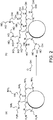
- a coated nanoparticle including (i) a nanoparticle, (ii) a linker including an anchoring group, a spacer, and a terminal group, and (iii) a stabilizing group.
- the anchoring group is covalently bound to the nanoparticle core and at least one of the terminal groups is covalently bound to the stabilizing group.
- a coated nanoparticle including a nanoparticle, a linker, and a stabilizing group.
- the linker includes a silane anchoring group and polyethylenimine.
- the stabilizing group can include a functional group selected from the group consisting of: and combinations thereof.
- a coated nanoparticle including (i) a silica nanoparticle (ii) a linker including a silane anchoring group and polyethylenimine, and (iii) a stabilizing group including propyl 1,2 diol.
- the linker is covalently bound to the nanoparticle and at least one amine of the polyethylenimine is covalently bound to the propyl 1,2 diol stabilizing group.
- the ion includes one or more of a lithium ion, a sodium ion, a potassium ion, a silver ion, a magnesium ion, a calcium ion, a barium ion, a zinc ion, an aluminum ion, a bismuth ion, a copper (I) ion, a copper (II) ion, an iron (II) ion, an iron (III) ion, a tin (II) ion, a tin (IV) ion, a chromium (II) ion, a chromium (III) ion, a manganese (II) ion, a manganese (III) ion, a mercury (I) ion, a mercury (II) ion, a lead (II) ion, a lead (IV) ion, a cobalt (II) i
- the linker is crosslinked by a crosslinker.
- one or more linkers surrounding a nanoparticle can be crosslinked with a crosslinker, such as a bis-epoxide.
- Crosslinking one or more linkers surrounding a nanoparticle with a crosslinker can ensure the one or more linkers remain associated with the nanoparticle.
- the stabilizing group is covalently bound to the linker.
- a propyl 1,2 diol stabilizing group can be installed by reacting a polyethylenimine linker with glycidol.
- the linker is crosslinked with the crosslinker and the linker is covalently bound to the stabilizing group.
- the linker can be crosslinked with a a bis-epoxide, such as 1,4-butanediol diglycidyl ether, and, subsequently, the crosslinked linker can be reacted with glycidol to install propyl 1,2 diol stabilizing groups.
- the linker can include the subunit:
- the variable R 1 can be independently selected from the from the group consisting of -H, or a linear or branched (C 1 -C 20 )alkyl interrupted with 0, 1, 2, 3, 4, 5, 6, 7, 8, or 9 substituted or unsubstituted nitrogen atoms.
- the wavy line labeled 1 can indicate a point of attachment to another linker on the crosslinked-coated nanoparticle.
- the variable A can be independently selected from a (Ci-Cio)alkyl interrupted with 0, 1, 2, 3, or 4 oxygen atoms or substituted or unsubstituted nitrogen atoms.
- the linker terminal group is -OR A , -SR A , -N-NR A 2 , O-NR A 2 , or NR A 2 .
- the variable R A at each occurrence can be independently selected from -H or The wavy line labeled 2 indicates a point of attachment to the stabilizing group.
- the polyfunctional amine-reactive compound can include a diisocyanate, an epichlorohalohydrin, a triglycidyl ether, aromatic and aliphatic dialdehydes, bis(imido esters), bis(succinimidyl esters), diacid chloride, bis(acrylamides), dicarboxylic acids, or bis(enones).
- the crosslinker can be a crosslinker that includes an epoxide functional group.
- the crosslinker can be a bis-epoxide.
- the bis-epoxide crosslinker is a diglycidyl ether.
- the stabilizing group can include one or more of the following functional groups: a -OH, a -CO 2 H, a -CO 2 CH 3 , a phosphate, and a sulfate.
- the stabilizing group can include a functional group selected from the group consisting of: and combinations thereof.
- the stabilizing group is a propyl 1,2 diol.
- the crosslinked-coated nanoparticles have a positive zeta potential.
- the nanoparticle can be a silica nanoparticle, a polymeric nanoparticle, a metal oxide nanoparticle, an upconverting nanoparticle, a superparamagnetic nanoparticle, and mixtures thereof.
- the nanoparticle is a polystyrene nanoparticle.
- the nanoparticle can be a derivatized polystyrene nanoparticle, such as a sodium dodecyl sulfate (SDS) derivatized polystyrenic nanoparticle.
- SDS sodium dodecyl sulfate
- the nanoparticle's surface is noncovalently bound to the linker.
- the linker can electrostatically adsorb on the surface of the nanoparticle. Electrostatic adsorption of a linker on the surface of a nanoparticle can be accomplished by employing a nanoparticle with a charged surface and a linker including oppositely charged functional groups.
- a polyethylenimine linker can be adsorbed on the surface of a negatively charged nanoparticle surface, such as a nanoparticle having a sodium dodecyl sulfate derivatized surface.
- the nanoparticle is a superparamagnetic nanoparticle.
- superparamagnetic nanoparticles include iron oxides, such as Fe 3 O 4 and ⁇ -Fe 2 O 3 , pure metals, such as Fe and Co, spinel-type ferromagnets, such as MgFe 2 O 4 , MnFe 2 O 4 , and CoFe 2 O 4 , as well as alloys, such as CoPt 3 and FePt.
- the nanoparticle includes a fluoride.
- the nanoparticle can include upconverting rare earth nanoparticles such as doped YF4 nanoparticles.
- the nanoparticle includes a metal oxide including an atom selected from the group consisting of Zn, Cr, Co, Dy, Er, Eu, Fe, Gd, Gd, Pr, Nd, Ni, In, Pr, Sm, Tb, Tm, and combinations thereof.
- method further includes obtaining or providing the composition, in which the obtaining or providing of the composition occurs above-surface. In some examples, the method further includes obtaining or providing the composition, in which the obtaining or providing of the composition occurs in the subterranean formation.
- the composition can be provided or obtained in the subterranean formation by providing the crosslinked-coated nanoparticles from one source and prior to, during, or after providing the crosslinked-coated nanoparticles, the ion can be provided from a separate source.
- the ion could be initially provided in the subterranean formation in an aqueous liquid and, subsequently, the crosslinked-coated nanoparticles could be provided to provide or obtain the composition.
- the method is at least one of a method of drilling the subterranean formation, a method of fracturing the subterranean formation, a method of conformance control, a method of subsurface imaging the subterranean formation, a method of aquifer remediation in the subterranean formation.
- the crosslinked-coated nanoparticles have a hydrodynamic radius that is less than the hydrodynamic radius of similar nanoparticles without the cross-linked coating in a similar composition under similar conditions.
- the crosslined-coated nanoparticles can have a hydrodynamic radius that is less than the hydrodynamic radius of similar nanoparticles without the crosslinked-coating in a similar composition in water, brine, produced water, flowback water, bracking water, Arab-D-brine, fresh water, mineral waters, sea water or mixtures thereof.
- the crosslinked-coated nanoparticles when at a concentration of about 1,000 ppm in synthetic sea water, can have a hydrodynamic radius of less than about 250 nm, 200 nm, 150 nm, 100 nm, 75 nm, 50 nm, 40 nm, 30 nm, 25 nm, or less than about 20 nm after heating at 90 °C in the synthetic sea water for 14 days.
- the crosslinked-coated nanoparticles when at a concentration of about 1,000 ppm in synthetic sea water, can have a hydrodynamic radius of less than about 30 nm after heating at 90 °C in the synthetic sea water for 14 days.
- the composition includes an aqueous liquid and an ion.
- the ion can be present at a concentration of about 0.01 M to about 2 M.
- the ion can be present at a concentration of about 0.01 M, 0.02 M, 0.03 M, 0.04 M, 0.05 M, 0.06 M, 0.07 M, 0.08 M, 0.09 M, 0.1 M, 0.2 M, 0.3 M, 0.4 M, 0.5 M, 0.6 M, 0.7 M, 0.8 M, 0.9 M, 1.0 M, 1.5 M, or about 2 M.
- the ion can be present at a concentration of about 0.05 M to about 0.3 M.
- the ion can be present at a concentration of about 0.05 M, 0.06 M, 0.07 M, 0.08 M, 0.09 M, 0.1 M, 0.2 M, or about 0.3 M. In some examples, the ion can be present at a concentration of about 0.6 M to about 0.9 M. For example, the ion can be present at a concentration of about 0.6 M, 0.7 M, 0.8 M, or about 0.9 M.
- the composition includes sea water and a calcium ion where the calcium ion is present at a concentration at a concentration of about 0.01 M to about 0.3 M.
- the ion can be present at a concentration of about 0.01 M, 0.02 M, 0.03 M, 0.04 M, 0.05 M, 0.05 M, 0.06 M, 0.07 M, 0.08 M, 0.09 M, 0.1 M, 0.2 M, or about 0.3 M.
- the ions present in the composition can be closely associated with the stabilizing groups.
- the ions present in the composition can be bound to the stabilizing groups through non-covalent interactions such as through Van der Waals forces.
- the ions present in the composition can be bound to the stabilizing groups through coordinated binding.
- the method is a method of conformance control and further includes aggregating, or aggregating and precipitating, of the coated nanoparticles in the subterranean formation by the addition of a kosmotropic ion.
- a kosmotropic ion may be added to the composition. Addition of the kosmotropic ion can lead to aggregation, or aggregation and precipitation, of the crosslinked-coated nanoparticles in the subterranean formation.
- compositions including kosmotropic ions are useful in fluid diversion or conformance control.
- the composition further includes a counterion.
- the counterion can be a halide, such as fluoro, chloro, iodo, or bromo.
- the counterion can be nitrate, hydrogen sulfate, dihydrogen phosphate, bicarbonate, nitrite, perchlorate, iodate, chlorate, bromate, chlorite, hypochlorite, hypobromite, cyanide, amide, cyanate, hydroxide, permanganate.
- the counterion can be a conjugate base of any carboxylic acid, such as acetate or formate.
- the method further includes combining the composition with an aqueous or oil-based fluid including a drilling fluid, a stimulation fluid, a fracturing fluid, a spotting fluid, a clean-up fluid, a completion fluid, a remedial treatment fluid, an abandonment fluid, a pill, an acidizing fluid, a cementing fluid, a packer fluid, a imaging fluid or a combination thereof, to form a mixture, in which the placing the composition in the subterranean formation includes placing the mixture in the subterranean formation.
- the composition can form emulsions.
- the composition is used in the subterranean formation, at least one of alone and in combination with other materials, as a drilling fluid, a stimulation fluid, a fracturing fluid, a spotting fluid, a clean-up fluid, a completion fluid, a remedial treatment fluid, an abandonment fluid, a pill, an acidizing fluid, a cementing fluid, a packer fluid, an imaging fluid, or a combination thereof.
- the composition further includes a saline, an aqueous base, an oil, an organic solvent, a synthetic fluid oil phase, an aqueous solution, an alcohol or a polyol, a cellulose, a starch, an alkalinity control agent, an acidity control agent, a density control agent, a density modifier, an emulsifier, a dispersant, a polymeric stabilizer, a crosslinking agent, a polyacrylamide, a polymer, an antioxidant, a heat stabilizer, a foam control agent, a foaming agent, a solvent, a diluent, a plasticizer, a filler, an inorganic particle, a pigment, a dye, a precipitating agent, a rheology modifier, an oil-wetting agent, a set retarding additive, a surfactant, a corrosion inhibitor, a gas, a weight reducing additive, a heavy-weight additive, a lost circulation material, a filtration control additive, a salt
- placing the composition in the subterranean formation includes fracturing at least part of the subterranean formation to form at least one subterranean fracture.
- the composition further includes a proppant, a resin-coated proppant, or a combination thereof.
- the placing of the composition in the subterranean formation includes pumping the composition through a drill string disposed in a wellbore, through a drill bit at a downhole end of the drill string, and back above-surface through an annulus.
- the method can further include, processing the composition exiting the annulus with at least one fluid processing unit to generate a cleaned composition and recirculating the cleaned composition through the wellbore.
- the composition includes an ion and a crosslinked-coated nanoparticle.
- the crosslinked-coated nanoparticle includes a nanoparticle and a coating.
- the coating includes a linker, a crosslinker, and a stabilizing group.
- the ion includes one or more of a lithium ion, a sodium ion, a potassium ion, a silver ion, a magnesium ion, a calcium ion, a barium ion, a zinc ion, an aluminum ion, a bismuth ion, a copper (I) ion, a copper (II) ion, an iron (II) ion, an iron (III) ion, a tin (II) ion, a tin (IV) ion, a chromium (II) ion, a chromium (III) ion, a manganese (II) ion, a manganese (III) ion, a mercury (I) ion, a mercury (II) ion, a lead (II) ion, a lead (IV) ion, a cobalt (II) i
- the linker can be crosslinked with the crosslinker.
- the stabilizing group can be covalently bound to the linker.
- the linker is crosslinked with the crosslinker and the linker is covalently bound to the stabilizing group.
- the linker includes the subunit:
- the variable R 1 cab be selected from the from the group consisting of -H, or a linear or branched (C 1 -C 20 )alkyl interrupted with 0, 1, 2, 3, 4, 5, 6, 7, 8, or 9 substituted or unsubstituted nitrogen atoms.
- the wavy line labeled 1 can indicate a point of attachment to another linker on the crosslinked-coated nanoparticle.
- the variable A can be a (Ci-Cio)alkyl interrupted with 0, 1, 2, 3, or 4 oxygen atoms or substituted or unsubstituted nitrogen atoms.
- the crosslinker can include an epoxide functional group.
- the crosslinker can be a bis-epoxide.
- the bis-epoxide is a diglycidyl ether.
- the diglycidyl ether can be selected from the group consisting of a 1,4-butanediol diglycidyl ether, a poly(ethylene glycol) diglycidyl ether, a neopentyl glycol diglycidyl ether, a glycerol diglycidyl ether, a 1,4-Cyclohexanedimethanol diglycidyl ether, a resorcinol diglycidyl ether, a poly(propylene glycol) diglycidyl ether, a bisphenol A diglycidyl ether, diglycidyl ether (C 6 H 10 O 3 ), a 1,2-propanediol diglycidyl ether, 1,4-butanedi
- the stabilizing group can include one or more of the following functional groups a -OH, - CO 2 H, -CO 2 CH 3 , a phosphate, or a sulfate.
- the stabilizing group includes a functional group selected from the group consisting of: and combinations thereof.
- the nanoparticle can be selected from the group consisting of a silica nanoparticle, a polymeric nanoparticle, a metal oxide nanoparticle, an upconverting nanoparticle, a superparamagnetic nanoparticle, and combinations thereof.
- the nanoparticle is a polystyrene nanoparticle.
- the nanoparticle can also be a derivatized polystyrene nanoparticle.
- the nanoparticle can be a sodium dodecyl sulfate derivatized polystyrene nanoparticle.
- the ion includes one or more of a lithium ion, a sodium ion, a potassium ion, a silver ion, a magnesium ion, a calcium ion, a barium ion, a zinc ion, an aluminum ion, a bismuth ion, a copper (I) ion, a copper (II) ion, an iron (II) ion, an iron (III) ion, a tin (II) ion, a tin (IV) ion, a chromium (II) ion, a chromium (III) ion, a manganese (II) ion, a manganese (III) ion, a mercury (I) ion, a mercury (II) ion, a lead (II) ion, a lead (IV) ion, a cobalt (II) i
- the composition includes a calcium ion and a crosslinked-coated nanoparticle.
- the crosslinked-coated nanoparticle includes a nanoparticle and a coating.
- the nanoparticle surface has an overall negative charge.
- the crosslinked-coated nanoparticle includes a nanoparticle and a coating.
- the coating includes a polyethylene amine crosslinked with a bis-epoxide crosslinker, and a propyl 1,2 diol stabilizing group.
- the coating is non-covalently bound to the nanoparticle.
- the coating can be electrostatically adsorbed on the nanoparticle.
- the linker can be crosslinked with the crosslinker.
- the stabilizing group can be covalently bound to the linker.
- the linker is crosslinked with the crosslinker and the linker is covalently bound to the stabilizing group.
- the linker includes the subunit:
- the variable R 1 cab be selected from the from the group consisting of -H, or a linear or branched (C 1 -C 20 )alkyl interrupted with 0, 1, 2, 3, 4, 5, 6, 7, 8, or 9 substituted or unsubstituted nitrogen atoms.
- the wavy line labeled 1 can indicate a point of attachment to another linker on the crosslinked-coated nanoparticle.
- the variable A can be a (Ci-Cio)alkyl interrupted with 0, 1, 2, 3, or 4 oxygen atoms or substituted or unsubstituted nitrogen atoms.
- the linker includes polyethylenimine.
- the crosslinker can include an epoxide functional group.
- the crosslinker can be a bis-epoxide.
- the bis-epoxide is a diglycidyl ether.
- the diglycidyl ether can be selected from the group consisting of a 1,4-butanediol diglycidyl ether, a poly(ethylene glycol) diglycidyl ether, a neopentyl glycol diglycidyl ether, a glycerol diglycidyl ether, a 1,4-Cyclohexanedimethanol diglycidyl ether, a resorcinol diglycidyl ether, a poly(propylene glycol) diglycidyl ether, a bisphenol A diglycidyl ether, diglycidyl ether , a 1,2-propanediol diglycidyl ether, 1,4-butanediyl diglycidyl
- the nanoparticle can be selected from the group consisting of a silica nanoparticle, a polymeric nanoparticle, a metal oxide nanoparticle, an upconverting nanoparticle, a superparamagnetic nanoparticle, and combinations thereof.
- the nanoparticle is a polystyrene nanoparticle.
- the nanoparticle can also be a derivatized polystyrene nanoparticle.
- the nanoparticle can be a sodium dodecyl sulfate derivatized polystyrene nanoparticle.
- the crosslinked-coated nanoparticle includes a nanoparticle and a coating.
- the nanoparticle surface has an overall negative charge.
- the coating includes a polyethylene amine crosslinked with a bis-epoxide crosslinker, and a stabilizing group.
- the stabilizing group is a propyl 1,2 diol.
- the propyl 1,2 diol can be installed by reacting the cross-linked polyethylenimine with glycidol.
- the crosslinked-coated nanoparticle includes a nanoparticle and a coating.
- the nanoparticle surface has an overall negative charge.
- the crosslinked-coated nanoparticle includes a nanoparticle and a coating.
- the coating includes a polyethylene amine crosslinked with a bis-epoxide crosslinker, and a propyl 1,2 diol stabilizing group.
- the viscosifier can include at least one of a linear polysaccharide, and poly((C 2 -Cio)alkenylene), in which at each occurrence, the (C 2 -C 10 )alkenylene is independently substituted or unsubstituted.
- the viscosifier can include at least one of poly(acrylic acid) or (Ci-Cs)alkyl esters thereof, poly(methacrylic acid) or (Ci-Cs)alkyl esters thereof, poly(vinyl acetate), poly(vinyl alcohol), poly(ethylene glycol), poly(vinyl pyrrolidone), polyacrylamide, poly (hydroxyethyl methacrylate), alginate, chitosan, curdlan, dextran, emulsan, gellan, glucuronan, N-acetyl-glucosamine, N-acetyl-heparosan, hyaluronic acid, kefiran, lentinan, levan, mauran, pullulan, scleroglucan, schizophyllan, stewartan, succinoglycan, xanthan, welan, derivatized starch, tamarind, tragacanth, guar gum, derivatized
- the viscosifier can include a poly(vinyl alcohol) homopolymer, poly(vinyl alcohol) copolymer, a crosslinked poly(vinyl alcohol) homopolymer, and a crosslinked poly(vinyl alcohol) copolymer.
- the viscosifier can include a poly(vinyl alcohol) copolymer or a crosslinked poly(vinyl alcohol) copolymer including at least one of a graft, linear, branched, block, and random copolymer of vinyl alcohol and at least one of vinyl phosphonic acid, vinylidene diphosphonic acid, substituted or unsubstituted 2-acrylamido-2-methylpropanesulfonic acid, a substituted or unsubstituted (C 1 -C 20 )alkenoic acid, propenoic acid, butenoic acid, pentenoic acid, hexenoic acid, octenoic acid, nonenoic acid, decenoic acid, acrylic acid, methacrylic acid, hydroxypropyl acrylic acid, acrylamide, fumaric acid, methacrylic acid, hydroxypropyl acrylic acid, vinyl phosphonic acid, vinylidene diphosphonic acid, itaconic acid, crotonic acid, mesoconic acid,
- the viscosifier can include a poly(vinyl alcohol) copolymer or a crosslinked poly(vinyl alcohol) copolymer including at least one of a graft, linear, branched, block, and random copolymer of vinyl alcohol and at least one of vinyl acetate, vinyl propanoate, vinyl butanoate, vinyl pentanoate, vinyl hexanoate, vinyl 2-methyl butanoate, vinyl 3-ethylpentanoate, and vinyl 3-ethylhexanoate, maleic anhydride, a substituted or unsubstituted (C 1 -C 20 )alkenoic substituted or unsubstituted (C 1 -C 20 )alkanoic anhydride, a substituted or unsubstituted (C 1 -C 20 )alkenoic substituted or unsubstituted (C 1 -C 20 )alkenoic anhydride, propenoic acid anhydride, butenoic acid
- the viscosifier can include a poly(vinyl alcohol) copolymer or a crosslinked poly(vinyl alcohol) copolymer including at least one of a graft, linear, branched, block, and random copolymer that includes a poly(vinylalcohol)-poly(acrylamide) copolymer, a poly(vinylalcohol)-poly(2-acrylamido-2-methylpropanesulfonic acid) copolymer, or a poly(vinylalcohol)-poly(N-vinylpyrrolidone) copolymer.
- the viscosifier can include a crosslinked poly(vinyl alcohol) homopolymer or copolymer including a crosslinker including at least one of chromium, aluminum, antimony, zirconium, titanium, calcium, boron, iron, silicon, copper, zinc, magnesium, and an ion thereof.
- the viscosifier can include a crosslinked poly(vinyl alcohol) homopolymer or copolymer including a crosslinker including at least one of an aldehyde, an aldehyde-forming compound, a carboxylic acid or an ester thereof, a sulfonic acid or an ester thereof, a phosphonic acid or an ester thereof, an acid anhydride, and an epihalohydrin.
- the crosslinker can include at least one of boric acid, borax, a borate, a (C 1 -C 30 )hydrocarbylboronic acid, a (Ci-C 30 )hydrocarbyl ester of a (C 1 -C 30 )hydrocarbylboronic acid, a (C 1 -C 30 )hydrocarbylboronic acid-modified polyacrylamide, ferric chloride, disodium octaborate tetrahydrate, sodium metaborate, sodium diborate, sodium tetraborate, disodium tetraborate, a pentaborate, ulexite, colemanite, magnesium oxide, zirconium lactate, zirconium triethanol amine, zirconium lactate triethanolamine, zirconium carbonate, zirconium acetylacetonate, zirconium malate, zirconium citrate, zirconium diisopropylamine lactate, zirconium
- the composition, or a mixture including the same can include any suitable amount of any suitable material used in a downhole fluid.
- the composition or a mixture including the same can include water, saline, aqueous base, acid, oil, organic solvent, synthetic fluid oil phase, aqueous solution, alcohol or polyol, cellulose, starch, alkalinity control agents, acidity control agents, density control agents, density modifiers, emulsifiers, dispersants, polymeric stabilizers, crosslinking agents, polyacrylamide, a polymer or combination of polymers, antioxidants, heat stabilizers, foam control agents, solvents, diluents, plasticizer, filler or inorganic particle, pigment, dye, precipitating agent, rheology modifier, oil-wetting agents, set retarding additives, surfactants, gases, weight reducing additives, heavy-weight additives, lost circulation materials, filtration control additives, salts (for example, any suitable salt, such as potassium salts such as potassium chloride, potassium bro
- a drilling fluid also known as a drilling mud or simply "mud," is a specially designed fluid that is circulated through a wellbore as the wellbore is being drilled to facilitate the drilling operation.
- the drilling fluid can be water-based or oil-based.
- the drilling fluid can carry cuttings up from beneath and around the bit, transport them up the annulus, and allow their separation.
- a drilling fluid can cool and lubricate the drill head as well as reduce friction between the drill string and the sides of the hole.
- the drilling fluid aids in support of the drill pipe and drill head, and provides a hydrostatic head to maintain the integrity of the wellbore walls and prevent well blowouts.
- Specific drilling fluid systems can be selected to optimize a drilling operation in accordance with the characteristics of a particular geological formation.
- a water-based drilling fluid in methods provided in this disclosure can be any suitable water-based drilling fluid.
- the drilling fluid can include at least one of water (fresh or brine), a salt (for example, calcium chloride, sodium chloride, potassium chloride, magnesium chloride, calcium bromide, sodium bromide, potassium bromide, calcium nitrate, sodium formate, potassium formate, cesium formate), aqueous base (for example, sodium hydroxide or potassium hydroxide), alcohol or polyol, cellulose, starches, alkalinity control agents, density control agents such as a density modifier (for example, barium sulfate), surfactants (for example, betaines, alkali metal alkylene acetates, sultaines, ether carboxylates), emulsifiers, dispersants, polymeric stabilizers, crosslinking agents, polyacrylamides, polymers or combinations of polymers, antioxidants, heat stabilizers, foam control agents, foaming agents, solvents, diluents,
- An oil-based drilling fluid or mud in methods provided in this disclosure can be any suitable oil-based drilling fluid.
- the drilling fluid can include at least one of an oil-based fluid (or synthetic fluid), saline, aqueous solution, emulsifiers, other agents of additives for suspension control, weight or density control, oil-wetting agents, fluid loss or filtration control agents, and rheology control agents.
- an oil-based fluid or synthetic fluid
- saline aqueous solution
- emulsifiers other agents of additives for suspension control, weight or density control, oil-wetting agents, fluid loss or filtration control agents, and rheology control agents.
- a pill is a relatively small quantity (for example, less than about 79.5 m 3 [500 bbl], or less than about 31.8 m 3 [200 bbl]) of drilling fluid used to accomplish a specific task that the regular drilling fluid cannot perform.
- a pill can be a high-viscosity pill to, for example, help lift cuttings out of a vertical wellbore.
- a pill can be a freshwater pill to, for example, dissolve a salt formation.
- Another example is a pipe-freeing pill to, for example, destroy filter cake and relieve differential sticking forces.
- a pill is a lost circulation material pill to, for example, plug a thief zone.
- a pill can include any component described in this disclosure as a component of a drilling fluid.
- a cement fluid can include an aqueous mixture of at least one of cement and cement kiln dust.
- the composition including the crosslinkable ampholyte polymer and the crosslinker, or a crosslinked reaction product thereof, can form a useful combination with cement or cement kiln dust.
- the cement kiln dust can be any suitable cement kiln dust.
- Cement kiln dust can be formed during the manufacture of cement and can be partially calcined kiln feed that is removed from the gas stream and collected in a dust collector during a manufacturing process. Cement kiln dust can be advantageously utilized in a cost-effective manner since kiln dust is often regarded as a low value waste product of the cement industry.
- the Portland cements that are suitable for use in examples of the methods described in this disclosure are classified as Classes A, C, H, and G cements according to the American Petroleum Institute, API Specification for Materials and Testing for Well Cements, API Specification 10, Fifth Ed., Jul. 1, 1990 .
- a cement can be generally included in the cementing fluid in an amount sufficient to provide the desired compressive strength, density, or cost.
- the hydraulic cement can be present in the cementing fluid in an amount in the range of from 0 wt % to about 100 wt %, 0-95 wt %, 20-95 wt %, or about 50-90 wt %.
- a cement kiln dust can be present in an amount of at least about 0.01 wt %, or about 5 wt %-80 wt %, or about 10 wt % to about 50 wt %.
- additives can be added to a cement or kiln dust-containing composition of examples of the methods described in this disclosure as deemed appropriate by one skilled in the art, with the benefit of this disclosure.
- Any optional ingredient listed in this paragraph can be either present or not present in the composition.
- the composition can include fly ash, metakaolin, shale, zeolite, set retarding additive, surfactant, a gas, accelerators, weight reducing additives, heavy-weight additives, lost circulation materials, filtration control additives, dispersants, and combinations thereof.
- additives can include crystalline silica compounds, amorphous silica, salts, fibers, hydratable clays, microspheres, pozzolan lime, thixotropic additives, combinations thereof, and the like.
- proppants can include sand, gravel, glass beads, polymer beads, ground products from shells and seeds such as walnut hulls, and manmade materials such as ceramic proppant, bauxite, tetrafluoroethylene materials (for example, TEFLONTM available from DuPont), fruit pit materials, processed wood, composite particulates prepared from a binder and fine grade particulates such as silica, alumina, fumed silica, carbon black, graphite, mica, titanium dioxide, meta-silicate, calcium silicate, kaolin, talc, zirconia, boron, fly ash, hollow glass microspheres, and solid glass, or mixtures thereof.
- ceramic proppant for example, TEFLONTM available from DuPont
- TEFLONTM tetrafluoroethylene materials
- fruit pit materials processed wood, composite particulates prepared from a binder and fine grade particulates such as silica, alumina, fumed silica, carbon black, graphite, mica,
- proppant can have an average particle size, in which particle size is the largest dimension of a particle, of about 0.001 mm (millimeters) to about 3 mm, about 0.15 mm to about 2.5 mm, about 0.25 mm to about 0.43 mm, about 0.43 mm to about 0.85 mm, about 0.85 mm to about 1.18 mm, about 1.18 mm to about 1.70 mm, or about 1.70 to about 2.36 mm.
- the proppant can have a distribution of particle sizes clustering around multiple averages, such as one, two, three, or four different average particle sizes.
- the composition or mixture can include any suitable amount of proppant, such as about 0.0001 wt % to about 99.9 wt %, about 0.1 wt % to about 80 wt %, or about 10 wt % to about 60 wt %, or about 0.00000001 wt % or less, or about 0.000001 wt %, 0.0001, 0.001, 0.01, 0.1, 1, 2, 3, 4, 5, 10, 15, 20, 30, 40, 50, 60, 70, 80, 85, 90, 91, 92, 93, 94, 95, 96, 97, 98, 99, 99.9 wt %, or about 99.99 wt % or more.
- proppant such as about 0.0001 wt % to about 99.9 wt %, about 0.1 wt % to about 80 wt %, or about 10 wt % to about 60 wt %, or about 0.00000001 wt % or less, or about
- a system including a nanoparticle composition including a nanoparticle, an ion, and a subterranean formation including the composition therein.
- the nanoparticle can be a coated nanoparticle, as described in this disclosure, or a crosslinked-coated nanoparticle as describe in this disclosure.
- the composition in the system can also include a downhole fluid, or the system can include a mixture of the composition and downhole fluid.
- the system can include a tubular, and a pump configured to pump the composition into the subterranean formation through the tubular.
- the system can include a pump fluidly coupled to a tubular (for example, any suitable type of oilfield pipe, such as pipeline, drill pipe, production tubing, and the like), the tubular containing a composition including the coated nanoparticle and the ion, described in this disclosure.
- a tubular for example, any suitable type of oilfield pipe, such as pipeline, drill pipe, production tubing, and the like
- the tubular containing a composition including the coated nanoparticle and the ion, described in this disclosure.
- Tetraethylorthosilicate 98% (Sigma Aldrich), tetramethylrhodamine-5-(and 6)-C2, maleimide (Anaspec), L-Arginine 98% (Sigma Aldrich), (3-Mercaptopropyl) trimethoxysilane 95% (Gelest), trimethoxysilylpropyl modified (polyethylenimine) (PEI-silane), 50% in isopropanol (Gelest), glycidol (Acros Organics), tris Buffered Saline (TBS), IX solution (pH 7.4/Molecular Biology), (Fisher BioReagents) ultrapure water.
- 25nm and 45nm Fluorescent Silica Nanoparticle Synthesis 25nm fluorescent silica nanoparticles "seeds" were synthesized based upon a modified protocol that was described in Hartlen et al. (Langmuir 2008, 24 (5), 1714-1720 ). The following description was for a batch synthesis of 50mL volume. Briefly, dye precursor was prepared from reacting 20 molar excess of (3-Mercaptopropyl) trimethoxysilane with tetramethylrhodamine-5-(and 6)-C2 maleimide at a dye stock concentration of 4.5mM. For a 50mL batch, 400uL of dye precursor was prepared.
- a round bottom (RB) flask 40.8mL of ultrapure water was heated to 60°C and stirred at 150RPM on a magnetic stir plate. 5.78mL of 10mg/mL L-arginine stock solution was added into the RB flask and let homogenize. On Day 1, two 100uL aliquots of dye precursor were added into the flask followed with 675uL of tetraethylorthosilicate (TEOS) with at least 8 hours between additions. On Day 2, the same addition of dye precursor and TEOS was repeated. On Day 3, 717uL of TEOS was added into the RB flask and the reaction is allowed to proceed overnight.
- TEOS tetraethylorthosilicate
- 45nm fluorescent silica nanoparticles were synthesized using the aforementioned 25 nm seeds.
- 20 mL of 25 nm seeds was added to 80mL of ultrapure water and heated to 60 °C and stirred at 150 RPM.
- 2.16 mL of 4.5 mM dye precursor and 5.4 mL TEOS will be added in 8 aliquots of 270 uL and 675 uL respectively over 8 days.
- 1.4 mL was added to the RB flask and the reaction was allowed to proceed overnight. This yielded a 22mg/mL suspension.
- FIG. 1 shows a representative scanning electron micrograph for 45nm fluorescent nanoparticles after PEI-coating.
- centrifugation devices with 100 kD molecular weight cut-off (MWCO) polyethersulfone (PES) membrane were employed.
- the suspension was loaded into the centrifugation devices and spun at 5000 RPM for 30 minutes.
- the filtrate was discarded and the retentate resuspended in ultrapure water. This treatment was repeated 5 times.
- the final retentate was reconstituted to approximately 22 mg/mL (the original nanoparticle solid content).
- a cross-flow diafiltration with PES hollow-fiber membrane at 500 kD MWCO was employed.
- a 200 mL-coating batch at nominal concentration of 4.4 mg/mL as described above in "Coating 45nm Fluorescent Silica Nanoparticles with PEI-silane” was subjected to purification with 2 L water.
- the feed rate was set at 30 mL/min with the transmembrane pressure kept at approximately 6894,8 Pa [1 psi].
- the suspension was reconcentrated to the approximately 22 mg/mL (the original nanoparticle solid content).
- Table 2 details the synthetic brine compositions used for stimulated reservoir environment testing.
- UV-Vis Spectrometry For samples that exhibited good colloidal stability, UV-Vis absorbance of the samples was taken from 250 nm to 800 nm after transferring a 1:3 dilution of the 1,000 ppm solution in either deionized, seawater or Arab-D brine into UV-transparent plastic cuvettes. Adsorption rates to crushed Arab-D rocks were calculated from absorbance maximum of tetramethylrhodamine at 550 nm.
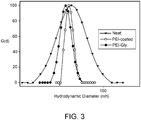
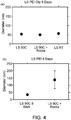
- FIG. 4 shows a comparison of colloidal stability of the nanoparticles in Arab-D brine at 90°C for 8 days shows that the glycidylated nanoparticles remain stable over the testing period (a), whereas the (b) PEI-coated nanoparticles have grown in size (aggregation).
- FIG. 5 shows absorbance maximum at 550 nm of tetramethylrhodamine, the encapsulated dye, was used to quantitate rock adsorption in the static stability test. After 8 days in Arab-D brine interfaced with finely crushed carbonate reservoir rocks, a loss of 19% loss to rock adsorption was determined.
- the PEI-coated nanoparticles were first collected and the pH was adjusted to approximately 8 using 1.0M hydrochloric acid and placed in an addition funnel. 1 mL of 1,4-butanediol diglycidyl ether was added to 20 mL of deionized water in a round-bottom flask and homogenized with magnetic stirring at 500RPM. Under this stirring rate, the PEI-coated nanoparticle solution in the addition funnel was added dropwise into the crosslinker solution. Upon completion of addition, the solution was stirred overnight. To quench the reaction, 10mL of 2.0M tris buffer was added to the solution and left stirring for 1 hour before the cleaning step.
- tangential flow filtration via 100kDa MWCO filters was performed.
- 100kDa MWCO filters were attached in tandem to increase throughput of the filtration process.
- the purified nanoparticles were first re-concentrated on the tangential flow filtration setup to approximately 50mL and further re-concentrated to approximately 20 mL using centrifugal devices with 10kDa MWCO on the centrifuge.
- the collected nanoparticles had pH of approximately 9.
- the pH was adjusted to a pH of approximately 6.5 using 37 wt.% hydrochloric acid before colloidal stability studies in brine were conducted.
- nanoparticles were prepared in synthetic seawater, synthetic seawater with additional calcium ions (50mM total calcium concentration), and low salinity Arab-D brine.
- the nanoparticles suspensions were heat treated in an oven at 90°C for 14 days and their hydrodynamic diameter characterized periodically by dynamic light scattering. The results are depicted in Figure 10 . Over the two-week period, the nanoparticles size remained under 25nm in all three brine solutions.
Landscapes
- Chemical & Material Sciences (AREA)
- Life Sciences & Earth Sciences (AREA)
- General Life Sciences & Earth Sciences (AREA)
- Engineering & Computer Science (AREA)
- Materials Engineering (AREA)
- Organic Chemistry (AREA)
- Oil, Petroleum & Natural Gas (AREA)
- Chemical Kinetics & Catalysis (AREA)
- General Chemical & Material Sciences (AREA)
- Compositions Of Macromolecular Compounds (AREA)
- Powder Metallurgy (AREA)
- Medicinal Preparation (AREA)
- Solid-Sorbent Or Filter-Aiding Compositions (AREA)
Claims (18)
- Procédé de traitement d'une formation souterraine, le procédé comprenant :
la mise en place dans une formation souterraine d'une composition comprenant :une nanoparticule enrobée comprenant :une nanoparticule ;un lieur comprenant un groupe d'ancrage silane et de la polyéthylèneimine etun groupe de stabilisation,le groupe d'ancrage silane étant lié de manière covalente à la nanoparticule et au moins une amine de la polyéthylèneimine étant liée de manière covalente au groupe de stabilisation etle groupe de stabilisation comprenant un groupe fonctionnel choisi dans le groupe constitué par :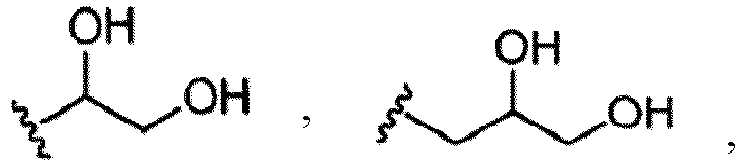
 un ion.
 - Procédé selon la revendication 1, dans lequel la composition comprend en outre un liquide aqueux, éventuellement le liquide aqueux en comprenant au moins un parmi de l'eau, de la saumure, de l'eau produite, de l'eau de reflux, de l'eau saumâtre, de l'eau douce, de la saumure d'Arabe-D, de l'eau de mer, des eaux minérales et d'autres eaux de salinité et concentration en minéraux variables, éventuellement le liquide aqueux en comprenant au moins un parmi un fluide de forage, un fluide de fracturation, un fluide colmatant sélectif et un fluide de traitement de perte de circulation.
- Procédé selon l'une des revendications 1-2, le procédé comprenant en outre l'obtention ou la fourniture de la composition, l'obtention ou la fourniture de la composition ayant lieu au-dessus de la surface ou dans la formation souterraine.
- Procédé selon l'une des revendications 1-3, le procédé étant un procédé de forage dans la formation souterraine ou le procédé étant un procédé de fracturation de la formation souterraine ou le procédé étant un procédé de contrôle de conformité ou le procédé étant un procédé de diagraphie subsurface de la formation souterraine ou le procédé étant un procédé de remédiation d'aquifère dans la formation souterraine.
- Procédé selon l'une des revendications 1-4, dans lequel les nanoparticules enrobées ont une température de solution critique inférieure supérieure à 90 °C et/ou dans lequel les nanoparticules enrobées ont un rayon hydrodynamique inférieur à 100 nm.
- Procédé selon l'une des revendications 1-5, dans lequel la nanoparticule est choisie dans le groupe constitué par une nanoparticule de silice, une nanoparticule d'oxyde métallique, une nanoparticule superparamagnétique et des mélanges de celles-ci, éventuellement dans lequel la nanoparticule comprend un oxyde métallique, éventuellement dans lequel la nanoparticule comprend un oxyde métallique superparamagnétique, éventuellement dans lequel la nanoparticule comprend un oxyde métallique choisi dans le groupe constitué par un oxyde de fer, un oxyde de nickel, un oxyde de cobalt, une magnétite, une ferrite et des combinaisons de ceux-ci, éventuellement dans lequel la nanoparticule comprend un oxyde métallique comprenant un atome choisi dans le groupe constitué par Zn, Cr, Co, Dy, Er, Eu, Gd, Nd, In, Pr, Sm, Tb, Tm et des combinaisons de ceux-ci.
- Procédé selon l'une des revendications 1-6, dans lequel la nanoparticule est une nanoparticule de silice, éventuellement dans lequel la nanoparticule est une nanoparticule de silice fluorescente.
- Procédé selon l'une des revendications 1-7, dans lequel la nanoparticule liée de manière covalente au lieur est obtenue par réaction de polyéthylèneimine modifiée par des groupes triméthoxysilylpropyle avec la nanoparticule.
- Procédé selon l'une des revendications 1-8, dans lequel les nanoparticules enrobées ont un potentiel zêta positif.
- Procédé selon l'une des revendications 1-9, dans lequel l'ion en comprend un ou plusieurs parmi un ion lithium, un ion sodium, un ion potassium, un ion argent, un ion magnésium, un ion calcium, un ion baryum, un ion zinc, un ion aluminium, un ion bismuth, un ion cuivre(I), un ion cuivre(II), un ion fer(II), un ion fer(III), un ion étain(II), un ion étain(IV), un ion chrome(II), un ion chrome(III), un ion manganèse(II), un ion manganèse(III), un ion mercure(I), un ion mercure(II), un ion plomb(II), un ion plomb(IV), un ion cobalt(II), un ion cobalt(III), un ion nickel(II), un ion nickel(IV), un ion titane et un ion titane(IV).
- Procédé selon la revendication 3-10, dans lequel la fourniture ou l'obtention de la composition comprend la détermination de la présence et de la concentration d'au moins un ion d'une eau dans une formation souterraine et le dopage de la composition avec l'ion déterminé, éventuellement le dopage de la composition avec l'ion déterminé comprenant l'augmentation de la quantité de l'ion déterminé dans la composition de façon telle que la molarité de l'ion déterminé dans la composition soit d'au moins 10 % de la molarité de l'au moins un ion de l'eau dans la formation souterraine.
- Procédé selon l'une des revendications 1-11, comprenant en outre la combinaison de la composition avec un fluide aqueux ou à base d'huile comprenant un fluide de forage, un fluide de stimulation, un fluide de fracturation, un fluide pour spotting, un fluide de nettoyage, un fluide de complétion, un fluide de traitement de remédiation, un fluide de fermeture, un fluide de forage spécial, un fluide d'acidification, un fluide de cimentation, un fluide de garniture d'étanchéité, un fluide de diagraphie ou une combinaison de ceux-ci, pour former un mélange, dans lequel la mise en place de la composition dans la formation souterraine comprend la mise en place du mélange dans la formation souterraine, éventuellement dans lequel avant, pendant et/ou après la mise en place de la composition dans la formation souterraine, la composition est utilisée dans la formation souterraine seule et/ou en combinaison avec d'autres matériaux, en tant que fluide de forage, fluide de stimulation, fluide de fracturation, fluide pour spotting, fluide de nettoyage, fluide de complétion, fluide de traitement de remédiation, fluide de fermeture, fluide de forage spécial, fluide d'acidification, fluide de cimentation, fluide de garniture d'étanchéité, fluide de diagraphie ou une combinaison de ceux-ci, éventuellement dans lequel la mise en place de la composition dans la formation souterraine comprend la fracturation d'au moins une partie de la formation souterraine pour former au moins une fracture souterraine, éventuellement dans lequel la mise en place de la composition dans la formation souterraine comprend le pompage de la composition dans un train de tiges de forage disposé dans un puits de forage, dans un trépan à une extrémité en fond de trou du train de tiges de forage et en retour au-dessus de la surface dans un espace annulaire, éventuellement comprenant en outre le traitement de la composition sortant de l'espace annulaire avec au moins une unité de traitement de fluide pour produire une composition épurée et la recirculation de la composition épurée dans le puits de forage.
- Procédé selon la revendication 1, dans lequel la nanoparticule enrobée comprend :une nanoparticule de silice ;un lieur comprenant un groupe d'ancrage silane et de la polyéthylèneimine ; etun groupe de stabilisation comprenant du 1,2-diol propylique,le lieur étant lié de manière covalente à la nanoparticule et au moins une amine de la polyéthylèneimine étant liée de manière covalente au groupe de stabilisation 1,2-diol propylique, etun ion calcium.
- Utilisation d'une composition de nanoparticules enrobées en traitement de formations souterraines pour l'amélioration de la récupération d'hydrocarbures fluides, la composition comprenant :une nanoparticule enrobée comprenant :une nanoparticule ;un lieur comprenant un groupe d'ancrage silane et de la polyéthylèneimine ;un groupe de stabilisation, le groupe de stabilisation comprenant un groupe fonctionnel choisi dans le groupe constitué par :

 un ion.
 - Procédé de traitement d'une formation souterraine, le procédé comprenant :
la mise en place dans une formation souterraine d'une composition comprenant :un ion etune nanoparticule enrobée-réticulée comprenant :dans lequel l'enrobage comprend un lieur, un agent de réticulation et un groupe de stabilisation,une nanoparticule ; etun enrobage ;
dans lequel le lieur est réticulé avec l'agent de réticulation et le lieur est lié de manière covalente au groupe de stabilisation,
dans lequel le lieur comprend de la polyéthylèneimine et
dans lequel le groupe de stabilisation comprend un groupe fonctionnel choisi dans
le groupe constitué par :
- Procédé selon la revendication 15, dans lequel l'agent de réticulation comprend un groupe fonctionnel époxyde, éventuellement dans lequel l'agent de réticulation est un bis-époxyde, éventuellement le bis-époxyde étant un éther diglycidylique, éventuellement l'éther diglycidylique étant choisi dans le groupe constitué par un éther diglycidylique de butane-1,4-diol, un éther diglycidylique de polyéthylèneglycol, un éther diglycidylique de néopentylglycol, un éther diglycidylique de glycérol, un éther diglycidylique de cyclohexane-1,4-diméthanol, un éther diglycidylique de résorcinol, un éther diglycidylique de polypropylèneglycol, un éther diglycidylique de bisphénol A, un éther diglycidylique, un éther diglycidylique de propane-1,2-diol et des combinaisons de ceux-ci, éventuellement l'éther diglycidylique comprenant de l'éther diglycidylique de butane-1,4-diol.
- Procédé selon l'une des revendications 15-16, dans lequel l'enrobage est adsorbé de manière électrostatique sur la nanoparticule.
- Utilisation d'une composition de nanoparticules enrobées-réticulées en traitement de formations souterraines pour l'amélioration de la récupération d'hydrocarbures fluides, la composition comprenant :un ion ; etune nanoparticule enrobée-réticulée comprenant une nanoparticule et un enrobage, dans laquelle l'enrobage comprend un lieur, un agent de réticulation et un groupe de stabilisation,dans laquelle le lieur est réticulé avec l'agent de réticulation et le lieur est lié de manière covalente au groupe de stabilisation,
dans laquelle le lieur comprend de la polyéthylèneimine et
dans laquelle le groupe de stabilisation comprend un groupe fonctionnel choisi dans
le groupe constitué par :
Priority Applications (1)
| Application Number | Priority Date | Filing Date | Title |
|---|---|---|---|
| EP20202715.7A EP3825384A1 (fr) | 2015-07-13 | 2016-07-08 | Procédé de traitement de puits, employant des compositions de nanoparticules stabilisées comprenant des ions |
Applications Claiming Priority (2)
| Application Number | Priority Date | Filing Date | Title |
|---|---|---|---|
| US201562191871P | 2015-07-13 | 2015-07-13 | |
| PCT/US2016/041584 WO2017011328A1 (fr) | 2015-07-13 | 2016-07-08 | Compositions de nanoparticules stabilisées comprenant des ions |
Related Child Applications (1)
| Application Number | Title | Priority Date | Filing Date |
|---|---|---|---|
| EP20202715.7A Division EP3825384A1 (fr) | 2015-07-13 | 2016-07-08 | Procédé de traitement de puits, employant des compositions de nanoparticules stabilisées comprenant des ions |
Publications (2)
| Publication Number | Publication Date |
|---|---|
| EP3322767A1 EP3322767A1 (fr) | 2018-05-23 |
| EP3322767B1 true EP3322767B1 (fr) | 2020-10-21 |
Family
ID=56497898
Family Applications (2)
| Application Number | Title | Priority Date | Filing Date |
|---|---|---|---|
| EP16741485.3A Active EP3322767B1 (fr) | 2015-07-13 | 2016-07-08 | Procédés et utilisations, employant des compositions de nanoparticules stabilisées comprenant des ions |
| EP20202715.7A Withdrawn EP3825384A1 (fr) | 2015-07-13 | 2016-07-08 | Procédé de traitement de puits, employant des compositions de nanoparticules stabilisées comprenant des ions |
Family Applications After (1)
| Application Number | Title | Priority Date | Filing Date |
|---|---|---|---|
| EP20202715.7A Withdrawn EP3825384A1 (fr) | 2015-07-13 | 2016-07-08 | Procédé de traitement de puits, employant des compositions de nanoparticules stabilisées comprenant des ions |
Country Status (5)
| Country | Link |
|---|---|
| US (3) | US10344202B2 (fr) |
| EP (2) | EP3322767B1 (fr) |
| CN (2) | CN112920782A (fr) |
| CA (1) | CA2992264A1 (fr) |
| WO (1) | WO2017011328A1 (fr) |
Families Citing this family (50)
| Publication number | Priority date | Publication date | Assignee | Title |
|---|---|---|---|---|
| WO2016049486A2 (fr) * | 2014-09-26 | 2016-03-31 | The Board Of Regents Of The University Of Oklahoma | Suspensions stabilisées de nanotubes de carbone |
| US10087355B2 (en) * | 2016-03-17 | 2018-10-02 | Saudi Arabian Oil Company | Oil-based drilling fluids containing an alkaline-earth diamondoid compound as rheology modifier |
| US11293247B2 (en) | 2016-09-12 | 2022-04-05 | Baker Hughes, A Ge Company, Llc | Frac plug and method for fracturing a formation |
| US11492866B2 (en) | 2016-09-12 | 2022-11-08 | Baker Hughes Holdings Llc | Downhole tools containing ductile cementing materials |
| EP3607023B1 (fr) | 2017-04-06 | 2023-06-07 | Nissan Chemical America Corporation | Solutions micellaires pour traitement de formations d'hydrocarbures |
| WO2018232076A1 (fr) | 2017-06-16 | 2018-12-20 | TenEx Technologies, LLC | Compositions et procédés de traitement de formations souterraines |
| US10894913B1 (en) * | 2017-08-15 | 2021-01-19 | National Technology & Engineering Solutions Of Sandia, Llc | Surface blocking agents |
| US11279865B2 (en) | 2017-09-11 | 2022-03-22 | Saudi Arabian Oil Company | Well treatment fluid having an acidic nanoparticle based dispersion, an epoxy resin, and a polyamine |
| US10683452B2 (en) | 2017-09-11 | 2020-06-16 | Saudi Arabian Oil Company | Nanosilica dispersion for thermally insulating packer fluid |
| US10316238B2 (en) | 2017-09-11 | 2019-06-11 | Saudi Arabian Oil Company | Nanosilica dispersion for thermally insulating packer fluid |
| US10233380B1 (en) * | 2017-09-11 | 2019-03-19 | Saudi Arabian Oil Company | Well treatment fluid having an acidic nanoparticle based dispersion and a polyamine |
| US10577526B2 (en) | 2017-09-11 | 2020-03-03 | Saudi Arabian Oil Company | Loss circulation material composition having an acidic nanoparticle based dispersion and polyamine |
| JP2021006595A (ja) | 2017-09-13 | 2021-01-21 | 日産化学株式会社 | 原油回収用薬液 |
| US10801310B2 (en) | 2017-09-26 | 2020-10-13 | Nissan Chemcial America Corporation | Using gases and hydrocarbon recovery fluids containing nanoparticles to enhance hydrocarbon recovery |
| MX2020004470A (es) | 2017-11-03 | 2020-09-03 | Nissan Chemical America Corp | Uso de dispersiones de nanoparticulas de dioxido de silicio resistentes a la salmuera para mejorar la recuperacion de petroleo. |
| CA3096690A1 (fr) * | 2018-04-13 | 2019-10-17 | Mitsubishi Gas Chemical Company, Inc. | Composition de fluide tensioactif viscoelastique et son procede d'utilisation |
| CA3105773A1 (fr) * | 2018-07-12 | 2020-01-16 | Intelligent Material Solutions, Inc. | Marquage de sable de fracturation |
| CN109456740B (zh) * | 2018-09-26 | 2021-03-30 | 西安石油大学 | 一种疏水缔合聚合物改性磁纳米增稠剂及其制备方法 |
| WO2020092920A1 (fr) | 2018-11-02 | 2020-05-07 | Nissan Chemical America Corporation | Récupération améliorée d'huile à l'aide de fluides de traitement comprenant de la silice colloïdale avec un agent de soutènement |
| CN109294546A (zh) * | 2018-11-07 | 2019-02-01 | 北京大德广源石油技术服务有限公司 | 降压增注剂及其制备方法与应用 |
| CN109536157A (zh) * | 2018-12-28 | 2019-03-29 | 权冉(银川)科技有限公司 | 可调功能的材料及其滑溜水、复用压裂液用于能源开发 |
| US11078394B2 (en) * | 2019-03-04 | 2021-08-03 | Saudi Arabian Oil Company | Cationic coatings for improved nanoparticle transport in a carbonate reservoir |
| CN110173244B (zh) * | 2019-05-09 | 2020-03-27 | 西南石油大学 | 黏度可控的原位乳化增黏体系及其在水驱油藏的应用 |
| CN110242265B (zh) * | 2019-06-14 | 2021-02-26 | 西南石油大学 | 原位纳-微球提高原油采收率的矿场应用方法 |
| CN110144199B (zh) * | 2019-06-14 | 2021-03-16 | 西南石油大学 | 深部调驱用聚合物单分散纳-微球及制备方法 |
| US11370952B2 (en) * | 2019-10-18 | 2022-06-28 | Saudi Arabian Oil Company | Magnetically responsive drilling fluid and methods of making and use thereof |
| CN115298253B (zh) * | 2020-03-17 | 2024-05-03 | 毕克化学有限公司 | 流变控制剂 |
| US11459238B2 (en) | 2020-06-17 | 2022-10-04 | Saudi Arabian Oil Company | Methods and compositions for treating thief zones in carbonate formations using crosslinked polymeric systems with graphene oxide Janus nanosheets crosslinker |
| US11548787B2 (en) | 2020-06-17 | 2023-01-10 | Saudi Arabian Oil Company | Methods and compositions for treating thief zones in carbonate formations using crosslinked polymeric systems with silicon dioxide janus nanosheets crosslinker |
| US11261368B2 (en) | 2020-06-17 | 2022-03-01 | Saudi Arabian Oil Company | Silicon dioxide Janus nanosheets relative permeability modifier (RPM) for reducing subterranean formation water permeability in carbonate and sandstone formations |
| US11434411B2 (en) | 2020-06-17 | 2022-09-06 | Saudi Arabian Oil Company | Graphene oxide janus nanosheets relative permeability modifier (RPM) for reducing subterranean formation water permeability in carbonate formations |
| CN113413570B (zh) * | 2020-12-15 | 2022-07-22 | 深圳市长隆科技有限公司 | 一种长周期稳定的飞灰螯合剂的制备及其应用 |
| US12024674B2 (en) | 2021-01-20 | 2024-07-02 | Championx Llc | Methods and compositions for squeeze life enhancement |
| CA3217398A1 (fr) | 2021-05-11 | 2022-11-17 | Dragan Stojkovic | Granules composites de polyolefine-coke utilises comme agent de soutenement pour fracturation hydraulique |
| CN113717709B (zh) * | 2021-08-27 | 2023-02-17 | 西安长庆化工集团有限公司 | 一种纳米流体渗吸剂及其制备方法和应用 |
| US11796517B2 (en) | 2021-11-09 | 2023-10-24 | Saudi Arabian Oil Company | Multifunctional magnetic tags for mud logging |
| US12140582B2 (en) | 2021-11-09 | 2024-11-12 | Saudi Arabian Oil Company | Multifunctional polysaccharide-based mud logging barcode tracers |
| US12110448B2 (en) | 2021-11-09 | 2024-10-08 | Saudi Arabian Oil Company | Multifunctional fluorescent tags for subterranean applications |
| US12440821B2 (en) | 2021-12-13 | 2025-10-14 | Saudi Arabian Oil Company | Method for tracing subterranean formations with oil-soluble organic molecular tracers and extracting them of from oil phases |
| US11725139B2 (en) | 2021-12-13 | 2023-08-15 | Saudi Arabian Oil Company | Manipulating hydrophilicity of conventional dye molecules for water tracer applications |
| US11999855B2 (en) | 2021-12-13 | 2024-06-04 | Saudi Arabian Oil Company | Fluorescent dye molecules having hydrophilicity and hydrophobicity for tracer applications |
| US12253467B2 (en) | 2021-12-13 | 2025-03-18 | Saudi Arabian Oil Company | Determining partition coefficients of tracer analytes |
| US12000278B2 (en) | 2021-12-16 | 2024-06-04 | Saudi Arabian Oil Company | Determining oil and water production rates in multiple production zones from a single production well |
| US12466992B2 (en) | 2022-03-04 | 2025-11-11 | ExxonMobil Technology and Engineering Company | Proppants derived from crosslinking mixed aromatic resins |
| CA3245758A1 (fr) * | 2022-04-15 | 2023-10-19 | Championx Llc | Compositions et procédés pour améliorer la stabilité thermique et de saumure de nanoparticules |
| US12188350B2 (en) | 2022-06-08 | 2025-01-07 | Saudi Arabian Oil Company | Fluorescent dye oil tracer compositions |
| US12590241B2 (en) | 2023-02-08 | 2026-03-31 | Saudi Arabian Oil Company | Modified silica nanoparticle and methods of synthesis |
| CN117777987B (zh) * | 2023-12-22 | 2026-03-10 | 常州大学 | 一种乳化酸纳米乳化剂及其制备方法与应用 |
| US12540273B2 (en) | 2024-01-19 | 2026-02-03 | ExxonMobil Technology and Engineering Company | Proppant particles formed from fluid coke and flexicoke, fracturing fluids comprising such proppant particles, and methods related thereto |
| US12521764B2 (en) | 2024-06-19 | 2026-01-13 | ExxonMobil Technology and Engineering Company | Methods for preparing petroleum coke proppant particles for hydraulic fracturing |
Family Cites Families (44)
| Publication number | Priority date | Publication date | Assignee | Title |
|---|---|---|---|---|
| JP3909990B2 (ja) * | 1998-11-13 | 2007-04-25 | 三井化学株式会社 | 分散安定性に優れる有機重合体/無機微粒子分散水溶液およびその用途 |
| US6250848B1 (en) | 1999-02-01 | 2001-06-26 | The Regents Of The University Of California | Process for guidance, containment, treatment, and imaging in a subsurface environment utilizing ferro-fluids |
| JP2005526887A (ja) * | 2002-05-24 | 2005-09-08 | スリーエム イノベイティブ プロパティズ カンパニー | 油回収のための表面改質ナノ粒子の使用 |
| EP2028228B1 (fr) | 2004-10-25 | 2018-12-12 | IGM Group B.V. | Nanoparticules fonctionnalisées |
| US20060105052A1 (en) * | 2004-11-15 | 2006-05-18 | Acar Havva Y | Cationic nanoparticle having an inorganic core |
| EP1721603A1 (fr) * | 2005-05-11 | 2006-11-15 | Albert-Ludwigs-Universität Freiburg | Nanoparticules pour bioconjugation |
| US7461697B2 (en) * | 2005-11-21 | 2008-12-09 | Halliburton Energy Services, Inc. | Methods of modifying particulate surfaces to affect acidic sites thereon |
| US8757259B2 (en) * | 2006-12-08 | 2014-06-24 | Schlumberger Technology Corporation | Heterogeneous proppant placement in a fracture with removable channelant fill |
| US8269501B2 (en) | 2008-01-08 | 2012-09-18 | William Marsh Rice University | Methods for magnetic imaging of geological structures |
| CA2631089C (fr) | 2008-05-12 | 2012-01-24 | Schlumberger Canada Limited | Compositions permettant la diminution ou la prevention de la deterioration d'articles utilises dans un environnement souterrain et methodes y faisant appel |
| WO2013142869A1 (fr) * | 2012-03-23 | 2013-09-26 | William Marsh Rice University | Transporteurs de capteurs de pétrole pour la détection d'hydrocarbures de fond |
| US9377449B2 (en) * | 2009-06-15 | 2016-06-28 | William Marsh Rice University | Nanocomposite oil sensors for downhole hydrocarbon detection |
| US8136593B2 (en) * | 2009-08-07 | 2012-03-20 | Halliburton Energy Services, Inc. | Methods for maintaining conductivity of proppant pack |
| WO2011063023A2 (fr) * | 2009-11-17 | 2011-05-26 | Board Of Regents, The University Of Texas System | Détermination de la saturation en pétrole dans une roche-réservoir à l'aide de nanoparticules paramagnétiques et d'un champ magnétique |
| US9080097B2 (en) | 2010-05-28 | 2015-07-14 | Baker Hughes Incorporated | Well servicing fluid |
| US8638104B2 (en) | 2010-06-17 | 2014-01-28 | Schlumberger Technology Corporation | Method for determining spatial distribution of fluid injected into subsurface rock formations |
| EP2591060B1 (fr) * | 2010-07-09 | 2016-12-21 | Luna Innovations Incorporated | Systèmes de revêtement capables de former, sur des substrats, des revêtements hydrophobes hautement durables durcis à la température ambiante |
| US8318838B2 (en) * | 2010-09-09 | 2012-11-27 | Baker Hughes Incorporated | Method of forming polymer nanocomposite |
| EP2619154A4 (fr) * | 2010-09-21 | 2015-11-25 | Oxane Materials Inc | Élément de soutènement léger ayant une résistance mécanique améliorée et ses procédés de production |
| WO2012158196A2 (fr) * | 2010-11-05 | 2012-11-22 | Massachusetts Institute Of Technology | Particules magnétiques de type noyau-coquille et procédés associés |
| US20130312970A1 (en) | 2010-11-24 | 2013-11-28 | Schlumberger Technology Corporation | Thickening of fluids |
| WO2012154332A2 (fr) | 2011-04-04 | 2012-11-15 | William Marsh Rice University | Nanoparticules stables pour conditions hautement salines |
| CN102206624A (zh) * | 2011-04-15 | 2011-10-05 | 北京师范大学 | 一种磁性复合微球固定化漆酶及其制备方法 |
| WO2012158478A1 (fr) * | 2011-05-13 | 2012-11-22 | Saudi Arabian Oil Company | Traceurs fluorescents à base de carbone utilisables en tant que nano-agents dans des gisements de pétrole |
| CN102327768B (zh) * | 2011-08-16 | 2014-03-19 | 湖南大学 | 亚胺基化的磁性纳米吸附剂及其制备方法和应用 |
| US9297244B2 (en) * | 2011-08-31 | 2016-03-29 | Self-Suspending Proppant Llc | Self-suspending proppants for hydraulic fracturing comprising a coating of hydrogel-forming polymer |
| US10048408B2 (en) * | 2011-12-15 | 2018-08-14 | 3M Innovative Properties Company | Anti-fog coating comprising aqueous polymeric dispersion, crosslinker and acid or salt of polyalkylene oxide |
| BR112014026041A2 (pt) * | 2012-04-19 | 2017-06-27 | Self Suspending Proppant Llc | propante modificado, formulação para fraturamento hidráulico, método de fraturamento, método de reduzir a quantidade de agente espessante, método de produção de um propante modificado e método de produção de um propante revestido com hidrogel |
| PL2864442T3 (pl) * | 2012-06-26 | 2019-03-29 | Baker Hughes, A Ge Company, Llc | Sposoby ulepszania sieci szczelin hydraulicznych |
| US9983327B2 (en) | 2012-10-26 | 2018-05-29 | Board Of Regents, The University Of Texas System | Polymer coated nanoparticles |
| US9404031B2 (en) * | 2013-01-08 | 2016-08-02 | Halliburton Energy Services, Inc. | Compositions and methods for controlling particulate migration in a subterranean formation |
| EP2948519B1 (fr) * | 2013-01-28 | 2023-10-11 | ConocoPhillips Company | Agents gélifiants retardés |
| US20150376493A1 (en) | 2013-02-05 | 2015-12-31 | Board Of Regents, The University Of Texas System | Hydrophobic Paramagnetic Nanoparticles as Intelligent Crude Oil Tracers |
| WO2014144917A1 (fr) | 2013-03-15 | 2014-09-18 | Board Of Regents, The University Of Texas System | Caractérisation de réservoir et évaluation de fracturation hydraulique |
| US9512349B2 (en) | 2013-07-11 | 2016-12-06 | Halliburton Energy Services, Inc. | Solid-supported crosslinker for treatment of a subterranean formation |
| CA2918521C (fr) | 2013-09-03 | 2018-06-26 | Halliburton Energy Services, Inc. | Fluides de traitement gelifiables depourvus de matieres solides |
| CN105814167A (zh) | 2013-09-30 | 2016-07-27 | 马士基橄榄和气体公司 | 使用利用磁性粒子已处理的水来回收油的方法和系统 |
| US10138410B2 (en) | 2013-09-30 | 2018-11-27 | Total E&P Danmark A/S | Method and system for the enhanced recovery of oil, using water that has been depleted in ions using magnetic particles |
| CN104549174B (zh) * | 2013-10-10 | 2017-02-08 | 中国科学院大连化学物理研究所 | 苯硼酸修饰聚乙烯亚胺杂化磁性纳米粒子及其制备和应用 |
| US20150159079A1 (en) * | 2013-12-10 | 2015-06-11 | Board Of Regents, The University Of Texas System | Methods and compositions for conformance control using temperature-triggered polymer gel with magnetic nanoparticles |
| JP6497323B2 (ja) * | 2014-01-20 | 2019-04-10 | 富士レビオ株式会社 | ガイドプローブを用いた修飾核酸塩基の測定方法およびそのためのキット |
| US20160215030A1 (en) * | 2014-01-28 | 2016-07-28 | Jason Bressner | Dialysis-Free Process for Aqueous Regenerated Silk Fibroin Solution and Products Thereof |
| WO2016135193A1 (fr) | 2015-02-25 | 2016-09-01 | Firmenich Sa | Composition parfumante synergique |
| US10273399B2 (en) | 2015-07-13 | 2019-04-30 | Saudi Arabian Oil Company | Polysaccharide coated nanoparticle compositions comprising ions |
-
2016
- 2016-07-08 EP EP16741485.3A patent/EP3322767B1/fr active Active
- 2016-07-08 EP EP20202715.7A patent/EP3825384A1/fr not_active Withdrawn
- 2016-07-08 CN CN202110177157.1A patent/CN112920782A/zh active Pending
- 2016-07-08 US US15/205,869 patent/US10344202B2/en active Active
- 2016-07-08 CN CN201680052758.7A patent/CN108026438B/zh not_active Expired - Fee Related
- 2016-07-08 CA CA2992264A patent/CA2992264A1/fr not_active Abandoned
- 2016-07-08 WO PCT/US2016/041584 patent/WO2017011328A1/fr not_active Ceased
-
2019
- 2019-02-05 US US16/268,229 patent/US10781361B2/en active Active
- 2019-06-13 US US16/440,900 patent/US11254857B2/en active Active
Non-Patent Citations (1)
| Title |
|---|
| None * |
Also Published As
| Publication number | Publication date |
|---|---|
| EP3322767A1 (fr) | 2018-05-23 |
| CN108026438B (zh) | 2021-02-26 |
| CN112920782A (zh) | 2021-06-08 |
| CA2992264A1 (fr) | 2017-01-19 |
| EP3825384A1 (fr) | 2021-05-26 |
| US20170015896A1 (en) | 2017-01-19 |
| US10781361B2 (en) | 2020-09-22 |
| CN108026438A (zh) | 2018-05-11 |
| US20190292439A1 (en) | 2019-09-26 |
| US20190264092A1 (en) | 2019-08-29 |
| WO2017011328A1 (fr) | 2017-01-19 |
| US11254857B2 (en) | 2022-02-22 |
| US10344202B2 (en) | 2019-07-09 |
Similar Documents
| Publication | Publication Date | Title |
|---|---|---|
| US11254857B2 (en) | Stabilized nanoparticle compositions comprising ions | |
| US10836953B2 (en) | Polysaccharide coated nanoparticle compositions comprising ions | |
| US11542423B2 (en) | Compatibilized resin-cement composite compositions | |
| US10876031B2 (en) | Silane-based tackifiers for treatment of subterranean formations | |
| AU2014407118B2 (en) | Composition including a curable resin and organophilically-modified clay for subterranean oil well applications | |
| US9499735B2 (en) | Consolidating composition for treatment of a subterranean formation | |
| AU2014402368B2 (en) | Guanidine- or guanidinium-containing compounds for treatment of subterranean formations | |
| AU2013404976A1 (en) | Methods for enhancing propped fracture conductivity |
Legal Events
| Date | Code | Title | Description |
|---|---|---|---|
| STAA | Information on the status of an ep patent application or granted ep patent |
Free format text: STATUS: THE INTERNATIONAL PUBLICATION HAS BEEN MADE |
|
| PUAI | Public reference made under article 153(3) epc to a published international application that has entered the european phase |
Free format text: ORIGINAL CODE: 0009012 |
|
| STAA | Information on the status of an ep patent application or granted ep patent |
Free format text: STATUS: REQUEST FOR EXAMINATION WAS MADE |
|
| 17P | Request for examination filed |
Effective date: 20180111 |
|
| AK | Designated contracting states |
Kind code of ref document: A1 Designated state(s): AL AT BE BG CH CY CZ DE DK EE ES FI FR GB GR HR HU IE IS IT LI LT LU LV MC MK MT NL NO PL PT RO RS SE SI SK SM TR |
|
| AX | Request for extension of the european patent |
Extension state: BA ME |
|
| DAV | Request for validation of the european patent (deleted) | ||
| DAX | Request for extension of the european patent (deleted) | ||
| STAA | Information on the status of an ep patent application or granted ep patent |
Free format text: STATUS: EXAMINATION IS IN PROGRESS |
|
| 17Q | First examination report despatched |
Effective date: 20181218 |
|
| GRAP | Despatch of communication of intention to grant a patent |
Free format text: ORIGINAL CODE: EPIDOSNIGR1 |
|
| STAA | Information on the status of an ep patent application or granted ep patent |
Free format text: STATUS: GRANT OF PATENT IS INTENDED |
|
| INTG | Intention to grant announced |
Effective date: 20200331 |
|
| GRAJ | Information related to disapproval of communication of intention to grant by the applicant or resumption of examination proceedings by the epo deleted |
Free format text: ORIGINAL CODE: EPIDOSDIGR1 |
|
| GRAS | Grant fee paid |
Free format text: ORIGINAL CODE: EPIDOSNIGR3 |
|
| GRAJ | Information related to disapproval of communication of intention to grant by the applicant or resumption of examination proceedings by the epo deleted |
Free format text: ORIGINAL CODE: EPIDOSDIGR1 |
|
| GRAL | Information related to payment of fee for publishing/printing deleted |
Free format text: ORIGINAL CODE: EPIDOSDIGR3 |
|
| STAA | Information on the status of an ep patent application or granted ep patent |
Free format text: STATUS: EXAMINATION IS IN PROGRESS |
|
| INTC | Intention to grant announced (deleted) | ||
| GRAR | Information related to intention to grant a patent recorded |
Free format text: ORIGINAL CODE: EPIDOSNIGR71 |
|
| STAA | Information on the status of an ep patent application or granted ep patent |
Free format text: STATUS: GRANT OF PATENT IS INTENDED |
|
| GRAA | (expected) grant |
Free format text: ORIGINAL CODE: 0009210 |
|
| STAA | Information on the status of an ep patent application or granted ep patent |
Free format text: STATUS: THE PATENT HAS BEEN GRANTED |
|
| AK | Designated contracting states |
Kind code of ref document: B1 Designated state(s): AL AT BE BG CH CY CZ DE DK EE ES FI FR GB GR HR HU IE IS IT LI LT LU LV MC MK MT NL NO PL PT RO RS SE SI SK SM TR |
|
| INTG | Intention to grant announced |
Effective date: 20200915 |
|
| REG | Reference to a national code |
Ref country code: GB Ref legal event code: FG4D |
|
| REG | Reference to a national code |
Ref country code: CH Ref legal event code: EP |
|
| REG | Reference to a national code |
Ref country code: IE Ref legal event code: FG4D |
|
| REG | Reference to a national code |
Ref country code: DE Ref legal event code: R096 Ref document number: 602016046235 Country of ref document: DE |
|
| REG | Reference to a national code |
Ref country code: AT Ref legal event code: REF Ref document number: 1325878 Country of ref document: AT Kind code of ref document: T Effective date: 20201115 |
|
| REG | Reference to a national code |
Ref country code: NL Ref legal event code: FP |
|
| REG | Reference to a national code |
Ref country code: AT Ref legal event code: MK05 Ref document number: 1325878 Country of ref document: AT Kind code of ref document: T Effective date: 20201021 |
|
| REG | Reference to a national code |
Ref country code: NO Ref legal event code: T2 Effective date: 20201021 |
|
| PG25 | Lapsed in a contracting state [announced via postgrant information from national office to epo] |
Ref country code: PT Free format text: LAPSE BECAUSE OF FAILURE TO SUBMIT A TRANSLATION OF THE DESCRIPTION OR TO PAY THE FEE WITHIN THE PRESCRIBED TIME-LIMIT Effective date: 20210222 Ref country code: RS Free format text: LAPSE BECAUSE OF FAILURE TO SUBMIT A TRANSLATION OF THE DESCRIPTION OR TO PAY THE FEE WITHIN THE PRESCRIBED TIME-LIMIT Effective date: 20201021 Ref country code: FI Free format text: LAPSE BECAUSE OF FAILURE TO SUBMIT A TRANSLATION OF THE DESCRIPTION OR TO PAY THE FEE WITHIN THE PRESCRIBED TIME-LIMIT Effective date: 20201021 Ref country code: GR Free format text: LAPSE BECAUSE OF FAILURE TO SUBMIT A TRANSLATION OF THE DESCRIPTION OR TO PAY THE FEE WITHIN THE PRESCRIBED TIME-LIMIT Effective date: 20210122 |
|
| REG | Reference to a national code |
Ref country code: LT Ref legal event code: MG4D |
|
| PG25 | Lapsed in a contracting state [announced via postgrant information from national office to epo] |
Ref country code: SE Free format text: LAPSE BECAUSE OF FAILURE TO SUBMIT A TRANSLATION OF THE DESCRIPTION OR TO PAY THE FEE WITHIN THE PRESCRIBED TIME-LIMIT Effective date: 20201021 Ref country code: PL Free format text: LAPSE BECAUSE OF FAILURE TO SUBMIT A TRANSLATION OF THE DESCRIPTION OR TO PAY THE FEE WITHIN THE PRESCRIBED TIME-LIMIT Effective date: 20201021 Ref country code: LV Free format text: LAPSE BECAUSE OF FAILURE TO SUBMIT A TRANSLATION OF THE DESCRIPTION OR TO PAY THE FEE WITHIN THE PRESCRIBED TIME-LIMIT Effective date: 20201021 Ref country code: IS Free format text: LAPSE BECAUSE OF FAILURE TO SUBMIT A TRANSLATION OF THE DESCRIPTION OR TO PAY THE FEE WITHIN THE PRESCRIBED TIME-LIMIT Effective date: 20210221 Ref country code: BG Free format text: LAPSE BECAUSE OF FAILURE TO SUBMIT A TRANSLATION OF THE DESCRIPTION OR TO PAY THE FEE WITHIN THE PRESCRIBED TIME-LIMIT Effective date: 20210121 Ref country code: AT Free format text: LAPSE BECAUSE OF FAILURE TO SUBMIT A TRANSLATION OF THE DESCRIPTION OR TO PAY THE FEE WITHIN THE PRESCRIBED TIME-LIMIT Effective date: 20201021 Ref country code: ES Free format text: LAPSE BECAUSE OF FAILURE TO SUBMIT A TRANSLATION OF THE DESCRIPTION OR TO PAY THE FEE WITHIN THE PRESCRIBED TIME-LIMIT Effective date: 20201021 |
|
| PG25 | Lapsed in a contracting state [announced via postgrant information from national office to epo] |
Ref country code: HR Free format text: LAPSE BECAUSE OF FAILURE TO SUBMIT A TRANSLATION OF THE DESCRIPTION OR TO PAY THE FEE WITHIN THE PRESCRIBED TIME-LIMIT Effective date: 20201021 |
|
| REG | Reference to a national code |
Ref country code: DE Ref legal event code: R097 Ref document number: 602016046235 Country of ref document: DE |
|
| PG25 | Lapsed in a contracting state [announced via postgrant information from national office to epo] |
Ref country code: SK Free format text: LAPSE BECAUSE OF FAILURE TO SUBMIT A TRANSLATION OF THE DESCRIPTION OR TO PAY THE FEE WITHIN THE PRESCRIBED TIME-LIMIT Effective date: 20201021 Ref country code: RO Free format text: LAPSE BECAUSE OF FAILURE TO SUBMIT A TRANSLATION OF THE DESCRIPTION OR TO PAY THE FEE WITHIN THE PRESCRIBED TIME-LIMIT Effective date: 20201021 Ref country code: SM Free format text: LAPSE BECAUSE OF FAILURE TO SUBMIT A TRANSLATION OF THE DESCRIPTION OR TO PAY THE FEE WITHIN THE PRESCRIBED TIME-LIMIT Effective date: 20201021 Ref country code: LT Free format text: LAPSE BECAUSE OF FAILURE TO SUBMIT A TRANSLATION OF THE DESCRIPTION OR TO PAY THE FEE WITHIN THE PRESCRIBED TIME-LIMIT Effective date: 20201021 Ref country code: EE Free format text: LAPSE BECAUSE OF FAILURE TO SUBMIT A TRANSLATION OF THE DESCRIPTION OR TO PAY THE FEE WITHIN THE PRESCRIBED TIME-LIMIT Effective date: 20201021 Ref country code: CZ Free format text: LAPSE BECAUSE OF FAILURE TO SUBMIT A TRANSLATION OF THE DESCRIPTION OR TO PAY THE FEE WITHIN THE PRESCRIBED TIME-LIMIT Effective date: 20201021 |
|
| PLBE | No opposition filed within time limit |
Free format text: ORIGINAL CODE: 0009261 |
|
| STAA | Information on the status of an ep patent application or granted ep patent |
Free format text: STATUS: NO OPPOSITION FILED WITHIN TIME LIMIT |
|
| PG25 | Lapsed in a contracting state [announced via postgrant information from national office to epo] |
Ref country code: DK Free format text: LAPSE BECAUSE OF FAILURE TO SUBMIT A TRANSLATION OF THE DESCRIPTION OR TO PAY THE FEE WITHIN THE PRESCRIBED TIME-LIMIT Effective date: 20201021 |
|
| 26N | No opposition filed |
Effective date: 20210722 |
|
| PG25 | Lapsed in a contracting state [announced via postgrant information from national office to epo] |
Ref country code: IT Free format text: LAPSE BECAUSE OF FAILURE TO SUBMIT A TRANSLATION OF THE DESCRIPTION OR TO PAY THE FEE WITHIN THE PRESCRIBED TIME-LIMIT Effective date: 20201021 Ref country code: AL Free format text: LAPSE BECAUSE OF FAILURE TO SUBMIT A TRANSLATION OF THE DESCRIPTION OR TO PAY THE FEE WITHIN THE PRESCRIBED TIME-LIMIT Effective date: 20201021 |
|
| PG25 | Lapsed in a contracting state [announced via postgrant information from national office to epo] |
Ref country code: SI Free format text: LAPSE BECAUSE OF FAILURE TO SUBMIT A TRANSLATION OF THE DESCRIPTION OR TO PAY THE FEE WITHIN THE PRESCRIBED TIME-LIMIT Effective date: 20201021 |
|
| REG | Reference to a national code |
Ref country code: CH Ref legal event code: PL |
|
| PG25 | Lapsed in a contracting state [announced via postgrant information from national office to epo] |
Ref country code: MC Free format text: LAPSE BECAUSE OF FAILURE TO SUBMIT A TRANSLATION OF THE DESCRIPTION OR TO PAY THE FEE WITHIN THE PRESCRIBED TIME-LIMIT Effective date: 20201021 |
|
| REG | Reference to a national code |
Ref country code: BE Ref legal event code: MM Effective date: 20210731 |
|
| PG25 | Lapsed in a contracting state [announced via postgrant information from national office to epo] |
Ref country code: LI Free format text: LAPSE BECAUSE OF NON-PAYMENT OF DUE FEES Effective date: 20210731 Ref country code: CH Free format text: LAPSE BECAUSE OF NON-PAYMENT OF DUE FEES Effective date: 20210731 |
|
| PG25 | Lapsed in a contracting state [announced via postgrant information from national office to epo] |
Ref country code: IS Free format text: LAPSE BECAUSE OF FAILURE TO SUBMIT A TRANSLATION OF THE DESCRIPTION OR TO PAY THE FEE WITHIN THE PRESCRIBED TIME-LIMIT Effective date: 20210221 Ref country code: LU Free format text: LAPSE BECAUSE OF NON-PAYMENT OF DUE FEES Effective date: 20210708 |
|
| PG25 | Lapsed in a contracting state [announced via postgrant information from national office to epo] |
Ref country code: IE Free format text: LAPSE BECAUSE OF NON-PAYMENT OF DUE FEES Effective date: 20210708 Ref country code: BE Free format text: LAPSE BECAUSE OF NON-PAYMENT OF DUE FEES Effective date: 20210731 |
|
| PG25 | Lapsed in a contracting state [announced via postgrant information from national office to epo] |
Ref country code: HU Free format text: LAPSE BECAUSE OF FAILURE TO SUBMIT A TRANSLATION OF THE DESCRIPTION OR TO PAY THE FEE WITHIN THE PRESCRIBED TIME-LIMIT; INVALID AB INITIO Effective date: 20160708 |
|
| PG25 | Lapsed in a contracting state [announced via postgrant information from national office to epo] |
Ref country code: CY Free format text: LAPSE BECAUSE OF FAILURE TO SUBMIT A TRANSLATION OF THE DESCRIPTION OR TO PAY THE FEE WITHIN THE PRESCRIBED TIME-LIMIT Effective date: 20201021 |
|
| P01 | Opt-out of the competence of the unified patent court (upc) registered |
Effective date: 20230528 |
|
| PG25 | Lapsed in a contracting state [announced via postgrant information from national office to epo] |
Ref country code: MK Free format text: LAPSE BECAUSE OF FAILURE TO SUBMIT A TRANSLATION OF THE DESCRIPTION OR TO PAY THE FEE WITHIN THE PRESCRIBED TIME-LIMIT Effective date: 20201021 |
|
| PG25 | Lapsed in a contracting state [announced via postgrant information from national office to epo] |
Ref country code: MT Free format text: LAPSE BECAUSE OF FAILURE TO SUBMIT A TRANSLATION OF THE DESCRIPTION OR TO PAY THE FEE WITHIN THE PRESCRIBED TIME-LIMIT Effective date: 20201021 |
|
| PGFP | Annual fee paid to national office [announced via postgrant information from national office to epo] |
Ref country code: GB Payment date: 20250626 Year of fee payment: 10 |
|
| PGFP | Annual fee paid to national office [announced via postgrant information from national office to epo] |
Ref country code: NL Payment date: 20250704 Year of fee payment: 10 |
|
| PGFP | Annual fee paid to national office [announced via postgrant information from national office to epo] |
Ref country code: DE Payment date: 20250702 Year of fee payment: 10 |
|
| PGFP | Annual fee paid to national office [announced via postgrant information from national office to epo] |
Ref country code: NO Payment date: 20250709 Year of fee payment: 10 |
|
| PGFP | Annual fee paid to national office [announced via postgrant information from national office to epo] |
Ref country code: FR Payment date: 20250703 Year of fee payment: 10 |
|
| PG25 | Lapsed in a contracting state [announced via postgrant information from national office to epo] |
Ref country code: TR Free format text: LAPSE BECAUSE OF FAILURE TO SUBMIT A TRANSLATION OF THE DESCRIPTION OR TO PAY THE FEE WITHIN THE PRESCRIBED TIME-LIMIT Effective date: 20201021 |