EP3323468A1 - Verbesserte therapieeinstellungen in programmierbaren elektrostimulatoren - Google Patents
Verbesserte therapieeinstellungen in programmierbaren elektrostimulatoren Download PDFInfo
- Publication number
- EP3323468A1 EP3323468A1 EP17201541.4A EP17201541A EP3323468A1 EP 3323468 A1 EP3323468 A1 EP 3323468A1 EP 17201541 A EP17201541 A EP 17201541A EP 3323468 A1 EP3323468 A1 EP 3323468A1
- Authority
- EP
- European Patent Office
- Prior art keywords
- stimulation
- vectors
- status
- electrostimulator
- vector
- Prior art date
- Legal status (The legal status is an assumption and is not a legal conclusion. Google has not performed a legal analysis and makes no representation as to the accuracy of the status listed.)
- Withdrawn
Links
Images

Classifications
-
- A—HUMAN NECESSITIES
- A61—MEDICAL OR VETERINARY SCIENCE; HYGIENE
- A61N—ELECTROTHERAPY; MAGNETOTHERAPY; RADIATION THERAPY; ULTRASOUND THERAPY
- A61N1/00—Electrotherapy; Circuits therefor
- A61N1/18—Applying electric currents by contact electrodes
- A61N1/32—Applying electric currents by contact electrodes alternating or intermittent currents
- A61N1/36—Applying electric currents by contact electrodes alternating or intermittent currents for stimulation
- A61N1/372—Arrangements in connection with the implantation of stimulators
- A61N1/37211—Means for communicating with stimulators
- A61N1/37235—Aspects of the external programmer
- A61N1/37247—User interfaces, e.g. input or presentation means
-
- A—HUMAN NECESSITIES
- A61—MEDICAL OR VETERINARY SCIENCE; HYGIENE
- A61N—ELECTROTHERAPY; MAGNETOTHERAPY; RADIATION THERAPY; ULTRASOUND THERAPY
- A61N1/00—Electrotherapy; Circuits therefor
- A61N1/02—Details
- A61N1/025—Digital circuitry features of electrotherapy devices, e.g. memory, clocks, processors
-
- A—HUMAN NECESSITIES
- A61—MEDICAL OR VETERINARY SCIENCE; HYGIENE
- A61N—ELECTROTHERAPY; MAGNETOTHERAPY; RADIATION THERAPY; ULTRASOUND THERAPY
- A61N1/00—Electrotherapy; Circuits therefor
- A61N1/02—Details
- A61N1/08—Arrangements or circuits for monitoring, protecting, controlling or indicating
-
- A—HUMAN NECESSITIES
- A61—MEDICAL OR VETERINARY SCIENCE; HYGIENE
- A61N—ELECTROTHERAPY; MAGNETOTHERAPY; RADIATION THERAPY; ULTRASOUND THERAPY
- A61N1/00—Electrotherapy; Circuits therefor
- A61N1/18—Applying electric currents by contact electrodes
- A61N1/32—Applying electric currents by contact electrodes alternating or intermittent currents
- A61N1/36—Applying electric currents by contact electrodes alternating or intermittent currents for stimulation
- A61N1/3605—Implantable neurostimulators for stimulating central or peripheral nerve system
- A61N1/36128—Control systems
- A61N1/36142—Control systems for improving safety
-
- A—HUMAN NECESSITIES
- A61—MEDICAL OR VETERINARY SCIENCE; HYGIENE
- A61N—ELECTROTHERAPY; MAGNETOTHERAPY; RADIATION THERAPY; ULTRASOUND THERAPY
- A61N1/00—Electrotherapy; Circuits therefor
- A61N1/18—Applying electric currents by contact electrodes
- A61N1/32—Applying electric currents by contact electrodes alternating or intermittent currents
- A61N1/36—Applying electric currents by contact electrodes alternating or intermittent currents for stimulation
- A61N1/372—Arrangements in connection with the implantation of stimulators
- A61N1/378—Electrical supply
-
- A—HUMAN NECESSITIES
- A61—MEDICAL OR VETERINARY SCIENCE; HYGIENE
- A61N—ELECTROTHERAPY; MAGNETOTHERAPY; RADIATION THERAPY; ULTRASOUND THERAPY
- A61N1/00—Electrotherapy; Circuits therefor
- A61N1/02—Details
- A61N1/04—Electrodes
- A61N1/05—Electrodes for implantation or insertion into the body, e.g. heart electrode
- A61N1/0551—Spinal or peripheral nerve electrodes
- A61N1/0556—Cuff electrodes
-
- A—HUMAN NECESSITIES
- A61—MEDICAL OR VETERINARY SCIENCE; HYGIENE
- A61N—ELECTROTHERAPY; MAGNETOTHERAPY; RADIATION THERAPY; ULTRASOUND THERAPY
- A61N1/00—Electrotherapy; Circuits therefor
- A61N1/02—Details
- A61N1/04—Electrodes
- A61N1/05—Electrodes for implantation or insertion into the body, e.g. heart electrode
- A61N1/056—Transvascular endocardial electrode systems
- A61N1/0563—Transvascular endocardial electrode systems specially adapted for defibrillation or cardioversion
-
- A—HUMAN NECESSITIES
- A61—MEDICAL OR VETERINARY SCIENCE; HYGIENE
- A61N—ELECTROTHERAPY; MAGNETOTHERAPY; RADIATION THERAPY; ULTRASOUND THERAPY
- A61N1/00—Electrotherapy; Circuits therefor
- A61N1/18—Applying electric currents by contact electrodes
- A61N1/32—Applying electric currents by contact electrodes alternating or intermittent currents
- A61N1/36—Applying electric currents by contact electrodes alternating or intermittent currents for stimulation
- A61N1/3605—Implantable neurostimulators for stimulating central or peripheral nerve system
- A61N1/36053—Implantable neurostimulators for stimulating central or peripheral nerve system adapted for vagal stimulation
-
- A—HUMAN NECESSITIES
- A61—MEDICAL OR VETERINARY SCIENCE; HYGIENE
- A61N—ELECTROTHERAPY; MAGNETOTHERAPY; RADIATION THERAPY; ULTRASOUND THERAPY
- A61N1/00—Electrotherapy; Circuits therefor
- A61N1/18—Applying electric currents by contact electrodes
- A61N1/32—Applying electric currents by contact electrodes alternating or intermittent currents
- A61N1/36—Applying electric currents by contact electrodes alternating or intermittent currents for stimulation
- A61N1/3605—Implantable neurostimulators for stimulating central or peripheral nerve system
- A61N1/3606—Implantable neurostimulators for stimulating central or peripheral nerve system adapted for a particular treatment
- A61N1/36062—Spinal stimulation
-
- A—HUMAN NECESSITIES
- A61—MEDICAL OR VETERINARY SCIENCE; HYGIENE
- A61N—ELECTROTHERAPY; MAGNETOTHERAPY; RADIATION THERAPY; ULTRASOUND THERAPY
- A61N1/00—Electrotherapy; Circuits therefor
- A61N1/18—Applying electric currents by contact electrodes
- A61N1/32—Applying electric currents by contact electrodes alternating or intermittent currents
- A61N1/36—Applying electric currents by contact electrodes alternating or intermittent currents for stimulation
- A61N1/3605—Implantable neurostimulators for stimulating central or peripheral nerve system
- A61N1/3606—Implantable neurostimulators for stimulating central or peripheral nerve system adapted for a particular treatment
- A61N1/36071—Pain
-
- A—HUMAN NECESSITIES
- A61—MEDICAL OR VETERINARY SCIENCE; HYGIENE
- A61N—ELECTROTHERAPY; MAGNETOTHERAPY; RADIATION THERAPY; ULTRASOUND THERAPY
- A61N1/00—Electrotherapy; Circuits therefor
- A61N1/18—Applying electric currents by contact electrodes
- A61N1/32—Applying electric currents by contact electrodes alternating or intermittent currents
- A61N1/36—Applying electric currents by contact electrodes alternating or intermittent currents for stimulation
- A61N1/362—Heart stimulators
- A61N1/365—Heart stimulators controlled by a physiological parameter, e.g. heart potential
- A61N1/36514—Heart stimulators controlled by a physiological parameter, e.g. heart potential controlled by a physiological quantity other than heart potential, e.g. blood pressure
- A61N1/36521—Heart stimulators controlled by a physiological parameter, e.g. heart potential controlled by a physiological quantity other than heart potential, e.g. blood pressure the parameter being derived from measurement of an electrical impedance
-
- A—HUMAN NECESSITIES
- A61—MEDICAL OR VETERINARY SCIENCE; HYGIENE
- A61N—ELECTROTHERAPY; MAGNETOTHERAPY; RADIATION THERAPY; ULTRASOUND THERAPY
- A61N1/00—Electrotherapy; Circuits therefor
- A61N1/18—Applying electric currents by contact electrodes
- A61N1/32—Applying electric currents by contact electrodes alternating or intermittent currents
- A61N1/38—Applying electric currents by contact electrodes alternating or intermittent currents for producing shock effects
- A61N1/39—Heart defibrillators
- A61N1/3956—Implantable devices for applying electric shocks to the heart, e.g. for cardioversion
Definitions
- This document concerns an invention relating generally to medical therapies wherein electrical stimulation is applied to a patient, and more specifically to the programming of electrostimulators used in such therapies.
- ICDs implantable cardioverter defibrillators
- IPGs implantable pulse generators
- neurostimulation include spinal cord stimulation (SCS), which can at least partially block chronic pain, and vagus nerve stimulation (VNS), which can treat congestive heart failure (CHF).
- SCS spinal cord stimulation
- VNS vagus nerve stimulation
- Physicians and other programmers typically program (configure) an electrostimulator to apply appropriate therapies to a patient using any one of a variety of programming devices, which can vary in form from conventional personal computers to specially-configured hand-held electronic tablets or the like.
- the programming device provides the programmer-specified therapy instructions to the electrostimulator via wireless or wired communications.
- the programming device typically visually depicts electrostimulation parameters such as stimulation pulse amplitude, stimulation pulse width (pulse duration), stimulation pulse frequency, pulse burst frequency (a pulse burst being a "train” of stimulation pulses), pulse quantity per pulse burst, and the like.
- the programmer may be able to select values for some or all of these parameters, and/or may be presented with predefined sets of values for selection.
- Each selectable set of values represents a "stimulation vector" defining a possible stimulation therapy that can be applied to the patient.
- the programming device transmits the vector(s) to the electrostimulator, which then delivers stimulation therapy to the patient wherein the stimulation is defined by the vector(s).
- the stimulation vector as chosen or specified by the programmer may not correspond to the one actually delivered by the electrostimulator.
- lead impedance - that is, the electrical resistance encountered by a stimulation pulse as it travels through an electrostimulator's lead to an electrode in contact with patient tissue, and as it flows into tissue - can change over time owing to scar tissue formation, movement of the electrode-bearing lead, and/or changes in patient posture.
- This is usually not a significant problem for electrostimulators that primarily define their therapies using voltage-based stimulation vectors, as the specified voltages can typically be delivered across patient tissue regardless of the tissue's electrical resistance.
- the display may not fully convey to the programmer the ramifications of his/her selection.
- some stimulation vectors may approach or exceed patient safety margins.
- the so-called “Shannon criteria” R.V. Shannon, "A model of safe levels for electrical stimulation,” IEEE Transactions on Biomedical Engineering 39 (4): 424-426 (April 1992 )
- the so-called “Shannon criteria” R.V. Shannon, "A model of safe levels for electrical stimulation,” IEEE Transactions on Biomedical Engineering 39 (4): 424-426 (April 1992 )
- some stimulation vectors may have a significant adverse effect on the electrostimulator's battery life. This can be problematic for an implanted electrostimulator because battery replacement may require explantation and re-implantation of the electrostimulator.
- US8942819 discusses an electrostimulator wherein "safe" sets of stored stimulation vectors (e.g., stimulation vectors which meet the Shannon criteria) are stored in the electrostimulator's memory.
- the electrostimulator occasionally performs a "titration sweep," that is, a closed-loop optimization of stimulation vectors, wherein the stimulation vectors are each implemented in succession on the patient.
- the patient's physiological response to each vector e.g., cardiac activity
- the electrostimulator adjusts stimulation vectors based on the comparison, and attempts to keep the response within the target range.
- US9205263 describes an electrostimulator which monitors its electrodes' effectiveness at delivering neural stimulation by monitoring lead impedance, and which adapts the stimulation to compensate for increases and/or decreases in effectiveness.
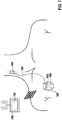
- a preferred version of the invention involves an electrostimulator (for example, the exemplary neurostimulator 100 of FIG. 1 ) having a lead 102 with an electrode 104 thereon; a battery 106 ; and a controller 108 configured to deliver electrostimulation from the battery 106 to patient tissue via the electrode 104 , with the delivered electrostimulation being defined by a selected one of several available stimulation vectors.
- Each stimulation vector includes, and is effectively defined by, stimulation parameters.
- the stimulation parameters defining a stimulation vector may include stimulation pulse amplitude, stimulation pulse width, stimulation pulse frequency, pulse burst frequency, and pulse quantity per pulse burst. Other parameters are possible as well.
- the lead impedance of the electrostimulator lead 102 is measured.
- a status vector is then calculated for each of the several available stimulation vectors, with each status vector representing the effect of delivering electrostimulation at the measured lead impedance, and using the stimulation vector corresponding to the status vector.
- the status vector may include one or more parameters such as patient safety margins, electrostimulator battery life, and electrostimulator performance limits.
- the stimulation vectors represent stimulation therapies displayed to the programmer for selection
- the status vectors represent the consequences if the stimulation vectors were actually implemented during patient therapy.
- At least some of the several available stimulation vectors are then visually displayed to the programmer for selection (e.g., on the exemplary programming device 150 of FIG. 1 ), with the visual appearance of the display being dependent on the status vectors.
- stimulation vectors having both acceptable and unacceptable status vectors might be displayed to the programmer along with acceptability indicia, wherein the acceptability indicia visually differentiate the displayed stimulation vectors having acceptable status vectors from the displayed stimulation vectors having unacceptable status vectors.
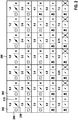
- FIG. 2 depicting a display 200 of selectable stimulation vectors 202, 204, etc. having 0.2 mA, 0.4 mA, 0.6 mA, etc.
- acceptability indicia indicating safety margin changes to indicate danger
- the associated acceptability indicia indicating battery impact changes to indicate decreased battery life
- the associated acceptability indicia indicating hardware compatibility changes from a compatibility indication, to an indication that the stimulation vector might be implemented with compromises, to an indication that the electrostimulator cannot support the stimulation vector at all.
- FIG. 3 illustrates an exemplary display 300 of this nature, wherein only safe and viable stimulation vectors are shown along with an indication of how near each stimulation vector is to the limits of the electrostimulator's abilities (here a 7.5 mA maximum output current); how near each stimulation vector is to a patient safety threshold (here a Shannon k value of 1.5, beyond which nerve damage might occur); and the impact of each stimulation vector on battery life.
- the invention displays to a programmer only those stimulation vectors having acceptable status vectors, it does so by displaying those stimulation vectors at the bounds of acceptability, with the programmer having the option of selecting any stimulation vectors within these bounds.
- the measured lead impedance might also be displayed to the programmer along with the stimulation vectors, as the lead impedance can itself convey information regarding the efficacy of stimulation.
- the foregoing steps are preferably periodically repeated (either automatically or via triggering from the programmer or other sources), with lead impedance measurements periodically being updated; with status vectors being updated for the available stimulation vectors; and with the display of the stimulation vectors being updated to account for any changes in the status vectors.
- the programmer is thereby presented with a menu of stimulation vectors for selection, with the menu presenting current (or at least recent) information regarding the impact of implementing the displayed stimulation vectors.
- the programmer is thereby assisted in choosing and implementing appropriate electrostimulation therapy, particularly inasmuch as it helps educate the programmer of the trade-offs that occur with selection of different stimulation vectors.
- the foregoing steps are preferably performed in a system including an electrostimulator and a programming device, with the electrostimulator providing the electrostimulation and lead impedance measurement functions, and the programming device providing the display of the stimulation vectors, and also allowing the programmer's choice or definition of the stimulation vectors.
- the determination of the status vectors can be provided in the electrostimulator, in the programming device, or in both of these components. Owing to the interdependence of the electrostimulator and its programming device, where the term "electrostimulator" is used throughout this document, it should generally be understood as meaning an electrostimulator either alone or in conjunction with a compatible programming device, unless the context of the term's use indicates otherwise.
- the invention is particularly beneficial in neurostimulation applications, most particularly in neurostimulators used for VNS or SCS. Moreover, the invention is particularly beneficial in electrostimulators that deliver current-based stimulation, that is, in electrostimulators that deliver electrostimulation having a defined current regardless of the voltage at which the defined current is delivered.
- preferred forms of the invention provide feedback to the programmer which helps to ensure that programmed therapy better reflects actual delivered therapy, and that proposed therapy programs can be properly evaluated in light of possible electrostimulator limitations and patient safety / comfort considerations.
- this image depicts an electrostimulator 100 , here a neurostimulator, implanted within a patient's body, along with a programming device 150 configured to wirelessly communicate programming to the electrostimulator 100 .
- the controller 108 of the electrostimulator 100 stores this programming, and delivers the stimulation prescribed by the programming to the patient via the electrostimulator lead 102 and its electrode 104 (here shown as a cuff electrode situated about the vagus nerve).
- the programming device 150 has a display 152 which displays programming options to a programmer, as exemplified by the menu 200 of stimulation vectors 202 , 204 , etc. shown in FIG. 2 .
- the stimulation vectors 202 , 204 , etc. - shown as "0.2,” “0.4,” etc. (representing pulse amplitudes of 0.2 mA, 0.4 mA, etc.) - are each shown with acceptability indicia provided as a row of three icons.
- the first icon (at 206 ) represents a stimulation vector's patient safety margin (e.g., proximity to limits defined by the Shannon criteria), and is depicted by a happy face where a stimulation vector results in high safety margins; by a sad face where a stimulation vector results in low safety margins; and by a danger symbol where a stimulation vector does not meet safety criteria.
- the second icon (at 208 ) represents a stimulation vector's impact on electrostimulator battery life, and is depicted by a large lightning bolt where a stimulation vector has low impact on battery life, and by smaller lightning bolts for stimulation vectors having greater impact on battery life.
- the third icon represents the electrostimulator's ability to deliver the stimulation vector, with a large "H” being shown where a stimulation vector can be delivered without difficulty, a smaller “h” being shown where the stimulation vector might be implemented with reconfiguration of the electrostimulator's routines (or with other compromises), and an "X" being shown where the electrostimulator simply cannot accommodate the stimulation vector.
- a programmer might therefore select a suitable stimulation vector 202, 204, etc., and use the acceptability indicia to make a more well-informed decision on which vector seems optimal.
- the display 200 of FIG. 2 is a basic one, and displays can be significantly more complex.
- the displayed stimulation vectors 202, 204, etc. could show parameters in addition to, or instead of, merely pulse amplitude; for example, each pulse amplitude shown in FIG. 2 might be accompanied by a pulse width / duration.
- the display 200 may then switch to a similar display illustrating a range of pulse widths available for selection with the selected pulse amplitude, and also showing acceptability indicia for each of the available pulse widths.
- a display might show a menu of all available stimulation vectors, and all of the parameters within each vector, but showing certain stimulation vectors in a different format (e.g., font, case, stylization, size, and/or color) if their status vectors are outside of a desirable range.
- a different format e.g., font, case, stylization, size, and/or color
- stimulation vectors having status vectors within safety margins might be shown in green, while those closely approaching patient safety margins, or failing to meet patient safety margins, might be shown in orange to red tones; stimulation vectors having moderate impact on electrostimulator battery life might be shown in bolder type and/or brighter tones, with boldness / brightness decreasing for other stimulation vectors in dependence on their impact on battery life; and stimulation vectors exceeding electrostimulator performance limits might be shown struck through with a line while other stimulation vectors are not.
- the programming device 150 need not present the programmer with all possible stimulation vectors, and it could instead present only those stimulation vectors having acceptable status vectors.
- the display might exclude those stimulation vectors having status vectors outside patient safety margins and/or outside electrostimulator performance limits, showing only those stimulation vectors providing safe and workable results (and with their boldness / brightness varying in dependence on their impact on battery life).
- the exemplary display 300 of FIG. 3 shows a similar arrangement wherein only stimulation vectors having acceptable status vectors are shown, but parameters of their status vectors are shown as well (namely, proximity to hardware capability limits; proximity to patient safety threshold; and impact on battery life). This status vector information allows the programmer to make a more informed choice of stimulation vectors.
- the invention might also advise of emerging stimulation parameter conflicts, and/or of available ranges of stimulation parameters, in cases where the programmer is selecting individual stimulation parameters within a stimulation vector.
- stimulation timing parameters such as stimulation pulse frequency, pulse burst frequency, and pulse quantity per pulse burst.
- the programmer might, for example, seek to administer bursts of output current having 10 pulses per burst delivered at 1 Hz pulse frequency, with a burst frequency of 80 bursts per minute.
- the invention might address this by dynamically showing, after the programmer defines each stimulation parameter, the available practical ranges for the remaining stimulation parameters. In this manner, after each stimulation parameter is chosen, the programmer is directed (or restricted) to values of the remaining parameters that are feasible, patient-safe, and device-friendly.
- the invention can also provide a programmer with a statistical or other indication of how a change in the selected stimulation vector(s) might affect patient safety and/or comfort, battery and/or device life, and the like.
- the programmer is therefore given instantaneous feedback on the potential effect of a programming change.
- An electrostimulator in accordance with the invention might also incorporate functionality wherein the status vector resulting from a selected stimulation vector, or some range of acceptable status vectors, serve as a benchmark for desired future electrostimulation output behaviors. Deviations from the benchmark during the electrostimulator's operation can be stored in any performance log maintained within the electrostimulator, and/or may be wirelessly or otherwise communicated to remote monitoring systems. Alternatively or additionally, the benchmark might be used as a control parameter for closed-loop modification of the stimulation vector(s) used by the electrostimulator, with patient physiological data possibly serving as an additional feedback variable. Thus, the electrostimulator could automatically adapt its stimulation vector(s) to achieve desired (or at least acceptable) physiological response from the patient, while at the same time achieving desired (or at least acceptable) status vectors.
- lead impedance quantities which are functionally equivalent to lead impedance may be used instead, such as actual current delivered, or tissue resistance.
- lead impedance this term should be regarded as encompassing these equivalent quantities instead of (or in addition to) lead impedance.
- the versions of the invention discussed above are exemplary, and the invention can assume different forms.
- the invention can be implemented in different kinds of electrostimulators apart from neurostimulators (e.g., IPGs), for example, to cardiostimulators (e.g., ICDs).
- neurostimulators e.g., IPGs
- cardiostimulators e.g., ICDs
- the invention is not intended to be limited to the exemplary versions described above, but rather is intended to be limited only by the claims set out below. Thus, the invention encompasses all different versions that fall literally or equivalently within the scope of these claims.
Landscapes
- Health & Medical Sciences (AREA)
- Engineering & Computer Science (AREA)
- Animal Behavior & Ethology (AREA)
- Nuclear Medicine, Radiotherapy & Molecular Imaging (AREA)
- Radiology & Medical Imaging (AREA)
- Life Sciences & Earth Sciences (AREA)
- Biomedical Technology (AREA)
- General Health & Medical Sciences (AREA)
- Public Health (AREA)
- Veterinary Medicine (AREA)
- Neurology (AREA)
- Human Computer Interaction (AREA)
- Heart & Thoracic Surgery (AREA)
- Neurosurgery (AREA)
- Electrotherapy Devices (AREA)
Applications Claiming Priority (1)
| Application Number | Priority Date | Filing Date | Title |
|---|---|---|---|
| US201662423211P | 2016-11-17 | 2016-11-17 |
Publications (1)
| Publication Number | Publication Date |
|---|---|
| EP3323468A1 true EP3323468A1 (de) | 2018-05-23 |
Family
ID=60320771
Family Applications (1)
| Application Number | Title | Priority Date | Filing Date |
|---|---|---|---|
| EP17201541.4A Withdrawn EP3323468A1 (de) | 2016-11-17 | 2017-11-14 | Verbesserte therapieeinstellungen in programmierbaren elektrostimulatoren |
Country Status (2)
| Country | Link |
|---|---|
| US (1) | US10799707B2 (de) |
| EP (1) | EP3323468A1 (de) |
Cited By (18)
| Publication number | Priority date | Publication date | Assignee | Title |
|---|---|---|---|---|
| EP3827875A1 (de) * | 2019-11-27 | 2021-06-02 | ONWARD Medical B.V. | Neuromodulationssystem |
| EP4105532A1 (de) | 2018-09-28 | 2022-12-21 | MTP S.r.l. | Dehnbarer flexibler schlauch für die bewässerung |
| US11672983B2 (en) | 2018-11-13 | 2023-06-13 | Onward Medical N.V. | Sensor in clothing of limbs or footwear |
| US11672982B2 (en) | 2018-11-13 | 2023-06-13 | Onward Medical N.V. | Control system for movement reconstruction and/or restoration for a patient |
| US11691015B2 (en) | 2017-06-30 | 2023-07-04 | Onward Medical N.V. | System for neuromodulation |
| US11752342B2 (en) | 2019-02-12 | 2023-09-12 | Onward Medical N.V. | System for neuromodulation |
| US11839766B2 (en) | 2019-11-27 | 2023-12-12 | Onward Medical N.V. | Neuromodulation system |
| US11957910B2 (en) | 2011-01-03 | 2024-04-16 | California Institute Of Technology | High density epidural stimulation for facilitation of locomotion, posture, voluntary movement, and recovery of autonomic, sexual, vasomotor, and cognitive function after neurological injury |
| US11992684B2 (en) | 2017-12-05 | 2024-05-28 | Ecole Polytechnique Federale De Lausanne (Epfl) | System for planning and/or providing neuromodulation |
| US12023492B2 (en) | 2011-11-11 | 2024-07-02 | The Regents Of The University Of California | Non invasive neuromodulation device for enabling recovery of motor, sensory, autonomic, sexual, vasomotor and cognitive function |
| US12076301B2 (en) | 2013-09-27 | 2024-09-03 | The Regents Of The University Of California | Engaging the cervical spinal cord circuitry to re-enable volitional control of hand function in tetraplegic subjects |
| US12268878B2 (en) | 2017-02-17 | 2025-04-08 | The University Of British Columbia | Apparatus and methods for maintaining physiological functions |
| US12311169B2 (en) | 2013-03-15 | 2025-05-27 | The Regents Of The University Of California | Multi-site transcutaneous electrical stimulation of the spinal cord for facilitation of locomotion |
| US12357828B2 (en) | 2017-12-05 | 2025-07-15 | Ecole Polytechnique Federale De Lausanne (Epfl) | System for planning and/or providing neuromodulation |
| US12434068B2 (en) | 2017-05-23 | 2025-10-07 | The Regents Of The University Of California | Accessing spinal networks to address sexual dysfunction |
| US12478777B2 (en) | 2018-08-23 | 2025-11-25 | The Regents Of The University Of California | Non-invasive spinal cord stimulation for nerve root palsy, cauda equina syndrome, and restoration of upper extremity function |
| US12551714B2 (en) | 2015-11-04 | 2026-02-17 | The Regents Of The University Of California | Magnetic stimulation of the spinal cord to restore locomotor function and/or control of bladder and bowel |
| US12613624B2 (en) | 2019-11-19 | 2026-04-28 | Onward Medical N.V. | Planning and/or control system for a neuromodulation system |
Families Citing this family (8)
| Publication number | Priority date | Publication date | Assignee | Title |
|---|---|---|---|---|
| US20180001107A1 (en) | 2016-07-01 | 2018-01-04 | Btl Holdings Limited | Aesthetic method of biological structure treatment by magnetic field |
| US10695575B1 (en) | 2016-05-10 | 2020-06-30 | Btl Medical Technologies S.R.O. | Aesthetic method of biological structure treatment by magnetic field |
| US11464993B2 (en) | 2016-05-03 | 2022-10-11 | Btl Healthcare Technologies A.S. | Device including RF source of energy and vacuum system |
| US12558146B2 (en) | 2019-04-11 | 2026-02-24 | Btl Medical Solutions A.S. | Methods and devices for aesthetic treatment of biological structures by radiofrequency and magnetic energy |
| US11878167B2 (en) | 2020-05-04 | 2024-01-23 | Btl Healthcare Technologies A.S. | Device and method for unattended treatment of a patient |
| JP2023515722A (ja) | 2020-05-04 | 2023-04-13 | ビーティーエル ヘルスケア テクノロジーズ エー.エス. | 患者の非アテンド式治療のためのデバイスおよび方法 |
| US12611545B2 (en) | 2020-05-04 | 2026-04-28 | Btl Healthcare Technologies A.S. | Device and method for unattended treatment of a patient |
| US20260097226A1 (en) | 2024-10-08 | 2026-04-09 | Btl Medical Solutions A.S. | Devices and methods for application of a magnetic field to the nervous system |
Citations (7)
| Publication number | Priority date | Publication date | Assignee | Title |
|---|---|---|---|---|
| WO2009076211A1 (en) * | 2007-12-06 | 2009-06-18 | Boston Scientific Neuromodulation Corporation | Multimodal neurostimulation systems and methods |
| WO2009079600A2 (en) * | 2007-12-18 | 2009-06-25 | Boston Scientific Neuromodulation Corporation | Graphical display of environmental measurements for implantable therapies |
| WO2011085232A1 (en) * | 2010-01-08 | 2011-07-14 | Medtronic, Inc. | Presentation of information associated with medical device therapy |
| US8942819B2 (en) | 2010-06-16 | 2015-01-27 | Cardiac Pacemakers, Inc. | Automatic neural stimulation titration sweep |
| US20150258341A1 (en) * | 2014-03-11 | 2015-09-17 | Cardiac Pacemakers, Inc. | Visualization of biological environment impact on implanted therapy |
| US9205263B2 (en) | 2002-02-12 | 2015-12-08 | Boston Scientific Neuromodulation Corporation | Neural stimulation system providing auto adjustment of stimulus output as a function of sensed impedance |
| WO2016172239A1 (en) * | 2015-04-22 | 2016-10-27 | Boston Scientific Neuromodulation Corporation | Systems for programming neuromodulation devices |
Family Cites Families (5)
| Publication number | Priority date | Publication date | Assignee | Title |
|---|---|---|---|---|
| US9042988B2 (en) * | 1998-08-05 | 2015-05-26 | Cyberonics, Inc. | Closed-loop vagus nerve stimulation |
| US7149573B2 (en) * | 2003-04-25 | 2006-12-12 | Medtronic, Inc. | Method and apparatus for impedance signal localizations from implanted devices |
| US20070191901A1 (en) * | 2004-06-04 | 2007-08-16 | Pacesetter, Inc. | Quantifying systolic and diastolic cardiac performance from dynamic impedance waveforms |
| US10434318B2 (en) * | 2013-12-18 | 2019-10-08 | Cardiac Pacemakers, Inc. | Systems and methods for facilitating selecting of one or more vectors in a medical device |
| US10092761B2 (en) * | 2015-07-01 | 2018-10-09 | Cardiac Pacemakers, Inc. | Automatic vector selection for multi-site pacing |
-
2017
- 2017-11-06 US US15/804,017 patent/US10799707B2/en not_active Expired - Fee Related
- 2017-11-14 EP EP17201541.4A patent/EP3323468A1/de not_active Withdrawn
Patent Citations (7)
| Publication number | Priority date | Publication date | Assignee | Title |
|---|---|---|---|---|
| US9205263B2 (en) | 2002-02-12 | 2015-12-08 | Boston Scientific Neuromodulation Corporation | Neural stimulation system providing auto adjustment of stimulus output as a function of sensed impedance |
| WO2009076211A1 (en) * | 2007-12-06 | 2009-06-18 | Boston Scientific Neuromodulation Corporation | Multimodal neurostimulation systems and methods |
| WO2009079600A2 (en) * | 2007-12-18 | 2009-06-25 | Boston Scientific Neuromodulation Corporation | Graphical display of environmental measurements for implantable therapies |
| WO2011085232A1 (en) * | 2010-01-08 | 2011-07-14 | Medtronic, Inc. | Presentation of information associated with medical device therapy |
| US8942819B2 (en) | 2010-06-16 | 2015-01-27 | Cardiac Pacemakers, Inc. | Automatic neural stimulation titration sweep |
| US20150258341A1 (en) * | 2014-03-11 | 2015-09-17 | Cardiac Pacemakers, Inc. | Visualization of biological environment impact on implanted therapy |
| WO2016172239A1 (en) * | 2015-04-22 | 2016-10-27 | Boston Scientific Neuromodulation Corporation | Systems for programming neuromodulation devices |
Non-Patent Citations (1)
| Title |
|---|
| R.V. SHANNON: "A model of safe levels for electrical stimulation", IEEE TRANSACTIONS ON BIOMEDICAL ENGINEERING, vol. 39, no. 4, April 1992 (1992-04-01), pages 424 - 426 |
Cited By (21)
| Publication number | Priority date | Publication date | Assignee | Title |
|---|---|---|---|---|
| US11957910B2 (en) | 2011-01-03 | 2024-04-16 | California Institute Of Technology | High density epidural stimulation for facilitation of locomotion, posture, voluntary movement, and recovery of autonomic, sexual, vasomotor, and cognitive function after neurological injury |
| US12226631B2 (en) | 2011-11-11 | 2025-02-18 | The Regents Of The University Of California | Non invasive neuromodulation device for enabling recovery of motor, sensory, autonomic, sexual, vasomotor and cognitive function |
| US12023492B2 (en) | 2011-11-11 | 2024-07-02 | The Regents Of The University Of California | Non invasive neuromodulation device for enabling recovery of motor, sensory, autonomic, sexual, vasomotor and cognitive function |
| US12311169B2 (en) | 2013-03-15 | 2025-05-27 | The Regents Of The University Of California | Multi-site transcutaneous electrical stimulation of the spinal cord for facilitation of locomotion |
| US12076301B2 (en) | 2013-09-27 | 2024-09-03 | The Regents Of The University Of California | Engaging the cervical spinal cord circuitry to re-enable volitional control of hand function in tetraplegic subjects |
| US12551714B2 (en) | 2015-11-04 | 2026-02-17 | The Regents Of The University Of California | Magnetic stimulation of the spinal cord to restore locomotor function and/or control of bladder and bowel |
| US12268878B2 (en) | 2017-02-17 | 2025-04-08 | The University Of British Columbia | Apparatus and methods for maintaining physiological functions |
| US12434068B2 (en) | 2017-05-23 | 2025-10-07 | The Regents Of The University Of California | Accessing spinal networks to address sexual dysfunction |
| US11691015B2 (en) | 2017-06-30 | 2023-07-04 | Onward Medical N.V. | System for neuromodulation |
| US11992684B2 (en) | 2017-12-05 | 2024-05-28 | Ecole Polytechnique Federale De Lausanne (Epfl) | System for planning and/or providing neuromodulation |
| US12357828B2 (en) | 2017-12-05 | 2025-07-15 | Ecole Polytechnique Federale De Lausanne (Epfl) | System for planning and/or providing neuromodulation |
| US12478777B2 (en) | 2018-08-23 | 2025-11-25 | The Regents Of The University Of California | Non-invasive spinal cord stimulation for nerve root palsy, cauda equina syndrome, and restoration of upper extremity function |
| EP4105532A1 (de) | 2018-09-28 | 2022-12-21 | MTP S.r.l. | Dehnbarer flexibler schlauch für die bewässerung |
| US11672982B2 (en) | 2018-11-13 | 2023-06-13 | Onward Medical N.V. | Control system for movement reconstruction and/or restoration for a patient |
| US11672983B2 (en) | 2018-11-13 | 2023-06-13 | Onward Medical N.V. | Sensor in clothing of limbs or footwear |
| US11752342B2 (en) | 2019-02-12 | 2023-09-12 | Onward Medical N.V. | System for neuromodulation |
| US12613624B2 (en) | 2019-11-19 | 2026-04-28 | Onward Medical N.V. | Planning and/or control system for a neuromodulation system |
| US11839766B2 (en) | 2019-11-27 | 2023-12-12 | Onward Medical N.V. | Neuromodulation system |
| EP3827875A1 (de) * | 2019-11-27 | 2021-06-02 | ONWARD Medical B.V. | Neuromodulationssystem |
| US12415079B2 (en) | 2019-11-27 | 2025-09-16 | Onward Medical N.V. | Neuromodulation system |
| US11491336B2 (en) * | 2019-11-27 | 2022-11-08 | Onward Medical N.V. | Neuromodulation system |
Also Published As
| Publication number | Publication date |
|---|---|
| US10799707B2 (en) | 2020-10-13 |
| US20180133490A1 (en) | 2018-05-17 |
Similar Documents
| Publication | Publication Date | Title |
|---|---|---|
| US10799707B2 (en) | Enhanced therapy settings in programmable electrostimulators | |
| US9750938B2 (en) | Visualization of biological environment impact on implanted therapy | |
| US9289609B2 (en) | Neurostimulation system for selectively estimating volume of activation and providing therapy | |
| US10376699B2 (en) | Programming techniques for electrical stimulation | |
| US20180104493A1 (en) | Methods to program sub-perception spinal cord stimulation | |
| US12070598B2 (en) | Systems and methods for programming neuromodulation waveform | |
| US20240399153A1 (en) | Customizable titration for an implantable neurostimulator | |
| US20120277828A1 (en) | Methods, devices and systems for efficiently programming neurostimulation | |
| EP2707090B1 (de) | Nervenstimulationssystem mit vorrichtung zur verhinderung einer grenzwertüberschreitung einer stimulaton | |
| EP3827875B1 (de) | Neuromodulationssystem | |
| US11147972B2 (en) | Neurostimulator with titration assist | |
| US12569682B2 (en) | Automatic titration with defibrillation sensitivity compensation | |
| US20220280789A1 (en) | Automatic ecap electrode selection and maintenance |
Legal Events
| Date | Code | Title | Description |
|---|---|---|---|
| PUAI | Public reference made under article 153(3) epc to a published international application that has entered the european phase |
Free format text: ORIGINAL CODE: 0009012 |
|
| STAA | Information on the status of an ep patent application or granted ep patent |
Free format text: STATUS: THE APPLICATION HAS BEEN PUBLISHED |
|
| AK | Designated contracting states |
Kind code of ref document: A1 Designated state(s): AL AT BE BG CH CY CZ DE DK EE ES FI FR GB GR HR HU IE IS IT LI LT LU LV MC MK MT NL NO PL PT RO RS SE SI SK SM TR |
|
| AX | Request for extension of the european patent |
Extension state: BA ME |
|
| STAA | Information on the status of an ep patent application or granted ep patent |
Free format text: STATUS: REQUEST FOR EXAMINATION WAS MADE |
|
| 17P | Request for examination filed |
Effective date: 20181122 |
|
| RBV | Designated contracting states (corrected) |
Designated state(s): AL AT BE BG CH CY CZ DE DK EE ES FI FR GB GR HR HU IE IS IT LI LT LU LV MC MK MT NL NO PL PT RO RS SE SI SK SM TR |
|
| STAA | Information on the status of an ep patent application or granted ep patent |
Free format text: STATUS: EXAMINATION IS IN PROGRESS |
|
| 17Q | First examination report despatched |
Effective date: 20190306 |
|
| STAA | Information on the status of an ep patent application or granted ep patent |
Free format text: STATUS: THE APPLICATION IS DEEMED TO BE WITHDRAWN |
|
| 18D | Application deemed to be withdrawn |
Effective date: 20230110 |