EP3323664A1 - Elektrofahrzeugsteuergerät - Google Patents
Elektrofahrzeugsteuergerät Download PDFInfo
- Publication number
- EP3323664A1 EP3323664A1 EP16199145.0A EP16199145A EP3323664A1 EP 3323664 A1 EP3323664 A1 EP 3323664A1 EP 16199145 A EP16199145 A EP 16199145A EP 3323664 A1 EP3323664 A1 EP 3323664A1
- Authority
- EP
- European Patent Office
- Prior art keywords
- electric
- battery
- vehicle
- electric vehicle
- vehicle controller
- Prior art date
- Legal status (The legal status is an assumption and is not a legal conclusion. Google has not performed a legal analysis and makes no representation as to the accuracy of the status listed.)
- Granted
Links
- 238000000034 method Methods 0.000 claims abstract description 35
- 230000001133 acceleration Effects 0.000 claims description 22
- 238000004590 computer program Methods 0.000 claims description 3
- 238000004891 communication Methods 0.000 description 5
- 238000010586 diagram Methods 0.000 description 4
- 230000009286 beneficial effect Effects 0.000 description 3
- 230000008859 change Effects 0.000 description 3
- 230000001419 dependent effect Effects 0.000 description 2
- 230000009467 reduction Effects 0.000 description 2
- 238000004378 air conditioning Methods 0.000 description 1
- 230000006870 function Effects 0.000 description 1
- 238000005259 measurement Methods 0.000 description 1
- 238000012986 modification Methods 0.000 description 1
- 230000004048 modification Effects 0.000 description 1
- 230000004044 response Effects 0.000 description 1
- 239000013589 supplement Substances 0.000 description 1
Images

Classifications
-
- B—PERFORMING OPERATIONS; TRANSPORTING
- B60—VEHICLES IN GENERAL
- B60L—PROPULSION OF ELECTRICALLY-PROPELLED VEHICLES; SUPPLYING ELECTRIC POWER FOR AUXILIARY EQUIPMENT OF ELECTRICALLY-PROPELLED VEHICLES; ELECTRODYNAMIC BRAKE SYSTEMS FOR VEHICLES IN GENERAL; MAGNETIC SUSPENSION OR LEVITATION FOR VEHICLES; MONITORING OPERATING VARIABLES OF ELECTRICALLY-PROPELLED VEHICLES; ELECTRIC SAFETY DEVICES FOR ELECTRICALLY-PROPELLED VEHICLES
- B60L15/00—Methods, circuits, or devices for controlling the traction-motor speed of electrically-propelled vehicles
- B60L15/20—Methods, circuits, or devices for controlling the traction-motor speed of electrically-propelled vehicles for control of the vehicle or its driving motor to achieve a desired performance, e.g. speed, torque, programmed variation of speed
- B60L15/2045—Methods, circuits, or devices for controlling the traction-motor speed of electrically-propelled vehicles for control of the vehicle or its driving motor to achieve a desired performance, e.g. speed, torque, programmed variation of speed for optimising the use of energy
-
- B—PERFORMING OPERATIONS; TRANSPORTING
- B60—VEHICLES IN GENERAL
- B60L—PROPULSION OF ELECTRICALLY-PROPELLED VEHICLES; SUPPLYING ELECTRIC POWER FOR AUXILIARY EQUIPMENT OF ELECTRICALLY-PROPELLED VEHICLES; ELECTRODYNAMIC BRAKE SYSTEMS FOR VEHICLES IN GENERAL; MAGNETIC SUSPENSION OR LEVITATION FOR VEHICLES; MONITORING OPERATING VARIABLES OF ELECTRICALLY-PROPELLED VEHICLES; ELECTRIC SAFETY DEVICES FOR ELECTRICALLY-PROPELLED VEHICLES
- B60L15/00—Methods, circuits, or devices for controlling the traction-motor speed of electrically-propelled vehicles
- B60L15/20—Methods, circuits, or devices for controlling the traction-motor speed of electrically-propelled vehicles for control of the vehicle or its driving motor to achieve a desired performance, e.g. speed, torque, programmed variation of speed
-
- B—PERFORMING OPERATIONS; TRANSPORTING
- B60—VEHICLES IN GENERAL
- B60L—PROPULSION OF ELECTRICALLY-PROPELLED VEHICLES; SUPPLYING ELECTRIC POWER FOR AUXILIARY EQUIPMENT OF ELECTRICALLY-PROPELLED VEHICLES; ELECTRODYNAMIC BRAKE SYSTEMS FOR VEHICLES IN GENERAL; MAGNETIC SUSPENSION OR LEVITATION FOR VEHICLES; MONITORING OPERATING VARIABLES OF ELECTRICALLY-PROPELLED VEHICLES; ELECTRIC SAFETY DEVICES FOR ELECTRICALLY-PROPELLED VEHICLES
- B60L58/00—Methods or circuit arrangements for monitoring or controlling batteries or fuel cells, specially adapted for electric vehicles
- B60L58/10—Methods or circuit arrangements for monitoring or controlling batteries or fuel cells, specially adapted for electric vehicles for monitoring or controlling batteries
-
- B—PERFORMING OPERATIONS; TRANSPORTING
- B60—VEHICLES IN GENERAL
- B60L—PROPULSION OF ELECTRICALLY-PROPELLED VEHICLES; SUPPLYING ELECTRIC POWER FOR AUXILIARY EQUIPMENT OF ELECTRICALLY-PROPELLED VEHICLES; ELECTRODYNAMIC BRAKE SYSTEMS FOR VEHICLES IN GENERAL; MAGNETIC SUSPENSION OR LEVITATION FOR VEHICLES; MONITORING OPERATING VARIABLES OF ELECTRICALLY-PROPELLED VEHICLES; ELECTRIC SAFETY DEVICES FOR ELECTRICALLY-PROPELLED VEHICLES
- B60L58/00—Methods or circuit arrangements for monitoring or controlling batteries or fuel cells, specially adapted for electric vehicles
- B60L58/10—Methods or circuit arrangements for monitoring or controlling batteries or fuel cells, specially adapted for electric vehicles for monitoring or controlling batteries
- B60L58/18—Methods or circuit arrangements for monitoring or controlling batteries or fuel cells, specially adapted for electric vehicles for monitoring or controlling batteries of two or more battery modules
- B60L58/22—Balancing the charge of battery modules
-
- B—PERFORMING OPERATIONS; TRANSPORTING
- B60—VEHICLES IN GENERAL
- B60L—PROPULSION OF ELECTRICALLY-PROPELLED VEHICLES; SUPPLYING ELECTRIC POWER FOR AUXILIARY EQUIPMENT OF ELECTRICALLY-PROPELLED VEHICLES; ELECTRODYNAMIC BRAKE SYSTEMS FOR VEHICLES IN GENERAL; MAGNETIC SUSPENSION OR LEVITATION FOR VEHICLES; MONITORING OPERATING VARIABLES OF ELECTRICALLY-PROPELLED VEHICLES; ELECTRIC SAFETY DEVICES FOR ELECTRICALLY-PROPELLED VEHICLES
- B60L2240/00—Control parameters of input or output; Target parameters
- B60L2240/10—Vehicle control parameters
- B60L2240/12—Speed
-
- B—PERFORMING OPERATIONS; TRANSPORTING
- B60—VEHICLES IN GENERAL
- B60L—PROPULSION OF ELECTRICALLY-PROPELLED VEHICLES; SUPPLYING ELECTRIC POWER FOR AUXILIARY EQUIPMENT OF ELECTRICALLY-PROPELLED VEHICLES; ELECTRODYNAMIC BRAKE SYSTEMS FOR VEHICLES IN GENERAL; MAGNETIC SUSPENSION OR LEVITATION FOR VEHICLES; MONITORING OPERATING VARIABLES OF ELECTRICALLY-PROPELLED VEHICLES; ELECTRIC SAFETY DEVICES FOR ELECTRICALLY-PROPELLED VEHICLES
- B60L2240/00—Control parameters of input or output; Target parameters
- B60L2240/10—Vehicle control parameters
- B60L2240/14—Acceleration
-
- B—PERFORMING OPERATIONS; TRANSPORTING
- B60—VEHICLES IN GENERAL
- B60L—PROPULSION OF ELECTRICALLY-PROPELLED VEHICLES; SUPPLYING ELECTRIC POWER FOR AUXILIARY EQUIPMENT OF ELECTRICALLY-PROPELLED VEHICLES; ELECTRODYNAMIC BRAKE SYSTEMS FOR VEHICLES IN GENERAL; MAGNETIC SUSPENSION OR LEVITATION FOR VEHICLES; MONITORING OPERATING VARIABLES OF ELECTRICALLY-PROPELLED VEHICLES; ELECTRIC SAFETY DEVICES FOR ELECTRICALLY-PROPELLED VEHICLES
- B60L2240/00—Control parameters of input or output; Target parameters
- B60L2240/10—Vehicle control parameters
- B60L2240/24—Steering angle
-
- B—PERFORMING OPERATIONS; TRANSPORTING
- B60—VEHICLES IN GENERAL
- B60L—PROPULSION OF ELECTRICALLY-PROPELLED VEHICLES; SUPPLYING ELECTRIC POWER FOR AUXILIARY EQUIPMENT OF ELECTRICALLY-PROPELLED VEHICLES; ELECTRODYNAMIC BRAKE SYSTEMS FOR VEHICLES IN GENERAL; MAGNETIC SUSPENSION OR LEVITATION FOR VEHICLES; MONITORING OPERATING VARIABLES OF ELECTRICALLY-PROPELLED VEHICLES; ELECTRIC SAFETY DEVICES FOR ELECTRICALLY-PROPELLED VEHICLES
- B60L2240/00—Control parameters of input or output; Target parameters
- B60L2240/40—Drive Train control parameters
- B60L2240/42—Drive Train control parameters related to electric machines
- B60L2240/423—Torque
-
- Y—GENERAL TAGGING OF NEW TECHNOLOGICAL DEVELOPMENTS; GENERAL TAGGING OF CROSS-SECTIONAL TECHNOLOGIES SPANNING OVER SEVERAL SECTIONS OF THE IPC; TECHNICAL SUBJECTS COVERED BY FORMER USPC CROSS-REFERENCE ART COLLECTIONS [XRACs] AND DIGESTS
- Y02—TECHNOLOGIES OR APPLICATIONS FOR MITIGATION OR ADAPTATION AGAINST CLIMATE CHANGE
- Y02T—CLIMATE CHANGE MITIGATION TECHNOLOGIES RELATED TO TRANSPORTATION
- Y02T10/00—Road transport of goods or passengers
- Y02T10/60—Other road transportation technologies with climate change mitigation effect
- Y02T10/64—Electric machine technologies in electromobility
-
- Y—GENERAL TAGGING OF NEW TECHNOLOGICAL DEVELOPMENTS; GENERAL TAGGING OF CROSS-SECTIONAL TECHNOLOGIES SPANNING OVER SEVERAL SECTIONS OF THE IPC; TECHNICAL SUBJECTS COVERED BY FORMER USPC CROSS-REFERENCE ART COLLECTIONS [XRACs] AND DIGESTS
- Y02—TECHNOLOGIES OR APPLICATIONS FOR MITIGATION OR ADAPTATION AGAINST CLIMATE CHANGE
- Y02T—CLIMATE CHANGE MITIGATION TECHNOLOGIES RELATED TO TRANSPORTATION
- Y02T10/00—Road transport of goods or passengers
- Y02T10/60—Other road transportation technologies with climate change mitigation effect
- Y02T10/70—Energy storage systems for electromobility, e.g. batteries
-
- Y—GENERAL TAGGING OF NEW TECHNOLOGICAL DEVELOPMENTS; GENERAL TAGGING OF CROSS-SECTIONAL TECHNOLOGIES SPANNING OVER SEVERAL SECTIONS OF THE IPC; TECHNICAL SUBJECTS COVERED BY FORMER USPC CROSS-REFERENCE ART COLLECTIONS [XRACs] AND DIGESTS
- Y02—TECHNOLOGIES OR APPLICATIONS FOR MITIGATION OR ADAPTATION AGAINST CLIMATE CHANGE
- Y02T—CLIMATE CHANGE MITIGATION TECHNOLOGIES RELATED TO TRANSPORTATION
- Y02T10/00—Road transport of goods or passengers
- Y02T10/60—Other road transportation technologies with climate change mitigation effect
- Y02T10/72—Electric energy management in electromobility
Definitions
- the present invention relates to an electric-vehicle controller.
- Electric cars include one or more electric motors that drive the wheels of the electric car, and one or more batteries that power the electric motors.
- An electric vehicle battery may consist of a plurality of battery cells, connected in series for example, in order to provide a sufficiently high power to the electric motor(s).
- a vehicle control unit VCU
- MCs motor controllers
- Each motor controller is coupled to one or more of the electric motors, and in combination with the batteries, the MCs provide power to the electric motors in accordance with the torque control signals received from the VCU.
- the electric car also includes one or more inverters electrically connected between the batteries and electric motors to convert direct current from the batteries into alternating current for delivery to the electric motors.
- United States patent application with publication number US 2015/0291036 describes a method for controlling how far an electric vehicle can travel given the present battery state of charge. By deactivating optional electric loads such as air conditioning systems, or limiting the maximum speed of the electric vehicle, the range of the electric vehicle can be increased.
- United States Patent application with publication number US 2011/0251745 describes electrically powered vehicles that include a main battery and a plurality of secondary batteries.
- the main battery and one of the plurality of the secondary batteries supply power to an electric motor for driving the vehicle, and the secondary battery that is used is switched based on the state of charge of the secondary batteries.
- Embodiments of the present invention increase the range of an electric vehicle without negatively affecting the practical performance of the electric vehicle.
- Embodiments of the present invention provide an electric-vehicle controller, and method, that balance charge states of batteries in electric vehicles that include separately driven front and rear sets of wheels, in order to increase the range of the electric vehicle, without an associated reduction in driving performance.
- an electric-vehicle controller configured to control power provided to a front electric motor driving a front wheel of an electric vehicle and a rear electric motor driving a rear wheel of the electric vehicle.
- the front electric motor is powered by a first battery and the rear electric motor is powered by a second battery separate from the first battery.
- the electric-vehicle controller is configured to provide greater power from the first battery than from the second battery if the electric-vehicle controller determines that the charge state of the first battery is a predetermined amount lower than the charge state of the second battery and that the electric vehicle meets at least one predetermined driving characteristic, such that the first battery charge state reduces more quickly than the second battery charge state to balance the charge states of the first battery and second battery.
- An electric vehicle comprising the electric-vehicle controller is also provided.
- a method of balancing the charge states of batteries in an electric vehicle comprises: controlling power provided to a front electric motor driving a front wheel of an electric vehicle and a rear electric motor driving a rear wheel of the electric vehicle, the front electric motor being powered by a first battery and the rear electric motor being powered by a second battery separate from the first battery; and providing greater power from the first battery than from the second battery if it is determined that the charge state of the first battery is a predetermined amount lower than the charge state of the second battery and that the electric vehicle meets at least one predetermined driving characteristic, such that the first battery charge state reduces more quickly than the second battery charge state to balance the charge states of the first battery and second battery.
- the method may be implemented in hardware or in software in the form a computer program which when executed by one or more computers causes the one or more computers to carry out the method of balancing the charge states of batteries in an electric vehicle.
- non-transitory computer readable medium comprising instructions which when executed by one or more computers cause the one or more computers to carry out the method of balancing the charge states of batteries in an electric vehicle.
- the non-transitory computer readable medium may be a medium such as, but not limited to, a CD, a DVD, a USB storage device, flash memory, a hard disk drive, ROM or RAM.
- the at least one predetermined driving characteristic may include that the electric vehicle is travelling in a straight line. Providing a reduced power to the rear motor and an increased power to the front motor may alter the normal torque balance provided to the wheels, which may in turn affect the steering characteristics of the vehicle. By only providing a reduced current to the rear motors and a greater current to the front motors when the vehicle is travelling in a straight line, the performance of the vehicle apparent to the driver is not affected.
- Determining that the electric vehicle is travelling in a straight line may be based on the position of a steering means of the electric vehicle, such as a steering wheel of a car.
- the at least one predetermined driving characteristic may include that the position of the steering means of the electric vehicle is within a predetermined range. Additionally or alternatively, determining that the electric vehicle is travelling in a straight line may be based on the speed of the electric vehicle exceeding a predetermined minimum speed.
- the at least one predetermined driving characteristic may include that the speed of the electric vehicle exceeds a predetermined minimum speed, such as is at least 130 km/h, at least 140 km/h or at least 150 km/h.
- determining that the vehicle is travelling in a straight line may be based on a determination that a component of the acceleration of the electric vehicle is zero or is close to zero.
- the at least one predetermined driving characteristic may include that the acceleration of the electric vehicle is less than 1 ms -2 , or less than 0.5 ms -2 , or less than 0.25ms -2 .
- the at least one predetermined driving characteristic may include that the car is travelling at, or close to, a constant speed and/or that a speed of the electric vehicle exceeds a predetermined minimum speed and/or that a position of a steering means of the electric vehicle is within a predetermined range and/or that the acceleration of the electric vehicle is zero or is close to zero.
- the at least one predetermined driving characteristic may include that the acceleration of the electric vehicle is less than 1 ms -2 , or less than 0.5 ms -2 , or less than 0.25ms -2 .
- the rear wheels of the electric vehicle may be better at accelerating the vehicle to a higher speed, and so providing a lower power to the rear motor and a higher power to the front motor during an acceleration event could reduce the acceleration performance of the electric vehicle. Only reducing the power to the rear motors when the car is not accelerating avoids such a performance reduction.
- the power provided to the rear electric motor may be approximately equal to zero. Completely shutting off power to the rear motor increases the rate at which the charge state of the first and second batteries is equalized.
- the powers provided to the front electric motor and to the rear electric motor may be such as to maintain the electric vehicle at a substantially constant speed. Maintaining the vehicle at a constant speed avoids the need for the vehicle to be re-accelerated, which could further drain the battery that powers the rear motor. In this case, power to the rear motor may not completely be shut off, but reduced to a relatively low level necessary to maintain the vehicle at a constant speed given the power output of the front motor.
- the charge states of the first and second batteries may comprise an amount of charge remaining on the batteries, or comprise a fraction of the charge capacity remaining on the batteries. Using a fraction of the charge capacity remaining on the batteries may be useful where the batteries have different charge capacities, as in such cases an absolute difference in charge may not accurately reflect that the battery that powers the front motor is expected to be completely discharged before the battery that powers the front motor.
- the rear motor may be more powerful than the front motor. This may improve the acceleration performance of the electric car, but also increases the tendency for the battery powering the rear motor to drain faster than the battery powering the front motor. In this case, the present invention is particularly beneficial because the power provided to the powerful rear motors is reduced where possible, without negatively affecting the performance of the electric vehicle.
- the first battery and the second battery may have the same charge capacity.
- Using batteries with the same charge capacities advantageously allows the use of identical battery packs which can be quickly and easily changed, but also increases the tendency for the battery that powers the rear motor to run out of charge before the battery that powers the front motor.
- the present invention is particularly beneficial because the power provided from the rear battery is reduced where possible, without negatively affecting the performance of the electric vehicle.
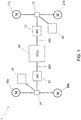
- an electric vehicle in the form of an electric car 1 has four wheels (not shown) and each wheel is driven by one of four electric motors 17a, 17b, 18a, 18b.
- the front left wheel is driven by front left motor 17a
- the front right wheel is driven by front right motor 17b
- the rear left wheel is driven by rear left motor 17a
- the rear right wheel is driven by rear right motor 17b.
- the rear motors 18a-b are more powerful than the front motors 17a-b so that the rear motors 18a-b can deliver more torque to the rear wheels than the front motors 17a-b can to the front wheels.
- all four wheels of the electric car are driven simultaneously, with a rear wheel drive bias to achieve the best driving characteristics, such as cornering and acceleration.
- the front motors 17a, 17b receive current from the front battery 15 via front inverter 13, which delivers current in accordance with instructions received from front MC 11.
- the rear motors 18a, 18b receive current from the rear battery 16 via rear inverter 14, which delivers current in accordance with instructions received from rear MC 12.
- the front battery 15 is dedicated to powering the front electric motors 17a-b. That is, the front battery 15 is not shared between the front motors 17a-b and the rear motors 18a-b.
- the rear battery 16 is dedicated to powering the rear electric motors 18a-b. That is, the rear battery 16 is not shared between the front motors 17a-b and the rear motors 18a-b.
- the terms "front" battery and "rear” battery designate the respective motors that the respective batteries 15, 16 power, rather than the physical location of the batteries 15, 16 in the electric car 1.
- VCU 10 is connected to the front MC 11 and to the rear MC 12 by electrical communication connections 101, 102.
- the VCU 10 can send control signals, including torque control signals for controlling the electric motors, to the MCs 11, 12 over the electrical communication connections 101, 102.
- the VCU, MCs, electrical communication connections 101, 102 and other components may be part of a Controller Area Network (CAN bus).
- CAN bus Controller Area Network
- the VCU 10 receives inputs, directly or indirectly, from various sensors, actuators and other controllers (not shown) and distributes control signals to the MCs 11, 12 and other components (not shown) in order to control the operation of the electric car 1.
- the inputs includes inputs from the driver, such as inputs from an accelerator, brake and a steering wheel or the like, controlled by the driver.
- Other inputs, not directly based on input from the driver, include the speed of the car and the acceleration of the car.
- VCU 10 sends torque control signals to the MCs 11, 12, which in combination with the inverters, 13, 14 and the batteries 15, 16 implement the torque control signals sent by the VCU 10 by delivering appropriate amounts of current to the motors 17a-b, 18a-b.
- the VCU also receives state of charge (SoC) information that describes the charge states of the front battery 15 and the rear battery 16.
- SoC state of charge
- the VCU 10 will instruct for more torque to be delivered to the rear wheels of the electric vehicle 1 than to the front wheels of the electric vehicle. This is because linear acceleration of the car, that is acceleration that increases the straight line speed of the car, is often best achieved by torque delivered to the rear wheels.
- the rear electric motors 18a-b of the electric car 1 are more powerful than the front electric motors 17a-b in order to provide for greater linear acceleration.
- the greater amount of torque delivered by the rear motors 18a-b causes the rear battery 16 to discharge, or drain, more quickly than the front battery 15.
- the front and rear batteries 15, 16 have the same charge capacity, and therefore it is ordinarily expected that the rear battery 16 will completely discharge before the front battery 15 completely discharges.
- the rear battery 16 since the rear battery 16 is discharged more quickly than the front battery 15, this will mean replenishing the batteries 15, 16 even though the front battery 15 may have a significant amount of charge remaining.
- the VCU 10 is configured to reduce the current provided from the rear battery 16 to the rear motors 18a-b and increase the current provided from the front battery 15 to the front motors 17a-b when the SoC of the rear battery 16 is at least a predetermined amount lower than the SoC of the front battery 15, and when the electric car 1 is travelling in a straight line above a predetermined minimum speed. This is determined based on the steering angle of the steering means of the car and the determined speed of the car.
- Reducing, or even shutting off, the power to the rear motors 18a-b works to balance or equalize the SoC of the two batteries such that the charge remaining on the front battery 15 at the point at which it becomes necessary to replace the batteries because the rear battery 16 is discharged is less than it otherwise would be. This increases the range of the electric car.
- the power to the rear motors can be reduced without affecting the performance of the car apparent to the driver.
- power from the rear battery 16 to the rear motors 18a-b could be shut off and the power from the front battery 15 to the front motors 17a-b increased to a level that maintains the electric car 1 at an approximately constant speed at or above the predetermined minimum speed.
- the rear motors 18a-b are more powerful than the front motors 17a-b, this need not be the case.
- the rear motor may be the same power or size as the front motor.
- the rear battery 16 may be discharged more quickly than the front battery 15 only because the rear motors 18a-b are powered more frequently and/or more closely to their maximum power than the front motors 17a-b.
- the front battery 15 and rear battery 16 are of the same or similar charge capacities, this need not be the case.
- the rear motors 18a-b may be more powerful than the front motors 17a-b
- the rear battery 16 may be provided with a greater charge capacity than the front battery 15, such that the expected battery life, measured in time, of the two batteries more closely matches.
- the invention may be implemented such that the predetermined amount by which the SoCs of the batteries must differ is a relative amount, rather than an absolute amount. That is, where the front and rear batteries have different charge capacities, it may be beneficial to balance the fraction of the total charge that remains on the respective batteries, rather than the absolute amount of charge that remains on the batteries. In this way, where the rear battery 16 has a greater charge capacity than the front battery 15, the rear battery 16 may be regarded as having a lower SoC than the front battery 16 even though, in absolute terms, the rear battery 16 has more charge remaining than the front battery 15.
- Electric car of Figure 1 has been described as having four wheels, four motors and two batteries, it should be appreciated that this is only an example.
- the invention can be applied to any electric vehicle that has at least one front wheel and at least one rear wheel, at least one front motor driving the at least one front wheel and at least one rear motor driving the at least one rear wheel, and at least one battery powering the at least one front motor and at least one different battery powering the at least one rear motor.
- Electric vehicles in accordance with the present invention may include further batteries that power systems of the electric vehicle other than the described front and rear electric motors, and/or the described front and rear batteries may additionally provide power to such other systems of the electric vehicle 1.
- FIG. 1 illustrates an electric vehicle 2 which only includes two electric motors: front motor 17 and rear motor 18.
- the front motor 17 receives current from the front battery 15 via front inverter 13, which delivers current in accordance with instructions received from front MC 11.
- the rear motor 18 receives current from the rear battery 16 via rear inverter 14, which delivers current in accordance with instructions received from rear MC 12.
- VCU 10 is connected to the front MC 11 and to the rear MC 12 by an electrical communication connections 101, 102.
- the VCU 10 can send control signals, including torque control signals for controlling the electric motors, to the MCs 11, 12 over the electrical communication connections 101, 102.
- the electric vehicle 2 of Figure 2 works in substantially the same way as has been described above for the electric car 1 of Figure 1 . That is, the VCU 10 is configured to reduce the current provided from the rear battery 16 to the rear motor 18 and increase the current provided from the front battery 15 to the front motor 17 when the SoC of the rear battery 16 is at least a predetermined amount lower than the SoC of the front battery 15, and when the electric vehicle 2 is travelling in a straight line above a predetermined minimum speed.
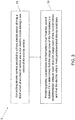
- Figure 3 is a flow diagram illustrating a method 3 of balancing the charge states of batteries in an electric vehicle.
- the method 3 may be performed by an electric-vehicle controller, such as the VCU 10 described above with reference to Figures 1 and 2 .
- an electric-vehicle controller controls the current provided to a front electric motor that drives a front wheel of an electric vehicle and the current provided to a rear electric motor driving a rear wheel of the electric vehicle.
- the front and rear batteries are separate batteries, dedicated to powering the respective front and rear motors, as described above with reference to Figure 1 .
- step 32 if it is determined by the electric-vehicle controller that the charge state of the first battery is a predetermined amount lower than the charge state of the second battery and that the electric vehicle meets predetermined driving conditions, the electric-vehicle controller provides greater current from the first battery than from the second battery. This causes the charge state of the first battery to reduce more quickly than the charge state of the second battery, and therefore works to balance the charge states of the first battery and second battery.
Landscapes
- Engineering & Computer Science (AREA)
- Power Engineering (AREA)
- Transportation (AREA)
- Mechanical Engineering (AREA)
- Life Sciences & Earth Sciences (AREA)
- Sustainable Development (AREA)
- Sustainable Energy (AREA)
- Electric Propulsion And Braking For Vehicles (AREA)
Priority Applications (3)
| Application Number | Priority Date | Filing Date | Title |
|---|---|---|---|
| EP16199145.0A EP3323664B1 (de) | 2016-11-16 | 2016-11-16 | Elektrofahrzeugsteuergerät |
| PCT/CN2017/109750 WO2018090853A1 (en) | 2016-11-16 | 2017-11-07 | Electric vehicle controller |
| CN201780070632.7A CN109937153B (zh) | 2016-11-16 | 2017-11-07 | 电动车辆控制器 |
Applications Claiming Priority (1)
| Application Number | Priority Date | Filing Date | Title |
|---|---|---|---|
| EP16199145.0A EP3323664B1 (de) | 2016-11-16 | 2016-11-16 | Elektrofahrzeugsteuergerät |
Publications (2)
| Publication Number | Publication Date |
|---|---|
| EP3323664A1 true EP3323664A1 (de) | 2018-05-23 |
| EP3323664B1 EP3323664B1 (de) | 2020-01-01 |
Family
ID=57326318
Family Applications (1)
| Application Number | Title | Priority Date | Filing Date |
|---|---|---|---|
| EP16199145.0A Active EP3323664B1 (de) | 2016-11-16 | 2016-11-16 | Elektrofahrzeugsteuergerät |
Country Status (3)
| Country | Link |
|---|---|
| EP (1) | EP3323664B1 (de) |
| CN (1) | CN109937153B (de) |
| WO (1) | WO2018090853A1 (de) |
Cited By (4)
| Publication number | Priority date | Publication date | Assignee | Title |
|---|---|---|---|---|
| US20190263241A1 (en) * | 2018-02-28 | 2019-08-29 | Artisan Vehicle Systems Inc. | Electric haul truck |
| EP3862218A1 (de) * | 2020-02-04 | 2021-08-11 | Polestar Performance AB | Ausgleichen des ladungsniveaus von batterien |
| CN114161992A (zh) * | 2021-12-29 | 2022-03-11 | 上海洛轲智能科技有限公司 | 动力驱动控制方法、装置、车辆和可读存储介质 |
| US11453309B2 (en) * | 2018-09-06 | 2022-09-27 | Artisan Vehicle Systems, Inc. | Electric power distribution system and method for electric mining machine |
Families Citing this family (4)
| Publication number | Priority date | Publication date | Assignee | Title |
|---|---|---|---|---|
| JP7571585B2 (ja) * | 2021-02-02 | 2024-10-23 | トヨタ自動車株式会社 | 車両の制御装置 |
| JP7548082B2 (ja) * | 2021-03-16 | 2024-09-10 | トヨタ自動車株式会社 | 電動車両の制御装置 |
| CN114905982A (zh) * | 2022-05-27 | 2022-08-16 | 东风汽车集团股份有限公司 | 双电池电驱动总成系统及功率分配方法 |
| WO2023230995A1 (zh) * | 2022-06-02 | 2023-12-07 | 宁德时代新能源科技股份有限公司 | 电池调节系统、方法及其用电设备 |
Citations (3)
| Publication number | Priority date | Publication date | Assignee | Title |
|---|---|---|---|---|
| EP0622264A2 (de) * | 1993-04-28 | 1994-11-02 | Hitachi, Ltd. | Antriebssystem und Antriebsverfahren eines elektrischen Fahrzeugs |
| US20110251745A1 (en) | 2008-10-31 | 2011-10-13 | Toyota Jidosha Kabushiki Kaisha | Power supply system for electrically powered vehicle, electrically powered vehicle, and method for controlling the same |
| US20150291036A1 (en) | 2011-12-26 | 2015-10-15 | Lg Eletronics Inc. | Device and method for controlling electric vehicle |
Family Cites Families (6)
| Publication number | Priority date | Publication date | Assignee | Title |
|---|---|---|---|---|
| CN101767541B (zh) * | 2008-12-29 | 2011-11-09 | 北汽福田汽车股份有限公司 | 基于分布式动力电池组的电动汽车动力系统及电动汽车 |
| CN101596902B (zh) * | 2009-07-03 | 2013-03-06 | 奇瑞汽车股份有限公司 | 一种电动汽车发电机组的控制方法 |
| KR101461895B1 (ko) * | 2013-05-03 | 2014-11-13 | 현대자동차 주식회사 | 배터리 팩의 셀 밸런싱 시스템 및 셀 밸런싱 방법 |
| CN104149777B (zh) * | 2013-05-13 | 2017-04-12 | 北汽福田汽车股份有限公司 | 一种四驱混合动力汽车的控制方法 |
| CN103386895B (zh) * | 2013-07-26 | 2017-08-29 | 浙江吉利汽车研究院有限公司 | 四驱电动汽车 |
| CN105946600B (zh) * | 2016-05-04 | 2018-06-22 | 中国第一汽车股份有限公司 | 串联增程式电动汽车动力系统及其控制方法 |
-
2016
- 2016-11-16 EP EP16199145.0A patent/EP3323664B1/de active Active
-
2017
- 2017-11-07 WO PCT/CN2017/109750 patent/WO2018090853A1/en not_active Ceased
- 2017-11-07 CN CN201780070632.7A patent/CN109937153B/zh active Active
Patent Citations (3)
| Publication number | Priority date | Publication date | Assignee | Title |
|---|---|---|---|---|
| EP0622264A2 (de) * | 1993-04-28 | 1994-11-02 | Hitachi, Ltd. | Antriebssystem und Antriebsverfahren eines elektrischen Fahrzeugs |
| US20110251745A1 (en) | 2008-10-31 | 2011-10-13 | Toyota Jidosha Kabushiki Kaisha | Power supply system for electrically powered vehicle, electrically powered vehicle, and method for controlling the same |
| US20150291036A1 (en) | 2011-12-26 | 2015-10-15 | Lg Eletronics Inc. | Device and method for controlling electric vehicle |
Cited By (10)
| Publication number | Priority date | Publication date | Assignee | Title |
|---|---|---|---|---|
| US20190263241A1 (en) * | 2018-02-28 | 2019-08-29 | Artisan Vehicle Systems Inc. | Electric haul truck |
| US10836242B2 (en) * | 2018-02-28 | 2020-11-17 | Artisan Vehicle Systems, Inc. | Electric haul truck |
| US11541739B2 (en) * | 2018-02-28 | 2023-01-03 | Artisan Vehicle Systems, Inc. | Electric haul truck |
| US11745576B2 (en) | 2018-02-28 | 2023-09-05 | Artisan Vehicle Systems, Inc. | Electric haul truck |
| US11453309B2 (en) * | 2018-09-06 | 2022-09-27 | Artisan Vehicle Systems, Inc. | Electric power distribution system and method for electric mining machine |
| AU2019336768B2 (en) * | 2018-09-06 | 2024-11-21 | Sandvik Mining And Construction Oy | Electric power distribution system and method for electric mining machine |
| EP3862218A1 (de) * | 2020-02-04 | 2021-08-11 | Polestar Performance AB | Ausgleichen des ladungsniveaus von batterien |
| WO2021156044A1 (en) * | 2020-02-04 | 2021-08-12 | Polestar Performance Ab | Balancing charge level of batteries |
| US20230166634A1 (en) * | 2020-02-04 | 2023-06-01 | Polestar Performance Ab | Balancing charge level of batteries |
| CN114161992A (zh) * | 2021-12-29 | 2022-03-11 | 上海洛轲智能科技有限公司 | 动力驱动控制方法、装置、车辆和可读存储介质 |
Also Published As
| Publication number | Publication date |
|---|---|
| WO2018090853A1 (en) | 2018-05-24 |
| EP3323664B1 (de) | 2020-01-01 |
| CN109937153B (zh) | 2023-01-13 |
| CN109937153A (zh) | 2019-06-25 |
Similar Documents
| Publication | Publication Date | Title |
|---|---|---|
| EP3323664B1 (de) | Elektrofahrzeugsteuergerät | |
| US9061683B2 (en) | Traveling mode switching controller of hybrid electric vehicle | |
| US9030162B2 (en) | Battery charging system for a hybrid electric vehicle | |
| US9041329B2 (en) | Vehicle electric machine control strategy | |
| US8738210B2 (en) | Battery temperature control device | |
| US10029669B2 (en) | Powertrain and method of coordinating chassis and propulsion system torque limits | |
| US9248745B1 (en) | Wheel stability control based on the moment of an electrical motor | |
| US11958492B2 (en) | Vehicle control device | |
| CN114728654A (zh) | 一种混合动力车辆驱动控制方法及系统 | |
| EP4238810A1 (de) | Antriebskraftsteuerungsverfahren und antriebskraftsteuerungsvorrichtung | |
| US9859723B2 (en) | Apparatus and method for adjusting charge/discharge range of vehicle based on events | |
| Becker et al. | Development and validation of an energy management system for an electric vehicle with a split battery storage system | |
| US11794738B2 (en) | Filtered battery current based vehicle speed limiter | |
| Becker et al. | Energy management system for a multi-source storage system electric vehicle | |
| JP6256323B2 (ja) | 車両の制振制御装置 | |
| JP6156619B2 (ja) | ハイブリッド車の作動制御装置 | |
| JP2018061370A (ja) | 電源システム制御装置 | |
| WO2019230288A1 (ja) | 電動車両の駆動制御装置 | |
| WO2014103948A1 (ja) | 無人搬送車の駆動システム | |
| US7084589B1 (en) | Vehicle and method for controlling power to wheels in a vehicle | |
| US20250026235A1 (en) | Control device for electrified vehicle, electrified vehicle, and control method therefor | |
| JP5787786B2 (ja) | 車両の制御装置 | |
| KR20250022283A (ko) | 애드온 모빌리티 연결 주행 제어 방법 및 애드온 모빌리티 | |
| KR20250037194A (ko) | 모빌리티 및 그 배터리 제어방법 | |
| KR20250035078A (ko) | 애드온 모빌리티 및 그 제어 방법 |
Legal Events
| Date | Code | Title | Description |
|---|---|---|---|
| PUAI | Public reference made under article 153(3) epc to a published international application that has entered the european phase |
Free format text: ORIGINAL CODE: 0009012 |
|
| STAA | Information on the status of an ep patent application or granted ep patent |
Free format text: STATUS: THE APPLICATION HAS BEEN PUBLISHED |
|
| AK | Designated contracting states |
Kind code of ref document: A1 Designated state(s): AL AT BE BG CH CY CZ DE DK EE ES FI FR GB GR HR HU IE IS IT LI LT LU LV MC MK MT NL NO PL PT RO RS SE SI SK SM TR |
|
| AX | Request for extension of the european patent |
Extension state: BA ME |
|
| STAA | Information on the status of an ep patent application or granted ep patent |
Free format text: STATUS: REQUEST FOR EXAMINATION WAS MADE |
|
| STAA | Information on the status of an ep patent application or granted ep patent |
Free format text: STATUS: EXAMINATION IS IN PROGRESS |
|
| 17P | Request for examination filed |
Effective date: 20181112 |
|
| RBV | Designated contracting states (corrected) |
Designated state(s): AL AT BE BG CH CY CZ DE DK EE ES FI FR GB GR HR HU IE IS IT LI LT LU LV MC MK MT NL NO PL PT RO RS SE SI SK SM TR |
|
| 17Q | First examination report despatched |
Effective date: 20181214 |
|
| RAP1 | Party data changed (applicant data changed or rights of an application transferred) |
Owner name: NIO NEXTEV LIMITED |
|
| REG | Reference to a national code |
Ref country code: DE Ref legal event code: R079 Ref document number: 602016027219 Country of ref document: DE Free format text: PREVIOUS MAIN CLASS: B60L0011180000 Ipc: B60L0015200000 |
|
| GRAP | Despatch of communication of intention to grant a patent |
Free format text: ORIGINAL CODE: EPIDOSNIGR1 |
|
| STAA | Information on the status of an ep patent application or granted ep patent |
Free format text: STATUS: GRANT OF PATENT IS INTENDED |
|
| RIC1 | Information provided on ipc code assigned before grant |
Ipc: B60L 58/22 20190101ALI20190508BHEP Ipc: B60L 58/10 20190101ALI20190508BHEP Ipc: B60L 15/20 20060101AFI20190508BHEP |
|
| INTG | Intention to grant announced |
Effective date: 20190607 |
|
| GRAS | Grant fee paid |
Free format text: ORIGINAL CODE: EPIDOSNIGR3 |
|
| GRAA | (expected) grant |
Free format text: ORIGINAL CODE: 0009210 |
|
| STAA | Information on the status of an ep patent application or granted ep patent |
Free format text: STATUS: THE PATENT HAS BEEN GRANTED |
|
| AK | Designated contracting states |
Kind code of ref document: B1 Designated state(s): AL AT BE BG CH CY CZ DE DK EE ES FI FR GB GR HR HU IE IS IT LI LT LU LV MC MK MT NL NO PL PT RO RS SE SI SK SM TR |
|
| REG | Reference to a national code |
Ref country code: GB Ref legal event code: FG4D |
|
| REG | Reference to a national code |
Ref country code: CH Ref legal event code: EP Ref country code: AT Ref legal event code: REF Ref document number: 1219381 Country of ref document: AT Kind code of ref document: T Effective date: 20200115 |
|
| REG | Reference to a national code |
Ref country code: IE Ref legal event code: FG4D |
|
| REG | Reference to a national code |
Ref country code: DE Ref legal event code: R096 Ref document number: 602016027219 Country of ref document: DE |
|
| REG | Reference to a national code |
Ref country code: NL Ref legal event code: MP Effective date: 20200101 |
|
| REG | Reference to a national code |
Ref country code: LT Ref legal event code: MG4D |
|
| PG25 | Lapsed in a contracting state [announced via postgrant information from national office to epo] |
Ref country code: PT Free format text: LAPSE BECAUSE OF FAILURE TO SUBMIT A TRANSLATION OF THE DESCRIPTION OR TO PAY THE FEE WITHIN THE PRESCRIBED TIME-LIMIT Effective date: 20200527 Ref country code: FI Free format text: LAPSE BECAUSE OF FAILURE TO SUBMIT A TRANSLATION OF THE DESCRIPTION OR TO PAY THE FEE WITHIN THE PRESCRIBED TIME-LIMIT Effective date: 20200101 Ref country code: RS Free format text: LAPSE BECAUSE OF FAILURE TO SUBMIT A TRANSLATION OF THE DESCRIPTION OR TO PAY THE FEE WITHIN THE PRESCRIBED TIME-LIMIT Effective date: 20200101 Ref country code: NO Free format text: LAPSE BECAUSE OF FAILURE TO SUBMIT A TRANSLATION OF THE DESCRIPTION OR TO PAY THE FEE WITHIN THE PRESCRIBED TIME-LIMIT Effective date: 20200401 Ref country code: LT Free format text: LAPSE BECAUSE OF FAILURE TO SUBMIT A TRANSLATION OF THE DESCRIPTION OR TO PAY THE FEE WITHIN THE PRESCRIBED TIME-LIMIT Effective date: 20200101 Ref country code: CZ Free format text: LAPSE BECAUSE OF FAILURE TO SUBMIT A TRANSLATION OF THE DESCRIPTION OR TO PAY THE FEE WITHIN THE PRESCRIBED TIME-LIMIT Effective date: 20200101 Ref country code: NL Free format text: LAPSE BECAUSE OF FAILURE TO SUBMIT A TRANSLATION OF THE DESCRIPTION OR TO PAY THE FEE WITHIN THE PRESCRIBED TIME-LIMIT Effective date: 20200101 |
|
| PG25 | Lapsed in a contracting state [announced via postgrant information from national office to epo] |
Ref country code: GR Free format text: LAPSE BECAUSE OF FAILURE TO SUBMIT A TRANSLATION OF THE DESCRIPTION OR TO PAY THE FEE WITHIN THE PRESCRIBED TIME-LIMIT Effective date: 20200402 Ref country code: BG Free format text: LAPSE BECAUSE OF FAILURE TO SUBMIT A TRANSLATION OF THE DESCRIPTION OR TO PAY THE FEE WITHIN THE PRESCRIBED TIME-LIMIT Effective date: 20200401 Ref country code: HR Free format text: LAPSE BECAUSE OF FAILURE TO SUBMIT A TRANSLATION OF THE DESCRIPTION OR TO PAY THE FEE WITHIN THE PRESCRIBED TIME-LIMIT Effective date: 20200101 Ref country code: SE Free format text: LAPSE BECAUSE OF FAILURE TO SUBMIT A TRANSLATION OF THE DESCRIPTION OR TO PAY THE FEE WITHIN THE PRESCRIBED TIME-LIMIT Effective date: 20200101 Ref country code: LV Free format text: LAPSE BECAUSE OF FAILURE TO SUBMIT A TRANSLATION OF THE DESCRIPTION OR TO PAY THE FEE WITHIN THE PRESCRIBED TIME-LIMIT Effective date: 20200101 Ref country code: IS Free format text: LAPSE BECAUSE OF FAILURE TO SUBMIT A TRANSLATION OF THE DESCRIPTION OR TO PAY THE FEE WITHIN THE PRESCRIBED TIME-LIMIT Effective date: 20200501 |
|
| REG | Reference to a national code |
Ref country code: DE Ref legal event code: R081 Ref document number: 602016027219 Country of ref document: DE Owner name: NIO (ANHUI) HOLDING CO., LTD., HEFEI, CN Free format text: FORMER OWNER: NIO NEXTEV LTD., HONG KONG, CN |
|
| REG | Reference to a national code |
Ref country code: DE Ref legal event code: R097 Ref document number: 602016027219 Country of ref document: DE |
|
| PG25 | Lapsed in a contracting state [announced via postgrant information from national office to epo] |
Ref country code: ES Free format text: LAPSE BECAUSE OF FAILURE TO SUBMIT A TRANSLATION OF THE DESCRIPTION OR TO PAY THE FEE WITHIN THE PRESCRIBED TIME-LIMIT Effective date: 20200101 Ref country code: SM Free format text: LAPSE BECAUSE OF FAILURE TO SUBMIT A TRANSLATION OF THE DESCRIPTION OR TO PAY THE FEE WITHIN THE PRESCRIBED TIME-LIMIT Effective date: 20200101 Ref country code: SK Free format text: LAPSE BECAUSE OF FAILURE TO SUBMIT A TRANSLATION OF THE DESCRIPTION OR TO PAY THE FEE WITHIN THE PRESCRIBED TIME-LIMIT Effective date: 20200101 Ref country code: RO Free format text: LAPSE BECAUSE OF FAILURE TO SUBMIT A TRANSLATION OF THE DESCRIPTION OR TO PAY THE FEE WITHIN THE PRESCRIBED TIME-LIMIT Effective date: 20200101 Ref country code: DK Free format text: LAPSE BECAUSE OF FAILURE TO SUBMIT A TRANSLATION OF THE DESCRIPTION OR TO PAY THE FEE WITHIN THE PRESCRIBED TIME-LIMIT Effective date: 20200101 Ref country code: EE Free format text: LAPSE BECAUSE OF FAILURE TO SUBMIT A TRANSLATION OF THE DESCRIPTION OR TO PAY THE FEE WITHIN THE PRESCRIBED TIME-LIMIT Effective date: 20200101 |
|
| PLBE | No opposition filed within time limit |
Free format text: ORIGINAL CODE: 0009261 |
|
| STAA | Information on the status of an ep patent application or granted ep patent |
Free format text: STATUS: NO OPPOSITION FILED WITHIN TIME LIMIT |
|
| REG | Reference to a national code |
Ref country code: AT Ref legal event code: MK05 Ref document number: 1219381 Country of ref document: AT Kind code of ref document: T Effective date: 20200101 |
|
| 26N | No opposition filed |
Effective date: 20201002 |
|
| REG | Reference to a national code |
Ref country code: GB Ref legal event code: 732E Free format text: REGISTERED BETWEEN 20201126 AND 20201202 |
|
| PG25 | Lapsed in a contracting state [announced via postgrant information from national office to epo] |
Ref country code: IT Free format text: LAPSE BECAUSE OF FAILURE TO SUBMIT A TRANSLATION OF THE DESCRIPTION OR TO PAY THE FEE WITHIN THE PRESCRIBED TIME-LIMIT Effective date: 20200101 Ref country code: AT Free format text: LAPSE BECAUSE OF FAILURE TO SUBMIT A TRANSLATION OF THE DESCRIPTION OR TO PAY THE FEE WITHIN THE PRESCRIBED TIME-LIMIT Effective date: 20200101 |
|
| PG25 | Lapsed in a contracting state [announced via postgrant information from national office to epo] |
Ref country code: PL Free format text: LAPSE BECAUSE OF FAILURE TO SUBMIT A TRANSLATION OF THE DESCRIPTION OR TO PAY THE FEE WITHIN THE PRESCRIBED TIME-LIMIT Effective date: 20200101 Ref country code: SI Free format text: LAPSE BECAUSE OF FAILURE TO SUBMIT A TRANSLATION OF THE DESCRIPTION OR TO PAY THE FEE WITHIN THE PRESCRIBED TIME-LIMIT Effective date: 20200101 |
|
| PG25 | Lapsed in a contracting state [announced via postgrant information from national office to epo] |
Ref country code: MC Free format text: LAPSE BECAUSE OF FAILURE TO SUBMIT A TRANSLATION OF THE DESCRIPTION OR TO PAY THE FEE WITHIN THE PRESCRIBED TIME-LIMIT Effective date: 20200101 |
|
| REG | Reference to a national code |
Ref country code: CH Ref legal event code: PL |
|
| PG25 | Lapsed in a contracting state [announced via postgrant information from national office to epo] |
Ref country code: LU Free format text: LAPSE BECAUSE OF NON-PAYMENT OF DUE FEES Effective date: 20201116 |
|
| REG | Reference to a national code |
Ref country code: BE Ref legal event code: MM Effective date: 20201130 |
|
| PG25 | Lapsed in a contracting state [announced via postgrant information from national office to epo] |
Ref country code: CH Free format text: LAPSE BECAUSE OF NON-PAYMENT OF DUE FEES Effective date: 20201130 Ref country code: LI Free format text: LAPSE BECAUSE OF NON-PAYMENT OF DUE FEES Effective date: 20201130 |
|
| PG25 | Lapsed in a contracting state [announced via postgrant information from national office to epo] |
Ref country code: FR Free format text: LAPSE BECAUSE OF NON-PAYMENT OF DUE FEES Effective date: 20201130 Ref country code: IE Free format text: LAPSE BECAUSE OF NON-PAYMENT OF DUE FEES Effective date: 20201116 |
|
| PG25 | Lapsed in a contracting state [announced via postgrant information from national office to epo] |
Ref country code: TR Free format text: LAPSE BECAUSE OF FAILURE TO SUBMIT A TRANSLATION OF THE DESCRIPTION OR TO PAY THE FEE WITHIN THE PRESCRIBED TIME-LIMIT Effective date: 20200101 Ref country code: MT Free format text: LAPSE BECAUSE OF FAILURE TO SUBMIT A TRANSLATION OF THE DESCRIPTION OR TO PAY THE FEE WITHIN THE PRESCRIBED TIME-LIMIT Effective date: 20200101 Ref country code: CY Free format text: LAPSE BECAUSE OF FAILURE TO SUBMIT A TRANSLATION OF THE DESCRIPTION OR TO PAY THE FEE WITHIN THE PRESCRIBED TIME-LIMIT Effective date: 20200101 |
|
| PG25 | Lapsed in a contracting state [announced via postgrant information from national office to epo] |
Ref country code: MK Free format text: LAPSE BECAUSE OF FAILURE TO SUBMIT A TRANSLATION OF THE DESCRIPTION OR TO PAY THE FEE WITHIN THE PRESCRIBED TIME-LIMIT Effective date: 20200101 Ref country code: AL Free format text: LAPSE BECAUSE OF FAILURE TO SUBMIT A TRANSLATION OF THE DESCRIPTION OR TO PAY THE FEE WITHIN THE PRESCRIBED TIME-LIMIT Effective date: 20200101 |
|
| PG25 | Lapsed in a contracting state [announced via postgrant information from national office to epo] |
Ref country code: BE Free format text: LAPSE BECAUSE OF NON-PAYMENT OF DUE FEES Effective date: 20201130 |
|
| PGFP | Annual fee paid to national office [announced via postgrant information from national office to epo] |
Ref country code: DE Payment date: 20241121 Year of fee payment: 9 |
|
| PGFP | Annual fee paid to national office [announced via postgrant information from national office to epo] |
Ref country code: GB Payment date: 20241120 Year of fee payment: 9 |