EP3323840A1 - Résine méthacrylique, procédé de production de résine méthacrylique, article moulé et automobile - Google Patents
Résine méthacrylique, procédé de production de résine méthacrylique, article moulé et automobile Download PDFInfo
- Publication number
- EP3323840A1 EP3323840A1 EP16824303.8A EP16824303A EP3323840A1 EP 3323840 A1 EP3323840 A1 EP 3323840A1 EP 16824303 A EP16824303 A EP 16824303A EP 3323840 A1 EP3323840 A1 EP 3323840A1
- Authority
- EP
- European Patent Office
- Prior art keywords
- methacrylic resin
- molecular weight
- mass
- less
- resin according
- Prior art date
- Legal status (The legal status is an assumption and is not a legal conclusion. Google has not performed a legal analysis and makes no representation as to the accuracy of the status listed.)
- Granted
Links
Images

Classifications
-
- C—CHEMISTRY; METALLURGY
- C08—ORGANIC MACROMOLECULAR COMPOUNDS; THEIR PREPARATION OR CHEMICAL WORKING-UP; COMPOSITIONS BASED THEREON
- C08F—MACROMOLECULAR COMPOUNDS OBTAINED BY REACTIONS ONLY INVOLVING CARBON-TO-CARBON UNSATURATED BONDS
- C08F220/00—Copolymers of compounds having one or more unsaturated aliphatic radicals, each having only one carbon-to-carbon double bond, and only one being terminated by only one carboxyl radical or a salt, anhydride ester, amide, imide or nitrile thereof
- C08F220/02—Monocarboxylic acids having less than ten carbon atoms; Derivatives thereof
- C08F220/10—Esters
- C08F220/12—Esters of monohydric alcohols or phenols
- C08F220/14—Methyl esters, e.g. methyl (meth)acrylate
-
- C—CHEMISTRY; METALLURGY
- C08—ORGANIC MACROMOLECULAR COMPOUNDS; THEIR PREPARATION OR CHEMICAL WORKING-UP; COMPOSITIONS BASED THEREON
- C08F—MACROMOLECULAR COMPOUNDS OBTAINED BY REACTIONS ONLY INVOLVING CARBON-TO-CARBON UNSATURATED BONDS
- C08F2/00—Processes of polymerisation
- C08F2/02—Polymerisation in bulk
-
- C—CHEMISTRY; METALLURGY
- C08—ORGANIC MACROMOLECULAR COMPOUNDS; THEIR PREPARATION OR CHEMICAL WORKING-UP; COMPOSITIONS BASED THEREON
- C08F—MACROMOLECULAR COMPOUNDS OBTAINED BY REACTIONS ONLY INVOLVING CARBON-TO-CARBON UNSATURATED BONDS
- C08F2/00—Processes of polymerisation
- C08F2/38—Polymerisation using regulators, e.g. chain terminating agents, e.g. telomerisation
-
- C—CHEMISTRY; METALLURGY
- C08—ORGANIC MACROMOLECULAR COMPOUNDS; THEIR PREPARATION OR CHEMICAL WORKING-UP; COMPOSITIONS BASED THEREON
- C08J—WORKING-UP; GENERAL PROCESSES OF COMPOUNDING; AFTER-TREATMENT NOT COVERED BY SUBCLASSES C08B, C08C, C08F, C08G or C08H
- C08J5/00—Manufacture of articles or shaped materials containing macromolecular substances
Definitions
- the present invention relates to a methacrylic resin, a method for producing a methacrylic resin, a shaped article and an automobile.
- Methacrylic resins typified by polymethyl methacrylate are widely used in various fields such as optical materials, parts for automobiles, materials for lighting, building materials and the like, due to excellent transparency and weather resistance.
- the methacrylic resins proposed in Patent Documents 1 to 3 contain a large amount of repeating units derived from monomers other than methyl methacrylate such as methyl acrylate, therefore, the methacrylic resins of the prior arts are inferior in moldability, solvent resistance, mechanical properties, heat resistance. Furthermore, methacrylic resins proposed in Patent Documents 1 to 3 are inferior in productivity because the step of obtaining resin beads and the step of obtaining resin pellets are different.
- an object of the present invention is to provide a methacrylic resin excellent in moldability, solvent resistance, mechanical properties and heat resistance. Another object of the present invention is to provide a method for producing a methacrylic resin excellent in productivity.
- the methacrylic resin of the present invention is excellent in moldability, solvent resistance, mechanical properties and heat resistance.
- the method for producing a methacrylic resin of the present invention is excellent in productivity, and the obtained methacrylic resin is excellent in moldability, solvent resistance, mechanical properties and heat resistance.
- the shaped article of the present invention is excellent in solvent resistance, mechanical properties and heat resistance, and is suitable for automotive parts for automobiles.
- the methacrylic resin of the present invention contains 99.1 % by mass or more and 99.9% by mass or less of a repeating unit derived from methyl methacrylate and 0.1% by mass or more and 0.9% by mass or less of a repeating unit derived from alkyl acrylate.
- the content of the repeating unit derived from methyl methacrylate in the methacrylic resin is preferably 99.1% by mass or more and 99.9% by mass or less, more preferably 99.6% by mass or more and 99.9% by mass or less, and much more preferably 99.6% by mass or more and 99.8% by mass or less in 100% by mass of the methacrylic resin.
- the content of the repeating unit derived from methyl methacrylate in the methacrylic resin is 99.1% by mass or more, the methacrylic resin has excellent mechanical properties and heat resistance. Further, when the content of the repeating unit derived from methyl methacrylate in the methacrylic resin is 99.9% by mass or less, the methacrylic resin is excellent in thermal stability.
- the composition of the methacrylic resin is obtained by introducing the thermal decomposition product obtained by thermal decomposition at the temperature at which the methacrylic resin to be analyzed is sufficiently depolymerized into the gas chromatograph, and the peak area value derived from methyl methacrylate and alkyl acrylate calculated from the obtained gas chromatogram is used as a value calculated using a calibration curve obtained from a standard methacrylic resin to be described later.
- a standard methacrylic resin containing known quantities of quantitative alkyl acrylate produced by the same production method as the methacrylic resin to be analyzed was used as a standard substance.
- This standard methacrylic resin is calculated from a gas chromatogram obtained by thermal decomposition under the same conditions as the methacrylic resin to be analyzed.
- the content of the repeating unit derived from alkyl acrylate in the methacrylic resin is 0.1% by mass or more and 0.9% by mass or less, preferably 0.1% by mass or more and 0.4% by mass or less, more preferably 0.2% by mass or more and 0.4% by mass or less in 100% by mass of the methacrylic resin.
- the content of the alkyl acrylate-derived repeating unit in the methacrylic resin is 0.1% by mass or more, the methacrylic resin has excellent thermal stability.
- the content of the alkyl acrylate-derived repeating unit in the methacrylic resin is 0.9% by mass or less, the methacrylic resin has excellent mechanical properties and heat resistance.
- alkyl acrylate for example, methyl acrylate, ethyl acrylate, n-propyl acrylate, iso-propyl acrylate, n-butyl acrylate, iso-butyl acrylate, sec-butyl acrylate, tert-butyl acrylate, n-hexyl acrylate, cyclohexyl acrylate , n-octyl acrylate, 2-ethylhexyl acrylate and the like.
- One of these alkyl acrylates may be used alone, or two or more of them may be used in combination.
- methyl acrylate, ethyl acrylate and n-butyl acrylate are preferable, methyl acrylate and ethyl acrylate are more preferable, and methyl acrylate is most preferable.
- the content of repeating units derived from other monomers in the methacrylic resin is preferably 1% by mass or less, more preferably 0.1% by mass or less, since it does not impair the intrinsic performance of the methacrylic resin.
- Examples of other monomers include (meth) acrylamide compounds such as ethyl methacrylate, n-propyl methacrylate, iso-propyl methacrylate, n-butyl methacrylate, iso-butyl methacrylate, sec-butyl methacrylate, tert-butyl methacrylate, n-hexyl methacrylate, cyclohexyl methacrylate, n-octyl methacrylate, 2-ethylhexyl methacrylate, phenyl (meth) acrylate and the like; (meth)acrylic acid; (meth)acrylonitrile; (meth) acrylamide compounds such as (meth)acrylamide, N-dimethyl (meth) acrylamide, N-diethyl (meth) acrylamide, N-butyl (meth) acrylamide, dimethylaminopropyl (meth) acrylamide, N-methylol (
- (meth) acrylate refers to methacrylate, acrylate or both.
- the methacrylic resin is obtained by polymerizing methyl methacrylate, alkyl acrylate, and, if necessary, other monomers.
- Examples of the polymerization method include bulk polymerization, solution polymerization, suspension polymerization, emulsion polymerization and the like.
- these polymerization methods in view of unnecessary of emulsion and excellent optical properties of the methacrylic resin, bulk polymerization, solution polymerization, and suspension polymerization are preferable. In view of excellent productivity and suppressing contamination of foreign materials, continuous bulk polymerization is more preferred.
- polymerization initiator examples include organic peroxides such as tert-butyl peroxy-3,5,5-trimethyl hexanate, tert-butyl peroxylaurate, tert-butyl peroxy isopropyl monocarbonate, tert-hexyl peroxy isopropyl monocarbonate, tert-butyl peroxyacetate, 1,1-bis (tert-butylperoxy) 3,3,5-trimethylcyclohexane, 1,1-bis (tert-butylperoxy) cyclohexane, tert-butylperoxy 2-ethylhexanate, tert-butylperoxyisobutyrate, tert-hexylperoxy 2-ethylhexanate, di-tert-butyl peroxide, di-tert-hexyl peroxide, 2,5-dimethyl-2,5-bis (tert-butylperoxy) hexane and
- polymerization initiators may be used alone, or two or more of them may be used in combination.
- organic peroxides are preferred, especially, tertiary butyl peroxy-3,5,5-trimethylhexanate and di-tert-butyl peroxide are more preferable in view of suppressing the production costs.
- the amount of the polymerization initiator to be used is preferably 0.001 parts by mass or more and 1 part by mass or less, more preferably 0.005 parts by mass or more and 0.1 parts by mass or less with respect to 100 parts by mass of the total monomers, since a desired weight average molecular weight Mw, a molecular weight distribution, a peak molecular weight and the like can be obtained.
- the use amount of the polymerization initiator is 0.001 parts by mass or more, excellent polymerization rate of the monomer can be obtained.
- the amount of the polymerization initiator used is 1 part by mass or less, the production cost can be suppressed.
- Examples of the mercaptan compound include primary, secondary, tertiary mercaptan compounds having an alkyl group or substituted alkyl group such as n-butyl, iso-butyl, sec-butyl, tert-butyl, n-octyl, n-dodecyl; aromatic mercaptans such as phenyl mercaptan, thiocresol, 4-tert-butyl-o-thiocresol and the like; thioglycolic acid and esters thereof; mercaptans having 2 to 18 carbon atoms such as ethylene thioglycol and the like.
- mercaptan compounds may be used alone, or two or more of them may be used in combination.
- mercaptan compounds in view of suppressing the procution costs, n-butyl mercaptan, tert-butyl mercaptan, n-octyl mercaptan and n-dodecyl mercaptan are preferable, n-butyl mercaptan and n-octyl mercaptan are more preferable.
- the amount of the chain transfer agent to be used is preferably 0.01 parts by mass or more and 2 parts by mass or less, more preferably 0.05 parts by mass or more and 1 part by mass or less with respect to 100 parts by mass of the total monomers, since a desired mass average molecular weight Mw, a molecular weight distribution, a peak molecular weight and the like can be obtained.
- the amount of the chain transfer agent used is 0.01 parts by mass or more, excellent monomer polymerization stability can be obtained. Further, when the amount of the chain transfer agent used is 2 parts by mass or less, the production cost can be suppressed.
- the proportion of the molecular weight component of 1/5 or less of the peak molecular weight Mph in the high molecular weight region side obtained from the elution curve by gel permeation chromatography is 7% to 40%.
- the weight average molecular weight Mw, the molecular weight distribution, the peak molecular weight, and the proportion of the molecular weight component of 1/5 or less of the peak molecular weight Mph in the high molecular weight region side are values obtained by gel permeation chromatography.
- Measurement by gel permeation chromatography is carried out by preparing a methacrylic resin solution to be analyzed at a concentration at which the molecules of the methacrylic resin to be analyzed are sufficiently solvated, introducing an solvent in which methacrylic resin dissolved as eluent into a gel permeation chromatography, and calculating the relative molecular weight by using the obtained elution curve (gel permeation chromatogram) and the calibration curve prepared using the molecular weight standard polymer.
- the gel permeation column to be used is a column having an exclusion limit with sufficient margin with respect to the assumed molecular weight of the methacrylic resin.
- the calibration curve is prepared by using a molecular weight marker standard polymer having a known molecular weight selected so that it can be prepared in a form including from the exclusion limit of the gel permeation column to be used up to a sufficiently low molecular weight range with respect to the assumed molecular weight of the methacrylic resin.
- a solution adjusted to the same concentration as that of the methacrylic resin solution to be analyzed was introduced into a gel permeation chromatograph of the same condition analyzed the methacrylic resin to be analyzed, and the retention time at the peak top of each molecular weight marker standard polymer obtained is used.
- the weight average molecular weight Mw, the molecular weight distribution, the peak molecular weight, and the proportion of the molecular weight component of 1/5 or less of the peak molecular weight Mph in the high molecular weight region side is calculated.
- the value at the elution time is set as follows.
- the weight average molecular weight Mw, the number average molecular weight Mn, and the molecular weight distribution are calculated by the following formulas (1) to (3).
- Mw ⁇ Hti ⁇ Mti ⁇ Hti
- Mn ⁇ Hti ⁇ Hti / Mti
- Molecular weight distribution Mw / Mn
- the peak indicates the elution time at which the sign of the first derivative curve of the elution curve is reversed.
- the peak (local minimum) point of a certain peak overlaps with another peak, there is a case where there is no reversal of sign, but elution time of the peak can be read using inflection point of the first derivative curve. Changes in value in a short time of less than 1/100th of the dissolution time of the dissolution curve existing in the chromatogram are considered as noise, not included in the peak.
- the peak molecular weight is calculated from the elution curve and the calibration curve as follows.
- the molecular weight determined from the calibration curve at the elution time Ti is set as the peak molecular weight.
- the number of peak molecular weights is also calculated.
- the peak molecular weight of the peak observed in the highest molecular weight region side in the elution curve is Mph
- the peak molecular weight of the peak observed in the lowest molecular weight region side in the elution curve is Mpl
- its peak molecular weight is set as the peak molecular weight Mph in the highest molecular weight region side.
- the proportion of the molecular weight component of 1/5 or less of the peak molecular weight Mph in the high molecular weight region side is calculated from the elution curve and the calibration curve as follows.
- the elution time Tmph which gives a value obtained by dividing the peak molecular weight Mph in the high molecular weight region side by 5 is calculated from the calibration curve, and when the elution curve was splitted around the time of Tmph, the peak area in the lower molecular weight region side than Tmph is divided by the peak area of the entire peak of the elution curve, and the proportion of the molecular weight component of 1/5 or less of the peak molecular weight Mph in the high molecular weight region side is calculated.
- the weight average molecular weight Mw of the methacrylic resin is preferably from 50,000 to 200,000, more preferably from 70,000 to 150,000, and much more preferably from 80,000 to 120,000.
- the weight average molecular weight Mw of the methacrylic resin is 50,000 or more, excellent mechanical properties of the methacrylic resin can be obtained.
- the weight average molecular weight Mw of the methacrylic resin is 200,000 or less, the methacrylic resin is excellent in moldability.
- the molecular weight distribution of the methacrylic resin is preferably 2.5 or more and 6.0 or less, more preferably 3.0 or more and 5.0 or less, and much more preferably 3.5 or more and 4.5 or less.
- the molecular weight distribution of the methacrylic resin is 2.5 or more, the methacrylic resin is excellent in moldability.
- the molecular weight distribution of the methacrylic resin is 6.0 or less, it is capable of suppressing mixing of a high-flowing low-molecular-weight methacrylic resin and a low-flowing high-molecular methacrylic resin, and excellent flow stability (moldability) of the methacrylic resin can be obtained.
- the number of the peak of the elution curve of the methacrylic resin is preferably one to three, more preferably one to two, and much more preferably two, in view of excellency in moldability (flowability) and flow stability of the methacrylic resin.
- the methacrylic resin is excellent in moldability, mechanical properties and heat resistance, the number of the peaks at which the sign of the first derivative curve of the methacrylic resin inverts.is preferably two.
- the peak molecular weight Mph in the high molecular weight region side of the methacrylic resin is preferably 100,000 or more and 180,000 or less, more preferably 110,000 or more and 160,000 or less, much more preferably 120,000 or more and 140,000 or less.
- the peak molecular weight Mph in the high molecular weight region side of the methacrylic resin is 100,000 or more, excellent mechanical properties of the methacrylic resin can be obtained.
- the peak molecular weight Mph in the high molecular weight region side of the methacrylic resin is 180,000 or less, excellent moldability can be obtained.
- the peak molecular weight Mpl in the low molecular weight region side of the methacrylic resin is preferably 8,000 or more and 30,000 or less, more preferably 10,000 or more and 25,000 or less, much more preferably 12,000 or more and 20,000 or less.
- the peak molecular weight Mpl in the low molecular weight region side of the methacrylic resin is 8,000 or more, the methacrylic resin is excellent in heat resistance.
- the peak molecular weight Mpl in the low molecular weight region side of the methacrylic resin is 30,000 or less, the methacrylic resin is excellent in moldability.
- the proportion of the molecular weight component of 1/5 or less of the peak molecular weight Mph in the high molecular weight region side of the methacrylic resin is preferably 7% or more and 40% or less, more preferably 10% or more and 35% or less, much more preferably 15% or more and 30% or less.
- the proportion of the molecular weight component of 1/5 or less of the peak molecular weight Mph in the high molecular weight region side of the methacrylic resin is 7% or more, the methacrylic resin is excellent in moldability.
- the proportion of the molecular weight component of 1/5 or less of the peak molecular weight Mph in the high molecular weight region side of the methacrylic resin is 40% or less, excellent mechanical properties and heat resistance of the methacrylic resin can be obtained.
- Production method 2 a method in which monomers are polymerized, and then monomers are further added for polymerization.
- Production method 3 a method in which two types of polymers having different molecular weights are separately produced and blended.
- Production method 1 in view of excellent productivity, preferably Production method 1, Production method 2, Production method 3, more preferably Production method 1 and Production method 3 can be conducted. In view of suppressing the contamination of foreign matter and excellent productivity, production method 1 can be preferably conducted.
- Production method 1 is a method of polymerizing a part of monomers, then adding a polymerization aid such as a polymerization initiator or a chain transfer agent, and polymerizing the remaining monomers.
- a polymerization aid such as a polymerization initiator or a chain transfer agent
- a known continuous bulk polymerization apparatus can be used.
- a device equipped with a supply port for supplying a polymerization aid such as a polymerization initiator or a chain transfer agent provided between a complete mixing vessel type reactor, connected in series and a plug flow type tube reactor apparatus.
- Specific methods of continuous bulk polymerization include, for example, a method in which the following Steps A to D are carried out continuously. Since contamination of foreign matter can be suppressed and excellent productivity can be obtained, a method in which step A to step D are continuously performed is preferable.
- Step A Methyl methacrylate, alkyl acrylate, if needed, other monomers, and a polymerization aid such as a polymerization initiator or a chain transfer agent and the like are supplied to a complete mixing vessel type reactor, and a part of the monomers are polymerized (polymerization in the first stage).
- a polymerization aid such as a polymerization initiator or a chain transfer agent and the like
- Step B A polymerization aid such as a polymerization initiator or a chain transfer agent is additionally supplied.
- Step C Polymerize the remaining monomer (polymerization in the second stage) in a plug flow type tube reactor.
- Step D Volatile unreacted monomers and the like to obtain a methacrylic resin.
- the polymerization rate of the polymerization in the first stage in the step A is preferably 35% or more and 50% or less, more preferably 40% or more and 45% or less.
- the polymerization rate of the polymerization in the first stage in Step A is 35% or more, superior polymerization stability can be obtained.
- the polymerization rate of the first stage polymerization in Step A is 50% or less, excellent productivity can be obtained.
- Examples of a method for supplying a polymerization aid such as a polymerization initiator or a chain transfer agent in the step B include a method using a device such as a static mixer and a small extruder.
- a device such as a static mixer and a small extruder.
- One of these devices may be used alone, or two or more of these devices may be used in combination.
- two or more of these apparatuses may be juxtaposed in accordance with the type of additionally supplied polymerization aid or the like.
- a static mixer is preferable because it is excellent in productivity.
- the polymerization rate of the second stage polymerization in step C is preferably 50% or more and 80% or less, more preferably 65% or more and 75% or less.
- the polymerization rate of polymerization in the second step in step C is 50% or more, unreacted monomers are reduced and excellent productivity can be obtained.
- the polymerization rate of the polymerization in the second step in the step C is 80% or less, the fluidity of the obtained polymer composition (a mixture including the monomer and the polymer) is high and excellent productivity can be obtained.
- Examples of the apparatus for volatilizing unreacted monomer or the like in the step D include an extrusion molding machine with a vent, a thin film devolatilizing apparatus and the like.
- an extrusion molding machine with a vent is preferable, and an extrusion molding machine with multiple vents is more preferable.
- Production method 2 is a method in which monomers are polymerized and then monomers are further added for polymerization.
- suspension polymerization and emulsion polymerization are preferable, and suspension polymerization is more preferable.
- Production method 3 is a method in which two types of polymers having different molecular weights are separately produced and blended.
- the spiral flow length of the methacrylic resin is preferably 130 mm or more, more preferably 140 mm or more, since it is excellent in moldability of the methacrylic resin.
- the spiral flow length of the methacrylic resin is a value measured with an injection molding machine under the condition of a measuring mold having a depth of 1 mm and a resin temperature of 250 °C.
- the rupture time of the methacrylic resin in the cantilever test is preferably 120 seconds or more, more preferably 150 seconds or more, since it is excellent in mechanical properties of the methacrylic resin.
- the rupture time in the cantilever test of the methacrylic resin is a value measured under the same conditions as in Examples described later.
- the methacrylic resin may optionally contain additives.
- additives examples include ultraviolet absorbers, antioxidants, colorants such as pigments and the like.
- One of these other additives may be used alone, or two or more of them may be used in combination.
- the shaped article of the present invention is obtained by shaping the methacrylic resin of the present invention.
- Examples of a shaping method for obtaining a shaped article include injection molding, extrusion molding, pressure molding and the like. Further, the resulting shaped article may be further subjected to secondary shaping such as pressure molding or vacuum molding.
- Shaping conditions such as shaping temperature, shaping pressure and the like may be set as appropriate.
- the shaped article of the present invention is excellent in solvent resistance, mechanical properties and heat resistance, it can be used for optical materials, automotive parts for automobiles, materials for lighting, building materials and the like. In particular, it is preferable for automotive parts for automobiles.
- Examples of parts of automobiles include rear lamp outer covers, optical members inside the rear lamps, inner lenses for headlights (sometimes referred to as projector lenses and PES lenses), meter covers, door mirror housings, pillar covers Sash cover), licensed garnish, front grill, fog garnish, emblem and the like.
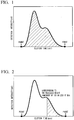
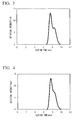
- the content of the molecular weight component of 1/5 or less of Mph is determined as follows.
- the value of RI detection intensity of elution time with weight average molecular weight of 500 is set as point B.
- a high molecular weight component is observed at the initial elution time (point A side) and a low molecular weight component is observed at the end of elution time (point B side).
- the area in the GPC elution curve corresponding to the molecular weight component of 1/5 or less of Mph refers to the hatched portion shown in FIG. 2 .
- composition analysis of the methacrylic resins obtained in the examples and comparative examples was carried out under the following apparatus and conditions, and the types and contents of the repeating units derived from the monomers in the methacrylic resin were confirmed.
- the measurement of the spiral flow length is a measurement for determining the relative fluidity according to the distance through which the resin has flowed through a spiral cavity having a constant cross sectional area.
- the methacrylic resins obtained in the Examples and Comparative Examples were injected onto the surface of the mold under the following conditions.
- the solvent resistance was evaluated by measuring the rupture time according to the cantilever test.
- a load was set so that the stress of the test part was 14.7 MPa, a polyethylene terephthalate film having a width of 10 mm was placed on the test part, a trace amount of ethyl alcohol was impregnated by a dropper so as to impregnate the back of the film, and the time until the test piece fractured was measured.
- the bending strength (MPa) of the methacrylic resin obtained in Examples and Comparative Example was measured at a test piece thickness of 4 mm in accordance with ISO 178 and the mechanical properties were evaluated as follows.
- the deflection temperature under load (°C) of the methacrylic resin was measured in accordance with ISO 75-2 (load 1.8 MPa), and the heat resistance was evaluated as follows.
- MMA methyl methacrylate
- MA methyl acrylate
- n-octyl mercaptan as a chain transfer agent
- tert- butyl peroxy-3,5,5-trimethylhexanoate as the polymerization initiator 1 were continuously fed into a complete mixing vessel type reactor controlled at a polymerization temperature of 135 °C while stirring and mixing, and polymerization was carried out while continuously withdrawing the polymer composition (a mixture containing the monomer and the polymer) with a gear pump. Polymerization was carried out with a residence amount of the reaction solution in the reaction zone of 60 kg and an average residence time of 2 hours.
- the withdrawn polymer composition was fed into the static mixer for a chain transfer agent mixture which was connected to the complete mixing vessel type reactor in series (trade name "SMX Sulzer Mixer", manufactured by Sumitomo Heavy Industries, Ltd., diameter: 27.2 mm, length: 650 mm). Further, 0.50 parts by mass of n-octyl mercaptan was supplied as a chain transfer agent in a static mixer for mixing a chain transfer agent and mixed with a polymer composition (mixture A).
- the mixture A was fed into to the static mixer for polymerization initiator mixture which was connected to the static mixer for the chain transfer agent mixture (trade name "SMX Sulzer Mixer", manufactured by Sumitomo Heavy Industries, Ltd., diameter: 27.2 mm, length: 650 mm). Further, in the static mixer for mixing the polymerization initiator, 0.0026 parts by mass of tert-butyl peroxy-3,5,5-trimethylhexanoate as the polymerization initiator 1, 0.0026 parts by mass of di-tert-butyl 0.0026 parts by mass of peroxide as the polymerization initiator 2 was diluted 100 times with methyl methacrylate and mixed with the mixture A (mixture B).
- SMX Sulzer Mixer manufactured by Sumitomo Heavy Industries, Ltd.
- the polymerization was conducted by supplying the mixture B which passed through the static mixer for the polymerization initiator mixture to the plug flow type tube reactor connected to the static mixer for the polymerization initiator mixture (trade name "SMX Sulzer Mixer", manufactured by Sumitomo Heavy Industries, Ltd., diameter: 65.9 mm, length: 5000 mm).
- SMX Sulzer Mixer manufactured by Sumitomo Heavy Industries, Ltd., diameter: 65.9 mm, length: 5000 mm.
- the jacket temperature of the plug flow type tubular reactor was adjusted so that the outlet temperature of the plug flow type pipe reactor was to be 190 °C.
- the obtained polymer (including unreacted monomers) was devolatilized by an extruder to obtain a methacrylic resin.
- Example 2 Comparative Examples 1 and 2 were conducted in the same manner as in Example 1 except that the feed amount shown in Table 1 was used to obtain a methacrylic resin.
- Copolymers (1) to (7) were prepared according to the following Production Examples 1 to 8 based on the compositions shown in Table 4.
- methyl methacrylate (trade name "Acrylester M", manufactured by Mitsubishi Rayon Co., Ltd.), 0.3 parts by mass of methyl acrylate, 0.1 part by mass of 2,2'-azobis-2-methylbutyronitrile (polymerization initiator, a trade name "V-59", manufactured by Wako Pure Chemical Industries, Ltd.) and 0.15 parts by mass of n-octyl mercaptan (chain transfer agent, manufactured by Tokyo Chemical Industry Co., Ltd.) were supplied to the separable flask and stirred for 5 minutes. Thereafter, 0.01 parts by mass (in terms of solid content) of the dispersant prepared in Preparation Example 1 was fed to a separable flask, stirred and nitrogen gas was discharged for 15 minutes.
- the inner temperature of the separable flask was heated to 80 °C, and the temperature was maintained until a polymerization exothermic peak was observed. After observing the polymerization exothermic peak, the inner temperature of the separable flask was heated to 90 °C and kept for 60 minutes to complete the polymerization. Thereafter, the mixture in the separable flask was filtered, the filtrate was washed with deionized water and dried at 50 °C for 16 hours to obtain a copolymer (1). The weight average molecular weight of the obtained copolymer (1) was 130,000.
- Copolymer (2) was obtained in the same manner as in Production Example 2 except that n-octylmercaptan was changed to 1.4 parts by mass.
- Copolymer (4) was obtained in the same manner as in Production Example 4 except that n-octylmercaptan was changed to 1.4 parts by mass.
- Copolymer (5) was obtained in the same manner as in Production Example 2 except that n-octylmercaptan was changed to 0.13 parts by mass.
- Copolymer (6) was obtained in the same manner as in Production Example 4 except that the amount of n-octylmercaptan was changed to 0.22 parts by mass.
- Copolymer (7) was obtained in the same manner as in Production Example 2 except that the amount of n-octylmercaptan was changed to 0.22 parts by mass.
- the methacrylic resin of the present invention obtained in Examples 1 to 5 was A evaluation or B evaluation in the spiral flow length, the rupture time in the cantilever test, the bending fracture strength, and the deflection temperature under load. Therefore, the methacrylic resin of the present invention excellent in moldability, mechanical properties and heat resistance were obtained.
- the methacrylic resin having a high alkyl acrylate content obtained in Comparative Example 1 was inferior in moldability, mechanical properties and heat resistance. Further, the methacrylic resin having a low proportion of the molecular weight component of 1/5 or less of the peak molecular weight Mph in the high molecular weight region side obtained in Comparative Example 2 was inferior in moldability and mechanical properties. The methacrylic resins obtained in Comparative Examples 3 to 4 were inferior in moldability.
- the present invention can provide a methacrylic resin excellent in moldability, solvent resistance, mechanical properties and heat resistance, and it is possible to provide a method for producing a methacrylic resin excellent in productivity. Further, since the shaped article of the present invention is excellent in solvent resistance, mechanical properties and heat resistance, it can be used for optical materials, parts for automobiles, materials for lighting, building materials, and the like. In particular, it can be suitably used for automotive parts for automobiles.
Landscapes
- Chemical & Material Sciences (AREA)
- Health & Medical Sciences (AREA)
- Chemical Kinetics & Catalysis (AREA)
- Medicinal Chemistry (AREA)
- Polymers & Plastics (AREA)
- Organic Chemistry (AREA)
- Engineering & Computer Science (AREA)
- Manufacturing & Machinery (AREA)
- Materials Engineering (AREA)
- Addition Polymer Or Copolymer, Post-Treatments, Or Chemical Modifications (AREA)
- Compositions Of Macromolecular Compounds (AREA)
Applications Claiming Priority (2)
| Application Number | Priority Date | Filing Date | Title |
|---|---|---|---|
| JP2015140181 | 2015-07-14 | ||
| PCT/JP2016/069671 WO2017010323A1 (fr) | 2015-07-14 | 2016-07-01 | Résine méthacrylique, procédé de production de résine méthacrylique, article moulé et automobile |
Publications (3)
| Publication Number | Publication Date |
|---|---|
| EP3323840A1 true EP3323840A1 (fr) | 2018-05-23 |
| EP3323840A4 EP3323840A4 (fr) | 2018-05-23 |
| EP3323840B1 EP3323840B1 (fr) | 2019-10-09 |
Family
ID=57757196
Family Applications (1)
| Application Number | Title | Priority Date | Filing Date |
|---|---|---|---|
| EP16824303.8A Active EP3323840B1 (fr) | 2015-07-14 | 2016-07-01 | Résine méthacrylique, procédé de production de résine méthacrylique, article moulé et automobile |
Country Status (5)
| Country | Link |
|---|---|
| US (1) | US11072673B2 (fr) |
| EP (1) | EP3323840B1 (fr) |
| JP (2) | JP6844259B2 (fr) |
| CN (1) | CN107849188B (fr) |
| WO (1) | WO2017010323A1 (fr) |
Families Citing this family (7)
| Publication number | Priority date | Publication date | Assignee | Title |
|---|---|---|---|---|
| JP6844259B2 (ja) * | 2015-07-14 | 2021-03-17 | 三菱ケミカル株式会社 | メタクリル系樹脂、メタクリル系樹脂の製造方法、成形体及び自動車 |
| JP7150505B2 (ja) * | 2018-07-19 | 2022-10-11 | 株式会社クラレ | メタクリル樹脂およびその成形体 |
| CN110615864B (zh) * | 2019-10-10 | 2021-05-14 | 万华化学集团股份有限公司 | 一种甲基丙烯酸甲酯聚合物及其制备方法 |
| EP3885371B1 (fr) * | 2020-03-26 | 2023-11-22 | Sumitomo Chemical Company, Limited | Composition de résine méthacrylique, article moulé et procédé de production d'une composition de résine méthacrylique |
| EP4337473A1 (fr) | 2021-05-11 | 2024-03-20 | Ricoh Company, Ltd. | Appareil de traitement d'enveloppe, appareil pour enfermer-sceller et système de formation d'image |
| WO2023238886A1 (fr) * | 2022-06-07 | 2023-12-14 | 株式会社カネカ | Résine méthacrylique ainsi que procédé de fabrication de celle-ci, composition de résine, dopant, et film de résine |
| JPWO2024004833A1 (fr) | 2022-06-30 | 2024-01-04 |
Family Cites Families (16)
| Publication number | Priority date | Publication date | Assignee | Title |
|---|---|---|---|---|
| GB2294467B (en) * | 1994-10-28 | 1997-03-19 | Sumitomo Chemical Co | Methyl methacrylate polymer |
| JP3232983B2 (ja) * | 1994-10-28 | 2001-11-26 | 住友化学工業株式会社 | メタクリル酸メチル系重合体 |
| CN101316872B (zh) * | 2005-11-24 | 2011-11-30 | 旭化成化学株式会社 | 甲基丙烯酸树脂及其制造方法 |
| US8617708B2 (en) * | 2009-10-22 | 2013-12-31 | Asahi Kasei Chemicals Corporation | Methacrylic resin, molded article thereof, and method for producing methacrylic resin |
| JP5395027B2 (ja) * | 2009-10-22 | 2014-01-22 | 旭化成ケミカルズ株式会社 | メタクリル系樹脂及びその成形体 |
| JP5763335B2 (ja) * | 2009-12-25 | 2015-08-12 | 旭化成ケミカルズ株式会社 | 射出成形体、射出成形体を成形するために用いる溶融成形用メタクリル系樹脂の製造方法、射出成形用メタクリル系樹脂組成物 |
| JP5642979B2 (ja) * | 2010-02-16 | 2014-12-17 | 旭化成ケミカルズ株式会社 | メタクリル系樹脂組成物 |
| JP5674325B2 (ja) * | 2010-02-18 | 2015-02-25 | 旭化成ケミカルズ株式会社 | メタクリル樹脂組成物を用いて得られた成形体 |
| JP2012111860A (ja) * | 2010-11-25 | 2012-06-14 | Sumitomo Chemical Co Ltd | 車両部材用メタクリル樹脂組成物 |
| WO2014002505A1 (fr) * | 2012-06-29 | 2014-01-03 | 株式会社クラレ | Composition de résine méthacrylique, produit moulé à partir de celle-ci et son procédé de fabrication |
| JP2014051620A (ja) * | 2012-09-07 | 2014-03-20 | Asahi Kasei Chemicals Corp | 熱可塑性樹脂組成物、その製造方法、及び成形品 |
| JP6002017B2 (ja) | 2012-12-03 | 2016-10-05 | 住友化学株式会社 | メタクリル系重合体組成物の製造方法 |
| CN105209501B (zh) * | 2013-05-16 | 2017-09-26 | 株式会社可乐丽 | 薄膜 |
| JP6522288B2 (ja) | 2014-06-23 | 2019-05-29 | 住友化学株式会社 | メタクリル樹脂組成物およびその成形体 |
| JP6484627B2 (ja) * | 2014-06-30 | 2019-03-13 | 株式会社クラレ | メタクリル樹脂またはメタクリル樹脂組成物 |
| JP6844259B2 (ja) * | 2015-07-14 | 2021-03-17 | 三菱ケミカル株式会社 | メタクリル系樹脂、メタクリル系樹脂の製造方法、成形体及び自動車 |
-
2016
- 2016-07-01 JP JP2016547620A patent/JP6844259B2/ja active Active
- 2016-07-01 EP EP16824303.8A patent/EP3323840B1/fr active Active
- 2016-07-01 US US15/743,818 patent/US11072673B2/en active Active
- 2016-07-01 WO PCT/JP2016/069671 patent/WO2017010323A1/fr not_active Ceased
- 2016-07-01 CN CN201680041007.5A patent/CN107849188B/zh active Active
-
2021
- 2021-02-24 JP JP2021027875A patent/JP7140215B2/ja active Active
Also Published As
| Publication number | Publication date |
|---|---|
| EP3323840B1 (fr) | 2019-10-09 |
| EP3323840A4 (fr) | 2018-05-23 |
| WO2017010323A1 (fr) | 2017-01-19 |
| CN107849188B (zh) | 2021-03-02 |
| JPWO2017010323A1 (ja) | 2018-06-14 |
| CN107849188A (zh) | 2018-03-27 |
| US11072673B2 (en) | 2021-07-27 |
| JP7140215B2 (ja) | 2022-09-21 |
| JP6844259B2 (ja) | 2021-03-17 |
| JP2021080478A (ja) | 2021-05-27 |
| US20180201711A1 (en) | 2018-07-19 |
Similar Documents
| Publication | Publication Date | Title |
|---|---|---|
| EP3323840B1 (fr) | Résine méthacrylique, procédé de production de résine méthacrylique, article moulé et automobile | |
| JP5790499B2 (ja) | メタクリル系重合体を製造する装置および製造方法 | |
| EP3459979B1 (fr) | Copolymère de macromonomère et son procédé de production | |
| CN107936170B (zh) | 一种耐热聚甲基丙烯酸甲酯及其制备方法 | |
| KR20170023843A (ko) | 메타크릴 수지 조성물 및 그 성형체 | |
| EP3330302A1 (fr) | Copolymère, procédé de production d'un copolymère, composition de résine, objet moulé et véhicule à moteur | |
| EP3257896A1 (fr) | Composition de copolymère séquencé, matériau de moulage, composition de résine et article moulé | |
| CN110615864B (zh) | 一种甲基丙烯酸甲酯聚合物及其制备方法 | |
| JP7482762B2 (ja) | メタクリル樹脂組成物、成形体、および、メタクリル樹脂組成物の製造方法 | |
| US8883941B2 (en) | Methods and apparatus for controlled single electron transfer living radical polymerization | |
| KR20180039664A (ko) | 에틸렌-α-올레핀계 공중합체 고무, 고무 조성물, 에틸렌-α-올레핀계 공중합체 고무를 제조하는 방법 | |
| CN113444332B (zh) | 甲基丙烯酸类树脂组合物、成型体以及甲基丙烯酸类树脂组合物的制造方法 | |
| CN116096544A (zh) | 甲基丙烯酸系树脂组合物和成型体 | |
| JP2017178975A (ja) | アクリル樹脂、成形体、導光体及びアクリル樹脂の製造方法 | |
| EP4038112B1 (fr) | Compositions de moulage de qualité optique ayant une résistance accrue à la chaleur | |
| JP5716266B2 (ja) | メタクリル系樹脂の製造方法 | |
| EP3878879A1 (fr) | Copolymère greffé, composition de résine thermoplastique et article moulé formè de celle-ci | |
| KR100756816B1 (ko) | 유동성 및 외관이 우수한 스티렌계 열가소성 수지 | |
| EP4488330A1 (fr) | Composition de résine méthacrylique et corps moulé en cette dernière | |
| JP5958577B2 (ja) | メタクリル系樹脂の製造方法 | |
| JP4458931B2 (ja) | 透明なゴム変性共重合樹脂組成物、それから得られる成形物及び該組成物の製造方法 | |
| KR100600566B1 (ko) | 유동성이 우수한 분지구조의 메타크릴계 수지의 제조방법 | |
| EP3991939A1 (fr) | Article moulé et son procédé de fabrication | |
| CN118406186A (zh) | 一种高耐热低残留的热塑性丙烯酸酯系共聚物及其制备方法与应用 | |
| EP4063454A1 (fr) | Copolymère de styrène, composition de résine thermoplastique et leurs procédés de production |
Legal Events
| Date | Code | Title | Description |
|---|---|---|---|
| STAA | Information on the status of an ep patent application or granted ep patent |
Free format text: STATUS: THE INTERNATIONAL PUBLICATION HAS BEEN MADE |
|
| PUAI | Public reference made under article 153(3) epc to a published international application that has entered the european phase |
Free format text: ORIGINAL CODE: 0009012 |
|
| STAA | Information on the status of an ep patent application or granted ep patent |
Free format text: STATUS: REQUEST FOR EXAMINATION WAS MADE |
|
| 17P | Request for examination filed |
Effective date: 20180112 |
|
| A4 | Supplementary search report drawn up and despatched |
Effective date: 20180424 |
|
| AK | Designated contracting states |
Kind code of ref document: A1 Designated state(s): AL AT BE BG CH CY CZ DE DK EE ES FI FR GB GR HR HU IE IS IT LI LT LU LV MC MK MT NL NO PL PT RO RS SE SI SK SM TR |
|
| AX | Request for extension of the european patent |
Extension state: BA ME |
|
| DAV | Request for validation of the european patent (deleted) | ||
| DAX | Request for extension of the european patent (deleted) | ||
| GRAP | Despatch of communication of intention to grant a patent |
Free format text: ORIGINAL CODE: EPIDOSNIGR1 |
|
| RIC1 | Information provided on ipc code assigned before grant |
Ipc: C08F 2/02 20060101ALN20190315BHEP Ipc: C08J 5/00 20060101ALI20190315BHEP Ipc: C08F 220/14 20060101AFI20190315BHEP |
|
| STAA | Information on the status of an ep patent application or granted ep patent |
Free format text: STATUS: GRANT OF PATENT IS INTENDED |
|
| INTG | Intention to grant announced |
Effective date: 20190425 |
|
| GRAJ | Information related to disapproval of communication of intention to grant by the applicant or resumption of examination proceedings by the epo deleted |
Free format text: ORIGINAL CODE: EPIDOSDIGR1 |
|
| STAA | Information on the status of an ep patent application or granted ep patent |
Free format text: STATUS: REQUEST FOR EXAMINATION WAS MADE |
|
| GRAR | Information related to intention to grant a patent recorded |
Free format text: ORIGINAL CODE: EPIDOSNIGR71 |
|
| GRAS | Grant fee paid |
Free format text: ORIGINAL CODE: EPIDOSNIGR3 |
|
| STAA | Information on the status of an ep patent application or granted ep patent |
Free format text: STATUS: GRANT OF PATENT IS INTENDED |
|
| INTC | Intention to grant announced (deleted) | ||
| RIC1 | Information provided on ipc code assigned before grant |
Ipc: C08F 2/02 20060101ALN20190801BHEP Ipc: C08J 5/00 20060101ALI20190801BHEP Ipc: C08F 220/14 20060101AFI20190801BHEP |
|
| GRAA | (expected) grant |
Free format text: ORIGINAL CODE: 0009210 |
|
| STAA | Information on the status of an ep patent application or granted ep patent |
Free format text: STATUS: THE PATENT HAS BEEN GRANTED |
|
| AK | Designated contracting states |
Kind code of ref document: B1 Designated state(s): AL AT BE BG CH CY CZ DE DK EE ES FI FR GB GR HR HU IE IS IT LI LT LU LV MC MK MT NL NO PL PT RO RS SE SI SK SM TR |
|
| INTG | Intention to grant announced |
Effective date: 20190902 |
|
| REG | Reference to a national code |
Ref country code: GB Ref legal event code: FG4D |
|
| REG | Reference to a national code |
Ref country code: CH Ref legal event code: EP |
|
| REG | Reference to a national code |
Ref country code: IE Ref legal event code: FG4D |
|
| REG | Reference to a national code |
Ref country code: DE Ref legal event code: R096 Ref document number: 602016022311 Country of ref document: DE |
|
| REG | Reference to a national code |
Ref country code: AT Ref legal event code: REF Ref document number: 1188705 Country of ref document: AT Kind code of ref document: T Effective date: 20191115 |
|
| REG | Reference to a national code |
Ref country code: NL Ref legal event code: MP Effective date: 20191009 |
|
| REG | Reference to a national code |
Ref country code: LT Ref legal event code: MG4D |
|
| REG | Reference to a national code |
Ref country code: AT Ref legal event code: MK05 Ref document number: 1188705 Country of ref document: AT Kind code of ref document: T Effective date: 20191009 |
|
| PG25 | Lapsed in a contracting state [announced via postgrant information from national office to epo] |
Ref country code: GR Free format text: LAPSE BECAUSE OF FAILURE TO SUBMIT A TRANSLATION OF THE DESCRIPTION OR TO PAY THE FEE WITHIN THE PRESCRIBED TIME-LIMIT Effective date: 20200110 Ref country code: ES Free format text: LAPSE BECAUSE OF FAILURE TO SUBMIT A TRANSLATION OF THE DESCRIPTION OR TO PAY THE FEE WITHIN THE PRESCRIBED TIME-LIMIT Effective date: 20191009 Ref country code: LV Free format text: LAPSE BECAUSE OF FAILURE TO SUBMIT A TRANSLATION OF THE DESCRIPTION OR TO PAY THE FEE WITHIN THE PRESCRIBED TIME-LIMIT Effective date: 20191009 Ref country code: SE Free format text: LAPSE BECAUSE OF FAILURE TO SUBMIT A TRANSLATION OF THE DESCRIPTION OR TO PAY THE FEE WITHIN THE PRESCRIBED TIME-LIMIT Effective date: 20191009 Ref country code: NO Free format text: LAPSE BECAUSE OF FAILURE TO SUBMIT A TRANSLATION OF THE DESCRIPTION OR TO PAY THE FEE WITHIN THE PRESCRIBED TIME-LIMIT Effective date: 20200109 Ref country code: LT Free format text: LAPSE BECAUSE OF FAILURE TO SUBMIT A TRANSLATION OF THE DESCRIPTION OR TO PAY THE FEE WITHIN THE PRESCRIBED TIME-LIMIT Effective date: 20191009 Ref country code: PL Free format text: LAPSE BECAUSE OF FAILURE TO SUBMIT A TRANSLATION OF THE DESCRIPTION OR TO PAY THE FEE WITHIN THE PRESCRIBED TIME-LIMIT Effective date: 20191009 Ref country code: NL Free format text: LAPSE BECAUSE OF FAILURE TO SUBMIT A TRANSLATION OF THE DESCRIPTION OR TO PAY THE FEE WITHIN THE PRESCRIBED TIME-LIMIT Effective date: 20191009 Ref country code: BG Free format text: LAPSE BECAUSE OF FAILURE TO SUBMIT A TRANSLATION OF THE DESCRIPTION OR TO PAY THE FEE WITHIN THE PRESCRIBED TIME-LIMIT Effective date: 20200109 Ref country code: FI Free format text: LAPSE BECAUSE OF FAILURE TO SUBMIT A TRANSLATION OF THE DESCRIPTION OR TO PAY THE FEE WITHIN THE PRESCRIBED TIME-LIMIT Effective date: 20191009 Ref country code: PT Free format text: LAPSE BECAUSE OF FAILURE TO SUBMIT A TRANSLATION OF THE DESCRIPTION OR TO PAY THE FEE WITHIN THE PRESCRIBED TIME-LIMIT Effective date: 20200210 Ref country code: AT Free format text: LAPSE BECAUSE OF FAILURE TO SUBMIT A TRANSLATION OF THE DESCRIPTION OR TO PAY THE FEE WITHIN THE PRESCRIBED TIME-LIMIT Effective date: 20191009 |
|
| PG25 | Lapsed in a contracting state [announced via postgrant information from national office to epo] |
Ref country code: IS Free format text: LAPSE BECAUSE OF FAILURE TO SUBMIT A TRANSLATION OF THE DESCRIPTION OR TO PAY THE FEE WITHIN THE PRESCRIBED TIME-LIMIT Effective date: 20200224 Ref country code: HR Free format text: LAPSE BECAUSE OF FAILURE TO SUBMIT A TRANSLATION OF THE DESCRIPTION OR TO PAY THE FEE WITHIN THE PRESCRIBED TIME-LIMIT Effective date: 20191009 Ref country code: RS Free format text: LAPSE BECAUSE OF FAILURE TO SUBMIT A TRANSLATION OF THE DESCRIPTION OR TO PAY THE FEE WITHIN THE PRESCRIBED TIME-LIMIT Effective date: 20191009 |
|
| PG25 | Lapsed in a contracting state [announced via postgrant information from national office to epo] |
Ref country code: AL Free format text: LAPSE BECAUSE OF FAILURE TO SUBMIT A TRANSLATION OF THE DESCRIPTION OR TO PAY THE FEE WITHIN THE PRESCRIBED TIME-LIMIT Effective date: 20191009 |
|
| REG | Reference to a national code |
Ref country code: DE Ref legal event code: R097 Ref document number: 602016022311 Country of ref document: DE |
|
| PG2D | Information on lapse in contracting state deleted |
Ref country code: IS |
|
| PG25 | Lapsed in a contracting state [announced via postgrant information from national office to epo] |
Ref country code: RO Free format text: LAPSE BECAUSE OF FAILURE TO SUBMIT A TRANSLATION OF THE DESCRIPTION OR TO PAY THE FEE WITHIN THE PRESCRIBED TIME-LIMIT Effective date: 20191009 Ref country code: DK Free format text: LAPSE BECAUSE OF FAILURE TO SUBMIT A TRANSLATION OF THE DESCRIPTION OR TO PAY THE FEE WITHIN THE PRESCRIBED TIME-LIMIT Effective date: 20191009 Ref country code: EE Free format text: LAPSE BECAUSE OF FAILURE TO SUBMIT A TRANSLATION OF THE DESCRIPTION OR TO PAY THE FEE WITHIN THE PRESCRIBED TIME-LIMIT Effective date: 20191009 Ref country code: CZ Free format text: LAPSE BECAUSE OF FAILURE TO SUBMIT A TRANSLATION OF THE DESCRIPTION OR TO PAY THE FEE WITHIN THE PRESCRIBED TIME-LIMIT Effective date: 20191009 Ref country code: IS Free format text: LAPSE BECAUSE OF FAILURE TO SUBMIT A TRANSLATION OF THE DESCRIPTION OR TO PAY THE FEE WITHIN THE PRESCRIBED TIME-LIMIT Effective date: 20200209 |
|
| PLBE | No opposition filed within time limit |
Free format text: ORIGINAL CODE: 0009261 |
|
| STAA | Information on the status of an ep patent application or granted ep patent |
Free format text: STATUS: NO OPPOSITION FILED WITHIN TIME LIMIT |
|
| PG25 | Lapsed in a contracting state [announced via postgrant information from national office to epo] |
Ref country code: SM Free format text: LAPSE BECAUSE OF FAILURE TO SUBMIT A TRANSLATION OF THE DESCRIPTION OR TO PAY THE FEE WITHIN THE PRESCRIBED TIME-LIMIT Effective date: 20191009 Ref country code: SK Free format text: LAPSE BECAUSE OF FAILURE TO SUBMIT A TRANSLATION OF THE DESCRIPTION OR TO PAY THE FEE WITHIN THE PRESCRIBED TIME-LIMIT Effective date: 20191009 |
|
| 26N | No opposition filed |
Effective date: 20200710 |
|
| PG25 | Lapsed in a contracting state [announced via postgrant information from national office to epo] |
Ref country code: SI Free format text: LAPSE BECAUSE OF FAILURE TO SUBMIT A TRANSLATION OF THE DESCRIPTION OR TO PAY THE FEE WITHIN THE PRESCRIBED TIME-LIMIT Effective date: 20191009 |
|
| PG25 | Lapsed in a contracting state [announced via postgrant information from national office to epo] |
Ref country code: MC Free format text: LAPSE BECAUSE OF FAILURE TO SUBMIT A TRANSLATION OF THE DESCRIPTION OR TO PAY THE FEE WITHIN THE PRESCRIBED TIME-LIMIT Effective date: 20191009 |
|
| REG | Reference to a national code |
Ref country code: CH Ref legal event code: PL |
|
| GBPC | Gb: european patent ceased through non-payment of renewal fee |
Effective date: 20200701 |
|
| REG | Reference to a national code |
Ref country code: BE Ref legal event code: MM Effective date: 20200731 |
|
| PG25 | Lapsed in a contracting state [announced via postgrant information from national office to epo] |
Ref country code: IE Free format text: LAPSE BECAUSE OF NON-PAYMENT OF DUE FEES Effective date: 20200701 Ref country code: GB Free format text: LAPSE BECAUSE OF NON-PAYMENT OF DUE FEES Effective date: 20200701 Ref country code: FR Free format text: LAPSE BECAUSE OF NON-PAYMENT OF DUE FEES Effective date: 20200731 Ref country code: CH Free format text: LAPSE BECAUSE OF NON-PAYMENT OF DUE FEES Effective date: 20200731 Ref country code: LU Free format text: LAPSE BECAUSE OF NON-PAYMENT OF DUE FEES Effective date: 20200701 Ref country code: LI Free format text: LAPSE BECAUSE OF NON-PAYMENT OF DUE FEES Effective date: 20200731 |
|
| PG25 | Lapsed in a contracting state [announced via postgrant information from national office to epo] |
Ref country code: BE Free format text: LAPSE BECAUSE OF NON-PAYMENT OF DUE FEES Effective date: 20200731 |
|
| PG25 | Lapsed in a contracting state [announced via postgrant information from national office to epo] |
Ref country code: TR Free format text: LAPSE BECAUSE OF FAILURE TO SUBMIT A TRANSLATION OF THE DESCRIPTION OR TO PAY THE FEE WITHIN THE PRESCRIBED TIME-LIMIT Effective date: 20191009 Ref country code: MT Free format text: LAPSE BECAUSE OF FAILURE TO SUBMIT A TRANSLATION OF THE DESCRIPTION OR TO PAY THE FEE WITHIN THE PRESCRIBED TIME-LIMIT Effective date: 20191009 Ref country code: CY Free format text: LAPSE BECAUSE OF FAILURE TO SUBMIT A TRANSLATION OF THE DESCRIPTION OR TO PAY THE FEE WITHIN THE PRESCRIBED TIME-LIMIT Effective date: 20191009 |
|
| PG25 | Lapsed in a contracting state [announced via postgrant information from national office to epo] |
Ref country code: MK Free format text: LAPSE BECAUSE OF FAILURE TO SUBMIT A TRANSLATION OF THE DESCRIPTION OR TO PAY THE FEE WITHIN THE PRESCRIBED TIME-LIMIT Effective date: 20191009 |
|
| P01 | Opt-out of the competence of the unified patent court (upc) registered |
Effective date: 20230522 |
|
| REG | Reference to a national code |
Ref country code: DE Ref legal event code: R082 Ref document number: 602016022311 Country of ref document: DE Representative=s name: TER MEER STEINMEISTER & PARTNER PATENTANWAELTE, DE |
|
| PGFP | Annual fee paid to national office [announced via postgrant information from national office to epo] |
Ref country code: DE Payment date: 20250528 Year of fee payment: 10 |
|
| PGFP | Annual fee paid to national office [announced via postgrant information from national office to epo] |
Ref country code: IT Payment date: 20250623 Year of fee payment: 10 |