EP3324751B1 - Isoelektrische solubilisierung von tierischen materialien - Google Patents
Isoelektrische solubilisierung von tierischen materialien Download PDFInfo
- Publication number
- EP3324751B1 EP3324751B1 EP16750106.3A EP16750106A EP3324751B1 EP 3324751 B1 EP3324751 B1 EP 3324751B1 EP 16750106 A EP16750106 A EP 16750106A EP 3324751 B1 EP3324751 B1 EP 3324751B1
- Authority
- EP
- European Patent Office
- Prior art keywords
- product
- protein
- animal
- solubilisation
- isoelectric
- Prior art date
- Legal status (The legal status is an assumption and is not a legal conclusion. Google has not performed a legal analysis and makes no representation as to the accuracy of the status listed.)
- Active
Links
Images

Classifications
-
- A—HUMAN NECESSITIES
- A23—FOODS OR FOODSTUFFS; TREATMENT THEREOF, NOT COVERED BY OTHER CLASSES
- A23J—PROTEIN COMPOSITIONS FOR FOODSTUFFS; WORKING-UP PROTEINS FOR FOODSTUFFS; PHOSPHATIDE COMPOSITIONS FOR FOODSTUFFS
- A23J1/00—Obtaining protein compositions for foodstuffs; Bulk opening of eggs and separation of yolks from whites
- A23J1/001—Obtaining protein compositions for foodstuffs; Bulk opening of eggs and separation of yolks from whites from waste materials, e.g. kitchen waste
- A23J1/002—Obtaining protein compositions for foodstuffs; Bulk opening of eggs and separation of yolks from whites from waste materials, e.g. kitchen waste from animal waste materials
-
- A—HUMAN NECESSITIES
- A23—FOODS OR FOODSTUFFS; TREATMENT THEREOF, NOT COVERED BY OTHER CLASSES
- A23J—PROTEIN COMPOSITIONS FOR FOODSTUFFS; WORKING-UP PROTEINS FOR FOODSTUFFS; PHOSPHATIDE COMPOSITIONS FOR FOODSTUFFS
- A23J1/00—Obtaining protein compositions for foodstuffs; Bulk opening of eggs and separation of yolks from whites
- A23J1/02—Obtaining protein compositions for foodstuffs; Bulk opening of eggs and separation of yolks from whites from meat
-
- A—HUMAN NECESSITIES
- A23—FOODS OR FOODSTUFFS; TREATMENT THEREOF, NOT COVERED BY OTHER CLASSES
- A23J—PROTEIN COMPOSITIONS FOR FOODSTUFFS; WORKING-UP PROTEINS FOR FOODSTUFFS; PHOSPHATIDE COMPOSITIONS FOR FOODSTUFFS
- A23J1/00—Obtaining protein compositions for foodstuffs; Bulk opening of eggs and separation of yolks from whites
- A23J1/04—Obtaining protein compositions for foodstuffs; Bulk opening of eggs and separation of yolks from whites from fish or other sea animals
Definitions
- the invention relates to methods for recovering protein from proteinaceous animal material, especially animal by-products such as heads, wings, tails, and internal organs.
- the invention relates to a method for recovering protein from fish waste.
- Enzymatic extraction has the disadvantage of reagent cost and time employed to reach good yields, moreover the protein is recovered in the form of peptides which have very poor textural properties.
- native proteins show good functional properties such as gelation, emulsifying, solubility and rheological, and these are highly valued in the food industry as they can be utilised as gelling agents.
- the product When water extraction is employed the product has good textural properties, but the yield is very low and the water employed could be as high as 20 times the weight of raw material, which requires a very high water consumption. Finally, ISP allows recovery of protein in a short time, but the yield is relatively low compared to enzymatic extraction, and current ISP technology is not able to recover all the protein present in raw material.
- ISP involves the homogenization of raw material in acid (pH: 1-2) or alkaline (pH: 10-11) solution to solubilise proteins. Once the protein has been solubilized the aqueous phase can be separated by centrifugation or decantation and soluble and non-soluble molecules are separated. The last step includes the neutralization of the aqueous phase to a final pH value of 5.5 when previously solubilized proteins are precipitated and they are easily recovered by centrifugation or decantation.
- US has been reported as an enhancer of ISP yield due to the ability of US to disrupt the matrix so that the protein is released and it increases the mass transfer between sample and buffer used for extraction. US is applied by submerging a US probe in the reaction medium or by placing the sample in a US water bath. US probes are advantageous over US water baths as the amount of energy released is higher, and can be controlled. The highest yields were found when a specific ultrasonic frequency and power level was used compared to the conventional extraction process using acid or alkali extraction without US. Application of US can be advantageous when proteins are extracted from complex matrices such as boned meat or meat by-products.
- US can also be applied in order to minimize water consumption in the ISP process, since as the mass transfer is increased, the ratio of solvent/sample employed is slightly lower (form 1:10 to 1:7 or 1:8).
- the pH of the extraction buffer can be a point closer to neutral pH while maintaining yield, allowing a saving of reagents, thus creating an environmentally-friendly and sustainable process, for protein recovery from by-products, since the amount of water employed can be notably reduced (by at least 30-40%) and the use of reagents reduced by around 40%, as reported by Tian et al. (2014).
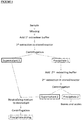
- the present invention involves the use of improved sequential extraction based on isoelectric solubilisation methodology. Briefly, once the first extraction (alkaline or acid) has been carried out, the remaining precipitate can still be rich in protein since all proteins cannot be solubilized in a single step.
- the Applicant has shown (based on size exclusion chromatographic profiles of extracted proteins) that certain proteins extracted at alkaline pH are not extracted under acidic conditions and vice versa and that employing a second extraction process after pH shifting (using acid or alkali, depending on what was used in the first step) can extract further protein, thereby increasing protein yield.
- the invention provides a method of recovery of protein from animal by-productf by sequential isoelectric solubilisation of the animal by-productthe method comprising the steps of:
- the first isoelectric solubilisation step may be carried out in acid solution and the second isoelectric solubilisation step carried out in alkali solution, or vice-versa .
- the first solubilisation step provides a precipitate of unsolubilised matter and a supernatant containing a first solubilised protein fraction
- the second solubilisation step is carried out on the precipitate from the first step, and solubilises proteins that are not solubilised in the first step. In this way, a far greater proportion of the high value protein is recovered.
- the method of the invention generally involves treating one or both of the solubilised protein fractions to recover protein.
- the soluble protein fractions are combined.
- Protein may be recovered by precipitation, or dehydration.
- the end product of protein recovery may be a powder, or a paste, or a concentrated protein solution.
- the protein may be precipitated by altering the pH of the solution, for example by neutralisation or the acid or alkali protein fraction. Generally, the precipitate is dried after precipitation. Dehydration of the protein fractions may be achieved by any means known in the art, for example by means of drum drying, spray drying, or by means of evaporation.
- the precipitated protein is washed to remove salt. In one embodiment, the precipitated protein is washed in slightly acidic water (i.e. pH 5-6).
- both acid and alkaline supernatants can be mixed tobring the pH to the pI of the protein, so that the extracted protein can be precipitated and easily recovered.
- both supernatants rich in soluble proteins are mixed in the right proportion to get a final blend with a pH value that promotes precipitation of solubilised protein, for example a pH of 5.5.
- the protein from the first and second solubilised protein fractions are recovered by combining the first and second solubilised protein fractions in a proportion to effect precipitation of the protein.
- the acid and alkali supernatants are combined in amounts to effect precipitation.
- the first and second solubilised protein fractions are combined proportionally to provide a weakly acidic solubilised protein fraction having a pH of 5-6.
- the first and second solubilised protein fractions are combined proportionally to provide a weakly acidic solubilised protein fraction having a pH of approximately 5.5.
- the animal by-product is fish by-product.
- the animal by-product is treated with ultrasound during one or both of the isoelectric solubilisation steps.
- the isoelectric solubilisation steps are carried out in a stirred reactor.
- the solubilised protein fraction is separated from the unsolubilised animal by-product by means of centrifugation.
- Other means of separation may be employed, including filtration, or membrane separation (microfiltration or ultrafiltration).
- the first isoelectric solubilisation step is carried out on a first batch of animal by-product
- the second isoelectric solubilisation step is carried out on unsolubilised animal by-product from a second batch of animal by-product, and wherein the two isoelectric solubilisation steps are carried out simultaneously.
- the animal by-product is size-reduced prior to the isoelectric solubilisation step.
- Various size-reduction steps are envisaged including mincing or homogenisation, depending on the nature of the animal by-product.
- “Sequential isoelectric solubilisation” should be understood to mean a process comprising a first isoelectric solubilisation step which produces a precipitate of unsolubilised material, and a second isoelectric solubilisation step carried out on the precipitate produced in the first isoelectric solubilisation step.
- the first step may be acid solubilisation and the second step alkali solubilisation, or the first step may be alkali solubilisation and the second step acid solubilisation.
- Isoelectric solubilisation means exposing animal matter to an acid or alkali solution for a period of time sufficient to allow isoelectric solubilisation of at least a part of the protein in the animal matter. Generally, each isoelectric solubilisation step is carried out for at least 5, 10 or 15 minutes.
- Animal by-product means proteinaceous material obtained from animals such as mammals or fish suitable for processing for recovery of protein, for example matter derived from fish, crustacean, snails, whelks, beef, pig, chicken, goat, deer or any other animal.
- the animal by-product is obtained from an animal processing plant, after the high value meat has been removed, and includes heads, internal organs, tails.
- the animal matter is fish matter.
- the by-product generally includes heads, internal organs, tails, fins, frames and skin.
- Acid solution means a solution having a pH of less than 5, and generally having a pH of 1-4, preferably 2-3. It will generally be a strong acid solution. Examples of acid solutions include several molarities of mineral or organic acids. Typically, the acid solution has a concentration of 0.1-0.4 moles/litre, generally the concentration required to reach the desired value, typically 2-3. In one embodiment, the acid is selected from hydrochloric acid, phosphoric acid, citric acid, sulphuric acid or acetic acid.
- Alkali solution means a solution having a pH of greater than 8, and generally having a pH of 9-12, preferably 10-11. It will generally be a solution of a caustic compound. Typically, the alkali solution has a concentration of 0.1-0.4 moles/litre. Typically the alkali is selected from calcium hydroxide, sodium hydroxide, potassium hydroxide or ammonium hydroxide.
- solubilised protein fraction means a fraction containing solubilised protein and substantially free of unsolubilised matter.
- solubilised protein fraction is separated from the unsolubilised material using well known separation techniques, such as filtration, decantation, or membrane separation. Examples of membrane separation include microfiltration and ultrafiltration.
- Recovery of protein includes both concentration of the solubilised fraction, drying of the solubilised protein fraction, or isolation of protein by for example precipitation.
- protein recovery is achieved by means of precipitation. Drying can be achieved by evaporation, spray drying, lyophilisation, or other means including nanofiltration.
- “Stirred reactor” is composed of a tank or container and a mixer such as a stirrer, a turbine wing or a propeller.
- Size-reduced means treating the animal material to reduce the size of the material. Examples of size-reduction processes include mincing, homogenisation and milling. Generally, when the material is homogenised, it is homogenised in an acid or alkali solution.
- the fish industry produces large amounts of by-products and waste following selection of the fillets. Most of these by-products are rich in good quality protein, but currently they are underutilised and millions of tons of protein are lost every year.
- the present invention proposes a method capable of recovering more than 95% of the protein content in such by-products, a significant improvement on existing methods, using a fast (30-40 minutes) and economical process (commonly used and relatively cheap chemicals are employed: NaOH and HCl).
- the final protein product can be provided as a dry powder or a wet paste for various product applications.
- the present invention is very flexible and adaptable since a variety of sources can be employed (meat, meat by-products, poultry, fish and fish by-products) and the parameters of the process (pH, solvent/sample ratio, extraction time and temperatures) can be modified according to the protein source.
- the present method can therefore be applied to a multitude of raw materials regardless of the source properties.
- a second advantage of sequential extraction is that both acid and alkaline supernatants can be mixed to neutralize pH, so that the extracted protein can be precipitated and easily recovered.
- Both supernatants rich in soluble proteins are mixed in the right proportion to get a final blend with a pH value of 5.5; in this final step all recovered protein is precipitated again and it can be washed with slightly acidic water to remove the excess of salt formed.
- minor amounts of proteins can remain soluble in the final supernatant after protein centrifugation; such proteins can be easily recovered and desalted by membrane filtration.
- Such a process allows a dramatic increase in protein extraction, without an increase in the volume of reagents used, since the alkali or acid previously used for neutralization or extraction is now used for extraction and neutralization.
- Table 1 Percentage of protein recovered using sequential ISP versus conventional ISP. Different small superscripts (a to d) denote significant differences (p ⁇ 0.05). Acid-Alkaline extraction Alkaline-Acid extraction 1 st extraction 2 nd extraction Total 1 st extraction 2 nd extraction Total HCl 0.1 M NaOH 0.1 M recovery NaOH 0.1 M HCl 0.1 M recovery Sequential ISP 49.48 ⁇ 0.84 a 49.23 ⁇ 1.51 a 98.6% a 64.05 ⁇ 0.09 d 19.27 ⁇ 1.19 b 83.3% c Seq ISP US 20% 60.31 ⁇ 0.66 b 35.27 ⁇ 8.18 a 95.5% a 87.59 ⁇ 3.3 e 4.86 ⁇ 0.80 d 92.5% b Seq ISP US 60% 74.66 ⁇ 5.25 c 19.00 ⁇ 3.49 b 93.6% b 94.71 ⁇ 0.82 f 2.62 ⁇ 2.30 d 97.3% a
- sequential extraction is a process that can be easily scaled, since just larger stirred reactors, and industrial scale decanters or separators (currently used in food industry) are needed to complete the process.
- This technology provides an opportunity for fisheries to increase the profitability of their fish by-catches by implementing an economical and efficient process capable of generating protein-based added-value products.
Landscapes
- Life Sciences & Earth Sciences (AREA)
- Chemical & Material Sciences (AREA)
- Biochemistry (AREA)
- Engineering & Computer Science (AREA)
- Food Science & Technology (AREA)
- Polymers & Plastics (AREA)
- Zoology (AREA)
- Marine Sciences & Fisheries (AREA)
- Peptides Or Proteins (AREA)
Claims (10)
- Verfahren für die Gewinnung von Protein aus tierischem Nebenprodukt durch sequenzielle isoelektrische Solubilisierung des tierischen Nebenprodukts, wobei das Verfahren die folgenden Schritte umfasst:isoelektrische Solubilisierung des tierischen Nebenprodukts in einer von einer Säure- oder Alkalilösung, um eine erste solubilisierte Proteinfraktion bereitzustellen;Abtrennen der ersten solubilisierten Proteinfraktion von nicht-solubilisiertem tierischem Nebenprodukt;isoelektrische Solubilisierung des nicht-solubilisierten tierischen Nebenprodukts in einer anderen von der Säure- oder Alkalilösung, um eine zweite solubilisierte Proteinfraktion bereitzustellen;Abtrennen der zweiten solubilisierten Proteinfraktion von nicht-solubilisiertem tierischem Nebenprodukt; undGewinnung von Protein aus der ersten und/oder zweiten solubilisierten Proteinfraktion, wobei das Protein aus der ersten und zweiten solubilisierten Proteinfraktion durch Vereinigen der ersten und zweiten solubilisierten Proteinfraktion in einem Verhältnis gewonnen wird, um die Ausfällung des Proteins zu bewirken.
- Verfahren nach Anspruch 1, in dem die erste und zweite solubilisierte Proteinfraktion in einem Verhältnis vereinigt werden, um eine schwach saure, solubilisierte Proteinfraktion bereitzustellen, die einen pH von 5-6 aufweist.
- Verfahren nach einem vorstehenden Anspruch, in dem das tierische Nebenprodukt Fischnebenprodukt ist.
- Verfahren nach einem vorstehenden Anspruch, in dem das Fischnebenprodukt Köpfe, Haut, innere Organe, Flossen oder Schwänze einschließt.
- Verfahren nach einem vorstehenden Anspruch, in dem das tierische Nebenprodukt während einem oder beiden der isoelektrischen Solubilisierungsschritte mit Ultraschall behandelt wird.
- Verfahren nach einem vorstehenden Anspruch, in dem die isoelektrischen Solubilisierungsschritte in einem gerührten Reaktor durchgeführt werden.
- Verfahren nach einem vorstehenden Anspruch, in dem die solubilisierte Proteinfraktion von dem nicht-solubilisierten tierischen Nebenprodukt mithilfe von Zentrifugation abgetrennt wird.
- Verfahren nach einem vorstehenden Anspruch, in dem der erste isoelektrische Solubilisierungsschritt mit einer ersten Charge von tierischem Nebenprodukt durchgeführt wird und der zweite isoelektrische Solubilisierungsschritt mit nicht-solubilisiertem tierischem Nebenprodukt von einer zweiten Charge von tierischem Nebenprodukt durchgeführt wird und wobei die zwei isoelektrischen Solubilisierungsschritte gleichzeitig durchgeführt werden.
- Verfahren nach einem vorstehenden Anspruch, in dem das tierische Nebenprodukt vor dem isoelektrischen Solubilisierungsschritt zerkleinert wird.
- Verfahren nach Anspruch 1, in dem das tierische Nebenprodukt Fischnebenprodukt ist und in dem das Fischnebenprodukt vor dem ersten isoelektrischen Solubilisierungsschritt homogenisiert wird und in dem das Protein durch Vereinigen der ersten und zweiten solubilisierten Proteinfraktion in einem Verhältnis ausgefällt wird, um eine schwach saure, solubilisierte Proteinfraktion bereitzustellen, die einen pH von 5-6 aufweist.
Applications Claiming Priority (2)
| Application Number | Priority Date | Filing Date | Title |
|---|---|---|---|
| EP15177341.3A EP3117717A1 (de) | 2015-07-17 | 2015-07-17 | Isoelektrische solubilisierung von tierischen materialien |
| PCT/EP2016/066992 WO2017013043A1 (en) | 2015-07-17 | 2016-07-15 | Isoelectric solubilisation of animal matter |
Publications (2)
| Publication Number | Publication Date |
|---|---|
| EP3324751A1 EP3324751A1 (de) | 2018-05-30 |
| EP3324751B1 true EP3324751B1 (de) | 2021-02-17 |
Family
ID=53776334
Family Applications (2)
| Application Number | Title | Priority Date | Filing Date |
|---|---|---|---|
| EP15177341.3A Withdrawn EP3117717A1 (de) | 2015-07-17 | 2015-07-17 | Isoelektrische solubilisierung von tierischen materialien |
| EP16750106.3A Active EP3324751B1 (de) | 2015-07-17 | 2016-07-15 | Isoelektrische solubilisierung von tierischen materialien |
Family Applications Before (1)
| Application Number | Title | Priority Date | Filing Date |
|---|---|---|---|
| EP15177341.3A Withdrawn EP3117717A1 (de) | 2015-07-17 | 2015-07-17 | Isoelektrische solubilisierung von tierischen materialien |
Country Status (4)
| Country | Link |
|---|---|
| US (1) | US11324232B2 (de) |
| EP (2) | EP3117717A1 (de) |
| DK (1) | DK3324751T3 (de) |
| WO (1) | WO2017013043A1 (de) |
Families Citing this family (1)
| Publication number | Priority date | Publication date | Assignee | Title |
|---|---|---|---|---|
| EP3117717A1 (de) | 2015-07-17 | 2017-01-18 | Agriculture and Food Development Authority (TEAGASC) | Isoelektrische solubilisierung von tierischen materialien |
Family Cites Families (8)
| Publication number | Priority date | Publication date | Assignee | Title |
|---|---|---|---|---|
| US5384149A (en) * | 1994-03-02 | 1995-01-24 | Armour Swift-Eckrich | Integrated process for producing meat protein, broth, myoglobin pigment, fat and bone meal |
| US6005073A (en) * | 1996-12-21 | 1999-12-21 | Advanced Protein Technologies, Inc. | Process for isolating a protein composition from a muscle source and protein composition |
| US6451975B1 (en) | 1996-12-21 | 2002-09-17 | Advanced Protein Technologies, Inc. | Protein composition and process for isolating a protein composition from a muscle source |
| US7763717B1 (en) * | 2005-03-08 | 2010-07-27 | West Virginia University Research Corp. of West Virginia University | Continuous protein and lipid recovery from food animal processing byproducts |
| CA2725751C (en) * | 2008-06-12 | 2016-12-20 | Eduard Tearo | Isolation of protein products from defatted meal |
| US20120171345A1 (en) * | 2011-01-03 | 2012-07-05 | Kelleher Stephen D | Process for isolating a protein composition and a fat composition from mechanically deboned poultry |
| US9161555B2 (en) * | 2011-01-03 | 2015-10-20 | Proteus Industries, Inc. | Process for isolating a protein composition and a fat composition from meat trimmings |
| EP3117717A1 (de) | 2015-07-17 | 2017-01-18 | Agriculture and Food Development Authority (TEAGASC) | Isoelektrische solubilisierung von tierischen materialien |
-
2015
- 2015-07-17 EP EP15177341.3A patent/EP3117717A1/de not_active Withdrawn
-
2016
- 2016-07-15 US US15/744,738 patent/US11324232B2/en active Active
- 2016-07-15 WO PCT/EP2016/066992 patent/WO2017013043A1/en not_active Ceased
- 2016-07-15 EP EP16750106.3A patent/EP3324751B1/de active Active
- 2016-07-15 DK DK16750106.3T patent/DK3324751T3/da active
Non-Patent Citations (1)
| Title |
|---|
| None * |
Also Published As
| Publication number | Publication date |
|---|---|
| DK3324751T3 (da) | 2021-05-17 |
| US20180199590A1 (en) | 2018-07-19 |
| EP3117717A1 (de) | 2017-01-18 |
| US11324232B2 (en) | 2022-05-10 |
| WO2017013043A1 (en) | 2017-01-26 |
| EP3324751A1 (de) | 2018-05-30 |
Similar Documents
| Publication | Publication Date | Title |
|---|---|---|
| EP3050436B1 (de) | Verfahren zur isolierung einer proteinzusammensetzung und einer fettzusammensetzung aus mechanisch entbeintem geflügel | |
| WO2012160575A2 (en) | Method of producing gelatin from fish | |
| Drummond et al. | Proteins recovery from meat processing coproducts | |
| US4181749A (en) | Process for producing surimi | |
| CN103554248A (zh) | 一种从淡水珍珠蚌肉中提取胶原蛋白的工艺方法 | |
| EP3324751B1 (de) | Isoelektrische solubilisierung von tierischen materialien | |
| Winarti et al. | The effect of type and concentration of acid on the characteristics of gelatine from bones of milkfish (Chanos chanos) | |
| KR20240042140A (ko) | 해바라기박으로부터 단백질 분리물을 제조하는 방법 | |
| Castro-Muñoz et al. | Membrane technology for the recovery of high-added value compounds from meat processing coproducts | |
| KR100390529B1 (ko) | 참치정소로부터 핵산복합물질을 추출하는 방법 및 이방법에 의해 얻어진 핵산복합물질 | |
| CN106008701B (zh) | 高纯超螺旋结构ⅰ型胶原蛋白的快速制备方法 | |
| WO2012069513A1 (en) | Method for desalting animal tissue | |
| CN114933648B (zh) | 一种以鱼鳞生产胶原二肽的方法 | |
| Hasanuddin et al. | Functional Properties of collagen from purple-spotted bigeye (Priacanthus tayenus Richardson, 1846) bone and fins extracted with different acids | |
| RU2857157C1 (ru) | Способ получения коллагена I типа | |
| US11028147B2 (en) | Hydrolyzed collagen compositions and methods of making thereof | |
| Sakunde et al. | Effect of rendering temperature on collagen content from the poultry skin | |
| RU2390252C1 (ru) | Способ получения белковой добавки из сырья животного происхождения | |
| US20190263891A1 (en) | Process for isolating bioactive biomolecules from animal by-products | |
| RU2272418C1 (ru) | Способ получения гидролизатов из костных отходов мяса, птицы, рыбы | |
| RU2551195C2 (ru) | Способ получения коллагеновой субстанции из сырья животного происхождения (варианты) | |
| RU2195130C1 (ru) | Способ получения белкового гидролизата | |
| Karthik et al. | Isolation and comparison of collagen yield from skin Of Rhizoprionodon acutus, Scomberomorus guttatus and Rachycentron canadum | |
| JPH0453498B2 (de) | ||
| Gendaszewska et al. | A review of collagen extraction methods from the leather wastes |
Legal Events
| Date | Code | Title | Description |
|---|---|---|---|
| STAA | Information on the status of an ep patent application or granted ep patent |
Free format text: STATUS: THE INTERNATIONAL PUBLICATION HAS BEEN MADE |
|
| PUAI | Public reference made under article 153(3) epc to a published international application that has entered the european phase |
Free format text: ORIGINAL CODE: 0009012 |
|
| STAA | Information on the status of an ep patent application or granted ep patent |
Free format text: STATUS: REQUEST FOR EXAMINATION WAS MADE |
|
| 17P | Request for examination filed |
Effective date: 20180216 |
|
| AK | Designated contracting states |
Kind code of ref document: A1 Designated state(s): AL AT BE BG CH CY CZ DE DK EE ES FI FR GB GR HR HU IE IS IT LI LT LU LV MC MK MT NL NO PL PT RO RS SE SI SK SM TR |
|
| AX | Request for extension of the european patent |
Extension state: BA ME |
|
| RIN1 | Information on inventor provided before grant (corrected) |
Inventor name: TIWARI, BRIJESH K. Inventor name: ALVAREZ GARCIA, CARLOS Inventor name: TROY, DECLAN |
|
| DAV | Request for validation of the european patent (deleted) | ||
| DAX | Request for extension of the european patent (deleted) | ||
| GRAP | Despatch of communication of intention to grant a patent |
Free format text: ORIGINAL CODE: EPIDOSNIGR1 |
|
| STAA | Information on the status of an ep patent application or granted ep patent |
Free format text: STATUS: GRANT OF PATENT IS INTENDED |
|
| INTG | Intention to grant announced |
Effective date: 20200827 |
|
| GRAS | Grant fee paid |
Free format text: ORIGINAL CODE: EPIDOSNIGR3 |
|
| GRAA | (expected) grant |
Free format text: ORIGINAL CODE: 0009210 |
|
| STAA | Information on the status of an ep patent application or granted ep patent |
Free format text: STATUS: THE PATENT HAS BEEN GRANTED |
|
| AK | Designated contracting states |
Kind code of ref document: B1 Designated state(s): AL AT BE BG CH CY CZ DE DK EE ES FI FR GB GR HR HU IE IS IT LI LT LU LV MC MK MT NL NO PL PT RO RS SE SI SK SM TR |
|
| REG | Reference to a national code |
Ref country code: GB Ref legal event code: FG4D |
|
| RIN1 | Information on inventor provided before grant (corrected) |
Inventor name: ALVAREZ GARCIA, CARLOS Inventor name: TROY, DECLAN Inventor name: TIWARI, BRIJESH K. |
|
| REG | Reference to a national code |
Ref country code: CH Ref legal event code: EP |
|
| REG | Reference to a national code |
Ref country code: DE Ref legal event code: R096 Ref document number: 602016052592 Country of ref document: DE |
|
| REG | Reference to a national code |
Ref country code: AT Ref legal event code: REF Ref document number: 1360271 Country of ref document: AT Kind code of ref document: T Effective date: 20210315 |
|
| REG | Reference to a national code |
Ref country code: IE Ref legal event code: FG4D |
|
| REG | Reference to a national code |
Ref country code: FI Ref legal event code: FGE |
|
| REG | Reference to a national code |
Ref country code: DK Ref legal event code: T3 Effective date: 20210511 |
|
| REG | Reference to a national code |
Ref country code: SE Ref legal event code: TRGR |
|
| REG | Reference to a national code |
Ref country code: LT Ref legal event code: MG9D |
|
| REG | Reference to a national code |
Ref country code: NO Ref legal event code: T2 Effective date: 20210217 |
|
| REG | Reference to a national code |
Ref country code: NL Ref legal event code: MP Effective date: 20210217 |
|
| PG25 | Lapsed in a contracting state [announced via postgrant information from national office to epo] |
Ref country code: PT Free format text: LAPSE BECAUSE OF FAILURE TO SUBMIT A TRANSLATION OF THE DESCRIPTION OR TO PAY THE FEE WITHIN THE PRESCRIBED TIME-LIMIT Effective date: 20210617 Ref country code: GR Free format text: LAPSE BECAUSE OF FAILURE TO SUBMIT A TRANSLATION OF THE DESCRIPTION OR TO PAY THE FEE WITHIN THE PRESCRIBED TIME-LIMIT Effective date: 20210518 Ref country code: HR Free format text: LAPSE BECAUSE OF FAILURE TO SUBMIT A TRANSLATION OF THE DESCRIPTION OR TO PAY THE FEE WITHIN THE PRESCRIBED TIME-LIMIT Effective date: 20210217 Ref country code: LT Free format text: LAPSE BECAUSE OF FAILURE TO SUBMIT A TRANSLATION OF THE DESCRIPTION OR TO PAY THE FEE WITHIN THE PRESCRIBED TIME-LIMIT Effective date: 20210217 Ref country code: BG Free format text: LAPSE BECAUSE OF FAILURE TO SUBMIT A TRANSLATION OF THE DESCRIPTION OR TO PAY THE FEE WITHIN THE PRESCRIBED TIME-LIMIT Effective date: 20210517 |
|
| REG | Reference to a national code |
Ref country code: AT Ref legal event code: MK05 Ref document number: 1360271 Country of ref document: AT Kind code of ref document: T Effective date: 20210217 |
|
| PG25 | Lapsed in a contracting state [announced via postgrant information from national office to epo] |
Ref country code: RS Free format text: LAPSE BECAUSE OF FAILURE TO SUBMIT A TRANSLATION OF THE DESCRIPTION OR TO PAY THE FEE WITHIN THE PRESCRIBED TIME-LIMIT Effective date: 20210217 Ref country code: PL Free format text: LAPSE BECAUSE OF FAILURE TO SUBMIT A TRANSLATION OF THE DESCRIPTION OR TO PAY THE FEE WITHIN THE PRESCRIBED TIME-LIMIT Effective date: 20210217 Ref country code: LV Free format text: LAPSE BECAUSE OF FAILURE TO SUBMIT A TRANSLATION OF THE DESCRIPTION OR TO PAY THE FEE WITHIN THE PRESCRIBED TIME-LIMIT Effective date: 20210217 Ref country code: NL Free format text: LAPSE BECAUSE OF FAILURE TO SUBMIT A TRANSLATION OF THE DESCRIPTION OR TO PAY THE FEE WITHIN THE PRESCRIBED TIME-LIMIT Effective date: 20210217 |
|
| PG25 | Lapsed in a contracting state [announced via postgrant information from national office to epo] |
Ref country code: AT Free format text: LAPSE BECAUSE OF FAILURE TO SUBMIT A TRANSLATION OF THE DESCRIPTION OR TO PAY THE FEE WITHIN THE PRESCRIBED TIME-LIMIT Effective date: 20210217 Ref country code: SM Free format text: LAPSE BECAUSE OF FAILURE TO SUBMIT A TRANSLATION OF THE DESCRIPTION OR TO PAY THE FEE WITHIN THE PRESCRIBED TIME-LIMIT Effective date: 20210217 Ref country code: CZ Free format text: LAPSE BECAUSE OF FAILURE TO SUBMIT A TRANSLATION OF THE DESCRIPTION OR TO PAY THE FEE WITHIN THE PRESCRIBED TIME-LIMIT Effective date: 20210217 Ref country code: EE Free format text: LAPSE BECAUSE OF FAILURE TO SUBMIT A TRANSLATION OF THE DESCRIPTION OR TO PAY THE FEE WITHIN THE PRESCRIBED TIME-LIMIT Effective date: 20210217 |
|
| REG | Reference to a national code |
Ref country code: DE Ref legal event code: R097 Ref document number: 602016052592 Country of ref document: DE |
|
| PG25 | Lapsed in a contracting state [announced via postgrant information from national office to epo] |
Ref country code: SK Free format text: LAPSE BECAUSE OF FAILURE TO SUBMIT A TRANSLATION OF THE DESCRIPTION OR TO PAY THE FEE WITHIN THE PRESCRIBED TIME-LIMIT Effective date: 20210217 Ref country code: RO Free format text: LAPSE BECAUSE OF FAILURE TO SUBMIT A TRANSLATION OF THE DESCRIPTION OR TO PAY THE FEE WITHIN THE PRESCRIBED TIME-LIMIT Effective date: 20210217 |
|
| PLBE | No opposition filed within time limit |
Free format text: ORIGINAL CODE: 0009261 |
|
| STAA | Information on the status of an ep patent application or granted ep patent |
Free format text: STATUS: NO OPPOSITION FILED WITHIN TIME LIMIT |
|
| 26N | No opposition filed |
Effective date: 20211118 |
|
| PG25 | Lapsed in a contracting state [announced via postgrant information from national office to epo] |
Ref country code: AL Free format text: LAPSE BECAUSE OF FAILURE TO SUBMIT A TRANSLATION OF THE DESCRIPTION OR TO PAY THE FEE WITHIN THE PRESCRIBED TIME-LIMIT Effective date: 20210217 Ref country code: ES Free format text: LAPSE BECAUSE OF FAILURE TO SUBMIT A TRANSLATION OF THE DESCRIPTION OR TO PAY THE FEE WITHIN THE PRESCRIBED TIME-LIMIT Effective date: 20210217 |
|
| REG | Reference to a national code |
Ref country code: DE Ref legal event code: R119 Ref document number: 602016052592 Country of ref document: DE |
|
| PG25 | Lapsed in a contracting state [announced via postgrant information from national office to epo] |
Ref country code: SI Free format text: LAPSE BECAUSE OF FAILURE TO SUBMIT A TRANSLATION OF THE DESCRIPTION OR TO PAY THE FEE WITHIN THE PRESCRIBED TIME-LIMIT Effective date: 20210217 |
|
| REG | Reference to a national code |
Ref country code: CH Ref legal event code: PL |
|
| PG25 | Lapsed in a contracting state [announced via postgrant information from national office to epo] |
Ref country code: MC Free format text: LAPSE BECAUSE OF FAILURE TO SUBMIT A TRANSLATION OF THE DESCRIPTION OR TO PAY THE FEE WITHIN THE PRESCRIBED TIME-LIMIT Effective date: 20210217 |
|
| REG | Reference to a national code |
Ref country code: BE Ref legal event code: MM Effective date: 20210731 |
|
| PG25 | Lapsed in a contracting state [announced via postgrant information from national office to epo] |
Ref country code: LI Free format text: LAPSE BECAUSE OF NON-PAYMENT OF DUE FEES Effective date: 20210731 Ref country code: IT Free format text: LAPSE BECAUSE OF FAILURE TO SUBMIT A TRANSLATION OF THE DESCRIPTION OR TO PAY THE FEE WITHIN THE PRESCRIBED TIME-LIMIT Effective date: 20210217 Ref country code: DE Free format text: LAPSE BECAUSE OF NON-PAYMENT OF DUE FEES Effective date: 20220201 Ref country code: CH Free format text: LAPSE BECAUSE OF NON-PAYMENT OF DUE FEES Effective date: 20210731 |
|
| PG25 | Lapsed in a contracting state [announced via postgrant information from national office to epo] |
Ref country code: LU Free format text: LAPSE BECAUSE OF NON-PAYMENT OF DUE FEES Effective date: 20210715 |
|
| PG25 | Lapsed in a contracting state [announced via postgrant information from national office to epo] |
Ref country code: BE Free format text: LAPSE BECAUSE OF NON-PAYMENT OF DUE FEES Effective date: 20210731 |
|
| PG25 | Lapsed in a contracting state [announced via postgrant information from national office to epo] |
Ref country code: HU Free format text: LAPSE BECAUSE OF FAILURE TO SUBMIT A TRANSLATION OF THE DESCRIPTION OR TO PAY THE FEE WITHIN THE PRESCRIBED TIME-LIMIT; INVALID AB INITIO Effective date: 20160715 |
|
| PG25 | Lapsed in a contracting state [announced via postgrant information from national office to epo] |
Ref country code: CY Free format text: LAPSE BECAUSE OF FAILURE TO SUBMIT A TRANSLATION OF THE DESCRIPTION OR TO PAY THE FEE WITHIN THE PRESCRIBED TIME-LIMIT Effective date: 20210217 |
|
| PG25 | Lapsed in a contracting state [announced via postgrant information from national office to epo] |
Ref country code: MK Free format text: LAPSE BECAUSE OF FAILURE TO SUBMIT A TRANSLATION OF THE DESCRIPTION OR TO PAY THE FEE WITHIN THE PRESCRIBED TIME-LIMIT Effective date: 20210217 |
|
| PG25 | Lapsed in a contracting state [announced via postgrant information from national office to epo] |
Ref country code: TR Free format text: LAPSE BECAUSE OF FAILURE TO SUBMIT A TRANSLATION OF THE DESCRIPTION OR TO PAY THE FEE WITHIN THE PRESCRIBED TIME-LIMIT Effective date: 20210217 |
|
| PG25 | Lapsed in a contracting state [announced via postgrant information from national office to epo] |
Ref country code: MT Free format text: LAPSE BECAUSE OF FAILURE TO SUBMIT A TRANSLATION OF THE DESCRIPTION OR TO PAY THE FEE WITHIN THE PRESCRIBED TIME-LIMIT Effective date: 20210217 |
|
| PGFP | Annual fee paid to national office [announced via postgrant information from national office to epo] |
Ref country code: FI Payment date: 20250728 Year of fee payment: 10 |
|
| PGFP | Annual fee paid to national office [announced via postgrant information from national office to epo] |
Ref country code: DK Payment date: 20250725 Year of fee payment: 10 |
|
| PGFP | Annual fee paid to national office [announced via postgrant information from national office to epo] |
Ref country code: NO Payment date: 20250731 Year of fee payment: 10 |
|
| PGFP | Annual fee paid to national office [announced via postgrant information from national office to epo] |
Ref country code: GB Payment date: 20250724 Year of fee payment: 10 |
|
| PGFP | Annual fee paid to national office [announced via postgrant information from national office to epo] |
Ref country code: FR Payment date: 20250728 Year of fee payment: 10 |
|
| PGFP | Annual fee paid to national office [announced via postgrant information from national office to epo] |
Ref country code: SE Payment date: 20250725 Year of fee payment: 10 |
|
| PGFP | Annual fee paid to national office [announced via postgrant information from national office to epo] |
Ref country code: IE Payment date: 20250724 Year of fee payment: 10 |
|
| PGFP | Annual fee paid to national office [announced via postgrant information from national office to epo] |
Ref country code: IS Payment date: 20250729 Year of fee payment: 10 |