EP3324964B1 - Composés de pyridinium amphiphiles destinés à traiter l'épilepsie et d'autres troubles du système nerveux - Google Patents
Composés de pyridinium amphiphiles destinés à traiter l'épilepsie et d'autres troubles du système nerveux Download PDFInfo
- Publication number
- EP3324964B1 EP3324964B1 EP16831202.3A EP16831202A EP3324964B1 EP 3324964 B1 EP3324964 B1 EP 3324964B1 EP 16831202 A EP16831202 A EP 16831202A EP 3324964 B1 EP3324964 B1 EP 3324964B1
- Authority
- EP
- European Patent Office
- Prior art keywords
- pharmaceutical composition
- epilepsy
- drug
- seizures
- infection
- Prior art date
- Legal status (The legal status is an assumption and is not a legal conclusion. Google has not performed a legal analysis and makes no representation as to the accuracy of the status listed.)
- Active
Links
- 0 C[C@@](C(OC(C)(C)CC(C)(*)[n+]1ccccc1)=O)c1ccccc1 Chemical compound C[C@@](C(OC(C)(C)CC(C)(*)[n+]1ccccc1)=O)c1ccccc1 0.000 description 7
- KPKVOCLWZQZKOY-UHFFFAOYSA-N BC(C)(CC(C)(C)OC(CCC(C)c1ccccc1)=O)[n+]1ccccc1 Chemical compound BC(C)(CC(C)(C)OC(CCC(C)c1ccccc1)=O)[n+]1ccccc1 KPKVOCLWZQZKOY-UHFFFAOYSA-N 0.000 description 1
- YPSCZDAWYUNQLE-VTBWFHPJSA-N BC(C)(CC(C)(C)OC([C@@H](c1ccccc1)O)=O)[n+]1ccccc1 Chemical compound BC(C)(CC(C)(C)OC([C@@H](c1ccccc1)O)=O)[n+]1ccccc1 YPSCZDAWYUNQLE-VTBWFHPJSA-N 0.000 description 1
- NTUCQKRAQSWLOP-UHFFFAOYSA-N CC(C)OCc1ccccc1 Chemical compound CC(C)OCc1ccccc1 NTUCQKRAQSWLOP-UHFFFAOYSA-N 0.000 description 1
Images
Classifications
-
- A—HUMAN NECESSITIES
- A61—MEDICAL OR VETERINARY SCIENCE; HYGIENE
- A61K—PREPARATIONS FOR MEDICAL, DENTAL OR TOILETRY PURPOSES
- A61K31/00—Medicinal preparations containing organic active ingredients
- A61K31/33—Heterocyclic compounds
- A61K31/395—Heterocyclic compounds having nitrogen as a ring hetero atom, e.g. guanethidine or rifamycins
- A61K31/435—Heterocyclic compounds having nitrogen as a ring hetero atom, e.g. guanethidine or rifamycins having six-membered rings with one nitrogen as the only ring hetero atom
- A61K31/44—Non condensed pyridines; Hydrogenated derivatives thereof
- A61K31/4425—Pyridinium derivatives, e.g. pralidoxime, pyridostigmine
-
- A—HUMAN NECESSITIES
- A61—MEDICAL OR VETERINARY SCIENCE; HYGIENE
- A61K—PREPARATIONS FOR MEDICAL, DENTAL OR TOILETRY PURPOSES
- A61K31/00—Medicinal preparations containing organic active ingredients
- A61K31/21—Esters, e.g. nitroglycerine, selenocyanates
- A61K31/215—Esters, e.g. nitroglycerine, selenocyanates of carboxylic acids
- A61K31/216—Esters, e.g. nitroglycerine, selenocyanates of carboxylic acids of acids having aromatic rings, e.g. benactizyne, clofibrate
-
- A—HUMAN NECESSITIES
- A61—MEDICAL OR VETERINARY SCIENCE; HYGIENE
- A61K—PREPARATIONS FOR MEDICAL, DENTAL OR TOILETRY PURPOSES
- A61K31/00—Medicinal preparations containing organic active ingredients
- A61K31/33—Heterocyclic compounds
- A61K31/395—Heterocyclic compounds having nitrogen as a ring hetero atom, e.g. guanethidine or rifamycins
- A61K31/535—Heterocyclic compounds having nitrogen as a ring hetero atom, e.g. guanethidine or rifamycins having six-membered rings with at least one nitrogen and one oxygen as the ring hetero atoms, e.g. 1,2-oxazines
- A61K31/5375—1,4-Oxazines, e.g. morpholine
-
- A—HUMAN NECESSITIES
- A61—MEDICAL OR VETERINARY SCIENCE; HYGIENE
- A61P—SPECIFIC THERAPEUTIC ACTIVITY OF CHEMICAL COMPOUNDS OR MEDICINAL PREPARATIONS
- A61P25/00—Drugs for disorders of the nervous system
- A61P25/08—Antiepileptics; Anticonvulsants
-
- Y—GENERAL TAGGING OF NEW TECHNOLOGICAL DEVELOPMENTS; GENERAL TAGGING OF CROSS-SECTIONAL TECHNOLOGIES SPANNING OVER SEVERAL SECTIONS OF THE IPC; TECHNICAL SUBJECTS COVERED BY FORMER USPC CROSS-REFERENCE ART COLLECTIONS [XRACs] AND DIGESTS
- Y02—TECHNOLOGIES OR APPLICATIONS FOR MITIGATION OR ADAPTATION AGAINST CLIMATE CHANGE
- Y02A—TECHNOLOGIES FOR ADAPTATION TO CLIMATE CHANGE
- Y02A50/00—TECHNOLOGIES FOR ADAPTATION TO CLIMATE CHANGE in human health protection, e.g. against extreme weather
- Y02A50/30—Against vector-borne diseases, e.g. mosquito-borne, fly-borne, tick-borne or waterborne diseases whose impact is exacerbated by climate change
Definitions
- the present invention relates to the use of amphiphilic pyridinium salts and compounds, for the purpose of the treatment of seizure disorders such as epilepsy, temporal lobe epilepsy, drug resistant temporal lobe epilepsy, partial onset seizures, refractory partial seizures, tonic clonic seizures, and other types of seizure disorders, as well as other neurological disorders such as but not limited to migraines, neuralgia, such as but not limited to post herpetic neuralgia, neuronal cancers, obesity, anxiety disorders, schizophrenia, manic-depressive disorder, depression and major depressive disorder, and as an analgesic for relief from pain.
- seizure disorders such as epilepsy, temporal lobe epilepsy, drug resistant temporal lobe epilepsy, partial onset seizures, refractory partial seizures, tonic clonic seizures, and other types of seizure disorders, as well as other neurological disorders such as but not limited to migraines, neuralgia, such as but not limited to post herpetic neuralg
- this drug can be used as an adjuvant therapy in combination with standard drugs to treat the disorder, such as standard anti-epileptic drugs (SAEDs).
- SAEDs standard anti-epileptic drugs
- amphiphilic pyridinium salts either alone or in combination with digitoxin, are small molecule inhibitors of Ebola viruses (EBOVs) infection or Zika viruses (ZIKVs) infection.
- Epilepsy is a group of neurological disorders characterized by epileptic seizures. It is a chronic condition of the brain. It is a complex chronic neurological disorder presented in a vast set of diseases that may not have any obvious cause, and is characterized by spontaneous recurrence surges of cortical nerve cell electrical activity in the brain resulting in unprovoked seizures. It is thought the prevalence is about 50 million people worldwide. The Centers for Disease Control and Prevention (CDC) estimate there are around 2.2 million people in the US with epilepsy. The incidence is about 48 of every 100,000 people. Thus, 150,000 people will develop epilepsy in their lifetime. Drug therapy remains ineffective for seizure control in about 30% of patients because either the drugs do not control the seizures or the patients cannot tolerate the side effects.
- the seizures episodes can vary from brief and nearly undetectable to long periods of vigorous shaking.
- seizures tend to recur and have no immediate underlying cause, while seizures that occur due to a specific cause are not deemed to represent epilepsy.
- the cause may be a result of brain injury, stroke, brain tumor, drug or alcohol abuse.
- Genetic mutations are linked to a small proportion of the disease.
- the diagnosis typically involves ruling out other conditions that might cause similar symptoms such as fainting, and determining if other causes are present such as alcohol withdrawal or electrolyte problems. This may be done by imaging the brain and performing blood tests.
- Epilepsy can often be confirmed with an electroencephalogram (EEG) but a normal test does not rule out the condition.
- EEG electroencephalogram
- Seizures are controllable with medication in about 70% of cases. Some have seizures that do not respond to medication, surgery, neurostimulation or dietary changes, such as the Ketogenic diet. Not all cases are lifelong.
- Partial seizures are often preceded by an aura. They may include sensory (visual, hearing or small), psychic, autonomic, or motor phenomena. Jerking may start in a specific muscle group and spread to surrounding muscle groups. Non-consciously generated activities and simple repetitive movements like smacking of the lips may occur.
- Tonic-clonic seizures (grand mal) present with a contraction of the limbs followed by their extension along with arching of the back which lasts 10-30 seconds (the tonic phase). A cry may be heard. Then a shaking of the limbs occurs in unison (clonic phase). Tonic seizures produce constant contractions of the muscles. A person may turn blue from stoppage of breathing. After shaking stops, it may take 10-30 minutes (postictal state) for person to return to normal. There may be loss of bowel or bladder control. The tongue may be bitten.
- Myoclonic seizures involve spasms of muscles in either a few areas or all over. Absence seizures can be subtle with only a slight turn of the head or eye blinking. Then the person returns to normal. Atonic seizures involve the loss of muscle activity for more than one second, typically on both sides of the body.
- Temporal lobe epilepsy is a chronic neurological condition characterized by recurrent, unprovoked epileptic seizures which originate in the temporal lobe of the brain. They involve sensory changes, such as smelling an unusual odor, or a memory disturbance. The most common cause is mesial temporal sclerosis. Treatment is medication or surgery. Partial seizures account for about 60% of all adult cases.
- Temporal lobe epilepsy (TLE) is the single most common form of partial seizure.
- MTLE mesial temporal lobe epilepsy
- LTLE lateral temporal lobe
- ADLTLE Autosomal dominant Lateral Temporal Lobe Epilepsy
- Temporal lobe epilepsy and Drug resistant temporal lobe epilepsy is associated with a proinflammatory phenotype in the brain and blood, manifest by activation of the NF ⁇ B signaling pathway, and resulting in downstream elevation of proinflammatory cytokines and chemokines such as interleukin-1-beta (IL-1 ⁇ ), interleukin-8 (IL-8) and others (Pollard et al, 2013).
- IL-1 ⁇ interleukin-1-beta
- IL-8 interleukin-8
- Mounting evidence suggests that normal damage control processes in astrocytes and glial cells may contribute to a feed forward loop that promotes epileptic activity (Devinsky et al,2013; Eisenstein, 2014).
- Neuronally driven pathological electrical activity may activate the glial cells.
- proinflammatory mediators secreted by the glia may initiate a signaling cascade in neurons that renders them more sensitive to glutamate-induced excitation (During and Spencer, 1993).
- the inflammatory response may also disrupt the blood-brain-barrier, releasing proinflammatory cytokines and chemokines into the general circulation (Librizzi L, et al. 2012).
- Amphiphilic pyridinium compounds have been shown to block TNF ⁇ /NF ⁇ B signaling and downstream interleukin-8 (IL-8) secretion from cells in vitro (Tchilibon et al. 2005). Optimal inhibitory activities were observed for MRS2481 and its optical isomer MRS2485. These compounds also block the neurotoxic calcium channels formed by amyloid beta peptide (Abeta[1-40]) in neuronal membranes, and protect neurons from Abeta[1-40] dependent cell death (Diaz JC, et al, 2009). Thus these amphiphilic pyridinium compounds have been considered from the vantage point of candidate Alzheimer's Disease drugs. Temporal lobe epilepsy and Drug resistant temporal lobe epilepsy have also been associated with some degree of cognitive impairment, as well as a proinflammatory phenotype.
- Ebola viruses and Zika viruses (ZIKVs) share affinity for AXL, a cell surface tyrosine receptor kinase, which they both use to gain entrance into host cells. This common affinity may also be the basis of a common vulnerability, should there be a way to safely interfere with AXL function. It is widely appreciated that EBOVs are responsible for lethal epidemics in West Africa, and are presently without either effective vaccines for prevention, or antiviral small molecules for therapy.
- Arboviruses are a group of predominantly single-stranded+ RNA viruses, also termed flaviviridae, that are transmitted by arthropod vectors (Fauci AS and Moren DM, 2016).
- the arthropods responsible include mosquitos and ticks.
- Aedes aegypti is the primary mosquito species that transmits Zika virus, Dengue Fever (DENV; also known as "Break bone Fever"), Yellow fever and Chikungunya Virus.
- DEV Dengue Fever
- Culex mosquito species transmits Japanese Encephalitis Virus, Rift Valley Fever, and West Nile Virus (WNV).
- Zika Virus is the first mosquito-transmitted arbovirus shown to cause fetal abnormalities and microcephaly in unborn babies.
- Adults develop fever, rash, arthralgia and conjunctivitis, and can also develop Guillain-Barre syndrome.
- a candidate viral entry receptor, AXL from the TAM phosphatidylserine receptor family, has been identified in the developing brain, and is highly expressed by radial glial cells, astrocytes, endothelial cells and microglia (Nowakowski TJ, et al, 2016). High levels of AXL expression are conserved in developing mouse and ferret cortex (Nowakowski et al, 2016).
- Cancer cells also express high levels of AXL, including breast (Meric et al, 2002), lung (Wimmel et al, 2001; Hamel et al, 2015), lymphomas and leukemias (Challier et al, 1996), colon (Craven et al, 1995), and prostate (Bansal et al, 2015).
- the mosquito takes advantage of the fact that skin is a convenient site of entry for both ZIKV and dengue virus (Hamel et al, 2015).
- AXL is also the major candidate viral entry receptor in dermal fibroblasts, epidermal keratinocytes, immature dendritic cells, and lung epithelial cells.
- Other minor candidate Zika receptors have been identified in a subset of cells from the epidermis, including adhesion factors DC-SIGN, TYRO3, and TIM-1 (Hamel et al, 2015).
- US 2007/0105916 A1 discloses amphiphilic pyridinium compounds for suppressing IL-8 secretion and production.
- the present invention is directed to a pharmaceutical composition including amphiphilic pyridinium compounds for use in treating epilepsy and related neurological disorders characterized by epileptic seizures.
- amphiphilic pyridinium compounds for use in treating epilepsy and related neurological disorders characterized by epileptic seizures.
- the use of the amphiphilic pyridinium compounds for treating viral infections caused by EBOVs or ZIKVs or Marburg virus is also described but does not belong to the invention.
- a method of inhibiting Zika virus infection in a host is disclosed but does not belong to the invention, wherein the method comprises administering one or more cardiac glycosides in an amount effective for inhibiting infection in the host with Zika Virus infection.
- a method of treating a disease associated with Zika Virus infection that is comprised of administering one or more cardiac glycosides in an amount effective for inhibiting Zika Virus infection in the host with a Zika Virus infection is described but does not belong to the invention.
- a drug is described but does not belong to the invention, wherein the drug is capable of curing a host of a Zika Virus infection, and potentially other types of arbovirus infections, by inhibiting the infection process.
- a method of inhibiting Zika virus infection in a host is described but does not belong to the invention, wherein the method is comprised of administering one or more cardiac glycosides in an amount effective for inhibiting infection in the host with Zika Virus infection.
- a method of treating a disease associated with Zika Virus infection is described but does belong to the invention, wherein the method is comprised of administering one or more cardiac glycosides in an amount effective for inhibiting Zika Virus infection in the host with a Zika Virus infection.
- the cardiac glycosides are selected from the group consisting of oleandrin, digitoxin, ouabain, digoxin, ⁇ -methyl digitoxin, ⁇ -methyl digoxin, delanoside, lancoside C and proscillaridin or analogs thereof.
- Table 1 Structures of pyridinium compounds prepared for testing. I - or Br - a.
- the pharmaceutical composition according to the invention includes an amphiphilic pyridinium compound selected from the group consisting of the compounds 1 to 20 of Table 1, wherein X- is acetate, mesylate, oxylate, chloride, bromide or iodide, and a pharmaceutically acceptable carrier, wherein the pharmaceutical composition is for use in treating epilepsy or related neurological disorders characterized by epileptic seizures in a mammal, wherein a therapeutically effective amount of the pharmaceutical composition is to be administered to the mammal.
- an amphiphilic pyridinium compound selected from the group consisting of the compounds 1 to 20 of Table 1, wherein X- is acetate, mesylate, oxylate, chloride, bromide or iodide, and a pharmaceutically acceptable carrier, wherein the pharmaceutical composition is for use in treating epilepsy or related neurological disorders characterized by epileptic seizures in a mammal, wherein a therapeutically effective amount of the pharmaceutical composition is to be administered to the mammal.
- amphiphilic pyridinium compounds of Table 1 are administered in combination with digitoxin to a mammal for the treatment of viral infections caused by EBOV or ZIKV.
- amphiphilic pyridinium compounds of Table 1 are administered to a mammal for the treatment of epilepsy using one or more of the pyridinium salts shown in Table 1, in which X - is an anion, such as iodide, bromide, acetate, halide, mesylate, oxylate, etc, to form an acceptable salt.
- X - is an anion, such as iodide, bromide, acetate, halide, mesylate, oxylate, etc.
- a method for preventing epilepsy in a mammal by administering to a mammal a therapeutically effective amount of one or more amphiphilic pyridinium compound(s) of the present invention is described but does not belong to the invention.
- Administration of the amphiphilic pyridinium compound(s) may occur prior to the manifestation of symptoms characteristic of epilepsy, such that epilepsy is prevented, or alternatively, delayed in its progression.
- terapéuticaally effective amount is that amount that achieves at least partially a desired therapeutic or prophylactic effect in the brain.
- the amount of amphiphilic pyridinium compound necessary to bring about prevention and/or therapeutic treatment of epilepsy, or related condition, is not fixed per se.
- An effective amount is necessarily dependent upon the identity and the form of the pyridinium compound employed, the extent of the protection needed, or the severity of the epilepsy condition.
- pharmacogenomics i.e., the study of the relationship between an individual's genotype and the individual's response to a foreign compound or drug
- Differences in metabolism of therapeutics can lead to severe toxicity or therapeutic failure by altering the relation between dose and blood concentration of the pharmacologically active drug.
- a physician or a clinician may consider applying knowledge obtained in relevant pharmacogenomics studies in determining whether to administer an amphiphilic pyridinium compound as well as tailoring the dosage and/or therapeutic regimen of treatment with an amphiphilic pyridinium compound.
- Pharmacogenomics deals with clinically significant hereditary variations in the response to drugs due to altered drug disposition and abnormal action in affected persons.
- two types of pharmacogenetic conditions can be differentiated. Genetic conditions transmitted as a single factor altering the way drugs act on the body (altered drug action) or genetic conditions transmitted as single factors altering the way the body acts on drugs (altered drug metabolism). These phamacogenetic conditions can occur either as rare genetic defects or as naturally-occurring polymorphisms.
- G6PD glucose-6-phosphate dehydrogenase deficiency
- oxidant drugs anti-malarials, sulfonamides, analgesics, nitrofurans
- One pharmacogenomics approach to identifying genes that predict drug response relies primarily on a high-resolution map of the human genome consisting of already known gene-related sites (e.g., a "bi-allelic" gene marker map which consists of 60,000-100,000 polymorphic or variable sites on the human genome, each of which has two variants).
- a high-resolution genetic map can be compared to a map of the genome of each of a statistically substantial number of subjects taking part in a Phase II/III drug trial to identify genes associated with a particular observed drug response or side effect.
- such a high resolution map can be generated from a combination of some ten-million known single nucleotide polymorphisms (SNPs) in the human genome.
- SNPs single nucleotide polymorphisms
- a "SNP" is a common alteration that occurs in a single nucleotide base in a stretch of DNA. For example, a SNP may occur once per every 1000 bases of DNA.
- a SNP may be involved in a disease process. However, the vast majority of SNPs may not be disease associated. Given a genetic map based on the occurrence of such SNPs, individuals can be grouped into genetic categories depending on a particular pattern of SNPs in their individual genome.
- treatment regimens can be tailored to groups of genetically similar individuals, taking into account traits that may be common among such genetically similar individuals.
- mapping of the amphiphilic pyridinium compounds of the invention to SNP maps of patients may allow easier identification of these genes according to the genetic methods described herein.
- a method termed the "candidate gene approach” can be utilized to identify genes that predict drug response. According to this method, if a gene that encodes a drug target is known, all common variants of that gene can be fairly easily identified in the population and it can be determined if having one version of the gene versus another is associated with a particular drug response.
- the activity of drug metabolizing enzymes is a major determinant of both the intensity and duration of drug action.
- drug metabolizing enzymes e.g., N-acetyltransferase 2 (NAT 2) and cytochrome P450 enzymes CYP2D6 and CYP2C19
- NAT 2 N-acetyltransferase 2
- CYP2D6 and CYP2C19 cytochrome P450 enzymes
- the gene coding for CYP2D6 is highly polymorphic and several mutations have been identified in poor metabolizers, which all lead to the absence of functional CYP2D6. Poor metabolizers of CYP2D6 and CYP2C19 quite frequently experience exaggerated drug response and side effects when they receive standard doses. If a metabolite is the active therapeutic moiety, poor metabolizers show no therapeutic response, as demonstrated for the analgesic effect of codeine mediated by its CYP2D6-formed metabolite morphine. The other extreme are the so called ultra-rapid metabolizers who do not respond to standard doses.
- the molecular basis of ultra-rapid metabolism has been identified to be due to CYP2D6 gene amplification.
- a method termed the "gene expression profiling" can be utilized to identify genes that predict drug responses. For example, the gene expression of an animal dosed with a drug (e.g., in response to an amphiphilic pyridinium compound of the present invention) can give an indication whether gene pathways related to toxicity have been turned on.
- Information generated from more than one of the above pharmacogenomics approaches can be used to determine appropriate dosage and treatment regimens for prophylactic or therapeutic treatment of an individual. This knowledge, when applied to dosing or drug selection, can avoid adverse reactions or therapeutic failure and thus enhance therapeutic or prophylactic efficiency when treating a mammal with an amphiphilic pyridinium compound.
- the invention is further directed to pharmaceutical compositions comprising one or more amphiphilic pyridinium compound(s) of the present invention and a pharmaceutically acceptable carrier.
- pharmaceutically acceptable carrier is intended to include any and all solvents, solubilizers, fillers, stabilizers, binders, absorbents, bases, buffering agents, lubricants, controlled release vehicles, diluents, emulsifying agents, hemectants, dispersion media, coatings, antibacterial or antifungal agents, isotonic and absorption delaying agents, penetration enhancers, and the like, compatible with pharmaceutical administration.
- diluents emulsifying agents, hemectants, dispersion media, coatings, antibacterial or antifungal agents, isotonic and absorption delaying agents, penetration enhancers, and the like, compatible with pharmaceutical administration.
- diluents emulsifying agents, hemectants, dispersion media, coatings, antibacterial or antifungal agents, isotonic and absorption delaying agents, penetration enhancers, and the like, compatible with pharmaceutical administration.
- diluents emulsifying agents,
- a pharmaceutical composition of the invention is formulated to be compatible with its intended route of administration.
- routes of administration include parenteral, e.g., intravenous, intradermal, subcutaneous, oral (e.g., inhalation), transdermal (topical), transmucosal, and rectal administration.
- Solutions or suspensions used for parenteral, intradermal, or subcutaneous application can include the following components: a sterile diluent such as water for injection, saline solution, fixed oils, polyethylene glycols, glycerine; propylene glycol or other synthetic solvents; antibacterial agents such as benzyl alcohol or methyl parabens; antioxidants such as ascorbic acid or sodium bisulfate; chelating agents such as ethylenediaminetetraacetic acid; buffers such as acetates, citrates or phosphates and agents for the adjustment of tonicity such as sodium chloride or dextrose. pH can be adjusted with acids or bases, such as hydrochloric acid or sodium hydroxide.
- the parenteral preparation can be enclosed in ampoules, disposable syringes or multiple dose vials made of glass or plastic.
- the subcutaneous application can optionally be enhanced by co-administering a penetration enhancer, such as DMSO.
- compositions suitable for injectable use include sterile aqueous solutions (where water soluble) or dispersions and sterile powders for the extemporaneous preparation of sterile injectable solutions or dispersion.
- suitable carriers include physiological saline, bacteriostatic water, Cremophor ELTM (BASF, Parsippany, N.J.) or phosphate buffered saline (PBS).
- the injectable composition should be sterile and should be fluid to the extent that easy syringability exists. It must be stable under the conditions of manufacture and storage and must be preserved against the contaminating action of microorganisms such as bacteria and fungi.
- the carrier can be a solvent or dispersion medium containing, for example, water, ethanol, polyol (for example, glycerol, propylene glycol, and liquid polyethylene glycol.)
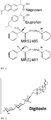
- MRS2481 and its enantiomer MRS2485 have structures resembling the skeleton core of ibuprofen.
- the EBOV is enveloped by a membrane, studded with glycoprotein trimers, which are themselves responsible for allowing the virus to make functional contact with target cells prior to penetration into the cell and productive infection. Therefore, any molecular strategy that could inactivate the membrane glycoprotein on the intact EBOV virion might be expected to be a candidate anti-EBOV drug.
- a commonly used mouse model of EBOV infection it has been reported that the anticancer drug toremifene and the non-steroidal anti-inflammatory drug ibuprofen are both inhibitors of EBOV infection. Nonetheless, the EBOV mouse model is not a very good model for EBOV infection in a human, and so it is not clear whether either of these specific compounds could be a lead for drug discovery.
- these concentrations are at least 100 times the concentrations needed to block EBOV infection in the mouse model of EBOV infection.
- the pH needed to make these measurement is 5.2, and the pH of the body is close to 7.0, two orders of magnitude less acidic than the assay medium for the binding assay and for the stability of the glycoprotein crystal.
- ibuprofen exists in two optical isoforms, S and R, and the S isoform is more active in the infection assay than the R isoform.
- both isoforms bind to the crystal structure of the glycoprotein, thus strongly adding to the conclusion that the EBOV glycoprotein binding site lacks specificity.
- amphiphilic pyridinium compounds MRS2481 and its enantiomer MRS2485, share a moiety with ibuprofen. It is expected that amphiphilic pyridinium compounds, in particular MRS2481 or its enantiomer MRS2485, will interfere with EBOV infection. It is proposed that these compounds can be considered leads for development small molecule inhibitors of EBOV infection.
- the EBOV is enveloped by a glycoprotein trimer-laden membrane, and it is this glycoprotein which is responsible for allowing the virus to make contact with target cells prior to penetration into the cell and productive infection (Zhao et al, 2016). Therefore, any molecular strategy that could inactivate the membrane glycoprotein on the intact EBOV virion might be expected to be a candidate anti-EBOV drug.
- the ability of EBOV to attach and enter a cell is also dependent upon the activity of the tyrosine receptor kinase AXL at the cell surface (Shimojima et al, 2008). Thus a molecular strategy that suppressed expression of AXL in the host would also be an attractive anti-EBOV drug.
- a new binary virocidal cocktail is envisioned, which could more efficiently treat or prevent EBOV infection than either compound alone.
- membrane glycoprotein inhibitor MRS2481, or its enantiomer MRS2485, with the AXL inhibitor digitoxin to create a novel, small molecule anti-EBOV therapeutic. Since AXL is also required for ZIKV binding and penetration into target cells, the cocktail may also be useful for ZIKV infection.
- Digitoxin is also able to enter the brain (Flasch and Heinz, 1976; Rietbrock et al, 1977; Storstein et al, 1979), as does MRS2481/85, thus making the cocktail further relevant to the curious brain tropism of the Zika virus.
- MRS2481 and MRS2481 to inhibit the EBOV glycoprotein.
- MRS2481/MRS2485 compounds An additional property of these MRS2481/MRS2485 compounds is profound suppression of NF ⁇ B signaling, and reduction of IL-8 expression (Tchilibon et al, 2005).
- EBOV infection results in shedding of the glycoprotein into the circulation. Circulating EBOV glycoprotein binds to TLR4 (Toll like Receptor 4), which itself activates NF ⁇ B signaling through the MYT88/Ikk ⁇ / ⁇ pathway (Escudero-Perez et al 2014).
- the additional immune modulators include IL-1 ⁇ , TNF ⁇ , IL-6, MIP-1 ⁇ and MIP1 ⁇ (Baize et al, 2002).
- the MRS2481 and MRS2485 compounds may also block the ultimately lethal downstream hemorrhagic phenotype.
- AXL mRNA is detectable in a castration resistant prostate cancer tumor (Pollard BS et al, submitted, 2016).
- the tumor was passaged in a syngeneic rat model with a normal immune system.
- the rats bearing the tumor were treated for 30 days with 0.03 mg/kg digitoxin.
- the drug was solubilized in 95% ethanol (ETOH), and diluted with phosphate buffered saline (PBS) prior to daily intraperitoneal (IP) injection.
- the inventor has unexpectedly found that AXL mRNA is detectable in a castration resistant prostate cancer tumor.
- the tumor was passaged in a syngeneic rat model with a normal immune system.
- the rats bearing the tumor were treated for 30 days with 0.03 mg/kg digitoxin.
- the drug was solubilized in 95% ethanol (ETOH), and diluted with phosphate buffered saline (PBS) prior to daily intraperitoneal (IP) injection.
- Messenger RNA was prepared from the resected tumors and measured by RNASeq on an Illumina GIIx sequencer.
- MRS2481.85 In addition to blocking AXL expression, thereby inhibiting EBOV infection, digitoxin also has profoundly potent anti-inflammatory activity. As for the MRS2481.85 compounds, this activity also depends mechanistically on suppression the TNF ⁇ /NF ⁇ B signaling pathway (Srivastava et al, 2004; Pollard et al, submitted, 2016). A cocktail of MRS2481/85 and digitoxin ("MD Cocktail") would thus suppress both EBOV glycoprotein function and downstream lethal proinflammatory signaling. The anti-inflammatory property of the MRS2481/MRS2485 compounds is based on profound suppression of NF ⁇ B signaling, and reduction of IL-8 expression (Tchilibon et al, 2005).
- EBOV infection results in shedding of the glycoprotein into the circulation. Circulating EBOV glycoprotein binds to TLR4 (Toll like Receptor 4), which itself activates NF ⁇ B signaling through the MYT88/Ikk ⁇ / ⁇ pathway (Escudero-Perez et al 2014). This process of massive inflammation results in release of additional immune modulators, which in the additional presence of circulating EBOV glycoprotein, causes loss of blood vessel integrity and the classical phenotype of Ebola Hemorrhagic Fever (Escudero-Perez et al 2014).
- the additional NF ⁇ B-driven immune modulators include IL-1 ⁇ , TNF ⁇ , IL-6, MIP-1 ⁇ and MIP1 ⁇ (Baize et al, 2002).
- the MRS2481/85 compounds may also block the ultimately lethal downstream hemorrhagic phenotype.
- the MRS2481/85 and digitoxin cocktail may also suppress Zika Virus and other arbovirus infection.
- Zika Virus is the first mosquito-transmitted arbovirus shown to cause fetal abnormalities and microcephaly in unborn babies.
- Adults develop fever, rash, arthralgia and conjunctivitis, and can also develop Guillain-Barre syndrome.
- a candidate viral entry receptor, AXL from the TAM phosphatidylserine receptor family, has been identified in the developing brain, and is highly expressed by radial glial cells, astrocytes, endothelial cells and microglia (Nowakowski TJ, et al, 2016). High levels of AXL expression are conserved in developing mouse and ferret cortex (Nowakowski et al, 2016).
- Cancer cells also express high levels of AXL, including breast (Meric et al, 2002), lung (Wimmel et al, 2001; Hamel et al, 2015), lymphomas and leukemias (Challier et al, 1996), colon (Craven et al, 1995), and prostate (Bansal et al, 2015).
- the mosquito takes advantage of the fact that skin is a convenient site of entry for both ZIKV and dengue virus (Hamel et al, 2015).
- AXL is also the major candidate viral entry receptor in dermal fibroblasts, epidermal keratinocytes, immature dendritic cells, and lung epithelial cells.
- Other minor candidate Zika receptors have been identified in a subset of cells from the epidermis, including adhesion factors DC-SIGN, TYRO3, and TIM-1 (Hamel et al, 2015).
- TIM-1 is another commonality, as it is also an attachment factor for EBOV (Yuan, et al, 2015).
- a new binary virocidal cocktail can be created which could more efficiently treat or prevent EBOV infection than either compound alone.
- the cocktail may also be useful for treating or preventing ZIKV infection.
- digitoxin enters the brain suggests that this part of the cocktail might also suppress the microcephaly phenotype noted recently for ZIKV infection.
- Cardiac glycosides inhibit Na + -K + ATPase at high concentrations, and function as inhibitors of TNF ⁇ -NF ⁇ B signaling (Srivastava M, et al, 2004; Yang et al, 2005) and NFAT-cMYC signaling (Yang et al, 2013) at lower concentrations.
- TNF ⁇ -NF ⁇ B signaling Srivastava M, et al, 2004; Yang et al, 2005
- NFAT-cMYC signaling Yang et al, 2013
- arbovirus is used to encompass Zika virus, Dengue Virus, Japanese Encephalitis Virus, Rift Valley Fever Virus, Tick-Born Encephalitis Virus. West Nile Virus, and Yellow Fever Virus. Therefore, the method of the present invention can treat infections caused by these arboviruses.
- the active components i.e., the cardiac glycosides
- the cardiac glycosides may be prepared in a variety of forms depending on the kind of cardiac glycoside and how it is used.
- the forms and administration routes may be the same as those employed in the use of commercial cardiac glycosides.
- digitoxin it is usually administered as a pill that is swallowed, but it can be given sublingually.
- it can be prepared for injection as a liquid, an emulsion or a suspension.
- the dose of the aforementioned pharmaceutical agent varies depending on the manner of administration, age, sex, and other conditions of the patient, including the disease and the severity of disease.
- the amount of the effective component for example of digitoxin, can range between 0.01 to 0.2 mg/day.
- the model used is the Maximal Electro-Shock (MES) test in mice.
- MES Maximal Electro-Shock
- the MES is a model for generalized tonic-clonic seizures and provides an indication of a compound's ability to prevent seizure spread when all neuronal circuits in the brain are maximally active. These seizures are highly reproducible and are electrophysiologically consistent with human seizures.
- 60Hz of alternating current 50 mA in mice and 150 mA in rats
- 60Hz of alternating current 50 mA in mice and 150 mA in rats
- mice or rats were tested at various intervals following doses of 30, 100 and 300 mg/kg of test compound given by i.p. injection or through oral dosing (p.o.).Other doses can be used if indicated by previously known pharmacology or to determine an ED 50 .
- An animal was considered "protected” from MES-induced seizures upon abolition of the hindlimb tonic extensor component of the seizure (Swinyard et al., 1989; White et al., 1995a; White et al., 1995b).
- mice Compounds were injected into mice at 30 and 100 mg/kg, and assayed at 30 minutes. Table 2. Protection of animals from convulsant MES by MRS2481 Dose Time: 30 minutes 100 mg/kg 1 of 4 animals protected
- Some clinically useful AEDs are ineffective in the standard MES and scMET tests but still have anticonvulsant activities in vivo.
- compounds may be tested in the minimal clonic seizure (6Hz or 'psychomotor') test (Barton et al., 2001).
- the minimal clonic seizure (6Hz) test is used to assess a compound's efficacy against electrically induced seizures but uses a lower frequency (6Hz) and longer duration of stimulation (3s).
- Test compounds were pre-administered to mice via i.p. injection.
- mice were challenged with sufficient current delivered through corneal electrodes to elicit a psychomotor seizure in 97% of animals (32 mA for 3s) (Toman et al., 1952). Untreated mice displayed seizures characterized by a minimal clonic phase followed by stereotyped, automatistic behaviors described originally as being similar to the aura of human patients with partial seizures. Animals not displaying this behavior are considered protected. The test was evaluated quantitatively by measuring the responses at varying doses at a determined time of peak effect (TPE).
- TPE time of peak effect
- mice were challenged with sufficient current delivered through corneal electrodes to elicit a psychomotor seizure in 97% of animals (32 mA for 3s) (Toman et al., 1952). Untreated mice displayed seizures characterized by a minimal clonic phase followed by stereotyped, automatistic behaviors described originally as being similar to the aura of human patients with partial seizures. Animals not displaying this behavior are considered protected. The test was evaluated quantitatively by measuring the responses at varying doses at a determined time of peak effect (TPE).
- TPE time of peak effect
- mice Controlled Animal Conditions and controls; Compounds were injected into mice at 30 and 100 mg/kg, and assayed at 30 minutes. Table 4. Protection of animals from convulsant 6Hz by MRS2485 Dose Time: 30 minutes 30 mg/kg 4 of 4 animals protected 100 mg/kg 4 of 4 animals protected
- Example 3 Digitoxin was administered for 30 days in vivo to rats that had prostate cancer growing in them. The tumors were excised and evaluated for mRNA on an Illumina platform. The digitoxin dose administered is compatible with human life. The digitoxin treatment lowered the AXL gene messengerRNA (mRNA) production two-fold. This is relevant to both Zika and Ebola virus. Table 5 AXL mRNA, FPKM* Digitoxin, 0.03 mg/kg, for 30 days p value, 2 tailed N Fold Change 28.2 - - 4 - 14.2 +drug 0.023 4 -1.99 Table 5. Digitoxin blocks expression of AXL mRNA expression. *FPKM, Fractional Reads per Million Reads. Data collected by next generation sequencing on an Illumina platform. *FPKM, Fractional Reads per Million Reads
- Example 4 Digitoxin was tested on a rat model as a treatment for epilepsy. Eight animals were tested. The animal weight range was: 100.0 - 155.0 g Table 6 Test Dose (mg/kg) Time (hrs) Dths N/F C MES 0.03 0.5 0/8 MES 0.3 0.5 0/8 SCMET 0.03 0.5 1/8 SCMET 0.3 0.5 0/8
Landscapes
- Health & Medical Sciences (AREA)
- Chemical & Material Sciences (AREA)
- Medicinal Chemistry (AREA)
- Pharmacology & Pharmacy (AREA)
- Life Sciences & Earth Sciences (AREA)
- Animal Behavior & Ethology (AREA)
- General Health & Medical Sciences (AREA)
- Public Health (AREA)
- Veterinary Medicine (AREA)
- Epidemiology (AREA)
- Emergency Medicine (AREA)
- Pain & Pain Management (AREA)
- Engineering & Computer Science (AREA)
- Bioinformatics & Cheminformatics (AREA)
- Biomedical Technology (AREA)
- Neurology (AREA)
- Neurosurgery (AREA)
- Chemical Kinetics & Catalysis (AREA)
- General Chemical & Material Sciences (AREA)
- Nuclear Medicine, Radiotherapy & Molecular Imaging (AREA)
- Organic Chemistry (AREA)
- Pharmaceuticals Containing Other Organic And Inorganic Compounds (AREA)
- Acyclic And Carbocyclic Compounds In Medicinal Compositions (AREA)
Claims (11)
- Composition pharmaceutique comprenant :un composé de type pyridinium amphiphile choisi dans le groupe constitué par


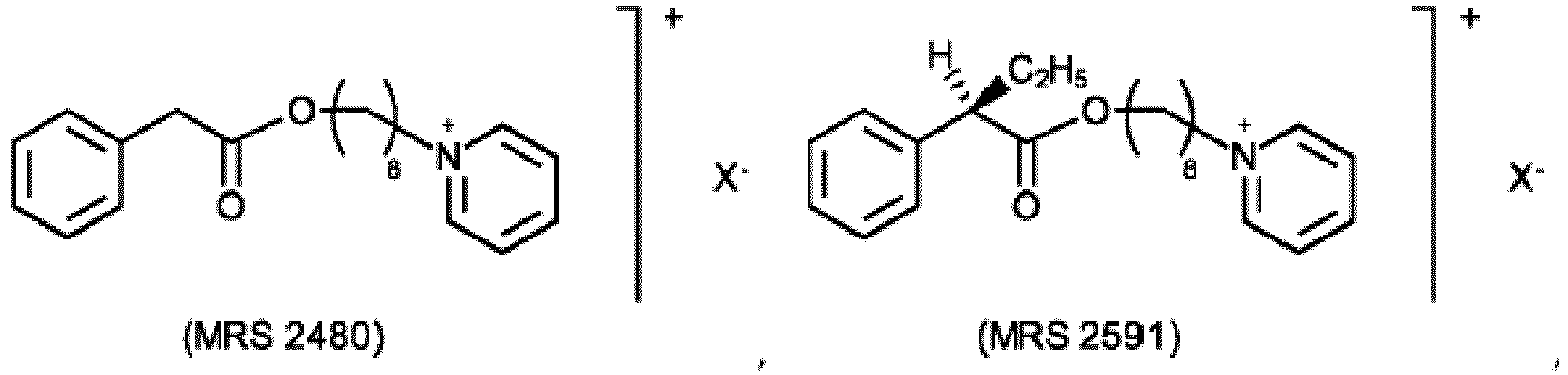





 X- étant acétate, mésylate, oxylate, chlorure, bromure ou iodure, etun support pharmaceutiquement acceptablepour une utilisation dans le traitement de l'épilepsie ou de troubles neurologiques liés caractérisés par des crises épileptiques chez un mammifère, une quantité thérapeutiquement efficace de la composition pharmaceutique devant être administrée au mammifère.
 - Composition pharmaceutique pour une utilisation selon la revendication 1, le composé de type pyridinium amphiphile étant

- Composition pharmaceutique pour une utilisation selon la revendication 1, le composé de type pyridinium amphiphile étant

- Composition pharmaceutique pour une utilisation selon la revendication 1, la maladie devant être traitée étant l'épilepsie.
- Composition pharmaceutique pour une utilisation selon la revendication 1, la composition pharmaceutique devant être administrée de manière orale.
- Composition pharmaceutique pour une utilisation selon la revendication 1, la composition pharmaceutique devant être administrée de manière intravasculaire.
- Composition pharmaceutique pour une utilisation selon la revendication 1, la composition pharmaceutique devant être administrée de manière intramusculaire.
- Composition pharmaceutique pour une utilisation selon la revendication 1, la composition pharmaceutique devant être administrée de manière sous-cutanée.
- Composition pharmaceutique pour une utilisation selon la revendication 8, la composition pharmaceutique devant être administrée avec un amplificateur de pénétration.
- Composition pharmaceutique pour une utilisation selon la revendication 1, la composition pharmaceutique devant être administrée de manière intrapéritonéale.
- Composition pharmaceutique pour une utilisation selon la revendication 1, la composition pharmaceutique devant être administrée avant la manifestation de symptômes d'épilepsie.
Applications Claiming Priority (3)
| Application Number | Priority Date | Filing Date | Title |
|---|---|---|---|
| US201462029149P | 2014-07-25 | 2014-07-25 | |
| US14/808,650 US9492438B2 (en) | 2014-07-25 | 2015-07-24 | Amphiphilic pyridinum compounds to treat epilepsy and other disorders of the nervous system |
| PCT/US2016/043896 WO2017019619A1 (fr) | 2014-07-25 | 2016-07-25 | Composés de pyridinium amphiphiles destinés à traiter l'épilepsie et d'autres troubles du système nerveux |
Publications (3)
| Publication Number | Publication Date |
|---|---|
| EP3324964A1 EP3324964A1 (fr) | 2018-05-30 |
| EP3324964A4 EP3324964A4 (fr) | 2019-03-20 |
| EP3324964B1 true EP3324964B1 (fr) | 2021-08-11 |
Family
ID=55165822
Family Applications (1)
| Application Number | Title | Priority Date | Filing Date |
|---|---|---|---|
| EP16831202.3A Active EP3324964B1 (fr) | 2014-07-25 | 2016-07-25 | Composés de pyridinium amphiphiles destinés à traiter l'épilepsie et d'autres troubles du système nerveux |
Country Status (6)
| Country | Link |
|---|---|
| US (1) | US9492438B2 (fr) |
| EP (1) | EP3324964B1 (fr) |
| AU (1) | AU2016297916B2 (fr) |
| CA (1) | CA2992740C (fr) |
| IL (1) | IL256981B (fr) |
| WO (1) | WO2017019619A1 (fr) |
Families Citing this family (11)
| Publication number | Priority date | Publication date | Assignee | Title |
|---|---|---|---|---|
| GB2530001B (en) | 2014-06-17 | 2019-01-16 | Gw Pharma Ltd | Use of cannabidiol in the reduction of convulsive seizure frequency in treatment-resistant epilepsy |
| US9492438B2 (en) * | 2014-07-25 | 2016-11-15 | Bette Pollard | Amphiphilic pyridinum compounds to treat epilepsy and other disorders of the nervous system |
| GB2531282A (en) | 2014-10-14 | 2016-04-20 | Gw Pharma Ltd | Use of cannabinoids in the treatment of epilepsy |
| GB2539472A (en) | 2015-06-17 | 2016-12-21 | Gw Res Ltd | Use of cannabinoids in the treatment of epilepsy |
| GB2564383B (en) | 2017-06-23 | 2021-04-21 | Gw Res Ltd | Use of cannabidiol in the treatment of tumours assoicated with Tuberous Sclerosis Complex |
| CA3075729A1 (fr) * | 2017-09-14 | 2019-03-21 | Phoenix Biotechnology, Inc. | Utilisation d'oleandrine pour traiter une infection virale |
| CN109806270A (zh) * | 2017-11-01 | 2019-05-28 | 中国医学科学院药物研究所 | 海葱苷类化合物在制备抗黄病毒感染药物中的应用 |
| GB2568929A (en) | 2017-12-01 | 2019-06-05 | Gw Res Ltd | Use of cannabinoids in the treatment of epilepsy |
| GB201806953D0 (en) | 2018-04-27 | 2018-06-13 | Gw Res Ltd | Cannabidiol Preparations |
| TWM595580U (zh) * | 2019-12-02 | 2020-05-21 | 大陸商達亞帆布(上海)有限公司 | 非pvc類可拼接的織物結構環保廣告布 |
| GB202002754D0 (en) | 2020-02-27 | 2020-04-15 | Gw Res Ltd | Methods of treating tuberous sclerosis complex with cannabidiol and everolimus |
Family Cites Families (8)
| Publication number | Priority date | Publication date | Assignee | Title |
|---|---|---|---|---|
| WO2003099011A1 (fr) * | 2002-05-28 | 2003-12-04 | Henry M. Jackson Foundation For The Advancement Of Military Medicine, Inc. | Utilisation de glucosides cardiotoniques pour le traitement de la mucovicidose et autres troubles dependant de il-8 |
| ES2386721T3 (es) * | 2003-06-27 | 2012-08-28 | The Henry M. Jackson Foundation For The Advancement Of Military Medicine, Inc. | Compuestos de piridinio anfifilos , método de fabricación y utilización de los mismos |
| WO2010037402A1 (fr) * | 2008-10-02 | 2010-04-08 | Dako Denmark A/S | Vaccins moléculaires contre les maladies infectieuses |
| WO2011011447A1 (fr) * | 2009-07-20 | 2011-01-27 | Protiva Biotherapeutics, Inc. | Compositions et méthodes pour rendre silencieuse lexpression du gène du virus ebola |
| TW201116525A (en) * | 2009-07-21 | 2011-05-16 | Gilead Sciences Inc | Inhibitors of flaviviridae viruses |
| US9879003B2 (en) * | 2012-04-11 | 2018-01-30 | Dana-Farber Cancer Institute, Inc. | Host targeted inhibitors of dengue virus and other viruses |
| WO2014209507A1 (fr) * | 2013-06-26 | 2014-12-31 | The Johns Hopkins University | Analogues de glycoside cardiaque et leur utilisation dans des méthodes d'inhibition d'une infection virale |
| US9492438B2 (en) * | 2014-07-25 | 2016-11-15 | Bette Pollard | Amphiphilic pyridinum compounds to treat epilepsy and other disorders of the nervous system |
-
2015
- 2015-07-24 US US14/808,650 patent/US9492438B2/en active Active
-
2016
- 2016-07-25 CA CA2992740A patent/CA2992740C/fr active Active
- 2016-07-25 AU AU2016297916A patent/AU2016297916B2/en active Active
- 2016-07-25 WO PCT/US2016/043896 patent/WO2017019619A1/fr not_active Ceased
- 2016-07-25 EP EP16831202.3A patent/EP3324964B1/fr active Active
-
2018
- 2018-01-17 IL IL256981A patent/IL256981B/en unknown
Non-Patent Citations (1)
| Title |
|---|
| None * |
Also Published As
| Publication number | Publication date |
|---|---|
| AU2016297916B2 (en) | 2022-01-20 |
| AU2016297916A1 (en) | 2018-03-01 |
| EP3324964A4 (fr) | 2019-03-20 |
| US9492438B2 (en) | 2016-11-15 |
| IL256981B (en) | 2021-08-31 |
| CA2992740C (fr) | 2024-03-12 |
| WO2017019619A1 (fr) | 2017-02-02 |
| IL256981A (en) | 2018-03-29 |
| US20160022656A1 (en) | 2016-01-28 |
| EP3324964A1 (fr) | 2018-05-30 |
| CA2992740A1 (fr) | 2017-02-02 |
Similar Documents
| Publication | Publication Date | Title |
|---|---|---|
| AU2016297916B2 (en) | Amphiphilic pyridinium compounds to treat epilepsy and other disorders of the nervous system | |
| ES2897453T3 (es) | Aplicación de R-ketamina y sal de la misma como productos farmacéuticos | |
| ES2646363T3 (es) | Tapentadol para la prevención y el tratamiento de la depresión y la ansiedad | |
| AU2018219861B2 (en) | Methods of treating seizure disorders and prader-willi syndrome | |
| KR20150003765A (ko) | 라퀴니모드와 디메틸 푸마레이트의 병용물에 의한 다발성 경화증의 치료 | |
| KR101733247B1 (ko) | 외상 후 스트레스 장애를 치료하기 위한 테트라하이드로퀴놀린 유도체 | |
| KR20170086710A (ko) | 피로의 치료 또는 예방 방법 | |
| EP4373935A1 (fr) | Oligonucléotides antisens unc13a | |
| US7226949B2 (en) | Compounds of use in the treatment of epilepsy, seizure, and electroconvulsive disorders | |
| US12599611B2 (en) | Methods and compositions for treating seizure disorders in pediatric patients | |
| US20150335624A1 (en) | Compositions and methods for using huperzine and analogs thereof | |
| Lv et al. | Xenon ameliorates chronic post-surgical pain by regulating mitophagy in microglia and rats mediated by PINK1/Parkin pathway | |
| Lee et al. | Amyotrophic lateral sclerosis with an acute hypertensive crises | |
| JP4775940B2 (ja) | アロディニアの治療、改善、予防剤 | |
| RU2721282C2 (ru) | Способ лечения рассеянного склероза (варианты) | |
| CN114028396A (zh) | 汉防己甲素在用于制备治疗纤维肌痛的药物中的应用 | |
| Darras | Muscular dystrophies | |
| Agarwal et al. | Unilateral neurogenic pruritus following intracranial surgery | |
| US20110065749A1 (en) | Method and pharmaceutical composition for treatment of mental disorders | |
| ES2808667T3 (es) | Derivados de diarilmetilideno piperidina y su uso como agonistas del receptor opioide delta | |
| CN109846886A (zh) | Nvp-hsp990在制备治疗癫痫的药物中的用途 | |
| WO2010079241A1 (fr) | Utilisation d'antagonistes et/ou d'agonistes inverses des récepteurs cb1 pour la préparation de médicaments qui augmentent l'excitabilité des motoneurones | |
| Liu¹t et al. | Pharmacological interventions | |
| Fuller et al. | Proceedings of the 249th Otago Medical School Research Society Meeting-Research Staff Speaker Awards; 24 Jul 2019 | |
| KR20160126045A (ko) | 기계적 신경 손상을 치료하기 위한 신규 조성물 |
Legal Events
| Date | Code | Title | Description |
|---|---|---|---|
| STAA | Information on the status of an ep patent application or granted ep patent |
Free format text: STATUS: THE INTERNATIONAL PUBLICATION HAS BEEN MADE |
|
| PUAI | Public reference made under article 153(3) epc to a published international application that has entered the european phase |
Free format text: ORIGINAL CODE: 0009012 |
|
| STAA | Information on the status of an ep patent application or granted ep patent |
Free format text: STATUS: REQUEST FOR EXAMINATION WAS MADE |
|
| 17P | Request for examination filed |
Effective date: 20180209 |
|
| AK | Designated contracting states |
Kind code of ref document: A1 Designated state(s): AL AT BE BG CH CY CZ DE DK EE ES FI FR GB GR HR HU IE IS IT LI LT LU LV MC MK MT NL NO PL PT RO RS SE SI SK SM TR |
|
| AX | Request for extension of the european patent |
Extension state: BA ME |
|
| DAV | Request for validation of the european patent (deleted) | ||
| DAX | Request for extension of the european patent (deleted) | ||
| REG | Reference to a national code |
Ref country code: DE Ref legal event code: R079 Ref document number: 602016062135 Country of ref document: DE Free format text: PREVIOUS MAIN CLASS: A61K0031440000 Ipc: A61K0031442500 |
|
| A4 | Supplementary search report drawn up and despatched |
Effective date: 20190220 |
|
| RIC1 | Information provided on ipc code assigned before grant |
Ipc: A61K 31/44 20060101ALI20190214BHEP Ipc: A61K 31/4425 20060101AFI20190214BHEP Ipc: A61P 25/08 20060101ALI20190214BHEP |
|
| STAA | Information on the status of an ep patent application or granted ep patent |
Free format text: STATUS: EXAMINATION IS IN PROGRESS |
|
| 17Q | First examination report despatched |
Effective date: 20200128 |
|
| GRAP | Despatch of communication of intention to grant a patent |
Free format text: ORIGINAL CODE: EPIDOSNIGR1 |
|
| STAA | Information on the status of an ep patent application or granted ep patent |
Free format text: STATUS: GRANT OF PATENT IS INTENDED |
|
| INTG | Intention to grant announced |
Effective date: 20210224 |
|
| GRAS | Grant fee paid |
Free format text: ORIGINAL CODE: EPIDOSNIGR3 |
|
| GRAA | (expected) grant |
Free format text: ORIGINAL CODE: 0009210 |
|
| STAA | Information on the status of an ep patent application or granted ep patent |
Free format text: STATUS: THE PATENT HAS BEEN GRANTED |
|
| AK | Designated contracting states |
Kind code of ref document: B1 Designated state(s): AL AT BE BG CH CY CZ DE DK EE ES FI FR GB GR HR HU IE IS IT LI LT LU LV MC MK MT NL NO PL PT RO RS SE SI SK SM TR |
|
| REG | Reference to a national code |
Ref country code: CH Ref legal event code: EP |
|
| REG | Reference to a national code |
Ref country code: DE Ref legal event code: R096 Ref document number: 602016062135 Country of ref document: DE |
|
| REG | Reference to a national code |
Ref country code: IE Ref legal event code: FG4D Ref country code: AT Ref legal event code: REF Ref document number: 1418664 Country of ref document: AT Kind code of ref document: T Effective date: 20210915 |
|
| REG | Reference to a national code |
Ref country code: LT Ref legal event code: MG9D |
|
| REG | Reference to a national code |
Ref country code: NL Ref legal event code: MP Effective date: 20210811 |
|
| REG | Reference to a national code |
Ref country code: AT Ref legal event code: MK05 Ref document number: 1418664 Country of ref document: AT Kind code of ref document: T Effective date: 20210811 |
|
| PG25 | Lapsed in a contracting state [announced via postgrant information from national office to epo] |
Ref country code: RS Free format text: LAPSE BECAUSE OF FAILURE TO SUBMIT A TRANSLATION OF THE DESCRIPTION OR TO PAY THE FEE WITHIN THE PRESCRIBED TIME-LIMIT Effective date: 20210811 Ref country code: SE Free format text: LAPSE BECAUSE OF FAILURE TO SUBMIT A TRANSLATION OF THE DESCRIPTION OR TO PAY THE FEE WITHIN THE PRESCRIBED TIME-LIMIT Effective date: 20210811 Ref country code: AT Free format text: LAPSE BECAUSE OF FAILURE TO SUBMIT A TRANSLATION OF THE DESCRIPTION OR TO PAY THE FEE WITHIN THE PRESCRIBED TIME-LIMIT Effective date: 20210811 Ref country code: BG Free format text: LAPSE BECAUSE OF FAILURE TO SUBMIT A TRANSLATION OF THE DESCRIPTION OR TO PAY THE FEE WITHIN THE PRESCRIBED TIME-LIMIT Effective date: 20211111 Ref country code: LT Free format text: LAPSE BECAUSE OF FAILURE TO SUBMIT A TRANSLATION OF THE DESCRIPTION OR TO PAY THE FEE WITHIN THE PRESCRIBED TIME-LIMIT Effective date: 20210811 Ref country code: PT Free format text: LAPSE BECAUSE OF FAILURE TO SUBMIT A TRANSLATION OF THE DESCRIPTION OR TO PAY THE FEE WITHIN THE PRESCRIBED TIME-LIMIT Effective date: 20211213 Ref country code: NO Free format text: LAPSE BECAUSE OF FAILURE TO SUBMIT A TRANSLATION OF THE DESCRIPTION OR TO PAY THE FEE WITHIN THE PRESCRIBED TIME-LIMIT Effective date: 20211111 Ref country code: FI Free format text: LAPSE BECAUSE OF FAILURE TO SUBMIT A TRANSLATION OF THE DESCRIPTION OR TO PAY THE FEE WITHIN THE PRESCRIBED TIME-LIMIT Effective date: 20210811 Ref country code: ES Free format text: LAPSE BECAUSE OF FAILURE TO SUBMIT A TRANSLATION OF THE DESCRIPTION OR TO PAY THE FEE WITHIN THE PRESCRIBED TIME-LIMIT Effective date: 20210811 Ref country code: HR Free format text: LAPSE BECAUSE OF FAILURE TO SUBMIT A TRANSLATION OF THE DESCRIPTION OR TO PAY THE FEE WITHIN THE PRESCRIBED TIME-LIMIT Effective date: 20210811 |
|
| PG25 | Lapsed in a contracting state [announced via postgrant information from national office to epo] |
Ref country code: PL Free format text: LAPSE BECAUSE OF FAILURE TO SUBMIT A TRANSLATION OF THE DESCRIPTION OR TO PAY THE FEE WITHIN THE PRESCRIBED TIME-LIMIT Effective date: 20210811 Ref country code: LV Free format text: LAPSE BECAUSE OF FAILURE TO SUBMIT A TRANSLATION OF THE DESCRIPTION OR TO PAY THE FEE WITHIN THE PRESCRIBED TIME-LIMIT Effective date: 20210811 Ref country code: GR Free format text: LAPSE BECAUSE OF FAILURE TO SUBMIT A TRANSLATION OF THE DESCRIPTION OR TO PAY THE FEE WITHIN THE PRESCRIBED TIME-LIMIT Effective date: 20211112 |
|
| PG25 | Lapsed in a contracting state [announced via postgrant information from national office to epo] |
Ref country code: NL Free format text: LAPSE BECAUSE OF FAILURE TO SUBMIT A TRANSLATION OF THE DESCRIPTION OR TO PAY THE FEE WITHIN THE PRESCRIBED TIME-LIMIT Effective date: 20210811 |
|
| PG25 | Lapsed in a contracting state [announced via postgrant information from national office to epo] |
Ref country code: DK Free format text: LAPSE BECAUSE OF FAILURE TO SUBMIT A TRANSLATION OF THE DESCRIPTION OR TO PAY THE FEE WITHIN THE PRESCRIBED TIME-LIMIT Effective date: 20210811 |
|
| REG | Reference to a national code |
Ref country code: DE Ref legal event code: R097 Ref document number: 602016062135 Country of ref document: DE |
|
| PG25 | Lapsed in a contracting state [announced via postgrant information from national office to epo] |
Ref country code: SM Free format text: LAPSE BECAUSE OF FAILURE TO SUBMIT A TRANSLATION OF THE DESCRIPTION OR TO PAY THE FEE WITHIN THE PRESCRIBED TIME-LIMIT Effective date: 20210811 Ref country code: SK Free format text: LAPSE BECAUSE OF FAILURE TO SUBMIT A TRANSLATION OF THE DESCRIPTION OR TO PAY THE FEE WITHIN THE PRESCRIBED TIME-LIMIT Effective date: 20210811 Ref country code: RO Free format text: LAPSE BECAUSE OF FAILURE TO SUBMIT A TRANSLATION OF THE DESCRIPTION OR TO PAY THE FEE WITHIN THE PRESCRIBED TIME-LIMIT Effective date: 20210811 Ref country code: EE Free format text: LAPSE BECAUSE OF FAILURE TO SUBMIT A TRANSLATION OF THE DESCRIPTION OR TO PAY THE FEE WITHIN THE PRESCRIBED TIME-LIMIT Effective date: 20210811 Ref country code: CZ Free format text: LAPSE BECAUSE OF FAILURE TO SUBMIT A TRANSLATION OF THE DESCRIPTION OR TO PAY THE FEE WITHIN THE PRESCRIBED TIME-LIMIT Effective date: 20210811 Ref country code: AL Free format text: LAPSE BECAUSE OF FAILURE TO SUBMIT A TRANSLATION OF THE DESCRIPTION OR TO PAY THE FEE WITHIN THE PRESCRIBED TIME-LIMIT Effective date: 20210811 |
|
| PLBE | No opposition filed within time limit |
Free format text: ORIGINAL CODE: 0009261 |
|
| STAA | Information on the status of an ep patent application or granted ep patent |
Free format text: STATUS: NO OPPOSITION FILED WITHIN TIME LIMIT |
|
| 26N | No opposition filed |
Effective date: 20220512 |
|
| PG25 | Lapsed in a contracting state [announced via postgrant information from national office to epo] |
Ref country code: IT Free format text: LAPSE BECAUSE OF FAILURE TO SUBMIT A TRANSLATION OF THE DESCRIPTION OR TO PAY THE FEE WITHIN THE PRESCRIBED TIME-LIMIT Effective date: 20210811 |
|
| PG25 | Lapsed in a contracting state [announced via postgrant information from national office to epo] |
Ref country code: SI Free format text: LAPSE BECAUSE OF FAILURE TO SUBMIT A TRANSLATION OF THE DESCRIPTION OR TO PAY THE FEE WITHIN THE PRESCRIBED TIME-LIMIT Effective date: 20210811 |
|
| PG25 | Lapsed in a contracting state [announced via postgrant information from national office to epo] |
Ref country code: MC Free format text: LAPSE BECAUSE OF FAILURE TO SUBMIT A TRANSLATION OF THE DESCRIPTION OR TO PAY THE FEE WITHIN THE PRESCRIBED TIME-LIMIT Effective date: 20210811 |
|
| REG | Reference to a national code |
Ref country code: CH Ref legal event code: PL |
|
| REG | Reference to a national code |
Ref country code: BE Ref legal event code: MM Effective date: 20220731 |
|
| PG25 | Lapsed in a contracting state [announced via postgrant information from national office to epo] |
Ref country code: LU Free format text: LAPSE BECAUSE OF NON-PAYMENT OF DUE FEES Effective date: 20220725 Ref country code: LI Free format text: LAPSE BECAUSE OF NON-PAYMENT OF DUE FEES Effective date: 20220731 Ref country code: CH Free format text: LAPSE BECAUSE OF NON-PAYMENT OF DUE FEES Effective date: 20220731 |
|
| PG25 | Lapsed in a contracting state [announced via postgrant information from national office to epo] |
Ref country code: BE Free format text: LAPSE BECAUSE OF NON-PAYMENT OF DUE FEES Effective date: 20220731 |
|
| PG25 | Lapsed in a contracting state [announced via postgrant information from national office to epo] |
Ref country code: IE Free format text: LAPSE BECAUSE OF NON-PAYMENT OF DUE FEES Effective date: 20220725 |
|
| PG25 | Lapsed in a contracting state [announced via postgrant information from national office to epo] |
Ref country code: HU Free format text: LAPSE BECAUSE OF FAILURE TO SUBMIT A TRANSLATION OF THE DESCRIPTION OR TO PAY THE FEE WITHIN THE PRESCRIBED TIME-LIMIT; INVALID AB INITIO Effective date: 20160725 |
|
| PG25 | Lapsed in a contracting state [announced via postgrant information from national office to epo] |
Ref country code: MK Free format text: LAPSE BECAUSE OF FAILURE TO SUBMIT A TRANSLATION OF THE DESCRIPTION OR TO PAY THE FEE WITHIN THE PRESCRIBED TIME-LIMIT Effective date: 20210811 Ref country code: CY Free format text: LAPSE BECAUSE OF FAILURE TO SUBMIT A TRANSLATION OF THE DESCRIPTION OR TO PAY THE FEE WITHIN THE PRESCRIBED TIME-LIMIT Effective date: 20210811 |
|
| PG25 | Lapsed in a contracting state [announced via postgrant information from national office to epo] |
Ref country code: MT Free format text: LAPSE BECAUSE OF FAILURE TO SUBMIT A TRANSLATION OF THE DESCRIPTION OR TO PAY THE FEE WITHIN THE PRESCRIBED TIME-LIMIT Effective date: 20210811 |
|
| PGFP | Annual fee paid to national office [announced via postgrant information from national office to epo] |
Ref country code: DE Payment date: 20250725 Year of fee payment: 10 |
|
| PGFP | Annual fee paid to national office [announced via postgrant information from national office to epo] |
Ref country code: GB Payment date: 20250822 Year of fee payment: 10 |
|
| PGFP | Annual fee paid to national office [announced via postgrant information from national office to epo] |
Ref country code: FR Payment date: 20250729 Year of fee payment: 10 |
|
| PG25 | Lapsed in a contracting state [announced via postgrant information from national office to epo] |
Ref country code: TR Free format text: LAPSE BECAUSE OF FAILURE TO SUBMIT A TRANSLATION OF THE DESCRIPTION OR TO PAY THE FEE WITHIN THE PRESCRIBED TIME-LIMIT Effective date: 20210811 |