EP3326660B1 - Peau artificielle biodégradable et biocompatible prête à l'emploi et son procédé de préparation - Google Patents
Peau artificielle biodégradable et biocompatible prête à l'emploi et son procédé de préparation Download PDFInfo
- Publication number
- EP3326660B1 EP3326660B1 EP17179732.7A EP17179732A EP3326660B1 EP 3326660 B1 EP3326660 B1 EP 3326660B1 EP 17179732 A EP17179732 A EP 17179732A EP 3326660 B1 EP3326660 B1 EP 3326660B1
- Authority
- EP
- European Patent Office
- Prior art keywords
- cells
- tissue
- wound
- scaffold
- stem cells
- Prior art date
- Legal status (The legal status is an assumption and is not a legal conclusion. Google has not performed a legal analysis and makes no representation as to the accuracy of the status listed.)
- Active
Links
Images


Classifications
-
- A—HUMAN NECESSITIES
- A61—MEDICAL OR VETERINARY SCIENCE; HYGIENE
- A61L—METHODS OR APPARATUS FOR STERILISING MATERIALS OR OBJECTS IN GENERAL; DISINFECTION, STERILISATION OR DEODORISATION OF AIR; CHEMICAL ASPECTS OF BANDAGES, DRESSINGS, ABSORBENT PADS OR SURGICAL ARTICLES; MATERIALS FOR BANDAGES, DRESSINGS, ABSORBENT PADS OR SURGICAL ARTICLES
- A61L27/00—Materials for grafts or prostheses or for coating grafts or prostheses
- A61L27/14—Macromolecular materials
- A61L27/26—Mixtures of macromolecular compounds
-
- A—HUMAN NECESSITIES
- A61—MEDICAL OR VETERINARY SCIENCE; HYGIENE
- A61L—METHODS OR APPARATUS FOR STERILISING MATERIALS OR OBJECTS IN GENERAL; DISINFECTION, STERILISATION OR DEODORISATION OF AIR; CHEMICAL ASPECTS OF BANDAGES, DRESSINGS, ABSORBENT PADS OR SURGICAL ARTICLES; MATERIALS FOR BANDAGES, DRESSINGS, ABSORBENT PADS OR SURGICAL ARTICLES
- A61L27/00—Materials for grafts or prostheses or for coating grafts or prostheses
- A61L27/36—Materials for grafts or prostheses or for coating grafts or prostheses containing ingredients of undetermined constitution or reaction products thereof, e.g. transplant tissue, natural bone, extracellular matrix
- A61L27/3604—Materials for grafts or prostheses or for coating grafts or prostheses containing ingredients of undetermined constitution or reaction products thereof, e.g. transplant tissue, natural bone, extracellular matrix characterised by the human or animal origin of the biological material, e.g. hair, fascia, fish scales, silk, shellac, pericardium, pleura, renal tissue, amniotic membrane, parenchymal tissue, fetal tissue, muscle tissue, fat tissue, enamel
- A61L27/3633—Extracellular matrix [ECM]
-
- A—HUMAN NECESSITIES
- A61—MEDICAL OR VETERINARY SCIENCE; HYGIENE
- A61L—METHODS OR APPARATUS FOR STERILISING MATERIALS OR OBJECTS IN GENERAL; DISINFECTION, STERILISATION OR DEODORISATION OF AIR; CHEMICAL ASPECTS OF BANDAGES, DRESSINGS, ABSORBENT PADS OR SURGICAL ARTICLES; MATERIALS FOR BANDAGES, DRESSINGS, ABSORBENT PADS OR SURGICAL ARTICLES
- A61L27/00—Materials for grafts or prostheses or for coating grafts or prostheses
- A61L27/36—Materials for grafts or prostheses or for coating grafts or prostheses containing ingredients of undetermined constitution or reaction products thereof, e.g. transplant tissue, natural bone, extracellular matrix
- A61L27/38—Materials for grafts or prostheses or for coating grafts or prostheses containing ingredients of undetermined constitution or reaction products thereof, e.g. transplant tissue, natural bone, extracellular matrix containing added animal cells
-
- A—HUMAN NECESSITIES
- A61—MEDICAL OR VETERINARY SCIENCE; HYGIENE
- A61L—METHODS OR APPARATUS FOR STERILISING MATERIALS OR OBJECTS IN GENERAL; DISINFECTION, STERILISATION OR DEODORISATION OF AIR; CHEMICAL ASPECTS OF BANDAGES, DRESSINGS, ABSORBENT PADS OR SURGICAL ARTICLES; MATERIALS FOR BANDAGES, DRESSINGS, ABSORBENT PADS OR SURGICAL ARTICLES
- A61L27/00—Materials for grafts or prostheses or for coating grafts or prostheses
- A61L27/36—Materials for grafts or prostheses or for coating grafts or prostheses containing ingredients of undetermined constitution or reaction products thereof, e.g. transplant tissue, natural bone, extracellular matrix
- A61L27/38—Materials for grafts or prostheses or for coating grafts or prostheses containing ingredients of undetermined constitution or reaction products thereof, e.g. transplant tissue, natural bone, extracellular matrix containing added animal cells
- A61L27/3804—Materials for grafts or prostheses or for coating grafts or prostheses containing ingredients of undetermined constitution or reaction products thereof, e.g. transplant tissue, natural bone, extracellular matrix containing added animal cells characterised by specific cells or progenitors thereof, e.g. fibroblasts, connective tissue cells, kidney cells
- A61L27/3834—Cells able to produce different cell types, e.g. hematopoietic stem cells, mesenchymal stem cells, marrow stromal cells, embryonic stem cells
-
- A—HUMAN NECESSITIES
- A61—MEDICAL OR VETERINARY SCIENCE; HYGIENE
- A61L—METHODS OR APPARATUS FOR STERILISING MATERIALS OR OBJECTS IN GENERAL; DISINFECTION, STERILISATION OR DEODORISATION OF AIR; CHEMICAL ASPECTS OF BANDAGES, DRESSINGS, ABSORBENT PADS OR SURGICAL ARTICLES; MATERIALS FOR BANDAGES, DRESSINGS, ABSORBENT PADS OR SURGICAL ARTICLES
- A61L27/00—Materials for grafts or prostheses or for coating grafts or prostheses
- A61L27/40—Composite materials, i.e. containing one material dispersed in a matrix of the same or different material
- A61L27/44—Composite materials, i.e. containing one material dispersed in a matrix of the same or different material having a macromolecular matrix
- A61L27/48—Composite materials, i.e. containing one material dispersed in a matrix of the same or different material having a macromolecular matrix with macromolecular fillers
-
- A—HUMAN NECESSITIES
- A61—MEDICAL OR VETERINARY SCIENCE; HYGIENE
- A61L—METHODS OR APPARATUS FOR STERILISING MATERIALS OR OBJECTS IN GENERAL; DISINFECTION, STERILISATION OR DEODORISATION OF AIR; CHEMICAL ASPECTS OF BANDAGES, DRESSINGS, ABSORBENT PADS OR SURGICAL ARTICLES; MATERIALS FOR BANDAGES, DRESSINGS, ABSORBENT PADS OR SURGICAL ARTICLES
- A61L27/00—Materials for grafts or prostheses or for coating grafts or prostheses
- A61L27/50—Materials characterised by their function or physical properties, e.g. injectable or lubricating compositions, shape-memory materials, surface modified materials
- A61L27/54—Biologically active materials, e.g. therapeutic substances
-
- A—HUMAN NECESSITIES
- A61—MEDICAL OR VETERINARY SCIENCE; HYGIENE
- A61L—METHODS OR APPARATUS FOR STERILISING MATERIALS OR OBJECTS IN GENERAL; DISINFECTION, STERILISATION OR DEODORISATION OF AIR; CHEMICAL ASPECTS OF BANDAGES, DRESSINGS, ABSORBENT PADS OR SURGICAL ARTICLES; MATERIALS FOR BANDAGES, DRESSINGS, ABSORBENT PADS OR SURGICAL ARTICLES
- A61L27/00—Materials for grafts or prostheses or for coating grafts or prostheses
- A61L27/50—Materials characterised by their function or physical properties, e.g. injectable or lubricating compositions, shape-memory materials, surface modified materials
- A61L27/56—Porous materials, e.g. foams or sponges
-
- A—HUMAN NECESSITIES
- A61—MEDICAL OR VETERINARY SCIENCE; HYGIENE
- A61L—METHODS OR APPARATUS FOR STERILISING MATERIALS OR OBJECTS IN GENERAL; DISINFECTION, STERILISATION OR DEODORISATION OF AIR; CHEMICAL ASPECTS OF BANDAGES, DRESSINGS, ABSORBENT PADS OR SURGICAL ARTICLES; MATERIALS FOR BANDAGES, DRESSINGS, ABSORBENT PADS OR SURGICAL ARTICLES
- A61L27/00—Materials for grafts or prostheses or for coating grafts or prostheses
- A61L27/50—Materials characterised by their function or physical properties, e.g. injectable or lubricating compositions, shape-memory materials, surface modified materials
- A61L27/60—Materials for use in artificial skin
-
- A—HUMAN NECESSITIES
- A61—MEDICAL OR VETERINARY SCIENCE; HYGIENE
- A61L—METHODS OR APPARATUS FOR STERILISING MATERIALS OR OBJECTS IN GENERAL; DISINFECTION, STERILISATION OR DEODORISATION OF AIR; CHEMICAL ASPECTS OF BANDAGES, DRESSINGS, ABSORBENT PADS OR SURGICAL ARTICLES; MATERIALS FOR BANDAGES, DRESSINGS, ABSORBENT PADS OR SURGICAL ARTICLES
- A61L2300/00—Biologically active materials used in bandages, wound dressings, absorbent pads or medical devices
- A61L2300/20—Biologically active materials used in bandages, wound dressings, absorbent pads or medical devices containing or releasing organic materials
- A61L2300/252—Polypeptides, proteins, e.g. glycoproteins, lipoproteins, cytokines
-
- A—HUMAN NECESSITIES
- A61—MEDICAL OR VETERINARY SCIENCE; HYGIENE
- A61L—METHODS OR APPARATUS FOR STERILISING MATERIALS OR OBJECTS IN GENERAL; DISINFECTION, STERILISATION OR DEODORISATION OF AIR; CHEMICAL ASPECTS OF BANDAGES, DRESSINGS, ABSORBENT PADS OR SURGICAL ARTICLES; MATERIALS FOR BANDAGES, DRESSINGS, ABSORBENT PADS OR SURGICAL ARTICLES
- A61L2300/00—Biologically active materials used in bandages, wound dressings, absorbent pads or medical devices
- A61L2300/40—Biologically active materials used in bandages, wound dressings, absorbent pads or medical devices characterised by a specific therapeutic activity or mode of action
- A61L2300/412—Tissue-regenerating or healing or proliferative agents
- A61L2300/414—Growth factors
Definitions
- the present invention relates to the field of tissue engineering.
- the invention relates to an in-vitro method for inducing cells to produce an extracellular matrix, as defined in the appended claims.
- the invention relates to a living extracellular matrix, which has tissue like properties and is capable of being used for wound healing, as defined in the appended claims.
- the invention relates to an extracellular matrix for the treatment of burn wound, diabetic foot ulcer and other chronic wounds, as defined in the appended claims.
- Bioengineered tissues construct include cells that are associated with a human tissues and natural matrix/scaffold.
- the new bioengineered tissue must be functional when grafted onto a host, and be permanently incorporated within the host's body or progressively bio-remodeled by cells from the recipient host patient. Fabrication of a tissue equivalent without a support member or scaffold leads to scientific challenges in creating the new bioengineered tissue.
- the primary goal in the treatment of wounds is to achieve wound closure for which several modalities have been developed.
- One of the persistent problems in the treatment of large wounds, like burns, is the availability of skin cover to repair damaged areas.
- Postoperative wounds are typically categorized into primary intention (surgical closure), secondary intention (wound left open to close by reparative process) and tertiary closure (left open, usually because of infection, and closed surgically at a later date).
- primary intention the physician approximates the wound edges resulting in minimal scar formation.
- Secondary intention wound treatment usually occurs when there are, for example, (a) gaping wounds with lacerated edges, (b) large defects that cannot be covered by grafting, (c) extensive trophic disturbances such as leg ulcers, (d) highly suppurative wounds, (e) wounds interspersed with foreign bodies, (f) infected wounds that have undergone primary closure, and (g) wounds that heal better cosmetically and functionally as a result of contraction rather than sutures, e.g. fingertip injuries.
- the loss of tissue has to be compensated by the formation of new connective tissue and wound contraction. Scar formation under such conditions can often result in a cosmetically and functionally inferior scar.
- Wound healing of the skin is thus a complex biological process that requires the restoration of cover by re-epithelialization and restoration of support by dermal fibroblasts.
- Re-epithelialization results from keratinocyte migration and proliferation.
- the rate of re-epithelialization is higher in superficial wounds as compared to deeper wounds wherein the chances of infection and scar formation are very high. While the primary end point of healing is the wound closure, the focus on the quality of healing is also important.
- Tissue engineered skin substitutes are a significant advance in the field of wound healing. These were developed due to limitations associated with the use of autografts, including the creation of a donor site, which is at risk of developing pain, scarring, infection and/or slow healing, for example.
- tissue engineered skin substitutes Prior to the development of tissue engineered skin, the only available options were split or full thickness skin grafts, tissue flaps or free tissue transfers. Over the last two decades' tissue engineered skin substitutes have been developed and their use has progressed at a very rapid rate. Tissue engineering was defined in 1987 by the National Science Foundation bioengineering panel meeting in Washington, DC, USA, as "the application of the principles and methods of engineering and the life sciences toward the development of biological substitutes to restore, maintain, or improve function.” Today, tissue engineered skin products have been approved for use by the US Food and Drug Administration (FDA) and others are undergoing testing and regulatory review. Tissue engineered skin substitutes offer the promise of tissue replacement without requiring a donor site and may produce better healing. Tissue engineered skin may function by providing at the wound site the needed matrix materials or cells required for the healing process. Tissue engineered skin refers to skin products made mainly of cells, or extracellular matrix materials only, or to a combination of cells and matrices.
- tissue sources for tissue engineering fall into three categories: autologous cells (from the patient) ; allogeneic cells (from a human donor, but not immunologically identical) ; and xenogeneic cells (donor from a different species). Each of these origins may further be delineated into adult or embryonic stem cells, or "differentiated" cells obtained from tissue, where the cell population comprises of a mixture of differently matured cells that includes rare stem and progenitor cells. To date, the available therapies depend on the whole cell mix, or separation of enrichment of stem cells. While autologous tissue transfers can be highly effective in securing wound healing, such procedures (e.g., grafts and flaps) are invasive, painful, and expensive, and are not within the purview of many wound care practitioners.
- Cell based wound therapies such as cellular skin substitutes, have the potential to reduce wound contraction and to influence the nature of the final healed tissue. Reports are available that indicate additional benefits of skin substitute therapy besides early wound closure.
- the property of the healed wound that closely resembles those of normal uninjured skin ( Gohari et al., "Evaluation of tissue engineered skin (human skin substitute) and secondary intention healing in the treatment of full thickness wounds after Mohs micrographic or excisional surgery," Dermatol Surg 28:110714, 2002 .) It is believed that cells applied to the wound surface are "smart" and will bathe the wound bed with balanced cocktails of such mediators appropriate for the particular physiology of the wound environment that is sensed.
- a bioengineered skin substitute has been shown to act as an interactive "drug" delivery system ( Shen et al. "Innovative therapies in wound healing,” J Cutan Med Surg 2003 7(1) 217224 ). Werner et al. and Mansbridge et al. have reported that the viability and metabolic activity of the cellular component of a cellular skin substitute is essential for therapeutic efficacy. These groups have proposed that this is due to the need for ongoing cytokine expression in the wound bed following application. ( Werner et al. "Regulation of wound healing by growth factors and cytokines," Physiol Rev 83:83570, 2003 Mansbridge et al.
- MMPs matrix metallo-proteinases
- Apligraf TM ( US patent number 4,485,096 ) is made from human fibroblasts grown on a semipermeable membrane with bovine type I collagen, then overlayed with keratinocytes, which are grown until a confluent layer forms. The keratinocytes and dermal fibroblasts are derived from neonatal foreskin and propagated in culture. Subsequently, keratinocytes overlying the epidermis are exposed to an air liquid interface to promote formation of a stratum corneum.
- Epidermal substitutes prepared from keratinocytes obtained from the skin sample of the future recipient are shown to have the ability to reconstitute an epidermis when delivered to an area of skin loss such as the excised bed of a burn eschar.
- autografts Epidermal substitutes prepared from keratinocytes obtained from the skin sample of the future recipient
- Cultured Epidermal Autografts have been described as an in-vitro cultured epidermal keratinocytes using a feeder layer of irradiated murine fibroblasts. A minimum of 2 to 3 weeks is required, from the time of biopsy collection to delivery of grafts. Though these cultured epidermal autografts provide permanent wound coverage, a decreased requirement for donor sites, rapid coverage of the wound, faster pain relief, and a better functional and cosmetic outcome. However, the limitations of this graft include a 3-week delay for graft cultivation, the lack of a dermal component, and high cost.
- Cultured epidermal allografts can be made in a similar process as Epicel TM , derived from unrelated allogeneic donors, such as newborn foreskin. Since the cells can be grown in advance and stockpiled, the cells are readily available for grafting. They are not commercially viable. Such similar products contain non-proliferating, differentiated cells. As a result, they provide a cover only up to its limited area. However, there is a need to require proliferative cells that on migrating into the wound bed would be able to proliferate and cover larger areas than that provided by the wound cover.
- the advantage of using cultured epidermal allografts is immediate graft availability. The disadvantages are that they do not survive permanently on the wound bed, and there is a possibility of disease transmission, which can be minimized with extensive screening.
- Integra ® is an artificial skin which consists of an artificial dermis (matrix of bovine collagen and chondroitin 6-sulfate, a shark derived glycosaminoglycan) and a disposable silicone sheet (artificial epidermis). It is approved for its use in burns.
- the advantage of using this artificial dermis is that it allows a neodermis to develop.
- the disposable silicone sheet can allow the accumulation of exudate, increasing the risk of infection. It also does not provide a real epidermal component; and the silicone sheet must be surgically removed and ultimately replaced with an autograft or allograft.
- Derma graft TM is a tissue engineered skin substitute which comprises of collagen and glycosaminoglycans as a substrate for autologous cultured keratinocytes as the epidermal component, and collagen and glycosaminoglycan substrate inoculated with autologous fibroblasts as the dermal component.
- the overall 'take' was approximately 50% (attributed in part to proteases in the wound environment) which is not successful enough to make this a routinely acceptable skin replacement.
- the additional disadvantage of this skin substitute is the need to wait 3 to 4 weeks to produce the cultured grafts.
- Transcyte TM Another skin substitute, previously available as Transcyte TM , comprises neonatal (allogeneic) fibroblasts which have been cultured and proliferate on nylon fibers embedded into a silastic coated with porcine collagen. After 4 to 6 weeks this forms a dense cellular 'tissue', which contains high levels of secreted human matrix proteins as well as multiple growth factors. The fibroblasts are rendered nonviable by freezing after synthesizing collagen extracellular matrix and growth factors.
- US patent number 6,790,455 describes a biodegradable and/or bioabsorbable matrix formed by electrospinning fibers of biodegradable and/or bioabsorbable fiberizable material physically associated with viable cells to contain and release the cells at a controlled rate.
- US patent number 6,933,326 describes the Nonliving Allogeneic Acellular Dermal Matrix (marketed as Alloderm ® ), which is manufactured by cutting sheets of dry tissue matrix into strips; cryofracturing the dry tissue matrix strips at cryogenic temperatures; and freeze drying the strips to remove any moisture that may have been absorbed to give a dry acellular tissue matrix.
- Alloderm ® Nonliving Allogeneic Acellular Dermal Matrix
- a suspension of keratinocytes could be administered at the wound site after incorporating into fibrin glue ( Kaiser et al. "Cultured Autologous keratinocytes in fibrin glue suspension, exclusively and combined with STS allograft (preliminary clinical and histological report of a new technique)," Burns 20(I):239,1994 .)
- the present invention aims to provide solution for the above-mentioned problems and provides a technique of culturing human epidermal cells into a proliferating, sub-confluent layer on a biocompatible membrane, to form sheets suitable for grafting.
- Stromal cells may also include other cells found in loose connective tissue such as endothelial cells, macrophages/monocytes, adipocytes, pericytes, reticular cells found in bone marrow stroma, etc.
- the stromal matrix provides the support, growth factors, and regulatory factors necessary to sustain long-term active proliferation of cells in culture. When grown in this three-dimensional system, the proliferating cells mature and segregate properly to form components of adult tissues analogous to counterparts found in vivo.
- a method for removing an organic solute from a solution comprising contacting the solution with a polymer formed by copolymerizing one or more hydrophobic monomers and one or more hydrophilic monomers, whereby the solute is adsorbed onto the polymer.
- the solution can comprise a polar solvent such as a polar organic solvent or water or an aqueous buffer.
- the hydrophobic monomer can be, for example, divinylbenzene.
- the hydrophilic monomer can be, for example, a heterocyclic monomer, such as a vinyl-pyridine or N-vinylpyrrolidone.
- compositions and methods for tissue repair are provided including cell binding peptides and growth factor binding peptides.
- the cell binding peptides bind to one or more of stem cells, fibroblasts, or endothelial cells.
- the growth factor binding peptides include platelet derived growth factor (PDGF) binding peptides and growth differentiation factor (GDF) binding peptides.
- the tissue for repair includes tendon, muscle, connective tissue, ligament, cardiac tissue, vascular tissue, or dermis.
- Implantable devices for tissue repair are provided to which the cell and growth factor binding peptides are attached, such as acellular extracellular matrix having attached binding peptide.
- compositions and methods for tissue repair are provided including cell binding peptides and growth factor binding peptides.
- the cell binding peptides bind to one or more of stem cells, fibroblasts, or endothelial cells.
- the growth factor binding peptides include platelet derived growth factor (PDGF) binding peptides and growth differentiation factor (GDF) binding peptides.
- the tissue for repair includes tendon, muscle, connective tissue, ligament, cardiac tissue, vascular tissue, or dermis.
- Implantable devices for tissue repair are provided to which the cell and growth factor binding peptides are attached, such as acellular extracellular matrix having attached binding peptide.
- composition of this document can not only be applied to the treatment of a damaged bone tissue, a joint cartilage, or a skin tissue more conveniently and efficiently compared to the conventional technology, but can also be used as a useful treatment supplement agent in cell treatment using allogeneic cell by enabling efficient utilization of cell resources for treatment, the cell resources which are high in scarcity.
- One aspect provides a bioreactor having a gas permeable, closed-loop chamber for cell or tissue culture, and an oscillating means for moving the gas permeable, closed-loop chamber bi-directionally along an axis horizontal to an axis normal to the closed-loop chamber to force convection of cells and fluid in the gas permeable, closed-loop chamber.
- the bioreactor optionally includes a tissue engineering scaffold, an inlet means, an outlet means, and integrated sensors.
- Another aspect provides a bioreactor having a plurality of gas permeable, closed-loop chambers for cell or tissue culture. Methods of culturing cells and producing tissue constructs are also provided.
- This document provides a biocompatible scaffold substantially free of mineralized bone comprising demineralized cancellous bone substantially devoid of all osteo-inductive factors, the demineralized cancellous bone comprising at least a first region and a second region, wherein a concentration gradient of crosslinks is configured to extend between the first region to the second region such that the concentration of the crosslinks in the first region is substantially higher than the concentration of the crosslinks in the second.
- the first region has increased mechanical strength relative to the second region.
- the first region comprising stiffened demineralized bone has greater resistance to enzymatic degradation relative to the second region.
- a method for isolating stem/progenitor cells from the amniotic membrane of umbilical cord comprises separating the amniotic membrane from the other components of the umbilical cord in vitro, culturing the amniotic membrane tissue under conditions allowing cell proliferation, and isolating the stem/progenitor cells from the tissue cultures.
- This document also refers to therapeutic uses of these skin equivalents.
- Another aspect of this document relates to the generation of a mucin-producing cell using stem/progenitor cells obtained from the amniotic membrane of umbilical cord and therapeutic uses of such mucin-producing cells.
- the document relates to a method for generating an insulin-producing cell using stem/progenitor cells isolated from the amniotic membrane of umbilical cord and therapeutic uses thereof.
- the document further refers to a method of treating a bone or cartilage disorder using UCMC.
- the document refers to a method of generating a dopamin and tyrosin hydroxylase as well as a HLA-G and hepatocytes using UCMC and/or UCEC.
- the present document also refers to a method of inducing proliferation of aged keratinocytes using UCMC.
- a multilayer skin equivalent having a layer containing mesenchymal stem cells
- a multilayer skin equivalent is formed having a scaffold layer containing dermis-forming cells, and a keratinocyte layer.
- the dermis-forming cells and keratinocytes are preferably autologous, and the dermis-forming cells can be human mesenchymal stem cells (MSCs), dermal fibroblasts (e.g., papillary or reticular dermal fibroblasts) or mixtures thereof.
- the scaffold is preferably type I collagen alone, or types I and II collagen in combination. Also formed is a multilayer skin equivalent having a scaffold layer containing a layer of extracellular matrix component containing papillary dermal fibroblasts in laminar relationship with a layer of extracellular matrix component containing reticular dermal fibroblasts, and a keratinocyte layer.
- a multilayer dermal equivalent is provided having a layer of extracellular matrix component containing papillary dermis-forming cells and a layer of extracellular matrix component containing reticular dermis-forming cells.
- the dermal equivalent has a layer containing MSCs and a layer selected from a layer of extracellular matrix component containing papillary dermis-forming cells and a layer of extracellular matrix component containing reticular dermis-forming cells, and optionally a keratinocyte layer.
- at least one layer may contain an agent that promotes adhesion or angiogenesis.
- There may also be a bioactive agent that enhances proliferation, commitment or differentiation of mesenchymal stem cells into dermal components, either in vitro or in vivo.
- An injectionable composition is also provided containing dermis-forming cells and an extracellular matrix component in a pharmaceutically acceptable injectable carrier.
- composition for wound-healing containing adult stem cells and elastin-like polypeptides, and more specifically, to a composition for wound-healing capable of effectively treating skin wounds by simultaneously administering elastin-like polypeptides along with adult stem cells thereby increasing the viability of the adult stem cells transplanted on the wounds and promoting angiogenesis.
- This document relates to an agent for maintaining stem cells in an undifferentiated state, an agent for promoting the growth thereof, or a wound healing agent, and contains, as an active ingredient, a mixture of one or more fatty acid glycerides represented by general formula (I) (in the formula, at least one of R1, R2, and R3 is an acyl group derived from a C16-22 unsaturated fatty acid, and the remainder are a hydrogen atom or an acyl group derived from a saturated fatty acid).
- general formula (I) in the formula, at least one of R1, R2, and R3 is an acyl group derived from a C16-22 unsaturated fatty acid, and the remainder are a hydrogen atom or an acyl group derived from a saturated fatty acid.
- a novel biological cell culture technique comprising high simulation of in vivo adherent environment and in vitro culture of adult (embryo) skin stem cells.
- the high simulation of adherent environment of the extracellular matrix for screening and culturing object epidermal stem cells has the advantages of high passage capacity, high proliferation ability and formation of differentiation cortical structures in in vitro environment.
- the screened immunogenic cells securely acquire immune escape, have prolonged time of transplantation and increase tissue engineering clinical application. Therefore, the method provides absolutely advantaged solution for clinical treatment level cells for promoting wound healing and skin diseases.
- the technology is a novel biological cell culture technology, and adult (embryo skin) stem cells are subjected to in-vitro culture in a high-simulation in-vivo attached environment.
- the environment where a high-simulation substrate is located adheres, screens and cultures target dermal multipotent stem cells, so that the passage capability is high, the multiplication capacity is high, and a differentiated full-thickness dermal structure can be formed in an in-vitro environment.
- Immunogenic cells are screened out, so that immunologic escape is safely obtained, the transplantation time is prolonged, the clinical application of tissue engineering is improved, the healing of a surface of wound is promoted, and a clinical treatment level cellular solving scheme with absolute advantages is provided for skin diseases.
- the dressing for healing a wound can be useful in maintaining a moisture environment at a wound site using a biocompatible polymer scaffold, and effectively promoting healing of a wound by various growth factors secreted by skin cells or stem cells attached to the biocompatible polymer scaffold as well.
- tissue engineering skin with sebaceous gland-like structure provides tissue engineering skin with a sebaceous gland-like structure.
- a dermis layer is formed by distributing placenta mesenchymal stem cells (PMSCs) in a gel solution, wherein the gel solution consists of an antigen-free extracellular matrix (ECM) and protein with for a function of forming a sebaceous gland structure through induction so that the gel solution has for a function of generating the sebaceous gland structure through induction; an epidermal layer consists of keratinized-induced amniotic epithelial cells (AECs) and non-induced AECs; and the sebaceous gland-like structure between the epidermal layer and the dermis layer is constructed by an AEC mass induced along the sebaceous gland direction.
- PMSCs placenta mesenchymal stem cells
- ECM extracellular matrix
- AECs keratinized-induced amniotic epithelial cells
- AECs
- the tissue engineering skin is provided with the sebaceous gland-like structure and has application prospects of resisting bacteria, moistening skin and lowering post-transplantation infection risk.
- Animal experiments prove that the tissue engineering skin provided by this document has the advantages of obviously improving healing rate and success rate for a transplantation wound surface, realizing wide cell source, strong multiplication capacity and more passage times, being beneficial to large-scale production of seed cells, and lowering the industrial cost.
- the primary objective of the invention is to provide artificial bioengineered tissue construct for rapid wound healing and tissue regeneration.
- Another objective of the invention is to provide a ready to use biodegradable and biocompatible tissue construct with autologous/allogeneic human stem cells based product.
- Another objective of the invention is to provide a method of preparation of such device.
- a further objective of the invention is to develop artificial bioengineered tissue construct for burn wound healing and chronic wounds healing.
- references in this description to methods of treating a disease are to be interpreted as references to compounds, agents or compositions (as disclosed herein) for use in those methods.
- the present invention is defined in the appended claims and is based on a novel and unique technique of culturing human Mesenchymal stem cells into a proliferating, sub-confluent layer on a biocompatible membrane to form sheets suitable for grafting.
- the invention provides a ready to use biodegradable and biocompatible tissue construct with autologous/allogeneic human stem cells based product as defined in the appended claims.
- the present invention also enables a reconstructive procedure to meet the specific requirements necessary to achieve satisfactory wound closure and also to restore functional integrity in the least time and with the least complications and morbidity.
- the extracellular matrix as provided by the present invention has tissue like properties and is capable of being used for wound healing and tissue regeneration.
- the present invention is based on an improved three-dimensional scaffold polyelectrolyte complex (PEC) with high porosity, said scaffold comprising of plurality of composite polymers without using any cross-linker or leaching/foaming agents/surfactants or any integrated harmful chemicals, wherein said scaffold is non-adherent and has differential porosity and a method of preparing such scaffold.
- PEC polyelectrolyte complex
- the present invention is defined in the appended claims and is based on a novel and unique technique of culturing human epidermal cells into a proliferating, sub-confluent layer on a biocompatible membrane to form sheets suitable for grafting.
- the invention provides a ready to use biodegradable and biocompatible tissue construct with autologous/allogeneic human stem cells based product as defined in the appended claims.
- the present invention also enables a reconstructive procedure to meet the specific requirements necessary to achieve satisfactory wound closure and also to restore functional integrity in the least time and with the least complications and morbidity.
- the extracellular matrix as provided by the present invention has tissue like properties and is capable of being used for wound healing.
- aspects useful for understanding the invention are directed to bioengineered tissue constructs of cultured cells and endogenously produced extracellular matrix components without the requirement of exogenous matrix components or network support or scaffold members. They can thus advantageously be made entirely from human cells, and human matrix components produced by those cells, for example, when the bioengineered tissue construct is designed for use in humans.
- This aspect useful for understanding the invention is also directed to methods for producing tissue constructs by stimulation of cells in culture, such as Mesenchymal stem cells, fibroblast and keratinocytes and Mesenchymal stem cells differentiated into fibroblast and keratinocytes to produce extracellular matrix components without the addition of either exogenous matrix components, network support, or scaffold members.
- this tissue construct can be made by seedings of Mesenchymal stem cells and fibroblast and keratinocytes and Mesenchymal stem cells differentiated fibroblast and keratinocytes cells to produce a cultured tissue construct that mimics the cell composition and tissue structures of native tissues.
- the tissue constructs of the invention are useful for clinical purposes such as grafting to a patient with tissue or organ defect, such as skin ulcer or wound, or for in vitro tissue testing or animal grafting such as for safety testing or validation of pharmaceutical, cosmetic, and chemical products.
- the present invention uses proliferative/preconfluent Mesenchymal stem cells (MSCs), fibroblast, keratinocytes and Mesenchymal stem cells differentiated fibroblast and keratinocytes whereby cells are transferred from culture to the wound bed.
- MSCs Mesenchymal stem cells
- fibroblast fibroblast
- keratinocytes Mesenchymal stem cells differentiated fibroblast and keratinocytes whereby cells are transferred from culture to the wound bed.
- the cells are grown directly on the delivery system (scaffold).
- the cells with scaffold can therefore be transferred as such to the patient thus avoiding the potential damage occurring in the conventional enzymatic separation from the culture vessel.
- the cells are transferred while in a proliferative state.
- the use of preconfluent cells aids in the adherence of such cells to the wound as they express an integrin profile different from fully differentiated, terminal cells.
- the interactive component of the invention is provided by the use of actively proliferating Mesenchymal stem cells. During tissue repair a number of cytokines, growth factors etc. are released at the wound site.
- the cells at the wound site express molecules that have both an autocrine as well as a paracrine effect.
- the expression of these factors however depends on the stage of wound healing. Skin cells administered at the wound site would, depending on the cues present at the wound site, either upregulate /downregulate certain factors and thus help in wound repair. Thus, the cells enhance healing by interacting with the factors present at the wound site.
- the process involves the optimization of scaffolds onto which cells are seeded to form a uniform tissue with scaffolds that provide physical and chemical cues to guide the process.
- Scaffolds comprise natural biopolymers chitosan and gelatin. Scaffolds take forms ranging from sponge like sheets to gels to highly complex structures with intricate pores and channels made with new materials processing technologies. The spatial and compositional properties of the scaffold, the porosity of the scaffold and interconnectivity of the pores are all required to enable cell penetration into the structure as well as the transport of nutrients and waste products.
- the sequential timed patterned physico-chemical treatment of the two or more polymers is carried on to get air dried 3D scaffold of polyelectrolyte complex (PEC) and also at the same time using a specifically designed aspect ratio of a system for agitation/homogenization.
- the sequential timed patterned physico-chemical treatment of polymers can be as dissolution of 3% gelatin at temperature 35 - 75 °C, preferably at 60° C, wherein the process comprises:
- the air drying of the prepared composite solution is carried out at RH 5-44%, temp 5-18°C, preferably at 12° C and 20%RH.
- mesenchymal stem cell are seeded onto biocompatible scaffold at cell density of 0.1 ⁇ 10 6 to 0.5 ⁇ 10 6 cell/cm 2 .
- the cells are monolayer and 80% to 100% confluent at the final stage of product formulation.
- the mesenchymal stem cells used for seeding is passage 2 to passage 5.
- the mesenchymal stem cell used for seeding is human mesenchymal stem cells and only pure population.
- the mesenchymal stem cells secrete several growth factors and cytokines (extracellular matrix) helpful in wound healing and tissue regeneration.
- the semi-solid medium is agar medium 1% to 3% and cell culture medium with essential growth factors.
- the agar medium contains HEPES 2-3gm/l and sodium bicarbonate 2-3.5gm/l.
- the semi-solid medium contains agar medium and cell culture medium in the ratio of 5:5, 6:4, 7:3 and 8:2 or any one of them respectively.
- the semi-solid medium maintains the cell viability of matrix between 60% to 90% at the temperature 4°C to 37°C for 28 days.
- the invention is directed to bioengineered tissue constructs of cultured cells and endogenously produced extracellular matrix components without the requirement of exogenous matrix components or network support or scaffold members.
- the invention can thus advantageously be made entirely from human cells, and human matrix components produced by those cells, for example, when the bioengineered tissue construct is designed for use in humans.
- An aspect useful for understanding the invention is also directed to methods for producing tissue constructs by stimulation of cells in culture, such as Mesenchymal stem cells, fibroblast and keratinocytes and Mesenchymal stem cells differentiated into fibroblast and keratinocytes to produce extracellular matrix components without the addition of either exogenous matrix components, network support, or scaffold members.
- cells in culture such as Mesenchymal stem cells, fibroblast and keratinocytes and Mesenchymal stem cells differentiated into fibroblast and keratinocytes to produce extracellular matrix components without the addition of either exogenous matrix components, network support, or scaffold members.
- this tissue construct can be made by seeding of Mesenchymal stem cells or fibroblast and keratinocytes or Mesenchymal stem cells differentiated fibroblast and keratinocytes cells to produce a cultured tissue construct that mimics the cell composition and tissue structures of native tissues.
- tissue constructs of the invention are useful for clinical purposes such as grafting to a patient with tissue or organ defect, such as skin ulcer or wound, or for in vitro tissue testing or animal grafting such as for safety testing or validation of pharmaceutical, cosmetic, and chemical products.
- Preparation of the air-dried samples First 100ml of ultrapure water is taken in a beaker. Then 3 gm of gelatin is added into the beaker containing water and dissolved by heating it. Once the solution is dissolved and heated, it is further homogenized using stirrer. Then after this 1 ml of acetic acid is added and homogenized for 1 min and further 1.5 gm of chitosan is added to the solution and homogenized for 90 min. Once the mixture is homogenized, it is casted in trays and allowed to air dry. Once the sample is dried, it is cut into the desired size.
- crushed samples are soaked in ammonia solution followed by washing and pat and/or vacuum dry.
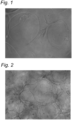
- MSCs Mesenchymal stem cells seeded in scaffold were evaluated through fluorescence microscope. After 15 days of cell seeding in scaffolds, cells were stained with Calcein-AM and DAPI for 30 minute. The cells were washed twice with PBS and observed under fluorescence microscope (Nikon Eclipse Ti U, Japan).
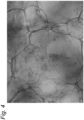
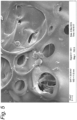
- MSCs Mesenchymal stem cells seeded in scaffold were also evaluated through scanning electron microscope.
- Cells with scaffolds were fixed with 3% glutaraldehyde buffer at 4°C for 2 hrs. and analyze the scaffold in scanning electron microscope.
- Cellular viability of the Mesenchymal stem cells seeded in scaffold was evaluated at different temperature with and without CO 2 for transport of developed product. We have evaluated the cell viability at 4°C, 25°C and 37°C.
- the prepared artificial skin substitute is potential substitute of natural skin and it helps wound healing (burn wound, diabetic foot ulcer and all type other skin wounds).
- Various experiments were conducted to check the said efficacy of artificial skin substitute.
- Cell viability, fluorescence microscopy and scanning electron microscopy confirm the cell growth and distribution at day 15.
- In vivo studies confirmed the potential healing property of prepared artificial skin substitute.
- the present invention is based on an improved three-dimensional scaffold polyelectrolyte complex (PEC) with high porosity, said scaffold comprising of plurality of composite polymers without using any cross-linker or leaching/foaming agents/surfactants or any integrated harmful chemicals, wherein said scaffold is non-adherent and has differential porosity and a method of preparing such scaffold.
- PEC polyelectrolyte complex
- said polymers are preferably selected from but not limited to gelatin, chitosan, collagen, alginate, polyvinyl alcohol, carboxy-methyl cellulose, gelatin hydrolysate, chitosan hydrolysate, partially denatured collagen and hyaluronic acid.
- said polymers are gelatin in the range of 1%-4% and chitosan in the range of 0.5%-2.5%.
- the said gelatin can be 50-300 bloom strength and DAC of chitosan can be ranging from 75%-95%.
- said method of preparing the scaffold comprises physico-chemical treatment; breakdown of stabilized dried air bubbles and stabilizing the scaffold.
- said method comprises sequential timed patterned physico-chemical treatment of the two or more polymers to get air dried 3D scaffold of polyelectrolyte complex (PEC) and also at the same time using a specifically designed aspect ratio of a system for agitation/homogenization.
- PEC polyelectrolyte complex
- a method of preparing three-dimensional scaffold polyelectrolyte complex comprises introducing the breakdown of stabilized dried air bubbles and the preparation of said PEC using a specifically designed aspect ratio of a system for stirring the polymer solution.
- said method comprises stabilizing the scaffold and washing followed by squeezing dry to make it ready to use as cell seeding, growth factor loading etc.
- the preferred aspect ratio are as impeller diameter:height (2.34:1), container diameter:impeller diameter (1.3:1), impeller diameter:shaft diameter (4.4:1) and shaft out:shaft in (2.6:1).
- the obtained 3D scaffold is subjected to break the air bubbles applying pressure ranging from 5kg-50kg/cm 2 , more preferably 0.13bar/cm 2 followed by treatment with ammonia solution (7.5-25%) for 15-45min and washing with ultrapure water (18.5mohm) 4-5 times and squeezed to make the stable and functional scaffold for cell seeding.
- the obtained scaffold is freeze-dried to make the stable scaffold for seeding of autologous or allogeneic human mesenchymal stem cells (MSCs), human fibroblast, human keratinocytes, mesenchymal stem cell differentiated fibroblast and keratinocytes.
- MSCs autologous or allogeneic human mesenchymal stem cells
- human fibroblast human fibroblast
- human keratinocytes mesenchymal stem cell differentiated fibroblast and keratinocytes.
- the mesenchymal stem cells are seeded onto biocompatible scaffold at cell density of 0.1 ⁇ 10 6 to 0.5 ⁇ 10 6 cell/cm 2 .
- the cells are monolayer and 80% to 100% confluent at the final stage of product formulation.
- the cells seeded on scaffold are cultured in serum free and xenofree medium.
- the mesenchymal stem cells are autologous or allogeneic or both.
- the mesenchymal stem cells secrete several growth factors and cytokines (extracellular matrix) helpful in wound healing and tissue regeneration.
- the final product is transported in semi-solid medium.
- the semi-solid medium provides nutrients and support to matrix.
- semi-solid medium is agar medium (1% to 3%) with cell culture medium contains essential growth factors.
- the agar medium contains HEPES 2-3gm/l and sodium bicarbonate 2-4gm/l.
- the semi-solid medium contains agar medium and cell culture medium in the ratio of 5:5, 6:4, 7:3 and 8:2 or any one of them respectively.
- the semi-solid medium maintains the cell viability of matrix between 60% to 90% at the temperature 4°C to 37°C for 28 days.
Landscapes
- Health & Medical Sciences (AREA)
- Life Sciences & Earth Sciences (AREA)
- Chemical & Material Sciences (AREA)
- Medicinal Chemistry (AREA)
- Dermatology (AREA)
- Transplantation (AREA)
- Engineering & Computer Science (AREA)
- Epidemiology (AREA)
- Oral & Maxillofacial Surgery (AREA)
- Animal Behavior & Ethology (AREA)
- General Health & Medical Sciences (AREA)
- Public Health (AREA)
- Veterinary Medicine (AREA)
- Biomedical Technology (AREA)
- Cell Biology (AREA)
- Chemical Kinetics & Catalysis (AREA)
- Zoology (AREA)
- Botany (AREA)
- Urology & Nephrology (AREA)
- Molecular Biology (AREA)
- Hematology (AREA)
- Dispersion Chemistry (AREA)
- Developmental Biology & Embryology (AREA)
- Materials Engineering (AREA)
- Composite Materials (AREA)
- Biophysics (AREA)
- Materials For Medical Uses (AREA)
- Medicines Containing Material From Animals Or Micro-Organisms (AREA)
- Polymers & Plastics (AREA)
- Organic Chemistry (AREA)
- Micro-Organisms Or Cultivation Processes Thereof (AREA)
Claims (11)
- Construction tissulaire issue de la bio-ingénierie comprenant :une monocouche confluente de 80 % à 100 % de cellules cultivées sélectionnées parmi les cellules souches mésenchymateuses, les fibroblastes et les kératinocytes, et les cellules souches mésenchymateuses différenciées en fibroblastes et kératinocytes ; etun complexe polyélectrolytique d'échafaudage tridimensionnel à porosité élevée, ledit échafaudage comprenant une pluralité de polymères composites préparés sans utiliser d'agent de réticulation ou d'agent /tensioactif de lixiviation/moussant ni tout produit chimique nocif intégré,dans laquelle lesdits polymères sont de la gélatine dans la plage de 1 % à 4 % et du chitosane dans la plage de 0,5 % à 2,5 %, etdans laquelle ledit échafaudage est non adhérent et présente une porosité différentielle.
- Construction tissulaire issue de la bio-ingénierie selon la revendication 1, dans laquelle les cellules sont ensemencées sur l'échafaudage et cultivées dans un milieu sans sérum et sans xéno, de préférence dans laquelle lesdites cellules sont des cellules souches mésenchymateuses humaines qui sont ensemencées à une densité cellulaire de 0,1 × 10E6 à 0,5 × 10E6 cellules/cm2.
- Construction tissulaire issue de la bio-ingénierie selon la revendication 1 ou 2, dans laquelle les cellules sont des cellules souches mésenchymateuses humaines et sont autologues ou allogéniques ou les deux, de préférence dans laquelle les cellules souches mésenchymateuses humaines sécrètent des facteurs de croissance et des cytokines utiles dans la cicatrisation des plaies et la régénération des tissus.
- Construction tissulaire issue de la bio-ingénierie selon l'une quelconque des revendications 1 à 3, dans laquelle le complexe polyélectrolytique d'échafaudage tridimensionnel est préparé en introduisant la rupture de bulles d'air séchées stabilisées et la préparation dudit complexe en utilisant un rapport d'aspect spécifiquement conçu d'un système d'agitation d'une solution polymère, dans laquelle les rapports d'aspect préférés sont les suivants: diamètre:hauteur de la roue (2,34: 1), diamètre du récipient:diamètre de la roue (1,3: 1), diamètre de la roue:diamètre de l'arbre (4,4: 1) et sortie de l'arbre:entrée de l'arbre (2,6: 1).
- Construction tissulaire issue de la bio-ingénierie selon l'une quelconque des revendications 1 à 4, comprenant en outre un milieu de transport semi-solide.
- Construction tissulaire issue de la bio-ingénierie selon la revendication 5, dans laquelle le milieu semi-solide contient 1 à 3 % de milieu gélosé avec un milieu de culture cellulaire contenant des facteurs de croissance essentiels, de préférence ledit milieu gélosé contient de 2 à 3 gm/l d'HEPES et de 2 à 4 gm/l de bicarbonate de sodium, de préférence le milieu semi-solide contient du milieu gélose et du milieu de culture cellulaire dans un rapport de 5:5, 6:4, 7:3 ou 8:2.
- Construction tissulaire issue de la bio-ingénierie selon la revendication 6, dans laquelle la viabilité desdites cellules est comprise entre 60 % et 90 % à une température de 4° C à 37° C pendant 28 jours.
- Procédé de préparation d'un tissu issu de la bio-ingénierie comprenant les étapes suivantes :a. Dissolution de 3% de gélatine, à une température de 35 à 75° C, de préférence à 60° C ;b. Agitation de la solution de gélatine à 2500 à 3200 tr/min pendant 20 à 30 min à une température de 15 à 30° C ;c. Ajout d'un acide, de préférence de l'acide acétique glacial (0,5 à 2,5 %), à un taux de 1 mL/min et à une température de 15 à 30° C pendant 5 à 15 min ;d. Ajout de chitosane à une concentration finale de 1 %, de préférence dans lequel le chitosane a un DAC de 80 %, à un taux de 1 mg/mL à 15 à 30° C pendant 80 à 130 minutes pour former une solution de polymère composite ;e. Séchage à l'air de la solution composite préparée à une humidité relative de 5 à 44 % et à une température de 5 à 18 °C, de préférence à une humidité relative de 20 % et à une température de 12° C, pour former un complexe polyélectrolytique à échafaudage tridimensionnel, dans lequel éventuellement l'échafaudage est lyophilisé ;f. Ensemencement de cellules souches mésenchymateuses sur l'échafaudage à une densité cellulaire de 0,1 × 10⁶ à 0,5 × 10⁶ cellules/cm2,
dans lequel éventuellement l'échafaudage obtenu est soumis à une rupture des bulles d'air formées en appliquant une pression allant de 5 kg à 50 kg/cm2, de préférence 0,13 bar/cm2, suivi d'un traitement avec une solution d'ammoniaque à 7,5 à 25 % et d'un lavage avec de l'eau ultra pure (18,5 mohm) 4 à 5 fois et en pressant. - Procédé selon la revendication 8, dans lequel le rapport d'aspect du système pour l'agitation/homogénéisation est le suivant : diamètre:hauteur de la roue (2,34:1), diamètre du récipient:diamètre de la roue (1,3:1), diamètre de la roue:diamètre de l'arbre (4,4:1) et sortie de l'arbre:entrée de l'arbre (2,6:1).
- Tissu issu de la bio-ingénierie selon l'une quelconque des revendications 1 à 7 ou tissu issu de la bio-ingénierie pouvant être obtenu par le procédé selon la revendication 8 ou 9 pour une utilisation dans la régénération tissulaire et la cicatrisation des plaies.
- Tissu issu de bio-ingénierie selon l'une quelconque des revendications 1 à 7 ou tissu issu de bio-ingénierie pouvant être obtenu par le procédé selon les revendications 8 ou 9 destiné à être utilisé dans la greffe sur un patient présentant un défaut de tissu ou d'organe, tel qu'un ulcère cutané ou une plaie.
Applications Claiming Priority (1)
| Application Number | Priority Date | Filing Date | Title |
|---|---|---|---|
| IN201611040491 | 2016-11-28 |
Publications (2)
| Publication Number | Publication Date |
|---|---|
| EP3326660A1 EP3326660A1 (fr) | 2018-05-30 |
| EP3326660B1 true EP3326660B1 (fr) | 2024-08-07 |
Family
ID=59294981
Family Applications (1)
| Application Number | Title | Priority Date | Filing Date |
|---|---|---|---|
| EP17179732.7A Active EP3326660B1 (fr) | 2016-11-28 | 2017-07-05 | Peau artificielle biodégradable et biocompatible prête à l'emploi et son procédé de préparation |
Country Status (5)
| Country | Link |
|---|---|
| US (3) | US10004830B2 (fr) |
| EP (1) | EP3326660B1 (fr) |
| ES (1) | ES2989554T3 (fr) |
| IL (1) | IL253326B (fr) |
| PT (1) | PT3326660T (fr) |
Families Citing this family (6)
| Publication number | Priority date | Publication date | Assignee | Title |
|---|---|---|---|---|
| US10004830B2 (en) | 2016-11-28 | 2018-06-26 | DATT MEDIPRODUCTS LIMITED and DATT LIFE SCIENCE PVT. LTD. | Ready to use biodegradable and biocompatible artificial skin substitute and a method of preparation thereof |
| CN109224129B (zh) * | 2018-09-30 | 2021-09-24 | 四川大学华西医院 | 一种皮肤缺损修复材料 |
| WO2020213002A1 (fr) * | 2019-04-17 | 2020-10-22 | Datt Lifesciences Pvt. Ltd. | Matrice de pansement biocompatible et biodégradable, et sa préparation |
| WO2021059298A1 (fr) * | 2019-09-26 | 2021-04-01 | Indian Institute Of Technology Delhi | Substitut de peau artificielle acellulaire et sa méthode de préparation |
| US11957815B2 (en) * | 2020-07-17 | 2024-04-16 | Datt Life Sciences Private Limited | Ready to use biodegradable and biocompatible cell-based nerve conduit for nerve injury and a method of preparation thereof |
| FR3146590A1 (fr) * | 2023-03-15 | 2024-09-20 | Centre National De La Recherche Scientifique | Matrice 3D poreuse à base de complexes de polyélectrolytes et ses applications |
Citations (1)
| Publication number | Priority date | Publication date | Assignee | Title |
|---|---|---|---|---|
| WO2011151225A1 (fr) * | 2010-06-04 | 2011-12-08 | Universite De Liege | Echafaudages biomimétiques de chitosane et procédés de préparation associés |
Family Cites Families (25)
| Publication number | Priority date | Publication date | Assignee | Title |
|---|---|---|---|---|
| US4485096A (en) | 1982-02-26 | 1984-11-27 | Massachusetts Institute Of Technology | Tissue-equivalent and method for preparation thereof |
| US4963489A (en) | 1987-04-14 | 1990-10-16 | Marrow-Tech, Inc. | Three-dimensional cell and tissue culture system |
| US5882521A (en) | 1996-04-18 | 1999-03-16 | Waters Investment Ltd. | Water-wettable chromatographic media for solid phase extraction |
| AU2808397A (en) | 1996-04-26 | 1997-11-19 | Case Western Reserve University | Skin regeneration using mesenchymal stem cells |
| US6933326B1 (en) | 1998-06-19 | 2005-08-23 | Lifecell Coporation | Particulate acellular tissue matrix |
| US6790455B2 (en) | 2001-09-14 | 2004-09-14 | The Research Foundation At State University Of New York | Cell delivery system comprising a fibrous matrix and cells |
| EP1937326B1 (fr) | 2005-10-21 | 2018-09-12 | CellResearch Corporation Pte Ltd | Isolation et culture de cellules souches/génitrices à partir de la membrane amniotique de cordon ombilical et utilisations des cellules différenciées obtenues ainsi |
| US9217129B2 (en) | 2007-02-09 | 2015-12-22 | Massachusetts Institute Of Technology | Oscillating cell culture bioreactor |
| US8790921B2 (en) | 2007-02-14 | 2014-07-29 | Drexel University | Alimentary protein-based scaffolds (APS) for wound healing, regenerative medicine and drug discovery |
| CN101361990B (zh) | 2008-09-03 | 2012-09-19 | 陕西瑞盛生物科技有限公司 | 一种双层人工皮肤及其制备方法 |
| CN101361989B (zh) | 2008-09-03 | 2012-09-19 | 陕西瑞盛生物科技有限公司 | 双层膜状组织修补材料及其制备方法 |
| WO2011063152A1 (fr) | 2009-11-18 | 2011-05-26 | Affinergy, Inc. | Procédés et compositions pour la réparation de tissu mou |
| CN102198156A (zh) | 2010-03-26 | 2011-09-28 | 傅毓秀 | 用于治疗皮肤创伤之医药组合物 |
| US8877498B2 (en) * | 2010-12-01 | 2014-11-04 | Drexel University | Porous polymer scaffolds for neural tissue engineering and methods of producing the same |
| CN102172337B (zh) | 2011-02-18 | 2013-10-23 | 中国人民解放军第四军医大学 | 具有皮脂腺样结构的组织工程皮肤及其制备方法 |
| WO2012121451A1 (fr) | 2011-03-08 | 2012-09-13 | 연세대학교 산학협력단 | Méthode d'induction de la migration in vivo des cellules souches |
| US9155607B2 (en) | 2011-11-16 | 2015-10-13 | Purdue Research Foundation | Compositions and methods for repair or regeneration of soft tissue |
| KR101335176B1 (ko) | 2011-12-12 | 2013-11-29 | 테고사이언스 (주) | 상처 치유용 드레싱재제 |
| EP3122300B1 (fr) * | 2014-03-24 | 2020-03-11 | Datt Life Sciences Private Limited | Dispositif biodégradable et biocompatible prêt à l'emploi et son procédé de fabrication |
| CN104312970A (zh) | 2014-09-19 | 2015-01-28 | 朱宁文 | 一种细胞治疗用临床治疗级表皮干细胞应用人类细胞外基质筛选及规模化培养制备方法 |
| CN104263699A (zh) | 2014-09-19 | 2015-01-07 | 江苏华亿细胞组织工程有限公司 | 细胞移植用临床治疗级真皮多能干细胞规模化制备培养方法 |
| KR101617673B1 (ko) | 2014-10-29 | 2016-05-03 | 재단법인대구경북과학기술원 | 성체줄기세포 및 엘라스틴 유사 폴리펩타이드를 포함하는 상처 치료 촉진용 약학적 조성물 |
| JP6113133B2 (ja) | 2014-11-06 | 2017-04-12 | 日本メナード化粧品株式会社 | 幹細胞の未分化状態維持剤及び増殖促進剤 |
| KR20150088228A (ko) | 2015-07-13 | 2015-07-31 | 학교법인 동아학숙 | 양막 간엽줄기세포를 포함하는 피부 손상 치료용 조성물 |
| US10004830B2 (en) | 2016-11-28 | 2018-06-26 | DATT MEDIPRODUCTS LIMITED and DATT LIFE SCIENCE PVT. LTD. | Ready to use biodegradable and biocompatible artificial skin substitute and a method of preparation thereof |
-
2017
- 2017-04-12 US US15/485,358 patent/US10004830B2/en active Active - Reinstated
- 2017-07-05 ES ES17179732T patent/ES2989554T3/es active Active
- 2017-07-05 EP EP17179732.7A patent/EP3326660B1/fr active Active
- 2017-07-05 PT PT171797327T patent/PT3326660T/pt unknown
- 2017-07-05 IL IL253326A patent/IL253326B/en unknown
-
2018
- 2018-06-15 US US16/009,468 patent/US10098986B1/en active Active
- 2018-08-22 US US16/108,155 patent/US10149924B1/en active Active
Patent Citations (1)
| Publication number | Priority date | Publication date | Assignee | Title |
|---|---|---|---|---|
| WO2011151225A1 (fr) * | 2010-06-04 | 2011-12-08 | Universite De Liege | Echafaudages biomimétiques de chitosane et procédés de préparation associés |
Also Published As
| Publication number | Publication date |
|---|---|
| ES2989554T3 (es) | 2024-11-27 |
| US20180147324A1 (en) | 2018-05-31 |
| US10098986B1 (en) | 2018-10-16 |
| US10004830B2 (en) | 2018-06-26 |
| IL253326B (en) | 2021-09-30 |
| IL253326A0 (en) | 2017-09-28 |
| PT3326660T (pt) | 2024-10-10 |
| US20180289865A1 (en) | 2018-10-11 |
| US20180353655A1 (en) | 2018-12-13 |
| US10149924B1 (en) | 2018-12-11 |
| EP3326660A1 (fr) | 2018-05-30 |
Similar Documents
| Publication | Publication Date | Title |
|---|---|---|
| US10149924B1 (en) | Ready to use biodegradable and biocompatible artificial skin substitute and a method of preparation thereof | |
| JP2834155B2 (ja) | コラーゲンフレーク体 | |
| Wang et al. | Regenerative porcine dermal collagen matrix developed by supercritical carbon dioxide extraction technology: Role in accelerated wound healing | |
| RU2645473C2 (ru) | Тканевые конструкции, полученные с помощью биоинженерии, и способы их получения и применения | |
| Clark et al. | Tissue engineering for cutaneous wounds | |
| Jones et al. | A guide to biological skin substitutes | |
| KR101495281B1 (ko) | 피부 재생 또는 상처 치유를 위한 중간엽 줄기세포-하이드로겔-생분해성 또는 중간엽 줄기세포-하이드로겔-비분해성 지지체 조성물 | |
| Mazlyzam et al. | Reconstruction of living bilayer human skin equivalent utilizing human fibrin as a scaffold | |
| Macri et al. | Tissue engineering for cutaneous wounds: selecting the proper time and space for growth factors, cells and the extracellular matrix | |
| Bellas et al. | Sustained volume retention in vivo with adipocyte and lipoaspirate seeded silk scaffolds | |
| Fang et al. | Clinical application of cultured epithelial autografts on acellular dermal matrices in the treatment of extended burn injuries | |
| Nilforoushzadeh et al. | Tissue engineering in dermatology-from lab to market | |
| US20200078492A1 (en) | Process for obtaining a functional dermal substitute of decellurized amniotic membrane from the placenta combination with keratinocytes and its use as an agent for tissue regeneration of the skin | |
| Pu et al. | Injectable human decellularized adipose tissue hydrogel containing stem cells enhances wound healing in mouse | |
| CN105816915A (zh) | 间充质干细胞组织工程支架及其制备方法和应用 | |
| Martin et al. | Producing prefabricated tissues and organs via tissue engineering | |
| Yu et al. | A sericin scaffold loaded with supernatant from mesenchymal stem cells exposed to pro-inflammatory cytokines enhances wound healing | |
| US12397085B2 (en) | Producing method of the collagen-laminin matrix for healing ulcers, burns and wounds of a human skin | |
| WO2007099551A2 (fr) | Revêtement interactif pour plaies | |
| Kumar et al. | Scaffolds for epidermal tissue engineering | |
| Krivoshchekov et al. | Application of bioplastic, cellular and biological material for the healing of the wounds | |
| Dias-Ferreira et al. | Applications of biomaterials in wound healing management: from fundamental physiology to advanced technology | |
| US20210015973A1 (en) | Human nipple areolar complex extracellular matrix scaffold and methods relating thereto | |
| Ivan et al. | Perinatal Cells and Biomaterials for Wound Healing | |
| Vellachi et al. | Fish swim bladder–derived tissue scaffolds |
Legal Events
| Date | Code | Title | Description |
|---|---|---|---|
| PUAI | Public reference made under article 153(3) epc to a published international application that has entered the european phase |
Free format text: ORIGINAL CODE: 0009012 |
|
| STAA | Information on the status of an ep patent application or granted ep patent |
Free format text: STATUS: THE APPLICATION HAS BEEN PUBLISHED |
|
| AK | Designated contracting states |
Kind code of ref document: A1 Designated state(s): AL AT BE BG CH CY CZ DE DK EE ES FI FR GB GR HR HU IE IS IT LI LT LU LV MC MK MT NL NO PL PT RO RS SE SI SK SM TR |
|
| AX | Request for extension of the european patent |
Extension state: BA ME |
|
| STAA | Information on the status of an ep patent application or granted ep patent |
Free format text: STATUS: REQUEST FOR EXAMINATION WAS MADE |
|
| RAP1 | Party data changed (applicant data changed or rights of an application transferred) |
Owner name: DATT LIFE SCIENCE PVT. LTD |
|
| 17P | Request for examination filed |
Effective date: 20181128 |
|
| RBV | Designated contracting states (corrected) |
Designated state(s): AL AT BE BG CH CY CZ DE DK EE ES FI FR GB GR HR HU IE IS IT LI LT LU LV MC MK MT NL NO PL PT RO RS SE SI SK SM TR |
|
| STAA | Information on the status of an ep patent application or granted ep patent |
Free format text: STATUS: EXAMINATION IS IN PROGRESS |
|
| 17Q | First examination report despatched |
Effective date: 20200116 |
|
| GRAP | Despatch of communication of intention to grant a patent |
Free format text: ORIGINAL CODE: EPIDOSNIGR1 |
|
| STAA | Information on the status of an ep patent application or granted ep patent |
Free format text: STATUS: GRANT OF PATENT IS INTENDED |
|
| INTG | Intention to grant announced |
Effective date: 20240130 |
|
| RAP1 | Party data changed (applicant data changed or rights of an application transferred) |
Owner name: AYU MEDICAL LIMITED Owner name: DATT LIFE SCIENCE PVT. LTD |
|
| RAP1 | Party data changed (applicant data changed or rights of an application transferred) |
Owner name: AYU MEDICAL LIMITED |
|
| GRAS | Grant fee paid |
Free format text: ORIGINAL CODE: EPIDOSNIGR3 |
|
| GRAA | (expected) grant |
Free format text: ORIGINAL CODE: 0009210 |
|
| STAA | Information on the status of an ep patent application or granted ep patent |
Free format text: STATUS: THE PATENT HAS BEEN GRANTED |
|
| AK | Designated contracting states |
Kind code of ref document: B1 Designated state(s): AL AT BE BG CH CY CZ DE DK EE ES FI FR GB GR HR HU IE IS IT LI LT LU LV MC MK MT NL NO PL PT RO RS SE SI SK SM TR |
|
| REG | Reference to a national code |
Ref country code: GB Ref legal event code: FG4D |
|
| REG | Reference to a national code |
Ref country code: CH Ref legal event code: EP |
|
| REG | Reference to a national code |
Ref country code: IE Ref legal event code: FG4D |
|
| REG | Reference to a national code |
Ref country code: DE Ref legal event code: R096 Ref document number: 602017083836 Country of ref document: DE |
|
| REG | Reference to a national code |
Ref country code: PT Ref legal event code: SC4A Ref document number: 3326660 Country of ref document: PT Date of ref document: 20241010 Kind code of ref document: T Free format text: AVAILABILITY OF NATIONAL TRANSLATION Effective date: 20241004 |
|
| REG | Reference to a national code |
Ref country code: NL Ref legal event code: FP |
|
| REG | Reference to a national code |
Ref country code: LT Ref legal event code: MG9D |
|
| REG | Reference to a national code |
Ref country code: ES Ref legal event code: FG2A Ref document number: 2989554 Country of ref document: ES Kind code of ref document: T3 Effective date: 20241127 |
|
| PG25 | Lapsed in a contracting state [announced via postgrant information from national office to epo] |
Ref country code: NO Free format text: LAPSE BECAUSE OF FAILURE TO SUBMIT A TRANSLATION OF THE DESCRIPTION OR TO PAY THE FEE WITHIN THE PRESCRIBED TIME-LIMIT Effective date: 20241107 |
|
| REG | Reference to a national code |
Ref country code: AT Ref legal event code: MK05 Ref document number: 1710216 Country of ref document: AT Kind code of ref document: T Effective date: 20240807 |
|
| PG25 | Lapsed in a contracting state [announced via postgrant information from national office to epo] |
Ref country code: PL Free format text: LAPSE BECAUSE OF FAILURE TO SUBMIT A TRANSLATION OF THE DESCRIPTION OR TO PAY THE FEE WITHIN THE PRESCRIBED TIME-LIMIT Effective date: 20240807 Ref country code: FI Free format text: LAPSE BECAUSE OF FAILURE TO SUBMIT A TRANSLATION OF THE DESCRIPTION OR TO PAY THE FEE WITHIN THE PRESCRIBED TIME-LIMIT Effective date: 20240807 Ref country code: GR Free format text: LAPSE BECAUSE OF FAILURE TO SUBMIT A TRANSLATION OF THE DESCRIPTION OR TO PAY THE FEE WITHIN THE PRESCRIBED TIME-LIMIT Effective date: 20241108 |
|
| PG25 | Lapsed in a contracting state [announced via postgrant information from national office to epo] |
Ref country code: BG Free format text: LAPSE BECAUSE OF FAILURE TO SUBMIT A TRANSLATION OF THE DESCRIPTION OR TO PAY THE FEE WITHIN THE PRESCRIBED TIME-LIMIT Effective date: 20240807 |
|
| PG25 | Lapsed in a contracting state [announced via postgrant information from national office to epo] |
Ref country code: LV Free format text: LAPSE BECAUSE OF FAILURE TO SUBMIT A TRANSLATION OF THE DESCRIPTION OR TO PAY THE FEE WITHIN THE PRESCRIBED TIME-LIMIT Effective date: 20240807 |
|
| PG25 | Lapsed in a contracting state [announced via postgrant information from national office to epo] |
Ref country code: AT Free format text: LAPSE BECAUSE OF FAILURE TO SUBMIT A TRANSLATION OF THE DESCRIPTION OR TO PAY THE FEE WITHIN THE PRESCRIBED TIME-LIMIT Effective date: 20240807 Ref country code: IS Free format text: LAPSE BECAUSE OF FAILURE TO SUBMIT A TRANSLATION OF THE DESCRIPTION OR TO PAY THE FEE WITHIN THE PRESCRIBED TIME-LIMIT Effective date: 20241207 |
|
| PG25 | Lapsed in a contracting state [announced via postgrant information from national office to epo] |
Ref country code: HR Free format text: LAPSE BECAUSE OF FAILURE TO SUBMIT A TRANSLATION OF THE DESCRIPTION OR TO PAY THE FEE WITHIN THE PRESCRIBED TIME-LIMIT Effective date: 20240807 |
|
| PG25 | Lapsed in a contracting state [announced via postgrant information from national office to epo] |
Ref country code: RS Free format text: LAPSE BECAUSE OF FAILURE TO SUBMIT A TRANSLATION OF THE DESCRIPTION OR TO PAY THE FEE WITHIN THE PRESCRIBED TIME-LIMIT Effective date: 20241107 |
|
| PG25 | Lapsed in a contracting state [announced via postgrant information from national office to epo] |
Ref country code: RS Free format text: LAPSE BECAUSE OF FAILURE TO SUBMIT A TRANSLATION OF THE DESCRIPTION OR TO PAY THE FEE WITHIN THE PRESCRIBED TIME-LIMIT Effective date: 20241107 Ref country code: PL Free format text: LAPSE BECAUSE OF FAILURE TO SUBMIT A TRANSLATION OF THE DESCRIPTION OR TO PAY THE FEE WITHIN THE PRESCRIBED TIME-LIMIT Effective date: 20240807 Ref country code: NO Free format text: LAPSE BECAUSE OF FAILURE TO SUBMIT A TRANSLATION OF THE DESCRIPTION OR TO PAY THE FEE WITHIN THE PRESCRIBED TIME-LIMIT Effective date: 20241107 Ref country code: LV Free format text: LAPSE BECAUSE OF FAILURE TO SUBMIT A TRANSLATION OF THE DESCRIPTION OR TO PAY THE FEE WITHIN THE PRESCRIBED TIME-LIMIT Effective date: 20240807 Ref country code: IS Free format text: LAPSE BECAUSE OF FAILURE TO SUBMIT A TRANSLATION OF THE DESCRIPTION OR TO PAY THE FEE WITHIN THE PRESCRIBED TIME-LIMIT Effective date: 20241207 Ref country code: HR Free format text: LAPSE BECAUSE OF FAILURE TO SUBMIT A TRANSLATION OF THE DESCRIPTION OR TO PAY THE FEE WITHIN THE PRESCRIBED TIME-LIMIT Effective date: 20240807 Ref country code: GR Free format text: LAPSE BECAUSE OF FAILURE TO SUBMIT A TRANSLATION OF THE DESCRIPTION OR TO PAY THE FEE WITHIN THE PRESCRIBED TIME-LIMIT Effective date: 20241108 Ref country code: FI Free format text: LAPSE BECAUSE OF FAILURE TO SUBMIT A TRANSLATION OF THE DESCRIPTION OR TO PAY THE FEE WITHIN THE PRESCRIBED TIME-LIMIT Effective date: 20240807 Ref country code: BG Free format text: LAPSE BECAUSE OF FAILURE TO SUBMIT A TRANSLATION OF THE DESCRIPTION OR TO PAY THE FEE WITHIN THE PRESCRIBED TIME-LIMIT Effective date: 20240807 Ref country code: AT Free format text: LAPSE BECAUSE OF FAILURE TO SUBMIT A TRANSLATION OF THE DESCRIPTION OR TO PAY THE FEE WITHIN THE PRESCRIBED TIME-LIMIT Effective date: 20240807 |
|
| PG25 | Lapsed in a contracting state [announced via postgrant information from national office to epo] |
Ref country code: RO Free format text: LAPSE BECAUSE OF FAILURE TO SUBMIT A TRANSLATION OF THE DESCRIPTION OR TO PAY THE FEE WITHIN THE PRESCRIBED TIME-LIMIT Effective date: 20240807 Ref country code: SM Free format text: LAPSE BECAUSE OF FAILURE TO SUBMIT A TRANSLATION OF THE DESCRIPTION OR TO PAY THE FEE WITHIN THE PRESCRIBED TIME-LIMIT Effective date: 20240807 Ref country code: DK Free format text: LAPSE BECAUSE OF FAILURE TO SUBMIT A TRANSLATION OF THE DESCRIPTION OR TO PAY THE FEE WITHIN THE PRESCRIBED TIME-LIMIT Effective date: 20240807 |
|
| PG25 | Lapsed in a contracting state [announced via postgrant information from national office to epo] |
Ref country code: EE Free format text: LAPSE BECAUSE OF FAILURE TO SUBMIT A TRANSLATION OF THE DESCRIPTION OR TO PAY THE FEE WITHIN THE PRESCRIBED TIME-LIMIT Effective date: 20240807 |
|
| PG25 | Lapsed in a contracting state [announced via postgrant information from national office to epo] |
Ref country code: CZ Free format text: LAPSE BECAUSE OF FAILURE TO SUBMIT A TRANSLATION OF THE DESCRIPTION OR TO PAY THE FEE WITHIN THE PRESCRIBED TIME-LIMIT Effective date: 20240807 |
|
| PG25 | Lapsed in a contracting state [announced via postgrant information from national office to epo] |
Ref country code: SK Free format text: LAPSE BECAUSE OF FAILURE TO SUBMIT A TRANSLATION OF THE DESCRIPTION OR TO PAY THE FEE WITHIN THE PRESCRIBED TIME-LIMIT Effective date: 20240807 |
|
| P01 | Opt-out of the competence of the unified patent court (upc) registered |
Free format text: CASE NUMBER: APP_14171/2025 Effective date: 20250321 |
|
| REG | Reference to a national code |
Ref country code: DE Ref legal event code: R097 Ref document number: 602017083836 Country of ref document: DE |
|
| PLBE | No opposition filed within time limit |
Free format text: ORIGINAL CODE: 0009261 |
|
| STAA | Information on the status of an ep patent application or granted ep patent |
Free format text: STATUS: NO OPPOSITION FILED WITHIN TIME LIMIT |
|
| PGFP | Annual fee paid to national office [announced via postgrant information from national office to epo] |
Ref country code: GB Payment date: 20250619 Year of fee payment: 9 |
|
| 26N | No opposition filed |
Effective date: 20250508 |
|
| PGFP | Annual fee paid to national office [announced via postgrant information from national office to epo] |
Ref country code: PT Payment date: 20250625 Year of fee payment: 9 |
|
| PGFP | Annual fee paid to national office [announced via postgrant information from national office to epo] |
Ref country code: NL Payment date: 20250703 Year of fee payment: 9 |
|
| PG25 | Lapsed in a contracting state [announced via postgrant information from national office to epo] |
Ref country code: SE Free format text: LAPSE BECAUSE OF FAILURE TO SUBMIT A TRANSLATION OF THE DESCRIPTION OR TO PAY THE FEE WITHIN THE PRESCRIBED TIME-LIMIT Effective date: 20240807 |
|
| PGFP | Annual fee paid to national office [announced via postgrant information from national office to epo] |
Ref country code: ES Payment date: 20250805 Year of fee payment: 9 |
|
| PGFP | Annual fee paid to national office [announced via postgrant information from national office to epo] |
Ref country code: DE Payment date: 20250709 Year of fee payment: 9 |
|
| PGFP | Annual fee paid to national office [announced via postgrant information from national office to epo] |
Ref country code: BE Payment date: 20250716 Year of fee payment: 9 |
|
| PGFP | Annual fee paid to national office [announced via postgrant information from national office to epo] |
Ref country code: FR Payment date: 20250703 Year of fee payment: 9 |
|
| PGFP | Annual fee paid to national office [announced via postgrant information from national office to epo] |
Ref country code: CH Payment date: 20250808 Year of fee payment: 9 |
|
| PGFP | Annual fee paid to national office [announced via postgrant information from national office to epo] |
Ref country code: IE Payment date: 20250703 Year of fee payment: 9 |
|
| PG25 | Lapsed in a contracting state [announced via postgrant information from national office to epo] |
Ref country code: LU Free format text: LAPSE BECAUSE OF NON-PAYMENT OF DUE FEES Effective date: 20250705 |