EP3328074B1 - Système et procédé de capture et de présentation d'images vidéo - Google Patents
Système et procédé de capture et de présentation d'images vidéo Download PDFInfo
- Publication number
- EP3328074B1 EP3328074B1 EP17170350.7A EP17170350A EP3328074B1 EP 3328074 B1 EP3328074 B1 EP 3328074B1 EP 17170350 A EP17170350 A EP 17170350A EP 3328074 B1 EP3328074 B1 EP 3328074B1
- Authority
- EP
- European Patent Office
- Prior art keywords
- video
- camera
- remote server
- local remote
- computer
- Prior art date
- Legal status (The legal status is an assumption and is not a legal conclusion. Google has not performed a legal analysis and makes no representation as to the accuracy of the status listed.)
- Active
Links
Images



Classifications
-
- H—ELECTRICITY
- H04—ELECTRIC COMMUNICATION TECHNIQUE
- H04N—PICTORIAL COMMUNICATION, e.g. TELEVISION
- H04N7/00—Television systems
- H04N7/14—Systems for two-way working
-
- H—ELECTRICITY
- H04—ELECTRIC COMMUNICATION TECHNIQUE
- H04N—PICTORIAL COMMUNICATION, e.g. TELEVISION
- H04N23/00—Cameras or camera modules comprising electronic image sensors; Control thereof
- H04N23/90—Arrangement of cameras or camera modules, e.g. multiple cameras in TV studios or sports stadiums
-
- G—PHYSICS
- G08—SIGNALLING
- G08G—TRAFFIC CONTROL SYSTEMS
- G08G1/00—Traffic control systems for road vehicles
- G08G1/01—Detecting movement of traffic to be counted or controlled
- G08G1/04—Detecting movement of traffic to be counted or controlled using optical or ultrasonic detectors
-
- H—ELECTRICITY
- H04—ELECTRIC COMMUNICATION TECHNIQUE
- H04N—PICTORIAL COMMUNICATION, e.g. TELEVISION
- H04N21/00—Selective content distribution, e.g. interactive television or video on demand [VOD]
- H04N21/20—Servers specifically adapted for the distribution of content, e.g. VOD servers; Operations thereof
- H04N21/21—Server components or server architectures
- H04N21/218—Source of audio or video content, e.g. local disk arrays
- H04N21/21805—Source of audio or video content, e.g. local disk arrays enabling multiple viewpoints, e.g. using a plurality of cameras
-
- H—ELECTRICITY
- H04—ELECTRIC COMMUNICATION TECHNIQUE
- H04N—PICTORIAL COMMUNICATION, e.g. TELEVISION
- H04N21/00—Selective content distribution, e.g. interactive television or video on demand [VOD]
- H04N21/20—Servers specifically adapted for the distribution of content, e.g. VOD servers; Operations thereof
- H04N21/21—Server components or server architectures
- H04N21/218—Source of audio or video content, e.g. local disk arrays
- H04N21/2187—Live feed
-
- H—ELECTRICITY
- H04—ELECTRIC COMMUNICATION TECHNIQUE
- H04N—PICTORIAL COMMUNICATION, e.g. TELEVISION
- H04N21/00—Selective content distribution, e.g. interactive television or video on demand [VOD]
- H04N21/40—Client devices specifically adapted for the reception of or interaction with content, e.g. set-top-box [STB]; Operations thereof
- H04N21/47—End-user applications
- H04N21/472—End-user interface for requesting content, additional data or services; End-user interface for interacting with content, e.g. for content reservation or setting reminders, for requesting event notification, for manipulating displayed content
- H04N21/47202—End-user interface for requesting content, additional data or services; End-user interface for interacting with content, e.g. for content reservation or setting reminders, for requesting event notification, for manipulating displayed content for requesting content on demand, e.g. video on demand
-
- H—ELECTRICITY
- H04—ELECTRIC COMMUNICATION TECHNIQUE
- H04N—PICTORIAL COMMUNICATION, e.g. TELEVISION
- H04N21/00—Selective content distribution, e.g. interactive television or video on demand [VOD]
- H04N21/80—Generation or processing of content or additional data by content creator independently of the distribution process; Content per se
- H04N21/83—Generation or processing of protective or descriptive data associated with content; Content structuring
- H04N21/84—Generation or processing of descriptive data, e.g. content descriptors
-
- H—ELECTRICITY
- H04—ELECTRIC COMMUNICATION TECHNIQUE
- H04N—PICTORIAL COMMUNICATION, e.g. TELEVISION
- H04N23/00—Cameras or camera modules comprising electronic image sensors; Control thereof
- H04N23/60—Control of cameras or camera modules
-
- H—ELECTRICITY
- H04—ELECTRIC COMMUNICATION TECHNIQUE
- H04N—PICTORIAL COMMUNICATION, e.g. TELEVISION
- H04N7/00—Television systems
- H04N7/18—Closed-circuit television [CCTV] systems, i.e. systems in which the video signal is not broadcast
- H04N7/181—Closed-circuit television [CCTV] systems, i.e. systems in which the video signal is not broadcast for receiving images from a plurality of remote sources
Definitions
- the present disclosure relates generally to a system and method for providing computer network users video segments captured by a plurality of distributed cameras. More particularly, the present disclosure relates to a system and method for providing updated and accurate video segments of variable duration taken at varying time intervals of vehicular and pedestrian traffic at international border crossings and the like.
- U.S. Patent No. 7,739,332 to Patton et al. is directed to a system and method for providing users live streaming video of traffic conditions from a plurality of cameras.
- the system and method employs image cache memories to reduce latency in providing the user requested video. Because this system and method is streaming live video, the bandwidth, server requirements, and costs for maintaining such a system can be prohibitive.
- streaming video is inherently problematic suffering from delayed starts, poor video quality, and long buffering interruptions.
- Streaming video systems must process incoming video every hour of every day and requires one extra bandwidth internet connection per shot per camera. Thus, each camera is a separate process with its own Internet Service Provider (ISP) fees.
- ISP Internet Service Provider
- International application WO 01/13637 A1 is directed to a video management system which provides live digital video signals from a number of cameras to a number of client terminals, via a computer communications network, in real time.
- the system stores live video signals in response to a video recording trigger which may be either a schedule, an event, or an operator action.
- surveillance video systems are widely available to provide live or recorded video images. These systems typically require video recording software that must record video 24 hours a day 7 days a week leading to potential disc problems at the remote server over time. Because the surveillance video system requires video recording software, implementation of the system and method of the present disclosure would necessitate functionality with the recording software leading to lengthy processing times and increased resource requirements. A need therefore exists for a reliable and affordable system for providing users near real-time video footage of current conditions.
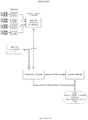
- FIG. 1 illustrative of a prior art system
- the illustrative prior art system for streaming video requires one camera for each shot to be captured and each such camera requires its own high speed modem to connect to a streaming server.
- each camera is a separate process requiring processing activity of the incoming video stream 24 hours a day 7 days a week.
- bandwidth is required to transmit streaming video from the camera to the user requesting the video.
- this extra bandwidth requirement increases the monthly ISP charges.
- each camera is capable of capturing multiple shots.
- one camera in the presently disclosed system is capable of capturing 4 different shots in essence doing the job of 4 cameras in the illustrative prior art system.
- the representative monthly ISP charges for one camera in the presently disclosed system is approximately $40.00 per month.
- the representative monthly ISP charges for one camera is approximately $100.00 per month.
- the monthly ISP charges are $40.00 and $400.00 respectively.
- the illustrative prior art system also requires monthly per camera charges for processing and streaming equaling approximately $500.00.
- the total monthly costs are $40.00 and $2400.00 respectively. Absent in this calculation are one time costs for installation and domain server or site lease costs. Of course installation costs would be higher for the illustrative prior art system due to increased hardware and camera requirements. Domain server and site lease costs are approximately equivalent in each system.
- the system 100 comprises at least one camera 102 , at least one local remote server 106 , a computing system 104 , and a modem 108 .
- the at least one camera 102 will be, for example, a fixed mount megapixel camera.
- the at least one camera 102 can be a day/night, internet protocol Axis 223M camera or the like.
- the at least one camera 102 is in communication with at least one local remote server 106 .
- Forming a part of the at least one local remote server 102 is a computing system 104 .
- the computing system 104 will be a PC, Mac, or any embedded computing system such as a system on a chip.
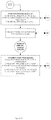
- the computing system 104 manages the capturing of the video segment by the at least one camera 102 for a predetermined duration at predetermined time intervals.
- the computing system 104 sends a command 112 to the at least one camera 102 to execute a preprogrammed specific routine.
- the at least one camera 102 can be triggered to execute the routine by an Application Programming Interface (API) command sent to the camera by Internet Protocol (IP) interface, by the camera's native interface, or by custom applications.
- API Application Programming Interface
- the at least one camera 102 can be set to execute various commands by programming events and send the corresponding event ID to the camera.
- the camera is tasked to capture a ten second video segment every ten minutes.
- the duration and interval of the video segment will be for example, between five seconds and sixty seconds every five minutes to thirty minutes, preferably between five seconds and thirty seconds every five minutes to twenty minutes, and particularly preferably between five seconds and fifteen seconds every ten minutes to fifteen minutes.
- the final programmed duration and interval will depend on the end use application. For example, in monitoring border crossing traffic, a ten second clip taken every ten minutes to fifteen minutes is most useful for showing traffic congestion and offers enough information on traffic flow for the user to make an informed decision on when and where to cross.
- the at least one camera 102 sends the ten second video segment by internal File Transfer Protocol (FTP) 114 to the local remote server 106 and/or to a local storage hard drive (not shown) for storage in the correct directory in the recommended format determined by type of camera used in the system.
- FTP File Transfer Protocol
- the format may be a Motion JPEG format.
- the computing system 104 will then continue to send commands 116 to the at least one camera 102 forming a part of the system 100 .
- the additional commands will be sent to any camera forming a part of the system 100 to capture additional shots or to cameras configured with Pan, Tilt, and Zoom (PTZ) capabilities enabling the camera to retrieve an unlimited number of different video segments due to the ability to see an entire hemisphere by mechanically changing the lens location and zoom.
- PTZ Pan, Tilt, and Zoom
- initial processing 118 will entail using an open source program or any appropriate compilation software to rename the video segment MJPEG in sequence based upon the requirements of the video compilation software used. Additionally, this program will be used to crop large shots to produce several video segments from one stream. Each cropped shot them becomes a separate video segment. The open source program then sets a final output size, which the video segment is forced into, for a standard viewer size.
- the individual MJPEG's are assembled into a video stream using available open source programs or any other appropriate program 120 .
- the selected program enables the overlay of a mask or logo and subsequently outputs the video file in the correct format using a selected CODEC with an added time code for identification at the domain server 120 .
- the video format will be a Flash, SWF, MPEG-2, MPEG-4, H.263, H.264, and OGG-Theora or other suitable format.
- a connection 122 is made to a remote domain server 110 , using a cable or DSL modem, dial-up modem or wireless internet connection.
- the processed video file is uploaded to the remote domain server 110 by way of FTP 122 .
- All image files are then deleted from all working directories for all cameras 124 forming a part of the system 100 .
- the video file is converted into suitable formats 126 for playback on multiple display and computing devices including desktop and laptop computers, mobile devices, and Apple® devices.
- the format will include for example, Flash, SWF, MPEG-2, MPEG-4, H.263, H.264, and OGG-Theora or other suitable format.
- the video file is place in the appropriate directory for access through a website 126 .
- the domain server 110 sends the most recent video for the location and camera selected by the user.
- one of the at least one camera 102 will be designated as an on-site security camera.
- the security camera (not shown) will be for example, a motion activated camera configured to capture video of the remote box 200 installation and alert personnel if tampering of the remote box 200 occurs.
- tamper alerts installed with the remote box 200 are tamper alerts, which will be in the form of a strobe light and buzzer (not shown). In the event of tampering with the remote box 200 , the strobe light and buzzer will be activated and an alert sent to the appropriate personnel.
- the local remote server 106 will be powered by 120 VAC and run through a substantial Uninterruptible Power Supply (UPS) 204 , which will be housed within the remote box 200 or separately and vented naturally or cooled by fan. In the event the power supply to the remote box 200 will fail, the UPS 204 is capable of supplying at least eight hours of power to the remote box 200 .
- the local remote server as envisioned herein, can likewise be powered by 220 VAC as well as other voltages as known in the art.
- the local remote server 106 is a networked server and connects to a network via a high speed cable or DSL modem 108 . Additionally, as a backup to the high speed modem, the local remote server 106 is capable of connection to a network via a dial-up modem 206 or through a cellular wireless connection 208 .
- the local remote server 106 includes a processor, a memory coupled to the processor and at least a single database operatively stored in the memory.
- a database is operatively loaded into the memory and includes instructions executable by the processor to send commands to the at least one camera 102 to capture video segments of a predetermined duration at predetermined time intervals.
- the instructions executable by the processor can send additional requests to the cameras 102 for capturing additional shots such as cameras with PTZ capabilities.
- the instructions executable by the processor causes the deletion of all image files from all working directories upon successful upload of the video file to the domain server 110 .
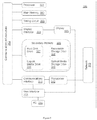
- FIG. 5 a generalized block diagram of an exemplary computer system is depicted.
- the computer system is illustrative of a local remote server 106 and plurality of networked clients (not shown).
- the local remote server 106 includes a communications infrastructure 316 used to transfer data and memory addresses where data files are to be found and control signals among the various components and subsystems associated with the local remote server 106 .
- the communications infrastructure 316 provides the input/output (I/O) between and among the various components and subsystems associated with the local remote server 106 .
- a processor 301 is provided to interpret and execute logical instructions stored in the memory 302 .
- processors 301 will be provided in various server implementations and/or in multi-core integrated processor packages.
- the main memory 302 is the primary general purpose storage area for instructions and data to be processed by the processor 301 .
- the term "memory” is to be interpreted in its broadest sense and includes both main memory 302 and secondary memory 306 .
- a collective term of "computer readable storage medium,” will be used to describe either or both the main memory 302 and secondary memory 306 as well.
- references to the term “datastore” should be interpreted as an alternative to the terms “memory,” and “computer readable storage medium.”
- the memory includes the primary 302 and secondary memory 306 .
- a timing circuit 303 is provided to coordinate programmatic activities within the computer in near real time.
- the timing circuit 303 will be used as a watchdog timer, clock or a counter arrangement and may be separately programmable.
- the processor 301 , main memory 302 and timing circuit 303 are directly coupled to the communications infrastructure 316 .
- a display interface 304 will be provided to drive a display 305 associated with the local remote server 106 .
- the display interface 304 is electrically coupled to the communications infrastructure 316 and provides signals to the display 305 for visually outputting both graphical displays and alphanumeric characters.
- the display interface 304 includes a dedicated graphics processor and memory (not shown) to support the displaying of graphics intensive media.
- the display 305 will be of any type (e.g., cathode ray tube, gas plasma) but in most circumstances will usually be a solid state device such as liquid crystal display (LCD.)
- a secondary memory subsystem 306 is provided which houses retrievable data storage units such as a hard disk drive 307 , an optional removable storage drive 308 , an optional logical media storage drive 309 and an optional optical media storage drive 310 .
- Non-volatile media include, for example, optical or magnetic disks forming a part of secondary memory 306 .
- Volatile media include dynamic memory, such as main memory 302 .
- Transmission media include coaxial cables, copper wire, fiber optics and acoustic or light wave, such as those generated during radio frequency and infrared communications.
- Common forms of computer readable media to be used in practicing the invention include floppy disk, flexible disk, hard disk, magnetic tape, any other magnetic medium, a CD-ROM, DVD, any other optical medium, or any other medium from which a computer can read.
- the removable storage drive 308 will be a replaceable hard drive, optical media storage drive or a solid state flash RAM device.
- the logical media storage drive 309 will include a flash RAM device, or an EEPROM encoded with instructions executable by the processor 301 .
- the optical storage media storage drive 310 includes the ability to read and write compact disk (CD) and digital video disk (DVD) media form factors.
- a communications interface 311 subsystem is provided which allows for standardized electrical connection of peripheral devices to the communications infrastructure 316 including, PSI2, serial, parallel, USB, and FirewireTM connectivity ports.
- a communications network transceiver 312 and a user interface 313 will be electrically coupled to the communications infrastructure 316 via the communications interface 311 .
- the transceiver 312 facilitates the remote exchange of data and synchronizing signals between the local remote server 106 and other devices in network communications 315 with the local remote server 106 .
- the transceiver 312 is envisioned to be of a type normally associated with computer networks based on the various IEEE standards 802.x, where x denotes the various present and evolving wireless computing standards, for example IEEE 802.1 1; 802.1 1 a, b, g, n; WiMax IEEE 802.16 and WRANG IEEE 802.22.
- digital cellular communications formats compatible with for example GSM, 3G, CDMA, TDMA and evolving cellular communications standards.
- P2P peer to peer
- client-server arrangements are envisioned for implementation of the various exemplary embodiments.
- the local remote server 106 includes an operating system, the necessary hardware and software drivers necessary to fully utilize the devices coupled to the communications infrastructure 316 and at least an Internet browser.
- the operating system will include the various versions and derivations of UnixTM, Microsoft WindowsTM, and AppleTM MAC 0s-X.
- the Internet browser may be of any common type which is compatible with the operating system installed on the local remote server 106 .
Landscapes
- Engineering & Computer Science (AREA)
- Multimedia (AREA)
- Signal Processing (AREA)
- Databases & Information Systems (AREA)
- Physics & Mathematics (AREA)
- General Physics & Mathematics (AREA)
- Human Computer Interaction (AREA)
- Two-Way Televisions, Distribution Of Moving Picture Or The Like (AREA)
Claims (15)
- Procédé implémenté par ordinateur pour fournir sur un réseau informatique des segments vidéo mis à jour, caractérisé par :au moins une caméra recevant, à partir d'un serveur local distant, au moins une commande d'exécution d'une routine spécifique préprogrammée, la routine préprogrammée incluant des instructions pour que la au moins une caméra capture une vidéo de trafic pendant une durée de temps à des intervalles prédéterminés ;la au moins une caméra exécutant la routine spécifique préprogrammée ;l'envoi de la vidéo capturée au serveur distant local ;le traitement de la vidéo capturée pour produire des segments vidéo indiquant une position du segment vidéo et de la caméra qui a enregistré le segment vidéo ;s'il existe des demandes supplémentaires pour que la au moins une caméra capture et envoie des segments vidéo supplémentaires ; la demande à la au moins une caméra de capturer et d'envoyer les segments vidéo, conformément à la durée prédéterminée aux intervalles de temps prédéterminés, au serveur distant local ;la transmission des segments vidéo à un serveur de domaine distant ; etlors d'une demande par un utilisateur du serveur de domaine, la transmission à l'utilisateur du segment vidéo le plus récent pour la position et la caméra demandées par l'utilisateur.
- Procédé implémenté par ordinateur selon la revendication 1, dans lequel la durée de temps est comprise entre 5 secondes et 60 secondes et l'intervalle prédéterminé est compris entre 5 minutes et 30 minutes.
- Procédé implémenté par ordinateur selon la revendication 2, dans lequel la durée de temps est comprise entre 5 secondes et 15 secondes et l'intervalle prédéterminé est compris entre 10 minutes et 15 minutes.
- Procédé implémenté par ordinateur selon la revendication 1, dans lequel la vidéo envoyée au serveur distant local est un Motion JPEG.
- Procédé implémenté par ordinateur selon la revendication 1, comprenant en outre :la détermination, après l'envoi de la vidéo capturée au serveur distant local, si d'autres commandes ont été reçues ; etsi une commande supplémentaire existe, l'envoi de la commande supplémentaire à la au moins une caméra.
- Procédé implémenté par ordinateur selon la revendication 5, dans lequel la commande supplémentaire est destinée à une caméra sélectionnée et destinée à l'une quelconque d'une pluralité de prises de vues disponibles pouvant être capturées par la caméra sélectionnée configurée pour un panoramique, une inclinaison et un zoom.
- Procédé implémenté par ordinateur selon la revendication 1, dans lequel, au niveau du serveur distant local, la vidéo capturée est traitée en recadrant, renommant la vidéo capturée en séquence pour une compilation en un flux vidéo, et établissant une taille de sortie.
- Procédé implémenté par ordinateur selon la revendication 7, dans lequel une image unique plus grande est recadrée pour produire plusieurs segments vidéo séparés et distincts.
- Procédé implémenté par ordinateur selon la revendication 8, dans lequel la vidéo capturée est en outre traitée en compilant les segments vidéo capturés en un flux vidéo, en appliquant un masque ou un logo, en codant et en formatant les segments vidéo pour une transmission, et en appliquant une date et une heure aux segments vidéo pour s'assurer que le segment vidéo le plus récent est transmis à l'utilisateur.
- Procédé implémenté par ordinateur selon la revendication 9, dans lequel le format de segment vidéo est choisi parmi un membre du groupe constitué de Flash, SWF, MPEG-2, MPEG-4, H.263, H.264 et OGG-Theora.
- Procédé implémenté par ordinateur selon la revendication 1, comprenant en outre la suppression de tous les segments vidéo du serveur distant local après l'envoi des segments vidéo au serveur de domaine.
- Procédé implémenté par ordinateur selon la revendication 1, dans lequel, au niveau du serveur de domaine, le segment vidéo est traité par conversion en un format de fichier à afficher sélectionné parmi un membre du groupe constitué de Flash, SWF, MPEG-2, MPEG-4, H.263, H.264 et OGG-Theora.
- Système pour fournir sur un réseau informatique des segments vidéo mis à jour, le système étant caractérisé par :au moins un serveur distant local ayant au moins une caméra associée à celui-ci, la au moins une caméra étant configurée pour capturer une vidéo pendant une durée de temps à des intervalles prédéterminés, le serveur distant local étant configuré pour envoyer au moins une commande pour l'exécution d'une routine spécifique préprogrammée, la routine préprogrammée incluant des instructions pour que la au moins une caméra capture la vidéo pendant une durée de temps à des intervalles prédéterminés et envoie la vidéo au au moins un serveur distant local ;le serveur distant local étant configuré pour traiter la vidéo afin de produire des segments vidéo indicatifs d'une position du segment vidéo et de la caméra vidéo qui a enregistré le segment vidéo ;un serveur de domaine en communication avec le au moins un serveur distant local, le serveur distant local étant configuré pour transmettre les segments vidéo au serveur de domaine ;dans lequel le serveur de domaine est configuré pour, lors d'une demande par un utilisateur du serveur de domaine, transmettre à l'utilisateur le segment vidéo le plus récent pour la position et la caméra demandées par l'utilisateur.
- Système selon la revendication 13, comprenant en outre au moins un dispositif de connexion à l'Internet sélectionné parmi au moins un membre du groupe constitué d'un modem câble, d'un modem DSL, d'un modem commuté, et d'un routeur sans fil.
- Système selon la revendication 13, comprenant en outre :
un produit programme d'ordinateur incarnée sous une forme tangible comprenant des instructions exécutables par un processeur, faisant partie du serveur distant local, amenant le processeur à :envoyer au moins une commande d'exécution de la routine spécifique préprogrammée à la au moins une caméra pour capturer la vidéo à partir de la au moins une caméra pendant la durée de temps à des intervalles prédéterminés ;déterminer, après avoir envoyé la vidéo capturée au au moins un serveur local distant, s'il existe d'autres quelconques commandes ;si une commande supplémentaire existe, envoyer la commande supplémentaire à la au moins une caméra pour capturer une vidéo par la au moins une caméra pendant une durée de temps à des intervalles prédéterminés ;traiter la vidéo capturée pour produire des segments vidéo indiquant une position du segment vidéo et de la caméra vidéo qui a enregistré le segment vidéo ;envoyer les segments vidéo depuis le au moins un serveur distant local au serveur de domaine, dans lequel le serveur de domaine est configuré pour, lors d'une demande par un utilisateur, transmettre à l'utilisateur le segment vidéo le plus récent pour la position et la caméra demandées par l'utilisateur.
Applications Claiming Priority (4)
| Application Number | Priority Date | Filing Date | Title |
|---|---|---|---|
| US201161507086P | 2011-07-12 | 2011-07-12 | |
| PCT/US2012/045446 WO2013009544A2 (fr) | 2011-07-12 | 2012-07-03 | Système et procédé de capture et de distribution d'images vidéo |
| EP12811027.7A EP2732621A4 (fr) | 2011-07-12 | 2012-07-03 | Système et procédé de capture et de distribution d'images vidéo |
| US13/541,484 US8792563B2 (en) | 2011-07-12 | 2012-07-03 | System and method for capturing and delivering video images |
Related Parent Applications (1)
| Application Number | Title | Priority Date | Filing Date |
|---|---|---|---|
| EP12811027.7A Division EP2732621A4 (fr) | 2011-07-12 | 2012-07-03 | Système et procédé de capture et de distribution d'images vidéo |
Publications (2)
| Publication Number | Publication Date |
|---|---|
| EP3328074A1 EP3328074A1 (fr) | 2018-05-30 |
| EP3328074B1 true EP3328074B1 (fr) | 2019-11-06 |
Family
ID=61973025
Family Applications (1)
| Application Number | Title | Priority Date | Filing Date |
|---|---|---|---|
| EP17170350.7A Active EP3328074B1 (fr) | 2011-07-12 | 2012-07-03 | Système et procédé de capture et de présentation d'images vidéo |
Country Status (1)
| Country | Link |
|---|---|
| EP (1) | EP3328074B1 (fr) |
Family Cites Families (4)
| Publication number | Priority date | Publication date | Assignee | Title |
|---|---|---|---|---|
| US6297856B1 (en) * | 1994-11-30 | 2001-10-02 | Canon Kabushiki Kaisha | Apparatus and system for reading data from a dynamic image data file |
| AUPQ217399A0 (en) * | 1999-08-12 | 1999-09-02 | Honeywell Limited | Realtime digital video server |
| JP4308052B2 (ja) * | 2004-03-24 | 2009-08-05 | 富士通株式会社 | 監視カメラによる撮影画像の制御システム |
| US7739332B2 (en) | 2006-09-27 | 2010-06-15 | Trafficland, Inc. | System and method for multi-camera live video feed over a network |
-
2012
- 2012-07-03 EP EP17170350.7A patent/EP3328074B1/fr active Active
Non-Patent Citations (1)
| Title |
|---|
| None * |
Also Published As
| Publication number | Publication date |
|---|---|
| EP3328074A1 (fr) | 2018-05-30 |
Similar Documents
| Publication | Publication Date | Title |
|---|---|---|
| US8792563B2 (en) | System and method for capturing and delivering video images | |
| US10645459B2 (en) | Devices, systems, and methods for remote video retrieval | |
| US12300083B2 (en) | Devices, systems, and methods for video retrieval | |
| US9173009B2 (en) | Computer-implemented system and method for notifying users upon the occurrence of an event | |
| US20110126250A1 (en) | System and method for account-based storage and playback of remotely recorded video data | |
| US20060174302A1 (en) | Automated remote monitoring system for construction sites | |
| US20030185296A1 (en) | System for the capture of evidentiary multimedia data, live/delayed off-load to secure archival storage and managed streaming distribution | |
| US20220417302A1 (en) | Peer-to-Peer Media Streaming from an Edge Data Storage Device to a Browser | |
| US12219164B2 (en) | Transmission device, communication system, transmission method, and computer program product | |
| CN101536014A (zh) | 用于多媒体捕获的嵌入式装置 | |
| CN103999470A (zh) | 合并多个记录视频时间线的系统 | |
| US9742749B1 (en) | Live stream encryption | |
| US20110037864A1 (en) | Method and apparatus for live capture image | |
| US20240290185A1 (en) | Event detection, event notification, data retrieval, and associated devices, systems, and methods | |
| EP3328074B1 (fr) | Système et procédé de capture et de présentation d'images vidéo | |
| JP6416465B2 (ja) | 画像監視システムおよび画像送信方法 | |
| JP2003244683A (ja) | 遠隔監視システム及びプログラム | |
| US11750777B2 (en) | Video management system and method for retrieving and storing data from surveillance cameras | |
| US11736796B1 (en) | Workload triggered dynamic capture in surveillance systems | |
| HK1255565A1 (zh) | 用於交换视频内容的方法、设备和系统 | |
| Berry et al. | Using global camera networks to create multimedia content | |
| HK40086030A (zh) | 用於交换视频内容的方法和系统 | |
| JP2015173506A (ja) | 監視カメラシステム及び監視方法 |
Legal Events
| Date | Code | Title | Description |
|---|---|---|---|
| PUAI | Public reference made under article 153(3) epc to a published international application that has entered the european phase |
Free format text: ORIGINAL CODE: 0009012 |
|
| STAA | Information on the status of an ep patent application or granted ep patent |
Free format text: STATUS: REQUEST FOR EXAMINATION WAS MADE |
|
| 17P | Request for examination filed |
Effective date: 20170906 |
|
| AC | Divisional application: reference to earlier application |
Ref document number: 2732621 Country of ref document: EP Kind code of ref document: P |
|
| AK | Designated contracting states |
Kind code of ref document: A1 Designated state(s): AL AT BE BG CH CY CZ DE DK EE ES FI FR GB GR HR HU IE IS IT LI LT LU LV MC MK MT NL NO PL PT RO RS SE SI SK SM TR |
|
| STAA | Information on the status of an ep patent application or granted ep patent |
Free format text: STATUS: EXAMINATION IS IN PROGRESS |
|
| 17Q | First examination report despatched |
Effective date: 20190214 |
|
| GRAP | Despatch of communication of intention to grant a patent |
Free format text: ORIGINAL CODE: EPIDOSNIGR1 |
|
| STAA | Information on the status of an ep patent application or granted ep patent |
Free format text: STATUS: GRANT OF PATENT IS INTENDED |
|
| INTG | Intention to grant announced |
Effective date: 20190628 |
|
| GRAJ | Information related to disapproval of communication of intention to grant by the applicant or resumption of examination proceedings by the epo deleted |
Free format text: ORIGINAL CODE: EPIDOSDIGR1 |
|
| STAA | Information on the status of an ep patent application or granted ep patent |
Free format text: STATUS: EXAMINATION IS IN PROGRESS |
|
| INTC | Intention to grant announced (deleted) | ||
| GRAR | Information related to intention to grant a patent recorded |
Free format text: ORIGINAL CODE: EPIDOSNIGR71 |
|
| GRAS | Grant fee paid |
Free format text: ORIGINAL CODE: EPIDOSNIGR3 |
|
| STAA | Information on the status of an ep patent application or granted ep patent |
Free format text: STATUS: GRANT OF PATENT IS INTENDED |
|
| GRAA | (expected) grant |
Free format text: ORIGINAL CODE: 0009210 |
|
| STAA | Information on the status of an ep patent application or granted ep patent |
Free format text: STATUS: THE PATENT HAS BEEN GRANTED |
|
| INTG | Intention to grant announced |
Effective date: 20190925 |
|
| AC | Divisional application: reference to earlier application |
Ref document number: 2732621 Country of ref document: EP Kind code of ref document: P |
|
| AK | Designated contracting states |
Kind code of ref document: B1 Designated state(s): AL AT BE BG CH CY CZ DE DK EE ES FI FR GB GR HR HU IE IS IT LI LT LU LV MC MK MT NL NO PL PT RO RS SE SI SK SM TR |
|
| REG | Reference to a national code |
Ref country code: GB Ref legal event code: FG4D |
|
| REG | Reference to a national code |
Ref country code: CH Ref legal event code: EP Ref country code: AT Ref legal event code: REF Ref document number: 1200461 Country of ref document: AT Kind code of ref document: T Effective date: 20191115 |
|
| REG | Reference to a national code |
Ref country code: IE Ref legal event code: FG4D |
|
| REG | Reference to a national code |
Ref country code: DE Ref legal event code: R096 Ref document number: 602012065571 Country of ref document: DE |
|
| REG | Reference to a national code |
Ref country code: SE Ref legal event code: TRGR |
|
| REG | Reference to a national code |
Ref country code: NL Ref legal event code: MP Effective date: 20191106 |
|
| REG | Reference to a national code |
Ref country code: LT Ref legal event code: MG4D |
|
| PG25 | Lapsed in a contracting state [announced via postgrant information from national office to epo] |
Ref country code: BG Free format text: LAPSE BECAUSE OF FAILURE TO SUBMIT A TRANSLATION OF THE DESCRIPTION OR TO PAY THE FEE WITHIN THE PRESCRIBED TIME-LIMIT Effective date: 20200206 Ref country code: NO Free format text: LAPSE BECAUSE OF FAILURE TO SUBMIT A TRANSLATION OF THE DESCRIPTION OR TO PAY THE FEE WITHIN THE PRESCRIBED TIME-LIMIT Effective date: 20200206 Ref country code: FI Free format text: LAPSE BECAUSE OF FAILURE TO SUBMIT A TRANSLATION OF THE DESCRIPTION OR TO PAY THE FEE WITHIN THE PRESCRIBED TIME-LIMIT Effective date: 20191106 Ref country code: PT Free format text: LAPSE BECAUSE OF FAILURE TO SUBMIT A TRANSLATION OF THE DESCRIPTION OR TO PAY THE FEE WITHIN THE PRESCRIBED TIME-LIMIT Effective date: 20200306 Ref country code: LV Free format text: LAPSE BECAUSE OF FAILURE TO SUBMIT A TRANSLATION OF THE DESCRIPTION OR TO PAY THE FEE WITHIN THE PRESCRIBED TIME-LIMIT Effective date: 20191106 Ref country code: NL Free format text: LAPSE BECAUSE OF FAILURE TO SUBMIT A TRANSLATION OF THE DESCRIPTION OR TO PAY THE FEE WITHIN THE PRESCRIBED TIME-LIMIT Effective date: 20191106 Ref country code: PL Free format text: LAPSE BECAUSE OF FAILURE TO SUBMIT A TRANSLATION OF THE DESCRIPTION OR TO PAY THE FEE WITHIN THE PRESCRIBED TIME-LIMIT Effective date: 20191106 Ref country code: GR Free format text: LAPSE BECAUSE OF FAILURE TO SUBMIT A TRANSLATION OF THE DESCRIPTION OR TO PAY THE FEE WITHIN THE PRESCRIBED TIME-LIMIT Effective date: 20200207 Ref country code: LT Free format text: LAPSE BECAUSE OF FAILURE TO SUBMIT A TRANSLATION OF THE DESCRIPTION OR TO PAY THE FEE WITHIN THE PRESCRIBED TIME-LIMIT Effective date: 20191106 |
|
| PG25 | Lapsed in a contracting state [announced via postgrant information from national office to epo] |
Ref country code: IS Free format text: LAPSE BECAUSE OF FAILURE TO SUBMIT A TRANSLATION OF THE DESCRIPTION OR TO PAY THE FEE WITHIN THE PRESCRIBED TIME-LIMIT Effective date: 20200306 Ref country code: HR Free format text: LAPSE BECAUSE OF FAILURE TO SUBMIT A TRANSLATION OF THE DESCRIPTION OR TO PAY THE FEE WITHIN THE PRESCRIBED TIME-LIMIT Effective date: 20191106 Ref country code: RS Free format text: LAPSE BECAUSE OF FAILURE TO SUBMIT A TRANSLATION OF THE DESCRIPTION OR TO PAY THE FEE WITHIN THE PRESCRIBED TIME-LIMIT Effective date: 20191106 |
|
| PG25 | Lapsed in a contracting state [announced via postgrant information from national office to epo] |
Ref country code: AL Free format text: LAPSE BECAUSE OF FAILURE TO SUBMIT A TRANSLATION OF THE DESCRIPTION OR TO PAY THE FEE WITHIN THE PRESCRIBED TIME-LIMIT Effective date: 20191106 |
|
| PG25 | Lapsed in a contracting state [announced via postgrant information from national office to epo] |
Ref country code: DK Free format text: LAPSE BECAUSE OF FAILURE TO SUBMIT A TRANSLATION OF THE DESCRIPTION OR TO PAY THE FEE WITHIN THE PRESCRIBED TIME-LIMIT Effective date: 20191106 Ref country code: ES Free format text: LAPSE BECAUSE OF FAILURE TO SUBMIT A TRANSLATION OF THE DESCRIPTION OR TO PAY THE FEE WITHIN THE PRESCRIBED TIME-LIMIT Effective date: 20191106 Ref country code: RO Free format text: LAPSE BECAUSE OF FAILURE TO SUBMIT A TRANSLATION OF THE DESCRIPTION OR TO PAY THE FEE WITHIN THE PRESCRIBED TIME-LIMIT Effective date: 20191106 Ref country code: EE Free format text: LAPSE BECAUSE OF FAILURE TO SUBMIT A TRANSLATION OF THE DESCRIPTION OR TO PAY THE FEE WITHIN THE PRESCRIBED TIME-LIMIT Effective date: 20191106 Ref country code: CZ Free format text: LAPSE BECAUSE OF FAILURE TO SUBMIT A TRANSLATION OF THE DESCRIPTION OR TO PAY THE FEE WITHIN THE PRESCRIBED TIME-LIMIT Effective date: 20191106 |
|
| REG | Reference to a national code |
Ref country code: DE Ref legal event code: R097 Ref document number: 602012065571 Country of ref document: DE |
|
| REG | Reference to a national code |
Ref country code: AT Ref legal event code: MK05 Ref document number: 1200461 Country of ref document: AT Kind code of ref document: T Effective date: 20191106 |
|
| PG25 | Lapsed in a contracting state [announced via postgrant information from national office to epo] |
Ref country code: SM Free format text: LAPSE BECAUSE OF FAILURE TO SUBMIT A TRANSLATION OF THE DESCRIPTION OR TO PAY THE FEE WITHIN THE PRESCRIBED TIME-LIMIT Effective date: 20191106 Ref country code: SK Free format text: LAPSE BECAUSE OF FAILURE TO SUBMIT A TRANSLATION OF THE DESCRIPTION OR TO PAY THE FEE WITHIN THE PRESCRIBED TIME-LIMIT Effective date: 20191106 |
|
| PLBE | No opposition filed within time limit |
Free format text: ORIGINAL CODE: 0009261 |
|
| STAA | Information on the status of an ep patent application or granted ep patent |
Free format text: STATUS: NO OPPOSITION FILED WITHIN TIME LIMIT |
|
| 26N | No opposition filed |
Effective date: 20200807 |
|
| PG25 | Lapsed in a contracting state [announced via postgrant information from national office to epo] |
Ref country code: AT Free format text: LAPSE BECAUSE OF FAILURE TO SUBMIT A TRANSLATION OF THE DESCRIPTION OR TO PAY THE FEE WITHIN THE PRESCRIBED TIME-LIMIT Effective date: 20191106 Ref country code: SI Free format text: LAPSE BECAUSE OF FAILURE TO SUBMIT A TRANSLATION OF THE DESCRIPTION OR TO PAY THE FEE WITHIN THE PRESCRIBED TIME-LIMIT Effective date: 20191106 |
|
| PG25 | Lapsed in a contracting state [announced via postgrant information from national office to epo] |
Ref country code: IT Free format text: LAPSE BECAUSE OF FAILURE TO SUBMIT A TRANSLATION OF THE DESCRIPTION OR TO PAY THE FEE WITHIN THE PRESCRIBED TIME-LIMIT Effective date: 20191106 |
|
| PG25 | Lapsed in a contracting state [announced via postgrant information from national office to epo] |
Ref country code: MC Free format text: LAPSE BECAUSE OF FAILURE TO SUBMIT A TRANSLATION OF THE DESCRIPTION OR TO PAY THE FEE WITHIN THE PRESCRIBED TIME-LIMIT Effective date: 20191106 |
|
| REG | Reference to a national code |
Ref country code: CH Ref legal event code: PL |
|
| REG | Reference to a national code |
Ref country code: BE Ref legal event code: MM Effective date: 20200731 |
|
| PG25 | Lapsed in a contracting state [announced via postgrant information from national office to epo] |
Ref country code: CH Free format text: LAPSE BECAUSE OF NON-PAYMENT OF DUE FEES Effective date: 20200731 Ref country code: LI Free format text: LAPSE BECAUSE OF NON-PAYMENT OF DUE FEES Effective date: 20200731 Ref country code: LU Free format text: LAPSE BECAUSE OF NON-PAYMENT OF DUE FEES Effective date: 20200703 Ref country code: IE Free format text: LAPSE BECAUSE OF NON-PAYMENT OF DUE FEES Effective date: 20200703 |
|
| PG25 | Lapsed in a contracting state [announced via postgrant information from national office to epo] |
Ref country code: BE Free format text: LAPSE BECAUSE OF NON-PAYMENT OF DUE FEES Effective date: 20200731 |
|
| PG25 | Lapsed in a contracting state [announced via postgrant information from national office to epo] |
Ref country code: TR Free format text: LAPSE BECAUSE OF FAILURE TO SUBMIT A TRANSLATION OF THE DESCRIPTION OR TO PAY THE FEE WITHIN THE PRESCRIBED TIME-LIMIT Effective date: 20191106 Ref country code: MT Free format text: LAPSE BECAUSE OF FAILURE TO SUBMIT A TRANSLATION OF THE DESCRIPTION OR TO PAY THE FEE WITHIN THE PRESCRIBED TIME-LIMIT Effective date: 20191106 Ref country code: CY Free format text: LAPSE BECAUSE OF FAILURE TO SUBMIT A TRANSLATION OF THE DESCRIPTION OR TO PAY THE FEE WITHIN THE PRESCRIBED TIME-LIMIT Effective date: 20191106 |
|
| PG25 | Lapsed in a contracting state [announced via postgrant information from national office to epo] |
Ref country code: MK Free format text: LAPSE BECAUSE OF FAILURE TO SUBMIT A TRANSLATION OF THE DESCRIPTION OR TO PAY THE FEE WITHIN THE PRESCRIBED TIME-LIMIT Effective date: 20191106 |
|
| PGFP | Annual fee paid to national office [announced via postgrant information from national office to epo] |
Ref country code: DE Payment date: 20250725 Year of fee payment: 14 |
|
| PGFP | Annual fee paid to national office [announced via postgrant information from national office to epo] |
Ref country code: GB Payment date: 20250707 Year of fee payment: 14 |
|
| PGFP | Annual fee paid to national office [announced via postgrant information from national office to epo] |
Ref country code: FR Payment date: 20250723 Year of fee payment: 14 |
|
| PGFP | Annual fee paid to national office [announced via postgrant information from national office to epo] |
Ref country code: SE Payment date: 20250728 Year of fee payment: 14 |