EP3328749B1 - Surveillance de l'état de produits dans des conteneurs de transport - Google Patents
Surveillance de l'état de produits dans des conteneurs de transport Download PDFInfo
- Publication number
- EP3328749B1 EP3328749B1 EP16829496.5A EP16829496A EP3328749B1 EP 3328749 B1 EP3328749 B1 EP 3328749B1 EP 16829496 A EP16829496 A EP 16829496A EP 3328749 B1 EP3328749 B1 EP 3328749B1
- Authority
- EP
- European Patent Office
- Prior art keywords
- container
- mode
- controller
- atmosphere
- rrm
- Prior art date
- Legal status (The legal status is an assumption and is not a legal conclusion. Google has not performed a legal analysis and makes no representation as to the accuracy of the status listed.)
- Active
Links
Images



Classifications
-
- A—HUMAN NECESSITIES
- A23—FOODS OR FOODSTUFFS; TREATMENT THEREOF, NOT COVERED BY OTHER CLASSES
- A23B—PRESERVATION OF FOODS, FOODSTUFFS OR NON-ALCOHOLIC BEVERAGES; CHEMICAL RIPENING OF FRUIT OR VEGETABLES
- A23B7/00—Preservation of fruit or vegetables; Chemical ripening of fruit or vegetables
- A23B7/14—Preserving or ripening with chemicals not covered by group A23B7/08 or A23B7/10
- A23B7/144—Preserving or ripening with chemicals not covered by group A23B7/08 or A23B7/10 in the form of gases, e.g. fumigation; Compositions or apparatus therefor
- A23B7/148—Preserving or ripening with chemicals not covered by group A23B7/08 or A23B7/10 in the form of gases, e.g. fumigation; Compositions or apparatus therefor in a controlled atmosphere, e.g. partial vacuum, comprising only CO2, N2, O2 or H2O
-
- A—HUMAN NECESSITIES
- A23—FOODS OR FOODSTUFFS; TREATMENT THEREOF, NOT COVERED BY OTHER CLASSES
- A23B—PRESERVATION OF FOODS, FOODSTUFFS OR NON-ALCOHOLIC BEVERAGES; CHEMICAL RIPENING OF FRUIT OR VEGETABLES
- A23B7/00—Preservation of fruit or vegetables; Chemical ripening of fruit or vegetables
- A23B7/14—Preserving or ripening with chemicals not covered by group A23B7/08 or A23B7/10
- A23B7/144—Preserving or ripening with chemicals not covered by group A23B7/08 or A23B7/10 in the form of gases, e.g. fumigation; Compositions or apparatus therefor
- A23B7/152—Preserving or ripening with chemicals not covered by group A23B7/08 or A23B7/10 in the form of gases, e.g. fumigation; Compositions or apparatus therefor in a controlled atmosphere comprising other gases in addition to CO2, N2, O2 or H2O ; Elimination of such other gases
-
- B—PERFORMING OPERATIONS; TRANSPORTING
- B65—CONVEYING; PACKING; STORING; HANDLING THIN OR FILAMENTARY MATERIAL
- B65B—MACHINES, APPARATUS OR DEVICES FOR, OR METHODS OF, PACKAGING ARTICLES OR MATERIALS; UNPACKING
- B65B25/00—Packaging other articles presenting special problems
- B65B25/02—Packaging agricultural or horticultural products
- B65B25/04—Packaging fruit or vegetables
- B65B25/041—Packaging fruit or vegetables combined with their conservation
-
- B—PERFORMING OPERATIONS; TRANSPORTING
- B65—CONVEYING; PACKING; STORING; HANDLING THIN OR FILAMENTARY MATERIAL
- B65D—CONTAINERS FOR STORAGE OR TRANSPORT OF ARTICLES OR MATERIALS, e.g. BAGS, BARRELS, BOTTLES, BOXES, CANS, CARTONS, CRATES, DRUMS, JARS, TANKS, HOPPERS, FORWARDING CONTAINERS; ACCESSORIES, CLOSURES, OR FITTINGS THEREFOR; PACKAGING ELEMENTS; PACKAGES
- B65D81/00—Containers, packaging elements, or packages, for contents presenting particular transport or storage problems, or adapted to be used for non-packaging purposes after removal of contents
- B65D81/18—Containers, packaging elements, or packages, for contents presenting particular transport or storage problems, or adapted to be used for non-packaging purposes after removal of contents providing specific environment for contents, e.g. temperature above or below ambient
Definitions
- the present invention relates to the monitoring of the state of produce within transport containers. It has particular application to dynamic monitoring of the respiration rate of produce in controlled atmosphere container systems used in cargo container transportation.
- perishable products can be maintained in fresher condition at refrigerated temperatures by maintaining in an atmosphere which is less conducive to rapid ripening and spoilage.
- a container loaded with perishable products is initially flushed with a nitrogen gas to reduce the oxygen level to an initial base level, and thereafter oxygen levels are controlled by selective inflow of ambient air, under control of a controller configured to receive data regarding gas constituents of the container atmosphere from one or more sensors.
- the carbon dioxide levels (CO 2 ) are maintained below a predetermined maximum by the use of a suitable CO 2 scrubber device.
- the applicant's patented method and system involves apparatus for adjusting an atmosphere within a shipping container containing respiring produce, comprising an inlet to permit ambient atmosphere to enter the container, an outlet arranged to permit container atmosphere to exit the container, a controller having an O 2 concentration sensor and a control device responsive to the O 2 concentration sensor, the control device configured to admit ambient atmosphere into the container via the inlet following the O 2 concentration sensor detecting that the O 2 concentration has fallen below a predetermined level, and a CO 2 remover adapted to remove CO 2 at a predetermined rate so that the container CO 2 concentration will not substantially exceed a predetermined non-zero level, the apparatus not having a device to actively monitor and control CO 2 levels within the container.
- Independent control of the CO 2 level is achieved by introducing a number of standard size bags of hydrated lime (CO 2 scrubbers) as CO 2 removers into the container, the bag contents enclosed within a membrane of known permeability to CO 2 , so as to absorb the difference between the predicted and desired levels. In practice this is done by the use of lookup tables, the result indicating exactly how many bags to load into the container.
- This approach provided a major breakthrough in CA systems, in that it allowed carbon dioxide levels in the chamber to be adjusted to a required level merely by monitoring of the O 2 levels around an oxygen setpoint.
- CO 2 levels in the chamber can be accurately predicted before transport of the produce, thus avoiding the requirement for active monitoring and control of the CO 2 levels during transport. This obviates the need for complex and costly CO 2 monitoring and control apparatus.
- the prediction of the CO 2 level is based on, amongst other things, the weight of the cargo, the type of produce (and thus its respiration quotient), the temperature in the chamber, and the time during which the cargo will be in transit.
- the CA controller uses a microprocessor to control the system (ie. to operate the ambient atmosphere admission in response to the measured O 2 level) according to a specific control algorithm.
- the admitting of ambient atmosphere in response to the monitoring of the container atmosphere can be realised by positive infusion of air into the container (eg. by operating a fan or other pumping means), or by opening a valve to permit air ingress, or by a combination of the two.
- Parameters such as O 2 concentration and temperature are measured by suitable sensors operatively coupled to a digital data logger (as part of the controller, or operatively connected to the controller) or other type of memory upon which the measurements can be stored.
- Other data associated with the transportation container and/or controlling apparatus can also be measured and stored on the data logger.
- the data thus gathered over the course of a voyage can be accessed for analysis. Typically this is done by making a wired connection to the data logger once the shipping container has reached its destination, and downloading the data therefrom.
- remote monitoring has been made possible by data loggers equipped with wireless communications functionality (eg. a GSM or GPRS modem), allowing remote data acquisition from containers in transit.
- a communication module is provided in a shipping container, operatively coupled to the data logger, controlled to periodically perform time-limited network searches and to power down between searches, resulting in very low power consumption.
- PCT patent application nos. WO 2012/149611 A1 and WO 2006/086827 A1 and US patent application no. US 2013/0013099 A1 are useful for understanding the present invention.
- a method for tracking is disclosed, over an extended period, the respiration rate of produce contained in a leaky transport container, including the steps of:
- the term 'leaky transport container' relates to the fact that in practice most if not all transport containers have a degree of leakage between the interior and the exterior. So long as the leakage rate is substantially less than the respiration rate of the produce, such leakage is generally acceptable.
- the step of ensuring that there is substantially no air passage between the interior and the exterior of the transport container other than leakage may involve closing or maintaining closed any valves or outlets in the transport container generally used for atmosphere control or other purposes, and/or by shutting off operation of a fan or other forced air means.
- the step of identifying the leakage rate of the transport container may involve measuring container leakage for each RRDB cycle.
- the step of identifying the leakage rate of the transport container may involve accessing or inputting a stored leakage rate for the particular transport container. This may be measured at the beginning of the extended period (eg. after cargo loading and container closure), or it may be a standard leakage rate, ie. a recognised leakage rate for a particular container or type of container.
- the step of measuring, at intervals over said RRDB cycle, the concentration of one or more constituent gases in the transport container preferably involves sensing and storing the concentration of oxygen. In addition or alternatively it may involve sensing and storing the concentration of carbon dioxide and/or other gases.
- the step of calculating the respiration rate of the produce for each RRDB cycle may involve a differential analysis of the concentration of one or more of the constituent gases. Preferably, it involves analysing the regression slope of the concentration of one or more of the constituent gases, ideally the oxygen concentration.
- the prescribed period (of the RRDB cycle, being the period over which RRDB measurements are taken, referred to below as 'RRM mode') need not be a set length of time, but may be determined on the basis of measurements made. In particular, it may be the shorter of (a) a set length of time and (b) the period until which the concentration of one or more of the constituent gases is determined to have reached a threshold.
- That threshold may be an absolute value, or may be a deviation from a prescribed value.
- the threshold is a deviation from an oxygen setpoint which has been determined for that produce.
- the extended period may be over a voyage of the transport container from an origin to a destination. Alternatively it may be over a period of stationary storage, or a combination of transport and storage.
- the method may in whole or in part be carried out under management by a transport container controller, the controller programmed to provide control of the atmosphere within the transport container during said extended period.
- the controller may include or be in operative connection with a communication unit arranged to transmit data to a remote site for storage and analysis of the measured data.
- the data may be transmitted wirelessly.
- the remote site may be a central server arranged to process the data from a plurality of transport containers.
- the transmitted data for each RRDB cycle may include any one or more of: a header; a timestamp; a termination code; a data regression slope; a data regression offset; a data correlation coefficient; a data variance; a data mean; a data minimum; a data maximum; a data sample count; a time value signifying the length of the data block; a footer; a container leakage value.
- step of calculating the respiration rate of the produce for each RRDB cycle may be carried out locally, or may be carried out at the remote site, in other words, the logic unit that carries out the step of calculating may be wired into or part of the controller or may be remote therefrom, eg. at the central server.
- the method may include measuring other parameters during said extended period, and correlating the calculated respiration rates with said other parameters measured.
- Such parameters may include, for example, component gas concentration, temperature and humidity.
- the invention provides a method for use in monitoring, over an extended period, the respiration rate of produce contained in a container, the container having an atmosphere control system including sensor means to measure the concentration of one or more constituent gases in the container, and a controller programmed to operate in one of two modes, namely atmosphere control mode and respiration rate monitoring mode, wherein:
- the adjustment of the atmosphere in the container may involve effecting selective admission of air into the container.
- the container is a leaky transport container
- the method preferably includes identifying a leakage rate of the container. This may be done by, under control of the controller, measuring the leakage rate of the container each time the controller applies said RRM mode.
- the set RRM mode end trigger may be based on the elapsing of a prescribed time in respiration rate monitoring mode. Alternatively, it may be based on the concentration of one or more of the constituent gases in the container as measured during RRM mode.
- the prescribed time may be in the range between 2 and 6 hours, for example around 4 hours.
- the method includes providing data to a logic unit, the data including or derived from the RRM mode measurements, the logic unit programmed to calculate from the data a respiration rate of the produce corresponding to each application of the RRM mode.
- the CA mode sampling intervals may be in the range between 2 and 30 minutes, for example around 10 minutes.
- the RRM sampling intervals may be in the range between 1 second and 10 minutes, for example around 1 minute. Generally, more data points (ie. a shorter interval) will provide improved autocorrelation of the data set and are therefore preferred.
- the interval between each initiation of the RRM mode may be between 1 hour and 4 days, for example around 24 hours.
- the interval should be such that sufficient RRM mode data blocks are gathered during the extended period to enable meaningful monitoring of respiration rate over the period or over a substantial part of the period.
- the interval between each initiation of the RRM mode will be set to be a regular time interval.
- the interval may be governed by another parameter, or may depend on a combination of timing and one or more other parameters.
- RRM mode may be initiated if a set time duration has not yet elapsed but the oxygen concentration in the container has deviated a prescribed amount from a setpoint, or if the measured temperature in the container has exceeded a set value.
- RRM mode may be initiated in accordance with a set time interval or the attainment of one or more prescribed parameters of container conditions, whichever is sooner.
- a method for tracking is disclosed, over an extended period, the respiration rate of produce contained in a leaky transport container, including the steps of:
- the respiration rate may be calculated from a measure of oxygen depletion over the RRDB cycle.
- a system for tracking is disclosed over an extended period, the respiration rate of produce contained in a leaky transport container, including the steps of:
- the invention provides, in a further aspect, a system for use in monitoring, over an extended period, the respiration rate of produce contained in a container, the container having an atmosphere control system including sensor means to measure the concentration of one or more constituent gases in the container, the system including a controller operably connectable to the sensor means and operably connected to a means to effect adjustment of the atmosphere in the container, the controller programmed to operate in one of two modes, namely atmosphere control mode and respiration rate monitoring mode, wherein:
- the means to effect adjustment of the atmosphere in the container may be means to effect selective admission of air into the container.
- the container is a leaky transport container
- the controller may be programmed to record a leakage rate of the container.
- the system includes means for, under control of the controller, measuring a leakage rate of the container in accordance with employing said RRM mode.
- the system includes means for providing data to a logic unit, the data representing or derived from the RRM mode measurements (and, if appropriate, container leakage rate), the logic unit programmed to calculate from the data a respiration rate of the produce corresponding to each application of the RRM mode.
- Said means for providing data to a logic unit may comprise remote wireless means programmed to communicate said data during said extended period.
- the invention provides a system and method which affords tracking of the respiration rate of perishables in a transport container during a voyage of that container, including, at cycle intervals during the voyage, obtaining a measure of the change in gas constituents within the container (such as a measure of oxygen depletion over a defined period) and, based on that measured change (and, if appropriate, a measure of leakage of the container), determining the respiration rate of said produce at each cycle based on a mathematical model.
- the invention When applied in an atmosphere control container, which includes ongoing monitoring of the atmosphere in the container and adjusting it by selectively admitting ambient air, the invention involves regularly interrupting that atmosphere control for a defined period to take the respiration rate measurements.
- Figure 1 diagrammatically illustrates a controlled atmosphere transport container such as a refrigerated shipping container (or 'reefer') 10, with refrigeration unit 12 and doors 14.
- the container is loaded with hydrated lime held in CO 2 transmissible bags 15, to absorb CO 2 , in a quantity selected for the particular cargo type and size (cargo shown diagrammatically as reference 16).
- Container 10 is fitted with valve means diagrammatically shown as reference 18, which includes in air inlet means, and may also include an air outlet means and/or one or more fan means to drive air into or out of container 10.
- Valve means 18 is connected to and controlled by controller 20, which is also connected to sensors to measure gas concentrations within container atmosphere 11, including an oxygen sensor 22 and (optionally) a CO 2 sensor 24.
- controller 20 operates valve means 18 to cause or permit ambient atmosphere to enter container 10, the hydrated lime bags 14 removing CO 2 from the container atmosphere 11 at a predetermined rate in such a way that the CO 2 concentration within the chamber atmosphere is maintained at a prescribed non-zero level.
- the present invention is independent of the atmosphere control methodology applied.
- the present invention is equally applicable to a membrane CA system, in which container atmosphere is drawn through a membrane of selected permeability to a particular gas.
- the present invention in at least some forms can be used with a transport container not equipped with a CA system.
- respiration rate of the produce can be seen as its heart rate; it increases or decreases in accordance with the activity of the produce. Higher respiration rates are associated with increased ripening and therefore are a good pointer to the maturity of the fruit. Respiration data can therefore have important value:
- the respiration rate is measured as follows:
- respiration rate is somewhat complex, as live data tends to fluctuate significantly.
- the inventors have therefore devised a novel mathematical technique for the analysis. It is necessary to factor in the container leakage rate and cargo weight in order to calculate the respiration rate.
- the applicant's MAXtend system classifies containers into three bands on the basis of leakage, CI.1 being the least leaky, CI. 3 the most leaky.
- the preferred form of the method of the invention includes in-transit measurement of leakage rates at the time (generally, shortly before) respiration rate measurements are made. This affords a true dynamic picture.
- the dynamic leakage rate is measured as follows:
- a leakage measurement means 26 is used in carrying out the following process to obtain a measure of container leakage:
- MAXtend container leak classifications are based on measured flow (SLPM) at a maintained pressure of 250 Pa.
- ⁇ P rate of change of ⁇ P
- the system is configured to operate the fan to drive ⁇ P to a prescribed value, and then to measure the time taken for it to drop by a predetermined amount.
- a further alternative involves releasing a dose of trace gas and measuring the change of concentration of that trace gas over time.
- the MAXtend controller range includes units able to measure and log either O 2 , or both O 2 and CO 2 . More recently, and particularly for high value cargo, the controllers are also equipped with a GPRS communications module 28 connected to controller 20, which allows them to auto-transmit logged data (when in range of a suitable communications network) to the MAXtend central server for storing and analysis.
- a GPRS communications module 28 connected to controller 20, which allows them to auto-transmit logged data (when in range of a suitable communications network) to the MAXtend central server for storing and analysis.
- this allows quality control monitoring of CA data at critical points of the transit, including:
- controller 20 can include auto data scanning and alerts, and monitoring and logging of other parameters, such as temperature and humidity.
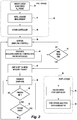
- Figure 2 provides a flow diagram illustrating an embodiment of the method of the invention.
- a pre-voyage phase 30 the cargo 16 to be shipped is weighed and loaded into transport container 10, and a nitrogen purge is conducted (step 32). An initial leakage measurement is then made (step 34, methodology as discussed above) and recorded, and the controller initiated (step 36) prior to the container being loaded.
- CA mode - step 38 controlled atmosphere mode
- the container is considered to be in transit and, generally, subject to atmosphere control as regulated by programmed controller 20.
- Normal mode is thus controlled atmosphere mode (CA mode - step 38), with regular measurement of one of more of the constituent gases in the container and adjustment of the atmosphere accordingly (by causing or permitting inflow of air from the outside of the container, eg. by opening a valve or valves and/or operating a fan or fans for forced flow).
- CA mode the data regarding gas measurements and valve control is recorded and saved in accordance with a set sampling frequency (step 40).
- CA mode is suspended and a leakage measurement is made at step 44 (as discussed above) and the data recorded, and the process switches into respiration rate monitoring mode (RRM mode - step 46), as discussed above and in further detail below.
- the RRM mode data is recorded by the controller, and terminated in accordance with the programmed trigger (decision box 48), as discussed further below (a prescribed length of time, or earlier if the O 2 concentration departs from its setpoint by a set amount). If the container is still in transit the process switches back into CA mode and the process repeats.
- the data recorded and stored by the controller including the data gathered during RRM mode (the respiration rate data block RRDB) is regularly transmitted wirelessly by way of a GSM or GPRS modem to a remote server for near-real-time update and analysis.
- the controller operation can be terminated, the cargo unloaded (step 54), and any post-voyage activity completed (step 56). The controller can then be re-initiated for the next voyage.
- Figure 3 illustrates the individual process flows of the logic loops controlling CA mode ( Fig. 3a ), RRM mode ( Fig. 3b ) and data logging and transmission ( Fig. 3c ) in accordance with an embodiment of the invention.
- FIG. 3a shows, the logic flow dictates that CA mode and RRM mode are mutually exclusive, CA mode being deactivated on triggering of RRM mode.
- Fig. 3b shows the logic flow governing the triggering of RRM mode in accordance with the regular intervals programmed into controller 20.
- the RRM mode triggering interval in the embodiments tested - see below - was 24 hours.
- the decision block 'RRM TRIGGER MET' operates in accordance with the programmed trigger (ie. equivalent to step 48 in Figure 2 ), as discussed further below (a prescribed length of time, being 4 hours in the embodiments tested, or earlier if the O 2 concentration departs from its setpoint by a set amount, eg. by 0.5% of the O 2 setpoint).
- 3c shows the logic flow managing the data logging and transmission, which is governed by a trigger being a regular time interval (ie. decoupled from the timing of the RRM mode trigger, unlike the embodiment illustrated in Figure 2 ).
- a trigger being a regular time interval (ie. decoupled from the timing of the RRM mode trigger, unlike the embodiment illustrated in Figure 2 ).
- the data logging interval was 1 minute, and the transmission interval was 6 hours (interval between attempts to find a network and transmit data via GPRS modem). Further discussion of an example of the logging and wireless transmission of data can be found in PCT/AU2014/050215 .
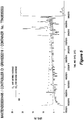
- FIGS. 4 and 5 graphically illustrate the results of the invention conducted by the inventors on data from two different confidential experimental test shipments, from two different containers of avocados, during the course of voyage of approximately 5 week duration, depicting O 2 concentration, CO 2 (in %, shown as 4hr moving average, to smooth out artefact in the measurements), and the daily calculated respiration rate RR (ml O 2 /Kg-hr). In both cases a 5% O 2 setpoint was used.
- General gas measurement (and CA control) in CA mode was carried out every 10 minutes (ie. a sampling rate of 6 times per hour).
- O 2 was measured every minute (ie. a sampling rate of 60 times per hour).
- the RR data block was gathered over a 4 hour period, terminated in the case of a significant deviation from the O 2 setpoint ( ⁇ 0.5%).
- the labelling at the head of the graphs in Figures 4 and 5 identifies, in order: the container's GPRS communication unit; the container's controller unit; the container.
- data loggers allow monitoring of conditions within a shipping container, allowing analysis across each voyage.
- Use of wireless communications allows this data to be relayed to a central server remotely and with minimum delay, and as the data set grows analysis at the server across multiple containers, multiple vessels, multiple routes, multiple voyages and multiple cargo types and sizes, etc, provides a very valuable source of information for all stakeholders in the chain, including shippers, producers, importers, insurers, and dock handling companies.
- the present invention thus provides a way of monitoring the health of the produce through calculation of respiration rate over a voyage.
- the inventors implemented this for the trials by modifying an existing CA controller.
- the controller was programmed to initiate respiration rate monitoring mode (RRM mode) by, once a day, shutting all valves, and allowing O 2 to deplete and CO 2 to increase by natural cargo respiration. The only air transfer across the container wall is therefore due to leakage.
- RRM mode respiration rate monitoring mode
- the respiration rate data block RRDB cycle period data is measured and logged, that being O 2 concentration, and/or CO 2 concentration.
- Other variables may also be measured and logged, such as temperature.
- the measured data is transmitted to a central server for analysis. This is preferably done in transit (if the controller is equipped with a communications modem), or alternatively can be done after transit when the data log is downloaded.
- a logic unit at the server is programmed to identify each RRDB, by virtue of the prescribed RRM mode tag attached to the block of data associated with RRM application.
- the data within this block is then processed to calculate the respiration rate (calculated as ml O 2 /Kg-hr consumed or ml CO 2 / Kg-hr produced).
- the data block for each RRDB cycle passed from the controller to the central server may a number of different items of information, including parameters measured and values determined from those parameters.
- information may include data minimum, maximum and mean values, data correlation coefficients, data variance values, data sample counts, data regression slope values (ie. the regression slope of the measured concentration of one or more of the constituent gases in the container) and leakage values.
- the respiration rate for each RRDB cycle may be calculated from the oxygen value regression slope and mean oxygen measurements. In the case of noisy data, consideration of the sample count, variance, minimum, maximum may be used to determine the reliability of the calculation.
- the data block may also include a termination code specifying whether the RRDB cycle was terminated by virtue of the time limit, the oxygen low deviation limit, or the oxygen high deviation limit, and this information may also be employed to determine the reliability of the respiration rate calculation.
- RRM mode suspends atmosphere control and can therefore interfere with the CA process, but with proper selection of programmed parameters this interference can be kept to a minimum. In fact ripening is reduced during this period, as there is less O 2 than would be the case under normal operation.
- the data block cycle time ie. the time in RRM mode
- the data block cycle time is set for a prescribed duration (eg. 4 hours), but is terminated earlier if the O 2 concentration departs from its setpoint by a prescribed value, to minimise this interference.
- the allowed deviation which could be adjusted to any value in the range 0-1%, was set at 0.5%. That means, with an O 2 concentration setpoint of 5%, RRM mode was only maintained if 4.5% ⁇ O 2 concentration ⁇ 5.5%.
- monitoring and analysis of cargo conditions in accordance with the present invention allows the calculation of the respiration rate of the goods at points throughout the shipment, which thus provides a dynamic indication of the ripening state. This can be done in real time by the controller, or transmitted to the MAXtend server for near real time analysis, or (in the absence of GPRS capability) after the shipment has been received and the controller accessed.
- Analysing the resulting RR data provides very valuable information.
- the RR data in the early part of a voyage provides an indication of the quality of the cargo.
- High RR at a particular point in the voyage provides an indication of an interruption of normal operation.
- a sudden rise in RR might suggest the refrigeration unit, having been disconnected from shore power or shipboard power, was then not promptly reconnected to another source of power (shipboard power or shore power, or to a genset).
- the data can assist the various stakeholders in the value chain in understanding, for example, concentration of claims from particular customers or regions or under particular climate effects (eg. seasonal).
- the RR may be used as direct feedback into the dynamic CA operation.
- the controller calculating the RR in real time and adjusting the atmosphere to maintain a desired RR throughout the voyage, and therefore minimise stress on the produce.
- the AVCA controller intermittently commands the shutting of the atmosphere control valves and the measurement of the container oxygen fraction until the shorter of:
- the pressure immediately upstream of the fan will be Patm-Pf/2 while the pressure immediately downstream will be Patm+Pf/2.
- do 2 do 2 v + do 2 l ⁇ do 2 r (where do2r is the change in o2 due to respiration)
- do2 is measured and do2v and do2l calculated, so that do2r can be calculated, as can, given the cargo properties, rro2.
- do2 is the measurement returned by the rr measurement.
- the Maxtend AVCA7 controller process returns a block of statistics as an XML block (corresponding to the RRDB) embedded in the GPRS modem data stream.
Landscapes
- Life Sciences & Earth Sciences (AREA)
- Chemical & Material Sciences (AREA)
- Engineering & Computer Science (AREA)
- Zoology (AREA)
- General Chemical & Material Sciences (AREA)
- Wood Science & Technology (AREA)
- Chemical Kinetics & Catalysis (AREA)
- Food Science & Technology (AREA)
- Polymers & Plastics (AREA)
- Measurement Of The Respiration, Hearing Ability, Form, And Blood Characteristics Of Living Organisms (AREA)
- Cold Air Circulating Systems And Constructional Details In Refrigerators (AREA)
- Management, Administration, Business Operations System, And Electronic Commerce (AREA)
- Storage Of Harvested Produce (AREA)
- Closures For Containers (AREA)
Claims (9)
- Un procédé pour une utilisation dans la surveillance, sur une période prolongée, du taux de respiration de marchandises contenues dans un conteneur, le conteneur ayant un système de contrôle d'atmosphère incluant un moyen formant capteur pour mesurer la concentration d'un ou de plusieurs gaz constitutifs dans le conteneur, et un contrôleur programmé pour fonctionner dans un mode parmi deux, à savoir un mode contrôle de l'atmosphère et un mode surveillance du taux de respiration, dans lequel :le mode contrôle de l'atmosphère (mode CA) implique de mesurer la concentration d'un ou de plusieurs gaz constitutifs à des intervalles d'échantillonnage de contrôle de l'atmosphère (mode CA) prescrits ; et d'effectuer un ajustement de l'atmosphère dans le conteneur en réponse à ladite mesure,le mode surveillance du taux de respiration (mode RRM) implique de mesurer la concentration d'un ou de plusieurs gaz constitutifs dans le conteneur alors que la marchandise respire à des intervalles d'échantillonnage du taux de respiration (mode RRM) prescrits,et le procédé incluant, à des intervalles durant ladite période prolongée, le fait de suspendre ledit mode CA et de lancer ledit mode RRM et, conformément à un déclencheur de fin de mode RRM établi, le fait d'interrompre ledit mode RRM et de recommencer ledit mode CA.
- Le procédé de la revendication 1, dans lequel l'ajustement de l'atmosphère dans le conteneur implique d'effectuer une admission sélective d'air dans le conteneur.
- Le procédé de la revendication 1 ou de la revendication 2, incluant le fait d'identifier un taux de fuite du conteneur.
- Le procédé de la revendication 3, dans lequel le taux de fuite du conteneur est mesuré sous contrôle du contrôleur à chaque fois que le contrôleur applique ledit mode RRM.
- Le procédé de n'importe quelle revendication précédente, dans lequel le déclencheur de fin de mode RRM est basé sur l'écoulement d'un temps prescrit en mode RRM.
- Le procédé de n'importe laquelle des revendications 1 à 4, dans lequel le déclencheur de fin de mode RRM est basé sur la concentration d'un ou de plusieurs gaz constitutifs dans le conteneur tel que mesuré durant le mode RRM.
- Un système pour une utilisation dans la surveillance, sur une période prolongée, du taux de respiration de marchandises contenues dans un conteneur, le conteneur ayant un système de contrôle d'atmosphère incluant un moyen formant capteur pour mesurer la concentration d'un ou de plusieurs gaz constitutifs dans le conteneur, le système incluant un contrôleur fonctionnellement raccordé au moyen formant capteur et incluant ou étant fonctionnellement raccordé à un moyen pour effectuer un ajustement de l'atmosphère dans le conteneur, le contrôleur étant programmé pour fonctionner dans un mode parmi deux, à savoir un mode contrôle de l'atmosphère et un mode surveillance du taux de respiration, dans lequel :le mode contrôle de l'atmosphère (mode CA) implique de mesurer, sous contrôle du contrôleur et à l'aide du moyen formant capteur, la concentration d'un ou de plusieurs gaz constitutifs à des intervalles d'échantillonnage de contrôle de l'atmosphère (mode CA) prescrits ; et, sous contrôle du contrôleur et à l'aide du moyen d'ajustement de l'atmosphère, d'ajuster l'atmosphère dans le conteneur en réponse à ladite mesure,le mode surveillance du taux de respiration (mode RRM) implique de mesurer sous contrôle du contrôleur et à l'aide du moyen formant capteur, la concentration d'un ou de plusieurs gaz constitutifs dans le conteneur alors que la marchandise respire à des intervalles d'échantillonnage du taux de respiration (mode RRM) prescrits,et dans lequel le contrôleur est programmé, à des intervalles durant ladite période prolongée, pour suspendre ledit mode CA et lancer ledit mode RRM et, conformément à un déclencheur de fin de mode RRM établi, interrompre ledit mode RRM et recommencer ledit mode CA.
- Le système de la revendication 7, dans lequel le moyen pour effectuer l'ajustement de l'atmosphère dans le conteneur inclut un moyen pour effectuer une admission sélective d'air dans le conteneur.
- Le système de la revendication 7 ou de la revendication 8, dans lequel le contrôleur est programmé pour enregistrer un taux de fuite du conteneur, et le système inclut un moyen destiné, sous contrôle du contrôleur, à mesurer un taux de fuite du conteneur conformément à l'emploi dudit mode RRM.
Applications Claiming Priority (3)
| Application Number | Priority Date | Filing Date | Title |
|---|---|---|---|
| AU2015902983A AU2015902983A0 (en) | 2015-07-27 | Monitoring state of produce within transport containers | |
| AU2015903843A AU2015903843A0 (en) | 2015-09-21 | Monitoring state of produce within transport containers | |
| PCT/AU2016/050664 WO2017015709A1 (fr) | 2015-07-27 | 2016-07-26 | Surveillance de l'état de produits dans des conteneurs de transport |
Publications (3)
| Publication Number | Publication Date |
|---|---|
| EP3328749A1 EP3328749A1 (fr) | 2018-06-06 |
| EP3328749A4 EP3328749A4 (fr) | 2019-07-31 |
| EP3328749B1 true EP3328749B1 (fr) | 2020-11-18 |
Family
ID=57883899
Family Applications (1)
| Application Number | Title | Priority Date | Filing Date |
|---|---|---|---|
| EP16829496.5A Active EP3328749B1 (fr) | 2015-07-27 | 2016-07-26 | Surveillance de l'état de produits dans des conteneurs de transport |
Country Status (6)
| Country | Link |
|---|---|
| US (1) | US20180220665A1 (fr) |
| EP (1) | EP3328749B1 (fr) |
| AU (1) | AU2016300215B2 (fr) |
| ES (1) | ES2846889T3 (fr) |
| NZ (1) | NZ739082A (fr) |
| WO (1) | WO2017015709A1 (fr) |
Families Citing this family (11)
| Publication number | Priority date | Publication date | Assignee | Title |
|---|---|---|---|---|
| CL2016000948A1 (es) * | 2016-04-20 | 2017-07-14 | Liventus Chile S A | Dispositivo de válvula controladora de atmósfera, de mínima intervención en su instalación en contenedores refrigerados, autosuficiente, compacto, reutilizable que comprende un cuerpo con una forma cilíndrica alargada, que a su vez comprende una zona de batería dentro del cuerpo, una zona electrónica, una zona de manipulación dentro del cuerpo, una zona del tapón dentro del cuerpo y una zona de intercambio de gases. |
| CN108146858A (zh) * | 2017-12-06 | 2018-06-12 | 张金红 | 一种智能家居用智能控温放置箱 |
| CN108313525A (zh) * | 2018-01-03 | 2018-07-24 | 深圳市晓控通信科技有限公司 | 一种具有防老化和温度调节功能的导电塑料存储设备 |
| AU2019215804B2 (en) * | 2018-02-05 | 2024-08-15 | Avcatech Laboratories Pty Ltd | Transport container with gas selective membrane exhaust |
| BR112020015928A2 (pt) * | 2018-02-12 | 2021-03-30 | Overhaul Group, Inc. | Monitoramento de condições ambientes dentro de um meio de remessa |
| EP3721714B1 (fr) | 2019-04-12 | 2025-02-19 | Carrier Corporation | Procédé de commande d'atmosphère dans un conteneur réfrigéré |
| CN110844338A (zh) * | 2019-12-06 | 2020-02-28 | 肇庆曼源纺织有限公司 | 一种冷库专用的果蔬保鲜袋 |
| CN115398167B (zh) * | 2020-03-31 | 2024-05-10 | 大金工业株式会社 | 信息处理装置、收纳容器和程序 |
| US11667165B1 (en) * | 2020-09-29 | 2023-06-06 | Orbcomm Inc. | System, method and apparatus for multi-zone container monitoring |
| JP2024518456A (ja) | 2021-05-07 | 2024-05-01 | レドキック、 オーワイ | 貨物輸送オペレーションのリスク確率評価及びその使用の方法 |
| DK202200427A1 (en) * | 2022-05-05 | 2024-02-13 | Maersk Container Ind A/S | Testing for an air leak in a controlled atmosphere container |
Family Cites Families (6)
| Publication number | Priority date | Publication date | Assignee | Title |
|---|---|---|---|---|
| NZ205453A (en) * | 1983-09-01 | 1988-03-30 | New Zealand Shipping | Transporting respiring comestibles while monitoring and adjusting oxygen and carbon dioxide levels |
| NZ511678A (en) * | 1998-10-19 | 2003-10-31 | Mitsubishi Australia Ltd | Apparatus for controlled venting of a chamber |
| WO2006086827A1 (fr) | 2005-01-18 | 2006-08-24 | Sydney Postharvest Laboratory Pty Limited | Atmosphère contrôlée |
| EP2547213B1 (fr) | 2010-03-17 | 2015-06-03 | Katholieke Universiteit Leuven | Stockage de produits respirant |
| JP2014522234A (ja) | 2011-05-04 | 2014-09-04 | ミツビシ オーストラリア リミテッド | 容器内の雰囲気ガス組成を制御する装置および方法 |
| ES2718304T3 (es) * | 2012-11-01 | 2019-07-01 | Mitsubishi Australia Ltd | Mejoras en el control de la composición de gas dentro de un contenedor |
-
2016
- 2016-07-26 ES ES16829496T patent/ES2846889T3/es active Active
- 2016-07-26 US US15/745,842 patent/US20180220665A1/en not_active Abandoned
- 2016-07-26 WO PCT/AU2016/050664 patent/WO2017015709A1/fr not_active Ceased
- 2016-07-26 AU AU2016300215A patent/AU2016300215B2/en active Active
- 2016-07-26 NZ NZ739082A patent/NZ739082A/en unknown
- 2016-07-26 EP EP16829496.5A patent/EP3328749B1/fr active Active
Non-Patent Citations (1)
| Title |
|---|
| None * |
Also Published As
| Publication number | Publication date |
|---|---|
| EP3328749A1 (fr) | 2018-06-06 |
| HK1256389A1 (en) | 2019-09-20 |
| AU2016300215B2 (en) | 2021-02-11 |
| NZ739082A (en) | 2021-07-30 |
| ES2846889T3 (es) | 2021-07-30 |
| EP3328749A4 (fr) | 2019-07-31 |
| WO2017015709A1 (fr) | 2017-02-02 |
| US20180220665A1 (en) | 2018-08-09 |
| AU2016300215A1 (en) | 2018-02-08 |
Similar Documents
| Publication | Publication Date | Title |
|---|---|---|
| EP3328749B1 (fr) | Surveillance de l'état de produits dans des conteneurs de transport | |
| NZ739245A (en) | A process for treating milk | |
| US11259533B2 (en) | Automatical in situ control of the confined environment of metabolically active produce | |
| EP3423996B1 (fr) | Système de transport de marchandises pour des produits périssables | |
| EP2918179B1 (fr) | Appareil de commande pour cellules à atmosphère contrôlée pour le stockage de denrées périssables | |
| US9829898B2 (en) | Controlling cargo parameters in a microenvironment of a reefer during transit | |
| US20190303852A1 (en) | Perishable product information coordination system for a cargo transport system | |
| WO2017189485A1 (fr) | Système d'état de produit périssable comprenant un réseau maillé sans fil ad hoc de détecteurs | |
| HUE025854T2 (en) | Storage of respiratory produce | |
| AU2018233477B2 (en) | Ripening chamber and method for ripening fruit | |
| JP6917387B2 (ja) | 生鮮品のための貨物輸送システム | |
| CN109073316B (zh) | 运输制冷单元的自动诊断 | |
| CN119867136A (zh) | 用于在受控气氛中催熟蔬菜农产品的方法以及冷藏集装箱、卡车或拖车 | |
| US11927531B2 (en) | Information processing device, storage container, and non-transitory computer readable medium | |
| HK1256389B (en) | Monitoring state of produce within transport containers | |
| JP2020008200A (ja) | 庫内環境制御システム | |
| US20240206486A1 (en) | Systems and methods for storing produce | |
| RU2821587C2 (ru) | Управление созреванием овощной продукции в транспортной единице | |
| RU2791580C2 (ru) | Способ и контейнер-рефрижератор, автомобиль-рефрижератор или прицеп-рефрижератор для вызревания овощной продукции в контролируемой атмосфере | |
| EP4513404A1 (fr) | Dispositif et procédé de surveillance de marchandises périssables | |
| JP2919934B2 (ja) | 貯蔵装置 | |
| Bessemans et al. | Excellence in dynamic controlled atmosphere storage based on the respiratory quotient: leakage correction |
Legal Events
| Date | Code | Title | Description |
|---|---|---|---|
| STAA | Information on the status of an ep patent application or granted ep patent |
Free format text: STATUS: THE INTERNATIONAL PUBLICATION HAS BEEN MADE |
|
| PUAI | Public reference made under article 153(3) epc to a published international application that has entered the european phase |
Free format text: ORIGINAL CODE: 0009012 |
|
| STAA | Information on the status of an ep patent application or granted ep patent |
Free format text: STATUS: REQUEST FOR EXAMINATION WAS MADE |
|
| 17P | Request for examination filed |
Effective date: 20180115 |
|
| AK | Designated contracting states |
Kind code of ref document: A1 Designated state(s): AL AT BE BG CH CY CZ DE DK EE ES FI FR GB GR HR HU IE IS IT LI LT LU LV MC MK MT NL NO PL PT RO RS SE SI SK SM TR |
|
| AX | Request for extension of the european patent |
Extension state: BA ME |
|
| DAV | Request for validation of the european patent (deleted) | ||
| DAX | Request for extension of the european patent (deleted) | ||
| RIC1 | Information provided on ipc code assigned before grant |
Ipc: B65D 81/18 20060101AFI20190320BHEP Ipc: A23B 7/148 20060101ALI20190320BHEP Ipc: B65B 25/04 20060101ALI20190320BHEP |
|
| A4 | Supplementary search report drawn up and despatched |
Effective date: 20190628 |
|
| RIC1 | Information provided on ipc code assigned before grant |
Ipc: B65D 81/18 20060101AFI20190624BHEP Ipc: A23B 7/148 20060101ALI20190624BHEP Ipc: B65B 25/04 20060101ALI20190624BHEP |
|
| REG | Reference to a national code |
Ref country code: HK Ref legal event code: DE Ref document number: 1256389 Country of ref document: HK |
|
| GRAP | Despatch of communication of intention to grant a patent |
Free format text: ORIGINAL CODE: EPIDOSNIGR1 |
|
| STAA | Information on the status of an ep patent application or granted ep patent |
Free format text: STATUS: GRANT OF PATENT IS INTENDED |
|
| INTG | Intention to grant announced |
Effective date: 20200331 |
|
| RAP1 | Party data changed (applicant data changed or rights of an application transferred) |
Owner name: AVCATECH LABORATORIES PTY LTD |
|
| GRAS | Grant fee paid |
Free format text: ORIGINAL CODE: EPIDOSNIGR3 |
|
| GRAJ | Information related to disapproval of communication of intention to grant by the applicant or resumption of examination proceedings by the epo deleted |
Free format text: ORIGINAL CODE: EPIDOSDIGR1 |
|
| GRAL | Information related to payment of fee for publishing/printing deleted |
Free format text: ORIGINAL CODE: EPIDOSDIGR3 |
|
| STAA | Information on the status of an ep patent application or granted ep patent |
Free format text: STATUS: REQUEST FOR EXAMINATION WAS MADE |
|
| INTC | Intention to grant announced (deleted) | ||
| GRAP | Despatch of communication of intention to grant a patent |
Free format text: ORIGINAL CODE: EPIDOSNIGR1 |
|
| STAA | Information on the status of an ep patent application or granted ep patent |
Free format text: STATUS: GRANT OF PATENT IS INTENDED |
|
| GRAA | (expected) grant |
Free format text: ORIGINAL CODE: 0009210 |
|
| STAA | Information on the status of an ep patent application or granted ep patent |
Free format text: STATUS: THE PATENT HAS BEEN GRANTED |
|
| INTG | Intention to grant announced |
Effective date: 20200922 |
|
| AK | Designated contracting states |
Kind code of ref document: B1 Designated state(s): AL AT BE BG CH CY CZ DE DK EE ES FI FR GB GR HR HU IE IS IT LI LT LU LV MC MK MT NL NO PL PT RO RS SE SI SK SM TR |
|
| REG | Reference to a national code |
Ref country code: GB Ref legal event code: FG4D |
|
| REG | Reference to a national code |
Ref country code: CH Ref legal event code: EP |
|
| REG | Reference to a national code |
Ref country code: IE Ref legal event code: FG4D |
|
| REG | Reference to a national code |
Ref country code: DE Ref legal event code: R096 Ref document number: 602016048257 Country of ref document: DE |
|
| REG | Reference to a national code |
Ref country code: AT Ref legal event code: REF Ref document number: 1335531 Country of ref document: AT Kind code of ref document: T Effective date: 20201215 |
|
| REG | Reference to a national code |
Ref country code: NL Ref legal event code: FP |
|
| REG | Reference to a national code |
Ref country code: AT Ref legal event code: MK05 Ref document number: 1335531 Country of ref document: AT Kind code of ref document: T Effective date: 20201118 |
|
| PG25 | Lapsed in a contracting state [announced via postgrant information from national office to epo] |
Ref country code: GR Free format text: LAPSE BECAUSE OF FAILURE TO SUBMIT A TRANSLATION OF THE DESCRIPTION OR TO PAY THE FEE WITHIN THE PRESCRIBED TIME-LIMIT Effective date: 20210219 Ref country code: FI Free format text: LAPSE BECAUSE OF FAILURE TO SUBMIT A TRANSLATION OF THE DESCRIPTION OR TO PAY THE FEE WITHIN THE PRESCRIBED TIME-LIMIT Effective date: 20201118 Ref country code: NO Free format text: LAPSE BECAUSE OF FAILURE TO SUBMIT A TRANSLATION OF THE DESCRIPTION OR TO PAY THE FEE WITHIN THE PRESCRIBED TIME-LIMIT Effective date: 20210218 Ref country code: RS Free format text: LAPSE BECAUSE OF FAILURE TO SUBMIT A TRANSLATION OF THE DESCRIPTION OR TO PAY THE FEE WITHIN THE PRESCRIBED TIME-LIMIT Effective date: 20201118 Ref country code: PT Free format text: LAPSE BECAUSE OF FAILURE TO SUBMIT A TRANSLATION OF THE DESCRIPTION OR TO PAY THE FEE WITHIN THE PRESCRIBED TIME-LIMIT Effective date: 20210318 |
|
| PG25 | Lapsed in a contracting state [announced via postgrant information from national office to epo] |
Ref country code: SE Free format text: LAPSE BECAUSE OF FAILURE TO SUBMIT A TRANSLATION OF THE DESCRIPTION OR TO PAY THE FEE WITHIN THE PRESCRIBED TIME-LIMIT Effective date: 20201118 Ref country code: PL Free format text: LAPSE BECAUSE OF FAILURE TO SUBMIT A TRANSLATION OF THE DESCRIPTION OR TO PAY THE FEE WITHIN THE PRESCRIBED TIME-LIMIT Effective date: 20201118 Ref country code: IS Free format text: LAPSE BECAUSE OF FAILURE TO SUBMIT A TRANSLATION OF THE DESCRIPTION OR TO PAY THE FEE WITHIN THE PRESCRIBED TIME-LIMIT Effective date: 20210318 Ref country code: LV Free format text: LAPSE BECAUSE OF FAILURE TO SUBMIT A TRANSLATION OF THE DESCRIPTION OR TO PAY THE FEE WITHIN THE PRESCRIBED TIME-LIMIT Effective date: 20201118 Ref country code: BG Free format text: LAPSE BECAUSE OF FAILURE TO SUBMIT A TRANSLATION OF THE DESCRIPTION OR TO PAY THE FEE WITHIN THE PRESCRIBED TIME-LIMIT Effective date: 20210218 Ref country code: AT Free format text: LAPSE BECAUSE OF FAILURE TO SUBMIT A TRANSLATION OF THE DESCRIPTION OR TO PAY THE FEE WITHIN THE PRESCRIBED TIME-LIMIT Effective date: 20201118 |
|
| REG | Reference to a national code |
Ref country code: LT Ref legal event code: MG9D |
|
| PG25 | Lapsed in a contracting state [announced via postgrant information from national office to epo] |
Ref country code: HR Free format text: LAPSE BECAUSE OF FAILURE TO SUBMIT A TRANSLATION OF THE DESCRIPTION OR TO PAY THE FEE WITHIN THE PRESCRIBED TIME-LIMIT Effective date: 20201118 |
|
| PG25 | Lapsed in a contracting state [announced via postgrant information from national office to epo] |
Ref country code: RO Free format text: LAPSE BECAUSE OF FAILURE TO SUBMIT A TRANSLATION OF THE DESCRIPTION OR TO PAY THE FEE WITHIN THE PRESCRIBED TIME-LIMIT Effective date: 20201118 Ref country code: SK Free format text: LAPSE BECAUSE OF FAILURE TO SUBMIT A TRANSLATION OF THE DESCRIPTION OR TO PAY THE FEE WITHIN THE PRESCRIBED TIME-LIMIT Effective date: 20201118 Ref country code: EE Free format text: LAPSE BECAUSE OF FAILURE TO SUBMIT A TRANSLATION OF THE DESCRIPTION OR TO PAY THE FEE WITHIN THE PRESCRIBED TIME-LIMIT Effective date: 20201118 Ref country code: CZ Free format text: LAPSE BECAUSE OF FAILURE TO SUBMIT A TRANSLATION OF THE DESCRIPTION OR TO PAY THE FEE WITHIN THE PRESCRIBED TIME-LIMIT Effective date: 20201118 Ref country code: LT Free format text: LAPSE BECAUSE OF FAILURE TO SUBMIT A TRANSLATION OF THE DESCRIPTION OR TO PAY THE FEE WITHIN THE PRESCRIBED TIME-LIMIT Effective date: 20201118 Ref country code: SM Free format text: LAPSE BECAUSE OF FAILURE TO SUBMIT A TRANSLATION OF THE DESCRIPTION OR TO PAY THE FEE WITHIN THE PRESCRIBED TIME-LIMIT Effective date: 20201118 |
|
| REG | Reference to a national code |
Ref country code: ES Ref legal event code: FG2A Ref document number: 2846889 Country of ref document: ES Kind code of ref document: T3 Effective date: 20210730 |
|
| REG | Reference to a national code |
Ref country code: DE Ref legal event code: R097 Ref document number: 602016048257 Country of ref document: DE |
|
| PG25 | Lapsed in a contracting state [announced via postgrant information from national office to epo] |
Ref country code: DK Free format text: LAPSE BECAUSE OF FAILURE TO SUBMIT A TRANSLATION OF THE DESCRIPTION OR TO PAY THE FEE WITHIN THE PRESCRIBED TIME-LIMIT Effective date: 20201118 |
|
| PLBE | No opposition filed within time limit |
Free format text: ORIGINAL CODE: 0009261 |
|
| STAA | Information on the status of an ep patent application or granted ep patent |
Free format text: STATUS: NO OPPOSITION FILED WITHIN TIME LIMIT |
|
| 26N | No opposition filed |
Effective date: 20210819 |
|
| PG25 | Lapsed in a contracting state [announced via postgrant information from national office to epo] |
Ref country code: IT Free format text: LAPSE BECAUSE OF FAILURE TO SUBMIT A TRANSLATION OF THE DESCRIPTION OR TO PAY THE FEE WITHIN THE PRESCRIBED TIME-LIMIT Effective date: 20201118 Ref country code: AL Free format text: LAPSE BECAUSE OF FAILURE TO SUBMIT A TRANSLATION OF THE DESCRIPTION OR TO PAY THE FEE WITHIN THE PRESCRIBED TIME-LIMIT Effective date: 20201118 |
|
| PG25 | Lapsed in a contracting state [announced via postgrant information from national office to epo] |
Ref country code: SI Free format text: LAPSE BECAUSE OF FAILURE TO SUBMIT A TRANSLATION OF THE DESCRIPTION OR TO PAY THE FEE WITHIN THE PRESCRIBED TIME-LIMIT Effective date: 20201118 |
|
| REG | Reference to a national code |
Ref country code: CH Ref legal event code: PL |
|
| PG25 | Lapsed in a contracting state [announced via postgrant information from national office to epo] |
Ref country code: MC Free format text: LAPSE BECAUSE OF FAILURE TO SUBMIT A TRANSLATION OF THE DESCRIPTION OR TO PAY THE FEE WITHIN THE PRESCRIBED TIME-LIMIT Effective date: 20201118 |
|
| PG25 | Lapsed in a contracting state [announced via postgrant information from national office to epo] |
Ref country code: LI Free format text: LAPSE BECAUSE OF NON-PAYMENT OF DUE FEES Effective date: 20210731 Ref country code: CH Free format text: LAPSE BECAUSE OF NON-PAYMENT OF DUE FEES Effective date: 20210731 |
|
| PG25 | Lapsed in a contracting state [announced via postgrant information from national office to epo] |
Ref country code: IS Free format text: LAPSE BECAUSE OF FAILURE TO SUBMIT A TRANSLATION OF THE DESCRIPTION OR TO PAY THE FEE WITHIN THE PRESCRIBED TIME-LIMIT Effective date: 20210318 Ref country code: LU Free format text: LAPSE BECAUSE OF NON-PAYMENT OF DUE FEES Effective date: 20210726 |
|
| PG25 | Lapsed in a contracting state [announced via postgrant information from national office to epo] |
Ref country code: IE Free format text: LAPSE BECAUSE OF NON-PAYMENT OF DUE FEES Effective date: 20210726 |
|
| PG25 | Lapsed in a contracting state [announced via postgrant information from national office to epo] |
Ref country code: HU Free format text: LAPSE BECAUSE OF FAILURE TO SUBMIT A TRANSLATION OF THE DESCRIPTION OR TO PAY THE FEE WITHIN THE PRESCRIBED TIME-LIMIT; INVALID AB INITIO Effective date: 20160726 |
|
| P01 | Opt-out of the competence of the unified patent court (upc) registered |
Effective date: 20230523 |
|
| PG25 | Lapsed in a contracting state [announced via postgrant information from national office to epo] |
Ref country code: CY Free format text: LAPSE BECAUSE OF FAILURE TO SUBMIT A TRANSLATION OF THE DESCRIPTION OR TO PAY THE FEE WITHIN THE PRESCRIBED TIME-LIMIT Effective date: 20201118 |
|
| PG25 | Lapsed in a contracting state [announced via postgrant information from national office to epo] |
Ref country code: MK Free format text: LAPSE BECAUSE OF FAILURE TO SUBMIT A TRANSLATION OF THE DESCRIPTION OR TO PAY THE FEE WITHIN THE PRESCRIBED TIME-LIMIT Effective date: 20201118 |
|
| PG25 | Lapsed in a contracting state [announced via postgrant information from national office to epo] |
Ref country code: MT Free format text: LAPSE BECAUSE OF FAILURE TO SUBMIT A TRANSLATION OF THE DESCRIPTION OR TO PAY THE FEE WITHIN THE PRESCRIBED TIME-LIMIT Effective date: 20201118 |
|
| PGFP | Annual fee paid to national office [announced via postgrant information from national office to epo] |
Ref country code: NL Payment date: 20250721 Year of fee payment: 10 |
|
| PGFP | Annual fee paid to national office [announced via postgrant information from national office to epo] |
Ref country code: ES Payment date: 20250826 Year of fee payment: 10 |
|
| PGFP | Annual fee paid to national office [announced via postgrant information from national office to epo] |
Ref country code: DE Payment date: 20250722 Year of fee payment: 10 |
|
| PGFP | Annual fee paid to national office [announced via postgrant information from national office to epo] |
Ref country code: BE Payment date: 20250721 Year of fee payment: 10 Ref country code: GB Payment date: 20250722 Year of fee payment: 10 |
|
| PGFP | Annual fee paid to national office [announced via postgrant information from national office to epo] |
Ref country code: FR Payment date: 20250725 Year of fee payment: 10 |
|
| PG25 | Lapsed in a contracting state [announced via postgrant information from national office to epo] |
Ref country code: TR Free format text: LAPSE BECAUSE OF FAILURE TO SUBMIT A TRANSLATION OF THE DESCRIPTION OR TO PAY THE FEE WITHIN THE PRESCRIBED TIME-LIMIT Effective date: 20201118 |