EP3332592B1 - Procédé et appareil d'exécution de communication d2d inter-porteuse - Google Patents
Procédé et appareil d'exécution de communication d2d inter-porteuse Download PDFInfo
- Publication number
- EP3332592B1 EP3332592B1 EP16833380.5A EP16833380A EP3332592B1 EP 3332592 B1 EP3332592 B1 EP 3332592B1 EP 16833380 A EP16833380 A EP 16833380A EP 3332592 B1 EP3332592 B1 EP 3332592B1
- Authority
- EP
- European Patent Office
- Prior art keywords
- carrier
- discovery
- gap
- transmission
- subframe
- Prior art date
- Legal status (The legal status is an assumption and is not a legal conclusion. Google has not performed a legal analysis and makes no representation as to the accuracy of the status listed.)
- Active
Links
Images






Classifications
-
- H—ELECTRICITY
- H04—ELECTRIC COMMUNICATION TECHNIQUE
- H04W—WIRELESS COMMUNICATION NETWORKS
- H04W8/00—Network data management
- H04W8/005—Discovery of network devices, e.g. terminals
-
- H—ELECTRICITY
- H04—ELECTRIC COMMUNICATION TECHNIQUE
- H04W—WIRELESS COMMUNICATION NETWORKS
- H04W48/00—Access restriction; Network selection; Access point selection
- H04W48/08—Access restriction or access information delivery, e.g. discovery data delivery
- H04W48/10—Access restriction or access information delivery, e.g. discovery data delivery using broadcasted information
-
- H—ELECTRICITY
- H04—ELECTRIC COMMUNICATION TECHNIQUE
- H04W—WIRELESS COMMUNICATION NETWORKS
- H04W72/00—Local resource management
- H04W72/04—Wireless resource allocation
- H04W72/044—Wireless resource allocation based on the type of the allocated resource
- H04W72/0453—Resources in frequency domain, e.g. a carrier in FDMA
-
- H—ELECTRICITY
- H04—ELECTRIC COMMUNICATION TECHNIQUE
- H04W—WIRELESS COMMUNICATION NETWORKS
- H04W72/00—Local resource management
- H04W72/20—Control channels or signalling for resource management
- H04W72/23—Control channels or signalling for resource management in the downlink direction of a wireless link, i.e. towards a terminal
-
- H—ELECTRICITY
- H04—ELECTRIC COMMUNICATION TECHNIQUE
- H04W—WIRELESS COMMUNICATION NETWORKS
- H04W76/00—Connection management
- H04W76/20—Manipulation of established connections
- H04W76/27—Transitions between radio resource control [RRC] states
-
- H—ELECTRICITY
- H04—ELECTRIC COMMUNICATION TECHNIQUE
- H04W—WIRELESS COMMUNICATION NETWORKS
- H04W92/00—Interfaces specially adapted for wireless communication networks
- H04W92/16—Interfaces between hierarchically similar devices
- H04W92/18—Interfaces between hierarchically similar devices between terminal devices
-
- H—ELECTRICITY
- H04—ELECTRIC COMMUNICATION TECHNIQUE
- H04W—WIRELESS COMMUNICATION NETWORKS
- H04W48/00—Access restriction; Network selection; Access point selection
- H04W48/16—Discovering, processing access restriction or access information
Definitions
- the present disclosure concerns methods and apparatuses for performing inter-carrier device-to-device (D2D) communication, and more specifically, to methods and apparatuses for managing resources for transmitting and receiving inter-carrier discovery signals.
- D2D inter-carrier device-to-device
- the 5G or pre-5G communication system is also called a 'beyond 4G network' or a 'post LTE system'.
- the 5G communication system is considered to be implemented in higher frequency (mmWave) bands, e.g., 60GHz bands, so as to accomplish higher data rates.
- mmWave e.g., 60GHz bands
- MIMO massive multiple-input multiple-output
- FD-MIMO full dimensional MIMO
- array antenna an analog beam forming, large scale antenna techniques are discussed in 5G communication systems.
- RANs cloud radio access networks
- D2D device-to-device
- wireless backhaul moving network
- CoMP coordinated multi-points
- FQAM FSK and QAM modulation
- SWSC sliding window superposition coding
- ACM advanced coding modulation
- FBMC filter bank multi carrier
- NOMA non-orthogonal multiple access
- SCMA sparse code multiple access
- D2D communication is being researched for enabling discovery and data communication services between user equipments (UEs).
- Discovery is a process for determining that a D2D-enabled UE is present adjacent to another D2D-enabled UE.
- Discovering a D2D-enabled UE determines whether another D2D-enabled UE is interested in using D2D discovery.
- a D2D-enabled UE may have interest in discovering another D2D-enabled UE when its proximity needs to be known by one or more authenticated applications by discovering a D2D-enabled UE.
- a social networking application may be enabled to use D2D discovery.
- D2D discovery may enable the D2D-enabled UE of a particular user of the social networking application to discover his friends' D2D-enabled UEs or allow for discovery by the friends' D2D-enabled UEs.
- D2D discovery may enable discovery of, e.g., shops or restaurants of interest, which are located near the D2D-enabled UE of a particular of a search application.
- a D2D-enabled UE may discover other nearby D2D-enabled UEs using direct UE-to-UE signaling.
- a UE when discovery is supported for a cell (or serving cell) camping on a carrier F1 to send discovery messages, a UE may obtain discovery resources for sending discovery messages on the F 1 carrier from the serving cell on the F 1 carrier.
- the serving cell may broadcast discovery resource configurations in system information block 19 (SIB 19).
- SIB 19 may deliver resource pools for transmission of discovery messages.
- a UE may use such resources to send discovery messages in an idle state.
- a D2D UE should send a request for resources for sending discovery messages on the F1 carrier to the serving cell on the F1 carrier using dedicated signaling.
- a D2D UE while camping on a serving cell on a carrier F 1, a D2D UE may be permitted to send discovery messages on another carrier F2. This may be referred to as inter-carrier discovery communication. Unless discovery is supported by the serving cell on carrier F1 or carrier F1 is a frequency at which a D2D UE desires to send discovery messages, the D2D UE may send discovery messages.
- the serving cell on carrier F1 may provide an assistance for obtaining resources for discovery transmission on carrier F2. In other words, the serving cell may provide resources for discovery transmission on carrier F2 in SIB 19 or dedicated signaling.
- the 3GPP document by SAMSUNG: "Inter Carrier Discovery", 3GPP DRAFT; R2-152144, RAN WG2, Fukuoka, published 24 May 2015 relates to inter carrier discovery, and discloses that the serving cell may signal discovery configuration for other carrier(s) in SIB19 to assist the RRC IDLE UE in transmitting discovery transmissions in other carrier.
- UE obtains the discovery resource configuration for discovery transmissions from SIB 19 transmitted by serving cell and then transmit using determined resources. If the serving cell does not signal discovery configuration for other carrier in SIB 19 then UE first detects a cell on other carrier, reads SIB 19 transmitted by the detected cell on other carrier to determine the discovery resource configuration for discovery transmissions and then transmit using the determined resources.
- An issue with inter-carrier discovery transmission is how a UE is supposed to act when the UE is in the idle state, and a serving cell on carrier F1 does not provide discovery resources for the other carrier F2.
- the UE enters a connected state and sends a request for resources on carrier F2 to the serving cell on carrier F1. Otherwise, the UE maintains the idle mode, read out SIB 19 on carrier F2, and autonomously obtain resources on carrier F2.
- the serving cell on carrier F1 offers no assistance, a transition to the connected state may be useless, causing unnecessary signaling for allowing the idle UE to enter into the connected state. In the latter case, unnecessary power consumption may occur.
- inter-carrier discovery transmission concerns simultaneous transmission on F1 and F2 when the UE is in the connected state on carrier F1 and is conducting wireless wide area network (WAN) communication.
- WAN wireless wide area network
- the UE fails to acquire an additional transmission chain, the UE cannot simultaneously perform uplink (UL) transmission to a base station on carrier F1 and discovery transmission on carrier F2. Since uplink transmission is higher in priority, discovery transmission may be skipped by the UE.
- a discovery TX gap can be generated.
- the discovery TX gap is a time slot (or subframe) on UL, where the UE need not perform transmission on UL.
- TX gaps can be added to existing gaps, such as discontinuous reception (DRX).
- TX gaps need to be known to base station (or eNB) to prevent the base station from scheduling UL for the UE.
- TX gaps, parameters for signaling TX gaps, and periodicity of TX gap signaling may come at issue.
- UL transmission timing on carrier F1 and discovery transmission timing on F2 might not be aligned.
- Subframes for discovery transmission on carrier F2 and subframes for uplink transmission on carrier F1 may not be aligned because discovery transmission on carrier F2 is based on DL timing whereas UL transmission on carrier F1 is based on timing advanced. Further, DL transmission timings on carrier F1 and carrier F2 might not be synced.
- UE or eNB determining TX gaps for UL subframes corresponding to discovery subframes is a critical issue, and a method is required for UE or eNB to determine TX gaps on carrier F1 corresponding to discovery subframes on carrier F2.
- Discovery messages may be periodically sent using dedicated resources or contention-based resources.
- contention-based resources the base station in the serving cell on carrier F1 might not recognize resources (i.e., discovery frames selected by the UE for discovery transmission from a discovery resource pool configured on carrier F2).
- Embodiments of the present disclosure present the following effects, at least.
- An efficient resource allocation method can be provided for supporting inter-carrier D2D communication.
- an apparatus capable of running an efficient resource allocation method is provided for supporting inter-carrier D2D communication.
- FIGURES 1 through 21 discussed below, and the various embodiments used to describe the principles of the present disclosure in this patent document are by way of illustration only and should not be construed in any way to limit the scope of the disclosure. Those skilled in the art will understand that the principles of the present disclosure may be implemented in any suitably arranged wireless communication system.
- the terms “include” and “comprise” and their derivatives may mean doing so without any limitations.
- the term “or” may mean “and/or.”
- the phrase “associated with” and “associated therewith” and their derivatives may mean “include,” “be included within,” “interconnect with,” “contain,” “be contained within,” “connect to or with,” “couple to or with,” “be communicable with,” “cooperate with,” “interleave,” “juxtapose,” “be proximate to, “be bound to or with, “have, or “have a property of.”
- the term “controller” may mean any device, system, or part thereof controlling at least one operation.
- the term "device” may be implemented in hardware, firmware, software, or some combinations of at least two thereof. It should be noted that functions, whatever particular controller is associated therewith, may be concentrated or distributed or implemented locally or remotely. It should be appreciated by one of ordinary skill in the art that the definitions of particular terms or phrases as used herein may be adopted for existing or future in many cases or even though not in most cases.
- Fig. 1 is a view illustrating a wireless communication environment according to an embodiment of the present disclosure.
- a first base station 110 can provide a wide area network (WAN) wireless communication service to devices in its coverage through a carrier with a frequency f1.
- the first base station 110 can provide wireless communication services using radio access technology (RAT), such as long term evolution (LTE), code division multiple access (CDMA), or global system for mobile communications (GSM), but not limited thereto.
- RAT radio access technology
- LTE long term evolution
- CDMA code division multiple access
- GSM global system for mobile communications
- the carrier with frequency f1 can be referred to as F1 carrier or carrier F1 or simply as F1.
- the term "base station” may be replaced with other various terms denoting an entity providing wireless communication service in particular coverage of a network or cell, such as nodeB or evolved nodeB (eNB).
- eNB evolved nodeB
- a base station can provide one or more cells. Each cell can mean coverage provided at its center frequency.
- UE can be served from base station by multiple cells provided from one base station or two or more base stations. Multiple cells serving UE can be divided into a primary cell (PCell) and one or more secondary cells (SCells).
- PCell primary cell
- SCells secondary cells
- a user equipment (UE) 120 can receive wireless communication service from first base station 110 through a PCell on F1 carrier, and first base station 110 can be a serving base station for UE 120.
- UE 120 can be any one of a mobile phone, smartphone, personal digital assistant (PDA), laptop computer, net book, or internet of things (IoT) device, but not limited thereto, or can be any device that can receive WAN wireless communication service.
- PDA personal digital assistant
- IoT internet of things
- UE 120 can directly communicate with another UE 130 without using WAN. Such direct communication between devices can be denoted device-to-device (D2D) communication.
- D2D device-to-device
- UE 120 should detect that other UE 130 is located adjacent to UE 120 in order to conduct D2D communication. For such detection, UE 120 can send discovery signal (or discovery message), and as other UE 130 located adjacent to UE 120 responds to the discovery signal, D2D communication can begin.
- Discovery transmission described below may denote transmission of discovery signal (or discovery message).
- Discovery signal can be sent on an F2 carrier having a frequency f2 different from f1. Transmission of discovery signal using a carrier of a frequency different from a carrier used for communication with serving base station may be denoted inter-carrier discovery transmission.
- first base station 110 providing wireless communication service on F1 carrier may or may not support transmission of discovery signal on F2 carrier.
- a second base station 140 which is a non-serving base station for UE 120 can provide wireless communication service through F2 carrier.
- Second base station 140 can support transmission of discovery signal on F2 carrier.
- second base station 140 can also be a serving base station for UE 120.
- second base station can provide SCell to UE 120 through F2 carrier.
- the first base station 110 can provide UE with a PCell on F1 carrier and a SCell on F2 carrier.
- the first base station 110 and the second base station (140) can be a single entity.
- Supporting by a base station discovery transmission of a UE can include signaling a configuration of resources for transmission of discovery signal (hereinafter, discovery resources) to the UE.
- discovery resources a configuration of resources for transmission of discovery signal (hereinafter, discovery resources) to the UE.
- the UE in a radio resource control (RRC) idle state can select one of the following two options.
- the UE can attempt to read out system information block 19 (SIB 19) broadcast on F2 carrier.
- the UE can obtain the discovery resource configuration for F2 carrier by reading out SIB 19 and send discovery signal using the obtained resource configuration.
- System information block 19 (SIB 19) sent on F2 carrier can be transmitted from a base station (e.g., the base station 140 of Fig. 1 ) other than the serving base station.
- discovery transmission and cell detection i.e., detection of base station on F2 carrier
- the UE can attempt to read out SIB 19 sent on F2 carrier when the following conditions are met for the base station on F2 carrier.
- UE can send a discovery resource configuration for serving base station.
- UE should enter a RRC connected state to send a request for discovery resource configuration to the serving base station.
- UE can send a request for discovery resource configuration to the serving base station through F1 carrier, and in response thereto, the serving base station can provide UE with a discovery resource configuration on F2 carrier through dedicated signaling instead of SIB 19.
- the serving network or serving base station provides discovery resource configuration through dedicated signaling, it may be useless that UE enters the RRC connected state and requests discovery resource configuration for discovery transmission on F2 carrier.
- the serving network or serving base station may recognize whether it can provide an assistance (i.e., discovery resource configuration) for inter-carrier discovery transmission, it can be preferable to allow the serving network or serving base station to control UE to select one of the above-described two options for inter-carrier discovery transmission.
- assistance i.e., discovery resource configuration
- the base station provides an indication to UE for UE to select one of the two options in order for UE to obtain discover resource configuration for F2 carrier.
- the serving base station sends an indication as to whether UE should read out SIB (e.g., SIB 19) on F2 carrier or UE should send a request for discovery resource configuration for F2 carrier to the serving cell.
- UE obtains a discovery resource configuration for F2 carrier based on the received indication.
- the base station uses a one-bit indicator in the dedicated signaling or broadcast signaling (i.e., SIB 19) to instruct UE to select one of the two options.
- the dedicated signaling or the broadcast signaling can be transmitted by the base station on F1 carrier.
- the base station if the base station does not broadcast the discovery resource configuration for F2 carrier on F1 carrier, the base station indicates UE to select one of the two options.
- the base station unless discovery resource configuration for F2 carrier is included in SIB 19 on F1 carrier, provides an indication to UE as to whether UE should select the second option, using the one-bit indicator in the broadcast signaling (i.e., SIB 19) or dedicated signaling. In some embodiments, unless there is the one-bit indicator, UE selects the first option. In some embodiments, the one-bit indicator indicates whether an assistance (i.e., discovery resource configuration) for inter-carrier discovery transmission is provided to the base station. In some embodiments, unless SIB 19 is broadcast on F1 carrier by the serving base station, UE uses the second option.
- SIB 19 is broadcast on F1 carrier by the serving base station
- the (broadcast or dedicated) signaling transmitted by the base station for indicating UE to select one of the two options can also comprise indication for other carriers (e.g. F3 carrier, F4 carrier) in addition to F2 carrier.
- the signaling can comprise an indication as to whether UE should read out SIB (e.g., SIB 19) on F3 carrier or UE should send a request for discovery resource configuration for F3 carrier to the serving cell, in order for UE to obtain discover resource configuration for F3 carrier.
- SIB e.g., SIB 19
- the base station can signal one of the following. TX resource pools (discTXPoolCommon-r13), indication (acquireSI-FromCarrier-r13) for reading out SIB 19 to obtain resources from the carrier of the frequency, indication (requestDedicated-r13) for sending a request for dedicated resources to serving cell, or indication (noTxOnCarrier) for banning transmission of discovery signal on carrier of the frequency.
- a list of the frequencies can be signaled separately from the above signaling, and the number of entries in SL-CarrierFreqInfo-v13x0 can be the same as the number of frequencies in the frequency list. There can be one to one mapping between the entries in SL-CarrierFreqInfo-v13x0 and the frequencies of the frequency list.
- the Nth entry in SL-CarrierFreqInfo-v13x0 corresponds to the Nth frequency in frequency list.
- RRC-connected UE requests the serving base station to prevent uplink from being scheduled in subframes on F1 carrier overlapping subframes (i.e., discovery subframes) for discovery transmission on F2 carrier by sending a request for TX gap.
- RRC-connected UE can request the serving base station to allow UE to prioritize discovery transmission over UL transmission in subframes on F1 carrier overlapping with subframes (i.e., discovery subframes) for discovery transmission on F2 carrier by sending a request for TX gap.
- TX gap UE assigns a higher priority to discovery transmission than to uplink transmission.
- UE does not conduct discovery transmission in TX gap, UE conducts uplink transmission. If UE is configured with multiple cells in the serving base station, UE can transmit request for gap on PCell.
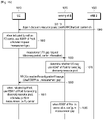
- Fig. 2 is a flowchart illustrating a process for configuring a TX gap according to an embodiment of the present disclosure.
- UE 210 determines TX gaps necessary on F1 when UE does not have an additional TX chain for inter-carrier discovery transmission (230).
- UE sends a request for discovery TX gap having information on the determined TX gaps to serving eNB 220 (240).
- the information on the determined TX gaps comprises frequency of F2 carrier and parameters indicating the determined TX gaps on F2 carrier.
- the discovery TX gap request can be sent through a SidelinkUEInformation message.
- UE 210 puts priority to discovery transmission on F2 rather than UL transmission on F1 during TX gaps (250).
- Serving eNB 220 upon receiving the discovery TX gap request, provides TX gaps in 0 or more UL subframes on F 1 that can overlap subframe for discovery transmission on F2 (260).
- serving eNB does not provide a gap for all of the subframes indicated by UE in the TX gap request. In some embodiments, serving eNB abstains from providing a response (i.e., TX gap response) to the TX gap request.
- TX gap response i.e., TX gap response
- RRC-connected UE monitors downlink (physical downlink control channel (PDCCH) or enhanced PDCCH (EPDCCH)) and monitors whether UL is scheduled or not in subframes on F1 (on physical uplink shared channel (PUSCH)) corresponding to discover subframes for discovery transmission on F2.
- Data on PUSCH can be dynamically scheduled, and scheduling information can be indicated in PDCCH or EPDCCH.
- UE can also be scheduled to send control information on PUCCH for feedback of scheduling request (SR) or hybrid automatic repeat request (HARQ).
- SR scheduling request
- HARQ hybrid automatic repeat request
- type 1 resource allocation means a discovery resource allocation scheme in which a particular discovery resource pool for UE among multiple discovery resource pools is allocated to UE by base station, and UE selects resource (i.e., subframe) for discovery transmission from the allocated discovery resource pool.
- type 2 resource allocation means a discovery resource allocation scheme in which dedicated discovery resource is allocated to UE by base station.
- FIG. 3 is a flowchart illustrating a process for configuring a TX gap according to an embodiment of the present disclosure.
- operations 330, 340, 350, and 370, respectively, are substantially the same in description as operations 230, 240, 260, and 250 of Fig. 2 .
- serving eNB 320 sends a TX gap response including information on TX gaps allocated by the serving eNB 320 to UE 310.
- the information on TX gaps includes frequency of F2 carrier and parameters indicating TX gaps allocated on F2 carrier.
- the TX gap response can be delivered through a RRCConnection Reconfiguration message.
- the TX gap response indicates whether UE's request (i.e., discovery TX gap request) is accepted.
- the presence of TX gaps in the TX gap response indicates that UE's request is accepted.
- accepted i.e., TX gaps are provided in the TX gap response
- UE need not perform UL transmission in TX gaps which are UL subframes signaled by UE in the TX gap request, and discovery transmission has priority over UL transmission during TX gaps.
- the TX gap response indicates whether UE's request is accepted.
- eNB gives an indication of TX gaps (i.e., UL subframes where UE need not do UL transmission) to UE, or discovery transmission can have priority over UL transmission.
- the TX gap response can be sent on F1 carrier by serving eNB albeit no request is made (unsolicited) (i.e., without TX gap request). For example, when serving eNB on F1 carrier allocates dedicated resources for discovery transmission on F2 carrier, the TX gap response can be sent despite unsolicited.
- the TX gap response can give UE an indication that UE need not perform UL transmission in the TX gaps (i.e., UL subframes corresponding to discovery subframes for discovery transmission on F2 carrier). UE may be already aware of discovery subframes used for discovery transmission.
- the TX gap response can give UE an indication that UE need not perform UL transmission in the TX gaps (i.e., UL subframes corresponding to discovery subframes for discovery transmission on F2 carrier), i.e., that discovery transmission has priority over UL transmission.
- UE sends a TX gap request only when type 1 resource allocation scheme is used for discovery transmission.
- type 2 resource allocation scheme serving eNB on F1 carrier, because of being aware of discovery resources used by UE for discovery transmission on F2 carrier, determines TX gaps even when no TX gap request is made.
- UE also sends a TX gap request regardless of resource allocation schemes (whether it is of type 1 or type 2).
- UE sends a TX gap request for all of the discovery subframes in the discovery resource pool allocated to UE. In some embodiments, UE sends a request for TX gaps for subframes allocated to UE for discovery transmission or discovery subframes selected by UE. In some embodiments, eNB provides TX gaps corresponding to one or more subframes, and UE selects one of them for discovery transmission.
- UE sends information on TX gaps (i.e., one or more subframes where serving eNB should abstain from scheduling UL or UE should not be expected to conduct any UL transmission) to serving eNB.
- TX gaps i.e., one or more subframes where serving eNB should abstain from scheduling UL or UE should not be expected to conduct any UL transmission.
- UE recognizes discovery subframes on F2 carrier carrying discovery messages, and UE can thus determine TX gaps corresponding to discovery subframes.
- discovery transmission on F2 carrier is based on DL timing
- uplink transmission on F1 carrier is based on timing advanced, and thus, discovery transmission on F2 carrier and uplink transmission on F1 carrier might not be aligned. Further, DL transmission timing on F1 carrier and DL transmission timing on F2 carrier might not be synced. This is described in more detail with reference to Fig. 4 .
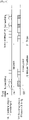
- Fig. 4 is a view illustrating the timing of DL and UL subframes on F1 and F2.
- eNB1 is a serving base station for UE and uses F1 carrier
- eNB2 is a base station on F2 carrier.
- the DL subframe in UE on F1 carrier can come behind, by 11, DL subframe timing in eNB1 on F1 carrier.
- the value t1 is a propagation delay between UE and eNB 1.
- UL subframe timing on F1 carrier in UE can come ahead, by t2, of DL subframe timing in eNB1 on F1 carrier.
- the value t2 is a timing advance.
- DL subframe timing in eNB2 on F2 carrier might not be identical to DL subframe timing on F1 carrier due to a sync failure.
- the DL/D2D subframe timing in UE on F2 carrier can come behind, by t3, DL subframe timing in eNB2 on F2 carrier.
- the value t3 is a propagation delay between UE and eNB2. Resultantly, a gap of t4 exists between UL subframe timing in UE on F1 carrier and DL/D2D subframe timing on F2 carrier.
- UE determines a time gap (i.e., t4) for D2D subframe on F2 carrier.
- t4 a time gap for D2D subframe on F2 carrier.
- the method for configuring TX gap can be varied by t4, which is described below in more detail with reference to Figs. 5 to 7 .
- Fig. 5 is a view illustrating a method for configuring a TX gap, particularly when t4 is 0, according to an embodiment of the present disclosure. Since t4 is 0, when discovery signal is transmitted in UL subframe i+1 520 in UE on F2 carrier, TX gap is required only in UL subframe i+1 510 on F1 carrier. That is, when t4 is 0, only one UL subframe can be required on F1 carrier where TX gap is configured for each discovery subframe on F2 carrier.
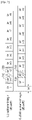
- Fig. 6 illustrates a method for configuring TX gap according to another embodiment, particularly when t4 is the same as gap 630 at the end of the subframe for D2D transmission on F2 carrier.
- Gap can be configured between subframes for DL or D2D transmission on F2 carrier as well.
- t4 is the same as gap 630 at the end of subframe for D2D transmission on F2 carrier, substantially no signal is sent from UE during gap 630, and thus, when discovery signal is sent in UL subframe i+1 620 in UE on F2 carrier, TX gap is required only in UL subframe i+1 610 on F1 carrier.
- Fig. 7 illustrates a method for configuring TX gap according to another embodiment, particularly when t4 is larger than gap 740 at the end of the subframe for D2D transmission on F2 carrier.
- TX gaps can be configured in UL subframe i+1 710 and subframe i+2 720 on F1 carrier temporally overlapping region except for gap 740 in subframe i+1 730 on F2 carrier in order to insure discovery transmission in D2D subframe i+1 730 on F2 carrier.
- UE determines necessary TX gap in UL subframe on F1 carrier which starts or ends during discovery subframe on F2 carrier. In some embodiments, regardless of what is shown in Figs. 5 to 7 , UE determines necessary TX gap in UL subframe on F1 carrier which starts or ends during discovery subframe on F2 carrier or at the boundary of discovery subframe. Such embodiments can be useful for when UE is on the move, and after UE determines TX gaps, t4 varies.
- TX gap in UL subframe on F1 carrier determined by the above-described schemes can be required only when UL subframe determined as TX gap is not configured as D2D subframe in F 1 carrier.
- determination of TX gaps can be made by UE regardless of whether dedicated resources (i.e., type 2 resource allocation or scheduled resource allocation) or contention-based resources (i.e., type 1 resource allocation or UE selection resource allocation) are used for discovery transmission on F2 carrier. In some embodiments, determination of TX gaps can be performed by UE when contention-based resources (i.e., type 1 resource allocation or UE selection resource allocation) are used for discovery transmission on F2 carrier.
- additional subframes or times other than subframe where UE sends discovery signal can be considered in determining TX gaps.
- subframes on F2 carrier for transmission of device to device sync signal and interruption time for retunning from F1 carrier to F2 carrier or from F2 carrier to F1 carrier, as well as one or more subframes for transmission of discovery signal should be taken into account for determining TX gap.
- Subframe offset between subframes on carrier F1 and carrier F2 should also be taken into account when determining the TX gaps. The same can be individually signaled in TX gap request. Alternatively, the same can be indicated as TX gap.
- serving eNB may already recognize discovery subframes used by UE for discovery transmission. In such case, serving eNB needs to determine TX gaps on F1 carrier. In some embodiments, serving eNB has signaled discovery subframes used by UE for discovery transmission and can thus be aware of them.
- UE determines a difference (i.e., t4) in start time between D2D subframe on F2 carrier and UL subframe on F1 carrier.
- UE sends information on t4 to eNB at a TX gap request.
- eNB determines a value obtained by subtracting t1 from the start time of DL subframe on F1 carrier in eNB as the start time of UL subframe on F1 carrier in UE.
- the value of time t1 has been known to eNB.
- the eNB determines a value obtained by subtracting t4 from the start time of UL subframe on F1 carrier in UE as the start time of D2D subframe on F2 carrier in UE.
- TX gaps using the same method as that performed by UE before.
- a value obtained by subtracting t1 from the start time of DL subframe on F1 carrier in eNB can be determined as the start time of UL subframe on F1 carrier in UE.
- the value of time t1 has been known to eNB.
- eNB determines a difference in start time between UL subframe on F1 carrier in UE and DL subframe on F2 carrier.
- the start of DL subframe on F2 carrier in UE can be regarded as start of discovery subframe on F2 carrier. Since eNB can be aware of offset between DL transmission timings on F1 carrier and F2 carrier, the start time of DL subframe on F2 carrier can have been known to eNB.
- the eNB determines that TX gap is needed in UL subframe on F1 carrier that starts or ends during discovery subframe on F2 carrier or at the boundary of discovery subframe on F2 carrier.
- eNB regards the start of D2D transmission timing on F2 carrier as DL timing on F1 carrier, and eNB determines that TX gap is needed in UL subframe on F1 carrier that starts or ends during discovery subframe on F2 carrier or at the boundary of discovery subframe on F2 carrier.
- TX gaps can be computed by UE or eNB for discovery subframes actually sent by UE. In other embodiments, TX gaps can be computed for each discovery subframe in discovery resource pool.
- Periodicity of TX gap request is described below.
- the periodicity of TX gap request can be varied depending on methods for configuring discovery resources.
- TX resource pools There can be a number of TX resource pools, and a TX resource pool can be selected based on RSRP.
- UE may have to reselect resource pool when RSRP is varied.
- resources for discovery transmission may be varied in each discovery period. Whether a new resource pool needs to be selected or not can be based on RSRP measurement before discovery period. Accordingly, UE might not send a TX gap request on multiple discovery periods. UE may have to send a TX gap request in each discovery period.
- TX resource pools There may be a number of TX resource pools, and a TX resource pool can be randomly selected. In such case, UE selects resource pool and resources for multiple discovery periods. Accordingly, UE sends one TX gap request every "N" discovery periods.
- TX resource pool There may be a single TX resource pool.
- UE may have to randomly select resources for each transmission in each discovery period.
- resources selected for discovery transmission may be varied in each discovery period.
- UE can randomly select resources for multiple discovery periods and send one TX gap request every "N" discovery periods.
- TX gap signaling parameters can be used to indicate TX gaps in TX gap request.
- UE sends one discovery message in each discovery period.
- Each discovery protocol data unit (PDU) can be sent multiple times in discovery period, and accordingly, TX gap for multiple subframes may be needed. Since discovery subframes may be varied in discovery period, TX gaps may also be varied. Accordingly, TX gaps can be signaled using subframe bitmap.
- the following parameters can be used to signal TX gaps at TX gap request.
- TX gap list includes one or more elements in list, and each element includes SubframeBitMap or SubframeBitMapOffset.
- SubframeBitMap variably sized bitmap.
- the nth SubframeBitMap in the TX gap list corresponds to the nth gap interval subsequent to gap interval where TX gap request is sent.
- Each bit indicates whether subframe is TX gap or not.
- SubframeBitMapOffset offset between start of TX gap period and first subframe indicated by SubframeBitMap.
- SubframeBitMapOffset might not be present in the first element in list. In some embodiments, SubframeBitMapOffset may be present in none of the elements.
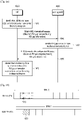
- Fig. 8 is a view illustrating TX gap signaling parameters according to an embodiment of the present disclosure.
- TX gap period can denote the length of TX gap period corresponding to discovery period and can be indicated in unit of subframe.
- SubframeBitMap can indicate whether at least some of subframes in a corresponding TX gap period are TX gap or not.
- TX gaps 810 corresponding to discovery TX subframes 820 are configured in first three subframes in the gap period as shown in Fig. 8
- SubframeBitMap can be configured in three bits, and SubframeBitMapOffset might not be present.
- SubframeBitMapOffset can denote periods from the start timing of the corresponding gap period to subframe indicated by SubframeBitMap and can be indicated in unit of subframe.
- the following parameters can be used to signal TX gaps at TX gap request.
- TX gap list includes one or more elements in list, and each element includes SubframeBitMapStart or SubframeBitMap.
- SubframeBitMapStart subframe # of subframe corresponding to most significant bit of SubframeBitMap.
- system frame number SFN
- subframe # can be indicated instead of subframe #.
- SubframeBitMap variably sized bitmap.
- MSB of SubframeBitMap corresponds to subframe indicated by SubframeBitMapStart. Each bit indicates whether subframe is TX gap or not.
- Fig. 9 is a view illustrating TX gap signaling parameters according to an embodiment of the present disclosure.
- SubframeBitMapStart may denote the first subframe (i.e., subframe corresponding to MSB of SubframeBitMap) of subframes indicated by SubframeBitMap indicating TX gaps 910 corresponding to discovery TX subframes 920.
- the following parameters can be used to signal TX gaps at TX gap request.
- SubframeBitMap variably sized bitmap. Each bit indicates whether subframe is TX gap or not.
- the following parameters can be used to signal TX gaps at TX gap request.
- SubframebitMap (10 bits), each bit corresponds to subframe in SFN. MSB corresponds to subframe of SFN.
- the following parameters can be used to signal TX gaps at TX gap request.
- TX gap list includes one or more elements in list, and each element includes SubframeBitMapList.
- SubframeBitMapList variably sized bitmap list.
- the nth SubframeBitMapList corresponds to the nth gap interval subsequent to gap interval where TX gap request is sent.
- Each element in SubframeBitMapList includes SubframeBitMap and SubframeBitMapOffset.
- SubframeBitMap variably sized bitmap.
- the nth SubframeBitMap in list corresponds to the nth gap interval subsequent to gap interval where TX gap request is sent. Each bit indicates whether subframe is TX gap or not.
- SubframeBitMapOffset offset between start of TX gap period and first subframe indicated by SubframeBitMap.
- SubframeBitMapOffset might not be present in the first element in list. In some embodiments, SubframeBitMapOffset may be present in none of the elements.
- the following parameters can be used to signal TX gaps at TX gap request.
- TX gap list includes one or more lists of SubframeBitMapStart and SubframeBitMapList.
- SubframeBitMapStart subframe # of subframe corresponding to most significant bit of SubframeBitMap.
- system frame number SFN
- subframe # can be indicated instead of subframe #.
- SubframeBitMapList variably sized bitmap list. Each element in SubframeBitMapList includes SubframeBitMap and SubframeBitMapOffset.
- SubframeBitMap variably sized bitmap.
- the first subframe bitmap begins in the subframe number indicated in SubframeBitMapStart.
- subframe bitmap starts at the offset (SubframeBitMapOffset) from the last subframe indicated by a previous subframe bitmap.
- Each bit indicates whether subframe is TX gap or not.
- SubFrameBitMapOffset indicates offset of start of SubFrameBitMap for previous bitmap in list. Offset can be indicated as the number of subframes or frames. In some embodiments, SubFrameBitMapOffset might not be present for the first element in SubFrameBitMapList. In some embodiments, SubFrameBitMapOffset can be present in the first element in SubFrameBitMapList, and offset of start of subframe bitmap can be indicated from the subframe/frame number indicated by SubFrameBitMapStart.
- Fig. 10 is a view illustrating TX gap signaling parameters according to an embodiment of the present disclosure.
- SubFrameBitMapStart indicates the first subframe among subframes where whether TX gap or not is indicated by the first SubFrameBitMap(SubframeBitMap1).
- SubFrameBitMapOffset denotes an interval between SubFrameBitMap1 and SubFrameBitMap(SubFrameBitMap2) subsequent to SubFrameBitMap1.
- UE signals a one-bit indicator indicating whether adjacent subframes corresponding to TX gap signaled in TX gap request should also be TX gap.
- UE reports TX gaps using the above-described signaling parameters on each frequency where UE independently send discovery signal or UE indicates TX gap on all frequencies.
- UE can send discovery signal on F1 carrier and F2 carrier.
- UE can have serving cell on F3 carrier and F4 carrier. Accordingly, UE can independently report TX gaps on F1 carrier and F2 carrier.
- UE combines gaps necessary for F1 carrier and F2 carrier and report the combined gaps in TX gap request.
- UE indicates serving cell or frequency (or carrier) requiring TX gap.
- UE can also indicate frequency on which UE want to transmit discovery signal. For example, when discovery transmission on F1 carrier requires gap on serving frequency F3, UE can indicate gap necessary on frequency F3. In other embodiments, UE might not report frequency, and gap can be applied to all serving cells or serving frequencies.
- the above-described signaling parameters can also be available to eNB for configuring TX gaps.
- Type 1 discovery resource allocation including multiple resource pools and in which resource pool selection is based on RSRP may be available for discovery transmission.
- UE needs to measure RSRP for F2 carrier where discovery signal is sent for selecting resource pool.
- Resources for F2 carrier can be configured by serving cell on F1 carrier.
- resources for F2 carrier can be obtained by UE reading out SIB (i.e., SIB 19) on F2 carrier.
- Pcell For discovery resource allocation, Pcell (or serving cell or serving eNB) can indicate DL carrier available for selecting pool using parameter UseRSRPPcell, carrier index, or absolute radio-frequency channel number (ARFCN). Such indication can be achieved for each carrier supportive of discovery transmission. Alternatively, a list of carriers where Pcell's RSRP is available can be indicated in SIB 19. Unless RSRP of Pcell is available for discovery on F2 carrier, Pcell can configure measurement gap. This is described in more detail with reference to Fig. 11 .
- Fig. 11 is a flowchart illustrating a process for using RSRP of Pcell for selecting a discovery resource pool according to an embodiment of the present disclosure.
- UE 1110 sends discovery TX resource request to serving eNB 1120 (1130).
- the discovery TX resource request can be sent through a SidelinkUEinformation message.
- Serving eNB 1120 provides Pcell or serving cell for UE.
- serving eNB 1120 determines whether UE 1110 can use RSRP of Pcell to select resource pool for discovery transmission (1140). Unless RSRP of Pcell can be used for selecting resource pool, serving eNB 1120 can configure measurement gap for UE 1110 to perform measurement on F2 carrier (1150).
- Serving eNB 1120 sends discovery resource pools for F2 carrier, parameter UserRSRPPcell, or measurement gap to UE 1110. Such information can be sent through a RRCConnection Reconfiguration message.
- Pcell i.e., serving eNB 1120
- parameter UseRSRPPcell e.g., through parameter UseRSRPPcell
- UE 1110 uses RSRP of Pcell for selecting resource pool. Otherwise (i.e., when RSRP of Pcell is indicated as unavailable), measurement on F2 carrier can be carried out (1170). Measurement on F2 carrier can be performed in the measurement gap notified of by serving eNB 1120.
- Fig. 12 is a view illustrating a measurement gap on F1 and a discovery period on F2 according to an embodiment of the present disclosure.
- Measurement gap repletion period which means the period of measurement gap 1210 can be set to be the same as discovery period.
- Measurement gap 1210 can be sorted so that measurement gap duration is positioned before discovery period starts. In some embodiments, measurement gap duration can be set to 6ms.
- Pcell on F1 carrier can indicate whether UE can use RSRP of Pcell to select resource pool on F2 carrier in broadcast signaling (e.g., SIB). Unless RSRP of Pcell is available, UE sends a request for measurement gap using a portion of TX gap request or a new message. This is described in more detail with reference to Figs. 13 and 14 .
- Fig. 13 is a flowchart illustrating a process when RSRP of Pcell is available for selecting a discovery resource pool according to an embodiment of the present disclosure.
- Serving eNB 1320 broadcasts F2 carrier type 1 discovery resource pools and UseRSRPPcell using SIB 19 (1330).
- SIB 19 can be broadcast on F1 carrier.
- UseRSRPPcell parameter can be set to 1, indicating that RSRP of Pcell is available for selecting resource pool on F2 carrier.
- UE 1310 can use RSRP of Pcell to select discovery resource pool on F2 carrier (1340).
- Fig. 14 is a flowchart illustrating a process when RSRP of Pcell is unavailable for selecting a discovery resource pool according to an embodiment of the present disclosure.
- Serving eNB 1420 broadcasts F2 carrier type 1 discovery resource pools and UseRSRPPcell using SIB 19 (1430).
- SIB 19 can be broadcast on F1 carrier.
- UseRSRPPcell parameter can be set to 0, indicating that RSRP of Pcell is unavailable for selecting resource pool on F2 carrier.
- UE 1410 determines to send a request for measurement gap to Pcell (1440).
- UE 1410 sends TX gap request and measurement gap request on F1 carrier to serving eNB 1420 (1450).
- Measurement gap request or TX gap request can contain information on discovery period.
- Serving eNB 1420 sends information on measurement gap on F1 carrier to UE 1410.
- Measurement gap can be delivered through an RRCConnection Reconfiguration message.
- Measurement gap determined by serving eNB and sent to UE 1410 can be substantially the same as the measurement gap described above in connection with Fig. 12 .
- UE 1410 When receiving information on measurement gap, UE 1410 performs measurement on F2 carrier during measurement gap (1470).
- UE 1410 selects discovery resource pool in subsequent discovery period based on measurement on F2 carrier during measurement gap.
- resources on F2 carrier might not be configured by Pcell.
- An offset can be selected so that there is a sufficient time between the start of discovery period on F2 carrier and measurement duration or termination of measurement gap.
- the eNB indicates whether UE uses RSRP of Pcell to select discovery resource pool using dedicated signaling. Unless RSRP of Pcell is available for selecting discovery resource pool on F2 carrier, Pcell can configure measurement gap.
- MGRP can be set to be the same as discovery period.
- Measurement gap 1210 can be sorted so that measurement gap duration is positioned before discovery period starts. Measurement gap duration can be set to 6ms. This is described in more detail with reference to Fig. 15 .
- Fig. 15 is a flowchart illustrating a process for selecting a discovery resource pool when information on discovery resource pools is delivered not from Pcell but from another cell according to an embodiment of the present disclosure.
- the eNB2 1530 sends information on type 1 discovery resource pools for F2 carrier (1540).
- Information on type 1 discovery resource pools can be broadcast on F2 carrier using SIB 19.
- the eNB2 1530 can be a base station operating on F2 carrier which does not serve UE 1510 on F1 carrier.
- UE 1510 sends discovery period and carrier information to serving eNB 1520.
- the carrier information can be information regarding carrier (i.e., F2 carrier) for UE 1510 to send discovery signal.
- the discovery period and carrier information can be included and sent in TX gap request or measurement gap request.
- Serving eNB 1520 determines whether UE can use RSRP of Pcell to select discover resource pool (1560).
- Serving eNB 1520 sends UseRSRPPcell, a parameter whose value is set based on the determination in operation 1560, to UE 1510 (1570).
- serving eNB 1520 sends information regarding measurement gap, along with the UseRSRPPcell parameter, to UE 1510.
- the parameter UseRSRPPcell and measurement gap can be sent through a RRCConnection Reconfiguration message.
- UE 1510 uses RSRP of Pcell for selecting discovery resource pool. Otherwise, UE 1510 conducts measurement for selecting discovery resource pool using the received information regarding measurement gap (1590).
- lists of other carriers where RSRP is available for selecting discovery resource pool can be broadcast by cell on F2 carrier. This is described below in further detail with reference to Fig. 16 .
- Fig. 16 is a flowchart illustrating a process for selecting a discovery resource pool when information on discovery resource pools is delivered not from Pcell but from another cell according to an embodiment of the present disclosure.
- the eNB2 1630 broadcasts type 1 discovery resource pools on F2 carrier and parameter UseRSRPOtherCell using SIB (e.g., SIB 19) (1640).
- SIB e.g., SIB 19
- Parameter UseRSRPOtherCell can contain a list of other carriers (except for F2 carrier) where RSRP is available for selecting discovery resource pool.
- RSRP of Pcell i.e., serving eNB 1620
- cell i.e., eNB2 1630
- UE 1610 uses RSRP of Pcell to determine discovery resource pool, and can otherwise determine to request measurement gap (1650).
- UE 1610 When it is determined in operation 1650 to send a request for measurement gap, UE 1610 sends a measurement gap request or TX gap request including carrier information and discovery period to serving eNB 1620 (1660). Serving eNB 1620 determines whether UE 1610 can use RSRP of Pcell to select discover resource pool (1670). Serving eNB 1620 sends RRCConnectionReconfigurationMessage including measurement gap and parameter UseRSRPPcell indicating whether UE 1610 can use RSRP of Pcell for selecting discovery resource pool to UE 1610 (1680). When RSRP of Pcell is indicated as available for selecting discovery resource pool by Pcell (i.e., serving eNB 1620), LTE 1610 uses RSRP of Pcell for selecting discovery resource pool.
- Pcell i.e., serving eNB 1620
- UE 1610 can conduct measurement for selecting discovery resource pool using the received information regarding measurement gap (1690).
- Serving eNB 1620 when RSRP of Pcell is unavailable, can configure a measurement gap according to the information on measurement gap sent to UE 1610 in operation 1680 (1695).
- lists of other carriers where RSRP is available for selecting discovery resource pool can be broadcast by cell on F1 carrier. This is described in more detail with reference to Fig. 17 .
- Fig. 17 is a flowchart illustrating a process for selecting a discovery resource pool when information on discovery resource pools is delivered not from Pcell but from another cell according to an embodiment of the present disclosure.
- serving eNB 1720 can broadcast parameter UseRSRPOtherCell using SIB (e.g., SIB 19) (1740).
- Parameter UseRSRPOtherCell can contain a list of other carriers (except for F2 carrier) where RSRP is available for selecting discovery resource pool.
- the eNB2 1730 can broadcast type 1 discovery resource pools on F2 carrier using SIB (e.g., SIB 19) on F2 carrier (1745).
- UE 1710 can use RSRP of Pcell for selecting discovery resource pool on F2 carrier, and can otherwise determine to request measurement gap (1750).
- UE 1710 can send a measurement gap request or TX gap request including carrier information and discovery period to serving eNB 1720 (1755).
- Serving eNB 1720 can determine whether UE 1710 can use RSRP of Pcell to select discover resource pool (1770).
- Serving eNB 1720 can send RRCConnectionReconfigurationMessage including measurement gap and parameter UseRSRPPcell indicating whether UE 1710 can use RSRP of Pcell for selecting discovery resource pool to UE 1710 (1770).
- RSRP of Pcell is indicated as available for selecting discovery resource pool by Pcell (i.e., serving eNB 1720)
- UE 1610 can use RSRP of Pcell for selecting discovery resource pool. Otherwise, UE 1710 can conduct measurement for selecting discovery resource pool using the received information regarding measurement gap (1780).
- Serving eNB 1720 when RSRP of Pcell is unavailable, can configure a measurement gap according to the information on measurement gap sent to UE 1710 in operation 1770 (1790).
- RX gap for receiving inter-carrier discovery signal is described.
- RRC-connected UE can request serving eNB to abstain from scheduling downlink (i.e., providing RX gap) in subframes on F1 carrier overlapping discovery subframes on F2 carrier by sending RX gap request.
- the RX gap request can be signaled using a sidelinkUEInformation message. This is described in more detail with reference to Fig. 18 .
- Fig. 18 is a flowchart illustrating a process for configuring a RX gap according to an embodiment of the present disclosure.
- UE 1810 can identify that UE 1810 does not have an additional RX chain for inter-carrier discovery reception (1830). When UE 1810 does not have additional RX chain for inter-carrier discovery reception, UE 1810 sends a SidelinkUEInformation message containing discovery RX gap request having RX gap information to serving eNB 1820.
- Serving eNB 1820 determines to provide RX gap in one or more subframes indicated by UE using RX gap information (1850).
- Serving eNB 1820 sends RRCConnectionReconfiguration message containing discovery RX gap response having RX gap information to UE 1810.
- UE 1810 abstains from monitoring DL in subframes indicated in RX gap information contained in discovery RX gap response and can receive inter-carrier discovery in such subframes (1870).
- Fig. 19 is a view illustrating a configuration of a RX gap according to an embodiment of the present disclosure. As shown in Fig. 19 , up to two RX gaps 1910 of subframes may be needed for each discovery subframe 1920 on F2 carrier. Information on RX gaps 1910 (i.e., one or more downlink subframes which should not be scheduled for downlink by serving eNB) can be sent in RX gap request. Alternatively, UE can indicate subframes for discovery reception on F2 carrier in RX gap request. Serving eNB can determine downlink subframes overlapping subframes for discovery reception on F2 carrier. In such case, eNB should be able to recognize timing gap between D2D subframe on F2 carrier and downlink subframe on F1 carrier.
- serving eNB may or may not provide RX gap for all subframes indicated by UE in RX gap request.
- RX gap response can give UE an indication as to subframes (i.e., subframes not required to be monitored by UE) where serving eNB is determined to provide RX gap.
- RX gap response indicates whether UE's request is accepted or not. When accepted, UE need not perform any DL reception in DL subframe signaled by UE in RX gap request. Alternatively, RX gap response indicates whether UE's request is accepted or not. When accepted, eNB gives UE an additional indication as to DL subframes where UE need not conduct any DL reception.
- Fig. 20 is a view illustrating RX gap signaling parameters according to an embodiment of the present disclosure.
- RX gaps can be indicated in RX gap request or RX gap response using the following parameters.
- RXGapPeriod indicates periodicity of RX gaps. Duration is the same as discovery period.
- RXGapSubfameBitMap bitmap indicating subframes requiring RX gap.
- RXGapSubframeBitMapRepetition indicates the number of times of repetition of RXGapSubfameBitMap.
- RXGapSubframeBitMapRepetition might not be signaled, and RXGapSubfameBitMap may have a variable size N, instead. In some embodiments, multiple RXGapSubframeBitMap's is signaled.
- Fig. 21 is a block diagram illustrating a base station or UE according to an embodiment of the present disclosure.
- the UE is first described.
- the UE 2100 can be configured to perform the UE's operations described above.
- the UE 2100 includes a processor 2110, a memory 2120, and a transceiver 2130.
- the processor 2110 is communicably and electrically connected with the memory 2120 and the transceiver 2130.
- the UE 2100 can transmit or receive signals and communicate with other entities through the transceiver 2130.
- the memory 2120 stores information for operations of the UE 2100.
- the memory 2120 can store commands or codes for controlling the processor 2110.
- the processor 2110 can be configured to control the operation of the UE 2100.
- the above-described operations of the UE 2100 can be processed and run substantially by the processor 2110.
- transceiver 2130 Although transmission or reception of signals is performed through the transceiver 2130, and storage of data and commands is carried out by the memory 2120, the operations of the transceiver 2130 and the memory 2120 can be controlled by the processor 2110, and thus, transmission and reception of signals and storage of data and commands can also be deemed to be performed by the processor 2110.
- the base station 2100 can be configured to perform the operation of base station, Pcell, serving eNB, or eNB2 as described above.
- the base station 2100 includes a processor 2110, a memory 2120, and a transceiver 2130. Substantially the same description given above for UE can apply to the processor 2110, memory 2120, and transceiver 2130.
- Various exemplary logic blocks, modules, and circuits described herein in embodiments the present disclosure may be implemented or performed by a general-purpose processor, digital signal processor (DSP), application specific integrated circuit (ASIC), field programmable gate array (FPGA) or other programmable logic device, discrete gate or transistor logic, discrete hardware components, or their combinations designed to carry out the functions disclosed herein.
- the general-purpose processor may be a microprocessor.
- the processor may be a common processor, controller, microcontroller, or state machine.
- the processor may be implemented in a combination of computing devices, e.g., a combination of a DSP and a microprocessor, multiple microprocessors, one or more microprocessors integrated with a DSP core, or any other configurations.
- the methods and algorithms described in connection with embodiments described herein may be directly implemented in hardware, a software module run by the processor, or in a combination thereof.
- the software module may reside in a random access memory (RAM), flash memory, read only memory (ROM), erasable programmable ROM (EPROM), electrically erasable programmable ROM (EEPROM), registers, hard disk, removable disk, compact disc ROM (CD-ROM) or any other type of storage medium known in the art.
- RAM random access memory
- ROM read only memory
- EPROM erasable programmable ROM
- EEPROM electrically erasable programmable ROM
- registers hard disk, removable disk, compact disc ROM (CD-ROM) or any other type of storage medium known in the art.
- CD-ROM compact disc ROM
- the storage medium may be combined with the processor so that the processor reads information out of the storage medium and record information in the storage medium.
- the storage medium may be integrated with the processor.
- the processor and storage medium may reside in
- the above-described functions may be implemented in hardware, software, firmware, or any combination thereof.
- the functions When implemented in software, the functions may be stored as one or more instructions or codes in a computer readable medium or transmitted through the same.
- the computer readable medium includes both a communication medium and computer storage medium including any medium facilitating to transfer a computer program from one place to another.
- the storage medium may be any available medium accessible by a general-purpose or special-purpose computer.
- such computer readable medium may include a RAM, ROM, EEPROM, CD-ROM or other optical disc storage, magnetic disk storage or other magnetic storage devices, or any other medium available for transferring or storing program code means in a desired form of instructions or data structures and accessible by a general-purpose or special-purpose computer or special-purpose processor. Further, the access means is properly denoted the computer readable medium.
- the coaxial cable, optical fiber cable, twisted pair, digital subscriber line (DSL), or infrared (IR) rays, or wireless techniques using wireless and microwaves belong to the definition of the medium.
- the term "disk” or “disc” encompasses compact disc (CD), laser disc, optical disc, digital versatile disc (DVD), floppy disk, and Blu-ray disc, and here, the disk reproduces data generally magnetically while the disc reproduces data optically using laser beams. Combinations of those described above should be included in the computer readable medium.
Landscapes
- Engineering & Computer Science (AREA)
- Computer Networks & Wireless Communication (AREA)
- Signal Processing (AREA)
- Databases & Information Systems (AREA)
- Computer Security & Cryptography (AREA)
- Mobile Radio Communication Systems (AREA)
Claims (6)
- Procédé pour obtenir une configuration de ressource de découverte pour une deuxième porteuse (F2) par un équipement d'utilisateur, UE (120), dans un état inactif de contrôle de ressources radio, RRC, l'UE (120) étant desservi par une cellule primaire, PCell, sur une première porteuse (F1), le procédé comprenant :recevoir, à partir d'une station de base de desserte (110), un message comprenant une première indication pour l'une parmi une première option et une deuxième option ; etobtenir la configuration de ressource de découverte sur la base du message reçu,où l'obtention de la configuration de ressource de découverte sur la base du message reçu comprend :si la première indication indique la première option, l'UE (120) lit un bloc d'informations système, SIB, sur la deuxième porteuse (F2) pour obtenir la configuration de ressource de découverte pour la deuxième porteuse (F2), et si la première indication indique la deuxième option, l'UE (120) entre dans un état connecté de RRC pour demander la configuration de ressource de découverte à la station de base de desserte (110) afin d'obtenir la configuration de ressource de découverte pour la deuxième porteuse (F2),où le message comprend en outre une deuxième indication, etoù si la deuxième indication indique la première option, l'UE lit un SIB sur la troisième porteuse pour obtenir la configuration de ressource de découverte pour une troisième porteuse, etoù si la deuxième indication indique la deuxième option, l'UE entre dans l'état connecté de RRC pour demander la configuration de ressource de découverte à la station de base de desserte afin d'obtenir la configuration de ressource de découverte pour la troisième porteuse.
- Procédé selon la revendication 1, où le message est reçu en provenance de la station de base de desserte sur la première porteuse.
- Procédé selon la revendication 1, où la réception du message comprend :
recevoir, en provenance de la station de base de desserte, le message, si la configuration de ressource de découverte pour la deuxième porteuse n'est pas diffusée par la station de base de desserte sur la première porteuse. - Procédé selon la revendication 1, où la première option est indiquée par acquireSI-FromCarrier.
- Procédé selon la revendication 1, où la deuxième option est indiquée par requestDedicated.
- Équipement d'utilisateur, UE (120, 2100), desservi par une cellule primaire, PCell, sur une première porteuse pour obtenir une configuration de ressource de découverte pour une deuxième porteuse, l'UE (120, 2100) comprenant :un émetteur-récepteur (2130) ; etun processeur (2110) couplé à l'émetteur-récepteur (2130),où le processeur (2110) est configuré pour mettre en oeuvre l'un des procédés des revendications 1 à 5.
Applications Claiming Priority (3)
| Application Number | Priority Date | Filing Date | Title |
|---|---|---|---|
| IN861KO2015 | 2015-08-06 | ||
| IN1118KO2015 | 2015-10-29 | ||
| PCT/KR2016/008662 WO2017023144A1 (fr) | 2015-08-06 | 2016-08-05 | Procédé et appareil d'exécution de communication d2d inter-porteuse |
Publications (3)
| Publication Number | Publication Date |
|---|---|
| EP3332592A1 EP3332592A1 (fr) | 2018-06-13 |
| EP3332592A4 EP3332592A4 (fr) | 2018-10-03 |
| EP3332592B1 true EP3332592B1 (fr) | 2023-01-25 |
Family
ID=57943349
Family Applications (1)
| Application Number | Title | Priority Date | Filing Date |
|---|---|---|---|
| EP16833380.5A Active EP3332592B1 (fr) | 2015-08-06 | 2016-08-05 | Procédé et appareil d'exécution de communication d2d inter-porteuse |
Country Status (5)
| Country | Link |
|---|---|
| US (3) | US10440550B2 (fr) |
| EP (1) | EP3332592B1 (fr) |
| KR (1) | KR102552289B1 (fr) |
| CN (1) | CN107926004B (fr) |
| WO (1) | WO2017023144A1 (fr) |
Families Citing this family (13)
| Publication number | Priority date | Publication date | Assignee | Title |
|---|---|---|---|---|
| WO2017023144A1 (fr) * | 2015-08-06 | 2017-02-09 | Samsung Electronics Co., Ltd. | Procédé et appareil d'exécution de communication d2d inter-porteuse |
| US10425926B2 (en) * | 2016-05-10 | 2019-09-24 | Lg Electronics Inc. | Method and apparatus for requesting additional system information |
| WO2018120112A1 (fr) | 2016-12-30 | 2018-07-05 | Telefonaktiebolaget Lm Ericsson (Publ) | Procédés et dispositifs pour une transmission multi-connexion |
| WO2018144876A1 (fr) * | 2017-02-03 | 2018-08-09 | Ntt Docomo, Inc. | Équipement utilisateur et procédé de communication sans fil |
| CN110291751B (zh) * | 2017-02-14 | 2022-02-01 | 瑞典爱立信有限公司 | 用于在无线通信网络中关联载波的方法和装置 |
| WO2018184170A1 (fr) * | 2017-04-06 | 2018-10-11 | 北京小米移动软件有限公司 | Procédé, appareil, dispositif et station de base destinés à être utilisés pour réaliser un guidage d'un dispositif de l'internet des objets |
| US10368350B2 (en) | 2017-05-26 | 2019-07-30 | At&T Intellectual Property I, L.P. | Concurrent mini-slot based and slot based transmissions to a single device |
| EP3534663B1 (fr) | 2017-11-26 | 2020-11-25 | Guangdong Oppo Mobile Telecommunications Corp., Ltd. | Procédé et dispositif terminal de sélection de porteuse |
| WO2019136626A1 (fr) * | 2018-01-10 | 2019-07-18 | Zte Corporation | Procédés, appareils et systèmes de communications de dispositifs à dispositifs |
| US11540254B2 (en) * | 2018-08-08 | 2022-12-27 | Samsung Electronics Co., Ltd. | Apparatus and method for allocating resources in wireless communication system |
| CN110912846B (zh) * | 2018-09-18 | 2021-10-01 | 华为技术有限公司 | 同步的方法和通信装置 |
| US11297654B2 (en) * | 2019-03-28 | 2022-04-05 | Mediatek Inc. | Methods and apparatus to transmit with resources overlapped |
| US11647554B2 (en) * | 2020-12-21 | 2023-05-09 | T-Mobile Usa, Inc. | Intelligent carrier aggregation in millimeter wave resources |
Family Cites Families (93)
| Publication number | Priority date | Publication date | Assignee | Title |
|---|---|---|---|---|
| US8565195B2 (en) * | 2006-08-21 | 2013-10-22 | Nokia Corporation | Apparatus, methods and computer program products providing support for packet data user continuous uplink connectivity |
| US8369301B2 (en) * | 2007-10-17 | 2013-02-05 | Zte (Usa) Inc. | OFDM/OFDMA frame structure for communication systems |
| US8433280B2 (en) * | 2008-08-11 | 2013-04-30 | Htc Corporation | Method of managing reception of natural disaster warning notification messages for a wireless communication system and related communication device |
| US20100304748A1 (en) * | 2009-04-27 | 2010-12-02 | Tero Henttonen | Apparatus and Method for Handover in a Communication System |
| US8290460B2 (en) * | 2009-06-26 | 2012-10-16 | Intel Mobile Communications GmbH | Methods for measuring received signal strength indication, measurement devices, and radio communication device |
| JP4975151B2 (ja) * | 2010-08-11 | 2012-07-11 | 株式会社エヌ・ティ・ティ・ドコモ | 移動機、ネットワーク装置、無線通信システム及びセル情報報告方法 |
| TWI615043B (zh) * | 2011-02-07 | 2018-02-11 | 內數位專利控股公司 | 在免頻譜執照中操作補充胞元方法及裝置 |
| WO2012108621A1 (fr) * | 2011-02-11 | 2012-08-16 | 엘지전자 주식회사 | Procédé et appareil pour réaliser une communication coopérative de dispositif à dispositif dans un système d'accès sans fil |
| WO2012150815A2 (fr) * | 2011-05-02 | 2012-11-08 | 엘지전자 주식회사 | Procédé pour effectuer une communication dispositif-à-dispositif dans un système d'accès sans fil, et appareil s'y rapportant |
| KR20140044366A (ko) * | 2011-07-29 | 2014-04-14 | 엘지전자 주식회사 | 셀 측정 방법 및 그를 위한 정보 전송 방법 |
| RU2607241C2 (ru) * | 2011-08-12 | 2017-01-10 | Телефонактиеболагет Л М Эрикссон (Пабл) | Пользовательское оборудование, сетевой узел, второй сетевой узел и способы, осуществленные в них |
| US9497693B2 (en) * | 2011-09-16 | 2016-11-15 | Ntt Docomo, Inc. | Extension carrier discovery for carrier aggregation |
| US8693342B2 (en) * | 2011-10-28 | 2014-04-08 | Adc Telecommunications, Inc. | Distributed antenna system using time division duplexing scheme |
| US9332493B2 (en) * | 2011-11-04 | 2016-05-03 | Lg Electronics Inc. | Communication method and communication apparatus by station that operates in power safe mode in wireless LAN system |
| CN103988546A (zh) * | 2011-12-08 | 2014-08-13 | 交互数字专利控股公司 | 高速双波段蜂窝通信 |
| US9331840B2 (en) * | 2012-05-02 | 2016-05-03 | Futurewei Technologies, Inc. | Aligning the upstream DMT symbols of multiple lines in a TDD DSL system |
| CN103634852B (zh) * | 2012-08-28 | 2017-10-17 | 华为技术有限公司 | D2d通信的资源协商方法、设备及系统 |
| HK1209560A1 (en) * | 2012-09-13 | 2016-04-01 | 美国博通公司 | Mechanism for discovery of small cells |
| US20140094212A1 (en) * | 2012-09-28 | 2014-04-03 | Electronics And Telecommunications Research Institute | Method of device to device discovery and apparatus thereof |
| CN109327822B (zh) * | 2012-10-05 | 2022-10-25 | 交互数字专利控股公司 | 增强机器类型通信(mtc)设备覆盖的方法和装置 |
| EP2912891B1 (fr) * | 2012-10-29 | 2019-06-26 | Telefonaktiebolaget LM Ericsson (publ) | Procédé pour envoyer ou recevoir des informations système |
| US9143291B2 (en) | 2012-12-27 | 2015-09-22 | Google Technology Holdings LLC | Method and apparatus for device-to-device communication |
| CN103118368B (zh) * | 2013-01-25 | 2016-08-10 | 华为技术有限公司 | 一种设备邻近发现的资源分配方法和基站 |
| CN105027480B (zh) * | 2013-01-25 | 2018-01-16 | Lg电子株式会社 | 用于在无线通信系统中执行初始接入过程的方法和装置 |
| CN103997727B (zh) | 2013-02-18 | 2019-08-30 | 中兴通讯股份有限公司 | 一种设备发现方法和装置 |
| WO2014157801A1 (fr) | 2013-03-26 | 2014-10-02 | Lg Electronics Inc. | Procédé et appareil servant à effectuer une procédure de découverte |
| US10405267B2 (en) * | 2013-04-03 | 2019-09-03 | Interdigital Patent Holdings, Inc. | Cell detection, identification, and measurements for small cell deployments |
| CN104244412B (zh) * | 2013-06-09 | 2020-05-22 | 索尼公司 | 无线通信设备、无线通信方法以及基站 |
| EP2999264B1 (fr) * | 2013-06-09 | 2017-08-09 | Huawei Technologies Co., Ltd. | Procédé de communication sans fil, équipement utilisateur et noeud de réseau |
| US9814037B2 (en) * | 2013-06-28 | 2017-11-07 | Intel Corporation | Method for efficient channel estimation and beamforming in FDD system by exploiting uplink-downlink correspondence |
| US9467880B2 (en) | 2013-06-28 | 2016-10-11 | Kyocera Corporation | Management of device-to-device discovery signals and small cell discovery signals |
| CN104349378B (zh) * | 2013-07-26 | 2019-06-14 | 中兴通讯股份有限公司 | 发现信号测量的方法、基站及终端 |
| US9648484B2 (en) | 2013-08-09 | 2017-05-09 | Futurewei Technologies, Inc. | System and method for resource allocation for open discovery in device-to-device communications |
| US20150089382A1 (en) * | 2013-09-26 | 2015-03-26 | Wu-chi Feng | Application context migration framework and protocol |
| JPWO2015046272A1 (ja) * | 2013-09-27 | 2017-03-09 | 京セラ株式会社 | ユーザ端末、ネットワーク装置及びプロセッサ |
| JP5864034B2 (ja) | 2013-10-11 | 2016-02-17 | 京セラ株式会社 | 通信制御方法、ユーザ端末及び通信装置 |
| TWI654863B (zh) * | 2013-10-18 | 2019-03-21 | 新力股份有限公司 | 通訊控制裝置、通訊控制方法及終端裝置 |
| US9572171B2 (en) | 2013-10-31 | 2017-02-14 | Intel IP Corporation | Systems, methods, and devices for efficient device-to-device channel contention |
| WO2015065110A1 (fr) * | 2013-10-31 | 2015-05-07 | 엘지전자(주) | Procédé de transmission d'un message de découverte dans un système de communication sans fil, et appareil correspondant |
| KR102265632B1 (ko) * | 2013-11-01 | 2021-06-17 | 삼성전자주식회사 | 디바이스 대 디바이스 방식을 지원하는 통신 시스템에서 자원 할당 및 자원 할당 정보 송/수신 장치 및 방법 |
| WO2015062671A1 (fr) * | 2013-11-01 | 2015-05-07 | Nokia Solutions And Networks Oy | Allocation de ressources de découverte dispositif-dispositif dans des communications |
| TW201526680A (zh) * | 2013-11-01 | 2015-07-01 | Innovative Sonic Corp | 在無線通訊系統中改善裝置間搜尋的方法及裝置 |
| US10149138B2 (en) * | 2013-11-29 | 2018-12-04 | Lg Electronics Inc. | Method for transmitting discovery message in wireless communication system and apparatus for same |
| CN104812089B (zh) * | 2014-01-28 | 2019-07-02 | 中兴通讯股份有限公司 | D2d的通信方法及ue |
| CN110933658B (zh) * | 2014-01-29 | 2022-11-15 | 交互数字专利控股公司 | 用于设备到设备发现或通信的资源选择 |
| CN106416305B (zh) * | 2014-01-31 | 2019-11-01 | 华为技术有限公司 | 小区发现设备、网络及方法 |
| US20150230157A1 (en) * | 2014-02-12 | 2015-08-13 | Qualcomm Incorporated | Pruning a cell in cellular wireless communications |
| US9609502B2 (en) * | 2014-02-24 | 2017-03-28 | Intel IP Corporation | Adaptive silencing mechanism for device-to-device (D2D) discovery |
| US9655163B2 (en) * | 2014-03-11 | 2017-05-16 | Innovative Sonic Corporation | Method and apparatus for implementing a device-to-device (D2D) service in a wireless communication system |
| US9794033B2 (en) * | 2014-03-14 | 2017-10-17 | Intel IP Corporation | Systems, methods and devices for opportunistic networking |
| CN104936164B (zh) * | 2014-03-17 | 2019-01-25 | 电信科学技术研究院 | 指示d2d相关信息和确定d2d发送资源的方法及装置 |
| US9467926B2 (en) * | 2014-04-28 | 2016-10-11 | Intel IP Corporation | Apparatus, method, and system of establishing a connection between a cellular node and a core network |
| US9930643B2 (en) * | 2014-05-02 | 2018-03-27 | Qualcomm Incorporated | Resource allocation control for long term evolution device-to-device discovery |
| EP3432647B1 (fr) * | 2014-05-08 | 2026-01-21 | Ntt Docomo, Inc. | Terminal utilisateur, procédé de communication radio pour un terminal utilisateur, station de base et système de détection de signaux de référence dans de petites cellules |
| US9847848B2 (en) * | 2014-05-09 | 2017-12-19 | Samsung Electronics Co., Ltd. | Method and apparatus for performing communication by D2D communication terminal |
| EP3141006B1 (fr) * | 2014-05-09 | 2020-12-09 | Deutsche Telekom AG | Amélioration de la communication de dispositif à dispositif |
| EP2942993B1 (fr) * | 2014-05-09 | 2020-03-25 | Sun Patent Trust | Affectation de ressources pour transmission de découverte d2d |
| US9883415B2 (en) * | 2014-05-28 | 2018-01-30 | Lg Electronics Inc. | Method for performing discovery signal measurements in wireless communication system and user equipment thereof |
| EP3158819B1 (fr) * | 2014-06-17 | 2019-03-20 | LG Electronics Inc. | Procédé et appareil permettant de réaliser une opération d2d dans une porteuse non activée dans un système de communication sans fil |
| CN105307194B (zh) * | 2014-07-16 | 2019-12-06 | 中兴通讯股份有限公司 | D2d业务的优化处理方法及装置 |
| JP5948376B2 (ja) * | 2014-07-30 | 2016-07-06 | 株式会社Nttドコモ | ユーザ端末、無線基地局及び無線通信方法 |
| US9712485B2 (en) * | 2014-07-30 | 2017-07-18 | Cisco Technology, Inc. | Dynamic DNS-based service discovery |
| WO2016015238A1 (fr) * | 2014-07-30 | 2016-02-04 | 富士通株式会社 | Procédé et appareil d'affectation de ressources d2d dans un processus de commutation et système de communication |
| KR102040624B1 (ko) * | 2014-08-07 | 2019-11-27 | 엘지전자 주식회사 | 디스커버리 신호 수신 방법 및 사용자기기와, 디스커버리 신호 전송 방법 및 기지국 |
| US10805926B2 (en) * | 2014-08-07 | 2020-10-13 | Apple Inc. | Systems, methods, and devices for proximity services for multi-carrier capable mobile devices |
| JP6261745B2 (ja) * | 2014-08-08 | 2018-01-17 | 京セラ株式会社 | ユーザ端末、プロセッサ、及び移動通信システム |
| WO2016021983A1 (fr) * | 2014-08-08 | 2016-02-11 | 주식회사 아이티엘 | Procédé et appareil de communication sans fil dans un système de communication sans fil prenant en charge des communications de dispositif à dispositif |
| EP3179805A4 (fr) * | 2014-08-08 | 2018-06-13 | Kyocera Corporation | Terminal utilisateur |
| BR112017003593B1 (pt) * | 2014-09-26 | 2023-02-23 | Sun Patent Trust | Método para alocação de recursos de rádio em um terminal de transmissão e terminal de transmissão para realização de uma transmissão de comunicação direta |
| CN106797534B (zh) * | 2014-10-14 | 2020-09-01 | Lg电子株式会社 | 无线通信系统中的用户设备的装置对装置(d2d)操作方法和使用该方法的用户设备 |
| CN107079276B (zh) * | 2014-10-21 | 2021-06-22 | Lg电子株式会社 | 在无线通信系统中发送/接收d2d信号的方法及其设备 |
| WO2016064233A2 (fr) * | 2014-10-22 | 2016-04-28 | 엘지전자 주식회사 | Procédé de limitation de l'utilisation d'une ressource exceptionnelle par un équipement utilisateur dans un système de communication sans fil, et équipement utilisateur employant ce procédé |
| WO2016069938A1 (fr) * | 2014-10-31 | 2016-05-06 | Kyocera Corporation | Signal de synchronisation de préambule dans une bande de fréquences sans licence |
| WO2016072502A1 (fr) * | 2014-11-07 | 2016-05-12 | 京セラ株式会社 | Terminal d'utilisateur |
| JP6276415B2 (ja) * | 2014-11-07 | 2018-02-07 | 京セラ株式会社 | 基地局、ユーザ端末及びプロセッサ |
| US11356834B2 (en) * | 2015-01-21 | 2022-06-07 | Samsung Electronics Co., Ltd. | System and method of D2D discovery message transmission |
| KR102462369B1 (ko) * | 2015-02-16 | 2022-11-02 | 삼성전자주식회사 | 사용자 단말기(ue)-대-네트워크 릴레이 지시의 전송을 트리거하는 방법 |
| US10383109B2 (en) * | 2015-03-12 | 2019-08-13 | Lg Electronics Inc. | Method for receiving data in unlicensed band and device using same |
| US10491345B2 (en) * | 2015-04-08 | 2019-11-26 | Lg Electronics Inc. | Method and device for transmitting and receiving discovery signal in wireless communication system |
| CN108307681B (zh) * | 2015-04-08 | 2021-09-21 | 英特尔公司 | 频率间公共陆地移动网络(plmn)间发现 |
| US10462839B2 (en) * | 2015-04-08 | 2019-10-29 | Lg Electronics Inc. | Method for transmitting sidelink terminal information of terminal in wireless communication system and terminal utilizing the method |
| WO2016163827A1 (fr) * | 2015-04-08 | 2016-10-13 | 엘지전자 주식회사 | Procédé pour transmettre des informations de terminal de liaison latérale d'un terminal dans un système de communication sans fil et terminal utilisant ce procédé |
| US10638348B2 (en) * | 2015-04-09 | 2020-04-28 | Lg Electronics Inc. | Frequency information reporting method performed by terminal in wireless communication system, and terminal using method |
| US9769862B2 (en) * | 2015-04-09 | 2017-09-19 | Sharp Laboratories Of America, Inc. | Method and apparatus for implementing partial coverage and out-of-coverage sidelink discovery resource pools for wireless communications |
| WO2016163851A1 (fr) * | 2015-04-10 | 2016-10-13 | 엘지전자 주식회사 | Procédé mis en œuvre par un terminal pour la détermination d'une priorité de transmission dans un système de communication sans fil et terminal utilisant ledit procédé |
| JP6524254B2 (ja) * | 2015-04-11 | 2019-06-05 | ホアウェイ・テクノロジーズ・カンパニー・リミテッド | リソース割り当て方法およびユーザ機器 |
| US10536895B2 (en) * | 2015-05-13 | 2020-01-14 | Lg Electronics Inc. | Method and apparatus for performing initial access procedure for low cost user equipment in wireless communication system |
| WO2016182410A1 (fr) * | 2015-05-14 | 2016-11-17 | 엘지전자 (주) | Procédé d'émission et de réception de signal d2d dans un système de communication sans fil, et appareil associé |
| EP4075901A1 (fr) * | 2015-05-15 | 2022-10-19 | Kyocera Corporation | Station de base et terminal radio |
| WO2017023144A1 (fr) * | 2015-08-06 | 2017-02-09 | Samsung Electronics Co., Ltd. | Procédé et appareil d'exécution de communication d2d inter-porteuse |
| AU2016308701B2 (en) * | 2015-08-14 | 2019-01-17 | Telefonaktiebolaget Lm Ericsson (Publ) | Provisioning transmission pools for inter-carrier prose direct discovery |
| US11382081B2 (en) * | 2015-10-16 | 2022-07-05 | Samsung Electronics Co., Ltd. | Method and apparatus for system information acquisition in wireless communication system |
| US10602471B2 (en) * | 2017-02-08 | 2020-03-24 | Htc Corporation | Communication system and synchronization method |
-
2016
- 2016-08-05 WO PCT/KR2016/008662 patent/WO2017023144A1/fr not_active Ceased
- 2016-08-05 KR KR1020160100174A patent/KR102552289B1/ko active Active
- 2016-08-05 EP EP16833380.5A patent/EP3332592B1/fr active Active
- 2016-08-05 US US15/230,326 patent/US10440550B2/en active Active
- 2016-08-05 CN CN201680046211.6A patent/CN107926004B/zh active Active
-
2019
- 2019-08-29 US US16/555,339 patent/US11228893B2/en active Active
-
2022
- 2022-01-10 US US17/572,411 patent/US11778448B2/en active Active
Also Published As
| Publication number | Publication date |
|---|---|
| US20170041917A1 (en) | 2017-02-09 |
| US11778448B2 (en) | 2023-10-03 |
| US11228893B2 (en) | 2022-01-18 |
| EP3332592A4 (fr) | 2018-10-03 |
| KR20170017830A (ko) | 2017-02-15 |
| CN107926004A (zh) | 2018-04-17 |
| EP3332592A1 (fr) | 2018-06-13 |
| US20220132292A1 (en) | 2022-04-28 |
| WO2017023144A1 (fr) | 2017-02-09 |
| US20190387391A1 (en) | 2019-12-19 |
| KR102552289B1 (ko) | 2023-07-06 |
| CN107926004B (zh) | 2022-03-18 |
| US10440550B2 (en) | 2019-10-08 |
Similar Documents
| Publication | Publication Date | Title |
|---|---|---|
| US11778448B2 (en) | Method and apparatus for performing inter-carrier D2D communication | |
| US12284689B2 (en) | Method and apparatus for random access in wireless communication systems | |
| US20240430950A1 (en) | Method and apparatus for multiple concurrent random access procedures | |
| US11582714B2 (en) | System and method for hierarchical paging, cell selection and cell reselection | |
| US11206693B2 (en) | Method and apparatus for transmitting and receiving a signal in a wireless communication system | |
| EP4221417B1 (fr) | Sélection de porteuse de liaison montante pour une transmission prach entre une porteuse dédiée nr et une porteuse partagée lte/nr | |
| EP4447549A2 (fr) | Mécanismes de signalisation et de déclenchement pour transfert intercellulaire | |
| EP3586545B1 (fr) | Techniques de signalisation d'identifiant de réseau mobile terrestre public sur une bande de spectre radiofréquence partagée | |
| EP3248425B1 (fr) | Système et procédé de transmission de message de découverte de dispositif à dispositif (d2d) | |
| US20140254429A1 (en) | Signaling for device-to-device wireless communication | |
| US20230095857A1 (en) | System and method of transmitting and receiving system information by reduced capability ues | |
| KR20150122202A (ko) | 장치 대 장치 간 통신을 위한 네트워크-보조 다중-셀 장치 디스커버리 프로토콜 | |
| CN106686729A (zh) | 基于波束的系统广播消息传输方法、装置和系统 | |
| WO2018014830A1 (fr) | Procédé et appareil destinés à la mesure d'avance de synchronisation | |
| KR102559478B1 (ko) | 채널 통신을 페이징하기 위한 빔 검색 파일럿 | |
| US20230389046A1 (en) | Method for controlling sidelink communication and device therefor | |
| JP6399318B2 (ja) | ユーザ装置、アクセスノード装置、中央ネットワークコントローラ、および対応する方法 | |
| KR102140959B1 (ko) | 무선 네트워크에서의 디바이스간 직접 통신장치 및 방법 | |
| KR20150012791A (ko) | 무선 통신 시스템에서 단말 대 단말 통신을 위한 발견 신호 자원 재탐색 방법 및 장치 | |
| EP2983387A1 (fr) | Fourniture directe d'équipement d'utilisateur pour la transmission d'équipement d'utilisateur | |
| TWI551174B (zh) | 使用者設備雙工規格訊息之獲取方法及設備 | |
| WO2017091988A1 (fr) | Procédé de transmission d'informations, station de base, et système de communication | |
| KR20220057440A (ko) | 사이드링크 통신 제어 방법 및 그 장치 |
Legal Events
| Date | Code | Title | Description |
|---|---|---|---|
| STAA | Information on the status of an ep patent application or granted ep patent |
Free format text: STATUS: THE INTERNATIONAL PUBLICATION HAS BEEN MADE |
|
| PUAI | Public reference made under article 153(3) epc to a published international application that has entered the european phase |
Free format text: ORIGINAL CODE: 0009012 |
|
| STAA | Information on the status of an ep patent application or granted ep patent |
Free format text: STATUS: REQUEST FOR EXAMINATION WAS MADE |
|
| 17P | Request for examination filed |
Effective date: 20180306 |
|
| AK | Designated contracting states |
Kind code of ref document: A1 Designated state(s): AL AT BE BG CH CY CZ DE DK EE ES FI FR GB GR HR HU IE IS IT LI LT LU LV MC MK MT NL NO PL PT RO RS SE SI SK SM TR |
|
| AX | Request for extension of the european patent |
Extension state: BA ME |
|
| RIC1 | Information provided on ipc code assigned before grant |
Ipc: H04W 48/16 20090101AFI20180525BHEP |
|
| A4 | Supplementary search report drawn up and despatched |
Effective date: 20180905 |
|
| RIC1 | Information provided on ipc code assigned before grant |
Ipc: H04W 48/16 20090101AFI20180830BHEP |
|
| DAV | Request for validation of the european patent (deleted) | ||
| DAX | Request for extension of the european patent (deleted) | ||
| STAA | Information on the status of an ep patent application or granted ep patent |
Free format text: STATUS: EXAMINATION IS IN PROGRESS |
|
| 17Q | First examination report despatched |
Effective date: 20191111 |
|
| REG | Reference to a national code |
Ref country code: DE Ref legal event code: R079 Ref document number: 602016077641 Country of ref document: DE Free format text: PREVIOUS MAIN CLASS: H04W0072040000 Ipc: H04W0008000000 |
|
| GRAP | Despatch of communication of intention to grant a patent |
Free format text: ORIGINAL CODE: EPIDOSNIGR1 |
|
| STAA | Information on the status of an ep patent application or granted ep patent |
Free format text: STATUS: GRANT OF PATENT IS INTENDED |
|
| RIC1 | Information provided on ipc code assigned before grant |
Ipc: H04W 48/16 20090101ALN20220921BHEP Ipc: H04W 8/00 20090101AFI20220921BHEP |
|
| INTG | Intention to grant announced |
Effective date: 20221007 |
|
| RIC1 | Information provided on ipc code assigned before grant |
Ipc: H04W 48/16 20090101ALN20220923BHEP Ipc: H04W 8/00 20090101AFI20220923BHEP |
|
| GRAS | Grant fee paid |
Free format text: ORIGINAL CODE: EPIDOSNIGR3 |
|
| GRAA | (expected) grant |
Free format text: ORIGINAL CODE: 0009210 |
|
| STAA | Information on the status of an ep patent application or granted ep patent |
Free format text: STATUS: THE PATENT HAS BEEN GRANTED |
|
| AK | Designated contracting states |
Kind code of ref document: B1 Designated state(s): AL AT BE BG CH CY CZ DE DK EE ES FI FR GB GR HR HU IE IS IT LI LT LU LV MC MK MT NL NO PL PT RO RS SE SI SK SM TR |
|
| REG | Reference to a national code |
Ref country code: GB Ref legal event code: FG4D |
|
| REG | Reference to a national code |
Ref country code: CH Ref legal event code: EP |
|
| REG | Reference to a national code |
Ref country code: AT Ref legal event code: REF Ref document number: 1546605 Country of ref document: AT Kind code of ref document: T Effective date: 20230215 Ref country code: IE Ref legal event code: FG4D |
|
| REG | Reference to a national code |
Ref country code: DE Ref legal event code: R096 Ref document number: 602016077641 Country of ref document: DE |
|
| REG | Reference to a national code |
Ref country code: LT Ref legal event code: MG9D |
|
| REG | Reference to a national code |
Ref country code: NL Ref legal event code: MP Effective date: 20230125 |
|
| REG | Reference to a national code |
Ref country code: AT Ref legal event code: MK05 Ref document number: 1546605 Country of ref document: AT Kind code of ref document: T Effective date: 20230125 |
|
| PG25 | Lapsed in a contracting state [announced via postgrant information from national office to epo] |
Ref country code: NL Free format text: LAPSE BECAUSE OF FAILURE TO SUBMIT A TRANSLATION OF THE DESCRIPTION OR TO PAY THE FEE WITHIN THE PRESCRIBED TIME-LIMIT Effective date: 20230125 |
|
| PG25 | Lapsed in a contracting state [announced via postgrant information from national office to epo] |
Ref country code: RS Free format text: LAPSE BECAUSE OF FAILURE TO SUBMIT A TRANSLATION OF THE DESCRIPTION OR TO PAY THE FEE WITHIN THE PRESCRIBED TIME-LIMIT Effective date: 20230125 Ref country code: PT Free format text: LAPSE BECAUSE OF FAILURE TO SUBMIT A TRANSLATION OF THE DESCRIPTION OR TO PAY THE FEE WITHIN THE PRESCRIBED TIME-LIMIT Effective date: 20230525 Ref country code: NO Free format text: LAPSE BECAUSE OF FAILURE TO SUBMIT A TRANSLATION OF THE DESCRIPTION OR TO PAY THE FEE WITHIN THE PRESCRIBED TIME-LIMIT Effective date: 20230425 Ref country code: LV Free format text: LAPSE BECAUSE OF FAILURE TO SUBMIT A TRANSLATION OF THE DESCRIPTION OR TO PAY THE FEE WITHIN THE PRESCRIBED TIME-LIMIT Effective date: 20230125 Ref country code: LT Free format text: LAPSE BECAUSE OF FAILURE TO SUBMIT A TRANSLATION OF THE DESCRIPTION OR TO PAY THE FEE WITHIN THE PRESCRIBED TIME-LIMIT Effective date: 20230125 Ref country code: HR Free format text: LAPSE BECAUSE OF FAILURE TO SUBMIT A TRANSLATION OF THE DESCRIPTION OR TO PAY THE FEE WITHIN THE PRESCRIBED TIME-LIMIT Effective date: 20230125 Ref country code: ES Free format text: LAPSE BECAUSE OF FAILURE TO SUBMIT A TRANSLATION OF THE DESCRIPTION OR TO PAY THE FEE WITHIN THE PRESCRIBED TIME-LIMIT Effective date: 20230125 Ref country code: AT Free format text: LAPSE BECAUSE OF FAILURE TO SUBMIT A TRANSLATION OF THE DESCRIPTION OR TO PAY THE FEE WITHIN THE PRESCRIBED TIME-LIMIT Effective date: 20230125 |
|
| PG25 | Lapsed in a contracting state [announced via postgrant information from national office to epo] |
Ref country code: SE Free format text: LAPSE BECAUSE OF FAILURE TO SUBMIT A TRANSLATION OF THE DESCRIPTION OR TO PAY THE FEE WITHIN THE PRESCRIBED TIME-LIMIT Effective date: 20230125 Ref country code: PL Free format text: LAPSE BECAUSE OF FAILURE TO SUBMIT A TRANSLATION OF THE DESCRIPTION OR TO PAY THE FEE WITHIN THE PRESCRIBED TIME-LIMIT Effective date: 20230125 Ref country code: IS Free format text: LAPSE BECAUSE OF FAILURE TO SUBMIT A TRANSLATION OF THE DESCRIPTION OR TO PAY THE FEE WITHIN THE PRESCRIBED TIME-LIMIT Effective date: 20230525 Ref country code: GR Free format text: LAPSE BECAUSE OF FAILURE TO SUBMIT A TRANSLATION OF THE DESCRIPTION OR TO PAY THE FEE WITHIN THE PRESCRIBED TIME-LIMIT Effective date: 20230426 Ref country code: FI Free format text: LAPSE BECAUSE OF FAILURE TO SUBMIT A TRANSLATION OF THE DESCRIPTION OR TO PAY THE FEE WITHIN THE PRESCRIBED TIME-LIMIT Effective date: 20230125 |
|
| REG | Reference to a national code |
Ref country code: DE Ref legal event code: R097 Ref document number: 602016077641 Country of ref document: DE |
|
| PG25 | Lapsed in a contracting state [announced via postgrant information from national office to epo] |
Ref country code: SM Free format text: LAPSE BECAUSE OF FAILURE TO SUBMIT A TRANSLATION OF THE DESCRIPTION OR TO PAY THE FEE WITHIN THE PRESCRIBED TIME-LIMIT Effective date: 20230125 Ref country code: RO Free format text: LAPSE BECAUSE OF FAILURE TO SUBMIT A TRANSLATION OF THE DESCRIPTION OR TO PAY THE FEE WITHIN THE PRESCRIBED TIME-LIMIT Effective date: 20230125 Ref country code: EE Free format text: LAPSE BECAUSE OF FAILURE TO SUBMIT A TRANSLATION OF THE DESCRIPTION OR TO PAY THE FEE WITHIN THE PRESCRIBED TIME-LIMIT Effective date: 20230125 Ref country code: DK Free format text: LAPSE BECAUSE OF FAILURE TO SUBMIT A TRANSLATION OF THE DESCRIPTION OR TO PAY THE FEE WITHIN THE PRESCRIBED TIME-LIMIT Effective date: 20230125 Ref country code: CZ Free format text: LAPSE BECAUSE OF FAILURE TO SUBMIT A TRANSLATION OF THE DESCRIPTION OR TO PAY THE FEE WITHIN THE PRESCRIBED TIME-LIMIT Effective date: 20230125 |
|
| PG25 | Lapsed in a contracting state [announced via postgrant information from national office to epo] |
Ref country code: SK Free format text: LAPSE BECAUSE OF FAILURE TO SUBMIT A TRANSLATION OF THE DESCRIPTION OR TO PAY THE FEE WITHIN THE PRESCRIBED TIME-LIMIT Effective date: 20230125 |
|
| PLBE | No opposition filed within time limit |
Free format text: ORIGINAL CODE: 0009261 |
|
| STAA | Information on the status of an ep patent application or granted ep patent |
Free format text: STATUS: NO OPPOSITION FILED WITHIN TIME LIMIT |
|
| 26N | No opposition filed |
Effective date: 20231026 |
|
| PG25 | Lapsed in a contracting state [announced via postgrant information from national office to epo] |
Ref country code: SI Free format text: LAPSE BECAUSE OF FAILURE TO SUBMIT A TRANSLATION OF THE DESCRIPTION OR TO PAY THE FEE WITHIN THE PRESCRIBED TIME-LIMIT Effective date: 20230125 |
|
| PG25 | Lapsed in a contracting state [announced via postgrant information from national office to epo] |
Ref country code: MC Free format text: LAPSE BECAUSE OF FAILURE TO SUBMIT A TRANSLATION OF THE DESCRIPTION OR TO PAY THE FEE WITHIN THE PRESCRIBED TIME-LIMIT Effective date: 20230125 |
|
| REG | Reference to a national code |
Ref country code: CH Ref legal event code: PL |
|
| PG25 | Lapsed in a contracting state [announced via postgrant information from national office to epo] |
Ref country code: MC Free format text: LAPSE BECAUSE OF FAILURE TO SUBMIT A TRANSLATION OF THE DESCRIPTION OR TO PAY THE FEE WITHIN THE PRESCRIBED TIME-LIMIT Effective date: 20230125 |
|
| PG25 | Lapsed in a contracting state [announced via postgrant information from national office to epo] |
Ref country code: LU Free format text: LAPSE BECAUSE OF NON-PAYMENT OF DUE FEES Effective date: 20230805 |
|
| PG25 | Lapsed in a contracting state [announced via postgrant information from national office to epo] |
Ref country code: LU Free format text: LAPSE BECAUSE OF NON-PAYMENT OF DUE FEES Effective date: 20230805 Ref country code: CH Free format text: LAPSE BECAUSE OF NON-PAYMENT OF DUE FEES Effective date: 20230831 |
|
| REG | Reference to a national code |
Ref country code: BE Ref legal event code: MM Effective date: 20230831 |
|
| REG | Reference to a national code |
Ref country code: IE Ref legal event code: MM4A |
|
| PG25 | Lapsed in a contracting state [announced via postgrant information from national office to epo] |
Ref country code: IT Free format text: LAPSE BECAUSE OF FAILURE TO SUBMIT A TRANSLATION OF THE DESCRIPTION OR TO PAY THE FEE WITHIN THE PRESCRIBED TIME-LIMIT Effective date: 20230125 |
|
| PG25 | Lapsed in a contracting state [announced via postgrant information from national office to epo] |
Ref country code: IE Free format text: LAPSE BECAUSE OF NON-PAYMENT OF DUE FEES Effective date: 20230805 |
|
| PG25 | Lapsed in a contracting state [announced via postgrant information from national office to epo] |
Ref country code: IE Free format text: LAPSE BECAUSE OF NON-PAYMENT OF DUE FEES Effective date: 20230805 |
|
| PG25 | Lapsed in a contracting state [announced via postgrant information from national office to epo] |
Ref country code: BE Free format text: LAPSE BECAUSE OF NON-PAYMENT OF DUE FEES Effective date: 20230831 |
|
| PG25 | Lapsed in a contracting state [announced via postgrant information from national office to epo] |
Ref country code: BG Free format text: LAPSE BECAUSE OF FAILURE TO SUBMIT A TRANSLATION OF THE DESCRIPTION OR TO PAY THE FEE WITHIN THE PRESCRIBED TIME-LIMIT Effective date: 20230125 |
|
| PG25 | Lapsed in a contracting state [announced via postgrant information from national office to epo] |
Ref country code: BG Free format text: LAPSE BECAUSE OF FAILURE TO SUBMIT A TRANSLATION OF THE DESCRIPTION OR TO PAY THE FEE WITHIN THE PRESCRIBED TIME-LIMIT Effective date: 20230125 |
|
| PG25 | Lapsed in a contracting state [announced via postgrant information from national office to epo] |
Ref country code: CY Free format text: LAPSE BECAUSE OF FAILURE TO SUBMIT A TRANSLATION OF THE DESCRIPTION OR TO PAY THE FEE WITHIN THE PRESCRIBED TIME-LIMIT; INVALID AB INITIO Effective date: 20160805 |
|
| PG25 | Lapsed in a contracting state [announced via postgrant information from national office to epo] |
Ref country code: HU Free format text: LAPSE BECAUSE OF FAILURE TO SUBMIT A TRANSLATION OF THE DESCRIPTION OR TO PAY THE FEE WITHIN THE PRESCRIBED TIME-LIMIT; INVALID AB INITIO Effective date: 20160805 |
|
| PGFP | Annual fee paid to national office [announced via postgrant information from national office to epo] |
Ref country code: DE Payment date: 20250707 Year of fee payment: 10 |
|
| PGFP | Annual fee paid to national office [announced via postgrant information from national office to epo] |
Ref country code: GB Payment date: 20250707 Year of fee payment: 10 |
|
| PGFP | Annual fee paid to national office [announced via postgrant information from national office to epo] |
Ref country code: FR Payment date: 20250715 Year of fee payment: 10 |
|
| PG25 | Lapsed in a contracting state [announced via postgrant information from national office to epo] |
Ref country code: TR Free format text: LAPSE BECAUSE OF FAILURE TO SUBMIT A TRANSLATION OF THE DESCRIPTION OR TO PAY THE FEE WITHIN THE PRESCRIBED TIME-LIMIT Effective date: 20230125 |