EP3334290B1 - Methoden wobei morphometrische messungen eines kleinen hundes sind verwendet, um dessen ernährung zu verbessern - Google Patents
Methoden wobei morphometrische messungen eines kleinen hundes sind verwendet, um dessen ernährung zu verbessern Download PDFInfo
- Publication number
- EP3334290B1 EP3334290B1 EP16758279.0A EP16758279A EP3334290B1 EP 3334290 B1 EP3334290 B1 EP 3334290B1 EP 16758279 A EP16758279 A EP 16758279A EP 3334290 B1 EP3334290 B1 EP 3334290B1
- Authority
- EP
- European Patent Office
- Prior art keywords
- dog
- small dog
- small
- food composition
- athletic
- Prior art date
- Legal status (The legal status is an assumption and is not a legal conclusion. Google has not performed a legal analysis and makes no representation as to the accuracy of the status listed.)
- Active
Links
Images


Classifications
-
- A—HUMAN NECESSITIES
- A23—FOODS OR FOODSTUFFS; TREATMENT THEREOF, NOT COVERED BY OTHER CLASSES
- A23K—FODDER
- A23K50/00—Feeding-stuffs specially adapted for particular animals
- A23K50/40—Feeding-stuffs specially adapted for particular animals for carnivorous animals, e.g. cats or dogs
-
- A—HUMAN NECESSITIES
- A23—FOODS OR FOODSTUFFS; TREATMENT THEREOF, NOT COVERED BY OTHER CLASSES
- A23K—FODDER
- A23K10/00—Animal feeding-stuffs
- A23K10/20—Animal feeding-stuffs from material of animal origin
-
- A—HUMAN NECESSITIES
- A23—FOODS OR FOODSTUFFS; TREATMENT THEREOF, NOT COVERED BY OTHER CLASSES
- A23K—FODDER
- A23K10/00—Animal feeding-stuffs
- A23K10/30—Animal feeding-stuffs from material of plant origin, e.g. roots, seeds or hay; from material of fungal origin, e.g. mushrooms
-
- A—HUMAN NECESSITIES
- A23—FOODS OR FOODSTUFFS; TREATMENT THEREOF, NOT COVERED BY OTHER CLASSES
- A23K—FODDER
- A23K20/00—Accessory food factors for animal feeding-stuffs
- A23K20/10—Organic substances
- A23K20/142—Amino acids; Derivatives thereof
- A23K20/147—Polymeric derivatives, e.g. peptides or proteins
-
- A—HUMAN NECESSITIES
- A23—FOODS OR FOODSTUFFS; TREATMENT THEREOF, NOT COVERED BY OTHER CLASSES
- A23K—FODDER
- A23K20/00—Accessory food factors for animal feeding-stuffs
- A23K20/10—Organic substances
- A23K20/158—Fatty acids; Fats; Products containing oils or fats
-
- A—HUMAN NECESSITIES
- A23—FOODS OR FOODSTUFFS; TREATMENT THEREOF, NOT COVERED BY OTHER CLASSES
- A23K—FODDER
- A23K20/00—Accessory food factors for animal feeding-stuffs
- A23K20/10—Organic substances
- A23K20/174—Vitamins
-
- A—HUMAN NECESSITIES
- A23—FOODS OR FOODSTUFFS; TREATMENT THEREOF, NOT COVERED BY OTHER CLASSES
- A23K—FODDER
- A23K20/00—Accessory food factors for animal feeding-stuffs
- A23K20/20—Inorganic substances, e.g. oligoelements
-
- A—HUMAN NECESSITIES
- A23—FOODS OR FOODSTUFFS; TREATMENT THEREOF, NOT COVERED BY OTHER CLASSES
- A23L—FOODS, FOODSTUFFS OR NON-ALCOHOLIC BEVERAGES, NOT OTHERWISE PROVIDED FOR; PREPARATION OR TREATMENT THEREOF
- A23L33/00—Modifying nutritive qualities of foods; Dietetic products; Preparation or treatment thereof
- A23L33/30—Dietetic or nutritional methods, e.g. for losing weight
-
- A—HUMAN NECESSITIES
- A61—MEDICAL OR VETERINARY SCIENCE; HYGIENE
- A61P—SPECIFIC THERAPEUTIC ACTIVITY OF CHEMICAL COMPOUNDS OR MEDICINAL PREPARATIONS
- A61P3/00—Drugs for disorders of the metabolism
- A61P3/04—Anorexiants; Antiobesity agents
-
- A—HUMAN NECESSITIES
- A23—FOODS OR FOODSTUFFS; TREATMENT THEREOF, NOT COVERED BY OTHER CLASSES
- A23V—INDEXING SCHEME RELATING TO FOODS, FOODSTUFFS OR NON-ALCOHOLIC BEVERAGES AND LACTIC OR PROPIONIC ACID BACTERIA USED IN FOODSTUFFS OR FOOD PREPARATION
- A23V2002/00—Food compositions, function of food ingredients or processes for food or foodstuffs
Definitions
- the present disclosure relates generally to methods for preparing dog food compositions. More specifically, the present disclosure is directed to methods of preparing dog food compositions that are formulated based on morphometric measurements of a small dog that will consume the food composition.
- Foods adapted to a canine's age or size can be found on the market.
- canine foods intended for puppies, adults, and senior canines are well known and available for purchase at most retail outlets that sell dog foods.
- canine foods intended for overweight canines or canines with particular conditions or diseases are known.
- U.S. Patent No. 6,156,355 discloses foods that are designed for specific canine breeds. However, variables other than age, size, and heath distinguish canines of different breeds and affect their food requirements. Food based solely on breed, size or utility do not adequately achieve the appropriate nutritional needs of a dog.
- Methods of preparing pet foods taking into account the condition or conformation of the body are disclosed in e.g., US 2010/0233323 A1 , US 6691639 B2 , and US 2014/0272028 A1 .
- the present inventors surprisingly found a new parameter for classifying small dogs into one of a plurality of body categories, preferably a robust physique category or an athletic physique category.
- the inventors considered defining body mass index ("BMI") as body weight / (height of the shoulder x body length) (kg/m 2 ).
- BMI body mass index
- the present inventors found this calculation may not be accurate enough in small dogs because of very small legs in some breeds like dachshund that resulted in wrong classification.
- the present inventors found that a calculation of BMI as body weight / [(height - height of the sternum to the floor) x body length] was more effective in classifying dogs, particularly small breeds, than the standard BMI calculation.
- the categorizing of the small dog can also use skin fold measurements.
- the present disclosure provides a method of formulating a dog food composition for a small dog having a height, a sternum and a body length, the method comprising: generating, while the small dog is erect on a floor, measurements of the height, the height of the sternum to the floor, and the body length; using the measurements to determine the modified body mass index of the small dog, wherein said modified body mass index is body weight / [(height - height of the sternum to the floor) x body length]; categorizing the small dog as one of a plurality of body conformation types, the categorizing being based at least partially on a modified body mass index of the small dog; and formulating a dog food composition for the small dog, wherein the dog food composition is formulated to contain feed ingredients and amounts thereof based on the categorizing of the small dog.
- the categorizing of the small dog categorizes the small dog as a robust body conformation type or an athletic body conformation type, the modified body mass index of the robust body conformation type is greater than 60 kg/m 2 , and the modified body mass index of the athletic body conformation type is not greater than 60 kg/m 2 .
- a ratio of energy from protein to energy from fat is different for the dog food composition formulated for the small dog categorized as the robust body conformation type relative to the dog food composition formulated for the small dog categorized as the athletic body conformation type.
- the ratio of energy from protein to energy from fat can be greater for the dog food composition formulated for the small dog categorized as the robust body conformation type relative to the dog food composition formulated for the small dog categorized as the athletic body conformation type.
- a fat content is different for the dog food composition formulated for the small dog categorized as the robust body conformation type relative to the dog food composition formulated for the small dog categorized as the athletic body conformation type.
- the fat content can be greater for the dog food composition formulated for the small dog categorized as the athletic body conformation type relative to the dog food composition formulated for the small dog categorized as the robust body conformation type.
- the small dog has a shoulder, a sternum and a body length; the method comprises generating, while the small dog is erect on a floor, measurements of the height of the shoulder to the floor, the height of the sternum to the floor, and the body length; and the categorizing of the small dog comprises using the measurements to determine the modified body mass index.
- the categorizing is partially based on an energy requirement of the small dog.
- the categorizing of the small dog can categorize the small dog as a robust body conformation type or an athletic body conformation type; for the robust body conformation type, the modified body mass index is greater than 60 kg/m 2 and/or the energy requirement is less than 120x(kilograms of ideal body weight) 0.75 kilocalories per day; and for the athletic body conformation type, the modified body mass index is not greater than 60 kg/ m 2 and/or the energy requirement is more than 120x(kilograms of ideal body weight) 0.75 kilocalories per day.
- the categorizing is partially based on a skin fold measurement of the small dog, the skin fold measurement is one or more measurements of the thickness of the subcutaneous fat layer of the small dog, and each of the one or more measurements is obtained in a different location on the small dog relative to the other measurements.
- the small dog has a weight between 5 and 10 kg.
- the small dog has a weight less than 5 kg.
- the present invention provides a method of selecting a food composition for a small dog having a height, a sternum, and a body length.
- the method comprises: measuring, while the small dog is erect on a floor, the height, the height of the sternum to the floor, and the body length; determining a modified body mass index of the small dog, the modified body mass index is body weight / [(height - height of the sternum to the floor) x body length]; categorizing the small dog as one of a plurality of body conformation types using the modified body mass index; and selecting one of a plurality of food compositions based on the categorizing, each of the plurality of food compositions respectively corresponds to one of the plurality of body conformation types.
- a first food composition of the plurality of food compositions is formulated for a robust body conformation type of the small dog, the modified body mass index of the robust body conformation type is greater than 60 kg/m 2
- a second food composition of the plurality of food compositions is formulated for an athletic body conformation type of the small dog, and the modified body mass index of the athletic body conformation type is not greater than 60 kg/m 2 .
- the first food composition comprises a functional ingredient which limits fat accumulation selected from the group consisting of conjugated linoleic acid (CLA), isoflavones, and combinations thereof, and the second food composition does not contain the functional ingredient which limits fat accumulation.
- a functional ingredient which limits fat accumulation selected from the group consisting of conjugated linoleic acid (CLA), isoflavones, and combinations thereof
- the second food composition does not contain the functional ingredient which limits fat accumulation.
- a ratio of energy from protein to energy from fat is different for the first food composition relative to the second food composition.
- a fat content is different for the first food composition relative to the second food composition.
- the categorizing is partially based on a skin fold measurement of the small dog, the skin fold measurement is one or more measurements of the thickness of the subcutaneous fat layer of the small dog, and each of the one or more measurements is obtained in a different location on the small dog relative to the other measurements.
- the method provides a dog food composition, said method comprising: categorizing a small dog as one of a plurality of body conformation types, the categorizing based at least partially on a modified body mass index of the small dog, the modified body mass index is body weight / [(height - height of the sternum to the floor) x body length]; and formulating the dog food composition for the small dog, the dog food composition is formulated to contain feed ingredients and amounts thereof based on the categorizing of the small dog.
- An advantage of one or more embodiments provided by the present disclosure is to prepare dog food compositions formulated for small dogs having certain morphometric measurements.
- Another advantage of one or more embodiments provided by the present disclosure is prepare dog food compositions formulated for robust and athletic dogs that are small dogs.
- a further advantage of one or more embodiments provided by the present disclosure is to better classify small breeds relative to known methods.
- Yet another advantage of one or more embodiments provided by the present disclosure is to consider leg length when calculating BMI of a small dog.
- Another advantage of one or more embodiments provided by the present disclosure is to provide a better BMI calculation for small canines relative to known BMI calculations.
- a further advantage of one or more embodiments provided by the present disclosure is to improve healthy weight management of small canines relative to known products and diets for such canines.
- Still another advantage of one or more embodiments provided by the present disclosure is to overcome difficulties in differentiating small breeds with a same body weight.
- Another advantage of one or more embodiments provided by the present disclosure is to provide simplified methods to prepare and select dog food compositions for a particular small dog or class of small dog.
- a further advantage of one or more embodiments provided by the present disclosure is to use several variables to categorize a small dog based upon body conformation type and prepare and/or select an appropriate food composition for the dog.
- Still another advantage of one or more embodiments provided by the present disclosure is to achieve food compositions better adapted for the small dog than traditional food compositions.
- Yet another advantage of one or more embodiments provided by the present disclosure is to enable a consumer to simply select an appropriate food composition based upon the dog body conformation type of the consumer's small dog.
- compositions disclosed herein may lack any element that is not specifically disclosed.
- a disclosure of an embodiment using the term “comprising” includes a disclosure of embodiments “consisting essentially of” and “consisting of” the components identified.
- the methods disclosed herein may lack any step that is not specifically disclosed herein.
- a disclosure of an embodiment using the term “comprising” includes a disclosure of embodiments “consisting essentially of” and “consisting of” the steps identified.
- Numerical adjectives such as “first” and “second,” are merely used to distinguish components. These numerical adjectives do not imply the presence of other components, a relative positioning, or any chronological implementation. In this regard, the presence of a “second food composition” does not imply that a "first food composition” is necessarily present. Further in this regard, a “second food composition” can be used before, after, or simultaneously with any “first food composition.”
- dog means all canine animals, non-limiting examples of which include pet dogs, working dogs, show dogs, guard dogs, scent hounds, and retrievers.
- the term “puppy” means an animal of any age in the juvenile growth and development stage. For example, a dog that is a "puppy” typically has an age up to about 1 year.
- the term “adult” means an animal of an age after the completion of the juvenile growth and development stage until development of an increased risk of age-related disease. For example, a dog that is an "adult” typically has an age from about 1 year to about 7 years.
- the term “senior” means an animal of an age having an increased risk for age-related disease but may or may not have obvious physical or behavioral characteristics of aging.
- a dog that is a "senior” typically has an age from about 7 years to about 11 years.
- the term "geriatric” means an animal showing outward signs of aging.
- a dog that is "geriatric” typically has an age of about 11 years or more.
- small dog means a dog that weighs less than 10 kg.
- miniature dog means a dog that weighs less than 5 kg, and miniature dogs are encompassed by the term “small dog.”
- medium dog means a dog that weighs between 10 and 25 kg.
- large dog means a dog that weighs between 25 and 40 kg.
- giant dog means a dog that weighs more than 40 kg.
- food composition means any composition suitable for consumption by a dog, including, but not limited to, dry, wet, semi-moist, moist, and liquid food compositions.
- kit encompasses single packages and virtual packages.
- a "single package” means that the components of the kit are physically associated in or with one or more containers and considered a unit for manufacture, distribution, sale, or use.
- Containers include, but are not limited to, bags, boxes, bottles, shrink wrap packages, stapled or otherwise affixed components, or combinations thereof.
- a single package may be containers of individual devices and/or food compositions physically associated with each other such that they are considered a unit for manufacture, distribution, sale, or use.
- a "virtual package” means that the components of the kit are associated by directions on one or more physical or virtual kit components instructing the user how to obtain the other components, e.g., a bag containing one component and directions instructing the user to go to a website, contact a recorded message, view a visual message, or contact a caregiver or instructor to obtain instructions on how to use the kit.
- An aspect of the present disclosure is methods for preparing dog food compositions adapted for small dogs with certain body conformation types.
- the methods can comprise (1) categorizing a small dog for which a food composition is intended, wherein the small dog is categorized as a robust or athletic body type conformation, and (2) formulating a dog food composition to comprise ingredients and amounts thereof that are beneficial for the categorized small dog.
- BMI 3 body weight / [(height - height of the sternum to the floor) x body length]
- a robust dog is a small dog that has a BMI 3 greater than 60 kg/m 2 .
- the small dog can also be categorized based on an energy requirement of the small dog.
- a robust dog is a small dog that has a BMI 3 greater than 60 kg/m 2 and an energy requirement of less than 120x(kilograms of ideal body weight) 0.15 kilocalories per day.
- the robust dog can have at least one additional characteristic selected from the group consisting of (1) a thorax/waist circumference ratio less than 1.5; (2) a low body surface/kg; (3) a fat to muscle ratio greater than 1; and (4) a fat mass greater than 15% (e.g., a fat mass of 15-20% of the total body mass).
- an athletic dog is a small dog that has a BMI 3 not greater than 60 kg/m 2 .
- the small dog can also be categorized based on an energy requirement of the small dog.
- an athletic dog is a small dog that has a BMI 3 not greater than 60 kg/m 2 and an energy requirement of more than 120X(kilograms of ideal body weight) 0.75 kilocalories per day.
- the athletic dog can have at least one additional characteristic selected from the group consisting of (1) a thorax/waist circumference ratio greater than 1.5; (2) a high body surface/kg; (3) a fat to muscle ratio less than 1; and (4) a fat mass less than 15% (e.g., fat a mass of 10-15% of the total body mass).
- the dog may be further classified as a puppy, an adult dog, a senior dog, or a geriatric dog.
- the dog may be classified as miniature, small, medium, large or giant based upon their weight.
- a small dog is classified as either robust or athletic based upon the dog's body conformation type.
- body type conformations are influenced by and dependent upon a variety of factors, including the body mass index, body composition, daily energy requirement, resting metabolic rate, dog breed, and genetics differentiation during breeding history.
- body conformation and body composition of robust and athletic dogs athletic dogs may be metabolically more active than robust dogs. Therefore, to maintain ideal body condition in all dogs, robust dogs typically require less than 120x(kilograms of ideal body weight) 0.75 kilocalories per day. In contrast, athletic dogs typically require more than 120x(kilograms of ideal body weight) 0.75 kilocalories per day.
- the resting metabolic rate is a measure of the energy utilized when a dog is in a resting state as a function of time.
- An RMR (resting metabolic rate) greater than 10,000 kJ/day can characterize an athletic dog, whereas an RMR of less than 10000 kJ/day can characterize a robust dog.
- Athletic dogs generally have a RMR which is about 57% higher than the RMR of robust dogs.
- Categorizing a dog as robust or athletic may also be influenced by the breeding history of a dog. For instance, dogs may have a different breeding history and genetic background than the breed category in which they are categorized. Generally, dogs having some athletic blood in their breeding history tend to have kept the athletic morphology as a dominant phenotype and have higher energy needs. For example, the Great Dane that belongs to the working and guard dog group (and therefore should be classified as a robust dog) may be classified as athletic because of its morphology and breeding history (sight hounds blood). It has a clear athletic type body conformation, i.e., deep chest and thin abdomen and high daily energy requirements to maintain his ideal body weight.
- the second step in the methods disclosed herein is formulating a dog food composition, for example the protein and fat content thereof, based on whether a small dog is classified as robust or as athletic.
- the dog food composition for a robust small dog preferably comprises comestible ingredients that provide a ratio of energy from protein to energy from fat greater than 0.80.
- the food composition for a robust small dog has a protein content of about 20% to about 30% on a dry matter basis and a fat content less than about 15% on a dry matter basis.
- the dog food composition for an athletic dog preferably comprises comestible ingredients that provide a ratio of energy from protein to energy from fat less than 0.80.
- the food composition has a protein content of from about 20-30% on a dry matter basis and a fat content of about 15% to about 25% on a dry matter basis.
- Activity level and type differ according to body type conformation. For example, a robust small dog will be spontaneously engaged in mild (e.g., slow walking), moderate (e.g., brisk walking) or occasionally intense (e.g., running) activity types. An athletic small dog, in comparison, will mainly be voluntary involved in moderate, intense or very intense (e.g., fast running) activities. Within these different levels of activity, dogs can be further classified as robust or athletic.
- a dog food composition having a ratio of energy from protein to energy from fat below 0.80 has been found to be advantageous to athletic small dogs.
- a food composition high in protein and high in fat is particularly well adapted for athletic small dogs.
- a dog food composition for athletic dogs has about 20% to about 30% protein and about 15% to about 25% fat.
- a food composition dense in energy from fat can provide an athletic small dog with sufficient energy for the moderate to very intense activities (i.e., brisk walk to fast run) in which the dog is spontaneously involved.
- the ratio of the energy from protein to the energy from fat can be advantageous in such a food composition for maintaining the lean body mass of athletic small dogs.
- a food composition for a robust small dog can have a ratio of energy from protein to energy from fat greater than 0.80.
- a dog food composition for robust small dogs has about 20% to about 30% protein and less than about 15% fat.
- Robust small dogs typically have a low resting metabolic rate, thus such a food composition can be ideally adapted to robust small dogs.
- the composition can have the effect of limiting the fat intake of robust small dogs and therefore their tendency to be overweight.
- Functional ingredients may also be used in the food compositions for athletic small dogs and/or the food compositions for robust small dogs.
- Functional ingredients mean any ingredient which confers a health benefit to the dog consuming the food composition to which the ingredient is added.
- suitable functional ingredients include carbohydrates, fibers, vitamins, minerals, prebiotics, probiotics, and combinations thereof.
- the food composition for the robust small dog can include functional ingredients which limit fat accumulation, non-limiting examples of which include conjugated linoleic acid (CLA), isoflavones, and combinations thereof.
- CLA conjugated linoleic acid
- the feeding recommendations can be adjusted depending on whether the dog is robust or athletic.
- the robust small dogs can require an energy intake (in kilocalories) less than 120 x (kilograms of ideal body weight) 0.75 kilocalories per day.
- the athletic small dogs can require an energy intake (in kilocalories) more than 120 x (kilograms of ideal body weight) 0.75 kilocalories per day.
- Typical dog food ingredients used in the preparation of a dog food comprise meat sources (e.g., chicken, lamb etc.), other protein sources (e.g., dehydrated poultry protein, dried whole egg, etc.), rice, maize, wheat, animal fat, fiber (e.g., beet pulp, oat fiber etc.), oil (e.g., sunflower oil, fish oil etc.), yeast, amino acids, minerals and functional ingredients.
- meat sources e.g., chicken, lamb etc.
- other protein sources e.g., dehydrated poultry protein, dried whole egg, etc.
- rice maize
- wheat animal fat
- fiber e.g., beet pulp, oat fiber etc.
- oil e.g., sunflower oil, fish oil etc.
- yeast amino acids, minerals and functional ingredients.
- the food composition can contain one or more of meats, grains, vegetable proteins, fiber, vitamins, minerals and fats.
- meats suitable for the compositions disclosed herein include poultry, beef, pork, lamb and fish, especially those types of meats suitable for pets.
- Some or all of the meat can be provided as one or more meat meals, namely meat that has been dried and ground to form substantially uniform-sized particles and as defined by the Association of American Feed Control Officials (AAFCO).
- AAFCO Association of American Feed Control Officials
- the step of formulating the dog food composition based on the classification of the small dog can comprise selecting a specific meat and/or a specific amount thereof based on the classification, e.g. robust or athletic.
- Non-limiting examples of suitable grains include corn, rice, wheat, barley, oats, soy, sorghum, millet, triticale, rye and mixtures thereof, preferably in whole grain form.
- suitable vegetable proteins include wheat protein (e.g., whole grain wheat or wheat gluten such as vital wheat gluten), corn protein (e.g., ground corn or corn gluten), soy protein (e.g., soybean meal, soy concentrate, or soy isolate), rice protein (e.g., ground rice or rice gluten), cottonseed, peanut meal, pea protein, and combinations thereof. Some materials are both a vegetable protein and a grain.
- the step of formulating the dog food composition based on the classification of the small dog can comprise selecting a specific grain, a specific vegetable protein and/or a specific amount thereof based on the classification, e.g. robust or athletic.
- Soluble fibers and/or insoluble fibers may be utilized.
- suitable fiber sources include chicory, cellulose, beet pulp (from sugar beet), gum arabic, gum talha, psyllium, rice bran, carob bean gum, citrus pulp, pectin, fructooligosaccharide, short chain oligofructose, mannanoligofructose, soy fiber, arabinogalactan, galactooligosaccharide, arabinoxylan, and mixtures thereof.
- an amount of fiber is used so that the final food composition comprises 1-10% of the fiber.
- the step of formulating the dog food composition based on the classification of the small dog can comprise selecting a specific fiber and/or a specific amount thereof based on the classification, e.g. robust or athletic.
- the fiber source can be a fermentable fiber. Fermentable fiber has previously been described to provide a benefit to the immune system of a companion animal. Fermentable fiber or other compositions known to skilled artisans that provide a prebiotic to enhance the growth of probiotics within the intestine may be incorporated into the dry pet food.
- Non-limiting examples of suitable fats include animal fats and vegetable fats.
- the fat source is an animal fat source, such as tallow or grease.
- Vegetable oils such as corn oil, sunflower oil, safflower oil, rape seed oil, soy bean oil, olive oil and other oils rich in monounsaturated and polyunsaturated fatty acids, can be used additionally or alternatively.
- a source of omega-3 fatty acids is included, such as one or more of fish oil, krill oil, flaxseed oil, walnut oil, or algal oil.
- the step of formulating the dog food composition based on the classification of the small dog can comprise selecting a specific fat and/or a specific amount thereof based on the classification, e.g. robust or athletic.
- Non-limiting examples of suitable vitamins include vitamin A, any of the B vitamins, vitamin C, vitamin D, vitamin E, and vitamin K, including various salts, esters, or other derivatives of the foregoing.
- suitable minerals include calcium, phosphorous, potassium, sodium, iron, chloride, boron, copper, zinc, magnesium, manganese, iodine, selenium, and the like.
- the step of formulating the dog food composition based on the classification of the small dog can comprise selecting a specific vitamin, a specific mineral and/or a specific amount thereof based on the classification, e.g. robust or athletic.
- the food composition can include other additional components such as one or more of a preservative, a colorant or a palatant.
- a preservative such as potassium sorbate, sorbic acid, sodium methyl para-hydroxybenzoate, calcium propionate, propionic acid, and combinations thereof.
- suitable colorants include FD&C colors, such as blue no. 1, blue no. 2, green no. 3, red no. 3, red no. 40, yellow no. 5, yellow no.
- natural colors such as roasted malt flour, caramel coloring, annatto, chlorophyllin, cochineal, betanin, turmeric, saffron, paprika, lycopene, elderberry juice, pandan, butterfly pea and the like; titanium dioxide; and any suitable food colorant known to the skilled artisan.
- suitable palatants include yeast, tallow, rendered animal meals (e.g., poultry, beef, lamb, and pork), flavor extracts or blends (e.g., grilled beef), animal digests, and the like.
- the present disclosure provides a dog food composition prepared using any of the methods disclosed herein.
- the present disclosure provides a package comprising a material suitable for containing a dog food composition adapted for consumption by a robust or an athletic dog, preferably a dog food composition prepared using any of the methods disclosed herein, and a label affixed to the package containing a word or words, picture, design, acronym, slogan, phrase, or other device, or combination thereof, that indicates that the contents of the package contains a food composition adapted for consumption by a robust or an athletic small dog.
- a device comprises the words "formulated for robust small dogs” or "formulated for athletic small dogs” or an equivalent expression printed on the package.
- any package or packaging material suitable for containing dog food can be used, e.g., a bag, box, bottle, can, pouch, and the like manufactured from paper, plastic, foil, metal, and the like.
- the package contains a dog food composition adapted for a robust dog or an athletic dog, as appropriate for the label, preferably a dog food composition prepared using any of the methods disclosed herein.
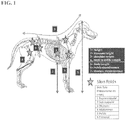
- Body condition score was performed on each dog using the 9 points scale validated by Laflamme et al., "Development and validation of a body condition score system for dogs," Canine Pract. 22:10-15 (1997 ). The body weight was taken with a scale of 100 g of precision. As shown in FIG. 1 , the following morphometric measurements were performed on erect dogs with a cloth tape to the nearest centimeter: height, height sternum to floor, shoulder height, body length, pelvic circumference, and thoracic circumference.
- the height was defined as the distance from the floor to the top of the head.
- the sternum height (or height sternum to floor) was defined as the distance from the floor to the lowest point of the sternum.
- the shoulder height was defined as the distance from the floor to the tip of the acromion.
- Body length was the distance between the occiput and the base of the tail.
- Thoracic circumference was measured by wrapping the tape around the dog where thorax is the widest.
- Pelvic circumference was measured by wrapping the tape around the dog where pelvis is the thinnest.
- BMI 1 Body weight kg shoulder height cm 2
- BMI 2 Body weight kg shoulder height cm ⁇ body length cm
- BMI 3 Body weight kg height cm ⁇ height sternum to the floor cm ⁇ body length cm
- a skinfold caliper was used on 36 different dogs to measure the thickness of the subcutaneous fat layer on six different zones assuming that the sum is representative of the total body fat. Measures were taken on supra-scapular, sub scapular, thoracic, abdominal, pelvic, femoral zones and recorded in centimeters. The sum of skinfold was calculated (Total Skinfold).
- Allometric factor Food intake for weight maintenance kg Body weight 0.75
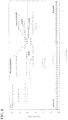
- FIGS. 2-7 Averages and correlations were performed using Microsoft Excel. Principal Component Analysis was performed on dogs using BCS, total skinfold, thoracic/pelvic ration and BMI 3 variables with FactoMineR, a statistical package program of R (GNU General Public License).
- PCA Principal Component Analysis
- Each black arrow represents an active variable (BCS, BMI 3, Total Skinfold, Thoracic/Pelvic ratio).
- BCS BMI 3, Total Skinfold, Thoracic/Pelvic ratio
- the comparison of the sense and direction of two arrows indicates the relationship between two active variables; two arrows with the same sense and direction means that the variables are positively correlated (e.g., BMI 3 and Total Skinfold).
- Two arrows with the same direction but not with the same sense means that the variables are negatively correlated.
- Two arrows having perpendicular directions are not correlated (e.g. Total Skinfold and Thoracic/Pelvic ratio).
- the PCA used the variables BMI 3, BCS, Total Skinfold, and Thoracic/Pelvic ratio.
- the graph demonstrates a strong correlation between BCS, BMI 3 and Total Skinfold, but that these variables are poorly correlated with Thoracic/Pelvic ratio.
Landscapes
- Life Sciences & Earth Sciences (AREA)
- Chemical & Material Sciences (AREA)
- Polymers & Plastics (AREA)
- Engineering & Computer Science (AREA)
- Food Science & Technology (AREA)
- Animal Husbandry (AREA)
- Zoology (AREA)
- Health & Medical Sciences (AREA)
- Mycology (AREA)
- Birds (AREA)
- Physiology (AREA)
- Molecular Biology (AREA)
- Biotechnology (AREA)
- Proteomics, Peptides & Aminoacids (AREA)
- Nutrition Science (AREA)
- Botany (AREA)
- Inorganic Chemistry (AREA)
- Biomedical Technology (AREA)
- General Chemical & Material Sciences (AREA)
- Chemical Kinetics & Catalysis (AREA)
- Public Health (AREA)
- General Health & Medical Sciences (AREA)
- Animal Behavior & Ethology (AREA)
- Pharmacology & Pharmacy (AREA)
- Organic Chemistry (AREA)
- Nuclear Medicine, Radiotherapy & Molecular Imaging (AREA)
- Medicinal Chemistry (AREA)
- Veterinary Medicine (AREA)
- Obesity (AREA)
- Hematology (AREA)
- Diabetes (AREA)
- Bioinformatics & Cheminformatics (AREA)
- Child & Adolescent Psychology (AREA)
- Fodder In General (AREA)
- Feed For Specific Animals (AREA)
- Coloring Foods And Improving Nutritive Qualities (AREA)
Claims (13)
- Verfahren zum Formulieren einer Hundefutterzusammensetzung für einen kleinen Hund mit einer Höhe, einem Sternum und einer Körperlänge, wobei das Verfahren umfasst:Erzeugen von Messungen der Höhe, der Höhe von Sternum zum Boden und der Körperlänge, während der kleine Hund aufrecht auf einem Boden steht;Verwenden der Messungen, um den modifizierten Body-Mass-Index des kleinen Hundes zu bestimmen, wobei der modifizierte Body-Mass-Index Körpergewicht / [(Höhe - Höhe von Sternum zum Boden) x Körperlänge] ist;Kategorisieren des kleinen Hundes als einen von mehreren Körperkonformationstypen, wobei die Kategorisierung mindestens teilweise auf dem modifizierten Body-Mass-Index des kleinen Hundes basiert; undFormulieren einer Hundefutterzusammensetzung für den kleinen Hund, wobei die Hundefutterzusammensetzung so formuliert ist, dass sie Futterbestandteile und Mengen davon auf Basis der Kategorisierung des kleinen Hundes enthält.
- Verfahren nach Anspruch 1, wobei das Kategorisieren des kleinen Hundes den kleinen Hund als einen robusten Körperkonformationstyp oder einen athletischen Körperkonformationstyp kategorisiert, wobei der modifizierte Body-Mass-Index des robusten Körperkonformationstyps größer als 60 kg/m2 ist und der modifizierte Body-Mass-Index des athletischen Körperkonformationstyps nicht größer als 60 kg/m2 ist.
- Verfahren nach Anspruch 2, wobei das Verhältnis von Energie aus Protein zu Energie aus Fett für die Hundefutterzusammensetzung ist, die für den kleinen Hund formuliert ist, der als der robuste Körperkonformationstyp kategorisiert ist, größer ist als für die Hundefutterzusammensetzung, die für den kleinen Hund formuliert ist, der als der athletische Körperkonformationstyp kategorisiert ist.
- Verfahren nach Anspruch 2, wobei der Fettgehalt für die Hundefutterzusammensetzung ist, die für den kleinen Hund formuliert ist, der als der athletische Körperkonformationstyp kategorisiert ist, größer ist als für die Hundefutterzusammensetzung, die für den kleinen Hund formuliert ist, der als der robuste Körperkonformationstyp kategorisiert ist.
- Verfahren nach Anspruch 1, wobei das Kategorisieren teilweise auf einem Energiebedarf des kleinen Hundes basiert.
- Verfahren nach Anspruch 5, wobei das Kategorisieren des kleinen Hundes den kleinen Hund als einen robusten Körperkonformationstyp oder einen athletischen Körperkonformationstyp kategorisiert;
für den robusten Körperkonformationstyp ist der modifizierte Body-Mass-Index größer als 60 kg/m2 und/oder beträgt der Energiebedarf weniger als 120 x (Kilogramm ideales Körpergewicht)0,75 Kilokalorien pro Tag; und
für den athletischen Körperkonformationstyp ist der modifizierte Body-Mass-Index nicht größer als 60 kg/m2 und/oder beträgt der Energiebedarf mehr als 120 x (Kilogramm ideales Körpergewicht)0,75 Kilokalorien pro Tag. - Verfahren nach Anspruch 1, wobei das Kategorisieren teilweise auf einer Hautfaltenmessung des kleinen Hundes basiert, wobei die Hautfaltenmessung eine oder mehrere Messungen der Dicke der subkutanen Fettschicht des kleinen Hundes ist und jede der einen oder mehreren Messungen an einer anderen Stelle an dem kleinen Hund in Bezug zu den anderen Messungen erhalten wird.
- Verfahren nach Anspruch 1, wobei der kleine Hund ein Gewicht von weniger als 10 kg aufweist.
- Verfahren zum Auswählen einer Futterzusammensetzung für einen kleinen Hund mit einer Höhe, einem Sternum und einer
Körperlänge, wobei das Verfahren umfasst:Messen der Höhe, der Höhe von Sternum zum Boden und der Körperlänge, während der kleine Hund aufrecht auf einem Boden steht;Bestimmen eines modifizierten Body-Mass-Index des kleinen Hundes, wobei der modifizierte Body-Mass-Index Körpergewicht / [(Höhe - Höhe von Sternum zum Boden) x Körperlänge] ist;Kategorisieren des kleinen Hundes als einen aus einer Vielzahl von Körperkonformationstypen unter Verwendung des modifizierten Body-Mass-Index; undAuswählen einer aus einer Vielzahl von Futterzusammensetzungen auf Basis der Kategorisierung, wobei jede aus der Vielzahl von Futterzusammensetzungen jeweils einem aus der Vielzahl von Körperkonformationstypen entspricht. - Verfahren nach Anspruch 9, wobei eine erste Futterzusammensetzung aus der Vielzahl von Futterzusammensetzungen für einen robusten Körperkonformationstyp des kleinen Hundes formuliert ist, der modifizierte Body-Mass-Index des robusten Körperkonformationstyps größer als 60 kg/m2 ist, eine zweite Futterzusammensetzung aus der Vielzahl von Futterzusammensetzungen für einen athletischen Körperkonformationstyp des kleinen Hundes formuliert ist und der modifizierte Body-Mass-Index des athletischen Körperkonformationstyps nicht größer als 60 kg/m2 ist.
- Verfahren nach Anspruch 10, wobei die erste Futterzusammensetzung einen funktionellen Inhaltsstoff umfasst, der die Fettansammlung begrenzt, ausgewählt aus der Gruppe bestehend aus konjugierter Linolsäure (CLA), Isoflavonen und Kombinationen davon, und die zweite Futterzusammensetzung den funktionellen Inhaltsstoff, der die Fettansammlung begrenzt, nicht enthält.
- Verfahren nach Anspruch 10, wobei ein Verhältnis von Energie aus Protein zu Energie aus Fett sowie der Fettgehalt bei der ersten Futterzusammensetzung anders ist als bei der zweiten Futterzusammensetzung.
- Verfahren nach Anspruch 9, wobei das Kategorisieren teilweise auf einer Hautfaltenmessung des kleinen Hundes basiert, wobei die Hautfaltenmessung eine oder mehrere Messungen der Dicke der subkutanen Fettschicht des kleinen Hundes ist und jede der einen oder mehreren Messungen an einer anderen Stelle auf dem kleinen Hund relativ zu den anderen Messungen erhalten wird.
Priority Applications (1)
| Application Number | Priority Date | Filing Date | Title |
|---|---|---|---|
| PL16758279T PL3334290T3 (pl) | 2015-08-11 | 2016-08-05 | Sposoby wykorzystujące pomiary morfometryczne małego psa do polepszania karmy dla małych psów |
Applications Claiming Priority (3)
| Application Number | Priority Date | Filing Date | Title |
|---|---|---|---|
| US201562203710P | 2015-08-11 | 2015-08-11 | |
| US201562242107P | 2015-10-15 | 2015-10-15 | |
| PCT/IB2016/054748 WO2017025881A1 (en) | 2015-08-11 | 2016-08-05 | Methods using morphometric measurements of a small dog to improve food for the small dog |
Publications (2)
| Publication Number | Publication Date |
|---|---|
| EP3334290A1 EP3334290A1 (de) | 2018-06-20 |
| EP3334290B1 true EP3334290B1 (de) | 2020-12-30 |
Family
ID=56851647
Family Applications (1)
| Application Number | Title | Priority Date | Filing Date |
|---|---|---|---|
| EP16758279.0A Active EP3334290B1 (de) | 2015-08-11 | 2016-08-05 | Methoden wobei morphometrische messungen eines kleinen hundes sind verwendet, um dessen ernährung zu verbessern |
Country Status (13)
| Country | Link |
|---|---|
| US (1) | US20170042194A1 (de) |
| EP (1) | EP3334290B1 (de) |
| JP (1) | JP6756818B2 (de) |
| CN (1) | CN107920560B (de) |
| AU (1) | AU2016306070B2 (de) |
| BR (1) | BR112018002425A2 (de) |
| CA (1) | CA2994916C (de) |
| ES (1) | ES2845682T3 (de) |
| HU (1) | HUE054033T2 (de) |
| MX (1) | MX387567B (de) |
| PL (1) | PL3334290T3 (de) |
| RU (1) | RU2720321C2 (de) |
| WO (1) | WO2017025881A1 (de) |
Families Citing this family (2)
| Publication number | Priority date | Publication date | Assignee | Title |
|---|---|---|---|---|
| ES3045561T3 (en) | 2019-02-01 | 2025-11-28 | Nestle Sa | Pet food recommendation devices and methods |
| CA3249484A1 (en) | 2022-04-28 | 2023-11-02 | Société des Produits Nestlé S.A. | METHODS FOR DETERMINING A DOG'S HEALTH STATUS BASED ON ONE OR MORE BIOMARKERS, AND METHODS FOR TREATING A MORTALITY RISK IDENTIFIED BY HEALTH STATUS |
Family Cites Families (10)
| Publication number | Priority date | Publication date | Assignee | Title |
|---|---|---|---|---|
| JPS56152616U (de) * | 1980-04-15 | 1981-11-14 | ||
| US6156355A (en) | 1998-11-02 | 2000-12-05 | Star-Kist Foods, Inc. | Breed-specific canine food formulations |
| JP2007000154A (ja) * | 2000-12-19 | 2007-01-11 | Fumio Nakato | 電導度測定用電極とこの電極を用いた体脂肪測定装置 |
| US6691639B2 (en) * | 2002-01-04 | 2004-02-17 | Nestec, Ltd. | Methods and systems for predicting a body condition score for pets |
| CN101427134A (zh) * | 2005-12-28 | 2009-05-06 | 希尔氏宠物营养品公司 | 诊断动物体重状况或倾向的方法 |
| EP1820407A1 (de) * | 2006-02-17 | 2007-08-22 | Nestec S.A. | Verfahren zur Verbesserungung von Hundefutter |
| EP2014230B1 (de) * | 2007-07-11 | 2011-03-09 | José Luis Verez Fraguela | Vorrichtung zur Messung anatomischer Parameter bei Haustieren |
| JP5513852B2 (ja) * | 2009-11-05 | 2014-06-04 | 花王株式会社 | 犬の僧帽弁閉鎖不全症及び/又は三叉弁閉鎖不全の発症リスク低減方法 |
| US9420809B2 (en) * | 2013-03-15 | 2016-08-23 | Nestec Sa | Systems and methods for ordering and manufacturing custom pet food |
| CN104187204A (zh) * | 2014-09-26 | 2014-12-10 | 无锡东晟生物科技有限公司 | 一种小型犬用狗粮 |
-
2016
- 2016-08-05 PL PL16758279T patent/PL3334290T3/pl unknown
- 2016-08-05 US US15/229,367 patent/US20170042194A1/en not_active Abandoned
- 2016-08-05 ES ES16758279T patent/ES2845682T3/es active Active
- 2016-08-05 AU AU2016306070A patent/AU2016306070B2/en active Active
- 2016-08-05 BR BR112018002425-2A patent/BR112018002425A2/pt not_active Application Discontinuation
- 2016-08-05 CN CN201680043743.4A patent/CN107920560B/zh active Active
- 2016-08-05 RU RU2018108181A patent/RU2720321C2/ru active
- 2016-08-05 MX MX2018001627A patent/MX387567B/es unknown
- 2016-08-05 CA CA2994916A patent/CA2994916C/en active Active
- 2016-08-05 EP EP16758279.0A patent/EP3334290B1/de active Active
- 2016-08-05 WO PCT/IB2016/054748 patent/WO2017025881A1/en not_active Ceased
- 2016-08-05 HU HUE16758279A patent/HUE054033T2/hu unknown
- 2016-08-05 JP JP2018504262A patent/JP6756818B2/ja active Active
Non-Patent Citations (1)
| Title |
|---|
| WSAVA ET AL: "Body Condition Score", 1 December 2013 (2013-12-01), XP055312249, Retrieved from the Internet <URL:http://www.wsava.org/sites/default/files/Body condition score chart dogs.pdf> [retrieved on 20161019] * |
Also Published As
| Publication number | Publication date |
|---|---|
| RU2018108181A3 (de) | 2020-01-09 |
| HUE054033T2 (hu) | 2021-08-30 |
| JP2018522560A (ja) | 2018-08-16 |
| WO2017025881A1 (en) | 2017-02-16 |
| CN107920560B (zh) | 2021-08-13 |
| JP6756818B2 (ja) | 2020-09-16 |
| CA2994916A1 (en) | 2017-02-16 |
| EP3334290A1 (de) | 2018-06-20 |
| AU2016306070A1 (en) | 2018-01-18 |
| US20170042194A1 (en) | 2017-02-16 |
| MX387567B (es) | 2025-03-18 |
| RU2720321C2 (ru) | 2020-04-28 |
| CA2994916C (en) | 2023-02-21 |
| CN107920560A (zh) | 2018-04-17 |
| AU2016306070B2 (en) | 2021-02-04 |
| MX2018001627A (es) | 2018-05-28 |
| BR112018002425A2 (pt) | 2018-09-18 |
| RU2018108181A (ru) | 2019-09-12 |
| ES2845682T3 (es) | 2021-07-27 |
| PL3334290T3 (pl) | 2021-08-16 |
Similar Documents
| Publication | Publication Date | Title |
|---|---|---|
| JP5539652B2 (ja) | ドッグフードの改良方法 | |
| AU2008343847B2 (en) | Edible compositions | |
| Carter et al. | Awareness and evaluation of natural pet food products in the United States | |
| US10314323B2 (en) | Methods for improving the condition of hair in non-human animals | |
| JP4833403B2 (ja) | ビオチンおよび他のビタミンbを含有する食物 | |
| CN103648290A (zh) | 适口性增强组合物 | |
| da Silva et al. | Effects of palm kernel cake in high-concentrate diets on carcass traits and meat quality of feedlot goats | |
| KR20160103993A (ko) | 애완동물 사료용 기호성 증진제, 그의 제조 방법 및 용도 | |
| EP3334290B1 (de) | Methoden wobei morphometrische messungen eines kleinen hundes sind verwendet, um dessen ernährung zu verbessern | |
| Virk | Studies on development and storage stability of byproducts incorporated dog biscuits fortified with calcium and selenium | |
| AU2024250811A1 (en) | Low fat hypoallergenic food composition for companion animals | |
| PREM | FORMULATION AND EVALUATION OF COMPLETE DRY FOOD FOR MEDIUM SIZED DOGS WITH MODERATE ACTIVITY |
Legal Events
| Date | Code | Title | Description |
|---|---|---|---|
| STAA | Information on the status of an ep patent application or granted ep patent |
Free format text: STATUS: THE INTERNATIONAL PUBLICATION HAS BEEN MADE |
|
| PUAI | Public reference made under article 153(3) epc to a published international application that has entered the european phase |
Free format text: ORIGINAL CODE: 0009012 |
|
| STAA | Information on the status of an ep patent application or granted ep patent |
Free format text: STATUS: REQUEST FOR EXAMINATION WAS MADE |
|
| 17P | Request for examination filed |
Effective date: 20180312 |
|
| AK | Designated contracting states |
Kind code of ref document: A1 Designated state(s): AL AT BE BG CH CY CZ DE DK EE ES FI FR GB GR HR HU IE IS IT LI LT LU LV MC MK MT NL NO PL PT RO RS SE SI SK SM TR |
|
| AX | Request for extension of the european patent |
Extension state: BA ME |
|
| DAV | Request for validation of the european patent (deleted) | ||
| DAX | Request for extension of the european patent (deleted) | ||
| RAP1 | Party data changed (applicant data changed or rights of an application transferred) |
Owner name: SOCIETE DES PRODUITS NESTLE S.A. |
|
| GRAP | Despatch of communication of intention to grant a patent |
Free format text: ORIGINAL CODE: EPIDOSNIGR1 |
|
| STAA | Information on the status of an ep patent application or granted ep patent |
Free format text: STATUS: GRANT OF PATENT IS INTENDED |
|
| INTG | Intention to grant announced |
Effective date: 20200729 |
|
| GRAS | Grant fee paid |
Free format text: ORIGINAL CODE: EPIDOSNIGR3 |
|
| GRAA | (expected) grant |
Free format text: ORIGINAL CODE: 0009210 |
|
| STAA | Information on the status of an ep patent application or granted ep patent |
Free format text: STATUS: THE PATENT HAS BEEN GRANTED |
|
| AK | Designated contracting states |
Kind code of ref document: B1 Designated state(s): AL AT BE BG CH CY CZ DE DK EE ES FI FR GB GR HR HU IE IS IT LI LT LU LV MC MK MT NL NO PL PT RO RS SE SI SK SM TR |
|
| REG | Reference to a national code |
Ref country code: GB Ref legal event code: FG4D |
|
| REG | Reference to a national code |
Ref country code: AT Ref legal event code: REF Ref document number: 1349036 Country of ref document: AT Kind code of ref document: T Effective date: 20210115 |
|
| REG | Reference to a national code |
Ref country code: DE Ref legal event code: R096 Ref document number: 602016050621 Country of ref document: DE |
|
| REG | Reference to a national code |
Ref country code: IE Ref legal event code: FG4D |
|
| REG | Reference to a national code |
Ref country code: SE Ref legal event code: TRGR |
|
| REG | Reference to a national code |
Ref country code: NL Ref legal event code: FP |
|
| REG | Reference to a national code |
Ref country code: SK Ref legal event code: T3 Ref document number: E 36534 Country of ref document: SK |
|
| PG25 | Lapsed in a contracting state [announced via postgrant information from national office to epo] |
Ref country code: GR Free format text: LAPSE BECAUSE OF FAILURE TO SUBMIT A TRANSLATION OF THE DESCRIPTION OR TO PAY THE FEE WITHIN THE PRESCRIBED TIME-LIMIT Effective date: 20210331 Ref country code: FI Free format text: LAPSE BECAUSE OF FAILURE TO SUBMIT A TRANSLATION OF THE DESCRIPTION OR TO PAY THE FEE WITHIN THE PRESCRIBED TIME-LIMIT Effective date: 20201230 Ref country code: RS Free format text: LAPSE BECAUSE OF FAILURE TO SUBMIT A TRANSLATION OF THE DESCRIPTION OR TO PAY THE FEE WITHIN THE PRESCRIBED TIME-LIMIT Effective date: 20201230 Ref country code: NO Free format text: LAPSE BECAUSE OF FAILURE TO SUBMIT A TRANSLATION OF THE DESCRIPTION OR TO PAY THE FEE WITHIN THE PRESCRIBED TIME-LIMIT Effective date: 20210330 |
|
| REG | Reference to a national code |
Ref country code: AT Ref legal event code: MK05 Ref document number: 1349036 Country of ref document: AT Kind code of ref document: T Effective date: 20201230 |
|
| PG25 | Lapsed in a contracting state [announced via postgrant information from national office to epo] |
Ref country code: BG Free format text: LAPSE BECAUSE OF FAILURE TO SUBMIT A TRANSLATION OF THE DESCRIPTION OR TO PAY THE FEE WITHIN THE PRESCRIBED TIME-LIMIT Effective date: 20210330 Ref country code: LV Free format text: LAPSE BECAUSE OF FAILURE TO SUBMIT A TRANSLATION OF THE DESCRIPTION OR TO PAY THE FEE WITHIN THE PRESCRIBED TIME-LIMIT Effective date: 20201230 |
|
| PG25 | Lapsed in a contracting state [announced via postgrant information from national office to epo] |
Ref country code: HR Free format text: LAPSE BECAUSE OF FAILURE TO SUBMIT A TRANSLATION OF THE DESCRIPTION OR TO PAY THE FEE WITHIN THE PRESCRIBED TIME-LIMIT Effective date: 20201230 |
|
| REG | Reference to a national code |
Ref country code: LT Ref legal event code: MG9D |
|
| REG | Reference to a national code |
Ref country code: ES Ref legal event code: FG2A Ref document number: 2845682 Country of ref document: ES Kind code of ref document: T3 Effective date: 20210727 |
|
| PG25 | Lapsed in a contracting state [announced via postgrant information from national office to epo] |
Ref country code: PT Free format text: LAPSE BECAUSE OF FAILURE TO SUBMIT A TRANSLATION OF THE DESCRIPTION OR TO PAY THE FEE WITHIN THE PRESCRIBED TIME-LIMIT Effective date: 20210430 Ref country code: RO Free format text: LAPSE BECAUSE OF FAILURE TO SUBMIT A TRANSLATION OF THE DESCRIPTION OR TO PAY THE FEE WITHIN THE PRESCRIBED TIME-LIMIT Effective date: 20201230 Ref country code: LT Free format text: LAPSE BECAUSE OF FAILURE TO SUBMIT A TRANSLATION OF THE DESCRIPTION OR TO PAY THE FEE WITHIN THE PRESCRIBED TIME-LIMIT Effective date: 20201230 Ref country code: EE Free format text: LAPSE BECAUSE OF FAILURE TO SUBMIT A TRANSLATION OF THE DESCRIPTION OR TO PAY THE FEE WITHIN THE PRESCRIBED TIME-LIMIT Effective date: 20201230 |
|
| REG | Reference to a national code |
Ref country code: HU Ref legal event code: AG4A Ref document number: E054033 Country of ref document: HU |
|
| PG25 | Lapsed in a contracting state [announced via postgrant information from national office to epo] |
Ref country code: AT Free format text: LAPSE BECAUSE OF FAILURE TO SUBMIT A TRANSLATION OF THE DESCRIPTION OR TO PAY THE FEE WITHIN THE PRESCRIBED TIME-LIMIT Effective date: 20201230 |
|
| PG25 | Lapsed in a contracting state [announced via postgrant information from national office to epo] |
Ref country code: IS Free format text: LAPSE BECAUSE OF FAILURE TO SUBMIT A TRANSLATION OF THE DESCRIPTION OR TO PAY THE FEE WITHIN THE PRESCRIBED TIME-LIMIT Effective date: 20210430 |
|
| REG | Reference to a national code |
Ref country code: DE Ref legal event code: R097 Ref document number: 602016050621 Country of ref document: DE |
|
| PG25 | Lapsed in a contracting state [announced via postgrant information from national office to epo] |
Ref country code: AL Free format text: LAPSE BECAUSE OF FAILURE TO SUBMIT A TRANSLATION OF THE DESCRIPTION OR TO PAY THE FEE WITHIN THE PRESCRIBED TIME-LIMIT Effective date: 20201230 |
|
| PLBE | No opposition filed within time limit |
Free format text: ORIGINAL CODE: 0009261 |
|
| STAA | Information on the status of an ep patent application or granted ep patent |
Free format text: STATUS: NO OPPOSITION FILED WITHIN TIME LIMIT |
|
| PG25 | Lapsed in a contracting state [announced via postgrant information from national office to epo] |
Ref country code: DK Free format text: LAPSE BECAUSE OF FAILURE TO SUBMIT A TRANSLATION OF THE DESCRIPTION OR TO PAY THE FEE WITHIN THE PRESCRIBED TIME-LIMIT Effective date: 20201230 |
|
| 26N | No opposition filed |
Effective date: 20211001 |
|
| PG25 | Lapsed in a contracting state [announced via postgrant information from national office to epo] |
Ref country code: SI Free format text: LAPSE BECAUSE OF FAILURE TO SUBMIT A TRANSLATION OF THE DESCRIPTION OR TO PAY THE FEE WITHIN THE PRESCRIBED TIME-LIMIT Effective date: 20201230 |
|
| PG25 | Lapsed in a contracting state [announced via postgrant information from national office to epo] |
Ref country code: MC Free format text: LAPSE BECAUSE OF FAILURE TO SUBMIT A TRANSLATION OF THE DESCRIPTION OR TO PAY THE FEE WITHIN THE PRESCRIBED TIME-LIMIT Effective date: 20201230 |
|
| REG | Reference to a national code |
Ref country code: BE Ref legal event code: MM Effective date: 20210831 |
|
| PG25 | Lapsed in a contracting state [announced via postgrant information from national office to epo] |
Ref country code: IS Free format text: LAPSE BECAUSE OF FAILURE TO SUBMIT A TRANSLATION OF THE DESCRIPTION OR TO PAY THE FEE WITHIN THE PRESCRIBED TIME-LIMIT Effective date: 20210430 Ref country code: LU Free format text: LAPSE BECAUSE OF NON-PAYMENT OF DUE FEES Effective date: 20210805 |
|
| PG25 | Lapsed in a contracting state [announced via postgrant information from national office to epo] |
Ref country code: IE Free format text: LAPSE BECAUSE OF NON-PAYMENT OF DUE FEES Effective date: 20210805 Ref country code: BE Free format text: LAPSE BECAUSE OF NON-PAYMENT OF DUE FEES Effective date: 20210831 |
|
| PG25 | Lapsed in a contracting state [announced via postgrant information from national office to epo] |
Ref country code: CY Free format text: LAPSE BECAUSE OF FAILURE TO SUBMIT A TRANSLATION OF THE DESCRIPTION OR TO PAY THE FEE WITHIN THE PRESCRIBED TIME-LIMIT Effective date: 20201230 |
|
| PG25 | Lapsed in a contracting state [announced via postgrant information from national office to epo] |
Ref country code: SM Free format text: LAPSE BECAUSE OF FAILURE TO SUBMIT A TRANSLATION OF THE DESCRIPTION OR TO PAY THE FEE WITHIN THE PRESCRIBED TIME-LIMIT Effective date: 20201230 |
|
| P01 | Opt-out of the competence of the unified patent court (upc) registered |
Effective date: 20230623 |
|
| PG25 | Lapsed in a contracting state [announced via postgrant information from national office to epo] |
Ref country code: MK Free format text: LAPSE BECAUSE OF FAILURE TO SUBMIT A TRANSLATION OF THE DESCRIPTION OR TO PAY THE FEE WITHIN THE PRESCRIBED TIME-LIMIT Effective date: 20201230 |
|
| PG25 | Lapsed in a contracting state [announced via postgrant information from national office to epo] |
Ref country code: MT Free format text: LAPSE BECAUSE OF FAILURE TO SUBMIT A TRANSLATION OF THE DESCRIPTION OR TO PAY THE FEE WITHIN THE PRESCRIBED TIME-LIMIT Effective date: 20201230 |
|
| PGFP | Annual fee paid to national office [announced via postgrant information from national office to epo] |
Ref country code: NL Payment date: 20250704 Year of fee payment: 10 |
|
| PGFP | Annual fee paid to national office [announced via postgrant information from national office to epo] |
Ref country code: HU Payment date: 20250728 Year of fee payment: 10 |
|
| PGFP | Annual fee paid to national office [announced via postgrant information from national office to epo] |
Ref country code: ES Payment date: 20250903 Year of fee payment: 10 |
|
| PGFP | Annual fee paid to national office [announced via postgrant information from national office to epo] |
Ref country code: DE Payment date: 20250702 Year of fee payment: 10 |
|
| PGFP | Annual fee paid to national office [announced via postgrant information from national office to epo] |
Ref country code: TR Payment date: 20250724 Year of fee payment: 10 Ref country code: PL Payment date: 20250714 Year of fee payment: 10 Ref country code: IT Payment date: 20250722 Year of fee payment: 10 |
|
| PGFP | Annual fee paid to national office [announced via postgrant information from national office to epo] |
Ref country code: GB Payment date: 20250703 Year of fee payment: 10 |
|
| PGFP | Annual fee paid to national office [announced via postgrant information from national office to epo] |
Ref country code: FR Payment date: 20250703 Year of fee payment: 10 |
|
| PGFP | Annual fee paid to national office [announced via postgrant information from national office to epo] |
Ref country code: CH Payment date: 20250901 Year of fee payment: 10 Ref country code: SE Payment date: 20250702 Year of fee payment: 10 |
|
| PGFP | Annual fee paid to national office [announced via postgrant information from national office to epo] |
Ref country code: CZ Payment date: 20250723 Year of fee payment: 10 |
|
| PGFP | Annual fee paid to national office [announced via postgrant information from national office to epo] |
Ref country code: SK Payment date: 20250714 Year of fee payment: 10 |