EP3335461B1 - Procédé et appareil de communication v2x - Google Patents
Procédé et appareil de communication v2x Download PDFInfo
- Publication number
- EP3335461B1 EP3335461B1 EP16848804.7A EP16848804A EP3335461B1 EP 3335461 B1 EP3335461 B1 EP 3335461B1 EP 16848804 A EP16848804 A EP 16848804A EP 3335461 B1 EP3335461 B1 EP 3335461B1
- Authority
- EP
- European Patent Office
- Prior art keywords
- node
- receiving
- enb
- control channel
- downlink control
- Prior art date
- Legal status (The legal status is an assumption and is not a legal conclusion. Google has not performed a legal analysis and makes no representation as to the accuracy of the status listed.)
- Active
Links
Images





Classifications
-
- H—ELECTRICITY
- H04—ELECTRIC COMMUNICATION TECHNIQUE
- H04W—WIRELESS COMMUNICATION NETWORKS
- H04W28/00—Network traffic management; Network resource management
- H04W28/02—Traffic management, e.g. flow control or congestion control
- H04W28/04—Error control
-
- H—ELECTRICITY
- H04—ELECTRIC COMMUNICATION TECHNIQUE
- H04L—TRANSMISSION OF DIGITAL INFORMATION, e.g. TELEGRAPHIC COMMUNICATION
- H04L1/00—Arrangements for detecting or preventing errors in the information received
-
- H—ELECTRICITY
- H04—ELECTRIC COMMUNICATION TECHNIQUE
- H04L—TRANSMISSION OF DIGITAL INFORMATION, e.g. TELEGRAPHIC COMMUNICATION
- H04L1/00—Arrangements for detecting or preventing errors in the information received
- H04L1/004—Arrangements for detecting or preventing errors in the information received by using forward error control
- H04L1/0045—Arrangements at the receiver end
- H04L1/0052—Realisations of complexity reduction techniques, e.g. pipelining or use of look-up tables
- H04L1/0053—Realisations of complexity reduction techniques, e.g. pipelining or use of look-up tables specially adapted for power saving
-
- H—ELECTRICITY
- H04—ELECTRIC COMMUNICATION TECHNIQUE
- H04L—TRANSMISSION OF DIGITAL INFORMATION, e.g. TELEGRAPHIC COMMUNICATION
- H04L1/00—Arrangements for detecting or preventing errors in the information received
- H04L1/004—Arrangements for detecting or preventing errors in the information received by using forward error control
- H04L1/0056—Systems characterized by the type of code used
- H04L1/0061—Error detection codes
-
- H—ELECTRICITY
- H04—ELECTRIC COMMUNICATION TECHNIQUE
- H04W—WIRELESS COMMUNICATION NETWORKS
- H04W28/00—Network traffic management; Network resource management
- H04W28/02—Traffic management, e.g. flow control or congestion control
- H04W28/0226—Traffic management, e.g. flow control or congestion control based on location or mobility
-
- H—ELECTRICITY
- H04—ELECTRIC COMMUNICATION TECHNIQUE
- H04W—WIRELESS COMMUNICATION NETWORKS
- H04W28/00—Network traffic management; Network resource management
- H04W28/02—Traffic management, e.g. flow control or congestion control
- H04W28/10—Flow control between communication endpoints
- H04W28/12—Flow control between communication endpoints using signalling between network elements
-
- H—ELECTRICITY
- H04—ELECTRIC COMMUNICATION TECHNIQUE
- H04W—WIRELESS COMMUNICATION NETWORKS
- H04W4/00—Services specially adapted for wireless communication networks; Facilities therefor
- H04W4/06—Selective distribution of broadcast services, e.g. multimedia broadcast multicast service [MBMS]; Services to user groups; One-way selective calling services
-
- H—ELECTRICITY
- H04—ELECTRIC COMMUNICATION TECHNIQUE
- H04W—WIRELESS COMMUNICATION NETWORKS
- H04W4/00—Services specially adapted for wireless communication networks; Facilities therefor
- H04W4/30—Services specially adapted for particular environments, situations or purposes
- H04W4/40—Services specially adapted for particular environments, situations or purposes for vehicles, e.g. vehicle-to-pedestrians [V2P]
-
- H—ELECTRICITY
- H04—ELECTRIC COMMUNICATION TECHNIQUE
- H04W—WIRELESS COMMUNICATION NETWORKS
- H04W72/00—Local resource management
- H04W72/12—Wireless traffic scheduling
- H04W72/1263—Mapping of traffic onto schedule, e.g. scheduled allocation or multiplexing of flows
- H04W72/1273—Mapping of traffic onto schedule, e.g. scheduled allocation or multiplexing of flows of downlink data flows
-
- H—ELECTRICITY
- H04—ELECTRIC COMMUNICATION TECHNIQUE
- H04W—WIRELESS COMMUNICATION NETWORKS
- H04W72/00—Local resource management
- H04W72/20—Control channels or signalling for resource management
- H04W72/23—Control channels or signalling for resource management in the downlink direction of a wireless link, i.e. towards a terminal
Definitions
- the present disclosure relates to mobile communication techniques, and more particularly, to a V2X communication method and apparatus.
- D2D Device To Device
- 3GPP Rel-12 and Rel-13 standardization of some functions has been realized in 3GPP Rel-12 and Rel-13, including: D2D discovery for an in-coverage scenario, D2D broadcast communication for an In-Coverage (IC) scenario, a Partial Coverage (PC) scenario and an Out-of-Coverage (OC) scenario.
- IC In-Coverage
- PC Partial Coverage
- OC Out-of-Coverage
- V2X communication has become a consensus of various communication terminal manufactures at present.
- V2X communication project has been accepted by 3GPP and become one of the functions to be standardized preferably.
- 3GPP will implement V2X communication via two communication schemes: a communication scheme over PC5 interface (a direct communication interface between user devices), and a communication scheme over Uu interface (a communication interface between user device and eNB).
- the first communication scheme is a distributed communication manner. It mainly improves data transmission reliability and decreases data transmission delay through enhancing existing D2D communication techniques, so as to meet the requirement of the V2X communication.
- the latter communication scheme is a centralized communication manner controlled by the eNB (base station). It supports the V2X communication scenario through enhancing existing cellular communication techniques.
- a transmitting V2X node transmits V2X data information to the eNB via an uplink channel.
- the eNB After receiving the V2X data information from the transmitting V2X node, the eNB forwards the V2X data information to receiving V2X nodes.
- the eNB needs to forward the V2X data information received from the transmitting V2X node to a plurality of receiving V2X nodes, i.e., the eNB needs to implement the forwarding via a broadcast or multicast manner.
- the grouping of users in the multicast manner is realized in the application layer, which is not applicable for the V2X communication scenario. Therefore, the forwarding can only be implemented by the broadcast manner.
- WO 2015/016689 A1 discloses a method and an apparatus for obtaining traffic information by a terminal in a wireless communication system. It discloses that the method comprises the steps of: broadcasting a first D2D discovery signal requesting traffic information to a plurality of first surrounding terminals; receiving, in response to the first D2D discovery signal, a second D2D discovery signal indicating surrounding traffic information from one or more second surrounding terminals among the plurality of first surrounding terminals; and updating the traffic information of the surrounding area on the basis of the one or more second D2D discovery signals.
- AGC automatic gain control
- IFFT inverse fast Fourier transform
- one V2X node merely needs to impact and communicate with adjacent V2X nodes within a certain range.
- the broadcast function of the current Long Term Evolution (LTE) cellular network operates towards all users in the cell. Therefore, if the V2X data information is forwarded adopting this broadcast manner, the V2X data information will be forwarded to all V2X nodes in the cell.
- LTE Long Term Evolution
- the eNB forwards the reminding information from the emergency vehicle to all V2X nodes in the cell. But in fact, merely those in front of the emergency vehicle and on the same direction with the emergency vehicle need to receive and handle the reminding information, whereas the V2X nodes traveling on the opposite direction do not require the reminding information.
- a V2X communication method is provided, applicable for a V2X node, the method includes:
- a V2X communication method is provided, applicable for a V2X node.
- the method includes:
- a V2X communication apparatus applicable for a V2X node.
- the apparatus includes:
- a V2X communication apparatus applicable for a V2X node.
- the apparatus includes:
- the receiving V2X node after detecting the downlink control channel whose CRC code is scrambled by the V-RNTI relevant to the receiving V2X node, the receiving V2X node is able to receive the V2X data information on a corresponding downlink data channel according to the indication of the detected downlink control channel. As such, it is possible to selectively receive V2X data information, which avoids useless data receiving and data processing operations of the receiving V2X node, and reduces the number of downlink control channels and downlink data channels need to be detected and processed by the receiving V2X node.
- the receiving V2X node merely needs to detect the downlink control channel scheduling the V2X data information transmission on the time-frequency resources indicated by the downlink scheduling information relevant to the receiving V2X node. As such, it is possible to selectively receive V2X data information, which avoids useless data receiving and data processing operations of the receiving V2X node, reduces the number of detections for the downlink control channel by the receiving V2X node, and is favorable for reducing the power consumption of the V2X node.
- the invention is defined by four independent claims, which can be grouped into two groups: group 1 with independent claims 1 and 9 and group 2 with independent claims 6 and 12, both groups defining a method and a device in the form of a receiving V2X node. Both groups of claims are alternative solutions to the problem of selectively receiving data information based on an area related to a location of the receiving V2X node. Various embodiments are defined by the dependent claims. In order to solve the problem of useless data receiving and data processing operations in the related art, embodiments of the present disclosure provide a V2X communication method and an apparatus applicable for performing this method.
- V2X node transmitting V2X data information is referred to as a transmitting V2X node and the V2X node receiving the V2X data information is referred to as a receiving V2X node.
- a V2X node may act as both a transmitting V2X node and a receiving V2X node.
- a cell includes at least a relevant region.
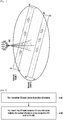
- the relevant region may be configured according to a practical requirement. For example, as shown in FIG. 1 , the cell includes 2 relevant regions: relevant region 1 and relevant region 2.
- An eNB broadcasts via a system broadcast message a coordinate range, a corresponding Vehicle Radio Network Temporary Identify (V-RNTI), and/or a region Identify (ID) of respective relevant region of the cell.
- V-RNTI Vehicle Radio Network Temporary Identify
- ID region Identify
- respective V2X node of the cell may save the coordinate range, the corresponding V-RNTI and/or the region ID of respective relevant region.
- the V-RNTI and/or the region ID of the relevant region are unique in the cell.
- the coordinate range of the relevant region may be indicated using Global Position System (GPS) coordinates of vertexes of the relevant region. For example, if the relevant region is a rectangle, the coordinate range of the relevant region may be indicated by the coordinates of the four vertexes of the rectangle. As shown in FIG. 1 , the coordinate range of the relevant region 1 may be indicated by the coordinates of the vertexes A1, B1, C1 and D1.
- GPS Global Position System
- the V2X communication method provided by embodiment 1 of the present disclosure includes the following.
- the transmitting V2X node needs to execute the following steps.
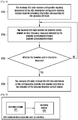
- step S102 the transmitting V2X node obtains position information of itself.
- the position information may be position coordinates or a region ID of a relevant region where the transmitting V2X node is located.
- the method for obtaining the position information of the transmitting V2X node may include: obtaining the position coordinates of the transmitting V2X node, and taking the position coordinates as the position information of the transmitting V2X node; or, obtaining the position coordinates of the transmitting V2X node, determining a coordinate range where the position coordinates belong to according to the coordinate range of respective relevant region, and taking the region ID of the relevant region corresponding to the coordinate range as the position information of the transmitting V2X node.
- the transmitting V2X node may obtain the position information of itself periodically and/or after the occurrence of an event, e.g., in the case of steering or turning around, the transmitting V2X node obtains its position information immediately.
- step S104 the transmitting V2X node transmits V2X data information containing the position information of the transmitting V2X node to the eNB.
- the position information of the transmitting V2X node contained in the V2X data information transmitted by the transmitting V2X node is the most recent position information obtained by the transmitting V2X node before the transmitting action.
- the eNB determines a relevant region where a receiving V2X node which needs to receive the V2X data information is located according to the position information of the transmitting V2X node contained in the received V2X data information, i.e., determines the relevant region that may be affected by the V2X data information. Then, the eNB scrambles the CRC code of a corresponding downlink control channel using the V-RNTI corresponding to the determined relevant region. The corresponding downlink control channel is used for indicating the downlink data channel carrying the V2X data information.
- One downlink data channel may carry the V2X data information from one transmitting V2X node, or may carry the V2X data information from a plurality of transmitting V2X nodes. In the case that it carries the V2X data information from a plurality of transmitting V2X nodes, preferably, the plurality of V2X data information should affect the same relevant region. If the downlink data channel carries the V2X data information from a plurality of transmitting V2X nodes, the V2X data information of different transmitting V2X nodes may be conveyed by different Media Access Control Service Data Unit (MAC SDU) in the MAC Protocol Data Unit (PDU), as shown in FIG. 3 .
- MAC SDU Media Access Control Service Data Unit
- PDU MAC Protocol Data Unit
- the steps executed by the receiving V2X node include the following.
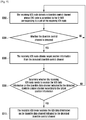
- step S202 the receiving V2X node determines a V-RNTI corresponding to a relevant region where the receiving V2X node is located.
- the receiving V2X node may obtain the position coordinates of itself by a GPS of the receiving V2X node and determine the V-RNTI corresponding to the coordinate range that the position coordinates belong to according to the coordinate range of respective relevant region.
- the receiving V2X node When executing step S202, the receiving V2X node should use the most recently obtained position coordinates of the receiving V2X node to determine the V-RNTI corresponding to the relevant region where the receiving V2X node is located.
- the receiving V2X node detects a downlink control channel in all downlinks subframes of the cell or some downlink subframes used for V2X data information transmission indicated by the eNB via higher layer signaling.
- step S204 the receiving V2X node detects the downlink control channel whose CRC code is scrambled by the V-RNTI corresponding to the relevant region where the receiving V2X node is located.
- step S206 the receiving V2X node determines whether the downlink control channel is detected. If yes, the method proceeds with step S208; otherwise, the method returns to step S204.
- step S208 the receiving V2X node receives the V2X data information on the corresponding downlink data channel according to the indication of the detected downlink control channel.
- the receiving V2X node is able to determine that it needs to receive the V2X data information on the downlink data channel indicated by the downlink control channel after detecting the downlink control channel whose CRC code is scrambled by the V-RNTI corresponding to the relevant region where the receiving V2X node is located.
- V2X data information selectively, which avoids useless data receiving and data processing operations of the receiving V2X node, and reduces the number of downlink control channels and downlink data channels need to be detected and processed by the receiving V2X node.
- the method of embodiment 1 does not require the V2X node frequently reporting its position information, which helps to decrease the signaling burden of the cell and reduces the number of V2X nodes in the Radio Resource Control (RRC) connected state in the cell.
- RRC Radio Resource Control
- one cell corresponds to one V-RNTI, i.e., all relevant regions in the same cell correspond to the same V-RNTI.
- the value of the V-RNTI corresponding to the cell may be configured by the eNB or defined by standards.
- the V2X communication method provided by embodiment 2 includes the following.
- the steps to be executed by the transmitting V2X node are as shown in FIG. 2 , which are similar as those in embodiment 1.
- the eNB determines target position information according to the position information of the transmitting V2X node contained in the received V2X data information, transmits the target position information on the corresponding downlink control channel, and scrambles the CRC code of the corresponding downlink control channel using the V-RNTI of the cell, wherein the corresponding downlink control channel is used for indicating the downlink data channel carrying the V2X data information.
- the target position information may be particular position coordinates or a region ID of a particular relevant region. In a practical implementation, if the target position information is particular position coordinates, the position coordinates may be coordinate values of 64-bit length, or may be compressed coordinate values, e.g., coordinate values of 16-bit length compressed from 64 bits.
- the steps to be executed by the receiving V2X node include the following.
- step S302 the receiving V2X node detects the downlink control channel whose CRC code is scrambled by the V-RNTI corresponding to the cell of the receiving V2X node.
- step S304 the receiving V2X node determines whether the downlink control channel is detected. If yes, the method proceeds with step S306; otherwise, the method returns to step S302.
- step S306 the receiving V2X node obtains the target position information from the detected downlink control channel.
- step S308 the receiving V2X node determines whether it needs to receive the V2X data information on the downlink data channel indicated by the detected downlink control channel according to the obtained target position information. If yes, the method proceeds with step S310; otherwise, the method returns to step S302.
- the method for determining whether the receiving V2X node needs to receive the V2X data information on the downlink data channel indicated by the detected downlink control channel may include the following three situations: In a first situation, if the target position information is the position coordinates, determining whether a distance between the position coordinates of the receiving V2X node and the target position information is smaller than a defined distance. If yes, determining that the receiving V2X node needs to receive the V2X data information on the downlink data channel indicated by the detected downlink control channel; otherwise, determining that the receiving V2X node does not need to receive the V2X data information on the downlink data channel indicated by the detected downlink control channel.
- the target position information is a region ID
- the eNB needs to broadcast the coordinate range and the region ID of the relevant region via a system broadcast message.
- the target position information is a region ID
- determining whether a distance between the position coordinates of the receiving V2X node and central position coordinates of a coordinate range of a relevant region corresponding to the target position information is smaller than a defined distance if yes, determining that the receiving V2X node needs to receive the V2X data information on the downlink data channel indicated by the detected downlink control channel; otherwise, determining that the receiving V2X node does not need to receive the V2X data information on the downlink data channel indicated by the detected downlink control channel.
- the eNB needs to broadcast the coordinate range and the region ID of the relevant region via a system broadcast message.
- the receiving V2X node is able to determine the coordinate range of the relevant region corresponding to the target position information, so as to calculate the central position coordinates of the coordinate range.
- the value of the above defined distance may be configured according to a practical requirement, which is not restricted in the embodiments of the present disclosure.
- step S310 the receiving V2X node receives the V2X data information on the downlink data channel indicated by the detected downlink control channel.
- the receiving V2X node after detecting a downlink control channel whose CRC code is scrambled by the V-RNTI corresponding to the cell where the receiving V2X node is located, the receiving V2X node is able to obtain the target position information from the detected downlink control channel and determine whether it needs to receive the V2X data information on the downlink data channel indicated by the downlink control channel according to the target position information.
- V2X data information selectively, which avoids useless data receiving and data processing operations of the receiving V2X node, and reduces the number of downlink control channels and downlink data channels need to be detected and processed by the receiving V2X node.
- this method is able to reduce the amount of information to be configured by the eNB via system broadcast, and does not require the V2X node frequently reporting its position information, which helps to decrease the signaling burden of the cell and reduces the number of V2X nodes in the RRC connected state in the cell.
- the receiving V2X node reports the position coordinates of itself to the eNB periodically or in response to being triggered by an event.
- the receiving V2X node receives the corresponding V-RNTI configured by the eNB.
- the receiving V2X node detects the downlink control channel whose CRC code is scrambled by the V-RNTI corresponding to the receiving V2X node, and receives the V2X data information on the corresponding downlink data channel according to an indication of the detected downlink control channel.
- the V2X communication method provided by embodiment 3 includes the following.
- the steps to be executed by the transmitting V2X node are as shown in FIG. 2 , which are similar to those in embodiment 1.
- the eNB determines the receiving V2X node which needs to receive the V2X data information according to the position coordinates of the transmitting V2X node included in the received V2X data information and the position coordinates reported by each receiving V2X node, and scrambles the CRC code of the corresponding downlink control channel using the V-RNTI corresponding to the receiving V2X node which needs to receive the V2X data information.
- the corresponding downlink control channel is used for indicating the downlink data channel carrying the V2X data information.
- the receiving V2X node needs to execute the following steps: In step S402, the receiving V2X node receives a configuration signaling transmitted by the eNB, wherein the configuration signaling includes the V-RNTI corresponding to the receiving V2X node.
- the receiving V2X node reports the position coordinates of itself to the eNB periodically or in response to the occurrence of a particular event, e.g., in the case of steering or turning around, the receiving V2X node immediately reports its position coordinates to the eNB.
- the eNB is able to configure corresponding V-RNTI for the receiving V2X node according to the coordinates.
- the receiving V2X node may determine the periodicity and the event for triggering the report through receiving the configuration signaling of the eNB or through pre-configuration or definition of standards.
- step S404 the receiving V2X node detects the downlink control channel whose CRC code is scrambled by the V-RNTI corresponding to the receiving V2X node.
- step S406 the receiving V2X node determines whether the downlink control channel is detected, if yes, the method proceeds with step S408; otherwise, the method returns to step S404.
- step S408 the receiving V2X node receives the V2X data information on the corresponding downlink data channel according to the indication of the detected downlink control channel.
- the receiving V2X node is able to determine that it needs to receive the V2X data information on the downlink data channel indicated by the downlink control channel after detecting the downlink control channel whose CRC code is scrambled by the V-RNTI corresponding to the receiving V2X node.
- V2X data information selectively, which avoids useless data receiving and data processing operations of the receiving V2X node, and reduces the number of downlink control channels and downlink data channels need to be detected and processed by the receiving V2X node.
- this method does not require the eNB configuring relevant information for relevant region via system broadcast message, thus can reduce the data amount of system messages.
- the eNB broadcasts via a system broadcast message the coordinate range, corresponding downlink scheduling information and/or region ID of respective relevant region of the cell.
- the V2X nodes in the cell save the coordinate range, the corresponding downlink scheduling information and/or the region ID of respective relevant region, wherein the downlink scheduling information refers to positions of time-frequency resources of a downlink control channel and a downlink data channel, the downlink control channel is used for indicating the transmission of the V2X data information with respect to the relevant region, the downlink data channel is used for bearing the V2X data information with respect to the relevant region.
- the receiving V2X node detects the downlink control channel whose CRC code is scrambled by the V-RNTI on the time-frequency resources indicated by the downlink scheduling information corresponding to the relevant region where the receiving V2X node is located, and receiving the V2X data information on the corresponding downlink data channel according to the indication of the detected downlink control channel.
- the V-RNTI may be the V-RNTI corresponding to the relevant region or the V-RNTI corresponding to the cell.
- the coordinate range of the relevant region may be indicated similarly as in embodiment 1.
- the V2X communication method provided by embodiment 4 of the present disclosure includes the following.
- the steps need to be executed by the transmitting V2X node are as shown in FIG. 2 , which are similar to those of embodiment 1.
- the eNB determines the relevant region where the receiving V2X node needs to receive the V2X data information is located according to the position information of the transmitting V2X node included in the received V2X data information, i.e., determining the relevant region that may be affected by the V2X data information.
- the eNB transmits the downlink data channel carrying the V2X data information and the corresponding downlink control channel on the time-frequency resources indicated by the downlink scheduling information corresponding to the relevant region.
- the CRC code of the downlink control channel is scrambled by the V-RNTI corresponding to the relevant region or the V-RNTI corresponding to the cell.
- the steps need to be executed by the receiving V2X node include the following.
- step S602 the receiving V2X node determines the downlink scheduling information corresponding to the relevant region where the receiving V2X node is located.
- the receiving V2X node may obtain the position coordinates of itself through a GPS of the receiving V2X node and determine the downlink scheduling information corresponding to a coordinate range that the position coordinates belong to according to the coordinate range of respective relevant region.
- the downlink scheduling information may include two kinds of information: periodicity P and offset ⁇ , wherein P and ⁇ are in unit of subframes.
- the time-frequency resources of the downlink control channel and the downlink data channel carrying the V2X data information i.e., the V2X data information that the receiving V2X node in the relevant region needs to receive
- the V2X data information i.e., the V2X data information that the receiving V2X node in the relevant region needs to receive
- REs Resource Elements
- the receiving V2X node When executing step S602, the receiving V2X node should use the most recently obtained position coordinates of the receiving V2X node to determine the downlink scheduling information corresponding to the relevant region where the receiving V2X node is located.
- step S604 the receiving V2X node detects the downlink control channel on the time-frequency resources indicated by the downlink scheduling information.
- the CRC code of the downlink control channel is scrambled by the V-RNTI corresponding to the relevant region or the V-RNTI corresponding to the cell where the receiving V2X node is located.
- step S606 the receiving V2X node determines whether the downlink control channel is detected, if yes, the method proceeds with step S608; otherwise, the method returns to step S604.
- step S608 the receiving V2X node receives the V2X data information on the corresponding downlink data channel according to the indication of the detected downlink control channel.
- the receiving V2X node merely needs to detect the downlink control channel scheduling the V2X data information transmission on the time-frequency resources indicated by the downlink scheduling information corresponding to the relevant region where the receiving V2X node is located, which reduces the number of detections for the downlink control channel of the receiving V2X node, and helps to decrease the power consumption of the V2X node.
- the receiving V2X node reports the position coordinates of the receiving V2X node to the eNB periodically or in response to being triggered by an event, and receives the corresponding downlink scheduling information configured by the eNB.
- the downlink scheduling information refers to the positions of the time-frequency resources of the downlink control channel and the downlink data channel, wherein the downlink control channel is used for indicating the transmission of the V2X data information with respect to the receiving V2X node, the downlink data channel is used for bearing the V2X data information with respect to the receiving V2X node.
- the receiving V2X node detects the downlink control channel whose CRC code is scrambled by the V-RNTI on the time-frequency resources indicated by the downlink scheduling information corresponding to the receiving V2X node, and receives the V2X data information on the downlink data channel according to the indication of the detected downlink control channel.
- the V-RNTI may be the V-RNTI corresponding to the relevant region or the V-RNTI corresponding to the cell.
- the V2X communication method provided by embodiment 5 of the present disclosure includes the following.
- the steps need to be executed by the transmitting V2X node are as shown in FIG. 2 , which are similar to those in embodiment 1.
- the eNB determines the receiving V2X node which needs to receive the V2X data information according to the position coordinates of the transmitting V2X node included in the received V2X data information and the position coordinates reported by each receiving V2X node, and transmits the downlink data channel bearing the V2X data information and the corresponding downlink control channel on the time-frequency resources indicated by the downlink scheduling information corresponding to the determined receiving V2X node.
- the CRC code of the downlink control channel is scrambled by the V-RNTI corresponding to the relevant region where the determined receiving V2X node is located or is scrambled by the V-RNTI corresponding to the cell where the determined receiving V2X node is located.
- the steps need to be executed by the receiving V2X node include the following.
- step S702 the receiving V2X node receives the configuration signaling transmitted by the eNB, wherein the configuration signaling includes: the downlink scheduling information corresponding to the receiving V2X node.
- the receiving V2X node reports the position coordinates of itself to the eNB periodically or upon the occurrence of a particular event, e.g., in the case of steering or turning around, the receiving V2X node immediately reports its position coordinates to the eNB.
- the eNB is able to configure corresponding downlink scheduling information for the receiving V2X node according to the coordinates.
- the receiving V2X node may determine the periodicity and the event for triggering the report through receiving the configuration signaling of the eNB or through pre-configuration or definition of standards.
- the downlink scheduling information may include two kinds of information: periodicity P and offset ⁇ , wherein P and ⁇ are in unit of subframes.
- the time-frequency resources of the downlink control channel and the downlink data channel carrying the V2X data information i.e., the V2X data information that the receiving V2X node in the relevant information needs to receive
- the V2X data information i.e., the V2X data information that the receiving V2X node in the relevant information needs to receive
- step S704 the receiving V2X node detects the downlink control channel on the time-frequency resources indicated by the downlink scheduling information corresponding to the receiving V2X node.
- the CRC code of the downlink control channel is scrambled by the V-RNTI corresponding to the relevant region where the receiving V2X node is located or the V-RNTI corresponding to the cell where the receiving V2X node is located.
- step S706 the receiving V2X node determines whether the downlink control channel is detected, if yes, the method proceeds with step S708; otherwise, the method returns to step S704.
- step S708 the receiving V2X node receives the V2X data information on the corresponding downlink data channel according to the indication of the detected downlink control channel.
- the receiving V2X node merely needs to detect the downlink control channel scheduling the V2X data information transmission on the time-frequency resources indicated by the downlink scheduling information corresponding to the receiving V2X node, which reduces the number of detections for the downlink control channel of the receiving V2X node, and helps to decrease the power consumption of the V2X node.
- an embodiment of the present disclosure also provides a V2X communication apparatus applicable for performing the method.
- the apparatus is applicable for a V2X node.
- the apparatus includes the following modules: a detecting module 501 and a receiving module 502, wherein the detecting module 501 is adapted to detect a downlink control channel whose CRC code is scrambled by a V-RNTI relevant to the V2X node; and the receiving module 502 is adapted to receive the V2X data information on a corresponding downlink data channel according to the indication of the downlink control channel detected by the detecting module 501.
- the V-RNTI relevant to the V2X node may be the V-RNTI corresponding to the relevant region where the V2X node is located, wherein one cell includes at least one relevant region, and the V-RNTI corresponding to each relevant region is obtained via broadcast of the eNB.
- the V-RNTI relevant to the V2X node may be the V-RNTI corresponding to the cell where the V2X node is located.
- the receiving module 502 includes: an obtaining unit, a determining unit and an information receiving unit; wherein the obtaining unit is adapted to obtain target position information from the downlink control channel detected by the detecting module 501; the determining unit is adapted to determine whether the V2X node needs to receive the V2X data information on the downlink data channel indicated by the detected downlink control channel according to the obtained target position information; and the information receiving unit is adapted to receive the V2X data information on the downlink data channel indicated by the detected downlink control channel if the determining unit determines that the V2X node needs to receive the V2X data information on the downlink data channel indicated by the detected downlink control channel.
- the determining unit may be adapted to: if the target position information is position coordinates, determine whether a distance between the position coordinates of the V2X node and the target position information is smaller than a defined distance, if yes, determine that the V2X node needs to receive the V2X data information on the downlink data channel indicated by the detected downlink control channel; otherwise, determine that the V2X node does not need to receive the V2X data information on the downlink data channel indicated by the detected downlink control channel; or, if the target position information is a region ID, determine whether the target position information is the same as the region ID of the relevant region where the V2X node is located, if yes, determine that the V2X node needs to receive the V2X data information on the downlink data channel indicated by the detected downlink control channel; otherwise, determine that the V2X node does not need to receive the V2X data information on the downlink data channel indicated by the detected downlink control channel; or, if the target position information is a region ID,
- the V-RNTI relevant to the V2X node is the V-RNTI corresponding to the V2X node.
- the apparatus may further include: a reporting module 503, wherein the reporting module 503 is adapted to report the obtained position coordinates of the V2X node to the eNB; and the receiving module 502 is further adapted to receive configuration signaling carrying the V-RNTI corresponding to the V2X node transmitted by the eNB, wherein the V-RNTI corresponding to the V2X node is configured by the eNB according to the position coordinates of the V2X node.
- the apparatus may further include: a position information obtaining module 504 and a transmitting module 505; wherein the position information obtaining module 504 is adapted to obtain the position information of the V2X node; and the transmitting module 505 is adapted to transmit V2X data information carrying the position information of the V2X node obtained by the position information obtaining module 504 to the eNB.
- the position information obtaining module 504 is adapted to:
- the relevant region where the V2X node is located is determined by the eNB according to the position information included in the V2X data information conveyed by the corresponding downlink data channel; wherein one cell includes at least one region; if the V-RNTI relevant to the V2X node is the V-RNTI corresponding to the cell, the target position information included in the detected downlink control channel is determined by the eNB according to the position information included in the V2X data information conveyed by the corresponding downlink data channel; if the V-RNTI relevant to the V2X node is the V-RNTI corresponding to the V2X node, the V2X node is determined by the eNB according to the position information included in the V2X data information conveyed by the corresponding downlink data channel.
- an embodiment of the present disclosure provides a V2X communication apparatus, applicable to a V2X node.
- the apparatus includes: a detecting module 501 and a receiving module 502; wherein the detecting module 501 is adapted to detect a downlink control channel on time-frequency resources indicated by downlink scheduling information relevant to the V2X node; and the receiving module 502 is adapted to receive V2X data information on a corresponding downlink data channel according to the indication of the downlink control channel detected by the detecting module 501.
- the downlink scheduling information relevant to the V2X node is downlink scheduling information corresponding to a relevant region where the V2X node is located, wherein one cell includes at least one relevant region, and the V-RNTI corresponding to each relevant region is obtained via broadcast of the eNB.
- the downlink scheduling information relevant to the V2X node is the downlink scheduling information corresponding to the V2X node, as shown in FIG. 10
- the apparatus may further include: a reporting module 503; wherein the reporting module 503 is adapted to report the position coordinates of the V2X node to the eNB; and the receiving module 502 is further adapted to receive configuration signaling carrying the downlink scheduling information corresponding to the V2X node transmitted by the eNB, wherein the downlink scheduling information corresponding to the V2X node is configured by the eNB according to the position coordinates of the V2X node.
- the apparatus may further include: a position information obtaining module 504 and a transmitting module 505; wherein the position information obtaining module 504 is adapted to obtain the position information of the V2X node; and the transmitting module 505 is adapted to transmit the V2X data information carrying the position information of the V2X node obtained by the position information obtaining module 504 to the eNB.
- the position information obtaining module 504 is adapted to: obtain the position coordinates of the V2X node, take the position coordinates as the position information of the V2X node; or, obtain the position coordinates of the V2X node, determine coordinate range that the position coordinates belong to according to the coordinate range of each relevant region, and take a region ID of the relevant region corresponding to the coordinate range as the position information of the V2X node; wherein one cell includes at least one relevant region, and the coordinate range and the region ID of each relevant region are obtained via broadcast of the eNB.
- the relevant region where the V2X node is located is determined by the eNB according to the position information included in the V2X data information conveyed by the corresponding downlink data channel; wherein one cell includes at least one relevant region; if the downlink scheduling information relevant to the V2X node is the downlink scheduling information corresponding to the V2X node, the V2X node is determined by the eNB according to the position information included in the V2X data information conveyed by the corresponding downlink data channel.
Landscapes
- Engineering & Computer Science (AREA)
- Computer Networks & Wireless Communication (AREA)
- Signal Processing (AREA)
- Multimedia (AREA)
- Mobile Radio Communication Systems (AREA)
- Computer Security & Cryptography (AREA)
Claims (13)
- Procédé de communication de véhicule à au moins l'un parmi un véhicule, un piéton, une infrastructure ou un réseau, V2X, par un nœud V2X récepteur, le procédé comprenant :déterminer (S202) une identification temporaire de réseau radio de véhicule V-RNTI, sur la base d'une région associée à une localisation du nœud V2X récepteur correspondant à une position la plus récemment obtenue du nœud V2X récepteur pour recevoir sélectivement des informations de données V2X ;détecter (S204, S302, S404) un canal de commande de liaison descendante dont le code de contrôle de redondance cyclique, CRC, est brouillé par la V-RNTI ; etrecevoir (S208, S310, S408) les informations de données V2X sur la base du canal de commande de liaison descendante détecté à partir d'un nœud B évolué, eNB,où une cellule de l'eNB correspond à de multiples régions associées à la localisation du nœud V2X récepteur, et la V-RNTI de la région respective est déterminée sur la base d'un signal diffusé à partir de l'eNB.
- Procédé selon la revendication 1,
où la réception des informations de données V2X comprend :obtenir (S306) des informations de position cible déterminées sur la base d'une localisation d'un nœud V2X émetteur à partir du canal de commande de liaison descendante détecté ;déterminer (S308) s'il faut recevoir les informations de données V2X sur la base des informations de position cible obtenues ;dans le cas où la réception d'informations de données V2X est déterminée, recevoir les informations de données V2X sur la base du canal de commande de liaison descendante détecté depuis l'eNB, etoù les informations de données V2X sont transmises à partir du nœud V2X émetteur via l'eNB. - Procédé selon la revendication 1, où le procédé comprend en outre :rapporter des coordonnées de position du nœud V2X récepteur à l'eNB ; etrecevoir (S402) une signalisation de configuration comprenant la V-RNTI du nœud V2X récepteur, où la V-RNTI du nœud V2X récepteur est déterminée sur la base des coordonnées de position du nœud V2X récepteur.
- Procédé selon la revendication 2, où déterminer (S308) s'il faut recevoir les informations de données V2X sur la base des informations de position cible obtenues comprend :dans le cas où les informations de position cible comprendraient des coordonnées de position du nœud V2X émetteur, déterminer si une distance entre les coordonnées de position du nœud V2X récepteur et les coordonnées de position du nœud V2X émetteur est inférieure à une distance définie ;dans le cas où la distance déterminée serait inférieure à la distance définie, déterminer que le nœud V2X récepteur a besoin de recevoir les informations de données V2X sur la base du canal de commande de liaison descendante détecté ; etdans le cas où la distance déterminée ne serait pas inférieure à la distance définie, déterminer que le nœud V2X récepteur n'a pas besoin de recevoir les informations de données V2X sur la base du canal de commande de liaison descendante détecté.
- Procédé selon la revendication 2, où déterminer (S308) s'il faut recevoir les informations de données V2X sur la base des informations de position cible obtenues comprend :dans le cas où les informations de position cible comprendraient un ID de région du nœud V2X émetteur, déterminer si un ID de région du nœud V2X récepteur est le même que l'ID de région du nœud V2X émetteur,dans le cas où l'ID de région du nœud V2X récepteur serait le même que l'ID de région du nœud V2X émetteur, déterminer que le nœud V2X récepteur a besoin de recevoir les informations de données V2X sur la base du canal de commande de liaison descendante détecté ;dans le cas où l'ID de région du nœud V2X récepteur ne serait pas le même que l'ID de région du nœud V2X émetteur, déterminer que le nœud V2X récepteur n'a pas besoin de recevoir les informations de données V2X sur la base du canal de commande de liaison descendante détecté ; oudans le cas où les informations de position cible incluraient l'ID de région du nœud V2X émetteur, déterminer si une distance entre les coordonnées de position du nœud V2X récepteur et les coordonnées de position centrale d'une coordonnée, où la détermination de recevoir ou non les informations de données V2X sur la base des informations de position cible obtenues comprend la portée d'une région correspondant à l'ID de région du nœud V2X émetteur, est inférieure à une distance définie,dans le cas où la distance entre les coordonnées de position du nœud V2X récepteur et les coordonnées de position centrale serait inférieure à la distance définie, déterminer que le nœud V2X récepteur a besoin de recevoir les informations de données V2X sur la base du canal de commande de liaison descendante détecté ;dans le cas où la distance entre les coordonnées de position du nœud V2X récepteur et les coordonnées de position centrale ne serait pas inférieure à la distance définie, déterminer que le nœud V2X récepteur n'a pas besoin de recevoir les informations de données V2X sur la base du canal de commande de liaison descendante détecté.
- Procédé de communication de véhicule à véhicule / piéton / infrastructure/ réseau, V2X, par un nœud V2X récepteur, le procédé comprenant :recevoir un message de diffusion de système comprenant une plage de coordonnées correspondant à des informations de programmation de liaison descendante et / ou un ID de région de la région pertinente respective d'une cellule à partir d'un nœud B évolué, eNB ;déterminer (S602) des informations de programmation de liaison descendante correspondant à la région pertinente où le nœud V2X récepteur est situé sur la base des coordonnées de position obtenues le plus récemment du nœud V2X récepteur, les informations de programmation de liaison descendante indiquant les positions de ressources temps-fréquence d'un canal de commande de liaison descendante et d'un canal de données de liaison descendante ;détecter (S604) le canal de commande de liaison descendante sur les ressources temps-fréquence sur la base des informations de programmation de liaison descendante déterminées, où un code CRC du canal de commande de liaison descendante est brouillé par une V-RNTI correspondant à la région associée au nœud V2X récepteur ; etrecevoir (S608) des informations de données V2X sur le canal de données de liaison descendante sur la base du canal de commande de liaison descendante détecté depuis l'eNBoù la cellule de l'eNB correspond à plusieurs régions associées à la localisation du nœud V2X récepteur, et la V-RNTI de la région respective est déterminée sur la base d'un signal diffusé depuis l'eNB.
- Procédé selon la revendication 6, où le procédé comprend en outre :signaler des coordonnées de position du nœud V2X récepteur à l'eNB ; etrecevoir (S702) des informations de configuration comprenant les informations de programmation de liaison descendante sur la région associée au nœud V2X récepteur transmis par l'eNB,où les informations de programmation de liaison descendante sur la région associée au nœud V2X récepteur sont configurées par l'eNB sur la base des coordonnées de position du nœud V2X récepteur.
- Procédé selon la revendication 6, où les informations de données V2X contenant des informations de position d'un nœud V2X émetteur sont transmises à l'eNB.
- Appareil de communication de véhicule à véhicule / piéton / infrastructure /réseau, V2X, applicable pour un nœud V2X, comprenant :un module de détection (501) configuré pour détecter un canal de commande de liaison descendante dont le code de contrôle de redondance cyclique, CRC, est brouillé par une identification temporaire de réseau radio de véhicule, V-RNTI ; etun module de réception (502) configuré pour :déterminer la V-RNTI sur la base d'une région associée à une localisation du nœud V2X correspondant à une position la plus récemment obtenue du nœud V2X récepteur pour recevoir sélectivement des informations de données V2X, etrecevoir les informations de données V2X sur la base du canal de commande de liaison descendante détecté par le module de détection (501) à partir d'un nœud B évolué, eNB,où une cellule de l'eNB correspond à de multiples régions associées à la localisation du nœud V2X récepteur, et la V-RNTI de la région respective est déterminée sur la base d'un signal diffusé à partir de l'eNB.
- Appareil selon la revendication 9,
où le module de réception comprend :une unité d'obtention configurée pour obtenir des informations de position cible déterminées sur la base d'une localisation d'un nœud V2X émetteur qui transmet les informations de données V2X via l'eNB à partir du canal de commande de liaison descendante détecté ;une unité de détermination configurée pour déterminer s'il faut recevoir les informations de données V2X sur la base des informations de position cible obtenues ;une unité de réception d'informations configurée pour recevoir les informations de données V2X sur la base du canal de commande de liaison descendante détecté de l'eNB, dans le cas où la réception d'informations de données V2X serait déterminée par l'unité de détermination, et où l'unité de détermination est configurée pour :dans le cas où les informations de position cible comprendraient des coordonnées de position du nœud V2X émetteur, déterminer si une distance entre les coordonnées de position du nœud V2X et les coordonnées de position du nœud V2X émetteur est inférieure à une distance définie,dans le cas où la distance déterminée serait inférieure à la distance définie, déterminer que le nœud V2X récepteur a besoin de recevoir les informations de données V2X sur la base du canal de commande de liaison descendante détecté, etdans le cas où la distance déterminée ne serait pas inférieure à la distance définie, déterminer que le nœud V2X récepteur n'a pas besoin de recevoir les informations de données V2X sur la base du canal de commande de liaison descendante détecté. - Appareil selon la revendication 9, où l'appareil comprend en outre un module de rapport (503) configuré pour signaler les coordonnées de position du nœud V2X à l'eNB,
où le module de réception (502) est configuré en outre pour recevoir une signalisation de configuration comprenant la V-RNTI du nœud V2X, et
où la V-RNTI du nœud V2X est déterminée sur la base des coordonnées de position du nœud V2X. - Appareil de communication de véhicule à véhicule / piéton / infrastructure / réseau, V2X, applicable pour un nœud V2X, comprenant :un module de détection (501) configuré pour détecter un canal de commande de liaison descendante sur des ressources temps-fréquence sur la base d'informations de programmation de liaison descendante ; etun module de réception (502) configuré pour :recevoir un message de diffusion de système comprenant une plage de coordonnées correspondant à des informations de programmation de liaison descendante et / ou un ID de région de la région pertinente respective d'une cellule à partir d'un nœud B évolué, eNB,déterminer les informations de programmation de liaison descendante correspondant à la région pertinente où le nœud V2X récepteur est situé sur la base des coordonnées de position obtenues le plus récemment du nœud V2X récepteur, les informations de programmation de liaison descendante indiquant des positions des ressources temps-fréquence d'un canal de commande de liaison descendante et d'un canal de données de liaison descendante, etrecevoir des informations de données V2X sur le canal de données de liaison descendante sur la base du canal de commande de liaison descendante détecté par le module de détection (501) depuis l'eNB,où la cellule de l'eNB correspond à plusieurs régions associées à la localisation du nœud V2X récepteur, et la V-RNTI de la région respective est déterminée sur la base d'un signal diffusé depuis l'eNB.
- Appareil selon la revendication 12, où l'appareil comprend en outre un module de signalisation (503) configuré pour rapporter les coordonnées de position du nœud V2X à l'eNB,
où le module de réception (502) est configuré en outre pour recevoir des informations de configuration comprenant les informations de programmation de liaison descendante sur la région associée au nœud V2X transmises par l'eNB, et
où les informations de programmation de liaison descendante sur la région associée au nœud V2X récepteur sont configurées par l'eNB sur la base des coordonnées de position du nœud V2X.
Applications Claiming Priority (2)
| Application Number | Priority Date | Filing Date | Title |
|---|---|---|---|
| CN201510624363.7A CN106559733B (zh) | 2015-09-25 | 2015-09-25 | V2x通信方法及装置 |
| PCT/KR2016/009116 WO2017052078A1 (fr) | 2015-09-25 | 2016-08-18 | Procédé et appareil de communication v2x |
Publications (3)
| Publication Number | Publication Date |
|---|---|
| EP3335461A1 EP3335461A1 (fr) | 2018-06-20 |
| EP3335461A4 EP3335461A4 (fr) | 2018-07-11 |
| EP3335461B1 true EP3335461B1 (fr) | 2020-07-01 |
Family
ID=58386227
Family Applications (1)
| Application Number | Title | Priority Date | Filing Date |
|---|---|---|---|
| EP16848804.7A Active EP3335461B1 (fr) | 2015-09-25 | 2016-08-18 | Procédé et appareil de communication v2x |
Country Status (5)
| Country | Link |
|---|---|
| US (1) | US11070961B2 (fr) |
| EP (1) | EP3335461B1 (fr) |
| KR (1) | KR102818202B1 (fr) |
| CN (1) | CN106559733B (fr) |
| WO (1) | WO2017052078A1 (fr) |
Families Citing this family (16)
| Publication number | Priority date | Publication date | Assignee | Title |
|---|---|---|---|---|
| EP3352405B1 (fr) * | 2015-09-14 | 2023-01-11 | LG Electronics Inc. | Procédé et appareil d'émission/réception de messages provenant d'un terminal v2x dans un système de communication sans fil |
| JP6509353B2 (ja) * | 2015-09-24 | 2019-05-08 | 株式会社Nttドコモ | ユーザ装置、基地局、通信方法及び通知方法 |
| EP3410663B1 (fr) * | 2016-03-04 | 2022-05-11 | Huawei Technologies Co., Ltd. | Procédés et appareils d'envoi de message |
| CN109076577B (zh) * | 2016-04-01 | 2022-01-07 | Lg电子株式会社 | 根据无线通信系统中的上行链路sps进行的终端操作方法和使用其的终端 |
| US11395325B2 (en) | 2016-04-01 | 2022-07-19 | Lg Electronics Inc. | Method for transmitting downlink control information for sidelink scheduling in wireless communication system and terminal using same |
| US10356758B2 (en) * | 2016-08-11 | 2019-07-16 | Asustek Computer Inc. | Method and apparatus for requesting and modifying resource configuration in a wireless communication system |
| CN115002910A (zh) | 2016-09-30 | 2022-09-02 | 北京三星通信技术研究有限公司 | 一种v2x通信中的发送资源确定方法和设备 |
| CN109247078B (zh) | 2017-05-03 | 2019-12-06 | 北京小米移动软件有限公司 | 下行控制信道的接收、发送方法及装置 |
| CN111107671B (zh) * | 2018-10-27 | 2022-01-14 | 华为技术有限公司 | 通信方法及终端设备 |
| CN110169095B (zh) * | 2019-04-12 | 2022-06-24 | 北京小米移动软件有限公司 | 加扰处理方法、解扰处理方法及装置 |
| WO2021082010A1 (fr) * | 2019-11-01 | 2021-05-06 | 华为技术有限公司 | Procédé et appareil d'acquisition d'informations de position |
| CN110868696B (zh) * | 2019-11-11 | 2025-01-28 | 辰芯科技有限公司 | 车联网数据的选择性解析方法、装置、设备及存储介质 |
| CN112995886B (zh) * | 2019-12-18 | 2023-06-06 | 中信科智联科技有限公司 | 一种适用于v2x通信网络的信道选择方法、装置及设备 |
| US10896556B1 (en) | 2019-12-21 | 2021-01-19 | Continental Automotive Systems, Inc. | Intelligent method of selecting incoming message channels in a V2X communication |
| DE102020112270A1 (de) * | 2020-05-06 | 2021-11-11 | Audi Aktiengesellschaft | Lokalisierung von V2X-fähigen Nachbarfahrzeugen |
| JP7639379B2 (ja) * | 2021-02-10 | 2025-03-05 | セイコーエプソン株式会社 | 回路装置、電子機器及び画像処理方法 |
Family Cites Families (24)
| Publication number | Priority date | Publication date | Assignee | Title |
|---|---|---|---|---|
| KR100493079B1 (ko) * | 2001-11-02 | 2005-06-02 | 삼성전자주식회사 | 고속 순방향 패킷 접속 방식을 사용하는 광대역 부호 분할다중 접속 통신 시스템에서 순방향 채널 품질을 보고하는장치 및 방법 |
| WO2007089108A1 (fr) * | 2006-02-01 | 2007-08-09 | Samsung Electronics Co., Ltd. | Procédé et appareil d'émission/réception de messages de notification dans un système mobile de diffusion |
| US8644252B2 (en) * | 2006-08-25 | 2014-02-04 | Telefonaktiebolaget L M Ericsson (Publ) | Method for recovery from a failed handover procedure in a telecommunication system |
| CN101282568B (zh) | 2007-04-03 | 2012-10-10 | 中兴通讯股份有限公司 | 一种联合支持多种接入的系统 |
| US8346173B2 (en) * | 2009-03-20 | 2013-01-01 | Qualcomm Incorporated | Apparatus and methods for intercell interference cancellation via RNTI |
| US20100250346A1 (en) * | 2009-03-31 | 2010-09-30 | Gm Global Technology Operations, Inc. | Using v2x in-network message distribution and processing protocols to enable geo-service advertisement applications |
| KR20110035888A (ko) * | 2009-09-29 | 2011-04-06 | 한국전자통신연구원 | 무선 측위 방법 |
| US9312946B2 (en) * | 2011-06-17 | 2016-04-12 | Nokia Solutions And Networks Oy | Gateway functionality for mobile relay system |
| KR101582882B1 (ko) * | 2012-03-08 | 2016-01-07 | 엘지전자 주식회사 | 참조 신호 수신 방법 및 사용자기기와, 참조 신호 전송 방법 및 기지국 |
| US9179126B2 (en) * | 2012-06-01 | 2015-11-03 | Ostendo Technologies, Inc. | Spatio-temporal light field cameras |
| CN103596238A (zh) * | 2012-08-14 | 2014-02-19 | 广州联瑞数码科技有限公司 | 一种v2v通信网络的路由计算方法装置 |
| CN109890025B (zh) * | 2013-01-16 | 2022-02-22 | 交互数字专利控股公司 | 发现信号生成和接收 |
| US9134955B2 (en) * | 2013-01-24 | 2015-09-15 | Intel Corporation | Customization of a vehicle |
| US9374258B2 (en) * | 2013-05-10 | 2016-06-21 | Lg Electronics Inc. | Method for transmitting or receiving interference information and apparatus therefor |
| WO2015016689A1 (fr) * | 2013-08-02 | 2015-02-05 | 엘지전자 주식회사 | Procédé d'obtention d'informations de trafic au moyen de communications locales et appareil pour celui-ci |
| WO2015022736A1 (fr) * | 2013-08-14 | 2015-02-19 | 富士通株式会社 | Système de communication, station de base, dispositifs radioélectriques et procédé de communication |
| US9577857B2 (en) * | 2013-11-08 | 2017-02-21 | Gogo Llc | Adaptive modulation in a hybrid vehicle communication system |
| WO2015130067A1 (fr) * | 2014-02-25 | 2015-09-03 | 엘지전자 주식회사 | Procédé et appareil de génération par un terminal d'un signal de dispositif à dispositif dans un système de communication sans fil |
| CN106063161B (zh) | 2014-02-28 | 2019-04-19 | Lg电子株式会社 | 用于在无线通信系统中生成低延迟信号的方法和装置 |
| US10045249B2 (en) * | 2014-03-19 | 2018-08-07 | Lg Electronics Inc. | Method and apparatus for configuring buffer status report for public safety transmission or vehicle-related transmission in wireless communication system |
| US9723651B2 (en) * | 2014-11-10 | 2017-08-01 | Qualcomm Incorporated | Enhanced connection management for multiple access networks |
| US10440670B2 (en) * | 2014-12-29 | 2019-10-08 | Lg Electronics Inc. | Method for performance device-to-device communication in wireless communication system and apparatus therefor |
| US10554708B2 (en) * | 2015-03-27 | 2020-02-04 | Qualcomm Incorporated | Point-to-multipoint broadcast assisted vehicle-to-X broadcast |
| WO2016162077A1 (fr) * | 2015-04-10 | 2016-10-13 | Nokia Solutions And Networks Oy | Utilisation d'identificateurs cellulaires dans l'infrastructure de communication de systèmes de transport intelligents |
-
2015
- 2015-09-25 CN CN201510624363.7A patent/CN106559733B/zh active Active
-
2016
- 2016-08-18 EP EP16848804.7A patent/EP3335461B1/fr active Active
- 2016-08-18 KR KR1020187005429A patent/KR102818202B1/ko active Active
- 2016-08-18 US US15/763,024 patent/US11070961B2/en not_active Expired - Fee Related
- 2016-08-18 WO PCT/KR2016/009116 patent/WO2017052078A1/fr not_active Ceased
Non-Patent Citations (1)
| Title |
|---|
| None * |
Also Published As
| Publication number | Publication date |
|---|---|
| CN106559733A (zh) | 2017-04-05 |
| KR20180048640A (ko) | 2018-05-10 |
| US20190058980A1 (en) | 2019-02-21 |
| US11070961B2 (en) | 2021-07-20 |
| EP3335461A4 (fr) | 2018-07-11 |
| WO2017052078A1 (fr) | 2017-03-30 |
| KR102818202B1 (ko) | 2025-06-10 |
| CN106559733B (zh) | 2021-02-12 |
| EP3335461A1 (fr) | 2018-06-20 |
Similar Documents
| Publication | Publication Date | Title |
|---|---|---|
| US11070961B2 (en) | V2X communication method and apparatus | |
| RU2698322C1 (ru) | Способ и устройство для опорного сигнала и отображения для связи посредством прямого соединения | |
| US20220353846A1 (en) | Two-stage design for new radio (nr) sidelink control information (sci) | |
| US10440689B2 (en) | Method and apparatus for resource allocation in V2V communications system | |
| EP3439398B1 (fr) | Station de base, procédé de communication et système | |
| US11638200B2 (en) | Method, apparatus, system and computer program for vehicular communication smart radio access zones | |
| EP3855674B1 (fr) | Dispositif de communication, station de base et procédé de communication | |
| JP2023517807A (ja) | ジオフェンスへの近接度の決定 | |
| AU2018279551B2 (en) | Service data transmission method and apparatus | |
| CN108476484A (zh) | 用户装置、同步信号发送方法 | |
| CN114616837B (zh) | 用于分区标识符传输的开销减少 | |
| CN115515222B9 (zh) | 定位方法、装置及相关设备 | |
| WO2021055370A1 (fr) | Configuration pour l'acquisition de cellules relais | |
| EP4280637B1 (fr) | Procédé de transmission d'un message par un terminal dans un système de communication sans fil et dispositif associé | |
| CN114828271B (zh) | 一种系统信息的发送方法、获取方法及相关设备 | |
| KR20180090775A (ko) | 연결 확립 방법 및 장치 | |
| CN115004731A (zh) | 一个或多个单播链路上的不同业务类型的ue对ue通信 | |
| CN114846899B (zh) | 多跳路径数据传输方法及相关装置 | |
| US20230180187A1 (en) | Method for assigning beam management id to terminal in wireless communication system supporting sidelink, and apparatus therefor | |
| WO2017052602A1 (fr) | Détection de collision d'identificateur (id) de couche 2 de services de proximité | |
| WO2017166304A1 (fr) | Procédé, dispositif et système de communication de groupe | |
| WO2019028897A1 (fr) | Procédé et appareil de communication de dispositif | |
| KR101628627B1 (ko) | 차량단말 안전 데이터 전송방법 및 시스템 | |
| EP4546844A1 (fr) | Procédé permettant à un premier dispositif de transmettre un message de demande dans un système de communication sans fil, et dispositif associé | |
| US20230368669A1 (en) | Communication apparatuses and communication methods for geolocation-based broadcast message for vulnerable road users |
Legal Events
| Date | Code | Title | Description |
|---|---|---|---|
| STAA | Information on the status of an ep patent application or granted ep patent |
Free format text: STATUS: THE INTERNATIONAL PUBLICATION HAS BEEN MADE |
|
| PUAI | Public reference made under article 153(3) epc to a published international application that has entered the european phase |
Free format text: ORIGINAL CODE: 0009012 |
|
| STAA | Information on the status of an ep patent application or granted ep patent |
Free format text: STATUS: REQUEST FOR EXAMINATION WAS MADE |
|
| 17P | Request for examination filed |
Effective date: 20180315 |
|
| AK | Designated contracting states |
Kind code of ref document: A1 Designated state(s): AL AT BE BG CH CY CZ DE DK EE ES FI FR GB GR HR HU IE IS IT LI LT LU LV MC MK MT NL NO PL PT RO RS SE SI SK SM TR |
|
| AX | Request for extension of the european patent |
Extension state: BA ME |
|
| A4 | Supplementary search report drawn up and despatched |
Effective date: 20180612 |
|
| RIC1 | Information provided on ipc code assigned before grant |
Ipc: H04W 28/04 20090101ALI20180606BHEP Ipc: H04W 72/12 20090101ALI20180606BHEP Ipc: H04W 48/12 20090101ALI20180606BHEP Ipc: H04W 48/10 20090101ALI20180606BHEP Ipc: H04W 28/02 20090101AFI20180606BHEP Ipc: H04W 4/40 20180101ALI20180606BHEP |
|
| DAV | Request for validation of the european patent (deleted) | ||
| DAX | Request for extension of the european patent (deleted) | ||
| STAA | Information on the status of an ep patent application or granted ep patent |
Free format text: STATUS: EXAMINATION IS IN PROGRESS |
|
| 17Q | First examination report despatched |
Effective date: 20190311 |
|
| REG | Reference to a national code |
Ref country code: DE Ref legal event code: R079 Ref document number: 602016039292 Country of ref document: DE Free format text: PREVIOUS MAIN CLASS: H04W0028020000 Ipc: H04W0004060000 |
|
| RIC1 | Information provided on ipc code assigned before grant |
Ipc: H04W 4/40 20180101ALI20191220BHEP Ipc: H04W 4/06 20090101AFI20191220BHEP Ipc: H04W 28/04 20090101ALI20191220BHEP Ipc: H04W 28/12 20090101ALI20191220BHEP Ipc: H04W 28/02 20090101ALI20191220BHEP Ipc: H04L 1/00 20060101ALI20191220BHEP |
|
| GRAP | Despatch of communication of intention to grant a patent |
Free format text: ORIGINAL CODE: EPIDOSNIGR1 |
|
| STAA | Information on the status of an ep patent application or granted ep patent |
Free format text: STATUS: GRANT OF PATENT IS INTENDED |
|
| INTG | Intention to grant announced |
Effective date: 20200207 |
|
| GRAS | Grant fee paid |
Free format text: ORIGINAL CODE: EPIDOSNIGR3 |
|
| GRAA | (expected) grant |
Free format text: ORIGINAL CODE: 0009210 |
|
| STAA | Information on the status of an ep patent application or granted ep patent |
Free format text: STATUS: THE PATENT HAS BEEN GRANTED |
|
| AK | Designated contracting states |
Kind code of ref document: B1 Designated state(s): AL AT BE BG CH CY CZ DE DK EE ES FI FR GB GR HR HU IE IS IT LI LT LU LV MC MK MT NL NO PL PT RO RS SE SI SK SM TR |
|
| REG | Reference to a national code |
Ref country code: CH Ref legal event code: EP Ref country code: AT Ref legal event code: REF Ref document number: 1287312 Country of ref document: AT Kind code of ref document: T Effective date: 20200715 |
|
| REG | Reference to a national code |
Ref country code: IE Ref legal event code: FG4D |
|
| REG | Reference to a national code |
Ref country code: DE Ref legal event code: R096 Ref document number: 602016039292 Country of ref document: DE |
|
| REG | Reference to a national code |
Ref country code: LT Ref legal event code: MG4D |
|
| PG25 | Lapsed in a contracting state [announced via postgrant information from national office to epo] |
Ref country code: BG Free format text: LAPSE BECAUSE OF FAILURE TO SUBMIT A TRANSLATION OF THE DESCRIPTION OR TO PAY THE FEE WITHIN THE PRESCRIBED TIME-LIMIT Effective date: 20201001 |
|
| REG | Reference to a national code |
Ref country code: NL Ref legal event code: MP Effective date: 20200701 |
|
| REG | Reference to a national code |
Ref country code: AT Ref legal event code: MK05 Ref document number: 1287312 Country of ref document: AT Kind code of ref document: T Effective date: 20200701 |
|
| PG25 | Lapsed in a contracting state [announced via postgrant information from national office to epo] |
Ref country code: CZ Free format text: LAPSE BECAUSE OF FAILURE TO SUBMIT A TRANSLATION OF THE DESCRIPTION OR TO PAY THE FEE WITHIN THE PRESCRIBED TIME-LIMIT Effective date: 20200701 Ref country code: NO Free format text: LAPSE BECAUSE OF FAILURE TO SUBMIT A TRANSLATION OF THE DESCRIPTION OR TO PAY THE FEE WITHIN THE PRESCRIBED TIME-LIMIT Effective date: 20201001 Ref country code: ES Free format text: LAPSE BECAUSE OF FAILURE TO SUBMIT A TRANSLATION OF THE DESCRIPTION OR TO PAY THE FEE WITHIN THE PRESCRIBED TIME-LIMIT Effective date: 20200701 Ref country code: LT Free format text: LAPSE BECAUSE OF FAILURE TO SUBMIT A TRANSLATION OF THE DESCRIPTION OR TO PAY THE FEE WITHIN THE PRESCRIBED TIME-LIMIT Effective date: 20200701 Ref country code: PT Free format text: LAPSE BECAUSE OF FAILURE TO SUBMIT A TRANSLATION OF THE DESCRIPTION OR TO PAY THE FEE WITHIN THE PRESCRIBED TIME-LIMIT Effective date: 20201102 Ref country code: HR Free format text: LAPSE BECAUSE OF FAILURE TO SUBMIT A TRANSLATION OF THE DESCRIPTION OR TO PAY THE FEE WITHIN THE PRESCRIBED TIME-LIMIT Effective date: 20200701 Ref country code: AT Free format text: LAPSE BECAUSE OF FAILURE TO SUBMIT A TRANSLATION OF THE DESCRIPTION OR TO PAY THE FEE WITHIN THE PRESCRIBED TIME-LIMIT Effective date: 20200701 Ref country code: GR Free format text: LAPSE BECAUSE OF FAILURE TO SUBMIT A TRANSLATION OF THE DESCRIPTION OR TO PAY THE FEE WITHIN THE PRESCRIBED TIME-LIMIT Effective date: 20201002 Ref country code: FI Free format text: LAPSE BECAUSE OF FAILURE TO SUBMIT A TRANSLATION OF THE DESCRIPTION OR TO PAY THE FEE WITHIN THE PRESCRIBED TIME-LIMIT Effective date: 20200701 Ref country code: SE Free format text: LAPSE BECAUSE OF FAILURE TO SUBMIT A TRANSLATION OF THE DESCRIPTION OR TO PAY THE FEE WITHIN THE PRESCRIBED TIME-LIMIT Effective date: 20200701 |
|
| PG25 | Lapsed in a contracting state [announced via postgrant information from national office to epo] |
Ref country code: RS Free format text: LAPSE BECAUSE OF FAILURE TO SUBMIT A TRANSLATION OF THE DESCRIPTION OR TO PAY THE FEE WITHIN THE PRESCRIBED TIME-LIMIT Effective date: 20200701 Ref country code: LV Free format text: LAPSE BECAUSE OF FAILURE TO SUBMIT A TRANSLATION OF THE DESCRIPTION OR TO PAY THE FEE WITHIN THE PRESCRIBED TIME-LIMIT Effective date: 20200701 Ref country code: PL Free format text: LAPSE BECAUSE OF FAILURE TO SUBMIT A TRANSLATION OF THE DESCRIPTION OR TO PAY THE FEE WITHIN THE PRESCRIBED TIME-LIMIT Effective date: 20200701 Ref country code: IS Free format text: LAPSE BECAUSE OF FAILURE TO SUBMIT A TRANSLATION OF THE DESCRIPTION OR TO PAY THE FEE WITHIN THE PRESCRIBED TIME-LIMIT Effective date: 20201101 |
|
| PG25 | Lapsed in a contracting state [announced via postgrant information from national office to epo] |
Ref country code: NL Free format text: LAPSE BECAUSE OF FAILURE TO SUBMIT A TRANSLATION OF THE DESCRIPTION OR TO PAY THE FEE WITHIN THE PRESCRIBED TIME-LIMIT Effective date: 20200701 Ref country code: MC Free format text: LAPSE BECAUSE OF FAILURE TO SUBMIT A TRANSLATION OF THE DESCRIPTION OR TO PAY THE FEE WITHIN THE PRESCRIBED TIME-LIMIT Effective date: 20200701 |
|
| REG | Reference to a national code |
Ref country code: CH Ref legal event code: PL |
|
| REG | Reference to a national code |
Ref country code: DE Ref legal event code: R097 Ref document number: 602016039292 Country of ref document: DE |
|
| PG25 | Lapsed in a contracting state [announced via postgrant information from national office to epo] |
Ref country code: CH Free format text: LAPSE BECAUSE OF NON-PAYMENT OF DUE FEES Effective date: 20200831 Ref country code: DK Free format text: LAPSE BECAUSE OF FAILURE TO SUBMIT A TRANSLATION OF THE DESCRIPTION OR TO PAY THE FEE WITHIN THE PRESCRIBED TIME-LIMIT Effective date: 20200701 Ref country code: RO Free format text: LAPSE BECAUSE OF FAILURE TO SUBMIT A TRANSLATION OF THE DESCRIPTION OR TO PAY THE FEE WITHIN THE PRESCRIBED TIME-LIMIT Effective date: 20200701 Ref country code: LU Free format text: LAPSE BECAUSE OF NON-PAYMENT OF DUE FEES Effective date: 20200818 Ref country code: LI Free format text: LAPSE BECAUSE OF NON-PAYMENT OF DUE FEES Effective date: 20200831 Ref country code: EE Free format text: LAPSE BECAUSE OF FAILURE TO SUBMIT A TRANSLATION OF THE DESCRIPTION OR TO PAY THE FEE WITHIN THE PRESCRIBED TIME-LIMIT Effective date: 20200701 Ref country code: IT Free format text: LAPSE BECAUSE OF FAILURE TO SUBMIT A TRANSLATION OF THE DESCRIPTION OR TO PAY THE FEE WITHIN THE PRESCRIBED TIME-LIMIT Effective date: 20200701 Ref country code: SM Free format text: LAPSE BECAUSE OF FAILURE TO SUBMIT A TRANSLATION OF THE DESCRIPTION OR TO PAY THE FEE WITHIN THE PRESCRIBED TIME-LIMIT Effective date: 20200701 |
|
| PLBE | No opposition filed within time limit |
Free format text: ORIGINAL CODE: 0009261 |
|
| STAA | Information on the status of an ep patent application or granted ep patent |
Free format text: STATUS: NO OPPOSITION FILED WITHIN TIME LIMIT |
|
| REG | Reference to a national code |
Ref country code: BE Ref legal event code: MM Effective date: 20200831 |
|
| PG25 | Lapsed in a contracting state [announced via postgrant information from national office to epo] |
Ref country code: AL Free format text: LAPSE BECAUSE OF FAILURE TO SUBMIT A TRANSLATION OF THE DESCRIPTION OR TO PAY THE FEE WITHIN THE PRESCRIBED TIME-LIMIT Effective date: 20200701 |
|
| 26N | No opposition filed |
Effective date: 20210406 |
|
| GBPC | Gb: european patent ceased through non-payment of renewal fee |
Effective date: 20201001 |
|
| PG25 | Lapsed in a contracting state [announced via postgrant information from national office to epo] |
Ref country code: SK Free format text: LAPSE BECAUSE OF FAILURE TO SUBMIT A TRANSLATION OF THE DESCRIPTION OR TO PAY THE FEE WITHIN THE PRESCRIBED TIME-LIMIT Effective date: 20200701 |
|
| PG25 | Lapsed in a contracting state [announced via postgrant information from national office to epo] |
Ref country code: SI Free format text: LAPSE BECAUSE OF FAILURE TO SUBMIT A TRANSLATION OF THE DESCRIPTION OR TO PAY THE FEE WITHIN THE PRESCRIBED TIME-LIMIT Effective date: 20200701 Ref country code: IE Free format text: LAPSE BECAUSE OF NON-PAYMENT OF DUE FEES Effective date: 20200818 Ref country code: GB Free format text: LAPSE BECAUSE OF NON-PAYMENT OF DUE FEES Effective date: 20201001 Ref country code: BE Free format text: LAPSE BECAUSE OF NON-PAYMENT OF DUE FEES Effective date: 20200831 |
|
| PG25 | Lapsed in a contracting state [announced via postgrant information from national office to epo] |
Ref country code: TR Free format text: LAPSE BECAUSE OF FAILURE TO SUBMIT A TRANSLATION OF THE DESCRIPTION OR TO PAY THE FEE WITHIN THE PRESCRIBED TIME-LIMIT Effective date: 20200701 Ref country code: MT Free format text: LAPSE BECAUSE OF FAILURE TO SUBMIT A TRANSLATION OF THE DESCRIPTION OR TO PAY THE FEE WITHIN THE PRESCRIBED TIME-LIMIT Effective date: 20200701 Ref country code: CY Free format text: LAPSE BECAUSE OF FAILURE TO SUBMIT A TRANSLATION OF THE DESCRIPTION OR TO PAY THE FEE WITHIN THE PRESCRIBED TIME-LIMIT Effective date: 20200701 |
|
| PG25 | Lapsed in a contracting state [announced via postgrant information from national office to epo] |
Ref country code: MK Free format text: LAPSE BECAUSE OF FAILURE TO SUBMIT A TRANSLATION OF THE DESCRIPTION OR TO PAY THE FEE WITHIN THE PRESCRIBED TIME-LIMIT Effective date: 20200701 |
|
| PGFP | Annual fee paid to national office [announced via postgrant information from national office to epo] |
Ref country code: DE Payment date: 20220621 Year of fee payment: 7 |
|
| PGFP | Annual fee paid to national office [announced via postgrant information from national office to epo] |
Ref country code: FR Payment date: 20220720 Year of fee payment: 7 |
|
| REG | Reference to a national code |
Ref country code: DE Ref legal event code: R119 Ref document number: 602016039292 Country of ref document: DE |
|
| PG25 | Lapsed in a contracting state [announced via postgrant information from national office to epo] |
Ref country code: FR Free format text: LAPSE BECAUSE OF NON-PAYMENT OF DUE FEES Effective date: 20230831 Ref country code: DE Free format text: LAPSE BECAUSE OF NON-PAYMENT OF DUE FEES Effective date: 20240301 |