EP3336172A1 - Verfahren zur herstellung eines antigenspezifischen monoklonalen antikörpers - Google Patents
Verfahren zur herstellung eines antigenspezifischen monoklonalen antikörpers Download PDFInfo
- Publication number
- EP3336172A1 EP3336172A1 EP16835229.2A EP16835229A EP3336172A1 EP 3336172 A1 EP3336172 A1 EP 3336172A1 EP 16835229 A EP16835229 A EP 16835229A EP 3336172 A1 EP3336172 A1 EP 3336172A1
- Authority
- EP
- European Patent Office
- Prior art keywords
- cells
- antigen
- cell
- interest
- monoclonal antibody
- Prior art date
- Legal status (The legal status is an assumption and is not a legal conclusion. Google has not performed a legal analysis and makes no representation as to the accuracy of the status listed.)
- Granted
Links
Images



Classifications
-
- G—PHYSICS
- G01—MEASURING; TESTING
- G01N—INVESTIGATING OR ANALYSING MATERIALS BY DETERMINING THEIR CHEMICAL OR PHYSICAL PROPERTIES
- G01N33/00—Investigating or analysing materials by specific methods not covered by groups G01N1/00 - G01N31/00
- G01N33/48—Biological material, e.g. blood, urine; Haemocytometers
- G01N33/50—Chemical analysis of biological material, e.g. blood, urine; Testing involving biospecific ligand binding methods; Immunological testing
- G01N33/53—Immunoassay; Biospecific binding assay; Materials therefor
- G01N33/577—Immunoassay; Biospecific binding assay; Materials therefor involving monoclonal antibodies binding reaction mechanisms characterised by the use of monoclonal antibodies
-
- C—CHEMISTRY; METALLURGY
- C07—ORGANIC CHEMISTRY
- C07K—PEPTIDES
- C07K16/00—Immunoglobulins [IG], e.g. monoclonal or polyclonal antibodies
- C07K16/18—Immunoglobulins [IG], e.g. monoclonal or polyclonal antibodies against material from animals or humans
-
- C—CHEMISTRY; METALLURGY
- C07—ORGANIC CHEMISTRY
- C07K—PEPTIDES
- C07K16/00—Immunoglobulins [IG], e.g. monoclonal or polyclonal antibodies
- C07K16/40—Immunoglobulins [IG], e.g. monoclonal or polyclonal antibodies against enzymes
-
- C—CHEMISTRY; METALLURGY
- C12—BIOCHEMISTRY; BEER; SPIRITS; WINE; VINEGAR; MICROBIOLOGY; ENZYMOLOGY; MUTATION OR GENETIC ENGINEERING
- C12N—MICROORGANISMS OR ENZYMES; COMPOSITIONS THEREOF; PROPAGATING, PRESERVING, OR MAINTAINING MICROORGANISMS; MUTATION OR GENETIC ENGINEERING; CULTURE MEDIA
- C12N1/00—Microorganisms; Compositions thereof; Processes of propagating, maintaining or preserving microorganisms or compositions thereof; Processes of preparing or isolating a composition containing a microorganism; Culture media therefor
- C12N1/02—Separating microorganisms from their culture media
-
- C—CHEMISTRY; METALLURGY
- C12—BIOCHEMISTRY; BEER; SPIRITS; WINE; VINEGAR; MICROBIOLOGY; ENZYMOLOGY; MUTATION OR GENETIC ENGINEERING
- C12N—MICROORGANISMS OR ENZYMES; COMPOSITIONS THEREOF; PROPAGATING, PRESERVING, OR MAINTAINING MICROORGANISMS; MUTATION OR GENETIC ENGINEERING; CULTURE MEDIA
- C12N15/00—Mutation or genetic engineering; DNA or RNA concerning genetic engineering, vectors, e.g. plasmids, or their isolation, preparation or purification; Use of hosts therefor
- C12N15/09—Recombinant DNA-technology
-
- C—CHEMISTRY; METALLURGY
- C12—BIOCHEMISTRY; BEER; SPIRITS; WINE; VINEGAR; MICROBIOLOGY; ENZYMOLOGY; MUTATION OR GENETIC ENGINEERING
- C12N—MICROORGANISMS OR ENZYMES; COMPOSITIONS THEREOF; PROPAGATING, PRESERVING, OR MAINTAINING MICROORGANISMS; MUTATION OR GENETIC ENGINEERING; CULTURE MEDIA
- C12N9/00—Enzymes; Proenzymes; Compositions thereof; Processes for preparing, activating, inhibiting, separating or purifying enzymes
- C12N9/14—Hydrolases (3)
- C12N9/48—Hydrolases (3) acting on peptide bonds (3.4)
- C12N9/50—Proteinases, e.g. Endopeptidases (3.4.21-3.4.25)
- C12N9/64—Proteinases, e.g. Endopeptidases (3.4.21-3.4.25) derived from animal tissue
-
- G—PHYSICS
- G01—MEASURING; TESTING
- G01N—INVESTIGATING OR ANALYSING MATERIALS BY DETERMINING THEIR CHEMICAL OR PHYSICAL PROPERTIES
- G01N33/00—Investigating or analysing materials by specific methods not covered by groups G01N1/00 - G01N31/00
- G01N33/48—Biological material, e.g. blood, urine; Haemocytometers
- G01N33/50—Chemical analysis of biological material, e.g. blood, urine; Testing involving biospecific ligand binding methods; Immunological testing
- G01N33/53—Immunoassay; Biospecific binding assay; Materials therefor
-
- C—CHEMISTRY; METALLURGY
- C07—ORGANIC CHEMISTRY
- C07K—PEPTIDES
- C07K2317/00—Immunoglobulins specific features
- C07K2317/50—Immunoglobulins specific features characterized by immunoglobulin fragments
- C07K2317/56—Immunoglobulins specific features characterized by immunoglobulin fragments variable (Fv) region, i.e. VH and/or VL
- C07K2317/565—Complementarity determining region [CDR]
-
- C—CHEMISTRY; METALLURGY
- C12—BIOCHEMISTRY; BEER; SPIRITS; WINE; VINEGAR; MICROBIOLOGY; ENZYMOLOGY; MUTATION OR GENETIC ENGINEERING
- C12N—MICROORGANISMS OR ENZYMES; COMPOSITIONS THEREOF; PROPAGATING, PRESERVING, OR MAINTAINING MICROORGANISMS; MUTATION OR GENETIC ENGINEERING; CULTURE MEDIA
- C12N11/00—Carrier-bound or immobilised enzymes; Carrier-bound or immobilised microbial cells; Preparation thereof
- C12N11/14—Enzymes or microbial cells immobilised on or in an inorganic carrier
-
- C—CHEMISTRY; METALLURGY
- C12—BIOCHEMISTRY; BEER; SPIRITS; WINE; VINEGAR; MICROBIOLOGY; ENZYMOLOGY; MUTATION OR GENETIC ENGINEERING
- C12N—MICROORGANISMS OR ENZYMES; COMPOSITIONS THEREOF; PROPAGATING, PRESERVING, OR MAINTAINING MICROORGANISMS; MUTATION OR GENETIC ENGINEERING; CULTURE MEDIA
- C12N5/00—Undifferentiated human, animal or plant cells, e.g. cell lines; Tissues; Cultivation or maintenance thereof; Culture media therefor
- C12N5/10—Cells modified by introduction of foreign genetic material
- C12N5/12—Fused cells, e.g. hybridomas
-
- C—CHEMISTRY; METALLURGY
- C12—BIOCHEMISTRY; BEER; SPIRITS; WINE; VINEGAR; MICROBIOLOGY; ENZYMOLOGY; MUTATION OR GENETIC ENGINEERING
- C12N—MICROORGANISMS OR ENZYMES; COMPOSITIONS THEREOF; PROPAGATING, PRESERVING, OR MAINTAINING MICROORGANISMS; MUTATION OR GENETIC ENGINEERING; CULTURE MEDIA
- C12N9/00—Enzymes; Proenzymes; Compositions thereof; Processes for preparing, activating, inhibiting, separating or purifying enzymes
- C12N9/14—Hydrolases (3)
- C12N9/48—Hydrolases (3) acting on peptide bonds (3.4)
- C12N9/50—Proteinases, e.g. Endopeptidases (3.4.21-3.4.25)
Definitions
- the present invention relates to a method for separating a cell capable of producing a monoclonal antibody with specificity toward an antigen of interest and a method for producing a monoclonal antibody with specificity toward an antigen of interest using the cell separated by the separation method.
- Antibodies are molecules in the center of biological defense and have been an important tool used in research and diagnosis.
- novel therapeutic agents i.e. antibody drugs utilizing antibodies as medicaments, have shown remarkable therapeutic effects.
- novel antibodies that can be used as medicaments and the like in a rapid and secure manner, it is required to establish a production platform by introducing novel techniques.
- a method is used in which antigen specific single plasma cells are separated.
- Proposed methods for separating antigen specific single plasma cells include those in which an antibody secreted from the single plasma cells is used and in which an antibody expressed on the single plasma cells is used.
- PTL 1 discloses a fluorescent probe for identifying or isolating plasma cells and a method for identifying or isolating plasma cells using the probe.
- PTL 2 discloses a method for producing an antibody with specificity toward an antigen of interest from plasma cells isolated by the method described in PTL 1.
- NPL 1 discloses efficient generation of monoclonal antibodies from single human B cells by single cell RT-PCR and expression vector cloning.
- NPL 2 discloses cloning and expression of murine IgGenes from single human B cells.
- NPL 3 discloses rapid isolation of antigen-specific antibody-secreting cells using a chip-based immunospot array.
- the method disclosed in PTL 1 allows separation of plasma cells from various animals. However, according to the study carried out by the inventors of the present invention, it was difficult to separate antigen specific plasma cells from other plasma cells with high accuracy. Therefore, according to the method disclosed in PTL 2 which utilizes the method disclosed in PTL 1, an antibody with specificity toward an antigen of interest could not be efficiently prepared.
- NPL 1 and 2 are mouse and human monoclonal antibody preparation methods utilizing recombinant DNA techniques. However, the methods could not be applied to animal species other than mice and humans. Further, the methods also have issues of incapability of selection of antigen specific clones.
- NPL 3 allows selection of antigen specific clones in mice and humans.
- selection of antigen specific clones requires preparation of complicated devices and also requires a preliminary treatment which is concentration of plasma cells.
- NPL 4 allows selection of antigen specific clones from various animals.
- the content of antigen specific plasma cells in a cell population is 0.01% or less, it also causes a problem that antigen specific clones cannot be selected with high accuracy.
- an object of the present invention is to provide a method that allows separation of at least one single cell capable of producing a monoclonal antibody with specificity toward an antigen of interest with high accuracy from various animals without requiring complicated methods, and to provide a method that allows production of a monoclonal antibody with specificity toward an antigen of interest with high accuracy from various animals without requiring complicated methods by using at least one single cell separated by the above method.
- Another object of the present invention is to provide a novel monoclonal antibody with specificity toward an antigen of interest.
- antibody-producing cells contain in the cytoplasm thereof at least 1000 times greater antibodies than the antibodies expressed on the membrane (NPL 4).
- the inventors of the present invention focused on this point and assumed that the signal obtained by binding of a labelled antigen to antibodies in the cytoplasm may be much stronger than the signal obtained by binding of a labelled antigen to membrane-bound antibodies.
- preliminary treatments are required such as fixing of proteins with a crosslinking reagent and cell membrane permeation treatment with a detergent.
- it is predicted that such preliminary treatments may highly likely cause intermolecular crosslinking between proteins and mRNA or degradation of RNA due to nucleases in the cytoplasm.
- the inventors of the present invention carried out various examinations in order to break through the difficult situation.
- the inventors of the present invention developed a novel procedure for preparing an antigen specific monoclonal antibody by identifying and separating an antigen specific plasma cell from a cell population which has undergone fixing of cells with a reversible crosslinking reagent, treatment for membrane permeation and staining with a labelled antigen, and cloning immunoglobulin variable region genes from the plasma cell, thereby completing the present invention.
- At least one single cell capable of producing a monoclonal antibody with specificity toward an antigen of interest can be separated (hereinafter, separation of at least one single cell may also be referred to as isolation of a cell) with high accuracy without limitation by the animal species used for immunization or without using a complicated method, and the present invention can provide a method allowing preparation of a monoclonal antibody with specificity toward an antigen of interest by using the isolated cell.
- the present invention enables development of antibody drugs and diagnostic drugs toward a molecule of interest, which otherwise have been difficult to prepare with existing techniques.
- novel monoclonal antibodies specific to threonine 18-phosphorylated p53 (pT18-p53) and to threonine 68-phosphorylated CHK2 (pT68-CHK2) are provided.
- the method for isolating a cell capable of producing a monoclonal antibody with specificity toward an antigen of interest of the present invention comprises the following steps (1) to (4) :
- the method for producing a monoclonal antibody with specificity toward an antigen of interest of the present invention includes the following steps (5) and (6):
- a cell population containing antibody-producing cells is subjected to fixing with a crosslinking reagent.
- the fixing treatment is to fix antibodies (such as IgG, IgA, IgM, IgD, IgE and IgY) in the antibody-producing cells and mRNA of the antibodies.
- Various methods are known for fixing biological substances including cells.
- antibodies and mRNA thereof in the antibody-producing cells are fixed, so that elution of the antibodies and mRNA thereof in the cells in the next detergent treatment step accompanying lysis of the cell membrane is suppressed.
- the antibodies in the cells are used for identification of antibody-producing cells using a labelled antigen of interest in the later step.
- antibodies in the cells can remain in the cells after lysis of the cell membrane by fixing the antibodies in the cells and it is preferable that the antibodies are fixed in the state that the antibodies are capable of reacting with a labelled antigen of interest.
- mRNA of antibodies fixed in the cells after lysis of the cell membrane is used for cDNA synthesis in the later step. Prior to cDNA synthesis, fixed mRNA of the antibodies is defixed. Therefore, it is preferable to fix mRNA of the antibodies so that the mRNA can be used for cDNA synthesis after defixing, and that a method for defixing-the fixed mRNA of antibodies is available, and preferably defixing can be easily carried out.
- the fixation treatment which fulfils such requirements is a method in which formalin or a bivalent crosslinking reagent having an S-S bond in a spacer chain is used. The details of the method are described hereinafter.
- the cell population containing antibody-producing cells is obtained by immunizing an animal with an antigen of interest and collecting cells from the immunized animal.
- the manner of immunizing an animal with an antigen of interest and collecting a cell population containing antibody-producing cells from the immunized animal may be divided into two methods, one of which is a method (hereinafter referred to as the NHA method) in which a subject is a non-human animal and the other is a method (hereinafter referred to as the HU method) in which a subject is human.
- the NHA method in which a subject is a non-human animal includes collecting cells derived from the lymph fluid, lymph tissue, blood cell sample or bone marrow from a non-human animal and sensitizing in vitro the collected cells derived from the lymph fluid, lymph tissue, blood cell sample or bone marrow with an antigen of interest, or immunizing the non-human animal with an antigen of interest and collecting cells derived from the lymph fluid, lymph tissue, blood cell sample or bone marrow from the animal after establishment of the immunity.
- a cell population containing antibody-producing cells of a non-human animal which specifically bind to an antigen of interest can be obtained.
- the HU method in which a subject is human includes collecting cells derived from the lymph fluid, lymph tissue, blood cell sample or bone marrow from the subject and sensitizing in vitro the collected cells derived from the lymph fluid, lymph tissue, blood cell sample or bone marrow with an antigen of interest, or collecting cells derived from the lymph fluid, lymph tissue, blood cell sample or bone marrow from the subject having an antibody toward an antigen of interest.
- a cell population containing antibody-producing cells of the subject which specifically bind to an antigen of interest can be obtained.
- the NHA method is hereinafter described.
- non-human animal is immunized with an antigen of interest.
- non-human animal as used herein means any animal having an immune system other than humans. Examples of the animal include mammals and birds. Examples of mammals include apes, monkeys, dogs, cats, horses, cows, pigs, sheep, goats, donkeys, camels, llamas, alpacas, reindeers, buffaloes, yaks, guinea pigs, rabbits, minks, mice, rats, sand rats, hamsters, golden hamsters, Armenian hamsters, ferrets, miniature pigs, racoons, possums, Suncus, kangaroos, dolphins and the like. Examples of birds include chickens, quails, ostrich and the like.
- an antigen of interest refers to microorganisms such as viruses, mycoplasmas, bacteria and fungi, Lophotrocozoa such as shellfish, Ecdysozoa such as insects and crustaceans, Deuterostomia such as vertebrates and constituents thereof, proteins, saccharides, lipids, glycoconjugates, nucleic acids, natural low molecular organic compounds, natural polymeric organic compounds, artificial low molecular organic compounds, artificial polymeric organic compounds, metal complexes and the like. It should be noted that the foregoing does not limit the type of the antigen of interest and is merely examples.
- the antigen of interest used for immunization of a non-human animal may be the antigen of interest per se, or an organism containing the antigen of interest or a dead organism or an extract of the organism, or a product obtained after binding to or mixing with an appropriate carrier.
- the cells derived from the lymph fluid, lymph tissue, blood cell sample or bone marrow are collected from the non-human animal and the collected cells derived from the lymph fluid, lymph tissue, blood cell sample or bone marrow are sensitized in vitro with the antigen of interest. Sensitization of the lymph fluid and the like in vitro with the antigen of interest may be carried out as described below.
- Antigen presenting cells including dendritic cells, T cells and B cells are collected from a non-human animal. In a test tube, the antigen is allowed to work on dendritic cells for phagocytosis and digestion, thereby preparing mature dendritic cells now possessing an ability of presenting the antigen.
- T cells T cells, B cells and an immune stimulating agent such as a cytokine including interleukin 2 or poly(dI-dC) are added, and B cells responding to the antigen are grown and differentiated in a test tube, resulting in a cell population containing antibody-producing cells.
- an immune stimulating agent such as a cytokine including interleukin 2 or poly(dI-dC)
- the phrase "immunize a non-human animal with an antigen of interest” or the like as used herein means to bring an antigen of interest into contact with a non-human animal to allow manifestation of immunity against the antigen of interest in the non-human animal.
- the manner for allowing manifestation of immunity against an antigen of interest is not particularly limited and may be, for example, administration or implantation of an antigen of interest to a non-human animal, thereby immunizing the non-human animal.
- the manner of administration or implantation of an antigen of interest is not particularly limited. Examples of the manner of administration include intratracheal administration, oral administration, subcutaneous injection, intravenous injection, intramuscular injection and gene transfer into a non-human animal to express an antigen in the animal body.
- a non-human animal may be immunized by bringing an antigen of interest into contact with the skin of the non-human animal.
- Immunization of a non-human animal with an antigen of interest is carried out until the immunity against the antigen of interest is established in the non-human animal. Therefore, the antigen of interest is brought into contact with the non-human animal until the immunity against the antigen of interest is established.
- the frequency and period of the contact of the antigen of interest with the non-human animal and the amount of the antigen of interest per dose may be appropriately selected according to an ease of establishment of the immunization.
- Whether or not the immunity against the antigen of interest is established in the non-human animal may be verified according to a conventional method such as ELISA for measuring antibodies in the serum after collection of blood from the non-human animal.
- cells derived from the lymph fluid, lymph tissue, blood cell sample or bone marrow are collected.
- an object of the present method is to collect the cell population containing antibody-producing cells of a non-human animal that specifically bind to the antigen of interest, cells derived from the lymph fluid, lymph tissue, blood cell sample or bone marrow which are likely to contain the cell population containing antibody-producing cells are collected.
- the lymph fluid, lymph tissue, blood cell sample or bone marrow may be prepared, for example, as follows. From a non-human animal to which an antigen was injected subcutaneously, intramuscularly or at a pad on or before about one month ago, the swollen lymph tissue is removed with the lymph fluid by surgery. The tissue attached to the lymph node is eliminated under a stereoscopic microscope followed by breaking the membrane of the lymph node with forceps, thereby dispersing cells in the lymph node into a PBS solution (10 mM phosphate buffer, 120 mM NaCl, 2.7 mM KCl, pH 7.6).
- PBS solution 10 mM phosphate buffer, 120 mM NaCl, 2.7 mM KCl, pH 7.6
- the blood cell sample is mononuclear cells which are separated by density gradient centrifugation of the blood collected by heparin blood sampling from an immunized animal.
- the bone marrow is bone marrow cells obtained by cutting both bone ends of a femur removed from an immunized animal and injecting the PBS solution from one bone end through a syringe needle inserted therein, thereby draining the bone marrow cells from the other bone end. Accordingly, the cell population containing antibody-producing cells may be collected.
- the cell population containing antibody-producing cells is treated with a crosslinking reagent which is formalin or a bivalent crosslinking reagent having an S-S bond in a spacer chain to fix antibodies and mRNA thereof in the antibody-producing cells.
- a crosslinking reagent such as glutaraldehyde
- glutaraldehyde is an irreversible crosslinking reagent
- antibodies and mRNA in the cells are degenerated.
- the crosslinking reagent used in the present invention is a reversible crosslinking reagent having the cell membrane permeability.
- antibodies and mRNA in the cells may be intracellularly fixed and the reversible crosslinking reagent is used, so that mRNA can be decrosslinked to allow preparation of cDNA in the stage of cDNA preparation from mRNA which is the later step.
- a reversible crosslinking reagent include formalin and a bivalent cross linking reagent having an S-S bond in a spacer chain.
- the bivalent crosslinking reagent having an S-S bond in a spacer chain include dithiobis [succinimidyl propionate] (DSP) and the like.
- antibodies and mRNA thereof in the cells are fixed in the cells without substantial degeneration (while being able to be decrosslinked) .
- Antibodies are fixed while having a reactivity with a labelled antigen of interest, and mRNA of the antibodies may be decrosslinked and used for cDNA synthesis in the later step.
- the extent of fixing varies according to the type and concentration of the reversible crosslinking reagent and the temperature and time of the treatment. By changing the type and concentration of the reversible crosslinking reagent and the temperature and time of the treatment according to the type of the antibody-producing cells used, an optimal fixation may result.
- Fixing may be carried out, for example, under such conditions that the collected cell population containing antibody-producing cells are immersed in an aqueous solution such as phosphate buffered saline (PBS) containing 1% to 10% reversible crosslinking reagent at a temperature in the range of 0°C to 30°C or preferably 0°C to 10°C for 1 to 60 minutes (the collected cell population containing antibody-producing cells are dispersed in a reversible crosslinking reagent-containing aqueous solution).
- PBS phosphate buffered saline
- the collected cell population containing antibody-producing cells are dispersed in a reversible crosslinking reagent-containing aqueous solution.
- antibodies and mRNA thereof may be fixed under a good condition (without substantial degeneration).
- the thus obtained fixed cell population is preferably separated from the solution by centrifugation and the like and used in the next step.
- the cell population treated in the fixing step is subjected to a lysis treatment in order to make pores on the cell membrane.
- the cell population which is fixed in the fixing step is mixed with a solution containing a detergent.
- the cell membrane is lysed and pores are made on the cell membrane. The pores facilitate entrance of a labelled antigen of interest into the cells in the next step and also facilitate transfer of substances from and to the cells during cDNA synthesis from mRNA in the later step.
- the lysis of the cell membrane in this step is sufficient if pores serving the purpose are formed on the cell membrane and is appropriate if the treatment can provide the cell membrane which has the strength enduring the cell identification and isolation which follow even after being subjected to the lysis of the cell membrane.
- a detergent is used in the present invention.
- the type and concentration of the detergent may be appropriately selected by taking the above purpose into account.
- the detergent may be at least one detergent selected from the group consisting of nonionic detergents, amphoteric detergents and ionic detergents.
- nonionic detergent examples include polyoxyethylene alkyl ethers (including Triton), sorbitan fatty acid esters (including Tween), alkyl polyglucosides, fatty acid diethanolamides, alkyl monoglyceryl ethers and the like.
- polyoxyethylene alkyl ether nonionic detergent examples include Triton X-100 (octylphenol poly(ethylene glycol ether) n (wherein n is about 10), HLB: 13.4 to 13.5).
- fatty acid sorbitan ester nonionic detergent include Tween 20 (Polysorbate 20, polyoxyethylene sorbitan monolaurate, HLB: 16.7) .
- Tween 20 is a polysorbate and polysorbates are sorbitan fatty acid esters condensed with about 20 molecules of ethylene oxide.
- Tween 40 Polysorbate 40, polyoxyethylene sorbitan monopalmitate, HLB 15.6
- Tween 60 Polysorbate 60, polyoxyethylene sorbitan monostearate, HLB 14.9
- Tween 65 Polysorbate 65, polyoxyethylene sorbitan tristearate, HLB 10.5
- Tween 80 Polysorbate 80, polyoxyethylene sorbitan oleate, HLB 15.0
- n-dodecyl ⁇ -D-maltoside digitonin, saponin and the like.
- amphoteric detergent examples include CHAPS, 3-(N,N-dimethyloctylammonio)propane sulphonate, N-dodecyl-N,N-dimethyl-3-ammonio-1-propane sulphonate, 3-(N,N-dimethyloctadecylammonio)propane sulphonate and the like.
- the amphoteric detergents are known to rarely destroy the conformation of proteins and may be used for lysis of the membrane similarly to the nonionic detergent.
- the ionic detergent may be at least one ionic detergent selected from the group consisting of cholic acid derivatives.
- at least one ionic detergent selected from cholic acid derivatives include an anionic detergent such as a cholic acid alkali metal salt (such as sodium cholate) and digoxigenin which is a cholic acid derivative (modified at an alkylene carboxyl group) .
- the ionic detergents are known to rarely destroy the conformation of proteins and may be used for lysis of the membrane similarly to the nonionic detergent.
- the concentration of the detergent may be, for example, in the range of 0.1% to 5% according to the type of the detergent, the type of the cells and treatment conditions (temperature and time).
- the size of the pores formed on the cell membrane may be appropriately controlled by the type and concentration of the detergent and the treatment conditions (temperature and time) .
- the treatment conditions (temperature and time) may be, for example, immersion at a temperature in the range of 0°C to 30°C, preferably 10°C to 25°C for 1 to 60 minutes in a solution (such as a phosphate buffered aqueous solution) containing the detergent.
- the cell membrane lysis step may, as described hereinbelow, precede the following reaction step with a labelled antigen of interest or may be carried out in parallel with the reaction step with a labelled antigen of interest in the same solution.
- the cell population which has undergone the lysis treatment in the cell membrane lysis step and a labelled antigen of interest are mixed to allow reaction of antibodies in the cells and the labelled antigen of interest.
- the cell membrane lysis step and the staining step are carried out in parallel, the cell population obtained in the fixing step is subjected to the treatment with a detergent and the reaction with a labelled antigen of interest in the same solution.
- the antigen of interest in the labelled antigen of interest is a substance having an epitope identical to the antigen of interest used for immunization of the non-human animal or the like. Therefore, the labelled antigen of interest and the antigen of interest used for immunization may be completely the same or may be different substances containing the same epitope.
- the label of the antigen of interest is not particularly limited as far as the label allows identification and separation of cells reacted with the labelled antigen of interest.
- Examples of the label include a fluorescence label, a magnetic bead label and the like.
- the type of the fluorescence label is not particularly limited.
- the antigen of interest may be appropriately labelled by a well-known method according to the type of the label used.
- the cell population obtained in the cell membrane lysis step and the labelled antigen of interest may be allowed to react by, for example, bringing the cell population and the labelled antigen of interest into contact in an aqueous solution such as phosphate buffered saline (PBS).
- PBS phosphate buffered saline
- concentrations of the cell population and the labelled antigen of interest in the aqueous solution, temperature and time may be appropriately selected while confirming the progress of the reaction.
- the treatment conditions may be, for example, immersion at a temperature in the range of 0°C to 30°C or preferably 0°C to 10°C for 1 to 60 minutes in a solution (such as a phosphate buffered aqueous solution) containing the labelled antigen of interest.
- the cell population obtained after fixing is subjected in parallel to the cell membrane lysis treatment and the reaction with the labelled antigen of interest
- the cell population is brought into contact with the detergent for cell lysis and the labelled antigen of interest in, for example, an aqueous solution such as phosphate buffered saline (PBS) .
- PBS phosphate buffered saline
- concentrations of the cell population, the detergent and the labelled antigen of interest in the aqueous solution, temperature and time may be appropriately selected by confirming the progress of the reaction.
- the treatment conditions may be, for example, immersion at a temperature in the range of 0°C to 30°C or preferably 0°C to 10°C for 1 to 60 minutes in a solution (such as a phosphate buffered aqueous solution) containing the detergent and the labelled antigen of interest.
- a solution such as a phosphate buffered aqueous solution
- step (4) at least one single cell which is reacted with the labelled antigen of interest is separated as a single cell.
- the cells reacted with the labelled antigen of interest are first identified by using the label of the labelled antigen of interest as a guide and identified single cells are separated.
- antibodies and mRNA thereof in the cells are fixed in the step (1) and the fixed cell population is treated with the detergent to make pores on the cell membrane in the step (2). Therefore, the labelled antigen of interest can easily enter the cells producing antibodies toward the antigen of interest through the pores on the cell membrane.
- the labelled antigen of interest binds to the antibody in the cells which are fixed and subjected to the cell membrane lysis treatment and allows identification of cells containing the labelled antigen of interest bound to antibodies.
- the cells which retain the labelled antigen of interest therein are highly possible to be antibody-producing cells because it is highly possible that the labelled antigen of interest binds to antibodies in the cells.
- the cells identified with the label of the labelled antigen of interest as a guide are separated as single cells. Separation of the identified antibody-producing cells may be carried out with, for example, a cell sorter. Separation of single antibody-producing cells by using a cell sorter may be carried out according to a well-known method. Cells may be selected and separated as a cell population including more than one cell or, preferably, each cell is individually selected and separated. The cells selected are highly possible to exhibit a binding ability to the antigen of interest. However, the cells may not always have an identical antibody toward the antigen of interest and it is expected that the amino acid sequences in the antigen-binding sites of the antibodies vary.
- the cells isolated in the step (4) are highly possible to show reactivity with the labelled antigen of interest, and thus highly possible to be antibody-producing cells.
- non-specifically stained cells may be eliminated (excluded) by using a labelled antigen of no interest, if necessary.
- an antigen of no interest the DsRed protein
- Example 3 a non-phosphorylated peptide is added to a cell staining solution in order to separate phosphorylated peptide positive cells from non-phosphorylated peptide positive cells.
- RNase inhibitor examples include DEPC (diethylpyrocarbonate), vanadyl ribonucleotide, inhibitory proteins for ribonuclease A, ribonuclease B and ribonuclease C and anti-ribonuclease antibodies.
- RNase inhibitors examples include RNaseOUT (Life Technologies Corporation), RNasin® (Promega Corporation), Ribonuclease Inhibitor (derived from pig liver) (Takara Bio Inc.) and the like. It is preferable to carry out all of the steps (1) to (4) in the presence of an RNase inhibitor, and more specifically, it is preferable to add an appropriate amount of RNase inhibitor to solutions containing cells, antibodies and the antigen used in the steps. An appropriate amount of the RNase inhibitor may be appropriately selected according to the type of the RNase inhibitor, the type of the solution and the like.
- the recovery rate of mRNA may be increased and the antibody with specificity toward the antigen of interest may be prepared with an increased efficiency.
- the method for producing a monoclonal antibody with specificity toward an antigen of interest of the present invention includes preparing a monoclonal antibody with specificity toward an antigen of interest from at least one single cell obtained by the cell separation method of the present invention through following steps (5) and (6):
- an antibody which exhibits a specific binding ability to an antigen of interest or an antibody fragment (the fragment per se exhibits a specific binding ability to an antigen of interest) which exhibits a specific binding ability to an antigen of interest may be produced.
- mRNA is separated from at least one single cell obtained by the cell separation method of the present invention and cDNA is prepared from the separated mRNA.
- mRNA in the cells fixed in the step (1) may be defixed (decrosslinked).
- a manner of defixing may be appropriately selected according to the type of the reversible crosslinking reagent used in the step (1).
- the reversible crosslinking reagent used in the step (1) is formalin
- defixing may be carried out by heating the isolated cells and when an amino group-containing group coexists during heating, defixing (decrosslinking) may be facilitated.
- the amino group-containing group include tris(hydroxymethyl)aminomethane, amino acids, ethanolamine and the like. Defixing allows recovery of mRNA from cells with an increased efficiency and an increase in the recovery of cDNA.
- the conditions for the heating treatment may be appropriately selected by taking the extent of fixation, the type and concentration of the amino group-containing compound and the stability of mRNA into account. For example, heating may be carried out at 20°C to 70°C for 1 to 120 minutes. It is more preferable to carry out defixing by heat treating the isolated cells in the presence of a protease.
- the conditions for the heating treatment and the amount of the protease may be appropriately selected by taking the type and the amount of the protease, the extent of fixation and the stability of mRNA into account. For example, heating may be carried out at 40°C to 60°C for 1 to 120 minutes.
- the amount of the protease may be in the range of 0.1 ⁇ g/ml to 100 ⁇ g/ml.
- the protease may be any existing protease and may be, for example, protease K.
- the heating treatment in the presence of protease K allows defixing of mRNA from the isolated cells with an increased efficiency and increases the proportion of obtaining variable region gene fragments of antibody genes. As a result, the antigen specific monoclonal antibody may be efficiently prepared in the later step.
- defixing may be carried out by treating the isolated cells with a reducing agent such as ⁇ -mercaptoethanol and sodium borohydride. Similarly in this case, defixing allows recovery of mRNA in the cells with an increased efficiency and may increase the recovery of cDNA.
- the conditions for the reducing treatment may be appropriately selected by taking the extent of fixing, the type and concentration of the reducing agent and the stability of mRNA into account.
- the reducing treatment may be carried out, for example, at 20°C to 70°C for 1 to 120 minutes. Defixing by reducing treatment may also be carried out in combination with the protease treatment.
- Separation of mRNA from at least one single cell and preparation of cDNA may be carried out according to well-known methods. For example, methods disclosed in PTL 2 and NPL 4 (the method by Kurosawa et al.) may be used (the entire disclosures of PTL 2 and NPL 4 are specifically incorporated herein by reference) . It is preferable to separate mRNA from one separated antibody-producing cell in view of obtaining a heavy chain gene and a light chain gene of the antibody toward the antigen of interest. However, mRNA may be separated from two or more separated antibody-producing cells and in this case, the separated mRNA is a mixture of mRNAs from respective cells.
- mRNA when mRNA is separated from two antibody-producing cells, two pairs of heavy chain genes and light chain genes are cloned.
- the possibility of obtaining the combination of the correct heavy chain gene and light chain gene is 50%: however, the correct pair may be attained from a technological standpoint.
- the possibility of obtaining the correct combination of the heavy chain gene and the light chain gene from mRNA collected from more than 10 antibody-producing cells is less than 1%. Although it is possible to attain the correct combination, the efficiency decreases. Therefore, mRNA is preferably separated from 10 or less separated antibody-producing cells.
- collection of mRNA from antibodies toward an antigen of interest and preparation of cDNA from the collected mRNA may be carried out by employing the method disclosed in, for example, WO 2009/091048 ( US 2011/0020879 A1 ) (the entire disclosures of which are specifically incorporated herein by reference).
- the prepared cDNA may be cloned, if necessary. Cloning may be carried out according to the cloning method employing the homologous recombination disclosed in WO 2009/110606 and US 2011/0117609 A1 (the entire disclosures of which are specifically incorporated herein by reference) .
- the base sequence of the prepared cDNA may be identified. The identification of the base sequence of the cDNA may be carried out by using well-known DNA sequencing methods. By identifying the base sequence of the cDNA, an antibody gene toward the antigen of interest may be identified.
- the second primer used for cDNA synthesis is modified from the above well-known methods.
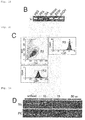
- mRNA is inevitably degraded during the steps before cDNA synthesis. Therefore, the efficacy of full-length cDNA synthesis is low and a smearing band tends to be amplified after normal 5'RACE PCR (compare the bands in "10 min” and the bands in "unfixed” in Fig. 1D which is the results of Example 1.
- the bands amplified from the cells of "10 min” are smeared. Similar tendency is observed in Fig. 2C which is the results of Example 2).
- the second primer for cDNA synthesis i.e., a sense primer for the second round of PCR
- the second primer for cDNA synthesis has the sequence around the initiation codon of an immunoglobulin of interest in order to amplify only the full-length antibody gene.
- a sequence around the initiation codon of the guinea pig immunoglobulin is used as a sense primer for the second round of PCR.
- the primer may be prepared based on known information or sequence information of the immunoglobulin gene expressed in the immunized animal (in case of Example 3, guinea pig) obtained by high throughput sequencing.
- an antigen specific monoclonal antibody or a fragment thereof is prepared from cDNA prepared in the cDNA preparing step.
- Preparation of the antigen specific monoclonal antibody or a fragment thereof from cDNA may be carried out according to well-known methods. For example, preparation may be carried out with a fragment of an antibody gene prepared by the method for specifically preparing a DNA fragment disclosed in WO 2011/027808 (the entire disclosure of which is specifically incorporated herein by reference). Disclosures in PTL 2 and NPL 4 (the method by Kurosawa et al.) may also be referred to for preparation of an antibody or a fragment of the antibody.
- the antibody obtained by the method of the present invention exhibits a specific binding ability to the antigen of interest and the fragment thereof is an antigen-binding fragment which exhibits a specific binding ability to the antigen of interest.
- the antigen specific antibody fragment includes Fab, F(ab')2, Fab', diabody, a single stranded antibody (such as scFv and dsFv) and the like.
- the antibody fragment may be appropriately prepared by utilizing the well-known method after determining the amino acid sequence and base sequence of the antibody gene from cDNA cloned in the step (5).
- an RNase inhibitor from the viewpoint of suppressing degradation of mRNA collected from cells to facilitate preparation of cDNA of a desired antigen specific monoclonal antibody or a fragment thereof.
- RNase inhibitors are those mentioned for the steps (1) to (4).
- An appropriate amount of the RNase inhibitor may be appropriately selected according to the type of the RNase inhibitor, the type of the solution and the like.
- the steps may be carried out under RNase activity suppressing conditions.
- the recovery rate of mRNA may be increased and an antibody with specificity toward the antigen of interest may be prepared with an increased efficiency.
- RNase activity may be suppressed by carrying out the experimental procedures under, for example, cooling conditions such as in or on ice.
- the present invention encompasses a monoclonal antibody specific to threonine 18-phosphorylated p53 (pT18-p53).
- the monoclonal antibody encompasses a monoclonal antibody specific to threonine 18-phosphorylated p53 (pT18-p53) having a ⁇ chain comprising a variable region having an amino acid sequence shown in SEQ ID NO: 9 or a ⁇ chain comprising a variable region having an amino acid sequence shown in SEQ ID NO: 10 and a monoclonal antibody specific to threonine 18-phosphorylated p53 (pT18-p53) having a ⁇ chain comprising CDR1, CDR2 and CDR3 having amino acid sequences shown in SEQ ID NOs: 3 to 5, respectively, and a ⁇ chain comprising CDR1, CDR2 and CDR3 having amino acid sequences shown in SEQ ID NOs: 6 to 8, respectively.
- Any of the antibodies may be prepared by the method of the present invention and the antibody is specifically described in Example
- the present invention further encompasses a monoclonal antibody specific to threonine 68-phosphorylated CHK2 (pT68-CHK2) .
- the monoclonal antibody encompasses a monoclonal antibody specific to threonine 68-phosphorylated CHK2 (pT68-CHK2) having a ⁇ chain comprising a variable region having an amino acid sequence shown in SEQ ID NO: 17 or a ⁇ chain comprising a variable region having an amino acid sequence shown in SEQ ID NO: 18 and a monoclonal antibody specific to threonine 68-phosphorylated CHK2 (pT68-CHK2) having a ⁇ chain comprising CDR1, CDR2 and CDR3 having amino acid sequences shown in SEQ ID NOs: 11 to 13, respectively, and a ⁇ chain comprising CDR1, CDR2 and CDR3 having amino acid sequences shown in SEQ ID NOs: 14 to 16, respectively.
- Any of the antibodies may be prepared by the method of the present invention and the
- OKT10 hybridoma cells and Jurkat cells were mixed at ratios of 1:100 (1%), 1:1000 (0.1%), 1:10,000 (0.01%) and 1:100,000 (0.001%).
- the cells were fixed with a 2% paraformaldehyde PBS solution at 4°C for 10 minutes (fixing).
- the cells were collected by centrifugation to which 250 ⁇ l of staining solution (PBST containing anti-mouse IgG Dylight 488, anti-mouse IgG Dylight 650, 0.1 ⁇ g/ml of DsRed and 200 units of RNaseOUT) was added and left on ice for 15 minutes (cell membrane lysis and reaction with a labelled antigen of interest).
- staining solution PBST containing anti-mouse IgG Dylight 488, anti-mouse IgG Dylight 650, 0.1 ⁇ g/ml of DsRed and 200 units of RNaseOUT
- Example 3 The results in Example 3 and Comparative Example 1 are summarized in Table 1 below. The significant effect of the present invention is apparent.
- Table 1 V gene amplification efficiency Number of antibodies bound to phosphorylated peptide Number of antibodies specific to phosphorylated peptide Example 3 84% 93% (25/27) 63% (17/27) Comparative Example 1 16% 33% (9/27) 15% (4/27)
- the present invention is useful in the field relating to antibody preparation.
Landscapes
- Health & Medical Sciences (AREA)
- Life Sciences & Earth Sciences (AREA)
- Chemical & Material Sciences (AREA)
- Engineering & Computer Science (AREA)
- Organic Chemistry (AREA)
- Biomedical Technology (AREA)
- Immunology (AREA)
- Genetics & Genomics (AREA)
- Molecular Biology (AREA)
- Biotechnology (AREA)
- Biochemistry (AREA)
- General Health & Medical Sciences (AREA)
- Wood Science & Technology (AREA)
- Zoology (AREA)
- Bioinformatics & Cheminformatics (AREA)
- Medicinal Chemistry (AREA)
- Microbiology (AREA)
- Urology & Nephrology (AREA)
- Hematology (AREA)
- General Engineering & Computer Science (AREA)
- Physics & Mathematics (AREA)
- Biophysics (AREA)
- Cell Biology (AREA)
- Analytical Chemistry (AREA)
- General Physics & Mathematics (AREA)
- Pathology (AREA)
- Food Science & Technology (AREA)
- Proteomics, Peptides & Aminoacids (AREA)
- Chemical Kinetics & Catalysis (AREA)
- Plant Pathology (AREA)
- Tropical Medicine & Parasitology (AREA)
- Virology (AREA)
- Preparation Of Compounds By Using Micro-Organisms (AREA)
- Peptides Or Proteins (AREA)
- Micro-Organisms Or Cultivation Processes Thereof (AREA)
Applications Claiming Priority (2)
| Application Number | Priority Date | Filing Date | Title |
|---|---|---|---|
| JP2015157859 | 2015-08-10 | ||
| PCT/JP2016/073664 WO2017026532A1 (ja) | 2015-08-10 | 2016-08-10 | 抗原特異的モノクローナル抗体作製方法 |
Publications (3)
| Publication Number | Publication Date |
|---|---|
| EP3336172A1 true EP3336172A1 (de) | 2018-06-20 |
| EP3336172A4 EP3336172A4 (de) | 2018-08-29 |
| EP3336172B1 EP3336172B1 (de) | 2020-09-23 |
Family
ID=57984433
Family Applications (1)
| Application Number | Title | Priority Date | Filing Date |
|---|---|---|---|
| EP16835229.2A Active EP3336172B1 (de) | 2015-08-10 | 2016-08-10 | Verfahren zur herstellung eines antigenspezifischen monoklonalen antikörpers |
Country Status (5)
| Country | Link |
|---|---|
| US (1) | US10416165B2 (de) |
| EP (1) | EP3336172B1 (de) |
| JP (1) | JP6829469B2 (de) |
| CN (1) | CN107922912B (de) |
| WO (1) | WO2017026532A1 (de) |
Families Citing this family (3)
| Publication number | Priority date | Publication date | Assignee | Title |
|---|---|---|---|---|
| US11473004B2 (en) | 2016-12-02 | 2022-10-18 | University Of Wyoming | Microemulsions and uses thereof to displace oil in heterogeneous porous media |
| JP7209980B2 (ja) | 2020-12-11 | 2023-01-23 | 東洋紡株式会社 | Dnaポリメラーゼの5’→3’エキソヌクレアーゼ活性ドメインに特異的に結合する抗体 |
| US20240229130A9 (en) * | 2022-10-20 | 2024-07-11 | Bio-Rad Laboratories, Inc. | Methods and compositions for tracking barcodes in partitions |
Family Cites Families (10)
| Publication number | Priority date | Publication date | Assignee | Title |
|---|---|---|---|---|
| US7563869B2 (en) * | 2003-01-23 | 2009-07-21 | Ono Pharmaceutical Co., Ltd. | Substance specific to human PD-1 |
| US7425426B2 (en) * | 2004-03-15 | 2008-09-16 | Cyntellect, Inc. | Methods for purification of cells based on product secretion |
| TWI461436B (zh) * | 2005-11-25 | 2014-11-21 | Kyowa Hakko Kirin Co Ltd | 人類cd134(ox40)之人類單株抗體及其製造及使用方法 |
| EP2386577A3 (de) * | 2006-06-21 | 2012-05-02 | Oncotherapy Science, Inc. | Auf Tumoren zielgerichtete monoklonale Antikörper zu FZD10 und Verwendungen davon |
| KR101530408B1 (ko) | 2008-01-18 | 2015-06-19 | 내셔날 유니버시티 코포레이션 유니버시티 오브 토야마 | 반응 지그 및 반응 방법, 및 cDNA의 합성 방법 |
| EP2251423B1 (de) | 2008-03-07 | 2016-01-13 | National University Corporation University Of Toyama | Homologes rekombinationsverfahren, klonverfahren und kit |
| JP5779502B2 (ja) | 2009-09-04 | 2015-09-16 | 国立大学法人富山大学 | 標的遺伝子由来配列を含む連結dna断片の特異的作製方法 |
| US20160130574A1 (en) * | 2009-12-23 | 2016-05-12 | Merck Sharp & Dohme Corp. | Methods of measuring gene expression in facs-sorted cells |
| KR20130079362A (ko) | 2010-03-25 | 2013-07-10 | 내셔날 유니버시티 코포레이션 유니버시티 오브 토야마 | 형질 세포 동정 및 단리용 형광 프로브 및 이 프로브를 이용한 형질 세포의 동정 또는 단리방법 |
| JP5963746B2 (ja) | 2011-03-30 | 2016-08-03 | 国立大学法人富山大学 | 形質細胞または形質芽細胞の選択方法、目的抗原特異的な抗体の製造方法、新規モノクローナル抗体 |
-
2016
- 2016-08-10 US US15/751,792 patent/US10416165B2/en active Active
- 2016-08-10 JP JP2017534496A patent/JP6829469B2/ja active Active
- 2016-08-10 CN CN201680046633.3A patent/CN107922912B/zh active Active
- 2016-08-10 EP EP16835229.2A patent/EP3336172B1/de active Active
- 2016-08-10 WO PCT/JP2016/073664 patent/WO2017026532A1/ja not_active Ceased
Also Published As
| Publication number | Publication date |
|---|---|
| US10416165B2 (en) | 2019-09-17 |
| WO2017026532A1 (ja) | 2017-02-16 |
| JPWO2017026532A1 (ja) | 2018-05-31 |
| JP6829469B2 (ja) | 2021-02-10 |
| EP3336172A4 (de) | 2018-08-29 |
| CN107922912B (zh) | 2021-07-20 |
| US20180292407A1 (en) | 2018-10-11 |
| CN107922912A (zh) | 2018-04-17 |
| EP3336172B1 (de) | 2020-09-23 |
Similar Documents
| Publication | Publication Date | Title |
|---|---|---|
| US12257313B2 (en) | Preparation of therapeutic exosomes using membrane proteins | |
| EP2703485B1 (de) | Verfahren zur auswahl von plasmazellen und plasmablasts, und verfahren zur herstellung eines zielantigen-spezifischen antikörpers | |
| CN110177876A (zh) | 抗gpc3抗体 | |
| JP2009545322A (ja) | 規定された抗原特異性の可溶性モノクロナール可変性リンパ球受容体に関連する方法および組成物 | |
| JP2019503203A (ja) | 細胞表面エピトープと結合する抗体を同定するためのスクリーニング方法 | |
| EP3336172B1 (de) | Verfahren zur herstellung eines antigenspezifischen monoklonalen antikörpers | |
| AU2016247213A1 (en) | Identification of antigen-specific adaptive immune responses using arm-pcr and high-throughput sequencing | |
| CN116284416A (zh) | 抗内源性pink1蛋白的单克隆抗体及其应用 | |
| EP2732269B1 (de) | Facs-basiertes verfahren zur erzeugung einer antikörpersequenz | |
| RU2678421C2 (ru) | Обнаружение антигена-мишени, фенотипический скрининг и его применение для идентификации специфичных эпитопов-мишеней клеток-мишеней | |
| CN114057871B (zh) | 抗人periostin单克隆嵌合抗体及应用 | |
| CN118725079A (zh) | 猫cd3蛋白抗体及其用途 | |
| US20230159652A1 (en) | Transferrin receptor 1 targeting for carcinogenesis prevention | |
| US20120070907A1 (en) | Method to deplete monoclonal antibodies in a biological sample | |
| US20240329048A1 (en) | Antibodies targeting intracellular tumor antigens and methods for identifying both | |
| CN121159706A (zh) | 一种抗人IgM的抗体及其应用 | |
| TWI766877B (zh) | 與tmem132a結合的抗體、抗癌劑、及癌的檢查方法 | |
| CN121464157A (zh) | 结合至b细胞活化因子受体多肽的分子 | |
| CN120943961A (zh) | 抗体或其抗原结合片段及应用 | |
| JP2022060048A (ja) | 抗体及びその使用 | |
| US20070042003A1 (en) | Method of effecting a mammalian model of sepsis, severe sepsis, or septic shock | |
| JP2008081414A (ja) | ヒト癌抗原に特異的なモノクローナル抗体 | |
| WO2006104085A1 (ja) | 変性ヒトclass I白血球抗原に特異的なモノクローナル抗体 |
Legal Events
| Date | Code | Title | Description |
|---|---|---|---|
| STAA | Information on the status of an ep patent application or granted ep patent |
Free format text: STATUS: THE INTERNATIONAL PUBLICATION HAS BEEN MADE |
|
| PUAI | Public reference made under article 153(3) epc to a published international application that has entered the european phase |
Free format text: ORIGINAL CODE: 0009012 |
|
| STAA | Information on the status of an ep patent application or granted ep patent |
Free format text: STATUS: REQUEST FOR EXAMINATION WAS MADE |
|
| 17P | Request for examination filed |
Effective date: 20180222 |
|
| AK | Designated contracting states |
Kind code of ref document: A1 Designated state(s): AL AT BE BG CH CY CZ DE DK EE ES FI FR GB GR HR HU IE IS IT LI LT LU LV MC MK MT NL NO PL PT RO RS SE SI SK SM TR |
|
| AX | Request for extension of the european patent |
Extension state: BA ME |
|
| STAA | Information on the status of an ep patent application or granted ep patent |
Free format text: STATUS: EXAMINATION IS IN PROGRESS |
|
| A4 | Supplementary search report drawn up and despatched |
Effective date: 20180727 |
|
| RIC1 | Information provided on ipc code assigned before grant |
Ipc: G01N 33/577 20060101ALI20180723BHEP Ipc: C12N 9/50 20060101ALI20180723BHEP Ipc: C07K 16/18 20060101ALI20180723BHEP Ipc: C12P 21/08 20060101ALI20180723BHEP Ipc: C12N 15/09 20060101ALI20180723BHEP Ipc: G01N 33/53 20060101ALI20180723BHEP Ipc: C12N 1/02 20060101AFI20180723BHEP Ipc: C12N 11/14 20060101ALI20180723BHEP Ipc: C12N 5/12 20060101ALI20180723BHEP |
|
| 17Q | First examination report despatched |
Effective date: 20180814 |
|
| DAV | Request for validation of the european patent (deleted) | ||
| DAX | Request for extension of the european patent (deleted) | ||
| GRAP | Despatch of communication of intention to grant a patent |
Free format text: ORIGINAL CODE: EPIDOSNIGR1 |
|
| STAA | Information on the status of an ep patent application or granted ep patent |
Free format text: STATUS: GRANT OF PATENT IS INTENDED |
|
| INTG | Intention to grant announced |
Effective date: 20200227 |
|
| GRAS | Grant fee paid |
Free format text: ORIGINAL CODE: EPIDOSNIGR3 |
|
| GRAA | (expected) grant |
Free format text: ORIGINAL CODE: 0009210 |
|
| STAA | Information on the status of an ep patent application or granted ep patent |
Free format text: STATUS: THE PATENT HAS BEEN GRANTED |
|
| AK | Designated contracting states |
Kind code of ref document: B1 Designated state(s): AL AT BE BG CH CY CZ DE DK EE ES FI FR GB GR HR HU IE IS IT LI LT LU LV MC MK MT NL NO PL PT RO RS SE SI SK SM TR |
|
| REG | Reference to a national code |
Ref country code: GB Ref legal event code: FG4D |
|
| REG | Reference to a national code |
Ref country code: CH Ref legal event code: EP |
|
| REG | Reference to a national code |
Ref country code: DE Ref legal event code: R096 Ref document number: 602016044685 Country of ref document: DE |
|
| REG | Reference to a national code |
Ref country code: IE Ref legal event code: FG4D |
|
| REG | Reference to a national code |
Ref country code: AT Ref legal event code: REF Ref document number: 1316417 Country of ref document: AT Kind code of ref document: T Effective date: 20201015 |
|
| PG25 | Lapsed in a contracting state [announced via postgrant information from national office to epo] |
Ref country code: FI Free format text: LAPSE BECAUSE OF FAILURE TO SUBMIT A TRANSLATION OF THE DESCRIPTION OR TO PAY THE FEE WITHIN THE PRESCRIBED TIME-LIMIT Effective date: 20200923 Ref country code: BG Free format text: LAPSE BECAUSE OF FAILURE TO SUBMIT A TRANSLATION OF THE DESCRIPTION OR TO PAY THE FEE WITHIN THE PRESCRIBED TIME-LIMIT Effective date: 20201223 Ref country code: NO Free format text: LAPSE BECAUSE OF FAILURE TO SUBMIT A TRANSLATION OF THE DESCRIPTION OR TO PAY THE FEE WITHIN THE PRESCRIBED TIME-LIMIT Effective date: 20201223 Ref country code: GR Free format text: LAPSE BECAUSE OF FAILURE TO SUBMIT A TRANSLATION OF THE DESCRIPTION OR TO PAY THE FEE WITHIN THE PRESCRIBED TIME-LIMIT Effective date: 20201224 Ref country code: HR Free format text: LAPSE BECAUSE OF FAILURE TO SUBMIT A TRANSLATION OF THE DESCRIPTION OR TO PAY THE FEE WITHIN THE PRESCRIBED TIME-LIMIT Effective date: 20200923 Ref country code: SE Free format text: LAPSE BECAUSE OF FAILURE TO SUBMIT A TRANSLATION OF THE DESCRIPTION OR TO PAY THE FEE WITHIN THE PRESCRIBED TIME-LIMIT Effective date: 20200923 |
|
| REG | Reference to a national code |
Ref country code: AT Ref legal event code: MK05 Ref document number: 1316417 Country of ref document: AT Kind code of ref document: T Effective date: 20200923 |
|
| PG25 | Lapsed in a contracting state [announced via postgrant information from national office to epo] |
Ref country code: LV Free format text: LAPSE BECAUSE OF FAILURE TO SUBMIT A TRANSLATION OF THE DESCRIPTION OR TO PAY THE FEE WITHIN THE PRESCRIBED TIME-LIMIT Effective date: 20200923 Ref country code: RS Free format text: LAPSE BECAUSE OF FAILURE TO SUBMIT A TRANSLATION OF THE DESCRIPTION OR TO PAY THE FEE WITHIN THE PRESCRIBED TIME-LIMIT Effective date: 20200923 |
|
| REG | Reference to a national code |
Ref country code: NL Ref legal event code: MP Effective date: 20200923 |
|
| REG | Reference to a national code |
Ref country code: LT Ref legal event code: MG4D |
|
| PG25 | Lapsed in a contracting state [announced via postgrant information from national office to epo] |
Ref country code: CZ Free format text: LAPSE BECAUSE OF FAILURE TO SUBMIT A TRANSLATION OF THE DESCRIPTION OR TO PAY THE FEE WITHIN THE PRESCRIBED TIME-LIMIT Effective date: 20200923 Ref country code: PT Free format text: LAPSE BECAUSE OF FAILURE TO SUBMIT A TRANSLATION OF THE DESCRIPTION OR TO PAY THE FEE WITHIN THE PRESCRIBED TIME-LIMIT Effective date: 20210125 Ref country code: RO Free format text: LAPSE BECAUSE OF FAILURE TO SUBMIT A TRANSLATION OF THE DESCRIPTION OR TO PAY THE FEE WITHIN THE PRESCRIBED TIME-LIMIT Effective date: 20200923 Ref country code: LT Free format text: LAPSE BECAUSE OF FAILURE TO SUBMIT A TRANSLATION OF THE DESCRIPTION OR TO PAY THE FEE WITHIN THE PRESCRIBED TIME-LIMIT Effective date: 20200923 Ref country code: EE Free format text: LAPSE BECAUSE OF FAILURE TO SUBMIT A TRANSLATION OF THE DESCRIPTION OR TO PAY THE FEE WITHIN THE PRESCRIBED TIME-LIMIT Effective date: 20200923 Ref country code: SM Free format text: LAPSE BECAUSE OF FAILURE TO SUBMIT A TRANSLATION OF THE DESCRIPTION OR TO PAY THE FEE WITHIN THE PRESCRIBED TIME-LIMIT Effective date: 20200923 |
|
| PG25 | Lapsed in a contracting state [announced via postgrant information from national office to epo] |
Ref country code: AT Free format text: LAPSE BECAUSE OF FAILURE TO SUBMIT A TRANSLATION OF THE DESCRIPTION OR TO PAY THE FEE WITHIN THE PRESCRIBED TIME-LIMIT Effective date: 20200923 Ref country code: AL Free format text: LAPSE BECAUSE OF FAILURE TO SUBMIT A TRANSLATION OF THE DESCRIPTION OR TO PAY THE FEE WITHIN THE PRESCRIBED TIME-LIMIT Effective date: 20200923 Ref country code: ES Free format text: LAPSE BECAUSE OF FAILURE TO SUBMIT A TRANSLATION OF THE DESCRIPTION OR TO PAY THE FEE WITHIN THE PRESCRIBED TIME-LIMIT Effective date: 20200923 Ref country code: IS Free format text: LAPSE BECAUSE OF FAILURE TO SUBMIT A TRANSLATION OF THE DESCRIPTION OR TO PAY THE FEE WITHIN THE PRESCRIBED TIME-LIMIT Effective date: 20210123 Ref country code: PL Free format text: LAPSE BECAUSE OF FAILURE TO SUBMIT A TRANSLATION OF THE DESCRIPTION OR TO PAY THE FEE WITHIN THE PRESCRIBED TIME-LIMIT Effective date: 20200923 |
|
| REG | Reference to a national code |
Ref country code: DE Ref legal event code: R097 Ref document number: 602016044685 Country of ref document: DE |
|
| PG25 | Lapsed in a contracting state [announced via postgrant information from national office to epo] |
Ref country code: SK Free format text: LAPSE BECAUSE OF FAILURE TO SUBMIT A TRANSLATION OF THE DESCRIPTION OR TO PAY THE FEE WITHIN THE PRESCRIBED TIME-LIMIT Effective date: 20200923 |
|
| PLBE | No opposition filed within time limit |
Free format text: ORIGINAL CODE: 0009261 |
|
| STAA | Information on the status of an ep patent application or granted ep patent |
Free format text: STATUS: NO OPPOSITION FILED WITHIN TIME LIMIT |
|
| PG25 | Lapsed in a contracting state [announced via postgrant information from national office to epo] |
Ref country code: SI Free format text: LAPSE BECAUSE OF FAILURE TO SUBMIT A TRANSLATION OF THE DESCRIPTION OR TO PAY THE FEE WITHIN THE PRESCRIBED TIME-LIMIT Effective date: 20200923 Ref country code: DK Free format text: LAPSE BECAUSE OF FAILURE TO SUBMIT A TRANSLATION OF THE DESCRIPTION OR TO PAY THE FEE WITHIN THE PRESCRIBED TIME-LIMIT Effective date: 20200923 |
|
| 26N | No opposition filed |
Effective date: 20210624 |
|
| PG25 | Lapsed in a contracting state [announced via postgrant information from national office to epo] |
Ref country code: IT Free format text: LAPSE BECAUSE OF FAILURE TO SUBMIT A TRANSLATION OF THE DESCRIPTION OR TO PAY THE FEE WITHIN THE PRESCRIBED TIME-LIMIT Effective date: 20200923 |
|
| REG | Reference to a national code |
Ref country code: CH Ref legal event code: PL |
|
| PG25 | Lapsed in a contracting state [announced via postgrant information from national office to epo] |
Ref country code: MC Free format text: LAPSE BECAUSE OF FAILURE TO SUBMIT A TRANSLATION OF THE DESCRIPTION OR TO PAY THE FEE WITHIN THE PRESCRIBED TIME-LIMIT Effective date: 20200923 |
|
| REG | Reference to a national code |
Ref country code: BE Ref legal event code: MM Effective date: 20210831 |
|
| GBPC | Gb: european patent ceased through non-payment of renewal fee |
Effective date: 20210810 |
|
| PG25 | Lapsed in a contracting state [announced via postgrant information from national office to epo] |
Ref country code: LI Free format text: LAPSE BECAUSE OF NON-PAYMENT OF DUE FEES Effective date: 20210831 Ref country code: CH Free format text: LAPSE BECAUSE OF NON-PAYMENT OF DUE FEES Effective date: 20210831 |
|
| PG25 | Lapsed in a contracting state [announced via postgrant information from national office to epo] |
Ref country code: LU Free format text: LAPSE BECAUSE OF NON-PAYMENT OF DUE FEES Effective date: 20210810 |
|
| PG25 | Lapsed in a contracting state [announced via postgrant information from national office to epo] |
Ref country code: IE Free format text: LAPSE BECAUSE OF NON-PAYMENT OF DUE FEES Effective date: 20210810 Ref country code: GB Free format text: LAPSE BECAUSE OF NON-PAYMENT OF DUE FEES Effective date: 20210810 Ref country code: FR Free format text: LAPSE BECAUSE OF NON-PAYMENT OF DUE FEES Effective date: 20210831 Ref country code: BE Free format text: LAPSE BECAUSE OF NON-PAYMENT OF DUE FEES Effective date: 20210831 |
|
| PG25 | Lapsed in a contracting state [announced via postgrant information from national office to epo] |
Ref country code: HU Free format text: LAPSE BECAUSE OF FAILURE TO SUBMIT A TRANSLATION OF THE DESCRIPTION OR TO PAY THE FEE WITHIN THE PRESCRIBED TIME-LIMIT; INVALID AB INITIO Effective date: 20160810 |
|
| PG25 | Lapsed in a contracting state [announced via postgrant information from national office to epo] |
Ref country code: NL Free format text: LAPSE BECAUSE OF NON-PAYMENT OF DUE FEES Effective date: 20200923 Ref country code: CY Free format text: LAPSE BECAUSE OF FAILURE TO SUBMIT A TRANSLATION OF THE DESCRIPTION OR TO PAY THE FEE WITHIN THE PRESCRIBED TIME-LIMIT Effective date: 20200923 |
|
| PG25 | Lapsed in a contracting state [announced via postgrant information from national office to epo] |
Ref country code: MK Free format text: LAPSE BECAUSE OF FAILURE TO SUBMIT A TRANSLATION OF THE DESCRIPTION OR TO PAY THE FEE WITHIN THE PRESCRIBED TIME-LIMIT Effective date: 20200923 |
|
| PG25 | Lapsed in a contracting state [announced via postgrant information from national office to epo] |
Ref country code: MT Free format text: LAPSE BECAUSE OF FAILURE TO SUBMIT A TRANSLATION OF THE DESCRIPTION OR TO PAY THE FEE WITHIN THE PRESCRIBED TIME-LIMIT Effective date: 20200923 |
|
| PGFP | Annual fee paid to national office [announced via postgrant information from national office to epo] |
Ref country code: DE Payment date: 20250702 Year of fee payment: 10 |
|
| PG25 | Lapsed in a contracting state [announced via postgrant information from national office to epo] |
Ref country code: TR Free format text: LAPSE BECAUSE OF FAILURE TO SUBMIT A TRANSLATION OF THE DESCRIPTION OR TO PAY THE FEE WITHIN THE PRESCRIBED TIME-LIMIT Effective date: 20200923 |