EP3336665B1 - Procédé de détermination de la fréquence de travail cible d'un stylet, écran tactile et stylet - Google Patents
Procédé de détermination de la fréquence de travail cible d'un stylet, écran tactile et stylet Download PDFInfo
- Publication number
- EP3336665B1 EP3336665B1 EP16891903.3A EP16891903A EP3336665B1 EP 3336665 B1 EP3336665 B1 EP 3336665B1 EP 16891903 A EP16891903 A EP 16891903A EP 3336665 B1 EP3336665 B1 EP 3336665B1
- Authority
- EP
- European Patent Office
- Prior art keywords
- stylus
- frequency
- touch screen
- operating frequency
- target operating
- Prior art date
- Legal status (The legal status is an assumption and is not a legal conclusion. Google has not performed a legal analysis and makes no representation as to the accuracy of the status listed.)
- Active
Links
Images





Classifications
-
- G—PHYSICS
- G06—COMPUTING OR CALCULATING; COUNTING
- G06F—ELECTRIC DIGITAL DATA PROCESSING
- G06F3/00—Input arrangements for transferring data to be processed into a form capable of being handled by the computer; Output arrangements for transferring data from processing unit to output unit, e.g. interface arrangements
- G06F3/01—Input arrangements or combined input and output arrangements for interaction between user and computer
- G06F3/03—Arrangements for converting the position or the displacement of a member into a coded form
- G06F3/041—Digitisers, e.g. for touch screens or touch pads, characterised by the transducing means
- G06F3/0416—Control or interface arrangements specially adapted for digitisers
- G06F3/04162—Control or interface arrangements specially adapted for digitisers for exchanging data with external devices, e.g. smart pens, via the digitiser sensing hardware
-
- G—PHYSICS
- G06—COMPUTING OR CALCULATING; COUNTING
- G06F—ELECTRIC DIGITAL DATA PROCESSING
- G06F3/00—Input arrangements for transferring data to be processed into a form capable of being handled by the computer; Output arrangements for transferring data from processing unit to output unit, e.g. interface arrangements
- G06F3/01—Input arrangements or combined input and output arrangements for interaction between user and computer
- G06F3/03—Arrangements for converting the position or the displacement of a member into a coded form
- G06F3/033—Pointing devices displaced or positioned by the user, e.g. mice, trackballs, pens or joysticks; Accessories therefor
- G06F3/0354—Pointing devices displaced or positioned by the user, e.g. mice, trackballs, pens or joysticks; Accessories therefor with detection of two-dimensional [2D] relative movements between the device, or an operating part thereof, and a plane or surface, e.g. 2D mice, trackballs, pens or pucks
- G06F3/03545—Pens or stylus
-
- G—PHYSICS
- G06—COMPUTING OR CALCULATING; COUNTING
- G06F—ELECTRIC DIGITAL DATA PROCESSING
- G06F3/00—Input arrangements for transferring data to be processed into a form capable of being handled by the computer; Output arrangements for transferring data from processing unit to output unit, e.g. interface arrangements
- G06F3/01—Input arrangements or combined input and output arrangements for interaction between user and computer
- G06F3/03—Arrangements for converting the position or the displacement of a member into a coded form
- G06F3/041—Digitisers, e.g. for touch screens or touch pads, characterised by the transducing means
- G06F3/0412—Digitisers structurally integrated in a display
-
- G—PHYSICS
- G06—COMPUTING OR CALCULATING; COUNTING
- G06F—ELECTRIC DIGITAL DATA PROCESSING
- G06F3/00—Input arrangements for transferring data to be processed into a form capable of being handled by the computer; Output arrangements for transferring data from processing unit to output unit, e.g. interface arrangements
- G06F3/01—Input arrangements or combined input and output arrangements for interaction between user and computer
- G06F3/03—Arrangements for converting the position or the displacement of a member into a coded form
- G06F3/041—Digitisers, e.g. for touch screens or touch pads, characterised by the transducing means
- G06F3/044—Digitisers, e.g. for touch screens or touch pads, characterised by the transducing means by capacitive means
- G06F3/0441—Digitisers, e.g. for touch screens or touch pads, characterised by the transducing means by capacitive means using active external devices, e.g. active pens, for receiving changes in electrical potential transmitted by the digitiser, e.g. tablet driving signals
-
- G—PHYSICS
- G06—COMPUTING OR CALCULATING; COUNTING
- G06F—ELECTRIC DIGITAL DATA PROCESSING
- G06F3/00—Input arrangements for transferring data to be processed into a form capable of being handled by the computer; Output arrangements for transferring data from processing unit to output unit, e.g. interface arrangements
- G06F3/01—Input arrangements or combined input and output arrangements for interaction between user and computer
- G06F3/03—Arrangements for converting the position or the displacement of a member into a coded form
- G06F3/041—Digitisers, e.g. for touch screens or touch pads, characterised by the transducing means
- G06F3/044—Digitisers, e.g. for touch screens or touch pads, characterised by the transducing means by capacitive means
- G06F3/0442—Digitisers, e.g. for touch screens or touch pads, characterised by the transducing means by capacitive means using active external devices, e.g. active pens, for transmitting changes in electrical potential to be received by the digitiser
Definitions
- the present application relates to the field of touch technologies, and in particular, relates to a method for determining a target operating frequency of a stylus, and a touch screen and a stylus thereof.
- the touch screen is subject to noise at some frequencies.
- the touch screen needs to avoid work at a frequency with loud noise, and a frequency with low noise (that is, a target frequency) needs to be selected as the operating frequency of the touch screen.
- the stylus should send signals to the touch screen using other frequencies instead of those with great noise, and may send signal using the same frequency of the target operating signal of the touch screen.
- a suitable operating frequency may be selected for the stylus by a user.
- the user may select a suitable operating frequency by means of keys. For example, the user presses the key once to switch the operating frequency once, until the touch screen normally makes a response to the operation of the stylus. If a response is made, it means the touch screen and the stylus operate at the same target operating frequency.
- the user needs to manually adjust the operating frequency of the stylus.
- an automatic adjustment mechanism is set in the prior art. That is, the target operating frequency of the stylus is determined by means of communication between the touch screen and the stylus.
- This automatic adjustment mechanism specifically included: respectively detecting noise information at a plurality of operating frequency of the stylus by the touch screen; and determining the target operating frequency according to the noise information by the touch screen.
- the touch screen sends the target operating frequency to the stylus in the form of pulse signal, and adjusts the operating frequency of the stylus to the target operating frequency, such that the stylus and the touch screen operate at the same target operating frequency.
- WO 2014/018232 A1 discloses a method for receiving data from an input device to a computing device through a touch interface.
- the method includes detecting an input device, synchronizing with the input device by receiving a position signal and activating an input device scan of the touch interface, receiving a data signal from the input device through at least one of a sense line or a drive line of the touch interface, and scanning the touch interface for a touch input by applying a stimulation signal to the at least one drive line and analyzing the at least one sense line.
- Detecting the input device may further include detecting a plurality of frequencies of the data signal as the data signal is applied to one of the at least one drive line or one of the at least one sense line, and selecting a frequency from the plurality of frequencies, wherein the selected frequency is the cleanest frequency of the plurality of frequencies.
- US 2016/239123 A1 discloses an active stylus detection method.
- the active stylus sends multiple operating frequencies of the active stylus 120 to the touch terminal 110, and after the touch terminal 110 receives the multiple operating frequencies of the active stylus, performs frame synchronization and bit synchronization to detect noise information of the touch terminal 110 at the multiple operating frequencies, so as to determine an optimum target operating frequency out of the multiple operating frequencies.
- the determined target operating frequency is coded, and the coded data is sent to the active stylus 120.
- the active stylus 120 decodes the coded data to obtain the target operating frequency.
- the microprocessor 125 of the active stylus controls the active stylus to operate at the target operating frequency, and meanwhile controls the signal generation unit 123 of the active stylus to generate a communication coded signal and an excitation signal.
- US 2014/098033 A1 discloses a method which includes receiving a first signal at a stylus.
- the stylus is able to wirelessly transmit signals to and receive signals from a device.
- the stylus includes one or more electrodes in a tip of the stylus.
- a frequency characteristic of the first signal is determined.
- a second signal is generated based at least in part on the frequency characteristic of the first signal.
- the second signal is wirelessly transmitted from the stylus to the device through a touch sensor of the device.
- WO 2014/018185 A2 is directed to a stylus.
- the stylus can receive a stimulation signal from a touch sensor of a touch sensitive device and generate a stylus stimulation signal by changing an amplitude or frequency of the received stimulation signal.
- the stylus can transmit the stylus stimulation signal back into the touch sensor of the touch sensitive device.
- the touch sensor can generate a touch signal based on the device's own stimulation signals and the stylus stimulation signal.
- the touch sensitive device can process the touch signal to determine a location of the stylus on the touch sensor.
- the stylus can include a force sensor to detect an amount of force applied to a tip of the stylus.
- the stylus stimulation signal can be modulated based on the force detected by the force sensor.
- one of the technical problems to be solved by embodiments of the present application is to provide a method for determining a target operating frequency of a stylus, to solve the defect in the prior art and achieve the effect of simplicity and smartness.
- the invention is defined by the independent claims, namely by a method according to claim 1, and a touch screen according to claim 2.
- Embodiments of the present application provide a method for determining a target operating frequency of a stylus.
- the method includes: receiving a search signal sent by the stylus and detecting a frequency of the search signal, and judging whether the frequency of the search signal is equal to a target operating frequency of the touch screen. If the frequency of the search signal is equal to the target operating frequency, a response signal is sent to the stylus, such that the stylus determines a current operating frequency thereof as the target operating frequency.
- the method has the advantages such as simple use, high reliability and the like.
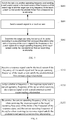
- one embodiment of the present application provides a method for determining a target operating frequency of a stylus, applied to a touch screen.
- the method includes:
- this embodiment discloses determining the target operating frequency of the stylus on the side of the touch screen.
- the stylus may be firstly enabled to generate a corresponding pulse signal according to the current operating frequency of the stylus, that is, the search signal.
- the frequency of the search signal is obtained via modulation according to the current operating frequency of the stylus, and then the stylus sends the corresponding search signal to the touch screen.
- the touch screen receives the search signal, and counts the number of pulses per second in the search signal to acquire the frequency of the search signal.
- the touch screen judges whether the frequency of the search signal and the target operating frequency of the touch screen satisfy the predetermined first corresponding relationship, to obtain a judgment result.
- the stylus obtains via calculation the target operating frequency of the touch screen according to the predetermined first corresponding relationship and the frequency of the search signal, and determines the target operating frequency of the touch screen as the target operating frequency of the stylus.
- the stylus may be enabled to determine the target operating frequency of the stylus according to the fixed value N and the frequency x of the search signal.
- step S2 specifically includes: enabling the stylus to determine the frequency of the search signal as the target operating frequency of the stylus if the frequency of the search signal is equal to the target operating frequency of the touch screen. In this way, the calculation operation of the stylus may be effectively simplified.
- the touch screen sends a corresponding response signal to the stylus according to the judgment result, and the response signal is acquired via modulation according to the target operating frequency of the touch screen.
- a person skilled in the art would also trigger the stylus to determine the target operating frequency of the stylus in other manners according to the predetermined first corresponding relationship and the frequency of the search signal. For example, a flag bit is set in the touch screen, and the stylus acquires a flag bit state whereupon the stylus is triggered to determine the target operating frequency of the stylus according to the predetermined first corresponding relationship and the frequency of the search signal.
- the stylus may be enabled to acquire the target operating frequency of the touch screen, and determine the current operating frequency of the touch screen as the target operating frequency of the stylus.
- the complicated operation of manually setting the target operating frequency of the stylus is not needed, which overcome the defect that reception and demodulation of the target operating frequency may not be achieved when a sender and a receiver use different operating frequencies during an orthogonal demodulation.
- different styluses may all be used on the touch screen.
- another embodiment of the present application provides a method for determining a target operating frequency of a stylus, applied to a touch screen.
- the method further includes: S100: detecting noise information of the touch screen, and determining the target operating frequency of the touch screen according to the noise information.
- the touch screen When the touch screen operates in cooperation with the stylus, if great noise is present in the operating environment of the stylus and the touch screen, for example, LCD noise of the touch screen, and the frequency of the noise is equal to the target operating frequency of the touch screen and the stylus, normal operations of the touch screen and the stylus may be affected. For example, the touch screen may not correctly acquire touch information of the stylus. Therefore, noise monitoring needs to be carried out via the touch screen to avoid frequency points with great noise, and select a frequency with less noise as the target operating frequency of the touch screen.
- FIG. 3 is a noise distribution map obtained by a noise detecting module according to some embodiment of the present application.
- noise information on the touch screen is detected to acquire noise information on the touch screen.
- Frequency points f1, f2, fi, fk+1 and fn on the touch screen are all subject to great noise, and thus need to be avoided in use.
- Frequency point fk is subject to less noise, and thus fk may be selected as the target operating frequency.
- fk is selected as the target operating frequency of the touch screen, such that the stylus operates at the target operating frequency.
- step S100 specifically includes: detecting a noise strength of the touch screen at each frequency, and setting a frequency with the noise strength lower than a predetermined strength threshold among the detected noise strengths as the target operating frequency of the touch screen.
- the detecting a noise strength of the touch screen at each frequency, and setting a frequency with the noise strength lower than a predetermined strength threshold among the detected noise strengths as the target operating frequency of the touch screen specifically includes: detecting the noise strengths of the touch screen at the each frequency, and selecting a frequency which the hopping of the stylus most quickly reaches as the target operating frequency of the touch screen if there is more than one frequency at which the noise strength the minimum.
- the touch screen may be enabled to detect noise on the touch screen at each frequency.
- selecting the frequency point with the least noise as the target operating frequency may be implemented using a compare function.
- a frequency point set on the touch screen is ⁇ f1,f2, ⁇ -fi,...fn ⁇
- noise strengths at frequency points f1, f2, ..., fi, ..., fn are respectively set as P(f1), P(f2), ..., P(fi), and P(fn)
- a variant Min is set.
- Min P(f1), then Min is compared respectively to P(f2), ..., P(fi), and P(fn).
- Min is greater than any P(fk)
- P(fk) the modified Min is compared with the remaining noise strengths, until Min is compared with P(fn).
- the frequency corresponding to Min is the frequency with the least noise, and this frequency is set as the target operating frequency.
- a plurality of frequencies with the least noise may be present. Under such circumstance, a further step needs to be performed. That is, the frequencies among f1, f2, ..., fi, ..., fn with the noise equal to the final value of Min are selected as candidate operating frequencies of the target operating frequency.
- the stylus Upon determination of the candidate operating frequencies of the target operating frequency, if the frequency of the search signal sent by the stylus and any one of the candidate operating frequencies satisfy the predetermined first corresponding relationship, the stylus is enabled to determine the target operating frequency of the stylus according to the predetermined first corresponding relationship and the frequency of the search signal. If the frequency of the search signal sent by the stylus and any one of the candidate operating frequencies do not satisfy the predetermined first corresponding relationship, the stylus hops to a next operating frequency via the hopping function.
- the touch screen may judge, according to all the candidate operating frequencies, the modulation method of the frequency of the search signal, the predetermined first corresponding relationship and the hopping function of the stylus, which candidate operating frequency would be firstly selected for the stylus, and determines the candidate operating frequency as the target operating frequency.
- the frequency with the least noise is set as the target operating frequency, such that reliability of communication between the stylus and the terminal of the touch screen is further improved.
- step S100 specifically includes: detecting a noise strength of the touch screen at each frequency, and setting a frequency with the noise strength lower than a predetermined strength threshold among the detected noise strengths as the target operating frequency of the touch screen.
- the detecting a noise strength of the touch screen at each frequency, and setting a frequency with the noise strength lower than a predetermined strength threshold among the detected noise strengths as the target operating frequency of the touch screen specifically includes: detecting the noise strengths of the touch screen at the each frequency, and selecting a frequency which the hopping of the stylus most quickly reaches as the target operating frequency of the touch screen if there is more than one frequency at which the noise strength is lower than the predetermined noise threshold.
- a noise strength threshold needs to be defaulted, and then the frequency at which the noise strength is lower than the noise strength threshold is selected from the each frequency as the target operating frequency. Nevertheless, there may be more than one frequency at which the noise strength is lower than the noise strength threshold.
- the processing method is similar to that described in the above embodiment, which is thus not described herein any further.
- a threshold is predetermined, and thus the step that the touch screen detects the frequency with the minimum noise strength may be not needed, which simplifies the step of determining the target operating frequency, improves communication efficiency between the stylus and the terminal of the touch screen, and accelerates determination of the target operating frequency.
- the noise is converted into a corresponding electrical signal, and some parameters of the noise electrical signal are used as indicators for characterizing the noise strength, for example, voltage, energy, variance, power and the like.
- one embodiment of the present application provides a method for determining a target operating frequency of a stylus, applied to the stylus.
- the method includes:
- this embodiment discloses determining the target operating frequency of the stylus on the side of the stylus.
- the stylus may be firstly enabled to generate a corresponding pulse signal according to the current operating frequency of the stylus, that is, the search signal.
- the frequency of the search signal is obtained via modulation according to the current operating frequency of the stylus, and then the stylus sends the corresponding search signal to the touch screen.
- the touch screen receives the search signal and detects the frequency of the search signal.
- the touch screen judges whether the frequency of the search signal and the target operating frequency of the touch screen satisfy the predetermined first corresponding relationship.
- the target operating frequency of the stylus is determined according to the predetermined first corresponding relationship and the frequency of the search signal if the frequency of the search signal and the target operating frequency of the touch screen satisfy the predetermined first corresponding relationship.
- the stylus may be enabled to determine the target operating frequency of the stylus according to the fixed value N and the frequency x of the search signal.
- step S2 specifically includes: enabling the stylus to determine the frequency of the search signal as the target operating frequency of the stylus if the frequency of the search signal is equal to the target operating frequency of the touch screen. In this way, the calculation operation of the stylus may be effectively simplified.
- the touch screen sends a corresponding response signal to the stylus according to the judgment result, and the response signal is acquired via modulation according to the target operating frequency of the touch screen.
- the stylus upon receiving the response signal sent by the touch screen, the stylus considers that the frequency of the search signal and the target operating frequency of the touch screen satisfy the predetermined first corresponding relationship, and thus determines the target operating frequency of the stylus according to the predetermined first corresponding relationship and the frequency of the search signal.
- the complicated operation of manually setting the target operating frequency of the stylus is not needed, which overcome the defect that reception and demodulation of the target operating frequency may not be achieved when a sender and a receiver use different operating frequencies during an orthogonal demodulation.
- another embodiment of the present application provides a method for determining a target operating frequency of a stylus, applied to the stylus.
- the method further includes: S203: switching the stylus to another operating frequency and sending a next search signal to the touch screen if the frequency of the search signal and the target operating frequency of the touch screen do not satisfy the predetermined first corresponding relationship.
- the stylus when the frequency of the search signal sent by the stylus is not equal to the target operating frequency of the touch screen, the stylus switches the operating frequency thereof to a next operating frequency. Then, the stylus generates a corresponding pulse signal again according to the current operating frequency of the stylus, that is, the search signal.
- the frequency of the search signal is obtained again via modulation according to the current operating frequency of the stylus, and then the stylus sends the corresponding search signal to the touch screen again.
- the touch screen receives the search signal and detects the frequency of the search signal. Subsequently, the touch screen judges whether the frequency of the search signal and the target operating frequency of the touch screen satisfy the predetermined first corresponding relationship.
- the target operating frequency of the stylus is determined according to a predetermined first corresponding relationship and the frequency of the search signal, if such steps are repeated until the frequency of the search signal and the target operating frequency of the touch screen satisfy the predetermined first corresponding relationship.
- the stylus may set a frequency switching range according to a set of all available operating frequencies that may be used for the touch screen; or may firstly detect noise information on the touch screen, then determine a frequency set of operating frequencies that may be selected as the target operating frequency of the touch screen and finally set a frequency switching range according to the frequency set.
- the frequency switching range of the stylus is [f1, fn], and fi is any one frequency in this frequency range.
- S(fi) denotes a search signal generated according to fi, and when the frequency of the search signal S(fi) and the target operating frequency of the touch screen do not satisfy the predetermined first corresponding relationship, the stylus switches the operating frequency thereof to fi+1, and generates a search signal S(fi+1).
- Switching the operating frequency of the stylus may be practiced by means of hopping, and the hopping may be practiced in a plurality of manners.
- fi denotes a frequency at which the stylus sends a signal when searching the target operating frequency at the i th time.
- fi+1 denotes a frequency at which the stylus sends a signal when searching the target operating frequency at the i+1 th time.
- switching of the current operating frequency of the stylus is practiced by means of hopping, and thus the target operating frequency of the stylus is determined.
- the operating frequency of the stylus may be quickly and automatically switched to the target operating frequency of the touch screen, which gives convenient for users in use.
- communication efficiency between the stylus and the touch screen is improved, and the stylus may be used at different frequencies on the touch screens.
- Step S202 includes: receiving a response signal sent by the touch screen, and determining the target operating frequency of the stylus according to the predetermined first corresponding relationship and the frequency of the search signal if the frequency of the search signal and the target operating frequency of the touch screen satisfy the predetermined first corresponding relationship.
- the touch screen sends the response signal to the stylus to determine the target operating frequency of the stylus. Specifically, if the frequency of the search signal and the target operating frequency of the touch screen satisfy the predetermined first corresponding relationship, the touch screen sends the response signal to the stylus to enable the stylus to determine the current operating frequency as the target operating frequency. Otherwise, the touch screen does not send a response signal to the stylus, but waits for receiving a next search signal sent by the stylus.
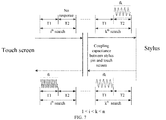
- fi is the frequency at which the stylus sends the search signal at the i th time
- fk is the frequency at which the stylus sends the search signal at the k th time.
- the stylus sends a search signal with a frequency of fi to the touch screen.
- the touch screen receives the search signal and detects the frequency of the search signal within the time segment T1.
- the touch screen detects that the frequency of the search signal and the target operating frequency of the touch screen do not satisfy the predetermined first corresponding relationship, and within a time segment T2, the touch screen makes no response to the current search signal (does not send any signal in response to the search signal).
- the stylus receives the signal sent by the touch screen within the time segment T2.
- the stylus fails to detect the response signal sent by the touch screen, at the expiration of the time segment T2, the stylus switches to another operating frequency by means of hopping, modulates the frequency of the i+1 th search signal to fi+1, and starts the i+1 th search until the k th search. If it is detected that the frequency of the search signal and the target operating frequency satisfy the predetermined first corresponding relationship, within the time segment T2, the touch screen sends the response signal to the stylus.
- the stylus receives the response signal sent by the touch screen, and at the expiration of the time segment T2; sets a flag bit, which indicates that the target operating frequency has been searched out and the search is terminated; and sets the target operating frequency of the stylus determined according to the predetermined first corresponding relationship and fk as the operating frequency.
- the response signal is sent to notify the stylus that the operating frequency of the stylus when sending the response signal and the target operating frequency of the touch screen satisfy the predetermined first corresponding relationship, which thereby simplifies communication between the touch screen and the stylus.
- step S202 includes:
- the predetermined first corresponding relationship is that the frequency of the search signal is equal to the target operating frequency of the touch screen, and the frequency of the search signal is the current operating frequency of the stylus, which effectively simplifies the calculation operation of the stylus.
- the current operating frequency of the stylus is changed, determination of the target operating frequency of the stylus may be subject to a problem.
- the current operating frequency of the stylus when sending the search signal is equal to the frequency of the search signal, and the predetermined first corresponding relationship indicating that the frequency of the search signal is equal to the target operating frequency of the touch screen, and the corresponding relationship between the response signal and the target operating frequency of the touch screen, it may be known that the current operating frequency at when the stylus sends the search signal and the frequency of the response signal satisfy the predetermined second corresponding relationship. Therefore, whether the current operating frequency of the stylus is changed during the course of sending the search signal and receiving the response signal is determined by judging whether the frequency of the response signal and the current operating frequency of the stylus satisfy the predetermined second corresponding relationship when receiving the response signal.
- fi is the operating frequency at which the stylus searches the target operating frequency at the i th time
- fk is the operating frequency at which the stylus searches the target operating frequency at the k th time.
- the stylus sends a search signal with a frequency of fi to the touch screen.
- the touch screen receives the search signal and detects the frequency of the search signal within the time segment T1.
- the touch screen detects that the frequency of the search signal and the target operating frequency of the touch screen do not satisfy the predetermined first corresponding relationship, and within a time segment T2, the touch screen makes no response to the current search signal (does not send any signal in response to the search signal).
- the stylus detects whether the touch screen sends the response signal within the time segment T2, and at the expiration of the second time segment T2, judges whether the response signal is detected.
- the stylus fails to detect the response signal, at the expiration of the time segment T2, the stylus switches to another operating frequency by means of hopping, sets the frequency of the i+1 th search signal to fi+1, and starts the i+1 th search until the k th search. If it is detected that the frequency of the search signal and the target operating frequency satisfy the predetermined first corresponding relationship, within the time segment T2, the touch screen sends the response signal to the stylus.
- the stylus receives the response signal sent by the touch screen, and at the expiration of the time segment T2; sets a flag bit, which indicates that the target operating frequency has been searched out and the search is terminated; and sets the target operating frequency of the stylus determined according to the predetermined first corresponding relationship and fk as the operating frequency.
- the response signal is sent to notify the stylus that the operating frequency of the stylus when sending the response signal and the target operating frequency of the touch screen satisfy the predetermined first corresponding relationship, which thereby simplifies communication between the touch screen and the stylus.
- the response signal is sent to notify the stylus that the frequency of the search signal of the stylus and the target operating frequency of the touch screen satisfy the predetermined first corresponding relationship
- whether the operating frequency of the stylus when receiving the response signal and the frequency of the response signal satisfy the predetermined second corresponding relationship is further judged, such that a judgment is made on whether the current operating frequency of the stylus is equal to the target operating frequency of the touch screen.
- the structure that originally operates normally in the circuit may be multiplexed, without configuring other signal receiver, thereby saving the hardware.
- another judgment on whether the current operating frequency of the stylus is equal to the target operating frequency of the touch screen is made on the side of the stylus via the response signal, and the current operating frequency of the stylus may be prevented from changing in this process.
- step S202 further includes: S242: switching the stylus to another operating frequency and sending a next search signal to the touch screen if the frequency of the response signal and the target operating frequency of the stylus when receiving the response signal do not satisfy the predetermined second corresponding relationship.
- fi is the operating frequency at which the stylus searches the target operating frequency at the i th time
- fk is the operating frequency at which the stylus searches the target operating frequency at the k th time.
- the stylus sends a search signal with a frequency of fi to the touch screen.
- the touch screen receives the search signal and detects the frequency of the search signal within the time segment T1.
- the touch screen detects that the frequency of the search signal and the target operating frequency of the touch screen do not satisfy the predetermined first corresponding relationship, and within a time segment T2, the touch screen makes no response to the current search signal (does not send any signal in response to the search signal).
- the stylus detects whether the touch screen sends the response signal within the time segment T2, and at the expiration of the second time segment T2, judges whether the response signal is detected.
- the stylus fails to detect the response signal, at the expiration of the time segment T2, the stylus switches to another operating frequency by means of hopping, sets the frequency of the i+1 th search signal to fi+1, and starts the i+1 th search until the k th search. If it is detected that the frequency of the search signal and the target operating frequency satisfy the predetermined first corresponding relationship, within the time segment T2, the touch screen sends the response signal to the stylus.
- the stylus receives the response signal sent by the touch screen, and at the expiration of the time segment T2; sets a flag bit, which indicates that the target operating frequency has been searched out and the search is terminated; and sets the target operating frequency of the stylus determined according to the predetermined first corresponding relationship and fk as the operating frequency.
- the response signal is sent to notify the stylus that the operating frequency of the stylus when sending the response signal and the target operating frequency of the touch screen satisfy the predetermined first corresponding relationship, which thereby simplifies communication between the touch screen and the stylus.
- the response signal is sent to notify the stylus that the frequency of the search signal of the stylus and the target operating frequency of the touch screen satisfy the predetermined first corresponding relationship
- whether the operating frequency of the stylus when receiving the response signal and the frequency of the response signal satisfy the predetermined second corresponding relationship is further judged, such that a judgment is made on whether the current operating frequency of the stylus is equal to the target operating frequency of the touch screen.
- the structure that originally operates normally in the circuit may be multiplexed, without configuring other signal receiver, thereby saving the hardware.
- another judgment on whether the current operating frequency of the stylus is equal to the target operating frequency of the touch screen is made on the side of the stylus via the response signal, and the current operating frequency of the stylus may be prevented from changing in this process.
- the frequency of the search signal may be set to be equal to the target operating frequency of the touch screen.
- the frequency of the response signal, the current operating frequency of the stylus when sending the search signal and the frequency of the response signal are equal to each other. If the current operating frequency of the stylus is not changed during the course of sending the search signal and receiving the response signal, the current operating frequency of the stylus when receiving the response signal is also equal to the frequency of the response signal.
- an orthogonal demodulation method may be employed to judge whether the current operating frequency of the stylus when receiving the response signal is equal to the frequency of the response signal.
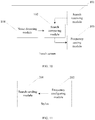
- the touch screen includes:
- a search comparing module 102 is set on the touch screen, and is configured to judge whether the frequency of the search signal and the target operating frequency of the touch screen satisfy the predetermined first corresponding relationship.
- the stylus may be firstly enabled to generate a corresponding pulse signal according to the current operating frequency of the stylus, that is, the search signal; and then the stylus sends the corresponding search signal to the touch screen.
- the search receiving module 101 of the touch screen receives the search signal, and counts the number of pulses per second in the search signal to acquire the frequency of the search signal.
- the search receiving module 101 judges whether the frequency of the search signal and the target operating frequency of the touch screen satisfy the predetermined first corresponding relationship, to obtain a judgment result.
- the frequency setting module 103 enables the stylus to obtain via calculation the target operating frequency of the touch screen according to the predetermined first corresponding relationship and the frequency of the search signal, and determine the target operating frequency of the touch screen as the target operating frequency of the stylus.
- the stylus may be enabled to determine the target operating frequency of the stylus according to the fixed value N and the frequency x of the search signal.
- step S2 specifically includes: enabling the stylus to determine the frequency of the search signal as the target operating frequency of the stylus if the frequency of the search signal is equal to the target operating frequency of the touch screen. In this way, the calculation operation of the stylus may be effectively simplified.
- the touch screen sends a corresponding response signal to the stylus according to the judgment result, and the response signal is acquired via modulation according to the target operating frequency of the touch screen.
- the frequency setting module 103 of the touch screen sends the corresponding response signal to the stylus according to the judgment result. That is, a response signal is sent to the stylus, and the stylus is enabled to determine the target operating frequency of the stylus according to the predetermined first corresponding relationship and the frequency of the search signal if the judgment result indicates that the frequency of the search signal and the target operating frequency of the touch screen satisfy the predetermined first corresponding relationship.
- the response signal is sent to trigger the stylus to determine the target operating frequency of the stylus according to the predetermined first corresponding relationship and the frequency of the search signal, which simplifies the communication process between the touch screen and the stylus.
- a person skilled in the art would also trigger in other manners the stylus to determine the target operating frequency of the stylus according to the predetermined first corresponding relationship and the frequency of the search signal. For example, a flag bit is set in the touch screen, and the stylus acquires a flag bit state whereupon the stylus is triggered to determine the target operating frequency of the stylus according to the predetermined first corresponding relationship and the frequency of the search signal.
- the stylus may be enabled to acquire the target operating frequency of the touch screen, and determine the current operating frequency of the touch screen as the target operating frequency of the stylus.
- the complicated operation of manually setting the target operating frequency of the stylus is not needed, which overcome the defect that reception and demodulation of the target operating frequency may not be achieved when a sender and a receiver use different operating frequencies during an orthogonal demodulation.
- the touch screen further includes: a noise detecting module 104, configured to detect noise information of the touch screen, and determine the target operating frequency of the touch screen according to the noise information.
- a noise detecting module 104 configured to detect noise information of the touch screen, and determine the target operating frequency of the touch screen according to the noise information.
- the touch screen When the touch screen operates in cooperation with the stylus to complete the touch operation, if great noise is present in the operating environment of the stylus and the touch screen, for example, LCD noise of the touch screen, and the frequency of the noise is equal to the target operating frequency of the touch screen and the stylus, normal operations of the touch screen and the stylus may be affected. For example, the touch screen may not correctly acquire touch information of the stylus. Therefore, noise monitoring needs to be carried out by the noise detecting module 104 of the touch screen to avoid frequency points with great noise, and select a frequency with less noise as the target operating frequency of the touch screen.
- FIG. 3 is a noise distribution map of a noise detecting module according to an embodiment.
- the noise detecting module 104 detects noise information on the touch screen to acquire noise information on the touch screen.
- Frequency points f1, f2, fi, fk+1 and fn on the touch screen are all subject to great noise, and thus need to be avoided in use.
- Frequency point fk is subject to less noise, and thus frequency fk may be selected as the target operating frequency.
- Frequency fk is selected as the target operating frequency of the touch screen, such that the stylus operates at the target operating frequency. As such, convenience is brought to users, and reliability of communication between the stylus and the terminal of the touch screen is improved.
- the noise detecting module 104 is specifically configured to: detect a noise strength of the touch screen at each frequency, and set a frequency with the noise strength lower than a predetermined strength threshold among the detected noise strengths as the target operating frequency of the touch screen.
- the noise detecting module 104 is further specifically configured to: detect the noise strengths of the touch screen at the each frequency, and select a frequency which the hopping of the stylus most quickly reaches as the target operating frequency of the touch screen if there is more than one frequency at which the noise strength is lower than the predetermined noise threshold.
- the frequency with the least noise is set as the target operating frequency, such that reliability of communication between the stylus and the terminal of the touch screen is further improved.
- the noise detecting module 104 is specifically configured to: detect a noise strength of the touch screen at each frequency, and set a frequency with a minimum noise strength among the detected noise strengths as the target operating frequency of the touch screen.
- the noise detecting module 104 is further specifically configured to: detect the noise strengths of the touch screen at the each frequency, and select a frequency which the hopping of the stylus most quickly reaches as the target operating frequency of the touch screen if there is more than one frequency at which the noise strength the minimum.
- a noise strength threshold needs to be defaulted, and then the frequency at which the noise strength is lower than the noise strength threshold is selected from the each frequency as the target operating frequency. Nevertheless, there may be more than one frequency at which the noise strength is lower than the noise strength threshold.
- setting a threshold may simplify the steps of determining the target operating frequency, improve communication efficiency between the stylus and the terminal of the touch screen, and accelerates determination of the target operating frequency.
- the definition of the noise strength in any of the above embodiments needs to be clarified herein.
- the noise is converted into a corresponding electrical signal, and some parameters of the noise electrical signal are used as indicators for characterizing the noise strength, for example, voltage, energy, variance, power and the like.
- the frequency setting module 103 is specifically configured to: send a response signal to the stylus, and enable the stylus to determine the target operating frequency of the stylus according to the predetermined first corresponding relationship and the frequency of the search signal if the frequency of the search signal and the target operating frequency of the touch screen satisfy the predetermined first corresponding relationship.
- the frequency setting module 103 of the touch screen sends the response signal to the stylus to determine the target operating frequency of the stylus. For further simplification of the communication between the touch screen and the stylus, whether the frequency of the search signal and the target operating frequency of the touch screen satisfy the predetermined first corresponding relationship is judged based on the response signal. Specifically, if the frequency of the search signal and the target operating frequency of the touch screen satisfy the predetermined first corresponding relationship, the frequency setting module 103 of the touch screen sends a signal to the stylus, whereupon the stylus determines the target operating frequency of the stylus according to the predetermined first corresponding relationship and the frequency of the search signal. Otherwise, the touch screen does not send a signal to the stylus, but waits for receiving a next search signal sent by the stylus.
- the stylus includes:
- this embodiment discloses determining the target operating frequency of the stylus on the side of the stylus.
- the stylus generates, by using the search sending module 201, a corresponding pulse signal according to the current operating frequency of the stylus, that is, the search signal.
- the frequency of the search signal is obtained via modulation according to the current operating frequency of the stylus, and then the stylus sends the corresponding search signal to the touch screen.
- the touch screen receives the search signal and detects the frequency of the search signal.
- the touch screen acquires the judgment result of the frequency and the target operating frequency of the touch screen.
- the frequency configuring module 202 determines the target operating frequency of the stylus according to the predetermined first corresponding relationship and the frequency of the search signal if the frequency of the search signal and the target operating frequency of the touch screen satisfy the predetermined first corresponding relationship.
- the stylus may be enabled to determine the target operating frequency of the stylus according to the fixed value N and the frequency x of the search signal.
- step S2 specifically includes: enabling the stylus to determine the frequency of the search signal as the target operating frequency of the stylus if the frequency of the search signal is equal to the target operating frequency of the touch screen. In this way, the calculation operation of the stylus may be effectively simplified.
- the touch screen sends a corresponding response signal to the stylus according to the judgment result, and the response signal is acquired via modulation according to the target operating frequency of the touch screen.
- the frequency configuring module 202 of the stylus receives the corresponding response signal sent by the touch screen according to the judgment result. That is, the stylus receives the response signal, and the stylus is enabled to determine the target operating frequency of the stylus according to the predetermined first corresponding relationship and the frequency of the search signal if the judgment result indicates that the frequency of the search signal and the target operating frequency of the touch screen satisfy the predetermined first corresponding relationship. In this embodiment, it is determined based on the response signal that the current operating frequency of the stylus is the target operating frequency of the stylus, which simplifies the communication process between the touch screen and the stylus.
- a person skilled in the art would also trigger in other manners the stylus to determine the target operating frequency of the stylus according to the predetermined first corresponding relationship and the frequency of the search signal. For example, a flag bit is set in the touch screen, and the stylus acquires a flag bit state whereupon the stylus is triggered to determine the target operating frequency of the stylus according to the predetermined first corresponding relationship and the frequency of the search signal.
- the stylus upon receiving the response signal sent by the touch screen, the stylus considers that the frequency of the search signal and the target operating frequency of the touch screen satisfy the predetermined first corresponding relationship, and thus the frequency configuring module 202 determines the target operating frequency of the stylus according to the predetermined first corresponding relationship and the frequency of the search signal.
- the complicated operation of manually setting the target operating frequency of the stylus is not needed, which overcome the defect that reception and demodulation of the target operating frequency may not be achieved when a sender and a receiver use different operating frequencies during an orthogonal demodulation.
- the stylus may all be used on different touch screens.
- the stylus further includes: a frequency switching module 203, configured to switch the stylus to another operating frequency and send a next search signal to the touch screen if the frequency of the search signal and the target operating frequency of the touch screen do not satisfy the predetermined first corresponding relationship.
- a frequency switching module 203 configured to switch the stylus to another operating frequency and send a next search signal to the touch screen if the frequency of the search signal and the target operating frequency of the touch screen do not satisfy the predetermined first corresponding relationship.
- the stylus when the frequency of the search signal sent by the stylus is not equal to the target operating frequency of the touch screen, the stylus switches the operating frequency thereof to a next operating frequency via the frequency switching module 203. Afterwards, the stylus performs coding and generates a corresponding pulse signal according to the current operating frequency of the stylus, that is, the search signal; and then the stylus sends the corresponding search signal to the touch screen.
- the touch screen receives the search signal and detects the frequency of the search signal. Subsequently, the touch screen judges again whether the frequency of the search signal and the target operating frequency of the touch screen satisfy the predetermined first corresponding relationship.
- the target operating frequency of the stylus is determined according to the predetermined first corresponding relationship and the frequency of the search signal, if such steps are repeated until the frequency of the search signal and the target operating frequency of the touch screen satisfy the predetermined first corresponding relationship.
- the stylus may set a frequency switching range according to a set of all available operating frequencies that may be used for the touch screen; or may firstly detect noise information on the touch screen, then determine a frequency set of operating frequencies that may be selected as the target operating frequency of the touch screen and finally set a frequency switching range according to the frequency set.
- the frequency switching range of the stylus is [f1, fn], and fi is any one frequency in this frequency switching range.
- S(fi) denotes a search signal generated according to fi, and when the frequency of the search signal S(fi) and the target operating frequency of the touch screen do not satisfy the predetermined first corresponding relationship, the stylus switches the operating frequency thereof to fi+1 via the frequency switching frequency 203, and generates a search signal S(fi+1).
- Switching the operating frequency by the frequency switching module 203 may be practiced by means of hopping, and the hopping may be practiced in a plurality of manners.
- fi denotes a frequency at which the stylus sends a signal when searching the target operating frequency at the i th time.
- fi+1 denotes a frequency at which the stylus sends a signal when searching the target operating frequency at the i+1 th time.
- Next denotes a hopping algorithm function, and defines rules for hopping from f1 to fi+1.
- the stylus is switched to another operating frequency by means of the frequency switching module 203, such that the current operating frequency of the stylus is changed.
- the target operating frequency of the stylus is determined.
- the operating frequency of the stylus may be quickly and automatically switched to the target operating frequency of the touch screen.
- communication efficiency between the stylus and the touch screen is improved, and the stylus may be used on touch screens at different frequencies.
- the frequency configuring module 202 is specifically configured to: receive a response signal sent by the touch screen, and determine the target operating frequency of the stylus according to the predetermined first corresponding relationship and the frequency of the search signal if the frequency of the search signal and the target operating frequency of the touch screen satisfy the predetermined first corresponding relationship.
- the touch screen sends the response signal to the stylus to determine the target operating frequency of the stylus.
- the touch screen sends the response signal to the stylus to enable the stylus to determine the current operating frequency as the target operating frequency. Otherwise, the touch screen does not send the response signal to the stylus, but waits for receiving a next search signal sent by the stylus.
- fi is the frequency at which the stylus sends the search signal at the i th time
- fk is the frequency at which the stylus sends the search signal at the k th time.
- the stylus sends, via the search sending module 201, a search signal with a frequency of fi to the touch screen.
- the touch screen receives the search signal and detects the frequency of the search signal within the time segment T1.
- the touch screen detects that the frequency of the search signal and the target operating frequency of the touch screen do not satisfy the predetermined first corresponding relationship, and within a time segment T2, the touch screen makes no response to the current search signal (does not send any signal in response to the search signal).
- the stylus receives the signal sent by the touch screen within the time segment T2.
- the stylus switches to another operating frequency by means of hopping, modulates the frequency of the i+1 th search signal to fi+1, and starts the i+1 th search until the k th search. If it is detected that the frequency of the search signal and the target operating frequency satisfy the predetermined first corresponding relationship, within the time segment T2, the touch screen sends the response signal to the stylus.
- the stylus receives the response signal sent by the touch screen, and at the expiration of the time segment T2; sets a flag bit, which indicates that the target operating frequency has been searched out and the search is terminated; and sets the target operating frequency of the stylus determined according to the predetermined first corresponding relationship and fk as the operating frequency.
- the response signal is sent to notify the stylus that the operating frequency at which the stylus sends the response signal and the target operating frequency of the touch screen satisfy the predetermined first corresponding relationship, which thereby simplifies communication between the touch screen and the stylus.
- the frequency setting module 202 includes:
- the predetermined first corresponding relationship is that the frequency of the search signal is equal to the target operating frequency of the touch screen, and the frequency of the search signal is the current operating frequency of the stylus, which effectively simplifies the calculation operation of the stylus.
- the current operating frequency of the stylus is changed, determination of the target operating frequency of the stylus may be subject to a problem.
- the current operating frequency of the stylus when sending the search signal is equal to the frequency of the search signal, and the predetermined first corresponding relationship indicating that the frequency of the search signal is equal to the target operating frequency of the touch screen, and the corresponding relationship between the response signal and the target operating frequency of the touch screen, it may be known that the current operating frequency at when the stylus sends the search signal and the frequency of the response signal satisfy the predetermined second corresponding relationship. Therefore, whether the current operating frequency of the stylus is changed during the course of sending the search signal and receiving the response signal is determined by judging whether the frequency of the response signal and the current operating frequency of the stylus when receiving the response signal satisfy the predetermined second corresponding relationship.
- fi is the operating frequency of the stylus when searching the target operating frequency at the i th time
- fk is the operating frequency of the stylus when searching the target operating frequency at the k th time.
- the stylus sends a search signal with a frequency of fi to the touch screen.
- the touch screen receives the search signal and detects the frequency of the search signal within the time segment T1.
- the touch screen detects that the frequency of the search signal and the target operating frequency of the touch screen do not satisfy the predetermined first corresponding relationship, and within a time segment T2, the touch screen makes no response to the current search signal (does not send any signal in response to the search signal).
- the touch screen detects whether the touch screen sends the response signal within the time segment T2, and at the expiration of the second time segment T2, judges whether the response signal is detected.
- the stylus fails to detect the response signal, at the expiration of the time segment T2, the stylus switches to another operating frequency by means of hopping, sets the frequency of the i+1 th search signal to fi+1, and starts the i+1 th search until the k th search. If it is detected that the frequency of the search signal and the target operating frequency satisfy the predetermined first corresponding relationship, within the time segment T2, the touch screen sends the response signal to the stylus.
- the stylus receives the response signal sent by the touch screen, and at the expiration of the time segment T2; sets a flag bit, which indicates that the target operating frequency has been searched out and the search is terminated; and sets the target operating frequency of the stylus determined according to the predetermined first corresponding relationship and fk as the operating frequency.
- the response signal is sent to notify the stylus that the operating frequency of the stylus when sending the response signal and the target operating frequency of the touch screen satisfy the predetermined first corresponding relationship, which thereby simplifies communication between the touch screen and the stylus.
- the signal comparing module 222 is further configured to: switch the stylus to another operating frequency and send a next search signal to the touch screen if the frequency of the response signal and the current operating frequency of the stylus when receiving the response signal do not satisfy the predetermined second corresponding relationship.
- fi is the operating frequency of the stylus when searching the target operating frequency at the i th time
- fk is the operating frequency of the stylus when searching the target operating frequency at the k th time.
- the stylus sends, via the search sending module 201, a search signal with a frequency of fi to the touch screen.
- the touch screen receives the search signal and detects the frequency of the search signal within the time segment T1.
- the touch screen detects that the frequency of the search signal and the target operating frequency of the touch screen do not satisfy the predetermined first corresponding relationship, and within a time segment T2, the touch screen makes no response to the current search signal (does not send any signal in response to the search signal).
- the stylus detects whether the touch screen sends the response signal within the time segment T2.
- the stylus switches to another operating frequency by means of hopping, modulates the frequency of the i+1 th search signal to fi+1, and starts the i+1 th search.
- the stylus sends, via the signal comparing module 222, a search signal with a frequency of fk to the touch screen.
- the touch screen receives the search signal and detects the frequency of the search signal, and the stylus detects that the frequency of the search signal and the target operating frequency fk satisfy the predetermined first corresponding relationship.
- the touch screen sends a signal with the target operating frequency fk as the frequency as a response.
- the stylus receives the signal sent by the touch screen and detects the frequency of the signal within the time segment T2 by using the signal receiving module 212. If the stylus detects that the frequency of the touch screen when sending the response signal and the current operating frequency fk of the touch screen do not satisfy the predetermined second corresponding relationship, the stylus switches to another operating frequency and sends a next search signal to the touch screen.
- the response signal is sent to notify the stylus that the frequency of the search signal of the stylus and the target operating frequency of the touch screen satisfy the predetermined first corresponding relationship
- whether the operating frequency of the stylus when receiving the response signal and the frequency of the response signal satisfy the predetermined second corresponding relationship is further judged, such that a judgment is made on whether the current operating frequency of the stylus is equal to the target operating frequency of the touch screen.
- the structure that originally operates normally in the circuit may be multiplexed, without configuring other signal transceivers, thereby saving the hardware.
- another judgment on whether the current operating frequency of the stylus is equal to the target operating frequency of the touch screen is made on the side of the stylus via the response signal, and the current operating frequency of the stylus may be prevented from changing in this process.
- the communication between the stylus and the touch screen may be practiced by means of coupling capacitance between the touch screen and the stylus.
- a person skilled in the art would also practice the communication between the stylus and the touch screen in other manners, for example, by means of a signal wire between the touch screen and the stylus.
- the coupling capacitance between the stylus tip and the touch screen is very small.
- the coupling capacitance is about 0.05 pf. Therefore, when the touch screen sends a signal to the stylus, generally a plurality of drive circuits (that is, a region) generate signals having the same frequency and the same phase, to enhance the strength of the signal received by the stylus tip.
- FIG. 15 is a schematic structural diagram of hardware of a touch screen for performing the method for determining a target operating frequency of a stylus according to the present application.
- the touch screen includes: at least one processor 310 and a memory 320, and FIG. 15 uses one processor 310 as an example.
- the touch screen for performing the method for determining a target operating frequency of a stylus may further include an input apparatus 330 and an output apparatus 340.
- the processor 310, the memory 320, the input apparatus 330 and the output apparatus 340 may be connected to each other via a bus or in another manner.
- FIG. 15 uses connection via a bus as an example for description.
- the memory 320 may be configured to store non-volatile software programs, non-volatile computer executable programs and modules, for example, the program instructions/modules corresponding to the search signal processing method in the embodiments of the present application.
- the non-volatile software programs, instructions and modules stored in the memory 320 when being executed, cause the processor 310 to perform various function applications and data processing of a server, that is, performing the methods for determining a target operating frequency of a stylus in the above method embodiments.
- the memory 320 may include a program memory area and data memory area, wherein the program memory area may store operation systems and application programs at least needed by the functions; and the data memory area may store data created according to the usage of the search comparing module, the search receiving module and the frequency setting module.
- the memory 320 may include a high speed random access memory, or include a non-volatile memory, for example, at least one disk storage device, a flash memory device, or another non-volatile solid storage device.
- the memory 320 optionally includes memories remotely configured relative to the processor 310. These remote memories may be connected to the search signal processing apparatus over a network. Examples of the network include, but not limited to, the Internet, Intranet, local area network, mobile communication network and a combination thereof.
- the input apparatus 330 may receive input digital or character information, and generate signal input related to user settings and function control of the search signal processing apparatus.
- the output apparatus 340 may include a display device, such as, a display screen, a communication chip or the like.
- One or more modules are stored in the memory 320, and when being executed by the at least one processor 310, perform the method for determining a target operating frequency of a stylus in any of the above method embodiments.
- the product may perform the method according to the embodiments of the present application, has corresponding function modules for performing the method, and achieves the corresponding beneficial effects.
- the product may perform the method according to the embodiments of the present application, has corresponding function modules for performing the method, and achieves the corresponding beneficial effects.
- touch screen in the embodiments of the present application is practiced in various forms, including, but not limited to:
- FIG. 16 is a schematic structural diagram of hardware of a stylus for performing the method for determining a target operating frequency of a stylus according to the present application.
- the stylus includes at least one processor 410 and a memory 420, and FIG. 16 uses one processor 410 as an example.
- the stylus for performing the method for determining a target operating frequency of a stylus may further include an input apparatus 430 and an output apparatus 440.
- the processor 410, the memory 420, the input apparatus 430 and the output apparatus 440 may be connected to each other via a bus or in another manner.
- FIG. 16 uses connection via a bus as an example for description.
- the memory 420 may be configured to store non-volatile software programs, non-volatile computer executable programs and modules, for example, the program instructions/modules corresponding to the methods for determining a target operating frequency of a stylus in the embodiments of the present application.
- the non-volatile software programs, instructions and modules stored in the memory 420 when being executed, cause the processor 410 to perform various function applications and data processing of a server, that is, performing the methods for determining a target operating frequency of a stylus in the above method embodiments.
- the memory 420 may include a program memory area and data memory area, wherein the program memory area may store operation systems and application programs at least needed by the functions; and the data memory area may store data created according to the usage of the search sending module and the frequency configuring module.
- the memory 420 may include a high speed random access memory, or include a non-volatile memory, for example, at least one disk storage device, a flash memory device, or another non-volatile solid storage device.
- the memory 420 optionally includes memories remotely configured relative to the processor 410. These remote memories may be connected via a network to the processing apparatus for determining a target operating frequency. Examples of the above network include, but not limited to, the Internet, Intranet, local area network, mobile communication network and a combination thereof.
- the input apparatus 430 may receive input digital or character information, and generate signal input related to user settings and function control of the response signal processing apparatus.
- the output apparatus 440 may include a display device, such as, a display screen, a communication chip or the like.
- One or more modules are stored in the memory 420, and when being executed by the at least one processor 410, perform the method for determining a target operating frequency of a stylus in any of the above method embodiments.
- the product may perform the method according to the embodiments of the present application, has corresponding function modules for performing the method, and achieves the corresponding beneficial effects.
- the product may perform the method according to the embodiments of the present application, has corresponding function modules for performing the method, and achieves the corresponding beneficial effects.
- the stylus in the embodiments of the present application is practiced in various forms, including, but not limited to:
- the embodiments may be described to illustrate methods, apparatuses (devices), or computer program products. Therefore, hardware embodiments, software embodiments, or hardware-plus-software embodiments may be used to illustrate the embodiments of the present application.
- the embodiments of the present application may further employ a computer program product which may be implemented by at least one non-transitory computer-readable storage medium with an executable program code stored thereon.
- the non-transitory computer-readable storage medium includes but not limited to a disk memory, a CD-ROM, and an optical memory.
- These computer program instructions may also be stored a non-transitory computer-readable memory capable of causing a computer or other programmable data processing devices to work in a specific mode, such that the instructions stored on the non-transitory computer-readable memory implement a product including an instruction apparatus, where the instruction apparatus implements specific functions in at least one process in the flowcharts and/or at least one block in the block diagrams.
- These computer program instructions may also be stored on a computer or other programmable data processing devices, such that the computer or the other programmable data processing devices execute a series of operations or steps to implement processing of the computer.
- the instructions when executed on the computer or the other programmable data processing devices, implement the specific functions in at least one process in the flowcharts and/or at least one block in the block diagrams.
Landscapes
- Engineering & Computer Science (AREA)
- General Engineering & Computer Science (AREA)
- Theoretical Computer Science (AREA)
- Human Computer Interaction (AREA)
- Physics & Mathematics (AREA)
- General Physics & Mathematics (AREA)
- Position Input By Displaying (AREA)
- User Interface Of Digital Computer (AREA)
Claims (3)
- Procédé de détermination de fréquence de fonctionnement ciblée d'un stylet réalisée par un écran tactile, dans lequel le procédé comprend:recevoir un signal de recherche envoyé par le stylet, dans lequel le signal de recherche a une fréquence correspondant à une fréquence de fonctionnement actuelle du stylet, détecter la fréquence du signal de recherche et déterminer si la fréquence du signal de recherche et une fréquence de fonctionnement de l'écran tactile satisfont à une première relation prédéterminée; etsi la fréquence du signal de recherche et la fréquence de fonctionnement de l'écran tactile satisfont à la première relation prédéterminée, envoyer un signal de réponse au stylet, le stylet acquérant la fréquence de fonctionnement de l'écran tactile et le stylet ajustant la fréquence de fonctionnement actuelle du stylet à la fréquence de fonctionnement de l'écran tactile, dans lequel le signal de réponse est acquis via modulation selon la fréquence de fonctionnement de l'écran tactile, dans lequel, avant la réception d'un signal de recherche envoyé par le stylet, le procédé comprend en outre:détecter des intensités de bruit de l'écran tactile à chaque fréquence, etrégler une fréquence avec l'intensité de bruit inférieure à un seuil d'intensité prédéterminé parmi les intensités de bruit détectées en tant que fréquence de fonctionnement de l'écran tactile ;dans lequel le procédé est caractérisé en ce quele réglage d'une fréquence avec l'intensité du bruit inférieure à un seuil d'intensité prédéterminé parmi les intensités de bruit détectées en tant que fréquence de fonctionnement de l'écran tactile comprend: sélectionner une fréquence à laquelle le stylet peut sauter le plus rapidement via une fonction de saut en tant que fréquence de fonctionnement de l'écran tactile s'il existe plus d'une fréquence avec l'intensité de bruit inférieure au seuil de bruit prédéterminé.
- Un écran tactile comprenant:un module de réception de recherche (101), configuré pour recevoir un signal de recherche envoyé par un stylet, dans lequel le signal de recherche a une fréquence correspondante à une fréquence de fonctionnement actuelle du stylet et pour détecter la fréquence du signal de recherche;un module de comparaison de recherche (102), configuré pour déterminer si la fréquence du signal de recherche et une fréquence de fonctionnement de l'écran tactile satisfont à une première relation prédéterminée; etun module de réglage de fréquence (103), configuré pour, si la fréquence du signal de recherche et la fréquence de fonctionnement de l'écran tactile satisfont à la première relation prédéterminée, envoyer un signal de réponse au stylet, et le stylet acquérant la fréquence de fonctionnement de l'écran tactile et le stylet ajustant la fréquence de fonctionnement actuelle du stylet à la fréquence de fonctionnement de l'écran tactile, dans lequel le signal de réponse est acquis via modulation selon la fréquence de fonctionnement de l'écran tactile,l'écran tactile comprenant en outre un module de détection de bruit (104) configuré pour détecter des intensités de bruit de l'écran tactile à chaque fréquence; et régler une fréquence avec l'intensité de bruit inférieure à un seuil d'intensité prédéterminé parmi les intensités de bruit détectées en tant que fréquence de fonctionnement de l'écran tactile,caractérisé en ce que le module de détection de bruit (101) est en outre configuré pour:
sélectionner une fréquence à laquelle le stylet peut sauter le plus rapidement via une fonction de saut en tant que fréquence de fonctionnement de l'écran tactile s'il existe plus d'une fréquence à laquelle l'intensité du bruit inférieure au seuil de bruit prédéterminé. - Système, comprenant un écran tactile selon la revendication 2 et un stylet, dans lequel le stylet et l'écran tactile sont configurés pour mettre en œuvre le procédé selon la revendication 1.
Applications Claiming Priority (1)
| Application Number | Priority Date | Filing Date | Title |
|---|---|---|---|
| PCT/CN2016/104316 WO2018081939A1 (fr) | 2016-11-02 | 2016-11-02 | Procédé de détermination de la fréquence de travail cible d'un stylet, écran tactile et stylet |
Publications (3)
| Publication Number | Publication Date |
|---|---|
| EP3336665A1 EP3336665A1 (fr) | 2018-06-20 |
| EP3336665A4 EP3336665A4 (fr) | 2018-06-27 |
| EP3336665B1 true EP3336665B1 (fr) | 2019-12-04 |
Family
ID=62022313
Family Applications (1)
| Application Number | Title | Priority Date | Filing Date |
|---|---|---|---|
| EP16891903.3A Active EP3336665B1 (fr) | 2016-11-02 | 2016-11-02 | Procédé de détermination de la fréquence de travail cible d'un stylet, écran tactile et stylet |
Country Status (5)
| Country | Link |
|---|---|
| US (1) | US10620722B2 (fr) |
| EP (1) | EP3336665B1 (fr) |
| KR (1) | KR101995651B1 (fr) |
| CN (2) | CN109074177B (fr) |
| WO (1) | WO2018081939A1 (fr) |
Families Citing this family (10)
| Publication number | Priority date | Publication date | Assignee | Title |
|---|---|---|---|---|
| WO2016129194A1 (fr) * | 2015-02-09 | 2016-08-18 | 株式会社ワコム | Procédé de communication, système de communication, dispositif de commande de capteur, et stylet |
| CN105677099B (zh) * | 2016-01-05 | 2018-09-21 | 京东方科技集团股份有限公司 | 用于设定触摸检测系统的工作频段的方法和系统 |
| TWI672928B (zh) * | 2017-11-03 | 2019-09-21 | 財團法人資訊工業策進會 | 通訊基站及其操作方法 |
| US11886656B2 (en) | 2019-04-10 | 2024-01-30 | Hideep Inc. | Electronic device and control method therefor |
| CN110798418B (zh) * | 2019-10-25 | 2022-06-17 | 中国人民解放军63921部队 | 基于频域阈值递进分割的通信信号自动检测与监视方法及装置 |
| KR102804945B1 (ko) | 2019-12-24 | 2025-05-09 | 주식회사 엘엑스세미콘 | 노이즈를 회피하는 터치센싱장치 및 이를 포함하는 표시장치 |
| CN114925014B (zh) * | 2022-05-24 | 2024-03-26 | 深圳市爱协生科技股份有限公司 | 一种自适应抗强电干扰的电容触摸串口屏 |
| CN116048286B (zh) * | 2023-02-09 | 2026-05-05 | 北京集创北方科技股份有限公司 | 信号解码方法、装置、电子设备和存储介质 |
| CN119473028A (zh) * | 2023-08-11 | 2025-02-18 | 北京小米移动软件有限公司 | 控制方法、电子设备、触控笔及存储介质 |
| US12510995B1 (en) * | 2024-10-29 | 2025-12-30 | Novatek Microelectronics Corp. | Touch panel and control method thereof |
Family Cites Families (21)
| Publication number | Priority date | Publication date | Assignee | Title |
|---|---|---|---|---|
| US7876311B2 (en) | 2007-06-13 | 2011-01-25 | Apple Inc. | Detection of low noise frequencies for multiple frequency sensor panel stimulation |
| GB2466566B (en) | 2008-12-22 | 2010-12-22 | N trig ltd | Digitizer, stylus and method of synchronization therewith |
| CN101539816B (zh) * | 2009-04-16 | 2012-10-17 | 台均科技(深圳)有限公司 | 电磁笔、电磁信号处理方法、装置及设备 |
| US9176630B2 (en) | 2010-08-30 | 2015-11-03 | Perceptive Pixel, Inc. | Localizing an electrostatic stylus within a capacitive touch sensor |
| WO2012039837A1 (fr) | 2010-09-22 | 2012-03-29 | Cypress Semiconductor Corporation | Stylet capacitif destiné à un écran tactile |
| WO2012057887A1 (fr) * | 2010-10-28 | 2012-05-03 | Cypress Semiconductor Corporation | Stylet capacitif avec rejet de la paume |
| US9310923B2 (en) * | 2010-12-03 | 2016-04-12 | Apple Inc. | Input device for touch sensitive devices |
| JP4683505B1 (ja) | 2010-12-14 | 2011-05-18 | 株式会社ワコム | 位置指示器 |
| US8766954B2 (en) | 2010-12-21 | 2014-07-01 | Motorola Mobility Llc | Active stylus for use with touch-sensitive interfaces and corresponding method |
| US8797301B2 (en) * | 2012-02-15 | 2014-08-05 | Cypress Semiconductor Corporation | Active stylus to host data transmitting method |
| CN102662494B (zh) * | 2012-03-19 | 2016-01-13 | 友碁科技股份有限公司 | 触控笔 |
| TWI457794B (zh) * | 2012-03-28 | 2014-10-21 | Wistron Corp | 可偵測筆觸壓力之觸控筆及其光機系統 |
| US9176604B2 (en) * | 2012-07-27 | 2015-11-03 | Apple Inc. | Stylus device |
| US9256301B2 (en) * | 2012-10-10 | 2016-02-09 | Atmel Corporation | Active stylus with noise immunity |
| US10048775B2 (en) * | 2013-03-14 | 2018-08-14 | Apple Inc. | Stylus detection and demodulation |
| CN104571732B (zh) * | 2013-10-14 | 2018-09-21 | 深圳市汇顶科技股份有限公司 | 触摸终端、主动式触控笔检测方法及系统 |
| CN105320299B (zh) * | 2014-05-28 | 2018-10-12 | 昆盈企业股份有限公司 | 触控笔与触控方法 |
| US9632597B2 (en) * | 2014-06-12 | 2017-04-25 | Amazon Technologies, Inc. | Configurable active stylus devices |
| TWI531934B (zh) * | 2014-07-02 | 2016-05-01 | 奕力科技股份有限公司 | 觸控筆、觸控偵測之同步系統以及觸控偵測之同步方法 |
| CN205139856U (zh) * | 2015-11-19 | 2016-04-06 | 韦田 | 一种用于电容触控屏的触控笔结构 |
| CN205281423U (zh) * | 2015-11-27 | 2016-06-01 | 立迈科技股份有限公司 | 电容式触控笔与电容式触控笔操作系统 |
-
2016
- 2016-11-02 WO PCT/CN2016/104316 patent/WO2018081939A1/fr not_active Ceased
- 2016-11-02 KR KR1020177025383A patent/KR101995651B1/ko active Active
- 2016-11-02 CN CN201680001283.9A patent/CN109074177B/zh active Active
- 2016-11-02 EP EP16891903.3A patent/EP3336665B1/fr active Active
- 2016-11-02 CN CN202111524763.2A patent/CN114578988B/zh active Active
-
2017
- 2017-09-06 US US15/697,232 patent/US10620722B2/en active Active
Non-Patent Citations (1)
| Title |
|---|
| None * |
Also Published As
| Publication number | Publication date |
|---|---|
| KR101995651B1 (ko) | 2019-07-02 |
| EP3336665A4 (fr) | 2018-06-27 |
| WO2018081939A1 (fr) | 2018-05-11 |
| CN109074177A (zh) | 2018-12-21 |
| CN109074177B (zh) | 2022-01-04 |
| CN114578988A (zh) | 2022-06-03 |
| EP3336665A1 (fr) | 2018-06-20 |
| US20180120961A1 (en) | 2018-05-03 |
| KR20180057572A (ko) | 2018-05-30 |
| US10620722B2 (en) | 2020-04-14 |
| CN114578988B (zh) | 2025-05-30 |
Similar Documents
| Publication | Publication Date | Title |
|---|---|---|
| US10620722B2 (en) | Method for determining target operating frequency of stylus, and touch screen and stylus thereof | |
| US10142845B2 (en) | Network connection method and apparatus, and computer storage medium | |
| CN110278550B (zh) | 便携式设备、便携式装置和计算机可读介质 | |
| EP3462803B1 (fr) | Procédé de gestion de connexion bluetooth et dispositif maître bluetooth et appareil | |
| EP2965494B1 (fr) | Détection de proximité par des dispositifs mobiles | |
| US12487689B2 (en) | Method to be performed by stylus and sensor controller, stylus, and sensor controller | |
| EP2838309A1 (fr) | Procédé, dispositif et système d'établissement de connexion de données | |
| CN104135728B (zh) | 网络连接方法及装置 | |
| CN106940997B (zh) | 一种向语音识别系统发送语音信号的方法和装置 | |
| CN112492611A (zh) | 网络配置方法、网络配置装置、电子设备和可读存储介质 | |
| CN108770055B (zh) | 发射功率调整方法、装置及电子装置 | |
| CN108932486B (zh) | 指纹匹配方法、装置以及电子装置 | |
| CN105490992B (zh) | 一种二维码的验证方法、装置和系统 | |
| CN112839326A (zh) | 网络切换方法、装置、存储介质及网关设备 | |
| CN117135576A (zh) | 基于蓝牙设备的广播数据传输方法、装置、介质及设备 | |
| CN108594952A (zh) | 一种抗充电干扰的方法及终端设备 | |
| CN105635379A (zh) | 噪声抑制方法及装置 | |
| CN117724624A (zh) | 处理方法、装置及电子设备 | |
| CN107484225B (zh) | 一种网络接入控制方法、装置及用户终端 | |
| CN111031038A (zh) | 网络处理方法及装置、存储介质、终端设备 | |
| CN104598150B (zh) | 一种建立连接、发送、接收方法及电子设备 | |
| KR101912199B1 (ko) | 휴대단말기의 ap 스캔 방법 및 장치 | |
| KR20080069421A (ko) | 단축 터치패턴을 처리하기 위한 방법 및 장치 | |
| HK40014814A (en) | Portable device, portable apparatus and computer readable medium | |
| CN105025502B (zh) | 一种移动终端流量监控方法、装置和系统 |
Legal Events
| Date | Code | Title | Description |
|---|---|---|---|
| STAA | Information on the status of an ep patent application or granted ep patent |
Free format text: STATUS: UNKNOWN |
|
| STAA | Information on the status of an ep patent application or granted ep patent |
Free format text: STATUS: THE INTERNATIONAL PUBLICATION HAS BEEN MADE |
|
| PUAI | Public reference made under article 153(3) epc to a published international application that has entered the european phase |
Free format text: ORIGINAL CODE: 0009012 |
|
| STAA | Information on the status of an ep patent application or granted ep patent |
Free format text: STATUS: REQUEST FOR EXAMINATION WAS MADE |
|
| 17P | Request for examination filed |
Effective date: 20170908 |
|
| AK | Designated contracting states |
Kind code of ref document: A1 Designated state(s): AL AT BE BG CH CY CZ DE DK EE ES FI FR GB GR HR HU IE IS IT LI LT LU LV MC MK MT NL NO PL PT RO RS SE SI SK SM TR |
|
| AX | Request for extension of the european patent |
Extension state: BA ME |
|
| A4 | Supplementary search report drawn up and despatched |
Effective date: 20180528 |
|
| RIC1 | Information provided on ipc code assigned before grant |
Ipc: G06F 3/044 20060101ALI20180522BHEP Ipc: G06F 3/041 20060101ALI20180522BHEP Ipc: G06F 3/0354 20130101AFI20180522BHEP |
|
| RIN1 | Information on inventor provided before grant (corrected) |
Inventor name: YANG, WANGWANG Inventor name: LIANG, ZHIBING |
|
| STAA | Information on the status of an ep patent application or granted ep patent |
Free format text: STATUS: EXAMINATION IS IN PROGRESS |
|
| 17Q | First examination report despatched |
Effective date: 20190220 |
|
| GRAP | Despatch of communication of intention to grant a patent |
Free format text: ORIGINAL CODE: EPIDOSNIGR1 |
|
| STAA | Information on the status of an ep patent application or granted ep patent |
Free format text: STATUS: GRANT OF PATENT IS INTENDED |
|
| DAV | Request for validation of the european patent (deleted) | ||
| DAX | Request for extension of the european patent (deleted) | ||
| INTG | Intention to grant announced |
Effective date: 20190905 |
|
| GRAJ | Information related to disapproval of communication of intention to grant by the applicant or resumption of examination proceedings by the epo deleted |
Free format text: ORIGINAL CODE: EPIDOSDIGR1 |
|
| GRAS | Grant fee paid |
Free format text: ORIGINAL CODE: EPIDOSNIGR3 |
|
| GRAA | (expected) grant |
Free format text: ORIGINAL CODE: 0009210 |
|
| STAA | Information on the status of an ep patent application or granted ep patent |
Free format text: STATUS: THE PATENT HAS BEEN GRANTED |
|
| INTG | Intention to grant announced |
Effective date: 20190905 |
|
| AK | Designated contracting states |
Kind code of ref document: B1 Designated state(s): AL AT BE BG CH CY CZ DE DK EE ES FI FR GB GR HR HU IE IS IT LI LT LU LV MC MK MT NL NO PL PT RO RS SE SI SK SM TR |
|
| REG | Reference to a national code |
Ref country code: GB Ref legal event code: FG4D |
|
| REG | Reference to a national code |
Ref country code: CH Ref legal event code: EP |
|
| REG | Reference to a national code |
Ref country code: AT Ref legal event code: REF Ref document number: 1210205 Country of ref document: AT Kind code of ref document: T Effective date: 20191215 |
|
| REG | Reference to a national code |
Ref country code: IE Ref legal event code: FG4D |
|
| REG | Reference to a national code |
Ref country code: DE Ref legal event code: R096 Ref document number: 602016025838 Country of ref document: DE |
|
| REG | Reference to a national code |
Ref country code: NL Ref legal event code: MP Effective date: 20191204 |
|
| REG | Reference to a national code |
Ref country code: LT Ref legal event code: MG4D |
|
| PG25 | Lapsed in a contracting state [announced via postgrant information from national office to epo] |
Ref country code: FI Free format text: LAPSE BECAUSE OF FAILURE TO SUBMIT A TRANSLATION OF THE DESCRIPTION OR TO PAY THE FEE WITHIN THE PRESCRIBED TIME-LIMIT Effective date: 20191204 Ref country code: BG Free format text: LAPSE BECAUSE OF FAILURE TO SUBMIT A TRANSLATION OF THE DESCRIPTION OR TO PAY THE FEE WITHIN THE PRESCRIBED TIME-LIMIT Effective date: 20200304 Ref country code: NO Free format text: LAPSE BECAUSE OF FAILURE TO SUBMIT A TRANSLATION OF THE DESCRIPTION OR TO PAY THE FEE WITHIN THE PRESCRIBED TIME-LIMIT Effective date: 20200304 Ref country code: SE Free format text: LAPSE BECAUSE OF FAILURE TO SUBMIT A TRANSLATION OF THE DESCRIPTION OR TO PAY THE FEE WITHIN THE PRESCRIBED TIME-LIMIT Effective date: 20191204 Ref country code: LV Free format text: LAPSE BECAUSE OF FAILURE TO SUBMIT A TRANSLATION OF THE DESCRIPTION OR TO PAY THE FEE WITHIN THE PRESCRIBED TIME-LIMIT Effective date: 20191204 Ref country code: LT Free format text: LAPSE BECAUSE OF FAILURE TO SUBMIT A TRANSLATION OF THE DESCRIPTION OR TO PAY THE FEE WITHIN THE PRESCRIBED TIME-LIMIT Effective date: 20191204 Ref country code: GR Free format text: LAPSE BECAUSE OF FAILURE TO SUBMIT A TRANSLATION OF THE DESCRIPTION OR TO PAY THE FEE WITHIN THE PRESCRIBED TIME-LIMIT Effective date: 20200305 |
|
| PG25 | Lapsed in a contracting state [announced via postgrant information from national office to epo] |
Ref country code: HR Free format text: LAPSE BECAUSE OF FAILURE TO SUBMIT A TRANSLATION OF THE DESCRIPTION OR TO PAY THE FEE WITHIN THE PRESCRIBED TIME-LIMIT Effective date: 20191204 Ref country code: RS Free format text: LAPSE BECAUSE OF FAILURE TO SUBMIT A TRANSLATION OF THE DESCRIPTION OR TO PAY THE FEE WITHIN THE PRESCRIBED TIME-LIMIT Effective date: 20191204 |
|
| PG25 | Lapsed in a contracting state [announced via postgrant information from national office to epo] |
Ref country code: AL Free format text: LAPSE BECAUSE OF FAILURE TO SUBMIT A TRANSLATION OF THE DESCRIPTION OR TO PAY THE FEE WITHIN THE PRESCRIBED TIME-LIMIT Effective date: 20191204 |
|
| PG25 | Lapsed in a contracting state [announced via postgrant information from national office to epo] |
Ref country code: EE Free format text: LAPSE BECAUSE OF FAILURE TO SUBMIT A TRANSLATION OF THE DESCRIPTION OR TO PAY THE FEE WITHIN THE PRESCRIBED TIME-LIMIT Effective date: 20191204 Ref country code: CZ Free format text: LAPSE BECAUSE OF FAILURE TO SUBMIT A TRANSLATION OF THE DESCRIPTION OR TO PAY THE FEE WITHIN THE PRESCRIBED TIME-LIMIT Effective date: 20191204 Ref country code: ES Free format text: LAPSE BECAUSE OF FAILURE TO SUBMIT A TRANSLATION OF THE DESCRIPTION OR TO PAY THE FEE WITHIN THE PRESCRIBED TIME-LIMIT Effective date: 20191204 Ref country code: NL Free format text: LAPSE BECAUSE OF FAILURE TO SUBMIT A TRANSLATION OF THE DESCRIPTION OR TO PAY THE FEE WITHIN THE PRESCRIBED TIME-LIMIT Effective date: 20191204 Ref country code: RO Free format text: LAPSE BECAUSE OF FAILURE TO SUBMIT A TRANSLATION OF THE DESCRIPTION OR TO PAY THE FEE WITHIN THE PRESCRIBED TIME-LIMIT Effective date: 20191204 Ref country code: PT Free format text: LAPSE BECAUSE OF FAILURE TO SUBMIT A TRANSLATION OF THE DESCRIPTION OR TO PAY THE FEE WITHIN THE PRESCRIBED TIME-LIMIT Effective date: 20200429 |
|
| PG25 | Lapsed in a contracting state [announced via postgrant information from national office to epo] |
Ref country code: SK Free format text: LAPSE BECAUSE OF FAILURE TO SUBMIT A TRANSLATION OF THE DESCRIPTION OR TO PAY THE FEE WITHIN THE PRESCRIBED TIME-LIMIT Effective date: 20191204 Ref country code: SM Free format text: LAPSE BECAUSE OF FAILURE TO SUBMIT A TRANSLATION OF THE DESCRIPTION OR TO PAY THE FEE WITHIN THE PRESCRIBED TIME-LIMIT Effective date: 20191204 Ref country code: IS Free format text: LAPSE BECAUSE OF FAILURE TO SUBMIT A TRANSLATION OF THE DESCRIPTION OR TO PAY THE FEE WITHIN THE PRESCRIBED TIME-LIMIT Effective date: 20200404 |
|
| REG | Reference to a national code |
Ref country code: DE Ref legal event code: R097 Ref document number: 602016025838 Country of ref document: DE |
|
| REG | Reference to a national code |
Ref country code: AT Ref legal event code: MK05 Ref document number: 1210205 Country of ref document: AT Kind code of ref document: T Effective date: 20191204 |
|
| PLBE | No opposition filed within time limit |
Free format text: ORIGINAL CODE: 0009261 |
|
| STAA | Information on the status of an ep patent application or granted ep patent |
Free format text: STATUS: NO OPPOSITION FILED WITHIN TIME LIMIT |
|
| PG25 | Lapsed in a contracting state [announced via postgrant information from national office to epo] |
Ref country code: DK Free format text: LAPSE BECAUSE OF FAILURE TO SUBMIT A TRANSLATION OF THE DESCRIPTION OR TO PAY THE FEE WITHIN THE PRESCRIBED TIME-LIMIT Effective date: 20191204 |
|
| 26N | No opposition filed |
Effective date: 20200907 |
|
| PG25 | Lapsed in a contracting state [announced via postgrant information from national office to epo] |
Ref country code: PL Free format text: LAPSE BECAUSE OF FAILURE TO SUBMIT A TRANSLATION OF THE DESCRIPTION OR TO PAY THE FEE WITHIN THE PRESCRIBED TIME-LIMIT Effective date: 20191204 Ref country code: AT Free format text: LAPSE BECAUSE OF FAILURE TO SUBMIT A TRANSLATION OF THE DESCRIPTION OR TO PAY THE FEE WITHIN THE PRESCRIBED TIME-LIMIT Effective date: 20191204 Ref country code: SI Free format text: LAPSE BECAUSE OF FAILURE TO SUBMIT A TRANSLATION OF THE DESCRIPTION OR TO PAY THE FEE WITHIN THE PRESCRIBED TIME-LIMIT Effective date: 20191204 |
|
| PG25 | Lapsed in a contracting state [announced via postgrant information from national office to epo] |
Ref country code: IT Free format text: LAPSE BECAUSE OF FAILURE TO SUBMIT A TRANSLATION OF THE DESCRIPTION OR TO PAY THE FEE WITHIN THE PRESCRIBED TIME-LIMIT Effective date: 20191204 |
|
| PG25 | Lapsed in a contracting state [announced via postgrant information from national office to epo] |
Ref country code: MC Free format text: LAPSE BECAUSE OF FAILURE TO SUBMIT A TRANSLATION OF THE DESCRIPTION OR TO PAY THE FEE WITHIN THE PRESCRIBED TIME-LIMIT Effective date: 20191204 |
|
| REG | Reference to a national code |
Ref country code: CH Ref legal event code: PL |
|
| PG25 | Lapsed in a contracting state [announced via postgrant information from national office to epo] |
Ref country code: LU Free format text: LAPSE BECAUSE OF NON-PAYMENT OF DUE FEES Effective date: 20201102 |
|
| REG | Reference to a national code |
Ref country code: BE Ref legal event code: MM Effective date: 20201130 |
|
| PG25 | Lapsed in a contracting state [announced via postgrant information from national office to epo] |
Ref country code: CH Free format text: LAPSE BECAUSE OF NON-PAYMENT OF DUE FEES Effective date: 20201130 Ref country code: LI Free format text: LAPSE BECAUSE OF NON-PAYMENT OF DUE FEES Effective date: 20201130 |
|
| PG25 | Lapsed in a contracting state [announced via postgrant information from national office to epo] |
Ref country code: IE Free format text: LAPSE BECAUSE OF NON-PAYMENT OF DUE FEES Effective date: 20201102 Ref country code: FR Free format text: LAPSE BECAUSE OF NON-PAYMENT OF DUE FEES Effective date: 20201130 |
|
| PG25 | Lapsed in a contracting state [announced via postgrant information from national office to epo] |
Ref country code: TR Free format text: LAPSE BECAUSE OF FAILURE TO SUBMIT A TRANSLATION OF THE DESCRIPTION OR TO PAY THE FEE WITHIN THE PRESCRIBED TIME-LIMIT Effective date: 20191204 Ref country code: MT Free format text: LAPSE BECAUSE OF FAILURE TO SUBMIT A TRANSLATION OF THE DESCRIPTION OR TO PAY THE FEE WITHIN THE PRESCRIBED TIME-LIMIT Effective date: 20191204 Ref country code: CY Free format text: LAPSE BECAUSE OF FAILURE TO SUBMIT A TRANSLATION OF THE DESCRIPTION OR TO PAY THE FEE WITHIN THE PRESCRIBED TIME-LIMIT Effective date: 20191204 |
|
| PG25 | Lapsed in a contracting state [announced via postgrant information from national office to epo] |
Ref country code: MK Free format text: LAPSE BECAUSE OF FAILURE TO SUBMIT A TRANSLATION OF THE DESCRIPTION OR TO PAY THE FEE WITHIN THE PRESCRIBED TIME-LIMIT Effective date: 20191204 |
|
| PG25 | Lapsed in a contracting state [announced via postgrant information from national office to epo] |
Ref country code: BE Free format text: LAPSE BECAUSE OF NON-PAYMENT OF DUE FEES Effective date: 20201130 |
|
| PGFP | Annual fee paid to national office [announced via postgrant information from national office to epo] |
Ref country code: DE Payment date: 20241121 Year of fee payment: 9 |
|
| PGFP | Annual fee paid to national office [announced via postgrant information from national office to epo] |
Ref country code: GB Payment date: 20241120 Year of fee payment: 9 |