EP3336728A1 - Procédé et système pour une prédiction rapide des trajectoires des vortex sur des composants d'aéronef - Google Patents
Procédé et système pour une prédiction rapide des trajectoires des vortex sur des composants d'aéronef Download PDFInfo
- Publication number
- EP3336728A1 EP3336728A1 EP16382603.5A EP16382603A EP3336728A1 EP 3336728 A1 EP3336728 A1 EP 3336728A1 EP 16382603 A EP16382603 A EP 16382603A EP 3336728 A1 EP3336728 A1 EP 3336728A1
- Authority
- EP
- European Patent Office
- Prior art keywords
- object zone
- threshold
- criterion
- points
- vorticity
- Prior art date
- Legal status (The legal status is an assumption and is not a legal conclusion. Google has not performed a legal analysis and makes no representation as to the accuracy of the status listed.)
- Withdrawn
Links
Images


Classifications
-
- G—PHYSICS
- G06—COMPUTING OR CALCULATING; COUNTING
- G06F—ELECTRIC DIGITAL DATA PROCESSING
- G06F30/00—Computer-aided design [CAD]
- G06F30/20—Design optimisation, verification or simulation
- G06F30/23—Design optimisation, verification or simulation using finite element methods [FEM] or finite difference methods [FDM]
-
- G—PHYSICS
- G06—COMPUTING OR CALCULATING; COUNTING
- G06F—ELECTRIC DIGITAL DATA PROCESSING
- G06F30/00—Computer-aided design [CAD]
- G06F30/10—Geometric CAD
- G06F30/15—Vehicle, aircraft or watercraft design
-
- G—PHYSICS
- G06—COMPUTING OR CALCULATING; COUNTING
- G06F—ELECTRIC DIGITAL DATA PROCESSING
- G06F30/00—Computer-aided design [CAD]
- G06F30/10—Geometric CAD
- G06F30/17—Mechanical parametric or variational design
-
- G—PHYSICS
- G06—COMPUTING OR CALCULATING; COUNTING
- G06F—ELECTRIC DIGITAL DATA PROCESSING
- G06F30/00—Computer-aided design [CAD]
- G06F30/20—Design optimisation, verification or simulation
-
- G—PHYSICS
- G06—COMPUTING OR CALCULATING; COUNTING
- G06F—ELECTRIC DIGITAL DATA PROCESSING
- G06F30/00—Computer-aided design [CAD]
- G06F30/20—Design optimisation, verification or simulation
- G06F30/28—Design optimisation, verification or simulation using fluid dynamics, e.g. using Navier-Stokes equations or computational fluid dynamics [CFD]
-
- G—PHYSICS
- G06—COMPUTING OR CALCULATING; COUNTING
- G06F—ELECTRIC DIGITAL DATA PROCESSING
- G06F2111/00—Details relating to CAD techniques
- G06F2111/10—Numerical modelling
-
- G—PHYSICS
- G06—COMPUTING OR CALCULATING; COUNTING
- G06F—ELECTRIC DIGITAL DATA PROCESSING
- G06F2113/00—Details relating to the application field
- G06F2113/08—Fluids
Definitions
- the present invention refers to a method to assist in the design of components with parts moving relative to a flow, particularly Counter Rotating Open Rotor (CROR) engines installed in aircraft, in their endeavour to reduce noise levels, drag, vibrations, and fatigue loads, due to vortex-surface interaction.
- CROR Counter Rotating Open Rotor
- a vortex was defined by Lugt in 1979 as “the rotating motion of a multitude of material particles around a common center” [1]. Later on, Robinson provided the following definition: "a vortex exists when instantaneous streamlines mapped onto a plane normal to the vortex core exhibit a roughly circular or spiral pattern, when viewed from a reference frame moving with the center of the vortex core” [2]. Another definition of a vortex came from Portela [3], considering that "a vortex is comprised of a central core region surrounded by swirling streamlines”.
- RB methods are easier to implement and require less computational burden in comparison to LB schemes.
- the latter can provide a more accurate representation of the vortex, especially when the distance between two individual structures is considerably small. This is the biggest limitation of RB methods, with higher relevance for strongly curved rotating structures.
- the region of rotational influence of a vortex can additionally be estimated, using surface-based techniques.
- the vorticity-predictor pressure-corrector method is a well-known LB method, and it was introduced by Banks & Singer in 1995 [8].
- the algorithm basically extracts streamlines of the vorticity field during a predictor step, correcting these predictions based on the local minimum pressure in a corrector step, and providing a more precise approximation of a vortex core skeleton.
- the method relies on both a low static pressure and a high vorticity magnitude criterion to investigate if a certain point belongs to a vortex skeleton. Nonetheless, and according to [8], it is possible to have regions with low pressure or with high vorticity magnitude without being associated with a vortex.
- the algorithm starts by an initialization step, which looks for possible candidate seeds at every grid point of the fluid domain.
- the initialization of the original Banks & Singer method [8] is based on arbitrary user inputs which may be inferred from thresholds of low static pressure and high vorticity magnitude.
- a good candidate point is thus a grid point that satisfies the two thresholds.
- the method also foresees corrections to the position of these candidate points, so that they are not constrained to the grid.
- the algorithm starts developing the vortex core lines.
- a predictor step is firstly applied, followed by a correction treatment, as we can observe in the following pseudocode (adapted from [6]):
- the algorithm expects that any vortex core line stops growing when it starts leaving the fluid domain, and when the total arclength along a skeleton line is at least two times bigger than the highest grid dimension [8].
- the method is also capable of eliminating redundant seeds, skeletons, and any spurious feeders that may appear during its computation.
- the present LB method can additionally be combined with techniques that provide a geometrical approximation of the shape of the vortex, from cross-sections of the vortex tubes in planes perpendicular to the imaginary core.
- the vortex lines start growing from a set of candidate points resulting from the initialization step.
- the original method makes the selection of candidates according to high vorticity and low static pressure threshold criteria.
- a candidate point is thus a grid point that satisfies exclusively these two thresholds.
- this criterion fails to extract cells related to the tip vortex emerging from the first rotating row.
- the output of the aforementioned vorticity threshold is only associated with the boundary layer of the rotating surfaces, where vorticity can also be high.
- the corresponding threshold filter retrieves no more than points or cells located in low pressure zones of the blades.
- significant trial and error tests were required to correctly tune a static pressure threshold that allowed the extraction of cells or points related to tip vortices.
- the present invention is addressed to the solution of this problem, by increasing the probability of the Banks & Singer pre-processing step to find candidate cells or points that develop into a tip vortex core line.
- the fluid data model comprises a CFD dataset and/or wind tunnel data and/or experimental volumetric data and/or flow field analytical data.
- the computer-aided method can be employed to provide the candidate seeds from which vortex core lines develop, following the predictor step and the correction treatment of the above-mentioned Banks & Singer method or any other suitable Line-based (LB) method.
- LB Line-based
- the computer-aided method comprises the following steps:
- the final dataset contains the above-mentioned candidate seeds.
- It is another object of the invention to provide a system comprising a computer memory and processor for assisting in the design of an object zone subjected to high vorticity and/or low static pressure fields when moving inside a flow field by providing suitable seed points for obtaining vortex core lines in a fluid data model of the environment of said object zone.
- the system comprises a fluid data model of the environment of said object zone and a computer-implemented module for identifying cells or points of the object zone following the steps of the above-mentioned method.
- the object is an aircraft.
- the object zone is a Counter Rotating Open Rotor (CROR) engine of an aircraft.
- CROR Counter Rotating Open Rotor
- the object zone is a Counter Rotating Open Rotor (CROR) engine of an aircraft and the fluid data model comprises an area covering the vortices generated by a blade tip of the first stage of the engine that impact the second stage of the engine.
- CROR Counter Rotating Open Rotor
- the method comprises the following steps:
- the method according to this invention improves the quality and reduces the uncertainty of the original pre-processing step of the Banks & Singer method, which relies only on high vorticity and low pressure thresholds, as it increases the probability of the aforementioned LB method to find candidate cells or points that will develop into a tip vortex core line in the subsequent predictor/corrector phase.
- the extraction of candidate seeds being related with the tip vortex by means of the method according to this invention, becomes also less sensitive to the selection of thresholds, contrary to what happens with the thresholds of vorticity magnitude and static pressure.
- the method according to this invention combines the advantages of the four gradient-based vortex detection methods, minimizing the disadvantages that each individual methodology could introduce if considered separately.
- Table 1 The advantages introduced by the method according to this invention are presented in the following Table 1, for the example being considered with respect to a CROR CFD simulation.
- This table shows, for three thresholds of static pressure (P), vorticity magnitude (
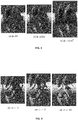
- the thresholds exhibited for Q , N k , ⁇ , and ⁇ 2 are shown in Figures 3 to 6 , respectively, in the form of iso-surfaces of that threshold value.
- Table 1 shows also that for higher thresholds of Q , ⁇ , and N k , and lower values of ⁇ 2 , the ratio of volumes extracted over the total volume of the computational domain ( Vol / Vol domain ) decreases, lowering the number of candidate seeds extracted and thus reducing the computational burden of the Banks and Singer method, once less evaluations are required. Moreover any threshold value of the aforementioned gradient-based parameters is able to extract cells belonging to tip vortices, enhancing the probability of the method according to this invention to extract candidate cells or points that have the potential to grow into a tip vortex core line, during the subsequent predictor/corrector phase of the Banks & Singer method.
Landscapes
- Engineering & Computer Science (AREA)
- Physics & Mathematics (AREA)
- Theoretical Computer Science (AREA)
- Geometry (AREA)
- General Physics & Mathematics (AREA)
- Computer Hardware Design (AREA)
- Evolutionary Computation (AREA)
- General Engineering & Computer Science (AREA)
- Mathematical Optimization (AREA)
- Mathematical Analysis (AREA)
- Pure & Applied Mathematics (AREA)
- Computational Mathematics (AREA)
- Aviation & Aerospace Engineering (AREA)
- Automation & Control Theory (AREA)
- Algebra (AREA)
- Computing Systems (AREA)
- Fluid Mechanics (AREA)
- Mathematical Physics (AREA)
- Management, Administration, Business Operations System, And Electronic Commerce (AREA)
Priority Applications (2)
| Application Number | Priority Date | Filing Date | Title |
|---|---|---|---|
| EP16382603.5A EP3336728A1 (fr) | 2016-12-15 | 2016-12-15 | Procédé et système pour une prédiction rapide des trajectoires des vortex sur des composants d'aéronef |
| US15/842,442 US20180173841A1 (en) | 2016-12-15 | 2017-12-14 | Computer aided-method for a quick prediction of vortex trajectories on aircraft components |
Applications Claiming Priority (1)
| Application Number | Priority Date | Filing Date | Title |
|---|---|---|---|
| EP16382603.5A EP3336728A1 (fr) | 2016-12-15 | 2016-12-15 | Procédé et système pour une prédiction rapide des trajectoires des vortex sur des composants d'aéronef |
Publications (1)
| Publication Number | Publication Date |
|---|---|
| EP3336728A1 true EP3336728A1 (fr) | 2018-06-20 |
Family
ID=57570877
Family Applications (1)
| Application Number | Title | Priority Date | Filing Date |
|---|---|---|---|
| EP16382603.5A Withdrawn EP3336728A1 (fr) | 2016-12-15 | 2016-12-15 | Procédé et système pour une prédiction rapide des trajectoires des vortex sur des composants d'aéronef |
Country Status (2)
| Country | Link |
|---|---|
| US (1) | US20180173841A1 (fr) |
| EP (1) | EP3336728A1 (fr) |
Cited By (1)
| Publication number | Priority date | Publication date | Assignee | Title |
|---|---|---|---|---|
| CN112699619A (zh) * | 2020-12-29 | 2021-04-23 | 中国航天空气动力技术研究院 | 涡结构识别方法及系统 |
Family Cites Families (7)
| Publication number | Priority date | Publication date | Assignee | Title |
|---|---|---|---|---|
| US6512999B1 (en) * | 1999-06-25 | 2003-01-28 | Vorcat, Inc. | Apparatus for and method of simulating turbulence |
| US6354538B1 (en) * | 1999-10-25 | 2002-03-12 | Rohr, Inc. | Passive control of hot air injection for swirling rotational type anti-icing system |
| US7669404B2 (en) * | 2004-09-01 | 2010-03-02 | The Ohio State University | Localized arc filament plasma actuators for noise mitigation and mixing enhancement |
| US20070181743A1 (en) * | 2006-02-08 | 2007-08-09 | Lockheed Martin Corporation | Method for streamline traced external compression inlet |
| US10515159B2 (en) * | 2013-03-06 | 2019-12-24 | Dassault Systemes Simulia Corp. | Flow-induced noise source identification |
| GB201511342D0 (en) * | 2015-06-29 | 2015-08-12 | Rolls Royce Plc | Vortex identification methods and tools |
| US10386212B2 (en) * | 2016-06-22 | 2019-08-20 | Dassault Systemes Simulia Corp. | Flow-induced noise source contribution |
-
2016
- 2016-12-15 EP EP16382603.5A patent/EP3336728A1/fr not_active Withdrawn
-
2017
- 2017-12-14 US US15/842,442 patent/US20180173841A1/en not_active Abandoned
Non-Patent Citations (19)
| Title |
|---|
| C. GARTH, AN INTRODUCTION TO FLOW VISUALIZATION, 9 September 2014 (2014-09-09), Retrieved from the Internet <URL:http://graphics.cs.ucdavis.edu/~joy/ecs277/other-notes/ecs277-5.pdf> |
| C. GARTH; X. TRICOCHE; T. SALZBRUNN; T. BOBACH; G. SCHEUERMANN, PROCEEDINGS OF THE SIXTH JOINT EUROGRAPHICS - IEEE TCVG CONFERENCE ON VISUALIZATION, 2004, pages 155 - 164 |
| C. TRUESDELL: "The Kinematics of Vorticity", 1954, INDIANA UNIVERSITY PUBL. SCIENCE SERIES NO. 19 |
| CLIFTON H MORTENSEN: "A Computational Fluid Dynamics Feature Extraction Method Using Subjective Logic", 8 July 2010 (2010-07-08), pages 1 - 164, XP055366011, Retrieved from the Internet <URL:http://scholarsarchive.byu.edu/cgi/viewcontent.cgi?article=3207&context=etd> [retrieved on 20170420] * |
| D. BANKS; B. SINGER, IEEE TRANSACTIONS ON VISUALIZATION AND COMPUTER GRAPHICS, vol. 1, 1995, pages 151 |
| H. LUGT: "Vortex Flow in Nature and Technology", 1972, WILEY |
| J. HUNT; A. WRAY; P. MOIN: "Tech. Rep.", 1988, CENTER FOR TURBULENCE RESEARCH REPORT CTR-S88, pages: 193 - 208 |
| J. JEONG; F. HUSSAIN, JOURNAL OF FLUID MECHANICS, vol. 285, 1995, pages 69 |
| J. SAHNER; T. WEINKAUF; H. HEGE, PROCEEDINGS OF THE SEVENTH JOINT EUROGRAPHICS / IEEE VGTC CONFERENCE ON VISUALIZATION, 2005, pages 151 - 160 |
| L. PASTUR: "Advanced Post-Processing of Experimental and Numerical Data", EULERIAN AND LAGRANGIAN COHERENT STRUCTURES IDENTIFICATION IN FLUID FLOWS (VON KARMAN INSTITUTE LECTURE SERIES ON, 2013 |
| L. PORTELA, PH.D. THESIS, 1997 |
| M. CHONG; A. PERRY; B. CANTWELL, PHYSICS OF FLUIDS A, vol. 2, 1990, pages 765 |
| M. JIANG; R. MACHIRAJU; D. THOMPSON: "The Visualization Handbook", 2005, ACADEMIC PRESS, pages: 295 - 309 |
| P. CHAKRABORTY; S. BALACHANDAR; R. ADRIAN, JOURNAL OF FLUID MECHANICS, vol. 535, 2005, pages 189 |
| S. ROBINSON, ANNUAL REVIEW FLUID MECHANICS, vol. 23, 1991, pages 601 |
| U. DALLMANN, PROCEEDINGS OF THE 16TH AIAA FLUID AND PLASMA DYNAMICS CONFERENCE, 1983, pages AIAA-83 - 1735 |
| V. KOLAR, PROCEEDINGS OF THE 8TH WSEAS INTERNATIONAL CONFERENCE ON FLUID MECHANICS, 8TH WSEASLNTERNATIANAL CONFERENCE ON HEAT AND MASS TRANSFER, pages 23 - 28, ISBN: 978-960-474-268-4, Retrieved from the Internet <URL:http://dl.acm.ora/citation.cfm?id=1959560.1959564> |
| VÁCLAV KOLÁR: "Brief Notes on Vortex Identification", PROCEEDING FM'11/HMT'11 PROCEEDINGS OF THE 8TH WSEAS INTERNATIONAL CONFERENCE ON FLUID MECHANICS, 8TH WSEAS INTERNATIONAL CONFERENCE ON HEAT AND MASS TRANSFER PAGES 23-28, 29 January 2011 (2011-01-29), pages 1 - 6, XP055366001, ISBN: 978-960-474-268-4, Retrieved from the Internet <URL:http://www.wseas.us/e-library/conferences/2011/Mexico/MAFLUH/MAFLUH-03.pdf> [retrieved on 20170420] * |
| W. SCHOPPA; F. HUSSAIN: "Eddy Structure Identification", vol. 353, 1996, SPRINGER-VERLAG, pages: 61 - 143 |
Cited By (2)
| Publication number | Priority date | Publication date | Assignee | Title |
|---|---|---|---|---|
| CN112699619A (zh) * | 2020-12-29 | 2021-04-23 | 中国航天空气动力技术研究院 | 涡结构识别方法及系统 |
| CN112699619B (zh) * | 2020-12-29 | 2023-07-28 | 中国航天空气动力技术研究院 | 涡结构识别方法及系统 |
Also Published As
| Publication number | Publication date |
|---|---|
| US20180173841A1 (en) | 2018-06-21 |
Similar Documents
| Publication | Publication Date | Title |
|---|---|---|
| Berger et al. | Progress towards a Cartesian cut-cell method for viscous compressible flow | |
| Vavalle et al. | Iterative response surface based optimization scheme for transonic airfoil design | |
| Akolekar et al. | Integration of machine learning and computational fluid dynamics to develop turbulence models for improved low-pressure turbine wake mixing prediction | |
| Li et al. | Efficient design method for applying vortex generators in turbomachinery | |
| Adjei et al. | Aerodynamic design optimization of an axial flow compressor stator using parameterized free-form deformation | |
| Halder et al. | Optimal Wells turbine speeds at different wave conditions | |
| EP4510034A1 (fr) | Simulation d'écoulement de fluide | |
| Leifsson et al. | Optimal shape design of multi-element trawl-doors using local surrogate models | |
| Ahlfeld et al. | A single formulation for uncertainty propagation in turbomachinery: SAMBA PC | |
| Hammond et al. | Machine learning for the development of data-driven turbulence closures in coolant systems | |
| Langel et al. | RANS based methodology for predicting the influence of leading edge erosion on airfoil performance | |
| Diakakis et al. | Assessment of transition modeling for high Reynolds flows | |
| Yin et al. | Detached eddy simulation of transition in turbomachinery: Linear compressor cascade | |
| Pongetti et al. | Using autoencoders and output consolidation to improve machine learning models for turbomachinery applications | |
| Fusi et al. | Multifidelity physics-based method for robust optimization applied to a hovering rotor airfoil | |
| Liu et al. | Unsteady flow mechanism of corner separation control using blade end slots in a highly loaded compressor cascade | |
| Raina et al. | Loss Breakdown in Axial Turbines: A New Method for Vortex Loss and Wake Detection From 3D RANS Simulations | |
| Meyer et al. | Optimization of a tip appendage for the control of tip leakage vortices in axial flow fans | |
| EP3336728A1 (fr) | Procédé et système pour une prédiction rapide des trajectoires des vortex sur des composants d'aéronef | |
| Açıkgöz et al. | Dynamic mesh analyses of helicopter rotor–fuselage flow interaction in forward flight | |
| Abraham et al. | Multi-objective optimization of an axial flow turbine design using surrogate modeling and genetic algorithm | |
| US20180173840A1 (en) | Computer aided-method for a quick prediction of vortex trajectories on aircraft components checking high pressure gradients and high drag friction components | |
| Vinha et al. | Numerical prediction of vortex trajectories and vortex–blade interaction on the CROR engine | |
| Tieghi et al. | A Novel Methodology for the Automatic Decomposition of HAWT Wakes With K‐Means Clustering | |
| Fertahi et al. | 3D CFD modeling for the limits’ identification of 2D flow pattern’s effects on the aerodynamic performance of a reference H-Darrieus prototype |
Legal Events
| Date | Code | Title | Description |
|---|---|---|---|
| PUAI | Public reference made under article 153(3) epc to a published international application that has entered the european phase |
Free format text: ORIGINAL CODE: 0009012 |
|
| STAA | Information on the status of an ep patent application or granted ep patent |
Free format text: STATUS: THE APPLICATION HAS BEEN PUBLISHED |
|
| AK | Designated contracting states |
Kind code of ref document: A1 Designated state(s): AL AT BE BG CH CY CZ DE DK EE ES FI FR GB GR HR HU IE IS IT LI LT LU LV MC MK MT NL NO PL PT RO RS SE SI SK SM TR |
|
| AX | Request for extension of the european patent |
Extension state: BA ME |
|
| STAA | Information on the status of an ep patent application or granted ep patent |
Free format text: STATUS: THE APPLICATION IS DEEMED TO BE WITHDRAWN |
|
| 18D | Application deemed to be withdrawn |
Effective date: 20181221 |