EP3337111A1 - Verfahren zum senden von kanalinformationen und drahtloskommunikationssystem damit - Google Patents
Verfahren zum senden von kanalinformationen und drahtloskommunikationssystem damit Download PDFInfo
- Publication number
- EP3337111A1 EP3337111A1 EP16205368.0A EP16205368A EP3337111A1 EP 3337111 A1 EP3337111 A1 EP 3337111A1 EP 16205368 A EP16205368 A EP 16205368A EP 3337111 A1 EP3337111 A1 EP 3337111A1
- Authority
- EP
- European Patent Office
- Prior art keywords
- reference signal
- uplink
- downlink
- user device
- base station
- Prior art date
- Legal status (The legal status is an assumption and is not a legal conclusion. Google has not performed a legal analysis and makes no representation as to the accuracy of the status listed.)
- Withdrawn
Links
Images




Classifications
-
- H—ELECTRICITY
- H04—ELECTRIC COMMUNICATION TECHNIQUE
- H04L—TRANSMISSION OF DIGITAL INFORMATION, e.g. TELEGRAPHIC COMMUNICATION
- H04L25/00—Baseband systems
- H04L25/02—Details ; arrangements for supplying electrical power along data transmission lines
- H04L25/0202—Channel estimation
- H04L25/0224—Channel estimation using sounding signals
-
- H—ELECTRICITY
- H04—ELECTRIC COMMUNICATION TECHNIQUE
- H04L—TRANSMISSION OF DIGITAL INFORMATION, e.g. TELEGRAPHIC COMMUNICATION
- H04L25/00—Baseband systems
- H04L25/02—Details ; arrangements for supplying electrical power along data transmission lines
- H04L25/0202—Channel estimation
-
- H—ELECTRICITY
- H04—ELECTRIC COMMUNICATION TECHNIQUE
- H04L—TRANSMISSION OF DIGITAL INFORMATION, e.g. TELEGRAPHIC COMMUNICATION
- H04L25/00—Baseband systems
- H04L25/02—Details ; arrangements for supplying electrical power along data transmission lines
- H04L25/0202—Channel estimation
- H04L25/0224—Channel estimation using sounding signals
- H04L25/0228—Channel estimation using sounding signals with direct estimation from sounding signals
-
- H—ELECTRICITY
- H04—ELECTRIC COMMUNICATION TECHNIQUE
- H04B—TRANSMISSION
- H04B17/00—Monitoring; Testing
- H04B17/30—Monitoring; Testing of propagation channels
- H04B17/309—Measuring or estimating channel quality parameters
- H04B17/345—Interference values
-
- H—ELECTRICITY
- H04—ELECTRIC COMMUNICATION TECHNIQUE
- H04B—TRANSMISSION
- H04B7/00—Radio transmission systems, i.e. using radiation field
- H04B7/02—Diversity systems; Multi-antenna system, i.e. transmission or reception using multiple antennas
- H04B7/04—Diversity systems; Multi-antenna system, i.e. transmission or reception using multiple antennas using two or more spaced independent antennas
- H04B7/0413—MIMO systems
- H04B7/0456—Selection of precoding matrices or codebooks, e.g. using matrices antenna weighting
-
- H—ELECTRICITY
- H04—ELECTRIC COMMUNICATION TECHNIQUE
- H04L—TRANSMISSION OF DIGITAL INFORMATION, e.g. TELEGRAPHIC COMMUNICATION
- H04L25/00—Baseband systems
- H04L25/02—Details ; arrangements for supplying electrical power along data transmission lines
- H04L25/0202—Channel estimation
- H04L25/0204—Channel estimation of multiple channels
-
- H—ELECTRICITY
- H04—ELECTRIC COMMUNICATION TECHNIQUE
- H04L—TRANSMISSION OF DIGITAL INFORMATION, e.g. TELEGRAPHIC COMMUNICATION
- H04L5/00—Arrangements affording multiple use of the transmission path
- H04L5/003—Arrangements for allocating sub-channels of the transmission path
- H04L5/0048—Allocation of pilot signals, i.e. of signals known to the receiver
-
- H—ELECTRICITY
- H04—ELECTRIC COMMUNICATION TECHNIQUE
- H04W—WIRELESS COMMUNICATION NETWORKS
- H04W72/00—Local resource management
- H04W72/20—Control channels or signalling for resource management
- H04W72/21—Control channels or signalling for resource management in the uplink direction of a wireless link, i.e. towards the network
-
- H—ELECTRICITY
- H04—ELECTRIC COMMUNICATION TECHNIQUE
- H04B—TRANSMISSION
- H04B7/00—Radio transmission systems, i.e. using radiation field
- H04B7/02—Diversity systems; Multi-antenna system, i.e. transmission or reception using multiple antennas
- H04B7/04—Diversity systems; Multi-antenna system, i.e. transmission or reception using multiple antennas using two or more spaced independent antennas
- H04B7/0413—MIMO systems
Definitions
- the disclosure relates to methods for transmitting channel information and wireless communication systems using the same.
- the telecom operators may employ, in addition to deploying large base stations and increasing low-cost small base stations, multi-antenna techniques such as massive multi-input multi-output (MIMO) and distributed MIMO to meet the required transmission speed and service quality.
- MIMO massive multi-input multi-output
- distributed MIMO distributed MIMO
- the performance of the multi-antenna techniques depends on how the base station acquires the downlink channel information correctly, such that the base station may use it to form constructive synthetic waves, instead of destructive synthetic waves, towards the reception apparatus such as user devices.
- the user device may report, as instructed by the base station, a particular uplink reference signal that carries a downlink channel estimation value to the base station, so that the downlink channel information can be decoded by the base station.
- a method, adapted to a base station, for transmitting channel information includes the following steps: a first uplink reference signal and a second uplink reference signal are received from a user device; an uplink channel estimation value is obtained according to the first uplink reference signal; and a downlink channel estimation value is obtained according to the second uplink reference signal and the uplink channel estimation value.
- a method, adapted to a user device, for transmitting channel information includes the following steps: in response to information of uplink reference signal configuration from a base station, a first uplink original reference signal and a second uplink original reference signal are generated; a encoded second uplink original reference signal is generated by pre-coding the second uplink original reference signal with a downlink channel estimation value or a downlink channel variation value, the downlink channel variation value being a difference value between the downlink channel estimation value and a previous downlink channel estimation value; and the first uplink original reference signal and the encoded second uplink original reference signal are transmitted back to the base station.
- a wireless communication system includes a first base station and a first user device.
- the first base station is configured to: receive a first uplink reference signal and a second uplink reference signal; obtain an uplink channel estimation value according to the first uplink reference signal; and obtain a downlink channel estimation value according to the uplink channel estimation value and the second uplink reference signal.
- the first user device is configured to: in response to information of uplink reference signal configuration from the first base station, generate a first uplink original reference signal and a second uplink original reference signal; pre-code the second uplink original reference signal with the downlink channel estimation value or a downlink channel variation value to generate a encoded second uplink original reference signal, the encoded second uplink original reference signal being a difference value between the downlink channel estimation value and a previous downlink channel estimation value; transmit the first uplink original reference signal so that the first base station receives the first uplink reference signal; and transmit the encoded second uplink original reference signal so that the first base station receives the second uplink reference signal.
- Fig. 1 illustrates a schematic diagram of a wireless communication system 10 in accordance with an exemplary embodiment of the disclosure.
- the wireless communication system 10 includes a base station 100 and a user device 102. Although only one base station 100 and only one user device 102 are shown in Fig. 1 , this is just for the ease of illustration, and actually, the wireless communication system 10 may include one or more base stations 100 and one or more user devices 102.
- the physical transmission channel from the base station 100 to the user device 102 refers to a downlink channel
- the physical transmission channel from the user device 102 to the base station 100 refers to an uplink channel.
- the base station 100 can precisely convert the measured uplink channel status into the downlink channel status based on the feature of channel reciprocity because both the downlink channel and the uplink channel use the same frequency bands during the transmission of the base station 100 and the user device 102.
- the wireless communication system 10 adopts frequency division duplexing (FDD)
- the downlink channel and the uplink channel use different frequency bands during the transmission of the base station 100 and the user device 102. Accordingly, the base station 100 cannot directly convert the measured uplink channel status into the downlink channel status by using the feature of channel reciprocity.
- FDD frequency division duplexing
- the user device 102 may report, as instructed by the base station 100, a particular uplink reference signal carrying a downlink channel estimation value to the base station 100, so that the downlink channel information can be decoded by the base station 100.
- the base station 100 transmits a downlink original reference signal x DL to the user device 102, such that the user device 102 receives a downlink reference signal y DL .
- the downlink original reference signal x DL is deemed as a downlink reference signal y DL that has not been influenced by the channel and the noises, or an original value of the downlink reference signal y DL .
- the user device 102 may further generate, as instructed by the base station 100, the first uplink original reference signal x UL_1 and the second uplink original reference signal x UL_2 .
- the first uplink original reference signal x UL_1 can be any reference signal provided to the base station 100 for measuring the uplink channel status, which is sent by the user device 102 and received as the first uplink reference signal y UL_1 at the base station 100.
- the first uplink original reference signal x UL_1 is deemed as a first uplink reference signal y UL_1 that has not been influenced by the channel and the noises, or an original value of the first uplink reference signal y UL_1 .
- the user device 102 may utilize the second uplink original reference signal x UL_2 to carry the measured downlink channel estimation value h DL , so that the measured downlink channel estimation value h DL can be brought to the base station 100.
- the user device 102 may convert the downlink channel estimation value h DL into matrix elements of a pre-coding matrix p, and then multiply the pre-coding matrix p by the second uplink original reference signal x UL_2 to generate the encoded second uplink original reference signal x UL_2 '.
- the encoded second uplink original reference signal x UL_2 ' is sent by the user device 102 and received as the second uplink reference signal y UL_2 at the base station 100.
- the encoded second uplink original reference signal x UL_2 ' is deemed as a second uplink reference signal y UL_2 that has not been influenced by the channel and the noises, or an original value of the second uplink reference signal y UL_2 .
- the base station 100 first receives the first uplink reference signal y UL_1 and the second uplink reference signal y UL_2 from the user device 102, then obtains the uplink channel estimation value h UL according to the first uplink reference signal y UL_1 , and obtains the downlink channel estimation value h DL according to the uplink channel estimation value h UL , the second uplink reference signal y UL_2 and the second uplink original reference signal x UL_2 .
- the base station 100 can still obtain the downlink channel information (downlink channel estimation value h DL ) correctly and effectively.
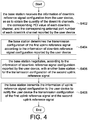
- Fig. 2 illustrates a system flowchart of a method for transmitting channel information in accordance with an exemplary embodiment of the disclosure.
- step S202 the base station 100 sends the downlink original reference signal x DL to the user device 102, so that the user device 102 receives the downlink reference signal y DL .
- step S204 the user device 102 performs a process of downlink channel detection and estimation according to the downlink reference signal y DL , so as to obtain the downlink channel estimation value h DL and information of downlink reference signal configuration .
- the information of downlink reference signal configuration specifies one or more base stations and antenna ports individually associated with one or more downlink channels that the user device 102 receives signals.
- the information of downlink reference signal configuration includes a quantity of the downlink channels, a corresponding physical cell identity (PCI) value of each of the downlink channels, and a corresponding antenna port of each of the downlink channels.
- PCI physical cell identity
- step S206 the user device 102 reports information of downlink reference signal configuration to the base station 100.
- the base station 100 determines the uplink reference signal configuration according to the information of downlink reference signal configuration, so as to generate the information of uplink reference signal configuration.
- the information of uplink reference signal configuration is primary configured to determine the transmission configuration of the user device 102 for transmitting the first uplink reference signal y UL_1 and the second uplink reference signal y UL_2 , such as determining which subframe numbers the first uplink reference signal y UL_1 and the second uplink reference signal y UL_2 start to be transmitted, and what subframe deployment is used in the transmission (e.g., which subframe's time slot is allocated for the transmission).
- the information of uplink reference signal configuration may include, for example, a value of the first uplink original reference signal x UL_1 and a value of the second uplink original reference signal x UL_2 .
- the base station 100 may negotiate with another base station for the transmission configuration of the user device 102 with respect to the second uplink reference signal y UL_2 according to the information of downlink reference signal configuration, so as to generate the information of uplink reference signal configuration.
- step S210 the base station 100 transmits the information of uplink reference signal configuration to the user device 102.
- step S212 the user device 102 generates the first uplink original reference signal x UL_1 according to the rule indicated by the information of uplink reference signal configuration.
- step S214 the user device 102 transmits the first uplink original reference signal x UL_1 to the base station 100, such that the base station 100 receives the first uplink reference signal y UL_1 .
- the base station 100 performs an uplink channel estimation process according to the first uplink reference signal y UL_1 .
- the base station 100 estimates the uplink channel noise n UL according to the first uplink reference signal y UL_1 , and calculates, based on the equation 4, the uplink channel estimation value h UL according to the first uplink reference signal y UL_1 , the known first uplink original reference signal x UL_1 and the uplink channel noise n UL .
- the user device 102 executes a signal pre-coding process.
- the user device 102 may generate the second uplink original reference signal x UL_2 according to the information of uplink reference signal configuration, and pre-code the second uplink original reference signal x UL_2 with the estimated downlink channel estimation value h DL to generate the encoded second uplink original reference signal x UL_2 '.
- the user device 102 replaces the elements of the pre-coding matrix p with the one or more downlink channel estimation values h DL , and then multiplies the pre-coding matrix p by the second uplink original reference signal x UL_2 to generate the encoded second uplink original reference signal x UL_2 '.
- step S220 the user device 102 transmits the encoded second uplink original reference signal x UL_2 ' to the base station 100, so that the base station 100 receives the second uplink reference signal y UL_2 .
- step S222 the base station decodes the second uplink reference signal y UL_2 through a downlink channel information decoding process, so as to obtain the downlink channel estimation value h DL carried by the second uplink reference signal y UL_2 .
- the base station 100 may calculate, based on the equation 6, the downlink channel estimation value h DL according to the second uplink reference signal y UL_2 , the known second uplink original reference signal x UL_2 ', the uplink channel noise n UL ' and the uplink channel estimation value h UL .
- steps S218 and S212 can be performed at the same time.
- step S218 can be performed before step S212.
- Fig. 3 illustrates a detailed flowchart of the process of downlink channel detection and estimation shown in step S204 of Fig. 2 .
- the user device 102 detects the PCI value and the corresponding antenna port number from the base station 100, so as to identify that the received signal is from which base station's which antenna.
- step S304 the user device 102 detects the downlink reference signal y DL from the base station 100 by using the PCI value and the corresponding antenna port number of the base station 100.
- step S306 the user device 102 detects the quantity of downlink channels of the corresponding antenna port according to the received downlink reference signal y DL .
- step S308 the user device 102 performs noise estimation on the downlink channel to obtain the downlink channel noise n DL .
- the user device 102 estimates the channel status of the downlink channel to obtain the downlink channel estimation value h DL .
- the user device 102 may, based on the equation 2, subtract the value of the downlink channel noise n DL from the value of the downlink reference signal y DL , and then divide the result by the value of the downlink original reference signal x DL , so as to obtain the downlink channel estimation value h DL .
- step S312 the user device 102 reports the base station 100 the quantity of the downlink channels, the corresponding PCI value and the corresponding antenna port number (information of downlink reference signal configuration) obtained from the base station 100.
- Fig. 4 illustrates an example of a detailed flowchart of the determination of the uplink reference signal configuration shown in step S208 of Fig. 2 .
- step S402 the base station 100 receives the information of downlink reference signal configuration from the user device 102, so as to obtain the quantity of the downlink channels, the corresponding PCI value of each downlink channel, and the corresponding antennal port number of each downlink channel reported by the user device 102.
- step S404 the base station 100 determines the transmission configuration of the first uplink reference signal y UL_1 according to the information of downlink reference signal configuration reported by the user device 102, such as determining which subframe number the transmission is initiated and what subframe deployment is used in the transmission.
- step S406 the base station 100 negotiates, according to the information of downlink reference signal configuration reported by the user device 102, with another base station for the transmission configuration of the second uplink reference signal y UL_2 . Therefore, signal collision among user devices that occurs when the user device 102 transmits the second uplink reference signal y UL_2 can be avoided.
- step S408 the base station 100 transmits the information of uplink reference signal configuration to the user device 102 to notify the user device 102 the transmission configuration of the first uplink reference signal y UL_1 and the second uplink reference signal y UL_2 .
- Fig. 5 illustrates an example of a detailed flowchart of the uplink channel estimation process shown in step S216 of Fig. 2 .
- step S502 the base station 100 estimates noises on the uplink channel according to the first uplink reference signal y UL, so as to obtain the uplink channel noise n UL .
- the base station 100 estimates the uplink channel to obtain the corresponding uplink channel estimation value h UL .
- the base station 100 may calculate the uplink channel estimation value h UL based on the equation 4. That is, the base station 100 may subtract the value of the uplink channel noise n UL from the value of the received first uplink reference signal y UL_1 , and then divide the result by the value of the first uplink original reference signal x UL_1 to obtain the uplink channel estimation value h UL .
- Fig. 6 illustrates an example of a detailed flowchart of the signal pre-decoding process shown in step S218 of Fig. 2 .
- step S602 the user device 102 sets the matrix element of the pre-coding matrix p as the estimated downlink channel estimation value h DL .
- step S604 the user device 102 generates the second uplink original reference signal x UL_2 according to the rule indicated by the information of uplink reference signal configuration.
- step S606 the user device 102 generates the encoded second uplink original reference signal x UL_2 ' according to the pre-coding matrix p and the second uplink original reference signal x UL_2 . For example, the user device 102 multiplies the value of the matrix element of the pre-coding matrix p by the value of the second uplink original reference signal x UL_2 to obtain the encoded second uplink original reference signal x UL_2 '.
- step S608 the user device 102 reports the base station 100 the encoded second uplink original reference signal x UL_2 ', which is received as the second uplink reference signal y UL_2 at the base station 100.
- Fig. 7 illustrates an example of a detailed flowchart of the downlink channel information decoding process shown in step S222 of Fig. 2 .
- step S702 the base station 100 estimates noises on the uplink channel according to the second uplink reference signal y UL_2 , so as to obtain the uplink channel noise n UL '.
- step S704 the base station 100 calculates, based on the equation 6, the downlink channel estimation value h DL by subtracting the value of the uplink channel noise n UL from the value of the second uplink reference signal y UL_2 , and then dividing the result by a multiplication result of the uplink channel estimation value h UL and the value of the second uplink original reference signal x UL_2 .
- Figs. 8-11 schematically illustrate different stages of the method for transmitting channel information in accordance with an exemplary embodiment of the disclosure.
- the wireless communication system 80 includes a first base station 800A, a second base station 800B, a first user device 802A and a second user device 802B.
- the first and second user devices 802A, 802B locate in a common signal coverage area provided by the first and second base stations 800A, 800B, wherein the first user device 802A is served by the first base station 800A and not by the second user device 802B, while the second user device 802B is served by the second base station 800B and not by the first user device 802A.
- the first base station 800A includes two antennas A1, A2.
- the second base station 800B includes two antennas B1, B2.
- Each of the first and second user devices 802A, 802B includes one antenna.
- the first and second user devices 802A, 802B may receive the PCI values of the first and second base stations 800A, 800B (e.g., the PCI value of the first base station 800A is PCI_A, and the PCI value of the second base station 800B is PCI_B), and receive the downlink reference signals and the quantity of the downlink channels form each antenna of the first and second base stations 800A, 800B.
- the PCI values of the first and second base stations 800A, 800B e.g., the PCI value of the first base station 800A is PCI_A, and the PCI value of the second base station 800B is PCI_B
- a parameter in formula is denoted with a superscript and a subscript
- the superscript represents the signal sending terminal corresponding to the parameter
- the subscript represents the signal receiving terminal corresponding to the parameter.
- the downlink reference signal received by the first user device 802 A can be expressed as: y 802 A 800 A , A 1 y 802 A 800 A , A 2 y 802 A 800 B , B 1 y 802 A 800 B , B 2
- y 802 A 800 A A 1 represents the downlink reference signal that the first user device 802A receives from the antenna A1 of the first base station 800A
- y 802 A 800 A A 2 represents the downlink reference signal that the first user device 802A receives from the antenna A2 of the first base station 800A
- y 802 A 800 B , B 1 represents the downlink reference signal that the first user device 802A receives from the antenna B1 of the second base station 800B
- y 802 A 800 B , B 2 represents the downlink reference signal that the first user device 802A receives from the antenna B2 of the second base station 800B.
- the downlink reference signals y 802 A 800 A , A 1 , y 802 A 800 A , A 2 , y 802 A 800 B , B 1 and y 802 A 800 B , B 2 are transmitted respectively through the time-frequency resources 81, 82, 83 and 84.
- Each block depicted in the figure represents a unit of the time-frequency resources.
- the downlink channel noises that individually corresponding to the downlink reference signals y 802 A 800 A , A 1 y 802 A 800 A , A 2 y 802 A 800 B , B 1 y 802 A 800 B , B 2 can be expressed as: n 802 A 800 A , A 1 n 802 A 800 A , A 2 n 802 A 800 B , B 1 n 802 A 800 B , B 2
- the downlink original reference signals that individually corresponding to the downlink reference signals y 802 A 800 A , A 1 y 802 A 800 A , A 2 y 802 A 800 B , B 1 y 802 A 800 B , B 2 can be expressed as: x 802 A 800 A , A 1 x 802 A 800 A , A 2 x 802 A 800 B , B 1 x 802 A 800 B , B 2
- the first and second user devices 802A, 802B respectively report the quantity, the corresponding PCI value and the corresponding antenna port of the downlink channels (information of downlink reference signal configuration) to the corresponding base stations.
- DLC 802A PCI_A 802 A 800 A , A 1 PCI_A 802 A 800 A , A 2 PCI_B 802 A 800 B , B 1 PCI_B 802 A 800 B , B 2
- PCI_A 802 A 800 A A 1 represents the PCI value corresponding to the downlink channel from the antenna A1 of the first base station 800A to the first user device 802A
- PCI_B 802 A 800 B B 1 represents the PCI value corresponding to the downlink channel from the antenna B1 of the second base station 800B to the first user device 802A
- PCI_A 802 A 800 A , A 2 represents the PCI value corresponding to the downlink channel from the antenna A2 of the first base station 800A to the first user device 802A
- DLC 802 B PCI_A 802 B 800 A , A 1 PCI_A 802 B 800 A , A 2 PCI_B 802 B 800 B , B 1 PCI_B 802 B 800 B , B 2
- PCI_A 802 B 800 A A 1 represents the PCI value corresponding to the downlink channel from the antenna A1 of the first base station 800A to the second user device 802B
- PCI_B 802 B 800 B B 1 represents the PCI value corresponding to the downlink channel from the antenna B1 of the second base station 800B to the second user device 802B
- PCI_A 802 B 800 A , A 2 represents the PCI value corresponding to the downlink channel from the antenna A2 of the first base station 800A to the second user device 802B
- PCI_B 802 B 800 B , B 2 represents the PCI value corresponding to the downlink channel from the antenna A2 of the first base station 800A to the second user device 802B
- the first and second base stations 800A, 800B negotiate with each other for the transmission configuration of the first and second user devices 802A, 802B that transmit the second uplink reference signals, respectively.
- the transmission configuration ULC2 802A is a transmission configuration that the first user device 802A uses to report the reference signals.
- the transmission configuration ULC2 802B is a transmission configuration that the second user device 802B uses to report the reference signals.
- the first and second base stations 800A, 800B may communication the transmission configurations ULC2 802A , ULC2 802B with each other to coordinate the transmissions of the first and second user devices 802A, 802B, such as determining which subframe numbers the first and second user devices 802A, 802B can start to transmit the second uplink reference signals, and what subframe deployment is used in the transmission.
- the first base station 800A then notifies the first user device 802A the transmission configuration ULC1 802A of the corresponding first uplink reference signal and the transmission configuration ULC2 802A of the corresponding second uplink reference signal. Also, the second base station 800B notifies the second user device 802B the transmission configuration ULC1 802B of the corresponding first uplink reference signal and the transmission configuration ULC2 802B of the corresponding second uplink reference signal.
- the transmission configuration ULC1 802A refers to a transmission configuration that the first user device 802A used to report the first uplink reference signal
- the transmission configuration ULC1 802B refers to a transmission configuration that the second user device 802B used to report the first uplink reference signal.
- the first user device 802A may multiply the pre-coding matrix P 802A by the second uplink original reference signal to generate the corresponding encoded second uplink original reference signal.
- the second user device 802B may multiply the pre-coding matrix p 802B by the second uplink original reference signal to generate the corresponding encoded second uplink original reference signal.
- the first user device 802A transmits the first uplink original reference signal and the encoded second uplink original reference signal. Because the first user device 802A locates in the common signal coverage area of the first and second base stations 800A, 800B, the first uplink original reference signal and the encoded second uplink original reference signal transmitted by the first user device 802A can be sent to both the first and second base stations 800A, 800B. In other words, both the first and second base stations 800A, 800B may receive the first uplink reference signal and the second uplink reference signal from the first user device 802A.
- first uplink original reference signal and the encoded second uplink original reference signal transmitted by the second user device 802B are received as the first uplink reference signal and the second uplink reference signal at both the first and second base stations 800A, 800B.
- the first and second uplink reference signals from the first user device 802A are corresponding to the time-frequency resources 1111 and 1112, respectively; and the first and second uplink reference signals from the second user device 802B are corresponding to the time-frequency resources 1113 and 1114, respectively.
- the first and second base stations 800A, 800B can obtain the uplink channel estimation values for the uplink channels from each user device to each antenna.
- the second uplink reference signal y 2 800 A , A 1 802 A ⁇ is represented as a function that varies with a carried downlink channel estimation value.
- the second uplink reference signal y 2 800 A , A 1 802 A h 802 A 800 A , A 1 refers to a second uplink reference signal that carries the downlink channel estimation value h 802 A 800 A , A 1 , and is transmitted from the first user device 802A to the antenna A1 of the first base station 800A.
- h 800 A A 1 802 A represents the uplink channel estimation value for the uplink channel from the first user device 802A to the antenna A1 of the first base station 800A; x 2 800 A 802 A represents the second uplink original reference signal for the uplink channel from the first user device 802A to the first base station 800A; n 800 A , A 1 802 A represents the uplink channel noise; and h 802 A 800 A , A 1 , h 802 A 800 A , A 2 , h 802 A 800 B , B 1 and h 802 A 800 B , B 2 represent the four downlink channel estimation values measured by the first user device 802A.
- the first base station 800A receives the first uplink reference signal and the second uplink reference signal from the second user device 802B. Therefore, the first base station 800A can obtain the corresponding uplink channel estimation value according to the first uplink reference signal of the second user device 802B, and obtain the downlink channel estimation value measured by the second user device 802B according to the obtained uplink channel estimation value and the second uplink reference signal of the second user device 802B.
- the first base station 800A may transmit the it to the base station serving the second user device 802B, e.g., the second base station 800B.
- the user device may report, as instructed by the base station, a particular uplink reference signal carrying a downlink channel estimation value to the base station, so that the base station can use this reference signal to decode the downlink channel information.
- the information carried by the particular uplink reference signal that the user device reports to the base station is not limited to the downlink channel estimation value. It can also be the associated information of the downlink channel estimation value, such as a difference (downlink channel variation value) between a previously measured downlink channel estimation value (previous downlink channel estimation value) and a currently measured downlink channel estimation value.
- the base station first decodes the difference between two consecutively obtained channel estimation values, and then performs compensation computation on the difference to obtain the current downlink channel estimation value. In this manner, even if the uplink channel and the downlink channel are not symmetrical during the transmission, the base station can still effectively obtain the status information of the downlink channel. Therefore, the base station performs a proper pre-coding process on the downlink signal, so as to eliminate the influence of the channel effect on the signal, thereby improving the overall transmission quality of the wireless mobile communication networks.
Landscapes
- Engineering & Computer Science (AREA)
- Signal Processing (AREA)
- Computer Networks & Wireless Communication (AREA)
- Power Engineering (AREA)
- Quality & Reliability (AREA)
- Physics & Mathematics (AREA)
- Electromagnetism (AREA)
- Mobile Radio Communication Systems (AREA)
Applications Claiming Priority (1)
| Application Number | Priority Date | Filing Date | Title |
|---|---|---|---|
| TW105141823A TWI632803B (zh) | 2016-12-16 | 2016-12-16 | 通道資訊傳輸方法及應用其的無線通訊系統 |
Publications (1)
| Publication Number | Publication Date |
|---|---|
| EP3337111A1 true EP3337111A1 (de) | 2018-06-20 |
Family
ID=58043822
Family Applications (1)
| Application Number | Title | Priority Date | Filing Date |
|---|---|---|---|
| EP16205368.0A Withdrawn EP3337111A1 (de) | 2016-12-16 | 2016-12-20 | Verfahren zum senden von kanalinformationen und drahtloskommunikationssystem damit |
Country Status (4)
| Country | Link |
|---|---|
| US (1) | US10103905B2 (de) |
| EP (1) | EP3337111A1 (de) |
| CN (1) | CN108206793A (de) |
| TW (1) | TWI632803B (de) |
Cited By (1)
| Publication number | Priority date | Publication date | Assignee | Title |
|---|---|---|---|---|
| CN111106913A (zh) * | 2018-11-02 | 2020-05-05 | 维沃移动通信有限公司 | 无线通信的方法和设备 |
Families Citing this family (2)
| Publication number | Priority date | Publication date | Assignee | Title |
|---|---|---|---|---|
| US11800579B2 (en) * | 2019-05-07 | 2023-10-24 | Qualcomm Incorporated | Establishment of millimeter wave relay links between user equipments with base station coordination |
| CN111901259B (zh) | 2020-05-18 | 2024-12-24 | 中兴通讯股份有限公司 | 下行信道状态信息估计方法、装置、设备和存储介质 |
Citations (3)
| Publication number | Priority date | Publication date | Assignee | Title |
|---|---|---|---|---|
| EP1596549A2 (de) * | 2004-05-13 | 2005-11-16 | NTT DoCoMo, Inc. | Drahtloskommunikationssystem, Drahtloskommunikationsgerät, drahtloses Empfangsgerät, Drahtloskommunkationsverfahren und Kanalschätzverfahren |
| US20070281624A1 (en) * | 2004-11-04 | 2007-12-06 | Motorola, Inc. | Method and apparatus for channel feedback |
| WO2015156457A1 (en) * | 2014-04-09 | 2015-10-15 | Lg Electronics Inc. | Method and apparatus for performing feedback for massive antenna array based beamforming in wireless communication system |
Family Cites Families (21)
| Publication number | Priority date | Publication date | Assignee | Title |
|---|---|---|---|---|
| US7630337B2 (en) | 2005-09-21 | 2009-12-08 | Broadcom Corporation | Method and system for an improved user group selection scheme with finite-rate channel state information feedback for FDD multiuser MIMO downlink transmission |
| KR100918747B1 (ko) * | 2006-02-07 | 2009-09-24 | 삼성전자주식회사 | 직교 주파수 분할 다중 접속 방식을 사용하는 이동 통신시스템에서 상향링크 신호 송신 장치 및 방법 |
| US9265049B2 (en) * | 2008-07-11 | 2016-02-16 | Qualcomm Incorporated | Method and apparatus for using uplink control information for inter-cell decoding and interference cancellation |
| CN103560816A (zh) * | 2008-08-08 | 2014-02-05 | 夏普株式会社 | 下行蜂窝系统的多天线多基站合作的方法及基站 |
| US9503285B2 (en) * | 2011-03-01 | 2016-11-22 | Qualcomm Incorporated | Channel estimation for reference signal interference cancelation |
| EP2705689B1 (de) * | 2011-05-06 | 2019-04-17 | Telefonaktiebolaget LM Ericsson (publ) | Verfahren bei einer basisstation zur handhabung der übergabe, basisstation, computerprogramm und computerprogrammprodukt |
| CN102905302B (zh) * | 2011-07-25 | 2017-02-22 | 上海无线通信研究中心 | 一种混合网中上行干扰控制方法 |
| CN103096333B (zh) * | 2011-11-08 | 2015-09-09 | 华为技术有限公司 | 物理下行控制信道干扰的协调方法及基站 |
| EP2779765B1 (de) * | 2011-12-14 | 2019-05-29 | Huawei Technologies Co., Ltd. | Verfahren und basisstation zum senden von signalen |
| CN104871437B (zh) | 2012-12-31 | 2017-12-15 | 上海贝尔股份有限公司 | Fdd系统中信道互易性补偿方法和装置 |
| US9814037B2 (en) | 2013-06-28 | 2017-11-07 | Intel Corporation | Method for efficient channel estimation and beamforming in FDD system by exploiting uplink-downlink correspondence |
| US9986590B2 (en) | 2013-09-17 | 2018-05-29 | Lg Electronics Inc. | Method for concurrently accessing plurality of cells and user equipment |
| WO2015082577A1 (en) * | 2013-12-04 | 2015-06-11 | Nokia Solutions And Networks Oy | Self-organized distributed assignment, optimization, and use of physical cell ids |
| WO2015095843A1 (en) | 2013-12-20 | 2015-06-25 | Ping Liang | Method for acquiring channel state information in fdd mimo wireless networks |
| GB201405117D0 (en) * | 2014-03-21 | 2014-05-07 | Nvidia Corp | Estimating channel information |
| CN105099632B (zh) * | 2014-04-23 | 2019-12-13 | 北京三星通信技术研究有限公司 | 一种上行探测参考信号传输的方法和设备 |
| CN105450372B (zh) * | 2014-08-04 | 2018-10-02 | 成都鼎桥通信技术有限公司 | 避免导频干扰的lte同频线性组网的方法和装置 |
| CN104202272A (zh) | 2014-09-03 | 2014-12-10 | 苏州微站通信科技有限公司 | Tdd/fdd-lte小基站下行接收端信道估计算法 |
| US20160285534A1 (en) * | 2015-03-27 | 2016-09-29 | Alcatel-Lucent Usa Inc. | Channel Estimation Techniques for FDD MIMO Systems |
| WO2016186425A1 (ko) * | 2015-05-18 | 2016-11-24 | 엘지전자 주식회사 | 무선 통신 시스템에서 셀 커버리지를 고려하여 반복 패턴에 따라 상향링크 참조 신호를 설계하는 방법 및 장치 |
| CN105553524B (zh) | 2015-12-09 | 2018-11-30 | 中国联合网络通信集团有限公司 | 一种获取fdd系统下行信道矩阵的方法及装置 |
-
2016
- 2016-12-16 TW TW105141823A patent/TWI632803B/zh active
- 2016-12-19 US US15/383,620 patent/US10103905B2/en active Active
- 2016-12-20 EP EP16205368.0A patent/EP3337111A1/de not_active Withdrawn
- 2016-12-28 CN CN201611236582.9A patent/CN108206793A/zh not_active Withdrawn
Patent Citations (3)
| Publication number | Priority date | Publication date | Assignee | Title |
|---|---|---|---|---|
| EP1596549A2 (de) * | 2004-05-13 | 2005-11-16 | NTT DoCoMo, Inc. | Drahtloskommunikationssystem, Drahtloskommunikationsgerät, drahtloses Empfangsgerät, Drahtloskommunkationsverfahren und Kanalschätzverfahren |
| US20070281624A1 (en) * | 2004-11-04 | 2007-12-06 | Motorola, Inc. | Method and apparatus for channel feedback |
| WO2015156457A1 (en) * | 2014-04-09 | 2015-10-15 | Lg Electronics Inc. | Method and apparatus for performing feedback for massive antenna array based beamforming in wireless communication system |
Cited By (4)
| Publication number | Priority date | Publication date | Assignee | Title |
|---|---|---|---|---|
| CN111106913A (zh) * | 2018-11-02 | 2020-05-05 | 维沃移动通信有限公司 | 无线通信的方法和设备 |
| WO2020088229A1 (zh) * | 2018-11-02 | 2020-05-07 | 维沃移动通信有限公司 | 无线通信的方法和设备 |
| CN111106913B (zh) * | 2018-11-02 | 2021-04-27 | 维沃移动通信有限公司 | 无线通信的方法和设备 |
| US11968699B2 (en) | 2018-11-02 | 2024-04-23 | Vivo Mobile Communication Co., Ltd. | Radio communication method and device |
Also Published As
| Publication number | Publication date |
|---|---|
| US20180176042A1 (en) | 2018-06-21 |
| TW201824787A (zh) | 2018-07-01 |
| US10103905B2 (en) | 2018-10-16 |
| TWI632803B (zh) | 2018-08-11 |
| CN108206793A (zh) | 2018-06-26 |
Similar Documents
| Publication | Publication Date | Title |
|---|---|---|
| EP3804157B1 (de) | Auf doppler-delay-codebuch basierende vorcodierung und csi-rückmeldung für drahtloskommunikationssysteme | |
| US20230361842A1 (en) | Improving precoding | |
| TWI590608B (zh) | 在多使用者之多輸入多輸出系統中的平行通道培訓技術 | |
| EP3714550B1 (de) | Verfahren, systeme und einheiten eines verteilten basisstationssystems zur behandlung von downlink-kommunikation | |
| EP3499784B1 (de) | Verfahren und vorrichtung für resonanzkanalbetrieb in millimeterwellen-kommunikationssystemen | |
| US9306645B2 (en) | Interference avoidance for beamforming transmissions in wireless communication devices and systems | |
| EP3119050B1 (de) | Funkkommunikationsgerät und funkkommunikationsverfahren zum empfang von referenzsignalen | |
| EP3836463B1 (de) | Verfahren und einrichtung zum senden und empfangen von referenzsignalen | |
| US9113480B2 (en) | Method for operating a radio station in a mobile network | |
| EP3808004B1 (de) | Auf strahlformung basierende, berechtigungsfreie, nichtorthogonale mehrfachzugriffsübertragung | |
| EP2905912A1 (de) | Kombinierte datensignalempfangs- und sendeverfahren sowie vorrichtungen | |
| KR20090100777A (ko) | 다중안테나 시스템에서 간섭제거를 위한 장치 및 방법 | |
| US20250337549A1 (en) | Flexible srs sounding for nr systems | |
| US20240063881A1 (en) | Selected beam and transmission beam spatial relationship | |
| EP3322104A1 (de) | Verfahren, system und vorrichtung zur kompensation von doppler- beeinträchtigungen in ofdm-drahtloskommunikationsnetzwerken | |
| EP3616458B1 (de) | Vorrichtungen, verfahren, computerprogramme und computerprogrammprodukte zur vermeidung von störungen | |
| US10103905B2 (en) | Method for transmitting channel information and wireless communication system using the same | |
| EP4179632B1 (de) | Mehrbenutzer-paket der physikalischen schicht zur erfassung | |
| CN114830561B (zh) | 实施多个发送和接收天线的发送和接收方法和设备及对应计算机程序 | |
| EP3179650A1 (de) | Drahtloskommunikationssystem, basisstation, mobilstation, übertragungsverfahren und demodulationsverfahren | |
| US11456798B2 (en) | IMU-assisted polarization division multiplexed MIMO wireless communication | |
| CN102916911B (zh) | 信道估计方法与基站 | |
| KR20230162774A (ko) | 무선 통신 시스템의 방법, 단말 및 기지국 | |
| WO2026076668A1 (en) | Antenna calibration via precoded sounding reference signaling | |
| Luo et al. | A new reciprocity calibration method for massive MIMO systems |
Legal Events
| Date | Code | Title | Description |
|---|---|---|---|
| PUAI | Public reference made under article 153(3) epc to a published international application that has entered the european phase |
Free format text: ORIGINAL CODE: 0009012 |
|
| AK | Designated contracting states |
Kind code of ref document: A1 Designated state(s): AL AT BE BG CH CY CZ DE DK EE ES FI FR GB GR HR HU IE IS IT LI LT LU LV MC MK MT NL NO PL PT RO RS SE SI SK SM TR |
|
| AX | Request for extension of the european patent |
Extension state: BA ME |
|
| STAA | Information on the status of an ep patent application or granted ep patent |
Free format text: STATUS: THE APPLICATION IS DEEMED TO BE WITHDRAWN |
|
| 18D | Application deemed to be withdrawn |
Effective date: 20181221 |