EP3337282A1 - Procédé, dispositif et système de radiomessagerie - Google Patents
Procédé, dispositif et système de radiomessagerie Download PDFInfo
- Publication number
- EP3337282A1 EP3337282A1 EP15903790.2A EP15903790A EP3337282A1 EP 3337282 A1 EP3337282 A1 EP 3337282A1 EP 15903790 A EP15903790 A EP 15903790A EP 3337282 A1 EP3337282 A1 EP 3337282A1
- Authority
- EP
- European Patent Office
- Prior art keywords
- 3gpp
- 3gpp network
- mobility management
- location information
- base station
- Prior art date
- Legal status (The legal status is an assumption and is not a legal conclusion. Google has not performed a legal analysis and makes no representation as to the accuracy of the status listed.)
- Granted
Links
Images




Classifications
-
- H—ELECTRICITY
- H04—ELECTRIC COMMUNICATION TECHNIQUE
- H04W—WIRELESS COMMUNICATION NETWORKS
- H04W68/00—User notification, e.g. alerting and paging, for incoming communication, change of service or the like
- H04W68/02—Arrangements for increasing efficiency of notification or paging channel
-
- H—ELECTRICITY
- H04—ELECTRIC COMMUNICATION TECHNIQUE
- H04W—WIRELESS COMMUNICATION NETWORKS
- H04W68/00—User notification, e.g. alerting and paging, for incoming communication, change of service or the like
- H04W68/04—User notification, e.g. alerting and paging, for incoming communication, change of service or the like multi-step notification using statistical or historical mobility data
-
- H—ELECTRICITY
- H04—ELECTRIC COMMUNICATION TECHNIQUE
- H04W—WIRELESS COMMUNICATION NETWORKS
- H04W68/00—User notification, e.g. alerting and paging, for incoming communication, change of service or the like
- H04W68/12—Inter-network notification
-
- H—ELECTRICITY
- H04—ELECTRIC COMMUNICATION TECHNIQUE
- H04W—WIRELESS COMMUNICATION NETWORKS
- H04W8/00—Network data management
- H04W8/02—Processing of mobility data, e.g. registration information at HLR [Home Location Register] or VLR [Visitor Location Register]; Transfer of mobility data, e.g. between HLR, VLR or external networks
- H04W8/08—Mobility data transfer
-
- H—ELECTRICITY
- H04—ELECTRIC COMMUNICATION TECHNIQUE
- H04W—WIRELESS COMMUNICATION NETWORKS
- H04W88/00—Devices specially adapted for wireless communication networks, e.g. terminals, base stations or access point devices
- H04W88/02—Terminal devices
- H04W88/06—Terminal devices adapted for operation in multiple networks or having at least two operational modes, e.g. multi-mode terminals
-
- H—ELECTRICITY
- H04—ELECTRIC COMMUNICATION TECHNIQUE
- H04W—WIRELESS COMMUNICATION NETWORKS
- H04W88/00—Devices specially adapted for wireless communication networks, e.g. terminals, base stations or access point devices
- H04W88/16—Gateway arrangements
Definitions
- Embodiments of the present invention relate to the field of communications, and in particular, to a paging method, device, and system.
- LTE Long Term Evolution
- PS packet switching
- a new 3GPP evolved packet core network supports both a 3GPP access technology and a non-3GPP (Non-3GPP) access technology.
- a network architecture of a Non-3GPP access EPC includes a mobility management entity (mobility management entity, MME), configured to be responsible for mobility management on a control plane including user context management and mobility state management, allocation of user temporary identity, and the like.
- MME mobility management entity
- a serving General Packet Radio Service support node (service GPRS support node, SGSN) is configured to implement functions such as route forwarding, mobility management, session management, and subscriber information storage in a General Packet Radio Service technology (general packet radio service, GPRS) or Universal Mobile Telecommunications System (universal mobile telecommunications system, UMTS) network.
- a home subscriber server (home subscriber server, HSS) is configured to store user subscription data.
- a packet data gateway packet data network gateway, PGW is a user plane anchor between a 3GPP access network and a Non-3GPP access network and terminates an interface of an external packet data network (packet data network, PDN).
- a serving gateway (serving gateway, SGW) is a user plane anchor between 3GPP access networks and terminates an interface of an evolved UMTS Terrestrial Radio Access Network (evolved UMTS terrestrial radio access network, E-UTRAN).
- a trusted wireless access network (trusted wireless access network, TWAN) is a trusted access network, for example, a wireless local area network (wireless local area access, WLAN), a Worldwide Interoperability for Microwave Access (worldwide interoperability for microwave access, WiMax) network, and a code-division multiple access (code division multiple access, CDMA) network defined by the Non-3GPP organization.
- a policy and charging rules function unit (policy and charging rules function, PCRF) is configured to select and provide a usable policy and a charging control decision.
- An evolved packet data gateway (evolved packet data gateway, ePDG) is mainly configured to connect user equipment (user equipment, UE) to the PGW.
- ePDG evolved packet data gateway
- a 3GPP authentication, authorization, and accounting server (3GPP authentication, authorization, and accounting Server, 3GPP AAA Server) is configured to perform access authentication, authorization, and charging functions on the UE.
- a network side After the UE is connected on a 3GPP side, a network side indicates a tracking area list by using a tracking area identity list (tracking area identity list, TAI list), and uses the tracking area list as a range of a location area allocated to the UE.
- TAI list tracking area identity list
- the network side does not need to be instructed to perform location update. Therefore, after the UE enters an idle state, if the network side needs to page the UE, the UE needs to be paged in only the range indicated by the TAI list.
- the PGW receives a downlink first data packet, and sends the downlink first data packet to the SGW by using a downlink data tunnel.
- the SGW determines whether the SGW can continue to send the first data packet to an evolved base station (evolved node B, eNB). If a downlink data tunnel connected to the PDN exists on the SGW, the SGW continues to send the first data packet to the eNB. If a downlink data tunnel connected to the PDN does not exist on the SGW.
- the SGW sends a downlink data message notification to a mobility management network element or the SGSN.
- the mobility management network element or the SGSN sends a paging message to all eNBs in the area according to the TAI list in which the UE is registered.
- the paging message carries an identifier of the UE, a TAI parameter, and the like.
- the eNBs continue to send the paging message to the UE.
- the UE After receiving the paging message, the UE initiates a service request procedure.
- the network side stops paging after a connection between the network side and the UE is restored.
- the network side when paging the UE, the network side needs to notify all base station inside a registration area of the UE, that is, sends a paging message to all the eNBs in the registration area.
- the registration area of the UE has a relatively large range, a quantity of paging messages that need to be sent is increased, and consequently air interface resources are occupied.
- Embodiments of the present invention provide a paging method and a related device and system, so as to effectively reduce paging signaling and save air interface resources.
- a first aspect of the present invention provides a paging method, including:
- the paging, by the mobility management network element, the UE according to the location information of the UE in the non-3GPP network includes: determining, by the mobility management network element, a target base station according to the location information of the UE in the non-3GPP network, and sending a first paging message to the target base station.
- the determining, by the mobility management network element, a target base station according to the location information of the UE in the non-3GPP network includes: determining, by the mobility management network element, the target base station according to a correspondence between the target base station and the location information of the UE in the non-3GPP network.
- the determining, by the mobility management network element, a target base station according to the location information of the UE in the non-3GPP network includes:
- the method further includes: sending, by the mobility management network element, an access identifier of the 3GPP network to the UE by using a non-3GPP access gateway, where the access identifier of the 3GPP network is used to indicate a type of the accessed 3GPP network to the UE.
- the access identifier of the 3GPP network includes a radio access technology RAT type.
- the access identifier of the 3GPP network is access point name APN information.
- the sending, by the mobility management network element, an access identifier of the 3GPP network to the UE by using a non-3GPP access gateway includes: sending, by the mobility management network element, the downlink data notification message carrying the APN information to a socket interface of the UE by using a socket socket interface of the non-3GPP access gateway.
- the paging, by the mobility management network element, the UE according to the location information of the UE in the non-3GPP network includes: sending, by the mobility management network element, a second paging message to a base station, where the second paging message carries the location information of the UE in the non-3GPP network, and the location information of the UE in the non-3GPP network is used by the base station to determine, according to the location information of the UE in the non-3GPP network, to send the first paging message to the UE.
- a second aspect of the present invention provides a paging method, including:
- the sending, by the base station, a second paging message to the UE includes:
- a third aspect of the present invention provides a paging method, including:
- the receiving, by user equipment UE, an access identifier of a 3GPP network sent by a non-3GPP access gateway, where the access identifier of the 3GPP network is used to indicate a type of the 3GPP network includes:
- the receiving, by user equipment UE, an access identifier of a 3GPP network sent by a non-3GPP access gateway, where the access identifier of the 3GPP network is used to indicate a type of the 3GPP network includes:
- the method further includes:
- a fourth aspect of the present invention provides a paging method, including:
- the receiving, by a non-3rd Generation Partnership Project 3GPP access gateway, an access identifier of a 3GPP network sent by a mobility management network element includes:
- the receiving, by a non-3rd Generation Partnership Project 3GPP access gateway, an access identifier of a 3GPP network sent by a mobility management network element includes:
- the method further includes:
- a fifth aspect of the present invention provides a mobility management network element, including:
- the mobility management network element further includes a sending module, and the processing module is specifically configured to: determine a target base station according to the location information of the UE in the non-3GPP network, and control the sending module to send a first paging message to the target base station.
- the processing module is specifically configured to determine the target base station according to a correspondence between the target base station and the location information of the UE in the non-3GPP network.
- the processing module is specifically configured to determine location information of the UE in a 3GPP network according to the location information of the UE in the non-3GPP network, and determine the target base station according to a correspondence between a base station and the location information of the UE in the 3GPP network.
- the sending module is further configured to: after the receiving module receives the downlink data notification message, send an access identifier of the 3GPP network to the UE by using a non-3GPP access gateway, where the access identifier of the 3GPP network is used to indicate a type of the accessed 3GPP network to the UE.
- the access identifier of the 3GPP network includes a radio access technology RAT type.
- the access identifier of the 3GPP network is access point name APN information.
- the sending, by the sending module, an access identifier of the 3GPP network to the UE by using a non-3GPP access gateway includes sending, by the sending module, the downlink data notification message carrying the APN information to a socket interface of the UE by using a socket socket interface of the non-3GPP access gateway.
- the mobility management network element further includes a sending module, where the sending module is specifically configured to send a second paging message to a base station, where the second paging message carries the location information of the UE in the non-3GPP network, and the location information of the UE in the non-3GPP network is used by the base station to determine, according to the location information of the UE in the non-3GPP network, to send the first paging message to the UE.
- a sixth aspect of the present invention provides a base station, including:
- the processing module is specifically configured to: determine a paging range according to the location information of the UE in the non-3GPP network carried in the first paging message received by the receiving module, and control the sending module to send the second paging message to the UE in the paging range.
- a seventh aspect of the present invention provides user equipment, including:
- the first receiving module includes:
- the first receiving module includes:
- the user equipment further includes:
- An eighth aspect of the present invention provides a non-3GPP access gateway, including:
- the receiving module includes:
- the receiving module includes:
- the non-3GPP access gateway further includes:
- a ninth aspect of the present invention provides a mobility management network element, including: an input apparatus, an output apparatus, a memory, and a processor, where the processor is configured to perform the following steps:
- a tenth aspect of the present invention provides a base station, including: an input apparatus, an output apparatus, a memory, and a processor, where the input apparatus is configured to perform the following step:
- An eleventh aspect of the present invention provides user equipment, including: an input apparatus, an output apparatus, a memory, and a processor, where the input apparatus is configured to perform the following step:
- a twelfth aspect of the present invention provides a non-3rd Generation Partnership Project 3GPP access gateway, including: an input apparatus, an output apparatus, a memory, and a processor, where the input apparatus is configured to perform the following step:
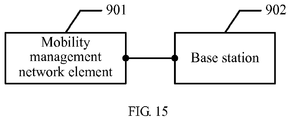
- a thirteenth aspect of the present invention provides a paging system, including: a mobility management network element and a base station, where the mobility management network element is the mobility management network element according to any one of the third aspect or the first to eighth possible implementations of the third aspect of the present invention; and the base station is the base station according to the fourth aspect or the first possible implementation of the fourth aspect of the present invention.
- the mobility management network element obtains the location information of the non-3GPP network of the UE, and when paging the UE in the 3GPP network, may determine the paging range according to the location information of the UE in the non-3GPP network but does not need to send the paging message to all base stations in a registration area of the UE, so that paging signaling is effectively reduced, and air interface resources are saved.
- An embodiment of the present invention provides a paging method, so as to effectively reduce paging signaling and save air interface resources, and in addition, further provides a corresponding paging system and related device.
- FIG. 1 to FIG. 15 the following separately provides detailed descriptions by means of specific embodiments.
- FIG. 1 is a schematic diagram of an architecture integrating a mobility management network element and a 3GPP AAA server according to this embodiment of the present invention.
- a 3GPP network corresponding to a home public land mobile network (home public land mobile network, HPLMN) identifier is used as an example and a WLAN network is used as an example for a non-3GPP network to perform description.
- a logic function of a 3GPP AAA Server is deployed in the mobility management network element MME used in the present invention.
- An S6a interface between the mobility management network element and an HSS is mainly upgraded to an SWx interface that supports communication between the 3GPP AAA Server and the HSS.
- An SWm interface between an ePDG and the 3GPP AAA Server is still maintained.
- an S6b interface between a PGW and the 3GPP AAA Server is no longer deployed.
- authentication functions, gateway selection functions, and the like of the MME and the 3GPP AAA Server may be unified, and location information of the 3GPP network and the non-3GPP network may be shared between the MME and the 3GPP AAA Server, so as to optimize paging.
- the S6a interface before the upgrade transports signaling on a control plane and is mainly used for subscription data including an International Mobile Subscriber Identity (international mobile subscriber identification number, IMSI), subscriber locations, roaming restriction, quality of service (quality of service, QoS) or the like. This type information is exchanged by using an operation such as location update of the S6a interface or insertion of subscriber data.
- the S6a interface is further used for authentication data including an authentication parameter. This type information is exchanged by using an authentication operation at the S6a interface.
- the SWx interface after the upgrade is an interface between the 3GPP AAA Server and the HSS and is mainly used for performing authentication for access of UE to the EPC network, and is also used for updating address information of a packet data gateway (packet data network gateway, PDN-GW) stored on the HSS.
- PDN-GW packet data network gateway
- the embodiments of the present invention are applied to a scenario of access of the UE on both a 3GPP side and a non-3GPP side.
- FIG. 2 is a schematic diagram of an embodiment of a paging method according to an embodiment of the present invention.
- the paging method may include the following steps.
- a mobility management network element obtains location information of user equipment UE in a non-3rd Generation Partnership Project 3GPP network, where the UE is UE that already accesses the non-3GPP network.
- the mobility management network element when UEs access the non-3GPP network, the mobility management network element obtains the location information of the non-3GPP network of these UEs.
- the non-3GPP network may usually be a WLAN network, a WiMax network or a CDMA network.
- the location information of the non-3GPP network here may be location information of the WLAN.
- the UE When UE is turned on, the UE needs to perform a non-3GPP attach procedure and a 3GPP attach procedure.
- the non-3GPP attach procedure completed by the UE is similar to that in an existing solution.
- a session connection is established between the TWAN and a 3GPP AAA Server for the attach of the UE.
- WLAN trusted wireless local area network
- the TWAN sends an identifier of the WLAN, for example, a service set identifier (service set identifier, SSID), a basic service set identifier (basic service set identifier, BSSID) or a homogenous extended service set identifier (homogenous extended service set identifier, HESSID) of the WLAN, or information about a geographical location of the WLAN, or information about a 3GPP location, for example, an identifier of a 3GPP cell of the WLAN, to the 3GPP AAA Server.
- the 3GPP AAA Server registers an identifier of the 3GPP AAA Server with an HSS.
- a session connection is established between an ePDG and the 3GPP AAA Server for the attach of the UE.
- the ePDG sends the location information obtained from the UE to the 3GPP AAA Server.
- the location information obtained from the UE may include an identifier of the WLAN, for example, an SSID, a HESSID or a BSSID of the WLAN, or may be information about a geographical location of the WLAN or a 3GPP location, for example, an identifier of a 3GPP cell, of the UE, are sent to the ePDG.
- the ePDG sends the information to the 3GPP AAA Server.
- the 3GPP AAA Server registers an identifier of the 3GPP AAA Server with the HSS.
- the mobility management network element obtains the location information obtained by the 3GPP AAA Server, where the location information includes the location information of the UE in the non-3GPP network or location information of a 3GPP network at which the UE is currently located.
- the 3GPP attach procedure completed by the UE is similar to that in an existing solution.
- the UE obtains a temporary identity and a TAI list that are allocated by the mobility management network element.
- a network side establishes a bearer resource for the UE, and registers an identifier of the mobility management network element serving the UE with the HSS.
- the mobility management network element receives a downlink data notification message, where the downlink data notification message carries an identifier of the UE.
- a PGW receives a downlink data packet of a user, and selects a suitable bearer tunnel according to information in a data flow.
- the PGW sends the downlink data packet to an SGW by using the bearer tunnel.
- the SGW sends the downlink data notification message to the mobility management network element, where the downlink data notification message carries the identifier of the UE, to enable the mobility management network element to determine the UE according to the identifier of the UE in the downlink data notification message.
- the mobility management network element pages the UE according to the location information of the UE in the non-3GPP network.
- the mobility management network element determines, according to the location information of the UE in the non-3GPP network, a range for paging the UE.
- step 101 and step 102 in this embodiment of the present invention is not fixed, and is not limited herein.
- the mobility management network element obtains the location information of the UE in the non-3GPP network, and when paging the UE in the 3GPP network, may determine a paging range according to the location information of the UE in the non-3GPP network but does not need to send a paging message to all base stations in a registration area of the UE, so that paging signaling is effectively reduced, and air interface resources are saved.
- the paging, by the mobility management network element, the UE according to the location information of the UE in the non-3GPP network may include: determining, by the mobility management network element, a target base station according to the location information of the UE in the non-3GPP network, and sending a first paging message to the target base station.
- the mobility management network element determines the target base station according to the location information of the UE in the non-3GPP network. Specifically, the mobility management network element may select, based on the location information of the current non-3GPP network of the UE, one or more base stations near the current non-3GPP network as the target base station. Generally, the mobility management network element selects a base station nearest to the location of the non-3GPP network of the UE as the target base station. If the location of the non-3GPP network of the UE is located in an overlapped coverage area of several base stations, the mobility management network element may select the several base stations as the target base station.
- the mobility management network element sends the first paging message to the target base station. If there is one target base station, the target base station directly sends the first paging message to the UE. If there are multiple target base stations, the target base stations send the first paging message to the UE, and the UE receives a paging message that arrives first. Here, a paging process is completed.
- the first paging message is similar to a paging message in the prior art, and may not include the location information of the UE in the non-3GPP network. That is, the target base station sends, to the UE by using an existing manner, a paging message that does not carry the location information of the UE in the non-3GPP network.
- a relationship between a base station and location information of the non-3GPP network may be configured on the mobility management network element.
- the mobility management network element determines the target base station according to the location information of the UE in the non-3GPP network.
- the target base station may send the first paging message to the UE by using the prior art.
- the mobility management network element may not need to send a paging message to all base stations in the registration area of the UE.
- the determining, by the mobility management network element, a target base station according to the location information of the UE in the non-3GPP network may include: determining, by the mobility management network element, the target base station according to a correspondence between the target base station and the location information of the UE in the non-3GPP network.
- the mobility management network element needs to first configure a correspondence between a base station and the location information of the UE in the non-3GPP network.
- the mobility management network element may determine the corresponding target base station according to the location information and the configured correspondence between the base station and the location information of the UE in the non-3GPP network.
- the correspondence between the base station and the location information of the non-3GPP network may be configured in multiple manners.
- a relationship list between a base station and location information of the corresponding non-3GPP network is configured on the mobility management network element.
- Location information of several nearby non-3GPP networks may be configured for one base station.
- the base station is selected as the target base station.
- the base station may be selected as the target base station. Therefore, here, configuration of the correspondence between the target base station and the location information of the UE in the non-3GPP network is not limited.
- a correspondence between a location of the base station and location information of the non-3GPP network may be configured on the mobility management network element. After the location information of the UE in the non-3GPP network is obtained, it is implemented that the mobility management network element selects a specific implementation of the target base station according to the correspondence, thereby improving feasibility and operability of a solution during actual application.
- the determining, by the mobility management network element, a target base station according to the location information of the UE in the non-3GPP network may include:
- the mobility management network element may determine the location information of the UE in the 3GPP network according to the location information of the UE in the non-3GPP network.
- the precision reaches the granularity of cells.
- the precision may reach specific cells.
- the mobility management network element preconfigures the correspondence between the location of the base station and the location information of the UE in the 3GPP network.
- the location of the 3GPP network here means the location information corresponding to the 3GPP network when the base station accesses the network side.
- the mobility management network element determines, according to the configured correspondence between the base station and the location information of the 3GPP network, the target base station that sends a paging message to the UE, where a correspondence may exist between the location information of the UE in the 3GPP network and the location of the base station.
- the target base station corresponds to the location information of the UE in the 3GPP network.
- the location information of the UE in the 3GPP network is determined by the mobility management network element according to the location information of the UE in the non-3GPP network. Specifically, the mobility management network element obtains the location information of the non-3GPP network of some UEs. For example, city/street names of UE1, UE2, UE3, and UE4 are respectively ROAD1, ROAD2, ROAD3, and ROAD4.
- the mobility management network element may retrieve cell identifier information from ROAD2, and determine a specific cell according to the cell identifier information, so as to determine location information of the 3GPP network of UE2.
- the location information of the 3GPP network is determined by using the location information of the UE in the non-3GPP network, and the location information of the UE in the 3GPP network may be located more precisely.
- the 3GPP network when the 3GPP network is used to page UE in an idle state, the obtained paging range is relatively large, and multiple location areas may be included. Each location area is formed of multiple cells. Therefore, in this embodiment, location information of the UE in the 3GPP network is used to determine the paging range, so that the paging range can further be reduced, thereby reducing sending of paging messages, so as to save air interface resources.
- FIG. 2 A paging optimization solution is provided in FIG. 2 and the first to third optional embodiments corresponding to FIG. 2 .
- FIG. 3 is a schematic flowchart of the paging optimization solution.
- the UE completes attach procedures on a 3GPP side and a non-3GPP side.
- the obtaining, by the mobility management network element, the location information of the UE in the non-3GPP network may specifically include: in a scenario of a trusted WLAN, the TWAN sends an authentication and authorization request message to the mobility management network element.
- the message carries the location information of the current non-3GPP network of the UE.
- an untrusted WLAN access network or the ePDG adds an authentication and authorization request message to the location information of the current non-3GPP network of the UE, and reports the information to the mobility management network element. In this way, the mobility management network element may obtain the location information of the UE in the non-3GPP network.
- the PGW receives the downlink data packet, selects a suitable bearer tunnel according to a data flow in the data packet, and further sends the downlink data packet to the SGW.
- the SGW sends the downlink data notification message to the mobility management network element by using a PDN, and triggers the mobility management network element to page the target base station according to the location information of the UE in the non-3GPP network.
- the base station After receiving a paging message, determines, based on the location information of the UE in the non-3GPP network, whether the location of the UE is in the paging range. If the location of the UE is in the paging range, the mobility management network element pages the UE. If the location of the UE is not in the paging range, the mobility management network element does not page the UE.
- the mobility management network element After triggering paging, the mobility management network element starts a paging timer.
- the paging timer is configured to calculate a paging time. If a service request message initiated by the UE is still not received after a paging time ends, the mobility management network element pages the UE again.
- the service request message is used to instruct the mobility management network element to send data to the UE by using a data connection channel.
- a paging message may be sent to all base stations in a location registration area of the UE. That is, a method in the prior art is used.
- a paging process on a 3GPP network side is optimized based on the location information of the UE in the non-3GPP network. How to establish paging is described below in detail. For a process of establishing a paging connection between the UE and the mobility management network element, refer to the detailed description in the following embodiments.
- the paging method may further include: sending, by the mobility management network element, an access identifier of the 3GPP network to the UE by using a non-3GPP access gateway, where the access identifier of the 3GPP network is used to indicate a type of the accessed 3GPP network to the UE.
- the mobility management network element may send the access identifier of the 3GPP network to the UE by using the non-3GPP access gateway, where the access identifier of the 3GPP network is used to indicate the type of the 3GPP network, to enable the UE to determine the type of the accessed 3GPP network.
- the UE is registered in the 3GPP network indicated by the access identifier of the 3GPP network, and receives a paging message by using the 3GPP network.
- the access identifier of the 3GPP network may be a radio access technology (radio access technology, RAT) type, or may be an access point name (access point name, APN), or may be other identifier information that can be used to indicate the 3GPP network, and is not limited herein.
- RAT radio access technology
- APN access point name
- the UE may receive the access identifier of the 3GPP network sent by the network side, and determine, by using the access identifier of the 3GPP network, to receive paging in the corresponding 3GPP network. In this way, the UE can rapidly and accurately connect to the 3GPP network.
- the access identifier of the 3GPP network includes a radio access technology RAT type.
- the mobility management network element may send a message carrying the RAT to the non-3GPP access gateway.
- the non-3GPP access gateway notifies the RAT to the UE again, so that after receiving the RAT, the UE initiates restoration of an air interface connection under a corresponding instruction, to complete a process of establishing a data connection channel with a target network.
- the RAT may be understood as one specific identifier of access identifiers of the 3GPP network.
- the mobility management network element sends the RAT to the non-3GPP access gateway in multiple manners.
- the downlink data notification message may be used to carry the RAT, or a connection request between the mobility management network element and the non-3GPP access gateway may be used to carry the RAT, or the RAT may further be added to a paging message sent to the UE. Therefore, the manner of sending the RAT is not limited here.
- the non-3GPP access gateway instructs the UE to restore the air interface connection indicated by the RAT.
- the non-3GPP access gateway may send downlink data carrying the RAT to the UE, or, another message transmitted between the non-3GPP access gateway and the UE carries the RAT.
- the RAT includes a Global System for Mobile Communications (global system for mobile communication, GSM) access technology, a CDMA access technology, a GPRS access technology, a cellular digital packet data switched network (cellular digital packet data, CDPD) access technology, and the like, and is therefore not specifically limited here.
- GSM Global System for Mobile Communications
- CDMA Code Division Multiple Access
- GPRS global system for mobile communication
- CDPD cellular digital packet data switched network
- the mobility management network element instructs the UE on a control plane by using the non-3GPP access gateway to restore a connection to the 3GPP network side, to enable the UE to receive data by using the target network.
- the non-3GPP network is used to notify the UE that data is delivered from the 3GPP network side, and the UE establishes a connection to the target network according to the RAT.
- a paging connection between the UE and the 3GPP network can be precisely established according to an actual condition, so as not to occupy excessive network resources.
- switching may be performed between different target networks, thereby increasing the feasibility and flexibility of the solution.
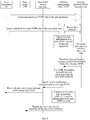
- FIG. 4 is a schematic flowchart of UE restoring a connection to the 3GPP network.
- the UE completes the attach procedure on the 3GPP side and the attach procedure on the non-3GPP side.
- the PGW receives the downlink data packet, selects a suitable bearer tunnel according to a data flow in the data packet, and further sends the downlink data packet to the SGW.
- the SGW sends the downlink data notification message to the mobility management network element by using the PDN.
- the downlink data notification message may include an International Mobile Subscriber Identity (international mobile subscriber identification number, IMSI).
- IMSI International Mobile Subscriber Identity
- the IMSI is the identifier of the UE, so as to determine specific information of the UE.
- the mobility management network element When the mobility management network element determines that the UE accesses the non-3GPP network, the mobility management network element adds the RAT to the downlink data notification message.
- the RAT indicates that the UE needs to restore an air interface connection corresponding to the RAT. For example, when the RAT indicates access to the 3GPP network, it represents that downlink data arrives from the 3GPP network side for the UE, and the UE needs to establish a connection to the 3GPP network.
- the mobility management network element sends the downlink data notification message including the RAT to the UE by using the non-3GPP access gateway, to enable the UE to initiate restoration of an air interface connection in a corresponding standard after receiving the RAT.
- the UE initiates a service request message on the 3GPP network side to the mobility management network element, so as to restore a connection on the 3GPP network side.
- the mobility management network element After triggering paging, the mobility management network element starts a paging timer.
- the paging timer is configured to calculate a paging time. If the service request message initiated by the UE is still not received after a paging time ends, the mobility management network element pages the UE again.
- the service request message is used to instruct the mobility management network element to send data to the UE by using a data connection channel.
- a paging message may be sent to all base stations in a location registration area of the UE. That is, a method in the prior art is used, or a corresponding paging manner in FIG. 2 in this embodiment of the present invention may be used. This is not limited here.
- the access identifier of the 3GPP network is access point name APN information.
- the mobility management network element may send a message carrying the APN information to a 3GPP access gateway.
- the PGW receives the downlink data packet, and configures a corresponding flow template for flow information, thereby obtaining the APN information corresponding to the downlink data packet.
- the flow information may be a source Internet Protocol (internet protocol, IP) address, a destination IP address, a source port number, a destination port number, and a transport layer protocol included in a data packet quintet.
- IP Internet Protocol
- the PGW may add the obtained APN information to the downlink data notification message to notify the mobility management network element, to enable the mobility management network element to obtain the APN information; or, the downlink data notification message carries a tunnel endpoint identifier (tunnel endpoint identifier, TEID), and the TEID is used to indicate a connection between the mobility management network element and the PDN that downlink data belongs to, thereby determining the APN information corresponding to the PDN.
- tunnel endpoint identifier tunnel endpoint identifier
- the mobility management network element sends the APN information to the non-3GPP access gateway in multiple manners.
- the downlink data notification message may be used to carry the APN information, or a connection request between the mobility management network element and the non-3GPP access gateway may be used to carry the APN information, or another manner of carrying the APN information may further be used. Therefore, the manner of sending the APN information is not limited here.
- the non-3GPP access gateway sends a null packet or a special data packet on the PDN corresponding to the APN information according to the APN information, to notify the UE that data is about to be sent by using the PDN, so as to enable the UE to determine a specific PDN from which a data packet is transmitted.
- the UE restores corresponding connections of a PDN connection in all standards. For example, when the UE is in an idle state on the 3GPP network side, the UE receives, on a non-3GPP network side, a null packet or a special data packet sent on the PDN connection.
- the UE initiates restoration of an air interface connection on the 3GPP side, to complete a connection to the 3GPP network. If the UE has established a connection to the 3GPP network, the connection restoration does not need to be performed.
- the mobility management network element instructs, on a user plane by using the non-3GPP access gateway, the UE to restore a connection to the 3GPP network side, so as to enable the UE to receive data by using the 3GPP network.
- the non-3GPP network is used to notify the UE that data is delivered from the 3GPP network side, and the UE establishes a connection to the 3GPP network according to the APN information. In this way, the UE establishes an accurate data connection channel according to an actual condition, so as to save network resources. Moreover, the efficiency of data transmission may be increased.
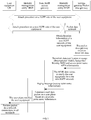
- FIG. 5 is another schematic flowchart of UE restoring a connection to the 3GPP network.
- the UE completes the attach procedure on the 3GPP side and the attach procedure on the non-3GPP side.
- the PGW receives the downlink data packet, selects a suitable bearer tunnel according to a data flow in the data packet, and further sends the downlink data packet to the SGW.
- the SGW sends the downlink data notification message to the mobility management network element by using the PDN.
- the downlink data notification message may include an IMSI and the APN information.
- the mobility management network element determines that the UE accesses the non-3GPP network
- the mobility management network element sends a paging message carrying the APN information to the non-3GPP access gateway.
- the non-3GPP access gateway generates a corresponding data packet on a user plane according to the APN information, and sends the data packet to the UE.
- the UE After receiving the data packet, the UE determines a corresponding PDN according to the data packet, and may restore connections in all standards under the PDN connection.
- the mobility management network element After triggering paging, the mobility management network element starts a paging timer.
- the paging timer is configured to calculate a paging time. If a service request message initiated by the UE is still not received after a paging time ends, the mobility management network element pages the UE again.
- the service request message is used to instruct the mobility management network element to send data to the UE by using a data connection channel.
- a paging message may be sent to all base stations in a location registration area of the UE. That is, a method in the prior art is used, or a corresponding paging manner in FIG. 2 in this embodiment of the present invention may be used. This is not limited here.
- the sending, by the mobility management network element, an access identifier of the 3GPP network to the UE by using a non-3GPP access gateway may include: sending, by the mobility management network element, the downlink data notification message carrying the APN information to a socket interface of the UE by using a socket socket interface of the non-3GPP access gateway.
- the mobility management network element sends the downlink data notification message carrying the APN information to the non-3GPP access gateway.
- Special socket interfaces are created for both the non-3GPP access gateway and the UE.
- the non-3GPP access gateway sends the paging message to the socket interface of the UE by using the socket interface, so that the UE forwards the paging message to a network-attached storage (network attached storage, NAS) module.
- the NAS module initiates a service request procedure of the UE and the 3GPP network side based on the received paging message, that is, triggers the UE to send a service request message to the mobility management network element.
- a connection process between two socket interfaces may include three steps: listening on the network side, requesting of UE, and connection acknowledgment.
- the socket interface of the non-3GPP access gateway on the network side does not locate the socket interface of the UE, but is in a state of waiting to be connected, so as to monitor a network state in real time.
- the socket interface of the UE provides a connection request, and a target that the socket interface of the UE needs to connect to is the socket interface of the non-3GPP access gateway on the network side.
- the socket interface of the non-3GPP access gateway that the socket interface of the UE needs to connect to need to be described first for the socket interface of the UE.
- a socket address and a port number of the non-3GPP access gateway are pointed out, and the UE then sends a connection request to the non-3GPP access gateway.
- the network side detects or receives a connection request, that is, the UE responds to the connection request of the UE and establishes a new thread, the UE may directly receive the downlink data notification message that is of the non-3GPP access gateway and that carries the APN information.
- socket interfaces are created on the UE and the non-3GPP access gateway.
- the mobility management network element directly sends, by using the socket interface of the non-3GPP access gateway, the downlink data notification message carrying the APN information to the socket interface of the UE, so that the UE restores a connection to the 3GPP network side. Therefore, this solution has diversity, and feasibility of the solution is enhanced.
- FIG. 6 is another schematic flowchart of UE restoring a connection to the 3GPP network.
- the UE completes the attach procedure on the 3GPP side and the attach procedure on the non-3GPP side.
- the PGW receives the downlink data packet, selects a suitable bearer tunnel according to a data flow in the data packet, and further sends the downlink data packet to the SGW.
- the SGW sends the downlink data notification message to the mobility management network element by using the PDN.
- the downlink data notification message may include an IMSI.
- the IMSI is the identifier of the UE, so as to determine specific information of the UE.
- socket interfaces are created on both the UE and the non-3GPP access gateway, so that a message may be directly transferred between the socket interfaces.
- the mobility management network element determines that the UE accesses the non-3GPP network
- the mobility management network element sends a paging message to the non-3GPP access gateway.
- the non-3GPP access gateway sends the paging message to the UE by using the socket interface of the UE in the form of a data packet.
- the UE forwards the paging message to the NAS module in the UE.
- the NAS module determines, according to the paging message, that the UE initiates restoration of an air interface connection in a corresponding standard, so as to complete a communication connection to the 3GPP network.
- the mobility management network element After triggering paging, the mobility management network element starts a paging timer.
- the paging timer is configured to calculate a paging time. If a service request message initiated by the UE is still not received after a paging time ends, the mobility management network element pages the UE again.
- the service request message is used to instruct the mobility management network element to send data to the UE by using a data connection channel.
- a paging message may be sent to all base stations in a location registration area of the UE. That is, a method in the prior art is used, or a corresponding paging manner in FIG. 2 in this embodiment of the present invention may be used. This is not limited here.
- the paging, by the mobility management network element, the UE according to the location information of the UE in the non-3GPP network may include: sending, by the mobility management network element, a second paging message to a base station, where the second paging message carries the location information of the UE in the non-3GPP network, and the location information of the UE in the non-3GPP network is used by the base station to determine, according to the location information of the UE in the non-3GPP network, to send the first paging message to the UE.
- the mobility management network element sends the second paging message to a base station in the registration area of the UE.
- the second paging message carries the location information of the UE in the non-3GPP network, so that the base station may determine, according to the location information of the UE in the non-3GPP network, to send the first paging message to the UE.
- the first paging message is a conventional paging message, and does not carry the location information of the UE in the non-3GPP network.
- a second paging message to a base station in the registration area of the UE For the sending, by the mobility management network element, a second paging message to a base station in the registration area of the UE, the prior art may be used.
- One or more base stations are selected in the registration area of the UE as the target base station to send the second paging message.
- a correspondence between the location information of the UE in the non-3GPP network and a base station is configured on a base station side.
- the base station determines, according to the location information of the UE in the non-3GPP network, to send the first paging message to the UE.
- the relationship between a base station and the location information of the non-3GPP network may be configured.
- the base station only the relationship between a base station and the location information of the non-3GPP network may be configured.
- the mobility management network element sends the second paging message to the target base station.
- the location information of the non-3GPP network of target UE exists in the second paging message.
- the target base station determines, according to a configured relationship between the location of the target base station and the location information of the non-3GPP network of the target UE, whether to send the first paging message to the target UE. If the location information of the non-3GPP network of the UE represents that the UE is currently not in the paging range of the base station, the target base station does not need to send the first paging message to the UE, thereby improving the use efficiency of an air interface.
- FIG. 2 and the first to eighth embodiments corresponding to FIG. 2 are all described from the perspective of a mobility management network element. Embodiments of the present invention are described below from the perspective of a base station.
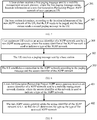
- FIG. 7 is a schematic flowchart of another paging method according to an embodiment of the present invention.
- the paging method may include the following steps.
- 201 Receive a first paging message sent by a mobility management network element, where the first paging message carries location information of user equipment UE in a non-3rd Generation Partnership Project 3GPP network.
- a base station receives the first paging message sent by the mobility management network element.
- the first paging message carries the location information of the UE in the non-3GPP network.
- a correspondence between the UE and the location information of the UE in the non-3GPP network may be configured on a base station side.
- the base station determines, according to the location information of the UE in the non-3GPP network, that the UE needs to be paged, and the base station sends a second paging message to the UE.
- the base station receives the first paging message sent by the mobility management network element, and determines, according to the location of the non-3GPP network of the UE carried in the first paging message, whether to page the UE.
- the UE may determine, according to the location information of the UE in the non-3GPP network, a target base station corresponding to the UE.
- the base station sends the second paging message to the UE.
- the second paging message does not carry the location information of the UE in the non-3GPP network.
- a relationship between a base station and the location information of the UE in the non-3GPP network may be configured.
- the mobility management network element sends the first paging message to the target base station.
- the location information of the non-3GPP network of the target UE exists in the first paging message.
- the UE may determine, according to the location information of the UE in the non-3GPP network, the target base station corresponding to the UE.
- the target base station determines, by using the location information of the UE in the non-3GPP network, whether to send the second paging message. If the location information of the UE in the non-3GPP network represents that UE is currently not in a paging range of the base station, a paging message does not need to be sent to the UE, thereby improving the use efficiency of an air interface.
- the sending, by the base station, a second paging message to the UE may include:
- the base station determines, according to the first paging message sent by the mobility management network element, whether paging needs to be performed.
- the location of the base station and the location information of the non-3GPP network may be preconfigured on the base station side.
- the target base station sends the second paging message to the target UE. If the location information of the non-3GPP network of the target UE does not exist in the correspondence configured on the base station side, the target base station does not page the target UE.
- a correspondence between a location of a base station and the location information of the non-3GPP network is configured on the base station side.
- the target UE accesses the non-3GPP network
- the location information of the non-3GPP network of the target UE is obtained, and it is determined whether the location information of the non-3GPP network of the target UE is in the correspondence preconfigured by the target base station.
- This correspondence may alternatively be understood as the paging range.
- the target base station can send the second paging message to the target UE in only the paging range. In this way, the paging range can be reduced, thereby improving use efficiency of an air interface.
- FIG. 7 is described from the perspective of a base station. Embodiments of the present invention are described below from the perspective of UE.
- FIG. 8 is a schematic flowchart of another paging method according to an embodiment of the present invention.
- the paging method may include the following steps.
- User equipment UE receives an access identifier of a 3GPP network sent by a non-3GPP access gateway, where the access identifier of the 3GPP network is used to indicate a type of the 3GPP network.
- a mobility management network element may send the access identifier of the 3GPP network to the UE by using the non-3GPP access gateway, where the access identifier of the 3GPP network is used to indicate the type of the 3GPP network.
- the UE may be determine the type of the accessed 3GPP network according to the access identifier of the 3GPP network.
- the UE receives a paging message sent by a base station.
- the UE receives the paging message sent by the base station.
- the base station may be a target base station determined by the mobility management network element according to location information of the UE in a non-3GPP network, or may be one or more base stations selected according to the prior art.
- the paging message received by the UE does not include the location information of the UE in the non-3GPP network.
- the UE establishes a connection to the 3GPP network according to the paging message and the access identifier of the 3GPP network.
- the UE determines, according to the access identifier of the 3GPP network, the type of the 3GPP network that needs to be accessed, so as to receive the paging message in the 3GPP network and rapidly restore a connection to the 3GPP network.
- the UE receives the access identifier of the 3GPP network sent by the non-3GPP access gateway and the paging message sent by the base station.
- the UE may establish a connection to the 3GPP network according to the paging message and the access identifier of the 3GPP network. In this way, the UE can rapidly and accurately connect to the 3GPP network, and perform paging based on the established connection to the 3GPP network.
- the receiving, by user equipment UE, an access identifier of the 3GPP network sent by a non-3GPP access gateway, where the access identifier of the 3GPP network is used to indicate a type of the 3GPP network may include:
- the access identifier of the 3GPP network may be the RAT.
- the mobility management network element may send a message carrying the RAT type to the non-3GPP access gateway.
- the non-3GPP access gateway notifies the RAT to the UE again.
- the UE determines, according to the RAT, the 3GPP network corresponding to an indication of the RAT.
- the mobility management network element sends the RAT to the non-3GPP access gateway in multiple manners.
- a downlink data notification may be used to carry the RAT, or a connection request between the mobility management network element and the non-3GPP access gateway may be used to carry the RAT, or the RAT may further be added to the paging message sent to the UE. Therefore, the manner of sending the RAT is not limited here.
- the non-3GPP access gateway instructs the UE to restore the air interface connection indicated by the RAT.
- the non-3GPP access gateway may send downlink data carrying the RAT to the UE, or, another message transmitted between the non-3GPP access gateway and the UE carries the RAT.
- the mobility management network element instructs the UE on a control plane by using the non-3GPP access gateway to restore a connection to a 3GPP network side, to enable the UE to receive data by using the target network.
- the non-3GPP network is used to notify the UE that data is delivered from a 3GPP network side, and the UE establishes a connection to the target network according to the RAT.
- a paging connection between the UE and the 3GPP network can be precisely established according to an actual condition, so as not to occupy excessive network resources. Moreover, switching may be performed between different target networks, thereby increasing the feasibility and flexibility of the solution.
- the receiving, by user equipment UE, an access identifier of a 3GPP network sent by a non-3GPP access gateway, where the access identifier of the 3GPP network is used to indicate a type of the 3GPP network may include:
- the mobility management network element may send a message carrying the APN to a 3GPP access gateway.
- a PGW receives a downlink data packet, and configures a corresponding flow template for flow information, thereby obtaining the APN information corresponding to the downlink data packet.
- the PGW may add the obtained APN information to a downlink data notification and send the downlink data notification to the mobility management network element, to enable the mobility management network element to obtain the APN information; or, the downlink data notification carries a TEID, and the TEID is used to indicate a connection between the mobility management network element and a PDN that downlink data belongs to, thereby determining the APN information corresponding to the PDN.
- the mobility management network element sends the APN information to the non-3GPP access gateway in multiple manners.
- a downlink data notification may be used to carry the APN information, or a connection request between the mobility management network element and the non-3GPP access gateway may be used to carry the APN information, or the APN information may further be added to the paging message sent to the UE. Therefore, the manner of sending the APN information is not limited here.
- the non-3GPP access gateway sends a null packet or a special data packet on the PDN corresponding to the APN information according to the APN information, to notify the UE that data is about to be sent by using the PDN, so that the UE may determine the PDN from which a data packet is transmitted.
- the UE restores corresponding connections of a PDN connection in all standards. For example, when the UE is in an idle state on the 3GPP network side, the UE receives, on a non-3GPP network side, a null packet or a special data packet sent on the PDN connection. If the PDN connection also supports access to the 3GPP network, the UE initiates restoration of an air interface connection on the 3GPP side, so as to determine the type of the accessed 3GPP network.
- the mobility management network element instructs, on a user plane by using the non-3GPP access gateway, the UE to restore a connection to a target network side, to enable the UE to receive data by using the target network.
- the non-3GPP network is used to notify the UE that data is delivered from the 3GPP network side.
- the UE determines, according to the APN information, the type of the accessed 3GPP network. In this way, the UE establishes an accurate data connection channel according to an actual condition, thereby saving network resources. Moreover, the efficiency of data transmission may be increased.
- a third optional embodiment of the paging method provided in this embodiment of the present invention may further include: establishing, by the UE, a socket socket interface.
- the receiving, by the UE, access point name APN information sent by the mobility management network element by using the non-3GPP access gateway may include: receiving, by the UE by using the socket interface, the access point name APN information sent by the non-3GPP access gateway by using the socket interface.
- the mobility management network element sends a paging message or downlink data notification message carrying the APN information to the non-3GPP access gateway.
- Special socket interfaces are created for both the non-3GPP access gateway and the UE.
- the non-3GPP access gateway sends the paging message carrying the APN information to the socket interface of the UE by using the socket interface.
- the UE forwards the paging message to a NAS module.
- the NAS module initiates a service request procedure of the UE and the 3GPP network side based on the received paging message, that is, triggers the UE to send a service request message to the mobility management network element.
- a data packet, a notification message or the like may further carry the APN information.
- the present invention is not only limited to that the paging message carries the APN information.
- a connection process between two socket interfaces may include three steps: listening on a network side, requesting of UE, and connection acknowledgment.
- the socket interface of the non-3GPP access gateway on the network side does not locate the socket interface of the UE, but is in a state of waiting to be connected, so as to monitor a network state in real time.
- the socket interface of the UE provides a connection request, and a target that the socket interface of the UE needs to connect to is the socket interface of the non-3GPP access gateway on the network side.
- the socket interface of the non-3GPP access gateway that the socket interface of the UE needs to connect to need to be described first for the socket interface of the UE.
- a socket address and a port number of the non-3GPP access gateway are pointed out, and the UE then sends a connection request to the non-3GPP access gateway.
- the network side detects or receives a connection request, that is, the UE responds to the connection request of the UE and establishes a new thread, the UE may directly receive a paging message of the non-3GPP access gateway.
- socket interfaces are created on the UE and the non-3GPP access gateway, the mobility management network element directly sends the APN information to the socket interface of the UE by using the socket interface of the non-3GPP access gateway, so as to complete restoration of a connection to the 3GPP network side by the UE. Therefore, this solution has diversity, and feasibility of the solution is enhanced.
- FIG. 8 and the first to third embodiments corresponding to FIG. 8 are all described from the perspective of UE. Embodiments of the present invention are described below from the perspective of a non-3GPP access gateway.
- FIG. 9 is a schematic flowchart of another paging method according to an embodiment of the present invention.
- the paging method may include the following steps.
- a non-3rd Generation Partnership Project 3GPP access gateway receives an access identifier of a 3GPP network sent by a mobility management network element, where the access identifier of the network is used to indicate a type of the 3GPP network.
- the mobility management network element may send the access identifier of the 3GPP network to the non-3GPP access gateway.
- the access identifier of the network is used to indicate the type of the 3GPP network.
- the non-3GPP access gateway sends the access identifier of the 3GPP network to UE, so that the UE determines the type as the type of the accessed 3GPP network.
- the non-3GPP access gateway sends the received access identifier of the 3GPP network to the UE.
- the UE may determine the type of the accessed 3GPP network according to the access identifier of the 3GPP network.
- the UE may receive the access identifier of the 3GPP network sent by the non-3GPP access gateway.
- the access identifier is used to determine a type corresponding to the 3GPP network. In this way, the UE can rapidly and accurately connect to the 3GPP network.
- the receiving, by a non-3rd Generation Partnership Project 3GPP access gateway, an access identifier of a 3GPP network sent by a mobility management network element may include: receiving, by the non-3GPP access gateway, a radio access type RAT sent by the mobility management network element, where the RAT is used to indicate the type of the 3GPP network.
- the sending, by the non-3GPP access gateway, the access identifier of the 3GPP network to the UE may include: sending, by the non-3GPP access gateway, the RAT to the UE.
- the mobility management network element may send a message carrying RAT to the non-3GPP access gateway.
- the non-3GPP access gateway notifies the RAT to the UE again, so that after receiving the RAT, the UE initiates restoration of an air interface connection under a corresponding instruction, to complete a process of establishing a data connection channel to the 3GPP network.
- the RAT may be understood as one specific identifier of access identifiers of the 3GPP network.
- the mobility management network element sends the RAT to the non-3GPP access gateway in multiple manners.
- a downlink data notification may be used to carry the RAT, or a connection request between the mobility management network element and the non-3GPP access gateway may be used to carry the RAT, or the RAT may further be added to the paging message sent to the UE. Therefore, the manner of sending the RAT is not limited here.
- the non-3GPP access gateway instructs the UE to restore the air interface connection indicated by the RAT.
- the non-3GPP access gateway may send downlink data carrying the RAT to the UE, or, another message transmitted between the non-3GPP access gateway and the UE carries the RAT.
- the mobility management network element instructs the UE on a control plane by using the non-3GPP access gateway to restore a connection to a 3GPP network side, to enable the UE to receive data by using the target network.
- a non-3GPP network is used to notify the UE that data is delivered from a 3GPP network side.
- the UE may precisely establish a paging connection to the 3GPP network according to an actual condition, so as not to occupy excessive network resources. Moreover, switching may be performed between different target networks, thereby increasing the feasibility and flexibility of the solution.
- the receiving, by a non-3rd Generation Partnership Project 3GPP access gateway, an access identifier of a 3GPP network sent by a mobility management network element may include: receiving, by the non-3GPP access gateway, access point name APN information sent by the mobility management network element, where the APN information is used to indicate the type of the 3GPP network.
- the sending, by the non-3GPP access gateway, an access identifier of the 3GPP network to the UE may include: sending, by the non-3GPP access gateway, the APN information to the UE.
- the mobility management network element may send a message carrying the APN to a 3GPP access gateway.
- a PGW receives a downlink data packet, and configures a corresponding flow template for flow information, thereby obtaining the APN information corresponding to the downlink data packet.
- the PGW may add the obtained the APN information to a downlink data notification and send the downlink data notification to the mobility management network element, to enable the mobility management network element to obtain the APN information.
- the downlink data notification carries a TEID, and the TEID is used to indicate a connection between the mobility management network element and a PDN that downlink data belongs to, thereby determining the APN information corresponding to the PDN.
- the mobility management network element sends the APN information to the non-3GPP access gateway in multiple manners.
- a downlink data notification may be used to carry the APN information, or a connection request between the mobility management network element and the non-3GPP access gateway may be used to carry the APN information, or the APN information may further be added to the paging message sent to the UE. Therefore, the manner of sending the APN information is not limited here.
- the non-3GPP access gateway sends a null packet or a special data packet on the PDN corresponding to the APN information according to the APN information, to notify the UE that data is about to be sent by using the PDN, so as to enable the UE to determine a specific PDN from which data is transmitted.
- the UE restores corresponding connections of a PDN connection in all standards. For example, when the UE is in an idle state on the 3GPP network side, the UE receives, on a non-3GPP network side, a null packet or a special data packet sent on the PDN connection. If the PDN connection also supports access to the 3GPP network, the UE initiates restoration of an air interface connection on the 3GPP side, to complete a connection to the 3GPP network.
- the mobility management network element instructs, on a user plane by using the non-3GPP access gateway, the UE to restore a connection to a target network side, to enable the UE to receive data by using the target network.
- the non-3GPP network is used to notify the UE that data is delivered from the 3GPP network side, and the UE establishes a connection to the 3GPP network according to the APN information. In this way, the UE establishes an accurate data connection channel according to an actual condition, thereby saving network resources. Moreover, the efficiency of data transmission may be increased.
- a third optional embodiment of the paging method provided in this embodiment of the present invention may further include: establishing, by the non-3GPP access gateway, a socket socket interface.
- the sending, by the non-3GPP access gateway, the APN information to the UE may include: sending, by the non-3GPP access gateway, the APN information to the socket interface of the UE by using the socket interface, where the APN information is used to indicate the type of the 3GPP network, so that the UE determines the type as the type of the accessed 3GPP network.
- the mobility management network element sends a paging message to the non-3GPP access gateway.
- Special socket interfaces are created for both the non-3GPP access gateway and the UE.
- the non-3GPP access gateway sends the paging message to the socket interface of the UE by using the socket interface, so that the UE forwards the paging message to a NAS module.
- the NAS module initiates a service request procedure of the UE and the 3GPP network side based on the received paging message, that is, triggers the UE to send a service request message to the mobility management network element.
- the socket interfaces are created on the UE and the non-3GPP access gateway, the mobility management network element directly sends the paging message to the socket interface of the UE by using the socket interface of the non-3GPP access gateway, so as to complete restoration of a connection to the 3GPP network side by the UE. Therefore, this solution has diversity, and feasibility of the solution is enhanced.
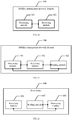
- a mobility management network element 500 in this embodiment of the present invention includes:
- the processing module 501 is further configured to page the UE according to the location information of the UE in the non-3GPP network.
- a processing module 501 obtains the location information of the non-3rd Generation Partnership Project 3GPP network of the user equipment UE, where the UE is UE that already accesses the non-3GPP network.
- the receiving module 502 receives the downlink data notification message, where the downlink data notification message carries the identifier of the UE.
- the processing module 501 further pages the UE according to the location information of the UE in the non-3GPP network.
- the mobility management network element obtains the location information of the UE in the non-3GPP network, and when paging the UE in a 3GPP network, may determine a paging range according to the location information of the UE in the non-3GPP network but does not need to send a paging message to all base stations in a registration area of the UE, so that paging signaling is effectively reduced, and air interface resources are saved.
- the mobility management network element 50 further includes a sending module 503.
- the processing module 501 is specifically configured to: determine a target base station according to the location information of the UE in the non-3GPP network, and control the sending module 503 to send a first paging message to the target base station.
- a relationship between a base station and location information of the non-3GPP network may be configured on the mobility management network element.
- the mobility management network element determines the target base station according to the location information of the UE in the non-3GPP network.
- the target base station may send the first paging message to the UE by using the prior art. In this way, the paging message may not need to be sent to all base stations in the registration area of the UE. Generally, there is only one target base station. In this way, a quantity of selected base stations is greatly reduced, thereby further reducing paging signaling, and air interface resources are saved.
- the processing module 501 is specifically configured to determine the target base station according to a correspondence between the target base station and the location information of the UE in the non-3GPP network.
- a correspondence between a location of a base station and location information of the non-3GPP network may be configured on the mobility management network element. After the location information of the UE in the non-3GPP network is obtained, and the target base station is selected by the mobility management network element according to the correspondence, thereby improving feasibility and operability of a solution during actual application.
- the processing module 501 is specifically configured to: determine location information of the UE in the 3GPP network according to the location information of the UE in the non-3GPP network, and determine the target base station according to a correspondence between a base station and the location information of the UE in the 3GPP network.
- the location information of the 3GPP network is determined by using the location information of the UE in the non-3GPP network, and the location information of the UE in the 3GPP network may be located more precisely.
- the 3GPP network when the 3GPP network is used to page UE in an idle state, the obtained paging range is relatively large, and multiple location areas may be included. Each location area is formed of multiple cells. Therefore, in this embodiment, the location information of the UE in the 3GPP network is used to determine the paging range, so that the paging range can further be reduced, thereby reducing sending of paging messages, so as to save air interface resources.
- the sending module 503 is further configured to: after the receiving module 502 receives the downlink data notification message, send an access identifier of the 3GPP network to the UE by using a non-3GPP access gateway, where the access identifier of the 3GPP network is used to indicate a type of the accessed 3GPP network to the UE.
- the UE may receive the access identifier of the 3GPP network sent by a network side, and determine, by using the access identifier of the 3GPP network, to receive paging in the corresponding 3GPP network. In this way, the UE can rapidly and accurately connect to the 3GPP network.
- the access identifier of the 3GPP network includes a radio access technology RAT type.
- the mobility management network element instructs the UE on a control plane by using the non-3GPP access gateway to restore a connection to a 3GPP network side, to enable the UE to receive data by using the target network.
- the non-3GPP network is used to notify the UE that data is delivered from a 3GPP network side, and the UE establishes a connection to the target network according to the RAT.
- a paging connection between the UE and the 3GPP network can be precisely established according to an actual condition, so as not to occupy excessive network resources.
- switching may be performed between different target networks, thereby increasing the feasibility and flexibility of the solution.
- the access identifier of the 3GPP network is access point name APN information.
- the mobility management network element instructs the UE on a user plane by using the non-3GPP access gateway to restore a connection to a 3GPP network side, to enable the UE to receive data by using the 3GPP network.
- the non-3GPP network is used to notify the UE that data is delivered from a 3GPP network side, and the UE establishes a connection to the 3GPP network according to the APN information. In this way, the UE establishes an accurate data connection channel according to an actual condition, thereby saving network resources. Moreover, the efficiency of data transmission may be increased.
- the sending, by the sending module 503, an access identifier of the 3GPP network to the UE by using a non-3GPP access gateway includes: sending, by the sending module 503, the downlink data notification message carrying the APN information to a socket interface of the UE by using a socket socket interface of the non-3GPP access gateway.
- the socket interfaces are created on the UE and the non-3GPP access gateway, the mobility management network element directly sends the downlink data notification message carrying the APN information to the socket interface of the UE by using the socket interface of the non-3GPP access gateway, so as to complete restoration of a connection to the 3GPP network side by the UE. Therefore, this solution has diversity, and feasibility of the solution is enhanced.
- the mobility management network element further includes a sending module 503, where the sending module 503 is specifically configured to send a second paging message to a base station, where the second paging message carries the location information of the UE in the non-3GPP network, and the location information of the UE in the non-3GPP network is used by the base station to determine, according to the location information of the UE in the non-3GPP network, to send the first paging message to the UE.
- a relationship between a base station and location information of the non-3GPP network may be configured.
- the mobility management network element sends the second paging message to the target base station.
- the location information of the non-3GPP network of target UE exists in the second paging message.
- the target base station determines, according to a configured relationship between the location of the target base station and the location information of the non-3GPP network of the target UE, whether to send the first paging message to the target UE. If the location information of the UE in the non-3GPP network represents that the UE is currently not in the paging range of the base station, the first paging message does not need to be sent to the UE, thereby improving the use efficiency of an air interface.
- a base station 600 in this embodiment of the present invention includes:
- the receiving module 601 receives the first paging message sent by the mobility management network element, where the first paging message carries the location information of the non-3rd Generation Partnership Project 3GPP network of the user equipment UE.
- the sending module 602 is controlled to send the second paging message to the UE.
- the sending module 602 is configured to send the second paging message to the UE.
- a relationship between a base station and the location information of the UE in the non-3GPP network may be configured.
- the mobility management network element sends the first paging message to a target base station.
- the location information of the non-3GPP network of the target UE exists in the first paging message.
- the UE may determine, according to the location information of the UE in the non-3GPP network, the target base station corresponding to the UE.
- the target base station determines, by using the location information of the UE in the non-3GPP network, whether to send the second paging message. If the location information of the UE in the non-3GPP network represents that the UE is currently not in a paging range of the base station, a paging message does not need to be sent to the UE, thereby improving the use efficiency of an air interface.
- the processing module 603 is specifically configured to: determine the paging range according to the location information of the UE in the non-3GPP network carried in the first paging message received by the receiving module 601, and control the sending module 602 to send the second paging message to the UE in the paging range.
- a correspondence between a location of a base station and the location information of the non-3GPP network is configured on a base station side.
- the target UE accesses the non-3GPP network
- the location information of the non-3GPP network of the target UE is obtained, and it is determined whether the location information of the non-3GPP network of the target UE is in the correspondence preconfigured by the target base station.
- This correspondence may alternatively be understood as the paging range.
- the target base station can send the second paging message to the target UE in only the paging range. In this way, the paging range can be reduced, thereby improving use efficiency of an air interface.
- FIG. 13 is a schematic structural diagram of a mobility management network element 70 according to an embodiments of the present invention.
- the mobility management network element 70 may include an input device 710, an output device 720, a processor 730, and a memory 740.
- the output device in this embodiment of the present invention may be a display device.
- the memory 740 may include a read-only memory and a random-access memory, and provide an instruction and data to the processor 730.
- a part of the memory 740 may further include a non-volatile random-access memory (Non-Volatile Random Access Memory, NVRAM).
- NVRAM Non-Volatile Random Access Memory
- the memory 740 stores the following elements: executable modules, or data structures, or a subset thereof, or an extended set thereof;
- the processor 730 is configured to:
- the processor 730 is specifically configured to: determine a target base station according to the location information of the UE in the non-3GPP network, and send a first paging message to the UE by using the target base station.
- processor 730 is specifically configured to:
- the processor 730 is specifically configured to: obtain access point name APN information from the downlink notification message.
- the input device 710 is configured to: receive a downlink data notification message, where the downlink data notification message carries an identifier of the UE.
- the output device 720 is configured to: send an access identifier of the 3GPP network to the UE by using a non-3GPP access gateway, where the access identifier of the 3GPP network is used to indicate a type of the 3GPP network, to enable the UE to determine the type as the type of the accessed 3GPP network.
- the output device 720 is specifically configured to: notify the UE of a radio access type RAT by using the non-3GPP access gateway, where the RAT is used to indicate the type of the 3GPP network, to enable the UE to determine the type as the type of the accessed 3GPP network.
- the output device 720 is specifically configured to: send the downlink data notification message carrying the APN information to the UE by using the non-3GPP access gateway, where the APN information is used to indicate the type of the 3GPP network, to enable the UE to determine the type as the type of the accessed 3GPP network.
- the output device 720 is specifically configured to: send the downlink data notification message carrying the APN information to a socket interface of the UE by using a socket socket interface of the non-3GPP access gateway.
- the output device 720 is specifically configured to: send a second paging message to a base station, where the second paging message carries the location information of the UE in the non-3GPP network, so that the UE determines the target base station according to the location information of the UE in the non-3GPP network, and send the first paging message to the UE by using the target base station.
- the processor 730 controls an operation of the mobility management network element 70.
- the processor 730 may further be referred to as a central processing unit (central processing unit, CPU).
- the memory 740 may include a read-only memory and a random-access memory, and provide an instruction and data to the processor 730. A part of the memory 740 may further include an NVRAM.
- the components of the mobility management network element 70 are coupled together by using a bus system 950.
- the bus system 950 may further include, in addition to a data bus, a power supply bus, a control bus, a status signal bus, and the like. However, for clear description, various types of buses in the figure are marked as the bus system 750.
- the methods disclosed in the foregoing embodiments of the present invention may be applied to the processor 730, or are implemented by the processor 730.
- the processor 730 may be an integrated circuit chip and have a signal processing capability. During implementation, each step of the foregoing method may be implemented by a hardware integrated logical circuit in the processor 730 or by an instruction in a software form.
- the processor 730 may be a general purpose processor, a digital signal processor (Digital Signal Processor, DSP), an application-specific integrated circuit (Application Specific Integrated Circuit, ASIC), a field-programmable gate array (Field Programmable Gate Array, FPGA), or another programmable logic device, discrete gate or transistor logic device, or discrete hardware component.
- DSP Digital Signal Processor
- ASIC Application Specific Integrated Circuit
- FPGA Field Programmable Gate Array
- the processor may implement or perform the methods, the steps, and logical block diagrams that are disclosed in the embodiments of the present invention.
- the general-purpose processor may be a microprocessor, or the processor may further be any conventional processor, or the like. Steps of the methods disclosed with reference to the embodiments of the present invention may be directly performed and completed by using a hardware decoding processor, or may be performed and completed by using a combination of hardware and software modules in the decoding processor.
- the software module may be located in a mature storage medium in the field, such as a random-access memory, a flash memory, a read-only memory, a programmable read-only memory, an electrically-erasable programmable memory, or a register.
- the storage medium is located in the memory 740, and the processor 730 reads information in the memory 740 and completes the steps in the foregoing methods in combination with hardware of the processor.
- FIG. 14 is a schematic structural diagram of a base station according to an embodiment of the present invention.
- a base station 800 may have a relatively large difference because of configuration or performance differences, and may include one or more CPUs 822 (for example, one or more processors), a memory 832, and one or more storage media 830 storing an application program 842 or data 844 (for example, one or more massive storage devices).
- the memory 832 and the storage medium 830 may be transient storages or persistent storages.
- a program stored in the storage medium 830 may include one or more modules (not shown in the figure), and each module may include a series of instruction operations in the server.
- the central processing unit 822 may be configured to communicate with the storage medium 830, and executes a series of instruction operations in the storage medium 830 on the base station 800.
- the base station 800 may further include one or more power supplies 826, one or more wired or wireless network interfaces 850, one or more input/output interfaces 858, and/or, one or more operating systems 841, for example, a Windows ServerTM, a Mac OS XTM, UnixTM, LinuxTM, and FreeBSDTM.
- one or more operating systems 841 for example, a Windows ServerTM, a Mac OS XTM, UnixTM, LinuxTM, and FreeBSDTM.
- the steps performed by a base station in the foregoing embodiment may be based on the structure of the base station shown by 80 in FIG. 14 .
- the input/output apparatus 858 may be configured to:
- the input/output apparatus 858 may further be specifically configured to: send the second paging message to the UE in a paging range.
- the central processing unit 822 may be configured to: determine the paging range according to the location information of the UE in the non-3GPP network carried in the first paging message.
- an embodiment of the present invention further provides a paging system, including: a mobility management network element 901 and a base station 902.
- the mobility management network element 901 is configured to: obtain, by the mobility management network element 901, location information of user equipment UE in a non-3rd Generation Partnership Project 3GPP network, where the UE is UE that already accesses the non-3GPP network; receive, by the mobility management network element 901, a downlink data notification message, where the downlink data notification message carries an identifier of the UE; and page, by the mobility management network element 901, the UE according to the location information of the UE in the non-3GPP network.
- the base station 902 is configured to: receive, by the base station 902, a first paging message sent by the mobility management network element 901, where the first paging message carries the location information of the non-3rd Generation Partnership Project 3GPP network of the user equipment UE; and determine, by the base station 902, according to the location information of the UE in the non-3GPP network, that the UE needs to be paged, and send, by the base station 902, a second paging message to the UE.
- the mobility management network element obtains the location information of the UE in the non-3GPP network, and when paging the UE in the 3GPP network, may determine a paging range according to the location information of the UE in the non-3GPP network but does not need to send a paging message to all base stations in a registration area of the UE, so that paging signaling is effectively reduced, and air interface resources are saved.
- the disclosed system, apparatus, and method may be implemented in other manners.
- the described apparatus embodiment is merely an example.
- the unit division is merely logical function division and may be other division during actual implementation.
- a plurality of units or components may be combined or integrated into another system, or some features may be ignored or not performed.
- the displayed or discussed mutual couplings or direct couplings or communication connections may be implemented by using some interfaces.
- the indirect couplings or communication connections between the apparatuses or units may be implemented in electronic, mechanical, or other forms.
- the units described as separate parts may or may not be physically separate, and parts displayed as units may or may not be physical units, may be located in one location, or may be distributed on a plurality of network units. Some or all of the units may be selected according to actual requirements to achieve the objectives of the solutions of the embodiments.
- functional units in the embodiments of the present invention may be integrated into one processing unit, or each of the units may exist alone physically, or two or more units are integrated into one unit.
- the integrated unit may be implemented in a form of hardware, or may be implemented in a form of a software functional unit.
- the integrated unit When the integrated unit is implemented in the form of a software functional unit and sold or used as an independent product, the integrated unit may be stored in a computer-readable storage medium. Based on such an understanding, the technical solutions of the present invention essentially, or the part contributing to the prior art, or all or some of the technical solutions may be implemented in the form of a software product.
- the software product is stored in a storage medium and includes several instructions for instructing a computer device (which may be a personal computer, a server, or a network device) to perform all or some of the steps of the methods described in the embodiments of the present invention.
- the foregoing storage medium includes: any medium that can store program code, such as a USB flash drive, a removable hard disk, a read-only memory (read-only memory, ROM), a random-access memory (random access memory, RAM), a magnetic disk, or an optical disc.
- program code such as a USB flash drive, a removable hard disk, a read-only memory (read-only memory, ROM), a random-access memory (random access memory, RAM), a magnetic disk, or an optical disc.
Landscapes
- Engineering & Computer Science (AREA)
- Computer Networks & Wireless Communication (AREA)
- Signal Processing (AREA)
- Physics & Mathematics (AREA)
- Probability & Statistics with Applications (AREA)
- Databases & Information Systems (AREA)
- Mobile Radio Communication Systems (AREA)
Applications Claiming Priority (1)
| Application Number | Priority Date | Filing Date | Title |
|---|---|---|---|
| PCT/CN2015/089515 WO2017045099A1 (fr) | 2015-09-14 | 2015-09-14 | Procédé, dispositif et système de radiomessagerie |
Publications (3)
| Publication Number | Publication Date |
|---|---|
| EP3337282A1 true EP3337282A1 (fr) | 2018-06-20 |
| EP3337282A4 EP3337282A4 (fr) | 2018-07-25 |
| EP3337282B1 EP3337282B1 (fr) | 2020-07-29 |
Family
ID=58288222
Family Applications (1)
| Application Number | Title | Priority Date | Filing Date |
|---|---|---|---|
| EP15903790.2A Active EP3337282B1 (fr) | 2015-09-14 | 2015-09-14 | Procédé et dispositif de radiomessagerie |
Country Status (6)
| Country | Link |
|---|---|
| US (1) | US10945233B2 (fr) |
| EP (1) | EP3337282B1 (fr) |
| JP (1) | JP6782768B2 (fr) |
| CN (2) | CN107211472B (fr) |
| RU (1) | RU2692040C1 (fr) |
| WO (1) | WO2017045099A1 (fr) |
Cited By (2)
| Publication number | Priority date | Publication date | Assignee | Title |
|---|---|---|---|---|
| EP3607788B1 (fr) * | 2017-05-05 | 2022-02-09 | Samsung Electronics Co., Ltd. | Procédés et systèmes d'exécution d'opérations de recherche de mobile dans un réseau 5g |
| EP4061071A4 (fr) * | 2019-11-15 | 2023-07-12 | Beijing Xiaomi Mobile Software Co., Ltd. | Procédé d'envoi de signalisation de radiomessagerie, procédé de radiomessagerie, et procédé et dispositif d'envoi d'informations |
Families Citing this family (10)
| Publication number | Priority date | Publication date | Assignee | Title |
|---|---|---|---|---|
| CN107241369B (zh) * | 2016-03-28 | 2020-06-16 | 电信科学技术研究院 | 一种数据传输的方法、装置及会话管理功能实体设备 |
| SG11202000651TA (en) * | 2017-08-18 | 2020-02-27 | Guangdong Oppo Mobile Telecommunications Corp Ltd | Method for paging, and access network device, terminal device and core network device |
| JP6735719B2 (ja) * | 2017-09-29 | 2020-08-05 | Kddi株式会社 | ノード装置及びその制御方法、並びにプログラム |
| CN109699051B (zh) * | 2017-10-21 | 2022-12-27 | 上海朗帛通信技术有限公司 | 一种无线通信的用户设备、网络设备中的方法和装置 |
| CN113170411B (zh) * | 2018-09-29 | 2023-05-05 | 中兴通讯股份有限公司 | 无线通信方法、装置及计算机可读介质 |
| CN113678521A (zh) * | 2020-03-13 | 2021-11-19 | 北京小米移动软件有限公司 | 一种信息处理方法方法及装置、通信设备及存储介质 |
| CN112788639B (zh) * | 2021-01-22 | 2023-08-25 | Oppo广东移动通信有限公司 | 网络状态同步方法、装置、存储介质及电子设备 |
| CN116137720A (zh) * | 2021-11-16 | 2023-05-19 | 华为技术有限公司 | 降低功耗的方法和电子设备 |
| CN116962999A (zh) * | 2022-04-26 | 2023-10-27 | 联发科技股份有限公司 | 接入域偏好选择方法及用户设备 |
| US12273789B2 (en) * | 2022-06-21 | 2025-04-08 | Qualcomm Incorporated | Measurement of sounding reference signal via uplink relay |
Family Cites Families (31)
| Publication number | Priority date | Publication date | Assignee | Title |
|---|---|---|---|---|
| CN101001449B (zh) * | 2006-01-10 | 2010-05-12 | 中兴通讯股份有限公司 | 不同接入系统间的寻呼方法 |
| EP1841142A1 (fr) * | 2006-03-27 | 2007-10-03 | Matsushita Electric Industries Co., Ltd. | Mode sommeil et initiation d'un service pour terminal mobile |
| EP1876850A1 (fr) * | 2006-07-03 | 2008-01-09 | Alcatel Lucent | Une méthode pour améliorer la performance de télé-appel dans un système d' accès sans fil |
| CN101330704B (zh) * | 2007-06-20 | 2012-01-25 | 华为技术有限公司 | 网络管理控制的实现方法及装置 |
| CN101374258B (zh) * | 2007-08-20 | 2012-07-04 | 华为技术有限公司 | 一种实现网络后向兼容的系统和附着、去附着方法 |
| US7974228B2 (en) * | 2008-01-07 | 2011-07-05 | Alcatel-Lucent Usa Inc. | Method of signaling-free idle mode mobility for an integrated 3GPP and 3GPP2 network |
| US8477811B2 (en) | 2008-02-02 | 2013-07-02 | Qualcomm Incorporated | Radio access network (RAN) level keep alive signaling |
| EP2120503B1 (fr) | 2008-05-13 | 2019-09-04 | Samsung Electronics Co., Ltd. | Procédés et dispositifs pour fournir un appel vocal à travers un domaine à commutation de circuits vers un ue |
| US9020505B2 (en) * | 2008-09-17 | 2015-04-28 | Qualcomm Incorporated | Quick system selection and acquisition for multi-mode mobile devices |
| CN101677470B (zh) * | 2008-09-18 | 2011-12-21 | 华为技术有限公司 | 服务请求的处理方法、装置及系统 |
| US9839001B2 (en) * | 2009-03-23 | 2017-12-05 | Apple Inc. | Methods and apparatus for optimizing paging mechanisms and publication of dynamic paging mechanisms |
| CN103888931B (zh) * | 2009-04-28 | 2017-07-07 | 华为技术有限公司 | 一种寻呼方法、位置更新方法及装置 |
| US8571582B2 (en) * | 2010-11-04 | 2013-10-29 | Verizon Patent And Licensing Inc. | LTE smart paging list |
| EP2466976B1 (fr) * | 2010-12-15 | 2017-09-27 | OCT Circuit Technologies International Limited | Pagination basée sur IP pour DSDS |
| CN102036375B (zh) * | 2010-12-17 | 2013-07-24 | 大唐移动通信设备有限公司 | 一种获取终端位置信息的方法、系统和设备 |
| WO2012147270A1 (fr) | 2011-04-28 | 2012-11-01 | Panasonic Corporation | Système de communication, terminal mobile, routeur et entité de gestion de mobilité |
| CN103096391B (zh) * | 2011-11-02 | 2016-03-30 | 华为终端有限公司 | 多pdn连接下资源优化的方法及装置 |
| CN103959893B (zh) * | 2011-12-02 | 2018-01-26 | 诺基亚技术有限公司 | 用于多模通信的方法和装置 |
| WO2013089524A1 (fr) * | 2011-12-17 | 2013-06-20 | 엘지전자 주식회사 | Procédé de transmission/réception de message d'appel dans un système de communication sans fil et appareil correspondant |
| CN102523571B (zh) * | 2011-12-23 | 2015-11-25 | 华为终端有限公司 | 一种单卡双待用户设备驻留网络的方法及用户设备 |
| CN103220653B (zh) | 2012-01-18 | 2018-09-25 | 中兴通讯股份有限公司 | 移动中继跟踪区域配置及位置更新方法和装置 |
| CN103369708B (zh) * | 2012-03-29 | 2018-08-31 | 南京中兴软件有限责任公司 | 一种使用移动网络的方法及装置 |
| US9247528B2 (en) * | 2012-10-12 | 2016-01-26 | Cisco Technology, Inc. | System and method for reducing paging in UTRAN/GERAN/E-UTRAN networks when idle signaling reduction is active |
| CN104396323A (zh) * | 2012-12-24 | 2015-03-04 | 华为技术有限公司 | 寻呼处理方法、装置及系统 |
| CN103945535B (zh) * | 2013-01-18 | 2018-07-10 | 中兴通讯股份有限公司 | 寻呼优化的方法、装置、系统 |
| WO2014148970A1 (fr) * | 2013-03-20 | 2014-09-25 | Telefonaktiebolaget L M Ericsson (Publ) | Procédures de commande de technologies d'accès radio (rat) alternatives dans des terminaux aptes au multi-rat |
| US20140334465A1 (en) * | 2013-05-08 | 2014-11-13 | Lg Electronics Inc. | Method and apparatus for paging based on location information of a user equipment in a convergence network of a plurality of communication systems |
| CN104185278B (zh) * | 2013-05-20 | 2018-12-28 | 上海诺基亚贝尔股份有限公司 | 一种用于寻呼优化的方法 |
| MY186828A (en) * | 2014-06-24 | 2021-08-24 | Intel Corp | Power optimization for network based internet protocol flow mobility |
| US9936474B2 (en) * | 2014-08-22 | 2018-04-03 | Qualcomm Incorporated | Paging over non-cellular and cellular RATs |
| US10820297B2 (en) * | 2018-01-12 | 2020-10-27 | Apple Inc. | Next generation node-b (GNB) and methods to indicate a type of access for paging of a user equipment (UE) |
-
2015
- 2015-09-14 WO PCT/CN2015/089515 patent/WO2017045099A1/fr not_active Ceased
- 2015-09-14 EP EP15903790.2A patent/EP3337282B1/fr active Active
- 2015-09-14 JP JP2018513517A patent/JP6782768B2/ja active Active
- 2015-09-14 RU RU2018113178A patent/RU2692040C1/ru active
- 2015-09-14 CN CN201580025312.0A patent/CN107211472B/zh active Active
- 2015-09-14 CN CN201811138855.5A patent/CN109327903B/zh active Active
-
2018
- 2018-03-13 US US15/919,974 patent/US10945233B2/en active Active
Cited By (5)
| Publication number | Priority date | Publication date | Assignee | Title |
|---|---|---|---|---|
| EP3607788B1 (fr) * | 2017-05-05 | 2022-02-09 | Samsung Electronics Co., Ltd. | Procédés et systèmes d'exécution d'opérations de recherche de mobile dans un réseau 5g |
| EP4021103A1 (fr) * | 2017-05-05 | 2022-06-29 | Samsung Electronics Co., Ltd. | Procédés et systèmes d'exécution d'opérations de recherche de mobile dans un réseau 5g |
| US11483760B2 (en) | 2017-05-05 | 2022-10-25 | Samsung Electronics Co., Ltd. | Methods and systems for performing paging operations in a 5G network |
| EP4061071A4 (fr) * | 2019-11-15 | 2023-07-12 | Beijing Xiaomi Mobile Software Co., Ltd. | Procédé d'envoi de signalisation de radiomessagerie, procédé de radiomessagerie, et procédé et dispositif d'envoi d'informations |
| US12256367B2 (en) | 2019-11-15 | 2025-03-18 | Beijing Xiaomi Mobile Software Co., Ltd. | Methods of sending paging signaling, paging methods, information sending methods and apparatuses thereof |
Also Published As
| Publication number | Publication date |
|---|---|
| BR112018004890A2 (pt) | 2018-10-09 |
| EP3337282B1 (fr) | 2020-07-29 |
| JP2018526942A (ja) | 2018-09-13 |
| WO2017045099A1 (fr) | 2017-03-23 |
| CN109327903A (zh) | 2019-02-12 |
| CN107211472A (zh) | 2017-09-26 |
| RU2692040C1 (ru) | 2019-06-19 |
| CN109327903B (zh) | 2019-11-15 |
| CN107211472B (zh) | 2020-10-09 |
| EP3337282A4 (fr) | 2018-07-25 |
| US10945233B2 (en) | 2021-03-09 |
| JP6782768B2 (ja) | 2020-11-11 |
| US20180206207A1 (en) | 2018-07-19 |
Similar Documents
| Publication | Publication Date | Title |
|---|---|---|
| US10945233B2 (en) | Paging method, device, and system | |
| US8855045B2 (en) | Method and system for controlling establishment of local IP access | |
| US9392634B2 (en) | Node and method for connection re-establishment | |
| US11997729B2 (en) | PDU session activation method and apparatus, and paging method and apparatus | |
| US20160212773A1 (en) | Pool of network gateways | |
| CN106664552A (zh) | 在无线通信网络中用于向通信设备通知该网络中采用了上下文存储的方法 | |
| US9241352B2 (en) | Method for establishing a connection between a node of a communication system and a node of a data service network in a wireless communication system | |
| CN104380796B (zh) | 一种无默认承载的切换方法和设备 | |
| US11564078B2 (en) | Gateway recovery processing method and device | |
| CN102378295B (zh) | 承载释放方法及系统 | |
| US20130058312A1 (en) | Method, apparatus and system for processing local address in shunt connection | |
| EP3324677B1 (fr) | Changement d'accès réseau pour un terminal d'un accès par un terminal relais à un accès direct | |
| US10499443B2 (en) | Data transmission method, related device, and system | |
| WO2019034021A1 (fr) | Procédé et dispositif pour des opérations interactives entre différents systèmes | |
| WO2017166291A1 (fr) | Procédé de communication, terminal, station de base, et équipement de gestion de mobilité | |
| WO2022268478A1 (fr) | Notification de changement de sgw pour une ou plusieurs connexions pdn lorsqu'un ensemble de combinaisons sgw/pgw/smf est déployé | |
| CN102761958A (zh) | 一种支持多接入的承载管理方法和系统 | |
| BR112018004890B1 (pt) | Método, aparelho, elemento de rede de gerenciamento de mobilidade e sistema de comunicação de paginação |
Legal Events
| Date | Code | Title | Description |
|---|---|---|---|
| STAA | Information on the status of an ep patent application or granted ep patent |
Free format text: STATUS: THE INTERNATIONAL PUBLICATION HAS BEEN MADE |
|
| PUAI | Public reference made under article 153(3) epc to a published international application that has entered the european phase |
Free format text: ORIGINAL CODE: 0009012 |
|
| STAA | Information on the status of an ep patent application or granted ep patent |
Free format text: STATUS: REQUEST FOR EXAMINATION WAS MADE |
|
| 17P | Request for examination filed |
Effective date: 20180315 |
|
| AK | Designated contracting states |
Kind code of ref document: A1 Designated state(s): AL AT BE BG CH CY CZ DE DK EE ES FI FR GB GR HR HU IE IS IT LI LT LU LV MC MK MT NL NO PL PT RO RS SE SI SK SM TR |
|
| AX | Request for extension of the european patent |
Extension state: BA ME |
|
| REG | Reference to a national code |
Ref country code: DE Ref legal event code: R079 Ref document number: 602015056735 Country of ref document: DE Free format text: PREVIOUS MAIN CLASS: H04W0076020000 Ipc: H04W0068120000 |
|
| A4 | Supplementary search report drawn up and despatched |
Effective date: 20180627 |
|
| RIC1 | Information provided on ipc code assigned before grant |
Ipc: H04W 76/10 20180101ALI20180621BHEP Ipc: H04W 88/06 20090101ALI20180621BHEP Ipc: H04W 68/12 20090101AFI20180621BHEP |
|
| DAV | Request for validation of the european patent (deleted) | ||
| DAX | Request for extension of the european patent (deleted) | ||
| STAA | Information on the status of an ep patent application or granted ep patent |
Free format text: STATUS: EXAMINATION IS IN PROGRESS |
|
| 17Q | First examination report despatched |
Effective date: 20190319 |
|
| GRAP | Despatch of communication of intention to grant a patent |
Free format text: ORIGINAL CODE: EPIDOSNIGR1 |
|
| STAA | Information on the status of an ep patent application or granted ep patent |
Free format text: STATUS: GRANT OF PATENT IS INTENDED |
|
| INTG | Intention to grant announced |
Effective date: 20200324 |
|
| GRAS | Grant fee paid |
Free format text: ORIGINAL CODE: EPIDOSNIGR3 |
|
| GRAA | (expected) grant |
Free format text: ORIGINAL CODE: 0009210 |
|
| STAA | Information on the status of an ep patent application or granted ep patent |
Free format text: STATUS: THE PATENT HAS BEEN GRANTED |
|
| AK | Designated contracting states |
Kind code of ref document: B1 Designated state(s): AL AT BE BG CH CY CZ DE DK EE ES FI FR GB GR HR HU IE IS IT LI LT LU LV MC MK MT NL NO PL PT RO RS SE SI SK SM TR |
|
| REG | Reference to a national code |
Ref country code: CH Ref legal event code: EP |
|
| REG | Reference to a national code |
Ref country code: AT Ref legal event code: REF Ref document number: 1297310 Country of ref document: AT Kind code of ref document: T Effective date: 20200815 |
|
| REG | Reference to a national code |
Ref country code: IE Ref legal event code: FG4D |
|
| REG | Reference to a national code |
Ref country code: DE Ref legal event code: R096 Ref document number: 602015056735 Country of ref document: DE |
|
| REG | Reference to a national code |
Ref country code: LT Ref legal event code: MG4D |
|
| REG | Reference to a national code |
Ref country code: NL Ref legal event code: MP Effective date: 20200729 |
|
| REG | Reference to a national code |
Ref country code: AT Ref legal event code: MK05 Ref document number: 1297310 Country of ref document: AT Kind code of ref document: T Effective date: 20200729 |
|
| PG25 | Lapsed in a contracting state [announced via postgrant information from national office to epo] |
Ref country code: FI Free format text: LAPSE BECAUSE OF FAILURE TO SUBMIT A TRANSLATION OF THE DESCRIPTION OR TO PAY THE FEE WITHIN THE PRESCRIBED TIME-LIMIT Effective date: 20200729 Ref country code: GR Free format text: LAPSE BECAUSE OF FAILURE TO SUBMIT A TRANSLATION OF THE DESCRIPTION OR TO PAY THE FEE WITHIN THE PRESCRIBED TIME-LIMIT Effective date: 20201030 Ref country code: LT Free format text: LAPSE BECAUSE OF FAILURE TO SUBMIT A TRANSLATION OF THE DESCRIPTION OR TO PAY THE FEE WITHIN THE PRESCRIBED TIME-LIMIT Effective date: 20200729 Ref country code: AT Free format text: LAPSE BECAUSE OF FAILURE TO SUBMIT A TRANSLATION OF THE DESCRIPTION OR TO PAY THE FEE WITHIN THE PRESCRIBED TIME-LIMIT Effective date: 20200729 Ref country code: NO Free format text: LAPSE BECAUSE OF FAILURE TO SUBMIT A TRANSLATION OF THE DESCRIPTION OR TO PAY THE FEE WITHIN THE PRESCRIBED TIME-LIMIT Effective date: 20201029 Ref country code: ES Free format text: LAPSE BECAUSE OF FAILURE TO SUBMIT A TRANSLATION OF THE DESCRIPTION OR TO PAY THE FEE WITHIN THE PRESCRIBED TIME-LIMIT Effective date: 20200729 Ref country code: SE Free format text: LAPSE BECAUSE OF FAILURE TO SUBMIT A TRANSLATION OF THE DESCRIPTION OR TO PAY THE FEE WITHIN THE PRESCRIBED TIME-LIMIT Effective date: 20200729 Ref country code: BG Free format text: LAPSE BECAUSE OF FAILURE TO SUBMIT A TRANSLATION OF THE DESCRIPTION OR TO PAY THE FEE WITHIN THE PRESCRIBED TIME-LIMIT Effective date: 20201029 Ref country code: PT Free format text: LAPSE BECAUSE OF FAILURE TO SUBMIT A TRANSLATION OF THE DESCRIPTION OR TO PAY THE FEE WITHIN THE PRESCRIBED TIME-LIMIT Effective date: 20201130 Ref country code: HR Free format text: LAPSE BECAUSE OF FAILURE TO SUBMIT A TRANSLATION OF THE DESCRIPTION OR TO PAY THE FEE WITHIN THE PRESCRIBED TIME-LIMIT Effective date: 20200729 |
|
| PG25 | Lapsed in a contracting state [announced via postgrant information from national office to epo] |
Ref country code: PL Free format text: LAPSE BECAUSE OF FAILURE TO SUBMIT A TRANSLATION OF THE DESCRIPTION OR TO PAY THE FEE WITHIN THE PRESCRIBED TIME-LIMIT Effective date: 20200729 Ref country code: RS Free format text: LAPSE BECAUSE OF FAILURE TO SUBMIT A TRANSLATION OF THE DESCRIPTION OR TO PAY THE FEE WITHIN THE PRESCRIBED TIME-LIMIT Effective date: 20200729 Ref country code: LV Free format text: LAPSE BECAUSE OF FAILURE TO SUBMIT A TRANSLATION OF THE DESCRIPTION OR TO PAY THE FEE WITHIN THE PRESCRIBED TIME-LIMIT Effective date: 20200729 Ref country code: IS Free format text: LAPSE BECAUSE OF FAILURE TO SUBMIT A TRANSLATION OF THE DESCRIPTION OR TO PAY THE FEE WITHIN THE PRESCRIBED TIME-LIMIT Effective date: 20201129 |
|
| PG25 | Lapsed in a contracting state [announced via postgrant information from national office to epo] |
Ref country code: NL Free format text: LAPSE BECAUSE OF FAILURE TO SUBMIT A TRANSLATION OF THE DESCRIPTION OR TO PAY THE FEE WITHIN THE PRESCRIBED TIME-LIMIT Effective date: 20200729 |
|
| PG25 | Lapsed in a contracting state [announced via postgrant information from national office to epo] |
Ref country code: SM Free format text: LAPSE BECAUSE OF FAILURE TO SUBMIT A TRANSLATION OF THE DESCRIPTION OR TO PAY THE FEE WITHIN THE PRESCRIBED TIME-LIMIT Effective date: 20200729 Ref country code: RO Free format text: LAPSE BECAUSE OF FAILURE TO SUBMIT A TRANSLATION OF THE DESCRIPTION OR TO PAY THE FEE WITHIN THE PRESCRIBED TIME-LIMIT Effective date: 20200729 Ref country code: EE Free format text: LAPSE BECAUSE OF FAILURE TO SUBMIT A TRANSLATION OF THE DESCRIPTION OR TO PAY THE FEE WITHIN THE PRESCRIBED TIME-LIMIT Effective date: 20200729 Ref country code: IT Free format text: LAPSE BECAUSE OF FAILURE TO SUBMIT A TRANSLATION OF THE DESCRIPTION OR TO PAY THE FEE WITHIN THE PRESCRIBED TIME-LIMIT Effective date: 20200729 Ref country code: CZ Free format text: LAPSE BECAUSE OF FAILURE TO SUBMIT A TRANSLATION OF THE DESCRIPTION OR TO PAY THE FEE WITHIN THE PRESCRIBED TIME-LIMIT Effective date: 20200729 Ref country code: DK Free format text: LAPSE BECAUSE OF FAILURE TO SUBMIT A TRANSLATION OF THE DESCRIPTION OR TO PAY THE FEE WITHIN THE PRESCRIBED TIME-LIMIT Effective date: 20200729 |
|
| REG | Reference to a national code |
Ref country code: CH Ref legal event code: PL Ref country code: DE Ref legal event code: R097 Ref document number: 602015056735 Country of ref document: DE |
|
| PG25 | Lapsed in a contracting state [announced via postgrant information from national office to epo] |
Ref country code: AL Free format text: LAPSE BECAUSE OF FAILURE TO SUBMIT A TRANSLATION OF THE DESCRIPTION OR TO PAY THE FEE WITHIN THE PRESCRIBED TIME-LIMIT Effective date: 20200729 |
|
| PLBE | No opposition filed within time limit |
Free format text: ORIGINAL CODE: 0009261 |
|
| STAA | Information on the status of an ep patent application or granted ep patent |
Free format text: STATUS: NO OPPOSITION FILED WITHIN TIME LIMIT |
|
| REG | Reference to a national code |
Ref country code: BE Ref legal event code: MM Effective date: 20200930 |
|
| PG25 | Lapsed in a contracting state [announced via postgrant information from national office to epo] |
Ref country code: LU Free format text: LAPSE BECAUSE OF NON-PAYMENT OF DUE FEES Effective date: 20200914 Ref country code: SK Free format text: LAPSE BECAUSE OF FAILURE TO SUBMIT A TRANSLATION OF THE DESCRIPTION OR TO PAY THE FEE WITHIN THE PRESCRIBED TIME-LIMIT Effective date: 20200729 |
|
| 26N | No opposition filed |
Effective date: 20210430 |
|
| PG25 | Lapsed in a contracting state [announced via postgrant information from national office to epo] |
Ref country code: FR Free format text: LAPSE BECAUSE OF NON-PAYMENT OF DUE FEES Effective date: 20200929 |
|
| PG25 | Lapsed in a contracting state [announced via postgrant information from national office to epo] |
Ref country code: SI Free format text: LAPSE BECAUSE OF FAILURE TO SUBMIT A TRANSLATION OF THE DESCRIPTION OR TO PAY THE FEE WITHIN THE PRESCRIBED TIME-LIMIT Effective date: 20200729 Ref country code: LI Free format text: LAPSE BECAUSE OF NON-PAYMENT OF DUE FEES Effective date: 20200930 Ref country code: IE Free format text: LAPSE BECAUSE OF NON-PAYMENT OF DUE FEES Effective date: 20200914 Ref country code: BE Free format text: LAPSE BECAUSE OF NON-PAYMENT OF DUE FEES Effective date: 20200930 Ref country code: CH Free format text: LAPSE BECAUSE OF NON-PAYMENT OF DUE FEES Effective date: 20200930 |
|
| PG25 | Lapsed in a contracting state [announced via postgrant information from national office to epo] |
Ref country code: TR Free format text: LAPSE BECAUSE OF FAILURE TO SUBMIT A TRANSLATION OF THE DESCRIPTION OR TO PAY THE FEE WITHIN THE PRESCRIBED TIME-LIMIT Effective date: 20200729 Ref country code: MT Free format text: LAPSE BECAUSE OF FAILURE TO SUBMIT A TRANSLATION OF THE DESCRIPTION OR TO PAY THE FEE WITHIN THE PRESCRIBED TIME-LIMIT Effective date: 20200729 Ref country code: CY Free format text: LAPSE BECAUSE OF FAILURE TO SUBMIT A TRANSLATION OF THE DESCRIPTION OR TO PAY THE FEE WITHIN THE PRESCRIBED TIME-LIMIT Effective date: 20200729 |
|
| PG25 | Lapsed in a contracting state [announced via postgrant information from national office to epo] |
Ref country code: MK Free format text: LAPSE BECAUSE OF FAILURE TO SUBMIT A TRANSLATION OF THE DESCRIPTION OR TO PAY THE FEE WITHIN THE PRESCRIBED TIME-LIMIT Effective date: 20200729 Ref country code: MC Free format text: LAPSE BECAUSE OF FAILURE TO SUBMIT A TRANSLATION OF THE DESCRIPTION OR TO PAY THE FEE WITHIN THE PRESCRIBED TIME-LIMIT Effective date: 20200729 |
|
| P01 | Opt-out of the competence of the unified patent court (upc) registered |
Effective date: 20230524 |
|
| PGFP | Annual fee paid to national office [announced via postgrant information from national office to epo] |
Ref country code: DE Payment date: 20250730 Year of fee payment: 11 |
|
| PGFP | Annual fee paid to national office [announced via postgrant information from national office to epo] |
Ref country code: GB Payment date: 20250731 Year of fee payment: 11 |