EP3340075A1 - Résumé vidéo à l'aide de fusion et d'extraction d'avant-plan signé - Google Patents
Résumé vidéo à l'aide de fusion et d'extraction d'avant-plan signé Download PDFInfo
- Publication number
- EP3340075A1 EP3340075A1 EP17001932.7A EP17001932A EP3340075A1 EP 3340075 A1 EP3340075 A1 EP 3340075A1 EP 17001932 A EP17001932 A EP 17001932A EP 3340075 A1 EP3340075 A1 EP 3340075A1
- Authority
- EP
- European Patent Office
- Prior art keywords
- frame
- video
- background
- retrieved
- updating
- Prior art date
- Legal status (The legal status is an assumption and is not a legal conclusion. Google has not performed a legal analysis and makes no representation as to the accuracy of the status listed.)
- Granted
Links
Images


Classifications
-
- G—PHYSICS
- G06—COMPUTING OR CALCULATING; COUNTING
- G06V—IMAGE OR VIDEO RECOGNITION OR UNDERSTANDING
- G06V20/00—Scenes; Scene-specific elements
- G06V20/40—Scenes; Scene-specific elements in video content
- G06V20/49—Segmenting video sequences, i.e. computational techniques such as parsing or cutting the sequence, low-level clustering or determining units such as shots or scenes
-
- G—PHYSICS
- G06—COMPUTING OR CALCULATING; COUNTING
- G06F—ELECTRIC DIGITAL DATA PROCESSING
- G06F16/00—Information retrieval; Database structures therefor; File system structures therefor
- G06F16/70—Information retrieval; Database structures therefor; File system structures therefor of video data
- G06F16/73—Querying
- G06F16/738—Presentation of query results
- G06F16/739—Presentation of query results in form of a video summary, e.g. the video summary being a video sequence, a composite still image or having synthesized frames
-
- G—PHYSICS
- G06—COMPUTING OR CALCULATING; COUNTING
- G06T—IMAGE DATA PROCESSING OR GENERATION, IN GENERAL
- G06T1/00—General purpose image data processing
- G06T1/60—Memory management
-
- G—PHYSICS
- G06—COMPUTING OR CALCULATING; COUNTING
- G06T—IMAGE DATA PROCESSING OR GENERATION, IN GENERAL
- G06T11/00—Two-dimensional [2D] image generation
- G06T11/60—Creating or editing images; Combining images with text
-
- G—PHYSICS
- G06—COMPUTING OR CALCULATING; COUNTING
- G06T—IMAGE DATA PROCESSING OR GENERATION, IN GENERAL
- G06T7/00—Image analysis
- G06T7/10—Segmentation; Edge detection
- G06T7/194—Segmentation; Edge detection involving foreground-background segmentation
-
- G—PHYSICS
- G06—COMPUTING OR CALCULATING; COUNTING
- G06V—IMAGE OR VIDEO RECOGNITION OR UNDERSTANDING
- G06V10/00—Arrangements for image or video recognition or understanding
- G06V10/20—Image preprocessing
- G06V10/28—Quantising the image, e.g. histogram thresholding for discrimination between background and foreground patterns
-
- G—PHYSICS
- G06—COMPUTING OR CALCULATING; COUNTING
- G06V—IMAGE OR VIDEO RECOGNITION OR UNDERSTANDING
- G06V20/00—Scenes; Scene-specific elements
- G06V20/40—Scenes; Scene-specific elements in video content
- G06V20/41—Higher-level, semantic clustering, classification or understanding of video scenes, e.g. detection, labelling or Markovian modelling of sport events or news items
-
- G—PHYSICS
- G06—COMPUTING OR CALCULATING; COUNTING
- G06V—IMAGE OR VIDEO RECOGNITION OR UNDERSTANDING
- G06V20/00—Scenes; Scene-specific elements
- G06V20/40—Scenes; Scene-specific elements in video content
- G06V20/46—Extracting features or characteristics from the video content, e.g. video fingerprints, representative shots or key frames
- G06V20/47—Detecting features for summarising video content
-
- G—PHYSICS
- G06—COMPUTING OR CALCULATING; COUNTING
- G06V—IMAGE OR VIDEO RECOGNITION OR UNDERSTANDING
- G06V20/00—Scenes; Scene-specific elements
- G06V20/50—Context or environment of the image
- G06V20/52—Surveillance or monitoring of activities, e.g. for recognising suspicious objects
-
- G—PHYSICS
- G06—COMPUTING OR CALCULATING; COUNTING
- G06V—IMAGE OR VIDEO RECOGNITION OR UNDERSTANDING
- G06V20/00—Scenes; Scene-specific elements
- G06V20/40—Scenes; Scene-specific elements in video content
- G06V20/44—Event detection
Definitions
- the disclosed embodiments are directed to producing a video abstract from video using signed foreground extraction and fusion. More specifically, the disclosed embodiments are directed to producing a video abstract from surveillance video using signed foreground extraction and fusion with background update calculations being performed using a graphics processing unit.
- a video summary e.g., a video abstract
- extracting motion foreground objects may be done by first detecting the motion area and cutting the motive object out of the source frame. Then, the motive object picture is integrated into the corresponding background image by erasing the corresponding location on the background picture and putting the motive object image in its place. Because of the effects of light changes, foreground images tend not to blend well into the background, and they leave a clear border shadow, which negatively affects the quality of the generated summary video.
- the disclosed embodiments are directed to systems and methods for merging foreground motive object images into background images without flaws such as border shadow to generate high quality summary videos (i.e., video abstracts).
- the disclosed embodiments provide a system and method for producing a video abstract from video produced by a surveillance video camera.
- the method includes retrieving a frame of the video produced by the camera, updating a background frame based at least in part on the retrieved frame, performing a video division process to separate static frames from motive frames.
- the video division process includes retrieving, if it is determined that the retrieved frame is a static frame, a next frame of the video produced by the camera, updating the background frame, and repeating the video division process.
- the video division process further includes extracting, if it is determined that the retrieved frame is a motive frame, foreground data from the retrieved frame after conversion of the retrieved frame to a signed data type.
- the method for producing the video abstract further includes determining whether an end of the video produced by the camera has been reached, retrieving, if it is determined that the end of the video produced by the camera has not been reached, a next frame of the video produced by the camera, updating the background frame, and repeating the video division process.
- the method further includes merging, if it is determined that the end of the video produced by the camera has been reached, the foreground data with the updated background data after conversion of the foreground data and the updated background data to the signed data type, and generating a video abstract with the merged foreground and background data.
- the disclosed embodiments involve the generation of video abstracts, which are a form of video compression. This is an effective method of compressing the video, which will help to solve the video storage problem. As explained in further detail below, the disclosed techniques extract the pertinent contents of a long video and use them to generate a short video, so one can get the contents of concern quickly.
- surveillance video is composed of a static background and a dynamic foreground, so it can be divided into dynamic frames (i.e., frames containing motive objects) and static frames (i.e., frames without motive objects) based on the state of frame.
- dynamic frames i.e., frames containing motive objects
- static frames i.e., frames without motive objects
- the static contents of a video are not of interest, so one can extract motive objects in the dynamic frames and integrate these motive targets into the corresponding background to generate a video abstract.
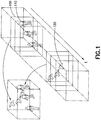
- Fig. 1 depicts a dynamic video summarization based on motive objects, which can reconstruct the motive objects in the time and space domain.
- a person 110 is moving in the space domain relative to a fixed background.
- a bird 120 is moving in the space domain in a series of time domain images relative to a fixed background.
- the person 110 and the bird 120 are referred to as foreground objects or motive objects. They can be superimposed on a single background frame to form a video abstract, assuming the background has not changed significantly over the time frame in question.
- the disclosed embodiments provide a solution based on signed foreground extraction and fusion (S-FEF) and use of a graphics processing unit (GPU).
- S-FEF signed foreground extraction and fusion
- GPU graphics processing unit
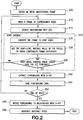
- FIG. 2 A flow diagram for generating a surveillance video abstract based on S-FEF and using a GPU is shown in Fig. 2 .
- an initial background is obtained by choosing a frame of background without any moving objects from the start of surveillance video (step 205).
- This background will be updated (step 215) with the necessary changes over time, e.g., changes due to variations in light throughout a day and night.
- a frame of the surveillance video is read using, e.g., an application program interface (API) such as Open Source Computer Vision Library (“OpenCV”) to decode and read the surveillance video.
- API application program interface
- OpenCV is an open source, cross-platform computer vision library (step 210).
- the next steps relate to a video division process 220 based on the gray-level average value of the pixels obtained using a continuous frame difference method.
- a video frame is converted from red-green-blue (RGB) space to gray space (e.g., 256 gray levels) (step 225).
- the n th gray scale frame is subtracted from the (n + 1) th gray scale frame of the video and the absolute value of the result for each pixel is obtained (step 230), in accordance with formula (1).
- An average value is then determined for the gray scale pixels resulting from the difference calculation, as shown in formula (2).
- fgray n [ i ][ j ] represents the gray value of pixel( i , j ) at the n th frame
- fgray n+1 [ i ][ j ] represents the gray value of pixel( i , j ) at the (n+1) th frame
- diff_fgray n [ i ][ j ] represents the absolute value of pixel( i,j ) after the difference between n th frame and (n+1) th frame.
- R represents the number of pixel rows of the video frame
- C represents the number of pixel columns of the video frame
- Ave n is the average value of the gray scale pixels resulting from the difference calculation between the n th frame and the (n+1) th frame.
- the average grayscale differential computed in accordance with formula (2) is compared to a defined threshold (step 235). If the average grayscale differential does not exceed the threshold, then another frame of the surveillance video is read and subjected to the background updating and video division processes. If, on the other hand, the average grayscale differential exceeds the defined threshold, then the foreground data is extracted (step 240) and saved (step 245) before another frame of the surveillance video is read.
- the calculations necessary to perform the background update (step 215) require substantial computer resources. Therefore, as explained in further detail below, the graphics processing unit (GPU) may be used to perform these calculations to improve performance and efficiency.
- the background is updated using a single Gaussian model using the GPU to perform the calculation (step 215).
- x ij represents the gray value of the pixel whose coordinates are ( i , j ); ⁇ ij represents the average gray value of pixel (i,j); ⁇ 2 ij represents the variance of pixel (i,j); p(x ij ) represents the probability of pixel ( i,j ).
- the probability of a pixel is less than the set threshold, it is considered to be a background point, otherwise it is considered to be a foreground point.
- the Gaussian model can update the background based on such changes of condition using formula (4):
- B t ⁇ I t + 1 ⁇ ⁇ B t ⁇ 1
- the update coefficient is ⁇
- B t represents the current background
- B t-1 represents the background of the previous frame
- I t represents the current input image.
- ⁇ , ⁇ , and ⁇ [ i ][ j ] are initialized: ⁇ , ⁇ , and ⁇ [ i ][ j ] , where ⁇ represents updating speed, ⁇ represents threshold parameters, and ⁇ [ i ][ j ] represents the variance of each pixel between frame and background.
- f [ i ][ j ] represents the signed data value of each pixel in a video frame
- b [ i ][ j ] represents the signed data value of each pixel in a corresponding background.
- f [ i ][ j ] represents the signed data value of each pixel in video frame
- b t -1 [ i ][ j ] represents the signed data value of each pixel in background before being updated
- b t [ i ][ j ] represents the signed data value of each pixel in background after being updated
- ⁇ is a parameter representing an updating speed, as noted above. In this manner, the background is updated on a pixel-by-pixel basis.
- the computed differential, sub [ i ][ j ], for a particular background pixel, b t -1 [ i ][ j ], is greater than a threshold, according to sub [ i ][ j ] ⁇ ⁇ * ⁇ [ i ][ j ], then the pixel is considered to be a foreground point.
- f [ i ][ j ] represents the signed data value of each pixel in the video frame
- b t [ i ][ j ] represents the signed data value of each pixel in the background after updating
- ⁇ t -1 [ i ][ j ] represents the value of the variance parameter before updating
- ⁇ t [ i ][ j ] represents the value of the variance parameter after updating.
- step 250 After the extraction (step 240) and saving (step 245) of the foreground data, it is determined whether the end of the video has been reached (step 250). If the end of the video has been reached, the foreground data is merged with the background (step 255) in a process discussed below (see Fig. 9A ) and the video abstract is generated (step 260) in a process discussed below (see Figs. 7, 8 , and 12 ). If it is determined that the end of the video has not been reached (step 250), another frame of video is read (step 205), the background is updated (215), and the video division process 220 is repeated.
- the GPU is used to perform these calculations to improve performance and efficiency.
- the GPU is used to provide parallel processing of the background updating using the single Gaussian model.
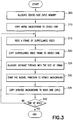
- the memory of the GPU which may be generally referred to as the "GPU-side memory” or “device-side” memory, is allocated to store particular data (step 305).
- GPU-side memory is allocated for the frame-background variance parameter, ⁇ [ i ][ j ], with the data type "signed" and an array of size Sz.
- Sz R ⁇ C
- R represents the number of rows of the video frame in pixels and C represents the number of columns of the video frame in pixels.
- GPU-side memory is allocated for the video frame, with the data type being "unsigned char" and the array size being Sz. GPU-side memory is similarly allocated for the background frame.
- the initial background is copied to its allocated portion of the device-side memory (step 310). This is done as part of the step of obtaining an initial background frame, as shown, e.g., in Fig. 2 .
- the GPU is used to perform the background updating calculations.
- the background updating process is performed when the average gray scale level of a frame of the video exceeds a threshold.
- the background updating calculations may be performed repeatedly during the video division process (see Fig. 2 ) whenever this condition is true.
- a step of reading a frame of surveillance video (step 315) is presented in Fig. 3 as the first step in the background calculation loop.
- the frame being read is the most recent frame to undergo the video division process depicted in Fig. 2 , i.e., it is a video frame having an average gray level value that exceeds the defined threshold.
- the frame which is read in this step is copied to the device-side memory (i.e., the memory of the GPU) (step 320).
- a suitable number of GPU processing threads are allocated depending upon the size of the frame (step 325). For example, if a frame size is m columns by n rows, with c channels (e.g., the three color channels, red, green, and blue, of an RGB image), then the number of threads allocated may be m x n x c , which would provide for each pixel to have a thread for each of its RGB components.
- a kernel function is started to perform the background update calculations (step 330), which are described above.
- the resulting updated background is copied back to the host side (i.e., the memory of the CPU) (step 335) and the video division process (see Fig. 2 ) continues unless the end of the video is reached.
- An "end of video?” decision (step 340) also occurs in the background updating calculation (see Fig. 3 ) in case the end of the video is reached during that process.
- Motive frames can be detected by determining whether a significant change has occurred with respect to the previous frame.
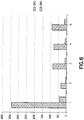
- a surveillance video will generally include dynamic, i.e., motive, segments (m1, m2, m3%) and static segments (s1, s2, s3).
- the average gray scale level of the frames can be used to detect significant changes between frames.
- formula (2) can be used to determine the average gray scale level differential from one frame to the next, Ave n .
- a threshold, Tm can be applied to the calculated average differential (see Fig. 2 ). If Ave n is less than Tm, then frame n is considered to be a static segment and will be dropped. If Ave n is greater than Tm, then frame n is considered to be a motive segment and will be maintained. In this way, the surveillance video is divided into a number of motive segments, as shown in Fig. 8 .
- the surveillance has been reduced to a series of motive segments, it is desirable to isolate the particular portions of the motive segments which include moving objects.
- the extraction of the moving objects is done by subtracting from each motive frame its corresponding background.
- the isolated moving objects are then fused with, i.e., superimposed on, a particular background.
- the data type of video frame is unsigned char, i.e., values in the form of character data without an indication of positive or negative.
- values smaller than zero are dropped, which results in some information being lost.
- the extraction of the moving objects is done using signed foreground extraction and fusion (S-FEF) to preserve as much information as possible.
- S-FEF signed foreground extraction and fusion
- the data of the video frames is converted to signed type, thereby preventing the loss of negative subtraction results. Preserving this additional information results in a higher quality video abstract.
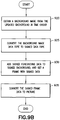
- the S-FEF extraction process converts the video frame and its corresponding updated background image data type to signed integers (step 905).
- the process then subtracts the converted motion frame and background data on a pixel-by-pixel basis, which results in motion foreground data (step 910).
- This foreground data is saved (step 915) for use in the fusion portion of the process, which is discussed below.
- f s [ i ][ j ] represents the signed value of motion frame
- back s [ i ][ j ] represents the signed value of corresponding background
- fore s [ i ][ j ] represents the signed foreground value
- the signed foreground data obtained in the extraction process is fused to corresponding backgrounds obtained in the background updating process (see Figs. 2 and 3 ) to form a video abstract.
- a background image i.e., frame
- the background frame data is converted to a signed data type (step 925).
- Fig. 10 shows the result of an experiment performed using a surveillance video which was processed to form a video abstract frame without using S-FEF.
- Fig. 11 shows the result of an experiment performed using a surveillance video which was processed to form a video abstract frame using the extraction and fusion of foreground by S-FEF.
- extracting and fusing foreground without using S-FEF may result in the formation of a significant border shadow, which has a substantial adverse effect on the quality of the video abstract.
- the use of the S-FEF method in the example of Fig. 11 eliminated the influence of boundary shadow, thereby substantially improving the quality of video abstract.
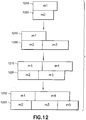
- the surveillance video is divided into motive segments, i.e., dynamic segments. These segments are combined according to particular rules to form the video abstract.
- a compression method may be used in which a compression factor, C, is set to an integer value: 1, 2, 3, ... etc.
- two sequences of motive segments (1210 and 1220) will be used to generate the video abstract at the same time. Therefore, there are two lines of motive segments to which each subsequent segment can be added to generate a video abstract while maintaining the time order of the motive segments.
- Each additional segment, after m1 and m2 is added to the shorter sequence. For example, motive segment m2 is shorter than m1, so the next segment, m3, is added following m2. This process is continued until a complete video abstract is formed.
- disclosed embodiments use S-FEF to prevent border shadow and use the GPU to perform parallel computing for the background updating algorithm using a single Gaussian model to substantially speed up the calculations. Because the background updating usually takes up a significant amount of time, generation of the video abstract can be significantly accelerated using such methods. Thus, the disclosed embodiments allow one to obtain a surveillance video abstract faster and of higher quality which, in turn, can effectively reduce the video storage requirements.
Landscapes
- Engineering & Computer Science (AREA)
- Theoretical Computer Science (AREA)
- General Physics & Mathematics (AREA)
- Physics & Mathematics (AREA)
- Multimedia (AREA)
- Computational Linguistics (AREA)
- General Engineering & Computer Science (AREA)
- Databases & Information Systems (AREA)
- Data Mining & Analysis (AREA)
- Software Systems (AREA)
- Computer Vision & Pattern Recognition (AREA)
- Computing Systems (AREA)
- Image Analysis (AREA)
Applications Claiming Priority (1)
| Application Number | Priority Date | Filing Date | Title |
|---|---|---|---|
| US15/388,525 US10095932B2 (en) | 2016-12-22 | 2016-12-22 | Video abstract using signed foreground extraction and fusion |
Publications (2)
| Publication Number | Publication Date |
|---|---|
| EP3340075A1 true EP3340075A1 (fr) | 2018-06-27 |
| EP3340075B1 EP3340075B1 (fr) | 2020-07-08 |
Family
ID=60673059
Family Applications (1)
| Application Number | Title | Priority Date | Filing Date |
|---|---|---|---|
| EP17001932.7A Active EP3340075B1 (fr) | 2016-12-22 | 2017-11-24 | Résumé vidéo à l'aide de fusion et d'extraction d'avant-plan signé |
Country Status (3)
| Country | Link |
|---|---|
| US (1) | US10095932B2 (fr) |
| EP (1) | EP3340075B1 (fr) |
| CN (1) | CN108229346B (fr) |
Cited By (2)
| Publication number | Priority date | Publication date | Assignee | Title |
|---|---|---|---|---|
| CN111432206A (zh) * | 2020-04-24 | 2020-07-17 | 腾讯科技(北京)有限公司 | 基于人工智能的视频清晰度处理方法、装置及电子设备 |
| CN114913419A (zh) * | 2022-05-10 | 2022-08-16 | 西南石油大学 | 一种智慧停车目标检测方法及系统 |
Families Citing this family (5)
| Publication number | Priority date | Publication date | Assignee | Title |
|---|---|---|---|---|
| CN106204636B (zh) * | 2016-06-27 | 2019-03-22 | 北京大学深圳研究生院 | 基于监控视频的视频前景提取方法 |
| CN110287949B (zh) | 2019-07-30 | 2021-04-06 | 腾讯音乐娱乐科技(深圳)有限公司 | 视频片段提取方法、装置、设备及存储介质 |
| CN112738418B (zh) * | 2020-12-25 | 2022-12-06 | 北京百度网讯科技有限公司 | 视频获取方法、装置以及电子设备 |
| CN113592979B (zh) * | 2021-06-03 | 2024-02-23 | 西北大学 | 一种基于Background Matting改进的戏曲视频融合的方法 |
| CN116233569B (zh) * | 2023-05-06 | 2023-07-11 | 石家庄铁道大学 | 一种基于运动信息协助的视频摘要生成方法 |
Citations (1)
| Publication number | Priority date | Publication date | Assignee | Title |
|---|---|---|---|---|
| US20050185823A1 (en) * | 2004-02-24 | 2005-08-25 | International Business Machines Corporation | System and method for generating a viewable video index for low bandwidth applications |
Family Cites Families (6)
| Publication number | Priority date | Publication date | Assignee | Title |
|---|---|---|---|---|
| US6026183A (en) * | 1995-10-27 | 2000-02-15 | Texas Instruments Incorporated | Content-based video compression |
| US6614847B1 (en) * | 1996-10-25 | 2003-09-02 | Texas Instruments Incorporated | Content-based video compression |
| US9019381B2 (en) * | 2008-05-09 | 2015-04-28 | Intuvision Inc. | Video tracking systems and methods employing cognitive vision |
| JP6438046B2 (ja) * | 2014-04-04 | 2018-12-12 | レッド.コム,エルエルシー | キャプチャモード付きビデオカメラ |
| CN104331905A (zh) * | 2014-10-31 | 2015-02-04 | 浙江大学 | 一种基于运动物体检测的监控视频摘要提取方法 |
| US9979743B2 (en) * | 2015-08-13 | 2018-05-22 | Accenture Global Services Limited | Computer asset vulnerabilities |
-
2016
- 2016-12-22 US US15/388,525 patent/US10095932B2/en active Active
-
2017
- 2017-11-24 EP EP17001932.7A patent/EP3340075B1/fr active Active
- 2017-12-20 CN CN201711381515.0A patent/CN108229346B/zh active Active
Patent Citations (1)
| Publication number | Priority date | Publication date | Assignee | Title |
|---|---|---|---|---|
| US20050185823A1 (en) * | 2004-02-24 | 2005-08-25 | International Business Machines Corporation | System and method for generating a viewable video index for low bandwidth applications |
Non-Patent Citations (1)
| Title |
|---|
| PRITCH Y ET AL: "Nonchronological Video Synopsis and Indexing", IEEE TRANSACTIONS ON PATTERN ANALYSIS AND MACHINE INTELLIGENCE, IEEE COMPUTER SOCIETY, USA, vol. 30, no. 11, 1 November 2008 (2008-11-01), pages 1971 - 1984, XP011292494, ISSN: 0162-8828 * |
Cited By (2)
| Publication number | Priority date | Publication date | Assignee | Title |
|---|---|---|---|---|
| CN111432206A (zh) * | 2020-04-24 | 2020-07-17 | 腾讯科技(北京)有限公司 | 基于人工智能的视频清晰度处理方法、装置及电子设备 |
| CN114913419A (zh) * | 2022-05-10 | 2022-08-16 | 西南石油大学 | 一种智慧停车目标检测方法及系统 |
Also Published As
| Publication number | Publication date |
|---|---|
| US20180181814A1 (en) | 2018-06-28 |
| CN108229346A (zh) | 2018-06-29 |
| US10095932B2 (en) | 2018-10-09 |
| CN108229346B (zh) | 2023-02-28 |
| EP3340075B1 (fr) | 2020-07-08 |
Similar Documents
| Publication | Publication Date | Title |
|---|---|---|
| EP3340075B1 (fr) | Résumé vidéo à l'aide de fusion et d'extraction d'avant-plan signé | |
| CN101084527B (zh) | 用于处理视频数据的方法及系统 | |
| EP1612733B1 (fr) | Système et procédé pour reconstruction stéréo tridimensionelle fondée sur segmentation en couleur | |
| US20230377097A1 (en) | Laparoscopic image smoke removal method based on generative adversarial network | |
| US20210256707A1 (en) | Learning to Segment via Cut-and-Paste | |
| US11790950B2 (en) | Film-making using style transfer | |
| EP3973507B1 (fr) | Segmentation pour images holographiques | |
| KR101173559B1 (ko) | 비디오 동영상의 움직이는 다중 객체 자동 분할 장치 및 방법 | |
| US20120242792A1 (en) | Method and apparatus for distinguishing a 3d image from a 2d image and for identifying the presence of a 3d image format by image difference determination | |
| Wang et al. | Simultaneous matting and compositing | |
| EP3073443A1 (fr) | Carte de saillance 3d | |
| WO2017135120A1 (fr) | Système de conversion de fréquence d'image à efficacité computationnelle | |
| US20180357212A1 (en) | Detecting occlusion of digital ink | |
| EP2034436A1 (fr) | Procédé de rendu non photoréaliste | |
| US9082019B2 (en) | Method of establishing adjustable-block background model for detecting real-time image object | |
| US9123141B2 (en) | Ghost artifact detection and removal in HDR image processing using multi-level median threshold bitmaps | |
| CN112270697A (zh) | 一种结合超分辨率重建的卫星序列影像运动目标检测方法 | |
| CN104952083A (zh) | 一种基于显著性目标背景建模的视频显著性检测算法 | |
| JP2006318474A (ja) | 画像シーケンス内のオブジェクトを追跡するための方法及び装置 | |
| CN111667419A (zh) | 一种基于Vibe算法的移动目标鬼影消除方法及系统 | |
| TW201032180A (en) | Method and device for keeping image background by multiple gauss models | |
| Pinto et al. | SECI-GAN: Semantic and Edge Completion for dynamic objects removal | |
| Qin et al. | GPU-accelerated video background subtraction using Gabor detector | |
| US20200394802A1 (en) | Real-time object detection method for multiple camera images using frame segmentation and intelligent detection pool | |
| Mukherjee et al. | A hybrid algorithm for disparity calculation from sparse disparity estimates based on stereo vision |
Legal Events
| Date | Code | Title | Description |
|---|---|---|---|
| PUAI | Public reference made under article 153(3) epc to a published international application that has entered the european phase |
Free format text: ORIGINAL CODE: 0009012 |
|
| STAA | Information on the status of an ep patent application or granted ep patent |
Free format text: STATUS: THE APPLICATION HAS BEEN PUBLISHED |
|
| AK | Designated contracting states |
Kind code of ref document: A1 Designated state(s): AL AT BE BG CH CY CZ DE DK EE ES FI FR GB GR HR HU IE IS IT LI LT LU LV MC MK MT NL NO PL PT RO RS SE SI SK SM TR |
|
| AX | Request for extension of the european patent |
Extension state: BA ME |
|
| STAA | Information on the status of an ep patent application or granted ep patent |
Free format text: STATUS: REQUEST FOR EXAMINATION WAS MADE |
|
| 17P | Request for examination filed |
Effective date: 20181206 |
|
| RBV | Designated contracting states (corrected) |
Designated state(s): AL AT BE BG CH CY CZ DE DK EE ES FI FR GB GR HR HU IE IS IT LI LT LU LV MC MK MT NL NO PL PT RO RS SE SI SK SM TR |
|
| REG | Reference to a national code |
Ref country code: DE Ref legal event code: R079 Ref document number: 602017019193 Country of ref document: DE Free format text: PREVIOUS MAIN CLASS: G06F0017300000 Ipc: G06K0009000000 |
|
| RIC1 | Information provided on ipc code assigned before grant |
Ipc: G06K 9/00 20060101AFI20191126BHEP Ipc: G06F 16/738 20190101ALI20191126BHEP |
|
| GRAP | Despatch of communication of intention to grant a patent |
Free format text: ORIGINAL CODE: EPIDOSNIGR1 |
|
| STAA | Information on the status of an ep patent application or granted ep patent |
Free format text: STATUS: GRANT OF PATENT IS INTENDED |
|
| INTG | Intention to grant announced |
Effective date: 20200124 |
|
| GRAS | Grant fee paid |
Free format text: ORIGINAL CODE: EPIDOSNIGR3 |
|
| GRAA | (expected) grant |
Free format text: ORIGINAL CODE: 0009210 |
|
| STAA | Information on the status of an ep patent application or granted ep patent |
Free format text: STATUS: THE PATENT HAS BEEN GRANTED |
|
| AK | Designated contracting states |
Kind code of ref document: B1 Designated state(s): AL AT BE BG CH CY CZ DE DK EE ES FI FR GB GR HR HU IE IS IT LI LT LU LV MC MK MT NL NO PL PT RO RS SE SI SK SM TR |
|
| REG | Reference to a national code |
Ref country code: CH Ref legal event code: EP Ref country code: AT Ref legal event code: REF Ref document number: 1289249 Country of ref document: AT Kind code of ref document: T Effective date: 20200715 |
|
| REG | Reference to a national code |
Ref country code: DE Ref legal event code: R096 Ref document number: 602017019193 Country of ref document: DE |
|
| REG | Reference to a national code |
Ref country code: IE Ref legal event code: FG4D |
|
| REG | Reference to a national code |
Ref country code: LT Ref legal event code: MG4D |
|
| REG | Reference to a national code |
Ref country code: AT Ref legal event code: MK05 Ref document number: 1289249 Country of ref document: AT Kind code of ref document: T Effective date: 20200708 |
|
| REG | Reference to a national code |
Ref country code: NL Ref legal event code: MP Effective date: 20200708 |
|
| PG25 | Lapsed in a contracting state [announced via postgrant information from national office to epo] |
Ref country code: AT Free format text: LAPSE BECAUSE OF FAILURE TO SUBMIT A TRANSLATION OF THE DESCRIPTION OR TO PAY THE FEE WITHIN THE PRESCRIBED TIME-LIMIT Effective date: 20200708 Ref country code: SE Free format text: LAPSE BECAUSE OF FAILURE TO SUBMIT A TRANSLATION OF THE DESCRIPTION OR TO PAY THE FEE WITHIN THE PRESCRIBED TIME-LIMIT Effective date: 20200708 Ref country code: FI Free format text: LAPSE BECAUSE OF FAILURE TO SUBMIT A TRANSLATION OF THE DESCRIPTION OR TO PAY THE FEE WITHIN THE PRESCRIBED TIME-LIMIT Effective date: 20200708 Ref country code: NO Free format text: LAPSE BECAUSE OF FAILURE TO SUBMIT A TRANSLATION OF THE DESCRIPTION OR TO PAY THE FEE WITHIN THE PRESCRIBED TIME-LIMIT Effective date: 20201008 Ref country code: GR Free format text: LAPSE BECAUSE OF FAILURE TO SUBMIT A TRANSLATION OF THE DESCRIPTION OR TO PAY THE FEE WITHIN THE PRESCRIBED TIME-LIMIT Effective date: 20201009 Ref country code: HR Free format text: LAPSE BECAUSE OF FAILURE TO SUBMIT A TRANSLATION OF THE DESCRIPTION OR TO PAY THE FEE WITHIN THE PRESCRIBED TIME-LIMIT Effective date: 20200708 Ref country code: BG Free format text: LAPSE BECAUSE OF FAILURE TO SUBMIT A TRANSLATION OF THE DESCRIPTION OR TO PAY THE FEE WITHIN THE PRESCRIBED TIME-LIMIT Effective date: 20201008 Ref country code: PT Free format text: LAPSE BECAUSE OF FAILURE TO SUBMIT A TRANSLATION OF THE DESCRIPTION OR TO PAY THE FEE WITHIN THE PRESCRIBED TIME-LIMIT Effective date: 20201109 Ref country code: LT Free format text: LAPSE BECAUSE OF FAILURE TO SUBMIT A TRANSLATION OF THE DESCRIPTION OR TO PAY THE FEE WITHIN THE PRESCRIBED TIME-LIMIT Effective date: 20200708 Ref country code: ES Free format text: LAPSE BECAUSE OF FAILURE TO SUBMIT A TRANSLATION OF THE DESCRIPTION OR TO PAY THE FEE WITHIN THE PRESCRIBED TIME-LIMIT Effective date: 20200708 |
|
| PG25 | Lapsed in a contracting state [announced via postgrant information from national office to epo] |
Ref country code: LV Free format text: LAPSE BECAUSE OF FAILURE TO SUBMIT A TRANSLATION OF THE DESCRIPTION OR TO PAY THE FEE WITHIN THE PRESCRIBED TIME-LIMIT Effective date: 20200708 Ref country code: PL Free format text: LAPSE BECAUSE OF FAILURE TO SUBMIT A TRANSLATION OF THE DESCRIPTION OR TO PAY THE FEE WITHIN THE PRESCRIBED TIME-LIMIT Effective date: 20200708 Ref country code: RS Free format text: LAPSE BECAUSE OF FAILURE TO SUBMIT A TRANSLATION OF THE DESCRIPTION OR TO PAY THE FEE WITHIN THE PRESCRIBED TIME-LIMIT Effective date: 20200708 Ref country code: IS Free format text: LAPSE BECAUSE OF FAILURE TO SUBMIT A TRANSLATION OF THE DESCRIPTION OR TO PAY THE FEE WITHIN THE PRESCRIBED TIME-LIMIT Effective date: 20201108 |
|
| PG25 | Lapsed in a contracting state [announced via postgrant information from national office to epo] |
Ref country code: NL Free format text: LAPSE BECAUSE OF FAILURE TO SUBMIT A TRANSLATION OF THE DESCRIPTION OR TO PAY THE FEE WITHIN THE PRESCRIBED TIME-LIMIT Effective date: 20200708 |
|
| REG | Reference to a national code |
Ref country code: DE Ref legal event code: R097 Ref document number: 602017019193 Country of ref document: DE |
|
| PG25 | Lapsed in a contracting state [announced via postgrant information from national office to epo] |
Ref country code: RO Free format text: LAPSE BECAUSE OF FAILURE TO SUBMIT A TRANSLATION OF THE DESCRIPTION OR TO PAY THE FEE WITHIN THE PRESCRIBED TIME-LIMIT Effective date: 20200708 Ref country code: CZ Free format text: LAPSE BECAUSE OF FAILURE TO SUBMIT A TRANSLATION OF THE DESCRIPTION OR TO PAY THE FEE WITHIN THE PRESCRIBED TIME-LIMIT Effective date: 20200708 Ref country code: DK Free format text: LAPSE BECAUSE OF FAILURE TO SUBMIT A TRANSLATION OF THE DESCRIPTION OR TO PAY THE FEE WITHIN THE PRESCRIBED TIME-LIMIT Effective date: 20200708 Ref country code: SM Free format text: LAPSE BECAUSE OF FAILURE TO SUBMIT A TRANSLATION OF THE DESCRIPTION OR TO PAY THE FEE WITHIN THE PRESCRIBED TIME-LIMIT Effective date: 20200708 Ref country code: EE Free format text: LAPSE BECAUSE OF FAILURE TO SUBMIT A TRANSLATION OF THE DESCRIPTION OR TO PAY THE FEE WITHIN THE PRESCRIBED TIME-LIMIT Effective date: 20200708 Ref country code: IT Free format text: LAPSE BECAUSE OF FAILURE TO SUBMIT A TRANSLATION OF THE DESCRIPTION OR TO PAY THE FEE WITHIN THE PRESCRIBED TIME-LIMIT Effective date: 20200708 |
|
| PLBE | No opposition filed within time limit |
Free format text: ORIGINAL CODE: 0009261 |
|
| STAA | Information on the status of an ep patent application or granted ep patent |
Free format text: STATUS: NO OPPOSITION FILED WITHIN TIME LIMIT |
|
| PG25 | Lapsed in a contracting state [announced via postgrant information from national office to epo] |
Ref country code: AL Free format text: LAPSE BECAUSE OF FAILURE TO SUBMIT A TRANSLATION OF THE DESCRIPTION OR TO PAY THE FEE WITHIN THE PRESCRIBED TIME-LIMIT Effective date: 20200708 |
|
| 26N | No opposition filed |
Effective date: 20210409 |
|
| PG25 | Lapsed in a contracting state [announced via postgrant information from national office to epo] |
Ref country code: MC Free format text: LAPSE BECAUSE OF FAILURE TO SUBMIT A TRANSLATION OF THE DESCRIPTION OR TO PAY THE FEE WITHIN THE PRESCRIBED TIME-LIMIT Effective date: 20200708 Ref country code: SK Free format text: LAPSE BECAUSE OF FAILURE TO SUBMIT A TRANSLATION OF THE DESCRIPTION OR TO PAY THE FEE WITHIN THE PRESCRIBED TIME-LIMIT Effective date: 20200708 |
|
| REG | Reference to a national code |
Ref country code: CH Ref legal event code: PL |
|
| PG25 | Lapsed in a contracting state [announced via postgrant information from national office to epo] |
Ref country code: LU Free format text: LAPSE BECAUSE OF NON-PAYMENT OF DUE FEES Effective date: 20201124 |
|
| REG | Reference to a national code |
Ref country code: BE Ref legal event code: MM Effective date: 20201130 |
|
| PG25 | Lapsed in a contracting state [announced via postgrant information from national office to epo] |
Ref country code: SI Free format text: LAPSE BECAUSE OF FAILURE TO SUBMIT A TRANSLATION OF THE DESCRIPTION OR TO PAY THE FEE WITHIN THE PRESCRIBED TIME-LIMIT Effective date: 20200708 Ref country code: LI Free format text: LAPSE BECAUSE OF NON-PAYMENT OF DUE FEES Effective date: 20201130 Ref country code: CH Free format text: LAPSE BECAUSE OF NON-PAYMENT OF DUE FEES Effective date: 20201130 |
|
| PG25 | Lapsed in a contracting state [announced via postgrant information from national office to epo] |
Ref country code: IE Free format text: LAPSE BECAUSE OF NON-PAYMENT OF DUE FEES Effective date: 20201124 |
|
| REG | Reference to a national code |
Ref country code: DE Ref legal event code: R079 Ref document number: 602017019193 Country of ref document: DE Free format text: PREVIOUS MAIN CLASS: G06K0009000000 Ipc: G06V0010000000 |
|
| PG25 | Lapsed in a contracting state [announced via postgrant information from national office to epo] |
Ref country code: TR Free format text: LAPSE BECAUSE OF FAILURE TO SUBMIT A TRANSLATION OF THE DESCRIPTION OR TO PAY THE FEE WITHIN THE PRESCRIBED TIME-LIMIT Effective date: 20200708 Ref country code: MT Free format text: LAPSE BECAUSE OF FAILURE TO SUBMIT A TRANSLATION OF THE DESCRIPTION OR TO PAY THE FEE WITHIN THE PRESCRIBED TIME-LIMIT Effective date: 20200708 Ref country code: CY Free format text: LAPSE BECAUSE OF FAILURE TO SUBMIT A TRANSLATION OF THE DESCRIPTION OR TO PAY THE FEE WITHIN THE PRESCRIBED TIME-LIMIT Effective date: 20200708 |
|
| PG25 | Lapsed in a contracting state [announced via postgrant information from national office to epo] |
Ref country code: MK Free format text: LAPSE BECAUSE OF FAILURE TO SUBMIT A TRANSLATION OF THE DESCRIPTION OR TO PAY THE FEE WITHIN THE PRESCRIBED TIME-LIMIT Effective date: 20200708 |
|
| PG25 | Lapsed in a contracting state [announced via postgrant information from national office to epo] |
Ref country code: BE Free format text: LAPSE BECAUSE OF NON-PAYMENT OF DUE FEES Effective date: 20201130 |
|
| PGFP | Annual fee paid to national office [announced via postgrant information from national office to epo] |
Ref country code: DE Payment date: 20251119 Year of fee payment: 9 |
|
| PGFP | Annual fee paid to national office [announced via postgrant information from national office to epo] |
Ref country code: GB Payment date: 20251121 Year of fee payment: 9 |
|
| PGFP | Annual fee paid to national office [announced via postgrant information from national office to epo] |
Ref country code: FR Payment date: 20251126 Year of fee payment: 9 |