EP3340647B1 - Medienerfassungs- und prozesssystem - Google Patents
Medienerfassungs- und prozesssystem Download PDFInfo
- Publication number
- EP3340647B1 EP3340647B1 EP17174851.0A EP17174851A EP3340647B1 EP 3340647 B1 EP3340647 B1 EP 3340647B1 EP 17174851 A EP17174851 A EP 17174851A EP 3340647 B1 EP3340647 B1 EP 3340647B1
- Authority
- EP
- European Patent Office
- Prior art keywords
- computer
- user
- media device
- audio
- user media
- Prior art date
- Legal status (The legal status is an assumption and is not a legal conclusion. Google has not performed a legal analysis and makes no representation as to the accuracy of the status listed.)
- Active
Links
Images

Classifications
-
- G—PHYSICS
- G06—COMPUTING OR CALCULATING; COUNTING
- G06N—COMPUTING ARRANGEMENTS BASED ON SPECIFIC COMPUTATIONAL MODELS
- G06N20/00—Machine learning
-
- G—PHYSICS
- G10—MUSICAL INSTRUMENTS; ACOUSTICS
- G10L—SPEECH ANALYSIS TECHNIQUES OR SPEECH SYNTHESIS; SPEECH RECOGNITION; SPEECH OR VOICE PROCESSING TECHNIQUES; SPEECH OR AUDIO CODING OR DECODING
- G10L15/00—Speech recognition
- G10L15/08—Speech classification or search
- G10L15/18—Speech classification or search using natural language modelling
- G10L15/1815—Semantic context, e.g. disambiguation of the recognition hypotheses based on word meaning
-
- G—PHYSICS
- G06—COMPUTING OR CALCULATING; COUNTING
- G06F—ELECTRIC DIGITAL DATA PROCESSING
- G06F16/00—Information retrieval; Database structures therefor; File system structures therefor
- G06F16/30—Information retrieval; Database structures therefor; File system structures therefor of unstructured textual data
- G06F16/33—Querying
- G06F16/3331—Query processing
- G06F16/334—Query execution
- G06F16/3344—Query execution using natural language analysis
-
- G—PHYSICS
- G06—COMPUTING OR CALCULATING; COUNTING
- G06F—ELECTRIC DIGITAL DATA PROCESSING
- G06F16/00—Information retrieval; Database structures therefor; File system structures therefor
- G06F16/30—Information retrieval; Database structures therefor; File system structures therefor of unstructured textual data
- G06F16/33—Querying
- G06F16/338—Presentation of query results
-
- G—PHYSICS
- G06—COMPUTING OR CALCULATING; COUNTING
- G06F—ELECTRIC DIGITAL DATA PROCESSING
- G06F16/00—Information retrieval; Database structures therefor; File system structures therefor
- G06F16/60—Information retrieval; Database structures therefor; File system structures therefor of audio data
- G06F16/68—Retrieval characterised by using metadata, e.g. metadata not derived from the content or metadata generated manually
- G06F16/683—Retrieval characterised by using metadata, e.g. metadata not derived from the content or metadata generated manually using metadata automatically derived from the content
- G06F16/685—Retrieval characterised by using metadata, e.g. metadata not derived from the content or metadata generated manually using metadata automatically derived from the content using automatically derived transcript of audio data, e.g. lyrics
-
- G—PHYSICS
- G06—COMPUTING OR CALCULATING; COUNTING
- G06N—COMPUTING ARRANGEMENTS BASED ON SPECIFIC COMPUTATIONAL MODELS
- G06N5/00—Computing arrangements using knowledge-based models
- G06N5/04—Inference or reasoning models
-
- G—PHYSICS
- G06—COMPUTING OR CALCULATING; COUNTING
- G06V—IMAGE OR VIDEO RECOGNITION OR UNDERSTANDING
- G06V20/00—Scenes; Scene-specific elements
- G06V20/35—Categorising the entire scene, e.g. birthday party or wedding scene
-
- G—PHYSICS
- G06—COMPUTING OR CALCULATING; COUNTING
- G06V—IMAGE OR VIDEO RECOGNITION OR UNDERSTANDING
- G06V20/00—Scenes; Scene-specific elements
- G06V20/40—Scenes; Scene-specific elements in video content
- G06V20/41—Higher-level, semantic clustering, classification or understanding of video scenes, e.g. detection, labelling or Markovian modelling of sport events or news items
-
- G—PHYSICS
- G10—MUSICAL INSTRUMENTS; ACOUSTICS
- G10L—SPEECH ANALYSIS TECHNIQUES OR SPEECH SYNTHESIS; SPEECH RECOGNITION; SPEECH OR VOICE PROCESSING TECHNIQUES; SPEECH OR AUDIO CODING OR DECODING
- G10L15/00—Speech recognition
- G10L15/22—Procedures used during a speech recognition process, e.g. man-machine dialogue
-
- H—ELECTRICITY
- H03—ELECTRONIC CIRCUITRY
- H03G—CONTROL OF AMPLIFICATION
- H03G5/00—Tone control or bandwidth control in amplifiers
- H03G5/16—Automatic control
- H03G5/165—Equalizers; Volume or gain control in limited frequency bands
-
- H—ELECTRICITY
- H04—ELECTRIC COMMUNICATION TECHNIQUE
- H04R—LOUDSPEAKERS, MICROPHONES, GRAMOPHONE PICK-UPS OR LIKE ACOUSTIC ELECTROMECHANICAL TRANSDUCERS; ELECTRIC HEARING AIDS; PUBLIC ADDRESS SYSTEMS
- H04R1/00—Details of transducers, loudspeakers or microphones
- H04R1/20—Arrangements for obtaining desired frequency or directional characteristics
- H04R1/32—Arrangements for obtaining desired frequency or directional characteristics for obtaining desired directional characteristic only
- H04R1/326—Arrangements for obtaining desired frequency or directional characteristics for obtaining desired directional characteristic only for microphones
-
- H—ELECTRICITY
- H04—ELECTRIC COMMUNICATION TECHNIQUE
- H04R—LOUDSPEAKERS, MICROPHONES, GRAMOPHONE PICK-UPS OR LIKE ACOUSTIC ELECTROMECHANICAL TRANSDUCERS; ELECTRIC HEARING AIDS; PUBLIC ADDRESS SYSTEMS
- H04R1/00—Details of transducers, loudspeakers or microphones
- H04R1/20—Arrangements for obtaining desired frequency or directional characteristics
- H04R1/32—Arrangements for obtaining desired frequency or directional characteristics for obtaining desired directional characteristic only
- H04R1/40—Arrangements for obtaining desired frequency or directional characteristics for obtaining desired directional characteristic only by combining a number of identical transducers
- H04R1/406—Arrangements for obtaining desired frequency or directional characteristics for obtaining desired directional characteristic only by combining a number of identical transducers microphones
-
- H—ELECTRICITY
- H04—ELECTRIC COMMUNICATION TECHNIQUE
- H04R—LOUDSPEAKERS, MICROPHONES, GRAMOPHONE PICK-UPS OR LIKE ACOUSTIC ELECTROMECHANICAL TRANSDUCERS; ELECTRIC HEARING AIDS; PUBLIC ADDRESS SYSTEMS
- H04R3/00—Circuits for transducers
- H04R3/04—Circuits for transducers for correcting frequency response
-
- G—PHYSICS
- G06—COMPUTING OR CALCULATING; COUNTING
- G06F—ELECTRIC DIGITAL DATA PROCESSING
- G06F40/00—Handling natural language data
- G06F40/30—Semantic analysis
-
- G—PHYSICS
- G06—COMPUTING OR CALCULATING; COUNTING
- G06N—COMPUTING ARRANGEMENTS BASED ON SPECIFIC COMPUTATIONAL MODELS
- G06N5/00—Computing arrangements using knowledge-based models
- G06N5/02—Knowledge representation; Symbolic representation
- G06N5/022—Knowledge engineering; Knowledge acquisition
-
- G—PHYSICS
- G06—COMPUTING OR CALCULATING; COUNTING
- G06V—IMAGE OR VIDEO RECOGNITION OR UNDERSTANDING
- G06V30/00—Character recognition; Recognising digital ink; Document-oriented image-based pattern recognition
- G06V30/10—Character recognition
- G06V30/26—Techniques for post-processing, e.g. correcting the recognition result
- G06V30/262—Techniques for post-processing, e.g. correcting the recognition result using context analysis, e.g. lexical, syntactic or semantic context
- G06V30/274—Syntactic or semantic context, e.g. balancing
-
- G—PHYSICS
- G10—MUSICAL INSTRUMENTS; ACOUSTICS
- G10L—SPEECH ANALYSIS TECHNIQUES OR SPEECH SYNTHESIS; SPEECH RECOGNITION; SPEECH OR VOICE PROCESSING TECHNIQUES; SPEECH OR AUDIO CODING OR DECODING
- G10L15/00—Speech recognition
- G10L15/28—Constructional details of speech recognition systems
- G10L15/30—Distributed recognition, e.g. in client-server systems, for mobile phones or network applications
-
- H—ELECTRICITY
- H04—ELECTRIC COMMUNICATION TECHNIQUE
- H04R—LOUDSPEAKERS, MICROPHONES, GRAMOPHONE PICK-UPS OR LIKE ACOUSTIC ELECTROMECHANICAL TRANSDUCERS; ELECTRIC HEARING AIDS; PUBLIC ADDRESS SYSTEMS
- H04R2499/00—Aspects covered by H04R or H04S not otherwise provided for in their subgroups
- H04R2499/10—General applications
- H04R2499/11—Transducers incorporated or for use in hand-held devices, e.g. mobile phones, PDA's, camera's
-
- H—ELECTRICITY
- H04—ELECTRIC COMMUNICATION TECHNIQUE
- H04R—LOUDSPEAKERS, MICROPHONES, GRAMOPHONE PICK-UPS OR LIKE ACOUSTIC ELECTROMECHANICAL TRANSDUCERS; ELECTRIC HEARING AIDS; PUBLIC ADDRESS SYSTEMS
- H04R3/00—Circuits for transducers
- H04R3/005—Circuits for transducers for combining the signals of two or more microphones
Definitions
- the embodiments discussed herein are related to media capture and process systems and to a method of processing audio captured by a user media device.
- Hearing aids are typically employed by users having some degree of hearing loss and attempt to amplify and modify detected audio in a manner that compensates for the users' hearing loss.
- Headphones, earphones, and headsets are typically employed to deliver audio from a device, such as a mobile phone, directly to a user.
- the headsets may be configured for two-way audio exchanges with the device so that a user may participate in a telephone conversation.
- US2014188478 discloses a natural language dialogue method and a natural language dialogue system.
- a first speech input is received and parsed to generate at least one keyword included in the first speech input, so that a candidate list including at least one report answer is obtained.
- a properties database one report answer is selected from the candidate list, and a first speech response is output according to the report answer.
- Other speech inputs are received, and a user's preference data is captured from the speech inputs.
- the user's preference data is stored in the properties database.
- Some conventional personal listening devices may work to enhance users' hearing, to encourage safe consumption of audio entertainment from a media player, or the like. However, these conventional devices may typically perform audio processing, if any, at the device, limiting the audio processing to processing resources available at the devices. Alternately or additionally, these conventional devices may generally not include a microphone array that may be selectively adjustable to adapt to particular listening situations. Furthermore, conventional listening devices may not store, process, analyze, curate, and/or report on detected audio and/or the substance of the detected audio.
- the media capture and process system includes a user media device.
- the user media device includes a personal user media device configured to be worn by a user.
- the user media device may include sensors for capturing audio media and/or visual media.
- the user media device of the media capture and process system includes a microphone array that is selectively adjustable to adapt the process of audio detection for particular situations.
- the media capture and process system processes media captured by the user media device in real time at a computer separate from the user media device and/or at a remote service separate from the computer and the user media device.
- the media capture and process system stores and processes the media captured by the user media device for analysis of the substance of the media.
- the media capture and process system curates content including a report on the substance of the media.
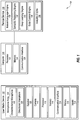
- FIG 1 is a diagram of a media capture and process system 100.
- the media capture and process system 100 includes a user media device 102.
- the user media device 102 includes a personal user media device configured to be worn by a user.
- the user media device 102 captures media, such as audio media, visual media, or the like.
- the user media device 102 includes one or more speakers 108 for generating audio output for the user.
- the user media device 102 includes speaker 108 positioned to be located near or partially within one or both ears of the user.
- the user media device 102 may be configured to be worn in a manner similar to a single headphone or a pair of headphones, such as in-ear or earbud headphones, on-ear or clip-on headphones, over-ear or around-ear headphones, or the like.
- the user media device 102 may be configured to worn in a manner similar to a hearing aid or a pair of hearing aids, a cochlear implant or a pair of cochlear implants, a helmet, a hat, so-called smart glasses, or the like.
- the user media device 102 includes a microphone array 104 having an omnidirectional microphone 105 and a directional microphone 106.
- the omnidirectional microphone 105 may include an omnidirectional digital microphone.
- the directional microphone 106 may include a directional cardioid digital microphone or a hyper cardioid digital microphone.
- the user media device 102 may include a pair of omnidirectional microphones and a pair of directional microphones.
- each omnidirectional microphone 105 of the pair of omnidirectional microphones and each directional microphone 106 of the pair of directional microphones may be associated with a separate ear of the user.
- an omnidirectional microphone 105 and a directional microphone 106 may be located near an ear of a user.
- the directional microphone 106 or directional microphones may be positioned and located on the user media device 102 to detect audio originating from a direction the user is facing.
- the directional microphone 106 or directional microphones may be configured to receive audio from a source being observed by the user.
- the microphones of the microphone array 104 are selectively switchable.
- the directional microphone 106 or directional microphones may be active and the omnidirectional microphone 105 or omnidirectional microphones may be inactive when the user is facing a particular audio source of interest.
- both the directional microphone 106 or directional microphones is active and the omnidirectional microphone 105 or omnidirectional microphones is active and the input from the omnidirectional microphone 105 or omnidirectional microphones is employed to perform noise cancelling relative to the input from the directional microphone 106 or directional microphones.
- the microphone array 104 is configured to enhance the clarity of the audio received by the microphone array 104 from a particular source, which may be beneficial in situations with significant background noise, such as lecture halls, conventions, or the like.
- the omnidirectional microphone 105 or omnidirectional microphones may be active and the directional microphone 106 or directional microphones may be inactive. For example, when the user may not be focused on a particular audio source.
- the user media device may include an image capture device, such as a camera 110 or the like.
- the camera 110 may capture image media, such as picture media and/or video media.
- the user media device 102 may include inputs 119 for controlling at least some operations of the user media device 102.
- the inputs 119 may include an on-off switch, volume controls for controlling the volume of the speaker 108, a pairing switch for initiating a communicative coupling of the user media device 102 with another device, such as a computer 120, or the like or any combination thereof.
- the media capture and process system 100 also includes the computer 120 communicatively coupled to the user media device 102.
- the computer 120 is a mobile phone, tablet computer, desktop computer, laptop computer, or the like coupled to the user media device 102.
- the computer 120 includes a communication interface 126.
- the computer 120 transmits and receives media, including audio media and may transmit and/or receive visual media, control commands, and/or other data or commands via the communication interface 126.
- the computer 120 receives audio media captured by the user media device 102, and may receive image media captured by the user media device 102.
- the communication interface 126 may include a Bluetooth interface, such as a Bluetooth low energy (LE) interface, and/or other personal area network (PAN) interfaces, a Wi-Fi interface and/or other local area network (LAN) interfaces, a Universal Serial Bus (USB) interface and/or other wired interfaces, or the like or any combination thereof.
- a Bluetooth interface such as a Bluetooth low energy (LE) interface, and/or other personal area network (PAN) interfaces, a Wi-Fi interface and/or other local area network (LAN) interfaces, a Universal Serial Bus (USB) interface and/or other wired interfaces, or the like or any combination thereof.
- the user media device 102 includes a communication interface 116 for communicatively coupling to the computer 120.
- the communication interface 116 may generally correspond to the communication interface 126 of the computer 120.
- the user media device 102 transmits and receives audio media, and may transmit and/or receive media, including visual media, control commands, and/or other data or commands via the communication interface 116.
- the communication interface 116 may include a Bluetooth interface, such as a Bluetooth LE interface, and/or other PAN interfaces, a Wi-Fi interface and/or other LAN interfaces, a USB interface and/or other wired interfaces, or the like or any combination thereof.
- the user media device may be battery-powered to encourage portability, wearability, and the like.
- the user media device 102 may include a battery 118.
- the battery 118 may include a lithium ion rechargeable battery, or the like.
- the user media device 102 may be powered via a wired connection, such as a micro USB connection that may be employed to charge the battery 118 of the user media device 102 and/or as the communication interface 116 to transfer data to and from the user media device 102.
- the user media device 102 may include a processor 112 and/or memory 114.
- the processor 112 may control operation of the user media device 102, including the microphone array 104, the speaker 108, the camera 110, the communication interface 116, or the battery 118.
- the processor 112 may perform on-device audio processing, such as noise cancelation or the like.
- the computer 120 may control the operation of the user media device 102.
- the user may use the computer 120 to transmit control commands to the user media device 102 for controlling the microphone array 104 or playback settings, such as controlling speaker 108 volume, microphone array 104 sensitivity, the activation and/or deactivation of the omnidirectional microphone 105 and the directional microphone 106, noise cancelation settings, multiband equalization, frequency filtering, high pass and/or low pass filtering, pitch modulation, or the like and any combination thereof.
- an application associated with the user media device 102 may be located in memory 124 of the computer 120 and, when executed by a processor 122 of the computer 120, may allow the user to control the user media device 102.
- the computer 120 is configured to process the audio captured by the microphone array 104 of the user media device 102.
- the audio processing of the audio from the user media device 102 includes performing parametric equalization, frequency filtering, noise reduction, or the like or any combination thereof on the audio from the user media device 102.
- the audio processing is performed in real-time. Audio processing at the computer 120 may be relatively more robust than audio processing at the user media device 102. For example, design considerations for the user media device 102, such as device size, power, cost, weight, and the like, may encourage relatively
- the processed audio is communicated back to the user media device 102 and generated by the speaker 108 of the user media device. Thus, the processed audio is delivered to the user of the user media device 102. Additionally, the audio from the user media device 102 may be recorded for future use.
- the computer 120 may be configured to process image media captured by the camera 110 of the user media device 102.
- the image processing of the image media from the user media device may include performing image enhancements, image augmentations, video stabilization, panoramic image generation or the like or any combination thereof on the image media from the user media device 102.
- the video processing may be performed in real-time.
- the processed video may be communicated back to the user media device 102.
- the processed video may be displayed at a display of the user media device.
- the processed video may be displayed at an optical head-mounted display (OHMD) of the user media device 102.
- the image media from the user media device may be recorded for future use.
- OHMD optical head-mounted display
- the media capture and process system 100 includes a remote service 128.
- the remote service 128 may include an internet-based or internet-accessed service, such as a so-called cloud service or cloud-based service.
- the media captured by the user media device 102 is provided to the remote service 128 for processing.
- the media captured by the user media device 102 may be provided to the remote service 128 with additional information, such as user tags, subject tags, timestamps, geographic data, or the like or any combination thereof.
- additional information may be predefined by the user, set automatically by the user media device 102 or the computer 120, created by the user, modified by the user, or the like.
- the remote service 128 includes a natural language engine 130, a semantic reasoning engine 132, and a data curation engine 136, the remote service 128 may also include a deep learning engine 134, and/or an analytics engine 138.
- Processing the audio from the user media device 102 includes performing natural language processing via the natural language engine 130 and performing semantic reasoning via the semantic reasoning engine 132, and may also include performing deep learning via the deep learning engine 134.
- the natural language engine 130 generates a text transcript of the audio via natural language processing. Additionally, the semantic reasoning engine 132 assigns relevancy scores to words included in the audio via semantic reasoning. Relevancy scores are assigned to each word based on a frequency of use, a context, the subject tags, or the like or any combination thereof. The semantic reasoning engine 132 performs semantic reasoning on the text transcript of the audio generated by the natural language engine 130.
- the deep learning engine 134 may perform object detection, context analysis, image processing, or the like on the image media from the user media device 102 via deep learning.
- Information regarding the detected objects, context, or meaning of the image media may be added to the image media. For example, tags identifying objects, people, places, or the like may be added to the image media.
- picture media the information may be added to the picture.
- video media a subset of frames, e.g., every nth frame, may be analyzed and the information may be added to the frames, to the video, and/or to lengths of the video.
- the results of the natural language processing, semantic reasoning, and/or deep learning are saved, displayed, and/or analyzed.
- the results of and/or information related to the natural language processing, semantic reasoning, and/or the deep learning are curated and provided for inspection via a webpage or the like. For example, context, text, relevant related images, external links, analytical data, statistical data, or the like, based on the data may be provided.
- Customized reports and/or curated websites are created based on users' predefined keywords, history, preferences, or the like.
- a data curation engine 136 curates the results of the natural language processing, and semantic reasoning, and optionally also the deep learning. Curating the results includes organizing or grouping the results to demonstrate the results in a meaningful way, to provide some insights into the results, or the like.
- an analytics engine 138 may analyze the results of the natural language processing, semantic reasoning, and/or deep learning via statistical analysis or the like.
- the analytics engine 138 and/or the data curation engine 136 may identify insights based on the results.
- the analytics engine 138 and/or the data curation engine 136 may create reports based on the identified insights, the results, or the like.
- the curated results, the analysis of the results, the identified insights, the reports, or the like may be accessible via an application programming interface (API), shared to an internal or external social network, or the like or any combination thereof.
- API application programming interface
- FIG 2 is a diagram of another example media capture and process system 200 in an example environment.
- the media capture and process system 200 includes a user media device 202 generally corresponding to the user media device 102 of Figure 1 .
- the user media device 202 is worn by a user 204.
- the user media device 202 is used to capture audio 206 from a speaker 208.
- the user media device 202 may be used to capture video and/or pictures of the speaker 208, presentation material, or the like.
- the speaker 208 may be addressing a group of people, such as a professor lecturing a classroom of students, a lecturer speaking to a room of attendees, an actor performing for a theatre of patrons, or the like.
- the user media device 202 performs noise canceling to reduce or eliminate background noise 210, potentially generated by other people 212 in the group of people, in the audio captured by the user media device 202.
- the user media device 202 may perform noise cancelling as described with reference to the microphone array 104 of Figure 1 .
- the user media device 202 is communicatively coupled to a computer 214 generally corresponding to the computer 120 of Figure 1 .
- the user media device 202 may be communicatively coupled to a mobile phone associated with the user 204.
- the user 204 may control the operation of the user media device 202 via the computer 214.
- the user media device 202 transmits captured media to the computer 214.
- the audio 206 and/or the background noise 210 captured by the user media device 202 is sent to and processed by the computer 214.
- the processed audio is sent back to the user media device 202 and played for the user.
- the audio heard by the user 204 is processed by the relatively powerful computer 214, which may encourage the user media device 202 to be relatively small, low-power, and/or inexpensive for the degree of audio processing made available to the user 204.
- the computer 214 transmits the the processed audio to a remote service 216 generally corresponding to the remote service 128 of Figure 1 .
- the media may be sent to the remote service 216 via a network, such as the internet or the like.
- the remote service 216 performs additional processing on the media received.
- the remote service 216 may process the media in a manner similar to the remote service 128 of Figure 1 .
- the remote service 216 creates reports, insights, or the like.
- the remote service 216 creates content in a manner similar to the remote service 128 of figure 1 .
- the content created by the remote service 216 is accessed by a computer 218 generally corresponding to the computer 120 of Figure 1 and the computer 214.
- the content is accessible by the computer 214.
- the content may be accessed via a network such as the internet, a website, an API, a social network, or the like or any combination thereof.
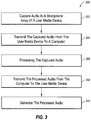
- FIG 3 is a flowchart of an example method 300.
- the method 300 is a method of processing audio captured by a user media device.
- the user media device may correspond generally to the user media device 102 of Figure 1 and the user media device 202 of Figure 2 .
- the method 300 may begin at block 302 by capturing audio at a microphone array of the user media device.
- the microphone array may correspond generally to the microphone array 104 of Figure 1 .
- the method 300 continues to block 304 by transmitting the captured audio from the user media device to a computer.
- the computer may correspond generally to the computer 120 of Figure 1 and the computer 214 of Figure 2 .
- the computer is communicatively coupled to the user media device.
- processing the captured audio may include filtering the captured audio. Alternately or additionally, processing the captured audio may include equalizing the captured audio.
- the method 300 continues to block 308 by transmitting the processed audio from the computer to the user media device.
- the method 300 continues to block 310 by generating the processed audio at the user media device.
- the processed audio is generated by a speaker of the user media device.
- the speaker may correspond generally to the speaker 108 of Figure 1 .
- the method 300 may further include capturing visual media at a camera of the user media device.
- the camera may correspond generally to the camera 110 of Figure 1 .
- the method 300 may continue by transmitting the captured visual media from the user media device to the computer.
- the captured visual media and one or more tags associated with the captured visual media may be transmitted from the computer to a remote service.
- the remote service may correspond generally to the remote service 128 of Figure 1 or the remote service 216 of Figure 2 .
- the method 300 further includes transmitting the processed audio from the computer to the remote service.
- the remote service generates text of the processed audio via natural language processing.
- the natural language processing may be performed by a natural language engine corresponding to the natural language engine 130 of Figure 1 .
- the remote service performs semantic analysis or semantic reasoning of the processed audio via a semantic reasoning engine.
- the semantic reasoning engine may correspond generally to the semantic reasoning engine 132 of Figure 1 .
- the remote service generates curated content based at least in part on the semantic reasoning performed on the processed audio.
- the curated content may be generated by a data curation engine corresponding generally to the data curation engine 136 of Figure 1 .
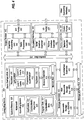
- FIG 4 is a block diagram illustrating an example computing device 400.
- the computing device may be arranged to predict behavior and/or encourage behavior modification in accordance with the present disclosure.
- the computing device 400 may be one example of an embodiment of the user media device 102 of Figure 1 , an embodiment of the computer 120 of Figure 1 , an embodiment of the remote service 128 of Figure 1 , an embodiment of the user media device 202 of Figure 2 , an embodiment of the computer 214, an embodiment of the computer 218 of Figure 2 , and/or an embodiment of the remote service 216 of Figure 2 .
- the computing device 400 includes one or more processors 404 and a system memory 406.
- the processor 404 and/or the memory 406 may generally correspond to the processor 112, the processor 122, the memory 114, and/or the memory 124 of Figure 1 .
- a memory bus 408 may be used for communicating between the processor 404 and the system memory 406.
- the processor 404 may be of any type including but not limited to a microprocessor ( ⁇ P), a microcontroller ( ⁇ C), a digital signal processor (DSP), or any combination thereof.
- the processor 404 may include one more levels of caching, such as a level one cache 410 and a level two cache 412, a processor core 414, and registers 416.
- An example processor core 414 may include an arithmetic logic unit (ALU), a floating point unit (FPU), a digital signal processing core (DSP Core), or any combination thereof.
- An example memory controller 418 may also be used with the processor 404, or in some implementations the memory controller 418 may be an internal part of the processor 404.
- system memory 406 may be of any type including but not limited to volatile memory, such as Random Access Memory (RAM); non-volatile memory, such as Read Only Memory (ROM), flash memory, etc.; or any combination thereof.
- volatile memory such as Random Access Memory (RAM); non-volatile memory, such as Read Only Memory (ROM), flash memory, etc.; or any combination thereof.
- ROM Read Only Memory
- the system memory 406 may include an operating system 420, one or more applications 422, and program data 424.
- the application 422 may include a control algorithm and/or media processing algorithm 426 (also referenced as "control/media algorithm 426") may be arranged to perform the functions as described herein including those described with respect to the user media device 102 of Figure 1 , the computer 120 of Figure 1 , the remote service 128 of Figure 1 , the user media device 202 of Figure 2 , the powerful computer 214 of Figure 2 , the remote service 216 of Figure 2 , the computer 218 of Figure 2 , and/or the method 300 of Figure 3 .
- the program data 424 may include control data and/or media data 428 that may be useful for operation with the control algorithm and/or the media processing algorithm 426 as described herein.
- the application 422 may be arranged to operate with the program data 424 on the operating system 420 such that the methods and processes may be provided as described herein.
- the computing device 400 may have additional features or functionality, and additional interfaces to facilitate communications between the basic configuration 402 and other devices and interfaces.
- a bus/interface controller 430 may be used to facilitate communications between the basic configuration 402 and one or more data storage devices 432 via a storage interface bus 434.
- the data storage devices 432 may be removable storage devices 436, non-removable storage devices 438, or a combination thereof.
- Examples of removable storage and non-removable storage devices include magnetic disk devices such as flexible disk drives and hard-disk drives (HDD), optical disk drives such as compact disk (CD) drives or digital versatile disk (DVD) drives, solid state drives (SSD), and tape drives to name a few.
- Example computer storage media may include volatile and nonvolatile, removable and non-removable media implemented in any method or technology for storage of information, such as computer readable instructions, data structures, program modules, or other data.
- Computer storage media includes, but is not limited to, RAM, ROM, Electronically Erasable and Programmable Read Only Memory (EEPROM), flash memory or other memory technology, Compact Disc-Read Only Memory (CD-ROM), digital versatile disks (DVD) or other optical storage, magnetic cassettes, magnetic tape, magnetic disk storage or other magnetic storage devices, or any other medium which may be used to store the desired information and which may be accessed by computing device 400. Any such computer storage media may be part of computing device 400.
- Computing device 400 may also include an interface bus 440 for facilitating communication from various interface devices (e.g., output devices 442, peripheral interfaces 444, and communication devices 446) to the basic configuration 402 via the bus/interface controller 430.
- Example output devices 442 include a graphics processing unit 448 and an audio processing unit 450, which may be configured to communicate to various external devices such as a display or speakers via one or more A/V ports 452.
- Example peripheral interfaces 444 include a serial interface controller 454 or a parallel interface controller 456, which may be configured to communicate with external devices such as input devices (e.g., keyboard, mouse, pen, voice input device, touch input device, etc.) or other peripheral devices (e.g., printer, scanner, etc.) via one or more input/output (I/O) ports 458.
- An example communication device 446 includes a network controller 460, which may be arranged to facilitate communications with one or more other computing devices 462 over a network communication link via one or more communication ports 464.
- the communication ports 464 may correspond generally to the communication interface 116 of Figure 1 and/or the communication interface 126 of Figure 1 .
- the network communication link may be one example of a communication media.
- Communication media may typically be embodied by computer readable instructions, data structures, program modules, or other data in a modulated data signal, such as a carrier wave or other transport mechanism, and may include any information delivery media.
- a "modulated data signal" may be a signal that has one or more of its characteristics set or changed in such a manner as to encode information in the signal.
- communication media may include wired media such as a wired network or direct-wired connection, and wireless media such as acoustic, radio frequency (RF), microwave, infrared (IR) and other wireless media.
- RF radio frequency
- IR infrared
- the term computer readable media as used herein may include both storage media and communication media.
- the computing device 400 may be implemented as a portion of a small-form factor portable (or mobile) electronic device such as a cell phone, a tablet computer, a smartphone, a smartwatch, smart glasses, a personal data assistant (PDA), a personal media player device, a wireless web-watch device, a personal headset device, an application specific device, or a hybrid device that include any of the above functions.
- a small-form factor portable (or mobile) electronic device such as a cell phone, a tablet computer, a smartphone, a smartwatch, smart glasses, a personal data assistant (PDA), a personal media player device, a wireless web-watch device, a personal headset device, an application specific device, or a hybrid device that include any of the above functions.
- PDA personal data assistant
- the computing device 400 may also be implemented as a personal computer including both laptop computer and non-laptop computer configurations.
- the terms "engine” may refer to specific hardware implementations configured to perform the operations of the module and/or software objects or software routines that may be stored on and/or executed by the computing device 400.
- the different components, engines, and services described herein may be implemented as a part of the application 422 and/or the control algorithm and/or the media processing algorithm 426.
- the natural language engine 130, the semantic reasoning engine 132, the deep learning engine, the data curation engine, the analytics engine 138 of Figure 1 , and/or the method 300 of Figure 3 may be implemented by computer-executable instructions stored in the system memory 406 and executed by the processor 404. While some of the system and methods described herein are generally described as being implemented in software, specific hardware implementations or a combination of software and specific hardware implementations are also possible and contemplated.
Landscapes
- Engineering & Computer Science (AREA)
- Physics & Mathematics (AREA)
- Theoretical Computer Science (AREA)
- Health & Medical Sciences (AREA)
- General Physics & Mathematics (AREA)
- Computational Linguistics (AREA)
- Acoustics & Sound (AREA)
- Multimedia (AREA)
- Artificial Intelligence (AREA)
- Software Systems (AREA)
- Data Mining & Analysis (AREA)
- General Engineering & Computer Science (AREA)
- Otolaryngology (AREA)
- Signal Processing (AREA)
- Audiology, Speech & Language Pathology (AREA)
- Evolutionary Computation (AREA)
- Computing Systems (AREA)
- Mathematical Physics (AREA)
- Human Computer Interaction (AREA)
- Databases & Information Systems (AREA)
- Library & Information Science (AREA)
- Computer Vision & Pattern Recognition (AREA)
- Medical Informatics (AREA)
- General Health & Medical Sciences (AREA)
- Circuit For Audible Band Transducer (AREA)
- User Interface Of Digital Computer (AREA)
Claims (10)
- Medienerfassungs- und -verarbeitungssystem (100, 200), das ein Benutzermediengerät (102, 202), eine Kommunikationsschnittstelle (116), einen Computer (120, 214), einen Remote-Dienst (128, 216) umfasst;
wobei das Benutzermediengerät (102, 202) dazu ausgelegt ist, an einem Kopf eines Benutzers (204) getragen zu werden und umfasst:ein Mikrofonarray (104), das ein omnidirektionales Mikrofon (105) aufweist, undein Richtmikrofon (106), wobei das Mikrofonarray selektiv umschaltbar ist, wobei von dem omnidirektionalen Mikrofon erfasstes Audio dazu verwendet wird, eine Geräuschunterdrückung in Bezug auf das von dem Richtmikrofon erfasste Audio durchzuführen; undeine Kommunikationsschnittstelle (116) ausgelegt ist zum:
kommunikativen Koppeln des Benutzermediengeräts mit dem Computer (120, 214), und Übertragen von Audio, das von der Mikrofonanordnung erfasst wurde, an den Computer (120, 214), wobei der Computer (120, 214) ein Mobiltelefon, ein Tablet-Computer, ein Desktop-Computer oder ein Laptop-Computer ist, der kommunikativ mit dem Benutzermediengerät gekoppelt ist und ausgelegt ist zum:Empfangen des Audios von dem Benutzermediengerät (102, 202),Durchführen von Audioverarbeitungsoperationen in Bezug auf das erfasste Audio in Echtzeit,wobei die Audioverarbeitungsoperationen eine oder mehrere von einer parametrischen Entzerrung, einer Frequenzfilterung und einer Geräuschreduzierung umfassen; undÜbertragen des verarbeiteten Audios an den Remote-Dienst (128, 216) und an das Benutzermediengerät (102, 202); undder Remote-Dienst (128, 216) kommunikativ mit dem Computer (120, 214) gekoppelt ist, wobei der Remote-Dienst (128, 216) ausgelegt ist zum:Empfangen des verarbeiteten Audios von dem Computer (120, 214),Generieren eines Texttranskripts des verarbeiteten Audios mittels Verarbeitung natürlicher Sprache,Durchführen einer semantischen Schlussfolgerung an dem erzeugten Texttranskript mittels einer semantische Schlussfolgerungs-Engine (132), wobei die semantische Schlussfolgerung ein Identifizieren einer Verwendungshäufigkeit von in dem Text enthaltenen Wörtern, ein Identifizieren eines Verwendungskontexts der Wörter in dem Text, und ein Identifizieren eines Subjekt-Tags, das den Wörtern zugeordnet ist, umfasst; undGenerieren von kuratiertem Inhalt aus Ergebnissen der semantischen Schlussfolgerung, wobei der kuratierte Inhalt durch benutzerdefiniertes Anpassen der Ergebnisse der semantischen Schlussfolgerung gemäß vordefinierten Schlüsselwörtern, einer Historie des Benutzers, und Vorlieben des Benutzers generiert wird und einen Bericht aufweist, der die benutzerdefinierten Ergebnisse der semantischen Schlussfolgerung demonstriert; wobeidas Benutzermediengerät (102, 202) einen Lautsprecher (108) umfasst, der so positioniert ist, dass er sich teilweise in einem Ohr des Benutzers befindet, wobei das Benutzermediengerät dazu ausgelegt ist, das verarbeitete Audio von dem Computer mittels der Kommunikationsschnittstelle zu empfangen, und das verarbeitete Audio durch den Lautsprecher (108) zu generieren; undder Computer (120, 214) dazu ausgelegt ist, auf den von dem Remote-Dienst generierten kuratierten Inhalt zuzugreifen. - Medienerfassungs- und -verarbeitungssystem (100, 200) nach Anspruch 1, wobei das Mikrofonarray ein zweites omnidirektionales Mikrofon (105) und ein zweites Richtmikrofon (106) aufweist.
- Medienerfassungs- und -verarbeitungssystem (100, 200) nach einem der vorhergehenden Ansprüche,
wobei das Mikrofonarray zumindest teilweise basierend auf Steuerbefehlen, die von dem Benutzermediengerät von dem Computer empfangen werden, selektiv umschaltbar ist; und wobei der Computer (120, 214) Operationen des Benutzermediengeräts (102, 202) steuert. - Medienerfassungs- und -verarbeitungssystem (100, 200) nach Anspruch 3, wobei der Computer dazu ausgelegt ist, Steuerbefehle zum Steuern des Mikrofonarrays (104), von Wiedergabeeinstellungen, einer Lautstärke des Lautsprechers, einer Empfindlichkeit des Mikrofonarrays, einer Aktivierung und/oder Deaktivierung des omnidirektionalen Mikrofons, einer Aktivierung und/oder Deaktivierung des Richtmikrofons, und/oder einer Tonhöhenmodulation an das Benutzermediengerät (102, 202) zu übertragen.
- Medienerfassungs- und -verarbeitungssystem (100, 200) nach einem der vorhergehenden Ansprüche, wobei der Remote-Dienst umfasst:eine Engine (130) für natürliche Sprache zum Generieren des verarbeiteten Audios zu dem Texttranskript;wobei die semantische Schussfolgerungs-Engine (132) dazu ausgelegt ist, eine semantische Analyse des erzeugten Texttranskripts durchzuführen;eine Datenkurations-Engine (136) zum Kuratieren von Inhalten basierend auf der semantischen Analyse, die an dem erzeugten Texttranskript durchgeführt wird, undeine Analyse-Engine (138) zum Generieren von Berichten basierend auf den Ergebnissen der Verarbeitung natürlicher Sprache und/oder der semantischen Schussfolgerung.
- Medienerfassungs- und -verarbeitungssystem nach Anspruch 5, wobei die Berichte mittels einer Anwendungsprogrammierschnittstelle 'API' zugreifbar sind.
- Medienerfassungs- und -verarbeitungssystem nach Anspruch 5 oder 6, wobei die Analyse-Engine die Berichte basierend auf den Ergebnissen der Verarbeitung natürlicher Sprache und/oder der semantischen Schussfolgerung mittels statistischer Analyse erzeugt.
- Medienerfassungs- und -verarbeitungssystem nach einem der Ansprüche 5 bis 7, wobei das Benutzermediengerät ferner eine Kamera (110) zum Erfassen visueller Medien aufweist, und der Remote-Dienst eine Deep-Learning-Engine zum Durchführen, an den erfassten visuellen Medien, zumindest eines von einer Objektdetektion, Kontextanalyse, und Bildverarbeitung aufweist; und wobei der kuratierte Inhalt auch auf den Ergebnissen des Deep-Learning basiert.
- Verfahren zur Verarbeitung von Audio, das von einem Benutzermediengerät (102, 202) erfasst wurde, das dazu ausgelegt ist, an einem Kopf eines Benutzers (204) getragen zu werden, und einen Lautsprecher (108) umfasst, der so positioniert ist, dass er sich teilweise in einem Ohr des Benutzers befindet, wobei das Verfahren umfasst:Erfassen von Audio an einem Mikrofonarray (104) des Benutzermediengeräts, wobei das Mikrofonarray (104) Teil des Benutzermediengeräts (102, 202) ist und ein Richtmikrofon (105) und ein omnidirektionales Mikrofon (106) umfasst, wobei von dem omnidirektionalen Mikrofon erfasstes Audio dazu verwendet wird, eine Geräuschunterdrückung in Bezug auf das von dem Richtmikrofon erfasste Audio durchzuführen.kommunikatives Koppeln des Benutzermediengeräts mit einem Computer (120, 214), wobei der Computer (120, 214) ein Mobiltelefon, ein Tablet-Computer, ein Desktop-Computer oder ein Laptop-Computer ist;Übertragen des erfassten Audios von dem Benutzermediengerät an den Computer (120, 214), der kommunikativ mit dem Benutzermediengerät gekoppelt ist;Verarbeiten des erfassten Audios in dem Computer in Echtzeit, wobei die Audioverarbeitungsoperationen eine oder mehrere von einer parametrischen Entzerrung, einer Frequenzfilterung und einer Geräuschreduzierung umfassen;Übertragen des verarbeiteten Audios von dem Computer an einen Remote-Dienst (128, 216) und an das Benutzermediengerät (102, 202);Empfangen des verarbeiteten Audios von dem Computer an dem Benutzermediengerät (102, 202) und Generieren des verarbeiteten Audios durch den Lautsprecher (108);Empfangen des verarbeiteten Audios von dem Computer an dem Remote-Dienst;Generieren eines Texttranskripts des verarbeiteten Audios mittels Verarbeitung natürlicher Sprache bei dem Remote-Dienst;Durchführen einer semantischen Schlussfolgerung an dem erzeugten Texttranskript mittels einer semantische Schlussfolgerung-Engine (132) bei dem Remote-Dienst, wobei die semantische Schlussfolgerung ein Identifizieren einer Verwendungshäufigkeit von in dem Text enthaltenen Wörtern, ein Identifizieren eines Verwendungskontexts der Wörter in dem Text, und ein Identifizieren eines Subjekt-Tags, das den Wörtern zugeordnet ist, umfasst;Generieren von kuratiertem Inhalt bei dem Remote-Service aus Ergebnissen der semantischen Schlussfolgerung, wobei der kuratierte Inhalt durch benutzerdefiniertes Anpassen der Ergebnisse der semantischen Schlussfolgerung gemäß vordefinierten Schlüsselwörtern, einer Historie des Benutzers, und Vorlieben des Benutzers generiert wird und einen Bericht aufweist, der die benutzerdefinierten Ergebnisse der semantischen Schlussfolgerung demonstriert; undan dem Computer (120, 214), Zugreifen auf den von dem Remote-Dienst generierten kuratierten Inhalt.
- Verfahren nach Anspruch 9, ferner umfassend:Erfassen visueller Medien an einer Kamera (110) des Benutzermediengeräts;Übertragen der erfassten visuellen Medien von dem Benutzermediengerät an den Computer; undÜbertragen der erfassten visuellen Medien und eines oder mehrerer Tags, die den erfassten visuellen Medien zugeordnet sind, von dem Computer an einen Remote-Dienst (128, 216).
Applications Claiming Priority (1)
| Application Number | Priority Date | Filing Date | Title |
|---|---|---|---|
| US15/388,683 US10276155B2 (en) | 2016-12-22 | 2016-12-22 | Media capture and process system |
Publications (2)
| Publication Number | Publication Date |
|---|---|
| EP3340647A1 EP3340647A1 (de) | 2018-06-27 |
| EP3340647B1 true EP3340647B1 (de) | 2021-03-31 |
Family
ID=59030838
Family Applications (1)
| Application Number | Title | Priority Date | Filing Date |
|---|---|---|---|
| EP17174851.0A Active EP3340647B1 (de) | 2016-12-22 | 2017-06-07 | Medienerfassungs- und prozesssystem |
Country Status (3)
| Country | Link |
|---|---|
| US (1) | US10276155B2 (de) |
| EP (1) | EP3340647B1 (de) |
| JP (1) | JP6930280B2 (de) |
Families Citing this family (2)
| Publication number | Priority date | Publication date | Assignee | Title |
|---|---|---|---|---|
| EP4201045B1 (de) * | 2020-10-02 | 2024-05-15 | Google LLC | Echtzeit- und dateibasierte audiodatenverarbeitung |
| CN113554857A (zh) * | 2021-07-20 | 2021-10-26 | 思必驰科技股份有限公司 | 用于语音通话的接处警辅助方法及系统 |
Citations (3)
| Publication number | Priority date | Publication date | Assignee | Title |
|---|---|---|---|---|
| US6694143B1 (en) * | 2000-09-11 | 2004-02-17 | Skyworks Solutions, Inc. | System for using a local wireless network to control a device within range of the network |
| US20140146976A1 (en) * | 2012-11-29 | 2014-05-29 | Apple Inc. | Ear Presence Detection in Noise Cancelling Earphones |
| US20150254555A1 (en) * | 2014-03-04 | 2015-09-10 | SignalSense, Inc. | Classifying data with deep learning neural records incrementally refined through expert input |
Family Cites Families (23)
| Publication number | Priority date | Publication date | Assignee | Title |
|---|---|---|---|---|
| AT392561B (de) | 1989-07-26 | 1991-04-25 | Akg Akustische Kino Geraete | Mikrophonanordnung fuer video- und/oder filmkameras |
| US5524056A (en) | 1993-04-13 | 1996-06-04 | Etymotic Research, Inc. | Hearing aid having plural microphones and a microphone switching system |
| US5764778A (en) | 1995-06-07 | 1998-06-09 | Sensimetrics Corporation | Hearing aid headset having an array of microphones |
| US7519605B2 (en) * | 2001-05-09 | 2009-04-14 | Agilent Technologies, Inc. | Systems, methods and computer readable media for performing a domain-specific metasearch, and visualizing search results therefrom |
| JP2005165958A (ja) * | 2003-12-05 | 2005-06-23 | Ibm Japan Ltd | 情報検索システム、情報検索支援システム及びその方法並びにプログラム |
| WO2006007441A1 (en) | 2004-06-16 | 2006-01-19 | Cardo Systems Inc. | Wireless communication headset with microphone switching system |
| EP1708543B1 (de) | 2005-03-29 | 2015-08-26 | Oticon A/S | Hörgerät zum Speichern von Daten und zum Lernen von diesen Daten |
| US7949529B2 (en) * | 2005-08-29 | 2011-05-24 | Voicebox Technologies, Inc. | Mobile systems and methods of supporting natural language human-machine interactions |
| WO2007103951A2 (en) | 2006-03-06 | 2007-09-13 | Hearing Enhancement Group, Llc | Headworn listening device and method |
| US7680292B2 (en) | 2006-05-30 | 2010-03-16 | Knowles Electronics, Llc | Personal listening device |
| US8078468B2 (en) * | 2007-05-21 | 2011-12-13 | Sony Ericsson Mobile Communications Ab | Speech recognition for identifying advertisements and/or web pages |
| US8140335B2 (en) * | 2007-12-11 | 2012-03-20 | Voicebox Technologies, Inc. | System and method for providing a natural language voice user interface in an integrated voice navigation services environment |
| US8776218B2 (en) * | 2009-07-21 | 2014-07-08 | Sophos Limited | Behavioral-based host intrusion prevention system |
| US9672270B2 (en) * | 2012-09-12 | 2017-06-06 | Zuess, Inc. | Systems and methods for aggregation, correlation, display and analysis of personal communication messaging and event-based planning |
| US9575960B1 (en) * | 2012-09-17 | 2017-02-21 | Amazon Technologies, Inc. | Auditory enhancement using word analysis |
| CN103077165A (zh) | 2012-12-31 | 2013-05-01 | 威盛电子股份有限公司 | 自然语言对话方法及其系统 |
| JP5548790B1 (ja) * | 2013-01-30 | 2014-07-16 | 進 庄司 | 集音マイク付き開放型イヤフォンおよび難聴用補助器 |
| US9323810B2 (en) | 2013-08-29 | 2016-04-26 | Fujitsu Limited | Curation selection for learning |
| US9454612B2 (en) | 2013-08-29 | 2016-09-27 | Fujitsu Limited | Item selection in curation learning |
| US9374649B2 (en) | 2013-12-19 | 2016-06-21 | International Business Machines Corporation | Smart hearing aid |
| US9892194B2 (en) | 2014-04-04 | 2018-02-13 | Fujitsu Limited | Topic identification in lecture videos |
| US10024667B2 (en) * | 2014-08-01 | 2018-07-17 | Toyota Motor Engineering & Manufacturing North America, Inc. | Wearable earpiece for providing social and environmental awareness |
| US9484030B1 (en) | 2015-12-02 | 2016-11-01 | Amazon Technologies, Inc. | Audio triggered commands |
-
2016
- 2016-12-22 US US15/388,683 patent/US10276155B2/en active Active
-
2017
- 2017-06-07 EP EP17174851.0A patent/EP3340647B1/de active Active
- 2017-08-10 JP JP2017155931A patent/JP6930280B2/ja not_active Expired - Fee Related
Patent Citations (3)
| Publication number | Priority date | Publication date | Assignee | Title |
|---|---|---|---|---|
| US6694143B1 (en) * | 2000-09-11 | 2004-02-17 | Skyworks Solutions, Inc. | System for using a local wireless network to control a device within range of the network |
| US20140146976A1 (en) * | 2012-11-29 | 2014-05-29 | Apple Inc. | Ear Presence Detection in Noise Cancelling Earphones |
| US20150254555A1 (en) * | 2014-03-04 | 2015-09-10 | SignalSense, Inc. | Classifying data with deep learning neural records incrementally refined through expert input |
Non-Patent Citations (1)
| Title |
|---|
| "Content-based Recommender Systems: State of the Art and Trends", 5 October 2010, SPRINGER, ISBN: 978-0-387-85820-3, article PASQUALE LOPS ET AL: "Content-based Recommender Systems: State of the Art and Trends", pages: 73 - 105, XP055275313, DOI: 10.1007/978-0-387-85820-3_3 * |
Also Published As
| Publication number | Publication date |
|---|---|
| US10276155B2 (en) | 2019-04-30 |
| JP2018106140A (ja) | 2018-07-05 |
| EP3340647A1 (de) | 2018-06-27 |
| JP6930280B2 (ja) | 2021-09-01 |
| US20180182379A1 (en) | 2018-06-28 |
Similar Documents
| Publication | Publication Date | Title |
|---|---|---|
| US11048472B2 (en) | Dynamically adjustable sound parameters | |
| US11494735B2 (en) | Automated clinical documentation system and method | |
| US10067734B2 (en) | Changing companion communication device behavior based on status of wearable device | |
| CN114730564B (zh) | 用于虚拟现实音频的基于优先级的声场编解码 | |
| US10117032B2 (en) | Hearing aid system, method, and recording medium | |
| US10380206B2 (en) | Search engine inference based virtual assistance | |
| US20120183164A1 (en) | Social network for sharing a hearing aid setting | |
| US9923535B2 (en) | Noise control method and device | |
| US12272370B2 (en) | Audio source separation for audio devices | |
| US20230162750A1 (en) | Near-field audio source detection for electronic devices | |
| US20140022402A1 (en) | Method and apparatus for automatic capture of multimedia information | |
| CN113228710B (zh) | 听力装置中的声源分离及相关方法 | |
| CN108429969A (zh) | 音频播放方法、装置、终端、耳机及可读存储介质 | |
| CN115243134A (zh) | 信号处理方法、装置、智能头戴设备及介质 | |
| EP3340647B1 (de) | Medienerfassungs- und prozesssystem | |
| CN115843433A (zh) | 声环境控制系统和方法 | |
| US11917092B2 (en) | Systems and methods for detecting voice commands to generate a peer-to-peer communication link | |
| Williams et al. | Socio-technical trust for multi-modal hearing assistive technology | |
| US20240249711A1 (en) | Audio cancellation | |
| CN112532787B (zh) | 耳机音频数据处理方法、移动终端及计算机可读存储介质 | |
| US20180318135A1 (en) | Notification service provision method for hearing-impaired person and device for executing same | |
| US20260058231A1 (en) | Battery swell detection and adaptive antenna tuning | |
| US20260075369A1 (en) | Training Machine Learning Algorithms for Steering a Hearing Device | |
| WO2025024344A1 (en) | Selective sound enhancement and reduction | |
| Tyler | Addressing Hearing Loss |
Legal Events
| Date | Code | Title | Description |
|---|---|---|---|
| PUAI | Public reference made under article 153(3) epc to a published international application that has entered the european phase |
Free format text: ORIGINAL CODE: 0009012 |
|
| STAA | Information on the status of an ep patent application or granted ep patent |
Free format text: STATUS: THE APPLICATION HAS BEEN PUBLISHED |
|
| AK | Designated contracting states |
Kind code of ref document: A1 Designated state(s): AL AT BE BG CH CY CZ DE DK EE ES FI FR GB GR HR HU IE IS IT LI LT LU LV MC MK MT NL NO PL PT RO RS SE SI SK SM TR |
|
| AX | Request for extension of the european patent |
Extension state: BA ME |
|
| STAA | Information on the status of an ep patent application or granted ep patent |
Free format text: STATUS: REQUEST FOR EXAMINATION WAS MADE |
|
| 17P | Request for examination filed |
Effective date: 20181018 |
|
| RBV | Designated contracting states (corrected) |
Designated state(s): AL AT BE BG CH CY CZ DE DK EE ES FI FR GB GR HR HU IE IS IT LI LT LU LV MC MK MT NL NO PL PT RO RS SE SI SK SM TR |
|
| STAA | Information on the status of an ep patent application or granted ep patent |
Free format text: STATUS: EXAMINATION IS IN PROGRESS |
|
| 17Q | First examination report despatched |
Effective date: 20190307 |
|
| GRAP | Despatch of communication of intention to grant a patent |
Free format text: ORIGINAL CODE: EPIDOSNIGR1 |
|
| STAA | Information on the status of an ep patent application or granted ep patent |
Free format text: STATUS: GRANT OF PATENT IS INTENDED |
|
| RIC1 | Information provided on ipc code assigned before grant |
Ipc: G10L 15/30 20130101ALN20201001BHEP Ipc: G10L 15/18 20130101ALN20201001BHEP Ipc: G06F 17/10 20060101ALN20201001BHEP Ipc: G10L 15/22 20060101ALI20201001BHEP Ipc: G06N 5/02 20060101ALN20201001BHEP Ipc: G06K 9/72 20060101ALN20201001BHEP Ipc: H04R 1/32 20060101AFI20201001BHEP Ipc: G06N 5/04 20060101ALI20201001BHEP Ipc: H04R 3/00 20060101ALN20201001BHEP |
|
| RIC1 | Information provided on ipc code assigned before grant |
Ipc: G10L 15/30 20130101ALN20201005BHEP Ipc: G06N 5/02 20060101ALN20201005BHEP Ipc: G10L 15/18 20130101ALN20201005BHEP Ipc: G06F 17/10 20060101ALN20201005BHEP Ipc: G06N 5/04 20060101ALI20201005BHEP Ipc: H04R 1/32 20060101AFI20201005BHEP Ipc: G10L 15/22 20060101ALI20201005BHEP Ipc: H04R 3/00 20060101ALN20201005BHEP Ipc: G06K 9/72 20060101ALN20201005BHEP |
|
| INTG | Intention to grant announced |
Effective date: 20201019 |
|
| GRAS | Grant fee paid |
Free format text: ORIGINAL CODE: EPIDOSNIGR3 |
|
| GRAA | (expected) grant |
Free format text: ORIGINAL CODE: 0009210 |
|
| STAA | Information on the status of an ep patent application or granted ep patent |
Free format text: STATUS: THE PATENT HAS BEEN GRANTED |
|
| AK | Designated contracting states |
Kind code of ref document: B1 Designated state(s): AL AT BE BG CH CY CZ DE DK EE ES FI FR GB GR HR HU IE IS IT LI LT LU LV MC MK MT NL NO PL PT RO RS SE SI SK SM TR |
|
| REG | Reference to a national code |
Ref country code: GB Ref legal event code: FG4D Ref country code: CH Ref legal event code: EP |
|
| REG | Reference to a national code |
Ref country code: AT Ref legal event code: REF Ref document number: 1378315 Country of ref document: AT Kind code of ref document: T Effective date: 20210415 |
|
| REG | Reference to a national code |
Ref country code: DE Ref legal event code: R096 Ref document number: 602017035551 Country of ref document: DE |
|
| REG | Reference to a national code |
Ref country code: IE Ref legal event code: FG4D |
|
| REG | Reference to a national code |
Ref country code: LT Ref legal event code: MG9D |
|
| PG25 | Lapsed in a contracting state [announced via postgrant information from national office to epo] |
Ref country code: NO Free format text: LAPSE BECAUSE OF FAILURE TO SUBMIT A TRANSLATION OF THE DESCRIPTION OR TO PAY THE FEE WITHIN THE PRESCRIBED TIME-LIMIT Effective date: 20210630 Ref country code: HR Free format text: LAPSE BECAUSE OF FAILURE TO SUBMIT A TRANSLATION OF THE DESCRIPTION OR TO PAY THE FEE WITHIN THE PRESCRIBED TIME-LIMIT Effective date: 20210331 Ref country code: FI Free format text: LAPSE BECAUSE OF FAILURE TO SUBMIT A TRANSLATION OF THE DESCRIPTION OR TO PAY THE FEE WITHIN THE PRESCRIBED TIME-LIMIT Effective date: 20210331 Ref country code: BG Free format text: LAPSE BECAUSE OF FAILURE TO SUBMIT A TRANSLATION OF THE DESCRIPTION OR TO PAY THE FEE WITHIN THE PRESCRIBED TIME-LIMIT Effective date: 20210630 |
|
| PG25 | Lapsed in a contracting state [announced via postgrant information from national office to epo] |
Ref country code: SE Free format text: LAPSE BECAUSE OF FAILURE TO SUBMIT A TRANSLATION OF THE DESCRIPTION OR TO PAY THE FEE WITHIN THE PRESCRIBED TIME-LIMIT Effective date: 20210331 Ref country code: RS Free format text: LAPSE BECAUSE OF FAILURE TO SUBMIT A TRANSLATION OF THE DESCRIPTION OR TO PAY THE FEE WITHIN THE PRESCRIBED TIME-LIMIT Effective date: 20210331 Ref country code: LV Free format text: LAPSE BECAUSE OF FAILURE TO SUBMIT A TRANSLATION OF THE DESCRIPTION OR TO PAY THE FEE WITHIN THE PRESCRIBED TIME-LIMIT Effective date: 20210331 |
|
| REG | Reference to a national code |
Ref country code: NL Ref legal event code: MP Effective date: 20210331 |
|
| REG | Reference to a national code |
Ref country code: AT Ref legal event code: MK05 Ref document number: 1378315 Country of ref document: AT Kind code of ref document: T Effective date: 20210331 |
|
| PG25 | Lapsed in a contracting state [announced via postgrant information from national office to epo] |
Ref country code: NL Free format text: LAPSE BECAUSE OF FAILURE TO SUBMIT A TRANSLATION OF THE DESCRIPTION OR TO PAY THE FEE WITHIN THE PRESCRIBED TIME-LIMIT Effective date: 20210331 Ref country code: SM Free format text: LAPSE BECAUSE OF FAILURE TO SUBMIT A TRANSLATION OF THE DESCRIPTION OR TO PAY THE FEE WITHIN THE PRESCRIBED TIME-LIMIT Effective date: 20210331 Ref country code: AT Free format text: LAPSE BECAUSE OF FAILURE TO SUBMIT A TRANSLATION OF THE DESCRIPTION OR TO PAY THE FEE WITHIN THE PRESCRIBED TIME-LIMIT Effective date: 20210331 Ref country code: LT Free format text: LAPSE BECAUSE OF FAILURE TO SUBMIT A TRANSLATION OF THE DESCRIPTION OR TO PAY THE FEE WITHIN THE PRESCRIBED TIME-LIMIT Effective date: 20210331 Ref country code: EE Free format text: LAPSE BECAUSE OF FAILURE TO SUBMIT A TRANSLATION OF THE DESCRIPTION OR TO PAY THE FEE WITHIN THE PRESCRIBED TIME-LIMIT Effective date: 20210331 Ref country code: CZ Free format text: LAPSE BECAUSE OF FAILURE TO SUBMIT A TRANSLATION OF THE DESCRIPTION OR TO PAY THE FEE WITHIN THE PRESCRIBED TIME-LIMIT Effective date: 20210331 |
|
| PG25 | Lapsed in a contracting state [announced via postgrant information from national office to epo] |
Ref country code: SK Free format text: LAPSE BECAUSE OF FAILURE TO SUBMIT A TRANSLATION OF THE DESCRIPTION OR TO PAY THE FEE WITHIN THE PRESCRIBED TIME-LIMIT Effective date: 20210331 Ref country code: RO Free format text: LAPSE BECAUSE OF FAILURE TO SUBMIT A TRANSLATION OF THE DESCRIPTION OR TO PAY THE FEE WITHIN THE PRESCRIBED TIME-LIMIT Effective date: 20210331 Ref country code: PL Free format text: LAPSE BECAUSE OF FAILURE TO SUBMIT A TRANSLATION OF THE DESCRIPTION OR TO PAY THE FEE WITHIN THE PRESCRIBED TIME-LIMIT Effective date: 20210331 Ref country code: PT Free format text: LAPSE BECAUSE OF FAILURE TO SUBMIT A TRANSLATION OF THE DESCRIPTION OR TO PAY THE FEE WITHIN THE PRESCRIBED TIME-LIMIT Effective date: 20210802 Ref country code: IS Free format text: LAPSE BECAUSE OF FAILURE TO SUBMIT A TRANSLATION OF THE DESCRIPTION OR TO PAY THE FEE WITHIN THE PRESCRIBED TIME-LIMIT Effective date: 20210731 |
|
| REG | Reference to a national code |
Ref country code: DE Ref legal event code: R097 Ref document number: 602017035551 Country of ref document: DE |
|
| PG25 | Lapsed in a contracting state [announced via postgrant information from national office to epo] |
Ref country code: ES Free format text: LAPSE BECAUSE OF FAILURE TO SUBMIT A TRANSLATION OF THE DESCRIPTION OR TO PAY THE FEE WITHIN THE PRESCRIBED TIME-LIMIT Effective date: 20210331 Ref country code: AL Free format text: LAPSE BECAUSE OF FAILURE TO SUBMIT A TRANSLATION OF THE DESCRIPTION OR TO PAY THE FEE WITHIN THE PRESCRIBED TIME-LIMIT Effective date: 20210331 Ref country code: DK Free format text: LAPSE BECAUSE OF FAILURE TO SUBMIT A TRANSLATION OF THE DESCRIPTION OR TO PAY THE FEE WITHIN THE PRESCRIBED TIME-LIMIT Effective date: 20210331 Ref country code: MC Free format text: LAPSE BECAUSE OF FAILURE TO SUBMIT A TRANSLATION OF THE DESCRIPTION OR TO PAY THE FEE WITHIN THE PRESCRIBED TIME-LIMIT Effective date: 20210331 |
|
| REG | Reference to a national code |
Ref country code: CH Ref legal event code: PL |
|
| PLBE | No opposition filed within time limit |
Free format text: ORIGINAL CODE: 0009261 |
|
| STAA | Information on the status of an ep patent application or granted ep patent |
Free format text: STATUS: NO OPPOSITION FILED WITHIN TIME LIMIT |
|
| 26N | No opposition filed |
Effective date: 20220104 |
|
| REG | Reference to a national code |
Ref country code: BE Ref legal event code: MM Effective date: 20210630 |
|
| PG25 | Lapsed in a contracting state [announced via postgrant information from national office to epo] |
Ref country code: LU Free format text: LAPSE BECAUSE OF NON-PAYMENT OF DUE FEES Effective date: 20210607 |
|
| PG25 | Lapsed in a contracting state [announced via postgrant information from national office to epo] |
Ref country code: LI Free format text: LAPSE BECAUSE OF NON-PAYMENT OF DUE FEES Effective date: 20210630 Ref country code: IE Free format text: LAPSE BECAUSE OF NON-PAYMENT OF DUE FEES Effective date: 20210607 Ref country code: CH Free format text: LAPSE BECAUSE OF NON-PAYMENT OF DUE FEES Effective date: 20210630 |
|
| PG25 | Lapsed in a contracting state [announced via postgrant information from national office to epo] |
Ref country code: IS Free format text: LAPSE BECAUSE OF FAILURE TO SUBMIT A TRANSLATION OF THE DESCRIPTION OR TO PAY THE FEE WITHIN THE PRESCRIBED TIME-LIMIT Effective date: 20210731 Ref country code: FR Free format text: LAPSE BECAUSE OF NON-PAYMENT OF DUE FEES Effective date: 20210630 |
|
| PG25 | Lapsed in a contracting state [announced via postgrant information from national office to epo] |
Ref country code: IT Free format text: LAPSE BECAUSE OF FAILURE TO SUBMIT A TRANSLATION OF THE DESCRIPTION OR TO PAY THE FEE WITHIN THE PRESCRIBED TIME-LIMIT Effective date: 20210331 Ref country code: BE Free format text: LAPSE BECAUSE OF NON-PAYMENT OF DUE FEES Effective date: 20210630 |
|
| PG25 | Lapsed in a contracting state [announced via postgrant information from national office to epo] |
Ref country code: CY Free format text: LAPSE BECAUSE OF FAILURE TO SUBMIT A TRANSLATION OF THE DESCRIPTION OR TO PAY THE FEE WITHIN THE PRESCRIBED TIME-LIMIT Effective date: 20210331 |
|
| PG25 | Lapsed in a contracting state [announced via postgrant information from national office to epo] |
Ref country code: HU Free format text: LAPSE BECAUSE OF FAILURE TO SUBMIT A TRANSLATION OF THE DESCRIPTION OR TO PAY THE FEE WITHIN THE PRESCRIBED TIME-LIMIT; INVALID AB INITIO Effective date: 20170607 Ref country code: GR Free format text: LAPSE BECAUSE OF FAILURE TO SUBMIT A TRANSLATION OF THE DESCRIPTION OR TO PAY THE FEE WITHIN THE PRESCRIBED TIME-LIMIT Effective date: 20210331 |
|
| PGFP | Annual fee paid to national office [announced via postgrant information from national office to epo] |
Ref country code: DE Payment date: 20230502 Year of fee payment: 7 |
|
| PGFP | Annual fee paid to national office [announced via postgrant information from national office to epo] |
Ref country code: GB Payment date: 20230427 Year of fee payment: 7 |
|
| PG25 | Lapsed in a contracting state [announced via postgrant information from national office to epo] |
Ref country code: MK Free format text: LAPSE BECAUSE OF FAILURE TO SUBMIT A TRANSLATION OF THE DESCRIPTION OR TO PAY THE FEE WITHIN THE PRESCRIBED TIME-LIMIT Effective date: 20210331 |
|
| PG25 | Lapsed in a contracting state [announced via postgrant information from national office to epo] |
Ref country code: MT Free format text: LAPSE BECAUSE OF FAILURE TO SUBMIT A TRANSLATION OF THE DESCRIPTION OR TO PAY THE FEE WITHIN THE PRESCRIBED TIME-LIMIT Effective date: 20210331 |
|
| REG | Reference to a national code |
Ref country code: DE Ref legal event code: R119 Ref document number: 602017035551 Country of ref document: DE |
|
| GBPC | Gb: european patent ceased through non-payment of renewal fee |
Effective date: 20240607 |
|
| PG25 | Lapsed in a contracting state [announced via postgrant information from national office to epo] |
Ref country code: DE Free format text: LAPSE BECAUSE OF NON-PAYMENT OF DUE FEES Effective date: 20250101 |
|
| PG25 | Lapsed in a contracting state [announced via postgrant information from national office to epo] |
Ref country code: GB Free format text: LAPSE BECAUSE OF NON-PAYMENT OF DUE FEES Effective date: 20240607 |
|
| PG25 | Lapsed in a contracting state [announced via postgrant information from national office to epo] |
Ref country code: TR Free format text: LAPSE BECAUSE OF FAILURE TO SUBMIT A TRANSLATION OF THE DESCRIPTION OR TO PAY THE FEE WITHIN THE PRESCRIBED TIME-LIMIT Effective date: 20210331 |