EP3343214B1 - Procédé de fonctionnalisation d'une électrode de grille d'un capteur de transistor à effet de champ avec une monocouche auto-assemblée et blocage de liaison non spécifique - Google Patents
Procédé de fonctionnalisation d'une électrode de grille d'un capteur de transistor à effet de champ avec une monocouche auto-assemblée et blocage de liaison non spécifique Download PDFInfo
- Publication number
- EP3343214B1 EP3343214B1 EP16207596.4A EP16207596A EP3343214B1 EP 3343214 B1 EP3343214 B1 EP 3343214B1 EP 16207596 A EP16207596 A EP 16207596A EP 3343214 B1 EP3343214 B1 EP 3343214B1
- Authority
- EP
- European Patent Office
- Prior art keywords
- sam
- solution
- igg
- self
- gate electrode
- Prior art date
- Legal status (The legal status is an assumption and is not a legal conclusion. Google has not performed a legal analysis and makes no representation as to the accuracy of the status listed.)
- Active
Links
Images



Classifications
-
- G—PHYSICS
- G01—MEASURING; TESTING
- G01N—INVESTIGATING OR ANALYSING MATERIALS BY DETERMINING THEIR CHEMICAL OR PHYSICAL PROPERTIES
- G01N27/00—Investigating or analysing materials by the use of electric, electrochemical, or magnetic means
- G01N27/26—Investigating or analysing materials by the use of electric, electrochemical, or magnetic means by investigating electrochemical variables; by using electrolysis or electrophoresis
- G01N27/403—Cells and electrode assemblies
- G01N27/414—Ion-sensitive or chemical field-effect transistors, i.e. ISFETS or CHEMFETS
- G01N27/4145—Ion-sensitive or chemical field-effect transistors, i.e. ISFETS or CHEMFETS specially adapted for biomolecules, e.g. gate electrode with immobilised receptors
-
- G—PHYSICS
- G01—MEASURING; TESTING
- G01N—INVESTIGATING OR ANALYSING MATERIALS BY DETERMINING THEIR CHEMICAL OR PHYSICAL PROPERTIES
- G01N33/00—Investigating or analysing materials by specific methods not covered by groups G01N1/00 - G01N31/00
- G01N33/48—Biological material, e.g. blood, urine; Haemocytometers
- G01N33/50—Chemical analysis of biological material, e.g. blood, urine; Testing involving biospecific ligand binding methods; Immunological testing
- G01N33/53—Immunoassay; Biospecific binding assay; Materials therefor
- G01N33/543—Immunoassay; Biospecific binding assay; Materials therefor with an insoluble carrier for immobilising immunochemicals
- G01N33/54366—Apparatus specially adapted for solid-phase testing
- G01N33/54373—Apparatus specially adapted for solid-phase testing involving physiochemical end-point determination, e.g. wave-guides, FETS, gratings
- G01N33/5438—Electrodes
-
- G—PHYSICS
- G01—MEASURING; TESTING
- G01N—INVESTIGATING OR ANALYSING MATERIALS BY DETERMINING THEIR CHEMICAL OR PHYSICAL PROPERTIES
- G01N33/00—Investigating or analysing materials by specific methods not covered by groups G01N1/00 - G01N31/00
- G01N33/48—Biological material, e.g. blood, urine; Haemocytometers
- G01N33/50—Chemical analysis of biological material, e.g. blood, urine; Testing involving biospecific ligand binding methods; Immunological testing
- G01N33/53—Immunoassay; Biospecific binding assay; Materials therefor
- G01N33/543—Immunoassay; Biospecific binding assay; Materials therefor with an insoluble carrier for immobilising immunochemicals
- G01N33/54393—Improving reaction conditions or stability, e.g. by coating or irradiation of surface, by reduction of non-specific binding, by promotion of specific binding
-
- G—PHYSICS
- G01—MEASURING; TESTING
- G01N—INVESTIGATING OR ANALYSING MATERIALS BY DETERMINING THEIR CHEMICAL OR PHYSICAL PROPERTIES
- G01N33/00—Investigating or analysing materials by specific methods not covered by groups G01N1/00 - G01N31/00
- G01N33/48—Biological material, e.g. blood, urine; Haemocytometers
- G01N33/50—Chemical analysis of biological material, e.g. blood, urine; Testing involving biospecific ligand binding methods; Immunological testing
- G01N33/53—Immunoassay; Biospecific binding assay; Materials therefor
- G01N33/543—Immunoassay; Biospecific binding assay; Materials therefor with an insoluble carrier for immobilising immunochemicals
- G01N33/551—Immunoassay; Biospecific binding assay; Materials therefor with an insoluble carrier for immobilising immunochemicals the carrier being inorganic
-
- G—PHYSICS
- G01—MEASURING; TESTING
- G01N—INVESTIGATING OR ANALYSING MATERIALS BY DETERMINING THEIR CHEMICAL OR PHYSICAL PROPERTIES
- G01N33/00—Investigating or analysing materials by specific methods not covered by groups G01N1/00 - G01N31/00
- G01N33/48—Biological material, e.g. blood, urine; Haemocytometers
- G01N33/50—Chemical analysis of biological material, e.g. blood, urine; Testing involving biospecific ligand binding methods; Immunological testing
- G01N33/68—Chemical analysis of biological material, e.g. blood, urine; Testing involving biospecific ligand binding methods; Immunological testing involving proteins, peptides or amino acids
- G01N33/6854—Immunoglobulins
-
- G—PHYSICS
- G01—MEASURING; TESTING
- G01N—INVESTIGATING OR ANALYSING MATERIALS BY DETERMINING THEIR CHEMICAL OR PHYSICAL PROPERTIES
- G01N2610/00—Assays involving self-assembled monolayers [SAMs]
Definitions
- the present invention relates to field-effect transistor sensors, in particular biosensors.
- Label-free single-molecule detection has been also performed by way of a whispering gallery mode microcavity.
- the sensing occurs through the plasmon-enhanced field generated in gold nanorods, that notably depends on the nano-objects aspect ratio, orientation and surface roughness.
- Such nano-systems are also still limited by low reproducibility of the detection events (and the associated results) and production scalability, both being major issues in the transfer of a technological platform into real clinical applications.
- biological cells can decode semiochemicals with a single-molecule sensitivity, through the huge number of receptors residing on the surface thereof.
- sperm cells that, in order to locate the egg cell ( ovum ), are capable of sensing environmental cues relative to the egg cell down to the physical detection limit.
- the binding event between a chemoattractant and one receptor initiates the cell orientation towards the increasing semiochemicals gradient pointing to the source.
- Sperm cell can detect as low as 3 - 4 ligands while a single ion channel linked receptor (e.g. nicotinic acetylcholine receptors) is able to convert a chemical signal into a detectable ionic current.
- a single ion channel linked receptor e.g. nicotinic acetylcholine receptors
- the cell surface must be covered by an extraordinary large number of highly packed receptors.
- the object of the present invention is achieved by a method of functionalization of a gate electrode of a field-effect transistor sensor having the features of Claim 1.
- PBTTT-C14 can be dissolved (7 mg/ml) in a mixture of 1,2-dichlorobenzene and chloroform (in 9:1 ratio). PBTTT-C14 solution can be spin deposited at 7,000 r.p.m. for 60 s and annealed at 120 °C for 10 min.
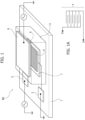
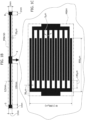
- the FET biosensor BS further includes a gate electrode 6, which in the preferred embodiment is a gold platelet with an area of 0.6 cm 2 that hangs stably over the FET channel area.
- the gate electrode 6 can be defined by thermal evaporation or electron beam deposition of Ti (50 nm) and Au (50 nm) as well as by printing on a flexible substrate such as poliimmide, mica, poly(ethylene 2,6-naphthalate) or polyethylene terephthalate, but also on rigid substrates such as Si/SiO 2 .
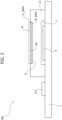
- the gate electrode 6 includes a surface 6F ( figure 2 ) which in the FET shown in the figures is exposed to and faces the semiconductor 7 covering the interdigitated S and D pattern 4.
- a well 11 is provided to delimit the interdigitated S and D area, wherein the well 11 is filled with pure HPLC-grade water which serves as electrolyte to operate the biosensor BS, which is functionally an electrolyte-gated FET (EG-FET), and to perform the sensing measurements. Diluted salt solutions can also be used.
- the surface 6F faces the well 11 and is exposed to the gate electrolyte contained therein.
- the surface 6F is bio-functionalized by forming a layer of biological recognition elements 9 thereon.
- Said layer of biological recognition elements 9 includes a complex of a chemical self-assembled structure and a biological self assembled structure of one or more specific-binding-pair-forming substances, wherein the biological self-assembled structure is chemically grafted onto the chemical self assembled structure.
- said layer of biological recognition elements 9 includes a biological self assembled structure of one or more specific-binding-pair-forming substances, wherein the structural units of the biological self assembled structure are treated to exhibit grafting properties in respect of the substrate they are intended to graft on i.e. the gold surface of the gate electrode 6, which however is not in accordance with the invention.
- the layer of biological recognition elements 9 includes a chemical self assembled monolayer (chemical SAM, C_SAM in the figures) and a biological self-assembled monolayer (biological SAM, B_SAM in the figures) of one or more specific-binding-pair-forming substances.
- said one or more specific-binding-pair-forming substances include one or more of the following:
- the gate electrode functionalization method provides that a SAM layer B_SAM of anti-human Immunoglobulin G (anti-IgG, preferred) or anti-human Immunoglobulin M (anti-IgM) antibodies be added covering the whole gate surface, and specifically be grafted onto a chemical SAM layer C_SAM applied to the surface 6F of the gate electrode 6 to be functionalized.
- a SAM layer B_SAM of anti-human Immunoglobulin G (anti-IgG, preferred) or anti-human Immunoglobulin M (anti-IgM) antibodies be added covering the whole gate surface, and specifically be grafted onto a chemical SAM layer C_SAM applied to the surface 6F of the gate electrode 6 to be functionalized.
- the invention can be practiced with other specific-binding-pair-forming substances (e.g. a selected antibody for a target biomarker).
- the protein SAM deposition procedure is general as it does not depend on specific features (such as for instance functional groups) that are characteristics solely of the antibodies. This renders the deposition method extendable i.e. to all of the biological species mentioned above (all the antibodies, PNA, human glycoprotein, or proteic receptors for dopamine, chiral odors, inflammatory cytokines, C-reactive proteins). This is an essentially general platform for immunoassay.
- the one or more specific-binding-pair-forming substances (such as for instance anti-hIg, anti-IgG, anti-IgM but also antibodies in general) immobilized in the layer of biological recognition elements 9 (particularly in the biological SAM) are packed at a density comprised between 0.1 x 10 4 ⁇ m -2 and 10 ⁇ 10 4 ⁇ m -2 , preferably between 1 x 10 4 ⁇ m -2 and 2 x 10 4 ⁇ m -2 .
- the chemical SAM C_SAM on the surface 6F of the gate electrode 6 is produced by first cleaning the gold platelet (gate electrode 6) as follows:
- the gate electrode surface can be polished by a cyclic voltametry based technique, commonly termed as 'electrochemical polishing'. Cyclic-voltametry polishing can be carried out in three electrodes configuration using an electrochemical analyzer.
- the cleaned gold platelet was immersed in the 3-MPA and 11-MUA solution and kept in the dark (i.e. in the absence of visible and UV light) under constant gaseous nitrogen (N 2 ) flow for eighteen (18) hours at 22 °C.
- the strong gold-sulfur interaction results in the exposure of the carboxylic groups, activated subsequently by reacting the partially processed gate electrode as per the above in a 200 mM 1-Ethyl-3-(3-dimethylaminopropyl)carbodiimide (EDC) and 50 mM sulfo-N-Hydroxysuccinimide (sulfo-NHS) aqueous solution for two (2) hours at 25°C.
- EDC 1-Ethyl-3-(3-dimethylaminopropyl)carbodiimide
- sulfo-NHS sulfo-NHS
- the solution consists of 0.7 ⁇ M (0.1 mg ml -1 ) of antibodies in PBS made by 10 mM phosphate, KCl 2.7 mM and 137 mM NaCl having a pH of 7.4 and a ionic strength of 162 mM.
- the antibody solution (anti-IgG, or the anti-IgM for example) shall have optimal pH and ionic strength depending on the source of antibodies.
- Suitable pH values are in the range from 5 to 9 and ionic strength from 10 mM to 200 mM.
- buffers that can be used to practice the method according to the invention include (depending on the desired pH value): Tris-HCl, phosphate, citrate, imidazole-Cl, PIPES, ACES MOPSO, BES, TES, MOPS, DIPSO, TAPSO, HEPPSO, POPSO, TEA, EPPS, Tricine, Glycine, Bicine, HEPBS, TAPS, AMPD, Borate.
- the ionic strength can be adjusted by any salt that does not interfere with the covalent attachment of the antibody to the gate and with the native conformation of the antibody.
- Commonly used salts are NaCl and KCl.
- the gate electrode 6 is put back onto the biosensor and the drain current (channel current) I DS is measured once again by biasing the biosensor BS with a gate-source voltage V GS between - 0.1 and - 0.7 V with the drain-source voltage V DS set at - 0.7 V.
- the measured I DS current is the signal, I, at 6 zM.
- Step 108 further envisages to repeat steps 105 to 107 by sweeping through all the range going from 66 zM to 66 fM nominal concentrations. Following this, the same measurement set is repeated with a non-binding ligand, as a negative control.
- the IgM is the not binding ligand (negative control) for the anti-IgG, while the IgG is the not binding ligand for the anti-IgM.
- ⁇ V T /V T0 V T 0 ⁇ V T / V T is the normalized threshold voltage response at a given concentration.
- the data are reported in Figure 4 .
- the threshold voltage, V T shifts towards more negative potentials upon incubation of the anti-IgG functionalized gate in solutions containing its affinity ligand, IgG, at different concentrations is reported. The same occurs for the anti-IgM exposed to IgM in the same concentration range (data not shown).
- the biosensor BS featuring a gate electrode 6 functionalized according to the invention, is capable of detecting two to six proteins despite the fact that the gate electrode is millimetric in scale and hosts trillions (10 12 ) of anti-IgG receptors.
- Panel (a) shows the modelling described in the next paragraph of the binding curves (experimental data not shown) gathering the ⁇ I/I 0 data points measured with different EG-OFETs.
- Upper curve is representative of a fully BSA blocked anti-IgG-SAM gate exposed to the IgG ligand solution spanning nine orders of magnitude in concentration.
- the lower curve is representative of the response to IgG, in the same concentration range, of an anti-IgG gate electrode that was not blocked with BSA (prior art biosensor).
- ⁇ I / I is proportional to the ligands nominal concentration c.
- ⁇ (x) can be obtained from the inverse Laplace Transform of the experimental data ⁇ I / I set in the ⁇ domain. This will allow to actually fit the data of Fig. 4 , but the inversion of the Laplace Transform is ill-conditioned and, although several alternative numerical methods have been proposed ( ⁇ têpánek, P., "Data Analysis in Dynamic Light Scattering, in Dynamic Light Scattering: The Method and Some Applications" Chapter 4, author Brown, W.
- the gamma-distribution can be evaluated, as the probability that at least one ligand interacts in a domain containing a range of binding sites comprised between x and x + dx ( Fig. 5 ). It is clear that without BSA the domains generated in the anti-IgG SAM are very small, polydisperse and with a predominance of very small domains (centered around x ⁇ 1). On the contrary, in the presence of BSA almost monodispersed giant domains are seen.
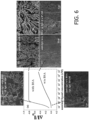
- the theoretical model disclosed herein envisages that, in the presence of BSA, almost monodispersed giant domains form in the anti-IgG SAM as IgG affinity ligands are assayed, ( Fig. 4a and Fig. 6B ) while without BSA, only very small and polydisperse features can be seen ( Fig. 6C ).
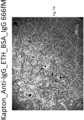
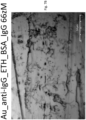
- the SEM images in Fig. 4A and Fig. 6B strikingly show that indeed only on the BSA blocked anti-IgG SAM sensing IgG, wide patches are present being tens of micrometers in size and widely covered with a very dense structure of dendrites.
- FIGs. 7A - 7C This is also evidenced by the microscope images reported in Figs. 7A - 7C .
- FIG. 7B the anti-IgG SAM on a gold platelet treated with ethanolamine and BSA (fully blocked) is used as gate to sense IgG in the whole calibration curve ranging in the 6 zM to 6 10 8 zM.
- Figure 7C the anti-IgG SAM on a gold platelet treated with ethanolamine is used as gate to sense IgG in the whole calibration curve ranging in the 6 zM to 6 10 8 zM.
- Two total magnification levels are provided in Fig. 7A (50x) and Figs. 7B , 7C (1000x).
- the observation of dendritic structures in Figs. 7A-7C may also open to perspective assay by simple inspection of a microscope image of the metal gate without necessarily measuring the field-induced current.
- such a method provides for the arrangement of plural immune-sensing systems capable to detect clinically relevant biomarkers for diseases in respect of which early diagnostic, at the physical limit, is vital (such as in tumors).
- a P3HT solution (2.6 mg ml -1 in 1,2-dichlorobenzene) filtered with 0.2 ⁇ m filter was spin-coated at 2000 r.p.m. for 20 s and annealed at 80 °C for 1 hour.
- the P3HT film showed a highly hydrophobic surface characterized by a contact angle as high as 103 ⁇ 3°.
- a polydimethylsiloxane well was glued across the interdigitated channels area and was filled with 300 ⁇ L of water (HPLC grade). Alternatively, a 6 ⁇ L droplet of water was dispensed over the P3HT surface.
- a gold platelet (area of 0.6 cm 2 and ⁇ 2 ⁇ m thick) serving as the gate (G) electrode 6 was stably positioned on the water in correspondence of the electrodes interdigitated area as schematically depicted in Fig. 1A .
- the gold platelet was Bunsen burn (flame annealed) for 5 seconds and immersed in a piranha solution (H 2 SO 4 and H 2 O 2 , 3:1 v/v) for 20 min afterwards.
- the platelets were also kept in boiling water for 10 min and then treated for 10 min in an ozone cleaner.
- Gate bio-functionalization protocol The chemical SAM on the gold surface was produced by depositing, at first, a layer of alkanethiols terminating with carboxylic functionalities. To this end, a 10 mM solution consisting of 10:1 ratio of 3-MPA to 11-MUA was prepared in ethanol grade, puriss. p.a. assay, ⁇ 99.8 %. The cleaned gold platelet was immersed in the 3-MPA and 11-MUA solution and kept in the dark under constant N 2 flux for 18 h at 22 °C.
- the strong gold-sulfur interaction results in the exposure of the carboxylic groups, activated afterwards in a 200 mM EDC and 50 mM sulfo-NHS aqueous solution for 2h at 25°C.
- the anti-IgG SAM was generated, subsequently, through the anchoring of the anti-IgG antibodies to the amino groups, resulting from the chemical activation, by immerging the gate in an anti-IgG in Phosphate Buffered Saline (PBS) solution for 2h at 25°C.
- PBS Phosphate Buffered Saline
- the solution was composed of 0.7 ⁇ M (0.1mg ml -1 ) of anti-IgG and 10 mM (KCl 2.7 mM and 137 mM NaCl) of PBS at a pH of 7.4 and an ionic strength of 162 mM.
- the anti-IgG SAM was treated with ethanolamine 1 M in PBS 10 mM for 1 h at 25 °C.
- the bio-functionalized gate was immersed in a 1.5 ⁇ M (0.1 mg ml -1 ) BSA solution in PBS 10 mM for 1 h at 25 °C. This last step is carried out to minimize the non-specific binding but also and most importantly, to drastically improve the sensitivity as discussed above.
- the gate was rinsed thoroughly to remove any possible residues.
- Anti-IgG gate morphological characterization The gate topography at the different functionalization steps was measured by means of a scanning electron microscope (SEM). Images of the bare gold and anti-IgG SAM were acquired with a mod. Sigma, Carl Zeiss, Oberkochen, Germany. The micrographs were obtained with the in-lens detector using an acceleration voltage of 2kV and an aperture of 30 ⁇ m. Energy dispersive spectroscopy (EDS) was performed with a Zeiss field emission SEM (mod. Sigma) equipped with an Oxford Instruments EDS accessory (mod. INCAx-act). The spectra were collected with an accelerating voltage of 6 kV, a 9.5 mm working distance and 60 ⁇ m diameter aperture.
- SEM scanning electron microscope
- Sensing measurements The EG-OFET electronic output curves were measured by putting the gold gate electrode 6 in contact with the water in the well 11 that functions as the electrolyte gating medium. The current-voltage curve of the OFETs were measured either with an Agilent 4155C or a Keithley 4200-SCS semiconductor parameter analyzers equipped with a probe station, at room temperature. The FET were tested in the common-source configuration.
- the drain current (I DS ) was measured as a function of the drain voltage V DS at different gate voltages V G , ranging between 0 and - 0.5 V, in steps of - 0.1 V.
- I DS was measured as a function of V G (ranging from - 0.1 to - 0.7 V in steps of - 0.01 V) at a constant drain voltage of - 0.4 V.
- the voltage ranges were tuned to minimize the gate leakage current (I G ) associated with ionic-electronic relay electrochemical processes involving oxidative degradation processes of the anti-IgG SAM. To minimize such processes, I G was always acquired along with I DS and all the curves were measured in the forward and reverse mode to evidence the occurrence of any hysteresis.
- I DS was stabilized by cycling the measurement of the transfer curve of a P3HT EG-OFET, comprising a fully cleaned bare gold platelet gate, until the last current trace reproduced exactly the three previous ones. During this process, the low-mobility trap states of the P3HT OSC are filled, leading to a stable V T value. The stable transfer curve was recorded and used as reference. A gate functionalized with a fully blocked anti-IgG SAM was then incubated (at RT and in the dark) for 10 min in 100 ⁇ L of PBS.
- the gate electrode 6 was removed from the PBS, washed with HPLC water, mounted on the EG-OFET (replacing the bare gold one) and a new transfer characteristic was recorded. This is addressed as the I 0 current base-line. As a control experiment (carried out on a separately bio-functionalized gate) this current was measured nine times after consecutive incubation for 10 minutes in PBS of the same bio-functionalized gate. The relative changes of each trace, as compared to the first one, is as low as 1.2 ⁇ 0.1 %.
- the same anti-IgG gate was immersed and incubated (at RT and in the dark) for 10 min in 100 ⁇ L PBS solutions of the ligands (IgG or IgM) at nominal concentrations ranging from 6 to 6.67 x 10 8 zM.
- the incubation time was estimated to allow enough time for the IgG or IgM proteins present in the incubating solution to impinge on the anti-IgG layer.
- a diffusion constant as high as 4 10 -11 m 2 s -1 was measured for IgG in PBS incubation, resulting in a root mean square displacement explored in ten minutes of 0.4 mm. This occurrence makes it reasonable for the proteins to impinge on the gate surface during the incubation time, also considering that convective motions start when the gate is immersed in the small volume of the incubating solution.
- the IgG, IgM and BSA proteins, in the given PBS solution are negatively charged as proven by surface z-potential measurements.
- the bio-functionalized gate was washed thoroughly with the PBS solution to remove the unreacted ligands away and further I-V transfer curves were measured, taking care to positioning the gate platelet always exactly at the same height as for the measurement of the base-line, I 0 .
- the measured currents are addressed as the I signals at a given concentration.
- the ⁇ I/I 0 [(I - I 0 ) / I 0 ] is the normalized electronic response at a given concentration and the relevant dose-response curve is obtained by plotting these data points at all investigated concentrations at the V G value that maximizes the trans-conductance ⁇ I DS / ⁇ V G , falling generally in the - 0.3 V to - 0.4 V range.
- One sole anti-IgG gate was used to measure the whole IgG dose curves spanning the 6 to 6.67 x 10 8 zM nine orders of magnitude.
- a second anti-IgG gate was used to measure the IgM dose curve. After measuring the whole dose curve, the bare gold gate previously used to measure the reference current level is positioned back to the EG-OFET and a final transfer curve is recorded.
Landscapes
- Health & Medical Sciences (AREA)
- Life Sciences & Earth Sciences (AREA)
- Immunology (AREA)
- Engineering & Computer Science (AREA)
- Chemical & Material Sciences (AREA)
- Molecular Biology (AREA)
- Physics & Mathematics (AREA)
- Urology & Nephrology (AREA)
- Hematology (AREA)
- Biomedical Technology (AREA)
- Pathology (AREA)
- Analytical Chemistry (AREA)
- Biochemistry (AREA)
- General Health & Medical Sciences (AREA)
- General Physics & Mathematics (AREA)
- Biotechnology (AREA)
- Microbiology (AREA)
- Medicinal Chemistry (AREA)
- Cell Biology (AREA)
- Food Science & Technology (AREA)
- Chemical Kinetics & Catalysis (AREA)
- Microelectronics & Electronic Packaging (AREA)
- Electrochemistry (AREA)
- Spectroscopy & Molecular Physics (AREA)
- Proteomics, Peptides & Aminoacids (AREA)
- Inorganic Chemistry (AREA)
- Peptides Or Proteins (AREA)
- Thin Film Transistor (AREA)
- Apparatus Associated With Microorganisms And Enzymes (AREA)
Claims (7)
- Procédé de fonctionnalisation d'une électrode de grille (6) d'un capteur à transistor à effet de champ (BS) comprenant les étapes de :- formation d'une couche d'éléments de reconnaissance biologique sur une surface (6F) de ladite électrode de grille (6), dans lequel ladite couche d'éléments de reconnaissance biologique (9) comprend une structure auto-assemblée (SAM) d'une ou plusieurs substances formant une paire de liaisons spécifiques,- traitement de la couche d'éléments de reconnaissance biologique (SAM) avec une solution contenant un agent de blocage pour remplir les lacunes et empêcher une liaison non spécifique dans la structure auto-assemblée (SAM), dans lequel ladite ou lesdites plusieurs substances formant une paire de liaisons spécifiques immobilisées dans ladite couche d'éléments de reconnaissance biologique (9) sont conditionnées à une densité comprise entre 0,1 x 104 µm-2 et 10 x 104 µm-2, de préférence entre 1 x 104 µm-2 et 2 x 104 µm-2,dans lequel ledit agent de blocage comprend une solution d'Albumine de Sérum Bovin, dans lequel ledit agent de blocage comprend une solution d'Albumine de Sérum Bovin dans une solution tampon, dans lequel ladite solution tampon est une solution saline tamponnée au phosphate (PBS), et dans lequel l'agent de blocage est une solution de BSA de 0,05 à 1 mg ml-1, de préférence de 0,1 mg ml-1, dans une solution saline tamponnée au phosphate (PBS) de 5 mM à 20 mM, de préférence de 10 mM,dans lequel la couche d'éléments de reconnaissance biologique (9) comprend une structure biologique auto-assemblée (B_SAM) comprenant ladite ou lesdites plusieurs substances formant une paire de liaisons spécifiques et une structure chimique auto-assemblée (C_SAM) sur laquelle ladite structure biologique auto-assemblée est greffée,dans lequel chacune desdites structure chimique auto-assemblée (C_SAM) et structure biologique auto-assemblée (B_SAM) est une structure de monocouche auto-assemblée (SAM),dans lequel la monocouche chimique auto-assemblée (C_SAM) est ajoutée à l'électrode de grille (6) au moyen d'un précurseur constitué d'une couche d'alcanethiols se terminant par des fonctionnalités carboxyliques,dans lequel ledit traitement de la couche d'éléments de reconnaissance biologique (SAM) avec une solution contenant un agent de blocage pour remplir les lacunes et empêcher la liaison non spécifique dans la structure auto-assemblée (SAM) comprend en outre la saturation des groupes carboxy activés n'ayant pas réagi de ladite monocouche chimique auto-assemblée (C_SAM) au moyen de solutions concentrées d'amines pendant une durée suffisamment longue pour permettre la réaction avec tous les groupes carboxyliques activés.
- Procédé de la revendication 1, dans lequel ladite ou lesdites plusieurs substances formant une paire de liaisons spécifiques comprennent un ou plusieurs de ce qui suit :- un ou plusieurs anticorps,- des anticorps anti-immunoglobuline humaine (anti-hIG),- des anticorps anti-immunoglobuline G humaine (anti-IgG),- des anticorps anti-immunoglobuline M humaine (anti-lgM),- des substances formant une paire de liaisons spécifiques pour la dopamine, les odeurs chirales, l'ADN, l'APN, la glycoprotéine humaine, les cytokines inflammatoires, les protéines C-réactives.
- Procédé de la revendication 1, dans lequel ladite étape de traitement de la couche d'éléments de reconnaissance biologique comprend l'immersion de la couche d'éléments de reconnaissance biologique (9) dans la solution d'Albumine de Sérum Bovin (BSA) dans une solution PBS pendant un temps de séjour compris entre 30 minutes et 2 heures, de préférence de 1 heure, et à une température comprise dans la plage allant de 22 à 26°C, de préférence de 25°C.
- Procédé selon la revendication 1, dans lequel l'ajout de ladite monocouche chimique auto-assemblée (C_SAM) comprend :- la préparation d'une solution de 10 mM à 100 mM, de préférence de 10 mM, constituée, en variante,a) d'un rapport de 10:1 à 1:1, de préférence de 10:1, de l'acide 3-mercaptopropionique sur l'acide 11-mercaptoundécanoïque dans une qualité d'éthanol,b) d'acide 3-mercaptopropionique,- l'immersion de l'électrode de grille (6) dans celle-ci pendant un temps de séjour compris dans la plage allant de 15 à 20 heures, de préférence de 18 heures, et à une température dans la plage allant de 15 à 24°C, de préférence de 22°C.
- Procédé selon l'une des revendications 1 à 4, dans lequel les fonctionnalités carboxyliques sur la couche d'alcanethiols sont introduites en faisant réagir en outre l'électrode de grille (6) dans une solution aqueuse de 50 mM à 250 mM, de préférence de 200 mM, de 1-Éthyl-3-(3-diméthylaminopropyl)carbodiimide (EDC) et de 50 mM à 250 mM, de préférence de 50 mM, de N-Hydroxysuccinimide (NHS), de préférence de sulfo-N-Hydroxysuccinimide (sulfo-NHS), pendant un temps de séjour compris dans la plage allant de 1 à 3 heures, de préférence de 2 heures, et à une température comprise dans la plage allant de 22°C à 26°C, de préférence de 25°C.
- Procédé selon l'une des revendications 1 et 4, dans lequel la monocouche biologique auto-assemblée (B_SAM) est une monocouche auto-assemblée (SAM) d'anti-immunoglobuline G humaine (anti IgG) traitée avec de l'éthanolamine 1M dans une solution saline tamponnée au phosphate (PBS) pendant une heure à 25°C.
- Capteur à transistor à effet de champ (BS) comprenant :- une électrode de source (S)- une électrode de drain (D)- un canal FET, comprenant de préférence un motif interdigité de contacts en or (4)- un semi-conducteur (7) disposé sur ledit motif interdigité (4)- une électrode de grille (6) ayant une surface (6F) fonctionnalisée selon le procédé de l'une des revendications précédentes.
Priority Applications (5)
| Application Number | Priority Date | Filing Date | Title |
|---|---|---|---|
| EP16207596.4A EP3343214B1 (fr) | 2016-12-30 | 2016-12-30 | Procédé de fonctionnalisation d'une électrode de grille d'un capteur de transistor à effet de champ avec une monocouche auto-assemblée et blocage de liaison non spécifique |
| EP25164452.2A EP4553501A3 (fr) | 2016-12-30 | 2016-12-30 | Procédé de biofonctionnalisation d'une électrode de grille d'un capteur à transistor à effet de champ avec une sam et blocage d'une liaison non spécifique |
| US16/474,707 US20190331673A1 (en) | 2016-12-30 | 2017-12-18 | Method of functionalization of a gate electrode of a field-effect transistor sensor |
| PCT/IB2017/058065 WO2018122671A1 (fr) | 2016-12-30 | 2017-12-18 | Procédé de biofonctionnalisation d'une électrode grille d'un capteur à transistor à effet de champ à sam et blocage d'une liaison non spécifique |
| KR1020197021143A KR102496064B1 (ko) | 2016-12-30 | 2017-12-18 | 전계효과 트랜지스터 센서의 게이트 전극 기능화 방법 |
Applications Claiming Priority (1)
| Application Number | Priority Date | Filing Date | Title |
|---|---|---|---|
| EP16207596.4A EP3343214B1 (fr) | 2016-12-30 | 2016-12-30 | Procédé de fonctionnalisation d'une électrode de grille d'un capteur de transistor à effet de champ avec une monocouche auto-assemblée et blocage de liaison non spécifique |
Related Child Applications (1)
| Application Number | Title | Priority Date | Filing Date |
|---|---|---|---|
| EP25164452.2A Division EP4553501A3 (fr) | 2016-12-30 | 2016-12-30 | Procédé de biofonctionnalisation d'une électrode de grille d'un capteur à transistor à effet de champ avec une sam et blocage d'une liaison non spécifique |
Publications (2)
| Publication Number | Publication Date |
|---|---|
| EP3343214A1 EP3343214A1 (fr) | 2018-07-04 |
| EP3343214B1 true EP3343214B1 (fr) | 2025-04-16 |
Family
ID=57680172
Family Applications (2)
| Application Number | Title | Priority Date | Filing Date |
|---|---|---|---|
| EP16207596.4A Active EP3343214B1 (fr) | 2016-12-30 | 2016-12-30 | Procédé de fonctionnalisation d'une électrode de grille d'un capteur de transistor à effet de champ avec une monocouche auto-assemblée et blocage de liaison non spécifique |
| EP25164452.2A Pending EP4553501A3 (fr) | 2016-12-30 | 2016-12-30 | Procédé de biofonctionnalisation d'une électrode de grille d'un capteur à transistor à effet de champ avec une sam et blocage d'une liaison non spécifique |
Family Applications After (1)
| Application Number | Title | Priority Date | Filing Date |
|---|---|---|---|
| EP25164452.2A Pending EP4553501A3 (fr) | 2016-12-30 | 2016-12-30 | Procédé de biofonctionnalisation d'une électrode de grille d'un capteur à transistor à effet de champ avec une sam et blocage d'une liaison non spécifique |
Country Status (4)
| Country | Link |
|---|---|
| US (1) | US20190331673A1 (fr) |
| EP (2) | EP3343214B1 (fr) |
| KR (1) | KR102496064B1 (fr) |
| WO (1) | WO2018122671A1 (fr) |
Families Citing this family (11)
| Publication number | Priority date | Publication date | Assignee | Title |
|---|---|---|---|---|
| US12144614B2 (en) | 2018-01-18 | 2024-11-19 | King Abdullah University Of Science And Technology | N-type polymer based electrochemical device for direct enzymatic metabolite sensing and methods of making and using |
| EP4007911A1 (fr) | 2019-08-03 | 2022-06-08 | King Abdullah University Of Science And Technology | Dispositifs de détection d'analytes dans un échantillon et ses procédés d'utilisation |
| EP4176262B1 (fr) * | 2020-07-02 | 2025-06-25 | King Abdullah University Of Science And Technology | Transistors électrochimiques fonctionnalisés aux nanocorps et leurs méthodes de fabrication et d'utilisation |
| CN112098652B (zh) * | 2020-07-29 | 2022-04-22 | 西安交通大学 | 一种基于共价键合法固定捕获抗体的纸基酶联免疫吸附法 |
| US11926726B2 (en) * | 2020-11-18 | 2024-03-12 | United States Of America As Represented By The Secretary Of The Air Force | Polyimide-gold-nanorod J-aggregates with broadened surface plasmonic resonance band and method of manufacture |
| US20240002679A1 (en) * | 2020-12-17 | 2024-01-04 | President And Fellows Of Harvard College | Applications, methods, and tools for development, rapid preparation and deposition of a nanocomposite coating on surfaces for diagnostic devices including electrochemical sensors |
| JP2022099742A (ja) * | 2020-12-23 | 2022-07-05 | 昇陽國際半導體股▲ふん▼有限公司 | バイオプローブのリンカー |
| EP4465032A1 (fr) * | 2023-05-15 | 2024-11-20 | Grapheal | Dispositif de capteur électronique stratifié et procédé de fabrication |
| GB2630098A (en) * | 2023-05-17 | 2024-11-20 | Epinal Ltd | Biosensor apparatus |
| CN117347460B (zh) * | 2023-12-05 | 2024-03-12 | 广州市赛特检测有限公司 | 基于丝网印刷碳电极表面修饰的生物免疫传感器及其制备方法 |
| EP4685474A1 (fr) * | 2024-07-26 | 2026-01-28 | Exotictarget - Lda | Dispositif de biodétection basé sur un transistor à effet de champ avec procédé de réduction de bruit |
Family Cites Families (6)
| Publication number | Priority date | Publication date | Assignee | Title |
|---|---|---|---|---|
| US5063081A (en) * | 1988-11-14 | 1991-11-05 | I-Stat Corporation | Method of manufacturing a plurality of uniform microfabricated sensing devices having an immobilized ligand receptor |
| NZ516848A (en) * | 1997-06-20 | 2004-03-26 | Ciphergen Biosystems Inc | Retentate chromatography apparatus with applications in biology and medicine |
| JP3883512B2 (ja) * | 2001-04-23 | 2007-02-21 | 三星電子株式会社 | 微細流路の側壁に形成されたmosfetよりなる物質検出用チップ、これを含む物質検出装置、及び物質検出装置を利用した物質検出方法 |
| KR100624459B1 (ko) * | 2005-02-03 | 2006-09-19 | 삼성전자주식회사 | 생체분자의 전기적 검출 방법 |
| JPWO2012026569A1 (ja) * | 2010-08-26 | 2013-10-28 | 株式会社日立ハイテクノロジーズ | 液体クロマトグラフィー用充填剤、分離カラム及び液体クロマトグラフィー装置 |
| US20140061728A1 (en) * | 2012-08-29 | 2014-03-06 | Diagtronix Inc. | Gate Biasing Electrodes For FET Sensors |
-
2016
- 2016-12-30 EP EP16207596.4A patent/EP3343214B1/fr active Active
- 2016-12-30 EP EP25164452.2A patent/EP4553501A3/fr active Pending
-
2017
- 2017-12-18 WO PCT/IB2017/058065 patent/WO2018122671A1/fr not_active Ceased
- 2017-12-18 KR KR1020197021143A patent/KR102496064B1/ko active Active
- 2017-12-18 US US16/474,707 patent/US20190331673A1/en active Pending
Non-Patent Citations (6)
| Title |
|---|
| ELEONORA MACCHIA: "Supplementary Information: Single-molecule detection with a millimetre-sized transistor", NATURE COMMUNICATIONS, vol. 9, no. 1, 13 August 2018 (2018-08-13), UK, XP093154656, ISSN: 2041-1723, DOI: 10.1038/s41467-018-05235-z * |
| JOO SEON PARK: "Supporting Information for: Ultrasensitive Flexible Graphene based Field-Effect Transistor (FET)-type Bioelectronic Nose", NANO LETT. 2012, 12, 10, 5082-5090, 10 September 2012 (2012-09-10), XP093154619, Retrieved from the Internet <URL:https://pubs.acs.org/doi/10.1021/nl301714x> * |
| MACCHIA ELEONORA ET AL: "Label-Free and Selective Single-Molecule Bioelectronic Sensing with a Millimeter-Wide Self-Assembled Monolayer of Anti-Immunoglobulins", CHEMISTRY OF MATERIALS, vol. 31, no. 17, 2 January 2019 (2019-01-02), US, pages 6476 - 6483, XP055927223, ISSN: 0897-4756, DOI: 10.1021/acs.chemmater.8b04414 * |
| MACCHIA ELEONORA ET AL: "Single-molecule detection with a millimetre-sized transistor", NATURE COMMUNICATIONS, vol. 9, no. 1, 13 August 2018 (2018-08-13), XP055927229, Retrieved from the Internet <URL:http://www.nature.com/articles/s41467-018-05235-z> DOI: 10.1038/s41467-018-05235-z * |
| SEON JOO PARK ET AL: "Ultrasensitive Flexible Graphene Based Field-Effect Transistor (FET)-Type Bioelectronic Nose", NANO LETTERS, vol. 12, no. 10, 10 September 2012 (2012-09-10), US, pages 5082 - 5090, XP055722642, ISSN: 1530-6984, DOI: 10.1021/nl301714x * |
| SHO HIDESHIMA ET AL: "Detection of tumor marker in blood serum using antibody-modified field effect transistor with optimized BSA blocking", SENSORS AND ACTUATORS B: CHEMICAL, ELSEVIER BV, NL, vol. 161, no. 1, 1 October 2011 (2011-10-01), pages 146 - 150, XP028447707, ISSN: 0925-4005, [retrieved on 20111019], DOI: 10.1016/J.SNB.2011.10.001 * |
Also Published As
| Publication number | Publication date |
|---|---|
| WO2018122671A1 (fr) | 2018-07-05 |
| EP4553501A2 (fr) | 2025-05-14 |
| EP3343214A1 (fr) | 2018-07-04 |
| KR20190118558A (ko) | 2019-10-18 |
| EP4553501A3 (fr) | 2025-09-03 |
| KR102496064B1 (ko) | 2023-02-06 |
| US20190331673A1 (en) | 2019-10-31 |
Similar Documents
| Publication | Publication Date | Title |
|---|---|---|
| EP3343214B1 (fr) | Procédé de fonctionnalisation d'une électrode de grille d'un capteur de transistor à effet de champ avec une monocouche auto-assemblée et blocage de liaison non spécifique | |
| Gruner | Carbon nanotube transistors for biosensing applications | |
| Fu et al. | Sensing at the surface of graphene field‐effect transistors | |
| US11726056B2 (en) | Field-effect transistor sensor | |
| Rabbani et al. | Serum CRP biomarker detection by using carbon nanotube field-effect transistor (CNT-FET) immunosensor | |
| US11009482B1 (en) | Whole virus quantum mechanical tunneling current and electronic sensors | |
| Hou et al. | An ultrasensitive competitive immunosensor for impedimetric detection of microcystin-LR via antibody-conjugated enzymatic biocatalytic precipitation | |
| US10983117B2 (en) | Carbon nanotube biosensors and related methods | |
| US20110237000A1 (en) | Method for detecting an analyte molecule | |
| US20100216256A1 (en) | Nanobelt-based sensors and detection methods | |
| de Vasconcelos et al. | Potential of a simplified measurement scheme and device structure for a low cost label-free point-of-care capacitive biosensor | |
| Takeda et al. | Application of carbon nanotubes for detecting anti-hemagglutinins based on antigen–antibody interaction | |
| Liang et al. | Highly sensitive covalently functionalized light-addressable potentiometric sensor for determination of biomarker | |
| Basu et al. | Graphene nanoporous FET biosensor: influence of pore dimension on sensing performance in complex analyte | |
| HK1252135B (en) | Method of bio-functionalization of a gate electrode of a field-effect transistor sensor with a sam and blocking of non-specific binding | |
| HK1252135A1 (en) | Method of bio-functionalization of a gate electrode of a field-effect transistor sensor with a sam and blocking of non-specific binding | |
| Hu et al. | The integration of gold nanoparticles with semi-conductive oligomer layer for development of capacitive immunosensor | |
| Neubert et al. | Sensing Mechanisms in Graphene Field‐Effect Transistors Operating in Liquid | |
| RU178317U1 (ru) | Полевой транзистор для определения биологически активных соединений | |
| Croce Jr et al. | Label-free protein detection based on vertically aligned carbon nanotube gated field-effect transistors | |
| US20190107508A1 (en) | Sensor, method of forming a sensor and use thereof | |
| KR101493065B1 (ko) | 후각 수용체 및 전계 효과 트랜지스터 기반 암 센서 | |
| HK40002241A (en) | A field-effect transistor sensor | |
| HK40002241B (en) | A field-effect transistor sensor | |
| Jakob | Development and investigation of metal oxide nanostructures for sensing applications |
Legal Events
| Date | Code | Title | Description |
|---|---|---|---|
| PUAI | Public reference made under article 153(3) epc to a published international application that has entered the european phase |
Free format text: ORIGINAL CODE: 0009012 |
|
| STAA | Information on the status of an ep patent application or granted ep patent |
Free format text: STATUS: REQUEST FOR EXAMINATION WAS MADE |
|
| 17P | Request for examination filed |
Effective date: 20180227 |
|
| AK | Designated contracting states |
Kind code of ref document: A1 Designated state(s): AL AT BE BG CH CY CZ DE DK EE ES FI FR GB GR HR HU IE IS IT LI LT LU LV MC MK MT NL NO PL PT RO RS SE SI SK SM TR |
|
| AX | Request for extension of the european patent |
Extension state: BA ME |
|
| REG | Reference to a national code |
Ref country code: HK Ref legal event code: DE Ref document number: 1252135 Country of ref document: HK |
|
| STAA | Information on the status of an ep patent application or granted ep patent |
Free format text: STATUS: EXAMINATION IS IN PROGRESS |
|
| 17Q | First examination report despatched |
Effective date: 20200825 |
|
| GRAP | Despatch of communication of intention to grant a patent |
Free format text: ORIGINAL CODE: EPIDOSNIGR1 |
|
| STAA | Information on the status of an ep patent application or granted ep patent |
Free format text: STATUS: GRANT OF PATENT IS INTENDED |
|
| INTG | Intention to grant announced |
Effective date: 20241112 |
|
| GRAS | Grant fee paid |
Free format text: ORIGINAL CODE: EPIDOSNIGR3 |
|
| GRAA | (expected) grant |
Free format text: ORIGINAL CODE: 0009210 |
|
| STAA | Information on the status of an ep patent application or granted ep patent |
Free format text: STATUS: THE PATENT HAS BEEN GRANTED |
|
| AK | Designated contracting states |
Kind code of ref document: B1 Designated state(s): AL AT BE BG CH CY CZ DE DK EE ES FI FR GB GR HR HU IE IS IT LI LT LU LV MC MK MT NL NO PL PT RO RS SE SI SK SM TR |
|
| REG | Reference to a national code |
Ref country code: GB Ref legal event code: FG4D |
|
| REG | Reference to a national code |
Ref country code: CH Ref legal event code: EP |
|
| REG | Reference to a national code |
Ref country code: IE Ref legal event code: FG4D |
|
| REG | Reference to a national code |
Ref country code: DE Ref legal event code: R096 Ref document number: 602016091906 Country of ref document: DE |
|
| REG | Reference to a national code |
Ref country code: NL Ref legal event code: MP Effective date: 20250416 |
|
| PG25 | Lapsed in a contracting state [announced via postgrant information from national office to epo] |
Ref country code: NL Free format text: LAPSE BECAUSE OF FAILURE TO SUBMIT A TRANSLATION OF THE DESCRIPTION OR TO PAY THE FEE WITHIN THE PRESCRIBED TIME-LIMIT Effective date: 20250416 |
|
| REG | Reference to a national code |
Ref country code: AT Ref legal event code: MK05 Ref document number: 1786018 Country of ref document: AT Kind code of ref document: T Effective date: 20250416 |
|
| PG25 | Lapsed in a contracting state [announced via postgrant information from national office to epo] |
Ref country code: PT Free format text: LAPSE BECAUSE OF FAILURE TO SUBMIT A TRANSLATION OF THE DESCRIPTION OR TO PAY THE FEE WITHIN THE PRESCRIBED TIME-LIMIT Effective date: 20250818 Ref country code: FI Free format text: LAPSE BECAUSE OF FAILURE TO SUBMIT A TRANSLATION OF THE DESCRIPTION OR TO PAY THE FEE WITHIN THE PRESCRIBED TIME-LIMIT Effective date: 20250416 Ref country code: ES Free format text: LAPSE BECAUSE OF FAILURE TO SUBMIT A TRANSLATION OF THE DESCRIPTION OR TO PAY THE FEE WITHIN THE PRESCRIBED TIME-LIMIT Effective date: 20250416 |
|
| REG | Reference to a national code |
Ref country code: LT Ref legal event code: MG9D |
|
| PG25 | Lapsed in a contracting state [announced via postgrant information from national office to epo] |
Ref country code: NO Free format text: LAPSE BECAUSE OF FAILURE TO SUBMIT A TRANSLATION OF THE DESCRIPTION OR TO PAY THE FEE WITHIN THE PRESCRIBED TIME-LIMIT Effective date: 20250716 Ref country code: GR Free format text: LAPSE BECAUSE OF FAILURE TO SUBMIT A TRANSLATION OF THE DESCRIPTION OR TO PAY THE FEE WITHIN THE PRESCRIBED TIME-LIMIT Effective date: 20250717 |
|
| PG25 | Lapsed in a contracting state [announced via postgrant information from national office to epo] |
Ref country code: PL Free format text: LAPSE BECAUSE OF FAILURE TO SUBMIT A TRANSLATION OF THE DESCRIPTION OR TO PAY THE FEE WITHIN THE PRESCRIBED TIME-LIMIT Effective date: 20250416 |
|
| PG25 | Lapsed in a contracting state [announced via postgrant information from national office to epo] |
Ref country code: BG Free format text: LAPSE BECAUSE OF FAILURE TO SUBMIT A TRANSLATION OF THE DESCRIPTION OR TO PAY THE FEE WITHIN THE PRESCRIBED TIME-LIMIT Effective date: 20250416 |
|
| PG25 | Lapsed in a contracting state [announced via postgrant information from national office to epo] |
Ref country code: HR Free format text: LAPSE BECAUSE OF FAILURE TO SUBMIT A TRANSLATION OF THE DESCRIPTION OR TO PAY THE FEE WITHIN THE PRESCRIBED TIME-LIMIT Effective date: 20250416 |
|
| PG25 | Lapsed in a contracting state [announced via postgrant information from national office to epo] |
Ref country code: AT Free format text: LAPSE BECAUSE OF FAILURE TO SUBMIT A TRANSLATION OF THE DESCRIPTION OR TO PAY THE FEE WITHIN THE PRESCRIBED TIME-LIMIT Effective date: 20250416 |
|
| PG25 | Lapsed in a contracting state [announced via postgrant information from national office to epo] |
Ref country code: RS Free format text: LAPSE BECAUSE OF FAILURE TO SUBMIT A TRANSLATION OF THE DESCRIPTION OR TO PAY THE FEE WITHIN THE PRESCRIBED TIME-LIMIT Effective date: 20250716 |
|
| PG25 | Lapsed in a contracting state [announced via postgrant information from national office to epo] |
Ref country code: IS Free format text: LAPSE BECAUSE OF FAILURE TO SUBMIT A TRANSLATION OF THE DESCRIPTION OR TO PAY THE FEE WITHIN THE PRESCRIBED TIME-LIMIT Effective date: 20250816 |
|
| PG25 | Lapsed in a contracting state [announced via postgrant information from national office to epo] |
Ref country code: LV Free format text: LAPSE BECAUSE OF FAILURE TO SUBMIT A TRANSLATION OF THE DESCRIPTION OR TO PAY THE FEE WITHIN THE PRESCRIBED TIME-LIMIT Effective date: 20250416 |
|
| PG25 | Lapsed in a contracting state [announced via postgrant information from national office to epo] |
Ref country code: DK Free format text: LAPSE BECAUSE OF FAILURE TO SUBMIT A TRANSLATION OF THE DESCRIPTION OR TO PAY THE FEE WITHIN THE PRESCRIBED TIME-LIMIT Effective date: 20250416 Ref country code: SM Free format text: LAPSE BECAUSE OF FAILURE TO SUBMIT A TRANSLATION OF THE DESCRIPTION OR TO PAY THE FEE WITHIN THE PRESCRIBED TIME-LIMIT Effective date: 20250416 |
|
| PGFP | Annual fee paid to national office [announced via postgrant information from national office to epo] |
Ref country code: IT Payment date: 20251205 Year of fee payment: 10 |
|
| REG | Reference to a national code |
Ref country code: DE Ref legal event code: R097 Ref document number: 602016091906 Country of ref document: DE |
|
| PG25 | Lapsed in a contracting state [announced via postgrant information from national office to epo] |
Ref country code: CZ Free format text: LAPSE BECAUSE OF FAILURE TO SUBMIT A TRANSLATION OF THE DESCRIPTION OR TO PAY THE FEE WITHIN THE PRESCRIBED TIME-LIMIT Effective date: 20250416 |
|
| PG25 | Lapsed in a contracting state [announced via postgrant information from national office to epo] |
Ref country code: EE Free format text: LAPSE BECAUSE OF FAILURE TO SUBMIT A TRANSLATION OF THE DESCRIPTION OR TO PAY THE FEE WITHIN THE PRESCRIBED TIME-LIMIT Effective date: 20250416 |
|
| PG25 | Lapsed in a contracting state [announced via postgrant information from national office to epo] |
Ref country code: SK Free format text: LAPSE BECAUSE OF FAILURE TO SUBMIT A TRANSLATION OF THE DESCRIPTION OR TO PAY THE FEE WITHIN THE PRESCRIBED TIME-LIMIT Effective date: 20250416 Ref country code: RO Free format text: LAPSE BECAUSE OF FAILURE TO SUBMIT A TRANSLATION OF THE DESCRIPTION OR TO PAY THE FEE WITHIN THE PRESCRIBED TIME-LIMIT Effective date: 20250416 |
|
| PLBE | No opposition filed within time limit |
Free format text: ORIGINAL CODE: 0009261 |
|
| STAA | Information on the status of an ep patent application or granted ep patent |
Free format text: STATUS: NO OPPOSITION FILED WITHIN TIME LIMIT |
|
| REG | Reference to a national code |
Ref country code: CH Ref legal event code: L10 Free format text: ST27 STATUS EVENT CODE: U-0-0-L10-L00 (AS PROVIDED BY THE NATIONAL OFFICE) Effective date: 20260225 |
|
| 26N | No opposition filed |
Effective date: 20260119 |
|
| PGFP | Annual fee paid to national office [announced via postgrant information from national office to epo] |
Ref country code: DE Payment date: 20251229 Year of fee payment: 10 |