EP3343848A1 - Procédé de traitement de paquet, dispositif de réseau et système - Google Patents
Procédé de traitement de paquet, dispositif de réseau et système Download PDFInfo
- Publication number
- EP3343848A1 EP3343848A1 EP15904400.7A EP15904400A EP3343848A1 EP 3343848 A1 EP3343848 A1 EP 3343848A1 EP 15904400 A EP15904400 A EP 15904400A EP 3343848 A1 EP3343848 A1 EP 3343848A1
- Authority
- EP
- European Patent Office
- Prior art keywords
- network device
- information
- match
- packet
- condition information
- Prior art date
- Legal status (The legal status is an assumption and is not a legal conclusion. Google has not performed a legal analysis and makes no representation as to the accuracy of the status listed.)
- Granted
Links
Images




Classifications
-
- H—ELECTRICITY
- H04—ELECTRIC COMMUNICATION TECHNIQUE
- H04W—WIRELESS COMMUNICATION NETWORKS
- H04W40/00—Communication routing or communication path finding
- H04W40/02—Communication route or path selection, e.g. power-based or shortest path routing
- H04W40/023—Limited or focused flooding to selected areas of a network
-
- H—ELECTRICITY
- H04—ELECTRIC COMMUNICATION TECHNIQUE
- H04L—TRANSMISSION OF DIGITAL INFORMATION, e.g. TELEGRAPHIC COMMUNICATION
- H04L47/00—Traffic control in data switching networks
- H04L47/10—Flow control; Congestion control
- H04L47/32—Flow control; Congestion control by discarding or delaying data units, e.g. packets or frames
-
- H—ELECTRICITY
- H04—ELECTRIC COMMUNICATION TECHNIQUE
- H04L—TRANSMISSION OF DIGITAL INFORMATION, e.g. TELEGRAPHIC COMMUNICATION
- H04L47/00—Traffic control in data switching networks
- H04L47/10—Flow control; Congestion control
- H04L47/33—Flow control; Congestion control using forward notification
-
- H—ELECTRICITY
- H04—ELECTRIC COMMUNICATION TECHNIQUE
- H04L—TRANSMISSION OF DIGITAL INFORMATION, e.g. TELEGRAPHIC COMMUNICATION
- H04L63/00—Network architectures or network communication protocols for network security
- H04L63/02—Network architectures or network communication protocols for network security for separating internal from external traffic, e.g. firewalls
- H04L63/0227—Filtering policies
- H04L63/0263—Rule management
-
- H—ELECTRICITY
- H04—ELECTRIC COMMUNICATION TECHNIQUE
- H04W—WIRELESS COMMUNICATION NETWORKS
- H04W84/00—Network topologies
- H04W84/18—Self-organising networks, e.g. ad-hoc networks or sensor networks
-
- H—ELECTRICITY
- H04—ELECTRIC COMMUNICATION TECHNIQUE
- H04W—WIRELESS COMMUNICATION NETWORKS
- H04W76/00—Connection management
- H04W76/10—Connection setup
- H04W76/14—Direct-mode setup
Definitions
- the present invention relates to the field of communications technologies, and specifically, to a packet processing method and system, and a network device.
- a network device forwards a packet in a flooding manner.
- ISIS Intermediate System to Intermediate System
- each network device needs to create a link state packet (Link State Packet, LSP) information base, and then the network device floods LSP information to all neighboring devices.
- LSP Link State Packet
- the Internet (Internet) Engineering Task Force currently proposes a concept of a self-organizing network technology.
- a self-organizing network a function of a conventional network management system may be automatically completed by means of interaction between network devices, so as to reduce network operation and maintenance costs on the whole.
- intent intent
- intent information may include one or more network policies.
- intent information can be entered on any network device, and then the network device automatically distributes the intent information to another network device.
- a network device when distributing the intent information, a network device also distributes the intent information to another neighboring device in the network in a flooding manner.
- this distribution manner of flooding a packet in an entire network causes waste of network bandwidth resources.
- Embodiments of the present invention provide a packet processing method and system, and a network device, so as to resolve a prior-art technical problem that network bandwidth resources are wasted because a network device sends a packet to another device in a network in a flooding manner.
- an embodiment of the present invention provides a packet processing method, including:
- the second network device is a neighboring device of the first network device
- the matching, by the first network device, device information of the second network device with the match condition information includes: matching, by the first network device, device information of the neighboring device of the first network device with the match condition information.
- the second network device is the first network device
- the matching, by the first network device, device information of the second network device with the match condition information includes: matching, by the first network device, device information of the first network device with the match condition information.
- the performing, by the first network device, forwarding processing on the packet according to a match result of matching the device information of the second network device with the match condition information includes: when determining that a neighboring device that is of the first network device and that matches the match condition information exists, forwarding, by the first network device, the packet to the neighboring device that is of the first network device and that matches the match condition information.
- the performing, by the first network device, discarding processing on the packet according to a match result of matching the device information of the second network device with the match condition information includes: when determining that no neighboring device that is of the first network device and that matches the match condition information exists, performing, by the first network device, discarding processing on the packet.
- the packet further includes action entry information;
- the action entry information includes: when the device information of the second network device matches the match condition information, a processing manner of the first network device for the packet is a processing manner of forwarding processing; and correspondingly, the performing, by the first network device, forwarding processing on the packet according to a match result of matching the device information of the second network device with the match condition information includes: when determining that a neighboring device that is of the first network device and that matches the match condition information exists, forwarding, by the first network device according to the action entry information, the packet to the neighboring device that is of the first network device and that matches the match condition information.
- the performing, by the first network device, forwarding processing on the packet according to a match result of matching the device information of the second network device with the match condition information includes: when determining that the device information of the first network device matches the match condition information, forwarding, by the first network device, the packet to at least one neighboring device of the first network device.
- the packet further includes action entry information;
- the action entry information includes: when the device information of the second network device matches the match condition information, a processing manner of the first network device for the packet is a processing manner of forwarding processing; and correspondingly, the performing, by the first network device, forwarding processing on the packet according to a match result of matching the device information of the second network device with the match condition information includes: when determining that the device information of the first network device matches the match condition information, forwarding, by the first network device, the packet to at least one neighboring device of the first network device according to the action entry information.
- the packet further includes action entry information;
- the action entry information includes: when the device information of the second network device does not match the match condition information, a processing manner of the first network device for the packet is a processing manner of discarding processing; and correspondingly, the performing, by the first network device, discarding processing on the packet according to a match result of matching the device information of the second network device with the match condition information includes: when determining that the device information of the first network device does not match the match condition information, performing, by the first network device, discarding processing on the packet according to the action entry information.
- the match condition information includes device role information; correspondingly, the device information of the second network device includes device role information of the second network device; and the matching, by the first network device, device information of the second network device with the match condition information includes: matching, by the first network device, the device role information of the second network device with the match condition information.
- the match condition information includes protocol role information; correspondingly, the device information of the second network device includes protocol role information of the second network device; and the matching, by the first network device, device information of the second network device with the match condition information includes: matching, by the first network device, the protocol role information of the second network device with the match condition information.
- the second network device is the first network device
- the packet further includes intent information
- the intent information includes network policy information
- the method further includes: executing, by the first network device according to the intent information, a network policy corresponding to the network policy information.
- the match condition information includes at least two types of device information
- the packet further includes an indication flag
- the indication flag is used to instruct the first network device to select device information between which and the device information of the second network device matching is to be performed, and the selected device information is one or more of protocol role information, device role information, or device performance information.
- the packet further includes a first group of match information and a second group of match information, the first group of match information and the second group of match information each include match object information and match condition information, and correspondingly, the packet further includes a match indication flag, where the match indication flag is used to instruct the first network device to use the first group of match information and the second group of match information, or the match indication information is used to instruct to: when match condition information in at least two groups of match information is matched, select a processing manner corresponding to the matched match condition information to process the packet.
- an embodiment of the present invention provides a first network device, including:
- the second network device is a neighboring device of the first network device, and correspondingly, that the match unit matches device information of the second network device with the match condition information includes: matching device information of the neighboring device of the first network device with the match condition information.
- the second network device is the first network device, and correspondingly, that the match unit matches device information of the second network device with the match condition information includes: matching device information of the first network device with the match condition information.
- the packet further includes action entry information;
- the action entry information includes: when the device information of the second network device matches the match condition information, a processing manner of the first network device for the packet is a processing manner of forwarding processing; and correspondingly, that the processing unit performs forwarding processing on the packet according to the match result from the match unit includes: when the match unit determines that a neighboring device that is of the first network device and that matches the match condition information exists, forwarding the packet to the neighboring device that is of the first network device and that matches the match condition information.
- processing unit performs forwarding processing on the packet according to the match result includes: when determining that the device information of the first network device matches the match condition information, forwarding, by the first network device, the packet to at least one neighboring device of the first network device.
- the packet further includes action entry information;
- the action entry information includes: when the device information of the second network device matches the match condition information, a processing manner of the first network device for the packet is a processing manner of forwarding processing; and correspondingly, when the match unit determines that the device information of the first network device matches the match condition information, the processing unit forwards the packet to at least one neighboring device of the first network device according to the action entry information.
- the match condition information includes protocol role information; correspondingly, the device information of the second network device includes protocol role information of the second network device; and that the match unit matches device information of the second network device with the match condition information includes: matching, by the first network device, the protocol role information of the second network device with the match condition information.
- an embodiment of the present invention provides a second network device, including:
- the match object information is an identifier that is agreed on in advance between devices, and the identifier is used to identify that the to-be-matched second network device is a neighboring device of the first network device or the first network device.
- the match condition information includes device role information and device protocol information
- the device role information is information for identifying a location of a device in a network
- the device role information is information for identifying a function of a device in a network.
- an embodiment of the present invention provides a network device, including: a memory, a processor, and a network interface, where the memory, the processor, and the network interface are connected to each other by using a bus, the memory is configured to store a group of program instructions, and the processor is configured to invoke the program instruction stored in the memory to perform the following operations:
- the second network device determined by the processor is the first network device, and correspondingly, that the processor matches device information of the second network device with the match condition information includes: matching, by the processor, device information of the first network device with the match condition information.
- that the processor performs forwarding processing on the packet according to the match result includes: when determining that a neighboring device that is of the first network device and that matches the match condition information exists, forwarding, by the processor, the packet to the neighboring device that is of the first network device and that matches the match condition information.
- that the processor performs discarding processing on the packet according to a match result of matching the device information of the second network device with the match condition information includes: when determining that no neighboring device that is of the first network device and that matches the match condition information exists, performing, by the processor, discarding processing on the packet.
- that the processor performs discarding processing on the packet according to the match result includes: when determining that the device information of the first network device does not match the match condition information, performing, by the processor, discarding processing on the packet.
- an embodiment of the present invention further provides a packet processing system, and the system includes a first network device and a third network device, where the third network device is configured to: obtain match object information and match condition information; generate a packet that includes the match object information and the match condition information; and send the packet to the first network device, where the match object information is used to instruct the first network device to determine a network device corresponding to device information to be matched with the match condition information; and the first network device is configured to: receive the packet; determine a second network device corresponding to the match object information; match device information of the second network device with the match condition information; and perform forwarding processing or discarding processing on the packet according to action entry information and a match result of matching the device information of the second network device with the match condition information.
- FIG. 1 is a schematic diagram of an application scenario of a packet processing method according to an embodiment of the present invention.
- a network device A, a network device C, a network device D, and a network device E are separately neighboring devices of a network device B.
- the network device A After obtaining a network policy, the network device A generates intent information according to the network policy.
- the network policy may be a network policy of setting a device to enter an energy saving mode, or a network policy of setting a network device to perform deep detection on a received packet, or the like.
- the network policy obtained by the network device A may be delivered by a network management system, or may be directly configured on the network device A by a user.
- the network device A generates a packet according to the generated intent information, and the packet includes match object information and match condition information.
- the network device A sends the packet to the network device B.
- the network device B determines, according to the match object information, a network device to be matched with the match condition information.
- the network device to be matched with the match condition information may be a neighboring device of the network device B, or may be the network device B.
- the network device B After the network device B receives the packet, when learning, by using the match object information, that matching needs to be performed between device information of the neighboring device of the network device B and the match condition information, the network device B matches stored device information of the neighboring device with the match condition information. After the network device B determines a network device that matches the match condition information, the network device B sends the packet to the network device that matches the match condition information. After determining that there is no network device that matches the match condition information, the network device B performs discarding processing on the packet. For example, in FIG. 1 , if device information of the network device D and device information of the network device E match the match condition information, the network device B sends the packet to the network device D and the network device E.
- the network device B If device information of the network device C does not match the match condition information, the network device B does not send the packet to the network device C. If none of device information of the network device C, the network device D, or the network device E matches the match condition information, the network device B performs discarding processing on the packet.
- the network device B After the network device B receives the packet, when learning, by using the match object information, that matching needs to be performed between device information of the network device B and the match condition information, the network device B matches the device information of the network device B with the match condition information. After the network device B determines that the device information of the network device B matches the match condition information, the network device B sends the packet to the neighboring device of the network device B. In this case, provided that the device information of the network device B matches the match condition information, it is considered that the neighboring device of the network device B needs to receive the packet. For example, in FIG.
- the network device B after the network device B receives the packet, when learning, by using the match object information, that matching needs to be performed between the device information of the network device B and the match condition information, the network device B matches the device information of the network device B with the match condition information. If the network device B determines that the device information of the network device B matches the match condition information, the network device B sends the packet to the neighbor of the network device B. That the network device B sends the packet to the neighboring device of the network device B may be sending the packet to all neighboring devices of the network device B or sending the packet to some neighboring devices of the network device B. No limitation is specifically imposed in this embodiment of the present invention. If the network device B determines that the device information of the network device B does not match the match condition information, the network device B performs discarding processing on the packet.
- the network device B may execute a corresponding network policy according to the intent information included in the packet.
- the network policy executed by the network device B may be setting the network device B to enter an energy saving mode, or setting the network device B to perform deep detection on the received packet, or the like. That the network device B executes a corresponding network policy according to the intent information included in the packet may be performed before the network device B determines the network device to be matched with the match condition information, or may be performed after the network device B determines the network device to be matched with the match condition information.
- the match object information may be an identifier that is agreed on in advance between devices or that is centrally configured by a network system.
- the network device B may learn, according to the identifier, whether matching needs to be performed between the device information of the neighboring device of the network device B and the match condition information, or matching needs to be performed between the device information of the network device B and the match condition information.
- the network device A it is agreed between the network device A and the network device B that when a value of the identifier is 1, it indicates that the network device B needs to match the device information of the neighboring device of the network device B with the match condition; or when a value of the identifier is 0, it indicates that the network device B needs to match the device information of the network device B with the match condition.
- the match condition information may include device role information or protocol role information.
- a device role may be a cell site gateway (Cell Site Gateway, CSG), an aggregation site gateway (Aggregation Site Gateway, ASG), a radio service gateway (Radio Service Gateway, RSG), or the like
- a protocol role may be a Generic Discovery and Negotiation Protocol (Generic Discovery and Negotiation Protocol, GDNP) counterpart (Counterpart), a Multiprotocol Label Switching (Multiprotocol Label Switch, MPLS) label switching router (Label Switching Router, LSR), or the like.
- the network device E is a CSG in the IP RAN network
- the network device D is an ASG.
- the network device B receives the packet sent by the network device A.
- the match condition information included in the packet is a device role CSG
- the match object information included in the packet indicates that matching needs to be performed between the match condition information and the device information of the neighboring device of the network device that receives the packet.
- the network device B determines that matching needs to be performed between the device information of the neighboring device of the network device B and the match condition information
- the network device B separately matches the match condition information with device role information of the network device E, the network device D, and the network device C. Because only the device role information of the network device E is the CSG, the network device B sends the packet only to the network device E.
- the network device B determines a to-be-matched network device according to the match object information included in the received packet, and then matches device information of the to-be-matched network device with the match condition information in the packet, so as to perform forwarding processing or discarding processing on the packet according to a match result.
- the network device B needs to send the packet only to a specific device, and does not need to flood the packet in a network. Therefore, the packet is prevented from being flooded in the network without a purpose, so that excessive occupation of network bandwidth can be reduced, and network resources can be saved.
- FIG. 2 is a schematic flowchart of a packet processing method according to an embodiment of the present invention. The method includes the following steps.
- a first network device receives a packet, where the packet includes match object information and match condition information.
- the match object information is used by the first network device to determine a to-be-matched second network device according to the match object information.
- the match condition information is used by the first network device to match device information of the to-be-matched second network device with the match condition information.
- the match condition information may include device information such as device role information, device protocol information, or device performance information.
- the first network device determines a to-be-matched second network device according to the match object information, where the second network device includes one or more network devices.
- the first network device may determine the to-be-matched second network device according to identifier information in the packet.
- the identifier information may be an identifier that is agreed on in advance between devices. For example, when a value of the identifier is 1, it indicates that matching needs to be performed between device information of a neighboring device of a network device B and the match condition; or when a value of the identifier is 0, it indicates that matching needs to be performed between device information of a network device B and the match condition.
- the first network device matches device information of the second network device with the match condition information.
- the first network device performs forwarding processing or discarding processing on the packet according to a match result of matching the device information of the second network device with the match condition information.
- the first network device may be the network device B in the network shown in FIG. 1
- the packet may be the packet sent by the network device A to the network device B.
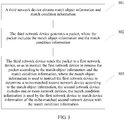
- the first network device determines, according to the match object information, a network device to be matched with the match condition information, so as to determine a sending range of forwarding the packet.
- the first network device determines, according to the match object information, that matching needs to be performed between device information of a neighboring device of the first network device and the match condition
- the first network device matches stored device information of the neighboring device of the first network device with the match condition.
- the second network device is a neighboring device of the first network device, and the matching, by the first network device, device information of the second network device with the match condition information includes: matching, by the first network device, device information of the neighboring device of the first network device with the match condition information.
- the performing, by the first network device, forwarding processing on the packet according to the match result includes: when the first network device determines that device information matching the match condition information exists in the device information of the neighboring device of the first network device, forwarding, by the first network device, the packet to a neighboring device corresponding to the device information matching the match condition information, where the neighboring device of the first network device is a network device that establishes a communication connection to the first network device, and the neighboring device corresponding to the device information matching the match condition may be one or more neighboring devices; or when the first network device determines that no device information matching the match condition information exists in device information of all neighboring devices of the first network device, performing, by the first network device, discarding processing on the packet.
- the device information of the neighboring device stored in the first network device may be obtained in advance by using a GDNP, or may be obtained from a network management device.
- the match object information includes identifier information.
- the identifier information is used to identify that the to-be-matched second network device is the first network device or a neighboring device of the first network device.
- the identifier information may be an identifier that is agreed on in advance between devices. For example, when a value of the identifier information is 1, it indicates that the first network device needs to match the device information of the neighboring device of the first network device with the match condition; or when a value of the identifier is 0, it indicates that the first network device needs to match device information of the first network device with the match condition.
- the device role information may be information for identifying a location of a device in a network, for example, a provider edge (Provide Edge, PE) device or a customer edge (Customer Edge, CE) device in a carrier network.
- the device role information may be information for identifying a function of a device in a network.
- a device role may be a CSG, an ASG, or an RSG.
- the first network device when the first network device determines, according to the match object information, that matching needs to be performed between device information of the first network device and the match condition, the first network device matches the device information of the first network device with the match condition.
- the second network device is the first network device
- the matching, by the first network device, device information of the second network device with the match condition information includes: matching, by the first network device, device information of the first network device with the match condition information.
- the performing, by the first network device, forwarding processing on the packet according to the match result includes: when the first network device determines that the device information of the first network device matches the match condition information, forwarding, by the first network device, the packet to a neighboring device of the first network device, where in a specific implementation, the packet may be forwarded to all neighboring devices, or may be forwarded to some neighboring devices or a signal neighboring device, and no limitation is specifically imposed in the present invention; or when the first network device determines that the device information of the first network device does not match the match condition information, performing, by the first network device, discarding processing on the packet.
- the first network device configures in advance a processing manner that is of the first network device for the packet and that exists when matching succeeds, or a processing manner that is for the packet and that exists when matching succeeds is agreed on in advance between network devices.
- the processing manner may be performing forwarding processing on the packet when matching succeeds.
- the packet when the second network device is a neighboring device of the first network device, the packet may further include action entry information.
- the action entry information includes a processing manner that is of the first network device for the packet and that exists when device information matching the match condition information exists in the device information of the second network device.
- the processing manner may be a processing manner of performing forwarding processing on the packet.
- the performing, by the first network device, forwarding processing on the packet according to a match result of matching the device information of the second network device with the match condition information includes: when determining that a neighboring device that is of the first network device and that matches the match condition information exists, forwarding, by the first network device according to the action entry information, the packet to the neighboring device that is of the first network device and that matches the match condition information.
- the action entry information may include: when no second network device that can match the match condition information exists, a processing manner of the first network device for the packet is a processing manner of discarding processing.
- the performing, by the first network device, discarding processing on the packet according to a match result of matching the device information of the second network device with the match condition information includes: when determining that no neighboring device that is of the first network device and that matches the match condition information exists, performing, by the first network device, discarding processing on the packet according to the action entry information.
- the packet when the second network device is the first network device, the packet further includes action entry information.
- the action entry information includes: when the device information of the second network device matches the match condition information, a processing manner of the first network device for the packet is a processing manner of forwarding processing.
- the performing, by the first network device, forwarding processing on the packet according to a match result of matching the device information of the second network device with the match condition information includes: when determining that the device information of the first network device matches the match condition information, forwarding, by the first network device, the packet to at least one neighboring device of the first network device according to the action entry information.
- the action entry information may include: when the device information of the second network device does not match the match condition information, a processing manner of the first network device for the packet is a processing manner of discarding processing.
- the performing, by the first network device, discarding processing on the packet according to a match result of matching the device information of the second network device with the match condition information includes: when determining that the device information of the first network device does not match the match condition information, performing, by the first network device, discarding processing on the packet according to the action entry information.
- the packet further includes intent information
- the intent information includes network policy information
- the method further includes: executing, by the first network device according to the intent information, a network policy corresponding to the network policy information.
- the network policy executed by the first network device may be setting the first network device to enter an energy saving mode, or setting the first network device to perform deep detection on the received packet, or the like. That the first network device executes a corresponding network policy according to the intent information included in the packet may be performed before the first network device determines the network device to be matched with the match condition information, or may be performed after the first network device determines the network device to be matched with the match condition information.
- the match condition information includes device role information. After determining that the match condition information is the device role information, the first network device matches device role information of the second network device with the match condition.
- the device information of the second network device includes the device role information of the second network device, and the matching, by the first network device, device information of the second network device with the match condition information includes: matching, by the first network device, the device role information of the second network device with the match condition information.
- the match condition information includes protocol role information. After determining that the match condition information is the protocol role information, the first network device matches protocol role information of the second network device with the match condition.
- the device information of the second network device includes the protocol role information of the second network device, and the matching, by the first network device, device information of the second network device with the match condition information includes: matching, by the first network device, the protocol role information of the second network device with the match condition information.
- the protocol role information may be information for identifying a protocol function of a device in a network, for example, an LSR in an MPLS network or a label edge router (Label Edge Router, LER) in an MPLS network.
- an LSR label Edge Router
- LER Label Edge Router
- the match condition information may be performance information of a network device, for example, information about a forwarding capability or a capacity capability of a network device.
- the match condition information may include at least two types of device information, for example, may include both protocol role information and device role information. In this case, only when the device information of the second network device matches the at least two types of device information in the match condition information or matches several specified types of specific device information, it is considered that matching succeeds.
- the packet further includes an indication flag. The indication flag is used to instruct the first network device to select device information between which and the device information of the second network device matching is to be performed.
- the selected device information is one or more of protocol role information, device role information, or device performance information.
- the indication flag may be agreed on in advance between devices.
- a value of the indication flag when a value of the indication flag is 1, it indicates that the first network device needs to match protocol role information in the match condition with protocol role information of the second network device; or when a value of the indication flag is 0, it indicates that the first network device needs to match device role information in the match condition with device role information of the second network device.
- the packet may further include multiple groups of match information.
- Each group of match information includes match object information and match condition information.
- the packet includes a first group of match information and a second group of match information.
- the first group of match information includes first match object information and first match condition information.
- the second group of match information includes second match object information and second match condition information.
- the packet further includes a match indication flag.
- the match indication flag is used to instruct the first network device to use the first group of match information or the second group of match information.
- the match indication flag may be used to instruct the first network device to use the first group of match information or the second group of match information.
- the match indication information is used to instruct to: when match condition information in at least two groups of match information is matched, select a processing manner corresponding to the matched match condition information to process the packet.
- the first network device determines a to-be-matched network device by using the match object information included in the packet, and then matches device information of the to-be-matched network device with the match condition information in the packet, so as to perform forwarding processing or discarding processing on the packet according to a match result.
- the first network device needs to send the packet only to a specific device, and does not need to flood the packet in a network. Therefore, the packet is prevented from being flooded in the network without a purpose, so that excessive occupation of network bandwidth can be reduced, and network resources can be saved.
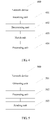
- FIG. 3 is a schematic flowchart of a packet processing method according to an embodiment of the present invention. The method includes the following steps.
- a third network device obtains match object information and match condition information.
- the third network device generates a packet, where the packet includes the match object information and the match condition information.
- the third network device sends the packet to a first network device, so as to instruct the first network device to process the packet according to the match object information and the match condition information.
- the match object information is used by the first network device to determine a to-be-matched second network device according to the match object information.
- the match condition information is used by the first network device to match device information of the to-be-matched second network device with the match condition information.
- the match condition information may include device information such as device role information, device protocol information, or device performance information.
- the third network device may determine corresponding match object information and match condition information according to a specific to-be-sent packet. For example, some packets need to be sent to a type of device, and some packets do not need to be sent to a type of network device. In this case, the third network device determines specific match object information and match condition information according to a packet.
- the third network device may set the match object information and the match condition information according to a network feature. For example, in an MPLS network, if the third network device is an LSR, and the third network device wants to flood an MPLS packet to an LSR in the MPLS network by using the first network device, when a value of identifier information included in match object information included in the MPLS packet may be 1, it indicates that the first network device needs to match device information of a neighboring device of the first network device with the match condition.
- the match condition information is a protocol role LSR. In this way, after receiving the MPLS packet, the first network device matches the device information of the neighboring device of the first network device with the match condition, and sends the MPLS packet to a matched neighboring device.
- the neighboring device of the first network device when the neighboring device of the first network device is an LSR, the neighboring device of the first network device can receive the MPLS packet. Further, an LSR that receives the MPLS packet continues to perform an action performed by the first network device, so that the MPLS packet can be flooded in the MPLS network with a purpose. Therefore, a prior-art technical problem that network bandwidth is excessively occupied because a packet is flooded in a network without a purpose is avoided.
- the first network device may be the network device B in FIG. 1
- the third network device may be the network device A in FIG. 1
- the first network device may be the first network device in the embodiment shown in FIG. 2
- the third network device may be a network device sending a packet to the first network device in the embodiment shown in FIG. 2 .
- match object information For specific content of the match object information and the match condition information, refer to any one of the foregoing embodiments. Details are not described herein again.
- the packet may further include action entry information.
- the action entry information includes a processing manner of the first network device for the packet.
- the processing manner may be a processing manner of forwarding processing or discarding processing.
- the packet may further include intent information.
- the intent information includes network policy information.
- the first network device is further configured to execute a corresponding network policy according to the network policy information.
- the network policy information included in the intent information may be a network device energy saving policy. That the first network device executes a corresponding network policy according to the intent information is setting the first network device to enter an energy saving mode. That the first network device enters the energy saving mode may specifically include: the first network device disables an idle port, reduces a CPU frequency, or the like.
- the third network device generates the packet that includes the match object information and the match condition information, and sends the packet to the first network device, so that the first network device can send the packet to a specific device according to the match object information and the match condition information, and does not need to send the packet to all devices in a network. Therefore, the packet is prevented from being flooded in the network without a purpose, so that excessive occupation of network bandwidth can be reduced, and network resources can be saved.
- an embodiment of the present invention provides a network device 400.
- the network device 400 may be the network device B in FIG. 1 , or may be the first network device in the embodiment shown in FIG. 2 , or may be the first network device in the embodiment shown in FIG. 3 . It may be understood that the network device 400 may include physical hardware necessary for performing the following processing, for example, a storage device and a processing device such as a general purpose central processing unit (Central Processing Unit, CPU), a microprocessor, an application-specific integrated circuit (Application Specific Integrated Circuit, ASIC), or one or more integrated circuits.
- the network device 400 includes:
- the match object information is used by the network device 400 to determine a to-be-matched second network device according to the match object information.
- the match object information includes identifier information.
- the identifier information is used to identify that the to-be-matched second network device is the network device 400 or a neighboring device of the network device 400.
- the match condition information is used by the network device 400 to match the device information of the to-be-matched second network device with the match condition information.
- the match condition information may include device information such as device role information, device protocol information, or device performance information.
- the determining unit 402 determines, according to the identifier information, that the to-be-matched second network device is the network device 400 or a neighboring device of the network device 400.
- the network device 400 matches obtained device information of the neighboring device with the match condition.
- the second network device is a neighboring device of the network device 400.
- the network device 400 may obtain the device information of the neighboring device in advance by using a GDNP, and stores the device information of the neighboring device.
- the network device 400 may obtain the device information of the neighboring device in another manner, for example, periodically queries a network management device.
- that the match unit 403 matches device information of the second network device with the match condition information may specifically include: matching, by the match unit 403, device information of the neighboring device of the network device 400 with the match condition information.
- the processing unit 404 performs forwarding processing on the packet according to the match result from the match unit 404 may specifically include: when it is determined that device information matching the match condition information exists in the device information of the neighboring device of the network device 400, forwarding, by the processing unit 404, the packet to a neighboring device corresponding to the device information matching the match condition information, where the neighboring device corresponding to the device information matching the match condition may be one or more neighboring devices; or when the processing unit 404 determines that no device information matching the match condition information exists in the device information of the neighboring device of the network device 400, performing, by the match unit 403, discarding processing on the packet.
- the network device 400 configures in advance a processing manner that is of the processing unit 404 for the packet and that exists when matching performed by the match unit 403 succeeds.
- the processing manner may be performing forwarding processing on the packet when matching performed by the match unit 403 succeeds.
- the packet may further include action entry information.
- the action entry information includes a processing manner that is of the network device 400 for the packet and that exists when device information matching the match condition information exists in the device information of the second network device.
- the processing manner may be a processing manner of forwarding processing.
- that the processing unit 404 performs forwarding processing on the packet according to the match result from the match unit 403 includes: when the match unit 403 determines that a neighboring device that is of the first network device 400 and that matches the match condition information exists, forwarding, by the processing unit 404 according to the action entry information, the packet to the neighboring device that is of the first network device 400 and that matches the match condition information.
- the action entry information includes a processing manner in which the network device 400 performs discarding processing on the packet when the device information of the second network device does not match the match condition information.
- that the processing unit 404 performs discarding processing on the packet according to a match result of matching the device information of the second network device with the match condition information includes: when the match unit 403 determines that no neighboring device that is of the first network device 400 and that matches the match condition information exists, performing, by the processing unit 404, discarding processing on the packet.
- the match unit 404 matches device information of the network device 400 with the match condition.
- the second network device is the network device 400.
- the processing unit 404 matches device information of the second network device with the match condition information may specifically include: matching, by the match unit 403, device information of the network device 400 with the match condition information.
- processing unit 404 performs forwarding processing on the packet according to the match result includes:
- the packet further includes action entry information.
- the action entry information includes: when the device information of the second network device matches the match condition information, a processing manner of the first network device 400 for the packet is a processing manner of forwarding processing.
- that the processing unit 404 performs forwarding processing on the packet according to the match result from the match unit 403 includes: when the match unit 403 determines that the device information of the first network device 400 matches the match condition information, forwarding, by the processing unit 404, the packet to at least one neighboring device of the first network device 400 according to the action entry information.
- the action entry information includes: when the device information of the second network device does not match the match condition information, a processing manner of the first network device 400 for the packet is a processing manner of discarding processing.
- that the processing unit 404 performs discarding processing on the packet according to the match result from the match unit 403 includes: when the match unit 403 determines that the device information of the first network device 400 does not match the match condition information, performing, by the processing unit 404, discarding processing on the packet according to the action entry information.
- the packet further includes intent information.
- the intent information includes network policy information.
- the processing unit 404 is further configured to execute a corresponding network policy according to the intent information.
- the network policy information included in the intent information may be a network device energy saving policy. That the processing unit 404 executes a corresponding network policy according to the intent information is setting the network device 400 to enter an energy saving mode. That the network device 400 enters the energy saving mode may specifically include: the network device 400 disables an idle port, reduces a CPU frequency, or the like.
- the processing unit 404 may execute the corresponding network policy according to the intent information after the receiving unit 401 receives the packet or before the match unit 403 performs a match action. Alternatively, the processing unit 402 may execute the corresponding network policy according to the intent information after processing the packet according to the match result from the match unit 403.
- the match condition information may be device role information.
- the device information of the second network device includes device role information of the second network device, and that the match unit 403 matches device information of the second network device with the match condition information specifically includes: matching, by the match unit 403, the device role information of the second network device with the match condition information.
- the device role information may be information for identifying a location of a device in a network, for example, a PE device or a CE device in a carrier network.
- a device role of the second network device is a PE device in the carrier network
- the device role information included in the match condition information is also a PE device in the carrier network
- the match unit 403 may determine that the second network device is a network device meeting the match condition information.
- the device role information may be information for identifying a function of a device in a network.
- a device role may be a CSG, an ASG, or an RSG.
- the match unit 403 may determine that the second network device is a network device meeting the match condition information.
- the match condition information may be protocol role information.
- the device information of the second network device includes protocol role information of the second network device, and that the match unit 403 matches device information of the second network device with the match condition information includes: matching, by the match unit 403, the protocol role information of the second network device with the match condition information.
- the protocol role information may be information for identifying a protocol function of a device in a specific protocol network, for example, an LSR in an MPLS network or an LER in an MPLS network.
- the match unit 403 may determine that the second network device is a network device meeting the match condition information.
- determining unit 402, the match unit 403, and the processing unit 404 may be implemented by using hardware, firmware, software, or a combination thereof. In an actual application, a specific implementation is determined according to a product design requirement or manufacturing costs. The present invention should not be limited to a specific implementation.
- the network device 400 determines a to-be-matched network device by using the match object information included in the packet, and then matches device information of the to-be-matched network device with the match condition information in the packet, so as to forward or discard the packet according to a match result.
- the network device 400 needs to send the packet only to a specific device, and does not need to flood the packet in a network. Therefore, the packet is prevented from being flooded in the network without a purpose, so that excessive occupation of network bandwidth can be reduced, and network resources can be saved.
- an embodiment of the present invention provides a network device 500.
- the network device 500 may be the network device A in FIG. 1 , or may be a network device sending a packet to the first network device in the embodiment shown in FIG. 2 , or may be the third network device in the embodiment shown in FIG. 3 .
- the network device 500 includes:
- the match condition information is used by the first network device to match device information of the to-be-matched second network device with the match condition information.
- the match condition information may include device information such as device role information, device protocol information, or device performance information.
- the network device 500 may determine corresponding match object information and match condition information according to a specific to-be-sent packet. For example, some packets need to be sent to a type of device, and some packets do not need to be sent to a type of network device. In this case, the network device 500 determines specific match object information and match condition information according to a packet.
- the network device 500 may set the match object information and the match condition information according to a network feature. For example, in an MPLS network, if the network device 500 is an LSR, and the network device 500 wants to flood an MPLS packet to an LSR in the MPLS network by using the first network device, when a value of identifier information included in match object information included in the MPLS packet may be 1, it indicates that the first network device needs to match device information of a neighboring device of the first network device with the match condition.
- the match condition information is a protocol role LSR. In this way, after receiving the MPLS packet, the first network device matches the device information of the neighboring device of the first network device with the match condition, and sends the MPLS packet to a matched neighboring device.
- the neighboring device of the first network device when the neighboring device of the first network device is an LSR, the neighboring device of the first network device can receive the MPLS packet. Further, an LSR that receives the MPLS packet continues to perform an action performed by the first network device, so that the MPLS packet can be flooded in the MPLS network with a purpose. Therefore, a prior-art technical problem that network bandwidth is excessively occupied because a packet is flooded in a network without a purpose is avoided.
- the packet may further include action entry information.
- the action entry information includes a processing manner of the first network device for the packet.
- the processing manner may be a processing manner of forwarding processing or discarding processing.
- the packet may further include intent information.
- the intent information includes network policy information.
- the first network device is further configured to execute a corresponding network policy according to the intent information.
- the network policy information included in the intent information may be a network device energy saving policy. That the first network device executes a corresponding network policy according to the intent information is setting the first network device to enter an energy saving mode. That the first network device enters the energy saving mode may specifically include: the first network device disables an idle port, reduces a CPU frequency, or the like.
- the network device 500 generates the packet that includes the match object information and the match condition information, and sends the packet to the first network device, so that the first network device can send the packet to a specific device according to the match object information and the match condition information, and does not need to send the packet to all devices in a network. Therefore, the packet is prevented from being flooded in the network without a purpose, so that excessive occupation of network bandwidth can be reduced, and network resources can be saved.
- an embodiment of the present invention provides a network device 600.
- the network device 600 may be the network device B in FIG. 1 , or may be the first network device in the embodiment shown in FIG. 2 , or may be the first network device in the embodiment shown in FIG. 3 .
- the network device 600 includes a memory 601, a processor 602, and a network interface 603.
- the memory 601, the processor 602, and the network interface 603 are connected to each other by using a bus 604.
- the memory 601 is configured to store a group of program instructions, and the processor 602 is configured to invoke the program instruction stored in the memory 601 to perform the following operations:
- the processor 602 determines, according to the match object information, that the to-be-matched second network device is a neighboring device of the network device 600
- the network device 600 matches obtained device information of the neighboring device with the match condition.
- the second network device is a neighboring device of the network device 600
- the processor 602 matches device information of the second network device with the match condition information includes: matching, by the processor 602, device information of the neighboring device of the network device 600 with the match condition information.
- the processor 602 performs forwarding processing on the packet according to the match result includes: when determining that device information matching the match condition information exists in the device information of the neighboring device of the network device 600, forwarding, by the processor 602, the packet to a neighboring device corresponding to the device information matching the match condition information, where the neighboring device corresponding to the device information matching the match condition may be one or more neighboring devices; or when the processor 602 determines that no device information matching the match condition information exists in the device information of the neighboring device of the network device 600, performing, by the processor 602, discarding processing on the packet.
- the packet may further include action entry information.
- the action entry information includes a processing manner that is of the network device 600 for the packet and that exists when device information matching the match condition information exists in the device information of the second network device.
- the processing manner may be a processing manner of forwarding processing.
- that the processor 602 performs forwarding processing on the packet according to a match result of matching the device information of the second network device with the match condition information includes: when determining that a neighboring device that is of the first network device 600 and that matches the match condition information exists, forwarding, by the processor 602 according to the action entry information, the packet to the neighboring device that is of the network device 600 and that matches the match condition information.
- the action entry information includes a processing manner in which the network device 600 performs discarding processing on the packet when the device information of the second network device does not match the match condition information.
- that the processor 602 performs discarding processing on the packet according to a match result of matching the device information of the second network device with the match condition information includes: when determining that no neighboring device that is of the network device 600 and that matches the match condition information, performing, by the processor 602, discarding processing on the packet.
- the processor 602 determines, according to the match object information, that the to-be-matched second network device is the network device 600, the network device 600 matches device information of the network device 600 with the match condition.
- the second network device is the network device 600, and that the processor 602 matches device information of the second network device with the match condition information includes: matching, by the processor 602, device information of the network device 600 with the match condition information.
- the processor 602 performs forwarding processing on the packet according to the match result includes: when the processor 602 determines that the device information of the network device 600 matches the match condition information, sending, by the network interface 603, the packet to all neighboring devices of the network device 600; or when the processor 602 determines that the device information of the network device 600 does not match the match condition information, performing, by the processor 602, discarding processing on the packet.
- the packet further includes action entry information.
- the action entry information includes: when the device information of the second network device matches the match condition information, a processing manner of the network device 600 for the packet is a processing manner of forwarding processing.
- that the processor 602 performs forwarding processing on the packet according to a match result of matching the device information of the second network device with the match condition information includes: when determining that the device information of the network device 600 matches the match condition information, forwarding, by the processor 602, the packet to at least one neighboring device of the network device 600 according to the action entry information.
- the action entry information includes: when the device information of the second network device does not match the match condition information, a processing manner of the network device 600 for the packet is a processing manner of discarding processing.
- that the processor 602 performs discarding processing on the packet according to a match result of matching the device information of the second network device with the match condition information includes: when determining that the device information of the network device 600 does not match the match condition information, performing, by the processor 602, discarding processing on the packet according to the action entry information.
- the packet further includes intent information.
- the intent information includes network policy information.
- the processor 602 is further configured to execute a corresponding network policy according to the intent information.
- the network policy information included in the intent information may be a network device energy saving policy. That the processor 602 executes a corresponding network policy according to the intent information is setting the network device 600 to enter an energy saving mode.
- the match condition information may include device role information.
- the device information of the second network device includes device role information of the second network device, and that the processor 602 matches device information of the second network device with the match condition information includes: matching, by the processor 602, the device role information of the second network device with the match condition information.
- the match condition information may be protocol role information.
- the device information of the second network device includes protocol role information of the second network device, and that the processor 602 matches device information of the second network device with the match condition information includes: matching, by the processor 602, the protocol role information of the second network device with the match condition information.
- the network device 600 determines a to-be-matched network device by using the match object information included in the packet, and then matches device information of the to-be-matched network device with the match condition information in the packet, so as to perform forwarding processing or discarding processing on the packet according to a match result.
- the network device 600 needs to send the packet only to a specific device, and does not need to flood the packet in a network. Therefore, the packet is prevented from being flooded in the network without a purpose, so that excessive occupation of network bandwidth can be reduced, and network resources can be saved.
- an embodiment of the present invention provides a network device 700.
- the network device 700 may be the network device A in FIG. 1 , or may be a network device sending a packet to the first network device in the embodiment shown in FIG. 2 , or may be the third network device in the embodiment shown in FIG. 3 .
- the network device 700 includes a memory 701, a processor 702, and a network interface 703.
- the memory 701, the processor 702, and the network interface 703 are connected to each other by using a bus 704.
- the memory 701 is configured to store a group of program instructions, and the processor 702 is configured to invoke the program instruction stored in the memory 701 to perform the following operations:
- the match object information is used by the first network device to determine a to-be-matched second network device according to the match object information.
- the match condition information is used by the first network device to match device information of the to-be-matched second network device with the match condition information.
- the match condition information includes device role information or device protocol information.
- the packet may further include intent information.
- the intent information includes network policy information.
- the first network device is further configured to execute a corresponding network policy according to the intent information.
- the network policy information included in the intent information may be a network device energy saving policy. That the first network device executes a corresponding network policy according to the intent information is setting the first network device to enter an energy saving mode. That the first network device enters the energy saving mode may specifically include: the first network device disables an idle port, reduces a CPU frequency, or the like.
- the network device 700 generates the packet that includes the match object information and the match condition information, and sends the packet to the first network device, so that the first network device can send the packet to a specific device according to the match object information and the match condition information, and does not need to send the packet to all devices in a network. Therefore, the packet is prevented from being flooded in the network without a purpose, so that excessive occupation of network bandwidth can be reduced, and network resources can be saved.
- an embodiment of the present invention provides a packet processing system 800.
- the packet processing system includes a first network device 801 and a third network device 802.
- the third network device 802 is configured to: obtain match object information and match condition information; generate a packet that includes the match object information and the match condition information; and send the packet to the first network device 801, where the match object information is used to instruct the first network device 801 to determine a network device corresponding to device information to be matched with the match condition information.
- the first network device 801 is configured to: receive the packet; determine a second network device corresponding to the match object information; match device information of the second network device with the match condition information; and perform forwarding processing or discarding processing on the packet according to action entry information and a match result of matching the device information of the second network device with the match condition information.
- the first network device 801 may be the network device B in FIG. 1
- the third network device 802 may be the network device A in FIG. 1
- the first network device 801 may be the first network device in the embodiment shown in FIG. 2
- the first network device 801 may be the first network device in the embodiment shown FIG. 3
- the third network device 802 may be the third network device in the embodiment shown in FIG. 3
- the first network device 801 may be the network device 400 in the embodiment shown FIG. 4
- the first network device 801 may be the network device 600 in the embodiment shown in FIG. 6 .
- For specific content related to the first network device 801, refer to any one of the foregoing embodiments. Details are not described herein again.
- the third network device 802 may be the network device 400 in the embodiment shown FIG. 5 , or the third network device 802 may be the network device 700 in the embodiment shown in FIG. 7 .
- the third network device 802 may be the network device 400 in the embodiment shown FIG. 5 , or the third network device 802 may be the network device 700 in the embodiment shown in FIG. 7 .
- the third network device 802 generates the packet that includes the match object information and the match condition information, and sends the packet to the first network device 801; and the first network device 801 determines a to-be-matched network device by using the match object information included in the packet, and then matches device information of the to-be-matched network device with the match condition information in the packet, so as to perform forwarding processing or discarding processing on the packet according to a match result.
- the first network device 801 needs to send the packet only to a specific device, and does not need to flood the packet in a network. Therefore, the packet is prevented from being flooded in the network without a purpose, so that excessive occupation of network bandwidth can be reduced, and network resources can be saved.
- first in the mentioned first network device or first group of match information is only used as a name identifier, and does not mean being the first in a sequence. This rule is also applicable to "second” or "third”.
- the program may be stored in a computer readable storage medium. When the program runs, the steps of the method embodiments are performed.
- the storage medium includes: any medium that can store program code, such as a ROM, a RAM, a magnetic disk, or an optical disc.
Landscapes
- Engineering & Computer Science (AREA)
- Computer Networks & Wireless Communication (AREA)
- Signal Processing (AREA)
- Business, Economics & Management (AREA)
- General Business, Economics & Management (AREA)
- Computer Hardware Design (AREA)
- Computer Security & Cryptography (AREA)
- Computing Systems (AREA)
- General Engineering & Computer Science (AREA)
- Data Exchanges In Wide-Area Networks (AREA)
Priority Applications (1)
| Application Number | Priority Date | Filing Date | Title |
|---|---|---|---|
| EP25221386.3A EP4727256A2 (fr) | 2015-09-23 | 2015-09-23 | Procédé et système de traitement de paquets, et dispositif de réseau |
Applications Claiming Priority (1)
| Application Number | Priority Date | Filing Date | Title |
|---|---|---|---|
| PCT/CN2015/090474 WO2017049513A1 (fr) | 2015-09-23 | 2015-09-23 | Procédé de traitement de paquet, dispositif de réseau et système |
Related Child Applications (2)
| Application Number | Title | Priority Date | Filing Date |
|---|---|---|---|
| EP25221386.3A Division-Into EP4727256A2 (fr) | 2015-09-23 | 2015-09-23 | Procédé et système de traitement de paquets, et dispositif de réseau |
| EP25221386.3A Division EP4727256A2 (fr) | 2015-09-23 | 2015-09-23 | Procédé et système de traitement de paquets, et dispositif de réseau |
Publications (3)
| Publication Number | Publication Date |
|---|---|
| EP3343848A1 true EP3343848A1 (fr) | 2018-07-04 |
| EP3343848A4 EP3343848A4 (fr) | 2018-08-29 |
| EP3343848B1 EP3343848B1 (fr) | 2026-01-28 |
Family
ID=58385599
Family Applications (2)
| Application Number | Title | Priority Date | Filing Date |
|---|---|---|---|
| EP15904400.7A Active EP3343848B1 (fr) | 2015-09-23 | 2015-09-23 | Procédé de traitement de paquet et dispositif de réseau |
| EP25221386.3A Pending EP4727256A2 (fr) | 2015-09-23 | 2015-09-23 | Procédé et système de traitement de paquets, et dispositif de réseau |
Family Applications After (1)
| Application Number | Title | Priority Date | Filing Date |
|---|---|---|---|
| EP25221386.3A Pending EP4727256A2 (fr) | 2015-09-23 | 2015-09-23 | Procédé et système de traitement de paquets, et dispositif de réseau |
Country Status (5)
| Country | Link |
|---|---|
| US (2) | US10931590B2 (fr) |
| EP (2) | EP3343848B1 (fr) |
| JP (1) | JP6611950B2 (fr) |
| CN (2) | CN107078964B (fr) |
| WO (1) | WO2017049513A1 (fr) |
Family Cites Families (31)
| Publication number | Priority date | Publication date | Assignee | Title |
|---|---|---|---|---|
| US7116640B2 (en) * | 2000-12-22 | 2006-10-03 | Mitchell Paul Tasman | Architecture and mechanism for forwarding layer interfacing for networks |
| US7299297B2 (en) * | 2001-08-16 | 2007-11-20 | Lucent Technologies Inc. | Method and apparatus for protecting electronic commerce from distributed denial-of-service attacks |
| US20040018839A1 (en) * | 2002-06-06 | 2004-01-29 | Oleg Andric | Protocol and structure for mobile nodes in a self-organizing communication network |
| US7594032B2 (en) * | 2002-11-07 | 2009-09-22 | Hewlett-Packard Development Company, L.P. | Method and system for communicating information between a switch and a plurality of servers in a computer network |
| JPWO2005122482A1 (ja) | 2004-06-07 | 2008-04-10 | 富士通株式会社 | 通信制御方法 |
| US8001610B1 (en) * | 2005-09-28 | 2011-08-16 | Juniper Networks, Inc. | Network defense system utilizing endpoint health indicators and user identity |
| CN100446496C (zh) * | 2006-12-07 | 2008-12-24 | 中国科学院计算技术研究所 | 一种基于路由邻居表建立无线传感器网络路由的方法 |
| US8351417B2 (en) * | 2008-05-14 | 2013-01-08 | Telcordia Technologies, Inc. | Methods for efficient organization of vehicle peer groups and efficient V2R communications |
| KR100970093B1 (ko) * | 2008-08-29 | 2010-07-16 | 성균관대학교산학협력단 | 데이터 경로 설정 및 복구를 위한 센서 네트워크 제어 방법 및 이를 위한 센서 네트워크 시스템 |
| JP2010130151A (ja) * | 2008-11-26 | 2010-06-10 | Fuji Xerox Co Ltd | 受信装置及び画像形成装置 |
| JP5204684B2 (ja) * | 2009-01-30 | 2013-06-05 | パナソニック株式会社 | ネットワーク管理装置 |
| US8570962B2 (en) * | 2010-06-22 | 2013-10-29 | Blackberry Limited | Information selection in a wireless communication system |
| US9385938B2 (en) * | 2010-06-22 | 2016-07-05 | Blackberry Limited | Information distribution in a wireless communication system |
| CN101945432B (zh) * | 2010-09-16 | 2016-11-23 | 北京邮电大学 | 一种用于无线mesh网络的多速率机会路由方法 |
| JP5557066B2 (ja) * | 2010-10-15 | 2014-07-23 | 日本電気株式会社 | スイッチシステム、モニタリング集中管理方法 |
| US8625597B2 (en) * | 2011-01-07 | 2014-01-07 | Jeda Networks, Inc. | Methods, systems and apparatus for the interconnection of fibre channel over ethernet devices |
| US8811399B2 (en) * | 2011-01-07 | 2014-08-19 | Jeda Networks, Inc. | Methods, systems and apparatus for the interconnection of fibre channel over ethernet devices using a fibre channel over ethernet interconnection apparatus controller |
| US8625406B2 (en) * | 2011-02-28 | 2014-01-07 | Verizon Patent And Licensing Inc. | Multicast fast re-route |
| US9100214B1 (en) * | 2011-06-28 | 2015-08-04 | Juniper Networks, Inc. | Performing customer bandwidth profiling in computer networks |
| CN102333031B (zh) * | 2011-09-07 | 2013-10-02 | 江苏润和软件股份有限公司 | 一种基于设备适配技术的设备智能接入系统及其方法 |
| EP2777220B1 (fr) * | 2011-12-07 | 2016-08-17 | Huawei Technologies Co., Ltd. | Procédé de transmission de trames fcoe sur un réseau basé sur trill |
| JP2013223191A (ja) * | 2012-04-18 | 2013-10-28 | Nec Corp | 通信システム、制御装置、パケット採取方法及びプログラム |
| WO2014003795A1 (fr) * | 2012-06-29 | 2014-01-03 | Huawei Technologies Co. Ltd. | Mise en œuvre d'un réseau privé virtuel multidiffusion à l'aide d'un protocole de réservation de ressources multidiffusion - ingénierie du trafic |
| US9042234B1 (en) * | 2012-10-31 | 2015-05-26 | Big Switch Networks, Inc. | Systems and methods for efficient network traffic forwarding |
| WO2014166073A1 (fr) * | 2013-04-09 | 2014-10-16 | 华为技术有限公司 | Procédé de transfert de paquets, et dispositif de réseau |
| CN106105319B (zh) * | 2014-03-13 | 2020-03-03 | 飞利浦灯具控股公司 | 用于配置节点设备的方法、网络和节点设备 |
| WO2015171153A1 (fr) * | 2014-05-08 | 2015-11-12 | Fujitsu Limited | Communication sans fil de dispositif à dispositif |
| CN104333883A (zh) * | 2014-10-16 | 2015-02-04 | 南京邮电大学 | 一种改进的无线传感器网络能量多路径路由方法 |
| US20160135242A1 (en) * | 2014-11-12 | 2016-05-12 | Qualcomm Incorporated | Opportunistic ioe message delivery via sensor-triggered forwarding |
| CN104468781A (zh) * | 2014-12-05 | 2015-03-25 | 谢勇 | 一种带过滤功能的网络设备快速搜索系统及方法 |
| CN106411820B (zh) * | 2015-07-29 | 2019-05-21 | 中国科学院沈阳自动化研究所 | 一种基于sdn架构的工业通信流传输安全控制方法 |
-
2015
- 2015-09-23 EP EP15904400.7A patent/EP3343848B1/fr active Active
- 2015-09-23 EP EP25221386.3A patent/EP4727256A2/fr active Pending
- 2015-09-23 CN CN201580050506.6A patent/CN107078964B/zh active Active
- 2015-09-23 JP JP2018533985A patent/JP6611950B2/ja active Active
- 2015-09-23 WO PCT/CN2015/090474 patent/WO2017049513A1/fr not_active Ceased
- 2015-09-23 CN CN202010831521.7A patent/CN112135327B/zh active Active
-
2018
- 2018-03-22 US US15/933,318 patent/US10931590B2/en active Active
-
2021
- 2021-02-02 US US17/165,859 patent/US11757784B2/en active Active
Also Published As
| Publication number | Publication date |
|---|---|
| JP2018528738A (ja) | 2018-09-27 |
| CN107078964B (zh) | 2020-09-04 |
| EP3343848B1 (fr) | 2026-01-28 |
| US10931590B2 (en) | 2021-02-23 |
| CN112135327A (zh) | 2020-12-25 |
| US20210160188A1 (en) | 2021-05-27 |
| CN107078964A (zh) | 2017-08-18 |
| US20180212891A1 (en) | 2018-07-26 |
| EP4727256A2 (fr) | 2026-04-15 |
| WO2017049513A1 (fr) | 2017-03-30 |
| EP3343848A4 (fr) | 2018-08-29 |
| US11757784B2 (en) | 2023-09-12 |
| JP6611950B2 (ja) | 2019-11-27 |
| CN112135327B (zh) | 2025-02-21 |
Similar Documents
| Publication | Publication Date | Title |
|---|---|---|
| US11431611B2 (en) | Computing forwarding paths based on notification packet delays | |
| US10432514B2 (en) | Multiprotocol label switching traffic engineering tunnel establishing method and device | |
| US20200366600A1 (en) | Routing Control Method, Device, and System | |
| US9705735B2 (en) | System and method using RSVP hello suppression for graceful restart capable neighbors | |
| US12328248B2 (en) | Information reporting method, information processing method, and device | |
| EP3310010B1 (fr) | Procédé d'allocation d'étiquette globale, procédé d'acquisition d'étiquette globale et dispositif associé | |
| US11916783B2 (en) | Information reporting method, information processing method, apparatus, and device | |
| EP4629585A1 (fr) | Procédé de traitement d'informations, dispositif et support de stockage | |
| EP3484107B1 (fr) | Procédés et dispositifs d'obtention et de notification de paramètre, et support de stockage | |
| EP3637688A1 (fr) | Procédé et dispositif de détermination d'état de liaison | |
| US10511494B2 (en) | Network control method and apparatus | |
| US11757784B2 (en) | Packet processing method and system, and network device | |
| EP4329374A1 (fr) | Procédé de traitement de communication et dispositif associé | |
| EP3481010A1 (fr) | Procédé, dispositif associé et système d'établissement de trajet commuté par étiquette pour un réseau privé virtuel | |
| WO2016000481A1 (fr) | Procédé de commutation de chemin et périphérique de réseau | |
| EP4391477A1 (fr) | Gestion dynamique de ressources de protocole de réservation de ressources et évitement d'interblocage | |
| CN117319213A (zh) | 一种带宽处理方法及装置 |
Legal Events
| Date | Code | Title | Description |
|---|---|---|---|
| STAA | Information on the status of an ep patent application or granted ep patent |
Free format text: STATUS: THE INTERNATIONAL PUBLICATION HAS BEEN MADE |
|
| PUAI | Public reference made under article 153(3) epc to a published international application that has entered the european phase |
Free format text: ORIGINAL CODE: 0009012 |
|
| STAA | Information on the status of an ep patent application or granted ep patent |
Free format text: STATUS: REQUEST FOR EXAMINATION WAS MADE |
|
| 17P | Request for examination filed |
Effective date: 20180328 |
|
| AK | Designated contracting states |
Kind code of ref document: A1 Designated state(s): AL AT BE BG CH CY CZ DE DK EE ES FI FR GB GR HR HU IE IS IT LI LT LU LV MC MK MT NL NO PL PT RO RS SE SI SK SM TR |
|
| AX | Request for extension of the european patent |
Extension state: BA ME |
|
| A4 | Supplementary search report drawn up and despatched |
Effective date: 20180730 |
|
| RIC1 | Information provided on ipc code assigned before grant |
Ipc: H04L 12/761 20130101AFI20180724BHEP Ipc: H04W 40/02 20090101ALI20180724BHEP Ipc: H04W 84/18 20090101ALI20180724BHEP |
|
| DAV | Request for validation of the european patent (deleted) | ||
| DAX | Request for extension of the european patent (deleted) | ||
| STAA | Information on the status of an ep patent application or granted ep patent |
Free format text: STATUS: EXAMINATION IS IN PROGRESS |
|
| 17Q | First examination report despatched |
Effective date: 20200309 |
|
| REG | Reference to a national code |
Free format text: PREVIOUS MAIN CLASS: H04L0012761000 Ipc: H04W0040020000 Ref country code: DE Ref legal event code: R079 Ref document number: 602015092953 Country of ref document: DE Free format text: PREVIOUS MAIN CLASS: H04L0012761000 Ipc: H04W0040020000 |
|
| GRAP | Despatch of communication of intention to grant a patent |
Free format text: ORIGINAL CODE: EPIDOSNIGR1 |
|
| STAA | Information on the status of an ep patent application or granted ep patent |
Free format text: STATUS: GRANT OF PATENT IS INTENDED |
|
| RIC1 | Information provided on ipc code assigned before grant |
Ipc: H04W 84/18 20090101ALI20250402BHEP Ipc: H04W 40/02 20090101AFI20250402BHEP |
|
| INTG | Intention to grant announced |
Effective date: 20250424 |
|
| GRAJ | Information related to disapproval of communication of intention to grant by the applicant or resumption of examination proceedings by the epo deleted |
Free format text: ORIGINAL CODE: EPIDOSDIGR1 |
|
| STAA | Information on the status of an ep patent application or granted ep patent |
Free format text: STATUS: EXAMINATION IS IN PROGRESS |
|
| GRAP | Despatch of communication of intention to grant a patent |
Free format text: ORIGINAL CODE: EPIDOSNIGR1 |
|
| STAA | Information on the status of an ep patent application or granted ep patent |
Free format text: STATUS: GRANT OF PATENT IS INTENDED |
|
| INTC | Intention to grant announced (deleted) | ||
| INTG | Intention to grant announced |
Effective date: 20250903 |
|
| GRAS | Grant fee paid |
Free format text: ORIGINAL CODE: EPIDOSNIGR3 |
|
| GRAA | (expected) grant |
Free format text: ORIGINAL CODE: 0009210 |
|
| STAA | Information on the status of an ep patent application or granted ep patent |
Free format text: STATUS: THE PATENT HAS BEEN GRANTED |
|
| AK | Designated contracting states |
Kind code of ref document: B1 Designated state(s): AL AT BE BG CH CY CZ DE DK EE ES FI FR GB GR HR HU IE IS IT LI LT LU LV MC MK MT NL NO PL PT RO RS SE SI SK SM TR |
|
| REG | Reference to a national code |
Ref country code: CH Ref legal event code: F10 Free format text: ST27 STATUS EVENT CODE: U-0-0-F10-F00 (AS PROVIDED BY THE NATIONAL OFFICE) Effective date: 20260128 Ref country code: GB Ref legal event code: FG4D |
|
| REG | Reference to a national code |
Ref country code: DE Ref legal event code: R096 Ref document number: 602015092953 Country of ref document: DE |
|
| REG | Reference to a national code |
Ref country code: IE Ref legal event code: FG4D |