EP3343870A1 - System und verfahren zur erkennung von phishing-webseiten im bereich der technologie - Google Patents
System und verfahren zur erkennung von phishing-webseiten im bereich der technologie Download PDFInfo
- Publication number
- EP3343870A1 EP3343870A1 EP17210904.3A EP17210904A EP3343870A1 EP 3343870 A1 EP3343870 A1 EP 3343870A1 EP 17210904 A EP17210904 A EP 17210904A EP 3343870 A1 EP3343870 A1 EP 3343870A1
- Authority
- EP
- European Patent Office
- Prior art keywords
- phishing
- web page
- code
- server
- rule
- Prior art date
- Legal status (The legal status is an assumption and is not a legal conclusion. Google has not performed a legal analysis and makes no representation as to the accuracy of the status listed.)
- Granted
Links
Images




Classifications
-
- G—PHYSICS
- G06—COMPUTING OR CALCULATING; COUNTING
- G06F—ELECTRIC DIGITAL DATA PROCESSING
- G06F21/00—Security arrangements for protecting computers, components thereof, programs or data against unauthorised activity
- G06F21/50—Monitoring users, programs or devices to maintain the integrity of platforms, e.g. of processors, firmware or operating systems
-
- G—PHYSICS
- G06—COMPUTING OR CALCULATING; COUNTING
- G06F—ELECTRIC DIGITAL DATA PROCESSING
- G06F16/00—Information retrieval; Database structures therefor; File system structures therefor
- G06F16/90—Details of database functions independent of the retrieved data types
- G06F16/95—Retrieval from the web
- G06F16/958—Organisation or management of web site content, e.g. publishing, maintaining pages or automatic linking
-
- G—PHYSICS
- G06—COMPUTING OR CALCULATING; COUNTING
- G06F—ELECTRIC DIGITAL DATA PROCESSING
- G06F21/00—Security arrangements for protecting computers, components thereof, programs or data against unauthorised activity
- G06F21/30—Authentication, i.e. establishing the identity or authorisation of security principals
- G06F21/44—Program or device authentication
-
- G—PHYSICS
- G06—COMPUTING OR CALCULATING; COUNTING
- G06F—ELECTRIC DIGITAL DATA PROCESSING
- G06F21/00—Security arrangements for protecting computers, components thereof, programs or data against unauthorised activity
- G06F21/50—Monitoring users, programs or devices to maintain the integrity of platforms, e.g. of processors, firmware or operating systems
- G06F21/51—Monitoring users, programs or devices to maintain the integrity of platforms, e.g. of processors, firmware or operating systems at application loading time, e.g. accepting, rejecting, starting or inhibiting executable software based on integrity or source reliability
-
- G—PHYSICS
- G06—COMPUTING OR CALCULATING; COUNTING
- G06F—ELECTRIC DIGITAL DATA PROCESSING
- G06F21/00—Security arrangements for protecting computers, components thereof, programs or data against unauthorised activity
- G06F21/50—Monitoring users, programs or devices to maintain the integrity of platforms, e.g. of processors, firmware or operating systems
- G06F21/55—Detecting local intrusion or implementing counter-measures
- G06F21/552—Detecting local intrusion or implementing counter-measures involving long-term monitoring or reporting
-
- H—ELECTRICITY
- H04—ELECTRIC COMMUNICATION TECHNIQUE
- H04L—TRANSMISSION OF DIGITAL INFORMATION, e.g. TELEGRAPHIC COMMUNICATION
- H04L63/00—Network architectures or network communication protocols for network security
- H04L63/14—Network architectures or network communication protocols for network security for detecting or protecting against malicious traffic
- H04L63/1408—Network architectures or network communication protocols for network security for detecting or protecting against malicious traffic by monitoring network traffic
- H04L63/1416—Event detection, e.g. attack signature detection
-
- H—ELECTRICITY
- H04—ELECTRIC COMMUNICATION TECHNIQUE
- H04L—TRANSMISSION OF DIGITAL INFORMATION, e.g. TELEGRAPHIC COMMUNICATION
- H04L63/00—Network architectures or network communication protocols for network security
- H04L63/14—Network architectures or network communication protocols for network security for detecting or protecting against malicious traffic
- H04L63/1441—Countermeasures against malicious traffic
- H04L63/1483—Countermeasures against malicious traffic service impersonation, e.g. phishing, pharming or web spoofing
-
- H—ELECTRICITY
- H04—ELECTRIC COMMUNICATION TECHNIQUE
- H04L—TRANSMISSION OF DIGITAL INFORMATION, e.g. TELEGRAPHIC COMMUNICATION
- H04L67/00—Network arrangements or protocols for supporting network services or applications
- H04L67/01—Protocols
- H04L67/02—Protocols based on web technology, e.g. hypertext transfer protocol [HTTP]
Definitions
- the present technology relates to computers, particularly, to methods of and systems for detection of phishing web pages through creating phishing detection rules and further identifying phishing web pages.
- Phishing is a special form of Internet based fraud, particularly, the attempt to obtain sensitive data of the users, such as their logins, passwords, credit card details (PINs, expiry dates, CVV2/CVC2 codes, numbers, card holder names), phone numbers, code words, confirmation codes (e.g. for money transfers or payments), etc.
- Phishing resources are fake resources, i.e. fake web sites or pages, that mimic the appearance of a known/original resource.
- phishing (fake) web pages may mimic the appearance of an original web page of a bank, an e-payment system, or a login page, etc., especially one that requires the user to input confidential or sensitive data, or some other information that is valuable for the user (their clients, friends, relatives, etc.) and/or offenders.
- These phishing web pages are created by the offenders (fraudsters) to obtain sensitive data of web site users/visitors.
- the data collected through phishing may be then used by the offenders, e.g. in order to steal money from a credit card (specifically, through illegal withdrawal), or to extort money for restoring stolen logins and passwords (fraudsters change either part, so that the user is unable to access some resource), or to extort money for keeping some valuable information secret, etc.
- Links to phishing resources may be sent in text messages, a practice that is also known as "SMiShing". Also, links to phishing resources may be contained in mailing lists, on various web sites, including social network pages, or in computer programs, such as office applications, including mobile (Android, iOS, etc.) applications.
- Such methods and technologies for countering phishing, Internet-based fraud and illegal access to sensitive information of users may further comprise determining of domain name registration date (as well as its expiration date), or calculating hash values of web pages and comparing them to hash values that have been calculated earlier.
- Hash value (hash code, or simply hash) is a result of processing data with a hash function.
- a hash function is a function for translating an input array into a bit string of a fixed length using a given algorithm.
- the objective of the present technology is to detect phishing web pages through creating phishing detection rules based on at least one unique attribute that allows identifying a web page as a phishing web page.
- a method for detecting a phishing web page the method executable by a server.
- the method comprises:
- the receiving, by the server, at the least one new web page to be checked for phishing comprises receiving the at least one new web page, receiving the code of the at least one new page and a code of files linked from the at least one web page.
- the code of the new web page comprises one of an HTML code, a PHP code, a Java script, a CSS code, and a Java applet code.
- the code of files linked from the at least one web page comprises one of HTML code, PHP code, Java script, CSS code, and Java applet code.
- method further comprises analyzing unique attributes in the code of the at least one new web page and the code of files linked from the at least one web page.
- the unique attributes comprise at least one of: byte sequences, snippets of the code of the at least one new web page, and snippets of the code of files linked from the at least one new web page.
- the method further comprises detecting unique attributes, the detecting comprising at least one of: analyzing a frequency of byte sequences and analyzing code snippets.
- the at least one phishing detection rule comprises at least one regular expression.
- the method further comprises storing identified phishing web pages in a phishing web page database.
- additional attributes include at least one of: a phishing target brand, brand's official domain, phishing venue, phishing object, and phishing vector.
- the method in response to a determination of inability to generate the at least one phishing detection rule based on the at least one unique attribute being a single attribute, the method further comprises identifying a plurality of unique attributes and wherein the at least one phishing detection rule is generated based on the plurality of unique attributes.
- the data storage is at least one of: a Random Access Memory (RAM) memory, a hard drive disk (HDD), a network-based data storage system, and an online storage.
- RAM Random Access Memory
- HDD hard drive disk
- online storage an online storage.
- the receiving, by the server, the at least one new web page to be checked for phishing comprises receiving the web page with its contents, the web page and its contents defined by an "iframe" floating frame.
- the method further comprises receiving, from an operator, an identification of the unique attributes.
- the receiving the known phishing web page comprises receiving the known phishing web page from at least one of: a phishing web page database, a phishing web page link database, a phishing web site, web sites connected with phishing, a user's computer device, network sensors, application event logs, notification systems, e-mails, messaging applications, web services, and a feedback form.
- a non-limiting embodiment of the present technology is a method for detecting phishing web pages that comprises the following steps: uploading a phishing web page onto a server; detecting at least one unique attribute that allows to identify the uploaded web page as a phishing web page; creating at least one phishing detection rule that would use the at least one unique attribute that allows to identify the uploaded web page as a phishing web page; linking additional data including phishing target identification to the at least one phishing detection rule; storing the at least one phishing detection rule, along with additional data linked to it that identify the phishing target, in a data storage; uploading at least one web page to be checked for phishing onto the server; calling at least one rule from the data storage; checking the code of the uploaded web page for phishing activity features using the at least one phishing detection rule that has been called; and identifying the uploaded web page as a phishing web page, if phishing activity features have been detected in its code.
- a web page is uploaded along with its code and code of files linked to this web page.
- the code of the uploaded web page includes HTML code and/or PHP code, and/or Java script, and/or CSS code, and/or Java applet code.
- the code of files linked to the uploaded web page includes HTML code and/or PHP code, and/or Java script, and/or CSS code, and/or Java applet code.
- unique attributes are detected in the code of the uploaded web page and the code of files linked to this web page.
- unique attributes are byte sequences and/or snippets of the code of the uploaded web page and the code of files linked to this web page.
- unique attributes may be detected in the code of the uploaded web page by the frequency of byte sequences and/or code snippets corresponding to these attributes in at least two phishing sets and/or at least two web pages containing or related to phishing activities.
- phishing detection rules are described with regular expressions.
- phishing web pages that have been identified as such are stored in a phishing web page database.
- additional attributes include a phishing target brand and/or brand's official domain, and/or phishing venue, and/or phishing object, and/or phishing vector.
- At least one non-limiting embodiment further comprises detecting two or more unique attributes that would allow to identify the uploaded web page as a phishing web page, in case it is impossible to create a phishing detection rule based on a single unique attribute.
- the data storage is Random Access Memory (RAM) and/or hard drive disk (HDD), and/or network-based data storage system, and/or online storage.
- RAM Random Access Memory
- HDD hard drive disk
- a web page is uploaded along with its contents that are defined by its "iframe" floating frame.
- the unique attributes may be determined manually by an operator responsible for creating phishing detection rules.
- a phishing web page may be uploaded from the phishing web page database and/or a phishing web page link database, and/or a phishing web site, and/or web sites connected with phishing, and/or a user's computer device, and/or network sensors, and/or application event logs, and/or notification systems, e-mails, messaging applications or web services, and/or a feedback form.
- Internet-based fraudsters perform the following:
- phishing kits i.e. a ready-made set of web pages, scripts, configuration files, etc. that are customizable depending on what the offender intends to do with the information they obtain.
- phishing kits like phishing web pages, have their own unique attributes (signatures), which may be used as a basis for special rules for identification of phishing kits, resources, web pages, etc.
- the improvement of the technology as described herein comprises detection of phishing web pages through creation of at least one phishing detection rule (also referred to herein as "special rule” or "special phishing detection rule”) based on at least one unique attribute that allows identifying a web page as a phishing web page.
- phishing detection rule also referred to herein as "special rule” or "special phishing detection rule”
- a process of detection/identification of phishing web pages may have two steps: creating a special rule for identification of phishing web pages; and identifying a phishing web page using the so-created special rule for identification of phishing web pages.
- Creation of a special rule for identifying phishing web pages includes: receiving a phishing web page to be analyzed for phishing (a model phishing web page or a link to such). Based on this known phishing web page (also referred to herein as "model phishing page"), special rules may be created, which then enable the system to identify the received page (also referred herein as "a new potential phishing page") as a phishing web page and other web pages as well.
- the known phishing web page may be uploaded, e.g. into the system, in order to create at least one special rule (at least one phishing detection rule) for the uploaded web page (the new potential phishing web page).
- a web page (a known phishing web page and/or the new potential phishing web page) may be uploaded along with associated files.
- a web page may be uploaded along with associated files.
- an index.html web page it may be accompanied by CSS style tables (e.g. style.css) and other files, such as .html and/or .php, and/or Java scripts, and/or Java applets.
- the code of the uploaded web page is uploaded, it may include the code of the associated files mentioned above.
- the web page may be uploaded onto the workstation (computer system, e.g. a server, a PC, a terminal, etc.) of the operator responsible for creation of the special rules.
- the model phishing web page may be uploaded into a computer system capable of displaying said page to the operator responsible for creation of special rules, so that the page is easily comprehensible, e.g. as HTML code.
- a computer system capable of displaying said page to the operator responsible for creation of special rules, so that the page is easily comprehensible, e.g. as HTML code.
- any web page that is likely to contain traces of phishing activities or that is connected to a phishing attack, phishing resources, etc., or a page that has been already identified as a phishing web page may be used as a model phishing web page.
- the model phishing web page (or, e.g., a link to a phishing resource, web page) may be obtained, e.g. from existing databases containing phishing web pages, and/or databases containing links to phishing web pages, or from phishing web sites; also, phishing web pages and links to them may be obtained from a user's device, a server, a PC, e.g. from bank clients or officers, administrators of a resource or service, using conventional technologies and methods, including those mentioned in the present disclosure. Also, links to phishing resources may be obtained from network sensors, application logs, system alerts, e-mails, or messengers, or may be sent through feedback forms, e.g. as a link to a phishing web page or other sources that may contain links to phishing resources. Links to phishing resources may also be defined in the data sent for phishing analysis.
- Phishing web pages may mimic or try to pass as an original web page, as mentioned above.
- a phishing web page imitating money transfer between cards is discussed herein as an example, by no means limiting.
- FIG. 1 depicts an example of a phishing web page 100, which may be a model phishing web page or a web page that may be identified as a phishing web page (a potential phishing page), in accordance with non-limiting embodiments of the present technology.
- the model phishing web page may look no different from the original web page, or difference may be very subtle (i.e. non-appreciable to the user of the original web page). It should be noted that phishing web pages may be partially or completely different from original web pages and other resources, both in their appearance and code.
- HTML code is uploaded into some software that is capable of displaying this code, specifically, so that it is comprehensible to the operator.
- software may include a web browser and its built-in developer's kit, which allow seeing the uploaded code, or console applications, a text editor (e.g. Notepad++), a specialized software capable of displaying and/or analyzing HTML code, an HTML editor, etc., as well as standard applications that are built into operating systems, such as Windows Notepad.
- Unique attributes may be presented as a byte set (sequence) in the code of the HTML page.
- the unique attributes may include byte sequences that are related to the brand, phishing target or venue.
- the HTML code of a model phishing web page may be analyzed by a human accessor, e.g. by a programmer, a software developer, a system administrator, an operator, etc. on a computer device that has received the model phishing web page with its HTML code.
- the HTML code of the model phishing web page may be analyzed automatically, e.g. with special software capable of detecting unique attributes of phishing web pages.
- Such unique attributes contained in the HTML code of a phishing web page may include (but are not limited to): identifiers of various operations (e.g. with credit cards, e-payment systems, etc.), various reserved or frequently used words and phrases (e.g. company name, money transaction name, service/product name, including software or application titles), code or its parts that are used to identify the user or their actions.
- Identifiers of various operations such as money transfer, payment, etc., may include "Receiver's CC#", “Sign the money order", “Accept the transfer”, etc.
- Strings, substrings and other constituent parts of the code above may differ, e.g. depending on the resource it is distributed by, or the type of phishing attacks, or additional data uploading scripts that may be connected to phishing resources, etc.
- HTML code it should be noted that scripts, such as PHP scripts, Java code, js.java scripts, or web formatting code, loadable code, or data streams that may be used with and/or without transformations, etc. may be used instead.
- the following unique attributes may be detected during the analysis of the HTML code above, such as:
- Official names/brand names i.e. brand names belonging to specific owners: companies, web resources, applications, etc.
- phishing web pages specifically, in their HTML code
- the unique phishing attributes may be detected either by the operator responsible for HTML code analysis or using software capable of detecting such attributes either automatically or with some operator's input. Their uniqueness may be determined both by the operator and the software (either with or without input by the operator or user, e.g. owner of the resource, etc. affected by the phishing attack or suspected in being associated with phishing activities) based on frequency of some words, word combinations, code parts, etc., which may be connected, e.g. to a brand, name of an official or phishing resource, etc. For instance, "bank-name" (name of the bank) may appear several times on a single HTML page or other web pages, in phishing kits, etc.
- unique attributes or parts thereof may be associated with phishing kits, e.g. appear in several phishing kits, on several phishing web pages or other web pages that are potentially associated with phishing attacks.
- the uniqueness of such unique attributes may be determined either empirically or with special rules for detecting such attributes implemented as algorithms that take into account, e.g. attributes contained in phishing kits, phishing web page databases, and that are capable of finding such attributes in the HTML code of a page without input from the operator responsible for finding them.
- rules for detecting unique attributes may be stored together with phishing web pages (e.g. model ones) and/or with phishing analysis results, and/or other unique attributes that have already been stored, or in a separate database.
- the uniqueness of selected attributes is determined by the set of attributes defined by the operator/user of the device or through computer systems and their software, since each attribute may be not necessarily unique either on itself or together with other attributes and rules. Also it should be noted that if a phishing resource mimics the contents from the official resource, then certain elements, such as scripts, text, images, tags, etc. that are not present on the official resource may be used as unique attributes.
- Such unique attributes that has been found may be described with a special rule (regular expression), such as, for example: ⁇ title>((Transfer ⁇ sfrom ⁇ scard)).*?bank-name.*?b-card-payment-creditcard.
- special rules may contain tags, special symbols, code for page layout, as well as links and parts of scripts and resources that are accessed by the code of the resource being analyzed.
- additional special symbols and/or codes or combinations thereof may be used, as well as special combinations, e.g. those marking spaces between words or code parts, line breaks, tabulation, etc.
- "/s” is an example of such special symbol. It marks a space between words, i.e. «Transfer ⁇ sfrom ⁇ scard» should read as "Transfer from card”.
- "*?” that may be found in the example of the special rule above, is used for lazy matching. Lazy matching is aimed at searching for shortest strings, i.e.
- a lazy quantifier is the opposite of a greedy one, meaning that is "works a minimum number of times". Greedy matching is aimed at locating the longest string that corresponds to the template.
- a regular expression is a means for processing strings or byte/symbol sequences that define the text template. Lazy quantifiers in regular expressions may be represented by, e.g. «*?», «+?», « ⁇ n, ⁇ ?», etc.
- special rules may be generated and written in any way and form.
- the special rules may be generated so that they can be "understood", processed and identified by the software utilized for searching through data (e.g. HTML code) using said rules/regular expressions.
- Special rules/search rules/regular expressions may be a formalized language to search and process strings and their components in a data set. Such language may use metasymbols and substitute characters.
- Special rules are based on template/mask strings (here, «: ⁇ title>((Transfer ⁇ sfrom ⁇ scard)).*?bank-name.*?b-card-payment-creditcard”») that contain symbols and metasymbols, and control the data search.
- a special rule is created by combining unique attributes together.
- FIG. 2 illustrates applying of a special rule to initial source code of the same web page that was used to extract the unique attributes for that special rule.
- FIG. 2 depicts an example of a process of a search for unique attributes in the HTML code of a phishing web page, using the special rule, in accordance with non-limiting embodiments of the present technology.
- FIG. 2 also depicts examples of unique attributes (specifically, 240, 250 and 260 ) that have been determined by the special rule 220 in the search line 225 containing the special rule.
- Block 230 contains detected information that precisely or vaguely identifies phishing activities if the special rule « ⁇ title>((Transfer ⁇ sfrom ⁇ scard)).*?bank-name.*?b-card-payment-creditcard» 220 mentioned above is applied in the original HTML code of the model phishing web page as shown in FIG. 1 .
- the size of the block of data, their parts, etc. may vary based on phishing attributes shown in FIG. 2 , i.e. the block depends on the special rule. Thus, when different rules are used, different blocks of data will be found.
- a special rule When a special rule is being created/generated and/or tested, and/or used to analyze known (or unknown) phishing resources, it may give false positive results, i.e. a web page that is not associated with phishing may be identified as a phishing web page. For instance, if the « ⁇ title>((Transfer ⁇ sfrom ⁇ scard)).*?bank-name.*?» special rule is used, i.e. that lacks a unique attribute, instead of the « ⁇ title>((Transfer ⁇ sfrom ⁇ scard)).*?bank-name.*?b-card-payment-creditcard» rule, the analysis may result in finding at least one web page that is not associated with phishing attacks.
- icons, sources of loadable elements of web pages, as well as other parameters, such as styles, fonts, etc. may vary from resource to resource, but if the above mentioned special attributes are present, it is possible to identify similar phishing resources, particularly, web pages.
- the special rule that has been created based on certain unique attributes it is possible to identify a resource as a phishing (fake, potentially dangerous for the user and/or company/web site, etc.) one.
- the special rule that is used may be modified, e.g. with additional unique attributes.
- the special rule allows to find out whether the web page analyzed for phishing is a phishing web page, i.e. whether it is somehow associated with phishing attacks or any other fraudulent activity within the scope of the present technology or invented in the future.
- the special rules (also referred to herein as “phishing detection rules” or “special phishing detection rules”) described above may be used to identify phishing web pages as rules for phishing web page identification.
- Such special rules may be created for a set of phishing kits (or a single kit, which, in turn, may be associated somehow to other similar phishing kits and/or web pages, web resources, etc.), a phishing resource (e.g. a web resource, a mobile resource, etc.), a phishing web page, as well as for a specific kit, web page, or resource/web resource.
- a phishing resource e.g. a web resource, a mobile resource, etc.
- a phishing web page e.g. a web resource, a mobile resource, etc.
- Such "fake” resources may correspond to basic aims of phishing attacks (phishing activities in general, including indirect phishing, i.e.
- third-party resources or means as well as links to phishing resources that activate them, including web links, various scripts, such as those written in C#, Java, JavaScript and other programming languages), company names, domain names, web site titles, brands, key attributes of a web site or an application, characteristic features, images, slogans, phases associated with user registration or other operations, such as financial transactions, data exchange, obtaining credit card information, etc.
- the phishing resources, web pages, etc. that have been identified using a given special rule may be further used not only to detect phishing activities, but also to identify phishing aims, such as famous brands, web resource names, domain names, company names that have been compromised by the fraudsters or used in phishing attacks.
- phishing aims such as famous brands, web resource names, domain names, company names that have been compromised by the fraudsters or used in phishing attacks.
- the approach described above allows to identify the purpose of a phishing web page/resource, be it, e.g. obtaining information on identification or registration data of the user, visitor (such as login and password), collection of personal data, getting information on credit cards and bank accounts, etc.
- official (legitimate) domains domain names
- domain names may be attached to special rule(s) and may be also stored in a database, in order to minimize the possibility of false positive results when analyzing official resources and web sites.
- domain names, brands, official domains, etc. may be attached to the end of the regular expression like ⁇ title>((Transfer ⁇ sfrom ⁇ scard)).*?bank-name.*?b-card-payment-creditcard bank-name, bank-name-domain-name.com.
- regular expression may be optionally stored in a file, database, RAM, etc..
- regular expression and associated information such as brand name, domain name, etc. may be stored in different cells of a table that are connected to each other.
- Special rules may be stored in at least one database, in one or more tables of a database. For instance, when rules and associated resources, domain names, brands, etc.
- a rule may occupy one cell of that table, and at least one other cell corresponding to that one may store at least one value corresponding to the brand, domain name, phishing aim, etc.
- cells in those tables may be connected, e.g. via links or any other database mechanism.
- one cell of one database table that stores the rule may be linked to at least one cell of another database table that stores at least one brand, domain name, phishing aim, etc.
- one cell in the table of the special link database that stores the rule may be linked to at least one cell in the table of the brand, domain name, etc. database that stores at least one brand, domain name, etc.
- a cell in the table of a brand, domain name, etc. database/databases is linked to at least one cell in the table of the special rule database that stores the rule.
- special rules are linked to brands, domain names, etc. and vice versa. It should be noted that since phishing web pages mimic (to some extent) the contents of official/legitimate resources, it may so happen that the analysis using a special rule results in official web site being identified as a phishing web page, or as a resource associated with phishing attacks. Therefore, in order to prevent such situations, special rules may be linked to legitimate domains, which will not be affected at all or will be partially affected by the analysis using special rules or a set of special rules.
- a special rule for detecting phishing web pages may be stored, e.g. in a database or RAM of the device that carries out identification of phishing resources.
- the rule may be stored in the same database that already stores model phishing web pages and/or in a different one.
- the rule may be stored in RAM or on the hard drive of the device that carries out checks for possible phishing attacks, e.g. a server with software, or a service that creates special rules, or user device/server, net equipment that send queries for phishing detection.
- the rules may be stored in any known format, e.g. as a text file, a set of text files, hashed data, tables, SQL tables, data sets, including hash codes for rules, which may be further addressed by a query that is sent, e.g. to the database, including relational databases, that store the rules, particularly, using key values/key words/keys to locate a specific special rule.
- Such special rules may be stored in a separate database or together with other data, such as model phishing web pages, resources, etc., particularly, using methods for storing data, special rules, and/or phishing resources, etc. that are described in, but not limited to, the present disclosure.
- special rules may be stored at least as one regular expression, along with associated attributes, such as brand, its official domains, phishing aim and/or venue, etc.
- the phishing aim may be to get access to sensitive data of users, e.g. their passwords or registration data.
- Phishing venues include such attacks as "man-in-the-middle”, URL/web address substitution, "cross-site scripting", advance sessions, client data substitution, client vulnerabilities, etc.
- FIG. 3 depicts an example of visual display of the stored special rule.
- the special rule may include the brand name, resource name, etc., which are connected to the created/generated special rule or a resource that has been compromised.
- the special rule may include the phishing aim, object of phishing, phishing vector, that are defined, e.g. by direction and type of distribution of malicious code and intentions, as well as by target objects and technologies, means used, etc.
- the domain domain name
- the domain domain name
- the name of the special rule (see FIG. 3 ) is used for the purposes of search, e.g. search in databases, including those containing stored rules, model phishing pages, etc., as described in the present disclosure, but not limited to it.
- a special rule may be verified as described herein, e.g. by clicking (e.g. with a mouse) the "verify" button.
- the operator may cancel the creation of a rule, or may confirm storing a rule by clicking the "save" button.
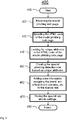
- FIG. 4 depicts a block diagram of a flowchart of a method for generating special phishing detection rules for detecting phishing web pages, in accordance with non-limiting embodiments of the present technology.
- a model phishing web page (also referred to herein as a "known phishing web page") is received.
- the model phishing web page may be any web page received by any of the methods described above.
- the web page received may become the model phishing web page after it has been analyzed, and a special rule for further identification of phishing web pages has been created on this basis.
- phishing web page may be stored in the (model) phishing web page database.
- the rule created for a web page that has been analyzed may also be stored, regardless of the fact whether the web page has been identified as a phishing web page or it is yet to be identified as such.
- step 430 the HTML code of the model phishing web page is downloaded, as described above.
- step 440 the HTML code of the model phishing web page has been downloaded in step 440, it is searched for unique attributes that may be used to detect phishing activities, including phishing resources or web pages, etc.
- step 450 the unique attributes that have been found are used to create a special rule for phishing detection.
- the operator may generate/write regular expressions according to rules for generating regular expressions using unique attributes as parameters.
- unique attributes may be detected, e.g. by the operator (who is responsible for finding them, generating special rules and detecting phishing activities) through manual analysis of the HTML code (or any other set of data, which are either structured, partially structured, or not structured, including compiled, encrypted, cached, hashed, obfuscated, etc. data, which may be first translated into a "readable" format, e.g.
- the data mentioned above may be obtained as a data stream (including web page data retrieved on-line) from data sources that are mentioned in the present disclosure, both external ones (e.g. software or hardware means as mentioned above, but not limited to them) and internal ones, such as data sources integrated into the device (and/or connected to it via a data transfer interface) which performs data analysis to detect unique attributes and/or to create special rules.
- step 450 the process proceeds to step 460, where more data are added, such as the brand name, phishing aim, official domains, etc. as described in, but not limited to, the present disclosure. Additional data allow not only to identify a phishing attack, but also to find and present extra information (e.g. to the operator, user, brand, etc.) that the brand, web site, resource, etc. in question is used by fraudsters to obtain sensitive data as described in the present disclosure.
- extra information e.g. to the operator, user, brand, etc.
- step 460 the process proceeds to step 470, where the special rule is stored. Specifically, individual special rules are created for each web page.
- step 470 the process for creating special rules for phishing resources, particularly, phishing web pages, finishes with step 480.
- FIG. 5 depicts a block diagram of a flowchart of a method for detecting phishing resources, in accordance with non-limiting embodiments of the present technology. As mentioned above, after the special rule is created, it may further be used to identify phishing resources, particularly, web resources, web pages, etc. FIG. 5 illustrates an example of identification of a phishing resource.
- step 520 the data potentially containing traces of fraud activities, such as phishing, etc. are received for analysis. It should be noted that the data to be analyzed for phishing may be received from any sources, such as those listed above, and also from a proxy server log, a malicious link database, etc.
- step 520 the process proceeds to step 530.
- the contents of the resource in question (a web page, etc.) are downloaded to be analyzed, particularly, for links to web sites, fraud-related resources, etc. Specifically, HTML code in the data received is analyzed.
- step 540 it is checked whether the contents (e.g. of a web page) are uploaded with iframe (floating frame), since some (attacking) phishing resources, services, programs, scripts, etc. upload phishing contents with iframe utilizing algorithms and mechanisms for insertion of said contents, such as web pages, loadable scripts, executable codes, etc., into the original contents of a web page.
- contents e.g. of a web page
- iframe floating frame
- the client or the operator may receive, e.g. from the data source described herein, a short link, such as a web link, or a database-to-database link, or database table-to-table link, etc., which, in turn, is capable of redirecting the user to another, secondary or just different resource using and/or loading additional resources, scripts, etc., and also capable of activating various program codes that are concealed by computer systems and services, particularly, the codes that are somehow connected to fraudsters.
- the link e.g. a URL
- the user is redirected by browser means, scripts, phishing programs or other programs that are installed on the device, etc. to a phishing resource and/or an associated resource.
- the ⁇ iframe> tag is used to create a "floating" frame that is located inside such document and allows to load some contents (e.g. HTML code) into an area of fixed dimensions (including a fullscreen window in a browser) inside other documents, particularly, HTML documents.
- contents e.g. HTML code
- extra phishing contents or associated contents, such as scripts, links, etc.
- step 540 the process proceeds to step 550, where the system downloads the contents listed in the iframe tag or a similar tool capable of loading additional data (web page contents, scripts, executable code, etc.).
- the resource data downloaded in step 530 and the code (e.g. HTML code) listed in iframe may be analyzed.
- the operator may detect contents that are additionally loaded, e.g. with the iframe tag, either by finding said tag in the HTML code manually, or by using the software capable of finding said tag in the HTML code.
- an additional handler may be used that looks for said tag in the code of the page. Such handler would be able to detect the iframe tag (along with other elements of the web page or those connected to the web page/resource) and determine whether those data have to be loaded separately or together with the HTML code of the page, where the tag has been detected.
- the uploaded page particularly, its HTML code
- the uploaded page may contain just the data loaded with the iframe tag (or similar methods of loading additional data/contents), i.e. the web page may contain no other contents than those loaded with the iframe tag, therefore it may be necessary to load those data separately.
- the system will analyze the HTML code that is loaded with the iframe tag, while both the page with this tag and the page loaded with it may be identified as phishing web pages.
- the web page particularly, its HTML code, as well as its parts and other resources associated with it, e.g. through scripts, executable code or other technologies, may be loaded with a web browser, console utilities or specially designed tools.
- step 550 the process proceeds to step 560. If it was not established in step 540, that the phishing contents are loaded with the iframe tag (and/or code capable of downloading and/or replacing the existing web page contents, and also capable of modifying links to images, web resources, web pages, etc., including replacing real links with phishing links), then the process also proceeds to step 560.
- the iframe tag and/or code capable of downloading and/or replacing the existing web page contents, and also capable of modifying links to images, web resources, web pages, etc., including replacing real links with phishing links
- the downloaded code (HTML code, script code, executable code, etc.) is analyzed using the special rules that have been created and described above, wherein the HTML code is downloaded using one of the methods described above.
- the code HTML code, loadable contents, etc.
- the check may utilize the code that is executed by computing devices and is written in compilable, as well as intermediate, programming languages, such as C++, C#, Python, etc., or the check may utilize various applications or auxiliary software designed for special tasks, that support processing of special regular expressions.
- the resource containing said code (or if the resource is somehow related to said code, e.g. see above) may be identified as a phishing resource.
- step 570 After analysis is performed in step 560, the process proceeds to step 570, where it is established whether the resource in question is a phishing resource. If the analyzed resource (a web page, a part of the data received, etc.) has not been identified as a phishing resource in step 570, the process proceeds to step 590-- the final step.
- step 570 If the analyzed resource/data have been identified as related to phishing in step 570, the process proceeds to step 580, in which the results of the analysis of the data and resources (particularly, web resources) are stored, along with the fact that the analyzed resource is a phishing resource.
- results of the analysis of the data that has been identified as related to phishing include, but are not limited to, the date of detection, the address of the phishing resource, the phishing web page, the brand name, the phishing goal, the HTML code of the phishing web page, a screenshot.
- step 580 the process proceeds to step 590-- the final step.
- FIG. 6 depicts a schematic diagram of a system and method for identifying phishing resources, in accordance with non-limiting embodiments of the present technology.
- the system for identifying phishing resources comprises a process 610 for detecting phishing resources.
- the process 610 includes at least one process 400 that creates special rules for identification of phishing resources, and at least one process 500 for identification of phishing resources.
- the processes 400 and 500 may be independent, e.g. some special rules (that result from the process 400 ) may be already known for a particular phishing resource (a link to which has been obtained, e.g. from the analyzed data source 650 ).
- the embodiment of the system illustrated by FIG. 6 may relate to an identification of phishing resources as shown in FIG. 5 .
- the system shown at FIG. 6 may include no phishing resource identification and may be implemented specifically for creating special rules for phishing resource identification, e.g. to fill a phishing resource database 680 (or several databases, particularly, interconnected ones).
- the special rules may be stored, e.g. in RAM, on a device for storing the source of "phishing queries" (a query for checks for phishing activities, malicious code, etc.), in ROM, EEPROM, on the device that processes the phishing query, or in data storages, such as hard drives, net-based storages, memory cards, etc. that may be connected to those devices and/or computer systems, e.g. in the database 690 and/or 680.
- the special rules may be used later, when new data (e.g. a web page, or a link to one, etc.) are received and are to be analyzed for possible phishing activities, which relates to the sequence of operations illustrated by FIG. 4 and FIG. 5 .
- Both processes 400 and 500 may be represented by independent modules, i.e. they may utilize two or more modules rather than be united in a single module 610.
- different modules 610 may be used to analyze different types of phishing, phishing aims, brands, etc.
- Data sources for creating special rules and/or identifying phishing resources may include servers 652, mobile devices 654, a PC or laptop 656.
- Data sources may also include feedback forms on web sites or applications (including mobile Android, iOS, etc. applications), notifications from devices or software, including, but not limited to, Firewalls, network sensors, antivirus software, text messages, e-mails, data streams, or various services, such as web services, ad-blockers 659, and other sources of data, links and other information that may or may not be connected to phishing resources 658.
- a data source may send/provide data 650 for analysis to the module 610 using its own means or additional means, such as interfaces, systems for exchanging data, data streams, information, messages, links (e.g. URLs) in any conventional form or format (including text formats or interpretations thereof), and in any conventional method.
- additional means such as interfaces, systems for exchanging data, data streams, information, messages, links (e.g. URLs) in any conventional form or format (including text formats or interpretations thereof), and in any conventional method.
- the process 610 may either be performed by an operator and/or a user, etc., e.g. using software and/or services that are capable of analyzing the data to identify phishing activities, or it may be automated, e.g. with computer systems processing the data with minimum or without any input from the operator.
- Such systems may include self-learning systems capable of processing the data based on information initially provided by an operator, e.g. initial data or data processing algorithms, as well as creating and storing special rules and results of analysis, including phishing and other fraud-related activities, or malicious code found in the received data.
- the results of analysis may be stored, e.g. in a database 690 and/or 680, in RAM, e.g. of a computer system that is used as a base for performing the phishing analysis, or of a device that has send the analysis query, or of a service that has requested the phishing/malware analysis, or also of devices, services and software that are connected to the devices that take part in requesting the analysis of data for phishing activities in any way.
- the databases 680 and 690 may be represented by a set of databases that are located on one or several computer devices, data storages, etc. Available data storage formats include, but are not limited to, tables, text documents, data sets, hash tables, B-trees, etc.
- said databases may be able to exchange data, including synchronizing data, or completing data in a database with the data from another one (or other ones), all of which may be implemented with additional software, a computing device, and/or common interface.
- the link source may receive a response, notification, text message, instructions (in the form of machine-executable code or computer instructions), program code, etc. that the analyzed resource is or is not a phishing resource, or that it contains or does not contain malicious code, etc., including the fact of it being or not being connected to other similar fraudulent resources.
- notification may also be sent to the owner of the resource, where some malicious code has been found, e.g. via e-mail that may be located manually or automatically.
- the system may send a command (e.g. to the software installed or embedded into the analyzed data source) to block the uploading of content from a suspicious resource, or to block the opening of a web page that has been identified as a phishing web page, etc.
- a command e.g. to the software installed or embedded into the analyzed data source
- the resource in question may be added to the databases of an antivirus software, a firewall, or any other software capable of blocking access to resources that have been identified as phishing resources based on the provided information.
- response, notification, text message, instructions, Z10 program code may use computer device means or services capable of restricting and/or blocking access to a particular phishing resource for a user, service, or device.
- FIG. 7 depicts a schematic diagram of a computer system for identifying phishing resources, in accordance with non-limiting embodiments of the present technology.
- the computer system comprises a multi-purpose computing device--a computer 20 or a server comprising a CPU 21, system memory 22 and system bus 23 that connects various components of the system to each other, particularly, the system memory to the CPU 21.
- the system bus 23 may have any structure that comprises a memory bus or memory controller, a periphery bus and a local bus that has any possible architecture.
- the system memory comprises a ROM (read-only memory) 24 and a RAM (random-access memory) 25.
- the ROM 24 contains a BIOS (basic input/output system) 26 comprising basic subroutines for data exchanges between elements inside the computer 20, e.g. at startup.
- the computer 20 may further comprise a hard disk drive 27 capable of reading and writing data onto a hard disk (not shown), a floppy disk drive 28 capable of reading and writing data onto a removable floppy disk 29, and an optical disk drive 30 capable of reading and writing data onto a removable optical disk 31, such as CD, video CD or other optical storages.
- the hard disk drive 27, the floppy disk drive 28 and optical disk drive 30 are connected to the system bus 23 via a hard disk drive interface 32, a floppy disk drive interface 33 and an optical disk drive interface 34 correspondingly.
- Storage drives and their respective computer-readable means allow non-volatile storage of computer-readable instructions, data structures, program modules and other data for the computer 20.
- Various program modules may be stored on a hard disk, a removable floppy disk 29, a removable optical disk 31, in ROM 24 or RAM 25.
- the computer 20 comprises a file system 36 that is connected to or incorporated into the operating system 35, one or more applications 37, other program modules 38 and program data 39.
- a user may input instructions and data into the computer 20 using input devices, such as a keyboard 40 or a pointing device 42.
- Other input devices may include microphone, joystick, gamepad, satellite antenna, scanner, etc.
- serial port interface 46 which is connected to the system bus, but may also be connected via other interfaces, such as parallel port, game port, or USB (universal serial bus).
- a display 47 or other type of visualization device may be also connected to the system bus 23 via an interface, e.g. a video adapter 48. Additionally to the display 47, personal computers may comprise other peripheral output devices (not shown), such as speakers and printers.
- the computer 20 may operate in a network by means of logical connections to one or several remote computers 49.
- One or several remote computers 49 may be represented as another computer, a server, a router, a network PC, a peering device or another node of a single network, and may comprise the majority of or all elements of the computer 20 as described above, even though only a data storage device 50 is shown at FIG. 7 .
- Logical connections include both LAN (local area network) 51 and WAN (wide area network) 52.
- Such network environments may be implemented in various institutions, corporate networks, the Intranet and the Internet.
- the computer 20 When used in a LAN environment, the computer 20 may be connected to the local area network 51 via a net interface or an adapter 53. When used in a WAN environment, the computer 20 may operate through a modem 54 or other means of establishing connection to the wide area network 52, such as the Internet.
- the modem 54 may be an internal or external one, and may be connected to the system bus 23 via a serial port interface 46.
- program modules or parts thereof as described for the computer 20 may be stored in a remote storage device. It should be noted that the network connections described herein as non-limiting embodiments, and communication between computers may be established through other means.
Landscapes
- Engineering & Computer Science (AREA)
- Computer Security & Cryptography (AREA)
- Theoretical Computer Science (AREA)
- General Engineering & Computer Science (AREA)
- Computer Hardware Design (AREA)
- Software Systems (AREA)
- Computer Networks & Wireless Communication (AREA)
- Signal Processing (AREA)
- General Physics & Mathematics (AREA)
- Physics & Mathematics (AREA)
- Computing Systems (AREA)
- Databases & Information Systems (AREA)
- Data Mining & Analysis (AREA)
- Information Transfer Between Computers (AREA)
Applications Claiming Priority (1)
| Application Number | Priority Date | Filing Date | Title |
|---|---|---|---|
| RU2016152427A RU2637477C1 (ru) | 2016-12-29 | 2016-12-29 | Система и способ обнаружения фишинговых веб-страниц |
Publications (2)
| Publication Number | Publication Date |
|---|---|
| EP3343870A1 true EP3343870A1 (de) | 2018-07-04 |
| EP3343870B1 EP3343870B1 (de) | 2025-03-05 |
Family
ID=60581596
Family Applications (1)
| Application Number | Title | Priority Date | Filing Date |
|---|---|---|---|
| EP17210904.3A Active EP3343870B1 (de) | 2016-12-29 | 2017-12-28 | System und verfahren zur erkennung von phishing-webseiten im bereich der technologie |
Country Status (3)
| Country | Link |
|---|---|
| US (1) | US10721271B2 (de) |
| EP (1) | EP3343870B1 (de) |
| RU (1) | RU2637477C1 (de) |
Cited By (2)
| Publication number | Priority date | Publication date | Assignee | Title |
|---|---|---|---|---|
| WO2021221934A1 (en) * | 2020-04-29 | 2021-11-04 | KnowBe4, Inc. | Systems and methods for reporting based simulated phishing campaign |
| WO2021236776A1 (en) * | 2020-05-21 | 2021-11-25 | KnowBe4, Inc. | Systems and methods for use of employee message exchanges for a simulated phishing campaign |
Families Citing this family (17)
| Publication number | Priority date | Publication date | Assignee | Title |
|---|---|---|---|---|
| US10122720B2 (en) * | 2017-02-07 | 2018-11-06 | Plesk International Gmbh | System and method for automated web site content analysis |
| RU2638001C1 (ru) * | 2017-02-08 | 2017-12-08 | Акционерное общество "Лаборатория Касперского" | Система и способ выделения части резерва производительности антивирусного сервера для выполнения антивирусной проверки веб-страницы |
| US11539716B2 (en) * | 2018-07-31 | 2022-12-27 | DataVisor, Inc. | Online user behavior analysis service backed by deep learning models trained on shared digital information |
| US11411991B2 (en) * | 2019-07-09 | 2022-08-09 | Mcafee, Llc | User activity-triggered URL scan |
| US11233820B2 (en) | 2019-09-10 | 2022-01-25 | Paypal, Inc. | Systems and methods for detecting phishing websites |
| US11528297B1 (en) | 2019-12-12 | 2022-12-13 | Zimperium, Inc. | Mobile device security application for malicious website detection based on representative image |
| CN111209459A (zh) * | 2019-12-27 | 2020-05-29 | 中移(杭州)信息技术有限公司 | 信息处理方法、装置、电子设备及存储介质 |
| US11811824B2 (en) * | 2020-06-08 | 2023-11-07 | Target Brands, Inc. | Security system for detecting malicious actor's observation |
| RU2758359C1 (ru) * | 2020-06-19 | 2021-10-28 | Акционерное общество "Лаборатория Касперского" | Система и способ выявления массовых мошеннических активностей при взаимодействии пользователей с банковскими сервисами |
| CN112269607A (zh) * | 2020-11-17 | 2021-01-26 | 北京百度网讯科技有限公司 | 小程序的控制方法、系统、服务器以及终端设备 |
| US12238138B2 (en) | 2021-05-20 | 2025-02-25 | F.A.C.C.T. Antifraud Llc | Method and device for clustering phishing web resources based on visual content image |
| NL2031940B1 (en) | 2021-05-20 | 2023-06-13 | Group Ib Ltd | Method and device for clustering phishing web resources based on visual content image |
| CN113657453B (zh) * | 2021-07-22 | 2023-08-01 | 珠海高凌信息科技股份有限公司 | 基于生成对抗网络和深度学习的有害网站的检测方法 |
| US11882152B2 (en) * | 2021-07-30 | 2024-01-23 | Bank Of America Corporation | Information security system and method for phishing website identification based on image hashing |
| US12052282B2 (en) * | 2021-08-25 | 2024-07-30 | Paypal, Inc. | Automatic detection of proxy-based phishing sites |
| NL2031256B1 (en) | 2022-02-14 | 2023-08-18 | Group Ib Global Private Ltd | Method and computing device for detection of target malicious web resource |
| US20260100969A1 (en) * | 2024-10-09 | 2026-04-09 | Mcafee, Llc | Systems, methods, apparatus, and articles of manufacture to classify data via tiered machine learning analysis |
Citations (1)
| Publication number | Priority date | Publication date | Assignee | Title |
|---|---|---|---|---|
| US9253208B1 (en) * | 2015-03-05 | 2016-02-02 | AO Kaspersky Lab | System and method for automated phishing detection rule evolution |
Family Cites Families (176)
| Publication number | Priority date | Publication date | Assignee | Title |
|---|---|---|---|---|
| US7389351B2 (en) | 2001-03-15 | 2008-06-17 | Microsoft Corporation | System and method for identifying and establishing preferred modalities or channels for communications based on participants' preferences and contexts |
| US7565692B1 (en) | 2000-05-30 | 2009-07-21 | At&T Wireless Services, Inc. | Floating intrusion detection platforms |
| DE60124295T8 (de) | 2000-11-30 | 2007-12-06 | Lancope, Inc. | Flussbasierte erfassung eines eindringens in ein netzwerk |
| US7325252B2 (en) | 2001-05-18 | 2008-01-29 | Achilles Guard Inc. | Network security testing |
| US20090138342A1 (en) | 2001-11-14 | 2009-05-28 | Retaildna, Llc | Method and system for providing an employee award using artificial intelligence |
| US7225343B1 (en) * | 2002-01-25 | 2007-05-29 | The Trustees Of Columbia University In The City Of New York | System and methods for adaptive model generation for detecting intrusions in computer systems |
| US8132250B2 (en) | 2002-03-08 | 2012-03-06 | Mcafee, Inc. | Message profiling systems and methods |
| EP1349081A1 (de) | 2002-03-28 | 2003-10-01 | LION Bioscience AG | Methode und Gerät zum Befragen von relationalen Datenbanken |
| US7496628B2 (en) | 2003-02-25 | 2009-02-24 | Susquehanna International Group, Llp | Electronic message filter |
| US20040221171A1 (en) | 2003-05-02 | 2004-11-04 | Ahmed Ahmed Awad E. | Intrusion detector based on mouse dynamics analysis |
| US8990928B1 (en) | 2003-12-11 | 2015-03-24 | Radix Holdings, Llc | URL salience |
| US7392278B2 (en) | 2004-01-23 | 2008-06-24 | Microsoft Corporation | Building and using subwebs for focused search |
| US8539582B1 (en) | 2004-04-01 | 2013-09-17 | Fireeye, Inc. | Malware containment and security analysis on connection |
| US8561177B1 (en) | 2004-04-01 | 2013-10-15 | Fireeye, Inc. | Systems and methods for detecting communication channels of bots |
| US8528086B1 (en) | 2004-04-01 | 2013-09-03 | Fireeye, Inc. | System and method of detecting computer worms |
| US7953814B1 (en) | 2005-02-28 | 2011-05-31 | Mcafee, Inc. | Stopping and remediating outbound messaging abuse |
| US8255532B2 (en) | 2004-09-13 | 2012-08-28 | Cisco Technology, Inc. | Metric-based monitoring and control of a limited resource |
| US7540025B2 (en) | 2004-11-18 | 2009-05-26 | Cisco Technology, Inc. | Mitigating network attacks using automatic signature generation |
| US20060253582A1 (en) | 2005-05-03 | 2006-11-09 | Dixon Christopher J | Indicating website reputations within search results |
| WO2006119509A2 (en) | 2005-05-05 | 2006-11-09 | Ironport Systems, Inc. | Identifying threats in electronic messages |
| US7609625B2 (en) * | 2005-07-06 | 2009-10-27 | Fortinet, Inc. | Systems and methods for detecting and preventing flooding attacks in a network environment |
| US7730040B2 (en) | 2005-07-27 | 2010-06-01 | Microsoft Corporation | Feedback-driven malware detector |
| US7707284B2 (en) | 2005-08-03 | 2010-04-27 | Novell, Inc. | System and method of searching for classifying user activity performed on a computer system |
| KR20070049514A (ko) | 2005-11-08 | 2007-05-11 | 한국정보보호진흥원 | 악성 코드 감시 시스템 및 이를 이용한 감시 방법 |
| US8650080B2 (en) | 2006-04-10 | 2014-02-11 | International Business Machines Corporation | User-browser interaction-based fraud detection system |
| ATE540515T1 (de) | 2006-04-13 | 2012-01-15 | Art Of Defence Gmbh | Verfahren zur bereitstellung von webanwendungssicherheit |
| US7984500B1 (en) | 2006-10-05 | 2011-07-19 | Amazon Technologies, Inc. | Detecting fraudulent activity by analysis of information requests |
| US7865953B1 (en) | 2007-05-31 | 2011-01-04 | Trend Micro Inc. | Methods and arrangement for active malicious web pages discovery |
| US8238669B2 (en) | 2007-08-22 | 2012-08-07 | Google Inc. | Detection and classification of matches between time-based media |
| US7958555B1 (en) | 2007-09-28 | 2011-06-07 | Trend Micro Incorporated | Protecting computer users from online frauds |
| US9779403B2 (en) | 2007-12-07 | 2017-10-03 | Jpmorgan Chase Bank, N.A. | Mobile fraud prevention system and method |
| EP2266057A1 (de) | 2008-02-28 | 2010-12-29 | Ipharro Media, Gmbh | Rahmensequenzvergleich in multimedia-strömen |
| US8082187B2 (en) | 2008-05-07 | 2011-12-20 | AcademixDirect, Inc. | Method of generating a referral website URL using website listings in a cookie |
| US8856937B1 (en) * | 2008-06-27 | 2014-10-07 | Symantec Corporation | Methods and systems for identifying fraudulent websites |
| US10027688B2 (en) | 2008-08-11 | 2018-07-17 | Damballa, Inc. | Method and system for detecting malicious and/or botnet-related domain names |
| US8086480B2 (en) | 2008-09-25 | 2011-12-27 | Ebay Inc. | Methods and systems for activity-based recommendations |
| US9177144B2 (en) * | 2008-10-30 | 2015-11-03 | Mcafee, Inc. | Structural recognition of malicious code patterns |
| US8850571B2 (en) | 2008-11-03 | 2014-09-30 | Fireeye, Inc. | Systems and methods for detecting malicious network content |
| US8285830B1 (en) | 2009-01-06 | 2012-10-09 | Citizenhawk, Inc. | System and method for combating cybersquatting |
| US8448245B2 (en) | 2009-01-17 | 2013-05-21 | Stopthehacker.com, Jaal LLC | Automated identification of phishing, phony and malicious web sites |
| US8695091B2 (en) * | 2009-02-11 | 2014-04-08 | Sophos Limited | Systems and methods for enforcing policies for proxy website detection using advertising account ID |
| US8429751B2 (en) | 2009-03-13 | 2013-04-23 | Trustwave Holdings, Inc. | Method and apparatus for phishing and leeching vulnerability detection |
| US8229219B1 (en) | 2009-08-06 | 2012-07-24 | Google Inc. | Full-length video fingerprinting |
| US8600993B1 (en) | 2009-08-26 | 2013-12-03 | Google Inc. | Determining resource attributes from site address attributes |
| US8396857B2 (en) | 2009-08-31 | 2013-03-12 | Accenture Global Services Limited | System to modify websites for organic search optimization |
| EP2323046A1 (de) | 2009-10-16 | 2011-05-18 | Telefónica, S.A. | Verfahren zur Erkennung einer Audio- und Videokopie in Multimediaströmen |
| US8625033B1 (en) | 2010-02-01 | 2014-01-07 | Google Inc. | Large-scale matching of audio and video |
| US9501644B2 (en) | 2010-03-15 | 2016-11-22 | F-Secure Oyj | Malware protection |
| US8612463B2 (en) | 2010-06-03 | 2013-12-17 | Palo Alto Research Center Incorporated | Identifying activities using a hybrid user-activity model |
| US8260914B1 (en) | 2010-06-22 | 2012-09-04 | Narus, Inc. | Detecting DNS fast-flux anomalies |
| RU2446459C1 (ru) | 2010-07-23 | 2012-03-27 | Закрытое акционерное общество "Лаборатория Касперского" | Система и способ проверки веб-ресурсов на наличие вредоносных компонент |
| AU2011283389A1 (en) | 2010-07-26 | 2013-03-21 | Ki Yong Kim | Hacker virus security-integrated control device |
| US8924488B2 (en) | 2010-07-27 | 2014-12-30 | At&T Intellectual Property I, L.P. | Employing report ratios for intelligent mobile messaging classification and anti-spam defense |
| WO2012027588A1 (en) | 2010-08-25 | 2012-03-01 | Lookout, Inc. | System and method for server-coupled malware prevention |
| US9245114B2 (en) | 2010-08-26 | 2016-01-26 | Verisign, Inc. | Method and system for automatic detection and analysis of malware |
| US8837769B2 (en) | 2010-10-06 | 2014-09-16 | Futurewei Technologies, Inc. | Video signature based on image hashing and shot detection |
| US9626677B2 (en) | 2010-11-29 | 2017-04-18 | Biocatch Ltd. | Identification of computerized bots, and identification of automated cyber-attack modules |
| US8521667B2 (en) | 2010-12-15 | 2013-08-27 | Microsoft Corporation | Detection and categorization of malicious URLs |
| CN102082792A (zh) * | 2010-12-31 | 2011-06-01 | 成都市华为赛门铁克科技有限公司 | 钓鱼网页检测方法及设备 |
| US8972412B1 (en) | 2011-01-31 | 2015-03-03 | Go Daddy Operating Company, LLC | Predicting improvement in website search engine rankings based upon website linking relationships |
| US8726376B2 (en) | 2011-03-11 | 2014-05-13 | Openet Telecom Ltd. | Methods, systems and devices for the detection and prevention of malware within a network |
| US8402543B1 (en) | 2011-03-25 | 2013-03-19 | Narus, Inc. | Machine learning based botnet detection with dynamic adaptation |
| RU107616U1 (ru) | 2011-03-28 | 2011-08-20 | Закрытое акционерное общество "Лаборатория Касперского" | Система быстрого анализа потока данных на наличие вредоносных объектов |
| US9363278B2 (en) | 2011-05-11 | 2016-06-07 | At&T Mobility Ii Llc | Dynamic and selective response to cyber attack for telecommunications carrier networks |
| US8151341B1 (en) | 2011-05-23 | 2012-04-03 | Kaspersky Lab Zao | System and method for reducing false positives during detection of network attacks |
| US8555388B1 (en) | 2011-05-24 | 2013-10-08 | Palo Alto Networks, Inc. | Heuristic botnet detection |
| WO2013009713A2 (en) | 2011-07-08 | 2013-01-17 | Uab Research Foundation | Syntactical fingerprinting |
| WO2013008778A1 (ja) | 2011-07-11 | 2013-01-17 | Mizunuma Takeshi | 識別名管理方法およびシステム |
| GB2493514B (en) | 2011-08-02 | 2015-04-08 | Qatar Foundation | Copy detection |
| US8677472B1 (en) * | 2011-09-27 | 2014-03-18 | Emc Corporation | Multi-point collection of behavioral data relating to a virtualized browsing session with a secure server |
| US8645355B2 (en) | 2011-10-21 | 2014-02-04 | Google Inc. | Mapping Uniform Resource Locators of different indexes |
| US8584235B2 (en) | 2011-11-02 | 2013-11-12 | Bitdefender IPR Management Ltd. | Fuzzy whitelisting anti-malware systems and methods |
| US9519781B2 (en) | 2011-11-03 | 2016-12-13 | Cyphort Inc. | Systems and methods for virtualization and emulation assisted malware detection |
| RU2487406C1 (ru) | 2011-11-24 | 2013-07-10 | Закрытое акционерное общество "Лаборатория Касперского" | Система и способ обнаружения вредоносных объектов, распространяемых через пиринговые сети |
| US8660296B1 (en) | 2012-01-10 | 2014-02-25 | Google Inc. | Systems and methods for facilitating video fingerprinting using local descriptors |
| US9111090B2 (en) * | 2012-04-02 | 2015-08-18 | Trusteer, Ltd. | Detection of phishing attempts |
| RU2523114C2 (ru) | 2012-04-06 | 2014-07-20 | Закрытое акционерное общество "Лаборатория Касперского" | Способ анализа вредоносной активности в сети интернет, выявления вредоносных узлов сети и ближайших узлов-посредников |
| US10304036B2 (en) | 2012-05-07 | 2019-05-28 | Nasdaq, Inc. | Social media profiling for one or more authors using one or more social media platforms |
| RU2488880C1 (ru) | 2012-05-11 | 2013-07-27 | Закрытое акционерное общество "Лаборатория Касперского" | Система и способ адаптивной оптимизации проверки потока данных, передающихся по сети, на наличие угроз |
| US9154517B2 (en) | 2012-06-19 | 2015-10-06 | AO Kaspersky Lab | System and method for preventing spread of malware in peer-to-peer network |
| WO2014018630A1 (en) * | 2012-07-24 | 2014-01-30 | Webroot Inc. | System and method to provide automatic classification of phishing sites |
| RU2495486C1 (ru) | 2012-08-10 | 2013-10-10 | Закрытое акционерное общество "Лаборатория Касперского" | Способ анализа и выявления вредоносных промежуточных узлов в сети |
| CN103685174B (zh) * | 2012-09-07 | 2016-12-21 | 中国科学院计算机网络信息中心 | 一种不依赖样本的钓鱼网站检测方法 |
| US9386030B2 (en) | 2012-09-18 | 2016-07-05 | Vencore Labs, Inc. | System and method for correlating historical attacks with diverse indicators to generate indicator profiles for detecting and predicting future network attacks |
| US9215239B1 (en) | 2012-09-28 | 2015-12-15 | Palo Alto Networks, Inc. | Malware detection based on traffic analysis |
| US10965775B2 (en) | 2012-11-20 | 2021-03-30 | Airbnb, Inc. | Discovering signature of electronic social networks |
| RU2536664C2 (ru) | 2012-12-25 | 2014-12-27 | Закрытое акционерное общество "Лаборатория Касперского" | Система и способ автоматической модификации антивирусной базы данных |
| RU2530210C2 (ru) | 2012-12-25 | 2014-10-10 | Закрытое акционерное общество "Лаборатория Касперского" | Система и способ выявления вредоносных программ, препятствующих штатному взаимодействию пользователя с интерфейсом операционной системы |
| RU2522019C1 (ru) | 2012-12-25 | 2014-07-10 | Закрытое акционерное общество "Лаборатория Касперского" | Система и способ обнаружения угроз в коде, исполняемом виртуальной машиной |
| RU129279U1 (ru) | 2013-01-09 | 2013-06-20 | ОБЩЕСТВО С ОГРАНИЧЕННОЙ ОТВЕТСТВЕННОСТЬЮ "МФИ Софт" | Устройство обнаружения и защиты от аномальной активности на сети передачи данных |
| US20160127402A1 (en) * | 2014-11-04 | 2016-05-05 | Patternex, Inc. | Method and apparatus for identifying and detecting threats to an enterprise or e-commerce system |
| US10425429B2 (en) * | 2013-04-10 | 2019-09-24 | Gabriel Bassett | System and method for cyber security analysis and human behavior prediction |
| EP2984577A4 (de) | 2013-04-11 | 2016-08-24 | Brandshield Ltd | Vorrichtung, system und verfahren zum schutz von markennamen und domänennamen |
| GB201306628D0 (en) | 2013-04-11 | 2013-05-29 | F Secure Oyj | Detecting and marking client devices |
| WO2014184711A2 (en) | 2013-05-13 | 2014-11-20 | Yandex Europe Ag | Method of and system for providing a client device with an automatic update of an ip address associated with a domain name |
| US9357469B2 (en) | 2013-05-29 | 2016-05-31 | Rivada Networks, Llc | Methods and system for dynamic spectrum arbitrage with mobility management |
| US9443075B2 (en) | 2013-06-27 | 2016-09-13 | The Mitre Corporation | Interception and policy application for malicious communications |
| CN103368958A (zh) * | 2013-07-05 | 2013-10-23 | 腾讯科技(深圳)有限公司 | 一种网页检测方法、装置和系统 |
| RU2538292C1 (ru) | 2013-07-24 | 2015-01-10 | Открытое Акционерное Общество "Информационные Технологии И Коммуникационные Системы" | Способ обнаружения компьютерных атак на сетевую компьютерную систему |
| KR102120823B1 (ko) | 2013-08-14 | 2020-06-09 | 삼성전자주식회사 | 비휘발성 메모리 장치의 독출 시퀀스 제어 방법 및 이를 수행하는 메모리 시스템 |
| US9330258B1 (en) | 2013-09-30 | 2016-05-03 | Symantec Corporation | Systems and methods for identifying uniform resource locators that link to potentially malicious resources |
| CN103491205B (zh) | 2013-09-30 | 2016-08-17 | 北京奇虎科技有限公司 | 一种基于视频搜索的关联资源地址的推送方法和装置 |
| CN105917359B (zh) | 2013-10-21 | 2021-01-26 | 微软技术许可有限责任公司 | 移动视频搜索 |
| GB2520987B (en) | 2013-12-06 | 2016-06-01 | Cyberlytic Ltd | Using fuzzy logic to assign a risk level profile to a potential cyber threat |
| IN2013CH05744A (de) | 2013-12-12 | 2015-06-19 | Infosys Ltd | |
| US20150363791A1 (en) | 2014-01-10 | 2015-12-17 | Hybrid Application Security Ltd. | Business action based fraud detection system and method |
| US9262635B2 (en) | 2014-02-05 | 2016-02-16 | Fireeye, Inc. | Detection efficacy of virtual machine-based analysis with application specific events |
| US9060018B1 (en) | 2014-02-05 | 2015-06-16 | Pivotal Software, Inc. | Finding command and control center computers by communication link tracking |
| KR101514984B1 (ko) | 2014-03-03 | 2015-04-24 | (주)엠씨알시스템 | 홈페이지 악성코드 유포 탐지 시스템 및 방법 |
| US9338181B1 (en) * | 2014-03-05 | 2016-05-10 | Netflix, Inc. | Network security system with remediation based on value of attacked assets |
| RU2543564C1 (ru) | 2014-03-20 | 2015-03-10 | Закрытое акционерное общество "Научно-производственное предприятие "Информационные технологии в бизнесе" | Система обнаружения и предотвращения вторжений на основе контроля доступа к ресурсам |
| US9853997B2 (en) | 2014-04-14 | 2017-12-26 | Drexel University | Multi-channel change-point malware detection |
| US9332022B1 (en) | 2014-07-07 | 2016-05-03 | Symantec Corporation | Systems and methods for detecting suspicious internet addresses |
| US9800592B2 (en) | 2014-08-04 | 2017-10-24 | Microsoft Technology Licensing, Llc | Data center architecture that supports attack detection and mitigation |
| US20160036837A1 (en) | 2014-08-04 | 2016-02-04 | Microsoft Corporation | Detecting attacks on data centers |
| US9942250B2 (en) | 2014-08-06 | 2018-04-10 | Norse Networks, Inc. | Network appliance for dynamic protection from risky network activities |
| KR101587161B1 (ko) | 2014-09-03 | 2016-01-20 | 한국전자통신연구원 | 실시간 네트워크 안티바이러스 수행 장치 및 방법 |
| US9026841B1 (en) * | 2014-09-09 | 2015-05-05 | Belkin International, Inc. | Coordinated and device-distributed detection of abnormal network device operation |
| RU2589310C2 (ru) * | 2014-09-30 | 2016-07-10 | Закрытое акционерное общество "Лаборатория Касперского" | Система и способ расчета интервала повторного определения категорий сетевого ресурса |
| WO2016064919A1 (en) * | 2014-10-21 | 2016-04-28 | Abramowitz Marc Lauren | Dynamic security rating for cyber insurance products |
| US9945928B2 (en) * | 2014-10-30 | 2018-04-17 | Bastille Networks, Inc. | Computational signal processing architectures for electromagnetic signature analysis |
| WO2016081346A1 (en) | 2014-11-21 | 2016-05-26 | Northrup Grumman Systems Corporation | System and method for network data characterization |
| US10574675B2 (en) * | 2014-12-05 | 2020-02-25 | T-Mobile Usa, Inc. | Similarity search for discovering multiple vector attacks |
| US9367872B1 (en) * | 2014-12-22 | 2016-06-14 | Palantir Technologies Inc. | Systems and user interfaces for dynamic and interactive investigation of bad actor behavior based on automatic clustering of related data in various data structures |
| US9934376B1 (en) | 2014-12-29 | 2018-04-03 | Fireeye, Inc. | Malware detection appliance architecture |
| US10230526B2 (en) | 2014-12-31 | 2019-03-12 | William Manning | Out-of-band validation of domain name system records |
| US9712549B2 (en) | 2015-01-08 | 2017-07-18 | Imam Abdulrahman Bin Faisal University | System, apparatus, and method for detecting home anomalies |
| CN104504307B (zh) | 2015-01-08 | 2017-09-29 | 北京大学 | 基于拷贝单元的音视频拷贝检测方法和装置 |
| KR20160095856A (ko) * | 2015-02-04 | 2016-08-12 | 한국전자통신연구원 | 새로운 공격 유형의 자동 탐지 및 공격 유형 모델 갱신을 통한 지능형 침입 탐지 시스템 및 방법 |
| US11328307B2 (en) | 2015-02-24 | 2022-05-10 | OpSec Online, Ltd. | Brand abuse monitoring system with infringement detection engine and graphical user interface |
| EP3065076A1 (de) | 2015-03-04 | 2016-09-07 | Secure-Nok AS | System und Verfahren zum Reagieren auf einen Vorfall im Zusammenhang mit einem Cyberangriff gegen ein industrielles Steuerungssystem |
| US9769201B2 (en) | 2015-03-06 | 2017-09-19 | Radware, Ltd. | System and method thereof for multi-tiered mitigation of cyber-attacks |
| US9712553B2 (en) | 2015-03-27 | 2017-07-18 | The Boeing Company | System and method for developing a cyber-attack scenario |
| US10536357B2 (en) * | 2015-06-05 | 2020-01-14 | Cisco Technology, Inc. | Late data detection in data center |
| US10382484B2 (en) * | 2015-06-08 | 2019-08-13 | Illusive Networks Ltd. | Detecting attackers who target containerized clusters |
| US9917852B1 (en) | 2015-06-29 | 2018-03-13 | Palo Alto Networks, Inc. | DGA behavior detection |
| RU164629U1 (ru) | 2015-06-30 | 2016-09-10 | Акционерное общество "Институт точной механики и вычислительной техники имени С.А. Лебедева Российской академии наук" | Электронный модуль защиты от сетевых атак на базе сетевого процессора np-5 |
| EP3125147B1 (de) * | 2015-07-27 | 2020-06-03 | Swisscom AG | System und verfahren zur identifizierung einer phishing-website |
| US9456000B1 (en) * | 2015-08-06 | 2016-09-27 | Palantir Technologies Inc. | Systems, methods, user interfaces, and computer-readable media for investigating potential malicious communications |
| CN106506435B (zh) | 2015-09-08 | 2019-08-06 | 中国电信股份有限公司 | 用于检测网络攻击的方法和防火墙系统 |
| WO2017049045A1 (en) * | 2015-09-16 | 2017-03-23 | RiskIQ, Inc. | Using hash signatures of dom objects to identify website similarity |
| KR101703446B1 (ko) * | 2015-10-15 | 2017-02-06 | 숭실대학교산학협력단 | DoS 공격의 탐지가 가능한 네트워크 및 이의 제어 방법과, 상기 네트워크에 포함되는 게이트웨이 및 관리 서버 |
| CN105429956B (zh) | 2015-11-02 | 2018-09-25 | 重庆大学 | 基于p2p动态云的恶意软件检测系统及方法 |
| US10200382B2 (en) * | 2015-11-05 | 2019-02-05 | Radware, Ltd. | System and method for detecting abnormal traffic behavior using infinite decaying clusters |
| US9894036B2 (en) | 2015-11-17 | 2018-02-13 | Cyber Adapt, Inc. | Cyber threat attenuation using multi-source threat data analysis |
| RU2622870C2 (ru) | 2015-11-17 | 2017-06-20 | Общество с ограниченной ответственностью "САЙТСЕКЬЮР" | Система и способ оценки опасности веб-сайтов |
| CN106709777A (zh) * | 2015-11-18 | 2017-05-24 | 阿里巴巴集团控股有限公司 | 一种订单聚类方法及装置,以及反恶意信息的方法及装置 |
| WO2017087840A1 (en) * | 2015-11-20 | 2017-05-26 | Webroot Inc. | Binocular fusion analytics security |
| RU2613535C1 (ru) | 2015-11-20 | 2017-03-16 | Илья Самуилович Рабинович | Способ обнаружения вредоносных программ и элементов |
| CN108351939A (zh) * | 2015-12-14 | 2018-07-31 | 三菱电机株式会社 | 信息处理装置、信息处理方法和信息处理程序 |
| US9723344B1 (en) | 2015-12-29 | 2017-08-01 | Google Inc. | Early detection of policy violating media |
| US11069370B2 (en) | 2016-01-11 | 2021-07-20 | University Of Tennessee Research Foundation | Tampering detection and location identification of digital audio recordings |
| RU2628192C2 (ru) | 2016-01-27 | 2017-08-15 | Акционерное общество "Творческо-производственное объединение "Центральная киностудия детских и юношеских фильмов им. М. Горького" | Устройство для семантической классификации и поиска в архивах оцифрованных киноматериалов |
| US9900338B2 (en) | 2016-02-09 | 2018-02-20 | International Business Machines Corporation | Forecasting and classifying cyber-attacks using neural embeddings based on pattern of life data |
| WO2017147696A1 (en) * | 2016-02-29 | 2017-09-08 | Troy Jacob Ronda | Systems and methods for distributed identity verification |
| US10063572B2 (en) | 2016-03-28 | 2018-08-28 | Accenture Global Solutions Limited | Antivirus signature distribution with distributed ledger |
| US10313382B2 (en) | 2016-03-29 | 2019-06-04 | The Mitre Corporation | System and method for visualizing and analyzing cyber-attacks using a graph model |
| US10178107B2 (en) | 2016-04-06 | 2019-01-08 | Cisco Technology, Inc. | Detection of malicious domains using recurring patterns in domain names |
| US10212145B2 (en) | 2016-04-06 | 2019-02-19 | Avaya Inc. | Methods and systems for creating and exchanging a device specific blockchain for device authentication |
| CN105897714B (zh) | 2016-04-11 | 2018-11-09 | 天津大学 | 基于dns流量特征的僵尸网络检测方法 |
| RU2625050C1 (ru) | 2016-04-25 | 2017-07-11 | Акционерное общество "Лаборатория Касперского" | Система и способ признания транзакций доверенными |
| US11223598B2 (en) | 2016-05-03 | 2022-01-11 | Nokia Of America Corporation | Internet security |
| RU2634211C1 (ru) | 2016-07-06 | 2017-10-24 | Общество с ограниченной ответственностью "Траст" | Способ и система анализа протоколов взаимодействия вредоносных программ с центрами управления и выявления компьютерных атак |
| RU2636702C1 (ru) | 2016-07-07 | 2017-11-27 | Общество С Ограниченной Ответственностью "Яндекс" | Способ и устройство для выбора сетевого ресурса в качестве источника содержимого для системы рекомендаций |
| US20180012144A1 (en) * | 2016-07-11 | 2018-01-11 | Qualcomm Innovation Center, Inc. | Incremental and speculative analysis of javascripts based on a multi-instance model for web security |
| CN106131016B (zh) | 2016-07-13 | 2019-05-03 | 北京知道创宇信息技术有限公司 | 恶意url检测干预方法、系统及装置 |
| US10212133B2 (en) * | 2016-07-29 | 2019-02-19 | ShieldX Networks, Inc. | Accelerated pattern matching using pattern functions |
| WO2018025157A1 (en) * | 2016-07-31 | 2018-02-08 | Cymmetria, Inc. | Deploying deception campaigns using communication breadcrumbs |
| US10498761B2 (en) * | 2016-08-23 | 2019-12-03 | Duo Security, Inc. | Method for identifying phishing websites and hindering associated activity |
| US10313352B2 (en) * | 2016-10-26 | 2019-06-04 | International Business Machines Corporation | Phishing detection with machine learning |
| WO2018095192A1 (zh) | 2016-11-23 | 2018-05-31 | 腾讯科技(深圳)有限公司 | 网站攻击的检测和防护方法及系统 |
| CN106713312A (zh) | 2016-12-21 | 2017-05-24 | 深圳市深信服电子科技有限公司 | 检测非法域名的方法及装置 |
| WO2019010182A1 (en) | 2017-07-06 | 2019-01-10 | Pixm | METHOD AND SYSTEM FOR DETECTING HOOKING |
| CN107392456A (zh) | 2017-07-14 | 2017-11-24 | 武汉理工大学 | 一种融合互联网信息的多角度企业信用评估建模方法 |
| RU2670906C9 (ru) | 2017-12-28 | 2018-12-12 | Общество С Ограниченной Ответственностью "Центр Разработки И Внедрения Инновационных Технологий" | Самонастраивающаяся интерактивная система, способ обмена сообщениями и/или звонками между пользователями различных веб-сайтов с использованием технологии клиент-сервер и считываемый компьютером носитель |
| RU2681699C1 (ru) | 2018-02-13 | 2019-03-12 | Общество с ограниченной ответственностью "Траст" | Способ и сервер для поиска связанных сетевых ресурсов |
-
2016
- 2016-12-29 RU RU2016152427A patent/RU2637477C1/ru active
-
2017
- 2017-12-28 EP EP17210904.3A patent/EP3343870B1/de active Active
- 2017-12-29 US US15/858,013 patent/US10721271B2/en active Active
Patent Citations (1)
| Publication number | Priority date | Publication date | Assignee | Title |
|---|---|---|---|---|
| US9253208B1 (en) * | 2015-03-05 | 2016-02-02 | AO Kaspersky Lab | System and method for automated phishing detection rule evolution |
Cited By (4)
| Publication number | Priority date | Publication date | Assignee | Title |
|---|---|---|---|---|
| WO2021221934A1 (en) * | 2020-04-29 | 2021-11-04 | KnowBe4, Inc. | Systems and methods for reporting based simulated phishing campaign |
| US11641375B2 (en) | 2020-04-29 | 2023-05-02 | KnowBe4, Inc. | Systems and methods for reporting based simulated phishing campaign |
| US12177252B2 (en) | 2020-04-29 | 2024-12-24 | KnowBe4, Inc. | Systems and methods for reporting based simulated phishing campaign |
| WO2021236776A1 (en) * | 2020-05-21 | 2021-11-25 | KnowBe4, Inc. | Systems and methods for use of employee message exchanges for a simulated phishing campaign |
Also Published As
| Publication number | Publication date |
|---|---|
| US20180191777A1 (en) | 2018-07-05 |
| US10721271B2 (en) | 2020-07-21 |
| EP3343870B1 (de) | 2025-03-05 |
| RU2637477C1 (ru) | 2017-12-04 |
Similar Documents
| Publication | Publication Date | Title |
|---|---|---|
| EP3343870B1 (de) | System und verfahren zur erkennung von phishing-webseiten im bereich der technologie | |
| US11671448B2 (en) | Phishing detection using uniform resource locators | |
| US12021894B2 (en) | Phishing detection based on modeling of web page content | |
| Jain et al. | Towards detection of phishing websites on client-side using machine learning based approach | |
| Jain et al. | Two-level authentication approach to protect from phishing attacks in real time | |
| Volety et al. | Cracking Bitcoin wallets: I want what you have in the wallets | |
| Jeeva et al. | Intelligent phishing url detection using association rule mining | |
| Hope et al. | Web security testing cookbook: systematic techniques to find problems fast | |
| US20210203690A1 (en) | Phishing detection using certificates associated with uniform resource locators | |
| EP3343872B1 (de) | System und verfahren zum sammeln von informationen zur erkennung von phishing-aktivität | |
| US11470114B2 (en) | Malware and phishing detection and mediation platform | |
| US10440050B1 (en) | Identifying sensitive data on computer networks | |
| US20260037626A1 (en) | Detection of phishing websites using machine learning | |
| US20170034314A1 (en) | Validation associated with a form | |
| Kellezi et al. | Towards secure open banking architecture: an evaluation with OWASP | |
| CA3224095A1 (en) | Security risk remediation tool | |
| Wang et al. | A new cross-site scripting detection mechanism integrated with HTML5 and CORS properties by using browser extensions | |
| Bedeković et al. | The importance of developing preventive techniques for SQL injection attacks | |
| Hoffman et al. | Ajax security | |
| Xia et al. | WalletRadar: towards automating the detection of vulnerabilities in browser-based cryptocurrency wallets | |
| Wen et al. | Detecting malicious websites in depth through analyzing topics and web-pages | |
| Awang et al. | Automated security testing framework for detecting SQL injection vulnerability in web application | |
| Hickling | What is DOM XSS and why should you care? | |
| Sarhan et al. | Understanding and discovering SQL injection vulnerabilities | |
| CN116910751A (zh) | 信息安全检测方法、装置、电子设备及存储介质 |
Legal Events
| Date | Code | Title | Description |
|---|---|---|---|
| PUAI | Public reference made under article 153(3) epc to a published international application that has entered the european phase |
Free format text: ORIGINAL CODE: 0009012 |
|
| STAA | Information on the status of an ep patent application or granted ep patent |
Free format text: STATUS: THE APPLICATION HAS BEEN PUBLISHED |
|
| AK | Designated contracting states |
Kind code of ref document: A1 Designated state(s): AL AT BE BG CH CY CZ DE DK EE ES FI FR GB GR HR HU IE IS IT LI LT LU LV MC MK MT NL NO PL PT RO RS SE SI SK SM TR |
|
| AX | Request for extension of the european patent |
Extension state: BA ME |
|
| STAA | Information on the status of an ep patent application or granted ep patent |
Free format text: STATUS: REQUEST FOR EXAMINATION WAS MADE |
|
| 17P | Request for examination filed |
Effective date: 20190102 |
|
| RBV | Designated contracting states (corrected) |
Designated state(s): AL AT BE BG CH CY CZ DE DK EE ES FI FR GB GR HR HU IE IS IT LI LT LU LV MC MK MT NL NO PL PT RO RS SE SI SK SM TR |
|
| STAA | Information on the status of an ep patent application or granted ep patent |
Free format text: STATUS: EXAMINATION IS IN PROGRESS |
|
| 17Q | First examination report despatched |
Effective date: 20211020 |
|
| REG | Reference to a national code |
Ref country code: DE Ref legal event code: R079 Ipc: H04L0009400000 Ref country code: DE Ref legal event code: R079 Ref document number: 602017088145 Country of ref document: DE Free format text: PREVIOUS MAIN CLASS: H04L0029060000 Ipc: H04L0009400000 |
|
| GRAP | Despatch of communication of intention to grant a patent |
Free format text: ORIGINAL CODE: EPIDOSNIGR1 |
|
| STAA | Information on the status of an ep patent application or granted ep patent |
Free format text: STATUS: GRANT OF PATENT IS INTENDED |
|
| RIC1 | Information provided on ipc code assigned before grant |
Ipc: H04L 9/40 20220101AFI20241001BHEP |
|
| INTG | Intention to grant announced |
Effective date: 20241030 |
|
| GRAS | Grant fee paid |
Free format text: ORIGINAL CODE: EPIDOSNIGR3 |
|
| GRAA | (expected) grant |
Free format text: ORIGINAL CODE: 0009210 |
|
| STAA | Information on the status of an ep patent application or granted ep patent |
Free format text: STATUS: THE PATENT HAS BEEN GRANTED |
|
| AK | Designated contracting states |
Kind code of ref document: B1 Designated state(s): AL AT BE BG CH CY CZ DE DK EE ES FI FR GB GR HR HU IE IS IT LI LT LU LV MC MK MT NL NO PL PT RO RS SE SI SK SM TR |
|
| REG | Reference to a national code |
Ref country code: GB Ref legal event code: FG4D |
|
| REG | Reference to a national code |
Ref country code: CH Ref legal event code: EP |
|
| REG | Reference to a national code |
Ref country code: DE Ref legal event code: R096 Ref document number: 602017088145 Country of ref document: DE |
|
| REG | Reference to a national code |
Ref country code: IE Ref legal event code: FG4D |
|
| PG25 | Lapsed in a contracting state [announced via postgrant information from national office to epo] |
Ref country code: RS Free format text: LAPSE BECAUSE OF FAILURE TO SUBMIT A TRANSLATION OF THE DESCRIPTION OR TO PAY THE FEE WITHIN THE PRESCRIBED TIME-LIMIT Effective date: 20250605 |
|
| PG25 | Lapsed in a contracting state [announced via postgrant information from national office to epo] |
Ref country code: FI Free format text: LAPSE BECAUSE OF FAILURE TO SUBMIT A TRANSLATION OF THE DESCRIPTION OR TO PAY THE FEE WITHIN THE PRESCRIBED TIME-LIMIT Effective date: 20250305 |
|
| PG25 | Lapsed in a contracting state [announced via postgrant information from national office to epo] |
Ref country code: ES Free format text: LAPSE BECAUSE OF FAILURE TO SUBMIT A TRANSLATION OF THE DESCRIPTION OR TO PAY THE FEE WITHIN THE PRESCRIBED TIME-LIMIT Effective date: 20250305 |
|
| REG | Reference to a national code |
Ref country code: LT Ref legal event code: MG9D |
|
| PG25 | Lapsed in a contracting state [announced via postgrant information from national office to epo] |
Ref country code: NO Free format text: LAPSE BECAUSE OF FAILURE TO SUBMIT A TRANSLATION OF THE DESCRIPTION OR TO PAY THE FEE WITHIN THE PRESCRIBED TIME-LIMIT Effective date: 20250605 |
|
| PG25 | Lapsed in a contracting state [announced via postgrant information from national office to epo] |
Ref country code: HR Free format text: LAPSE BECAUSE OF FAILURE TO SUBMIT A TRANSLATION OF THE DESCRIPTION OR TO PAY THE FEE WITHIN THE PRESCRIBED TIME-LIMIT Effective date: 20250305 |
|
| PG25 | Lapsed in a contracting state [announced via postgrant information from national office to epo] |
Ref country code: LV Free format text: LAPSE BECAUSE OF FAILURE TO SUBMIT A TRANSLATION OF THE DESCRIPTION OR TO PAY THE FEE WITHIN THE PRESCRIBED TIME-LIMIT Effective date: 20250305 |
|
| PG25 | Lapsed in a contracting state [announced via postgrant information from national office to epo] |
Ref country code: GR Free format text: LAPSE BECAUSE OF FAILURE TO SUBMIT A TRANSLATION OF THE DESCRIPTION OR TO PAY THE FEE WITHIN THE PRESCRIBED TIME-LIMIT Effective date: 20250606 Ref country code: BG Free format text: LAPSE BECAUSE OF FAILURE TO SUBMIT A TRANSLATION OF THE DESCRIPTION OR TO PAY THE FEE WITHIN THE PRESCRIBED TIME-LIMIT Effective date: 20250305 |
|
| REG | Reference to a national code |
Ref country code: AT Ref legal event code: MK05 Ref document number: 1773969 Country of ref document: AT Kind code of ref document: T Effective date: 20250305 |
|
| REG | Reference to a national code |
Ref country code: NL Ref legal event code: MP Effective date: 20250305 |
|
| PG25 | Lapsed in a contracting state [announced via postgrant information from national office to epo] |
Ref country code: SE Free format text: LAPSE BECAUSE OF FAILURE TO SUBMIT A TRANSLATION OF THE DESCRIPTION OR TO PAY THE FEE WITHIN THE PRESCRIBED TIME-LIMIT Effective date: 20250305 |
|
| PG25 | Lapsed in a contracting state [announced via postgrant information from national office to epo] |
Ref country code: NL Free format text: LAPSE BECAUSE OF FAILURE TO SUBMIT A TRANSLATION OF THE DESCRIPTION OR TO PAY THE FEE WITHIN THE PRESCRIBED TIME-LIMIT Effective date: 20250305 |
|
| PG25 | Lapsed in a contracting state [announced via postgrant information from national office to epo] |
Ref country code: SM Free format text: LAPSE BECAUSE OF FAILURE TO SUBMIT A TRANSLATION OF THE DESCRIPTION OR TO PAY THE FEE WITHIN THE PRESCRIBED TIME-LIMIT Effective date: 20250305 |
|
| PG25 | Lapsed in a contracting state [announced via postgrant information from national office to epo] |
Ref country code: PT Free format text: LAPSE BECAUSE OF FAILURE TO SUBMIT A TRANSLATION OF THE DESCRIPTION OR TO PAY THE FEE WITHIN THE PRESCRIBED TIME-LIMIT Effective date: 20250707 |
|
| PG25 | Lapsed in a contracting state [announced via postgrant information from national office to epo] |
Ref country code: IT Free format text: LAPSE BECAUSE OF FAILURE TO SUBMIT A TRANSLATION OF THE DESCRIPTION OR TO PAY THE FEE WITHIN THE PRESCRIBED TIME-LIMIT Effective date: 20250305 Ref country code: PL Free format text: LAPSE BECAUSE OF FAILURE TO SUBMIT A TRANSLATION OF THE DESCRIPTION OR TO PAY THE FEE WITHIN THE PRESCRIBED TIME-LIMIT Effective date: 20250305 |
|
| PG25 | Lapsed in a contracting state [announced via postgrant information from national office to epo] |
Ref country code: AT Free format text: LAPSE BECAUSE OF FAILURE TO SUBMIT A TRANSLATION OF THE DESCRIPTION OR TO PAY THE FEE WITHIN THE PRESCRIBED TIME-LIMIT Effective date: 20250305 |
|
| PG25 | Lapsed in a contracting state [announced via postgrant information from national office to epo] |
Ref country code: CZ Free format text: LAPSE BECAUSE OF FAILURE TO SUBMIT A TRANSLATION OF THE DESCRIPTION OR TO PAY THE FEE WITHIN THE PRESCRIBED TIME-LIMIT Effective date: 20250305 Ref country code: EE Free format text: LAPSE BECAUSE OF FAILURE TO SUBMIT A TRANSLATION OF THE DESCRIPTION OR TO PAY THE FEE WITHIN THE PRESCRIBED TIME-LIMIT Effective date: 20250305 |
|
| PG25 | Lapsed in a contracting state [announced via postgrant information from national office to epo] |
Ref country code: RO Free format text: LAPSE BECAUSE OF FAILURE TO SUBMIT A TRANSLATION OF THE DESCRIPTION OR TO PAY THE FEE WITHIN THE PRESCRIBED TIME-LIMIT Effective date: 20250305 |
|
| PG25 | Lapsed in a contracting state [announced via postgrant information from national office to epo] |
Ref country code: SK Free format text: LAPSE BECAUSE OF FAILURE TO SUBMIT A TRANSLATION OF THE DESCRIPTION OR TO PAY THE FEE WITHIN THE PRESCRIBED TIME-LIMIT Effective date: 20250305 |
|
| PG25 | Lapsed in a contracting state [announced via postgrant information from national office to epo] |
Ref country code: IS Free format text: LAPSE BECAUSE OF FAILURE TO SUBMIT A TRANSLATION OF THE DESCRIPTION OR TO PAY THE FEE WITHIN THE PRESCRIBED TIME-LIMIT Effective date: 20250705 |
|
| REG | Reference to a national code |
Ref country code: NL Ref legal event code: CF Effective date: 20251119 |
|
| REG | Reference to a national code |
Ref country code: DE Ref legal event code: R097 Ref document number: 602017088145 Country of ref document: DE |
|
| PLBE | No opposition filed within time limit |
Free format text: ORIGINAL CODE: 0009261 |
|
| STAA | Information on the status of an ep patent application or granted ep patent |
Free format text: STATUS: NO OPPOSITION FILED WITHIN TIME LIMIT |
|
| PG25 | Lapsed in a contracting state [announced via postgrant information from national office to epo] |
Ref country code: DK Free format text: LAPSE BECAUSE OF FAILURE TO SUBMIT A TRANSLATION OF THE DESCRIPTION OR TO PAY THE FEE WITHIN THE PRESCRIBED TIME-LIMIT Effective date: 20250305 |
|
| REG | Reference to a national code |
Ref country code: CH Ref legal event code: L10 Free format text: ST27 STATUS EVENT CODE: U-0-0-L10-L00 (AS PROVIDED BY THE NATIONAL OFFICE) Effective date: 20260114 |
|
| 26N | No opposition filed |
Effective date: 20251208 |
|
| REG | Reference to a national code |
Ref country code: NL Ref legal event code: CF Effective date: 20251119 |